View allAll Photos Tagged technicians
[...], for sheer beauty and exemplary workmanship, none can compare to the world’s largest hand-woven Persian carpet that graces the main prayer hall of the Grand Mosque. Covering an area of 5,700 square metres, more than 1,200 handpicked carpet weavers, 20 technicians, 30 designers, dyers and other skilled experts had been involved in weaving the four-piece rug which took a total of 21 months to complete at an estimated cost of US$8.5 million.
The production of the world’s largest handmade rug began in January 2006 by the Iran Carpet Company (ICC). The design work took six months, the weaving a year and the finishing work a further three months.
Custom-made for the Sheikh Zayed bin Sultan Al-Nahyan mosque by the ICC, this large hand-made masterpiece has a unique design, featuring five big medallions depicting various traditional flower motifs. About 30 tons of wool and 15 tons of cotton were used in weaving the mammoth rug in the size 135x46 metres. Its green background features a variety of 25 naturally dyed yarns.
Designed by Iranian artist Ali Khaliqi, the carpet was woven by 1,200 artisans in Mashhad in Iran, a region renowned for its carpet-making expertise. The rug, produced by handpicked weavers, has 2.2 billion knots.
The carpet is made of wool and cotton in 25 different colours. No silk has been used. Fifty per cent of the wool came from Iran and the other 50 per cent from New Zealand. The weavers used pure natural wool from the Sistan and Baluchestan and Hormuzgan provinces, which are famous for their fine wool produced by nomads. As for cotton, only pure Iranian cotton was used. The 25 colours include 20 natural dyes and five fast synthetic colours.
The rug was assembled by weavers at three large workshops in three different villages in Nishapur near Meshhad, the capital of the province of North Khorasan. The province – particularly Meshhad and its remote areas – is the centre of production of the famous Meshhadi, Balochi and Torkmen rugs.
The mosque rug’s design features Islamic and traditional Iranian floral art and motifs.
The carpet pieces were flown to Abu Dhabi in two airplanes along with artisans to hand-stitch the pieces together for the final fitting. It cost Dh30 million.
What’s involved in giving a 1200 horsepower, 26 litre, V12 powered, 62 tonne Challenger 2 Main Battle Tank a yearly service?
First the tracks are taken off, the track rollers are checked and replaced where needed. The engine and gearbox are removed, serviced and replaced. Air, oil and fuel filters are cleaned and replaced, and a complete electrical system check is performed before all moving parts are lubricated.
A crew of 5 'Tankies' and 2 REME or civilian technicians can perform all this in only 8 hours.
“Suited technicians “safe” the Orbiter Challenger after eight days in orbit and a successful landing at KSC. Cooling and purge lines are hooked up to the orbiter to prepare it for towing to the Orbiter Processing Facility for post-flight assessment. The 41G astronaut crew arrived safely at KSC’s runway at the conclusion of the mission. This was the second shuttle landing at KSC since the beginning of the STS program.”
Note the tile damage:
www.nasa.gov/feature/35-years-ago-sts-41g-a-flight-of-man...
Very cool, especially since both OMS engine nozzles can be seen…the power plant of one of them being at the end of the European Service Module (ESM) of Artemis I:
mobile.twitter.com/ThePrimalDino/status/1504450964928942086
Credit: David Willis/Twitter
So, the large nozzle seen here is powered by one of the two OMS engines behind one or the other of the two nozzles visible in my posted photograph:
uploads.disquscdn.com/images/60ddeac864c868b26fed545499d5...
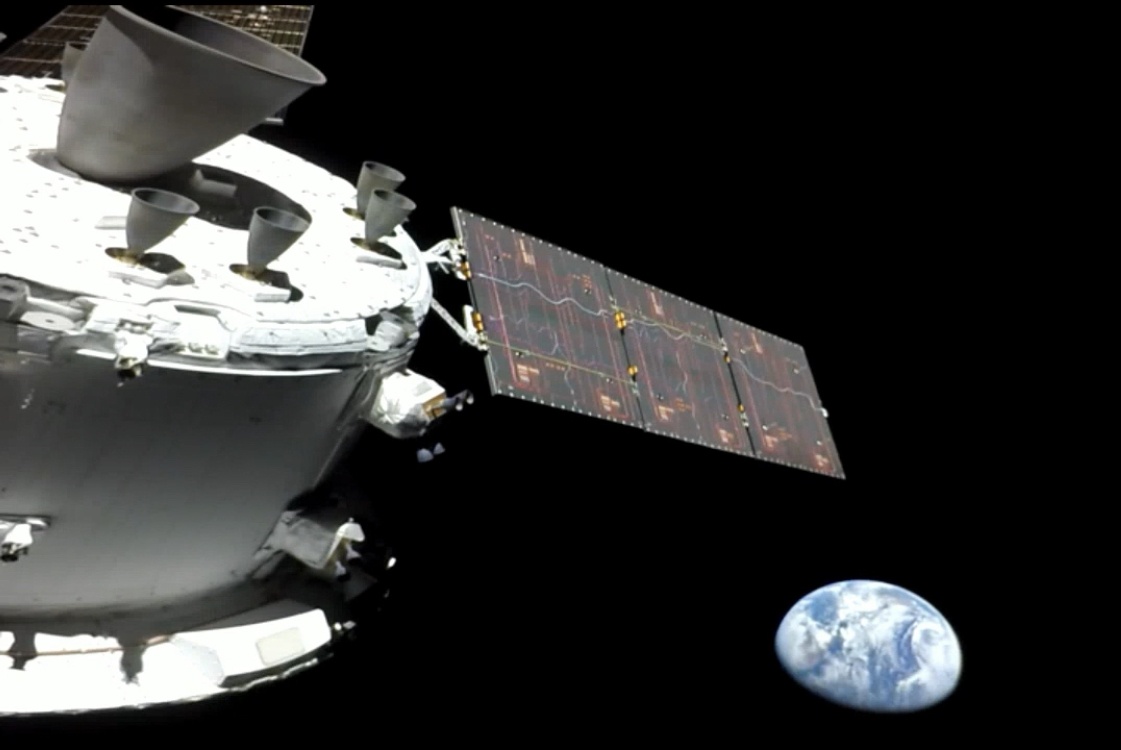
uploads.disquscdn.com/images/a5ed616c5381feb7ec49b0ae5640...
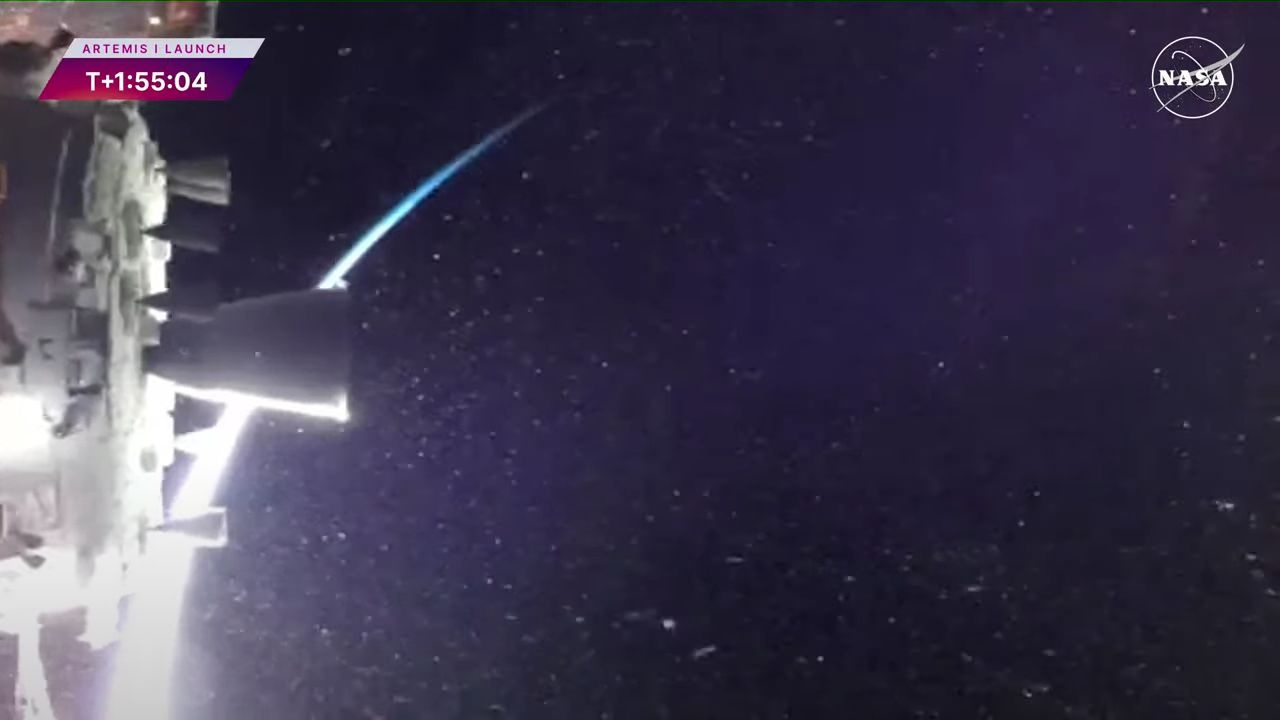
Both above credit: SPACE NEWS website
STS-41G being the engine's first flight, Artemis I its last.
Also:
www.aero-news.net/annticker.cfm?do=main.textpost&id=9...
Credit: Aero-News Network website
en.wikipedia.org/wiki/Space_Shuttle_recovery_convoy
Credit: Wikipedia
She's nearly unmatched in her ability to create and in intelligence.
Creator of the most resilient and mysterious mechanical objects in the multiverse, hardly anybody knows about her existence.
I've been working on her for quite a while. She's finally to a point where I consider her finished. I wanted a more stylized and recognizeable character. Although she doesn't have the best of those qualities, I'm pleased with her nonetheless.
Members of some unknown alien race, tall and bipedal creatures. They are thought to be descendants of frog-like amphibian animals, as their anatomy gives hints on that.
In case you are wondering how their heads are built, I should say that they are constructed of those UFO saucer parts.
Bringing this album to a close with my favorite photo of what has so far been my favorite sports photography day ever.
I don't usually run the same theme this many photos in a row, so thanks for putting up with it. ;)
Aerojet Rocketdyne technicians put the final touches on the 16th engine for the RS-25 program. This engine will join three others to help propel the nation’s most powerful rocket, the Space Launch System, which is currently in-development by NASA.
Read Full article:
www.nasa.gov/exploration/systems/sls/
Credits: Aerojet Rocketdyne
More about SLS:
www.nasa.gov/exploration/systems/sls/index.html
More SLS Photos:
www.nasa.gov/exploration/systems/sls/multimedia/gallery/S...
Space Launch System Flickr photoset:
www.flickr.com/photos/28634332@N05/sets/72157627559536895/
_______________________________
These official NASA photographs are being made available for publication by news organizations and/or for personal use printing by the subject(s) of the photographs. The photographs may not be used in materials, advertisements, products, or promotions that in any way suggest approval or endorsement by NASA. All Images used must be credited. For information on usage rights please visit: www.nasa.gov/audience/formedia/features/MP_Photo_Guidelin...
Brandon Semenuk practicing for the Red bull Joyride slopestyle, an event he would go on to win. He was technically perfect in his first run.
SEA OF JAPAN (Feb. 4, 2020) Information Systems Technician 2nd Class Nate Beck, from Altoona, Pennsylvania, and Hull Technician 3rd Class Seth Gonzalez, from Lawton, Oklahoma, participate in search and rescue swimmer (SAR) training off the starboard quarter of U.S. 7th Fleet flag ship, USS Blue Ridge (LCC 19). SAR swimmers routinely perform training exercises in order to maintain proficiency in life-saving techniques. (U.S. Navy photo by Mass Communication Specialist Seaman Matt Hall)
The CCTV on Birmingham Moor Street is getting a little attention from the technicians, not an enviable job as the camera box has a pigeon dropping stained cover to keep the worst of these flying bowels away from the lens.
172214 slides out with the 11.27 Stourbridge Junction to Stratford-upon-Avon service.
Copyright Geoff Dowling: All rights reserved
Specialized (not even remotely covert) break and entry team. Got places to get into and no door to be seen, no worries, we can take care of that for you XD
NASA’s Europa Clipper mission moves closer to launch as technicians worked on Wednesday, Sept. 11, inside the Payload Hazardous Servicing Facility to prepare the spacecraft for upcoming propellant loading at the agency’s Kennedy Space Center in Florida.
The spacecraft will explore Jupiter’s icy moon Europa, which is considered one of the most promising habitable environments in the solar system. The mission will research whether Europa’s subsurface ocean could hold the conditions necessary for life. Europa could have all the “ingredients” for life as we know it: water, organics, and chemical energy.
Europa Clipper’s launch period opens on Thursday, Oct. 10. It will lift off on a SpaceX Falcon Heavy rocket from Kennedy’s Launch Complex 39A. The spacecraft then will embark on a journey of nearly six years and 1.8 billion miles before reaching Jupiter’s orbit in 2030.
In this image, technicians work to complete operations before propellant load occurs ahead of launch for NASA’s Europa Clipper spacecraft inside the Payload Hazardous Servicing Facility at the agency’s Kennedy Space Center in Florida on Tuesday, Sept. 11, 2024.
Credit: NASA/Kim Shiflett
#NASA #MarshallSpaceFlightCenter #MSFC #Marshall #jpl #nasamarshall #juno #nasajuno #Europa #EuropaClipper
Yes... because machines are fixed by using a shovel!
Brenizer studio flash shot, 3 shots stitched together with the FA43 to give added depth and medium format feel.
Single ocf speedlight, 120cm octagon camera right.
Taken as part of the Ironfest 2019 promo shoot.
nhq202104060015 (April 6, 2021) --- Technicians work on the Soyuz rocket after it is rolled out by train to the launch pad at Site 31, Tuesday, April 6, 2021, at the Baikonur Cosmodrome in Kazakhstan. Expedition 65 NASA astronaut Mark Vande Hei, Roscosmos cosmonauts Pyotr Dubrov and Oleg Novitskiy are scheduled to launch aboard their Soyuz MS-18 spacecraft on April 9. Photo Credit: (NASA/Bill Ingalls)
Technicians prepare the National Oceanic and Atmospheric Administration’s (NOAA) Joint Polar Satellite System-2 (JPSS-2) for stacking atop the Low-Earth Orbit Flight Test of an Inflatable Decelerator (LOFTID) payload inside the Astrotech Space Operations facility at Vandenberg Space Force Base (VSFB) in California on Oct. 5, 2022. JPSS-2 is the third satellite in the Joint Polar Satellite System series. It is scheduled to lift off from VSFB on Nov. 1 from Space Launch Complex-3. JPSS-2, which will be renamed NOAA-21 after reaching orbit, will join a constellation of JPSS satellites that orbit from the North to the South pole, circling Earth 14 times a day and providing a full view of the entire globe twice daily. The NOAA/NASA Suomi National Polar-orbiting Partnership (Suomi NPP) satellite, and NOAA-20, previously known as JPSS-1, are both already in orbit. Each satellite carries at least four advanced instruments to measure weather and climate conditions on Earth. LOFTID is a secondary payload on the mission. It is dedicated to the memory of Bernard Kutter. LOFTID will demonstrate inflatable heat shield technology that could enable a variety of proposed NASA missions to destinations such as Mars, Venus, and Titan, as well as returning heavier payloads from low-Earth orbit. Photo credit: USSF 30th Space Wing/Aaron Taubman
Technicians with NASA's Exploration Ground Systems lower a mock-up, or pathfinder, of the Space Launch System's (SLS) center booster segment onto an aft pathfinder segment inside the Vehicle Assembly Building (VAB) at the agency's Kennedy Space Center in Florida on Sept. 14, 2020. Teams rehearsed stacking both pathfinder segments on top of the mobile launcher in High Bay 3 of the VAB in preparation for the Artemis I launch. Stacking of the actual SLS booster segments will occur later this year, when the rocket's core stage arrives at Kennedy. Artemis I is the first in a series of increasingly complex missions that will test SLS and the Orion spacecraft as an integrated system prior to crewed flights to the Moon. Photo credit: NASA/Kim Shiflett
This is a corporate groupshot of a bunch of field technicians. Their company wanted a powerfull group portrait of these guys for their website.
For strobists: I underexposed the background to get the clouds to look dramatic. The main light is a SB-24 on a stand (triggered with PW's) at camera right at full power. To seperate the dark clothes a bit from the background, I had them place some of their vans behind them with the lights on.
They gave me only about 3 minutes to make this shot. Wish I had a few more to position them a bit better in order to make the lights of the vans look better.
Learn how to light at strobist.blogspot.com/2006/02/welcome-to-strobist.html
Star Wars: Dysfunction
An Alphas Story
ARC Squad Alpha-B Roster
Captain Alpha-10 “Ramser” (CO/Auxiliary Marksman)
First Lieutenant Alpha-09 “Capyr” (XO/Auxiliary Demolitions)
Second Lieutenant Alpha-51 “Adenn” (Demolitions/CQB)
Second Lieutenant ARC-53/886 “Gray” (Technician)
Sergeant Major ARC-21/547 “Swoop” (Aerial Assault)
Sergeant Major ARC-401/39 “Deadshot” (Marksman)
Sergeant CS-1801 “Ticker” (Infantry Team Leader)
Corporal CT-89/123 “Stitch” (Medic)
Private CT-7713 “Rail” (Infantry)
Private CT-9054 “Ram” (Infantry)
Private CT-4509 “Knuckles” (Infantry)
______________________________________________________________________________
Chapter I
RAS Bastila Shan
Outskirts of the Hypori Sector
21 BBY
“Unbelievable! Un-karking-believable! This is a horrible injustice towards the fighting men of the Grand Army of the Republic! This is oppression! Tyranny! A crime unparalleled throughout all of galactic history!”
Private Rail sighed, and looked over at his squadmate, Knuckles. “Oh, command only took away your unauthorized porn collection. Stop being a crybaby about it.”
“That was high-quality Holovid material, man! Some of the best in the industry! I’m not being a crybaby, I’m protesting against the stomping on of my right to get turned on!”
“I don’t think that’s a right, Knuckles.”
“Well it should be!”
Before the discussion about the hypothetical right to porn could progress, a third clone bursted into the impromptu meeting room of the debate club that had been founded just seconds earlier, otherwise known as the RecRoom of the Bastila. Clone Sergeant Ticker, the team’s senior NCO that wasn’t an ARC, crossed his arms, and glared at Rail and Knuckles, highly annoyed. Ticker pointed at Knuckles, and said “Private, I swear to the Force, is it impossible for me to leave ya alone fer three damn minutes without ya gettin’ yerself into kriffing trouble!? Ya know that garbage is against the regs! You’re making the entire team look bad! Blast it, you’re making the entire GAR look bad!”
Knuckles simply shrugged, and replied “Hey, if they don’t want these things to happen, they shouldn’t ban my porn.”
Rail rolled his eyes, and said “You know, Knuckles, that they ban all of that kind of stuff. They aren’t just targeting you specifically.”
“Oi, that’s enough, ya two. We can sort out the contraband issue later. The Cap’n wants us all in the hangar, and we’d hate to disappoint, eh?”
Rail stood up from his seat, and replied “On it, Sarge. We’ll head to the armory ASAP.”
Rail and Knuckles quickly walked out of the RecRoom, leaving Ticker behind.
“So, how do you think this is gonna work out, Rail?”
Rail punched in the code to open the Armory door, and replied “Eh, chances all, we get captured, we get interrogated, and we get executed. Standard Covert Ops stuff, from what the XO told me.”
As they stepped into the armory, Knuckles said “Oh, come on. Lieutenant Capyr doesn’t know what he’s-”
Knuckles heard the sound of a clone clearing his throat, and turned his head to see Capyr adjusting a bayonet on his DC-15A. “I know a lot of things, Private. Including that you should always make sure the fellow you’re badmouthing isn’t within earshot.”
The two turned their heads as they heard a chuckle and saw 2nd Lieutenant Adenn sitting on top of a container whilst chucking a grenade around in his hands. “Knowing that you’re able to hear us is what makes it more funnier.”
Capyr made a gesture of questionable politeness towards Adenn, and looked back at Knuckles and Rail. “Look, you two. I know that being sent on borderline suicide missions behind enemy lines is bad for morale, but can you at least save it until after we’re on the ground?” The two Privates muttered in acknowledgments, and went about getting their equipment.
Adenn continued tossing the grenade around in his hands. “‘Ey, Capy, you think that bayonet of yours could pierce through this?”
Capyr scowled under his helmet, gestured at Adenn again, and pressed a button on his gauntlet.
Adenn looked around the armory in confusion, then turned to Capyr, and said “The kark did you do now? And what the kark is that noi-” Adenn looked down to his hands, and a look of horror came across his face as he realized how the grenade played into this. Throwing the now armed grenade across the room, he dove behind a crate of blasters and hoped for the best.
Capyr, for his part, simply stood up, walked over to the grenade, and chuckled. Picking it up, he placed it on his belt, and called out “Hey, di’kut! You can come out now!” Capyr looked over at the two Privates, staring at him in shock. “Eh, don’t worry about it. This here is a little invention of mine, call it a Gagnade. About as explosive as durasteel.”
Adenn slowly crept back up, shock all over his face as he shakingly asked “What the kark? How-”
“Oh, y’know. Designed to look like a grenade, and when I press this button right here,” said Capyr, pointing at his gauntlet, “It starts beeping. Figured it’d be useful on a mission some day, but it’s also real good for putting di’kute who like to pretend they’re Demolitions Experts in their place. By which I mean you, so don’t try to pull the ‘No, you’ trick on me.”
The shock on Adenn’s face became a hateful scowl as he walked over to Capyr with his knife in hand. Capyr, in response, picked up his DC and pointed the bayonet at Adenn. “Now, now, I’m enough of a civilized adult for both of us, so why don’t we sit down and act like it?”
Adenn was not impressed as he looked down at the bayonet. “And if I said no?”
“Then I’m telling the angry Captain standing in the doorway.”
Adenn turned his head, and saw that the squad’s CO, Captain Ramser, was indeed standing in the doorway, his arms crossed. Adenn gave a nervous smile and slowly waved at the Captain, the bayonet still pointed at him. Ramser sighed, and said “Weapons down, both of you.”
Adenn raised both hands and asked. “What weapon?”
Capyr slowly lowered his DC, and said “The knife, you moron.”
Adenn looked at Capyr, mouthed suggestive things at him, and placed the knife back into its holster. When Ramser was sure that the Armory would not be the site of a stabbing, he continued speaking. “Look, Capyr. I know that when Adenn joined the team, there was some… conflict over him taking your job. But he’s still part of the team, and you are to treat him as such. And Adenn, I don’t know what you’re doing to provoke these fights, but whatever it is, stop.”
“Maybe if he wasn’t such a whiny piece of-”
“I said, stop it, Adenn.
Adenn clenched his fist and looked at Capyr in disgust. “Yes, sir.” Capyr and Adenn watched as Ramser stepped outside the Armory, and began to finish collecting their equipment in silence.
Corporal Stitch looked up from his partially assembled Medkit and over at his squadmate, Ram, who was frantically punching buttons on a datapad. “Y’know, Ram, that trick is only going to work so long. The CO will find out eventually.” Stitch shrugged as his warnings fell upon deaf ears and Ram refused to respond, still pushing random buttons to make himself appear busy. “Seriously, it’s only a matter of time.”
Ram remained focused on his datapad until an ARC in grey armor noticed him, walked over, and in one swift motion, took the datapad from Ram and hit him over the head with it. “CT-9054, for the last time, stop messing around the with the datapads. These aren’t toys.”
A second ARC walked up next to Gray. “You really didn’t have to hit him over the head with it, Gray.”
Gray looked at the datapad in his hand, then at the other ARC. “Maybe not, Swoop. But it was satisfying. Y’know how rare it is for me to be the highest-ranking officer around?”
A clone with a black streak going down the visor of his helmet walked into the hangar, sporting a DC-15X, and a short cloak. “‘Oi, mir’sheb, lay off ‘em.”
Gray sighed, and said “Fine, Deadshot. But you can make sure he doesn’t slack off instead. I can’t deal with that level of slacking.”
“I’m not a babysitter. Get someone who will actually listen to you to do that job.”
Gray looked at Deadshot, slowly placed the datapad on a nearby crate, and stepped forward. “ARC-401/39, I don’t know what your major malfunction is, but just because I’m not the Captain or Lieutenant Capyr doesn’t mean I don’t outrank you.”
“Cut the osik, smartass. I know you do. Doesn’t mean I’ll do your chores.”
Stitch stepped between his two superiors, holding out his arms to separate them. “Okay, okay, brothers. I think we can both agree this has escalated too far. Sir, how about I watch our resident lump of uselessness?”
Gray thought for a few seconds, then replied “Okay, Corporal. Make sure he actually does something. As for you, Deadshot, we’ll settle this later. I’m going to check in with the Captain, see if something’s wrong. The rest of the team should be-”
“Apologies, Gray. Had to diffuse me a conflict. Capyr and Adenn, as usual.” Gray and company turned to see Captain Ramser walking towards them, two ARCs and two Privates in tow. “Everything has been going well on your end, I hope.”
An anxious Gray bit his tongue under his helmet, and responded “Eh, not at all sir. All is fine.”
Ramser paused for a second, then shrugged. “If you say so. Now, I believe we a Larty to catch, a planet to land on, and a CIS base to infiltrate.”
A chorus of “Understood, sir,” followed, and the eleven clones walked towards the LAAT in silence. They knew what they were getting into. And they knew that they may not be able to count on each other during it.
Technicians ready two NASA Space Launch System (SLS) solid rocket boosters for mating to the rocket’s two aft skirts on June 16, 2020, inside Kennedy Space Center’s Rotation, Processing and Surge Facility. Together, the twin boosters provide more than 75 percent of the total SLS thrust at launch. Manufactured by Northrop Grumman in Promontory, Utah, the boosters arrived at Kennedy via train. The cross-country journey was an important milestone for the agency’s Artemis I launch. The first in a series of increasingly complex missions, Artemis I will test the Orion spacecraft and SLS as an integrated system prior to crewed missions to the Moon. Once the boosters are mated with the aft skirts, they will be moved to the Vehicle Assembly Building for stacking on the mobile launcher. Photo credit: NASA/Ben Smegelsky
Iris working with the computer. She has some colorful ideas!
Background created in Wombo Dream, using “whimsical” style.
PHILIPPINE SEA (Jan. 2, 2022) Hull Maintenance Technician Fireman Riley Decock, from Colona, Ill., practices welding techniques aboard the aircraft carrier USS Nimitz (CVN 68). Nimitz is in U.S. 7th fleet conducting routine operations. U.S. 7th Fleet is the U.S. Navy's largest forward-deployed numbered fleet, and routinely interacts and operates with 35 maritime nations in preserving a free and open Indo-Pacific region. (U.S. Navy photo by Mass Communication Specialist 3rd Class Kevin Tang)
KOREA STRAIT (October 20, 2021) Gunner's Mate 1st Class James Traylor, from Las Vegas, Electronics Technician 2nd Class Nathaniel Bingham, from Aurora, Colorado, and Mineman 3rd Class Shane Duers from Lunenburg County, Virginia, reload a .50-caliber machine gun during a live fire exercise aboard USS Pioneer (MCM 9). Pioneer, part of Mine Countermeasures Squadron (MCMRON) 7, is operating in U.S. 7th Fleet to enhance interoperability with partners and serve as a ready-response platform for contingency operations. (U.S. Navy photo by Lt. Irving Garcia)
Technicians successfully performed a critical test on Webb's 5-layer sunshield by fully deploying each of its uniquely sized layers to the same position that they will have while orbiting the Sun a million miles away from Earth.
As an infrared optimized telescope, it is imperative that Webb’s optics and sensors remain impressively cold, and its sunshield is key for temperature regulation. The sunshield separates the observatory into a warm side that always faces the Sun (thermal models show the maximum temperature of the outermost layer is 383 Kelvin or approximately 230 degrees Fahrenheit), and a cold side that always faces deep space (with the coldest layer having a modeled minimum temp of 36K or around minus -394 degrees F). The oxygen present in Earth’s atmosphere would freeze solid at the temperatures experienced on the cold side of the sunshield, and an egg could easily be boiled with the heat encountered on the warm end.
Image credit: NASA/Chris Gunn
More on this testing milestone here: www.nasa.gov/feature/goddard/2019/nasa-s-james-webb-space...
Circa 1992. This is a Polaroid Spectra print that had its emulsion manipulated while still soft during development. The markings made by manipulation don’t have any particular meaning. It was done for amusement only.
NDT or NDE is 'non-destructive testing’ or ‘-examination' which includes visual, ultrasonic and radiographic techniques among others. They are used to indicate or measure the condition of various processing equipment in the plant. Technicians who use those NDE tools are qualified at various levels of increasing skill and ability. My friend Tom B. was a contract NDE Technician who worked in our plant very often especially at unit shutdowns.
This particular photo was taken during the nighttime shift, hence the black background. If I recall correctly, Tom was on a structure surrounding coke drum vessels in our delayed coking unit.
Technicians at NASA's Kennedy Space Center in Florida work to safely return the Artemis I Orion spacecraft to the FAST cell after completing the installation of the spacecraft adapter (SA) cone inside the Neil Armstrong Operations and Checkout Building on Aug. 20, 2020. This is one of the final major hardware operations the spacecraft will undergo during closeout processing prior to being integrated with the Space Launch System (SLS) rocket in preparation for the first Artemis mission. The spacecraft adapter cone connects the bottom portion of Orion's service module to the top part of the rocket known as the interim cryogenic propulsion stage (ICPS). Orion will fly on the agency's Artemis I mission -- the first in a series of increasingly complex missions to the Moon that will ultimately lead to the exploration of Mars. Photo credit: NASA/Frank Michaux