View allAll Photos Tagged simplifies
Lìjiāng (simplified Chinese: 丽江; traditional Chinese: 麗江) is a prefecture-level city in the northwest of Yunnan province, People's Republic of China. It has an area of 21,219 square kilometres and had a population of 1,244,769 at the 2010 census.
HISTORY
Lijiang City replaced the former administrative region of Lijiang Prefecture. It was under the rule of the Mu family (木氏) local commanders (土司) during the Ming Dynasty and Qing Dynasty.
The Baisha Old Town was the political, commercial and cultural center for the local Naxi people and other ethnic groups for 400 years from the year 658 AD to 1107 AD. The Dabaoji Palace of the Baisha Fresco, very close to the Baisha Naxi Hand-made Embroidery Institute, was built in the year 658 AD in the Tang Dynasty (618 AD to 960 AD).
In ancient times, the Baisha Old Town used to be the center of silk embroidery in the southwest of China and the most important place of the Ancient Southern Silk Road, also called the Ancient Tea and Horse Road or Ancient tea route. The Ancient Southern Silk Road started from Burma, crossed Lijiang, Shangri-La County, Tibet, journeyed through Iran, the Fertile Crescent, and ultimately to the Mediterranean Sea.
Naxi women were well known for their hand-made embroidery before 1972 during the Great Cultural Revolution. The most famous Naxi masters were arrested and put in jail, some of them died in jail during the Cultural Revolution because they did hand-made embroidery only for the Naxi Emperors when they were young.
GEOGRAPHY
Lijiang is located in the northwestern portion of Yunnan and borders Sichuan. It is in a region where the Qinghai-Tibet Plateau and Yunnan-Guizhou Plateau converge.
Owing to its low latitude and high elevation, the city centre of Lijiang experiences a mild subtropical highland climate (Köppen Cwb). Winters are mild and very dry and sunny (>70% possible sunshine), although average lows in December and January are just below the freezing mark; January, the coolest month, has a 24-hour average temperature of 6.0 °C. Spring begins early and remains dry and sunny until late May, when there is a dramatic uptick in frequency and amount of rainfall that lasts until late September. Summers are warm, rainy (more so than it is sunny) and damp, with June, the warmest month, averaging 18.4 °C. Autumn sees an abrupt reduction in rainfall and return to sunniness. The annual mean temperature is 12.70 °C, while precipitation averages 968 mm, around 80% of which occurs from June to September. With monthly percent possible sunshine ranging from 32% in July to 80% in December, the city receives 2,463 hours of bright sunshine annually.
OLD TOWN
The world famous Old Town of Lijiang is located in Lijiang City. It is a UNESCO Heritage Site.
The town has a history going back more than 800 years and was once a confluence for trade along the old tea horse road. The Lijiang old town is famous for its orderly system of waterways and bridges. The old town of Lijiang differs from other ancient Chinese cities in architecture, history and the culture of its traditional residents the Nakhi people, therefore people there are called 胖金哥 and 胖金妹 (pàng jīn gē, pàng jīn mèi, male and female respectively). The town was ruled by the Mu Family during the portions of the Ming and Qing Dynasties, a period of nearly 500 years.
Overlooking Lijiang Old Town is Lion Hill and at its summit is the Wangu Pavilion, which is a wooden building that stands 33 m tall and boasts 10,000 dragon carvings. The pavilion is constructed on 16 columns each of 22 m in height. The pavilion is a masterpiece of Qing Dynasty architecture that has been extensively restored following the designation of Lijiang Old Town as a UNESCO Heritage Site.
From Lion's Hill it is possible to view the entire Li River valley, including both the old city and new city of Lijiang. Looking Northwest, the Jade Dragon Snow Mountain is dominates the horizon.
The Old Town is a maze of winding cobblestone streets. It is extremely easy to get lost as there is no grid, but each turn takes one to some new interesting spot, and it's not hard to eventually find one's way out of the maze and back to familiar territory. The layout of the town was established to conform to the flow of 3 streams in adherence to Feng Shui design, so there was water and waste disposal for the inhabitants. The Old Town has fast become a destination for young Chinese artists, students, and adventurers. Most recently, it has become a favored Spring Break destination for students. "Bar Street" is a line of clubs with live music, dancing, and revelry. The Old Town has a multitude of shops, some a bit tourist oriented, but several showcasing handcrafts, individual artists, and local manufacturers of interesting personal products.
There are dozens of restaurants, from snacks to high end dining, all very reasonably priced, cheap by Western standards.
Accommodations are varied, but the most interesting are the large number of boutique hotels run by individuals and families. These boutique hotels are in old traditional houses converted to rooms, courtyards, and gathering places, and designs all trend to traditional Chinese sensibilities. There are new high end hotel and condominium developments starting construction from 2011 forward, so there is a definite push to make the destination one for all tastes and not just young adventurers.
NEARBY
Some tens of miles north of Lijiang is the Baishui Terrace (白水台 Baishuitai, literally "White Water Terrace"), an area where spring water flows over a sinter terrace, leaving behind travertine. Lijiang is also close to the Jade Dragon Snow Mountain (玉龙雪山).
A few miles north of Lijiang is the village of Baisha, famous for the Baisha Fresco and the Naxi Hand-made Embroidery Institute.The Fresco was built in the Ming Dynasty 600 years ago, the Naxi Hand-made Embroidery Institute was built 800 years ago, it is the headquarters of the Naxi embroideries and also, a school for the Naxi embroiderers. There are many Naxi embroidery masters, teachers, students and local farmers there. Their embroidery arts can be found there.
WIKIPEDIA
It will be just the 3 of us having Thanksgiving Dinner at home this year. Little K requested that we eat early so we can pull out the Christmas Decorations and start putting them up. She even offered to help me cook (which is not something she likes to do, since I usually turn it into a lesson of some sort).
She planned the menu with me - picking out recipes from our cook books. Nothing fancy, just the basics. I am GRATEFUL to her for reminding me that not everything has to be over the top (although I do usually believe that More is Better). I'm looking forward to spending time together, cooking, eating and decorating, and I am hopeful that this focus on simplicity will result in a happier mommy.
After stenciling SIMPLIFY, SIMPLIFY on my Kayak paddle we decided to burn the cutout letters with the help of a lot of lighter fluid.
Linxia (simplified Chinese: 临夏; traditional Chinese: 臨夏; pinyin: Línxià), once known as Hezhou (河州), is a county-level city in the province of Gansu of the People's Republic of China. Population 285,000. It is located in the valley of the Daxia River (a right tributary of the Huanghe) southwest of Lanzhou. It is the seat of Linxia Hui Autonomous Prefecture, which is the centre of the ethnic minority of the Dongxiang.
Linxia has a Muslim (Hui and Dongxiang) majority. It is the main center of the Qadariyah Sufi order. It has long been the center of the Muslim community of Gansu,[1] and even today it is sometimes referred to as "the Mecca of China".
"The ability to simplify means to eliminate the unnecessary so that the necessary may speak."
Hans Hofmann
Lìjiāng (simplified Chinese: 丽江; traditional Chinese: 麗江) is a prefecture-level city in the northwest of Yunnan province, People's Republic of China. It has an area of 21,219 square kilometres and had a population of 1,244,769 at the 2010 census.
HISTORY
Lijiang City replaced the former administrative region of Lijiang Prefecture. It was under the rule of the Mu family (木氏) local commanders (土司) during the Ming Dynasty and Qing Dynasty.
The Baisha Old Town was the political, commercial and cultural center for the local Naxi people and other ethnic groups for 400 years from the year 658 AD to 1107 AD. The Dabaoji Palace of the Baisha Fresco, very close to the Baisha Naxi Hand-made Embroidery Institute, was built in the year 658 AD in the Tang Dynasty (618 AD to 960 AD).
In ancient times, the Baisha Old Town used to be the center of silk embroidery in the southwest of China and the most important place of the Ancient Southern Silk Road, also called the Ancient Tea and Horse Road or Ancient tea route. The Ancient Southern Silk Road started from Burma, crossed Lijiang, Shangri-La County, Tibet, journeyed through Iran, the Fertile Crescent, and ultimately to the Mediterranean Sea.
Naxi women were well known for their hand-made embroidery before 1972 during the Great Cultural Revolution. The most famous Naxi masters were arrested and put in jail, some of them died in jail during the Cultural Revolution because they did hand-made embroidery only for the Naxi Emperors when they were young.
GEOGRAPHY
Lijiang is located in the northwestern portion of Yunnan and borders Sichuan. It is in a region where the Qinghai-Tibet Plateau and Yunnan-Guizhou Plateau converge.
Owing to its low latitude and high elevation, the city centre of Lijiang experiences a mild subtropical highland climate (Köppen Cwb). Winters are mild and very dry and sunny (>70% possible sunshine), although average lows in December and January are just below the freezing mark; January, the coolest month, has a 24-hour average temperature of 6.0 °C. Spring begins early and remains dry and sunny until late May, when there is a dramatic uptick in frequency and amount of rainfall that lasts until late September. Summers are warm, rainy (more so than it is sunny) and damp, with June, the warmest month, averaging 18.4 °C. Autumn sees an abrupt reduction in rainfall and return to sunniness. The annual mean temperature is 12.70 °C, while precipitation averages 968 mm, around 80% of which occurs from June to September. With monthly percent possible sunshine ranging from 32% in July to 80% in December, the city receives 2,463 hours of bright sunshine annually.
OLD TOWN
The world famous Old Town of Lijiang is located in Lijiang City. It is a UNESCO Heritage Site.
The town has a history going back more than 800 years and was once a confluence for trade along the old tea horse road. The Lijiang old town is famous for its orderly system of waterways and bridges. The old town of Lijiang differs from other ancient Chinese cities in architecture, history and the culture of its traditional residents the Nakhi people, therefore people there are called 胖金哥 and 胖金妹 (pàng jīn gē, pàng jīn mèi, male and female respectively). The town was ruled by the Mu Family during the portions of the Ming and Qing Dynasties, a period of nearly 500 years.
Overlooking Lijiang Old Town is Lion Hill and at its summit is the Wangu Pavilion, which is a wooden building that stands 33 m tall and boasts 10,000 dragon carvings. The pavilion is constructed on 16 columns each of 22 m in height. The pavilion is a masterpiece of Qing Dynasty architecture that has been extensively restored following the designation of Lijiang Old Town as a UNESCO Heritage Site.
From Lion's Hill it is possible to view the entire Li River valley, including both the old city and new city of Lijiang. Looking Northwest, the Jade Dragon Snow Mountain is dominates the horizon.
The Old Town is a maze of winding cobblestone streets. It is extremely easy to get lost as there is no grid, but each turn takes one to some new interesting spot, and it's not hard to eventually find one's way out of the maze and back to familiar territory. The layout of the town was established to conform to the flow of 3 streams in adherence to Feng Shui design, so there was water and waste disposal for the inhabitants. The Old Town has fast become a destination for young Chinese artists, students, and adventurers. Most recently, it has become a favored Spring Break destination for students. "Bar Street" is a line of clubs with live music, dancing, and revelry. The Old Town has a multitude of shops, some a bit tourist oriented, but several showcasing handcrafts, individual artists, and local manufacturers of interesting personal products.
There are dozens of restaurants, from snacks to high end dining, all very reasonably priced, cheap by Western standards.
Accommodations are varied, but the most interesting are the large number of boutique hotels run by individuals and families. These boutique hotels are in old traditional houses converted to rooms, courtyards, and gathering places, and designs all trend to traditional Chinese sensibilities. There are new high end hotel and condominium developments starting construction from 2011 forward, so there is a definite push to make the destination one for all tastes and not just young adventurers.
NEARBY
Some tens of miles north of Lijiang is the Baishui Terrace (白水台 Baishuitai, literally "White Water Terrace"), an area where spring water flows over a sinter terrace, leaving behind travertine. Lijiang is also close to the Jade Dragon Snow Mountain (玉龙雪山).
A few miles north of Lijiang is the village of Baisha, famous for the Baisha Fresco and the Naxi Hand-made Embroidery Institute.The Fresco was built in the Ming Dynasty 600 years ago, the Naxi Hand-made Embroidery Institute was built 800 years ago, it is the headquarters of the Naxi embroideries and also, a school for the Naxi embroiderers. There are many Naxi embroidery masters, teachers, students and local farmers there. Their embroidery arts can be found there.
WIKIPEDIA
Another example of combine simplify, color-edge, details, and bright/sat adjust in Topaz Simplify. All done in one apply of the filter.
Unfinished collage from recycled materials. 2015.
Since I took this photograph, I 'finished' this piece. Painted over the writing there (that was originally done in permanent marker). Finished picture will be posted next year.
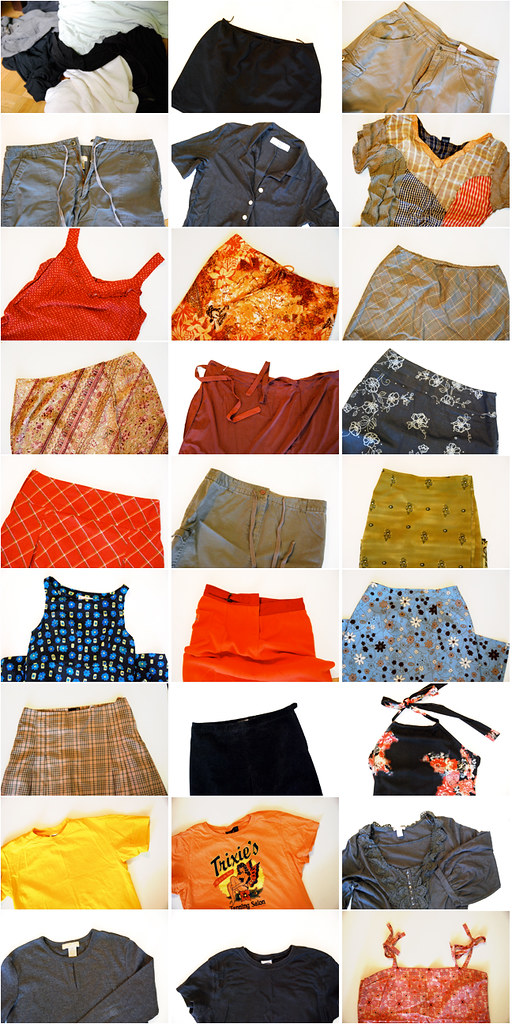
All of these are being taken to a Clothing Swap tomorrow. I'll also be taking 2 largish bags of clothes - that aren't really Swap *material* - to a donation drop off.
The ability to simplify is to eliminate the unnecessary so that the necessary may speak.
— Hans Hoffman
Typefaces: Berthold Akzidenz Grotesk, PT Serif
Merchandise available: www.redbubble.com/shop/ap/93315038
Simplify fractions calculator is an online tool to simplify fraction. Simplify Fractions Calculator is a tool which makes calculations easy and fun. Here we have to find the Highest Common Factor of both Numerators and Denominators and then Cancel both with that factor and find the lowest form of that fraction.
...at the Kings Park Bluffs.
Topaz Buzz Simplifier, textures from Snapdragon and Flypaper, and a Tintype Edge from Flypaper.
Padre en el rio durante un largo día de pesca.
Fotografía por Camilo Hernández
Todos los derechos reservados ©.
Garden photo I took over the weekend—just playing around. I've been looking at 19th-century paintings, and everything I've shot looks weird now. ;)
The train to Nara from Kyoto Station, vanishing into the distance.
Topaz Simplify, BuzSim setting - nothing else.
On a cold ...chilly..very foggy Sat night in SF....I just felt in love with this picture.
www.flickr.com/photos/protophotogsl/3547451471/
Original picture by protophtogsl. I hope she likes it!! ;-)
Lìjiāng (simplified Chinese: 丽江; traditional Chinese: 麗江) is a prefecture-level city in the northwest of Yunnan province, People's Republic of China. It has an area of 21,219 square kilometres and had a population of 1,244,769 at the 2010 census.
HISTORY
Lijiang City replaced the former administrative region of Lijiang Prefecture. It was under the rule of the Mu family (木氏) local commanders (土司) during the Ming Dynasty and Qing Dynasty.
The Baisha Old Town was the political, commercial and cultural center for the local Naxi people and other ethnic groups for 400 years from the year 658 AD to 1107 AD. The Dabaoji Palace of the Baisha Fresco, very close to the Baisha Naxi Hand-made Embroidery Institute, was built in the year 658 AD in the Tang Dynasty (618 AD to 960 AD).
In ancient times, the Baisha Old Town used to be the center of silk embroidery in the southwest of China and the most important place of the Ancient Southern Silk Road, also called the Ancient Tea and Horse Road or Ancient tea route. The Ancient Southern Silk Road started from Burma, crossed Lijiang, Shangri-La County, Tibet, journeyed through Iran, the Fertile Crescent, and ultimately to the Mediterranean Sea.
Naxi women were well known for their hand-made embroidery before 1972 during the Great Cultural Revolution. The most famous Naxi masters were arrested and put in jail, some of them died in jail during the Cultural Revolution because they did hand-made embroidery only for the Naxi Emperors when they were young.
GEOGRAPHY
Lijiang is located in the northwestern portion of Yunnan and borders Sichuan. It is in a region where the Qinghai-Tibet Plateau and Yunnan-Guizhou Plateau converge.
Owing to its low latitude and high elevation, the city centre of Lijiang experiences a mild subtropical highland climate (Köppen Cwb). Winters are mild and very dry and sunny (>70% possible sunshine), although average lows in December and January are just below the freezing mark; January, the coolest month, has a 24-hour average temperature of 6.0 °C. Spring begins early and remains dry and sunny until late May, when there is a dramatic uptick in frequency and amount of rainfall that lasts until late September. Summers are warm, rainy (more so than it is sunny) and damp, with June, the warmest month, averaging 18.4 °C. Autumn sees an abrupt reduction in rainfall and return to sunniness. The annual mean temperature is 12.70 °C, while precipitation averages 968 mm, around 80% of which occurs from June to September. With monthly percent possible sunshine ranging from 32% in July to 80% in December, the city receives 2,463 hours of bright sunshine annually.
OLD TOWN
The world famous Old Town of Lijiang is located in Lijiang City. It is a UNESCO Heritage Site.
The town has a history going back more than 800 years and was once a confluence for trade along the old tea horse road. The Lijiang old town is famous for its orderly system of waterways and bridges. The old town of Lijiang differs from other ancient Chinese cities in architecture, history and the culture of its traditional residents the Nakhi people, therefore people there are called 胖金哥 and 胖金妹 (pàng jīn gē, pàng jīn mèi, male and female respectively). The town was ruled by the Mu Family during the portions of the Ming and Qing Dynasties, a period of nearly 500 years.
Overlooking Lijiang Old Town is Lion Hill and at its summit is the Wangu Pavilion, which is a wooden building that stands 33 m tall and boasts 10,000 dragon carvings. The pavilion is constructed on 16 columns each of 22 m in height. The pavilion is a masterpiece of Qing Dynasty architecture that has been extensively restored following the designation of Lijiang Old Town as a UNESCO Heritage Site.
From Lion's Hill it is possible to view the entire Li River valley, including both the old city and new city of Lijiang. Looking Northwest, the Jade Dragon Snow Mountain is dominates the horizon.
The Old Town is a maze of winding cobblestone streets. It is extremely easy to get lost as there is no grid, but each turn takes one to some new interesting spot, and it's not hard to eventually find one's way out of the maze and back to familiar territory. The layout of the town was established to conform to the flow of 3 streams in adherence to Feng Shui design, so there was water and waste disposal for the inhabitants. The Old Town has fast become a destination for young Chinese artists, students, and adventurers. Most recently, it has become a favored Spring Break destination for students. "Bar Street" is a line of clubs with live music, dancing, and revelry. The Old Town has a multitude of shops, some a bit tourist oriented, but several showcasing handcrafts, individual artists, and local manufacturers of interesting personal products.
There are dozens of restaurants, from snacks to high end dining, all very reasonably priced, cheap by Western standards.
Accommodations are varied, but the most interesting are the large number of boutique hotels run by individuals and families. These boutique hotels are in old traditional houses converted to rooms, courtyards, and gathering places, and designs all trend to traditional Chinese sensibilities. There are new high end hotel and condominium developments starting construction from 2011 forward, so there is a definite push to make the destination one for all tastes and not just young adventurers.
NEARBY
Some tens of miles north of Lijiang is the Baishui Terrace (白水台 Baishuitai, literally "White Water Terrace"), an area where spring water flows over a sinter terrace, leaving behind travertine. Lijiang is also close to the Jade Dragon Snow Mountain (玉龙雪山).
A few miles north of Lijiang is the village of Baisha, famous for the Baisha Fresco and the Naxi Hand-made Embroidery Institute.The Fresco was built in the Ming Dynasty 600 years ago, the Naxi Hand-made Embroidery Institute was built 800 years ago, it is the headquarters of the Naxi embroideries and also, a school for the Naxi embroiderers. There are many Naxi embroidery masters, teachers, students and local farmers there. Their embroidery arts can be found there.
WIKIPEDIA
Here's the thing about this picture: it is, to me, largely unexceptional.
And yet, to me, it's somehow strangely captivating. The simple line of sky to water. The inclusion of earth both close and far. Hues of blue. Hues of green.
It's not that I think the picture is great. It's just compelling to my eye.
I can't look away.
It has magical powers. Duh.