View allAll Photos Tagged relocations
Batavia, NY. June 2020.
------------------------------------------------------------------------------------------
If you would like to use THIS picture in any sort of media elsewhere (such as newspaper or article), please send me a Flickrmail or send me an email at natehenderson6@gmail.com
We had to stop and put it in a tree even though at best, future families might use it for parts of not the whole.
Edited at snipshot.com. Yet another baby Western Rattlesnake is moved to a new location away from camp.
Arriving from Kamloops (CYKA) is this 2014 built Falcon 2000EX. It spent about 20 minutes on the ground then relocated to its Vancouver base.
"The Capitol at Williamsburg, Virginia housed both Houses of the Virginia General Assembly, the Council of State and the House of Burgesses of the Colony of Virginia from 1705, when the capital was relocated there from Jamestown, until 1780, when the capital was relocated to Richmond. Two capitol buildings served the colony on the same site: the first from 1705 until its destruction by fire in 1747; the second from 1753 to 1780.
The earlier capitol was reconstructed in the early 1930s as part of the restoration of Colonial Williamsburg. The reconstruction has thus lasted longer than the combined total of both original capitol buildings.
Colonial Williamsburg is a living-history museum and private foundation presenting a part of the historic district in the city of Williamsburg, Virginia, United States. The Colonial Williamsburg Foundation has 7300 employees at this location and globally. There are 37 companies in The Colonial Williamsburg Foundation corporate family.
Its 301-acre (122 ha) historic area includes several hundred restored or re-created buildings from the 18th century, when the city was the capital of Colonial Virginia; 17th-century, 19th-century, and Colonial Revival structures; and more recent reconstructions. An interpretation of a colonial American city, the historic area includes three main thoroughfares and their connecting side streets that attempt to suggest the atmosphere and the circumstances of 18th-century Americans. Costumed employees work and dress as people did in the era, sometimes using colonial grammar and diction (although not colonial accents).
In the late 1920s, the restoration and re-creation of colonial Williamsburg was championed as a way to celebrate rebel patriots and the early history of the United States. Proponents included the Reverend Dr. W. A. R. Goodwin and other community leaders; the Association for the Preservation of Virginia Antiquities (now called Preservation Virginia), the Colonial Dames, the Daughters of the Confederacy, the Chamber of Commerce, and other organizations; and the wealthy Rockefellers: John D. Rockefeller Jr., and his wife, Abby Aldrich Rockefeller.
Colonial Williamsburg is part of the part-historic project, part-tourist attraction Historic Triangle of Virginia, along with Jamestown and Yorktown and the Colonial Parkway. The site was once used for conferences by world leaders and heads of state, including U.S. presidents. It was designated a National Historic Landmark District in 1960.
In June 2019, its sixth president, Mitchell Reiss, announced that he would resign effective October, ending a five-year tenure distinguished by staff turnover, downsizing, and outsourcing.
Williamsburg is an independent city in the Commonwealth of Virginia, United States. As of the 2020 U.S. Census, it had a population of 15,425. Located on the Virginia Peninsula, Williamsburg is in the northern part of the Hampton Roads metropolitan area. It is bordered by James City County on the west and south and York County on the east.
English settlers founded Williamsburg in 1632 as Middle Plantation, a fortified settlement on high ground between the James and York rivers. The city functioned as the capital of the Colony and Commonwealth of Virginia from 1699 to 1780 and became the center of political events in Virginia leading to the American Revolution. The College of William & Mary, established in 1693, is the second-oldest institution of higher education in the United States and the only one of the nine colonial colleges in the South. Its alumni include three U.S. presidents as well as many other important figures in the nation's early history.
The city's tourism-based economy is driven by Colonial Williamsburg, the city's restored Historic Area. Along with nearby Jamestown and Yorktown, Williamsburg forms part of the Historic Triangle, which annually attracts more than four million tourists. Modern Williamsburg is also a college town, inhabited in large part by William & Mary students, faculty and staff." - info from Wikipedia.
The fall of 2022 I did my 3rd major cycling tour. I began my adventure in Montreal, Canada and finished in Savannah, GA. This tour took me through the oldest parts of Quebec and the 13 original US states. During this adventure I cycled 7,126 km over the course of 2.5 months and took more than 68,000 photos. As with my previous tours, a major focus was to photograph historic architecture.
Now on Instagram.
Philippe's was established in 1908 by Philippe Matthieu, who has claimed to have created the "french dip" sandwich. This has been refuted by others, including another local L.A. eatery, Cole's, which has also claimed to have served the first french dip.
Regardless, Matthieu sold his restaurant in 1927, and the Martin brothers (Harry, Dave and Frank) kept the place open 24/7 until WWII.
A relocation was necessary when the 101 (Hollywood Freeway) was built. They moved to a new location in 1951, and have been there ever since.
1001 N. Alameda St., Los Angeles CA.
Remodel, Week 16
(cont.) Welp, as of the following week, I got my answer: it was a temporary relocation of the pharmacy! l_dawg2000 (and/or my mom; can’t remember who got to me first XD ) actually informed me of this, as I wasn’t in town that weekend. (He’s also already posted his own picture of it, which you can see here.) But the next weekend, I made sure to get my own photo of the tiny structure, even if I had to do it very quickly while we were in the checkout line! (As a result, please pardon the person visible on the right of the photograph :P )
For being a temporary pharmacy, this setup looks very complex… as it should, I suppose, considering that those are dozens of customers’ prescriptions and records they have to keep protected within that cramped little space. If you zoom in through the windows, you can see that this mini-pharmacy box even has its own drop ceiling and lighting, which is even more impressive! (I’d bet that that also makes it even more claustrophobic in there for the poor employees, though…) The only downsides to this temporary setup (besides the aforementioned issue of space) are the facts that when it gets busy, customers waiting in line will now interfere with the flow of shoppers exiting the checkouts, and, as those yellow signs at the pickup counter read, they’re only able to do prescription checkouts right now (no other services).
And in the interim, what’s becoming of the old pharmacy, you ask? Well, I’ll show you! Stay tuned for Part 2 of this update tomorrow… :)
(c) 2017 Retail Retell
These places are public so these photos are too, but just as I tell where they came from, I'd appreciate if you'd say who :)
Spent Labor Day 2022 visiting a nearby open-air history museum. It features over twenty authentic and original structures donated and relocated from various central Minnesota locations. Gives one a good comparison of pioneer life versus the modern day. I'll take the here and now.
WEEK 1 – Memphis Kmart Closing, I
Prior to the liquidation, books occupied the former café space, but for the closing sale they had been consolidated out here in front of the former pharmacy. Something else I'm kicking myself for: if I had seen that copy of Jimmy Fallon's “Your Baby's First Word Will Be Dada,” I definitely would've bought it!
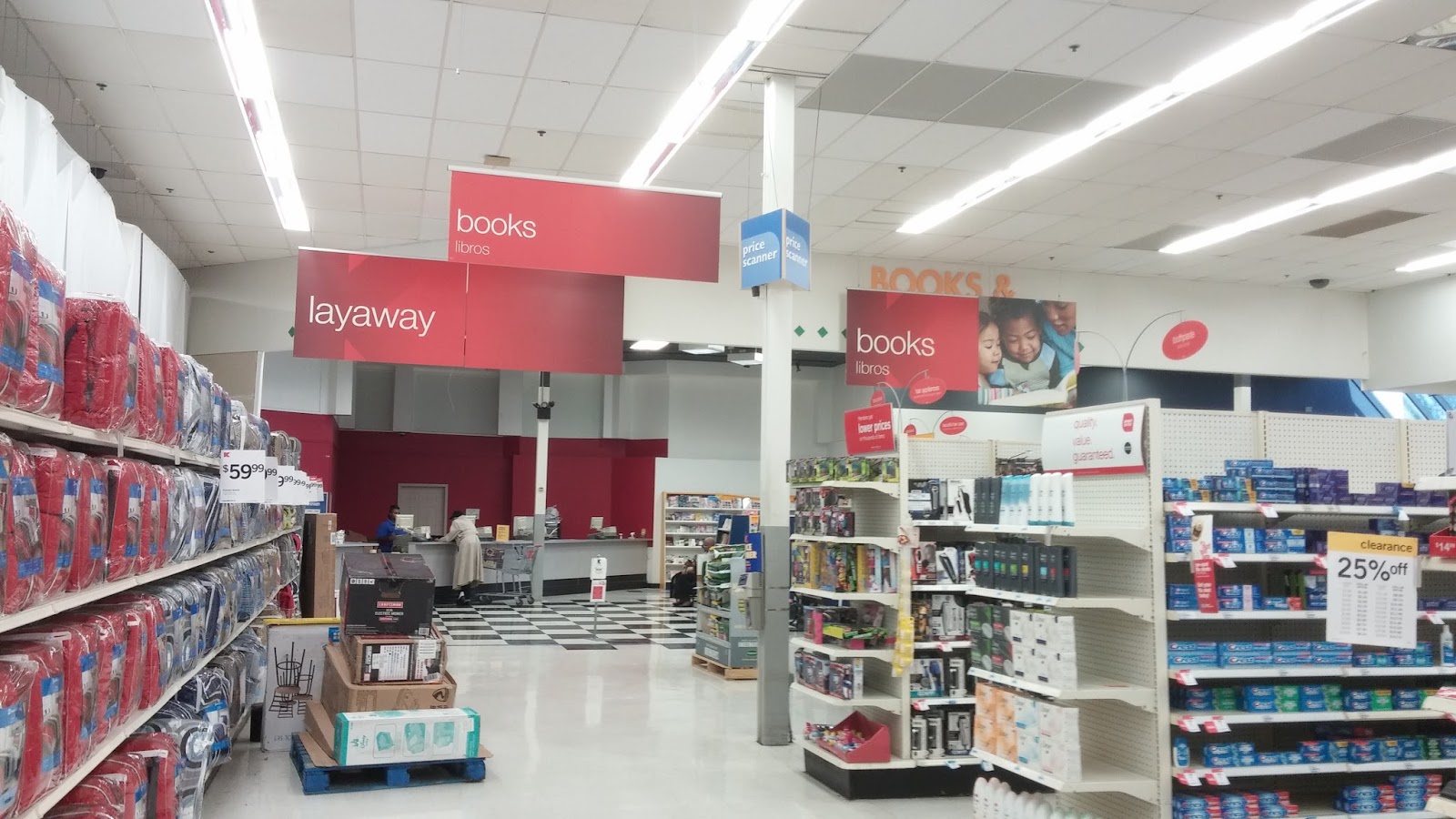
(c) 2017 Retail Retell
These places are public so these photos are too, but just as I tell where they came from, I'd appreciate if you'd say who :)
The old Midland Railway signal box was later relocated from the wilder reaches of the Settle & Carlisle Line to Steamtown Carnforth. These days, the former British Railways motive power depot and one of the final operational steam sheds, is the base of the West Coast Railway charter group and no longer offers public access. In the 1970s however, as Steamtown Carnforth, it was a major visitor attraction.
This was my second visit to Steamtown, and much had happened since my original exploration of the site nearly five years earlier. I had travelled from London on this occasion on a charter train organised by the LNER Society. I was a regular participant on their tours in the period 1975-1981. Advertising each month in Railway Magazine, LNER Society trips represented an affordable way to explore Britain, typically costing as little as £4.95-5.95. Most trips started at St. Pancras, featuring Peak haulage, Mark 1 open stock, and some roundabout routeing. There were occasional glitches, but the trips overall were well organised.
Here preserved Great Western 6960 ‘Raveningham Hall’ casts a smokescreen on the short Steamtown demonstration line. The Modified Hall had been a rescue from Barry scrapyard, being restored to steam in 1975. Soon after this view, 6990 left Steamtown to spend nearly 29 years on the Severn Valley Railway, to which it has lately returned after spells on other heritage lines.
May 1977
Zorki 4 camera
Agfa CT18 film.
My snake relocation calls are picking up. This is the largest Gopher snake that I have relocated this year so far.. This is the lid to the relocation bucket that I am holding
WEEK 49 – Southaven Burlington Relocation: New Store, Set I
I'm home again for Christmas break, and glad to be back! (I'm also glad I didn't have to drive through all the wintry weather that hit the southern portion of the state yesterday!) After checking in with the Santa Barbara San Francisco Police Department last night, I'm here with Week 49 of uploads today. And since I didn't feel like writing these descriptions last night, they're once more coming to you fresh on this Saturday morning!
So where are we at? After a long wait... the new Southaven Burlington!
Burlington // 225 Goodman Road W, Southaven, MS 38671
(c) 2017 Retail Retell
These places are public so these photos are too, but just as I tell where they came from, I'd appreciate if you'd say who :)
G374NRC was a Scania N113DRB / Alexander RH Type H47/33F new as Nottingham City Transport number 374 in August 1989. It passed to Centrebus and was seen in Leicester.
Centrebus was founded in 2001, but it was previously known as Anstey Buslines. In 2002, the businesses of inMotion of Dunstable and Centrebus of Leicester merged to form the basis of the business today. The business expanded through acquisition. In January 2004 they acquired the St Albans operation of Blazefield. The business expanded with Hertfordshire contract wins, and taking over the Harpenden to Hemel Hempstead commercial route from Arriva Shires & Essex. In March 2008, they resold sold the St Albans operations to Uno.
On 12 February 2005 they commenced operating in Grantham, following the cessation of MASS Transit.
In June 2007 the company purchased Bowers Coaches, a local bus operator based in Chapel-en-le-Frith, Derbyshire. Bowers operated services in Cheshire, Derbyshire and Greater Manchester. In April 2012 Centrebus transferred the business into a joint venture with the Wellglade Group to form High Peak Buses with Bowers operations relocated to Trent Barton's Dove Holes depot.
In May 2008, the Centrebus shareholders headed by director Julian Peddle, formed Centrebus Holdings with Arriva taking a 40% shareholding. Centrebus Holdings was an independent company from the main business, but was managed by Centrebus on a day-to-day basis. In September 2013, Arriva bought out its partners with the West Yorkshire operations rebranded as Yorkshire Tiger and the Hinckley operations as Hinckley Bus. Despite the name, Centrebus Holdings has never had any shareholding in Centrebus, and was formed to take over K-Line and Stagecoach Huddersfield, and subsequently the Hinckley operations of Arriva Midlands.
In September 2008, Centrebus purchased the local bus operations of the Woods Coaches, Leicestershire business. In August 2009, the business of Trustybus, with operations in Essex and Hertfordshire, was purchased. In August 2010 Centrebus took over the operations of Judges Mini Coaches, Corby with routes serving Kettering, Milton Keynes, Welford, Wellingborough, Wicken and Yardley Gobion.
In May 2011, they took over West End Travel and its fleet of buses and services in Melton Mowbray and Rural Rider services. In October 2011 Centrebus purchased Paul James Coaches, Saxby from Veolia Transport with 21 buses.
In July 2011 they took over the business of Kimes Buses, Folkingham. Kimes was founded in 1945 and sold in January 1997 to its employees. It operated a fleet of 23 vehicles at the time of the takeover. Its green and cream livery and the Kimes name were retained by Centrebus. In August 2013 the depot was closed with operations transferred to Centrebus' Grantham depot.
In November 2012, Centrebus closed its Harlow depot with most routes passing to Roadrunner Buses. The remaining routes moved to the Stevenage depot, allowing the business to consolidate its East Hertfordshire operations on a single site.
Up at the front of the store, another change that took place was the relocation of the recycling bins from a spot along the front end itself to this new alcove right beside the restrooms. Previously, this space had been home to three community display boards that, evidently, the store decided to remove.
Personally, I like this location for the recycling bins better, both in that they're closer to the doors and in that their previous location was, in my opinion, kinda awkward (even more so now, given that the manager's office they were up against is now a family restroom). Too bad I didn't get to make much use of their new spot, seeing as how we had finally received curbside recycling service by this time! :P
(c) 2018 Retail Retell
These places are public so these photos are too, but just as I tell where they came from, I'd appreciate if you'd say who :)
The "One Hundred Mules Walking the Los Angeles Aqueduct" passing the Manzanar War Relocation Center in the Owens Valley.
The "One Hundred Mules Walking the Los Angeles Aqueduct" is taking place October 15-November 12, 2013 and will traverse 240 miles from the Owens Valley to the heart of Los Angeles.
www.facebook.com/OneHundredMulesWalkingtheLosAngelesAqueduct
© 2013
October 20, 2013
Camera Canon EOS 5D Mark II
Exposure 0.001 sec (1/1000)
Aperture f/2.8
Focal Length 200 mm
ISO Speed 50
Exposure Bias 0 EV
WEEK 14 – BAM Southaven Relocation: Old Store, Set 2
Last but certainly not least, one final look at the old STC BAM exterior, appropriately taken at dusk back on January 5th, 2017 (the day I discovered the store would be moving, and promptly came over here to get some photos). I miss this store for sure, and hope it finds a new tenant soon for the mall’s sake… but I have to say, I think BAM is a good fit in its new home, in regards both to boosting business and just making its life easier in general: one major reason they moved, we were told, is because it was very difficult to get the landlord to help out in the upkeep of this building. With well-managed South Lake Centre, that shouldn’t be an issue, and I’d imagine rent is much cheaper to boot! Stick around: we’re finally heading over there in two weeks…! :)
In the meantime, next week – wrapping up our stour of the Mansfield Target…
Books-a-Million (now closed) // 135 Towne Square Boulevard, Southaven, MS 38671
(c) 2017 Retail Retell
These places are public so these photos are too, but just as I tell where they came from, I'd appreciate if you'd say who :)
Many of the Nubians you’ll find living at either Nubian village were relocated here during the latter half of the twentieth century as construction of the High Dam in Aswan neared completion. The construction of the dam essentially meant that the Nubian communities had no option but to move
Taken @Aswan, Egypt
I revisited this wonderful building Sunday 19th May 2019, I pass it every day, it always looks resplendent and dominating, it's history intrigues me, unfortunately vandals have also visited and created some damage, their behaviour boils my blood .
Relocated a short distance from Old Aberdeen and Aberdeen University, due to retailers Marks And Spencer's building a new store at its original location, happily the company funded the relocation and it was re-built brick by brick.
History - Benholm's Lodge
Benholm's Lodge, which is also known as Wallace Tower, was built between 1610 and 1616 by Sir Robert Keith. He was a younger brother of George Keith, Earl Marischal and pressured his elder sibling to grant him land and property. Robert seized Ackergill Castle and this seemingly prompted the Earl to relent and grant him the Barony of Benholm.
To mark his new found status, Robert changed his surname to Benholm and built a new lodge to serve as his family seat. Despite its current position, the tower was originally located just outside of Aberdeen Town Walls adjacent to Netherkirkgate (near the intersection between Union Street and Market Street).
The castle took the form of a three storey (plus attic) Z-plan Tower House. It was constructed from rubble with some ashlar dressing and the whole structure was originally harled.
The main block was a rectangular structure with storage at ground level, a hall on the first floor and accommodation above. A circular stair tower provided access to all floors.
Sir Robert Benholm died in 1616 and the tower reverted to the Earl Marischal. He had little use for it so converted it into the residence for the Principal of new Marischal College. It later passed into the hands of William Hay and thereafter was owned by various city merchants. The structure was expanded circa-1789 when a new wing was added.
It remained a residence into the nineteenth century although the ground floor was converted into a Public House. In 1918 it was taken-over by the city council and thereafter was neglected. Between 1963 and 1971, the tower was dismantled brick-by-brick and relocated to Tillydrone, some 1.5 miles north of its original site.
Site Name Aberdeen, Benholm's Lodge
Classification Public House (20th Century), Tower House (17th Century)
Alternative Name(s) Old Aberdeen; Wallace Tower; Benholm's Lodging; Netherkirkgate; Wallace Neuk; Wallace Nook; Putachieside
BENHOLM’S TOWER, in the Nether Kirkgate of Aberdeen, was a unique building in the evolution of Scots medieval architecture for the reason that, despite unfortunate 19th-century alterations and subsequent neglect, it is the only example of a ‘toun ludging’ planned on the 3-stepped or Z-plan shape so much favoured by the fortress home and castle-builders of NE. Scotland from about 1560 on.
Generations of Aberdonians have named the house as the ‘Wallace Tower’ – evidently not a reference to the Scottish Patriot, but perhaps a corruption of the name Well-house (local pronunciation would be ‘Wall-hoose’) – from the pyramid Cistern ‘Wallie’ which formerly stood at the head of Carnegie’s Brae. The house was built by Sir Robert Keith of Benholm, probably after 1610 and certainly prior to 1616 when Sir Robert’s death is recorded. He was the brother of George Keith, 5th Earl Marischal – founder of Marischal College in 1593 – and the nephew of Robert Keith, Commendator of Deer, who in 1587 was designated Lord Altrie being that same year confirmed by charter in the lands and Barony of Benholm, a property in the Mearns he had acquired by marriage to Elizabeth Lundie, heiress of the ancient family of Lundie of Benholm.
During the last half of the 16th century the Keith family as Catholics had gained immense possessions up and down Scotland from what had been church property, and the Marischal’s brother Robert obviously intended to share in the family spoils. Benholm was knighted before 1612, and by 1613, in addition to his Mearns estate, he was in possession of several tenements and lands in and around Aberdeen, including Seaton (the Bishop’s Ward in pre-Reformation times) and properties in the Upper and Nether Kirkgates. Sir Robert had Benholm’s Tower built in what had been virtually open country in the early 17th century. The Z-plan Fortress house he erected for his Toun Ludging was a building capable of defence, for it is actually sited just outside the medieval burgh boundary, some 20 yds. West of the old Nether Kirkgate Port. Of the 2 round towers, one commanded the street leading to the Mither Kirk and the steep inclined city entrance (Carnegie’s Brae is now the only medieval cobbled street in Aberdeen) leading to the Green and the harbour quay, and the other tower overlooked the courtyard and gardens sloping to the bed of the old Loch outflow the Putachie Burn. The Knight of Benholm‘s town house, befitting his early violent life, had in the 17th century appeared a veritable Laird’s Castle.
The earliest record of Benholm’s Tower occurs in 1616, the year of Sir Robert’s death, when the property is described as a new house with its garden in the Nether Kirkgate outside the Port.
The original tower-house, with its central oblong block and diagonally-opposite round towers at NE. and SW. corners, has been subjected to inevitable alterations externally and internally over its long history of almost 350 years. But the basic plan remains: the central block is about 34 ft. long by 20 ft. 6 in. wide over walls generally 2 ft. 6 in. thick. The Court round tower is about 13 ft. 6 in. in diameter over a wall thickness of 27 in. The Street Tower is smaller – about 11 ft. in diameter, the wall varying from 15-18 in. thick. The lowest storey of the house, now the basement forming the cellar of the licensed premises, was in the 17th century the ground floor. The walled courtyard or court (now partly built over by the south wing added about 1785 was entered by a gateway – of which the chamfered jamb stones remain. From Carnegie’s Brae, and westwards, where the flagstoned Tower Court is now enclosed by high buildings on 3 sides, lay the Laird of Benholm’s garden. Where the court round tower forms an angle with the main block is the main entrance door, long locked up, but the fine roll-moulded jambs and lintel are still almost complete. Within the door on the left, the toothings of the original stone steps in the wall indicate the position of the original circular stair. In the south wall of the central block are the cheeks of the original cellar door flanked by 2 windows, now built up – the chamfered jambs of the east-most window have been re-used in the later slapping at the corner of the cellar.
The north wall has 2 narrow window slits: these are interesting as indicating that the street level of the Nether Kirkgate is now much higher than in the 17th century: the re-levelling took place following the formation of St Nicholas Street (1805) when the hollow of the Putachie Burn was filled up.
Of the 3 openings on the east wall, the central one is a door of later date, the other 2 being originally window positions.
The lowering of the level of the ground floor joists in more recent times and the consequent dropping of the earth floor of the cellar explains the exposure of the ‘foonds’ or stone footings on north and south walls, and the original window soffit heights.
From basement level there is no access to the street tower.
Above ground floor level in the Court stair tower, the late 19th century wooden stair now gives access from the Nether Kirkgate to the upper floors of the house. Of the windows lighting the original stone stair, the lowest remains, with indications of the chamfered sandstone jambs of the 2 upper windows underneath the present openings. Projecting from one side of the old middle window was the square bracket for the gas lamp which, from the mid-19th century had given light to the Tower Court and to the pend leading from Carnegie’s Brae. When the ground floor was drastically altered some 60 years ago, the ceiling was heightened, the upper south wall of the main block was carried on a beam and the whole floor (including the lobby access to the stair) was laid out on one level to form the public house.
These alterations removed visible traces of what had been the hall (and possibly kitchen) of the tower house, and of the wide arched fireplace which probably occupied the west wall. In the main house the upper floors show alterations of the late 18th century, contemporary with the south wing added during John Niven‘s ownership (c.1789),
The central stair had led up from a door from Netherkirkgate, but the lower flight was removed during the ground floor alterations.
The 2 chambers at 1st floor – on either side of this central stair – have wall panelling to dado height, the doors have characteristic 18th-century details, and the ceilings have heavy plasterwork.
The house was occupied by Dr Patrick Dun, (1581-1652) appointed Principal of Marischal College in 1621; Dun was head of the medical faculty. Following Dun’s death about 1652,
Benholm’s Tower was acquired by William Hay of Balbithan and thereafter it belonged successively to Andrew Logic, William Wemyss and to James Abernethie, merchant. After the latter’s death in 1768, the tenement of land called ‘Wallace Neuk‘ and close was disposed to John Niven, a snuff and tobacco merchant.
By 1789, Niven had ‘lately erected’ the wing fronting Carnegie’s Brae, thus building over the old courtyard, and in that year the property passed to James Coutts.
Subsequent owners were John Donald Taylor from 1851-78, thence to his heirs until 1895, when James Pirie, Spirit Dealer of 59 Nether Kirkgate, h. 6 Forbesfield Rd acquired the property – at this time the basement and ground floor were converted into licensed premises.
Standing 27 ft. high from street to eaves, the tower has the subtle batter which is a characteristic of Scots military architecture, while the roof has a definite bell-cast lip round the eaves.
The original lead gutters were still in position at the wallhead of both circular towers.
The small turret projects out on 4 corbel courses resting on a carved spurstone terminating the roll-moulded stringcourse which encircles the tower at first floor level: linked to this by a similar surrounding moulding, smaller in scale, is the recess with the statue on the NE. face of the tower .
The recess is 5 ft. 7 in. high by 2 ft. 11 in. wide by 15 in. deep at the top. The stones forming cheeks and lintels are tied in to the tower walls and have every appearance of being original work.
The statement, attributed to Andrew Jervise, that the figure itself was taken from a tomb in St Nicholas kirkyard and set up in the recess by John Niven, may explain this extremely interesting piece of sculpture.
However, despite the accumulation of paint and patching on the statue, close inspection reveals that the dress and armour are contemporary with that of the first decade of the 17th century: the theory cannot be dismissed that here we have a portrait in sculpture of the founder of the building, Sir Robert Keith of Benholm. Also at 1st floor level, and facing west along Nether Kirkgate, is an armorial panel displaying two coats-of-arms.
The upper shield (there are no supporters or crest) is now indecipherable but there is the possibility that it bore the cross of St John below the simple motto ‘Pro Fide’: the Knights of St John, although disbanded at the Reformation, retained the superiority of several properties in Aberdeen.
The larger part of the heraldic panel has the shield of the Keiths – argent, on a chief paly of 6, or and gules with crest and supporting stags, all under the motto ‘Veritas Vincit’ (Truth Conquers).
The whole panel is completely overpainted and requires expert cleaning. Of the weapon-holes which must originally have defended the tower-house, only one is now visible – a fine example of a gunport of the quatrefoil type.
Thanks to the magnificent Wikipedia and Doric Columns for the history facts on this great building .
Troy, PA. August 2019.
------------------------------------------------------------------------------------------
If you would like to use THIS picture in any sort of media elsewhere (such as newspaper or article), please send me a Flickrmail or send me an email at natehenderson6@gmail.com
WEEK 12 – BAM Southaven Relocation: Old Store, Set 1
Why do I sound so melancholy talking about the café? Well, I try to use past tense anyway when referring to buildings of the past (like this store, since it has since relocated, although I admit I often do a poor job of sticking to one tense in my photosets), but making matters sadder is that Joe Muggs did not make the move with the rest of the store, as I discussed before here. That was due to the new location being smaller than this store, by pretty much the exact size of this area :( Luckily, the café employees were retrained and kept on staff.
Here, we’re looking from Joe Muggs’s counter up toward the store’s checkouts and the front left corner.
(c) 2017 Retail Retell
These places are public so these photos are too, but just as I tell where they came from, I'd appreciate if you'd say who :)
I don't normally handle wildlife but this fella seemed pretty vulnerable hanging out at a busy park. So a fter a few quick shots we tried to discretely relocate him to a safer spot.
Wolfgang Buttress's UK pavilion for the World Expo 2015 in Milan, relocated to Kew Gardens in June 2016
One of the most recognizable buildings in Texas is the Alamo in downtown San Antonio Texas. It is known worldwide by its characteristic shape. The Alamo began as the Mission San Antonio de Valero, a Spanish Mission, in the early 1700's, one of the first in Texas. The establishment of this mission played a crucial role in the settlement of San Antonio, Texas and the Southwest. "Mission San Antonio de Valero" has not always been at this location. The original mission was founded near the headwaters of San Pedro Creek in 1718. In 1719 the mission was relocated a short distance to the south of where it sits today. A 1724 storm destroyed structures at the new site, prompting Spanish officials to relocate the mission to its present spot. It was the mission compound constructed here at the 1724 location that later gained fame as the Alamo. While this is the third spot for Mission San Antonio de Valero, it is the only place the "Alamo" has ever been.The San Antonio de Valero Mission was built to provide local indigenous people, or Indians, with protection from hostile tribes and conversion to the Catholic faith, the state religion of Spain at that time. Accordingly, the first residents of San Antonio de Valero were members of Native American tribes like the Payaya, Sama, Pachaque and other Coahuiltecan Indian tribes. Spanish missionaries provided religious services and directed the work of those residing inside the Mission. Those residents who died in the mission were often buried in front of the Church, according to Spanish tradition. Consequently, the area in front of the Alamo Shrine represented with a patch of green grass, the Campo Santo, is considered hallowed burial ground.
It's difficult to pinpoint when the Valero mission was first called "Alamo." In 1803 a company of Spanish soldiers arrived in San Antonio de Valero or Bejar, now simply known as San Antonio. They were housed in and around the mission, which became known as the Presidio de Bejar. Over time the presidio/mission became know as The Alamo and its garrison as The Alamo Company presumably because of a row of Cottonwood Trees nearby the Mission. Alamo means cottonwood tree in Spanish.
San Antonio de Bexar had long been an important place in Texas. Not only was it home to a military garrison, it was a crossroads and center of commerce. By the early 1830s, the town's population had grown to nearly 2,500. With the outbreak of revolt in Coahuila y Tejas, San Antonio even resumed its old role as the capital of Texas. San Antonio experienced two sieges and battles during the Texas Revolution. The first, the Siege and Battle of Bexar, began in late October 1835 after the incident in Gonzales when angry colonists and Tejanos followed the retreating Alamo Company back to San Antonio in the early stage of the revolution. When the Texian siege of the town stalled, soldier and empresario Ben Milam rallied a force on December 5 that fought its way into the center of San Antonio. After a bloody five-day, house-to-house fight, the Texians took control of the town and Mexican General Martin Perfecto de Cos surrendered the town and the public property it held. Thus, the rebels gained control of San Antonio and the Alamo.
The second battle occurred when the Mexican forces marched north to squash the rebellion and take back San Antonio de Bexar. On February 23, 1836, the arrival of General Antonio Lopez de Santa Anna's army outside San Antonio nearly caught the rebels by surprise. Undaunted, the Texians and Tejanos prepared to defend the Alamo together. Eventually the rebels retreated to the inside of the Alamo compound and the siege of the Alamo began. The defenders held out for 13 days against Santa Anna's army. William B. Travis, the commander of the Alamo sent forth couriers carrying pleas for help to communities in Texas. On the eighth day of the siege, a band of 32 volunteers from Gonzales arrived, bringing the number of defenders to nearly two hundred. Legend holds that with the possibility of additional help fading, Colonel Travis drew a line on the ground and asked any man willing to stay and fight to step over — all except one did.
As the defenders saw it, the Alamo was the key to the defense of Texas, and they were ready to give their lives rather than surrender their position to General Santa Anna. Among the Alamo's garrison were Jim Bowie, renowned knife fighter, and David Crockett, famed frontiersman and former congressman from Tennessee.
The final assault came before daybreak on the morning of March 6, 1836, as columns of Mexican soldiers emerged from the predawn darkness and headed for the Alamo's walls. Cannon and small arms fire from inside the Alamo beat back several attacks. Regrouping, the Mexicans scaled the walls and rushed into the compound.
Once inside, they turned a captured cannon on the Long Barrack and church, blasting open the barricaded doors. The desperate struggle continued until the defenders were overwhelmed. By sunrise, the battle had ended and Santa Anna entered the Alamo compound to survey the scene of his victory.
While the facts surrounding the siege of the Alamo continue to be debated, there is no doubt about what the battle has come to symbolize. People worldwide continue to remember the Alamo as a heroic struggle against impossible odds; a place where men made the ultimate sacrifice for freedom. For this reason, the Alamo remains hallowed ground and the Shrine of Texas Liberty.
The Alamo was designated a National Historical Landmark on December 19, 1960. National Historic Landmarks are on the National Register of Historic Places and have high historical significance. Out of more than 80,000 places on the National Register of Historic Places only about 2,430 are NHLs.
AF Nikkor 35-105mm f/3.5-4.5 (1995) 29 years "old"
*********************
HIT THE 'L' KEY FOR A BETTER VIEW! Thanks for the favs and comments. Much Appreciated.
*********************
All of my photographs are under copyright ©. None of these photographs may be reproduced and/or used in any way without my permission...Just Ask! 😄
© VanveenJF Photography
Remodel, Week 5
(cont.) ...and on that note, a fair amount of the merchandise that used to be housed over near the bakery has already found itself relocated to make room for the produce walk-in cooler. As you can see here, prepackaged bread, as well as (on the other side of this shelving) prepackaged muffins, bagels, and tortillas, have all been temporarily placed between the meat department's coffin coolers and the beer aisle, which runs perpendicular to said coolers. In the background of this photo, you can get a better, more zoomed-out indication of just how large the produce cooler will be. Also, for reference, here's a shot taken from over at the bakery, looking toward the spot where I was standing for this pic.
(c) 2017 Retail Retell
These places are public so these photos are too, but just as I tell where they came from, I'd appreciate if you'd say who :)
Built in 1892, this Flemish Renaissance Revival-style mansion was designed by George Ferry for Frederick Pabst, a brewery owner, and his wife, Maria Best Pabst, whose father had previously owned what became the Pabst Brewery. The house was the home of the Pabst family until 1908, and saw the addition of a pavilion designed by Otto Strack to serve as a Pabst exhibit at the 1893 World’s Columbian Exposition, which was relocated to the mansion after the fair to serve as a conservatory. In 1908, the mansion was sold to the Roman Catholic Archdiocese of Milwaukee, and served as the residence of the archbishop and various priests until 1975, and saw the conservatory pavilion moved to the east side of the house to serve as a chapel. The house is clad in brown brick with stone trim, a hipped and gabled red terra cotta tile roof, Flemish gables, decorative pinnacles and ornate reliefs, one-over-one double-hung windows, fabric awnings, ornate porches, a stone base, and a pavilion built of similar stone to the trim on the house, with a copper roof and large windows. The building was listed on the National Register of Historic Places in 1975. Since 1978, the house has served as a museum, with the pavilion having been dismantled in 2024, with future plans for reconstruction at its original location on the grounds.
As fate would have it, I would relocate to the North Bay and end up living in Sebastopol...whodda thunk?
For once I'm at something of a loss for this one. It started life as one thing and by the end had morphed into something quite different. It started life as a simple piece of A4 paper but by the time it was done was this concoction of cardboard, glue, stencils, spraypaint, stamped lettering and something of a dark heart vibe.
The gentleman in the piece is clearly something of a vagabond as it would appear he has cleared out all the bank accounts and made a hasty international departure to an uncertain destination. And all he left behind was a short note. The no-good piece of dirt. If I ever get my hands on him...
Cheers
id-iom
I was set up where the Happy Couple are standing taking long exposures of the sky and sea. This is the 'Fee' I extracted for giving up that spot. Anyone who has browsed my photos will see that people and portraiture aren't my thing. Available for hire as a back up to the back up wedding photographer.
Cape Schanck.
Remodel, Week 14
So without any further ado, let’s head inside and take stock of things! We’re beginning at the back left corner of the store, home to the new walk-in produce cooler. As of September 23rd, the date of this photo, it still had not been opened to the public, but I think it was undergoing a test run and the cold air was blasting in there. You can also see that the cases placed along its front have also been activated and are home to various juices and grapes. But most noticeable here is the fact that the rest of the club’s produce department has moved over here to join the new cooler! You’ll recall that it was previously placed in the actionway in front of the refrigerated and frozen units on the right side of the store. Now, it’s much more sensibly located over here.
(c) 2017 Retail Retell
These places are public so these photos are too, but just as I tell where they came from, I'd appreciate if you'd say who :)
Just time to relocate from the station in time for the 1V42 Transport for Wales service from Manchester, Piccadilly to Cardiff Central running 9 late which was fortunate. Last action shot from the foray around Mid Wales !
An early morning Friday message from "Marra Man" alerted me to the fact that the pioneer UK Class 66 No.66001 was heading up the morning's 6C17 Carlisle Yard - Workington and return 6C48 china clay tanks.
Not the first time it's fronted this train but the first since its repaint into DBS house colours.
With a 6C22 Carlisle - Sellafield flask train also pencilled in for early doors I decided to get out and about and see what was what as my shift didn't start until 10.20am.
My intention was to shoot both trains from atop the dyke which gives Siddick its name.
Unfortunately, having framed up a very nice shot with a backdrop of the Galloway hills, a herd of cows took umbrage at my appearance on the public footpath and I had to hastily leg it through the gate onto the foot-crossing to avoid a trampling.
This is not the shot I wanted.
Adrian pilots the loaded tanks to Workington yard for a run around before the short trip to the docks.
Apart from the relocation of the door and the slight enlargement of some of the windows, the 1891 restoration has kept the front of the castle looking pretty much as it did previously. Oh yes, and apart also from the rainwater downpipes!
With the onset of autumn, I made the decision to relocate the portable layout from the garage.
I designed it with box dimensions that would allow for transport by car and also would fit in my workroom.
It fitted.... just.
This more convenient location will allow for some more practice in running three or four cars at the same time as changing points for the different routes. I may also get around to painting and placing some more figures!
Vimy Crew Sculpture created by John Dowie for the original Memorial building at Adelaide Airport containing the Vickers Vimy aircraft which completed the first flight to Australia in 1919.
It was unveiled in April 1958 by Air Vice-Marshall Sir Richard Williams.
The four crew members are (left to right) Sir ross Smith, Sir Keith Smith, James Bennett and Walter (Wally) Shiers).
Vickers Vimy G-EAOU is now located in a new space at Adelaide Airport.
It came five months after work began to dismantle the 100-year-old biplane that carried the first all-Australian air crew, including South Australian brothers Sir Keith and Sir Ross Smith along with mechanics Jim Bennett and Wally Shiers from Hounslow Heath Aerodrome to Darwin – via Singapore at Batavia – in December 1919.
It took the team aboard the Vickers Vimy, largely made of wood lined with fabric, a total of 28 days to complete their journey, with over 18,000 kilometres travelled.
Previously the original Vickers Vimy aircraft – registration G-EAOU – had been preserved in a purpose-built climate-controlled museum at Adelaide Airport. It is now within a section of the Adelaide Airport terminal $200 million expansion.
The aircraft was separated carefully into three main pieces in preparation of the relocation – the two outer wings, and the fuselage and engines with the stub wings.
According to Adelaide Airport, each segment of the plane was wrapped, and scaffolding was built in order to carry the weight and protect the structure during the move.
Local art restoration and conservation centre Artlab Australia with the task of carrying out the careful deconstruction, relocation, and piecing back together of the aircraft.
Author and aviation history specialist David Crotty has been appointed as the exhibition curator, while leading South Australian architecture firm Baukultur and exhibition design specialists Arketype have designed the new exhibition space for the Vickers Vimy.
Ref: Australian Aviation author Hannah Dowling.
Relocated '90s Former Clearfield Kmart
Clearfield, PA. February 2017.
------------------------------------------------------------------------------------------
If you would like to use THIS picture in any sort of media elsewhere (such as newspaper or article), please send me a Flickrmail or send me an email at natehenderson6@gmail.com