View allAll Photos Tagged precisely
Photograph taken at an altitude of Six metres, in the magic of the Golden hour around sunrise at 05:30am, (sunrise was at precisely 06.15am) on Saturday 6th September 2014 off the Patricia Bay Highway 17, on Lochside Drive close to Frost Avenue and the Lochside Waterfront Park, in beautiful Sidney by the sea on Vancouver Island, British Columbia, Canada.
.
.
Nikon D800 135mm 1/400s f/2.8 iso100 RAW (14 bit) Manual focus. Manual exposure. Matrix metering. Auto white balance.
Nikkor AF-S 70-200mm f/2.8G ED IF VRII. Jessops 77mm UV filter. Nikon MB-D12 battery grip. Two Nikon EN-EL batteries. Nikon DK-17M Magnifying Eyepiece. Nikon DK-19 soft rubber eyecup. Manfrotto MT057C3 057 Carbon Fiber Tripod 3 Sections (Payload 18kgs). Manfrotto MH057M0-RC4 057 Magnesium Ball Head with RC4 Quick Release (Payload 15kgs). Manfrotto quick release plate 410PL-14.Jessops Tripod bag. Optech Tripod Strap.Digi-Chip 64GB Class 10 UHS-1 SDXC. Lowepro Transporter camera strap. Lowepro Vertex 200 AW camera bag. Nikon MC-DC2 remote shutter release. Nikon GP-1 GPS unit.
.
.
LATITUDE: N 48d 38m 15.77s
LONGITUDE: W 123d 24m 12.84s
ALTITUDE: 6.0m
RAW (TIFF) FILE SIZE: 103.00MB
PROCESSED (JPeg) SIZE: 14.94MB
.
.
Processing power:
HP Pavillion P6-2388EA Desktop with AMD A10-5700 APU processor. AMD Radeon HD 7570 graphics. 2TB with 8GB RAM. 64-bit Windows 8.1. Verbatim USB 2.0 1TB desktop hard drive. Nikon VIEWNX2 Version 2.10.0 64bit. Adobe photoshop Elements 8 Version 8.0 64bit
Fra Bartolomeo (1475-1517), active in Florence
Depiction of Christ in the Temple, 1516
Close-up and in monumental style, the group stands on a clearly and precisely structured state. The strong and vivid colour combinations are in part interrupted by leonardian "sfumato", the blurring of contours. The priest Simeon recognises the Redeemer of mankind in this child. As the inscription ORATE PRO PICTORE OLIM SACELLI HUIUS NOVITIO makes clear, the painter, himself a Dominican monk, asks for prayers to be said for him in front of this altarpiece created for his monastery, San Marco in Florence.
Fra Bartolomeo (1475-1517), tätig in Florenz
Darstellung Christi im Tempel, 1516
Nahsichtig und monumental steht die Gruppe auf einer klar durchstrukturierten Bühne. Die starken Farbakkorde sind zum Teil durch leonardeskes "sfumato" (Verschwimmen der Konturen) gebrochen. Der Priester Simeon erkennt im Kind den Erlöser der Menschheit. Wie die Inschrift ORATE PRO PICTORE OLIM SACELLI HUIUS NOVITIO klar macht, bittet der Maler - selbst Dominikanermönch - vor diesem, für sein Kloster San Marco in Florenz gemalten Altarbild für ihn zu beten.
Raphael and the High Renaissance in Central Italy
Gallery III
In the first half of the 16th century art in central Italy was under the sway of the innovations and achievements of Raphael and Michelangelo. An new pictorial language evolved in Florence and Rome based on ideal human proportions and solid draughtmanship that revived ancient Roman forms and strove for a harmonious synthesis between classical and Christian ideas and Nature. Perugino's ideal space and aesthetic canon informed Raphael's art; the latter's Madonna in the Meadow illustrates the perfect integration of the human figure into the surrounding landscape and its inner harmony.
Leonardo's handling - especially his "sfumato" - greatly influenced the Floretine Andrea del Sarto. In his works contours are soft and smoky and he addresses the emotions of the spectator in order to draw him into the painting.
One of his collaborators was Franciabigio, whose delicate compositions helped propagate the Floretine manner. The work of the Dominican Fra Bartolomeo della Porta is characterized by monumental figures set in rigid architectural structures.
Parmigianino is another artist who studeid classical antiquity, but his artfully foreshortened curved bodies are clearly informed by Mannerism. The handling of his smooth, carefully worked surfaces is precious and ingenious, imbuing nature with a magical, almost mythical athmosphere in which the spectator can lose himself.
Raffael und die Hochrenaissance in Mittelitalien
Saal III
Die mittelitalienische Kunst der ersten Hälfte des 16. Jahrhunderts ist von den Errungenschaften Raffaels und Michelangelos stark geprägt. In Florenz und Rom entwickelt sich eine neue Bildsprache, die - auf der Grundlage idealer menschlicher Proportionen und solider Zeichenkunst - die Formen der Antike wiederbelebt und eine harmonische Synthese zwischen klassischem und christlichem Geist und der Natur erreicht. Die idealisierte Raumvorstellung und der Figurenkanon Peruginos inspirieren die Kunst Raffaels, der - in der Madonna im Grünen - die perfekte Integration der menschlichen Figur in der Landschaft und ihre innere Ruhe zum Ausdruck bringt.
Leonardos Malweise - besonders sein "sfumato" - beeinflusst den Florentiner Andreas del Sarto. Er zeichnet seine Konturen weich und bezieht den Betrachter emotionell in die Erzählung ein.
Zu seinem Mitarbeitern zählt Franciabigio, der mit lieblichen Kompositionen den florentinischen Stil erfolgreich verbreitet. Die monumental wirkenden, in streng architektonische Strukturen eingebetteten Figuren und die brillante, vom "sfumato" leicht besänftigte Farbgebung charakterisieren das Werk des Dominikaners Fra Bartolomeo della Porta.
Mit der Antike setzte sich auch Parmigianino auseinander. Seine kunstvoll verkürzten und geschwungenen Körper zeigen jedoch manieristischen Einfluss. Raffiniert und kostbar gestaltet er die glatten, fein ausgearbeiteten Oberflächen und verleiht der Natur eine magische, fast mysteriöse Atmosphäre, in der sich der Mensch verlieren kann.
Austria Kunsthistorisches Museum
Federal Museum
Logo KHM
Regulatory authority (ies)/organs to the Federal Ministry for Education, Science and Culture
Founded 17 October 1891
Headquartered Castle Ring (Burgring), Vienna 1, Austria
Management Sabine Haag
www.khm.at website
Main building of the Kunsthistorisches Museum at Maria-Theresa-Square
The Kunsthistorisches Museum (KHM abbreviated) is an art museum in Vienna. It is one of the largest and most important museums in the world. It was opened in 1891 and 2012 visited of 1.351.940 million people.
The museum
The Kunsthistorisches Museum is with its opposite sister building, the Natural History Museum (Naturhistorisches Museum), the most important historicist large buildings of the Ringstrasse time. Together they stand around the Maria Theresa square, on which also the Maria Theresa monument stands. This course spans the former glacis between today's ring road and 2-line, and is forming a historical landmark that also belongs to World Heritage Site Historic Centre of Vienna.
History
Archduke Leopold Wilhelm in his Gallery
The Museum came from the collections of the Habsburgs, especially from the portrait and armor collections of Ferdinand of Tyrol, the collection of Emperor Rudolf II (most of which, however scattered) and the art collection of Archduke Leopold Wilhelm into existence. Already In 1833 asked Joseph Arneth, curator (and later director) of the Imperial Coins and Antiquities Cabinet, bringing together all the imperial collections in a single building .
Architectural History
The contract to build the museum in the city had been given in 1858 by Emperor Franz Joseph. Subsequently, many designs were submitted for the ring road zone. Plans by August Sicard von Sicardsburg and Eduard van der Null planned to build two museum buildings in the immediate aftermath of the Imperial Palace on the left and right of the Heroes' Square (Heldenplatz). The architect Ludwig Förster planned museum buildings between the Schwarzenberg Square and the City Park, Martin Ritter von Kink favored buildings at the corner Währingerstraße/ Scots ring (Schottenring), Peter Joseph, the area Bellariastraße, Moritz von Loehr the south side of the opera ring, and Ludwig Zettl the southeast side of the grain market (Getreidemarkt).
From 1867, a competition was announced for the museums, and thereby set their current position - at the request of the Emperor, the museum should not be too close to the Imperial Palace, but arise beyond the ring road. The architect Carl von Hasenauer participated in this competition and was able the at that time in Zürich operating Gottfried Semper to encourage to work together. The two museum buildings should be built here in the sense of the style of the Italian Renaissance. The plans got the benevolence of the imperial family. In April 1869, there was an audience with of Joseph Semper at the Emperor Franz Joseph and an oral contract was concluded, in July 1870 was issued the written order to Semper and Hasenauer.
Crucial for the success of Semper and Hasenauer against the projects of other architects were among others Semper's vision of a large building complex called "Imperial Forum", in which the museums would have been a part of. Not least by the death of Semper in 1879 came the Imperial Forum not as planned for execution, the two museums were built, however.
Construction of the two museums began without ceremony on 27 November 1871 instead. Semper moved to Vienna in the sequence. From the beginning, there were considerable personal differences between him and Hasenauer, who finally in 1877 took over sole construction management. 1874, the scaffolds were placed up to the attic and the first floor completed, built in 1878, the first windows installed in 1879, the Attica and the balustrade from 1880 to 1881 and built the dome and the Tabernacle. The dome is topped with a bronze statue of Pallas Athena by Johannes Benk.
The lighting and air conditioning concept with double glazing of the ceilings made the renunciation of artificial light (especially at that time, as gas light) possible, but this resulted due to seasonal variations depending on daylight to different opening times .
Kuppelhalle
Entrance (by clicking the link at the end of the side you can see all the pictures here indicated!)
Grand staircase
Hall
Empire
The Kunsthistorisches Museum was on 17 October 1891 officially opened by Emperor Franz Joseph I. Since 22 October 1891 , the museum is accessible to the public. Two years earlier, on 3 November 1889, the collection of arms, Arms and Armour today, had their doors open. On 1 January 1890 the library service resumed its operations. The merger and listing of other collections of the Highest Imperial Family from the Upper and Lower Belvedere, the Hofburg Palace and Ambras in Tyrol will need another two years.
189, the farm museum was organized in seven collections with three directorates:
Directorate of coins, medals and antiquities collection
The Egyptian Collection
The Antique Collection
The coins and medals collection
Management of the collection of weapons, art and industrial objects
Weapons collection
Collection of industrial art objects
Directorate of Art Gallery and Restaurieranstalt (Restoration Office)
Collection of watercolors, drawings, sketches, etc.
Restoration Office
Library
Very soon the room the Court Museum (Hofmuseum) for the imperial collections was offering became too narrow. To provide temporary help, an exhibition of ancient artifacts from Ephesus in the Theseus Temple was designed. However, additional space had to be rented in the Lower Belvedere.
1914, after the assassination of Franz Ferdinand, heir to the throne, his " Estonian Forensic Collection " passed to the administration of the Court Museum. This collection, which emerged from the art collection of the house of d' Este and world travel collection of Franz Ferdinand, was placed in the New Imperial Palace since 1908. For these stocks, the present collection of old musical instruments and the Museum of Ethnology emerged.
The First World War went by, apart from the oppressive economic situation without loss. The farm museum remained during the five years of war regularly open to the public.
Until 1919 the K.K. Art Historical Court Museum was under the authority of the Oberstkämmereramt (head chamberlain office) and belonged to the House of Habsburg-Lorraine. The officials and employees were part of the royal household.
First Republic
The transition from monarchy to republic, in the museum took place in complete tranquility. On 19 November 1918 the two imperial museums on Maria Theresa Square were placed under the state protection of the young Republic of German Austria. Threatening to the stocks of the museum were the claims raised in the following weeks and months of the "successor states" of the monarchy as well as Italy and Belgium on Austrian art collection. In fact, it came on 12th February 1919 to the violent removal of 62 paintings by armed Italian units. This "art theft" left a long time trauma among curators and art historians.
It was not until the Treaty of Saint-Germain of 10 September 1919, providing in Article 195 and 196 the settlement of rights in the cultural field by negotiations. The claims of Belgium, Czechoslovakia, and Italy again could mostly being averted in this way. Only Hungary, which presented the greatest demands by far, was met by more than ten years of negotiation in 147 cases.
On 3 April 1919 was the expropriation of the House of Habsburg-Lorraine by law and the acquisition of its property, including the "Collections of the Imperial House" , by the Republic. Of 18 June 1920 the then provisional administration of the former imperial museums and collections of Este and the secular and clergy treasury passed to the State Office of Internal Affairs and Education, since 10 November 1920, the Federal Ministry of the Interior and Education. A few days later it was renamed the Art History Court Museum in the "Kunsthistorisches Museum, Vienna State", 1921 "Kunsthistorisches Museum" . Of 1st January 1921 the employees of the museum staff passed to the state of the Republic.
Through the acquisition of the former imperial collections owned by the state, the museum found itself in a complete new situation. In order to meet the changed circumstances in the museum area, designed Hans Tietze in 1919 the "Vienna Museum program". It provided a close cooperation between the individual museums to focus at different houses on main collections. So dominated exchange, sales and equalizing the acquisition policy in the interwar period. Thus resulting until today still valid collection trends. Also pointing the way was the relocation of the weapons collection from 1934 in its present premises in the New Castle, where since 1916 the collection of ancient musical instruments was placed.
With the change of the imperial collections in the ownership of the Republic the reorganization of the internal organization went hand in hand, too. Thus the museum was divided in 1919 into the Egyptian and Near Eastern Collection (with the Oriental coins)
Collection of Classical Antiquities
Collection of ancient coins
Collection of modern coins and medals
Weapons collection
Collection of sculptures and crafts with the Collection of Ancient Musical Instruments
Picture Gallery
The Museum 1938-1945
Count Philipp Ludwig Wenzel Sinzendorf according to Rigaud. Clarisse 1948 by Baroness de Rothschildt "dedicated" to the memory of Baron Alphonse de Rothschildt; restituted to the Rothschilds in 1999, and in 1999 donated by Bettina Looram Rothschild, the last Austrian heiress.
With the "Anschluss" of Austria to the German Reich all Jewish art collections such as the Rothschilds were forcibly "Aryanised". Collections were either "paid" or simply distributed by the Gestapo at the museums. This resulted in a significant increase in stocks. But the KHM was not the only museum that benefited from the linearization. Systematically looted Jewish property was sold to museums, collections or in pawnshops throughout the empire.
After the war, the museum struggled to reimburse the "Aryanised" art to the owners or their heirs. They forced the Rothschild family to leave the most important part of their own collection to the museum and called this "dedications", or "donations". As a reason, was the export law stated, which does not allow owners to perform certain works of art out of the country. Similar methods were used with other former owners. Only on the basis of international diplomatic and media pressure, to a large extent from the United States, the Austrian government decided to make a change in the law (Art Restitution Act of 1998, the so-called Lex Rothschild). The art objects were the Rothschild family refunded only in the 1990s.
The Kunsthistorisches Museum operates on the basis of the federal law on the restitution of art objects from the 4th December 1998 (Federal Law Gazette I, 181 /1998) extensive provenance research. Even before this decree was carried out in-house provenance research at the initiative of the then archive director Herbert Haupt. This was submitted in 1998 by him in collaboration with Lydia Grobl a comprehensive presentation of the facts about the changes in the inventory levels of the Kunsthistorisches Museum during the Nazi era and in the years leading up to the State Treaty of 1955, an important basis for further research provenance.
The two historians Susanne Hehenberger and Monika Löscher are since 1st April 2009 as provenance researchers at the Kunsthistorisches Museum on behalf of the Commission for Provenance Research operating and they deal with the investigation period from 1933 to the recent past.
The museum today
Today the museum is as a federal museum, with 1st January 1999 released to the full legal capacity - it was thus the first of the state museums of Austria, implementing the far-reaching self-financing. It is by far the most visited museum in Austria with 1.3 million visitors (2007).
The Kunsthistorisches Museum is under the name Kunsthistorisches Museum and Museum of Ethnology and the Austrian Theatre Museum with company number 182081t since 11 June 1999 as a research institution under public law of the Federal virtue of the Federal Museums Act, Federal Law Gazette I/115/1998 and the Museum of Procedure of the Kunsthistorisches Museum and Museum of Ethnology and the Austrian Theatre Museum, 3 January 2001, BGBl II 2/ 2001, in force since 1 January 2001, registered.
In fiscal 2008, the turnover was 37.185 million EUR and total assets amounted to EUR 22.204 million. In 2008 an average of 410 workers were employed.
Management
1919-1923: Gustav Glück as the first chairman of the College of science officials
1924-1933: Hermann Julius Hermann 1924-1925 as the first chairman of the College of the scientific officers in 1925 as first director
1933: Arpad Weixlgärtner first director
1934-1938: Alfred Stix first director
1938-1945: Fritz Dworschak 1938 as acting head, from 1938 as a chief in 1941 as first director
1945-1949: August von Loehr 1945-1948 as executive director of the State Art Collections in 1949 as general director of the historical collections of the Federation
1945-1949: Alfred Stix 1945-1948 as executive director of the State Art Collections in 1949 as general director of art historical collections of the Federation
1949-1950: Hans Demel as administrative director
1950: Karl Wisoko-Meytsky as general director of art and historical collections of the Federation
1951-1952: Fritz Eichler as administrative director
1953-1954: Ernst H. Buschbeck as administrative director
1955-1966: Vincent Oberhammer 1955-1959 as administrative director, from 1959 as first director
1967: Edward Holzmair as managing director
1968-1972: Erwin Auer first director
1973-1981: Friderike Klauner first director
1982-1990: Hermann Fillitz first director
1990: George Kugler as interim first director
1990-2008: Wilfried Seipel as general director
2009-2019: Sabine Haag as general director
2019– : Eike Schmidt (art historian, designated)
Collections
To the Kunsthistorisches Museum are also belonging the collections of the New Castle, the Austrian Theatre Museum in Palais Lobkowitz, the Museum of Ethnology and the Wagenburg (wagon fortress) in an outbuilding of Schönbrunn Palace. A branch office is also Ambras in Innsbruck.
Kunsthistorisches Museum (main building)
Picture Gallery
Egyptian and Near Eastern Collection
Collection of Classical Antiquities
Vienna Chamber of Art
Numismatic Collection
Library
New Castle
Ephesus Museum
Collection of Ancient Musical Instruments
Arms and Armour
Archive
Hofburg
The imperial crown in the Treasury
Imperial Treasury of Vienna
Insignia of the Austrian Hereditary Homage
Insignia of imperial Austria
Insignia of the Holy Roman Empire
Burgundian Inheritance and the Order of the Golden Fleece
Habsburg-Lorraine Household Treasure
Ecclesiastical Treasury
Schönbrunn Palace
Imperial Carriage Museum Vienna
Armory in Ambras Castle
Ambras Castle
Collections of Ambras Castle
Major exhibits
Among the most important exhibits of the Art Gallery rank inter alia:
Jan van Eyck: Cardinal Niccolò Albergati, 1438
Martin Schongauer: Holy Family, 1475-80
Albrecht Dürer : Trinity Altar, 1509-16
Portrait Johann Kleeberger, 1526
Parmigianino: Self Portrait in Convex Mirror, 1523/24
Giuseppe Arcimboldo: Summer 1563
Michelangelo Merisi da Caravaggio: Madonna of the Rosary 1606/ 07
Caravaggio: Madonna of the Rosary (1606-1607)
Titian: Nymph and Shepherd to 1570-75
Portrait of Jacopo de Strada, 1567/68
Raffaello Santi: Madonna of the Meadow, 1505 /06
Lorenzo Lotto: Portrait of a young man against white curtain, 1508
Peter Paul Rubens: The altar of St. Ildefonso, 1630-32
The Little Fur, about 1638
Jan Vermeer: The Art of Painting, 1665/66
Pieter Bruegel the Elder: Fight between Carnival and Lent, 1559
Kids, 1560
Tower of Babel, 1563
Christ Carrying the Cross, 1564
Gloomy Day (Early Spring), 1565
Return of the Herd (Autumn), 1565
Hunters in the Snow (Winter) 1565
Bauer and bird thief, 1568
Peasant Wedding, 1568/69
Peasant Dance, 1568/69
Paul's conversion (Conversion of St Paul), 1567
Cabinet of Curiosities:
Saliera from Benvenuto Cellini 1539-1543
Egyptian-Oriental Collection:
Mastaba of Ka Ni Nisut
Collection of Classical Antiquities:
Gemma Augustea
Treasure of Nagyszentmiklós
Gallery: Major exhibits
More precisely "Mode Gakuen Cocoon Tower"
Wiki: Mode Gakuen Cocoon Tower (モード学園コクーンタワー, Mōdo gakuen kokūn tawā?) is a 204-metre (669 ft), 50-story educational facility located in the Nishi-Shinjuku district in Shinjuku, Tokyo, Japan. The building is home to three educational institutions: Tokyo Mode Gakuen (fashion vocational school), HAL Tokyo (special technology and design college), and Shuto Ikō (medical college). Completed in October 2008, the tower is the second-tallest educational building in the world and is the 17th-tallest building in Tokyo. It was awarded the 2008 Skyscraper of the Year by Emporis.com
The egg-shape at the bottom is an auditorium with a capacity for about 1,000 seats.
Photograph taken at an altitude of Six metres, in the magic of the Golden hour around sunrise at 05:43am, (sunrise was at precisely 06.15am) on Saturday 6th September 2014 off the Patricia Bay Highway 17, on Lochside Drive close to Frost Avenue and the Lochside Waterfront Park, in beautiful Sidney by the sea on Vancouver Island, British Columbia, Canada.
Here, I am standing beside the wooden decked viewing platform, looking over towards Mt Baker in Washington State, USA from beautiful Sidney by the sea on Vancouver Island, British Columbia, Canada. Also known as Koma Kulshan, she is an active glaciated andesitic stratovolcano in the Cascade Volcanic Arc and the North Cascades of Washington State in the United States, standing 3,286 metres tall and was first ascended in 1868, her last eruption recorded in 1880.
.
.
Nikon D800 120mm 1/1600s f/2.8 iso100 RAW (14 bit) Manual focus. Manual exposure. Matrix metering. Auto white balance.
Nikkor AF-S 70-200mm f/2.8G ED IF VRII. Jessops 77mm UV filter. Nikon MB-D12 battery grip. Two Nikon EN-EL batteries. Nikon DK-17M Magnifying Eyepiece. Nikon DK-19 soft rubber eyecup. Manfrotto MT057C3 057 Carbon Fiber Tripod 3 Sections (Payload 18kgs). Manfrotto MH057M0-RC4 057 Magnesium Ball Head with RC4 Quick Release (Payload 15kgs). Manfrotto quick release plate 410PL-14.Jessops Tripod bag. Optech Tripod Strap.Digi-Chip 64GB Class 10 UHS-1 SDXC. Lowepro Transporter camera strap. Lowepro Vertex 200 AW camera bag. Nikon MC-DC2 remote shutter release. Nikon GP-1 GPS unit.
LATITUDE: N 48d 38m 15.74s
LONGITUDE: W 123d 24m 12.77s
ALTITUDE: 6.0m
RAW (TIFF) FILE SIZE: 103.00MB
PROCESSED (JPeg) SIZE: 11.08MB
.
.
Processing power:
HP Pavillion P6-2388EA Desktop with AMD A10-5700 APU processor. AMD Radeon HD 7570 graphics. 2TB with 8GB RAM. 64-bit Windows 8.1. Verbatim USB 2.0 1TB desktop hard drive. Nikon VIEWNX2 Version 2.10.0 64bit. Adobe photoshop Elements 8 Version 8.0 64bit
www.romanianstudies.org/modules/nsections/index.php?op=vi...
Orpheus never turned up for tea
Looking at a painting by Janet Cree (1910-1992)
-------------------------------------------------
There is an instant fascination which this painting on panel offers the neophyte, as he identifies himself without any difficulty to the main personage – a scantily clad youth playing an antique lyra, surrounded by a bevy of entranced females, some prostrate with admiration, others overcome by pure love.
Orpheus, because this is precisely the identity of our lucky young man, appears to be oblivious of the ecstatic atmosphere he creates around him aas he is content playing on, regardless, while focussing his eyes on the horizon.
The painting is luminous, in shades of ivory white which dominate the panel, punctuated by pale and discreetly-coloured draping in the guise of clothes and darker greens of erect poplars. These are Lombardy poplars of a kind that one very rarely sees in England, because the painter, although being English herself and trained at a London Art School, she sets her subject in Italy.
For there is a pervasive “Italian feel” in the aura of this picture suggestive of an early Montegna, combined with a strong overprint of the British school of painting of the early 1930s… All in all, I should say, the painting conveys a very pleasant soothing air of some far-away garden of Eden, to which one might aspire but never gain access to. Hence the perpetual reverie that exudes this beautiful composition – more effective and prudent than taking a trip on a tablet of Ecstasy…
Our painter is called Janet Cree. Born in London in 1910, she is an artist of early promise as the Tate Gallery acquires one of her works when she is only 23 years of age. From then on we know little about her artistic fortunes and true to herself Janet carries on quietly with her craft, sending regularly her pictures to the RA exhibitions, without making waves. Soon the war takes its toll as the art aficionados go silent as the bottom falls out of the art market.
In spite of it all Janet Cree takes her due place in the dictionaries of contemporary British painters. Doubtless her family, as she sets up a home, makes demands on her time too, for she is now married to a mercurial lawyer whose physical and social stature is larger than life: this is John Platts-Mills, the six-foot New Zealand-born athlete and Oxford-educated student. He comes to Britain as a Rhodes scholar to Balliol College.
By this time, the trauma of the First War takes its toll on the mood of the young people, who are disaffected with the society and over-enthusiastic about the social and economic ‘paradise’ promised by Joseph Stalin.
Platts-Mills is no exception. At first he hopes that luck may strike closer to the British Isles as he gives his support to the Republican cause in the Spanish Civil war. That was not to be. For a moment it seems that his political sympathies go astride the main flow of the British establishment, as he is not considered good material to enrol as a RAF pilot during the war. Earlier on, in 1932 he is called to the Inner Temple, but will not become a King’s Council for a long time, because of his political sympathies.
However, at the beginning of the war the Allied troops suffer many set backs, which cause Platts-Mills’ fortunes to change for the better, as Churchill calls on him and urge him to be a go-between with Stalin’s Russia. This is the time when Platts-Mills throws himself arduously into Soviet-British PR, forging endless Soviet-British friendship societies all over Britain. Yet, on the political board of snakes and ladders fortunes change quickly and with the advent of the cold war the maverick barrister looses his political clout: in the process he also looses his Finsbury seat in Parliament, as he is expelled from the Labour Party. But hard luck turns to good fortune as his reputation precedes him. He becomes a much sought-after lawyer in some of the most controversial legal cases, defending the Kray brothers, the Great Train Robbers, the Shrewsbury two. He also acts as a secret adviser of Trade Union leader Arthur Scargill in the miners’ strike of the 1970s, which caused the fall of Edward Heath’s government. He appears on the Grunwick picket line and acted on the Bloody Sunday inquiry in Londonderry.
But before he becomes involved in these high-profile cases Platts-Mills takes care to pay his last respects to “Uncle Joe”, as he dies in the Kremlin, in 1953.
He is not alone in eulogising the infamous people’s executioner, as another fellow traveller and a Nobel Prize laureate, the Chilean Pablo Neruda depicts the Red dictator in heart-rending, sycophantic verse:
‘In three rooms of the old Kremlin
lives a man named Joseph Stalin
His bedroom light is turned off late.
The world and his country allow him no rest.’
And how! The fallen peoples of Eastern Europe know all about it in the new satellite prison-states that were occupied by Soviet troops. This is no concern for our London lawyer who is fond of driving Rolls-Royces and Bentleys:
‘Every working class man should have one!’
Quite so! And to start with those working classes could drive Rolls-Royces by proxy, through their representatives like Platts-Mills…and drink champagne also through their representatives.
Clearly, John Platts-Mills had a fascination with more than one killer dictator, for, when his dutiful and self-effaced wife is somewhat surprised by his absence from home, she rings his Chambers to ask his whereabouts: well as it happened his image just appeared flitingly on British TV screens as a guest standing behind Colonel Ghaddafi, on a visit to Libya. This was the time of the Libyan embassy crisis in London, at which point the imperturbable Janet would answer quietly:
‘Well, in that case I will not lay out the table for tea.’
In her old age, the faithful and dutiful wife never questioned and never complained: for her the personage in the centre of her youthful painting was no other than her good-looking husband, the very iconic Orpheus who never turned up for tea.
Yoko Ono’s own relationship and partnership with John Lennon have given her access and opportunities she might never have achieved on her own, but her status as a pop icon has largely obscured her own achievements as an artist. Now where is this more obvious than in the area of filmmaking. Between 1966 and 1971, Ono made substantial contribution to avant-garde cinema,
Most of which are now a vague memory, even for those generally cognizant of developments in this field. With few expectations, her films have been out of circulation for years, but fortunately this situation needs to be changing; in the spring of 1989 the Whitney Museum of American Art presented a film retrospective along with a small show of objects - eighties versions of conceptual objects Ono has exhibited in 1966 and 1967 – and the American Federation of Arts re-released Ono’s films in the spring of 1991.
Except as a film-goer, Ono was not involved with film until the 1960s, though by this time she began to make her own films, she was an established artist. At the end of the fifties, after studying poetry and music at Sarah Lawrence College, she became part of a circle of avant-garde musicians (including John Cage and Merce Cunningham): in fact the “Chambers Street Series.” An influential concert series organized by LaMonte Young, was held at Ono’s loft at 112 Chambers. Ono’s activities in music led to her first public concert, A Grapefruit in the World of Park (at the Village Gate, 1961) and later that same year to an evening of performance events in which Yvonne Rainer stood up and sat down before a table stacked with dishes for ten minutes, then smashed the dishes “accompanied by a rhythmic background of repeated syllables, a tape recording of moans and words spoken backwards, and by an aria of high-pitched wails sung by Ono” (Barbara Haskell’s description in Yoko Ono: Objects, Films, the catalogue for the 1989 Whitney Museum show).
In the early sixties Ono was part of what became known as Fluxus, an art movement with roots in Dada, in Marcel Duchamp and John Cage, and energised by George Maciunas. The Fluxus artists were dedicated to challenging conventional definitions in the fine arts, and conventional relationships between artwork and viewer. In the early sixties, Ono made such works as Painting to See the Room through (1961), a canvas with an almost invisible hole in the centre through which one peered to see the room, and Painting to Hammer the Nail in (1961), a white wood panel that “viewers” were instructed to hammer nails into with an attached hammer. Instructions for dozens of these early pieces, and for later ones, are reprinted in Ono’s Grapefruit, which has appeared several times in several different editions- most recently in a Simon and Schuster/ Touchstone paperback edition, reprinted in 1979.
By the mid sixties, Ono had become interested in film, as a writer of mini film scripts (sixteen are reprinted in the Fall 1989 Film Quarterly), and as a contributor of three films to the Fluxfilm Program coordinated by Maciunas in 1966: two one-shot films shot at 2000 frames per second, Eyeblink and Match, and No.4, a sequence of buttocks of walking males and females. Along with several other films in the Fluxfilm Program (and two 1966 films by Bruce Baillie), Eyeblink and No.4 are, so far as I know, the first instances of what was to become a mini-genre of avant-garde cinema: the single-shot film (films that are or appear to be precisely one shot long), No.4 (Bottoms) (1966).
For the eighty minutes of No.4 (Bottoms), all we see are human buttocks in the act of walking, filmed in black and white, in close-up, so that each buttocks fills the screen: the crack between the cheeks and the crease between hams and legs divide the frame into four approximately equal sectors: we cannot see around the edges of the walking bodies. Each buttocks is filmed for a few seconds (often for fifteen seconds or so; sometimes for less than ten seconds), and is then followed immediately by the next buttocks. The sound track consists of interviews with people whose buttocks we see and with other people considering whether to allow themselves to be filmed; they talk about the project in general, and they raise the issue of the film’s probable boredom, which becomes a comment on viewers’ actual experience of the film. The sound track also includes segments of television news coverage of the project (which had considerable visibility in London in 1966), including an interview with Ono, who discusses the conceptual design of the film.
No. 4 (Bottoms) is fascinating and entertaining, especially in its revelation of the human body. Because Ono’s structuring of the visuals is rigorously serial, No.4 (Bottoms) is reminiscent of Edward Muybridge’s motion studies, though in this instance the “grid” against which we measure the motion is temporal, as well as implicitly spatial: though there’s no literal grid behind the bottoms, each bottom is framed in precisely the same way. What we realize from seeing these bottoms, and inevitably comparing them with one another- and with our idea of “bottom”- is both obvious and startling. Not only are people’s bottoms remarkably varied in their shape, colouring, and texture, but no two bottoms move in the same way.
On a more formal level No.4 (Bottoms) is interesting both as an early instance of the serial structuring that was to become so common in avant-garde film by the end of the sixties (in Snow’s Wavelength and Ernie Gehr’s Serene Velocity, 1970; Hollis Frampton’s Zorns Lemma, 1970 and Robert Huot’s Rolls: 1971, 1972; J.J. Murphey’s Print Generation, 1974…) and because Ono’s editing makes the experience of No.4 (Bottoms) more complex than simple descriptions of the film seem to suggest. As the film develops, particular bottoms and comments on the sound track are sometimes repeated, often in new contexts; and a variety of subtle interconnections between image and sound occur.
Like No.4 (Bottoms), Ono’s next long film, Film No.5 (Smile) (1968, fifty-one minutes), was an extension of work included in the Fluxfilm Program. Like her Eyeblink and Match- and like Chieko Shiomi’s Disappearing Music for Face (in which Ono’s smile gradually “disappears”), also on the Fluxfilm Program- Film No.5 (Smile) was shot with a high-speed camera. Unlike these earlier films, all of which filmed simple actions in black and white, indoors, at 2000 frames per second, Film No.5 (Smile) reveals John Lennon’s face, recorded at 333 frames per second for an extended duration, outdoors, in colour, and accompanied by a sound track of outdoor sounds recorded at the same time the imagery was recorded. Film No.5 (Smile) divides roughly into two halves, one continuous shot each. During the first half, the film is a meditation on Lennon’s face, which is so still that on first viewing I wasn’t entirely sure for a while that the film was live action and not an optically printed photograph of Lennon smiling slightly. Though almost nothing happens in any conventional sense, the intersection of the high-speed filming and our extended gaze creates continuous, subtle transformations: it is as if we can see Lennon’s expression evolve in conjunction with the flow of his thoughts. Well into the first shot, Lennon forms his lips into an “O”- a kiss perhaps- and then slowly returns to the slight smile with which the shot opens. During the second shot of Film No.5 (Smile), which differs from the first in subtleties of colour and texture (both shots are lovely), Lennon’s face is more active; he blinks several times, sticks his tongue out, smiles broadly twice, and seems to say “Ah!” Of course, while the second shot is more active than the first, the amount of activity remains minimal by conventional standards (and unusually so even for avant-garde film.) It is as though those of us in the theatre and Lennon are meditating on each other from opposite sides of the cinematic apparatus, joined together by Ono in a lovely, hypnotic stasis.
The excitement Ono and Lennon were discovering living and working together fuelled Two Virgins (1968) and Bed-In (1969), both of which were collaborations. Two Virgins enacts two metaphors for the two artists’ interaction. First, we see a long passage of Ono’s and Lennon’s faces superimposed, often with a third layer of leaves, sky, and water; then we see an extended shot of Ono and Lennon looking at each other, then kissing. Bed-In is a relatively conventional record of the Montreal performance; it includes a number of remarkable moments, most noteworthy among them, perhaps, Al Capp’s blatantly mean-spirited, passive-aggressive visit, and the song “Give Peace a Chance.” Nearly all of Ono’s remaining films were collaborations with John Lennon.
When the Whitney Museum presented Ono’s films at its 1989 retrospective, Rape (1969) provoked the most extensive critical commentary. The relentless seventy-seven-minute feature elaborates the single action of a small filmmaking crew coming upon a woman in a London park and following her through the park, along streets, and into her apartment where she becomes increasingly isolated by her cinematic tormentors. (Her isolation is a theme from the beginning since the woman speaks German; because the film isn’t subtitled, even we don’t know what she’s saying in any detail.) The film was, according to Ono, a candid recording by cinematographer Nic Knowland of a woman who was not willingly a part of this project. When Rape was first released, it was widely seen as a comment on Ono’s experience on being in the media spotlight with Lennon. Two decades later, the films seems more a parable about the implicit victimization of women by the institution of cinema.
Fly (1970) has a number of historical precedents- Willard Maas’s Geography of the Body (1943), most obviously- but it remains powerful and fascinating. At first, a fly is seen, in extreme close-up, as it “explores” the body of a nude woman (she’s identified as “Virginia Lust” in the credits); later more and more flies are seen crawling on the body, which now looks more like a corpse; and at the end, the camera pans up and “flies” out the window of the room. The remarkable sound track is a combination of excerpts from Ono’s vocal piece, Fly, and music composed by Lennon.
Up Your Legs Forever (1970) is basically a remake of No.4 (Bottoms), using legs, rather than buttocks: the camera continually pans up from the feet to the upper thighs of hundreds of men and women, as we listen to the sound of the panning apparatus and a variety of conversations about the project. Though UP Your Legs Forever has some interesting moments, it doesn’t have the drama or the humour of No.4 (Bottoms).
Ono and Lennon also collaborated on two Lennon films (whether a film is a “Lennon film” or and “Ono film” depends on whose basic concept instigated the project). Apotheosis (1970) is one of the most ingenious single-shot films ever made. A camera pans up the cloaked bodies of Lennon and Ono, then on up into the sky above a village, higher and higher across snow-covered fields (the camera was mounted in a hot-air balloon, which we never see- though we hear the device that heats the air) and then up into the clouds; the screen remains completely white for several minutes, and finally, once many members of the audience have given up on the film, the camera rises out into the sunny skyscraper above the clouds. The film is a test and reward of viewer patience and serenity. For Erection, a camera was mounted so that we can watch the construction of a building, in time-lapse dissolves from one image to another, several hours or days later. The film is not so much about the action of constructing a building (as a pixellated film of such a subject might be), as it is about the subtle, sometimes magical changes that take place between the dissolves. Erection is more mystery than documentation.
Imagine (1971)- not to be confused with the recent Imagine: John Lennon (1988, directed by Andrew Solt)- was the final Ono/Lennon cinematic collaboration: it’s a series of sketches accompanied by their music. Since 1971 Ono has made no films, though she did make a seven minute video documenting the response to a conceptual event at the Museum of Modern Art: Museum of Modern Art Show (1971). She has also made several music videos that document her process of recovering from Lennon’s death- Walking on Thin Ice (1981), Woman (1981), Goodbye Sadness (1982)- as well as records and art objects.
Of course, she remains one of the world’s most visible public figures and the most widely known conceptual artist.
I spoke with Ono at her office at the Dakota in May 1989.
MacDonald: Were you a moviegoer as a child?
Ono: I was a movie buff, yes. In prep school in Tokyo you were supposed to go directly home after school. But most kids often went to the movies. We used to hide our school badges and sneak into the theatre.
MacDonald: Do you remember what you saw?
Ono: Yes, I mostly saw French films. There was a group of kids who like American films- Jimmy Stewart and Katharine Hepburn, Doris Day and Rock Hudson, Bob Hope and Bing Crosby- and there was another crowd of girls who thought they were intellectuals, and went to French films. I was in the French film group. We would go to see The Children of Paradise (1945), that sort of thing. It was a very exciting time. I loved those films.
MacDonald: Did you see some of the early French surrealist films from the twenties?
Ono: Those things I saw much later. We’re talking about when I was in high school in the late forties. I saw the surrealist films in the sixties in New York and Paris.
The films I saw in high school that were closest to surrealism wee the Cocteau films, Beauty and the Beast and Orpheus (1950). Those films really gave me some ideas.
MacDonald: The earliest I know of you in connection with film is the sound track you did for Taka Iimura’s Love in 1963 by hanging the microphone out the window. I know the later Fluxfilm reels that were made in 1966, but did the Fluxus group get involved with film before that?
Ono: No. I think that one of the reasons why we couldn’t make films or didn’t think of making films was that we felt that it was an enormously expensive venture. At that time, I didn’t even have the money to buy canvas. I’d go to army surplus shops and get that canvas that’s rolled up. During that period, I felt that getting a camera to do a film was unrealistic.
MacDonald: Grapefruit includes three tiny descriptions of conceptual film projects that are identified as excerpts from “Six Film Scripts by Yoko Ono.” Were there others, or was the indication that there were six scripts a conceptual joke?
Ono: No, there were six at first; then later there were others. At the time I wrote those scripts, I sent most of them to Jones Mekas, to document them. Actually, that’s why I have copies of them now.
MacDonald: There seems to be confusion about the names and numbers of the films on the Fluxfilm Program, and about who did them. I assume you made the two slow-motion films, Eyeblink and Match, and the first film about buttocks, No.4.
Ono: Those are mine, yes.
MacDonald: Did people collaborate in making those films, or did everybody work individually and then just put the films onto those two Fluxus reels?
Ono: One day George (Maciunas) called me and said he’s got the use of a high-speed camera and it’s a good opportunity, so just come over (to Peter Moore’s apartment on East 36th St) and make some films. So I went there, and the high-speed camera was set up and he said, “Give me some ideas!” Think of some ideas for films!” There weren’t many people around, at the beginning just George and…
MacDonald: Peter Moore is credited on a lot of the slow-motion films.
Ono: Yeah, Peter Moore was there, and Barbara Moore came too. And other people were coming in- I forget who they were- but not many. When I arrived, I was the only person there, outside of George. I don’t know how George managed to get the high-speed camera. I don’t think he paid for it. But it was the kind of opportunity that if you can get it, you grab it. So I’m there, and I got the idea of Match and Eyeblink and we shot these. Eyeblink didn’t come out too well. It was my eye, and I didn’t like my eye.
MacDonald: I like that film a lot. Framed the way it is, the eye becomes erotic; it’s suggestive of body parts normally considered more erotic.
Ono: The one of those high-speed films I liked best was one you didn’t mention: Smoking.
MacDonald: The one by Joe Jones.
Ono: Yes. I thought that one was amazing, so beautiful; it was like frozen smoke.
MacDonald: There’s a film on that reel called Disappearing Music for Face…
Ono: Chieko Shiomi’s film, yeah.
MacDonald: I understand you were involved in that one too.
Ono: Well, that was my smile. That was me. What happened was that Chieko Shiomi was in Japan at the time. She was coming here often; it wasn’t like she was stationed in Japan all the time, but at the time I think she had just left to go to Japan. Then this high-speed camera idea came up, and when George was saying, “Quick, quick, ideas,” I said, “Well, how about smile”; and he said, “NO, that you can’t do, think of something else.” “But,” I said, “Smile is a very important one, I really want to do it,” because I always had that idea, but George keeps saying, “No you can’t do that one.” Finally, he said, “Well, OK , actually I wanted to save that for Chieko Shiomi because she had the same idea. But I will let you perform.” So that’s me smiling. Later I found out that her concept was totally different from what I wanted to do. Chieko Shiomi’s idea is beautiful; she catches the disappearance of a smile. At the time I didn’t know what her title was.
MacDonald: I assume No.4 was shot at a different time.
Ono: Yes. At the time I was living at 1 West 100th Street. It was shot in my apartment. My then husband Tony Cox and Jeff Perkins helped.
MacDonald: The long version of the buttocks film, No.4 (Bottoms), is still amazing.
Ono: I think that film had a social impact at the time because of what was going on in the world and also because of what was going on in the film world. It’s a pretty interesting film really.
Do you know the statement I wrote about taking any film and burying it underground for fifty years [see Grapefruit (New York; Simon and Schuster/ Touchstone, 1971), Section 9, “On Film No.4,” paragraph 3, and “On Film No.5 and Two Virgins,” paragraph 2]? It’s like wine. Any film, any cheap film, if you put it underground for fifty years, becomes interesting [laughter]. You just take a shot of people walking, and that’s enough: the weight of history is so incredible.
MacDonald: When No.4 (Bottoms) was made, the idea of showing a lot of asses was completely outrageous. Bottoms were less-respected, less-revealed part of the anatomy. These days things have changed. Now bottoms are OK- certain bottoms. What I found exhilarating about watching the film (maybe because I’ve always been insecure about my bottom!) is that after you see hundreds of bottoms, you realize that during the whole time you watched the film, you never saw the “correct,” marketable jean-ad bottom. You realize that nobody’s bottom is the way bottoms are supposed to be: the droop, or there are pimples- something is “wrong.” I think the film has almost as much impact now as it did then- though in a different way.
Ono: Well, you see, it’s not just to do with bottoms. For me the film is less about bottoms than about a certain bear, a beat you didn’t see in films, even in avant-garde films, then.
This is something else, but I remember one beautiful film where the stationary camera just keeps zooming toward a wall…
MacDonald: Wavelength? Michael Snow’s film?
Ono: Right, Michael Snow. That’s an incredibly beautiful film. A revolution in itself really. Bottoms film was a different thing, but just as revolutionary I think. It was about a beat, about movement. The beat in bottoms film is comparable to a rock beat. Even in the music world there wasn’t that beat until rock came. It’s the closest thing to the heartbeat. I tried to capture that again with Up Your Legs Forever. But in No.4 (Bottoms) it worked much better. Maybe it was the bottoms. That film has a basic energy. I couldn’t capture it in Up Your Legs Forever.
MacDonald: No.4 (Bottoms) plays with perceptions and memory in different ways. For a while it seems like a simple, serial structure, one bottom after another. Then at a certain point you realize, Oh I’ve seen that bottom before… but was it with this sound? No, I don’t think so. Later you may see another bottom a second time, clearly with the same sound. A new kind of viewing experience develops. Did you record all the bottoms and the spoken material for the track, and then later, using that material, develop a structure? It seems almost scored.
Ono: Yes. I spent a lot of hours editing. It wasn’t just put together. The sequence was important. A sympathetic studio said that I could come at midnight or whenever no one was using the facilities, to do the editing. I got a lot of editing time free; that’s how I was able to finish it.
MacDonald: On the sound track some of the participants talk about the process of getting people to show up to have their bottoms recorded, but I’m not completely sure what the process was. You put an ad in a theatrical paper apparently.
Ono: Well, we had an ad, yes, but most of the people were friends of friends. It became a fantastic event. You have to understand, the minute the announcement was made, there was a new joke about it in the newspapers everyday, and everybody was into it. We filmed at Victor Musgrave’s place; he was a very good friend who was very generous in letting me use his townhouse.
MacDonald: Did you select bottoms or did you use everybody that was filmed? Were there really 365 bottoms involved?
Ono: I didn’t select bottoms. There was not enough for 365 anyway. And the impact of the film as a happening was already getting lost from filming for so long. And there was the rental of the camera and the practical aspect of the shooting schedule. At a certain point I said, “Oh well, the number’s conceptual anyway, so who cares. It’s enough!”
MacDonald: I assume that when you did the early Fluxus version of No.4, you just followed people walking across an apartment. For the long film you’d built a machine to do the filming, which allowed you to film in more controlled close-up; we can’t see around the sides of the bodies the way we can in the earlier film.
Ono: Well, in the first No.4 I was pretty close too. But, as you say, it wasn’t really perfect. In London we did it almost perfect. In London we did it almost perfectly. My idea both times was very visual. All my films had very visual concepts behind them in the beginning. I mean No.4 (Bottoms) has many levels of impact- one being political- but originally I simply wanted to cover the screen with one object, with something that was moving constantly. There’s always a background. The closest you get to what I mean s like some macho guy, a cowboy or something, standing with his back to the screen, but you always see a little background. The screen is never covered; so I thought, if you don’t leave a background it might be like the whole screen is moving. I just wanted to have that experience. As you say, it didn’t work in the early version, but it was the first idea I had for the film actually.
And also, the juxtaposition of the movement of the four sections of the bottoms was fascinating, I thought.
MacDonald: No.4 (Bottoms) reminds me of Edward Muybridge’s motion photographs.
Ono: Oh I see, yeah.
MacDonald: Was the finished film shown a lot?
Ono: Well, I finally got an OK from the censor and we showed it in Charing Cross Road. Then some American Hollywood producer came and said he wanted to buy it and take it to the United States. Also, he wanted me to make 365 breasts, and I said, if we’re going to do breasts, then I will do a sequence of one breast, you know, fill the screen with a single breast over and over, but I don’t think that was erotic enough for him. He was thinking eroticism; I was thinking about visual, graphic concepts- a totally different thing. I was too proud to make two breasts [laughter]. I think there was an attempt to take the bottoms film to the United States, but it was promptly confiscated by the censor.
MacDonald: At customs?
Ono: Yes.
MacDonald: There’s a mention on the sound track that you were planning to do other versions of that film in other countries, and the film ends with the phrase, “To Be Continued.” Was that a concept for other films, or were there some specific plans for follow-ups?
Ono: Well you see, all my films do have a conceptual side. I have all these scripts, and I get excited just to show them to people because my hope is that maybe they will want to make some of them. That would be great. I mean most of my films are film instructions; they were never made actually. Just as film instructions, I think they are valid, but it wouldn’t be very good if somebody makes them. I don’t have to make them myself. And also, each film I made had a projection of future plans built into the idea. If somebody picks up on one of them, that’s great.
At the time I was making films, what I felt I was doing was similar to what The Rocky Horror Picture Show [1975] did later. I wanted to involve the audience directly in new ways.
MacDonald: How did Film No.5 (Smile) come about?
Ono: When I went to London, I still kept thinking about the idea of smile, so when I had the chance, I decided to do my version. Of course, until John and I got together, I could never have rented a high-speed camera. Well, maybe if I’d looked into it, I could have. I don’t know, but I thought it would be too expensive.
MacDonald: Did you know Lennon well at the point when you did Film No.5 (Smile)?
Ono: Yes.
MacDonald: Because I wondered whether you made the film because you wanted to capture a certain complexity in him, or whether the complexity that’s revealed in that seemingly simple image is a result of what the high-speed camera reveals, or creates, as it films,
Ono: Well, certainly I knew John was complex person. But the film wasn’t so much about his complexity as a person. I was trying to capture the complexity of a visual experience. What you see in that film is very similar to how you perceive somebody when you are on acid. We had done acid trips together, and that gave me the idea. I wondered how do you capture this?
MacDonald: It’s a beautiful film.
Ono: Well, of course, you know from the statements I made about Smile [see Ono, Grapefruit, “On Film No.5 & Two Virgins”] that my idea was really very different from the film I finally made. My idea was to do everybody’s smile. But when I met John, I thought, doing everybody’s smile is going to be impossible; and he can represent everybody’s smile.
MacDonald: What I find incredible about Smile is that as you watch John’s face, it’s almost as though you can see his mind working. I don’t know whether it’s an optical illusion, maybe it’s created by the way that the camera works. But it’s almost as though as you watch, the expression is changing every second.
Ono: I know. It’s incredible, isn’t it? Of course I didn’t know what exactly a high-speed camera would do. I knew in general, but I didn’t know what the exact effect would be. And, of course, I never would have known unless George Maciunas had rented a high-speed camera and called me up. George was a very interesting person. He had a very artistic mind. I never knew why he didn’t create his own art; he always wanted to take the role of helping create other people’s work. But that combination was very good; he not only executed what we wanted, he gave us the opportunity to look into the areas we would never have looked into. He had that kind of mind.
MacDonald: With Two Virgins you and John began collaborating on films and in the next few years there was a whole series of collaborations. Judging from the credits on the films, I assume that one or the other of you would get an idea and then both of you would work the idea out, and whoever had the original idea for a particular film- that film was theirs. Normally, the directorial credit is considered the most important one, but on these films there’s a more basic credit. It might be “Film by Yoko Ono,” then “Directed and produced by John and Yoko.” Am I correct: was it that whoever had the original concept for the film, that’s whose film it was?
Ono: Yes.
MacDonald: I remember reading years ago in a collection of Rolling Stone interviews that when you and John got involved with politics and in particular with the Bed-In, It was partly because Peter Watkins had written you a letter. Is that how you remember it?
Ono: Well, yes, Peter Watkin’s letter was a confrontation to us, and at the time we had a conversation about what we felt we had been doing politically: “Well, I was doing this, Yes I was doing that.” As a Beatle, John was always asked, “What is your position about the Vietnam War,” or something else; and I think that their manager, Brian Epstein, was very concerned that they wouldn’t make any statements, and so they didn’t make any direct statements. But a covert statement was made through an album cover that was censored, as you know. And I was standing in Trafalgar Square, in a bag, for peace and all that. So separately we had that awareness, and we were expressing it in the ways that we could. I was doing it more freely because it was easier for me. So we were comparing notes after getting the letter, and then we were saying, “Well what about doing something together,” which was the Bed-In (and the film Bed-In), so Peter Watkin’s letter definitely did mean something to us.
MacDonald: How much control did you (or you and John) have over the way Bed-In looks? You credit a large crew on that film. What was your part in the final film, other than as performers?
Ono: We always maintained careful control over the finished films. I was generally in charge of editing, which I did for that film, and for others, frame by frame. I mean I would have a film editor working with me- I don’t know the technology- but I would be very specific about what I wanted. When Jonas [Mekas] did the John and Yoko screenings at Anthology [Anthology Film Archives], I had three editing machines and editors brought into our hotel room, and I edited Bed-In there because of the deadline.
I enjoy the editing part of filmmaking most of all; that’s where the films really get made.
MacDonald: Rape is often talked about as a parable of the media intruding into your lives, but when I saw it again the other week, it struck me as very similar to pieces in Grapefruit.
Ono: Well, they keep saying that. I’ll tell you what happened. By the time that I actually got to make the film, John and I were together, and the reporters were hounding us, but the Rape concept was something I thought of before John and I got together.
MacDonald: In Grapefruit there’s “Black Piece II,” a part of which is “Walk behind a person for four hours.”
Ono: It was that kind of thing, right. But it was also a film script
[“Film No.5 (Rape or Chase)”]
MacDonald: How candid is the Rape footage? It no longer looks candid to me.
Ono: It was completely candid- except for the effects we did later in the editing. The girl in the film did not know what was happening. Her sister was in on it, so when she calls her sister on the phone, her sister is just laughing at her and the girl doesn’t understand why. Nic Knowland did the actual shooting. I wasn’t there. Everything was candid, but I kept pushing him to bring back better material. The type of material he brought back at first was something like he would be standing on the street, and when a group of girls passed by, he would direct the camera to them. The girls would just giggle and run away, and he wouldn’t follow. I kept saying he could do better than that, be he actually had a personal problem doing the film because he was a Buddhist and a peacenik: he didn’t want to intrude on people’s privacy. I remember John saying later that no actress could have given a performance that real.
I’ve done tons of work, and I don’t have time to check it all out, but I wish I could check about this strange thing, which is that a lot of my works have been a projection of my future fate. It frightens me. It simply frightens me. I don’t want to see Rape now. I haven’t seen the Rape film in a long time, but just thinking about the concept of it frightens me because now I’m in that position, the position of the woman in the film.
MacDonald: In the video Walking on Thin Ice, we see a similar scene, but with you.
Ono: I know. And why did I think of that song? After I wrote that song all sorts of trouble started to happen, all of which was somehow related to the song, that feeling of walking on thin ice. Sometimes I intentionally try to write something positive. But in a situation like that, art comes first. I really thought “Walking on Thin Ice” was a good song when it came to me. I had no qualms about recording it. The artistic desire of expressing something supersedes the worry, I suppose, and you think, ah it’s nothing, it’s fine, it’s just a nice song or something; and then it turns out that it becomes my life and I don’t want that.
Just recently I was in this film where I performed as a bag lady [Homeless, by Yukihiko Tsutsumi, unreleased at time of interview]. I was a bit concerned what it might mean to enact a bag lady, in terms of future projections. But I reasoned that there are actors who die many times in films, but live long lives, so actually enacting death makes their real lives longer. Well, in the first scene it was a beautiful April day, one of those I’m-glad-to-be-in-New-York days, and I’m wearing these rags and I’m pushing an empty baby carriage in this beautiful green environment. And as I was doing it, I remembered the song “Greenfield Morning” and the line, “I pushed an empty baby carriage all over the city.” That was the first song we recorded for Yoko Ono’s Plastic Ono Band, and I think it’s in Grapefruit, too- I mean the instruction “Push an empty baby carriage” [See “City Piece: Walk all over the city with an empty baby carriage” (Winter, 1961) near the end of the first section (Music) of Grapefruit]. So I’m pushing the baby carriage and I’m thinking I don’t want to know about this. That aspect of projection is interesting, isn’t it?
MacDonald: Yes.
Ono: If you are somebody who makes films with a commercial concern or other concerns, other than just inspiration, maybe that sort of thing wouldn’t happen. I don’t know. But inspiration is very much connected with your life in past and future.
MacDonald: Apotheosis is a gorgeous film. It’s one of the collaborations that’s listed as John’s film, though the idea of stripping things away until you’ve got a white screen is very much like some of you work.
Ono: Well, I’ll tell you what happened. I think some of the instructions are already there in Grapefruit, or maybe not, maybe it’s one of the instructions that haven’t been published [Ono is referring to the second version of her film script, “Film No.1 (A Walk to the Taj Mahal)”]. There was a constant feeling of wanting to take an object that’s on the ground- not necessarily an object, could be a person- in fact the original idea was a drunken guy walking in a snowy field; you don’t see the drunken guy, but the camera suggests that he’s drunk because of the way it moves. So he walks and sways, and finally the camera goes up in the sky. When we did the cover for the “Two Virgins” album, where we were both naked, one of us said, “Why don’t we make a film where the camera moves from the ground up, shooting our naked bodies, and then just goes up in the air.” Later, John said, “Well, let’s make one where the camera goes up.” So the idea stemmed from that. What happened, of course, was that we didn’t expect the balloon film to be the way it was turned out. We went up in the balloon, and it happened to be a snowy day.
MacDonald: You were in the balloon with the camera?
Ono: Up to a certain point. The part where you go into the cloud, and then break out of the cloud, was taken later. The footage that came back from the lab was beautiful. It was just something that happened naturally, the dogs barking, everything that happened- it was an incredible experience. We didn’t expect it was going to be that beautiful. A lot of things just happen, you know.
MacDonald: If you allow them to, I guess.
Ono: Yes!
MacDonald: Fly seems almost the opposite of Apotheosis in a way; it seems…
Ono: Very much intentionally calculated?
MacDonald: Right.
Ono: It’s true
MacDonald: You did the sound [for the vocal piece Fly] before you did the film. Had you had the idea in mind then?
Ono: I was always thinking about the idea of fly. Actually, I was always fascinated with the pun “fly and “fly” in English. There was also a conceptual event about flies and where they fly to.
MacDonald: The piece you did for the Museum of Modern Art?
Ono: Yes. Did you see that Museum of Modern Art catalogue? [A 112-page, one foot by one foot catalogue- the title seems to be Museum of Modern FArt (Ono is carrying a shopping bag with the letter “F” directly beneath the Museum of Modern Art marquee)- which details her concept at length; the catalogue was designed by Ono and produced by Michael Gross.] At the end of that, I talk about how to fly,
MacDonald: I know the video with the sandwich-board guy in front of the Museum of Modern Art who interviews people about the Yoko Ono show that “isn’t there” [The Museum of Modern Art Show]. In the text for that piece, you explain how some flies were exposed to your perfume and let loose and that people are following those flies around to see where they land.
Ono: The catalogue was made for that event; it had all sorts of interesting stuff in it, about how to fly and all that. All the pages are postcards that you could mail, so the catalogue and Fly piece could fly all over the place.
MacDonald: So MoMA had this on sale?
Ono: No, no, no, no! MoMA would not do it. MoMA was busy saying to people, “There’s no Yoko Ono show here.” People would come in and ask, is there a Yoko Ono show, and they would say no. They were very upset; they didn’t know what was going on. I couldn’t sell the book anywhere. Nobody bought it, so I have piles of it.
MacDonald: Earlier, in the mid sixties, you did a number of descriptions of environmental boxes that the viewer would go inside of and images would be projected on the outside. Eyeblink was involved in a number of those descriptions, and another was called “Fly”. I guess the idea was that a viewer would go inside the box and on all sides you would project images that would create the sensation that the viewer was flying.
Ono: How do you know about those boxes?
MacDonald: I found the descriptions in the Fluxus Codex, in the Yoko Ono section [See John Hendricks, Fluxus Codex (New York: Harry N. Abrams, 1988), p.418 for the descriptions]. Was either piece ever built?
Ono: They were never built. I haven’t seen these ideas since I did them. Whenever I had an idea, I sent it to George Maciunas. He probably kept them. I don’t even have the originals for those. I’ll have to get this book. You know, I have this thing about reading about me. When something about me is in a book, I mostly don’t want to know about it.
MacDonald: One of the interesting things about watching the film Fly is that one’s sense of what the body we’re seeing is about, and what the film is about, is constantly changing.
Ono: A cartoon in a newspaper gave me the idea. There’s this woman with a low-cut dress, and a guy is looking at her, and the guy’s wife says, “What are you looking at!” and the guy says, “Oh, I’m looking at a fly on her.” I wanted the film to be an experience where you’re always wondering, am I following the movement of the fly or am I looking at the body? I think that life is full of that kind of thing. We’re always sort of deceiving ourselves about what we’re really seeing.
MacDonald: Do you know the Willard Maas film, Geography of the Body? It’s all close-ups of bodies, framed so that you can’t quite tell what body part you’re looking at- but they all look erotic. Eyeblink is a little like that, and Fly is full of the same effect. If you go close enough, every part of the body looks the same, and they’re all equally erotic.
Ono: Oh, there’s an incredible film instruction that has to do with that close-up idea. It’s a travelogue [“Film No.13 (Travelogue”]. You have a travelogue to Japan or somewhere, and you say, “Well, now I’m on Mount Fuji,” and there’s an incredible close-up of stones; and then, “We bathed in a mixed bath,” and you see just steam- you get it?- and then, “We ate noodles,” and you see an incredible close-up of noodles… so in effect you can make a travelogue of any country without going out of your apartment! “Then we saw geisha girls,” and you see an incredible close-up of hair [laughter]. I wanted to make that, but I just never got around it.
MacDonald: Freedom [1970], the little one-minute film of you trying to take your bra off, was made the same year as Fly.
Ono: Yeah, isn’t that a great little film?
MacDonald: It’s so paradoxical. You show freedom as the ability to try to break free, which implies that you’re never really free.
Ono: Right, exactly.
MacDonald: You mentioned earlier that you didn’t think Up Your Legs Forever worked as well as No.4 (Bottoms). I thought it was interesting to see that people’s one leg is very different from their other leg.
Ono: The best thing about that film is the title, I think. My first vision for that film was like going up all the legs, up, up, up, to eternity. [“Film No. 12 (Esstacy)”- the misspelling of “ecstasy” is left as it was in the original film script, at Ono’s request]. But in making it, that vision got lost because of what was necessary to film the legs. I don’t know how you can do what I originally had in mind.
MacDonald: Jonas and Adolfas Mekas are thanked at the end of Up Your Legs Forever.
Ono: Because they did the editing. That was one of the few films I didn’t edit myself.
MacDonald: Somebody mentioned to me the other day, and I assume it’s not true, that Erection was originally a film about John’s penis. Was there a film like that?
Ono: Yes, there was. But it wasn’t called Erection. I think it was called Self Portrait, and it wasn’t an erection, it was just a long shot of his penis. That was his idea. The funny thing was that Self Portrait was never questioned by customs because of it’s title, and Erection, which was about the erection of a building , was questioned.
MacDonald: Is there a relation between the 1971 version of Imagine and the recent Imagine: John Lennon?
Ono: There’s no relationship. We wanted to make surrealistic film in the tradition of Luis Bunuel and Jean Cocteau. It was John’s idea to say just one or two words at the beginning, and make the reset of the film silent, like silent movie. I liked that idea and we did it. I think that now it’s more or less known as a forefather of MTV. Each scene came from some idea John or I had. It was really a collaboration between John and me.
MacDonald: Are you involved in film now? Are you planning to make films? You made several videos in the early eighties, but it’s been a while since you’ve made a film.
Ono: I don’t know; it might get to that. I’m one of those people who can’t do something unless I’m totally motivated. That’s one of the reasons I jump from one medium to another. I did the Whitney Museum show, and suddenly all the inspiration is sculptural; and then last night or the night before, I went to the studio to do some music. But I’m not getting that feeling like I gotta make a film- except for The Tea Party [the film script “Film No.7 (Tea Party)”]: for years I’ve been wanting to make that one, but because of the technical difficulties I don’t seem to be able to get it together. I think one of the reasons I’m not making more films is that I’ve done so many film scripts. I’d like to see one of them made by somebody else. Maybe one day out of the blue I’ll feel it so strongly that I’ll make a film myself again.
.
.
***** Selected for sale in the GETTY IMAGES COLLECTION on April 12th 2015
CREATIVE RF gty.im/ 553846863 MOMENT OPEN COLLECTION**
.
.
Photograph taken at an altitude of Seven metres, in the magic of the Golden hour around sunrise, (Sunrise was at precisely 06:58am), at 07:09am on Sunday 21st September 2014 off 1st Street between Beacon Avenue and Bevan Avenue, above the shoreline in beautiful Sidney by the sea on Vancouver Island, British Columbia, Canada.
Here, we are looking over towards Mt Baker in Washington State, USA from beautiful Sidney by the sea on Vancouver Island, British Columbia, Canada. Also known as Koma Kulshan, (pronounced koo’mah’ kool-shän’),she is an active glaciated andesitic stratovolcano in the Cascade Volcanic Arc and the North Cascades of Washington State in the United States, standing 3,286 metres tall and was first ascended in 1868, her last eruption recorded in 1880.
The name Mount Baker first appeared in print in Captain Vancouver’s 1798 narrative of his voyage around Vancouver Island. Legend has it that his third-lieutenant, Joseph Baker, was the first to spot the mountain while they sailed into Dungeness Bay on April 30th, 1792. Also known by the Lummi as Kwud-Shad, and Koba (meaning 'high mountain always covered with snow', was the Skagit name.
.
.
Nikon D800 122mm 1/3200s f/2.8 iso100 RAW (14 bit). Manual focus. Manual exposure. Matrix metering. Auto white balance.
Nikkor AF-S 70-200mm f/2.8G ED IF VRII. Jessops 77mm UV filter. Nikon MB-D12 battery grip. Two Nikon EN-EL batteries. Nikon DK-17M Magnifying Eyepiece. Nikon DK-19 soft rubber eyecup. Manfrotto MT057C3 057 Carbon Fiber Tripod 3 Sections (Payload 18kgs). Manfrotto MH057M0-RC4 057 Magnesium Ball Head with RC4 Quick Release (Payload 15kgs). Manfrotto quick release plate 410PL-14.Jessops Tripod bag. Optech Tripod Strap.Digi-Chip 64GB Class 10 UHS-1 SDXC. Lowepro Transporter camera strap. Lowepro Vertex 200 AW camera bag. Nikon MC-DC2 remote shutter release. Nikon GP-1 GPS unit.
.
.
LATITUDE: N 48d 38m 54.84s
LONGITUDE: W 123d 23m 38.77s
ALTITUDE: 7.0m
RAW (TIFF) FILE SIZE: 103.00MB
PROCESSED (JPeg) SIZE: 11.41MB
.
.
PROCESSING POWER:
HP 110-352na Desktop PC with AMD Quad-Core A6-5200 APU processor. AMD Radeon HD8400 graphics. 8 GB DDR3 Memory with 1TB SATA storage. 64-bit Windows 8.1. Verbatim USB 2.0 1TB desktop hard drive. WD My Passport Ultra 1tb USB3 Portable hard drive. Nikon VIEWNX2 Version 2.10.3 64bit. Adobe photoshop Elements 8 Version 8.0 64bit
Photograph taken at an altitude of Seven metres, in the magic of the Golden hour around sunrise at 05:31am, (sunrise was at precisely 06.15am) on Saturday 6th September 2014 off the Patricia Bay Highway 17, on Lochside Drive close to Frost Avenue and the Lochside Waterfront Park, in beautiful Sidney by the sea on Vancouver Island, British Columbia, Canada.
Here, we are looking over towards Mt Baker in Washington State, USA from beautiful Sidney by the sea on Vancouver Island, British Columbia, Canada. Also known as Koma Kulshan, (pronounced kō-ō’mah’ kool-shän’),she is an active glaciated andesitic stratovolcano in the Cascade Volcanic Arc and the North Cascades of Washington State in the United States, standing 3,286 metres tall and was first ascended in 1868, her last eruption recorded in 1880.
The name Mount Baker first appeared in print in Captain Vancouver’s 1798 narrative of his voyage around Vancouver Island. Legend has it that his third-lieutenant, Joseph Baker, was the first to spot the mountain while they sailed into Dungeness Bay on April 30th, 1792. Also known by the Lummi as Kwud-Shad, and Koba (meaning 'high mountain always covered with snow', was the Skagit name.
These Canada Geese, along with many other small groups (known as a Skein of geese), fly across the lake from East to West every morning and back again every evening at Sunset, and I love to watch the classic Vee formations and listen to the honking as they pass me by.
.
.
Nikon D800 116mm 1/500s f/2.8 iso100 RAW (14 bit) Manual focus. Manual exposure. Matrix metering. Auto white balance.
Nikkor AF-S 70-200mm f/2.8G ED IF VRII. Jessops 77mm UV filter. Nikon MB-D12 battery grip. Two Nikon EN-EL batteries. Nikon DK-17M Magnifying Eyepiece. Nikon DK-19 soft rubber eyecup. Manfrotto MT057C3 057 Carbon Fiber Tripod 3 Sections (Payload 18kgs). Manfrotto MH057M0-RC4 057 Magnesium Ball Head with RC4 Quick Release (Payload 15kgs). Manfrotto quick release plate 410PL-14.Jessops Tripod bag. Optech Tripod Strap.Digi-Chip 64GB Class 10 UHS-1 SDXC. Lowepro Transporter camera strap. Lowepro Vertex 200 AW camera bag. Nikon MC-DC2 remote shutter release. Nikon GP-1 GPS unit.
LATITUDE: N 48d 38m 15.80s
LONGITUDE: W 123d 24m 12.85s
ALTITUDE: 7.0m
RAW (TIFF) FILE SIZE: 103.00MB
PROCESSED (JPeg) SIZE: 16.88MB
.
.
Processing power:
HP Pavillion P6-2388EA Desktop with AMD A10-5700 APU processor. AMD Radeon HD 7570 graphics. 2TB with 8GB RAM. 64-bit Windows 8.1. Verbatim USB 2.0 1TB desktop hard drive. Nikon VIEWNX2 Version 2.10.0 64bit. Adobe photoshop Elements 8 Version 8.0 64bit
Photograph taken at an altitude of Three metres in the golden hour around sunrise, (Sunrise was at precisely 05:26am), at 05:30am on Thursday May 3rd 2018 off Botany Road and Foreness Close on the sandy shoreline of Botany Bay, the northern most of seven bays in Broadstairs , Kent, England.
Thanet offshore windfarm was officially opened on September 23rd 2010 and was for a time, the largest offshore windfarm project in the world. The eight lines of turbines, one hundred of them in total, run north-west to south-east, covering a total area of 35sq km off Foreness Point near Margate. Each turbine is 115 metres high with 44-metre blades, and the project cost between £780-900million
.
.
Nikon D850 24mm 1/500s f/4.0 iso64 RAW (14 bit uncompressed) Image size L 8256 x 5504 FX). Colour space Adobe RGB. AF-C focus 51 point with 3-D tracking. Manual exposure. Matrix metering. Auto 0 white balance (8030K). Nikon Distortion control on. Vignette control Normal.
Nikkor AF-S 24-120mm f/4G ED VR. Phot-R ultra slim 77mm UV filter. Nikon EN-EL15a battery. Matin quick release neckstrap. My Memory 128GB Class 10 SDXC. Lowepro Flipside 400 AW camera bag. Nikon GP-1 GPS module. Manfrotto 055Xprob Carbon Fiber Tripod 3 Sections. Manfrotto 327RC2 Magnesium Ball Head. Manfrotto quick release plate 200PL-14. Jessops Tripod bag.
.
.
LATITUDE: N 51d 23m 18.90s
LONGITUDE: E 1d 26m 15.80s
ALTITUDE: 3.0m
RAW (TIFF) FILE: 130.00MB (NEF 89.6mb)
PROCESSED (JPeg) FILE: 21.70MB
.
.
PROCESSING POWER:
Nikon D850 Firmware versions C 1.01 (16/01/2018) LD Distortion Data 2.017 (20/3/18)
HP 110-352na Desktop PC with AMD Quad-Core A6-5200 APU 64Bit processor. Radeon HD8400 graphics. 8 GB DDR3 Memory with 1TB SATA storage. 64-bit Windows 10. Verbatim USB 2.0 1TB desktop hard drive. WD My Passport Ultra 1tb USB3 Portable hard drive. Nikon ViewNX-1 64bit (Version 1.2.11 15/03/2018). Nikon Capture NX-D 64bit (Version 1.4.7 15/03/2018). Nikon Picture Control Utility 2 (Version 1.3.2 15/03/2018). Adobe photoshop Elements 8 Version 8.0 64bit.
The Cornell Farm
West Building, Main Floor—Gallery 63
•Date: 1848
•Medium: Oil on Canvas
•Dimensions:
oOverall: 93.3 × 124.4 cm (36¾ × 49 in.)
oFramed: 119.1 × 149.9 × 6 cm (46⅞ × 59 × 2⅜ in.)
•Credit Line: Gift of Edgar William and Bernice Chrysler Garbisch
•Accession Number: 1964.23.4
•Artists/Makers:
oArtist: Edward Hicks, American, 1780-1849
Overview
Edward Hicks, having apprenticed to a Pennsylvania coachmaker at thirteen, became a minister in 1811. He was torn between his calling as a Quaker minister and his love of painting, worrying that his art kept him from “the Lord’s work.”
Hicks precisely identified this subject with a long inscription along the bottom of the canvas: “An Indian summer view of the Farm & Stock OF JAMES C. CORNELL of Northampton Bucks county Pennsylvania. That took the Premium in the Agricultural society, October the 12, 1848 Painted by E. Hicks in the 69th year of his age.” Though the punctuation and capitalization are inconsistent, the quality of the lettering proves that Edward Hicks was schooled in sign painting.
Having no background in academic art, Hicks employed the direct approach of a primitive or folk painter. The horizontal band of livestock across the foreground, although childlike in its simplicity, clearly presents each prize-winning animal as an individual portrait. Hicks’ delight in creating ornamental pattern is evident in the arrangement of fences, while the rich red and bright white of the house and barn symmetrically flank this central landscape. Although the stark silhouettes of figures and buildings seem naive, Hicks softly blended his paints over the orchard to give the impression of space existing well beyond what the eye can see.
Inscription
•Across Bottom: An Indian summer view of the Farm & Stock of JAMES C. CORNELL of Northampton Bucks county Pennsylvania. That took the Premium in the Agricultural society, october the 12, 1848 / Painted by E. Hicks in the 69th year of his age.
Provenance
Painted for James C. Cornell, Northampton, Bucks County, Pennsylvania; to Theodore Cornell, his son; to Russell Cornell, his son; to Mr. and Mrs. J. Stanley Lee (Mrs. Lee is Hick’s great-granddaughter), Newtown, Pennsylvania, by whom sold in 1954 to Edgar William and Bernice Chrysler Garbisch; gift to NGA, 1964.
Associated Names
•Cornell, James C.
•Cornell, Russell
•Cornell, Theodore
•Garbisch, Edgar William, Mr. and Mrs.
•Lee, J. Stanley, Mr. and Mrs.
Exhibition History
•1882—Bucks County Bi-Centennial Celebration, Doylestown, Pennsylvania, 1882.
•1957—American Primitive Paintings from the Collection of Edgar William and Bernice Chrysler Garbisch, Part II, National Gallery of Art, Washington, 1957, no. 81.
•1957—Art Our Children Live With, Downtown Gallery, New York, 1957, no cat.
•1958—American Folk Art. Part of American Art. Four Exhibitions, Brussels Universal and International Exhibition, Belgium, 1958, no. 84, 45, repro. 51.
•1960—Edward Hicks, 1780-1849, Abby Aldrich Rockefeller Folk Art Center, Williamsburg, Virginia, 1960, no. 37.
•1961—101 Masterpieces of American Primitive Painting from the Collection of E.W. and B.C. Garbisch, traveling exh. by the Amer. Fed. of Arts, New York, 1961-1964, no. 75, color repro. First venue, The Metropolitan Museum of Art, New York.
•1966—Three Self-Taught Pennsylvania Artist: Hicks, Kane and Pippin, Carnegie Institute of Art, Pittsburgh; Corcoran Gallery of Art, Washington, 1966-1967, no. 33, color repro.
•1968—American Naive Painting of the 18th and 19th Centuries: 111 Masterpieces from the Collection of E.W. and B.C. Garbisch, traveling exh. by Amer. Fed. of Arts, N.Y., 1968-1970, no. 73, repro. First venue: Grand Palais, Paris.
•1970—American Naive Painting of the 18th and 19th Centuries: Masterpieces from the Collection of E.W. and B.C. Garbisch, organized by the Amer. Fed. of Arts, N.Y., and Mainichi News., Nihobashi Mitsukoshi, Tokyo, 1970, no cat.
•1970—The New World: 1620-1970, Chrysler Museum of Art, Provincetown, Massachusetts, 1970, no. 15.
•1971—What is American in American Art, M. Knoedler and Co. [benefit exhibition for the Museum of American Folk Art], New York, 1971, no. 46, color repro.
•1974—Our Land, Our Sky, Our Water, organized for International Exposition, Spokane, Washington, 1974, no. 15.
•1978—The American Folk Art Tradition: Paintings from the Garbisch Collection, National Gallery of Art, Washington, D.C., 1978.
•1980—American Folk Painters of Three Centuries, Whitney Museum of American Art, New York, 1980, 96, color repro. (cat. edited by Jean Lipman and Thomas Armstrong).
•1981—American Naive Paintings from the National Gallery of Art, Terra Museum of American Art, Evanston, Illinois, 1981-1982, no. 26, color repro. (cat. by Ronald McKnight Melvin).
•1985—American Naive Paintings from the National Gallery of Art, Exh. cat. Traveling exh. by the International Exhibitions Foundation, Washington, 1985-1987, no. 36, color repro. First venue: Museum of American Folk Art, New York.
•1988—La Nascita di Una Nazione: Pittori americani dalla National Gallery of Art di Washington 1730-1880, Palazzo Pepoli Campogrande, Bologna; Galleria Internazionale d’Arte Moderna di Ca’Pesaro, Venice, 1988-1989, no. 36, repro.
•1996—1846: Portrait of the Nation, National Portrait Gallery, Washington, D.C., 1996, unnumbered catalogue, repro.
•1997—Charles Sheeler in Doylestown: American Modernism and the Pennsylvania Tradition, Allentown Art Museum; Amon Carter Museum, Fort Worth; Cincinnati Art Museum, 1997-1998, no. 40, repro.
•1999—The Kingdoms of Edward Hicks, 5 venues, shown only at the first two, The Abby Aldrich Rockefeller Folk Art Center, Williamsburg; Philadelphia Museum of Art, 1999-2000, no. 82, fig. 171.
•2018—Outliers and American Vanguard Art, National Gallery of Art, Washington; High Museum of Art, Atlanta; Los Angeles County Museum of Art, 2018-2019, no. 35.
Bibliography
•1947—Editorial, Antiques, 52 (October 1947): 252-253.
•1950—Lipman, Jean, and Alice Winchester. Primitive Painters in America 1750-1950. New York, 1950: 46-47.
•1952—Ford, Alice. Edward Hicks, Painter of the Peaceable Kingdom. Philadelphia, 1952: 97, 107, 108, 121, color repro. opp. 108.
•1966—Cairns, Huntington, and John Walker, eds. A Pageant of Painting from the National Gallery of Art. 2 vols. New York, 1966: 2:480, color repro.
•1970—American Paintings and Sculpture: An Illustrated Catalogue. National Gallery of Art, Washington, 1970: 68, repro.
•1971—Campbell, William P. “The American Heritage at the National Gallery of Art.” Connoisseur 178 (December 1971): 270, 272.
•1974—Lipman, Jean, and Alice Winchester. The Flowering of American Folk Art. New York, 1974: color pl. 70.
•1975—Parry, Ellwood. “Edward Hicks and A Quaker Iconography.” Arts Magazine 49 (June 1975): 94.
•1976—Lipman, Jean, and Helen M. Franc. Bright Stars: American Painting and Sculpture Since 1776. New York, 1976: color repro., 60.
•1978—King, Marian. Adventures in Art: National Gallery of Art, Washington, D.C. New York, 1978: 100, pl. 63.
•1979—Haverstock, Mary Sayre. An American Bestiary. New York, 1979: color repro., 146.
•1980—American Paintings: An Illustrated Catalogue. National Gallery of Art, Washington, 1980: 175, repro.
•1980—Wilmerding, John. American Masterpieces from the National Gallery of Art. National Gallery of Art, Washington, D.C., 1980: 10, no. 19, color repro.
•1983—Mather, Eleanore Price. Edward Hicks: His Peaceable Kingdoms and Other Paintings. Newark, Delaware, 1983: 85, 195, no. 106, color pl. 8.
•1984—Walker, John. National Gallery of Art, Washington. Rev. ed. New York, 1984: 543, no. 820, color repro.
•1985—Ford, Alice. Edward Hicks, His Life and Art. New York, 1985: 234-236, color repro.
•1988—Wilmerding, John. American Masterpieces from the National Gallery of Art. Rev. ed. National Gallery of Art, Washington, D.C., 1988: 90, no. 22, color repro.
•1992—American Paintings: An Illustrated Catalogue. National Gallery of Art, Washington, 1992: 202, repro.
•1992—Chotner, Deborah, with contributions by Julie Aronson, Sarah D. Cash, and Laurie Weitzenkorn. American Naive Paintings. The Collections of the National Gallery of Art Systematic Catalogue. Washington, D.C., 1992: 194-196, color repro. 195.
•1992—National Gallery of Art, Washington. National Gallery of Art, Washington, 1992: 226, repro.
•1998—Ford, Alice. Edward Hicks, Painter of the Peaceable Kingdom. Philadelphia, 1998: 97, 108, 120, repro.
•2001—Southgate, M. Therese. The Art of JAMA II: Covers and Essays from The Journal of the American Medical Association. Chicago, 2001: 178-179, 216, color repro.
•2004—Hand, John Oliver. National Gallery of Art: Master Paintings from the Collection. Washington and New York, 2004: 300, no. 242, color repro.
From American Naïve Paintings:
1964.23.4 (1936)
The Cornell Farm
•1848
•Oil on Canvas, 93.3 × 114.4 (36¼ × 49)
•Gift of Edgar William and Bernice Chrysler Garbisch
Inscriptions
•Across Bottom: An Indian summer view of the Farm & Stock of JAMES c. CORNELL of Northampton Bucks county Pennsylvania. That took the Premium in the Agricultural society, October the 12., 1848 / Painted by E. Hicks in the 69th year of his age.
Technical Notes
The tacking margins on the fine support are intact, although unusually narrow (1 cm). The off-white ground is smoothly applied. The darker and cooler colors were applied first in relatively thin layers. The lighter colors were placed over them in heavier application. Low impasto is evident in the highlights and details. There is no visible underdrawing in natural light or infrared reflectography, and no design changes are apparent. Vertical streaks in the sky appear to originate beneath the paint film. The picture is in excellent condition with only a few tiny losses scattered in the sky and foreground.
Provenance
James C. Cornell, Northampton, Bucks County, Pennsylvania; to Theodore Cornell, his son; to Russell Cornell, his son; to Mr. and Mrs. J. Stanley Lee (Mrs. Lee is Hicks’ great-granddaughter), Newtown, Pennsylvania, by whom sold in 1954 to Edgar William and Bernice Chrysler Garbisch.
Exhibitions
Bucks County Bi-Centennial Celebration, Doylestown, Pennsylvania, 1881. // NGA, 1957, no. 81. // Art Our Children Live With, Downtown Gallery, New York, 1957, no cat. // American Art, Brussels Universal and International Exhibition, Belgium, 1958, no. 84. / / Edward Hicks, 1/80-1849, AARFAC, 1960, no. 37. / / 101 Masterpieces, 1961-1964, no. 75, color repro. // Three Self-taught Pennsylvania Artists: Hicks, Kane and Pippin, Carnegie Institute of Art, Pittsburgh; Corcoran Gallery of Art, Washington, 1966-1967, no. 33, color repro. // in Masterpieces, 1968-1970, no. 73, color repro. // Tokyo, 1970. / / The New World: 162.0-19/0, Chrysler Museum of Art, Provincetown, Massachusetts, 1970, no. 15. // What is American in American Art, M. Knoedler and Co., New York, 1971, catalogue by Mary C. Black, no. 46, color repro. / / Twenty-five Polk Artists: Their Lives and Work, AARFAC, 1971, no cat. / / Our Land, Our Sky, Our Water, organized for International Exposition, Spokane, Washington, 1974, no. 15. // Whitney, 1980, 96, color repro. / / Terra, 1981-1981, no. 26, color repro. / / American Naïve Paintings, (IEF) 1985-1987, no. 36, color repro. // Italy, 1988-1989, no. 36, color repro.
Toward the end of his life Edward Hicks created four farmscapes of the Pennsylvania countryside.1 These late paintings, which feature calm, harmonious views of Bucks County farms, are considered to be his finest works. Hicks’ granddaughter reported that the artist “always considered the Cornell picture his masterpiece.”2
In this resplendent panoramic view of his friend’s neatly cultivated property Hicks presents convincing atmospheric perspective and suffuses the landscape with the golden light of Indian summer. Against this naturalistic background, however, Hicks parades Cornell’s prizewinning livestock across the foreground in an unnaturalistic way, their flat, sharply delineated shapes reminiscent of the crowded collages of animals in some of his peaceable kingdom pictures. Most of the figures populating the middle ground have one arm extended, appearing to call attention proudly to outstanding features of the bountiful farm. Descendants have identified the belted figure as the farm owner, James Cornell, in conversation with his friend William Janney. Their inspection of the farm may represent a real scene, since Cornell was awarded several prizes at the 1848 Newtown Exhibition and Janney apparently was on the committee of judges. In addition to honors for his horses, swine, sheep, poultry, and native stock, Cornell was presented with “the first premium of $5 for the best cultivated Farm over 100 acres, regard being had to the quality of produce, mode of cultivation, and general appearance.”3
Although Hicks relied on his observations of nature, another source of inspiration for The Cornell Farm may have been The Country Fair, 182.5 (private collection) by John A. Woodside (1781-1851).4 Both paintings depict houses and barns perched on gently rolling hills with a variety of animals arranged in profile across the foreground. Although Woodside distributes his animals and figures more evenly throughout the landscape, both artists include men with stiff, outstretched arms pointing to features of the farm and conversing with each other. Hicks’ farmer with a plow, on the right, also seems to derive from two plowing farmers on the left of Woodside’s canvas. The animals in both paintings may ultimately derive from British livestock and sporting prints of the late eighteenth and nineteenth centuries, which frequently depicted animals in profile or aligned horizontally across the composition. These prints were extremely popular, serving as wall decorations and advertisements for stockbreeders.5
Hicks’ farm scenes may also reflect his own reverence for farming. He tried his hand at it briefly in 1813 and later remarked, “[I] verily thought then and still think farming more consistent with the Christian, and was willing to sacrifice all my fondness for painting.”6 Hicks’ farmscapes present this ideal Christian way of life; they are secular peaceable kingdoms occupied by men and animals in complete harmony with each other.
America’s earliest landscapes, like those painted by Winthrop Chandler (q.v.) in the eighteenth century or Ralph Wheelock’s Farm (1965.15.13) of c. 1814 by Francis Alexander (q.v.), were often “portraits” of a landowner’s property and possessions, and The Cornell Farm falls within this tradition. Some writers, recognizing the relationship of Hicks’ farmscapes to these early landscapes, have concluded that they have “no historical or religious connotation,”7 but it would seem incongruous for the deeply religious Hicks to paint a scene without some allusion to his strong Quaker ideals. Although The Cornell Farm and the other farmscapes relate to the topographical tradition, they are “profoundly Quaker pictures.”8 Their harmony, serenity, and richness prove that industry and Quaker piety can result in an earthly perfection.9
The Cornell Farm was painted for James Cornell himself, who must have been pleased with the portrait of his prize bull which he had commissioned from Hicks two years earlier in 1846.10 Slides taken at the farm’s site reveal that Hicks attempted to portray its actual topography and appearance. The landscape today remains similar to Hicks’ depiction; two wagon houses still stand, although the original house was replaced and the barn burned down in the 1960$.
LW
Notes
1.Hicks’ other farmscapes are The Residence of Thomas Hillhorn, 1845 (AARFAC; Mather 1983, cat. no. 101), his earliest farm scene; The Residence of David Twining in 178 5, c. 1845-1846 (four versions; Mather 1983, cat. nos. 101-105) and The Leedom Farm, 1849 (AARFAC; Mather 1983, cat. no. 107). The latter, like The Cornell Farm, shows expansive, panoramic views, while the other two focus on only a segment of the farm. It is generally assumed that Hicks was inspired by his actual Pennsylvania surroundings. The Residence of David Twining 1785, however, is based on Hicks’ memories of his childhood rather than on a contemporary scene.
2.A 1954 letter,}. Stanley Lee to Colonel Garbisch, records Edward Hicks’ granddaughter quoting the painter to Lee.
3.The Doylestown Democrat and Bucks County Republican, 17 October 1848.
4.Reproduced in Virgil Barker, American Painting (New York, 1950), 373.
5.While Ford 1951, 97, mentions the possibility that Hicks may have seen Woodside’s painting, she believes it unlikely. However, Woodside was a contemporary of Hicks and a leading sign painter in nearby Philadelphia, and the possibility should not be discounted. Since Hicks was concerned first and foremost with religious pursuits, his Memoirs contain little information to assist historians in pinning down his artistic influences. On Woodside, see Stuart P. Feld and Albert Ten Eyck Gardner, American Paintings: A Catalogue of the Collection of the Metropolitan Museum of Art (Greenwich, 1965), 151.
6.Louisa Dresser, “The Peaceable Kingdom,” Bulletin of the Worcester Art Museum 2.5 (Spring 1934), 17.
7.Three Self-Taught Pennsylvania Artists: Hicks, Kane and Pippin [exh. cat., Carnegie Institute of Art] (Pittsburgh, 1966), unpaginated.
8.Parry 1975, 94.
9.It is worth noting that Hicks painted this scene at the same time the Hudson River School artists were creating their tributes to God’s nature. The Cornell Farm seems to relate philosophically, as well as in subject matter, to this academic landscape tradition. Hicks, in this peaceful scene with its warm, glowing light, shares the Hudson River painters’ belief in the manifestation of God’s presence in nature and light. Like the academic landscape painters, he considered man in harmony with the landscape or as “part and parcel of God” (Ralph Waldo Emerson as quoted in Barbara Novak, American Painting of the Nineteenth Century: Realism, Idealism and the American Experience, id ed. [New York, 1979], no). In fact, the Quaker belief that all men possess a portion of the Spirit (Eleanore Price Mather, “A Quaker Icon: The Inner Kingdom of Edward Hicks,” Art Quarterly 36 [Spring/Summer 1973], 85) resembles the Emersonian belief in physical facts as “the end or last issue of spirit” (Emerson as quoted in Novak 1979, in).
10.James Cornell’s Prize BU//ÍS at AARFAC and reproduced in Mather 1983 (see Bibliography), cat. no. 108. A receipt which was removed from the reverse reads: “James Cornell / To Edward Hicks Do / To painting his prize bull. $15.00 / Rec 5th mo 16th 1846 the above in full / of all demands by me / Edward Hicks.” As Mather explains, this work has its precedents in Dutch pastoral lithographs (81-86).
References
•1947—Antiques, 51 (October): 151-153 (untitled editorial).
•1950—Lipman and Winchester: 46-47.
•1951—Ford (see Bibliography): 97, 107, 108, in, color repro. opp. 108.
•1971—Campbell, William P. “The American Heritage at the National Gallery of Art.” Connoisseur 178 (December):
•2-70, 2.72-
•1974—Lipman, Jean, and Alice Winchester. The Flowering of American Folk Art. New York: color pi. 70.
•1975—Parry, Ellwood. “Edward Hicks and a Quaker Iconography.” Arts Magazine 49 (June): 94.
•1976—Lipman, Jean, and Helen M. Franc. Bright Stars: American Painting and Sculpture Since 1776. New York: color repro. p. 60.
•1979—Haverstock, Mary Sayre. An American Bestiary. New York: color repro. p. 146.
•1983—Mather (see Bibliography): 85, 195, cat. no. 106, color pi. 8.
•1985—Ford (see Bibliography): 134-136, color repro.
This is precisely why Vancouver is such a fantastic city; I don't need to be in the woods every day, but it's nice to know that nature -- on a grand scale -- is so easily accessible here. This park, for instance, is a mere 10-minute drive away from my apartment.
I was actually taking pictures of people here, but this non-person scene was just too hard to resist.
Vancouver, I love yeh!
The flowers in the Lord's garden are not all precisely alike
(J.C. Ryle)
"She had a sister called Mary, who sat at the Lord's feet listening to what He said.
But Martha was distracted by all the preparations that had to be made." Luke 10:39-40
Let us observe how different the characters and personalities of true Christians may be! The two sisters of whom we read in this passage were faithful disciples. Both had believed. Both had been converted. Both had honored Christ, when few gave Him honor. Both loved Jesus--and Jesus loved both of them. Yet they were evidently women of very different turn of mind.
Martha was active, stirring, and impulsive, feeling strongly, and speaking out all she felt.
Mary was quiet, still, and contemplative, feeling deeply, but saying less than she felt.
Martha, when Jesus came to her house, busied herself with preparing a suitable refreshment.
Mary's first thought was to sit at His feet and hear His word.
Grace reigned in both hearts, but each showed the effects of grace at different times, and in different ways.
We shall find it very useful to remember this lesson.
We must not expect all believers in Christ to be exactly like one another! We must not set down others as having no grace, because their experience does not entirely tally with our own.
The sheep in the Lord's flock have each their own peculiarities.
The flowers in the Lord's garden are not all precisely alike.
All true Christians agree in the principal things of religion.
All feel their sins.
All trust in Christ.
All repent.
All are led by one Spirit.
All are holy.
But in minor matters, they often differ widely. Let not one despise another on this account. There will be Marthas and there will be Marys in the Church until the Lord comes again!
The second of two opus sectile mosaics (composed of large pieces of precisely shaped colored marble, like a large puzzle) depicting a tigress attacking a white calf, which, given the horns, is probably a male (although in some species of cattle, females sport horns, so the jury is out).
The panels were apparently placed in the Church of Sant’Antonio, perhaps around the end of the 17th century. In 1892, the land having been expropriated after the declaration of Rome as capital of Italy, the Commissione Archeologica Comunale decided to move them from Sant’Antonio. They were installed in the Capitoline Museum in 1903.
Images that illustrated these munera or depicted animals kept in enclosures were popular for domestic decoration from the 1st century BCE on. It was the public appreciation for and pleasure at such displays, and the centuries long tradition of these images, that spurred Bassus to select them as a major subject of the panels in his hall. The tiger panels are larger than the other surviving panels, and constructed on a larger scale. The images commemorated a magnificent spectacle, one which required years of planning and the mobilization of resources of a personal, political, and financial nature. To depict these venationes was to epitomize these efforts on behalf of the Roman people, to vaunt Bassus’ ability to afford such a display, and to preserve the memory of his having done so.
As Bassus and his basilica were part of the Christian world, the symbology here is that the animal victims depicted symbolize the mortal body, the destruction of which by death is inevitable.
The tiger panels form a mirrored pair. In each panel a tigress, striped in serpentine against giallo antico, attacks a white bull.619 The combat—the outcome of which holds no suspense—is set on a dark serpentine ground of serpentine. Behind the tiger is a small tree, a branch of which bends over the tiger’s back in imitation of her curving tail. This tree and the brown spotted ground are the only indications of a landscape. The panels depict venationes, staged animal combats that were part of arena spectacles in the Roman world. Editores mounted both contests between animals and encounters that pitted humans against animals; the word venatio does not denote which type was meant, and might even mean simply the display and exhibition of animals.
Both tigers are made of giallo antico, with serpentine stripes. The tree and the earthen ground on the panel with the right-facing tiger (the one above) are made of oriental alabaster (a calcite type, to be distinguished from the softer gypsum type). Leaves from the tree blossom in palombino bianco. The cow is executed in marmo bianco. The left-facing cow is also largely of marmo bianco, but its stone has a pale green veining On the panel with the left-facing tiger, the earth is composed of broccatello, and the tree is portasanta.
Roman, 2nd quarter of the 4th c. CE. From the Basilica of Junius Bassus on the Esquiline Hill in Rome.
Musei Capitolini, Palazzo dei Conservatori, Rome (inv. MC 1222)
“As it turns out, we don't "all" have to pay our debts. Only some of us do.”
"How, then, do you expect a young American voter to feel, after casting a vote for a fundamental change to our political and economic system, on discovering that in fact, they have elected a man who twenty years ago would have been considered a moderate conservative?
I mean that word, “conservative,” in its literal sense by the way. This literal sense is now rarely used. Nowadays, in the US, “conservative” has come to mean “right-wing radical,” but it used to mean someone whose main political imperative is to conserve existing institutions, more or less exactly as they are—and this is precisely what Obama has turned out to be. Almost all his greatest political efforts have been aimed in one way or another at preserving some institutional structure under threat of radical transformation: the banking system, the auto industry, even the health insurance industry, since Obama’s main argument in pushing for health care reform was that the US health care system, based on for-profit, private insurers, was not economically viable over the long term, and indeed, what he ended up doing was preserving exactly that for-profit system in a way that it might endure for at least another generation. Considering the state of the US economy in 2008, it required genuinely heroic efforts not to change anything. Yet Obama did expend those heroic efforts, and the result was no structural change in existing institutions of any kind at all."
"The politics of direct action is based, to a certain degree, on a faith that freedom is contagious. It is almost impossible to convince the average American that a truly democratic society would be possible. One can only show them."
“Money has no essence. It's not "really" anything; therefore, its nature has always been and presumably always will be a matter of political contention.”
"Still, this might explain the outrage at government’s alliance with the financial sector—the fact that bribery has, effectively, been made legal in America, a country that nonetheless presumes to go around the world pretending it is some sort of beacon of democracy."
"Consumer debt is the lifeblood of our economy. All modern nation states are built on deficit spending. Debt has come to be the central issue of international politics. But nobody seems to know exactly what it is, or how to think about it."
"In fact, our standard account of monetary history is precisely backwards. We did not begin with barter, discover money, and then eventually develop credit systems. It happened precisely the other way around."
"Karl Marx, who knew quite a bit about the human tendency to fall down and worship our own creations, wrote Das Capital in an attempt to demonstrate that, even if we start from the economists' utopian vision, so long as we also allow some people to control productive capital, and, again, leave others with nothing to sell but but their brains and bodies, the results will be in very many ways barely distinguishable from slavery, and the whole system will eventually destroy itself."
"It is rather striking to think that the very core of the Christian message, salvation itself, the sacrifice of God's own son to rescue humanity from eternal damnation, should be framed in the language of a financial transaction." [Chapter Four, "Cruelty and Redemption", p. 80]
"All societies based on slavery tend to be marked by this agonizing double consciousness: the awareness that the highest things one has to strive for are also, ultimately, wrong; but at the same time, the feeling that this is simply the nature of reality."
"Slavery is the ultimate form of being ripped from one's context, and thus from all the social relationships that make one a human being."
"Honor is the same as credit; it's one's ability to keep ones promises, but also, in the case of a wrong, to 'get even'."
"The attentive reader may have noticed that the core period of Jasper's Axial age—the lifetimes of Pythagoras, Confucius, and the Buddha—corresponds almost exactly to the period in which coinage was invented."
"The one thing that's clear is that new ideas won't emerge without the jettisoning of much of our accustomed categories of thought-which have become mostly sheer dead weight, if not intrinsic parts of the very apparatus of hopelessness-and formulating new ones. This is why I spent so much of this book talking about the market, but also about the false choice between state and market that so monopolized political ideology for the last centuries that it made it difficult to argue about anything else."
"One element, however, tends to go flagrantly missing in even the most vivid conspiracy theories about the banking system, let alone in official accounts: that is, the role of military power. There's a reason why the wizard has such a strange capacity to create money out of nothing. Behind him there is a man with a gun."
"In other words, there seems to have been a profound contradiction between the political imperative of establishing capitalism as the only possible way to manage anything, and capitalism’s own unacknowledged need to limit its future horizons lest speculation, predictably, go haywire. Once it did, and the whole machine imploded, we were left in the strange situation of not being able to even imagine any other way that things might be arranged. About the only thing we can imagine is catastrophe."
"Meanwhile, the U.S. debt remains, as it has been since 1790, a war debt: the United States continues to spend more on its military than do all other nations on earth put together, and military expenditures are not only the basis of the government's industrial policy; they also take up such a huge proportion of the budget that by many estimations, were it not for them, the United States would not run a deficit at all."
"The essence of U.S. military predominance in the world is, ultimately, the fact that it can, at will, drop bombs, with only a few hours' notice, at absolutely any point on the surface of the planet. No other government has ever had anything remotely like this sort of capability. In fact, a case could well be made that it is this very power that holds the entire world monetary system, organized around the dollar, together."
"By the end of World War II, the specter of an imminent working class uprising that had so haunted the ruling classes of Europe and North America for the previous century had largely disappeared. This was because class war was suspended by a tacit settlement. To put it crudely: the white working class of the North Atlantic countries, from the United States to West Germany, were offered a deal. If they agreed to set aside any fantasies of fundamentally changing the nature of the system, then they would be allowed to keep their unions, enjoy a wide variety of social benefits (pensions, vacations, health care. . .), and, perhaps most important, through generously funded and ever-expanding public educational institutions, know that their children had a reasonable chance of leaving the working class entirely. One key element in all this was a tacit guarantee that increases in workers' productivity would be met by increases in wages: a guarantee that held good until the late 1970s. Largely as a result, the period saw both rapidly rising productivity and rapidly rising incomes, laying the basis for the consumer economy of today."
"There is very good reason to believe that, in a generation or so, capitalism itself will no longer exist-most obviously, as ecologists keep reminding us, because it's impossible to maintain an engine of perpetual growth forever on a finite planet, and the current form of capitalism doesn't seem to be capable of generating the kind of vast technological breakthroughs and mobilizations that would be required for us to start finding and colonizing any other planets. Yet faced with the prospect of capitalism actually ending, the most common reaction-even from those who call themselves "progressives"-is simply fear. We cling to what exists because we can no longer imagine an alternative that wouldn't be even worse."
“Traditional hedonism...was based on the direct experience of pleasure: wine, women and song; sex, drugs and rock 'n' roll; or whatever the local variant. The problem, from a capitalist perspective, is that there are inherent limits to all this. People become sated, bored...Modern self-illusory hedonism solves this dilemma because here, what one is really consuming are fantasies and day-dreams about what having a certain product would be like.”
"This is a great trap of the twentieth century: on one side is the logic of the market, where we like to imagine we all start out as individuals who don’t owe each other anything. On the other is the logic of the state, where we all begin with a debt we can never truly pay. We are constantly told that they are opposites, and that between them they contain the only real human possibilities. But it’s a false dichotomy. States created markets. Markets require states. Neither could continue without the other, at least, in anything like the forms we would recognize today."
“If history shows anything, it is that there's no better way to justify relations founded on violence, to make such relations seem moral, than by reframing them in the language of debt—above all, because it immediately makes it seem that it's the victim who's doing something wrong.”
“The theory of exodus proposes that the most effective way of opposing capitalism and the liberal state is not through direct confrontation but by means of what Paolo Virno has called “engaged withdrawal,”mass defection by those wishing to create new forms of community. One need only glance at the historical record to confirm that most successful forms of popular resistance have taken precisely this form. They have not involved challenging power head on (this usually leads to being slaughtered, or if not, turning into some—often even uglier—variant of the very thing one first challenged) but from one or another strategy of slipping away from its grasp, from flight, desertion, the founding of new communities.”
“Normally, when you challenge the conventional wisdom—that the current economic and political system is the only possible one—the first reaction you are likely to get is a demand for a detailed architectural blueprint of how an alternative system would work, down to the nature of its financial instruments, energy supplies, and policies of sewer maintenance. Next, you are likely to be asked for a detailed program of how this system will be brought into existence. Historically, this is ridiculous. When has social change ever happened according to someone’s blueprint? It’s not as if a small circle of visionaries in Renaissance Florence conceived of something they called “capitalism,” figured out the details of how the stock exchange and factories would someday work, and then put in place a program to bring their visions into reality. In fact, the idea is so absurd we might well ask ourselves how it ever occurred to us to imagine this is how change happens to begin.”
“A revolution on a world scale will take a very long time. But it is also possible to recognize that it is already starting to happen. The easiest way to get our minds around it is to stop thinking about revolution as a thing — “the” revolution, the great cataclysmic break—and instead ask “what is revolutionary action?” We could then
suggest: revolutionary action is any collective action which rejects, and therefore confronts, some form of power or domination and in doing so, reconstitutes social relations—even within the collectivity—in that light. Revolutionary action does not necessarily have to aim to topple governments. Attempts to create autonomous communities in the face of power (using Castoriadis’ definition here: ones that constitute themselves, collectively make their own rules or principles of operation, and continually reexamine them), would, for instance, be almost by definition revolutionary acts. And history shows us that the continual accumulation of such acts can change (almost) everything.”
“For me, this is exactly what's so pernicious about the morality of debt: the way that financial imperatives constantly try to reduce us all, despite ourselves, to the equivalent of pillagers, eyeing the world simply for what can be turned into money -- and then tell us that it's only those who are willing to see the world as pillagers who deserve access to the resources required to pursue anything in life other than money.”
“In fact this is precisely the logic on which the Bank of England—the first successful modern central bank—was originally founded. In 1694, a consortium of English bankers made a loan of £1,200,000 to the king. In return they received a royal monopoly on the issuance of banknotes. What this meant in practice was they had the right to advance IOUs for a portion of the money the king now owed them to any inhabitant of the kingdom willing to borrow from them, or willing to deposit their own money in the bank—in effect, to circulate or "monetize" the newly created royal debt. This was a great deal for the bankers (they got to charge the king 8 percent annual interest for the original loan and simultaneously charge interest on the same money to the clients who borrowed it) , but it only worked as long as the original loan remained outstanding. To this day, this loan has never been paid back. It cannot be. If it ever were, the entire monetary system of Great Britain would cease to exist.”
“Say a king wishes to support a standing army of fifty thousand men. Under ancient or medieval conditions, feeding such a force was an enormous problem—unless they were on the march, one would need to employ almost as many men and animals just to locate, acquire, and transport the necessary provisions. On the other hand, if one simply hands out coins to the soldiers and then demands that every family in the kingdom was obliged to pay one of those coins back to you, one would, in one blow, turn one's entire national economy into a vast machine for the provisioning of soldiers, since now every family, in order to get their hands on the coins, must find some way to contribute to the general effort to provide soldiers with things they want. Markets are brought into existence as a side effect.”
“At this point we can finally see what's really at stake in our peculiar habit of defining ourselves simultaneously as master and slave, reduplicating the most brutal aspects of the ancient household in our very concept of ourselves, as masters of our freedoms, or as owners of our very selves. It is the only way that we can imagine ourselves as completely isolated beings. There is a direct line from the new Roman conception of liberty – not as the ability to form mutual relationships with others, but as the kind of absolute power of "use and abuse" over the conquered chattel who make up the bulk of a wealthy Roman man's household – to the strange fantasies of liberal philosophers like Hobbes, Locke, and Smith, about the origins of human society in some collection of thirty- or forty-year-old males who seem to have sprung from the earth fully formed, then have to decide whether to kill each other or begin to swap beaver pelts.”
“Tally sticks were quite explicitly IOUs: both parties to a transaction would take a hazelwood twig, notch it to indicate the amount owed, and then split it in half. The creditor would keep one half, called "the stock" (hence the origin of the term "stock holder") and the debtor kept the other, called "the stub" (hence the origin of the term "ticket stub.)”
“Thomas Jefferson, that owner of many slaves, chose to begin the Declaration of Independence by directly contradicting the moral basis of slavery, writing "we hold these truths to be self-evident, that all men are created equal, and that they are endowed by their Creator with certain inalienable Rights ..." thus undercutting simultaneously any argument that Africans were racially inferior, and also that they or their ancestors could ever have been justly and legally deprived of their freedom. In doing so, however, he did not propose some radically new conception of rights and liberties. Neither have subsequent political philosophers. For the most part, we've just kept the old ones, but with the word "not" inserted here and there. Most of our most precious rights and freedoms are a series of exceptions to an overall moral and legal framework that suggests we shouldn't really have them in the first place.”
“The criminalization of debt, then, was the criminalization of the very basis of human society. It cannot be overemphasized that in a small community, everyone normally was both a lender and borrower. One can only imagine the tensions and temptations that must have existed in a community—and communities, much though they are based on love, in fact because they are based on love, will always also be full of hatred, rivalry and passion—when it became clear that with sufficiently clever scheming, manipulation, and perhaps a bit of strategic bribery, they could arrange to have almost anyone they hated imprisoned or even hanged.”
“Even in the Bible, the admonition in the Ten Commandments not to 'covet thy neighbor's wife' clearly referred not to lust in one's heart (adultery had already been covered in commandment number seven), but to the prospect of taking her as a debt-peon—in other words, as a servant to sweep one's yard and hang out the laundry.”
"What is a debt, anyway? A debt is just the perversion of a promise. It is a promise corrupted by both math and violence."
"I like to describe myself precisely as a “small-a anarchist.” That is, I believe in anarchist principles—mutual aid, direct action, the idea building the new, free society in the shell of the old—but I’ve never felt a need to declare allegiance to any particular anarchist school (Syndicalists, Platformists, etc). Above all, I am happy to work with anyone, whatever they call themselves, willing to work on anarchist principles—which in America today, has largely come to mean, a refusal to work with or through the government or other institutions which ultimately rely on the threat of force, and a dedication to horizontal democracy, to treating each other as we believe free men and women in a genuinely free society would treat each other. Even the commitment to direct action, so often confused with breaking windows or the like, really refers to the refusal of any politics of protest, that merely appeals to the authorities to behave differently, and the determination instead to act for oneself, and to do what one thinks is right, regardless of law and authority. Gandhi’s salt march, for example, is a classic example of direct action. So was squatting Zuccotti Park. It’s a public space; we were the public; the public shouldn’t have to ask permission to engage in peaceful political assembly in its own park; so we didn’t. By doing so we not only acted in the way we felt was right, we aimed to set an example to others: to begin to reclaim communal resources that have been appropriated for purposes of private profit to once again serve for communal use—as in a truly free society, they would be—and to set an example of what genuine communal use might actually be like. For those who desire to create a society based on the principle of human freedom, direct action is simply the defiant insistence on acting as if one is already free."
"Say what you will about Americans, and one can say many things, this is a country of deeply democratic sensibilities. The idea that we are, or are supposed to be, a democratic society is at the very core of what makes us proud to be Americans. If Occupy Wall Street has spread to every city in America, it’s because our financial overlords have brought us to such a pass that anarchists, pagan priestesses, and tree-sitters are about the only Americans left still holding out for the idea that a genuinely democratic society might be possible."
•• www.gold.ac.uk/anthropology/staff/d-graeber/
•• www.goodreads.com/author/quotes/29101.David_Graeber
•• en.wikiquote.org/wiki/David_Graeber
•• worldcat.org/identities/lccn-no97-27235
•• brooklynrail.org/2011/09/express/world-of-debt
•• www.readysteadybook.com/Article.aspx?page=davidgraeber
•• occupywallst.org/article/david-graeber-some-remarks-conse...
•• www.nakedcapitalism.com/2011/10/david-graeber-on-playing-...
Are we slaves to debt? David Graeber on the history of spending more than we have => www.pbs.org/wnet/need-to-know/economy/video-are-we-slaves...
Or more precisely a Rock Pipit on concrete, well marked by the seaside environment ;)
He certainly seems in a hurry, it reminds me of the Rabbit in Alice in Wonderland
Pipit maritime - Anthus petrosus
Urville Nacqueville, Cotentin, Normandy, France
This photograph was taken in the magic of The Golden Hour around Sunrise, (Sunrise was at precisely 07:39am), at an altitude of Ten metres, at 07:10am on Thursday January 28th 2016 off Botany Road and Marine Drive, on the sandy shoreline of Botany Bay in Broadstairs, Kent, England.
I set off at 05:00am on a clear morning, the moon and the stars out to dazzle in temperatures around five degrees, on a pleanst hour and half long journey to enjoy a lovely sunrise. The seven bays in Broadstairs consist of: (From south to north) Dumpton Gap, Louisa Bay, Viking Bay, Stone Bay, Joss Bay, Kingsgate Bay and Botany Bay.
Thanet offshore windfarm was officially opened on September 23rd 2010 and was for a time, the largest offshore windfarm project in the world. The eight lines of turbines, one hundred of them in total, run north-west to south-east, covering a total area of 35sq km off Foreness Point near Margate. Each turbine is 115 metres high with 44-metre blades, and the project cost between £780-900million
.
.
Nikon D800 200mm 1/15s f/5.6 iso200 RAW (14Bit) Nikon back focus button enabled. AF-C Continuous point focus with 3-D tracking. Manual exposure. Matrix metering. Auto white balance. Nikon AF Fine tune set to +6.
Nikkor AF-S 200-500mm f/5.6E ED VR. Power UP 95mm HD UV filter. Nikon MB-D12 battery grip. Two Nikon EN-EL batteries. Nikon DK-17M Magnifying Eyepiece. Nikon DK-19 soft rubber eyecup. Manfrotto MT057C3 057 Carbon Fiber Tripod 3 Sections (Payload 18kgs). Manfrotto MH057M0-RC4 057 Magnesium Ball Head with RC4 Quick Release (Payload 15kgs). Manfrotto quick release plate 410PL-14.Jessops Tripod bag. Optech Tripod Strap.Digi-Chip 64GB Class 10 UHS-1 SDXC. Lowepro Transporter camera strap. Lowepro Vertex 200 AW camera bag. Nikon MC-DC2 remote shutter release. Nikon GP-1 GPS unit.
.
.
LATITUDE: N 51d 23m 19.02s
LONGITUDE: E 1d 26m 13.51s
ALTITUDE: 10.0m
RAW (TIFF) FILE SIZE: 103.00MB
PROCESSED (JPeg) SIZE: 16.46MB
.
.
PROCESSING POWER:
Nikon D800 Firmware versions A 1.10 B 1.10 L 2.009 (Lens distortion control version 2)
HP 110-352na Desktop PC with AMD Quad-Core A6-5200 APU processor. AMD Radeon HD8400 graphics. 8 GB DDR3 Memory with 1TB SATA storage. 64-bit Windows 10. Verbatim USB 2.0 1TB desktop hard drive. WD My Passport Ultra 1tb USB3 Portable hard drive. Nikon ViewNX2 Version 2.10.3 64bit. Adobe photoshop Elements 8 Version 8.0 64bit
Flagging and lagging behind.
Where does the time go eh?
A week ago we came back from our holiday and I feel like I have done precisely nothing!
This report is from Friday night and was a fantastic haul on a very warm and humid night and included several new species for the garden.
It was lovely to get two Tree-lichen Beauties (2nd and 3rd garden records respectively) and garden firsts of Six-striped Rustic, Olive and 2 White-points.
Svensson's Copper Underwing was noted after checking every single Copper Underwing last year to no avail, I was lucky to find one so quickly this year.
And that was just the Macro's....on the Micro front there was also plenty of interest.
Ypsolopha alpella was new for the garden and not a very frequent moth with me.
All in all a cracking night and just a shame that the weather has now turned very unsettled for this coming week, still it might be worth sticking out the trap just incase of something very special turning up!
Catch Report - 21/08/15 - Back Garden - Stevenage - 1x 125w MV Robinson Trap
Macro Moths
1x Six-striped Rustic [NFG]
1x Olive [NFG]
2x White-point [NFG]
1x Knot Grass [NFY]
2x Tree-lichen Beauty [NFY]
1x Old Lady [NFY]
2x Dusky Thorn [NFY]
1x Svensson's Copper Underwing [NFY]
18x Lesser Broad-bordered Yellow Underwing
3x Copper Underwing
4x Square-spotted Clay
1x Iron Prominent
1x Yellow-barred Brindle
3x Garden Carpet
1x Yellow Shell 2x Mouse Moth
1x Angle Shades 5x Orange Swift
2x Straw Dot
2x Flounced Rustic
1x Double-striped Pug
15x Square-spot Rustic
1x Cabbage Moth
3x Dark Arches
3x Pale Mottled Willow
1x Broad-bordered Yellow Underwing
8x Large Yellow Underwing
2x Lesser Yellow Underwing
3x Shuttle-shaped Dart
1x Silver Y
2x Small Square-spot
3x Common Rustic
4x Straw Underwing
8x Setaceous Hebrew Character
4x Flame Shoulder-
1x Spectacle
2x Brimstone Moth
2x Dun-bar
2x Marbled Beauty
4x Riband Wave
1x Maple Pug
5x Vine's Rustic
38x Willow Beauty
1x Maiden's Blush
Micro Moths
1x Ypsolopha alpella [NFG]
1x Argyresthia albistria [NFY]
1x Ypsolopha dentella [NFY]
3x Caloptilia alchimiella [NFY]
5x Cameraria ohridella [NFY]
2x Cydia splendana [NFY]
1x Bucculatrix thoracella [NFY]
1x Parornix sp
1x Argyresthia goedartella
1x Cydia pomonella
1x Plutella xylostella
1x Hofmannophila pseudospretella
12x Agriphila tristella
2x Argyrotaenia ljungiana
1x Bucculatrix ulmella
1x Lyonetia clerkella
5x Epiphyas postvittana
1x Acentria ephemerella
1x Acrobasis advenella
1x Oegoconia sp
1x Celypha striana
1x Carcina quercana
1x Ditula angustiorana
10x Blastobasis adustella
2x Blastobasis lacticolella
5x Pandemis corylana
10x Pleuroptya ruralis
4x Agriphila straminella
3x Spilonota ocellana
12x Evergestis forficalis
3x Eudonia mercurella
1x Bryotropha terrella
2x Emmelina monodactyla
Krysst is a small, impoverished nation, unremarkable in almost all aspects. It has avoided being swallowed up by its neighbours precisely because of this. Its harsh terrain and nearly inhospitable climate make the effort of conquering this desert nation not worth the price in men and materiel. Even trade with this nation is severely limited, seeing as it has almost no natural resources. Consequently, not only is Krysst an economically stunted nation, it is also a practically backward nation, being one of the few territories on the Continent ruled by a monarchy.
However, Krsst does have one precious resource: Clerics. The Old Ways have not been forgotten in Krysst to the extent they have been on the rest of the Continent. Many Krysstan citizens join the Order of Terra to become holy priests, used to anoint marriages, conduct diplomacy and facilitate trade deals. A few become Clergymen, used to bless ships and weapons and serve various militaries. Knowing all this makes the design of the Krysstan Lift-Train seem less baffling.
The lift-train relies on ground-effect to produce enough lift to keep it off the ground. Its single jet-ram engine propels it at truly impressive speeds over any kind of terrain, be it sand, hard rock, or even water. The engince car is armoured, as are the leading edges of the wings, to cut through minor obstacles in its path. This obviates the need for tracks, and also allows for a varied route, decreasing not only the costs involved in laying tracks but also the risks of hijackings and robberies.
The lift-train is perphaps the most advanced piece of Mechanicum ever to be produced by Krysst. They were commissioned by the royal family to the Royal Engineering Corps, who came up with this fantastic solution.
However, two problems plague the lift-train. Firstly, due to the poor nature of Krysst, not many could be built. Indeed, only two were built by the Krysst REC. However, the design was so brilliant that it was easily sold to other nations, who were quick to build a large number of lift-trains, using them primarily, as do the Krysst, to transport high-value materials or people.
The second issue with the lift-train is rather more important, yet it is no fault of its designers. The jet-ram engine, as do almost all other Mechanicum on the Continent, runs on Aerithium gas. Aerithium is in plentiful supply, even to a poor nation like Krysst, so attaining large quantities of it, which is necessary for this fuel-guzzling engine, is not a problem. The problem lies in the properties of Aerithium itself. As it is burned, Aerithium produces a large amount of energy, but also a huge amount of excess heat. This is the primary reason why most airships do not use jet-infusion engines, for they produce too much heat to keep running very long.
However, the Royal Engineering Corps was able to mitigate this problem through a complicated cooling system, as well as detachable heat sinks mounted on the engine. Even this was not perfect, and as a result these engines are known for having an extremely short service life, often no more than a standard year, depending on how often the lift-train travels. They are also enormously complicated and difficult to maintain. If one breaks down mid-journey, it is not uncommon for repairs to take over two days to be completed, and often an airship must drop in either spare parts or an entirely new engine, in which case the repairs may take over a week.
The lift-train, however, have a special place in the hearts of many. They were used to evacuate refugees during the Feral War, being one of the few land vehicles with the speed to stay ahead of the Blighting.
*Notes* : Yes I was obviously heavily inspired by the BOBF train, in fact it was my primary inspiration. I basically looked at it and thought "what would that look like in a retro-future dieselpunk world?". Sue me.
Mr. President and fellow citizens of New York: -
The facts with which I shall deal this evening are mainly old and familiar; nor is there anything new in the general use I shall make of them. If there shall be any novelty, it will be in the mode of presenting the facts, and the inferences and observations following that presentation.
In his speech last autumn, at Columbus, Ohio, as reported in "The New-York Times," Senator Douglas said:
"Our fathers, when they framed the Government under which we live, understood this question just as well, and even better, than we do now."
I fully indorse this, and I adopt it as a text for this discourse. I so adopt it because it furnishes a precise and an agreed starting point for a discussion between Republicans and that wing of the Democracy headed by Senator Douglas. It simply leaves the inquiry: "What was the understanding those fathers had of the question mentioned?"
What is the frame of government under which we live?
The answer must be: "The Constitution of the United States." That Constitution consists of the original, framed in 1787, (and under which the present government first went into operation,) and twelve subsequently framed amendments, the first ten of which were framed in 1789.
Who were our fathers that framed the Constitution? I suppose the "thirty-nine" who signed the original instrument may be fairly called our fathers who framed that part of the present Government. It is almost exactly true to say they framed it, and it is altogether true to say they fairly represented the opinion and sentiment of the whole nation at that time. Their names, being familiar to nearly all, and accessible to quite all, need not now be repeated.
I take these "thirty-nine," for the present, as being "our fathers who framed the Government under which we live."
What is the question which, according to the text, those fathers understood "just as well, and even better than we do now?"
It is this: Does the proper division of local from federal authority, or anything in the Constitution, forbid our Federal Government to control as to slavery in our Federal Territories?
Upon this, Senator Douglas holds the affirmative, and Republicans the negative. This affirmation and denial form an issue; and this issue - this question - is precisely what the text declares our fathers understood "better than we."
Let us now inquire whether the "thirty-nine," or any of them, ever acted upon this question; and if they did, how they acted upon it - how they expressed that better understanding?
In 1784, three years before the Constitution - the United States then owning the Northwestern Territory, and no other, the Congress of the Confederation had before them the question of prohibiting slavery in that Territory; and four of the "thirty-nine" who afterward framed the Constitution, were in that Congress, and voted on that question. Of these, Roger Sherman, Thomas Mifflin, and Hugh Williamson voted for the prohibition, thus showing that, in their understanding, no line dividing local from federal authority, nor anything else, properly forbade the Federal Government to control as to slavery in federal territory. The other of the four - James M'Henry - voted against the prohibition, showing that, for some cause, he thought it improper to vote for it.
In 1787, still before the Constitution, but while the Convention was in session framing it, and while the Northwestern Territory still was the only territory owned by the United States, the same question of prohibiting slavery in the territory again came before the Congress of the Confederation; and two more of the "thirty-nine" who afterward signed the Constitution, were in that Congress, and voted on the question. They were William Blount and William Few; and they both voted for the prohibition - thus showing that, in their understanding, no line dividing local from federal authority, nor anything else, properly forbids the Federal Government to control as to slavery in Federal territory. This time the prohibition became a law, being part of what is now well known as the Ordinance of '87.
The question of federal control of slavery in the territories, seems not to have been directly before the Convention which framed the original Constitution; and hence it is not recorded that the "thirty-nine," or any of them, while engaged on that instrument, expressed any opinion on that precise question.
In 1789, by the first Congress which sat under the Constitution, an act was passed to enforce the Ordinance of '87, including the prohibition of slavery in the Northwestern Territory. The bill for this act was reported by one of the "thirty-nine," Thomas Fitzsimmons, then a member of the House of Representatives from Pennsylvania. It went through all its stages without a word of opposition, and finally passed both branches without yeas and nays, which is equivalent to a unanimous passage. In this Congress there were sixteen of the thirty-nine fathers who framed the original Constitution. They were John Langdon, Nicholas Gilman, Wm. S. Johnson, Roger Sherman, Robert Morris, Thos. Fitzsimmons, William Few, Abraham Baldwin, Rufus King, William Paterson, George Clymer, Richard Bassett, George Read, Pierce Butler, Daniel Carroll, James Madison.
This shows that, in their understanding, no line dividing local from federal authority, nor anything in the Constitution, properly forbade Congress to prohibit slavery in the federal territory; else both their fidelity to correct principle, and their oath to support the Constitution, would have constrained them to oppose the prohibition.
Again, George Washington, another of the "thirty-nine," was then President of the United States, and, as such approved and signed the bill; thus completing its validity as a law, and thus showing that, in his understanding, no line dividing local from federal authority, nor anything in the Constitution, forbade the Federal Government, to control as to slavery in federal territory.
No great while after the adoption of the original Constitution, North Carolina ceded to the Federal Government the country now constituting the State of Tennessee; and a few years later Georgia ceded that which now constitutes the States of Mississippi and Alabama. In both deeds of cession it was made a condition by the ceding States that the Federal Government should not prohibit slavery in the ceded territory. Besides this, slavery was then actually in the ceded country. Under these circumstances, Congress, on taking charge of these countries, did not absolutely prohibit slavery within them. But they did interfere with it - take control of it - even there, to a certain extent. In 1798, Congress organized the Territory of Mississippi. In the act of organization, they prohibited the bringing of slaves into the Territory, from any place without the United States, by fine, and giving freedom to slaves so bought. This act passed both branches of Congress without yeas and nays. In that Congress were three of the "thirty-nine" who framed the original Constitution. They were John Langdon, George Read and Abraham Baldwin. They all, probably, voted for it. Certainly they would have placed their opposition to it upon record, if, in their understanding, any line dividing local from federal authority, or anything in the Constitution, properly forbade the Federal Government to control as to slavery in federal territory.
In 1803, the Federal Government purchased the Louisiana country. Our former territorial acquisitions came from certain of our own States; but this Louisiana country was acquired from a foreign nation. In 1804, Congress gave a territorial organization to that part of it which now constitutes the State of Louisiana. New Orleans, lying within that part, was an old and comparatively large city. There were other considerable towns and settlements, and slavery was extensively and thoroughly intermingled with the people. Congress did not, in the Territorial Act, prohibit slavery; but they did interfere with it - take control of it - in a more marked and extensive way than they did in the case of Mississippi. The substance of the provision therein made, in relation to slaves, was:
First. That no slave should be imported into the territory from foreign parts.
Second. That no slave should be carried into it who had been imported into the United States since the first day of May, 1798.
Third. That no slave should be carried into it, except by the owner, and for his own use as a settler; the penalty in all the cases being a fine upon the violator of the law, and freedom to the slave.
This act also was passed without yeas and nays. In the Congress which passed it, there were two of the "thirty-nine." They were Abraham Baldwin and Jonathan Dayton. As stated in the case of Mississippi, it is probable they both voted for it. They would not have allowed it to pass without recording their opposition to it, if, in their understanding, it violated either the line properly dividing local from federal authority, or any provision of the Constitution.
In 1819-20, came and passed the Missouri question. Many votes were taken, by yeas and nays, in both branches of Congress, upon the various phases of the general question. Two of the "thirty-nine" - Rufus King and Charles Pinckney - were members of that Congress. Mr. King steadily voted for slavery prohibition and against all compromises, while Mr. Pinckney as steadily voted against slavery prohibition and against all compromises. By this, Mr. King showed that, in his understanding, no line dividing local from federal authority, nor anything in the Constitution, was violated by Congress prohibiting slavery in federal territory; while Mr. Pinckney, by his votes, showed that, in his understanding, there was some sufficient reason for opposing such prohibition in that case.
The cases I have mentioned are the only acts of the "thirty-nine," or of any of them, upon the direct issue, which I have been able to discover.
To enumerate the persons who thus acted, as being four in 1784, two in 1787, seventeen in 1789, three in 1798, two in 1804, and two in 1819-20 - there would be thirty of them. But this would be counting John Langdon, Roger Sherman, William Few, Rufus King, and George Read each twice, and Abraham Baldwin, three times. The true number of those of the "thirty-nine" whom I have shown to have acted upon the question, which, by the text, they understood better than we, is twenty-three, leaving sixteen not shown to have acted upon it in any way.
Here, then, we have twenty-three out of our thirty-nine fathers "who framed the government under which we live," who have, upon their official responsibility and their corporal oaths, acted upon the very question which the text affirms they "understood just as well, and even better than we do now;" and twenty-one of them - a clear majority of the whole "thirty-nine" - so acting upon it as to make them guilty of gross political impropriety and willful perjury, if, in their understanding, any proper division between local and federal authority, or anything in the Constitution they had made themselves, and sworn to support, forbade the Federal Government to control as to slavery in the federal territories. Thus the twenty-one acted; and, as actions speak louder than words, so actions, under such responsibility, speak still louder.
Two of the twenty-three voted against Congressional prohibition of slavery in the federal territories, in the instances in which they acted upon the question. But for what reasons they so voted is not known. They may have done so because they thought a proper division of local from federal authority, or some provision or principle of the Constitution, stood in the way; or they may, without any such question, have voted against the prohibition, on what appeared to them to be sufficient grounds of expediency. No one who has sworn to support the Constitution can conscientiously vote for what he understands to be an unconstitutional measure, however expedient he may think it; but one may and ought to vote against a measure which he deems constitutional, if, at the same time, he deems it inexpedient. It, therefore, would be unsafe to set down even the two who voted against the prohibition, as having done so because, in their understanding, any proper division of local from federal authority, or anything in the Constitution, forbade the Federal Government to control as to slavery in federal territory.
The remaining sixteen of the "thirty-nine," so far as I have discovered, have left no record of their understanding upon the direct question of federal control of slavery in the federal territories. But there is much reason to believe that their understanding upon that question would not have appeared different from that of their twenty-three compeers, had it been manifested at all.
For the purpose of adhering rigidly to the text, I have purposely omitted whatever understanding may have been manifested by any person, however distinguished, other than the thirty-nine fathers who framed the original Constitution; and, for the same reason, I have also omitted whatever understanding may have been manifested by any of the "thirty-nine" even, on any other phase of the general question of slavery. If we should look into their acts and declarations on those other phases, as the foreign slave trade, and the morality and policy of slavery generally, it would appear to us that on the direct question of federal control of slavery in federal territories, the sixteen, if they had acted at all, would probably have acted just as the twenty-three did. Among that sixteen were several of the most noted anti-slavery men of those times - as Dr. Franklin, Alexander Hamilton and Gouverneur Morris - while there was not one now known to have been otherwise, unless it may be John Rutledge, of South Carolina.
The sum of the whole is, that of our thirty-nine fathers who framed the original Constitution, twenty-one - a clear majority of the whole - certainly understood that no proper division of local from federal authority, nor any part of the Constitution, forbade the Federal Government to control slavery in the federal territories; while all the rest probably had the same understanding. Such, unquestionably, was the understanding of our fathers who framed the original Constitution; and the text affirms that they understood the question "better than we."
But, so far, I have been considering the understanding of the question manifested by the framers of the original Constitution. In and by the original instrument, a mode was provided for amending it; and, as I have already stated, the present frame of "the Government under which we live" consists of that original, and twelve amendatory articles framed and adopted since. Those who now insist that federal control of slavery in federal territories violates the Constitution, point us to the provisions which they suppose it thus violates; and, as I understand, that all fix upon provisions in these amendatory articles, and not in the original instrument. The Supreme Court, in the Dred Scott case, plant themselves upon the fifth amendment, which provides that no person shall be deprived of "life, liberty or property without due process of law;" while Senator Douglas and his peculiar adherents plant themselves upon the tenth amendment, providing that "the powers not delegated to the United States by the Constitution" "are reserved to the States respectively, or to the people."
Now, it so happens that these amendments were framed by the first Congress which sat under the Constitution - the identical Congress which passed the act already mentioned, enforcing the prohibition of slavery in the Northwestern Territory. Not only was it the same Congress, but they were the identical, same individual men who, at the same session, and at the same time within the session, had under consideration, and in progress toward maturity, these Constitutional amendments, and this act prohibiting slavery in all the territory the nation then owned. The Constitutional amendments were introduced before, and passed after the act enforcing the Ordinance of '87; so that, during the whole pendency of the act to enforce the Ordinance, the Constitutional amendments were also pending.
The seventy-six members of that Congress, including sixteen of the framers of the original Constitution, as before stated, were pre- eminently our fathers who framed that part of "the Government under which we live," which is now claimed as forbidding the Federal Government to control slavery in the federal territories.
Is it not a little presumptuous in any one at this day to affirm that the two things which that Congress deliberately framed, and carried to maturity at the same time, are absolutely inconsistent with each other? And does not such affirmation become impudently absurd when coupled with the other affirmation from the same mouth, that those who did the two things, alleged to be inconsistent, understood whether they really were inconsistent better than we - better than he who affirms that they are inconsistent?
It is surely safe to assume that the thirty-nine framers of the original Constitution, and the seventy-six members of the Congress which framed the amendments thereto, taken together, do certainly include those who may be fairly called "our fathers who framed the Government under which we live." And so assuming, I defy any man to show that any one of them ever, in his whole life, declared that, in his understanding, any proper division of local from federal authority, or any part of the Constitution, forbade the Federal Government to control as to slavery in the federal territories. I go a step further. I defy any one to show that any living man in the whole world ever did, prior to the beginning of the present century, (and I might almost say prior to the beginning of the last half of the present century,) declare that, in his understanding, any proper division of local from federal authority, or any part of the Constitution, forbade the Federal Government to control as to slavery in the federal territories. To those who now so declare, I give, not only "our fathers who framed the Government under which we live," but with them all other living men within the century in which it was framed, among whom to search, and they shall not be able to find the evidence of a single man agreeing with them.
Now, and here, let me guard a little against being misunderstood. I do not mean to say we are bound to follow implicitly in whatever our fathers did. To do so, would be to discard all the lights of current experience - to reject all progress - all improvement. What I do say is, that if we would supplant the opinions and policy of our fathers in any case, we should do so upon evidence so conclusive, and argument so clear, that even their great authority, fairly considered and weighed, cannot stand; and most surely not in a case whereof we ourselves declare they understood the question better than we.
If any man at this day sincerely believes that a proper division of local from federal authority, or any part of the Constitution, forbids the Federal Government to control as to slavery in the federal territories, he is right to say so, and to enforce his position by all truthful evidence and fair argument which he can. But he has no right to mislead others, who have less access to history, and less leisure to study it, into the false belief that "our fathers who framed the Government under which we live" were of the same opinion - thus substituting falsehood and deception for truthful evidence and fair argument. If any man at this day sincerely believes "our fathers who framed the Government under which we live," used and applied principles, in other cases, which ought to have led them to understand that a proper division of local from federal authority or some part of the Constitution, forbids the Federal Government to control as to slavery in the federal territories, he is right to say so. But he should, at the same time, brave the responsibility of declaring that, in his opinion, he understands their principles better than they did themselves; and especially should he not shirk that responsibility by asserting that they "understood the question just as well, and even better, than we do now."
But enough! Let all who believe that "our fathers, who framed the Government under which we live, understood this question just as well, and even better, than we do now," speak as they spoke, and act as they acted upon it. This is all Republicans ask - all Republicans desire - in relation to slavery. As those fathers marked it, so let it be again marked, as an evil not to be extended, but to be tolerated and protected only because of and so far as its actual presence among us makes that toleration and protection a necessity. Let all the guarantees those fathers gave it, be, not grudgingly, but fully and fairly, maintained. For this Republicans contend, and with this, so far as I know or believe, they will be content.
And now, if they would listen - as I suppose they will not - I would address a few words to the Southern people.
I would say to them: - You consider yourselves a reasonable and a just people; and I consider that in the general qualities of reason and justice you are not inferior to any other people. Still, when you speak of us Republicans, you do so only to denounce us a reptiles, or, at the best, as no better than outlaws. You will grant a hearing to pirates or murderers, but nothing like it to "Black Republicans." In all your contentions with one another, each of you deems an unconditional condemnation of "Black Republicanism" as the first thing to be attended to. Indeed, such condemnation of us seems to be an indispensable prerequisite - license, so to speak - among you to be admitted or permitted to speak at all. Now, can you, or not, be prevailed upon to pause and to consider whether this is quite just to us, or even to yourselves? Bring forward your charges and specifications, and then be patient long enough to hear us deny or justify.
You say we are sectional. We deny it. That makes an issue; and the burden of proof is upon you. You produce your proof; and what is it? Why, that our party has no existence in your section - gets no votes in your section. The fact is substantially true; but does it prove the issue? If it does, then in case we should, without change of principle, begin to get votes in your section, we should thereby cease to be sectional. You cannot escape this conclusion; and yet, are you willing to abide by it? If you are, you will probably soon find that we have ceased to be sectional, for we shall get votes in your section this very year. You will then begin to discover, as the truth plainly is, that your proof does not touch the issue. The fact that we get no votes in your section, is a fact of your making, and not of ours. And if there be fault in that fact, that fault is primarily yours, and remains until you show that we repel you by some wrong principle or practice. If we do repel you by any wrong principle or practice, the fault is ours; but this brings you to where you ought to have started - to a discussion of the right or wrong of our principle. If our principle, put in practice, would wrong your section for the benefit of ours, or for any other object, then our principle, and we with it, are sectional, and are justly opposed and denounced as such. Meet us, then, on the question of whether our principle, put in practice, would wrong your section; and so meet it as if it were possible that something may be said on our side. Do you accept the challenge? No! Then you really believe that the principle which "our fathers who framed the Government under which we live" thought so clearly right as to adopt it, and indorse it again and again, upon their official oaths, is in fact so clearly wrong as to demand your condemnation without a moment's consideration.
Some of you delight to flaunt in our faces the warning against sectional parties given by Washington in his Farewell Address. Less than eight years before Washington gave that warning, he had, as President of the United States, approved and signed an act of Congress, enforcing the prohibition of slavery in the Northwestern Territory, which act embodied the policy of the Government upon that subject up to and at the very moment he penned that warning; and about one year after he penned it, he wrote LaFayette that he considered that prohibition a wise measure, expressing in the same connection his hope that we should at some time have a confederacy of free States.
Bearing this in mind, and seeing that sectionalism has since arisen upon this same subject, is that warning a weapon in your hands against us, or in our hands against you? Could Washington himself speak, would he cast the blame of that sectionalism upon us, who sustain his policy, or upon you who repudiate it? We respect that warning of Washington, and we commend it to you, together with his example pointing to the right application of it.
But you say you are conservative - eminently conservative - while we are revolutionary, destructive, or something of the sort. What is conservatism? Is it not adherence to the old and tried, against the new and untried? We stick to, contend for, the identical old policy on the point in controversy which was adopted by "our fathers who framed the Government under which we live;" while you with one accord reject, and scout, and spit upon that old policy, and insist upon substituting something new. True, you disagree among yourselves as to what that substitute shall be. You are divided on new propositions and plans, but you are unanimous in rejecting and denouncing the old policy of the fathers. Some of you are for reviving the foreign slave trade; some for a Congressional Slave-Code for the Territories; some for Congress forbidding the Territories to prohibit Slavery within their limits; some for maintaining Slavery in the Territories through the judiciary; some for the "gur-reat pur-rinciple" that "if one man would enslave another, no third man should object," fantastically called "Popular Sovereignty;" but never a man among you is in favor of federal prohibition of slavery in federal territories, according to the practice of "our fathers who framed the Government under which we live." Not one of all your various plans can show a precedent or an advocate in the century within which our Government originated. Consider, then, whether your claim of conservatism for yourselves, and your charge or destructiveness against us, are based on the most clear and stable foundations.
Again, you say we have made the slavery question more prominent than it formerly was. We deny it. We admit that it is more prominent, but we deny that we made it so. It was not we, but you, who discarded the old policy of the fathers. We resisted, and still resist, your innovation; and thence comes the greater prominence of the question. Would you have that question reduced to its former proportions? Go back to that old policy. What has been will be again, under the same conditions. If you would have the peace of the old times, readopt the precepts and policy of the old times.
You charge that we stir up insurrections among your slaves. We deny it; and what is your proof? Harper's Ferry! John Brown!! John Brown was no Republican; and you have failed to implicate a single Republican in his Harper's Ferry enterprise. If any member of our party is guilty in that matter, you know it or you do not know it. If you do know it, you are inexcusable for not designating the man and proving the fact. If you do not know it, you are inexcusable for asserting it, and especially for persisting in the assertion after you have tried and failed to make the proof. You need to be told that persisting in a charge which one does not know to be true, is simply malicious slander.
Some of you admit that no Republican designedly aided or encouraged the Harper's Ferry affair, but still insist that our doctrines and declarations necessarily lead to such results. We do not believe it. We know we hold to no doctrine, and make no declaration, which were not held to and made by "our fathers who framed the Government under which we live." You never dealt fairly by us in relation to this affair. When it occurred, some important State elections were near at hand, and you were in evident glee with the belief that, by charging the blame upon us, you could get an advantage of us in those elections. The elections came, and your expectations were not quite fulfilled. Every Republican man knew that, as to himself at least, your charge was a slander, and he was not much inclined by it to cast his vote in your favor. Republican doctrines and declarations are accompanied with a continual protest against any interference whatever with your slaves, or with you about your slaves. Surely, this does not encourage them to revolt. True, we do, in common with "our fathers, who framed the Government under which we live," declare our belief that slavery is wrong; but the slaves do not hear us declare even this. For anything we say or do, the slaves would scarcely know there is a Republican party. I believe they would not, in fact, generally know it but for your misrepresentations of us, in their hearing. In your political contests among yourselves, each faction charges the other with sympathy with Black Republicanism; and then, to give point to the charge, defines Black Republicanism to simply be insurrection, blood and thunder among the slaves.
Slave insurrections are no more common now than they were before the Republican party was organized. What induced the Southampton insurrection, twenty-eight years ago, in which, at least three times as many lives were lost as at Harper's Ferry? You can scarcely stretch your very elastic fancy to the conclusion that Southampton was "got up by Black Republicanism." In the present state of things in the United States, I do not think a general, or even a very extensive slave insurrection is possible. The indispensable concert of action cannot be attained. The slaves have no means of rapid communication; nor can incendiary freemen, black or white, supply it. The explosive materials are everywhere in parcels; but there neither are, nor can be supplied, the indispensable connecting trains.
Much is said by Southern people about the affection of slaves for their masters and mistresses; and a part of it, at least, is true. A plot for an uprising could scarcely be devised and communicated to twenty individuals before some one of them, to save the life of a favorite master or mistress, would divulge it. This is the rule; and the slave revolution in Hayti was not an exception to it, but a case occurring under peculiar circumstances. The gunpowder plot of British history, though not connected with slaves, was more in point. In that case, only about twenty were admitted to the secret; and yet one of them, in his anxiety to save a friend, betrayed the plot to that friend, and, by consequence, averted the calamity. Occasional poisonings from the kitchen, and open or stealthy assassinations in the field, and local revolts extending to a score or so, will continue to occur as the natural results of slavery; but no general insurrection of slaves, as I think, can happen in this country for a long time. Whoever much fears, or much hopes for such an event, will be alike disappointed.
In the language of Mr. Jefferson, uttered many years ago, "It is still in our power to direct the process of emancipation, and deportation, peaceably, and in such slow degrees, as that the evil will wear off insensibly; and their places be, pari passu, filled up by free white laborers. If, on the contrary, it is left to force itself on, human nature must shudder at the prospect held up."
Mr. Jefferson did not mean to say, nor do I, that the power of emancipation is in the Federal Government. He spoke of Virginia; and, as to the power of emancipation, I speak of the slaveholding States only. The Federal Government, however, as we insist, has the power of restraining the extension of the institution - the power to insure that a slave insurrection shall never occur on any American soil which is now free from slavery.
John Brown's effort was peculiar. It was not a slave insurrection. It was an attempt by white men to get up a revolt among slaves, in which the slaves refused to participate. In fact, it was so absurd that the slaves, with all their ignorance, saw plainly enough it could not succeed. That affair, in its philosophy, corresponds with the many attempts, related in history, at the assassination of kings and emperors. An enthusiast broods over the oppression of a people till he fancies himself commissioned by Heaven to liberate them. He ventures the attempt, which ends in little else than his own execution. Orsini's attempt on Louis Napoleon, and John Brown's attempt at Harper's Ferry were, in their philosophy, precisely the same. The eagerness to cast blame on old England in the one case, and on New England in the other, does not disprove the sameness of the two things.
And how much would it avail you, if you could, by the use of John Brown, Helper's Book, and the like, break up the Republican organization? Human action can be modified to some extent, but human nature cannot be changed. There is a judgment and a feeling against slavery in this nation, which cast at least a million and a half of votes. You cannot destroy that judgment and feeling - that sentiment - by breaking up the political organization which rallies around it. You can scarcely scatter and disperse an army which has been formed into order in the face of your heaviest fire; but if you could, how much would you gain by forcing the sentiment which created it out of the peaceful channel of the ballot-box, into some other channel? What would that other channel probably be? Would the number of John Browns be lessened or enlarged by the operation?
But you will break up the Union rather than submit to a denial of your Constitutional rights.
That has a somewhat reckless sound; but it would be palliated, if not fully justified, were we proposing, by the mere force of numbers, to deprive you of some right, plainly written down in the Constitution. But we are proposing no such thing.
When you make these declarations, you have a specific and well-understood allusion to an assumed Constitutional right of yours, to take slaves into the federal territories, and to hold them there as property. But no such right is specifically written in the Constitution. That instrument is literally silent about any such right. We, on the contrary, deny that such a right has any existence in the Constitution, even by implication.
Your purpose, then, plainly stated, is that you will destroy the Government, unless you be allowed to construe and enforce the Constitution as you please, on all points in dispute between you and us. You will rule or ruin in all events.
This, plainly stated, is your language. Perhaps you will say the Supreme Court has decided the disputed Constitutional question in your favor. Not quite so. But waiving the lawyer's distinction between dictum and decision, the Court have decided the question for you in a sort of way. The Court have substantially said, it is your Constitutional right to take slaves into the federal territories, and to hold them there as property. When I say the decision was made in a sort of way, I mean it was made in a divided Court, by a bare majority of the Judges, and they not quite agreeing with one another in the reasons for making it; that it is so made as that its avowed supporters disagree with one another about its meaning, and that it was mainly based upon a mistaken statement of fact - the statement in the opinion that "the right of property in a slave is distinctly and expressly affirmed in the Constitution."
An inspection of the Constitution will show that the right of property in a slave is not "distinctly and expressly affirmed" in it. Bear in mind, the Judges do not pledge their judicial opinion that such right is impliedly affirmed in the Constitution; but they pledge their veracity that it is "distinctly and expressly" affirmed there - "distinctly," that is, not mingled with anything else - "expressly," that is, in words meaning just that, without the aid of any inference, and susceptible of no other meaning.
If they had only pledged their judicial opinion that such right is affirmed in the instrument by implication, it would be open to others to show that neither the word "slave" nor "slavery" is to be found in the Constitution, nor the word "property" even, in any connection with language alluding to the things slave, or slavery; and that wherever in that instrument the slave is alluded to, he is called a "person;" - and wherever his master's legal right in relation to him is alluded to, it is spoken of as "service or labor which may be due," - as a debt payable in service or labor. Also, it would be open to show, by contemporaneous history, that this mode of alluding to slaves and slavery, instead of speaking of them, was employed on purpose to exclude from the Constitution the idea that there could be property in man.
To show all this, is easy and certain.
When this obvious mistake of the Judges shall be brought to their notice, is it not reasonable to expect that they will withdraw the mistaken statement, and reconsider the conclusion based upon it?
And then it is to be remembered that "our fathers, who framed the Government under which we live" - the men who made the Constitution - decided this same Constitutional question in our favor, long ago - decided it without division among themselves, when making the decision; without division among themselves about the meaning of it after it was made, and, so far as any evidence is left, without basing it upon any mistaken statement of facts.
Under all these circumstances, do you really feel yourselves justified to break up this Government unless such a court decision as yours is, shall be at once submitted to as a conclusive and final rule of political action? But you will not abide the election of a Republican president! In that supposed event, you say, you will destroy the Union; and then, you say, the great crime of having destroyed it will be upon us! That is cool. A highwayman holds a pistol to my ear, and mutters through his teeth, "Stand and deliver, or I shall kill you, and then you will be a murderer!"
To be sure, what the robber demanded of me - my money - was my own; and I had a clear right to keep it; but it was no more my own than my vote is my own; and the threat of death to me, to extort my money, and the threat of destruction to the Union, to extort my vote, can scarcely be distinguished in principle.
A few words now to Republicans. It is exceedingly desirable that all parts of this great Confederacy shall be at peace, and in harmony, one with another. Let us Republicans do our part to have it so. Even though much provoked, let us do nothing through passion and ill temper. Even though the southern people will not so much as listen to us, let us calmly consider their demands, and yield to them if, in our deliberate view of our duty, we possibly can. Judging by all they say and do, and by the subject and nature of their controversy with us, let us determine, if we can, what will satisfy them.
Will they be satisfied if the Territories be unconditionally surrendered to them? We know they will not. In all their present complaints against us, the Territories are scarcely mentioned. Invasions and insurrections are the rage now. Will it satisfy them, if, in the future, we have nothing to do with invasions and insurrections? We know it will not. We so know, because we know we never had anything to do with invasions and insurrections; and yet this total abstaining does not exempt us from the charge and the denunciation.
The question recurs, what will satisfy them? Simply this: We must not only let them alone, but we must somehow, convince them that we do let them alone. This, we know by experience, is no easy task. We have been so trying to convince them from the very beginning of our organization, but with no success. In all our platforms and speeches we have constantly protested our purpose to let them alone; but this has had no tendency to convince them. Alike unavailing to convince them, is the fact that they have never detected a man of us in any attempt to disturb them.
These natural, and apparently adequate means all failing, what will convince them? This, and this only: cease to call slavery wrong, and join them in calling it right. And this must be done thoroughly - done in acts as well as in words. Silence will not be tolerated - we must place ourselves avowedly with them. Senator Douglas' new sedition law must be enacted and enforced, suppressing all declarations that slavery is wrong, whether made in politics, in presses, in pulpits, or in private. We must arrest and return their fugitive slaves with greedy pleasure. We must pull down our Free State constitutions. The whole atmosphere must be disinfected from all taint of opposition to slavery, before they will cease to believe that all their troubles proceed from us.
I am quite aware they do not state their case precisely in this way. Most of them would probably say to us, "Let us alone, do nothing to us, and say what you please about slavery." But we do let them alone - have never disturbed them - so that, after all, it is what we say, which dissatisfies them. They will continue to accuse us of doing, until we cease saying.
I am also aware they have not, as yet, in terms, demanded the overthrow of our Free-State Constitutions. Yet those Constitutions declare the wrong of slavery, with more solemn emphasis, than do all other sayings against it; and when all these other sayings shall have been silenced, the overthrow of these Constitutions will be demanded, and nothing be left to resist the demand. It is nothing to the contrary, that they do not demand the whole of this just now. Demanding what they do, and for the reason they do, they can voluntarily stop nowhere short of this consummation. Holding, as they do, that slavery is morally right, and socially elevating, they cannot cease to demand a full national recognition of it, as a legal right, and a social blessing.
Nor can we justifiably withhold this, on any ground save our conviction that slavery is wrong. If slavery is right, all words, acts, laws, and constitutions against it, are themselves wrong, and should be silenced, and swept away. If it is right, we cannot justly object to its nationality - its universality; if it is wrong, they cannot justly insist upon its extension - its enlargement. All they ask, we could readily grant, if we thought slavery right; all we ask, they could as readily grant, if they thought it wrong. Their thinking it right, and our thinking it wrong, is the precise fact upon which depends the whole controversy. Thinking it right, as they do, they are not to blame for desiring its full recognition, as being right; but, thinking it wrong, as we do, can we yield to them? Can we cast our votes with their view, and against our own? In view of our moral, social, and political responsibilities, can we do this?
Wrong as we think slavery is, we can yet afford to let it alone where it is, because that much is due to the necessity arising from its actual presence in the nation; but can we, while our votes will prevent it, allow it to spread into the National Territories, and to overrun us here in these Free States? If our sense of duty forbids this, then let us stand by our duty, fearlessly and effectively. Let us be diverted by none of those sophistical contrivances wherewith we are so industriously plied and belabored - contrivances such as groping for some middle ground between the right and the wrong, vain as the search for a man who should be neither a living man nor a dead man - such as a policy of "don't care" on a question about which all true men do care - such as Union appeals beseeching true Union men to yield to Disunionists, reversing the divine rule, and calling, not the sinners, but the righteous to repentance - such as invocations to Washington, imploring men to unsay what Washington said, and undo what Washington did.
Neither let us be slandered from our duty by false accusations against us, nor frightened from it by menaces of destruction to the Government nor of dungeons to ourselves. LET US HAVE FAITH THAT RIGHT MAKES MIGHT, AND IN THAT FAITH, LET US, TO THE END, DARE TO DO OUR DUTY AS WE UNDERSTAND IT.
The date of the church’s construction was not precisely known until 1969, particularly as the pisanie (inscription) is partly deteriorated.
That year, the parish priest discovered a petition from the Christians of the Broșteni district to the Metropolitan of Ungro-Wallachia.
Authored by Manul "Cavaful", head of the shoemakers’ (cavafi) guild, the document asks permission for building a church on the land of the late Hagi Dumitrache Papazoglu, in accordance with his will.
It is dated July 1815, and construction probably started on August 15, a date mentioned on the inscription.
The structure was probably erected by summer 1816, and was completely finished by November 1817, as attested by a document of that date.
Repairs were carried out in 1868, 1891 and 1906, while the painting was redone in 1929.
Thorough repairs took place in 1949–1950 and 1957.
Repainting was done under Patriarch Justinian, whose portrait appears among the ktetors.
The 1930 parish house was demolished in 1985 to make way for the surrounding apartment blocks.
The church has two spires, one above the nave, the other, the bell tower, above the narthex.
The iconostasis is carved in wood and gilt.
The facades are simple, with a classical cornice and pediment on the western side, painted with three panels of saints’ icons.
Saint Haralambie, whose relics are here, awaits them every day.
The church, in the shape of a cross, was built between 1815 and 1817 on the land left by Hagi Dumitrache Papazoglu, by Maria and Manea Cavafu, the latter being the elder of the tanners in the Broşteni slum.
Over time, the church was repaired several times.
Among the objects of historical or documentary value, the very old icons stand out (the oldest is from the 17th century), but also the iconostasis, which is carved in wood and gilded.
The current painting dates from 1986, made by a certain Gheorghe.
Arriving precisely on time, my train sits under the sprawling trainshed of Buenos Aires' Constitucón station. Designed by a British architectural firm and the one-time terminus of the British-financed Buenos Aires Great Southern Railway, it's no surprise that the station bears a certain resemblance to London's Waterloo station.
Upon nationalization of Argentina's railways, the station became the Buenos Aires hub of the Roca network, which it continues to serve today. It is the busiest single terminal in Buenos Aires with hundreds of daily movements and approximately half a million people passing through daily. (Retiro, on the opposite side of downtown is often cited as the busiest station and does have more trains and people, but is actually three independent stations side-by-side.)
It's worth noting that Buenos Aires has the second-most extensive commuter rail network in the Americas, after New York. A map of the network can be found here: upload.wikimedia.org/wikipedia/commons/e/e3/GREATER_BA_RA...
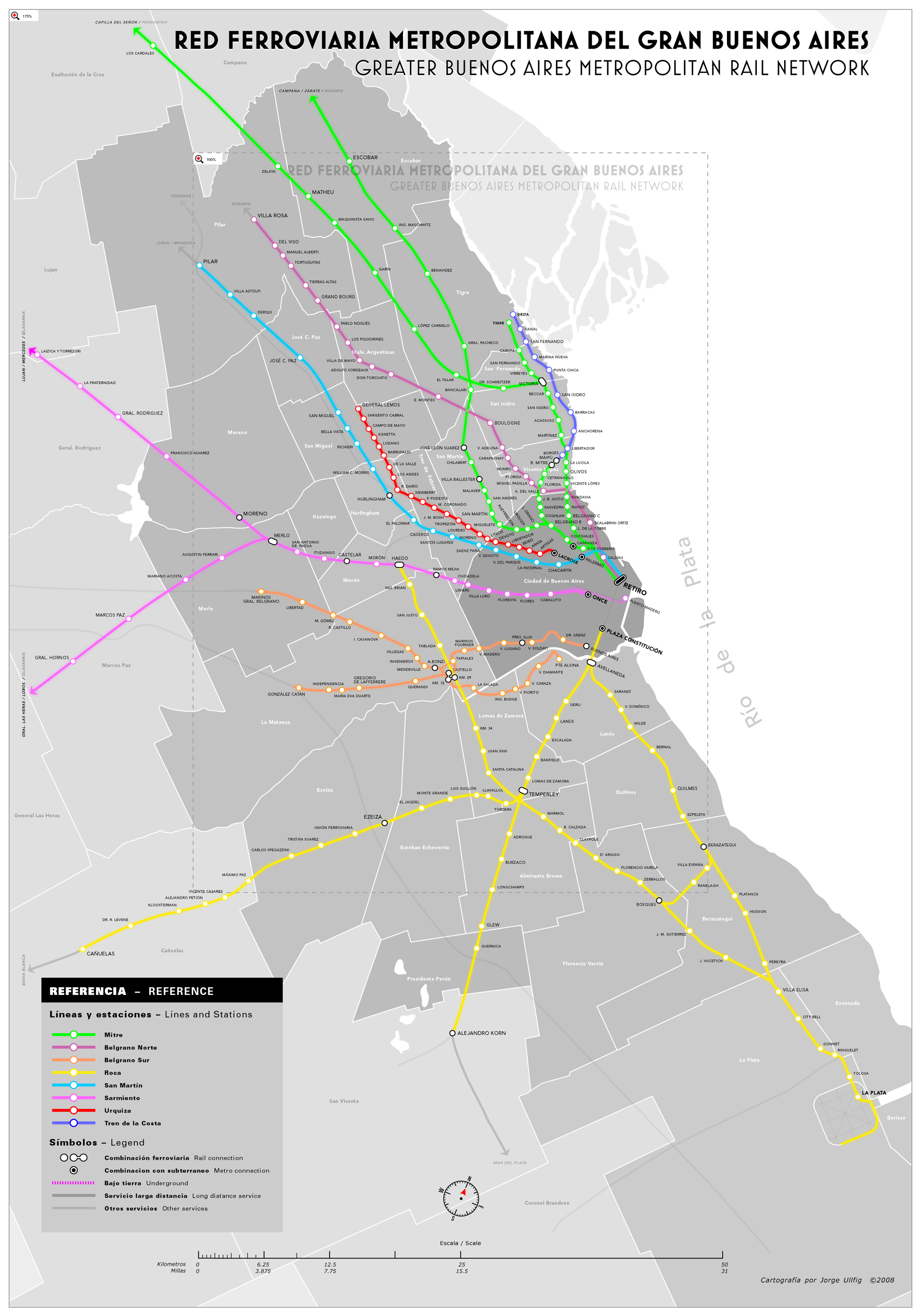
Aniki Geographica is designed precisely for the travellers. Its an association of a soft thick but strong genuine leather with our Book Huger product for protecting and the transportation of two pcs. Aniki Elegant notebooks. 2 pcs. of Book Huger in different colors and 2 pcs. of Aniki Elegant Notebook are included in the standard package. You can use all cahier kind notebooks up to 11 x 15 cm. with Aniki Geographica. Avalaible colors are Black, Dark Brown and Tan.
Please note: Each ANIKI Geographica leather journal has its own unique distressed look due to the characteristic and nature of genuine leather.
ANIKI Notebook papers are specially selected and tested for FOUNTAIN PENs. Aniki Notebooks are hand made.
For further information please visit our site.
Aniki Geographica Deri Defter taşıyıcıları özellikle Aniki Elegant serisi defterler ya da 11 x 15 cm'e kadar olan cep tipi defterler ile kullanmak için hazırlanmıştır. Aniki Geographica'nın standart paketinin içinde 2 adet Aniki Elegant Defter de bulunmaktadır. İster tek defter ister çift defter bir arada kullanabilirsiniz. Beraberinde verilen 2 farklı renkte Book Huger-Defter Kucaklayıcısı ile defterlerinizi onlarca farklı şekilde bağlayabilirsiniz. Aniki Geographica piyasadan toplanan kırpık derilerle değil, 1. sınıf özel seçki derilerin içinden en iyi bölümler seçilerek dokunduğunuzda hissedeceğiniz özel yumuşaklıkta deriler kullanılarak elde imal edilir. Tüm Aniki Defterleri elde imal edilir. Aniki Defterlerde kullanılan tüm kağıtlar Dolmakalem ile yazmaya uygundur.
Detaylı bilgi için sitemizi ziyaret edin.
On the southern coast of Garda Lake, at the end of Sirmione boasting a splendid view there are Roman villa remnants known for centuries as the "Cave di Catullo”, the most magnificent example of private building in the entire northern Italy. In Renaissance name of "caves" was used to interned and collapsed structures, covered by vegetation, within penetrated as in natural cavities. Tradition dates back to the 15th and 16th century has identified this complex as Catullo’s family villa, the Latin poet who died in 54 BC. According to the testimonial Catullo verses is certain that he had a residence in Sirmione, but it’s only possible that it was precisely in this area. Sirmione is known in the ancient world for being a station stop (mansio) along the major road that joined Brescia to Verona. The first detailed representation of villa ruins is a relief of beginning of 19th century. Large excavations were carried out by Jerome Orti Manara, which published the results in a still vital opera.
Superintendence began excavations in 1939-40 and restorations in 1948 acquired the entire area, allowing all the protection immersed in its natural environment. Recent surveys have allowed to verify the existence of an earlier building in the rooms below the southern sector and confirms that the construction has been built by a single project that has defined the orientation and distribution of internal spaces according to a precise axial and symmetry criterion. The villa, which has rectangles plant (m 167 x 105), including two foreparts on short sides, covers a total area of more than two hectares. To overcome the inclination of the rocky bank on which were supported foundations of the building, were created large rooms built, while in some areas became necessary imposing cutting rock. The remains are currently stored on several levels: the northern sector, for example, have remained only grandiose buildings, but nothing has kept the residential rooms, which have fallen already in antiquity. Ancient Romany indicated by the word "terme" bathrooms both private and public, while for us today this word refers to establishments that exploit hot water source. In Catullo caves the baths were built in the southern part in the second century AC, about a century after villa construction.
Thermal sector has a territory of almost 800 square meters and includes various environments. Unfortunately, some of these rooms were damaged and then today it’s difficult to rebuild their exact function. The best preserved area is called "pool". This is a large rectangular room that housed a bathtub. The floor was raised to the latter, probably supported by pillars, and was above the arches along the walls. Behind the pool was an area where probably was on fire (= praefurnium). Hot air and smoke products entered in a hollow that surrounds the pool and had to get up to the ceiling. Through the arches this air circulated in the area also below the floor (= ipocausto) and the room was so heated. Manufacturers have used many bricks in the walls so heat doesn’t disperse so easily.
Because its characteristics is probably that this area was the tepidarium, bathroom room with warm water tub. The area for hot water (the calidarium) was smaller and instead to have one big pool, had small tanks placed at the corners of the room and not intended to swim, but to immerse a part of the body. Even the calidarium was located near the heating oven. Finally, the area for cold water (frigidarium) had in the center a little deep tub on whose edges, decorated mosaic, people could sit. In Catullo caves are also other areas, in addition to those described, whose function is not clear. To decorate walls were used stucco, found during the excavations. In the bathtub were not used fresh water because of the considerable drop that separates lake from the building. To solve the water problem were built in the thermal area three tanks which was collecting rainwater. Two of these tanks are located behind the pool, while the third, once misinterpreted as Catullo "bath" is placed near the villa entrance. Water was extracted from the tank and conveyed to the baths through lead pipes, the so-called fistulas, that in Ancient Rome were typical water pipes.
In public baths, which were more complex than private, in addition to baths rooms there were locker rooms, gymnasiums, open spaces (such as gardens and courtyards), conference halls, reading rooms, latrines and special areas to take care of body.
Ancient Romany then attended the spa looking also for meeting moments.
Con il termine "Grotte di Catullo" si identifica un'antica villa romana edificata nel I secolo d.C. a Sirmione, in provincia di Brescia, sulla riva meridionale del Lago di Garda. Il complesso archeologico, studiato dall'inizio dell'Ottocento e riportato alla luce in più fasi, è oggi la testimonianza più importante del periodo romano nel territorio di Sirmione ed è l'esempio più grandioso di villa romana presente nel nord Italia. La denominazione di "Grotte" risale al Quattrocento, quando le rovine furono visitate dai primi cronisti-viaggiatori, ai quali apparvero sotto forma di caverne, largamente interrate e coperte di vegetazione. Il termine era comunque abbastanza diffuso e, con esso, si identificavano i vari siti archeologici romani che si andavano riscoprendo in quel periodo, ad esempio la Domus Aurea a Roma.Il primo ad attribuire la villa a Gaio Valerio Catullo fu Marin Sanudo il giovane e questa sua teoria fu poi sostenuta nei secoli successivi da vari scrittori. In base a testimonianze estraibili dai versi di Catullo (ad esempio dal Carme 31 dei Liber) è certo che egli avesse a Sirmione una residenza, ma non esistono prove concrete a sostegno dell'ipotesi che fosse proprio la villa in questione. Il termine è comunque rimasto e ancora oggi è utilizzato per identificare il sito archeologico.La grande villa, al di sotto della quale sono state rinvenute strutture del I secolo a.C., viene edificata agli inizi del I secolo d.C.. Non si conosce l'esatto periodo e il motivo del declino della villa, ma il ritrovamento di tombe, sia all'interno sia all'esterno dell'edificio, risalenti al IV secolo e al V secolo indica che, in quel periodo, la struttura era già stata sicuramente abbandonata.Nel corso dei secoli, come si è detto, diversi cronisti e viaggiatori visitano le rovine, ma i primi studi concreti su di esse vengono effettuati solamente nel 1801 da un generale di Napoleone Bonaparte. Successivamente, il veronese Girolamo Orti Manara dà inizio agli scavi, compiendo ulteriori e più approfondite ricerche. Il materiale viene pubblicato nel 1856 assieme a una planimetria: il testo del Manara è ancora oggi fondamentale.Nel 1939 la Soprintendenza per i beni archeologici avvia un ampio programma di scavi e restauri, acquisendo infine nel 1948 l'intera area per permettere un'adeguata la tutela del complesso, immerso nel suo ambiente naturale.Durante gli anni novanta del Novecento ulteriori studi hanno confermato che la costruzione è stata realizzata attraverso un progetto unitario, che ne ha definito l'orientamento e la distribuzione degli spazi interni secondo un preciso criterio di assialità e di simmetria.Il complesso archeologico, ancora oggi portato alla luce solo parzialmente, copre un'area di circa due ettari. La villa ha pianta rettangolare, di 167 x 105 metri, con due avancorpi sui lati corti. Per superare l'inclinazione del banco roccioso su cui furono appoggiate le fondazioni dell'edificio vennero creati grandi opere di sostegno, mentre in altre zone si resero necessarie imponenti tagli della roccia.Il piano nobile, corrispondente agli ambienti di abitazione del proprietario, risulta il più danneggiato, poiché la villa è stata per secoli una cava di materiali. Meglio conservate sono il piano intermedio e altre costruzioni non accessibili nell'antichità e quindi preservate fino agli scavi contemporanei.L'ingresso dell'edificio si trovava nell'avancorpo meridionale. La villa era caratterizzata da lunghi porticati aperti verso il lago sui lati est e ovest, direttamente comunicanti sul lato nord con un'ampia terrazza, situata al centro dell'avancorpo nord. Al di sotto del porticato ovest si trovava un'ulteriore passeggiata coperta. Le parti residenziali dell'edificio erano situate nelle zone nord e sud, mentre la parte centrale, costituita oggi dal Grande Oliveto, era un grande spazio aperto. Sul lato meridionale, sotto un pavimento in opus spicatum, si trovava una grande cisterna, lunga quasi 43 metri. L'ampio settore termale, costituito da diversi vani situati nella medesima zona, tra i quali una piscina, fu ricavato probabilmente all'inizio del II secolo.I vari ambienti possiedono suggestivi nomi convenzionali, derivati da una tradizione locale consolidata oppure da interpretazioni e denominazioni date durante i primi scavi. Fra le rovine, ad esempio, si possono trovare l'Aula a tre pilastri, il Lungo corridoio, la Trifora del Paradiso, il Grande Pilone, la Grotta del Cavallo, il Grande Oliveto prima citato e l'Aula dei Giganti.
This is precisely the time when artists go to work. There is no time for despair, no place for self-pity, no need for silence, no room for fear. We speak, we write, we do language. That is how civilizations heal.
I know the world is bruised and bleeding, and though it is important not to ignore its pain, it is also critical to refuse to succumb to its malevolence. Like failure, chaos contains information that can lead to knowledge — even wisdom. Like art.
Toni Morrison. Photo Alfred A. Knopf
Not precisely what they call "Parkitecture" (the architectural style of the US National Park Service), the design of my local nature center was clearly influenced by parkitecture.
Taken for Flickr's Our Daily Challenge: ARCHITECTURE
More precisely, this cosplay plays homage to Master Roshi's first appearance in the Dragon Ball manga. This is his original look. Will totally nails it!
Socials:
She is my best friend and that's precisely what she is. I don't think i can put it in more simpler terminology than that. I specifically shot this image with the title in mind. Some of her relatives were cherishing her surprise visit for her sisters wedding engagement and there was so much fun.
Yes, sometimes i have something in my head, a poem, a title for an image and i hunt for images that fits the size. I know, wierd. Can't help it, was born this way :-P
Canon EOS 400D with the Sigma EF 24 - 70 MM F/2.8. Manual, F/4 at 1/100th of a Second, ISO100, Canon Speedlite 430EX fired, Manual 1/1.
All Rights Reserved. Owner and Usage Rights belongs to Dilip Muralidaran. Any use of this work in hard or soft copy or transfer must be done with the expressed consent of Dilip Muralidaran in written. Failing to do so will result in violation as per Section 63 of the Indian Copyrights Act, 1957 & Forgery, Fruad, Misrepresentation and Misinformation as per the Indian Penal Code Section 420 leading to severe legal consequences.
Two towers of brick reach the ceiling 111 inches high at the 37th layer before meeting the sky at the 61st layer. Each tower of brick is comprised of 111 visible bricks. On the 31st layer, at ninety-three (93) inches high on the 93rd brick of the North column, the image of Jesus Christ appears where Flight 11 would one day hit the World Trade Center on floor 93 of the North Tower. Scaled where one brick is equivalent to three floors of the twin towers, the columns precisely match the height and compass orientation of the former twin towers with the right column aligned Northwest and the left column Southeast.
37 x 3 = 111 (There were 110 floors of the WTC. For purposes of creating a scaled model one more floor may be added to compensate for the extra height of the Lobby.)
31 x 3 = 93 (The 93rd floor was hit by American Airlines Flight 11.)
In Number Theory we may consider 31 and 37 to be the 9-11 "Lucky Numbers" since they occupy the ninth and eleventh position in Stanislaw Ulam's mathematical sieve. (Ulam's Lucky Numbers to 100 are 1, 3, 7, 9, 13, 15, 21, 25, 31, 33, 37, 43, 49, 51, 63, 67, 69, 73, 75, 79, 87, 93 and 99.)
After discovering this image, I felt extremely fortunate to have found it. I undertook an investigation to understand the meaning behind the image. I counted bricks; I brought out my magnifying glass, I combed through the Bible for clues. I realized that I had a choice to make after I saw it. I could either dismiss it as a fluke or seek to attach a meaning to it in a completely logical way - one that I would never forget.
(Remarks added 4/2014 - I encourage those interested in math to have a listen to comments made by Professor Norman Wildberger in MF 93 The magic and mystery of pi The subject is Pi yet he alludes to a new way of looking at numbers and pi in particular that perhaps we will arrive at in the next hundred years. His most pertinent comments come at minutes 31:00 and 37:00 I recommend listening to his ideas at the video's beginning then skipping ahead where he continues to flesh out these thoughts in minutes 31 and 37.. I can't help but wonder the extent to which Spiral 935 might fit his predictions.)
The appearance of Jesus Christ on "floor 93" of the North Column of bricks led me to Proverbs 29: 8 (corresponding to the physical address) - Mockers set a city aflame; wise men turn away wrath - and a step closer to stopping the 9/11 plot.
On September 17, 2003 Congressman Wiener introduced H.R. 3137 to prohibit assistance to Cuba, Libya, North Korea, Iran, Syria, but most notably, Saudi Arabia.
In fact, the text of the resolution is solely directed at Saudi Arabia and delivers a biting narrative demonstrating Saudi support for terror groups in general and specifically, aid to the 9/11 attackers. I mention this in regards to the topic of Ulam's 'Lucky Numbers" to explore the various meanings of "Luck" in the context of war. What the numbers in H.R. 31-37 appear to symbolize is that in spite of her links to terrorism, Saudi Arabia would draw a lucky card as Iraq became the primary focus. A Hiroshima survivor and a former student described to our class his luck in being just outside Hiroshima the day the atomic bomb dropped killing his commanding officer and ending the war. He genuinely felt lucky and joked that his relationship with the commanding officer was a poor one so he was doubly lucky. When you visit Hiroshima and the peace museum and you live there for many years and hear the stories of the survivors you begin to understand how fortunate we are to be alive with all the endless ways of dying there are. It drives the message home of how important it is to stop the plots of the radicalized few to safeguard the life and liberty of millions.
Ulam's "Lucky Numbers" are the numbers remaining after a sieve has eliminated the rest. Numbers, of course, are interchangeable and the first concept to understand is there are no lucky numbers. When it comes to rolling dice, for example, it is equally probable any one of the six sides will emerge on top. But like letters, we tend to favor using certain numbers over others. By knowing which letters and numbers occur more frequently in our choices and comparing it with a random sequence we can crack codes or even make predictions with significant advantage. In other words we must use as a base, the reality of randomness. Ulam's Lucky numbers and his spiral offered another breakthrough: by definition shape is not randomness and as numbers are ordered interesting patterns can be detected among prime and square numbers.
Ulam started with 1 as a centered number and placed 2 to its right, then and he spiraled around it counter-clockwise creating an evenly-squared grid 7 numbers high and 7 across. The upper left and right corners of his spiral are 31 and 37, both prime numbers. If one could give elasticity to the right column of bricks one could re-create Ulam's spiral starting from the lowest brick as the centerpiece and spiraling to create a protective canopy or "rooftop" from bricks 31 to 37. (Incidentally, a triangular or pentagon-shaped spiral can both be made using exactly 31 numbers each.) Circling all the prime numbers he noticed a pattern of diagonal lines of primes emerged even as he increased the size vast amounts using computer models. This one playful exercise while bored in a lecture would have major implications. In his later life he stepped away from pure math pursuing an interest in math as it relates to biology.
In the late 90's with each passing terror attack, experts debated at what point the gloves would come off; they began to see a silver lining in the unspeakable, a transforming event, a successful mass attack; the next thing you know the public had been broad-sided, victimized by a radicalized throng of suicidal maniacs and the see-no-evil policy born of an idealistic hope in cataclysm.
If you have ever been a lifeguard or a security guard you know it is not easy keeping one's guard up each and every moment.. This is why it is necessary to have a strong sense, a shared sense of responsibility-among experts as opposed to a loose collection of self-appointed panel-sitters and politically-appointed judges whose fixed eye on the shifting winds of politics opens doors to major policy error. Irrespective of which party has won or lost it is our duty to put politics aside. Budgets are often inadequate, methods are often antiquated, or even counter-productive, but at the end of the day, it is important to come to the plate, to speak out, to metaphorically speaking, grab hold of The Scottish Cafe book in Lviv, or Tokyo, or Washington, or wherever one may be, and solve the Bojinka number game so that no person is ever left out of the loop for the self-aggrandizing sake of those who are in it; where success is defined by the plot's foiling, not its transforming impact.
Stanislaw Ulam was the originator of the mathematical sieve for 'Lucky Numbers' as well as playing an important role in the Manhattan Project as did my grandfather. Ulam was born in Poland where he and fellow math students began a book in a local cafe, The Scottish Cafe, where any patron could contribute puzzling math questions or attempt to solve existing ones. Two of his famous quotes follow:
"It is still an unending source of surprise for me to see how a few scribbles on a blackboard or on a sheet of paper could change the course of human affairs."
"I'm an agnostic. Sometimes I muse deeply on the forces that are for me invisible. When I am almost close to the idea of God, I feel immediately estranged by the horrors of this world, which he seems to tolerate..."
The flames of wrath bring destruction while`the controlled fire of a kiln offers art and hope.
My wife Kumiko's father was a potter and manager of a well-known bizen ware kiln near Okayama, Japan. Bizen ware is unglazed, unpainted pottery and the surface markings are a result of yohen or 'kiln effects' produced by the fire and ash. Similarly, the image of Christ is likely tied to the convergence of ''yohen' and signal as it relates to Ulam's spiral bearing in mind that his spiral is a reflection of the forces at work in numbers and life. Ulam recognized that while mathematicians award one another for their various theories and discoveries and help build bigger bombs, the biological evidence suggests life already has a handle on what men struggle years to grasp. 'Yohen' is also the name of a Philip Kan Gotanda play set in Gardena where Kumiko and I lived during the period I attempted to stop the 9/11 plot. We met actor Danny Glover backstage after an exceptional performance playing the role of a husband whose Japanese wife, a potter, suggests they should seek to rekindle the flame that has dimmed with the passing years. The kanji 'Ai' above means 'Love'.
-------
In November 2015, we will celebrate the 101st Anniversary of a Japanese professor's gift of a stone monument to the Alamo. Professor Shiga Shigetaka from Okazaki was educated at Sapporo Agricultural College which became Hokkaido University. A former Union Colonel and chemist William Smith Clark was invited to establish the college to help modernize Japan as it transitioned from a feudal society.
After graduating Professor Shiga became a popular geographer and traveler in and outside Japan, publishing many books on the subject. He was inspired by the story of the Alamo heroes to compose a poem honoring their deeds by respectfully and even favorably comparing their deeds with those of Japanese and Chinese warrior legends. Two monuments inscribed with Shiga's poem honoring the Alamo can be found in Japan - at Okazaki Castle and at a famous battleground.
A third made its way overseas with the professor to San Antonio, where he was treated to an elaborate dinner held in his honor at the St Anthony Hotel. Two members of the local Japanese community were present and their descendants remain a vibrant part of the community to this day. The San Antonio Express provided excellent coverage of the dinner and toasts offered noting the gift inspired a feeling of confidence that a spirit of brotherhood had been born that evening through the cross-cultural honoring of heroes. The following day an outdoor event marking the delivery of the gift was attended by over 100 including many of the city's most esteemed residents and leaders.
After visiting San Antonio on our honeymoon and reading Sister Margit Nagy's historical account of Shiga's gift we decided to name our language school in Japan Alamo. By chance my mother happened to be taking a course at Our Lady of the Lake University from Sister Nagy at the time and she was able to share with Sister Nagy her two sons' experiences in Japan.
My wife and I ran the school for five years before moving to the United States. Interestingly, ours was not the first English language school in my wife's family history in Okayama. The Night and Day English language school was run by a distant cousin of hers after the end of WW II.
And so, in the spirit of giving and remembering, here's wishing that you all
Have a Very Merry Christmas!!!!
12/24/2014
The church of San Cristobal was erected on the grounds of the first Inca Qollqanpata Palace, which belonged precisely to the first Inca “Manco Capac”, who according to the theory came from the highlands, along with his “Coya” known as “Mama Ocllo” with the mission to found the Empire of the Incas.
Cusco, often spelled Cuzco, is a city in southeastern Peru, near the Urubamba Valley of the Andes mountain range. It is the capital of the Cusco Region and of the Cusco Province.
Peru is a country in western South America. It is bordered in the north by Ecuador and Colombia, in the east by Brazil, in the southeast by Bolivia, in the south by Chile, and in the west by the Pacific Ocean.
Peru is a magical destination, abundant with ancient ruins dating back to the Incas.
Peru is the third largest country in South America, after Brazil and Argentina.
Think "Holland" and you've probably already conjured the iconic images of tulips and windmills. More precisely, the very specific windmills you're envisioning right now are that of Kinderdijk.
Though it may sound odd for how technical and pragmatic the region proved to be, the name Kinderdijk translates in Dutch to mean "children's dike." According to local legend, after a particularly terrible flood in the 15th century, a lone basket was left floating in an inundated canal. Upon closer inspection, a cat was found bounding from one side of the basket to the other in an effort to keep it balanced, for inside rested an orphaned baby. The cat had kept the babe afloat, safe and sound during its journey… Thus giving the world the folktale "The Cat and the Cradle" in addition to the village of Kinderdijk its name.
Back in the modern day, visitors will find 19 historically authentic windmills scattered across Kinderdijk's canal-riddled landscape. With their sails raised to the skies (coming to rest in formations that communicate across the bogs in a language of semafors), one could be forgiven for believing these are creatures beholden to the air. What history reveals, in fact, is that the Netherlands' famous windmills are well-disguised creatures of the sea, without which the nation's famously innovative water management system would not have been possible.
Sometime in the 13th century, Zuid-Holland's peat rivers ceased to drain as they had been, creating a pattern of flooding that devastated the beautiful landscape at Alblasserwaard, which already existed below sea level. Berms were built to prevent flooding, but pumping stations needed to be constructed to continue water flow from low to high areas; hence, the 19th windmills still seen today.
Nowhere else in the world offers a complete portrait of early water management like that of Kinderdijk, which accounts for UNESCO's inclusion of the site among its World Heritage as of 1997 for its "unique character." Thanks to its truly groundbreaking unification of sea and sky, plus the added bonus of a world-renowned folktale, a visit to Kinderdijk is the sort of treasure that offers something for dreamers and pragmatists alike. www.atlasobscura.com/places/windmills-of-kinderdijk
The Cornell Farm
West Building, Main Floor—Gallery 63
•Date: 1848
•Medium: Oil on Canvas
•Dimensions:
oOverall: 93.3 × 124.4 cm (36¾ × 49 in.)
oFramed: 119.1 × 149.9 × 6 cm (46⅞ × 59 × 2⅜ in.)
•Credit Line: Gift of Edgar William and Bernice Chrysler Garbisch
•Accession Number: 1964.23.4
•Artists/Makers:
oArtist: Edward Hicks, American, 1780-1849
Overview
Edward Hicks, having apprenticed to a Pennsylvania coachmaker at thirteen, became a minister in 1811. He was torn between his calling as a Quaker minister and his love of painting, worrying that his art kept him from “the Lord’s work.”
Hicks precisely identified this subject with a long inscription along the bottom of the canvas: “An Indian summer view of the Farm & Stock OF JAMES C. CORNELL of Northampton Bucks county Pennsylvania. That took the Premium in the Agricultural society, October the 12, 1848 Painted by E. Hicks in the 69th year of his age.” Though the punctuation and capitalization are inconsistent, the quality of the lettering proves that Edward Hicks was schooled in sign painting.
Having no background in academic art, Hicks employed the direct approach of a primitive or folk painter. The horizontal band of livestock across the foreground, although childlike in its simplicity, clearly presents each prize-winning animal as an individual portrait. Hicks’ delight in creating ornamental pattern is evident in the arrangement of fences, while the rich red and bright white of the house and barn symmetrically flank this central landscape. Although the stark silhouettes of figures and buildings seem naive, Hicks softly blended his paints over the orchard to give the impression of space existing well beyond what the eye can see.
Inscription
•Across Bottom: An Indian summer view of the Farm & Stock of JAMES C. CORNELL of Northampton Bucks county Pennsylvania. That took the Premium in the Agricultural society, october the 12, 1848 / Painted by E. Hicks in the 69th year of his age.
Provenance
Painted for James C. Cornell, Northampton, Bucks County, Pennsylvania; to Theodore Cornell, his son; to Russell Cornell, his son; to Mr. and Mrs. J. Stanley Lee (Mrs. Lee is Hick’s great-granddaughter), Newtown, Pennsylvania, by whom sold in 1954 to Edgar William and Bernice Chrysler Garbisch; gift to NGA, 1964.
Associated Names
•Cornell, James C.
•Cornell, Russell
•Cornell, Theodore
•Garbisch, Edgar William, Mr. and Mrs.
•Lee, J. Stanley, Mr. and Mrs.
Exhibition History
•1882—Bucks County Bi-Centennial Celebration, Doylestown, Pennsylvania, 1882.
•1957—American Primitive Paintings from the Collection of Edgar William and Bernice Chrysler Garbisch, Part II, National Gallery of Art, Washington, 1957, no. 81.
•1957—Art Our Children Live With, Downtown Gallery, New York, 1957, no cat.
•1958—American Folk Art. Part of American Art. Four Exhibitions, Brussels Universal and International Exhibition, Belgium, 1958, no. 84, 45, repro. 51.
•1960—Edward Hicks, 1780-1849, Abby Aldrich Rockefeller Folk Art Center, Williamsburg, Virginia, 1960, no. 37.
•1961—101 Masterpieces of American Primitive Painting from the Collection of E.W. and B.C. Garbisch, traveling exh. by the Amer. Fed. of Arts, New York, 1961-1964, no. 75, color repro. First venue, The Metropolitan Museum of Art, New York.
•1966—Three Self-Taught Pennsylvania Artist: Hicks, Kane and Pippin, Carnegie Institute of Art, Pittsburgh; Corcoran Gallery of Art, Washington, 1966-1967, no. 33, color repro.
•1968—American Naive Painting of the 18th and 19th Centuries: 111 Masterpieces from the Collection of E.W. and B.C. Garbisch, traveling exh. by Amer. Fed. of Arts, N.Y., 1968-1970, no. 73, repro. First venue: Grand Palais, Paris.
•1970—American Naive Painting of the 18th and 19th Centuries: Masterpieces from the Collection of E.W. and B.C. Garbisch, organized by the Amer. Fed. of Arts, N.Y., and Mainichi News., Nihobashi Mitsukoshi, Tokyo, 1970, no cat.
•1970—The New World: 1620-1970, Chrysler Museum of Art, Provincetown, Massachusetts, 1970, no. 15.
•1971—What is American in American Art, M. Knoedler and Co. [benefit exhibition for the Museum of American Folk Art], New York, 1971, no. 46, color repro.
•1974—Our Land, Our Sky, Our Water, organized for International Exposition, Spokane, Washington, 1974, no. 15.
•1978—The American Folk Art Tradition: Paintings from the Garbisch Collection, National Gallery of Art, Washington, D.C., 1978.
•1980—American Folk Painters of Three Centuries, Whitney Museum of American Art, New York, 1980, 96, color repro. (cat. edited by Jean Lipman and Thomas Armstrong).
•1981—American Naive Paintings from the National Gallery of Art, Terra Museum of American Art, Evanston, Illinois, 1981-1982, no. 26, color repro. (cat. by Ronald McKnight Melvin).
•1985—American Naive Paintings from the National Gallery of Art, Exh. cat. Traveling exh. by the International Exhibitions Foundation, Washington, 1985-1987, no. 36, color repro. First venue: Museum of American Folk Art, New York.
•1988—La Nascita di Una Nazione: Pittori americani dalla National Gallery of Art di Washington 1730-1880, Palazzo Pepoli Campogrande, Bologna; Galleria Internazionale d’Arte Moderna di Ca’Pesaro, Venice, 1988-1989, no. 36, repro.
•1996—1846: Portrait of the Nation, National Portrait Gallery, Washington, D.C., 1996, unnumbered catalogue, repro.
•1997—Charles Sheeler in Doylestown: American Modernism and the Pennsylvania Tradition, Allentown Art Museum; Amon Carter Museum, Fort Worth; Cincinnati Art Museum, 1997-1998, no. 40, repro.
•1999—The Kingdoms of Edward Hicks, 5 venues, shown only at the first two, The Abby Aldrich Rockefeller Folk Art Center, Williamsburg; Philadelphia Museum of Art, 1999-2000, no. 82, fig. 171.
•2018—Outliers and American Vanguard Art, National Gallery of Art, Washington; High Museum of Art, Atlanta; Los Angeles County Museum of Art, 2018-2019, no. 35.
Bibliography
•1947—Editorial, Antiques, 52 (October 1947): 252-253.
•1950—Lipman, Jean, and Alice Winchester. Primitive Painters in America 1750-1950. New York, 1950: 46-47.
•1952—Ford, Alice. Edward Hicks, Painter of the Peaceable Kingdom. Philadelphia, 1952: 97, 107, 108, 121, color repro. opp. 108.
•1966—Cairns, Huntington, and John Walker, eds. A Pageant of Painting from the National Gallery of Art. 2 vols. New York, 1966: 2:480, color repro.
•1970—American Paintings and Sculpture: An Illustrated Catalogue. National Gallery of Art, Washington, 1970: 68, repro.
•1971—Campbell, William P. “The American Heritage at the National Gallery of Art.” Connoisseur 178 (December 1971): 270, 272.
•1974—Lipman, Jean, and Alice Winchester. The Flowering of American Folk Art. New York, 1974: color pl. 70.
•1975—Parry, Ellwood. “Edward Hicks and A Quaker Iconography.” Arts Magazine 49 (June 1975): 94.
•1976—Lipman, Jean, and Helen M. Franc. Bright Stars: American Painting and Sculpture Since 1776. New York, 1976: color repro., 60.
•1978—King, Marian. Adventures in Art: National Gallery of Art, Washington, D.C. New York, 1978: 100, pl. 63.
•1979—Haverstock, Mary Sayre. An American Bestiary. New York, 1979: color repro., 146.
•1980—American Paintings: An Illustrated Catalogue. National Gallery of Art, Washington, 1980: 175, repro.
•1980—Wilmerding, John. American Masterpieces from the National Gallery of Art. National Gallery of Art, Washington, D.C., 1980: 10, no. 19, color repro.
•1983—Mather, Eleanore Price. Edward Hicks: His Peaceable Kingdoms and Other Paintings. Newark, Delaware, 1983: 85, 195, no. 106, color pl. 8.
•1984—Walker, John. National Gallery of Art, Washington. Rev. ed. New York, 1984: 543, no. 820, color repro.
•1985—Ford, Alice. Edward Hicks, His Life and Art. New York, 1985: 234-236, color repro.
•1988—Wilmerding, John. American Masterpieces from the National Gallery of Art. Rev. ed. National Gallery of Art, Washington, D.C., 1988: 90, no. 22, color repro.
•1992—American Paintings: An Illustrated Catalogue. National Gallery of Art, Washington, 1992: 202, repro.
•1992—Chotner, Deborah, with contributions by Julie Aronson, Sarah D. Cash, and Laurie Weitzenkorn. American Naive Paintings. The Collections of the National Gallery of Art Systematic Catalogue. Washington, D.C., 1992: 194-196, color repro. 195.
•1992—National Gallery of Art, Washington. National Gallery of Art, Washington, 1992: 226, repro.
•1998—Ford, Alice. Edward Hicks, Painter of the Peaceable Kingdom. Philadelphia, 1998: 97, 108, 120, repro.
•2001—Southgate, M. Therese. The Art of JAMA II: Covers and Essays from The Journal of the American Medical Association. Chicago, 2001: 178-179, 216, color repro.
•2004—Hand, John Oliver. National Gallery of Art: Master Paintings from the Collection. Washington and New York, 2004: 300, no. 242, color repro.
From American Naïve Paintings:
1964.23.4 (1936)
The Cornell Farm
•1848
•Oil on Canvas, 93.3 × 114.4 (36¼ × 49)
•Gift of Edgar William and Bernice Chrysler Garbisch
Inscriptions
•Across Bottom: An Indian summer view of the Farm & Stock of JAMES c. CORNELL of Northampton Bucks county Pennsylvania. That took the Premium in the Agricultural society, October the 12., 1848 / Painted by E. Hicks in the 69th year of his age.
Technical Notes
The tacking margins on the fine support are intact, although unusually narrow (1 cm). The off-white ground is smoothly applied. The darker and cooler colors were applied first in relatively thin layers. The lighter colors were placed over them in heavier application. Low impasto is evident in the highlights and details. There is no visible underdrawing in natural light or infrared reflectography, and no design changes are apparent. Vertical streaks in the sky appear to originate beneath the paint film. The picture is in excellent condition with only a few tiny losses scattered in the sky and foreground.
Provenance
James C. Cornell, Northampton, Bucks County, Pennsylvania; to Theodore Cornell, his son; to Russell Cornell, his son; to Mr. and Mrs. J. Stanley Lee (Mrs. Lee is Hicks’ great-granddaughter), Newtown, Pennsylvania, by whom sold in 1954 to Edgar William and Bernice Chrysler Garbisch.
Exhibitions
Bucks County Bi-Centennial Celebration, Doylestown, Pennsylvania, 1881. // NGA, 1957, no. 81. // Art Our Children Live With, Downtown Gallery, New York, 1957, no cat. // American Art, Brussels Universal and International Exhibition, Belgium, 1958, no. 84. / / Edward Hicks, 1/80-1849, AARFAC, 1960, no. 37. / / 101 Masterpieces, 1961-1964, no. 75, color repro. // Three Self-taught Pennsylvania Artists: Hicks, Kane and Pippin, Carnegie Institute of Art, Pittsburgh; Corcoran Gallery of Art, Washington, 1966-1967, no. 33, color repro. // in Masterpieces, 1968-1970, no. 73, color repro. // Tokyo, 1970. / / The New World: 162.0-19/0, Chrysler Museum of Art, Provincetown, Massachusetts, 1970, no. 15. // What is American in American Art, M. Knoedler and Co., New York, 1971, catalogue by Mary C. Black, no. 46, color repro. / / Twenty-five Polk Artists: Their Lives and Work, AARFAC, 1971, no cat. / / Our Land, Our Sky, Our Water, organized for International Exposition, Spokane, Washington, 1974, no. 15. // Whitney, 1980, 96, color repro. / / Terra, 1981-1981, no. 26, color repro. / / American Naïve Paintings, (IEF) 1985-1987, no. 36, color repro. // Italy, 1988-1989, no. 36, color repro.
Toward the end of his life Edward Hicks created four farmscapes of the Pennsylvania countryside.1 These late paintings, which feature calm, harmonious views of Bucks County farms, are considered to be his finest works. Hicks’ granddaughter reported that the artist “always considered the Cornell picture his masterpiece.”2
In this resplendent panoramic view of his friend’s neatly cultivated property Hicks presents convincing atmospheric perspective and suffuses the landscape with the golden light of Indian summer. Against this naturalistic background, however, Hicks parades Cornell’s prizewinning livestock across the foreground in an unnaturalistic way, their flat, sharply delineated shapes reminiscent of the crowded collages of animals in some of his peaceable kingdom pictures. Most of the figures populating the middle ground have one arm extended, appearing to call attention proudly to outstanding features of the bountiful farm. Descendants have identified the belted figure as the farm owner, James Cornell, in conversation with his friend William Janney. Their inspection of the farm may represent a real scene, since Cornell was awarded several prizes at the 1848 Newtown Exhibition and Janney apparently was on the committee of judges. In addition to honors for his horses, swine, sheep, poultry, and native stock, Cornell was presented with “the first premium of $5 for the best cultivated Farm over 100 acres, regard being had to the quality of produce, mode of cultivation, and general appearance.”3
Although Hicks relied on his observations of nature, another source of inspiration for The Cornell Farm may have been The Country Fair, 182.5 (private collection) by John A. Woodside (1781-1851).4 Both paintings depict houses and barns perched on gently rolling hills with a variety of animals arranged in profile across the foreground. Although Woodside distributes his animals and figures more evenly throughout the landscape, both artists include men with stiff, outstretched arms pointing to features of the farm and conversing with each other. Hicks’ farmer with a plow, on the right, also seems to derive from two plowing farmers on the left of Woodside’s canvas. The animals in both paintings may ultimately derive from British livestock and sporting prints of the late eighteenth and nineteenth centuries, which frequently depicted animals in profile or aligned horizontally across the composition. These prints were extremely popular, serving as wall decorations and advertisements for stockbreeders.5
Hicks’ farm scenes may also reflect his own reverence for farming. He tried his hand at it briefly in 1813 and later remarked, “[I] verily thought then and still think farming more consistent with the Christian, and was willing to sacrifice all my fondness for painting.”6 Hicks’ farmscapes present this ideal Christian way of life; they are secular peaceable kingdoms occupied by men and animals in complete harmony with each other.
America’s earliest landscapes, like those painted by Winthrop Chandler (q.v.) in the eighteenth century or Ralph Wheelock’s Farm (1965.15.13) of c. 1814 by Francis Alexander (q.v.), were often “portraits” of a landowner’s property and possessions, and The Cornell Farm falls within this tradition. Some writers, recognizing the relationship of Hicks’ farmscapes to these early landscapes, have concluded that they have “no historical or religious connotation,”7 but it would seem incongruous for the deeply religious Hicks to paint a scene without some allusion to his strong Quaker ideals. Although The Cornell Farm and the other farmscapes relate to the topographical tradition, they are “profoundly Quaker pictures.”8 Their harmony, serenity, and richness prove that industry and Quaker piety can result in an earthly perfection.9
The Cornell Farm was painted for James Cornell himself, who must have been pleased with the portrait of his prize bull which he had commissioned from Hicks two years earlier in 1846.10 Slides taken at the farm’s site reveal that Hicks attempted to portray its actual topography and appearance. The landscape today remains similar to Hicks’ depiction; two wagon houses still stand, although the original house was replaced and the barn burned down in the 1960$.
LW
Notes
1.Hicks’ other farmscapes are The Residence of Thomas Hillhorn, 1845 (AARFAC; Mather 1983, cat. no. 101), his earliest farm scene; The Residence of David Twining in 178 5, c. 1845-1846 (four versions; Mather 1983, cat. nos. 101-105) and The Leedom Farm, 1849 (AARFAC; Mather 1983, cat. no. 107). The latter, like The Cornell Farm, shows expansive, panoramic views, while the other two focus on only a segment of the farm. It is generally assumed that Hicks was inspired by his actual Pennsylvania surroundings. The Residence of David Twining 1785, however, is based on Hicks’ memories of his childhood rather than on a contemporary scene.
2.A 1954 letter,}. Stanley Lee to Colonel Garbisch, records Edward Hicks’ granddaughter quoting the painter to Lee.
3.The Doylestown Democrat and Bucks County Republican, 17 October 1848.
4.Reproduced in Virgil Barker, American Painting (New York, 1950), 373.
5.While Ford 1951, 97, mentions the possibility that Hicks may have seen Woodside’s painting, she believes it unlikely. However, Woodside was a contemporary of Hicks and a leading sign painter in nearby Philadelphia, and the possibility should not be discounted. Since Hicks was concerned first and foremost with religious pursuits, his Memoirs contain little information to assist historians in pinning down his artistic influences. On Woodside, see Stuart P. Feld and Albert Ten Eyck Gardner, American Paintings: A Catalogue of the Collection of the Metropolitan Museum of Art (Greenwich, 1965), 151.
6.Louisa Dresser, “The Peaceable Kingdom,” Bulletin of the Worcester Art Museum 2.5 (Spring 1934), 17.
7.Three Self-Taught Pennsylvania Artists: Hicks, Kane and Pippin [exh. cat., Carnegie Institute of Art] (Pittsburgh, 1966), unpaginated.
8.Parry 1975, 94.
9.It is worth noting that Hicks painted this scene at the same time the Hudson River School artists were creating their tributes to God’s nature. The Cornell Farm seems to relate philosophically, as well as in subject matter, to this academic landscape tradition. Hicks, in this peaceful scene with its warm, glowing light, shares the Hudson River painters’ belief in the manifestation of God’s presence in nature and light. Like the academic landscape painters, he considered man in harmony with the landscape or as “part and parcel of God” (Ralph Waldo Emerson as quoted in Barbara Novak, American Painting of the Nineteenth Century: Realism, Idealism and the American Experience, id ed. [New York, 1979], no). In fact, the Quaker belief that all men possess a portion of the Spirit (Eleanore Price Mather, “A Quaker Icon: The Inner Kingdom of Edward Hicks,” Art Quarterly 36 [Spring/Summer 1973], 85) resembles the Emersonian belief in physical facts as “the end or last issue of spirit” (Emerson as quoted in Novak 1979, in).
10.James Cornell’s Prize BU//ÍS at AARFAC and reproduced in Mather 1983 (see Bibliography), cat. no. 108. A receipt which was removed from the reverse reads: “James Cornell / To Edward Hicks Do / To painting his prize bull. $15.00 / Rec 5th mo 16th 1846 the above in full / of all demands by me / Edward Hicks.” As Mather explains, this work has its precedents in Dutch pastoral lithographs (81-86).
References
•1947—Antiques, 51 (October): 151-153 (untitled editorial).
•1950—Lipman and Winchester: 46-47.
•1951—Ford (see Bibliography): 97, 107, 108, in, color repro. opp. 108.
•1971—Campbell, William P. “The American Heritage at the National Gallery of Art.” Connoisseur 178 (December):
•2-70, 2.72-
•1974—Lipman, Jean, and Alice Winchester. The Flowering of American Folk Art. New York: color pi. 70.
•1975—Parry, Ellwood. “Edward Hicks and a Quaker Iconography.” Arts Magazine 49 (June): 94.
•1976—Lipman, Jean, and Helen M. Franc. Bright Stars: American Painting and Sculpture Since 1776. New York: color repro. p. 60.
•1979—Haverstock, Mary Sayre. An American Bestiary. New York: color repro. p. 146.
•1983—Mather (see Bibliography): 85, 195, cat. no. 106, color pi. 8.
•1985—Ford (see Bibliography): 134-136, color repro.
Photograph taken at an altitude of Fifty eight metres, in the magic of the Golden Hour around sunrise (Sunrise was at precisely 04:38am), at 03:40am on Thursday 12th June 2014 off Lullingstone Lane and Eagle Heights overlooking the field adjacent to Eynsford Viaduct in the village of Eynsford, Kent, England.
The impressive nine-arched red-brick viaduct is a prominent feature on the line to the 'Bat & Ball' station. The structure was built by the independent ''Sevenoaks Railway'', incorporated in 1859 to link the ''Chatham'' main line with the market town of Sevenoaks. And first services began on 2nd June 1862. The viaduct has nine arches of 30-foot span, and rises to a height of 75-feet above the valley and the River Darent.
.
.
Nikon D800 24mm 1/100s f/2.8 iso100 RAW (14 bit) Nikon RC-DC2 remote shutter release. Manual focus. Manual exposure. Matrix metering.
Nikkor AF-S 24-70mm f/2.8G ED IF. Jessops 77mm UV filter. Nikon MB-D12 battery grip. Two Nikon EN-EL batteries. Nikon DK-17M Magnifying Eyepiece. Nikon DK-19 soft rubber eyecup. Manfrotto MT057C3 057 Carbon Fiber Tripod 3 Sections (Payload 18kgs). Manfrotto MH057M0-RC4 057 Magnesium Ball Head with RC4 Quick Release (Payload 15kgs). Manfrotto quick release plate 410PL-14.Jessops Tripod bag. Optech Tripod Strap.Digi-Chip 64GB Class 10 UHS-1 SDXC. Lowepro Transporter camera strap. Lowepro Vertex 200 AW camera bag. Nikon MC-DC2 remote shutter release. Nikon GP-1 GPS unit.
.
.
LATITUDE: N 51d 22m 3.67s
LONGITUDE: E 0d 11m 53.59s
ALTITUDE: 58.0m
RAW (TIFF) FILE: 103.00MB
PROCESSED FILE: 14.31MB
.
.
Processing power:
HP Pavillion Desktop with AMD A10-5700 APU processor. HD graphics. 2TB with 8GB RAM. 64-bit Windows 8.1. Verbatim USB 2.0 1TB desktop hard drive. Nikon VIEWNX2 Version 2.90 64bit. Adobe photoshop Elements 8 Version 8.0 64bit
Photograph taken at an altitude of Three metres, during the first vestiges of ambient light prior to the magic of the Golden Hour around sunrise (which was at precisely 04:51am), at 03:09am on Monday 7th July 2014, off Botany Road and the Viking Coastal Trail above the shoreline of Botany Bay, the Northern most of seven bays in Broadstairs, Kent, England.
This frame looks out towards the Thanet offshore windfarm, which was officially opened on September 23rd 2010 and was for a time, the largest offshore windfarm project in the world. The eight lines of turbines, one hundred of them in total, run north-west to south-east, covering a total area of 35sq km off Foreness Point near Margate. Each turbine is 115 metres high with 44-metre blades, and the project cost between £780-900million
The seven bays in Broadstairs consist of: (From south to north) Dumpton Gap, Louisa Bay, Viking Bay, Stone Bay, Joss Bay, Kingsgate Bay and Botany Bay.
.
.
Nikon D800 200mm 1/15s f/2.8 iso100 RAW (14 bit) Mirror up. Manual focus. Aperture Priority mode. Matrix metering. Auto white balance.
Nikkor AF-S 70-200mm f/2.8G ED IF VRII. Jessops 77mm UV filter. Nikon MB-D12 battery grip. Two Nikon EN-EL batteries. Nikon DK-17M Magnifying Eyepiece. Nikon DK-19 soft rubber eyecup. Manfrotto MT057C3 057 Carbon Fiber Tripod 3 Sections (Payload 18kgs). Manfrotto MH057M0-RC4 057 Magnesium Ball Head with RC4 Quick Release (Payload 15kgs). Manfrotto quick release plate 410PL-14.Jessops Tripod bag. Optech Tripod Strap.Digi-Chip 64GB Class 10 UHS-1 SDXC. Lowepro Transporter camera strap. Lowepro Vertex 200 AW camera bag. Nikon MC-DC2 remote shutter release. Nikon GP-1 GPS unit.
.
.
LATITUDE: N 51d 23m 20.41s
LONGITUDE: E 1d 26m 14.35s
ALTITUDE: 3.0m
RAW (TIFF) FILE: 103.00MB
PROCESSED FILE: 17.10MB
.
.
Processing power:
HP Pavillion Desktop with AMD A10-5700 APU processor. HD graphics. 2TB with 8GB RAM. 64-bit Windows 8.1. Verbatim USB 2.0 1TB desktop hard drive. Nikon VIEWNX2 Version 2.90 64bit. Adobe photoshop Elements 8 Version 8.0 64bit
(Updated 2018-08-30)
The Hidden Treasure at the Mountain's Shoulder.
This place is the work area of so many endeavours; Entoto's High plateau, where it appears among adorable Juniper hills and dreamlike meadows. Ultimately, beyond the horizon of golden fields, this landscape of forgotten dreams reveals its southern border in the abyss Bees' Cliff (14). Here it shows very soon; the beautiful path (42) to Entoto Natural Park (Nursery) 34, where the massive work has elapsed with nature restoration for many years.
1. The community Entoto Kidane Mehret.
The community Entoto Kidane Mehret - An Elevated Protectorate.
The society Entoto Kidane Mehret is a very dedicated and appealing mountain town but should indeed more precisely be described as a deeply devoted religious Sanctuary and Protectorate of Nature and Inhabitants.
A trust-making station with the dignity of a cliff fortress.
Although Entoto Kidane Mehret is quite highly located and appearing distant due to its height above the Capital, nevertheless it's equipped with a station for regular bus and taxi traffic. This quaint town's structure creates here a harmonic embrace of the extensive and impressive Entoto Kidane Mehret Church (32), Monastery and Sacred Water Source (31), Juniperus procera Forest (indigenous) 30.
Entoto Natural Park road and map info.
The entrance to the Park is to the right of the sanctuary.
A historical protectorate with a sanctuary's reliability.
For a long time, this has been a religious protectorate of Entoto's nature, thus gaining excellent protection that has been deeply associated with religious devotion and conviction. However, the Hotel and Guesthouse is missing, which means that the nearest location to the guest house for tourism and dining is the Shero Meda (Shiromeda) community.
Shero Meda (Shiromeda) - A well-established community for transportation and amenities.
This society is the central station for further taxi and bus services to Entoto Kidane Mehret (1). However, the town and station Shero Meda is close enough to Entoto Kidane Mehret to offer a pleasant walk to Entoto Natural Park. Shero Meda (Shiromeda) is also the place that allows the easiest access to Entoto Maryam, located on Entoto's plateau.
Guest Houses, Hotels and Restaurants.
Continuing up towards the mountain massif and Entoto Natural Park, this offers a certain selection of accommodations and as the area is in progress, it is a nice opportunity for restaurants, cafes and hotels up to some mile north of Shero Meda's (Shiromeda) centre.
Accommodation north of Shero Meda (Shiromeda)
The two choices of travel routes starting from Shero Meda centre and continuing up the hill towards Entoto Kidane Mehret and Entoto Maryam offer here some small and inviting neighbourhoods. At this outer boundary of Shero Meda are shown a few streets where the roads up to Entoto Kidane Mehret and Entoto Maryam are joined, providing convenient access to amenities up to a mile north of Shero Meda's centre.
A Great Plateau Ledge for View and Activities.
Arriving at the high viewpoint (16) is very convenient, as the substantial rise upwards offers some beautiful and exciting rests with magnificent scenery and historical surprises with old Italian fortifications (38) and trees of a surprising dignified furrowed patina.
An Ideal Place for the Well-Equipped Family.
From this location (16) provides pleasant resting places for picnics in pleasant tranquillity and contemplation about the unique nature, which is facilitated easily by the high point of view, even over the mist-veiled Capital far below the southern slopes. Much closer the farmhouse is reminded and not far below even the chanting walls of Entoto Kidane Mehret Church (32).
2. Shops for Picnics and Adventures.
The most necessary for the Park's experience and picnics as well as candy shop (2) is across the bus stop from the community (1). For those who are very early in the hours of dawn, there is a small shop also at the beginning of the Juniper forest, just next to the health spring with its associated buildings (31).
3. Damtew's Shola. Once planted by the chief priest of Arada-Giorgis, the former worship place has a strong identity with wide and open lawns laid out as a star. The big Ficus sycomorus tree in the middle makes this place the ideal wedding park. To the south-west, in one of the triangular lawns, the slope naturally forms an area for an outdoor theatre.
4. The Forest of Maryam. Once a year, on October 1 st, people used to go here after the celebration of Maryam and bring food. The woodlot has decreased in size but can be re-established.
5. The Concealed Path of Kidane Mehret.
A refreshing cool stream still runs in leap and joy. Beyond the secrets of Entoto Kidane Mehret's sacred stone walls, (32) a path to Bees' Cliff (14) and further exhilarated explorations.
A hidden path between the sanctuary and the gorge.
The trail runs attractively hidden behind Entoto Kidane Mehret (32) in a concealed curve below its wall and passing through a small part of the village before the path (5) opens along a deep ravine and finishing with a downhill towards a traditional bridge.
The different choices uphill from this bridge starts either from (37) or even (19) is an attractive way to these natural pools just above Bees' Cliff (14).
The paths up to Bees' Cliff (14) offer several options; the northern hillside of the tributary gorge (36), but also the southern slope of (38-39) - (15-16) and (41).
Multiple trail options from the bridge at Kidane Mehret Church (32).
Thus, there are several very different of paths choices just uphill from point (38) but also becomes enriched by a more thorough, independent, acquaintance with the full south-eastern to north-western eroded soil road (41) located just above points (14 - 16).
Grandiose scenarios of the Canyon's trails.
These trails are all characterised by the unique and dramatic slopes at the canyon (35). The options of trails are here beautifully inspiring and often in contact with each other, allowing another choice of a path by a relaxing return or to an intersection towards an alternative height above the gorge. This option might follow the shoreline of the river (35) or even at the slope's upper plateau ledge.
** However, it is clear that the canyon's slopes in some places are too steep to allow a confrontation with a vertical commitment, but just this offers what constitutes the extra interesting in wildlife scenarios and thus giving the walks an unforgettable value.
A canyon of adorable beauty and lush greenery.
Independent opinion or perception of these alternative trails, they are all so surprisingly beautiful and varied that they offer far greater entertainment than could be expected from the memories or impressions of the other nature types around the Capital or even compared to the charming countryside with its beautiful scenery.
In this magnificent canyon of seductively smooth light and living, shadows are, however, all the paths, so captivating inviting that any visitors never are at risk to be without all types pure and vitalizing surprises.
An invitation of fragrance and cool freshness.
With a pleasant cool freshness, visitors are invited with the flavouring fragrance of mighty native Juniper forests and overwhelming vegetation. Thus, this dramatic landscape assists visitors with thrillingly inspiring canyon routes which effortlessly captures all the attention that gives both social pleasures, with views and memories of unforgettable beauty.
6. Stone Heaps showing the direction of the Entoto Maryam Church. An old way of marking where visitors from afar could spend the night, inside the church.
7. Holy Water of Maryam. Originally a spring emerging out of the cliff, but now it is paved. People still drink water to be blessed by the Madonna.
8.,9. Seasonal Waterfalls.
10. Small Hill with Stone Walls. A badly eroded area, due to moderately steep slope and mature Eucalyptus globulus, but still an interesting place that can be opened and used, either as a herb garden, maze, or to go picnicking.
11. Terraces. Can be opened again for a resting place on the park walk.
12. Stone Piles gathered in 1974 for a road construction. Now, they are sculptural elements in the landscape and should be kept as they are.
14. Bees' Cliff - A rock dwelling beyond time.
One of the most spectacular spots in the park, where scenic beauty can be enjoyed while resting. A lot of birds can be seen here.
A Great Wildlife View and Meandering River.
This plateau just above Bees' Cliff is a magnificently beautiful place with a great panorama view over the stream and many characters in the landscape. When the scene turns south, the abyss Bees' Cliff (14), the ravine is very close, where the river's further gorge meandering (35) becomes intuitively felt through the profound cooling air flow rising from the unknown abyss below the field of view.
The ancient place with breathtaking perspective.
With dramatic beauty, this place attracts an exciting approach to exploring an unknown world of nature where environments in this wonderfully excitingly secret dwelling since the beginning of time in the rock formation created scary deep underground gaps and hidden rock chambers in the midst of their surrounding waterfalls.
A magnificent magic shadow world veiled by time beyond memories.
Here in this enticing deep underworld of shadows and greenery, this treacherous luring cliff vault and abyss gives a home to pure magic twilights where Ravens reside and invite to pleasant arts of flights as well as approaches in playful jacket pinching mischiefs.
However, this is overall the reason for the attraction of the place where thanks to varying and dramatic scenery create ideal habitats for wildlife that naturally utilises this rich, three-dimensional diversity in water and rock formations.
Close Encounter With Playing Baboon Families (14).
While this place is unique in many many ways, there are also reservations about the impact people can exert on its nature. Because this site contains not only what is desirable for people but also for wildlife, the result is that a conflict of interest and living space can occur.
The paths up to Bees' Cliff (14) offer several options; the northern hillside of the tributary gorge (36), the southern slope of (38-39) - (15-16) and (41).
15. Five-mountain-view hill. From the top of the hill, the visitor can overlook great distances. The slope down the hill will be developed into different levels so that the visitors will spread out in alternate choices of attraction.
16. Enchanting View Above the Capital.
A great place for picnics in tranquillity and awe from a high plateau panorama view with surroundings of dense matured Juniper trees. Here is also nice terraces and good quality lawns for sports and activities.
The resting place from the era of dreams.
From this high viewpoint provides resting places for picnics in social tranquillity and contemplation about the unique nature, which is facilitated quickly by the high point of view, even over the mist-veiled Capital far below the southern slopes. Much closer the farmhouse is reminded and not far below even the chanting walls of Entoto Kidane Mehret Church (32).
Among breathtaking Views and Juniper Giants' care.
Arriving this high viewpoint and the outermost plateau ledge is very convenient, as the substantial rise upwards offers some beautiful and exciting rests with magnificent scenery and historical surprises with an old Italian fortification (38) and trees of a surprising dignified furrowed patina.
Deep shadows deliver adventure beyond knowledge.
A little behind the camera's typical view towards the dim-capped Capital is a group of magnificent and powerful Juniperus procera trees. These are very unique and appear to have an origin from a past culture and are here very near just some steps uphill towards Bees' Cliff (14).
For them who want a deeper Juniper forest is a near 50 years old forest of wild and original Juniperus procera trees (40) just close but still hidden behind and in the eastern slope, where they provide a unique insight into how nature emerged before the Eucalyptus trees were introduced from Australia over 100 years ago.
Magic wildlife in the twilight calls for dreams of time.
This native Juniper woodland (40) is massive in its appearance and stunning in vitality, with a perfect, lush and dense undergrowth. The natural health and fertile beauty of this indigenous Juniper forest (40) illuminate with precision the severe nature and habitat destruction that occurred at the introduction of the Eucalyptus tree.
17. Hyena Cliff (Jibb Gedel). A waterfall and steep slopes make the attraction of an adventurous site, to which a suspension bridge might be added.
18. The Cave. Those who climb up along the brook will find an enclosed space, with a small waterfall. This is the spot for those who want to be alone for a while.
19. Italian Water Reservoir.
During the occupation, the Italians established a big reservoir to provide the capital with water. Nowadays, the reservoir (underground water technology) has lost some of its importance in favour of bigger catchment dams.
The Caution Choice for Families.
During rain season, it,s therefore appropriate to enjoy the beautifully undulated promenade to the site of the Italian built spring water facility (19). Entoto Kidane Mehret's inhabitants are bringing their household water from this source, and therefore the company is apparent by playing children and people who are fetching quantities of water to their homes.
20. Climbing Cliff. The Italians prepared this very steep cliff wall for climbing. The cliff is impressive in size and can be used again for those who have an interest in this sport.
21. Big Waterfall.
22. Valley Bottom
This place is located just at the bridge below this Sanctuary and is reached fairly close to the path (5) near Entoto Kidane Mehret Church, beautiful scenery with a brook passing by. This brook (35) is in many ways characterizing the views to the dramatic landscape and cliff formations of the uphill trails and is an excellent assistant for orientation for the most hiking paths up to Entoto Natural Park (Nursery) 34.
A graceful invitation to the waiting adventures
Attractively inviting amongst the purging water and the seductively curved river banks cliffs start here below Entoto Kidane Mehret (32) the alluring options for the continued hiking adventure. With a river character of beach curved rocks in harmonious wave formations where the children play, and the laundry dries on the inviting soft and clean, polished rock bed, this place is a really appealing beauty to appreciate already the first steps on the bridge below Entoto Kidane Mehret.
Clear and Pleasant Hiking Trails
The southern hillside of Entoto's rising shoulder is here apparent and from this site (22) with the gully and its valley just beneath Entoto Kidane Mehret (32) the mountain dominating very close. This ancient highland mountain with its secret high plateau of real old serenity lure here intriguingly where it towers in full contact on the opposite side of Entoto Kidane Mehret and its, seductive polished rock-gully bottom (22). The mountain's mighty hillside is initiating here the first steps of Entoto's threshold and rises majestically over the southern slope. In profound veneration of reverence, it appears to any visitors as it towers above to relatively high altitude. Caution is, therefore, an essential foundation for preparation because the mountain's rise is quite demanding for visitors with otherwise healthy activities from lowland experience.
Towards the Fresh Well-Fragrance of Highland
Despite this somewhat harsh highland air the hiking is entirely captivating and comfortable but require regular rest but also the very essential to drink regularly and this from the brought-with and robust water bottle. However, here underneath in the valley and just after the handcrafted bridge rises the mountain's slope towards Entoto's high plateau continuously upwards towards secret places of pure serenity and this often with views of breathtakingly beautiful hights. Well fragrant and aesthetically unforgettably alluring are these paths from Entoto Kidane Mehret's valley bottom (gully 22) and the river (35) there they rise towards breathtakingly sublime heights of aesthetically unforgettable dream paths.
The Rising Shoulder of Entoto's Massif
Here the trails follow a clear direction up to Entoto's high plateau and furthermore including all of these exciting and surprisingly attractive paths along the eastern slope of the river bank; they are very easy to follow in the landscape. This visible clarity in the appearance and selection of trails is apparent here thanks to the attractive overview of the sculptural introduction towards this very family friendly gorge.
A Guiding Canyon Deliver Path Assistance
The open and pleasant contact with the lush hillside of these riverbanks towards the river (35) and its mysterious twilight cleft is here apparent and an excellent place for the well-equipped family to appreciate unforgettably thrilling adventures but also the most pleasant magical mountain views where cosy picnics places offer an utterly captivating nature.
23. Cliff-Wall. People walking on tracks can get close to the foot of the cliff. The experience of being in a grove of trees can be improved by planting.
24. Shewarkaw's House. Here, a chief Guard once had his house, built in leather. Now the area is open, and people pass through on their walk downhill.
25. Abbah's Waterfall. The park area is generously provided with waterfalls, but this is one of the most spectacular.
26. Hermit's Cave. Not long ago, a hermit had his home in a narrow opening in the cliff. Only he knew how to get there.
27. Seasonal Waterfall.
28. Shintobele's Spring. This brook was named after the father of a well-known man on Entoto, Ato Fitawari Ayenew. It is used as a seasonal water supply for the neighbourhood. By the conservation of watersheds in the Entoto Natural Park, the quality of the water will be improved.
29. Ato Bekele's Juniper forest. A stand of beautiful, mature junipers is still remaining here, thanks to the care of Ato Bekele. Some fully grown Cypressus lucitanica, planted 30 years ago, can be seen, too (Håkan Blanck and Pia Englund, Entoto Natural Park 1995).
The Hidden Treasure at the Mountain's Shoulder ( 1 )
(30 -31 -32- 33) Entoto Kidane Mehret Church, Community,
Monastery, Sacred water source, Juniperus procera Forest (indigenous).
Quite close this weathered map's central parts, but fairly far down, it can clearly be seen where Entoto Kidane Mehret Church (32) can be discovered where it is located on a small northern bend of the completed road.
Although Entoto Kidane Mehret is quite highly located and appearing distant due to its height above the Capital, nevertheless, it's equipped with a station for regular bus and taxi traffic.
Completely surrounded by its society, this station is characterized by an inviting cosiness, but together with an accompanied impression of magnificence that cannot be expected in a massive rock ledge of a mountain.
If it was not for the sanctuary that discreetly dominates its outer propagation, this station would be disproportionally abundant where it is located beautifully on this dramatically elevated hidden mountain plateau where it appears like an essential marketplace so generously dominant right next to this quaint community (1).
This unique town's structure creates here a harmonic embrace of the extensive and impressive Entoto Kidane Mehret Church (32), Monastery and Sacred Water Source (31), Juniperus procera Forest (indigenous) 30.
In addition, this sanctuary with its Church and Monastery are astonishing hidden, tucked into the mountain massif rising shoulder where perception arises very soon to be careful because precipices and gullies take over immediately when you just move away from a little piece of this remarkable protective plateau and its quaint surrounding mountain ledge town (1).
The Ascent to the Community Entoto Kidane Mehret.
Along the anticipated and continued fairly steep climb of the road is the experience of native forest (30) within arm's length of a charming but surprising experience, where it is just very close, on the right side of the road looms in a revelation and guise of a completely fenced but mighty Juniper forest (30) that spreads out vigorously from the steep ascent beginning and up to the road's clearance, completely beside Entoto Kidane Mehret (32).
The Source at the Mountain's Shoulder.
At the initial part of this, both protected and protective forest, you find yourself a good piece below the society but are nonetheless part of its togetherness. The forest here (30) is impressive and serves the very important purpose of maintaining a clean and uncontaminated spring water.
Juniper Mountain Spring.
Just to the right and slightly below (31), at the beginning of this step well-fenced juniper forest is a highly sought after and a popular building where the water from this mysterious, ancient place will arrive in cascades and qualitative amounts.
Enchanting and Reigning Juniper Mammoth Trees.
Here, immediately behind the muscular columnar Juniperus procera trunks and many layers wire prohibition protection arrives this spring water (31) with gurgling sounds and imparts finally a refreshing crystal clear stream below the gnarled roots of these stately venerable and furrowed columns of guards in the shape of ancient patinated Junipers.
Facilities and Amenities at Entoto Kidane Mehret.
This community, equipped with shops (2) for the most necessary, cultural beautiful buildings with associated spring water and indigenous forest of giant Junipers (30). These constitute significant assets altogether for all type of adventures, picnics, and hiking in the varied mountainous terrain of Entoto Natural Park.
The community Entoto Kidane Mehret.
The society Entoto Kidane Mehret (1) is a very dedicated and appealing mountain town but should indeed more precisely be described as an impressively extended but quaint mountain town at a mighty and deeply religious Sanctuary and Protectorate of Nature and Inhabitants.
34. Entoto Natural Park (Nursery).
This place is the work area of so many endeavours; Entoto's High plateau, where it appears among adorable Juniper hills and dreamlike meadows. Ultimately, beyond the horizon of golden fields, this landscape of forgotten dreams reveals its southern border in the abyss Bees' Cliff (14). Here it shows very soon; the beautiful path ( 42) to Entoto Natural Park (Nursery) 34, where the massive work has elapsed with nature restoration for many years.
The picturesque path among adorable Juniper hills.
This excursion to the Nursery is a pleasant wandering with a minimum change in altitude, where it usually permits dry rock wade over to the west side of the meandering stream (35). By this direction, the trail passes just little besides the natural pools above Bees' Cliff (14). Then within concise a path (42) in a romantically inviting landscape of meadows and smoothly curved Juniper hills with an indigenous and juvenile forest, before arriving at the Nursery (34).
This building has during these years of extensive nature conservation activities have been very significant, and the work had not been possible without its existence.
https://goo.gl/maps/vrQhZB6jdEw
https://www.flickr.com/photos/kernal13/2867542594/in/photostream/
www.flickr.com/photos/unicefethiopia/13733831655
PDF: http://mediaserver.dwpub.com/fjd-profile/13086/Entoto.pdf
www.plantsmap.com/organizations/entoto-natural-park
entoto-natural-park.busineess.site/
35. The Stream with Canyon and Waterfalls.
The stream of these hiking adventures starts here just below Entoto Kidane Mehret with a character of beach curved rocks in harmonious wave formations where children play, and the laundry dries on the inviting soft and clean, polished rock bed.
Caution During the Rainy Season.
However, provided that the trekking not is made during rainy periods, the long stretches of tributary river banks (35) also offer a lot of relaxation and enjoyment, especially after that the path deviates and continues upward just before the old pipeline joins the reservoir of the Italian fortification (38).
** 35. Very Clear Restrictions for further Hiking
Attention, the safety boundary of the continuous path along the river's shoreline (35) gives clear indication that this route does not include the gorge with further upwards abyss hiking after passing the tributary creek (36). In addition to being a lovely and cosy inviting place, this tributary (36) represents the last comfortable direction and route up towards Bees' Cliff and thus Entoto's high plateau. Although Bees' Cliff (14) is very near here, towering dramatically above with its vertical cliffside and directly dangerous except for possible experts with safety harnesses and other equipment.
A comfortable return to the trails of the southern slopes.
This danger appears thus with clarity when walking along the path of this river's shoreline (35) and requires only a short walk back to reach the trails on the eastern slopes of the riverbank and further the inviting hiking uphill along the southern slopes of the tributary creek (36).
Clear and Pleasant Hiking Trails.
Including all of these eastern slope paths, they are very easy to follow in the landscape because the visual contact with the lush hillside towards the river (35) is apparent regardless of the path chosen from Entoto Kidane Mehret (32).
A green path along the riverbank within the charmingly inviting gorge.
The trail that deviates just before the Italian fortification (38) becomes after a while very inviting when approaching the slopes to the riverbank (35) and provides an extensive spatial wide contact from within the gorge including both the river and the riverbank's green and rising wild uphill slopes.
Season Limited Creek Hiking
This dry creek bed hiking can be an exhilarating experience in this concealed cliff space where shadows sweep deeply in soft greenery shifts. This compactly deep, alluring cliff space is indeed temptingly exciting and enticing where the dark underground passages in shadows are just waiting for actions in a somewhat overwhelming flow of impressions.
**Observe, the hiking directly in the dry brook bed is only possible if it has elapsed some months since the last rainy season but then offers adventure experiences that are unique to those who may have the courage to surprise a pleasant strenuous Hyena.
Harmonic Currents Along the River.
Since all streams around Entoto run up within a short distance to the highest part of the plateau, there is no risk of being surprised by a far and accumulated sudden river flow from an unknown distance. There is also no known weakness in the deep rock pools that could constitute a magazine water mass just waiting to break through a weak point in the cliff bottom.
** However, be careful and expect even the worse type of scenario because the animals are wild and even the strongest rock will break if the bad luck together with very rare and significant earthquake would be coincident.
36. A Multiple, Spatial Nature Dream.
Where these two streams meet, here is created a place of idle creative nature, splendid surprises in both hidden prongs and open spaces with powerful slopes. The one who stays a little hidden between the tree trunks at point (36) can easily get very close to rumbling and relaxed hyenas. The southern slopes of the creek (36) are quite steep but yet comfortable hiking with wonderful views down over the mysterious river but still inviting open gorge to the river (35).
Awesome fun canyon hike towards the high plateau.
This is the last steep and wild hike towards Bees'Cliff (14) and its direction uphill is along the northern hillside of the tributary gorge (36). Initially, the path here is quite rugged, but as the plateau's threshold is very close, also the walk upwards becomes less burdensome.
A walk in the abyss with the secretive company of hyenas.
Directly from the route's start in this small hidden gorge (36), gentle winds deliver pleasure with a fresh coolness in a welcoming breeze from the canyon below that is well camouflaging the scary smells of civilization from reaching the hyenas in the depth of gorge (35).
A pleasant easternized route along the tributary gorge 36.
However, the abyss is here close and with due care; therefore, a more easternized commitment of the route should be preferred and not only for increased safety but also in purpose to avoid suddenly scaring wildlife that enjoys socializing around the scenic pools right above the plateau threshold and the abyss of Bees' Cliff (14).
37. A Very Clear Guiding to the High Plateau.
At this guiding connection (37), a smaller, grounded but a visible pipeline is connected to a larger water pipe. The smaller one-inch thin tube disappears underground just next to the passed a few farm homes and just below them is the bridge to Kidane Mehret. The path just after the bridge requires barely any deviations except few steps up just after the bridge from Kidane Mehret (32). To find the different points above, only follow the coarser water pipe and often rest with some water, because the air is thin and the impressions are precious.
A guiding pipeline just above the traditional farmhouses.
Here at the place of the guiding water pipeline (37) is its location just above a few picturesque farm homes, where they are situated on a smaller, sloping, plateau ledge that all together offer an attractive and visible guided hiking trail upwards the southern slope of Entoto. The location of this mentioned trail indicating connection and guide of the water pipeline is thus very close to the few farmhouses where the path charmingly meanders between their inviting courtyards a few tens of metres below point (37).
After the bridge and up to the left-hand is the guiding water pipeline.
The smaller one-inch thin tube disappears underground just next to the passed a few farm homes and just below them is the bridge to Entoto Kidane Mehret (32) The path just after the bridge requires barely any deviations except few steps uphill just after passing the bridge from Entoto Kidane Mehret (32).
The path uphill along the pipeline is beautiful and demanding.
The path just after the bridge requires barely any deviations except few steps up just after the bridge from Kidane Mehret. To find the different points above, only follow the coarser water pipe and often rest with some water, because the air is thin and the impressions are precious. To find the different points above, only follow the coarser water pipe (37) and often rest with some water, because the air is thin and the impressions are precious.
The Assistance of Path Directions (37).
The superficially lying water pipeline from below makes the path easy to follow and reaches a high level on the mountain's shoulder. Just before the Italian fortification (38) when the pipeline makes its high northern bend, the path deviates in two different choices.
The highest crested curve of the pipeline provides with a choice of paths.
Just before the Italian fortification (38) when the pipeline makes its high northern bend, the path deviates in two different choices. The path along the pipeline goes with a final horizontal direction towards its connection to the Italian fortification (38) with its reservoir and steep waterfall. The actual way upwards departs before any visible contact with the Italian fortifications, leaving the pipeline's direction just at its highest crest in a right perpendicular direction towards the point (39). Thus, with a few right steps upwards of some metres, it reaches up to an invitingly gentle rising threshold in the shape of an eroded and natural hill shelf.
38. The Italian Fortification and its Bath.
This Italian fortification (38), (historical remain) is very close to the actual path upwards and the just above lying farmhouse (39). Just here, little downhill the farmhouse area the pipeline connects to the reservoir and underground installation from Mussolini's troops. It is an interesting and short deviation from the path to visit this place and also beautiful.
** A Thorough Bath Examination is Required in the Italian fortification.
While this is an old Italian fortification (38), all kinds of bath demand first to be preceded by a must include thorough bottom and wall examination to ensure regarding the safety conditions of the reservoir where both larger stones and iron objects could pose a severe injury hazard.
39. Wild Meadows with Farmhouse.
Just here above is the farmhouse (39) with large Juniperus procera trees along its upper hillside. Furthermore upwards the path turns slightly to the right towards the location (16), just at the high plateau's outer edge and even here with many incredible stately Juniper trees. Even some Podocarpus trees, found from a much previous era, appears admirably muscular furrowed around the extensive farmhouse (39) area just below point (16) which are a great pleasure for any soul with the passion for nature.
40. The Wild and Fertile Forest from the Ancient Era.
This is just over 50 years old, indigenous Juniperus procera forest that provides a unique insight into how nature emerged before the Eucalyptus trees were introduced from Australia over 100 years ago. This native Juniper woodland (40) is massive in its appearance and stunning in vitality, with a perfect, lush and dense undergrowth. The natural health and fertile beauty in this indigenous Juniper forest (40) illuminates with precision the healing capacity of a native forest but also the severe nature and habitat destruction that occurred at the introduction of the Eucalyptus tree.
41. A Wide Trail from South-East to North-West.
Although, this ground road (41) towards Bees' Cliff pools is eroded and requires some maintenance before use by cautious, conventional tourists vehicles. However, its extent is very suitable for reaching these nature pools at Bees' Cliff (14) and is, therefore, an open and beautiful road for a promenade to the pools or further river passage to Entoto Natural Park (Nursery) 34.
42. The Path Towards Entoto Natural Park (Nursery).
The landscape to the north is very moderate and reveals very soon; the beautiful path (42) to Entoto Natural Park (Nursery) 34, where a massive work has elapsed with nature restoration for many years.
The arrival on the high plateau.
With this, excursion towards the Nursery the impression of the high plateau is evident and a clear contrast to the quite steep hiking up from the sculptural river banks at Kidane Mehret. Behind now is the adventurous and beautiful experience from Bees' Cliff (14) and the adorable viewpoint (16). But still, they are very near, with Bees' Cliff just some ten metres to the south and the adorable viewpoint (16), now behind but yet in close walking contact located on the threshold below the southern edge of this high plateau.
A path among adorable Junipers and golden meadows.
The remaining path to Entoto Natural Park (Nursery) 34 is a pleasant wandering with a minimum change in altitude, where it usually permits a dry rock wade over to the west side of the meandering stream. By this direction, it passes just little besides the natural pools above Bees' Cliff (14) and then further north through an open forest, before arriving at the Nursery (34).
A Turmoil of Chaos in Waterfall and Thunder.
However, the plateau location is high above any instant protection by the community's facilities of taxis, bus station and shops from the quaint ledge town (1) and Entoto Kidane Mehret Church (32). Due to this harsh reality, some reservations are required for the season time when this high plateau is appropriate for visits as well as when the site needs extra caution.
Observe, One Heavy Rain Season Every Year.
There are two rainy seasons per year, the small rain season from March to May and the big rains from July to September. The highest rainfall intensity occurs in July and August (Demissew 1988).
During the relatively long rainy season, this place may appear scary, as the water flows are high and intertwined with rapidly unexpected thunderstorms where only a powerful terrain vehicle would give protection.
Some Mornings Hours of Wonderful Respite.
While this site offers an exhilarating beauty and the fact that the tempests usually follow a bound rhythm, its experience in beautiful, cosy daily hours can be both an exciting and irresistible occurrence, provided a conscious behaviour to return in time before the next thunderstorm.
43. Maryam Church, Museum, Palace.
" From the late 1870s, Menelik began to show an increasing interest in the region in which Addis Ababa is situated and headquartered the royal camp at several sites in the area.
His first major settlement was established on the slopes on Mount Wuchacha, west of the present settlement, but he soon moved northwards and set up his camp near the summit of Entoto Mountain, a choice determined by strategic considerations. Here he erected a palace''...
''The next important building to be constructed at Entoto was the church of Maryam, a circular structure, the foundations which were laid in 1885.
Menelik, it is said himself participated in the buildings work, and on occasion travelled with his consort, Queen Taytu, to Mount Managacha to the west where he helped to prepare massive squared roof beams which were then carried dozens of kilometres by groups of four or five soldiers.
It was at this church of Maryam that Menelik was crowned Emperor of Ethiopia in November 1889, and an effigy of the old monarch can still be seen on its walls. ''(Hancoch et al. 1983, pg102.)
But the establishment of the capital on the slopes of Mount Entoto did not turn out well: ''Entoto, as Menelik's capital, rapidly acquired a considerable population.
At the beginning of the century, the British game-hunter and ethnographer, P.H.G. Powel-Cotton, described it as ''a populous city'', while his compatriot, Herbert Vivian, believed that it ''must have comprised 50 000 souls.
''The site, which had initially been selected as a fortress, was not suitable as a Capital for more peaceful times. Being situated on a rugged mountain, it was poorly supplied with provisions which could be brought up only after an exhausting walk.
Food, as Ilg reports, was often scarce, and wood and water were also difficult to obtain. Entoto's climate during the rainy season was moreover far from pleasant, for it suffered from many storms.
A French traveller, Jules Borelli, states that it was a place of much lightning, thunder and fog, while his compatriot, Charles Michelli remarked that, ''exposed to the wind, difficult of access, and without drinking water'', the town was ''an impossible capital''.'' (Ibid, pg 103)
Ghirlandaio incorporated portraits of his contemporaries in many biblical scenes. It is probably for precisely that reason that he was so popular among the rich Florentines, who were particularly keen on self portrayal. This makes it all the more astonishing that so few secular portraits by Ghirlandaio have survived.
There are two paintings dating from about 1490, in the Paris Musée du Louvre and in Madrid, that are masterpieces of his art and yet fundamentally different: Giovanna Tornabuoni is idealized to the extent of becoming an "icon" of beauty for young Florentine girls, while the old man with the boy is painted with a pitiless degree of realism. Ghirlandaio does not shrink even from depicting his nose in all its disfigurement.
The painting in Madrid depicts Giovanna degli Albizzi in a magnificent garment made of gold brocade with tight, slitted silk sleeves. She came from one of the most important Florentine families and in 1486 married Lorenzo Tornabuoni. After her early death Ghirlandaio created two portraits, and it is possible that he was able to produce the cartoon for them while she was still alive.
In a fresco in the Tornabuoni Chapel, Giovanna is depicted as an entire figure witnessing the Visitation. The artist used that portrait in his panel painting with a new background, though he unfortunately cut the arms and hands off rather awkwardly. The delightful young woman now stands out, in a clear contrast of light against dark, from the black niche in the background. The reserved beauty of the young woman is fittingly expressed in the formal clarity of the composition.
She is wearing a valuable piece of jewelry, comprising a ruby in a gold setting with three silky shining pearls, hanging from her neck by a delicate cord. There is a very similar item of jewelry on the shelf behind her, and this, combined with red coral beads against the black background, gives the work a noble elegance. These beads are part of a rosary, and the section that is hanging straight down emphasizes the vertical line of her back, and also directs our gaze to the prayer book. Between these two "pious" objects is a little note alluding to the beautiful soul of the portrayed woman by means of an epigram written by the Roman poet Martial in the first century A.D.: Ars utinam mores animumque effigere posses pulchrior in terris nulla tabella foret. (Art, if only you could portray mores and spirit, there would be no more beautiful picture on earth).
www.wga.hu/frames-e.html?/html/g/ghirland/domenico/7panel...
This outstanding portrait, one of the most famous of the Quattrocento, makes it clear that portraits of women were one of Ghirlandaio's ideal subjects.
This version with the painted frame from Ghirlandaio
compare the version without frame:
www.flickr.com/photos/28433765@N07/4150701578/
Madrid, Thyssen-Bornemisza Collection
"See the complainant about the robbery offender." Sure, we'll take a ride on that. The caller is this broad that lives at 13th & Oakley (it used to be over there, somewhere on that open prairie).
More precisely, she owns the bar on the corner and lives upstairs.
"Lived there all my life," she says, shaking her head as if she'd just realized it had all been a horrible mistake, and proceeds to tell us that she was tending bar the night before, when the place got robbed.
This guy with a ski mask comes in with a gun. He fires one round into the ceiling, and collects all the cash from the till. He even collects all the valuables from the patrons, and tells them to lie still for 30 seconds, and splits.
"The thing is," she continues, "I know this guy, I know he was wearing a ski mask, but I've known this kid since the day he was born: I know his voice, and that's him right over there," pointing out this loser who's nervously pacing back and forth across the street.
We look at each other, still a little skeptical about the way this is going to play out, but "what the hell, let's go and grab him, and we'll sort it all out later."
We cuff him, advise him of his Miranda rights, and take him into the station. There, we cuff him to one of the metal rings in the wall of the interview room, and call the Dicks to let them know that we have one in custody for armed robbery.
While we're waiting for the Dicks to make their appearance, we are working on the paperwork, run him on the computer for prior arrests and outstanding warrants, and so on.
Well, this guy is one of those assholes who just keeps on whining, as if that is going to persuade us to turn him loose.
"What are you arresting me for?"
"Well, like we told you earlier, you're under arrest for armed robbery, now, just shut up and you can talk all you want when the Dicks get here."
"But what are you charging me with?"
"You're being charged with armed robbery, " I tell him yet again. So, now we're going to go through the whole song and dance again, about which armed robbery, and when, and finally to the all-important "why me?"
"Because one of the witnesses identified you as the offender," I tell him, my patience sorely tested by now. Bursting with righteous indignation at this great miscarriage of justice, he blurts out "They can't identify me, I was wearing a ski mask!"
"Say no more, motherfucker, you just sealed your own fate! But, look on the bright side, you won't have to worry about rent-money for the next five or six years."
The Dicks are not too happy either, like we made them come all the way out here for nothing. "Hey, we didn't even ask him anything, he just did this all by himself."
-
Chris Livingston for The New York Times
University of Tennessee's Demetrice Morley graduated from University High with a grade point average of 2.75, precisely what he wound up needing to qualify for a scholarship
November 27, 2005
The Quick Fix | Easy Grades for Athletes
Poor Grades Aside, Athletes Get Into College on a $399 Diploma
By PETE THAMEL and DUFF WILSON
By the end of his junior year at Miami Killian High School, Demetrice Morley flashed the speed, size and talent of a top college football prospect. His classroom performance, however, failed to match his athletic skills.
He received three F's that year and had a 2.09 grade point average in his core courses, giving him little hope of qualifying for a scholarship under National Collegiate Athletic Association guidelines.
In December of his senior year, Morley led Killian to the 2004 state title while taking a full course load. He also took seven courses at University High School, a local correspondence school, scoring all A's and B's. He graduated that December, not from Killian but from University High. His grade point average in his core courses was 2.75, precisely what he wound up needing to qualify for a scholarship.
Morley, now a freshman defensive back for the University of Tennessee, was one of at least 28 athletes who polished their grades at University High in the last two years.
The New York Times identified 14 who had signed with 11 Division I football programs: Auburn, Central Florida, Colorado State, Florida, Florida State, Florida International, Rutgers, South Carolina State, South Florida, Tennessee and Temple.
University High, which has no classes and no educational accreditation, appears to have offered the players little more than a speedy academic makeover.
The school's program illustrates that even as the N.C.A.A. presses for academic reforms, its loopholes are quickly recognized and exploited.
Athletes who graduated from University High acknowledged that they learned little there, but were grateful that it enabled them to qualify for college scholarships.
Lorenzo Ferguson, a second-year defensive back at Auburn, said he left Miami Southridge High School for University High, where after one month he had raised his average to 2.6 from 2.0.
"You take each course you failed in ninth or 10th grade," he said. "If it was applied math, you do them on the packets they give you. It didn't take that long. The answers were basically in the book."
The N.C.A.A. has allowed students to use correspondence school courses to meet eligibility requirements since 2000. That year, the N.C.A.A. also shifted the power to determine which classes count as core courses to high school administrators. In doing so, it essentially left schools to determine their own legitimacy.
"We're not the educational accreditation police," Diane Dickman, the N.C.A.A.'s managing director for membership services, said in September.
But last week, Myles Brand, president of the N.C.A.A., said he would form a group to examine issues involving correspondence courses and high school credentials. Brand acted partly in response to a letter sent on Nov. 2 from the Southeastern Conference that highlighted cases similar to Morley's and Ferguson's.
The man who founded University High School and owned it until last year, Stanley J. Simmons, served 10 months in a federal prison camp from 1989 to 1990 after pleading guilty to conspiracy to commit mail fraud for his involvement with a college diploma mill in Arizona. Among the activities Simmons acknowledged in court documents were awarding degrees without academic achievement and awarding degrees based on studies he was unqualified to evaluate.
In interviews last week, he said he should never have pleaded guilty and that he operated legitimate correspondence schools for adults.
In 2004, Simmons sold University High to Michael R. Kinney, its director. Kinney, 27, who was arrested on a marijuana possession charge in 2003 and is wanted on a bench warrant, declined to comment, despite requests by phone, fax and visits to his apartment.
Several University High graduates said they found the school through Antron Wright, a former XFL and Arena Football League player who is prominent in Miami's high school athletic circles. He is considered a savior by some players, but one principal has barred Wright from his building for luring athletes to a rival school and introducing them to University High.
Miami has ideal conditions for academic-athletic exploitation. It is fertile recruiting ground: 38 players from Dade County were on N.F.L. rosters at the start of the 2004 season, more than any other county. Also, Florida's public schools require an exit examination for graduation, but private schools have no such requirement, and operate under a law that prohibits any state regulation. That allows University High to operate essentially unsupervised.
Pat Herring, the interim admissions director at the University of Florida, looked into University High after admitting one of its graduates, Dane Guthrie, a former Killian tight end. "We found that University High School was kind of a storefront operation," Herring said. "It didn't seem to have much in the way of an academic program."
While Florida officials were discussing whether to allow Guthrie to remain, he transferred to Arizona State.
Other colleges that have admitted University High graduates say they know little about it.
Auburn admitted Ferguson in 2004 and a fellow University graduate, Ulysses Alexander, this year. "The bottom line is they were both qualifiers by the N.C.A.A.," said Mark Richard, a senior associate athletic director at Auburn.
A four-member academic panel at Tennessee admitted Morley after sending an athletic department official to Miami to investigate University High. Morley has thrived on the field at Tennessee, but Philip Simpson has stumbled at Temple.
Simpson, a standout quarterback at Southridge High, said Wright had met with him and his parents and offered a sure alternative from high school to college, telling him: "You either stay there and bust your behind and hope and pray that at the end you don't get short-handed. Or you can do this."
Simpson said his mother called the N.C.A.A. to check whether University High courses would be accepted. He said he graduated in three weeks by taking four classes, improving his average to 2.3 from 2.0.
He now says he lacks the educational skills for college. For a basic math class at Temple, Simpson said, he studied at least three hours every day, got help from tutors and met regularly with the professor. He still did not score higher than 53 out of 100 on any test.
Simpson said Temple ruled him academically ineligible to play. He watched this season from the sideline.
A Quick Diploma
University High School consists of two small rooms on the third floor of an office building wedged between a Starbucks and an animal hospital on Route 1 in south Miami. Inside are three desks, three employees and two framed posters from art museums on the wall.
Promotional brochures say diplomas can be earned in four to six weeks, with open-book exams, no classes and no timed tests. A diploma costs $399, no matter how many courses.
In paperwork filed with the state of Florida, the school says it has six teachers. None of the school's graduates interviewed, however, mentioned dealing with anyone besides Kinney, the current owner, and none said they had received any personal instruction.
John M. McLeod, a Miami-Dade Community College educator, is identified as the University High principal on a letter welcoming new students. McLeod said he met Simmons in the 1970's, but that he had no connection to University High. He said his signature had been copied.
"I've never seen this letter," he said. "I know nothing about University High School."
Simmons said he did not know why McLeod's signature was on the letter.
Former students said in interviews that courses consisted of picking up work packets from University High and completing them at home. Grades they received on the packets counted the same on their transcripts as a yearlong high school course.
"If it was history, they had the story with the questions right next to it," Simpson said. "They were one-page stories. It wasn't really hard."
University High says its textbooks are the Essential Series from Research and Education Association of Piscataway, N.J., but their publisher describes them as study guides.
"You wouldn't describe them as textbooks," Carl M. Fuchs, president of Research and Education, said. "You would say they're more supplemental, but they can be used on their own. A textbook is certainly going to have a lot more text, a lot more information."
University High's literature claims it is accredited by the National Association for the Legal Support of Alternative Schools. The association's Web site says it is "not meant to represent an evaluation and/or approval of the materials, teaching staff or educational philosophy employed by the applicant program." It says "only one standard is applied: consumer protection."
The Florida Department of Education's Web site lists accreditation for University High by the National Coalition of Alternative and Community Schools and by the Association of Christian Schools International. But the alternative schools coalition does not accredit high schools, and David Ray, the Florida regional director of the Christian schools association said, "University was never accredited and has never sought accreditation with us."
To Some, a Second Chance
Simmons said that he opened University High School in 2000 to serve adults; and that the average age of about 400 current students is 36. Football players from public schools in poor neighborhoods began enrolling around March 2004, when University applied for membership to the N.C.A.A. Clearinghouse, which determines if a student is eligible and can qualify for a scholarship. Several players said Wright led them to University High.
Philip Simpson said that when he went to University to enroll, Kinney was expecting him because Wright had called. Ferguson and Simpson said they worked on their University High packets at Wright's apartment.
Wright, 30, could relate to talented athletes with academic struggles, some of the players said. A former star at Southridge and Palmetto High Schools in Miami, he did not attend a Division I-A university because of poor grades, local players and coaches said. He graduated from junior college, then played two years at Division I-AA Bethune-Cookman.
Wright later rooted himself in the Miami football community, serving as an assistant coach at three schools and as a substitute teacher at Dade County football powers. He developed a strong bond with his players.
"I thank God every time I step on the practice field for Tron," said Keyon Brooks, a former Killian player and University High graduate now playing for South Carolina State. "He got me here. He helped me succeed in life. I look at him as a role model."
Tavares Kendrick, a top-rated quarterback from Homestead High, credits Wright for helping him get to Florida International University, where he is a backup quarterback. Kendrick said his average improved to 3.0 from about 2.1 in about seven weeks by taking nine classes at University High.
"Antron is a great guy," he said. "He helps kids that have great talent but don't have the smarts for school."
Yet Wright is barred from Southridge, partly because he lured players to Killian and to University High. In January 2004, five football players left Southridge and later played crucial roles on Killian's state title team.
"He can't come into my building," Carzell J. Morris, the principal at Southridge, said. "Just for the fact he comes in and takes my kids out. Kids that could probably make it if they weren't looking for the easy way out."
Southridge Coach Rodney Hunter said Wright also encouraged Damaso Munoz, who is now at Rutgers, to leave for University High early this year. Robert E. Mulcahy III, the athletic director at Rutgers, said Munoz was enrolled at the university and was paying his own way. He was admitted by a committee of faculty and deans.
Thirteen of the 38 seniors on Killian's 2004 state title team did not graduate with their class. Many, including Morley and Brooks, wound up at University High.
"How legitimate is it?" Otis Collier, the athletic director at Killian, said about Morley's improvement at University. "I don't know. I guess it's because of me. I probably should want to know, but I don't want to know. I don't want to know anything about it."
Wright declined multiple requests to be interviewed for this article.
By transferring to University High, students can bypass the Florida Comprehensive Assessment Test, which is mandatory for public school graduation, and focus on passing through the N.C.A.A. Clearinghouse.
N.C.A.A. minimum standards require the completion of 14 core courses. Grade-point average in those courses and standardized test scores are rated on a scale. Students with high averages can qualify with lower test scores and vice versa.
For example, after Morley's junior year at Killian, a computer program used to project eligibility showed him graduating with about a 2.1 G.P.A., meaning he would need at least a 960 on the SAT. At University, he raised his average to 2.75, so his 720 SAT score was exactly what he needed to qualify.
Although the standardized testing services flag suspicious jumps in scores, there is no similar alarm for grade-point averages that suddenly go up. Assuring the legitimacy of high school credentials is one reason Brand says he is forming the N.C.A.A. panel, which will make recommendations by June 1.
"We see the problem accelerating," he said. "We want to stop it as soon as possible."
Doing Something About It
When Morley was preparing to enter college, Tennessee and the Southeastern Conference questioned his University High transcript. Brad Bertani, the associate athletic director for compliance at Tennessee, went to Miami to investigate.
Bertani, who met with Simmons for three hours, said he determined that Morley had done his own work. But Bertani refused to comment on University High's curriculum.
"There's all kinds of schooling out there, whether you think it's legitimate or not," Bertani said. "That's for the admissions people at each school to evaluate."
Copies of Bertani's handwritten notes from the visit, obtained through a freedom of information request, say that there were no records of University's teachers and that no lab was required for the chemistry course for which Morley received a B.
Tennessee's research showed that University High School sent transcripts from 28 athletes to the N.C.A.A. Clearinghouse.
Bertani also spent weeks investigating Morley's connection to Wright, who accompanied Morley on his recruiting trip to Knoxville and kept in contact with Trooper Taylor, an assistant football coach at Tennessee. Bertani said he found no improprieties with Wright or any connection between him and University High.
Morley, who played defensive back and returned kicks this season, did not respond to repeated attempts for comment by e-mail and through Tennessee officials. His mother, Felicia Henry, demanded to know who had told a reporter he had attended University High and said she knew nothing about the school's academics.
Morley took a full course load at Killian while playing football, along with seven other core courses - half the N.C.A.A. minimum for a high school career - at University. Transcripts obtained by The New York Times show he received four A's and three B's from University. At Killian, he received C's in English all four years, but he got an A in classical literature from University. Grades like that helped his G.P.A. in core courses improve to 2.75 from 2.09 from August to December.
Three of the four members of Tennessee's admissions panel expressed reservations.
"I didn't see anything fraudulent or out of line," Richard Baer, the dean of enrollment at Tennessee, said of his initial reaction to Morley's transcript. "It looked like it could have been another student's transcript from another institution. I didn't see anything that struck me as saying: 'You know what? We need to look carefully at this.' "
The other panelists reacted differently. "All of this was in my mind very, very questionable," Anne Mayhew, the vice chancellor for academic affairs, said.
Todd Diacon, the head of the history department, said, "Anytime I see a transcript like a University High School, it concerns me."
Ruth Darling, an assistant vice chancellor for academic affairs, said, "I always had reservations about this type of school, if students are actually learning."
In the end, the panel never voted, accepting the transcript because the N.C.A.A. approved University High and Bertani found that Morley had done his own work there. But when told of Simmons's fraud conviction, Mayhew said Tennessee should have been more careful.
"I think we need to add a new layer of caution to deal with high school diploma mills," she said.
Tennessee Coach Phillip Fulmer lauded the university, pointing out that no other college had visited University High.
"I'm a Tennessee graduate as well," he said. "I want the university to be represented in the right way."
At What Cost a Degree?
When describing his reasons for transferring to University High, Simpson recalled a Southridge basketball player with Division I potential who failed his last chance at Florida's mandatory graduation exam.
"I still remember to this day him walking around the hallways crying," he said. "He was ready to fight every principal and teacher in Miami."
That image stuck with him as he struggled academically. Simpson said he still has his ninth-grade report card showing a 0.6 grade point average. He said he relied heavily on others to do his work.
"The basic skills I'm supposed to have from way back then," he said, "none of them are there."
Mark Eyerly, Temple's chief communications officer, said, "It is in the best interests of our students and of the university for us to offer admission to students whom we believe can succeed here academically."
Simpson said that his problems at Temple made him more determined.
As a freshman, Simpson played defensive end and made seven tackles for a 2-9 team. Temple completed an 0-11 season this month.
When his football career ends, he said, he sees himself in only one place.
"I believe that my fate is to go back to Miami and change things," he said. "My job is to go into school systems like Miami and be a coach and teach kids right from wrong."
E-mail: thamel@nytimes.com
Copyright 2005 The New York Times Company Home Privacy Policy Search Corrections XML Help Contact Us Work for Us Site Map Back to Top
Photograph taken in the magic of the Golden Hour at 20:52pm (Sunset was at precisely 21:06pm), on Wednesday 5th June 2013 off the Viking Coastal trail beside the ruins of Reculver Abbey, about three miles east of Herne Bay in south-east England, in a ward of the same name, in the City of Canterbury, district of Kent.
This frame looks out towards the Thanet offshore windfarm was officially opened on September 23rd 2010 and was for a time, the largest offshore windfarm project in the world. The eight lines of turbines, one hundred of them in total, run north-west to south-east, covering a total area of 35sq km off Foreness Point near Margate. Each turbine is 115 metres high with 44-metre blades, and the project cost between £780-900million
.
.
Nikon D800 86mm 1/1600s f/2.8 iso100 RAW (14 bit)
Nikkor AF-S 70-200mm f/2.8G ED IF VRII. Jessops 77mm UV filter. Nikon MB-D12 battery grip. Two Nikon EN-EL batteries. Nikon DK-17M Magnifying Eyepiece. Nikon DK-19 soft rubber eyecup. Manfrotto 055XPROB tripod. Manfrotto 327RC2 Grip action ball head. Manfrotto quick release plate 200PL-14. Jessops Tripod bag. Optech Tripod Strap. Sandisc 32GB Ultra Class 10 30MB/s SDHC. Lowepro Transporter camera strap. Lowepro Vertex 200 AW camera bag. Nikon MC-DC2 remote shutter release. Nikon GP-1 gps unit.
.
.
LATITUDE: N 51d 22m 45.04s
LONGITUDE: E 0d 11m 49.29s
ALTITUDE: 10.0m
RAW (TIFF) FILE: 103.00MB
PROCESSED FILE: 11.84MB
Photograph taken at an altitude of Forty Eight metres, during the first vestiges of dawn light prior to the magic of the Golden Hour around sunrise (Sunrise was at precisely 04:48am), at 03:25am on Thursday 19th June 2014 off Lullingstone Lane, beside the Lullingstone Roman villa, with Eynsford Viaduct seen to the right of the frame, in the village of Eynsford, Kent, England.
This impressive nine-arched red-brick viaduct is a prominent feature on the line to the 'Bat & Ball' station. The structure was built by the independent ''Sevenoaks Railway'', incorporated in 1859 to link the ''Chatham'' main line with the market town of Sevenoaks. And first services began on 2nd June 1862. The viaduct has nine arches of 30-foot span, and rises to a height of 75-feet above the valley and the River Darent.
.
.
Nikon D800 165mm 1/13s f/5.6 iso100 RAW (14 bit) Manual focus. Manual exposure. Matrix metering. Auto white balance.
Nikkor AF-S 70-200mm f/2.8G ED IF VRII. Jessops 77mm UV filter. Nikon MB-D12 battery grip. Two Nikon EN-EL batteries. Nikon DK-17M Magnifying Eyepiece. Nikon DK-19 soft rubber eyecup. Manfrotto MT057C3 057 Carbon Fiber Tripod 3 Sections (Payload 18kgs). Manfrotto MH057M0-RC4 057 Magnesium Ball Head with RC4 Quick Release (Payload 15kgs). Manfrotto quick release plate 410PL-14.Jessops Tripod bag. Optech Tripod Strap.Digi-Chip 64GB Class 10 UHS-1 SDXC. Lowepro Transporter camera strap. Lowepro Vertex 200 AW camera bag. Nikon MC-DC2 remote shutter release. Nikon GP-1 GPS unit.
.
.
LATITUDE: N 51d 21m 52.21s
LONGITUDE: E 0d 11m 48.56s
ALTITUDE: 48.0m
RAW (TIFF) FILE: 103.00MB
PROCESSED FILE: 9.17MB
Processing power:
HP Pavillion P6-2388EA Desktop with AMD A10-5700 APU processor. AMD Radeon HD 7570 graphics. 2TB with 8GB RAM. 64-bit Windows 8.1. Verbatim USB 2.0 1TB desktop hard drive. Nikon VIEWNX2 Version 2.10.0 64bit. Adobe photoshop Elements 8 Version 8.0 64bit
Exhibition Jean Tinguely - Machine Spectacle 1 Oct 2016 - 5 Mar 2017 in the Stedelijk Museum Amsterdam
Jean Tinguely is famous for his playful, boldly kinetic machines and explosive performances. Everything had to be different, everything had to move. Precisely twenty-five years after his death, the Stedelijk Museum opens a Tinguely retrospective: the largest-ever exhibition of the artist to be mounted in a Dutch museum.
The Swiss artist Jean Tinguely (1925–1991) played a key role in the rise of kinetic art in the fifties. With over a hundred machine sculptures, most of which are in working order, paired with films, photos, drawings, and archive materials, the presentation takes the public on a chronological and thematic journey of Tinguely’s artistic development and ideas, from his love of absurd play to his fascination for destruction and ephemerality.
The presentation features his early wire sculptures and reliefs, in which Tinguely imitated and animated the abstract paintings of artists such as Malevich, Miró, and Klee; the interactive drawing machines and wild dancing installations constructed from salvaged metal, waste materials, and discarded clothing; and his streamlined, military-looking black sculptures.
Tinguely’s self-destructive performances are a special feature of the Stedelijk presentation. The enormous installations Tinguely created between 1960–1970 (Homage to New York, Étude pour une fin du monde No. 1, Study for an End of the World No. 2, and La Vittoria) were designed to spectacularly disintegrate in a barrage of sound. The presentation also spotlights the exhibitions Tinguely organized at the Stedelijk, Bewogen Beweging (1961) and Dylaby (1962), and the gigantic sculptures he later produced: HON – en katedral (“SHE – a cathedral,” 1966), Crocrodrome (1977) and the extraordinary Le Cyclop (1969–1994), which is still on display outside Paris. The survey ends with a dramatic grand finale, the remarkable, room-filling installation, Mengele-Totentanz (1986), a disturbing display of light and shadow never previously shown in the Netherlands. Tinguely realized the work after witnessing a devastating fire, reclaiming objects from the ashes to piece together his installation: scorched beams, agricultural machinery (made by the Mengele company), and animal skeletons. The final piece is a gigantic memento mori, yet also an invocation of the Nazi concentration camps. Its juddering movements and piercing sounds evoke a haunting, grisly mood.
Jean Tinguely created his work as a rejection of the static, conventional art world; he sought to emphasize play and experiment. For Tinguely, art was not about standing in a sterile white space, distantly gazing at a silent painting. He produced kinetic sculptures to set art and art history in motion, in works that animated the boundary between art and life. With his do-it-yourself drawing machines, Tinguely critiqued the role of the artist and the elitist position of art in society. He renounced the unicity of “the artist’s hand” by encouraging visitors to produce work themselves. Collaboration was integral to Tinguely’s career. He worked extensively with artists like Daniel Spoerri, Niki de Saint Phalle (also his wife), Yves Klein, and others from the ZERO network, as well as museum directors such as Pontus Hultén, Willem Sandberg, and Paul Wember. Thanks to his charismatic, vibrant personality and the dazzling success with which he presented his work (and himself) in the public sphere, Tinguely was a vital figure within these networks, acting as leader, inspirator, and connector.
Amsterdam has enjoyed a dynamic history with Tinguely. The exhibitions Bewogen Beweging (1961) and Dylaby (1962), for which Tinguely was (co)curator, particularly underline the extraordinarily close relationship that sprang up between the museum and the artist. Not only did he bring his kinetic Méta machines to the Netherlands, he also brought his international, avant-garde network, leaving an enduring impression on museum goers who flocked to see these experimental exhibitions. Close relationships with Willem Sandberg, then director of the Stedelijk Museum, and curator Ad Petersen prompted various retrospectives and acquisitions for the collection: thirteen sculptures, including his famous drawing machine, Méta-Matic No. 10 (1959), Gismo (1960), and the enormous Méta
Dryslwyn Castle is a native Welsh castle, sited on a rocky hill roughly halfway between Llandeilo and Carmarthen in Wales. It stands on high ground overlooking the Tywi Valley with extensive views. It was built in about the 1220s by one of the princes of the kingdom of Deheubarth, and changed hands several times in the struggles between the Welsh and English over the ensuing centuries. It is considered one of the most important remaining structures built by a Welsh chieftain and is a Grade I listed building.
Perched on the top of an isolated, rocky hill above the Towy Valley, Dryslwyn Castle occupies a splendid defensive position. It may occupy a spot previously used in as a fortification in prehistoric times but no evidence has been found to support this theory. In the twelfth century, Rhys ap Gruffydd, often known as "Lord Rhys", reigned over the kingdom of Deheubarth and brought it a period of peace and stability. On his death in 1197, his three sons contested his inheritance and fought between themselves for supremacy. Neighbouring Welsh kingdoms and the English took advantage of this to infiltrate Deheubarth and it was around this time that Dryslwyn Castle was built.
It is not clear precisely who built it, but it was probably constructed in the 1220s by one of the princes of Deheubarth, perhaps Rhys Gryg. In any event, the castle at Dryslwyn was, along with the neighbouring Dinefwr Castle, for a long time central to the security of the kingdom. It was apparently assaulted in 1246, because it was mentioned in an ancient chronicle, Annales Cambrie, where a siege of the castle by the Seneschal of Carmarthen was mentioned. He was apparently acting on behalf of its "rightful owner", but who that rightful owner was, or whether the siege was successful, is not known. It may have been that Rhys Gryg built the two fortresses of Dryslwyn and Dinefwr in order to provide legacies for his two sons after his death, which happened in 1234. The two castles are of very similar construction, with a round tower with flared base inside a ward enclosed by a curtain wall that contoured round the hillside. The ward contained a great hall and an adjoining building that was probably a kitchen. Between the hall and the curtain wall was an enclosed small structure that it has been suggested may have been a prison.
The castle underwent a lengthy period of expansion in the late thirteenth century. After the death of the last native prince of Wales, Dafydd ap Gruffudd, in 1283, the castle was one of the few remaining substantial stone castles in Wales to be held by a Welshman; the most prominent surviving Welsh lord, Rhys ap Maredudd, continued to augment the castle's defences. He was allowed by the English to keep his castle as he had shown a more conciliatory attitude towards them than other Welsh lords. However, in 1287 he revolted against English rule, and the castle was besieged and captured after a three-week siege by the forces of King Edward I. The English troops numbered 11,000 and methods of assault included the use of a trebuchet and the undermining of the curtain walls. Several English knights were killed when one of the mine workings collapsed while they were inspecting it. Rhys's revolt petered out the following year, and Rhys himself was captured and executed in 1292.
Dryslwyn was seized by Owain Glyndŵr in the summer of 1403 and when the English forces recaptured it they decommissioned it by blocking various access routes, walling up the gatehouse, removing the treads from stone stairs and even removing the hinges from the main gate. At some later stage, all the major buildings were burned to the ground. Following this a lot of the stone was removed from the site.
The castle of limestone walls was built in the 1220s, and was systematically demolished in the early fifteenth century, presumably in an attempt to stop Welsh rebels using it again. The polygonal inner ward contains principal remains to the south-west, with traces of the middle and outer ward to the north-east. The early-thirteenth-century curtain wall to the inner ward only stands 1 m (3 ft) high. There is a garderobe to the east side, and a remodelled thirteenth-century gatehouse to the north-east, surviving at foundation level only. On the south side of the gatehouse is the Round Tower, the original keep. The foundations of the original great hall and Rhys ap Maredudd's hall survive.
Little is left of the original structure and much of what is now visible has been revealed by excavation. A small portion of the middle and outer walls survive, mostly associated with the middle and outer gates. The best-preserved remains are within the inner ward, and here can be seen the polygonal plan that was adopted to fit in with the shape of the hilltop. It is considered one of the most important remaining structures built by a Welsh chieftain and is a Grade I listed building, being noteworthy as the only native Welsh castle to have three wards.
Carmarthenshire is a county in the south-west of Wales. The three largest towns are Llanelli, Carmarthen and Ammanford. Carmarthen is the county town and administrative centre. The county is known as the "Garden of Wales" and is also home to the National Botanic Garden of Wales.
Carmarthenshire has been inhabited since prehistoric times. The county town was founded by the Romans, and the region was part of the Kingdom of Deheubarth in the High Middle Ages. After invasion by the Normans in the 12th and 13th centuries it was subjugated, along with other parts of Wales, by Edward I of England. There was further unrest in the early 15th century, when the Welsh rebelled under Owain Glyndŵr, and during the English Civil War.
Carmarthenshire is mainly an agricultural county, apart from the southeastern part which was once heavily industrialised with coal mining, steel-making and tin-plating. In the north of the county, the woollen industry was very important in the 18th century. The economy depends on agriculture, forestry, fishing and tourism. West Wales was identified in 2014 as the worst-performing region in the United Kingdom along with the South Wales Valleys with the decline in its industrial base, and the low profitability of the livestock sector.
Carmarthenshire, as a tourist destination, offers a wide range of outdoor activities. Much of the coast is fairly flat; it includes the Millennium Coastal Park, which extends for ten miles to the west of Llanelli; the National Wetlands Centre; a championship golf course; and the harbours of Burry Port and Pembrey. The sandy beaches at Llansteffan and Pendine are further west. Carmarthenshire has a number of medieval castles, hillforts and standing stones. The Dylan Thomas Boathouse is at Laugharne.
Stone tools found in Coygan Cave, near Laugharne indicate the presence of hominins, probably neanderthals, at least 40,000 years ago, though, as in the rest of the British Isles, continuous habitation by modern humans is not known before the end of the Younger Dryas, around 11,500 years BP. Before the Romans arrived in Britain, the land now forming the county of Carmarthenshire was part of the kingdom of the Demetae who gave their name to the county of Dyfed; it contained one of their chief settlements, Moridunum, now known as Carmarthen. The Romans established two forts in South Wales, one at Caerwent to control the southeast of the country, and one at Carmarthen to control the southwest. The fort at Carmarthen dates from around 75 AD, and there is a Roman amphitheatre nearby, so this probably makes Carmarthen the oldest continually occupied town in Wales.
Carmarthenshire has its early roots in the region formerly known as Ystrad Tywi ("Vale of [the river] Tywi") and part of the Kingdom of Deheubarth during the High Middle Ages, with the court at Dinefwr. After the Normans had subjugated England they tried to subdue Wales. Carmarthenshire was disputed between the Normans and the Welsh lords and many of the castles built around this time, first of wood and then stone, changed hands several times. Following the Conquest of Wales by Edward I, the region was reorganized by the Statute of Rhuddlan in 1284 into Carmarthenshire. Edward I made Carmarthen the capital of this new county, establishing his courts of chancery and his exchequer there, and holding the Court of Great Sessions in Wales in the town.
The Normans transformed Carmarthen into an international trading port, the only staple port in Wales. Merchants imported food and French wines and exported wool, pelts, leather, lead and tin. In the late medieval period the county's fortunes varied, as good and bad harvests occurred, increased taxes were levied by England, there were episodes of plague, and recruitment for wars removed the young men. Carmarthen was particularly susceptible to plague as it was brought in by flea-infested rats on board ships from southern France.
In 1405, Owain Glyndŵr captured Carmarthen Castle and several other strongholds in the neighbourhood. However, when his support dwindled, the principal men of the county returned their allegiance to King Henry V. During the English Civil War, Parliamentary forces under Colonel Roland Laugharne besieged and captured Carmarthen Castle but later abandoned the cause, and joined the Royalists. In 1648, Carmarthen Castle was recaptured by the Parliamentarians, and Oliver Cromwell ordered it to be slighted.
The first industrial canal in Wales was built in 1768 to convey coal from the Gwendraeth Valley to the coast, and the following year, the earliest tramroad bridge was on the tramroad built alongside the canal. During the Napoleonic Wars (1799–1815) there was increased demand for coal, iron and agricultural goods, and the county prospered. The landscape changed as much woodland was cleared to make way for more food production, and mills, power stations, mines and factories sprang up between Llanelli and Pembrey. Carmarthenshire was at the centre of the Rebecca Riots around 1840, when local farmers and agricultural workers dressed as women and rebelled against higher taxes and tolls.
On 1 April 1974, under the Local Government Act 1972, Carmarthenshire joined Cardiganshire and Pembrokeshire in the new county of Dyfed; Carmarthenshire was divided into three districts: Carmarthen, Llanelli and Dinefwr. Twenty-two years later this amalgamation was reversed when, under the Local Government (Wales) Act 1994, the original county boundaries were reinstated.
The county is bounded to the north by Ceredigion, to the east by Powys (historic county Brecknockshire), Neath Port Talbot (historic county Glamorgan) and Swansea (also Glamorgan), to the south by the Bristol Channel and to the west by Pembrokeshire. Much of the county is upland and hilly. The Black Mountain range dominates the east of the county, with the lower foothills of the Cambrian Mountains to the north across the valley of the River Towy. The south coast contains many fishing villages and sandy beaches. The highest point (county top) is the minor summit of Fan Foel, height 781 metres (2,562 ft), which is a subsidiary top of the higher mountain of Fan Brycheiniog, height 802.5 metres (2,633 ft) (the higher summit, as its name suggests, is actually across the border in Brecknockshire/Powys). Carmarthenshire is the largest historic county by area in Wales.
The county is drained by several important rivers which flow southwards into the Bristol Channel, especially the River Towy, and its several tributaries, such as the River Cothi. The Towy is the longest river flowing entirely within Wales. Other rivers include the Loughor (which forms the eastern boundary with Glamorgan), the River Gwendraeth and the River Taf. The River Teifi forms much of the border between Carmarthenshire and Ceredigion, and there are a number of towns in the Teifi Valley which have communities living on either side of the river and hence in different counties. Carmarthenshire has a long coastline which is deeply cut by the estuaries of the Loughor in the east and the Gwendraeth, Tywi and Taf, which enter the sea on the east side of Carmarthen Bay. The coastline includes notable beaches such as Pendine Sands and Cefn Sidan sands, and large areas of foreshore are uncovered at low tide along the Loughor and Towy estuaries.
The principal towns in the county are Ammanford, Burry Port, Carmarthen, Kidwelly, Llanelli, Llandeilo, Newcastle Emlyn, Llandovery, St Clears, and Whitland. The principal industries are agriculture, forestry, fishing and tourism. Although Llanelli is by far the largest town in the county, the county town remains Carmarthen, mainly due to its central location.
Carmarthenshire is predominantly an agricultural county, with only the southeastern area having any significant amount of industry. The best agricultural land is in the broad Tywi Valley, especially its lower reaches. With its fertile land and agricultural produce, Carmarthenshire is known as the "Garden of Wales". The lowest bridge over the river is at Carmarthen, and the Towi Estuary cuts the southwesterly part of the county, including Llansteffan and Laugharne, off from the more urban southeastern region. This area is also bypassed by the main communication routes into Pembrokeshire. A passenger ferry service used to connect Ferryside with Llansteffan until the early part of the twentieth century.
Agriculture and forestry are the main sources of income over most of the county of Carmarthenshire. On improved pastures, dairying is important and in the past, the presence of the railway enabled milk to be transported to the urban areas of England. The creamery at Whitland is now closed but milk processing still takes place at Newcastle Emlyn where mozzarella cheese is made. On upland pastures and marginal land, livestock rearing of cattle and sheep is the main agricultural activity. The estuaries of the Loughor and Towy provide pickings for the cockle industry.
Llanelli, Ammanford and the upper parts of the Gwendraeth Valley are situated on the South Wales Coalfield. The opencast mining activities in this region have now ceased but the old mining settlements with terraced housing remain, often centred on their nonconformist chapels. Kidwelly had a tin-plating industry in the eighteenth century, with Llanelli following not long after, so that by the end of the nineteenth century, Llanelli was the world-centre of the industry. There is little trace of these industrial activities today. Llanelli and Burry Port served at one time for the export of coal, but trade declined, as it did from the ports of Kidwelly and Carmarthen as their estuaries silted up. Country towns in the more agricultural part of the county still hold regular markets where livestock is traded.
In the north of the county, in and around the Teifi Valley, there was a thriving woollen industry in the nineteenth and early twentieth centuries. Here water-power provided the energy to drive the looms and other machinery at the mills. The village of Dre-fach Felindre at one time contained twenty-four mills and was known as the "Huddersfield of Wales". The demand for woollen cloth declined in the twentieth century and so did the industry.
In 2014, West Wales was identified as the worst-performing region in the United Kingdom along with the South Wales Valleys. The gross value added economic indicator showed a figure of £14,763 per head in these regions, as compared with a GVA of £22,986 for Cardiff and the Vale of Glamorgan. The Welsh Assembly Government is aware of this, and helped by government initiatives and local actions, opportunities for farmers to diversify have emerged. These include farm tourism, rural crafts, specialist food shops, farmers' markets and added-value food products.
Carmarthenshire County Council produced a fifteen-year plan that highlighted six projects which it hoped would create five thousand new jobs. The sectors involved would be in the "creative industries, tourism, agri-food, advanced manufacturing, energy and environment, and financial and professional services".
Carmarthenshire became an administrative county with a county council taking over functions from the Quarter Sessions under the Local Government Act 1888. Under the Local Government Act 1972, the administrative county of Carmarthenshire was abolished on 1 April 1974 and the area of Carmarthenshire became three districts within the new county of Dyfed : Carmarthen, Dinefwr and Llanelli. Under the Local Government (Wales) Act 1994, Dyfed was abolished on 1 April 1996 and Carmarthenshire was re-established as a county. The three districts united to form a unitary authority which had the same boundaries as the traditional county of Carmarthenshire. In 2003, the Clynderwen community council area was transferred to the administrative county of Pembrokeshire.
Prior to the Industrial Revolution, Carmarthen and Wrexham were the two most populous towns in Wales. In 1931, the county's population was 171,445 and in 1951, 164,800. At the census in 2011, Carmarthenshire had a population of 183,777. Population levels have thus dipped and then increased again over the course of eighty years. The population density in Carmarthenshire is 0.8 persons per hectare compared to 1.5 per hectare in Wales as a whole.
Carmarthenshire was the most populous of the five historic counties of Wales to remain majority Welsh-speaking throughout the 20th century. According to the 1911 Census, 84.9 per cent of the county's population were Welsh-speaking (compared with 43.5 per cent in all of Wales), with 20.5 per cent of Carmarthenshire's overall population being monolingual Welsh-speakers.
In 1931, 82.3 per cent could speak Welsh and in 1951, 75.2 per cent. By the 2001 census, 50.3 per cent of people living in Carmarthenshire could speak Welsh, with 39 per cent being able to read and write the language as well.
The 2011 census showed a further decline, with 43.9 per cent speaking Welsh, making it a minority language in the county for the first time. However, the 2011 census also showed that 3,000 more people could understand spoken Welsh than in 2001 and that 60% of 5-14-year-olds could speak Welsh (a 5% increase since 2001). A decade later, the 2021 census, showed further decrease, to 39.9% Welsh speakers -- the largest percentage drop in all of Wales.
With its strategic location and history, the county is rich in archaeological remains such as forts, earthworks and standing stones. Carn Goch is one of the most impressive Iron Age forts and stands on a hilltop near Llandeilo. The Bronze Age is represented by chambered cairns and standing stones on Mynydd Llangyndeyrn, near Llangyndeyrn. Castles that can be easily accessed include Carreg Cennen, Dinefwr, Kidwelly, Laugharne, Llansteffan and Newcastle Emlyn Castle. There are the ruinous remains of Talley Abbey, and the coastal village of Laugharne is for ever associated with Dylan Thomas. Stately homes in the county include Aberglasney House and Gardens, Golden Grove and Newton House.
There are plenty of opportunities in the county for hiking, observing wildlife and admiring the scenery. These include Brechfa Forest, the Pembrey Country Park, the Millennium Coastal Park at Llanelli, the WWT Llanelli Wetlands Centre and the Carmel National Nature Reserve. There are large stretches of golden sands and the Wales Coast Path now provides a continuous walking route around the whole of Wales.
The National Botanic Garden of Wales displays plants from Wales and from all around the world, and the Carmarthenshire County Museum, the National Wool Museum, the Parc Howard Museum, the Pendine Museum of Speed and the West Wales Museum of Childhood all provide opportunities to delve into the past. Dylan Thomas Boathouse where the author wrote many of his works can be visited, as can the Roman-worked Dolaucothi Gold Mines.
Activities available in the county include rambling, cycling, fishing, kayaking, canoeing, sailing, horse riding, caving, abseiling and coasteering.[7] Carmarthen Town A.F.C. plays in the Cymru Premier. They won the Welsh Football League Cup in the 1995–96 season, and since then have won the Welsh Cup once and the Welsh League Cup twice. Llanelli Town A.F.C. play in the Welsh Football League Division Two. The club won the Welsh premier league and Loosemores challenge cup in 2008 and won the Welsh Cup in 2011, but after experiencing financial difficulties, were wound up and reformed under the present title in 2013. Scarlets is the regional professional rugby union team that plays in the Pro14, they play their home matches at their ground, Parc y Scarlets. Honours include winning the 2003/04 and 2016/17 Pro12. Llanelli RFC is a semi-professional rugby union team that play in the Welsh Premier Division, also playing home matches at Parc y Scarlets. Among many honours, they have been WRU Challenge Cup winners on fourteen occasions and frequently taken part in the Heineken Cup. West Wales Raiders, based in Llanelli, represent the county in Rugby league.
Some sporting venues utilise disused industrial sites. Ffos Las racecourse was built on the site of an open cast coal mine after mining operations ceased. Opened in 2009, it was the first racecourse built in the United Kingdom for eighty years and has regular race-days. Machynys is a championship golf course opened in 2005 and built as part of the Llanelli Waterside regeneration plan. Pembrey Circuit is a motor racing circuit near Pembrey village, considered the home of Welsh motorsport, providing racing for cars, motorcycles, karts and trucks. It was opened in 1989 on a former airfield, is popular for testing and has hosted many events including the British Touring Car Championship twice. The 2018 Tour of Britain cycling race started at Pembrey on 2 September 2018.
Carmarthenshire is served by the main line railway service operated by Transport for Wales Rail which links London Paddington, Cardiff Central and Swansea to southwest Wales. The main hub is Carmarthen railway station where some services from the east terminate. The line continues westwards with several branches which serve Pembroke Dock, Milford Haven and Fishguard Harbour (for the ferry to Rosslare Europort and connecting trains to Dublin Connolly). The Heart of Wales Line takes a scenic route through mid-Wales and links Llanelli with Craven Arms, from where passengers can travel on the Welsh Marches Line to Shrewsbury.
Two heritage railways, the Gwili Railway and the Teifi Valley Railway, use the track of the Carmarthen and Cardigan Railway that at one time ran from Carmarthen to Newcastle Emlyn, but did not reach Cardigan.
The A40, A48, A484 and A485 converge on Carmarthen. The M4 route that links South Wales with London, terminates at junction 49, the Pont Abraham services, to continue northwest as the dual carriageway A48, and to finish with its junction with the A40 in Carmarthen.
Llanelli is linked to M4 junction 48 by the A4138. The A40 links Carmarthen to Llandeilo, Llandovery and Brecon to the east, and with St Clears, Whitland and Haverfordwest to the west. The A484 links Llanelli with Carmarthen by a coastal route and continues northwards to Cardigan, and via the A486 and A487 to Aberystwyth, and the A485 links Carmarthen to Lampeter.
Bus services run between the main towns within the county and are operated by First Cymru under their "Western Welsh" or "Cymru Clipper" livery. Bus services from Carmarthenshire are also run to Cardiff. A bus service known as "fflecsi Bwcabus" (formerly just "Bwcabus") operates in the north of the county, offering customised transport to rural dwellers.
Carmarthenshire has rich, fertile farmland and a productive coast with estuaries providing a range of foods that motivate many home cooks and chefs.
It wasn't easy to measure precisely that fish on the loch, but it was for sure over 21 inches, probably 22. Very powerful trout, always searching for dephts. It was muggy today in the hills and there were many insects, including some mayflies, around and on the loch.
Safely released like all the 22(?)-inchers of this gallery.
Note about this gallery : if the name of the lochs are fake, in order to preserve them from the angling pressure, the areas are always accurate.
You can also leave comments on www.facebook.com/jean.dupuis.984
“There is a silent self within us whose presence is disturbing precisely because it is so silent: it can’t be spoken. It has to remain silent. To articulate it, to verbalize it, is to tamper with it, and in some ways to destroy it."
-Thomas Merton
Demonization
The Demon you,
Have made of me
Not easily slayed
Once created
Sources not
Only your own,
Build the myth,
Of this shared burden
Birthed out
Imagination,
Cheap talk,
Multiplied by time and waste
Cruelty you justify,
Rocks thrown,
Like voices,
Heard by me
One does taunt,
The demon soul,
By a forgotten son,
in modern times
With disrespect,
Another’s silence,
No witness,
By times destruction.
With a heavy weight,
This father bleeds,
Cries out from his chamber,
Enough!
-Robert (me)
This is precisely the shot I had wanted: gulls rising in front of the Phare du Four. After a day long "photo hike" on the magic Presqu'ile Saint Laurent in Porspoder, we took our time and waited. This is the light tower missed by the infamous Amoco Cadiz on March 16, 1978, resulting in the as yet worst tanker accident ever, spilling 6 times as much oil into the coastal waters of Brittany as the Exxon Valdez did in Alaska 9 years later. Interestingly the picture was not taken with my EOS but my new little point-and-shoot powershot that I had bought mainly for underwater photography.
www.bap.de/start/musik/songtexte/titel/verdamp-lang-her --- www.youtube.com/watch?v=Ghi2xReyFYA&feature=related --- www.worldvision.de/unsere-arbeit-wie-wir-arbeiten-entwick... ---
Bap Colognian (Kölsch) pronunciation: [/bap/] is a German rock group. With ten albums reaching the number one in the German record charts, Bap is one of the most successful rock acts in their home country.
Nearly all of Bap's lyrics are written in Kölsch, the dialect of Cologne, or more precisely in a Kölsch-influenced derivation of Eifelplatt, a regional variant of the Ripuarian language spoken in the nearby rural Eifel. Niedecken's most prominent musical influences, especially early in his career, were Bob Dylan, the Kinks, Bruce Springsteen, the Rolling Stones, and Wolfgang Ambros.
The group was founded in 1976 under the name Wolfgang Niedecken's Bap in Cologne, Germany by Wolfgang Niedecken and Hans Heres. In 1981 they released their most famous song "Verdamp lang her" (English: Damn long time ago), in which Niedecken describes regrets he has about his relationship with his then recently deceased father. The band's name "BAP" derived from "BAPP", both, a play-on-words on the Kölsch word "Papp" (related to the German word Papa for dad), but pronounced differently, and Niedecken's then-times nickname. BAP ist eine Kölschrockband um den Frontmann Wolfgang Niedecken und gilt als eine der erfolgreichsten Rockbands deutscher Sprache. Von den 23 BAP-Alben erreichten 19 die Top 10, zehn wurden sogar Nummer 1 der Charts.Die Gruppe um Sänger und Songschreiber Wolfgang Niedecken besteht seit 1976. Die Band traf sich zu Beginn in wechselnder Besetzung, um „einen Kasten Bier leerzuproben“.[1] Der erste Auftritt erfolgte 1977 im Mariensaal in Köln-Nippes mit zwei akustischen Gitarren (Wolfgang Niedecken, Hans Heres) und Perkussion (Afro Bauermann). Das erste Album, Wolfgang Niedecken's BAP rockt andere kölsche Leeder. erschien 1979, die Band bestand zu dieser Zeit aus Wolfgang Niedecken, Hans „Honçe“ Heres, Wolfgang „Gröön“ Klever, Manfred „Schmal“ Boecker, Wolfgang „Wolli“ Boecker und Bernd Odenthal. Die zweite LP Affjetaut folgte 1980, wie die Debüt-Platte noch unter der Bezeichnung „Wolfgang Niedeckens BAP“, da Niedecken sich bereits als Solo-Künstler mit Gitarre und Mundharmonika als „Bob Dylan der Südstadt“ einen Namen gemacht hatte; beide Platten wurden noch beim Kölner Independent-Label Eigelstein Musikproduktion veröffentlicht.
Der Bandname BAP entstand aus Niedeckens Spitzname, der seinen Vater so nannte. Diese Aussprache entstammt der Herkunft der Familie aus Rheinland-Pfalz, und weil sie vom kölschen „Pap“ abwich, entstand so Niedeckens Spitzname.[2] Als ein erster Auftritt geplant wurde, für den mit einem Plakat geworben werden sollte, musste ein Bandname erdacht werden. Hans Heres schlug dem Veranstalter vor, „BAPP“ zu nehmen.[3] Da sich die Bandmitglieder aber einig waren, dass „BAPP“ – mit zwei „P“ geschrieben – auf der Bassdrum nicht gut aussah, wurde einfach ein „P“ gestrichen.[4]
Der musikalische und inhaltliche Stil der BAP-Songs wird wesentlich von Bob Dylan, den Kinks und den Rolling Stones geprägt. Auch Bruce Springsteen, mit dem Sänger Wolfgang Niedecken eine persönliche Freundschaft verbindet, gilt als wichtiger Orientierungspunkt für BAP. Verschiedene BAP-Lieder, vor allem melancholische (z. B. Helfe kann dir keiner, Paar Daach fröher) zeigen in den Arrangements und der Stimmung deutliche Ähnlichkeiten mit Stücken von Wolfgang Ambros, etwa von dessen Album 19 Class A Numbers. Die Texte beschäftigen sich oft mit gesellschaftlichen oder persönlichen Problemen.1979 fanden unter dem Bandnamen "Wolfgang Niedeckens BAP" erste Auftritte außerhalb von Köln und der näheren Umgebung statt; so zum Beispiel auch anlässlich der Bundesgartenschau 1979 in der Bonner Rheinaue.[5] Im Mai 1982 machte BAP ihre erste professionell organisierte Deutschlandtournee. Im Mittelpunkt standen Songs des aktuellen Albums Für Usszeschnigge, das 1981 als erstes beim Major-Label EMI-Electrola erschienen war. Für den Wechsel von Eigelstein zur EMI mussten BAP in der lokalen Kultur-Szene viel Kritik einstecken, wurden jedoch mit Platz 1 in den deutschen Album-Charts prompt belohnt.
Im Sommer 1982 folgten verschiedene Auftritte im Rahmen von Großveranstaltungen und Fernsehproduktionen: Rockpop In Concert für das ZDF in der Dortmunder Westfalenhalle 1, Demonstration gegen die Nachrüstung der NATO am 10. Juni 1982 (Zehnter Juni) auf den Bonner Rheinwiesen, Vorprogramm der Rolling Stones am 4. und 5. Juli 1982 im Müngersdorfer Stadion in Köln und als erste deutsche Band bei einem Festival des WDR-Rockpalast am 28. August 1982 auf der Loreley-Freilichtbühne.
Nach Erscheinen des vierten Albums Vun drinne noh drusse war die Band zwischen Oktober 1982 und Oktober 1983 sieben Monate lang unterwegs. Neben Deutschland standen auch Konzerte in Österreich, der Schweiz und den Benelux-Ländern auf dem Programm. Insgesamt wurden etwa 130 Auftritte gespielt. Die Tournee endete mit einem Konzert im Kölner „Stollwerck“. Das vom Abriss bedrohte Bürgerhaus Stollwerck erhielt die Einnahmen dieses Konzerts zur Finanzierung seiner weiteren Arbeit. Am 28. Mai 1983 spielte BAP auf einem Festival im niedersächsischen Schüttorf im Vorprogramm von Rod Stewart und am 22. Oktober 1983 auf einer weiteren Großdemonstration gegen die NATO-Nachrüstung im Bonner Hofgarten.
Für den Januar 1984 war – nach langen Verhandlungen mit der staatlichen Künstleragentur – eine Tournee mit 14 Konzerten in 13 Städten der DDR geplant. Im Vorfeld der Tour zeichnete das DDR-Fernsehen ein Interview mit Wolfgang Niedecken inklusive zweier Unplugged-Versionen von BAP-Liedern auf. Dieses wurde später jedoch sinnentstellend verkürzt gesendet. So entschloss sich Niedecken, einige politische Statements, die der Band wichtig waren, in einem eigenen Lied darzustellen. Es wurde als Deshalv spill’ mer he betitelt und erstmals auf dem letzten „West-Konzert“ vor der Tour in Wolfsburg gespielt. Als die Band bereits in Ost-Berlin im Hotel Unter den Linden war, gab es am Vorabend des ersten Konzerts heftige Auseinandersetzungen über dieses Lied mit der DDR-Seite. Als die Band sich weigerte, es von der Setlist zu nehmen, kam es zum Eklat. Die Tournee wurde abgebrochen, bevor das erste Konzert auf dem Boden der DDR gespielt werden konnte. In einer Sendung des DDR-Fernsehens war die Ansage eines Moderators während eines Konzerts im Berliner Palast der Republik zu sehen, zu dem BAP geladen war. Er nannte als Begründung ihrer Absage, die Band wolle „nicht unter dem Symbol der weißen Taube auf blauem Grund auftreten“.[6]
Die Tournee zum Album Zwesche Salzjebäck un Bier begann am 15. und 16. Juni 1984 mit zwei Konzerten im Archäologischen Park in Xanten. Sie wurden vom ZDF aufgezeichnet und später in einer Zusammenfassung gesendet. Die Tour dauerte bis zum Februar 1985 und übertraf von der Zuschauerresonanz her noch die von 1982/83.
Am 2. März 1986 begann in Lohmar bei Köln die Tournee Ahl Männer, aalglatt. BAP spielte zunächst einige Konzerte im ländlichen Raum, bevor die Band am 15. März 1986 in der Essener Grugahalle bei der 17. und letzten Rocknacht des WDR-Rockpalast auftrat. Die Rocknacht, bei der auch Jackson Browne und Big Country auftraten, wurde wie schon das Festival auf der Loreley 1982 via Eurovision von vielen europäischen Radio- und Fernsehstationen ausgestrahlt.
Von April bis Juli folgten zahlreiche weitere Konzerte. Wegen der anhaltenden Popularität wurden teilweise auch größere Hallen ausgewählt. So fanden die „Heimspiele“ der Kölner Band erstmals in der bis zu 8000 Zuschauer fassenden Kölner Sporthalle, der damals größten Veranstaltungshalle der Domstadt, statt. Bei dieser Tournee gab es mit Christian Schneider erstmals auf einer Tournee einen Gastmusiker, weil die zum Teil sehr komplexen Keyboard-Arrangements des neuen Albums live mit nur einem Keyboarder nicht zu realisieren gewesen wären. Schneider spielte neben Keyboards bei einigen Stücken auch Saxophon. Den letzten Auftritt der Tour absolvierte die Band am 26. Juli 1986; genau drei Monate nach der Atomreaktor-Katastrophe von Tschernobyl auf dem legendären Anti-WAAhnsinns-Festival gegen die Wiederaufbereitungsanlage von Wackersdorf in Burglengenfeld.
Nach Ende der Tournee 1986 legte BAP eine kreative Pause ein (u. a. bedingt durch bandinterne, künstlerische Meinungsverschiedenheiten), die Wolfgang Niedecken zur Veröffentlichung seines Albums Schlagzeiten und zu einigen Solo-Konzerten nutzte. BAP stand erst im September 1987 bei zwei Festivals wieder auf der Bühne, um sich auf eine Tournee durch China vorzubereiten. Diese Tournee ist im Buch BAP övver China dokumentiert.
Das Album Da Capo wurde von Oktober bis Dezember 1988 zunächst bei einer ausgedehnten Hallentournee präsentiert. Bei dieser Tournee legte BAP die Scheu vor den ganz großen Konzertarenen endgültig ab. So standen auch die Frankfurter Festhalle und die Münchener Olympiahalle auf dem Programm. Im Sommer 1989 folgten weitere Konzerte, teilweise auch im Rahmen von Festivals gemeinsam mit Joe Cocker. Eines dieser Events fand in der Berliner Waldbühne statt.
Auch die Tournee 1991 wurde in mehreren Teilen durchgeführt. Kurz nach der Vollendung der deutschen Einheit standen im Januar 1991 zunächst die ersten Konzerte der Band auf dem Gebiet der ehemaligen DDR auf dem Programm. Anschließend ging BAP in Westdeutschland auf Club-Tour und absolvierte eine Reihe von Auftritten in beschaulichem Rahmen, zumeist in kleinen Hallen. Das Konzert im Kölner E-Werk wurde aufgezeichnet und später auf dem Album Live – Affrocke veröffentlicht.
Im Mai und Juni 1991 folgte eine Tournee ausschließlich durch die größten deutschen Konzerthallen und bei verschiedenen Open-Air-Festivals. Als Gast bei den Konzerten trat Julian Dawson auf. Am 26. Januar 1994 startete die Tournee zum im August 1993 erschienenen Album Pik Sibbe. Nach wie vor war die Nachfrage in der BAP-Hochburg Köln groß, in einigen anderen Städten blieben die Zuschauerzahlen etwas hinter den Erwartungen zurück. Die folgende Tournee zum Album Amerika begann im November 1996. Der Tourneestart in Koblenz wurde für den WDR-Rockpalast mitgeschnitten und später im Fernsehen ausgestrahlt.
Mit dem Ausstieg von Bassist Steve Borg und von Gründungsmitglied Manfred „Schmal“ Boecker verließen zwei Musiker die Band, die BAP über viele Jahre mitgeprägt haben. 1999 stieg auch Gitarrist Klaus „Major“ Heuser aus, der während 19 Jahren Bandmitgliedschaft die überwiegende Zahl der Lieder komponierte. Außerdem verließ Keyboarder Alexander „Effendi“ Büchel die Firma BAP. Diese Abgänge und die darauf folgenden Neubesetzungen veränderten den musikalischen Ausdruck von BAP nachhaltig.
Zu den Gründen für den Ausstieg von Major sagt Wolfgang Niedecken rückblickend im März 2011:
„Der Major ist ein toller Gitarrist. Aber er wollte, dass BAP international ausgerichteten Radio-Pop spielt. Ich wollte beim Kölsch-Rock bleiben. Beide Positionen waren nicht vereinbar. Ich bin ihm dankbar, dass er selbst gegangen ist. Ich hätte ihn nämlich nie rausgeschmissen.[7]“
Als Neuzugang an den Keyboards stieg Michael Nass bei BAP ein, der zuvor in den 1980er Jahren in der DDR-Musikszene musikalisch sehr aktiv war, u. a. bei P 16 und später in Liselotte Rezniceks Frauenband Mona Lise. Gitarrist wurde Helmut Krumminga. Im Sommer 2001 gab BAP vor der eigentlichen Aff un zo-Tour ab Herbst 2001 zwei Vorabkonzerte, darunter das „Konzert an der toten Brücke“ (Soda-Brücke) in Euskirchen, das auch vom WDR aufgezeichnet und wenige Tage später in der Sendung Rockpalast gesendet wurde. Das Album selbst stieg wie der Vorgänger Tonfilm auf Platz 1 in die deutschen Charts ein.
Im Januar 2006 war die Kölnarena zwar anlässlich des Starts der Jubiläumskonzerte zum 30-jährigen Bestehen der Band mit 25.000 Zuschauern an zwei aufeinander folgenden Tagen fast ausverkauft. Bei anderen Auftritten hatte man sich von vorneherein durch die Wahl kleinerer Konzertorte angepasst.
Auch das im Mai 2008 erschienene Album Radio Pandora stieg auf Platz 1 in die deutschen Charts ein. Im Winter 2008 startete die Tournee dazu, am 2. Weihnachtstag gab es das Heimspiel in der Köln-Arena (Lanxess-Arena); sie dauerte (mit Unterbrechungen) bis zum Sommer 2009, wobei die Band von Anne de Wolff (Violine, Bratsche, Gesang) und teilweise von Rhani Krija (Percussion) begleitet wurde.
Für November 2011 war der Start der aktuellsten Tournee geplant. Aufgrund einer schweren Erkrankung Wolfgang Niedeckens wurde der Start der Tour auf Anfang Mai 2012 verschoben.[8][9][10]
Auslandsauftritte [Bearbeiten]
BAP ist im Laufe der bisher 35-jährigen Bandgeschichte in vielen Ländern der Welt aufgetreten. Nachdem sich die Bandmitglieder anfangs kaum vorstellen konnten, dass ihre kölschen Texte außerhalb des Rheinlandes verstanden würden, durften sie erleben, dass ihre Platten weit darüber hinaus gekauft wurden. Tourneen waren dadurch auch im Ausland möglich.
Die ersten Auftritte außerhalb Deutschlands waren im Dezember 1982 in der Schweiz (Basel und St.Gallen)[11] und bis Mitte der 1980er Jahre in Österreich, Luxemburg, Belgien und Dänemark (Roskilde-Festival). Seitdem gehören Auftritte in diesen Nachbarländern zum Bestandteil jeder Tournee.
Spätere Fernreisen wurden zumeist als Begleitung zu künstlerischen oder politischen Themen organisiert; häufig war nicht die komplette Gruppe unterwegs; manchmal auch nur Wolfgang Niedecken alleine oder in Begleitung von Musikern seiner Solo-Projekte:
Mit einigen Gästen tourte BAP im Oktober 1987 vier Wochen durch China. Acht Auftritte wurden in Peking, Shanghai und Kanton absolviert.[12]
Wolfgang Niedecken spielte 1987 auf Einladung der Kulturstiftung Casa de los tres Mundos (ein Projekt des Schauspielers Dietmar Schönherr, des Produzenten Peter Reichelt und des Kulturministers Ernesto Cardenal) mit seiner Complizen-Band in Nicaragua.
In ähnlicher Zusammensetzung spielten Wolfgang Niedecken & Complizen 1988 in Mosambik eine kleine Tour.
Die politischen Veränderungen in der Sowjetunion unter Gorbatschow machten es möglich, dass BAP im Mai 1989 je drei Konzerte in Moskau und Wolgograd gab.[13] Dort kamen die Musiker auch mit Fans aus der DDR ins Gespräch. Nachdem die BAP-Tour durch Ostdeutschland 1984 abgesagt wurde, war der Umweg über die UdSSR die einzige Möglichkeit, als DDR-Bürger mit der Band zu sprechen.
More info and other languages available at: