View allAll Photos Tagged postwar
In 1947, photographer Roman Vishniac (1897-1990) returned to Europe as an American citizen. While on assignment, Vishniac visited Berlin, where he created a bleak and poignant record of the destroyed city that had been his home for twenty years. Focusing on West Berlin, he took intimate photographs of his former Wilmersdorf neighborhood, now reduced to ruins. The same locations that had thrummed with life in his street photography from the Weimar era are suffused with a haunting silence in his 1947 photographs. His images capture the tentative steps of a city emerging from devastation: children walking hand-in-hand and playing amidst the ruins, flowers growing through the rubble, and hairdressers once more advertising their services. Together, these pictures, which have not been previously printed or exhibited, constitute a unique and highly personal contribution to the documentation of postwar life in Berlin.
This photograph was taken on display at the Contemporary Jewish Museum in San Francisco. The exhibition was entitled "Roman Vishniac Rediscovered" and included the full range of Vishniac's diverse body of work including many newly discovered photographs.
These are most often associated with International Harvester production of M1 Garand rifles, but recent research by GCA industrial historians suggests their appearance as parts of HRA and SA rifles may mean they were contracted for overall production.
The "F" is in several forms, different sides up, and sometimes sans serif. The meaning of ANY is still being discussed, but everyone seems to agree they're all postwar.
Copyrighted, all rights reserved.
Manchester's first postwar Crossleys were the 70 DD42/3's numbered 2890-2959/61 delivered in 1946. Of these 2954-9 were fitted with Brockhouse-Salerni turbo transmitters from new, but these were replaced with conventional gearboxes on first overhaul when they also gained Leyland 8.6 litre engines from withdrawn TD's. In addition to this 6, another 12 were also fitted with Leyland engines from withdrawn TD1s, and of these some were renumbered in the block 2890-2901 so they were more easily identifiable (former nos. 2922/23, 2895 swopped identities with 2890/99/902 respectively). The batch was withdrawn in 1962/63.
2930 is seen here on a leisurely Saturday duty in the early 1960's on the Free bus service to the Silvana fashion warehouse, which always seemed to be Crossley operated.
The de Havilland DH.98 Mosquito was a British multi-role combat aircraft with a two-man crew that served during the Second World War and the postwar era. The Mosquito was one of the few operational front-line aircraft of the World War II era to be constructed almost entirely of wood and, as such, was nicknamed "The Wooden Wonder".[3] [nb 1] The Mosquito was also known affectionately as the "Mossie" to its crews.[4] Originally conceived as an unarmed fast bomber, the Mosquito was adapted to many other roles during the air war, including low- to medium-altitude daytime tactical bomber, high-altitude night bomber, pathfinder, day or night fighter, fighter-bomber, intruder, maritime strike aircraft, and fast photo-reconnaissance aircraft. It was also used by the British Overseas Airways Corporation (BOAC) as a fast transport capable of carrying small high-value cargoes to, and from, neutral countries, through enemy-controlled airspace.
When the Mosquito entered production in 1941, it was one of the fastest operational aircraft in the world.[6] Entering widespread service in 1942, the Mosquito first operated as a high-speed, high-altitude photo-reconnaissance aircraft, and continued to operate in this role throughout the war. From mid-1942 to mid-1943 Mosquito bombers were used in high-speed, medium- or low-altitude missions, attacking factories, railways and other pinpoint targets within Germany and German-occupied Europe. From late 1943, Mosquito bomber units were formed into the Light Night Strike Force and used as pathfinders for RAF Bomber Command's heavy-bomber raids. They were also used as "nuisance" bombers, often dropping Blockbuster bombs - 4,000 lb (1,812 kg) "cookies" - in high-altitude, high-speed raids that German night fighters were almost powerless to intercept.
As a night fighter, from mid-1942, the Mosquito was used to intercept Luftwaffe raids on the United Kingdom, most notably defeating the German aerial offensive, Operation Steinbock, in 1944. Offensively, starting in July 1942, some Mosquito night-fighter units conducted intruder raids over Luftwaffe airfields and, as part of 100 Group, the Mosquito was used as a night fighter and intruder in support of RAF Bomber Command's heavy bombers, and played an important role in reducing bomber losses during 1944 and 1945.[7][nb 2] As a fighter-bomber in the Second Tactical Air Force, the Mosquito took part in "special raids", such as the attack on Amiens Prison in early 1944, and in other precision attacks against Gestapo or German intelligence and security forces. Second Tactical Air Force Mosquitos also played an important role operating in tactical support of the British Army during the 1944 Normandy Campaign. From 1943 Mosquitos were used by RAF Coastal Command strike squadrons, attacking Kriegsmarine U-boats (particularly in the 1943 Bay of Biscay offensive, where significant numbers of U-boats were sunk or damaged) and intercepting transport ship concentrations.
The Mosquito saw service with the Royal Air Force (RAF) and many other air forces in the European theatre, and the Mediterranean and Italian theatres. The Mosquito was also used by the RAF in the South East Asian theatre, and by the Royal Australian Air Force (RAAF) based in the Halmaheras and Borneo during the Pacific War.
Source: Wikipedia
mémoire2cité - Sols absorbants, formes arrondies et couleurs vives, les aires de jeux standardisées font désormais partie du paysage urbain. Toujours les mêmes toboggans sécurisés, châteaux forts en bois et animaux à ressort. Ces non-lieux qu’on finit par ne plus voir ont une histoire, parallèle à celle des différentes visions portées sur l’enfant et l’éducation. En retournant jouer au xixe siècle, sur les premiers playgrounds des États-Unis, on assiste à la construction d’une nation – et à des jeux de société qui changent notre vision sur les balançoires du capitalisme. Ce texte est paru dans le numéro 4 de la revue Jef Klak « Ch’val de Course », printemps-été 2017. La version ici publiée en ligne est une version légèrement remaniée à l’occasion de sa republication dans le magazine Palais no 27 1, paru en juin 2018. la video içi www.youtube.com/watch?v=Uwj1wh5k5PY The concept for adventure playgrounds originated in postwar Europe, after a playground designer found that children had more fun with the trash and rubble left behind by bombings -inventing their own toys and playing with them- than on the conventional equipment of swings and slides. Narrator John Snagge was a well-known voice talent in the UK, working as a newsreader for BBC Radio - jefklak.org/le-gouvernement-des-playgrounds/ - www.collectorsweekly.com/articles/chasing-the-vanishing-p... or children, playgrounds are where magic happens. And if you count yourself among Baby Boomers or Gen Xers, you probably have fond memories of high steel jungle gyms and even higher metal slides that squeaked and groaned as you slid down them. The cheerful variety of animals and vehicles on springs gave you plenty of rides to choose from, while a spiral slide, often made of striped panels, was a repeated thrill. When you dismounted from a teeter-totter, you had to be careful not to send your partner crashing to the ground or get hit in the head by your own seat. The tougher, faster kids always pushed the brightly colored merry-go-round, trying to make riders as dizzy as possible. In the same way, you’d dare your sibling or best friend to push you even higher on the swing so your toes could touch the sky. The most exciting playgrounds would take the form of a pirate ship, a giant robot, or a space rocket.
“My husband would look at these big metal things and go, ‘Oh my God, those are the Slides of Death!'” - insh.world/history/playground-equipment-of-yesterday-that...
Today, these objects of happy summers past have nearly disappeared, replaced by newer equipment that’s lower to the ground and made of plastic, painted metal, and sometimes rot-resistant woods like cedar or redwood. The transformation began in 1973, when the U.S. Congress established the Consumer Product Safety Commission, which began tracking playground injuries at hospital emergency rooms. The study led to the publication of the first Handbook for Public Playground Safety in 1981, which signaled the beginning of the end for much of the playground equipment in use. (See the latest PPS handbook here.) Then, the American Society for Testing and Materials created a subcommittee of designers and playground-equipment manufacturers to set safety standards for the whole industry. When they published their guidelines in 1993, they suggested most existing playground surfaces, which were usually asphalt, dirt, or grass, needed to be replaced with pits of wood or rubber mulch or sand, prompting many schools and parks to rip their old playgrounds out entirely.
Top: A Space Age rocket-themed playground set by Miracle Playground Equipment, introduced circa 1968, photographed in Burlington, Colorado, in 2009. Above: Two seesaws and a snail-shaped climber, circa 1970s, photographed in Vandergrift, Pennsylvania, in 2007. (Photos by Brenda Biondo)
Top: A Space Age rocket-themed playground set by Miracle Playground Equipment, introduced circa 1968, photographed in Burlington, Colorado, in 2009. Above: Two seesaws and a snail-shaped climber, circa 1970s, photographed in Vandergrift, Pennsylvania, in 2007. (Photos by Brenda Biondo)
That said, removing and replacing playground equipment takes money, so a certain amount of vintage playground equipment survived into the next millennium—but it’s vanishing fast. Fortunately, Brenda Biondo, a freelance journalist turned photographer, felt inspired to document these playscapes before they’ve all been melted down. Her photographs capture the sculptural beauty and creativity of the vintage apparatuses, as well as that feeling of nostalgia you get when you see a piece of your childhood. After a decade of hunting down old playgrounds, Biondo published a coffee-table book, 2014’s Once Upon a Playground: A Celebration of Classic American Playgrounds, 1920-1975, which includes both her photographs of vintage equipment and pages of old playground catalogs that sold it.
Starting this November, Biondo’s playground photos will hit the road as part of a four-year ExhibitsUSA traveling show, which will also include vintage playground postcards and catalog pages from Biondo’s collection. The show will make stops in smaller museums and history centers around the United States, passing through Temple, Texas; Lincoln, Nebraska; Kansas City, Missouri; and Greenville, South Carolina. Biondo talked to us on the phone from her home in small-town Colorado, where she lives with her husband and children.
This 1975 Miracle catalog page reads, "This famous Lifetime Whirl has delighted three generations of children and still is a safe, playground favorite. Although it has gone through many improvements many of the original models are still spinning on playgrounds from coast to coast." (Courtesy of Brenda Biondo)This 1975 Miracle catalog page reads, “This famous Lifetime Whirl has delighted three generations of children and still is a safe, playground favorite. Although it has gone through many improvements many of the original models are still spinning on playgrounds from coast to coast.” (Courtesy of Brenda Biondo)Collectors Weekly: What inspired you to photograph playgrounds?Biondo: In 2004, I happened to be at my local park with my 1-year-old daughter, who was playing in the sandbox. I had just switched careers, from freelance journalism to photography, and I was looking for a starter project. I looked around the playground and thought, “Where is all the equipment that I remember growing up on?” They had new plastic contraptions, but nothing like the big metal slides I grew up with. After that, I started driving around to other playgrounds to see if any of this old equipment still existed. I found very little of it and realized it was disappearing quickly. That got to me.I felt like somebody should be documenting this equipment, because it was such a big part—and a very good part—of so many people’s childhoods. I couldn’t find anybody else who was documenting it, and I didn’t see any evidence that the Smithsonian was collecting it. As far as I could tell, it was just getting ripped up and sent to the scrap heap. At first, I started traveling around Colorado where I live, visiting playgrounds. Eventually, I took longer trips around the Southwest, and then I started looking for playgrounds whenever I was in any other parts of the country, like around California and the East Coast. It was a long-term project—shot over the course of a decade. And every year that I was shooting, it got harder and harder to find those pieces of old equipment.
This merry-go-round, photographed in Cañon City, Colorado, in 2006, is very similar to the Lifetime Whirl above. In the background are a rideable jalopy and animals, including four attached to a teeter-totter. (Photo by Brenda Biondo)
This merry-go-round, photographed in Cañon City, Colorado, in 2006, is very similar to the Lifetime Whirl above. In the background are a rideable jalopy and animals, including four attached to a teeter-totter. (Photo by Brenda Biondo)
Collectors Weekly: How did you find them?
Biondo: I would just drive around. I started hunting down local elementary schools and main-street playgrounds as well as neighborhood playgrounds. If I had a weekend, I would say, “OK, I’m going to drive from my home three hours east to the Kansas border, stay overnight and drive back.” Along the way, I would stop at every little town that I’d pass. They usually had one tiny main-street playground and one elementary school. I never knew what I was going to find. In a poorer area, a town often doesn’t have much money to replace playground equipment, whereas more affluent areas usually have updated their playgrounds by now. It was a bit of a crap shoot. Sometimes, I’d drive for hours and not really find anything—or I’d find one old playground after the other, because I happened to be in an area where equipment hadn’t been replaced.
I couldn’t get to every state, so I had to shoot where I was. I think there certainly are still old playgrounds out there, especially in small towns. But there’s fewer and fewer of them every year. My book has something like 170 photographs. I would guess that half the equipment pictured is already gone. Sometimes, I’d go back to a playground with a nice piece of equipment a year later to reshoot it, maybe in different lighting or a different season, and so often it had been removed. That pressured me to get out as often as I could because if I waited a few weeks, that piece might not be there anymore.
A 1911 postcard shows girls playing on an outdoor gymnasium at Mayo Park in Rochester, Minnesota.
a 1911 postcard shows girls playing on an outdoor gymnasium at Mayo Park in Rochester, Minnesota.
Collectors Weekly: What did you learn about playground history?
Biondo: I didn’t know American playgrounds started as part of the social reform or progressive movement of the early 1900s. Reformers hoped to keep poor inner-city immigrant kids safe and out of trouble. Back then, city children were playing in the streets with nothing to do, and when cars became more popular, kids started to get hit by motorists. Child activists started building playgrounds in big cities like Boston, Chicago, and New York as a way to help and protect these kids. These reformers felt they could build model citizens by teaching cooperation and manners through playgrounds. These early main-street parks would also have playground leaders who orchestrated activities such as games and songs.
“I started driving to playgrounds to see if any old equipment still existed. I found very little of it and realized it was disappearing quickly.”
In the late 1800s, Germans developed what they called “sand gardens,” which are just piles of sand where kids can come dig and build things. There were few of those in the United States as well. But by the early 1900s, the emphasis of playgrounds was on the apparatuses, things kids could climb on or swing on.
Soon after I started researching playground history, I happened to stumble on an eBay auction for a 1926 catalog that the playground manufacturers used to send to schools. At that point, I wasn’t thinking of doing a book, but I thought I could do something with it. I won the catalog; I paid, like, $12 for it. And it was so interesting because I could see this vintage equipment when it was brand new and considered modern and advanced. The manufacturers boasted about how safe it was and how it was good for building both muscles and imaginations.
After that, I would always search on eBay for playground catalogs, and I ended up with about three dozen catalogs from different manufacturers. My oldest is 1916, and my newest is from 1975. So I would take a photograph of some type of merry-go-round, and then I might find that same merry-go-round in a 1930 catalog. Often in the book, I pair my picture with the page from the catalog showing when it was first manufactured. I discovered a couple dozen manufacturers, which tended to be located in the bigger industrial areas with steel manufacturing, like Trenton, New Jersey, and Kokomo and Litchfield, Indiana. Pueblo, Colorado, even had a playground manufacturer. Burke and GameTime were big 20th century companies, and actually are among few still in existence.
The cover of a 1926 catalog for EverWear Manufacturing Company. (Courtesy of Brenda Biondo)
The cover of a 1926 catalog for EverWear Manufacturing Company. (Courtesy of Brenda Biondo)
Collectors Weekly: I recently came across an old metal slide whose steps had the name of the manufacturer, American, forged in openwork letters.
Biondo: I love those. One of the last pages in the book shows treads from six different slides, and they each had the name of their manufacturer in them, including Porter, American, and Burke. One time when I was traveling, I did a quick side trip to a small town with an elementary school. In the parking lot was this old metal slide with the American step treads, lying on its side. You could tell it had just been ripped off out of the concrete, which was still attached to the bottom, and was waiting for the steel recyclers to come and take it away.
I thought, “Oh my gosh, just put it on eBay! Somebody is going to want that. Don’t melt it down.” But nobody thinks about this stuff getting thrown away when it should be preserved. If you go on eBay, you can find a lot of those small animals on springs that little kids ride, because they’re small enough to be shipped. Once I saw someone selling one of those huge rocket ships, which had been dismantled, on eBay, but I don’t know if anybody ever bid on it. It’s rare to see the big stuff, because it is so expensive to ship. It’s like, “What kind of truck do you need to haul this thing away?” I don’t know of anyone who’s collecting those pieces, but I hope somebody is.
A metal slide in Victor, Colorado, had step treads with the name "American" in them. Photographed in 2008. (Photo by Brenda Biondo)
A metal slide in Victor, Colorado, had step treads with the name “American” in them. Photographed in 2008. (Photo by Brenda Biondo)
Collectors Weekly: It seems like an opportunity for both starting a collection or repurposing the material.
Biondo: I photographed many of the apparatuses as if they were sculptures because they have really cool designs and colors. Even when they’re worn down, the exposed layers of paint can be beautiful. Hardly anybody stops to look at it that way. People drive by and think, “Oh, there’s an old, rusty, rundown playground.” But if you take the time to look closely at this stuff, it’s really interesting. Just by looking at these pieces, you can picture all the kids who played on them.
Collectors Weekly: Aren’t people nostalgic for their childhood playgrounds?
Biondo: While I was taking the pictures, I visited Boulder, Colorado, which is a very affluent community. I was sure there would be no old playground equipment there. When I was driving around, all of a sudden, I looked over and saw this huge rocket ship. It turns out that one of the original NASA astronauts, Scott Carpenter, grew up in Boulder, and this playground was built in the ’60s to honor their hometown boy. Because of that, the citizens of Boulder never wanted to take down the rocket ship. One of the first exhibitions of this photography project happened in Boulder, and at the opening, I sold four prints of that rocket ship. People would come up to me at the exhibition, and they’d go, “Oh my gosh, I grew up playing on this when I was a little kid! Now, my kids are playing on it, and I’m so excited that I can get a picture of it and hang it in their bedroom.” So people have a strong nostalgic attachment to this equipment. It’s sad that most of it’s not going to be around for much longer.
A 1968 Miracle Playground Equipment catalog features the huge rocket-ship play set seen at the top of this story. (Courtesy of Brenda Biondo)
A 1968 Miracle Playground Equipment catalog features the huge rocket-ship playset seen at the top of this story. (Courtesy of Brenda Biondo)
Collectors Weekly: Besides slides and animals on springs, what were some other pieces that were common in older playgrounds?
Biondo: I didn’t come across as many old swings as I expected. I thought they would be all over the place, but I guess they’re gone now because they were so easy to replace. I tended to find merry-go-rounds more frequently—you know, the one where you’d run around pushing them and then jump on. When my kids were younger, they’d go out playground hunting with me, and the merry-go-rounds were their favorite things. They’re just so fun. The other thing you don’t find often is the seesaw or teeter-totter, and that was my favorite.The Karymor Stationary Jingle Ring Outfit appeared in the 1931 playground catalog put out by Pueblo, Colorado's R.F. Lamar and Co. (Photo by Brenda Biondo)
The Karymor Stationary Jingle Ring Outfit appeared in the 1931 playground catalog put out by Pueblo, Colorado’s R.F. Lamar and Co. (Photo by Brenda Biondo)
Before I started this project, I didn’t know there was such a variety of equipment. I figured I’d see seesaws, swings, slides, and merry-go-rounds. But I had no idea there were such things as revolving swings, which would be attached to a spinning pole via outstretched metal arms. Many mid-century pieces had themes from pop culture like “The Wizard of Oz,” “Cinderella,” “Denis the Menace,” cowboys and Indians, and Saturday-morning cartoons. During the Space Age, you started to see pieces of equipment shaped like rocket ships and satellites, because in the ’60s, Americans were so excited about space exploration. What was going on in the broader culture often got reflected in playground equipment.
Pursuing the catalogs was eye-opening. I live about an hour and a half south of Denver, so I often looked for playgrounds around the city. There, I’d find these contraptions where were shaped like umbrella skeletons, but then they had these rings hanging off the spindles. I’ve never seen them outside of Colorado. Then I bought a 1930s catalog from the manufacturer in Pueblo, Colorado, which is only 45 minutes from me, and it featured this apparatus. Later, I met people in Denver who’d say, “Oh, yeah, I remember that thing as a kid. It’s kind of like monkey bars where you had to try and get from ring to ring swinging and hanging by your arms.” There was so much variety, and even so many variations on the basics.I have a cool catalog from 1926 from the manufacturer Mitchell, which doesn’t exist anymore. I looked at one of the contraptions they advertised and I was like, “Oh my God, this looks like a torture device!” It was their own proprietary apparatus and maybe it didn’t prove to be very popular. I had never seen something like that on a playground. There probably weren’t very many of them installed.
This strange Climbing Swing from the 1926 Mitchell Manufacturing Company catalog looks a bit like a torture device. Brenda Biondo says she's never found one in the wild. (Courtesy of Brenda Biondo)
This Climbing Swing from the 1926 Mitchell Manufacturing Company catalog looks a bit like a torture device. Biondo’s never found one in the wild. (Courtesy of Brenda Biondo)
Collectors Weekly: After a while, were you able to date pieces just by looking at them?
Biondo: From looking at the catalogs, I certainly got a better idea of when things were built. But there were a handful things I couldn’t find in the catalogs. You can guess the age by knowing the design, as well as by looking at the amount of wear and the height of the piece. Usually, the taller it was, the older it was. One of the oldest slides I photographed was probably from the ’30s. I climbed to the top to shoot it as if the viewer were going to go down the slide. Up there, the place where you’d sit before sliding had been used for so many years by so many kids that I could see an outline of all the butts worn into the metal. You can imagine all the children who must have gone down that slide to wear the metal down like that.
This 1930s-era slide, found in Sargents, Colorado, in 2007, developed a butt-shaped imprint. (Photo by Brenda Biondo)
This 1930s-era slide, found in Sargents, Colorado, in 2007, developed a butt-shaped imprint. (Photo by Brenda Biondo)
Collectors Weekly: How did Modernism influence playground design?
Biondo: In 1953, the Museum of Modern Art in New York held a competition for playground design. Modern Art was just getting popular, and the idea of incorporating the theories of Modernist design into utilitarian objects was in the air, and was translated into playgrounds for several years. I have a 1967 catalog that features very abstract playground equipment made from sinuous blobs of poured concrete. And you’ve probably seen some of it, but there’s not too much of that around. That’s another example of how broader cultural trends were reflected in playgrounds.
When most people think of playgrounds, they say, “Oh, that’s a kiddie subject. There’s not much to it.” But when you start looking into them, you realize playgrounds are a fascinating piece of American culture—they go back a hundred years and played a part in most Americans’ lives. These playground pieces are icons of our childhood.
Collectors Weekly:What was the impact of the Consumer Product Safety Commission, which launched in 1973?
Biondo: Things started to change after that, which is why I limited to book to apparatuses made before 1975. New playgrounds were starting to be build out of plastic and fiberglass. I looked up the statistics, and according to the little research I’ve done—contrary to what you’d expect—there’s not much difference in the number of injuries on older equipment versus injuries on equipment today. A “New York Times” article from 2011 called “Can a Playground Be Too Safe?” explains that studies show when playground equipment was really high and just had asphalt underneath it and not seven layers of mulch, thekids knew they had to be careful because they didn’t want to fall. Nowadays, when everything is lower and there’s so much mulch, kids are just used to jumping down and falling and catching themselves. So kids learned to assess risk by playing on the older equipment. They also learned to challenge themselves because it is a little scary to go up to the top of the thing.
This old postcard of Shawnee Park in Kansas City, Kansas, circa 1912, shows how tall slides could get.
This old postcard of Shawnee Park in Kansas City, Kansas, circa 1912, shows how tall slides could get.
At my local park where you have new equipment, the monkey bars aren’t that high and there’s mulch below it, but a child fell and broke their arm last year. When I was talking to the principal at the school where they had just torn out that old American slide, I asked her, “Why did you replace the equipment?” She said, “We felt the parents in the community were expecting to have a little bit newer and nicer equipment. And this stuff had been here for so long.” And I said, “Have you seen a difference in injury rates since you put up your newer equipment?” She replied, “I’ve been a principal here several years, and we never had a serious broken-bone injury on the playground until four months ago on the new equipment.”
There were some nasty accidents in the ‘60s and ’70s, where kids got their arms or their heads caught in the contraptions. Those issues definitely needed to be assessed. What’s interesting is the Consumer Product Safety Commission never issued requirements, just suggested guidelines. But manufacturers felt that if their equipment didn’t meet those guidelines, they’d be vulnerable to liability. Everybody went to the extreme, making everything super safe so they wouldn’t risk getting sued.A 1970s-era climbing-bar apparatus, photographed in Rocky Ford, Colorado, in 2006. (Photo by Brenda Biondo)
A 1970s-era climbing-bar apparatus, photographed in Rocky Ford, Colorado, in 2006. (Photo by Brenda Biondo)
In the last decade, people have been looking at playground-equipment design and trying to make it more challenging and more encouraging of imaginative play, but without making it more likely someone’s going to get injured. And adults, I think, are realizing kids are spending more time indoors on devices so they want to do everything they can to encourage kids to still get outside, run around, and climb on things.
Collectors Weekly: You don’t need a playground to hurt yourself. When I was a kid, I fell off a farm post and broke my arm.Biondo: Oh, yeah, kids have been falling out trees forever—they always want to climb stuff. Playground politics are always evolving. Even in the 1920s, the catalogs talked about how safe their equipment was, and they were selling these 30-foot slides. Sometimes, I’d be out with my family on a vacation, and we’d make a little side tour to look for an old playground to shoot. My husband would look at these big metal things and go, “Oh my God, those are the Slides of Death!” because they were so huge and rickety. But back then, these were very safe pieces of equipment compared to what kids had been playing on before.
A page from the 1971 GameTime catalog offering rideable Saddle Mates. (Courtesy of Brenda Biondo)
A page from the 1971 GameTime catalog offering rideable Saddle Mates. (Courtesy of Brenda Biondo)
Collectors Weekly: Growing up in the 1980s, I always hated the new fiberglass slides because I’d end up with all these tiny glass shards in my butt.
Biondo: Yeah, I remember that, too. It’s always something. It is fun to talk to people about playgrounds because it reminds them of all the fun stuff they did as kids. When people see pictures of these metal slides, they tell me, “Oh my gosh, I remember getting such a bad burn from a metal slide one summer!” The metal would get so hot in the sun, and kids would take pieces of wax paper with them to sit on so they’d go flying down the slide. I have some old postcards that show playgrounds from the early ’20s. The wood seesaws not only were huge, but they had no handles so you had hold on to the sides of the board where you sat. I’m looking at that like, “Oh my God!” It’s all relative.
playground_postcard_milwaukee
Kids ride the rocking-boat seesaw at a Milwaukee, Wisconsin, park in this postcard postmarked 1910.
(To see more of Brenda Biondo’s playground photos and vintage catalog pages, pick up a copy of her book, “Once Upon a Playground: A Celebration of Classic American Playground, 1920-1975.” To find an exhibition of Biondo’s playground project, or to bring it to your town, visit the ExhibitsUSA page. To learn more about creative mid-century playgrounds around the globe, also pick up, “The Playground Project” by Xavier Salle and Vincent Romagny.) insh.world/history/playground-equipment-of-yesterday-that...
Class III b : Post-War Closed Cars "The Special Ones"
Zoute Concours d'Elegance
Royal Zoute Golf Club
Zoute Grand Prix 2021
Knokke - Zoute
België - Belgium
October 2021
1991 would be the final year of the full size SJ Wagoneer, introduced in the 1963 model year to replace the postwar Jeep wagons dating back to 1946. Designed by late Milwaukee industrial designer Brooks Stevens, the "full size" Wagoneer set the standard for the modern SUV and was refined over the years including available V8 (midyear 1965) and Quadra-Trac full time 4WD (1973). By the 1980s the Wagoneer was a luxury SUV with owners in the highest income brackets.
After Jeep's downsizing of the Cherokee and Wagoneer to the unit body XJ platform for 1984, the SJ continued as the senior Grand Wagoneer, with steady and loyal sales each year. Production ended in June 1991 with the Grand Wagoneer to be replaced by the new 1993 Grand Cherokee due in spring 1992. The Briarwood package on the XJ Cherokee was to fill the gap in 1991-1992 between the discontinuation of the Grand Wagoneer and the debut of the Grand Cherokee.
4,253 Grand Wagoneers were built in the final year, with the AMC 360 V8 (down to 144 HP) standard. Factory delivered suggested retail price (FOB Toledo) was $29,065 fully loaded, with sunroof and towing package among the few options. The Grand Wagoneer was among the last carburated vehicles in North America.
For more info on the Wagoneer, see www.wagoneerworld.com/by_year.php, the International Full Size Jeep Association (IFSJA), Full Size Jeep Network, Oljeep.com and Wagoneers.com.
4178. In the years between 1949 and the mid-1980s, Mackay Harbour in Queensland often teeemed with converted ex-RAN WWII Fairmile B launches carrying visitors to destinations in the Whitsunday Islands, and to the Great Barrier Reef. Up to 13 ex-wartime Fairmiles worked out of the Harbour, many of them operated by members of the Roylen family. In a special presentation, we offer here an finely researched article by Colleeen Davis which offers many insights into the postwar lives of the WWII Fairmiles built by Halvorsens in Sydney, and those who have owned, loved and operated them.
Article: Colleeen Davis, 'Australian Sea Heritage' quarterly, Spring 1986 edition, reproduced with the author's kind permission.
Coventry's Cathedral is a unique synthesis of old a new, born of wartime suffering and forged in the spirit of postwar optimism, famous for it's history and for being the most radically modern of Anglican cathedrals. Two cathedral's stand side by side, the ruins of the medieval building, destroyed by incendiary bombs in 1940 and the bold new building designed by Basil Spence and opened in 1962.
It is a common misconception that Coventry lost it's first cathedral in the wartime blitz, but the bombs actually destroyed it's second; the original medieval cathedral was the monastic St Mary's, a large cruciform building believed to have been similar in appearance to Lichfield Cathedral (whose diocese it shared). Tragically it became the only English cathedral to be destroyed during the Reformation, after which it was quickly quarried away, leaving only scant fragments, but enough evidence survives to indicate it's rich decoration (some pieces were displayed nearby in the Priory Visitors Centre, sadly since closed). Foundations of it's apse were found during the building of the new cathedral in the 1950s, thus technically three cathedrals share the same site.
The mainly 15th century St Michael's parish church became the seat of the new diocese of Coventry in 1918, and being one of the largest parish churches in the country it was upgraded to cathedral status without structural changes (unlike most 'parish church' cathedrals created in the early 20th century). It lasted in this role a mere 22 years before being burned to the ground in the 1940 Coventry Blitz, leaving only the outer walls and the magnificent tapering tower and spire (the extensive arcades and clerestoreys collapsed completely in the fire, precipitated by the roof reinforcement girders, installed in the Victorian restoration, that buckled in the intense heat).
The determination to rebuild the cathedral in some form was born on the day of the bombing, however it wasn't until the mid 1950s that a competition was held and Sir Basil Spence's design was chosen. Spence had been so moved by experiencing the ruined church he resolved to retain it entirely to serve as a forecourt to the new church. He envisaged the two being linked by a glass screen wall so that the old church would be visible from within the new.
Built between 1957-62 at a right-angle to the ruins, the new cathedral attracted controversy for it's modern form, and yet some modernists argued that it didn't go far enough, after all there are echoes of the Gothic style in the great stone-mullioned windows of the nave and the net vaulting (actually a free-standing canopy) within. What is exceptional is the way art has been used as such an integral part of the building, a watershed moment, revolutionising the concept of religious art in Britain.
Spence employed some of the biggest names in contemporary art to contribute their vision to his; the exterior is adorned with Jacob Epstein's triumphant bronze figures of Archangel Michael (patron of the cathedral) vanquishing the Devil. At the entrance is the remarkable glass wall, engraved by John Hutton with strikingly stylised figures of saints and angels, and allowing the interior of the new to communicate with the ruin. Inside, the great tapestry of Christ in majesty surrounded by the evangelistic creatures, draws the eye beyond the high altar; it was designed by Graham Sutherland and was the largest tapestry ever made.
However one of the greatest features of Coventry is it's wealth of modern stained glass, something Spence resolved to include having witnessed the bleakness of Chartres Cathedral in wartime, all it's stained glass having been removed. The first window encountered on entering is the enormous 'chess-board' baptistry window filled with stunning abstract glass by John Piper & Patrick Reyntiens, a symphony of glowing colour. The staggered nave walls are illuminated by ten narrow floor to ceiling windows filled with semi-abstract symbolic designs arranged in pairs of dominant colours (green, red, multi-coloured, purple/blue and gold) representing the souls journey to maturity, and revealed gradually as one approaches the altar. This amazing project was the work of three designers lead by master glass artist Lawrence Lee of the Royal College of Art along with Keith New and Geoffrey Clarke (each artist designed three of the windows individually and all collaborated on the last).
The cathedral still dazzles the visitor with the boldness of it's vision, but alas, half a century on, it was not a vision to be repeated and few of the churches and cathedrals built since can claim to have embraced the synthesis of art and architecture in the way Basil Spence did at Coventry.
The cathedral is generally open to visitors most days. For more see below:-
Center: Socony Mobil Building (Harrison & Abramovitz, 1952-56). Though we think of postwar skyscraper trends in terms of Seagram or Lever - light-gathering slabs avoiding the full footprint of their sites - this kind of thing remained quite common: a classic, block-filling setback skyscraper using every economically viable square foot of the site under the 1916 zoning code. Initial designer John B. Peterkin worked up the massing and elevations in brick and granite; Harrison & Abramovitz were brought in to juice things up, ultimately with a novel skin of tinted glass and stainless steel panels, the latter embossed with a light-catching ornamental pattern. As the Landmarks Preservation Commission report explains, aluminum cladding had been taking off in the preceding years, and the developer's friends in the steel industry offered to match the lower price of aluminum for the sake of getting a showcase building for their produdct. The ornamented panels, which feel surprisingly contemporary in a world of monochromatic skins and wrap-around patterns, were predictably the subject of some resistance at the time:
From the outset, it was understood that the decision to press decorative patterns into the panels might generate controversy. It was, consequently, explained in functional terms: the reliefs stiffen the panels, diminish reflections, and create a surface in which “dirt and grime can be readily washed away by rain.” (28) Lewis Mumford, architecture critic for the New Yorker, viewed it less favorably. He called the design a “disaster” and said that the elevations looked as if they were “coming down with measles.” (29)
Despite the architects' good instincts concerning material and details, and the pleasures of seeing this thing in changing light, I find the buiding a bit uncomfortable to look at. The naked expression of the deep, deep floorplate not only conjures up images of the fluorescent cubicle farms, it also makes the massing appear far too stout and boxy. For comparison, the next building over, built before air conditioning and cheap electricity were assumed to solve everything, boasts a slim, oblong tower that rises to the sky quite dramatically. Speaking of which...
Just right of center: Chanin Building (Sloan and Robertson, with lobby by Jacques Delamarre, 1927-29). A set-back skyscraper of a generation earlier, also famous for a decorative, patterned surface - this one in brick and terra cotta, with bronze as the reflective metal of choice... none of which is visible in this shot as the decorative energy is concentrated at the base, for pedestrian eyes. The tower component is more comfortable than Socony with its tower-ness: structural verticals are accentuated by pilasters rather than suppressed into a paneled skin that equalizes vertical and horizontal. A lesser-known stunner - one of New York's very best.
Though personalized art appeared during World War I, and occasionally grew to incorporate the entire aircraft, most pilots carried a saying or a slogan, or a family crest, or squadron symbol. Some were named, but nose art was not common. During World War II, nose art not only saw its true beginnings, but its heyday.
No one knows exactly who started nose art first--it appeared with both the British and the Germans around the first time, with RAF pilots painting Hitler being kicked or skulls and crossbones on their aircraft, while German nose art was usually a personal symbol, named for a girlfriend or adopting a mascot (such as Adolf Galland using Mickey Mouse, something Walt Disney likely didn't approve of). It would be with the Americans, and a lesser extent the Canadians, that nose art truly became common--and started including its most famous forms, which was usually half-naked or completely naked women. This was not always true, but it often was.
The quality of nose art depended on the squadron or wing artist. Some of it was rather crude, while others were equal to the finest pinup artists in the United States, such as Alberto Vargas. For men thousands of miles away from home and lonely, a curvaceous blonde on a B-17 or a P-51 made that loneliness a bit easier. Others thought naked women were a little crude, and just limited themselves to names, or depicted animals, cartoon characters, or patriotic emblems, or caricatures of the Axis dictators they were fighting.
Generally speaking, there was little censorship, with squadron and group commanders rarely intervening on names or pictures; the pilots themselves practiced self-censorship, with profanity almost unknown, and full-frontal nudity nearly nonexistent. After the loss of a B-17 named "Murder Inc.," which the Germans captured and used to make propaganda, the 8th Air Force, at least, set up a nose art committee that reviewed the nose art of aircraft--but even it rarely wielded its veto. For the most part, nose art was limited only by the crew's imagination and the artist's ability. The British tended to stay away from the lurid nudes of the Americans, though the Canadians adopted them as well. (The Axis also did not use nose art in this fashion, and neither did the Soviets, who usually confined themselves to patriotic slogans on their aircraft, such as "For Stalin!" or "In the Spirit of the Motherland!")
When World War II ended, so did nose art, for the most part. In the peacetime, postwar armed forces, the idea of having naked women were wives and children could see it was not something the postwar USAF or Navy wanted, and when it wasn't scrapped, it was painted over. A few units (especially those away from home and family) still allowed it, but it would take Korea to begin a renaissance of nose art.
"Bob's Bear," a restored F8F-2 Bearcat, shows a bear--who is either smiling or getting ready to devour someone--in World War II-era Navy flight gear, against an American flag. This was done with an airbrush (and therefore would be of somewhat better quality than the hand brushed nose art of World War II). Most Navy aircraft did not carry nose art due to the difficulty of maintaining it around saltwater, but since "Bear" is landbound, that's less of a problem. It's named for Bob Pond, the founder of the Palm Springs Air Museum, where the "Bear" resides.
AEC Regent 06617991 with H30/26R coachwork by Weymann.
In the later country department all over green while based at GR Garston, the latest in a long line of ex LT garages on the closure list. First of the postwar batch of STLs new in February 1946 and sent to WA High Street garage Watford,it was withdrawn from HG Hertford in June 1955 and sold to Norths of Leeds [dealer],later in 1955 it passed to Widnes Corporation a No22. Finally withdrawn for scrap in June 1961.
picssr.
East window by Margaret Aldrich Rope, her last major commission, installed in the 1950s as part of the postwar restoration of the church. A boldly coloured and vibrant composition representing the Annunciation above and the Expulsion of Adam & Eve below.
For more on both artists named Margaret Rope see below:-
www.arthur.rope.clara.net/intro.htm
St John's sits at the entrance to Spon Street, that rare enclave of medieval architecture in Coventry's mostly post-war city centre. Being on the fringe of city's heart it generally gets less attention from visitors, thus one feels that in any other setting it would be far more celebrated, George Gilbert Scott, who restored the church in 1877, considered it 'one of the most beautiful churches in England'. The church luckily escaped major damage in the November 1940 Blitz that destroyed so much else in the city, beyond the loss of much (but not all) of it's Victorian stained glass.
The church was founded in 1342 by Queen Isabella, mother of Edward III, but most of what we see today is 15th century work, though evidently of different phases. The church sits on a relatively small site, but what it lacks in length and width it gains in height, and with it's tapering and unusually narrow clerestorey windows and central tower it gives the impression of a cathedral in miniature. The tower has oddly corbelled-out turrets at it's corners, an over-exaggeration of the original design by Scott; his main intervention on the exterior otherwise was the renewal of much of the stonework, since warm red sandstone is one of the least resistant to weathering.
The interior is surprisingly light for a sandstone church, the result of the large Perpendicular windows and extensive clerestorey that creates a 'glass cage' effect in the higher parts of the church. It is also rather narrow, which accentuates the proportions and sense of height further, a good example of architectural limitations and constraints turned to an advantage. There are some good medieval carvings surviving higher up, but otherwise aside from the fine Perpendicular architecture itself the impression is largely of early 20th century High Church Anglican worship, as most of the furnishings appear to date from this time, though they are nonetheless attractive and sympathetic to the building.
The lack of any relics of the Middle Ages in wood or glass or monuments of later periods is explained by the history of the church, since it actually ceased to be used for worship in the 1590s and for several centuries suffered various indignities of secular use, such as a prison for Scottish rebels captured after the Battle of Preston during the Civil War in 1648 (these rebels, loyal to the King, were shunned in the Parliamentarian held city, thus the phrase being 'Sent to Coventry' was born!). Other uses included as a stables, a market and a winding and dying house for cloth, before being eventually restored to church use in the 19th century. We should be glad that being put to other uses at least preserved the structure through it's centuries of hibernation.
The church possesses an interesting mixture of stained glass, from Victorian and Edwardian pieces that survived the bombing, to the more prominent and colourful windows installed in the 1950s. However it is interesting to note how the postwar glass here predates the nearby Cathedral's windows by only a few years, but is still highly figurative and traditional in approach, thus still a far cry from the revolutionary new works that Coventry became famous for less than a decade later.
St John's is generally open on Saturday mornings but otherwise kept locked owing to concerns over security. Sadly it has suffered attacks from stone-throwing idiots on several occasions in recent years (I have repaired minor damage to several of the windows here) but the parishoners remain welcoming and friendly in spite of a difficult environment. It is a lovely church and well worth a visit.
For more detail and images see it's entry on the Warwickshire Churches website below:-
warwickshirechurches.weebly.com/coventry---st-john-the-ba...
The American Willys MC, formally the 1⁄4-Ton, 4x4, Utility Truck M38, or the G‑740 by its U.S Army Standard Nomenclature supply catalog designation, is a Quarter-Ton Four-Wheel Drive Military Light Utility Vehicle made by Willys between 1949 and 1952. It replaced (in production) and succeeded the World War Two Willys MB and Ford GPW models, with a total production of some 50,000 units, less than one tenth the number of World War Two models built. Unlike during World War Two, Ford was no longer involved in the production.
The M38 was a Military version of the then-current civilian Jeep CJ-3A, it differed from the CJ-3A in numerous ways, including a reinforced frame and suspension, waterproof 24-volt electrical system, sealed vent system for the engine, transmission, transfer case, fuel system and brake system. Some M38 Jeeps served in the Korean Theatre of Operations, but the majority of units used there were remanufactured World War Two Jeeps. Approximately 2,300 M38 Jeeps were manufactured by Ford of Canada for Canadian Armed Forces in 1952, designated as the M38-CDN Jeep. The M38 Willys MC was succeeded by the M38A1 Willys MD in 1952.
The M38 windshield could be folded flat for firing and the body was equipped with a pintle hook for towing and lifting shackles front and rear. The headlights were no longer recessed as on previous models, but protruded with a guard wire in front. The ''pioneer'' tools (axe and shovel) which were carried on the MB's Driver side were transferred to the passenger side of this vehicle.
The entire engine air intake and the axle system was fully vented to allow for operation while submerged under water. Its full-floating front axle (Dana 25) was supported by the wheel hub, rather than the axle itself, and provided greater load capacity. The rear axle (Dana 44) was semi-floating. Its drivetrain was the L-head 2.2 litre with a T-90 transmission and the Dana 18 transfer case. A few M38 Jeeps were fitted with a transmission power take-off (PTO) driven winch. This feature was not used in regular production models due to increased weight on the front of the vehicle, as well as additional maintenance requirements.
▪︎Type: Quarter-ton [a] 4x4 Utility Truck
▪︎Place of Origin: United States
▪︎Conflicts: Korean War / Vietnam War / Laotian Civil War / Lebanese Civil War and others ▪︎Manufacturer: Willys-Overland
▪︎Produced: 1949 to 1952
▪︎Number Built: more than 45,473
▪︎Mass: 2,625lb empty / Length: 11ft 1in / Width: 5ft 2in / Height: 5ft 10in
▪︎Powerplant: Willys MC 60hp at 4,00rpm
▪︎Transmission: 3 speed, x 2 range trf. case
▪︎Suspension: Beam axles on leaf springs
▪︎Fuel Capacity: 13 U.S gallons
▪︎Operational Range: 220 miles
▪︎Maximum Speed: 60 mph
▪︎Ground Clearance: 9+1⁄4in at the rear axle.
Taken from Wikipedia en.m.wikipedia.org/wiki/Willys_M38
6.277 cc
V8
325 hp
Class IV : Post-War "1965-1985"
Zoute Concours d'Elegance
Royal Zoute Golf Club
Zoute Grand Prix 2022
Knokke - Zoute
België - Belgium
October 2022
Gewehr: S. Kommentar unten - von: Der deutsche Soldat von 1860 bis 1918.
Information: "Mauser Tankgewehr M 1918":
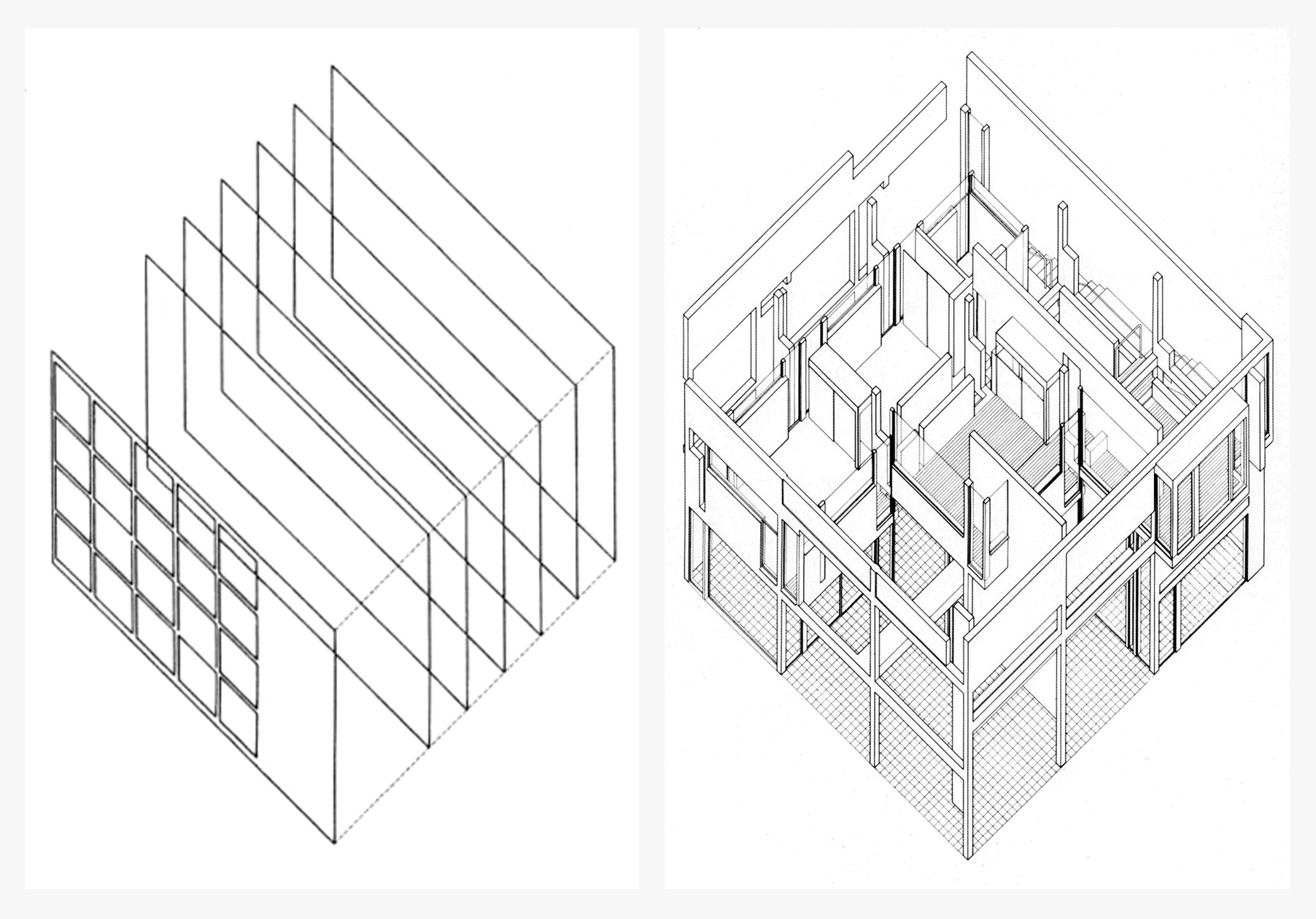
Giuseppe Terragni's infamous Casa Del Fascio (today casa del populi) built in 1935 as a symbol for the superiority of the rising fascist party shows mainly Terragnis superiority in comosing space with complexity and coherence. The balance of rules and exceptions and the impressive control of light fascinated architects and theorists (such as Peter Eisenman who analysed the building properly) for decades.
architecturality.files.wordpress.com/2010/10/terragni_eis...
Coventry's Cathedral is a unique synthesis of old a new, born of wartime suffering and forged in the spirit of postwar optimism, famous for it's history and for being the most radically modern of Anglican cathedrals. Two cathedral's stand side by side, the ruins of the medieval building, destroyed by incendiary bombs in 1940 and the bold new building designed by Basil Spence and opened in 1962.
It is a common misconception that Coventry lost it's first cathedral in the wartime blitz, but the bombs actually destroyed it's second; the original medieval cathedral was the monastic St Mary's, a large cruciform building believed to have been similar in appearance to Lichfield Cathedral (whose diocese it shared). Tragically it became the only English cathedral to be destroyed during the Reformation, after which it was quickly quarried away, leaving only scant fragments, but enough evidence survives to indicate it's rich decoration (some pieces were displayed nearby in the Priory Visitors Centre, sadly since closed). Foundations of it's apse were found during the building of the new cathedral in the 1950s, thus technically three cathedrals share the same site.
The mainly 15th century St Michael's parish church became the seat of the new diocese of Coventry in 1918, and being one of the largest parish churches in the country it was upgraded to cathedral status without structural changes (unlike most 'parish church' cathedrals created in the early 20th century). It lasted in this role a mere 22 years before being burned to the ground in the 1940 Coventry Blitz, leaving only the outer walls and the magnificent tapering tower and spire (the extensive arcades and clerestoreys collapsed completely in the fire, precipitated by the roof reinforcement girders, installed in the Victorian restoration, that buckled in the intense heat).
The determination to rebuild the cathedral in some form was born on the day of the bombing, however it wasn't until the mid 1950s that a competition was held and Sir Basil Spence's design was chosen. Spence had been so moved by experiencing the ruined church he resolved to retain it entirely to serve as a forecourt to the new church. He envisaged the two being linked by a glass screen wall so that the old church would be visible from within the new.
Built between 1957-62 at a right-angle to the ruins, the new cathedral attracted controversy for it's modern form, and yet some modernists argued that it didn't go far enough, after all there are echoes of the Gothic style in the great stone-mullioned windows of the nave and the net vaulting (actually a free-standing canopy) within. What is exceptional is the way art has been used as such an integral part of the building, a watershed moment, revolutionising the concept of religious art in Britain.
Spence employed some of the biggest names in contemporary art to contribute their vision to his; the exterior is adorned with Jacob Epstein's triumphant bronze figures of Archangel Michael (patron of the cathedral) vanquishing the Devil. At the entrance is the remarkable glass wall, engraved by John Hutton with strikingly stylised figures of saints and angels, and allowing the interior of the new to communicate with the ruin. Inside, the great tapestry of Christ in majesty surrounded by the evangelistic creatures, draws the eye beyond the high altar; it was designed by Graham Sutherland and was the largest tapestry ever made.
However one of the greatest features of Coventry is it's wealth of modern stained glass, something Spence resolved to include having witnessed the bleakness of Chartres Cathedral in wartime, all it's stained glass having been removed. The first window encountered on entering is the enormous 'chess-board' baptistry window filled with stunning abstract glass by John Piper & Patrick Reyntiens, a symphony of glowing colour. The staggered nave walls are illuminated by ten narrow floor to ceiling windows filled with semi-abstract symbolic designs arranged in pairs of dominant colours (green, red, multi-coloured, purple/blue and gold) representing the souls journey to maturity, and revealed gradually as one approaches the altar. This amazing project was the work of three designers lead by master glass artist Lawrence Lee of the Royal College of Art along with Keith New and Geoffrey Clarke (each artist designed three of the windows individually and all collaborated on the last).
The cathedral still dazzles the visitor with the boldness of it's vision, but alas, half a century on, it was not a vision to be repeated and few of the churches and cathedrals built since can claim to have embraced the synthesis of art and architecture in the way Basil Spence did at Coventry.
The cathedral is generally open to visitors most days. For more see below:-
These slides were used in a lecture presented by JR James at the Department of Town and Regional Planning at The University of Sheffield between 1967 and 1978.
The enigmatic Japanese photographer, who took some of the 20th century’s most compelling images, is finally getting his first retrospective in the UK - and Switzerland. ‘Yes, it’s a bit late,’ he tells our writer
Charlotte Jansen
It isn’t easy to get to know Daidō Moriyama. The Japanese photographer, 85, answers my questions from his home in Tokyo via an interpreter, and is quick to bat off personal questions. “Photographers can only take pictures,” he shrugs.
But Moriyama has done far more than take pictures. Although best known as a street photographer, he has pushed the form to its limits, interrogating what photographs are, how they are experienced, their ethics and effect. He is also behind some of the most iconic and influential pictures of the last 50 years – from closeups of fishnet stockings to portraits of stray dogs they are regarded as lyrical, symbolic expressions of the postwar era in Japan.
“He is shy, inconspicuous, and concentrated. He is a real brain – very articulated and well-read, who speaks in elegant, metaphoric ways,” says Thyago Nogueira, the curator of a rare retrospective exhibition at the Photographers’ Gallery that gives an unprecedented view of Moriyama’s dazzling work.
The show is a riveting, rapturous exploration of the enigmatic and prolific photographer, spanning from his earliest works in the late 1960s to today – he continues to go out with his camera, and a cigarette. “Although I have some constraints, including my health, I want to take as many photos as possible each day.”
Moriyama set about photographing the world not as it was but as he saw it – a confused, chaotic and fragmented reality.
Photographs are presented in myriad ways: at times completely overwhelming the viewer. There are slideshows on projectors (some more than an hour long), installations of images covering entire walls, magazine and book spreads, and sequences of glorious prints, mostly in black and white, changing in scale. In their various incarnations, with repeated images amounting to a kind of neuroticism, the photographs have a relentless pace. “They are a punch in the stomach,” as Nogueira puts it.
Moving back and forth between decades, the black and white film imbuing the images with a kind of timelessness, Moriyama contests photography as a form rooted in a moment or place. His photographs articulate something else, they palpitate with mystery – the great inexplicable essence of life. Perhaps this is why he is reluctant to speak for the images.
Moriyama was born in Osaka (then Ikeda), Japan, in 1938. “I was raised in a very ordinary way. My father was an office worker, and my mother was a housewife,” he says. His childhood wasn’t easy. Against the backdrop of US occupation and the second world war, home life was punctuated by loss. A twin brother died when Moriyama was two. The family moved often for his father’s work, before his early death. “I did not fit in at school. I lost my father when I was young. But I have always loved to draw so I became a designer through an acquaintance.” He apprenticed at a graphic design studio. His first photographs, he recalls, were of the family dog. In a later series “Memories of a Dog”, Moriyama returned to places of his childhood, to photograph his memories.
In 1961 he moved to Tokyo to pursue a dream of becoming a photojournalist, like his sensei, Shōmei Tōmatsu – Japan’s pre-eminent postwar photographer. “I became a photographer because I found the photographers I worked with very sporty and cool – and I guess I was never cut out for desk work,” Moriyama says wryly.
From early staid, documentary, journalistic-style images, mostly shot at the American base at Yokosuka (some of which are presented at the Photographers’ Gallery’s show) Moriyama’s approach quickly evolved into an expressive, subjective style that evoked his own experience of the world. He was invited to join Provoke – a collective of young photographers determined to revolutionise photography – by Takuma Nakahira, a photographer and critic, who died in 2015. “Takuma Nakahira was then, and still is, my only friend and my only rival.”
Provoke published just three issues of a visual manifesto between 1968 and 1969, but they had a profound effect. Japanese critics ridiculed the group’s lack of technical skills as “are, bure, boke” (“grainy, blurry, out-of-focus”). These terms were later reclaimed to describe the style pioneered by Moriyama. But, he says, “I never consciously shot that way, nor did I care.”
Moriyama set about photographing the world not as it was but as he saw it – a confused, chaotic and fragmented reality. There is a furious urgency to the pictures he took between 1968 and 1972: black and white photographs of everything and nothing, of underground kabuki actors and other avant garde artists and performers, erotic scenes, portraits of animals and street life, photographs of photographs, and of TV screens and newspaper headlines – precursors to screenshots and reels. “I was strongly inspired by William Klein’s books of New York, Moscow, Rome, Tokyo, published when he was still young. It was something in particular that I saw in his photographs that seemed to connect me to my own photography.”
Questioning the purpose of photography so deeply led Moriyama down a dark road.
Moriyama’s photographs have become a testament of a tumultuous time in Japan, conveying a sense of the grim and gritty reality of the underbelly of the city in grainy images. “I understood the social atmosphere at that time, but personally I had no interest in politics,” Moriyama reflects. Many of these images were originally shot as photo essays for magazines – it was the golden age of the Tokyo publishing industry, and magazines were museums for photography as it became a new artistic form. The pictures were later printed again, sometimes at different scales, reshuffled and reordered, and compiled into the photobooks Moriyama is famous for – such as his acclaimed work, A Hunter, shot from the window of a car as Moriyama hitchhiked around Japan. “When I am going along the road, snapping the shutter as I read each moment, I become at times a poet, a scientist, a critic, a philosopher, a labourer, or a politician,” he said.
A less familiar, groundbreaking series of work on show at the Photographers’ Gallery is a monthly column Accidents produced throughout 1969 for a mass media publication. Each series took on a different aspect of photography and its exploitation by the mass media – a poster of a car crash designed to shock and scare; photographs of TV screens and newspapers in Japan in the week after JFK’s assassination. It shows Moriyama’s concern with the ethics of photography and its exploitative nature.
But questioning the purpose of photography so deeply led him down a dark road. In 1972 Moriyama published “Farewell Photography”, a swan song to his chosen medium, a mashup of old negatives, scraps and prints gathered from his archives and thrown together. Photography, Moriyama realised, wasn’t going to change the world as he had once believed.
He suffered depression and became addicted to sleeping pills. It was almost a decade before he picked up the camera again, when he was commissioned by two editor friends concerned for his well being. Just as the camera had plunged him into an existential void, it pulled him back from the brink of self-obliteration.
“Moriyama spent his life asking a basic, fundamental question: What is photography?” Nogueira says. “He never answered that question, but his life’s work is a constant and honest response to that.”
Today, Moriyama is humble about his achievements. “I am happy to know that many people around the world have been exposed to my photographs and photo books,” he says. Photographing daily for so many decades, “there is nothing that has not already been taken – each photograph becomes a great cycle. It is connected to the past and to the future – and that is why there is the most reality in the current photograph that captures it.
“Beyond the photographer, the work returns to society – and that is the most powerful force of photography.”
By the end of World War II, Packard was in excellent financial condition, but several management mistakes became ever more visible as time went on. Like other U.S. auto companies, Packard resumed civilian car production in late 1945, labelling them as 1946 models by modestly updating their 1942 models. As only tooling for the Clipper was at hand, the Senior-series cars were not rescheduled. One version of the story is that the Senior dies were left out in the elements to rust and were no longer usable. Another long-rumored tale is that Roosevelt gave Stalin the dies to the Senior series, but the ZiS-110 state limousines were a separate design.
Although the postwar Packards sold well, the ability to distinguish expensive models from lower-priced models disappeared as all Packards, whether sixes or eights, became virtually alike in styling. Further, amid a booming seller's market, management had decided to direct the company more to volume middle-class models, thus concentrating on selling lower-priced cars instead of more expensive—and more profitable—models. Worse, they also tried to enter the taxi cab and fleet car market. The idea was to gain volume for the years ahead, but that target was missed: Packard simply was not big enough to offer a real challenge to the Big Three, and they lacked the deep pockets with which a parent company could shelter them, as well as the model lineup through which to spread the pricing.
As a result, Packard's image as a luxury brand was further diluted. As Packard lost buyers of expensive cars, it could not find enough customers for the lesser models to compensate. The shortage of raw materials immediately after the war—which was felt by all manufacturers—hurt Packard more with its volume business than it would have had it had focused on the specialty luxury car market.
The Clipper became outdated as the new envelope bodies started appearing, led by Studebaker and Kaiser-Frazer. Had they been a European car maker, this would have meant nothing; they could have continued to offer the classic shape not so different from the later Rolls-Royce with its vertical grill. Although Packard was in solid financial shape as the war ended, they had not sold enough cars to pay the cost of tooling for the 1941 design. While most automakers were able to come out with new vehicles for 1948–49, Packard could not until 1951. They therefore updated by adding sheet metal to the existing body (which added 200 lb (91 kg) of curb weight).[citation needed] Six-cylinder cars were dropped for the home market, and a convertible was added. These new designs hid their relationship to the Clipper. Even that name was dropped—for a while.
The design chosen was a "bathtub" type. While this was considered futuristic during the war and the concept was taken further with the 1949 Nash—and survived for decades in the Saab 92-96 in Europe—the 1948–1950 Packard styling was polarizing. To some it was sleek and blended classic with modern; others nicknamed it the "pregnant elephant". Test driver for Modern Mechanix, Tom McCahill, referred to the newly designed Packard as "a goat" and "a dowager in a Queen Mary hat". Still, in this era, demand for any car was high, and Packard sold 92,000 vehicles for 1948 and 116,000 of the 1949 models.
Packard outsold Cadillac until about 1950; most sales were the midrange volume models. A buyer of a Super Eight paying a premium price did not enjoy seeing a lesser automobile with nearly all the Super Eight's features, with just slight distinction in exterior styling. During this time, Cadillac was among the earliest U.S. makers to offer an automatic transmission (the Hydramatic in 1941), but Packard caught up with the Ultramatic,[36] offered on top models in 1949 and all models from 1950 onward. Packard's Ultramatic automatic transmission was the only one developed by an independent automaker was smoother than the GM Hydramatic, though acceleration was sluggish and owners were often tempted to put it into low gear for faster starts, which put extra strain on the transmission. However, while the Ultramatic was competitive, Packard was not able to immediately respond to Cadillac's introduction of a powerful overhead valve V8 in 1949. Also, when a new body style was added in addition to standard sedans, coupes, and convertibles, Packard introduced a station wagon instead of a two-door hardtop in response to Cadillac's Coupe DeVille. The Station Sedan, a wagon-like body that was mostly steel, with good deal of decorative wood in the back; only 3,864 were sold over its three years of production. Although the Custom Clippers and Custom Eights were built in its old tradition with craftsmanship and the best materials, all was not well. The combination of the lower priced Packards undermining sales and prestige of their higher end brethren, controversial styling, and some questionable marketing decisions, Packard seemed to lose focus on the luxury car market—relinquishing to a rising Cadillac. In 1950, sales dropped to 42,000 cars for the model year. When Packard's president George T. Christopher announced the "bathtub" would get another facelift for 1951, influential parts of the management revolted. Christopher was forced to resign and loyal Packard treasurer Hugh Ferry became president.
[Text from Wikipedia]
en.wikipedia.org/wiki/Packard#1946.E2.80.931956
This Lego miniland-scale 1949 Packard Custom Eight Limousine has been created for Flickr LUGNuts' 103rd Build Challenge, titled - 'The Fabulous Forties!' - a challenge for any vehicle produced through the decade of the 1940s.
6.277 cc
V8
325 hp
Class IV : Post-War "1965-1985"
Zoute Concours d'Elegance
Royal Zoute Golf Club
Zoute Grand Prix 2022
Knokke - Zoute
België - Belgium
October 2022
One of the first postwar available vans. This one is still from the first series: note the split windscreen, "suicide doors" and the rounded opening over the rear wheel (the later models have angular forms).
Don't expect any convenience which is usual for other Citoën-vehicles. With the 3-speed gearbox 80-85 km/h is really the maximum speed!
Ontwerp / design: ing. André Lefèbvre / Pierre Franchiset, 1946.
Imported in Summer 2011.
1911cc,
1440 kgs.
Amsterdam-O., omg. Senefelderstraat, April 21, 2012.
In the postwar years Penguin Books issued both a free Pengins Progress, as seen here and that was posted free to over forty thousand subscribers, and a 'Classified List' that was issued less frequently. Although the List detailed both available and upcoming books of the Penguin family, the Progress gave a more in depth resume of titles and series that were underway.
This issue as well as being posted from the Vase Press at Thrapston was also printed there. Sadly no designer is shown - the covers showing variations on the Penguin and the end papers cleverly adapting woodcuts from the forthcoming King Penguin book on Bewick's woodcuts. Indeed the front cover carefully takes Bewick's original owl and replaces it with the penguin!
1945 – As the War ends and the country recovers, postwar America struggles for a new identity. One of the results of this existential conflict is film noir, a term coined by French critics to define a darker, more pessimistic type of filmmaking. Taking cues from German expressionism and hard-boiled crime fiction, film noir utilizes low-key lighting, stark black-and-white cinematography, unbalanced visual composition, non-linear storytelling, and ambiguous moral codes in which the distinction between heroes and villains is far less obvious. In film noir, the world is inherently corrupt and uncaring, and every man is fighting for himself. Film noir reflects an uncertain America, one suffering from heightened anxiety, paranoia, and alienation following World War II.
DETOUR (1945): www.youtube.com/watch?v=R_mnviE7QWo
OUT OF THE PAST (1947): www.youtube.com/watch?v=8H3JpJJ4bDw
THE THIRD MAN (1949): www.youtube.com/watch?v=oKKq5LPnpIM
IN A LONELY PLACE (1950): www.youtube.com/watch?v=9EitK0vaEWU
Detail of one of the first pair of nave windows, predominantly green in colour and designed by Keith New. The green windows symbolise the beginning of the soul's journey through life.
Coventry's Cathedral is a unique synthesis of old a new, born of wartime suffering and forged in the spirit of postwar optimism, famous for it's history and for being the most radically modern of Anglican cathedrals. Two cathedral's stand side by side, the ruins of the medieval building, destroyed by incendiary bombs in 1940 and the bold new building designed by Basil Spence and opened in 1962.
It is a common misconception that Coventry lost it's first cathedral in the wartime blitz, but the bombs actually destroyed it's second; the original medieval cathedral was the monastic St Mary's, a large cruciform building believed to have been similar in appearance to Lichfield Cathedral (whose diocese it shared). Tragically it became the only English cathedral to be destroyed during the Reformation, after which it was quickly quarried away, leaving only scant fragments, but enough evidence survives to indicate it's rich decoration (some pieces were displayed nearby in the Priory Visitors Centre, sadly since closed). Foundations of it's apse were found during the building of the new cathedral in the 1950s, thus technically three cathedrals share the same site.
The mainly 15th century St Michael's parish church became the seat of the new diocese of Coventry in 1918, and being one of the largest parish churches in the country it was upgraded to cathedral status without structural changes (unlike most 'parish church' cathedrals created in the early 20th century). It lasted in this role a mere 22 years before being burned to the ground in the 1940 Coventry Blitz, leaving only the outer walls and the magnificent tapering tower and spire (the extensive arcades and clerestoreys collapsed completely in the fire, precipitated by the roof reinforcement girders, installed in the Victorian restoration, that buckled in the intense heat).
The determination to rebuild the cathedral in some form was born on the day of the bombing, however it wasn't until the mid 1950s that a competition was held and Sir Basil Spence's design was chosen. Spence had been so moved by experiencing the ruined church he resolved to retain it entirely to serve as a forecourt to the new church. He envisaged the two being linked by a glass screen wall so that the old church would be visible from within the new.
Built between 1957-62 at a right-angle to the ruins, the new cathedral attracted controversy for it's modern form, and yet some modernists argued that it didn't go far enough, after all there are echoes of the Gothic style in the great stone-mullioned windows of the nave and the net vaulting (actually a free-standing canopy) within. What is exceptional is the way art has been used as such an integral part of the building, a watershed moment, revolutionising the concept of religious art in Britain.
Spence employed some of the biggest names in contemporary art to contribute their vision to his; the exterior is adorned with Jacob Epstein's triumphant bronze figures of Archangel Michael (patron of the cathedral) vanquishing the Devil. At the entrance is the remarkable glass wall, engraved by John Hutton with strikingly stylised figures of saints and angels, and allowing the interior of the new to communicate with the ruin. Inside, the great tapestry of Christ in majesty surrounded by the evangelistic creatures, draws the eye beyond the high altar; it was designed by Graham Sutherland and was the largest tapestry ever made.
However one of the greatest features of Coventry is it's wealth of modern stained glass, something Spence resolved to include having witnessed the bleakness of Chartres Cathedral in wartime, all it's stained glass having been removed. The first window encountered on entering is the enormous 'chess-board' baptistry window filled with stunning abstract glass by John Piper & Patrick Reyntiens, a symphony of glowing colour. The staggered nave walls are illuminated by ten narrow floor to ceiling windows filled with semi-abstract symbolic designs arranged in pairs of dominant colours (green, red, multi-coloured, purple/blue and gold) representing the souls journey to maturity, and revealed gradually as one approaches the altar. This amazing project was the work of three designers lead by master glass artist Lawrence Lee of the Royal College of Art along with Keith New and Geoffrey Clarke (each artist designed three of the windows individually and all collaborated on the last).
The cathedral still dazzles the visitor with the boldness of it's vision, but alas, half a century on, it was not a vision to be repeated and few of the churches and cathedrals built since can claim to have embraced the synthesis of art and architecture in the way Basil Spence did at Coventry.
The cathedral is generally open to visitors most days. For more see below:-
I had very few photos of my 1949 Triumph Roadster 2000 with the headlights on, and this miserable day seemed the ideal time to put that right. Needless to say it went straight back into its cosy garage soon after the photo shoot!
West-German postcard by Kunst und Bild, no. A 739. Photo: Wesel / Fama / Europa-Film. Maria Schell in Der träumende Mund/Dreaming Lips (Josef von Báky, 1953).
Pretty, wide-eyed Austrian leading lady Maria Schell (1926-2005) became one of the first film idols of the European postwar generation. With her ‘smile under tears’ she appeared in dozens of German and Austrian popular films, but she also starred in British, French, Italian, and Hollywood productions.
Margarete Schell was born in Vienna in 1926 as the daughter of the Swiss author Ferdinand Hermann Schell and Austrian actress Margarete Schell Noé. She was the older sister of the actors Immy, Carl, and Maximilian Schell. Her family had to escape from the Nazi regime in 1938, and she received dramatic training in Zurich, Switzerland. To pay for her studies she worked as a secretary. Billed as Gritli Schell, she made her screen debut at 16 in the Swiss-filmed drama Steibruch (Sigfrit Steiner, 1942). It would be six years before she'd appear before the cameras again in Der Engel mit der Posaune (Karl Hartl, 1948). This Austro-German production was simultaneously filmed in an English-language version, The Angel With the Trumpet (Anthony Bushell, 1950), which brought her to the attention of international filmgoers. In the 1950s Maria often played the sweet and innocent Mädchen in numerous Austrian and German films. She starred opposite Dieter Borsche in popular melodramas like Es kommt ein Tag/A Day Will Come (Rudolf Jugert, 1950) and Dr. Holl (Rolf Hansen, 1951). With O.W. Fischer she formed one of the 'Dream Couples of the German cinema' in romantic melodramas like Bis wir uns wiedersehen/Till We Meet Again (Gustav Ucicky, 1952), Der träumende Mund/Dreaming Lips (Josef von Báky, 1953), and Solange Du da bist/As Long As You're Near Me (Rolf Hansen, 1953). She also starred in British productions like The Magic Box (John Boulting, 1951) with Robert Donat, and The Heart of the Matter (George More O'Ferrall, 1953) opposite Trevor Howard.
In 1954, Maria Schell won a Cannes Film Festival award for her dramatic portrayal of a German nurse imprisoned in wartime Yugoslavia in Die letzte Brücke/The Last Bridge (Helmut Käutner, 1954). Two years later, she claimed a Venice Film Festival prize for her role in Gervaise (René Clément, 1956). In this adaptation of Emile Zola’s 'L’Assommoir', she played one of her best roles as a hardworking laundress surrounded by drunks. Other important films were Robert Siodmak’s thriller Die Ratten/The Rats (1955), and Luchino Visconti’s romantic Fyodor Dostoyevski adaptation Le Notti bianche/White Nights (1957), with Schell as the young and innocent girl in love with Jean Marais but loved by Marcello Mastroianni. Hollywood called and Maria Schell was contracted to star as Grushenka opposite Yul Brynner in The Brothers Karamazov (Richard Brooks, 1958), a messy adaptation of another classic novel by Dostoyevsky. This was followed by roles in the Gary Cooper Western The Hanging Tree (Delmer Daves, 1959), the remake of Edna Ferber's Cimarron (Anthony Mann, 1961), and The Mark (Guy Green, 1961), opposite Academy Award nominee Stuart Whitman. Then she returned to Germany for the family drama Das Riesenrad/The Giant Ferris Wheel (Géza von Radványi, 1961), again with O. W. Fischer.
In 1963, dissatisfied with the diminishing value of the characters she was called upon to play, Maria Schell retired. But in 1969 she made a come-back with the witty French comedy Le Diable par la queue/The Devil By The Tail (Philippe de Broca, 1969) opposite Yves Montand. Then followed two horror films by cult director Jesus Franco, Der Heisse Tod/ 99 Women (1969), and Il Trono di fuoco/Throne of the Blood Monster (1970), starring Christopher Lee. Among her, later assignments were Voyage of the Damned (Stuart Rosenberg, 1976), Superman: The Movie (Richard Donner, 1978), Schöner Gigolo, armer Gigolo/Just A Gigolo (David Hemmings, 1978) with David Bowie and Marlene Dietrich. On TV she portrayed the mother of Nazi architect Albert Speer (Rutger Hauer) in Inside the Third Reich (Marvin J. Chomsky, 1992). She also played Mother Maria in the TV sequel to Lilies of the Field called Christmas Lilies of the Field (Ralph Nelson, 1982), and she did guest appearances in popular crime series like Der Kommissar (1969-1975) starring Erik Ode, Kojak (1976) starring Telly Savalas, Derrick (1977-1978), and Tatort (1975-1996). Besides being a film star; Maria Schell appeared in plays in Zurich, Basel, Vienna, Berlin, and Munich, at the Salzburg Festival, and she went on provincial tours from 1963. Among the plays she performed were such classics as Shakespeare's Hamlet, Goethe's Faust, and modern classics such as Pygmalion by George Bernard Shaw. With her brother, Maximilian Schell Maria only appeared in one film, the thriller The Odessa File (Ronald Neame, 1974). In 2002 Maximilian made a documentary about her called Meine Schwester, Maria/My Sister, Maria, in which he documented how her mental health deteriorated along with her finances during her later years. In 2005 Maria Schell died at age 79 of heart failure in her sleep. She was twice married, first to film director Horst Hächler and later to another film director, Veit Relin. She was the mother of actor Oliver Schell and of actress Marie-Therese Relin, who is married to Bavarian playwright Franz Xaver Kroetz and has three children. In 1974 Maria Schell was awarded the Bundesverdienstkreuz (Germany's Cross of Merit) and in 1977 the Filmband in Gold for her impressive contributions to the German cinema.
Sources: Stephanie D'Heil (Steffie-line), Guy Bellinger (IMDb), Hal Erickson (AllMovie), Wikipedia, AbsoluteFacts.nl, and IMDb.
And, please check out our blog European Film Star Postcards.
The range of the B-29 Superfortress immediately interested Boeing in developing a passenger version for postwar use; this would make transatlantic and Hawaii flying routes economical for the first time. Since the standard B-29 fuselage would be inadequate for passengers, Boeing designers added a larger-diameter fuselage atop the old B-29 fuselage, resulting in a “double-bubble” appearance. The tail and engines of the B-50 advanced version of the Superfortress were adapted to what would become the Model 377 Stratocruiser. While only 55 Model 377s entered airline service, quickly eclipsed by the jet age, they were considered luxurious for their time, with the lower deck being used for airborne lounges or sleeping compartments, all in pressurized comfort—a first for the airline industry.
The USAF developed the C-97 Stratofrieghter version of the Model 377 at the same time, which differed from the airliner version by being used for cargo missions, with undernose weather radar and clamshell doors in the rear fuselage. The C-97 arrived just too late for the Berlin Airlift, but was used extensively in Korea. Like the Stratocruiser, only 60 dedicated C-97 transports were built: by the time the aircraft reached the USAF in numbers, the Lockheed C-130 Hercules was already in development.
Where the Stratofreighter would truly shine was as an airborne tanker: over 800 KC-97s would be built as the first purpose-built airborne tankers in the world. The clamshell doors were deleted, though cargo capacity was retained on the upper deck, giving the KC-97 a dual role. Fuel tanks were added to the lower deck, along with a station for the Boeing flying boom attached to the rear fuselage. The aircraft had to have separate fuel systems, as the KC-97 used piston engines and the jets it refueled would need a different type. The use of piston engines was to prove problematic for the KC-97 as well: by the time it entered service in 1950, it was far slower than the jets it would need to refuel. The complicated Wasp Major engines were also difficult to maintain, notorious for spraying oil at startup, and prone to catastrophic fires. At least two KC-97s were lost to engine explosions, something that had plagued the Model 377 as well. As the B-50 was retired in the early 1960s, J47 jet engines were removed and attached to Stratofreighters as the KC-97L variant.
The KC-97 could still be called a success, despite all of its problems and the fact that technology threatened to render it obsolete as soon as it entered service. Replaced in frontline service by the KC-135 Stratotanker, the KC-97 was relegated to Air Reserve and Air National Guard units in the mid-1960s, where it freed up KC-135s for service in Vietnam. Even with jet augmentation, the KC-97 was clearly obsolete by the 1970s, but a few KC-97Ls soldiered on until 1978, when it was finally withdrawn from service. A few briefly served with the Spanish Air Force during the 1970s, while Israel modified theirs to essentially KC-97 standard and utilized them in the Yom Kippur War of 1973. At least 26 KC-97s still exist in museums, and two are known to be airworthy.
53-0354 started off as a KC-97G, assigned to the 9th Bomb Wing at Mountain Home AFB, Idaho. In 1965 it was modified to a KC-97L, and reassigned to the 134th Air Refueling Group (Tennessee ANG) at McGhee-Tyson; the 134th set a record for transitioning into the KC-97, doubly impressive as they had been in F-104 Starfighters! 53-0354 participated in Operation Creek Party deployments to West Germany, and was retired in 1976. It was stored at MASDC in Arizona, but in 1984 was donated to the Castle Air Museum, and flown by a volunteer crew to the base.
Today (or at least in May 2021), 53-0354 is displayed as a "plain Jane" KC-97, with no unit markings. It is showing some wear and tear, but probably will be restored in the not-too-distant future.
The postwar battle over Zeiss-Ikon and Carl Zeiss trademarks between the Eastern and Western descendants of the Zeiss group were eventually resolved more or less as one might expect:
East German products could not carry the Zeiss trademarks when sold in the West, and West German products could not carry the Zeiss trademarks when sold in the East.
Pentacon was the name chosen for the Contax SLR in Western markets, while it continued to be marked as Contax in the East. ZI East also trademarked the name "Pentax" but did not use it - they later licensed it to Asahi of Japan.
The Museum of the Dreamers
The Phantastenmuseum is a museum in the Palais Palffy in the 1st district of Vienna Inner City. It shows the evolution of fantastic, surreal and visionary art of the postwar period to the present.
History
Following discussions between the Austrian artist Ernst Fuchs (* 13. Februar 1930 in Wien; † 9. November 2015) and the publisher, organizer and author Gerhard Habarta the idea of a museum of fantastic art in Vienna came to the realization. The "Austrian Cultural Center since 1958" in the Palais Palffy was enthusiastic about the idea, the plans for the new museum were concretised in the year of 2010. In autumn 2010 was started with the adaptation of the premises, which was completed in January 2011. The opening of the museum took place under the patronage of Federal President Heinz Fischer on 15 January 2011.
Premises
For the museum parts of the historical Palais Palffy due to war damage in the 1950s renovated were used.
The foyer was designed by Lehmden student Kurt Welther about The Marriage of Figaro. Here, also a lobby with the ticket office, the information and the museum shop has been set up. In this one gifts like replicas of famous works of art, sculptures, jewelery, catalogs and posters as well as original editions are sold. On the 1st floor is located opposite the Figaro Concert Hall the gallery. It is a 150 m² large space for solo exhibitions. The museum occupies the entire top floor and consists of designed spaces. In addition to works from its own collection and permanent loans, documents and portraits of artist personalities are shown.
The museum
The museum is divided into the following areas:
Impulses: Here are the inspirations identified which brought the young artists first information after the war, with works by Edgar Jené and Gustav K. Beck and Arnulf Neuwirth.
Academy: Here, the young creatives found an artistic home, including works by Albert Paris Gütersloh, Ernst Fuchs, Fritz Janschka, Anton Lehmden and Kurt Steinwendner before he turned into the filmmaker and object artist Curt Stenvert.
Contemporaries: These include older artists of fantastic, who had survived the dictatorship, like Greta Freist, Kurt Goebel, Charles Lipka or the CIA agent Charles von Ripper. And the young ones, as Rudolf Schoenwald or Arnulf Rainer as well as painters who moved in later Art Club. These include the "partisan" Maria Biljan-Bilger, Peppino Wieternik before he turned to the abstract, and Carl Unger who designed a large glass front of the Palais Palffy.
Art Club: It gathered the artistic elite of the post-war period and became with the Strohkoffer (straw suitcase) a social center.
Dog Group: It became the first counter-movement, in which the rebels as Ernst Fuchs, Arnulf Rainer and Maria Lassnig, Wolfgang Kudrnofsky and maverick visionary Anton Krejcar with graphics that today have become valuable manifested themselves.
The Pintorarium of Friedensreich Hundertwasser, Ernst Fuchs and Arnulf Rainer fought actionistically with wall newspaper and nude demonstration against the established Academy, bad architecture and for the freedom of the spirit.
Hundertwasser realized the theories of Pintorarium in his buildings. A photo documentation of Kurt Pultar.
Vienna School of Fantastic Realism: The core of the museum with pictures of Arik Brauer, Wolfgang Hutter, Fritz Janschka, who lives in the United States and Anton Lehmden. Of Rudolf Hausner is - in addition to an oil painting - the documentation of long-term work on his Ark of Odysseus to see. In addition to an early work by Ernst Fuchs, a specially created for the museum great painting version of a 55 years ago arosen drawing is shown.
In the department of simultaneous 16 images of that Viennese Fantasts can be seen who presented themselves in the 1960s for the first time, among other things, in the gallery that installed Ernst Fuchs.
In the Department Next Generation are those almost still "young ones" which - despite temporary exclusion by the avant-garde - are committed to the new tendencies of the fantastic. They studied partly with Hausner, Lehmden, Hutter and Fuchs and also learned as wizards.
The Graphic Cabinet presents some etchings and lithographs to stamps. Here the global network is shown in about 30 works by international visionaries. Representatives from Japan, the US, Australia and European centers are the ambassadors of associations of fantastic artists, the Ambassadors of the Fantastic Universe.
Phantastenmuseum
Das Phantastenmuseum ist ein Museum im Palais Pálffy im 1. Wiener Gemeindebezirk Innere Stadt. Es zeigt die Entwicklung der phantastischen, surrealen und visionären Kunst von der Nachkriegszeit bis zur Gegenwart.
Geschichte
Nach Gesprächen zwischen dem österreichischen Künstler Ernst Fuchs und dem Verleger, Organisator und Autor Gerhard Habarta entstand die Idee zur Verwirklichung eines Museums für phantastische Kunst in Wien. Das „Österreichische Kulturzentrum seit 1958“ im Palais Pálffy zeigte sich von der Idee begeistert, die Pläne für das neue Museum wurden im Jahr 2010 konkretisiert. Im Herbst 2010 wurde mit der Adaptierung der Räumlichkeiten begonnen, die im Jänner 2011 abgeschlossen wurde. Die Eröffnung des Museums fand am 15. Jänner 2011 unter dem Ehrenschutz von Bundespräsident Heinz Fischer statt.
Räumlichkeiten
Für das Museum wurden Teile des historischen, aufgrund Kriegsschäden in den 1950er Jahren renovierten Palais Pálffy genutzt.
Das Foyer wurde vom Lehmden-Schüler Kurt Welther zum Thema Figaros Hochzeit gestaltet. Hier wurde auch ein Empfangsbereich mit der Ticketkasse, der Information und dem Museums-Shop eingerichtet. In diesem werden Geschenke wie Nachbildungen berühmter Kunstwerke, Skulpturen, Schmuck, Kataloge und Kunstdrucke sowie auch Original-Editionen verkauft. Im 1. Stock befindet sich gegenüber dem Figaro-Konzertsaal die Galerie. Es handelt sich um einen 150 m² großen Raum für Einzelausstellungen. Das Museum nimmt das gesamte Obergeschoss ein und besteht aus gestalteten Räumen. Neben den Werken aus eigenem Bestand und Dauerleihgaben werden Dokumente und Porträts der Künstlerpersönlichkeiten gezeigt.
Das Museum
Das Museum ist in folgende Bereiche gegliedert:
Impulse: Hier werden die Impulse aufgezeigt, die den jungen Künstlern erste Informationen nach dem Krieg brachten, mit Werken von Edgar Jené und Gustav K. Beck und Arnulf Neuwirth.
Akademie: Hier fanden die jungen Kreativen eine künstlerische Heimat, mit Werken von Albert Paris Gütersloh, Ernst Fuchs, Fritz Janschka, Anton Lehmden und Kurt Steinwendner, bevor er zum Filmemacher und Objektkünstler Curt Stenvert wurde.
Zeitgenossen: Dazu zählen ältere Künstler des Phantastischen, die die Diktatur überlebt hatten, wie Greta Freist, Kurt Goebel, Charles Lipka oder der CIA-Agent Charles von Ripper. Und die Jungen, wie Rudolf Schönwald oder Arnulf Rainer sowie Maler die sich im späteren Art Club bewegten. Dazu gehören die „Partisanin“ Maria Biljan-Bilger, Peppino Wieternik, bevor er sich zum Abstrakten wandte, und Carl Unger der für das Palais Pálffy eine große Glasfront gestaltete.
Art Club: Er versammelte die künstlerische Elite der Nachkriegszeit und wurde mit dem Strohkoffer ein geselliges Zentrum.
Hundsgruppe: Sie wurde zur ersten Gegenbewegung, in der sich die Aufrührer wie Ernst Fuchs, Arnulf Rainer und Maria Lassnig, Wolfgang Kudrnofsky und der Außenseiter-Phantast Anton Krejcar mit heute wertvoll gewordenen Grafiken manifestierten.
Das Pintorarium von Friedensreich Hundertwasser, Ernst Fuchs und Arnulf Rainer kämpfte aktionistisch mit Wandzeitung und Nacktdemonstration gegen die etablierte Akademie, schlechte Architektur und für die Freiheit des Geistes.
Hundertwasser verwirklichte die Theorien des Pintorariums in seinen Bauten. Eine Fotodokumentation von Kurt Pultar.
Wiener Schule des Phantastischen Realismus: Der Kern des Museums mit Bildern von Arik Brauer, Wolfgang Hutter, dem in den USA lebenden Fritz Janschka und von Anton Lehmden. Von Rudolf Hausner ist - neben einem Ölbild - die Dokumentation der langjährigen Arbeit an seiner Arche des Odysseus zu sehen. Neben einem Frühwerk von Ernst Fuchs ist auch eine eigens für das Museum geschaffene große Gemälde-Fassung einer vor 55 Jahren entstandenen Zeichnung ausgestellt.
In der Abteilung der Gleichzeitigen sind 16 Bilder jener Wiener Fantasten zu sehen, die sich in den 1960er-Jahren zum ersten Mal präsentierten, u.a. in der Galerie, die Ernst Fuchs installierte.
In der Abteilung Next Generation sind jene fast „noch Jungen“, die sich – trotz zeitweiliger Ausgrenzung durch die Avantgarde – neuen Tendenzen des Phantastischen verpflichtet fühlen. Sie haben zum Teil bei Hausner, Lehmden, Hutter und Fuchs studiert und auch als Assistenten gelernt.
Das Graphische Kabinett stellt einige Radierungen und Lithographien bis hin zu Briefmarken aus. Hier wird in etwa 30 Werken internationaler Phantasten die weltweite Vernetzung gezeigt. Vertreter aus Japan, den USA, Australien und europäischen Zentren sind die Botschafter von Vereinigungen phantastischer Künstler, den Ambassadors of the Fantastic Universe.
____________________________________________________
Location
Pirna (Germany).
Subject
Pirna-Sonnestein, as an extermination centre, was closed in the summer of 1942. Gas chamber and crematorium were dismantled, trying to conceal the evidence of the mass murder. Being a large compound composed by many buildings, since then it was used for other purposes, such as school, military hospital and refugee camp, during and after World War II. In the postwar period (during the communist regime of the GDR and shortly after the German reunification), from the 50’s until the beginning of the 90’s the compound housed an aeronautic factory and, from 1977, on those grounds it was established a rehabilitation centre, which at present it is still working as workshop for disabled people. Of all that long, eventful and chaotic span of time, many abandoned buildings are nowadays surviving in that area.
Learn more about the Aktion T4 in Pirna-Sonnenstein
Pirna-Sonnenstein - 1: Gas Chamber
Related Posts & Pictures
Pirna-Sonnenstein Extermination Centre portfolio
Fossoli Concentration Camp portfolio
Nuremberg's Nazi Party Rally Grounds portfolio
____________________________________________________
Gianluca Vecchi
Web, Digital Marketing and Communication Consultant – Italy www.gnetwork.it ● www.gianlucavecchi.it
For more information ⇒ Check my profile
The postwar private motoring boom ready to take off.
1/76 scale model diorama using Kingsway Models card building kits.
The Museum of the Dreamers
The Phantastenmuseum is a museum in the Palais Palffy in the 1st district of Vienna Inner City. It shows the evolution of fantastic, surreal and visionary art of the postwar period to the present.
History
Following discussions between the Austrian artist Ernst Fuchs (* 13. Februar 1930 in Wien; † 9. November 2015) and the publisher, organizer and author Gerhard Habarta the idea of a museum of fantastic art in Vienna came to the realization. The "Austrian Cultural Center since 1958" in the Palais Palffy was enthusiastic about the idea, the plans for the new museum were concretised in the year of 2010. In autumn 2010 was started with the adaptation of the premises, which was completed in January 2011. The opening of the museum took place under the patronage of Federal President Heinz Fischer on 15 January 2011.
Premises
For the museum parts of the historical Palais Palffy due to war damage in the 1950s renovated were used.
The foyer was designed by Lehmden student Kurt Welther about The Marriage of Figaro. Here, also a lobby with the ticket office, the information and the museum shop has been set up. In this one gifts like replicas of famous works of art, sculptures, jewelery, catalogs and posters as well as original editions are sold. On the 1st floor is located opposite the Figaro Concert Hall the gallery. It is a 150 m² large space for solo exhibitions. The museum occupies the entire top floor and consists of designed spaces. In addition to works from its own collection and permanent loans, documents and portraits of artist personalities are shown.
The museum
The museum is divided into the following areas:
Impulses: Here are the inspirations identified which brought the young artists first information after the war, with works by Edgar Jené and Gustav K. Beck and Arnulf Neuwirth.
Academy: Here, the young creatives found an artistic home, including works by Albert Paris Gütersloh, Ernst Fuchs, Fritz Janschka, Anton Lehmden and Kurt Steinwendner before he turned into the filmmaker and object artist Curt Stenvert.
Contemporaries: These include older artists of fantastic, who had survived the dictatorship, like Greta Freist, Kurt Goebel, Charles Lipka or the CIA agent Charles von Ripper. And the young ones, as Rudolf Schoenwald or Arnulf Rainer as well as painters who moved in later Art Club. These include the "partisan" Maria Biljan-Bilger, Peppino Wieternik before he turned to the abstract, and Carl Unger who designed a large glass front of the Palais Palffy.
Art Club: It gathered the artistic elite of the post-war period and became with the Strohkoffer (straw suitcase) a social center.
Dog Group: It became the first counter-movement, in which the rebels as Ernst Fuchs, Arnulf Rainer and Maria Lassnig, Wolfgang Kudrnofsky and maverick visionary Anton Krejcar with graphics that today have become valuable manifested themselves.
The Pintorarium of Friedensreich Hundertwasser, Ernst Fuchs and Arnulf Rainer fought actionistically with wall newspaper and nude demonstration against the established Academy, bad architecture and for the freedom of the spirit.
Hundertwasser realized the theories of Pintorarium in his buildings. A photo documentation of Kurt Pultar.
Vienna School of Fantastic Realism: The core of the museum with pictures of Arik Brauer, Wolfgang Hutter, Fritz Janschka, who lives in the United States and Anton Lehmden. Of Rudolf Hausner is - in addition to an oil painting - the documentation of long-term work on his Ark of Odysseus to see. In addition to an early work by Ernst Fuchs, a specially created for the museum great painting version of a 55 years ago arosen drawing is shown.
In the department of simultaneous 16 images of that Viennese Fantasts can be seen who presented themselves in the 1960s for the first time, among other things, in the gallery that installed Ernst Fuchs.
In the Department Next Generation are those almost still "young ones" which - despite temporary exclusion by the avant-garde - are committed to the new tendencies of the fantastic. They studied partly with Hausner, Lehmden, Hutter and Fuchs and also learned as wizards.
The Graphic Cabinet presents some etchings and lithographs to stamps. Here the global network is shown in about 30 works by international visionaries. Representatives from Japan, the US, Australia and European centers are the ambassadors of associations of fantastic artists, the Ambassadors of the Fantastic Universe.
Phantastenmuseum
Das Phantastenmuseum ist ein Museum im Palais Pálffy im 1. Wiener Gemeindebezirk Innere Stadt. Es zeigt die Entwicklung der phantastischen, surrealen und visionären Kunst von der Nachkriegszeit bis zur Gegenwart.
Geschichte
Nach Gesprächen zwischen dem österreichischen Künstler Ernst Fuchs und dem Verleger, Organisator und Autor Gerhard Habarta entstand die Idee zur Verwirklichung eines Museums für phantastische Kunst in Wien. Das „Österreichische Kulturzentrum seit 1958“ im Palais Pálffy zeigte sich von der Idee begeistert, die Pläne für das neue Museum wurden im Jahr 2010 konkretisiert. Im Herbst 2010 wurde mit der Adaptierung der Räumlichkeiten begonnen, die im Jänner 2011 abgeschlossen wurde. Die Eröffnung des Museums fand am 15. Jänner 2011 unter dem Ehrenschutz von Bundespräsident Heinz Fischer statt.
Räumlichkeiten
Für das Museum wurden Teile des historischen, aufgrund Kriegsschäden in den 1950er Jahren renovierten Palais Pálffy genutzt.
Das Foyer wurde vom Lehmden-Schüler Kurt Welther zum Thema Figaros Hochzeit gestaltet. Hier wurde auch ein Empfangsbereich mit der Ticketkasse, der Information und dem Museums-Shop eingerichtet. In diesem werden Geschenke wie Nachbildungen berühmter Kunstwerke, Skulpturen, Schmuck, Kataloge und Kunstdrucke sowie auch Original-Editionen verkauft. Im 1. Stock befindet sich gegenüber dem Figaro-Konzertsaal die Galerie. Es handelt sich um einen 150 m² großen Raum für Einzelausstellungen. Das Museum nimmt das gesamte Obergeschoss ein und besteht aus gestalteten Räumen. Neben den Werken aus eigenem Bestand und Dauerleihgaben werden Dokumente und Porträts der Künstlerpersönlichkeiten gezeigt.
Das Museum
Das Museum ist in folgende Bereiche gegliedert:
Impulse: Hier werden die Impulse aufgezeigt, die den jungen Künstlern erste Informationen nach dem Krieg brachten, mit Werken von Edgar Jené und Gustav K. Beck und Arnulf Neuwirth.
Akademie: Hier fanden die jungen Kreativen eine künstlerische Heimat, mit Werken von Albert Paris Gütersloh, Ernst Fuchs, Fritz Janschka, Anton Lehmden und Kurt Steinwendner, bevor er zum Filmemacher und Objektkünstler Curt Stenvert wurde.
Zeitgenossen: Dazu zählen ältere Künstler des Phantastischen, die die Diktatur überlebt hatten, wie Greta Freist, Kurt Goebel, Charles Lipka oder der CIA-Agent Charles von Ripper. Und die Jungen, wie Rudolf Schönwald oder Arnulf Rainer sowie Maler die sich im späteren Art Club bewegten. Dazu gehören die „Partisanin“ Maria Biljan-Bilger, Peppino Wieternik, bevor er sich zum Abstrakten wandte, und Carl Unger der für das Palais Pálffy eine große Glasfront gestaltete.
Art Club: Er versammelte die künstlerische Elite der Nachkriegszeit und wurde mit dem Strohkoffer ein geselliges Zentrum.
Hundsgruppe: Sie wurde zur ersten Gegenbewegung, in der sich die Aufrührer wie Ernst Fuchs, Arnulf Rainer und Maria Lassnig, Wolfgang Kudrnofsky und der Außenseiter-Phantast Anton Krejcar mit heute wertvoll gewordenen Grafiken manifestierten.
Das Pintorarium von Friedensreich Hundertwasser, Ernst Fuchs und Arnulf Rainer kämpfte aktionistisch mit Wandzeitung und Nacktdemonstration gegen die etablierte Akademie, schlechte Architektur und für die Freiheit des Geistes.
Hundertwasser verwirklichte die Theorien des Pintorariums in seinen Bauten. Eine Fotodokumentation von Kurt Pultar.
Wiener Schule des Phantastischen Realismus: Der Kern des Museums mit Bildern von Arik Brauer, Wolfgang Hutter, dem in den USA lebenden Fritz Janschka und von Anton Lehmden. Von Rudolf Hausner ist - neben einem Ölbild - die Dokumentation der langjährigen Arbeit an seiner Arche des Odysseus zu sehen. Neben einem Frühwerk von Ernst Fuchs ist auch eine eigens für das Museum geschaffene große Gemälde-Fassung einer vor 55 Jahren entstandenen Zeichnung ausgestellt.
In der Abteilung der Gleichzeitigen sind 16 Bilder jener Wiener Fantasten zu sehen, die sich in den 1960er-Jahren zum ersten Mal präsentierten, u.a. in der Galerie, die Ernst Fuchs installierte.
In der Abteilung Next Generation sind jene fast „noch Jungen“, die sich – trotz zeitweiliger Ausgrenzung durch die Avantgarde – neuen Tendenzen des Phantastischen verpflichtet fühlen. Sie haben zum Teil bei Hausner, Lehmden, Hutter und Fuchs studiert und auch als Assistenten gelernt.
Das Graphische Kabinett stellt einige Radierungen und Lithographien bis hin zu Briefmarken aus. Hier wird in etwa 30 Werken internationaler Phantasten die weltweite Vernetzung gezeigt. Vertreter aus Japan, den USA, Australien und europäischen Zentren sind die Botschafter von Vereinigungen phantastischer Künstler, den Ambassadors of the Fantastic Universe.
Postwar Sports- & Racing-cars
Concours d'Elégance Paleis Het Loo 2016
Apeldoorn
Nederland - Netherlands
July 2016
New blog post about this place (with some additional photos) here.
Architect: Harry Seidler (1973)
Location: Milsons Point, North Sydney, NSW, Australia
mémoire2cité - Sols absorbants, formes arrondies et couleurs vives, les aires de jeux standardisées font désormais partie du paysage urbain. Toujours les mêmes toboggans sécurisés, châteaux forts en bois et animaux à ressort. Ces non-lieux qu’on finit par ne plus voir ont une histoire, parallèle à celle des différentes visions portées sur l’enfant et l’éducation. En retournant jouer au xixe siècle, sur les premiers playgrounds des États-Unis, on assiste à la construction d’une nation – et à des jeux de société qui changent notre vision sur les balançoires du capitalisme. Ce texte est paru dans le numéro 4 de la revue Jef Klak « Ch’val de Course », printemps-été 2017. La version ici publiée en ligne est une version légèrement remaniée à l’occasion de sa republication dans le magazine Palais no 27 1, paru en juin 2018. la video içi www.youtube.com/watch?v=Uwj1wh5k5PY The concept for adventure playgrounds originated in postwar Europe, after a playground designer found that children had more fun with the trash and rubble left behind by bombings -inventing their own toys and playing with them- than on the conventional equipment of swings and slides. Narrator John Snagge was a well-known voice talent in the UK, working as a newsreader for BBC Radio - jefklak.org/le-gouvernement-des-playgrounds/ - www.collectorsweekly.com/articles/chasing-the-vanishing-p... or children, playgrounds are where magic happens. And if you count yourself among Baby Boomers or Gen Xers, you probably have fond memories of high steel jungle gyms and even higher metal slides that squeaked and groaned as you slid down them. The cheerful variety of animals and vehicles on springs gave you plenty of rides to choose from, while a spiral slide, often made of striped panels, was a repeated thrill. When you dismounted from a teeter-totter, you had to be careful not to send your partner crashing to the ground or get hit in the head by your own seat. The tougher, faster kids always pushed the brightly colored merry-go-round, trying to make riders as dizzy as possible. In the same way, you’d dare your sibling or best friend to push you even higher on the swing so your toes could touch the sky. The most exciting playgrounds would take the form of a pirate ship, a giant robot, or a space rocket.
“My husband would look at these big metal things and go, ‘Oh my God, those are the Slides of Death!'” - insh.world/history/playground-equipment-of-yesterday-that...
Today, these objects of happy summers past have nearly disappeared, replaced by newer equipment that’s lower to the ground and made of plastic, painted metal, and sometimes rot-resistant woods like cedar or redwood. The transformation began in 1973, when the U.S. Congress established the Consumer Product Safety Commission, which began tracking playground injuries at hospital emergency rooms. The study led to the publication of the first Handbook for Public Playground Safety in 1981, which signaled the beginning of the end for much of the playground equipment in use. (See the latest PPS handbook here.) Then, the American Society for Testing and Materials created a subcommittee of designers and playground-equipment manufacturers to set safety standards for the whole industry. When they published their guidelines in 1993, they suggested most existing playground surfaces, which were usually asphalt, dirt, or grass, needed to be replaced with pits of wood or rubber mulch or sand, prompting many schools and parks to rip their old playgrounds out entirely.
Top: A Space Age rocket-themed playground set by Miracle Playground Equipment, introduced circa 1968, photographed in Burlington, Colorado, in 2009. Above: Two seesaws and a snail-shaped climber, circa 1970s, photographed in Vandergrift, Pennsylvania, in 2007. (Photos by Brenda Biondo)
Top: A Space Age rocket-themed playground set by Miracle Playground Equipment, introduced circa 1968, photographed in Burlington, Colorado, in 2009. Above: Two seesaws and a snail-shaped climber, circa 1970s, photographed in Vandergrift, Pennsylvania, in 2007. (Photos by Brenda Biondo)
That said, removing and replacing playground equipment takes money, so a certain amount of vintage playground equipment survived into the next millennium—but it’s vanishing fast. Fortunately, Brenda Biondo, a freelance journalist turned photographer, felt inspired to document these playscapes before they’ve all been melted down. Her photographs capture the sculptural beauty and creativity of the vintage apparatuses, as well as that feeling of nostalgia you get when you see a piece of your childhood. After a decade of hunting down old playgrounds, Biondo published a coffee-table book, 2014’s Once Upon a Playground: A Celebration of Classic American Playgrounds, 1920-1975, which includes both her photographs of vintage equipment and pages of old playground catalogs that sold it.
Starting this November, Biondo’s playground photos will hit the road as part of a four-year ExhibitsUSA traveling show, which will also include vintage playground postcards and catalog pages from Biondo’s collection. The show will make stops in smaller museums and history centers around the United States, passing through Temple, Texas; Lincoln, Nebraska; Kansas City, Missouri; and Greenville, South Carolina. Biondo talked to us on the phone from her home in small-town Colorado, where she lives with her husband and children.
This 1975 Miracle catalog page reads, "This famous Lifetime Whirl has delighted three generations of children and still is a safe, playground favorite. Although it has gone through many improvements many of the original models are still spinning on playgrounds from coast to coast." (Courtesy of Brenda Biondo)This 1975 Miracle catalog page reads, “This famous Lifetime Whirl has delighted three generations of children and still is a safe, playground favorite. Although it has gone through many improvements many of the original models are still spinning on playgrounds from coast to coast.” (Courtesy of Brenda Biondo)Collectors Weekly: What inspired you to photograph playgrounds?Biondo: In 2004, I happened to be at my local park with my 1-year-old daughter, who was playing in the sandbox. I had just switched careers, from freelance journalism to photography, and I was looking for a starter project. I looked around the playground and thought, “Where is all the equipment that I remember growing up on?” They had new plastic contraptions, but nothing like the big metal slides I grew up with. After that, I started driving around to other playgrounds to see if any of this old equipment still existed. I found very little of it and realized it was disappearing quickly. That got to me.I felt like somebody should be documenting this equipment, because it was such a big part—and a very good part—of so many people’s childhoods. I couldn’t find anybody else who was documenting it, and I didn’t see any evidence that the Smithsonian was collecting it. As far as I could tell, it was just getting ripped up and sent to the scrap heap. At first, I started traveling around Colorado where I live, visiting playgrounds. Eventually, I took longer trips around the Southwest, and then I started looking for playgrounds whenever I was in any other parts of the country, like around California and the East Coast. It was a long-term project—shot over the course of a decade. And every year that I was shooting, it got harder and harder to find those pieces of old equipment.
This merry-go-round, photographed in Cañon City, Colorado, in 2006, is very similar to the Lifetime Whirl above. In the background are a rideable jalopy and animals, including four attached to a teeter-totter. (Photo by Brenda Biondo)
This merry-go-round, photographed in Cañon City, Colorado, in 2006, is very similar to the Lifetime Whirl above. In the background are a rideable jalopy and animals, including four attached to a teeter-totter. (Photo by Brenda Biondo)
Collectors Weekly: How did you find them?
Biondo: I would just drive around. I started hunting down local elementary schools and main-street playgrounds as well as neighborhood playgrounds. If I had a weekend, I would say, “OK, I’m going to drive from my home three hours east to the Kansas border, stay overnight and drive back.” Along the way, I would stop at every little town that I’d pass. They usually had one tiny main-street playground and one elementary school. I never knew what I was going to find. In a poorer area, a town often doesn’t have much money to replace playground equipment, whereas more affluent areas usually have updated their playgrounds by now. It was a bit of a crap shoot. Sometimes, I’d drive for hours and not really find anything—or I’d find one old playground after the other, because I happened to be in an area where equipment hadn’t been replaced.
I couldn’t get to every state, so I had to shoot where I was. I think there certainly are still old playgrounds out there, especially in small towns. But there’s fewer and fewer of them every year. My book has something like 170 photographs. I would guess that half the equipment pictured is already gone. Sometimes, I’d go back to a playground with a nice piece of equipment a year later to reshoot it, maybe in different lighting or a different season, and so often it had been removed. That pressured me to get out as often as I could because if I waited a few weeks, that piece might not be there anymore.
A 1911 postcard shows girls playing on an outdoor gymnasium at Mayo Park in Rochester, Minnesota.
a 1911 postcard shows girls playing on an outdoor gymnasium at Mayo Park in Rochester, Minnesota.
Collectors Weekly: What did you learn about playground history?
Biondo: I didn’t know American playgrounds started as part of the social reform or progressive movement of the early 1900s. Reformers hoped to keep poor inner-city immigrant kids safe and out of trouble. Back then, city children were playing in the streets with nothing to do, and when cars became more popular, kids started to get hit by motorists. Child activists started building playgrounds in big cities like Boston, Chicago, and New York as a way to help and protect these kids. These reformers felt they could build model citizens by teaching cooperation and manners through playgrounds. These early main-street parks would also have playground leaders who orchestrated activities such as games and songs.
“I started driving to playgrounds to see if any old equipment still existed. I found very little of it and realized it was disappearing quickly.”
In the late 1800s, Germans developed what they called “sand gardens,” which are just piles of sand where kids can come dig and build things. There were few of those in the United States as well. But by the early 1900s, the emphasis of playgrounds was on the apparatuses, things kids could climb on or swing on.
Soon after I started researching playground history, I happened to stumble on an eBay auction for a 1926 catalog that the playground manufacturers used to send to schools. At that point, I wasn’t thinking of doing a book, but I thought I could do something with it. I won the catalog; I paid, like, $12 for it. And it was so interesting because I could see this vintage equipment when it was brand new and considered modern and advanced. The manufacturers boasted about how safe it was and how it was good for building both muscles and imaginations.
After that, I would always search on eBay for playground catalogs, and I ended up with about three dozen catalogs from different manufacturers. My oldest is 1916, and my newest is from 1975. So I would take a photograph of some type of merry-go-round, and then I might find that same merry-go-round in a 1930 catalog. Often in the book, I pair my picture with the page from the catalog showing when it was first manufactured. I discovered a couple dozen manufacturers, which tended to be located in the bigger industrial areas with steel manufacturing, like Trenton, New Jersey, and Kokomo and Litchfield, Indiana. Pueblo, Colorado, even had a playground manufacturer. Burke and GameTime were big 20th century companies, and actually are among few still in existence.
The cover of a 1926 catalog for EverWear Manufacturing Company. (Courtesy of Brenda Biondo)
The cover of a 1926 catalog for EverWear Manufacturing Company. (Courtesy of Brenda Biondo)
Collectors Weekly: I recently came across an old metal slide whose steps had the name of the manufacturer, American, forged in openwork letters.
Biondo: I love those. One of the last pages in the book shows treads from six different slides, and they each had the name of their manufacturer in them, including Porter, American, and Burke. One time when I was traveling, I did a quick side trip to a small town with an elementary school. In the parking lot was this old metal slide with the American step treads, lying on its side. You could tell it had just been ripped off out of the concrete, which was still attached to the bottom, and was waiting for the steel recyclers to come and take it away.
I thought, “Oh my gosh, just put it on eBay! Somebody is going to want that. Don’t melt it down.” But nobody thinks about this stuff getting thrown away when it should be preserved. If you go on eBay, you can find a lot of those small animals on springs that little kids ride, because they’re small enough to be shipped. Once I saw someone selling one of those huge rocket ships, which had been dismantled, on eBay, but I don’t know if anybody ever bid on it. It’s rare to see the big stuff, because it is so expensive to ship. It’s like, “What kind of truck do you need to haul this thing away?” I don’t know of anyone who’s collecting those pieces, but I hope somebody is.
A metal slide in Victor, Colorado, had step treads with the name "American" in them. Photographed in 2008. (Photo by Brenda Biondo)
A metal slide in Victor, Colorado, had step treads with the name “American” in them. Photographed in 2008. (Photo by Brenda Biondo)
Collectors Weekly: It seems like an opportunity for both starting a collection or repurposing the material.
Biondo: I photographed many of the apparatuses as if they were sculptures because they have really cool designs and colors. Even when they’re worn down, the exposed layers of paint can be beautiful. Hardly anybody stops to look at it that way. People drive by and think, “Oh, there’s an old, rusty, rundown playground.” But if you take the time to look closely at this stuff, it’s really interesting. Just by looking at these pieces, you can picture all the kids who played on them.
Collectors Weekly: Aren’t people nostalgic for their childhood playgrounds?
Biondo: While I was taking the pictures, I visited Boulder, Colorado, which is a very affluent community. I was sure there would be no old playground equipment there. When I was driving around, all of a sudden, I looked over and saw this huge rocket ship. It turns out that one of the original NASA astronauts, Scott Carpenter, grew up in Boulder, and this playground was built in the ’60s to honor their hometown boy. Because of that, the citizens of Boulder never wanted to take down the rocket ship. One of the first exhibitions of this photography project happened in Boulder, and at the opening, I sold four prints of that rocket ship. People would come up to me at the exhibition, and they’d go, “Oh my gosh, I grew up playing on this when I was a little kid! Now, my kids are playing on it, and I’m so excited that I can get a picture of it and hang it in their bedroom.” So people have a strong nostalgic attachment to this equipment. It’s sad that most of it’s not going to be around for much longer.
A 1968 Miracle Playground Equipment catalog features the huge rocket-ship play set seen at the top of this story. (Courtesy of Brenda Biondo)
A 1968 Miracle Playground Equipment catalog features the huge rocket-ship playset seen at the top of this story. (Courtesy of Brenda Biondo)
Collectors Weekly: Besides slides and animals on springs, what were some other pieces that were common in older playgrounds?
Biondo: I didn’t come across as many old swings as I expected. I thought they would be all over the place, but I guess they’re gone now because they were so easy to replace. I tended to find merry-go-rounds more frequently—you know, the one where you’d run around pushing them and then jump on. When my kids were younger, they’d go out playground hunting with me, and the merry-go-rounds were their favorite things. They’re just so fun. The other thing you don’t find often is the seesaw or teeter-totter, and that was my favorite.The Karymor Stationary Jingle Ring Outfit appeared in the 1931 playground catalog put out by Pueblo, Colorado's R.F. Lamar and Co. (Photo by Brenda Biondo)
The Karymor Stationary Jingle Ring Outfit appeared in the 1931 playground catalog put out by Pueblo, Colorado’s R.F. Lamar and Co. (Photo by Brenda Biondo)
Before I started this project, I didn’t know there was such a variety of equipment. I figured I’d see seesaws, swings, slides, and merry-go-rounds. But I had no idea there were such things as revolving swings, which would be attached to a spinning pole via outstretched metal arms. Many mid-century pieces had themes from pop culture like “The Wizard of Oz,” “Cinderella,” “Denis the Menace,” cowboys and Indians, and Saturday-morning cartoons. During the Space Age, you started to see pieces of equipment shaped like rocket ships and satellites, because in the ’60s, Americans were so excited about space exploration. What was going on in the broader culture often got reflected in playground equipment.
Pursuing the catalogs was eye-opening. I live about an hour and a half south of Denver, so I often looked for playgrounds around the city. There, I’d find these contraptions where were shaped like umbrella skeletons, but then they had these rings hanging off the spindles. I’ve never seen them outside of Colorado. Then I bought a 1930s catalog from the manufacturer in Pueblo, Colorado, which is only 45 minutes from me, and it featured this apparatus. Later, I met people in Denver who’d say, “Oh, yeah, I remember that thing as a kid. It’s kind of like monkey bars where you had to try and get from ring to ring swinging and hanging by your arms.” There was so much variety, and even so many variations on the basics.I have a cool catalog from 1926 from the manufacturer Mitchell, which doesn’t exist anymore. I looked at one of the contraptions they advertised and I was like, “Oh my God, this looks like a torture device!” It was their own proprietary apparatus and maybe it didn’t prove to be very popular. I had never seen something like that on a playground. There probably weren’t very many of them installed.
This strange Climbing Swing from the 1926 Mitchell Manufacturing Company catalog looks a bit like a torture device. Brenda Biondo says she's never found one in the wild. (Courtesy of Brenda Biondo)
This Climbing Swing from the 1926 Mitchell Manufacturing Company catalog looks a bit like a torture device. Biondo’s never found one in the wild. (Courtesy of Brenda Biondo)
Collectors Weekly: After a while, were you able to date pieces just by looking at them?
Biondo: From looking at the catalogs, I certainly got a better idea of when things were built. But there were a handful things I couldn’t find in the catalogs. You can guess the age by knowing the design, as well as by looking at the amount of wear and the height of the piece. Usually, the taller it was, the older it was. One of the oldest slides I photographed was probably from the ’30s. I climbed to the top to shoot it as if the viewer were going to go down the slide. Up there, the place where you’d sit before sliding had been used for so many years by so many kids that I could see an outline of all the butts worn into the metal. You can imagine all the children who must have gone down that slide to wear the metal down like that.
This 1930s-era slide, found in Sargents, Colorado, in 2007, developed a butt-shaped imprint. (Photo by Brenda Biondo)
This 1930s-era slide, found in Sargents, Colorado, in 2007, developed a butt-shaped imprint. (Photo by Brenda Biondo)
Collectors Weekly: How did Modernism influence playground design?
Biondo: In 1953, the Museum of Modern Art in New York held a competition for playground design. Modern Art was just getting popular, and the idea of incorporating the theories of Modernist design into utilitarian objects was in the air, and was translated into playgrounds for several years. I have a 1967 catalog that features very abstract playground equipment made from sinuous blobs of poured concrete. And you’ve probably seen some of it, but there’s not too much of that around. That’s another example of how broader cultural trends were reflected in playgrounds.
When most people think of playgrounds, they say, “Oh, that’s a kiddie subject. There’s not much to it.” But when you start looking into them, you realize playgrounds are a fascinating piece of American culture—they go back a hundred years and played a part in most Americans’ lives. These playground pieces are icons of our childhood.
Collectors Weekly:What was the impact of the Consumer Product Safety Commission, which launched in 1973?
Biondo: Things started to change after that, which is why I limited to book to apparatuses made before 1975. New playgrounds were starting to be build out of plastic and fiberglass. I looked up the statistics, and according to the little research I’ve done—contrary to what you’d expect—there’s not much difference in the number of injuries on older equipment versus injuries on equipment today. A “New York Times” article from 2011 called “Can a Playground Be Too Safe?” explains that studies show when playground equipment was really high and just had asphalt underneath it and not seven layers of mulch, thekids knew they had to be careful because they didn’t want to fall. Nowadays, when everything is lower and there’s so much mulch, kids are just used to jumping down and falling and catching themselves. So kids learned to assess risk by playing on the older equipment. They also learned to challenge themselves because it is a little scary to go up to the top of the thing.
This old postcard of Shawnee Park in Kansas City, Kansas, circa 1912, shows how tall slides could get.
This old postcard of Shawnee Park in Kansas City, Kansas, circa 1912, shows how tall slides could get.
At my local park where you have new equipment, the monkey bars aren’t that high and there’s mulch below it, but a child fell and broke their arm last year. When I was talking to the principal at the school where they had just torn out that old American slide, I asked her, “Why did you replace the equipment?” She said, “We felt the parents in the community were expecting to have a little bit newer and nicer equipment. And this stuff had been here for so long.” And I said, “Have you seen a difference in injury rates since you put up your newer equipment?” She replied, “I’ve been a principal here several years, and we never had a serious broken-bone injury on the playground until four months ago on the new equipment.”
There were some nasty accidents in the ‘60s and ’70s, where kids got their arms or their heads caught in the contraptions. Those issues definitely needed to be assessed. What’s interesting is the Consumer Product Safety Commission never issued requirements, just suggested guidelines. But manufacturers felt that if their equipment didn’t meet those guidelines, they’d be vulnerable to liability. Everybody went to the extreme, making everything super safe so they wouldn’t risk getting sued.A 1970s-era climbing-bar apparatus, photographed in Rocky Ford, Colorado, in 2006. (Photo by Brenda Biondo)
A 1970s-era climbing-bar apparatus, photographed in Rocky Ford, Colorado, in 2006. (Photo by Brenda Biondo)
In the last decade, people have been looking at playground-equipment design and trying to make it more challenging and more encouraging of imaginative play, but without making it more likely someone’s going to get injured. And adults, I think, are realizing kids are spending more time indoors on devices so they want to do everything they can to encourage kids to still get outside, run around, and climb on things.
Collectors Weekly: You don’t need a playground to hurt yourself. When I was a kid, I fell off a farm post and broke my arm.Biondo: Oh, yeah, kids have been falling out trees forever—they always want to climb stuff. Playground politics are always evolving. Even in the 1920s, the catalogs talked about how safe their equipment was, and they were selling these 30-foot slides. Sometimes, I’d be out with my family on a vacation, and we’d make a little side tour to look for an old playground to shoot. My husband would look at these big metal things and go, “Oh my God, those are the Slides of Death!” because they were so huge and rickety. But back then, these were very safe pieces of equipment compared to what kids had been playing on before.
A page from the 1971 GameTime catalog offering rideable Saddle Mates. (Courtesy of Brenda Biondo)
A page from the 1971 GameTime catalog offering rideable Saddle Mates. (Courtesy of Brenda Biondo)
Collectors Weekly: Growing up in the 1980s, I always hated the new fiberglass slides because I’d end up with all these tiny glass shards in my butt.
Biondo: Yeah, I remember that, too. It’s always something. It is fun to talk to people about playgrounds because it reminds them of all the fun stuff they did as kids. When people see pictures of these metal slides, they tell me, “Oh my gosh, I remember getting such a bad burn from a metal slide one summer!” The metal would get so hot in the sun, and kids would take pieces of wax paper with them to sit on so they’d go flying down the slide. I have some old postcards that show playgrounds from the early ’20s. The wood seesaws not only were huge, but they had no handles so you had hold on to the sides of the board where you sat. I’m looking at that like, “Oh my God!” It’s all relative.
playground_postcard_milwaukee
Kids ride the rocking-boat seesaw at a Milwaukee, Wisconsin, park in this postcard postmarked 1910.
(To see more of Brenda Biondo’s playground photos and vintage catalog pages, pick up a copy of her book, “Once Upon a Playground: A Celebration of Classic American Playground, 1920-1975.” To find an exhibition of Biondo’s playground project, or to bring it to your town, visit the ExhibitsUSA page. To learn more about creative mid-century playgrounds around the globe, also pick up, “The Playground Project” by Xavier Salle and Vincent Romagny.) insh.world/history/playground-equipment-of-yesterday-that...
mémoire2cité - Sols absorbants, formes arrondies et couleurs vives, les aires de jeux standardisées font désormais partie du paysage urbain. Toujours les mêmes toboggans sécurisés, châteaux forts en bois et animaux à ressort. Ces non-lieux qu’on finit par ne plus voir ont une histoire, parallèle à celle des différentes visions portées sur l’enfant et l’éducation. En retournant jouer au xixe siècle, sur les premiers playgrounds des États-Unis, on assiste à la construction d’une nation – et à des jeux de société qui changent notre vision sur les balançoires du capitalisme. Ce texte est paru dans le numéro 4 de la revue Jef Klak « Ch’val de Course », printemps-été 2017. La version ici publiée en ligne est une version légèrement remaniée à l’occasion de sa republication dans le magazine Palais no 27 1, paru en juin 2018. la video içi www.youtube.com/watch?v=Uwj1wh5k5PY The concept for adventure playgrounds originated in postwar Europe, after a playground designer found that children had more fun with the trash and rubble left behind by bombings -inventing their own toys and playing with them- than on the conventional equipment of swings and slides. Narrator John Snagge was a well-known voice talent in the UK, working as a newsreader for BBC Radio - jefklak.org/le-gouvernement-des-playgrounds/ - www.collectorsweekly.com/articles/chasing-the-vanishing-p... or children, playgrounds are where magic happens. And if you count yourself among Baby Boomers or Gen Xers, you probably have fond memories of high steel jungle gyms and even higher metal slides that squeaked and groaned as you slid down them. The cheerful variety of animals and vehicles on springs gave you plenty of rides to choose from, while a spiral slide, often made of striped panels, was a repeated thrill. When you dismounted from a teeter-totter, you had to be careful not to send your partner crashing to the ground or get hit in the head by your own seat. The tougher, faster kids always pushed the brightly colored merry-go-round, trying to make riders as dizzy as possible. In the same way, you’d dare your sibling or best friend to push you even higher on the swing so your toes could touch the sky. The most exciting playgrounds would take the form of a pirate ship, a giant robot, or a space rocket.
“My husband would look at these big metal things and go, ‘Oh my God, those are the Slides of Death!'” - insh.world/history/playground-equipment-of-yesterday-that...
Today, these objects of happy summers past have nearly disappeared, replaced by newer equipment that’s lower to the ground and made of plastic, painted metal, and sometimes rot-resistant woods like cedar or redwood. The transformation began in 1973, when the U.S. Congress established the Consumer Product Safety Commission, which began tracking playground injuries at hospital emergency rooms. The study led to the publication of the first Handbook for Public Playground Safety in 1981, which signaled the beginning of the end for much of the playground equipment in use. (See the latest PPS handbook here.) Then, the American Society for Testing and Materials created a subcommittee of designers and playground-equipment manufacturers to set safety standards for the whole industry. When they published their guidelines in 1993, they suggested most existing playground surfaces, which were usually asphalt, dirt, or grass, needed to be replaced with pits of wood or rubber mulch or sand, prompting many schools and parks to rip their old playgrounds out entirely.
Top: A Space Age rocket-themed playground set by Miracle Playground Equipment, introduced circa 1968, photographed in Burlington, Colorado, in 2009. Above: Two seesaws and a snail-shaped climber, circa 1970s, photographed in Vandergrift, Pennsylvania, in 2007. (Photos by Brenda Biondo)
Top: A Space Age rocket-themed playground set by Miracle Playground Equipment, introduced circa 1968, photographed in Burlington, Colorado, in 2009. Above: Two seesaws and a snail-shaped climber, circa 1970s, photographed in Vandergrift, Pennsylvania, in 2007. (Photos by Brenda Biondo)
That said, removing and replacing playground equipment takes money, so a certain amount of vintage playground equipment survived into the next millennium—but it’s vanishing fast. Fortunately, Brenda Biondo, a freelance journalist turned photographer, felt inspired to document these playscapes before they’ve all been melted down. Her photographs capture the sculptural beauty and creativity of the vintage apparatuses, as well as that feeling of nostalgia you get when you see a piece of your childhood. After a decade of hunting down old playgrounds, Biondo published a coffee-table book, 2014’s Once Upon a Playground: A Celebration of Classic American Playgrounds, 1920-1975, which includes both her photographs of vintage equipment and pages of old playground catalogs that sold it.
Starting this November, Biondo’s playground photos will hit the road as part of a four-year ExhibitsUSA traveling show, which will also include vintage playground postcards and catalog pages from Biondo’s collection. The show will make stops in smaller museums and history centers around the United States, passing through Temple, Texas; Lincoln, Nebraska; Kansas City, Missouri; and Greenville, South Carolina. Biondo talked to us on the phone from her home in small-town Colorado, where she lives with her husband and children.
This 1975 Miracle catalog page reads, "This famous Lifetime Whirl has delighted three generations of children and still is a safe, playground favorite. Although it has gone through many improvements many of the original models are still spinning on playgrounds from coast to coast." (Courtesy of Brenda Biondo)This 1975 Miracle catalog page reads, “This famous Lifetime Whirl has delighted three generations of children and still is a safe, playground favorite. Although it has gone through many improvements many of the original models are still spinning on playgrounds from coast to coast.” (Courtesy of Brenda Biondo)Collectors Weekly: What inspired you to photograph playgrounds?Biondo: In 2004, I happened to be at my local park with my 1-year-old daughter, who was playing in the sandbox. I had just switched careers, from freelance journalism to photography, and I was looking for a starter project. I looked around the playground and thought, “Where is all the equipment that I remember growing up on?” They had new plastic contraptions, but nothing like the big metal slides I grew up with. After that, I started driving around to other playgrounds to see if any of this old equipment still existed. I found very little of it and realized it was disappearing quickly. That got to me.I felt like somebody should be documenting this equipment, because it was such a big part—and a very good part—of so many people’s childhoods. I couldn’t find anybody else who was documenting it, and I didn’t see any evidence that the Smithsonian was collecting it. As far as I could tell, it was just getting ripped up and sent to the scrap heap. At first, I started traveling around Colorado where I live, visiting playgrounds. Eventually, I took longer trips around the Southwest, and then I started looking for playgrounds whenever I was in any other parts of the country, like around California and the East Coast. It was a long-term project—shot over the course of a decade. And every year that I was shooting, it got harder and harder to find those pieces of old equipment.
This merry-go-round, photographed in Cañon City, Colorado, in 2006, is very similar to the Lifetime Whirl above. In the background are a rideable jalopy and animals, including four attached to a teeter-totter. (Photo by Brenda Biondo)
This merry-go-round, photographed in Cañon City, Colorado, in 2006, is very similar to the Lifetime Whirl above. In the background are a rideable jalopy and animals, including four attached to a teeter-totter. (Photo by Brenda Biondo)
Collectors Weekly: How did you find them?
Biondo: I would just drive around. I started hunting down local elementary schools and main-street playgrounds as well as neighborhood playgrounds. If I had a weekend, I would say, “OK, I’m going to drive from my home three hours east to the Kansas border, stay overnight and drive back.” Along the way, I would stop at every little town that I’d pass. They usually had one tiny main-street playground and one elementary school. I never knew what I was going to find. In a poorer area, a town often doesn’t have much money to replace playground equipment, whereas more affluent areas usually have updated their playgrounds by now. It was a bit of a crap shoot. Sometimes, I’d drive for hours and not really find anything—or I’d find one old playground after the other, because I happened to be in an area where equipment hadn’t been replaced.
I couldn’t get to every state, so I had to shoot where I was. I think there certainly are still old playgrounds out there, especially in small towns. But there’s fewer and fewer of them every year. My book has something like 170 photographs. I would guess that half the equipment pictured is already gone. Sometimes, I’d go back to a playground with a nice piece of equipment a year later to reshoot it, maybe in different lighting or a different season, and so often it had been removed. That pressured me to get out as often as I could because if I waited a few weeks, that piece might not be there anymore.
A 1911 postcard shows girls playing on an outdoor gymnasium at Mayo Park in Rochester, Minnesota.
a 1911 postcard shows girls playing on an outdoor gymnasium at Mayo Park in Rochester, Minnesota.
Collectors Weekly: What did you learn about playground history?
Biondo: I didn’t know American playgrounds started as part of the social reform or progressive movement of the early 1900s. Reformers hoped to keep poor inner-city immigrant kids safe and out of trouble. Back then, city children were playing in the streets with nothing to do, and when cars became more popular, kids started to get hit by motorists. Child activists started building playgrounds in big cities like Boston, Chicago, and New York as a way to help and protect these kids. These reformers felt they could build model citizens by teaching cooperation and manners through playgrounds. These early main-street parks would also have playground leaders who orchestrated activities such as games and songs.
“I started driving to playgrounds to see if any old equipment still existed. I found very little of it and realized it was disappearing quickly.”
In the late 1800s, Germans developed what they called “sand gardens,” which are just piles of sand where kids can come dig and build things. There were few of those in the United States as well. But by the early 1900s, the emphasis of playgrounds was on the apparatuses, things kids could climb on or swing on.
Soon after I started researching playground history, I happened to stumble on an eBay auction for a 1926 catalog that the playground manufacturers used to send to schools. At that point, I wasn’t thinking of doing a book, but I thought I could do something with it. I won the catalog; I paid, like, $12 for it. And it was so interesting because I could see this vintage equipment when it was brand new and considered modern and advanced. The manufacturers boasted about how safe it was and how it was good for building both muscles and imaginations.
After that, I would always search on eBay for playground catalogs, and I ended up with about three dozen catalogs from different manufacturers. My oldest is 1916, and my newest is from 1975. So I would take a photograph of some type of merry-go-round, and then I might find that same merry-go-round in a 1930 catalog. Often in the book, I pair my picture with the page from the catalog showing when it was first manufactured. I discovered a couple dozen manufacturers, which tended to be located in the bigger industrial areas with steel manufacturing, like Trenton, New Jersey, and Kokomo and Litchfield, Indiana. Pueblo, Colorado, even had a playground manufacturer. Burke and GameTime were big 20th century companies, and actually are among few still in existence.
The cover of a 1926 catalog for EverWear Manufacturing Company. (Courtesy of Brenda Biondo)
The cover of a 1926 catalog for EverWear Manufacturing Company. (Courtesy of Brenda Biondo)
Collectors Weekly: I recently came across an old metal slide whose steps had the name of the manufacturer, American, forged in openwork letters.
Biondo: I love those. One of the last pages in the book shows treads from six different slides, and they each had the name of their manufacturer in them, including Porter, American, and Burke. One time when I was traveling, I did a quick side trip to a small town with an elementary school. In the parking lot was this old metal slide with the American step treads, lying on its side. You could tell it had just been ripped off out of the concrete, which was still attached to the bottom, and was waiting for the steel recyclers to come and take it away.
I thought, “Oh my gosh, just put it on eBay! Somebody is going to want that. Don’t melt it down.” But nobody thinks about this stuff getting thrown away when it should be preserved. If you go on eBay, you can find a lot of those small animals on springs that little kids ride, because they’re small enough to be shipped. Once I saw someone selling one of those huge rocket ships, which had been dismantled, on eBay, but I don’t know if anybody ever bid on it. It’s rare to see the big stuff, because it is so expensive to ship. It’s like, “What kind of truck do you need to haul this thing away?” I don’t know of anyone who’s collecting those pieces, but I hope somebody is.
A metal slide in Victor, Colorado, had step treads with the name "American" in them. Photographed in 2008. (Photo by Brenda Biondo)
A metal slide in Victor, Colorado, had step treads with the name “American” in them. Photographed in 2008. (Photo by Brenda Biondo)
Collectors Weekly: It seems like an opportunity for both starting a collection or repurposing the material.
Biondo: I photographed many of the apparatuses as if they were sculptures because they have really cool designs and colors. Even when they’re worn down, the exposed layers of paint can be beautiful. Hardly anybody stops to look at it that way. People drive by and think, “Oh, there’s an old, rusty, rundown playground.” But if you take the time to look closely at this stuff, it’s really interesting. Just by looking at these pieces, you can picture all the kids who played on them.
Collectors Weekly: Aren’t people nostalgic for their childhood playgrounds?
Biondo: While I was taking the pictures, I visited Boulder, Colorado, which is a very affluent community. I was sure there would be no old playground equipment there. When I was driving around, all of a sudden, I looked over and saw this huge rocket ship. It turns out that one of the original NASA astronauts, Scott Carpenter, grew up in Boulder, and this playground was built in the ’60s to honor their hometown boy. Because of that, the citizens of Boulder never wanted to take down the rocket ship. One of the first exhibitions of this photography project happened in Boulder, and at the opening, I sold four prints of that rocket ship. People would come up to me at the exhibition, and they’d go, “Oh my gosh, I grew up playing on this when I was a little kid! Now, my kids are playing on it, and I’m so excited that I can get a picture of it and hang it in their bedroom.” So people have a strong nostalgic attachment to this equipment. It’s sad that most of it’s not going to be around for much longer.
A 1968 Miracle Playground Equipment catalog features the huge rocket-ship play set seen at the top of this story. (Courtesy of Brenda Biondo)
A 1968 Miracle Playground Equipment catalog features the huge rocket-ship playset seen at the top of this story. (Courtesy of Brenda Biondo)
Collectors Weekly: Besides slides and animals on springs, what were some other pieces that were common in older playgrounds?
Biondo: I didn’t come across as many old swings as I expected. I thought they would be all over the place, but I guess they’re gone now because they were so easy to replace. I tended to find merry-go-rounds more frequently—you know, the one where you’d run around pushing them and then jump on. When my kids were younger, they’d go out playground hunting with me, and the merry-go-rounds were their favorite things. They’re just so fun. The other thing you don’t find often is the seesaw or teeter-totter, and that was my favorite.The Karymor Stationary Jingle Ring Outfit appeared in the 1931 playground catalog put out by Pueblo, Colorado's R.F. Lamar and Co. (Photo by Brenda Biondo)
The Karymor Stationary Jingle Ring Outfit appeared in the 1931 playground catalog put out by Pueblo, Colorado’s R.F. Lamar and Co. (Photo by Brenda Biondo)
Before I started this project, I didn’t know there was such a variety of equipment. I figured I’d see seesaws, swings, slides, and merry-go-rounds. But I had no idea there were such things as revolving swings, which would be attached to a spinning pole via outstretched metal arms. Many mid-century pieces had themes from pop culture like “The Wizard of Oz,” “Cinderella,” “Denis the Menace,” cowboys and Indians, and Saturday-morning cartoons. During the Space Age, you started to see pieces of equipment shaped like rocket ships and satellites, because in the ’60s, Americans were so excited about space exploration. What was going on in the broader culture often got reflected in playground equipment.
Pursuing the catalogs was eye-opening. I live about an hour and a half south of Denver, so I often looked for playgrounds around the city. There, I’d find these contraptions where were shaped like umbrella skeletons, but then they had these rings hanging off the spindles. I’ve never seen them outside of Colorado. Then I bought a 1930s catalog from the manufacturer in Pueblo, Colorado, which is only 45 minutes from me, and it featured this apparatus. Later, I met people in Denver who’d say, “Oh, yeah, I remember that thing as a kid. It’s kind of like monkey bars where you had to try and get from ring to ring swinging and hanging by your arms.” There was so much variety, and even so many variations on the basics.I have a cool catalog from 1926 from the manufacturer Mitchell, which doesn’t exist anymore. I looked at one of the contraptions they advertised and I was like, “Oh my God, this looks like a torture device!” It was their own proprietary apparatus and maybe it didn’t prove to be very popular. I had never seen something like that on a playground. There probably weren’t very many of them installed.
This strange Climbing Swing from the 1926 Mitchell Manufacturing Company catalog looks a bit like a torture device. Brenda Biondo says she's never found one in the wild. (Courtesy of Brenda Biondo)
This Climbing Swing from the 1926 Mitchell Manufacturing Company catalog looks a bit like a torture device. Biondo’s never found one in the wild. (Courtesy of Brenda Biondo)
Collectors Weekly: After a while, were you able to date pieces just by looking at them?
Biondo: From looking at the catalogs, I certainly got a better idea of when things were built. But there were a handful things I couldn’t find in the catalogs. You can guess the age by knowing the design, as well as by looking at the amount of wear and the height of the piece. Usually, the taller it was, the older it was. One of the oldest slides I photographed was probably from the ’30s. I climbed to the top to shoot it as if the viewer were going to go down the slide. Up there, the place where you’d sit before sliding had been used for so many years by so many kids that I could see an outline of all the butts worn into the metal. You can imagine all the children who must have gone down that slide to wear the metal down like that.
This 1930s-era slide, found in Sargents, Colorado, in 2007, developed a butt-shaped imprint. (Photo by Brenda Biondo)
This 1930s-era slide, found in Sargents, Colorado, in 2007, developed a butt-shaped imprint. (Photo by Brenda Biondo)
Collectors Weekly: How did Modernism influence playground design?
Biondo: In 1953, the Museum of Modern Art in New York held a competition for playground design. Modern Art was just getting popular, and the idea of incorporating the theories of Modernist design into utilitarian objects was in the air, and was translated into playgrounds for several years. I have a 1967 catalog that features very abstract playground equipment made from sinuous blobs of poured concrete. And you’ve probably seen some of it, but there’s not too much of that around. That’s another example of how broader cultural trends were reflected in playgrounds.
When most people think of playgrounds, they say, “Oh, that’s a kiddie subject. There’s not much to it.” But when you start looking into them, you realize playgrounds are a fascinating piece of American culture—they go back a hundred years and played a part in most Americans’ lives. These playground pieces are icons of our childhood.
Collectors Weekly:What was the impact of the Consumer Product Safety Commission, which launched in 1973?
Biondo: Things started to change after that, which is why I limited to book to apparatuses made before 1975. New playgrounds were starting to be build out of plastic and fiberglass. I looked up the statistics, and according to the little research I’ve done—contrary to what you’d expect—there’s not much difference in the number of injuries on older equipment versus injuries on equipment today. A “New York Times” article from 2011 called “Can a Playground Be Too Safe?” explains that studies show when playground equipment was really high and just had asphalt underneath it and not seven layers of mulch, thekids knew they had to be careful because they didn’t want to fall. Nowadays, when everything is lower and there’s so much mulch, kids are just used to jumping down and falling and catching themselves. So kids learned to assess risk by playing on the older equipment. They also learned to challenge themselves because it is a little scary to go up to the top of the thing.
This old postcard of Shawnee Park in Kansas City, Kansas, circa 1912, shows how tall slides could get.
This old postcard of Shawnee Park in Kansas City, Kansas, circa 1912, shows how tall slides could get.
At my local park where you have new equipment, the monkey bars aren’t that high and there’s mulch below it, but a child fell and broke their arm last year. When I was talking to the principal at the school where they had just torn out that old American slide, I asked her, “Why did you replace the equipment?” She said, “We felt the parents in the community were expecting to have a little bit newer and nicer equipment. And this stuff had been here for so long.” And I said, “Have you seen a difference in injury rates since you put up your newer equipment?” She replied, “I’ve been a principal here several years, and we never had a serious broken-bone injury on the playground until four months ago on the new equipment.”
There were some nasty accidents in the ‘60s and ’70s, where kids got their arms or their heads caught in the contraptions. Those issues definitely needed to be assessed. What’s interesting is the Consumer Product Safety Commission never issued requirements, just suggested guidelines. But manufacturers felt that if their equipment didn’t meet those guidelines, they’d be vulnerable to liability. Everybody went to the extreme, making everything super safe so they wouldn’t risk getting sued.A 1970s-era climbing-bar apparatus, photographed in Rocky Ford, Colorado, in 2006. (Photo by Brenda Biondo)
A 1970s-era climbing-bar apparatus, photographed in Rocky Ford, Colorado, in 2006. (Photo by Brenda Biondo)
In the last decade, people have been looking at playground-equipment design and trying to make it more challenging and more encouraging of imaginative play, but without making it more likely someone’s going to get injured. And adults, I think, are realizing kids are spending more time indoors on devices so they want to do everything they can to encourage kids to still get outside, run around, and climb on things.
Collectors Weekly: You don’t need a playground to hurt yourself. When I was a kid, I fell off a farm post and broke my arm.Biondo: Oh, yeah, kids have been falling out trees forever—they always want to climb stuff. Playground politics are always evolving. Even in the 1920s, the catalogs talked about how safe their equipment was, and they were selling these 30-foot slides. Sometimes, I’d be out with my family on a vacation, and we’d make a little side tour to look for an old playground to shoot. My husband would look at these big metal things and go, “Oh my God, those are the Slides of Death!” because they were so huge and rickety. But back then, these were very safe pieces of equipment compared to what kids had been playing on before.
A page from the 1971 GameTime catalog offering rideable Saddle Mates. (Courtesy of Brenda Biondo)
A page from the 1971 GameTime catalog offering rideable Saddle Mates. (Courtesy of Brenda Biondo)
Collectors Weekly: Growing up in the 1980s, I always hated the new fiberglass slides because I’d end up with all these tiny glass shards in my butt.
Biondo: Yeah, I remember that, too. It’s always something. It is fun to talk to people about playgrounds because it reminds them of all the fun stuff they did as kids. When people see pictures of these metal slides, they tell me, “Oh my gosh, I remember getting such a bad burn from a metal slide one summer!” The metal would get so hot in the sun, and kids would take pieces of wax paper with them to sit on so they’d go flying down the slide. I have some old postcards that show playgrounds from the early ’20s. The wood seesaws not only were huge, but they had no handles so you had hold on to the sides of the board where you sat. I’m looking at that like, “Oh my God!” It’s all relative.
playground_postcard_milwaukee
Kids ride the rocking-boat seesaw at a Milwaukee, Wisconsin, park in this postcard postmarked 1910.
(To see more of Brenda Biondo’s playground photos and vintage catalog pages, pick up a copy of her book, “Once Upon a Playground: A Celebration of Classic American Playground, 1920-1975.” To find an exhibition of Biondo’s playground project, or to bring it to your town, visit the ExhibitsUSA page. To learn more about creative mid-century playgrounds around the globe, also pick up, “The Playground Project” by Xavier Salle and Vincent Romagny.) insh.world/history/playground-equipment-of-yesterday-that...
mémoire2cité - Sols absorbants, formes arrondies et couleurs vives, les aires de jeux standardisées font désormais partie du paysage urbain. Toujours les mêmes toboggans sécurisés, châteaux forts en bois et animaux à ressort. Ces non-lieux qu’on finit par ne plus voir ont une histoire, parallèle à celle des différentes visions portées sur l’enfant et l’éducation. En retournant jouer au xixe siècle, sur les premiers playgrounds des États-Unis, on assiste à la construction d’une nation – et à des jeux de société qui changent notre vision sur les balançoires du capitalisme. Ce texte est paru dans le numéro 4 de la revue Jef Klak « Ch’val de Course », printemps-été 2017. La version ici publiée en ligne est une version légèrement remaniée à l’occasion de sa republication dans le magazine Palais no 27 1, paru en juin 2018. la video içi www.youtube.com/watch?v=Uwj1wh5k5PY The concept for adventure playgrounds originated in postwar Europe, after a playground designer found that children had more fun with the trash and rubble left behind by bombings -inventing their own toys and playing with them- than on the conventional equipment of swings and slides. Narrator John Snagge was a well-known voice talent in the UK, working as a newsreader for BBC Radio - jefklak.org/le-gouvernement-des-playgrounds/ - www.collectorsweekly.com/articles/chasing-the-vanishing-p... or children, playgrounds are where magic happens. And if you count yourself among Baby Boomers or Gen Xers, you probably have fond memories of high steel jungle gyms and even higher metal slides that squeaked and groaned as you slid down them. The cheerful variety of animals and vehicles on springs gave you plenty of rides to choose from, while a spiral slide, often made of striped panels, was a repeated thrill. When you dismounted from a teeter-totter, you had to be careful not to send your partner crashing to the ground or get hit in the head by your own seat. The tougher, faster kids always pushed the brightly colored merry-go-round, trying to make riders as dizzy as possible. In the same way, you’d dare your sibling or best friend to push you even higher on the swing so your toes could touch the sky. The most exciting playgrounds would take the form of a pirate ship, a giant robot, or a space rocket.
“My husband would look at these big metal things and go, ‘Oh my God, those are the Slides of Death!'” - insh.world/history/playground-equipment-of-yesterday-that...
Today, these objects of happy summers past have nearly disappeared, replaced by newer equipment that’s lower to the ground and made of plastic, painted metal, and sometimes rot-resistant woods like cedar or redwood. The transformation began in 1973, when the U.S. Congress established the Consumer Product Safety Commission, which began tracking playground injuries at hospital emergency rooms. The study led to the publication of the first Handbook for Public Playground Safety in 1981, which signaled the beginning of the end for much of the playground equipment in use. (See the latest PPS handbook here.) Then, the American Society for Testing and Materials created a subcommittee of designers and playground-equipment manufacturers to set safety standards for the whole industry. When they published their guidelines in 1993, they suggested most existing playground surfaces, which were usually asphalt, dirt, or grass, needed to be replaced with pits of wood or rubber mulch or sand, prompting many schools and parks to rip their old playgrounds out entirely.
Top: A Space Age rocket-themed playground set by Miracle Playground Equipment, introduced circa 1968, photographed in Burlington, Colorado, in 2009. Above: Two seesaws and a snail-shaped climber, circa 1970s, photographed in Vandergrift, Pennsylvania, in 2007. (Photos by Brenda Biondo)
Top: A Space Age rocket-themed playground set by Miracle Playground Equipment, introduced circa 1968, photographed in Burlington, Colorado, in 2009. Above: Two seesaws and a snail-shaped climber, circa 1970s, photographed in Vandergrift, Pennsylvania, in 2007. (Photos by Brenda Biondo)
That said, removing and replacing playground equipment takes money, so a certain amount of vintage playground equipment survived into the next millennium—but it’s vanishing fast. Fortunately, Brenda Biondo, a freelance journalist turned photographer, felt inspired to document these playscapes before they’ve all been melted down. Her photographs capture the sculptural beauty and creativity of the vintage apparatuses, as well as that feeling of nostalgia you get when you see a piece of your childhood. After a decade of hunting down old playgrounds, Biondo published a coffee-table book, 2014’s Once Upon a Playground: A Celebration of Classic American Playgrounds, 1920-1975, which includes both her photographs of vintage equipment and pages of old playground catalogs that sold it.
Starting this November, Biondo’s playground photos will hit the road as part of a four-year ExhibitsUSA traveling show, which will also include vintage playground postcards and catalog pages from Biondo’s collection. The show will make stops in smaller museums and history centers around the United States, passing through Temple, Texas; Lincoln, Nebraska; Kansas City, Missouri; and Greenville, South Carolina. Biondo talked to us on the phone from her home in small-town Colorado, where she lives with her husband and children.
This 1975 Miracle catalog page reads, "This famous Lifetime Whirl has delighted three generations of children and still is a safe, playground favorite. Although it has gone through many improvements many of the original models are still spinning on playgrounds from coast to coast." (Courtesy of Brenda Biondo)This 1975 Miracle catalog page reads, “This famous Lifetime Whirl has delighted three generations of children and still is a safe, playground favorite. Although it has gone through many improvements many of the original models are still spinning on playgrounds from coast to coast.” (Courtesy of Brenda Biondo)Collectors Weekly: What inspired you to photograph playgrounds?Biondo: In 2004, I happened to be at my local park with my 1-year-old daughter, who was playing in the sandbox. I had just switched careers, from freelance journalism to photography, and I was looking for a starter project. I looked around the playground and thought, “Where is all the equipment that I remember growing up on?” They had new plastic contraptions, but nothing like the big metal slides I grew up with. After that, I started driving around to other playgrounds to see if any of this old equipment still existed. I found very little of it and realized it was disappearing quickly. That got to me.I felt like somebody should be documenting this equipment, because it was such a big part—and a very good part—of so many people’s childhoods. I couldn’t find anybody else who was documenting it, and I didn’t see any evidence that the Smithsonian was collecting it. As far as I could tell, it was just getting ripped up and sent to the scrap heap. At first, I started traveling around Colorado where I live, visiting playgrounds. Eventually, I took longer trips around the Southwest, and then I started looking for playgrounds whenever I was in any other parts of the country, like around California and the East Coast. It was a long-term project—shot over the course of a decade. And every year that I was shooting, it got harder and harder to find those pieces of old equipment.
This merry-go-round, photographed in Cañon City, Colorado, in 2006, is very similar to the Lifetime Whirl above. In the background are a rideable jalopy and animals, including four attached to a teeter-totter. (Photo by Brenda Biondo)
This merry-go-round, photographed in Cañon City, Colorado, in 2006, is very similar to the Lifetime Whirl above. In the background are a rideable jalopy and animals, including four attached to a teeter-totter. (Photo by Brenda Biondo)
Collectors Weekly: How did you find them?
Biondo: I would just drive around. I started hunting down local elementary schools and main-street playgrounds as well as neighborhood playgrounds. If I had a weekend, I would say, “OK, I’m going to drive from my home three hours east to the Kansas border, stay overnight and drive back.” Along the way, I would stop at every little town that I’d pass. They usually had one tiny main-street playground and one elementary school. I never knew what I was going to find. In a poorer area, a town often doesn’t have much money to replace playground equipment, whereas more affluent areas usually have updated their playgrounds by now. It was a bit of a crap shoot. Sometimes, I’d drive for hours and not really find anything—or I’d find one old playground after the other, because I happened to be in an area where equipment hadn’t been replaced.
I couldn’t get to every state, so I had to shoot where I was. I think there certainly are still old playgrounds out there, especially in small towns. But there’s fewer and fewer of them every year. My book has something like 170 photographs. I would guess that half the equipment pictured is already gone. Sometimes, I’d go back to a playground with a nice piece of equipment a year later to reshoot it, maybe in different lighting or a different season, and so often it had been removed. That pressured me to get out as often as I could because if I waited a few weeks, that piece might not be there anymore.
A 1911 postcard shows girls playing on an outdoor gymnasium at Mayo Park in Rochester, Minnesota.
a 1911 postcard shows girls playing on an outdoor gymnasium at Mayo Park in Rochester, Minnesota.
Collectors Weekly: What did you learn about playground history?
Biondo: I didn’t know American playgrounds started as part of the social reform or progressive movement of the early 1900s. Reformers hoped to keep poor inner-city immigrant kids safe and out of trouble. Back then, city children were playing in the streets with nothing to do, and when cars became more popular, kids started to get hit by motorists. Child activists started building playgrounds in big cities like Boston, Chicago, and New York as a way to help and protect these kids. These reformers felt they could build model citizens by teaching cooperation and manners through playgrounds. These early main-street parks would also have playground leaders who orchestrated activities such as games and songs.
“I started driving to playgrounds to see if any old equipment still existed. I found very little of it and realized it was disappearing quickly.”
In the late 1800s, Germans developed what they called “sand gardens,” which are just piles of sand where kids can come dig and build things. There were few of those in the United States as well. But by the early 1900s, the emphasis of playgrounds was on the apparatuses, things kids could climb on or swing on.
Soon after I started researching playground history, I happened to stumble on an eBay auction for a 1926 catalog that the playground manufacturers used to send to schools. At that point, I wasn’t thinking of doing a book, but I thought I could do something with it. I won the catalog; I paid, like, $12 for it. And it was so interesting because I could see this vintage equipment when it was brand new and considered modern and advanced. The manufacturers boasted about how safe it was and how it was good for building both muscles and imaginations.
After that, I would always search on eBay for playground catalogs, and I ended up with about three dozen catalogs from different manufacturers. My oldest is 1916, and my newest is from 1975. So I would take a photograph of some type of merry-go-round, and then I might find that same merry-go-round in a 1930 catalog. Often in the book, I pair my picture with the page from the catalog showing when it was first manufactured. I discovered a couple dozen manufacturers, which tended to be located in the bigger industrial areas with steel manufacturing, like Trenton, New Jersey, and Kokomo and Litchfield, Indiana. Pueblo, Colorado, even had a playground manufacturer. Burke and GameTime were big 20th century companies, and actually are among few still in existence.
The cover of a 1926 catalog for EverWear Manufacturing Company. (Courtesy of Brenda Biondo)
The cover of a 1926 catalog for EverWear Manufacturing Company. (Courtesy of Brenda Biondo)
Collectors Weekly: I recently came across an old metal slide whose steps had the name of the manufacturer, American, forged in openwork letters.
Biondo: I love those. One of the last pages in the book shows treads from six different slides, and they each had the name of their manufacturer in them, including Porter, American, and Burke. One time when I was traveling, I did a quick side trip to a small town with an elementary school. In the parking lot was this old metal slide with the American step treads, lying on its side. You could tell it had just been ripped off out of the concrete, which was still attached to the bottom, and was waiting for the steel recyclers to come and take it away.
I thought, “Oh my gosh, just put it on eBay! Somebody is going to want that. Don’t melt it down.” But nobody thinks about this stuff getting thrown away when it should be preserved. If you go on eBay, you can find a lot of those small animals on springs that little kids ride, because they’re small enough to be shipped. Once I saw someone selling one of those huge rocket ships, which had been dismantled, on eBay, but I don’t know if anybody ever bid on it. It’s rare to see the big stuff, because it is so expensive to ship. It’s like, “What kind of truck do you need to haul this thing away?” I don’t know of anyone who’s collecting those pieces, but I hope somebody is.
A metal slide in Victor, Colorado, had step treads with the name "American" in them. Photographed in 2008. (Photo by Brenda Biondo)
A metal slide in Victor, Colorado, had step treads with the name “American” in them. Photographed in 2008. (Photo by Brenda Biondo)
Collectors Weekly: It seems like an opportunity for both starting a collection or repurposing the material.
Biondo: I photographed many of the apparatuses as if they were sculptures because they have really cool designs and colors. Even when they’re worn down, the exposed layers of paint can be beautiful. Hardly anybody stops to look at it that way. People drive by and think, “Oh, there’s an old, rusty, rundown playground.” But if you take the time to look closely at this stuff, it’s really interesting. Just by looking at these pieces, you can picture all the kids who played on them.
Collectors Weekly: Aren’t people nostalgic for their childhood playgrounds?
Biondo: While I was taking the pictures, I visited Boulder, Colorado, which is a very affluent community. I was sure there would be no old playground equipment there. When I was driving around, all of a sudden, I looked over and saw this huge rocket ship. It turns out that one of the original NASA astronauts, Scott Carpenter, grew up in Boulder, and this playground was built in the ’60s to honor their hometown boy. Because of that, the citizens of Boulder never wanted to take down the rocket ship. One of the first exhibitions of this photography project happened in Boulder, and at the opening, I sold four prints of that rocket ship. People would come up to me at the exhibition, and they’d go, “Oh my gosh, I grew up playing on this when I was a little kid! Now, my kids are playing on it, and I’m so excited that I can get a picture of it and hang it in their bedroom.” So people have a strong nostalgic attachment to this equipment. It’s sad that most of it’s not going to be around for much longer.
A 1968 Miracle Playground Equipment catalog features the huge rocket-ship play set seen at the top of this story. (Courtesy of Brenda Biondo)
A 1968 Miracle Playground Equipment catalog features the huge rocket-ship playset seen at the top of this story. (Courtesy of Brenda Biondo)
Collectors Weekly: Besides slides and animals on springs, what were some other pieces that were common in older playgrounds?
Biondo: I didn’t come across as many old swings as I expected. I thought they would be all over the place, but I guess they’re gone now because they were so easy to replace. I tended to find merry-go-rounds more frequently—you know, the one where you’d run around pushing them and then jump on. When my kids were younger, they’d go out playground hunting with me, and the merry-go-rounds were their favorite things. They’re just so fun. The other thing you don’t find often is the seesaw or teeter-totter, and that was my favorite.The Karymor Stationary Jingle Ring Outfit appeared in the 1931 playground catalog put out by Pueblo, Colorado's R.F. Lamar and Co. (Photo by Brenda Biondo)
The Karymor Stationary Jingle Ring Outfit appeared in the 1931 playground catalog put out by Pueblo, Colorado’s R.F. Lamar and Co. (Photo by Brenda Biondo)
Before I started this project, I didn’t know there was such a variety of equipment. I figured I’d see seesaws, swings, slides, and merry-go-rounds. But I had no idea there were such things as revolving swings, which would be attached to a spinning pole via outstretched metal arms. Many mid-century pieces had themes from pop culture like “The Wizard of Oz,” “Cinderella,” “Denis the Menace,” cowboys and Indians, and Saturday-morning cartoons. During the Space Age, you started to see pieces of equipment shaped like rocket ships and satellites, because in the ’60s, Americans were so excited about space exploration. What was going on in the broader culture often got reflected in playground equipment.
Pursuing the catalogs was eye-opening. I live about an hour and a half south of Denver, so I often looked for playgrounds around the city. There, I’d find these contraptions where were shaped like umbrella skeletons, but then they had these rings hanging off the spindles. I’ve never seen them outside of Colorado. Then I bought a 1930s catalog from the manufacturer in Pueblo, Colorado, which is only 45 minutes from me, and it featured this apparatus. Later, I met people in Denver who’d say, “Oh, yeah, I remember that thing as a kid. It’s kind of like monkey bars where you had to try and get from ring to ring swinging and hanging by your arms.” There was so much variety, and even so many variations on the basics.I have a cool catalog from 1926 from the manufacturer Mitchell, which doesn’t exist anymore. I looked at one of the contraptions they advertised and I was like, “Oh my God, this looks like a torture device!” It was their own proprietary apparatus and maybe it didn’t prove to be very popular. I had never seen something like that on a playground. There probably weren’t very many of them installed.
This strange Climbing Swing from the 1926 Mitchell Manufacturing Company catalog looks a bit like a torture device. Brenda Biondo says she's never found one in the wild. (Courtesy of Brenda Biondo)
This Climbing Swing from the 1926 Mitchell Manufacturing Company catalog looks a bit like a torture device. Biondo’s never found one in the wild. (Courtesy of Brenda Biondo)
Collectors Weekly: After a while, were you able to date pieces just by looking at them?
Biondo: From looking at the catalogs, I certainly got a better idea of when things were built. But there were a handful things I couldn’t find in the catalogs. You can guess the age by knowing the design, as well as by looking at the amount of wear and the height of the piece. Usually, the taller it was, the older it was. One of the oldest slides I photographed was probably from the ’30s. I climbed to the top to shoot it as if the viewer were going to go down the slide. Up there, the place where you’d sit before sliding had been used for so many years by so many kids that I could see an outline of all the butts worn into the metal. You can imagine all the children who must have gone down that slide to wear the metal down like that.
This 1930s-era slide, found in Sargents, Colorado, in 2007, developed a butt-shaped imprint. (Photo by Brenda Biondo)
This 1930s-era slide, found in Sargents, Colorado, in 2007, developed a butt-shaped imprint. (Photo by Brenda Biondo)
Collectors Weekly: How did Modernism influence playground design?
Biondo: In 1953, the Museum of Modern Art in New York held a competition for playground design. Modern Art was just getting popular, and the idea of incorporating the theories of Modernist design into utilitarian objects was in the air, and was translated into playgrounds for several years. I have a 1967 catalog that features very abstract playground equipment made from sinuous blobs of poured concrete. And you’ve probably seen some of it, but there’s not too much of that around. That’s another example of how broader cultural trends were reflected in playgrounds.
When most people think of playgrounds, they say, “Oh, that’s a kiddie subject. There’s not much to it.” But when you start looking into them, you realize playgrounds are a fascinating piece of American culture—they go back a hundred years and played a part in most Americans’ lives. These playground pieces are icons of our childhood.
Collectors Weekly:What was the impact of the Consumer Product Safety Commission, which launched in 1973?
Biondo: Things started to change after that, which is why I limited to book to apparatuses made before 1975. New playgrounds were starting to be build out of plastic and fiberglass. I looked up the statistics, and according to the little research I’ve done—contrary to what you’d expect—there’s not much difference in the number of injuries on older equipment versus injuries on equipment today. A “New York Times” article from 2011 called “Can a Playground Be Too Safe?” explains that studies show when playground equipment was really high and just had asphalt underneath it and not seven layers of mulch, thekids knew they had to be careful because they didn’t want to fall. Nowadays, when everything is lower and there’s so much mulch, kids are just used to jumping down and falling and catching themselves. So kids learned to assess risk by playing on the older equipment. They also learned to challenge themselves because it is a little scary to go up to the top of the thing.
This old postcard of Shawnee Park in Kansas City, Kansas, circa 1912, shows how tall slides could get.
This old postcard of Shawnee Park in Kansas City, Kansas, circa 1912, shows how tall slides could get.
At my local park where you have new equipment, the monkey bars aren’t that high and there’s mulch below it, but a child fell and broke their arm last year. When I was talking to the principal at the school where they had just torn out that old American slide, I asked her, “Why did you replace the equipment?” She said, “We felt the parents in the community were expecting to have a little bit newer and nicer equipment. And this stuff had been here for so long.” And I said, “Have you seen a difference in injury rates since you put up your newer equipment?” She replied, “I’ve been a principal here several years, and we never had a serious broken-bone injury on the playground until four months ago on the new equipment.”
There were some nasty accidents in the ‘60s and ’70s, where kids got their arms or their heads caught in the contraptions. Those issues definitely needed to be assessed. What’s interesting is the Consumer Product Safety Commission never issued requirements, just suggested guidelines. But manufacturers felt that if their equipment didn’t meet those guidelines, they’d be vulnerable to liability. Everybody went to the extreme, making everything super safe so they wouldn’t risk getting sued.A 1970s-era climbing-bar apparatus, photographed in Rocky Ford, Colorado, in 2006. (Photo by Brenda Biondo)
A 1970s-era climbing-bar apparatus, photographed in Rocky Ford, Colorado, in 2006. (Photo by Brenda Biondo)
In the last decade, people have been looking at playground-equipment design and trying to make it more challenging and more encouraging of imaginative play, but without making it more likely someone’s going to get injured. And adults, I think, are realizing kids are spending more time indoors on devices so they want to do everything they can to encourage kids to still get outside, run around, and climb on things.
Collectors Weekly: You don’t need a playground to hurt yourself. When I was a kid, I fell off a farm post and broke my arm.Biondo: Oh, yeah, kids have been falling out trees forever—they always want to climb stuff. Playground politics are always evolving. Even in the 1920s, the catalogs talked about how safe their equipment was, and they were selling these 30-foot slides. Sometimes, I’d be out with my family on a vacation, and we’d make a little side tour to look for an old playground to shoot. My husband would look at these big metal things and go, “Oh my God, those are the Slides of Death!” because they were so huge and rickety. But back then, these were very safe pieces of equipment compared to what kids had been playing on before.
A page from the 1971 GameTime catalog offering rideable Saddle Mates. (Courtesy of Brenda Biondo)
A page from the 1971 GameTime catalog offering rideable Saddle Mates. (Courtesy of Brenda Biondo)
Collectors Weekly: Growing up in the 1980s, I always hated the new fiberglass slides because I’d end up with all these tiny glass shards in my butt.
Biondo: Yeah, I remember that, too. It’s always something. It is fun to talk to people about playgrounds because it reminds them of all the fun stuff they did as kids. When people see pictures of these metal slides, they tell me, “Oh my gosh, I remember getting such a bad burn from a metal slide one summer!” The metal would get so hot in the sun, and kids would take pieces of wax paper with them to sit on so they’d go flying down the slide. I have some old postcards that show playgrounds from the early ’20s. The wood seesaws not only were huge, but they had no handles so you had hold on to the sides of the board where you sat. I’m looking at that like, “Oh my God!” It’s all relative.
playground_postcard_milwaukee
Kids ride the rocking-boat seesaw at a Milwaukee, Wisconsin, park in this postcard postmarked 1910.
(To see more of Brenda Biondo’s playground photos and vintage catalog pages, pick up a copy of her book, “Once Upon a Playground: A Celebration of Classic American Playground, 1920-1975.” To find an exhibition of Biondo’s playground project, or to bring it to your town, visit the ExhibitsUSA page. To learn more about creative mid-century playgrounds around the globe, also pick up, “The Playground Project” by Xavier Salle and Vincent Romagny.) insh.world/history/playground-equipment-of-yesterday-that...
One of the more successful master-planned Modernist streets, this postwar CIAM-flavored undertaking undoubtedly lacks the character of Stockholm's historic streets and plazas, but it does rise above the gray monotony of its genre. The parallel office slabs were designed by different architects working in extremely similar languages, a reminder of Kungstornen's variety-within-sameness. They're also placed atop a substantial retail plinth, and spaced and angled in such a way that the plinth, and not the high-rise curtain walls, defines the pedestrian's visual field. That pedestrian world connects to major squares at both the north and south ends, a more convincingly integrated arrangement than that seen in, say, the Lijnbaan or many other late CIAM "city center" schemes. Basically, the important thing is that the pedestrian is taken seriously as a presence at all, while the city center is still imagined as basically a reasonable place to work and to live. A subtle but crucial departure, and still looking great in 2012 even if the girder-and-panel language has passed from dated to retro to dated again.
Urban planning by David Helldén (1946+) under city planner Sven Markelius; architecture by Markelius and others (1951+).
2014 Gore Aussie Muscle Mania Car Show (12-4-14)
Celebrating the 350 part #1: Chevrolet 350 V8
THE POWERPLANT (Part 1 of 2)
One of the great paradoxes of automotive history is that while the Ford Motor Company was the first mass manufacturer to produce affordable V8-powered cars, it is the Chevrolet small-block V8 that has gone on to become the most famous and loved of all eight-cylinder engines.
In naming the 10 best engines in history, Ward’s AutoWorld found a place for the Ford side-valve flathead V8 but the only postwar V8 from Detroit to get a spot was the Chevrolet 350 cubic-inch unit.
The postwar boom in the US created a huge proliferation of new models and, by the mid-1960s, what became known as the horsepower race. In our current era where the same basic engine might be found in Peugeots, Citroëns and the Australian Ford Territory, it is difficult to grasp the fact that General Motors was so rich that most of its divisions had a unique range of V8s and in multiple variants.
When the Chevrolet Division introduced the 350ci V8, Buick had a 340 (as well as its 300, 400 and 430), Oldsmobile had a 330 (plus its own 400 and a 425), Chevy’s closest sibling Pontiac had a 326 (and yet another 400 and its 428) while GM’s flagship brand Cadillac had a solitary 429.
None of these engines could match the production life of the Chevy 350 which made its debut in the 1967 Camaro 350SS, tasked with the challenge of stealing sales from the phenomenally successful Mustang.
Although replaced by the Generation II LT and Generation III LS engines in the 1990s, it was not discontinued until 2003. And it remains in production in Mexico as a crate unit for Chevrolet Performance.
To understand the significance of the 350 it is necessary to look at the history of Chevy’s small-block V8.
High-compression V8 engines had been a key element in GM’s postwar plan. Alfred P. Sloan Jr, who effectively ran the corporation from 1923 (as President) to 1956 when he finally retired as Chairman of the Board, wrote in My Years with General Motors: “At the close of World War II we made the projection that for an indefinite period the principal attractions of the product would be appearance, automatic transmissions and high-compression engines, in that order; and that has been the case.”
While Cadillac had always been GM’s top brand, Oldsmobile was usually the one where new engineering was first applied. So it made sense for the high-compression V8 engines to make their 1948 debut in both marques for model year 1949. The chief designer of the Cadillac engine was Ed Cole (see below).
In 1952 Cole was transferred to Chevrolet Division where the engineers were already at work on a new high-compression V8 intended for the Corvette. The view at the time was that without a powerful V8 engine the model would have to be discontinued as the ‘stove-bolt’ 165hp straight-six gave the wrong message for the corporation’s only dedicated sports car.
Apparently Cole didn’t like what he saw and he told the team to begin from a clean sheet of paper to design an engine that would be more efficient, easier to manufacture and less bulky. Thus his experience at Cadillac at the top of the GM hierarchy was transferred to humble Chevrolet at the bottom.
R.F. Sanders, chief passenger car chassis engineer at Chevrolet, presented a paper at the Society of Automotive Engineers Golden Anniversary Annual Meeting on 12 January, 1955. His subject was ‘The New Chevrolet V-8 Engine’. “Anything we could slice off the top or bottom of the block, or from the bores, would mean less heavy iron and less water required to cool it. This was one of our prime objectives – to make that basic block just as compact and light in weight as possible.’ At 531 pounds (241kg), it was 41 pounds (18kg) lighter than the in-line six it so comprehensively superseded.”
While rival manufacturers required up to 22 casting cores, Chevrolet used just 12. Rather than conventional heavy and complex rocker arm shafts, Chevy’s small block got stamped steel rocker arms on individual studs. This innovative valvetrain design was key to the engine’s high rpm performance. High turbulence, wedge-type combustion chambers (where only the valve seats needed machining) minimised octane demand.
Rotating and reciprocating components were balanced individually. A forged steel crankshaft was used. Connecting rods were tested to 18 million cycles without failure. The interchangeable cylinder heads were of cross-flow port design and the head bolts were arranged pentagonally to spread stresses more evenly.
‘Interchangeable’ went on to become a key adjective for the small block. It is possible to fit worked 350 cylinder heads onto a stock 1955 265. The one-piece intake manifold combined the water outlet, oil filter, the lifter valley cover, distributor mounting and exhaust heat riser in a single casting.
In its original 265ci guise the small block developed 162hp. With the optional ‘Power Pack’ comprising a four-barrel Rochester and dual exhausts, output was 180hp, which was more than respectable in 1955.
The 265 was bored from 3.75 inches to 3.875 to create the 283 for 1957. Then for the 327 in 1962, it was bored again to 4.00 inches and stroked from the original 3.00 inches to 3.25. At 4.00 X 3.25 this was a notably oversquare design.
Then for model year 1967 Chevrolet introduced the 350 with a new crankshaft and a stroke of 3.48. The first version was known as the L-48. It promised buyers of the all-new Chevrolet Camaro SS350 295bhp and 380ft/lb of torque.
The L-48 soon became optional on a huge variety of Chevrolets, including Impalas, El Camino utes and Chevelles. It had cast pistons and a compression ratio of 10.25:1. For 1968 it was offered as optional equipment in the Chevy II Nova as the main element in the $211 Super Sport option on two-door models.
Although the 350 was developed from the 327 and would eventually replace it, it didn’t find its way under the bonnet of the Corvette until 1969. Which was also the year Colin Bond won Bathurst in a so-proudly-Australian Holden Monaro GTS 350.
The L-48 became the entry-level ’Vette engine, superseding the previous model’s 300hp edition of the 327. This peak output was unchanged but Corvette buyers could specify the optional L-46 with 350hp for $132 extra. And then there were the big blocks with the 427 offering as much as 435hp by 1967.
For 1970, the 350 became the standard V8 for all full-size Chevrolets, which now included a large coupe in the Ford Thunderbird ‘personal’ idiom. The Monte Carlo undercut its Ford rival by some $1250, or roughly 30 percent. The 350 made just 250hp but Monte Carlo buyers looking for more grunt could tick the SS-454 option box to acquire the ‘Super Sport’ package which included a 360hp big-block 454 V8.
Within its first three years the 350 small block was offered in several levels of tune, the highest of which was the LT-1. Introduced in 1970, it was available in the Corvette (ZR-1) and Camaro (Z28). At 370hp, it had almost 50 percent more power than the the 350 in the Monte Carlo. The LT-1 boasted solid lifters, a revised camshaft, a four-barrel 780 CFM Holley on an aluminium intake manifold and 11:1 compression ratio.
The 350 was not the only small-block V8 available in Chevrolet’s Mustang-rival. 1967 became a huge year for the already famous small-block V8. A unique 302ci (4.9-litre) unit was created to make the Camaro Z28 eligible for the Sports Car Club of America (SCCA) Trans-Am series. For 1967-69 capacity was limited to 5.0 litres.
This remarkable new engine showcased Chevrolet’s small-block V8 technology. The three-inch crankshaft from the 283 was fitted to a four-inch bore 327 block. With such a short stroke it loved to rev. A 780cfm four-barrel Holley was fitted. Compression was 11:1. The following year the 780 was swapped for a pair of 600s on an aluminium intake manifold and a different camshaft.
Larger journals were fitted to support the new hardened forged crankshaft. For 1969 the factory admitted to 290hp beneath the newly fitted Corvette finned aluminium valve covers, but 375 was nearer the truth.
It is improbable that either Ed Cole or R.F. Sanders could have guessed at the beginning of the small block program that by 1968 their baby would be the dominant engine in American Formula 5000 open-wheeler racing. These cars weighed 1400 pounds, produced up to 550hp running through a five-speed magnesium transaxle. Despite the inclusion of such advanced features as mechanical fuel injection, a magnesium induction system, a roller-lifter camshaft and roller rockers, the 302 retained an almost stock crankshaft.
What a contrast with the fate of the 350 LT-1 as clean air demands outranked the cry for ever increasing power. It fell from a 370hp (SAE) rating in the 1970 Corvette to 255hp (SAE net, meaning installed in the car and running the ancillaries) by 1972.From 1973 to 1980 the L82 was the hottest 350 with forged pistons, a compression ratio of 9.0:1 and 250bhp (SAE net) in the first of these years dropping to 230 by 1980.
Then in 1981 came the L81 and the ’Vette was humbled to 190hp. The 1982 L83 was available only with an automatic transmission and claimed a further 10 horsepower.
For 1984 there was a new Corvette. Its L83 was equipped with throttle-body injection. Power crept up to 205hp.
From 1985 to 1992 the L98 350 with tuned port injection saw bigger performance gains with horsepower ratings from 230 up to 250. This engine was available in the Camaro and its kissin’ cousin Pontiac Firebird from 1987 to 1992. A roller camshaft was fitted from 1987.
By the 1990s the triumph of the Chevrolet small block over other similar capacity GM V8s was complete and the L05 350 was used in the 1992-93 Buick Roadmaster, the Cadillac Fleetwood and Brougham (where it was an option) and was optional in the 1992 Oldsmobile Custom Cruiser wagon.
The Gen II arrived in the ’92 Corvette and was named LT1 (no hyphen) as a tribute to the original LT-1. It wasn’t by any means all-new, retaining the classic bore and stroke dimensions of 4.00 X 3.84 inches. Interchangeability remained a key criterion. The rotating assembly of the Gen II fits many of the older engines, but the block and heads were new. The reverse-flow cooling system favoured the combustion chambers reducing the risk of detonation now the compression ratio was back to 10.4:1.
Cast-iron heads were used on the mainstream Chevrolet Impala and Caprice while the Corvette and Camaro/Firebird scored aluminium. Welcome was multi-port fuel injection. Maximum power was 330hp in the LT4 (1996-97 Grand Sport Corvette, Collector Edition Corvette and all ’96 manual Corvettes).
The Gen III of 1997 was a big departure. It had an aluminium block when used in cars while trucks made do with cast iron. The capacity was still 5.7 litres but the bore was 3.898 inches and the stroke 3.62. The premium LS1 version was used in the ’Vette from 1997 and the Camaro/Firebird from 1998. In LS1 guise the Gen III was offered in the VT Commodore, Statesman, Caprice and HSV range from 1999 to 2005 and was continually refined.
The Gen IV was based on its predecessor but boasted capacity of up to 7.0 litres. Holdens use the 6.0-litre L76 (270kW) while HSVs get the hot LS2 of 6.2 litres and with maximum power outputs of 317kW and 325kW.
On 30 November, 2012 the 100 millionth small-block Chevrolet V8 emerged from the production line. Enough said.
Old King Cole:
The man behind the machine...
EdwardD N. Cole died in his own aeroplane on 30 October, 1967. There are many things he is remembered for but some are more celebrated than others.
Born on 17 September 1909, Cole enrolled at the General Motors Institute (GMI) at Flint, Michigan in 1930 under Cadillac sponsorship.
At Cadillac he rose through several positions to become chief design engineer for US Army combat vehicles. That was in 1943. Three years later he was chief engineer at Cadillac and he was responsible for the high-compression, short-stroke Cadillac V8 that was slipped beneath the bonnet of the 1949 model.
In 1952 he became chief engineer at Chevrolet and one of his first jobs was to tell the team working on the forthcoming V8 engine to rethink the design. And, no, he did not just ask for a smaller version of the Caddy engine because several years had elapsed and he always wanted the newest and smartest.
In July 1956 Ed Cole was named general manager of Chevrolet and made a vice president of GM.
It was Ed Cole who insisted Chevrolet’s compact car, the Corvair, have an air-cooled rear-mounted engine. He also launched the car in the knowledge that it was much too easy to roll, siding with the accountants over the engineers.
In November 1961 he was promoted again to the Board and put in charge of the car and truck divisions. Next, in July 1965, he became executive vice president en route to the top job.
In 1970 he instructed GM engineers to lower compression ratios (see main story) and design engines that could run on unleaded petrol. When he retired in 1974 he held 18 patents, the most significant of which was the catalytic converter.
(Story courtesy of Unique Cars Magazine. Ref: www.uniquecarsmag.com.au/news-and-reviews/article/article...)
2014 Gore Aussie Muscle Mania Car Show (12-4-14)
Celebrating the 350 part #1: Chevrolet 350 V8
THE POWERPLANT (Part 1 of 2)
One of the great paradoxes of automotive history is that while the Ford Motor Company was the first mass manufacturer to produce affordable V8-powered cars, it is the Chevrolet small-block V8 that has gone on to become the most famous and loved of all eight-cylinder engines.
In naming the 10 best engines in history, Ward’s AutoWorld found a place for the Ford side-valve flathead V8 but the only postwar V8 from Detroit to get a spot was the Chevrolet 350 cubic-inch unit.
The postwar boom in the US created a huge proliferation of new models and, by the mid-1960s, what became known as the horsepower race. In our current era where the same basic engine might be found in Peugeots, Citroëns and the Australian Ford Territory, it is difficult to grasp the fact that General Motors was so rich that most of its divisions had a unique range of V8s and in multiple variants.
When the Chevrolet Division introduced the 350ci V8, Buick had a 340 (as well as its 300, 400 and 430), Oldsmobile had a 330 (plus its own 400 and a 425), Chevy’s closest sibling Pontiac had a 326 (and yet another 400 and its 428) while GM’s flagship brand Cadillac had a solitary 429.
None of these engines could match the production life of the Chevy 350 which made its debut in the 1967 Camaro 350SS, tasked with the challenge of stealing sales from the phenomenally successful Mustang.
Although replaced by the Generation II LT and Generation III LS engines in the 1990s, it was not discontinued until 2003. And it remains in production in Mexico as a crate unit for Chevrolet Performance.
To understand the significance of the 350 it is necessary to look at the history of Chevy’s small-block V8.
High-compression V8 engines had been a key element in GM’s postwar plan. Alfred P. Sloan Jr, who effectively ran the corporation from 1923 (as President) to 1956 when he finally retired as Chairman of the Board, wrote in My Years with General Motors: “At the close of World War II we made the projection that for an indefinite period the principal attractions of the product would be appearance, automatic transmissions and high-compression engines, in that order; and that has been the case.”
While Cadillac had always been GM’s top brand, Oldsmobile was usually the one where new engineering was first applied. So it made sense for the high-compression V8 engines to make their 1948 debut in both marques for model year 1949. The chief designer of the Cadillac engine was Ed Cole (see below).
In 1952 Cole was transferred to Chevrolet Division where the engineers were already at work on a new high-compression V8 intended for the Corvette. The view at the time was that without a powerful V8 engine the model would have to be discontinued as the ‘stove-bolt’ 165hp straight-six gave the wrong message for the corporation’s only dedicated sports car.
Apparently Cole didn’t like what he saw and he told the team to begin from a clean sheet of paper to design an engine that would be more efficient, easier to manufacture and less bulky. Thus his experience at Cadillac at the top of the GM hierarchy was transferred to humble Chevrolet at the bottom.
R.F. Sanders, chief passenger car chassis engineer at Chevrolet, presented a paper at the Society of Automotive Engineers Golden Anniversary Annual Meeting on 12 January, 1955. His subject was ‘The New Chevrolet V-8 Engine’. “Anything we could slice off the top or bottom of the block, or from the bores, would mean less heavy iron and less water required to cool it. This was one of our prime objectives – to make that basic block just as compact and light in weight as possible.’ At 531 pounds (241kg), it was 41 pounds (18kg) lighter than the in-line six it so comprehensively superseded.”
While rival manufacturers required up to 22 casting cores, Chevrolet used just 12. Rather than conventional heavy and complex rocker arm shafts, Chevy’s small block got stamped steel rocker arms on individual studs. This innovative valvetrain design was key to the engine’s high rpm performance. High turbulence, wedge-type combustion chambers (where only the valve seats needed machining) minimised octane demand.
Rotating and reciprocating components were balanced individually. A forged steel crankshaft was used. Connecting rods were tested to 18 million cycles without failure. The interchangeable cylinder heads were of cross-flow port design and the head bolts were arranged pentagonally to spread stresses more evenly.
‘Interchangeable’ went on to become a key adjective for the small block. It is possible to fit worked 350 cylinder heads onto a stock 1955 265. The one-piece intake manifold combined the water outlet, oil filter, the lifter valley cover, distributor mounting and exhaust heat riser in a single casting.
In its original 265ci guise the small block developed 162hp. With the optional ‘Power Pack’ comprising a four-barrel Rochester and dual exhausts, output was 180hp, which was more than respectable in 1955.
The 265 was bored from 3.75 inches to 3.875 to create the 283 for 1957. Then for the 327 in 1962, it was bored again to 4.00 inches and stroked from the original 3.00 inches to 3.25. At 4.00 X 3.25 this was a notably oversquare design.
Then for model year 1967 Chevrolet introduced the 350 with a new crankshaft and a stroke of 3.48. The first version was known as the L-48. It promised buyers of the all-new Chevrolet Camaro SS350 295bhp and 380ft/lb of torque.
The L-48 soon became optional on a huge variety of Chevrolets, including Impalas, El Camino utes and Chevelles. It had cast pistons and a compression ratio of 10.25:1. For 1968 it was offered as optional equipment in the Chevy II Nova as the main element in the $211 Super Sport option on two-door models.
Although the 350 was developed from the 327 and would eventually replace it, it didn’t find its way under the bonnet of the Corvette until 1969. Which was also the year Colin Bond won Bathurst in a so-proudly-Australian Holden Monaro GTS 350.
The L-48 became the entry-level ’Vette engine, superseding the previous model’s 300hp edition of the 327. This peak output was unchanged but Corvette buyers could specify the optional L-46 with 350hp for $132 extra. And then there were the big blocks with the 427 offering as much as 435hp by 1967.
For 1970, the 350 became the standard V8 for all full-size Chevrolets, which now included a large coupe in the Ford Thunderbird ‘personal’ idiom. The Monte Carlo undercut its Ford rival by some $1250, or roughly 30 percent. The 350 made just 250hp but Monte Carlo buyers looking for more grunt could tick the SS-454 option box to acquire the ‘Super Sport’ package which included a 360hp big-block 454 V8.
Within its first three years the 350 small block was offered in several levels of tune, the highest of which was the LT-1. Introduced in 1970, it was available in the Corvette (ZR-1) and Camaro (Z28). At 370hp, it had almost 50 percent more power than the the 350 in the Monte Carlo. The LT-1 boasted solid lifters, a revised camshaft, a four-barrel 780 CFM Holley on an aluminium intake manifold and 11:1 compression ratio.
The 350 was not the only small-block V8 available in Chevrolet’s Mustang-rival. 1967 became a huge year for the already famous small-block V8. A unique 302ci (4.9-litre) unit was created to make the Camaro Z28 eligible for the Sports Car Club of America (SCCA) Trans-Am series. For 1967-69 capacity was limited to 5.0 litres.
This remarkable new engine showcased Chevrolet’s small-block V8 technology. The three-inch crankshaft from the 283 was fitted to a four-inch bore 327 block. With such a short stroke it loved to rev. A 780cfm four-barrel Holley was fitted. Compression was 11:1. The following year the 780 was swapped for a pair of 600s on an aluminium intake manifold and a different camshaft.
Larger journals were fitted to support the new hardened forged crankshaft. For 1969 the factory admitted to 290hp beneath the newly fitted Corvette finned aluminium valve covers, but 375 was nearer the truth.
It is improbable that either Ed Cole or R.F. Sanders could have guessed at the beginning of the small block program that by 1968 their baby would be the dominant engine in American Formula 5000 open-wheeler racing. These cars weighed 1400 pounds, produced up to 550hp running through a five-speed magnesium transaxle. Despite the inclusion of such advanced features as mechanical fuel injection, a magnesium induction system, a roller-lifter camshaft and roller rockers, the 302 retained an almost stock crankshaft.
What a contrast with the fate of the 350 LT-1 as clean air demands outranked the cry for ever increasing power. It fell from a 370hp (SAE) rating in the 1970 Corvette to 255hp (SAE net, meaning installed in the car and running the ancillaries) by 1972.From 1973 to 1980 the L82 was the hottest 350 with forged pistons, a compression ratio of 9.0:1 and 250bhp (SAE net) in the first of these years dropping to 230 by 1980.
Then in 1981 came the L81 and the ’Vette was humbled to 190hp. The 1982 L83 was available only with an automatic transmission and claimed a further 10 horsepower.
For 1984 there was a new Corvette. Its L83 was equipped with throttle-body injection. Power crept up to 205hp.
From 1985 to 1992 the L98 350 with tuned port injection saw bigger performance gains with horsepower ratings from 230 up to 250. This engine was available in the Camaro and its kissin’ cousin Pontiac Firebird from 1987 to 1992. A roller camshaft was fitted from 1987.
By the 1990s the triumph of the Chevrolet small block over other similar capacity GM V8s was complete and the L05 350 was used in the 1992-93 Buick Roadmaster, the Cadillac Fleetwood and Brougham (where it was an option) and was optional in the 1992 Oldsmobile Custom Cruiser wagon.
The Gen II arrived in the ’92 Corvette and was named LT1 (no hyphen) as a tribute to the original LT-1. It wasn’t by any means all-new, retaining the classic bore and stroke dimensions of 4.00 X 3.84 inches. Interchangeability remained a key criterion. The rotating assembly of the Gen II fits many of the older engines, but the block and heads were new. The reverse-flow cooling system favoured the combustion chambers reducing the risk of detonation now the compression ratio was back to 10.4:1.
Cast-iron heads were used on the mainstream Chevrolet Impala and Caprice while the Corvette and Camaro/Firebird scored aluminium. Welcome was multi-port fuel injection. Maximum power was 330hp in the LT4 (1996-97 Grand Sport Corvette, Collector Edition Corvette and all ’96 manual Corvettes).
The Gen III of 1997 was a big departure. It had an aluminium block when used in cars while trucks made do with cast iron. The capacity was still 5.7 litres but the bore was 3.898 inches and the stroke 3.62. The premium LS1 version was used in the ’Vette from 1997 and the Camaro/Firebird from 1998. In LS1 guise the Gen III was offered in the VT Commodore, Statesman, Caprice and HSV range from 1999 to 2005 and was continually refined.
The Gen IV was based on its predecessor but boasted capacity of up to 7.0 litres. Holdens use the 6.0-litre L76 (270kW) while HSVs get the hot LS2 of 6.2 litres and with maximum power outputs of 317kW and 325kW.
On 30 November, 2012 the 100 millionth small-block Chevrolet V8 emerged from the production line. Enough said.
Old King Cole:
The man behind the machine...
EdwardD N. Cole died in his own aeroplane on 30 October, 1967. There are many things he is remembered for but some are more celebrated than others.
Born on 17 September 1909, Cole enrolled at the General Motors Institute (GMI) at Flint, Michigan in 1930 under Cadillac sponsorship.
At Cadillac he rose through several positions to become chief design engineer for US Army combat vehicles. That was in 1943. Three years later he was chief engineer at Cadillac and he was responsible for the high-compression, short-stroke Cadillac V8 that was slipped beneath the bonnet of the 1949 model.
In 1952 he became chief engineer at Chevrolet and one of his first jobs was to tell the team working on the forthcoming V8 engine to rethink the design. And, no, he did not just ask for a smaller version of the Caddy engine because several years had elapsed and he always wanted the newest and smartest.
In July 1956 Ed Cole was named general manager of Chevrolet and made a vice president of GM.
It was Ed Cole who insisted Chevrolet’s compact car, the Corvair, have an air-cooled rear-mounted engine. He also launched the car in the knowledge that it was much too easy to roll, siding with the accountants over the engineers.
In November 1961 he was promoted again to the Board and put in charge of the car and truck divisions. Next, in July 1965, he became executive vice president en route to the top job.
In 1970 he instructed GM engineers to lower compression ratios (see main story) and design engines that could run on unleaded petrol. When he retired in 1974 he held 18 patents, the most significant of which was the catalytic converter.
(Story courtesy of Unique Cars Magazine. Ref: www.uniquecarsmag.com.au/news-and-reviews/article/article...)
A member of the Alvis FV600 series, the FV603 Saracen is a Six-Wheeled Armoured Personnel Carrier, used by the British Army. It became a recognisable vehicle as a result of its part in the policing of The Northern Ireland Troubles as well as for its role in the South African Government's enforcement of apartheid, it still plays a secondary roles in some countries.
The FV603 Saracen Armoured Personnel Carrier carries a Driver, Commander, plus a squad of eight Soldiers. Most models carried a small turret on the roof, carrying a L3A4 .30in Browning Machine Gun. A .303 Bren Light Machine Gun gun could be mounted on an Anti-Aircraft Ring-Mount accessed through a roof hatch and there were ports on the sides through which Troops could also fire. The Saracen saw extensive use into the 1980's in Northern Ireland and was a familiar sight, nicknamed 'Sixers' during ''The Troubles'' at times, they appeared on the streets of Hull, a less-hostile atmosphere for Driver training in a city of similar appearance to Belfast, and only a few miles from the Army School of Mechanical Transport.
As a member of the FV 600 series, the FV603 Saracen Armoured Personnel Carrier shared many common components with the FV601 Saladin Armoured Car ( flic.kr/p/2i31DyB )
FV620 Stalwart High Mobility Load Carrier ( flic.kr/p/2mx5SdG ) and FV652 Salamander Fire Tender. The punt chassis, suspension and H-drive drivetrain remained similar, but the engine, transmission and braking systems varied significantly. The Saracen was in turn used as an Armoured Personnel Carrier, Armoured Command Vehicle and Armoured Ambulance. The FV 603 model saw many variants in detail, including Radio or Command Fitments and specialist equipment for Artillery or Signals use.
The Saracen series also includes:-
*FV604 Armoured Command Vehicle (ACV) with extra Radio Equipment and distinctive ''penthouse'' roof extensions to support.
*FV610 Armoured Command Post Royal Artillery (ACP) no turret and higher roof to the armoured compartment allowed headroom for the Battery Command Post Officer and Technical Assistants of the Royal Artillery to sit at a fitted table and use their plotting instruments and ALS 21 in front of the Command Post Officer. There were also fittings for a canvas ''penthouse'' to the rear and sides. A small generator was sometimes carried on a front wing.
*FV606 / FV611 Armoured Ambulance.
The FV603 Saracen was produced before FV601 Saladin because of the urgent need for a Armoured Personnel Carrier to serve in the 'Malayan Emergency' entering production in 1952.
The FV603 Saracen was produced both with and without turrets fitted. They are popular with collectors due to their prices being as low as $20,000 in Australia and $11,000 in the Czech Republic.
Alvis FV603 Saracen Mk's:-
**Mk.1 - Early version with a small 3-door turret and turret weapon ports.
**Mk.2 - Modified Mk.1 with later two-door turret, the rear turret door folds down and can act as a seat for the Commander.
**Mk.3 - Reverse-flow cooling for use in hot climates.
**Mk.4 - Prototype only.
**Mk.5 - Mk.1 or Mk.2 vehicles modified with extra armour specifically for use in Northern Ireland.
**Mk.6 - Mk.3 modified with extra armour as for the Mk.5 for use in Northern Ireland.
**Concept 3 New Generation Armoured Car - Mk.3 suspension and drive train with chassis redesigned by the South African Defence Force to accept a 77mm HV Tank Gun (Prototype only).
▪︎Type: Armoured Personnel Carrier
▪︎Place of Origin: United Kingdom
▪︎In Service: 1952 to present
▪︎Conflicts: Aden Emergency / Malayan Emergency / The Troubles / Nigerian Civil War / South African Border War / Soweto Uprising / Sri Lankan Civil War / Black September / Yom Kippur War / Lebanese Civil War / Invasion of Kuwait
▪︎Manufacturer: Alvis
▪︎Produced: 1952 to 1976
▪︎Mass 11.0 tons
▪︎Length: 15ft 9in / Width: 8ft 4in/ Height: 8ft 0.5in
▪︎Crew: 2 plus up to 9 Troops
▪︎Armour: 0.63in Rolled Homogeneous Armour (RHA)
▪︎Main Aarmament: Browning M1919 Machine Gun or L37 General Purpose Machine Gun
▪︎Secondary Armament: .303 Bren Light Machine Gun, 6 to 12 Smoke Grenade Launchers
▪︎Powerplant: Rolls-Royce B80 Mk.3A or Mk.6A, 8 cylinder Inlet over Exhaust petrol engine, 160hp
▪︎Power / Weight: 14.5hp / tonne
▪︎Suspension: 6x6 wheel, independent torsion bars
▪︎Operational Range: 248.5 miles
▪︎Maximum Speed: 45mph (off-road 20mph).