View allAll Photos Tagged postwar
The Cincinnati Museum Center at Union Terminal, originally Cincinnati Union Terminal, is a mixed-use complex in the Queensgate neighborhood of Cincinnati, Ohio, United States. Once a major passenger train station, it went into sharp decline during the postwar decline of railroad travel. Most of the building was converted to other uses, and now houses museums, theaters, and a library, as well as special travelling exhibitions. Since 1991, it has been used as a train station once again.
Built in 1933, it is a monumental example of Art Deco architecture, for which it was designated a National Historic Landmark in 1977.
Cincinnati was a major center of railroad traffic in the late 19th and early 20th century, especially as an interchange point between railroads serving the Northeastern and Midwestern states with railroads serving the South. However, intercity passenger traffic was split among no fewer than five stations in Downtown Cincinnati, requiring the many travelers who changed between railroads to navigate local transit themselves. The Louisville and Nashville Railroad, which operated through sleepers with other railroads, was forced to split its operations between two stations. Proposals to construct a union station began as early as the 1890s, and a committee of railroad executives formed in 1912 to begin formal studies on the subject, but a final agreement between all seven railroads that served Cincinnati and the city itself would not come until 1928, after intense lobbying and negotiations, led by Philip Carey Company president George Crabbs. The seven railroads: the Baltimore and Ohio Railroad; the Chesapeake and Ohio Railroad; the Cleveland, Cincinnati, Chicago and St. Louis Railway; the Louisville and Nashville Railroad; the Norfolk and Western Railway; the Pennsylvania Railroad; and the Southern Railway selected a site for their new station in the West End, near the Mill Creek.
The principal architects of the massive building were Alfred T. Fellheimer and Steward Wagner, with architects Paul Philippe Cret and Roland Wank brought in as design consultants; Cret is often credited as the building's architect, as he was responsible for the building's signature Art Deco style. The Rotunda features the largest semi-dome in the western hemisphere, measuring 180 feet (55 m) wide and 106 feet (32 m) high.
The Union Terminal Company was created to build the terminal, railroad lines in and out, and other related transportation improvements. Construction in 1928 with the regrading of the east flood plain of the Mill Creek to a point nearly level with the surrounding city, a massive effort that required 5.5 million cubic yards of landfill. Other improvements included the construction of grade separated viaducts over the Mill Creek and the railroad approaches to Union Terminal. The new viaducts the Union Terminal Company created to cross the Mill Creek valley ranged from the well built, like the Western Hills Viaduct, to the more hastily constructed and shabby, like the Waldvogel Viaduct. Construction on the terminal building itself began in 1931, with Cincinnati mayor Russell Wilson laying the mortar for the cornerstone. Construction was finished ahead of schedule, although the terminal welcomed its first trains even earlier on March 19, 1933 when it was forced into emergency operation due to flooding of the Ohio River. The official opening of the station was on March 31, 1933. The total cost of the project was $41.5 million.
During its heyday as a passenger rail facility, Cincinnati Union Terminal had a capacity of 216 trains per day, 108 in and 108 out. Three concentric lanes of traffic were included in the design of the building, underneath the main rotunda of the building: one for taxis, one for buses, and one (although never used) for streetcars. However, the time period in which the terminal was built was one of decline for train travel. By 1939, local newspapers were already describing the station as a white elephant. While it had a brief revival in the 1940s, because of World War II, it declined in use through the 1950s into the 1960s.
After the creation of Amtrak in 1971, train service at Cincinnati Union Terminal was reduced to just two trains a day, the George Washington and the James Whitcomb Riley. Amtrak abandoned Cincinnati Union Terminal the next year, opening a smaller station elsewhere in the city on October 29, 1972.
Credit for the data above is given to the following website:
en.wikipedia.org/wiki/Cincinnati_Museum_Center_at_Union_T...
The Cincinnati Museum Center at Union Terminal, originally Cincinnati Union Terminal, is a mixed-use complex in the Queensgate neighborhood of Cincinnati, Ohio, United States. Once a major passenger train station, it went into sharp decline during the postwar decline of railroad travel. Most of the building was converted to other uses, and now houses museums, theaters, and a library, as well as special travelling exhibitions. Since 1991, it has been used as a train station once again.
Built in 1933, it is a monumental example of Art Deco architecture, for which it was designated a National Historic Landmark in 1977.
Cincinnati was a major center of railroad traffic in the late 19th and early 20th century, especially as an interchange point between railroads serving the Northeastern and Midwestern states with railroads serving the South. However, intercity passenger traffic was split among no fewer than five stations in Downtown Cincinnati, requiring the many travelers who changed between railroads to navigate local transit themselves. The Louisville and Nashville Railroad, which operated through sleepers with other railroads, was forced to split its operations between two stations. Proposals to construct a union station began as early as the 1890s, and a committee of railroad executives formed in 1912 to begin formal studies on the subject, but a final agreement between all seven railroads that served Cincinnati and the city itself would not come until 1928, after intense lobbying and negotiations, led by Philip Carey Company president George Crabbs. The seven railroads: the Baltimore and Ohio Railroad; the Chesapeake and Ohio Railroad; the Cleveland, Cincinnati, Chicago and St. Louis Railway; the Louisville and Nashville Railroad; the Norfolk and Western Railway; the Pennsylvania Railroad; and the Southern Railway selected a site for their new station in the West End, near the Mill Creek.
The principal architects of the massive building were Alfred T. Fellheimer and Steward Wagner, with architects Paul Philippe Cret and Roland Wank brought in as design consultants; Cret is often credited as the building's architect, as he was responsible for the building's signature Art Deco style. The Rotunda features the largest semi-dome in the western hemisphere, measuring 180 feet (55 m) wide and 106 feet (32 m) high.
The Union Terminal Company was created to build the terminal, railroad lines in and out, and other related transportation improvements. Construction in 1928 with the regrading of the east flood plain of the Mill Creek to a point nearly level with the surrounding city, a massive effort that required 5.5 million cubic yards of landfill. Other improvements included the construction of grade separated viaducts over the Mill Creek and the railroad approaches to Union Terminal. The new viaducts the Union Terminal Company created to cross the Mill Creek valley ranged from the well built, like the Western Hills Viaduct, to the more hastily constructed and shabby, like the Waldvogel Viaduct. Construction on the terminal building itself began in 1931, with Cincinnati mayor Russell Wilson laying the mortar for the cornerstone. Construction was finished ahead of schedule, although the terminal welcomed its first trains even earlier on March 19, 1933 when it was forced into emergency operation due to flooding of the Ohio River. The official opening of the station was on March 31, 1933. The total cost of the project was $41.5 million.
During its heyday as a passenger rail facility, Cincinnati Union Terminal had a capacity of 216 trains per day, 108 in and 108 out. Three concentric lanes of traffic were included in the design of the building, underneath the main rotunda of the building: one for taxis, one for buses, and one (although never used) for streetcars. However, the time period in which the terminal was built was one of decline for train travel. By 1939, local newspapers were already describing the station as a white elephant. While it had a brief revival in the 1940s, because of World War II, it declined in use through the 1950s into the 1960s.
After the creation of Amtrak in 1971, train service at Cincinnati Union Terminal was reduced to just two trains a day, the George Washington and the James Whitcomb Riley. Amtrak abandoned Cincinnati Union Terminal the next year, opening a smaller station elsewhere in the city on October 29, 1972.
Credit for the data above is given to the following website:
en.wikipedia.org/wiki/Cincinnati_Museum_Center_at_Union_T...
The products and the ideas from Crosley Motors got a special section at this year's Eyes on Design show at the Edsel Ford estate
The Cincinnati Museum Center at Union Terminal, originally Cincinnati Union Terminal, is a mixed-use complex in the Queensgate neighborhood of Cincinnati, Ohio, United States. Once a major passenger train station, it went into sharp decline during the postwar decline of railroad travel. Most of the building was converted to other uses, and now houses museums, theaters, and a library, as well as special travelling exhibitions. Since 1991, it has been used as a train station once again.
Built in 1933, it is a monumental example of Art Deco architecture, for which it was designated a National Historic Landmark in 1977.
Cincinnati was a major center of railroad traffic in the late 19th and early 20th century, especially as an interchange point between railroads serving the Northeastern and Midwestern states with railroads serving the South. However, intercity passenger traffic was split among no fewer than five stations in Downtown Cincinnati, requiring the many travelers who changed between railroads to navigate local transit themselves. The Louisville and Nashville Railroad, which operated through sleepers with other railroads, was forced to split its operations between two stations. Proposals to construct a union station began as early as the 1890s, and a committee of railroad executives formed in 1912 to begin formal studies on the subject, but a final agreement between all seven railroads that served Cincinnati and the city itself would not come until 1928, after intense lobbying and negotiations, led by Philip Carey Company president George Crabbs. The seven railroads: the Baltimore and Ohio Railroad; the Chesapeake and Ohio Railroad; the Cleveland, Cincinnati, Chicago and St. Louis Railway; the Louisville and Nashville Railroad; the Norfolk and Western Railway; the Pennsylvania Railroad; and the Southern Railway selected a site for their new station in the West End, near the Mill Creek.
The principal architects of the massive building were Alfred T. Fellheimer and Steward Wagner, with architects Paul Philippe Cret and Roland Wank brought in as design consultants; Cret is often credited as the building's architect, as he was responsible for the building's signature Art Deco style. The Rotunda features the largest semi-dome in the western hemisphere, measuring 180 feet (55 m) wide and 106 feet (32 m) high.
The Union Terminal Company was created to build the terminal, railroad lines in and out, and other related transportation improvements. Construction in 1928 with the regrading of the east flood plain of the Mill Creek to a point nearly level with the surrounding city, a massive effort that required 5.5 million cubic yards of landfill. Other improvements included the construction of grade separated viaducts over the Mill Creek and the railroad approaches to Union Terminal. The new viaducts the Union Terminal Company created to cross the Mill Creek valley ranged from the well built, like the Western Hills Viaduct, to the more hastily constructed and shabby, like the Waldvogel Viaduct. Construction on the terminal building itself began in 1931, with Cincinnati mayor Russell Wilson laying the mortar for the cornerstone. Construction was finished ahead of schedule, although the terminal welcomed its first trains even earlier on March 19, 1933 when it was forced into emergency operation due to flooding of the Ohio River. The official opening of the station was on March 31, 1933. The total cost of the project was $41.5 million.
During its heyday as a passenger rail facility, Cincinnati Union Terminal had a capacity of 216 trains per day, 108 in and 108 out. Three concentric lanes of traffic were included in the design of the building, underneath the main rotunda of the building: one for taxis, one for buses, and one (although never used) for streetcars. However, the time period in which the terminal was built was one of decline for train travel. By 1939, local newspapers were already describing the station as a white elephant. While it had a brief revival in the 1940s, because of World War II, it declined in use through the 1950s into the 1960s.
After the creation of Amtrak in 1971, train service at Cincinnati Union Terminal was reduced to just two trains a day, the George Washington and the James Whitcomb Riley. Amtrak abandoned Cincinnati Union Terminal the next year, opening a smaller station elsewhere in the city on October 29, 1972.
Credit for the data above is given to the following website:
en.wikipedia.org/wiki/Cincinnati_Museum_Center_at_Union_T...
1.089 cc
4 In-Line
32 hp
Class III : Post War "1945 - 1965"
Zoute Concours d'Elegance
Royal Zoute Golf Club
Zoute Grand Prix 2022
Knokke - Zoute
België - Belgium
October 2022
Kizhi
in Lake Onega Pogost.
During the ice-free period can be reached from the northern island by boat from Petrozavodsk, Russia. Kizhi Island is called in German and one Pogost called an administrative unit in old Russia. Today Pogost does "cemetery with a church."
The outstanding building is the 35 meter high Transfiguration, which is crowned with 22 domes. It is regarded as the boldest preserved timber in Russia. It is attributed to the legendary architect Nestor, who is said to have after completion in 1714 his ax hurled into Lake Onega, "So one there was never, never get a second and there will never be one," he called allegedly in the process.
Altogether there are about 60 historic wooden buildings in Kizhi. Very few are in their rightful place, they came from other islands or the mainland. Log cabins can easily take apart and rebuild. A temptation that could not resist the historians of the postwar period. The large farms on which they were interested in belonged to anyone. Their owners, according to Soviet view rich farmers, "kulaks," were mostly distributed in the thirties or arrested. Thus able to maintain it and simultaneously created an artificial monuments of Russian wooden cultural reserve. Kishi Pogost is an open-air museum.
The Cincinnati Museum Center at Union Terminal, originally Cincinnati Union Terminal, is a mixed-use complex in the Queensgate neighborhood of Cincinnati, Ohio, United States. Once a major passenger train station, it went into sharp decline during the postwar decline of railroad travel. Most of the building was converted to other uses, and now houses museums, theaters, and a library, as well as special travelling exhibitions. Since 1991, it has been used as a train station once again.
Built in 1933, it is a monumental example of Art Deco architecture, for which it was designated a National Historic Landmark in 1977.
Cincinnati was a major center of railroad traffic in the late 19th and early 20th century, especially as an interchange point between railroads serving the Northeastern and Midwestern states with railroads serving the South. However, intercity passenger traffic was split among no fewer than five stations in Downtown Cincinnati, requiring the many travelers who changed between railroads to navigate local transit themselves. The Louisville and Nashville Railroad, which operated through sleepers with other railroads, was forced to split its operations between two stations. Proposals to construct a union station began as early as the 1890s, and a committee of railroad executives formed in 1912 to begin formal studies on the subject, but a final agreement between all seven railroads that served Cincinnati and the city itself would not come until 1928, after intense lobbying and negotiations, led by Philip Carey Company president George Crabbs. The seven railroads: the Baltimore and Ohio Railroad; the Chesapeake and Ohio Railroad; the Cleveland, Cincinnati, Chicago and St. Louis Railway; the Louisville and Nashville Railroad; the Norfolk and Western Railway; the Pennsylvania Railroad; and the Southern Railway selected a site for their new station in the West End, near the Mill Creek.
The principal architects of the massive building were Alfred T. Fellheimer and Steward Wagner, with architects Paul Philippe Cret and Roland Wank brought in as design consultants; Cret is often credited as the building's architect, as he was responsible for the building's signature Art Deco style. The Rotunda features the largest semi-dome in the western hemisphere, measuring 180 feet (55 m) wide and 106 feet (32 m) high.
The Union Terminal Company was created to build the terminal, railroad lines in and out, and other related transportation improvements. Construction in 1928 with the regrading of the east flood plain of the Mill Creek to a point nearly level with the surrounding city, a massive effort that required 5.5 million cubic yards of landfill. Other improvements included the construction of grade separated viaducts over the Mill Creek and the railroad approaches to Union Terminal. The new viaducts the Union Terminal Company created to cross the Mill Creek valley ranged from the well built, like the Western Hills Viaduct, to the more hastily constructed and shabby, like the Waldvogel Viaduct. Construction on the terminal building itself began in 1931, with Cincinnati mayor Russell Wilson laying the mortar for the cornerstone. Construction was finished ahead of schedule, although the terminal welcomed its first trains even earlier on March 19, 1933 when it was forced into emergency operation due to flooding of the Ohio River. The official opening of the station was on March 31, 1933. The total cost of the project was $41.5 million.
During its heyday as a passenger rail facility, Cincinnati Union Terminal had a capacity of 216 trains per day, 108 in and 108 out. Three concentric lanes of traffic were included in the design of the building, underneath the main rotunda of the building: one for taxis, one for buses, and one (although never used) for streetcars. However, the time period in which the terminal was built was one of decline for train travel. By 1939, local newspapers were already describing the station as a white elephant. While it had a brief revival in the 1940s, because of World War II, it declined in use through the 1950s into the 1960s.
After the creation of Amtrak in 1971, train service at Cincinnati Union Terminal was reduced to just two trains a day, the George Washington and the James Whitcomb Riley. Amtrak abandoned Cincinnati Union Terminal the next year, opening a smaller station elsewhere in the city on October 29, 1972.
Credit for the data above is given to the following website:
en.wikipedia.org/wiki/Cincinnati_Museum_Center_at_Union_T...
Der City-Hof ist ein in den 1950er-Jahren in Hamburg errichteter Hochhauskomplex des Architekten Rudolf Klophaus. Die vier durch eine Ladenpassage verbundenen und quer zur Straße ausgerichteten Hochhausscheiben gehörten zu den ersten Hochhäusern, die nach dem Zweiten Weltkrieg in Hamburg gebaut wurden. Sie sind ein typisches Zeugnis der Nachkriegsmoderne und stehen seit 2013 unter Denkmalschutz. Ursprünglich mit einer hellen Keramikfassade ausgestattet, wurden sie in den 1970er-Jahren mit grauen Faserzementplatten verkleidet. Das Gebäude steht unter Denkmalschutz und gehört seit 2006 der Stadt Hamburg. Der City-Hof diente bis 2017 vorwiegend noch als Verwaltungsgebäude des Bezirksamtes Hamburg-Mitte und steht seitdem leer. (Quelle Wikipedia)
Initiative City-Hof e.V. - www.city-hof.org/
Wem gehört die Stadt? Wer entscheidet über städtische Entwicklungen und wie kann die Stadt und das alltägliche Leben in ihr zukünftig aussehen? Wie kann eine Planung und Entwicklung der Städte erfolgen, die den Bedürfnissen und Interessen ihrer Bewohner_innen entspricht? Wie kann eine lebenswerte und bezahlbare Stadt ermöglicht werden, in der kulturelle Vielfalt sowie Freiräume für alternative Lebensentwürfe, Ideen und Visionen bestehen bleiben und in der das gesellschaftliche Zusammenleben im Vordergrund steht?
Mit dem City-Hof e.V. möchten wir einen Raum für alle Menschen bereitstellen, die sich in die Entwicklung der Stadt einbringen möchten – ob künstlerisch, kulturell, wissenschaftlich, politisch oder sozial. Wir, das sind eine Gruppe von unterschiedlichen Menschen mit verschiedenen Hintergründen, die das Interesse an einer lebenswerten und inklusiven Stadt vereint, in der jede/r seinen Platz findet, unabhängig von Geschlecht, Herkunft, Vermögen und Einstellung zum Leben. Wir verstehen die Stadt grundlegend als einen öffentlichen Ort, der von der Vielfalt aller Menschen profitiert. Gleichzeitig beobachten wir, wie Stadt einerseits als „Tor zur Welt“ vermarktet wird und andererseits Abschottung (nach außen) und Verdrängungen (von innen nach außen) entscheidende Faktoren der Stadtpolitik geworden sind. Aus dem Schatten der Sachzwangsrhetorik heraus, scheinen bloße Wirtschaftsinteressen die Stadt sowie das Leben in ihr zu beherrschen. Nach und nach werden alte Gebäude abgerissen, Freiflächen verkauft und neue Bauten hochgezogen, die als reine Kapitalanlage der Gewinnmaximierung einzelner und nur selten einer Bereicherung des Lebensumfelds aller dienen. Das Stadtbild wird zunehmend homogenisiert und soziokulturelle Freiräume gehen verloren. Es mangelt an bezahlbaren Wohnraum, während zahlreiche Büros leer stehen. An den Stellen, an denen eigentlich das öffentliche Leben stattfinden soll, etablieren sich privatisierte Räume, die beispielsweise einen Konsumzwang voraussetzen. Menschen, die als nicht ökonomisch-verwertbar betrachtet werden, oder die mit ihrer Anwesenheit das inszenierte Stadtbild stören, werden systematisch aus den scheinbar öffentlichen Räumen ausgeschlossen. Bewohner_innen werden von kommerziellen Interessen bedrängt und die Stadt gleicht einer Eventmaschine, die die vermeintlichen Interessen von Touristen den tatsächlichen ihrer Bewohner_innen bevorzugt. All das verändert nicht nur das Gesicht einer Stadt, sondern auch das alltägliche Leben in ihr. Wir erachten es als dringend notwendig, Mitsprache einzufordern und uns in die Entwicklungen der Stadt einzubringen, denn die Stadt gehört uns allen.
The Cincinnati Museum Center at Union Terminal, originally Cincinnati Union Terminal, is a mixed-use complex in the Queensgate neighborhood of Cincinnati, Ohio, United States. Once a major passenger train station, it went into sharp decline during the postwar decline of railroad travel. Most of the building was converted to other uses, and now houses museums, theaters, and a library, as well as special travelling exhibitions. Since 1991, it has been used as a train station once again.
Built in 1933, it is a monumental example of Art Deco architecture, for which it was designated a National Historic Landmark in 1977.
Cincinnati was a major center of railroad traffic in the late 19th and early 20th century, especially as an interchange point between railroads serving the Northeastern and Midwestern states with railroads serving the South. However, intercity passenger traffic was split among no fewer than five stations in Downtown Cincinnati, requiring the many travelers who changed between railroads to navigate local transit themselves. The Louisville and Nashville Railroad, which operated through sleepers with other railroads, was forced to split its operations between two stations. Proposals to construct a union station began as early as the 1890s, and a committee of railroad executives formed in 1912 to begin formal studies on the subject, but a final agreement between all seven railroads that served Cincinnati and the city itself would not come until 1928, after intense lobbying and negotiations, led by Philip Carey Company president George Crabbs. The seven railroads: the Baltimore and Ohio Railroad; the Chesapeake and Ohio Railroad; the Cleveland, Cincinnati, Chicago and St. Louis Railway; the Louisville and Nashville Railroad; the Norfolk and Western Railway; the Pennsylvania Railroad; and the Southern Railway selected a site for their new station in the West End, near the Mill Creek.
The principal architects of the massive building were Alfred T. Fellheimer and Steward Wagner, with architects Paul Philippe Cret and Roland Wank brought in as design consultants; Cret is often credited as the building's architect, as he was responsible for the building's signature Art Deco style. The Rotunda features the largest semi-dome in the western hemisphere, measuring 180 feet (55 m) wide and 106 feet (32 m) high.
The Union Terminal Company was created to build the terminal, railroad lines in and out, and other related transportation improvements. Construction in 1928 with the regrading of the east flood plain of the Mill Creek to a point nearly level with the surrounding city, a massive effort that required 5.5 million cubic yards of landfill. Other improvements included the construction of grade separated viaducts over the Mill Creek and the railroad approaches to Union Terminal. The new viaducts the Union Terminal Company created to cross the Mill Creek valley ranged from the well built, like the Western Hills Viaduct, to the more hastily constructed and shabby, like the Waldvogel Viaduct. Construction on the terminal building itself began in 1931, with Cincinnati mayor Russell Wilson laying the mortar for the cornerstone. Construction was finished ahead of schedule, although the terminal welcomed its first trains even earlier on March 19, 1933 when it was forced into emergency operation due to flooding of the Ohio River. The official opening of the station was on March 31, 1933. The total cost of the project was $41.5 million.
During its heyday as a passenger rail facility, Cincinnati Union Terminal had a capacity of 216 trains per day, 108 in and 108 out. Three concentric lanes of traffic were included in the design of the building, underneath the main rotunda of the building: one for taxis, one for buses, and one (although never used) for streetcars. However, the time period in which the terminal was built was one of decline for train travel. By 1939, local newspapers were already describing the station as a white elephant. While it had a brief revival in the 1940s, because of World War II, it declined in use through the 1950s into the 1960s.
After the creation of Amtrak in 1971, train service at Cincinnati Union Terminal was reduced to just two trains a day, the George Washington and the James Whitcomb Riley. Amtrak abandoned Cincinnati Union Terminal the next year, opening a smaller station elsewhere in the city on October 29, 1972.
Credit for the data above is given to the following website:
en.wikipedia.org/wiki/Cincinnati_Museum_Center_at_Union_T...
The Cincinnati Museum Center at Union Terminal, originally Cincinnati Union Terminal, is a mixed-use complex in the Queensgate neighborhood of Cincinnati, Ohio, United States. Once a major passenger train station, it went into sharp decline during the postwar decline of railroad travel. Most of the building was converted to other uses, and now houses museums, theaters, and a library, as well as special travelling exhibitions. Since 1991, it has been used as a train station once again.
Built in 1933, it is a monumental example of Art Deco architecture, for which it was designated a National Historic Landmark in 1977.
Cincinnati was a major center of railroad traffic in the late 19th and early 20th century, especially as an interchange point between railroads serving the Northeastern and Midwestern states with railroads serving the South. However, intercity passenger traffic was split among no fewer than five stations in Downtown Cincinnati, requiring the many travelers who changed between railroads to navigate local transit themselves. The Louisville and Nashville Railroad, which operated through sleepers with other railroads, was forced to split its operations between two stations. Proposals to construct a union station began as early as the 1890s, and a committee of railroad executives formed in 1912 to begin formal studies on the subject, but a final agreement between all seven railroads that served Cincinnati and the city itself would not come until 1928, after intense lobbying and negotiations, led by Philip Carey Company president George Crabbs. The seven railroads: the Baltimore and Ohio Railroad; the Chesapeake and Ohio Railroad; the Cleveland, Cincinnati, Chicago and St. Louis Railway; the Louisville and Nashville Railroad; the Norfolk and Western Railway; the Pennsylvania Railroad; and the Southern Railway selected a site for their new station in the West End, near the Mill Creek.
The principal architects of the massive building were Alfred T. Fellheimer and Steward Wagner, with architects Paul Philippe Cret and Roland Wank brought in as design consultants; Cret is often credited as the building's architect, as he was responsible for the building's signature Art Deco style. The Rotunda features the largest semi-dome in the western hemisphere, measuring 180 feet (55 m) wide and 106 feet (32 m) high.
The Union Terminal Company was created to build the terminal, railroad lines in and out, and other related transportation improvements. Construction in 1928 with the regrading of the east flood plain of the Mill Creek to a point nearly level with the surrounding city, a massive effort that required 5.5 million cubic yards of landfill. Other improvements included the construction of grade separated viaducts over the Mill Creek and the railroad approaches to Union Terminal. The new viaducts the Union Terminal Company created to cross the Mill Creek valley ranged from the well built, like the Western Hills Viaduct, to the more hastily constructed and shabby, like the Waldvogel Viaduct. Construction on the terminal building itself began in 1931, with Cincinnati mayor Russell Wilson laying the mortar for the cornerstone. Construction was finished ahead of schedule, although the terminal welcomed its first trains even earlier on March 19, 1933 when it was forced into emergency operation due to flooding of the Ohio River. The official opening of the station was on March 31, 1933. The total cost of the project was $41.5 million.
During its heyday as a passenger rail facility, Cincinnati Union Terminal had a capacity of 216 trains per day, 108 in and 108 out. Three concentric lanes of traffic were included in the design of the building, underneath the main rotunda of the building: one for taxis, one for buses, and one (although never used) for streetcars. However, the time period in which the terminal was built was one of decline for train travel. By 1939, local newspapers were already describing the station as a white elephant. While it had a brief revival in the 1940s, because of World War II, it declined in use through the 1950s into the 1960s.
After the creation of Amtrak in 1971, train service at Cincinnati Union Terminal was reduced to just two trains a day, the George Washington and the James Whitcomb Riley. Amtrak abandoned Cincinnati Union Terminal the next year, opening a smaller station elsewhere in the city on October 29, 1972.
Credit for the data above is given to the following website:
en.wikipedia.org/wiki/Cincinnati_Museum_Center_at_Union_T...
The Cincinnati Museum Center at Union Terminal, originally Cincinnati Union Terminal, is a mixed-use complex in the Queensgate neighborhood of Cincinnati, Ohio, United States. Once a major passenger train station, it went into sharp decline during the postwar decline of railroad travel. Most of the building was converted to other uses, and now houses museums, theaters, and a library, as well as special travelling exhibitions. Since 1991, it has been used as a train station once again.
Built in 1933, it is a monumental example of Art Deco architecture, for which it was designated a National Historic Landmark in 1977.
Cincinnati was a major center of railroad traffic in the late 19th and early 20th century, especially as an interchange point between railroads serving the Northeastern and Midwestern states with railroads serving the South. However, intercity passenger traffic was split among no fewer than five stations in Downtown Cincinnati, requiring the many travelers who changed between railroads to navigate local transit themselves. The Louisville and Nashville Railroad, which operated through sleepers with other railroads, was forced to split its operations between two stations. Proposals to construct a union station began as early as the 1890s, and a committee of railroad executives formed in 1912 to begin formal studies on the subject, but a final agreement between all seven railroads that served Cincinnati and the city itself would not come until 1928, after intense lobbying and negotiations, led by Philip Carey Company president George Crabbs. The seven railroads: the Baltimore and Ohio Railroad; the Chesapeake and Ohio Railroad; the Cleveland, Cincinnati, Chicago and St. Louis Railway; the Louisville and Nashville Railroad; the Norfolk and Western Railway; the Pennsylvania Railroad; and the Southern Railway selected a site for their new station in the West End, near the Mill Creek.
The principal architects of the massive building were Alfred T. Fellheimer and Steward Wagner, with architects Paul Philippe Cret and Roland Wank brought in as design consultants; Cret is often credited as the building's architect, as he was responsible for the building's signature Art Deco style. The Rotunda features the largest semi-dome in the western hemisphere, measuring 180 feet (55 m) wide and 106 feet (32 m) high.
The Union Terminal Company was created to build the terminal, railroad lines in and out, and other related transportation improvements. Construction in 1928 with the regrading of the east flood plain of the Mill Creek to a point nearly level with the surrounding city, a massive effort that required 5.5 million cubic yards of landfill. Other improvements included the construction of grade separated viaducts over the Mill Creek and the railroad approaches to Union Terminal. The new viaducts the Union Terminal Company created to cross the Mill Creek valley ranged from the well built, like the Western Hills Viaduct, to the more hastily constructed and shabby, like the Waldvogel Viaduct. Construction on the terminal building itself began in 1931, with Cincinnati mayor Russell Wilson laying the mortar for the cornerstone. Construction was finished ahead of schedule, although the terminal welcomed its first trains even earlier on March 19, 1933 when it was forced into emergency operation due to flooding of the Ohio River. The official opening of the station was on March 31, 1933. The total cost of the project was $41.5 million.
During its heyday as a passenger rail facility, Cincinnati Union Terminal had a capacity of 216 trains per day, 108 in and 108 out. Three concentric lanes of traffic were included in the design of the building, underneath the main rotunda of the building: one for taxis, one for buses, and one (although never used) for streetcars. However, the time period in which the terminal was built was one of decline for train travel. By 1939, local newspapers were already describing the station as a white elephant. While it had a brief revival in the 1940s, because of World War II, it declined in use through the 1950s into the 1960s.
After the creation of Amtrak in 1971, train service at Cincinnati Union Terminal was reduced to just two trains a day, the George Washington and the James Whitcomb Riley. Amtrak abandoned Cincinnati Union Terminal the next year, opening a smaller station elsewhere in the city on October 29, 1972.
Credit for the data above is given to the following website:
en.wikipedia.org/wiki/Cincinnati_Museum_Center_at_Union_T...
The Cincinnati Museum Center at Union Terminal, originally Cincinnati Union Terminal, is a mixed-use complex in the Queensgate neighborhood of Cincinnati, Ohio, United States. Once a major passenger train station, it went into sharp decline during the postwar decline of railroad travel. Most of the building was converted to other uses, and now houses museums, theaters, and a library, as well as special travelling exhibitions. Since 1991, it has been used as a train station once again.
Built in 1933, it is a monumental example of Art Deco architecture, for which it was designated a National Historic Landmark in 1977.
Cincinnati was a major center of railroad traffic in the late 19th and early 20th century, especially as an interchange point between railroads serving the Northeastern and Midwestern states with railroads serving the South. However, intercity passenger traffic was split among no fewer than five stations in Downtown Cincinnati, requiring the many travelers who changed between railroads to navigate local transit themselves. The Louisville and Nashville Railroad, which operated through sleepers with other railroads, was forced to split its operations between two stations. Proposals to construct a union station began as early as the 1890s, and a committee of railroad executives formed in 1912 to begin formal studies on the subject, but a final agreement between all seven railroads that served Cincinnati and the city itself would not come until 1928, after intense lobbying and negotiations, led by Philip Carey Company president George Crabbs. The seven railroads: the Baltimore and Ohio Railroad; the Chesapeake and Ohio Railroad; the Cleveland, Cincinnati, Chicago and St. Louis Railway; the Louisville and Nashville Railroad; the Norfolk and Western Railway; the Pennsylvania Railroad; and the Southern Railway selected a site for their new station in the West End, near the Mill Creek.
The principal architects of the massive building were Alfred T. Fellheimer and Steward Wagner, with architects Paul Philippe Cret and Roland Wank brought in as design consultants; Cret is often credited as the building's architect, as he was responsible for the building's signature Art Deco style. The Rotunda features the largest semi-dome in the western hemisphere, measuring 180 feet (55 m) wide and 106 feet (32 m) high.
The Union Terminal Company was created to build the terminal, railroad lines in and out, and other related transportation improvements. Construction in 1928 with the regrading of the east flood plain of the Mill Creek to a point nearly level with the surrounding city, a massive effort that required 5.5 million cubic yards of landfill. Other improvements included the construction of grade separated viaducts over the Mill Creek and the railroad approaches to Union Terminal. The new viaducts the Union Terminal Company created to cross the Mill Creek valley ranged from the well built, like the Western Hills Viaduct, to the more hastily constructed and shabby, like the Waldvogel Viaduct. Construction on the terminal building itself began in 1931, with Cincinnati mayor Russell Wilson laying the mortar for the cornerstone. Construction was finished ahead of schedule, although the terminal welcomed its first trains even earlier on March 19, 1933 when it was forced into emergency operation due to flooding of the Ohio River. The official opening of the station was on March 31, 1933. The total cost of the project was $41.5 million.
During its heyday as a passenger rail facility, Cincinnati Union Terminal had a capacity of 216 trains per day, 108 in and 108 out. Three concentric lanes of traffic were included in the design of the building, underneath the main rotunda of the building: one for taxis, one for buses, and one (although never used) for streetcars. However, the time period in which the terminal was built was one of decline for train travel. By 1939, local newspapers were already describing the station as a white elephant. While it had a brief revival in the 1940s, because of World War II, it declined in use through the 1950s into the 1960s.
After the creation of Amtrak in 1971, train service at Cincinnati Union Terminal was reduced to just two trains a day, the George Washington and the James Whitcomb Riley. Amtrak abandoned Cincinnati Union Terminal the next year, opening a smaller station elsewhere in the city on October 29, 1972.
Credit for the data above is given to the following website:
en.wikipedia.org/wiki/Cincinnati_Museum_Center_at_Union_T...
The Cincinnati Museum Center at Union Terminal, originally Cincinnati Union Terminal, is a mixed-use complex in the Queensgate neighborhood of Cincinnati, Ohio, United States. Once a major passenger train station, it went into sharp decline during the postwar decline of railroad travel. Most of the building was converted to other uses, and now houses museums, theaters, and a library, as well as special travelling exhibitions. Since 1991, it has been used as a train station once again.
Built in 1933, it is a monumental example of Art Deco architecture, for which it was designated a National Historic Landmark in 1977.
Cincinnati was a major center of railroad traffic in the late 19th and early 20th century, especially as an interchange point between railroads serving the Northeastern and Midwestern states with railroads serving the South. However, intercity passenger traffic was split among no fewer than five stations in Downtown Cincinnati, requiring the many travelers who changed between railroads to navigate local transit themselves. The Louisville and Nashville Railroad, which operated through sleepers with other railroads, was forced to split its operations between two stations. Proposals to construct a union station began as early as the 1890s, and a committee of railroad executives formed in 1912 to begin formal studies on the subject, but a final agreement between all seven railroads that served Cincinnati and the city itself would not come until 1928, after intense lobbying and negotiations, led by Philip Carey Company president George Crabbs. The seven railroads: the Baltimore and Ohio Railroad; the Chesapeake and Ohio Railroad; the Cleveland, Cincinnati, Chicago and St. Louis Railway; the Louisville and Nashville Railroad; the Norfolk and Western Railway; the Pennsylvania Railroad; and the Southern Railway selected a site for their new station in the West End, near the Mill Creek.
The principal architects of the massive building were Alfred T. Fellheimer and Steward Wagner, with architects Paul Philippe Cret and Roland Wank brought in as design consultants; Cret is often credited as the building's architect, as he was responsible for the building's signature Art Deco style. The Rotunda features the largest semi-dome in the western hemisphere, measuring 180 feet (55 m) wide and 106 feet (32 m) high.
The Union Terminal Company was created to build the terminal, railroad lines in and out, and other related transportation improvements. Construction in 1928 with the regrading of the east flood plain of the Mill Creek to a point nearly level with the surrounding city, a massive effort that required 5.5 million cubic yards of landfill. Other improvements included the construction of grade separated viaducts over the Mill Creek and the railroad approaches to Union Terminal. The new viaducts the Union Terminal Company created to cross the Mill Creek valley ranged from the well built, like the Western Hills Viaduct, to the more hastily constructed and shabby, like the Waldvogel Viaduct. Construction on the terminal building itself began in 1931, with Cincinnati mayor Russell Wilson laying the mortar for the cornerstone. Construction was finished ahead of schedule, although the terminal welcomed its first trains even earlier on March 19, 1933 when it was forced into emergency operation due to flooding of the Ohio River. The official opening of the station was on March 31, 1933. The total cost of the project was $41.5 million.
During its heyday as a passenger rail facility, Cincinnati Union Terminal had a capacity of 216 trains per day, 108 in and 108 out. Three concentric lanes of traffic were included in the design of the building, underneath the main rotunda of the building: one for taxis, one for buses, and one (although never used) for streetcars. However, the time period in which the terminal was built was one of decline for train travel. By 1939, local newspapers were already describing the station as a white elephant. While it had a brief revival in the 1940s, because of World War II, it declined in use through the 1950s into the 1960s.
After the creation of Amtrak in 1971, train service at Cincinnati Union Terminal was reduced to just two trains a day, the George Washington and the James Whitcomb Riley. Amtrak abandoned Cincinnati Union Terminal the next year, opening a smaller station elsewhere in the city on October 29, 1972.
Credit for the data above is given to the following website:
en.wikipedia.org/wiki/Cincinnati_Museum_Center_at_Union_T...
4,0 Litre
6 In-line
150 hp
Class III : Post War "1945-1965"
Zoute Concours d'Elegance
Royal Zoute Golf Club
Zoute Grand Prix 2022
Knokke - Zoute
België - Belgium
October 2022
4,0 Litre
6 In-line
150 hp
Class III : Post War "1945-1965"
Zoute Concours d'Elegance
Royal Zoute Golf Club
Zoute Grand Prix 2022
Knokke - Zoute
België - Belgium
October 2022
It passed nearly one year from the first shot I took of the little barracks (here you can check the old one took with my reflex in sepia colour: anakuklosis.deviantart.com/art/The-little-barracks-in-the...) and I was nicely surprised to see they actually decided to clean up the dry twigs growing all around there! Unfortunately inside it is still a mess of broken glasses, destroyed sinks, wrecks and devastated walls. The hangar on its side instead is completely empty.
This building is from the Second Postwar. Made for the infantries "sticking point department", they were appointed to keep an eye on the strategical points all around that location, and placed in the War Paths near two villages called Pinzano and Campeis in Friuli Venezia-Giulia (Italy).
This shot was taken with Sony Xperia Z1 smartphone.
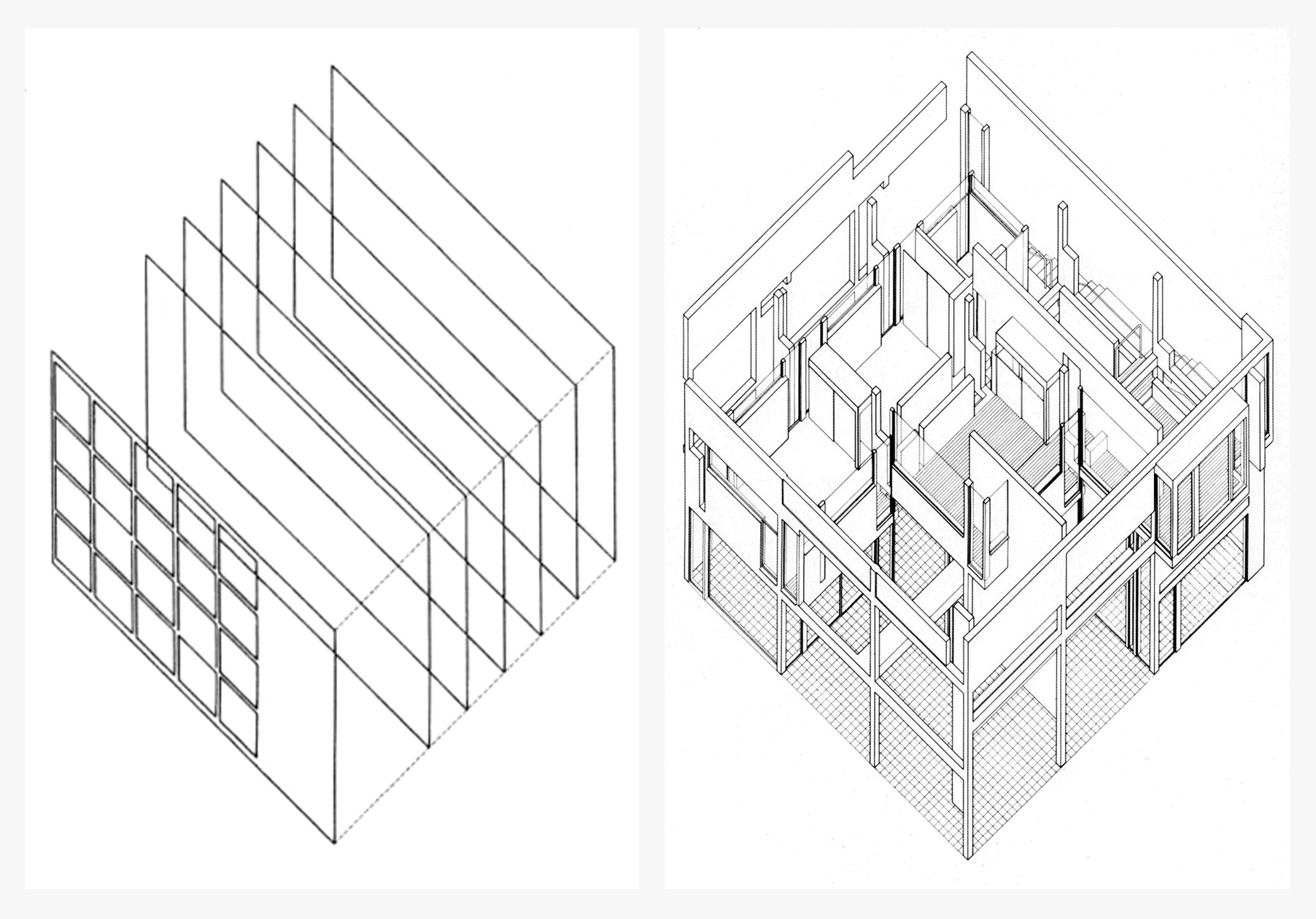
Giuseppe Terragni's infamous Casa Del Fascio (today casa del populi) built in 1935 as a symbol for the superiority of the rising fascist party shows mainly Terragnis superiority in comosing space with complexity and coherence. The balance of rules and exceptions and the impressive control of light fascinated architects and theorists (such as Peter Eisenman who analysed the building properly) for decades.
architecturality.files.wordpress.com/2010/10/terragni_eis...
This forward-looking “everyman” car from the postwar UK was designed with a uniquely British flair. Featuring chrome fenders and character elements, a distinctive grille shaped like an upside-down “T,” and a raked rear windscreen, it helped workers keep their daily commutes punctual and stylish.
More photos available in the build album. Thank you to The Lego Car Blog and The Brothers Brick for their humorous posts about this build and the peculiarities of 1950s British cars!
©2022 Chris Elliott, All Rights Reserved.
Find me also on:
Andreas Gursky's Review (2015) hangs against the pristine white wall of The Broad's third-floor gallery, and I framed it head-on to let the work do what Gursky intended: collapse the distance between viewer and viewed, between art and its institutional reception. The photograph depicts four German chancellors from behind — Helmut Schmidt, Helmut Kohl, Gerhard Schröder, and Angela Merkel — seated in contemplation before a monumental Barnett Newman color field painting, that signature cadmium red split by vertical "zips." It's a picture of statecraft looking at a picture, and standing here makes you the third tier in that recursive chain of authority and observation. I held back from the wall to include the polished concrete floor and the clean shadow gap where wall meets ground, because The Broad's interior architecture is essential to how this image reads. Diller Scofidio + Renfro designed these galleries as deliberately neutral containers — column-free, daylit from above through the building's "veil" exterior — so that nothing competes with the work. The minimalism is the point. Gursky's large-format precision, with its near-clinical detail and theatrical scale, finds its ideal home in this hushed white room. Merkel's yellow blazer punctuates the line of dark suits, the chromatic anchor in a meditation on power, succession, and the German postwar political imagination.
The postwar Studebaker was in its third model year in 1949. The 5-seat coupes were renamed as the Starlight series with a 3-seat business utility variation also available. The Champion had the 169.6 cubic inch six with 80 HP.
15,746 Champion Starlight Coupes (5-seat) coupes were built in the 1949 model year, with 5,917 in Deluxe trim and 9,823 as Regal Deluxe trim at $1,683 and $1,757 respectively (FOB South Bend, Hamilton or Los Angeles).
W100
6.332 cc
V8
250 hp
Class IV : Post-War "1965-1985"
Zoute Concours d'Elegance
Royal Zoute Golf Club
Zoute Grand Prix 2022
Knokke - Zoute
België - Belgium
October 2022
Leica M3
Carl Zeiss 50mm Sonnar f/1.5 (circa 1955) (yellow filter)
Fomapan 100 in HC-110 (1:31 for 6 min)
-- From a test roll.
The Duchess copper deposit was discovered by Jack Kennedy, the son of pioneer pastoralist Alexander Kennedy, in 1897. In 1906 the Hampden-Cloncurry Copper Mines Ltd acquired it and it became the richest producer in the region. By 1912, Hampden-Cloncurry had also gained control of the rich Trekelano copper mine to the south of the smaller Mount Mascotte mines to the north. The ore was railed to Kuridala for processing. However, in 1918 continuing labour shortages, breakdowns, exhaustion of the high-grade oxidised ore, and the drastic postwar drop in copper prices forced the closure of most of the company’s mines including Duchess. At the time, the Duchess copper mine boasted a 100 ton capacity bin. This elaborate structure was the wonder of northwest Queensland at the time and it enabled a full train to be loaded in a relatively short time. Mining activities in the region then almost ceased. The Duchess mine had produced 204 865 t of ore that yielded 25 155t of copper, 76kg of gold and 62kg of silver.
The Duchess orebody occurred in a steep west-dipping shear zone that cuts granite and dolerite, which are probably the same age as the Burstall Granite, and mica schist and calc-silicate rocks of the Corella Formation. The lode in the upper levels of the mine consisted of bornite and subordinate chalcocite, malachite, and cuptire in calcite, but at deeper levels chalcopyrite with quartz was dominant. The mine was worked to a depth of 259m. Today only concrete footings of the machinery remain, apart from a small pit and trenches excavated by more recent exploration. Malachite forming veins and fracture coatings in quartz, and some pyrite can be found on the site. Numerous smaller copper mines occur in the vicinity of Duchess but most are very small.
The Duchess railway opened on the 21st of October 1912 as a temporary terminus for the Great Western Railway construction project. The Hampden Co pressured for the early completion of the line to Duchess to reach its copper mine situated near the station. Ore was forwarded on the 10th of June 1912 as soon as the rails reached Duchess, several months before all the bridging and ballasting was completely finished, such was the urgency.
When the railway arrived in 1912 a small town sprung up on both sides of the station. Amenity comprised a hotel, store, butcher, school, police station, and a post office. There was a local activity as shown by passenger traffic levels at around 4000 annual journeys. Distant travellers were catered for by the connecting road coach services. A weekly coach ran from here to Camooweal via Colton Hills (320km), taking in mines and pastoral stations on the way. The service departed Duchess on Thursday at 0800am and arrived at Camooweal by 1800pm. Another coach service ran to Trekelano mine twice a week on a day return.
At first there was no water infrastructure required here, locos apparently running to and from Duchess ex Malbon without filing tender tanks. However when the Trekelano tramway opened in 1917 the locos were required to haul a water gin owing to the extra distance involved. In 1918 the manager of the Duchess mine offered Queensland Rail (QR) access to a mine well and this was availed of. QR erected a 30 000 gallon tank for loco water. After the mines closed QR was able to tape the shafts of several mines in turn to maintain supply, which water was suitable after softening.
Rail passenger figures remained firm for a few years by dipped after 1921 and settled at around 1200 annually until the late 1950s when they increased to the mid-1960s, probably due to workers from the Mount Isa Line rehabilitation project. A sharp decline then ensued, and numbers dwindled to a couple of hundreds per year.
The downturn in smelting saw Duchess ore loadings terminate abruptly at the end of 1920. The Hampden Co closed the Duchess mine in 1921 and the site was not revived until 1926 when the dumps were able to be sold for smelting. QR repaired the long unsued siding to allow safe access and over the next 18 months the dumps were completely removed. The Hampden Co has no further use for the mine (its workings completely flooded by then) and none for the rail connection so it sold the siding to QR in 1928. The mine plant and the rail weighbridge were removed at the same time. Penny packets of ore continued to be sent away throughout the 1930s by district gougers and tributers, presumably loaded at the mine siding.
The copper ore and limestone traffic revived in the earnest for Mount Isa Mines from the late 1940s and a few thousand tons annually were loaded at Duchess for a while and again in the mid-1960s at around 10 000 annual tons. No copper ore or limestone was loaded after 1970. The largest single burst ore traffic came from the Phosphate Hill mine in 1975 and 1976 when phosphatic rock to the order of 176 000 tons was road trucked to rail at Duchess pending completion of the Flynn to Phosphate Hill railway and associated loaders at the mine.
The station lost its status as a terminus when the line was continued to Butru in 1915 but the place came into its own when the Mount Isa mining filed was discovered and subsequently developed. Traffic for Mount Isa went through Duchess as it was the closest railhead. The railway extension to Mount Isa officially opened on the 17th of May 1929 and Duchess became the junction to Dajarra and Mount Isa from this time. The yard was expanded, and a full suite of signals was installed. The station was protected from three directions (Mount Isa, Dajarra, and Cloncurry) by distant and home signals all worked from a six lever frame near the station office.
Some sidings were re-arranged to a new layout. The goods shed road was lifted at one end and relaid around the Mount Isa curve where a new loading bank was installed. The passing loop was extended at the Dajarra end to run beyond the Mount Isa turn out. A refreshment room was established in 1929 when the new line opened and it catered for passengers on the Mail plus the mixed trains and those transferring to and from the Dajarra service. The rooms remained in business until 1938 and benefited from the Dajarra service being worked from Mount Isa for a period in the 1930s.
Additional staff and their accommodations were placed at Duchess from 1929, including track gangs and train crews. The train crews were necessary to do away with the need for Cloncurry crews to run the full distance to Mount Isa on overnight rest.
The mine siding remained in place until around 1950 when it was lifted and an alternative ore loading ramp provided between the legs of the angle that was served by a new length of siding. The rehabilitation project of 1961 – 1962 saw the crossing loop extended at the Cloncurry end and the Up home signal moved further out.
The place generated enough traffic to justify the appointment of a station master, particularly when the copper boom lasted. However, when ore traffic ceased in 1921 the place was immediately downgraded to a gate. Developments from Mount Isa from 1924 onwards saw the station master position returned in 1928 when construction of the extension was underway and Duchess becoming a junction station. Fettling gangs were placed at Duchess to maintain the track in three directions.
The station master position lasted until 1972 when replaced by Porter-in-Charge under gate conditions but the building and opening of the Phosphate Hill branch and a rise in ore traffic caused the position to be reinstated in 1975. Changed in train running and safe working led to the final demise of the station master office in 1988 and the place was unattended from the 30th of September that year. The introduction of mechanised gangs from 1966 led to the gradual attrition of the fettling gangs and track inspectors and from a high point of 20 or so staff and a dozen departmental residences the Duchess staffing establishment dwindled to nothing by the late 1990s.
In 1988 Train Order Working was implemented here and yard rationalisation was initiated in instalments from this time through to 2004. Removed during this phase were the goods shed, water softener, ore loading siding, goods shed sign and loading bank, the western leg of the angle and, a little later, the eastern leg plus the Dajarra line stub and loop continuation at that end of the yard. The loco water tank was retained as the basis for the town water supply after being lifted from its stand and mountain at ground level. The wooden station office (a 1949 replacement to the original which was destroyed by fire) was demolished in 2006. Its substitute is a new high level, short length, passenger platform and rudimentary shelter.
The Duchess township slowly diminished in concert with the railway attrition and by 2007 was down to a few houses, the hotel, and the corrugated iron public hall (with children’s playground intact). The opening of the Trekelano mine and associated camp 14km out of town in 2005, with the access road junctioning at Duchess, gave the hotel a welcome injection of custom.
Source: Rocks and Landscapes of Northwest Queensland by Laurie Hutton and Ian Withnall, Copper in the Curry by Norman Houghton.
I'm ukrainian and i'm 14 years old, so sorry for my bad english)
The postwar period, in 1950. Mexico, Yucatan.
Despite the fact that Mexico is quite actively involved in WWII, its economy swiftly rushed upward. People quickly grew rich. One such "new-rich-man" was Victor Vasquez. Born in 1920 in the city of Merida, Yucatan (Mexico). In his family, besides it was still a brother Arthur, who in 1950 was 28 years old. By their nature, Victor was a very cunning man, but the emus were not alien to the concept of honor and justice. But his weakness was money. For the money he was ready to go at all. Arturo was in many ways similar to his brother. However, he was more rude than a brother. He was a stranger to the concept of honor. He followed this rule: "The end justifies the means." His condition they "knocked up" is relatively recent. In 1946, he with his brother managed to buy an old farm for a small sum. However, the brothers had to invest all their savings there. But it paid off. Already by 1948, they had more than 1,000,000 dollars in the bank. By 1950, this amount is tripled. But at the beginning of the 50th year of the case from the brothers went down. First, the sudden death of both parents Vasquez, then the collapse of their business seriously crippled the capital of Victoria and Arthur. Then knocked his brother Arturo create criminal group, which would deal with robbery and drug trafficking. First Victor refused, but Arthur knew the weakness of his brother, and pressed upon them. But there was a problem. Create a group - this one. But how to manage it? The brothers did not know. Then Arturo offered to take a desperate step to go - to go to Las Vegas to welcome to the leader of the American Mafia - Meyer Lansky. Lansky their adopted brothers and discuss with him your plans. Meer heard them and gave them some of his subordinates, who were to become their "advisers." But under certain conditions, the newly formed group was to be a branch of the American "Cosa Nostra" and pay annually from 50 to 100 thousand dollars, depending on the size of income. Vasquez took the offer and went back to Merida. A month later works, in September 1950 was completed creation grouping «Nuestro Negocio». Meanwhile, the "advisers" who were, in fact, spies, Lansky reported all incidents and sentiments in the grouping. ..
2 years later, Merida, Yucatan
For 2 years, the authority «Nuestro Negocio» rose substantially. Grouping keep at bay the entire state of Yucatan. Even the police could not do anything, and did not want to, because the n-th received a bag of money, and in fact, Roofing grouping. But the brothers themselves business was not too successful. They cut ties with "Goat Nostra", but Victor was this very unhappy. On this basis, Arturo and Victor quarreled. And in the mind of most terrible Arturo matured plan - to assassinate his brother and become the sole leader of «Nuestro Negocio». The plan was that several loyalists of Arturo will wear a police uniform and pay a visit to the estate of Victor. Then they had to shoot Victor for alleged "resistance to law enforcement agencies." And now, May 21, 1952 was an attempt on Victor Vázquez. He died on the spot, as wanted and Arturo. The next day he declared himself the sole leader of «Nuestro Negocio». At the general council, Arturo announced his future plans - Yucatan capture, capture the other states of Mexico, the seizure of power in the country.
1953
For the year, Arturo has managed to collect 20,000th army and seize Yucatan. But he did not think to stop. At the second general council, Vazquez announced that it would seize neighboring Yucatan states, and then completely capture all the states up to the Federal District of Mexico City. The same attack on the states of Campeche and Quintana Roo were to begin July 7, 1953, 10 days after the General Council. To do this, Arturo divided his army into 2 squad of 10 thousand people. Exactly one month, August 7, 1953, were captured by the states of Campeche and Quintana Roo, and all weapons and army defected to the «Nuestro Negocio». The next day, August 8, Arturo again gathered the General Council, with a view to announce that it creates in the occupied territory of the Yucatan's Republic (YR), and «Nuestro Negocio» Army enters YR.
1956
With great difficulty, despite the enormous resistance of the Mexican army, under the control of YR was even 10 states. Federal District of Mexico City was inside the occupied territory and the Mexican authorities were forced to negotiate with the UNR. This waiting Arturo Vasquez. Negotiations were scheduled for March 30, 1956, in Mexico City. There the leaders of Mexico and YR ambassadors discussed the current situation. Ambassadors YR was an ultimatum: Ads YR independent state or continuation of armed conflict. Mexico has been depleted of the three-year war, so was forced to declare an independent state YR. Authorities YR, at the turn, agreed to give Mexico State of Mexico and Hidalgo. On 30 March, it was Independence Day YR. President Arturo Vasquez YR became prime minister - his faithful collaborator Armando Hernandez. The first decree of the president was the creation of a national defense enterprise - National Defence Company - Compañía de Defensa del Pueblo (CDP).
The first was the brainchild of submachine gun CDP-01.
CDP-01
Caliber: 9.01
Used cartridge: 9х19L (Long)
Muzzle velocity: 500 m/s
Rate of fire: 700-800 alt. / Min.
Length: 750/600 (decomposition / folded stock)
Barrel length: 275 mm.
Type of ammunition: box magazine 20 rounds
Credit to Shockwave for charging grip and to ScrewFaceRomeo from DeviantArt for concept of the gun
. . . removing the background of a photo like this is only possible, if you stop breathing!
________________________________________________
The Volkswagen Beetle (officially the Volkswagen Type 1, informally in Germany the Volkswagen Käfer, in Poland the Volkswagen Garbus and in the U.S. the Volkswagen Bug) is a two-door, four passenger, rear-engine economy car manufactured and marketed by German automaker Volkswagen (VW) from 1938 until 2003.
The need for this kind of car, and its functional objectives, was formulated by the leader of Nazi Germany, Adolf Hitler, who wanted a cheap, simple car to be mass-produced for his country's new road network. Hitler contracted Ferdinand Porsche in 1934 to design and build it. Porsche and his team took until 1938 to finalise the design. The influence on Porsche's design of other contemporary cars, such as the Tatra V570 and the work of Josef Ganz remains a subject of dispute. The result was one of the first rear-engined cars since the Brass Era. With 21,529,464 produced, the Beetle is the longest-running and most-manufactured car of a single platform ever made.
Although designed in the 1930s, the Beetle was only produced in significant numbers from 1945 on (mass production had been put on hold during the Second World War) when the model was internally designated the Volkswagen Type 1, and marketed simply as the Volkswagen (or "People's Car"). Later models were designated Volkswagen 1200, 1300, 1500, 1302 or 1303, the former three indicating engine displacement, the latter two derived from the type number. The model became widely known in its home country as the Käfer (German for "beetle") and was later marketed as such in Germany, and as the Volkswagen in other countries. For example, in France it was known as the Coccinelle (French for ladybug).
The original 25 hp Beetle was designed for a top speed around 100 km/h, which would be a viable speed on the Reichsautobahn system. As Autobahn speeds increased in the postwar years, its output was boosted to 36, then 40 hp, the configuration that lasted through 1966 and became the "classic" Volkswagen motor. The Beetle ultimately gave rise to variants, including the Karmann Ghia, Type 2 and external coachbuilders. The Beetle marked a significant trend, led by Volkswagen, Fiat, and Renault, whereby the rear-engine, rear-wheel drive layout increased from 2.6 percent of continental Western Europe's car production in 1946 to 26.6 percent in 1956. The 1948 Citroën 2CV and other European models marked a later trend to front-wheel drive in the European small car market, a trend that would come to dominate that market. In 1974, Volkswagen's own front-wheel drive Golf model succeeded the Beetle. In 1994, Volkswagen unveiled the Concept One, a "retro"-themed concept car with a resemblance to the original Beetle, and in 1998 introduced the "New Beetle", built on the contemporary Golf platform with styling recalling the original Type 1. It remained in production through 2010, being succeeded in 2011 by the more aggressively styled Beetle (A5).
In the 1999 Car of the Century competition, to determine the world's most influential car in the 20th century, the Type 1 came fourth, after the Ford Model T, the Mini, and the Citroën DS.
HISTORY
THE PEOPLES CAR
In April 1934, Adolf Hitler gave the order to Ferdinand Porsche to develop a Volkswagen (literally, "people's car" in German, pronounced [ˈfɔlksvaːɡən]). The epithet Volks- literally, "people's-" had been applied to other Nazi-sponsored consumer goods such as the Volksempfänger ("people's radio").
In May 1934, at a meeting at Berlin’s Kaiserhof Hotel, Chancellor Hitler insisted on a basic vehicle that could transport two adults and three children at 100 km/h while not using more than 7 litres of fuel per 100 km (32 mpg US/39 mpg UK). The engine had to be powerful for sustained cruising on Germany’s new Autobahnen. Everything had to be designed to ensure parts could be quickly and inexpensively exchanged. The engine had to be air-cooled because, as Hitler explained, not every country doctor had his own garage (ethylene glycol antifreeze was only just beginning to be used in high-performance liquid-cooled aircraft engines. In general, radiators filled with water would freeze unless the vehicle was kept in a heated building overnight or drained and refilled each morning).
The "People's Car" would be available to citizens of Nazi Germany through a savings scheme, or Sparkarte (savings booklet), at 990 Reichsmark, about the price of a small motorcycle. (The average weekly income was then around 32RM.)
DEVELOPMENT
Ferdinand Porsche developed the Type 12, or "Auto für Jedermann" (car for everybody) for Zündapp in 1931. Porsche already preferred the flat-four engine, and selected a swing axle rear suspension (invented by Edmund Rumpler), while Zündapp insisted on a water-cooled five-cylinder radial engine. In 1932, three prototypes were running. All of those cars were lost during World War II, the last in a bombing raid in Stuttgart in 1945.
The Zündapp prototypes were followed by the Porsche Type 32, designed in 1933 for NSU Motorenwerke AG, another motorcycle company. The Type 32 was similar in design to the Type 12, but it had a flat-four engine. NSU's exit from car manufacturing resulted in the Type 32 being abandoned at the prototype stage.
Initially designated Type 60 by Porsche, the design team included Erwin Komenda and Karl Rabe. In October 1935, the first two Type 60 prototypes, known as the V1 and V2 (V for Versuchswagen, or "test car"), were ready. In 1936, testing began of three further V3 prototypes, built in Porsche's Stuttgart shop. A batch of thirty W30 development models, produced for Porsche by Daimler-Benz, underwent 2,900,000 km of further testing in 1937. All cars had the distinctive round shape and the air-cooled, rear-mounted engine. Included in this batch was a rollback soft top called the Cabrio Limousine. A further batch of 44 VW38 pre-production cars produced in 1938 introduced split rear windows; both the split window and the dash were retained on production Type 1s until 1953. The VW38 cars were followed by another batch of 50 VW39 cars, completed in July 1939.
The car was designed to be as simple as possible mechanically. The air-cooled 25 hp (19 kW) 995 cc motors' built-in oil cooler and flat-four engine configuration's superior performance was also effective for the German Afrika Korps in Africa's desert heat. The suspension design used compact torsion bars instead of coil or leaf springs. The Beetle is nearly airtight and will briefly float.
THE FACTORY
On 26 May 1938, Hitler laid the cornerstone for the Volkswagen factory in Fallersleben. He gave a speech, in which he named the car Kraft-durch-Freude-Wagen ("Strength Through Joy Car", usually abbreviated to KdF-Wagen). The name refers to Kraft durch Freude ('Strength Through Joy'), the official leisure organization of Nazi Germany. The model village of Stadt des KdF-Wagens was created near Fallersleben in Lower Saxony in 1938 for the benefit of the workers at the newly built factory.
The factory had only produced a handful of cars by the start of the war in 1939; the first volume-produced versions of the car's chassis were military vehicles, the Type 82 Kübelwagen (approximately 52,000 built) and the amphibious Type 166 Schwimmwagen (about 14,000 built).
The first Beetles were produced on a small scale in 1941.
WARTIME PRODUCTION
A handful of KdF-Wagen (Typ 60) were produced primarily for the Nazi elite from 1941 to 1944, but production figures were small because the factories were concentrating on production of the Kübelwagen (Typ 82), the beetle for the Wehrmacht (Typ 82 E), the Schwimmwagen (Typ 166), and a handful of other variants. The factory produced another wartime vehicle: the Kommandeurswagen (Typ 87); a Beetle body mounted on a 4WD Schwimmwagen chassis. The Kommandeurswagen had widened fenders to accommodate its Kronprinz all-terrain tires. 564 Kommandeurswagen were produced up to 1944, when all production was halted because of heavy damage to the factory by Allied air raids. Much of the essential equipment had already been moved to underground bunkers for protection, which let production resume quickly after hostilities ended. Due to gasoline shortages late in the war, a few "Holzbrenner" Beetles were built powered by pyrolysis gas producers located under the front hood.
POST-WAR PRODUCTION AND BOOM
In occupied Germany, the Allies followed the Morgenthau plan to remove all German war potential by complete or partial pastoralization. As part of this, in the Industrial plans for Germany, the rules for which industry Germany was to be allowed to retain were set out. German car production was set at a maximum of 10% of the 1936 car production numbers.
Mass production of civilian VW cars did not start until post-war occupation. The Volkswagen factory was handed over by the Americans to British control in 1945; it was to be dismantled and shipped to Britain. Thankfully for Volkswagen, no British car manufacturer was interested in the factory; an official report included the phrases "the vehicle does not meet the fundamental technical requirement of a motor-car ... it is quite unattractive to the average buyer ... To build the car commercially would be a completely uneconomic enterprise." The factory survived by producing cars for the British Army instead. Allied dismantling policy changed in late 1946 to mid-1947, although heavy industry continued to be dismantled until 1951. In March 1947, Herbert Hoover helped change policy by stating
There is the illusion that the New Germany left after the annexations can be reduced to a "pastoral state". It cannot be done unless we exterminate or move 25,000,000 people out of it.
The re-opening of the factory is largely accredited to British Army officer Major Ivan Hirst. Hirst was ordered to take control of the heavily bombed factory, which the Americans had captured. His first task was to remove an unexploded bomb that had fallen through the roof and lodged itself between some pieces of irreplaceable production equipment; if the bomb had exploded, the Beetle's fate would have been sealed. Knowing Germany needed jobs and the British Army needed vehicles. Hirst persuaded the British military to order 20,000 cars, and by March 1946 the factory was producing 1,000 cars a month (in Army khaki, under the name Volkswagen Type 1), which Hirst said "was the limit set by the availability of materials". During this period, the car reverted to its original name of Volkswagen and the town was renamed Wolfsburg. The first 1,785 Type 1s were made in 1945.
After World War II, it was officially designated the Volkswagen Type 1, but was more commonly known as the Beetle.Following the British Army-led restart of production and Hirst's establishment of sales network and exports to Netherlands, former Opel manager (and formerly a detractor of the Volkswagen) Heinz Nordhoff was appointed director of the Volkswagen factory in 1949. Under Nordhoff, production increased dramatically over the following decade, with the one-millionth car coming off the assembly line by 1955. During this post-war period, the Beetle had superior performance in its category with a top speed of 115 km/h and 0–100 km/h in 27.5 seconds with fuel consumption of 6.7 l/100 km (36 mpg) for the standard 25 kW (34 hp) engine. This was far superior to the Citroën 2CV, which was aimed at a low speed/poor road rural peasant market, and Morris Minor, designed for a market with no motorways / freeways; it was even competitive with more advanced small city cars like the Austin Mini.
In Small Wonder, Walter Henry Nelson wrote:
"The engine fires up immediately without a choke. It has tolerable road-handling and is economical to maintain. Although a small car, the engine has great elasticity and gave the feeling of better output than its small nominal size."
There were other, less-numerous models, as well. The Hebmüller cabriolet (officially Type 14A), a sporty two-seater, was built between 1949 and 1953; it numbered 696. The Type 18A, a fixed-top cabriolet, was produced by Austro-Tatra as a police and fire unit; 203 were assembled between January 1950 and March 1953.
The chassis became a technological and parts donor to Volkswagen Type 2 (also known as Bulli) and external coachbuilders like Rometsch, Dannenhauer & Stauss, Wilhelm Karmann, Enzmann, Beutler, Ghia-Aigle, Hebmüller & Söhne, Drews, Wendler.
On 17 February 1972, when Beetle No. 15,007,034 was produced, Beetle production surpassed that of the previous record holder, the Ford Model T. By 1973, total production was over 16 million, and by 23 June 1992, over 21 million had been produced.
DECLINE
Though extremely successful in the 1960s, the Beetle was increasingly faced with stiff competition from more modern designs globally. The Japanese had refined rear-wheel-drive, water-cooled, front-engine small cars including the Datsun 510 and Toyota Corona, whose sales in the North American market grew rapidly at the expense of Volkswagen in the late 1960s. Honda introduced the N600, based on the space-efficient transverse-engine, front-wheel-drive layout of the original Austin Mini, to the North American market in late 1969, and upgraded the model to the Honda Civic in 1972. The Japanese "big three" would soon dominate compact auto sales in North America. In 1971 Ford introduced its Pinto, which had some market impact as a low cost alternative. As the 1960s came to a close, Volkswagen faced increasingly stiff competition from European cars as well. The Beetle was faced with competition from new designs like the Fiat 127 and Renault 5, and more robust designs based on the Austin Mini layout such as the Superminis. German competitors, Ford and Opel also enjoyed strong sales of modern smaller cars like the Ford Escort and Opel Kadett. Volkswagen's attempts to boost the power of their air-cooled motor to meet the demands of higher highway speeds in the late 1960s, then comply with new pollution control regulations, caused problems for reliability and fuel efficiency that impaired the reputation of the aging design. Safety issues with the Beetle came under increasing scrutiny, culminating in the 1972 release of a rather scathing report. During the early 1970s, sales of the Beetle in Europe and North America plummeted.
There were other models introduced to supplement the Beetle in the VW product line throughout the 1960s; the Type 3, Type 4, and the NSU-based and larger K70. None of these models, aimed at more upscale markets, achieved the level of success as the Beetle. The over-reliance on a single model, now in decline, meant that Volkswagen was in financial crisis by 1974. It needed German government funding to produce the Beetle's replacement.
Production lines at Wolfsburg switched to the new water-cooled, front-engined, front-wheel drive Golf designed by Giorgetto Giugiaro in 1974, sold in North America at the time as the "Rabbit". The Golf would eventually become Volkswagen's most successful model since the Beetle. The Golf would be periodically redesigned over its lifetime, entering its seventh generation in 2012, with only a few components carried over between generations, while the Beetle had only minor refinements of its original design.
The Golf did not kill Beetle production, nor did the smaller Polo which was launched a year later. Production of the Beetle continued in smaller numbers at other German factories until 19 January 1978, when mainstream production shifted to Brazil and Mexico: markets where low operating cost was an important factor. However, this shift in production did not completely end sales of the Beetle in Europe, although after this date sales of the Beetle in Europe were very low. Beetle sedans were produced for U.S. markets until July 1977 and for European markets until 1985, with private companies continuing to import cars produced in Mexico after 1985. The Beetle convertible/Cabriolet ended production (as 1979 models) as of January 31, 1980.
The last Beetle was produced in Puebla, Mexico, in July 2003. The final batch of 3,000 Beetles were sold as 2004 models and badged as the Última Edición, with whitewall tires, a host of previously discontinued chrome trim, and the choice of two special paint colors taken from the New Beetle. Production in Brazil ended in 1986, then started again in 1993 and continued until 1996.
The Beetle outlasted most other cars which had adopted the rear air-cooled engine layout such as those by Subaru, Fiat, and General Motors. Porsche's 356 series which originally used some Volkswagen sourced parts, continued to use the classic rear engine layout (which later became water-cooled) in the Porsche 911 996 series, which remains competitive in the second decade of the 21st century.
WORLDWIDE END OF PRODUCTION
By 2002, over 21 million Type 1s had been produced, but by 2003, annual production had dropped to 30,000 from a peak of 1.3 million in 1971. VW announced the end of production in June 2003, citing decreasing demand, and the final original Type 1 VW Beetle (No. 21,529,464) rolled off the production line at Puebla, Mexico, on 30 July 2003 65 years after its original launch. This last Beetle, nicknamed El Rey (Spanish for "The King" after a legendary Mexican song by José Alfredo Jiménez) was delivered to the company's museum in Wolfsburg, Germany.
To celebrate the occasion, Volkswagen marketed a final special series of 3,000 Beetles marketed as "Última Edición" (Final Edition) in light blue (Aquarius Blue) or beige (Harvest Moon Beige). Each car included the 1.6 engine, whitewall tires, a CD player with four speakers, chrome bumpers, trim, hub caps and exterior mirrors, a Wolfsburg emblem above the front trunk's handle, chrome glove box badge, body coloured wheels, tinted glass, a rear parcel shelf, and VW Última Edición plaque.
A mariachi band serenaded production of the last car. In Mexico, there was an advertising campaign as a goodbye for the Beetle. In one of the ads was a very small parking space on the street, and many big cars tried to use it, but could not. After a while, a sign appears in that parking space saying: "Es increíble que un auto tan pequeño deje un vacío tan grande" (It is incredible that a car so small can leave such a large void). Another depicted the rear end of a 1954 Beetle (the year Volkswagen was established in Mexico) in the left side of the ad, reading "Erase una vez..." (Once upon a time...) and the last 2003 Beetle in the right side, reading "Fin" (The end). There were other ads with the same nostalgic tone.
- Engine: Fuel-injected (Bosch Digifant) four-cylinder horizontally opposed, 1,584 cc, 50 hp (37 kW), 98.1 N·m (72.4 lb·ft) @ 2,200 rpm, three-way catalytic converter
- Rated fuel mileage: 32.5 mpg-US (7.2 L/100 km; 39.0 mpg-imp)
- Max cruising speed: 130 km/h
- Brakes: front disc, rear drum
- Passengers: Five
- Tank: 40 L (11 US gal; 9 imp gal)
- Colours: Aquarius blue, Harvest Moon beige.
PROTOTYPES
DIESEL
In 1951, Volkswagen prototyped a 1.3 L diesel engine. Volkswagen made only two of these air-cooled boxer diesel engines (not turbocharged), and installed one engine in a Type 1 and another in a Type 2. The diesel Beetle was time tested on the Nürburgring and achieved 0–100 km/h in 60 seconds.
DESIGN
The Beetle featured a rear-located, rear-wheel drive, air-cooled four-cylinder, boxer engine in a two-door bodywork featuring a flat front windscreen, accommodating four passengers and providing luggage storage under the front bonnet and behind the rear seat – and offering a coefficient of drag of 0.41; to this relatively good CD, the also streamlined rear of car was of help. The bodywork attached with eighteen bolts to its nearly flat chassis which featured a central structural tunnel. Front and rear suspension featured torsion bars along with front stabilizer bar – providing independent suspension at all wheels. Certain initial features were subsequently revised, including mechanical drum brakes, split-window rear windows, mechanical direction-indicators and the non-synchronized gearbox. Other features, including its distinctive overall shape, endured.
Its engine, transmission, and cylinder heads were constructed of light alloy. An engine oil cooler (located in the engine fan's shroud) ensured optimal engine operating temperature and long engine life, optimized by a thermostat that bypassed the oil cooler when the engine was cold. Later models of the carburetor featured an automatic choke. Engine intake air passed through a metallic filter, while heavier particles were captured by an oil bath. After 1960, steering featured a hydraulic damper that absorbed steering irregularities.
Indicative of the car's utilitarian design, the interior featured painted metal surfaces, a metal dash consolidating instruments in a single, circular binnacle, adjustable front seats, a fold-down rear seat, optional swing-out rear windows, front windows with pivoting vent windows, heating via air-to-air exchange manifolds operating off the engine's heat, and a windshield washer system that eschewed the complexity and cost of an additional electric pump and instead received its pressurization from the car's spare tire (located in the front luggage compartment) which was accordingly overinflated to accommodate the washer function.
Throughout its production, VW marketed the Beetle with a four-speed manual transmission. From 1961 (and almost exclusively in Europe), VW offered an optional version of the Saxomat semi-automatic transmission: a regular 4-speed manual transaxle coupled to an electromagnetic clutch with a centrifugal clutch used for idle. Subsequently (beginning in 1967 in Europe and 1968 in the United States), VW offered an optional semi-automatic transmission (marketed as Automatic Stick Shift and also called AutoStick[citation needed]), which was a 3-speed manual coupled to an electro-pneumatic clutch and torque converter.
While the overall appearance of the Beetle changed little over its life span, it received over 78,000 incremental changes during its production.
EVOLUTION AND DESIGN CHANGES
BEETLE CABRIOLET
It was in 1948 that Wilhelm Karmann first bought a VW Beetle sedan and converted it into a four-seated convertible. The Beetle Cabriolet began production in 1949 by Karmann in Osnabrück. After successfully presenting it at VW in Wolfsburg, production started in 1949.
The convertible was more than a Beetle with a folding top. To compensate for the strength lost in removing the roof, the sills were reinforced with welded U-channel rails, a transverse beam was fitted below the front edge of the rear seat cushion, and the side cowl-panels below the instrument panel were double-wall. In addition, the lower corners of the door apertures had welded-in curved gussets, and the doors had secondary alignment wedges at the B-pillar.
The top was cabriolet-style with a full inner headliner hiding the folding mechanism and crossbars. In between the two top layers was 25 mm of insulation. The rear window was tempered safety glass, and after 1968, heated. Due to the thickness of the top, it remained quite tall when folded. To enable the driver to see over the lowered top, the inside rearview was mounted on an offset pivot. By twisting the mirror 180 degrees on a longitudinal axis, the mirror glass would raise approximately 5.1 cm.
The convertible was generally more lavishly equipped than the sedan with dual rear ashtrays, twin map pockets, a visor vanity mirror on the passenger side, rear stone shields, and through 1969, wheel trim rings. Many of these items did not become available on other Beetles until the advent of the optional "L" (Luxus) Package of 1970.
After a number of stylistic and technical alterations made to the Karmann cabriolet, (corresponding to the many changes VW made to the Beetle throughout its history), the last of 331,847 cabriolets came off the production line on 10 January 1980.
1950–1959 MODELS
During this period, a myriad of changes were made throughout the vehicle beginning with the availability of hydraulic brakes and a folding fabric sunroof in 1950. The rear window of the VW Beetle evolved from a divided or "split" oval, to a singular oval. The change occurred between October 1952 and March 1953. Beetles built during this time were known as a "Zwitter", or "hybrid", as they used the split-window bodyshell with oval-model chrome trim, vent windows and dashboard.
1953 models received a redesigned instrument panel. The one-piece “Pope's Nose” combination license plate/brake light was replaced by a smaller flat-bottomed license plate light. The brake light function was transferred to new heart-shaped lamps located in the top of the taillight housings.
In 1954, Volkswagen added 2 mm to the cylinder bore, increasing the displacement from 1,131 (1100) cc to 1,192 (1200) cc. This coincided with upgrades to various key components including a redesign of the crankshaft. This increased power from 30 hp (22 kW; 30 PS) to 36 hp (27 kW; 36 PS) and improved the engine's free revving abilities without compromising torque at lower engine speeds. At the same time, compression ratios were progressively raised as, little by little, the octane ratings of available fuel was raised in major markets during the 1950s and 1960s.
In 1955, the separate brake lights were discontinued and were combined into a new larger taillight housing. The traditional VW semaphore turn signals were replaced by conventional flashing directional indicator lamps for North America.
For 1956, the Beetle received what would become one of its more distinctive features, a set of twin chrome tailpipes. Models for North America gained taller bumper guards and tubular overrider bars.
For 1958, the Beetle received a revised instrument panel, and a larger rectangular rear window replaced the previous oval design.
1960–1969 MODELS
1960 models received a front sway bar along with a hydraulic steering damper.
For 1961, significant technical advances occurred in the form of a new engine and transmission. The engine remained at 1200cc but the power increased to 40 hp (30 kW; 41 PS) primarily due to an increase in compression ratio to 7.1:1. The carburetor received an electric automatic choke and the transmission was now synchronized on all forward gears. The traditional semaphore turns signals were replaced by conventional flashing directional indicators worldwide.
For 1962, the Beetle received a mechanical fuel level gauge in place of the former fuel tap. At the rear, larger tail lights were introduced incorporating a separate amber turn signal section to meet new European standards (these turn signals remained red in the US market until 1973). The former hand-pump style windscreen washer was replaced by a new design using compressed air. A Schrader valve located on the washer fluid tank allowed the system to be charged at a filling station to the recommended 35 psi (2.4 bar).
1964 models could be identified by a widened light housing on the engine lid over the rear license plate.
The largest change to date for the Beetle was in 1965: the majority of the body stampings were revised, which allowed for significantly larger windows. The windshield increased in area by 11% and was now slightly curved, rather than flat. Door windows increased accordingly by 6% (and door vent window edges were canted slightly back), rear side windows 17.5%, and the rear window 19.5%. The result was a more open, airy, modern look.
For 1966, the big news was an optional new 1300cc 50 hp (37 kW; 51 PS) engine in lieu of the previous 1200cc engine that had been the sole engine since 1954. Models so equipped carried a "1300" badge on the engine lid. The 1300cc engine was standard for North America.
For 1967, a yet-again larger-displacement engine was made available: 1500cc, 53 hp (40 kW; 54 PS) at 4,200 rpm. 1200 and 1300 engines continued to be available, as many markets based their taxation on engine size. 1500cc Beetles were equipped with front disc brakes and were identified with a "VW 1500" badge on the engine lid. North America received the 1500 engine as standard equipment, but did not receive front disc brakes. These models were identified by a "Volkswagen" badge on the engine lid.
The rear suspension was significantly revised including a widened track, softer torsion bars and the addition of a unique Z-configuration equalizing torsion spring. On US, UK and Ireland models, the generator output was increased from 180 to 360 watts, and the entire electrical system was upgraded from 6 volts to 12 volts. The clutch disc also increased in size and changes were made to the flywheel. New equipment included a driver's armrest on the door and locking buttons on both doors. Safety improvements included two-speed windscreen wipers, reversing lights (in some markets), and a driver's side mirror. In accord with the newly enacted US Federal Motor Vehicle Safety Standard 108, North American models received a dual-circuit brake system, the clear glass headlamp covers were deleted; the headlamps were brought forward to the leading edge of the front fenders, and the sealed-beam units were exposed and surrounded by chrome bezels.
1968 was a year of major change. The most noticeable of which were the new larger, higher mounted C-section bumpers. At the rear, new larger taillamps were adopted and were able to accommodate backup lamps, which were previously separate bumper-mounted units. Beetles worldwide received the '67 North American style vertical headlamp placement, but with replaceable-bulb headlamps compliant with ECE regulations rather than the US sealed beams. Other improvements were a new outside gas filler with spring-loaded flap, eliminating the need to open the trunk to refuel. The fuel gauge was integrated with the speedometer and was now electrically-actuated rather than cable-operated. The windscreen washer was now pressured by the spare tire, which was to be maintained at a pressure of 42 psi (2.9 bar). A pressure valve in the connecting hose closed airflow to the fluid reservoir if spare tire pressure fell below 30 psi (2.1 bar), which was above the recommended pressures for the road tires. A ventilation system was introduced, which drew fresh air into the cabin from louvres on the front decklid. For improved shifting, the shift lever was shortened, stiffened and moved rearward by
78 mm.
A number of safety improvements were made in order to comply with new American safety regulations: these included trigger-operated outside door handles, a secondary front hood latch, collapsing steering column, soft vent window latches, rotary glove compartment latch and instrument panel knobs labeled with pictographs. US models received a padded instrument panel that was optional in other markets. To meet North American head restraint requirements, VW developed the industry's first high-back bucket seat.
A new 3-speed semi-automatic gear box with torque converter and vacuum-operated clutch became available mid-production year. The semi-automatic models received a vastly improved semi-trailing-arm rear suspension (also known as "Independent Rear Suspension" although the earlier swing axle Beetles were also independent) and eliminated the need for the equalizing torsion spring. This new rear suspension layout would eventually become an option on later models. Beetles equipped with the automatic were identified with a "VW Automatic" badge on the engine lid and a matching decal in the rear window. In North America, the badging and decal were later revised to read, "Automatic Stick Shift".
For 1969, the only exterior change was the fuel filler flap no longer had a finger indentation due to a new interior-mounted fuel door release. For North America, the Beetle received a heated rear window, day/night mirror and the semi-trailing, independent rear-arm suspension as standard equipment.
1970–1979 MODELS
In 1970, A new "L" (Luxus) Package was introduced including, among other items, twin map pockets, dual rear ashtrays, full carpeting, a passenger-side visor vanity mirror, and rubber bumper moldings. The optional 1500 cc engine now came with an engine lid having two rows of cooling louvers, while the convertible's engine lid gained two additional sets for a total of four. For North America, the 1500 cc engine was enlarged to 1600 cc engine and produced 57 hp (43 kW; 58 PS)
For 1971, for the first time there were two Beetles, the familiar standard Beetle and a new larger version that was different from the windscreen forward. All Beetles received an engine upgrade: the optional 1500 cc engine was replaced by a 1600 cc version with twin-port cylinder heads and a larger, relocated oil cooler. The new engine produced 60 hp (45 kW; 61 PS). The ventilation system was improved with the original dash-top vents augmented by a second pair aimed directly at the driver and passenger. For the first time the system was a flow-through design with crescent-shaped air exits fitted behind the rear quarter windows. Airflow could be increased via an optional 2-speed fan. The standard Beetle was now badged as the VW 1300; when equipped with the 1600 engine, it was badged 1300 S, to avoided confusion with the Type 3, which wore VW 1600 badges.
The new larger Beetle was sold as the 1302/1302 S, offering nearly 50% increased luggage capacity. A new MacPherson strut front suspension was incorporated, similar to what was used in the Type 4, and the front track was widened. The new suspension layout allowed the spare tire to be positioned flat under the trunk floor, although the car had to be lengthened slightly to accomplish this. This also allowed a reduction in turning radius. To gain additional trunk volume, the under-dash panel was lowered, allowing the fuel tank to be shifted rearward. From the windscreen back the big Beetle was identical to its smaller progenitor, except for having the semi-trailing arm rear suspension as standard equipment. Overall, the big Beetle was 50 mm longer in length and 35 mm wider and rode on a 20 mm longer wheelbase than the standard model. Both Beetles were available with or without the L Package. The convertible was now based on the 1302 body. In North America, the 1302 was marketed as the Super Beetle and came only with the L Package and 1600 cc engine. While it lacked the front disc brakes that normally accompanied the larger motor, it was fitted with brake drums that were slightly larger than the standard Beetle. With the Super Beetle being sold as the premium model in North America, the standard Beetle, while retaining the same 1600 cc engine, was stripped of many of its earlier features in order to reduce the selling price. Bright window and running board moldings disappeared, along with the day/night mirror, horn ring, map pocket, locking glove box and miscellaneous other items.
1972 models had an 11% larger rear window 40 mm taller, larger front brakes[citation needed] and the convertible engine lid with four rows of louvres was now used on all Beetles. Inside the vehicle, a four-spoke energy-absorbing steering wheel was introduced, the windshield wiper/washer knob was replaced in favor of a steering column stalk, and intermittent wipers were a new option available in selected markets. An engine compartment socket for the proprietary VW Diagnosis system was also introduced. The rear luggage area was fitted with a folding parcel shelf. A limited-edition Commemorative model was launched in celebration of the Beetle's passing the record of the Ford Model T as the world's most-produced automobile. The Commemorative Beetle was a 1302 LS finished in a special Marathon Blue Metallic paint and unique 4.5 x 15 styled steel wheels. In the U.S., it was marketed as the Super Beetle Baja Champion SE.
1973 models featured significantly-enlarged "elephant foot" taillamps mounted in reshaped rear fenders. In the engine bay, the oil-bath air cleaner gave way to a dry element filter, and the generator was replaced with an alternator. The 1302/Super became the 1303 with a new taller wrap-around windscreen. The changes to the cowl and windshield resulted in slight redesign of the front hood. The instrument panel, formerly shared with the standard Beetle, was all-new and incorporated a raised speedometer pod, rocker-style switches and side-window defrosters. The limited-edition GSR (Gelb-Schwarz Rennen) was a 1303 S available only in Saturn Yellow paint equipped with special 140 mm wide sport wheels fitted with 175/70-15 Pirelli Cinturato CN36 high-performance radial tires. Front and rear deck lids were finished in matte black, as was all exterior trim with the exception of the chrome headlamp bezels. Inside were corduroy and leatherette high-bolstered sport seats and a small diameter three-spoke steering wheel with padded leather rim and a small red VW logo on the bottom spoke. In North America, the GSR was sold as the Super Beetle Sports Bug. The North American model had body-color deck lids and was available in Marathon Blue Metallic in addition to Saturn Yellow. In some markets, the sport wheels (in both 4.5-inch and 5.5-inch widths), sport steering wheel and sport seats became available as stand-alone options.
For 1974, North American models received newly required 8.0 km/h impact bumpers mounted on self-restoring energy absorbers, which added approximately 25 mm to the car's overall length. On the Super Beetle, the steering knuckle, and consequently the lower attachment point of the strut, was redesigned to improve handling and stability in the event of a tire blowout. A limited-edition Big Beetle was introduced based on the 1303 LS. Available in unique metallic paint colors, the car featured styled-steel 5.5 in (140 mm) wide sport wheels wrapped in 175/70-15 tires, corduroy seat inserts, upgraded loop-pile carpet, wood-look instrument panel trim and a padded steering wheel with bright accents. In the North American market, a limited-edition Sun Bug was introduced as a standard Beetle or Super Beetle. Both were finished in metallic gold and featured styled-steel 4.5 in (110 mm)-wide sport wheels. Inside were brown corduroy and leatherette seats, loop-pile carpet, and padded four-spoke deluxe steering wheel. The Super Beetle Sun Bug included a sliding-steel sunroof.
In 1975, front turn indicators were moved from the top of the front fenders down into the bumper. At the rear, the license plate light housing was now molded of plastic with a ribbed top surface. To comply with tightening emission standards, the 1600 cc engine in Japanese and North American markets received Bosch L-Jetronic fuel injection, a derivative of the Bosch D-Jetronic system formerly used in the VW Type 3 and Type 4. The injected engine received a new muffler and in California a catalytic converter. This necessitated a bulge in the rear apron under the rear bumper and replaced the distinctive twin "pea shooter" tailpipes with a single offset pipe, making injected models identifiable at a glance. 5 mph (8.0 km/h) bumper-equipped North American models retained fender-top front indicators. The 1303 received rack and pinion steering. In North America, the 1303/Super Beetle sedan was moved upmarket and was now christened La Grande Bug. Similar to the Big Beetle of 1974, La Grande Bug was available in blue or green metallic paint in the U.S. and blue, green or gold metallic in Canada and was equipped with the same features as the 1974 Sun Bug. Mid-year, the Love Bug was introduced for North America: based on the standard Beetle, it was available only in Phoenix Red or Ravenna Green (both colors shared with the VW-Porsche 914) with all exterior trim finished in matte black. A price leader, the Love Bug retailed for less than a standard Beetle. The "Volkswagen" script on the engine lid of all North American Beetles was replaced with a "Fuel Injection" badge.
In 1976, the 1303/La Grande Bug was discontinued, with the larger body continuing only in convertible form. To make up for the loss in North American markets, the standard Beetle was upgraded, regaining some of the features that were removed in 1971. In addition, the 2-speed ventilation fan was included, previously available in North America only on the larger Beetle. The automatic stickshift option was discontinued as well.
1977 models received new front seats with separate head restraints. This was the final model year for the Beetle sedan in North America. The convertible was offered in a Champagne Edition in triple white with the padded deluxe steering wheel, burled elm-grain dash trim and (110 mm wide sport wheels. Approximately 1,000 Champagne Editions were produced.
WIKIPEDIA
The Volkswagen Beetle—officially the Volkswagen Type 1—is an economy car that was built by the German company Volkswagen (VW) from 1938 until 2003. It has a rear-engine design with a two-door body style and is intended for five occupants (later, Beetles were restricted to four people in some countries).
The need for a people's car (Volkswagen in German), its concept and its functional objectives were formulated by the leader of Nazi Germany, Adolf Hitler, who wanted a cheap, simple car to be mass-produced for his country's new road network (Reichsautobahn). Members of the National Socialist party, with an additional dues surcharge, were promised the first production, but the Spanish Civil War shifted most production resources to military vehicles to support the Nationalists under Francisco Franco.
Lead engineer Ferdinand Porsche and his team took until 1938 to finalise the design. Béla Barényi is credited with conceiving the original basic design for this car in 1925, notably by Mercedes-Benz, on their website, including his original technical drawing, five years before Porsche claimed to have done his initial version. The influence on Porsche's design of other contemporary cars, such as the Tatra V570, and the work of Josef Ganz remains a subject of dispute. The result was the first Volkswagen, and one of the first rear-engined cars since the Brass Era. With 21,529,464 produced, the Beetle is the longest-running and most-manufactured car of a single platform ever made.
Although designed in the 1930s, due to World War II, civilian Beetles only began to be produced in significant numbers by the end of the 1940s. The car was then internally designated the Volkswagen Type 1, and marketed simply as the Volkswagen. Later models were designated Volkswagen 1200, 1300, 1500, 1302, or 1303, the first three indicating engine displacement, the last two derived from the model number.
The car became widely known in its home country as the Käfer (German for "beetle", cognate with English chafer) and was later marketed under that name in Germany, and as the Volkswagen in other countries. For example, in France it was known as the Coccinelle (French for ladybug).
The original 18.6 kW (24.9 hp) Beetle was designed for a top speed around 100 km/h (62 mph), which would be a viable cruising speed on the Reichsautobahn system. As Autobahn speeds increased in the postwar years, its output was boosted to 27 kW (36 hp), then 30 kW (40 hp), the configuration that lasted through 1966 and became the "classic" Volkswagen motor. The Beetle gave rise to multiple variants: mainly the 1950 Type 2 'Bus', the 1955 Karmann Ghia, as well as the 1961 Type 3 'Ponton' and the 1968 Type 4 (411/412) family cars, ultimately forming the basis of an entirely rear-engined VW product range.
The Beetle marked a significant trend, led by Volkswagen, and then by Fiat and Renault, whereby the rear-engine, rear-wheel-drive layout increased from 2.6 percent of continental Western Europe's car production in 1946 to 26.6 percent in 1956. In 1959 even General Motors launched an air-cooled, rear-engined car, the Chevrolet Corvair—which also shared the Beetle's flat engine and swing axle architecture.
Over time, front-wheel drive, and frequently hatchback-bodied cars would come to dominate the European small-car market. In 1974, Volkswagen's own front-wheel drive Golf hatchback succeeded the Beetle. In 1994, Volkswagen unveiled the Concept One, a "retro"-themed concept car with a resemblance to the original Beetle, and in 1998 introduced the "New Beetle", built on the contemporary Golf platform with styling recalling the original Type 1. It remained in production through 2010, and was succeeded in 2011 by the Beetle (A5), the last variant of the Beetle, which was also more reminiscent of the original Beetle. Production ceased altogether by 2019.
In the 1999 Car of the Century competition, to determine the world's most influential car in the 20th century, the Type 1 came fourth, after the Ford Model T, the Mini, and the Citroën DS.[
Nicosia ( Greek : Λευκωσία (Lefkosia), English : Nicosia), located in the middle of the island of Cyprus , is the capital of the Republic of Cyprus and the Turkish Republic of Northern Cyprus . It is the most populous city of Cyprus and the most important cultural, industrial, trade and transportation center. Nicosia is located at 35°10' north, 33°21' east.
The city is divided into two by the border called the Green Line . Although de jure the Republic of Cyprus has the administration of the entire city, de facto it only has control over South Nicosia . Northern Nicosia is under the rule of the Turkish Republic of Northern Cyprus and is considered to be under Turkish occupation by the international community. The two sectors are separated by a Buffer Zone administered by United Nations Peacekeeping Forces . With the 1960 Constitution of the Republic of Cyprus, the Turkish Municipality of Nicosia was granted legal status.
Nicosia is known as "Lefkosia" (Λευκωσία) in Greek and "Nicosia" in English .
The first name of the area where the city is located was "Ledra". This name is also written as "Ledrae", "Lidir", "Ledras", "Ledron" and "Letra". Later, this city was destroyed and when it was rebuilt by Leucus, the city was named "Lefkotheon" (Λευκόθεον - city of the white gods). This name was also occasionally referred to as "Ledron". Later, the words "Kermia" and "Leucus" (Λευκούς) were used for the city. In the 7th century, Hierocles, a Byzantine geographer, mentioned the city as Lefkousia (Λευκουσία) in his book Synekdemos (Vademecum) . In the 13th century , the Patriarch of Constantinople referred to Nicosia as Kalli Nikesis (Καλλι Νίκησις - Beautiful Victory). A writer and monk, St. Neophytos referred to Nicosia as "Leucopolis" (Lefkopolis - White City) in a sermon he gave around 1176. Since the 10th century, the name "Nicosia" has become generally accepted. In the 18th century, Greek Cypriot historian Archimandrite Kyprianos stated that another name for Nicosia was "Photolampos" (Shining with Light).
There are various claims that the city is referred to as "Nicosia" and similar forms in European languages. According to one claim, the Latins replaced the first syllable of the word, "Lef", with "Ni" because they could not pronounce it. Another claim is that the name derives from the name "Kallinikesis". A writer from Sicily named Sindaco connects the name "Nicosia" to the town named "Nicosia" in Sicily and claimed that King Tancred from this town was with Richard I during the siege of Cyprus and named the city after his own town. . Another claim is that the name "Nicosia" emerged during the rebellion of the city's people against the Knights Templar in 1192. A German priest named Ludolf named the city "Nycosia" between 1341 and 1363. HAS Dearborn, in his book published in 1819, says that another name for Nicosia is "Nicotia". In 1856, William Curry stated that the Greeks called the city "Escosie" and the Western Europeans called it "Licosia".
The name of the city is mentioned in Ottoman documents as "Nicosia" or "medine-i Nicosia" . In addition, in a letter regarding the conquest of Nicosia in 1570, the name of the city is mentioned as "Nicosia". Kâtip Çelebi refers to the city as "Nicosia" (which is sometimes used today).
The first settlement in the area where Nicosia is located took place in the Neolithic Age . The date of the first settlement is approximately 3000-4000 BC. In 1050 BC or in the 7th century BC, a city called " Ledra " was founded in the region. This city had an important place among the other city kingdoms on the island. During archaeological excavations, a Greek inscription written in the 4th century BC was found indicating the existence of a temple dedicated to Aphrodite in Ledra. By around 330 BC it had shrunk to a small village. When this city was destroyed due to earthquakes , in 200 BC, Leucus, the son of Ptolemy I Soter , founded the city that is today Nicosia.
The city's importance began to increase in the late Byzantine period. In the 7th century, it became the capital of the island during the Arab raids.
It fell into the hands of Richard I in 1191 . It was the capital of the island during the period when the Knights Templar purchased and dominated the island. A rebellion broke out in the city on 11 April 1192. The knights suppressed this uprising with a massacre and then left the island.
The Lusignans purchased the island and Nicosia remained their capital. During the Lusignan period, he built many new buildings in the city. During the Venetian period, most of these were demolished and used in the construction of walls. During this period, the Lusignans also built walls around the city. These walls were in the shape of an irregular pentagon . There were no walls in the city before. King Henry I built the first walls with two towers in 1211, Peter I built a third tower, and Henry II built the first walls. Henry had the city completely surrounded by walls. The city became quite wealthy during this period. Nicosia was one of four dioceses on the island. It also became the center of an archdiocese in 1212. During this period, events were taking place between Greeks and Latins, and bloody conflicts broke out in the city in 1313 and 1360.
Nicosia has been damaged by many earthquakes throughout its history. The 1222 Cyprus earthquake was felt strongly in the city and caused great damage. In November 1330, a flood occurred in the city and three thousand people lost their lives. In addition, the city was heavily damaged by the Genoese in 1373 and the Mamluks in 1426.
On February 26, 1489, Nicosia, along with the entire island, came under the rule of the Republic of Venice . Just before the Ottoman conquest of the island, the Venetians inspected the walls and found them too weak. According to the new plans, the walls of Nicosia were reduced from eight miles to three miles. Meanwhile, all buildings outside the new walls were destroyed. According to a claim, the route of Kanlıdere was changed by the Venetians. Another claim is that the Ottomans changed the route of the stream to save the city from floods.
During the conquest of Cyprus by the Ottomans , Nicosia was the third largest settlement taken. Piyale Pasha and his army took action to take Nicosia on 22 July 1570. On July 25, Nicosia was besieged. Clashes began on July 27, as the Venetians did not accept the Ottomans' demands to surrender the castle. The fact that the walls were very strong ensured that Nicosia would not fall. At dawn on 9 September 1570, a new attack was launched and troops of more than 20 thousand people conquered Nicosia.
As part of the settlement of Turks in Cyprus during the Ottoman period, the settlement of the Turkish population in Nicosia, as well as in the entire island, started in 1572. Non-professional Greeks in the city were settled in the neighborhoods outside the city and replaced by Turks. According to a census made during this period, the city had 31 neighborhoods. In two of them ("Ermiyan" and "Karaman"), the Armenian population was in the majority.
During the Ottoman period, Nicosia first served as the capital of the State of Cyprus as the center of a district called "Mountain Kaza", and later became a sanjak . During the Ottoman period, St. Large churches such as the Sophia Cathedral were converted into mosques. Nicosia - Larnaca road was built. The gates of the city were opened at sunrise and closed at sunset. The Governor, Judge, Interpreter and Greek Archbishop resided in Nicosia. William Kimbrough Pendleton states that in 1864 most of the houses in the city were made of clay brick. As a result of a major earthquake in 1741, one minaret of the Selimiye Mosque collapsed and had to be rebuilt. There were riots in the city in 1764 and 1821.
On July 12, 1878, Nicosia, along with the rest of the island, came under British rule . British troops entered the city through the Kyrenia Gate and hoisted the first British flag on the Değirmen Bastion next to the Paphos Gate . Nicosia Municipality was established in 1882. Under British rule, Nicosia grew outside the city walls. Between 1930 and 1945, villages such as Ortaköy , Strovolos , Büyük Kaymaklı , Küçük Kaymaklı began to merge with the city, and the first settlements were made in regions such as Yenişehir . On January 1, 1944, Ayii Omoloyitadhes was included in the municipal boundaries. In order to provide access outside the city, the walls on the sides of the Paphos Gate in 1879, the Kyrenia Gate in 1931, and the Famagusta Gate in 1945 were cut. In 1905, a train station was built in Büyük Kaymaklı and train services to Nicosia started, this practice ended in 1955. In 1912, the first electricity came to the city. Also in the same year, kerosene-powered street lamps were replaced with electric ones. Under British rule, the sewer network was cleaned and the roads were repaired. On October 17, 1947, as a result of an explosion in the power plant that supplied energy to the city, the city was left without electricity for 116 days.
In 1895, Greeks attacked the Turks in the Tahtakale region of Nicosia. In 1931, Greeks rebelled against British rule and burned the government building. Founded in 1955, EOKA attacked public buildings and the radio station in the city against British rule.
The Republic of Cyprus was established on 16 August 1960 . The flag of the Republic of Cyprus was hoisted in the House of Representatives at midnight that night, ending British rule on the island. In accordance with Article 173 of the 1960 constitution, a Greek (Nicosia -Greek Municipality) and a Turkish ( Nicosia Turkish Municipality ) municipality were established on the island. On the night of 20–21 December 1963, the events known as " Bloody Christmas " began. Zeki Halil and Cemaliye Emirali were killed as a result of fire opened on cars in Tahtakale district of Nicosia. Between 23-30, Küçük Kaymaklı was besieged. On the night of 23-24 January, 11 people were killed in the Kumsal region, and the family of Turkish major Nihat İlhan was killed in the incident known as the Kumsal Raid. An attack was carried out against the Turks in the Kanlıdere region. As a result of the events, the governments of Turkey , Greece and the United Kingdom met on 30 December 1963 . As a result of this meeting, the border , also known as the Green Line, was drawn, dividing the city into Turkish and Greek parts. The reason why this border is called the "Green Line" is that the pen of the United Nations official who drew the line on the map was green. The borders of the city were finalized with the Cyprus Operation carried out in 1974 by the order of Turkish Prime Minister Bülent Ecevit .
On 29 March 1968, the suburbs of Eylence , Büyük Kaymaklı, Küçük Kaymaklı, Pallouriotissa , Strovolos (partially) and Kızılay were also included in the municipal borders. Following the de facto division of the city, the area under the administration of the Republic of Cyprus continued to grow in a southerly direction. North Nicosia also continued to grow and merged with outlying villages such as Gönyeli (which has a separate municipality) and Hamitköy (which is part of the Nicosia Turkish Municipality).
Kermiya Border Gate was opened in 2003, and Lokmacı Gate was opened in 2008 .
Nicosia is located in a central point of the island of Cyprus, in the central parts of the Mesarya Plain .
Nicosia has a hot semi-arid climate according to the Köppen climate classification . The hottest months are July and August, and the coldest months are January and February. The month with the most rainfall is January. Nicosia is one of the warmest places on the island.
Nicosia is located in the center of the geological formation called Nicosia Formation. This region dates back to the Lower Pliocene period. Gray, yellow and white marl layers, sandy and yellow limestones and sparse conglomerate bands are frequently encountered. The reconnection of the Mediterranean with the Atlantic Ocean resulted in the rise of sea water and the formation of new sediments, which formed the Nicosia Formation. Underneath Nicosia is the Nicosia- Serdarlı aquifer , which has an area of 60 km² .
The riverside parts of Nicosia city, especially Kanlıdere , have a great biodiversity. [88] In a research conducted in the streams in a 12.5 km diameter area of the city, which is rich in vegetation (especially in stream beds), 185 different plant species belonging to 62 different families were identified. Among these, there are four endemic and 16 rare species. The most common tree species found on the banks of streams in the city is the eucalyptus tree (various types can be found). There is a total of 0.262 square kilometers of forest area in the Nicosia Central agricultural region of Northern Cyprus . Two kilometers outside Nicosia (in its southern part), within the boundaries of the Municipality of Eylence, is the Pedagogical Academy National Forest Park, and to the south of the city is the Athalassa National Forest Park. In Northern Nicosia, there is the Nicosia Forest Nursery, which is 0.5 hectares in size.
The habitats of animals in the stream beds in some parts of the city are in danger. The reeds along the streams host many animals, especially bird species. Many creatures such as kingfishers , water chickens , striped turtles and chameleons live on the banks of the streams . There are especially many turtles in the streams.
Nicosia is the commercial center of Cyprus. The city hosts the central banks of the Republic of Cyprus and the Turkish Republic of Northern Cyprus .
The city of Nicosia is divided into two parts in terms of urbanization, these are old Nicosia (the area inside the walls) and new Nicosia (outside the walls). In Old Nicosia, the roads are narrow and there are dead ends. In New Nicosia, there is more vertical and horizontal development over a wider area. Junctions and roads are wider, parks occupy larger areas.
In Nicosia during the Ottoman period, Greeks and Turks lived mixed in some neighborhoods, and in some neighborhoods, one of them was the majority. Mosques can be found in Turkish neighborhoods and churches in Greek neighborhoods. Armenians also lived in the city. The houses of the Armenians who used to live in Köşklüçiftlik were all made of cut stone and had their own unique architecture. Bay windows are a common feature in houses in Old Nicosia . The Büyük Han is one of the most advanced architectural works on the island, and today it is a cultural center where various activities such as exhibitions, sales of antiques and traditional items, and shadow plays take place.
There are fourteen museums in the part of Nicosia south of the Green Line. The Cyprus Museum was founded in 1888 and exhibits hundreds of archaeological artifacts brought from all over the island. The house of Hadjigeorgakis Kornesios, who worked as a translator for the Divan during the Ottoman period, built in 1793, is used as an ethnography museum. In the northern part of the city, the number of museums is six. Derviş Pasha Mansion is used as an ethnography museum.
Although there are many theaters in the south of the city, the headquarters of the Cyprus Theater Association is in Nicosia. The State Theater Building, built in the 2000s, formerly hosted this institution, which suffered from inadequate facilities, and is not allowed to be used by any other theater organization. Nicosia Municipality Theatre, built in 1967, has a capacity of 1220 people. In the north, the Turkish Cypriot State Theater performs plays and organizes tours; but it does not have a hall. Also in the north is the Nicosia Municipal Theater, which was established in 1980. The Cyprus Theater Festival, jointly organized by the Nicosia Turkish Municipality and Nicosia Municipal Theatres, is a large organization attended by institutions such as Istanbul City Theatres , and all of these can be held in only two halls.
There are nineteen cinemas in the southern part of the city, six of which are owned by a company called K Cineplex, and thirteen are owned by other companies. In the north of the city, the number of cinemas is four.
Two waterways built during the Ottoman period were used in Nicosia until the mid-20th century. These waterways were Arab Ahmed and Silihtar waterways. Apart from this, water extracted from wells was also used.
Telegraph was first used in the city in 1873. In 1936, a public telephone network was established covering the entire island and Nicosia.
The migration to the city of Nicosia as a result of the Cyprus Operation in 1974 caused problems such as development, transportation, sewerage, housing shortage and lack of infrastructure in the city.
Since Nicosia is a divided city, the Republic of Cyprus and Northern Cyprus education systems are implemented in the city. A university called Near East University in North Nicosia , Cyprus International University, Mediterranean Karpaz University, Anadolu University 's open education faculty, apart from these, colleges such as Atatürk Teachers Academy and Police School There are. In the area under the control of the Republic of Cyprus , there are universities named University of Cyprus , Open University of Cyprus , Frederick University , University of Nicosia , [132] and European University of Cyprus.
In the Nicosia District of the Republic of Cyprus, there are 42 secondary schools, 133 primary schools and three kindergartens. There are a total of 30 primary schools, kindergartens and special education centers at the primary level in the Nicosia district of Northern Cyprus .
The roads on the island were built to be centered in Nicosia and unite in Nicosia. All important roads meet in Nicosia. During the Ottoman period, only the Larnaca road was built, and the previously built roads were in ruins. Under British rule, these roads were rebuilt and a regular postal service was established between Nicosia and other cities. The first car arrived in the city in 1907. The first bus services from the city started in 1929, these services departed from the Kyrenia Gate and went to Strovolos, Aydemet and Büyük Kaymaklı. [139] Train services started between Nicosia and Famagusta on 21 October 1905 . Train services were organized from Nicosia to approximately 30 stops. Train services ended on December 31, 1951. Nicosia International Airport was opened in 1949 . This airport is in the Buffer Zone today and is not used.
Today, there is a bus service in the Republic of Cyprus controlled part of the city run by a company called Nicosia Bus Company . All buses leave from the terminal in Solomos Square and make stops every 20 to 30 minutes. There are plans to expand the bus line, increase the frequency of services and renew the bus fleet. The Department of Public Works signed an agreement to establish tram and light rail lines between Nicosia - Larnaca and Limassol . There are motorways such as A1 and A2 from the city . In addition to developing this road network, there are also projects to improve the roads within the city. Apart from this, there are also taxis . Air transportation to the city is provided by Larnaca International Airport (44 km away) and Paphos International Airport . Larnaca Airport is used more than Paphos Airport.
LETTAŞ company also has buses in North Nicosia. The first municipal bus was put into operation on the Göçmenköy-Yenişehir route on January 15, 1980, during Mustafa Akıncı 's term as mayor. Starting from 1984, this service was transformed into a public transportation network within the municipality and started to provide service, and later the same vehicles were privatized to be operated by the LETTAŞ company. There is a bus terminal in the Yenişehir area. The airport used by the northern part of the city is Ercan Airport . Transportation to the airport is provided by buses. It is also possible to reach the city by taxi and minibus .
Nicosia Municipality is a sister city with the following cities:
Germany Schwerin , Germany (1974)
Greece Athens , Greece (1988)
Ukraine Odessa , Ukraine (1996)
Iranian Shiraz , Iran (1999)
Romania Bucharest , Romania (2004)
Chinese Shanghai , China (2004)
The city has also collaborated with the following cities:
Russia Moscow , Russia (1997, 2002, 2003-2004, 2006-2008)
Italy Nicosia , Italy (2000-2002)
Chinese Qingdao , China (2001)
Greece Athens , Greece (2001, 2003)
Finland Helsinki , Finland (2003)
Syria Damascus , Syria (2003)
Croatia Zagreb , Croatia (2004)
Malta Valletta , Malta (2007)
Sister cities of Nicosia Turkish Municipality
Türkiye Izmir , Turkey (2019)
Türkiye Ankara , Turkey (1988)
Türkiye Bursa , Turkey
North Macedonia Kumanovo , North Macedonia (2007)
Gagauzia Comrat , Gagauzia
Türkiye Gaziantep Turkey
Türkiye Istanbul Turkey
Northern Cyprus, officially the Turkish Republic of Northern Cyprus (TRNC), is a de facto state that comprises the northeastern portion of the island of Cyprus. It is recognised only by Turkey, and its territory is considered by all other states to be part of the Republic of Cyprus.
Northern Cyprus extends from the tip of the Karpass Peninsula in the northeast to Morphou Bay, Cape Kormakitis and its westernmost point, the Kokkina exclave in the west. Its southernmost point is the village of Louroujina. A buffer zone under the control of the United Nations stretches between Northern Cyprus and the rest of the island and divides Nicosia, the island's largest city and capital of both sides.
A coup d'état in 1974, performed as part of an attempt to annex the island to Greece, prompted the Turkish invasion of Cyprus. This resulted in the eviction of much of the north's Greek Cypriot population, the flight of Turkish Cypriots from the south, and the partitioning of the island, leading to a unilateral declaration of independence by the north in 1983. Due to its lack of recognition, Northern Cyprus is heavily dependent on Turkey for economic, political and military support.
Attempts to reach a solution to the Cyprus dispute have been unsuccessful. The Turkish Army maintains a large force in Northern Cyprus with the support and approval of the TRNC government, while the Republic of Cyprus, the European Union as a whole, and the international community regard it as an occupation force. This military presence has been denounced in several United Nations Security Council resolutions.
Northern Cyprus is a semi-presidential, democratic republic with a cultural heritage incorporating various influences and an economy that is dominated by the services sector. The economy has seen growth through the 2000s and 2010s, with the GNP per capita more than tripling in the 2000s, but is held back by an international embargo due to the official closure of the ports in Northern Cyprus by the Republic of Cyprus. The official language is Turkish, with a distinct local dialect being spoken. The vast majority of the population consists of Sunni Muslims, while religious attitudes are mostly moderate and secular. Northern Cyprus is an observer state of ECO and OIC under the name "Turkish Cypriot State", PACE under the name "Turkish Cypriot Community", and Organization of Turkic States with its own name.
Several distinct periods of Cypriot intercommunal violence involving the two main ethnic communities, Greek Cypriots and Turkish Cypriots, marked mid-20th century Cyprus. These included the Cyprus Emergency of 1955–59 during British rule, the post-independence Cyprus crisis of 1963–64, and the Cyprus crisis of 1967. Hostilities culminated in the 1974 de facto division of the island along the Green Line following the Turkish invasion of Cyprus. The region has been relatively peaceful since then, but the Cyprus dispute has continued, with various attempts to solve it diplomatically having been generally unsuccessful.
Cyprus, an island lying in the eastern Mediterranean, hosted a population of Greeks and Turks (four-fifths and one-fifth, respectively), who lived under British rule in the late nineteenth-century and the first half of the twentieth-century. Christian Orthodox Church of Cyprus played a prominent political role among the Greek Cypriot community, a privilege that it acquired during the Ottoman Empire with the employment of the millet system, which gave the archbishop an unofficial ethnarch status.
The repeated rejections by the British of Greek Cypriot demands for enosis, union with Greece, led to armed resistance, organised by the National Organization of Cypriot Struggle, or EOKA. EOKA, led by the Greek-Cypriot commander George Grivas, systematically targeted British colonial authorities. One of the effects of EOKA's campaign was to alter the Turkish position from demanding full reincorporation into Turkey to a demand for taksim (partition). EOKA's mission and activities caused a "Cretan syndrome" (see Turkish Resistance Organisation) within the Turkish Cypriot community, as its members feared that they would be forced to leave the island in such a case as had been the case with Cretan Turks. As such, they preferred the continuation of British colonial rule and then taksim, the division of the island. Due to the Turkish Cypriots' support for the British, EOKA's leader, Georgios Grivas, declared them to be enemies. The fact that the Turks were a minority was, according to Nihat Erim, to be addressed by the transfer of thousands of Turks from mainland Turkey so that Greek Cypriots would cease to be the majority. When Erim visited Cyprus as the Turkish representative, he was advised by Field Marshal Sir John Harding, the then Governor of Cyprus, that Turkey should send educated Turks to settle in Cyprus.
Turkey actively promoted the idea that on the island of Cyprus two distinctive communities existed, and sidestepped its former claim that "the people of Cyprus were all Turkish subjects". In doing so, Turkey's aim to have self-determination of two to-be equal communities in effect led to de jure partition of the island.[citation needed] This could be justified to the international community against the will of the majority Greek population of the island. Dr. Fazil Küçük in 1954 had already proposed Cyprus be divided in two at the 35° parallel.
Lindley Dan, from Notre Dame University, spotted the roots of intercommunal violence to different visions among the two communities of Cyprus (enosis for Greek Cypriots, taksim for Turkish Cypriots). Also, Lindlay wrote that "the merging of church, schools/education, and politics in divisive and nationalistic ways" had played a crucial role in creation of havoc in Cyprus' history. Attalides Michael also pointed to the opposing nationalisms as the cause of the Cyprus problem.
By the mid-1950's, the "Cyprus is Turkish" party, movement, and slogan gained force in both Cyprus and Turkey. In a 1954 editorial, Turkish Cypriot leader Dr. Fazil Kuchuk expressed the sentiment that the Turkish youth had grown up with the idea that "as soon as Great Britain leaves the island, it will be taken over by the Turks", and that "Turkey cannot tolerate otherwise". This perspective contributed to the willingness of Turkish Cypriots to align themselves with the British, who started recruiting Turkish Cypriots into the police force that patrolled Cyprus to fight EOKA, a Greek Cypriot nationalist organisation that sought to rid the island of British rule.
EOKA targeted colonial authorities, including police, but Georgios Grivas, the leader of EOKA, did not initially wish to open up a new front by fighting Turkish Cypriots and reassured them that EOKA would not harm their people. In 1956, some Turkish Cypriot policemen were killed by EOKA members and this provoked some intercommunal violence in the spring and summer, but these attacks on policemen were not motivated by the fact that they were Turkish Cypriots.
However, in January 1957, Grivas changed his policy as his forces in the mountains became increasingly pressured by the British Crown forces. In order to divert the attention of the Crown forces, EOKA members started to target Turkish Cypriot policemen intentionally in the towns, so that Turkish Cypriots would riot against the Greek Cypriots and the security forces would have to be diverted to the towns to restore order. The killing of a Turkish Cypriot policeman on 19 January, when a power station was bombed, and the injury of three others, provoked three days of intercommunal violence in Nicosia. The two communities targeted each other in reprisals, at least one Greek Cypriot was killed and the British Army was deployed in the streets. Greek Cypriot stores were burned and their neighbourhoods attacked. Following the events, the Greek Cypriot leadership spread the propaganda that the riots had merely been an act of Turkish Cypriot aggression. Such events created chaos and drove the communities apart both in Cyprus and in Turkey.
On 22 October 1957 Sir Hugh Mackintosh Foot replaced Sir John Harding as the British Governor of Cyprus. Foot suggested five to seven years of self-government before any final decision. His plan rejected both enosis and taksim. The Turkish Cypriot response to this plan was a series of anti-British demonstrations in Nicosia on 27 and 28 January 1958 rejecting the proposed plan because the plan did not include partition. The British then withdrew the plan.
In 1957, Black Gang, a Turkish Cypriot pro-taksim paramilitary organisation, was formed to patrol a Turkish Cypriot enclave, the Tahtakale district of Nicosia, against activities of EOKA. The organisation later attempted to grow into a national scale, but failed to gain public support.
By 1958, signs of dissatisfaction with the British increased on both sides, with a group of Turkish Cypriots forming Volkan (later renamed to the Turkish Resistance Organisation) paramilitary group to promote partition and the annexation of Cyprus to Turkey as dictated by the Menderes plan. Volkan initially consisted of roughly 100 members, with the stated aim of raising awareness in Turkey of the Cyprus issue and courting military training and support for Turkish Cypriot fighters from the Turkish government.
In June 1958, the British Prime Minister, Harold Macmillan, was expected to propose a plan to resolve the Cyprus issue. In light of the new development, the Turks rioted in Nicosia to promote the idea that Greek and Turkish Cypriots could not live together and therefore any plan that did not include partition would not be viable. This violence was soon followed by bombing, Greek Cypriot deaths and looting of Greek Cypriot-owned shops and houses. Greek and Turkish Cypriots started to flee mixed population villages where they were a minority in search of safety. This was effectively the beginning of the segregation of the two communities. On 7 June 1958, a bomb exploded at the entrance of the Turkish Embassy in Cyprus. Following the bombing, Turkish Cypriots looted Greek Cypriot properties. On 26 June 1984, the Turkish Cypriot leader, Rauf Denktaş, admitted on British channel ITV that the bomb was placed by the Turks themselves in order to create tension. On 9 January 1995, Rauf Denktaş repeated his claim to the famous Turkish newspaper Milliyet in Turkey.
The crisis reached a climax on 12 June 1958, when eight Greeks, out of an armed group of thirty five arrested by soldiers of the Royal Horse Guards on suspicion of preparing an attack on the Turkish quarter of Skylloura, were killed in a suspected attack by Turkish Cypriot locals, near the village of Geunyeli, having been ordered to walk back to their village of Kondemenos.
After the EOKA campaign had begun, the British government successfully began to turn the Cyprus issue from a British colonial problem into a Greek-Turkish issue. British diplomacy exerted backstage influence on the Adnan Menderes government, with the aim of making Turkey active in Cyprus. For the British, the attempt had a twofold objective. The EOKA campaign would be silenced as quickly as possible, and Turkish Cypriots would not side with Greek Cypriots against the British colonial claims over the island, which would thus remain under the British. The Turkish Cypriot leadership visited Menderes to discuss the Cyprus issue. When asked how the Turkish Cypriots should respond to the Greek Cypriot claim of enosis, Menderes replied: "You should go to the British foreign minister and request the status quo be prolonged, Cyprus to remain as a British colony". When the Turkish Cypriots visited the British Foreign Secretary and requested for Cyprus to remain a colony, he replied: "You should not be asking for colonialism at this day and age, you should be asking for Cyprus be returned to Turkey, its former owner".
As Turkish Cypriots began to look to Turkey for protection, Greek Cypriots soon understood that enosis was extremely unlikely. The Greek Cypriot leader, Archbishop Makarios III, now set independence for the island as his objective.
Britain resolved to solve the dispute by creating an independent Cyprus. In 1959, all involved parties signed the Zurich Agreements: Britain, Turkey, Greece, and the Greek and Turkish Cypriot leaders, Makarios and Dr. Fazil Kucuk, respectively. The new constitution drew heavily on the ethnic composition of the island. The President would be a Greek Cypriot, and the Vice-President a Turkish Cypriot with an equal veto. The contribution to the public service would be set at a ratio of 70:30, and the Supreme Court would consist of an equal number of judges from both communities as well as an independent judge who was not Greek, Turkish or British. The Zurich Agreements were supplemented by a number of treaties. The Treaty of Guarantee stated that secession or union with any state was forbidden, and that Greece, Turkey and Britain would be given guarantor status to intervene if that was violated. The Treaty of Alliance allowed for two small Greek and Turkish military contingents to be stationed on the island, and the Treaty of Establishment gave Britain sovereignty over two bases in Akrotiri and Dhekelia.
On 15 August 1960, the Colony of Cyprus became fully independent as the Republic of Cyprus. The new republic remained within the Commonwealth of Nations.
The new constitution brought dissatisfaction to Greek Cypriots, who felt it to be highly unjust for them for historical, demographic and contributional reasons. Although 80% of the island's population were Greek Cypriots and these indigenous people had lived on the island for thousands of years and paid 94% of taxes, the new constitution was giving the 17% of the population that was Turkish Cypriots, who paid 6% of taxes, around 30% of government jobs and 40% of national security jobs.
Within three years tensions between the two communities in administrative affairs began to show. In particular disputes over separate municipalities and taxation created a deadlock in government. A constitutional court ruled in 1963 Makarios had failed to uphold article 173 of the constitution which called for the establishment of separate municipalities for Turkish Cypriots. Makarios subsequently declared his intention to ignore the judgement, resulting in the West German judge resigning from his position. Makarios proposed thirteen amendments to the constitution, which would have had the effect of resolving most of the issues in the Greek Cypriot favour. Under the proposals, the President and Vice-President would lose their veto, the separate municipalities as sought after by the Turkish Cypriots would be abandoned, the need for separate majorities by both communities in passing legislation would be discarded and the civil service contribution would be set at actual population ratios (82:18) instead of the slightly higher figure for Turkish Cypriots.
The intention behind the amendments has long been called into question. The Akritas plan, written in the height of the constitutional dispute by the Greek Cypriot interior minister Polycarpos Georkadjis, called for the removal of undesirable elements of the constitution so as to allow power-sharing to work. The plan envisaged a swift retaliatory attack on Turkish Cypriot strongholds should Turkish Cypriots resort to violence to resist the measures, stating "In the event of a planned or staged Turkish attack, it is imperative to overcome it by force in the shortest possible time, because if we succeed in gaining command of the situation (in one or two days), no outside, intervention would be either justified or possible." Whether Makarios's proposals were part of the Akritas plan is unclear, however it remains that sentiment towards enosis had not completely disappeared with independence. Makarios described independence as "a step on the road to enosis".[31] Preparations for conflict were not entirely absent from Turkish Cypriots either, with right wing elements still believing taksim (partition) the best safeguard against enosis.
Greek Cypriots however believe the amendments were a necessity stemming from a perceived attempt by Turkish Cypriots to frustrate the working of government. Turkish Cypriots saw it as a means to reduce their status within the state from one of co-founder to that of minority, seeing it as a first step towards enosis. The security situation deteriorated rapidly.
Main articles: Bloody Christmas (1963) and Battle of Tillyria
An armed conflict was triggered after December 21, 1963, a period remembered by Turkish Cypriots as Bloody Christmas, when a Greek Cypriot policemen that had been called to help deal with a taxi driver refusing officers already on the scene access to check the identification documents of his customers, took out his gun upon arrival and shot and killed the taxi driver and his partner. Eric Solsten summarised the events as follows: "a Greek Cypriot police patrol, ostensibly checking identification documents, stopped a Turkish Cypriot couple on the edge of the Turkish quarter. A hostile crowd gathered, shots were fired, and two Turkish Cypriots were killed."
In the morning after the shooting, crowds gathered in protest in Northern Nicosia, likely encouraged by the TMT, without incident. On the evening of the 22nd, gunfire broke out, communication lines to the Turkish neighbourhoods were cut, and the Greek Cypriot police occupied the nearby airport. On the 23rd, a ceasefire was negotiated, but did not hold. Fighting, including automatic weapons fire, between Greek and Turkish Cypriots and militias increased in Nicosia and Larnaca. A force of Greek Cypriot irregulars led by Nikos Sampson entered the Nicosia suburb of Omorphita and engaged in heavy firing on armed, as well as by some accounts unarmed, Turkish Cypriots. The Omorphita clash has been described by Turkish Cypriots as a massacre, while this view has generally not been acknowledged by Greek Cypriots.
Further ceasefires were arranged between the two sides, but also failed. By Christmas Eve, the 24th, Britain, Greece, and Turkey had joined talks, with all sides calling for a truce. On Christmas day, Turkish fighter jets overflew Nicosia in a show of support. Finally it was agreed to allow a force of 2,700 British soldiers to help enforce a ceasefire. In the next days, a "buffer zone" was created in Nicosia, and a British officer marked a line on a map with green ink, separating the two sides of the city, which was the beginning of the "Green Line". Fighting continued across the island for the next several weeks.
In total 364 Turkish Cypriots and 174 Greek Cypriots were killed during the violence. 25,000 Turkish Cypriots from 103-109 villages fled and were displaced into enclaves and thousands of Turkish Cypriot houses were ransacked or completely destroyed.
Contemporary newspapers also reported on the forceful exodus of the Turkish Cypriots from their homes. According to The Times in 1964, threats, shootings and attempts of arson were committed against the Turkish Cypriots to force them out of their homes. The Daily Express wrote that "25,000 Turks have already been forced to leave their homes". The Guardian reported a massacre of Turks at Limassol on 16 February 1964.
Turkey had by now readied its fleet and its fighter jets appeared over Nicosia. Turkey was dissuaded from direct involvement by the creation of a United Nations Peacekeeping Force in Cyprus (UNFICYP) in 1964. Despite the negotiated ceasefire in Nicosia, attacks on the Turkish Cypriot persisted, particularly in Limassol. Concerned about the possibility of a Turkish invasion, Makarios undertook the creation of a Greek Cypriot conscript-based army called the "National Guard". A general from Greece took charge of the army, whilst a further 20,000 well-equipped officers and men were smuggled from Greece into Cyprus. Turkey threatened to intervene once more, but was prevented by a strongly worded letter from the American President Lyndon B. Johnson, anxious to avoid a conflict between NATO allies Greece and Turkey at the height of the Cold War.
Turkish Cypriots had by now established an important bridgehead at Kokkina, provided with arms, volunteers and materials from Turkey and abroad. Seeing this incursion of foreign weapons and troops as a major threat, the Cypriot government invited George Grivas to return from Greece as commander of the Greek troops on the island and launch a major attack on the bridgehead. Turkey retaliated by dispatching its fighter jets to bomb Greek positions, causing Makarios to threaten an attack on every Turkish Cypriot village on the island if the bombings did not cease. The conflict had now drawn in Greece and Turkey, with both countries amassing troops on their Thracian borders. Efforts at mediation by Dean Acheson, a former U.S. Secretary of State, and UN-appointed mediator Galo Plaza had failed, all the while the division of the two communities becoming more apparent. Greek Cypriot forces were estimated at some 30,000, including the National Guard and the large contingent from Greece. Defending the Turkish Cypriot enclaves was a force of approximately 5,000 irregulars, led by a Turkish colonel, but lacking the equipment and organisation of the Greek forces.
The Secretary-General of the United Nations in 1964, U Thant, reported the damage during the conflicts:
UNFICYP carried out a detailed survey of all damage to properties throughout the island during the disturbances; it shows that in 109 villages, most of them Turkish-Cypriot or mixed villages, 527 houses have been destroyed while 2,000 others have suffered damage from looting.
The situation worsened in 1967, when a military junta overthrew the democratically elected government of Greece, and began applying pressure on Makarios to achieve enosis. Makarios, not wishing to become part of a military dictatorship or trigger a Turkish invasion, began to distance himself from the goal of enosis. This caused tensions with the junta in Greece as well as George Grivas in Cyprus. Grivas's control over the National Guard and Greek contingent was seen as a threat to Makarios's position, who now feared a possible coup.[citation needed] The National Guard and Cyprus Police began patrolling the Turkish Cypriot enclaves of Ayios Theodoros and Kophinou, and on November 15 engaged in heavy fighting with the Turkish Cypriots.
By the time of his withdrawal 26 Turkish Cypriots had been killed. Turkey replied with an ultimatum demanding that Grivas be removed from the island, that the troops smuggled from Greece in excess of the limits of the Treaty of Alliance be removed, and that the economic blockades on the Turkish Cypriot enclaves be lifted. Grivas was recalled by the Athens Junta and the 12,000 Greek troops were withdrawn. Makarios now attempted to consolidate his position by reducing the number of National Guard troops, and by creating a paramilitary force loyal to Cypriot independence. In 1968, acknowledging that enosis was now all but impossible, Makarios stated, "A solution by necessity must be sought within the limits of what is feasible which does not always coincide with the limits of what is desirable."
After 1967 tensions between the Greek and Turkish Cypriots subsided. Instead, the main source of tension on the island came from factions within the Greek Cypriot community. Although Makarios had effectively abandoned enosis in favour of an 'attainable solution', many others continued to believe that the only legitimate political aspiration for Greek Cypriots was union with Greece.
On his arrival, Grivas began by establishing a nationalist paramilitary group known as the National Organization of Cypriot Fighters (Ethniki Organosis Kyprion Agoniston B or EOKA-B), drawing comparisons with the EOKA struggle for enosis under the British colonial administration of the 1950s.
The military junta in Athens saw Makarios as an obstacle. Makarios's failure to disband the National Guard, whose officer class was dominated by mainland Greeks, had meant the junta had practical control over the Cypriot military establishment, leaving Makarios isolated and a vulnerable target.
During the first Turkish invasion, Turkish troops invaded Cyprus territory on 20 July 1974, invoking its rights under the Treaty of Guarantee. This expansion of Turkish-occupied zone violated International Law as well as the Charter of the United Nations. Turkish troops managed to capture 3% of the island which was accompanied by the burning of the Turkish Cypriot quarter, as well as the raping and killing of women and children. A temporary cease-fire followed which was mitigated by the UN Security Council. Subsequently, the Greek military Junta collapsed on July 23, 1974, and peace talks commenced in which a democratic government was installed. The Resolution 353 was broken after Turkey attacked a second time and managed to get a hold of 37% of Cyprus territory. The Island of Cyprus was appointed a Buffer Zone by the United Nations, which divided the island into two zones through the 'Green Line' and put an end to the Turkish invasion. Although Turkey announced that the occupied areas of Cyprus to be called the Federated Turkish State in 1975, it is not legitimised on a worldwide political scale. The United Nations called for the international recognition of independence for the Republic of Cyprus in the Security Council Resolution 367.
In the years after the Turkish invasion of northern Cyprus one can observe a history of failed talks between the two parties. The 1983 declaration of the independent Turkish Republic of Cyprus resulted in a rise of inter-communal tensions and made it increasingly hard to find mutual understanding. With Cyprus' interest of a possible EU membership and a new UN Secretary-General Kofi Annan in 1997 new hopes arose for a fresh start. International involvement from sides of the US and UK, wanting a solution to the Cyprus dispute prior to the EU accession led to political pressures for new talks. The believe that an accession without a solution would threaten Greek-Turkish relations and acknowledge the partition of the island would direct the coming negotiations.
Over the course of two years a concrete plan, the Annan plan was formulated. In 2004 the fifth version agreed upon from both sides and with the endorsement of Turkey, US, UK and EU then was presented to the public and was given a referendum in both Cypriot communities to assure the legitimisation of the resolution. The Turkish Cypriots voted with 65% for the plan, however the Greek Cypriots voted with a 76% majority against. The Annan plan contained multiple important topics. Firstly it established a confederation of two separate states called the United Cyprus Republic. Both communities would have autonomous states combined under one unified government. The members of parliament would be chosen according to the percentage in population numbers to ensure a just involvement from both communities. The paper proposed a demilitarisation of the island over the next years. Furthermore it agreed upon a number of 45000 Turkish settlers that could remain on the island. These settlers became a very important issue concerning peace talks. Originally the Turkish government encouraged Turks to settle in Cyprus providing transfer and property, to establish a counterpart to the Greek Cypriot population due to their 1 to 5 minority. With the economic situation many Turkish-Cypriot decided to leave the island, however their departure is made up by incoming Turkish settlers leaving the population ratio between Turkish Cypriots and Greek Cypriots stable. However all these points where criticised and as seen in the vote rejected mainly by the Greek Cypriots. These name the dissolution of the „Republic of Cyprus", economic consequences of a reunion and the remaining Turkish settlers as reason. Many claim that the plan was indeed drawing more from Turkish-Cypriot demands then Greek-Cypriot interests. Taking in consideration that the US wanted to keep Turkey as a strategic partner in future Middle Eastern conflicts.
A week after the failed referendum the Republic of Cyprus joined the EU. In multiple instances the EU tried to promote trade with Northern Cyprus but without internationally recognised ports this spiked a grand debate. Both side endure their intention of negotiations, however without the prospect of any new compromises or agreements the UN is unwilling to start the process again. Since 2004 negotiations took place in numbers but without any results, both sides are strongly holding on to their position without an agreeable solution in sight that would suit both parties.
Unrestored Cars : Post-War
Presented by Jan Rotenberger & Uwe Koenzen
Chantilly Arts & Elegance Richard Mille
Château de Chantilly
Chantilly
France - Frankrijk
September 2024
The New Haven's "Watch Hill", built as one of two round-end observation cars for the postwar "Merchants Limited", spent most of its life as a bar car in commuter service; seen here at Mamaroneck, New York in 1972.
1948
Introduced in December 1947, the Hudson Commodore was one of the first new-design postwar cars made. The 1948 model year inaugurated Hudson's trademarked "Monobuilt" construction or "step-down" automobile. The new models were designed by Frank Spring and car styled by Betty Thatcher, "the first woman designer to be employed by a car manufacturer".
The cars had a light, but strong semi-unit body with a perimeter frame. Because of the encircling frame, passengers stepped down into the vehicles. Hudson's step-down design made the body lower than contemporary cars. It offered passengers the safety of being surrounded by the car's chassis with a lower center of gravity. In addition to the added safety of being surrounded by the car's chassis, the step-down also allowed Hudson to gain weight savings provided through unibody construction, making for a well-performing automobile. The cars featured slab-sided bodies with fully integrated fenders. Brougham and sedans were fastbacks while convertibles and coupes were notchbacks. A character line ran from the front to back further lowering the car even more visually, so "the new Hudson looked like a dream car straight from the auto show."
In 1948, Commodores came in one series, and were available in either I8 or I6 power. Interiors were upholstered in broadcloth on sedans, leather on convertibles. Again, Hudson continued to provide numerous standard features that other manufacturers classified as upcharge options. Commodore Eight production rose to 35,315 units.
1949
For 1949, the Commodore line was enlarged to include more luxurious Custom models. As a marketing promotion, Hudson had plastic specialists use scaled-down blueprints to develop transparent models of the Commodore Eight sedan to demonstrate and promote the design and construction of the cars
[Text from Wikipedia]
en.wikipedia.org/wiki/Hudson_Commodore
This Lego miniland-scale Hudson 1949 Commodore Eight Convertible has been created for Flickr LUGNuts' 103rd Build Challenge, titled - 'The Fabulous Forties!' - a challenge for any vehicle produced through the decade of the 1940s.
Although closed the old Bretonside was a useful location for night shots while framing some of postwar Plymouth.
Back when Tally Ho! operated the 94 they used either Solo or Merc Vario. This route is now in the hands of Target Travel, only Fridays do we see Tally Ho! operating a passenger service into Plymouth with the 895 from Bigbury on Sea.
Copy slide from eBay. No date, Southampton UK is location by concensus. RMS Aquitania. Either taken early postwar demobilizing troops (some had Kodachrome then) or in later cruise service prior to scrapping. Any info appreciated folks.
On the Road
From Wikipedia, the free encyclopedia
"Marylou" redirects here. For the album by Anna Rossinelli, see Marylou (album).
For other uses, see On the Road (disambiguation).
On the Road
1st edition
On the Road is a novel by American writer Jack Kerouac. On the Road is based on the travels of Kerouac and his friends across America. It is considered a defining work of the postwar Beat and Counterculture generations, with its protagonists living life against a backdrop of jazz, poetry and drug use.
The idea for On the Road formed during the late 1940s. It was to be Kerouac's second novel, and it underwent several drafts before he completed it in April 1951. It was first published by Viking Press in 1957.
When the book was originally released, The New York Times hailed it as "the most beautifully executed, the clearest and the most important utterance yet made by the generation Kerouac himself named years ago as 'beat,' and whose principal avatar he is."[1] In 1998, the Modern Library ranked On the Road 55th on its list of the 100 best English-language novels of the 20th century. The novel was chosen by Time magazine as one of the 100 best English-language novels from 1923 to 2005.[2]
This section is written like a personal reflection or opinion essay rather than an encyclopedic description of the subject. Please help improve it by rewriting it in an encyclopedic style. (December 2012)
Many aspects go into understanding the context of On the Road, and they must be viewed cohesively in order to appreciate why the book was as relevant and pertinent as it was. The following issues are important to consider as the foundation for the book and its reception by the public.
Kerouac biography[edit]
Kerouac was born in a French-Canadian neighborhood of Lowell, Massachusetts, and learned English at age six. (He had difficulty with the language into his teens.) He grew up in a devout Catholic home, and this influence manifested itself throughout the work. During high school, Kerouac was a star football player and earned a scholarship to Columbia University. After dropping out following a conflict with the football coach, he then served on several different sailing vessels before returning to New York in search of inspiration to write. Here he met the likes of Allen Ginsberg and William Burroughs who would not only become characters in the book but also form the core of the Beat Generation.[3]
Many of the events depicted in the book are the experiences that shaped both its content and production. Kerouac met Neal Cassady, who would become Dean Moriarty, in December 1946 and began his road adventures in 1947 while writing what would become The Town and the City. The adventures themselves, which took place between 1947 and 1950, were meant to help him overcome writers block during early attempts to write the book. It was through letters and other interactions with his friends that Kerouac decided to write the first person narrative that became On the Road as we know it today.[3]
The publication process was another adventure unto itself, which took a major psychological toll on Kerouac. He was discouraged by the struggle (even though he continued to write during the period) and finally agreed to substantially revise the original version after years of failed negotiations with different publishers. He removed several parts in order to focus the story and also to protect himself from potential issues of libel. He also continued to write feverishly after its publication in spite of attacks from critics.[3]
Historical context[edit]
On the Road portrays the story of a fierce personal quest for meaning and belonging. This comes at an interesting point in American history when conformity was praised and outsiders were suspect. The Beat Generation arose out of a time of intense conflict, both internally and externally.
The issues of the Cold War, the Second Red Scare and McCarthyism took center stage of the cultural arena in the 1950s. As the U.S government cracked down on left-wing influences at home and abroad, the sentiment of unifying and banding together led to extreme measures of censorship and control.
The Cold War was the backdrop for this fight. In a short time after defeating Germany, the Soviet Union fell from ally to threat in the eyes of the United States. In the postwar reconstruction process, the two powers found themselves continually at odds. The sentiment arose clearly as a struggle between two opposing ways of life. Contention over Soviet support for alleged communist revolution in Iran, then Turkey and Greece, led to the American policy of containment and the Truman Doctrine. Before a joint session of Congress on March 12, 1947, President Harry S. Truman stated, "I believe it must be the policy of the United States to support the people who are resisting attempted subjugation by armed minorities or by outside pressures."[4] That summer, Secretary of State George C. Marshall proposed a plan for the economic reconstruction of Europe. While Western European countries planned how to go about rebuilding with American help, the Soviets walked away and forced the Eastern European countries to do the same. A Soviet aid and recovery plan followed for these countries and would mark the beginning of a punch and counterpunch pattern that would typify the early years of the Cold War. This laid a foundation for the tension that would define the period.[4]
Beat Generation summary[edit]
It was in this climate that some individuals of the young generation were seeking meaning outside the mainstream worldview. Amidst all the conflict and contradiction, the Beats were seeking out a way to navigate through the world. As John Clellon Holmes put it, "Everywhere the Beat Generation seems occupied with the feverish production of answers—some of them frightening, some of them foolish—to a single question: how are we to live?"[5]
The idea of what it means to be "beat" is still difficult to accurately describe. While many critics still consider the word "beat" in its literal sense of "tired and beaten down," others, including Kerouac himself promoted the generation more in sense of "beatific" or blissful.[6] "Beat" can also be read as a 'rhythm' such as in music, as in Jazz - a rhythmic beat or 'the rhythm of life' itself.
Holmes and Kerouac published several articles in popular magazines in an attempt to explain the movement. In the November 16, 1952 New York Times Sunday Magazine, he wrote a piece exposing the faces of the Beat Generation. "[O]ne day [Kerouac] said, 'You know, this is a really beat generation' ... More than mere weariness, it implies the feeling of having been used, of being raw. It involves a sort of nakedness of mind, and ultimately, of soul: a feeling of being reduced to the bedrock of consciousness. In short, it means being undramatically pushed up against the wall of oneself."[7] He distinguishes Beats from the Lost Generation of the 1920s pointing out how the Beats are not lost but how they are searching for answers to all of life's questions. Kerouac's preoccupation with writers like Ernest Hemingway shaped his view of the beat generation. He uses a prose style which he adapted from Hemingway and throughout On the Road he alludes to novels like The Sun Also Rises. "How to live seems much more crucial than why."[7] In many ways, it is a spiritual journey, a quest to find belief, belonging, and meaning in life. Not content with the uniformity promoted by government and consumer culture, the Beats yearned for a deeper, more sensational experience.
Holmes expands his attempt to define the generation in a 1958 article in Esquire magazine. This article was able to take more of a look back at the formation of the movement as it was published after On the Road. "It describes the state of mind from which all unessentials have been stripped, leaving it receptive to everything around it, but impatient with trivial obstructions. To be beat is to be at the bottom of your personality, looking up."[5]
Literary context[edit]
At the time of publication, On the Road was not the first book to criticize contemporary American culture. A nonconformist sentiment characterized the arts and popular culture of the 1950s as a way of rejecting societal norms. Many of the best selling books of the time achieved this same mission.[4]
J. D. Salinger produced the first shock to the tranquil suburban landscape with the publication of The Catcher in the Rye in 1951. His protagonist Holden Caulfield struck a chord with young readers also at odds with the adult world. Caulfield's rejection of the regimentation and "phoniness" of the world around him resonated with the struggle for meaning that drove the Beat Generation. Salinger's rejection of traditional middle-class values signaled the first widely recognized public stand against the cultural conformist pressure.[4]
Among the best-selling novels of 1950s was Peyton Place by Grace Metalious. Published in September 1956, it managed to be the second most sold book in the country that year and then to top the chart in 1957. In fact, it went on to be the best-selling book in American history up to that point.[8] Often cited as the prime example of the decline in American culture of the decade, the novel examines the traditional values of a New England mill town by introducing the complications of extramarital sexual affairs. A book that received a broad range of reviews after publication, Peyton Place's popularity shows that popular culture was ready for a break from their traditional expectations.[8]
Another popular contemporary was Sloan Wilson's The Man in the Gray Flannel Suit (1955) that dealt with the increasing suburbanization of American society. Tom Rath struggles with the dilemma of following his conscience or pursuing the big salary and lush lifestyle typically portrayed of the 1950s family. In the end, though, he discovers that he can have both. While Wilson can be seen as chastising the societal norms at times, he concludes with his character achieving them. This shows the dichotomy of attitudes toward the middle-class values of the day.[9]
Production and publication[edit]
The scroll, exhibited at the Boott Cotton Mills Museum in Lowell, Massachusetts, summer 2007
Kerouac often promoted the story about how in April 1951 he wrote the novel in three weeks, typing continuously onto a 120-foot roll of teletype paper.[10] Although the story is true per se, the book was in fact the result of a long and arduous creative process. Kerouac carried small notebooks, in which much of the text was written as the eventful span of road trips unfurled. He started working on the first of several versions of the novel as early as 1948, based on experiences during his first long road trip in 1947. However, he remained dissatisfied with the novel.[11] Inspired by a thousand-word rambling letter from his friend Neal Cassady, Kerouac in 1950 outlined the "Essentials of Spontaneous Prose" and decided to tell the story of his years on the road with Cassady as if writing a letter to a friend in a form that reflected the improvisational fluidity of jazz.[12]
The first draft of what was to become the published novel was written in three weeks in April 1951 while Kerouac lived with Joan Haverty, his second wife, at 454 West 20th Street in Manhattan, New York. The manuscript was typed on what he called "the scroll"—a continuous, one hundred and twenty-foot scroll of tracing paper sheets that he cut to size and taped together.[13] The roll was typed single-spaced, without margins or paragraph breaks. In the following years, Kerouac continued to revise this manuscript, deleting some sections (including some sexual depictions deemed pornographic in the 1950s) and adding smaller literary passages.[14] Kerouac authored a number of inserts intended for On the Road between 1951 and 1952, before eventually omitting them from the manuscript and using them to form the basis of another work, Visions of Cody.[15] On the Road was championed within Viking Press by Malcolm Cowley and was published by Viking in 1957, based on revisions of the 1951 manuscript.[16] Besides differences in formatting, the published novel was shorter than the original scroll manuscript and used pseudonyms for all of the major characters.
Viking Press released a slightly edited version of the original manuscript on 16 August 2007 titled On the Road: The Original Scroll corresponding with the 50th anniversary of original publication. This version has been transcribed and edited by English academic and novelist Dr. Howard Cunnell. As well as containing material that was excised from the original draft due to its explicit nature, the scroll version also uses the real names of the protagonists, so Dean Moriarty becomes Neal Cassady and Carlo Marx becomes Allen Ginsberg, etc.[17]
In 2007, Gabriel Anctil, a journalist of the Montreal's daily Le Devoir discovered, in Kerouac's personal archives in New York, almost 200 pages of his writings entirely in Quebec French, with colloquialisms. The collection included ten manuscript pages of an unfinished version of On the Road, written on January 19, 1951. The date of the writings makes Kerouac one of the earliest known authors to use colloquial Quebec French in literature.[18]
Plot summary[edit]
The two main characters of the book are the narrator, Salvatore "Sal" Paradise, and his new friend Dean Moriarty, much admired for his carefree attitude and sense for adventure, a free-spirited maverick eager to explore all kicks and an inspiration and catalyst for Sal's travels. The novel contains five parts, three of them describing road trips with Moriarty. The narrative takes place in the years 1947 to 1950, is full of Americana, and marks a specific era in jazz history, "somewhere between its Charlie Parker Ornithology period and another period that began with Miles Davis." The novel is largely autobiographical, Sal being the alter ego of the author and Dean standing for Neal Cassady. The epic nature of the adventures and the text itself creates a tremendous sense of meaning and purpose for the themes and lessons.
Part One[edit]
The first section describes Sal's first trip to San Francisco. Disheartened after a divorce, his life changes when he meets Dean Moriarty, who is "tremendously excited with life," and begins to long for the freedom of the road: "Somewhere along the line I knew there would be girls, visions, everything; somewhere along the line the pearl would be handed to me." He sets off in July 1947 with fifty dollars in his pocket. After taking several buses and hitchhiking, he arrives in Denver, where he hooks up with Carlo Marx, Dean, and their friends. There are parties — among them an excursion to the ghost town of Central City. Eventually Sal leaves by bus and gets to San Francisco, where he meets Remi Boncoeur and his girlfriend Lee Ann. Remi arranges for Sal to take a job as a night watchman at a boarding camp for merchant sailors waiting for their ship. Not holding this job for long, Sal hits the road again. "Oh, where is the girl I love?" he wonders. Soon he meets Terry, the "cutest little Mexican girl," on the bus to Los Angeles. They stay together, traveling back to Bakersfield, then to Sabinal, "her hometown," where her family works in the fields. He meets Terry's brother Ricky, who teaches him the true meaning of "mañana" ("tomorrow"). Working in the cotton fields, Sal realizes that he is not made for this type of work. Leaving Terry behind, he takes the bus back to New York and walks the final stretch from Times Square to Paterson, just missing Dean, who had come to see him, by two days.
In this section, Kerouac not only introduces many of the book's characters but also its central conflicts and dilemmas. He initially shows Sal as the deep thinking writer who yearns for greater freedom. As the plot unfolds he shows the depth and degree of Sal's internal conflict in the pursuit of "kicks," torn between the romanticized freedom of the open road and practicality of a more settled, domestic life. Dean appears as the "yellow roman candle" that catalyzes the action of the novel. His uncontainable spirit invites Sal to follow but also foreshadows problems of commitment and devotion that will reappear later on.
Part Two[edit]
In December 1948 Sal is celebrating Christmas with his relatives in Testament, Virginia when Dean shows up with Marylou (having left his second wife, Camille, and their newborn baby, Amy, in San Francisco) and Ed Dunkel. Sal's Christmas plans are shattered as "now the bug was on me again, and the bug's name was Dean Moriarty." First they drive to New York, where they meet Carlo and party. Dean wants Sal to make love to Marylou, but Sal declines. In Dean's Hudson they take off from New York in January 1949 and make it to New Orleans. In Algiers they stay with the morphine-addicted Old Bull Lee and his wife Jane. Galatea Dunkel joins her husband in New Orleans while Sal, Dean, and Marylou continue their trip. Once in San Francisco, Dean again leaves Marylou to be with Camille. "Dean will leave you out in the cold anytime it is in the interest of him," Marylou tells Sal. Both of them stay briefly in a hotel, but soon she moves out, following a nightclub owner. Sal is alone and on Market Street has visions of past lives, birth, and rebirth. Dean finds him and invites him to stay with his family. Together, they visit nightclubs and listen to Slim Gaillard and other jazz musicians. The stay ends on a sour note: "what I accomplished by coming to Frisco I don't know," and Sal departs, taking the bus back to New York.
In this section, Marylou sums up the dilemma of Dean's lack of commitment and selfishness when she says that he will always leave you if it isn't in his interest. This central conflict appears again after Dean returns to Camille in San Francisco, abandoning his two travel companions. Sal again finds himself at a loss for purpose and direction. He has spent his time following the other characters but is unfulfilled by the frantic nature of this life. Much of the euphoria has worn off as he becomes more contemplative and philosophical.
Part Three[edit]
In the spring of 1949, Sal takes a bus from New York to Denver. He is depressed and "lonesome"; none of his friends are around. After receiving some money, he leaves Denver for San Francisco to see Dean. Camille is pregnant and unhappy, and Dean has injured his thumb trying to hit Marylou for sleeping with other men. Camille throws them out, and Sal invites Dean to come to New York, planning to travel further to Italy. They meet Galatea, who tells Dean off: "You have absolutely no regard for anybody but yourself and your kicks." Sal realizes she is right — Dean is the "HOLY GOOF" — but also defends him, as "he's got the secret that we're all busting to find out." After a night of jazz and drinking in Little Harlem on Folsom Street, they depart. On the way to Sacramento they meet a "fag," who propositions them. Dean tries to hustle some money out of this but is turned down. During this part of the trip Sal and Dean have ecstatic discussions having found "IT" and "TIME." In Denver a brief argument shows the growing rift between the two, when Dean reminds Sal of his age, Sal being the older of the two. They get a '47 Cadillac from the travel bureau that needs to be brought to Chicago. Dean drives most of the way, crazy, careless, often speeding over 100 miles per hour, bringing it in a disheveled state. By bus they move on to Detroit and spend a night on Skid Row, Dean hoping to find his homeless father. From Detroit they share a ride to New York and arrive at Sal's aunt's new flat in Long Island. They go on partying in New York, where Dean meets Inez and gets her pregnant while his wife is expecting their second child.
After seeing how he treats Camille and Marylou, Sal finally begins to realize the nature of his relationship with Dean. While he cares greatly about him, several times discussing future plans to live on the same street, he recognizes that the feeling may not be mutual. The situations are beginning to change, though, as Sal has received some money from his recently published book and can begin to support himself and also Dean when he comes to New York. Sal is taking a more active role in his freedom as opposed to just following Dean.
Part Four[edit]
In the spring of 1950, Sal gets the itch to travel again while Dean is working as a parking lot attendant in Manhattan, living with his girlfriend Inez. Sal notices that he has been reduced to simple pleasures — listening to basketball games and looking at erotic playing cards. By bus Sal takes to the road again, passing Washington, Ashland, Cincinnati, St. Louis, and eventually reaching Denver. There he meets Stan Shephard, and the two plan to go to Mexico City when they learn that Dean had bought a car and is on the way to join them. In a rickety '37 Ford sedan the three set off across Texas to Laredo, where they cross the border. They are ecstatic, having left "everything behind us and entering a new and unknown phase of things." Their money buys more (10 cents for a beer), police are laid back, cannabis is readily available, and people are curious and friendly. The landscape is magnificent. In Gregoria, they meet Victor, a local kid, who leads them to a bordello where they have their last grand party, dancing to mambo, drinking, and having fun with prostitutes. In Mexico City Sal becomes ill from dysentery and is "delirious and unconscious." Dean leaves him, and Sal later reflects that "when I got better I realized what a rat he was, but then I had to understand the impossible complexity of his life, how he had to leave me there, sick, to get on with his wives and woes."
In this section we see Dean's selfishness finally extend to Sal, as he leaves Sal abandoned in Mexico City. Sal has sunk to the bottom of his reality having seen Victor put his family obligations over the freedom of the road and Dean was not ready to do the same thing. This is the moment where the paths diverge and Sal realizes that he has more to live for than just constantly moving.
Part Five[edit]
Dean, having obtained divorce papers in Mexico, had first returned to New York to marry Inez, only to leave her and go back to Camille. After his recovery from dysentery in Mexico, Sal returns to New York in the fall. He finds a girl, Laura, and plans to move with her to San Francisco. Sal writes to Dean about his plan to move to San Francisco. Dean writes back saying that he's willing to come and accompany Laura and Sal. Dean arrives over five weeks early but Sal is out taking a late-night walk alone. Sal returns home to Laura and sees a copy of Proust and knows that it is Dean's. Sal realizes that his friend has arrived, but at a time when Sal doesn't have the money to relocate to San Francisco. On hearing this Dean makes the decision to head back to Camille and Sal's friend Remi Boncoeur denies Sal's request to give Dean a short lift to 40th Street on their way to a Duke Ellington concert at the Metropolitan Opera House. Sal's girlfriend Laura realises that this is a painful moment for Sal and prompts him for a response as the party drives off without Dean; to which he replies "He'll be alright". Sal later reflects as he sits on a river pier under a New Jersey night sky about the roads and lands of America that he has travelled and states ". . . I think of Dean Moriarty, I even think of Old Dean Moriarty the father we never found, I think of Dean Moriarty."
Character key[edit]
Kerouac often based his fictional characters on friends and family.[19][20]
"Because of the objections of my early publishers I was not allowed to use the same person's name in each work."[21]
Real-life personCharacter name
Jack KerouacSal Paradise
Gabrielle KerouacSal's Aunt
Alan AnsenRollo Greb
William S. BurroughsOld Bull Lee
Joan VollmerJane
Lucien CarrDamion
Neal CassadyDean Moriarty
Carolyn CassadyCamille
Hal ChaseChad King
Henri CruRemi Boncoeur
Bea Franco (Beatrice Kozera)Terry
Allen GinsbergCarlo Marx
Diana HansenInez
Alan HarringtonHal Hingham
Joan HavertyLaura
Luanne HendersonMarylou
Al HinkleEd Dunkel
Helen HinkleGalatea Dunkel
Jim HolmesTom Snark
John Clellon HolmesIan MacArthur
Ed StringhamTom Saybrook
Herbert HunckeElmer Hassel
Frank JeffriesStan Shephard
Gene PippinGene Dexter
Allan TemkoRoland Major
Bill TomsonRoy Johnson
Helen TomsonDorothy Johnson
Ed UhlEd Wall
Helen GullionRita Betancourt
Major themes[edit]
The main ideas of the Beat Generation, the longing for belief and meaning in life, are reflected in On the Road. While interest in the book initially revolved more around Kerouac's personal life rather than the literary nature of the text, critical attention has burgeoned in recent years. Although the book can be viewed through many lenses, several major themes rise up from a deeper study.
Kerouac has admitted that the biggest of these themes is religion. In a letter to a student in 1961, he wrote:
"Dean and I were embarked on a journey through post-Whitman America to FIND that America and to FIND the inherent goodness in American man. It was really a story about 2 Catholic buddies roaming the country in search of God. And we found him."
[22]
This idea of an inward adventure is illustrated in all of the experimentation. The Beats had a more liberal definition of God and spirituality closely related to personal experience.
All of the travel and personal interaction in the book permit an examination of the ideas of masculinity and mobility in the 1950s. While these concepts may seem unrelated, Kerouac weaves them together to provide another form of rebellion against the social norm of conformity. Mary Pannicia Carden examines this and proposes that traveling was a way for the characters to assert their independence. "[Sal and Dean] attempt to replace the model of manhood dominant in capitalist America with a model rooted in foundational American ideals of conquest and self-discovery."[23] Travel is a very symbolic act both in history and in literature of coming of age and self-realization, especially for males. But not only do they see conformity as restricting, but in many senses, they view women this way as well. "Reassigning disempowering elements of patriarchy to female keeping, they attempt to substitute male brotherhood for the nuclear family and to replace the ladder of success with the freedom of the road as primary measures of male identity."[23] The interactions of the book come down to balances of power and gains and losses of masculinity. Even though they seek to defy its traditional markers, Dean and Sal also rely on this masculinity in their self-definition. In the end, their divergence to different paths reflects Sal's understanding of the limitations of complete freedom that is sought on the road in so far as it pertains to relations to culture and identity.
In a broader sense, On the Road's major lesson is about the proper way of growing up. Unlike Holden Caulfield, Sal Paradise is struggling with getting through adolescence and maturity rather than delaying it. We see this contrasted with Dean Moriarty who is portrayed as the depiction of a child, always on the move. Sal's struggle is how to balance these opposing forces. We saw these exact issues in Holmes's definition of the Beat Generation as a whole, of which Sal Paradise becomes the metaphorical face.
Language[edit]
In addition to the themes and controversial topics addressed in On the Road, Kerouac's apparently erratic writing style garnered much attention for the novel. Some have said that On the Road was merely a transitional phase in between the traditional narrative structure of The Town and the City (1951) and the so-called "wild form" of Kerouac's later books like Visions of Cody (1972).[24]
Kerouac's own explanation of his style begins with the publication of "Essentials of Spontaneous Prose" (1953) in which he outlines the core features of his techniques. He likens his writing to Impressionist painters who sought to create art through direct observation. He endeavored to present a raw version of truth which did not lend itself to the traditional process of revision and rewriting but rather the emotionally charged practice of spontaneity he pursued.[25]
This spontaneity produced a book that was not only readable in 1957 but still captures the attention of audiences today. The personal nature of the text helps foster a direct link between Kerouac and the reader. Because he is writing about actual experiences, conveying appropriately the environment provided this connection. Kerouac chose to do this through his detailed descriptions, rarely pausing for a breath between sentences. His more casual diction and very relaxed syntax, although viewed as less than serious by some, was an intentional attempt to depict events as they happened and to convey all of the energy and emotion of the experiences.[25]
Reception[edit]
The book received a mixed reaction from the media in 1957. Some of the earlier reviews spoke highly of the book, but the backlash to these was swift and strong. Although this was discouraging to Kerouac, he still received great recognition and notoriety from the work. Since its publication, critical attention has focused on issues of both the context and the style, addressing the actions of the characters as well as the nature of Kerouac's prose.
Initial reaction[edit]
In his review for The New York Times, Gilbert Millstein wrote, "its publication is a historic occasion in so far as the exposure of an authentic work of art is of any great moment in an age in which the attention is fragmented and the sensibilities are blunted by the superlatives of fashion" and praised it as "a major novel."[1] Millstein was already sympathetic toward the Beat Generation and his promotion of the book in the Times did wonders for its recognition and acclaim. Not only did he like the themes, but also the style, which would come to be just as hotly contested in the reviews that followed. "There are sections of On the Road in which the writing is of a beauty almost breathtaking...there is some writing on jazz that has never been equaled in American fiction, either for insight, style, or technical virtuosity."[1] Kerouac and Joyce Johnson, a younger writer he was living with, read the review shortly after midnight at a newsstand at 69th Street and Broadway, near Joyce's apartment in the Upper West Side. They took their copy of the newspaper to a neighborhood bar and read the review over and over. "Jack kept shaking his head," Joyce remembered later in her memoir Minor Characters, "as if he couldn’t figure out why he wasn’t happier than he was." Finally, they returned to her apartment to go to sleep. As Joyce recalled: "Jack lay down obscure for the last time in his life. The ringing phone woke him the next morning, and he was famous.”[26]
The backlash began just a few days later in the same publication. David Dempsey published a review that contradicted most of what Millstein had promoted in the book. "As a portrait of a disjointed segment of society acting out of its own neurotic necessity, "On the Road", is a stunning achievement. But it is a road, as far as the characters are concerned, that leads to nowhere." While he did not discount the stylistic nature of the text (saying that it was written "with great relish"), he dismissed the content as a "passionate lark" rather than a novel."[27]
Other reviewers were also less than impressed. Phoebe Lou Adams in Atlantic Monthly wrote that it "disappoints because it constantly promises a revelation or a conclusion of real importance and general applicability, and cannot deliver any such conclusion because Dean is more convincing as an eccentric than as a representative of any segment of humanity."[28] While she liked the writing and found a good theme, her concern was repetition. "Everything Mr. Kerouac has to say about Dean has been told in the first third of the book, and what comes later is a series of variations on the same theme."[28]
The review from Time exhibited a similar sentiment. "The post-World War II generation—beat or beatific—has not found symbolic spokesmen with anywhere near the talents of Fitzgerald, Hemingway, or Nathaniel West. In this novel, talented Author Kerouac, 35, does not join that literary league, either, but at least suggests that his generation is not silent. With his barbaric yawp of a book, Kerouac commands attention as a kind of literary James Dean."[29] It considers the book partly a travel book and partly a collection of journal jottings. While Kerouac sees his characters as "mad to live...desirous of everything at the same time," the reviewer likens them to cases of "psychosis that is a variety of Ganser Syndrome" who "aren't really mad—they only seem to be."[29]
Current reactions[edit]
On the Road has been the object of much study since its publication. In celebration of the 50th anniversary of publication, several critics took a fresh look at the text in 2007. It is interesting to consider how the perception has evolved in the last half century.
David Brooks of the New York Times compiled several of these opinions and summarized them in an Op-Ed from October 2, 2007. Where as Millstein saw it as a story in which the heroes took pleasure in everything, George Mouratidis, an editor of a new edition, claimed "above all else, the story is about loss." "It's a book about death and the search for something meaningful to hold on to — the famous search for 'IT,' a truth larger than the self, which, of course, is never found," wrote Meghan O'Rourke in Slate. "Kerouac was this deep, lonely, melancholy man," Hilary Holladay of the University of Massachusetts Lowell told The Philadelphia Inquirer. "And if you read the book closely, you see that sense of loss and sorrow swelling on every page." "In truth, 'On the Road' is a book of broken dreams and failed plans," wrote Ted Gioia in The Weekly Standard.[30]
John Leland, author of Why Kerouac Matters: The Lessons of On the Road (They're Not What You Think), says "We're no longer shocked by the sex and drugs. The slang is passé and at times corny. Some of the racial sentimentality is appalling" but adds "the tale of passionate friendship and the search for revelation are timeless. These are as elusive and precious in our time as in Sal's, and will be when our grandchildren celebrate the book's hundredth anniversary."[31]
To Brooks, this characterization seems limited. "Reading through the anniversary commemorations, you feel the gravitational pull of the great Boomer Narcissus. All cultural artifacts have to be interpreted through whatever experiences the Baby Boomer generation is going through at that moment. So a book formerly known for its youthful exuberance now becomes a gloomy middle-aged disillusion."[30] He laments how the book's spirit seems to have been tamed by the professionalism of America today and how it has only survived in parts. The more reckless and youthful parts of the text that gave it its energy are the parts that have "run afoul of the new gentility, the rules laid down by the health experts, childcare experts, guidance counselors, safety advisers, admissions officers, virtuecrats and employers to regulate the lives of the young."[30] He claims that the "ethos" of the book has been lost.
Influence[edit]
On the Road has been a major influence on many poets, writers, actors and musicians, including Bob Dylan, Van Morrison, Jim Morrison, Hunter S. Thompson, and many more.
"It changed my life like it changed everyone else's," Dylan would say many years later. Tom Waits, too, acknowledged its influence, hymning Jack and Neal in a song and calling the Beats "father figures." At least two great American photographers were influenced by Kerouac: Robert Frank, who became his close friend — Kerouac wrote the introduction to Franks' book, The Americans — and Stephen Shore, who set out on an American road trip in the 1970s with Kerouac's book as a guide. It would be hard to imagine Hunter S. Thompson's road novel Fear and Loathing in Las Vegas had On the Road not laid down the template; likewise, films such as Easy Rider, Paris, Texas, and even Thelma and Louise.[32]
In his book Light My Fire: My Life with The Doors, Ray Manzarek (keyboard player of The Doors) wrote "I suppose if Jack Kerouac had never written On the Road, The Doors would never have existed."
Since the mobile lifestyle popularized by "On The Road" had a strong influence on the large market segment of baby boomers who joined the hippie movement the death of Jack Kerouac was of interest to the readers of the pioneering new journalism publication Rolling Stone. As a result, editor and publisher of the tabloid, Jann Wenner, printed a detailed account of the funeral of the "On The Road" author by writers Stephen Davis and Eric Ehrmann. According to the Rolling Stone article, Jack Kerouac's open casket viewing at the Archambault Funeral Home and subsequent burial funeral at the Edson Cemetery in Lowell, Massachusetts were attended by few of his "On The Road" era friends. Neal Cassady (Dean Moriarty in the book) had died the year before in 1968. San Francisco poet Lawrence Ferlinghetti chose not to come east to attend. Allen Ginsberg (Carlo Marx in the book) showed up with Peter Orlovsky and Gregory Corso was there filming the event. Author Terry Southern sent a floral arrangement that was on display near the bier. One writer in attendance not associated with the "On The Road" group or Beatnik crowd was New York Daily News columnist Jimmy Breslin, who, like Kerouac, came from a working-class background. Breslin, who had been inspired by "On The Road" in his youth, journeyed up to Lowell to pay his respects, his feelings about Kerouac's appearing as part of the Rolling Stone coverage. Many writers, actors and artists including Ann Charters and Hettie Jones, inter alia, would later share their feelings about how they were influenced by "On The Road" and the Beat culture in the Rolling Stone Book of The Beats edited by Holly George Warren published by Hyperion in 1999.
Forerunner of the postwar Gatford and Gatso sportscar. Two-seater, with luxurious red Connolly leather interior. Detachable fabric top. Bodywork custom-built to Maurice Gatsonides' requirements by Schutter & Van Bakel, Amsterdam.
Built on the first Ford Mercury chassis imported into Holland, and therefore featured the enlarged, 3.9 litre 95 b.h.p. V8 engine fitted with high-compression aluminium cylinderheads and two double barrel carburettors.
The engine was exclusive to the Mercury line, rather than the regular 3.6 litre 85 b.h.p. Ford V8.
With only the "Kwik" (the Dutch word for "mercury") legend on the body being visible here it is the typical Ford-pattern road wheels which give a clue to the car's mechanical specification.
Making its debut in the Prize of Zandvoort 1939 with number 38, a cylinderhead-gasket problem and engine damage from the resultant overheating caused Gatsonides to pull out of the race before the end.
Contested the Liège-Rome- Liège Rally in 1939 with number 28. Team : Maurice Gatsonides - Lex Beels. Finished in 14th place.
Early 1940 Kwik collided with a truck and a streetcar (tram) in the Dutch village of Lisse.
Repaired, it was sold soon afterwards, and has subsequently disappeared......
At the end of 2003 Tom Gatsonides, the son of Maurice, became the new proud owner of "Kwik".
Class III b : Post-War Closed Cars "The Special Ones"
Zoute Concours d'Elegance
Royal Zoute Golf Club
Zoute Grand Prix 2021
Knokke - Zoute
België - Belgium
October 2021
A dusty line up of cars parked at High Marnham power station in Nottinghamshire, during its construction in 1959.
From left to right (I think), a prewar Austin Ten Cambridge, A Ford 100E Prefect and what looks like an immediate postwar Standard Twelve 4-door saloon.
Bunker Hill's postwar ambition reads most clearly not in any single building but in the reflections one tower casts on another. Standing at street level on Grand Avenue, I framed the 2Cal tower so the curtain wall fills the frame almost entirely — a deliberate choice that turns the building's surface into a mirror for its own neighborhood. Caught in that blue glass is the ghost of another tower, its gridded masonry facade rendered in dark reflection against the sky, a building-within-a-building that only exists at this angle, at this hour, with the sun positioned just so. The lens flare is not an accident. Shooting directly into the sun as it grazes the curtain wall edge, the starburst becomes structural — a hard light event that marks exactly where glass meets sky and the tower's curvature begins to carry the reflection away. Below, the podium base with its circular porthole ornament provides a grounding horizontal register, its late postmodern detailing a period piece against the sleeker shaft above. This is a photograph about surfaces as much as structures — about what glass towers do to cities by reflecting them back at themselves, flattening depth into pattern, turning urban density into something almost abstract.
The Mutton was the longest-serving vehicle of the RAM program, with postwar surplus quickly snatched up by civilian railway companies. Despite the vulnerability alluded to in its name, it was beloved by both army and railway branches of the military and was a common sight at the tail of combat trains desiring rapid track repairs during advances or wrecking activities during retreats. With the ability to lift a Lamb tank when balanced by added counterweights, the Mutton also facilitated recovery and general material handling operations.
Play Features:
-Folding boom, idler and rail wheels
-Rotate folding exhaust stack to slew boom
-Rotate spools to control hoist and luff
mémoire2cité - Sols absorbants, formes arrondies et couleurs vives, les aires de jeux standardisées font désormais partie du paysage urbain. Toujours les mêmes toboggans sécurisés, châteaux forts en bois et animaux à ressort. Ces non-lieux qu’on finit par ne plus voir ont une histoire, parallèle à celle des différentes visions portées sur l’enfant et l’éducation. En retournant jouer au xixe siècle, sur les premiers playgrounds des États-Unis, on assiste à la construction d’une nation – et à des jeux de société qui changent notre vision sur les balançoires du capitalisme. Ce texte est paru dans le numéro 4 de la revue Jef Klak « Ch’val de Course », printemps-été 2017. La version ici publiée en ligne est une version légèrement remaniée à l’occasion de sa republication dans le magazine Palais no 27 1, paru en juin 2018. la video içi www.youtube.com/watch?v=Uwj1wh5k5PY The concept for adventure playgrounds originated in postwar Europe, after a playground designer found that children had more fun with the trash and rubble left behind by bombings -inventing their own toys and playing with them- than on the conventional equipment of swings and slides. Narrator John Snagge was a well-known voice talent in the UK, working as a newsreader for BBC Radio - jefklak.org/le-gouvernement-des-playgrounds/ - www.collectorsweekly.com/articles/chasing-the-vanishing-p... or children, playgrounds are where magic happens. And if you count yourself among Baby Boomers or Gen Xers, you probably have fond memories of high steel jungle gyms and even higher metal slides that squeaked and groaned as you slid down them. The cheerful variety of animals and vehicles on springs gave you plenty of rides to choose from, while a spiral slide, often made of striped panels, was a repeated thrill. When you dismounted from a teeter-totter, you had to be careful not to send your partner crashing to the ground or get hit in the head by your own seat. The tougher, faster kids always pushed the brightly colored merry-go-round, trying to make riders as dizzy as possible. In the same way, you’d dare your sibling or best friend to push you even higher on the swing so your toes could touch the sky. The most exciting playgrounds would take the form of a pirate ship, a giant robot, or a space rocket.
“My husband would look at these big metal things and go, ‘Oh my God, those are the Slides of Death!'” - insh.world/history/playground-equipment-of-yesterday-that...
Today, these objects of happy summers past have nearly disappeared, replaced by newer equipment that’s lower to the ground and made of plastic, painted metal, and sometimes rot-resistant woods like cedar or redwood. The transformation began in 1973, when the U.S. Congress established the Consumer Product Safety Commission, which began tracking playground injuries at hospital emergency rooms. The study led to the publication of the first Handbook for Public Playground Safety in 1981, which signaled the beginning of the end for much of the playground equipment in use. (See the latest PPS handbook here.) Then, the American Society for Testing and Materials created a subcommittee of designers and playground-equipment manufacturers to set safety standards for the whole industry. When they published their guidelines in 1993, they suggested most existing playground surfaces, which were usually asphalt, dirt, or grass, needed to be replaced with pits of wood or rubber mulch or sand, prompting many schools and parks to rip their old playgrounds out entirely.
Top: A Space Age rocket-themed playground set by Miracle Playground Equipment, introduced circa 1968, photographed in Burlington, Colorado, in 2009. Above: Two seesaws and a snail-shaped climber, circa 1970s, photographed in Vandergrift, Pennsylvania, in 2007. (Photos by Brenda Biondo)
Top: A Space Age rocket-themed playground set by Miracle Playground Equipment, introduced circa 1968, photographed in Burlington, Colorado, in 2009. Above: Two seesaws and a snail-shaped climber, circa 1970s, photographed in Vandergrift, Pennsylvania, in 2007. (Photos by Brenda Biondo)
That said, removing and replacing playground equipment takes money, so a certain amount of vintage playground equipment survived into the next millennium—but it’s vanishing fast. Fortunately, Brenda Biondo, a freelance journalist turned photographer, felt inspired to document these playscapes before they’ve all been melted down. Her photographs capture the sculptural beauty and creativity of the vintage apparatuses, as well as that feeling of nostalgia you get when you see a piece of your childhood. After a decade of hunting down old playgrounds, Biondo published a coffee-table book, 2014’s Once Upon a Playground: A Celebration of Classic American Playgrounds, 1920-1975, which includes both her photographs of vintage equipment and pages of old playground catalogs that sold it.
Starting this November, Biondo’s playground photos will hit the road as part of a four-year ExhibitsUSA traveling show, which will also include vintage playground postcards and catalog pages from Biondo’s collection. The show will make stops in smaller museums and history centers around the United States, passing through Temple, Texas; Lincoln, Nebraska; Kansas City, Missouri; and Greenville, South Carolina. Biondo talked to us on the phone from her home in small-town Colorado, where she lives with her husband and children.
This 1975 Miracle catalog page reads, "This famous Lifetime Whirl has delighted three generations of children and still is a safe, playground favorite. Although it has gone through many improvements many of the original models are still spinning on playgrounds from coast to coast." (Courtesy of Brenda Biondo)This 1975 Miracle catalog page reads, “This famous Lifetime Whirl has delighted three generations of children and still is a safe, playground favorite. Although it has gone through many improvements many of the original models are still spinning on playgrounds from coast to coast.” (Courtesy of Brenda Biondo)Collectors Weekly: What inspired you to photograph playgrounds?Biondo: In 2004, I happened to be at my local park with my 1-year-old daughter, who was playing in the sandbox. I had just switched careers, from freelance journalism to photography, and I was looking for a starter project. I looked around the playground and thought, “Where is all the equipment that I remember growing up on?” They had new plastic contraptions, but nothing like the big metal slides I grew up with. After that, I started driving around to other playgrounds to see if any of this old equipment still existed. I found very little of it and realized it was disappearing quickly. That got to me.I felt like somebody should be documenting this equipment, because it was such a big part—and a very good part—of so many people’s childhoods. I couldn’t find anybody else who was documenting it, and I didn’t see any evidence that the Smithsonian was collecting it. As far as I could tell, it was just getting ripped up and sent to the scrap heap. At first, I started traveling around Colorado where I live, visiting playgrounds. Eventually, I took longer trips around the Southwest, and then I started looking for playgrounds whenever I was in any other parts of the country, like around California and the East Coast. It was a long-term project—shot over the course of a decade. And every year that I was shooting, it got harder and harder to find those pieces of old equipment.
This merry-go-round, photographed in Cañon City, Colorado, in 2006, is very similar to the Lifetime Whirl above. In the background are a rideable jalopy and animals, including four attached to a teeter-totter. (Photo by Brenda Biondo)
This merry-go-round, photographed in Cañon City, Colorado, in 2006, is very similar to the Lifetime Whirl above. In the background are a rideable jalopy and animals, including four attached to a teeter-totter. (Photo by Brenda Biondo)
Collectors Weekly: How did you find them?
Biondo: I would just drive around. I started hunting down local elementary schools and main-street playgrounds as well as neighborhood playgrounds. If I had a weekend, I would say, “OK, I’m going to drive from my home three hours east to the Kansas border, stay overnight and drive back.” Along the way, I would stop at every little town that I’d pass. They usually had one tiny main-street playground and one elementary school. I never knew what I was going to find. In a poorer area, a town often doesn’t have much money to replace playground equipment, whereas more affluent areas usually have updated their playgrounds by now. It was a bit of a crap shoot. Sometimes, I’d drive for hours and not really find anything—or I’d find one old playground after the other, because I happened to be in an area where equipment hadn’t been replaced.
I couldn’t get to every state, so I had to shoot where I was. I think there certainly are still old playgrounds out there, especially in small towns. But there’s fewer and fewer of them every year. My book has something like 170 photographs. I would guess that half the equipment pictured is already gone. Sometimes, I’d go back to a playground with a nice piece of equipment a year later to reshoot it, maybe in different lighting or a different season, and so often it had been removed. That pressured me to get out as often as I could because if I waited a few weeks, that piece might not be there anymore.
A 1911 postcard shows girls playing on an outdoor gymnasium at Mayo Park in Rochester, Minnesota.
a 1911 postcard shows girls playing on an outdoor gymnasium at Mayo Park in Rochester, Minnesota.
Collectors Weekly: What did you learn about playground history?
Biondo: I didn’t know American playgrounds started as part of the social reform or progressive movement of the early 1900s. Reformers hoped to keep poor inner-city immigrant kids safe and out of trouble. Back then, city children were playing in the streets with nothing to do, and when cars became more popular, kids started to get hit by motorists. Child activists started building playgrounds in big cities like Boston, Chicago, and New York as a way to help and protect these kids. These reformers felt they could build model citizens by teaching cooperation and manners through playgrounds. These early main-street parks would also have playground leaders who orchestrated activities such as games and songs.
“I started driving to playgrounds to see if any old equipment still existed. I found very little of it and realized it was disappearing quickly.”
In the late 1800s, Germans developed what they called “sand gardens,” which are just piles of sand where kids can come dig and build things. There were few of those in the United States as well. But by the early 1900s, the emphasis of playgrounds was on the apparatuses, things kids could climb on or swing on.
Soon after I started researching playground history, I happened to stumble on an eBay auction for a 1926 catalog that the playground manufacturers used to send to schools. At that point, I wasn’t thinking of doing a book, but I thought I could do something with it. I won the catalog; I paid, like, $12 for it. And it was so interesting because I could see this vintage equipment when it was brand new and considered modern and advanced. The manufacturers boasted about how safe it was and how it was good for building both muscles and imaginations.
After that, I would always search on eBay for playground catalogs, and I ended up with about three dozen catalogs from different manufacturers. My oldest is 1916, and my newest is from 1975. So I would take a photograph of some type of merry-go-round, and then I might find that same merry-go-round in a 1930 catalog. Often in the book, I pair my picture with the page from the catalog showing when it was first manufactured. I discovered a couple dozen manufacturers, which tended to be located in the bigger industrial areas with steel manufacturing, like Trenton, New Jersey, and Kokomo and Litchfield, Indiana. Pueblo, Colorado, even had a playground manufacturer. Burke and GameTime were big 20th century companies, and actually are among few still in existence.
The cover of a 1926 catalog for EverWear Manufacturing Company. (Courtesy of Brenda Biondo)
The cover of a 1926 catalog for EverWear Manufacturing Company. (Courtesy of Brenda Biondo)
Collectors Weekly: I recently came across an old metal slide whose steps had the name of the manufacturer, American, forged in openwork letters.
Biondo: I love those. One of the last pages in the book shows treads from six different slides, and they each had the name of their manufacturer in them, including Porter, American, and Burke. One time when I was traveling, I did a quick side trip to a small town with an elementary school. In the parking lot was this old metal slide with the American step treads, lying on its side. You could tell it had just been ripped off out of the concrete, which was still attached to the bottom, and was waiting for the steel recyclers to come and take it away.
I thought, “Oh my gosh, just put it on eBay! Somebody is going to want that. Don’t melt it down.” But nobody thinks about this stuff getting thrown away when it should be preserved. If you go on eBay, you can find a lot of those small animals on springs that little kids ride, because they’re small enough to be shipped. Once I saw someone selling one of those huge rocket ships, which had been dismantled, on eBay, but I don’t know if anybody ever bid on it. It’s rare to see the big stuff, because it is so expensive to ship. It’s like, “What kind of truck do you need to haul this thing away?” I don’t know of anyone who’s collecting those pieces, but I hope somebody is.
A metal slide in Victor, Colorado, had step treads with the name "American" in them. Photographed in 2008. (Photo by Brenda Biondo)
A metal slide in Victor, Colorado, had step treads with the name “American” in them. Photographed in 2008. (Photo by Brenda Biondo)
Collectors Weekly: It seems like an opportunity for both starting a collection or repurposing the material.
Biondo: I photographed many of the apparatuses as if they were sculptures because they have really cool designs and colors. Even when they’re worn down, the exposed layers of paint can be beautiful. Hardly anybody stops to look at it that way. People drive by and think, “Oh, there’s an old, rusty, rundown playground.” But if you take the time to look closely at this stuff, it’s really interesting. Just by looking at these pieces, you can picture all the kids who played on them.
Collectors Weekly: Aren’t people nostalgic for their childhood playgrounds?
Biondo: While I was taking the pictures, I visited Boulder, Colorado, which is a very affluent community. I was sure there would be no old playground equipment there. When I was driving around, all of a sudden, I looked over and saw this huge rocket ship. It turns out that one of the original NASA astronauts, Scott Carpenter, grew up in Boulder, and this playground was built in the ’60s to honor their hometown boy. Because of that, the citizens of Boulder never wanted to take down the rocket ship. One of the first exhibitions of this photography project happened in Boulder, and at the opening, I sold four prints of that rocket ship. People would come up to me at the exhibition, and they’d go, “Oh my gosh, I grew up playing on this when I was a little kid! Now, my kids are playing on it, and I’m so excited that I can get a picture of it and hang it in their bedroom.” So people have a strong nostalgic attachment to this equipment. It’s sad that most of it’s not going to be around for much longer.
A 1968 Miracle Playground Equipment catalog features the huge rocket-ship play set seen at the top of this story. (Courtesy of Brenda Biondo)
A 1968 Miracle Playground Equipment catalog features the huge rocket-ship playset seen at the top of this story. (Courtesy of Brenda Biondo)
Collectors Weekly: Besides slides and animals on springs, what were some other pieces that were common in older playgrounds?
Biondo: I didn’t come across as many old swings as I expected. I thought they would be all over the place, but I guess they’re gone now because they were so easy to replace. I tended to find merry-go-rounds more frequently—you know, the one where you’d run around pushing them and then jump on. When my kids were younger, they’d go out playground hunting with me, and the merry-go-rounds were their favorite things. They’re just so fun. The other thing you don’t find often is the seesaw or teeter-totter, and that was my favorite.The Karymor Stationary Jingle Ring Outfit appeared in the 1931 playground catalog put out by Pueblo, Colorado's R.F. Lamar and Co. (Photo by Brenda Biondo)
The Karymor Stationary Jingle Ring Outfit appeared in the 1931 playground catalog put out by Pueblo, Colorado’s R.F. Lamar and Co. (Photo by Brenda Biondo)
Before I started this project, I didn’t know there was such a variety of equipment. I figured I’d see seesaws, swings, slides, and merry-go-rounds. But I had no idea there were such things as revolving swings, which would be attached to a spinning pole via outstretched metal arms. Many mid-century pieces had themes from pop culture like “The Wizard of Oz,” “Cinderella,” “Denis the Menace,” cowboys and Indians, and Saturday-morning cartoons. During the Space Age, you started to see pieces of equipment shaped like rocket ships and satellites, because in the ’60s, Americans were so excited about space exploration. What was going on in the broader culture often got reflected in playground equipment.
Pursuing the catalogs was eye-opening. I live about an hour and a half south of Denver, so I often looked for playgrounds around the city. There, I’d find these contraptions where were shaped like umbrella skeletons, but then they had these rings hanging off the spindles. I’ve never seen them outside of Colorado. Then I bought a 1930s catalog from the manufacturer in Pueblo, Colorado, which is only 45 minutes from me, and it featured this apparatus. Later, I met people in Denver who’d say, “Oh, yeah, I remember that thing as a kid. It’s kind of like monkey bars where you had to try and get from ring to ring swinging and hanging by your arms.” There was so much variety, and even so many variations on the basics.I have a cool catalog from 1926 from the manufacturer Mitchell, which doesn’t exist anymore. I looked at one of the contraptions they advertised and I was like, “Oh my God, this looks like a torture device!” It was their own proprietary apparatus and maybe it didn’t prove to be very popular. I had never seen something like that on a playground. There probably weren’t very many of them installed.
This strange Climbing Swing from the 1926 Mitchell Manufacturing Company catalog looks a bit like a torture device. Brenda Biondo says she's never found one in the wild. (Courtesy of Brenda Biondo)
This Climbing Swing from the 1926 Mitchell Manufacturing Company catalog looks a bit like a torture device. Biondo’s never found one in the wild. (Courtesy of Brenda Biondo)
Collectors Weekly: After a while, were you able to date pieces just by looking at them?
Biondo: From looking at the catalogs, I certainly got a better idea of when things were built. But there were a handful things I couldn’t find in the catalogs. You can guess the age by knowing the design, as well as by looking at the amount of wear and the height of the piece. Usually, the taller it was, the older it was. One of the oldest slides I photographed was probably from the ’30s. I climbed to the top to shoot it as if the viewer were going to go down the slide. Up there, the place where you’d sit before sliding had been used for so many years by so many kids that I could see an outline of all the butts worn into the metal. You can imagine all the children who must have gone down that slide to wear the metal down like that.
This 1930s-era slide, found in Sargents, Colorado, in 2007, developed a butt-shaped imprint. (Photo by Brenda Biondo)
This 1930s-era slide, found in Sargents, Colorado, in 2007, developed a butt-shaped imprint. (Photo by Brenda Biondo)
Collectors Weekly: How did Modernism influence playground design?
Biondo: In 1953, the Museum of Modern Art in New York held a competition for playground design. Modern Art was just getting popular, and the idea of incorporating the theories of Modernist design into utilitarian objects was in the air, and was translated into playgrounds for several years. I have a 1967 catalog that features very abstract playground equipment made from sinuous blobs of poured concrete. And you’ve probably seen some of it, but there’s not too much of that around. That’s another example of how broader cultural trends were reflected in playgrounds.
When most people think of playgrounds, they say, “Oh, that’s a kiddie subject. There’s not much to it.” But when you start looking into them, you realize playgrounds are a fascinating piece of American culture—they go back a hundred years and played a part in most Americans’ lives. These playground pieces are icons of our childhood.
Collectors Weekly:What was the impact of the Consumer Product Safety Commission, which launched in 1973?
Biondo: Things started to change after that, which is why I limited to book to apparatuses made before 1975. New playgrounds were starting to be build out of plastic and fiberglass. I looked up the statistics, and according to the little research I’ve done—contrary to what you’d expect—there’s not much difference in the number of injuries on older equipment versus injuries on equipment today. A “New York Times” article from 2011 called “Can a Playground Be Too Safe?” explains that studies show when playground equipment was really high and just had asphalt underneath it and not seven layers of mulch, thekids knew they had to be careful because they didn’t want to fall. Nowadays, when everything is lower and there’s so much mulch, kids are just used to jumping down and falling and catching themselves. So kids learned to assess risk by playing on the older equipment. They also learned to challenge themselves because it is a little scary to go up to the top of the thing.
This old postcard of Shawnee Park in Kansas City, Kansas, circa 1912, shows how tall slides could get.
This old postcard of Shawnee Park in Kansas City, Kansas, circa 1912, shows how tall slides could get.
At my local park where you have new equipment, the monkey bars aren’t that high and there’s mulch below it, but a child fell and broke their arm last year. When I was talking to the principal at the school where they had just torn out that old American slide, I asked her, “Why did you replace the equipment?” She said, “We felt the parents in the community were expecting to have a little bit newer and nicer equipment. And this stuff had been here for so long.” And I said, “Have you seen a difference in injury rates since you put up your newer equipment?” She replied, “I’ve been a principal here several years, and we never had a serious broken-bone injury on the playground until four months ago on the new equipment.”
There were some nasty accidents in the ‘60s and ’70s, where kids got their arms or their heads caught in the contraptions. Those issues definitely needed to be assessed. What’s interesting is the Consumer Product Safety Commission never issued requirements, just suggested guidelines. But manufacturers felt that if their equipment didn’t meet those guidelines, they’d be vulnerable to liability. Everybody went to the extreme, making everything super safe so they wouldn’t risk getting sued.A 1970s-era climbing-bar apparatus, photographed in Rocky Ford, Colorado, in 2006. (Photo by Brenda Biondo)
A 1970s-era climbing-bar apparatus, photographed in Rocky Ford, Colorado, in 2006. (Photo by Brenda Biondo)
In the last decade, people have been looking at playground-equipment design and trying to make it more challenging and more encouraging of imaginative play, but without making it more likely someone’s going to get injured. And adults, I think, are realizing kids are spending more time indoors on devices so they want to do everything they can to encourage kids to still get outside, run around, and climb on things.
Collectors Weekly: You don’t need a playground to hurt yourself. When I was a kid, I fell off a farm post and broke my arm.Biondo: Oh, yeah, kids have been falling out trees forever—they always want to climb stuff. Playground politics are always evolving. Even in the 1920s, the catalogs talked about how safe their equipment was, and they were selling these 30-foot slides. Sometimes, I’d be out with my family on a vacation, and we’d make a little side tour to look for an old playground to shoot. My husband would look at these big metal things and go, “Oh my God, those are the Slides of Death!” because they were so huge and rickety. But back then, these were very safe pieces of equipment compared to what kids had been playing on before.
A page from the 1971 GameTime catalog offering rideable Saddle Mates. (Courtesy of Brenda Biondo)
A page from the 1971 GameTime catalog offering rideable Saddle Mates. (Courtesy of Brenda Biondo)
Collectors Weekly: Growing up in the 1980s, I always hated the new fiberglass slides because I’d end up with all these tiny glass shards in my butt.
Biondo: Yeah, I remember that, too. It’s always something. It is fun to talk to people about playgrounds because it reminds them of all the fun stuff they did as kids. When people see pictures of these metal slides, they tell me, “Oh my gosh, I remember getting such a bad burn from a metal slide one summer!” The metal would get so hot in the sun, and kids would take pieces of wax paper with them to sit on so they’d go flying down the slide. I have some old postcards that show playgrounds from the early ’20s. The wood seesaws not only were huge, but they had no handles so you had hold on to the sides of the board where you sat. I’m looking at that like, “Oh my God!” It’s all relative.
playground_postcard_milwaukee
Kids ride the rocking-boat seesaw at a Milwaukee, Wisconsin, park in this postcard postmarked 1910.
(To see more of Brenda Biondo’s playground photos and vintage catalog pages, pick up a copy of her book, “Once Upon a Playground: A Celebration of Classic American Playground, 1920-1975.” To find an exhibition of Biondo’s playground project, or to bring it to your town, visit the ExhibitsUSA page. To learn more about creative mid-century playgrounds around the globe, also pick up, “The Playground Project” by Xavier Salle and Vincent Romagny.) insh.world/history/playground-equipment-of-yesterday-that...