View allAll Photos Tagged pointing
Lizard Point, Cornwall
Lizard Point seen from near the Youth Hostel
Lizard Point (from Cornish: an Lysardh meaning "the high court") in Cornwall is at the southern tip of the Lizard Peninsula. It is situated half-a-mile (0.8 km) south of Lizard village in the civil parish of Landewednack and approximately 11 miles (18 km) southeast of Helston.
Lizard Point is the most southerly point on mainland Great Britain at 49° 57' 30" N.
With the exception of parts of the Isles of Scilly it is the southernmost part of England.
History and geography
Lizard Point is for many ships the starting point of their ocean passage and a notorious shipping hazard. The Lizard lighthouse is situated at Lizard Point. Immediately below the lighthouse, situated in what used to be a hotel is the YHA Lizard Youth Hostel. Lizard point is situated within Caerthillian to Kennack SSSI (Site of Special Scientific Interest), noted for its biological and geological interest.
The area is famous for its carved serpentine items,[4] which range from ornaments to the pump handles in the local public house; the Lizard Inn. The geology of Lizard is fascinating, with a number of planned walks available from local tourist authorities in order to discover more about the local rocks.
The first sighting of the Spanish Armada on mainland Britain was off Lizard Point at 3 pm on 29 July 1588.
This was one of the greatest invasion fleets in history and consisted of 120 ships armed with over 1,000 cannon and with 29,000 men on board.
The Battle at the Lizard, a naval battle, took place off The Lizard on 21 October 1707.
Sinking of Ardgarry
The bulk coaster carrier MV Ardgarry (1957) was lost in a heavy storm, in over 30ft (9m) high waves, off Lizard Point on 29 December 1962. All 12 crewmen perished and were never found.[9] She was built by James Lamont & Co at the Port Glasgow shipyard, and was 221-feet long and weighed 1,074-tons gross.
The Ardgarry was carrying coal from Swansea and headed to Rouen in France. Six of the crew were from Northern Ireland, five from Scotland, and one from the Donegal in the Republic of Ireland. Found again in 2006, the ship's bell was recovered, and a memorial service was held by family members in August 2008. All of the crewmen's families were there except one, First Engineer William Shumacher, of Brougham Street, Greenock. No trace of his family has been found.
Bugaled Breizh sinking
On 15 January 2004 the French fishing trawler Bugaled Breizh (child of Brittany) was sunk off Lizard Point with the loss of five lives. There were claims at the time by French marine accident experts that the vessel may have been pulled under when her nets became entangled in a British or Dutch submarine which was conducting NATO exercises in the area at the time.
Lifeboat service
The Lizard lifeboat station
The Royal National Lifeboat Institution (RNLI) operates The Lizard lifeboat station at Kilcobben Cove,[16][17] two miles (3 km) northeast of Lizard Point. A Tyne class lifeboat is housed in a large boathouse at the base of the cliff. The station features a funicular line to transport lifeboat crews from the boathouse to the clifftop station car park.
The biggest rescue in the RNLI's history was 17 March 1907 when the 12,000 tonne liner SS Suevic hit the Maenheere Reef near Lizard Point. In a strong gale and dense fog RNLI lifeboat volunteers rescued 456 passengers, including seventy babies. Crews from The Lizard, Cadgwith, Coverack and Porthleven rowed out repeatedly for sixteen hours to rescue all of the people on board. Six silver RNLI medals were later awarded, two to Suevic crew members.
The Point Perpendicular Lighthouse was established in 1899 to replace the inaccurately placed Cape St George Lighthouse.
The original 1860 lighthouse had been built in the wrong position due to inadequate supervision by the authorities of the day. It was not visible to the northern approach at Jervis Bay and failed to warn of offshore reefs.
Even though when the error was realised it was intended to show a light at Cape St George only as a temporary measure it was not until 1898, over 30 years later, that work began on its replacement on the northern side of the entrance to the bay.
This tower is believed to be a "first" in New South Wales. It is erected on a flat concrete base and is the first tower to be constructed of concrete blocks - made on the ground - lifted into position, then cement-rendered on both the inside and the outside.
This building technique eliminated the use of heavy scaffolding and shuttering which is necessary for the "concrete poured" construction of towers.
Most of the stores and materials for the new lighthouse were landed at Bindijine Wharf, constructed in 1898, on Honeymoon Bay inside the sheltered side of Jervis itself. They were then carted by house and cart to Point Perpendicular.
The original apparatus was vapourised kerosene, 100,000 cd with a range of 33 kilometres. The power was increased to 222,000 cd in 1909 and again to 316,000 in 1923. The light was converted to electric operation in 1964 with the installation of 2 diesel generators. When to light was finally replaced in 1993 the power was 1,200,000 cd.
The new "lattice" style tower is solar powered and the lightstation has been demanned.
There was much protest when the Department of Defence fenced off the area preventing public access to the lighthouse even though it had been agreed that access should continue. There have been mixed reports about what the current situation is though the restriction does seem to have been relaxed.
Also the keepers complex was put on the market at this time and it is also not known what the outcome has been.
The window above the main door is interesting as it displays the Waratah, the state flower of New South Wales, and the construction date of the tower.
The light was last lit by Ian Clifford on Saturday 17 November 1999 for the Seafarer's Festival Ball and to celebrate the centenary of Point Perpendicular.
ELEVATION: 93 metres
RANGE: 26 nautical miles (42 kilometres)
HEIGHT: 21.4 metres
Another Sunrise Shot @ Point Lonsdale Pier, This Time From The other Side.
Best Viewed View On Black
Lizard Point, Cornwall
Lizard Point seen from near the Youth Hostel
Lizard Point (from Cornish: an Lysardh meaning "the high court") in Cornwall is at the southern tip of the Lizard Peninsula. It is situated half-a-mile (0.8 km) south of Lizard village in the civil parish of Landewednack and approximately 11 miles (18 km) southeast of Helston.
Lizard Point is the most southerly point on mainland Great Britain at 49° 57' 30" N.
With the exception of parts of the Isles of Scilly it is the southernmost part of England.
History and geography
Lizard Point is for many ships the starting point of their ocean passage and a notorious shipping hazard. The Lizard lighthouse is situated at Lizard Point. Immediately below the lighthouse, situated in what used to be a hotel is the YHA Lizard Youth Hostel. Lizard point is situated within Caerthillian to Kennack SSSI (Site of Special Scientific Interest), noted for its biological and geological interest.
The area is famous for its carved serpentine items,[4] which range from ornaments to the pump handles in the local public house; the Lizard Inn. The geology of Lizard is fascinating, with a number of planned walks available from local tourist authorities in order to discover more about the local rocks.
The first sighting of the Spanish Armada on mainland Britain was off Lizard Point at 3 pm on 29 July 1588.
This was one of the greatest invasion fleets in history and consisted of 120 ships armed with over 1,000 cannon and with 29,000 men on board.
The Battle at the Lizard, a naval battle, took place off The Lizard on 21 October 1707.
Sinking of Ardgarry
The bulk coaster carrier MV Ardgarry (1957) was lost in a heavy storm, in over 30ft (9m) high waves, off Lizard Point on 29 December 1962. All 12 crewmen perished and were never found.[9] She was built by James Lamont & Co at the Port Glasgow shipyard, and was 221-feet long and weighed 1,074-tons gross.
The Ardgarry was carrying coal from Swansea and headed to Rouen in France. Six of the crew were from Northern Ireland, five from Scotland, and one from the Donegal in the Republic of Ireland. Found again in 2006, the ship's bell was recovered, and a memorial service was held by family members in August 2008. All of the crewmen's families were there except one, First Engineer William Shumacher, of Brougham Street, Greenock. No trace of his family has been found.
Bugaled Breizh sinking
On 15 January 2004 the French fishing trawler Bugaled Breizh (child of Brittany) was sunk off Lizard Point with the loss of five lives. There were claims at the time by French marine accident experts that the vessel may have been pulled under when her nets became entangled in a British or Dutch submarine which was conducting NATO exercises in the area at the time.
Lifeboat service
The Lizard lifeboat station
The Royal National Lifeboat Institution (RNLI) operates The Lizard lifeboat station at Kilcobben Cove,[16][17] two miles (3 km) northeast of Lizard Point. A Tyne class lifeboat is housed in a large boathouse at the base of the cliff. The station features a funicular line to transport lifeboat crews from the boathouse to the clifftop station car park.
The biggest rescue in the RNLI's history was 17 March 1907 when the 12,000 tonne liner SS Suevic hit the Maenheere Reef near Lizard Point. In a strong gale and dense fog RNLI lifeboat volunteers rescued 456 passengers, including seventy babies. Crews from The Lizard, Cadgwith, Coverack and Porthleven rowed out repeatedly for sixteen hours to rescue all of the people on board. Six silver RNLI medals were later awarded, two to Suevic crew members.
Point State Park, built on the confluence of the Allegheny and Monongahela Rivers, is a 36-acre park established on what was a major battleground of the French and Indian War (1754-63). In addition to a museum, there are outlines which commemorate the original locations of Fort Pitt and Fort Duquesne. Additionally, the park provides outstanding views of the three rivers and the surrounding area which is on the National Register of Historic Places.
Point State Park. Pittsburgh, Pennsylvania.
Sunrise at the Point Arena Lighthouse.
The Point Arena Lighthouse stands tall and proud on the Northern California Mendocino coast.
At 115' it's the tallest lighthouse on the West Coast, tied with Pigeon Point.
I used a KITE to fly the camera.
A 6*6 point elk is called Royal. A 7*7 point elk is called Imperial. A 8*8 point elk is called Monarch.
Location: The Cape Point Nature Reserve
Description: I recently spent an entire day shooting some of the most scenic spots in the Cape Peninsula with Andre, Kim and Lyn. What an awesome day that was!!
Equipment: Sony Alpha 100 (11mm ultra-wide)
Date: October 2007
This one is better when viewed Large
An Iranian man points down the street while in discussion with several women and men at the corner of Abdolrazagh St and Hakim St. Photo taken on August 31, 2015 in Isfahan, Iran.
Another awesome afternoon at Point Mugu. Perhaps you might seen this split rock in many car commercials. I just loved the passing clouds.
One RAW shot
Thank you for your visit and for viewing it, all your comments are greatly appreciated. I will visit and comment the streams of all who comment, fave mine!
Press "L" on your keyboard to view it LARGE on black. It looks super cool!
I scouted and scouted for a good sunset shot and when I found this spot I knew it was gold. I waited 2 hours for 5 minutes of beautiful lighting.
Camera - Nikon D700
Lens - Nikon 16-35
ISO 200
f/11 @ 0.5 sec
GND
I'm giving a presentation to the local Audubon Society next month on using point-and-shoot cameras for nature photography. I titled it "How to be a Poor Nature Photographer".
I decided to take a gear photo for the presentation.
Canon PowerShot S5 IS
DIY USB Remote shutter release
Canon Speedlite 580EX II flash
Olympus TCON-17 1.7x teleconverter (with Opteka 58mm screw-mount adapter, 58-55mm step down ring, and 77mm rubber lens hood)
LumoPro LP-120 manual flash (with DIY Black straw and gutter down spout spot grid)
Canon LA-DC58E 58mm screw mount adapter
Cactus V2s wireless flash triggers (two receivers)
Raynox SRW 6600 0.66x teleconverter (with Opteka adapter)
Raynox DCR-250 clip-on macro adapter
Another cool Blue Note album cover, this is the Avant-garde masterpiece by pianist Andrew Hill, Point of Departure (1965). Design and photography by Reid Miles.
The original: www.udiscovermusic.com/wp-content/uploads/2024/03/andrew-...
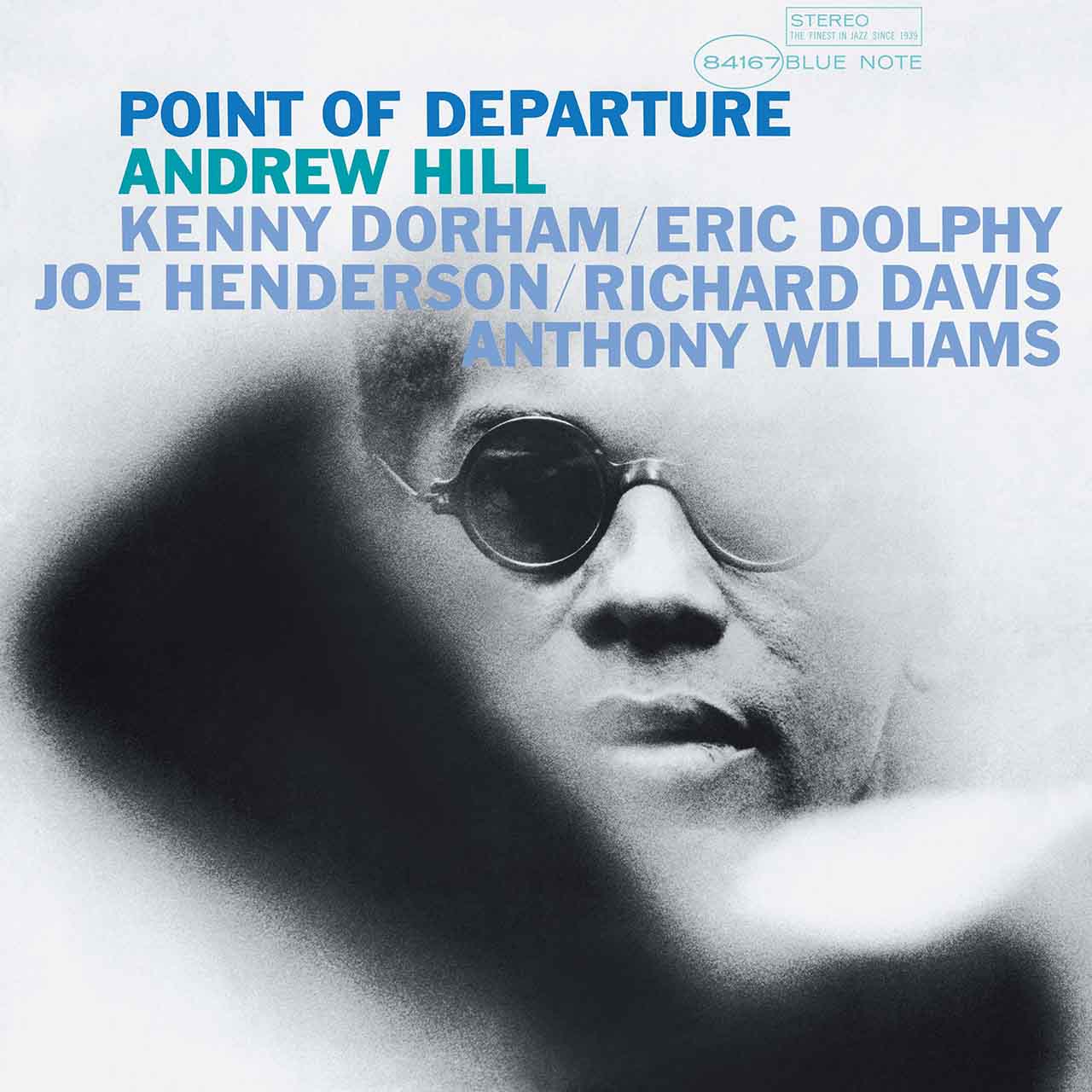
and the album: www.youtube.com/watch?v=dYZcjrydVt0&list=PLUJ7V33M1wR...
Stratford Point Lighthouse is a historic lighthouse in Stratford, Connecticut, at the mouth of the Housatonic River. The second tower was one of the first prefabricated cylindrical lighthouses in the country and remains active.
The first Stratford Point Lighthouse was built in 1822. In 1855 a fifth order lens was added to the 28-foot wooden tower. In 1881, the tower and dwelling were razed and replaced with a 35-foot tall, brick lined cast-iron tower and equipped with a third order Fresnel lens. The light was automated in 1970 with a modern beacon. It is an active aid to navigation and is used for Coast Guard housing. Other buildings still standing: 1881 keeper's house (pictured above) and 1911 fog signal building (not pictured).
If you would like to purchase high-quality prints of this picture, please email me at thereganphotography@gmail.com to discuss sizes and pricing.
Photograph © by Regan Photography (2015). All Rights Reserved. This photograph should not be used on websites, blogs or anywhere for that matter without my explicit written permission.
A trip to Carmel, California meant a visit to Point Lobos, and an attempt at some Edward Weston-inspired photos of the famous state park.
Whilst most of the UK was recording temperatures, at Spurn Point on the Yorkshire coast it was a beautiful 25 degrees, and great for walking. The remains of a wartime battery now on the beach.
A caterpillar climbs a lupin flower. Lisa McNee, BLM
Our Tri Point hike is family (and dog!) friendly and bursting with color ☀🌸🐶
A half-mile trek that ends at the intersection of Oregon, California, and Nevada, the hike offers panoramic views, a bit of history, and some truly amazing wildflowers.
📍 Trek the Tri Point hike: bit.ly/3oxP9yt