View allAll Photos Tagged monospace
100th Anniversary Edition
Brussels Motor Show
Autosalon Brussel
Salon de l'Auto Bruxelles
Brussels - Belgium
January 2023
Der DKW Schnelllaster war das erste Modell der Auto Union in Westdeutschland nach dem 2. Weltkrieg im Jahr 1949.
Seine Höchstgeschwindigkeit was 90 km/h, der Verbrauch lag bei 11,5 Liter. Von der Omnibus-Variante wurden von 1955-1960 449 Stück hergestellt.
Die Konstruktion des DKW Schnelllasters in Frontlenker Bauweise ist mit dem 3 Zylinder Zweitakt Motor ausgestattet. Er wurde in vielen Karosserievarianten angeboten, dieser hier ist die seltene Omnibus Luxus Variante mit rundum Verglasung, großen Stahlschiebedach, mit seitlicher Tür und seitlichen Kurbelscheiben.
Eine hochwertige Innenausstattung mit Dachhimmel und einer zweifarbigen Lackierung ergänzten das Erscheinungsbild dieser Luxusvariante.
896 cc
3 Cylinder
32 PS
Vmax : 90 km/h
449 ex. (Luxusbus)
Concours d'Elegance
Classic Days 2016
Schloss Dyck
Jüchen - Germany
Augustus 2016
I got a good chuckle out of Flickr's April Fools announcement of the "new look" for all of our photos, with retro dithering! (Here's the original, undithered pic)
I must be just the right age for this gag because trying it out brings back memories of crappy printed newsletter photos, slippery old faxes, web dithering of GIFs when you had to similate color blends beyond the limited palette screens could show, punk rock flyers, Quark Express and Freehand, my "computer assisted printmaking" class at MICA, manually making halftone PMTs for print with a plastic screen and a room-sized camera, and of course our high school newspaper, "The Black & White"!
I like the way they made other parts of the page "computer-y" too, with the monospaced fonts and black and white where they could.
I saw one blog that touted, "I think this is a game changer. Take that, Instagram!"
From the Flickr blog today: "Your photos, re-envisioned!
We’ve been working around the clock on our bold new design, destined to become the default view for all photos on Flickr – and we can’t wait to show it to you today!"
The Citroen GT-C1 presented by Espera students is a marvel. Some time ago, Sbarro and his students presented the Picasso Cup, a large gullwing door monospace. C1-GT is inspired by it: we find the exterior style, but on a smaller scale which makes this small car even more impressive.
This is in agreement with Citroën, especially Marc Chatrieux, that promotion Espera 2005-2006 has designed the car. The fund donor car was completely boned. A 6-point arch home-made has been installed, as well as trains and extended 6-piston brakes from a Citroën Xsara WRC. The wheels are BF Goodrich 225/35/19 tires mounted on rims OZ UltraLeggera 19''. At the rear, a spare wheel, visible through the rear window (a request by Marc Chatrieux). The most impressive remains gullwing doors. But the kit in one piece that "around" the car gives it a nice aggressivity with a 2 meters width! The white paint is pearly blue shades.
On the inside there are two Recaro bacquets harness. The interior was painted gray carbon mat.
And the engine? It is certainly the weak point of the GT-C1. The engine comes from a Citroen C2 VTS. It is of a 4-cylinder 1600 cm3 developing 125 horsepower. Even if the weight is very content, 900 kg, the power is low. The performance are low.
It took almost 6 months to Franco Sbarro's students to design and achieve this Citroën C1, worthy heir of Picasso Cup. The result is magnificent. The GT-C1 is one of the finest achievements in Espera Pontarlier.
Conservatoire Citroën
93600 Aulnay sous Bois
France
December 2017
Coachwork by Coriasco
Auto Moto d'Epoca 2013
Exhibition Fiera di Padova
Padova
Italia - Italy
October 2013
This remarkable design was made by Gerard Welter in cooperation with Studio Pininfarina. The prototype was presented in 2002. Sales started in April 2005.
The car was relatively expensive. Low sale figures made the 1007 project finally commercially unsuccessful.
The sliding doors are very unusual for a small passenger car like this.
1587 cc L4 engine.
1191 kg.
Production Peugeot 1007: 2004-2009.
Original Dutch reg. number: July 1, 2005.
Bought at Sept. 18, 2017.
Amsterdam-Noord, Car Park Gamma, Floraweg, Aug. 20, 2022.
© 2022 Sander Toonen Amsterdam | All Rights Reserved
Another car seen in the movie: the 807 minivan! This car is today in a quite exceptional condition, with less than 300 km on the odometer. From a cosmetic point of view, the car looks good, is still in like-new condition and proudly wears its Michel Vaillant livery. The interior is also in a good state of preservation and does not show any major defects; note however that the cables of the flashing lights are visible. From a mechanical point of view, the car has not been driven for a long time and a global revision will be necessary. The 158 hp 2.2L gasoline engine present in this car still starts.
l'Aventure Peugeot Citroën DS, la Vente Officielle
Aguttes
Estimated : € 7.000 - 10.000
Sold for € 8.700
Citroen Heritage
93600 Aulnay sous Bois
France
September 2021
100th Anniversary Edition
Brussels Motor Show
Autosalon Brussel
Salon de l'Auto Bruxelles
Brussels - Belgium
January 2023
Not yet properly identified typewriter face that I used here: www.flickr.com/photos/depressionpress/13049139373/
The Stout Scarab is a streamlined car, designed by William Bushnell Stout and manufactured by Stout Engineering Laboratories and later by Stout Motor Car Company of Detroit, Michigan.[1][2]
The Stout Scarab is credited by some as the world's first production minivan,[3] and a 1946 experimental prototype of the Scarab became the world's first car with a fiberglass bodyshell and air suspension.
Background
William B. Stout was a motorcar and aviation engineer and journalist.[4] While president of the Society of Automotive Engineers, Stout met Buckminster Fuller at a major New York auto show and wrote an article on the Dymaxion Car for the society's newsletter.[5]
Contemporary production cars commonly had a separate chassis and body with a long hood. The engine compartment and engine were behind the front axle and ahead of the passenger compartment. The front-mounted engine typically drove the rear axle through a drive shaft underneath the floor of the vehicle. This layout worked well, but limited the passenger space.
In contrast, the Scarab design eliminated the chassis and drive shaft to create a low, flat floor for the interior, using a unitized body structure and placing a Ford-built V8 engine in the rear of the vehicle. Stout envisioned his traveling machine as an office on wheels. To that end, the Scarab's body, styled by John Tjaarda, a Dutch automobile engineer,[6] closely emulated the design of an aluminum aircraft fuselage. The use of lighter materials resulted in a vehicle weighing under 3,000 lb (1,400 kg).[7]
The short, streamlined nose and tapering upper body at the rear foreshadowed contemporary monospace (or one-box) MPV or minivan design, featuring a removable table and second row seats that turn 180 degrees to face the rear — a feature that Chrysler marketed over 50 years later as "Swivel ’n Go".[8]
Although reminiscent of the Chrysler Airflow, streamliner, and the slightly later (1938) Volkswagen Beetle — other aerodynamically efficient shapes, the Stout Scarab was generally considered ugly at the time.[1] Decades later, its futuristic design and curvaceous, finely detailed nose earn it respect as an Art Deco icon.[9]
Innovative features
Front view of Stout Scarab at Stahls Automotive Collection
Rear view of Stout Scarab
The Scarab's interior space was maximized by its ponton styling, which dispensed with running boards and expanded the cabin to the full width of the car. A long wheelbase and the engine directly over the rear axle moved the driver forward, enabling a steering wheel almost directly above the front wheels. Passengers entered through a single, large, common door. A flexible seating system could be easily reconfigured (except for the driver's seat, which was fixed). The design anticipated the seating in modern minivans, such as the Chrysler Voyager and Renault Espace; a small card table could be fitted with the passenger seats as needed. Interiors were appointed in leather, chrome, and wood. Design elements also worked in a stylized ancient Egyptian scarab motif, including the car's emblem. Visibility to the front and sides was similar to that of an observation car, although rearward vision was negligible and there were no rear-view mirrors.[1]
The innovations did not end with the car's layout and body design. In an era where almost everything on the road had rigid axles with leaf springs, the Scarab featured independent suspension using coil springs on all four corners, providing a smoother, quieter ride. The rear-engine-induced weight bias coupled to the coil spring suspension and "Oil Shock Absorbers" endowed the Scarab with "Smooth Riding and Easy Steering on Rough Roads",[7] if not very good handling and traction (even by the standards of the early 1930s, the reputation of the Scarab was one of very poor "blackjack-like" handling). The rear swing axle suspension with long coil spring struts was inspired by aircraft landing gear.[10] The Scarab suspension inspired the later Chapman strut used by Lotus from their Lotus Twelve model of 1957.[10]
The Ford flat-head V8 drove the rear wheels via a custom Stout-built three-speed manual transaxle. The engine was reversed from its normal position, mounted directly over the rear axle and with the flywheel and clutch facing forward. The transmission was mounted ahead of this, reversing and lowering the drive-line back to the axle.[10] This unusual layout would later be repeated by the Lamborghini Countach.
Production
A drivable prototype of the Scarab was completed in 1932, probably the first car to have an aluminum spaceframe unit-construction body. Some frame parts were steel.[11] The second prototype was ready in 1935, with some styling and mechanical changes. The headlamps were set behind a fine, vertical-bar grille, and at the rear, narrow chrome bars curved from the back window down to the bumper, giving the car its Art Deco appearance. The body was changed to steel to reduce cost.[1]
Stout Scarab Experimental (1946)
Stout stated that the car would be manufactured in limited quantities and sold by invitation. Up to a hundred a year were to be made in a small factory at the corner of Scott Street and Telegraph Road (US 24), Dearborn, Michigan.[1] Although the Scarab garnered much press coverage, at $5,000[9] (equivalent to $113,297 in 2024), when a luxurious and ultra-modern Chrysler Imperial Airflow cost just $1,345, very few could pay the hefty premium for innovation. Nine Scarabs are believed to have been built.[12] The vehicles were never produced in volume and were hand-made, with no two Scarabs identical.[4]
Immediately following World War II, Stout built one more prototype Scarab, called the Stout Scarab Experimental.[13][1] It was exhibited in 1946 and was more conventional in appearance, although still equipped with a rear engine. It was a 2-door, featured a wraparound windshield and the world's first fiberglass body. Like its metal counterparts, it too was a monocoque, built up out of only eight separate pieces and featured the world's first fully functioning air suspension, previously developed in 1933 by Firestone. It was never produced.
Legacy
Stout owned and drove his own Scarab, accumulating over 250,000 miles in travel around the United States.[2]
Up to five Scarabs are reported to survive today. A 1935 Scarab in running condition was on display for many years at the Owls Head Transportation Museum in Owls Head, Maine, but was returned to its lender, the Detroit Historical Museum.[4] The Detroit Historical Museum's vehicle was scheduled to be returned to the museum's storage on August 21, 2016, when another car would be rotated into the exhibition....Wikipedia
Rue Royale | Koningsstraat 05/05/2016 15h45
A beautiful afternoon on Ascension Day 2016. The tramstop Palais / Paleizen along the main park of Bruxelles (Parc de Bruxelles / Warandepark). This tram on one of the lines through this street (can't read the sign) is of the series T3000 (Flexity Outlook Cityrunner built by Bombardier Transportation).
City of Brussels
The City of Brussels is the largest municipality of the Brussels-Capital Region, and the de jure capital of Belgium.
The City of Brussels is a municipality consisting of the central historic town and certain additional areas within the greater Brussels-Capital Region, namely Haren, Laeken and Neder-Over-Heembeek to the north, and Avenue Louise/Louizalaan and the Bois de la Cambre/Ter Kamerenbos park to the south.
On 1 January 2015, the City of Brussels had a total population of 175,534. The total area is 32.61 km² which gives a population density of 5,464 inhabitants per km². As of 2007, there were approximately 50,000 registered non-Belgians in the City of Brussels.
[ Source + more Info: Wikipedia - City of Brussels ]
1957 - 1959
582 cc
2 Cylinder
19,5 PS
Vmax : 103 km/h
34.318 ex.
PS.SPEICHER
Einbeck
Germany
September 2018
Ready for hanging (once I attach some hanging hardware). I've seen some speculation that I might've taken the cubes apart and put them back together, or swapped the stickers around. Those who know me in real life laugh at such conjecture. I always have to go overboard, Why, just look at the huge numbers of tags and descriptions in all of my many Flickr sets, and then get with the program and get your stuff tagged up like this, so others can find it! Sorry. Just wishful thinking on my part. I'm very anal, and must do things "the right way," even if it means it will take much longer, or not ever get done.
The stickers aren't lined up as these are cheap knockoffs. If you could see the cubes up close, the plastic doesn't even line up nicely, some faces sticking up higher than others, and the stickers don't have rounded corners as the official cubes do. One of the cubes kept falling apart, too, requiring that I put it back together solved, and then attempt to re-solve it as seen above. I've noticed that even with perfectly placed stickers on official cubes - anal, remember - the centers don't line up as you solve them in their 4 particular orders.
Here are full spin instructions I wrote up last night in case anyone would like to build one of these the "real" way :) These aren't the spins I followed, as I just typed these while playing with a single large official black Assembly cube, and it's been awhile since I made the mosaic. In fact, when I accidentally typed up the spins for a particular cube twice (I lost my place), the second time I typed a different code, having solved it a different way. Solving one face like this is pretty easy, though there are a few situations above that had me scratching my head. Sometimes everything you do keeps boxing you out of the solution. It's like playing Boxxle on a 3D surface. Anyway...
------------------------------------------------------------------
XYZ are full cube turns, and change what the symbols UDLRFB each mean. The coordinate system is left-handed, so point your left thumb down the positive of the axis, and spin the cube in the direction your four fingers curl around your thumb for positive rotations. X is left and right, positive toward your right. Y is up and down, with positive being up. Z is forward to backward, positive being forward. As with the other symbols, ' (apostrophe) reverses spin direction. X means to tumble the face you're looking at up to the top, while X' means to tumble the top face back to face you. After a spin, the axes are considered to be reset. In other words, the axes don't move with the cube. The axes are locked in space, and the cube can only be rotated about them. A spin about X always implies around the right-left axis.
The solutions were generated with a www.rubiks.com official cube, with official stickers layout. I'm beginning with the cube solved, and the orientation at which each of the steps begins is with the white (logo) face facing me, as the F face, yellow being the back, or B face. Red is the left, or L face, with orange being the right, or R face. Green is the top, or U face (up), and blue is the bottom, or D face (down). If your cube matches this, you can follow these steps. It may be easiest to simply remember at the start of each cube's front-face solution to start with the cube solved, white face toward you, and green face up.
The sequences thus listed are for a 4-wide by 6-tall grid of cubes. The first number represents the X position from left to right (1 being left, 4 being right), and the second number is the vertical, or Y position, with 1 being the top, and 6 being the bottom cube. Thus, 3:4 represents 3 right, 4 down.
A 2 after a code means to do that move 2x, for a 180º spin. Solve means starting as stated above from a solved cube, and solving the one face's 3x3 for that section of the mosaic. The undo instructions revert the cube to its more standardly solved state.
(Flickr descriptions don't use monospaced fonts, and can't handle 2 or more spaces, pre, tt, or code HTML tags, HTML tables, or any other possible variety of things that would allow me to space things out nicely. I've tried everything. As such, to even get close to the proper tabs, I have to convert them to spaces, and then convert those to underscores. If you want to view the instructions in a manner resembling that in which I wrote them, copy the text into a text editor with a monospaced font (e.g. Notepad w/ Courier), and replace the underscores with spaces)
SOLVE___________________________UNDO
1:1_X'R'BR______________________(R'B'RX)
2:1_X'Y'U_______________________(U'YX)
3:1_ZX'UBUD'R'U'D_______________(D'URDU'B'U'XZ')
4:1_X'RDR'______________________(RD'R'X)
1:2_XL2URU'R'LURL'______________(LR'U'L'RUR'U'L2X')
2:2_X2LUD'FB'R'LZ_______________(Z'L'RBF'DU'L'X2)
3:2_XL'RDB'D'BL'RD'R'L__________(L'RDR'LB'DBD'R'LX')
4:2_ZY2UBUD'R'U'D_______________(D'URDU'B'U'Y2Z')
1:3_X'U2D2BL2BRL'D2R'L__________(L'RD2LR'B'L2B'D2U2X)
2:3_X2BL'D2LD'RL'D2R'L__________(L'RD2LR'DL'D2LB'X2)
3:3_ZY2LU'L'BD2B'D'_____________(DBD2B'LUL'Y2Z')
4:3_X'U2BRL'B2R'LB'DU'LUD'______(DU'L'UD'BL'RB2LR'B'U2X)
1:4_XZRD'R'BUBU'________________(UB'U'B'RDR'Z'X')
2:4_Y'DL'D'BU'BURL'D'R'L________(L'RDLR'U'B'UB'DLD'Y)
3:4_Y'D'RDB2L'B'LB2RDR'_________(RD'R'B2L'BLB2D'R'DY)
4:4_XZL'D'LBRBR'________________(RB'R'B'L'DLZ'X')
1:5_X2ZR'D'R____________________(R'DRZ'X2)
2:5_Y'R'B2R_____________________(R'B2RY)
3:5_Y'LB2L'_____________________(LB2L'Y)
4:5_X2ZD'U'L'U__________________(U'LUDZ'X2)
1:6_XD2BUD'B2U'D________________(D'UB2DU'B'D2X')
2:6_X'DBL2B'D'__________________(DBL2B'D'X)
3:6_X'D'B'R2BD__________________(D'B'R2BDX)
4:6_XD2B'U'DB2UD'_______________(DU'B2D'UBD2X')
Don't forget the bonus Rubik's Cube Koopa Paratroopa stitch in the next image!
Officine Stampaggi Industriali
746 cc
2 Cylinder Boxer
DAF Museum
Eindhoven
Nederland - Netherlands
February 2022
100th Anniversary Edition
Brussels Motor Show
Autosalon Brussel
Salon de l'Auto Bruxelles
Brussels - Belgium
January 2023
To promote the new Peugeot 806 people carrier, Peugeot Talbot Belgium entered this Kronos prepared 806 racecar in the 24 Hours of Spa in 1995. It was the idea of Pascal Witmeur, the promoter of the very popular Belgian Procar race series. The car was driven by Eric Bachelart, Philippe Verellen and Pascal Witmeur. The 806 was prepared as a proper care car using the mechanicals of the Peugeot 306 GTI N 2000. Its engine produced about 300 hp. The car was no competition against the the BMW 318i, Opel Vectra, Nissan Primera a.o.. The car failed to finish but scored a maximum win as a publicity stunt.
1.998 cc
4 In-line
260 hp
Vmax : 230 km/h
In the Spotlight : Circuit de Spa - Francorchamps - 100 Years
03/09/2021 - 28/11/2021
Autoworld
Brussels - Belgium
July 2021
In 1956 a revolutionary variant of the 600 was introduced : the Multiple; a dual purpose version. The structure was of integral type with forward control and rear engine. Front suspension was derived from the 1100, the final drive ratio was lowered and track was increased to 1.225 mm at the front and 1.151 mm at the rear. It was available in 3 versions : 4-5 seater, a 6-seater and a taxi. Seats could fold to form a loading platform.
633 cc
4 In-line
22 hp
Fiat 125 Years - La Dolca Vita
Abarth 75 Years - Passione per la Velocità
04/07/2024 - 01/09/2024
Autoworld
Brussels - Belgium
July 2024
582 cc
2 Cylinder
19,5 pk
Vmax : 103 km/h
34.318 ex.
Interclassics 2016
MECC Maastricht
Nederland - Netherlands
Januari 2016
In the 1990s PSA and Fiat worked together to develop a new monospace car to conquer the other French MPV: the successful 1984 Renault Espace.
The Fiat Ulysse, the Lancia Zeta, The Citroën Evasion and the Peugeot 806 were presented simultaneously.
The 806 was face-lifted in 1998 and followed up by the 807 in 2002.
1997 cc Diesel engine.
Production Peugeot 806 Phase I/II: 1994-2002.
Original French reg number: Nov. 2000 (Ain).
Original first reg. number: Jan. 1968.
New French reg. number: after Oct. 2009 (Rhône).
Number seen: 2 or 3.
Nantua, Camping Le Signal, Avenue du Camping, Aug. 6, 2019.
© 2019 Sander Toonen Amsterdam | All Rights Reserved
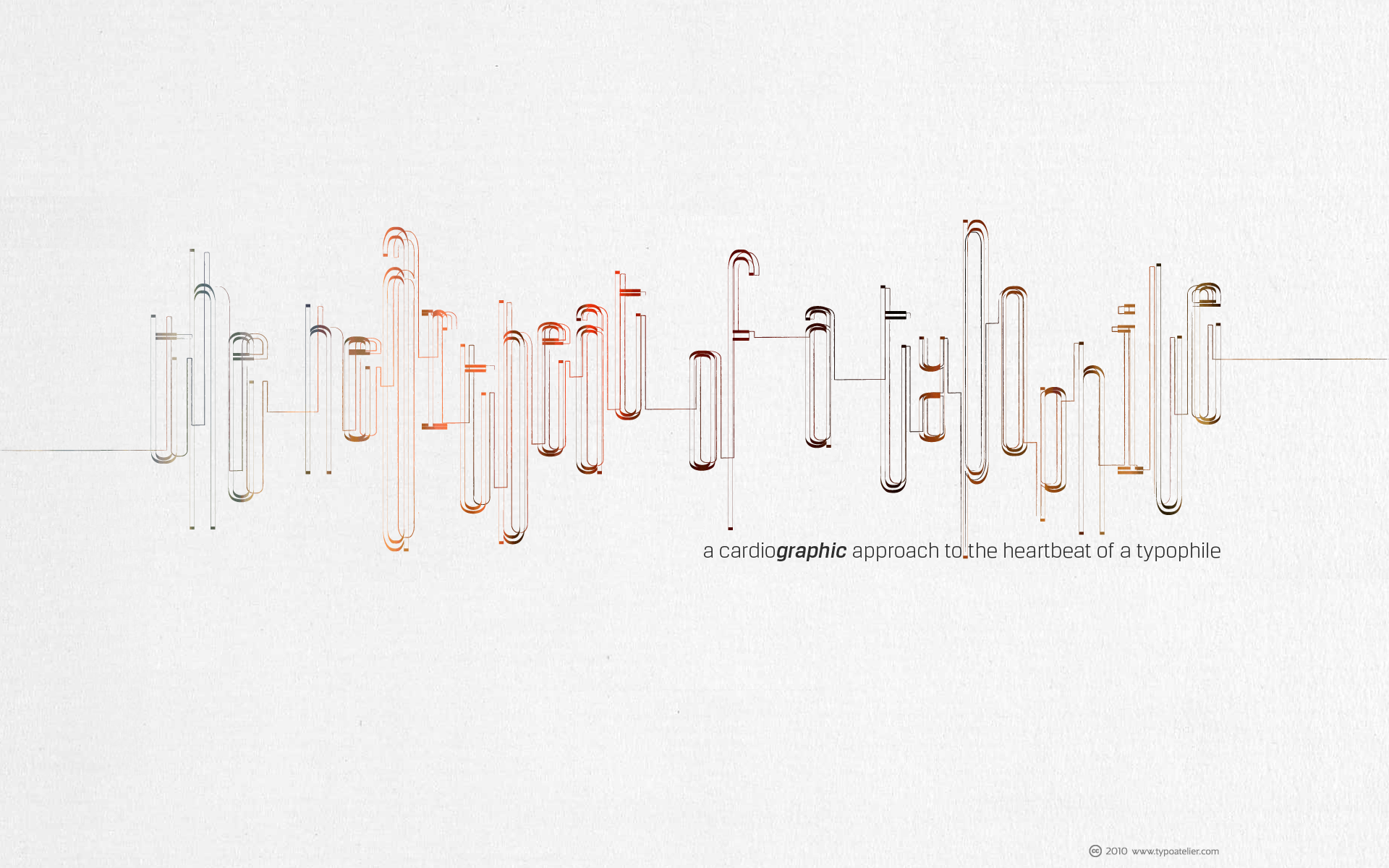
Typefaces in use:
Béla Frank’s (Faberfonts) elegant, gorgeous, slim typeface »FR Pasta Mono«.
FR Pasta Mono family is a monospaced, tall typeface capable to set playful, elegant and catching titles and displays. It compress 4 style: Mono, Decor, Decor Black and Extrude.
FR Pasta Mono family comes with a few OpenType features like case fractions and extended ligature set as well as support for many languages (Nordic, Icelandic, West and Eastern European, Turkish etc.).
and
Silas Dilworth’ (TypeTrust) clean, geometric sans-serif face »Breuer Text«.
Breuer Text is a simple geometric sans with relaxed curves and slightly condensed proportions suitable for moderate lengths of body copy. The italics are optically adjusted obliques with a selection of augmented lowercase glyphs for a warmer read.
Breuer Text offers the distinct aura of technical precision in a personable tone, ideal for instructional copy or safety warnings. Its basic structure and conservative letterforms maintain a level voice without turning robotic or sterile.
Pair with the two-font Breuer Headline family for a simple and complete editorial type system. Breuer Text includes Small Caps, Old Style Figures and Tabular Figures.
Officine Stampaggi Industriali
746 cc
2 Cylinder Boxer
DAF Museum
Eindhoven
Nederland - Netherlands
February 2022
The first European MPV. Body made of glassfibre, on a galvanized chassis. After a difficult commercial start, it became a source of inspiration for most car manufacturers. Today in its 5th generation.
1.995 cc
4 in-line
110 bhp
Vmax : 175 km/h
1.200 kg
Exposition : Renault 120 Years
13/07/2018 - 02/09/2018
Autoworld
Brussels - Belgium
January 2018
Rue de Tolbiac 21/07/2020 18h55
Old and new on the Rue de Tolbiac in the 13ème arrondissement of Paris. The Renault Espace of the first series (1984–1991) was way ahead of its time at the time of its introduction in the early 1980's.
Renault Espcace
The Renault Espace is a mid-size luxury crossover vehicles manufactured by Renault, currently in its fifth generation. The first three generations of the Espace were amongst the first contemporary minivans or MPVs, and were manufactured by Matra for Renault. The fourth generation, also an MPV, was manufactured by Renault. The Renault Grand Espace is a long wheelbase (LWB) version with increased rear leg room and boot size.
The name "Espace" means "space" in French. In February 2012, the Espace was retired in the United Kingdom, as part of a cost-cutting plan.
The Espace concept was originally conceived in the 1970s by the British designer Fergus Pollock, who was working for Chrysler UK. In 1978, six years before the Espace went into production, Chrysler UK and Simca were sold to the French company PSA Peugeot Citroën, which phased out Simca within a decade because of falling sales. PSA decided the Espace was too expensive and too risky a design to put into production, preferring to focus on nursing Talbot back to financial health. The design was returned to Matra, who called it the Matra P23 and took the idea to Renault.
The Espace was eventually launched by Renault in July 1984. After a slow start, a mere nine Espaces were sold in the first month, consumers realised the benefits of the MPV concept and the Espace became popular. The introduction of the Espace required the relatively small Matra factory to cease production of the Murena to make room for the Espace.
In 1984, American Motors Corporation (AMC) announced it would begin to market the front wheel drive Espace in the United States. The minivan was exhibited to consumers at the 1985 Chicago Auto Show, but AMC's negotiations with Matra continued over the vehicle's import pricing.
FACTS & FIGURES (Espace I)
Production: 1984 - 1991
Assembly: France: Romorantin (Matra)
Production: 191 694 units (Espace II 1991-1997 317 225 units)
Simular: Chrysler Voyager I (1983 - 1990)
Length: 4,250 mm
Width: 1,777 mm
Source and more information:
In 1956 a revolutionary variant of the 600 was introduced : the Multiple; a dual purpose version. The structure was of integral type with forward control and rear engine. Front suspension was derived from the 1100, the final drive ratio was lowered and track was increased to 1.225 mm at the front and 1.151 mm at the rear. It was available in 3 versions : 4-5 seater, a 6-seater and a taxi. Seats could fold to form a loading platform.
633 cc
4 In-line
22 hp
Fiat 125 Years - La Dolca Vita
Abarth 75 Years - Passione per la Velocità
04/07/2024 - 01/09/2024
Autoworld
Brussels - Belgium
July 2024
Picture from the net, description from Wickipedia
The Scarab was unlike most cars of the era. Virtually all production cars at the time used a separate chassis and body, with a long compartment in the front, housing the engine, longitudinally placed behind the front axle, and a rearward passenger compartment. The front-mounted engine would typically drive the rear axle through a connecting drive shaft running underneath the floor of the vehicle. This layout worked very well, but had severe limitations where space utilization was concerned.
Instead, the Scarab did away with the chassis and drive-shaft, to create a low, flat floor for the interior, by using a unitized body structure, and by placing the Ford-built V8 engine in the rear of the vehicle. The car’s creator, motorcar and aviation engineer and journalist William B. Stout, envisioned his traveling machine to be an office on wheels. To that end, the Scarab's body, styled by John Tjaarda, a well known Dutch automobile engineer,[3] closely followed the construction of an aluminium aircraft fuselage.
Featuring a very short, streamlined nose and tapering upper body at the rear, it foreshadowed the contemporary monospace (or one-box) MPV or Minivan design — featuring a removable table and second row seats that turn 180 degrees to face the rear — a feature that Chrysler currently markets as Swivel ’n Go.[4]
Although reminiscent of the Chrysler Airflow, streamliner, and the slightly later (1938) KdF-Wagen — all aerodynamically efficient in appearance, the Stout Scarab was generally considered ugly at the time. Today its futuristic design and curvaceous, finely detailed nose earn it respect as an Art Deco icon