View allAll Photos Tagged midsection
HAMMERTON , J.A. (W.J. Ankersmit; Dr. P.A.A. Boeser) (1925). Wonderen der Oudheid. Elsevier, Amsterdam.
Photo H.A. Fawcett.
---
The Pyramid of Khafre or of Chephren (Arabic: هرم خفرع, romanized: haram ḵafraʿ, IPA: [haram xafraʕ]) is the second-tallest and second-largest of the Ancient Egyptian Pyramids of Giza and the tomb of the Fourth-Dynasty pharaoh Khafre (Chefren), who ruled from c. 2558 to 2532 BC.
The pyramid has a base length of 215.5 m (706 ft) and rises up to a height of 136.4 metres (448 ft). It is made of limestone blocks weighing more than 2 tons each. The slope of the pyramid rises at a 53° 13' angle, steeper than its neighbor, the Pyramid of Khufu, which has an angle of 51°50'24". Khafre's pyramid sits on bedrock 10 m (33 ft) higher than Khufu's pyramid, which makes it appear to be taller.
The pyramid was likely opened and robbed during the First Intermediate Period. During the Nineteenth Dynasty, the overseer of temple construction took casing stones to build a temple in Heliopolis on Ramesses II's orders.
Arab historian Ibn Abd al-Salam recorded that the pyramid was opened in 1372 AD. On the wall of the burial chamber, there is an Arabic graffito that probably dates from the same time.
It is not known when the rest of the casing stones were robbed; they were presumably still in place by 1646, when John Greaves, professor of Astronomy at the University of Oxford in his Pyramidographia, wrote that, while its stones weren't as large or as regularly laid as in Khufu's, the surface was smooth and even free of breaches of inequalities, except on the south.
The pyramid was first explored in modern times by Giovanni Belzoni on March 2, 1818, when the original entrance was found on the north side. Belzoni had hopes of finding an intact burial but the chamber was empty except for an open sarcophagus and its broken lid on the floor.
The first complete exploration was conducted by John Perring in 1837. In 1853, Auguste Mariette partially excavated Khafre's valley temple, and, in 1858, while completing its clearance, he managed to discover a diorite statue of Khafre.
Like the Great Pyramid, a rock outcropping was used in the core. Due to the slope of the plateau, the northwest corner was cut 10 m (33 ft) out of the rock subsoil and the southeast corner is built up.
The pyramid is built of horizontal courses. The stones used at the bottom are very large, but as the pyramid rises, the stones become smaller, becoming only 50 cm (20 in) thick at the apex. The courses are rough and irregular for the first half of its height but a narrow band of regular masonry is clear in the midsection of the pyramid. At the northwest corner of the pyramid, the bedrock was fashioned into steps. Casing stones cover the top third of the pyramid, but the pyramidion and part of the apex are missing.
The bottom course of casing stones was made out of pink granite but the remainder of the pyramid was cased in Tura Limestone. Close examination reveals that the corner edges of remaining casing stones are not completely straight, but are staggered by a few millimeters. One theory is that this is due to settling from seismic activity. An alternative theory postulates that the slope on the blocks was cut to shape before being placed due to the limited working space towards the top of the pyramid (Wikipedia).
USAF C-130 Hercules Propeller Driven Cargo Plane Returns to Davis-Monthan Air Force Base in Tucson, Arizona.
The plane can fly home non-stop from anywhere in the world.
I did not have a camera with me, so I used my iPhone 12 Pro Max at its longest focal length.
Cropped and post processed in Apple’s Photos app.
______________________________
C-130 Hercules military transport plane heading east over my house and turning south to approach the Davis-Monthan AFB runway from the southeast to the northwest.
______________________________
Lockheed C-130 Hercules
From Wikipedia, the free encyclopedia
en.wikipedia.org/wiki/Lockheed_C-130_Hercules
C-130 Hercules
Straight-wing, four-engine turboprop-driven aircraft overflying water
USAF C-130E
Role: Military transport aircraft
National origin: United States
ManufacturerLockheed
Lockheed Martin
First flight23 August 1954
Status: In service
Primary users:
United States Air Force
United States Marine Corps
Royal Air Force
Royal Canadian Air Force
Produced: 1954–present
Number built: Over 2,500 as of 2015[1]
Unit cost
C-130E $11.9 million[2]
C-130H $30.1 million[3]
Variants:
AC-130 Spectre/Spooky
Lockheed DC-130
Lockheed EC-130
Lockheed HC-130
Lockheed Martin KC-130
Lockheed LC-130
Lockheed MC-130
Lockheed WC-130
Lockheed L-100 Hercules
Developed into: Lockheed Martin C-130J Super Hercules
The Lockheed C-130 Hercules is a four-engine turboprop military transport aircraft designed and built originally by Lockheed, now Lockheed Martin.
Capable of using unprepared runways for takeoffs and landings, the C-130 was originally designed as a troop, medivac, and cargo transport aircraft. The versatile airframe has found uses in a variety of other roles, including as a gunship (AC-130),for
airborne assault,
search and rescue,
scientific research support,
weather reconnaissance,
aerial refueling,
maritime patrol, and
aerial firefighting.
It is now the main tactical airlifter for many military forces worldwide. Over forty models and variants of the Hercules, including a civilian one marketed as Lockheed L-100, operate in more than sixty nations.
The C-130 entered service with the U.S. in the 1950s, followed by Australia and others. During its years of service, the Hercules family has participated in numerous military, civilian and humanitarian aid operations. In 2007, the C-130 became the fifth aircraft—after the English Electric Canberra, B-52 Stratofortress, Tu-95, and KC-135 Stratotanker—to mark 50 years of continuous service with its original primary customer, in this case, the United States Air Force. The C-130 Hercules is the longest continuously produced military aircraft at over 60 years, with the updated C-130J Super Hercules being produced today.[4]
Contents [hide]
1Design and development
1.1Background and requirements
1.2Design phase
1.3Improved versions
1.4More improvements
1.5Later models
1.6Next generation
1.7Upgrades and changes
1.8Replacement
2Operational history
2.1Military
2.2Civilian
3Variants
4Operators
5Accidents
6Aircraft on display
6.1Australia
6.2Canada
6.3Colombia
6.4Indonesia
6.5Norway
6.6Saudi Arabia
6.7United Kingdom
6.8United States
7Specifications (C-130H)
8See also
9References
10External links
Design and development[edit]
This section needs additional citations for verification. Please help improve this article by adding citations to reliable sources. Unsourced material may be challenged and removed. (February 2014)
Background and requirements[edit]
The Korean War, which began in June 1950, showed that World War II-era piston-engine transports—Fairchild C-119 Flying Boxcars, Douglas C-47 Skytrains and Curtiss C-46 Commandos—were inadequate for modern warfare. Thus, on 2 February 1951, the United States Air Force issued a General Operating Requirement (GOR) for a new transport to Boeing, Douglas, Fairchild, Lockheed, Martin, Chase Aircraft, North American, Northrop, and Airlifts Inc. The new transport would have a capacity of 92 passengers, 72 combat troops or 64 paratroopers in a cargo compartment that was approximately 41 feet (12 m) long, 9 feet (2.7 m) high, and 10 feet (3.0 m) wide. Unlike transports derived from passenger airliners, it was to be designed from the ground-up as a combat transport with loading from a hinged loading ramp at the rear of the fuselage.
A key feature was the introduction of the Allison T56 turboprop powerplant, first developed specifically for the C-130. At the time, the turboprop was a new application of turbine engines that used exhaust gases to turn a propeller, which offered greater range at propeller-driven speeds compared to pure turbojets, which were faster but consumed more fuel. As was the case on helicopters of that era, such as the UH-1 Huey, turboshafts produced much more power for their weight than piston engines. Lockheed would subsequently use the same engines and technology in the Lockheed L-188 Electra. That aircraft failed financially in its civilian configuration but was successfully adapted into the Lockheed P-3 Orion maritime patrol and submarine attack aircraft where the efficiency and endurance of turboprops excelled.
Design phase[edit]
The Hercules resembled a larger four-engine brother to the C-123 Provider with a similar wing and cargo ramp layout that evolved from the Chase XCG-20 Avitruc, which in turn, was first designed and flown as a cargo glider in 1947.[5] The Boeing C-97 Stratofreighter also had a rear ramp, which made it possible to drive vehicles onto the plane (also possible with forward ramp on a C-124). The ramp on the Hercules was also used to airdrop cargo, which included low-altitude extraction for Sheridan tanks and even dropping large improvised "daisy cutter" bombs.
The new Lockheed cargo plane design possessed a range of 1,100 nmi (1,270 mi; 2,040 km), takeoff capability from short and unprepared strips, and the ability to fly with one engine shut down. Fairchild, North American, Martin, and Northrop declined to participate. The remaining five companies tendered a total of ten designs: Lockheed two, Boeing one, Chase three, Douglas three, and Airlifts Inc. one. The contest was a close affair between the lighter of the two Lockheed (preliminary project designation L-206) proposals and a four-turboprop Douglas design.
The Lockheed design team was led by Willis Hawkins, starting with a 130-page proposal for the Lockheed L-206.[6] Hall Hibbard, Lockheed vice president and chief engineer, saw the proposal and directed it to Kelly Johnson, who did not care for the low-speed, unarmed aircraft, and remarked, "If you sign that letter, you will destroy the Lockheed Company."[6] Both Hibbard and Johnson signed the proposal and the company won the contract for the now-designated Model 82 on 2 July 1951.[7]
The first flight of the YC-130 prototype was made on 23 August 1954 from the Lockheed plant in Burbank, California. The aircraft, serial number 53-3397, was the second prototype, but the first of the two to fly. The YC-130 was piloted by Stanley Beltz and Roy Wimmer on its 61-minute flight to Edwards Air Force Base; Jack Real and Dick Stanton served as flight engineers. Kelly Johnson flew chase in a Lockheed P2V Neptune.[8]
After the two prototypes were completed, production began in Marietta, Georgia, where over 2,300 C-130s have been built through 2009.[9]
The initial production model, the C-130A, was powered by Allison T56-A-9 turboprops with three-blade propellers and originally equipped with the blunt nose of the prototypes. Deliveries began in December 1956, continuing until the introduction of the C-130B model in 1959. Some A-models were equipped with skis and re-designated C-130D.
As the C-130A became operational with Tactical Air Command (TAC), the C-130's lack of range became apparent and additional fuel capacity was added in the form of external pylon-mounted tanks at the end of the wings.
Improved versions[edit]
A Michigan Air National Guard C-130E dispatches its flares during a low-level training mission
The C-130B model was developed to complement the A-models that had previously been delivered, and incorporated new features, particularly increased fuel capacity in the form of auxiliary tanks built into the center wing section and an AC electrical system. Four-bladed Hamilton Standard propellers replaced the Aeroproducts three-blade propellers that distinguished the earlier A-models. The C-130B had ailerons with increased boost—3,000 psi (21 MPa) versus 2,050 psi (14 MPa)—as well as uprated engines and four-blade propellers that were standard until the J-model's introduction.
An electronic reconnaissance variant of the C-130B was designated C-130B-II. A total of 13 aircraft were converted. The C-130B-II was distinguished by its false external wing fuel tanks, which were disguised signals intelligence (SIGINT) receiver antennas. These pods were slightly larger than the standard wing tanks found on other C-130Bs. Most aircraft featured a swept blade antenna on the upper fuselage, as well as extra wire antennas between the vertical fin and upper fuselage not found on other C-130s. Radio call numbers on the tail of these aircraft were regularly changed so as to confuse observers and disguise their true mission.
The extended-range C-130E model entered service in 1962 after it was developed as an interim long-range transport for the Military Air Transport Service. Essentially a B-model, the new designation was the result of the installation of 1,360 US gal (5,150 L) Sargent Fletcher external fuel tanks under each wing's midsection and more powerful Allison T56-A-7A turboprops. The hydraulic boost pressure to the ailerons was reduced back to 2050 psi as a consequence of the external tanks' weight in the middle of the wingspan. The E model also featured structural improvements, avionics upgrades and a higher gross weight. Australia took delivery of 12 C130E Hercules during 1966–67 to supplement the 12 C-130A models already in service with the RAAF. Sweden and Spain fly the TP-84T version of the C-130E fitted for aerial refueling capability.
The KC-130 tankers, originally C-130F procured for the US Marine Corps (USMC) in 1958 (under the designation GV-1) are equipped with a removable 3,600 US gal (13,626 L) stainless steel fuel tank carried inside the cargo compartment. The two wing-mounted hose and drogue aerial refueling pods each transfer up to 300 US gal per minute (19 L per second) to two aircraft simultaneously, allowing for rapid cycle times of multiple-receiver aircraft formations, (a typical tanker formation of four aircraft in less than 30 minutes). The US Navy's C-130G has increased structural strength allowing higher gross weight operation.
More improvements[edit]
Royal Australian Air Force C-130H, 2007
The C-130H model has updated Allison T56-A-15 turboprops, a redesigned outer wing, updated avionics and other minor improvements. Later H models had a new, fatigue-life-improved, center wing that was retrofitted to many earlier H-models. For structural reasons, some models are required to land with certain amounts of fuel when carrying heavy cargo, reducing usable range.[10] The H model remains in widespread use with the United States Air Force (USAF) and many foreign air forces. Initial deliveries began in 1964 (to the RNZAF), remaining in production until 1996. An improved C-130H was introduced in 1974, with Australia purchasing 12 of type in 1978 to replace the original 12 C-130A models, which had first entered RAAF Service in 1958.
The United States Coast Guard employs the HC-130H for long-range search and rescue, drug interdiction, illegal migrant patrols, homeland security, and logistics.
C-130H models produced from 1992 to 1996 were designated as C-130H3 by the USAF. The "3" denoting the third variation in design for the H series. Improvements included ring laser gyros for the INUs, GPS receivers, a partial glass cockpit (ADI and HSI instruments), a more capable APN-241 color radar, night vision device compatible instrument lighting, and an integrated radar and missile warning system. The electrical system upgrade included Generator Control Units (GCU) and Bus Switching units (BSU)to provide stable power to the more sensitive upgraded components.[citation needed]
Royal Air Force C-130K (C.3)
The equivalent model for export to the UK is the C-130K, known by the Royal Air Force (RAF) as the Hercules C.1. The C-130H-30 (Hercules C.3 in RAF service) is a stretched version of the original Hercules, achieved by inserting a 100 in (2.54 m) plug aft of the cockpit and an 80 in (2.03 m) plug at the rear of the fuselage. A single C-130K was purchased by the Met Office for use by its Meteorological Research Flight, where it was classified as the Hercules W.2. This aircraft was heavily modified (with its most prominent feature being the long red and white striped atmospheric probe on the nose and the move of the weather radar into a pod above the forward fuselage). This aircraft, named Snoopy, was withdrawn in 2001 and was then modified by Marshall of Cambridge Aerospace as flight-testbed for the A400M turbine engine, the TP400. The C-130K is used by the RAF Falcons for parachute drops. Three C-130K (Hercules C Mk.1P) were upgraded and sold to the Austrian Air Force in 2002.[11]
Later models[edit]
The MC-130E Combat Talon was developed for the USAF during the Vietnam War to support special operations missions in Southeast Asia, and led to both the MC-130H Combat Talon II as well as a family of other special missions aircraft. 37 of the earliest models currently operating with the Air Force Special Operations Command (AFSOC) are scheduled to be replaced by new-production MC-130J versions. The EC-130 Commando Solo is another special missions variant within AFSOC, albeit operated solely by an AFSOC-gained wing in the Pennsylvania Air National Guard, and is a psychological operations/information operations (PSYOP/IO) platform equipped as an aerial radio station and television stations able to transmit messaging over commercial frequencies. Other versions of the EC-130, most notably the EC-130H Compass Call, are also special variants, but are assigned to the Air Combat Command (ACC). The AC-130 gunship was first developed during the Vietnam War to provide close air support and other ground-attack duties.
USAF HC-130P refuels a HH-60G Pavehawk helicopter
The HC-130 is a family of long-range search and rescue variants used by the USAF and the U.S. Coast Guard. Equipped for deep deployment of Pararescuemen (PJs), survival equipment, and (in the case of USAF versions) aerial refueling of combat rescue helicopters, HC-130s are usually the on-scene command aircraft for combat SAR missions (USAF only) and non-combat SAR (USAF and USCG). Early USAF versions were also equipped with the Fulton surface-to-air recovery system, designed to pull a person off the ground using a wire strung from a helium balloon. The John Wayne movie The Green Berets features its use. The Fulton system was later removed when aerial refueling of helicopters proved safer and more versatile. The movie The Perfect Storm depicts a real life SAR mission involving aerial refueling of a New York Air National Guard HH-60G by a New York Air National Guard HC-130P.
The C-130R and C-130T are U.S. Navy and USMC models, both equipped with underwing external fuel tanks. The USN C-130T is similar, but has additional avionics improvements. In both models, aircraft are equipped with Allison T56-A-16 engines. The USMC versions are designated KC-130R or KC-130T when equipped with underwing refueling pods and pylons and are fully night vision system compatible.
The RC-130 is a reconnaissance version. A single example is used by the Islamic Republic of Iran Air Force, the aircraft having originally been sold to the former Imperial Iranian Air Force.
The Lockheed L-100 (L-382) is a civilian variant, equivalent to a C-130E model without military equipment. The L-100 also has two stretched versions.
Next generation[edit]
Main article: Lockheed Martin C-130J Super Hercules
In the 1970s, Lockheed proposed a C-130 variant with turbofan engines rather than turboprops, but the U.S. Air Force preferred the takeoff performance of the existing aircraft. In the 1980s, the C-130 was intended to be replaced by the Advanced Medium STOL Transport project. The project was canceled and the C-130 has remained in production.
Building on lessons learned, Lockheed Martin modified a commercial variant of the C-130 into a High Technology Test Bed (HTTB). This test aircraft set numerous short takeoff and landing performance records and significantly expanded the database for future derivatives of the C-130.[12] Modifications made to the HTTB included extended chord ailerons, a long chord rudder, fast-acting double-slotted trailing edge flaps, a high-camber wing leading edge extension, a larger dorsal fin and dorsal fins, the addition of three spoiler panels to each wing upper surface, a long-stroke main and nose landing gear system, and changes to the flight controls and a change from direct mechanical linkages assisted by hydraulic boost, to fully powered controls, in which the mechanical linkages from the flight station controls operated only the hydraulic control valves of the appropriate boost unit.[13] The HTTB first flew on 19 June 1984, with civil registration of N130X. After demonstrating many new technologies, some of which were applied to the C-130J, the HTTB was lost in a fatal accident on 3 February 1993, at Dobbins Air Reserve Base, in Marietta, Georgia.[14] The crash was attributed to disengagement of the rudder fly-by-wire flight control system, resulting in a total loss of rudder control capability while conducting ground minimum control speed tests (Vmcg). The disengagement was a result of the inadequate design of the rudder's integrated actuator package by its manufacturer; the operator's insufficient system safety review failed to consider the consequences of the inadequate design to all operating regimes. A factor which contributed to the accident was the flight crew's lack of engineering flight test training.[15]
In the 1990s, the improved C-130J Super Hercules was developed by Lockheed (later Lockheed Martin). This model is the newest version and the only model in production. Externally similar to the classic Hercules in general appearance, the J model has new turboprop engines, six-bladed propellers, digital avionics, and other new systems.[16]
Upgrades and changes[edit]
In 2000, Boeing was awarded a US$1.4 billion contract to develop an Avionics Modernization Program kit for the C-130. The program was beset with delays and cost overruns until project restructuring in 2007.[17] On 2 September 2009, Bloomberg news reported that the planned Avionics Modernization Program (AMP) upgrade to the older C-130s would be dropped to provide more funds for the F-35, CV-22 and airborne tanker replacement programs.[18] However, in June 2010, Department of Defense approved funding for the initial production of the AMP upgrade kits.[19][20] Under the terms of this agreement, the USAF has cleared Boeing to begin low-rate initial production (LRIP) for the C-130 AMP. A total of 198 aircraft are expected to feature the AMP upgrade. The current cost per aircraft is US$14 million although Boeing expects that this price will drop to US$7 million for the 69th aircraft.[17]
An engine enhancement program saving fuel and providing lower temperatures in the T56 engine has been approved, and the US Air Force expects to save $2 billion and extend the fleet life.[21]
Replacement[edit]
In October 2010, the Air Force released a capabilities request for information (CRFI) for the development of a new airlifter to replace the C-130. The new aircraft is to carry a 190 percent greater payload and assume the mission of mounted vertical maneuver (MVM). The greater payload and mission would enable it to carry medium-weight armored vehicles and drop them off at locations without long runways. Various options are being considered, including new or upgraded fixed-wing designs, rotorcraft, tiltrotors, or even an airship. Development could start in 2014, and become operational by 2024. The C-130 fleet of around 450 planes would be replaced by only 250 aircraft.[22] The Air Force had attempted to replace the C-130 in the 1970s through the Advanced Medium STOL Transport project, which resulted in the C-17 Globemaster III that instead replaced the C-141 Starlifter.[23] The Air Force Research Laboratory funded Lockheed and Boeing demonstrators for the Speed Agile concept, which had the goal of making a STOL aircraft that can take off and land at speeds as low as 70 kn (130 km/h; 81 mph) on airfields less than 2,000 ft (610 m) long and cruise at Mach 0.8-plus. Boeing's design used upper-surface blowing from embedded engines on the inboard wing and blown flaps for circulation control on the outboard wing. Lockheed's design also used blown flaps outboard, but inboard used patented reversing ejector nozzles. Boeing's design completed over 2,000 hours of windtunnel tests in late 2009. It was a 5 percent-scale model of a narrowbody design with a 55,000 lb (25,000 kg) payload. When the AFRL increased the payload requirement to 65,000 lb (29,000 kg), they tested a 5% scale model of a widebody design with a 303,000 lb (137,000 kg) take-off gross weight and an "A400M-size" 158 in (4.0 m) wide cargo box. It would be powered by four IAE V2533 turbofans.[24] In August 2011, the AFRL released pictures of the Lockheed Speed Agile concept demonstrator. A 23% scale model went through wind tunnel tests to demonstrate its hybrid powered lift, which combines a low drag airframe with simple mechanical assembly to reduce weight and better aerodynamics. The model had four engines, including two Williams FJ44 turbofans.[23][25] On 26 March 2013, Boeing was granted a patent for its swept-wing powered lift aircraft.[26]
As of January 2014, Air Mobility Command, Air Force Materiel Command and the Air Force Research Lab are in the early stages of defining requirements for the C-X next generation airlifter program to replace both the C-130 and C-17. An aircraft would be produced from the early 2030s to the 2040s. If requirements are decided for operating in contested airspace, Air Force procurement of C-130s would end by the end of the decade to not have them serviceable by the 2030s and operated when they can't perform in that environment. Development of the airlifter depends heavily on the Army's "tactical and operational maneuver" plans. Two different cargo planes could still be created to separately perform tactical and strategic missions, but which course to pursue is to be decided before C-17s need to be retired.[27]
Operational history[edit]
This section needs additional citations for verification. Please help improve this article by adding citations to reliable sources. Unsourced material may be challenged and removed. (February 2014)
Military[edit]
USMC KC-130F Hercules performing takeoffs and landings aboard the aircraft carrier Forrestal in 1963. The aircraft is now displayed at the National Museum of Naval Aviation.
The first production aircraft, C-130As were first delivered beginning in 1956 to the 463d Troop Carrier Wing at Ardmore AFB, Oklahoma and the 314th Troop Carrier Wing at Sewart AFB, Tennessee. Six additional squadrons were assigned to the 322d Air Division in Europe and the 315th Air Division in the Far East. Additional aircraft were modified for electronics intelligence work and assigned to Rhein-Main Air Base, Germany while modified RC-130As were assigned to the Military Air Transport Service (MATS) photo-mapping division.
In 1958, a U.S. reconnaissance C-130A-II of the 7406th Support Squadron was shot down over Armenia by MiG-17s.[28]
Australia became the first non-American force to operate the C-130A Hercules with 12 examples being delivered from late 1958. These aircraft were fitted with AeroProducts three-blade, 15-foot diameter propellers. The Royal Canadian Air Force became another early user with the delivery of four B-models (Canadian designation C-130 Mk I) in October / November 1960.[29]
In 1963, a Hercules achieved and still holds the record for the largest and heaviest aircraft to land on an aircraft carrier.[30] During October and November that year, a USMC KC-130F (BuNo 149798), loaned to the U.S. Naval Air Test Center, made 29 touch-and-go landings, 21 unarrested full-stop landings and 21 unassisted take-offs on Forrestal at a number of different weights.[31] The pilot, LT (later RADM) James H. Flatley III, USN, was awarded the Distinguished Flying Cross for his role in this test series. The tests were highly successful, but the idea was considered too risky for routine "Carrier Onboard Delivery" (COD) operations. Instead, the Grumman C-2 Greyhound was developed as a dedicated COD aircraft. The Hercules used in the test, most recently in service with Marine Aerial Refueler Squadron 352 (VMGR-352) until 2005, is now part of the collection of the National Museum of Naval Aviation at NAS Pensacola, Florida.
In 1964, C-130 crews from the 6315th Operations Group at Naha Air Base, Okinawa commenced forward air control (FAC; "Flare") missions over the Ho Chi Minh Trail in Laos supporting USAF strike aircraft. In April 1965 the mission was expanded to North Vietnam where C-130 crews led formations of B-57 bombers on night reconnaissance/strike missions against communist supply routes leading to South Vietnam. In early 1966 Project Blind Bat/Lamplighter was established at Ubon RTAFB, Thailand. After the move to Ubon the mission became a four-engine FAC mission with the C-130 crew searching for targets then calling in strike aircraft. Another little-known C-130 mission flown by Naha-based crews was Operation Commando Scarf, which involved the delivery of chemicals onto sections of the Ho Chi Minh Trail in Laos that were designed to produce mud and landslides in hopes of making the truck routes impassable.[citation needed]
In November 1964, on the other side of the globe, C-130Es from the 464th Troop Carrier Wing but loaned to 322d Air Division in France, flew one of the most dramatic missions in history in the former Belgian Congo. After communist Simba rebels took white residents of the city of Stanleyville hostage, the U.S. and Belgium developed a joint rescue mission that used the C-130s to airlift and then drop and air-land a force of Belgian paratroopers to rescue the hostages. Two missions were flown, one over Stanleyville and another over Paulis during Thanksgiving weeks.[32] The headline-making mission resulted in the first award of the prestigious MacKay Trophy to C-130 crews.
In the Indo-Pakistani War of 1965, as a desperate measure the transport No. 6 Squadron of the Pakistan Air Force modified its entire small fleet of C-130Bs for use as heavy bombers, capable of carrying up to 20,000 lb (9,072 kg) of bombs on pallets. These improvised bombers were used to hit Indian targets such as bridges, heavy artillery positions, tank formations and troop concentrations.[33][34] Some C-130s even flew with anti-aircraft guns fitted on their ramp, apparently shooting down some 17 aircraft and damaging 16 others.[35]
The C-130 Hercules were used in the Battle of Kham Duc in 1968, when the North Vietnamese Army forced U.S.-led forces to abandon the Kham Duc Special Forces Camp.
In October 1968, a C-130Bs from the 463rd Tactical Airlift Wing dropped a pair of M-121 10,000 pound bombs that had been developed for the massive B-36 bomber but had never been used. The U.S. Army and U.S. Air Force resurrected the huge weapons as a means of clearing landing zones for helicopters and in early 1969 the 463rd commenced Commando Vault missions. Although the stated purpose of COMMANDO VAULT was to clear LZs, they were also used on enemy base camps and other targets.[citation needed]
During the late 1960s, the U.S. was eager to get information on Chinese nuclear capabilities. After the failure of the Black Cat Squadron to plant operating sensor pods near the Lop Nur Nuclear Weapons Test Base using a Lockheed U-2, the CIA developed a plan, named Heavy Tea, to deploy two battery-powered sensor pallets near the base. To deploy the pallets, a Black Bat Squadron crew was trained in the U.S. to fly the C-130 Hercules. The crew of 12, led by Col Sun Pei Zhen, took off from Takhli Royal Thai Air Force Base in an unmarked U.S. Air Force C-130E on 17 May 1969. Flying for six and a half hours at low altitude in the dark, they arrived over the target and the sensor pallets were dropped by parachute near Anxi in Gansu province. After another six and a half hours of low altitude flight, they arrived back at Takhli. The sensors worked and uploaded data to a U.S. intelligence satellite for six months, before their batteries wore out. The Chinese conducted two nuclear tests, on 22 September 1969 and 29 September 1969, during the operating life of the sensor pallets. Another mission to the area was planned as Operation Golden Whip, but was called off in 1970.[36] It is most likely that the aircraft used on this mission was either C-130E serial number 64-0506 or 64-0507 (cn 382-3990 and 382-3991). These two aircraft were delivered to Air America in 1964.[37] After being returned to the U.S. Air Force sometime between 1966 and 1970, they were assigned the serial numbers of C-130s that had been destroyed in accidents. 64-0506 is now flying as 62-1843, a C-130E that crashed in Vietnam on 20 December 1965 and 64-0507 is now flying as 63-7785, a C-130E that had crashed in Vietnam on 17 June 1966.[38]
The A-model continued in service through the Vietnam War, where the aircraft assigned to the four squadrons at Naha AB, Okinawa and one at Tachikawa Air Base, Japan performed yeoman's service, including operating highly classified special operations missions such as the BLIND BAT FAC/Flare mission and FACT SHEET leaflet mission over Laos and North Vietnam. The A-model was also provided to the South Vietnamese Air Force as part of the Vietnamization program at the end of the war, and equipped three squadrons based at Tan Son Nhut AFB. The last operator in the world is the Honduran Air Force, which is still flying one of five A model Hercules (FAH 558, c/n 3042) as of October 2009.[39] As the Vietnam War wound down, the 463rd Troop Carrier/Tactical Airlift Wing B-models and A-models of the 374th Tactical Airlift Wing were transferred back to the United States where most were assigned to Air Force Reserve and Air National Guard units.
U.S. Marines disembark from C-130 transports at the Da Nang Airbase on 8 March 1965
Another prominent role for the B model was with the United States Marine Corps, where Hercules initially designated as GV-1s replaced C-119s. After Air Force C-130Ds proved the type's usefulness in Antarctica, the U.S. Navy purchased a number of B-models equipped with skis that were designated as LC-130s. C-130B-II electronic reconnaissance aircraft were operated under the SUN VALLEY program name primarily from Yokota Air Base, Japan. All reverted to standard C-130B cargo aircraft after their replacement in the reconnaissance role by other aircraft.
The C-130 was also used in the 1976 Entebbe raid in which Israeli commando forces carried a surprise assault to rescue 103 passengers of an airliner hijacked by Palestinian and German terrorists at Entebbe Airport, Uganda. The rescue force — 200 soldiers, jeeps, and a black Mercedes-Benz (intended to resemble Ugandan Dictator Idi Amin's vehicle of state) — was flown over 2,200 nmi (4,074 km; 2,532 mi) almost entirely at an altitude of less than 100 ft (30 m) from Israel to Entebbe by four Israeli Air Force (IAF) Hercules aircraft without mid-air refueling (on the way back, the planes refueled in Nairobi, Kenya).
During the Falklands War (Spanish: Guerra de las Malvinas) of 1982, Argentine Air Force C-130s undertook highly dangerous, daily re-supply night flights as blockade runners to the Argentine garrison on the Falkland Islands. They also performed daylight maritime survey flights. One was lost during the war. Argentina also operated two KC-130 tankers during the war, and these refueled both the Douglas A-4 Skyhawks and Navy Dassault-Breguet Super Étendards; some C-130s were modified to operate as bombers with bomb-racks under their wings. The British also used RAF C-130s to support their logistical operations.
USMC C-130T Fat Albert performing a rocket-assisted takeoff (RATO)
During the Gulf War of 1991 (Operation Desert Storm), the C-130 Hercules was used operationally by the U.S. Air Force, U.S. Navy and U.S. Marine Corps, along with the air forces of Australia, New Zealand, Saudi Arabia, South Korea and the UK. The MC-130 Combat Talon variant also made the first attacks using the largest conventional bombs in the world, the BLU-82 "Daisy Cutter" and GBU-43/B "Massive Ordnance Air Blast" bomb, (MOAB). Daisy Cutters were used to clear landing zones and to eliminate mine fields. The weight and size of the weapons make it impossible or impractical to load them on conventional bombers. The GBU-43/B MOAB is a successor to the BLU-82 and can perform the same function, as well as perform strike functions against hardened targets in a low air threat environment.
Since 1992, two successive C-130 aircraft named Fat Albert have served as the support aircraft for the U.S. Navy Blue Angels flight demonstration team. Fat Albert I was a TC-130G (151891),[40] while Fat Albert II is a C-130T (164763).[41] Although Fat Albert supports a Navy squadron, it is operated by the U.S. Marine Corps (USMC) and its crew consists solely of USMC personnel. At some air shows featuring the team, Fat Albert takes part, performing flyovers. Until 2009, it also demonstrated its rocket-assisted takeoff (RATO) capabilities; these ended due to dwindling supplies of rockets.[42]
The AC-130 also holds the record for the longest sustained flight by a C-130. From 22 to 24 October 1997, two AC-130U gunships flew 36 hours nonstop from Hurlburt Field Florida to Taegu (Daegu), South Korea while being refueled seven times by KC-135 tanker aircraft. This record flight shattered the previous record longest flight by over 10 hours while the two gunships took on 410,000 lb (190,000 kg) of fuel. The gunship has been used in every major U.S. combat operation since Vietnam, except for Operation El Dorado Canyon, the 1986 attack on Libya.[43]
C-130 Hercules performs a tactical landing on a dirt strip
During the invasion of Afghanistan in 2001 and the ongoing support of the International Security Assistance Force (Operation Enduring Freedom), the C-130 Hercules has been used operationally by Australia, Belgium, Canada, Denmark, France, Italy, the Netherlands, New Zealand, Norway, Portugal, South Korea, Spain, the UK and the United States.
During the 2003 invasion of Iraq (Operation Iraqi Freedom), the C-130 Hercules was used operationally by Australia, the UK and the United States. After the initial invasion, C-130 operators as part of the Multinational force in Iraq used their C-130s to support their forces in Iraq.
Since 2004, the Pakistan Air Force has employed C-130s in the War in North-West Pakistan. Some variants had forward looking infrared (FLIR Systems Star Safire III EO/IR) sensor balls, to enable close tracking of Islamist militants.[44]
Civilian[edit]
A C-130E fitted with a MAFFS-1 dropping fire retardant
The U.S. Forest Service developed the Modular Airborne FireFighting System for the C-130 in the 1970s, which allows regular aircraft to be temporarily converted to an airtanker for fighting wildfires.[45] In the late 1980s, 22 retired USAF C-130As were removed from storage at Davis-Monthan Air Force Base and transferred to the U.S. Forest Service who then sold them to six private companies to be converted into air tankers (see U.S. Forest Service airtanker scandal). After one of these aircraft crashed due to wing separation in flight as a result of fatigue stress cracking, the entire fleet of C-130A air tankers was permanently grounded in 2004 (see 2002 airtanker crashes). C-130s have been used to spread chemical dispersants onto the massive oil slick in the Gulf Coast in 2010.[46]
A recent development of a C-130–based airtanker is the Retardant Aerial Delivery System developed by Coulson Aviation USA . The system consists of a C-130H/Q retrofitted with an in-floor discharge system, combined with a removable 3,500- or 4,000-gallon water tank. The combined system is FAA certified.[47]
Variants[edit]
This section needs additional citations for verification. Please help improve this article by adding citations to reliable sources. Unsourced material may be challenged and removed. (February 2014)
C-130H Hercules flight deck
A U.S. JC-130 aircraft retrieving a reconnaissance satellite film capsule under parachute.
C-130s from the: U.S., Canada, Australia and Israel (foreground to background)
RAAF C-130J-30 at Point Cook, 2006
Brazilian Air Force C-130 (L-382)
For civilian versions, see Lockheed L-100 Hercules.
Significant military variants of the C-130 include:
C-130A/B/E/F/G/H/K/T
Tactical airlifter basic models
C-130A-II Dreamboat
Early version Electronic Intelligence/Signals Intelligence (ELINT/SIGINT) aircraft[48]
C-130J Super Hercules
Tactical airlifter, with new engines, avionics, and updated systems
C-130K
Designation for RAF Hercules C1/W2/C3 aircraft (C-130Js in RAF service are the Hercules C.4 and Hercules C.5)
AC-130A/E/H/J/U/W
Gunship variants
C-130D/D-6
Ski-equipped version for snow and ice operations United States Air Force / Air National Guard
CC-130E/H/J Hercules
Designation for Canadian Armed Forces / Royal Canadian Air Force Hercules aircraft. U.S. Air Force used the CC-130J designation to differentiate standard C-130Js from "stretched" C-130Js (Company designation C-130J-30s).
DC-130A/E/H
USAF and USN Drone control
EC-130
EC-130E/J Commando Solo – USAF / Air National Guard psychological operations version
EC-130E – Airborne Battlefield Command and Control Center (ABCCC)
EC-130E Rivet Rider – Airborne psychological warfare aircraft
EC-130H Compass Call – Electronic warfare and electronic attack.[49]
EC-130V – Airborne early warning and control (AEW&C) variant used by USCG for counter-narcotics missions[50]
GC-130
Permanently Grounded "Static Display"
HC-130
HC-130B/E/H – Early model combat search and rescue
HC-130P/N Combat King – USAF aerial refueling tanker and combat search and rescue
HC-130J Combat King II – Next generation combat search and rescue tanker
HC-130H/J – USCG long-range surveillance and search and rescue
JC-130
Temporary conversion for flight test operations
KC-130F/R/T/J
United States Marine Corps aerial refueling tanker and tactical airlifter
LC-130F/H/R
USAF / Air National Guard – Ski-equipped version for Arctic and Antarctic support operations; LC-130F previously operated by USN
MC-130
MC-130E/H Combat Talon I/II – Special operations infiltration/extraction variant
MC-130W Combat Spear/Dragon Spear – Special operations tanker/gunship[51]
MC-130P Combat Shadow – Special operations tanker
MC-130J Commando II (formerly Combat Shadow II) – Special operations tanker Air Force Special Operations Command[52]
YMC-130H – Modified aircraft under Operation Credible Sport for second Iran hostage crisis rescue attempt
NC-130
Permanent conversion for flight test operations
PC-130/C-130-MP
Maritime patrol
RC-130A/S
Surveillance aircraft for reconnaissance
SC-130J Sea Herc
Proposed maritime patrol version of the C-130J, designed for coastal surveillance and anti-submarine warfare.[53][54]
TC-130
Aircrew training
VC-130H
VIP transport
WC-130A/B/E/H/J
Weather reconnaissance ("Hurricane Hunter") version for USAF / Air Force Reserve Command's 53d Weather Reconnaissance Squadron in support of the National Weather Service's National Hurricane Center
_________________________________
Did a little bit of tweaking to the Big Stoats; got rid of the white one and reverted their midsection to the original Gunbuddy design to make them more rolly polly in the hip.
I wanted to drive the home the point that these are Free Colonials, so I added a Commissar and some Glaug-legs. Some day one of my companies will be more than 20% original material, but today is not that day.
My attempt at an O-scale Porsche 911.
The use of Technic beams in the midsection stolen from Zeto Vince.
Guemes Channel. Dakota Creek Industries. (DCI)
Dec. 12, 2021. Trident Seafoods to acquire 300-foot Starbound to add to pollock fleet.
"C/P Starbound is undergoing a major transformation at Dakota Creek Industries. The Starbound was built at DCI, in Anacortes, WA 1988/1989. The Starbound will have 60 feet added to her midsection to accommodate a new fish meal/oil plant."
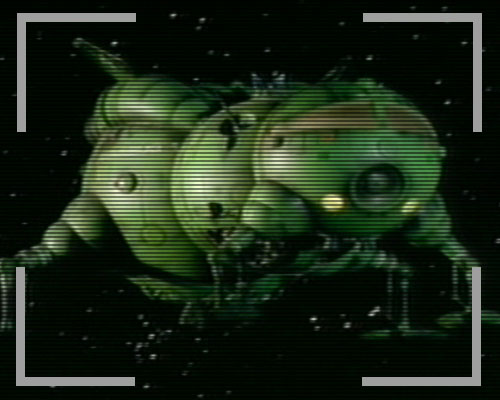
The Jupiter Mining Corporation transport vehicle Starbug (full name Starbug I) is a relatively small shuttlecraft, green in colour. It has three bulbous sections, the cockpit, midsection and engine rooms, somewhat resembling a bug from the exterior.
This is a micro build that is still too large when placed next to the mighty Red Dwarf....
Based on the Starbug from the television series Red Dwarf: www.reddwarf.co.uk/database/ships/images/Starbug1.jpg
With a need of faster and smaller light armored vehicles, the C'Raz State has developed the C'Raz State Automatic Land Vehicle. Most soldiers refer to them as Alvin.
The CS-ALV is a one man four wheeled vehicle that is able to go over rocky and bumpy terrain. The midsection of the turret as well as the seat inside is able to rotate for a 360 degree view of the battlefield. This also allows the two machine guns (one light and one heavy) being able to rotate as well.
Teresa, Nikki, Raquelle and Skipper
[Continuation of Here Come The Girls, pt. 1]
R. --- It took you long enough! I've been here forever!
N. --- Sweetie said you just got here a few minutes ago.
R. --- Well... Sweetie lies!
[Nikki, Teresa and Skipper collectively roll their eyes]
T. --- What... are you wearing?
R. --- When your plastic is this tight [she motions to her midsection] It's a crime not to show it off every now and then.
T. --- You look like a stripper. [she laughs] How much for a lap dance?
R. --- [she blows her a kiss] You couldn't afford me.
N. --- [laughingly she cuts in] Lesbe a little classier ladies. Did Christie say if she was coming?
R. --- Yeah, she's picking up Drew then they're headed straight here.
T. --- Skipper, who are you texting?
[distracted by her phone, Skipper doesn't respond]
N. --- Um... Hello!
S. --- Huh?
T. --- What's so important on your phone?
S. --- [she lets out a sigh] It's official.
N. --- What's official?
S. --- Darren and I are dunzo.
T. --- You just broke up over text?
R. --- That is so high school. Uh... Kids today.
S. --- It's not that big of a deal. We've been over for a while now. We just... hadn't found the time to say it til now I guess.
...(Part 3)
_____
Part of F2K, Vol. 6
From a Kodachrome slide hand-dated 21 September 1969 (a Sunday). Photographer unknown.
Seen on the corner, "the Stock im Eisen (German: 'staff in iron') is the midsection of a tree-trunk from the Middle Ages, a so-called nail-tree (Nagelbaum), into which hundreds of nails have been pounded for good luck over centuries." [Wikipedia]
Casa Damians, located on Plaça de Catalunya in Barcelona, is a striking example of early 20th-century eclectic commercial architecture that blends Art Deco, Noucentisme, and Beaux-Arts influences with a flamboyant flair.
Overview:
Location: Facing Plaça de Catalunya, directly above the C&A store
Date: Completed in 1915, originally designed as a commercial and residential building
Architect: Enric Sagnier i Villavecchia (credited with numerous civic and religious works throughout Barcelona)
Current Use: Houses retail (C&A) on the ground floors; upper levels may be office or mixed-use
Architectural Description:
Façade Composition:
The façade is vertically divided into three bays, with the central bay dramatically projecting and emphasized by grand sculptural and ornamental elements. The verticality is further accentuated by continuous window bands that span multiple stories.
Ground Level:
The base of the building is clad in dark, sturdy stone (likely granite), forming a visual pedestal for the ornate structure above.
Large storefront windows with a metal-framed glass curtain wall dominate this level—clearly adapted for retail use but framed within the building’s historic articulation.
The C&A branding is prominent but does not obscure the architectural detailing.
Midsection (Second to Fourth Floors):
These levels are defined by tall, narrow windows arranged in vertical bands, interrupted by horizontal decorative friezes featuring stylized reliefs (possibly vegetal motifs or geometric patterns in low relief).
Columns or pilasters between the windows feature pinkish decorative panels, possibly scagliola or colored stone.
Sculptural Program:
The standout features are the two heroic-sized nude figures, one male and one female, placed in niches flanking the central upper bay. These appear to be allegorical or mythological, stylized in the classical tradition but with a distinctly Art Deco touch—elongated proportions, idealized forms, and poised stillness.
Their elevated position and symmetry evoke a sense of grandeur and theatricality.
Crowning Element:
Above the cornice, the central tower rises to a circular belvedere with a parapet of classical dentils and relief ornamentation.
At the very top sits a glass globe or lattice sphere—a kind of finial or lantern reminiscent of early planetarium domes or modernist globes. It may have once been internally illuminated.
Four smaller geodesic-like spheres sit at the base of the belvedere, reinforcing the celestial or scientific allusion.
Style & Symbolism:
This building walks a line between noucentista sobriety (structured façade, stone cornice, classical restraint) and early modernist spectacle (glass, heroic statuary, globe finial).
It seems to celebrate commerce, human achievement, and rational order—fitting for its location at the city's civic and commercial heart.
The upward thrust of the building, culminating in the globe, reads as a metaphor for aspiration or enlightenment—or possibly a nod to cosmopolitanism and global reach, highly appropriate for a commercial building in early 20th-century Barcelona.
Urban Context:
Casa Damians is one of several grand commercial buildings facing Plaça de Catalunya, each representing a different phase in the city’s embrace of modernity.
It anchors its block visually, standing out from the more conventional residential façades that flank it with its ornament, sculptural drama, and symbolic vertical axis.
In Summary:
Casa Damians is a rich architectural confection that combines formality and flamboyance, rooted in classicism but openly flirting with modernism. It speaks to Barcelona’s golden age of commercial ambition, when buildings were not just vessels for commerce but symbols of civic pride and human potential.
(Chat GPT)
USAF C-130 Hercules Propeller Driven Cargo Plane Returns to Davis-Monthan Air Force Base in Tucson, Arizona.
The plane can fly home non-stop from anywhere in the world.
I did not have a camera with me, so I used my iPhone 12 Pro Max at its longest focal length.
Cropped and post processed in Apple’s Photos app.
The cropping is obviously beyond the useful resolution of this lens and sensor chip.
______________________________
C-130 Hercules military transport plane heading east over my house and turning south to approach the Davis-Monthan AFB runway from the southeast to the northwest.
______________________________
Lockheed C-130 Hercules
From Wikipedia, the free encyclopedia
en.wikipedia.org/wiki/Lockheed_C-130_Hercules
C-130 Hercules
Straight-wing, four-engine turboprop-driven aircraft overflying water
USAF C-130E
Role: Military transport aircraft
National origin: United States
ManufacturerLockheed
Lockheed Martin
First flight23 August 1954
Status: In service
Primary users:
United States Air Force
United States Marine Corps
Royal Air Force
Royal Canadian Air Force
Produced: 1954–present
Number built: Over 2,500 as of 2015[1]
Unit cost
C-130E $11.9 million[2]
C-130H $30.1 million[3]
Variants:
AC-130 Spectre/Spooky
Lockheed DC-130
Lockheed EC-130
Lockheed HC-130
Lockheed Martin KC-130
Lockheed LC-130
Lockheed MC-130
Lockheed WC-130
Lockheed L-100 Hercules
Developed into: Lockheed Martin C-130J Super Hercules
The Lockheed C-130 Hercules is a four-engine turboprop military transport aircraft designed and built originally by Lockheed, now Lockheed Martin.
Capable of using unprepared runways for takeoffs and landings, the C-130 was originally designed as a troop, medivac, and cargo transport aircraft. The versatile airframe has found uses in a variety of other roles, including as a gunship (AC-130),for
airborne assault,
search and rescue,
scientific research support,
weather reconnaissance,
aerial refueling,
maritime patrol, and
aerial firefighting.
It is now the main tactical airlifter for many military forces worldwide. Over forty models and variants of the Hercules, including a civilian one marketed as Lockheed L-100, operate in more than sixty nations.
The C-130 entered service with the U.S. in the 1950s, followed by Australia and others. During its years of service, the Hercules family has participated in numerous military, civilian and humanitarian aid operations. In 2007, the C-130 became the fifth aircraft—after the English Electric Canberra, B-52 Stratofortress, Tu-95, and KC-135 Stratotanker—to mark 50 years of continuous service with its original primary customer, in this case, the United States Air Force. The C-130 Hercules is the longest continuously produced military aircraft at over 60 years, with the updated C-130J Super Hercules being produced today.[4]
Contents [hide]
1Design and development
1.1Background and requirements
1.2Design phase
1.3Improved versions
1.4More improvements
1.5Later models
1.6Next generation
1.7Upgrades and changes
1.8Replacement
2Operational history
2.1Military
2.2Civilian
3Variants
4Operators
5Accidents
6Aircraft on display
6.1Australia
6.2Canada
6.3Colombia
6.4Indonesia
6.5Norway
6.6Saudi Arabia
6.7United Kingdom
6.8United States
7Specifications (C-130H)
8See also
9References
10External links
Design and development[edit]
This section needs additional citations for verification. Please help improve this article by adding citations to reliable sources. Unsourced material may be challenged and removed. (February 2014)
Background and requirements[edit]
The Korean War, which began in June 1950, showed that World War II-era piston-engine transports—Fairchild C-119 Flying Boxcars, Douglas C-47 Skytrains and Curtiss C-46 Commandos—were inadequate for modern warfare. Thus, on 2 February 1951, the United States Air Force issued a General Operating Requirement (GOR) for a new transport to Boeing, Douglas, Fairchild, Lockheed, Martin, Chase Aircraft, North American, Northrop, and Airlifts Inc. The new transport would have a capacity of 92 passengers, 72 combat troops or 64 paratroopers in a cargo compartment that was approximately 41 feet (12 m) long, 9 feet (2.7 m) high, and 10 feet (3.0 m) wide. Unlike transports derived from passenger airliners, it was to be designed from the ground-up as a combat transport with loading from a hinged loading ramp at the rear of the fuselage.
A key feature was the introduction of the Allison T56 turboprop powerplant, first developed specifically for the C-130. At the time, the turboprop was a new application of turbine engines that used exhaust gases to turn a propeller, which offered greater range at propeller-driven speeds compared to pure turbojets, which were faster but consumed more fuel. As was the case on helicopters of that era, such as the UH-1 Huey, turboshafts produced much more power for their weight than piston engines. Lockheed would subsequently use the same engines and technology in the Lockheed L-188 Electra. That aircraft failed financially in its civilian configuration but was successfully adapted into the Lockheed P-3 Orion maritime patrol and submarine attack aircraft where the efficiency and endurance of turboprops excelled.
Design phase[edit]
The Hercules resembled a larger four-engine brother to the C-123 Provider with a similar wing and cargo ramp layout that evolved from the Chase XCG-20 Avitruc, which in turn, was first designed and flown as a cargo glider in 1947.[5] The Boeing C-97 Stratofreighter also had a rear ramp, which made it possible to drive vehicles onto the plane (also possible with forward ramp on a C-124). The ramp on the Hercules was also used to airdrop cargo, which included low-altitude extraction for Sheridan tanks and even dropping large improvised "daisy cutter" bombs.
The new Lockheed cargo plane design possessed a range of 1,100 nmi (1,270 mi; 2,040 km), takeoff capability from short and unprepared strips, and the ability to fly with one engine shut down. Fairchild, North American, Martin, and Northrop declined to participate. The remaining five companies tendered a total of ten designs: Lockheed two, Boeing one, Chase three, Douglas three, and Airlifts Inc. one. The contest was a close affair between the lighter of the two Lockheed (preliminary project designation L-206) proposals and a four-turboprop Douglas design.
The Lockheed design team was led by Willis Hawkins, starting with a 130-page proposal for the Lockheed L-206.[6] Hall Hibbard, Lockheed vice president and chief engineer, saw the proposal and directed it to Kelly Johnson, who did not care for the low-speed, unarmed aircraft, and remarked, "If you sign that letter, you will destroy the Lockheed Company."[6] Both Hibbard and Johnson signed the proposal and the company won the contract for the now-designated Model 82 on 2 July 1951.[7]
The first flight of the YC-130 prototype was made on 23 August 1954 from the Lockheed plant in Burbank, California. The aircraft, serial number 53-3397, was the second prototype, but the first of the two to fly. The YC-130 was piloted by Stanley Beltz and Roy Wimmer on its 61-minute flight to Edwards Air Force Base; Jack Real and Dick Stanton served as flight engineers. Kelly Johnson flew chase in a Lockheed P2V Neptune.[8]
After the two prototypes were completed, production began in Marietta, Georgia, where over 2,300 C-130s have been built through 2009.[9]
The initial production model, the C-130A, was powered by Allison T56-A-9 turboprops with three-blade propellers and originally equipped with the blunt nose of the prototypes. Deliveries began in December 1956, continuing until the introduction of the C-130B model in 1959. Some A-models were equipped with skis and re-designated C-130D.
As the C-130A became operational with Tactical Air Command (TAC), the C-130's lack of range became apparent and additional fuel capacity was added in the form of external pylon-mounted tanks at the end of the wings.
Improved versions[edit]
A Michigan Air National Guard C-130E dispatches its flares during a low-level training mission
The C-130B model was developed to complement the A-models that had previously been delivered, and incorporated new features, particularly increased fuel capacity in the form of auxiliary tanks built into the center wing section and an AC electrical system. Four-bladed Hamilton Standard propellers replaced the Aeroproducts three-blade propellers that distinguished the earlier A-models. The C-130B had ailerons with increased boost—3,000 psi (21 MPa) versus 2,050 psi (14 MPa)—as well as uprated engines and four-blade propellers that were standard until the J-model's introduction.
An electronic reconnaissance variant of the C-130B was designated C-130B-II. A total of 13 aircraft were converted. The C-130B-II was distinguished by its false external wing fuel tanks, which were disguised signals intelligence (SIGINT) receiver antennas. These pods were slightly larger than the standard wing tanks found on other C-130Bs. Most aircraft featured a swept blade antenna on the upper fuselage, as well as extra wire antennas between the vertical fin and upper fuselage not found on other C-130s. Radio call numbers on the tail of these aircraft were regularly changed so as to confuse observers and disguise their true mission.
The extended-range C-130E model entered service in 1962 after it was developed as an interim long-range transport for the Military Air Transport Service. Essentially a B-model, the new designation was the result of the installation of 1,360 US gal (5,150 L) Sargent Fletcher external fuel tanks under each wing's midsection and more powerful Allison T56-A-7A turboprops. The hydraulic boost pressure to the ailerons was reduced back to 2050 psi as a consequence of the external tanks' weight in the middle of the wingspan. The E model also featured structural improvements, avionics upgrades and a higher gross weight. Australia took delivery of 12 C130E Hercules during 1966–67 to supplement the 12 C-130A models already in service with the RAAF. Sweden and Spain fly the TP-84T version of the C-130E fitted for aerial refueling capability.
The KC-130 tankers, originally C-130F procured for the US Marine Corps (USMC) in 1958 (under the designation GV-1) are equipped with a removable 3,600 US gal (13,626 L) stainless steel fuel tank carried inside the cargo compartment. The two wing-mounted hose and drogue aerial refueling pods each transfer up to 300 US gal per minute (19 L per second) to two aircraft simultaneously, allowing for rapid cycle times of multiple-receiver aircraft formations, (a typical tanker formation of four aircraft in less than 30 minutes). The US Navy's C-130G has increased structural strength allowing higher gross weight operation.
More improvements[edit]
Royal Australian Air Force C-130H, 2007
The C-130H model has updated Allison T56-A-15 turboprops, a redesigned outer wing, updated avionics and other minor improvements. Later H models had a new, fatigue-life-improved, center wing that was retrofitted to many earlier H-models. For structural reasons, some models are required to land with certain amounts of fuel when carrying heavy cargo, reducing usable range.[10] The H model remains in widespread use with the United States Air Force (USAF) and many foreign air forces. Initial deliveries began in 1964 (to the RNZAF), remaining in production until 1996. An improved C-130H was introduced in 1974, with Australia purchasing 12 of type in 1978 to replace the original 12 C-130A models, which had first entered RAAF Service in 1958.
The United States Coast Guard employs the HC-130H for long-range search and rescue, drug interdiction, illegal migrant patrols, homeland security, and logistics.
C-130H models produced from 1992 to 1996 were designated as C-130H3 by the USAF. The "3" denoting the third variation in design for the H series. Improvements included ring laser gyros for the INUs, GPS receivers, a partial glass cockpit (ADI and HSI instruments), a more capable APN-241 color radar, night vision device compatible instrument lighting, and an integrated radar and missile warning system. The electrical system upgrade included Generator Control Units (GCU) and Bus Switching units (BSU)to provide stable power to the more sensitive upgraded components.[citation needed]
Royal Air Force C-130K (C.3)
The equivalent model for export to the UK is the C-130K, known by the Royal Air Force (RAF) as the Hercules C.1. The C-130H-30 (Hercules C.3 in RAF service) is a stretched version of the original Hercules, achieved by inserting a 100 in (2.54 m) plug aft of the cockpit and an 80 in (2.03 m) plug at the rear of the fuselage. A single C-130K was purchased by the Met Office for use by its Meteorological Research Flight, where it was classified as the Hercules W.2. This aircraft was heavily modified (with its most prominent feature being the long red and white striped atmospheric probe on the nose and the move of the weather radar into a pod above the forward fuselage). This aircraft, named Snoopy, was withdrawn in 2001 and was then modified by Marshall of Cambridge Aerospace as flight-testbed for the A400M turbine engine, the TP400. The C-130K is used by the RAF Falcons for parachute drops. Three C-130K (Hercules C Mk.1P) were upgraded and sold to the Austrian Air Force in 2002.[11]
Later models[edit]
The MC-130E Combat Talon was developed for the USAF during the Vietnam War to support special operations missions in Southeast Asia, and led to both the MC-130H Combat Talon II as well as a family of other special missions aircraft. 37 of the earliest models currently operating with the Air Force Special Operations Command (AFSOC) are scheduled to be replaced by new-production MC-130J versions. The EC-130 Commando Solo is another special missions variant within AFSOC, albeit operated solely by an AFSOC-gained wing in the Pennsylvania Air National Guard, and is a psychological operations/information operations (PSYOP/IO) platform equipped as an aerial radio station and television stations able to transmit messaging over commercial frequencies. Other versions of the EC-130, most notably the EC-130H Compass Call, are also special variants, but are assigned to the Air Combat Command (ACC). The AC-130 gunship was first developed during the Vietnam War to provide close air support and other ground-attack duties.
USAF HC-130P refuels a HH-60G Pavehawk helicopter
The HC-130 is a family of long-range search and rescue variants used by the USAF and the U.S. Coast Guard. Equipped for deep deployment of Pararescuemen (PJs), survival equipment, and (in the case of USAF versions) aerial refueling of combat rescue helicopters, HC-130s are usually the on-scene command aircraft for combat SAR missions (USAF only) and non-combat SAR (USAF and USCG). Early USAF versions were also equipped with the Fulton surface-to-air recovery system, designed to pull a person off the ground using a wire strung from a helium balloon. The John Wayne movie The Green Berets features its use. The Fulton system was later removed when aerial refueling of helicopters proved safer and more versatile. The movie The Perfect Storm depicts a real life SAR mission involving aerial refueling of a New York Air National Guard HH-60G by a New York Air National Guard HC-130P.
The C-130R and C-130T are U.S. Navy and USMC models, both equipped with underwing external fuel tanks. The USN C-130T is similar, but has additional avionics improvements. In both models, aircraft are equipped with Allison T56-A-16 engines. The USMC versions are designated KC-130R or KC-130T when equipped with underwing refueling pods and pylons and are fully night vision system compatible.
The RC-130 is a reconnaissance version. A single example is used by the Islamic Republic of Iran Air Force, the aircraft having originally been sold to the former Imperial Iranian Air Force.
The Lockheed L-100 (L-382) is a civilian variant, equivalent to a C-130E model without military equipment. The L-100 also has two stretched versions.
Next generation[edit]
Main article: Lockheed Martin C-130J Super Hercules
In the 1970s, Lockheed proposed a C-130 variant with turbofan engines rather than turboprops, but the U.S. Air Force preferred the takeoff performance of the existing aircraft. In the 1980s, the C-130 was intended to be replaced by the Advanced Medium STOL Transport project. The project was canceled and the C-130 has remained in production.
Building on lessons learned, Lockheed Martin modified a commercial variant of the C-130 into a High Technology Test Bed (HTTB). This test aircraft set numerous short takeoff and landing performance records and significantly expanded the database for future derivatives of the C-130.[12] Modifications made to the HTTB included extended chord ailerons, a long chord rudder, fast-acting double-slotted trailing edge flaps, a high-camber wing leading edge extension, a larger dorsal fin and dorsal fins, the addition of three spoiler panels to each wing upper surface, a long-stroke main and nose landing gear system, and changes to the flight controls and a change from direct mechanical linkages assisted by hydraulic boost, to fully powered controls, in which the mechanical linkages from the flight station controls operated only the hydraulic control valves of the appropriate boost unit.[13] The HTTB first flew on 19 June 1984, with civil registration of N130X. After demonstrating many new technologies, some of which were applied to the C-130J, the HTTB was lost in a fatal accident on 3 February 1993, at Dobbins Air Reserve Base, in Marietta, Georgia.[14] The crash was attributed to disengagement of the rudder fly-by-wire flight control system, resulting in a total loss of rudder control capability while conducting ground minimum control speed tests (Vmcg). The disengagement was a result of the inadequate design of the rudder's integrated actuator package by its manufacturer; the operator's insufficient system safety review failed to consider the consequences of the inadequate design to all operating regimes. A factor which contributed to the accident was the flight crew's lack of engineering flight test training.[15]
In the 1990s, the improved C-130J Super Hercules was developed by Lockheed (later Lockheed Martin). This model is the newest version and the only model in production. Externally similar to the classic Hercules in general appearance, the J model has new turboprop engines, six-bladed propellers, digital avionics, and other new systems.[16]
Upgrades and changes[edit]
In 2000, Boeing was awarded a US$1.4 billion contract to develop an Avionics Modernization Program kit for the C-130. The program was beset with delays and cost overruns until project restructuring in 2007.[17] On 2 September 2009, Bloomberg news reported that the planned Avionics Modernization Program (AMP) upgrade to the older C-130s would be dropped to provide more funds for the F-35, CV-22 and airborne tanker replacement programs.[18] However, in June 2010, Department of Defense approved funding for the initial production of the AMP upgrade kits.[19][20] Under the terms of this agreement, the USAF has cleared Boeing to begin low-rate initial production (LRIP) for the C-130 AMP. A total of 198 aircraft are expected to feature the AMP upgrade. The current cost per aircraft is US$14 million although Boeing expects that this price will drop to US$7 million for the 69th aircraft.[17]
An engine enhancement program saving fuel and providing lower temperatures in the T56 engine has been approved, and the US Air Force expects to save $2 billion and extend the fleet life.[21]
Replacement[edit]
In October 2010, the Air Force released a capabilities request for information (CRFI) for the development of a new airlifter to replace the C-130. The new aircraft is to carry a 190 percent greater payload and assume the mission of mounted vertical maneuver (MVM). The greater payload and mission would enable it to carry medium-weight armored vehicles and drop them off at locations without long runways. Various options are being considered, including new or upgraded fixed-wing designs, rotorcraft, tiltrotors, or even an airship. Development could start in 2014, and become operational by 2024. The C-130 fleet of around 450 planes would be replaced by only 250 aircraft.[22] The Air Force had attempted to replace the C-130 in the 1970s through the Advanced Medium STOL Transport project, which resulted in the C-17 Globemaster III that instead replaced the C-141 Starlifter.[23] The Air Force Research Laboratory funded Lockheed and Boeing demonstrators for the Speed Agile concept, which had the goal of making a STOL aircraft that can take off and land at speeds as low as 70 kn (130 km/h; 81 mph) on airfields less than 2,000 ft (610 m) long and cruise at Mach 0.8-plus. Boeing's design used upper-surface blowing from embedded engines on the inboard wing and blown flaps for circulation control on the outboard wing. Lockheed's design also used blown flaps outboard, but inboard used patented reversing ejector nozzles. Boeing's design completed over 2,000 hours of windtunnel tests in late 2009. It was a 5 percent-scale model of a narrowbody design with a 55,000 lb (25,000 kg) payload. When the AFRL increased the payload requirement to 65,000 lb (29,000 kg), they tested a 5% scale model of a widebody design with a 303,000 lb (137,000 kg) take-off gross weight and an "A400M-size" 158 in (4.0 m) wide cargo box. It would be powered by four IAE V2533 turbofans.[24] In August 2011, the AFRL released pictures of the Lockheed Speed Agile concept demonstrator. A 23% scale model went through wind tunnel tests to demonstrate its hybrid powered lift, which combines a low drag airframe with simple mechanical assembly to reduce weight and better aerodynamics. The model had four engines, including two Williams FJ44 turbofans.[23][25] On 26 March 2013, Boeing was granted a patent for its swept-wing powered lift aircraft.[26]
As of January 2014, Air Mobility Command, Air Force Materiel Command and the Air Force Research Lab are in the early stages of defining requirements for the C-X next generation airlifter program to replace both the C-130 and C-17. An aircraft would be produced from the early 2030s to the 2040s. If requirements are decided for operating in contested airspace, Air Force procurement of C-130s would end by the end of the decade to not have them serviceable by the 2030s and operated when they can't perform in that environment. Development of the airlifter depends heavily on the Army's "tactical and operational maneuver" plans. Two different cargo planes could still be created to separately perform tactical and strategic missions, but which course to pursue is to be decided before C-17s need to be retired.[27]
Operational history[edit]
This section needs additional citations for verification. Please help improve this article by adding citations to reliable sources. Unsourced material may be challenged and removed. (February 2014)
Military[edit]
USMC KC-130F Hercules performing takeoffs and landings aboard the aircraft carrier Forrestal in 1963. The aircraft is now displayed at the National Museum of Naval Aviation.
The first production aircraft, C-130As were first delivered beginning in 1956 to the 463d Troop Carrier Wing at Ardmore AFB, Oklahoma and the 314th Troop Carrier Wing at Sewart AFB, Tennessee. Six additional squadrons were assigned to the 322d Air Division in Europe and the 315th Air Division in the Far East. Additional aircraft were modified for electronics intelligence work and assigned to Rhein-Main Air Base, Germany while modified RC-130As were assigned to the Military Air Transport Service (MATS) photo-mapping division.
In 1958, a U.S. reconnaissance C-130A-II of the 7406th Support Squadron was shot down over Armenia by MiG-17s.[28]
Australia became the first non-American force to operate the C-130A Hercules with 12 examples being delivered from late 1958. These aircraft were fitted with AeroProducts three-blade, 15-foot diameter propellers. The Royal Canadian Air Force became another early user with the delivery of four B-models (Canadian designation C-130 Mk I) in October / November 1960.[29]
In 1963, a Hercules achieved and still holds the record for the largest and heaviest aircraft to land on an aircraft carrier.[30] During October and November that year, a USMC KC-130F (BuNo 149798), loaned to the U.S. Naval Air Test Center, made 29 touch-and-go landings, 21 unarrested full-stop landings and 21 unassisted take-offs on Forrestal at a number of different weights.[31] The pilot, LT (later RADM) James H. Flatley III, USN, was awarded the Distinguished Flying Cross for his role in this test series. The tests were highly successful, but the idea was considered too risky for routine "Carrier Onboard Delivery" (COD) operations. Instead, the Grumman C-2 Greyhound was developed as a dedicated COD aircraft. The Hercules used in the test, most recently in service with Marine Aerial Refueler Squadron 352 (VMGR-352) until 2005, is now part of the collection of the National Museum of Naval Aviation at NAS Pensacola, Florida.
In 1964, C-130 crews from the 6315th Operations Group at Naha Air Base, Okinawa commenced forward air control (FAC; "Flare") missions over the Ho Chi Minh Trail in Laos supporting USAF strike aircraft. In April 1965 the mission was expanded to North Vietnam where C-130 crews led formations of B-57 bombers on night reconnaissance/strike missions against communist supply routes leading to South Vietnam. In early 1966 Project Blind Bat/Lamplighter was established at Ubon RTAFB, Thailand. After the move to Ubon the mission became a four-engine FAC mission with the C-130 crew searching for targets then calling in strike aircraft. Another little-known C-130 mission flown by Naha-based crews was Operation Commando Scarf, which involved the delivery of chemicals onto sections of the Ho Chi Minh Trail in Laos that were designed to produce mud and landslides in hopes of making the truck routes impassable.[citation needed]
In November 1964, on the other side of the globe, C-130Es from the 464th Troop Carrier Wing but loaned to 322d Air Division in France, flew one of the most dramatic missions in history in the former Belgian Congo. After communist Simba rebels took white residents of the city of Stanleyville hostage, the U.S. and Belgium developed a joint rescue mission that used the C-130s to airlift and then drop and air-land a force of Belgian paratroopers to rescue the hostages. Two missions were flown, one over Stanleyville and another over Paulis during Thanksgiving weeks.[32] The headline-making mission resulted in the first award of the prestigious MacKay Trophy to C-130 crews.
In the Indo-Pakistani War of 1965, as a desperate measure the transport No. 6 Squadron of the Pakistan Air Force modified its entire small fleet of C-130Bs for use as heavy bombers, capable of carrying up to 20,000 lb (9,072 kg) of bombs on pallets. These improvised bombers were used to hit Indian targets such as bridges, heavy artillery positions, tank formations and troop concentrations.[33][34] Some C-130s even flew with anti-aircraft guns fitted on their ramp, apparently shooting down some 17 aircraft and damaging 16 others.[35]
The C-130 Hercules were used in the Battle of Kham Duc in 1968, when the North Vietnamese Army forced U.S.-led forces to abandon the Kham Duc Special Forces Camp.
In October 1968, a C-130Bs from the 463rd Tactical Airlift Wing dropped a pair of M-121 10,000 pound bombs that had been developed for the massive B-36 bomber but had never been used. The U.S. Army and U.S. Air Force resurrected the huge weapons as a means of clearing landing zones for helicopters and in early 1969 the 463rd commenced Commando Vault missions. Although the stated purpose of COMMANDO VAULT was to clear LZs, they were also used on enemy base camps and other targets.[citation needed]
During the late 1960s, the U.S. was eager to get information on Chinese nuclear capabilities. After the failure of the Black Cat Squadron to plant operating sensor pods near the Lop Nur Nuclear Weapons Test Base using a Lockheed U-2, the CIA developed a plan, named Heavy Tea, to deploy two battery-powered sensor pallets near the base. To deploy the pallets, a Black Bat Squadron crew was trained in the U.S. to fly the C-130 Hercules. The crew of 12, led by Col Sun Pei Zhen, took off from Takhli Royal Thai Air Force Base in an unmarked U.S. Air Force C-130E on 17 May 1969. Flying for six and a half hours at low altitude in the dark, they arrived over the target and the sensor pallets were dropped by parachute near Anxi in Gansu province. After another six and a half hours of low altitude flight, they arrived back at Takhli. The sensors worked and uploaded data to a U.S. intelligence satellite for six months, before their batteries wore out. The Chinese conducted two nuclear tests, on 22 September 1969 and 29 September 1969, during the operating life of the sensor pallets. Another mission to the area was planned as Operation Golden Whip, but was called off in 1970.[36] It is most likely that the aircraft used on this mission was either C-130E serial number 64-0506 or 64-0507 (cn 382-3990 and 382-3991). These two aircraft were delivered to Air America in 1964.[37] After being returned to the U.S. Air Force sometime between 1966 and 1970, they were assigned the serial numbers of C-130s that had been destroyed in accidents. 64-0506 is now flying as 62-1843, a C-130E that crashed in Vietnam on 20 December 1965 and 64-0507 is now flying as 63-7785, a C-130E that had crashed in Vietnam on 17 June 1966.[38]
The A-model continued in service through the Vietnam War, where the aircraft assigned to the four squadrons at Naha AB, Okinawa and one at Tachikawa Air Base, Japan performed yeoman's service, including operating highly classified special operations missions such as the BLIND BAT FAC/Flare mission and FACT SHEET leaflet mission over Laos and North Vietnam. The A-model was also provided to the South Vietnamese Air Force as part of the Vietnamization program at the end of the war, and equipped three squadrons based at Tan Son Nhut AFB. The last operator in the world is the Honduran Air Force, which is still flying one of five A model Hercules (FAH 558, c/n 3042) as of October 2009.[39] As the Vietnam War wound down, the 463rd Troop Carrier/Tactical Airlift Wing B-models and A-models of the 374th Tactical Airlift Wing were transferred back to the United States where most were assigned to Air Force Reserve and Air National Guard units.
U.S. Marines disembark from C-130 transports at the Da Nang Airbase on 8 March 1965
Another prominent role for the B model was with the United States Marine Corps, where Hercules initially designated as GV-1s replaced C-119s. After Air Force C-130Ds proved the type's usefulness in Antarctica, the U.S. Navy purchased a number of B-models equipped with skis that were designated as LC-130s. C-130B-II electronic reconnaissance aircraft were operated under the SUN VALLEY program name primarily from Yokota Air Base, Japan. All reverted to standard C-130B cargo aircraft after their replacement in the reconnaissance role by other aircraft.
The C-130 was also used in the 1976 Entebbe raid in which Israeli commando forces carried a surprise assault to rescue 103 passengers of an airliner hijacked by Palestinian and German terrorists at Entebbe Airport, Uganda. The rescue force — 200 soldiers, jeeps, and a black Mercedes-Benz (intended to resemble Ugandan Dictator Idi Amin's vehicle of state) — was flown over 2,200 nmi (4,074 km; 2,532 mi) almost entirely at an altitude of less than 100 ft (30 m) from Israel to Entebbe by four Israeli Air Force (IAF) Hercules aircraft without mid-air refueling (on the way back, the planes refueled in Nairobi, Kenya).
During the Falklands War (Spanish: Guerra de las Malvinas) of 1982, Argentine Air Force C-130s undertook highly dangerous, daily re-supply night flights as blockade runners to the Argentine garrison on the Falkland Islands. They also performed daylight maritime survey flights. One was lost during the war. Argentina also operated two KC-130 tankers during the war, and these refueled both the Douglas A-4 Skyhawks and Navy Dassault-Breguet Super Étendards; some C-130s were modified to operate as bombers with bomb-racks under their wings. The British also used RAF C-130s to support their logistical operations.
USMC C-130T Fat Albert performing a rocket-assisted takeoff (RATO)
During the Gulf War of 1991 (Operation Desert Storm), the C-130 Hercules was used operationally by the U.S. Air Force, U.S. Navy and U.S. Marine Corps, along with the air forces of Australia, New Zealand, Saudi Arabia, South Korea and the UK. The MC-130 Combat Talon variant also made the first attacks using the largest conventional bombs in the world, the BLU-82 "Daisy Cutter" and GBU-43/B "Massive Ordnance Air Blast" bomb, (MOAB). Daisy Cutters were used to clear landing zones and to eliminate mine fields. The weight and size of the weapons make it impossible or impractical to load them on conventional bombers. The GBU-43/B MOAB is a successor to the BLU-82 and can perform the same function, as well as perform strike functions against hardened targets in a low air threat environment.
Since 1992, two successive C-130 aircraft named Fat Albert have served as the support aircraft for the U.S. Navy Blue Angels flight demonstration team. Fat Albert I was a TC-130G (151891),[40] while Fat Albert II is a C-130T (164763).[41] Although Fat Albert supports a Navy squadron, it is operated by the U.S. Marine Corps (USMC) and its crew consists solely of USMC personnel. At some air shows featuring the team, Fat Albert takes part, performing flyovers. Until 2009, it also demonstrated its rocket-assisted takeoff (RATO) capabilities; these ended due to dwindling supplies of rockets.[42]
The AC-130 also holds the record for the longest sustained flight by a C-130. From 22 to 24 October 1997, two AC-130U gunships flew 36 hours nonstop from Hurlburt Field Florida to Taegu (Daegu), South Korea while being refueled seven times by KC-135 tanker aircraft. This record flight shattered the previous record longest flight by over 10 hours while the two gunships took on 410,000 lb (190,000 kg) of fuel. The gunship has been used in every major U.S. combat operation since Vietnam, except for Operation El Dorado Canyon, the 1986 attack on Libya.[43]
C-130 Hercules performs a tactical landing on a dirt strip
During the invasion of Afghanistan in 2001 and the ongoing support of the International Security Assistance Force (Operation Enduring Freedom), the C-130 Hercules has been used operationally by Australia, Belgium, Canada, Denmark, France, Italy, the Netherlands, New Zealand, Norway, Portugal, South Korea, Spain, the UK and the United States.
During the 2003 invasion of Iraq (Operation Iraqi Freedom), the C-130 Hercules was used operationally by Australia, the UK and the United States. After the initial invasion, C-130 operators as part of the Multinational force in Iraq used their C-130s to support their forces in Iraq.
Since 2004, the Pakistan Air Force has employed C-130s in the War in North-West Pakistan. Some variants had forward looking infrared (FLIR Systems Star Safire III EO/IR) sensor balls, to enable close tracking of Islamist militants.[44]
Civilian[edit]
A C-130E fitted with a MAFFS-1 dropping fire retardant
The U.S. Forest Service developed the Modular Airborne FireFighting System for the C-130 in the 1970s, which allows regular aircraft to be temporarily converted to an airtanker for fighting wildfires.[45] In the late 1980s, 22 retired USAF C-130As were removed from storage at Davis-Monthan Air Force Base and transferred to the U.S. Forest Service who then sold them to six private companies to be converted into air tankers (see U.S. Forest Service airtanker scandal). After one of these aircraft crashed due to wing separation in flight as a result of fatigue stress cracking, the entire fleet of C-130A air tankers was permanently grounded in 2004 (see 2002 airtanker crashes). C-130s have been used to spread chemical dispersants onto the massive oil slick in the Gulf Coast in 2010.[46]
A recent development of a C-130–based airtanker is the Retardant Aerial Delivery System developed by Coulson Aviation USA . The system consists of a C-130H/Q retrofitted with an in-floor discharge system, combined with a removable 3,500- or 4,000-gallon water tank. The combined system is FAA certified.[47]
Variants[edit]
This section needs additional citations for verification. Please help improve this article by adding citations to reliable sources. Unsourced material may be challenged and removed. (February 2014)
C-130H Hercules flight deck
A U.S. JC-130 aircraft retrieving a reconnaissance satellite film capsule under parachute.
C-130s from the: U.S., Canada, Australia and Israel (foreground to background)
RAAF C-130J-30 at Point Cook, 2006
Brazilian Air Force C-130 (L-382)
For civilian versions, see Lockheed L-100 Hercules.
Significant military variants of the C-130 include:
C-130A/B/E/F/G/H/K/T
Tactical airlifter basic models
C-130A-II Dreamboat
Early version Electronic Intelligence/Signals Intelligence (ELINT/SIGINT) aircraft[48]
C-130J Super Hercules
Tactical airlifter, with new engines, avionics, and updated systems
C-130K
Designation for RAF Hercules C1/W2/C3 aircraft (C-130Js in RAF service are the Hercules C.4 and Hercules C.5)
AC-130A/E/H/J/U/W
Gunship variants
C-130D/D-6
Ski-equipped version for snow and ice operations United States Air Force / Air National Guard
CC-130E/H/J Hercules
Designation for Canadian Armed Forces / Royal Canadian Air Force Hercules aircraft. U.S. Air Force used the CC-130J designation to differentiate standard C-130Js from "stretched" C-130Js (Company designation C-130J-30s).
DC-130A/E/H
USAF and USN Drone control
EC-130
EC-130E/J Commando Solo – USAF / Air National Guard psychological operations version
EC-130E – Airborne Battlefield Command and Control Center (ABCCC)
EC-130E Rivet Rider – Airborne psychological warfare aircraft
EC-130H Compass Call – Electronic warfare and electronic attack.[49]
EC-130V – Airborne early warning and control (AEW&C) variant used by USCG for counter-narcotics missions[50]
GC-130
Permanently Grounded "Static Display"
HC-130
HC-130B/E/H – Early model combat search and rescue
HC-130P/N Combat King – USAF aerial refueling tanker and combat search and rescue
HC-130J Combat King II – Next generation combat search and rescue tanker
HC-130H/J – USCG long-range surveillance and search and rescue
JC-130
Temporary conversion for flight test operations
KC-130F/R/T/J
United States Marine Corps aerial refueling tanker and tactical airlifter
LC-130F/H/R
USAF / Air National Guard – Ski-equipped version for Arctic and Antarctic support operations; LC-130F previously operated by USN
MC-130
MC-130E/H Combat Talon I/II – Special operations infiltration/extraction variant
MC-130W Combat Spear/Dragon Spear – Special operations tanker/gunship[51]
MC-130P Combat Shadow – Special operations tanker
MC-130J Commando II (formerly Combat Shadow II) – Special operations tanker Air Force Special Operations Command[52]
YMC-130H – Modified aircraft under Operation Credible Sport for second Iran hostage crisis rescue attempt
NC-130
Permanent conversion for flight test operations
PC-130/C-130-MP
Maritime patrol
RC-130A/S
Surveillance aircraft for reconnaissance
SC-130J Sea Herc
Proposed maritime patrol version of the C-130J, designed for coastal surveillance and anti-submarine warfare.[53][54]
TC-130
Aircrew training
VC-130H
VIP transport
WC-130A/B/E/H/J
Weather reconnaissance ("Hurricane Hunter") version for USAF / Air Force Reserve Command's 53d Weather Reconnaissance Squadron in support of the National Weather Service's National Hurricane Center
_________________________________
Detail Insets
Retrofitted from a commandeered fuel-guild supertanker for commission into the Alliance Fleet, the Edict was stripped down nearly to its core and fitted with an immense antimatter cannon along its central spine. This massive weapon is capable of single-handedly decimating entire enemy capital fleets in moments. The addition of the cannon required extreme modification to the ship's midsection, as evidenced by the myriad mechanical components still visible beneath the bridge superstructure. Additional armor may become necessary to protect this section during continued service, but in order to make her mission-capable as soon as possible, it was omitted temporarily. The massive fuel tanks located behind the ship's plating were left in place and are now used to fulfill the intensive power requirements of the superweapon and to contain its antimatter payload in magnetic suspension.
Other additions included upgraded armor plating and a heavy armament package bolted directly the external hull wherever possible.
This retrofit created a supremely intimidating dreadnought-class offensive platform. However, even in the vastness of space this presents a large and opportune target. Because of this, it typically operates with the support of a battle group composed of fighter carriers, battleships, destroyers and various support ships.
~I wanted to go big to celebrate the 10th anniversary of the building challenge that firmly cemented the end of my dark ages, so this is the largest, most intensive ship I have built. I also spent most of August completing the fleet described above, with the intention of uploading a ship every few days, culminating with this one at the end of September. However this SHIP alone took nearly every bit of free time I had in September and this quickly became impossible. I also ended up changing the color scheme slightly and now the rest of the fleet doesn't match. My new plan is to update the color blocking on the rest of the fleet and upload them individually throughout October and try to do a composite with the entire fleet as soon as possible. Here's to hoping...
Guemes Channel. Dakota Creek Industries. (DCI)
Dec. 12, 2021. Trident Seafoods to acquire 300-foot Starbound to add to pollock fleet.
"C/P Starbound is undergoing a major transformation at Dakota Creek Industries. The Starbound was built at DCI, in Anacortes, WA 1988/1989. The Starbound will have 60 feet added to her midsection to accommodate a new fish meal/oil plant."
with extra chunk. Hold the pickle. Working on the midsection/thorax, I wanted an chunky, old-school style.
I tested this for size next to the black prongs: it looks a little skinny so I'm going to widen it by two studs on either side. Or three.
Amber first wanted to bring the bird inside, ostensibly to give to me. I really don't care for them; besides I'd just eaten dinner.
Actually, I'm partially to blame for the downing of this sparrow. I saw Amber on the CCTV slowly sneaking up on some prey. I went to the front door to see what it was; the sparrow had been in the grass, but when it saw me it took off, going north. Unfortunately, it did not attain enough altitude; when it passed over Amber's general location, she jumped about four feet in the air and brought it down.
Apparently, she thinks she has to do this to get any nourishment. It's not as if she doesn't have access to two kinds of kibble 24/7, and only an hour before, she had eaten a large helping of fresh tuna. She's a bit pudgy around the midsection.
Cuz the movie one is fuuuugly. I took the shape from the Y-Wing's cockpit cannon, added some meat to the midsection and some turrets up front, similar to a Dornier Do 217 or Ju 88.
The sketch is really rough but this will be added to my ever-growing build list.
32x16 Moduverse-module
303 parts
Very high setting rendering using Stud.io.
----------
Complete Pathway with ditch:
www.flickr.com/photos/93468412@N08/44153550250/in/datepos...
The Peugeot 304 is a small family car which was produced by the French manufacturer Peugeot from 1969 to 1980.
The 304 was introduced to the public at the Paris Motor Show in September 1969. Production of the saloon/sedan on the Sochaux assembly lines was discontinued during the summer of 1979, while the "Break" (estate) was produced until the spring of 1980.
Peugeot, which had always been a financially prudent company, saw a gap in the midsize car market in France, Italy and the rest of Western Europe. By using the smaller 204's midsection, development costs were minimized resulting in a higher profit margin because of the higher pricing structure in the larger, better equipped market. The 304's main competitors on its home market came from Renault and Simca, with Citroen noticeably absent from this sector at the launch.
The car was moderately advanced for its time, having fully independent suspension, and a four-speed gearbox located directly below the engine, sharing the same oil as the engine.
The 304 was designed to slot between the popular 204 and the recently introduced Peugeot 504. Since the 204 had an exceptionally spacious passenger cabin for its class, the 304 body used the central portion of the 204: engine and running gear components were mostly interchangeable between the two cars. However, the 304 had a restyled front grill and headlights, designed consciously to emulate the 504.
Ross B. Care, Edithe L. Care. Sunset Beach.
Cape May Point (and Sunset Beach) are on the southern tip of New Jersey where the Atlantic ocean meets the Delaware Bay. At Sunset Beach you can see the sunset over the water, which of course you cannot over the ocean on the east coast.
The Atlantus is beached primarily in the mouth of bay, thus there is not much surf (as seen here). That probably helped preserve the ship though it eventually did break apart and there is not much left of it today.
The sign is for boat insurance, Someone had a sense of humor.
SEE ALSO: www.flickr.com/photos/23956233@N04/7405733266/in/pool-cap...
The beach, which runs north along the bay from Sunset is also a spawning ground for the primitive horseshoe crab, one of which I am holding in this photo.
Photo by Ross J. Care from an original Kodachrome color transparency.
++++++
From Concrete ships.org:
The S. S. Atlantus is probably the most famous concrete ship. She was built by the Liberty Ship Building Company in Brunswick, Georgia and launched on December 5, 1918 and was the second concrete ship constructed in the World War I Emergency Fleet.
In 1926, the Atlantus was purchased by Colonel Jesse Rosenfeld to be used as ferry dock in Cape May, New Jersey for a proposed ferry between Cape May and Cape Henlopen, DE. The plan was to dig a channel into to the shore where the Atlantus would be placed.
In March 1926, the groundbreaking ceremonies were held for the construction of the ferry dock. The Atlantus was repaired and towed to Cape May. On June 8th, a storm hit and the ship broke free of her moorings and ran aground 150 feet off the coast of Sunset Beach. Several attempts were made to free the ship, but none were successful.
Since then the Atlantus has become a tourist attraction seen by millions. People used to swim out to the ship and dive off, until one young man drowned.
At one time, a billboard was also placed on the ship. (See both photos).
Starting in the late 50's, the ship began to split apart in the midsection. Only a fragment of it remains today.
Would you like to know more?
So guys I haven't built castle for a while because I have been working on this. If you look back in my photo stream you can see other WIP pictures of this MOC but I was really upset with the Yellow Gun-stripe as it was to choppy.
So now I can present you with my updated WIP of the HMS Commander. I hope to eventually have enough, pieces, patience, and time to finish her off. Updates will probably few and far between but we shall see.
Some details about the ship:
She is English, or Redcoat.
Nine guns aside
Five Midsections
The tumblehole is created using 1x2 black hinge bricks.
The interior will not be finished mostly because I don't have the money to buy the needed pieces for a good interior.
I also will secure the deck to supports inside the hull. And access to the interior will be by removing the walls.
I will also having a working capstan. (For you sebeus!)
And lastly I will have hand tied or glued rigging (you can see some faintly in this picture)
All you guys who are tagged have been an inspiration in their ship-building. Thanks for the inspiration, it has been fun to learn about how to create a realistic looking frigate out of LEGO.
For more pictures of the Commander browse through some of my older pictures in my photo stream.
Enjoy and look for some more castle soon!
Sir Valiant~
You may have noticed how drastically my photo-flow has diminished since Yahoo/Flickr introduced the new format crafted for the social media crowd. That is not me but I do understand that their goal is the bottom line. The new format, IMHO, does not present my work in the best light. Whereas some photographers have those killer single images, I feel the impact of what I photograph is best viewed in a group. I think the connections are more visible.
The manner in which Yahoo/Flickr now formats items in the Albums is worse, with a few rows of two or three and a random full screen single. I do not (and will not) upload full-sized images and my images blown up that large look out of focus and just awful.
This was a very depressing launch for me and I hadn't realized how linked picking up my camera was to posting three pics a day on Yahoo/Flickr. I've photographed Detroit since the first day of 2004 and quite frankly, I'm burned out. However, since those are the only images that you give me the most views and favorites, I have been continuing trips to Detroit, many times trips I really didn't want to take. My photographic interests are not limited to urban decay. Why, there are so many other types of decay!!!
Detroit is coming back and finding my sort of images has been much more difficult. And more importantly, other than the midsection of the city, which is getting highly developed and is making a tremendous comeback, the rest of the city is still in pain. Crime is up. Every morning I check for the latest crime, the daily murders, carjacking, etc. The criminals are bolder, robbing city workers on the job repairing utilities, brazen carjackings, and a new trend, carjackers bumping moving cars and forcing the driver to pull over and forfeit the car and everything else...while driving on the freeway.
I am in so many situations where I could so easily be a victim of a carjacking, stopped at a light, driving through a cemetery on a one-way path, etc.
I may continue to post here at Yahoo/Flickr but it just isn't the same.
I see many of my contacts have left.
But many of you are still here.
One more shot of the lady in red from my pre-workshop shoot in Seattle. Two speedlights: one from camera right, high and down... zoomed to 80MM, the second from far camera right zoomed to 50MM and aimed at her midsection from far camera right. Set to beat the sun by 1.5 stops.
Minimal Photoshop.
Setup shot for this image.
Lighting was a single Profoto Acute2 head on an Acute2 1200 pack with a 40-degree grid. Check the notes!
} Relative to my other stories, this segment takes place earlier in the careers of Clayface and other featured characters. {
Hey, my name’s Wally West. I’m one of the, what, nine or so people that’ve been dubbed “The Fastest Man Alive”? … I’d say I’m at least the second fastest, especially when you factor in that some of those guys can only reach top speed on straightaways, I happen to know two of them are doppelgängers, and really, I’d call Savitar more of a sprinter… I, uh, don’t like to get hung up on technicalities.
I’m an invaluable member of the Justice League, and not just for my powers. I’ve got a winning personality that neither hardened space-cops nor immortal warriors can resist. Even Batman likes me. Or, “trusts me”… Trusts me enough to protect his city, and that’s saying a lot, for him. He contacted me this morning, explaining that he has business on the other side of the world, something about his ex and a pool turning people into zombies… I don’t think I would’ve gotten the gist of it, even if he’d expounded. He says he’ll make it back by tonight, and if it were anyone else but him (or me, I guess), I wouldn’t have believed them.
Being Batman for a few hours doesn’t sound so bad, but the thing is, I’ve got a decent system with the Rogues back in Keystone. They’re good at avoiding collateral damage, usually even-tempered about the “getting arrested” part… Even got Tarpit to take it to an abandoned lot the other week. I’ve heard Gotham has less cordial villains. And more of them. And more than a few citizens that have had their share of false vigilantes running around. Nothing a dashing guy like me can’t work around!
0.082 seconds after I stepped boot inside city limits (I was taking it slow until I saw some action), I was in the GCPD precinct to let the commissioner know about the changing of the guard, maybe catch a whiff of a case that could use solving. Turns out you don’t need the Speed Force to find a crime scene in Gotham. The nice officer at the front desk informed me that a break-in had occurred INSIDE the station at dawn.
*flash*
} GCPD EVIDENCE STORAGE {
I probably should’ve thought about how people from around here aren’t used to a red and yellow lightning bolt zipping through buildings. I might not have made the lasting impression of causing the portly detective before me to hurl his styrofoam coffee cup into the air. I caught it too late to save his shirt.
Detective: What IS this?!
Me (handing the cup back): This is yours. (pointing at his stains) THIS is my dry-cleaning bill, sorry pal. (jerking both thumbs at my chest) And THIS is Gotham’s substitute hero for the day, made with 100% less angst.
Detective (glowing crimson): I’m gonna wring the Bat-freak’s neck! What’s he do, take sick days now??
Another detective walks in around a shelf. Her uniform is tidy, her hair even more so.
Detective #2: Don’t tell me you MISS the Bat now, Bullock.
Bullock: If he’s gonna be a nuisance, I’d prefer he be a predictable one. Now he’s phoning up other leotards to come stick their noses in my cases!
Me: “Leotards”. I get it.
Detective #2 (offering a handshake): Detective Montoya. Batman already got in touch with the commissioner, told us you’d be here before we knew it.
Me: That’s my thing. So… don’t take this the wrong way, but how…
Montoya: … did we let someone sneak into our evidence room and get away? We’re in the middle of breaking up a gang dispute at the docks AND a massive manhunt for a birthday-obsessed serial killer. The station has been practically vacant, and no one’s had time to fully assess our latest acquisitions.
I look over the unsorted items that have halved the room’s capacity, all strewn across tables.
Bullock: Hands off. I don’t care if you ARE wearing’ gloves!
Me: You don’t have to tell me that… although I could touch everything in here, and if you blinked, you would never know.
Bullock’s mouth opens wide enough to ensnare passing birds, but Montoya interjects.
Montoya: Cameras were wiped. I know it looks like a mess, but we’ve had a dozen other of our people take inventory, and nothing’s been nicked. Someone came and went without lifting a single thing…
Me: … Had the sense to take out the cameras…
Bullock (unwrapping a toothpick): … But was sloppy enough to set off the alarm. It’s gotta be some goon screwin’ around with no real plan in mind.
Montoya: On top of all that, if they touched anything in here, we’ll never find it against a hundred other fingerprints.
Amidst the chaos, a computer monitor and what appears to be a heavily modified hard drive catch my eye.
Me: Mhm… What’s the story with this?
Bullock (hurriedly): Some guy we nabbed last week; Etienne Guiborg, “The Dealer”. Thinks he’s a real mastermind, but we dismantled his illegal auctioning ring without any fight at all.
Montoya: He has his OWN inventory on that computer; thousands of heisted weapons, artifacts, and their locations. Once our schedule lightens up, we’re hunting down every last one. Actually…
Me: You need a speed-reader. On it.
Bullock: Wait a minute, I’ve seen you in the papers before. Can’t you do that, whatsit called, time-hole thing? Go back a few hours and catch the perp in the act!
Me: Do you want to run the risk of my actions causing a ripple in reality that changes this timeline to one where everyone is biologically half-chicken, all on the account of stopping an opportunistic thief?
Bullock: …
Me: Time travel’s nuts, man.
*flash*
Me: Hey, anyone else notice this down here?
The detectives lean under the desk to where I went to plug in the machine.
Me: This outlet has dust all over it, but the lower socket, it’s clean. And what do you know… The Dealer’s extension cord has dust between the tines.
Bullock: Sunuva… they DID swipe something!
I think it over for 0.053 seconds (I’m sluggish on weekends), then a light bulb switches on.
Bullock: Well, are you gonna plug it in? They may have wiped the memory!
Me: Don’t touch anything.
Bullock: You can’t tell ME not-
*flash*
*Scotch tape obtained from main office*
*flash*
I begin tearing tape and sticking every inch of the keyboard’s surface.
Montoya: What is he-
*flash*
Me (thrusting fistfuls of tape towards them): LOOK!
Bullock: … Congratulations genius, you managed to get NO fingerprints on even one of ‘em.
Montoya: Wait… no fingerprints? But it hasn’t been dusted, not since we busted The Dealer.
Me: YEAH!
Bullock: Would you care to let us in on whatever harebrained theory you just concocted?
Me: No time, but I’ll have your guy in a jiffy.
Bullock: “NO TIME”, he says!
Me: Uhh, I’m going to need…
*flash*
Me: (arms loaded with twenty-odd tape dispensers): … all of these. I’ll restock, promise.
*flash*
Montoya: Under that mask, I’d put money on him being CSI.
Bullock: I’d put money on him being a fruitcake.
***
Thirty intersections later, and I find myself at what I’m hoping is the bad guy’s lair. A middle school, deserted for the summer. Everything’s fitting together.
*flash*
My entrance, like last time, startles the classroom’s occupant. This time, they drop a neatly-organized box of Crayola. This time, I don’t bother to recover it. Villains don’t deserve neatly-organized boxes of Crayola. I rush forward and slug the surprised criminal in his cylindrical mask. He careens over the desks, and catch him by the collar on the opposite side of the room, before he has an unfriendly run-in with the floor.
Me: Alright, pencil-neck, talk to me.
Eraser: Hands off the suit! Do you know how much money you have to sink into a cyber-yellow pinstripe suit? Did you even know CYBER-YELLOW was a color?!
Me (lowering him): Okay, noted, the suit’s expensive.
Eraser: How did you FIND me??
Me: Familiarity with GCPD’s layout and security, leaving no evidence behind but still tripping an alarm to show off… Fits your m.o. like a glove. I do my supervillain homework before I go barging into other cities. You couldn’t resist wiping off the keyboard, so I had a hunch you also compulsively cleaned other public property before use… like crosswalk buttons. After some trial and error, and no small amount of tape, I tracked y-
Eraser (scoffing): Aaand Batman would have me snitching by now. You’re not so fast.
Me: Trust me, you don’t want me to get too Batman on you, or…
Eraser (dramatically): You wouldn’t be able to come back from the darkness?
Me: I was going to say it might make me physically ill. Speedsters eat way more than the average person every day, and if I vomit, it’ll be one heckuva mess to clean up. One that you probably won’t be able to ignore.
Eraser: … That's the flimsiest, most contrived threat; you can’t actually get physically ill from tha-
Me (crossing arms): I’ll self-induce it.
Eraser: You wouldn’t…
Me: Tell me what you saw on Dealer’s database.
Eraser: Okay look, some guy I’ve never seen before hired me. Says he knew about Dealer’s confiscated computer, and wanted me to get him inside just for five minutes to look around. It’s not like I cared what he was doing, so I have no idea what he got out of it. But I know what I got out of it: Stencils. The good stuff.
Me (gritting teeth): I’m a millisecond away from collecting all the gum under the desks in this place and putting them inside your mask.
Eraser: EDWARD BURKE! I heard him whispering “Edward Burke” over and over! I’ve got nothing else!
Me: That’s oddly useful. Okay, I’m arresting you now.
*flash*
} GCPD HOLDING CELLS {
Me: I’d appreciate it if you confessed to your crimes, whenever they happen to notice you in here. I’m sort of up against the clock.
Eraser: Nothin’. doin’.
Me (locking Eraser in): By the way, you made me waste a bunch of these guys’ tape just to find you. Why can’t you Gotham rogues all hang out at a bar, like they do in Keystone?
*flash*
Eraser: … A supervillain bar… huh.
} BURKE INSTITUTE OF ASTRONOMY (formerly Norbet Institute of Astronomy) {
I pause for a entire 1.4 seconds to confirm the sign outside, before crashing through the main entrance and finding my way to the development facility. Machinery is scattered across the tiles, beakers bubble uncontrollably… and a man that looks like an astronaut suffering from insomnia is slouched on the floor, rewiring the circuitry running through his suit’s chest-plate.
Me: Dr. Edward Burke?
Burke: Oh, have you been here long? I’m very sorry, I’ve been preoccupied with my work for…
He glances at a wrinkled calendar, halfway lodged in a drawer near his head.
Burke: … a solid two weeks now, I suppose. Time management was never my strongest quality.
Me: Don’t get me started. Look, I know all about Etienne Guiborg using your laboratory to store his wares, and I think we can resolve this without any violence…
Burke (perking up): That name! I heard about him in the newspaper not long ago. Oh, no sir, I’m not involved with any smuggling, I must affirm! No, no more business with supervillains. My old boss Irving Norbet, he was a very bad fellow! Tried to use our technology to rob banks!
Me: You’re wearing the suit right now.
Burke (toying with small components and dials on the suit): AM I?!? … Ah, so I am. Well, it really has quite fascinating functions; I’m only looking to improve the design, not use it for anything nefarious, absolutely not! Dr. Norbet only did what he did after overexposure to a strange meteor we were analyzing… messed with his head. This was all confirmed by the police!
I take a quick survey of the room while he’s rambling, spotting a grey mass perched on a workbench, shrouded in a sort of haze, like it’s giving off energy.
Me (scowling): Does this meteor look anything like that one sitting over there, NOT in its container and likely effecting you?
Burke: Dear… dear me. Well, this all must look highly suspicious! If you didn’t believe I was innocent, as I’m sure anyone as keen as you would, you might be very confused by the circumstances.
Me: Actually I’m… still comprehending the idea that two people in this timeline wanted to use the name “Planet Master”.
Then the most embarrassing thing that can happen to a speedster happened; I got ambushed. Enough volts to jumpstart Gotham City shoot through my body, launching me straight through the reinforced wall of Burke’s Institute and into the evening air, leaving me a smoking red heap on freshly-cut grass.
… I’d like to take an intermission from my story to clarify that accelerated perception is a superpower that has to be turned on. OKAY? It takes a lot of adrenaline and carbs to activate. I can’t just see EVERYthing in slow-motion. … Moving on.
I crane my head and spit out a mouthful of sod, while my eyes adjust to see my attacker stepping through the Flash-shaped hole in the building. He’s dressed in black armor, orbs of electricity wavering in his fists, and grinning like a wild dog. Lester Buchinsky.
Electrocutioner: Heh. Friend of mine tipped me off that some hero might come poking around here tonight. Not the one I was hoping for, but murderers can’t be choosers.
Me (feeling Speed Force welling up inside me again): Just keep talking there, friend-o, I’ll be with you in a sec.
Electrocutioner (unfazed): Overheard you talking to that idiot Burke. You really think our kind would trust our gear with him? Be caught DEAD working with him?
Me: Yeah, well, the bar’s set pretty low, Taserface.
Electrocutioner: That’s it.
Before he can lift his arm to incinerate me, I dart at his midsection, only to once again rebound and land in the planters HARD.
Electrocutioner: Like the force-field? I’ve been upgrading. Get this…
I roll out of the way of a bolt lobbed from his fist, leaving it to carve a charred path across the lawn.
Electrocutioner (admiring the gloves): They’re projectile now.
Me: Mama Buchinsky must be proud.
I begin running circles around him, as Electrocutioner jerks around to try and draw a bead on me. The faster I punch him, the more the force-field will resist. If I try running at him at a normal pace, his gauntlets will meet their mark before I can land a blow. So… I guess I’ll have to try letting him hit me again.
I take a detour to the parking lot, rip the tires and hoods off of two vans, and race back to Electrocutioner before he knows I’m gone. I come to a halt and plant the hoods on either side of me, with the tires wrapped around my torso. Now for the only part of this plan that I know will 100% work…
Me: Yo, Shocker!
Electrocutioner lets loose a solid flow of electricity from his hand to me, and I brace myself as it races directly at my chest. My suit is a conductive elastomer: Good for streamlining my own charge, but the Speed Force doesn’t play nicely with outside currents. That’s why this guy is even a slight threat to me. Car tires, on the other hand, are great insulators. Or so I’ve heard. I’m really hoping that’s true.
Electrocutioner’s assault strikes the tires. I still feel it. A lot. But I force myself to stay put. As I hoped, Electrocutioner only pours on more power when he sees I’m still standing. I have no idea how much juice he has left in those gloves, or if I can outlast them. Just as everything starts turning grey and I feel my knees giving out, the pain stops, and he’s standing with outstretched arms and sputtering gloves, and I’M standing with two car hoods locked in potential difference.
Electrocutioner: Wha-?
Me: Capacitor. Seriously, you should know what that is.
*flash*
Electrocutioner collapses with a black eye. I shake out my knuckles and check on Burke, who’s still tinkering away carelessly. Maybe whoever hired Eraser thought to make up Edward Burke a ruse, just to sic Electrocutioner on anyone potentially tracking him. In which case, I was looking at a dead end, unless Electrocutioner wasn’t as dumb as he looked. As I go to interrogate my third supervillain today, I notice something on Electrocutioner’s fingertips and boot soles.
Salt. I hadn’t drained his power supply with my capacitor at all; salt was its own dielectric, and enough had accumulated on his weapon to short-circuit the system when Electrocutioner overdid it. The question of why it would be anywhere near his equipment came to me just as quickly as the answer. Salt. The Dealer’s storage space. I knew where I had to look next.
*flash*
} WAMPUM UNDERGROUND, PENNSYLVANIA (a lively 300+ mile jog from Gotham) {
I zip into the mineshaft-turned-warehouse, slowing once I pass into the restricted sections, and all ambient light winks out. I try to muffle the slap of my boots on the expansive floor, but the echo is unstoppable. Rubbing my palms together at just the right speed, I generate a steady flow of Speed Force sparks, enough to brighten a few feet around me. I’m in the right place; old movie props, autographed portraits, film reels stacked to the ceiling…
A mannequin with a camera for the head…
*flash*
Only this time it wasn’t me. Blinding white like I’ve never seen washes over my field of vision, and I stagger backwards, trying to shake it off.
Voice #1: Feeling a little EXPOSED?
Something damp and heavy envelops why chest and neck, lifting me off the floor. My head is still spinning, and before I think to phase through the restraint, I’m slammed back down. The back of my skull hits a metal shelf, and at once my strength gives out. I lay there stunned, barely picking up on another voice past the ringing in my ears. A choked, slithery sort of voice.
Voice #2 (sighing): “The Flash”, is it? No need to fret, in that event; your concussion will clear right up in a few hours, no doubt. You ARE one of those heroes that can heal. Makes for such dull, tensionless action sequences.
Me: What… are you looking… for, in here… Clayface?
Clayface: Ah, I needn’t introduce myself, how convenient. I see The Batman DOES brief his minions before sending them to their doom.
Me (ignoring him): Let me guess… a potter’s wheel? Been… wanting to lose some weight and… make a nice vase at the same time?
Voice #1: A regular Bob Hope, this guy.
Clayface (ignoring me in turn): You still managed to locate us.
Me: What, after you sent me on a goose-chase after Planet Master? Your hired meathead still had some salt on him from when he was, I guess, helping you break into this place? I already knew you were looking for something The Dealer had hidden away… Salt, secret stash…
I hear Clayface walking closer.
Me: … Salt mines. The moisture is great for preserving all kinds of stuff. I went to the one out in Hutchinson, Kansas for a field trip.
His pace stops inches from my face.
Clayface: I RIGHTFULLY assumed Eraser would betray me. I had not known he overheard my mention of Edward Burke until he queried me later on, and so I concocted a lie for him to pass on to YOU.
Me (the pain in my temple worsening): If you weren’t… looking for Edward Burke after all, then what… did Eraser hear?
Clayface: He heard correctly. I am looking for an Edward Burke… Edward C. Burke…
There’s a sound of metal clunking into metal; Clayface’s accomplice rummaging through the film reels. One last crash, and a whoop of excitement reverberates through the cavern.
Voice #1: Right where the computer said it was, Karlo!
Clayface (clasping his grimy palms): Splendid, Mr. Camera! You see, FLASH… Edward C. Burke is portrayed by the great Lon Chaney, in the lost film “London After Midnight”. That is to say, formerly-lost. The Dealer did indeed possess many antiquities.
Me: You… tampered with evidence in police custody, hired an… assassin, and broke into this place for a MOVIE?
Clayface: I cannot always gratify the wild imaginations of you vigilantes, assuming we supervillains are continuously out for blood, dreaming up blueprints for world domination. A film like this deserves to be in the care of someone who can appreciate it, not lock it away.
Me: And “Mr. Camera”; you suckered a C-Lister into… helping you with this insane hobby?
Mr. Camera: He’s in it to build a legacy. Me, I’m making a scrapbook.
Clayface (amused): You are so deluded, speedster, you think anyone branded a criminal has no allegiances to their own, never without an ulterior motive. Eraser, Electrocutioner, they knew precisely what they were in for. Now look at yourself, bludgeoned like a dumb animal, conveniently in a deep hole to have dirt poured over you… Did The Batman offer you some compensation for this humiliation? Why would he appreciate your reckless heroics when he would gladly sacrifice himself in the same manner, in the “righteous pursuit of evil”, and think nothing of it? … I could smother you right now, but I choose to leave you alive…
His footsteps leave in the direction of the mine’s entrance.
Clayface: … I do not wish to instigate bad relations with the Rogues. Unlike you noble heroes, I value partnerships. I would not dream of robbing them of their favorite quarry. Let us withdraw, Mr. Camera.
Mr. Camera follows him. I feel something light and stiff bounce off my arm. A Polaroid photo.
Mr. Camera (sneering): Here. I think I got your good side.
I muster the energy for one more sentence.
Me: Heroes don’t… need a pat on the back to feel… good about the work they do. You’re right, we hardly ever know what we’re… getting into… aside from our eventual deaths. That’s okay, because… we’re not living for ourselves…
The waves of nausea take their toll, and I pass out. Whether or not Clayface was still near enough to hear me, I can’t shake the feeling my words have fallen on deaf ears.
My attempt at an O-scale Porsche 911.
The use of Technic beams in the midsection stolen from Zeto Vince.
Took this shot straight at the midsection of the tower. There's symmetry all over it. Gustave Eiffel was a visionary. It was supposed to be just a 20 year contract putting this tower up -- and when it is turned over to the city, it was supposed to be demolished after the 20 years has lapsed. but its more than a hundred years now since 1889, the tower is still here, and has become a world icon.
Eiffel Tower
Paris, France
Tune: The Roots - Don't Say Nuthin'
Yeah! That all mighty amazing, ill, highly contagious
Kamikaze south splash like it shot from a gauge
Until your body sound clash
Head of the Class, Magna Cum Laude
Beats bring the beast out me, flagrant, foul rowdy
Reed pipe but deed tight, disposition keep on flipping
Keep em playing they position
Keep making the people listen what I spin
Put em out on a limb
Got tears, got blood, got sweat, leaking out of the pen
Y'all fake niggas not setting a trend
We never listen to them
It's like trying to take a piss in the wind
My home team doing visitors in, yo don't test em
They all standing close to the edge, so don't stress em
Now who the type built to last?
It's no question, the Master!
Villain in Black wit no stets in my sound
Hitting you hard from - every direction
Your head and shoulder, area your midsection dawg!
Yeah
Give it here, and don't say nuthin'
Just give it here, and don't say nuthin'
Cut the check
Give it here, and don't say nuthin'
Nigga, give it here, and don't say nuthin'
Yeah Illadelph, home of the original gun clappers
Out on the wrong corner your shit'll get spun backwards
You got the fool wanting the rules, enter at risk
Or your own nana'll keep a gat under the mattress
Shorties running reckless from Philly to Texas
Surprising what niggas willing to do to get a neckless
Some emotions felt better left unexpressed at times
Niggas' crime record longer than a guest list
Yes, I done seen things you wouldn't believe
Seen people reach levels thought they'd never achieve
Silhouettes waiting in the wings ready to D
Thirst decise or need at least a buck to breathe
C'mon! Stick up kids, they be out to tax
Most times they be sticking you without the gats
I'll still be on the grind when it all collapse
And if it's my worst bar then I'm a take it right back nigga
Yeah
Give it here, and don't say nuthin'
Just give it here, and don't say nuthin'
Cut the check
Give it here, and don't say nuthin'
Nigga, give it here, and don't say nuthin'
Yeah, it ain't nothin' like I rush I get, in front of the band
On stage wit the planet in the palm of my hand
When a brother transform, from aynonomous man
To the force, crush whoever might of thought I was playin'
I'ma flame some, sentence the shit, the cold twist to slang
Thicker than big boy baby, mom, sister pain
Beyond measure, relaxed under pressure
You see the master piece, but to me it's unperfected
Give it here Geffen Records, I'm off the handle
Cut the check, and yo it better be as heavy as anvil
Next joint comin', all bets is canceled
Nigga black ink, red was a G financial
We finna have the whole industry at a stand still
See me put the system on lock like can pill
So get wit them endorsements, and call reinforcements
Cause my click come a full sizable portions
Yeah
Give it here, and don't say nuthin'
Just give it here, and don't say nuthin'
Cut the check
Give it here, and don't say nuthin'
Nigga, give it here, and don't say nuthin'
The extended-range C-130E model entered service in 1962 after it was developed as an interim long-range transport for the Military Air Transport Service. Essentially a B-model, the new designation was the result of the installation of 1,360 US gal (5,150 L) Sargent Fletcher external fuel tanks under each wing's midsection and more powerful Allison T56-A-7A turboprops. The hydraulic boost pressure to the ailerons was reduced back to 2,050 psi (14.1 MPa) as a consequence of the external tanks' weight in the middle of the wingspan. The E model also featured structural improvements, avionics upgrades and a higher gross weight. Australia took delivery of 12 C130E Hercules during 1966–67 to supplement the 12 C-130A models already in service with the RAAF. Sweden and Spain fly the TP-84T version of the C-130E fitted for aerial refueling capability.
Photo: Thomas Ohlsson Photography
www.thomasohlsson.com | 500px | Facebook | Flickr | Instagram
Would love this forever and ever. So much thickness and poundage on her torso, and the leotard helps enhance that lovely midsection! And those pretty legs...thick thighs and very fit hamstrings make for very attractive legs in tights and pointe shoes, which are perfect for doing en pointe on carpet, just like any other surface! This would attract me like pollen attracts honeybees! <3 ^_^
On the site of a citadel which had existed since the time of Solomon, Herod oversaw the construction of three towers known as (from left to right) Phasael, Hyppicus and Mariamne; each named for his brother, friend and second wife, respectively.
Phasael Tower was the tallest and largest of the three at more than 20 meters wide and featured a 20 meters high solid base. The peristyle and bulwarks just above the base were surmounted by a smaller multi-level tower which housed a bathhouse and was topped by battlements. The rather unassuming exterior of Phasael Tower was succinctly put by Josephus who stated, “…this tower wanted nothing that might make it appear to be a royal palace.”
Hyppicus Tower, on the other hand, was about 13 meters wide at its base, and stood 40 meters high, with a midsection primarily comprised of a water reservoir, and topped by a two-story palace. Due to its primary function as a reservoir, I implemented a visual technique in which 3-stud length dark tan axles are leaned slightly inward toward the top, thereby evoking the resemblance of retaining walls – which they likely needed to be in order to be a structurally sound reservoir. On a personal note, I also love this tower simply because of its resemblance to the Pharos lighthouse of Alexandria!
Mariamne Tower was similar in size to the Hyppicus, but was the shortest of the three. Named for Herod’s late second wife, Josephus described Mariamne Tower as “…appropriate that the tower named after a woman should surpass in decoration those called after men.” Such a sentiment proves to be perplexing, however, considering the fact that Herod had Mariamne executed due to her status as a Hasmonean princess, for fear of rivalries with any direct descendants of the preceding dynasty.
I finally finished a wren dress and am happy about it! I tried a couple of times, but everything went wrong and now I made this one whilst being very zen about it. It's really flattering, my midsection has been out of balance since I gave birth.
Guemes Channel. Dakota Creek Industries. (DCI)
Dec. 12, 2021. Trident Seafoods to acquire 300-foot Starbound to add to pollock fleet.
"C/P Starbound is undergoing a major transformation at Dakota Creek Industries. The Starbound was built at DCI, in Anacortes, WA 1988/1989. The Starbound will have 60 feet added to her midsection to accommodate a new fish meal/oil plant."
Maybank Tower (Malay: Menara Maybank) is a major skyscraper and landmark in Kuala Lumpur, Malaysia. Located near Puduraya on the eastern fringe of the old Kuala Lumpur city centre, the tower is the headquarters of Maybank, and houses the Maybank Numismatic Museum.
History
The construction of Maybank Tower commenced in 1984 on Court Hill, over the site of a colonial era Sessions Court building, and was completed in 1988. Before the construction of the Petronas Twin Towers in 1995, Maybank Tower was the tallest building in Kuala Lumpur as well as Malaysia, at 244 m (801 ft), around half the height of Petronas Twin Towers. The tower remains a prominent part of the city's skyline.
Architecture
Massing model showing the shape of the top of the Maybank Tower.
The floor plan of the tower consists of two square-based blocks that interlock each other at one of their corners. Each of the two block features a roof and lower base that slant at a direction opposite its other block, while the midsection stands in a perpendicular angle. The main access points of the tower are at the two corners of the structure that feature a space formed from the combination of the structure's two blocks, covered by tiered triangular roofs.
Large is good.
Panther Creek Falls is finally defrosted enough to allow for visitation, despite a few little puddles of snow here and there on the hillsides. I can only imagine how it must have looked in the ice, all by itself in the wilderness.
The viewpoint is easy enough to get to, thanks to Nathan's "Curious Gorge" book. It dangles you over the top, facing three extremely diverse types of waterfalls. One section is a big flat wall where water lazily drips in streams, while the midsection thunders down spraying water in all directions, and the left side drifts straight down over the edge. The book mentioned a path to the bottom involving a small rock-climbing move and a slippery slope. Why not?
Yep, there's a rock-climb. A mossy, muddy wall is the easiest way down, and that took awhile to traverse. Nathan did it to make sure we could get back up, and ended up dangling from a handy tree branch while laughing his head off, then dropping to the mossy ground below. I followed (without the dangling), covered in mud but very happy. We went down the slope, which is less slippery than it is just full of branches and bushes making it an uncomfortable but extremely beautiful descent.
The bottom is worth it all. Despite a blasting wet that puts Elowah to shame, it's like what I would imagine standing on the top of a tall mountain must feel like. The water plummets down through the main section of the waterfall with amazing force, crashing into the pool below and flinging water spray in all directions. So much electricity in the air. I felt indescribably euphoric. So euphoric that the wetness didn't matter, and I just stood there and (literally) soaked it all in.
Taken with a Pentax on Fuji Velvia 50 film.
I really like the mysterious, other-worldly feel of this picture. It doesn't do the size of the waterfall justice.
Some very unusual tree bark. I found two of these trees, likely cultivated, growing in the Florida Keys. The bark varies in color from brown near the base to a gray midsection and greener near the top with each section displaying its own unique patterns.
the "building" in the back is a midsection of the cruise ship
AIDAcosma to be build
[ fascination for big structures ]
HMS Scorpion is the second ship in her class, and the pride of the Royal Air Navy. 120 feet long by 20 feet wide (excluding engines), Scorpion is armed with three Armstrong 110 pound breech-loading rifled guns, four 6 pound breech-loading carronades, and two experimental 50. caliber machine guns.
She boosts four powerful rotating main engines, and three fixed bottom engines, (providing lift for the ship). Fueled by burning wood, as well paper and food refuse, Scorpion is fast and maneuverable.
Commanded by the skilled and able Captain Hannibal Burke, The Scorpion is based in Portsmouth. At the request of Major Solomon Rathorne, the HMS Scorpion has been leased to him for an expedition to the untamed wilds of deep South America. Solomon had two of the carronades and their ammunition removed to make more room for the gear of the nine-strong expedition.
---------------------------------------------------------------------------
Here it is, the revised and updated HMS Scorpion 2.0.
Changes include an extra hull length, beefed-up engines, and a railing in front of the pilothouse.
HMS Scorpion was displayed at BFVA 2015.
Hope you all like it! C&C welcome.
The extended-range C-130E model entered service in 1962 after it was developed as an interim long-range transport for the Military Air Transport Service. Essentially a B-model, the new designation was the result of the installation of 1,360 US gal (5,150 L) Sargent Fletcher external fuel tanks under each wing's midsection and more powerful Allison T56-A-7A turboprops. The hydraulic boost pressure to the ailerons was reduced back to 2,050 psi (14.1 MPa) as a consequence of the external tanks' weight in the middle of the wingspan. The E model also featured structural improvements, avionics upgrades and a higher gross weight. Australia took delivery of 12 C130E Hercules during 1966–67 to supplement the 12 C-130A models already in service with the RAAF. Sweden and Spain fly the TP-84T version of the C-130E fitted for aerial refueling capability.
Photo: Thomas Ohlsson Photography
www.thomasohlsson.com | 500px | Facebook | Flickr | Instagram
Managed to develop a fully functional midsection that bends and flexes. It uses two "linear actuator" like designs that are enslaved to a differential which can either lift and lower the upper chassis when locked or bend it side to side when free. Best part is, it will lift and lower the upper section *around* the cockpit housing, which will be mounted to the lower abdomen rather than the upper chest, much like how the original technical developer envisioned it. Or so it would appear to me. The plating around the abdomen is attached to a "spine" on the lower section, which should conform with the movement of the upper chest. It still needs some reworking since that frame is from yesterday and not fitted to the new structure. It seems to bear weight well, fingers cross that it works.
Due to a few recent complaints I have now enlarged all of my pictures. This a republic bomber v-wing class used primarily in initial attacks on capital ships and space stations in order to weaken enemy shields and structures. The ship is controlled by a single pilot and a standard astromech droid. This bombers primary weapon system is a twin mounted laser cannon located next to the cockpit. The secondary weapon systems include a quad, heat seeking, missile launcher located in the midsection and a twin proton cannon at the bottom of the ship. Last, but no last, is the dual proton torpedo launcher located underneath the ship designed to drop simultaneous payloads for a quick assault or to drop the standard 2 torpedos at a time. I didn't notice this until I uploaded the pics but the backside of the ship resembles a jedi starfighter somewhat.
The wild Irises came up in abundance in the last two weeks. This one was brought into the studio to be the Iris of the Month for May. No staple in the midsection, either.
----------------------------------------------------------------------
Nikon D300. 1/250th @ f/22. 105mm. ISO L1 (ISO 100). EV = - 1/3. WB = flash. Manual Mode. Multi-point AF. Two studio flash heads w / softboxes. Photographed on May 18, 2010.
Tropical perfection in Siemriep including papaya, dragon fruit, mango, water melon, pineapple.
© 2013 Pinnee - All my photos are copyrighted and can not be used for any purpose what so ever without a license. For further inquiries, please do not hesitate to contact me at: [pinnee@gmail.com]
Yes, another holiday... ;-) But this time it was a real one, not just a 3-day break.
* * *
The Pyramid of Khafre is the second largest of the Ancient Egyptian Pyramids of Giza and the tomb of the fourth-dynasty pharaoh Khafre (Chephren).
The pyramid has a base length of 215.25 m (706 ft) and originally rises to a height of 143.5 m (471 ft). The pyramid is made of limestone blocks (weighing more than 2 tons each).
The pyramid is built of horizontal courses. The stones used at the bottom are very large, but as the pyramid rises, the stones become smaller, becoming only 50 cm (20 in) thick at the apex. The courses are rough and irregular for the first half of its height but a narrow band of regular masonry is clear in the midsection of the pyramid. Casing stones cover the top third of the pyramid, but the pyramidion and part of the apex are missing.
The bottom course of casing stones was made out of pink granite but the remainder of the pyramid was cased in Torah Limestone. Close examination reveals that the corner edges of remaining casing stones are not completely straight, but are staggered by a few millimetres. One theory is that this is due to settling from seismic activity. An alternative theory postulates that the slope on the blocks cut to shape before being placed due to the limited working space towards the top of the pyramid.
Poor Squirrel. Looks like the Goodie Bowl has been picked over pretty good. All that's left is mostly corn, with a handful of sunflower seed, pumpkin seed and a few shelled peanuts.
The early bird may get the worm, but the early squirrel gets the whole peanuts in the shell. And those who sleep in get the left overs.
Although maybe I shouldn't say "poor squirrel" after looking at that midsection. LOL!
The 2012 through 2014 Classic Ariel dolls are posed standing side by side, so they can be compared. Also included, between the 2012 and the 2013 dolls, is the Ariel from The Little Mermaid Deluxe Doll Gift Set (2013), who is a mixture between the 2012 and 2013 dolls. I have previous compared the 2012 and 2013 Ariel dolls, so I just review the 2013 and 2014 Classic Ariel below.
The 2014 doll and her outfit are very similar to the 2013 model, but with some significant changes. The biggest change is in her tail, with is now a greener color, and made from a knit cloth that has imbedded tinsel instead of glued on glitter. Now you can hold her by her tail without glitter shedding all over your hands, which is a big improvement. The tail is a litter shorter, so shows a bit more of her midsection. Her tail fins, made of light blue tulle, are unchanged except now they are without glitter. Her waist fins are much smaller, and are pointing up and sewn to the inside of her tail, instead of the outside. They look much more movie accurate now. Her purple glittery bra is now made of two pieces, with the outer layer crimped to resemble two sea shells. The glitter is well glued to the bra, and doesn't much, if at all.
The new doll has the same head and body as the 2013 doll. She has fully articulated arms and rubbery legs with internal knee joints and fixed angled feet. They both stand 11 1/2 inches tall to the tops of their heads.
Their faces are very similar, but have several subtle differences. The 2014 doll has larger and darker blue-green eyes, and her pink eyeshadow is a little darker. Her brows and eyelashes are the same. She had pale pink rouge that is the same as before, but now her lips are a brighter pink color. I'm not sure which face I like better. I think they are both beautiful and accurate renditions of the movie character.
Her bright red hair is now a little longer and fuller, and has looser curls. Her distinctive curved bang is higher, showing more of her forehead. Her hair is still parted on the wrong side of her head. Last year's hairdo was neater, but I like the new doll's more open face.
The box is a big improvement over last years, solely because of the large photo of the doll in the back of the box. Even a deboxer like me would want to keep the cardboard backing with big beautiful image of Ariel in the back, even if the front plastic part of the box is thrown away.
The overall winner in this comparison is the 2014 doll, because of her glitter free tail and the box art.
2014 Ariel Classic Doll - 12''
US Disney Store
Released Online 2014-06-09
Purchased online 2014-06-09
Received 2014-06-17
$14.95
Item No. 6070040901025P
2013 Classic Disney Princess Ariel Doll - 12''
US Disney Store
Released online June 10, 2013.
Purchased online June 13, 2013.
Received June 24, 2013.
$14.95 (was on sale for $10 at time of purchase).
The Little Mermaid Deluxe Doll Gift Set
US Disney Store
Released in select stores June 20, 2013
Purchased in store June 21, 2013.
Released online July 8, 2013
$79.95 for 5 dolls plus 3 figurines
Item No. 6070040900879P
Contains exclusive versions of Vanessa, Ursula, Ariel as Mermaid, Prince Eric, and King Triton. Also included are small figures of Ariel's friends Scuttle, Flounder and Sebastian.
2012 Classic Disney Princess Ariel Doll -- 12'' H
US Disney Store
Released June 25, 2012, Online (US site)
Purchased June 30, 2012, In Store
$14.50
2 for $22
Item No. 6070040908156P
She wears her heart on her sleeve
Doing a 365 is definitely going to force me to pick up the camera more often. If it weren't for the 365 I wouldn't have bothered doing so today. This didn't take very long to shoot and edit but I had to go to YouTube and look up a video to remind myself how to do the blanket stitch before I could sew this heart onto my sleeve.