View allAll Photos Tagged listing
Listed Building Grade I
List Entry Number : 1068409
Date First Listed : 28 June 1952
Built 1841-5, Warehouses B and C, commonly referred to as the Britannia Pavilion and Colonnades, are located to the south and west of the dock respectively. Standing five storeys tall, the warehouses form an L-shape around the south-western corner of the dock, extending for 47 bays along the southern and 55 along the western sides. In common with the other warehouses, the ground floor is recessed alongside the dock side and lined with doric-style iron columns. Additionally, there are two deeper recesses in the Britannia Pavilion and three in the Colonnades, all stretching for nine bays.
Overview
Heritage Category: Listed Building
Grade: I
List Entry Number: 1378535
Date first listed: 13-Aug-1999
Location
Statutory Address: SLAUGHTERHOUSE AND ATTACHED YARD WALL, ROYAL WILLIAM VICTUALLING YARD, CREMYLL STREET
District: City of Plymouth (Unitary Authority)
Parish: Non Civil Parish
National Grid Reference: SX4622053649
Details
Slaughterhouse and attached yard wall now stores. 1830-31, by Sir John Rennie Jnr, for the Victualling Board, stores from c1885. Limestone ashlar with granite dressings and slate hipped roof. Late Georgian style. PLAN: single-depth ranges in a triangular plan round a yard with cattle pens against the NE perimeter wall, SW slaughterhouse and N office. EXTERIOR: single storey; 3:8-bay front with 19-window SW side. Principal front forms part of the Yard entrance, a pair with the facing Police House (qv), all of granite with an 8-bay Doric colonnade from the entrance with entablature and parapet in front of a recessed limestone wall with doorway; the SW bay infilled by C20 office. At the SW end is the slaughterhouse gable, which has banded pilaster strips to a cornice, set forward to the central pilasters which have scrolled brackets on top and to' each side, beneath a cornice and pedimented bellcote, with a round-arch containing a late C19 brass bell and wheel; 3 round-arched doorways with small-paned metal fanlights, the central one with rusticated surround and jambs and a door of 4 flush panels, blind outer doorways each side with rusticated jambs. Long SW return has a granite plinth, cornice and parapet, is articulated by a round-arched arcade with small-paned metal lunettes, and 2 doorways with double doors; 1-window N end. The NE external wall blind, of rubble with an ashlar band, rising off the ashlar Dockyard Wall (qv); at the N end is a blocked doorway with ashlar surround, the similar S doorway was the cattle entrance. Inner courtyard elevations have round-arched arcades to the southern sides, with C20 metal-framed windows, and a formerly open arcade of iron columns with flanged capitals to the old cattle lairs to the outer wall, now also glazed. The roof to the slaughterhouse has a ridge lantern. The yard is paved and drained. INTERIOR: contains a king post roof. HISTORY: live animals entered the slaughterhouse by the entrance set back from the Main Gate. Fewer original fittings than the slaughterhouse at Gosport (qv), but within a more complete complex of victualling buildings. Forms part of an important group with the Main Gate and the matching elevation of the Police Buildings (qv) opposite, as part of the formal entrance to the Yard. The Yard is one of the most remarkable and complete early C19 industrial complexes in the country, and a unique English example of Neo-Classical planning of a state manufacturing site. (Sources: Keystone Historic Buildings Consultants: The Royal William Victualling Yard, Stonehouse: 1994: 39-46; The Mariner's Mirror: Coad J: Historic Architecture of HM Naval Base Devonport 1689-1850: London: 1983: 382-390; Coad J: The Royal Dockyards 1690-1850: Aldershot: 1989: 282-290).
© A-Lister Photography. All rights reserved.
DO NOT BLOG, TWEET, TUMBLR, FACEBOOOK or redistribute my photographs in any form, in any media without my written permission.
.
"For my 900th image, one of my favourites... A bridge, orange dawn begins to break over East London... in the near shadows; houseboats gently bob on the silent Thames. In the background Canary Wharf appears against a peach/orange sky through the morning mist..."
Check Out My JULY/AUGUST NEW IMAGES!
www.flickr.com/photos/81861182@N03/sets/72157634886132643/
Check out my LONDON, BUILDINGS AND PEOPLE SET!
www.flickr.com/photos/81861182@N03/sets/72157631851930774/
Please use the Getty Images “Request to License” link found in “Additional Info”.
(SeptSun1/042)
The Grade I Listed Carew Castle (in Welsh Castell Caeriw), the Carew family still own the castle, although it is leased to the Pembrokeshire Coast National Park, which administers the site and is funded by Cadw. In the village of Carew, Pembrokeshire South Wales.
The castle stands on a limestone bluff overlooking the Carew inlet — a part of the tidal estuary that makes up Milford Haven. The site must have been recognised as strategically useful from the earliest times, and recent excavations in the outer ward have discovered multiple defensive walls of an Iron Age fort.
The Norman castle has its origins in a stone keep built by Gerald de Windsor around the year 1100. Gerald was made castellan of Pembroke Castle by Arnulf of Montgomery in the first Norman invasion of Pembrokeshire. He married Nest, princess of Deheubarth around 1095. Nest brought the manor of Carew as part of her dowry, and Gerald cleared the existing fort to build his own castle on Norman lines. The original outer walls were timber, and only the keep was of stone. This still exists in the later structure as the "Old Tower".
Gerald's son William took the name "de Carew", and in the middle of the 12th century created an enclosure with stone walls incorporating the original keep, and a "Great Hall" inside it. The current high-walled structure with a complex of rooms and halls around the circumference was created in about 1270 by Nicholas de Carew (d.1297), concurrent with (and influenced by) the construction of the Edwardian castles in North Wales. At this time, the outer ward was also walled in.
The de Carews fell on hard times in the post-Black Death period and mortgaged the castle. It fell into the hands of Rhys ap Thomas, who made his fortune by strategically changing sides and backing Henry Tudor just before the battle of Bosworth.
Rewarded with lands and a knighthood, he extended the castle with luxurious apartments with many Tudor features in the late 15th century. An inner doorway is decorated with three coats of arms: those of Henry VII, his son Arthur and Arthur's wife Catherine of Aragon. This allegiance turned sour. Rhys' grandson Rhys ap Gruffudd fell out of favour and was executed by Henry VIII for treason in 1531. The castle thus reverted to the crown and was leased to various tenants. In 1558 it was acquired by Sir John Perrot, a Lord Deputy of Ireland, who completed the final substantial modifications of the castle. The Elizabethan plutocrat reconstructed the north walls to build a long range of domestic rooms.
Perrot subsequently fell out of favour and died imprisoned in the Tower of London in 1592. The castle reverted to the crown and was finally re-purchased by the de Carew family in 1607. In the Civil War, the castle was refortified by Royalists although south Pembrokeshire was strongly Parliamentarian. After changing hands three times, the south wall was pulled down to render the castle indefensible to Royalists. At the Restoration the castle was returned to the de Carews, who continued to occupy the eastern wing until 1686.
© A-Lister Photography. All rights reserved.
I actively enforce my copyright. Do not use my photographs in ANY form or media without my written permission - this includes redistributing in any form, printing, all file-sharing web sites, blogs and your own web pages. If you would like to use one of my images please email me using FlickrMail.
Thanks for viewing and looking through my Photostream...
"The list is an absolute good. The list is life. All around its margins lies the gulf"
GhostWorks Movie Quotes Challenge #3
background: “Board2Death" by SkeletalMess
the list: www.noisiamolavita.com/wp-content/uploads/2010/08/99-schi...

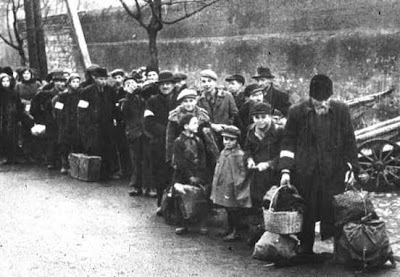
Jews in Krakow: 3.bp.blogspot.com/_K1EThCIX1FY/SsGWfsIJpnI/AAAAAAAAArE/IG...
Un'interpretazione personale di un grande film.
Il libro non è meno intenso.
"Chiuque salva una vita, salva il mondo intero"
(Talmud)
Sorry if I don't respond much to comments but I only re-visit here to post and I'm not much of a social media person. I post mainly to record my efforts and if anyone finds them interesting to look at in some way...good. I'm also on You-Tube: www.youtube.com/watch?v=PXckY4GjlNE&list=UUop8SUXQrRm...
The Grade I Listed Pembroke Castle, the original family seat of the Earldom of Pembroke. It is a medieval Linear castle as it is a castle designed to confront its attackers with a series of barriers/impediments in a line. In Pembroke, Pembrokeshire, South Wales.
In 1093 Arnulf of Montgomery built the first castle at the site when he fortified the promontory beside the Pembroke River during the Norman invasion of Wales. A century later, the castle was given by Richard I to William Marshal, who became one of the most powerful men in 12th-century Britain. He rebuilt Pembroke in stone creating most of the structure that remains today.
It 1648 during the Second English Civil War it was the centre of the Siege of Pembroke. Colonel Horton marched his 3,000 troops west to Tenby and laid siege to Tenby Castle which was held by about 500 Royalists under command of Colonel Rice Powell. Oliver Cromwell later arrived with further troops, leaving Horton with enough men to deal with Powel, Cromwell marched the rest of the army to lay siege to Pembroke.
When Tenby Castle was stormed Powel was taken prisoner, but Pembroke Castle, under command of General Rowland Laugharne and John Poyer, was a strong medieval fortress which could not be taken as quickly. It stood on a rocky promontory surrounded on three sides by the sea.
Ships carrying siege artillery to Cromwell were forced back up the Bristol Channel to Gloucester by storms, so Cromwell tried a frontal assault. It failed because the ladders used to escalade the walls were too short. The defenders managed to surprise the besiegers in a sudden sortie, killing thirty of the besiegers and damaging the circumvallation.
Eventually, the siege ended when Cromwell's forces discovered the conduit pipe which delivered water to the castle and cut off the defenders' water supply. Poyer and Laugharne were forced to surrender on 11 July.
Cromwell then ordered the castle slighted so that it could never again be used as a military fortress. Laugharne, Poyer and Powell were taken to London, tried and sentenced to death, but Poyer alone was executed on 25 April 1649, being the victim selected by lot.
Major restoration took place during the early 20th century, the castle it is open to the public and is the largest privately-owned castle in Wales.
Information Source:
Nikon L35AF | Fujifilm SuperHQ 200 Expired
--------------------------
About Me - about.me/edwardconde
The Grade I Listed University Church of St Mary the Virgin, the location of the 1555 trial of the Oxford Martyrs, on High Street, Oxford, Oxfordshire.
A church was established on this site, at the centre of the old walled city, in Anglo-Saxon times; records of 1086 note the church as previously belonging to an estate held by Aubrey de Coucy, likely Iffley, and the parish including part of Littlemore.
In the early days of Oxford University, the church was adopted as the first building of the university, congregation met there from at least 1252, and by the early 13th century it was the seat of university government and was used for lectures and the award of degrees. Around 1320 a two-storey building was added to the north side of the chancel — the ground floor (now the Vaults cafe) became the "convocation" house used by university parliament, and the upper storey housed books bequeathed by Thomas Cobham, Bishop of Worcester, which formed the first university library.
When Adam de Brome became rector in 1320 the church's fortune became linked to what would later become Oriel College. In 1324 de Brome founded St Mary Hall and appropriated the church's rectory house, including small tithes, oblations, and burial dues for the college, an act confirmed in 1326 by the bishop, Henry Burghersh, after de Brome had King Edward II's patronage to refound the college. De Brome diverted the revenue of the church to his college, which thereafter was responsible for appointing the vicar and providing four chaplains to celebrate the daily services in the church.
During his time in Oxford, John Wesley often attended the university sermon, and later, as a fellow of Lincoln College preached sermons in the church, including the university sermon on "Salvation by Faith" on June 11, 1738 and the "Almost Christian" sermon on July 25, 1741.
In 1828 John Henry Newman became vicar and his sermons became popular with undergraduates. From the present pulpit John Keble preached the assize sermon of July 14, 1833, which is considered to have started the Oxford Movement, an attempt to revive catholic spirituality in the church and University.
Information Source:
en.wikipedia.org/wiki/University_Church_of_St_Mary_the_Vi...
Grade II listed historic church. It likely incorporates some masonry from the 1100's. Much built in the 1500's. Restored in the 1800's.
"Belford is a village and civil parish in Northumberland, England, about halfway between Alnwick and Berwick-upon-Tweed, a few miles inland from the east coast and just off the Great North Road, the A1. At the 2001 census it had a population of 1,055, increasing to 1,258 at the 2011 Census.
Belford is surrounded by rich pastoral farmland, and to the west of the village is found one of the better rock climbing locations in the county, Bowden Doors.
For much of the Middle Ages, Belford was at the forefront of the ongoing border conflict between the Scots and the English and it is believed that only Well House escaped damage or destruction at the hands of Scottish raiders. In 1272 it is recorded that Walter de Huntercombe, the Lord of the Manor, was charged with 'assisting pirates'! They had seized, by force, goods belonging to some wealthy Spanish merchants and landed with their booty on Holy Island.
In 1726, A wealthy city merchant, Abraham Dixon bought the Belford Estate. He made improvements which enhanced the fortunes of its inhabitants significantly including purchasing a licence in 1742 allowing him to hold a weekly market and two annual fairs at Belford. His son continued improvements after his death in 1746 and by 1770, a visitor was able to report the existence of a woollen mill, a tannery, collieries and a 'large lime kiln'. Improvements to hygiene were also imposed upon the inhabitants with the forced removal of muck heaps from the houses and the banning of swine.
Larger market towns have gradually replaced Belford in importance and the location of the station outside of the town itself did nothing to halt a gradual decline in its fortunes since the end of the 19th century. Many of the features of its heyday have been retained however." - info from Wikipedia.
Summer 2019 I did a solo cycling tour across Europe through 12 countries over the course of 3 months. I began my adventure in Edinburgh, Scotland and finished in Florence, Italy cycling 8,816 km. During my trip I took 47,000 photos.
Now on Instagram.
Become a patron to my photography on Patreon.
“Live with intention. Walk to the edge. Listen hard. Practice wellness. Play with abandon. Laugh. Choose with no regret. Appreciate your friends. Continue to learn. Do what you love. Live as if this is all there is.”
The big one on there to me? Choose with no regret.
Today's Random Jessie Fact: I overthink. A lot. So not regretting things that could be seen as mistakes isn't that easy for me. The older I get, the more I refuse to beat myself up for things though. Everything has a purpose and a reason in my life. The trick is finding how to smile about all of it...
For Theme of the Week-Bucket List.
Our Daily Challenge 2-8 March : Look What I Did Today.
I made a list of what I actually got done, extracted from my 'To Do' list.
This was a day with no appointments or meetings etc, but I still didn't plant the three new shrubs, fill one of the green garden waste bins, or tidy the ginormous drift of papers and post on my kitchen table!
Ralph has to be hand fed and this takes quite a bite out of the day.
One of the many students I had living here some years ago was late for an interview with me and I told her that if she couldn't be on time, she need not expect me to wait for her.
She replied "Why? You've retired! You have nothing else to do!" Needless to say she was one of the very few out of the 86 lodgers I have had so far who I soon asked to leave.
Taken in Newcastle Emlyn. This is about light and what is a rather inchoate response to the Cohen song.
I sometimes just acquire a tilt... strictly for artistic purposes, you understand!
To see more pix of me in sexy boots click here: www.flickr.com/photos/kaceycdpix/sets/72157622816479823/
To see more pix of my legs in short skirts and other sexy outfits click this link:
My current reading list, i.e. books that I own and a) haven't read, b) have started and not finished, or c) am currently reading. . From the top down:
Holy Bible, ESV Compact Chestnut Edition
Bruce Larson and Ralph Osborne, The Emerging Church
Donald Miller and John MacMurray, To Own A Dragon (autographed)
Anne Lamott, Bird by Bird
Dietrich Bonhoeffer, Ethics
Elizabeth Raum, Dietrich Bonhoeffer: Called by God
Rob Bell, Velvet Elvis: Repainting the Christian Faith
Paul Shepherd, More LIke Not Running Away
Shane Hipps, The Hidden Power of Electronic Culture : How Media Shapes Faith, the Gospel, and Church
It’s not all candy canes and snowflakes… ❄️
This holiday season, secrets are unraveling, and the Naughty List has deadly consequences.
Will you solve the mystery? 🔍🎄
MadPea’s immersive crime story is arriving soon.
The Flying Machine by Michael Scrimshaw at the 2014 Doddington Hall Sculpture Exhibition.
Doddington Hall is a grade I listed Elizabethan mansion complete with walled courtyards and a gabled gatehouse. In Doddington, North Kesteven, Lincolnshire.
It was built between 1593 and 1600 by Robert Smythson for Thomas Tailor, who was the registrar to the Bishop of Lincoln. In the 12th century the manor of Doddington was owned by the Pigot family who sold it to Sir Thomas Burgh in 1450, and eventually to John Savile of Howley Hall in Leeds. In 1593, he sold the manor house to Thomas Tailor who commissioned the present house. It was inherited by his son, and then his granddaughter Elizabeth Anton who married Sir Edward Hussey of Honington in Lincolnshire. Their son Sir Thomas Hussey inherited in 1658. Sir Thomas's three daughters were his co-heiresses when he died in 1706. Mrs Sarah Apreece was the surviving heiress and on her death in 1749, her daughter Rhoda, wife of Captain Francis Blake Delaval of Seaton Delaval Hall in Northumberland, inherited. It then passed to her second son, Sir John Hussey-Delaval, and he had improvements made to the Hall in 1761 by Thomas and William Lumby of Lincoln. John's younger brother Edward inherited in 1808, and his daughter, Mrs Sarah Gunman, who inherited on her father's death in 1814, left the Hall to Lieutenant Colonel George Jarvis in 1829. On his death it passed to his cousin the Rev Robert Eden Cole, and it remains in private ownership today. In the mid 20th century the Hall was restored by Laurence Bond and Francis Johnston.
The Hall's contents, including textiles, ceramics, porcelain, furniture and pictures, reflect 400 years of unbroken family occupation. It is surrounded by 6 acres (24,000 m2) of walled and wild gardens with flowering from early spring until autumn.
The Hall and Gardens are open to the public, with facilities for private tours and school visits. A temple designed by Anthony Jarvis in 1973 stands in the gardens. Summer concerts and occasional exhibitions are held in the Long Gallery. Other businesses have been developed on the estate such as the sale of Christmas trees, weddings and a farm shop selling local produce.
I have never agreed with the idea of the bucket list. Trying to fulfill all the desires of a lifetime seems to me an effort leading towards failure. How awful to die not having completed everything on your list. Mr. Puff and I are doing things a little differently. We are adding things to the bucket, so when he goes, we both know that he finished many adventures in his lifetime.
He always wants to sleep on this little table that is on my balcony. It is a little too close to the railing for my comfort so he has never been allowed. Today, he jumped up and insisted that he have a nap with his sunbeam, and today, he got to add that to his bucket list as a complete.
His fur is all ruffled because of the chemo. He is losing fur on his back, but he is still so very handsome and happy and enjoying life.
The Grade I Listed Salisbury Cathedral, (formally known as the Cathedral Church of the Blessed Virgin Mary), one of the leading examples of Early English architecture. The main body of the cathedral was completed in only 38 years, from 1220 to 1258. The cathedral is the mother church of the Diocese of Salisbury and seat of the Bishop of Salisbury. In Salisbury, Wiltshire.
As a response to deteriorating relations between the clergy and the military at Old Sarum Cathedral, the decision was taken to resite the cathedral and the bishopric was moved to Salisbury. The move occurred during the tenure of Bishop Richard Poore, a wealthy man who donated the land on which it was built. The new cathedral was paid for by donations, principally from the canons and vicars of southeast England who were asked to contribute a fixed annual sum until it was completed. A legend tells that the Bishop of Old Sarum shot an arrow in the direction he would build the cathedral but the arrow hit a deer that died in the place where Salisbury Cathedral is now. The cathedral crossing, Old Sarum and Stonehenge are reputed to be aligned on a ley line, though Clive L.N. Ruggles asserts that the site, on marshland, was chosen because a preferred site several miles to the west could not be obtained.
The foundation stone was laid on 28 April 1220. Much of the freestone for the cathedral came from Teffont Evias quarries. As a result of the high water table in the new location, the cathedral was built on only four feet of foundations, and by 1258 the nave, transepts and choir were complete. The only major sections built later were the cloisters in 1240, the chapter house in 1263, tower and spire, which at 404 feet (123 m) dominated the skyline from 1320. Because most of the cathedral was built in only 38 years, it has a single consistent architectural style, Early English Gothic.
Although the spire is the cathedral's most impressive feature, it has proved to be troublesome. Together with the tower, it added 6,397 tons (6,500 tonnes) to the weight of the building. Without the addition of buttresses, bracing arches and anchor irons over the succeeding centuries, it would have suffered the fate of spires on later great ecclesiastical buildings (such as Malmesbury Abbey) and fallen down; instead, Salisbury remains the tallest church spire in the UK. The large supporting pillars at the corners of the spire are seen to bend inwards under the stress. The addition of reinforcing tie beams above the crossing, designed by Christopher Wren in 1668, arrested further deformation. The beams were hidden by a false ceiling, installed below the lantern stage of the tower.
Significant changes to the cathedral were made by the architect James Wyatt in 1790, including replacement of the original rood screen and demolition of a bell tower which stood about 320 feet (100 m) north west of the main building. Salisbury is one of only three English cathedrals to lack a ring of bells, the others are Norwich Cathedral and Ely Cathedral. However it does strike the time every 15 minutes with bells. In total, 70,000 tons of stone, 3,000 tons of timber and 450 tons of lead were used in the construction of the cathedral.
This is a photograph that I took in the paddock at the Gold Cup meeting at Oulton Park in August 2005. It's a Lister Knobbly and isn't listed in the programme of the event, but is one of the three 'Sanction' cars built in 1990. It's the third of these cars, chassis BHL148, and had a 5.7 litre V8 Chevrolet engine. At the time of this Gold Cup meeting it was owned by Mark Gibbon.
I'm off to the supermarket to get some foodstuff. I have written out a list of all the things I get in the order it's in the shop (this changes a little but not much) I photocopy the list and put a pencil mark against the things I need. I use the same list for quite a while … until it gets too tatty.
The hereios of the We're Here! group have paid a visit to the Picture diary group today.
Stuck for an idea for your daily 365 shot? Join the hereios of the We're Here! group for inspiration.
Drosera filiformis
This plant is endemic and has only been documented in Washington and Bay counties in Florida. It is listed as endangered in Florida. Here is a link to more photos of this wildflower: Here is a link to more photos of this wildflower: www.flickr.com/photos/wildflowersflorida/albums/721576841..