View allAll Photos Tagged johnwanamaker
The Market Street entrance to the former department store. A renovation and partial conversion are planned for this historic building in there near future.
Even though they were called Bag Ladies, it wasn't meant to be derogative. It was the summer, and I walked past them a lot. I did have another one, but I haven't found it yet! I really had fun using 110 film and developing it myself!
Also, this picture was taken next to the John Wanamaker Building, on Market Street & Penn Square, across from City Hall. In the background is a store sign that says: Mike Stevens Hats Sportswear. That car looks like a 1979 Chevy Monte Carlo. And I think the woman in the background is looking at me!
Perhaps the term Bag Lady might seem mean, it was what people called the homeless who lived on the street. I was attending school and I had learned how to develop 110 film. So, I asked one of the Ladies if she could take my picture!
I think this might support the fact that photography is for everyone!
Saint James the Less Episcopal Church in North Philadelphia. The Gothic Revival church (not shown) dates to 1850.
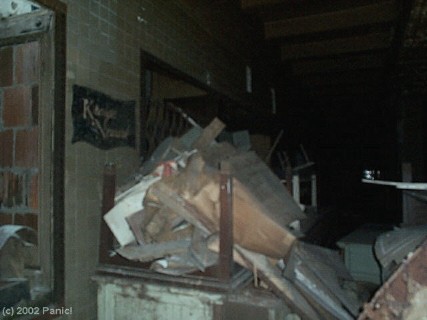
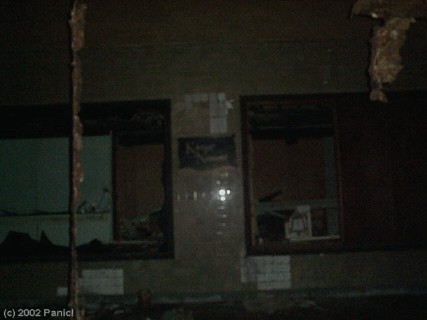
This is the subway-level entrance one level underground. This entrance has a beautiful set of steel revolving doors which look to be original to Wanamaker's. This level was completely closed off when Wanamaker's closed in the 1950's, and remained closed until Kmart opened in 1996.
These types of subway-level entrances were popular during the early 20th century as a way to funnel people directly from the train into a certain store.
In 2002, in Newark, NJ, an abandoned streetcar tunnel revealed a similar subway-level entrance to the Kresge Department store, closed off since 1966.
-------------------
At 154,000 sq ft, Astor Place Kmart is one of the largest Kmart stores still in operation. This store was opened in a grand former Wanamaker’s department store close to NYU, in Greenwich Village. Kmart occupies the first and second levels, as well as the subway-level (or at least it did until Sears found out how much money Facebook was willing to spend to buy out the second level lease).
The store has an entrance from the street, as well as an extremely cool entrance directly from the No. 6 Subway platform with windows that allow commuters to look directly into the store.
Astor Place Kmart thrives as one of the only places in the neighborhood with suburban-style selection and discount prices, yet this store is notably less busy than its Midtown sister, Penn Plaza Kmart, which benefits greatly from tourist trade and commuters.
The store opened in 1996, a month after the Penn Plaza store, and at a time when Kmart’s formula had stopped working its magic in its traditional suburban comfort zone and the company was looking to urban areas for growth.
*********************************************
Backstory: In 1990, Kmart knew it was in trouble and embarked on a $3 billion program to renovate, expand or relocate all of its aging 2200 Kmart store base. From 1990-95, the company built hundreds of big new and replacement Kmart stores and Super Kmart Centers, financed by lots and lots of borrowed Wall Street money and by selling off divisions like its Pace Warehouse Clubs, Builder’s Square, and Office Max.
The bigger, brighter Kmarts increased store sales for a short while, but as Walmart continued to elbow in on Kmart’s territories, sales slipped. With so much debt, the company had huge interest payments and in 1996, it narrowly avoided bankruptcy by striking a deal with its lenders that slashed its debt rating to junk bond status.
It was during this time that Kmart opened its 2 Manhattan stores, hoping that the company would make up for the higher NYC rents by doing more volume. It seems to have worked, as both Manhattan stores are top 25 stores.
Here is the main street-level entrance at the corner of Broadway and 8th Street. The entrance has a set of traditional revolving doors which, unlike the revolving doors at the subway level, are not original to Wanamaker's.
-------------------
At 154,000 sq ft, Astor Place Kmart is one of the largest Kmart stores still in operation. This store was opened in a grand former Wanamaker’s department store close to NYU, in Greenwich Village. Kmart occupies the first and second levels, as well as the subway-level (or at least it did until Sears found out how much money Facebook was willing to spend to buy out the second level lease).
The store has an entrance from the street, as well as an extremely cool entrance directly from the No. 6 Subway platform with windows that allow commuters to look directly into the store.
Astor Place Kmart thrives as one of the only places in the neighborhood with suburban-style selection and discount prices, yet this store is notably less busy than its Midtown sister, Penn Plaza Kmart, which benefits greatly from tourist trade and commuters.
The store opened in 1996, a month after the Penn Plaza store, and at a time when Kmart’s formula had stopped working its magic in its traditional suburban comfort zone and the company was looking to urban areas for growth.
*********************************************
Backstory: In 1990, Kmart knew it was in trouble and embarked on a $3 billion program to renovate, expand or relocate all of its aging 2200 Kmart store base. From 1990-95, the company built hundreds of big new and replacement Kmart stores and Super Kmart Centers, financed by lots and lots of borrowed Wall Street money and by selling off divisions like its Pace Warehouse Clubs, Builder’s Square, and Office Max.
The bigger, brighter Kmarts increased store sales for a short while, but as Walmart continued to elbow in on Kmart’s territories, sales slipped. With so much debt, the company had huge interest payments and in 1996, it narrowly avoided bankruptcy by striking a deal with its lenders that slashed its debt rating to junk bond status.
It was during this time that Kmart opened its 2 Manhattan stores, hoping that the company would make up for the higher NYC rents by doing more volume. It seems to have worked, as both Manhattan stores are top 25 stores.
Coming this week is the continuing evolution of the Astor Place Kmart in Manhattan. No, this Kmart is **NOT** closing, but it is losing one of its 3 floors in a downsizing. It also is receiving something I haven't seen at ANY Kmart in way too long--a new floor. (preview of the new floor is above)
One year ago, this 154,000 sq. ft. Kmart was operating with the red Kmart decor of the early 2010's. Last summer (2017), the store received the newest blue Kmart decor package on all 3 levels, so I was surprised to hear that the 3rd level would be vacated, but it happened extremely quickly following Christmas, 2017.
Over the next few weeks, I will post first the old store, on all 3 levels, followed by the sparkly new blue decor (on 3 levels).
Lastly will come the pics of the downsizing and the new floor....and maybe a few sneaky pics of the emptied space which will become future Facebook offices.
At 154,000 sq ft, Astor Place Kmart is one of the largest Kmart stores still in operation. This store was opened in a grand former Wanamaker’s department store close to NYU, in Greenwich Village. Kmart occupies the first and second levels, as well as the subway-level (or at least it did until Sears found out how much money Facebook was willing to spend to buy out the second level lease).
The store has an entrance from the street, as well as an extremely cool entrance directly from the No. 6 Subway platform with windows that allow commuters to look directly into the store.
Astor Place Kmart thrives as one of the only places in the neighborhood with suburban-style selection and discount prices, yet this store is notably less busy than its Midtown sister, Penn Plaza Kmart, which benefits greatly from tourist trade and commuters.
The store opened in 1996, a month after the Penn Plaza store, and at a time when Kmart’s formula had stopped working its magic in its traditional suburban comfort zone and the company was looking to urban areas for growth.
*********************************************
Backstory: In 1990, Kmart knew it was in trouble and embarked on a $3 billion program to renovate, expand or relocate all of its aging 2200 Kmart store base. From 1990-95, the company built hundreds of big new and replacement Kmart stores and Super Kmart Centers, financed by lots and lots of borrowed Wall Street money and by selling off divisions like its Pace Warehouse Clubs, Builder’s Square, and Office Max.
The bigger, brighter Kmarts increased store sales for a short while, but as Walmart continued to elbow in on Kmart’s territories, sales slipped. With so much debt, the company had huge interest payments and in 1996, it narrowly avoided bankruptcy by striking a deal with its lenders that slashed its debt rating to junk bond status.
It was during this time that Kmart opened its 2 Manhattan stores, hoping that the company would make up for the higher NYC rents by doing more volume. It seems to have worked, as both Manhattan stores are top 25 stores.
At 154,000 sq ft, Astor Place Kmart is one of the largest Kmart stores still in operation. This store was opened in a grand former Wanamaker’s department store close to NYU, in Greenwich Village. Kmart occupies the first and second levels, as well as the subway-level (or at least it did until Sears found out how much money Facebook was willing to spend to buy out the second level lease).
The store has an entrance from the street, as well as an extremely cool entrance directly from the No. 6 Subway platform with windows that allow commuters to look directly into the store.
Astor Place Kmart thrives as one of the only places in the neighborhood with suburban-style selection and discount prices, yet this store is notably less busy than its Midtown sister, Penn Plaza Kmart, which benefits greatly from tourist trade and commuters.
The store opened in 1996, a month after the Penn Plaza store, and at a time when Kmart’s formula had stopped working its magic in its traditional suburban comfort zone and the company was looking to urban areas for growth.
*********************************************
Backstory: In 1990, Kmart knew it was in trouble and embarked on a $3 billion program to renovate, expand or relocate all of its aging 2200 Kmart store base. From 1990-95, the company built hundreds of big new and replacement Kmart stores and Super Kmart Centers, financed by lots and lots of borrowed Wall Street money and by selling off divisions like its Pace Warehouse Clubs, Builder’s Square, and Office Max.
The bigger, brighter Kmarts increased store sales for a short while, but as Walmart continued to elbow in on Kmart’s territories, sales slipped. With so much debt, the company had huge interest payments and in 1996, it narrowly avoided bankruptcy by striking a deal with its lenders that slashed its debt rating to junk bond status.
It was during this time that Kmart opened its 2 Manhattan stores, hoping that the company would make up for the higher NYC rents by doing more volume. It seems to have worked, as both Manhattan stores are top 25 stores.
Lower/Subway Level: Upon entering the store at the Subway level, you walk into Health & Beauty and The Pantry; straight ahead is the Pharmacy Department.
The sub-level of the store has low ceilings, so Kmart used its low-clearance version of its signage, also seen in the Penn Plaza store in Midtown. This blue and white patterned flooring seems to be unique to the 2 Manhattan stores, but resembles larger-checkerboard flooring which was being installed in Super Kmart Centers at the time.
-------------------
At 154,000 sq ft, Astor Place Kmart is one of the largest Kmart stores still in operation. This store was opened in a grand former Wanamaker’s department store close to NYU, in Greenwich Village. Kmart occupies the first and second levels, as well as the subway-level (or at least it did until Sears found out how much money Facebook was willing to spend to buy out the second level lease).
The store has an entrance from the street, as well as an extremely cool entrance directly from the No. 6 Subway platform with windows that allow commuters to look directly into the store.
Astor Place Kmart thrives as one of the only places in the neighborhood with suburban-style selection and discount prices, yet this store is notably less busy than its Midtown sister, Penn Plaza Kmart, which benefits greatly from tourist trade and commuters.
The store opened in 1996, a month after the Penn Plaza store, and at a time when Kmart’s formula had stopped working its magic in its traditional suburban comfort zone and the company was looking to urban areas for growth.
*********************************************
Backstory: In 1990, Kmart knew it was in trouble and embarked on a $3 billion program to renovate, expand or relocate all of its aging 2200 Kmart store base. From 1990-95, the company built hundreds of big new and replacement Kmart stores and Super Kmart Centers, financed by lots and lots of borrowed Wall Street money and by selling off divisions like its Pace Warehouse Clubs, Builder’s Square, and Office Max.
The bigger, brighter Kmarts increased store sales for a short while, but as Walmart continued to elbow in on Kmart’s territories, sales slipped. With so much debt, the company had huge interest payments and in 1996, it narrowly avoided bankruptcy by striking a deal with its lenders that slashed its debt rating to junk bond status.
It was during this time that Kmart opened its 2 Manhattan stores, hoping that the company would make up for the higher NYC rents by doing more volume. It seems to have worked, as both Manhattan stores are top 25 stores.
Boscov's at Deptford Mall, Deptford, NJ. This opened with the mall in 1975 as John Wanamaker. With a change of ownership of the Wanamaker chain in the mid 1990s, it became Hecht's and then Strawbridge's before being sold to Boscov's. One of the entrances to the mall can be seen at the far left.
In addition to the subway-level entrance, Kmart has windows that look into the store from the subway platform. These types of windows were common in cities like Manhattan and Newark, NJ in the early 20th Century, though most of the windows have been closed off over the years.
These were display windows when the store was John Wanamaker’s, but after the store closed in the 1950’s, the windows were bricked over as the building became a low-rent office building. When Kmart took over, they removed the bricks, but opened the windows to look into the store, instead of using them as display windows.
In 2002, in Newark, NJ, an abandoned streetcar tunnel revealed a similar subway-level entrance to the Kresge Department store, closed off since 1966.
-------------------
At 154,000 sq ft, Astor Place Kmart is one of the largest Kmart stores still in operation. This store was opened in a grand former Wanamaker’s department store close to NYU, in Greenwich Village. Kmart occupies the first and second levels, as well as the subway-level (or at least it did until Sears found out how much money Facebook was willing to spend to buy out the second level lease).
The store has an entrance from the street, as well as an extremely cool entrance directly from the No. 6 Subway platform with windows that allow commuters to look directly into the store.
Astor Place Kmart thrives as one of the only places in the neighborhood with suburban-style selection and discount prices, yet this store is notably less busy than its Midtown sister, Penn Plaza Kmart, which benefits greatly from tourist trade and commuters.
The store opened in 1996, a month after the Penn Plaza store, and at a time when Kmart’s formula had stopped working its magic in its traditional suburban comfort zone and the company was looking to urban areas for growth.
*********************************************
Backstory: In 1990, Kmart knew it was in trouble and embarked on a $3 billion program to renovate, expand or relocate all of its aging 2200 Kmart store base. From 1990-95, the company built hundreds of big new and replacement Kmart stores and Super Kmart Centers, financed by lots and lots of borrowed Wall Street money and by selling off divisions like its Pace Warehouse Clubs, Builder’s Square, and Office Max.
The bigger, brighter Kmarts increased store sales for a short while, but as Walmart continued to elbow in on Kmart’s territories, sales slipped. With so much debt, the company had huge interest payments and in 1996, it narrowly avoided bankruptcy by striking a deal with its lenders that slashed its debt rating to junk bond status.
It was during this time that Kmart opened its 2 Manhattan stores, hoping that the company would make up for the higher NYC rents by doing more volume. It seems to have worked, as both Manhattan stores are top 25 stores.
In addition to the subway-level entrance, Kmart has windows that look into the store from the subway platform. These types of windows were common in cities like Manhattan and Newark, NJ in the early 20th Century, though most of the windows have been closed off over the years.
These were display windows when the store was John Wanamaker’s, but after the store closed in the 1950’s, the windows were bricked over as the building became a low-rent office building. When Kmart took over, they removed the bricks, but opened the windows to look into the store, instead of using them as display windows.
In 2002, in Newark, NJ, an abandoned streetcar tunnel revealed a similar subway-level entrance to the Kresge Department store, closed off since 1966.
-------------------
At 154,000 sq ft, Astor Place Kmart is one of the largest Kmart stores still in operation. This store was opened in a grand former Wanamaker’s department store close to NYU, in Greenwich Village. Kmart occupies the first and second levels, as well as the subway-level (or at least it did until Sears found out how much money Facebook was willing to spend to buy out the second level lease).
The store has an entrance from the street, as well as an extremely cool entrance directly from the No. 6 Subway platform with windows that allow commuters to look directly into the store.
Astor Place Kmart thrives as one of the only places in the neighborhood with suburban-style selection and discount prices, yet this store is notably less busy than its Midtown sister, Penn Plaza Kmart, which benefits greatly from tourist trade and commuters.
The store opened in 1996, a month after the Penn Plaza store, and at a time when Kmart’s formula had stopped working its magic in its traditional suburban comfort zone and the company was looking to urban areas for growth.
*********************************************
Backstory: In 1990, Kmart knew it was in trouble and embarked on a $3 billion program to renovate, expand or relocate all of its aging 2200 Kmart store base. From 1990-95, the company built hundreds of big new and replacement Kmart stores and Super Kmart Centers, financed by lots and lots of borrowed Wall Street money and by selling off divisions like its Pace Warehouse Clubs, Builder’s Square, and Office Max.
The bigger, brighter Kmarts increased store sales for a short while, but as Walmart continued to elbow in on Kmart’s territories, sales slipped. With so much debt, the company had huge interest payments and in 1996, it narrowly avoided bankruptcy by striking a deal with its lenders that slashed its debt rating to junk bond status.
It was during this time that Kmart opened its 2 Manhattan stores, hoping that the company would make up for the higher NYC rents by doing more volume. It seems to have worked, as both Manhattan stores are top 25 stores.
In addition to the subway-level entrance, Kmart has windows that look into the store from the subway platform. These types of windows were common in cities like Manhattan and Newark, NJ in the early 20th Century, though most of the windows have been closed off over the years.
These were display windows when the store was John Wanamaker’s, but after the store closed in the 1950’s, the windows were bricked over as the building became a low-rent office building. When Kmart took over, they removed the bricks, but opened the windows to look into the store, instead of using them as display windows.
In 2002, in Newark, NJ, an abandoned streetcar tunnel revealed a similar subway-level entrance to the Kresge Department store, closed off since 1966.
-------------------
At 154,000 sq ft, Astor Place Kmart is one of the largest Kmart stores still in operation. This store was opened in a grand former Wanamaker’s department store close to NYU, in Greenwich Village. Kmart occupies the first and second levels, as well as the subway-level (or at least it did until Sears found out how much money Facebook was willing to spend to buy out the second level lease).
The store has an entrance from the street, as well as an extremely cool entrance directly from the No. 6 Subway platform with windows that allow commuters to look directly into the store.
Astor Place Kmart thrives as one of the only places in the neighborhood with suburban-style selection and discount prices, yet this store is notably less busy than its Midtown sister, Penn Plaza Kmart, which benefits greatly from tourist trade and commuters.
The store opened in 1996, a month after the Penn Plaza store, and at a time when Kmart’s formula had stopped working its magic in its traditional suburban comfort zone and the company was looking to urban areas for growth.
*********************************************
Backstory: In 1990, Kmart knew it was in trouble and embarked on a $3 billion program to renovate, expand or relocate all of its aging 2200 Kmart store base. From 1990-95, the company built hundreds of big new and replacement Kmart stores and Super Kmart Centers, financed by lots and lots of borrowed Wall Street money and by selling off divisions like its Pace Warehouse Clubs, Builder’s Square, and Office Max.
The bigger, brighter Kmarts increased store sales for a short while, but as Walmart continued to elbow in on Kmart’s territories, sales slipped. With so much debt, the company had huge interest payments and in 1996, it narrowly avoided bankruptcy by striking a deal with its lenders that slashed its debt rating to junk bond status.
It was during this time that Kmart opened its 2 Manhattan stores, hoping that the company would make up for the higher NYC rents by doing more volume. It seems to have worked, as both Manhattan stores are top 25 stores.
Boscov's at Deptford Mall, Deptford, NJ. This opened with the mall in 1975 as John Wanamaker. With a change of ownership of the Wanamaker chain in the mid 1990s, it became Hecht's and then Strawbridge's before being sold to Boscov's.
"At the World's Fair. Uncle Sam--What have you found now, Christopher? Columbus--Ah! At Last we have discovered 'solid comfort.'"
Sign: "Re:Marks on Solid Comfort."
--------
Text on back of trade card:
If you want "solid comfort" you must have a Marks Adjustable Folding Chair. It combines in one a handsome parlor, library, smoking, and reclining chair, a perfect lounge and full length bed, and is altogether the best chair in the wide, wide world. In construction it is simple, durable, and elegant. Are you interested to know more about it.
Catalogues fully illustrating the Marks Chair as well as a most complete line of invalids rolling chairs, invalid and library supplies will be furnished free on application to: Marks Adjustable Folding Chair Co., Ltd., sole proprietors and manufacturers, 930 Broadway, New York, and 215 Wabash Avenue, Chicago, Ill. Frank E. Marks, pres., R. K. Thompson, sec. & treas. Philadelphia agents, John Wanamaker. San Francisco agents, Burr Folding Bed Co.
Bigelow Lith. Co., Springfield, Mass.
#philadelphia #philly #phillyscape #visitphilly #igers #igersphilly #igers_philly #snow #blizzard #architecture #wanamakerhouse
78 Likes on Instagram
2 Comments on Instagram:
someguyinphilly: #scottwanamakerhouse #mansion #gildedage
someguyinphilly: #johnwanamaker
"John Wanamaker, Chestnut St., Philadelphia. The Grand Depot for Dry Goods. 13th St. Market. Whole block. Dry goods and clothing. A. L. Weise, Lith."
Opened 1973 as John Wanamaker. Closed 2006 as strawbridge's, after being Hecht's from 1995 to 1996. for a brief time, was Boscov's (2006-2008). This photo was taken when this location was HECHT'S
Digital ID: 482861. Abbott, Berenice -- Photographer. March 06, 1936
Notes: Looking at iron-front store originally built by A.T. Stewart from across 4th Ave.; bridge connecting with annex at left, traffic, pedestrians. Code: I.A.3.
Source: Changing New York / Berenice Abbott. (more info)
Repository: The New York Public Library. Photography Collection, Miriam and Ira D. Wallach Division of Art, Prints and Photographs.
See more information about this image and others at NYPL Digital Gallery.
Persistent URL: digitalgallery.nypl.org/nypldigital/id?482861
Rights Info: No known copyright restrictions; may be subject to third party rights (for more information, click here)
Plaza @ King of Prussia, 160 N. Gulph Rd; originally an ampitheater for the mall when it opened in 1963; became Wanamaker's in 1965. Became Hecht's in 1995, then Strawbridge's in 1997. Renamed Macy's in 2006, giving the mall two Macy's stores for a while; ultimately the one in the Court was kept and this one closed in 2007. Currently vacant.
This John Wanamaker's was constructed in 1954 in suburban Wynnewood, PA. It was converted over to a Hecht's in 1995 and was closed in 1997. It is now a Bed, Bath, and Beyond and was heavily modifed (with Dryvet) in the early 2000s.
Opened 1973 as John Wanamaker. Closed 2006 as strawbridge's, after being Hecht's from 1995 to 1996. for a brief time, was Boscov's (2006-2008).
This John Wanamaker's was constructed in 1954 in suburban Wynnewood, PA. It was converted over to a Hecht's in 1995 and was closed in 1997. It is now a Bed, Bath, and Beyond and was heavily modifed (with Dryvet) in the early 2000s.
Store #2312, at 1200 Baltimore Pike, Springfield (Delaware County), PA. 2-Floor store, built on the site of John Wanamaker/HECHT'S/strawbridge's Department Store. View of 1st Floor entrance.
Montgomery Mall, Rts. 309 & 202; opened as John Wanamaker in 1977. Became Hecht's in 1995, then renamed Strawbridge's in 1997. After merger with Macy's in 2006 was sold to Boscov's, which closed in 2008. Currently vacant. UPDATE: Now demolished to make room for a freestanding Wegmans.
Roosevelt Mall, 2399 Cottman Ave; opened in the 50s as S. Klein department store. Was sold to Wanamaker in the 70s, then became Hecht's in 1995, Strawbridge's in 1997, and finally Macy's in 2006.
1300 Market St; the original John Wanamaker store. Became Hecht's in 1995, but instead of closing after merger with Strawbridge's became Lord & Taylor. After the Macy's merger in 2006 Macy's chose to keep and rename this store and close the nearby Strawbridge's.
Store #2312, at 1200 Baltimore Pike, Springfield (Delaware County), PA. 2-Floor store, built on the site of John Wanamaker/HECHT'S/strawbridge's Department Store, which closed in 2006. View of 2nd Floor entrance.