Elf Heaven
View allAll Photos Tagged influentials
The University of Coimbra (UC; Portuguese: Universidade de Coimbra) is a Portuguese public university in Coimbra, Portugal. First established in Lisbon in 1290, it went through a number of relocations until moving permanently to Coimbra in 1537. The university is among the oldest universities in continuous operation in the world, the oldest in Portugal, and played a influential role in the development of higher education in the Portuguese-speaking world. In 2013, UNESCO declared the university a World Heritage Site, noting its architecture, unique culture and traditions, and historical role.
Stowe is one of the most Well known house and gardens in Georgian England. Created by Viscount Cobham in the grounds of his family home from 1717, it reflected a programme of ideas based on Cobham’s hugely influential network of political connections .
"With sweetness unabated
Informed the hour had come
With no remiss of triumph
The autumn started home
Her home to be with Nature
As competition done
By influential kinsmen
Invited to return --"
- Emily Dickinson
-------------------------------------------------------------------------------------
Thanks to all for 9,000.000+ views and kind comments ... !
Please don't use this image on websites, blogs or other media without my explicit permission. © All rights reserved
This stately mansion was built for J. Russell Jones, an influential Civil War patriot who later would become a U.S. Marshall, steamship owner, chairman of the Republican Party, and Minister Resident to Belgium during the Administration of his friend, President Ulysses S. Grant. Built in 1857, the Italianate style Jones House, now known as the Belvedere Mansion, is the largest mansion in Galena. Completely restored, Belvedere Mansion is open for tours.
The mansion is a contributing structure in the Galena Historic District. The district encompasses 85 percent of the City of Galena and includes more than 800 properties. The Galena Historic District was added to the National Register of Historic Places in 1969, with modifications in 2013.
Galena is the seat of Jo Daviess County in the northwest corner of Illinois. This is the unglaciated area of northwestern Illinois. The rolling hills, history and abundant 19th century architecture draws visitors from throughout the country. The population of Galena at the 2020 census was 3,101.
Collective 52 Photo Project -Influential Photographers 1/12
André Kertész
Among his later pieces the artist used a SX70 Polaroid and made many images of small items in his home. This is based on one such photograph and is a loose interpretation of his style during this period. The addition of the second shadow is also seen in other pieces.
Muddy Waters war einer der einflussreichsten US-amerikanischen Bluesmusiker. Das Rolling Stone Magazine setzt ihn auf Platz 17 der 100 besten Künstler aller Zeiten. Wikipedia
Geboren: 4. April 1913
Muddy Waters was one of the most influential American blues musicians. Rolling Stone Magazine ranks him 17th out of the 100 best artists of all time. Wikipedia
Born: April 4, 1913
Stars the most influential symbol in our hierographic system. From money to sweets, from authorities to praise, we are indoctrinated with stars from the nursery rhymes and up to death. Shine it on Star Bright.
Stars the most influential symbol in our hierographic system. From authorities to praise, we are indoctrinated with stars from the nursery rhymes and up to death. Shine it on Star Bright, from rising star to Shooting star to falling star. The star is deeply embedded in everyone's mind.
Onions, I was told as a boy, have lots of minerals; and today I continue to like them.
So for me it was nice to learn that Johann Gottlieb Gleditsch (1714-1786) chose (1769) August Ferdinand von Veltheim (1741-1801) as a godfather for the generic of our plant. Veltheim was an influential German mineralogist and geologist. Although I'm not sure whether this kind of 'ui' or bulb is edible or contains those minerals...
This pretty plant comes originally from southern Africa and is now in blossom in our Hortus.
Hidcote Manor Garden is regarded as one of England’s great gardens and this magnificent Cedar of Lebanon is the centrepiece tree. It was the lifelong passion of self-taught gardener Lawrence Johnston who created his ‘garden of rooms’ in the Arts and Crafts style.
Johnston was an American who came to England to study at Cambridge University. His mother had bought Hidcote in 1907 and Johnston spent 41 years creating what would become one of England’s most influential 20th century gardens. He became interested in making a garden out of the fields surrounding the house.
Hidcote Manor Garden, in the Cotswolds in Gloucestershire, is open to the public thanks to the National Trust.
This stately mansion was built for J. Russell Jones, a influential Civil War patriot who later would become a U.S. Marshall, steamship owner, chairman of the Republican Party, and Minister Resident to Belgium during the Administration of his friend, President Ulysses S. Grant. Built in 1857, the Italianate style Jones House, now known as the Belvedere Mansion, is the largest mansion in Galena. Completely restored, Belvedere Mansion is open for tours.
The mansion is a contributing structure in the Galena Historic District. The district encompasses 85 percent of the City of Galena and includes more than 800 properties. The Galena Historic District was added to the National Register of Historic Places in 1969, with modifications in 2013.
Galena is the seat of Jo Daviess County in the northwest corner of Illinois. This is the unglaciated area of northwestern Illinois. The rolling hills, history and abundant 19th century architecture draws visitors from throughout the country. The estimated population of Galena in 2019 was 3,158.
This mansion was built for J. Russell Jones, a influential Civil War patriot who later would become a U.S. Marshall, steamship owner, chairman of the Republican Party, and Minister Resident to Belgium during the Administration of his friend, President Ulysses S. Grant. Built in 1857, the Italianate style Jones House, now known as the Belvedere Mansion, is the largest mansion in Galena. Completely restored, Belvedere Mansion is open for tours.
The mansion is a contributing structure in the Galena Historic District. The district encompasses 85 percent of the City of Galena and includes more than 800 properties. The Galena Historic District was added to the National Register of Historic Places in 1969, with modifications in 2013.
Galena is the seat of Jo Daviess County in the northwest corner of Illinois. This is the unglaciated area of northwestern Illinois. The rolling hills, history and abundant 19th century architecture draws visitors from throughout the country. The estimated population of Galena in 2019 was 3,158.
Collective 52 Photo Project -Influential Photographers 2/12
Andreas Gursky.
After Gursky's original, Paris, Montparnasse, 1993. d2xsarh0aq9fsq.cloudfront.net/00/68/18/28/0068182814.fb69...
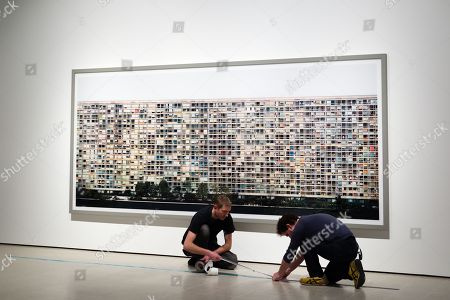
Gursky's original is on a monumental scale and my interpretation is just that, an interpretation. Lacking a medium + format camera and the ability to photo shop something suitable I went for the feeling, as best as I could on a smaller scale.
odc - shoes
Some inspiring and influential people have also shared similar messages.
"Be kind whenever possible. It is always possible."
― Dali Lama
"Be kind for everyone you meet is fighting a harder battle."
― Plato
“No act of kindness, no matter how small, is ever wasted.”
― Aesop
“The simplest acts of kindness are by far more powerful then a thousand heads bowing in prayer.”
― Mahatma Gandhi
“Kindness is a language which the deaf can hear and the blind can see.”
― Mark Twain
“Always try to be a little kinder than is necessary.”
― J.M. Barrie
Brutalist architecture is an influential and polarizing architectural style that emerged in the mid-20th century. It is characterized by its raw, robust, and utilitarian aesthetic, often featuring large, exposed concrete structures. Brutalist buildings display a sense of monumentality and solidity, with bold geometric forms and a distinct lack of decorative embellishments. The style prioritizes functionality and the honest expression of materials, focusing on the inherent qualities of concrete. While some consider Brutalism to be visually austere, proponents of the style appreciate its uncompromising honesty, the sculptural qualities of its forms, and its ability to evoke a sense of awe and timelessness.
St. Leonards Centre
Crows Nest
June, 2023
Umberto Boccioni
( 19 October 1882 – 17 August 1916) was an influential Italian painter and sculptor. He helped shape the revolutionary aesthetic of the Futurism movement as one of its principal figures. Despite his short life, his approach to the dynamism of form and the deconstruction of solid mass guided artists long after his death. His works are held by many public art museums, and in 1988 the Metropolitan Museum of Art in New York City organized a major retrospective of 100 pieces.
For more informations:
en.wikipedia.org/wiki/Umberto_Boccioni
**********************************************************************
“It is an illusion that photos are made with the camera…
they are made with the eye, heart and head.”
[Henry Cartier Bresson]
**********************************************************************
Please don't use any of my images on websites, blogs or other media without my explicit written permission.
© All rights reserved
Wolfgang Amadeus Mozart[a] (27 January 1756 – 5 December 1791), was a prolific and influential composer of the Classical period.
Born in Salzburg, in the Holy Roman Empire, Mozart showed prodigious ability from his earliest childhood. Already competent on keyboard and violin, he composed from the age of five and performed before European royalty. At 17, Mozart was engaged as a musician at the Salzburg court but grew restless and travelled in search of a better position. During his final years in Vienna, he composed many of his best-known symphonies, concertos, and operas, and portions of the Requiem, which was largely unfinished at the time of his early death at the age of 35. The circumstances of his death have been much mythologized.
He composed more than 600 works, many of which are acknowledged as pinnacles of symphonic, concertante, chamber, operatic, and choral music. He is considered among the greatest classical composers of all time, and his influence on Western music is profound. Ludwig van Beethoven composed his early works in the shadow of Mozart, and Joseph Haydn wrote: "posterity will not see such a talent again in 100 years".
He lived in Paris in 1778. (from Wikipedia)
Happy 265th Birthday, Wolfie!
Wolfgang Amadeus Mozart (Salzburgo, 27 de enero de 1756-Viena, 5 de diciembre de 1791) fue un compositor, pianista, director de orquesta y profesor del antiguo Arzobispado de Salzburgo, actualmente parte de Austria, maestro del Clasicismo, considerado como uno de los músicos más influyentes y destacados de la historia.
La obra mozartiana abarca todos los géneros musicales de su época e incluye más de seiscientas creaciones, en su mayoría reconocidas como obras maestras de la música sinfónica, concertante, de cámara, para fortepiano, operística y coral, logrando una popularidad y difusión internacional.
Mozart vivió en Paris en 1778. (tomado de Wikipedia).
Feliz Cumpleaños 265, Wolfie!
The Symphony No. 31 in D major, K. 297/300a, better known as the Paris Symphony, is one of the most famous symphonies by Wolfgang Amadeus Mozart. The work was composed in 1778 during Mozart's unsuccessful job-hunting sojourn in Paris. The composer was then 22 years old. "Mozart's Paris Symphony is quite noisy. It has vigorous, stirring tuttis, with a lively violin line and an active line for the basses, lending the music extra animation. The actual thematic matter is relatively conventional, more a matter of figures than melodies, but there is not development as such, and most of the working-out of ideas comes at their presentation."
Matö རྨ་སྟོད། county
This county ,also known as Machukha མ་ ཆུ་ཁ་ , contains the source of the Ma chu རྨ་ཆུ་ ( Yellow River),and lies north of the Bayankala watershed. There are a few small Nyingma shrines and monasteries, of which the largest and most influential is Horkor Gon. Area: 25.263 sq km. www.footprinttravelguides.com/c/2848/tibet/&Action=pr...
Charles, the Prince of Wales and future King of England, wrote an influential book called "Harmony". In it he outlined his vision for a balanced way of life, being completely sensitive to the requirements of a sustainable environment, and also maintaining a productive life. This is a vision worth striving for. Balance and harmony are two words that we desperately need to rediscover in our fractured world.
After retiring from the Australian senate in 2012, Dr Bob Brown decided to gift "Oura Oura" to the Australian people. He did this through entrusting it to the care of Bush Heritage Australia.
Bush Heritage Australia is an independent not-for-profit that buys and manages land, and also partners with Aboriginal people, to conserve our magnificent landscapes and irreplaceable native species forever.
Nature, harmony and a balanced lifestyle. That's what we need today.
The Hertefeld Castle estate, consisting of a castle ruin and attached park, stands in the town of Weeze in North Rhine-Westphalia. It was established in the fourteenth century.
The castle was first mentioned as a knight's seat in 1322. However, it appears that a family of this name lived nearby for significantly longer, since a man named Theodoricus de Hertevenlde was first mentioned in 1179.
In the fourteenth century the castle was the center of an independent domain. However, this independence disappeared in the following years de to increasing subservience to the dukedom of Cleves. In 1322, the domain excluding the castle was sold in 1322 by Wilhelm von Herteveld to Graf Dietrich VII of Cleves. Three years later, the castle too entered the ownership of Cleves. However, the castle was later returned to the Herteveld family in the person of Stephan II von Herteveld, but now as a loan from the house of Cleves.
Following the death of the count Stephan IV in 1485, the family was divided via his two sons into two branches. With the senior branch acquiring through marriage the castle of Kolk in Uedam, Hertefeld castle passed to the junior branch under count Heinrich. This branch later died out in the direct line with Elbert von und zu Hertefeld, who however transferred the estate to his stepbrother Elbert von Steenhaus. Facing financial difficulties, Elbert in turn passed it to his relative Jobst Gerhard von Hertefeld, thereby reunifying the property of the two branches. The hartefeld properties had by this time become quite extensive, incorporating not just Uedam and Weeze but also Boetzelaer castle, Hoennepel, Kervenheim and Zelhem (today part of Bronckhorst).
Jobst Gerhard's father had previously through his good relations with the Duke of Brandenburg, Friedrich Wilhelm, inherited the property of Liebenberg in Brandenburg, which he later made the principle residence of his family. His grandson, Samuel von und zu Hertefeld, was raised to the rank of Freiherr by Friedrich I of Prussia, who frequently lodged at Hertefeld castle during his tours of inspection along the lower Rhine. Another prominent guest was Tsar Alexander I of Russia.
The male line of the family died out in 1867 with Karl von Hertefeld, whose grandniece Alexandrine inherited the property. Since she was married to Philipp Konrad zu Eulenburg, Hertefeld became incorporated into his family property. Alexandrine's son Philipp zu Eulenburg became a personal friend of Wilhelm II, who raised him in 1900 to the rank of Furst. Since the family had also acquired the title of Graf from the king of Sweden, he and his successors were henceforth able to style themselves "Fürst zu Eulenburg und Hertefeld, Graf von Sandels". Philipp himself became notorious only a few years later as a result of the Harden-Eulenburg-Affäre, in which he became a target of the influential publicist Maximilian Harden. In several court cases, he defended himself against allegations of homosexuality without being convicted.
Alexandrines second, Botho Sigwart, became the first family member for some time to make Hertefeld his long-term residence. His opera "Songs of Euripides", which premiered in 1915 at the royal Staatstheater Stuttgart. The principal line of the family returned to Hertefeld at the end of the Second World War, after their principal residence at Liebenburg was confiscated by the East German government.
Virginia Woolf statue on Richmond Riverside.
Adeline Virginia Woolf was an English writer and one of the most influential 20th-century modernist authors. She helped to pioneer the use of stream of consciousness narration as a literary device.
Virginia Woolf was born in South Kensington, London, into an affluent and intellectual family as the seventh child of Julia Prinsep Jackson and Leslie Stephen. She grew up in a blended household of eight children, including her sister, the painter Vanessa Bell. Educated at home in English classics and Victorian literature, Woolf later attended King’s College London, where she studied classics and history and encountered early advocates for women’s rights and education.
After the death of her father in 1904, Woolf and her family moved to the bohemian Bloomsbury district, where she became a founding member of the influential Bloomsbury Group. She married Leonard Woolf in 1912, and together they established the Hogarth Press in 1917, which published much of her work. They eventually settled in Sussex in 1940, maintaining their involvement in literary circles throughout their lives.
Woolf began publishing professionally in 1900 and rose to prominence during the interwar period with novels like Mrs Dalloway (1925), To the Lighthouse (1927), and Orlando (1928), as well as the feminist essay A Room of One’s Own (1929). Her work became central to 1970s feminist criticism and remains influential worldwide, having been translated into over 50 languages. Woolf’s legacy endures through extensive scholarship, cultural portrayals, and tributes such as memorials, societies, and university buildings bearing her name.
The sculpture pays tribute to the novelist who drowned herself in the River Ouse in Lewes after prolonged mental health problems.
Happy Bench Monday!
The Grammar School (Bridge Street).
The school hall, built in 1575, now used as the Library.
The market town of Thetford sits in south Norfolk just south of Thetford forest. Thetford was once the capital of the Iceni tribe of East Anglia. It is possible that Queen Boudicca (Boadicea) had her residence here. Thetford was one of the largest and most influential towns in early medieval England, and at one time boasted 20 churches.
“A portrait is not made in a camera, but on either side of it.” - Edward Steichen (influential Luxembourgish American photographer, painter, and curator).
When it was my fortieth birthday, some many moons ago, as a gift to myself I commissioned a portrait of myself by a well-known and highly regarded society painter. I decided to wear a theatre jacket I had designed myself, made of Japanese silver and white brocade featuring a pattern of chrysanthemums in hexagons which I wore to a charity ball earlier that year, and I am holding one of my Great Grandmother’s tortoiseshell handled dyed ostrich feather Court fans from 1923. I sat for the artist in three separate day sittings, and she also took photographs of me. I asked her to pay particular attention to my costume, which I am very proud of, and also my jewellery, as I was wearing a mixture of inherited antique family rings and gifts from family for significant birthdays. The rings included an Art Deco cocktail ring of garnets and pearls, several gold and diamond rings, including my Great Grandmother’s engagement ring from the end of the Nineteenth Century, and an Art Deco diamond and sapphire ring set in platinum from Vienna. Not only did the portrait capture my likeness well, it is beautiful, and she has authentically captured the details of my costume and my jewellery.
The theme for "Looking Close on Friday" the 22nd of August is "details of a painting" which requires me to photograph things people may miss unless you get up close to it; not the entire painting. When I read the theme, I immediately thought of my fortieth birthday portrait. Although I have several other portraits painted for significant years of my life, this is by far the biggest and hangs just inside the entrance to my house, welcoming guests across the threshold. Being the biggest, it is the one where one could potentially miss those fine details, and because I was especially pleased with the artist’s reproduction of my costume and my jewellery, I have decided to focus on them for this week’s theme. I hope you like my choice, and that it makes you smile!
This little room presents three of the most influential figures of the Australian art world. On the left is a portrait of the late Dr Joseph Brown (probably the most prolific collector and donor of art in the country). We’ll return to this fabulous portrait tomorrow. On the right is the portrait of Georges Mora which we saw in my first post today. But we’ll focus on the wonderfully colourful Matisse-like portrait directly ahead of the camera.
It is the work of Vicki Varvaressos and was entered in the Archibald Prize in 1980. Unfortunately this was one of only two years (1964 was the other one) where the judges withheld making an award. It is a strikingly bright and cheerful portrait of art dealer Frank Watters (1934-2020).
www.artgallery.nsw.gov.au/artboards/archie-100/the-art-wo...
Graham Fagen is one of the most influential artists working in Scotland today. Throughout his career as an artist, Fagen has regularly incorporated elements of his own national, cultural and social identity within his work. Often using the artifice of theatre for the development of a narrative, Fagen uses the 16th century Venetian palace as an historic backdrop for his presentation, choreographing a new body of work across four rooms of the palazzo to create a path through which visitors can effectively become performers within the piece.
Drawing on his long-term commitment to collaboration across multiple art forms and disciplines, Fagen brought together internationally renowned composer Sally Beamish, the musicians of Scottish Ensemble, reggae singer and musician Ghetto Priest and music producer Adrian Sherwood to realise an ambitious installation. Sound that draws on very different musical traditions – Scottish folk songs, classical music and reggae – pervaded the rooms of Palazzo Fontana, creating a melancholic and ambiguous body of work within the surroundings of one of the world’s most prestigious visual art exhibitions.
BlackbirdLace
Leandra-Outfit-By-Blackbird-Lace
Sizes:
REBORN
LEGACY /PERKY
MAITREYA
GEN X CURVY/CLASIC
all info in the blog
Innovative and influential illumination technology: interlinked rooms lit by natural light through overhead skylights
en.wikipedia.org/wiki/Dulwich_Picture_Gallery
PA217271 Anx2 Q90 1400h 2k f10 f25
Historians agree: Amos Northup’s Graham Blue Streak is one of the most influential automotive designs of the 1930s. What makes it so noteworthy? Let’s take a look.
The Graham brothers—Joseph, Robert, and Ray—were successful entrepreneurs, the kind of investors we call venture capitalists today. Their many enterprises included agriculture, glass, and truck manufacturing, and for a time they managed the giant Dodge Brothers organization for the investment bank Dillion, Read & Company. For their final foray into the auto industry, in June of 1927 they acquired Paige-Detroit and quickly put their their stamp on the Motor City car maker, renaming the products Graham-Paige and then simply Graham.
On December 8, 1931, the second-series 1932 Graham Model 57 Blue Streak was introduced, featuring a groundbreaking body design by Amos Northup. The Blue Streak look, which Graham continued through 1935, was a genuine style setter as much of the industry followed its direction. “The most imitated car on the road,” boasted the Graham ads. While many of the Blue Streak’s innovations seem evolutionary, a logical and natural progression from one era to the next, the credit goes to Graham and Northup for seeing the future and executing it.
While the catalog illustration above is a tad idealized, it effectively shows what made the Graham so fashion forward. Arrows have been added to indicate the key advances.
Most notably, the front and rear fender sweeps have been skirted in behind the wheels. Concealing the exposed chassis and mechanical components, the fender valences also create a longer, smoother profile.
The grille shell and windshield have been laid back at a sporty angle, finally breaking from decades of horse-drawn carriage tradition toward a more streamlined look. Additionally, the radiator cap has been removed from the top of the shell and tucked away under the hood, another step into modernity.
The headlamp buckets have been tucked in close to the body and fenders and painted body color, the better to blend them into the overall package.
While the rendering doesn’t show it well, Graham was an early adopter of metallic-type paint finishes. But instead of the aluminum particles used in later pigments, this paint contained guanin, the photonic crystal that gives fish scales their iridescence. Available colors in Graham’s Pearl Essence Finish, as it was called, included Avon Blue Pearl and Opalescent Gunmetal.
As the in-house designer for Murray Body Company of Detroit, Northup performed styling duties for a number of independent makes, including Willys, Hupp, and Reo. Since the smaller automakers lacked dedicated styling studios, body suppliers Murray, Briggs, and Hayes included design services to attract their business. Other noteworthy Northup designs include the Reo Royale and Willys 77, but the Blue Streak can be considered the most important of his efforts—a tipping point in 1930s car design.
The innovations weren’t limited to styling. To lower the stance, chief engineer Louis Thoms dispensed with the traditional rear frame kickup and crafted what Graham called a deep banjo frame, with the rear live axle captured in a pair of pass-throughs in the frame rails (above). The benefits included a 2.5-inch reduction in overall height and a more torsionally rigid structure.
To increase roll resistance, the parallel leaf springs front and rear were mounted outboard of the frame rails. Meanwhile, the track was widened to 60.5 inches front and 61 inches rear—not just to improve cornering, it is said, but also to sweeten the car’s visual proportions in height versus width.
More big news came from Graham came in 1934, when the automaker became the first to offer supercharging on a popular-priced car on the Model 69 Custom Eight. Reportedly based on the Schwitzer-Cummins technology used on the Duesenberg SJ, the Graham setup sported a 7.5-inch centrifugal blower turning at 5.75 times engine speed via an external accessory shaft. Output was increased from 95 to 135 horsepower on the 265.5 CID straight eight, producing a 10 mph increase in top speed and a significant boost in midrange punch. In the following year, a supercharged version of the six-cylinder Graham was introduced as well (GOCI Note: Supercharging on the six-cylinder line actually began two years after the eight - Bill McCall). It’s been noted that Graham built more supercharged models than the Auburn, Cord, and Duesenberg marques combined.
In 2017 the Blue Streak series was recognized again as a 1933 Graham Deluxe Eight was enrolled in the National Historic Vehicle Register (GOCI Note: Bulgari's car is actually the 119-inch wheelbase Model 64 Standard Eight and not a “Deluxe Eight” - Bill McCall). To mark the event, the Golden Tan Pearl sedan, owned by noted collector Nicola Bulgari, was photographed in the driveway of Amos Northup’s former home in Pleasant Ridge, Michigan, a Detroit suburb (above). Photo courtesy Historic Vehicle Association.
Thanks to Bill McGuire, from Mac's Motor City Garage for this comprehensive and thoughtful history of the Graham Blue Streak.
Some additional tidbits: Erwin George Baker, also known as "Cannonball" Baker, drove a 1933 Graham Blue streak across the country in 53.5 hours, setting a record that stood for almost 40 years.
Automobile production from Graham - Paige ceased in 1940, and its automotive assets were acquired by Kaiser-Frazer in 1947.
Looking through Gursky's photos is a delight. There are so many lines and tiny details. And he approaches things straight-on and aligned perfectly, which I rarely do, so this was a challenge. I found this image in my archives and applied some processing so it would take on that Gursky style....kind of. :o))
.
.
©Christine A. Owens 2.15.18
.
I really appreciate your comments and faves. I'm not a hoarder of contacts, but enjoy real-life, honest people. You are much more likely to get my comments and faves in return if you fit the latter description. Just sayin. :oD
.
If you like b/w photography and/or poetry check out my page at:
expressionsbychristine.blogspot.com/</a
William Wordsworth (1770–1850) was one of the most influential poets of the Romantic movement, known for his celebration of nature.
Born in Cockermouth, Cumbria, he spent much of his life in the Lake District, in a landscape that deeply influenced his work.
In 1799, he moved to Dove Cottage, where he lived with his sister Dorothy and also from 1802 with his wife Mary. This period marked some of his most creative years, during which he wrote key poems such as I Wandered Lonely as a Cloud and worked on his autobiographical masterpiece, The Prelude.
Wordsworth then spent four years living at Allan Bank, before moving to Rydal Mount in 1813, where he spent the rest of his life.
Wordsworth chose to be buried in Grasmere at St Oswald’s Church. His grave, alongside those of his wife Mary and sister Dorothy and other members of his family sees thousands of visitors a year.
I loved studying Kertesz's photographs. He displayed a wonderful eye for light and shadows. When I did a Google search of his images there were actually a few that looked like some in my archives. But I went ahead and used this one I took today of some tree shadows on a snowy hillside.
.
.
©Christine A. Owens 1.18.18
.
I really appreciate your comments and faves. I'm not a hoarder of contacts, but enjoy real-life, honest people. You are much more likely to get my comments and faves in return if you fit the latter description. Just sayin. :oD
.
If you like b/w photography and/or poetry check out my page at:
expressionsbychristine.blogspot.com/</a
This narrow alleyway in Bologna feels like a quiet footnote to a very long and influential history. Founded in Etruscan times and later flourishing under Roman rule, Bologna has been continuously inhabited for over two millennia. Streets like this one were not designed for spectacle, but for daily life: passageways for merchants, students, artisans, and monks who shaped the city into one of medieval Europe’s great intellectual and commercial centers.
Architecturally, the scene is unmistakably Bolognese. The weathered brick and stone walls speak of medieval construction techniques, while the irregular textures reveal centuries of repairs and adaptations. The tight proportions of the alley reflect a pre-modern urban logic, where density offered protection, shade, and efficiency. Subtle details—iron lamps, drainage channels, and the rhythm of small openings—show how functionality and restraint defined much of Bologna’s historic fabric.
Just beyond alleys like this rise the city’s famous porticoes, a UNESCO World Heritage site and a defining feature of Bologna’s urban identity. Even where the porticoes are absent, their influence is felt in the deep shadows, sheltered walkways, and human-scale design. This architectural continuity gives Bologna its sense of coherence: a city that evolved slowly, layer by layer, without erasing its past.
Culinarily, these streets are never far from the kitchen. Bologna is widely regarded as the gastronomic heart of Italy, and alleys like this once echoed with the everyday logistics of food—deliveries of flour, wheels of cheese, and cured meats. The city and the wider Emilia-Romagna region are the birthplace of tagliatelle al ragù, tortellini, mortadella, Parmigiano Reggiano, and traditional balsamic vinegar. Here, history, architecture, and cuisine converge quietly, proving that in Bologna, even the most modest alley has a story worth tasting.
RX_09887_20240415_Boloña
One of the most influential photos from space ever was Earthrise, taken from lunar orbit by William Anders on Apollo 8, the first human-piloted spacecraft to orbit the moon. The one we know was taken on Christmas Eve, 1968, with a Hasselblad 500 EL. What if they had an early prototype of the SX-70 with them?
Petapixel published an article about Earthrise yesterday. They didn't mention the Polaroid version. petapixel.com/2023/04/25/the-story-behind-earthrise-one-o...
The Samanid mausoleum is located in a park just outside the historic urban center of Bukhara, Uzbekistan. The mausoleum is considered to be one of the most highly esteemed work of Central Asian architecture, and was built between 892 and 943 CE as the resting-place of Ismail Samani - a powerful and influential amir of the Samanid dynasty, one of the last native Persian dynasties that ruled in Central Asia in the 9th and 10th centuries, after the Samanids established virtual independence from the Abbasid Caliphate in Baghdad. In addition to Ismail Samani, the mausoleum also houses the remains of his father Ahmed and his nephew Nasr, as well as the remains of other members of the Samanid dynasty.
The monument marks a new era in the development of Persian and Central Asian architecture, which was revived after the Arab conquest of the region. The overall structure is made similar to ancient Persian fire temples, commonly known as chartaqi in Persian. The architects continued to use an ancient tradition of baked brick construction, but to a much higher standard than had been seen before. The site is unique for its architectural style which combines both Zoroastrian motifs from the native Sogdian and Sassanid cultures, as well as Islamic motifs introduced from Arabia and Persia.
The building's facade is covered in intricately decorated brick work, which features circular patterns reminiscent of the sun - a common image in Zoroastrian art from the region at that time which is reminiscent of the Zoroastrian god, Ahura Mazda, who is typically represented by fire and light. The building's shape is cuboid, and reminiscent of the Ka'aba in Makkah, while the heavy corner buttresses are derived from Sogdian architectural styles. The syncretic style of the shrine is reflective of the 9th and 10th centuries - a time when the region still had large populations of Zoroastrians who had begun to convert to Islam around that time.
The height of the shrine is approximately 35 feet, with four identically designed facades which gently slope inwards with increasing height. The building's architectural engineers included four internal arches for support, upon which the dome is placed. The building's "four arch" design was adopted for use in several shrines throughout Central Asia. At the top of each side of the shrine are ten small windows which provided ventilation for the interior portion of the mausoleum.
For several years now I have been out in nature to observe the small, beautiful kingfisher and, if possible, to photograph him. I need a lot of patience because the magnificent blue shimmering bird is extremely small and clever. So I tried countless times to get as close to it as possible, but mostly failed. Last year the winter was so cold that the snow stayed on the trees for longer, which created the best conditions for capturing the beautiful blue of the delicate bird with my camera. After many ice-cold mornings spent outside, I finally managed to photograph the kingfisher where I think it looks most beautiful, on a snow-covered tree. After this considerable effort, I was so grateful to have encountered the most colorful and beautiful bird in my area in its kingdom.
I hope you like this picture with my personal favorite bird. If you consider that there are still about 500 pairs of kingfishers in the whole of Switzerland, then I must be more than happy to have encountered one out there in the beautiful nature of my homeland.
It doesn’t matter how smart, rich or influential you are. What I care about is how you treat animals.
The most powerful language lies in the eyes of animals.
Dorothea Lange
Born on May 26th, 1895, in Hoboken, New Jersey, Dorothea Lange was a prominent and highly influential photojournalist and documentary photographer who worked for the Farm Security Administration (FSA) during the Great Depression. Her main task was to show the consequences of the Great Depression.
Early Life
Born Dorothea Margaretta Nutzhorn, the famous American photographer was the daughter of a second-generation German immigrant. At age seven, she contracted polio, a disease which left a permanent mark on her life – an altered gait and a weakened right leg.
Her father abandoned Dorothea and her mother when she was only twelve, which was a traumatic event in her life which determined her to change her last name into Lange, her mother’s maiden name. Dorothea studied photography under American photographer Clarence Hudson White at Columbia University in New York and she was apprenticed to the renowned Arnold Genthe’s photography studio in NY.
When she was 23, she moved to San Francisco where she opened a commercial portrait studio. In 1920, she married painter Maynard Dixon and the couple had two sons, Daniel Rhoades (born in 1925) and John Eaglesfeather Dixon (born in 1930). In the early 1930s, her photographs depicting homeless and unemployed men and women wandering the streets in search of work caught the eye of the FSA, for which she worked between 1935 and 1939. In 1935, she married the Professor of Economics at Berkeley, Paul Schuster Taylor.
Death and Legacy
Dorothea Lange passed away at the age of 70, on October 11, 1965, in San Francisco, California. The cause of death was esophageal cancer. She was survived by her two sons with her first husband and by her second husband Paul Taylor.
In 2008, Lange was inducted into the California Hall of Fame for her outstanding contribution to the development of documentary photography and her son accepted the honor on his mother’s behalf.
I encourage you to read more of her Bio she was a very accomplished photographer more info at: totallyhistory.com/dorothea-lange/
The Samanid mausoleum is located in the historical urban nucleus of the city of Bukhara, in a park laid out on the site of an ancient cemetery. This mausoleum, one of the most esteemed sights of Central Asian architecture, was built in the 9th (10th) century (between 892 and 943) as the resting-place of Ismail Samani - a powerful and influential amir of the Samanid dynasty, one of the Persian dynasty to rule in Central Asia, which held the city in the 9th and 10th centuries. Although in the first instance the Samanids were Governors of Khorasan and Transoxiana under the suzerainty of the Abbasid Caliphate, the dynasty soon established virtual independence from Baghdad.
For many years the lower part of the mausoleum remained under a two-meter high layer of sediment. Now the foundation has been cleared of these obstacles and the mausoleum, fully restored, is open for observation from all sides as was initially planned by the builders.
The monument marks a new era in the development of Central Asian architecture, which was revived after the Arab conquest of the region. The architects continued to use an ancient tradition of baked brick construction, but to a much higher standard than had been seen before. The construction and artistic details of the brickwork (see picture), are still enormously impressive, and display traditional features dating back to pre-Islamic culture.
An Homage to one of my very favourite artists, Surrealist, Max Ernst ( 1891-1976 ). Ernst's artistic achievements started in original Dada, moved into Surrealism, which in both fields he was a key and influential leader. Later he ventured into abstraction, collage, and sculpture with incredible results. Whatever this consummate artist turned his vision on resulted in unforgettable and highly accomplished imagery.
I wanted this homage to not only collage his work but to also have the look and feel of an "Ernst". Max Ernst himself was a highly accomplished collage artist and he also often worked in multiple planes, long before digital layering. Even my looping lines reference paintings of Ernst's such as, "Young Man Intrigued by the Flight of a Non-Euclidian Fly" ( 1942/47 ) and "The Bewildered Planet" ( 1942 ).
Ernst's work can be hauntingly beautiful, quietly disturbing, wonderfully innocent ( "33 Little Girls Chasing Butterflies", 1958 ) or deeply cerebral. His abstraction has never been recognized for it's high degree of accomplishment, placing him, in my opinion, as equal to any of the great European Abstractionists, the American Abstract Expressionists and the Post "Ab-Ex" painters of the 60's and 70's.
In the "Award Tree" group's challenge "Famous Painters".
Provenance, going left to right:
- "The Anti-Pope", 1941 - Peggy Guggenheim Collection, Venice.
- "The Temptation of St. Anthony" 1945 - Wilhelm Lehmbruck Museum, Duisburg.
- "L'Oeil du Silence" 1943/44 - Washington University Art Gallery, Saint Louis, MO.
- "Birth of a Galaxy" 1969 - Galerie Beyeler, Basle.
- "Un Capricho de Venus" - Date & Provenance unknown.
- Photograph of Max Ernst, Frederick Sommer, 1946
Ernst strongly believed that making art was an entirely new venture with each new piece. He felt that an artist that knows what they want exactly and stays strictly to that idea, is not an artist. An artist must be prepared to accept and incorporate what comes out of the process of making each piece, the surprises and the accidents. In that Max Ernst was true to the Surrealist spirit of the time that sought to give complete allowance for the expression of the sub-conscious. That made him a both an accomplished painter but also a great improvisor. His aesthetic can be summed up in his statement:
"Blind Swimmer, I have made myself see. I have seen. And I was surprised and enamoured of what I saw" - Max Ernst.
___________________________________________________
© The finished, whole collage - Richard S Warner ( Visionheart ) - 2017. All Rights Reserved. This image is not for use in any form without explicit, express, written permission.
This image is made up of individual paintings by Max Ernst, the provenance of which is listed above. The current artist makes NO claims to any of that work whatsoever. This "collage" is in honour of Max Ernst. No monies will come from this project.
___________________________________________________
* - See my Galleries featuring some of the best of Flickr's purely Abstract Art at:
I haven't uploaded in ages! Model is lovely Anouska of course ♥
I have 2 bits of news:
1) First bit is that I got shortlisted for 'Ireland’s Most Influential Fashion Photographer 2010' which was a lovely suprise. I'm not really sure how it happened but it's really exciting to be up there with all the household names.
I know its awful when people ask you to vote for them but if you like my work it really would be wonderful if some of you could vote for me - Its done through facebook and you can vote once a day, everyday! You just scroll through until you find my name - or 'see all' I think I'm number 15
Vote here: blog.fayedinsmore.com/irelands-top-photographer/
Thank you!
2) Secondly, I am doing a print giveaway! There will be one winner and 2 runners up - if you would like to enter the draw please email me at lomphotography@gmail.com with the subject ' xmas giveaway'.
I think that's everything for now!
xoxo
If you would like to stay up to date with me, please join me on my WEBSITE/ FACEBOOK /TWITTER :)
~Edward Weston (The Most Influential American Photographer of the Twentieth Century)
I think what Edward was saying is that rules can only get you so far. In any form of visual art, if it looks right it IS right, so once you get the hang of it and you've experienced enough, you don't actually have to think about the "rules". As the saying goes, true artists are those who dare to break the rules! :)
Have a happy and colorful day everyone!!
Description in English and Dutch:
English
Tom Otterness is a very influential American sculptor known for his funny fairytale sculptures. His sculptures can be seen in museums as well as in the open air in several cities. You can find works of him in Valencia, Dallas, New York, Jerusalem and a number of other cities around the world. That is also the case in The Hague. At the boulevard of Scheveningen there is a section with a number of very large sculptures and a number of small ones. In general, his masterpieces consist of round shapes in combination with tubes. I had already uploaded the angry mother sculpture here last year. The bronze sculpture of this photo is very tall and it involves Gulliver being tied up by the people of Lilliput. In the first part of Jonathan Swift's famous book ‘Gulliver’s travels’, the highly imaginative protagonist Gulliver leaves for his first journey and ends up on the island of Lilliput. Very small people live there. He was tied up and captured by the smart and brave Lilliputians. The sculpture was made very large, because it was a giant to the people of Lilliput. By the way, it is very well thought of by writer Swift that in the second story of Gulliver's travels it is just the opposite in terms of length. In that story Gulliver is much smaller than the inhabitants in that area and the roles are reversed.
Nederlands
Tom Otterness is een zeer invloedrijke beeldhouwer die bekend staat om zijn grappige sprookjesachtige sculpturen. Zijn sculpturen zijn in meerdere steden zowel in musea als in de openlucht te zien . Zo zijn er ondermeer kunstwerken te vinden in Valencia, Dallas, New York, Jeruzalem en nog een aantal steden in de hele wereld. Bij de boulevard van Scheveningen in Den Haag is er een gedeelte ingericht met een aantal hele grote sculpturen en aantal kleine. Over het algemeen bestaan zijn meesterwerken uit ronde vormen in combinatie met buizen. Ik had vorig jaar al een keer het ‘Mama is boos’ kunstwerk geupload hier. Het bronzen sculptuur van deze foto is erg lang en het gaat om Gulliver die is vastgebonden door de mensen van Lilliput. In het eerste deel van het beroemde boek van Jonathan Swift ‘Gulliver’s Travels’, gaat de zeer tot de verbeelding sprekende hoofdpersoon Gulliver op ontdekkingsreis en beland hij na een aantal tegenslagen op het eiland Lilliput. Daar wonen echter hele kleine mensen. Door de slimme en dappere Lilliputters wordt hij vastegebonden en gevangen genomen. Het sculptuur is erg groot gemaakt, omdat hij voor de mensen in Lilliput een reus was. Het is trouwens erg goed bedacht van schrijver Swift dat in het tweede verhaal van ‘Gulliver's travels’ het juist omgekeerd is qua lengte. In dat verhaal is hij veel kleiner dan de inwoners in het nieuwe gebied en zijn de rollen omgedraaid.
A warm dry bed is a difficult thing to leave when the morning is cold and wet with dew. Still groggy with sleep, it takes effort to struggle into clothes, fasten boot laces, and grab your gear. Therefore, it stands to reason that whoever decided the best light for a photograph is at dawn must have been a very influential insomniac. Have a good weekend, everyone!
Hidcote Manor Garden is a garden in the village of Hidcote, near Chipping Campden, Gloucestershire. It is one of the best-known and most influential Arts and Crafts gardens in Britain, with its linked "garden rooms" of hedges, rare trees, shrubs and herbaceous borders. The garden was created by Lawrence Johnston in the early 20th century, it is now owned and cared for by the National Trust.