View allAll Photos Tagged increase
Peace Bridge - Calgary, Alberta, Canada
Follow me on Instagram: instagram.com/douguerreotype
Follow me on Facebook: www.facebook.com/DougStrattonPhotography/
Buy prints, canvas and other products: dougstratton.com/shop
For increased tendered services won after GHA Coaches ceased trading has allowed Howards to invest in some new vehicles. One of two ADL Enviros is seen in Knutsford Bus Station operating former GHA service 27 to Macclesfield.
Knutsford Bus Station - 2017.
To see the full collection: www.busphotosuk.co.uk.
For photos available for purchase: www.ebay.co.uk/usr/busphotosuk
I help aspiring and established photographers get noticed so they can earn an income from photography or increase sales. My blog, Photographer’s Business Notebook is a wealth of information as is my Mark Paulda’s YouTube Channel. I also offer a variety of books, mentor services and online classes at Mark Paulda Photography Mentor
All images are available as Museum Quality Photographic Prints and Commercial Licensing. Feel free to contact me with any and all inquiries.
Follow My Once In A Lifetime Travel Experiences at Mark Paulda’s Travel Journal
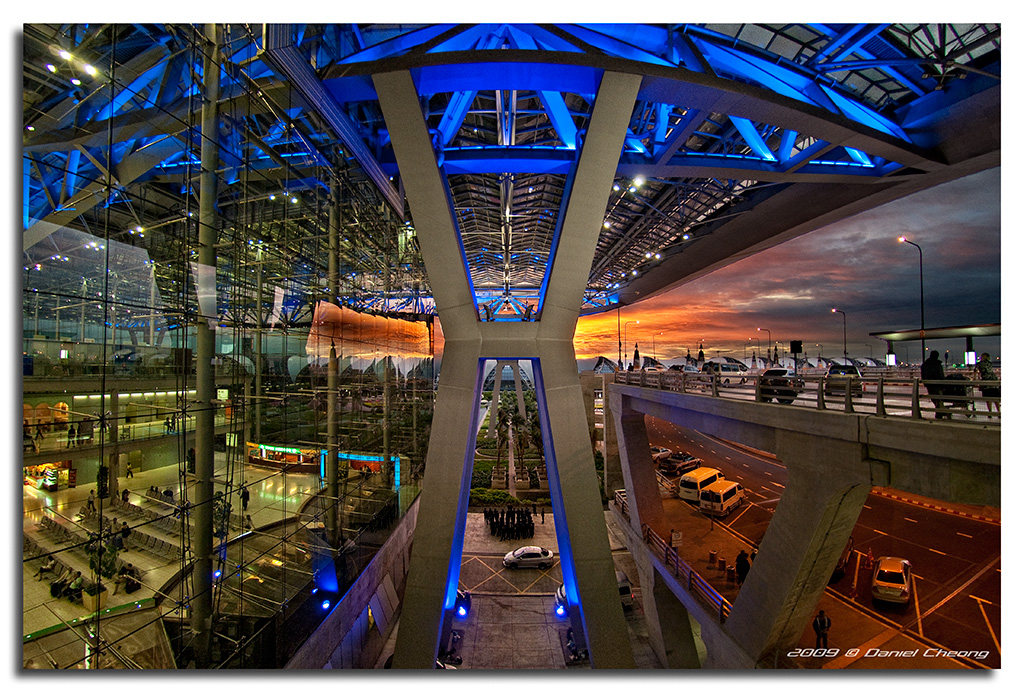
Suvarnabhumi International Airport, Bangkok, Thailand. Taken on the day of my flight back to Dubai (in the giant double decker Airbus A380 by the way! A very smooth journey in an awesome airplane).
6 exposures Digital Blending shot handheld, using my Nikkor Fisheye at f/2.8, and Auto ISO on the D300 with minimum shutter speed limited to 1/30s. Therefore the ISO for all the exposures varies from ISO 200 to 1600 (max. ISO also fixed by me), and the shutter speed never goes below 1/30s, therefore no need for a tripod in those conditions.
The manual blending with layer masks and paintbrushes was a bit tedious and it took me over 2 hours to process this shot.
Many thanks to my buddy Grant for telling me about this Auto ISO / Shutter Speed limit feature of the D300, which is really handy for handheld bracketed shots.
Thailand Set | Digital Blending Set | Architecture Set | Most Interesting shots
Bridge Path ~ Bahia Honda Rail Bridge
106 Year-Old Decaying Bridge to Nowhere
The Florida Keys U.S.A. ~ Dec. 5th, 2018
The Bahia Honda Rail Bridge is a disused bridge in the lower Florida Keys connecting Bahia Honda Key with Spanish Harbor Key. Originally part of the Overseas Railway, the State of Florida purchased it after the 1935 Labor Day Hurricane and converted it to provide automobile use as part of the Overseas Highway in 1938. After a replacement Bahia Honda Bridge was opened in 1972, two spans of the old bridge were removed to accommodate boat traffic and make the majority of the bridge inaccessible to pedestrian traffic; the rest remains standing.
It was originally built by Henry Flagler as part of the Overseas Railroad which was completed in 1912. Flagler funded the construction of the bridge, along with the rest of the railway himself. It was purchased by the state of Florida and converted for highway use in 1938 after the Labor Day Hurricane of 1935. Rather than completely rebuilding the bridge after the hurricane, the existing structure was repaired and the deck for the Overseas Highway was added on top, as the existing deck inside the truss was too narrow for vehicular traffic. The bridge served as the primary mode of transport to the islands of the lower Keys, and as a primary evacuation-route-out for quite a few years.
A new four-lane bridge was built in 1980, a few hundred yards north of the old bridge, replacing the old route of U.S. 1. Today, the former bridge provides a scenic overview of the area for tourists. Two of the truss spans have been removed in order to facilitate boat traffic, as the new bridge has an increased span height. The original bridge has fallen into a state of disrepair and signs have been posted on the bridge warning boat traffic to watch for falling debris, but all of the sections have remained standing (not counting the two that were removed). The easternmost section remains open to pedestrian traffic and is maintained by Bahia Honda State Park ~ Bahia Honda Rail Bridge ~ Spanish Harbor Key ~ Bahia Honda Key ~ Lower Keys
www.google.com/url?q=http://en.wikipedia.org/wiki/Bahia_H...
en.wikipedia.org/wiki/Florida_East_Coast_Railway#History
Just out of the button stage this amanita flavoconia stretches in the sun. Recently I found out that fruiting bodies of fungi don't grow so much as expand. The total # of cells inside a mushroom never increases; they just all get bigger. Weird. OM 90mm at f5.6 or 8.
Water increase because of the rain, and please choose the one by which a flow becomes clear.
A mountain went to the deep valley stream.
I expect, it's clear for water, and, the quantity of water is also rich.
A heart danced in wonderful location in !
The place where a flow of water is also intense in particular at the inside for me, search
I walked.
The flow full of uplifting feeling what I have in mind did finally upstream
NI could touch.
The creature who rises at all freely flows in the condition for water.
charmed me repeatedly.
The XF 90 challenged me here in a lower light situation. With relative naivety, I somehow decided shooting at 1/60th was possible under this bridge. Once we moved on I quickly looked through the shots and found most of them blurry. Natalie kindly agreed to return so I could increase the ISO and shoot at or around 1/180th. I'm glad she did.
Taken during a visit to the Cotswold Lakes.
CCC XIII
Medieval Manor
1520AD 7th June to 24th June, Balinghem (between Ardres in France and Guînes in the then-English Pale of Calais). King Henry VIII and King Francis I of France host a meeting to increase the bond of friendship between the two kings following the Anglo-French treaty of 1514AD The meeting became known as the Field of the cloth of gold due to the pavilions and tents erected.
One of the more spectacular parts of the meeting was a temporary palace/medieval Manor House made of timber and canvas brought by the English court to go with the pavilions and tents. Outside were fountains of wine.
Increased #construction activity has increased #lawsuit numbers in the #Bronx. t.co/fpJ9U6lWWj (via Twitter twitter.com/lipsigbronx/status/800093847606788096)
Justification of Red List category
This species is listed as Critically Endangered because its population has undergone a very rapid reduction, for reasons that are poorly understood but are likely to be at least partly due to hunting along the migration flyway; this decline is projected to continue and increase in the future. Fieldwork in Kazakhstan (and counts in Turkey and the Middle East) has shown the population to be substantially larger than previously feared, but recent demographic studies have found low adult survival, possibly largely driven by hunting pressure along the migration routes and wintering grounds.
By Jim Lawrence
BirdLife International, RSPB (BirdLife in the UK) and leading optics manufacturer Swarovski Optik have just launched a remarkable new interactive website The Amazing Journey which charts the migration of one of the world’s most threatened birds - Sociable Lapwing. The new website enables you to experience the birds' migration online and witness new discoveries as they happen. It also provides support to a large team of international scientists who are trying to prevent the species from becoming extinct. Following extensive research, nine Sociable Lapwings have been carefully fitted with tiny, state-of-the-art satellite transmitters, which will track their hazardous 5,000+ km journey from their breeding grounds in Kazakhstan to their non breeding areas in tropical Africa and other, as yet undiscovered, destinations. The Amazing Journey follows the adventures of Erzhan, Dinara, Svetlana and six other intrepid satellite-tagged lapwings as they fly south for the winter - dodging hunters with guns and falcons and the myriad other unknown threats that await them. Andreas Pittl – Head of the Nature Division at Swarovski said, “This is a hugely important and fascinating project which Swarovski Optik is proud to champion. Wildlife is threatened with extinction for many reasons so finding ways to help such a beautiful and inspiring creature as the Social Lapwing is an important conservation effort we are keen to support. We want to bring people and nature together so they can continue to enjoy brilliant, close-up views of birds like these for years to come.” Designed by online marketing experts Digital Spring, The Amazing Journey uses satellite data fed through Google map technology to keep pace with the birds. A mixture of clever, regularly updated maps and video and photo blog reports from the field will follow their progress. Relatively little is still known about the routes Sociable Lapwings take, so tracking them will provide vital information, enabling BirdLife scientists to monitor and protect the birds and unlock the mystery of their migration. Now, for the first time, those interested in birds, wildlife and conservation can sit alongside scientists, and learn about these extraordinary birds, their migration habits and their conservation. Dr. Paul Donald, the project’s Principal Conservation Scientist at RSPB said, “We are using the world’s smallest and latest satellite transmitter – weighing just 5 grams – to record this amazing journey. By engaging with people around the world and inviting them to see this fascinating migration happening live online we believe we can inspire them to play their part too.” As the Sociable Lapwings progress along a lengthy route through various countries they need to stop every now and again to ‘refuel’ along the way. As they do so they form big feeding flocks (which is how they get their name). Whenever they touch down, precise details of their location are picked up by satellites orbiting high overhead and sent to RSPB scientists. These locations are then passed on to conservation project partners in each of the countries the birds travel through. With detailed coordinates they can quickly locate the flocks of birds, wherever they’ve touched down and take action if they are threatened in any way. The Amazing Journey website will provide regular reports from these scientists in the field keeping us up to date with all the latest news on the birds’ progress. Jim Lawrence, Preventing Extinction Programme Manager at BirdLife International said, “Protecting migratory species on the brink of extinction like Sociable Lapwings can’t be done without the considerable support of BirdLife Species Champions like Swarovski and RSPB. The Amazing Journey website is a new window on our world where you can see BirdLife International Partners around the globe delivering co-ordinated international conservation solutions.” Main photo credit Maxim Koshkin - Conservation Project Leader ACBK.
Mural by Dicesarlove aka @dicesarlove for @bigwallsbigdreams project 2021 curated by @upartstudio, seen at 2401 NW 5th Avenue in the Wynwood Arts District of Miami Florida.
Virgil Abloh (September 30, 1980 – November 28, 2021) was an American fashion designer and entrepreneur. He was the artistic director of Louis Vuitton's menswear collection beginning in 2018, and was given increased creative responsibilities across the LVMH brand in early 2021. Abloh was also the chief executive officer of the Milan-based label Off-White, a fashion house he founded in 2013. A trained architect, Abloh, who also worked in Chicago street fashion, entered the world of international fashion with an internship at Fendi in 2009, alongside American rapper Kanye West. The two then began an artistic collaboration that would launch Abloh's career into founding Off-White. LVMH paid tribute to Abloh at their November 30 spin-out fashion show in Miami, with a theme of, "Virgil was here." -- Wikipedia
Drone photo by James aka @urbanmuralhunter on that other photo site.
Edit by Teee.
Everyone say Cheese!
Tag yourself!
Wow! That was a good year. To be completely honest, it never hits me how much Superhero minifigures I actually have until December 28th every year—it’s really the only time I dump out the bags, mix em’ together, and get everyone ready for an extremely long photo-shoot. My awe is no doubt related however to my recent acquisition of the newest DC wave; with so many characters I’ve only dreamed of owning; which only makes this year’s photo more special.
---
Year’s Past:
---
Here are some fun quick facts about this photo and my collection!
--Compared to last year’s grand total of 104 minifigures, this year my collection has grown to 161—an increase of 57 minifigures (more than 50%) over last year’s total. So far there has been an annual increase of over 50% in my Superhero collection—hopefully that doesn’t end anytime soon!
--There are 152 official minifigures shown here in addition to ten custom minifigures by five different customizers. And although this is a lot of figures, it's not actually all of the Superheroes I own—for some figures I have duplicates, and in other extreme cases such as the 2012 versions of Batman (Black Suit), Joker, and Spider-Man I have multiple duplicates; sometimes as much as five.
--Other increases can be seen in my Big-Figure department, where the total increased from one in 2013 to five this year. The amount of Black Mantas present also increased by a whopping one.
--The oldest minifigures shown here, those from the original Spider-Man line, date back to 2002 (Back when Superhero skin was yellow!); while the newest minifigures, those of the new Justice League themed Batman wave, are from December 2014. A difference of twelve years!
--When we divide up the grand total, we find that 103 minifigures belong to the DC Universe while only 58 belong to the Marvel Universe. This disproportionate number is indeed related to the Batman 1 line, which added many more figures to the DC line (The original Spider-Man line too adds figures to the Marvel side, but it does not nearly constitute the same affect). Custom minifigures are also disproportionate—only two of the ten customs present belong to the Marvel Universe.
--More than half of the minifigures shown here can be found in creations I have built—and that number is only going to increase as I start builds for 2015.
---
Yay that was fun! Well, not the photo-shoot; it’s such a pain to try and get everyone to look at the right moment…and fit in Deadpool’s selfie apparently. Ok everyone, back in the bags…no not you six…or you seven—you all have work to do…
Ross's Goose
Anser rossii
Conservation statusPopulation apparently still increasing, as with some other Arctic-nesting geese (Snow and White-fronted). Ross's Goose often hybridizes with Snow Goose, but evidently not enough to be genetically "swamped" by the Snows.
FamilyDucks and Geese
HabitatTundra (summer), marshes, grain fields, ponds. In summer on Arctic tundra, especially flat tundra with mix of grassy areas and low matted thickets of dwarf birch or willow. In migration and winter, shallow lakes, freshwater marshes, flooded stubble fields, other agricultural lands.
This pint-sized relative of the Snow Goose has been surrounded by mystery and surprise. Explorers recognized it as a different bird as early as 1770, but it was not described to science until 1861; its Arctic nesting grounds were not discovered until 1938. Once thought to be very rare, or even on brink of extinction, its population has greatly increased in recent decades. Not until the late 1970s was it discovered that Ross's, like Snow Goose, can occur in a “blue” morph. Blue Ross's Geese are still rarely detected.
Migration
Main population migrates from Northwest Territories to central California, traveling along a rather narrow route with traditional stopovers, especially in Alberta and Montana. In recent years, numbers wintering in New Mexico and east of Rockies have increased markedly. Migrate in flocks, often mixed with Snow Geese, sometimes with other geese. Strays appearing far out of range may have arrived by traveling with other species.
Feeding Behavior
Forages mainly by walking on land, or wading or swimming in shallow water. During migration and winter, feeds in flocks, usually with Snow Geese.
Eggs
4, sometimes 2-6, rarely 1-8. Dull white, becoming nest-stained. Female does all incubating, usually 21-23 days. Young: Leave the nest shortly after hatching, following parents to water. Both parents tend the young; male is most active in defense against predators. Young fledge in 40-45 days.
Young
Leave the nest shortly after hatching, following parents to water. Both parents tend the young; male is most active in defense against predators. Young fledge in 40-45 days.
Diet
almost entirely plant material. Diet for most of year is mainly green grasses and sedges. On arrival on breeding grounds, before new growth is available, do much grubbing for roots. In fall migration, feeds more on seeds and grains of wild grasses or cultivated crops.
Nesting
First breeding at age of 2 or 3 years. Courtship involves rapid head-dipping by both members of pair. Breeds in colonies, usually associated with colonies of Snow Goose. Nest site is often on island or shore of tundra lake, usually on edge of low thicket. The same site is often used for more than 1 season. Nest is a bulky bowl of twigs, leaves, grass, moss, lined with down. Female builds nest, beginning about the time the first egg is laid, continuing after incubation begins.
►►► Explore the world of HDR with me at farbspiel-photo.com - View. Learn. Connect.
______________________________________________________________________
About | HDR Cookbook | Before-and-After | Making-of | Pics to play with
______________________________________________________________________
(Hit 'f' to fave this image)
Watch the Before and After - Comparison to see where this photo comes from!
The story of this photo:
This is a 9-shot pseudo HDR panorama of the famous "James Bond" rock in the bay of Phang Nga, Thailand. You can find another (real) HDR shot of this rock here. The rock appeared in the 1974 James Bond movie "The Man With the Golden Gun" and has been a major tourist attraction every since. The shot was taken from a different position with a better view over the whole bay than the previous shot I uploaded. This place is awesome and mystical in a way.
It is the first time I have tried to do a proper HDR panorama and it was quite interesting to discover the corresponding workflow. Thank god, I have a fast 64bit PC with a 64bit operating system and lots of memory. During post processing, the document got more than 3 GB big at times. I have done panorama shots before with different gear, some of which was self-made. This was the first time I traveled with a monopod fitted with a simple but flexible and effective macro rail that I use as a panorama head. I have been searching and experimenting for some time to find the ideal solution to shoot panoramas quickly, reliably (avoiding problems in stitching) and at a reasonable price. And this is the perfect combination.
Take a look at my "HDR Cookbook"! It contains some more information on my techniques.
How it was shot:
> Taken with a monopod (using a Kirk macro rail as panorama head)
> 9 Exposures (stitched later)
> Camera: Nikon D90
> Lens: Nikon AF-S DX Nikkor 18-200mm 1:3,5-5,6G ED VR
> Details can be found here
How it was stitched and tonemapped:
> Developed three TIFs from each of the 9 RAW files using Adobe Camera Raw (+2, 0, -2 ev)
> Created 9 HDRs (32 bit) using Photomatix version 3.1
> Stitched the 9 HDRs using Photoshop and saved in OpenEXR format
> Tonemapped resulting panorama HDR using Photomatix version 3.1 (Detail Enhancer)
> Saved as 16bit TIF
> Take a look here for a more detailed description.
How it was post-processed:
> Post-processing was done in Photoshop
> Topaz Adjust on the foreground (everything except the sky) to enhance the details and the colors [details]
> Curves layer on the water to enhance the reflections and the contrast
> Photo filter layer with a gradient mask on the water to enhance the orange tones in the foreground
> Saturation layer on the water for overall color enhancement
> Saturation and Levels layers on he sky to enhance the blue tones and the contrast
> Saturation layer on the rocks to tone down the reds and increase the yellows
> Curves layer on the rocks to tune the contrast
> Halo reduction in the sky using a levels adjustment layer (gamma ~ 0.8) and delicate masking to blend this darker layer into those halo spots [details]
> Topaz Denoise [details]
> Sharpening on the foreground using the high-pass filter [details]
______________________________________________________________________
Learn these techniques at farbspiel-photo.com - View. Learn. Connect.
- Thanks for viewing!
A celestial tango with the Whirlpool Galaxy M51
(Increase the brightness of your screen to see it all!)
One of the most beautiful galaxy visible in the spring. It is actually 2 galaxies fighting it off or doing a celestial tango.
M51 was the first galaxy to be classified as a spiral galaxy and is about 23 million light-years from the Milky Way.
Although it was discovered in 1773 by Messier, it is not until 1929 that it was identified as a galaxy in it's own right by Hubble.
The very pronounced spiral structure of the Whirlpool Galaxy is believed to be the result of the close interaction between it and its companion galaxy NGC 5195. NGC 5195 is believed to have passed through the main disk of M51 about 500 to 600 million years ago. In the process, billions of stars have been catapulted out into space and are probably slowly getting back into the "new" galaxy being pulled back in by gravity. NGC 5195 (the small galaxy) will probably come back for another pass through in 100's of million of years. Fascinating, isn't it?
This spectacle was imaged from my balcony :-)
The sky cleared late in the evening and i rushed to install my equipment. Needless to say I went to bed late (or early) this morning.
Tech stuff: SCT 8inch, ZWO 1600MM and LRGB imaging. 2 minutes subs for as long as I could go without falling asleep at the wheel :-)
increased contrast, minor twist and superimposed over the image without the twist.
I am preparing to rework my website. I am prototyping it on Flickr. So far, I preliminary picked the abstract and some graphic photos. I will still prune this selection. You can see them here: www.flickr.com/photos/pavel_photophile2008/collections/72.... It is a long-term project that has already soaked up a fair bit of time. Eventually, I hope to have a shiny new website.
Your comments, real input will be greatly appreciated.
Best viewed Original size (1280 x 853 pixels).
During the 1960s increased capacity at the docks to the east of Hull was deemed being necessary and extensions to King George Dock were put in hand. The new facilities when completed in 1969 were named Queen Elizabeth Dock.
This mid-1960s view is at the east end of King George Dock and shows BR 350hp (later TOPS Class 08) 0-6-0DE D3323 then of Dairycoates (50B) depot with a trip working of loaded 13T "Pipe" open wagons heading for the site of the new dock extensions. The churned up land on the left, previously mudflats, probably afforded access to the site for plant machinery - c.1966.
In this 1947 aerial view www.britainfromabove.org.uk/en/image/EAW004508 four of the buildings in the photo and the weighbridge hut can be identified.
Please do not share or post elsewhere without permission of the copyright holder(s).
© 2022 - 53A Models of Hull Collection. Scanned from the original 35mm monochrome negative.
- - - - - -
Bond Equipe GT4S (1964-70) Engine *1296 cc S4 OHV of 63 bhp increased to 67 bhp Production 2505
Registration Number OOR 331 G (Hampshire)
BOND SET
www.flickr.com/photos/45676495@N05/sets/72157623759866604...
The GT4 Bonds first four wheeled car with fibre glass body with Triumph windscreen and doors, and Triumph Herald engine. Joined in 1964 by the GT4S a true four seater, with the original GT4 now retitled GT 2+2, The new Equipe was the work of the company's in-house design team and was to use the same basic Triumph components as the previous model, in order to allow production to commence as soon as possible. The main changes were to the body shell which was completely redesigned at the rear to include a conventional opening boot-lid and at the same time raise the headroom over the rear seats to just 3 inches less than that
over the front seats. The result retained the Equipe's distinctive fast-back styling, by incorporating a neat rear spoiler making the practical opening boot-lid less intrusive. The most obvious change was however the new bonnet whic now included twin head lights of the Triumph 2000. a neat fresh-air intake scoop and was designed to allow the possibility of accommodating the in-line 6-cylinder engine from Triumph's Vitesse at a later date.
The engine was upgraded in April 1967 shortly after the Triumph Herald to the new 1296cc unit. The car now being called GT4S 1300. At the same time disc brakes were enlarged and rear suspension revised
Diolch yn fawr am 73,075,223 o olygfeydd anhygoel, mwynhewch ac arhoswch yn ddiogel
Thank you 73,075,223 amazing views, enjoy and stay safe
Shot 06.05.2019 at Gawsworth Hall, Classic Car Show Ref 141-262
.
The lowering sky, increasing rain and wind finally got the better of me.
These were the last taken that morning, however, this stand of trees at Crummock water is not what I remember most from that morning, but the journey back over Honister Pass. I must have driven over it 30+ times, in all kinds of weather, yet I have never seen it looking more sinister or dramatic. Every rock and boulder was saturated, and streams of water were pouring down every crevice. The clouds were low and swirling, revealing every hidden contour, and giving the impression that the walls carried on upward, up and up, and the rain and mist was like curtain veils up the pass. I quite expected the mountain giants to be out throwing boulders around!
I could just see it as a really moody B&W. (...and sure to win at next years LPOTY! ;o))
The problem was, I was tired, cold and wet, the wind was blowing, the rain was heavy, the camera gear was all packed away, and all I wanted to do was get back to the warm caravan! Need I say more... great memory though.
Mono version below
A slight increase in the number of new infections, but sharp drop in intensive care patients was reported yesterday. 252 new infections, compared to 192 the day before confirmed that the novel corona virus hasn't gone yet but we’re hopeful that we’re moving in the right direction. Whilst the country has been less than impressed with how politicians are handling the corona crisis and the support for both the federal and the regional cabinets is scoring poorly, the government continues to disappoint. You’d think that they would become more sensible for doing the right thing but no… The Flemish Mobility Minister Lydia Peeters decided yesterday to halt the process to trace very polluting diesel cars despite the tools for doing so are ready at the technical check centers. The consequences of this absurd decision are huge: this group of polluting cars destroys the benefits of 746 million modern diesel cars with very low pollution levels due the latest technologies. Wwhy don’t they care about improving the air quality across the country for the generations to come? – Recreation Park Bergelen, Wevelgem, Belgium
Grade I listed historic buildings.
"Stratford-upon-Avon, commonly known as just Stratford, is a market town and civil parish in the Stratford-on-Avon District, in the county of Warwickshire, England, on the River Avon, 91 miles (146 km) north west of London, 22 miles (35 km) south east of Birmingham, and 8 miles (13 km) south west of Warwick. The estimated population in 2007 was 25,505, increasing to 27,445 at the 2011 Census.
Stratford was originally inhabited by Anglo-Saxons and remained a village before the lord of the manor, John of Coutances, set out plans to develop it into a town in 1196. In that same year, Stratford was granted a charter from King Richard I to hold a weekly market in the town, giving it its status as a market town. As a result, Stratford experienced an increase in trade and commerce as well as urban expansion.
The town is a popular tourist destination owing to its status as the birthplace and gravesite of playwright and poet William Shakespeare, and receives approximately 2.5 million visitors a year. The Royal Shakespeare Company resides in Stratford's Royal Shakespeare Theatre." - info from Wikipedia.
Summer 2019 I did a solo cycling tour across Europe through 12 countries over the course of 3 months. I began my adventure in Edinburgh, Scotland and finished in Florence, Italy cycling 8,816 km. During my trip I took 47,000 photos.
Now on Instagram.
You will increase your chances to get Monarch butterflies to visit your garden if you have their host plant... Monarchs will lay eggs only on Milkweed, so, Got Milkweed?
Copyright for this gallery photo belongs solely to Maria A. Gonzalez. Images may not be copied, downloaded, or used in any way without the expressed, written permission of the photographer.
increased contrast, lightened
I am preparing to rework my website. I am prototyping it on Flickr. So far, I preliminary picked the abstract and some graphic photos. I will still prune this selection. You can see them here: www.flickr.com/photos/pavel_photophile2008/collections/72.... It is a long-term project that has already soaked up a fair bit of time. Eventually, I hope to have a shiny new website.
Your comments, real input will be greatly appreciated.
With increased business in Guelph, OSR added a third crew on "Job Two" to serve the customers in the south end of the city (PDI liquids and PDI Polymers mostly). Job Two on duty at 14:30 would head up to Guelph around 16:00 and would quickly have to meet Job One on their way south back to Guelph Jct from the North End industrial area in Guelph. The meet change location daily and the timing was always different, so this was a treat to finally get it in good light.
182 on Job Two pauses his switching in southern yard to exchanges a wave with the southbound Job One with 1620 leading 505.
Mexico, 1960: At a UNICEF-assisted clinic, Concepcion, 3, wears braces on her polio-weakened legs. Three decades later, in 1994, the Americas became the first geographic region to eradicate polio. Today, the GAVI Alliance, which includes UN agencies, private foundations, governments and the vaccine industry, holds a pledging conference to increase donations for immunization programmes that will save an additional 4 million lives by 2015.
© UNICEF
To see more: www.unicef.org/photography
Also download the UNICEF Photography iPhone app here
►►► Explore the world of HDR with me at farbspiel-photo.com - View. Learn. Connect.
______________________________________________________________________
About | HDR Cookbook | Before-and-After | Making-of | Pics to play with
______________________________________________________________________
(Hit 'f' to fave this image)
The story of this photo:
This shot was taken in Sidi Bou Said, a place near Tunis where many artists (also western artists) were staying to seek inspiration. This town was famous for inspiring artists. All buildings in this town are white with blue windows and doors. This gives the place a unique look. Today it is a major tourist attraction that is probably not missing on any guided tour through Tunis.
Take a look at my "HDR Cookbook"! It contains some more information on my techniques.
How it was shot:
> Taken handheld
> Camera: Nikon D90
> Lens: Sigma 10-20mm F3,5 EX DC HSM
> Details can be found here
How it was tonemapped:
> Preparation: developed the raw files with ACR mainly in order to reduce the CA [details]
> HDR creation and tonemapping using Photomatix version 3.1 (Detail Enhancer)
> Saved as 16bit TIF
How it was post-processed:
> Post-processing was done in Photoshop
> Topaz Adjust on the entire image to get back the colors and the details [details]
> Topaz Denoise (on the sky and the foreground separately - more aggressively on the sky) [details]
> Saturation layer on the sky (increased master)
> Levels layer on the sky (increased brightness)
> Saturation layer on the clouds (desaturation)
> Saturation layer on the foreground (increased master)
> Levels layer on the foreground (increased contrast)
> Saturation layer on the white walls (decreased blues to remove a blue cast)
> Vignette effect using a masked fill layer [details]
> Sharpening on the foreground using the high-pass filter [details]
> Sharpening on the sky using the high-pass filter (less aggressive) [details]
> Perspective correction and cropping
______________________________________________________________________
Learn these techniques at farbspiel-photo.com - View. Learn. Connect.
- Thanks for viewing!
#1013, 139
75
Splendid and grand construction of Elvas Square situated in a great elevation to the north. A notable example of military architecture of the century. XVIII and considered by many historians as one of the most powerful bulwark fortresses in the world , the Forte da Graça or Lippe is still unique in its design and implementation . In fact this increase has always been very important . Still in the century. XV here stood the little chapel of Santa Maria da Graça whose rebuilding at the time was due to the great-grandmother of Vasco da Gama. By the time of the Restoration War, in 1658 the Spanish built a stronghold here in the moth Juan Zuñiga to attack the city of Elvas.
The building of the fortification would begin in 1763 by Wilhelm , Count of Schaumbourg -Lippe , commissioned by King Joseph to reorganize the Portuguese army. To direct the great works was chosen the Ettiene Engineer , which is soon after replaced by Colonel Guillaume Louis Antoine de Valleré . The gigantic works only end in 1792. In 1763 , for example, worked in that building 6000 men and 4000 beasts , depleting almost the resources of the city.
Consists of three bodies : the external works , the main body and the central stronghold is an example of military architecture of Vauban type. The central body is formed by four bastions with the middle of the south curtain the front door of a phenomenal beauty.
I took this shot looking upwards from inside the tower of a folly. The structure, pattern and colour of the stones make this interesting. A sign on the wall outside prohibits climbing the tower. The iron grill across the top adds emphasis and increases a sense of enclosure.
So here goes the Sunday church shot. This is the main sanctuary of the Fifth Avenue Presbyterian Church in New York. The last time I was here, the sanctuary was closed so had to return back with a shot of the chapel.
See it BIG.
. . . . . . . . . . . . . . . . . . . . . . . . . . . . . . . . . . . . . . . . . . . . . . . . . . . . . . . . . . . . . . . . . . . . . . . . . . . . . . . . . .
[Photo Specs]
- No HDR. Digital blending of 3 exposures (3 secs to 30 secs) at f/10, ISO 100 using Photoshop smartobjects
- Layer of curves for contrast
- Layer of saturation (reduced master and yellow, increased red)
- Channel mixer adjustment (green) to bring out the real colors of the green walls and the ceiling
- Layer of unsharp mask at the end
. . . . . . . . . . . . . . . . . . . . . . . . . . . . . . . . . . . . . . . . . . . . . . . . . . . . . . . . . . . . . . . . . . . . . . . . . . . . . . . . . .
Explore highest position # 24 on Feb 24, 2009.
Friends, thank you for your visit, comments, and faves.
Conkers. There's lots of ideas about why horse chestnuts got this name. Maybe it's from the game that originally involved smashing snail shells together. This game was first played in the 1820's. There are no known written rules but horse chestnuts replaced snail shells and became the standard nuts to use by adversaries. Perhaps conkers came from the shells 'conches' or the sound of the shells breaking when they smashed together.
When I was a lad there were lots of ideas about how to make conkers stronger such as pickling them or baking them. The number of games the conker won gave it a special epithet - a one-er or a two-er, a three-er and so on and the name came with bragging rights at each match. This name growing in stature as it increased and the conker became even more legendary as the boy (it was primarily a boy's game) boasted not only of its number but of the battles won against higher numbered conkers it had beaten.
Horse chestnuts used to be given to horses to treat certain illnesses although they are slightly poisonous and can harm small animals.
The victorians used to make flour out of them too.
The tree is not native to Britain having been imported in the 16c but it is now a quintessentially British symbol of autumn. Had I have seen this small cluster of chestnuts when I was a boy I would have spent time throwing sticks at it to get the tree to drop its bounty and perhaps give me a prized chestnut that would survive many games; maybe even become a seasoned winner that would still be in good shape the following year.
Those of you who played conkers will remember your sore knuckles caused by the inaccuracies of your opponents attempts to hit your conker. Let's face it, putting a chestnut on a piece of string and giving it to a boy to play with is just asking for trouble!
Volkswagen Karmann Ghia Type 14 Coupe (1955-74) Engine 1584cc HO4 OHV Production 445,000 (all Coupes incl. 1500S/1600 to 1974)
Registration Number XPX 793 F (West Sussex)
VOLKSWAGEN SET
www.flickr.com/photos/45676495@N05/sets/72157623738785355...
Three companies and numerous individuals came together in the history of the Karmann Ghia. In the early 1950s, Volkswagen was producing its Volkswagen Beetle, and as postwar standards of living increased, executives at Volkswagen were at least receptive to adding a halo model to its range, if not actively seeking an additional model. Luigi Segre was committed to expanding the international reputation of Carrozzeria Ghia. And Wilhelm Karmann had taken over his family coachbuilding firm Karmann and was eager to augment his contracts building Volkswagen's convertible models. Segre covertly purchased a Beetle in Paris and had it taken to Turin. Ghia customized its platform, designed the initial prototype and in five months constructed the model. Segre secretly presented the model to Wilhelm Karmann one year after there first meeting. When Wilhelm Karmann saw the coupe, he expressed an interest in building it, the project Willhelm Karmann would in turn present to Volkswagen.
The styling of the vehicle, however, integrated work by Segre as well as Mario Boano, Sergio Coggiola and Giovanni Savonuzzi — and at various times they each took credit for the design. After Volkswagen approved the design in November 1953, the Karmann Ghia debuted (at the 1955 Paris and Frankfurt Motorshows.
Ghia's pretty curvaceous 2+2 Coupe, based on the earlier
1200 model, but with the larger 40bhp 1285cc engine with all syncromesh gearbox and greased for life steering joints. From 1968 two speed wipers, 12 volt electrics, dual circuit brakes with optional front disc brakes and collapsible steering column. The design was to on virtually unchanged for 19 years. The Type 14 was marketed as a practical and stylish 2+2 rather than as a true sports car. As they shared engines, the Type 14's engine displacement grew concurrently with the Type 1 (Beetle), ultimately arriving at a displacement of 1584 cc
Diolch am 80,085,550 o olygfeydd anhygoel, mae pob un yn cael ei werthfawrogi'n fawr.
Thanks for 80,085,550 amazing views, every one is greatly appreciated.
Shot 05.01.2020.at Bicester Heritage Centre, Bicester, Oxon 144-741
.
Very hot, dry and unstable conditions in California and across the Pacific Northwest add to the challenges facing firefighters as they battle blazes around the region. Cal Fire is urging Californians to be extremely cautious, especially for the next few days, as the current conditions increase the dangers authorities face.
This image was taken by NASA-NOAA's Suomi NPP satellite's VIIRS instrument around 2145 UTC (5:45 p.m. EDT) on August 17, 2015. Northern California is seeing smoke from the River Complex, Route Complex, South Complex, Fork Complex and Mad River Complex fires combine over a large area of the Shasta-Trinity National Forest west of Redding, California, while the Rough Fire in Fresno County is spreading toward the Black Rock Reservoir, causing evacuations and road closures.
Fires across the Pacific Northwest aren't limited to California. Please see the Suomi NPP VIIRS composites in NOAA View to see the growth and extent of fires over the past weeks.
Credit: NASA/NOAA via NOAA Environmental Visualization Laboratory
The Hmong/Mong people (RPA: Hmoob/Moob, Nyiakeng Puachue: "", Pahawh Hmong: "" Hmong pronunciation: [ʰmɔ́ŋ]) are a Southeast Asian ethnic group living mainly in southern China, Vietnam, Laos, Thailand, and Myanmar. They have been members of the Unrepresented Nations and Peoples Organization (UNPO) since 2007. In China they are classified as a subgroup of the Miao people.
During the first and Second Indochina Wars, France and the United States' Central Intelligence Agency (CIA) recruited thousands of Hmong people in Laos to fight against forces from North and South Vietnam and the communist Pathet Lao insurgents. This CIA operation is known as the Secret War.
HISTORY OF HMONG
The Hmong traditions and legends indicate that they originated near the Yellow River region of China. According to linguist Martha Ratliff, there is linguistic evidence to suggest that they have occupied some of the same areas of southern China for over 8,000 years. Evidence from mitochondrial DNA in Hmong–Mien–speaking populations supports the southern origins of maternal lineages even further back in time, although it has been shown that Hmong-speaking populations had comparatively more contact with northern East Asians than had the Mien.
The ancient town of Zhuolu is considered to be the birthplace of the widely proclaimed legendary Hmong king, Chi You. Today, a statue of Chi You has been erected in the town. The author of the Guoyu, authored in the 4th to 5th century, considered Chi You’s Jiu Li tribe to be related to the ancient ancestors of the Hmong, the San-Miao people.
In 2011, White Hmong DNA was sampled and found to contain 7.84% D-M15 and 6%N(Tat) DNA. The researchers posited a genetic relationship between Hmong-Mien peoples and Mon-Khmer people groups dating to the Last Glacial Maximum approximately 15-18,000 years ago.
Conflict between the Hmong of southern China and newly arrived Han settlers increased during the 18th century under repressive economic and cultural reforms imposed by the Qing dynasty. This led to armed conflict and large-scale migrations well into the late 19th century, the period during which many Hmong people emigrated to Southeast Asia. The migration process had begun as early as the late-17th century, however, before the time of major social unrest, when small groups went in search of better agricultural opportunities.
The Hmong people were subjected to persecution and genocide by the Qing dynasty government. Kim Lacy Rogers wrote: "In the eighteenth and nineteenth centuries, while the Hmong lived in south-western China, their Manchu overlords had labeled them 'Miao' ('barbarian' or 'savage') and targeted them for genocide when they defied being humiliated, oppressed, and enslaved."
Since 1949, the Miao people (Chinese: 苗族; pinyin: miáo zú) has been an official term for one of the 55 official minority groups recognized by the government of the People's Republic of China. The Miao live mainly in southern China, in the provinces of Guizhou, Hunan, Yunnan, Sichuan, Guangxi, Hainan, Guangdong, and Hubei. According to the 2000 censuses, the number of 'Miao' in China was estimated to be about 9.6 million. The Miao nationality includes Hmong people as well as other culturally and linguistically related ethnic groups who do not call themselves Hmong. These include the Hmu, Kho (Qho) Xiong, and A Hmao. The White Miao (Bai Miao) and Green Miao (Qing Miao) are Hmong groups.
HMONG CLANS OF HAN ORIGN
A number of Miao lineage clans are also believed to have been founded by Chinese men who had married Miao women. These distinct Chinese-descended clans practice Chinese burial customs instead of Hmong style burials. In Sichuan, they were known as "Chinese Hmong" ("Hmong Sua"). The Hmong were instructed in military tactics by fugitive Chinese rebels.
Chinese men who had married into Hmong clans have established several Hmong clans. Chinese "surname groups" are comparable to the Hmong clans which are patrilineal, and practice exogamy. Hmong women married Han Chinese men who pacified the Ah rebels who were fighting against the Ming dynasty, and founded the Wang clan among the Hmong in Gongxian county, of Sichuan's Yibin district. Hmong women who married Chinese men founded a Xem clan in a Hmong village among Northern Thailand's Hmong. Lauj clan in Northern Thailand is another example of a clan created through Han and Hmong intermarriage. A Han Chinese with the family name of Deng found another Hmong clan there as well.
Jiangxi Han Chinese have held a claim as the forefathers of the southeast Guizhou Miao. Children were born to the many Miao women who had married Han Chinese soldiers in Taijiang before the second half of the 19th century. The Hmong Tian clan in Sizhou began in the seventh century as a migrant Han Chinese clan.
Non-Han women such as the Miao became wives of Han soldiers. These soldiers fought against the Miao rebellions during the Qing and Ming dynasties and at that time Han women were not available. The origin of the Tunbao people can be traced to the Ming dynasty, when the Hongwu Emperor sent 300,000 Han Chinese male soldiers in 1381 to conquer Yunnan and the men married Yao and Miao women.
The presence of women presiding over weddings was a feature noted in "Southeast Asian" marriages, such as in 1667 when a Miao woman in Yunnan married a Chinese official. In Yunnan, a Miao chief's daughter married a scholar in the 1600s who wrote that she could read, write, and listen in Chinese and read Chinese classics.
The Sichuan Hmong village of Wangwu was visited by Nicholas Tapp who wrote that the "clan ancestral origin legend" of the Wang Hmong clan, had said that there were several intermarriages with Han Chinese and possibly one of these was their ancestor Wang Wu; there were two types of Hmong, "cooked", who sided with Chinese, and "raw", who rebelled against the Chinese. The Chinese were supported by the Wang Hmong clan. A Hmong woman was married by the non-Hmong Wang Wu according to The Story of the Ha Kings in Wangwu village.
CULTURE
Hmong people have their own terms for their subcultural divisions. Hmong Der (Hmoob Dawb), and Hmong Leng (Hmoob Leeg) are the terms for two of the largest groups in the United States and Southeast Asia. These subgroups are also known as the White Hmong, and Blue or Green Hmong, respectively. These names originate from the color and designs of women's dresses in each respective group, with the White Hmong distinguished by the white dresses women wear on special occasions, and the Blue/Green Hmong by the blue batiked dresses that the women wear. The name and pronunciation "Hmong" is exclusively used by the White Hmong to refer to themselves, and many dictionaries use only the White Hmong dialect.
In the Romanized Popular Alphabet, developed in the 1950s in Laos, these terms are written Hmoob Dawb (White Hmong) and Hmoob Leeg (Green Hmong). The final consonants indicate with which of the eight lexical tones the word is pronounced.
White Hmong and Green Hmong speak mutually intelligible dialects of the Hmong language, with some differences in pronunciation and vocabulary. One of the most characteristic differences is the use of the voiceless /m̥/ in White Hmong, indicated by a preceding "H" in Romanized Popular Alphabet. Voiceless nasals are not found in the Green Hmong dialect. Hmong groups are often named after the dominant colors or patterns of their traditional clothing, style of head-dress, or the provinces from which they come.
VIETNAM AND LAOS
The Hmong groups in Vietnam and Laos, from the 18th century to the present day, are known as Black Hmong (Hmoob Dub), Striped Hmong (Hmoob Txaij), White Hmong (Hmoob Dawb), Hmong Leng (Hmoob Leeg) and Green Hmong (Hmoob Ntsuab). In other places in Asia, groups are also known as Black Hmong (Hmoob Dub or Hmong Dou), Striped Hmong (Hmoob Txaij or Hmoob Quas Npab), Hmong Shi, Hmong Pe, Hmong Pua, and Hmong Xau, Hmong Xanh (Green Hmong), Hmong Do (Red Hmong), Na Mieo and various other subgroups. These include the Flower Hmong or the Variegated Hmong (Hmong Lenh or Hmong Hoa), so named because of their bright, colorful embroidery work (called pa ndau or paj ntaub, literally "flower cloth").
NOMENCLATURE
CHINA
Usage of the term "Miao" (苗) in Chinese documents dates back to the Shi Ji (1st century BC) and the Zhan Guo Ce (late Western Han Dynasty). During this time, it was generally applied to people of the southern regions thought to be descendants of the San Miao kingdom (dated to around the 3rd millennium BC.) The term does not appear again until the Ming dynasty (1368–1644), by which time it had taken on the connotation of "barbarian." Being a variation of Nanman, it was used to refer to one kind of indigenous people in the southern China who had not been assimilated into Han culture. During this time, references to Unfamiliar (生 Sheng) and Familiar (熟 Shu) Miao appear, referring to level of assimilation and political cooperation of the two groups. Not until the Qing dynasty (1644–1911) do more finely grained distinctions appear in writing. Even then, discerning which ethnic groups are included in various classifications can be problematic.
This inconsistent usage of "Miao" makes it difficult to say for sure if Hmong and Mong people are always included in these historical writings. Christian Culas and Jean Michaud note: "In all these early accounts, then, until roughly the middle of the 19th century, there is perpetual confusion about the exact identity of the population groups designated by the term Miao. We should, therefore, be cautious with respect to the historical value of any early associations."
Linguistic evidence, however, places Hmong and Mong people in the same regions of southern China that they inhabit today for at least the past 2,000 years. By the mid-18th century, classifications become specific enough that it is easier to identify references to Hmong and Mong people.
The term 'Miao' is used today by the Chinese government to denote a group of linguistically and culturally related people (including the Hmong, Hmu, Kho Xiong, and A Hmao). The Hmong and Miao of China today believe they are one people with cultural and linguistic affiliations that transcend oceans and national boundaries. The educated elites of the two groups maintain close transnational contacts with one another.
SOUTHEAST ASIA
In Southeast Asia, Hmong people are referred to by other names, including: Vietnamese: Mèo, Mông or H'Mông; Lao: ແມ້ວ (Maew) or ມົ້ງ (Mong); Thai: แม้ว (Maew) or ม้ง (Mong); Burmese: မုံလူမျိုး (mun lu-myo). The xenonym, "Mèo", and variants thereof, are considered highly derogatory by some Hmong people in the USA.
A recent DNA research in Thailand found that Hmong paternal lineage is quite different from those lu Mien and other Southeast Asian tribes. The Hmong-Mien (HM) and Sino-Tibetan (ST) speaking groups are known as hill tribes in Thailand; they were the subject of the first studies to show an impact of patrilocality vs. matrilocality on patterns of mitochondrial (mt) DNA vs. male-specific portion of the Y chromosome (MSY) variation. However, HM and ST groups have not been studied in as much detail as other Thai groups; here we report and analyze 234 partial MSY sequences (∼2.3 mB) and 416 complete mtDNA sequences from 14 populations that, when combined with our previous published data, provides the largest dataset yet for the hill tribes. We find a striking difference between Hmong and IuMien (Mien-speaking) groups: the Hmong are genetically different from both the IuMien and all other Thai groups, whereas the IuMien are genetically more similar to other linguistic groups than to the Hmong. In general, we find less of an impact of patrilocality vs. matrilocality on patterns of mtDNA vs. MSY variation than previous studies. However, there is a dramatic difference in the frequency of MSY and mtDNA lineages of Northeast Asian (NEA) origin vs. Southeast Asian (SEA) origin in HM vs. ST groups: HM groups have high frequencies of NEA MSY lineages but lower frequencies of NEA mtDNA lineages, while ST groups show the opposite. A potential explanation is that the ancestors of Thai HM groups were patrilocal, while the ancestors of Thai ST groups were matrilocal. Overall, these results attest to the impact of cultural practices on patterns of mtDNA vs. MSY variation.
HMONG/MONG CONTROVERSY
When Western authors came in contact with Hmong people, beginning in the 18th century, they referred to them in writing by ethnonyms assigned by the Chinese (i.e., Miao, or variants). This practice continued into the 20th century. Even ethnographers studying the Hmong people in Southeast Asia often referred to them as Meo, a corruption of Miao applied by Thai and Lao people to the Hmong. Although "Meo" was an official term, it was often used as an insult against the Hmong people, and it is considered to be derogatory.
The issue came to a head during the passage of California State Assembly Bill (AB) 78, in the 2003–2004 season. Introduced by Doua Vu and Assembly Member Sarah Reyes, District 31 (Fresno), the bill encouraged changes in secondary education curriculum to include information about the Secret War and the role of Hmong people in the war. Furthermore, the bill called for the use of oral histories and first-hand accounts from Hmong people who had participated in the war and who were caught up in the aftermath. Originally, the language of the bill mentioned only "Hmong" people, intending to include the entire community. Several Mong Leng activists, led by Dr. Paoze Thao (Professor of Linguistics and Education at California State University, Monterey Bay), drew attention to the problems associated with omitting "Mong" from the language of the bill. They noted that despite nearly equal numbers of Hmong Der and Mong Leng in the United States, resources are disproportionately directed toward the Hmong Der community. This includes not only scholarly research but also the translation of materials, potentially including the curriculum proposed by the bill. Despite these arguments, "Mong" was not added to the bill. In the version that passed the assembly, "Hmong" was replaced by "Southeast Asians", a more broadly inclusive term.
Dr. Paoze Thao and some others feel strongly that "Hmong" can refer to only Hmong Der people and does not include "Mong" Leng people. He feels that the usage of "Hmong" about both groups perpetuates the marginalization of Mong Leng language and culture. Thus, he advocates the usage of both "Hmong" and "Mong" when referring to the entire ethnic group. Other scholars, including anthropologist Dr. Gary Yia Lee (a Hmong Der person), suggest that "Hmong" has been used for the past 30 years to refer to the entire community and that the inclusion of Mong Leng people is understood. Some argue that such distinctions create unnecessary divisions within the global community and will only confuse non-Hmong and Mong people trying to learn more about Hmong and Mong history and culture.
As a compromise alternative, multiple iterations of "Hmong" are proposed. A Hmong theologian, Rev. Dr. Paul Joseph T. Khamdy Yang has proposed the term “HMong” to encompass both the Hmong and Mong community by capitalizing the H and the M. The ethnologist Jacques Lemoine has also begun to use the term (H)mong when referring to the entirety of the Hmong and Mong community.
HMONG, MONG AND MIAO
Some non-Chinese Hmong advocate that the term Hmong be used not only for designating their dialect group but also for the other Miao groups living in China. They generally claim that the word "Miao" or "Meo" is a derogatory term, with connotations of barbarism, that probably should not be used at all. The term was later adopted by Tai-speaking groups in Southeast Asia where it took on especially insulting associations for Hmong people despite its official status.
In modern China, the term "Miao" does not carry these negative associations and people of the various sub-groups that constitute this officially recognized nationality freely identify themselves as Miao or Chinese, typically reserving more specific ethnonyms for intra-ethnic communication. During the struggle for political recognition after 1949, it was members of these ethnic minorities who campaigned for identification under the umbrella term "Miao"—taking advantage of its familiarity and associations of historical political oppression.
Contemporary transnational interactions between Hmong in the West and Miao groups in China, following the 1975 Hmong diaspora, have led to the development of a global Hmong identity that includes linguistically and culturally related minorities in China that previously had no ethnic affiliation. Scholarly and commercial exchanges, increasingly communicated via the Internet, have also resulted in an exchange of terminology, including Hmu and A Hmao people identifying as Hmong and, to a lesser extent, Hmong people accepting the designation "Miao," within the context of China. Such realignments of identity, while largely the concern of economically elite community leaders reflects a trend towards the interchangeability of the terms "Hmong" and "Miao.
DIASPORA
Roughly 95% of the Hmong live in Asia. Linguistic data show that the Hmong of the Peninsula stem from the Miao of southern China as one among a set of ethnic groups belonging to the Hmong–Mien language family. Linguistically and culturally speaking, the Hmong and the other sub-groups of the Miao have little in common.
Vietnam, where their presence is attested from the late 18th century onwards and characterized with both assimilation, cooperation and hostility, is likely to be the first Indochinese country into which the Hmong migrated. During the colonization of 'Tonkin' (north Vietnam) between 1883 and 1954, a number of Hmong decided to join the Vietnamese Nationalists and Communists, while many Christianized Hmong sided with the French. After the Viet Minh victory, numerous pro-French Hmong had to fall back to Laos and South Vietnam.
At the 2019 national census, there were 1,393,547 Hmong living in Vietnam, the vast majority of them in the north of the country. The traditional trade in coffin wood with China and the cultivation of the Opium Poppy – both prohibited only in 1993 in Vietnam – long guaranteed a regular cash income. Today, converting to cash cropping is the main economic activity. As in China and Laos, there is a certain degree of participation of Hmong in the local and regional administration. In the late 1990s, several thousands of Hmong started moving to the Central Highlands and some crossed the border into Cambodia, constituting the first attested presence of Hmong settlers in that country.
In 2015, the Hmong in Laos numbered 595,028. Hmong settlement there is nearly as ancient as in Vietnam. After decades of distant relations with the Lao kingdoms, closer relations between the French military and some Hmong on the Xieng Khouang plateau were set up after World War II. There, a particular rivalry between members of the Lo and Ly clans developed into open enmity, also affecting those connected with them by kinship. Clan leaders took opposite sides and as a consequence, several thousand Hmong participated in the fighting against the Pathet Lao Communists, while perhaps as many were enrolled in the People's Liberation Army. As in Vietnam, numerous Hmong in Laos also genuinely tried to avoid getting involved in the conflict in spite of the extremely difficult material conditions under which they lived during wartime.
After the 1975 Communist victory, thousands of Hmong from Laos had to seek refuge abroad (see Laos below). Approximately 30 percent of the Hmong left, although the only concrete figure we have is that of 116,000 Hmong from Laos and Vietnam together seeking refuge in Thailand up to 1990.
In 2002 the Hmong in Thailand numbered 151,080. The presence of Hmong settlements there is documented from the end of the 19th century. Initially, the Siamese paid little attention to them. But in the early 1950s, the state suddenly took a number of initiatives aimed at establishing links. Decolonization and nationalism were gaining momentum in the Peninsula and wars of independence were raging. Armed opposition to the state in northern Thailand, triggered by outside influence, started in 1967 while here again, much Hmong refused to take sides in the conflict. Communist guerrilla warfare stopped by 1982 as a result of an international concurrence of events that rendered it pointless. Priority is since given by the Thai state to sedentarizing the mountain population, introducing commercially viable agricultural techniques and national education, with the aim of integrating these non-Tai animists within the national identity.
Myanmar most likely includes a modest number of Hmong (perhaps around 2,500) but no reliable census has been conducted there recently.
As result of refugee movements in the wake of the Indochina Wars (1946–1975), in particular, in Laos, the largest Hmong community to settle outside Asia went to the United States where approximately 100,000 individuals had already arrived by 1990. By the same date, 10,000 Hmong had migrated to France, including 1,400 in French Guyana. Canada admitted 900 individuals, while another 360 went to Australia, 260 to China, and 250 to Argentina. Over the following years and until the definitive closure of the last refugee camps in Thailand in 1998, additional numbers of Hmong have left Asia, but the definitive figures are still to be produced.
In the rest of the world, where about 5% of the world Hmong population now lives, the United States is home to the largest Hmong population. The 2008 Census counted 171,316 people solely of Hmong ancestry, and 221,948 persons of at least partial Hmong ancestry. Other countries with significant populations include:
France: 15,000
Australia: 2,000
French Guiana: 1,500
Canada: 835
Argentina: 600
The Hmong population within the United States is centered in the Upper Midwest (Wisconsin, Minnesota) and California.
HMONG IN VIETNAM
Hmongs in Vietnam today are perceived very differently between various political organizations and changed throughout times. The Hmongs of Vietnam are a small minority and because of this, their loyalty toward the Vietnamese state has also been under question. Nonetheless, most Hmongs in Vietnam are fiercely loyal to the Vietnamese state, regardless of the current ideologies of the government with only those minorities supportive of Hmong resistance in Laos and Cambodia. These are mostly Christian Hmongs who have fallen under target and poverty strike by alienation of both three Indochinese governments, since there has been no Hmong armed separatism in the country. The Hmongs in Vietnam also receive cultural and political promotion from the government alike. This unique feature distanced Vietnamese Hmongs from Laotian Hmongs, as their Laotian cousins are strongly anti-Vietnamese.
LAOS
U.S. AND LAOTIAN CIVIL WAR
In the early 1960s, partially as a result of the North Vietnamese invasion of Laos, the U.S. Central Intelligence Agency's (CIA) Special Activities Division began to recruit, train and lead the indigenous Hmong people in Laos to fight against North Vietnamese Army divisions invading Laos during the Vietnam War. This "Secret Army" was organized into various mobile regiments and divisions, including various Special Guerrilla Units, all of whom were led by General Vang Pao. An estimated sixty-percent (60%) of Hmong men in Laos joined up.
While Hmong soldiers were known to assist the North Vietnamese in many situations, Hmong soldiers were also recognized for serving in combat against the NVA and the Pathet Lao, helping block Hanoi's Ho Chi Minh trail inside Laos and rescuing downed American pilots. Though their role was generally kept secret in the early stages of the conflict, they made great sacrifices to help the U.S.
Thousands of economic and political refugees have resettled in Western countries in two separate waves. The first wave resettled in the late 1970s, mostly in the United States, after the North Vietnamese and Pathet Lao takeovers of the pro-US governments in South Vietnam and Laos respectively. The Lao Veterans of America, and Lao Veterans of America Institute, helped to assist in the resettlement of many Laotian and Hmong refugees and asylum seekers in the United States, especially former Hmong veterans and their family members who served in the "U.S. Secret Army" in Laos during the Vietnam War.
HMONG LAO RESISTANCE
For many years, the Neo Hom resistance and political movement played a key role in resistance to the Vietnam People's Army in Laos following the U.S. withdrawal in 1975. Vang Pao played a significant role in this movement. Additionally, a spiritual leader Zong Zoua Her, as well as other Hmong leaders, including Pa Kao Her or Pa Khao Her, rallied some of their followers in an additional factionalized guerrilla resistance movement called ChaoFa (RPA: Cob Fab, Pahawh Hmong: ChaoFaPahawh.png). These events led to the yellow rain controversy when the United States accused the Soviet Union of supplying and using chemical weapons in this conflict.
Small groups of Hmong people, many of the second or third generation descendants of former CIA soldiers, remain internally displaced in remote parts of Laos, in fear of government reprisals. Faced with continuing military operations against them by the government and a scarcity of food, some groups have begun coming out of hiding, while others have sought asylum in Thailand and other countries. Hmongs in Laos, in particularly, develop a stronger and deeper anti-Vietnamese sentiment than its Vietnamese Hmong cousins, due to historic persecution perpetrated by the Vietnamese against them.
CONTROVERSY OVER REPATRIATION
In June 1991, after talks with the UNHCR and the Thai government, Laos agreed to the repatriation of over 60,000 Lao refugees living in Thailand, including tens of thousands of Hmong people. Very few of the Lao refugees, however, were willing to return voluntarily. Pressure to resettle the refugees grew as the Thai government worked to close its remaining refugee camps. While some Hmong people returned to Laos voluntarily, with development assistance from UNHCR, coercive measures and forced repatriation was used to send thousands of Hmong back to the communist regime they had fled. Of those Hmong who did return to Laos, some quickly escaped back to Thailand, describing discrimination and brutal treatment at the hands of Lao authorities.
In the 1980s, 1990s and early 2000s, The Center for Public Policy Analysis, a non-governmental public policy research organization, and its Executive Director, Philip Smith, played a key role in raising awareness in the U.S. Congress and policy making circles in Washington, D.C. about the plight of the Hmong and Laotian refugees in Thailand and Laos. The CPPA, backed by a bipartisan coalition of Members of the U.S. Congress as well as human rights organizations, conducted numerous research missions to the Hmong and Laotian refugee camps along the Mekong River in Thailand, as well as the Buddhist temple of Wat Tham Krabok.
Amnesty International, the Lao Veterans of America, Inc., the United League for Democracy in Laos, Inc., Lao Human Rights Council, Inc. (led by Dr. Pobzeb Vang Vang Pobzeb, and later Vaughn Vang) and other non-governmental organizations (NGOs) and human rights organizations joined the opposition to forced repatriation.
Although some accusations of forced repatriation were denied, thousands of Hmong people refused to return to Laos. In 1996, as the deadline for the closure of Thai refugee camps approached, and under mounting political pressure, the U.S. agreed to resettle Hmong refugees who passed a new screening process. Around 5,000 Hmong people who were not resettled at the time of the camp closures sought asylum at Wat Tham Krabok, a Buddhist monastery in central Thailand where more than 10,000 Hmong refugees were already living. The Thai government attempted to repatriate these refugees, but the Wat Tham Krabok Hmong refused to leave and the Lao government refused to accept them, claiming they were involved in the illegal drug trade and were of non-Lao origin.
In 2003, following threats of forcible removal by the Thai government, the U.S., in a significant victory for the Hmong, agreed to accept 15,000 of the refugees. Several thousand Hmong people, fearing forced repatriation to Laos if they were not accepted for resettlement in the U.S., fled the camp to live elsewhere within Thailand where a sizable Hmong population has been present since the 19th century.
In 2004 and 2005, thousands of Hmong fled from the jungles of Laos to a temporary refugee camp in the Thai province of Phetchabun.
The European Union, UNHCHR, and international groups have since spoken out about the forced repatriation.
ALLEGED PLOT TO OVERTHROW THE GOVERMENT OF LAOS
On 4 June 2007, as part of an investigation labeled "Operation Tarnished Eagle," warrants were issued by U.S. federal courts ordering the arrest of Vang Pao and nine others for plotting to overthrow the government of Laos in violation of the federal Neutrality Acts and for multiple weapons charges. The federal charges allege that members of the group inspected weapons, including AK-47s, smoke grenades, and Stinger missiles, with the intent of purchasing them and smuggling them into Thailand in June 2007 where they were intended to be used by Hmong resistance forces in Laos. The one non-Hmong person of the nine arrested, Harrison Jack, a 1968 West Point graduate and retired Army infantry officer, allegedly attempted to recruit Special Operations veterans to act as mercenaries.
In an effort to obtain the weapons, Jack allegedly met unknowingly with undercover U.S. federal agents posing as weapons dealers, which prompted the issuance of the warrants as part of a long-running investigation into the activities of the U.S.-based Hmong leadership and its supporters.
On 15 June, the defendants were indicted by a grand jury and a warrant was also issued for the arrest of an 11th man, allegedly involved in the plot. Simultaneous raids of the defendants' homes and work locations, involving over 200 federal, state and local law enforcement officials, were conducted in approximately 15 cities in Central and Southern California in the US.
Multiple protest rallies in support of the suspects, designed to raise awareness of the treatment of Hmong peoples in the jungles of Laos, took place in California, Minnesota, Wisconsin, Alaska, and several of Vang Pao's high-level supporters in the U.S. criticized the California court that issued the arrest warrants, arguing that Vang is a historically important American ally and a valued leader of U.S. and foreign-based Hmong. However, calls for then Californian Republican Governor Arnold Schwarzenegger and then President George W. Bush to pardon the defendants were not answered, presumably pending a conclusion of the large and then still-ongoing federal investigation.
On 18 September 2009, the US federal government dropped all charges against Vang Pao, announcing in a release that the federal government was permitted to consider "the probable sentence or other consequences if the person is convicted." On 10 January 2011, after Vang Pao's death, the federal government dropped all charges against the remaining defendants saying, "Based on the totality of the circumstances in the case, the government believes, as a discretionary matter, that continued prosecution of defendants is no longer warranted," according to court documents.
THAILAND
The Hmong presence in Thailand dates back, according to most authors, to the turn of the 20th century when families migrated from China through Laos and Burma. A relatively small population, they still settled dozens of villages and hamlets throughout the northern provinces. The Hmong were then registered by the state as the Meo hill tribe. Then, more Hmong migrated from Laos to Thailand following the victory of the Pathet Lao in 1975. While some ended up in refugee camps, others settled in mountainous areas among more ancient Hill Tribes.
AMERICAS
Many Hmong refugees resettled in the United States after the Vietnam War. Beginning in December 1975, the first Hmong refugees arrived in the U.S., mainly from refugee camps in Thailand; however, only 3,466 were granted asylum at that time under the Indochina Migration and Refugee Assistance Act of 1975. In May 1976, another 11,000 were allowed to enter the United States, and by 1978 some 30,000 Hmong people had immigrated. This first wave was made up predominantly of men directly associated with General Vang Pao's secret army. It was not until the passage of the Refugee Act of 1980 that families were able to enter the U.S., becoming the second wave of Hmong immigrants. Hmong families scattered across all 50 states but most found their way to each other, building large communities in California, Minnesota and Wisconsin. As of the 2010 census, 260,073 Hmong people reside in the United States the majority of whom live in California (91,224), Minnesota (66,181), and Wisconsin (49,240), an increase from 186,310 in 2000. Of them, 247,595 or 95.2% are Hmong alone, and the remaining 12,478 are mixed Hmong with some other ethnicity or race. The vast majority of part-Hmong are under 10 years old.
The Hmong people, who are a distinct ethnic group with ancient roots and ancestry in China, began settling in Minnesota in 1975. The Hmong came to Minnesota as refugees from the destructive wars that had ravaged and taken place in their homelands in Laos. Today, there are 150,000 Hmong in the U.S. states of Minnesota, Wisconsin, and California. More than 66,000 Hmong reside in Minnesota with the majority living in the St. Paul area. The Twin Cities metro is home to the largest concentration of Hmong in America. For decades, the Hmong have not only made a profound impact on their adopted home in Minnesota, but the Hmong culture has collaborated with the community to document this remarkable story by collecting images, artifacts, oral histories, sharing stories, and by publishing articles and books on the Hmong experience.
In terms of cities and towns, the largest Hmong-American community is in St. Paul (29,662), followed by Fresno (24,328), Sacramento (16,676), Milwaukee (10,245), and Minneapolis (7,512).
There are smaller Hmong communities scattered across the United States, including those in Minnesota (Rochester, Mankato, Duluth) Michigan (Detroit and Warren); Anchorage, Alaska; Denver, Colorado; Portland, Oregon; Washington; North Carolina (Charlotte, Morganton); South Carolina (Spartanburg); Georgia (Auburn, Duluth, Monroe, Atlanta, and Winder); Florida (Tampa Bay); Wisconsin (Madison, Eau Claire, Appleton, Green Bay, Milwaukee, Oshkosh, La Crosse, Sheboygan, Manitowoc, and Wausau); Aurora, Illinois; Kansas City, Kansas; Tulsa, Oklahoma; Missoula, Montana; Des Moines, Iowa; Springfield, Missouri; Arkansas, Fitchburg, Massachusetts, and Providence, Rhode Island.
Canada's small Hmong population is mostly concentrated within the province of Ontario. Kitchener, Ontario has 515 residents of Hmong descent, and has a Hmong church.
There is also a small community of several thousand Hmong who migrated to French Guiana in the late 1970s and early 1980s, that can be mainly found in the Hmong villages of Javouhey (1200 individuals) and Cacao (950 individuals).
RELIGIOUS PERSECUTION
Some Laos- and Vietnam-based Hmong Animists and Christians, including Protestant and Catholic believers, have been subjected to military attacks, police arrest, imprisonment, forced disappearances, extrajudicial killings, and torture on anti-religious grounds.
The deportation of Zoua Yang and her 27 children from Thailand in December 19, 2005 after the group was arrested attending a Christian church in Ban Kho Noi, Phetchabun Province, Thailand, where upon arrival back in Laos, Ms. Yang and her children were detained, after which the whereabouts of much of the family are still unknown.
For example, in 2013, a Hmong Christian pastor, Vam Ngaij Vaj (Va Ngai Vang), was beaten to death by police and security forces. In February 2014, in Hanoi, Vietnamese government officials refused to allow medical treatment for a Hmong Christian leader, Duong Van Minh, who was suffering from a serious kidney illness. In 2011, Vietnam People's Army troops were used to crush a peaceful demonstration by Hmong Catholic, Protestant and Evangelical Christian believers who gathered in Dien Bien Province and the Dien Bien Phu area of northwestern Vietnam, according to Philip Smith of the Center for Public Policy Analysis, independent journalists and others.
The U.S. Commission on International Religious Freedom has documented official and ongoing religious persecution, religious freedom violations against the Laotian and Hmong people in both Laos and Vietnam by the governments. In April 2011, the Center for Public Policy Analysis also researched and documented cases of Hmong Christians being attacked and summarily executed, including four Lao Hmong Christians.
WIKIPEDIA
Under rapidly increasing clouds, 365502 and 365520 accelerate away from Biggleswade with 1P05 0637 Peterborough to London Kings Cross.
Entering service 25 years ago, the remaining Class 365s are scheduled to be withdrawn from Great Northern services on Saturday.
According to Venetian official statistics approximately 16 million people visited the province of Venice in 2011, with increases projected for 2012-13. Most if not all visitors, come to visit the central island Venezia in order to see and be in the heart of the city. Geographically the city center which includes St. Mark’s Basilica, St Mark’s Square, the Doge’s Palace, the Rialto Bridge, as well as the homes and businesses of Venetians exists on a land mass that is roughly six square miles. These six square miles are criss-crossed by the Grand and the not-so-grand canals which invite tourists to explore the nooks and crannies of a medieval powerhouse that still displays its heritage.
However, as a frame of reference, visitors should do the math. Public access to the six square miles of the central part of Venice is reduced by the areas occupied by private housing, businesses and by canals. Effectively the 80,000 to 100,000 daily visitors and the 40,000 to 60,000 local residents or business employers and employees are competing for approximately one to two square miles of open space. Regardless of the crowds it should be noted that while tourists may travel stem to stern in seemingly endless lines of gondolas, on Venice’s solid ground no car, bus or motor scooter challenges a visitor’s right to live long and prosper. In Venice the trucks, cars, and buses come with keels and rudders. All vie for space on and in the canals. Gondoliers weave their boats and passengers through the Grand Canal water traffic much like carriage driver guide their clip-clopping horse drawn carriages through any busy city’s tourist center. To paraphrase Shakespeare, in Venice all the water’s a stage, During the day Venice presents its water stained past in the guise of Palazzos, bridges, towers and churches, all accompanied with a cacophony of sounds and foreign languages (theirs and ours). At night a pleasant surprise awaits visitors who stay in the city. When diners and partiers head home residents and tourists experience Silence, perhaps modern Venice’s most subtle reminder of renaissance times, Silence, no horns, no engine noises, no canal traffic, and minimum ambient light. Consequently, from an open window looking out over the tiled rooftops of ancient Venetian homes, my wife and I could see stars and pick out the Dome of Saint Mark’s and the Campanile by the light of the same moon viewed by princes, popes and the popolo when the Grand Canal was grand.
Did we see everything? No…but we gave it a game try. We took the waterbus up and down the Grand Canal. We visited the highlighted sights. We walked and walked and walked, sort of like exploring a maze. We succumbed to the most unnecessary tour book advice offered, “In order to experience the real Venice get lost and wander its back streets and canals.” Wittingly and unwittingly we did get lost, but then again Venice is an island. So unless we were lost AND wet, we figured it was a safe bet that we would find our way back to our rooms.
The place where I had sleep. www.zanolla.nl/Bed_&_Breakfast.html
The Unistar backed shipments to Savareen had been increasing over the last few months. It became clear to SCS Command that they were preparing for a hostile takeover of the planet. In order to protect the Imperial assets on the ground, dozens of anti-aircraft guns were set up along the 20 mile beach head. Their orders were to blast any ship with yellow markings out of the sky. It wasn’t long before the enemy cargo ships started arriving with starfighter escorts.
“2 targets on the horizon” yelled the spotter with his macrobinoculars held up to his eyes.
The stormtrooper manning the gun stood up and recalibrated the gunsight settings. “Distance: 5000 feet. Height: 650 feet” he called out.
The spotter relayed the changing distance in response. “4900 feet…4800 feet…4700 -“
“Target acquired” confirmed the gunner.
The twin barrelled gun fired short controlled bursts, pausing intermittently to recalibrate its aim.
“Hit” yelled the spotter over the noise as the crew watched the cargo ship nose dive into the ocean. There were some jeers and pats on the back for the gunner before the spotter interrupted them with an update.
“The escorts not turning around” he warned. “2900 feet”
The gunner snapped his attention back to his weapon and readjusted the targeting system. He fired and watched the blue laser blasts sail over the fighter bearing down on them.
“He’s dropping low” shouted the spotter.
“These guns weren’t made for hitting fighters” thought the gunner, missing again.
“1500 feet and closing!”
“I need a reload!” yelled the gunner.
The fighter was nearly close enough to see the pilot inside the cockpit now. His weapon systems were in range and in seconds he had lit up the beach forcing the anti-air crew to hit the deck. The gunner kept firing.
“HIT!” he yelled as the smoking fighter crashed into the tree line behind them.
Dusting themselves off, they waited for the explosion. None came.
“No fire” said the spotter grinning. They called it in and the remains of the fighter were recovered. The pilot was in pieces but the fighter was still partially intact.
“IDMR are gonna have a field day with this” said the gunner. “They’ve been looking for a Unistar fighter since that pilot defected.”
A thing of beauty is a joy forever; Its loveliness increases; it will never Pass into nothingness." — John Keats. 1795-1821 Endymion. Book i
The Holy Scriptures speaks about increase lawness and cruelty in the last days.
I'm sure this is not confined within one location or a country, but all across the world, an increase lawlessness abound. If we haven't witnessed real time cruelty done to another human being, pay attention to animals. Countless animal cruelty happening that it's ignored, tolerated or just majority of people couldn't be bothered to raised alarms against the practice.
As I love animals, this cruelty has impacted me.
Matthew 24:12
"And because iniquity shall abound, the love of many shall wax cold."
Proverbs 12:10
"Whoever is righteous has regard for the life of his beast, but the mercy of the wicked is cruel."
Luke 12:6
"Are not five sparrows sold for two pennies? And not one of them is forgotten before God."
Numbers 22:32
"And the angel of the Lord said to him, “Why have you struck your donkey these three times? Behold, I have come out to oppose you because your way is perverse before me."
Isaiah 66:3
"“He who slaughters an ox is like one who kills a man; he who sacrifices a lamb, like one who breaks a dog's neck; he who presents a grain offering, like one who offers pig's blood; he who makes a memorial offering of frankincense, like one who blesses an idol. These have chosen their own ways, and their soul delights in their abominations;"
Job 38:42
"Who provides for the raven its prey, when its young ones cry to God for help, and wander about for lack of food?"
God gave man dominion over animals but not to abuse them.
A purple flower for Purple Day.
Purple Day - 26 March will be the official day that increases awareness of epilepsy all across the globe. So what has the colour purple got to do with epilepsy?
Well the answer is that lavender is the international colour for epilepsy. Why? Because the lavender flower is often related to the isolation and loneliness that people suffering from the condition often feel.
The colour was actually chosen by a girl called Cassidy Megan, who launched the day with the help of the Epilepsy Association of Nova Scotia. The aim is for people suffering to feel less alone!
The reason its so important to get this message spreading around the world is because 50 million people suffer from the epilepsy worldwide. An MP in Canada has even introduced the Purple Day Act to parliament in Canada - lets hope they pass that bill!
Unfortunately there is often a stigma attached to epilepsy - a stigma that needs to be eradicated. While some people will remember their seizure, and others will have no memory of it happening, depending on the type of seizure that they have encountered. Although there is no cure currently, avoiding triggers is said to help.
Triggers include stress, a bad sleeping pattern, exposure to flashing lights and forgetting to take medication.
So what can you do to help? You could become an Ambassador of Purple where you live. This basically means getting your purple gear on and educating loved ones and local politicians about epilepsy.
Whether you decide to be an ambassador or not, your role wil be similar. Get your purple clothes on, even paint yourself purple learn the quick facts by visiting the Purple Day to raise awareness and show people you know what you're talking about! Plan a fundraising event, any sort of event that involves the colour purple, whether it be a bakesale with purple cupcakes or something else you can think of!
I took this shot using a 4x macro filter and a macro led ring light.