View allAll Photos Tagged ferrer
A small ivory image of San Vicente Ferrer. Photographed inside its glass virina. For sale by an antique dealer in San Juan, Metro Manila.
flickriver.com/photos/javier1949/popular-interesting/
Nave de Música (Nave 15)
Arquitectos: María Langarita y Víctor Navarro, en colaboración con el diseñador mexicano Jerónimo Hagerman, 2011
Finalista de los premios FAD de arquitectura 2012. Un lugar único dedicado a la música y el arte sonoro, con un pequeño escenario para conciertos, oficinas, nueve salas de ensayo, de conferencias, estudio de radio y estudio de grabación profesional, y otras instalaciones. En muchos sentidos este es un proyecto que comparte la lógica de una matrioska, no solo en el sentido físico más literal, en el que un elemento queda incorporado en otro, sino también en un sentido temporal, en el que unos espacios cobran sentido dentro de otros. La Nave de Música acoge toda la programación musical del centro y alberga presentaciones y colaboraciones con varios de los principales eventos de música que se celebran en España. Este espacio de más de 4.000 m2 es, probablemente, el mejor ejemplo en Madrid de esa nueva arquitectura que trabaja a partir del reciclaje y lo existente, con limitación de recursos pero con un mínimo exquisito por el detalle.
www.metalocus.es/content/es/blog/transformaci%C3%B3n-de-l...
MATADERO MADRID - CENTRO DE CREACIÓN CONTEMPORÁNEA Antiguos Matadero y Mercado Municipal de Ganados
Pº de la Chopera, 2 a 14 C/V a Pza. de Legazpi 8, Vado de Santa Catalina y Av. del Manzanares. Madrid.
Actuación inicial: Luis Bellido González, arquitecto y José Eugenio Ribera Autaste, ingeniero. 1910 (Proyecto) 1910-1925 (Obras).
Matadero de aves y gallinas: Luis Bellido González y Francisco Javier Ferrero Llusiá: 1926 (Proyecto) 1932-1933 (Obras).
Acondicionamiento de la Casa del Reloj, Nave de Terneras y pabellones de acceso para Junta Municipal del Distrito de Arganzuela y salas culturales y deportivas: Rafael Fernández-Rañada Gándara: 1983 (Proyecto) 1983-1984 (Obras).
Rehabilitación de la “nave de patatas” para Invernadero-Palacio de Cristal, antiguo parque del matadero y consolidación estructural de naves del recinto sur: Guillermo Costa Pérez-Herrero: 1990 (Proyecto) 1990-1992 (Obras).
Adaptación de naves para sedes del Ballet Nacional y Compañía Nacional de Danza: Antonio Fernández-Alba y José Luis Castillo-Puche Figueira 1990 (Proyecto) 1993-1999 (Obras)
Vestíbulo y Espacio Intermediae. (nave 17c) Arquitectos Arturo Franco y Fabrice Van Teslaar en colaboración con el arquitecto de interiores Diego Castellanos 2006-07
Naves del Español (naves 10, 11 y 12) Arquitectos Emilio Esteras 2007-10 y Justo Benito 2009-10
Central de Diseño (nave 17) Arquitecto José Antonio García Roldán 2007
Taller y Oficina de Coordinación (parte de la nave 8) Arquitecto Arturo Franco 2010
Calle y Plaza Matadero Arquitectos Ginés Garrido, Carlos Rubio y Fernando Porras 2011
ESCARAVOX Andrés Jaque Arquitectos 2012
Depósito de especies y nuevo acceso por Legazpi. BCP Ingenieros -Luis Benito Olmeda y Francisco Calderón- con María Langarita y Víctor Navarro arquitectos. 2011
Nave 16 Arquitectos: Alejandro Vírseda, José Ignacio Carnicero e Ignacio Vila Almazán, 2011
Nave de Música (Nave 15) Arquitectos: María Langarita y Víctor Navarro, en colaboración con el diseñador mexicano Jerónimo Hagerman, 2011
Cineteca y Cantina Archivo Documenta (nave 17 c, d, e y f) Arquitectos: José María Churtichaga y Cayetana de la Quadra Salcedo 2011
Casa del Lector. Centro Internacional para la Investigación, el Desarrollo y la Difusión de la Lectura de la Fundación Germán Sánchez Ruipérez. (naves 13 y 14, 17b y tres crujías de la nave 17. Arquitecto Antón García Abril. Diseño gráfico y señalización: Alberto Corazón. Interiorismo Jesús Moreno y Asociados 2012
El arquitecto Joaquín Saldaña resulta ganador del concurso convocado por el Ayuntamiento de Madrid el año 1899 para la realización de los nuevos matadero y mercado municipal de ganados en la Dehesa de La Arganzuela, junto al Manzanares, si bien, finalmente las obras se realizan de acuerdo con el proyecto redactado en 1910 por Luis Bellido, arquitecto de propiedades del Ayuntamiento, con la colaboración de J. Eugenio Ribera, ingeniero de reconocido prestigio. El conjunto arquitectónico se compone de 48 edificios agrupados en cinco sectores de producción: dirección y administración, matadero, mercado de abastos, mercado de trabajo y sección sanitaria, cuenta además con viviendas para el personal y capilla; también de sistema de circulaciones y ferrocarril propios... una autentica ciudad laboral.
Sigue el sistema alemán de pabellones aislados, relacionados por medio de viales y presididos por un edificio administrativo, la "Casa del Reloj" situado sobre el eje principal de la composición. Por sus características arquitectónicas y por su escala es uno de los conjuntos edificados más significativos de Madrid. Se advierte en él una unidad estilística y constructiva derivada del uso racional en sus fábricas de tres materiales esenciales ladrillo, mampostería y cerámica, y una cuidadosa introducción de elementos metálicos en la estructura; además de otros aspectos significativos como el empleo de un lenguaje de inspiración neomudéjar muy atenuado, habitual en la arquitectura industrial de la época. El matadero de Madrid sirve de modelo para la construcción en España de este tipo de edificios.
Para el crítico González Amezqueta "Es un ejemplo de gran calidad de arquitectura industrial perfectamente insertado en los procedimientos del ladrillo, con derivaciones hacia el neomudéjar. La mecánica funcional de los procesos laborales no impide discretas acentuaciones ornamentales, ya que todo el proceso constructivo es estrictamente artesanal, con predominio de las técnicas fabricadas del ladrillo en las partes más acertadas".
En 1926, en zona próxima al Vado de Santa Catalina, proyecta Bellido el matadero de gallinas y aves, siendo realizadas las obras, entre 1932 y 1933, bajo la dirección de Francisco Javier Ferrero con la introducción de una clara y cuidada estructura de hormigón pionera en la ciudad y en la que reside uno de sus valores principales.
A partir de 1940 se llevan a cabo diferentes remodelaciones y ampliaciones, entre ellas la de la nave de patatas, el pabellón de autopsias y los abrevaderos.
En la década de 1980, perdida su función original, el Departamento de Conservación de Edificios del Ayuntamiento comienza la rehabilitación sistemática de los edificios del conjunto para su uso como contenedores de actividades culturales, sociales, deportivas y administrativas propias del Ayuntamiento; primero bajo la dirección de Rafael Fernández-Rañada, que acondiciona la Casa del Reloj para Junta Municipal del Distrito de Arganzuela y la nave de terneras para sala cultural y deportiva, y después, de Guillermo Costa que realiza el Palacio de Cristal (rehabilitación de la nave de patatas para invernadero) y el parque del matadero, con la colaboración del ingeniero, también municipal, M. Ángel Martínez Lucio.
Desde 1996 Costa continúa la consolidación estructural de fachadas y cubiertas de 7 naves del recinto sur, sin un uso predeterminado y en distintas fases, a la espera de la realización del proyecto para su adecuación a nuevas actividades de carácter cultural, comercial o de ocio. Finalmente, el conjunto edificado se incluye en el catálogo de bienes a conservar dentro del Plan General de Ordenación Urbana de 1997.
En el extremo norte parte de las antiguas naves de estabulación son cedidas al Instituto Nacional de Artes Escénicas y de la Música (INAEM) para establecer en ellas las sedes del Ballet Nacional de España y de la Compañía Nacional de Danza, según proyecto de Fernández Alba y Castillo-Puche, concluyéndose las obras de adaptación en 1999.
En 2005 se aprueba la modificación del Plan Especial de Intervención, Adecuación Arquitectónica y Control Urbanístico-Ambiental de Usos del recinto del antiguo matadero municipal, que incrementa el uso cultural hasta el 75% del total.
A partir de 2006 el Ayuntamiento se plantea rehabilitar en distintas fases, mediante proyectos derivados de concursos de arquitectura, este inmenso contenedor de casi 150.000 m2, para albergar multitud de eventos y encuentros, fomentando la creatividad de artistas de múltiples especialidades. El conjunto se convierte en un núcleo de actividad cultural que alberga las más importantes citas de la ciudad. Así, se inician actuaciones para convertir el recinto en centro de apoyo a la creación, en campo de experimentación de la nueva arquitectura, pero siguiendo los criterios de intervención del Plan Especial, que establece la preservación de la envolvente de las naves. La línea maestra que ha guiado las intervenciones es la reversibilidad, de modo que los edificios pueden ser fácilmente devueltos a su estado original. Las actuaciones mantienen expresamente las huellas del pasado para reforzar el carácter experimental de las nuevas instituciones que alojan. Se ha buscado el equilibrio entre el respeto máximo al espacio, y una dotación específica, que lo distinga, a través del uso limitado de materiales industriales directos y que, al mismo tiempo, dé servicio a los diferentes usos que pueda albergar.
En 2012, tras la visita del jurado de los premios FAD a Matadero Madrid, decidió reconocer la labor en conjunto de todos los arquitectos que han participado en el proceso de reforma. El fallo valora “tanto la actitud global de la propuesta, que apuesta de una forma valiente por la experimentación y el respeto a los espacios de libertad gestionados desde la sociedad civil, como la conceptualización del proyecto, desde su inicio en el 2007 con la rehabilitación del vestíbulo y el espacio Intermediae, hasta las recientes intervenciones de la Nave 16 y la Nave de Música finalistas en la presente edición de los Premios FAD”. Así mismo, el jurado destacó de Matadero Madrid “la inteligencia colectiva, la unidad que le viene inferida por la arquitectura industrial preexistente, y que con un mínimo de protagonismo exterior de las nuevas intervenciones, en el interior resuelve con rigor y autenticidad las diversas necesidades del extenso programa del centro, buscando no sólo mantener los espacios arquitectónicos y formas estructurales, sino también el carácter, la atmósfera y sobre todo el irrepetible paso del tiempo”.
Ese mismo año el Colegio Oficial de Arquitectos de Madrid otorgó uno de sus premios a las intervenciones en la Cineteca y Archivo Documenta, y en la Nave 16. Por último, destaca la interconexión de Matadero Madrid y Madrid Río mediante la urbanización de los espacios públicos -Calle y Plaza Matadero- por el mismo equipo de arquitectos -Ginés Garrido, Carlos Rubio y Fernando Porras- que proyectó Madrid Río. Está previsto además que dicha conexión, gracias a dos nuevos accesos, se amplíe entre diciembre de 2012 y julio de 2013. Madrid Río ha recibido, entre otros premios, el International Architecture Award 2012 del Chicago Athenaeum of Architecture and Design y el European Centre for Architecture Art Design and Urban Studies, el Premio de Diseño Urbano y Paisajismo Internacional otorgado por el Comité de Críticos de Arquitectura CICA, en el marco de la XIII Bienal de Buenos Aires; o el Premio FAD de Ciudad y Paisaje 2012, entre otros galardones.
Sir William de Ferrers 1280 and one of his wives lie on a tomb chest within an ornate canopy north of the chancel altar. www.flickr.com/gp/52219527@N00/bg2ur102xA The arch above is cusped under a crocketted gable, the cusps end in fine heads. www.flickr.com/gp/52219527@N00/0Lf0HxN6oY In the gable are 2 censing angels. It separates the chancel from the north chapel. and may once have served as an Easter Sepulchre. Stylistic elements of this tomb appear in the St James' Chapel of c 1320 in Exeter Cathedral.
The male figure is in chain armour, with a coiffe de maille drawn tightly over the head, The legs are crossed, but are very much mutilated; there is a shield on the left arm suspended by a belt across the right shoulder, both hands rest on the sword, the scabbard of which is missing.
The lady has a coverchief on the head and hanging down the back of the neck, it is confined by a fillet round the forehead; the throat, chin, and sides of the face are covered with a wimple, the body of the dress is tight-fitting with a long flowing skirt. The hands, which rest on the breast, and the feet, have been broken off. www.flickr.com/gp/52219527@N00/591As2JT8B
William was the son of Reginald de Ferrers 1247 & Agnes de Meschines, daughter of Hugh Gernon of Cyfeiliog & Bertrade Montfort
He m1 pre 1254 Matilda dpre 1269 daughter of Oliver de Champernon / Champernown 1210
Children
1. Reginald bc 1258 -1315 www.flickr.com/gp/52219527@N00/B5huo1D8ia m Margaret daughter of Isabel & Henry Dennys / Dennis
2. Joan 1309 m Sir William 1304 son of Sir Henry de Champernon and Dionisia English
3. Matilda
William & 1st wife Matilda are thought to have rebuilt the church c 1243 The first rector was William's younger brother Reginald de Ferrers who was installed in 1258.
He m2 Isolda 1235 - 1301 daughter of Andrew de Cardinham and Isolda Soligny; & Widow of Thomas de Tracy
Children
1. Hugh c1277 - c 1308 m Alice 1295 daughter of Sir Robert de Boson and Jane daughter of Henry St. George by Alice de Bretville
In the east chancel window is some old stained glass with figures of a knight & lady. The knight holds a church in his hands, and over his head is the inscription:- Wills Fereys me fecit. (William Ferrers made me) The clothing of the tomb figures is older than that in the window possibly making the glass figures those of his grandson another William who extended the church c 1332. www.flickr.com/gp/52219527@N00/0yE884RZ2C kneeling with his wife Matilda Carminow www.flickr.com/gp/52219527@N00/NM809eg29K
(Dr. Oliver says, in Monasticon Dioecesis Exoniensis, p. 289:- "Sir William de Ferrariis (the grandson) having rebuilt (extended) the parish church was desirous of making it collegiate. For this purpose he assigned a sufficient endowment for an arch-priest, and four other clergymen in priest's orders who were to live in common under the same roof. Provision was also made for an assistant deacon, a sub-deacon or at least a clerk. The community were to perform the daily and nightly office in the church and to offer up perpetual prayers for the prosperity of the founder and his lady, Matilda, during their lives, and for their souls after their death, as also for the souls of (his parents) Reginald de Ferrers and Margery / Margaret , and the souls of (wife Matilda's parents) )Sir Roger de Carminow, Knt., and his lady Joan; and the bishops of Exeter were to be remembered, both living and dead.
Bishop Grandisson and the Dean and Chapter of his cathedral approved and confirmed this foundation in 1333-4, but secured the yearly payment therefrom of 20s. for the chorister boys of the cathedral. The founder did not long survive his charitable work, for we find in Bishop Grandisson's Register, Vol. 2, folio 219, that his relict and executrix Matilda obtained from the Bishop, on December 15th, 1338, an acknowledgement of having well and faithfully administered to her late husband's property, and that only the sum of £20 in arrear ad comletionem cantarie de Biry.")
The presbytery was dissolved by Henry VIII in 1533, but even today the rector of Bere Ferrers bears the title of Arch Priest.
- Church of St Andrew, Bere Ferrers Devon
Standard 10 6cwt Pick-up from 1956 RNM 19
Seen at the 2025 East Midlands Steam and Country Show at Higham Ferrers, Northamptonshire
Detail: Chancel east window, with 14c stained glass that is "reputedly the oldest in Devon except for a few of the windows in Exeter Cathedral" www.flickr.com/gp/52219527@N00/X52Q8i3JJx
In the left panel Sir William de Ferrers c1290 - c 1337 holds a model of the church and a latin inscription says "Wills Fereys me fecit". (William Ferrers made me) www.flickr.com/gp/52219527@N00/3Dzrzoxk50
On the right kneels his wife Matilda Carminow www.flickr.com/gp/52219527@N00/6zrqT2sGk1
Between them Christ in Majesty stands in the centre panel
Below is a likeness of a pilgrim, www.flickr.com/gp/52219527@N00/JcN1E2y54z
Above are roundels with the dead rising from their graves on the day of judgement.
William was the son of Reginald de Ferrers c1305 www.flickr.com/gp/52219527@N00/B5huo1D8ia & Margaret daughter of Isabel & Henry Dennys / Dennis
He was the grandson of Sir William de Ferrers 1280 & 1st wife Matilda Champernon www.flickr.com/gp/52219527@N00/6406be1197
He m Matilda daughter if Sir Roger Carminow & Joan daughter of Sir Geoffrey de Dinham
Children
1. John 1315 - 1372 m Matilda daughter of Sir John Chiverston
& Matilda daughter of Sir William Pipard
2. Robert
3. Stephen
4. Martin
5. Andrew
c 1332 William extended the church, in part with money from a successful silver mine nearby . However the success of the mine came to the attention of Edward I who annexed it for the Crown, ordering the Ferrers send the silver to London.
c 1332 William extended the church, in part with money from a successful silver mine nearby . However the success of the mine came to the attention of Edward I who annexed it for the Crown, ordering the Ferrers send the silver to London.
His grandparents had rebuilt the church c 1243
(Dr. Oliver says, in Monasticon Dioecesis Exoniensis, p. 289:- "Sir William de Ferrariis having rebuilt the parish church was desirous of making it collegiate. For this purpose he assigned a sufficient endowment for an arch-priest, and four other clergymen in priest's orders who were to live in common under the same roof. Provision was also made for an assistant deacon, a sub-deacon or at least a clerk. The community were to perform the daily and nightly office (at the 5 altars) in the church and to offer up perpetual prayers for the prosperity of the founder and his lady, Matilda, during their lives, and for their souls after their death, as also for the souls of (his parents) Reginald de Ferrers and Margery / Margaret , and the souls of (wife Matilda's parents) )Sir Roger de Carminow, Knt., and his lady Joan; and the bishops of Exeter were to be remembered, both living and dead.
Bishop Grandisson and the Dean and Chapter of his cathedral approved and confirmed this foundation in 1333-4, but secured the yearly payment therefrom of 20s. for the chorister boys of the cathedral. The founder did not long survive his charitable work, for we find in Bishop Grandisson's Register, Vol. 2, folio 219, that his relict and executrix Matilda obtained from the Bishop, on December 15th, 1338, an acknowledgement of having well and faithfully administered to her late husband's property, and that only the sum of £20 in arrear ad comletionem cantarie de Biry.")
The presbytery was dissolved by Henry VIII in 1533, but even today the rector of Bere Ferrers bears the title of Arch Priest.
- Church of St Andrew, Bere Ferrers Devon
The east window, with 14c stained glasshttps://flic.kr/p/2o3qHRQ that is "reputedly the oldest in Devon except for a few of the windows in Exeter Cathedral"
In the left panel Sir William de Ferrers c1290 - c 1337 holds a model of the church and a latin inscription says "Wills Fereys me fecit". (William Ferrers made me) www.flickr.com/gp/52219527@N00/3Dzrzoxk50
On the right kneels his wife Matilda Carminow www.flickr.com/gp/52219527@N00/6zrqT2sGk1
Between them Christ in Majesty stands in the centre panel
Below is a likeness of a pilgrim, www.flickr.com/gp/52219527@N00/JcN1E2y54z
Above are roundels with the dead rising from their graves on the day of judgement. www.flickr.com/gp/52219527@N00/9479z3u0f9
William was the son of Reginald de Ferrers c1305 www.flickr.com/gp/52219527@N00/B5huo1D8ia & Margaret daughter of Isabel & Henry Dennys / Dennis
He was the grandson of Sir William de Ferrers 1280 & 1st wife Matilda Champernon www.flickr.com/gp/52219527@N00/6406be1197
He m Matilda daughter if Sir Roger Carminow & Joan daughter of Sir Geoffrey de Dinham
Children
1. John 1315 - 1372 m Matilda daughter of Sir John Chiverston
& Matilda daughter of Sir William Pipard
2. Robert
3. Stephen
4. Martin
5. Andrew
c 1332 William extended the church, in part with money from a successful silver mine nearby . However the success of the mine came to the attention of Edward I who annexed it for the Crown, ordering the Ferrers send the silver to London.
c 1332 William extended the church, in part with money from a successful silver mine nearby . However the success of the mine came to the attention of Edward I who annexed it for the Crown, ordering the Ferrers send the silver to London.
His grandparents had rebuilt the church c 1243
(Dr. Oliver says, in Monasticon Dioecesis Exoniensis, p. 289:- "Sir William de Ferrariis having rebuilt the parish church was desirous of making it collegiate. For this purpose he assigned a sufficient endowment for an arch-priest, and four other clergymen in priest's orders who were to live in common under the same roof. Provision was also made for an assistant deacon, a sub-deacon or at least a clerk. The community were to perform the daily and nightly office (at the 5 altars) in the church and to offer up perpetual prayers for the prosperity of the founder and his lady, Matilda, during their lives, and for their souls after their death, as also for the souls of (his parents) Reginald de Ferrers and Margery / Margaret , and the souls of (wife Matilda's parents) )Sir Roger de Carminow, Knt., and his lady Joan; and the bishops of Exeter were to be remembered, both living and dead.
Bishop Grandisson and the Dean and Chapter of his cathedral approved and confirmed this foundation in 1333-4, but secured the yearly payment therefrom of 20s. for the chorister boys of the cathedral. The founder did not long survive his charitable work, for we find in Bishop Grandisson's Register, Vol. 2, folio 219, that his relict and executrix Matilda obtained from the Bishop, on December 15th, 1338, an acknowledgement of having well and faithfully administered to her late husband's property, and that only the sum of £20 in arrear ad comletionem cantarie de Biry.")
The presbytery was dissolved by Henry VIII in 1533, but even today the rector of Bere Ferrers bears the title of Arch Priest.
- Church of St Andrew, Bere Ferrers Devon
Picture with thanks - copyright Derek Harper CCL www.geograph.org.uk/photo/6316693
Tomb with alabaster effigies presumed to be members of the Ferrers family, c1440.
The church of St Mary the Virgin at Merevale is one of Warwickshire's most significant medieval churches, and a rarity in having originally served as the gate chapel ('capella ante portas') to the adjoining Merevale Abbey, once a major Cistercian monastery but now completely vanished, it's site lying beneath the neighbouring Abbey Farm.
The church itself is of an unusual layout, with a short two-bay chamber for a nave (it's aisles demolished long ago) and a far grander four-bay Perpendicular chancel with aisles (it's plan seemingly a reversal of the usual parish church layout).
There are medieval tombs and the old rood screen (re-sited at the west end) but the best feature here is the ancient glass, principally the 14th century kings from a Jesse-Tree now in the east window, that are believed to have come from the Abbey. In the aisles are further fragments of medieval glass, including early 16th century elements original to this building.
The church is sadly normally kept locked without keyholder information, thus a visit will have to be pre-arranged. I am hugely grateful to the Revd Carole Young for so kindly giving up her time for me here.
KDD Sot de Ferrer, Castellón
Grup AFCASTELLÓ. 29-08-2010
© All rights reserved
Contact: juanjofotos@hotmail.es
Window and carving, St Mary's, Churston
"Parvise chamber has a single-light window with pointed arch; jambs probably of old Beer stone, head restored. Above it is medieval carving of the Crucifixion flanked by the Two Marys; cinquefoiled canopy over the whole group"
Picture with thanks - copyright Derek Harper CCL www.geograph.org.uk/photo/4655854
Ibrahim Ferrer Kindelan, known as "Junior", is the son of the Cuban singer of the same name, known by the famous Buena Vista Social Club.
Stone font with octagonal medieval base decorated with trefoil-headed panels; bowl of c1763 in Gothic style;
Picture with thanks - copyright www.achurchnearyou.com/church/8910/
Detail of the monument to Sir John Ferrers (d.1680) by Arnold Quellin and Caius Gabriel Cibber. A dramatic example of English Baroque situated under the tower from where it greets visitors by the main entrance to the church.
The magnificent former collegiate church of St Editha dominates the town centre of Tamworth. It is an impressively large building of mainly 14th - 15th century date with an imposing west tower (the stump of a former spire is just visible above the parapet), the lower part of which serves as a lofty main entrance and antechamber to the nave.
The spacious interior has several fine monuments (including several medieval tombs on the north side of the chancel and a splendid Baroque piece under the tower) and much fine stained glass by Pre Raphaelite artists (Burne Jones & Ford Madox Brown in the chancel, Henry Holiday in the nave aisles), one of the most rewarding displays in any Midland church.
The church is generally open to visitors most days between 10am & 4pm.
Church of St Andrew, Bere Ferrers Devon
There has been a church here, looking over the River Tavy since the Saxon era. The church now consists of nave, chancel, long north and south transepts, north chapel, south aisle, west tower and south porch. the River Tavy, since the Saxon era.
Shortly after 1066, the Normans built a new church from which the 12c font of Hurdwick stone from Tavistock, lined with lead and large enough to allow for complete immersion, is a survivor www.flickr.com/gp/52219527@N00/
This church was replaced c 1243 by Sir William de Ferrers d1280 who lies with one of his wives under an arch north of the chancel altar. www.flickr.com/gp/52219527@N00/ca39t9BYh6 He founded an Arch Presbytery, with 4 priests and a deacon under an Arch Priest. The first rector was William's younger brother Reginald de Ferrers, who was installed in 1258. The clergymen lived across the road from the church, with their quarters joined by an underground passage. Supported by choirboys they said daily prayers for the souls of Sir William and his wife from one of 5 altars throughout the day & night.
The presbytery was dissolved by Henry VIII in 1533, but even today the rector of Bere Ferrers bears the title of Arch Priest.
In the north transept is an effigy widely thought to be William's son, Sir Reginald de Ferrers 1315 www.flickr.com/gp/52219527@N00/r0jB3k16m6
c 1332, Sir William's grandson, son of Reginald, another William, extended the church, in part with money from a successful silver mine nearby . However the success of the mine came to the attention of Edward I who annexed it for the Crown & and ordered the silver to be sent to London.
This Sir William is thought to be the knight kneeling in the wonderful 14c stained glass in the chancel east window being the oldest glass of any parish church in Devon. Sir William a model of the church and a latin inscription says "Wills Fereys me fecit". (William Ferrers made me) www.flickr.com/gp/52219527@N00/AkPRBc972g Opposite kneels his wife Matilda Carminow. www.flickr.com/gp/52219527@N00/M10UA12545 Between them Christ in Majesty stands in the centre panel Below is a likeness of a pilgrim. Above are roundels with the dead rising from their graves on the day of judgement.
The building was extended again in the 15c when the south transept was enlarged to create an aisle, possibly followed by the tower. Despite this, and later 17c remodelling of the interior, much of what we can see today is unaltered 14c work
All restored in 1871
Near the altar a small brass plaque marks the spot of the tragic accidental death in 1821 of antiquarian artist Charles Stothard who fell from a ladder whilst making sketches of the chancel stained glass. A note in his pocket from his wife, said 'Take care not to fall from high places'. www.flickr.com/gp/52219527@N00/T5Mm35Bq0q
On the north wall of the chancel is a memorial to 10 New Zealand soldiers who were killed at Bere Ferrers rail station in 1917. The men got off a troop transport train, believing they were alighting at Exeter station to receive food rations. At the same instant, an express train passed in the other direction, and the men were instantly killed. A New Zealand flag hangs from the wall beside the memorial, a gift from High Commissioner Bryce Harland in 1989. www.flickr.com/gp/52219527@N00/YVbG5F9rQh
Also in the transept is a beautifully decorated table tomb thought to be that of the 2nd Baron Willougby de Broke, who died in 1522 at Bere Barton, the victim 'of a pestilence'. www.flickr.com/gp/52219527@N00/7RA8y7N0s3
Between the chancel and nave are remnants of a medieval screen, with defaced likenesses of saints. www.flickr.com/gp/52219527@N00/7eB6Ch5E8z
The arch-braced timber roof dates from the restoration in 1985-6.
Picture with thanks - copyright Dave Kelly CCL www.geograph.org.uk/photo/3206478
Looking from the chancel south west down the late 14c / early 15c nave divided from the aisles by five arches, the capitals of the piers have good carving; one at the west end is carved with mythological animals, and one at the east end bears the arms of the Yarde family.
The late six-sided pulpit is late 17c
The church was restored in 1865 /66 at a cost of £1,800, by E Ashworth of Exeter , with an added vestry to the east end of north chancel chapel behind the organ. At about the same time a fine rood screen with paintings was taken down. ( ! ! ) . parts of which have, with a good deal of added modern work, been made into a belfry screen. www.flickr.com/gp/52219527@N00/MZvwAEeerb . The nave portion of the old screen consisted of three divisions of unusual size, each division about 5 feet wide and containing six tracery lights. Some idea of the original screen can be obtained from the doors in this screen in the tower which formed the doors of the original screen;
In the splay of the westernmost window in the south aisle is a quatrefoiled squint which enabled the priest to see the altar from the porch parvise.
Picture with thanks - copyright www.facebook.com/photo/?fbid=262659494573342&set=a.17...
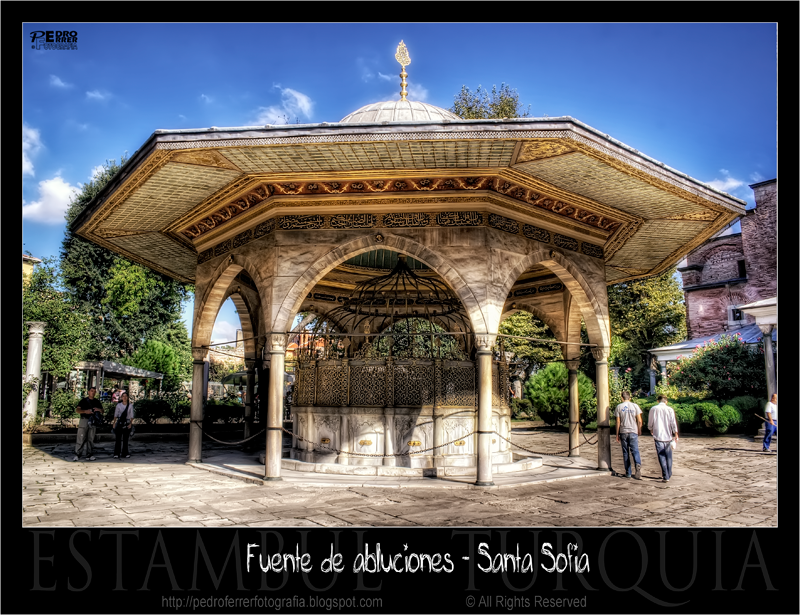
Visita mi fotolog - Visit my photolog - http://pedroferrerfotografia.blogspot.com<
he subido 5 fotos de Santa Sofia de un golpe, y ésta es la primera, así que no tendrá visitas, pasará desapercibida, pero yo la quiero igual, todas son mis criaturas.
Ver en grande - Best view large
Copyright © 2009 Pedro Ferrer. All Rights Reserved. Todos los derechos reservados.
Please don't use this image on websites, blogs or other media without my explicit permission.
Contact: fieraz@gmail.com
Por favor, no utilices esta imagen en páginas web, blogs u otros medios sin mi permiso explícito.
Contacto: fieraz@gmail.com
Newton Ferrers is a village in the civil parish of Newton and Noss in the English county of Devon, about 6 miles south-east of Plymouth on the River Yealm estuary. It lies within the South Devon Area of Outstanding Natural Beauty. The village has a population of 1,268 according to the 2011 Census. Wikipedia
David Ferrer serves during his first round match against Evgeny Donskoy on day three of the 2016 French Open at Roland Garros on May 24, 2016 in Paris, France.
Has a pleasingly period look despite some of the more modern signage. Possibly Stymie Bold Italic font on the side?
Diagram from Woodham Ferrers ground frame.
They don't get much simpler than this! A level crossing with gate locks and homes.
This is one of the 23 profile pages of the 2009 Souvenir Program of Hermonas De Mesa del Santissimo Rosario's 138th feast day celebration for Nuestra Señora del Santissimo Rosario.
©2009 Rodel Enriquez.
The Ferrer Palace in Cienfuegos City it's a beautiful building that was built by the merchant and landowner José Ferrer Spanish Sires and designed by the local architect Donato Pablo Carbonell. The work was built between 1917 and 1918.
David Ferrer serves during his first round match against Evgeny Donskoy on day three of the 2016 French Open at Roland Garros on May 24, 2016 in Paris, France.
Juan Carlos Ferrero during his 2nd round match with Pere Riba.
Ferrero won 7-6, 6-7, 6-2, 6-2.
Roland Garros 2010.
British postcard in the Picturegoer Series, London, no. D. 62. Photo: 20th Century Fox.
José Ferrer (1912- 1992) was an American actor and film director, who was born in Puerto Rico. He won the Academy Award for Best Actor in a Leading Role for his title role in Cyrano de Bergerac (1951). Ferrer was frequently used as a villain in his later film career.
José Ferrer was born José Vicente Ferrer de Otero y Cintrón in San Juan, the capital city of Puerto Rico in 1912. Ferrer's father was Rafael Ferrer, a lawyer, landowner and author who was born and raised in San Juan. Ferrer's mother was María Providencia Cintrón, a native of the coastal town of Yabucoa. Ferrer's paternal grandfather was Dr. Gabriel Ferrer Hernández, who had campaigned for Puerto Rican independence from the Spanish Empire. The Ferrer family moved to New York City in 1914, when José was 2 years old. As a school student, Ferrer was educated abroad at the Institut Le Rosey, a prestigious boarding school located in Rolle, Switzerland. According to the wishes of his father, José should become a concert pianist. Ferrer studied architecture, music and composition at Princeton University. He wrote a dissertation called French Naturalism and Pardo Bazán, about the Spanish naturalist writer Emilia Pardo Bazán. In 1934, Ferrer transferred to Columbia University, where he studied Roman languages. In 1934, while still a college student, Ferrer made his theatrical debut in Long Island-based theatre. In 1935, he was hired as the stage manager at the Suffern Country Playhouse. Later in 1935, Ferrer made his Broadway debut in the comedy play 'A Slight Case of Murder' by Damon Runyon and Howard Lindsay. Ferrer had a major success on Broadway in the play 'Brother Rat' by John Monks Jr. and Fred F. Finklehoffe. The play ran 577 performances from 1936 to 1938. Very successful were also 'Mamba's Daughters (1938) and 'Charley's Aunt' (1940). Even more successful was the 1943 play 'Othello' in which he co-starred as the villainous Iago opposite the Othello of Paul Robeson. 'Othello' was the longest-played Shakespeare play in the United States. The record remains unbroken to this day. In 1946, Ferrer starred in 'Cyrano de Bergerac', his most successful play. He won a Tony Award for his performance. In 1948, Ferrer made his film debut by co-starring with Ingrid Bergman in Joan of Arc (Victor Fleming, 1948). He played the historical monarch Charles VII of France, the ruler who Joan of Arc served during the Hundred Years' War. For his debut role, Ferrer was nominated for an Oscar for Best Male Supporting Actor. Ferrer's success as a film actor, helped him gain more film roles in Hollywood-produced films. He played the smooth-talking hypnotist David Korvo in the Film Noir Whirlpool (Otto Preminger, 1949) with Gene Tierney, and dictator Raoul Farrago in the Film Noir Crisis (Richard Brooks, 1950) starring Cary Grant. In 1950, Ferrer won an Oscar for Best Actor for his role as Cyrano de Bergerac in the film version, Cyrano de Bergerac (Michael Gordon, 1950). He was the first Puerto Rican actor and also the first Hispanic actor to win an Academy Award.
In 1952, José Ferrer won three Tony Awards for directing three plays, namely 'The Shrike', 'Stalag 17' and 'The Fourposter' and he won another Tony for acting in 'The Shrike'. In 1952, Ferrer played the French painter Henri de Toulouse-Lautrec in the historical drama Moulin Rouge (John Huston, 1952). His role earned him an Oscar nomination, but the award was instead won by Gary Cooper. The film also marked a financial success for Ferrer, who received 40% of the film's profits. In 1954, Ferrer took on the role of defence attorney Barney Greenwald in The Caine Mutiny. From 1955 onwards, he also directed a number of films, most of which he also starred in as an actor. First, he directed a film version of The Shrike (José Ferrer, 1955). I Accuse! (José Ferrer, 1958) is a reimagining of the Dreyfus Affair. While still critically well-received, several of these films were box office flops. He took a hiatus from film productions. In 1959, he directed a play called 'The Andersonville Trial', about the consequences of the American Civil War. The play featured George C. Scott. He then took over directing the musical 'Juno'. After sixteen performances, the musical stopped due to a lack of success, which was a setback for Ferrer's directing career. Ferrer attempted a comeback as a film director with the sequel film "Return to Peyton Place" (1961) and the musical film "State Fair" (1962). Both films were box office flops. As an actor, Ferrer appeared as a Turkish Bey in the historical drama Lawrence of Arabia (David Lean, 1962) with Peter O'Toole, as historical monarch Herod Antipas, Tetrarch of Galilee and Perea in the Bible epic The Greatest Story Ever Told (1965) and Ship of Fools (Stanley Kramer, 1965). In television, Ferrer gained a notable role as the narrator in the pilot episode of the hit sitcom Bewitched (1964). In 1968, he featured as a voice actor, playing the villain Ben Haramed in the TV film The Little Drummer Boy. But at this time, he started having legal troubles. The Internal Revenue Service (IRS) accused Ferrer of still owing unpaid taxes since 1962.
José Ferrer had many film roles in the 1970s, but no outstanding highlights. He played one of the many passengers in Voyage of the Damned (Stuart Rosenberg, 1976) with Faye Dunaway, Doctor Vando in Fedora (Billy Wilder, 1978) with William Holden and Marthe Keller and Athos in The Fifth Musketeer (Ken Annakin, 1979), starring Beau Bridges and Sylvia Kristel. In the 1980s, he starred in the popular comedy series Newhart as Julia Duffy's father. In the early 1980s, he also played the role of Reuben Marino in the soap opera Another World. In the cinema, he appeared in A Midsummer Night's Sex Comedy (Woody Allen, 1982), To Be or Not to Be (Mel Brooks, 1983) and Dune (David Lynch, 1984), an adaptation of the 1965 novel 'Dune' by Frank Herbert. This was among the last notable roles of Ferrer's long career. Ferred retired from acting entirely in 1991, due to increasing health problems. His last theatrical performance was a production of the generation-gap drama 'Conversations with My Father'. José Ferrer, who spoke perfect French, Italian and German in addition to Spanish and English, was married a total of four times. His wives were Uta Hagen (1938-1948), actress Phyllis Hill (1948-1953) and the singer and actress Rosemary Clooney (1953-1961 / 1964-1967). From 1977 until his death, he was married to Stella Magee. With Uta Hagen, he had a daughter. With Rosemary Clooney, he had five children born between 1955 and 1960. His oldest son, actor Miguel Ferrer (1955-2017) was known for his role in Medical Examiners. He was followed by Maria Ferrer (1956;) Gabriel Ferrer (1957) married to singer Debby Boone, daughter of Pat Boone; Monsita Ferrer (1958) and Rafael Ferrer (1960). Ferrer was the uncle of actor George Clooney. In 1992, José Ferrer died of colorectal cancer at the age of 80 in Coral Gables, Florida. He was buried in Santa Maria Magdalena de Pazzis Cemetery in Old San Juan in his native Puerto Rico.
Sources: Dimos I (IMDb), Wikipedia (English, German and Dutch) and IMDb.
And, please check out our blog European Film Star Postcards.
David Ferrer nació en Xàbia (Jávea) el 2 de Abril de 1982. Sus padres se llaman Jaime y Pilar.
A los ocho años comenzó a jugar al tenis con su padre y con hermano mayor, Javier, que llegó a ser profesional (ganó el campeonato de España infantil) y que actualmente es entrenador en el Club de Javea.
Sus primeros títulos los obtuvo en la categoría alevín (12 años), donde consiguió el Campeonato de la Comunidad Valenciana y fue semifinalista en los Campeonatos de España y Europa.
Ya como infantil (14 años), volvió a ganar el Campeonato de la Comunidad Valenciana, y en el Campeonato de España consiguió llegar a cuartos de final. Fue semifinalista en el Campeonato Nacional Sport Goofy. En el internacional de Palma de Mallorca fue semifinalista en individual y campeón de dobles.
En 1996, David ganó el titulo de campeón de España Sub-15 y el Subcampeonato de España en individuales y dobles en la categoría cadete. Gracias a su proyección deportiva y los triunfos conseguidos ese mismo año le concedieron una beca deportiva en la Federación Catalana de Tenis.
En su nueva etapa en Barcelona, David logró el Campeonato de Europa y del Mundo por equipos de la categoría cadete junto a Tommy Robredo y Marc López. El año 1998 volvió a ganar el campeonato del mundo por equipos esta vez junto a Marc López y Carles Cuadrado.
David abandonó L´Hospitalet en el año 1999 y volvió a fijar su residencia en la Comunidad Valenciana. Estuvo nueve meses en la Academia Equelite de Villena, junto a Juan Carlos Ferrero. Posteriormente ingresó en el C. Tenis Denia a las ordenes de su actual entrenador, Javier Piles (Benifaió, 1.968). En el año 2000 se inscribe en el circuito profesional, bajo licencia del Club de Tenis Valencia, y fija su residencia en la ciudad de Valencia. Su lugar habitual de entrenamientos es el CT Saladar, en Silla, donde está ubicada la Academia Tennisval, dirigida por Pancho Alvariño y José Francisco Altur, a la que pertenece David Ferrer.
David logró vencer en varios torneos challengers antes de empezar ha hacerlo torneos profesionales ATP, tanto de individuales como de dobles.
En 2002, con sólo 20 años, logró su primer título ATP en Bucarest y fue finalista en Umag (Croacia) ante Carlos Moya. El 22 de julio de este mismo año logra colocarse por primera vez entre los 100 mejores tenistas del mundo.
Durante los años 2003 y 2004 David consigue ser TOP 50. Logra establecerse y asentarse entre los 50 mejores jugadores del mundo. Incluso llega al número 38 de la ATP el 11 de octubre de 2004.
En 2005, se colocó entre los 8 mejores de Roland Garros, acabando cuartofinalista, y eliminado por el campeón del torneo Rafa Nadal. Ese año fue semifinalista en los Masters Series de Roma y Miami, y cuartofinalista en los Masters de Montecarlo y Madrid.
2006 y 2007 sirvieron para que David consiguiera nuevos títulos ATP, (Stuttgart, Auckland, Bastad y Tokyo).
El 30 de enero del 2006 por primera vez logró situarse entre los 10 mejores tenistas del mundo, siendo el segundo español con mayor ranking después de Rafael Nadal. En este 2006 David hace su debut oficial en un partido de Copa Davis.
En Septiembre de 2007, David logra colarse en las semifinales del Us Open después de mostrar su mejor versión eliminando a rivales de la categoría de Rafa Nadal o David Nalbandian. Y ese mismo año consigue su mayor éxito individual en el mundo del tenis y que fue llegar a la final del masters de Shanghai ante Roger Federer tras haber ganando a jugadores de la talla de Novak Djokovic (SRB), Rafa Nadal, Richard Gasquet (FRA) o Andy Roddick (USA). Este año 2007, David se convierte en el mejor restador del mundo dominando absolutamente todas las facetas, entre ellas los puntos de rotura convertidos (el 48 %), los juegos al resto ganados (el 36 %) o los puntos ganados devolviendo el segundo saque de su rival (el 57 %).
En el año 2008, David logra añadir dos nuevos títulos ATP a su carrera. El primero en su casa, en el Open de la Comunidad Valenciana, y ante toda su gente. Fue su sexto título ATP pero seguro que uno de los más importantes para él. El segundo, otro hecho insólito, consiguió ganar en el torneo de hierba de 's-Hertogenbosch en Holanda y tras derrotar a Mario Ancic o Juan Martín Del Potro entre otros. Este año también logra ser finalista del mítico trofeo Conde de Godo en donde cae en una disputadísima final en tres sets ante Rafa Nadal. Otros destacados resultados son los cuartos de final tanto en Roland Garros así como en el Australian Open.
En febrero de 2008 David logra su mejor ranking ATP, colocándose el número 4 del mundo. Durante 50 semanas David se mantiene entre los cinco mejores jugadores del planeta.
Ese mismo año 2008, David logra la famosa ensaladera tras conquistar con el equipo español la Copa Davis. David participó activamente en todas las eliminatorias y con importantes victorias como la de Andy Roddick (EEUU) en semifinales y con más de 20.000 espectadores en la plaza de toros de las Ventas de Madrid.
En el año 2009, y por quinto año consecutivo, finaliza el año entre los 20 mejores jugadores del mundo, en concreto en el puesto 17. David consigue llegar a las finales de dos de los mejores torneos del circuito, Dubai y Conde de Godo, en donde cede tras dos disputadas finales ante Novak Djokovic y Rafa Nadal respectivamente.
Pero ese año 2009, y por segundo año consecutivo, conquista con España la Copa Davis en Barcelona y tras ganar por un contundente 5-0 a la República Checa. David jugó un partido épico que remontó ante Radek Stepanek. El resultado 1-6, 2-6, 6-4, 6-4 y 8-6 tras más de 4 horas de partido y dando el 2º punto a España, que luego serviría para vencer. Tambien consiguió el 5º punto al ganar a Lukas Dlouhy por 6-4 y 6-2. David se convirtió en esa edición, en el héroe de la final y participo y gano todos sus partidos incluyendo victorias como ante el serbio Novak Djokovic.
El año 2010 es un gran año para David, consigue su victoria número 300 en ATP, disputa su primera final de un masters 1000 (Roma en donde cayó ante Rafa Nadal), otras dos finales mas (Buenos Aires ante Juan Carlos Ferrero y Beijing ante Novak Djokovic), ganó sus títulos 8 y 9 en ATP (Acapulco y Valencia), disputa la Masters Cup de Londres y finaliza el año número 7 del Ranking Mundial.
David es un gran aficionado al fútbol, y por su carácter, es uno de los jugadores más queridos en el circuito ATP. David disfruta con un libro debajo del brazo, es un gran lector.