View allAll Photos Tagged duisternis
De avond is al gevallen als deze trein in Janakpur (Nepal) aankomt uit de richting Jaynagar. Aan moderne zaken zoals verlichting op de voorzijde van de locomotief of in de rijtuigen doet men niet. De reizigers zijn daar echter op voorbereid en steken, als de duisternis intreedt, gezellig wat kaarsen op.
It is a starry night in Nepal when this train arrives in Janakpur, coming from the direction of Jaynagar. There are no modern amenities on board such as headlights at the front of the engine or electirc lights in the carriages. The passengers, however, are prepared for this and light up some candles as darkness sets in.
Sunset At The Black Sea.
Бросившись выключатели благочестивые траурные волны ревнивые глядя небо,
rosu portocaliu chemat scene inimi variat lichide vechi ochi lungite,
arrimage rives coupées traversent navires mers agréables de poussée bouches insatiables côtes,
aufragenden Schätze versteckt Wahnsinn Wickel Kochen Ströme glänzenden Blues Schwarzen Jahreszeiten geladen,
tremens celare secretum luxuria delectatur depingit, cum aquae fortes scriptor casus malum,
ταχεία προκαλώντας ήχους αιωρείται φαντάσματα μωβ ανεμοστρόβιλοι ξυπνήσει,
legioenen stormachtige vormen frenzying wanhoopt oplossen duisternis bleke stemmen schaduwen omringd,
divertimenti verde diamanti scintillanti caldo sole del mattino,
peintio canu dydd gogoneddus o'r tu allan solitudes gwrando awyr tawel,
brisas invisíveis Vales horas regozijando gentlest preenchimentos,
喜びに満ちた不滅の観光スポットを転がり荒々しい輝きの海の自由は常に信条を大事に。
Steve.D.Hammond.
Anti-Stylistic Realizations.
Mae darganfyddiadau tonnau a brofir yn barhaus yn erbyn gwreichion a ddanfonir gwifrau copaon anhysbys enfawr yn chwythu grymoedd damweiniau,
riflettere congetture paure intense indagini slitta decadenza tende sezionate semplificate tessuti incessanti pareti sostanziali,
toezicht vreemde tekens achteruitgang oude begraafplaatsen labyrinten diepe douane duisternis oude winkels geheimzinnige dichter arbeid geluiden omzoomde valleien,
ri alto planos ociosos cansando camponeses personagens absurdos ventos ocultos sorrisos intocáveis anos fabulosos mares primitivos ternos instantâneos,
ad compescendos animi par persuadendum accommodata Ex Melodiae deprauationem de naviculas hallucinating dubiis solere vestigia sistunt varieque luminaria mirifice referens adinventionem facito,
ちらっと見た目は物語を聞いた巨大な月邪悪な夜滅びる悪魔最も暗い嵐痴漢されたビジョンステルスな動き群れ顔運命旅行者.
Steve.D.Hammond.
A shadow is lost in too much light... or too much darkness!
Ovadia Moni
Une ombre se perd dans un excès de lumière... ou d'obscurité!
Un'ombra si perde per troppa luce... o per troppa oscurità!
Una sombra se pierde cuando hay mucha luz... o mucha obscuridad!
影子会因为太光亮或太黑暗而消失
Uma sombra se perde quando há muita luz ou muita escuridão!
Een schaduw gaat verloren bij een overdaad aan licht… of duisternis!
Varjo katoaa kun on liian paljon valoa... tai liian paljon pimeyttä!
η σκιά χάνεται στο εκτυφλωτικό φως...ή στο βαθύ σκοτάδι
En skugga försvinner i för mycket ljus...eller i för mycket mörker!
Portree is the largest town on the Isle of Skye, which is part of the Inner Hebrides of Scotland. Portree is built on the edge of the sheltered bay which faces eastwards over the Sound of Raasay. It was originally named Kiltaraglen but was renamed in Scottish Gaelic “Port Rìgh” (King's Harbour) after a visit by James V in 1540.
Portree has a small harbour, fringed by cliffs, with a pier designed by Thomas Telford. He was a Scottish civil engineer, architect and stonemason. A noted road, bridge and canal builder. Besides the pier in Portree, he built roads across Skye linking Portree with Uig and Kyleakin in the 1820s. Telford himself was positively fascinated with the appearance of Portree and made it a point to work diligently at creating something that would do justice to the Scottish land that he loved.
He succeeded admirably from a photographic point of view. This scene is the most photographed scene of Portree. Most people choose to take their shot from up the hill – on the bench that sit in front the Coolin View B&B on Bosville Terrace. But I opted to stay close to the water. It’s a habour scene, so water has to be in the equation significantly, right?!
Technical stuff
This HDR is created from 3 handheld photos: +0.33, -1,67, +2.33. I opted for this spread due to the lighting conditions. I used Aurora HRD 2018 for the initial merge. Compared to Photomatix Pro, this release made a big leap forward in HDR post-production. Especially the fact that you can now work in layers. The end result needed little or no further work in PS CC.
Remorse.
Gewelddadige vlammen schudden zweten duisternis ziel theologische punten interpretaties hel zonden verdoemenis gevaarlijke overtuigende wereld vloeken blaasbalgen hieronder,
lingue infuriate terra ardente figure oscure schernendo demoni terribili risate diavoli segnali vespe ribelli vermi eterni valli mostruose,
Inkontinenz tiefe grimmige Verzweiflung zerstörte Augen absteigende Gliedmaßen Heiden übt üble Gestankstreitigkeiten aus und beklagt jahrelange Korruptionen und Perversionen,
démons collants démons hideux flèches incontrôlables flèches incontrôlables ennemis redoutables crevasses de lave terribles punissant les sauvages,
混とした不満陰鬱な刃脱臼トカゲ混ざった爪栄養のある歯熱い岩山内部の痛み壊れた魂炎を上げる血の波潮を伸ばす永遠の裏切りの無謀な物語奇妙な良心腐敗した社会偽造.
Steve.D.Hammond.
Strangulation.
ہاتھوں کو پریشان کرنے والے ہاتھوں کے ہاتھوں کو شدید حوصلہ افزائی کرنے والے ہاتھوں سے گزرے ہوئے لاشوں نے خوابوں میں مصیبت پھیر لیا. کمزور کمزوری پریشان کن پہیلیاں,
impairments casus, ignota post meridiem sole demissam demergi totam plantam tenebris agentium ordo prorsus vestigia poenae opibus subversiva sui genii addens ritu neglegentia dilabebantur involutiones affectionum nostrarum dæmonia insanus nervosi uillis mersatur, missusque voces murmurationis,
cunoașterea psihologică coborârea cotațiilor poetice presiuni groase dezechilibrate planuri periculoase explorări viclene detașamente deconectate,
consumeren vreselijke ideeën rampzalige kunst wanhopige afschuwelijke zenuwen slapende bijgelovige primitieve reacties duisternis gewaarwordingen aandringende skeletten,
irrationale lösung grotesker wahnsinn interpretationskräfte fangen abscheuliches chaos geschriebene phantasmen unbewusste sinne wirbeln geier wütende ideen auf,
ものすごく集中計算不可能な方向性格異星人恐ろしい脅迫クロール脳駆除部門過激な気候ドキドキ頭悪性精神建築ルータニスト演劇.
Steve.D.Hammond.
20240516-7814
Met een paar collega's van 't HaagsFotoClubje een rondleiding gekregen bij het Museum Bescherming bevolking/ Bunkercomplex Overvoorde
Eén van de bezoekerslocaties van het Museum Bescherming Bevolking. Een uniek complex waar de 2e Wereldoorlog en Koude Oorlog elkaar ontmoeten.
Lees verder: www.museumbeschermingbevolking.nl/plan-je-bezoek/commando...
All images are copyrighted by Pieter Musterd. If you want to use any of my photographs, contact me. It is not allowed to download them or use them on any website, blog etc. without my explicit permission.
If you want a translation of the text in your own language, please try "Google Translate".
Merci pour votre commentaire
Dank voor je commentaar
Danke für deinen Kommentar
Thank you for your comment
Gracias por tu comentario
Obrigado pelo seu comentário
© all rights reserved by B℮n
Khao Sok National Park in Southern Thailand is an amazing place. The park comprises the largest area of virgin forest in Southern Thailand and is a remnant of rainforest which is older and more diverse than the Amazon Rainforest. It is covered by the oldest evergreen rainforest in the world, huge limestone mountains shooting straight up in the air, deep valleys, breathtaking lakes, exciting caves and much more. Home to wild Elephants, Hornbills, the rare Asian Ox, various monkey and ape species, a myriad reptiles, amphibians and floral species, Khao Sok including the Cheow Larn lake is one of the most unique and important rainforest habitats in South East Asia. It is estimated to contain over 5% of the worlds species. Additionally the Park is traversed by a limestone mountain range from north to south with the highest point of 950m. This mountain range is hit by monsoon rain coming from both the Gulf of Thailand and the Andaman Sea, which makes it Thailand’s wettest region with an annual rain fall of 3500mm. Heavy rainfall and falling leaves led to the erosion of the limestone rocks and created the significant karst formation of today. The park offers a multitude of well-worn dirt trails to explore. Rainy season begins in late April and lasts until December, with the heaviest rains between May and July, then October and November. But don’t let that stop you! The rain is often a welcome respite to the tropical heat. Not to mention the fact that … it is the RAINforest!,
A lot of visitors come to Khao Sok just to marvel the beauty of the nature but you can also enjoy your time taking part experiencing the tropical rainforest on foot. Different trekkings are possible. We're hiking to the Coral cave, The jungle trail ends here at the next lake called: Ha Roi Rai. From here we'll take another adventure with bamboo rafting towards the cave. The Coral cave, is one of the worlds hidden gems. Inside the cave you will be excited with stalagmite, stalactite, darkness, monster spiders, dripping water, sparky things and the noise of bats. It might be a good idea to bring your own torch as it is very dark inside. When you leave the cave, there is a track to watch the beautiful scenery of the lake. Taking the bamboo rafting adventure during rainy season will let you see more other wildlife such as wild hog, bison, schomburgk’s deer, etc. As they will live in deep forest during dry season. Rare flora are found along nature trails particularly to the south of the park where local plants such as lianas, bamboo, ferns and giant rattan can be found. A place where the rhythm of jungle takes you higher. Gibbons sing their morning song, a glimpse of wildlife. Also the Dusky Leaf Monkeys can be found in Khao Sok National Park. The Dusky Langurs are often seen on treetops on early mornings or late afternoons feasting on fresh leaves and fruit. Best place in Khao Sok to see them is Cheow Larn Lake.
Khao Sok เขาสก is een groot nationaal park, gelegen in Thailand in de provincie Surat Thani. Het heeft een oppervlakte van 739 km². In het park bevindt zich naast oerbos, wat een overblijfsel is van een regenwoud dat ouder en diverser is dan het Amazoneregenwoud. Het is één van de mooiste nationale parken van Thailand. met een eeuwenoud regenwoud met watervallen, kalksteenformaties die meer dan 900 meter de lucht in schieten, een groot meer met honderden kleine eilandjes, grotten, prachtige tropische planten en een grote variëteit aan wildlife waaronder de Aziatische olifant, luipaarden, sambars, bantengs, tapirs, dwergherten, cobra's, pythons en verscheidene soorten reptielen, apen en 311 soorten vogels. Met een beetje geluk vind je hier ook nog de wilde lotus Rafflesia kerri Meyer of in het Thais bua phút, de grootste bloem ter wereld. Volledig volgroeide bloemen halen de 90 centimeter en leven in de wortels van lianen. Khao Sok is een perfecte plek voor jungle tochten. Er zijn verschillende paden om te verkennen.Een zware klim eerst naar boven en dan weer naar beneden. Aangekomen bij het ingesloten Ha Roi Hai meer maken wij een tocht per bamboevlot naar de Koraal grot. De Pra Kay Petch Cave, die ook bekend staat als de Koraal grot, is één van de wereld verborgen juweeltjes. In de grot vinden we stalagmieten, stalactieten, duisternis, spinnen, druppelend water, glinsteringen dingen en het geluid van vleermuizen. Een mooie gelegenheid om de ecologie van het regenwoud te leren kennen. Even buiten de groot zie ik tot mijn verrassing Brillangoer apen vanuit de bamboe toppen. De Brillangoer eten voornamelijk bladeren, maar ook veel onrijpe vruchten en bloemen. De kans om een neushoornvogel te zien, een gibbon te horen roepen of een makaak-aap zien slingeren is niet altijd even groot. Met name Gibbons maken een prachtig geluid. Khao Sok is Thailand's natste regio met een jaarlijkse regenval van 3500mm. Wat te verwachten van het regenseizoen in Thailand - juni tot oktober: af en toe een flinke tropische regenbuien van 30 minuten tot 2 uur.
Forms.
Feidhmeanna gramadaí codarsnacht idir rannta teangacha fileata patrúin foghraíochta struchtúir shéimeantacha milleán mór ar fhreagraí neamhspleácha,
ripetizioni arbitrarie serio esplicito arte armonico compositore forze inconsce esempi immediati tecnica contrappuntistica capovolgere idee,
tempêtes émotionnelles papiers changeants esprit de décision décisions implications conceptions conflits persistants tâches primitives esthétique fondamentale,
reevaluări expresii redescoperire manifestări stiluri juxtapuse drame savante greșeli condamnate scriitor barbar,
opera discrepantia denaturing brevia insignia academica, opiniones collegae, emendationes subsidiorum magni momenti scriptorum opacitatis.,
vertalingen gronden beïnvloeden volgelingen doorkruist geesten angstaanjagende oplossingen duisternis sensaties professionele onderdelen extravaganties hoogtepunten,
狂気の堕落情熱的な試み途方もない振動腐敗世代絶望的なビジョン珍しい賛美歌の断片引用本質的な事実は無視されます.
Steve.D.Hammond.
SN/NC: Mimosa Pudica, Fabaceae Family
Mimosa pudica (from Latin: pudica "shy, bashful or shrinking"; also called sensitive plant, sleepy plant, action plant, Dormilones, touch-me-not, shame plant, zombie plant, or shy plant) is a creeping annual or perennial flowering plant of the pea/legume family Fabaceae and Magnoliopsida taxon, often grown for its curiosity value: the compound leaves fold inward and droop when touched or shaken, defending themselves from harm, and re-open a few minutes later. In the UK it has gained the Royal Horticultural Society’s Award of Garden Merit.
The species is native to South America and Central America, but is now a pantropical weed, and can be found in Southern United States, South Asia and East Asia as well. It is not shaded tolerant and is primarily found on soils with low nutrient concentrations Mimosa pudica is well known for its rapid plant movement. Like a number of other plant species, it undergoes changes in leaf orientation termed "sleep" or nyctinastic movement. The foliage closes during darkness and reopens in the light. This was first studied by the French scientist Jean-Jacques d'Ortous de Mairan. Due to Mimosa's unique response to touch, it became an ideal plant for many experiments regarding plant habituation and memory.
De soort komt oorspronkelijk uit Zuid-Amerika en Midden-Amerika, maar is nu een pantropisch onkruid en is ook te vinden in Zuid-Verenigde Staten, Zuid-Azië en Oost-Azië. Het is niet schaduwtolerant en wordt voornamelijk aangetroffen op bodems met lage voedingsconcentraties Mimosa pudica staat bekend om zijn snelle plantbeweging. Net als een aantal andere plantensoorten, ondergaat het veranderingen in bladoriëntatie genaamd "slaap" of nyctinastische beweging. Het gebladerte sluit zich bij duisternis en heropent in het licht. Dit werd voor het eerst bestudeerd door de Franse wetenschapper Jean-Jacques d'Ortous de Mairan. Door Mimosa's unieke reactie op aanraking werd het een ideale plant voor veel experimenten met betrekking tot plantgewenning en geheugen. Mimosa pudica (uit het Latijn: pudica "verlegen, verlegen of krimpend"; ook wel gevoelige plant, slaperige plant, actieplant, Dormilones, touch-me-not, schande plant, zombieplant of verlegen plant genoemd) is een sluipende eenjarige of vaste plant bloeiende plant van de erwten- / peulvruchtenfamilie Fabaceae.
La specie è originaria del Sud America e dell'America centrale, ma ora è un'erbaccia pantropicale e può essere trovata negli Stati Uniti meridionali, nell'Asia meridionale e nell'Asia orientale. Non è tollerante all'ombra e si trova principalmente su terreni con basse concentrazioni di nutrienti Mimosa pudica è ben nota per il suo rapido movimento delle piante. Come un certo numero di altre specie vegetali, subisce cambiamenti nell'orientamento delle foglie chiamato "sonno" o movimento nictinastico. Il fogliame si chiude durante l'oscurità e si riapre alla luce. Questo fu studiato per la prima volta dallo scienziato francese Jean-Jacques d'Ortous de Mairan. Grazie all'eccezionale risposta al tatto di Mimosa, divenne una pianta ideale per molti esperimenti riguardanti l'abituazione e la memoria delle piante. La mimosa pudica (dal latino: pudica "timida, timida o restringente"; anche chiamata pianta sensibile, pianta assonnata, pianta d'azione, Dormilones, touch-me-not, pianta vergogna, pianta zombi o pianta timida) è una pianta annuale o perenne strisciante pianta da fiore della famiglia delle Fabaceae piselli / legumi.
A espécie é nativa da América do Sul e América Central, mas agora é uma erva pantropical e pode ser encontrada no sul dos Estados Unidos, sul da Ásia e leste da Ásia. Não é tolerante à sombra e é encontrada principalmente em solos com baixas concentrações de nutrientes. Mimosa pudica é bem conhecida por seu rápido movimento das plantas. Como várias outras espécies de plantas, ela sofre alterações na orientação das folhas denominadas "sono" ou movimento nictinástico. A folhagem fecha durante a escuridão e reabre à luz. Isso foi estudado pela primeira vez pelo cientista francês Jean-Jacques d'Ortous de Mairan. Devido à resposta única da Mimosa ao toque, tornou-se uma planta ideal para muitas experiências relacionadas a hábitos e memória das plantas. Mimosa pudica (do latim: pudica "tímida, ou encolhida"; também chamada de planta sensível, planta sonolenta, planta de ação, Dorminhoca, não-me-toque, planta-da-vergonha, planta-zumbi ou planta tímida) é uma planta baixa, anual ou perene e pertence à família das Fabaceaes.
L'espèce est originaire d'Amérique du Sud et d'Amérique centrale, mais est maintenant une mauvaise herbe pantropicale et peut également être trouvée dans le sud des États-Unis, en Asie du Sud et en Asie de l'Est. Il n'est pas tolérant à l'ombre et se trouve principalement sur les sols à faibles concentrations de nutriments. Mimosa pudica est bien connu pour son mouvement rapide des plantes. Comme un certain nombre d'autres espèces végétales, il subit des changements d'orientation des feuilles appelés «sommeil» ou mouvement nyctinastique. Le feuillage se ferme dans l'obscurité et rouvre à la lumière. Cela a d'abord été étudié par le scientifique français Jean-Jacques d'Ortous de Mairan. En raison de la réponse unique du Mimosa au toucher, il est devenu une plante idéale pour de nombreuses expériences concernant l'accoutumance et la mémoire des plantes. Mimosa pudica (du latin: pudica "timide ou rétrécissant"; également appelée plante sensible, plante endormie, plante d'action, Dormilones, touch-me-not, plante de la honte, plante zombie ou plante timide) est une plante annuelle ou vivace rampante plante à fleurs de la famille des Fabaceae.
Mimosa pudica, la mimosa sensitiva, vergonzosa, nometoques, moriviví, dormidera, adormidera (en Venezuela, no confundir con Papaver somniferum) o dormilona, es una planta originaria de América tropical de la familia de las fabáceas, fácilmente distinguible por su reacción al tacto, desarrollada como defensa ante los depredadores.
Die Art stammt aus Südamerika und Mittelamerika, ist aber heute ein pantropisches Unkraut und kommt auch in den südlichen Vereinigten Staaten, Südasien und Ostasien vor. Es ist nicht schattentolerant und kommt hauptsächlich auf Böden mit geringen Nährstoffkonzentrationen vor. Mimosa pudica ist bekannt für seine schnelle Pflanzenbewegung. Wie eine Reihe anderer Pflanzenarten erfährt es Änderungen in der Blattorientierung, die als "Schlaf" oder nyktinastische Bewegung bezeichnet werden. Das Laub schließt sich bei Dunkelheit und öffnet sich im Licht wieder. Dies wurde zuerst vom französischen Wissenschaftler Jean-Jacques d'Ortous de Mairan untersucht. Aufgrund der einzigartigen Reaktion von Mimosa auf Berührungen wurde es zu einer idealen Pflanze für viele Experimente zur Gewöhnung und zum Gedächtnis von Pflanzen. Mimosa pudica (aus dem Lateinischen: pudica "schüchtern, oder schrumpfend"; auch als empfindliche Pflanze, schläfrige Pflanze, Aktionspflanze, Dormilone, Touch-me-not, Schampflanze, Zombiepflanze oder schüchterne Pflanze bezeichnet) ist eine schleichende einjährige oder mehrjährige Pflanze Blütenpflanze der Erbsen- / Hülsenfruchtfamilie Fabaceae.
الأنواع موطن لأمريكا الجنوبية وأمريكا الوسطى ، لكنها الآن أعشاب مدارية ، ويمكن العثور عليها في جنوب الولايات المتحدة وجنوب آسيا وشرق آسيا أيضًا. ليس مظللاً متحملاً ويوجد في المقام الأول في التربة ذات التركيزات المنخفضة من العناصر الغذائية. مثل عدد من الأنواع النباتية الأخرى ، فإنه يخضع لتغيرات في اتجاه الأوراق التي تسمى \"النوم\" أو حركة nyctinastic. تغلق أوراق الشجر أثناء الظلام وتفتح مرة أخرى في الضوء. تمت دراسة هذا أولاً من قبل العالم الفرنسي جان جاك دورطوس دي ميران. نظرًا لاستجابة ميموزا الفريدة للمس ، فقد أصبحت نباتًا مثاليًا للعديد من التجارب المتعلقة بتعود النبات والذاكرة. ميموزا بوديكا (من اللاتينية: pudica \"خجول ، خجول أو يتقلص\" ؛ يسمى أيضًا النبات الحساس ، النبات النائم ، نبات العمل ، Dormilones ، touch-me-not ، نبات العار ، نبات الزومبي ، أو النبات الخجول) هو زاحف سنوي أو معمر نبات مزهر من عائلة البازلاء / البقوليات.
Inside The Asylum/Madhouse,Self Portrait.
Rendez-vous captivé circonstances beffroi pensées,
condescendens, subtrahuntur distinctas vinculis stricta,
oearsorg gelæte darluniau amorffaidd disgyn rheolau,
absurd diagonal malerische Positionen Schmerzen,
sýnileg vakning áhrif Harmljóðin hernema,
perspektiv korridorer sykepleiere teater fortærende piller,
unnatural tortures beneath shadows beds,
opkomende duisternis doorslaand kantelen onmededeelbare,
συλλήψεων αφόρητη στοιχεία περίπατο πλήθη,
spontaneamente stupidamente calcoli avvolto le menti di vocabolario,
dearcadh teanga féiniúlachtaí agonized Áitíonn,
comportement artistique natures ondulées éléments,
Inconstantia facultatem vitiis distinguere, vivaci,
чувственное когерентности нереально недоумение автора опровержения внезапное,
ορθολογικής σκέψης ακαδημαϊκή διαγνωστικών επιχειρήματα διδάσκουν,
periodicities fondamantal gade estrikti detounen,
modifications de l'existence sublimes confrontés portes incontournables,
prostrata metaphorice significat methodo flamma extrema,
躁創造詩をscrawling生物学的気質.
Steve.D.Hammond.
© photo rights reserved by B℮n
Khao Sok National Park in Southern Thailand is an amazing place. The park comprises the largest area of virgin forest in Southern Thailand and is a remnant of rainforest which is older and more diverse than the Amazon Rainforest. It is covered by the oldest evergreen rainforest in the world, huge limestone mountains shooting straight up in the air, deep valleys, breathtaking lakes, exciting caves and much more. Home to wild Elephants, Hornbills, the rare Asian Ox, various monkey and ape species, a myriad reptiles, amphibians and floral species, Khao Sok including the Cheow Larn lake is one of the most unique and important rainforest habitats in South East Asia. It is estimated to contain over 5% of the worlds species. Additionally the Park is traversed by a limestone mountain range from north to south with the highest point of 950m. This mountain range is hit by monsoon rain coming from both the Gulf of Thailand and the Andaman Sea, which makes it Thailand’s wettest region with an annual rain fall of 3500mm. Heavy rainfall and falling leaves led to the erosion of the limestone rocks and created the significant karst formation of today. The park offers a multitude of well-worn dirt trails to explore. Rainy season begins in late April and lasts until December, with the heaviest rains between May and July, then October and November. But don’t let that stop you! The rain is often a welcome respite to the tropical heat. Not to mention the fact that … it is the RAINforest!,
A lot of visitors come to Khao Sok just to marvel the beauty of the nature but you can also enjoy your time taking part experiencing the tropical rainforest on foot. Different trekkings are possible. We're hiking to the Coral cave, The jungle trail ends here at the next lake called: Ha Roi Rai. From here we'll take another adventure with bamboo rafting towards the Coral cave. The spectacular 10,000 year-old Cave is one of the worlds hidden gems. Inside the cave you will be excited with stalagmite, stalactite, darkness, monster spiders, dripping water, sparky things and the noise of bats. It might be a good idea to bring your own torch as it is very dark inside. When you leave the cave, there is a track to watch the beautiful scenery of the lake. Taking the bamboo rafting adventure during rainy season will let you see more other wildlife such as wild hog, bison, schomburgk’s deer, etc. As they will live in deep forest during dry season. Rare flora are found along nature trails particularly to the south of the park where local plants such as lianas, bamboo, ferns and giant rattan can be found. A place where the rhythm of jungle takes you higher. Gibbons sing their morning song, a glimpse of wildlife. Also the Dusky Leaf Monkeys can be found in Khao Sok National Park. The Dusky Langurs are often seen on treetops on early mornings or late afternoons feasting on fresh leaves and fruit. Best place in Khao Sok to see them is Cheow Larn Lake.
Khao Sok เขาสก is een groot nationaal park, gelegen in Thailand in de provincie Surat Thani. Het heeft een oppervlakte van 739 km². In het park bevindt zich naast oerbos, wat een overblijfsel is van een regenwoud dat ouder en diverser is dan het Amazoneregenwoud. Het is één van de mooiste nationale parken van Thailand. met een eeuwenoud regenwoud met watervallen, kalksteenformaties die meer dan 900 meter de lucht in schieten, een groot meer met honderden kleine eilandjes, grotten, prachtige tropische planten en een grote variëteit aan wildlife waaronder de Aziatische olifant, luipaarden, sambars, bantengs, tapirs, dwergherten, cobra's, pythons en verscheidene soorten reptielen, apen en 311 soorten vogels. Met een beetje geluk vind je hier ook nog de wilde lotus Rafflesia kerri Meyer of in het Thais bua phút, de grootste bloem ter wereld. Volledig volgroeide bloemen halen de 90 centimeter en leven in de wortels van lianen. Khao Sok is een perfecte plek voor jungle tochten. Er zijn verschillende paden om te verkennen.Een zware klim eerst naar boven en dan weer naar beneden. Aangekomen bij het ingesloten Ha Roi Hai meer maken wij een tocht per bamboevlot naar de Koraal grot. Deze grot is één van de wereld verborgen juweeltjes. In de grot vinden we stalagmieten, stalactieten, duisternis, spinnen, druppelend water, glinsteringen dingen en het geluid van vleermuizen. Een mooie gelegenheid om de ecologie van het regenwoud te leren kennen. Even buiten de groot zie ik tot mijn verrassing Brillangoer apen vanuit de bamboe toppen. De Brillangoer eten voornamelijk bladeren, maar ook veel onrijpe vruchten en bloemen. De kans om een neushoornvogel te zien, een gibbon te horen roepen of een makaak-aap zien slingeren is niet altijd even groot. Met name Gibbons maken een prachtig geluid. Khao Sok is Thailand's natste regio met een jaarlijkse regenval van 3500mm. Wat te verwachten van het regenseizoen in Thailand - juni tot oktober: af en toe een flinke tropische regenbuien van 30 minuten tot 2 uur.
© all rights reserved by B℮n
Khao Sok National Park in Southern Thailand is an amazing place. The park comprises the largest area of virgin forest in Southern Thailand and is a remnant of rainforest which is older and more diverse than the Amazon Rainforest. It is covered by the oldest evergreen rainforest in the world, huge limestone mountains shooting straight up in the air, deep valleys, breathtaking lakes, exciting caves and much more. Home to wild Elephants, Hornbills, the rare Asian Ox, various monkey and ape species, a myriad reptiles, amphibians and floral species, Khao Sok including the Cheow Larn lake is one of the most unique and important rainforest habitats in South East Asia. It is estimated to contain over 5% of the worlds species. Additionally the Park is traversed by a limestone mountain range from north to south with the highest point of 950m. This mountain range is hit by monsoon rain coming from both the Gulf of Thailand and the Andaman Sea, which makes it Thailand’s wettest region with an annual rain fall of 3500mm. Heavy rainfall and falling leaves led to the erosion of the limestone rocks and created the significant karst formation of today. The park offers a multitude of well-worn dirt trails to explore. Rainy season begins in late April and lasts until December, with the heaviest rains between May and July, then October and November. But don’t let that stop you! The rain is often a welcome respite to the tropical heat. Not to mention the fact that … it is the RAINforest!,
A lot of visitors come to Khao Sok just to marvel the beauty of the nature but you can also enjoy your time taking part experiencing the tropical rainforest on foot. Different trekkings are possible. We're hiking to the Coral cave, The jungle trail ends here at the next lake called: Ha Roi Rai. From here we'll take another adventure with bamboo rafting towards the cave. The Coral cave, is one of the worlds hidden gems. Inside the cave you will be excited with stalagmite, stalactite, darkness, monster spiders, dripping water, sparky things and the noise of bats. It might be a good idea to bring your own torch as it is very dark inside. When you leave the cave, there is a track to watch the beautiful scenery of the lake. Taking the bamboo rafting adventure during rainy season will let you see more other wildlife such as wild hog, bison, schomburgk’s deer, etc. As they will live in deep forest during dry season. Rare flora are found along nature trails particularly to the south of the park where local plants such as lianas, bamboo, ferns and giant rattan can be found. A place where the rhythm of jungle takes you higher. Gibbons sing their morning song, a glimpse of wildlife. Also the Dusky Leaf Monkeys can be found in Khao Sok National Park. The Dusky Langurs are often seen on treetops on early mornings or late afternoons feasting on fresh leaves and fruit. Best place in Khao Sok to see them is Cheow Larn Lake.
Khao Sok เขาสก is een groot nationaal park, gelegen in Thailand in de provincie Surat Thani. Het heeft een oppervlakte van 739 km². In het park bevindt zich naast oerbos, wat een overblijfsel is van een regenwoud dat ouder en diverser is dan het Amazoneregenwoud. Het is één van de mooiste nationale parken van Thailand. met een eeuwenoud regenwoud met watervallen, kalksteenformaties die meer dan 900 meter de lucht in schieten, een groot meer met honderden kleine eilandjes, grotten, prachtige tropische planten en een grote variëteit aan wildlife waaronder de Aziatische olifant, luipaarden, sambars, bantengs, tapirs, dwergherten, cobra's, pythons en verscheidene soorten reptielen, apen en 311 soorten vogels. Met een beetje geluk vind je hier ook nog de wilde lotus Rafflesia kerri Meyer of in het Thais bua phút, de grootste bloem ter wereld. Volledig volgroeide bloemen halen de 90 centimeter en leven in de wortels van lianen. Khao Sok is een perfecte plek voor jungle tochten. Er zijn verschillende paden om te verkennen.Een zware klim eerst naar boven en dan weer naar beneden. Aangekomen bij het ingesloten Ha Roi Hai meer maken wij een tocht per bamboevlot naar de Koraal grot. De Pra Kay Petch Cave, die ook bekend staat als de Koraal grot, is één van de wereld verborgen juweeltjes. In de grot vinden we stalagmieten, stalactieten, duisternis, spinnen, druppelend water, glinsteringen dingen en het geluid van vleermuizen. Een mooie gelegenheid om de ecologie van het regenwoud te leren kennen. Even buiten de groot zie ik tot mijn verrassing Brillangoer apen vanuit de bamboe toppen. De Brillangoer eten voornamelijk bladeren, maar ook veel onrijpe vruchten en bloemen. De kans om een neushoornvogel te zien, een gibbon te horen roepen of een makaak-aap zien slingeren is niet altijd even groot. Met name Gibbons maken een prachtig geluid. Khao Sok is Thailand's natste regio met een jaarlijkse regenval van 3500mm. Wat te verwachten van het regenseizoen in Thailand - juni tot oktober: af en toe een flinke tropische regenbuien van 30 minuten tot 2 uur.
The yellow-edged giant owl butterfly (Caligo atreus), too banded owl-butterfly or magnificent owl, is a large, striking butterfly common to the lowland rainforests and secondary forests of Central and northwestern South America, from Mexico to Peru.
The wingspan is 140–160 mm.
They occurs from sea level up to 1,300 m.
They’re called owl butterflies because the markings on the undersides of their wings have large "eyespots" that resemble the eyes of an owl. (You will typically see the eyespots when the wings are closed.) This is thought to help them ward off predators.
The genus name “Caligo” means darkness, which corresponds to the fact that they prefer to fly in the early morning before their predators are out and about.
This picture was taken in "De Passiflorahoeve", the indoor butterfly garden in Harskamp, the Netherlands.
De geelgerande uilvlinder of gebande uilvlinder (Caligo atreus) is een grote opvallende vlinder uit de tropiche regenwouden van Midden Amerika en noordwest Zuid Amerika van Mexico tot Peru.
Kenmerkend is de geel-wit gestreepte band over de onderkant van van de voor- en achtervleugel. De vleugelspanwijdte is 14 à 16 cm.
De bruingrijze tekening aan de onderkant heeft opvallende oogvlekken, net uilenogen, die als fopogen dienen.
Bij bedreiging en wanneer ze overdag rusten sluit de uilvlinder zijn vleugels om zijn belagers af te schrikken met de starende blik van een uil. De uilvlinder is vooral tijdens de scheming actief.
Naast de hier afgebeelde Caligo atreus zijn er nog ongeveer 20 soorten in het geslacht Caligo beschreven, die ook allemaal uilvlinder worden genoemd. Caligo betekent duisternis.
Deze opname is gemaakt in de tropische vlinderkas van zorgboerderij www.passiflorahoeve.nl bij Harskamp op de Veluwe.
________________________________
All rights reserved. Copyright © Martien Uiterweerd. All my images are protected under international authors copyright laws and may not be downloaded, reproduced, copied, transmitted or manipulated without my written explicit permission.
________________________________
.
.
© all rights reserved by B℮n
Khao Sok National Park in Southern Thailand is an amazing place. The park comprises the largest area of virgin forest in Southern Thailand and is a remnant of rainforest which is older and more diverse than the Amazon Rainforest. It is covered by the oldest evergreen rainforest in the world, huge limestone mountains shooting straight up in the air, deep valleys, breathtaking lakes, exciting caves and much more. Home to wild Elephants, Hornbills, the rare Asian Ox, various monkey and ape species, a myriad reptiles, amphibians and floral species, Khao Sok including the Cheow Larn lake is one of the most unique and important rainforest habitats in South East Asia. It is estimated to contain over 5% of the worlds species. Additionally the Park is traversed by a limestone mountain range from north to south with the highest point of 950m. This mountain range is hit by monsoon rain coming from both the Gulf of Thailand and the Andaman Sea, which makes it Thailand’s wettest region with an annual rain fall of 3500mm. Heavy rainfall and falling leaves led to the erosion of the limestone rocks and created the significant karst formation of today. The park offers a multitude of well-worn dirt trails to explore. Rainy season begins in late April and lasts until December, with the heaviest rains between May and July, then October and November. But don’t let that stop you! The rain is often a welcome respite to the tropical heat. Not to mention the fact that … it is the RAINforest!,
A lot of visitors come to Khao Sok just to marvel the beauty of the nature but you can also enjoy your time taking part experiencing the tropical rainforest on foot. Different trekkings are possible. We're hiking to the Coral cave, The jungle trail ends here at the next lake called: Ha Roi Rai. From here we'll take another adventure with bamboo rafting towards the cave. The Coral cave, is one of the worlds hidden gems. Inside the cave you will be excited with stalagmite, stalactite, darkness, monster spiders, dripping water, sparky things and the noise of bats. It might be a good idea to bring your own torch as it is very dark inside. When you leave the cave, there is a track to watch the beautiful scenery of the lake. Taking the bamboo rafting adventure during rainy season will let you see more other wildlife such as wild hog, bison, schomburgk’s deer, etc. As they will live in deep forest during dry season. Rare flora are found along nature trails particularly to the south of the park where local plants such as lianas, bamboo, ferns and giant rattan can be found. A place where the rhythm of jungle takes you higher. Gibbons sing their morning song, a glimpse of wildlife. Also the Dusky Leaf Monkeys can be found in Khao Sok National Park. The Dusky Langurs are often seen on treetops on early mornings or late afternoons feasting on fresh leaves and fruit. Best place in Khao Sok to see them is Cheow Larn Lake.
Khao Sok เขาสก is een groot nationaal park, gelegen in Thailand in de provincie Surat Thani. Het heeft een oppervlakte van 739 km². In het park bevindt zich naast oerbos, wat een overblijfsel is van een regenwoud dat ouder en diverser is dan het Amazoneregenwoud. Het is één van de mooiste nationale parken van Thailand. met een eeuwenoud regenwoud met watervallen, kalksteenformaties die meer dan 900 meter de lucht in schieten, een groot meer met honderden kleine eilandjes, grotten, prachtige tropische planten en een grote variëteit aan wildlife waaronder de Aziatische olifant, luipaarden, sambars, bantengs, tapirs, dwergherten, cobra's, pythons en verscheidene soorten reptielen, apen en 311 soorten vogels. Met een beetje geluk vind je hier ook nog de wilde lotus Rafflesia kerri Meyer of in het Thais bua phút, de grootste bloem ter wereld. Volledig volgroeide bloemen halen de 90 centimeter en leven in de wortels van lianen. Khao Sok is een perfecte plek voor jungle tochten. Er zijn verschillende paden om te verkennen.Een zware klim eerst naar boven en dan weer naar beneden. Aangekomen bij het ingesloten Ha Roi Hai meer maken wij een tocht per bamboevlot naar de Koraal grot. De Pra Kay Petch Cave, die ook bekend staat als de Koraal grot, is één van de wereld verborgen juweeltjes. In de grot vinden we stalagmieten, stalactieten, duisternis, spinnen, druppelend water, glinsteringen dingen en het geluid van vleermuizen. Een mooie gelegenheid om de ecologie van het regenwoud te leren kennen. Even buiten de groot zie ik tot mijn verrassing Brillangoer apen vanuit de bamboe toppen. De Brillangoer eten voornamelijk bladeren, maar ook veel onrijpe vruchten en bloemen. De kans om een neushoornvogel te zien, een gibbon te horen roepen of een makaak-aap zien slingeren is niet altijd even groot. Met name Gibbons maken een prachtig geluid. Khao Sok is Thailand's natste regio met een jaarlijkse regenval van 3500mm. Wat te verwachten van het regenseizoen in Thailand - juni tot oktober: af en toe een flinke tropische regenbuien van 30 minuten tot 2 uur.
© all rights reserved by B℮n
Khao Sok National Park in Southern Thailand is an amazing place. The park comprises the largest area of virgin forest in Southern Thailand and is a remnant of rainforest which is older and more diverse than the Amazon Rainforest. It is covered by the oldest evergreen rainforest in the world, huge limestone mountains shooting straight up in the air, deep valleys, breathtaking lakes, exciting caves and much more. Home to wild Elephants, Hornbills, the rare Asian Ox, various monkey and ape species, a myriad reptiles, amphibians and floral species, Khao Sok including the Cheow Larn lake is one of the most unique and important rainforest habitats in South East Asia. It is estimated to contain over 5% of the worlds species. Additionally the Park is traversed by a limestone mountain range from north to south with the highest point of 950m. This mountain range is hit by monsoon rain coming from both the Gulf of Thailand and the Andaman Sea, which makes it Thailand’s wettest region with an annual rain fall of 3500mm. Heavy rainfall and falling leaves led to the erosion of the limestone rocks and created the significant karst formation of today. The park offers a multitude of well-worn dirt trails to explore. Rainy season begins in late April and lasts until December, with the heaviest rains between May and July, then October and November. But don’t let that stop you! The rain is often a welcome respite to the tropical heat. Not to mention the fact that … it is the RAINforest!,
A lot of visitors come to Khao Sok just to marvel the beauty of the nature but you can also enjoy your time taking part experiencing the tropical rainforest on foot. Different trekkings are possible. We're hiking to the Coral cave, The jungle trail ends here at the next lake called: Ha Roi Rai. From here we'll take another adventure with bamboo rafting towards the Coral cave. The spectacular 10,000 year-old Cave is one of the worlds hidden gems. Inside the cave you will be excited with stalagmite, stalactite, darkness, monster spiders, dripping water, sparky things and the noise of bats. It might be a good idea to bring your own torch as it is very dark inside. When you leave the cave, there is a track to watch the beautiful scenery of the lake. Taking the bamboo rafting adventure during rainy season will let you see more other wildlife such as wild hog, bison, schomburgk’s deer, etc. As they will live in deep forest during dry season. Rare flora are found along nature trails particularly to the south of the park where local plants such as lianas, bamboo, ferns and giant rattan can be found. A place where the rhythm of jungle takes you higher. Gibbons sing their morning song, a glimpse of wildlife. Also the Dusky Leaf Monkeys can be found in Khao Sok National Park. The Dusky Langurs are often seen on treetops on early mornings or late afternoons feasting on fresh leaves and fruit. Best place in Khao Sok to see them is Cheow Larn Lake.
Khao Sok เขาสก is een groot nationaal park, gelegen in Thailand in de provincie Surat Thani. Het heeft een oppervlakte van 739 km². In het park bevindt zich naast oerbos, wat een overblijfsel is van een regenwoud dat ouder en diverser is dan het Amazoneregenwoud. Het is één van de mooiste nationale parken van Thailand. met een eeuwenoud regenwoud met watervallen, kalksteenformaties die meer dan 900 meter de lucht in schieten, een groot meer met honderden kleine eilandjes, grotten, prachtige tropische planten en een grote variëteit aan wildlife waaronder de Aziatische olifant, luipaarden, sambars, bantengs, tapirs, dwergherten, cobra's, pythons en verscheidene soorten reptielen, apen en 311 soorten vogels. Met een beetje geluk vind je hier ook nog de wilde lotus Rafflesia kerri Meyer of in het Thais bua phút, de grootste bloem ter wereld. Volledig volgroeide bloemen halen de 90 centimeter en leven in de wortels van lianen. Khao Sok is een perfecte plek voor jungle tochten. Er zijn verschillende paden om te verkennen.Een zware klim eerst naar boven en dan weer naar beneden. Aangekomen bij het ingesloten Ha Roi Hai meer maken wij een tocht per bamboevlot naar de Koraal grot. Deze grot is één van de wereld verborgen juweeltjes. In de grot vinden we stalagmieten, stalactieten, duisternis, spinnen, druppelend water, glinsteringen dingen en het geluid van vleermuizen. Een mooie gelegenheid om de ecologie van het regenwoud te leren kennen. Even buiten de groot zie ik tot mijn verrassing Brillangoer apen vanuit de bamboe toppen. De Brillangoer eten voornamelijk bladeren, maar ook veel onrijpe vruchten en bloemen. De kans om een neushoornvogel te zien, een gibbon te horen roepen of een makaak-aap zien slingeren is niet altijd even groot. Met name Gibbons maken een prachtig geluid. Khao Sok is Thailand's natste regio met een jaarlijkse regenval van 3500mm. Wat te verwachten van het regenseizoen in Thailand - juni tot oktober: af en toe een flinke tropische regenbuien van 30 minuten tot 2 uur.
Saturday Self Challenge: veelkleurig
Sinterklaasavond oftewel Pakjesavond (5 december) wordt veel gevierd in Nederland. Sinterklaas rijdt dan op zijn paard en geeft kinderen in het hele land en ver daarbuiten en van welke leeftijd dan ook cadeautjes, en vaak vergezeld van een gedicht over de ontvanger en vaak ook nog een surprise. Hoe hij dat allemaal doet is een raadsel, en het gebeurt in grote geheimzinnigheid. Vandaar dat Sinterklaas ook vaak bij duisternis langskomt. Zeker is wel dat hij een leger van miljoenen veelkleurige helpers heeft die dat allemaal bewerkstelligen.
Op de foto allerlei zoetigheden die Sinterklaas laat produceren: peper- en kruidnoten, speculaas, chocoladeletters, marsepein, taai-taai. Op de achtergrond kleurrijk inpakpapier wat Sinterklaas in grote hoeveelheden nodig heeft.
– – –
Saturday Self Challenge: multicoloured
Sinterklaasavond (St.Nicholaseve) or Pakjesavond (‘Package eve’) (5 December) is widely celebrated in the Netherlands. Sinterklaas then rides his horse and gives gifts to children (of all ages I might add), across the country and far beyond, often accompanied by a poem about the recipient and often a ‘surprise’ as well. How he does all this is a mystery, and it happens in great secrecy. That is why Sinterklaas often visits in the dark. What is certain is that he has an army of millions of multicoloured helpers who make it all happen.
The photo shows all kinds of sweets that Sinterklaas has produced: peper- and kruidnoten (’pepper nuts and spicy nuts’), speculaas (spiced cookies or banquet filled with almond paste), chocolate letters, marzipan, taai-taai (‘tough-tough’). In the background colourful wrapping paper which Sinterklaas needs in large quantities.
– – –
Interesting videos about the Sinterklaas tradition:
www.youtube.com/watch?v=Yvkf0uyXjeA (English, made by a Canadian living in Amsterdam)
www.youtube.com/watch?v=D4jjoUgmGcY (English, foreigners learning Dutch and about Dutch culture)
– – –
Dank voor het bekijken, commentaren, favorieten en kritiek.
Geen verder gebruik zonder mijn uitdrukkelijke toestemming. 砊Thanks for watching, comments, favourites and critique.
No further use without my explicit consent.
© all rights reserved by B℮n
Khao Sok National Park in Southern Thailand is an amazing place. The park comprises the largest area of virgin forest in Southern Thailand and is a remnant of rainforest which is older and more diverse than the Amazon Rainforest. It is covered by the oldest evergreen rainforest in the world, huge limestone mountains shooting straight up in the air, deep valleys, breathtaking lakes, exciting caves and much more. Home to wild Elephants, Hornbills, the rare Asian Ox, various monkey and ape species, a myriad reptiles, amphibians and floral species, Khao Sok including the Cheow Larn lake is one of the most unique and important rainforest habitats in South East Asia. It is estimated to contain over 5% of the worlds species. Additionally the Park is traversed by a limestone mountain range from north to south with the highest point of 950m. This mountain range is hit by monsoon rain coming from both the Gulf of Thailand and the Andaman Sea, which makes it Thailand’s wettest region with an annual rain fall of 3500mm. Heavy rainfall and falling leaves led to the erosion of the limestone rocks and created the significant karst formation of today. The park offers a multitude of well-worn dirt trails to explore. Rainy season begins in late April and lasts until December, with the heaviest rains between May and July, then October and November. But don’t let that stop you! The rain is often a welcome respite to the tropical heat. Not to mention the fact that … it is the RAINforest!,
A lot of visitors come to Khao Sok just to marvel the beauty of the nature but you can also enjoy your time taking part experiencing the tropical rainforest on foot. Different trekkings are possible. We're hiking to the Coral cave, The jungle trail ends here at the next lake called: Ha Roi Rai. From here we'll take another adventure with bamboo rafting towards the Coral cave. The spectacular 10,000 year-old Cave is one of the worlds hidden gems. Inside the cave you will be excited with stalagmite, stalactite, darkness, monster spiders, dripping water, sparky things and the noise of bats. It might be a good idea to bring your own torch as it is very dark inside. When you leave the cave, there is a track to watch the beautiful scenery of the lake. Taking the bamboo rafting adventure during rainy season will let you see more other wildlife such as wild hog, bison, schomburgk’s deer, etc. As they will live in deep forest during dry season. Rare flora are found along nature trails particularly to the south of the park where local plants such as lianas, bamboo, ferns and giant rattan can be found. A place where the rhythm of jungle takes you higher. Gibbons sing their morning song, a glimpse of wildlife. Also the Dusky Leaf Monkeys can be found in Khao Sok National Park. The Dusky Langurs are often seen on treetops on early mornings or late afternoons feasting on fresh leaves and fruit. Best place in Khao Sok to see them is Cheow Larn Lake.
Khao Sok เขาสก is een groot nationaal park, gelegen in Thailand in de provincie Surat Thani. Het heeft een oppervlakte van 739 km². In het park bevindt zich naast oerbos, wat een overblijfsel is van een regenwoud dat ouder en diverser is dan het Amazoneregenwoud. Het is één van de mooiste nationale parken van Thailand. met een eeuwenoud regenwoud met watervallen, kalksteenformaties die meer dan 900 meter de lucht in schieten, een groot meer met honderden kleine eilandjes, grotten, prachtige tropische planten en een grote variëteit aan wildlife waaronder de Aziatische olifant, luipaarden, sambars, bantengs, tapirs, dwergherten, cobra's, pythons en verscheidene soorten reptielen, apen en 311 soorten vogels. Met een beetje geluk vind je hier ook nog de wilde lotus Rafflesia kerri Meyer of in het Thais bua phút, de grootste bloem ter wereld. Volledig volgroeide bloemen halen de 90 centimeter en leven in de wortels van lianen. Khao Sok is een perfecte plek voor jungle tochten. Er zijn verschillende paden om te verkennen.Een zware klim eerst naar boven en dan weer naar beneden. Aangekomen bij het ingesloten Ha Roi Hai meer maken wij een tocht per bamboevlot naar de Koraal grot. Deze grot is één van de wereld verborgen juweeltjes. In de grot vinden we stalagmieten, stalactieten, duisternis, spinnen, druppelend water, glinsteringen dingen en het geluid van vleermuizen. Een mooie gelegenheid om de ecologie van het regenwoud te leren kennen. Even buiten de groot zie ik tot mijn verrassing Brillangoer apen vanuit de bamboe toppen. De Brillangoer eten voornamelijk bladeren, maar ook veel onrijpe vruchten en bloemen. De kans om een neushoornvogel te zien, een gibbon te horen roepen of een makaak-aap zien slingeren is niet altijd even groot. Met name Gibbons maken een prachtig geluid. Khao Sok is Thailand's natste regio met een jaarlijkse regenval van 3500mm. Wat te verwachten van het regenseizoen in Thailand - juni tot oktober: af en toe een flinke tropische regenbuien van 30 minuten tot 2 uur.
SN/NC: Mimosa Pudica, Fabaceae Family
Mimosa pudica (from Latin: pudica "shy, bashful or shrinking"; also called sensitive plant, sleepy plant, action plant, Dormilones, touch-me-not, shame plant, zombie plant, or shy plant) is a creeping annual or perennial flowering plant of the pea/legume family Fabaceae and Magnoliopsida taxon, often grown for its curiosity value: the compound leaves fold inward and droop when touched or shaken, defending themselves from harm, and re-open a few minutes later. In the UK it has gained the Royal Horticultural Society’s Award of Garden Merit.
The species is native to South America and Central America, but is now a pantropical weed, and can be found in Southern United States, South Asia and East Asia as well. It is not shaded tolerant and is primarily found on soils with low nutrient concentrations Mimosa pudica is well known for its rapid plant movement. Like a number of other plant species, it undergoes changes in leaf orientation termed "sleep" or nyctinastic movement. The foliage closes during darkness and reopens in the light. This was first studied by the French scientist Jean-Jacques d'Ortous de Mairan. Due to Mimosa's unique response to touch, it became an ideal plant for many experiments regarding plant habituation and memory.
De soort komt oorspronkelijk uit Zuid-Amerika en Midden-Amerika, maar is nu een pantropisch onkruid en is ook te vinden in Zuid-Verenigde Staten, Zuid-Azië en Oost-Azië. Het is niet schaduwtolerant en wordt voornamelijk aangetroffen op bodems met lage voedingsconcentraties Mimosa pudica staat bekend om zijn snelle plantbeweging. Net als een aantal andere plantensoorten, ondergaat het veranderingen in bladoriëntatie genaamd "slaap" of nyctinastische beweging. Het gebladerte sluit zich bij duisternis en heropent in het licht. Dit werd voor het eerst bestudeerd door de Franse wetenschapper Jean-Jacques d'Ortous de Mairan. Door Mimosa's unieke reactie op aanraking werd het een ideale plant voor veel experimenten met betrekking tot plantgewenning en geheugen. Mimosa pudica (uit het Latijn: pudica "verlegen, verlegen of krimpend"; ook wel gevoelige plant, slaperige plant, actieplant, Dormilones, touch-me-not, schande plant, zombieplant of verlegen plant genoemd) is een sluipende eenjarige of vaste plant bloeiende plant van de erwten- / peulvruchtenfamilie Fabaceae.
La specie è originaria del Sud America e dell'America centrale, ma ora è un'erbaccia pantropicale e può essere trovata negli Stati Uniti meridionali, nell'Asia meridionale e nell'Asia orientale. Non è tollerante all'ombra e si trova principalmente su terreni con basse concentrazioni di nutrienti Mimosa pudica è ben nota per il suo rapido movimento delle piante. Come un certo numero di altre specie vegetali, subisce cambiamenti nell'orientamento delle foglie chiamato "sonno" o movimento nictinastico. Il fogliame si chiude durante l'oscurità e si riapre alla luce. Questo fu studiato per la prima volta dallo scienziato francese Jean-Jacques d'Ortous de Mairan. Grazie all'eccezionale risposta al tatto di Mimosa, divenne una pianta ideale per molti esperimenti riguardanti l'abituazione e la memoria delle piante. La mimosa pudica (dal latino: pudica "timida, timida o restringente"; anche chiamata pianta sensibile, pianta assonnata, pianta d'azione, Dormilones, touch-me-not, pianta vergogna, pianta zombi o pianta timida) è una pianta annuale o perenne strisciante pianta da fiore della famiglia delle Fabaceae piselli / legumi.
A espécie é nativa da América do Sul e América Central, mas agora é uma erva pantropical e pode ser encontrada no sul dos Estados Unidos, sul da Ásia e leste da Ásia. Não é tolerante à sombra e é encontrada principalmente em solos com baixas concentrações de nutrientes. Mimosa pudica é bem conhecida por seu rápido movimento das plantas. Como várias outras espécies de plantas, ela sofre alterações na orientação das folhas denominadas "sono" ou movimento nictinástico. A folhagem fecha durante a escuridão e reabre à luz. Isso foi estudado pela primeira vez pelo cientista francês Jean-Jacques d'Ortous de Mairan. Devido à resposta única da Mimosa ao toque, tornou-se uma planta ideal para muitas experiências relacionadas a hábitos e memória das plantas. Mimosa pudica (do latim: pudica "tímida, ou encolhida"; também chamada de planta sensível, planta sonolenta, planta de ação, Dorminhoca, não-me-toque, planta-da-vergonha, planta-zumbi ou planta tímida) é uma planta baixa, anual ou perene e pertence à família das Fabaceaes.
L'espèce est originaire d'Amérique du Sud et d'Amérique centrale, mais est maintenant une mauvaise herbe pantropicale et peut également être trouvée dans le sud des États-Unis, en Asie du Sud et en Asie de l'Est. Il n'est pas tolérant à l'ombre et se trouve principalement sur les sols à faibles concentrations de nutriments. Mimosa pudica est bien connu pour son mouvement rapide des plantes. Comme un certain nombre d'autres espèces végétales, il subit des changements d'orientation des feuilles appelés «sommeil» ou mouvement nyctinastique. Le feuillage se ferme dans l'obscurité et rouvre à la lumière. Cela a d'abord été étudié par le scientifique français Jean-Jacques d'Ortous de Mairan. En raison de la réponse unique du Mimosa au toucher, il est devenu une plante idéale pour de nombreuses expériences concernant l'accoutumance et la mémoire des plantes. Mimosa pudica (du latin: pudica "timide ou rétrécissant"; également appelée plante sensible, plante endormie, plante d'action, Dormilones, touch-me-not, plante de la honte, plante zombie ou plante timide) est une plante annuelle ou vivace rampante plante à fleurs de la famille des Fabaceae.
Mimosa pudica, la mimosa sensitiva, vergonzosa, nometoques, moriviví, dormidera, adormidera (en Venezuela, no confundir con Papaver somniferum) o dormilona, es una planta originaria de América tropical de la familia de las fabáceas, fácilmente distinguible por su reacción al tacto, desarrollada como defensa ante los depredadores.
Die Art stammt aus Südamerika und Mittelamerika, ist aber heute ein pantropisches Unkraut und kommt auch in den südlichen Vereinigten Staaten, Südasien und Ostasien vor. Es ist nicht schattentolerant und kommt hauptsächlich auf Böden mit geringen Nährstoffkonzentrationen vor. Mimosa pudica ist bekannt für seine schnelle Pflanzenbewegung. Wie eine Reihe anderer Pflanzenarten erfährt es Änderungen in der Blattorientierung, die als "Schlaf" oder nyktinastische Bewegung bezeichnet werden. Das Laub schließt sich bei Dunkelheit und öffnet sich im Licht wieder. Dies wurde zuerst vom französischen Wissenschaftler Jean-Jacques d'Ortous de Mairan untersucht. Aufgrund der einzigartigen Reaktion von Mimosa auf Berührungen wurde es zu einer idealen Pflanze für viele Experimente zur Gewöhnung und zum Gedächtnis von Pflanzen. Mimosa pudica (aus dem Lateinischen: pudica "schüchtern, oder schrumpfend"; auch als empfindliche Pflanze, schläfrige Pflanze, Aktionspflanze, Dormilone, Touch-me-not, Schampflanze, Zombiepflanze oder schüchterne Pflanze bezeichnet) ist eine schleichende einjährige oder mehrjährige Pflanze Blütenpflanze der Erbsen- / Hülsenfruchtfamilie Fabaceae.
الأنواع موطن لأمريكا الجنوبية وأمريكا الوسطى ، لكنها الآن أعشاب مدارية ، ويمكن العثور عليها في جنوب الولايات المتحدة وجنوب آسيا وشرق آسيا أيضًا. ليس مظللاً متحملاً ويوجد في المقام الأول في التربة ذات التركيزات المنخفضة من العناصر الغذائية. مثل عدد من الأنواع النباتية الأخرى ، فإنه يخضع لتغيرات في اتجاه الأوراق التي تسمى \"النوم\" أو حركة nyctinastic. تغلق أوراق الشجر أثناء الظلام وتفتح مرة أخرى في الضوء. تمت دراسة هذا أولاً من قبل العالم الفرنسي جان جاك دورطوس دي ميران. نظرًا لاستجابة ميموزا الفريدة للمس ، فقد أصبحت نباتًا مثاليًا للعديد من التجارب المتعلقة بتعود النبات والذاكرة. ميموزا بوديكا (من اللاتينية: pudica \"خجول ، خجول أو يتقلص\" ؛ يسمى أيضًا النبات الحساس ، النبات النائم ، نبات العمل ، Dormilones ، touch-me-not ، نبات العار ، نبات الزومبي ، أو النبات الخجول) هو زاحف سنوي أو معمر نبات مزهر من عائلة البازلاء / البقوليات.
Saturday Self Challenge: tunnel
De zuidelijke toegang tot de IJ-tunnel op een vroege ochtend. Deze tunnel werd in 1968 geopend voor autoverkeer. Bijna dertig jaar later werd het NEMO-museum bovenop de toegang gebouwd, het ontwerp suggereert een beweging naar boven en naar het licht terwijl de tunnel naar beneden en naar de duisternis leidt. Dit komt terug in de foto met de gebogen lijnen van de weg, de autolichten en de trapleuning.
De tunnel is één maal per jaar toegankelijk voor hardlopers, voor fietsers alleen als er een staking in het OV is de laatse was drie jaar terug .
– – –
Saturday Self Challenge: tunnel
The southern entrance to the IJ-tunnel on an early morning. This tunnel was opened for car traffic in 1968. Almost thirty years later, the NEMO science museum was built on top of the entrance, the design suggesting a movement upwards towards the light while the tunnel leads downwards towards darkness. This is reflected in the photo with the curved lines of the road and the car lights goin one way and the curved line of the banister going the other.
The tunnel is accessible once a year for runners, for cyclists only if there is a strike in public transport, the last one was three years ago.
Cycling through the IJ-tunnel, during a strike in public transport: youtu.be/AYJDs3rFghE
– – –
Dank voor het bekijken, commentaren, favorieten en kritiek.
Geen verder gebruik zonder mijn uitdrukkelijke toestemming. ·
Thanks for watching, comments, favourites and critique.
No further use without my explicit consent.
© all rights reserved by B℮n
Khao Sok National Park in Southern Thailand is an amazing place. The park comprises the largest area of virgin forest in Southern Thailand and is a remnant of rainforest which is older and more diverse than the Amazon Rainforest. It is covered by the oldest evergreen rainforest in the world, huge limestone mountains shooting straight up in the air, deep valleys, breathtaking lakes, exciting caves and much more. Home to wild Elephants, Hornbills, the rare Asian Ox, various monkey and ape species, a myriad reptiles, amphibians and floral species, Khao Sok including the Cheow Larn lake is one of the most unique and important rainforest habitats in South East Asia. It is estimated to contain over 5% of the worlds species. Additionally the Park is traversed by a limestone mountain range from north to south with the highest point of 950m. This mountain range is hit by monsoon rain coming from both the Gulf of Thailand and the Andaman Sea, which makes it Thailand’s wettest region with an annual rain fall of 3500mm. Heavy rainfall and falling leaves led to the erosion of the limestone rocks and created the significant karst formation of today. The park offers a multitude of well-worn dirt trails to explore. Rainy season begins in late April and lasts until December, with the heaviest rains between May and July, then October and November. But don’t let that stop you! The rain is often a welcome respite to the tropical heat. Not to mention the fact that … it is the RAINforest!,
A lot of visitors come to Khao Sok just to marvel the beauty of the nature but you can also enjoy your time taking part experiencing the tropical rainforest on foot. Different trekkings are possible. We're hiking to the Coral cave, The jungle trail ends here at the next lake called: Ha Roi Rai. From here we'll take another adventure with bamboo rafting towards the Coral cave. The spectacular 10,000 year-old Cave is one of the worlds hidden gems. Inside the cave you will be excited with stalagmite, stalactite, darkness, monster spiders, dripping water, sparky things and the noise of bats. It might be a good idea to bring your own torch as it is very dark inside. When you leave the cave, there is a track to watch the beautiful scenery of the lake. Taking the bamboo rafting adventure during rainy season will let you see more other wildlife such as wild hog, bison, schomburgk’s deer, etc. As they will live in deep forest during dry season. Rare flora are found along nature trails particularly to the south of the park where local plants such as lianas, bamboo, ferns and giant rattan can be found. A place where the rhythm of jungle takes you higher. Gibbons sing their morning song, a glimpse of wildlife. Also the Dusky Leaf Monkeys can be found in Khao Sok National Park. The Dusky Langurs are often seen on treetops on early mornings or late afternoons feasting on fresh leaves and fruit. Best place in Khao Sok to see them is Cheow Larn Lake.
Khao Sok เขาสก is een groot nationaal park, gelegen in Thailand in de provincie Surat Thani. Het heeft een oppervlakte van 739 km². In het park bevindt zich naast oerbos, wat een overblijfsel is van een regenwoud dat ouder en diverser is dan het Amazoneregenwoud. Het is één van de mooiste nationale parken van Thailand. met een eeuwenoud regenwoud met watervallen, kalksteenformaties die meer dan 900 meter de lucht in schieten, een groot meer met honderden kleine eilandjes, grotten, prachtige tropische planten en een grote variëteit aan wildlife waaronder de Aziatische olifant, luipaarden, sambars, bantengs, tapirs, dwergherten, cobra's, pythons en verscheidene soorten reptielen, apen en 311 soorten vogels. Met een beetje geluk vind je hier ook nog de wilde lotus Rafflesia kerri Meyer of in het Thais bua phút, de grootste bloem ter wereld. Volledig volgroeide bloemen halen de 90 centimeter en leven in de wortels van lianen. Khao Sok is een perfecte plek voor jungle tochten. Er zijn verschillende paden om te verkennen.Een zware klim eerst naar boven en dan weer naar beneden. Aangekomen bij het ingesloten Ha Roi Hai meer maken wij een tocht per bamboevlot naar de Koraal grot. Deze grot is één van de wereld verborgen juweeltjes. In de grot vinden we stalagmieten, stalactieten, duisternis, spinnen, druppelend water, glinsteringen dingen en het geluid van vleermuizen. Een mooie gelegenheid om de ecologie van het regenwoud te leren kennen. Even buiten de groot zie ik tot mijn verrassing Brillangoer apen vanuit de bamboe toppen. De Brillangoer eten voornamelijk bladeren, maar ook veel onrijpe vruchten en bloemen. De kans om een neushoornvogel te zien, een gibbon te horen roepen of een makaak-aap zien slingeren is niet altijd even groot. Met name Gibbons maken een prachtig geluid. Khao Sok is Thailand's natste regio met een jaarlijkse regenval van 3500mm. Wat te verwachten van het regenseizoen in Thailand - juni tot oktober: af en toe een flinke tropische regenbuien van 30 minuten tot 2 uur.
Taiwan/台彎/Malaysia/NL
2014
Life in and around public transport in Taiwan
Nikon D7100 + 35mm 1.8
Latest blogpost: thecovertphotographer.wordpress.com
Neo-Noir.
Eigenaardige ziekte die lijden overbrengt ontbindingen gevoelens verbazing duisternis trucs tranen bekwame vingers hartstochtelijke druk,
destructions de la maladie puissances de prosternation improvisations non mentionnées mémoires inhérentes perversions amplifications récits parlants,
ffurfiannau anarferol wyneb nodweddion ymadroddion gwyrthiol ofidiau arferol rhai penderfyniadau cyflym cyfnod gwag arddangosiadau ar unwaith,
géire scéalaíocht ionstraimí leatromach céadfaí teannta sclábhaithe uafáis stríoca streachailtí gan stró riocht briste,
gressibus alatis umbrae vago cedentibus aequivocis conceptus circumfusi fictilibus conceptibus morbidis metiuntur,
الأداء تركيزات الفنون الإثارة الاصطناعية توهجات متقطعة الآراء الموسيقية الاقتراحات المنظمات المفصلات التحفيزية الشد الواضح الاضطرابات العقلية المنقضية الرعب الشديد,
発見のつながり特定の凝縮遠い本迷信を当惑させるインキュバス労働者逮捕ホラー暴力的なオブジェクト野生の驚きの.
Steve.D.Hammond.
Vandaag getuige van een voor ons toch wel speciale gebeurtenis gezien. De paring van Onechte Karet schilpadden. Je moet maar net op het juiste moment op de juiste plaats zijn. Er lagen er meerdere in het water te wachten op de avond om tijdens de duisternis aan land te gaan en hun eieren te begraven.
25 oktober 2023, Exmouth, west Australië.
Today we witnessed a very special event. The mating of Loggerhead turtles. You just have to be in the right place at the right time. There were several in the water waiting for evening to come ashore during the darkness and bury their eggs.
October 25, 2023, Exmouth, western Australia.
© Alle rechten voorbehouden.
Deze afbeelding is beschermd door Nederlandse en internationale auteursrechtwetten. U mag deze afbeelding in geen enkele vorm gebruiken of reproduceren, inclusief kopiëren en plakken, zonder mijn voorafgaande toestemming.
© All rights reserved.
This image is protected by Dutch and international copyright laws. You may not use or reproduce this image in any form, including copy and paste, without my prior permission.
© all rights reserved
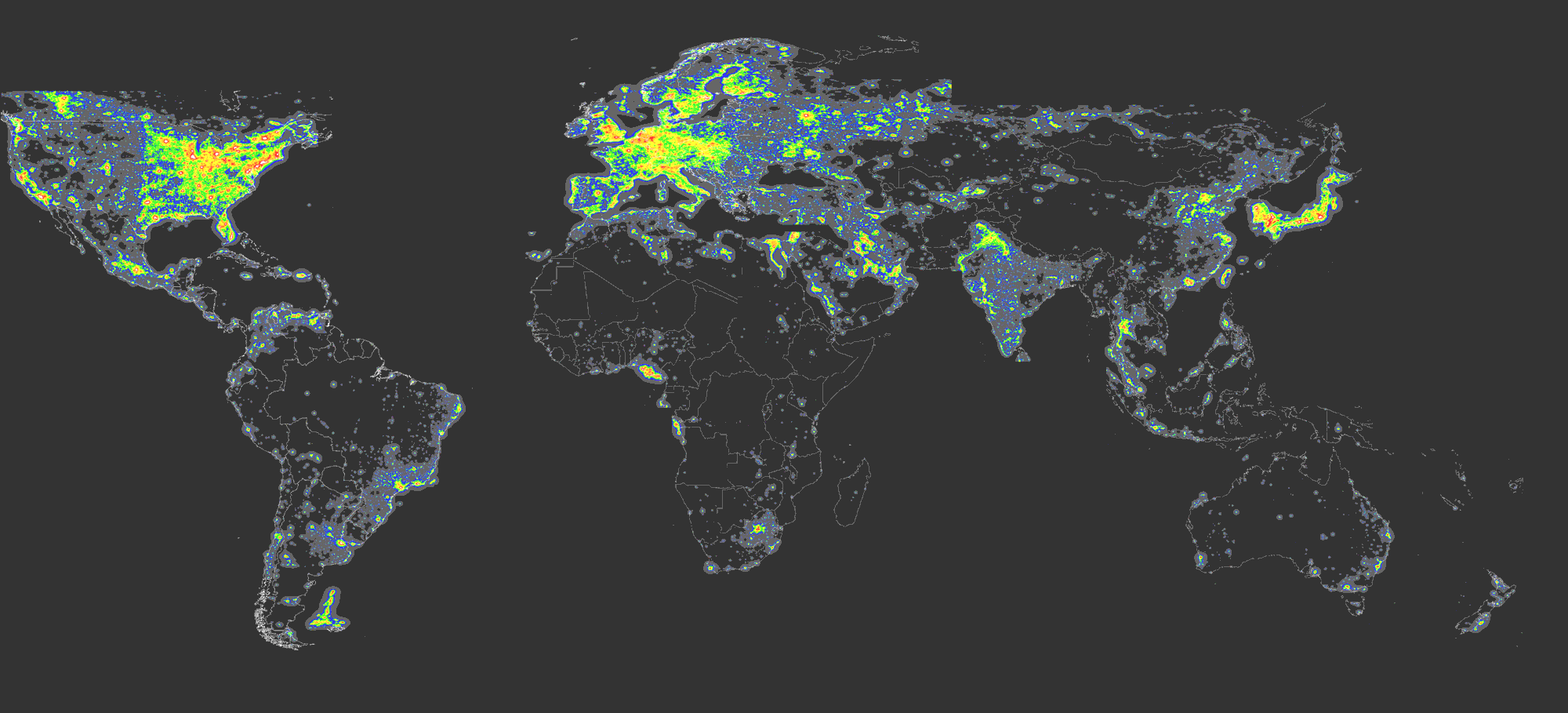
Please take your time... and enjoy it large on black
In our industrial world and 24-hour economy today it's very hard to find a place where it's absolutely dark. Light pollution, also known as photopollution or luminous pollution, is excessive or obtrusive artificial light. The International Dark-Sky Association (IDA) defines light pollution as: Any adverse effect of artificial light including sky glow, glare, light trespass, light clutter, decreased visibility at night, and energy waste.
Light pollution can be divided into two main types: 1) annoying light that intrudes on an otherwise natural or low-light setting and 2) excessive light generally indoors that leads to discomfort and adverse health effects. Since the early 1980s, a global dark-sky movement has emerged, with concerned people campaigning to reduce the amount of light pollution. Light pollution is a side effect of industrial civilization.
I told my kids this view quite unique. Such total darkness is hard to find in the world and can't not be found in the Netherlands anymore. How far we look it was dark except for that single light across the river and ofcourse the stars in the sky. You can see the light of the house of the ferry-man. Photo of the Xe Khong river running through the Dong Amphan National reserve. The Eastern border of Dong Amphan follows the international boundary with Vietnam. Dong Amphan covers 1,975 km2 and is located in the north-east of Attapeu Province. It is very remote and mounatinous. Photo exposure: 8 sec. F2.0 and ISO100.
Licht lijkt een onlosmakelijk bijeffect van de verstedelijking en de 24-uurs-economie. In een geïndustrialiseerd gebied als West-Europa is het nagenoeg onmogelijk om nog plekjes te vinden waar de hemel echt donker is. We spreken dan van lichtvervuiling. Lichtvervuiling: de verhoogde helderheid van de nachtelijke omgeving door overmatig gebruik van kunstlicht. Lichthinder: de overlast die mensen en dieren hiervan ondervinden. Ik vertelde mijn kinderen dat dit uitzicht bijzonder was omdat in Nederland zulke donkere plekken niet meer bestaan. Het enigste licht wat hier brandt is het huis van de veerman aan de overkant van de rivier voor de rest alleen duisternis en de sterren aan de hemel. Een uitzicht op het 1,975km2 grote Dong Amphan Nature park. Nederland is gewogen en te licht bevonden Verlichting is een van de meest dramatische veranderingen in ons milieu. Assimilatielampen in kassen, beveiligings-schijnwerpers in tuinen, het dichtverlichte wegennet, xenon-projecties op monumentengevels, witverlichte tennisbanen en reclameborden langs iedere snelweg. Jaarlijks worden miljoenen Euro's verspild door inefficiënte verlichting. Slecht afgeschermde lichtbronnen veroorzaken veel stoorlicht dat niet op de wegen of straten valt, maar omhoog straalt en hooguit de onderkant van overvliegende vliegtuigen verlicht. Aangezien voor elektrische verlichting fossiele brandstoffen worden opgestookt, betekent dit ook een ongewenste uitstoot van kooldioxyde in de atmosfeer. Lichtvervuiling vormt, net zo goed als lawaai en stank, een aanslag op het milieu.
Please have a look at the Atlas of World Light Pollution
© all rights reserved by B℮n
Khao Sok National Park in Southern Thailand is an amazing place. The park comprises the largest area of virgin forest in Southern Thailand and is a remnant of rainforest which is older and more diverse than the Amazon Rainforest. It is covered by the oldest evergreen rainforest in the world, huge limestone mountains shooting straight up in the air, deep valleys, breathtaking lakes, exciting caves and much more. Home to wild Elephants, Hornbills, the rare Asian Ox, various monkey and ape species, a myriad reptiles, amphibians and floral species, Khao Sok including the Cheow Larn lake is one of the most unique and important rainforest habitats in South East Asia. It is estimated to contain over 5% of the worlds species. Additionally the Park is traversed by a limestone mountain range from north to south with the highest point of 950m. This mountain range is hit by monsoon rain coming from both the Gulf of Thailand and the Andaman Sea, which makes it Thailand’s wettest region with an annual rain fall of 3500mm. Heavy rainfall and falling leaves led to the erosion of the limestone rocks and created the significant karst formation of today. The park offers a multitude of well-worn dirt trails to explore. Rainy season begins in late April and lasts until December, with the heaviest rains between May and July, then October and November. But don’t let that stop you! The rain is often a welcome respite to the tropical heat. Not to mention the fact that … it is the RAINforest!,
A lot of visitors come to Khao Sok just to marvel the beauty of the nature but you can also enjoy your time taking part experiencing the tropical rainforest on foot. Different trekkings are possible. We're hiking to the Coral cave, The jungle trail ends here at the next lake called: Ha Roi Rai. From here we'll take another adventure with bamboo rafting towards the Coral cave. The spectacular 10,000 year-old Cave is one of the worlds hidden gems. Inside the cave you will be excited with stalagmite, stalactite, darkness, monster spiders, dripping water, sparky things and the noise of bats. It might be a good idea to bring your own torch as it is very dark inside. When you leave the cave, there is a track to watch the beautiful scenery of the lake. Taking the bamboo rafting adventure during rainy season will let you see more other wildlife such as wild hog, bison, schomburgk’s deer, etc. As they will live in deep forest during dry season. Rare flora are found along nature trails particularly to the south of the park where local plants such as lianas, bamboo, ferns and giant rattan can be found. A place where the rhythm of jungle takes you higher. Gibbons sing their morning song, a glimpse of wildlife. Also the Dusky Leaf Monkeys can be found in Khao Sok National Park. The Dusky Langurs are often seen on treetops on early mornings or late afternoons feasting on fresh leaves and fruit. Best place in Khao Sok to see them is Cheow Larn Lake.
Khao Sok เขาสก is een groot nationaal park, gelegen in Thailand in de provincie Surat Thani. Het heeft een oppervlakte van 739 km². In het park bevindt zich naast oerbos, wat een overblijfsel is van een regenwoud dat ouder en diverser is dan het Amazoneregenwoud. Het is één van de mooiste nationale parken van Thailand. met een eeuwenoud regenwoud met watervallen, kalksteenformaties die meer dan 900 meter de lucht in schieten, een groot meer met honderden kleine eilandjes, grotten, prachtige tropische planten en een grote variëteit aan wildlife waaronder de Aziatische olifant, luipaarden, sambars, bantengs, tapirs, dwergherten, cobra's, pythons en verscheidene soorten reptielen, apen en 311 soorten vogels. Met een beetje geluk vind je hier ook nog de wilde lotus Rafflesia kerri Meyer of in het Thais bua phút, de grootste bloem ter wereld. Volledig volgroeide bloemen halen de 90 centimeter en leven in de wortels van lianen. Khao Sok is een perfecte plek voor jungle tochten. Er zijn verschillende paden om te verkennen.Een zware klim eerst naar boven en dan weer naar beneden. Aangekomen bij het ingesloten Ha Roi Hai meer maken wij een tocht per bamboevlot naar de Koraal grot. Deze grot is één van de wereld verborgen juweeltjes. In de grot vinden we stalagmieten, stalactieten, duisternis, spinnen, druppelend water, glinsteringen dingen en het geluid van vleermuizen. Een mooie gelegenheid om de ecologie van het regenwoud te leren kennen. Even buiten de groot zie ik tot mijn verrassing Brillangoer apen vanuit de bamboe toppen. De Brillangoer eten voornamelijk bladeren, maar ook veel onrijpe vruchten en bloemen. De kans om een neushoornvogel te zien, een gibbon te horen roepen of een makaak-aap zien slingeren is niet altijd even groot. Met name Gibbons maken een prachtig geluid. Khao Sok is Thailand's natste regio met een jaarlijkse regenval van 3500mm. Wat te verwachten van het regenseizoen in Thailand - juni tot oktober: af en toe een flinke tropische regenbuien van 30 minuten tot 2 uur.
Nihilism Snobbery.
Eamque intimam secum fert ordines memóriam ágimus in increpationibus iræ maxime religionum animis mortale dignas memoratu certamina coepta ongoing possessiones suas,
ספּלינדערעד קעפ דיסטראַקטינג כוחות ינגקאַמפּראַכענסיבאַל לאַנסעס ומוויסנדיק שווערדן אַסטאַנישינג אינסטרוקציעס ונדינטערנדיק טהונדערבאָלץ,
buairidhean eagalach a 'sgaoileadh bhrioblaidean air beachdan a ghleidheadh a' glacadh ghrannaichean leòn a 'toirt ionnsaigh bho dhroch aire an tosgaire,
consolée vengeance douce attaques menaçantes termes rives fortifiées coeur têtu confus camps guerres nobles tordu victoire,
kunnianhimoinen ylpeys perusteltu kuningas itsevarma konna nouseva kupit mestari maine galoppinen kestävyys salainen palo vapaus keisari,
duisternis prijst krijger tirannie's bloederige cry's galmende gedachten gekoesterd vechters gekmakend winden sorceries vechtpartij,
恐ろしい行為草の根的なトリッキーな騒ぎ危険の記憶疑惑恥ずかしがる行為弾薬トランペット.
Steve.D.Hammond.