View allAll Photos Tagged driling
The tugs Aiviq and Nanuq tow tandem tow the mobile driling unit Kulluk 116 miles southwest of Kodiak City, Alaska, Sunday, Dec. 30, 2012. The tugs are attempting to tow the Kulluk to a sheltered area but weather conditions, including 29 mph winds and 20-foot seas, have prevented them from taking the necessary northernly course. U.S. Coast Guard photo by Petty Officer 2nd Class Chris Usher.
(public display, Drake Well Museum, Titusville, Pennsylvania, USA)
------------------------------------
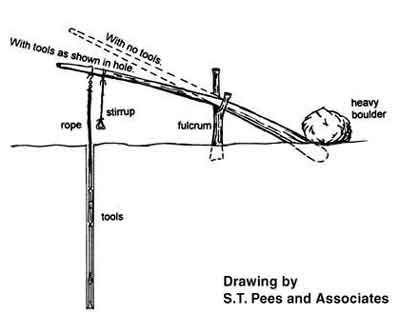
Early wells were drilled using a spring pole apparatus - men would use their feet to "kick down" the drill bit and chip away at the rock (see: www.petroleumhistory.org/OilHistory/images/Cable/Sp_pole.jpg). Three feet of hole per day could be achieved using this method. As the oil industry developed, wells were drilled using cable tool rigs and later, rotary drill rigs. Most petroleum wells are drilled using rotary drill rigs - seen here is a drilling bit for this type of rig. This is a tri-cone bit. During drilling, the three cones rotate and the projections abrade and remove rock fragments. In addition to being used for drilling petroleum wells, tri-cone bits have also been used at some mines to drill holes. The holes are then packed with explosives and detonated (e.g., this was done in the iron mining districts of Minnesota).
----------------------
See info. at:
en.wikipedia.org/wiki/Drilling_rig
and
Brakes are not very important in the Indianapolis 500 Race. These are the minimum needed, and built more to reduce weight than to make repeated quick stops from high speed, as would be more important in a road race car.
Tri-cone rotary drilling bit. (public display, Minnesota Discovery Center, Chisholm, Minnesota, USA)
Early wells were drilled using a spring pole apparatus - men would use their feet to "kick down" the drill bit and chip away at the rock (see: www.petroleumhistory.org/OilHistory/images/Cable/Sp_pole.jpg). Three feet of hole per day could be achieved using this method. As the oil industry developed, wells were drilled using cable tool rigs and later, rotary drill rigs. Most petroleum wells are drilled using rotary drill rigs. Shown above is a drilling bit for this type of rig. This is called a tri-cone bit - the knobs are made of carbide. During drilling, the three cones rotate and the knobs abrade and remove rock fragments. In addition to its use in drilling petroleum wells, tri-cone bits have also been used to drill holes at certain mines. The holes are then packed with explosives and detonated. This was done in the iron mining districts of Minnesota, for example.
----------------------
See info. at:
en.wikipedia.org/wiki/Drilling_rig
and
Xuanhua Taiye Drilling Machinery Co. Ltd. specializes in the design, manufacturing and service of various surface drilling equipment such as full-hydraulic surface DTH drilling rigs, full-hydraulic surface top-hammer drilling rigs, split hydraulic down-the-hole drilling rigs, split hydraulic top-hammer drilling rigs. It is also a manufacturer of spare parts for drilling rigs, an agent of international famous brand air compressors and air compressor accessories.
More Information of TAIYE Drilling Rigs
Professional team for drill rigs
The company brings together domestic and international outstanding expert design teams, with culture as the foundation, quality as the soul, and continuous innovation. It is an outstanding manufacturer of surface dilling equipment in China. With deep technical strength, advanced manufacturing technology, and Professional, comprehensive and timely service, Taiye drill has been committed to providing reliable, efficient and environmentally-friendly open-air dilling equipment for users around the globe, and isa service provider of comprehensive dilling solutions.
Star products of drill rigs
Star products TAIYE-D8-DTH full-hydraulic surface down-the-hole driling rig, TAIYE-T45 full-hydraulic surface top-hammer rig, TAIYE-X5-DTH split hydraulic down-the-hole dilling rig, TAIYE-370-DTH split hydraulic down-the-hole dilling rig, TAIYE- 360-TH split hydraulic top hammer drill rig with a dilling coverage range of 76- 254mm, which matches China Baosi air compressor, China Liutech air compressor, US Sullair air compressor, Japan Airman air compressor, etc. Depending on the working conditions, it is serving the owners of open-pit mining, quarrying and civil engineering around the world.
May 2009 - This is the next to last phase of wall construction for the SR 169 Green River Bridge repair work. The concrete wall on the left sits on top of and pulls together 57 concrete shafts drilled deep into the ground.
This giant machine you see in the center is drilling holes through the concrete and into the bedrock.
(public display, Drake Well Museum, Titusville, Pennsylvania, USA)
------------------------------------
Early wells were drilled using a spring pole apparatus - men would use their feet to "kick down" the drill bit and chip away at the rock (see: www.petroleumhistory.org/OilHistory/images/Cable/Sp_pole.jpg). Three feet of hole per day could be achieved using this method. As the oil industry developed, wells were drilled using cable tool rigs and later, rotary drill rigs. Most petroleum wells are drilled using rotary drill rigs - seen here is a drilling bit for this type of rig. This is a tri-cone bit. During drilling, the three cones rotate and the projections abrade and remove rock fragments. In addition to being used for drilling petroleum wells, tri-cone bits have also been used at some mines to drill holes. The holes are then packed with explosives and detonated (e.g., this was done in the iron mining districts of Minnesota).
----------------------
See info. at:
en.wikipedia.org/wiki/Drilling_rig
and
Here is a closer shot of the concrete. The indentations is where we will install the anchor cables... what's an anchor cable? Check out the next picture....
Thésée-la-Romaine (Loir-et-Cher).
Larve de Drilus flavescens.
Le Drilus flavescens ou Drile jaunâtre ou Drile panaché est une espèce d'insectes coléoptères.
Les larves se nourrissent d'escargots. Il faut plusieurs jours à la larve pour consommer la chair de l'escargot, puis plusieurs jours pour la digérer entièrement. Les coquilles sont utilisées comme habitat par la larve pour y muer et s'y métamorphoser.
Les adultes mâles et femelles sont si différents qu'on en a d'abord fait deux espèces. La femelle aptère, rarement visible, beaucoup plus grande, conserve l'aspect d'une larve.
This is an anchor cable. It's a series of steel strands pulled together to make a super strong cable that's 100 feet long!
We jam this cable through the concrete and embed it into the bedrock. It reinforces this wall to prevent the landslide from winning the battle to bring the Kummer Bridge down.
(public display, Drake Well Museum, Titusville, Pennsylvania, USA)
------------------------------------
Early wells were drilled using a spring pole apparatus - men would use their feet to "kick down" the drill bit and chip away at the rock (see: www.petroleumhistory.org/OilHistory/images/Cable/Sp_pole.jpg). Three feet of hole per day could be achieved using this method. As the oil industry developed, wells were drilled using cable tool rigs and later, rotary drill rigs. Most petroleum wells are drilled using rotary drill rigs - seen here is a drilling bit for this type of rig. This is a tri-cone bit. During drilling, the three cones rotate and the projections abrade and remove rock fragments. In addition to being used for drilling petroleum wells, tri-cone bits have also been used at some mines to drill holes. The holes are then packed with explosives and detonated (e.g., this was done in the iron mining districts of Minnesota).
----------------------
See info. at:
en.wikipedia.org/wiki/Drilling_rig
and
T2FD = Tilted Terminated Folded Dipole
Eight 1/2" CPVC tubes cut to 17.25" lengths. Wire holes (5/64") driled 1/4" from each end for 12AWG Copperweld antenna wire (steel center with copper jacket). Four spreaders on each side of the antenna spaced on 54" centers. Total weight added to the antenna is 1 lbs.
Construction design by David Stall, AE5DS
Note: Changed from 34" centers shown on drawing to 54" begining at ends.
PC150311