View allAll Photos Tagged direction
I’ve been in a contemplative mood lately. I am not entirely sure why I feel this way. Was it brought by homesickness? Nope. Perhaps, it’s the fact that I have more time with myself now. I am alone but not that lonely. LOL! Blogged
On the Gotthard railway heading south, this KLV train, pulled by the Siemens multi-system locomotive (for 15 kV~, 16.7 Hz and 25 kV~, 50 Hz) and direct current (1.5 kV= and 3 kV=) 474 015 of SBB Cargo, is on its way. Photographed just before reaching the Steinen station. (Canton of Schwyz / Switzerland)
If you like the photo press "F"
Click on the photo to enlarge for a better view.
© Andreas Berdan - no unauthorized copying permitted
Parc St-Paul-de-la-Croix. Avenue Christophe-Colomb entre Sauvé Est et Sauriol Est, Montréal. Installation du côté terrain de baseball.
This quiet forest road invites the viewer into a world of stillness and direction. Surrounded by towering trees and filtered light, the scene unfolds in black and white, emphasizing form over color and solitude over movement. The central arrow becomes a subtle symbol of focus and forward motion, guiding the eye through a landscape where time feels suspended. Captured in Leipzig, Germany, this moment reflects the quiet power of simplicity and the emotional depth monochrome photography can evoke.
“The fragrance of flowers spreads only in the direction of the wind. But the goodness of a person spreads in all direction.”
Chanakya
DSCN8759-001
Entrance towards the "building X", the former home of the Renault direction (1922-1975).
2016 ©MichelleCourteau
Le Trapeze, the ground occupied by the former Renault Manufacture, Boulogne-Billancourt.
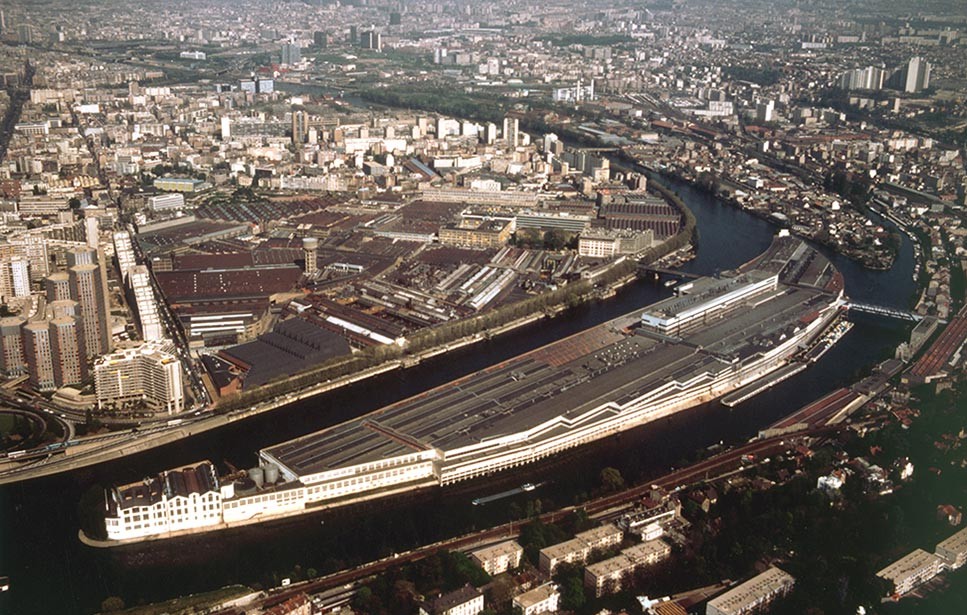

Architects: www.sauerbruchhutton.de/en/project/bb4
© 2014 by Wil Wardle. Please do not use this or any of my images without my permission.
Please also find me Me on facebook, 500px , Ipernity and flickr:
www.facebook.com/pages/Wil-Wardle-Photography/13877641613...
© 2009 ryan southen photography All Rights Reserved
*not for use without my prior written consent*
follow me on instagram: rsouthen, on facebook, or purchase some fine art prints
This is taken at the same place and time as my previous shot "Fog light", (actually only 1 minute difference)
All the same camera settings except 9 seconds longer but facing away from the super moon.
A little less fog in this direction tho
F/5.0, ISO 640, 70mm, 13 seconds
Bit of a weird one this... having my yearly "do something different" complex, some bits make sense, others dont... was one of those days!
A snowflake that doesn’t know what it wants to be! This intriguing snowflake has a shape that is battling between branches and a solid plate shape, and you can clearly see where the lines of battle have been drawn. View large!
As you’ve seen so far in this series, the tiniest snowflakes always have a way of being enigmatic and interesting. Maybe it’s the lack of complexity that allows us to focus on specific features, or maybe it’s that smaller snowflakes contain smaller details that we can more easily see and be curious about. In this case, there’s a mystery to solve!
The upper-right-most branch holds the story of the branching while the lower-left tells us how the crystal stays as a plate. In the former, we can identify a crystal split. The snowflake divides itself into two new planes when a cavity forms in the ice, a very common occurrence. What’s odd here is that the bottom plate grows the branch at the tip, but the rest of the bottom plate falls behind the top plate in growth. This might be a case where the knife-edge instability comes into play.
I don’t fully understand the physics (I’m a geeky photographer, not a physicist), but when a snowflake is incredibly thin, the growth can accelerate. If the bubble/cavity that cut the snowflake in half changed its thickness just at the tip, it could propel the tip into a branch-like growth without causing the same rapid growth to the rest of the crystal facets. It’s unusual, but not the first time I’ve seen it – something must behave slightly differently at the corner to evoke this behaviour.
On the other side of the snowflake, we see a very solid hexagonal shape, but the ghosts of branches are hidden closer to the center. How does this happen? Again, I’m not entirely sure. I love these mysteries! I believe the best explanation would be this: As the branches began to form, the growth of the top plate was keeping pace, likely due to the direction that the snowflake was falling. The same physics that made the branch grow faster than the edges of the underside are at play, but with more water vapour building up the top plate, it kept pace with the branching, and eventually overpowered it. As soon as any one plane of growth as the advantage of growing farther out, it chokes out the growth of the competition.
Again, my ideas are just the theories of a man who has studied snowflake growth for the fun of it, and has witnessed many thousands of these crystals to see how they grow. It’s open to interpretation – and I welcome yours!
For more musings on snowflakes and the most detailed photographic tutorial on the subject you’ll ever see, consider a copy of Sky Crystals: www.skycrystals.ca/book/ - it’s a great winter companion for any photographer or naturalist. Winter can be more tolerable when you ponder the mysteries in a single snowflake.