View allAll Photos Tagged counting

West-German postcard by Kolibri-Verlag G.m.b.H., Minden/Westf., no. 2487 Photo: Columbia. Publicity still for The Guns of Fort Petticoat (George Marshall, 1957).


Audie Murphy (1925-1971) was the most decorated US soldier of World War II. Subsequently, he was a film actor and songwriter. In the 1950s and 1960s, he enjoyed success as a performer in Westerns and adventure films. Murphy received every military award his country had to offer, some of them more than once - a total of 33 awards and medals; among others, he was a recipient of the Medal of Honor. He received five of his decorations from France and one from Belgium. During his three years of service, he served in the 3rd US Infantry Division, where he rose from Private to First Lieutenant.


Audie Leon Murphy was born in Kingston, Texas in 1925. His parents were Josie Bell (Killian) and Emmett Berry Murphy, poor sharecroppers of Irish descent. There was great poverty in his family which counted eleven children, two of whom died. As soon as these children were old enough, they were employed to help earn a living. His father disappeared one day and was never heard from again. Over the years, the mother became increasingly weak and died when Murphy was 16 years old. The three youngest children were sent to an orphanage and Murphy went to work, first at a petrol pump and then at a radio repair shop. When the Japanese attacked Pearl Harbor, he decided to enlist in the army. On his seventeenth birthday, he applied to a Marine recruiting station but was rejected because he was not of sufficient weight. Finally, after another unsuccessful application to the paratroopers, he was accepted into the infantry. With the help of his sister, he had used a forged birth certificate, with 1924 as his date of birth, to make himself look old enough. At Fort Meade, where his training was to be completed, he kept insisting on being sent overseas and in early 1943 Murphy landed with the rest of the troops in North Africa. He would become the most decorated American soldier of World War II and participated in combat operations for 27 months. Early in June 1945, a month after the German capitulation, Murphy returned to the United States, where he received a hero's welcome in his native Texas. He was honourably discharged from the army with the rank of a first lieutenant on 21 September 1945. Murphy became world famous when he appeared on the cover of Life (16 July 1945) as the "most decorated soldier". After the outbreak of the Korean War in June 1950, he reenlisted in the 36th Infantry Division of the Texas National Guard. However, this division did not participate in combat. When Murphy left the Guard in 1966 it was with the rank of major. After Murphy returned from Europe, he bought a house in Farmersville for his eldest sister Corrine, her husband Poland Burns and their three children. His intention was that his youngest sister and two brothers, Nadine, Billie and Joe, who had been in an orphanage since their mother's death, would also move in with them but six children under one roof proved a bit much so Murphy took them in.


After actor James Cagney had seen Audie Murphy's picture on the cover of Life magazine, he invited him to Hollywood in September 1945. The first years there were difficult for Murphy. Cagney Productions paid for acting and dancing lessons but was reluctantly forced to admit that Murphy - at least at that point in his career - didn't have what it took to become a movie star. For the next several years he struggled to make it as an actor. Due to a lack of work, he became disillusioned, often ran out of money and slept on the floor of an old gym 'Terry Hunt's Athletic Club', owned by his friend Terry Hunt. He eventually got a bit role in the film Beyond Glory (John Farrow, 1948) starring Alan Ladd, and in Texas, Brooklyn and Heaven (William Castle, 1948) with Guy Madison and Diana Lynn. In this third film, Bad Boy (Kurt Neumann, 1949), Murphy got a leading role. Murphy also appeared in the film adaptation of Stephen Crane's book The Red Badge of Courage (John Huston, 1951), for which he received rave reviews. Murphy wrote his autobiography 'To hell and back' in 1949 and it became a national bestseller. The book was written by his friend David "Spec" McClure, a professional writer. He had great difficulty playing himself in the film version, To Hell and Back (Jesse Hibbs, 1955). He initially saw it as a kind of sell-out of his actions during the war and thought Tony Curtis should be given the lead role in the film. In the film, the reality was followed and Murphy's comrades died just as was mentioned in the book. At the end of the film, Murphy was the only member of his original regiment left. During the ceremony in which Murphy was awarded the Medal of Honor, his friends were represented as ghosts. This was Murphy's idea to honour his friends. The film was a huge hit and brought in almost 10 million US dollars during its first years, setting a box-office record for Universal that wasn't broken for 20 years until it was finally surpassed by Jaws (Steven Spielberg, 1975). One of his better pictures was Night Passage (James Neilson, 1957), a Western in which he played the kid brother of James Stewart. In 1959 he starred in the Western No Name on the Bullet (Jack Arnold, 1959), which was well received, despite Murphy playing a professional killer. He worked for Huston again on The Unforgiven (John Huston, 1960) opposite Burt Lancaster and Audrey Hepburn.


Audie Murphy was plagued by insomnia, bouts of depression and nightmares, probably a result of the many battles he had to fight during his life. His first wife, Wanda Hendrix, often spoke of Murphy's struggles. During the 1960s Murphy was addicted to the sleeping pill Placidyl for a time. When he realised he had become addicted he locked himself in a hotel room and taught himself not to use it. He also broke the taboo of talking about war-related mental conditions. To draw attention to the problems of returning veterans from Korea and Vietnam, he spoke candidly about his own. He called on the US government to pay more attention to this issue and to study more closely the impact of war on mental health. Meanwhile, the studio system that Murphy grew into as an actor crumbled. Universal's new owners, MCA, dumped its "International" tag in 1962 and turned the studio's focus toward the more lucrative television industry. For theatrical productions, it dropped its roster of contract players and hired actors on a per-picture basis only. That cheap Westerns on the big screen were becoming a thing of the past bode no good for Murphy, either. The Texican (Lesley Selander, 1966) with Broderick Crawford, his lone attempt at a new, European form of inexpensive horse opera, to become known as "the Spaghetti Western", was unsuccessful. His star was falling fast. He made a total of 44 films, but Murphy was also a rancher and businessman. He bred and raised thoroughbred horses and owned several ranches in Texas, Arizona and California. Murphy was also successful as a country singer and composer. He worked with Guy Mitchell, Jimmy Bryant, Scott Turner, Coy Ziegler and Ray and Terri Eddlemon, among others. Murphy's songs were recorded and sung by Dean Martin, Eddy Arnold, Charley Pride, Jimmy Bryant, Porter Waggoner, Jerry Wallace, Roy Clark and Harry Nilsson, among others. His two biggest hits were 'Shutters and Boards' and 'When the Wind Blows in Chicago'. In 1949, Murphy married film actress Wanda Hendrix and divorced her in 1952. He then married flight attendant Pamela Archer, with whom he had 2 children, Terrance Michael and James Shannon - named after two of his closest friends. Audie Murphy died in 1971 in a plane crash in the mountains of Virginia. Murphy was buried with military honours in Arlington National Cemetery. The official government representative was the decorated World War II veteran and future President G.H.W. Bush.


Sources: Wikipedia (Dutch) and IMDb.


And, please check out our blog European Film Star Postcards.

First volume if the Chronicles of Castle Brass by Michael Moorcock. Printed and bound by Collins, Glasgow

wearing Jude Deveraux, The Raider.

A variety ( counted 10 so far ) of ScotRail trains viewed from the platform at Haymarket railway station looking west past Haymarket depot and to Saughton on the 6th of November 2018


In the platform 334019 waits to leave with 2H01 Edinburgh Waverley - Helensburgh Central via Bathgate with another pair of Class 334's waiting for the signal to proceed into the platform with 2M32 from Milngavie while 170410 heads into platform 1 with 2P82 from Dunblane

In the background in the depot the last remaining Class 158, 158730 in the First livery is shunting around past 170412 with 43179 & 43033 just behind

Finally behind the 334's in the queue are a pair of Class 385's working 1R48 Glasgow Queen Street

Assignment 52-342013 - Scavenger Hunt - Don't count your chickens before they are hatched

Gran Turismo 5

Corner Piece Puzzles

cardboard

1,000 pieces, new and complete

73 x 48 cm

2022 piece count: 142,280

puzzle: 194


Royal Mail workers have been on strike today; the first of 19 proposed strikes in a long-running dispute over pay and conditions. So with no bills to open, no parcels to unwrap, we cracked on with this collage puzzle of foreign postage stamps, our last jigsaw before we leave for a fortnight's holiday in Kefalonia.

This is one of a pair of puzzles purchased earlier this year and saved until now. Corner Piece puzzles have a tight fit and bright, clear images, and these collage-type ones are relaxing to assemble when something undemanding is required.

the chamber of count dooku in my new MOC and in my movie (LEGO Star Wars The Invasion Of Teth)

www.youtube.com/watch?v=k2cjLzBQDzI

The Awakening Shark Dive at Barefoot Kuata, Yasawa, Fiji.

In my next life I think I would like to be a butterfly.... ;)


Shot from my trip last weekend - taken from the car on the highway. See original shot in comments (only with a slight curve adjustment). The shot above (only the sky) was processed with Florabella texture 'Painterly'.


Hope everyone is having a great week!


Better view


Counting crossdressing

transgenre.silicone-breast.com/2016/11/01/counting-crossd...

4.bp.blogspot.com/-MexuaGW7j2s/WBNhoOWbI3I/AAAAAAAApeg/om...
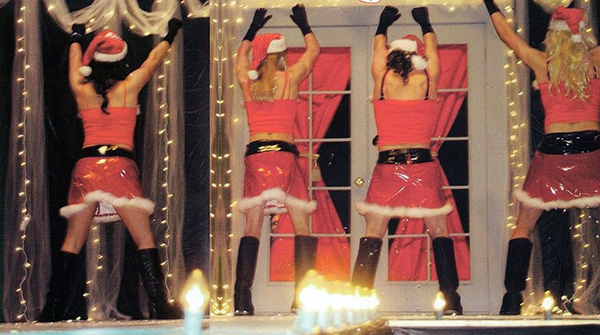
  

The Mean Gurls at Hamshire (TX) High School in 2010.


The Femulate hit counter at the bottom of the right sidebar broke the 12 million mark this past week!


I have had the StatCounter hit counter "transgender" running on this blog since the first post. I am not sure what g


No Invites please ....


Just something to remember in going about our lives.

Seeing this young man just gave me a time to pause and reflect.


"Challenges make you discover things about yourself that you never really knew"

C. Tyson

(for further information please click on the link at the end of page!)

Palais Daun-Kinsky

If the Freyung once has been one of the most prestigious residential addresses in town, so for it was next to the Palais Harrach especially the Grand Palais Kinsky responsible. In its place in the middle ages were two parcels, each with a small building. The front part of the Freyung was since the 16th Century always in aristocratic in hands (Bernhard Menesis Freiherr von Schwarzeneck, Countess Furstenberg, Counts Lamberg). 1686 acquired Karl Ferdinand Count Waldstein the house of Count Lamberg. His son bought also the adjacent house in Rose Street (Rosengasse) and united both plots to one parcel. He had three granddaughters, who sold the site in 1709 to Wirich Philipp Laurenz Graf Daun. This came from an old Rhenish nobility. His ancestors were mostly working for the Elector of Trier as officers. In the battle of the Habsburgs against the Turks, Spanish and Frenchmen, he acquired great military merit. He brought it to the General Feldzeugmeister (quartermaster) and Viceroy of Naples. In 1713 he had the house at the Freyung demolished and by Johann Lukas von Hildebrandt built in its place until 1716 a palace, him serving as Vienna's city residence. Down may have been Antonio Beduzzi requested the creation of reconstruction plans, but was eventually Hildebrandt entrusted with the work. In 1719, the palace was largely completed. Daun lived there but rarely because he stayed a lot in Italy and in Austria preferred his country castles Ladendorf, Kirchstetten and Pellendorf. In 1746 acquired Johann Joseph Count von Khevenhüller the Palais from Leopold Joseph von Daun, the son of the owner, who happened to be in financial difficulty. The Reichsgraf (count of empire) was appointed in 1763 by the Empress Maria Theresa for his services to the Lord Steward and Lord Chamberlain, and raised to the hereditary imperial princes (princes of the Holy Roman Empire).

Door knocker

He sold the palace in 1764 to the Imperial Councilor President Ferdinand Bonaventura Harrach Count II. This worked as a diplomat, especially in Holland and Italy. At times of Maria Theresa, the building was inhabited by her Swiss Guards until they 1784 moved to their new quarters in Hofstallgebäude (court stable building). Ferdinand Bonaventura's daughter Rosa brought the palace in 1790 into her marriage to Josef Graf Kinsky. Whose family belonged to the Bohemian nobility. Its members appear at the beginning of the 13th Century documented. Wilhelm Freiherr von Kinsky was a colonel and friend of Wallenstein. He was murdered with this 1634 in Eger. His confiscated estates were divided among the assassins. Only two masteries (Chlumez and Bohemian Kamnitz ) remained through the timely change of front of his nephew, Johann Octavian with the family. The Kinsky but succeeded soon to rise again. They occupied again high positions in the administration and the military. 1798 the had modernized their Viennese palace by the architect Ernst Koch inside. Thus, the original Baroque interior was lost. As in 1809 the Frenchmen had occupied Vienna, a french Marshal and General were billeted in the palace. Prince Ferdinand Kinsky was a great patron of Beethoven, which he paid an annual salary of 4,000 florins for life along with two other nobles. In 1856, the Palace was refurbished in the interior by the architect Friedrich Stache. In the 19th Century lived the Princes Kinsky mostly on their Bohemian goods or in Prague. The building was therefore temporarily rented to some posh tenants. So lived here temporarily Field Marshal Radetzky and Archduke Albrecht. 1904 redecorated the French interior designer Armand Decour the piano nobile.

Staircase - second floor

With the end of World War II began a tough time for the Kinsky family. Almost all goods and industrial holdings, with the exception of the hunting lodge Rosenhof at Freistadt lay in Bohemia. By 1929, 50 % of the extensive Bohemian possessions were expropriated. There were still about 12,000 acres, a sugar factory and breweries. 1919 had to be a part of Vienna's Palais force-let. During World War II it was requisitioned by the German army. For fear of air raids the in the palace remaining objects of art were transferred to some Bohemian castles. The Palais Kinsky was not destroyed, its art treasures but remained in Bohemia. After the Second World War, the remaining Czech possessions were lost by nationalization for the family. In the Viennese palace were temporarily housed the embassies of China and Argentina. In 1986 it was sold by Franz Ulrich Prince Kinsky. After several short-term owners, the palace was acquired by the Karl Wlaschek private foundation in 1997. It was generously restored from 1998 to 2000 and adapted for offices and shops. The Grand Ballroom is often used because of its excellent acoustics as a concert hall. Since 1992, acclaimed art auctions are held at the Palais.

The Palais Kinsky is probably next to the Belvedere the most prominent secular work of the great Baroque architect and one of the best preserved baroque palaces in Vienna. Despite multiple changes of ownership and of numerous rearrangements inside the main components such as Baroque facade, vestibule, staircase, hall and gallery remained largely unchanged. The building extends between Freyung and Rosengasse. The property is only 30 meters wide, but three times longer. It was therefore not an easy task to build on it a representative palace with a grand staircase. Hildebrandt but has brilliantly overcome by putting up four floors at 24 m height, and yet preserving the proportions. He grouped the construction with two long side wings and a cross section around two consecutive large courtyards. The pomp and living rooms of the palace are mounted around the first courtyard, while the second contained carriage houses and stables. Here have yet been preserved the marble wall panels with the animal waterings made ​​of cast iron and enamel from the late 19th century. Hildebrandt integrated various parts of the previous building into the new building. The seven-axle face side at the Freyung is divided several times. Stability is procured by the rusticated ground floor with its inserted diamond blocks. On it sit the two residential floors. They are embraced by Corinthian Riesenpilaster (giant pilasters). The mezzanine floor above it features in comparison with the underlying main floor tiny windows.

Hercules

The large windows on the main floor are particularly detailed designed. While the outer pairs of windows possess pagoda-like over roofings, those of the three windows of the central projection are round-arched. The trophies and weapons depicted in the lintel fields refer to the military profession of the owner. Vertically is the extensive looking facade accented by the slightly protruding, tri-part central risalite, the pilasters are decorated much richer than that of the side projections. In the Fantasiekapitelle (fantasy capital) of the pilasters are diamond lattices incorporated, an important component of the coat of arms of the Counts Down. The with figures and trophies decorated attica is over the central part formed as balustrade. The sculptures are believed to originate from Joseph Kracker, representing the gods Minerva, Juno, Hercules, Neptune, Diana and Constantia. Very elegant looks the plastically protruding portal. Its composition goes back to Johann Lukas von Hildebrandt. It is considered one of the most beautiful Baroque portals of Vienna. The draft was submitted in 1713 and carried out until 1715. The richly decorated wooden gate dates from the period around 1856, when it was renewed. It is outside flanked by two, obliquely placed Doric columns that match the rusticated ground floor. Sloped to the inside carry two, on pillar stumps standing atlases (also from Kracker) the entablature with the overlying structured segment gable. On it sit the stone figures of Prudence and Justice. The middle window in between is much richer decorated than the rest of the window openings on the first floor. Instead of the usual trapezoidal over roofings here it is crowned by a cartouche held by two putti. The originally thereon located coat of arms of the owner was replaced after the change of ownership by that of the Kinsky family with three boar's teeth. Above the shield hangs an chain with the Order of the Golden Fleece. Both the gusset of the archway as well as the overlying triglyph frieze are decorated with trophies.

Banquet Hall

If someone passes the portal, so one gets into one, by strong pillars divided three-aisled gatehouse. The massive spatial impression is something mitigated by the large sculptures in the niches. They were created by Joseph Kracker. Among the somewhat restrained stucco decorations you can see the coat of arms of the owner, with its characteristic diamond motif. At this gate hall adjoins the widely embedded and more than twice as high vestibule with its domed ceiling. This transverse oval space is divided by pilasters and Doric columns. The rich stucco decoration of the ceiling provided with lunettes could come from Alberto Camesina or from his workshop. The here used motifs are again relating to the career of the client as a commander. For instance, in the lunette caps are reliefs of Roman soldiers. On the left side of the vestibule leads an anteroom to the grand staircase. It is dominated by a vault carrying Hercules, a work by Lorenzo Mattielli. As the monogram of Charles VI proves, with it the Emperor was meant to be worshiped. In two oval niches stand above the two double doors of the Treppenvorhauses (stairway hall way) busts of Caesar and Emperor Titus Flavius ​​Vespasian. The elongated stairway occupies almost the entire length of the left wing of the first courtyard. In the stairwell are eleven statues of Roman deities in stucco niches. The relatively narrow, crossed grand stairway is considered one of the most beautiful of Vienna. It overall design might go back to Antonio Beduzzi. On the second floor stand on the from winded perforated volute forms constructed stone balustrade four groups of playing or scrapping putti. They serve in part as a lantern holders, partly just as a decoration. The statue cycle in the staircase is a work of Lorenzo Mattielli, but the cherubs are believed to stem from Joseph Kracker. This type of decoration already points to the coming Rococo. A fresco by Carlo Innocenzo Carlone adorns the ceiling. The simulated architecture painted Antonio Beduzzi. The large wall mirror of the staircase were added after 1907 .

Staircase/ceiling fresco

The somewhat playful balustrade leads to the reception rooms on the second floor. The large oval ballroom above the entrance hall is oriented towards the courtyard. Its allegorical ceiling painting stems from Carlo Innocenzo Carlone. The other frescoes are of him and Marcantonio Chiarini. The walls are covered with marble. The room was several times, most recently in 1904 changed structurally. In front of the banquet hall is the former dining room. It is now called Yellow Salon. In 1879/80 was installed in it a choir stalls from the Pressburg Cathedral by Georg Raphael Donner ( 1736) and partly completed. The also acquired confessionals were converted into boxes that are in the antechamber of the second floor today. In the chapel, designed by Hildebrandt, was until 1741 as altarpiece Francesco Solimena's "Holy Family with the Infant John the Baptist". 1778 the sacred space, however, was already desecrated. The altarpiece is already since the 18th Century in Wiener Neustadt Neuklosterkirche (church in Lower Austria). In the cross-section between the first and the second courtyard lay the paneled gallery whose spatial effect in 1856 by an attached conservatory was changed something. Its vaulted ceiling is decorated with frescoes by Carlo Innocenzo Carlone. Marcantonio Chiarini created 1716/18 the quadrature paintings. At it followed a larger hall in which Francesco Solimena's oil painting "Phaeton and Apollo" was located. It can be admired today in the National Gallery in Prague. The hall was later used as a library. Part of the state rooms 1714 was equipped with ceiling paintings by Peter Strudel. In the course of a radical redesign of the building's interior Ernest Koch has cut off all stucco ceilings of the staterooms 1798-1800 and also redesigned the walls. Since 1879 Carl Gangolf Kayser tried to restore the original spatial impression by the of Rudolf von Weyr created new Neo-Baroque stucco ceilings. Only in a few areas (vestibule, staircase, ballroom), the original substance remained. In the palace there are numerous Mamorkamine (marble fireplaces) and stoves from the 18th and 19th Century. The star parquet floors and many original door fittings date from the third quarter of the 19th Century. The facades of the first courtyard are structured by Tuscan pilasters. The arcades on the ground floor have already been closed in 1753. The with a mascaron decorated wall fountain is a work of Rudolf von Weyr. The second courtyard is kept simple. Remarkable at it rear end is the cenotaph for the current owner Karl Wlaschek.

Location/Address: 1010 Vienna, Freyung 4

Activities: The courtyards are freely accessible, the staircase usually also. A look at the state rooms is only possible if these are not just rented.

www.burgen-austria.com/archive.php?id=804

How many do you see?

Fabric postcard. The second of my swirly wool sheep herd. This one has found greener pastures.

More than 35 fighter aircrafts we were counting on a field in rural Hungary. Nearly all of them were MiG-21 jets. A few of them were even in a converted version with two seats which were used for training. On top of that, there were also some Suchoi Su-22 fighter bombers. All of them were discarded, dumped and made unable to fly.


With the fall of communism, the era of those legendary warplanes was over. In the past, we have already heard of several other dumped MiGs which gained a lot of attention in the urbex community. But mostly, those are only single jets. Here we had the chance to see more than 30 of them at the same time. That's why this was one of the locations we were looking forward the most during our Hungary road trip.


To learn more about this place watch our documentary: www.youtube.com/watch?v=M4m95i1VYw4

White Zoo Kernhof, Austria

Sao dạo này mình có hiện tượng ngủ không biết trời trăng mây gió đâu :)) ~

Mỗi sáng khi thức dậy, cái mặt mình nó phì ra thêm 1 miếng :))

There are 24 signal lights in this shot and this is only one corner of the Iron Triangle. The two major railroads that pass thru Fostoria are the NS and CSX with CSX being the major player. There are three main diamonds and several connector tracks that make up the Iron Triangle with a daily average of 120 trains per day. In one 10 hr period this past week we counted 68 trains, many with foreign power units. The brick building center left, is CSX Tower "F" which is still manned and in operation and controls all movement thru the triangle. If you're a train watcher this is the place to go for sure!

October 31


"So, Marcus, I'm ready for Trick-or-Treat night. I have my bag ready for all those pieces of candy. That will stock my drawers in my room and keep me supplied until Christmas."


"And what, or should I say, whom are you going as?"


"Well, that's easy. I'm the Count. Count Down to Halloween. Brawhhahah."


"Oh, can you do me one favor?"


"What is it, Marcus?"


"Can you change me back to my old self with your magic wand? I look creepy."


Winslow # 26 of 26

31 October 2014


Happy Halloween!


Got stuck at the pharmacy for two hours waiting for a prescription, so I doodled some stars. The blue one at the top is made from a blintz base, and the other three are folded from table bases. Which is your favorite?

Not sure what this berry bearing bush or tree is named but I counted 25 rings or more perhaps. Our next door neighbour was kind enough to cut the remaining stump down to ground level last weekend with his electric chain saw. It's red berries were quite an attraction to area yellow jackets, one which stung Sue while she maneuvered around it last summer so down it came last fall.

Squeezing in one last scene card for the first half of this month's HA contest:)


The sky was stamped with S5215 Clouds bg in Ranger tumbled glass distress ink. The sun is from CL439 Kiss From the Sun and the trees with little hearts are from CL230 Elephants. I embossed the "fence" with S5208 Designer Woodgrain. Sentiment is from CG275 Birthday (4).

Other Materials Used:

Cricut From My Kitchen cart (sheep and #1 die cuts )

Cuttlebug swiss dot embossing folder

Papertrey ink cloud die

Stampin' Up scalloped border punch, ink and cs

A Muse gingham check pp

Kaiser pearls

Felt, Twine


TFL and for all your comments!


Meyer-Optik Görlitz Primotar E 50mm f/3.5

with stars and stripes and chocolate for the next 24 days

or should i say sharp where it counts ,as you can probably see the more i use this new sigma 150-600 sport the better i get used to it .really feel that i'm moving forward now and getting the i/q i have long been after .

shot with the lens wide open and a slow shutter speed to ,bean bag support

Portrait (1670) by Jan de Baen of Johan Maurits, Count of Nassau-Siegen (1604–1679). He was Governor-General of the colony Dutch Brazil, art lover, but he was also involved in the trans-Atlantic slave trade. At the exhibition Shifting Image - In search of Johan Maurits in Museum Mauritshuis The Hague NL.

Kusama Exhibit

Cleveland Museum of Art

Yes I counted them, but was a little disappointed that after 50 hours of work that there was only 750 loose books, I swear it felt like I made thousands. That being said I'm very happy with the finished product. Tello is the name of the future shop keeper who will be taking over, Clive was just standing in for these photos.

The roses in the People's Garden

Plan

Rosarium History - Classification

Floribunda - new color range - Casting

Tree roses - new plantings - Pests - Winter Care

Rambling Roses - fertilizing, finishes

Shrub Roses - Rose Renner - Sponsorship - variety name

The history of roses in the People's Garden

The People's Garden, located between the Imperial Palace and the ring road is famous for its beautiful roses:

1000 standard roses

4000 Floribunda,

300 rambling roses,

(Also called Rose Park) 200 shrub roses.

Noteworthy is the diversity: there are about 400 varieties, including very old plants:

1859 - Rubens

1913 - Pearl of the Vienna Woods

1919 - Jean C.N. Forestier

The above amounts are from the Federal Gardens. My own count has brought other results:

730 tree roses

2300 Floribunda

132 rambling roses

100 shrub roses

That's about 3300 roses in total. Approx. 270 species I was able to verify. Approx. 50 rose bushes were not labeled. Some varieties come very often, others only once or twice.

Molineux 1994

Rubens 1859

Medialis 1993

Swan lake 1968

Once flourished here Lilac and Rhododendron bushes

1823 People's Garden was opened with the Temple of Theseus. Then made ​​multiple extensions.

The part of today's "Rosarium" along the Ring Road was built in 1862. (Picture fence 1874)

What is so obvious to today's Vienna, was not always so: most of the beds in the People's Garden originally were planted with lilac and rhododendron.

Only after the second World War II it was converted to the present generous rose jewelry.

Since then grow along the ring side creepers, high stem and floribunda roses. On the side of Heroes Square, with the outputs, shrub roses were placed, among which there are also some wild roses.

1889 emerged the Grillparzer Monument.

(All the pictures you can see by clicking the link at the end of the side!)

Rhododendrons, output Sisi Avenue, 1930

Classifications of roses

(Wild roses have 7 sheets - prize roses 5 sheets)

English Rose

Florybunda

Hybrid Tea Rose

Rambling Rose

At the Roses in the People´s Garden are hanging labels (if they do not fall victim to vandals or for souvenirs) with the year indication of breeding, the name of breeding and botanical description:

Hybrid Tea Rose (TB): 1 master, 1 flower;

Florybunda (Flb): 1 strain, many flowers;

English Rose (Engl): mixture of old and modern varieties Tb and Flb.

Called Schlingrose, also climbing rose

Florybunda: 1 strain, many flowers (Donauprinzessin)

Shrub Roses - Floribunda - Tree roses - Climbing Roses

Even as a child, we hear the tale of Sleeping Beauty, but roses have no thorns, but spines. Thorns are fused directly to the root and can not be easily removed as spines (upper wooden containers called).

All roses belong to the bush family (in contrast to perennials that "disappear" in the winter). Nevertheless, there is the term Shrub Rose: It's a chronological classification of roses that were on the market before 1867. They are very often planted as a soloist in a garden, which them has brought the name "Rose Park".

Hybrid Tea Rose: 1 master, 1 flower (rose Gaujard )

Other classifications are:

(High) standard roses: roses are not grafted near the ground, but at a certain strain level. With that, the rose gardener sets the height of the crown.

Floribunda roses : the compact and low bushy roses are ideal for group planting on beds

Crambling roses: They have neither roots nor can they stick up squirm. Their only auxiliary tool are their spines with which they are entangled in their ascent into each other

English Rose: mixture of old varieties, hybrid tea and Florybunda (Tradescanth)

4000 Floribunda

Floribunda roses are hardy, grow compact, knee-high and bushy, are durable and sturdy

There are few smelling varieties

Polyantha classification: a tribe, many small flowers; Florybunda: a tribe, many big blossoms

New concept of color: from red to light yellow

The thousands Floribunda opposite of Grillparzer Monument shimmer (still) in many colors. From historical records, however, is indicated that there was originally a different color scheme for the Floribunda than today: At the entrance of the Burgtheater side the roses were dark and were up to Grillparzer monument ever brighter - there they were then already white.

This color range they want again, somewhat modified, resume with new plantings: No white roses in front of the monument, but bright yellow, so that Grillparzer monument can better stand out. It has already begun, there was heavy frost damage during the winter 2011/12.

Colorful roses

2011: white and pink roses

2012: after winter damage new plantings in shades of yellow .

Because the domestic rose production is not large enough, the new, yellow roses were ordered in Germany (Castor).

Goldelse, candlelight, Hanseatic city of Rostock.

Watering

Waterinr of the Floribunda in the morning at 11 clock

What roses do not like at all, and what attracts pests really magically, the foliage is wet. Therefore, the Floribunda roses are in the People's Garde poured in the morning at 11 clock, so that the leaves can dry thoroughly.

Ground sprinklers pouring only the root crown, can not be used because the associated hoses should be buried in the earth, and that in turn collide with the Erdanhäufung (amassing of earth) that is made for winter protection. Choosing the right time to do it, it requires a lot of sense. Is it too early, so still too warm, the bed roses begin to drive again, but this young shoots freeze later, inevitably, because they are too thin.

1000 Tree roses

Most standard roses are found in the rose garden.

During the renovation of the Temple of Theseus the asphalt was renewed in 2011, which was partially only a few centimeters thick, and so was the danger that trucks with heavy transports break into. Due to this construction site the entire flower bed in front had to be replaced.

Now the high-stem Rose Maria Theresia is a nice contrast to the white temple, at her feet sits the self-cleaning floribunda aspirin. Self-cleaning means that withered flowers fall off and rarely maintenance care is needed.

Pink 'Maria Theresa' and white 'aspirin' before the temple of Theseus

Standard tree rose Maria Theresa

Floribunda aspirin

The concept of the (high) standard roses refers to a special type of rose decoration. Suitable varieties of roses are not grafted near the ground, but at a certain height of the trunk. With that the rose gardener sets the height of the crown fixed (60 cm, 90 cm, 140 cm)

Plantings - Pests - Winter Care

Normally about 50 roses in the People's Garden annually have to be replaced because of winter damages and senility. Till a high standard rose goes on sale, it is at least 4 years old. With replantings the soil to 50 cm depth is completely replaced (2/3 basic soil, 1/3 compost and some peat ).

Roses have enemies, such as aphids. Against them the Pirimor is used, against the Buchsbaumzünsler (Box Tree Moth, Cydalima perspectalis) Calypso (yet - a resistance is expected).

In popular garden roses are sprayed with poison, not only when needed, but also as a precaution, since mildew and fire rose (both are types of fungi) also overwinter.

Therefore it is also removed as far as possible with the standard roses before packing in winter the foliage.

Pest Control with Poison

The "Winter Package " first is made with paper bags, jute bags, then it will be pulled (eg cocoa or coffee sacks - the commercially available yard goods has not proven).

They are stored in the vault of the gardener deposit in the Burggarten (below the Palm House). There namely also run the heating pipes. Put above them, the bags after the winter can be properly dried.

Are during the winter the mice nesting into the packaged roses, has this consequences for the crows want to approach the small rodents and are getting the packaging tatty. It alreay has happened that 500 standard roses had to be re-wrapped.

"Winter Package" with paper and jute bags

300 ambling roses

The Schlingrosen (Climbing Roses) sit "as a framing" behind the standard roses.

Schlingrose pearl from the Vienna Woods

Schlingrose Danube

Schlingrose tenor

Although climbing roses are the fastest growing roses, they get along with very little garden space.

They have no rootlets as the evergreen ivy, nor can they wind up like a honeysuckle. Their only auxiliary tool are their spines with which they are entangled in their ascent mesh.

Climbing roses can reach stature heights of 2 to 3 meters.

4 x/year fertilizing

4 times a year, the soil is fertilized. From August, but no more, because everything then still new drives would freeze to death in winter. Well-rotted horse manure as fertilizer was used (straw mixed with horse manure, 4 years old). It smelled terrible, but only for 2 days.

Since the City of Vienna may only invest more plant compost heap (the EU Directive prohibits animal compost heap on public property), this type of fertilization is no longer possible to the chagrin of gardeners, and roses.

In the people garden in addition is foliar fertilizer used (it is sprayed directly on the leaves and absorbed about this from the plant).

Finishes in the Augarten

Old rose varieties are no longer commercially available. Maybe because they are more sensitive, vulnerable. Thus, the bud of Dr. F. Debat already not open anymore, if it has rained twice.


Roses need to be replaced in the People's Garden, this is sometimes done through an exchange with the Augarten Palace or the nursery, where the finishes are made. Previously there were roses in Hirschstetten and the Danube Park, but the City of Vienna has abandoned its local rose population (not to say destroyed), no exchange with these institutions is possible anymore.

Was formerly in breeding the trend to large flowers, one tends to smell roses again today. Most varieties show their resplendent, lush flowers only once, early in the rose-year, but modern varieties are more often blooming.

200 shrub roses

Some shrub roses bloom in the rose garden next to the Grillparzer Monument

Most of the shrub or park roses can be found along the fence to Heroes' Square. These types are so old, and there are now so many variations that even a species of rose connoisseurs assignment is no longer possible in many cases.

The showy, white, instensiv fragrant wild rose with its large umbels near des Triton Fountain is called Snow White.

Shrub roses are actually "Old Garden Roses" or "old roses", what a time

classification of roses is that were on the market before 1867.

Shrub roses are also called park roses because they are often planted as a soloist in a park/garden.

They grow shrubby, reaching heights up to 2 meters and usually bloom only 1 x per year.

The Renner- Rose

The most famous bush rose sits at the exit to Ballhausplatz before the presidential office.

It is named after the former Austrian President Dr. Karl Renner

When you enter, coming from the Ballhausplatz, the Viennese folk garden of particular note is a large rose bush, which is in full bloom in June.

Before that, there is a panel that indicates that the rose is named after Karl Renner, founder of the First and Second Republic. The history of the rose is a bit of an adventure. President Dr. Karl Renner was born on 14 in December 1870 in the Czech village of Untertannowitz as the last of 18 children of a poor family.

Renner output rose at Ballhausplatz

He grew up there in a small house, in the garden, a rose bush was planted.

In summer 1999, the then Director of the Austrian Federal Gardens, Peter Fischer Colbrie was noted that Karl Renner's birthplace in Untertannowitz - Dolni Dunajovice today - and probably would be demolished and the old rosebush as well fall victim to the demolition.

High haste was needed, as has already been started with the removal of the house.

Misleading inscription " reconstruction"?

The Federal Gardens director immediately went to a Rose Experts on the way to Dolni Dunajovice and discovered "as only bright spot in this dismal property the at the back entrance of the house situated, large and healthy, then already more than 80 year old rose bush".

After consultation with the local authorities Peter Fischer Colbrie received approval, to let the magnificent rose bush dig-out and transport to Vienna.

Renner Rose is almost 100 years old

A place had been found in the Viennese People´s Garden, diagonal vis-à-vis the office where the president Renner one resided. On the same day, the 17th August 1999 the rosebush was there planted and in the following spring it sprouted already with flowers.

In June 2000, by the then Minister of Agriculture Molterer and by the then Mayor Zilk was a plaque unveiled that describes the origin of the rose in a few words. Meanwhile, the "Renner-Rose" is far more than a hundred years old and is enjoying good health.

Memorial Dr. Karl Renner : The Registrar in the bird cage

Georg Markus , Courier , 2012

Sponsorships

For around 300 euros, it is possible to assume a Rose sponsorship for 5 years. A tree-sponsorship costs 300 euros for 1 year. Currently, there are about 60 plates. Behind this beautiful and tragic memories.

If you are interested in sponsoring people garden, please contact:

Master gardener Michaela Rathbauer, Castle Garden, People's Garden

M: 0664/819 83 27 volksgarten@bundesgaerten.at

Varieties

Abraham Darby

1985

English Rose

Alec 's Red

1970

Hybrid Tea Rose

Anni Däneke

1974

Hybrid Tea Rose

aspirin

Florybunda

floribunda

Bella Rosa

1982

Florybunda

floribunda

Candlelight

Dagmar Kreizer

Danube

1913

Schlingrose

Donauprinzessin

Doris Thystermann

1975

Hybrid Tea Rose

Dr. Waldheim

1975

Hybrid Tea Rose

Duftwolke

1963

Eiffel Tower

1963

English Garden

Hybrid Tea Rose

Gloria Dei

1945

Hybrid Tea Rose

Goldelse

gold crown

1960

Hybrid Tea Rose

Goldstar

1966

deglutition

Greeting to Heidelberg

1959

Schlingrose

Hanseatic City of Rostock

Harlequin

1985

Schlingrose

Jean C.N. Forestier

1919

Hybrid Tea Rose

John F. Kennedy

1965

Hybrid Tea Rose

Landora

1970

Las Vegas

1956

Hybrid Tea Rose

Mainzer Fastnacht

1964

Hybrid Tea Rose

Maria Theresa

medial

Moulineux

1994

English Rose

national pride

1970

Hybrid Tea Rose

Nicole

1985

Florybunda

Olympia 84

1984

Hybrid Tea Rose

Pearl of the Vienna Woods

1913

Schlingrose

Piccadilly

1960

Hybrid Tea Rose

Rio Grande

1973

Hybrid Tea Rose

Rose Gaujard

1957

Hybrid Tea Rose

Rubens

1859

English Rose

Rumba

snowflake

1991

Florybunda

snow white

shrub Rose

Swan

1968

Schlingrose

Sharifa Asma

1989

English Rose

city ​​of Vienna

1963

Florybunda

Tenor

Schlingrose

The Queen Elizabeth Rose

1954

Florybunda

Tradescanth

1993

English Rose

Trumpeter

1980

Florybunda

floribunda

Virgo

1947

Hybrid Tea Rose

Winchester Cathedral

1988

English Rose

Source: Federal leadership Gardens 2012

Historic Gardens of Austria, Vienna, Volume 3 , Eva Berger, Bohlau Verlag, 2004 (Library Vienna)

Index Volksgartenstraße

www.viennatouristguide.at/Altstadt/Volksgarten/volksgarte...

Small World is always decked out so nicely for the holidays!


BUY THIS PHOTO

INSTAGRAM | KGS IMAGING | FACEBOOK | TWITTER | ME

1 2 ••• 11 12 14 16 17 ••• 79 80