View allAll Photos Tagged coldwar
Since any substantive photo information/identification pertaining to the X-15 (EVEN with Neil Armstrong as pilot) is a best guess, I’m going with this as Neil preparing for his first free flight on November 30, 1960.
Whatever flight it is, it’s prior to it, since that’s the wing of a B-52 in the background, with the pylon - to which the X-15 was mounted – directly behind the head of the gentleman wearing the headset. Although, the angle of the X-15 looks to be a little catawampus with regard to it. ¯\_(ツ)_/¯
Additionally, I’m ignorantly assuming that’s frost on the upper fuselage of the X-15, due to whatever cryogenic liquid is stored within. However, nearly all variations (regardless of source) of X-15 cutaways, diagrams, etc. indicate that there’s nothing like that there. ¯\_(ツ)_/¯.
The ONLY diagram I’ve come across that shows something ‘appropriate’ there, is the following (see “SECTION BB”), and it’s for the X-15B: ¯\_(ツ)_/¯
falsesteps.files.wordpress.com/2012/05/x-15b-cutaway.jpg

Credit: Paul Drye/”False Steps” blog
Like I said, X-15 photo…anything = ¯\_(ツ)_/¯ & 🎯.
Whoever, if anyone was responsible, was - from the very start - asleep at the stick. A familiar & recurring theme. Pathetic & sad.
An exceedingly rare image, although it’s a reissue…or maybe even a reissue of a reissue.
Finally, although of no identification help, another photo taken during the same sequence of events, is at:
oss-product-img.artfoxlive.com/202202/1644910435575_75100...
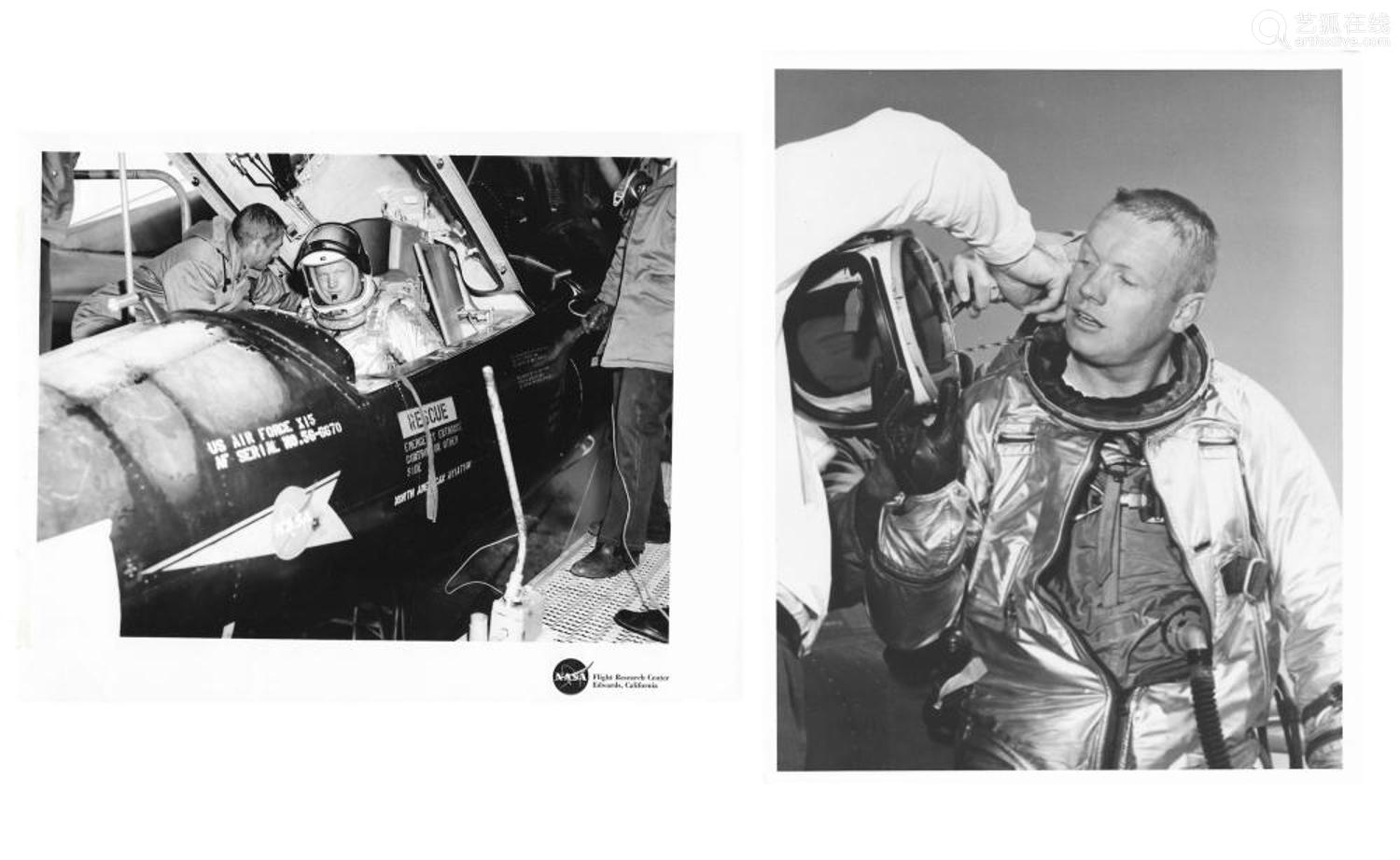
Credit: artfoxlive.com website (appropriated I think from either a Sotheby’s or Christie’s auction lot)
The Kelvedon Nuclear Bunker
Hidden in a wood off the A128 Ongar - Brentwood Road, is a small bungalow which hides a big secret. Behind it lies a three floored bunker complex in which 600 people would have been confined behind blast proof doors in the event of a nuclear war.
The deep, 125 foot, bunker was built in 1952/3 as part of Rotor, an urgent government building programme to improve Britain's air defence network. The bunker was the Sector Operations Command for the RAF Fighter Command. Known as SOC - R4, it was to provide command and control of the London Sector of Fighter Command.
Once into the bungalow, it leads to a 100 yard tunnel before you are in the bunker itself. Above you are two more floors, the 'hill' which covers it, and a radio mast, one of two, which would have been vital for communications.
The reason for the bunker was to take on a far more potentially catastrophic role in the 1960's. Because of the threat of nuclear war the bunker became the regional government bunker for London. The aim of the bunker was that it was to be one of the government administration centres communicating with the many other smaller bunkers situated throughout the country, organising the country after a nuclear attack.
The Dassault Mirage III is a family of single/dual-seat, single-engine, fighter aircraft developed and manufactured by French aircraft company Dassault Aviation. It was the first Western European combat aircraft to exceed Mach 2 in horizontal flight, a feat which was achieved on 24 October 1958.
In 1952, the French government issued its specification, calling for a lightweight, all-weather interceptor. Amongst the respondents were Dassault with their design, initially known as the Mirage I. Following favourable flight testing held over the course of 1954, in which speeds of up to Mach 1.6 were attained, it was decided that a larger follow-on aircraft would be required to bear the necessary equipment and payloads. An enlarged Mirage II proposal was considered, as well as MD 610 Cavalier (3 versions), but was discarded in favour of a further-developed design, powered by the newly developed Snecma Atar afterburning turbojet engine, designated as the Mirage III. In October 1960, the first major production model, designated as the Mirage IIIC, performed its maiden flight. Initial operational deliveries of this model commenced in July 1961; a total of 95 Mirage IIICs were obtained by the French Air Force (Armée de l'Air, AdA). The Mirage IIIC was rapidly followed by numerous other variants.
While the initial Mirage IIIC model was heading towards quantity production, Dassault turned its attention towards the development of a multirole/strike variant of the aircraft. Efforts in this direction would eventually materialised in the form of the single-seat Mirage IIIE; a two-seat trainer variant of the aircraft was also developed, designated as the Mirage IIID. On 5 April 1961, the first of a batch of three prototypes performed its first flight.
The Mirage IIIE considerably differed from the earlier Mirage IIIC interceptor. In terms of its airframe, the aircraft possessed a 300 mm (12 in) forward fuselage extension, which had been made to increase the size of the avionics bay, located directly behind the cockpit. The stretch had also enabled its fuel capacity to be expanded, which had been deemed necessary after several pilots had criticized the Mirage IIIC for having been quite limited in terms of its range.
Many Mirage IIIEs were fitted with a British-built Marconi continuous-wave Doppler navigation radar radome on the bottom of the fuselage, underneath the cockpit; in contrast, none of the Mirage IIICs were provided with this apparatus. A similar inconsistent variation was the presence or absence of a high frequency (HF) antenna fitted as a forward extension to the vertical tailplane; on some Mirages, the leading edge of the tailplane was a straight line, while on those with the HF antenna the leading edge had a sloping extension forward. The extension appears to have been generally standard on production Mirage IIIAs and Mirage IIICs, but only appeared in some of the Mirage IIIE's export versions. The Mirage IIIE featured Thomson-CSF Cyrano II dual mode air / ground radar; a radar warning receiver (RWR) system with the antennas mounted in the vertical tailplane; and an Atar 09C engine, the latter being equipped with a petal-style variable exhaust.
On 14 January 1964, the first production Mirage IIIE was delivered to the AdA, over time, 192 aircraft were eventually delivered to that service. By 1971, this variant had become the most widely exported version of the aircraft.
The Mirage III was produced in large numbers for both the French Air Force and a wide number of export customers. Prominent overseas operators of the fighter included Argentina, Australia, South Africa, Pakistan and Israel, as well as a number of non-aligned nations. Often considered to be a second-generation fighter aircraft, the Mirage III experienced a lengthy service life with several of these operators; for some time, the type remained a fairly maneuverable aircraft and an effective opponent when engaged in close-range dogfighting. During its service with the French Air Force, the Mirage III was normally armed with assorted air-to-ground ordnance or R.550 Magic air-to-air missiles. Its design proved to be relatively versatile, allowing the fighter model to have been readily adapted to serve in a variety of roles, including trainer, reconnaissance and ground-attack versions, along with several more extensive derivatives of the aircraft, including the Dassault Mirage 5, Dassault Mirage IIIV and Atlas Cheetah. Some operators have undertaken extensive modification and upgrade programmes of their flights, such as Project ROSE of the Pakistan Air Force.
Yorkshire air museum UK
XV748 was built as a GR.1 and first flown in April 1969. It served at Wittering with the Conversion Unit and 1 Squadron and had been converted to G.R.3 standard by 1976. It later became a test aircraft with the then Royal Aircraft Establishment at Bedford. By 1991, it had been retired.
The McDonnell Douglas F-4F Phantom II was retired from Luftwaffe service during an airshow at Wittmund AFB in summer 2013. Here a four-ship formation of special celebratory paint schemes. #PhantomPharewell #F-4Phantom
Categories:
McDonnell Douglas - F-4 Phantom - Cold War Aircraft - Luftwaffe - Bundeswehr - Wittmund 2013
The McDonnell Douglas F-4F Phantom II was retired from Luftwaffe service during an airshow at Wittmund AFB in summer 2013. Depicted here is 37+01, the first airframe delivered in 1973. 40 years later it received a special celebratory paint scheme. #PhantomPharewell #F-4Phantom
Categories:
McDonnell Douglas - F-4 Phantom - Cold War Aircraft - Luftwaffe - Bundeswehr - Wittmund 2013
Constructed by the Nazis, this former military area near Berlin is a ghost town today. Back then, this was a restricted zone, and soldiers made sure no civilian came near the place. And today? Still a restricted zone. But at least you will not get shot anymore if you try to enter the area. Planned by the Kaiser, greatly extended by the Nazis and mostly used by the Red Army this military area was home to soldiers from three different empires. When the last units moved out 25 years ago, they left behind deserted buildings everywhere. Although the Soviet army was taking everything with them, there are still traces that remind you of the everyday life behind the Iron Curtain. Join this exploration on YouTube to see what is left of what used to be the biggest military training area in the country: youtu.be/XNqYgaCqzEA
The shadow of a predator looms above an innocent park.
The predator revealed. An former NVA LSK MiG-21F-13 (Fishbed-C) located near the expo grounds (Messegelände) shows the way to the aviation museum. See the next day's image
Categories:
Mikoyan - MiG-21 - Cold War Aircraft - NVA DDR - Luftfahrtmuseum Laatzen
Collections:
Usually, the missile nose section, including the nuclear payload, was transported separately, as was the missile's rocket booster. The missile's wings could be folded. The mechanism for lowering and raising the missile on my model is fully functional.
The Hawker Siddeley Harrier is a British military aircraft. It was the first of the Harrier series of aircraft and was developed in the 1960s as the first operational ground attack and reconnaissance aircraft with vertical/short takeoff and landing (V/STOL) capabilities and the only truly successful V/STOL design of that era. The Harrier was developed directly from the Hawker Siddeley Kestrel prototype aircraft, following the cancellation of a more advanced supersonic aircraft, the Hawker Siddeley P.1154. In the late 1960s, the Harrier GR.1 and GR.3 variants were ordered by the British government for the Royal Air Force (RAF). It was exported to the United States as the AV-8A, for use by the US Marine Corps (USMC), in the 1970s.
During the Harrier's service the RAF positioned the bulk of the aircraft in West Germany to defend against a potential invasion of Western Europe by the Warsaw Pact forces; the unique abilities of the Harrier allowed the RAF to disperse their forces away from vulnerable airbases. The USMC used their Harriers primarily for close air support, operating from amphibious assault ships, and, if needed, forward operating bases. Harrier squadrons saw several deployments overseas. The Harrier's ability to operate with minimal ground facilities and very short runways allowed it to be used at locations unavailable to other fixed-wing aircraft. The Harrier received criticism for having a high accident rate and for a time-consuming maintenance process.
In the 1970s the British Aerospace Sea Harrier was developed from the Harrier for use by the Royal Navy (RN) on Invincible-class aircraft carriers. The Sea Harrier and the Harrier fought in the 1982 Falklands War, in which the aircraft proved to be crucial and versatile. The RN Sea Harriers provided fixed-wing air defence while the RAF Harriers focused on ground-attack missions in support of the advancing British land force. The Harrier was also extensively redesigned as the AV-8B Harrier II and British Aerospace Harrier II by the team of McDonnell Douglas and British Aerospace.
Constructed by the Nazis, this former military area near Berlin is a ghost town today. Back then, this was a restricted zone, and soldiers made sure no civilian came near the place. And today? Still a restricted zone. But at least you will not get shot anymore if you try to enter the area. Planned by the Kaiser, greatly extended by the Nazis and mostly used by the Red Army this military area was home to soldiers from three different empires. When the last units moved out 25 years ago, they left behind deserted buildings everywhere. Although the Soviet army was taking everything with them, there are still traces that remind you of the everyday life behind the Iron Curtain. Join this exploration on YouTube to see what is left of what used to be the biggest military training area in the country: youtu.be/XNqYgaCqzEA
I beleive this is a FM2 model with a motor drive fitted. The lens is a 500mm mirror lens from Nikkor. This camera was used by a part of the British Army called BRIXMIS who gathered information in the Soviet zone of control in the former East Germany during the 1980s. There is an exhibition about BRIXMIS in the National Army Museum at Chelsea (as of March 2023).
XM655 is an Avro Vulcan B Mk2, and the youngest Vulcan in existence (the third to last produced; XM656 and XM657 have both been scrapped). Delivered to 9 squadron at RAF Cottesmore in November 1964, she tranferred to the Waddington Wing in January 1968. She then served with 101 and 44 squadrons, and was with 50 squadron when she was put up for disposal in late 1983. She was bought by businessman Roy Jacobsen who had hopes to fly her on the airshow circuit.
She was the first Vulcan “civilianised” and was flown in to Wellesbourne Mountford about a week after a Cat 3 Check, on the 11th of February 1984. Hundreds of people were there to watch her arrive. She had flown only 5,744 hours, making her a very viable proposition for taking to the air once more. However, the Civil Aviation Authority made it clear that the aircraft would not be flying again without stringent conditions being satisfied. While efforts at funding the work necessary were begun and the aircraft was put on the civil register as G-VULC, little real progress was made. A plan to fly the aircraft in America got as far as registering the aircraft on the American civil register as N655AV but no further. After two years Roy Jacobsen lost interest in XM655 and bought another Vulcan (XL426) which was delivered to Southend. Parking fees were mounting at Wellesbourne and after a number of years the airfield owners took Jacobsen to court to recover them. The result was that the ownership of the aircraft passed to Wellesbourne Airfield.
XM655 had stood without attention for so long that she was in quite poor condition. Ten years of neglect had finally put paid to any lingering hopes of her ever flying again. At one stage she had been broken into, the cockpit instrumentation vandalised and the co-pilot’s control column removed with a hacksaw. The wingtip panels were also damaged at some point. With the transfer of ownership however, the future began looking brighter.
The Delta Engineering Association was formed to look after XM655 and they made it clear from the outset that their intention was to get her into ground running condition only. The aircraft was gradually brought back to life – all the hydraulics were overhauled, the damage to the cockpit was repaired and a number of engine runs undertaken.
Delta moved from Wellesbourne to Kemble in March 1996, and after the brief and unhappy existence and demise of the XM655 Association, the volunteers remaining at Wellesbourne decided that the best way forward would be a properly constituted membership organisation to look after XM655. As a result the 655 Maintenance and Preservation Society (655MaPS) was formed in late 1998.
Thanks to the generosity of Wellesbourne Airfield and with funds provided by the society’s members and other donors, 655MaPS have been able to assemble an impressive collection of workshops, storage units and ground equipment to support and service XM655.
The rear spar has been inspected and found to be in excellent condition. XM655 now has fuel in her tanks at all times to keep the system and the seals ‘wet’. All the aircraft systems are powered up and exercised regularly.
The aircraft has been repainted several times to keep the inevitable corrosion of the more than 50 year old structure under control, the flying control surfaces (elevons and rudder) have been reskinned, the jet pipe end caps have been replaced and the three engines with the longest running hours have been removed, opened, inspected and re-installed.
Engine ground runs (EGRs) are carried out approximately every three months, together with slow taxi runs to ensure the steering and braking systems are functional. Once each year, usually in June, XM655 takes part in Wellesbourne Wings and Wheels, which is our major public event of the year. Reports of past events can be found on the Taxi Runs page, and details of the next event are on the Events page.
XM655 is virtually complete in terms of installed equipment, with the H2S Radar, the Terrain Following Radar (TFR) and Identification Friend or Foe (IFF) systems all still in-place, as well as the complete suite of Electronic Counter Measures (ECM) equipment. The only notable item missing when XM655 left RAF service was the in-flight refuelling probe; not surprising considering the world-wide hunt for serviceable probes which had occurred during the Falklands conflict a couple of years earlier. Eventually, a replacement probe was obtained and installed, and XM655 regained her familiar profile.
Hawker Hunter XG194 was delivered to the RAF on October 3rd 1956. Flown by Air Commodore Roger Topp, C.O. of 111 Sqn, she led the 111 Sqn Black Arrows aerobatic display team during the world record 22 aeroplane loop at the 1958 Farnborough Air Show and was based at Wattisham from 1958-60.
Converted to FGA.9 in March 1965, it went on to fly with 1 Sqn at Wittering. In 1988, after a period at Cosford as a ground instructional airframe, it went to RAF North Luffenham for Explosive Ordnance training, and was painted to resemble a Soviet Sukhoi fighter for crews who would have to disarm Warsaw Pact aircraft that may have been flown to the West by a defecting pilot.
In November 2009, the dilapidated frame of XG194 was rescued from a muddy field minus ejection seat, and moved back to Wattisham to be restored to its former glory. Ex-Armourer Mike Halpin was tasked with sourcing a Martin Baker Mk 2H seat for the aircraft and, after a tireless search, located a 1951 seat in Brighton, complete with all original safety equipment. Before the seat could be fitted into the aircraft Mike deactivated all mechanisms, making it safe for static display.
The final stage of the restoration was to spray the aircraft in its aerobatic gloss-black colour, as seen while leading the 22 aeroplane loop more than 54 years ago. On 14th May 2013, his 90th birthday, Air Commodore Roger Topp, the former CO of 111 Sqn who led the team and flew the aircraft in 1958, officially unveiled XG194.
Fehler bitte melden. Ich bin mir nicht sicher, ob alle Angaben richtig sind.
Displaying errors. I am not shure if all given informations are correct.
▪︎SEPECAT Jaguar GR.3 Tactical Strike and Support Aircraft▪︎
This Jaguar Jet was part of 16th squadron based at RAF Coltishall.
When withdrawn from service it was repainted and became a gate guard at RAF Shoreham unfil 2017.
It is now privally owned by a local Farmer.
Please do take photos, but be respectful.
There is also a Honesty box with all donations going towards the RAF Benevolent Fund.
Link to information board – www.flickr.com/gp/139375961@N08/y2794RYyNu
The Jaguar is the Anglo-French answer to a 1965 requirement for a tactical strike and support aircraft. Should the Cold War in Europe gone hot, RAF and French Jaguar squadrons would have engaged Warsaw Pact forces in the initial phases. The advent of the Panavia Tornado and Dassault Mirage 2000D/N saw the Jaguar lose it's nuclear role and focus on precision tactical strike operations.
During the 1991 Gulf War, the Jaguar flew with The RAF and Armee del Aire, deploying precision munitions against Iraqi tanks and positions. During the Cenapa War in South America, Ecuadorian Jaguars acted in an air superiority role. The Jaguar flew with NATO forces in the Balkans and in Kosovo. India, the largest export customer for the Jaguar, took their fleet into combat during the Kargil war with Pakistan.
France retired her Jaguar fleet in 2005, with the RAF following in April, 2007. Ecuador's fleet of Jaguars remains in storage for economic reasons. Oman continues to operate the Jaguar and will until the selection and delivery of a new fighter occurs. India will continue to operate the Jaguar for considerable time, with new units ordered as recent as 2002.
▪︎Country of Origin: France/UK
▪︎First Flight: 1968
▪︎Initial Service Date: 1973
▪︎No. Built: 543
▪︎No. In Service: 0
▪︎Crew: 1
▪︎Power: 2 x Rolls-Royce/Turbomeca Adour Mk. 102 turbofans at 8,249lbf
▪︎No. of Hardpoints: 5
▪︎Weapons: Two 30mm ADEN cannons or DEFA cannons, with 150 rounds per gun.
Eight Matra rocket pods with 18 SNEB 68mm rockets each.
Two AIM-9 'Sidewinder's' OR Matra R550 'Magic's' on over-wing pylons.
10,000lbs of bombs, reconnaissance pods, Drop tanks or the AS-37 'Martel' missile.
(Previous RAF versions of the Jaguar were able to carry the WE.177 tactical nuclear weapon).
▪︎Length: 55ft. 3in
▪︎Wing Span: 28.51in
▪︎Wing Area: 258sq/ft
▪︎Height: 16ft. 1in
▪︎Empty Weight: 15,400lbs
▪︎Max Weight: 34,600lbs
▪︎Ordnance Load: 10,000lbs
▪︎Max Payload: 19,200lbs.
Information sourced from – AIRFIGHTERS.COM - Sepecat Jaguar GR3 Aircraft Data & History share.google/mN4TrFnzYTEeT1LZj
Fehler bitte melden. Ich bin mir nicht sicher, ob alle Angaben richtig sind.
Please displaying errors. I am not shure if all given informations are correct.
XM655 is an Avro Vulcan B Mk2, and the youngest Vulcan in existence (the third to last produced; XM656 and XM657 have both been scrapped). Delivered to 9 squadron at RAF Cottesmore in November 1964, she tranferred to the Waddington Wing in January 1968. She then served with 101 and 44 squadrons, and was with 50 squadron when she was put up for disposal in late 1983. She was bought by businessman Roy Jacobsen who had hopes to fly her on the airshow circuit.
She was the first Vulcan “civilianised” and was flown in to Wellesbourne Mountford about a week after a Cat 3 Check, on the 11th of February 1984. Hundreds of people were there to watch her arrive. She had flown only 5,744 hours, making her a very viable proposition for taking to the air once more. However, the Civil Aviation Authority made it clear that the aircraft would not be flying again without stringent conditions being satisfied. While efforts at funding the work necessary were begun and the aircraft was put on the civil register as G-VULC, little real progress was made. A plan to fly the aircraft in America got as far as registering the aircraft on the American civil register as N655AV but no further. After two years Roy Jacobsen lost interest in XM655 and bought another Vulcan (XL426) which was delivered to Southend. Parking fees were mounting at Wellesbourne and after a number of years the airfield owners took Jacobsen to court to recover them. The result was that the ownership of the aircraft passed to Wellesbourne Airfield.
XM655 had stood without attention for so long that she was in quite poor condition. Ten years of neglect had finally put paid to any lingering hopes of her ever flying again. At one stage she had been broken into, the cockpit instrumentation vandalised and the co-pilot’s control column removed with a hacksaw. The wingtip panels were also damaged at some point. With the transfer of ownership however, the future began looking brighter.
The Delta Engineering Association was formed to look after XM655 and they made it clear from the outset that their intention was to get her into ground running condition only. The aircraft was gradually brought back to life – all the hydraulics were overhauled, the damage to the cockpit was repaired and a number of engine runs undertaken.
Delta moved from Wellesbourne to Kemble in March 1996, and after the brief and unhappy existence and demise of the XM655 Association, the volunteers remaining at Wellesbourne decided that the best way forward would be a properly constituted membership organisation to look after XM655. As a result the 655 Maintenance and Preservation Society (655MaPS) was formed in late 1998.
Thanks to the generosity of Wellesbourne Airfield and with funds provided by the society’s members and other donors, 655MaPS have been able to assemble an impressive collection of workshops, storage units and ground equipment to support and service XM655.
The rear spar has been inspected and found to be in excellent condition. XM655 now has fuel in her tanks at all times to keep the system and the seals ‘wet’. All the aircraft systems are powered up and exercised regularly.
The aircraft has been repainted several times to keep the inevitable corrosion of the more than 50 year old structure under control, the flying control surfaces (elevons and rudder) have been reskinned, the jet pipe end caps have been replaced and the three engines with the longest running hours have been removed, opened, inspected and re-installed.
Engine ground runs (EGRs) are carried out approximately every three months, together with slow taxi runs to ensure the steering and braking systems are functional. Once each year, usually in June, XM655 takes part in Wellesbourne Wings and Wheels, which is our major public event of the year. Reports of past events can be found on the Taxi Runs page, and details of the next event are on the Events page.
XM655 is virtually complete in terms of installed equipment, with the H2S Radar, the Terrain Following Radar (TFR) and Identification Friend or Foe (IFF) systems all still in-place, as well as the complete suite of Electronic Counter Measures (ECM) equipment. The only notable item missing when XM655 left RAF service was the in-flight refuelling probe; not surprising considering the world-wide hunt for serviceable probes which had occurred during the Falklands conflict a couple of years earlier. Eventually, a replacement probe was obtained and installed, and XM655 regained her familiar profile.
Aeronauticum, Nordholz (2015) - Germany
Dornier (Bell) UH-1D Huey 71+07 HEER
Photo selection
Croatian War of Independence Museum, Karlovac (2015) - Croatia
Mikoyan MiG-21bis, 126 Croatian Air Force
Photo selection
The 'Humber Pig' is a Lightly Armoured Truck used by the British Army from the 1950's until the early 1990's. The Humber Pig saw service with the Royal Ulster Constabulary (RUC) chiefly as an Armoured Personnel Carrier from late 1958 until early 1970. The Humber Pig became particularly well known from its presence on the streets of Northern Ireland during the worst of the Troubles.
Officially designated Truck, Armoured, 1 Ton, 4x4, the Humber Pig is based on the FV1600 Series of four wheel drive 1-ton payload Trucks manufactured for the British Army by Rootes from 1952 to 1955. The Humber Pig FV1611 is the Armoured variant of FV1601 CT Truck and the FV1612 the Armoured version of the FV1602 CT FFW Truck. As FV1609 an Armoured version was originally designed to fulfil many roles with Royal Armoured Corps, Royal Artillery, Royal Engineers, RS, REME and Infantry. The full Armoured body was fitted to fulfil the need for an Armoured Personnel Carrier until the Alvis Saracen could be delivered in numbers. The Armoured bodies were produced by J. Sankey as well as the Royal Ordnance Factories, of 3,700 Humber Trucks some 1,700 Pigs were produced.
Twenty prototype Humber Pigs FV1609A (no armoured rear roof) entered Troop trials in 1956, when these trials ended ten were issued to the RUC in October 1958. In 1960 the RUC Humber Pigs were upgraded with a rear roof to emulate the FV1611 that was then in production. The Truck chassis proved ideal for Urban Internal Security Duties, and ended up serving longer than the larger, heavier Saracens that were intended to replace them. As the Troubles in Northern Ireland escalated during the 1970's, some 487 'Army Pigs' were further modified with additional internal and external Armour during the period of September 1972 to July 1973. These were referred to as Mark II Vehicles, the last of the Mark II Humber Pigs were removed from service in the early 1990's.
Official designations :-
• FV1601, FV1602 — un-armored Cargo GS and FFW (fitted for wireless) Humber CT trucks.
• FV1609 — c1956 Prototype APC vehicle with removable rear roof, canvas roof, and removable windscreens.
• Mk 1 FV1611 and FV1612 plus FV1609 vehicles converted to Mk 1 Pig spec with fully integrated rear roof and armour. Side storage boxes in Northern Ireland to prevent terrorists from placing explosives.
• FV1620 — Humber Hornet, a dedicated converted FV1611 to Malkara missile-launching platform.
• Mk 2 FV1611 and FV1612 —Additional armour for protection against small-arms fire and rocket propelled grenades, ''barricade removers'' (heavy-duty bull bars) which enabled them to force their way through barricades erected in the streets.
Unofficial designations :-
Some vehicles were equipped with the machine gun turret from the Shorland ISPV. All below were developed for use in Northern Ireland.
• 'Flying Pig' — FV1611 with extending riot screens either side and roof.
• 'Holy Pig' — fitted with rooftop hatch surrounded by perspex screen (reference to the Popemobile)
• 'Kremlin Pig' — fitted with wire screening for protection against rocket propelled grenades (RPG-7's)
• 'Squirt Pig' — fitted with a water cannon beside driver for riot control.
• 'Foaming Pig' — fitted with a foam generator to diffuse bomb blasts.
• 'Felix Pig' — modified for bomb disposal duties.
• 'Turret Pig' — Has the machine gun from the Shortland armored vehicle installed for operation in the Armagh area.
Humber Pig (Truck, 1 Ton, Armoured, 4x4, Humber) :-
▪︎ Type :- Armoured Personnel Carrier
▪︎ Place of origin :- United Kingdom
▪︎Manufacturer :- Humber (Rootes Group) / Joseph Sankey & Sons (GKN) / Royal Ordnance Factories.
▪︎No. built :- 1,700
▪︎Variants :- Mk1, Mk2
▪︎Mass :- 4.8 ton Mk1 / 6.5 ton Mk2
▪︎Length :- 16ft 2in
▪︎Width :- 6ft 8in
▪︎Height :- 6ft 11in
▪︎Crew :- 2 + 6 (max. 8)
▪︎Main armament :- Limited fitting of 7.62×51mm L4 Light Machine Gun or .30 in 7.62×63mm Browning M1919 Machine Gun
▪︎Engine :- Rolls-Royce B60 6-cyl 4.2 litre petrol I-6 120hp
▪︎Operational range :- 250 miles
▪︎Maximum speed :- 40mph.
From Russia with Love (1963) is the second spy film in the James Bond series, and is considered one of the best films in the series.
Group: Macro Mondays Theme: James Bond
Constructed by the Nazis, this former military area near Berlin is a ghost town today. Back then, this was a restricted zone, and soldiers made sure no civilian came near the place. And today? Still a restricted zone. But at least you will not get shot anymore if you try to enter the area. Planned by the Kaiser, greatly extended by the Nazis and mostly used by the Red Army this military area was home to soldiers from three different empires. When the last units moved out 25 years ago, they left behind deserted buildings everywhere. Although the Soviet army was taking everything with them, there are still traces that remind you of the everyday life behind the Iron Curtain. Join this exploration on YouTube to see what is left of what used to be the biggest military training area in the country: youtu.be/XNqYgaCqzEA
I found this fighter on display during a visit to Ellington Airport, formerly Ellington Air Force Base, near Houston, Texas. I was here on December 6, 2020,
American fighter in US service from 1956 to 1976. Former U.S. President George W. Bush flew the F-102A out of Ellington Air Force Base in Houston, Texas, during his Air National Guard service, from 1968 to 1972. Used also by NATO allies.
XM655 is an Avro Vulcan B Mk2, and the youngest Vulcan in existence (the third to last produced; XM656 and XM657 have both been scrapped). Delivered to 9 squadron at RAF Cottesmore in November 1964, she tranferred to the Waddington Wing in January 1968. She then served with 101 and 44 squadrons, and was with 50 squadron when she was put up for disposal in late 1983. She was bought by businessman Roy Jacobsen who had hopes to fly her on the airshow circuit.
She was the first Vulcan “civilianised” and was flown in to Wellesbourne Mountford about a week after a Cat 3 Check, on the 11th of February 1984. Hundreds of people were there to watch her arrive. She had flown only 5,744 hours, making her a very viable proposition for taking to the air once more. However, the Civil Aviation Authority made it clear that the aircraft would not be flying again without stringent conditions being satisfied. While efforts at funding the work necessary were begun and the aircraft was put on the civil register as G-VULC, little real progress was made. A plan to fly the aircraft in America got as far as registering the aircraft on the American civil register as N655AV but no further. After two years Roy Jacobsen lost interest in XM655 and bought another Vulcan (XL426) which was delivered to Southend. Parking fees were mounting at Wellesbourne and after a number of years the airfield owners took Jacobsen to court to recover them. The result was that the ownership of the aircraft passed to Wellesbourne Airfield.
XM655 had stood without attention for so long that she was in quite poor condition. Ten years of neglect had finally put paid to any lingering hopes of her ever flying again. At one stage she had been broken into, the cockpit instrumentation vandalised and the co-pilot’s control column removed with a hacksaw. The wingtip panels were also damaged at some point. With the transfer of ownership however, the future began looking brighter.
The Delta Engineering Association was formed to look after XM655 and they made it clear from the outset that their intention was to get her into ground running condition only. The aircraft was gradually brought back to life – all the hydraulics were overhauled, the damage to the cockpit was repaired and a number of engine runs undertaken.
Delta moved from Wellesbourne to Kemble in March 1996, and after the brief and unhappy existence and demise of the XM655 Association, the volunteers remaining at Wellesbourne decided that the best way forward would be a properly constituted membership organisation to look after XM655. As a result the 655 Maintenance and Preservation Society (655MaPS) was formed in late 1998.
Thanks to the generosity of Wellesbourne Airfield and with funds provided by the society’s members and other donors, 655MaPS have been able to assemble an impressive collection of workshops, storage units and ground equipment to support and service XM655.
The rear spar has been inspected and found to be in excellent condition. XM655 now has fuel in her tanks at all times to keep the system and the seals ‘wet’. All the aircraft systems are powered up and exercised regularly.
The aircraft has been repainted several times to keep the inevitable corrosion of the more than 50 year old structure under control, the flying control surfaces (elevons and rudder) have been reskinned, the jet pipe end caps have been replaced and the three engines with the longest running hours have been removed, opened, inspected and re-installed.
Engine ground runs (EGRs) are carried out approximately every three months, together with slow taxi runs to ensure the steering and braking systems are functional. Once each year, usually in June, XM655 takes part in Wellesbourne Wings and Wheels, which is our major public event of the year. Reports of past events can be found on the Taxi Runs page, and details of the next event are on the Events page.
XM655 is virtually complete in terms of installed equipment, with the H2S Radar, the Terrain Following Radar (TFR) and Identification Friend or Foe (IFF) systems all still in-place, as well as the complete suite of Electronic Counter Measures (ECM) equipment. The only notable item missing when XM655 left RAF service was the in-flight refuelling probe; not surprising considering the world-wide hunt for serviceable probes which had occurred during the Falklands conflict a couple of years earlier. Eventually, a replacement probe was obtained and installed, and XM655 regained her familiar profile.
The Jaguar programme began in the early 1960s, in response to a British requirement (Air Staff Target 362) for an advanced supersonic jet trainer to replace the Folland Gnat T1 and Hawker Hunter T7, and a French requirement (ECAT or École de Combat et d'Appui Tactique, "Tactical Combat Support Trainer") for a cheap, subsonic dual role trainer and light attack aircraft to replace the Fouga Magister, Lockheed T-33 and Dassault Mystère IV. In both countries several companies tendered designs: BAC, Hunting, Hawker Siddeley and Folland in Britain; Breguet, Potez, Sud-Aviation, Nord, and Dassault from France. A Memorandum of Understanding was signed in May 1965 for the two countries to develop two aircraft, a trainer based on the ECAT, and the larger AFVG (Anglo-French Variable Geometry)
Cross-channel negotiations led to the formation of SEPECAT (Société Européenne de Production de l'Avion d'École de Combat et d'Appui Tactique – the "European company for the production of a combat trainer and tactical support aircraft") in 1966 as a joint venture between Breguet and the British Aircraft Corporation to produce the airframe. Though based in part on the Breguet Br.121, using the same basic configuration and an innovative French-designed landing gear, the Jaguar was built incorporating major elements of design from BAC – notably the wing and high lift devices.
Production of components would be split between Breguet and BAC, and the aircraft themselves would be assembled on two production lines; one in the UK and one in France, To avoid any duplication of work, each aircraft component had only one source. The British light strike/tactical support versions were the most demanding design, requiring supersonic performance, superior avionics, a cutting edge nav/attack system of more accuracy and complexity than the French version, moving map display, laser range-finder and marked-target seeker (LRMTS). As a result, the initial Br.121 design needed a thinner wing, redesigned fuselage, a higher rear cockpit, and after-burning engines. While putting on smiling faces for the public, maintaining the illusion of a shared design, the British design defacto departed from the French sub-sonic Breguet 121 to such a degree that it was for all intents and purposes a new design.
A separate partnership was formed between Rolls-Royce and Turbomeca to develop the Adour afterburning turbofan engine. The Br.121 was proposed with Turbomeca's Tourmalet engine for ECAT but Breguet preferred the RR RB.172 and their joint venture would use elements of both. The new engine, which would be used for the AFVG as well, would be built in Derby and Tarnos.
Previous collaborative efforts between Britain and France had been complicated – the AFVG programme ended in cancellation, and controversy surrounded the development of the supersonic airliner Concorde. Whilst the technical collaboration between BAC and Breguet went well, when Dassault took over Breguet in 1971 it encouraged acceptance of its own designs, such as the Super Étendard naval attack aircraft and the Mirage F1, for which it would receive more profit, over the Anglo-French Jaguar.
The initial plan was for Britain to buy 150 Jaguar "B" trainers, with its strike requirements being met by the advanced BAC-Dassault AFVG aircraft, with France to buy 75 "E" trainers (école) and 75 "A" single-seat strike attack aircraft (appui). Dassault favoured its own Mirage G aircraft above the collaborative AFVG, and in June 1967, France cancelled the AFVG on cost grounds. This left a gap in the RAF's planned strike capabilities for the 1970s at the same time as France's cancellation of the AFVG, Germany was expressing a serious interest in the Jaguar, and thus the design became more oriented towards the low-level strike role.
The RAF had initially planned on a buy of 150 trainers; however, with both TSR2 and P.1154 gone, the RAF were looking increasingly hard at their future light strike needs and realizing that they now needed more than just advanced trainers with some secondary counter insurgency capability. The RAF's strike line-up was at this point intended to consist of American F-111s plus the AFVG for lighter strike purposes. There was concern that both F-111 and AFVG were high risk projects and with the French already planning on a strike role for the Jaguar, there was an opportunity to introduce a serious backup plan for the RAF's future strike needs - the Jaguar.
While the RAF had initially planned to buy 150 trainers, the TSR2 and p.1154 were gone, and believing that both the US F-111 and AFVG were high-risk programs, and with the French already planning a strike role for their Jaguar, the MOD suddenly realized they were in bad need of a new light strike aircraft capable of delivering tactical nuclear weapons. As a result, by October 1970, the RAF's requirements had changed to 165 single-seat strike aircraft and 35 trainers.
The Jaguar was to replace the McDonnell Douglas Phantom FGR2 in the close air support, tactical reconnaissance and tactical strike roles, freeing the Phantom to be used for air defence. Both the French and British trainer requirements had developed significantly, and were eventually fulfilled instead by the Alpha Jet and Hawker Siddeley Hawk respectively. The French, meanwhile, had chosen the Jaguar to replace the Aeronavale's Dassault Étendard IV, and increased their order to include an initial 40 of a carrier-capable maritime version of the Jaguar, the Jaguar M, for the Aeronavale. From these apparently disparate aims would come a single and entirely different aircraft: relatively high-tech, supersonic, and optimised for ground-attack in a high-threat environment.