View allAll Photos Tagged cockroach
Unidentified cockroach. Selangor, Malaysia.
More cool roaches of Malaysia: orionmystery.blogspot.com/2013/10/cockroaches-are-cool.html
Found on the fly wire door on the outside of my patio. Some wonderful patterns on the back of this insect. Not a native Cockroach but different from the big black ones occasionally found inside at this time of year. German cockroach (Blattella germanica)
Empilhamento de foco de uma barata doméstica medindo aproximadamente 2cm. Essa foto é resultado do empilhamento de 42 exposições combinadas pelo programa Combine ZP.
This is a male Bark Cockroach -Laxta granicollis - an Australian native species, about 2.5cm long. It was on our kitchen window at night recently.
Therea petiveriana, Family: Polyphagidae
Therea petiveriana, variously called the "desert cockroach", "seven-spotted cockroach" or "Indian domino cockroach", is a species of crepuscular (active only during dawn/dusk) cockroach found in southern India. They are members of a basal group within the cockroaches. This somewhat roundish and contrastingly marked cockroach is mainly found on the ground in scrub forest habitats where they may burrow under leaf-litter or loose ground during the heat of the day.
Like other cockroaches, they use chemical pheromones to communicate with each other. When disturbed, they are said to raise their wings and evert lateral glands, which is their alarm/alert notification.
The species has been said to be one of the few cockroaches with "grace and beauty"
This species is popular as a pet in many parts of the world and are easy to keep.
This is the most crazy cockroach I have ever seen. It was diving and swimming underwater. When I was walking past a stream, I saw an insect swimming in it. At first I thought it was a diving beetle. But after taking a closer look, I found that it was a cockroach! It can swim very well, in a manner similar to a diving beetle. This is incredible because it doesn't have legs made for swimming, unlike those of a diving beetle. I never knew that cockroaches can dive and swim. So cockroaches can run on land, fly in the air, and now swim underwater... I now have much more respect for them (although I already respect them a lot, for being one of the most adaptive species on Earth). Photo taken in Singapore.
这是给我最大震撼的蟑螂。它竟然会潜水、游泳!一天,我经过一道溪流时,看到水里有一只虫子在游泳。起初我还以为是一只龙虱,结果走近一看,竟然是一只蟑螂!它在水里游得特别得心应手,像一只龙虱那样。这令我非常震撼,因为蟑螂没有龙虱那种为了游泳而特化的腿。所以现在我得知蟑螂水陆空都能驾驭了...令我对蟑螂这种适应力超强的物种的敬佩更增加了。摄于新加坡。
2026.4.3
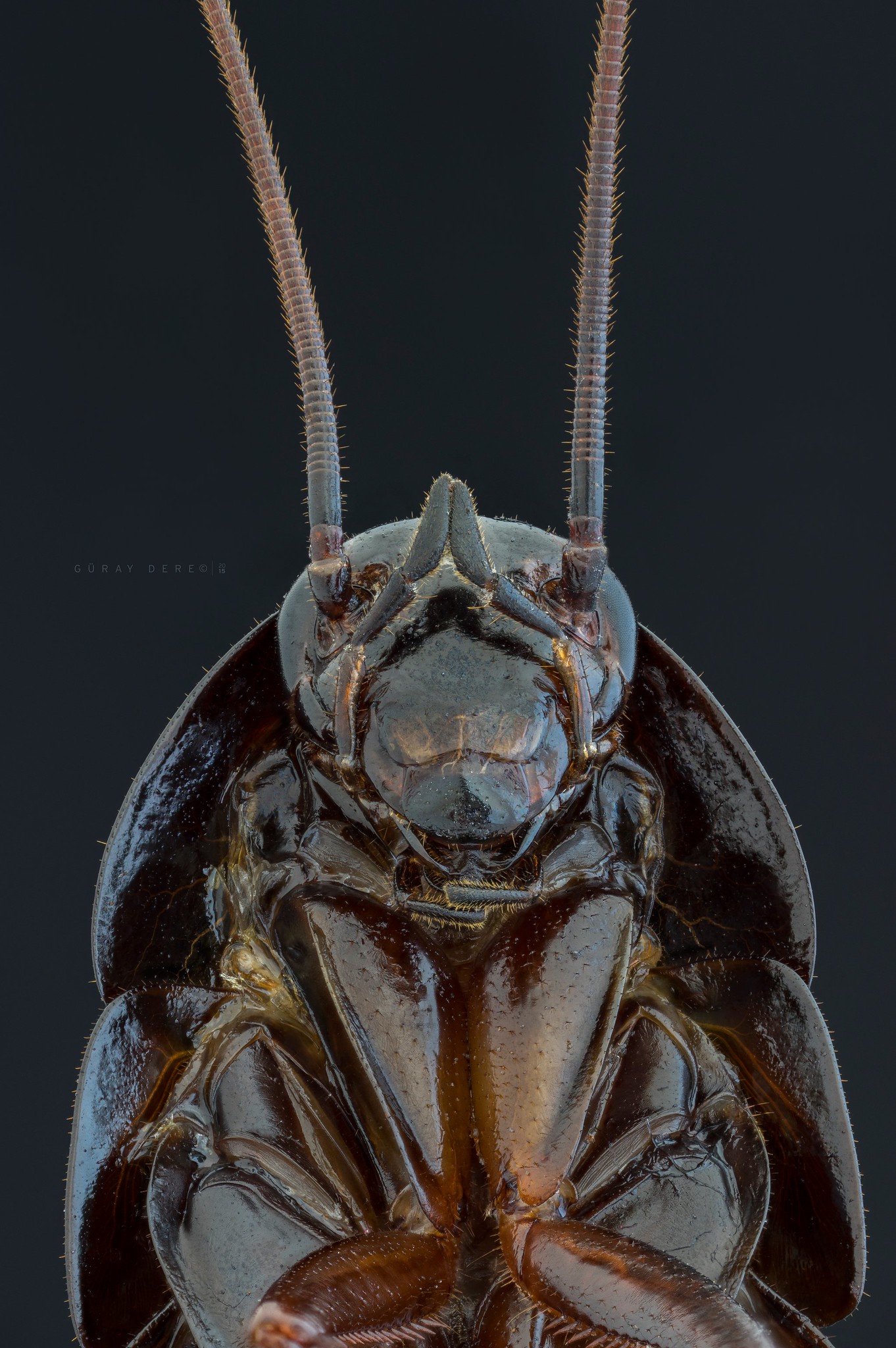
Aproximadamente 1,7X y 130 fotos con el canon MP-E 65 mm.
Mi mujer no la soporta, pero a mí me parece un bicho como pocos.
La voy a hacer copia y la pondré en donde no quiera que pase jajaja.
Not a hissing cockroach but definitely a strange type of cockroach that seemed to carry it's ootheca (egg sack) under its abdomen.
Many people don't realise that Britain has a few native species of cockroach. They are all small & mostly limited to the south coast counties. Lesser cockroach is the smallest of them, males averaging 7mm long & females just 6mm. Coastal shingle is a known habitat for them & it was nice to turn a few up under the pebbles. They are the first native cockroaches I've ever seen.
Another from my Beasties Series
This little cockroach had shed its shell so was a lovely golden colour.
from Ecuador: www.youtube.com/AndreasKay
Dear Friends of Ecuador, I have Glioblastoma and do not have the time to carefully edit my videos.
If you are interested in my Macro Photo- and Videography techniques: www.photomacrography.net/forum/viewtopic.php?p=253542#253542
These large native cockroaches are always a pleasure to find.
They are approx 40mm long and are widespread in the South West of Western Australia and a few sightings in South Australia and Victoria.
The colour of them varies in different areas.
David Rentz describes this cockroach as "One of the most distinctive and widespread species in the genus.
The 'windows' on each thoracic segment and the blue legs are not shared by any other species."
"A Guide to the Cockroaches of Australia" David Rentz 2014
"Feeding and diet
Native cockroaches feed in trees on pollen, bark and leaf material. Some species in the genus Panesthia have adapted to eating decomposing wood, and have similar micro-organisms in their gut as those found in termites (Order Isoptera)." australian.museum/learn/animals/insects/native-cockroache...
Photo: Fred
Probably a male Catara rugosicollis?
More cool roaches here: orionmystery.blogspot.com/2013/10/cockroaches-are-cool.html

Cockroaches, to most westerners, are synonomous with filth. However, the blattodea are a diverse, adaptable and fascinating order, not to be painted and tarnished with the same brush as a few isolated species (whose invasive introduction you can thank your forebears by the way). They can be beautiful, colourful and their role as detritivores in the rainforest is hugely important. These underappreciated and reviled insects will be the focus of an upcoming blog post.
Photographed for the #SaniProject2017. Follow us at Destination Ecuador #Sanilodge #paulbertner.
Adult Austral Ellipsidion Cockroach, Ellipsidion humerale
I like seeing these native cockroaches in the garden.
Photo: Fred
The Madagascar cockroach (Gromphadorhina portentosa) is one of the largest cockroaches in the world, reaching 6 to 8 cm in length. Native to Madagascar, it is famous for its distinctive defensive hissing sound. It is a docile, wingless species, often kept as a pet or food.
Thank you all for visits, comments & faves :)
Oggy and the Cockroaches.
Oggy and the Cockroaches (Joey, Deedee et Marky) is a French animated series created by Jean-Yves Raimbaud and produced by Gaumont Multimedia.
Built for the “Équipage à l'abordage” collaborative contest on the french forum Brickpirate, for the theme "Cartoon".
The crew of The Medusa consists of Lokiloki, Pistash et Lufobrick.
The crew of The Sea Guardian's King (SGK) consists of Seb71, Guilego et -Konix.