View allAll Photos Tagged chessbase
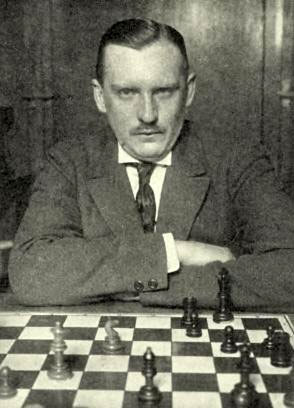
Picture found at:
"Chessbase News" www.chessbase.com/newsdetail.asp?newsid=1886 (acessed
April 6, 2007).
Lady Justice is an symbol that has come to represent the courts and the power of those courts. She is a goddess from Greek and Roman mythology, a protector or guardian of justice. This picture is in its essence a major role in in judicial actions, but also a symbol of women’s roles in history. That makes it a perfect picture to represent one of the many form of cases for women’s rights. From the 1920’s to the 1971’s there was conflicting cases that brought the issue of birth control to the Supreme Court doors. These was the first the Supreme Court had heard that linked reproduction to the amendment pertaining to the “right to privacy.” Congress had made law against people sending birth control through the mail or sell through inter state commerce, but they did not go to the extent of forbidding the use of birth control. Although Congress did not ban the use of birth control the state of Connecticut took their legislation one step further. They banned the use of birth control, it could not be sold or prescribed whether the person was married or not. It was the case of Griswold v. Connecticut that would change the states legislation. The ruling stated that is was acceptable for married people to use birth control. Only if the women were married could they use birth control prescribed or bought. Unmarried women were not allowed on the impression that it would cause higher rates of affairs and sex outside the marital status acceptable in society. Even if the birth control could help in health reason it was still banned of use by single women. It was not until the case of Eisenstadt v. Baird that the courts ruling would allow single women the use of birth control. This was one of the first cases that pushed the boundaries of the privacy of the people and what the government could regulate. The people had a right to decide their own choice in lifestyle without having their sex life dictated by government policies. In the end the court rulings allowed the “right to privacy” to be granted to women, but in later years new topics would come to rise, like abortion that would bring the government to new arguments.
Cushman, Clare. "Supreme Court Decisions and Women's Rights." A Division of Congressional Quarterly Inc.: Washington, D.C., 2001.
Mikhail Moiseyevich Botvinnik; August 17 [O.S. August 4] 1911 – May 5, 1995) was a Soviet and Russian International Grandmaster and World Chess Champion for most of 1948 to 1963. Working as an electrical engineer and computer scientist at the same time, he was one of the very few professional chess players who achieved distinction in another career while playing top-class competitive chess. He was also a pioneer of computer chess.
Botvinnik was the first world-class player to develop within the Soviet Union, putting him under political pressure but also giving him considerable influence within Soviet chess. From time to time he was accused of using that influence to his own advantage, but the evidence is unclear and some suggest[who?] he resisted attempts by Soviet officials to intimidate some of his rivals.
Botvinnik also played a major role in the organization of chess, making a significant contribution to the design of the World Chess Championship system after World War II and becoming a leading member of the coaching system that enabled the Soviet Union to dominate top-class chess during that time. His famous pupils include World Champions Anatoly Karpov, Garry Kasparov and Vladimir Kramnik.
Mikhail Moiseyevich Botvinnik was born on August 17, 1911, in what was then Kuokkala, Vyborg Governorate, Grand Duchy of Finland, but is now the district of Repino in Saint Petersburg. His parents were Russian Jews, his father was a dental technician and his mother a dentist, which allowed the family to live outside the Pale of Settlement to which most Jews in the Russian Empire were restricted at the time. As a result, Mikhail Botvinnik grew up in Saint Petersburg's Nevsky Prospekt. His father forbade the speaking of Yiddish at home, and Mikhail and his older brother Issy attended Soviet schools. Mikhail Botvinnik later said, "I am a Jew by blood, Russian by culture, Soviet by upbringing." On his religious views, Botvinnik called himself an atheist.
In 1920, his mother became ill and his father left the family, but maintained contact with the children, even after his second marriage, to a Russian woman. At about the same time, Mikhail started reading newspapers, and became a committed Communist.
In autumn 1923, at the age of twelve, Mikhail Botvinnik was taught chess by a school friend of his older brother, using a home-made set, and instantly fell in love with the game. He finished in mid-table in the school championship, sought advice from another of his brother's friends, and concluded that for him it was better to think out "concrete concepts" and then derive general principles from these – and went on to beat his brother's friend quite easily. In winter 1924, Botvinnik won his school's championship, and exaggerated his age by three years in order to become a member of the Petrograd Chess Assembly – to which the Assembly's President turned a blind eye. Botvinnik won his first two tournaments organized by the Assembly. Shortly afterwards, Nikolai Krylenko, a devoted chess player and leading member of the Soviet legal system who later organized Joseph Stalin's show trials, began building a huge nationwide chess organization, and the Assembly was replaced by a club in the city's Palace of Labor.
To test the strength of Soviet chess masters, Krylenko organized the Moscow 1925 chess tournament. On a rest day during the event, world champion José Raúl Capablanca gave a simultaneous exhibition in Leningrad. Botvinnik was selected as one of his opponents, and won their game. In 1926, he reached the final stage of the Leningrad championship. Later that year, he was selected for Leningrad's team in a match against Stockholm, held in Sweden, and scored +1=1 against the future grandmaster Gösta Stoltz. On his return, he entertained his schoolmates with a vivid account of the rough sea journey back to Russia. Botvinnik was commissioned to annotate two games from the match, and the fact that his analyses were to be published made him aware of the need for objectivity. In December 1926, he became a candidate member of his school's Komsomol branch. Around this time his mother became concerned about his poor physique, and as a result he started a program of daily exercise, which he maintained for most of his life.
When Botvinnik finished the school curriculum, he was below the minimum age for the entrance examinations for higher education. While waiting, he qualified for his first USSR Championship final stage in 1927 as the youngest player ever at that time, tied for fifth place and won the title of National Master. He wanted to study Electrical Technology at the Leningrad Polytechnical Institute and passed the entrance examination; however, there was a persistent excess of applications for this course and the Proletstud, which controlled admissions, had a policy of admitting only children of engineers and industrial workers. After an appeal by a local chess official, he was admitted in 1928 to Leningrad University's Mathematics Department. In January 1929, Botvinnik played for Leningrad in the student team chess championship against Moscow. Leningrad won and the team manager, who was also Deputy Chairman of the Proletstud, secured Botvinnik a transfer to the Polytechnic's Electromechanical Department, where he was one of only four students who entered straight from school. As a result, he had to do a whole year's work in five months, and failed one of the examinations. Early in the same year he placed joint third in the semi-final stage of the USSR Championship, and thus failed to reach the final stage.
His early progress was fairly rapid, mostly under the training of Soviet Master and coach Abram Model, in Leningrad; Model taught Botvinnik the Winawer Variation of the French Defence, which was then regarded as inferior for Black, but which Model and Botvinnik analyzed more deeply and then played with great success.
Botvinnik won the Leningrad Masters' tournament in 1930 with 6½/8, following this up the next year by winning the Championship of Leningrad by 2½ points over former Soviet champion Peter Romanovsky.
Botvinnik married an Armenian woman named Gayane (Ganna) Davidovna, who was the daughter of his algebra and geometry teacher. She was a student at the Vaganova Academy of Russian Ballet in Leningrad and, later, a ballerina in the Bolshoi Theatre. They had one daughter, named Olya, who was born in 1942.
In 1931, at the age of 20, Botvinnik won his first Soviet Championship in Moscow, scoring 13½ out of 17. He commented that the field was not very strong, as some of the pre-Revolution masters were absent. In late summer 1931, he graduated with a degree in Electrical Engineering, after completing a practical assignment on temporary transmission lines at the Dnieper Hydroelectric Station. He stayed on at the Leningrad Polytechnical Institute to study for a Candidate of Sciences degree.
In 1933, he repeated his Soviet Championship win, in his home city of Leningrad, with 14/19, describing the results as evidence that Krylenko's plan to develop a new generation of Soviet masters had borne fruit. He and other young masters successfully requested the support of a senior Leningrad Communist Party official in arranging contests involving both Soviet and foreign players, as there had been none since the Moscow 1925 chess tournament. Soon afterwards, Botvinnik was informed that Alexander Ilyin-Genevsky, one of the older Soviet masters and a member of the Soviet embassy in Prague, had arranged a match between Botvinnik and Salo Flohr, a Czech grandmaster who was then regarded as one of the most credible contenders for Alexander Alekhine's World Chess Championship title. The highest-level chess officials in the Soviet Union opposed this on the grounds that Botvinnik stood little chance against such a strong international opponent. In spite of this attempt to dissuade him, Krylenko insisted on staging the match, saying that "We have to know our real strength."
Botvinnik used what he regarded as the first version of his method of preparing for a contest, but fell two games behind by the end of the first six, played in Moscow. However, aided by his old friend Ragozin and coach Abram Model, he leveled the score in Leningrad and the match was drawn. When describing the post-match party, Botvinnik wrote that at the time he danced the foxtrot and Charleston to a professional standard.
In his first tournament outside the USSR, the Hastings 1934–35, Botvinnik achieved only a tie for 5th–6th places, with 5/9. He wrote that, in London after the tournament, Emanuel Lasker said his arrival only two hours before the first round began was a serious mistake and that he should have allowed ten days for acclimatization. Botvinnik wrote that he did not make this mistake again.
Botvinnik placed first equal with Flohr, ½ point ahead of Lasker and one point ahead of José Raúl Capablanca, in Moscow's second International Tournament, held in 1935. After consulting José Raúl Capablanca and Lasker, Krylenko proposed to award Botvinnik the title grandmaster, but Botvinnik objected that "titles were not the point." However, he accepted a free car and a 67% increase in his postgraduate study grant, both provided by the People's Commissariat of Heavy Industry.
He later reported to Krylenko that the 1935 tournament made it difficult to judge the strength of the top Soviet players, as it included a mixture of top-class and weaker players. Botvinnik advocated a double round-robin event featuring the top five Soviet players and the five strongest non-Soviet players available. Despite politicking over the Soviet choices, both Krylenko and the Central Committee of the Komsomol quickly authorised the tournament. This was played in Moscow in June 1936, and Botvinnik finished second, one point behind Capablanca and 2½ ahead of Flohr. However, he took consolation from the fact the Soviet Union's best had held their own against top-class competition.
In early winter, 1936, Botvinnik was invited to play in a tournament at Nottingham, England. Krylenko authorized his participation and, to help Botvinnik play at his best, allowed Botvinnik's wife to accompany him – a privilege rarely extended to chess players at any time in Soviet history. Taking Lasker's advice, Botvinnik arrived ten days before play started. Although his Soviet rivals forecast disaster for him, he scored an undefeated shared first place (+6=8) with Capablanca, ½ point ahead of current World Champion Max Euwe and rising American stars Reuben Fine and Samuel Reshevsky, and 1 point ahead of ex-champion Alexander Alekhine. This was the first tournament victory by a Soviet master outside his own country. When the result reached Russia, Krylenko drafted a letter to be sent in Botvinnik's name to Stalin. On returning to Russia Botvinnik discovered he had been awarded the "Mark of Honour".
Three weeks later, he began work on his dissertation for the Candidate's degree, obtaining this in June 1937, after his supervisor described the dissertation as "short and good", and the first work in its field. As a result of his efforts, he missed the 1937 Soviet championship, won by Grigory Levenfish, who was then nearly fifty. Later in 1937, Botvinnik drew a match of thirteen games against Levenfish. Accounts differ about how the match was arranged: Levenfish later wrote that Botvinnik challenged him; while Botvinnik wrote that Krylenko, angered by Botvinnik's absence from the tournament, ordered the match.
Botvinnik won further Soviet Championship titles in 1939, 1944, 1945, and 1952, bringing his total to six. In 1945 he dominated the tournament, scoring 15/17; however, in 1952 he tied with Mark Taimanov and won the play-off match.
In 1938, the world's top eight players met in the Netherlands to compete in the AVRO tournament, whose winner was supposed to get a title match with the World Champion, Alexander Alekhine. Botvinnik placed third, behind Paul Keres and Reuben Fine. According to Botvinnik, Alekhine was most interested in playing an opponent who could raise the funds. After consulting the nearest available Soviet officials, Botvinnik discreetly challenged Alekhine, who promptly accepted, subject to conditions that would enable him to acclimatize in Russia and get some high-quality competitive practice a few months before the match. In Botvinnik's opinion, Alekhine was partly motivated by the desire for a reconciliation with the Soviet authorities, so that he could again visit his homeland. The match, including funding, was authorised at the highest Soviet political level in January 1939; however, a letter of confirmation was only sent two months later – in Botvinnik's opinion, because of opposition by his Soviet rivals, especially those who had become prominent before the Russian Revolution – and the outbreak of World War II prevented a World Championship match.
In spring 1939, Botvinnik won the USSR Championship, and his book on the tournament described the approach to preparation which he had been developing since 1933. One striking feature of this was emphasis on opening preparation in order to gain a permanent positional advantage in the middle game, rather than seeking immediate tactical surprises that could only be used once.
Botvinnik took an early lead in the 1940 USSR Championship, but faded badly in the later stages, eventually sharing fifth place. He attributed this to the unaccustomed difficulty of concentrating in a party-like atmosphere filled with noise and tobacco smoke. Botvinnik wrote to a friendly official, commenting that the champion was to be the winner of a match between Igor Bondarevsky and Andor Lilienthal, who had tied for first place, but had no achievements in international competition. The official's efforts led to a tournament for the title of "Absolute Champion of the USSR", whose official aim was to identify a Soviet challenger for Alekhine's title. The contestants were the top six finishers in the Soviet Championship – Bondarevsky, Lilienthal, Paul Keres (who had recently become a Soviet citizen), future World Champion Vasily Smyslov, Isaac Boleslavsky and Botvinnik – who were to play a quadruple round-robin. Botvinnik's preparation with his second, Viacheslav Ragozin, included training matches in noisy, smoky rooms and he slept in the playing room, without opening the window. He won the tournament, 2½ points ahead of Keres and three ahead of Smyslov; moreover, with plus scores in the "mini-matches" against all his rivals.
In June 1941 Nazi Germany invaded the Soviet Union. Botvinnik's wife Gayane, a ballerina, told him that her colleagues at the Kirov Opera and Ballet Theatre were being evacuated to the city of Perm, then known as Molotov in honour of Vyacheslav Molotov. The family found an apartment there, and Botvinnik obtained a job with the local electricity supply organization – at the lowest pay rate and on condition that he did no research, as he had only a Candidate's degree. Botvinnik's only child, a daughter named Olya, was born in Perm in April 1942.
In the evenings, Botvinnik wrote a book in which he annotated all the games of the "Absolute Championship of the USSR", in order to maintain his analytic skills in readiness for a match with Alekhine. His work included wood-cutting for fuel, which left him with insufficient energy for chess analysis. Botvinnik obtained from Molotov an order that he should be given three days off normal work in order to study chess.
In 1943, after a two-year lay-off from competitive chess, Botvinnik won a tournament in Sverdlovsk, scoring 1½ out of 2 against each of his seven competitors – who included Smyslov, Vladimir Makogonov, Boleslavsky, and Ragozin. Chessbase regards this as one of the fifty strongest tournaments between 1851 and 1986.
Shortly afterwards, Botvinnik was urged to return to Moscow by the People's Commissar for Power Stations, an admirer and subsequent good friend. On his return, Botvinnik suggested a match with Samuel Reshevsky in order to strengthen his claim for a title match with Alekhine, but this received no political support. In December 1943, he won the Moscow Championship, ahead of Smyslov. At the same time, opposition to his plan for a match with Alekhine re-surfaced, on the grounds that Alekhine was a political enemy and the only proper course was to demand that he be stripped of the title. The dispute ended in Botvinnik's favor, and in the dismissal of a senior chess official, one of those to have opposed Botvinnik's plan, who was also a KGB colonel.
After Botvinnik won the 1944 and 1945 Soviet championships, most top Soviet players supported his desire for a World Championship match with Alekhine. However, the allegations that Alekhine had written anti-Semitic articles while in Nazi-occupied France made it difficult to host the match in the USSR. Botvinnik opened negotiations with the British Chess Federation to host the match in England, but these were cut short by Alekhine's death in 1946.
When the Second World War ended, Botvinnik won the first high-level post-war tournament, at Groningen in 1946, with 14½ points from nineteen games, ½ point ahead of former World Champion Max Euwe and two ahead of Smyslov. He and Euwe both struggled in the last few rounds, and Botvinnik had a narrow escape against Euwe, who he acknowledged had always been a difficult opponent for him. This was Botvinnik's first outright victory in a tournament outside the Soviet Union.
Botvinnik also won the very strong Mikhail Chigorin Memorial tournament held at Moscow 1947.
World Champion
Botvinnik strongly influenced the design of the system which would be used for World Championship competition from 1948 to 1963. Viktor Baturinsky wrote "Now came Botvinnik's turn to defend his title in accordance with the new qualifying system which he himself had outlined in 1946" (this statement referred to Botvinnik's 1951 title defence).
On the basis of his strong results during and just after World War II, Botvinnik was one of five players to contest the 1948 World Chess Championship, which was held at The Hague and Moscow. He won the 1948 tournament convincingly, with a score of 14/20, three points clear, becoming the sixth World Champion. While he was on vacation in Riga after the tournament, an eleven-year-old boy called Mikhail Tal paid a visit, hoping to play a game against the new champion. Tal was met by Botvinnik's wife, who said the champion was asleep, and that she had made him take a rest from chess.
Botvinnik then held the title, with two brief interruptions, for the next fifteen years, during which he played seven world championship matches. In 1951, he drew with David Bronstein over 24 games in Moscow, +5−5=14, keeping the world title, but it was a struggle for Botvinnik, who won the second-last game and drew the last in order to tie the match. In 1954, he drew with Vasily Smyslov over 24 games at Moscow, +7−7=10, again retaining the title. In 1957, he lost to Smyslov by 9½–12½ in Moscow, but the rules then in force allowed him a rematch without having to go through the Candidates' Tournament, and in 1958 he won the rematch in Moscow; Smyslov said his health was poor during the return match. In 1960, Botvinnik was convincingly beaten 8½–12½ at Moscow by Tal, now 23 years old, but again exercised his right to a rematch in 1961, and won by 13–8 in Moscow. Commentators agreed that Tal's play was weaker in the rematch, probably due to his health, but also that Botvinnik's play was better than in the 1960 match, largely due to thorough preparation. Botvinnik changed his style in the rematch, avoiding the tactical complications in which Tal excelled and aiming for closed positions and endgames, where Tal's technique was not outstanding.[ Finally, in 1963, he lost the title to Tigran Petrosian, by 9½–12½ in Moscow. FIDE had by then altered the rules, and he was not allowed a rematch. The rematch rule had been nicknamed the "Botvinnik rule" because he twice benefited from it.
Though ranking as formal World Champion, Botvinnik had a relatively poor playing record in the early 1950s: he played no formal competitive games after winning the 1948 match tournament until he defended his title, then struggled to draw his 1951 championship match with Bronstein, placed only fifth in the 1951 Soviet Championship, and tied for third in the 1952 Géza Maróczy Memorial tournament in Budapest; and he had also performed poorly in Soviet training contests.[14][54] However, he lost only five of over thirty games in the two tournaments; three of the four who finished ahead of him in the 1951 championship were future world champions Smyslov and Petrosian and a leading world championship contender (and winner in both tournaments) Paul Keres; and he finished ahead of Petrosian and even with Smyslov in 1952. Botvinnik did not play in the Soviet team that won the 1952 Chess Olympiad in Helsinki: the players voted for the line-up and placed Botvinnik on second board, with Keres on top board; Botvinnik protested and refused to play. Keres' playing record from 1950 to early 1952 had been outstanding.
Botvinnik won the 1952 Soviet Championship (joint first with Mark Taimanov in the tournament, won the play-off match). He included several wins from that tournament over the 1952 Soviet team members in his book Botvinnik's Best Games 1947–1970, writing "these games had a definite significance for me". In 1956, he tied for first place with Smyslov in the 1956 Alexander Alekhine Memorial in Moscow, despite a last-round loss to Keres.
Team tournaments
Botvinnik was selected for the Soviet Olympiad team from 1954 to 1964 inclusively, and helped his team to gold medal finishes each of those six times. At Amsterdam 1954 he was on board one and won the gold medal with 8½/11. Then at home for Moscow 1956, he was again board one, and scored 9½/13 for the bronze medal. For Munich 1958, he scored 9/12 for the silver medal on board one. At Leipzig 1960, he played board two behind Mikhail Tal, having lost his title to Tal earlier that year; But he won the board two gold medal with 10½/13. He was back on board one for Varna 1962, scored 8/12, but failed to win a medal for the only time at an Olympiad. His final Olympiad was Tel Aviv 1964, where he won the bronze with 9/12, playing board 2 as he had lost his title to Petrosian. Overall, in six Olympiads, he scored 54½/73 for an outstanding 74.6 percent.
Botvinnik also played twice for the USSR in the European Team Championship. At Oberhausen 1961, he scored 6/9 for the gold medal on board one. But at Hamburg 1965, he struggled on board two with only 3½/8. Both times the Soviet Union won the team gold medals. Botvinnik played one of the final events of his career at the Russia (USSR) vs Rest of the World match in Belgrade 1970, scoring 2½/4 against Milan Matulović, as the USSR narrowly triumphed.
Late career
After losing the world title for the final time, to Tigran Petrosian in Moscow in 1963, Botvinnik withdrew from the following World Championship cycle after FIDE declined, at its annual congress in 1965, to grant a losing champion the automatic right to a rematch. He remained involved with competitive chess, appearing in several highly rated tournaments and continuing to produce memorable games.
He retired from competitive play in 1970, aged 59, preferring instead to occupy himself with the development of computer chess programs and to assist with the training of younger Soviet players, earning him the nickname of "Patriarch of the Soviet Chess School".
Botvinnik's autobiography, K Dostizheniyu Tseli, was published in Russian in 1978, and in English translation as Achieving the Aim (ISBN 0-08-024120-4) in 1981. A staunch Communist, he was noticeably shaken by the collapse of the Soviet Union and lost some of his standing in Russian chess during the Boris Yeltsin era.
In the 1980s Botvinnik proposed a computer program to manage the Soviet economy. However, his proposals did not receive significant attention from the Soviet government.
During the last few years of his life he personally financed his economic computer project that he hoped would be used to manage the Russian economy. He kept actively working on the program until his death and financing the work from the money he made for the lectures and seminars he attended, despite prominent health problems.
Botvinnik died of pancreatic cancer in May 1995. According to his daughter, Botvinnik remained active until the last few months of his life, and continued to go to work until March, 1995 despite blindness in one of his eyes (and extremely poor vision in the other) (Wikipedia).
There are many places to find chess puzzles on the internet
(such as):
www.flickr.com/groups/chesspuzzles/
There are many places to find chess puzzles on the internet
(such as):
www.flickr.com/groups/chesspuzzles/
imgsrc.ru/main/search_re.php?str=chess+puzzles&butt=y...
photobucket.com/images/chess puzzle/
There are many places to find chess puzzles on the internet
(such as):
www.flickr.com/groups/chesspuzzles/
imgsrc.ru/main/search_re.php?str=chess+puzzles&butt=y...
photobucket.com/images/chess puzzle/
Sometimes take for granted how much I use the Mac book air for every computing needs. Blogging is fast. I use a wireless external keyboard and separate trackpad when I have desk space because it is easier to type on. Chessbase, Houdini and everything else can run here just like any PC or notebook. The best feature is of course portability. I throw all this with my ipad in my bag and carry it almost everywhere because it is so light. Many times I frantically open my bag to check if the notebook is still in there because it feels empty and I thought I left it behind at some coffee shop. :)
I made 3 blunders:
Blunder No 1:
Posted in the shoutbox 9.00 am for start of the morning round. That is not correct. All the rounds will start 9.30am except for the last day which will start at 9.00am. Apologies to those who was misled and turned up at the tournament before 9am.
Blunder no. 2:
Lim Yee Weng did not draw with Loo Swee Leong. Lim beat Loo. He is currently still on top with 2 points along with 9 other players.
Blunder no. 3:
Thankfully this one does not involve my reporting on this blog. Life is just not fair. After throwing 2 strong players (Masrin and Woo Beng Keong) at me, the third round I had to play against Jax Tham. I've lost terribly before to Jax on the black side. Today was a repeat of the same opening. Different mistakes. Same result. I lost in 30+ moves.
Still I shouldn't complain much. 3 strong players and I only lost once. So far the best result in a long time for this patzer. :)
Looking at the top boards, there is no clear results yet for all top 4 boards. Yee Weng and Tan Khai Boon looks drawish with level material. It's Tjin Hau vs Siti on board 2.
Ok. I'm temporarily leaving the playing hall to collect my PDA charger from the office. Otherwise these weekend I will have a dead PDA which is certainly no fun as I have all the player's games on it.
OK since this is my blog, here's a promotional plug for the CD I'm selling.
-Over 3000 local players games on PGN format.
-50 + players in total
-22 of these are participating in the ongoing Selangor Open
-free Chessbase 9 reader included to read the files if you do not have Fritz, Chessbase or any of the other popular chess programs.
-900+ pictures from the major chess events that I have been to for 2006 including National Closed, Selangor Closed, first round of the current Selangor Open and many more.
- all in one CD for only RM 10
I do not carry many extras so please SMS/call me at 016 6270488 to reserve if you want. I've sold off all the CDs I brought with me today. Thanks for the support guys. The money goes directly to helping me maintain this blog as well as GilaChess.com website.
Magnus Carlsen won Rapid & Blitz World Chess in Dubai 2014 - Photo © ChessBase - Follow on www.chess-and-strategy.com
Grandmaster Wesley So with his adoptive family, Lotis Key, left, and Abbey Key, after winning the Tata Steel Chess Tournament.
For the third time in a row, a Minnetonka chess player has won an international super tournament and now stands as the No. 2-ranked player in the world.
Grandmaster Wesley So won the Tata Steel tournament in the Netherlands, a prestigious 13-round event that ended Sunday. So was the only one of the 14 elite players in the field to go undefeated, with five wins and eight draws.
It's now been more than six months and 56 games since So lost a game at the standard, hourslong time control (as opposed to minutes-long blitz time controls).
"Wesley So has rocked the chess world," was how Chessbase.com's report summed up his performance. "There is no doubt that Wesley So has exhibited the best chess out of anyone in the world the past couple of months."
Notable in his Tata Steel victory is that it's the first time that So, 23, has won a tournament that included World Champion Magnus Carlsen of Norway. Carlsen, who finished second, had skipped the previous two super tournaments that So won — the London Chess Classic in December, and the Sinquefield Cup in St. Louis in August.
"Winning this tournament is huge, with the world champion in it — the best player in the world," So said in an interview for the Tata Steel Chess website.
For the moment and for the first time, So has reached the No. 2 spot in the world rankings and is now the top U.S. player, moving ahead of fellow American Fabiano Caruana, who lost Sunday in a separate tournament in Gibraltar.
Picture shows Lim Yee Weng giving a short talk on how to Improve Your Chess Skills.
Some quotes from the seminar:
Endgame are full of tactics contrary to popular beliefs. No point playing an excellent opening or a great middlegame.
He also emphasises the use of computers with applications such as ChessBase, Chess Assistant and Chess Engines, Fritz etc.
Overall I feel that he has covered all the general principles to improve one's chess skill.
Interesting was the fact that he suffered a stagnant progress where his rating was stuck at 2200 for several years. He overcame it by discovering the passion to play again, getting a foreign coach for a short while and making self annotations of his games. That effort showed an immediate 100 points.
Let's see if I can get the permission to publish some of the seminar here later...
Also from the talk we can see that Yee Weng is a big fan of Tal (same as me!).
"Born in the Philippines, where his talent was compared to that of Bobby Fischer, So moved to the United States a few years ago and will represent his adopted country at the Chess Olympiad in Baku in September for the first time.
So, 22, has won strong tournaments before, but his victory last Sunday at the Chess Club and Scholastic Center of Saint Louis was special. Only two grandmasters from the absolute top, the world champion Magnus Carlsen and the former world champion Vladimir Kramnik, were missing. Last year he was the wild card in the Sinquefield Cup and finished last; he sure turned things around this year.
So finished undefeated. A pack of his rivals followed him closely and he had to wait for the final outcome of the game between the former world champion Veselin Topalov and Armenia’s leading grandmaster Levon Aronian. It was an emotional battle lasting 81 moves." en.chessbase.com/post/huffington-greatest-chess-triumph-o...
I was lucky to have Dr. John Nunn, who studied Mathematics in Oxford at the age of 15 and then became a famous chess Grandmaster, to show me around Oxford. He has the most wonderful personality. We share astronomy as a common hobby and also share our passion in photography. See for example the last picture on chessbase.com/newsdetail.asp?newsid=6865
Carlsen – the nettlesome World Champion
"Carlsen won because he is the better athlete and not the better chess player," wrote a commentator after the Chennai match. In drawn positions the Norwegian plays on and on, sitting his opponent out, waiting for errors. That is profoundly misleading: Magnus Carlsen's success lies in his ability to play "consistently accurate moves that also maximise the chances of inaccuracies from the opponent," writes GM Jonathan Rowson
source : en.chessbase.com/post/carlsen-the-nettlesome-world-champion
Leinier Dominguez and his wife Yanelys in Tata Steel Chess 2014 - Photo ChessBase - Follow on www.chess-and-strategy.com/
It's definitely an expensive notebook at RM3299. So far my experience using it has largely been positive.
It runs all my chess programs such as Chessbase and Fritz like a normal pc.
Best of all it is a great tool for my programming tasks. It's so portable and light I sometimes have this fear that i have left my notebook behind as the notebook bag feels too light.
I know I'm a technophobe and cannot live without my gadgets but I increasingly feel local players are very much handicapped by their lack of exposure to chess tools. Handicapped by lack of skill, exposure to international tournaments etc is another matter.
I'm talking about chess engines, chess databases, chess videos, electronic opening references, internet database updates etc.
In my programming work, tools are so very important. They determine how much time you can save and sometimes the choice of correct tools ensures whether the project is a success or failure.
I've been drummed in on the importance of correct tools by my arts teacher in secondary school. The art paper we chose, even the calligraphy pens we chose were important. I remember buying the more expensive Osmiroid gold tip pens instead of platinum ones because the gold ones were slightly more superior.
I think chess pretty much relies on tools the same way too.
Sure, player natural talent and raw hard work are important success factors too but proper tools is often neglected. At DATMO, I see a correlation between strong players and their seemingly fluent use of tools such as chess databases and engines. Strong players are experts at using the tools and weaker players simply don't have them or if they have them do not know how to use them effectively.
Is that a coincidence? Did the strong player become stronger because of superior tools or did he become strong first and then learnt how to use superior tools?
I think it's the former. Nowadays learning chess is not just about learning strategy, openings, endgames, etc. It's about studying opening trends, preparing for specific opponents is super essential. Also having the right tools such as databases but if they are not updated online via Chessbase Online or TWIC, the database is close to useless too.
Championnat du Monde d'échecs 2014 Carlsen vs Anand - Photo Chessbase - En direct sur www.chess-and-strategy.com
Olena Boytsun of Ukraine. She is a Woman's International Master and wrote articles for ChessBase during the World Chess Olympiad. She is the author of several books about chess and other subjects.
Sopiko Guramishvili in Tata Steel Chess 2014 - Follow on www.chess-and-strategy.com - photo ChessBase #chess #scacchi #echecs #escacs #ajedrez #schach
Magnus Carlsen won Rapid & Blitz World Chess in Dubai 2014 - Photo © ChessBase - Follow on www.chess-and-strategy.com
Gunina smashed her opponent and takes a full point lead. She still has to play Kosteniuk who is in second place. in Russian Chess Superfinal 2013 - Photo © Chessbase - Follow on www.chess-and-strategy.com/
Mariya Muzychuk beat Emil Sutovsky. Such is the lure of the £15,000 first women's prize in Gibraltar 2014 - Follow on www.chess-and-strategy.com - Photo ChessBase
One of the driving forces of ChessBase India. And as chance would have it, an excellent photographer too.
Photo by Alina l'Ami
Magnus Carlsen won Rapid & Blitz World Chess in Dubai 2014 - Photo © ChessBase - Follow on www.chess-and-strategy.com
About 5 out 6 online opinions were to get the 11" over the 13". Even the Mac shop attendants all told me they prefer the 11". And I agree. Since I already have a "big" notebook in the form of the 15.6 Dell studio XPS, the 11" lightweight and portability feature is something I really need.
I was lucky too that I got a good hard disk with it. You see the Air ships with either a Toshiba or Samsung SSD hard disk. The Samsung being slightly faster. I was disappointed as both shops that I went to, their demo 11" Airs were using the slower Toshiba hard disk. I just checked mine and I got the Samsung !! :)
Will be installing windows and bootcamp to make it a full fledge Chess notebook equipped with Chessbase, Megabase and all the other essential chess tools.
Will write more about that later....
Shakhriyar Mamedyarov 0-1 Viswanathan Anand dans la ronde 3 du tournoi des Candidats 2014 sur www.chess-and-strategy.com - photo © ChessBase
Another hour of my life I won't get back. I am converting the Asian Amateur round 8 games to be displayed online at asian-chess.blogspot.com . This involves running my special PDF to pgn script to get the pgn headers and then manually cutting and pasting the moves into Chessbase to get the full Pgn. After that I use Chessbase to generate the JavaScript playable version.
This goes into my want list.
It's the Corsair F120 Force Series SSD. In today's computer the CPU speed is so fast, you can hardly tell the difference between a i3 and i7 CPU performing everyday task. The real bottleneck is the mechanical hard disk itself. SSD or Solid state drives have no moving parts and access to data is many times faster compared to the traditional hard disk. I have come to appreciate the speed advantage of the SSD having experience Photoshop starting in 2-3 seconds on my Mac Book Air. I've shown this to many friends who were just amazed.
If I can afford it, I am taking aim at the above SSD which is 120 Gb (RM 799). It's perfect for my old Dell XPS 16 (core i5). the immediate performance boost will be so cool. A lot of Chessbase player and position searches are hard disk intensive and with an SSD you can find running Chessbase super zippy.