View allAll Photos Tagged activate
---- W Palermo and Saint Rosalia: 395th feast of Saint Rosalia, Patron Saint of Palermo ----
---- W Palermo e Santa Rosalia: 395° festino di Santa Rosalia, Santa Patrona di Palermo ----
-----------------------------------------------------------------
click to activate the icon of slideshow: the small triangle inscribed in the small rectangle, at the top right, in the photostream;
clicca sulla piccola icona per attivare lo slideshow: sulla facciata principale del photostream, in alto a destra c'è un piccolo rettangolo (rappresenta il monitor) con dentro un piccolo triangolo nero;
click here - clicca qui
the slideshow
Qi Bo's photos on Fluidr
Qi Bo's photos on Flickriver
Qi Bo's photos on FlickeFlu
Qi Bo's photos on PICSSR
Qi Bo's photos on Flickr Hive Mind
www.worldphoto.org/sony-world-photography-awards/winners-...
www.fotografidigitali.it/gallery/2726/opere-italiane-segn...
-------------------------------------------------------------------
Saint Rosalia has been celebrated for 395 years, even though it was not always the Patron Saint of Palermo, in fact at the beginning the young Rosalia was not very well known, but she made herself loved by the Palermo people with a prodigious event that took place after her death. Saint Rosalia was born of the noble family of de'Marsi, as a young girl the girl runs away to escape a marriage of convenience, she was eager to dedicate herself body and soul to the prayer and contemplation of Our Lord. The young woman lived as a hermit, first on Mount Quisquina, then in a cave on Mount Pellegrino above Palermo. In this last place, on 4 September 1170, the girl died. From that moment his name seemed destined to oblivion, in fact no one prayed or asked thanks to her, until May 1624, when the city of Palermo was invaded by a terrible epidemic of plague: the legend tells that one day he went on Monte Pellegrino, a hunter who was lost,
the man saw Santa Rosalia appear, who in dialect asked him to warn the Bishop of Palermo that he would find his bones on the mountain; the Bishop went to the place indicated and saw the mortal bones of the Saint. On 15 July 1624, the religious decided to carry the bones in a solemn procession to ask for the miracle of liberating Palermo from the plague: this is how the expected miracle happened, it is said that when the holy bones passed the evil, that afflicted the citizens of Palermo, decreased by intensity, and soon the city of Palermo was freed from the Plague.
From that moment, every July 15, the city of Palermo celebrates its patron saint with the "feast", while every September 4th (the day of Rosalia's death) pilgrimages are made to the Mount Pellegrino cave, where today the Sanctuary is located .
During the evening of July 14th, the celebrations culminate with the parade of the Triumphal Chariot on which stands the statue of Santa Rosalia.
(The theme of this 395th edition of the Festino was "L'inquietudine", the "very big float" in question was created by the inmates of the Ucciardone Detention Center).
------------------------------------------------------------------------------
Santa Rosalia è festeggiata da 395 anni anche se non è sempre stata la Santa Patrona di Palermo, infatti ai primordi la giovane Rosalia non era molto conosciuta, però si fece amare dai palermitani con un evento prodigioso avvenuto dopo la sua morte. Santa Rosalia, nasce dalla nobile famiglia de’Marsi, da giovane la ragazza scappa per sfuggire ad un matrimonio di convenienza, lei era desiderosa di dedicarsi anima e corpo alla preghiera e alla contemplazione di Nostro Signore. La giovane visse da eremita, dapprima sul Monte Quisquina, poi in una grotta sul Monte Pellegrino sopra Palermo. In quest’ultimo luogo, il 4 settembre 1170, la ragazza morì. Da quel momento il suo nome sembrava destinato all’oblio, difatti nessuno pregava o chiedeva grazie alla religiosa, fino al maggio del 1624, quando la città di Palermo venne invasa da una terribile epidemia di peste: la leggenda racconta che un giorno si recò sul Monte Pellegrino un cacciatore che si era perso,
l’uomo vide apparire Santa Rosalia, che in dialetto gli chiese di avvisare il Vescovo di Palermo che recandosi sul monte avrebbe trovato le sue ossa; il Vescovo si recò nel luogo indicato e vide le ossa mortali della Santa. Il 15 luglio 1624, il religioso decise di portare in processione solenne le ossa per chiedere il miracolo di liberare Palermo dalla peste: così avvenne l’atteso miracolo, si racconta infatti che al passaggio delle sacre ossa il male che affliggeva i cittadini palermitani diminuiva di intensità, ed entro breve la città di Palermo venne liberata dalla Peste.
Da quel momento, ogni 15 luglio, la città di Palermo festeggia la sua patrona con il “festino”, mentre ad ogni 4 settembre (giorno della morte di Rosalia) si fanno pellegrinaggi verso la grotta del Monte Pellegrino, dove oggi si trova il Santuario.
Durante la sera del 14 luglio, i festeggiamenti raggiungono il culmine con la sfilata del Carro Trionfale sul quale svetta la statua di Santa Rosalia.
(Il tema di questa 395esima edizione del Festino è stato “L’inquietudine”, il carro in questione è stato realizzato dai detenuti della Casa di Reclusione dell’Ucciardone).
Parish Church of St. Blasius in Fulda
Front (To see another pictures please activate the link at the end of page!)
The Parish Church of St. Blaise is the parent parish of all Catholic parishes in the city of Fulda and the last major building, which was built in the baroque period.
History
Shortly after the founding of the monastery of Fulda settled in the immediate vicinity artisans and merchants. To ensure the parochial care, the first church was built around 970, which was probably dedicated to St. Mauritius. 1049 the parish was first mentioned as "market parish" in a document. After a fire in 1103 the church was rebuilt in the Romanesque style. Since the reign of Abbot Conrad of Malkos (1221-1246) St. Blaise is guaranteed as patron of the church.
In the period 1447 to 1470 the church was rebuilt in the Gothic style, of which yet the north-west tower remains today. To the north of it, an ancient stone gate system has remained. There is access to the old parish church cemetery, the one day was around the church. During the Reformation, Adam Krafft preached the new doctrine, which pushed not through. In the time of the Hessian occupation of Fulda to the Counter-Reformation Protestant service was held in the parish church. 1771 was demolished the old church under Prince-Bishop Heinrich von Bibra and started the construction of a baroque church. The plans for this originate from the Jesuit Father Andreas Anderjoch. The consecration took place on 17 August in 1785. 1837 a new organ was installed, which was renewed in 1901.
Architecture
The church was built as a three-aisled basilica in the style of Baroque. It has two towers: on the one hand is the still originating from the previous church north tower, which serves as a bell tower. In the from the Baroque era stemming south tower is the former watchman home of the Fulda watchman, which can be reached via 162 steps. On the by the two towers surrounded west facade is above the main portal the Fulda coat of arms. It is followed by a round-arched window as well as the crest Heinrich von Bibra. Above this crest there is a stone sculpture of St. Blasius.
The high altar was created by the artists Hoys and Wittmann of red-brown Stuckmarmorist (stucco marbling) in conformity with the high altar of Fulda Cathedral. Instead of the altar sheet you will find here a large crucifix yet stemming from the earlier church, thereon again the coat of arms of Heinrich von Bibra. The altar is flanked by two statues of St. Boniface and St. Blaise. The side altars are consecrated to St. Aloysius (this comes from the Fulda Jesuit Church) and St. Boniface.
There are two frescoes by Johann Andreas Herrlein representing the Sermon on the Mount and the expulsion of the merchants from the temple on the vaulted ceiling. In addition, can be found above the Arkardenbögen (arcade archs) medallions with presentations of eight of the twelve apostles.
As part of the roof renovation was discovered at the end of 2000 in the upper east wall of the south aisle a closed with masonry stone head. It turned out to be part (head of Christ) of a former so-called "Mount of Olives", which was demolished during the late Baroque building. The beautiful, expressive stone sculpture in the round, which was hidden in the wall 226 years is to visit in the church today.
Organ
Look at the organ
The organ of the parish church dates from the year 1837. It was reorganized in 2003-2004 by the organ builder Klais Bonn. The instrument has 50 stops on three manuals and pedal. The key action is mechanical, the stop action pneumatic. Since 2004, the instrument has an electronic combination system.
I Hauptwerk C -f3
1 Principal 16 '
2 Principal 8 '
3 Quintatön 8 '
4 Bourdon 8 '
5 Hollow flute 8 '
6 Fugara 8 '
7 Octave 4 '
8 Covered 4 '
9 Rauschpfeife II 22 /3 '
10 Cornet III (from g0 ) 4 '
11 Mixture II-V 2 '
12 Trumpet 8 '
II In addition to plant C -f3
13 Quintatön 16 '
14 Principal 8 '
15 Covered 8 '
16 Gamba 8 '
17 Unda Maris (from e0 ) 8 '
18 Octave 4 '
19 Fugara 4 '
20 Reed pipe 4 '
21 Octave 2 '
22 Mixture IV 11/3 '
23 8 'Clarinet
tremulant
III Swell C -f3
24 Bourdon 16 '
25 Gamba 16 '
26 Violin Principal 8 '
27 Salicional 8 '
28 Aeoline 8 '
29 Vox coelestis (from c0 ) 8 '
30 Vienna Flute 8 '
31 Sweetly Covered 8 '
32 Principal 4 '
33 Flute 4 '
34 Gemshorn 4 '
35 Viola 4 '
36 Harmonia aeth . IV 22/3 '
37 Flageolet 2 '
38 Progressio I- V 2 '
39 Tuba 8 '
40 Oboe 8 '
tremulant
Pedal C -f1
41 Under 32 '
42 Principal Bass 16 '
43 Subbass 16 '
44 Salicetbass 16 '
45 Quintbass 102/3 '
46 Octavbass 8 '
47 Decked Bass 8 '
48 Octave 4 '
49 Trombone 16 '
50 Trumpet 8 '
Couplers: II / I, III / I, III / II, I / P, II / P III / P
Bell
The north tower houses an exceptionally beautiful ringing of five bells, which were cast in the bell foundry Otto, as well as the old Ave and Verirrtenglocke (bell of the astrayed) from the 14th Century (around 1340) - and one of the oldest in Hesse, which sounds every night by 21 clock (May to Sempetmber by 22 clock).
Bell I II III IV V VI
Name/Dedication Saviour bell - Rosary-Queen bell - Council bell - Blasius bell - Simpliciusglocke - Ave or Verirrtenglocke
Cast year 1966 1966 1966 1966 1961 14 Century
Chop , Gussort Otto Otto Otto Otto Otto unknown
Mass ( kg) 4600 3260 1360 1360 1000
Strike note a0 h0 d1 e1 fis1 g1
……………………………….
Locandina:
pad.mymovies.it/filmclub/2016/04/067/coverlg_home.jpg
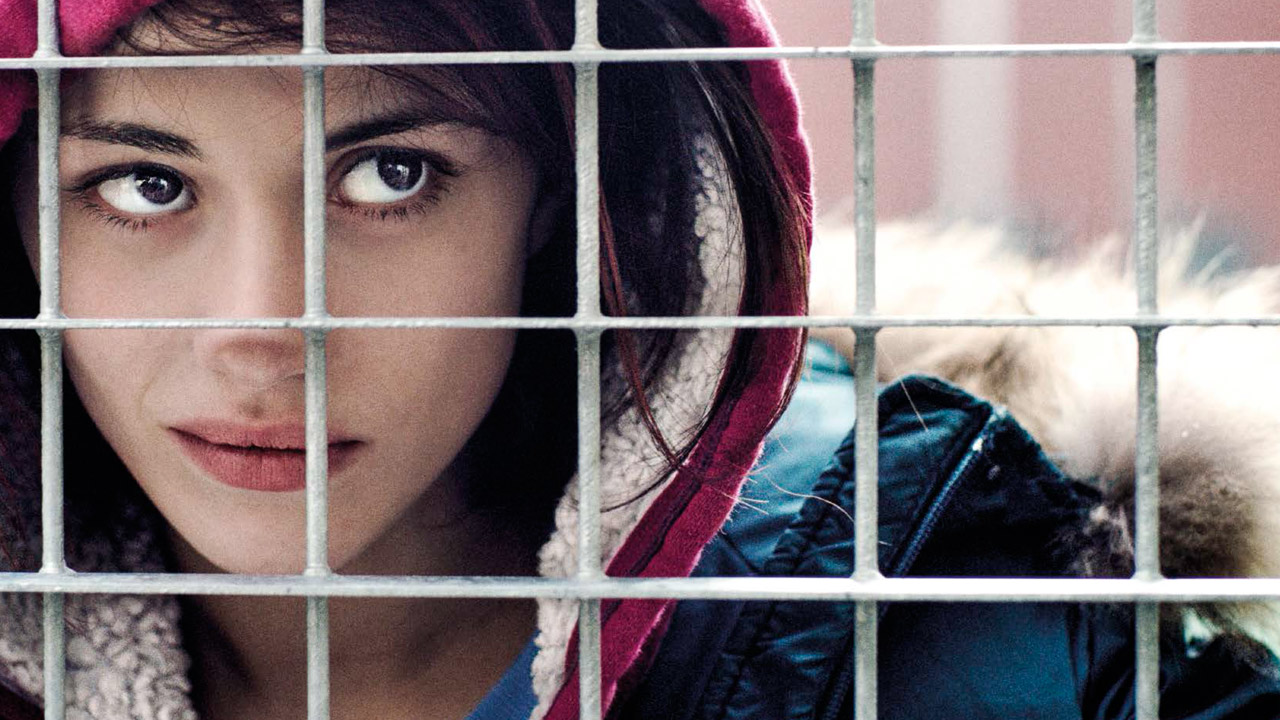
variety.com/wp-content/uploads/2016/05/fiore_06.jpg?w=100...

www.nonsolocinema.com/wp/wp-content/uploads/2016/05/MG_76...

amnc.it/wp-content/uploads/2023/11/perdialogocarcere_post...

www.italyformovies.com/film-serie-tv-games/detail/56/fiore
----------------------------------------------------------
click to activate the small icon of slideshow: the small triangle inscribed in the small rectangle, at the top right, in the photostream (it means the monitor);
or…. Press the “L” button to zoom in the image;
clicca sulla piccola icona per attivare lo slideshow: sulla facciata principale del photostream, in alto a destra c'è un piccolo rettangolo (rappresenta il monitor) con dentro un piccolo triangolo nero;
oppure…. premi il tasto “L” per ingrandire l'immagine;
www.worldphoto.org/sony-world-photography-awards/winners-...
www.fotografidigitali.it/gallery/2726/opere-italiane-segn...
………………………………………………………………………
The municipality of Mongiuffi Melia (ME), not far from Taormina, is made up of two villages, Mongiuffi and Melia, separated by a valley, a bridge joins them, they climb up the opposite ridge of two mountains, looking at each other; in this municipality (defined as a "scattered municipality" for not having a single inhabited center), there are two patron saints, San Sebastian for Melia (his float was built with the money collected by Sicilian soldiers sent to the front, to fight in Greece during the Second World War, hoping in this way to receive His intercession to save their lives), and San Leonard di Noblac (or Abbot) for Mongiuffi; but in this municipality there is also the cult of the "Virgin Mary of the Chain", whose sanctuary attracts pilgrims from everywhere. I have made this description to introduce a singular coincidence that not everyone is aware of, and to do this it is necessary to describe the figure of Saint Leonard (a kind of Saint Francis), and that of the Virgin Mary of the Chain, trying to be concise. Saint Leonard was born in Orléans around 496 (and died in Noblac, on November 6 – the feast day – of 545 or 559), and for most of his life (very interesting) he lived as a hermit; one episode of his life in particular I would like to recall, he received from Clovis, king of the Franks, the privilege of being able to free those prisoners, who he believed had been unjustly imprisoned, so from that moment on, he incessantly committed himself to giving freedom to all those prisoners who were reduced to visibly critical conditions. Let us leave this Saint for a moment, the cult of the “Virgin Mary of the Chain”, this name given to the Blessed Virgin, derives from a prodigious event that occurred in Palermo in 1392, known as the “miracle of the chains”. In short, in August 1392 in Palermo, three men for a glaring miscarriage of justice, were sentenced to death by hanging, shortly before going up to the gallows a violent storm broke out, which forced the three unfortunates and the gendarmes to take refuge in the nearby church of Saint Mary of the Port, close to the sea, also called "Churc of the Chain" due to the presence of a chain that, when positioned, prevented the Saracen pirate ships from accessing the inside of the port; in this holy place, the three condemned, were tied with double chains, in the meantime the door of the church was barred, in fact the storm did not seem to stop and in addition night had come, clearly the execution was now postponed to the next day. The three desperate men, in chains, under the gaze of the gendarmes, approached the painting of the Madonna in tears, imploring her to intercede for them, a voice was heard coming from the painting, which reassured them of their new freedom, this while the chains broke, and the door of the little church was thrown open. From then on, the cult of the Virgin Mary of the Chain spread from Palermo throughout Sicily, and even beyond. Now let's get to the coincidences I mentioned before, both Saint Leonard and the Virgin Mary of the Chain (and also Her Child that She holds in Her arms) carry a long chain in their hands, in fact both the Saint and the Blessed Virgin have given freedom to prisoners, furthermore to access Mongiuffi Melia, coming from Letojanni, you have to pass through a tunnel, called "Gallery of Postoleone" dug in the rock in 1916, with bare hands or with pickaxe blows, as explosives could not be used, by 300 Austrian prisoners, during the First World War (and also on this occasion, in Mongiuffi Melia, there are prisoners forced to do forced labor). Finally, a curiosity, very often from the cult of the Virgin Mary of the Chain, comes a singular name, very common in these parts, both in the masculine with the name of "Cateno" and in the feminine "Catena" (to quote a well-known character, the writer Catena Fiorello). Furthermore, if it rains, whatever the religious procession-feast, with the float carried on the shoulders, the float with the saint does not come out, but if the rain arrives during the event, then the event becomes a source of strong psycho-physical stress for the devotee-bearers (not for the devotee-pullers or devotee-pushers...), as the ground made slippery by the rain (or perhaps, worse, by the presence of mud mixed with water) makes the route risky due to the possibility that one, or more, bearers, could slip, with the possible overturning of the float, and easily imaginable consequences.
The photographic story that I present here was created by assembling photographs taken on November 6, 2022, November 6 and 10 of this year 2024; the heart of the celebration-procession is when the priest hangs a large “cuddurra” (donut) on the hand of Sint Leonard, on that occasion small “cuddure” (donuts) are offered to the population (prepared by hand in the days preceding the procession); there are girls wearing a typical monk's habit-like dress, adorning their head with a veil, they belong to the congregation of the "daughters of Mary" (third order Carmelite); at the end of the procession, with the float that has returned to the church, we witness a rite that has the "affective" purpose of keeping it alive, it is done so as not to lose its memory, even if it has not lost its original meaning, what remains is now only a symbolic fact, it is the ritual of "weighing" (in some centers of Sicily, it has maintained its original meaning) a wooden board is placed "in balance" on one of the two beams that are used to carry the float with the Saint on the shoulders, at the two ends a child is placed on one side, and on the other side a sack with grain, filled until the weight of the grain reaches the weight of the child, and that grain will be given as a gift to the Saint, in reality the symbolic aspect of the procedure remains, and the donation is still made to the Saint, but in paper money.
Postscript: Our Lady of the Chain and Saint Leonard freed from chains, these as such, are not only physical, there are also psychic ones, and perhaps they are the worst….
……………………………..
Il comune di Mongiuffi Melia (ME), non molto distante da Taormina, è formato da due borghi, Mongiuffi e Melia, separati da una vallata, un ponte li congiunge, essi si inerpicano sul crinale opposto di due monti, guardandosi l’un l’altro; in questo comune (definito “comune sparso” per non avere un centro abitato unico), si hanno due santi patroni, San Sebastiano per Melia (la sua vara fu costruita con i soldi racimolati dai soldati Siciliani mandati al fronte, a combattere in Grecia durante la seconda guerra mondiale, sperando così facendo di ricevere la Sua intercessione per avere salva la vita), e San Leonardo di Noblac (o Abate) per Mongiuffi; ma in questo comune vi è anche il culto per la “Madonna della Catena”, il cui santuario attira pellegrini da ogni dove. Ho fatto questa descrizione, per introdurre una singolare coincidenza della quale non tutti sono a conoscenza, e per far questo è necessario descrivere la figura di San Leonardo (una specie di San Francesco), e quella della Madonna della Catena, cercando di essere sintetico. San Leonardo nasce ad Orléans nel 496 circa (e morto a Noblac, il 6 novembre – giorno della festa – del 545 o 559), per gran parte della sua vita (interessantissima) visse da eremita; un episodio della sua vita in particolare desidero ricordare, egli riceve da Clodoveo, re dei Franchi, il privilegio di poter rendere liberi quei prigionieri, che egli riteneva fossero stati incarcerati ingiustamente, egli così, da quel momento, si impegna incessantemente a dare la libertà a tutti quei prigionieri che erano ridotti in condizioni visibilmente critiche. Lasciamo per un attimo questo Santo, il culto della “Madonna della Catena”, questo nome dato alla Beata Vergine, deriva da un evento prodigioso avvenuto a Palermo nel 1392, conosciuto come “miracolo delle catene”. In breve, nell’agosto del 1392 a Palermo, tre uomini per un eclatante errore giudiziario, furono condannati a morte per impiccagione, poco prima di salire sul patibolo si scatenò un violento temporale, che costrinse i tre malcapitati ed i gendarmi a riparare nella vicina chiesa di S. Maria del Porto, a ridosso del mare, detta anche “Chiesa della Catena” per la presenza di una catena che, quando posizionata, impediva alle navi pirata Saracene di accedere all’interno del porto; in questo luogo santo, i tre condannati, furono legati con doppie catene, nel mentre la porta della chiesa veniva sbarrata, infatti il temporale non accennava a smettere ed in più era subentrata la notte, chiaramente l’esecuzione era oramai rimandata al giorno dopo. I tre disperati, in catene, sotto lo sguardo dei gendarmi, si avvicinarono in lacrime al quadro della Madonna implorandola di intercedere per loro, dal quadro si udì provenire una voce, che li rassicurava sulla sopraggiunta libertà, questo mentre le catene si spezzavano, e la porta della chiesetta si spalancava. Da allora il culto per la Madonna della Catena si diffuse da Palermo in tutta la Sicilia, ed anche oltre. Veniamo adesso alle coincidenze di cui accennavo prima, sia San Leonardo che la Madonna della Catena (ed anche il suo Bimbo che regge in braccio) recano in mano una lunga catena, infatti sia San Leonardo che la Beata Vergine hanno dato la liberà a dei prigionieri, inoltre per accedere a Mongiuffi Melia, provenendo da Letojanni, si deve passare necessariamente da una galleria, chiamata “Galleria di Postoleone” scavata nel 1916 nella roccia, a mani nude o con colpi di piccone, in quanto non si poteva usare l’esplosivo, da parte di 300 prigionieri austriaci, durante la prima guerra mondiale (ed anche in questa occasione, a Mongiuffi Melia, si ha la presenza di prigionieri costretti ai lavori forzati). Infine una curiosità, molto spesso dal culto della Madonna della Catena, proviene un singolare nome, molto comune da queste parti, sia al maschile col nome di “Cateno” che al femminile, “Catena” (per citare un personaggio noto, la scrittrice Catena Fiorello). Inoltre, se piove, qualsiasi sia la processione-festa religiosa, con la vara portata in spalla, la vara col santo non esce, se invece la pioggia arriva durante la manifestazione, allora l’evento acquista per i devoti-portatori (non per i devoti-tiratori o devoti-spingitori…) un motivo di forte stress psico-fisico, in quanto il terreno reso scivoloso dalla pioggia (o magari, peggio, dalla presenza di fango misto ad acqua) rende rischioso il percorso per la possibilità che uno, o più portatori, possano scivolare, con il possibile ribaltamento della vara, e conseguenze facilmente immaginabili.
Il racconto fotografico che qui presento, è stato realizzato assemblando fotografie fatte il 6 novembre del 2022, il 6 ed il 10 novembre di quest’anno 2024; il fulcro della festa-processione è quando il sacerdote appende una grande cuddurra (ciambella) sulla mano di San Leonardo, in quella occasione piccole cuddure vengono offerte alla popolazione (preparate ed intrecciate a mano nei giorni precedenti la processione); sono presenti delle ragazze che indossano un tipico vestito “tipo saio di monaco”, adornando il capo con un velo, appartengono alla congregazione delle “figlie di Maria” (terz’ordine carmelitano); alla fine della processione, con la vara che ha fatto rientro in chiesa, si assiste ad un rito che ha lo scopo “affettivo” di tenerlo in vita, viene fatto per non disperderne la memoria, pur non avendo perso il suo significato originario, quel che resta è oramai solamente un fatto simbolico, è il rito della “pesatura” (in alcuni centri della Sicilia, esso ha mantenuto il suo significato originario) un asse di legno viene messo “in equilibrio” su di una delle due travi che servono a portare in spalla la vara col Santo, alle due estremità si pongono da un lato un bimbo/a, e dall’altro lato un sacco con del grano, riempito fino a quando il peso del grano raggiungerà il peso del bimbo/a, e quel grano verrà dato in dono al Santo, in realtà resta l’aspetto simbolico della procedura, la donazione viene ugualmente fatta al Santo, ma in cartamoneta.
P.S. La Madonna della Catena e San Leonardo liberavano dalle catene, queste in quanto tali, non sono solo fisiche, ci sono anche quelle psichiche, e forse sono le peggiori….
……………………………………………………………….
©AVucha 2014
On February 13th at 9:08am, Woodstock Fire/Rescue responded to an activated residential fire alarm at 8310 Castleberry Dr. No problem could be found at the residence.
Woodstock, Illinois
★ Bonnie
Jewelry by Anne Bacalso
Background adapted from MAM: Window 2 by ~Jinz-stock licensed under the Creative Commons
Leica M2
Leica Summicron 35mm f/2 IV "King of Bokeh"
Kodak Tri-X 400
Fomadon Excel 1+0
7 min 20°C
Scan from negative film
---- … … ----
---- … … ----
-----------------------------------------------------------------
click to activate the icon of slideshow: the small triangle inscribed in the small rectangle, at the top right, in the photostream;
clicca sulla piccola icona per attivare lo slideshow: sulla facciata principale del photostream, in alto a destra c'è un piccolo rettangolo (rappresenta il monitor) con dentro un piccolo triangolo nero;
Qi Bo's photos on Flickr Hive Mind
www.worldphoto.org/sony-world-photography-awards/winners-...
www.fotografidigitali.it/gallery/2726/opere-italiane-segn...
-------------------------------------------------------------------
In Italy, in the first three decades of the nineteenth century, cholera began to penetrate into Europe, the states involved in commercial traffic (such as the Kingdom of the Two Sicilies) established tight maritime health checks, placing great importance on the days of quarantine for all those boats that came from the infected areas (in this case the measures taken were those already tested at the time of the black plague), but it was not always so ... in fact other States like Genoa, Livorno and Venice, to avoid repercussions on the trade ... they avoided to adopt these measures giving weight to the "anti-contagion theories" (they accused the unhealthy air, the dirt, the bad diet, rather than giving importance to the contact): only in 1882 the vibrio of the cholera will be individualized by Robert Koch, the science up to at that time it was divided between "those who gave credit to the contagion" and "those who gave credit to environmental conditions", and also the Church gave its indications, invoking "hygiene of the soul", supporting the need to avoid debauchery, including food and sexual excesses. The Kingdom of the Two Sicilies in 1837 was affected by popular revolts carried out against the Bourbons, accused of having commissioned the "infectors" to kill the people. We are in 1854, in the city of Messina a devastating cholera epidemic breaks out, in just two months cholera leads to the death of about 30,000 people, the town of Castroreale not far away, seems to be immune from this disaster, until two of its fellow citizens, husband and wife, return to Castroreale from Messina, the lady shows the cholera symptoms very seriously ... the country is terrified fearing the spread of the contagion to the whole community: which Saint to vote themself then? To Saint Rosalia who had freed Palermo from the plague? To Saint Sebastiano protector from epidemics? In Castroreale it was thought to immediately ask for help to the Holy Crucifix (in the odor of being miraculous) whose life-size Christ, papier-mâché made by anonymous, was thus fixed on top of a 12-meter long pole, thus obtaining two advantages when carried in procession, the sick kept in quarantine on the highest floors of the houses, could have enjoyed the direct vision of Christ through the windows, but at the same time the religious could stay at a safe distance (!). The story goes that the lady suddenly recovered, Castroreale had no case of cholera: since then, on August 25th, the day of the miracle, the Holy Crucifix is celebrated (also called the feast of the Christ Long, in the dialect, feast of Cristu Longu or Signuri Longu). The pole on which the Christ is hoisted, presents at regular distances pins driven into the wood, to avoid the sliding of the long "perches with hairpins", with which the "hairpin masters" support the very high Crucifix during the procession that proceeds along the streets of the town, and to allow its lowering and raising through the entrance of the two churches (the Mother Church and the church of Saint Agatha) in which it is carried.
Small note in closing: in the Mother Church is the Chapel of the Assumption where the statuary complex of the Virgin Mary Assumed (1848) is located, whose author is Matteo Mancuso from Messina, to whom a son died while working on the statue, so he personified his son in the little angel with his eyes closed at the feet of the Virgin Mary; at the foot of the statue there is the statuette of the seventeenth century of baby Virgin Mary, which is carried in procession on 8th September by children receiving first communion.
Ezio Famà
---------------------------------------------------------------
In Italia, nelle prime tre decadi dell’ottocento, il colera iniziò a penetrare in Europa, gli Stati interessati dai traffici commerciali (come il Regno delle Due Sicilie) istituirono dei serrati controlli sanitari marittimi, ponendo grande importanza ai giorni di quarantena per tutte quelle imbarcazioni che provenivano dalle zone infette, ed in questo caso i provvedimenti presi erano quelli già sperimentati ai tempi della peste nera), ma non sempre fu così…infatti altri Stati come Genova, Livorno e Venezia, per evitare ripercussioni sui commerci…evitarono di adottare tali provvedimenti dando peso alle “teorie anticontagioniste” (esse accusavano l’aria malsana, la sporcizia, la cattiva alimentazione, piuttosto che dare importanza al contatto): solo nel 1882 il vibrione colerico verrà individuato da Robert Koch, la scienza fino ad allora era divisa tra “contagionisti” ed “epidemiologi”, ed anche la Chiesa ci metteva del suo, invocando “l’igiene dell’anima”, sostenendo la necessità di evitare gli stravizi, inclusi gli eccessi alimentari e sessuali. Il Regno delle Due Sicilie nel 1837 fu interessato da rivolte popolari attuate contro i Borboni, accusati di aver incaricato gli “untori” per uccidere il popolo. Siamo nel 1854, nella città di Messina scoppia una devastante epidemia di colera, in soli due mesi il colera porta a morte circa 30.000 persone, la cittadina di Castroreale non molto distante, sembra essere immune da tale iattura, fino a quando due suoi concittadini, marito e moglie ritornano al paese provenienti da Messina, la signora mostra in forma gravissima i sintomi colerici…il paese è terrorizzato temendo il propagarsi del contagio a tutta la comunità: a quale Santo votarsi dunque? A Santa Rosalia che aveva liberato Palermo dalla Peste? A San Sebastiano protettore dalle epidemie? A Castroreale si pensò di chiedere subito aiuto al Santissimo Crocifisso (in odore di essere miracoloso) il cui Cristo, in grandezza naturale, realizzato da anonimo in cartapesta, venne così fissato in cima ad un palo lungo 12 metri, ottenendo così due vantaggi quando portato in processione, i malati tenuti in quarantena nei piani più alti delle abitazioni, avrebbero potuto godere della visione diretta del Cristo attraverso le finestre, ma al contempo i religiosi potevano mantenersi a debita distanza (!). La storia racconta che la signora improvvisamente guarì, Castroreale non ebbe nessun caso di colera: da allora, il 25 di Agosto, il giorno del miracolo, si festeggia il Santissimo Crocifisso (detta anche festa del Cristo Lungo, in dialetto, del Cristu Longu o Signuri Longu). Il palo sul quale viene issato il Cristo, presenta a distanze regolari dei perni infissi nel legno, per evitare lo scivolamento delle lunghe “pertiche con forcine” , con le quali i “maestri di forcina” sostengono l’altissimo Crocifisso durante la processione che procede lungo le strade della cittadina, ma anche per consentirne l’abbassamento e l’innalzamento attraverso l’ingresso delle due chiese nelle quali viene portato.
Piccola nota in chiusura: nella Chiesa Madre si trova la Cappella dell’Assunzione ove è sito il complesso statuario della Madonna Assunta (1848), il cui autore è il messinese Matteo Mancuso, al quale, durante la lavorazione della statua, morì un figlio che egli impersonò nell’angioletto con gli occhi chiusi ai piedi della Madonna; in basso sotto la statua si trova la statuetta del seicento di Maria Bambina, che viene portata in processione l’otto settembre dai bambini che ricevono la prima comunione.
Ezio Famà
-----------------------------------------------------------------
---- .... .... ----
---- …. …. ----
-----------------------------------------------------------------
click to activate the icon of slideshow: the small triangle inscribed in the small rectangle, at the top right, in the photostream;
clicca sulla piccola icona per attivare lo slideshow: sulla facciata principale del photostream, in alto a destra c'è un piccolo rettangolo (rappresenta il monitor) con dentro un piccolo triangolo nero;
Qi Bo's photos on Flickr Hive Mind
www.worldphoto.org/sony-world-photography-awards/winners-...
www.fotografidigitali.it/gallery/2726/opere-italiane-segn...
-------------------------------------------------------------------
Carnival 2019: a series of shots taken during the Carnival, in Taormina (Sicily - Italy) ;
Carnevale 2019: una serie di scatti eseguiti durante il Carnevale, a Taormina (Sicilia - Italia);
A drug approved to treat a severe form of asthma dramatically improved the health of people with rare chronic immune disorders called hypereosinophilic syndromes (HES) in whom other treatments were ineffective or intolerable. This finding comes from a small clinical trial led by scientists at the National Institute of Allergy and Infectious Diseases (NIAID), part of the National Institutes of Health, and conducted through a partnership with the global biopharmaceutical company AstraZeneca. The results were published online on April 3, 2019 in the New England Journal of Medicine.
In this image: Activated eosinophils in the peripheral blood of a patient with idiopathic hypereosinophilic syndrome.
Read more: www.nih.gov/news-events/news-releases/fda-approved-drug-e...
Credit: National Institute of Allergy and Infectious Diseases/NIH
Published on 4 Jul 2015 – Spiritual Moment
This audio is prepared to increase your chi, concentrate on image and focus the energy in your mind.
Many of the tracks include Binaural Brain Waves that can be used to enter different mind frequencies. For instance, it can be used for studying...
Activating two MAFFS-equipped C-130 aircraft from the @146AirliftWing
of the California Air National Guard. Aircraft available for wildfire support from McClellan Airbase in Sacramento beginning July 23. This is the 1st MAFFS activation since July of 2018. Photo by USFS.
John Hattie suggests that teachers are not the guides on the side, nor the facilitators. Rather we are more purposeful, more active. We are the activators.
the crossing gates protecting santa fe avenue north of madera, ca in motion before the arrival of a train.
The use of activated charcoal in medicine was recorded as early as 3500 years ago. Now it’s mostly used for detoxification. For instance, it is a very effective remedy in case of poisoning because it is a great adsorbent. However, lately, it has become a popular ingredient in toothpaste due to it...
Caulder's grandson activating one of his pieces - setting it in motion- and I remembered his parents who were friends from another lifetime.
Visiting my son in NYC, we went to the Whitney Museum, and there happened to be an exhibit of the work of Alexander Calder, who happens to be a favorite of mine.
Calder in know for [among other things] mobiles, some of which are made up of everyday objects, or made of very delicate materials. Some of the art works are more like performance pieces, with randomly placed objects and a sort of pendulum that is then set into motion. The work of art is then the story of where the pendulum goes. The mind and imagination might wonder about such things a destiny, fate, predestination - what is "written"? Is there "free will." They are philosophical works.
So, at the exhibit, as we paid our entry fee, the person taking our money mentioned that there was someone activating a Calder artwork and would we like to watch? Free ticket. So - sure.
We filed into a dark studio, seating in chairs in a square around a spotlight and a man in black trousers and a white shirt came in to set the work in motion. His name was given, and I recognized the son of someone I knew long ago, when I was a member of a religious cult with the father.
As the son talked of his grandfather and how these objects and works had come to be, indeed, they were a kind of meditation of set points and points of movement. What set what other event or person in motion? What was the cause of the following event?
I thought of his father, my friend from long ago. My friend has passed away. Here I was, in a dark museum studio with my friend's son and my own son. What was set in motion by us so long ago? Is the pendulum still vibrating and touching other more distant objects?
*
"Calder’s mobiles are streamlined in a recognisably art deco way, and they speak the international language of speed and flight. Yet his works’ origami delicacy means they are often luddite, pastoral rather than industrial. They slow the viewer down, and insist on mild movement and meditation. They were used by Martha Graham in the intervals of her ballets, the dancers replaced by “plastic interludes”, configurations of circles and spirals. Calder also created a mobile set for Erik Satie’s symphonic drama Socrate (1936). In 1943, he explained how viewers should interact with his mobiles, emphasising peaceful coexistence: “A mobile in motion leaves an invisible wake behind it, or rather, each element leaves an individual wake behind its individual self … In setting them in motion by a touch of the hand, consideration should be had for the direction in which the object is designed to move, and for the inertia of the mass involved. A slow gentle impulse, as though one were moving a barge, is almost infallible. In any case, gentle is the word.” When Calder mentions a barge, he must have been thinking back to the stone barge folly in Biscayne Bay, Miami, decorated with mermaid sculptures by his father in 1916."
[Magnificent mobiles: the art of Alexander Calder]
*
After the event, we spoke briefly and I asked to be remembered to his father. His father has passed away, as has my mother. I reminded him that we had met and he had stayed at my house during a time that his father and mother shared with my husband and I one of the worst day of our lives. I didn't say that but it hung in the air. Everyone who was there that day will always remember that as one of the very worst day of our lives. Which is almost like saying "one of the best days of our lives." In retrospect, it was a fulcrum that dislodged everyone from one place to another. Good or bad, maybe it was actually a good day.
More things set in motion a generation ago still in play. I am awash in metaphors.
*
“The strange operation of memory is also associated with windows as mediating objects. They are surfaces that are removed from the original or genuine but that reflect their image, capture a still-life of the ‘real,’ and can go on reflecting it forever. The reflection, the mimetic image of what was, is itself the substance of the memory. [Amos] Oz writes, for example:
"Memory deludes me. I have just remembered something that I completely forgot after it happened. I remembered it again when I was about sixteen, and then I forgot it again. And this morning I remem- bered not the event itself but the previous recollection, which itself was more than forty years ago, as though an old moon was reflected in a windowpane from which it was reflected in a lake, from where memory draws, not the reflection itself, which no longer exists, but only its whitened bones."
Memory is a series of windows that look through windows that are reflected in windows. The impression, the reflection, the collection of light caught in the shield, becomes the thing itself.”
Natasha Wheatley, from “it is the hunter and you are the harpooned dolphin: Memory, Writing, and Medusa–Amos Oz and his Women,” The Jewish Quarterly Review (vol. 100, no. 4, Fall 2010)
*
"Robert Stetson Shaw, quoted in James Gleick, Chaos: Making a New Science, Viking, New York, 1987. p. 262:
"You don't see something until you have the right metaphor to let you perceive it"
[Robert Stetson] Shaw said, echoing Thomas S Kuhn."
*
Unbelief is good medicine, undoing belief
better:
all beings free to leave their being
and enter silence.
The nameless tree with its forest
of green,
the endless expanse called
sky, beaks and
feathered wings with their urgent
conversations;
all around, the light that sets the vital body
to humming,
and the dark of re-creation:
the world held for us in promise
until it is loosened from
our thinking.
~ Andrew Colliver
from the unpublished manuscript, A Day of Light
with thanks to poetry chaikhana
*
Más de 250 beneficiarios del servicio #Actívate en Esmeraldas se reúnen en el Complejo Polideportivo San Rafael para decirle sí a su salud y al deporte.
¡El deporte transforma vidas!
Activating two MAFFS-equipped C-130 aircraft from the @146AirliftWing
of the California Air National Guard. Aircraft available for wildfire support from McClellan Airbase in Sacramento beginning July 23. This is the 1st MAFFS activation since July of 2018. Photo by USFS.
Are you probing for the best and affordable activated charcoal teeth whitening service provider in the UK? Then we will provide you the best and professional solutions. To learn more, visit our website.
Device theft has been a problem for Apple since the iPhone became analogous with the smartphone, but the new Activation Lock hopes to change that. Anyone attempting to disable Find My Phone or location tracking will be prompted for your Apple ID and password, and if entered incorrectly, the device will automatically enable the Activation Lock. Users can also remotely wipe their lost Apple devices, which can only be re-activated via the Activation Lock. (Photo/Apple)