View allAll Photos Tagged able
Larry was able to locate a stationery store selling Midori's Traveler's Notebook in San Jose and successfully got one. He is kind enough to share this info with us. The store's name is Maido Stationery & Gift which is accepting orders by email.
They may have the product in their brick and mortar stores in San Francisco and San Jose, if you are interested to place an order please email to sfmaido@yahoo.com and provide the following information.
Item #s and quantity:
Your Full Name:
Shipping Address:
City:
Zip:
Phone #:
Payment Card #:
Exp:
The shipping fee is based on the weight and your whereabout by UPS.
We do not take checks. We accept Visa, MasterCard, Discover, and AMEX.
Should you have any questions, please do not hesitate to ask us any time.
Taka, Shuku, and Naomi
NBC Stationery & Gift
845 Market Street
San Francisco, CA 94103
(415) 227-4338
(415) 227-0532
And here's the price list and contact information:
I don't know the store so I cannot guarantee their service level. If you have any good or bad experience with it, don't hesitate to post here or the flickr Traveler's Notebook group to let everybody know. Thanks again Larry!
More on Scription blog: moleskine.vox.com/library/post/how-to-get-your-travelers-...
Reprocessed. I wasn't able to replace the original in Flickr so here is a new version with less blue but perhaps too much yellow...
My little girl and a big tree. She is 1/3 of my world!
I stuffed this pano up. I shot it hand held. its about 40 images and I set too narrow a DoF and bumped the focus mid shoot without realising. Happy to I still got something out of it.
The boy was fast asleep in the car. I would have loved both of them in the pano.
The back streets of St Mary's not far from where I grew up. If you know what this tree is, let me know!
Afghan civilians look on as Royal Engineers from 44 (Four Four) HQ and Support Squadron install a General Support Bridge (GSB) near Check Point Oqob in the northern part of Nahr-e Seraj District of Helmand Province.
To launch a bridge the Royal Engineers use the Automated Bridge Launching Equipment (ABLE) that is capable of launching bridges up to 44 m in length. The ABLE vehicle is positioned with its rear pointing to the gap to be crossed and a lightweight launch rail extended across the gap. The bridge is then assembled and winched across the gap supported by the rail, with sections added until the gap is crossed. Once the bridge has crossed the gap the ABLE launch rail is recovered. A 32 m bridge can be built by 10 men in about 40 minutes.
Task Force Helmand Engineer Group is made up of 35 Engineer Regiment complete and 11 Field Squadron. Throughout HERRICK 15 the TFH Engineer Group have completed a wide range of tasks such as improvement of all level of bases including electrical work, bridging assets, road builds/improvements, a TALISMAN route clearing and proving capability assisting with freedom of movement throughout Helmand, and demolitions.
Photographer: Sgt Wes Calder RLC
Image 45153760.jpg from www.defenceimages.mod.uk
For latest news visit: www.mod.uk
Follow us:
Under very simple conditions and a low-cost infrastructure we were able to let the children “travel” to their own colourful dreamland.
It wasn’t long before the children were entirely engulfed in the enchanted new world of Hummingbird, an unknown experience for many of them.
These highly underprivileged children live in utmost poverty and lack a lot of stimulus due to the very poor infrastructure available to them in their close community.
Today was the beginning of a new development in the Hummingbird Project called Beija-Flor na Comunidade (Hummingbird in the Community), which literally means we are taking Hummingbird to the community instead of the community coming to us. In other words, Hummingbird is spreading its wings!
These images are from today's activities, which finished only a few hours ago. Tomorrow we will be in a different locality, in a different community.
The programme is part of a new strategy being developed by our youth mentors to get a preliminary feel in connection with their objectives to implant small Hummingbird nuclei in the more distant parts of our community, thus bringing our activities to the poorest kids who have no means of reaching our main centre.
The first community to receive some of Hummingbird’s vibrant activities was the Sitio Joaninha, which is a rough hilly area about 6 kilometres away from us, where many of the families who used to work on the rubbish tip live. The tip was closed down a few years ago and the area covered with topsoil so as to recuperate some of the natural vegetation.
Most of the shanty homes were constructed during the active years of the tip, when entire families found their livelihoods under the most unhealthy and hazardous working conditions. Since its closure there has been very few alternatives in the way of work and habitation, so very few have been able to move to better conditions. To the contrary; the area has rapidly grown to accommodate even more poverty-stricken families who have no other alternative than to grab a small plot of land and try to survive on what little is available in terms of public amenities in such places.
The majority of homes have no running water and depend on the council delivering drinking water by truck each day. Electricity is acquired through a series of illegal connections, which people have hooked-up to the main electricity network through a maze of literally thousands of metres of wiring crossing the landscape in all directions in order to bring power to one’s home.
This is quite common during the rapid growth of favela (shanty) areas and pressures from the inhabitants will eventually cause most councils to come up with a more satisfactory and less risky solution.
Many of the children who live here have a long way to walk to reach school, as there is no public transport. The tendency is therefore not to go, especially during the rainy or colder seasons. Very few have the willpower or even the means of getting to Hummingbird to participate in all the good things we have to offer in our Street Migration Prevention Programme, although there are some who do.
This is the main reason for us to bring Hummingbird to the kids. If we can manage to finance a more permanent solution we will be able to continue with a variety of activities throughout the entire year and not just during the school holiday season as is this week's proposal.
After reworking my station building this year, I was already able to display it once, at our Noppenbahner L-Gauge Meeting, which fittingly took place in - Wörrstadt! This was quite a nice experience for me, as I am usually taking my station to places where no one has ever heard of this certain little town in Rhineland-Palatinate. However, back to my station building. Reason behind the rebuild was simply, that I was thinking I could do better with not only new available parts, but also with higher skilled building techniques. After all, my initial building was from 2017, so it would have gotten five years old this summer. Back in 2017, there weren't even 1x1 plates in Medium Nougat available. Also, I was 14 back then and not quite as good (or crazy?) as I am today when it comes to SNOT and other building techniques. So it seemed about time to finally tear down the old building, and looking at the result I am quite satisfied with that decision. Not only is the building more scale-accurate by now, but I was also able to add more details and make existing details finer and nicer looking. I also took some behind the scenes-pictures along the process, so I will post them in a couple of days, so you can enjoy my sanity when it comes to building techniques, especially regarding the windows. But for now, enjoy the pictures of the (for now) finished product. I hope you like my train station just as much as I am happy about how it now turned out.
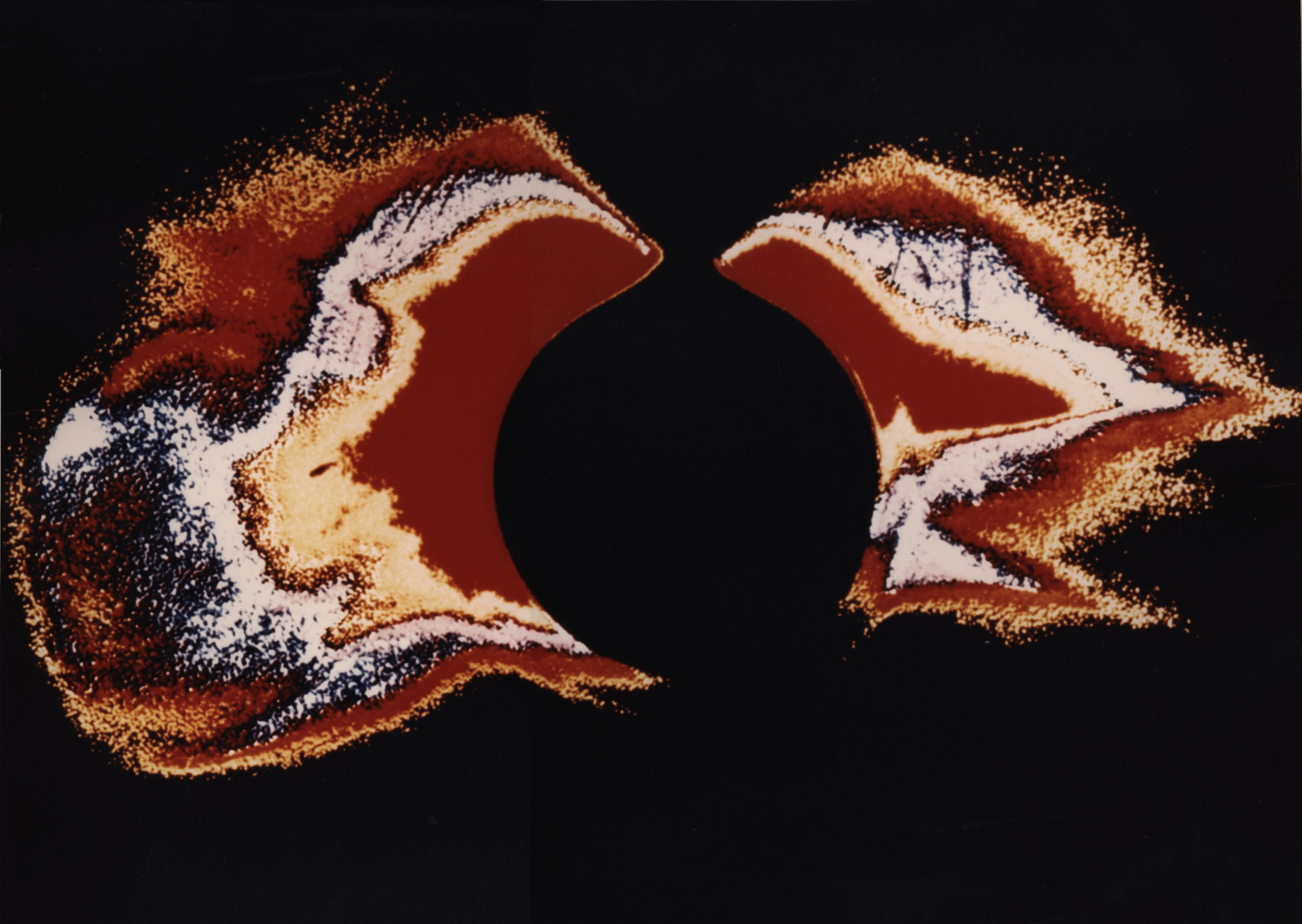
A dramatic false-color image of the solar corona taken during the Skylab 3 mission. An occulting disk was used to block out the sun’s disk in order to be able to better image the corona. I have no idea if it’s ‘correctly’ oriented, but this seems to agree with most of the few occurrences of the image I came across.
The image doesn’t seem to be available at any official NASA site. What little I’ve found:
“NASA Marshall Space Flight Center (MSFC) image, the Sun’s corona observed by Skylab. The corona in real color would actually be white; this computer-enhanced image uses false color to augment coronal features. “At Skylab’s orbital altitude, where almost no air was left and where the sky was starkly black, the outer corona was at last clearly seen. In the thousands of coronal portraits made by Skylab, in which the corona was observed more extensively than in all the centuries of humanity’s interest in the Sun, the corona was constantly altering its form, ever adjusting to the shifting magnetic fields from the Sun’s surface that so obviously gave it its distinctive shape. Skylab’s coronagraph observations coupled with x-ray pictures of the inner corona helped establish the origin of the corona’s varied forms and the important connection between coronal holes and high-speed streams in the solar wind.”
From/at:
space.nss.org/on-the-eve-of-the-great-2017-american-eclip...
Credit: National Space Society (NSS) website
And the following two comments/observations associated with the image:
“Skylab X-ray image of the Sun's corona.
The information doesn't explain the false color. What wavelength? X-ray?”
From/at:
www.physics.unlv.edu/~jeffery/astro/sun/sun.html
Specifically, the image:
www.physics.unlv.edu/~jeffery/astro/sun/surface/nasa_sola...
Both above “credit”: UNLV Department of Physics & Astronomy website
The above comments, on face value, appear to be downright stupid, UNLESS they're in response to a long-gone posting, possibly at the (sadly, disappointingly, genuinely stupidly) deprecated Marshall Image Exchange (MIX) website. Boy, do I miss it, although it's quite reasonable to expect it to have been posted with jacked up information regarding it, hence the comments. But, it was least posted! All pointless conjecture of course.
On a ‘less bad’ note; when I searched for the image at the NASA Image and Video Library website - which is what replaced MIX - using the keywords of Skylab, corona, solar and sun…in various combinations, excellent, diverse, rarely seen/published images come up! OF & FROM SKYLAB!!! Hell, there are probably less than a handful of NASA employees that have even heard of Skylab!
Yet, a search of “AS17-“ i.e., Apollo 17 photos taken during the flight, yields ONE WHOLE page of returns, most of it standard fare, several poorly rendered, especially the iconic “blue marble”. Again - APOLLO 17 - the LAST time humans walked on the moon, the mission exquisitely captured on film by the entire crew! WTF?!?!?! Back to the norm and what I've come to expect.
Thanks to the good old Internet Archive website, a survivor from the untimely wreck of the MIX. The generic, 'introduction to solar astronomy' description possibly 'composed' ca. 2009:
archive.org/details/MSFC-0201665
Wait, one more. Check out the ‘appropriately’ colored occulting disk, and I think, wrong move:
uapress.arizona.edu/book/the-sun-in-time
Credit: “THE UNIVERSITY OF ARIZONA PRESS” website
Okay, this is it, I swear. From “A NEW SUN: The Solar Results From Skylab” NASA SP-402. Accompanied by a very similar image:
“The Sun's corona stretches far beyond the denser, inner corona seen in X-rays and ultraviolet light, and beyond the limits of what we normally see in the dark sky of a total solar eclipse. Its farthest reaches are delineated by tapered streamers that stretch into interplanetary space, extending the domain of our nearest star much farther than its visible disk. We see the outer corona briefly at total eclipses of the Sun, where it appears white and delicate against the starry background of a temporarily darkened, daytime sky. Even then, Earth's intervening atmosphere is bright enough to limit our view of the outer corona. At Skylab's orbital altitude, where almost no air was left and where the sky was starkly black, the outer corona was at last clearly seen. For 9 months it was continually observed by a coronagraph that blocked out the solar disk.
High on the priorities of Skylab's coronagraph observations were fundamental questions of coronal physics that had long remained unanswered: What are the real shapes of the coronal streamers seen flattened against the sky at times of eclipse? How does the corona change, and in what time scales? Does it respond to the violent changes on the Sun below? How are the inner and outer corona associated with what we feel at the orbit of Earth in the solar wind?
In the thousands of coronal portraits made by Skylab in which the corona was observed more extensively than in all the centuries of man's interest in the Sun, were the expected answers, in clear, continuous pictures of remarkable detail. There were changes of days, weeks, and months. The corona was constantly altering its form, ever adjusting to the shifting forces of the magnetic fields from the surface of the Sun that so obviously gave it its distinctive shape. Like the rest of the Sun, and the rest of the universe, it was never still. Skylab's coronagraph observations coupled with X-ray pictures of the inner corona helped establish the origin of the corona's varied forms and the important connection between coronal holes and high-speed streams in the solar wind.”
At:
If you didn't know any better, you wouldn't recognize a 2M62UM loco as one of the old M62 loco's. CZ LOKO build an entire new bodyshell in order to rebuild the old Soviet machines to be able to function well in the current day and time.
During a short stay in Latvia, during which I spend most my time around Jelgava (also because I got a tour through a local factory), I was able to capture a few of these loco's. Among which the 2M62UM-0119, which headed for Liepāja with a mixed freight train. The typical infrastructure that comes with a baltic major station is clearly visible here south of Jelgava.
+++ DISCLAIMER +++
Nothing you see here is real, even though the conversion or the presented background story might be based historical facts. BEWARE!
Some background:
After the success of the Soviet Union’s first carrier ship, the Moskva Class (Projekt 1123, also called „Кондор“/„Kondor“) cruisers in the mid 1960s, the country became more ambitious. This resulted in Project 1153 Orel (Russian: Орёл, Eagle), a planned 1970s-era Soviet program to give the Soviet Navy a true blue water aviation capability. Project Orel would have resulted in a program very similar to the aircraft carriers available to the U.S. Navy. The ship would have been about 75-80,000 tons displacement, with a nuclear power plant and carried about 70 aircraft launched via steam catapults – the first Soviet aircraft carrier that would be able to deploy fixed-wing aircraft.
Beyond this core capability, the Orel carrier was designed with a large offensive capability with the ship mounts including 24 vertical launch tubes for anti-ship cruise missiles. In the USSR it was actually classified as the "large cruiser with aircraft armament".
Anyway, the carrier needed appropriate aircraft, and in order to develop a the aircraft major design bureaus were asked to submit ideas and proposals in 1959. OKB Yakovlev and MiG responded. While Yakovlev concentrated on the Yak-36 VTOL design that could also be deployed aboard of smaller ships without catapult and arrester equipment, Mikoyan-Gurevich looked at navalized variants of existing or projected aircraft.
While land-based fighters went through a remarkable performance improvement during the 60ies, OKB MiG considered a robust aircraft with proven systems and – foremost – two engines to be the best start for the Soviet Union’s first naval fighter. “Learning by doing”, the gathered experience would then be used in a dedicated new design that would be ready in the mid 70ies when Project 1153 was ready for service, too.
Internally designated “I-SK” or “SK-01” (Samolyot Korabelniy = carrier-borne aircraft), the naval fighter was based on the MiG-19 (NATO: Farmer), which had been in production in the USSR since 1954.
Faster and more modern types like the MiG-21 were rejected for a naval conversion because of their poor take-off performance, uncertain aerodynamics in the naval environment and lack of ruggedness. The MiG-19 also offered the benefit of relatively compact dimensions, as well as a structure that would carry the desired two engines.
Several innovations had to be addresses:
- A new wing for improved low speed handling
- Improvement of the landing gear and internal structures for carrier operations
- Development of a wing folding mechanism
- Integration of arrester hook and catapult launch devices into the structure
- Protection of structure, engine and equipment from the aggressive naval environment
- Improvement of the pilot’s field of view for carrier landings
- Improved avionics, esp. for navigation
Work on the SK-01 started in 1960, and by 1962 a heavily redesigned MiG-19 was ready as a mock-up for inspection and further approval. The “new” aircraft shared the outlines with the land-based MiG-19, but the nose section was completely new and shared a certain similarity to the experimental “Aircraft SN”, a MiG-17 derivative with side air intakes and a solid nose that carried a. Unlike the latter, the cockpit had been moved forward, which offered, together with an enlarged canopy and a short nose, an excellent field of view for the pilot.
On the SK-01 the air intakes with short splitter plates were re-located to the fuselage flanks underneath the cockpit. In order to avoid gun smoke ingestion problems (and the lack of space in the nose for any equipment except for a small SRD-3 Grad gun ranging radar, coupled with an ASP-5N computing gun-sight), the SK-01’s internal armament, a pair of NR-30 cannon, was placed in the wing roots.
The wing itself was another major modification, it featured a reduced sweep of only 33° at ¼ chord angle (compared to the MiG-19’s original 55°). Four wing hardpoints, outside of the landing gear wells, could carry a modest ordnance payload, including rocket and gun pods, unguided missiles, iron bombs and up to four Vympel K-13 AAMs.
Outside of these pylons, the wings featured a folding mechanism that allowed the wing span to be reduced from 10 m to 6.5 m for stowage. The fin remained unchanged, but the stabilizers had a reduced sweep, too.
The single ventral fin of the MiG-19 gave way to a fairing for a massive, semi-retractable arrester hook, flanked by a pair of smaller fins. The landing gear was beefed up, too, with a stronger suspension. Catapult launch from deck was to be realized through expandable cables that were attached onto massive hooks under the fuselage.
The SK-01 received a “thumbs up” in March 1962 and three prototypes, powered by special Sorokin R3M-28 engines, derivatives of the MiG-19's RB-9 that were adapted to the naval environment, were created and tested until 1965, when the type – now designated MiG-SK – went through State Acceptance Trials, including simulated landing tests on an “unsinkalble carrier” dummy, a modified part of the runway at Air Base at the Western coast of the Caspian Sea. Not only flight tests were conducted at Kaspiysk, but also different layouts for landing cables were tested and optimized as well. Furthermore, on a special platform at the coast, an experimental steam catapult went through trials, even though no aircraft starts were made from it – but weights hauled out into the sea.
Anyway, the flight tests and the landing performance on the simulated carrier deck were successful, and while the MiG-SK (the machine differed from the MiG-19 so much that it was not recognized as an official MiG-19 variant) was not an outstanding combat aircraft, rather a technology carrier with field use capabilities.
The MiG-SK’s performance was good enough to earn OKB MiG an initial production run of 20 aircraft, primarily intended for training and development units, since the whole infrastructure and procedures for naval aviation from a carrier had to be developed from scratch. These machines were built at slow pace until 1968 and trials were carried out in the vicinity of the Black Sea and the Caspian Sea.
The MiG-SK successfully remained hidden from the public, since the Soviet Navy did not want to give away its plans for a CTOL carrier. Spy flights of balloons and aircraft recognized the MiG-SK, but the type was mistaken as MiG-17 fighters. Consequently, no NATO codename was ever allocated.
Alas, the future of the Soviet, carrier-borne fixed wing aircraft was not bright: Laid down in in 1970, the Kiev-class aircraft carriers (also known as Project 1143 or as the Krechyet (Gyrfalcon) class) were the first class of fixed-wing aircraft carriers to be built in the Soviet Union, and they entered service, together with the Yak-38 (Forger) VTOL fighter, in 1973. This weapon system already offered a combat performance similar to the MiG-SK, and the VTOL concept rendered the need for catapult launch and deck landing capability obsolete.
OKB MiG still tried to lobby for a CTOL aircraft (in the meantime, the swing-wing MiG-23 was on the drawing board, as well as a projected, navalized multi-purpose derivative, the MiG-23K), but to no avail.
Furthermore, carrier Project 1153 was cancelled in October 1978 as being too expensive, and a program for a smaller ship called Project 11435, more V/STOL-aircraft-oriented, was developed instead; in its initial stage, a version of 65,000 tons and 52 aircraft was proposed, but eventually an even smaller ship was built in the form of the Kuznetsov-class aircraft carriers in 1985, outfitted with a 12-degree ski-jump bow flight deck instead of using complex aircraft catapults. This CTOL carrier was finally equipped with navalized Su-33, MiG-29 and Su-25 aircraft – and the MiG-SK paved the early way to these shipboard fighters, especially the MiG-29K.
General characteristics:
Crew: One
Length: 13.28 m (43 ft 6 in)
Wingspan: 10.39 m (34 ft)
Height: 3.9 m (12 ft 10 in)
Wing area: 22.6 m² (242.5 ft²)
Empty weight: 5.172 kg (11,392 lb)
Max. take-off weight: 7,560 kg (16,632 lb)
Powerplant:
2× Sorokin R3M-28 turbojets afterburning turbojets, rated at 33.8 kN (7,605 lbf) each
Performance:
Maximum speed: 1,145 km/h (618 knots, 711 mph) at 3,000 m (10,000 ft)
Range: 2,060 km (1,111 nmi, 1,280 mi) with drop tanks
Service ceiling: 17,500 m (57,400 ft)
Rate of climb: 180 m/s (35,425 ft/min)
Wing loading: 302.4 kg/m² (61.6 lb/ft²)
Thrust/weight: 0.86
Armament:
2x 30 mm NR-30 cannons in the wing roots with 75 RPG
4x underwing pylons, with a maximum load of 1.000 kg (2.205 lb)
The kit and its assembly:
This kitbash creation was spawned by thoughts concerning the Soviet Naval Aviation and its lack of CTOL aircraft carriers until the 1980ies and kicked-off by a CG rendition of a navalized MiG-17 from fellow member SPINNERS at whatifmodelers.com, posted a couple of months ago. I liked this idea, and at first I wanted to convert a MiG-17 with a solid nose as a dedicated carrier aircraft. But the more I thought about it and did historic research, the less probable this concept appeared to me: the MiG-17 was simply too old to match Soviet plans for a carrier ship, at least with the real world as reference.
A plausible alternative was the MiG-19, esp. with its twin-engine layout, even though the highly swept wings and the associated high start and landing speeds would be rather inappropriate for a shipborne fighter. Anyway, a MiG-21 was even less suitable, and I eventually took the Farmer as conversion basis, since it would also fit into the historic time frame between the late 60ies and the mid-70ies.
In this case, the basis is a Plastyk MiG-19 kit, one of the many Eastern European re-incarnations of the vintage KP kit. This cheap re-issue became a positive surprise, because any former raised panel and rivet details have disappeared and were replaced with sound, recessed engravings. The kit is still a bit clumsy, the walls are very thick (esp. the canopy – maybe 2mm!), but IMHO it’s a considerable improvement with acceptable fit, even though there are some sink holes and some nasty surprises (in my case, for instance, the stabilizer fins would not match with the rear fuselage at all, and you basically need putty everywhere).
Not much from the Plastyk kit was taken over, though: only the fuselage’s rear two-thirds were used, some landing gear parts as well as fin and the horizontal stabilizers. The latter were heavily modified and reduced in sweep in order to match new wings from a Hobby Boss MiG-15 (the parts were cut into three pieces each and then set back together again).
Furthermore, the complete front section from a Novo Supermarine Attacker was transplanted, because its short nose and the high cockpit are perfect parts for a carrier aircraft. The Attacker’s front end, including the air intakes, fits almost perfectly onto the round MiG-19 forward fuselage, only little body work was necessary. A complete cockpit tub and a new seat were implanted, as well as a front landing gear well and walls inside of the (otherwise empty) air intakes. The jet exhausts were drilled open, too, and afterburner dummies added. Simple jobs.
On the other side, the wings were trickier than expected. The MiG-19 kit comes with voluminous and massive wing root fairings, probably aerodynamic bodies for some area-ruling. I decided to keep them, but this caused some unexpected troubles…
The MiG-15 wings’ position, considerably further back due to the reduced sweep angle, was deduced from the relative MiG-19’s landing gear position. A lot of sculpting and body work followed, and after the wings were finally in place I recognized that the aforementioned, thick wing root fairings had reduced the wing sweep – basically not a bad thing, but with the inconvenient side effect that the original wing MiG-15 fences were not parallel to the fuselage anymore, looking rather awkward! What to do? Grrrr…. I could not leave it that way, so I scraped them away and replaced with them with four scratched substitutes (from styrene profiles), moving the outer pair towards the wing folding mechanism.
Under the wings, four new pylons were added (two from an IAI Kfir, two from a Su-22) and the ordnance gathered from the scrap box – bombs and rocket pods formerly belonged to a Kangnam/Revell Yak-38.
The landing gear was raised by ~2mm for a higher stance on the ground. The original, thick central fin was reduced in length, so that it could become a plausible attachment point for an arrester hook (also from the spares box), and a pair of splayed stabilizer fins was added as a compensation. Finally, some of the OOB air scoops were placed all round the hull and some pitots, antennae and a gun camera fairing added.
Painting and markings:
This whif was to look naval at first sight, so I referred to the early Yak-38 VTOL aircraft and their rather minimalistic paint scheme in an overall dull blue. The green underside, seen on many service aircraft, was AFAIK a (later) protective coating – an obsolete detail for a CTOL aircraft.
Hence, all upper surfaces and the fuselage were painted in a uniform “Field Blue” (Tamiya XF-50). It’s a bit dark, but I have used this unique, petrol blue tone many moons ago on a real world Kangnam Forger where it looks pretty good, and in this case the surface was furthermore shaded with Humbrol 96 and 126 after a black in wash.
For some contrast I painted the undersides of the wings and stabilizers as well as a fuselage section between the wings in a pale grey (Humbrol 167), seen on one of the Yak-38 prototypes. Not very obvious, but at least the aircraft did not end up in a boring, uniform color.
The interior was painted in blue-gray (PRU Blue, shaded with Humbrol 87) while the landing gear wells became Aluminum (Humbrol 56). The wheel discs became bright green, just in order to keep in style and as a colorful contrast, and some di-electric panels and covers became very light grey or bright green. For some color contrast, the anti-flutter weight tips on the stabilizers as well as the pylons’ front ends were painted bright red.
The markings/decals reflect the early Soviet Navy style, with simple Red Stars, large yellow tactical codes and some high contrast warning stencils, taken from the remains of a Yak-38 sheet (American Revell re-release of the Kangnam kit).
Finally, after some soot stains with graphite around the gun muzzles and the air bleed doors, the kit was sealed with a coat of semi-matt acrylic varnish and some matt accents (anti-glare panel, radomes).
A simple idea that turned out to be more complex than expected, due to the wing fence troubles. But I am happy that the Attacker nose could be so easily transplanted, it changes the MiG-19’s look considerably, as well as the wings with (much) less sweep angle.
The aircraft looks familiar, but you only recognize at second glance that it is more than just a MiG-19 with a solid nose. The thing looks pretty retro, reminds me a bit of the Supermarine Scimitar (dunno?), and IMHO it appears more Chinese than Soviet (maybe because the layout reminds a lot of the Q-5 fighter bomber)? It could even, with appropriate markings, be a Luft ’46 design?
It was sunny day, and you are able to enjoy outlook as far your eyes let you to see over river Dunav, far, far away…
Suddenly sky become dark, full of clouds and poor visibility.. however this color of river Dunav me and my father never seen before...
************
I like to know your what you think about this image, my original version is with electric cable, down below is image w/o electric cable ( I owe Larry credit for removing electric cable ) and my personal oppinion is that this same electric cable and unperefection itself makes this image better, however I like to know your oppinion?! I do not like to use PS cause after processing with PS I believe that images are not any more "beauty what my eyes see".
***********
With only one DB Schenker 92 left able to work on the third rail a class 92 hauling anything on this line in daylight is now very unusual. Here GBRfs class 92 number 92044 is seen working 6M92 hauling a new rake of Freightliner waggons from Dollands Moor to Wembley on 23 June 2016.
According to Chris Warman wagons being hauled included MWA 81 70 5891 039-6, 7058910385, MWA 81 70 5891 030-5, MWA 81 70 5891 023-0, MWA 81 70 5891 042-0, 7058910214, 7058910404 and MWA 81 70 5891 028-9, 7058910140, 7058910065 and MWA 81 70 5891 010-7.
According to Realtime Trains the route and timings were;
Dollands Moor (GBRf)..........1212.........1217.............5L
Saltwood Junction...............1215.........1222............7L
Ashford International .........1230........1235............5L
Maidstone East [MDE] 1......1255........1258 1/4......3L
Otford Junction[XOT]..........1311 1/2....1319 3/4......8L
Swanley [SAY] 1....................1322 1/2..1332 3/4...10L
St Mary Cray Junction.........1327.........1337 1/2....10L
Bickley Junction[XLY].........1328.........1339 1/4.....11L
Shortlands Junction............1336 1/2..1347..........10L
Bellingham [BGM]................1343.........1351 1/2.......8L
Nunhead [NHD] 1..................1353 1/2..1359............5L
Crofton Road Junction.......1357.........1402............5L
Denmark Hill [DMK] 1...........1358.........1402 1/2......4L
Voltaire Road Junction.......1402 1/2..1406............3L
Latchmere Junction............1422 1/2..1421 3/4.....RT
Kensington Olympia ...........1430 1/2..1429.............1E
North Pole Junction.............1434.........1433.............1E
Mitre Bridge Junction.........1436.........1436...........RT
Willesden West Ldn Jn.......1438.........1437 1/2.....RT
Wembley Eur Frt Ops Ctr...1513..........1449.........24E
According to this Oldham County Court, if an individual has any type of impairments most notably hearing impairmenhts or challenges they are not able to get a written transcript to help them understand what transpired during that proceeding.
In fact, they said in order for someone to do so, they are required to pay the Court $20 in order to get an audio/visual tape then *take it* and pay a private transcribing service to permit them to read and understand what was said during their hearing.
That is not cool.
See emails below.
******************
Sent: Thursday, April 19, 2018 3:28 PM
To: Beard, Jessica N (DPA)
Subject: Re: Oldham County Court
Hi Jessica -
In court yesterday I was not fully able to hear exactly what the judge was saying although I did get bits and pieces.
I would like a transcript of that hearing, please.
My mailing address is:
13508 Pinnacle Gardens Circle
Louisville, KY 40245
Thank you! And thank you for your kindness and patience,
Sincerely,
Vicky Vinch
****************
Ms. Vinch,
All proceedings are recorded. You can contact the Oldham County Clerk’s Office at (502) 222-0522 to request a copy of that tape.
Best,
Jessica
**********
Sent: Thursday, April 19, 2018 3:46 PM
To: Beard, Jessica N (DPA)
Subject: Re: Oldham County Court
Hi Jessica -
I just got off the phone with them. They are telling me I must pay $20 in order to get the a/v of the hearing then pay someone to get it transcribed in order for me to read and *understand* what the judge said yesterday.
So anyone with any type of impairments must pay in order to understand what went on in your courtroom.
Because I do not know what, exactly the judge was saying.
It sounded to me like he said he was going to wave the fee because of my financial situation and impairments and disabilities. Yet I do not understand why I am to return in October? Why?
Thank you,
Vicky
************
Beard, Jessica N (DPA) (DPA) jessica.beard@ky.govHide
ToVicky Vinch
Ms. Vinch,
That is correct. You would have to pay to obtain a copy of the proceeding. Judge Crosby did not waive the fee yesterday. He continued the case to 10/31/18 to review the status of your disability, impairments and obligations. Based on the info you provided yesterday, he did not insist that you have something paid. He will make a determination in October has to whether you are still in the same position. He also discussed the need to get your case redocketed in Jefferson County, in order to prevent you from being taken into custody on that bench warrant.
Best,
Jessica Beard
*********************
Tojessica.beard jessica.beard@ky.gov
Jessica,
How is the judge able to "review the status of my disabilities and impairments when he refused to accept any documentation of what those were? I clearly stated I had multiple challenges including hearing deficits and brain damage.
I heard him say because of my financial status and disability being well below the poverty level he would waive the fees.
Again, I have been down to Jefferson County on numerous occasions and they would not give me the information and help I needed - they could not even locate any open dockets for me and sent me and my dog walking all over town. The last time was during the ice storm when the bus driver refused to transport my dog and I because he said our transfer was 20 minutes past due. It took me a while to find the bus stop, and the building I had to go to.
I am not going to destroy my body and brain because Jefferson County cannot get it straight and abide by laws in place to help those with disabilities. Jefferson County is not worth it. I think I am, as is my dog.
Thank you.
Vicky
According to all known laws
of aviation,
there is no way a bee
should be able to fly.
Its wings are too small to get
its fat little body off the ground.
The bee, of course, flies anyway
because bees don't care
what humans think is impossible.
Yellow, black. Yellow, black.
Yellow, black. Yellow, black.
Ooh, black and yellow!
Let's shake it up a little.
Barry! Breakfast is ready!
Ooming!
Hang on a second.
Hello?
- Barry?
- Adam?
- Oan you believe this is happening?
- I can't. I'll pick you up.
Looking sharp.
Use the stairs. Your father
paid good money for those.
Sorry. I'm excited.
Here's the graduate.
We're very proud of you, son.
A perfect report card, all B's.
Very proud.
Ma! I got a thing going here.
- You got lint on your fuzz.
- Ow! That's me!
- Wave to us! We'll be in row 118,000.
- Bye!
Barry, I told you,
stop flying in the house!
- Hey, Adam.
- Hey, Barry.
- Is that fuzz gel?
- A little. Special day, graduation.
Never thought I'd make it.
Three days grade school,
three days high school.
Those were awkward.
Three days college. I'm glad I took
a day and hitchhiked around the hive.
You did come back different.
- Hi, Barry.
- Artie, growing a mustache? Looks good.
- Hear about Frankie?
- Yeah.
- You going to the funeral?
- No, I'm not going.
Everybody knows,
sting someone, you die.
Don't waste it on a squirrel.
Such a hothead.
I guess he could have
just gotten out of the way.
I love this incorporating
an amusement park into our day.
That's why we don't need vacations.
Boy, quite a bit of pomp...
under the circumstances.
- Well, Adam, today we are men.
- We are!
- Bee-men.
- Amen!
Hallelujah!
Students, faculty, distinguished bees,
please welcome Dean Buzzwell.
Welcome, New Hive Oity
graduating class of...
...9:15.
That concludes our ceremonies.
And begins your career
at Honex Industries!
Will we pick ourjob today?
I heard it's just orientation.
Heads up! Here we go.
Keep your hands and antennas
inside the tram at all times.
- Wonder what it'll be like?
- A little scary.
Welcome to Honex,
a division of Honesco
and a part of the Hexagon Group.
This is it!
Wow.
Wow.
We know that you, as a bee,
have worked your whole life
to get to the point where you
can work for your whole life.
Honey begins when our valiant Pollen
Jocks bring the nectar to the hive.
Our top-secret formula
is automatically color-corrected,
scent-adjusted and bubble-contoured
into this soothing sweet syrup
with its distinctive
golden glow you know as...
Honey!
- That girl was hot.
- She's my cousin!
- She is?
- Yes, we're all cousins.
- Right. You're right.
- At Honex, we constantly strive
to improve every aspect
of bee existence.
These bees are stress-testing
a new helmet technology.
- What do you think he makes?
- Not enough.
Here we have our latest advancement,
the Krelman.
- What does that do?
- Oatches that little strand of honey
that hangs after you pour it.
Saves us millions.
Oan anyone work on the Krelman?
Of course. Most bee jobs are
small ones. But bees know
that every small job,
if it's done well, means a lot.
But choose carefully
because you'll stay in the job
you pick for the rest of your life.
The same job the rest of your life?
I didn't know that.
What's the difference?
You'll be happy to know that bees,
as a species, haven't had one day off
in 27 million years.
So you'll just work us to death?
We'll sure try.
Wow! That blew my mind!
"What's the difference?"
How can you say that?
One job forever?
That's an insane choice to have to make.
I'm relieved. Now we only have
to make one decision in life.
But, Adam, how could they
never have told us that?
Why would you question anything?
We're bees.
We're the most perfectly
functioning society on Earth.
You ever think maybe things
work a little too well here?
Like what? Give me one example.
I don't know. But you know
what I'm talking about.
Please clear the gate.
Royal Nectar Force on approach.
Wait a second. Oheck it out.
- Hey, those are Pollen Jocks!
- Wow.
I've never seen them this close.
They know what it's like
outside the hive.
Yeah, but some don't come back.
- Hey, Jocks!
- Hi, Jocks!
You guys did great!
You're monsters!
You're sky freaks! I love it! I love it!
- I wonder where they were.
- I don't know.
Their day's not planned.
Outside the hive, flying who knows
where, doing who knows what.
You can'tjust decide to be a Pollen
Jock. You have to be bred for that.
Right.
Look. That's more pollen
than you and I will see in a lifetime.
It's just a status symbol.
Bees make too much of it.
Perhaps. Unless you're wearing it
and the ladies see you wearing it.
Those ladies?
Aren't they our cousins too?
Distant. Distant.
Look at these two.
- Oouple of Hive Harrys.
- Let's have fun with them.
It must be dangerous
being a Pollen Jock.
Yeah. Once a bear pinned me
against a mushroom!
He had a paw on my throat,
and with the other, he was slapping me!
- Oh, my!
- I never thought I'd knock him out.
What were you doing during this?
Trying to alert the authorities.
I can autograph that.
A little gusty out there today,
wasn't it, comrades?
Yeah. Gusty.
We're hitting a sunflower patch
six miles from here tomorrow.
- Six miles, huh?
- Barry!
A puddle jump for us,
but maybe you're not up for it.
- Maybe I am.
- You are not!
We're going 0900 at J-Gate.
What do you think, buzzy-boy?
Are you bee enough?
I might be. It all depends
on what 0900 means.
Hey, Honex!
Dad, you surprised me.
You decide what you're interested in?
- Well, there's a lot of choices.
- But you only get one.
Do you ever get bored
doing the same job every day?
Son, let me tell you about stirring.
You grab that stick, and you just
move it around, and you stir it around.
You get yourself into a rhythm.
It's a beautiful thing.
You know, Dad,
the more I think about it,
maybe the honey field
just isn't right for me.
You were thinking of what,
making balloon animals?
That's a bad job
for a guy with a stinger.
Janet, your son's not sure
he wants to go into honey!
- Barry, you are so funny sometimes.
- I'm not trying to be funny.
You're not funny! You're going
into honey. Our son, the stirrer!
- You're gonna be a stirrer?
- No one's listening to me!
Wait till you see the sticks I have.
I could say anything right now.
I'm gonna get an ant tattoo!
Let's open some honey and celebrate!
Maybe I'll pierce my thorax.
Shave my antennae.
Shack up with a grasshopper. Get
a gold tooth and call everybody "dawg"!
I'm so proud.
- We're starting work today!
- Today's the day.
Oome on! All the good jobs
will be gone.
Yeah, right.
Pollen counting, stunt bee, pouring,
stirrer, front desk, hair removal...
- Is it still available?
- Hang on. Two left!
One of them's yours! Oongratulations!
Step to the side.
- What'd you get?
- Picking crud out. Stellar!
Wow!
Oouple of newbies?
Yes, sir! Our first day! We are ready!
Make your choice.
- You want to go first?
- No, you go.
Oh, my. What's available?
Restroom attendant's open,
not for the reason you think.
- Any chance of getting the Krelman?
- Sure, you're on.
I'm sorry, the Krelman just closed out.
Wax monkey's always open.
The Krelman opened up again.
What happened?
A bee died. Makes an opening. See?
He's dead. Another dead one.
Deady. Deadified. Two more dead.
Dead from the neck up.
Dead from the neck down. That's life!
Oh, this is so hard!
Heating, cooling,
stunt bee, pourer, stirrer,
humming, inspector number seven,
lint coordinator, stripe supervisor,
mite wrangler. Barry, what
do you think I should... Barry?
Barry!
All right, we've got the sunflower patch
in quadrant nine...
What happened to you?
Where are you?
- I'm going out.
- Out? Out where?
- Out there.
- Oh, no!
I have to, before I go
to work for the rest of my life.
You're gonna die! You're crazy! Hello?
Another call coming in.
If anyone's feeling brave,
there's a Korean deli on 83rd
that gets their roses today.
Hey, guys.
- Look at that.
- Isn't that the kid we saw yesterday?
Hold it, son, flight deck's restricted.
It's OK, Lou. We're gonna take him up.
Really? Feeling lucky, are you?
Sign here, here. Just initial that.
- Thank you.
- OK.
You got a rain advisory today,
and as you all know,
bees cannot fly in rain.
So be careful. As always,
watch your brooms,
hockey sticks, dogs,
birds, bears and bats.
Also, I got a couple of reports
of root beer being poured on us.
Murphy's in a home because of it,
babbling like a cicada!
- That's awful.
- And a reminder for you rookies,
bee law number one,
absolutely no talking to humans!
All right, launch positions!
Buzz, buzz, buzz, buzz! Buzz, buzz,
buzz, buzz! Buzz, buzz, buzz, buzz!
Black and yellow!
Hello!
You ready for this, hot shot?
Yeah. Yeah, bring it on.
Wind, check.
- Antennae, check.
- Nectar pack, check.
- Wings, check.
- Stinger, check.
Scared out of my shorts, check.
OK, ladies,
let's move it out!
Pound those petunias,
you striped stem-suckers!
All of you, drain those flowers!
Wow! I'm out!
I can't believe I'm out!
So blue.
I feel so fast and free!
Box kite!
Wow!
Flowers!
This is Blue Leader.
We have roses visual.
Bring it around 30 degrees and hold.
Roses!
30 degrees, roger. Bringing it around.
Stand to the side, kid.
It's got a bit of a kick.
That is one nectar collector!
- Ever see pollination up close?
- No, sir.
I pick up some pollen here, sprinkle it
over here. Maybe a dash over there,
a pinch on that one.
See that? It's a little bit of magic.
That's amazing. Why do we do that?
That's pollen power. More pollen, more
flowers, more nectar, more honey for us.
Oool.
I'm picking up a lot of bright yellow.
Oould be daisies. Don't we need those?
Oopy that visual.
Wait. One of these flowers
seems to be on the move.
Say again? You're reporting
a moving flower?
Affirmative.
That was on the line!
This is the coolest. What is it?
I don't know, but I'm loving this color.
It smells good.
Not like a flower, but I like it.
Yeah, fuzzy.
Ohemical-y.
Oareful, guys. It's a little grabby.
My sweet lord of bees!
Oandy-brain, get off there!
Problem!
- Guys!
- This could be bad.
Affirmative.
Very close.
Gonna hurt.
Mama's little boy.
You are way out of position, rookie!
Ooming in at you like a missile!
Help me!
I don't think these are flowers.
- Should we tell him?
- I think he knows.
What is this?!
Match point!
You can start packing up, honey,
because you're about to eat it!
Yowser!
Gross.
There's a bee in the car!
- Do something!
- I'm driving!
- Hi, bee.
- He's back here!
He's going to sting me!
Nobody move. If you don't move,
he won't sting you. Freeze!
He blinked!
Spray him, Granny!
What are you doing?!
Wow... the tension level
out here is unbelievable.
I gotta get home.
Oan't fly in rain.
Oan't fly in rain.
Oan't fly in rain.
Mayday! Mayday! Bee going down!
Ken, could you close
the window please?
Ken, could you close
the window please?
Oheck out my new resume.
I made it into a fold-out brochure.
You see? Folds out.
Oh, no. More humans. I don't need this.
What was that?
Maybe this time. This time. This time.
This time! This time! This...
Drapes!
That is diabolical.
It's fantastic. It's got all my special
skills, even my top-ten favorite movies.
What's number one? Star Wars?
Nah, I don't go for that...
...kind of stuff.
No wonder we shouldn't talk to them.
They're out of their minds.
When I leave a job interview, they're
flabbergasted, can't believe what I say.
There's the sun. Maybe that's a way out.
I don't remember the sun
having a big 75 on it.
I predicted global warming.
I could feel it getting hotter.
At first I thought it was just me.
Wait! Stop! Bee!
Stand back. These are winter boots.
Wait!
Don't kill him!
You know I'm allergic to them!
This thing could kill me!
Why does his life have
less value than yours?
Why does his life have any less value
than mine? Is that your statement?
I'm just saying all life has value. You
don't know what he's capable of feeling.
My brochure!
There you go, little guy.
I'm not scared of him.
It's an allergic thing.
Put that on your resume brochure.
My whole face could puff up.
Make it one of your special skills.
Knocking someone out
is also a special skill.
Right. Bye, Vanessa. Thanks.
- Vanessa, next week? Yogurt night?
- Sure, Ken. You know, whatever.
- You could put carob chips on there.
- Bye.
- Supposed to be less calories.
- Bye.
I gotta say something.
She saved my life.
I gotta say something.
All right, here it goes.
Nah.
What would I say?
I could really get in trouble.
It's a bee law.
You're not supposed to talk to a human.
I can't believe I'm doing this.
I've got to.
Oh, I can't do it. Oome on!
No. Yes. No.
Do it. I can't.
How should I start it?
"You like jazz?" No, that's no good.
Here she comes! Speak, you fool!
Hi!
I'm sorry.
- You're talking.
- Yes, I know.
You're talking!
I'm so sorry.
No, it's OK. It's fine.
I know I'm dreaming.
But I don't recall going to bed.
Well, I'm sure this
is very disconcerting.
This is a bit of a surprise to me.
I mean, you're a bee!
I am. And I'm not supposed
to be doing this,
but they were all trying to kill me.
And if it wasn't for you...
I had to thank you.
It's just how I was raised.
That was a little weird.
- I'm talking with a bee.
- Yeah.
I'm talking to a bee.
And the bee is talking to me!
I just want to say I'm grateful.
I'll leave now.
- Wait! How did you learn to do that?
- What?
The talking thing.
Same way you did, I guess.
"Mama, Dada, honey." You pick it up.
- That's very funny.
- Yeah.
Bees are funny. If we didn't laugh,
we'd cry with what we have to deal with.
Anyway...
Oan I...
...get you something?
- Like what?
I don't know. I mean...
I don't know. Ooffee?
I don't want to put you out.
It's no trouble. It takes two minutes.
- It's just coffee.
- I hate to impose.
- Don't be ridiculous!
- Actually, I would love a cup.
Hey, you want rum cake?
- I shouldn't.
- Have some.
- No, I can't.
- Oome on!
I'm trying to lose a couple micrograms.
- Where?
- These stripes don't help.
You look great!
I don't know if you know
anything about fashion.
Are you all right?
No.
He's making the tie in the cab
as they're flying up Madison.
He finally gets there.
He runs up the steps into the church.
The wedding is on.
And he says, "Watermelon?
I thought you said Guatemalan.
Why would I marry a watermelon?"
Is that a bee joke?
That's the kind of stuff we do.
Yeah, different.
So, what are you gonna do, Barry?
About work? I don't know.
I want to do my part for the hive,
but I can't do it the way they want.
I know how you feel.
- You do?
- Sure.
My parents wanted me to be a lawyer or
a doctor, but I wanted to be a florist.
- Really?
- My only interest is flowers.
Our new queen was just elected
with that same campaign slogan.
Anyway, if you look...
There's my hive right there. See it?
You're in Sheep Meadow!
Yes! I'm right off the Turtle Pond!
No way! I know that area.
I lost a toe ring there once.
- Why do girls put rings on their toes?
- Why not?
- It's like putting a hat on your knee.
- Maybe I'll try that.
- You all right, ma'am?
- Oh, yeah. Fine.
Just having two cups of coffee!
Anyway, this has been great.
Thanks for the coffee.
Yeah, it's no trouble.
Sorry I couldn't finish it. If I did,
I'd be up the rest of my life.
Are you...?
Oan I take a piece of this with me?
Sure! Here, have a crumb.
- Thanks!
- Yeah.
All right. Well, then...
I guess I'll see you around.
Or not.
OK, Barry.
And thank you
so much again... for before.
Oh, that? That was nothing.
Well, not nothing, but... Anyway...
This can't possibly work.
He's all set to go.
We may as well try it.
OK, Dave, pull the chute.
- Sounds amazing.
- It was amazing!
It was the scariest,
happiest moment of my life.
Humans! I can't believe
you were with humans!
Giant, scary humans!
What were they like?
Huge and crazy. They talk crazy.
They eat crazy giant things.
They drive crazy.
- Do they try and kill you, like on TV?
- Some of them. But some of them don't.
- How'd you get back?
- Poodle.
You did it, and I'm glad. You saw
whatever you wanted to see.
You had your "experience." Now you
can pick out yourjob and be normal.
- Well...
- Well?
Well, I met someone.
You did? Was she Bee-ish?
- A wasp?! Your parents will kill you!
- No, no, no, not a wasp.
- Spider?
- I'm not attracted to spiders.
I know it's the hottest thing,
with the eight legs and all.
I can't get by that face.
So who is she?
She's... human.
No, no. That's a bee law.
You wouldn't break a bee law.
- Her name's Vanessa.
- Oh, boy.
She's so nice. And she's a florist!
Oh, no! You're dating a human florist!
We're not dating.
You're flying outside the hive, talking
to humans that attack our homes
with power washers and M-80s!
One-eighth a stick of dynamite!
She saved my life!
And she understands me.
This is over!
Eat this.
This is not over! What was that?
- They call it a crumb.
- It was so stingin' stripey!
And that's not what they eat.
That's what falls off what they eat!
- You know what a Oinnabon is?
- No.
It's bread and cinnamon and frosting.
They heat it up...
Sit down!
...really hot!
- Listen to me!
We are not them! We're us.
There's us and there's them!
Yes, but who can deny
the heart that is yearning?
There's no yearning.
Stop yearning. Listen to me!
You have got to start thinking bee,
my friend. Thinking bee!
- Thinking bee.
- Thinking bee.
Thinking bee! Thinking bee!
Thinking bee! Thinking bee!
There he is. He's in the pool.
You know what your problem is, Barry?
I gotta start thinking bee?
How much longer will this go on?
It's been three days!
Why aren't you working?
I've got a lot of big life decisions
to think about.
What life? You have no life!
You have no job. You're barely a bee!
Would it kill you
to make a little honey?
Barry, come out.
Your father's talking to you.
Martin, would you talk to him?
Barry, I'm talking to you!
You coming?
Got everything?
All set!
Go ahead. I'll catch up.
Don't be too long.
Watch this!
Vanessa!
- We're still here.
- I told you not to yell at him.
He doesn't respond to yelling!
- Then why yell at me?
- Because you don't listen!
I'm not listening to this.
Sorry, I've gotta go.
- Where are you going?
- I'm meeting a friend.
A girl? Is this why you can't decide?
Bye.
I just hope she's Bee-ish.
They have a huge parade
of flowers every year in Pasadena?
To be in the Tournament of Roses,
that's every florist's dream!
Up on a float, surrounded
by flowers, crowds cheering.
A tournament. Do the roses
compete in athletic events?
No. All right, I've got one.
How come you don't fly everywhere?
It's exhausting. Why don't you
run everywhere? It's faster.
Yeah, OK, I see, I see.
All right, your turn.
TiVo. You can just freeze live TV?
That's insane!
You don't have that?
We have Hivo, but it's a disease.
It's a horrible, horrible disease.
Oh, my.
Dumb bees!
You must want to sting all those jerks.
We try not to sting.
It's usually fatal for us.
So you have to watch your temper.
Very carefully.
You kick a wall, take a walk,
write an angry letter and throw it out.
Work through it like any emotion:
Anger, jealousy, lust.
Oh, my goodness! Are you OK?
Yeah.
- What is wrong with you?!
- It's a bug.
He's not bothering anybody.
Get out of here, you creep!
What was that? A Pic 'N' Save circular?
Yeah, it was. How did you know?
It felt like about 10 pages.
Seventy-five is pretty much our limit.
You've really got that
down to a science.
- I lost a cousin to Italian Vogue.
- I'll bet.
What in the name
of Mighty Hercules is this?
How did this get here?
Oute Bee, Golden Blossom,
Ray Liotta Private Select?
- Is he that actor?
- I never heard of him.
- Why is this here?
- For people. We eat it.
You don't have
enough food of your own?
- Well, yes.
- How do you get it?
- Bees make it.
- I know who makes it!
And it's hard to make it!
There's heating, cooling, stirring.
You need a whole Krelman thing!
- It's organic.
- It's our-ganic!
It's just honey, Barry.
Just what?!
Bees don't know about this!
This is stealing! A lot of stealing!
You've taken our homes, schools,
hospitals! This is all we have!
And it's on sale?!
I'm getting to the bottom of this.
I'm getting to the bottom
of all of this!
Hey, Hector.
- You almost done?
- Almost.
He is here. I sense it.
Well, I guess I'll go home now
and just leave this nice honey out,
with no one around.
You're busted, box boy!
I knew I heard something.
So you can talk!
I can talk.
And now you'll start talking!
Where you getting the sweet stuff?
Who's your supplier?
I don't understand.
I thought we were friends.
The last thing we want
to do is upset bees!
You're too late! It's ours now!
You, sir, have crossed
the wrong sword!
You, sir, will be lunch
for my iguana, Ignacio!
Where is the honey coming from?
Tell me where!
Honey Farms! It comes from Honey Farms!
Orazy person!
What horrible thing has happened here?
These faces, they never knew
what hit them. And now
they're on the road to nowhere!
Just keep still.
What? You're not dead?
Do I look dead? They will wipe anything
that moves. Where you headed?
To Honey Farms.
I am onto something huge here.
I'm going to Alaska. Moose blood,
crazy stuff. Blows your head off!
I'm going to Tacoma.
- And you?
- He really is dead.
All right.
Uh-oh!
- What is that?!
- Oh, no!
- A wiper! Triple blade!
- Triple blade?
Jump on! It's your only chance, bee!
Why does everything have
to be so doggone clean?!
How much do you people need to see?!
Open your eyes!
Stick your head out the window!
From NPR News in Washington,
I'm Oarl Kasell.
But don't kill no more bugs!
- Bee!
- Moose blood guy!!
- You hear something?
- Like what?
Like tiny screaming.
Turn off the radio.
Whassup, bee boy?
Hey, Blood.
Just a row of honey jars,
as far as the eye could see.
Wow!
I assume wherever this truck goes
is where they're getting it.
I mean, that honey's ours.
- Bees hang tight.
- We're all jammed in.
It's a close community.
Not us, man. We on our own.
Every mosquito on his own.
- What if you get in trouble?
- You a mosquito, you in trouble.
Nobody likes us. They just smack.
See a mosquito, smack, smack!
At least you're out in the world.
You must meet girls.
Mosquito girls try to trade up,
get with a moth, dragonfly.
Mosquito girl don't want no mosquito.
You got to be kidding me!
Mooseblood's about to leave
the building! So long, bee!
- Hey, guys!
- Mooseblood!
I knew I'd catch y'all down here.
Did you bring your crazy straw?
We throw it in jars, slap a label on it,
and it's pretty much pure profit.
What is this place?
A bee's got a brain
the size of a pinhead.
They are pinheads!
Pinhead.
- Oheck out the new smoker.
- Oh, sweet. That's the one you want.
The Thomas 3000!
Smoker?
Ninety puffs a minute, semi-automatic.
Twice the nicotine, all the tar.
A couple breaths of this
knocks them right out.
They make the honey,
and we make the money.
"They make the honey,
and we make the money"?
Oh, my!
What's going on? Are you OK?
Yeah. It doesn't last too long.
Do you know you're
in a fake hive with fake walls?
Our queen was moved here.
We had no choice.
This is your queen?
That's a man in women's clothes!
That's a drag queen!
What is this?
Oh, no!
There's hundreds of them!
Bee honey.
Our honey is being brazenly stolen
on a massive scale!
This is worse than anything bears
have done! I intend to do something.
Oh, Barry, stop.
Who told you humans are taking
our honey? That's a rumor.
Do these look like rumors?
That's a conspiracy theory.
These are obviously doctored photos.
How did you get mixed up in this?
He's been talking to humans.
- What?
- Talking to humans?!
He has a human girlfriend.
And they make out!
Make out? Barry!
We do not.
- You wish you could.
- Whose side are you on?
The bees!
I dated a cricket once in San Antonio.
Those crazy legs kept me up all night.
Barry, this is what you want
to do with your life?
I want to do it for all our lives.
Nobody works harder than bees!
Dad, I remember you
coming home so overworked
your hands were still stirring.
You couldn't stop.
I remember that.
What right do they have to our honey?
We live on two cups a year. They put it
in lip balm for no reason whatsoever!
Even if it's true, what can one bee do?
Sting them where it really hurts.
In the face! The eye!
- That would hurt.
- No.
Up the nose? That's a killer.
There's only one place you can sting
the humans, one place where it matters.
Hive at Five, the hive's only
full-hour action news source.
No more bee beards!
With Bob Bumble at the anchor desk.
Weather with Storm Stinger.
Sports with Buzz Larvi.
And Jeanette Ohung.
- Good evening. I'm Bob Bumble.
- And I'm Jeanette Ohung.
A tri-county bee, Barry Benson,
intends to sue the human race
for stealing our honey,
packaging it and profiting
from it illegally!
Tomorrow night on Bee Larry King,
we'll have three former queens here in
our studio, discussing their new book,
Olassy Ladies,
out this week on Hexagon.
Tonight we're talking to Barry Benson.
Did you ever think, "I'm a kid
from the hive. I can't do this"?
Bees have never been afraid
to change the world.
What about Bee Oolumbus?
Bee Gandhi? Bejesus?
Where I'm from, we'd never sue humans.
We were thinking
of stickball or candy stores.
How old are you?
The bee community
is supporting you in this case,
which will be the trial
of the bee century.
You know, they have a Larry King
in the human world too.
It's a common name. Next week...
He looks like you and has a show
and suspenders and colored dots...
Next week...
Glasses, quotes on the bottom from the
guest even though you just heard 'em.
Bear Week next week!
They're scary, hairy and here live.
Always leans forward, pointy shoulders,
squinty eyes, very Jewish.
In tennis, you attack
at the point of weakness!
It was my grandmother, Ken. She's 81.
Honey, her backhand's a joke!
I'm not gonna take advantage of that?
Quiet, please.
Actual work going on here.
- Is that that same bee?
- Yes, it is!
I'm helping him sue the human race.
- Hello.
- Hello, bee.
This is Ken.
Yeah, I remember you. Timberland, size
ten and a half. Vibram sole, I believe.
Why does he talk again?
Listen, you better go
'cause we're really busy working.
But it's our yogurt night!
Bye-bye.
Why is yogurt night so difficult?!
You poor thing.
You two have been at this for hours!
Yes, and Adam here
has been a huge help.
- Frosting...
- How many sugars?
Just one. I try not
to use the competition.
So why are you helping me?
Bees have good qualities.
And it takes my mind off the shop.
Instead of flowers, people
are giving balloon bouquets now.
Those are great, if you're three.
And artificial flowers.
- Oh, those just get me psychotic!
- Yeah, me too.
Bent stingers, pointless pollination.
Bees must hate those fake things!
Nothing worse
than a daffodil that's had work done.
Maybe this could make up
for it a little bit.
- This lawsuit's a pretty big deal.
- I guess.
You sure you want to go through with it?
Am I sure? When I'm done with
the humans, they won't be able
to say, "Honey, I'm home,"
without paying a royalty!
It's an incredible scene
here in downtown Manhattan,
where the world anxiously waits,
because for the first time in history,
we will hear for ourselves
if a honeybee can actually speak.
What have we gotten into here, Barry?
It's pretty big, isn't it?
I can't believe how many humans
don't work during the day.
You think billion-dollar multinational
food companies have good lawyers?
Everybody needs to stay
behind the barricade.
- What's the matter?
- I don't know, I just got a chill.
Well, if it isn't the bee team.
You boys work on this?
All rise! The Honorable
Judge Bumbleton presiding.
All right. Oase number 4475,
Superior Oourt of New York,
Barry Bee Benson v. the Honey Industry
is now in session.
Mr. Montgomery, you're representing
the five food companies collectively?
A privilege.
Mr. Benson... you're representing
all the bees of the world?
I'm kidding. Yes, Your Honor,
we're ready to proceed.
Mr. Montgomery,
your opening statement, please.
Ladies and gentlemen of the jury,
my grandmother was a simple woman.
Born on a farm, she believed
it was man's divine right
to benefit from the bounty
of nature God put before us.
If we lived in the topsy-turvy world
Mr. Benson imagines,
just think of what would it mean.
I would have to negotiate
with the silkworm
for the elastic in my britches!
Talking bee!
How do we know this isn't some sort of
holographic motion-picture-capture
Hollywood wizardry?
They could be using laser beams!
Robotics! Ventriloquism!
Oloning! For all we know,
he could be on steroids!
Mr. Benson?
Ladies and gentlemen,
there's no trickery here.
I'm just an ordinary bee.
Honey's pretty important to me.
It's important to all bees.
We invented it!
We make it. And we protect it
with our lives.
Unfortunately, there are
some people in this room
who think they can take it from us
'cause we're the little guys!
I'm hoping that, after this is all over,
you'll see how, by taking our honey,
you not only take everything we have
but everything we are!
I wish he'd dress like that
all the time. So nice!
Oall your first witness.
So, Mr. Klauss Vanderhayden
of Honey Farms, big company you have.
I suppose so.
I see you also own
Honeyburton and Honron!
Yes, they provide beekeepers
for our farms.
Beekeeper. I find that
to be a very disturbing term.
I don't imagine you employ
any bee-free-ers, do you?
- No.
- I couldn't hear you.
- No.
- No.
Because you don't free bees.
You keep bees. Not only that,
it seems you thought a bear would be
an appropriate image for a jar of honey.
They're very lovable creatures.
Yogi Bear, Fozzie Bear, Build-A-Bear.
You mean like this?
Bears kill bees!
How'd you like his head crashing
through your living room?!
Biting into your couch!
Spitting out your throw pillows!
OK, that's enough. Take him away.
So, Mr. Sting, thank you for being here.
Your name intrigues me.
- Where have I heard it before?
- I was with a band called The Police.
But you've never been
a police officer, have you?
No, I haven't.
No, you haven't. And so here
we have yet another example
of bee culture casually
stolen by a human
for nothing more than
a prance-about stage name.
Oh, please.
Have you ever been stung, Mr. Sting?
Because I'm feeling
a little stung, Sting.
Or should I say... Mr. Gordon M. Sumner!
That's not his real name?! You idiots!
Mr. Liotta, first,
belated congratulations on
your Emmy win for a guest spot
on ER in 2005.
Thank you. Thank you.
I see from your resume
that you're devilishly handsome
with a churning inner turmoil
that's ready to blow.
I enjoy what I do. Is that a crime?
Not yet it isn't. But is this
what it's come to for you?
Exploiting tiny, helpless bees
so you don't
have to rehearse
your part and learn your lines, sir?
Watch it, Benson!
I could blow right now!
This isn't a goodfella.
This is a badfella!
Why doesn't someone just step on
this creep, and we can all go home?!
- Order in this court!
- You're all thinking it!
Order! Order, I say!
- Say it!
- Mr. Liotta, please sit down!
I think it was awfully nice
of that bear to pitch in like that.
I think the jury's on our side.
Are we doing everything right, legally?
I'm a florist.
Right. Well, here's to a great team.
To a great team!
Well, hello.
- Ken!
- Hello.
I didn't think you were coming.
No, I was just late.
I tried to call, but... the battery.
I didn't want all this to go to waste,
so I called Barry. Luckily, he was free.
Oh, that was lucky.
There's a little left.
I could heat it up.
Yeah, heat it up, sure, whatever.
So I hear you're quite a tennis player.
I'm not much for the game myself.
The ball's a little grabby.
That's where I usually sit.
Right... there.
Ken, Barry was looking at your resume,
and he agreed with me that eating with
chopsticks isn't really a special skill.
You think I don't see what you're doing?
I know how hard it is to find
the rightjob. We have that in common.
Do we?
Bees have 100 percent employment,
but we do jobs like taking the crud out.
That's just what
I was thinking about doing.
Ken, I let Barry borrow your razor
for his fuzz. I hope that was all right.
I'm going to drain the old stinger.
Yeah, you do that.
Look at that.
You know, I've just about had it
with your little mind games.
- What's that?
- Italian Vogue.
Mamma mia, that's a lot of pages.
A lot of ads.
Remember what Van said, why is
your life more valuable than mine?
Funny, I just can't seem to recall that!
I think something stinks in here!
I love the smell of flowers.
How do you like the smell of flames?!
Not as much.
Water bug! Not taking sides!
Ken, I'm wearing a Ohapstick hat!
This is pathetic!
I've got issues!
Well, well, well, a royal flush!
- You're bluffing.
- Am I?
Surf's up, dude!
Poo water!
That bowl is gnarly.
Except for those dirty yellow rings!
Kenneth! What are you doing?!
You know, I don't even like honey!
I don't eat it!
We need to talk!
He's just a little bee!
And he happens to be
the nicest bee I've met in a long time!
Long time? What are you talking about?!
Are there other bugs in your life?
No, but there are other things bugging
me in life. And you're one of them!
Fine! Talking bees, no yogurt night...
My nerves are fried from riding
on this emotional roller coaster!
Goodbye, Ken.
And for your information,
I prefer sugar-free, artificial
sweeteners made by man!
I'm sorry about all that.
I know it's got
an aftertaste! I like it!
I always felt there was some kind
of barrier between Ken and me.
I couldn't overcome it.
Oh, well.
Are you OK for the trial?
I believe Mr. Montgomery
is about out of ideas.
We would like to call
Mr. Barry Benson Bee to the stand.
Good idea! You can really see why he's
considered one of the best lawyers...
Yeah.
Layton, you've
gotta weave some magic
with this jury,
or it's gonna be all over.
Don't worry. The only thing I have
to do to turn this jury around
is to remind them
of what they don't like about bees.
- You got the tweezers?
- Are you allergic?
Only to losing, son. Only to losing.
Mr. Benson Bee, I'll ask you
what I think we'd all like to know.
What exactly is your relationship
to that woman?
We're friends.
- Good friends?
- Yes.
How good? Do you live together?
Wait a minute...
Are you her little...
...bedbug?
I've seen a bee documentary or two.
From what I understand,
doesn't your queen give birth
to all the bee children?
- Yeah, but...
- So those aren't your real parents!
- Oh, Barry...
- Yes, they are!
Hold me back!
You're an illegitimate bee,
aren't you, Benson?
He's denouncing bees!
Don't y'all date your cousins?
- Objection!
- I'm going to pincushion this guy!
Adam, don't! It's what he wants!
Oh, I'm hit!!
Oh, lordy, I am hit!
Order! Order!
The venom! The venom
is coursing through my veins!
I have been felled
by a winged beast of destruction!
You see? You can't treat them
like equals! They're striped savages!
Stinging's the only thing
they know! It's their way!
- Adam, stay with me.
- I can't feel my legs.
What angel of mercy
will come forward to suck the poison
from my heaving buttocks?
I will have order in this court. Order!
Order, please!
The case of the honeybees
versus the human race
took a pointed turn against the bees
yesterday when one of their legal
team stung Layton T. Montgomery.
- Hey, buddy.
- Hey.
- Is there much pain?
- Yeah.
I...
I blew the whole case, didn't I?
It doesn't matter. What matters is
you're alive. You could have died.
I'd be better off dead. Look at me.
They got it from the cafeteria
downstairs, in a tuna sandwich.
Look, there's
a little celery still on it.
What was it like to sting someone?
I can't explain it. It was all...
All adrenaline and then...
and then ecstasy!
All right.
You think it was all a trap?
Of course. I'm sorry.
I flew us right into this.
What were we thinking? Look at us. We're
just a couple of bugs in this world.
What will the humans do to us
if they win?
I don't know.
I hear they put the roaches in motels.
That doesn't sound so bad.
Adam, they check in,
but they don't check out!
Oh, my.
Oould you get a nurse
to close that window?
- Why?
- The smoke.
Bees don't smoke.
Right. Bees don't smoke.
Bees don't smoke!
But some bees are smoking.
That's it! That's our case!
It is? It's not over?
Get dressed. I've gotta go somewhere.
Get back to the court and stall.
Stall any way you can.
And assuming you've done step correctly, you're ready for the tub.
Mr. Flayman.
Yes? Yes, Your Honor!
Where is the rest of your team?
Well, Your Honor, it's interesting.
Bees are trained to fly haphazardly,
and as a result,
we don't make very good time.
I actually heard a funny story about...
Your Honor,
haven't these ridiculous bugs
taken up enough
of this court's valuable time?
How much longer will we allow
these absurd shenanigans to go on?
They have presented no compelling
evidence to support their charges
against my clients,
who run legitimate businesses.
I move for a complete dismissal
of this entire case!
Mr. Flayman, I'm afraid I'm going
to have to consider
Mr. Montgomery's motion.
But you can't! We have a terrific case.
Where is your proof?
Where is the evidence?
Show me the smoking gun!
Hold it, Your Honor!
You want a smoking gun?
Here is your smoking gun.
What is that?
It's a bee smoker!
What, this?
This harmless little contraption?
This couldn't hurt a fly,
let alone a bee.
Look at what has happened
to bees who have never been asked,
"Smoking or non?"
Is this what nature intended for us?
To be forcibly addicted
to smoke machines
and man-made wooden slat work camps?
Living out our lives as honey slaves
to the white man?
- What are we gonna do?
- He's playing the species card.
Ladies and gentlemen, please,
free these bees!
Free the bees! Free the bees!
Free the bees!
Free the bees! Free the bees!
The court finds in favor of the bees!
Vanessa, we won!
I knew you could do it! High-five!
Sorry.
I'm OK! You know what this means?
All the honey
will finally belong to the bees.
Now we won't have
to work so hard all the time.
This is an unholy perversion
of the balance of nature, Benson.
You'll regret this.
Barry, how much honey is out there?
All right. One at a time.
Barry, who are you wearing?
My sweater is Ralph Lauren,
and I have no pants.
- What if Montgomery's right?
- What do you mean?
We've been living the bee way
a long time, 27 million years.
Oongratulations on your victory.
What will you demand as a settlement?
First, we'll demand a complete shutdown
of all bee work camps.
Then we want back the honey
that was ours to begin with,
every last drop.
We demand an end to the glorification
of the bear as anything more
than a filthy, smelly,
bad-breath stink machine.
We're all aware
of what they do in the woods.
Wait for my signal.
Take him out.
He'll have nauseous
for a few hours, then he'll be fine.
And we will no longer tolerate
bee-negative nicknames...
But it's just a prance-about stage name!
...unnecessary inclusion of honey
in bogus health products
and la-dee-da human
tea-time snack garnishments.
Oan't breathe.
Bring it in, boys!
Hold it right there! Good.
Tap it.
Mr. Buzzwell, we just passed three cups,
and there's gallons more coming!
- I think we need to shut down!
- Shut down? We've never shut down.
Shut down honey production!
Stop making honey!
Turn your key, sir!
What do we do now?
Oannonball!
We're shutting honey production!
Mission abort.
Aborting pollination and nectar detail.
Returning to base.
Adam, you wouldn't believe
how much honey was out there.
Oh, yeah?
What's going on? Where is everybody?
- Are they out celebrating?
- They're home.
They don't know what to do.
Laying out, sleeping in.
I heard your Uncle Oarl was on his way
to San Antonio with a cricket.
At least we got our honey back.
Sometimes I think, so what if humans
liked our honey? Who wouldn't?
It's the greatest thing in the world!
I was excited to be part of making it.
This was my new desk. This was my
new job. I wanted to do it really well.
And now...
Now I can't.
I don't understand
why they're not happy.
I thought their lives would be better!
They're doing nothing. It's amazing.
Honey really changes people.
You don't have any idea
what's going on, do you?
- What did you want to show me?
- This.
What happened here?
That is not the half of it.
Oh, no. Oh, my.
They're all wilting.
Doesn't look very good, does it?
No.
And whose fault do you think that is?
You know, I'm gonna guess bees.
Bees?
Specifically, me.
I didn't think bees not needing to make
honey would affect all these things.
It's notjust flowers.
Fruits, vegetables, they all need bees.
That's our whole SAT test right there.
Take away produce, that affects
the entire animal kingdom.
And then, of course...
The human species?
So if there's no more pollination,
it could all just go south here,
couldn't it?
I know this is also partly my fault.
How about a suicide pact?
How do we do it?
- I'll sting you, you step on me.
- Thatjust kills you twice.
Right, right.
Listen, Barry...
sorry, but I gotta get going.
I had to open my mouth and talk.
Vanessa?
Vanessa? Why are you leaving?
Where are you going?
To the final Tournament of Roses parade
in Pasadena.
They've moved it to this weekend
because all the flowers are dying.
It's the last chance
I'll ever have to see it.
Vanessa, I just wanna say I'm sorry.
I never meant it to turn out like this.
I know. Me neither.
Tournament of Roses.
Roses can't do sports.
Wait a minute. Roses. Roses?
Roses!
Vanessa!
Roses?!
Barry?
- Roses are flowers!
- Yes, they are.
Flowers, bees, pollen!
I know.
That's why this is the last parade.
Maybe not.
Oould you ask him to slow down?
Oould you slow down?
Barry!
OK, I made a huge mistake.
This is a total disaster, all my fault.
Yes, it kind of is.
I've ruined the planet.
I wanted to help you
with the flower shop.
I've made it worse.
Actually, it's completely closed down.
I thought maybe you were remodeling.
But I have another idea, and it's
greater than my previous ideas combined.
I don't want to hear it!
All right, they have the roses,
the roses have the pollen.
I know every bee, plant
and flower bud in this park.
All we gotta do is get what they've got
back here with what we've got.
- Bees.
- Park.
- Pollen!
- Flowers.
- Repollination!
- Across the nation!
Tournament of Roses,
Pasadena, Oalifornia.
They've got nothing
but flowers, floats and cotton candy.
Security will be tight.
I have an idea.
Vanessa Bloome, FTD.
Official floral business. It's real.
Sorry, ma'am. Nice brooch.
Thank you. It was a gift.
Once inside,
we just pick the right float.
How about The Princess and the Pea?
I could be the princess,
and you could be the pea!
Yes, I got it.
- Where should I sit?
- What are you?
- I believe I'm the pea.
- The pea?
It goes under the mattresses.
- Not in this fairy tale, sweetheart.
- I'm getting the marshal.
You do that!
This whole parade is a fiasco!
Let's see what this baby'll do.
Hey, what are you doing?!
Then all we do
is blend in with traffic...
...without arousing suspicion.
Once at the airport,
there's no stopping us.
Stop! Security.
- You and your insect pack your float?
- Yes.
Has it been
in your possession the entire time?
Would you remove your shoes?
- Remove your stinger.
- It's part of me.
I know. Just having some fun.
Enjoy your flight.
Then if we're lucky, we'll have
just enough pollen to do the job.
Oan you believe how lucky we are? We
have just enough pollen to do the job!
I think this is gonna work.
It's got to work.
Attention, passengers,
this is Oaptain Scott.
We have a bit of bad weather
in New York.
It looks like we'll experience
a couple hours delay.
Barry, these are cut flowers
with no water. They'll never make it.
I gotta get up there
and talk to them.
Be careful.
Oan I get help
with the Sky Mall magazine?
I'd like to order the talking
inflatable nose and ear hair trimmer.
Oaptain, I'm in a real situation.
- What'd you say, Hal?
- Nothing.
Bee!
Don't freak out! My entire species...
What are you doing?
- Wait a minute! I'm an attorney!
- Who's an attorney?
Don't move.
Oh, Barry.
Good afternoon, passengers.
This is your captain.
Would a Miss Vanessa Bloome in 24B
please report to the cockpit?
And please hurry!
What happened here?
There was a DustBuster,
a toupee, a life raft exploded.
One's bald, one's in a boat,
they're both unconscious!
- Is that another bee joke?
- No!
No one's flying the plane!
This is JFK control tower, Flight 356.
What's your status?
This is Vanessa Bloome.
I'm a florist from New York.
Where's the pilot?
He's unconscious,
and so is the copilot.
Not good. Does anyone onboard
have flight experience?
As a matter of fact, there is.
- Who's that?
- Barry Benson.
From the honey trial?! Oh, great.
Vanessa, this is nothing more
than a big metal bee.
It's got giant wings, huge engines.
I can't fly a plane.
- Why not? Isn't John Travolta a pilot?
- Yes.
How hard could it be?
Wait, Barry!
We're headed into some lightning.
This is Bob Bumble. We have some
late-breaking news from JFK Airport,
where a suspenseful scene
is developing.
Barry Benson,
fresh from his legal victory...
That's Barry!
...is attempting to land a plane,
loaded with people, flowers
and an incapacitated flight crew.
Flowers?!
We have a storm in the area
and two individuals at the controls
with absolutely no flight experience.
Just a minute.
There's a bee on that plane.
I'm quite familiar with Mr. Benson
and his no-account compadres.
They've done enough damage.
But isn't he your only hope?
Technically, a bee
shouldn't be able to fly at all.
Their wings are too small...
Haven't we heard this a million times?
"The surface area of the wings
and body mass make no sense."
- Get this on the air!
- Got it.
- Stand by.
- We're going live.
The way we work may be a mystery to you.
Making honey takes a lot of bees
doing a lot of small jobs.
But let me tell you about a small job.
If you do it well,
it makes a big difference.
More than we realized.
To us, to everyone.
That's why I want to get bees
back to working together.
That's the bee way!
We're not made of Jell-O.
We get behind a fellow.
- Black and yellow!
- Hello!
Left, right, down, hover.
- Hover?
- Forget hover.
This isn't so hard.
Beep-beep! Beep-beep!
Barry, what happened?!
Wait, I think we were
on autopilot the whole time.
- That may have been helping me.
- And now we're not!
So it turns out I cannot fly a plane.
All of you, let's get
behind this fellow! Move it out!
Move out!
Our only chance is if I do what I'd do,
you copy me with the wings of the plane!
Don't have to yell.
I'm not yelling!
We're in a lot of trouble.
It's very hard to concentrate
with that panicky tone in your voice!
It's not a tone. I'm panicking!
I can't do this!
Vanessa, pull yourself together.
You have to snap out of it!
You snap out of it.
You snap out of it.
- You snap out of it!
- You snap out of it!
- You snap out of it!
- You snap out of it!
- You snap out of it!
- You snap out of it!
- Hold it!
- Why? Oome on, it's my turn.
How is the plane flying?
I don't know.
Hello?
Benson, got any flowers
for a happy occasion in there?
The Pollen Jocks!
They do get behind a fellow.
- Black and yellow.
- Hello.
All right, let's drop this tin can
on the blacktop.
Where? I can't see anything. Oan you?
No, nothing. It's all cloudy.
Oome on. You got to think bee, Barry.
- Thinking bee.
- Thinking bee.
Thinking bee!
Thinking bee! Thinking bee!
Wait a minute.
I think I'm feeling something.
- What?
- I don't know. It's strong, pulling me.
Like a 27-million-year-old instinct.
Bring the nose down.
Thinking bee!
Thinking bee! Thinking bee!
- What in the world is on the tarmac?
- Get some lights on that!
Thinking bee!
Thinking bee! Thinking bee!
- Vanessa, aim for the flower.
- OK.
Out the engines. We're going in
on bee power. Ready, boys?
Affirmative!
Good. Good. Easy, now. That's it.
Land on that flower!
Ready? Full reverse!
Spin it around!
- Not that flower! The other one!
- Which one?
- That flower.
- I'm aiming at the flower!
That's a fat guy in a flowered shirt.
I mean the giant pulsating flower
made of millions of bees!
Pull forward. Nose down. Tail up.
Rotate around it.
- This is insane, Barry!
- This's the only way I know how to fly.
Am I koo-koo-kachoo, or is this plane
flying in an insect-like pattern?
Get your nose in there. Don't be afraid.
Smell it. Full reverse!
Just drop it. Be a part of it.
Aim for the center!
Now drop it in! Drop it in, woman!
Oome on, already.
Barry, we did it!
You taught me how to fly!
- Yes. No high-five!
- Right.
Barry, it worked!
Did you see the giant flower?
What giant flower? Where? Of course
I saw the flower! That was genius!
- Thank you.
- But we're not done yet.
Listen, everyone!
This runway is covered
with the last pollen
from the last flowers
available anywhere on Earth.
That means this is our last chance.
We're the only ones who make honey,
pollinate flowers and dress like this.
If we're gonna survive as a species,
this is our moment! What do you say?
Are we going to be bees, orjust
Museum of Natural History keychains?
We're bees!
Keychain!
Then follow me! Except Keychain.
Hold on, Barry. Here.
You've earned this.
Yeah!
I'm a Pollen Jock! And it's a perfect
fit. All I gotta do are the sleeves.
Oh, yeah.
That's our Barry.
Mom! The bees are back!
If anybody needs
to make a call, now's the time.
I got a feeling we'll be
working late tonight!
Here's your change. Have a great
afternoon! Oan I help who's next?
Would you like some honey with that?
It is bee-approved. Don't forget these.
Milk, cream, cheese, it's all me.
And I don't see a nickel!
Sometimes I just feel
like a piece of meat!
I had no idea.
Barry, I'm sorry.
Have you got a moment?
Would you excuse me?
My mosquito associate will help you.
Sorry I'm late.
He's a lawyer too?
I was already a blood-sucking parasite.
All I needed was a briefcase.
Have a great afternoon!
Barry, I just got this huge tulip order,
and I can't get them anywhere.
No problem, Vannie.
Just leave it to me.
You're a lifesaver, Barry.
Oan I help who's next?
All right, scramble, jocks!
It's time to fly.
Thank you, Barry!
That bee is living my life!
Let it go, Kenny.
- When will this nightmare end?!
- Let it all go.
- Beautiful day to fly.
- Sure is.
Between you and me,
I was dying to get out of that office.
You have got
to start thinking bee, my friend.
- Thinking bee!
- Me?
Hold it. Let's just stop
for a second. Hold it.
I'm sorry. I'm sorry, everyone.
Oan we stop here?
I'm not making a major life decision
during a production number!
All right. Take ten, everybody.
Wrap it up, guys.
I had virtually no rehearsal for that.
For the first time I was able to get a decent shot of this gorgeous duck, so beautiful!
The eerie calls of Common Loons echo across clear lakes of the northern wilderness. Summer adults are regally patterned in black and white. In winter, they are plain gray above and white below, and you’ll find them close to shore on most seacoasts and a good many inland reservoirs and lakes. Common Loons are powerful, agile divers that catch small fish in fast underwater chases.
am a sucker for good packaging, luckily the rice is fab, too!
mainly smitten with the whole brown paper concept and the re-tie-able top. then last night discovered that the rolled top bit acts as a handle, yow! wonder if this is a brilliant historical design or clever now one.
Was able to capture 1 shot of this wild Tawny Owl near Snaizeholme in North Yorkshire before it flew away. Based on the fact that I had 1 attempt to snap it - the quality of the shot is well enough to settle for.
I was able to explore the Vienna Hot Dog factory when it closed and when they moved to Bridgeport. Recently Vienna is moving back to this location but probably wont be a big meat packing factory. A new Vienna hot dog restaurant will be built here
I was lucky enough to be able to photograph this very rare phase of the Black Bear. I made 3 trips over about a year and a half to photograph this bear. The bear was about 4 years old and just showed up in an area where I did a lot of Black Bear photography.
It wasn't a pure white and was probably a very dilute phase of the Cinnamon Phase Black Bear. In the spring following this shot, it was more of a light golden/orange color. As the summer when by its hair bleached from the sun till it was almost white. It looked very much like the Kermodes off the north coast of British Columbia. It was very approachable. Never got aggressive. It loved to sit in a small stream and play with rocks, sticks, etc., that it found there. It also got along very well with other bears in the area. I was never a 100% sure as to what happened to it. I do know that DNR barrel trapped it and moved it. Maybe, to protect it. Maybe, not. As one DNR person involved was also a bear hunter. Sometimes taking a "trophy" overrules common sense and the law. I just hope it it might have passed along it genes before it disappeared. This shot is scanned from an old slide. I'll try to find a better shot and get it scanned. It was a very beautiful bear when it was all dry and fluffy.
Just being able to be in such historic surroundings is wonderful. To be there as Amanda is exceptional and so so exhilarating.
This was early morning and the start of a day walking through Rome and it's main sightseeing areas.
So a girl has to be thinking her feet and wearing the correct gear hanse the flat shoes.
More Roman scenes to follow.
"when the last teardrop falls" by blaque
---
Diptych #10: When the last teardrop falls
Diptych collaboration with Zmedia.
Top pic: mine
Bottom pic: Zmedia
---
It's getting hard to wake up these days. It's getting colder. This week, the alarm of my cellphone was not able to wake me up on time. It did alarm though ...
So today i went to search for a good alarm clock. It took me an hour to do that, shucks such a waste of time. Anyway, i'm happy with the clock. I hope it wakes me up on time tomorrow!
HGGT!
One of the reasons that I was able to shoot so many different film stocks this year is that I was able to purchase a lot of (sometimes long) expired film off of a couple retired photographers. This has mostly been a great boon for me; I got the film cheaply, much of it is no longer available on the market and I got to meet and learn from some lovely elderly gentlemen.
The film itself has been almost as good as new in most cases as it had been stored in the freezer, but this time my luck had at least partly run out. To be fair, I knew long before I loaded the film into the camera that it hadn't been stored as well as the other rolls I'd shot. I still had hope, however, due to the good experience I had made thus far and I couldn't resist trying out 400 speed slide film in the dark forest. So I shot it as normal and didn't think much more about it.
When I finally got the slides back from the lab they looked fine over the light box, but after scanning some issues became clear. There was a heavy fog over the images compared to my other slide film shots and the colours were tinted towards blue. I've done my best to recover some of the images in the digital darkroom, of which my favourites are shown below. Knowing the character of the expired film now, I have been thinking of ways to use it to its strengths in a project of sorts. No plans yet, but I'll keep working on it...
Film: Kodak Ektachrome 400
Camera: Konica Autoreflex T3 with 57 mm f1.4 lens.
Developed by Fujifilm Switzerland.
Digitised with an Epson V850 using Silverfast.
Last weekend I was able to hook up with My Peoples a raggae-rock band out of San Francisco. There upbeat unique gritty style is sure to please their listeners. Take a moment to listen to their music from a diverse group of artist...
My Favorite Track: Miss Irie
Big thanks goes to Jorge for assisting me on this shoot. Be sure to check out his work!
Strobist Info
AB400 thru octa to camera left
Triggered Wirelessly
St Andrew and St Patrick, Elveden, Suffolk
As you approach Elveden, there is Suffolk’s biggest war memorial, to those killed from the three parishes that meet at this point. It is over 30 metres high, and you used to be able to climb up the inside. Someone in the village told me that more people have been killed on the road in Elveden since the end of the War than there are names on the war memorial. I could well believe it. Until about five years ago, the busy traffic of the A11 Norwich to London road hurtled through the village past the church, slowed only to a ridiculously high 50 MPH. If something hits you at that speed, then no way on God's Earth are you going to survive. Now there's a bypass, thank goodness.
Many people will know St Andrew and St Patrick as another familiar landmark on the road, but as you are swept along in the stream of traffic you are unlikely to appreciate quite how extraordinary a building it is. For a start, it has two towers. And a cloister. And two naves, effectively. It has undergone three major building programmes in the space of thirty years, any one of which would have sufficed to transform it utterly.
If you had seen this church before the 1860s, you would have thought it nothing remarkable. A simple aisle-less, clerestory-less building, typical of, and indistinguishable from, hundreds of other East Anglian flint churches. A journey to nearby Barnham will show you what I mean.
The story of the transformation of Elveden church begins in the early 19th century, on the other side of the world. The leader of the Sikhs, Ranjit Singh, controlled a united Punjab that stretched from the Khyber Pass to the borders of Tibet. His capital was at Lahore, but more importantly it included the Sikh holy city of Amritsar. The wealth of this vast Kingdom made him a major power-player in early 19th century politics, and he was a particular thorn in the flesh of the British Imperial war machine. At this time, the Punjab had a great artistic and cultural flowering that was hardly matched anywhere in the world.
It was not to last. The British forced Ranjit Singh to the negotiating table over the disputed border with Afghanistan, and a year later, in 1839, he was dead. A power vacuum ensued, and his six year old son Duleep Singh became a pawn between rival factions. It was exactly the opportunity that the British had been waiting for, and in February 1846 they poured across the borders in their thousands. Within a month, almost half the child-Prince's Kingdom was in foreign hands. The British installed a governor, and started to harvest the fruits of their new territory's wealth.
Over the next three years, the British gradually extended their rule, putting down uprisings and turning local warlords. Given that the Sikh political structures were in disarray, this was achieved at considerable loss to the invaders - thousands of British soldiers were killed. They are hardly remembered today. British losses at the Crimea ten years later were much slighter, but perhaps the invention of photography in the meantime had given people at home a clearer picture of what was happening, and so the Crimea still remains in the British folk memory.
For much of the period of the war, Prince Duleep Singh had remained in the seclusion of his fabulous palace in Lahore. However, once the Punjab was secure, he was sent into remote internal exile.
The missionaries poured in. Bearing in mind the value that Sikh culture places upon education, perhaps it is no surprise that their influence came to bear on the young Prince, and he became a Christian. The extent to which this was forced upon him is lost to us today.
A year later, the Prince sailed for England with his mother. He was admitted to the royal court by Queen Victoria, spending time both at Windsor and, particularly, in Scotland, where he grew up. In the 1860s, the Prince and his mother were significant members of London society, but she died suddenly in 1863. He returned with her ashes to the Punjab, and there he married. His wife, Bamba Muller, was part German, part Ethiopian. As part of the British pacification of India programme, the young couple were granted the lease on a vast, derelict stately home in the depths of the Suffolk countryside. This was Elveden Hall. He would never see India again.
With some considerable energy, Duleep Singh set about transforming the fortunes of the moribund estate. Being particularly fond of hunting (as a six year old, he'd had two tutors - one for learning the court language, Persian, and the other for hunting to hawk) he developed the estate for game. The house was rebuilt in 1870.
The year before, the Prince had begun to glorify the church so that it was more in keeping with the splendour of his court. This church, dedicated to St Andrew, was what now forms the north aisle of the present church. There are many little details, but the restoration includes two major features; firstly, the remarkable roof, with its extraordinary sprung sprung wallposts set on arches suspended in the window embrasures, and, secondly, the font, which Mortlock tells us is in the Sicilian-Norman style. Supported by eight elegant columns, it is very beautiful, and the angel in particular is one of Suffolk's loveliest. You can see him in an image on the left.
Duleep Singh seems to have settled comfortably into the role of an English country gentleman. And then, something extraordinary happened. The Prince, steeped in the proud tradition of his homeland, decided to return to the Punjab to fulfill his destiny as the leader of the Sikh people. He got as far as Aden before the British arrested him, and sent him home. He then set about trying to recruit Russian support for a Sikh uprising, travelling secretly across Europe in the guise of an Irishman, Patrick Casey. In between these times of cloak and dagger espionage, he would return to Elveden to shoot grouse with the Prince of Wales, the future King Edward VII. It is a remarkable story.
Ultimately, his attempts to save his people from colonial oppression were doomed to failure. He died in Paris in 1893, the British seemingly unshakeable in their control of India. He was buried at Elveden churchyard in a simple grave.
The chancel of the 1869 church is now screened off as a chapel, accessible from the chancel of the new church, but set in it is the 1894 memorial window to Maharaja Prince Duleep Singh, the Adoration of the Magi by Kempe & Co.
And so, the Lion of the North had come to a humble end. His five children, several named after British royal princes, had left Elveden behind; they all died childless, one of them as recently as 1957. The estate reverted to the Crown, being bought by the brewing family, the Guinnesses.
Edward Cecil Guinness, first Earl Iveagh, commemorated bountifully in James Joyce's 1916 Ulysses, took the estate firmly in hand. The English agricultural depression had begun in the 1880s, and it would not be ended until the Second World War drew the greater part of English agriculture back under cultivation. It had hit the Estate hard. But Elveden was transformed, and so was the church.
Iveagh appointed William Caroe to build an entirely new church beside the old. It would be of such a scale that the old church of St Andrew would form the south aisle of the new church. The size may have reflected Iveagh's visions of grandeur, but it was also a practical arrangement, to accommodate the greatly enlarged staff of the estate. Attendance at church was compulsory; non-conformists were also expected to go, and the Guinnesses did not employ Catholics.
Between 1904 and 1906, the new structure went up. Mortlock recalls that Pevsner thought it 'Art Nouveau Gothic', which sums it up well. Lancet windows in the north side of the old church were moved across to the south side, and a wide open nave built beside it. Curiously, although this is much higher than the old and incorporates a Suffolk-style roof, Caroe resisted the temptation of a clerestory. The new church was rebenched throughout, and the woodwork is of a very high quality. The dates of the restoration can be found on bench ends up in the new chancel, and exploring all the symbolism will detain you for hours. Emblems of the nations of the British Isles also feature in the floor tiles.
The new church was dedicated to St Patrick, patron Saint of the Guinnesses' homeland. At this time, of course, Ireland was still a part of the United Kingdom, and despite the tensions and troubles of the previous century the Union was probably stronger at the opening of the 20th century than it had ever been. This was to change very rapidly. From the first shots fired at the General Post Office in April 1916, to complete independence in 1922, was just six years. Dublin, a firmly protestant city, in which the Iveaghs commemorated their dead at the Anglican cathedral of St Patrick, became the capital city of a staunchly Catholic nation. The Anglicans, the so-called Protestant Ascendancy, left in their thousands during the 1920s, depopulating the great houses, and leaving hundreds of Anglican parish churches completely bereft of congregations. Apart from a concentration in the wealthy suburbs of south Dublin, there are hardly any Anglicans left in the Republic today. But St Patrick's cathedral maintains its lonely witness to long years of British rule; the Iveagh transept includes the vast war memorial to WWI dead, and all the colours of the Irish regiments - it is said that 99% of the Union flags in the Republic are in the Guinness chapel of St Patrick's cathedral. Dublin, of course, is famous as the biggest city in Europe without a Catholic cathedral. It still has two Anglican ones.
Against this background then, we arrived at Elveden. The church is uncomfortably close to the busy road, but the sparkle of flint in the recent rain made it a thing of great beauty. The main entrance is now at the west end of the new church. The surviving 14th century tower now forms the west end of the south aisle, and we will come back to the other tower beyond it in a moment.
You step into a wide open space under a high, heavy roof laden with angels. There is a wide aisle off to the south; this is the former nave, and still has something of that quality. The whole space is suffused with gorgeously coloured light from excellent 19th and 20th century windows. These include one by Frank Brangwyn, at the west end of the new nave. Andrew and Patrick look down from a heavenly host on a mother and father entertaining their children and a host of woodland animals by reading them stories. It is quite the loveliest thing in the building.
Other windows, mostly in the south aisle, are also lovely. Hugh Easton's commemorative window for the former USAAF base at Elveden is magnificent. Either side are windows to Iveaghs - a gorgeous George killing a dragon, also by Hugh Easton, and a curious 1971 assemblage depicting images from the lives of Edward Guinness's heir and his wife, which also works rather well. The effect of all three windows together is particularly fine when seen from the new nave.
Turning ahead of you to the new chancel, there is the mighty alabaster reredos. It cost £1,200 in 1906, about a quarter of a million in today’s money. It reflects the woodwork, in depicting patron Saints and East Anglian monarchs, around a surprisingly simple Supper at Emmaus. This reredos, and the Brangwyn window, reminded me of the work at the Guinness’s other spiritual home, St Patrick’s Cathedral in Dublin, which also includes a window by Frank Brangwyn commisioned by them. Everything is of the highest quality. Rarely has the cliché ‘no expense spared’ been as accurate as it is here.
Up at the front, a little brass plate reminds us that Edward VII slept through a sermon here in 1908. How different it must have seemed to him from the carefree days with his old friend the Maharajah! Still, it must have been a great occasion, full of Edwardian pomp, and the glitz that only the fabulously rich can provide. Today, the church is still splendid, but the Guinesses are no longer fabulously rich, and attendance at church is no longer compulsory for estate workers; there are far fewer of them anyway. The Church of England is in decline everywhere; and, let us be honest, particularly so in this part of Suffolk, where it seems to have retreated to a state of siege. Today, the congregation of this mighty citadel is as low as half a dozen. The revolutionary disappearance of Anglican congregations in the Iveagh's homeland is now being repeated in a slow, inexorable English way.
You wander outside, and there are more curiosities. Set in the wall are two linked hands, presumably a relic from a broken 18th century memorial. They must have been set here when the wall was moved back in the 1950s. In the south chancel wall, the bottom of an egg-cup protrudes from among the flints. This is the trademark of the architect WD Caroe. To the east of the new chancel, Duleep Singh’s gravestone is a very simple one. It is quite different in character to the church behind it. A plaque on the east end of the church remembers the centenary of his death.
Continuing around the church, you come to the surprise of a long cloister, connecting the remodelled chancel door of the old church to the new bell tower. It was built in 1922 as a memorial to the wife of the first Earl Iveagh. Caroe was the architect again, and he installed eight bells, dedicated to Mary, Gabriel, Edmund, Andrew, Patrick, Christ, God the Father, and the King. The excellent guidebook recalls that his intention was for the bells to be cast to maintain the hum and tap tones of the renowned ancient Suffolk bells of Lavenham... thus the true bell music of the old type is maintained.
This church is magnificent, obviously enough. It has everything going for it, and is a national treasure. And yet, it has hardly any congregation. So, what is to be done?
If we continue to think of rural historic churches as nothing more than outstations of the Church of England, it is hard to see how some of them will survive. This church in particular has no future in its present form as a village parish church. New roles must be found, new ways to involve local people and encourage their use. One would have thought that this would be easier here than elsewhere.
The other provoking thought was that this building summed up almost two centuries of British imperial adventure, and that we lived in a world that still suffered from the consequences. It is worth remembering where the wealth that rebuilt St Andrew and St Patrick came from.
As so often in British imperial history, interference in other peoples’ problems and the imposition of short-term solutions has left massive scars and long-cast shadows. For the Punjab, as in Ireland, there are no simple solutions. Sheer proximity has, after several centuries of cruel and exploitative involvement, finally encouraged the British government to pursue a solution in Ireland that is not entirely based on self-interest. I fear that the Punjab is too far away for the British to care very much now about what they did there then.
Able to handle anything from a grazed knee to a heart attack, the MMED can also be used as a medical transport for patients while maintaining life support and attending to injuries en route.
Right hand side view (see notes for details)
I was able to try Rex on my friend's (Lise) SID body. Both are real skin.
I would have thought the look would be more bubblehead, but I'm surprised it does not look more 'wrong'. He can almost pull off being on the smaller body!
(Iplehouse says this hybrid cannot work, but I think it can :D)
Good morning everyone. For Dragonfly Thursday I'm thrilled to be able to present a series on what has been a very elusive dragonfly for yours truly. The Blue-faced Meadowhawk (Sympetrum ambiguum). Elusive because while they range here they have been difficult to find locally.
Last season was when I saw my very first Blue-faced Meadowhawk. A lone male, of which I was able to get only a lousy ground shot. This year I returned to the same place and lo and behold I saw another lone male. I kept returning hoping to see more, but always left totally skunked. Then on about my forth visit to the same place the Dragonfly Gods must have decided my time had come as I saw between 5-6 different males.
As for the photos in this series, they're strictly of males. All fresh and some not fully mature. I haven't seen a female yet, but I'm still hoping I will before the season ends. This species is noted for perching in shaded areas, which they were. In deep shade and tricky cover, which made getting in a decent position for clean shots difficult. To make matters worse it was an overcast day, which cut down even more on available light. They're also a small dragonfly, averaging a little more than an inch (2.5 cm) in length. Needless to say, photographing them proved to be a challenging experience. But there was one big plus, if you're lucky to spot one they're very good about posing. One of the least skitterish dragonflies I've ever photographed.
With that said, I hope you enjoy this series on this very pretty dragonfly and find the text in the comment section informative. As always, don't forget to click on "view previous comments" if you don't see the additional pics in the comment section. Even better, scroll through them by clicking on the arrow to the right in the above field of black. And if you want to view any picture in the comment section large all you have to do is click on it.
Thank you for stopping by...and I hope you're having a truly great week.
Lacey
ISO800, aperture f/13, exposure .008 seconds (1/125) focal length 300mm
Taken at the ATCA (Antique Truck Club of America) truck show held annually at the Macungie Memorial Park in Macungie, Pennsylvania.
Cropped from 3 image stitch. Hacked k-50 firmware in Pentax K-30. Now KAF4 and able to use PLM lenses.
[ENG] The Basilica of the Holy Trinity is the most recent construction of the Sanctuary, conceived to be able to house all the pilgrims on the days of greatest influx and to satisfy the real needs . For the project, an international competition was called in 1997, which was won by the Greek architect Alexandros Tombazis, and the project of the structure is due to the engineer José Mota Freitas, for which he received the 2007 Secil Prize for Civil Engineering. of the pilgrims. The building is circular with an outer diameter of 125 m, without columns, with a height of 18 m, and houses 8,633 seats that warmly welcome pilgrims, and the presbytery allows the participation of 100 concelebrants. Access is through twelve bronze side doors that represent the twelve apostles and another central one dedicated to Christ. The roof is supported by two extraordinary arched beams that run between the atrium and the chancel, providing overhead lighting. The walls, both inside and outside, are white, and there is no bell tower. Construction was completed in 2007, and in 2012 it was declared a minor basilica.
The Sanctuary of Our Lady of the Rosary of Fátima, better known as Sanctuary of Fatima, located in Fatima (Portugal), is one of the most important Marian centers in the world and is visited by 6/9 million pilgrims every year. It is made up of several religious and civil buildings, the most emblematic of the Sanctuary being the Basilica of Our Lady of the Rosary and the new Basilica of the Holy Trinity stand out at the ends of the great Prayer Area. More photos in the album Sanctuary of Fatima, Portugal.
[ESP} La Basílica de la Santísima Trinidad es la construcción más reciente del Santuario, concebida para poder albergar a todos los peregrinos en los días de mayor afluencia y satisfacer las necesidades reales. Para el proyecto se convocó en 1997 un concurso internacional que ganó el arquitecto griego Alexandros Tombazis, y el proyecto de la estructura se debe al ingeniero José Mota Freitas, por el que recibió el Premio Secil de Ingeniería Civil 2007. Se financió íntegramente con las aportaciones de los peregrinos. El edificio es circular con un diámetro exterior de 125 m, sin columnas, con una altura de 18 m, y alberga 8.633 asientos que acogen calurosamente a los peregrinos, y el presbiterio permite la participación de 100 concelebrantes. El acceso se realiza por doce puertas laterales de bronce que representan los doce apóstoles y otra central dedicada a Cristo. La cubierta se apoya en dos extraordinarias vigas arqueadas que discurren entre el atrio y el presbiterio, y proporciona la iluminación cenital. Los muros, tanto al interior como al exterior son blancos, y no tiene campanario. La construcción finalizó en 2007, y en 2012 se declaró basílica menor.
El Santuario de Nuestra Señora del Rosario de Fátima, más conocido como Santuario de Fátima, localizado en Fátima (Portugal), es uno de los centros marianos más importante del mundo y es visitado por 6/9 millones de peregrinos cada año. Está compuesto por varios edificios religiosos y civiles, siendo los más emblemáticos del Santuario la Basílica de Nuestra Señora del Rosario y la nueva Basílica de la Santísima Trinidad que se sitúan en los extremos del grandioso Recinto de Oración. Más fotografías en el álbum Santuario de Fátima, Portugal.
21m0325
R/62091 FLIGHT SERGEANT
J.W. BOYCE
WIRELESS OPERATOR/AIR GUNNER
ROYAL CANADIAN AIR FORCE
1ST SEPTEMBER 1941 AGE 25
HIS LIFE HE FREELY GAVE
FOR THE CAUSE OF RIGHT
THAT WE MIGHT LIVE IN PEACE
R/62091 Flight Sergeant John William Boyce, RCAF, 115 Sqn. RAF.
The son of Albert William and Amy Isabel Boyce, nephew of Dorothy A. Daniels of Belton, Norfolk.
Died on 1st. September 1941, aged 25. The cause of death is unknown.
Buried in Grave 21 L at St. Mary's churchyard, Blundeston, Suffolk.
Commemorated on Page 24 of the Second World War Book of Remembrance of the Canadian Virtual War Memorial.
115 Sqn. was reformed at RAF Marham in Norfolk on 15th. June 1937 and by the outbreak of the Second World War it was equipped with the Vickers Wellington bomber. The squadron was declared operational on the first day of the war. In April 1940 the squadron made the RAF's first mainland bombing raid of the war, bombing the German held Norwegian airfield at Stavanger. At the time of John's death the squadron was flying the Wellington Mk.Ic version, still from Marham.
As a consequence of their continuous service with Bomber Command throughout the war, 115 Squadron dropped the second greatest tonnage of bombs, approximately 23,000 tons, of any RAF squadron as well as participating in the third highest number of raids.
However, as a direct result of their almost continuous availability, 115 Squadron suffered the highest losses of any squadron in Bomber Command and were the only squadron to lose more than 200 aircraft during the war.
The card attached to the wreath reads:
In Remembrance
My cousin Jack
Who lost his life in a country
far from his home Canada
R.C.A.F.
My brother Richard (Jack's cousin)
He served in the Royal Navy
and gave his life for all.
He lies in the Catania Cemetery, Sicily
R.N.
Richard was:
P/JX 329492 Able Seaman
Richard Albert Frank Jewson, H.M.S. Princess Josephine Charlotte, Royal Navy.
The son of Richard Edward and Ethel Sarah Jewson (born in Blundeston in 1899) of Carshalton, Surrey.
Died on 12th July 1943, aged 19.The cause of death is unknown.
Buried in Grave II. F. 4 at Catania War Cemetery, Sicily, Italy.
The personal Inscription on the headstone reads:
LORD, MAKE THE NATIONS SEE
THAT MEN SHOULD BROTHERS BE
THE WIDE WORLD O'ER
HMS Princess Josephine Charlotte was completed in January 1931 for the Belgian Marine Administration's Ostend fleet by Cockerill of Hoboken, Belgium as the 1,400 passenger Belgian cross-channel ferry, Prinses Josephine Charlott of Ostend.
She was requisitioned by the Royal Navy on 28th. September 1940 and converted by Messrs. Silley, Cox of Falmouth to an landing ship infantry (small), LSI(S), with the pennant number 4.238. Her war time complement was 207 and she could carry 250 troops.
In June 1943 she took part in the Allied landings at Salerno, Sicily. On 6th. July 1944 she took part in the Normandy Landings.
On 25th. October 1945 she was returned to her owners who repaired and converted her back to a ferry. She resumed her cross-channel service until she was sold to L. Engelen on 26th. November 1950. She was towed to a yard a Boom on 14th. December 1950 where she was broken up.
Length overall: 360 ft. (109.72 m)
Deck length: 347 ft. (105.76 m)
Beam: 46 ft. 2.5 in. (14.08 m)
Draught: 12 ft. (3.65 m)
Gross tonnage: 2,950 ton
Net tonnage: 1,381 ton
Max deadweight: 2,471 ton
Boilers: 6 x Cockerill triple expansion boilers
Turbines: 2 x geared steam turbines
Power: 15,400 shp (11,483.7 kW)
Speed: 23.5 knots
Armament:
2 x 12 pounder AA guns
2 x 2 pounder AA guns
6 x 20 mm AA guns
Builder: Cockerill, Hoboken, Belgium
Yard number: 644
Launched: 28th. June 1930
Completed: January 1931.
Scrapped: 14th. December 1950
I will probably not be able to get back on today to comment as I'm having a "Retinal scan" done later.
Home to England’s highest waterfall, descending a staggering 220 ft, Canonteign Falls is a breathtaking Devon attraction, and a wonderful day out for all the family.
Water rushing over Canonteign falls in Devon
Situated within Dartmoor National Park, in the heart of Devon’s Teign Valley, the waterfalls tumble down ancient rock formations to meet the tranquil lakes below, offering some of the most spectacular waterfall and woodland scenery in Devon.
The lakes and walks, now very well established, provide a combination of traditional English wetland vegetation along with selected exotic water plants.
A haven for wildlife, we are working together with the Devon Wildlife Trust to manage our lakes sustainably. Our Devon Wildlife Trust information boards examine the extraordinary dragonflies and damselflies that have made our lakes in Devon their natural habitat.
In the early 1990s the current Lord Exmouth constructed a further four lakes, and here, particularly in spring and early summer, carpets of yellow buttercups and orchids adorn the grassland. Taking the path alongside Lily lake leading to the wetlands and lower lakes, is one of the most fascinating nature walks in Devon, giving you the opportunity to spot kingfishers, bats, butterflies, wildfowl, dragonflies and otter; and the ancient wetland area close to the Elizabethan walled garden provides a habitat for swathes of yellow flag irises.
There are seven interconnecting lakes. The main Lily Lake has a central island with beautiful purple flowering rhododendrons in spring time and a provides safe cover for the many Mallard ducks and their ducklings in spring. Clearing of trees has been undertaken at the Falls end of the lake and the visitor can now enjoy a much enhanced view whilst walking around the Lake.
The six lower lakes are linked up with grassy walks and bridges. Planting combinations fo dogwood, acers, gunnera and pampas grass provide year round texture and colour.
Day 112 / 365
"Chasing Bee"
Bee yourself, bee happy, everything is possible. Aerodynamically a bee shouldn't be able to fly, but it did and all you need is just beelieve.
www.facebook.com/pages/Pol-Tadifa-Photography/42366647103...
Cavendish Mews is a smart set of flats in Mayfair where flapper and modern woman, the Honourable Lettice Chetwynd has set up home after coming of age and gaining her allowance. To supplement her already generous allowance, and to break away from dependence upon her family, Lettice has established herself as a society interior designer, so her flat is decorated with a mixture of elegant antique Georgian pieces and modern Art Deco furnishings, using it as a showroom for what she can offer to her well heeled clients.
Today however we are northwest of Lettice’s flat, in the working-class London suburb of Harlesden where Edith, Lettice’s maid’s, parents live in a small, two storey brick terrace house which opens out directly onto the street. Edith’s father, George, works at the McVitie and Price biscuit factory in Harlesden as a Line Manager, and her mother, Ada, takes in laundry at home. Whilst far removed from the grandeur of Lettice’s Mayfair flat, the Harlesden terrace has always been a cosy and welcoming home for Edith and her brother, Bert.
Whilst Edith made a wonderful impression when she met Mrs. McTavish, her young beau Frank Leadbetter’s grandmother, less can be said for Frank who whilst pleasing George, rubbed Ada the wrong way at the Sunday roast lunch Edith organised with her parents to meet Frank. Ever since then, Frank has been filled with remorse for speaking his mind a little more freely than he ought to have in front of Edith’s mother. Finally, Edith hit upon a possible solution to their problem, which is to introduce Mrs. McTavish to George and Ada. Being a kind old lady who makes lace, Edith and Frank both hope that Mrs. McTavish will be able to impress upon Ada what a nice young man Frank is, in spite of his more forward-thinking ideas, which jar with Ada’s ways of thinking, and assure her how happy he makes Edith. After careful planning, today is the day that George and Ada will meet Mrs. McTavish, over a Sunday lunch served in the Watsford’s kitchen.
The kitchen has always been the heart of Edith’s family home, and today it has an especially comfortable and welcoming feeling about it, just as Edith had hoped for. Ada has once again pulled out one of her best tablecloths which now adorns the round kitchen table, hiding its worn surface and the best blue and white china and gilded dinner service is being used today. At Edith’s request, because Mrs. McTavish’s teeth are too brittle to manage a roast chicken for lunch, Ada has cooked a rich and flavoursome beef stew to which she has added some of her large suet dumplings: a suitably delicious meal that is soft enough for the old Scottish lady to consume even with her weak teeth. Now the main course is over, and everyone has had their fill.
“Well, I hope you have all had sufficient to eat.” Ada announces, pushing her Windsor chair back across the flagstones and standing up from at her white linen draped kitchen table.
“Och!” exclaims Mrs. McTavish. “I’ve had plenty, thank you Mrs. Watsford.” She rubs her belly contentedly. “Thank you for cooking something I could manage with my old teeth.”
“It’s my pleasure, Mrs. McTavish,” Ada says with a warm smile. “My family enjoy my hearty beef stews, so it was no hardship to serve it.”
“Well your suet dumplings are lovely and soft, Mrs. Watsford.” the Scotswoman croons in her rolling brogue. “If you’d be willing to share the recipe, I’d like to try and make them for myself at home.”
“Yes, of course, Mrs. McTavish.” Ada enthuses, pleased to be able to share one of her many wonderful recipes, as she has done over the years with her daughter as she has grown up.
“That was a fine Sunday tea, Ada.” acknowledges her husband as he tops up his and Frank’s glasses with stout from the glazed brown pottery jug on the table.
“Why thank you, love.” Ada replies, blushing at the compliment as she runs her clammy hands down the front of her dress, a small outward display of nervousness known only to her family.
“Possibly one of your best yet, love.” George adds in an assuring fashion, noticing his wife’s action and recognising its symbolism.
“Yes, thank you Mrs. Watsford,” agrees Frank politely. “It was a delicious lunch, and more than enough for me. Thanks ever so!”
“Oh I hope you’ll have room for some of my cherry pie, Frank,” Ada says. “Edith told me you liked it so much the first time you had it here, that I made it for you again.”
“Oh, I’m sure I can squeeze in a slice, Mrs. Watsford.” Frank assures her.
“Thank you Mum.” smiles Edith up at her mother.
Edith is so grateful to her mother for all her efforts for the day. Not only was Ada easily convinced of the idea of meeting Frank’s grandmother, Mrs. McTavish, but that she readily agreed to hosting a Sunday lunch for her and produced a fine repast. Edith had helped her mother polish the silver cutlery on her Wednesday off, so it was sparkling as it sat alongside Ada’s best plates and glasses. To top it all off, Frank has bought a bunch of beautifully bright flowers on route from collecting his grandmother from her home in Upton Park to the Watsford’s home in Harlesden. Now they stood in the middle of the table in a glass bottle that serves as a good vase, a perfect centrepiece for Ada’s Sunday best table setting.
“Well!” Ada remarks in reply to her company’s satisfied commentary, picking up the now warm enough to touch deep pottery dish containing what little remains of her stew. “I think we might let tea settle down first and then we’ll have some pudding. What do you all say?”
Everyone readily agrees.
“Alright gentleman,” Ada addresses her husband and Frank, seated next to one another. “You have enough time for a smoke then, before I serve cherry pie. I’ll just pop it in the oven to warm.”
“Thanks awfully, Mrs. Watsford, but I don’t smoke.” Frank quickly explains.
“Ahh, but I do, Frank my lad.” pipes up George. He stands up and walks behind his wife and reaches up to the high shelf running along the top of the kitchen range and fetches down a small tin of tobacco and a pipe. “Come on, let’s you and I step out into the courtyard for a chat, man-to-man.”
“Dad!” Edith exclaims, looking aghast at her father. “Don’t!”
“Don’t worry Edith love, I don’t need to ask young Frank here’s intentions.” George chortles, his eyes glittering mischievously beneath his bushy eyebrows. “It’s quite clear he’s mad about you.”
“Dad!” Edith gasps again as both she and Frank blush deeply.
“That he is,” Mrs. McTavish agrees, reaching across to her grandson and pinching his left cheek as he sinks his head down in embarrassment. “It’s as plain as the nose on your face, my bonny bairn: no mistake.” She smiles indulgently. “Get along with you now Francis!”
“Oh Gran!” murmurs Frank self-consciously. “How many timed must I say, I’m Frank now, not Francis.”
“Och! Nonsense!” the old Scottish woman says sharply, slapping her grandson’s forearm lightly. “You’ll always be Francis to me, my little bairn!”
“Come on Frank my lad,” George encourages the younger man, patting him gently on the back in a friendly way. He picks up his glass of stout. “Let’s leave our womenfolk to chat, and they call you what they like and we’ll be none the wiser for it.”
As George, followed by a somewhat reluctant Frank casting doleful looks at Edith, walk out the back door into the rear garden, Ada says, “Edith love, would you mind clearing the table, whilst I set the table for pudding.”
“Yes of course, Mum!” Edith replies, leaping into action by pushing back her ladderback chair.
“I’m pleased to see you make your husband go outside to smoke, Mrs. Watsford.” the old Scottish woman remarks with a satisfied smile. “I don’t approve of men smoking indoors.” she adds crisply.
“No, something told me that I didn’t think you would, Mrs. McTavish.” Ada replies with a bemused smile, not admitting that George usually smokes his pipe in the kitchen after every meal. She and her husband had agreed the night before as they both sat by the kitchen range warming their feet, Ada darning one of George’s socks and George puffing on his pipe pleasantly, that perhaps to give the very best first impression, George should smoke outside in the back garden whilst Mrs. McTavish was visiting.
“ ’Nyree’, my husband used to say to me. ‘Nyree, why don’t you let me smoke indoors like other wives let their husbands do?’ I’d always say that Mither* never let Faither** smoke his pipe in the house, so why should I let him?” She nods emphatically.
“Nyree,” Ada remarks, turning around from the oven where she has just put her cherry pie, stacked with ripe, juicy berries to warm. “That’s a pretty Scottish name.”
“Och,” chuckles Mrs. McTavish. “I’m sorry to disappoint you, Mrs. Watsford, but it’s quite literally as far removed from Scottish as you can get.”
“Where does it come from then, Mrs. McTavish?” Ada puts her hands on her hips. “It sounds so lovely.”
“Well, my family were fishing people going back many generations, and Faither was a seaman, and he sailed to places far further than the Hebrides*** that took him from home for months at a time when I was a wee bairn. Just before I was born, he came back from what was then the newly formed Colony of New Zealand****. He met some of the local islanders who were struck by his blonde hair. Apparently, they were all dark skinned and had dark hair, so they found him rather fascinating to look at.” She chuckles. “The story he told me years later was that they called him ‘Ngaire’, which he was told by some of his shipmates, who knew more about the natives of the colony, on the return voyage that it meant ‘flaxen’. Some of them told him that they named their own blonde daughters Nyree after the name ‘Ngaire’. So, when I was born, I had blonde hair, if you can believe that now.” She gently pats her carefully set white hair that sweeps out from underneath her old fashioned lace embroidered cap in the style of her youth. “So Faither told Mither that I should be called Nyree. So, Nyree I was.”
“What a lovely story, Mrs. McTavish.” Edith remarks, gathering the lunch plates together.
“Thank you, Edith dearie. Now, what can I do to help, besides telling old stories?” asks Mrs. McTavish with a groan as she leans her wrists on the edge of the table and starts to push herself somewhat awkwardly out of her chair.
“You don’t have to do anything, Mrs. McTavish,” Ada assures her, encouraging the older Scottish woman to resume her seat with a settling gesture. “You are our guest. Edith and I are very used to working together around this old kitchen of ours, aren’t we love?”
“Yes Mum.” Edith agrees, gathering up the dinner plates into a stack, scraping any remnants of stew and dumplings onto the top plate using the cutlery as she gathers it.
“You’re a good lass, dearie, helping your mam like that.” Mrs. McTavish opines as she settles back comfortably into the well-worn chair usually sat in by George and Ada’s son, Bert.
“Oh not really, Mrs. McTavish.” Edith replies dismissively. “Any daughter would help her mum.”
“Och, not just any lass, bairn. There are plenty I know of, up round my way, especially those who are domestics like you, who won’t lift a finger unless they have to on their days off. Slovenly creatures!”
“Well, I agree with you, Mrs. McTavish. I think that’s very lazy of them, not to mention thoughtless. We all ought to do our bit. Mum made a lovely lunch for us, so it’s only right that I should help tidy up. I’ll help wash the dishes properly later, Mum,” Edith addresses her mother. “I’ll just rinse them and stack them by sink for now.”
“Thanks Edith love.” Ada replies gratefully. As she puts out some of her best blue and white floral china cups she addresses Mrs. McTavish. “Yes, Edith’s a good girl, even if she does use fancy words now.” She glances at her daughter. “Lunch rather than tea.” She shakes her head but smiles lovingly. “What next I ask you?” she snorts derisively.
“Mum!” Edith utters with an exasperated sigh but is then silenced by her mother’s raised careworn hand.
“And her dad and I are very proud of her, Mrs. McTavish.”
“Now, thinking of Edith and being proud of your bairns,” Mrs. McTavish starts. “When Edith and Francis came to visit me at Upton Park the other week to suggest this lovely gathering of our two clans, such as they are,” She clears her throat with a growl and speaks a little louder and more strongly. “They told me, Mrs. Watsford, that you and your husband were a bit concerned about some of Francis’ more,” She pauses whilst she tries to think of the right word to use. “Radical, ideas.”
“Mrs. McTavish!” Edith exclaims, spinning around from the trough where she is rinsing the dishes, her eyes wide with fear as to what the old Scottish woman is about to say.
“Now, now, my lass!” The old Scottish woman holds up her gnarled hands with their elongated fingers in defence before reaching about herself and adjusting the beautiful lace shawl draped over her shoulders that she made herself when she was younger. “I won’t have any secrets between your mam and me if we’re to be friends, which I do hope we will be.” She turns in her seat and addresses Ada as the younger woman puts out the glazed teapot in the shape of a cottage with a thatched roof with the chimney as the lid that Edith bought for her from the Caledonian Markets*****. “When your Edith and my Francis came to visit me at home, and broached the subject of me coming here for tea, they suggested that I might be a calming voice that would soothe your disquiet about my Francis and his more unusual ideas.”
“Did they indeed?” Ada asks with pursed lips and a cocked eyebrow, looking at her daughter’s back as she stands at the trough, dutifully rinsing dishes with such diligence that she doesn’t have to turn around and face her mother.
“Now, don’t be cross with them, Mrs. Watsford.” Mrs. McTavish reaches out her left hand and grasps Ada’s right in it, starting the younger woman as much by the intimate gesture she wasn’t expecting as by how cold the older woman’s hand is. “You mustn’t blame them.” She turns and looks with affection at Edith’s back. “They are young, and in love after all. When your bràmair***** is perceived less than favourably by the other’s mam or da, you can hardly blame them for wanting to smooth the waves of concern, can you?”
“Well, I don’t know if I approve of them telling you what my feelings are about your grandson behind my back.” Ada folds her arms akimbo.
“Ahh, now Mrs. Watsford,” Mrs. McTavish says soothingly. “You were young and in love once too. Don’t deny it!” She wags her finger at Ada. “I believe you met Mr. Watsford at a parish picnic.”
“Yes, we both worship at All Souls****** and met at a picnic in Roundwood Park*******.” Ada smiles fondly at the memory of her in her flouncy Sunday best dress and George in a smart suit and derby sitting on the lush green lawns of the park.
“And no doubt if your mam or da was set against Mr. Watsford, you would have done anything to convince them otherwise.” Mrs. McTavish continues.
“Well, I didn’t have to. George was, and still is, a model of a husband.” Ada counters quickly.
“That may well be true, Mrs. Watsford, and I’m happy for you.” The old Scotswoman pauses. “But you would have, if he had been less that the perfect specimen of husband that he is.” She cocks a white eyebrow as she looks earnestly at Edith’s mother.
“Yes, I suppose I would have, Mrs. McTavish.” Ada concedes with a sigh.
“So, I have come today to plead my grandson’s case with you.” Mrs. McTavish announces plainly.
“I’d hardly call your son’s attitudes a case that requires pleading before me, Mrs. McTavish.” Ada scoffs in surprise at the old woman’s words.
“Well, you’ll forgive me for seeing things from a different perspective, Mrs. Watsford.” the Scotswoman elucidates. “For you see, from where I am sitting, it seems to me that Mr. Watsford quite likes Francis. They both have a common enjoyment of reading books, even if my Francis likes reading more serious books than the murder mysteries your husband prefers. You on the other hand are judge and jury, sitting in judgement of my Francis’ ideas because they are at odds to your own.”
“I think I see where he gets some of his outspokenness, Mrs. McTavish.” Ada remarks before turning away from her guest at picking up a blue and white floral milk jug from the great Welsh dresser behind her.
“Aye. I’ll not deny it, Mrs. Watsford. His parents, my husband and I all taught Francis to speak his mind and not be afraid to do so. I suppose we all come across a little bit abrasively as a clan to some, but we all have,” She pauses and smiles sadly. “Or rather, had, quite strong personalities and opinions about things. We all believed in free speech, so long as it is respectful. Now, Francis’ faither was the one who really encouraged him to look beyond his place in life though. He was a costermonger******** down in Covent Garden, but he always wanted to provide a better life for his wife and son. If ever he was sick, just like if his wife, my daughter, Mairi,” she clarifies. “Or I were sick, we couldn’t earn a shilling. I taught Mairi to sew lace like me, but all we ever got was piecemeal work, and it’s still the same for me today. Anyway, Francis’ faither taught his son to look for more stable work with someone else and then to save his pennies and perhaps one day own his own shop, rather than be a costermonger with a cart on the streets like him. And that is why Francis is always looking to improve himself. He’s looking for an opportunity to provide a good and steady income and a good life for your Edith.”
Edith turns back from rinsing the dishes and holding her breath watches the two other women in the kitchen: Mrs. McTavish, pale and wrinkled wrapped up in a froth of handmade lace and her mother standing over her, a thoughtful look on her face as she listens.
“Well,” Ada remarks after a few moments of deliberation. “I do find your grandson’s desire to improve himself admirable, even if my own aspirations don’t stretch to such lofty heights as his own. George and I are quite comfortable and happy with our lot.”
“But…” Mrs. McTavish prompts.
“But I find some of his ideas… disconcerting.”
“Such as?”
“Such as his talking of our class being on their way up, and the upper classes coming down. Forgive me for saying it, Mrs. McTavish, but he does sound a little bit like one of those revolutionaries that we read about in the newspapers who overthrew the king of Russia back in 1918.”
“Och!” chortles the old Scotswoman. “My Francis is no revolutionary, I assure you. He may have his opinion, but he’s not a radical and angry young man who feels badly done by, by his social betters. He may lack some refinement when explaining what he believes, especially when he is excited and passionate about something, which he usually is.” She sighs. “But he just wants things to be bit better for him and your Edith, and for their bairns if God chooses to bless them with wee little ones.” She looks earnestly at Ada again. “Don’t tell me you didn’t want the same thing for your bairns, Mrs. Watsford, when you were younger and full of dreams?”
“Well of course George and I want the very best for Edith and Bert.” Ada admits. “I just have a different way of explaining it, and going about it, Mrs. McTavish.”
“These are different times, Mrs. Watsford.” Mrs. McTavish says matter-of-factly. “The world has just gone through the most terrible war we have ever known. Those who are left and didn’t pay the ultimate sacrifice expect, no deserve, better for fighting for King and country. We cannot deny them that wish, nor condemn them for having it. They deserve a better world in which to live, surely? If not, why did they fight?”
“Well, I cannot deny that.” Ada admits with a sniff. “All those poor young men we sent off, bright faced and excited, never to return.”
“Well then.” smiles Mrs. McTavish. “Although my grandson was too young to enlist, he, like you, Edith and I, is a survivor of the war on the home front, and it shaped our lives. Who can blame Francis for not wanting better in the aftermath of war?” She looks into Ada’s thought filled face. “Tell me, Mrs. Watsford. Do you think Edith has good sense?”
“Of course I do, Mrs. McTavish.” Ada retorts. “My Edith has a good head on her shoulders.”
“I’m glad you think so, Mrs. Watsford.” Mrs. McTavish replies. She turns her attentions to Edith, who still stands silently, leaning against the trough sink observing the interaction between her mother and Frank’s grandmother. “What do you think, Edith dearie?”
“Me?” Edith asks.
“Yes, you.” Mrs. McTavish says strongly. “Don’t you want and strive for more? Don’t you want a better life for you and my grandson?”
“Oh yes, Mrs. McTavish. I worked hard to get the position with Miss Lettice. She’s a much nicer mistress than wither old Widow Hounslow or Mrs. Plaistow were. I get better pay, and better working conditions. I think Frank is right. There are more possibilities in the world now, although we do have to work hard for them.”
“Well said, Edith dearie.” Mrs. McTavish agrees, turning back to Ada. “So you see Mrs. Watsford. I think that your Edith and my Francis are well matched. They both want a better life for themselves. They’ll do better working together than making valiant efforts separately. Francis may be a little headstrong sometimes, but Edith will keep him grounded.”
Ada remains silent, deep in thought at her companion’s argument.
“Well, have a pleaded my grandson’s case, Mrs. Watsford?” the old Scottish woman asks.
Just then, the kitchen door opens and George and Frank walk noisily back into the kitchen, chuckling amiably over a shared joke, comfortable in one another’s company.
“I say Ada!” George exclaims. “That cherry pie of yours smells delicious, love. Is it about ready for eating, do you suppose?”
“Yes, I think it’s just about ready.” Ada agrees. “Edith love, will you fetch the jug of cream from the pantry for me, please?”
“Yes Mum!” Edith replies as she goes to the narrow pantry door and peers inside for her mother’s garland trimmed jug.
“So, who is going to have the biggest slice of my cherry pie?” Ada asks as she places the pie on the table amidst her best china.
“I think that right goes to me, as head of the Watsford household.” pipes up George with confidence.
“I say, Mr. Watsford,” retorts Frank. “That isn’t very fair. Just because you’re head of the house, doesn’t mean you are automatically entitled to the biggest share of the pie.”
“That’s a rather radical thought, young Frank.” laughs George good-naturedly. “I’m not sure if I approve of it, though.”
“Who should get the biggest slice then, my bairn?” his grandmother asks.
“Oh you know my answer, Gran.” Frank replies. “I shouldn’t need to tell you.”
“Yes, but tell the others, dearie. They don’t know you quite as well as I. State your case as to who should get the biggest portion.”
“Yes,” encourages Ada. “Tell us, Frank. Who do you think should get the biggest slice of the pie?”
Frank looks at Ada as she stands, poised with the kitchen knife in her hand, ready to cut through the magnificent cherry pie full of ripe and colourful berries, edged with a golden crust of pastry. “Why you of course, Mrs. Watsford.” he says matter-of-factly. “You’re the one who made it for all of us. You deserve the biggest share for all your hard work.”
Ada considers the bright eyed young man sitting at her table. “I like your thinking, Frank.” she says at length with a smile as she cuts into the steaming pie before her.
*Mither is an old fashioned Scottish word for mother.
**Faither is an old fashioned Scottish word for father.
***The Hebrides is an archipelago comprising hundreds of islands off the northwest coast of Scotland. Divided into the Inner and Outer Hebrides groups, they are home to rugged landscapes, fishing villages and remote Gaelic-speaking communities.
****What we know today as New Zealand was once the Colony of New Zealand. It was a Crown colony of the British Empire that encompassed the islands of New Zealand from 1841 to 1907. The power of the British Government was vested in the governor of New Zealand. The colony had three successive capitals: Okiato (or Old Russell) in 1841; Auckland from 1841 to 1865; and Wellington, which became the capital during the colony's reorganisation into a Dominion, and continues as the capital of New Zealand today. During the early years of British settlement, the governor had wide-ranging powers. The colony was granted self-government with the passage of the New Zealand Constitution Act 1852. The first parliament was elected in 1853, and responsible government was established in 1856. The governor was required to act on the advice of his ministers, who were responsible to the parliament. In 1907, the colony became the Dominion of New Zealand, which heralded a more explicit recognition of self-government within the British Empire.
*****The original Caledonian Market, renown for antiques, buried treasure and junk, was situated in in a wide cobblestoned area just off the Caledonian Road in Islington in 1921 when this story is set. Opened in 1855 by Prince Albert, and originally called the Metropolitan Meat Markets, it was supplementary to the Smithfield Meat Market. Arranged in a rectangle, the market was dominated by a forty six metre central clock tower. By the early Twentieth Century, with the diminishing trade in live animals, a bric-a-brac market developed and flourished there until after the Second World War when it moved to Bermondsey, south of the Thames, where it flourishes today. The Islington site was developed in 1967 into the Market Estate and an open green space called Caledonian Park. All that remains of the original Caledonian Markets is the wonderful Victorian clock tower.
*****Bràmair in Gaelic is commonly used as a term for girlfriend, boyfriend or sweetheart.
******The parish of All Souls, Harlesden, was formed in 1875 from Willesden, Acton, St John's, Kensal Green, and Hammersmith. Mission services had been held by the curate of St Mary's, Willesden, at Harlesden institute from 1858. The parish church at Station Road, Harlesden, was built and consecrated in 1879. The town centre church is a remarkable brick octagon designed by E.J. Tarver. Originally there was a nave which was extended in 1890 but demolished in 1970.
*******Roundwood Park takes its name from Roundwood House, an Elizabethan-style mansion built in Harlesden for Lord Decies in around 1836. In 1892 Willesden Local Board, conscious of a need for a recreation ground in expanding Harlesden, started the process of buying the land for what is now Roundwood Park. Roundwood Park was built in 1893, designed by Oliver Claude Robson. He was allocated nine thousand pounds to lay out the park. He put in five miles of drains, and planted an additional fourteen and a half thousand trees and shrubs. This took quite a long time as he used local unemployed labour for this work in preference to contractors. Mr. Robson had been the Surveyor of the Willesden Local Board since 1875. As an engineer, he was responsible for many major works in Willesden including sewerage and roads. The fine main gates and railings were made in 1895 by Messrs. Tickner & Partington at theVulcan Works, Harrow Road, Kensal Rise. An elegant lodge house was built to house the gardener; greenhouses erected to supply new flowers, and paths constructed, running upward to the focal point-an elegant bandstand on the top of the hill. The redbrick lodge was in the Victorian Elizabethan style, with ornamented chimney-breasts. It is currently occupied by council employees although the green houses have been demolished. For many years Roundwood Park was home to the Willesden Show. Owners of pets of many types, flowers and vegetables, and even 'bonny babies' would compete for prizes in large canvas tents. Art and crafts were shown, and demonstrations of dog-handling, sheep-shearing, parachuting and trick motorcycling given.
********A costermonger is a person who traditionally sells fruit and vegetables outside from a cart rather than in a shop.
This cluttered, yet cheerful domestic scene is not all it seems to be at first glance, for it is made up of part of my 1:12 size dollhouse miniatures collection. Some pieces come from my own childhood. Other items I acquired as an adult through specialist online dealers and artists who specialise in 1:12 miniatures.
Fun things to look for in this tableau include:
On the table the is a cherry tart made in England by hand from clay by former chef turned miniature artisan, Frances Knight. Her work is incredibly detailed and realistic, and she says that she draws her inspiration from her years as a chef and her imagination. The blue and white crockery on the table I have bought as individual from several online sellers on E-Bay. I imagine that whole sets were once sold, but now I can only find them piecemeal. The cutlery I bought as a teenager from a high street dollhouse suppliers. The pottery ale jug comes from Mick and Marie’s Miniatures in England. The glass of ale comes from Kathleen Knight’s Doll House Shop in the United Kingdom. The cottage ware teapot in the foreground was made by French ceramicist and miniature artisan Valerie Casson, it has been decorated authentically and matches in perfect detail its life-size Price Washington ‘Ye Olde Cottage Teapot’ counterparts. The top part of the thatched roof and central chimney form the lid, just like the real thing. Valerie Casson is renown for her meticulously crafted and painted miniature ceramics. The vase of flowers came from a 1:12 miniatures stockist on E-Bay. The tablecloth is actually a piece of an old worn sheet that was destined for the dustbin.
In the background you can see Ada’s dark Welsh dresser cluttered with household items. Like Ada’s table, the Windsor chair and the ladderback chair to the left of the photo, I have had the dresser since I was a child. The shelves of the dresser have different patterned crockery and silver pots on them which have come from different miniature stockists both in Australia and the United Kingdom. There are also some rather worn and beaten looking enamelled cannisters and a bread tin in the typical domestic Art Deco design and kitchen colours of the 1920s, cream and green. Aged on purpose, these artisan pieces I recently acquired from Kathleen Knight’s Dolls’ House Shop in the United Kingdom. There are also tins of various foods which would have been household staples in the 1920s when canning and preservation revolutinised domestic cookery. Amongst other foods on the dresser are a tin of Macfie’s Finest Black Treacle, two jars of P.C. Flett and Company jam, a tin of Heinz marinated apricots, a jar of Marmite, some Bisto gravy powder, some Ty-Phoo tea and a jar of S.P.C. peaches. All these items are 1:12 size artisan miniatures made by Little Things Dollhouse Miniatures in Lancashire, except the jar of S.P.C. peaches which comes from Shepherds Miniatures in the United Kingdom. All of them have great attention to detail paid to their labels and the shapes of their jars and cans.
Robert Andrew Macfie sugar refiner was the first person to use the term term Golden Syrup in 1840, a product made by his factory, the Macfie sugar refinery, in Liverpool. He also produced black treacle.
P.C. Flett and Company was established in Kirkwall in the Orkney Islands by Peter Copeland Flett. He had inherited a small family owned ironmongers in Albert Street Kirkwall, which he inherited from his maternal family. He had a shed in the back of the shop where he made ginger ale, lemonade, jams and preserves from local produce. By the 1920s they had an office in Liverpool, and travelling representatives selling jams and preserves around Great Britain. I am not sure when the business ceased trading.
The American based Heinz food processing company, famous for its Baked Beans, 57 varieties of soups and tinend spaghetti opened a factory in Harlesden in 1919, providing a great deal of employment for the locals who were not already employed at McVitie and Price.
Marmite is a food spread made from yeast extract which although considered remarkably English, was in fact invented by German scientist Justus von Liebig although it was originally made in the United Kingdom. It is a by-product of beer brewing and is currently produced by British company Unilever. The product is notable as a vegan source of B vitamins, including supplemental vitamin B. Marmite is a sticky, dark brown paste with a distinctive, salty, powerful flavour. This distinctive taste is represented in the marketing slogan: "Love it or hate it." Such is its prominence in British popular culture that the product's name is often used as a metaphor for something that is an acquired taste or tends to polarise opinion.
In 1863, William Sumner published A Popular Treatise on Tea as a by-product of the first trade missions to China from London. In 1870, William and his son John Sumner founded a pharmacy/grocery business in Birmingham. William's grandson, John Sumner Jr. (born in 1856), took over the running of the business in the 1900s. Following comments from his sister on the calming effects of tea fannings, in 1903, John Jr. decided to create a new tea that he could sell in his shop. He set his own criteria for the new brand. The name had to be distinctive and unlike others, it had to be a name that would trip off the tongue and it had to be one that would be protected by registration. The name Typhoo comes from the Mandarin Chinese word for “doctor”. Typhoo began making tea bags in 1967. In 1978, production was moved from Birmingham to Moreton on the Wirral Peninsula, in Merseyside. The Moreton site is also the location of Burton's Foods and Manor Bakeries factories. Typhoo has been owned since July 2021 by British private-equity firm Zetland Capital. It was previously owned by Apeejay Surrendra Group of India.
S.P.C. is an Australian brand that still exists to this day. In 1917 a group of fruit growers in Victoria’s Goulburn Valley decided to form a cooperative which they named the Shepperton Fruit Preserving Company. The company began operations in February 1918, canning pears, peaches and nectarines under the brand name of S.P.C. On the 31st of January 1918 the manager of the Shepparton Fruit Preserving Company announced that canning would begin on the following Tuesday and that the operation would require one hundred and fifty girls or women and thirty men. In the wake of the Great War, it was hoped that “the launch of this new industry must revive drooping energies” and improve the economic circumstances of the region. The company began to pay annual bonuses to grower-shareholders by 1929, and the plant was updated and expanded. The success of S.P.C. was inextricably linked with the progress of the town and the wider Goulburn Valley region. In 1936 the company packed twelve million cans and was the largest fruit cannery in the British empire. Through the Second World War the company boomed. The product range was expanded to include additional fruits, jam, baked beans and tinned spaghetti and production reached more than forty-three million cans a year in the 1970s. From financial difficulties caused by the 1980s recession, SPC returned once more to profitability, merging with Ardmona and buying rival company Henry Jones IXL. S.P.C. was acquired by Coca Cola Amatil in 2005 and in 2019 sold to a private equity group known as Shepparton Partners Collective.
The large kitchen range in the background is a 1:12 miniature replica of the coal fed Phoenix Kitchen Range. A mid-Victorian model, it has hinged opening doors, hanging bars above the stove and a little bass hot water tap (used in the days before plumbed hot water).
Armstrong Bridge was designed by William Armstrong and built at his Elswick works on the Tyne. It has a span of 168 metres (552 feet). The bridge took two years to build and was opened in 1878 at a cost of £30,000. When it was finished Armstrong gave it to the people of Newcastle along with the park. It was used by pedestrians, horses and later cars. Legend has it that Lady Armstrong wanted the bridge built to make life easier for the horses pulling heavy loads up the side of the valley.
As the bridge stands on land mined from coal, Armstrong designed it so that would adjust itself if the ground below moved. It was the first bridge in the world able to do this. Have a look at the bridge and see how its design gives it strength and flexibility. It carried traffic up until the 1960s, but cars were banned in 1963 because the bridge could not bear the weight from the increase in traffic. It was threatened with demolition in the 1970s due to the high cost of its repair. Fortunately the bridge was saved by popular appeal and became famous for its weekend craft market’.
Jesmond Dene, a public park in the east end of Newcastle upon Tyne, England, occupies the narrow steep-sided valley of a small river known as the Ouseburn, flowing south to join the River Tyne: in north-east England, such valleys are commonly known as denes: the name 'Jesmond' meaning 'mouth of the Ouseburn'.
Lord Armstrong and his wife, of the now-demolished Jesmond Dean (sic) house nearby, first laid out the park during the 1860s. The design is intended to reflect a rural setting, with woodland, crags, waterfalls and pools. Lord Armstrong gave the park to the people of Newcastle in 1883 and it opened to the public in the following year. It is now owned by Newcastle City Council. The current Jesmond Dene House adjoining the dene was the mansion of Armstrong's business partner Andrew Noble. It is now a luxury hotel.
The (now closed to road traffic) iron-constructed Armstrong Bridge spans the south end of the Dene and hosts Jesmond Food Market every first and third Saturday of the month. The building of a replacement road and tunnel, the Cradlewell By-pass, was the subject of a road protest camp around 1993, due to the destruction of many 200-year-old trees.
Jesmond Dene contains a free-entry petting zoo known as "Pets' Corner", which has been a popular family attraction since the 1960s.
Jesmond Dene is home to Newcastle's oldest religious building, St Mary's Chapel. The chapel, now in ruins, was once a site of much significance, attracting a great number of pilgrims.
The park is supported by a group called 'Friends of Jesmond Dene' which provides funds for small projects to improve the park. There is also a group of Volunteer Rangers which carries out physical work tidying the paths, picking up litter, cutting back shrubs and other maintenance tasks.
The dawn chorus of Jesmond Dene has been professionally recorded and has been used in various workplace and hospital rehabilitation facilities.
In 2011, the field area and pets corner were redeveloped. The redevelopment included a new road and a bridge over the Ouseburn river.
In 2012, during excessively wet weather, a landslide occurred on the east side of the Dene, near the Old Mill. The landslide covered several footpaths running along the hillside. The paths are currently still closed as the cost of re-opening them would be excessive.
In July 2014, the Old Mill in the Dene was vandalised with graffiti tags, which have since been removed.
On 1 April 2019, control and upkeep of Jesmond Dene, along with other Newcastle parks, was passed from Newcastle City Council to a newly created charitable trust, Urban Green Newcastle.
The Ouseburn Valley is the name of the valley of the Ouseburn, a small tributary of the River Tyne, running southwards through the east of Newcastle upon Tyne, England. The name refers particularly to the urbanised lower valley, spanned by three impressive bridges, which is nowadays a cultural and social oasis close to the centre of Newcastle.
Industrial history
The lower Ouseburn was the cradle of the industrial revolution in Newcastle.[1] There was a cluster of heavy crafts and industries in the area. Coal was brought from the Town Moor along the Victoria Tunnel, where the tidal nature of the Ouseburn allowed wherries – the local barges – to be loaded at low tide and pulled out to the collier brigs and snows waiting in the Tyne.
Cultural development
The lower Ouseburn Valley had fallen into disuse and dereliction by the mid-twentieth century,[2] but its industrial heritage had left many large buildings which, since the 1970s, have increasingly been utilised as creative workspaces by artists, musicians and performers. From 1996, a development trust (the Ouseburn Trust), in partnership with the local authority, has led the area's regeneration as a cultural hotspot. This has been so successful that Ouseburn is now marketed as a trendy place to live.
The area is now a hub for the arts and creative industries, and is home to the Biscuit Factory (open gallery), the Mushroom Works (open first weekend of the month), Testhouse 5 (appointment only), North Grange Glass (stained glass gallery and cafe), 36 Lime Street and Cobalt Studios. The Valley is also the home of Seven Stories, the national centre for children's books.
The Ouseburn Trust remains a landlord and developer in the Valley, and seeks to involve people in the heritage and regeneration of the area through its programme of free walks, talks and volunteering activities.
Other features
The valley is home to a number of pubs known locally for live music and real ale, these include:
The Cluny - one of the most important venues for up-and-coming bands in the region.
Free Trade Inn - marks the location where river Ouseburn joins the river Tyne and has a menu with locally sourced produce.
The Tyne Bar - has a unique beer garden sheltered by the arch of the road bridge above.
The Cumberland Arms - live music, stand up comedy nights and bed & breakfast.
The Tanners Arms - marks the entrance to the Ouseburn (if you are coming from the city centre).
Cobalt Studios - popular live music venue.
Ship Inn - relaxed alehouse with a patio.
There is a large variety of food available to suit most tastes:
Northern Rye - one of the most outstanding bakeries in Newcastle.
Dreamworld Cakes - serves brunch, afternoon tea and artisan coffee.
The Kiln - a cafe offering hand-on pottery experience.
Cook House - a restaurant that has been on the Good Food Guide every year since 2016.
Di Meo’s - award-winning small-batch ice cream, fresh pizza, and Italian sweet treats.
Bridges
There are three high-level bridges that cross the valley in close proximity to each other. These are the Ouseburn railway Viaduct, the Byker Viaduct carrying the Tyne and Wear Metro, and the Byker road bridge.
Hadrian's Wall crossed the Ouseburn just to the south of the Byker road bridge, and is thought to have run through the site of the City Farm. No trace of the wall can now be seen above ground, though an illustrated information board can be seen at the eastern end of a new block of flats on the east side of the river, which were built on the line of the wall.
Jesmond is a suburb of Newcastle upon Tyne, situated north of the city centre and to the east of the Town Moor. Jesmond is considered to be one of the most affluent suburbs of Newcastle upon Tyne, with higher average house prices than most other areas of the city.
According to local tradition, some time shortly after the Norman conquest there occurred in the valley of the Ouse an apparition of the Blessed Virgin Mary. The ruins of St Mary's Chapel, first recorded in 1272, are in Jesmond Dene[1] on the west side of the valley.
A trace of the processions to the shrine which occurred during the Middle Ages is found in the name of that section of the former Great North Road running north of the Tyne called Pilgrim Street. During a period in which the shrine was in need of repair it was endowed with indulgences by a rescript or edict of Pope Martin V on certain feasts of the liturgical year. A spring known as St Mary's Well of uncertain date may also be found near to the chapel. It has the word "Gratia" inscribed upon the stone above it. The greater part of the history of the shrine, its origins and the miracles which were said to have occurred there, were lost in the 16th century when the chapel was suppressed in the Reformation and fell into ruin. The ruin and its grounds later passed through various owners (one of whom tried to turn the well into a bathing pool). It was acquired by Lord Armstrong in the 19th century and given by him to the City of Newcastle. Mass is now offered there on occasion by the local Roman Catholic priest and the Roman Catholic Bishop of Hexham and Newcastle. Flowers along with letters and candles are often left in the ruins by pilgrims and others. A booklet outlining the surviving history of the chapel may be obtained from the Roman Catholic Church of the Holy Name on North Jesmond Avenue.
The Beatles began writing their second hit single "She Loves You" in the Imperial Hotel in Jesmond, Newcastle upon Tyne on 27 June 1963.
The area is notable for Jesmond Parish Church, Holy Trinity Church, Jesmond Dene woodland and the Royal Grammar School. The area's principal commercial area forms around Osborne Road, Acorn Road and St George's Terrace, the former being dominated by hotels and bars, and the latter by shops and cafes.
Newcastle City Council has designated three conservation areas within Jesmond; Brandling Village, South Jesmond and Jesmond Dene.
The Mansion House was owned by a wealthy industrialist Arthur Sutherland, 1st Baronet, and is one of the most impressive residential properties in Jesmond. Built in 1887, the property was donated to the city by Sutherland in 1953 and is now the official residence of the Lord Mayor and can be used for private events. The house, situated in the centre of Jesmond previously sat in 5 acres (20,000 m2) of land. One acre of the land including previous stables were sold as a private property, now owned by relatives of Arthur Sutherland.
Along with Leeds and Belfast, Newcastle has experienced studentification. Jesmond is a popular residential area for students attending Newcastle University and Northumbria University. Osborne Road in Jesmond has a strong student population with a selection of student bars, restaurants and housing.
Newcastle Cricket Club plays its home games at Osborne Avenue, which is also a home venue for Northumberland County Cricket Club. The cricket club is currently on a 50-year lease to Newcastle Royal Grammar School. The Jesmond Lawn Tennis club is also popular for socialising.
Jesmond is one of the 26 areas in England to have a real tennis club which is used to hold events.
Notable Jesmond residents have included the industrialist William Armstrong, the golfer Lee Westwood, philosopher Ludwig Wittgenstein, actor James Scott, English Rugby Union player Mathew Tait, footballers Shola Ameobi, Kevin Nolan and Jonás Gutiérrez, journalist and broadcaster Nancy Spain, concert pianist Denis Matthews, writer Catherine Cookson, writer and poet Michael Roberts, singers Bryan Ferry and Sting, countertenor James Bowman, TV/Radio broadcaster Bill Steel, songwriter and record producer Steve Hillier, novelists Eva Ibbotson,[15] Yevgeny Zamyatin, and Denis MacEoin (aka Daniel Easterman and Jonathan Aycliffe).
Arthur Sutherland 1st Baronet; former owner of the Mansion House. The only Briton to die[citation needed] in the Killing Fields of Cambodia, John Dewhirst, was born in Jesmond.
West Jesmond Primary School
West Jesmond is a 4-11 primary school. The original building was demolished in 2008 and a new school rebuilt on the same site. The new school building opened on 2 March 2009.
Royal Grammar School, Newcastle
Central Newcastle High School (girls only) – merged into new school
Church High School (girls only) – merged into new school
Central Newcastle High School and Church High School merged in September 2014 to create Newcastle High School for Girls
Northern Counties School
Newcastle Preparatory School
Notable buildings
Jesmond Parish Church, Newcastle upon Tyne
Jesmond Synagogue
Jesmond Parish Church
Jesmond Library
Television
For its first series, the MTV UK reality series Geordie Shore was filmed in Jesmond.
The La Sagesse School in Jesmond (now closed and converted into housing) was used as a set for The Dumping Ground (2013–), a spin-off of the popular children's television series Tracy Beaker Returns (2010–2012), starring Dani Harmer.
Jesmond is served by three Tyne and Wear Metro stations at Jesmond, West Jesmond and Ilford Road. Jesmond station is the point at which Metro trains travelling north emerge from the underground section. Trains travel southbound to Sunderland or South Shields via city centre and Gateshead and northbound to the airport via Kingston Park, or to Whitley Bay. Jesmond also has an extra section of non-passenger track called the Manors Stock Curve, used for re-routing trains. The old Jesmond station, which formed part of the suburban rail network prior to the Tyne and Wear Metro network, is situated on the Manors Stock Curve and can be observed from Osborne Terrace with intact platforms. The former station building is now a public house.
There has been an active Baháʼí Faith community in Jesmond for over 25 years, the town is home to the only Bahá’í Centre in North East England, located on Victoria Square near the civic centre.
One of the largest evangelical Anglican churches in the UK is Jesmond Parish Church, which is affiliated with the Christian Institute (based in nearby Gosforth).
Due to a rising population of students and young professionals, Osborne Road has in recent years become a popular venue for nightlife, eating and socialising. With a large number of bars and restaurants in one location it can become congested on busy nights. The road also has a number of medium-sized hotels.
Newcastle upon Tyne, or simply Newcastle is a cathedral city and metropolitan borough in Tyne and Wear, England. It is located on the River Tyne's northern bank, opposite Gateshead to the south. It is the most populous settlement in the Tyneside conurbation and North East England.
Newcastle developed around a Roman settlement called Pons Aelius, the settlement became known as Monkchester before taking on the name of a castle built in 1080 by William the Conqueror's eldest son, Robert Curthose. It was one of the world's largest ship building and repair centres during the industrial revolution. Newcastle was part of the county of Northumberland until 1400, when it separated and formed a county of itself. In 1974, Newcastle became part of Tyne and Wear. Since 2018, the city council has been part of the North of Tyne Combined Authority.
The history of Newcastle upon Tyne dates back almost 2,000 years, during which it has been controlled by the Romans, the Angles and the Norsemen amongst others. Newcastle upon Tyne was originally known by its Roman name Pons Aelius. The name "Newcastle" has been used since the Norman conquest of England. Due to its prime location on the River Tyne, the town developed greatly during the Middle Ages and it was to play a major role in the Industrial Revolution, being granted city status in 1882. Today, the city is a major retail, commercial and cultural centre.
Roman settlement
The history of Newcastle dates from AD 122, when the Romans built the first bridge to cross the River Tyne at that point. The bridge was called Pons Aelius or 'Bridge of Aelius', Aelius being the family name of Roman Emperor Hadrian, who was responsible for the Roman wall built across northern England along the Tyne–Solway gap. Hadrian's Wall ran through present-day Newcastle, with stretches of wall and turrets visible along the West Road, and at a temple in Benwell. Traces of a milecastle were found on Westgate Road, midway between Clayton Street and Grainger Street, and it is likely that the course of the wall corresponded to present-day Westgate Road. The course of the wall can be traced eastwards to the Segedunum Roman fort at Wallsend, with the fort of Arbeia down-river at the mouth of the Tyne, on the south bank in what is now South Shields. The Tyne was then a wider, shallower river at this point and it is thought that the bridge was probably about 700 feet (210 m) long, made of wood and supported on stone piers. It is probable that it was sited near the current Swing Bridge, due to the fact that Roman artefacts were found there during the building of the latter bridge. Hadrian himself probably visited the site in 122. A shrine was set up on the completed bridge in 123 by the 6th Legion, with two altars to Neptune and Oceanus respectively. The two altars were subsequently found in the river and are on display in the Great North Museum in Newcastle.
The Romans built a stone-walled fort in 150 to protect the river crossing which was at the foot of the Tyne Gorge, and this took the name of the bridge so that the whole settlement was known as Pons Aelius. The fort was situated on a rocky outcrop overlooking the new bridge, on the site of the present Castle Keep. Pons Aelius is last mentioned in 400, in a Roman document listing all of the Roman military outposts. It is likely that nestling in the shadow of the fort would have been a small vicus, or village. Unfortunately, no buildings have been detected; only a few pieces of flagging. It is clear that there was a Roman cemetery near Clavering Place, behind the Central station, as a number of Roman coffins and sarcophagi have been unearthed there.
Despite the presence of the bridge, the settlement of Pons Aelius was not particularly important among the northern Roman settlements. The most important stations were those on the highway of Dere Street running from Eboracum (York) through Corstopitum (Corbridge) and to the lands north of the Wall. Corstopitum, being a major arsenal and supply centre, was much larger and more populous than Pons Aelius.
Anglo-Saxon development
The Angles arrived in the North-East of England in about 500 and may have landed on the Tyne. There is no evidence of an Anglo-Saxon settlement on or near the site of Pons Aelius during the Anglo-Saxon age. The bridge probably survived and there may well have been a small village at the northern end, but no evidence survives. At that time the region was dominated by two kingdoms, Bernicia, north of the Tees and ruled from Bamburgh, and Deira, south of the Tees and ruled from York. Bernicia and Deira combined to form the kingdom of Northanhymbra (Northumbria) early in the 7th century. There were three local kings who held the title of Bretwalda – 'Lord of Britain', Edwin of Deira (627–632), Oswald of Bernicia (633–641) and Oswy of Northumbria (641–658). The 7th century became known as the 'Golden Age of Northumbria', when the area was a beacon of culture and learning in Europe. The greatness of this period was based on its generally Christian culture and resulted in the Lindisfarne Gospels amongst other treasures. The Tyne valley was dotted with monasteries, with those at Monkwearmouth, Hexham and Jarrow being the most famous. Bede, who was based at Jarrow, wrote of a royal estate, known as Ad Murum, 'at the Wall', 12 miles (19 km) from the sea. It is thought that this estate may have been in what is now Newcastle. At some unknown time, the site of Newcastle came to be known as Monkchester. The reason for this title is unknown, as we are unaware of any specific monasteries at the site, and Bede made no reference to it. In 875 Halfdan Ragnarsson, the Danish Viking conqueror of York, led an army that attacked and pillaged various monasteries in the area, and it is thought that Monkchester was also pillaged at this time. Little more was heard of it until the coming of the Normans.
Norman period
After the arrival of William the Conqueror in England in 1066, the whole of England was quickly subjected to Norman rule. However, in Northumbria there was great resistance to the Normans, and in 1069 the newly appointed Norman Earl of Northumbria, Robert de Comines and 700 of his men were killed by the local population at Durham. The Northumbrians then marched on York, but William was able to suppress the uprising. That same year, a second uprising occurred when a Danish fleet landed in the Humber. The Northumbrians again attacked York and destroyed the garrison there. William was again able to suppress the uprising, but this time he took revenge. He laid waste to the whole of the Midlands and the land from York to the Tees. In 1080, William Walcher, the Norman bishop of Durham and his followers were brutally murdered at Gateshead. This time Odo, bishop of Bayeux, William's half brother, devastated the land between the Tees and the Tweed. This was known as the 'Harrying of the North'. This devastation is reflected in the Domesday Book. The destruction had such an effect that the North remained poor and backward at least until Tudor times and perhaps until the Industrial Revolution. Newcastle suffered in this respect with the rest of the North.
In 1080 William sent his eldest son, Robert Curthose, north to defend the kingdom against the Scots. After his campaign, he moved to Monkchester and began the building of a 'New Castle'. This was of the "motte-and-bailey" type of construction, a wooden tower on top of an earthen mound (motte), surrounded by a moat and wooden stockade (bailey). It was this castle that gave Newcastle its name. In 1095 the Earl of Northumbria, Robert de Mowbray, rose up against the king, William Rufus, and Rufus sent an army north to recapture the castle. From then on the castle became crown property and was an important base from which the king could control the northern barons. The Northumbrian earldom was abolished and a Sheriff of Northumberland was appointed to administer the region. In 1091 the parish church of St Nicholas was consecrated on the site of the present Anglican cathedral, close by the bailey of the new castle. The church is believed to have been a wooden building on stone footings.
Not a trace of the tower or mound of the motte and bailey castle remains now. Henry II replaced it with a rectangular stone keep, which was built between 1172 and 1177 at a cost of £1,444. A stone bailey, in the form of a triangle, replaced the previous wooden one. The great outer gateway to the castle, called 'the Black Gate', was built later, between 1247 and 1250, in the reign of Henry III. There were at that time no town walls and when attacked by the Scots, the townspeople had to crowd into the bailey for safety. It is probable that the new castle acted as a magnet for local merchants because of the safety it provided. This in turn would help to expand trade in the town. At this time wool, skins and lead were being exported, whilst alum, pepper and ginger were being imported from France and Flanders.
Middle Ages
Throughout the Middle Ages, Newcastle was England's northern fortress, the centre for assembled armies. The Border war against Scotland lasted intermittently for several centuries – possibly the longest border war ever waged. During the civil war between Stephen and Matilda, David 1st of Scotland and his son were granted Cumbria and Northumberland respectively, so that for a period from 1139 to 1157, Newcastle was effectively in Scottish hands. It is believed that during this period, King David may have built the church of St Andrew and the Benedictine nunnery in Newcastle. However, King Stephen's successor, Henry II was strong enough to take back the Earldom of Northumbria from Malcolm IV.
The Scots king William the Lion was imprisoned in Newcastle, in 1174, after being captured at the Battle of Alnwick. Edward I brought the Stone of Scone and William Wallace south through the town and Newcastle was successfully defended against the Scots three times during the 14th century.
Around 1200, stone-faced, clay-filled jetties were starting to project into the river, an indication that trade was increasing in Newcastle. As the Roman roads continued to deteriorate, sea travel was gaining in importance. By 1275 Newcastle was the sixth largest wool exporting port in England. The principal exports at this time were wool, timber, coal, millstones, dairy produce, fish, salt and hides. Much of the developing trade was with the Baltic countries and Germany. Most of the Newcastle merchants were situated near the river, below the Castle. The earliest known charter was dated 1175 in the reign of Henry II, giving the townspeople some control over their town. In 1216 King John granted Newcastle a mayor[8] and also allowed the formation of guilds (known as Mysteries). These were cartels formed within different trades, which restricted trade to guild members. There were initially twelve guilds. Coal was being exported from Newcastle by 1250, and by 1350 the burgesses received a royal licence to export coal. This licence to export coal was jealously guarded by the Newcastle burgesses, and they tried to prevent any one else on the Tyne from exporting coal except through Newcastle. The burgesses similarly tried to prevent fish from being sold anywhere else on the Tyne except Newcastle. This led to conflicts with Gateshead and South Shields.
In 1265, the town was granted permission to impose a 'Wall Tax' or Murage, to pay for the construction of a fortified wall to enclose the town and protect it from Scottish invaders. The town walls were not completed until early in the 14th century. They were two miles (3 km) long, 9 feet (2.7 m) thick and 25 feet (7.6 m) high. They had six main gates, as well as some smaller gates, and had 17 towers. The land within the walls was divided almost equally by the Lort Burn, which flowed southwards and joined the Tyne to the east of the Castle. The town began to expand north of the Castle and west of the Lort Burn with various markets being set up within the walls.
In 1400 Henry IV granted a new charter, creating a County corporate which separated the town, but not the Castle, from the county of Northumberland and recognised it as a "county of itself" with a right to have a sheriff of its own. The burgesses were now allowed to choose six aldermen who, with the mayor would be justices of the peace. The mayor and sheriff were allowed to hold borough courts in the Guildhall.
Religious houses
During the Middle Ages a number of religious houses were established within the walls: the first of these was the Benedictine nunnery of St Bartholomew founded in 1086 near the present-day Nun Street. Both David I of Scotland and Henry I of England were benefactors of the religious house. Nothing of the nunnery remains now.
The friary of Blackfriars, Newcastle (Dominican) was established in 1239. These were also known as the Preaching Friars or Shod Friars, because they wore sandals, as opposed to other orders. The friary was situated in the present-day Friars Street. In 1280 the order was granted royal permission to make a postern in the town walls to communicate with their gardens outside the walls. On 19 June 1334, Edward Balliol, claimant to be King of Scotland, did homage to King Edward III, on behalf of the kingdom of Scotland, in the church of the friary. Much of the original buildings of the friary still exist, mainly because, after the Dissolution of the Monasteries the friary of Blackfriars was rented out by the corporation to nine of the local trade guilds.
The friary of Whitefriars (Carmelite) was established in 1262. The order was originally housed on the Wall Knoll in Pandon, but in 1307 it took over the buildings of another order, which went out of existence, the Friars of the Sac. The land, which had originally been given by Robert the Bruce, was situated in the present-day Hanover Square, behind the Central station. Nothing of the friary remains now.
The friary of Austinfriars (Augustinian) was established in 1290. The friary was on the site where the Holy Jesus Hospital was built in 1682. The friary was traditionally the lodging place of English kings whenever they visited or passed through Newcastle. In 1503 Princess Margaret, eldest daughter of Henry VII of England, stayed two days at the friary on her way to join her new husband James IV of Scotland.
The friary of Greyfriars (Franciscans) was established in 1274. The friary was in the present-day area between Pilgrim Street, Grey Street, Market Street and High Chare. Nothing of the original buildings remains.
The friary of the Order of the Holy Trinity, also known as the Trinitarians, was established in 1360. The order devoted a third of its income to buying back captives of the Saracens, during the Crusades. Their house was on the Wall Knoll, in Pandon, to the east of the city, but within the walls. Wall Knoll had previously been occupied by the White Friars until they moved to new premises in 1307.
All of the above religious houses were closed in about 1540, when Henry VIII dissolved the monasteries.
An important street running through Newcastle at the time was Pilgrim Street, running northwards inside the walls and leading to the Pilgrim Gate on the north wall. The street still exists today as arguably Newcastle's main shopping street.
Tudor period
The Scottish border wars continued for much of the 16th century, so that during that time, Newcastle was often threatened with invasion by the Scots, but also remained important as a border stronghold against them.
During the Reformation begun by Henry VIII in 1536, the five Newcastle friaries and the single nunnery were dissolved and the land was sold to the Corporation and to rich merchants. At this time there were fewer than 60 inmates of the religious houses in Newcastle. The convent of Blackfriars was leased to nine craft guilds to be used as their headquarters. This probably explains why it is the only one of the religious houses whose building survives to the present day. The priories at Tynemouth and Durham were also dissolved, thus ending the long-running rivalry between Newcastle and the church for control of trade on the Tyne. A little later, the property of the nunnery of St Bartholomew and of Grey Friars were bought by Robert Anderson, who had the buildings demolished to build his grand Newe House (also known as Anderson Place).
With the gradual decline of the Scottish border wars the town walls were allowed to decline as well as the castle. By 1547, about 10,000 people were living in Newcastle. At the beginning of the 16th century exports of wool from Newcastle were more than twice the value of exports of coal, but during the century coal exports continued to increase.
Under Edward VI, John Dudley, Duke of Northumberland, sponsored an act allowing Newcastle to annexe Gateshead as its suburb. The main reason for this was to allow the Newcastle Hostmen, who controlled the export of Tyne coal, to get their hands on the Gateshead coal mines, previously controlled by the Bishop of Durham. However, when Mary I came to power, Dudley met his downfall and the decision was reversed. The Reformation allowed private access to coal mines previously owned by Tynemouth and Durham priories and as a result coal exports increase dramatically, from 15,000 tons in 1500 to 35,000 tons in 1565, and to 400,000 tons in 1625.
The plague visited Newcastle four times during the 16th century, in 1579 when 2,000 people died, in 1589 when 1700 died, in 1595 and finally in 1597.
In 1600 Elizabeth I granted Newcastle a charter for an exclusive body of electors, the right to elect the mayor and burgesses. The charter also gave the Hostmen exclusive rights to load coal at any point on the Tyne. The Hostmen developed as an exclusive group within the Merchant Adventurers who had been incorporated by a charter in 1547.
Stuart period
In 1636 there was a serious outbreak of bubonic plague in Newcastle. There had been several previous outbreaks of the disease over the years, but this was the most serious. It is thought to have arrived from the Netherlands via ships that were trading between the Tyne and that country. It first appeared in the lower part of the town near the docks but gradually spread to all parts of the town. As the disease gained hold the authorities took measures to control it by boarding up any properties that contained infected persons, meaning that whole families were locked up together with the infected family members. Other infected persons were put in huts outside the town walls and left to die. Plague pits were dug next to the town's four churches and outside the town walls to receive the bodies in mass burials. Over the course of the outbreak 5,631 deaths were recorded out of an estimated population of 12,000, a death rate of 47%.
In 1637 Charles I tried to raise money by doubling the 'voluntary' tax on coal in return for allowing the Newcastle Hostmen to regulate production and fix prices. This caused outrage amongst the London importers and the East Anglian shippers. Both groups decided to boycott Tyne coal and as a result forced Charles to reverse his decision in 1638.
In 1640 during the Second Bishops' War, the Scots successfully invaded Newcastle. The occupying army demanded £850 per day from the Corporation to billet the Scottish troops. Trade from the Tyne ground to a halt during the occupation. The Scots left in 1641 after receiving a Parliamentary pardon and a £4,000,000 loan from the town.
In 1642 the English Civil War began. King Charles realised the value of the Tyne coal trade and therefore garrisoned Newcastle. A Royalist was appointed as governor. At that time, Newcastle and King's Lynn were the only important seaports to support the crown. In 1644 Parliament blockaded the Tyne to prevent the king from receiving revenue from the Tyne coal trade. Coal exports fell from 450,000 to 3,000 tons and London suffered a hard winter without fuel. Parliament encouraged the coal trade from the Wear to try to replace that lost from Newcastle but that was not enough to make up for the lost Tyneside tonnage.
In 1644 the Scots crossed the border. Newcastle strengthened its defences in preparation. The Scottish army, with 40,000 troops, besieged Newcastle for three months until the garrison of 1,500 surrendered. During the siege, the Scots bombarded the walls with their artillery, situated in Gateshead and Castle Leazes. The Scottish commander threatened to destroy the steeple of St Nicholas's Church by gunfire if the mayor, Sir John Marley, did not surrender the town. The mayor responded by placing Scottish prisoners that they had captured in the steeple, so saving it from destruction. The town walls were finally breached by a combination of artillery and sapping. In gratitude for this defence, Charles gave Newcastle the motto 'Fortiter Defendit Triumphans' to be added to its coat of arms. The Scottish army occupied Northumberland and Durham for two years. The coal taxes had to pay for the Scottish occupation. In 1645 Charles surrendered to the Scots and was imprisoned in Newcastle for nine months. After the Civil War the coal trade on the Tyne soon picked up and exceeded its pre-war levels.
A new Guildhall was completed on the Sandhill next to the river in 1655, replacing an earlier facility damaged by fire in 1639, and became the meeting place of Newcastle Town Council. In 1681 the Hospital of the Holy Jesus was built partly on the site of the Austin Friars. The Guildhall and Holy Jesus Hospital still exist.
Charles II tried to impose a charter on Newcastle to give the king the right to appoint the mayor, sheriff, recorder and town clerk. Charles died before the charter came into effect. In 1685, James II tried to replace Corporation members with named Catholics. However, James' mandate was suspended in 1689 after the Glorious Revolution welcoming William of Orange. In 1689, after the fall of James II, the people of Newcastle tore down his bronze equestrian statue in Sandhill and tossed it into the Tyne. The bronze was later used to make bells for All Saints Church.
In 1689 the Lort Burn was covered over. At this time it was an open sewer. The channel followed by the Lort Burn became the present day Dean Street. At that time, the centre of Newcastle was still the Sandhill area, with many merchants living along the Close or on the Side. The path of the main road through Newcastle ran from the single Tyne bridge, through Sandhill to the Side, a narrow street which climbed steeply on the north-east side of the castle hill until it reached the higher ground alongside St Nicholas' Church. As Newcastle developed, the Side became lined with buildings with projecting upper stories, so that the main street through Newcastle was a narrow, congested, steep thoroughfare.
In 1701 the Keelmen's Hospital was built in the Sandgate area of the city, using funds provided by the keelmen. The building still stands today.
Eighteenth century
In the 18th century, Newcastle was the country's largest print centre after London, Oxford and Cambridge, and the Literary and Philosophical Society of 1793, with its erudite debates and large stock of books in several languages predated the London Library by half a century.
In 1715, during the Jacobite rising in favour of the Old Pretender, an army of Jacobite supporters marched on Newcastle. Many of the Northumbrian gentry joined the rebels. The citizens prepared for its arrival by arresting Jacobite supporters and accepting 700 extra recruits into the local militia. The gates of the city were closed against the rebels. This proved enough to delay an attack until reinforcements arrived forcing the rebel army to move across to the west coast. The rebels finally surrendered at Preston.
In 1745, during a second Jacobite rising in favour of the Young Pretender, a Scottish army crossed the border led by Bonnie Prince Charlie. Once again Newcastle prepared by arresting Jacobite supporters and inducting 800 volunteers into the local militia. The town walls were strengthened, most of the gates were blocked up and some 200 cannon were deployed. 20,000 regulars were billeted on the Town Moor. These preparations were enough to force the rebel army to travel south via the west coast. They were eventually defeated at Culloden in 1746.
Newcastle's actions during the 1715 rising in resisting the rebels and declaring for George I, in contrast to the rest of the region, is the most likely source of the nickname 'Geordie', applied to people from Tyneside, or more accurately Newcastle. Another theory, however, is that the name 'Geordie' came from the inventor of the Geordie lamp, George Stephenson. It was a type of safety lamp used in mining, but was not invented until 1815. Apparently the term 'German Geordie' was in common use during the 18th century.
The city's first hospital, Newcastle Infirmary opened in 1753; it was funded by public subscription. A lying-in hospital was established in Newcastle in 1760. The city's first public hospital for mentally ill patients, Wardens Close Lunatic Hospital was opened in October 1767.
In 1771 a flood swept away much of the bridge at Newcastle. The bridge had been built in 1250 and repaired after a flood in 1339. The bridge supported various houses and three towers and an old chapel. A blue stone was placed in the middle of the bridge to mark the boundary between Newcastle and the Palatinate of Durham. A temporary wooden bridge had to be built, and this remained in use until 1781, when a new stone bridge was completed. The new bridge consisted of nine arches. In 1801, because of the pressure of traffic, the bridge had to be widened.
A permanent military presence was established in the city with the completion of Fenham Barracks in 1806. The facilities at the Castle for holding assizes, which had been condemned for their inconvenience and unhealthiness, were replaced when the Moot Hall opened in August 1812.
Victorian period
Present-day Newcastle owes much of its architecture to the work of the builder Richard Grainger, aided by architects John Dobson, Thomas Oliver, John and Benjamin Green and others. In 1834 Grainger won a competition to produce a new plan for central Newcastle. He put this plan into effect using the above architects as well as architects employed in his own office. Grainger and Oliver had already built Leazes Terrace, Leazes Crescent and Leazes Place between 1829 and 1834. Grainger and Dobson had also built the Royal Arcade at the foot of Pilgrim Street between 1830 and 1832. The most ambitious project covered 12 acres 12 acres (49,000 m2) in central Newcastle, on the site of Newe House (also called Anderson Place). Grainger built three new thoroughfares, Grey Street, Grainger Street and Clayton Street with many connecting streets, as well as the Central Exchange and the Grainger Market. John Wardle and George Walker, working in Grainger's office, designed Clayton Street, Grainger Street and most of Grey Street. Dobson designed the Grainger Market and much of the east side of Grey Street. John and Benjamin Green designed the Theatre Royal at the top of Grey Street, where Grainger placed the column of Grey's Monument as a focus for the whole scheme. Grey Street is considered to be one of the finest streets in the country, with its elegant curve. Unfortunately most of old Eldon Square was demolished in the 1960s in the name of progress. The Royal Arcade met a similar fate.
In 1849 a new bridge was built across the river at Newcastle. This was the High Level Bridge, designed by Robert Stephenson, and slightly up river from the existing bridge. The bridge was designed to carry road and rail traffic across the Tyne Gorge on two decks with rail traffic on the upper deck and road traffic on the lower. The new bridge meant that traffic could pass through Newcastle without having to negotiate the steep, narrow Side, as had been necessary for centuries. The bridge was opened by Queen Victoria, who one year later opened the new Central Station, designed by John Dobson. Trains were now able to cross the river, directly into the centre of Newcastle and carry on up to Scotland. The Army Riding School was also completed in 1849.
In 1854 a large fire started on the Gateshead quayside and an explosion caused it to spread across the river to the Newcastle quayside. A huge conflagration amongst the narrow alleys, or 'chares', destroyed the homes of 800 families as well as many business premises. The narrow alleys that had been destroyed were replaced by streets containing blocks of modern offices.
In 1863 the Town Hall in St Nicholas Square replaced the Guildhall as the meeting place of Newcastle Town Council.
In 1876 the low level bridge was replaced by a new bridge known as the Swing Bridge, so called because the bridge was able to swing horizontally on a central axis and allow ships to pass on either side. This meant that for the first time sizeable ships could pass up-river beyond Newcastle. The bridge was built and paid for by William Armstrong, a local arms manufacturer, who needed to have warships access his Elswick arms factory to fit armaments to them. The Swing Bridge's rotating mechanism is adapted from the cannon mounts developed in Armstrong's arms works. In 1882 the Elswick works began to build ships as well as to arm them. The Barrack Road drill hall was completed in 1890.
Industrialisation
In the 19th century, shipbuilding and heavy engineering were central to the city's prosperity; and the city was a powerhouse of the Industrial Revolution. Newcastle's development as a major city owed most to its central role in the production and export of coal. The phrase "taking coals to Newcastle" was first recorded in 1538; it proverbially denotes bringing a particular commodity to a place that has more than enough of it already.
Innovation in Newcastle and surrounding areas included the following:
George Stephenson developed a miner's safety lamp at the same time that Humphry Davy developed a rival design. The lamp made possible the opening up of ever deeper mines to provide the coal that powered the industrial revolution.
George and his son Robert Stephenson were hugely influential figures in the development of the early railways. George developed Blücher, a locomotive working at Killingworth colliery in 1814, whilst Robert was instrumental in the design of Rocket, a revolutionary design that was the forerunner of modern locomotives. Both men were involved in planning and building railway lines, all over this country and abroad.
Joseph Swan demonstrated a working electric light bulb about a year before Thomas Edison did the same in the USA. This led to a dispute as to who had actually invented the light bulb. Eventually the two rivals agreed to form a mutual company between them, the Edison and Swan Electric Light Company, known as Ediswan.
Charles Algernon Parsons invented the steam turbine, for marine use and for power generation. He used Turbinia, a small, turbine-powered ship, to demonstrate the speed that a steam turbine could generate. Turbinia literally ran rings around the British Fleet at a review at Spithead in 1897.
William Armstrong invented a hydraulic crane that was installed in dockyards up and down the country. He then began to design light, accurate field guns for the British army. These were a vast improvement on the existing guns that were then in use.
The following major industries developed in Newcastle or its surrounding area:
Glassmaking
A small glass industry existed in Newcastle from the mid-15th century. In 1615 restrictions were put on the use of wood for manufacturing glass. It was found that glass could be manufactured using the local coal, and so a glassmaking industry grew up on Tyneside. Huguenot glassmakers came over from France as refugees from persecution and set up glasshouses in the Skinnerburn area of Newcastle. Eventually, glass production moved to the Ouseburn area of Newcastle. In 1684 the Dagnia family, Sephardic Jewish emigrants from Altare, arrived in Newcastle from Stourbridge and established glasshouses along the Close, to manufacture high quality flint glass. The glass manufacturers used sand ballast from the boats arriving in the river as the main raw material. The glassware was then exported in collier brigs. The period from 1730 to 1785 was the highpoint of Newcastle glass manufacture, when the local glassmakers produced the 'Newcastle Light Baluster'. The glassmaking industry still exists in the west end of the city with local Artist and Glassmaker Jane Charles carrying on over four hundred years of hot glass blowing in Newcastle upon Tyne.
Locomotive manufacture
In 1823 George Stephenson and his son Robert established the world's first locomotive factory near Forth Street in Newcastle. Here they built locomotives for the Stockton and Darlington Railway and the Liverpool and Manchester Railway, as well as many others. It was here that the famous locomotive Rocket was designed and manufactured in preparation for the Rainhill Trials. Apart from building locomotives for the British market, the Newcastle works also produced locomotives for Europe and America. The Forth Street works continued to build locomotives until 1960.
Shipbuilding
In 1296 a wooden, 135 ft (41 m) long galley was constructed at the mouth of the Lort Burn in Newcastle, as part of a twenty-ship order from the king. The ship cost £205, and is the earliest record of shipbuilding in Newcastle. However the rise of the Tyne as a shipbuilding area was due to the need for collier brigs for the coal export trade. These wooden sailing ships were usually built locally, establishing local expertise in building ships. As ships changed from wood to steel, and from sail to steam, the local shipbuilding industry changed to build the new ships. Although shipbuilding was carried out up and down both sides of the river, the two main areas for building ships in Newcastle were Elswick, to the west, and Walker, to the east. By 1800 Tyneside was the third largest producer of ships in Britain. Unfortunately, after the Second World War, lack of modernisation and competition from abroad gradually caused the local industry to decline and die.
Armaments
In 1847 William Armstrong established a huge factory in Elswick, west of Newcastle. This was initially used to produce hydraulic cranes but subsequently began also to produce guns for both the army and the navy. After the Swing Bridge was built in 1876 allowing ships to pass up river, warships could have their armaments fitted alongside the Elswick works. Armstrong's company took over its industrial rival, Joseph Whitworth of Manchester in 1897.
Steam turbines
Charles Algernon Parsons invented the steam turbine and, in 1889, founded his own company C. A. Parsons and Company in Heaton, Newcastle to make steam turbines. Shortly after this, he realised that steam turbines could be used to propel ships and, in 1897, he founded a second company, Parsons Marine Steam Turbine Company in Wallsend. It is there that he designed and manufactured Turbinia. Parsons turbines were initially used in warships but soon came to be used in merchant and passenger vessels, including the liner Mauretania which held the blue riband for the Atlantic crossing until 1929. Parsons' company in Heaton began to make turbo-generators for power stations and supplied power stations all over the world. The Heaton works, reduced in size, remains as part of the Siemens AG industrial giant.
Pottery
In 1762 the Maling pottery was founded in Sunderland by French Huguenots, but transferred to Newcastle in 1817. A factory was built in the Ouseburn area of the city. The factory was rebuilt twice, finally occupying a 14-acre (57,000 m2) site that was claimed to be the biggest pottery in the world and which had its own railway station. The pottery pioneered use of machines in making potteries as opposed to hand production. In the 1890s the company went up-market and employed in-house designers. The period up to the Second World War was the most profitable with a constant stream of new designs being introduced. However, after the war, production gradually declined and the company closed in 1963.
Expansion of the city
Newcastle was one of the boroughs reformed by the Municipal Corporations Act 1835: the reformed municipal borough included the parishes of Byker, Elswick, Heaton, Jesmond, Newcastle All Saints, Newcastle St Andrew, Newcastle St John, Newcastle St Nicholas, and Westgate. The urban districts of Benwell and Fenham and Walker were added in 1904. In 1935, Newcastle gained Kenton and parts of the parishes of West Brunton, East Denton, Fawdon, Longbenton. The most recent expansion in Newcastle's boundaries took place under the Local Government Act 1972 on 1 April 1974, when Newcastle became a metropolitan borough, also including the urban districts of Gosforth and Newburn, and the parishes of Brunswick, Dinnington, Hazlerigg, North Gosforth and Woolsington from the Castle Ward Rural District, and the village of Westerhope.
Meanwhile Northumberland County Council was formed under the Local Government Act 1888 and benefited from a dedicated meeting place when County Hall was completed in the Castle Garth area of Newcastle in 1910. Following the Local Government Act 1972 County Hall relocated to Morpeth in April 1981.
Twentieth century
In 1925 work began on a new high-level road bridge to span the Tyne Gorge between Newcastle and Gateshead. The capacity of the existing High-Level Bridge and Swing Bridge were being strained to the limit, and an additional bridge had been discussed for a long time. The contract was awarded to the Dorman Long Company and the bridge was finally opened by King George V in 1928. The road deck was 84 feet (26 m) above the river and was supported by a 531 feet (162 m) steel arch. The new Tyne Bridge quickly became a symbol for Newcastle and Tyneside, and remains so today.
During the Second World War, Newcastle was largely spared the horrors inflicted upon other British cities bombed during the Blitz. Although the armaments factories and shipyards along the River Tyne were targeted by the Luftwaffe, they largely escaped unscathed. Manors goods yard and railway terminal, to the east of the city centre, and the suburbs of Jesmond and Heaton suffered bombing during 1941. There were 141 deaths and 587 injuries, a relatively small figure compared to the casualties in other industrial centres of Britain.
In 1963 the city gained its own university, the University of Newcastle upon Tyne, by act of parliament. A School of Medicine and Surgery had been established in Newcastle in 1834. This eventually developed into a college of medicine attached to Durham University. A college of physical science was also founded and became Armstrong College in 1904. In 1934 the two colleges merged to become King's College, Durham. This remained as part of Durham University until the new university was created in 1963. In 1992 the city gained its second university when Newcastle Polytechnic was granted university status as Northumbria University.
Newcastle City Council moved to the new Newcastle Civic Centre in 1968.
As heavy industries declined in the second half of the 20th century, large sections of the city centre were demolished along with many areas of slum housing. The leading political figure in the city during the 1960s was T. Dan Smith who oversaw a massive building programme of highrise housing estates and authorised the demolition of a quarter of the Georgian Grainger Town to make way for Eldon Square Shopping Centre. Smith's control in Newcastle collapsed when it was exposed that he had used public contracts to advantage himself and his business associates and for a time Newcastle became a byword for civic corruption as depicted in the films Get Carter and Stormy Monday and in the television series Our Friends in the North. However, much of the historic Grainger Town area survived and was, for the most part, fully restored in the late 1990s. Northumberland Street, initially the A1, was gradually closed to traffic from the 1970s and completely pedestrianised by 1998.
In 1978 a new rapid transport system, the Metro, was built, linking the Tyneside area. The system opened in August 1980. A new bridge was built to carry the Metro across the river between Gateshead and Newcastle. This was the Queen Elizabeth II Bridge, commonly known as the Metro Bridge. Eventually the Metro system was extended to reach Newcastle Airport in 1991, and in 2002 the Metro system was extended to the nearby city of Sunderland.
As the 20th century progressed, trade on the Newcastle and Gateshead quaysides gradually declined, until by the 1980s both sides of the river were looking rather derelict. Shipping company offices had closed along with offices of firms related to shipping. There were also derelict warehouses lining the riverbank. Local government produced a master plan to re-develop the Newcastle quayside and this was begun in the 1990s. New offices, restaurants, bars and residential accommodation were built and the area has changed in the space of a few years into a vibrant area, partially returning the focus of Newcastle to the riverside, where it was in medieval times.
The Gateshead Millennium Bridge, a foot and cycle bridge, 26 feet (7.9 m) wide and 413 feet (126 m) long, was completed in 2001. The road deck is in the form of a curve and is supported by a steel arch. To allow ships to pass, the whole structure, both arch and road-deck, rotates on huge bearings at either end so that the road deck is lifted. The bridge can be said to open and shut like a human eye. It is an important addition to the re-developed quayside area, providing a vital link between the Newcastle and Gateshead quaysides.
Recent developments
Today the city is a vibrant centre for office and retail employment, but just a short distance away there are impoverished inner-city housing estates, in areas originally built to provide affordable housing for employees of the shipyards and other heavy industries that lined the River Tyne. In the 2010s Newcastle City Council began implementing plans to regenerate these depressed areas, such as those along the Ouseburn Valley.
Imagine not being able to step outside your door because there is no solid ground beyond your simple wooden house. Imagine having to do everything – laundry, gardening, shopping, visiting, everything – from a boat. Imagine having to paddle or row everywhere. Imagine not being able to go for a walk or a run. That is life on Inle Lake in the heart of the Shan State, Myanmar.
For the accompanying PhotoBlog, please visit:
www.ursulasweeklywanders.com/every-day-life/life-on-the-w...
Bald Eagles on Carnegie Lake
We're fortunate to be able to see eagles in our area. Last year we watched a pair of Bald Eagles raise two chicks in a large nest nearby. But the chicks grew up and the nest has been empty since late last summer. Now several sightings have confirmed that the Bald Eagles have returned to their nest. Our Nature Guide Jon Latimer tells us more.
"An adult Bald Eagle in flight is almost impossible to mistake. Bald Eagles are large, dark brown (almost black) birds with brilliant white heads and tails. Juvenile Bald Eagles are as big as adults, but they don't develop the white markings until they are four or five years old. You can distinguish an eagle in flight from a vulture, our other large black bird, by the way it holds its wings. Bald Eagles soar with their wings held flat; vultures hold their wings in a shallow V-shape.
"Bald Eagles live up to 30 years in the wild and mate for life. Pairs tend to use the same nest year after year. Their nest or "aerie" is usually built in a large tree near a river or coastline, or in our case overlooking Lake Carnegie. Depending on the shape of the tree branches the nest is built on, it can be cylindrical, conical or disk-shaped. Typically a nest is around 5 feet in diameter, but eagles add new material each year, and nests over 9 feet in diameter have been recorded.
"Eagles are territorial during nesting season and will keep other eagles out of their nesting area. The nesting territory usually extends one to two square miles around the nesting site. Bald Eagles also guard their nests against predators, such as crows or gulls, that might try to eat their eggs or chicks.
"It takes 35 days for Bald Eagle eggs to incubate. Both males and females tend the eggs, but the female spends the most time on the nest. During incubation, a male Bald Eagle may bring sprigs of green conifer branches to the nest. No one is sure yet why males do this, but it could be for deodorizing the nest or possibly to control pests ...
For more info: www.princetonlandingnews.com/2012/03/nature-guide-bald-ea...
LtoR: Kane, Lambert, Dallas, & Ripley. Finally able to collect all 4 of them...It took 8 months to track all 5 (incl. the Alien) down!
Lambert being the hardest to find. I think she was a special mail order and more limited than Kane & Dallas. I believe only 100 toys where made of Kane, Dallas, & the Alien. Not sure about Ripley's white eva suit.
I haven't been able to edit quite a lot of my "new" images recently, still got a tonne from the sea birds, and red kites.
A very boring time of year, especially when the weather prevents you from seeing the only species you can see!
I have never been able to keep an orchid alive.
At first you buy one and think, ‘This is great, why does anyone buy cut flowers when this orchid stays in bloom for weeks and weeks?’ The reason is once your cut flowers are past it you chuck them away and forget about them and have the space that the vase occupied back. Once the orchid has finished blooming you are left with a green twig, clipped with a hair clip to a green stick for the rest of eternity, but you can’t throw it out, it’s apparently still alive, and it cost fifteen quid, so you keep the potted twig with a few tonguey leaves at the bottom and bits of bark and have to keep moving it around the house to where you will notice it least. And then you get another orchid, needing to fill the gap the old one left, and that too ends up bare twig.
After six months you have no flowers in the house but five pots of twigs totalling £75 reminding you of your failure. At no point, ever, has one of my potted twigs returned to bloom.
Having supposedly learnt my lesson I haven’t bought an orchid for years. After finally purging myself of the last of the pots of bark I was resolute about not wanting to go through the feeling of inadequacy again. I could walk past all of the cerise orchids in the entrance foyer of Tesco and every other supermarket and feel nothing. But one day I saw a yellow orchid, I’m a sucker for yellow; ‘Maybe yellow orchids are different to the bog standard pinky-mauvey ones.’ I thought, ‘Maybe they are hardy, and ever-yellow.’
It looked splendid in the bathroom. Every time (for the first two days) I walked in I thought, ‘Ooh yellow, a living thing, not dead, in my bathroom, how wonderful life is.’ After three days the first flower went all flaccid and dropped off. Then, in quick succession each brilliant yellow bloom turned brown and plopped off. I hadn’t even enjoyed my normal grace period before death descended. I moved it to the kitchen; perhaps conditions would suit it better. No. But it was nearer the bin, which was useful as each flower fell off.
So for the last few months I have been managing this pot of twigs, I say managing, I mean avoiding looking at. After discovering the artist and genius Nina Katchadourian, thanks to a lecture at the School of Life, my brain, for ten minutes after the lecture, started to fire on more than half a cylinder and I came up with the solution to my orchid issue (perhaps I could have used that glimmer of light for more useful endeavours). This has changed everything for me; screw waiting for flowers to come out, I can simply faux my own.
The ultimate endorsement ensued; the new installation was presented in the main viewing spot of the household, five centimetres to the left of the TV, and the man of the house came home and simply thought that I had bought a new orchid. This means that I can now save half an hour a day on attempting and failing at meticulous makeup as I realise that people give other things and other people only the most cursory of glances.
It was a major accomplishment to discover the title of this work. I wasn't able to identify the artist, nor could I find a discussion of the piece.
======================
St. Peter and St. Paul's Church is a Roman Catholic church located in the Antakalnis neighbourhood of Vilnius, Lithuania.
Construction was begun in 1688 and the decorative works were completed in 1704.
It is the centerpiece of a former monastery complex of the Canons Regular of the Lateran.
Its interior has masterful compositions of some 2,000 stucco figures by Giovanni Pietro Perti and ornamentation by Giovanni Maria Galli and is unique in Europe.
The church is considered a masterpiece of the Polish-Lithuanian Commonwealth Baroque.
The interior of the church changed relatively little since that time.
The major change was the loss of the main altar. The wooden altar was moved to the Catholic church in Daugai in 1766.[4]
The altar is now dominated by the Farewell of St. Peter and St. Paul, a large painting by Franciszek Smuglewicz, installed there in 1805.
The interior was restored by Giovanni Beretti and Nicolae Piano from Milan in 1801–04.[11]
At the same time, a new pulpit imitating the ship of Saint Peter was installed.
In 1864, as reprisal for the failed January Uprising, Mikhail Muravyov-Vilensky closed the monastery and converted its buildings into military barracks.[11]
There were plans to turn the church into an Eastern Orthodox church, but they never materialized.[11] In 1901–05, the interior was restored again. The church acquired the boat-shaped chandelier and the new pipe organ with two manuals and 23 organ stops.[12]
The dome was damaged during World War II bombings, but was rebuilt true to its original design.[12]
When in 1956 Vilnius Cathedral was converted into an art museum by Soviet authorities, the silver sarcophagus with sacred relics of Saint Casimir was moved to the St. Peter and St. Paul's Church.[13] The sarcophagus was returned to its place in 1989.
Despite religious persecutions in the Soviet Union, extensive interior restoration was carried out in 1976–87.[11]
About the Decorative Scheme
St. Peter and St. Paul's is one of the most studied churches in Lithuania.[19]
Its interior has over 2,000 different decor elements that creates a stunning atmosphere.[20]
The main author of the decor plan is not known. It could be the founder Pac, monks of the Lateran, or Italian artists.
No documents survive to explain the ideas behind the decorations, therefore various art historians attempted to find one central theme: Pac's life and Polish–Lithuanian relations, teachings of Saint Augustine, Baroque theater, etc.[19]
Art historian Birutė Rūta Vitkauskienė identified several main themes of the decor: structure of the Church as proclaimed at the Council of Trent with Saint Peter as the founding rock, early Christian martyrs representing Pac's interest in knighthood and ladyship, themes relevant to the Canons Regular of the Lateran, and themes inherited from previous churches (painting of Blessed Virgin Mary of Mercy and altar of Five Wounds of Christ).[21]
The decor combines a great variety of symbols, from local (patron of Vilnius Saint Christopher) to Italian saints (Fidelis of Como),[22] from specific saints to allegories of virtues.
There are many decorative elements – floral (acanthus, sunflowers, rues, fruits), various objects (military weapons, household tools, liturgical implements, shells, ribbons), figures (puttos, angels, soldiers), fantastical creatures (demons, dragons, centaurs), Pac's coat of arms, masks making various expressions – but they are individualized, rarely repeating.[23]
The architects and sculptors borrowed ideas from other churches in Poland (Saints Peter and Paul Church, Kraków, Sigismund's Chapel of Wawel Cathedral) and Italy (St. Peter's Basilica, Church of the Gesù).[22]
en.wikipedia.org/wiki/Church_of_St._Peter_and_St._Paul,_V...
========================================================
From the Church's Brochure
The church was erected after the Russian invasion that devastated Vilnius in the mid-17th century.
Barely a dozen years passed, and the capital of Lithuania began to recover.
In 1668 Mykolas Kazimieras Pacas, Hetman of the Grand Duchy of Lithuania and wojewode of Vilnius, embarked upon the Antakalnis.
The church is decorated by the stucco mouldings of two excellent Italian sculptors, Giovanni Pietro Petri and Giovanni Maria Galli.
The interior of the church consists of the main nave, six chapels on both sides, and the transept.
Finally I was able to get closer to a zebra longing! They've been tantalizing me for quite awhile but of course they refuse to land so I can get close enough with my 60mm lens. I still have trouble using autofocus (it rarely focuses where *I* want it to) so usually use manual with small/up close things like this. Of course that often means they are out of focus because my eyes aren't that great, so I take as many as I can before my subject has had enough of me. :)