View allAll Photos Tagged Weatherproof
Triumph Herald 1200 (1961-68) Engine 1147cc S4 OHV Production 201,142
Registration Number 879 VTU (Cheshire)
TRIUMPH SET
www.flickr.com/photos/45676495@N05/sets/72157623847263736...
The Herald was designed by Giovanni Michelotti and engineered by chief engineer Harry Webster.and originally launched at the Royal Albert Hall in 1959. Powered by a 948cc S4 OHV engine of the earlier Standard Pennant.
The range was updated in 1961 following an influx of funds after Standard-Triumphs take over by British Leyland. The model was relaunched in 1961 as the Triumph Herald 1200, powered by an 1147cc S4 OHV engine The new model featured white rubber bumpers, a wooden laminate dashboard and improved seating. Quality control was also tightened up. Twin carburettors were no longer fitted to any of the range as standard although they remained an option, the standard being a single down-draught Solex carburettor. Claimed maximum power of the Herald 1200 was 39 bhp against the 34.5bhp of the older model. Disc brakes also became an option from 1962. Sales of the Saloon increased, The convertible was popular as a 4-seater with decent weatherproofing and the estate made a practical alternative to the Morris Minor Traveller. The coupé was dropped from the range in late 1964 as it was by then in direct competition with the Triumph Spitfire.
This Sunday (9th Oct) i am bound from the Bicester Scramble, if you or any other contacts have tickets please join me for a cup of coffee i will be wearing my Flickr hat,- I still look a little bit like my profile picture - a liitle bit older and can now see through both eyes
Diolch yn fawr am 71,623,620 o olygfeydd anhygoel, mwynhewch ac arhoswch yn ddiogel
Thank you 71,623,620 amazing views, enjoy and stay safe
Shot 21.04.2019 at the annual Weston Park, Easter car show Ref 138-505
.
Magpie-lark, Grallina cyanoleuca
≠===================≠
Came across this lass along the river flats. To be honest, I actually didn't notice the nest, until she flew.
But as it was raining, she quickly recovered and returned. I'm guessing its still eggs or if recent hatchling, they'll only have down for protection.
Fortunately as the nest is bespoke to suit her, once she has settled in the contents will be weatherproof.
PLASTIC FANTASTIC ~ WINTER-PROOFED ~ Saint Joseph, Missouri ~ Copyright ©2014 Bob Travaglione ~ ALL RIGHTS RESERVED ~ www.FoToEdge.com
In 1985 the Japanese company Kyocera launched with the Yashica T AF a successful series of point & shoot cameras with a high-quality lens, a Tessar by Carl Zeiss. In this picture you can see the last three of this series, the T3 from 1988, the T4 from 1992 and the T5, in the US also known as T4 Super, from 1995.
The T4 and the T5 are quite similar, but the T5 is weatherproof and sports the super scope, a kind of waist-level finder, like the T3. There is also a T3 Super, an advanced T3 with continuous shooting and red-eye-reduction for the flash, if I remember correctly.
Some data:
T3: nearest focus 0.5m, shutter speed 1 - 1/630s, ASA (DX) 64-1600, weight 330g, size 132x70x53mm, uses a 6V 2CR5 battery.
T4 & T5: nearest focus 0.35m, shutter speed 1 -1/700s, ASA (DX) 50-3200, uses a 3V CR123A battery.
T4: weight 170g and size 116.5x63.5x37mm
T5: weight 190g and size 118x64x39mm
The T3 has a 2.8/35mm lens, all other cameras of the T series have a 3.5/35mm one.
Some functions:
All cameras have a green and a red LED near the viewfinder, which tell you things like "Yes, I have the focus", "Oh, it's too dark" or "Wait! Flash isn't ready yet".
T3: self-timer, flash on (fill-in)/off/automatic
T4 & T5: self timer, flash on/off/automatic/automatic with red-eye reduction, focus to infinity.
None of them has an exposure compensation.
The super scope finder (T5) or N.A. Scope (T3) is like a brilliant finder on vintage folding cameras. You can't compare it to a waist-level finder of a medium format camera, it is too tiny to compose a picture, but it can help to aim your subject in some situations. The image is reversed left to right. The normal viewfinder of the T4 and T5 is also tiny, but very clear. The view through the finder of the T3 is sometimes disturbed by lots of reflections, I think it has something to do with its "glasshouse" on its front, which protects the viewfinder and the autofocus lenses.
And now to the popular item: "is that lens really that good?" In forums you can read things like that: "The lens of the T3 has 4 elements in 4 groups and not in 3 ones, it can't be a Tessar", "but it's a Zeiss lens - it must be good", "it has a plastic element and therefor no coating - the contrast will be lousy", "I take slides, the quality is excellent", "all rubbish, my German Minox GT is much better" and so on. So, it is a Tessar lens, nothing more, nothing less, probably better than the average of all lenses on point & shoot cameras, but it can't do miracles. 4-element-lenses on other cameras will do quite the same job, like on the Konica Big mini or Olympus mju-II (Stylus epic).
Some time ago you have to pay far more than 100€ for a copy of one of these on ebay. This was definitely overpriced and prices are more real today.
(The T3 on the picture was heavily used, so the rubber coating of the shutter button is gone)
All that remains of four railwaymen's cottages beside the old track bed of the Rosedale ironstone railway's eastern branch. They were called Blackhouses because of the bitumen used to weatherproof them and which can still be seen on the outer walls.
The railway track bed is popular walking and cycling route and stretches for 12 miles around the edge of the valley.
Triumph Herald 1200 (1961-68) Engine 1147cc S4 OHV Production 201,142
Registration Number MRE 906 B (Staffordshire)
TRIUMPH SET
www.flickr.com/photos/45676495@N05/sets/72157623847263736...
The Herald was designed by Giovanni Michelotti and engineered by chief engineer Harry Webster.and originally launched at the Royal Albert Hall in 1959. Powered by a 948cc S4 OHV engine of the earlier Standard Pennant.
The range was updated in 1961 following an influx of funds after Standard-Triumphs take over by British Leyland. The model was relaunched in 1961 as the Triumph Herald 1200, powered by an 1147cc S4 OHV engine The new model featured white rubber bumpers, a wooden laminate dashboard and improved seating. Quality control was also tightened up. Twin carburettors were no longer fitted to any of the range as standard although they remained an option, the standard being a single down-draught Solex carburettor. Claimed maximum power of the Herald 1200 was 39 bhp against the 34.5bhp of the older model. Disc brakes also became an option from 1962. Sales of the Saloon increased, The convertible was popular as a 4-seater with decent weatherproofing and the estate made a practical alternative to the Morris Minor Traveller. The coupé was dropped from the range in late 1964 as it was by then in direct competition with the Triumph Spitfire.
Many thanks for a Marmalising
51,537,528 views
Shot 01.05.2016 Shot at Catton Hall, nr. Weston on Trent Derbs. REF 116-178
Peel Castle
Peel Castle at Peel on the Isle of Man. This castle was started in the 12th Century by the Viking King Magnus Barefoot (Magnus Berrføtt) The weather was horrific when I took this! It was blowing a gale with heavy showers... My luck! Thank goodness my +Olympus #omdem5 is weatherproof :)
Beijing National Stadium (Bird's Nest/Olympic Stadium)
The Beijing National Stadium, also known as the bird's nest will be the main track and field stadium for the 2008 Summer Olympics and will be host to the Opening and Closing ceremonies. In 2002 Government officials engaged architects worldwide in a design competition. Pritzker Prize-winning architects Herzog & de Meuron collaborated with ArupSport and China Architecture Design & Research Group to win the competition. The stadium will seat as many as 100,000 spectators during the Olympics, but this will be reduced to 80,000 after the games. It has replaced the original intended venue of the Guangdong Olympic Stadium. The stadium is 330 metres long by 220 metres wide, and is 69.2 metres tall. The 250,000 square metre (gross floor area) stadium is to be built with 36 km of unwrapped steel, with a combined weight of 45,000 tonnes. The stadium will cost up to 3.5 billion yuan (422,873,850 USD/ 325,395,593 EUR). The ground was broken in December 2003, and construction started in March 2004, but was halted by the high construction cost in August 2004.
In the new design, the roof of the stadium had been omitted from the design. Experts say that this will make the stadium safer, whilst reducing construction costs. The construction of the Olympic buildings will continue once again in the beginning of 2005.
In depth
The stadium's appearance is one of synergy, with no distinction made between the facade and the superstructure. The structural elements mutually support each other and converge into a grid-like formation - almost like a bird's nest with its interwoven twigs. The spatial effect of the stadium is novel and radical, yet simple and of an almost archaic immediacy, thus creating a unique historical landmark for the Olympics of 2008.
The stadium was conceived as a large collective vessel, which makes a distinctive and unmistakable impression both from a distance and when seen from up close. It meets all the functional and technical requirements of an Olympic National Stadium, but without communicating the insistent sameness of technocratic architecture dominated by large spans and digital screens.
Visitors walk through this formation and enter the spacious ambulatory that runs full circle around the stands. From there, one can survey the circulation of the entire area including the stairs that access the three tiers of the stands. Functioning like an arcade or a concourse, the lobby is a covered urban space with restaurants and stores that invite visitors to stroll around. Just as birds stuff the spaces between the woven twigs of their nests with a soft filler, the spaces in the structure of the stadium will be filled with inflated ETFE cushions. Originally, on the roof, the cushions were to be mounted on the outside of the structure to make the roof completely weatherproof, but the roof has been omitted from the design in 2004.
While the rain was to be collected for rainwater recuperation, the sunlight was to filter through the translucent roof, providing the lawn with essential ultraviolet radiation. On the facade, the inflated cushions will be mounted on the inside of the structure where necessary, e.g. to provide wind protection. Since all of the facilities -- restaurants, suites, shops and restrooms -- are all self-contained units, it is possible to do largely without a solid, enclosed facade. This allows for natural ventilation of the stadium, which is the most important aspect of the stadium's sustainable design.
The sliding roof was an integral part of the stadium structure. When it was to be closed, it would have converted the stadium into a covered arena; however, the sliding roof was eliminated in an effort to cut costs and increase overall safety of the radical new structure.
Beijing National Stadium
Bird's Nest/Olympic Stadium
Facility statistics
Location Beijing
Broke ground Dec 2003
Opened Unknown
Closed N/A
Demolished N/A
Owner
Surface Grass
Construction cost 3.5 billion yuan
Architect Herzog & de Meuron
ArupSport
CAG
Tenants
Seating capacity
91,000 (80,000 Post Olympics)
Chinon Splash GX point and shoot weather proof camera, Chinon f/4.5 35mm lens, Fuji 400, Epson V750 Scanner
Brighton Seafront - Western Bandstand
The bandstand in Brighton was recently renovated, and rightly so. The Victorian building was verging disrepair due to vandalism and weathering. Thankfully, Brighton and Hove City Council were aware of this and did a fantastic job on giving the building a new life. The lighting they have installed is fantastic, when lit up at night it is a fine example of Brighton city, a contemporary modern city with a rich Victorian history. I knew when I saw the completed building that a daytime exposure would not do this bandstand justice.
I also was adamant in getting some kind of reflection on the floor. I did a previous night shoot of the structure but the weather was very warm and dry, this didn't give me the picture I was after. I had to wait a good few weeks for the next batch of rain due to it being the middle of summer.
Luckily I finally got this weather, I rushed down to Brighton armed with my old D50 (whoever says this camera is not weatherproof has obviously never used one!) I got the exact result I was after.
For more information on the bandstand please visit - www.brighton-hove.gov.uk/index.cfm?request=c1192574
An abandoned school on the plains of north eastern Colorado. This one room school house is typical of rural schools built in the late 19th and early 20th centuries. Students from miles around would have attended. There would have been one teacher who most likely would have taught students ranging from kindergarten to middle school. These schools were also used for other community events, and a comment on another post about this school in another FB group mentioned that Sunday School classes were sometimes held here. This demonstrates that practical, multi-purpose use of these buildings for the local community.
While I have not been able to track down any records of when it was built or when it closed, the closest information I have come across is from a school districts list for Weld County that lists Rockaway as having been organized in 1873. Whether this particular school building was built then, I do not know.
Architecture wise, the exterior walls are made of a rough, stucco-like material. In one photo you can see where the outer stucco layer has fallen away. This reveals a layer of what appears to be fieldstone or rounded river rocks laid together with mortar. This suggests a composite wall construction, where a rough stone foundation or core was built and then covered with a smoother, protective earth-based stucco or plaster. This technique was a practical way to use readily available local materials (stones from fields or creek beds) while creating a durable and weatherproof facade. The combination of stone and earth construction is highly indicative of resourceful frontier building practices.. The roof is a hipped design, meaning all sides slope downwards to the walls. According to a comment on a post about this school in another Facebook group, there would have been a potbelly stove inside the building that was used to keep the building warm in the winter. The large windows around the sides of the building would have been essential for letting in light for classes to be held.
Today the building stands as a silent reminder to Colorado's history, a peak into the lives of people who once lived on Colorado's plains. Now it is dwarfed by large windmills, whose blades swoosh through the air, a juxtaposition of the past with the present. The dilapidated schoolhouse representing the past, a time of small, decentralized communities that were spread across the landscape, while the wind farm represents the present and future, with large-scale renewable energy infrastructure occupying the same vast, open landscape. This contrast highlights the transformation of the American West from an agricultural frontier to a hub of modern energy production.
Oceanus, skipped by Rui. The marine biologist is Cris.
Taking this picture was not necessarily the best idea I have ever had. Since then, my 80-400mm zoom has aged a lot. It's entirely my fault, "weatherproof" should not be confused with "waterproof".
Carte de visite by Rolandis Jacob McCans Little of Columbia, Pa. A Union soldier looks every part the veteran campaigner with trousers rolled up to reveal worn boots, a four-button sack coat, knapsack and weatherproof haversack. His thumb is neatly tucked into the strap of his haversack. A tightly-rolled cigar with ash on the tip and a cap pulled down low on his brow completes the picture.
A tax stamp on the back of the mount indicates he stood for this portrait between August 1864 and August 1866. The location of the gallery, south of Harrisburg, Pa., in Columbia, made national headlines in late June 1863 when the town’s residents burned a local bridge to thwart invading Confederates during the Gettysburg Campaign.
I encourage you to use this image for educational purposes only. However, please ask for permission.
Borgund Stave Church (Norwegian: Borgund stavkyrkje) is a former parish church of the Church of Norway in Lærdal Municipality in Vestland county, Norway. It was built around the year 1200 as the village church of Borgund, and belonged to Lærdal parish (part of the Sogn prosti (deanery) in the Diocese of Bjørgvin) until 1868, when its religious functions were transferred to a "new" Borgund Church, which was built nearby. The old church was restored, conserved and turned into a museum. It is funded and run by the Society for the Preservation of Ancient Norwegian Monuments, and is classified as a triple-nave stave church of the Sogn-type. Its grounds contain Norway's sole surviving stave-built free-standing bell tower.
Borgund Stave Church was built sometime between 1180 and 1250 AD with later additions and restorations. Its walls are formed by vertical wooden boards, or staves, hence the name "stave church." The four corner posts are connected to one another by ground sills, resting on a stone foundation. The intervening staves rise from the ground sills; each is tongued and grooved, to interlock with its neighbours and form a sturdy wall. The exterior timber surfaces are darkened by protective layers of tar, distilled from pine.
Borgund is built on a basilica plan, with reduced side aisles, and an added chancel and apse. It has a raised central nave demarcated on four sides by an arcade. An ambulatory runs around this platform and into the chancel and apse, both added in the 14th century. An additional ambulatory, in the form of a porch, runs around the exterior of the building, sheltered under the overhanging shingled roof. The floor plan of this church resembles that of a central plan, double-shelled Greek cross with an apse attached to one end in place of the fourth arm. The entries to the church are in the three shorter arms of the cross.
Structurally, the building has been described as a "cube within a cube", each independent of the other. The inner "cube" is formed by continuous columns that rise from ground level to support the roof. The top of the arcade is formed by arched buttresses, knee jointed to the columns. Above the arcade, the columns are linked by cross-shaped, diagonal trusses, commonly dubbed "Saint Andrew's crosses"; these carry arched supports that offer the visual equivalent of a "second storey". While not a functional gallery, this is reminiscent of contemporary second story galleries of large stone churches elsewhere in Europe. Smaller beams running between these upper supporting columns help clamp everything firmly together. The weight of the roof is thus supported by buttresses and columns, preventing downward and outward movement of the stave walls.
The roof beams are supported by steeply angled scissor trusses that form an "X" shape with a narrow top span and a broader bottom span, tied by a bottom truss to prevent collapse. Additional support is given by a truss that cuts across the "X", below the crossing point but above the bottom truss. The roof is steeply pitched, boarded horizontally and clad with shingles. The original outer roof would have been weatherproofed with boards laid lengthwise, rather than shingles. In later years wooden shingles became more common. Scissor beam roof construction is typical of most stave churches.
Borgund has tiered, overhanging roofs, topped at their intersection by a shingle-roofed tower or steeple. On each of its four gables is a stylised "dragon" head, swooping from the carved roof ridge crests, Hohler remarks their similarity to the carved dragon heads found on the prows of Norse ships. Similar gable heads appear on small bronze church-shaped reliquaries common in Norway and Europe in this period. Borgund's current dragon heads are possible 18th century replacements; similar, original dragon heads remain on older structures, such as Lom Stave Church and nearby Urnes Stave Church. Borgund is one of the only stave churches to have preserved its crested ridge caps. They are carved with openwork vine and entangled plant designs.
The four outer dragon heads are perhaps the most distinctive of all non-Christian symbols adorning Borgund Stave Church. Their function is uncertain, and disputed; if pagan, they are recruited to the Christian cause in the battle between Good and Evil. They may have been intended to keep away evil spirits thought to threaten the church building; to ward off evil, rather than represent it,
On the lower side panel of the steeple are four carved circular cutouts. The carvings are weather-beaten, tarred and difficult to decipher, and there is disagreement about what they symbolize. Some[who?] believe they represent the four evangelists, symbolised by an eagle, an ox, a lion and a man. Hauglid describes the carvings as "dragons that extend their heads over to the neighboring field's dragon and bite into it", and points out their similarity to carvings at Høre Stave Church.
The church's west portal (the nave's main entrance), is surrounded by a larger carving of dragons biting each other in the neck and tail. At the bottom of the half-columns that flank the front entrance, two dragon heads spew vine stalks that wind upwards and are braided into the dragons above. The carving shares similarities with the west portal of Ål Stave Church, which also has kites[clarification needed] in a band braiding pattern, and follows the usual composition[clarification needed] in the Sogn-Valdres portals, a larger group of portals with very clear similarities. Bugge writes that Christian authority may have come to terms with such pagan and "wild scenes" in the church building because the rift could be interpreted as a struggle between good and evil; in Christian medieval art, the dragon was often used as a symbol of the devil himself but Bugge believes that the carvings were protective, like the dragon heads on the church roof.
The church interior is dark, as not much daylight enters the building. Some of the few sources of natural light are narrow circular windows along the roof, examples of daylighting. It was supposed that the narrow apertures would prevent the entry of evil spirits. Three entrances are heavily adorned with foliage and snakes, and are only wide enough for one person to enter, supposedly preventing the entry of evil spirits alongside the churchgoers. The portals were originally painted green, red, black, and white.
Most of the internal fittings have been removed. There is little in the building, apart from the row of benches that are installed along the wall inside the church in the ambulatory outside of the arcade and raised platform, a soapstone font, an altar (with 17th-century altarpiece), a 16th-century lectern, and a 16th-century cupboard for storing altar vessels. After the Reformation, when the church was converted for Protestant worship, pews, a pulpit and other standard church furnishings were included, however these have been removed since the building has come under the protection of the Fortidsminneforeningen (The Society for the Preservation of Norwegian Ancient Monuments).
The interior structure of the church is characterized by the twelve free-standing columns that support the nave's elevated central space. On the long side of the church there is a double interval between the second and third pillars, but with a half pillar resting on the lower bracing beam (the pier) which runs in between. The double interval provides free access from the south portal to the church's central compartment, which would otherwise have been obstructed by the middle bar. The tops of the poles are finished with grotesque, carved human and animal masks. The tie-bars are secured with braces in the form of St. Andrew's crosses with a sun - shaped center and carved leaf shapes along the arms. The crosses reappear in less ornate form as braces along the church walls. On the north and south sides of the nave, a total of eight windows let in small amounts of light, and at the top of the nave's west gable is a window of more recent date - probably from pre-Reformation times. On the south wall of the nave, the inauguration crosses are still on the inside of the wall. The interior choir walls and west portal have engraved figures and runes, some of which date to the Middle Ages. One, among the commonest of runic graffiti, reads "Ave Maria". An inscription by Þórir (Thor), written "in the evening at St. Olav's Mass" blames the pagan Norns for his problems; perhaps a residue of ancient beliefs, as these female beings were thought to rule the personal destinies of all in Norse mythology and the Poetic Edda.
The medieval interior of the stave church is almost untouched, save for its restorations and repairs, though the medieval crucifix was removed after the Reformation. The original wooden floor and the benches that run along the walls of the nave are largely intact, together with a medieval stone altar and a box-shaped baptismal font in soapstone. The pulpit is from the period 1550–1570 and the altarpiece dates from 1654, while the frame around the tablet is dated to 1620. The painting on the altarpiece shows the crucifixion in the centre, flanked by the Virgin Mary on the left and John the Baptist on the right. In the tympanum field, a white dove hovers on a blue background. Below the painting is an inscription with golden letters on a black background. A sacrament from the period 1550–1570 in the same style as the pulpit is also preserved. A restoration of the building was carried out in the early 1870s, led by the architect Christian Christie, who removed benches, a second-floor gallery with seating, a ceiling over the chancel, and various windows including two large windows on the north and south sides. As the goal was to return the church to pre-Reformation condition, all post-Reformation interior paintwork was also removed.
Images from the 1990s show deer antlers hung on the lower, east-facing pillars. A local story claims that this is all that remains of a whole stuffed reindeer, shot when it tried to enter during a Mass. A travelogue from 1668 claims that a reindeer was shot during a sermon "when it marched like a wizard in front of the other animal carcasses"
To the south of the church is a free-standing stave-work bell tower that covers remnants of the mediaeval foundry used to cast the church bell. It was probably built in the mid-13th century. It is Norway's only remaining free-standing stave-work bell tower.It was given a new door around the year 1700 but this was removed and not replaced at some time between the 1920s and 1940s, leaving the foundry pit was exposed. To preserve the interior, new walls were built as cladding on the outside of the stave walls in the 1990s. One of the medieval bells is on display in the new Borgund church.
Management
In 1868 the building was abandoned as a church but was turned into a museum; this saved it from the commonplace demolition of stave churches in that period. A new Borgund Church was built in 1868 a short distance south of the old church. The old church has not been formally used for religious purposes since that year. Borgund Stave Church was bought by the Society for the Preservation of Ancient Norwegian Monuments in 1877. The first guidebook in English for the stave church was published in 1898. From 2001, the Norwegian Directorate for Cultural Heritage has funded a program to research, restore, conserve and maintain stave churches.
Legacy
The church served as an example for the reconstruction of the Fantoft Stave Church in Fana, Bergen, in 1883 and for its rebuilding in 1997. The Gustav Adolf Stave Church in Hahnenklee, Germany, built in 1908, is modeled on the Borgund church. Four replicas exist in the United States, one at Chapel in the Hills, Rapid City, South Dakota, another in Lyme, Connecticut, the third on Washington Island, Wisconsin, and the fourth in Minot, North Dakota at the Scandinavian Heritage Park.
Borgund is a former municipality in Sogn og Fjordane county, Norway. It was located in the southeastern part of the traditional district of Sogn. The 635-square-kilometre (245 sq mi) municipality existed from 1864 until its dissolution in 1964. It encompassed an area in the eastern part of the present-day Lærdal Municipality. The administrative center of Borgund was the village of Steinklepp, just northeast of the village of Borgund. Steinklepp was the site of a store, a bank, and a school. The historical Filefjell Kongevegen road passes through the Borgund area.
Location
The former municipality of Borgund was situated near the southeastern end of the Sognefjorden, along the Lærdalselvi river. The lower parts of the municipality were farms such as Sjurhaugen and Nedrehegg. They were at an elevation of about 270 m (890 ft) above sea level. Høgeloft, on the border with the neighboring municipality of Hemsedal, is a mountain in the Filefjell range and it was the highest point in Borgund at 1,920 m (6,300 ft) above sea level. The lakes Eldrevatnet, Juklevatnet, and Øljusjøen were also located near the border with Hemsedal.
History
Borgund was established as a municipality in 1864 when it was separated from the municipality of Lærdal. Initially it had a population of 963. During the 1960s, there were many municipal mergers across Norway due to the work of the Schei Committee. On 1 January 1964, the municipality of Borgund (population: 492) was merged with the Muggeteigen area (population: 11) of the neighboring Årdal Municipality and all of Lærdal Municipality (population: 1,755) were all merged to form a new, larger municipality of Lærdal
Norway , officially the Kingdom of Norway , is a Nordic , European country and an independent state in the west of the Scandinavian Peninsula . Geographically speaking, the country is long and narrow, and on the elongated coast towards the North Atlantic are Norway's well-known fjords . The Kingdom of Norway includes the main country (the mainland with adjacent islands within the baseline ), Jan Mayen and Svalbard . With these two Arctic areas, Norway covers a land area of 385,000 km² and has a population of approximately 5.5 million (2023). Mainland Norway borders Sweden in the east , Finland and Russia in the northeast .
Norway is a parliamentary democracy and constitutional monarchy , where Harald V has been king and head of state since 1991 , and Jonas Gahr Støre ( Ap ) has been prime minister since 2021 . Norway is a unitary state , with two administrative levels below the state: counties and municipalities . The Sami part of the population has, through the Sami Parliament and the Finnmark Act , to a certain extent self-government and influence over traditionally Sami areas. Although Norway has rejected membership of the European Union through two referendums , through the EEA Agreement Norway has close ties with the Union, and through NATO with the United States . Norway is a significant contributor to the United Nations (UN), and has participated with soldiers in several foreign operations mandated by the UN. Norway is among the states that have participated from the founding of the UN , NATO , the Council of Europe , the OSCE and the Nordic Council , and in addition to these is a member of the EEA , the World Trade Organization , the Organization for Economic Co-operation and Development and is part of the Schengen area .
Norway is rich in many natural resources such as oil , gas , minerals , timber , seafood , fresh water and hydropower . Since the beginning of the 20th century, these natural conditions have given the country the opportunity for an increase in wealth that few other countries can now enjoy, and Norwegians have the second highest average income in the world, measured in GDP per capita, as of 2022. The petroleum industry accounts for around 14% of Norway's gross domestic product as of 2018. Norway is the world's largest producer of oil and gas per capita outside the Middle East. However, the number of employees linked to this industry fell from approx. 232,000 in 2013 to 207,000 in 2015.
In Norway, these natural resources have been managed for socially beneficial purposes. The country maintains a welfare model in line with the other Nordic countries. Important service areas such as health and higher education are state-funded, and the country has an extensive welfare system for its citizens. Public expenditure in 2018 is approx. 50% of GDP, and the majority of these expenses are related to education, healthcare, social security and welfare. Since 2001 and until 2021, when the country took second place, the UN has ranked Norway as the world's best country to live in . From 2010, Norway is also ranked at the top of the EIU's democracy index . Norway ranks third on the UN's World Happiness Report for the years 2016–2018, behind Finland and Denmark , a report published in March 2019.
The majority of the population is Nordic. In the last couple of years, immigration has accounted for more than half of population growth. The five largest minority groups are Norwegian-Poles , Lithuanians , Norwegian-Swedes , Norwegian-Syrians including Syrian Kurds and Norwegian-Pakistani .
Norway's national day is 17 May, on this day in 1814 the Norwegian Constitution was dated and signed by the presidency of the National Assembly at Eidsvoll . It is stipulated in the law of 26 April 1947 that 17 May are national public holidays. The Sami national day is 6 February. "Yes, we love this country" is Norway's national anthem, the song was written in 1859 by Bjørnstjerne Bjørnson (1832–1910).
Norway's history of human settlement goes back at least 10,000 years, to the Late Paleolithic , the first period of the Stone Age . Archaeological finds of settlements along the entire Norwegian coast have so far been dated back to 10,400 before present (BP), the oldest find is today considered to be a settlement at Pauler in Brunlanes , Vestfold .
For a period these settlements were considered to be the remains of settlers from Doggerland , an area which today lies beneath the North Sea , but which was once a land bridge connecting today's British Isles with Danish Jutland . But the archaeologists who study the initial phase of the settlement in what is today Norway reckon that the first people who came here followed the coast along what is today Bohuslân. That they arrived in some form of boat is absolutely certain, and there is much evidence that they could easily move over large distances.
Since the last Ice Age, there has been continuous settlement in Norway. It cannot be ruled out that people lived in Norway during the interglacial period , but no trace of such a population or settlement has been found.
The Stone Age lasted a long time; half of the time that our country has been populated. There are no written accounts of what life was like back then. The knowledge we have has been painstakingly collected through investigations of places where people have stayed and left behind objects that we can understand have been processed by human hands. This field of knowledge is called archaeology . The archaeologists interpret their findings and the history of the surrounding landscape. In our country, the uplift after the Ice Age is fundamental. The history of the settlements at Pauler is no more than fifteen years old.
The Fosna culture settled parts of Norway sometime between 10,000–8,000 BC. (see Stone Age in Norway ). The dating of rock carvings is set to Neolithic times (in Norway between 4000 BC to 1700 BC) and show activities typical of hunters and gatherers .
Agriculture with livestock and arable farming was introduced in the Neolithic. Swad farming where the farmers move when the field does not produce the expected yield.
More permanent and persistent farm settlements developed in the Bronze Age (1700 BC to 500 BC) and the Iron Age . The earliest runes have been found on an arrowhead dated to around 200 BC. Many more inscriptions are dated to around 800, and a number of petty kingdoms developed during these centuries. In prehistoric times, there were no fixed national borders in the Nordic countries and Norway did not exist as a state. The population in Norway probably fell to year 0.
Events in this time period, the centuries before the year 1000, are glimpsed in written sources. Although the sagas were written down in the 13th century, many hundreds of years later, they provide a glimpse into what was already a distant past. The story of the fimbul winter gives us a historical picture of something that happened and which in our time, with the help of dendrochronology , can be interpreted as a natural disaster in the year 536, created by a volcanic eruption in El Salvador .
In the period between 800 and 1066 there was a significant expansion and it is referred to as the Viking Age . During this period, Norwegians, as Swedes and Danes also did, traveled abroad in longships with sails as explorers, traders, settlers and as Vikings (raiders and pirates ). By the middle of the 11th century, the Norwegian kingship had been firmly established, building its right as descendants of Harald Hårfagre and then as heirs of Olav the Holy . The Norwegian kings, and their subjects, now professed Christianity . In the time around Håkon Håkonsson , in the time after the civil war , there was a small renaissance in Norway with extensive literary activity and diplomatic activity with Europe. The black dew came to Norway in 1349 and killed around half of the population. The entire state apparatus and Norway then entered a period of decline.
Between 1396 and 1536, Norway was part of the Kalmar Union , and from 1536 until 1814 Norway had been reduced to a tributary part of Denmark , named as the Personal Union of Denmark-Norway . This staff union entered into an alliance with Napoléon Bonaparte with a war that brought bad times and famine in 1812 . In 1814, Denmark-Norway lost the Anglophone Wars , part of the Napoleonic Wars , and the Danish king was forced to cede Norway to the king of Sweden in the Treaty of Kiel on 14 January of that year. After a Norwegian attempt at independence, Norway was forced into a loose union with Sweden, but where Norway was allowed to create its own constitution, the Constitution of 1814 . In this period, Norwegian, romantic national feeling flourished, and the Norwegians tried to develop and establish their own national self-worth. The union with Sweden was broken in 1905 after it had been threatened with war, and Norway became an independent kingdom with its own monarch, Haakon VII .
Norway remained neutral during the First World War , and at the outbreak of the Second World War, Norway again declared itself neutral, but was invaded by National Socialist Germany on 9 April 1940 .
Norway became a member of the Western defense alliance NATO in 1949 . Two attempts to join the EU were voted down in referendums by small margins in 1972 and 1994 . Norway has been a close ally of the United States in the post-war period. Large discoveries of oil and natural gas in the North Sea at the end of the 1960s led to tremendous economic growth in the country, which is still ongoing. Traditional industries such as fishing are also part of Norway's economy.
Stone Age (before 1700 BC)
When most of the ice disappeared, vegetation spread over the landscape and due to a warm climate around 2000-3000 BC. the forest grew much taller than in modern times. Land uplift after the ice age led to a number of fjords becoming lakes and dry land. The first people probably came from the south along the coast of the Kattegat and overland into Finnmark from the east. The first people probably lived by gathering, hunting and trapping. A good number of Stone Age settlements have been found which show that such hunting and trapping people stayed for a long time in the same place or returned to the same place regularly. Large amounts of gnawed bones show that they lived on, among other things, reindeer, elk, small game and fish.
Flintstone was imported from Denmark and apart from small natural deposits along the southern coast, all flintstone in Norway is transported by people. At Espevær, greenstone was quarried for tools in the Stone Age, and greenstone tools from Espevær have been found over large parts of Western Norway. Around 2000-3000 BC the usual farm animals such as cows and sheep were introduced to Norway. Livestock probably meant a fundamental change in society in that part of the people had to be permanent residents or live a semi-nomadic life. Livestock farming may also have led to conflict with hunters.
The oldest traces of people in what is today Norway have been found at Pauler , a farm in Brunlanes in Larvik municipality in Vestfold . In 2007 and 2008, the farm has given its name to a number of Stone Age settlements that have been excavated and examined by archaeologists from the Cultural History Museum at UiO. The investigations have been carried out in connection with the new route for the E18 motorway west of Farris. The oldest settlement, located more than 127 m above sea level, is dated to be about 10,400 years old (uncalibrated, more than 11,000 years in real calendar years). From here, the ice sheet was perhaps visible when people settled here. This locality has been named Pauler I, and is today considered to be the oldest confirmed human traces in Norway to date. The place is in the mountains above the Pauler tunnel on the E18 between Larvik and Porsgrunn . The pioneer settlement is a term archaeologists have adopted for the oldest settlement. The archaeologists have speculated about where they came from, the first people in what is today Norway. It has been suggested that they could come by boat or perhaps across the ice from Doggerland or the North Sea, but there is now a large consensus that they came north along what is today the Bohuslän coast. The Fosna culture , the Komsa culture and the Nøstvet culture are the traditional terms for hunting cultures from the Stone Age. One thing is certain - getting to the water was something they mastered, the first people in our country. Therefore, within a short time they were able to use our entire long coast.
In the New Stone Age (4000 BC–1700 BC) there is a theory that a new people immigrated to the country, the so-called Stone Ax People . Rock carvings from this period show motifs from hunting and fishing , which were still important industries. From this period, a megalithic tomb has been found in Østfold .
It is uncertain whether there were organized societies or state-like associations in the Stone Age in Norway. Findings from settlements indicate that many lived together and that this was probably more than one family so that it was a slightly larger, organized herd.
Finnmark
In prehistoric times, animal husbandry and agriculture were of little economic importance in Finnmark. Livelihoods in Finnmark were mainly based on fish, gathering, hunting and trapping, and eventually domestic reindeer herding became widespread in the Middle Ages. Archaeological finds from the Stone Age have been referred to as the Komsa culture and comprise around 5,000 years of settlement. Finnmark probably got its first settlement around 8000 BC. It is believed that the coastal areas became ice-free 11,000 years BC and the fjord areas around 9,000 years BC. after which willows, grass, heather, birch and pine came into being. Finnmarksvidda was covered by pine forest around 6000 BC. After the Ice Age, the land rose around 80 meters in the inner fjord areas (Alta, Tana, Varanger). Due to ice melting in the polar region, the sea rose in the period 6400–3800 BC. and in areas with little land elevation, some settlements from the first part of the Stone Age were flooded. On Sørøya, the net sea level rise was 12 to 14 meters and many residential areas were flooded.
According to Bjørnar Olsen , there are many indications of a connection between the oldest settlement in Western Norway (the " Fosnakulturen ") and that in Finnmark, but it is uncertain in which direction the settlement took place. In the earliest part of the Stone Age, settlement in Finnmark was probably concentrated in the coastal areas, and these only reflected a lifestyle with great mobility and no permanent dwellings. The inner regions, such as Pasvik, were probably used seasonally. The archaeologically proven settlements from the Stone Age in inner Finnmark and Troms are linked to lakes and large watercourses. The oldest petroglyphs in Alta are usually dated to 4200 BC, that is, the Neolithic . Bjørnar Olsen believes that the oldest can be up to 2,000 years older than this.
From around 4000 BC a slow deforestation of Finnmark began and around 1800 BC the vegetation distribution was roughly the same as in modern times. The change in vegetation may have increased the distance between the reindeer's summer and winter grazing. The uplift continued slowly from around 4000 BC. at the same time as sea level rise stopped.
According to Gutorm Gjessing, the settlement in Finnmark and large parts of northern Norway in the Neolithic was semi-nomadic with movement between four seasonal settlements (following the pattern of life in Sami siida in historical times): On the outer coast in summer (fishing and seal catching) and inland in winter (hunting for reindeer, elk and bear). Povl Simonsen believed instead that the winter residence was in the inner fjord area in a village-like sod house settlement. Bjørnar Olsen believes that at the end of the Stone Age there was a relatively settled population along the coast, while inland there was less settlement and a more mobile lifestyle.
Bronze Age (1700 BC–500 BC)
Bronze was used for tools in Norway from around 1500 BC. Bronze is a mixture of tin and copper , and these metals were introduced because they were not mined in the country at the time. Bronze is believed to have been a relatively expensive material. The Bronze Age in Norway can be divided into two phases:
Early Bronze Age (1700–1100 BC)
Younger Bronze Age (1100–500 BC)
For the prehistoric (unwritten) era, there is limited knowledge about social conditions and possible state formations. From the Bronze Age, there are large burial mounds of stone piles along the coast of Vestfold and Agder, among others. It is likely that only chieftains or other great men could erect such grave monuments and there was probably some form of organized society linked to these. In the Bronze Age, society was more organized and stratified than in the Stone Age. Then a rich class of chieftains emerged who had close connections with southern Scandinavia. The settlements became more permanent and people adopted horses and ard . They acquired bronze status symbols, lived in longhouses and people were buried in large burial mounds . Petroglyphs from the Bronze Age indicate that humans practiced solar cultivation.
Finnmark
In the last millennium BC the climate became cooler and the pine forest disappears from the coast; pine forests, for example, were only found in the innermost part of the Altafjord, while the outer coast was almost treeless. Around the year 0, the limit for birch forest was south of Kirkenes. Animals with forest habitats (elk, bear and beaver) disappeared and the reindeer probably established their annual migration routes sometime at that time. In the period 1800–900 BC there were significantly more settlements in and utilization of the hinterland was particularly noticeable on Finnmarksvidda. From around 1800 BC until year 0 there was a significant increase in contact between Finnmark and areas in the east including Karelia (where metals were produced including copper) and central and eastern Russia. The youngest petroglyphs in Alta show far more boats than the earlier phases and the boats are reminiscent of types depicted in petroglyphs in southern Scandinavia. It is unclear what influence southern Scandinavian societies had as far north as Alta before the year 0. Many of the cultural features that are considered typical Sami in modern times were created or consolidated in the last millennium BC, this applies, among other things, to the custom of burying in brick chambers in stone urns. The Mortensnes burial ground may have been used for 2000 years until around 1600 AD.
Iron Age (c. 500 BC–c. 1050 AD)
The Einangsteinen is one of the oldest Norwegian runestones; it is from the 4th century
Simultaneous production of Vikings
Around 500 years BC the researchers reckon that the Bronze Age will be replaced by the Iron Age as iron takes over as the most important material for weapons and tools. Bronze, wood and stone were still used. Iron was cheaper than bronze, easier to work than flint , and could be used for many purposes; iron probably became common property. Iron could, among other things, be used to make solid and sharp axes which made it much easier to fell trees. In the Iron Age, gold and silver were also used partly for decoration and partly as means of payment. It is unknown which language was used in Norway before our era. From around the year 0 until around the year 800, everyone in Scandinavia (except the Sami) spoke Old Norse , a North Germanic language. Subsequently, several different languages developed in this area that were only partially mutually intelligible. The Iron Age is divided into several periods:
Early Iron Age
Pre-Roman Iron Age (c. 500 BC–c. 0)
Roman Iron Age (c. 0–c. AD 400)
Migration period (approx. 400–600). In the migration period (approx. 400–600), new peoples came to Norway, and ruins of fortress buildings etc. are interpreted as signs that there has been talk of a violent invasion.
Younger Iron Age
Merovingian period (500–800)
The Viking Age (793–1066)
Norwegian Vikings go on plundering expeditions and trade voyages around the coastal countries of Western Europe . Large groups of Norwegians emigrate to the British Isles , Iceland and Greenland . Harald Hårfagre starts a unification process of Norway late in the 8th century , which was completed by Harald Hardråde in the 1060s . The country was Christianized under the kings Olav Tryggvason , fell in the battle of Svolder ( 1000 ) and Olav Haraldsson (the saint), fell in the battle of Stiklestad in 1030 .
Sources of prehistoric times
Shrinking glaciers in the high mountains, including in Jotunheimen and Breheimen , have from around the year 2000 uncovered objects from the Viking Age and earlier. These are objects of organic material that have been preserved by the ice and that elsewhere in nature are broken down in a few months. The finds are getting older as the melting makes the archaeologists go deeper into the ice. About half of all archaeological discoveries on glaciers in the world are made in Oppland . In 2013, a 3,400-year-old shoe and a robe from the year 300 were found. Finds at Lomseggen in Lom published in 2020 revealed, among other things, well-preserved horseshoes used on a mountain pass. Many hundreds of items include preserved clothing, knives, whisks, mittens, leather shoes, wooden chests and horse equipment. A piece of cloth dated to the year 1000 has preserved its original colour. In 2014, a wooden ski from around the year 700 was found in Reinheimen . The ski is 172 cm long and 14 cm wide, with preserved binding of leather and wicker.
Pytheas from Massalia is the oldest known account of what was probably the coast of Norway, perhaps somewhere on the coast of Møre. Pytheas visited Britannia around 325 BC. and traveled further north to a country by the "Ice Sea". Pytheas described the short summer night and the midnight sun farther north. He wrote, among other things, that people there made a drink from grain and honey. Caesar wrote in his work about the Gallic campaign about the Germanic tribe Haruders. Other Roman sources around the year 0 mention the land of the Cimbri (Jutland) and the Cimbri headlands ( Skagen ) and that the sources stated that Cimbri and Charyds lived in this area. Some of these peoples may have immigrated to Norway and there become known as hordes (as in Hordaland). Sources from the Mediterranean area referred to the islands of Scandia, Scandinavia and Thule ("the outermost of all islands"). The Roman historian Tacitus wrote around the year 100 a work about Germania and mentioned the people of Scandia, the Sviones. Ptolemy wrote around the year 150 that the Kharudes (Hordes) lived further north than all the Cimbri, in the north lived the Finnoi (Finns or Sami) and in the south the Gutai (Goths). The Nordic countries and Norway were outside the Roman Empire , which dominated Europe at the time. The Gothic-born historian Jordanes wrote in the 5th century about 13 tribes or people groups in Norway, including raumaricii (probably Romerike ), ragnaricii ( Ranrike ) and finni or skretefinni (skrid finner or ski finner, i.e. Sami) as well as a number of unclear groups. Prokopios wrote at the same time about Thule north of the land of the Danes and Slavs, Thule was ten times as big as Britannia and the largest of all the islands. In Thule, the sun was up 40 days straight in the summer. After the migration period , southern Europeans' accounts of northern Europe became fuller and more reliable.
Settlement in prehistoric times
Norway has around 50,000 farms with their own names. Farm names have persisted for a long time, over 1000 years, perhaps as much as 2000 years. The name researchers have arranged different types of farm names chronologically, which provides a basis for determining when the place was used by people or received a permanent settlement. Uncompounded landscape names such as Haug, Eid, Vik and Berg are believed to be the oldest. Archaeological traces indicate that some areas have been inhabited earlier than assumed from the farm name. Burial mounds also indicate permanent settlement. For example, the burial ground at Svartelva in Løten was used from around the year 0 to the year 1000 when Christianity took over. The first farmers probably used large areas for inland and outland, and new farms were probably established based on some "mother farms". Names such as By (or Bø) show that it is an old place of residence. From the older Iron Age, names with -heim (a common Germanic word meaning place of residence) and -stad tell of settlement, while -vin and -land tell of the use of the place. Farm names in -heim are often found as -um , -eim or -em as in Lerum and Seim, there are often large farms in the center of the village. New farm names with -city and -country were also established in the Viking Age . The first farmers probably used the best areas. The largest burial grounds, the oldest archaeological finds and the oldest farm names are found where the arable land is richest and most spacious.
It is unclear whether the settlement expansion in Roman times, migrations and the Iron Age is due to immigration or internal development and population growth. Among other things, it is difficult to demonstrate where in Europe the immigrants have come from. The permanent residents had both fields (where grain was grown) and livestock that grazed in the open fields, but it is uncertain which of these was more important. Population growth from around the year 200 led to more utilization of open land, for example in the form of settlements in the mountains. During the migration period, it also seems that in parts of the country it became common to have cluster gardens or a form of village settlement.
Norwegian expansion northwards
From around the year 200, there was a certain migration by sea from Rogaland and Hordaland to Nordland and Sør-Troms. Those who moved settled down as a settled Iron Age population and became dominant over the original population which may have been Sami . The immigrant Norwegians, Bumen , farmed with livestock that were fed inside in the winter as well as some grain cultivation and fishing. The northern border of the Norwegians' settlement was originally at the Toppsundet near Harstad and around the year 500 there was a Norwegian settlement to Malangsgapet. That was as far north as it was possible to grow grain at the time. Malangen was considered the border between Hålogaland and Finnmork until around 1400 . Further into the Viking Age and the Middle Ages, there was immigration and settlement of Norwegian speakers along the coast north of Malangen. Around the year 800, Norwegians lived along the entire outer coast to Vannøy . The Norwegians partly copied Sami livelihoods such as whaling, fur hunting and reindeer husbandry. It was probably this area between Malangen and Vannøy that was Ottar from the Hålogaland area. In the Viking Age, there were also some Norwegian settlements further north and east. East of the North Cape are the scattered archaeological finds of Norwegian settlement in the Viking Age. There are Norwegian names for fjords and islands from the Viking Age, including fjord names with "-anger". Around the year 1050, there were Norwegian settlements on the outer coast of Western Finnmark. Traders and tax collectors traveled even further.
North of Malangen there were Norse farming settlements in the Iron Age. Malangen was considered Finnmark's western border until 1300. There are some archaeological traces of Norse activity around the coast from Tromsø to Kirkenes in the Viking Age. Around Tromsø, the research indicates a Norse/Sami mixed culture on the coast.
From the year 1100 and the next 200–300 years, there are no traces of Norwegian settlement north and east of Tromsø. It is uncertain whether this is due to depopulation, whether it is because the Norwegians further north were not Christianized or because there were no churches north of Lenvik or Tromsø . Norwegian settlement in the far north appears from sources from the 14th century. In the Hanseatic period , the settlement was developed into large areas specialized in commercial fishing, while earlier (in the Viking Age) there had been farms with a combination of fishing and agriculture. In 1307 , a fortress and the first church east of Tromsø were built in Vardø . Vardø became a small Norwegian town, while Vadsø remained Sami. Norwegian settlements and churches appeared along the outermost coast in the Middle Ages. After the Reformation, perhaps as a result of a decline in fish stocks or fish prices, there were Norwegian settlements in the inner fjord areas such as Lebesby in Laksefjord. Some fishing villages at the far end of the coast were abandoned for good. In the interior of Finnmark, there was no national border for a long time and Kautokeino and Karasjok were joint Norwegian-Swedish areas with strong Swedish influence. The border with Finland was established in 1751 and with Russia in 1826.
On a Swedish map from 1626, Norway's border is indicated at Malangen, while Sweden with this map showed a desire to control the Sami area which had been a common area.
The term Northern Norway only came into use at the end of the 19th century and administratively the area was referred to as Tromsø Diocese when Tromsø became a bishopric in 1840. There had been different designations previously: Hålogaland originally included only Helgeland and when Norse settlement spread north in the Viking Age and the Middle Ages, Hålogaland was used for the area north approximately to Malangen , while Finnmark or "Finnmarken", "the land of the Sami", lay outside. The term Northern Norway was coined at a cafe table in Kristiania in 1884 by members of the Nordlændingernes Forening and was first commonly used in the interwar period as it eventually supplanted "Hålogaland".
State formation
The battle in Hafrsfjord in the year 872 has long been regarded as the day when Norway became a kingdom. The year of the battle is uncertain (may have been 10-20 years later). The whole of Norway was not united in that battle: the process had begun earlier and continued a couple of hundred years later. This means that the geographical area became subject to a political authority and became a political unit. The geographical area was perceived as an area as it is known, among other things, from Ottar from Hålogaland's account for King Alfred of Wessex around the year 880. Ottar described "the land of the Norwegians" as very long and narrow, and it was narrowest in the far north. East of the wasteland in the south lay Sveoland and in the north lay Kvenaland in the east. When Ottar sailed south along the land from his home ( Malangen ) to Skiringssal, he always had Norway ("Nordveg") on his port side and the British Isles on his starboard side. The journey took a good month. Ottar perceived "Nordveg" as a geographical unit, but did not imply that it was a political unit. Ottar separated Norwegians from Swedes and Danes. It is unclear why Ottar perceived the population spread over such a large area as a whole. It is unclear whether Norway as a geographical term or Norwegians as the name of a ethnic group is the oldest. The Norwegians had a common language which in the centuries before Ottar did not differ much from the language of Denmark and Sweden.
According to Sverre Steen, it is unlikely that Harald Hårfagre was able to control this entire area as one kingdom. The saga of Harald was written 300 years later and at his death Norway was several smaller kingdoms. Harald probably controlled a larger area than anyone before him and at most Harald's kingdom probably included the coast from Trøndelag to Agder and Vestfold as well as parts of Viken . There were probably several smaller kingdoms of varying extent before Harald and some of these are reflected in traditional landscape names such as Ranrike and Ringerike . Landscape names of "-land" (Rogaland) and "-mark" (Hedmark) as well as names such as Agder and Sogn may have been political units before Harald.
According to Sverre Steen, the national assembly was completed at the earliest at the battle of Stiklestad in 1030 and the introduction of Christianity was probably a significant factor in the establishment of Norway as a state. Håkon I the good Adalsteinsfostre introduced the leasehold system where the "coastal land" (as far as the salmon went up the rivers) was divided into ship raiders who were to provide a longship with soldiers and supplies. The leidange was probably introduced as a defense against the Danes. The border with the Danes was traditionally at the Göta älv and several times before and after Harald Hårfagre the Danes had control over central parts of Norway.
Christianity was known and existed in Norway before Olav Haraldson's time. The spread occurred both from the south (today's Denmark and northern Germany) and from the west (England and Ireland). Ansgar of Bremen , called the "Apostle of the North", worked in Sweden, but he was never in Norway and probably had little influence in the country. Viking expeditions brought the Norwegians of that time into contact with Christian countries and some were baptized in England, Ireland and northern France. Olav Tryggvason and Olav Haraldson were Vikings who returned home. The first Christians in Norway were also linked to pre-Christian local religion, among other things, by mixing Christian symbols with symbols of Odin and other figures from Norse religion.
According to Sverre Steen, the introduction of Christianity in Norway should not be perceived as a nationwide revival. At Mostratinget, Christian law was introduced as law in the country and later incorporated into the laws of the individual jurisdictions. Christianity primarily involved new forms in social life, among other things exposure and images of gods were prohibited, it was forbidden to "put out" unwanted infants (to let them die), and it was forbidden to have multiple wives. The church became a nationwide institution with a special group of officials tasked with protecting the church and consolidating the new religion. According to Sverre Steen, Christianity and the church in the Middle Ages should therefore be considered together, and these became a new unifying factor in the country. The church and Christianity linked Norway to Roman Catholic Europe with Church Latin as the common language, the same time reckoning as the rest of Europe and the church in Norway was arranged much like the churches in Denmark, Sweden and England. Norway received papal approval in 1070 and became its own church province in 1152 with Archbishop Nidaros .
With Christianity, the country got three social powers: the peasants (organized through the things), the king with his officials and the church with the clergy. The things are the oldest institution: At allthings all armed men had the right to attend (in part an obligation to attend) and at lagthings met emissaries from an area (that is, the lagthings were representative assemblies). The Thing both ruled in conflicts and established laws. The laws were memorized by the participants and written down around the year 1000 or later in the Gulationsloven , Frostatingsloven , Eidsivatingsloven and Borgartingsloven . The person who had been successful at the hearing had to see to the implementation of the judgment themselves.
Early Middle Ages (1050s–1184)
The early Middle Ages is considered in Norwegian history to be the period between the end of the Viking Age around 1050 and the coronation of King Sverre in 1184 . The beginning of the period can be dated differently, from around the year 1000 when the Christianization of the country took place and up to 1100 when the Viking Age was over from an archaeological point of view. From 1035 to 1130 it was a time of (relative) internal peace in Norway, even several of the kings attempted campaigns abroad, including in 1066 and 1103 .
During this period, the church's organization was built up. This led to a gradual change in religious customs. Religion went from being a domestic matter to being regulated by common European Christian law and the royal power gained increased power and influence. Slavery (" servitude ") was gradually abolished. The population grew rapidly during this period, as the thousands of farm names ending in -rud show.
The urbanization of Norway is a historical process that has slowly but surely changed Norway from the early Viking Age to today, from a country based on agriculture and sea salvage, to increasingly trade and industry. As early as the ninth century, the country got its first urban community, and in the eleventh century we got the first permanent cities.
In the 1130s, civil war broke out . This was due to a power struggle and that anyone who claimed to be the king's son could claim the right to the throne. The disputes escalated into extensive year-round warfare when Sverre Sigurdsson started a rebellion against the church's and the landmen's candidate for the throne , Magnus Erlingsson .
Emergence of cities
The oldest Norwegian cities probably emerged from the end of the 9th century. Oslo, Bergen and Nidaros became episcopal seats, which stimulated urban development there, and the king built churches in Borg , Konghelle and Tønsberg. Hamar and Stavanger became new episcopal seats and are referred to in the late 12th century as towns together with the trading places Veøy in Romsdal and Kaupanger in Sogn. In the late Middle Ages, Borgund (on Sunnmøre), Veøy (in Romsdalsfjorden) and Vågan (in Lofoten) were referred to as small trading places. Urbanization in Norway occurred in few places compared to the neighboring countries, only 14 places appear as cities before 1350. Stavanger became a bishopric around 1120–1130, but it is unclear whether the place was already a city then. The fertile Jæren and outer Ryfylke were probably relatively densely populated at that time. A particularly large concentration of Irish artefacts from the Viking Age has been found in Stavanger and Nord-Jæren.
It has been difficult to estimate the population in the Norwegian medieval cities, but it is considered certain that the cities grew rapidly in the Middle Ages. Oscar Albert Johnsen estimated the city's population before the Black Death at 20,000, of which 7,000 in Bergen, 3,000 in Nidaros, 2,000 in Oslo and 1,500 in Tunsberg. Based on archaeological research, Lunden estimates that Oslo had around 1,500 inhabitants in 250 households in the year 1300. Bergen was built up more densely and, with the concentration of exports there, became Norway's largest city in a special position for several hundred years. Knut Helle suggests a city population of 20,000 at most in the High Middle Ages, of which almost half in Bergen.
The Bjarkøyretten regulated the conditions in cities (especially Bergen and Nidaros) and in trading places, and for Nidaros had many of the same provisions as the Frostating Act . Magnus Lagabøte's city law replaced the bjarkøretten and from 1276 regulated the settlement in Bergen and with corresponding laws also drawn up for Oslo, Nidaros and Tunsberg. The city law applied within the city's roof area . The City Act determined that the city's public streets consisted of wide commons (perpendicular to the shoreline) and ran parallel to the shoreline, similarly in Nidaros and Oslo. The roads were small streets of up to 3 cubits (1.4 metres) and linked to the individual property. From the Middle Ages, the Norwegian cities were usually surrounded by wooden fences. The urban development largely consisted of low wooden houses which stood in contrast to the relatively numerous and dominant churches and monasteries built in stone.
The City Act and supplementary provisions often determined where in the city different goods could be traded, in Bergen, for example, cattle and sheep could only be traded on the Square, and fish only on the Square or directly from the boats at the quayside. In Nidaros, the blacksmiths were required to stay away from the densely populated areas due to the risk of fire, while the tanners had to stay away from the settlements due to the strong smell. The City Act also attempted to regulate the influx of people into the city (among other things to prevent begging in the streets) and had provisions on fire protection. In Oslo, from the 13th century or earlier, it was common to have apartment buildings consisting of single buildings on a couple of floors around a courtyard with access from the street through a gate room. Oslo's medieval apartment buildings were home to one to four households. In the urban farms, livestock could be kept, including pigs and cows, while pastures and fields were found in the city's rooftops . In the apartment buildings there could be several outbuildings such as warehouses, barns and stables. Archaeological excavations show that much of the buildings in medieval Oslo, Trondheim and Tønsberg resembled the oblong farms that have been preserved at Bryggen in Bergen . The land boundaries in Oslo appear to have persisted for many hundreds of years, in Bergen right from the Middle Ages to modern times.
High Middle Ages (1184–1319)
After civil wars in the 12th century, the country had a relative heyday in the 13th century. Iceland and Greenland came under the royal authority in 1262 , and the Norwegian Empire reached its greatest extent under Håkon IV Håkonsson . The last king of Haraldsätten, Håkon V Magnusson , died sonless in 1319 . Until the 17th century, Norway stretched all the way down to the mouth of Göta älv , which was then Norway's border with Sweden and Denmark.
Just before the Black Death around 1350, there were between 65,000 and 85,000 farms in the country, and there had been a strong growth in the number of farms from 1050, especially in Eastern Norway. In the High Middle Ages, the church or ecclesiastical institutions controlled 40% of the land in Norway, while the aristocracy owned around 20% and the king owned 7%. The church and monasteries received land through gifts from the king and nobles, or through inheritance and gifts from ordinary farmers.
Settlement and demography in the Middle Ages
Before the Black Death, there were more and more farms in Norway due to farm division and clearing. The settlement spread to more marginal agricultural areas higher inland and further north. Eastern Norway had the largest areas to take off and had the most population growth towards the High Middle Ages. Along the coast north of Stad, settlement probably increased in line with the extent of fishing. The Icelandic Rimbegla tells around the year 1200 that the border between Finnmark (the land of the Sami) and resident Norwegians in the interior was at Malangen , while the border all the way out on the coast was at Kvaløya . From the end of the High Middle Ages, there were more Norwegians along the coast of Finnmark and Nord-Troms. In the inner forest and mountain tracts along the current border between Norway and Sweden, the Sami exploited the resources all the way down to Hedmark.
There are no censuses or other records of population and settlement in the Middle Ages. At the time of the Reformation, the population was below 200,000 and only in 1650 was the population at the same level as before the Black Death. When Christianity was introduced after the year 1000, the population was around 200,000. After the Black Death, many farms and settlements were abandoned and deserted, in the most marginal agricultural areas up to 80% of the farms were abandoned. Places such as Skien, Veøy and Borgund (Ålesund) went out of use as trading towns. By the year 1300, the population was somewhere between 300,000 and 560,000 depending on the calculation method. Common methods start from detailed information about farms in each village and compare this with the situation in 1660 when there are good headcounts. From 1300 to 1660, there was a change in the economic base so that the coastal villages received a larger share of the population. The inland areas of Eastern Norway had a relatively larger population in the High Middle Ages than after the Reformation. Kåre Lunden concludes that the population in the year 1300 was close to 500,000, of which 15,000 lived in cities. Lunden believes that the population in 1660 was still slightly lower than the peak before the Black Death and points out that farm settlement in 1660 did not reach the same extent as in the High Middle Ages. In 1660, the population in Troms and Finnmark was 6,000 and 3,000 respectively (2% of the total population), in 1300 these areas had an even smaller share of the country's population and in Finnmark there were hardly any Norwegian-speaking inhabitants. In the High Middle Ages, the climate was more favorable for grain cultivation in the north. Based on the number of farms, the population increased 162% from 1000 to 1300, in Northern and Western Europe as a whole the growth was 200% in the same period.
Late Middle Ages (1319–1537)
Due to repeated plague epidemics, the population was roughly halved and the least productive of the country's farms were laid waste. It took several hundred years before the population again reached the level before 1349 . However, those who survived the epidemics gained more financial resources by sharing. Tax revenues for the state almost collapsed, and a large part of the noble families died out or sank into peasant status due to the fall in national debt . The Hanseatic League took over trade and shipping and dominated fish exports. The Archbishop of Nidaros was the country's most powerful man economically and politically, as the royal dynasty married into the Swedish in 1319 and died out in 1387 . Eventually, Copenhagen became the political center of the kingdom and Bergen the commercial center, while Trondheim remained the religious center.
From Reformation to Autocracy (1537–1660)
In 1537 , the Reformation was carried out in Norway. With that, almost half of the country's property was confiscated by the royal power at the stroke of a pen. The large seizure increased the king's income and was able, among other things, to expand his military power and consolidated his power in the kingdom. From roughly the time of the Reformation and in the following centuries, the state increased its power and importance in people's lives. Until around 1620, the state administration was fairly simple and unspecialised: in Copenhagen, the central administration mainly consisted of a chancellery and an interest chamber ; and sheriffs ruled the civil (including bailiffs and sheriffs) and the military in their district, the sheriffs collected taxes and oversaw business. The accounts were not clear and without summaries. The clergy, which had great power as a separate organization, was appointed by the state church after the Reformation, administered from Copenhagen. In this period, Norway was ruled by (mainly) Danish noble sheriffs, who acted as intermediaries between the peasants and the Oldenborg king in the field of justice, tax and customs collection.
From 1620, the state apparatus went through major changes where specialization of functions was a main issue. The sheriff's tasks were divided between several, more specialized officials - the sheriffs retained the formal authority over these, who in practice were under the national administration in Copenhagen. Among other things, a separate military officer corps was established, a separate customs office was established and separate treasurers for taxes and fees were appointed. The Overbergamtet, the central governing body for overseeing mining operations in Norway, was established in 1654 with an office in Christiania and this agency was to oversee the mining chiefs in the Nordenfjeld and Sønnenfjeld areas (the mines at Kongsberg and Røros were established in the previous decades). The formal transition from county government to official government with fixed-paid county officials took place after 1660, but the real changes had taken place from around 1620. The increased specialization and transition to official government meant that experts, not amateurs, were in charge of each area, and this civil service meant, according to Sverre Steen that the dictatorship was not a personal dictatorship.
From 1570 until 1721, the Oldenborg dynasty was in repeated wars with the Vasa dynasty in Sweden. The financing of these wars led to a severe increase in taxation which caused great distress.
Politically-geographically, the Oldenborg kings had to cede to Sweden the Norwegian provinces of Jemtland , Herjedalen , Idre and Särna , as well as Båhuslen . As part of the financing of the wars, the state apparatus was expanded. Royal power began to assert itself to a greater extent in the administration of justice. Until this period, cases of violence and defamation had been treated as civil cases between citizens. The level of punishment was greatly increased. During this period, at least 307 people were also executed for witchcraft in Norway. Culturally, the country was marked by the fact that the written language became Danish because of the Bible translation and the University of Copenhagen's educational monopoly.
From the 16th century, business became more marked by production for sale and not just own consumption. In the past, it was particularly the fisheries that had produced such a large surplus of goods that it was sold to markets far away, the dried fish trade via Bergen is known from around the year 1100. In the 16th century, the yield from the fisheries multiplied, especially due to the introduction of herring in Western Norway and in Trøndelag and because new tools made fishing for herring and skre more efficient. Line fishing and cod nets that were introduced in the 17th century were controversial because the small fishermen believed it favored citizens in the cities.
Forestry and the timber trade became an important business, particularly because of the boom saw which made it possible to saw all kinds of tables and planks for sale abroad. The demand for timber increased at the same time in Europe, Norway had plenty of forests and in the 17th century timber became the country's most important export product. There were hundreds of sawmills in the country and the largest had the feel of factories . In 1680, the king regulated the timber trade by allowing exports only from privileged sawmills and in a certain quantity.
From the 1520s, some silver was mined in Telemark. When the peasants chased the German miners whereupon the king executed five peasants and demanded compensation from the other rebellious peasants. The background for the harsh treatment was that the king wanted to assert his authority over the extraction of precious metals. The search for metals led to the silver works at Kongsberg after 1624, copper in the mountain villages between Trøndelag and Eastern Norway, and iron, among other things, in Agder and lower Telemark. The financial gain of the quarries at that time is unclear because there are no reliable accounts. Kongsberg ma
First Light, OM-D E-M5 Mk2
This is the first photo taken in anger on my brand new Olympus OM-D E-M5 Mk2 .
Thank heaven that this body is waterproof! Read on for a strange tale.
I ordered the new body not long ago, and was assured that it would arrive after Xmas, so I was surprised when it arrived last night. I hastily organised a trip to somewhere I had never been before to give it a "run". So, as the day (morning) was supposed to be the first and only fine one for ages, I drove an hour or so to West Wittering Beach. When I arrived, the Sun was shining through some light cloud but it was blowing a GALE and the tide was way up too. Undeterred, I walked up to the beach to the spot you see here and fired off my first shots towards the Sun ( a habit I have, in an attempt to great dramatic images). So the photo you see here is the FIRST proper shot from the new camera!
I turned around to take some shots along the beach in the other direction, when a massive "rouge wave" hit the wood you see in this shot and completely swamped me . The spray was driven by the gale and went right over me, head and all!!!
The brand new camera with which I had taken only one shot, was soaked along with me, and my bag and my tripod.
Soooo.. Thank the +Olympus gods that the OM-D E-M5 Mk2 is weatherproof and I had one of the Olympus weatherproof lenses on it (whew!!) My Lowerpro sling bag is weatherproof (enough) and thank god I had zipped it up, as it took the "full hit" of the water. I had my tripod still folded up under my arm ( it was too windy to use it safely at that stage anyway) and the force of the water was such that seawater went right up into the telescopic legs!
Needles to say it was time to head away from the beach to give everything a wipe off!
So this is not my best photo, but it is amazing in more ways than one! I learned two things:
1) The Olympus OM-D E-M5 Mk2 is waterproof ( I took a LOT more photos after I regained my composure.
2) I am NOT waterproof, and I spent an uncomfortable time wearing wet clothes in a cold, strong wind! :)
Breathless because I am SOOO out of shape. That 2 mile hike to see this waterfall sucked the wind out of me. Actually had to stop, remove the backpack and sit down.. lol.. But it's all worth it in the end when we were greeted by this sight.
Conditions weren't the best as it was raining pretty darned hard. Compose, wipe, snap, repeat.. Kinda like the weatherproof feature of the 5D2.. If not, good chance that camera is toast. =)
Still adhering to new processing mindset. =) Granted, it doesn't give the 'WHOA' impression, I still like it a lot. In fact, may just get this printed large. =) Still a little undecided if I like the portrait version or landscape.. Thoughts?
Hope you all have a good start to the week, and I'm sorry about your unfortunate incident Greg.. Don't stop shooting! We all love your work..
Built by Polaroid in 2014 this little action camera measures only 35mmx35mmx35mm, It records video either in 1080p or 720 and takes 6mp still pictures also. It is weatherproof and uses a micro SD card to hold pictures. Powered by a built in battery and charged via micro USB
In The Belly of a Bear - Calgary artists Caitlind r.c. Brown, Wayne Garrett and Lane Shordee were the masterminds behind the dome with an interior lined in thick, warm fur. The sphere’s dark look comes from slightly torching the surface layer of its wooden exterior, which also weatherproofs it. The installation was one of the most popular with visitors, perhaps put in mind of Leonard DiCaprio's Revenant character, who sleeps inside a horse’s belly for warmth.
Wandering through the older, less-trodden streets of Northern Portugal—likely Porto—you often stumble upon buildings that perfectly encapsulate the city’s unique architectural soul. This striking corner building is a prime example of that blend of durable stonework and vibrant, glossy color. The dominant feature is the second and third floors, entirely clad in deep, rich, maroon or oxblood red azulejo tiles. These smooth, glazed ceramic tiles create an incredible visual impact, reflecting the sunlight and giving the wall a beautiful, high-gloss texture that contrasts sharply with the rough, matte materials used elsewhere.
The red tile contrasts sharply with the pale, sturdy rough-cut stone blocks (granite or similar) that frame the corners and form the ground-level base of the building. This combination is classic Portuguese construction: using robust stone for structure and elevation, then applying colored tiles for both weatherproofing and dazzling decoration.
The building retains a certain neoclassical elegance despite its colorful skin. The windows, set into the dramatic red field, are ornate, featuring white frames and stylized, almost Gothic tracery in their upper arches. These windows, along with the two small wrought iron balconies, add layers of old-world charm, hinting at the residential or perhaps grand commercial history of the structure. Beneath the roof, the eaves are finished with a red tile fringe, mirroring the color of the walls and adding a final, warm touch.
At street level, the building is now commercial, featuring distinct signage for businesses like a bakery or dessert shop, showing how the city's historic fabric is constantly adapted for modern use. The adjacent building to the right, clad in lighter blue and cream, emphasizes the vibrant, almost unpredictable color palette of the streetscape. The strong light and shadow cast on the building emphasize its three-dimensional quality and the varying textures—from the smoothness of the glaze to the roughness of the granite base and the cobblestone street below. It's a powerful visual moment that captures the resilience and decorative ambition of Portuguese urban architecture, demanding a pause from anyone passing by. This is the authentic, textural, and highly colorful heart of a European city where every wall tells a story of adaptation and enduring beauty.
Sweet Thistle ( Pippin's sire in the background) archive shot as still in minus energy zone and no D7000.. hopefully back up and running soon with the old D80, lol its taken less shots and is more weatherproof!
At temperatures of 0 degrees and sleet I participated in a photo-nightwalk of the "Knipsakademie" in Dortmund. Unfortunately, the snowfall ended 30 minutes before the end of the 4-hour event.
How good to have a weatherproof Olympus camera.
The course was a gift from my former colleagues at the start of my retirement.
Bei Temperaturen um 0 Grad und Schneeregen habe ich an einem Foto-Nightwalk der " Knipsakademie " in Dortmund teilgenommen. Leider hat es erst 30 MIn. vor Ende der 4 - stündigen Veranstaltung aufgehört zu schneien.
Wie gut , eine wettergeschützte Olympus Kamera zu haben.
Der Kurs war ein Geschenk meiner früheren Arbeitskollegen zu meinem Start ins Rentnerleben.
Journée parfaite pour tester ma nouvelle caméra Panasonic G85 (et sa résistance à l'eau, vue la neige qui tombait...)
Perfect day to test my new Panasonic G85 (and its weatherproofing, with the snow falling...)
Wintertime as seen by the little one (Fuji X-T200).
X-T200 isn't exactly a winter camera as it's not weatherproof, nor is the lens I'm using. Actually the original kit lens doesn't even work in winter as the zoom switch gets stuck in cold. Bought the other kit lens XF18-55mm for this reason. Also the buttons are hard to use with gloves and there isn't zebra pattern in live view to avoid overexposing snow... (yes I guess you got it... it's not a winter camera)
Anyway the pictures are great! Here's one from today. Adjusted highlights/shadows in Lightroom and softened the look a bit by bringing down Texture and Clarity slightly. Colors are great as such.
“Tommy” was the vision of local artist Ray Lonsdale and lovingly produced over a 5 month period. Made for corten steel, “Tommy” will weather over time to produce a weatherproof rust.
I took a few photo's of Tommy tonight and this was amongst my faves so I uploaded it. Check out the other image of Tommy on my page.
A very unconcerned Katydid decided to make a pit stop to clean itself atop the pool table on my deck. We had just finished shooting a few games and put the weatherproof cover back on for the night when this cheerful critter decided the lighting was great for some insect antenna hygiene.
When it did move, it was all super slow motion shivering like a leaf, although there was nothing remotely close to it to blend in with. Apparently camouflage is not as critical as cleanliness.
Bird on a stick with a rainbow. We made a second trip to this weir after driving through the storm back to St George. It was still raining when we arrived, and then the rainbow appeared over the water. Sylvia reminded me that my camera was in fact weatherproof, so off I went with no rain jacket or umbrella to position myself to get the galah in front of the rainbow. The afternoon light on the wet dead tree made it look like 9ct gold. I only had a few seconds before he took off. It will never be a pin-sharp image because of the drizzling rain, but it's still my absolute favourite for the trip.
My birthday is today and to celebrate it, I am posting my newest art project! Original mosaic art designed by me and made of white Portland cement. Each pecan, chocolate chip, chocolate drop, drop cookies, cut out cookie or pressed cookie was made by hand. I even made a latex rubber mold of real pecans in order to make the nuts for these cookies. I designed the house of styrofoam and covered it with mesh and thinset tile adhesive. Then adhered each cookie with more thinset and added white thinset frosting. Each cookie or candy is my own recipe. All Portland cement based, colored with cement dyes or acrylic paints, the flour on the crackle cookie is stonedust, the sugar on the thumbprint and other cookies is white sand. Colored sand on some cookies, glass gems on some. I've been making these candies and cookies for awhile over several years span.
This is my first mosaic project with it! This is totally weatherproof and weighs a lot but I have an eyebolt on a long threaded rod thru the entire birdhouse, so it can hang. Not for real birds, solid inside.
All the cookies are full size and many look real.
What do you think? I am excited at how it turned out! See more closeups in the set!
I have recycled as many materials as possible in creating this. I get a kick out of doing that. Here I have used some items from thrift shops that were second hand to make the house or the cookies. I have used grout, marble dust that was leftover and in the thrift store. I used second hand thrifted bowls,spoons,spatulas,an old electric kitchen mixer, cookie cutters, plastic containers to mix in from cottage cheese,margarine,etc. Also, I used foam insulation board that was scrap that a neighbor was throwing out. Woohoo!
I'm ready to make a new cookie tile project which will be a backsplash for behind my kitchen sink!
www.youtube.com/watch?v=ITWvE0avSis
New video of CEMENT goodies made for art focal and specialty tiles for mosaic artists. Life sized textured realistic fake food items.
Here, several hundred yards east of "Red Rocks", an insole from a boot has washed up providing a soft "bed" for wave tossed stones. Taken with a Nikon D40, Nikkor-H 85mm f/1.8 lens, fitted with an Iscorama anamorphic lens, with a series 9 Tiffen Photar 1/2x close up filter on the Isco.
An incredible variety of material washes onto the exposed beaches in the Advocate / West Advocate area. One of the most common items is footwear of all types. Shoes, sneakers, crocs, flip-flops, clogs, slippers, boots, and anything else you could find in a shoe store can be found here. Years ago I found a single wooden ski, probably 1930s or 1940s vintage with the old "bear trap" binding. Don't count on finding a matching pair of anything.
The best item I ever found here was back in late October of 2003, a pair of Bushnell 10x "Birding" series binoculars. They were in great condition for having spent some time in salt water then getting dumped onto the beach. There was no physical damage but did have condensation inside the objective lenses and on the prisms. A few hours in several changes of tepid water back at the motel was step one of their recovery. Next came a day of sitting under the heater duct of my car with the objective lenses removed while we drove around to several areas to shoot some pix. This allowed the inside to dry out thoroughly. They were "weatherproof" rubber encased binoculars so seawater hadn't penetrated inside anywhere, just some dampness... responsible for the condensation. Now, nearly 13 years later, they work perfectly and have no signs of corrosion or deterioration anywhere.
DSC-9386-WS
All 733 WD class 2.8.0. locos that survived into service with British Railways after WW2 went for scrap, but the Keighley and Worth Valley Railway rescued one that had survived in Sweden.
The Swedish railways made some alterations to their engine including fitting a three wheel tender and a weatherproof cab ,but the KWVR have done a wonderful job of restoration including building a new eight wheel tender and returned it to service in 2007.
See a picture of this loco as it arrived from Sweden in my KWVR album.
First picture to be processed on my return from Venice. Lots of these shots - mostly at a much higher tide with waves sweeping in at my feet. I'd imagine more will make it online in due course. This one got the nod for first posting as I liked the lighting and reflection best.
It's the view out from just along from St Marks towards Isola di San Giorgio Maggiore, on which sits a church of the same name which is often mistaken for the main Campanile tower on St Mark's square itself.
This image is actually a composite of two - one lefthand, one righthand, manually blended in Photoshop 7.0 along the dividing line/pole noted above. The mix of spray and boat positions, combined with the lack of viewfinder, made it a little hard to ensure the gondolas' fantastic prows did not overlap with the poles. The "bulge" shown in the note above is unfortunate as it implies lax PS work - in fact it is forcola (http://en.wikipedia.org/wiki/F%C3%B3rcola) used to hold the oar, so the gap is quite natural!
Hope everyone is fantastically well and enjoying the week.
Having been very lucky over the past few months, i've been able to put together the sort of film camera bag i never thought i'd be able to.
Today it was finished off with an excellent Outfit Case in the form of a classic Billingham L2 in weatherproof canvas, tan leather and brass.
I chose this one because it perfect fits my 3 camera setup, while still offering space for a 4th camera, film and, of course, my wallet.
Inside we have the following
Leica M6TTL + Voigtlander 50mm Nokton f1.1
Leica CL + Voigtlander 15mm Super Wide Heliar f4.5 + 15mm viewfinder
Leica M2 + Leica 35mm Summaron f3.5 (waiting to be repaired and recovered, so not taken out atm)
Lomo LCA (Lomo Compact Automatic) 32mm f2.8
Film box + 6x 35mm rolls
Aaaaand my wallet
Needless to say, i'm thoroughly chuffed with this setup and while i won't always fill the outfit case with everything shown here, i almost certainly always go out with at least 2 bodies and some cash.
North Wales. Nearing the end of my walk along the Slate Trail from Dinorwig to Nan Peris. The walk that began with the gentle greens of Dinorwig and went through the completely manmade and harsh landscape of the Dinorwig slate galleries, inclines, ruined industrial buildings and spoil tips of the Dinorwig Quarry (closed 1969) is now approaching the greenery of the Llanberis Pass at Nan Peris. The day that had started out in bright and clear weather has now turned threatening but fortunately for me it was a threat that didn’t materialise (my cameras are weatherproof but I am not!)
HB 48 AB : British Army MAN SVCM - Support Vehicle Cargo Medium, 9-tonne 6x6 fitted with an Armoured Cab and a Cargo Body that has drop-sides and a weatherproof canvas tilt - towing trailer GT 92 AB.
M4 - Leigh Delamere, eastbound.
20-01-2023
I am not keen on the background on this image but what I was photographing was the foraging activities of the crested tits as the snow melted starting to reveal the Caledonian forest floor. Snow was dropping from the branches of the overhanging pine trees putting my new FZ1000 at risk as it is not weatherproof. It was time to bring the FZ200 out of retirement for a few handheld shots. I am pleased with the detail in the feathering on this shot. (T-CL-NB3-P1980766)
and he was known to do 'catalogue work' to subsidise his art practice (though he hated that term. "Who's practicing?" he would ask).
Anyway, life wasn't all 'Sturm und Drang', and haute couture.
He preferred natural fibres next to his perhaps overly-sensitive skin, but didn't mind a polyester-mix outer garment (weatherproof), though because of his experience in 'Infrathin' he was ahead of the curve relative to PFAS.
Travelling forwards (and backwards) in time comes in useful sometimes.
Triumph Herald 1200 (1961-68) +Engine 1147cc S4 OHV Production 201,142
Registration Number TAL 822 G (Nottinghamshire)
TRIUMPH SET
www.flickr.com/photos/45676495@N05/sets/72157623847263736...
The Herald was designed by Giovanni Michelotti and engineered by chief engineer Harry Webster.and originally launched at the Royal Albert Hall in 1959. Powered by a 948cc S4 OHV engine of the earlier Standard Pennant.
The range was updated in 1961 following an influx of funds after Standard-Triumphs take over by British Leyland. The model was relaunched in 1961 as the Triumph Herald 1200, powered by an 1147cc S4 OHV engine The new model featured white rubber bumpers, a wooden laminate dashboard and improved seating. Quality control was also tightened up. Twin carburettors were no longer fitted to any of the range as standard although they remained an option, the standard being a single down-draught Solex carburettor. Claimed maximum power of the Herald 1200 was 39 bhp against the 34.5bhp of the older model. Disc brakes also became an option from 1962. Sales of the Saloon increased, The convertible was popular as a 4-seater with decent weatherproofing and the estate made a practical alternative to the Morris Minor Traveller. The coupé was dropped from the range in late 1964 as it was by then in direct competition with the Triumph Spitfire.
This car is modified with lowered suspension, wider wheels and a larger 1493cc Triumph engine as found in the Triumph 1500
Thankyou for a massive 58,550,874 views
Diolch am 58,550,874 gwych, golygfeydd, mwy na phoblogaeth y Lloegr honno yn y Gorllewin
Shot 30.04.2017 at Catton Hall Car Show REF 125-498
.
An industrial, weatherproof marine phone...but what a cool design. Endearingly clunky, almost Soviet-style. I would love to have this in my house.
How many years do we have left before there's a whole generation that can't identify this item's function?
The station layout at Llandre was a simple affair consisting of a 756 ft loop that served both up and down platforms. The main station building was situated on the upside of the line, it being a single storey structure, constructed in stone with a hip roof.
Llandre Signalbox was also sited on the up platform at the down end ( Aberystwyth) and as at Ynyslas, it was situated at the opposite end to the level crossing. The box was a Dutton & Co platform Signalbox constructed of brick and timber which was covered with weatherproof boarding, visually it was very similar to the box at Borth www.signalbox.org/gallery/w/borth.php.
A number of sidings also existed at the station, these being on the downside of the line, which served a corrugated steel goods shed and a small cattle dock.
This view shows Llandre goods yard looking in the down direction to Aberystwyth June 1963
Cherry Lane cornmill (East Dereham towermill) was built in 1836 by Michael Hardy, a miller and baker and James Hardy, a millwright. The 42ft. five storey red brick tower was 24ft. in diameter at the base and topped with a Norfolk boat shaped cap with a petticoat, an iron railed gallery and a 6 bladed fantail. The two pairs of patent sails on an iron windshaft, drove two pairs of stones, a flour mill and jumper. A third pair of stones were later added on the stone floor. In 1862 auxiliary power came from a steam engine. in 1922 the sails were removed and the mill was powered by a paraffin engine via a shaft through the east window on the second floor, connecting to the underside of a wooden crown wheel on the upright shaft. In 1926 the paraffin engine was replaced by a diesel engine.
In 1937 the mill ceased working and by 1949 it was derelict.
On 1st. August 1972 the mill given a Grade: II listing building status (English Heritage Legacy ID: 219450).
In July 1973 the Green family partnership owned the mill and it was awaiting demolition for possible use as building land. Probably due to the fact the mill was listed it was bought in 1978 by Breckland District Council from Greens (Nurseries) Ltd. for £1.
In 1986 a new cap and fantail fitted followed by the fitted of new sails in 1987. On 14th September 1987 the mill opened to the public.
2002 saw the mill taken over by Dereham Town Council and in 2003 the Friends of Dereham Windmill commissioned a full survey of the mill by millwright Tom Davies.
During Tuesday 13th. January 2004 the mill lost part of a sail during a gale and in August 2005 an appeal was issued for old photos to find out the correct type of sails to replace the incorrect type fitted in 1987 refurbishment.
The sails were removed on Tuesday 8th August 2006 for renovation and an application for a £600,000 Lottery Grant was submitted. By February 2010 the mill was boarded up and left weatherproof as all attempts at finding funding had failed.
A new Board of Trustees was formed in October 2011 and they were successful in raising funds that lead to the windmill undergoing extensive renovations, including to the cap and the replacement of the sails in July 2013.
On 7th. September 2013 the renovated mill was reopened of as a Community Exhibition Centre.
Harkstraat | Zaaiersweg 25/01/2021 14h42
A new phenomenon in the Netherlands and Amsterdam for a few years now; the mini library or public bookcase. Also in BeDo (Betondorp) we have a good example of this concept in the underpass between the Zaaiersweg and Harkstraat. The books are reasonably protected from the elements such as rain. In Dutch these book cases are named a minibieb (mini library). I was told that there are around 200 in the city of Amsterdam as we speak (*January 2021).
Minibieb
A public bookcase is a cabinet which may be freely and anonymously used for the exchange and storage of books without the formalities associated with libraries. When in public places these cabinets are of a robust and weatherproof design which are available at all times.
When the cupboard has the shape of a dovecote, it is also called a book house (in Dutch boekentil) .
The principle of these public bookcases is based on the idea that several people actively share and exchange books. It is not the intention to appropriate books without providing another book or a small financial compensation. Variants on the public bookcase can be open cabinets and bookshelves in (semi-) public buildings, within companies for the staff on duty or in cafes, hotels or hostels for travelers.
In the Netherlands it was national "Day of the minibieb" on September 19, 2020, where a lot of attention was drawn locally by the media for the various minibies. People cite sustainability, the accessibility of the cupboards, but also the closing of the public library in the neighborhood as motivation for placing a mini library.
Testing out a bargain Fujifilm Finepix XP140 "All weather" 25m deep water proof and 2m shock proof small camera I bought NEW for just 75€. (normal price 265€)
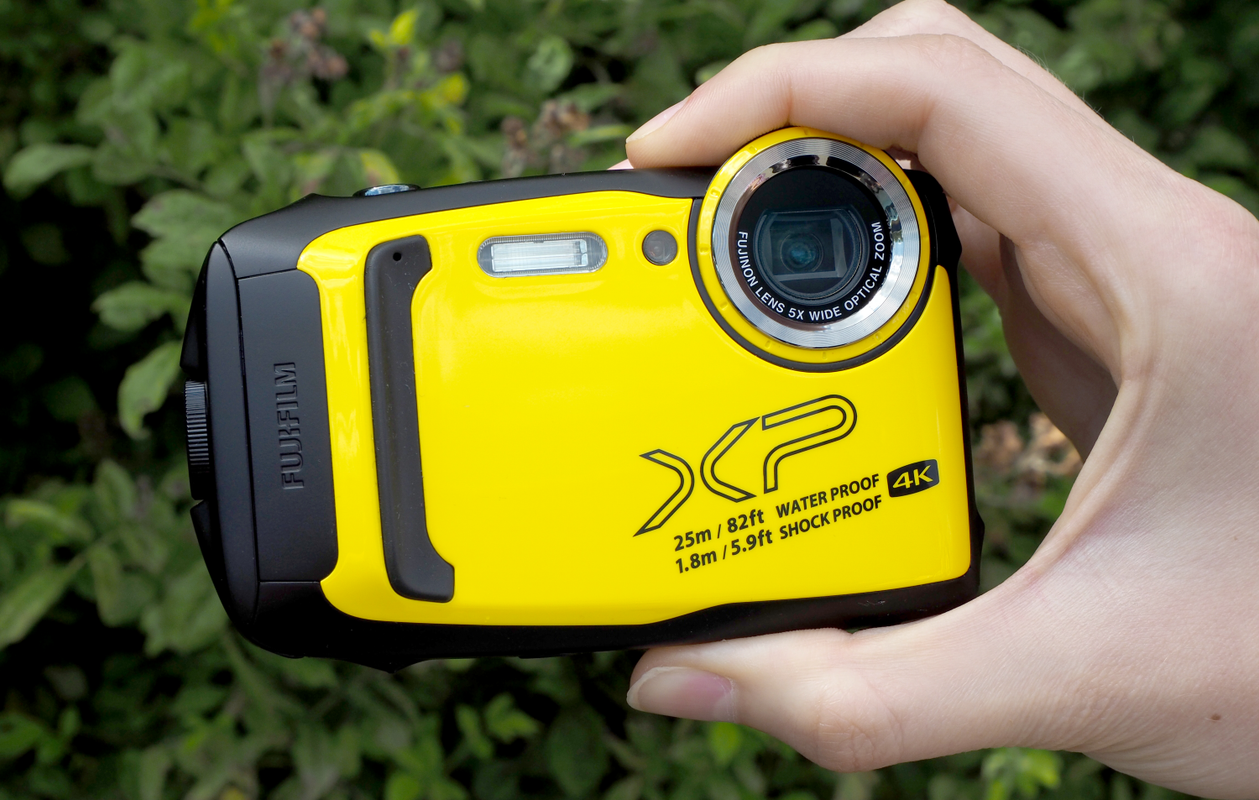
November is firework season; at least for those of us in the UK. That said, this particular shot was taken back in September at the Mayor's Thames Festival; an annual two day event to celebrate London and the Thames.
In this case we're talking about the Mayor of London, and not the Lord Mayor
. The Mayor is reponsible for the Greater London area, whilst the Lord Mayor is reponsible specifically for the City of London.
My fireworks tips, which you may recognise from my pic in the November 2008 issue of What Digital Camera:
The brightness of fireworks depends on the aperture you shoot at, so shoot in manual and use the aperture to adjust the width and amount of colour captured in the firework trails. At ISO100 f13 tends to render fairly delicate trails with nicely defined colour. If you want wider or brighter trails shoot nearer wide open.
Arrive early! Very large events can cause their own traffic delays, and the best vantage points will be taken well in advance. For the biggest events, even being at the location four hours in advance may be too late to get a front row position.
Most displays go out with a bang. If the event is due to finish at 8:30pm, listen for a big salvo around 8:29pm and make sure you're ready to capture it! Often the grand finale will be brighter than the rest of the display, so consider stopping down a bit more when you hear that final round go up.
Check the weather forecast before you set out; if there are strong winds the display might be cancelled, check with the organisers if in doubt.
Always take a few plastic bags with you. Even if your camera is weatherproofed, it's best to keep it dry, so pop a bag over it until you're ready to shoot.
Take a clean dry lens cloth with you, just in case it rains and/or you get condensation on your lens.
Set the main controls of your camera before you go to the event; and make sure you have a small pocket torch (UK) or flashlight (US) handy to set everything up with when you arrive.
If you want to capture a building in the same exposure as the fireworks, expose for the building, but choose the aperture that suits the fireworks best; i.e. for thinner coloured trails shoot at f16.
If you're having difficulty focusing in the dark, select the centre AF point and wait until the first salvo goes up; then allow the AF to find focus on the fireworks. Switch back to manual focus once focus has locked; recompose and take the shot. Once you've taken that first shot zoom in on the image and check that it's correctly focused.
Tech:
Canon EOS 400D, Canon 24-105 IS USM, ISO100, tripod. f9.5 10s.
RAW converted via DPP. Standard web workup in PS
They ended up spending a little over two hours sifting through achieves. The pair had accumulated a reasonably sized pile of documents. They probably could have spent more time refining their collection, trying to siphon away the “junk” and find what might be considered more valuable – if they had the slightest idea of what they were even looking at. From what little they had done they were already mentally exhausted.
“Hey, we ain’t paid to understand this stuff; ‘just to dig it up.” Brine had commented.
They called in their packhorse drone, sorted the files and other artifacts into a set of weatherproof bags, and stored their loot amongst the rest of its baggage. With nothing else to be done, they packed up and began making their way back home.
It was usually after a job was complete that most veteran operatives would loosen out a bit, their posture turning less soldierly and mimicking their natural human body language. Kelly sauntered with a rolling gait, resting her shotgun over her shoulder while her free arm rocked back and forth by her side.
“So, you enjoy yourself, or are you hating that I dragged you along?"
“Eh. ‘Wasn’t the worst job I’ve been on.” Brine shrugged. “Wasn’t the best either...”
“Well, they aren’t all action and adventure, but someone has to do it.”
They went silent for a short while. Brine’s steps let out an uneven heavy whirring noise.
“Your knee servo acting up?” Kelly asked. “I’ve been noticing you’ve had a limp this mission.”
“Yeah, must’ve done something to it last job. ‘Planning on bringing ‘im in for a checkup. Definitely overdue for one. My main power unit’s been going on me too, ‘been relying on my auxiliary units.” Brine gestured behind him to a set of repurposed automotive batteries hanging along his belt-line.
“You should just replace your rig already. Its been how many years since you got that Oni? I’ve seen half the beatings you’ve taken over the years.”
“Hey, this bod’s served me good. If something breaks, I can make a replacement.” He waved a hand in dismissal before pausing for a moment. "Besides, the European market’s been going crazy the last few months. ‘Trying to wait a few months to see if prices level out again.”
“Always the Euro market with you…” she shook her head.
“They're the only ones who make heavies worth looking at. Once us or the Japanese come out with a decent modern heavy chassis, then I might be interested.”
“Put a request to Broadburgh. They could probably use a few recommendations.”
“Heh, I’d love to see them-“
“HALT.” A synthetic, monotone voice announced.
They both froze in place.
“Ah shit…” Kelly muttered. She recognized the voice immediately.
--------------------------------
Continuing to build my vintage lens set for this series, last month I got a Vivitar 80-200mm f/4 macro lens. It only has macro capabilities at 80mm, but I thought of it as a nice telephoto range. I decided to put it to the test in this scene, help hide some of the details (or lack there of) in the background. Definitely a lens to use in moderation though.
If you fave, comment as well!