View allAll Photos Tagged Turning
The new rotary slot turner leads the big locomotive to the correct departure track.
Reconstructed by Per Høyer/coltrain2011
Fleischmann DC locomotives.
Behind the seagull, you can just barely see the island of Olmido. Those dabs of pink in the hills you might be able to see as mere blobs of color are the cherry blossoms in bloom.
Early proposals for the Erie Canal
The successes of the Canal du Midi in France (1681), Bridgewater Canal in Britain (fully completed 1769), and Eiderkanal (superseded by today's Kiel Canal) in Denmark (later Germany) (1784) spurred on what was called in Britain "canal mania". The idea of a canal to tie the East Coast to the new western settlements was already in the air by 1724: New York provincial official Cadwallader Colden made a passing reference (in a report on fur trading) to improving the natural waterways of western New York.
Two men, Gouverneur Morris and Elkanah Watson, were early proponents of a canal along the Mohawk River. Their efforts led to the creation of the Western and Northern Inland Lock Navigation Companies in 1792 (which took the first steps to improve navigation on the Mohawk and construct a canal between the Mohawk and Lake Ontario),but the company proved that private financing was insufficient.
Potomac/Patowmack precedent
George Washington led a partly enduring effort to turn the Potomac River into a navigable link to the west, sinking substantial energy and capital into the Patowmack Canal from 1785 until his death fourteen years later.
By 1788 Washington's Potomac Company was successful in constructing five locks which took boats 4,500 feet (1,400 m) past the Potomac Great Falls. The Chesapeake and Ohio Canal superseded the Potomac Canal in 1823.
Christopher Colles (who was familiar with the Bridgewater Canal) surveyed the Mohawk Valley, and made a presentation to the New York state legislature in 1784 proposing a canal from Lake Ontario. The proposal drew attention and some action but was never implemented.
Scheme
Jesse Hawley finally got the canal built. He had envisioned encouraging the growing of large quantities of grain on the Western New York plains (then largely unsettled) for sale on the Eastern seaboard. However, he went bankrupt trying to ship grain to the coast. While in Canandaigua debtors' prison, Hawley began pressing for the construction of a canal along the 90-mile (140 km)-long Mohawk River valley with support from Joseph Ellicott (agent for the Holland Land Company in Batavia). Ellicott realized that a canal would add value to the land he was selling in the western part of the state. He later became the first canal commissioner.
Thanks, Wikipedia
The nodes get a little "convincing" by pushing the oppossing flaps towards each other ( see note) so that the sink starts to turn on its axis. It will end up turning 30 degrees from its original position.
A series of seven photos: www.flickr.com/photos/stevejm2009/sets/72157623866695265/
This is the tenth consecutive year that Peregrines have nested in a high turret on Chichester Cathedral. Also view the RSPB webcam and follow the progress of the 4 chicks as they feed, fledge and fly: www.rspb.org.uk/datewithnature/sites/chichester/index.asp
David Barton speaking with attendees at the 2023 Pastors Summit hosted by Turning Point Faith at the Omni Nashville Hotel in Nashville, Tennessee.
Here are four recent wood turnings; two pizza cutters (both made of Pau Ferro) and two cheese slicers (one Pau Ferro, the other in Black and White Ebony).
Large size:
farm3.static.flickr.com/2764/4458422179_0e6b2baa1a_b.jpg
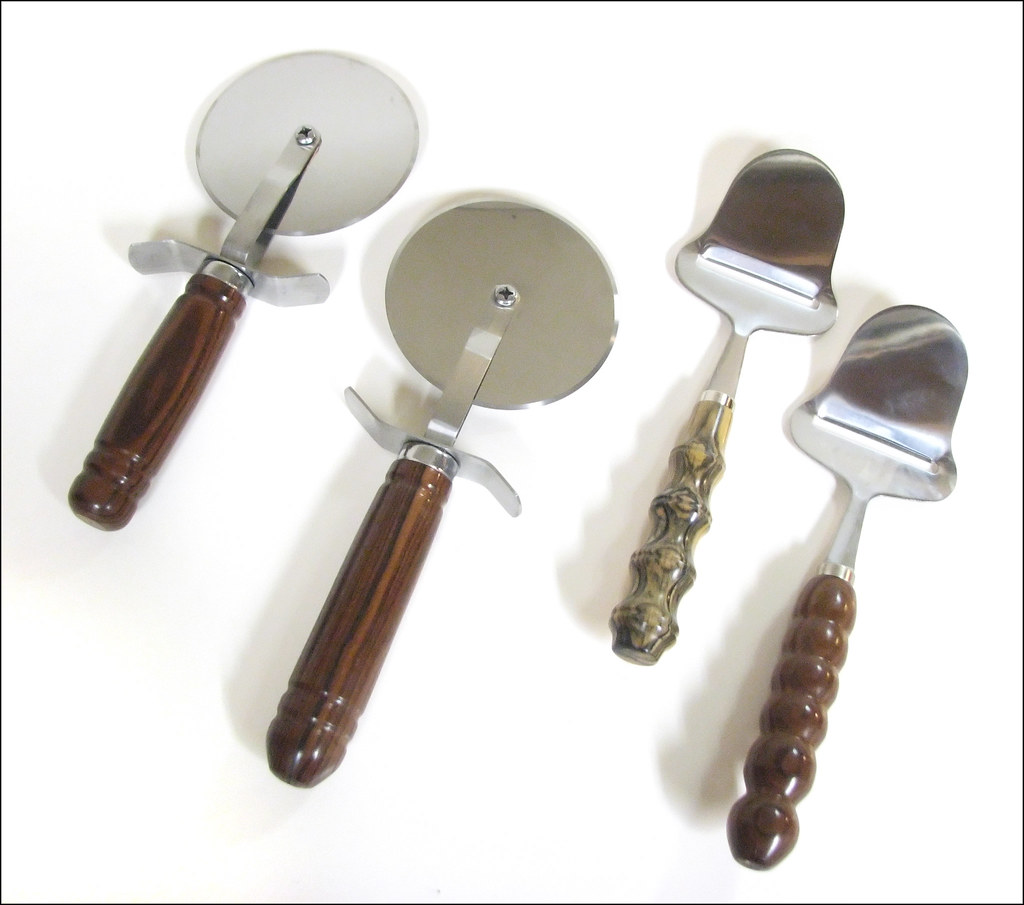
Unless I find a Canadian source for the hardware kits, these will probably be the only ones of these I build, so enjoy! And do speak up if you'd like one for your very own.
Turning our somewhat infamously delicious Chewy Chocolate Chip Cookies into superstars with caramel and sea salt!
www.fullforkahead.com/2014/08/27/salted-caramel-chocolate...
Attendees at the University of Minnesota tour stop of "This Is The Turning Point" tour at Cyrus Northrop Memorial Auditorium in Minneapolis, Minnesota.
The Turning Torso is also quite interesting to look at - the design was based on Santiago Calatrava's "Twisting Torso" sculpture and Malmo visitors immediately notice the creative 90-degree twist in the entire building.
The vision of HSB Turning Torso is based on a sculpture called Twisting Torso. In 1999 HSB Malmö’s former Managing Director Johnny Örbäck saw the sculpture in a brochure which presented Santiago Calatrava in connection with his contribution to the architectural competition for the Öresund Bridge.
It was on this occasion that Johnny Örbäck got the idea to build HSB Turning Torso. Shortly thereafter he travelled to Zurich to meet with Santiago Calatrava and ask him to design a residential building based on the idea of a structure of twisting cubes.
HSB Turning Torso is an amazing combination of sculpture and building. It is also one of the few landmarks in the world which becomes part of everyday life with its ten floors of offices, 147 apartments and meeting facilities on the two top floors.
Santiago Calatrava
The architect behind HSB Turning Torso is Santiago Calatrava. The Spaniard is one of the most fascinating architects of our time and is responsible for a number of fascinating projects.
Calatrava is a trained sculptor, architect and engineer and is among other things responsible for projects such as the Olympic Sports Complex in Athens and the World Trade Center Transportation Hub which is being built in connection with Ground Zero. He has also created several bridges, railway stations and air traffic control towers.
Source: href="http://www.turningtorso.com/