View allAll Photos Tagged TESTAMENT
John Hunt (13 June 1812 - 4 Oct 1848) translated the first Fijian New Testament and died here on Viwa Island where he died and is buried.
-
P9208097
A section of the Auschwitz II concentration camp, also known as Birkenau. There are no exhibits here as there are in Auschwitz I. It is not a museum, but a memorial which has been preserved as a testimony since the Nazis evacuated it and tried to cover up what they had done here. The buildings aren't as important as the story - but to see what's inside them, not to mention the vastness of the place and the railway that brought unfathomable numbers of people to their deaths, is to become an eyewitness and a bearer of the story.
In April, my childhood best friend Krista married her love, Daniel, in an intimate elopement on my family's farm in rural Southwest Washington. This small and private celebration was filled with heartfelt moments, surrounded by the natural beauty of the countryside. As both host and photographer, it was an honor to capture their love story against the backdrop of lush greenery, rustic charm, and the serene simplicity of the farm. Krista and Daniel's day was a testament to the beauty of meaningful, personal celebrations. I hope these images reflect the joy and love they share.
Illustration from "La Sainte Bible : Ancien Testament . . . / Compositions par J.-James Tissot"; with preface by Antonin Gilbert Sertillanges (1863-1948), introduction by Maurice de Brunoff (1861-1937) and the translation into French of Isaac-Louis Lemaistre de Saci (1613-1684). 2 volumes. Paris: M. de Brunoff & Cie, 1904. The illustrations were originated by James Tissot (1836-1902) who sketched as he read Scripture.
The edition, of which 561 copies were printed, contains 360 mounted colour, black-and-white and duo-tone illustrations in the text and 40 plates in three states: sepia-tone, partly hand-coloured, and finished coloured state. The plates are protected with captioned tissue-guards. The paper size is 15.75 x 13 ins; image size varies (circa 8.5 x 5.5 ins).
The paintings for all 400 Illustrations were based exclusively on the complete sketches (the inspiration being entirely Tissot's). The first 200 illustrations covering the Book of Genesis through to the story of Jephthah's daughter in the Book of Judges were painted by Tissot. The last remaining 200 illustrations were painted after Tissot's death in 1902 by Henri Bellery-Desfontaines, Auguste François Gorguet, Charles Hoffbauer, Louis van Parys, Michel Simonidy and Georges Bertin Scott.
Files created by Phillip Medhurst: Tissot in Brunoff at the John Rylands www.amazon.co.uk/clouddrive/share/kq7jBR4DkA1VIbQ5isRelyH...
New York: D. Appleton and Co., Philadelphia: Geo. S. Appleton, 1850
LCP *Am 1850 Women 16996.Q
Why attributed? JTA bound and signed so many WOTONT, and was so well known for the center sunken panel covers, it seems extremely likely that he bound this version too.
Seville Cathedral is the largest medieval church in the World, it's bulk is staggering with chapels and other structures extending the already massive church in all sorts of directions, though this does render the exterior somewhat hard to appreciate, much of it being tightly crammed in amongst the surrounding city streets. The impression is one of great width and block-like forms emerging above the rooftops, rather than the emphasis on soaring height found in French cathedrals.
Unusually the main body of the cathedral has no central or western towers (unless one counts the low stump over the crossing), instead being content to use the pre-existing Giralda tower adjoining the north east corner; this was once the minaret of the mosque that stood on this site during the Moorish period. It's upper storeys form the belfry and are a Renaissance addition, but the body of the tower with it's surface decoration is a stunning testament to the skill of the Islamic builders.
Most of the cathedral itself dates to the late 15th and early 16th centuries, and it's massive scale was clearly meant to surpass the former mosque on the site following the Spanish reconquest. However elements of the mosque building were incorporated into the present building, the already mentioned Giralda tower and the courtyard of 'los naranjos' (oranges) on the north side, serving as a kind of cloister, where elegant Moorish arches can still be seen (a motif subtly also used by the builders of the cathedral itself in some of the clerestorey windows).
The interior is vast and seems to extend in every direction with further aisles and chapels, and the scale makes it rather hard to take in. There are rich altarpieces, furnishings and stained glass windows everywhere, most in post-medieval styles (the glass is largely Renaissance whilst most of the altars are Baroque). The main exception to this rule is the awe-inspiring reredos behind the high altar, the retablos major, a wall of gilded sculpture rising almost the full height of the cathedral and adorned with scenes from the life of Christ, culminating in a dramatic coving and Crucifixion group at the apex. It is largely the work of one Flemish sculptor and dates from the early 16th century.
There are also many monuments to bishops and others, mostly in the side chapels, but the most famous is that erected in the 19th century to house the body of Christopher Columbus. His sarcophagus is held aloft by four dramatic vaguely art-nouveau figures in the south transept.
Many chambers and chapels in Renaissance and Baroque styles are attached to the south east corner of the cathedral, and with their lavish domes and interior make a visit to this huge church an even more bewildering yet fascinating experience.
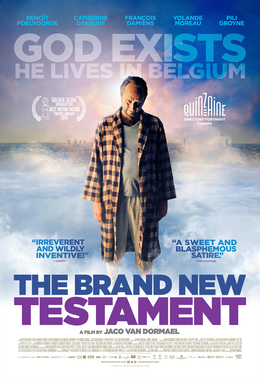
upload.wikimedia.org/wikipedia/en/e/e7/The_Brand_New_Test...
“……………………………………”
“…………………………………..”
-----------------------------------------------------------------
click to activate the icon of slideshow: the small triangle inscribed in the small rectangle, at the top right, in the photostream;
or…. Press the “L” button to zoom in the image;
clicca sulla piccola icona per attivare lo slideshow: sulla facciata principale del photostream, in alto a destra c'è un piccolo rettangolo (rappresenta il monitor) con dentro un piccolo triangolo nero;
oppure…. premi il tasto “L” per ingrandire l'immagine;
www.worldphoto.org/sony-world-photography-awards/winners-...
www.fotografidigitali.it/gallery/2726/opere-italiane-segn...
…………………………………………………………………
This story in photographs and words was created last year 2023, in the Sicilian town of Butera, in the province of Caltanissetta, on the occasion of Palm Sunday: it is precisely in this town that a characteristic re-enactment is celebrated with the 12 apostles wearing traditional costumes, of Christ's entry into Jerusalem, for the occasion Christ (his statue) does not use the back of a donkey, as handed down to us by the Holy Gospels, rather he is placed on a singular open car without of doors, and then subsequently more classically the Christ is carried on the shoulder on a float, on this last occasion we witness a unique traditional fact, which I personally had never seen, whoever has to carry the float on the front buys this possibility at auction (a few dozen euros, which will be donated to charity), the two devotees who win them will have the honor of carrying the statue of Christ on their shoulders, metaphorically, the two front bearers will be the first "to enter Jerusalem" (i.e. into the church of Our Lady of Graces, which will be opened on command of Saint Peter, who by banging with his stick on the door will ensure that it is opened allowing the entry of the float with Christ). We then witness a characteristic procession with Christ placed in front (first on the characteristic car, then carried on the shoulder on the float), behind there are always the 12 apostles, wearing the traditional costumes of the procession, all carrying in their hands a stick decorated with flowers (wallflowers), with olive branches, wild mint stems and colored ribbons; eleven of them wear a blue tunic, the apostle John instead wears white, since he is considered the purest, since he did not betray Jesus and followed him to Calvary, the apostle Judas has a bag that preserves the 30 money that he received as a reward "for his betrayal" and a small wooden barrel containing wine, in fact whoever impersonates Judas must behave like a drunkard, a person not very inclined to a spiritual life. Everyone wears a cardboard halo, which is fixed to a lock of hair, causing a few drops of wax to drip onto it from a lit candle; the procession proceeds behind with the priests, the town's devotees and the musical band. A nod to a curious fact that happened to me that day, I had planned to go to Aidone, where on the occasion of Palm Sunday there is a celebration with the "Santuni" (Big Saints), very big wooden and papier-mâché statues depicting the twelve apostles, which is from my town, Taormina, about 129 KM, I had also contacted some local people by telephone to ask for information; I would have liked to go to Butera, but the distance of 160 km (who knows why, at the time it seemed excessive, perhaps the navigator was giving me a much longer route) had made me postpone it until who knows when; that morning, very early, I left to go to Aidone, during the journey, near Enna, the navigator lost the signal, and unbeknownst to me, incredible to say, it reconnected to "my search for the routes of a couple of days before” …taking me, against my will, to Butera: so, while I was taking my photographs during the procession, I thanked and blessed that navigator of mine…who had turned out to be so… enterprising.
………………………………
Questo racconto in fotografie e parole, è stato realizzato l’anno scorso 2023, nel paese siciliano di Butera, in provincia di Caltanissetta, in occasione del giorno della Domenica delle Palme: è proprio in questo paese che si celebra una caratteristica rievocazione con i 12 apostoli che indossano costumi tradizionali, dell’ingresso di Cristo in Gerusalemme, per l’occasione il Cristo (la sua statua) non si avvale del dorso di un asinello, come tramandatoci dai Sacri Vangeli, piuttosto viene posto su di una singolare automobile aperta priva di sportelli, e poi successivamente più classicamente il Cristo viene portato in spalla su di una vara (il fercolo), in quest’ultima occasione si assiste ad un fatto tradizionale unico, che personalmente non avevo mai visto, i due posti anteriori della vara vengono messi all’asta (poche decine di euro, che verranno devolute in beneficenza), i due devoti che se li aggiudicano avranno l’onore di portare la statua del Cristo sulle proprie spalle (questa particolarissima asta viene chiamata “a spadda all'asta”), metaforicamente, i due portatori anteriori, saranno i primi “ad entrare in Gerusalemme” (ovvero dentro la chiesa della Madonna delle Grazie, che verrà aperta su comando di San Pietro, che battendo col proprio bastone sul portone farà si che esso venga aperto consentendo l’ingresso della vara col Cristo). Si assiste quindi ad una caratteristica processione col Cristo posto sul davanti (dapprima sulla caratteristica automobile, poi portato in spalla sulla vara), dietro si trovano sempre i 12 apostoli, che indossano i costumi tradizionali della processione, tutti portano in mano un bastone addobbato con fiori (violaciocche), con rami d’ulivo, steli di menta selvatica e nastri colorati; undici di essi indossano una tunica di colore blu, l’apostolo Giovanni invece veste di bianco, poiché viene considerato il più puro, poiché non tradì Gesù e lo seguì fino al Calvario, l’apostolo Giuda in più ha un sacchetto che conserva i 30 denari che ebbe come ricompensa “per il suo tradimento” ed un piccolo barilotto in legno (o caratello) contenente vino, infatti chi impersona Giuda deve comportarsi come un beone, una persona poco incline ad una vita spirituale. Tutti indossano una aureola di cartone, che viene fissata su di una ciocca di capelli, facendovi colare sopra qualche goccia di cera da una candela accesa, infine dietro procede il corteo con i sacerdoti, i devoti del paese, la banda musicale. Un cenno ad un fatto curioso che mi accadde quel giorno, avevo programmato di andare ad Aidone, dove in occasione della Domenica delle Palme c’è la festa con i “Santuni”, grandi statue in legno e cartapesta raffiguranti i dodici apostoli, che dista dal mio paese, Taormina, circa 129 KM, avevo anche contattato telefonicamente qualche persona locale per chiedere informazioni; mi sarebbe piaciuto andare a Butera, ma la distanza di 160 km (chissà perchè, sul momento mi sembrava eccessiva, forse il navigatore mi dava un percorso molto più lungo) mi aveva fatto rimandare a chissà quando; quella mattina, molto presto, io partii per andare ad Aidone, durante il tragitto, in prossimità di Enna, il navigatore perse il segnale, e si riagganciò a mia insaputa, incredibile a dirsi, alla “mia ricerca sui percorsi di un paio di giorni prima” …portandomi, mio malgrado, a Butera: così, mentre scattavo le mie fotografie durante la processione, ringraziavo e benedicevo quel mio navigatore…che si era rivelato così … intraprendente.
……………………….
Copyright, please do not use without written consent. If you would like to have use of one of my images for a publication, gallery,or otherwise please email info@shutter16.com for information on obtaining use.
Photographer: Jimmy Warsham
Illustration from "La Sainte Bible : Ancien Testament . . . / Compositions par J.-James Tissot"; with preface by Antonin Gilbert Sertillanges (1863-1948), introduction by Maurice de Brunoff (1861-1937) and the translation into French of Isaac-Louis Lemaistre de Saci (1613-1684). 2 volumes. Paris: M. de Brunoff & Cie, 1904. The illustrations were originated by James Tissot (1836-1902) who sketched as he read Scripture.
The edition, of which 561 copies were printed, contains 360 mounted colour, black-and-white and duo-tone illustrations in the text and 40 plates in three states: sepia-tone, partly hand-coloured, and finished coloured state. The plates are protected with captioned tissue-guards. The paper size is 15.75 x 13 ins; image size varies (circa 8.5 x 5.5 ins).
The paintings for all 400 Illustrations were based exclusively on the complete sketches (the inspiration being entirely Tissot's). The first 200 illustrations covering the Book of Genesis through to the story of Jephthah's daughter in the Book of Judges were painted by Tissot. The last remaining 200 illustrations were painted after Tissot's death in 1902 by Henri Bellery-Desfontaines, Auguste François Gorguet, Charles Hoffbauer, Louis van Parys, Michel Simonidy and Georges Bertin Scott.
Files created by Phillip Medhurst: Tissot in Brunoff at the John Rylands www.amazon.co.uk/clouddrive/share/kq7jBR4DkA1VIbQ5isRelyH...
Galería de TESTAMENT – South American Tour 2011
[16.08.2011] - Teatro Caupolicán
Foto por Roberto Vergara
Santiago - Chile
Testament perform tracks from their two classic albums 'The Legacy' and 'The New Order' at the Islington Academy in London, 25th March 2009
Illustration from "La Sainte Bible : Ancien Testament . . . / Compositions par J.-James Tissot"; with preface by Antonin Gilbert Sertillanges (1863-1948), introduction by Maurice de Brunoff (1861-1937) and the translation into French of Isaac-Louis Lemaistre de Saci (1613-1684). 2 volumes. Paris: M. de Brunoff & Cie, 1904. The illustrations were originated by James Tissot (1836-1902) who sketched as he read Scripture.
The edition, of which 561 copies were printed, contains 360 mounted colour, black-and-white and duo-tone illustrations in the text and 40 plates in three states: sepia-tone, partly hand-coloured, and finished coloured state. The plates are protected with captioned tissue-guards. The paper size is 15.75 x 13 ins; image size varies (circa 8.5 x 5.5 ins).
The paintings for all 400 Illustrations were based exclusively on the complete sketches (the inspiration being entirely Tissot's). The first 200 illustrations covering the Book of Genesis through to the story of Jephthah's daughter in the Book of Judges were painted by Tissot. The last remaining 200 illustrations were painted after Tissot's death in 1902 by Henri Bellery-Desfontaines, Auguste François Gorguet, Charles Hoffbauer, Louis van Parys, Michel Simonidy and Georges Bertin Scott.
Photos by Philip De Vere: Tissot in Brunoff at John Rylands www.amazon.co.uk/clouddrive/share/kq7jBR4DkA1VIbQ5isRelyH...
Illustration from "La Sainte Bible : Ancien Testament . . . / Compositions par J.-James Tissot"; with preface by Antonin Gilbert Sertillanges (1863-1948), introduction by Maurice de Brunoff (1861-1937) and the translation into French of Isaac-Louis Lemaistre de Saci (1613-1684). 2 volumes. Paris: M. de Brunoff & Cie, 1904. The illustrations were originated by James Tissot (1836-1902) who sketched as he read Scripture.
The edition, of which 561 copies were printed, contains 360 mounted colour, black-and-white and duo-tone illustrations in the text and 40 plates in three states: sepia-tone, partly hand-coloured, and finished coloured state. The plates are protected with captioned tissue-guards. The paper size is 15.75 x 13 ins; image size varies (circa 8.5 x 5.5 ins).
The paintings for all 400 Illustrations were based exclusively on the complete sketches (the inspiration being entirely Tissot's). The first 200 illustrations covering the Book of Genesis through to the story of Jephthah's daughter in the Book of Judges were painted by Tissot. The last remaining 200 illustrations were painted after Tissot's death in 1902 by Henri Bellery-Desfontaines, Auguste François Gorguet, Charles Hoffbauer, Louis van Parys, Michel Simonidy and Georges Bertin Scott.
Files created by Phillip Medhurst: Tissot in Brunoff at the John Rylands www.amazon.co.uk/clouddrive/share/kq7jBR4DkA1VIbQ5isRelyH...