View allAll Photos Tagged TESTAMENT
Así llaman los mallorquines a su Catedral. Ese bello monumento de estilo gótico, en el que el rey Jaime III dispuso en testamento se le enterrara, que fue construido entre los siglos XIV y el XIX y que yo por más que lo veo, miro y fotografío , nunca dejo impresionarme con su belleza altiva dominando la ciudad de Palma de Mallorca.
En mi última visita a la capital palmesa, al enterarme que las obras de acondicionamiento que se habían estado llevando en el interior, se habían acabado, decidí entrar a visitarla con la intención de ver la polémica obra de MIguel Barceló, tras haber pasado algún tiempo de su inauguración..
Como no me considero un crítico de arte, me dejaré llevar por lo que el corazón y mi mente me hicieron escribir en mi cuaderno de viaje.
"... como ya venía predispuesto a que me iba a encontrar un "pegote", la primera impresión fue de escepticismo y como desde lejos, provisionalmente me pareció hermoso lo que ví, me propuse observarla en silencio, bueno, la verdad que "mucho silencio" precisamente no había, pues en ese momento estaban ejecutando una bellísima pieza en el órgano (al parecer era un concierto encuadrado dentro de una serie de programaciones de este tipo), cosa que agradecí porque me ayudó a concentrarme aún mas en lo que estaba haciendo.
Compruebo que asemeja o ha pretendido asemejar una cueva de paredes agrietadas e inseguras, con un color arcilloso y una serie de figuras imperfectas en relieve (palmitos, peces, frutas, panes, etc.)
Digo que las figuras son como imperfectas, porque parecen que han sido golpeadas... las verduras y frutas tienen hojas secas, los peces parecen desbordar una pintura que chorrea, los cinco vitrales pintados de color grisáceo se suman a esta sensación...no me dan la impresión de ser perfectos.
Tras el altar, calaveras amontonadas y sobre ellas, un ser casi informe de color blanquecino de forma tendente a ser humana, sobresale con una herida de sangre roja y negra en el pecho.
Mi mirada vagabundea por todo el lugar y se para en la multiplicación de los panes y los peces entre cántaros, también me parecen deformes.... Todo es como un gran decorado en cartón piedra que poco a poco se ve como "que no pega" con el resto del continente: la catedral de Palma es amplia, bellamente iluminada por los cientos de vidrios de colores de sus rosetas y vitrales... mi ultima sensación es como de provisionalidad y de que ni el mismo Barceló está convencido de que su obra la van a dejar allí mucho.
Me pregunto si valió la pena haber pagado los 4.000.000 de euros que costó la obra..."
Como para gustos están los colores, pues que cada uno saque su conclusión, yo ciertamente creo que plasticamente es impactante, pero que es una herejía artística haber "redecorado" la Capilla del Santísimo con una "piel cerámica" (así la llama su autor, que además se declara NO CREYENTE) que creó a golpes y puñetazos.
Pienso que todo esto no fue mas que una manipulación mediática, para que se hablase del tema, de la Seo y de Mallorca:
a) la elección del polémico Miguel Barceló, quien se declara "no creyente".
b) siete años para realizar el "retablo cerámico"
c) el pago de la escandalosa cantidad de 4.000.000 de euros.
d) la inauguración por parte de los reyes.
Me pregunto: ¿No se retorcerán en su tumba de la capilla de la Trinidad de la catedral palmesa, los huesos de Jaime III, quien hasta 1905 estuvo enterrado en la catedral de Valencia, con toda esta "follonesca"?
The Chisholm Trail, including Chisholm Trail Brazos in Waco, is a pivotal aspect of Texas history. It was a major cattle trail in the late 19th century, used to drive cattle from Texas to Kansas for shipment to eastern markets. The trail was named after Jesse Chisholm, a trader of Scotch-Cherokee descent who pioneered the route in 1867. The trail was not a single road, but rather a network of trails that stretched from Texas to Kansas. As a vital stop along the Chisholm Trail, Waco, Texas has a rich history that is still celebrated today. The Chisholm Trail Brazos Landmark, located on the riverbanks of the Brazos River, is a testament to the important role the trail played in the development of Texas. The Waco Suspension Bridge also played a significant role in the history of Waco and the Chisholm Trail. The bridge was completed in 1870 and was the first permanent bridge across the Brazos River. It quickly became a vital transportation link for the cattle drives and other travelers passing through the area. The bridge is still standing today (as a pedestrian and bicycle bridge) and is a popular attraction for visitors to Waco.
The Chisholm Trail Brazos Landmark has been recognized by both the local community and the National Park Service. In 2017, the Texas Historical Commission designated the landmark as a State Antiquities Landmark. The National Register of Historic Places and National Historic Landmark both recognize and list the landmark. In conclusion, people celebrate the Chisholm Trail Brazos Landmark as an essential part of Texas history today. The landmark echoes Waco’s role in countless cattle drives on the Chisholm Trail, shaping Texas’ development.
The sculpture seen above is part of Robert Summers's larger, overall sculpture, "The Waco Chisholm Trail Heritage", near the historic Waco Suspension Bridge and includes three cowboys on horseback - one white, one Hispanic and one Black - and 25 longhorn cattle. All of the full sculpture cannot be photographed in one shot because of its size and how it is stretched out over a city block or more. The full sculpture depicts several cowboys and a Mexican vaquero driving longhorn cattle. Cattle were in fact driven across the suspension bridge in its early days, when it was covered with dirt. This particular section of the sculpture is specifically of a Vaquero (a herdsman or cowboy; or a term used in reference to cowboys in areas such as Mexico and the southwestern U.S. where Spanish is spoken) and several Longhorn Cattle. The first pieces were unveiled by Mr. Summers near the base of the Waco Suspension Bridge in 2008, and the total sculpture wasn’t completed until 2014. In total, the sculptures cost about $1.65 million and remain as a popular tourist spot.
Three bracketed photos were taken with a handheld Nikon D7200 and combined with Photomatix Pro to create this HDR image. Additional adjustments were made in Photoshop CS6.
"For I know the plans I have for you", declares the LORD, "plans to prosper you and not to harm you, plans to give you hope and a future." ~Jeremiah 29:11
The best way to view my photostream is through Flickriver with the following link: www.flickriver.com/photos/photojourney57/
I cannot take any credit for the title it was how my guide book described this extraordinary altarpiece in Seville Cathedral .
I must say I am in two minds about this piece on one hand I find it absurdly ostentatious but on the other hand one cannot help but admire the sheer exuberance of its decoration . This photograph only shows about a third of the altarpiece , which is 66 foot high and 60 foot wide. The only way I could get a shot was to put my hands and camera through the metal gates that enclose the High alter , you will appreciate then thats its a hand held shot.
This is the world’s largest altarpiece. The Craftsman Pierre Dancart spent 44 years carving the Retablo Mayor from wood the work began in 1482. The gilded high altar features scenes from the Old Testament, the life of Christ plus images of saints. At the bottom centre is Santa Maria la Sede, the cathedral’s patron saint.t gives its name to the temple of the Cathedral of Seville, officially called the Cathedral of Santa María de la Sede.
Well you will either love or hate this I leave it to you
THANKS FOR YOUR VISIT TO MY STREAM.
I WOULD BE VERY GRATEFUL IF YOU COULD NOT FAVE A PHOTO
WITHOUT ALSO LEAVING A COMMENT .
Late night show with Testament! My ears are still ringing.
¡Un concierto tarde por la noche con Testament! Los oídos siguen sonando.
The Sea of Galilee (the Kinneret) is a magnificent geographical marvel surrounded by pretty rural agricultural settlements. It’s famous because of its prominence among New Testament writings. The whole of the Galilee is since this is the place where Jesus lived. The Sea of Galilee is one of the earliest settled areas in the Land of Israel. It boasts archaeological ruins sitting alongside some of the first pioneering settlements in Israel. The Kinneret also houses religious sites, modern cities, and endless outdoor pursuits.
As the sun slips beneath the horizon, Rome transforms into a canvas awash in warm hues of amber and violet. The majestic domes and iconic rooftops stand sentinel, each a testament to the rich history woven into the very fabric of the city. St. Peters Basilica glimmers amidst the twilight, a beacon of faith and artistry against the evening sky. Each shadow whispers secrets of centuries past, inviting the beholder to breathe in the magic of this eternal city.
Sucevița Monastery is an Eastern Orthodox convent situated in the Northeastern part of Romania. It is situated near the Suceviţa River, in the village Sucevița, 18 km away from the city of Rădăuţi, Suceava County. It is located in the southern part of the historical region of Bukovina (northwestern Moldavia). It was built in 1585 by Ieremia Movilă, Gheorghe Movilă and Simion Movilă.The architecture of the church contains both Byzantine and Gothic elements, and some elements typical to other painted churches of northern Moldavia. Both interior and exterior walls are covered by mural paintings, which are of great artistic value and depict biblical episodes from the Old and New Testament. The paintings date from around 1601, which makes Sucevița one of the last monasteries to be decorated in the famous Moldavian style of exterior paintings. The interior court of the monastic ensemble is almost square (100 by 104 meters) and is surrounded by high (6 m), wide (3 m) walls. There are several other defensive structures within the ensemble, including four towers (one in each corner). Sucevița was a princely residence as well as a fortified monastery. The thick walls today shelter a museum that presents an outstanding collection of historical and art objects. The tomb covers of Ieremia and Simion Movilă – rich portraits embroidered in silver thread – together with ecclesiastical silverware, books and illuminated manuscripts, offer eloquent testimony to Sucevița's importance first as a manuscript workshop, then as a printing center.
In 2010, the monastery has been inscribed by UNESCO on its list of World Heritage Sites, as one of the Painted churches of Moldavia.
Celebration knows no age, no boundaries. And today's Holi is a great testament.
Chittagong/Holi 2014.
Collège des Quatre-Nations a été fondé à Paris en 1661, par testament du cardinal Mazarin, pour y élever gratuitement 60 enfants de gentilshommes pauvres appartenant aux provinces des quatre nations espagnole, italienne, allemande et flamande récemment réunies à la couronne par la conquête du Roussillon
Ouvert en 1688, ce collège fut bâti sur une partie de l'ancien hôtel de Nesle aujourd’hui détruit. Dans l'église, où se tiennent aujourd'hui les séances publiques de l'Institut, était le tombeau du cardinal, qui se trouve maintenant au musée de Versailles.
Le collège des Quatre-Nations subsista jusqu'en 1792 ; il servit de prison à l'époque de la Terreur et devint en 1806 le siège de l'Institut de France composé de cinq académies, française, des sciences, des inscriptions et belles-lettres, des beaux-arts et des sciences morales et politiques.
Collège des Quatre-Nations was founded in Paris in 1661, by will of Cardinal Mazarin, to raise free 60 poor gentlemen of children belonging to the provinces of the four Spanish nations, Italian, recently met German and Flemish to the crown by winning the Roussillon
Opened in 1688, the college was built on part of the former Hotel de Nesle now destroyed. In the church, which hosts the public meetings of the Institute today, was the tomb of the cardinal, who is now at the Museum of Versailles.
The College of the Four Nations lasted until 1792; it served as a prison at the time of the Terror in 1806 and became the seat of the Institute of France composed of five academies, French, Science, inscriptions and belles-lettres, Fine Arts and Moral and Political Sciences .
Kolegium Czterech Narodów został założony w Paryżu w 1661 roku, z woli kardynala Mazarin, aby uczyc darmo 60 biednych dzieci należących do czterech prowincji ; hiszpańskijej, włoskiej, niemieckiej i Flamandzkiej .
Otwarta w 1688 roku, uczelnia została zbudowana na części dawnego Hotel de Nesle teraz zniszczonego. W kościele, w którym dzisiaj odbywaja się publiczne spotkania Instytutu, był grób kardynała, który jest obecnie w Muzeum w Wersalu.
Kolegium Czterech Narodów trwała do 1792 roku; służyło jako więzienie w czasie terroru w 1806 roku i stało się siedzibą Instytutu Francuskiego składajacego się z pięciu uczelni, francuskiej, Akademi nauk, literatury pięknej, Akademi sztuk pieknychi i Nauk Politycznych ,
Kingfisher portrait on green branch with moss
Nestled amidst the verdant embrace of nature, the kingfisher perches regally on a moss-covered branch, a living testament to the artistry of the wild. Its plumage, a dazzling mosaic of azure and burnt orange, glimmers in the gentle sunlight, seeming almost ethereal against the vibrant green surrounding it. The moss clings to the branch like a soft, velvety carpet, accentuating the earthy harmony of the scene.
Another in the series of this magical place. The Bay, a short distance south of Whitby, is shaped in such a way that in mid-Summer the sun rises and sets in the Bay. Not a bad trick given it's east coast location.
A second shot in the series of the wreck after which the image is titled. This particular wreck has been here since 1977 and has slowly broken up till all that appears to be left now is the prow and the engine block. It stands testament to the power of the sea and indeed there were two fatalities from this incident.
The beginning of the Gospel according to Mark (in New Testament Greek) and the right panel of an originally tripartite portable bronze and enamel iconostasis from Russia (probably 18th century) with an inscription in Church Slavonic. The New Testament text describes John the Baptist baptising Christ, the inscription tells us that Saint John the Baptist is the 'Prodromos' (forerunner) of Christ. Iconographically, the imagery follows the Byzantine tradition. John the Baptist in his fur-coat, having wings, and holding the Christ Child. It does not matter that the New Testament text speaks of an adult being baptised by John. The point of the image is the 'Deesis', the intercession of John on behalf of all of humankind. The full tripartite iconostasis would show Mary on the left, the Pantocrator (triumphant, cosmic) Christ in the middle, and John on the right. Mary, human mother of the divine Christ, and John, the one who baptised him, asking Christ to have mercy on humanity. Words travel easily, but portable images, such as this well-used foldable iconostasis, are also ready for migration.
Two LED spotlights in a dark room, raw conversion in Luminar and macOS High Sierra.
Pregunta 5: Pablo dijo en 2 Timoteo 3:16: “Toda Escritura es inspirada por Dios […]”. Así que, lo que está escrito en la Biblia son todas las palabras de Dios. Pero algunos dicen que no todas ellas son palabras de Dios. ¿No están negando la Biblia y engañando a otros?
Respuesta: Respecto a “Toda Escritura es inspirada por Dios”, primero tenemos que conocer el trasfondo de la palabra de Pablo. Cuando Pablo escribió las cartas a Timoteo, solo existía el Antiguo Testamento. El Nuevo Testamento no se había recopilado todavía. Y solo había docenas de cartas que se guardaban en las iglesias. Así pues, la palabra de Pablo se refiere al Antiguo Testamento, porque los israelitas solo consideraban como Escritura el Antiguo Testamento. El Nuevo Testamento se creó después del 300 d. C. En aquel momento, los líderes de esas iglesias se reunieron. Pensaban que los últimos días estaban cerca, que debían reunir las palabras de Jesús y las cartas de los apóstoles, recopilarlas en un libro, como el Antiguo Testamento, y dárselo a todas las iglesias. Así pues, reunieron las cartas que habían escrito los discípulos y apóstoles de Jesús. Finalmente, mediante el estudio y la confirmación, seleccionaron 27 cartas como el canon del Nuevo Testamento. Más tarde las recopilaron junto con el Antiguo Testamento, y ese es el contenido completo de la Biblia. Así fue como nacieron el Antiguo y el Nuevo Testamento. Además, sobre la creación de la Biblia, tenemos que saber quién la había escrito y quién la había recopilado. La Biblia tiene muchos autores, pero ninguno de ellos dijo que todas sus letras fueran inspiradas por Dios. si Dios hubiera dicho que toda la Biblia estaba inspirada por él, lo habría dicho a través de los profetas. Pero no había nada de eso en los libros de los profetas. El Señor Jesús nunca lo dijo, y los apóstoles nunca dijeron que todas sus cartas y testimonios estuvieran inspirados por Dios, y mucho menos se atrevieron a decir que eran palabras de Dios. Pero después, todos los creyentes en Dios creyeron que Dios solo había dicho las palabras de la Biblia y que, aunque los Testamentos habían sido escritos por hombres, estaban inspirados por Dios. Entonces, ¿hemos valorado si esas palabras se basan en hechos?
La Biblia está inspirada por Dios, y todas las palabras de la Biblia son palabras de Dios. ¡Es un hecho reconocido por el cristianismo! Estos solo son puntos de vista del hombre. Los puntos de vista del hombre no pueden representar a Dios. Solo Dios habla claro sobre la Biblia. Veamos cómo lo dice la palabra de Dios Todopoderoso. Dios Todopoderoso dice: “En realidad, aparte de los libros de profecía, la mayor parte del Antiguo Testamento es un registro histórico. Algunas de las epístolas del Nuevo Testamento provienen de las experiencias de las personas, y, otras, del esclarecimiento del Espíritu Santo. Las epístolas paulinas, por ejemplo, surgieron de la obra de un hombre; todas fueron resultado del esclarecimiento del Espíritu Santo y se escribieron para las iglesias, y fueron palabras de exhortación y aliento para los hermanos y hermanas de las mismas. No fueron palabras habladas por el Espíritu Santo; Pablo no podía hablar en nombre del Espíritu Santo ni era profeta, y, mucho menos, tuvo las visiones que tuvo Juan. Sus epístolas se escribieron para las iglesias de Éfeso, Filadelfia, Galacia, y otras” (‘Relativo a la Biblia (3)’ en “La Palabra manifestada en carne”). “No todo en la Biblia es un registro de las palabras habladas personalmente por Dios. La Biblia simplemente documenta las dos etapas anteriores de la obra de Dios, de las cuales una parte es un registro de las predicciones de los profetas y, otra, las experiencias y el conocimiento escritos por personas usadas por Dios a lo largo de las eras. Las experiencias humanas están contaminadas con opiniones y conocimiento humanos, y esto es algo inevitable. En muchos de los libros de la Biblia hay nociones humanas, prejuicios humanos y el entendimiento absurdo de los humanos. Por supuesto, la mayoría de las palabras son resultado del esclarecimiento y la iluminación del Espíritu Santo, y son entendimientos correctos, pero sigue sin poderse decir que son expresiones de la verdad totalmente precisas. Sus opiniones sobre ciertas cosas no son más que conocimiento derivado de la experiencia personal o el esclarecimiento del Espíritu Santo. Dios instruyó personalmente las predicciones de los profetas: las profecías de los semejantes a Isaías, Daniel, Esdras, Jeremías y Ezequiel vinieron de la instrucción directa del Espíritu Santo; estas personas eran profetas, habían recibido el Espíritu de profecía, y eran, todos, profetas del Antiguo Testamento. Durante la Era de la Ley, estas personas, que habían recibido las inspiraciones de Jehová, hablaron muchas profecías, que fueron instruidas directamente por Jehová” (‘Relativo a la Biblia (3)’ en “La Palabra manifestada en carne”). Las palabras de Dios Todopoderoso lo han dejado muy claro. La Biblia no es un historial de las palabras pronunciadas personalmente por Dios, sino una narración de la obra de Dios. En la Biblia, las palabras de Jehová, las palabras de Jesús y las palabras que reveló Dios a los profetas son verdaderamente palabras de Dios, y el resto son principalmente el relato de la historia y las experiencias del hombre. Así que “Toda Escritura es inspirada por Dios” no se corresponde con los hechos históricos.
Extracto del guion de la película de “Revelar el misterio de la Biblia”
Las escrituras tomadas de LA BIBLIA DE LAS AMERICAS® (LBLA) Copyright © 1986, 1995, 1997 por The Lockman Foundation usado con permiso. www.LBLA.com.
Recomendación: Revelaciones de Dios
The Collégiale Saint-André, located in the heart of Grenoble, stands as a remarkable testament to the city's medieval past. Built in the 13th century, this Gothic church has witnessed the transformation of Grenoble from a strategic Roman outpost to a thriving Alpine metropolis. The church, historically linked to the powerful Dauphins of Viennois, served as a ducal chapel and a resting place for members of the noble lineage. The weathered stone and intricate carvings around its entrance reflect the passage of time, preserving the echoes of centuries-old traditions and historical significance.
Architecturally, the façade of Saint-André is a striking example of Gothic design, characterized by its rounded arches and richly sculpted entrance. The layers of stonework surrounding the portal reveal a blend of Romanesque and Gothic elements, showcasing the evolution of architectural styles over time. The building’s aged yet majestic appearance, with visible restorations, highlights the enduring legacy of medieval craftsmanship in Grenoble. Above the entrance, coats of arms hint at the church's historical connections, reinforcing its role as a religious and political landmark in the region.
Grenoble itself is a city of contrasts, balancing its ancient heritage with modern innovation. Nestled in the French Alps, it has long been a center of learning, technology, and culture. The city's vibrant history includes its strategic role during the French Revolution and its reputation as a hub for scientific research. Today, visitors can admire its historic architecture while also experiencing its dynamic urban life, which seamlessly blends tradition and contemporary influences.
No visit to Grenoble would be complete without indulging in its rich culinary offerings. The city is renowned for its local cheeses, such as Bleu du Vercors-Sassenage, and its famous walnuts, which have received AOC (Appellation d'Origine Contrôlée) recognition. Traditional Alpine dishes like gratin dauphinois, made with creamy potatoes, are a staple of Grenoble’s gastronomy. Whether exploring its historic landmarks or savoring its distinctive flavors, Grenoble offers an immersive experience that connects its architectural wonders to its cultural and culinary heritage.
RX_03736_20240523_Grenoble
© Darlene Bushue Photography 2023
A breathtaking moment as fall's vibrant colors collide with winter's pristine snow. The old mining structure stands as a testament to the region's history. Million Dollar Highway (Oct 2023). Enjoy your day!!!
to my photographic skills.
N. Willamette Blvd, Portland OR.
Olympus PEN EES-2 half-frame camera. Fujicolor Superia 400 Color Negative Film 35mm (expired 9/2012).
upload.wikimedia.org/wikipedia/en/e/e7/The_Brand_New_Test...
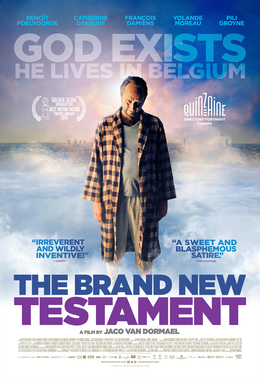
“……………………………………”
“…………………………………..”
-----------------------------------------------------------------
click to activate the icon of slideshow: the small triangle inscribed in the small rectangle, at the top right, in the photostream;
or…. Press the “L” button to zoom in the image;
clicca sulla piccola icona per attivare lo slideshow: sulla facciata principale del photostream, in alto a destra c'è un piccolo rettangolo (rappresenta il monitor) con dentro un piccolo triangolo nero;
oppure…. premi il tasto “L” per ingrandire l'immagine;
www.worldphoto.org/sony-world-photography-awards/winners-...
www.fotografidigitali.it/gallery/2726/opere-italiane-segn...
…………………………………………………………………
This story in photographs and words was created last year 2023, in the Sicilian town of Butera, in the province of Caltanissetta, on the occasion of Palm Sunday: it is precisely in this town that a characteristic re-enactment is celebrated with the 12 apostles wearing traditional costumes, of Christ's entry into Jerusalem, for the occasion Christ (his statue) does not use the back of a donkey, as handed down to us by the Holy Gospels, rather he is placed on a singular open car without of doors, and then subsequently more classically the Christ is carried on the shoulder on a float, on this last occasion we witness a unique traditional fact, which I personally had never seen, whoever has to carry the float on the front buys this possibility at auction (a few dozen euros, which will be donated to charity), the two devotees who win them will have the honor of carrying the statue of Christ on their shoulders, metaphorically, the two front bearers will be the first "to enter Jerusalem" (i.e. into the church of Our Lady of Graces, which will be opened on command of Saint Peter, who by banging with his stick on the door will ensure that it is opened allowing the entry of the float with Christ). We then witness a characteristic procession with Christ placed in front (first on the characteristic car, then carried on the shoulder on the float), behind there are always the 12 apostles, wearing the traditional costumes of the procession, all carrying in their hands a stick decorated with flowers (wallflowers), with olive branches, wild mint stems and colored ribbons; eleven of them wear a blue tunic, the apostle John instead wears white, since he is considered the purest, since he did not betray Jesus and followed him to Calvary, the apostle Judas has a bag that preserves the 30 money that he received as a reward "for his betrayal" and a small wooden barrel containing wine, in fact whoever impersonates Judas must behave like a drunkard, a person not very inclined to a spiritual life. Everyone wears a cardboard halo, which is fixed to a lock of hair, causing a few drops of wax to drip onto it from a lit candle; the procession proceeds behind with the priests, the town's devotees and the musical band. A nod to a curious fact that happened to me that day, I had planned to go to Aidone, where on the occasion of Palm Sunday there is a celebration with the "Santuni" (Big Saints), very big wooden and papier-mâché statues depicting the twelve apostles, which is from my town, Taormina, about 129 KM, I had also contacted some local people by telephone to ask for information; I would have liked to go to Butera, but the distance of 160 km (who knows why, at the time it seemed excessive, perhaps the navigator was giving me a much longer route) had made me postpone it until who knows when; that morning, very early, I left to go to Aidone, during the journey, near Enna, the navigator lost the signal, and unbeknownst to me, incredible to say, it reconnected to "my search for the routes of a couple of days before” …taking me, against my will, to Butera: so, while I was taking my photographs during the procession, I thanked and blessed that navigator of mine…who had turned out to be so… enterprising.
………………………………
Questo racconto in fotografie e parole, è stato realizzato l’anno scorso 2023, nel paese siciliano di Butera, in provincia di Caltanissetta, in occasione del giorno della Domenica delle Palme: è proprio in questo paese che si celebra una caratteristica rievocazione con i 12 apostoli che indossano costumi tradizionali, dell’ingresso di Cristo in Gerusalemme, per l’occasione il Cristo (la sua statua) non si avvale del dorso di un asinello, come tramandatoci dai Sacri Vangeli, piuttosto viene posto su di una singolare automobile aperta priva di sportelli, e poi successivamente più classicamente il Cristo viene portato in spalla su di una vara (il fercolo), in quest’ultima occasione si assiste ad un fatto tradizionale unico, che personalmente non avevo mai visto, i due posti anteriori della vara vengono messi all’asta (poche decine di euro, che verranno devolute in beneficenza), i due devoti che se li aggiudicano avranno l’onore di portare la statua del Cristo sulle proprie spalle (questa particolarissima asta viene chiamata “a spadda all'asta”), metaforicamente, i due portatori anteriori, saranno i primi “ad entrare in Gerusalemme” (ovvero dentro la chiesa della Madonna delle Grazie, che verrà aperta su comando di San Pietro, che battendo col proprio bastone sul portone farà si che esso venga aperto consentendo l’ingresso della vara col Cristo). Si assiste quindi ad una caratteristica processione col Cristo posto sul davanti (dapprima sulla caratteristica automobile, poi portato in spalla sulla vara), dietro si trovano sempre i 12 apostoli, che indossano i costumi tradizionali della processione, tutti portano in mano un bastone addobbato con fiori (violaciocche), con rami d’ulivo, steli di menta selvatica e nastri colorati; undici di essi indossano una tunica di colore blu, l’apostolo Giovanni invece veste di bianco, poiché viene considerato il più puro, poiché non tradì Gesù e lo seguì fino al Calvario, l’apostolo Giuda in più ha un sacchetto che conserva i 30 denari che ebbe come ricompensa “per il suo tradimento” ed un piccolo barilotto in legno (o caratello) contenente vino, infatti chi impersona Giuda deve comportarsi come un beone, una persona poco incline ad una vita spirituale. Tutti indossano una aureola di cartone, che viene fissata su di una ciocca di capelli, facendovi colare sopra qualche goccia di cera da una candela accesa, infine dietro procede il corteo con i sacerdoti, i devoti del paese, la banda musicale. Un cenno ad un fatto curioso che mi accadde quel giorno, avevo programmato di andare ad Aidone, dove in occasione della Domenica delle Palme c’è la festa con i “Santuni”, grandi statue in legno e cartapesta raffiguranti i dodici apostoli, che dista dal mio paese, Taormina, circa 129 KM, avevo anche contattato telefonicamente qualche persona locale per chiedere informazioni; mi sarebbe piaciuto andare a Butera, ma la distanza di 160 km (chissà perchè, sul momento mi sembrava eccessiva, forse il navigatore mi dava un percorso molto più lungo) mi aveva fatto rimandare a chissà quando; quella mattina, molto presto, io partii per andare ad Aidone, durante il tragitto, in prossimità di Enna, il navigatore perse il segnale, e si riagganciò a mia insaputa, incredibile a dirsi, alla “mia ricerca sui percorsi di un paio di giorni prima” …portandomi, mio malgrado, a Butera: così, mentre scattavo le mie fotografie durante la processione, ringraziavo e benedicevo quel mio navigatore…che si era rivelato così … intraprendente.
……………………….
Antebellum Church in rural Alabama, built c. 1853. The small door to the right of the main entrance were the stairs used only by slaves to enter the 'slave gallery' loft above the main sanctuary in the church.
The slave gallery is now inhabited by a very large and aggressive owl!
por Warhol -
Keith Haring (Reading, 4 de maio de 1958 – Nova Iorque, 16 de fevereiro de 1990) foi um artista gráfico e activista estadunidense. Seu trabalho reflecte a cultura nova-iorquina dos anos 1980.
Nascido no estado de Pensilvânia, cedo mostrou interesse pelas artes plásticas. De 1976 até 1978 estudou design gráfico numa escola de arte em Pittsburgh. Antes de acabar o curso, transfere-se para Nova Iorque, onde seria grandemente influenciado pelos graffitis, inscrevendo-se na School of Visual Arts. Homossexual assumido, o seu trabalho reflecte também um conjunto de temas homo-eróticos.
Keith Haring começou a ganhar notoriedade ao desenhar a giz nas estações de metro de Nova Iorque. As suas primeiras exposições formam,michelleis acontele era gayecem a partir de 1980 no Club 57, que se torna um ponto de encontro da elite vanguardista.
Na mesma década, participou em diversas bienais e pintou diversos murais pelo mundo - de Sydney a Amsterdão e mesmo no Muro de Berlim. Amigo pessoal de Grace Jones, foi ele quem lhe pintou o corpo para o videoclip "I'm Not Perfect".
Em 1988, abre um Pop Shop em Tóquio. Na ocasião, afirma:
"Em minha vida fiz muitas coisa, ganhei muito dinheiro e me diverti muito. Mas também vivi em Nova Iorque nos anos do ápice da promiscuidade sexual. Se eu não pegar AIDS, ninguém mais pegará."
Meses depois declara em entrevista à revista Rolling Stone que tem o vírus HIV. Em seguida, cria a Keith Haring Foundation, em favor das crianças vítimas da AIDS.
Em 1989, perto da igreja de Sant'Antonio Abate, em Pisa, Itália, executa a sua última obra pública - o grande mural intitulado Tuttomondo[1], dedicado à paz universal.
Haring morreu aos 31 anos de idade, vítima de complicações de saúde relacionadas a AIDS, tendo sido um forte activista contra a doença, que abordou mais que uma vez em suas pinturas.
...
The Marriage of Heaven and Hell
David Galloway
As curator of the Keith Haring retrospective mounted by New York's Whitney Museum of American Art in 1997, Elisabeth Sussman composed a thoughtful catalogue text in which she tidily divided the artist's career into three "chapters." In the first of these, Sussmann suggested, Haring synthesized a street and club style into a bold form of overall decoration that often employed elements of kitsch. In the middle phase, lasting from approximately 1984 to 1988, when he developed the first symptoms of AIDS, Haring produced paintings that were essentially Pop versions of Neo-Expressionism. In these years he also used his cartoon-like graphic line to execute murals, many of them for (and even together with) children. "Finally," Sussman observed, "in the last years of his life, major works not only summed up his painting ambitions but were socially active and angry responses to his imminent death."1
There can be no doubt that the artist's battle with AIDS had a profound effect on his artistic vision. "To live with a fatal disease," he confided to his biographer John Gruen shortly before his death, "gives you a whole new perspective on life."2 The resulting pain and anguish are eloquently expressed in Haring's two collaborations with William Burroughs: Apocalypse (1988) and The Valley (1989). Sussmann's categories are nonetheless too neat and too emphatic, concealing both the humor that frequently enlivens the late works and the dark side that shadows even the earliest, cartoon-like compositions. And the artist was a social activist from the beginning of his career. At a demonstration in Central Park in 1982, he distributed 20,000 antinuclear posters. His "Anti-Litterpig" campaign was launched in 1984, the famous Crack is Wack mural painted in 1986. The true "horror of AIDS had come to light"3 for Haring in 1985, and he had for some time regarded himself as a prime AIDS "candidate" - even before discovering the first Karposi sarcoma on his leg during a trip to Japan in 1988. Not only numerous intimate acquaintances, including his ex-lover Juan Dubose, had already succumbed to the disease. Rumors of Haring's own infection were rife long before he himself learned that he was HIV-positive. More than a year before the diagnosis, Newsweek had tracked the artist down in Europe to ask if his protracted stay there was a cover-up for his affliction with AIDS.
Yet for all the traumatic implications of the onset of the disease itself, it is a mistake to overemphasize the event as a kind of watershed, as a moment in which the oeuvre itself underwent some seismic change. Such an oversimplification is tempting but ultimately misleading. And it is not unlike that simplistic approach to the work of Andy Warhol which suggests a fundamental shift in theme and point of view following the assassination attempt by Valerie Solanis. In fact, Warhol's own fascination with "Death and Disaster" was well established before the deranged feminist entered the Factory in 1969 with revolver blazing. 129 Die in Jet, the first of the works associated with violent death, dates to 1962. And it was soon followed by garishly tinted studies of suicides, car crashes, race riots and electric chairs.
Keith Haring, too, had explored a darker side of experience long before the dread diagnosis. The earliest works produced in his characteristic graphic style include serpents and monsters, nuclear radiation and falling angels, cannibals, omnivorous worms, bloody daggers and skeletons. The devil himself makes occasional appearances, as does the multi-headed beast of the Apocalypse. One can make out a sinister form that may well represent a virus, and an androgynous figure which wheels a sword-like crucifix over the heads of children, while scissors and chains are employed in sadomasochistic practices which often end in castration. In a Saint Sebastian, produced in 1984 and one of the few titled works by Haring, the martyr's body is pierced not by arrows but by airplanes - one of the numerous examples of the artist's critical view of technology, but also testimony to his deeply felt pacifism.
The figure of a hanged man, perhaps influenced by William Burroughs' Naked Lunch, makes it debut in 1981. So, too, do human figures writhing in the clutch of a nest of serpents. In 1982 a serpent pierces (and thereby joins like so many beads on a string) a row of human figures with holes in their abdomens. Indeed, human figures with holes gouged in their middles are a recurrent pictogram - one inspired, according to the artist himself, by the assassination of John Lennon in December of 1980. Yet even before that event, Haring was sounding the themes of violence and death in the cut-up headlines he posted around New York City, inspired both by his friend Jenny Holzer and by William Burroughs. In typical tabloid fashion, the headlines trumpeted such sensationalist assertions as "POPE KILLED FOR FREED HOSTAGE." "RONALD REAGAN ACCUSED OF TV STAR SEX DEATH; KillED AND ATE lOVER." and "REAGAN'S DEATH COPS HUNT POPE."
When Keith Haring undertook his first cross-country trip in 1977 with his girlfriend Susan, he financed the journey by silkscreening T-shirts and selling them along the way. One model showed Richard Nixon sniffing a kilo of marijuana; the other featured the logo of the Grateful Dead: a skull - the penultimate memento mori that also fascinated Warhol - split by a lightning bolt. One of Haring's early subway drawings includes a skeleton wearing wire-rimmed glasses as an encoded self-portrait. In a diary entry for March 18, 1982, the artist reflected on the significance of "Being born in1958, the first generation of the Space Age, born into a world of television technology and instant gratification, a child of the atomic age. Raised in American during the sixties and learning about war from Life magazines on Viet Nam. Watching riots on television..."4 Like the Beat poets he admired, the young artist was intensely aware of the dangers of nuclear war and the precedent his country had set in Hiroshima and Nagasaki. He was equally aware of the dangers inherent in "peacetime" uses of nuclear energy. The notorious near-meltdown at Three Mile Island in 1979 occurred a short distance from the Haring home in Kutztown, Pennsylvania. Spaceships projecting rays onto earthlings often hover over his works, and his famous "radiant" baby may suggest radioactive contamination as well as spiritual glow.
In short, the first "chapter" in Haring's career was neither so innocent nor so giddily affirmative as it is sometimes made out to be. His media-savvy generation, exposed at an early age to "sex, drugs and rock-'n'-roll," was quickly disabused of childhood's illusions. At the age of 19, he confided to his diary, "Through all the shit shines the small ray of hope that lives in the common sense of the few. The music, dance, theater, and the visual arts: the forms of expression, the arts of hope. This is where I think I fit in."5 Even amid the "shit," there was an element of hope, and the coexistence of these two entities defines the Haring universe. What one witnesses is literally The Marriage of Heaven and Hell, to cite the title of a Roland Petit choreography for the Ballet National de Marseilles, for which Haring created a huge front curtain in 1985. Whether Haring was familiar with William Blake's ironic poem of the same title is uncertain, though the English poet was a favorite of the psychedelic set to which Haring belonged for a time. Furthermore, there are occasional parallels between Haring's graphic style and the illustrations Blake prepared for his own works. The implications of a linked pair of Blake titles - Songs of Innocence and Songs of Experience - have clear relevance for Haring's oeuvre, as well.
The key to Haring's work is not to be found in "chapters" or in oppositions, but precisely in the mingling, the marriage of innocence and experience, good and evil, heaven and hell. This inherent but essential ambiguity is reinforced by an image he created in June of 1989, less than a year before his death. (He was in Paris at the time, executing a monumental painting intended to decorate a dirigible to be flown over the city in commemoration of the 200th anniversary of the French Revolution.) The starting point was a photograph of the artist sitting on a chair from the Vitra Collection, part of a series of celebrity portraits made for the German furniture company. With a felt pen, Haring fitted himself out with wings, floated a halo over his head, bound his feet with shackles and coiled a rope-like or snakelike form around his torso. (In fact, in other works the rope which binds a victim often turns into a snake in the hands of his tormentor). Haring remarked on his own creation: "Whoever understands this photograph understands what my work is all about."6 The essential theme sounded here - man bound into a "mortal coil," anchored to the earth, while his spirit strives to soar into the heavens - is as old as religion itself)
In his journal Haring described the events of June 16th as follows: Friday I had a "press lunch" with the airship people (boring and trivial). Then went to Futura's exhibit and bought a nice new painting. Met David Galloway there. He came to Paris to interview me for the book Hans Mayer is doing on my sculptures. Went with David to see the airship painting again and do photos. We talked a lot and by the same time we got to the hotel the conversation got deeper and continually off the "subject."
Did some photos for a German spaghetti book. (Portrait of me with a drawing made out of spaghetti we ordered from room service.) I talked with David till it was time for dinner at Marcel Fleiss's house with Yoko and Sam. Nice quiet dinner and then returned to hotel with David to talk till 1 :30.7
The "deeper" talk that quickly veered from the topic of sculpture and continued into the early hours of the morning ultimately found its focus in the fat roll of galley proofs resting on the mantelpiece of Haring's suite at the Ritz Hotel. This was the interview by David Scheff that would appear in Rolling Stone on August 10th, and in which Haring talked with painful frankness about his own illness. As a politically engaged artist who helped to organize the first" Art Against AIDS" exhibition and produced several AIDS-related posters, including more than one with the motto "Silence = Death," he felt morally obliged to speak out about his illness. (Later in the year, he would march in protest against New York City's "racist" policy with respect to the disease, which allegedly only afflicted perverts, junkies and Afro-Americans.) Nonetheless, when the time came to approve Sheff's uncompromising interview, the activist experienced a moment of hesitation. Quite simply, he feared he might not be permitted to work with children again, and this was one of his most cherished activities. Despite such misgivings, on June 17 he sent his approval of the text to the editors of Rolling Stone, and when it appeared the artist experienced an immense, deeply gratifying wave of sympathy. The sole sour note was a protest against his having been commissioned (by Princess Caroline) to execute a mural for the maternity ward of the Princess Grace Hospital in Monaco - allegedly a potential danger for future generations.
In transforming a photographic portrait into a self-portrait with a few brisk strokes, Haring made an emphatic statement about his artistic intentions. At the same time, he revealed the depth of his own religious sentiment. Though not a practicing Christian in the last years of his life, the artist had a profound sense of right and wrong, of good and evil, and he devoted a considerable part of his energy to social causes. Attending Sunday School and church had been a regular part of the Harings' family life, and in summer Keith attended the camp run by the United Church of Christ. As a teenager he joined the Jesus Saves movement, read the Bible voraciously and developed "an obsession with the concept of the Second Coming..."8 Above all, Haring was influenced by "Revelation," which later offered him a veritable storehouse of trenchant visual imagery. Even at the age of 12, according to Haring's mother, "he began making drawings in which there were Jesus symbols and other types of symbols, like a loop with two dots."9 Haring's phase as a "Jesus Freak" was short-lived, and the impact of religion (above all, of organized religion) on his work can be overestimated. Indeed, the artist once complained to his journal that "Most religions are so hopelessly outdated, and suited to fit the particular problems of earlier times, that they have no power to provide liberation and freedom, and no power to give 'meaning' beyond an empty metaphor or moral code."10
When he finally decided, while dancing at New York's Paradise Garage, to depict the Ten Commandments within the arches of Bordeaux's Musee d'Art Contemporain for his show there in 1985, Haring was at a loss to remember all the commandments: "So the minute I get to Bordeaux, I ask for a bible!"11 Yet for all the vagueness surrounding Haring's grasp of biblical fundamentals and his distrust of the church as a moral authority, Christian mythology clearly had a profound impact on his use of angels and devils and madonnas, bleeding hearts and crucifixions and transubstantiations. (Painting an angel along with a mother and child on the coffin of his friend Yves Arman, who died in a car crash, transcended mere decoration to become a ritual act of healing.) Haring's fundamental religiosity, on the other hand, was also influenced by his interest in so-called "primitive" cultures, their myths and rituals and totemic objects - interests that inform the artist's pseudo-African masks, for example. And the Michael Rockefeller Collection of Primitive Art at New York's Metropolitan Museum was one of his favorite haunts.
Haring's use of traditional Christian imagery is particularly explicit in Apocalypse (1988), his first collaboration with William Burroughs. Each composition is a reprise on a collaged image taken from advertising, art history or Catholic theology. In addition to a Christ with a bleeding heart, the series includes an advertisement from the 1950s (significantly, the period of Haring's own infancy) in which a mother tenderly - and, by implication, Madonna-like - leans over her baby to offer him a milk-bottle. The explicitly Catholic allusions continue in Haring's next collaboration with Burroughs - the suite of etchings entitled The Valley. Here the imagery includes the torso of a male figure inserting a knife beneath his ribs to duplicate one of Christ's stigmata. This belated "embrace" of Catholic symbology aligns Haring even more closely with other prominent creative rebels: with Robert Mapplethorpe, Andy Warhol and Haring's street-wise friend and sometime-collaborator Madonna. For those three taboo-breaking artists the Catholic religion offered an especially fertile field for rebellion.
There is a kind of poetic logic in the fact that Haring's collaborations with Burroughs mark the end of his career, since it began with the mock New York Post headlines inspired by the cut-up technique Burroughs employed in Naked Lunch. The artist, furthermore, seems to have felt an intuitive sympathy for a surrealistic juxtaposition of images - partly inspired by his own use of hallucinogenic drugs, but also by his acquaintance with the works of Burroughs and the Beat-generation poets. A sentence from Burroughs' Soft Machine, published in 1962, might almost describe a composition by Haring: "Carl walked a long row of living penis urns whose penis has absorbed the body with vestigial arms and legs breathing through purple fungoid gills..."12 Haring had known Burroughs' work long before the two first met in 1983. In 1986, the artist told an interviewer that the author was "very into a lot of the world I've depicted, especially in the recent things - sex, mutations, weird science fiction situations."13 Erotic grotesquerie mixed with Christian symbolism characterized the works of both men. Timothy Leary, self-proclaimed guru of the acid age, remarked of the first Haring-Burroughs collaboration, Apocalypse, that it was "like Dante and Titian getting together."14 Dante and Hieronymous Bosch, whom Haring greatly admired, might seem the more appropriate parallel for works redolent with a sense of doom.
On March 20, 1987, Haring made the following remark in his journal: "I always knew, since I was young, that I would die young. But I thought it would be fast (an accident, not a disease). In fact, a man-made disease like AIDS. Time will tell that I am not scared. I live everyday as if it were the last. I love life."15 That affirmative note is sounded throughout the artist's work, the numerous interviews he gave, the social activities he sponsored, the texts he composed. Yet in the same journal entry which included the vigorous assertion of his love for life, Haring composed the following reaction to the news that the policemen accused of killing Michael Stewart had all been acquitted:
I hope in their next life they are tortured like they tortured him. They should be birds captured early in life, put in cages, purchased by a fat, smelly, ugly lady who keeps them in a small dirty cage up near the ceiling while all day she cooks bloody sausages and the blood spatters their cage and the frying fat burns their matted feathers and they can never escape the horrible fumes of her burnt meat. One day the cage will fall to the ground and a big fat ugly cat will kick them about, play with them like a toy, and slowly kill them and leave their remains to be accidentally stepped on by the big fat pink lady who can't see her own feet because of her huge sagging tits. An eye for an eye... 16
Like a Bosch-Burroughs vision, the passage indicates the rage Haring could experience when confronted with social and political injustice. For an understanding of the artist's oeuvre as a whole, however, it is important to observe that in the journal entry for a single day, remarks of a tender, Christian-like nature - "I'm sure when I die, I won't really die, because I live in many people,"17 - are followed by fulminations of Old Testament rage. Yet this dichotomy in no sense represents a contradiction; far more, it is symptomatic of the complexity of the artist's vision. It is an underlying duality which make the early works more than naive cartoons, the late ones more than angry odes to man's mortality. Fitted out with the wings necessary to ascend into heaven and the shackles drawing him down into the fire and brimstone of hell, Keith Haring demonstrated an astonishingly precocious grasp of the inherent ambiguities of his generation, of his age. He was the loving, lusting, break-dancing, quintessential American boy, but also an untiring, uncompromising social critic, and he was doomed to die young of a disease that decimated his generation. "Nothing lasts forever," as he noted in one of his final journal entries. "And nobody can escape death."18
... we sat down and wept.
This is another of those wobbly-on-purpose images taken in the grounds of Llanerchaeron House in West Wales.
It reminded me of seeing a riverside through tearful eyes. The title is from Psalm 137 in the Old Testament Bible and relates to the time when the Israelites (or at least all the aristocratic and artisan classes) were exiled to Babylon...
Thank you for taking time to look. I hope you enjoy the image :)
I'm sorry I've not been around too much on Flickr. Life's been a bit of a rushed muddle... rather like an ICM image it occurs to me! Hopefully some order and time will appear in the future. In the meantime please accept my apologies for not having responded to comments as I would like to :)
[Processed just in Capture One.]
In the remote expanse of Patagonia, where the earth rises to meet the sky, stands the majestic Gorra Blanca, a sentinel of nature’s grandeur. This towering peak, cloaked in the ethereal embrace of rime mushrooms—those delicate, frost-kissed formations that adorn its rocky visage—serves as a testament to the harsh yet beautiful climate that defines this region. Here, the weather is a capricious force, often unleashing fierce winds and sudden storms that sweep across the landscape, transforming the serene into the sublime in mere moments.
Cerro Gorra Blanca, part of the Southern Patagonian Ice Field, is surrounded by notable giants of the Andes, including the formidable Cerro Fitz Roy and the imposing Cerro Torre. These peaks, with their jagged silhouettes, create a dramatic backdrop against which the Ice Field surrounding Gorra Blanca can be observed. The glaciers, ever-shifting and alive, reveal a fragile beauty, their blue ice glistening under the fleeting sun, a reminder of the relentless passage of time.
The exploration history of this region is rich with tales of intrepid adventurers who sought to conquer its heights and unravel its mysteries. Ice field expeditions have drawn climbers and scientists alike, eager to study the glaciers and the unique ecosystems they support. Each expedition is a journey into the heart of nature, where the spirit of adventure intertwines with the quest for knowledge.
As one wanders through this pristine wilderness, the air thick with the scent of ancient stone and ice, a profound connection to the earth emerges. In the presence of Gorra Blanca, one cannot help but feel the weight of existence, a reminder of our humble place within the vast, unyielding tapestry of the natural world.
Find out more beautiful landscapes of untouched wilderness in my photos, stories and films on the website www.coronaviking.com
Alex Skolnick plays it cool while Steve Di Giorgio plays his bass solo.
Alex Skolnick se hace el tranquilo mientras que Steve Di Giorgio toca su solo de bajo.
Iraq thought it could take over the world, with the alliance between itself and Afghanistan and N. Korea. It was wrong.
We won.
But we paid the price.
----------------------------------------------
Inspired by n7mereel. Not a great picture. : /
-IronBricks
The Byzantine mosaics on the central nave and aisles of the Palatine Chapel in Palermo, Italy, were completed during the reign of King Guglielmo I (1154-1166). Here we see the Old Testament stories of Adam and Eve and Abraham and Isaac.
Local pickled blue granite was used to build the Currawong Anglican Church, which I captured here under a dark and starry sky late in February of this year. The building is one of the finest-looking examples of rural chapels that I’ve seen and stands as a testament to the dedication of the region’s residents over the last 100 years. The church was built on land donated by one local property owner, and other family members funded the construction. When the land and building faced disposal in the late 1980s after years of disuse and destruction by vandals and thieves, the local community once again rallied, saving and restoring the buildings and grounds.
The Currawong Church was one of the shooting locations that I visited with Geoff Sharpe on the crazy weekend when I drove 1377 km to (try to) satisfy my obsession with photographing Australia’s night skies.
I took eight overlapping single-frame photos to create a vertical panorama that includes the church grounds, the beautiful building and the superb sky. For each of those individual images, I shot with my Canon EOS 6D Mk II camera, a Rokinon 24mm f/1.4 lens @ f/3.2, using an exposure time of 15 seconds @ ISO 6400.
The Western Frankish Tower, located within the Paphos Castle complex in Paphos, Republic of Cyprus, holds a rich and intriguing history that spans several centuries. This architectural marvel serves as a testament to the island's tumultuous past and the influences of various civilizations that have shaped its destiny. In the following 1000 words, I will take you on a journey through time, unraveling the captivating story of the Western Frankish Tower.
The history of Paphos Castle itself dates back to the Byzantine period, with the original structure constructed in the 13th century as a fortification against Arab raids. However, it was during the reign of the Frankish Lusignan dynasty that the castle underwent significant transformations. In the 13th century, after the conquest of Cyprus by Richard the Lionheart, the Western Frankish Tower was added to the existing fortifications, contributing to the castle's imposing presence.
The Western Frankish Tower served multiple purposes throughout its history. Primarily, it acted as a defensive stronghold, strategically positioned to protect the harbor and the surrounding area from potential threats. With its solid walls and commanding position overlooking the sea, the tower became an integral part of Paphos' defense system.
During the medieval period, Cyprus faced numerous challenges, including raids by Arab pirates and conflicts between various European powers vying for control over the island. The Western Frankish Tower played a vital role in these turbulent times, serving as a refuge for the local population and offering shelter during times of siege.
Over the centuries, as the geopolitical landscape shifted, Paphos Castle and the Western Frankish Tower came under the control of different rulers. Following the fall of the Lusignan dynasty, Cyprus fell under the dominion of the Republic of Venice in the late 15th century. Under Venetian rule, the castle underwent further modifications and fortifications to enhance its defensive capabilities.
In the 16th century, the Ottoman Empire expanded its reach into the Eastern Mediterranean, and Cyprus fell under Ottoman control. The Western Frankish Tower and the rest of Paphos Castle became part of the Ottoman defensive network, playing a pivotal role in safeguarding the island's western coast.
During the Ottoman era, Paphos Castle and the tower underwent further alterations to accommodate the changing needs of the ruling empire. Mosques, storage rooms, and other structures were added within the castle walls, reflecting the Islamic influence that characterized this period. The Western Frankish Tower, with its medieval origins, stood as a reminder of the island's past under Frankish and Venetian rule.
The end of the Ottoman era came in the late 19th century when Cyprus was handed over to the British Empire. With British control, Paphos Castle and the Western Frankish Tower lost their strategic importance and were no longer actively used for military purposes. However, the historical and architectural value of the castle began to attract attention, leading to efforts to preserve and restore the site.
In the mid-20th century, Paphos Castle underwent extensive renovations to restore its former glory. The Western Frankish Tower was carefully preserved, with its distinctive features and medieval character maintained. The castle complex became a significant tourist attraction, showcasing Cyprus' rich history and offering visitors a glimpse into its past.
Today, the Western Frankish Tower stands as a striking testament to the island's diverse heritage. Tourists and locals alike are drawn to its imposing structure, which combines medieval fortifications with traces of Byzantine, Frankish, Venetian, and Ottoman influences. The tower serves as a cultural landmark, housing exhibitions and events that celebrate Cyprus' history and cultural identity.
In conclusion, the Western Frankish Tower within Paphos Castle encapsulates the dynamic history of Cyprus. From its origins as a Byzantine fortification to its modifications under Frankish, Venetian, and Ottoman rule, the tower has witnessed the rise and fall of empires. Today, it stands as a symbol of resilience, serving as a reminder of the island's rich past and inviting visitors to explore its captivating history.
I still need to work on my poses. Seems a little awkward here.
Tracy Prince's Captivating World of Fashion and Femme Elegance
Welcome to Tracy Prince's enchanting realm, a mesmerizing photo blog that celebrates the artistry of fashion, beauty, and the alluring allure of femininity. With a keen eye for elegance and a passion for exploring the spectrum of style, Tracy captures the essence of glamour through her lens, bringing you a collection that transcends boundaries and defies conventions.
In Tracy's world, "high heels" are not just a fashion statement; they are an embodiment of empowerment and confidence. Whether it's the sleek lines of thigh-high boots or the classic elegance of stiletto heels, each photograph tells a story of grace and poise. Tracy explores the world of heels with an unwavering focus on details, showcasing the intricate designs that make them not just footwear but works of art.
Lingerie takes center stage in Tracy's visual symphony. Delicate fabrics, such as satin and lace, weave a tale of sensuality and sophistication. From the timeless beauty of "tan pantyhose" to the provocative allure of "black stockings," Tracy's lens captures the delicate nuances of intimate apparel. Garter belts, a timeless accessory, add a touch of vintage charm, creating a perfect harmony between classic and contemporary femininity.
Tracy embraces the art of "X-DRESS," navigating the realm of crossdressing with a respectful and inclusive lens. Her collection celebrates the diversity within the crossdressing community, showcasing individuals expressing their identity with confidence and style. Tracy's portrayal of "tranny schoolgirl," "tranny in stockings," and "tranny in pantyhose" is a testament to the beauty that emerges when personal expression meets the canvas of fashion.
"Beautiful crossdresser," "classy crossdresser," and "sexy crossdresser" are not just tags in Tracy's blog; they encapsulate the spectrum of elegance she captures. Each image resonates with a unique blend of style and individuality, breaking stereotypes and embracing the beauty that comes with embracing one's true self.
The interplay of light and fabric highlights the shimmering allure of "shiny pantyhose" and the timeless charm of "nylons crossdresser." Tracy's lens transforms each image into a narrative, where every detail contributes to the larger story of empowerment and self-discovery.
"Thigh high boots" make a bold statement in Tracy's visual narrative, symbolizing strength and confidence. Paired with "satin babe" or "nylon," these boots become a symbol of fierce femininity, challenging traditional notions of beauty and style.
Tracy's exploration of beauty is not limited to a specific gender. Whether it's a "transvestite," "tgirl," "trans," or "transgender," Tracy's lens captures the unique beauty that transcends labels. "Sexy shemale," "transexual," and "transgender beauty" become expressions of confidence and authenticity, challenging societal norms and celebrating the diversity of gender expression.
In the world of Tracy Prince, "Femme" is not just a descriptor; it's a celebration of the myriad ways individuals express their femininity. Leather, boots, and the timeless appeal of "nylon" and "Thigh High Stockings" become tools for self-expression, allowing each person to craft their unique narrative.
As Tracy navigates the intricate landscape of fashion and beauty, she brings to light the complexity and depth of personal expression. "Pantyhose high heels," "stockings high heels," "garter belt stockings high heels," and "nylons high heels" are not just combinations of clothing items; they are the building blocks of a visual symphony, a harmonious blend of textures and colors that create a stunning visual tableau.
Tracy's lens explores the realm of "fellatrix," recognizing the beauty in the art of seduction. Whether it's a provocative gaze or a subtle pose, each image captures the essence of allure and confidence. Tracy celebrates the beauty of "slutty women" and "classy crossdressers" alike, breaking down barriers and embracing the diversity of expression within the world of fashion.
In Tracy Prince's photo blog, each image is a brushstroke on the canvas of beauty and self-expression. Through her lens, the world of fashion and femme elegance becomes a celebration of diversity, individuality, and the timeless allure of personal style. Step into Tracy's captivating world, where every photograph tells a story of empowerment, confidence, and the endless possibilities that come with embracing one's true self.
the photo captures the intimate dance of closing time at cabanyal's markethall. a fishmonger, hands clad in protective gloves, delicately handles the day's remnants. her focus is unwavering, a silent testament to the craftsmanship that feeds a city. the overhead lamps cast a halo over her work, a soft spotlight on the icy bed where sea creatures once sprawled. this is the quiet behind the day's clamor, the unseen ballet that offers a glimpse into the lifeblood of a community's culinary culture.
“Darkness cannot drive out darkness: only light can do that. Hate cannot drive out hate: only love can do that.”
― Martin Luther King Jr., A Testament of Hope