View allAll Photos Tagged Scrawl
Graffiti (singular: graffito; the plural is used as a mass noun) is the name for images or lettering scratched, scrawled, painted or marked in any manner on property. Graffiti is any type of public markings that may appear in the forms of simple written words to elaborate wall paintings. Graffiti has existed since ancient times, with examples dating back to Ancient Greece and the Roman Empire.[1] In modern times paint, particularly spray paint, and marker pens have become the most commonly used grafitti materials. In most countries, marking or painting property without the property owner's consent is considered defacement and vandalism, which is a punishable crime. Sometimes graffiti expresses social and political messages and a whole genre of artistic expression is based upon spray paint grafitti styles. To some, it is an art form worthy of display in galleries and exhibitions; to others it is merely vandalism. Graffiti has evolved into a pop culture existence often related to underground hip hop music, b-boying, and a lifestyle that remains hidden from the general public.[2] Graffiti can be used as a gang signal to mark territory or to serve as an indicator or "tag" for gang-related activity. Controversies that surround graffiti continue to create disagreement amongst city officials/law enforcement and graffitists who wish to display and appreciate work in public locations. There are many different types and styles of graffiti and it is a rapidly developing artform whose value is highly contested, reviled by many authorities while also subject to protection, sometimes within the same jurisdiction.
Origins
Early modernist graffiti can be dated back to box cars in the early 1920s yet the graffiti movement seen in today's contemporary world really originated through the minds of political activists and gang members of the 1960s.[6] The "pioneering era" of graffiti took place during the years 1969 through 1974. This time period was a time of change in popularity and style. New York City became the new hub (formally Philadelphia, Pennsylvania) of graffiti tags and images. Graffiti artists during this time period sought to put as many markings up as possible around the city. This was the ultimate goal of exposure. Soon after the migration from Philadelphia to NYC, the city produced one of the first graffiti artists to gain media attention in New York, TAKI 183. TAKI 183 was a youth from Washington Heights, Manhattan who worked as a foot messenger. His tag is a mixture of his name Demetrius (Demetraki), TAKI, and his street number, 183rd. Being a foot messenger, he was constantly on the subway and began to put up his tags along his travels. This spawned a 1971 article in the New York Times titled "'Taki 183' Spawns Pen Pals".[7][2][8] Julio 204 is also credited as an early writer, though not recognized at the time outside of the graffiti subculture. Other notable names from that time are: Stay High 149, PHASE 2, Stitch 1, Joe 182, Junior 161 and Cay 161. Barbara 62 and Eva 62 were also important early graffiti artists in New York, and are the first women to become known for writing graffiti.
Also taking place during this era was the movement from outside on the city streets to the subways. Graffiti also saw its first seeds of competition around this time. The goal of most artists at this point was "getting up": having as many tags and bombs in as many places as possible. Artists began to break into subway yards in order to hit as many trains as they could with a lower risk, often creating larger elaborate pieces of art along the subway car sides. This is when the act of bombing was said to be officially established.
By 1971 tags began to take on their signature calligraphic appearance because, due to the huge number of artists, each graffiti artist needed a way to distinguish themselves. Aside from the growing complexity and creativity, tags also began to grow in size and scale – for example, many artists had begun to increase letter size and line thickness, as well as outlining their tags. This gave birth to the so-called 'masterpiece' or 'piece' in 1972. Super Kool 223 is credited as being the first to do these pieces.[9][10][11]
The use of designs such as polka dots, crosshatches, and checkers became increasingly popular. Spray paint use increased dramatically around this time as artists began to expand their work. "Top-to-bottoms", works which span the entire height of a subway car, made their first appearance around this time as well. The overall creativity and artistic maturation of this time period did not go unnoticed by the mainstream – Hugo Martinez founded the United Graffiti Artists (UGA) in 1972. UGA consisted of many top graffiti artists of the time, and aimed to present graffiti in an art gallery setting. By 1974, graffiti artists had begun to incorporate the use of scenery and cartoon characters into their work. TF5 (The Fabulous Five), was a crew which was known for their elaborately designed whole cars.
By the mid 1970s time, most standards had been set in graffiti writing and culture. The heaviest "bombing" in U.S. history took place in this period, partially because of the economic restraints on New York City, which limited its ability to combat this art form with graffiti removal programs or transit maintenance. Also during this time, "top-to-bottoms" evolved to take up entire subway cars. Most note-worthy of this era proved to be the forming of the "throw-up", which are more complex than simple "tagging," but not as intricate as a "piece". Not long after their introduction, throw-ups led to races to see who could do the largest number of throw-ups in the least amount of time.
Graffiti writing was becoming very competitive and artists strove to go "all-city," or to have their names seen in all five boroughs of NYC. Eventually, the standards which had been set in the early 70s began to become stagnant. These changes in attitude led many artists into the 1980s with a desire to expand and change.
The late 1970s and early 1980s brought a new wave of creativity to the scene. As the influence of graffiti grew beyond the Bronx, a graffiti movement began with the encouragement of Friendly Freddie. Fab 5 Freddy (Fred Brathwaite) is another popular graffiti figure of this time, who started in a Brooklyn "wall-writing group." He notes how differences in spray technique and letters between Upper Manhattan and Brooklyn began to merge in the late 70s: "out of that came 'Wild Style'."[13] Fab 5 Freddy is often credited with helping to spread the influence of graffiti and rap music beyond its early foundations in the Bronx, and making links the mostly white downtown art and music scenes. It was around this time that the established art world started becoming receptive to the graffiti culture for the first time since Hugo Martinez's Razor Gallery in the early 1970s.
It was also, however, the last wave of true bombing before the Transit Authority made graffiti eradication a priority. The MTA (Metro Transit Authority) began to repair yard fences, and remove graffiti consistently, battling the surge of graffiti artists. With the MTA combating the artists by removing their work it often led many artists to quit in frustration, as their work was constantly being removed.
ust as the culture was spreading outside New York and overseas, the cultural aspect of graffiti in New York was said to be deteriorating almost to the point of extinction. The rapid decline in writing was due to several factors. The streets became more dangerous due to the burgeoning crack epidemic, legislation was underway to make penalties for graffiti artists more severe, and restrictions on paint sale and display made racking (stealing) materials difficult. Above all, the MTA greatly increased their anti-graffiti budget. Many favoured painting sites became heavily guarded, yards were patrolled, newer and better fences were erected, and buffing of pieces was strong, heavy, and consistent. As a result of subways being harder to paint, more writers went into the streets, which is now, along with commuter trains and box cars, the most prevalent form of writing.
Many graffiti artists, however, chose to see the new problems as a challenge rather than a reason to quit. A downside to these challenges was that the artists became very territorial of good writing spots, and strength and unity in numbers became increasingly important. Some of the mentionable graffiti artists from this era were Blade, Dondi, Min 1, Quik, Seen and Skeme. This was stated to be the end for the casual NYC subway graffiti artists, and the years to follow would be populated by only what some consider the most "die hard" artists. People often found that making graffiti around their local areas was an easy way to get caught so they traveled to different areas.
The current era in graffiti is characterized by a majority of graffiti artists moving from subway or train cars to "street galleries." The Clean Train Movement started in May, 1989, when New York attempted to remove all of the subway cars found with graffiti on them out of the transit system. Because of this, many graffiti artists were unable to continue vandalizing them. Much controversy arose among the streets debating whether graffiti should be considered an actual form of art.[16]
Prior to the Clean Train Movement, the streets were largely left untouched not only in New York, but in other major American cities as well. After the transit company began diligently cleaning their trains, graffiti burst onto the streets of America to an un-expecting un-appreciative public.
City officials elsewhere in the country smugly assumed that gang graffiti were a blight limited largely to the Big Apple No more. The stylised smears born in the South Bronx have spread across the country, covering buildings, bridges and highways in every urban center. From Philadelphia to Santa Barbara, Calif., the annual costs of cleaning up after the underground artists are soaring into the billions.[17]
During this period many graffiti artists had taken to displaying their works in galleries and owning their own studios. This practice started in the early 1980s with artists such as Jean-Michel Basquiat, who started out tagging locations with his signature SAMO (Same Old Shit), and Keith Haring, who was also able to take his art into studio spaces.
In some cases, graffiti artists had achieved such elaborate graffiti (especially those done in memory of a deceased person) on storefront gates that shopkeepers have hesitated to cover them up. In the Bronx after the death of rapper Big Pun, several murals dedicated to his life done by BG183, Bio, Nicer TATS CRU appeared virtually overnight;[18] similar outpourings occurred after the deaths of The Notorious B.I.G., Tupac Shakur, Big L, and Jam Master Jay.[19][20]
For the Jules' Photo Challenge Group: 3 truths and 1 lie this month! This may be true, or it may not- stay tuned for the last day of our challenge and I will tell the truth! :)
SO! Here's the story: back in 1996 I worked for an e-zine called Scrawl as one of the editors. We did movie and book reviews and published cool stories and poetry online. This is some of the artwork I used for my column and commentary.
(Truth or Lie #1)
TUBS, at 50th & Roosevelt, is the place to learn your craft, tag, signature, whatever you call it. No traffic-stopping murals here. Just a lot of anonymous people walking up and painting on a building in broad daylight! - And the painters didn't even care that I was taking photos! Respect.
:D
Tell me a story Nick - what the story was, or whether it was a good one, I have no idea, but this exhortation was found on the side of a guard's van seen in Monto. 1 November 1994.
Sexy Scrawl Lace Womens Panty Briefs Underwear, cheap sexy underwear wholesale for female.
Give a special sexy look in bedroom by our Sexy Scrawl Lace Womens Panty Briefs Underwear. This little sexy thing is absoutely a foreplay to ignite his inner desire and passion. Stretch scrawl panel and lace back cutout design. Great comfort, sexiness and seduction once slip in.
Visit www.dear-lover.com/Sexy-Scrawl-Lace-Womens-Panty-Briefs-U...
'Welcome to Sunny Fitzroy', Everfresh Studios, Young Street, Fitzroy, Victoria
Nikon D600
Nikkor 17-35mm lens at 35mm
3 images at F22 +/- 1
ISO 100
Merged in Oloneo PhotoEngine before being processed and enhanced in CS3 and PSP
Through street art, words, photography and light painting, urban artists Kaff-eine, Tigtab, Blacklodge and Precious Little lead the expedition into the clandestine corners of Melbourne, from the painted laneways to the subterranean catacombs, snaking like a circulatory system under the city's skin.
Urban Scrawl is where identity and ephemera intersect.
Melbourne City Library 16-29 January 2012
Official opening Thursday 19 January
www.midsumma.org.au/component/jevents/icalrepeat.detail/2...
(Photo collaboration: Kaff-eine, Precious Little, Blacklodge + TigTab)
since i shot some of this wall years ago, os gemeos have done a lot more work here. and local scrawlers have done more to cover it up, as well.
/*Windlight Sky: "Distrito-Distinto-Sky" Sky @ 1100m to 1300m: "AnaLu - outdoor night" Sky @ 1900m to 2100m: "[NB]-MistyDay-4pm"*/
Visit this location at Distrito Distinto-MetaLES..O.. in Second Life
Event: 5x7 Film test - Westport Lake
Location: Westport Lake, Staffordshire
Camera: Kodak S.I. MK2 Ground Camera
Lens(s): Schneider-Kreuznach Super-Angulon 120mm f/8
Film: Ilford FP4+
Shot ISO: 125
Light Meter: Minolta Spot Meter F
Movements: None
Bellows: 140mm (+0.55)
Exposure: 1/4 @ f/22
Lighting: Overcast - 2pm
Mounting: Tripod - Manfrotto
Firing: Cable release
Developer: Ilford Ilfotec HC (1+31) - 8.5 mins
Scanner: Epson V800
Post: Adobe Lightroom & Photoshop (dust removal)
scrawl magazine
הוא מגזין חדש לאייפד העוסק באיור וקומיקס
בימים אלו אנו עובדים על גליון פיילוט ועל גיוס מימון ראשוני עבור הפקת המגזין
אנא הצביעו עבורנו , הצבעה מתבצעת ע"י לחיצה על הלב האדום מימין
www.magplus.com/magnify/contestants/scrawl-magazine/
תודה
מיכאל ורוני
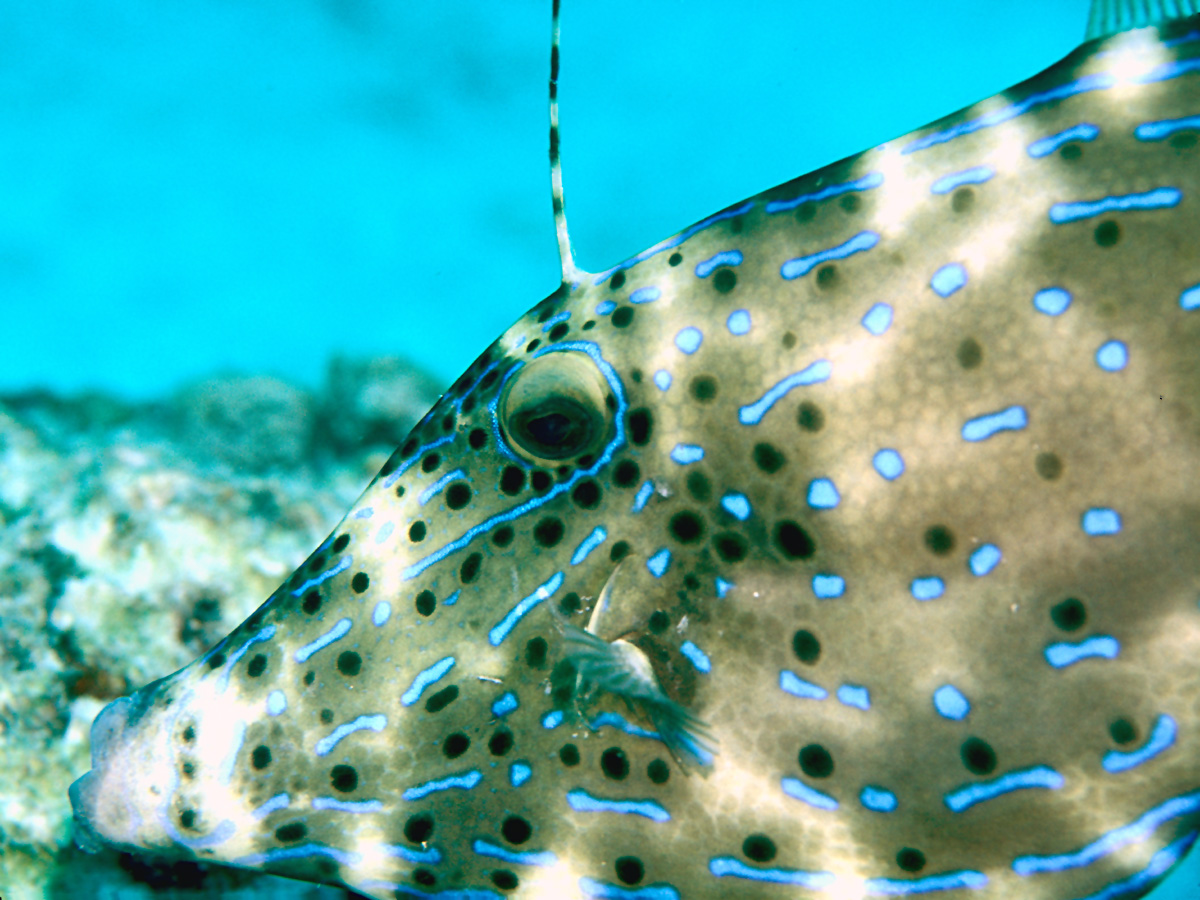
A Scrawled Filefish (Aluterus scriptus) poses for a macro shot. I love the neon patterns on this species, not to mention the odd face. They are wary loners and do not often allow you to get this close. Bonaire (Neth. Antilles) 4/2000.
This one is kind of cool when viewed in LARGE format.