View allAll Photos Tagged Published
Published in the Western Producer - August 9, 2012 Teat position sensors locate the nipple before attaching the milker to ensure a comfortable, secure fit.
© sergione infuso - all rights reserved
follow me on www.sergione.info
You may not modify, publish or use any files on
this page without written permission and consent.
-----------------------------
Nino D’Angelo festeggia i suoi 60 anni (compiuti il 21 giugno) con uno show-evento “Il Concerto 6.0” il 24 giugno allo Stadio San Paolo di Napoli.
“Avrei dovuto fare un live in ogni vicolo di Napoli, o nel quartiere dove sono nato e cresciuto, per ringraziare il pubblico che mi segue da sempre”
Uno spettacolo in cui Nino D’Angelo ripercorrerà una straordinaria carriera tra musica, cinema e teatro, che ha fatto di Nino uno degli artisti più amati e di riferimento per le generazioni successive d’interpreti. “Mi piacerebbe che fosse una grande festa popolare, verace, dove divertirci tutti insieme, con un concerto ricco di canzoni che mi hanno visto crescere, a cominciare da quelle degli anni Ottanta”.
Il palco sarà allestito in quella Curva B tanto cara a Nino, protagonista in uno dei suoi film più amati. “Ho scelto lo stadio San Paolo perché per questo compleanno ho sentito l’esigenza di avere uno spazio grande, comunque un simbolo della città. Avrei dovuto fare un live in ogni vicolo di Napoli, o nel quartiere dove sono nato e cresciuto, per ringraziare il pubblico che mi segue da tanti anni ormai. Da qui la scelta dello stadio, senza dimenticare che io sono sempre “quel ragazzo della Curva B””.
Un concerto, questo, dove Nino D’Angelo proporrà, accompagnato dal suo gruppo musicale, i successi di una carriera lunga più di 40 anni e che da “San Pietro a Patierno” lo ha portato a essere uno degli artisti più apprezzati da pubblico e critica. Uno show dove le hit degli anni ’80 (“Nu jeans e na maglietta”, “Maledetto treno”, “Sotto ‘e stelle”) e degli anni ’90 (“Mentecuore”, “Nun te pozzo perdere”, “Carezza luntana”) si sposeranno con le canzoni degli anni successivi che hanno visto Nino maturare artisticamente, fino alla “svolta” sociale, etnica, cosi definita dalla critica (“Senza giacca e cravatta”, “Jammo ja’”, “Jesce sole”).
Sul palco si avvicenderanno tanti amici e colleghi che, in molti casi, duetteranno con Nino. Tra i primi nomi annunciati, Clementino, Gigi Finizio, Enzo Gragnaniello, Rocco Hunt, Maria Nazionale, Raiz, Sal Da Vinci, James Senese, Fortunato Cellino, Brunella Selo, Franco Ricciardi, Daniele Sanzone, Luchè e tanti altri ospiti...
“Il Concerto 6.0” è l’avvio di un progetto che proseguirà per tutto il 2017, culminando presto in un triplo cd che conterrà il dvd dello show al San Paolo; un disco di inediti; e uno con i maggiori “insuccessi di Nino D’Angelo” (come ama definirli l'artista). L’opera si chiamerà “Nino D’Angelo 6.0” e uscirà tra settembre e ottobre.
The Postcard
A postcard that was printed and published by J. Salmon of Sevenoaks. The image is from an original 1909 painting by A. Harding Northwood.
The card was posted in Sevenoaks using a halfpenny stamp on Monday the 30th. August 1909. It was sent to:
Mrs. Newington,
Melson Cottage,
Wadhurst,
Sussex.
The message on the divided back was as follows:
"Dear A,
Arrived quite safe.
Dad says he is not
drunk yet.
We are just going
for a walk.
Love to both and a
kiss for Maggie.
From Mum & Dad."
The Witch's Oak
The huge oak, known for centuries as "The Old Oak,' but popularly called "The Witch's Oak", is one of Knole Park's great "lost" trees. The legend tells of a young tousle-haired local lass who fell in love with Richard Sackville, Third Earl of Dorset. Sadly for her he married the far more noble Lady Anne Clifford in 1609.
However the scorned girl had supernatural powers, and she placed a curse on Knole. Never again, she swore, would Knole have an immediate heir to the title. In fact the three sons of her object of desire, Richard Sackville, died in infancy, and he himself left this world in 1624 aged only 34, after “a surfeit of potatoes” (amongst other excesses).
Further misfortunes followed, including the death in 1815 of George, Fourth Duke of Dorset, who had his spine crushed by a falling horse in a hunting accident. Since the witch's curse, the issue of inheritance at Knole has been a constant source of contention, "moving crab-like from generation to generation".
The witch vowed never to leave the park, so where is she now?
Gnarled and sinister-looking, its huge hollow frame supported by wooden staves and bound in an iron girdle, The Old Oak was fancifully described in early postcards as "The oldest oak in England". Ancient it certainly was: even 360 years ago it was known as "The Old Oak".
It stood not far from the house, to the north of Echo Mount, together with King John's Oak and King Beech. They were important enough to show on the Ordnance Survey map of 1869.
Nan Horns and All: "The Old Woman Who Lived in the Tree." Nan Horns and All (so called because she was never seen without her hair in stiff curl papers) lived for many years in The Old Oak's hollow bole in the early 19th. century. She worked as a "potman", serving at the old Wheatsheaf Inn which stood in London Road.
Woe betide any passing kids who called her by her nick-name. They were soon seen off with a barrage of stones.
The tree was vandalised in 1954.
Knole
Henry VIII acquired Knole from Archbishop Thomas Cranmer in 1538 for hunting purposes, and he then set about enlarging and improving the house and grounds. Earlier, the estate had been bought and the first house built by Archbishop Thomas Bourchier between 1456 and his death in 1486.
Though Elizabeth I subsequently presented it to her cousin Thomas Sackville, later 1st. Earl of Dorset, in 1566 he was not able to occupy it until he bought back the lease in 1603. Over the next two years the house underwent a transformation into a great Renaissance palace, and it largely remains unaltered from that time.
Throughout part of the seventeenth century, occupation by the Sackville family was intermittent, possibly due to lack of money, and it was sometimes leased.
It was not until the beginning of the eighteenth century that the 6th. Earl and later his son, the 7th. Earl, used the house as their principal residence, renovating, improving and embellishing what the 1st. Earl had initiated.
The family have lived at Knole ever since, but owing to the burden of upkeep and protecting the valuable collections within the house, they presented it (with the walled garden) to the National Trust in 1946, in exchange for a generous lease of 200 years.
-- More on Knole House
The excellent shelleyshouse.blogspot.com provides some fascinating information about Knole. Here are some of the highlights:
Virginia Woolf, describing Knole in her novel Orlando, 1928 wrote:
"The great house lay more like a town
than a house...with all its chimneys
smoking busily as if inspired with a life
of their own."
Underneath the Knole rooftops lies a labyrinth of apartments, each containing several rooms. These apartments once housed hundreds of people including high status staff, visitors and family members. The Sackville-West family still live in apartments here, over 400 years since the first family member lived in Knole.
Knole house stands on five acres of ground, around the size of three and a half football pitches.
There are over 300 rooms.
Knole has 51 chimneys.
The problem for me about Knole was that at the beginning of the tour most things were covered with dust sheets, in glass cases. I found it hilarious that there were signs on a lot of pieces (like enormous vases, or ornate chairs) printed with the word 'salvage'. I had to ask what this was about as I wondered if these items had been picked up from a salvage yard, though it seemed unlikely.
Turns out there is a very particular protocol in the event of a fire or other disaster about what will be saved first, and these labels referred to the priority of the items in that protocol.
Knole Park is the home of a wild deer herd. They are the descendants of those first introduced here over 500 years ago. It is Kent's last remaining medieval deer park.
Henry VIII stated in 1532:
"And as for Knole it standeth on a sound perfect,
wholesome ground. And if I should make mine
abode here, as I do surely mind to do now and
then, I myself will lie at Knole."
Archbishop Thomas Cranmer surrendered Knole to Henry VIII. The king purchased more land, and by 1556 Knole Park covered 446 acres. Today Knole Park covers 1,000 acres. It is 7.5 times bigger than St James' Park in London.
There are over 350 wild deer in Knole Park.
I remember an old bed (you know, the kind with curtains) still in pieces, being cleaned by a young man. He was using just water, and just rubbing the black pieces of wood; I think he said it was walnut, but I'm not sure. He told us that the Knole attics were so vast they still hadn't been fully explored and all the findings catalogued, even though the National Trust acquired the place in 1946 (over 70 years ago!).
In another room there was a bed covered and curtained with some sort of holey green fabric. The guide there explained that some inexperienced restorers from some workers' cooperative had used modern glue to stick the fabric back onto the wood, rather than the old fashioned fish glue.
This modern glue had eaten the fabric, and they were painstakingly trying to restore the old cloth. I had two thoughts at the time. One was how quickly they were ready to name and blame outsiders; the other was the enormous expense of restoring such a large amount of fabric. I would just frame a square or two and put up modern fabric, a copy of the original. Probably best that I don't work in restoration, eh?
Knole House is called a Calendar House, that is a house that has architectural features in quantities that mirror the numbers in a year. Knole reportedly has 365 rooms, 52 stair cases, 12 entrances and 7 courtyards (give or take).
One more thing that has come back to me is one of the guides telling me about a Knole couch. If you ever watched/drooled over Downton Abbey you know exactly what one looks like (the big red one to the left of the fireplace in the library).
Visitors from the local area and further afield have enjoyed access to Knole Park since the 17th. century. A dispute over public right of way led to Mortimer, 1st Lord Sackville, closing the park in June 1884. Local people were furious, and on the night of the 18th. June 1884, over a thousand people stormed the park. They broke down barricades before marching to the front of the house. The town's people smashed windows and hurled abuse.
-- Knole and The Beatles
Knole was the setting for the filming in January 1967 of the Beatles' videos that accompanied the release of "Penny Lane" and "Strawberry Fields Forever".
The stone archway through which the four Beatles rode on horses can still be seen on the southeastern side of the Bird House, which itself is on the southeastern side of Knole House.
The same visit to Knole Park inspired another Beatles song, "Being for the Benefit of Mr. Kite!," which John Lennon wrote after buying an 1843 poster in a nearby antiques shop that advertised Pablo Fanque's Circus Royal.
A Gusher in Russia
So what else happened on the day that the card was posted?
Well, on the 30th. August 1909, a gusher at the Maikop oil field in Russia rose to a height of 65 metres (213 ft), but most of the well's contents were lost because the operators had not made preparations to store it.
A New Battleship
Also on that day, the German battleship Helgoland was launched at Kiel, the first of a new class of ships with larger guns and improved propulsion.
Cruel and Unusual Punishment
Also on the 30th. August 1909, in Fez, Morocco, the consuls of France, Great Britain and Spain presented a letter of protest to the Sultan.
They demanded the abolition of the practice of mutilation and slow death as punishment.
The initiative took place twenty days after more than 30 convicted criminals had hands or feet amputated before being left to die.
A Gift of Cherry Trees
Also on that day, the city of Tokyo announced a gift of cherry trees to be planted at the Tidal Basin in Washington, D.C.
The gift was paid for, anonymously, by Jokichi Takamini, the millionaire chemist who invented synthetic epinephrine.
This photograph was published in the Illustrated Chronicle August 1916.
During the Great War the Illustrated Chronicle published photographs of soldiers and sailors from Newcastle and the North East of England, which had been in the news. The photographs were sent in by relatives and give us a glimpse into the past.
The physical collection held by Newcastle Libraries comprises bound volumes of the newspaper from 1910 to 1925. We are keen to find out more about the people in the photographs. If you recognise anyone in the images and have any stories and information to add please comment below.
The Postcard
A postally unused postcard that was published by Santoro Graphics Ltd. of Rotherham. The card was printed in England.
The back of the card states that the artwork features the Mauretania by Colin Ashford, but in fact it shows the Aquitania by Kenneth D. Shoesmith.
Shoesmith has cleverly depicted the RMS Aquitania between two of New York’s huge skyscrapers.
An original copy of this 1928 color lithograph is held by the Peabody Essex Museum, the gift of the estate of Francis B. C. Bradlee.
An original copy of this Kenneth Shoesmith, Cunard Line Europe-America poster sold for £7,500 in 2020.
RMS Aquitania
Aquitania was the third of Cunard’s three huge ocean liners, preceded by RMS Mauretania, and RMS Lusitania. She was in service between 1914 and 1950.
She served in both world wars, sailing three million miles over 450 round voyages, carrying 1.2 million passengers.
She was the longest-serving express liner of the 20th. century.
Despite all its glamour, this ship also had third class, and was used to transport emigrants on voyages between Europe and the United States.
She was the last liner with four funnels.
Her four funnels allowed the crew to establish a unique method of classifying fog, counting the number of funnels visible from the bridge – fog with four funnels, fog with three funnels... When the number of visible funnels was less than three, everyone had to rely on luck to ensure that navigation would proceed without incident.
Aquitania, a 45,000-ton ship, was the pride of the Cunard Line in the 1920's, along with Mauretania (32,000 tons) and Berengaria (52,000 tons).
After serving as a troop transport during World War II, she was withdrawn from service in 1950, surpassing by several years the service life of Berengaria and Mauretania , which had been withdrawn in the mid-1930's.
To see interior shots of the public rooms of the Aquitania on this photostream, please search for the tag Aquitania
Kenneth D. Shoesmith
Kenneth Denton Shoesmith was born in 1890 in Halifax, West Yorkshire, but grew up in Blackpool. He was an artist, marine artist, painter, and poster artist.
Despite showing early promise as an artist, in his early teens Kenneth decided upon a career at sea. At the age of 16 he became a Conway Cadet on HMS Conway, the Merchant Navy training school ship moored at Liverpool.
He later joined the Royal Mail Lines, but continued his enthusiasm for drawing and painting as he travelled the world. While mainly self-taught, he took a correspondence course early in his new artistic career.
Other shipping companies of the day also employed his skills, including , Blue Funnel, Union Castle, Anchor Line, as well as Canadian Pacific Railways.
Kenneth also worked for the publisher Thomas Forman, who produced Cunard's famous postcards, creating some of their best- known images.
He also produced scenes of various tourist sites, as well as posters for Southern Railways.
Kenneth was a member of the Royal Institute of Painters in Watercolours, and of the British Society of Poster Designers.
He exhibited at the Royal Academy, the Paris Salon and at the Walker Art Gallery in Liverpool in addition to one-man shows in Belfast and elsewhere.
Kenneth's work today is known and appreciated by only a few, yet his highly colourful, flamboyant early style captured the essential romance and adventure of ocean liner travel in the 1920's and 1930's. However his style changed profoundly over time from a Brangwyn-esque freedom to a more stylised and restrained 'Art Deco' coolness.
The Ulster Museum has 300 of Shoesmith's original paintings and sketches in its collection.
-- Kenneth Shoesmith's Armada Murals
In 1930, the First Lord Vestey, owner of the Blue Star Line, commissioned Shoesmith to paint a series of murals depicting the events surrounding the English victory of 1588 over the Spanish Armada, for the dining room of his home, Kingswood in Dulwich.
In ten panels, telling the story, from Sir Francis Drake's game of bowls on Plymouth Hoe, to the return of the English fleet at Dover Castle, Shoesmith's oil paintings recreated the classic schoolboy history image of the great sea battle, with richly coloured galleons and wrecked Spanish ships.
Each panel was 40 inches high, constrained by the dimensions of Vestey's walls, while their width fitted the individual bays and alcoves of the dining room.
In 1939 the murals were taken down when, with the outbreak of War, Kingswood became War Department offices. They were put into storage, and with the coming of peace in 1945, were donated by the Vestey family to Radley College, where Lord Vestey's son, Captain William Vestey (killed while serving with the Scots Guards, in 1944), had been educated.
At Radley they hung on the walls of the College Dormitory for more than thirty years. However, when that building was altered in 1976, the paintings were again taken down and put into storage.
In 1988 Radley decided, with the Vestey family's agreement, to sell the murals in order to fund the purchase of works by young artists, and in 1998 the murals were sent to auction.
-- Kenneth Shoesmith's Queen Mary Murals
Another highpoint of Shoesmith's career was a series of large decorative murals that he painted in 1933 for the interiors of the Cunard White Star liner Queen Mary.
These included two works for the cabin class drawing room, the monumental Flower Market and The Madonna of the Atlantic, an altarpiece, covered by a folding screen when not in use, and The Madonna of the Tall Ships for the tourist class library.
-- The Death of Kenneth Shoesmith
Kenneth Shoesmith died in 1939, aged just 48. His obituary read:
'As a poster artist - he was quite definitely in the
front rank of those who are content to paint what
they see and know.
He was direct in his methods, sound in his drawing,
and brilliant in his colour.
His ships were not only correct in detail, but they
were always in, and not on, the water, for he painted
with a seaman's knowledge as well as an artist's
perception.'
Poor show "The Chronicle" - using my image without credit. Its not a royalty free stock photo! You should know better!
After Goyo's death, his nephew Hashiguchi Yasuo publishes his unfinished prints, based on old sketches and proofs. This print is based on a proof sheet from 1920 and printed in 1950-1952.
Title of the work:Woman at the spa
Author: Hashiguchi Goyo ( 1881-1921)
Editor: Goyo hanga kenkjuyo
Exhibition from 13.10.2022 till 15.01.2023
Royal Museums for Art and History, Brussels.
Website of the museum: www.artandhistory.museum/en/node/61
The story of shin hanga starts here: www.flickr.com/photos/38700906@N02/52989595849/in/datepos...
Na het overlijden van Goyo, geeft zijn neef Hashiguchi Yasuo zijn onvoltooide prenten uit, op basis van oude schetsen en proefdrukken. Deze prent is gebaseerd op een proefvel uit 1920 en gedrukt in 1950-1952.
auteur: Hashiguchi Goyo ( 1881-1921)
uitgever: Goyo hanga kenkjuyo
Tentoonstelling van 13.10.2022 tot 15.01.2023
Koninklijke Musea voor Kunst en Geschiedenis, Brussel
Website van het museum: www.artandhistory.museum/nl
Het verhaal over shin hanga start hier: www.flickr.com/photos/38700906@N02/52989595849/in/datepos...
Après la mort de Goyo, son neveu Hashiguchi Yasuo publie ses estampes inachevées, basées sur d'anciens croquis et épreuves. Cette estampe a été réalisée à partir d'une épreuve de 1920 et imprimée entre 1950 et 1952.
Titre de l'oeuvre: Femme au spa
Auteur: Hashiguchi Goyo ( 1881-1921)
Editeur: Goyo hanga kenkjuyo
Exposition du 13.10.2022 au 15.01.2023
Musées royaux d’Art et d’Histoire, Bruxelles
Site web du musée: www.artandhistory.museum/fr
l’Histoire sur shin hanga commence ici: www.flickr.com/photos/38700906@N02/52989595849/in/datepos...
I've been published ! The great internet magazine Le Cool has one of my photographs featured on the cover. If you follow the link there's even a little interview. ( After Wednesday 4th July the current issue will change )
lecool.com/newsletter.php?city=5&lang=ENG
The original shot can be seen here ;
The Postcard
A postally unused postcard that was published by Lithon Ltd. of Penzance. The card has a divided back.
Dolly Pentreath
Dorothy Pentreath, who was baptised on the 16th. May 1692, was a Cornish fishwife from Mousehole. She is one of the last known fluent speakers of the Cornish language. She is also often credited with being the last known native speaker of Cornish, although sources support the existence of other younger speakers of the language who survived her.
-- Dolly Pentreath - The Early Years
Dolly was the second of six known children of fisherman Nicholas Pentreath and his second wife Jone Pentreath. She later claimed that she could not speak a word of English until the age of 20. Whether or not this is correct, Cornish was her first language.
In old age, she remembered that as a child she had sold fish at Penzance in the Cornish language, which most local inhabitants (even the gentry) then understood. She lived in the parish of Paul, next to Mousehole.
Perhaps due to poverty, Pentreath never married, but in 1729 she gave birth to a son, John Pentreath, who lived until 1778.
Pentreath has been described as follows:
"Dolly was the old matriarch of the Cornish
language. She was a Cornish fishwife who
tramped her fishy wares around Penwith
and Penzance.
At the latter place she gained the reputation
of being the last native Cornish speaker,
though she may not have been. Opinion is
also divided about how much Cornish she
could actually speak — though everyone
agreed she could swear in Cornish."
-- Dolly Pentreath's Later Years
In 1768, Daines Barrington searched Cornwall for speakers of the language, and at Mousehole found Pentreath, then a fish seller said to be aged about 82, who "could speak Cornish very fluently."
In 1775 he published an account of her in the Society of Antiquaries' journal Archaeologia in an article called "On the Expiration of the Cornish Language."
Barrington noted that the "hut in which she lived was in a narrow lane," and that in two rather better cottages just opposite it he had found two other women, some ten or twelve years younger than Pentreath, who could not speak Cornish readily, but who understood it.
Five years later, Pentreath was said to be 87 years old and at the time her hut was "poor and maintained mostly by the parish, and partly by fortune telling and gabbling Cornish."
In the last years of her life, Pentreath became a local celebrity for her knowledge of Cornish. Around 1777, she was painted by John Opie (1761–1807), and in 1781 an engraving of her after Robert Scaddan was published.
In 1797, a Mousehole fisherman told Richard Polwhele (1760–1838) that William Bodinar "used to talk with her for hours in Cornish; that their conversation was understood by scarcely any one of the place; and that both Dolly and himself could talk in English."
Dolly Pentreath has passed into legend for cursing people in a long stream of fierce Cornish whenever she became angry. Her death is seen as marking the death of Cornish as a community language.
There are many tales about her. She was said often to curse people, including calling them "kronnekyn hager du," an "ugly black toad," and was even said to have been a witch.
Numerous other stories have been attached to her, their accuracy unknown. She was at one time thought to have been identical with a Dorothy Jeffrey whose burial is recorded in the Paul parish register, but this has been doubted.
-- The Death of Dolly Pentreath
Dolly Pentreath died at the age of 85 in Mousehole on the 26th. December 1777, and was buried at St. Pol de Léon's Church in Paul, where in 1860 a monument in her honour was set into the churchyard wall by Louis Lucien Bonaparte, a nephew of Napoleon, and by the Vicar of Paul. It read:
"Here lieth interred Dorothy Pentreath who died in
1777, said to have been the last person who conversed
in the ancient Cornish, the peculiar language of this
country from the earliest records till it expired in the
eighteenth century, in this Parish of Saint Paul.
This stone is erected by the Prince Louis Bonaparte
in Union with the Revd. John Garret Vicar of St. Pol,
June 1860.
Honour thy father and thy mother, that thy days may
be long in the land which the Lord thy God giveth
thee. Exod. xx. 12."
Contradicting the monument, in 1882 Dr. Frederick Jago of Plymouth received a letter from Bernard Victor, of Mousehole, who wrote:
"She died Decrember 26, 1777, at the age of 102.
At her funeral the undertaker was George Badcock.
He being my grandfather, that is the reason I am so
well informed; and there were eight chosen fishermen
bearers to take her to her last resting place.
There was not anything erected on the old lady's
grave as a tablet to her memory. I know quite well the
grave where her remains are deposited."
In a later letter he went on to say that it was no surprise that Bonaparte and Garret had mistaken both Dolly's age and the location of the grave:
"Dolly's actual resting place is 47 feet south-east,
a point easterly from Prince L. L. Bonaparte's
monument to her.
It is not to be said that the monument is in its right
place, because it was put there by the order of
Prince L. L. Bonaparte, or by the Rev. John Garrett –
the one a Frenchman and the other an Irishman!"
The erroneous idea that Pentreath had lived to be 102 is believed to originate in a Cornish language epitaph which had been written by December 1789 and published in 1806 by a man named Tomson.
No burial of Dorothy Pentreath is recorded, but it has been argued that this appears in the parish register under the name of Dolly Jeffery, which is suggested to be the surname of her son's father. This theory is accepted by the Oxford Dictionary of National Biography.
In 1887 the monument was moved to the site of her unmarked grave, and a skeleton was disinterred which was believed to be hers.
The skull was said to be of peculiar shape and only three teeth were found. It was reported that a tooth was offered to Bonaparte, in the hope that he would not ″disclose anything″. ]
-- The Last Speaker of the Cornish Language
As with many other "last native speakers," there is controversy over Pentreath's status. Her true claim to notability is not as the last speaker of the language, but rather as its last fluent native speaker.
After her death, Barrington received a letter, written in Cornish and accompanied by an English translation, from a fisherman in Mousehole named William Bodinar (or Bodener) stating that he knew of five people who could speak Cornish in that village alone. Barrington also speaks of a John Nancarrow from Marazion who was a native speaker and survived into the 1790's.
There is one known traditional Cornish speaker, John Mann, who as a child in Boswednack, Zennor, always conversed in Cornish with other children, and was alive at the age of 80 in 1914. He was the last known survivor of a number of traditional Cornish speakers of the 19th. century.
Matthias Wallis of St. Buryan certified in 1859 that his grandmother, Ann Wallis, who had died around 1844, had spoken Cornish well. He also stated that a Jane Barnicoate, who had died about 1857, could speak Cornish too.
A graphic image of 40-volume Tipitaka Studies Reference 2007, published by Dhamma Society in Honour of HRH Princess Galyani Vadhana, Royal Patron and Honorary President of Tipitaka Presentation Worldwide.
Vol 1 Table of Contents 40 vols (รวมสารบัญ 40 เล่ม)
Vol 2 Word Index : a – o (ดัชนีคำปาฬิ อักษรโรมันเล่ม 1)
Vol 3 Word Index : k – n (ดัชนีคำปาฬิ อักษรโรมันเล่ม 2)
Vol 4 Word Index : p – m (ดัชนีคำปาฬิ อักษรโรมันเล่ม 3)
Vol 5 Word Index : y – h (ดัชนีคำปาฬิ อักษรโรมันเล่ม 4)
Vol 6 Variant Readings (ดัชนีคำที่พิมพ์ต่างกัน รวมจากทุกฉบับ อักษรต่างๆ)
Vol 7 Variant Readings : Siam script (ดัชนีคำที่พิมพ์ต่างกัน พระไตรปิฎกอักษรสยาม)
Vol 8 Variant Readings : Thai script (ดัชนีคำที่พิมพ์ต่างกัน พระไตรปิฎกอักษรไทย พ.ศ. 2471)
Vol 9 Variant Readings : Thai script (ดัชนีคำที่พิมพ์ต่างกัน พระไตรปิฎกอักษรไทย พ.ศ.2538)
Vol 10 Variant Readings : Siam & Thai scripts (ดัชนีคำที่พิมพ์ต่างกัน พระไตรปิฎกอักษรสยามและไทย)
Vol 11 Variant Readings : Burmese script (ดัชนีคำที่เขียนต่างกัน พระไตรปิฎกอักษรพม่า)
Vol 12 Variant Readings : Sinhala script (ดัชนีคำที่เขียนต่างกัน พระไตรปิฎกอักษรสิงหล)
Vol 13 Variant Readings : PTS (ดัชนีคำที่เขียนต่างกัน หนังสือสมาคมบาลีปกรณ์)
Vol 14 Cross Reference (ดัชนีอ้างอิงระหว่างเล่ม จากฉบับสังคายนาสากล พ.ศ. 2500 จากชุด 40 เล่ม)
Vol 15 First line of Verse (ดัชนีคาถาบรรทัดแรก รวม 40 เล่ม)
Vol 16 Word Index Vinaya (ดัชนีคำปาฬิ พระวินัยปิฎก 5 เล่ม)
Vol 17 Word Index Suttanta : a – ṇ (ดัชนีคำปาฬิ พระสุตตันตปิฎก เล่ม 1)
Vol 18 Word Index Suttanta : t – m (ดัชนีคำปาฬิ พระสุตตันตปิฎก เล่ม 2)
Vol 19 Word Index Suttanta : y – h (ดัชนีคำปาฬิ พระสุตตันตปิฎก เล่ม 3)
Vol 20 Word Index Abhidhamma : (ดัชนีคำปาฬิ พระอภิธัมมปิฎก 12 เล่ม)
Vol 21 Index to Sikkhāpada : Uddesa & Niddesa (ดัชนีพจนานุกรมปาฬิ : อุทเทส และนิทเทส)
Vol 22 Index to Consonant Clusters : Aḍḍhasarabyañjana (ดัชนีพยัญชนะอัฑฒสระ แสดงเสียงควบกลำ้ที่มักออกเสียงปาฬิไม่ถูกต้องในปัจจุบัน)
Vol 23 Index to Summary : Tassudānaṃ (ดัชนีบทสรุปภาษาปาฬิตอนจบข้อความในพระไตรปิฎกปาฬิ Tassudānaṃ)
Vol 24 Pāḷi Tipiṭaka corpus : a (ตัวอย่างประโยค "คลังคำ" จากพระไตรปิฎกสากล อักษรโรมัน เล่ม 1)
Vol 25 Pāḷi Tipiṭaka corpus : a (ตัวอย่างประโยค "คลังคำ" จากพระไตรปิฎกสากล อักษรโรมัน เล่ม 2)
Vol 26 Pāḷi Tipiṭaka corpus : ā - ī (ตัวอย่างประโยค "คลังคำ" จากพระไตรปิฎกสากล อักษรโรมัน เล่ม 3)
Vol 27 Pāḷi Tipiṭaka corpus : u – o (ตัวอย่างประโยค "คลังคำ" จากพระไตรปิฎกสากล อักษรโรมัน เล่ม 4)
Vol 28 Pāḷi Tipiṭaka corpus : k – kh (ตัวอย่างประโยค "คลังคำ" จากพระไตรปิฎกสากล อักษรโรมัน เล่ม 5)
Vol 29 Pāḷi Tipiṭaka corpus : g – ch (ตัวอย่างข้อมูลพระไตรปิฎกปาฬิ เล่ม 6)
Vol 30 Pāḷi Tipiṭaka corpus : j – t (ตัวอย่างประโยค "คลังคำ" จากพระไตรปิฎกสากล อักษรโรมัน เล่ม 7)
Vol 31 Pāḷi Tipiṭaka corpus : th – dh (ตัวอย่างประโยค "คลังคำ" จากพระไตรปิฎกสากล อักษรโรมัน เล่ม 8)
Vol 32 Pāḷi Tipiṭaka corpus : n (ตัวอย่างประโยค "คลังคำ" จากพระไตรปิฎกสากล อักษรโรมัน เล่ม 9)
Vol 33 Pāḷi Tipiṭaka corpus : p (ตัวอย่างข้อมูลพระไตรปิฎกปาฬิ เล่ม 10)
Vol 34 Pāḷi Tipiṭaka corpus : p (ตัวอย่างประโยค "คลังคำ" จากพระไตรปิฎกสากล อักษรโรมัน เล่ม 11)
Vol 35 Pāḷi Tipiṭaka corpus : ph – bh (ตัวอย่างประโยค "คลังคำ" จากพระไตรปิฎกสากล อักษรโรมัน เล่ม 12)
Vol 36 Pāḷi Tipiṭaka corpus : m (ตัวอย่างประโยค "คลังคำ" จากพระไตรปิฎกสากล อักษรโรมัน 13)
Vol 37 Pāḷi Tipiṭaka corpus : y – l (ตัวอย่างประโยค "คลังคำ" จากพระไตรปิฎกสากล อักษรโรมัน เล่ม 14)
Vol 38 Pāḷi Tipiṭaka corpus : v (ตัวอย่างประโยค "คลังคำ" จากพระไตรปิฎกสากล อักษรโรมัน 15)
Vol 39 Pāḷi Tipiṭaka corpus : s (ตัวอย่างประโยค "คลังคำ" จากพระไตรปิฎกสากล อักษรโรมัน เล่ม 16)
Vol 40 Pāḷi Tipiṭaka corpus : : s – h (ตัวอย่างประโยค "คลังคำ" จากพระไตรปิฎกสากล อักษรโรมัน เล่ม 17)
My Big Sky photo represents Montana in "The States," a unique book of poems by Craig Foltz, published by Ugly Duckling Presse. The book is in the form of perforated postcards.
UNICODE 5.1.0 meets Or-Omcode∞.1.0
Unicode represents the Tower ob Babel en.wikipedia.org/wiki/Tower_of_Babel In computing, Unicode is an industry standard allowing computers to consistently represent and manipulate text expressed in most of the world's writing systems. Developed in tandem with the Universal Character Set standard and published in book form as The Unicode Standard, Unicode consists of a repertoire of more than 100,000 characters, a set of code charts for visual reference, an encoding methodology and set of standard character encodings, an enumeration of character properties such as upper and lower case, a set of reference data computer files, and a number of related items, such as character properties, rules for normalization, decomposition, collation, rendering and bidirectional display order (for the correct display of text containing both right-to-left scripts, such as Arabic or Hebrew, and left-to-right scripts). en.wikipedia.org/wiki/UniCode
Or-Omcode∞.1.0 represents a new Universal Language de.wikipedia.org/wiki/Universalsprache derived within the Doctine Of Essense by
de.wikipedia.org/wiki/Karl_Christian_Friedrich_Krause
Encoding Unicode into the Or-Omcode∞.1.0 all traditional languages become semantically transformed within the new universal language parameters. portal.or-om.org/art/UnicodemeetsOrOmCode/tabid/6319/Defa...
I can't remember how I got these pics. They came out in Quick Throttle magazine. It was during the bike show at Irvine Lake in 2009 but I don't have this issue and I don't know when it came out.
Big Ant TV Media LLC ©
Published Pro Freelance Photographer
PAID SHOOTS ARE 1st PRIORITY
(PORTFOLIO BUILDING” SHOOTS ARE 2ND)
“PLEASE INQUIRE WITHIN”
#fffweek #sbfw #nyfw #stylefw
#fashionphotographer
#canon5DMarkIV
#UrbanModeling
#plussizemodeling
#sportsphotographers
#BigAntTVMedia #editorialphotographers
#NYCPhotographers #BiggsthePhotographer
#lens4fashion #biganttvproductions #m76photo
Big Ant TV Media LLC ©
Published Pro Freelance Photographer
PAID SHOOTS ARE 1st PRIORITY
(PORTFOLIO BUILDING” SHOOTS ARE 2ND)
“PLEASE INQUIRE WITHIN”
#fffweek #sbfw #nyfw #stylefw
#fashionphotographer
#canon5DMarkIV
#UrbanModeling
#plussizemodeling
#sportsphotographers
#BigAntTVMedia #editorialphotographers
#NYCPhotographers #BiggsthePhotographer
#lens4fashion #biganttvproductions #m76photo
Photograph published 3rd October 1918.
During the Great War the Illustrated Chronicle published photographs of soldiers and sailors from Newcastle and the North East of England, which had been in the news. The photographs were sent in by relatives and give us a glimpse into the past.
The physical collection held by Newcastle Libraries comprises bound volumes of the newspaper from 1910 to 1925. We are keen to find out more about the people in the photographs. If you recognize anyone in the images and have any stories and information to add please comment below.
© sergione infuso - all rights reserved
follow me on www.sergione.info
You may not modify, publish or use any files on
this page without written permission and consent.
-----------------------------
Il chitarrista acustico inglese Clive Carroll, reduce dal tour americano con Tommy Emmanuel e sempre più proiettato nell'olimpo dei chitarristi contemporanei, e il genio del basso americano Michael Manring, allievo prediletto di Jaco Pastorius per la prima volta insieme.
Questi due virtuosi musicisti daranno vita a una performance di altissimo livello, arricchendo a vicenda le già straordinarie capacità compositive di ognuno e presentando un concerto pieno di funambolismi ed energia contagiosa!
Clive Carroll è diplomato in composizione con il massimo dei voti al Trinity College di Londra. Il suo stile comprende la musica tradizionale irlandese, la classica, la folk e il blues. Pupillo di John Renbourn, ha iniziato suonando il banjo e poi la chitarra elettrica, contraddistinguendosi per una notevole varietà musicale. Dotato di un tocco straordinario e di una tecnica quasi inarrivabile, punta molto sulla sua sensibilità musicale e sulle splendide composizioni originali. Oggi è uno dei più richiesti performer di chitarra al mondo; il suo stile, inconfondibile e originale, è fatto di bending e glissati, di veloci legature eseguite con la mano sinistra e di velocissime terzine suonate con la mano destra.
Michael Manring, originario della Virginia e laureato alla scuola di musica di Berklee, ha iniziato la sua carriera suonando discomusic e fusion nelle discoteche di Washington. Considerato un innovatore, con le sue sperimentazioni sul basso elettrico ha contribuito ad elevare il ruolo di questo strumento nella musica contemporanea. Definito, insieme a James Jamerson e Jaco Pastorius, la terza colonna portante del basso elettrico, è stato per anni il bassista ufficiale della Windham Hill Records e ha suonato con Michael Hedges, Alex Skolnick, Larry Kassin, Steve Morse e molti altri famosi musicisti.
received my copy of "Philadelphia Originals" today in the mail. back in the spring, Joseph Glantz contacted me asking to use my phanatic shot in his book. i said sure, and here it is, on page 249! this is my first photo published.. feels good :)
Had the privilege of working with Brodin, for the cover and fill shots, on their new 2009 catalog .. Thought this stuff turned out really nice!
Today the PDF preview for the second issue of 5x5 photography magazine arrived. I am featured with four photos on three double pages, kicking off the cover story. To read the text in the image above, go here and click on the image.
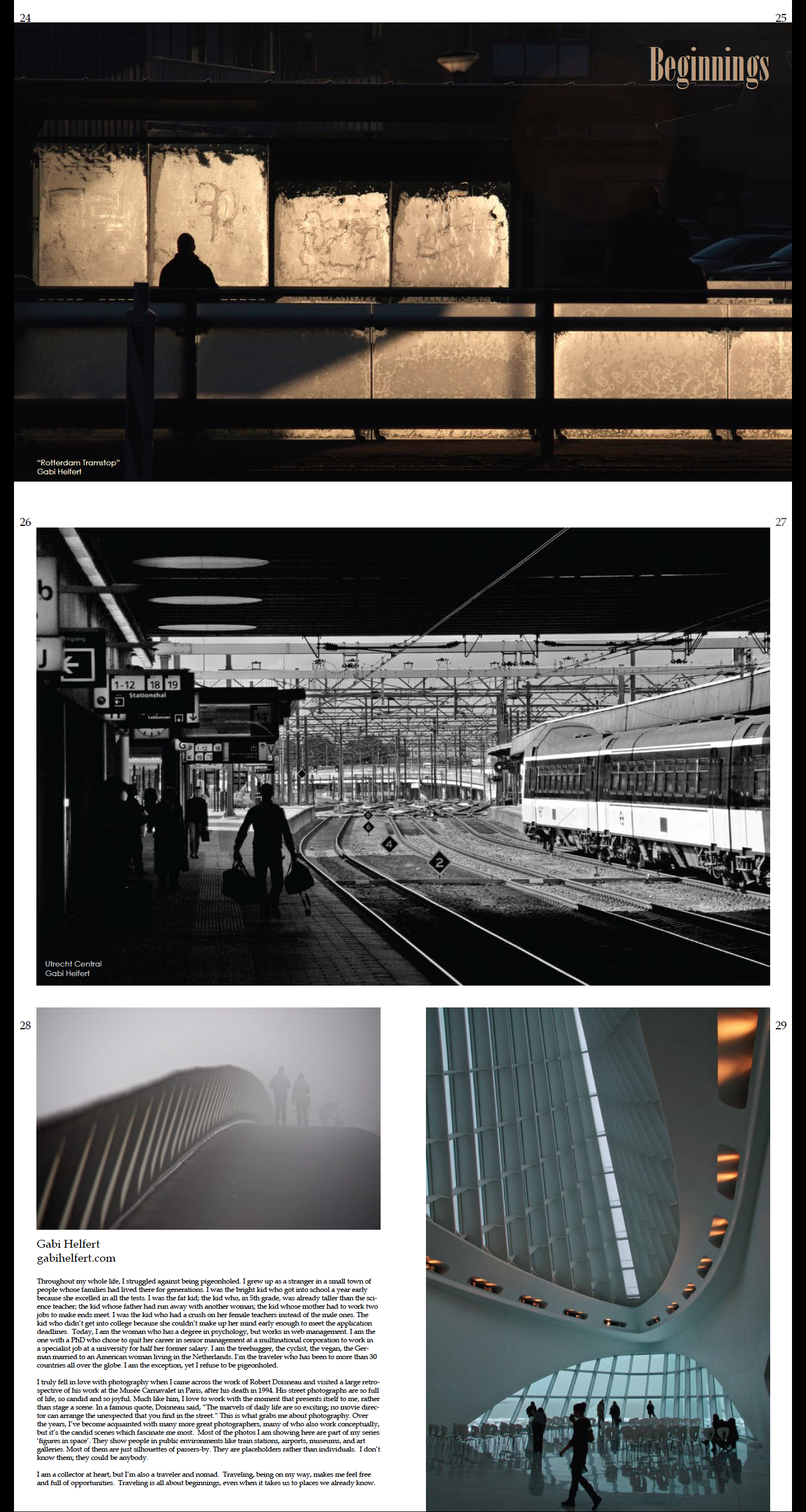
Very grateful to the people at 5x5 for this fabulous feature, and for all the other wonderful photographs and stories in this issue. You can order your copy here.
Published in August 2012.
MySpace da banda Nitrominds
Fotos tiradas durante os shows do Nitrominds no Hangar 110 e ABC PRO HC 10
My little sister has had her first book published. I'm very proud of her. She's had a number of articles published in the past and done the odd spot on DIY tv but this is too cool. Had a great time discussing the photography contained there in....
The Postcard
An Art Colour postcard that was published by Valentine & Sons Ltd. of Dundee and London. The artwork was by E. H. Thompson, Lakeland Artist.
On the back of the card the publishers have printed:
"We shall continue steadfast
in faith and duty till our task
is done"
- The Prime Minister.
The quote is from Winston Churchill's speech given to allied delegates at St. James's Palace on June 12th, 1941. The speech runs as follows:
'Our air power will continue to teach the
German homeland that war is not all loot
and triumph.
We shall aid and stir the people of every
conquered country to resistance and revolt.
We shall break up and derange every effort
which Hitler makes to systematize and
consolidate his subjugations.
He will find no peace, no rest, no halting place,
no parley. And if, driven to desperate hazards,
he attempts invasion of the British Isles, as well
he may, we shall not flinch from the supreme
trial.
With the help of God, of which we must all feel
daily conscious, we shall continue steadfast in
faith and duty till our task is done.'
Information is also provided relating to the artwork:
Honister Crag and Pass -
The high road between
Borrowdale and Buttermere
Valley.
The lake seen is Crummock
Water. Buttermere is hidden
by the shoulder of the Crag.'
The card was posted in Ambleside using two 1d. stamps on Thursday the 24th. August 1944. It was sent to:
Miss Coe,
16, Victoria Street,
Wolverton,
Bucks.
The message on the divided back of the card was as follows:
"Smallwood Hotel,
Ambleside.
24/ 8/ 44.
Having a good time,
weather not too bad.
Haven't been here yet
but hope to go next
week.
Love,
Win."
Eighty years later, the Smallwood House Hotel is still going strong.
The Liberation of Paris
So what else happened on the day that Win posted the card?
Well, in the evening of the 24th. August 1944, forces of Free France were the first of the Allies to enter Paris.
USS Harder
Also on that day, the American submarine USS Harder was depth charged and sunk in Dasol Bay by Japanese warships.
The Sinking of a U-Boat
Also on that day, German submarine U-445 was depth charged and sunk in the Bay of Biscay by the frigate HMS Louis.
A Massacre in France
Also on the 24th. August 1944, at Buchères in France, men of the 51st. SS-Brigade massacred 68 civilians. Half of the victims were women, ranging in age from 6 months to above seventy years.
A Computer for Harvard
Also on that day, the Harvard Mark I electro-mechanical computer, developed and built by IBM, was formally presented to Harvard University.
Gregory Jarvis
The day also marked the birth in Detroit of Gregory Jarvis.
Gregory was an engineer and astronaut who died in 1986 in the Space Shuttle Challenger disaster.
-- The Explosion of the Challenger
On the 28th. January 1986, the Space Shuttle Challenger broke apart 73 seconds into its flight, killing all seven crew members aboard.
The spacecraft disintegrated 46,000 feet (14 km) above the Atlantic Ocean, off the coast of Cape Canaveral, Florida, at 11:39 a.m. EST. It was the first fatal accident involving an American spacecraft while in flight.
The mission was the 10th. flight for the orbiter and the 25th. flight of the Space Shuttle fleet. The crew was scheduled to deploy a communications satellite and study Halley's Comet while they were in orbit, in addition to taking schoolteacher Christa McAuliffe into space under the Teacher In Space program.
The latter task resulted in a higher-than-usual media interest in and coverage of the mission; the launch and subsequent disaster were seen live in many schools across the United States.
The cause of the disaster was the failure of the primary and secondary O-ring seals in a joint in the shuttle's right solid rocket booster (SRB). The record-low temperatures on the morning of the launch had stiffened the rubber O-rings, reducing their ability to seal the joints.
Shortly after liftoff, the seals were breached, and hot pressurized gas from within the SRB leaked through the joint and burned through the aft attachment strut connecting it to the external propellant tank (ET), then into the tank itself.
The collapse of the ET's internal structures and the rotation of the SRB that followed threw the shuttle stack, traveling at a speed of Mach 1.92, into a direction that allowed aerodynamic forces to tear the orbiter apart.
Both SRBs detached from the now-destroyed ET and continued to fly uncontrollably until the range safety officer destroyed them.
The crew compartment, human remains, and many other fragments from the shuttle were recovered from the ocean floor after a three-month search-and-recovery operation.
The exact timing of the deaths of the crew is unknown, but several crew members are thought to have survived the initial breakup of the spacecraft.
The orbiter had no escape system, and the impact of the crew compartment at terminal velocity with the ocean surface was too violent to be survivable.
The disaster resulted in a 32-month hiatus in the Space Shuttle program. President Ronald Reagan created the Rogers Commission to investigate the accident. The commission criticized NASA's organizational culture and decision-making processes that had contributed to the accident.
Test data since 1977 demonstrated a potentially catastrophic flaw in the SRBs' O-rings, but neither NASA nor SRB manufacturer Morton Thiokol had addressed this known defect.
NASA managers also disregarded engineers' warnings about the dangers of launching in cold temperatures, and did not report these technical concerns to their superiors.
As a result of this disaster, NASA established the Office of Safety, Reliability, and Quality Assurance, and arranged for deployment of commercial satellites from expendable launch vehicles rather than from a crewed orbiter.
To replace Challenger, the construction of a new Space Shuttle orbiter, Endeavour, was approved in 1987, and the new orbiter first flew in 1992. Subsequent missions were launched with redesigned SRBs, and their crews wore pressurized suits during ascent and reentry.
Note: Could they not have enclosed the Challenger in a plastic shroud which could have been heated? Given the cost of the whole venture in terms of money and lives, the additional expenditure would have been trivial.
© sergione infuso - all rights reserved
follow me on www.sergione.info
You may not modify, publish or use any files on
this page without written permission and consent.
-----------------------------
Dopo aver registrato il soldout al Forum di Assago con la prima data del “Piccoli energumeni tour” lo scorso 29 aprile (tour che li vede tutto’ora impegnati nei palasport da dove mancavano da vent’anni), ecco un nuovo appuntamento dal vivo degli Elio e le Storie Tese che li vedrà sul palco del Carroponte di Sesto San Giovanni, sabato 3 Settembre.
Un 2016 davvero coi fiocchi quello del gruppo che dopo aver partecipato a Sanremo con la pirotecnica “Vincere l’odio”, supercanzone con ben sette ritornelli, ha pubblicato “Figgatta de blanc”, titolo estroso per un album eclettico e geniale, dove i nostri eroi raccontano a più voci il mondo contemporaneo fra umorismo e lucida follia.
Obbiettivo del Piccoli Energumeni Tour (PET) è dare spettacolo in grandi spazi
come palasport, arene e festival all’aperto, per raggiungere più spettatori in un colpo solo.
Stefano Belisari alias Elio - voce, flauto traverso, chitarra elettrica
Nicola Fasani alias Faso, un tempo Pasto - basso elettrico, cori
Davide Civaschi alias Cesareo, talvolta Civas o Dave - chitarra elettrica, cori
Christian Meyer alias Meyer, Crystall, Millefinestre, Planibel, Batterista Bobo, Pupi, Avates, Turtello, Tafano, Baby, Christian 'Energia Pura' Corrini. Viene spesso definito dagli Elii, scherzosamente, come extracomunitario, date le sue origini svizzere - batteria, percussioni
Antonello Aguzzi alias Jantoman, Santoman, Inumano, Uomo - tastiera, cori, chitarra acustica.
Vittorio Cosma alias Clayderman Viganò, Carmelo, Don Vittorino - tastiera, cori, chitarra
Paola Folli alias Pai Follai - voce, cori, tamburello, maracas
Luca Mangoni alias Mangoni, - coreografie, voce e cori. È considerato un membro "non ufficiale" del gruppo (di qui un altro suo alias: "Artista a sé")
Make-A-Wish Alaska & Washington and Scholastic teamed up to grant Stephanie's wish to become a published author.
Make-A-Wish joined with Scholastic, the global children’s publishing education and media company, which generously agreed to edit, design and publish 300 copies of her science fiction/fantasy novel titled, “The Ruby Heart.”
- Make-A-Wish of Alaska & Washington (nwwishes.org)