View allAll Photos Tagged Profound
My wife and I share a profound appreciation for the beauty of Art Nouveau and the allure of Art Deco. Hence, during our recent trip to Vienna, earlier this month, we made it a mission to explore Otto Wagner's Karlsplatz metro station, also known as the Stadtbahn Pavilion. This architectural gem is a splendid exemplar of Art Nouveau design. The station's aesthetics are nothing short of captivating, with its intricate floral motifs, meticulous metalwork, and Jugendstil-style embellishments. Jugendstil, known for its blend of floral decoration and sinuous curves with geometric elements, finds its zenith in this masterpiece. Otto Wagner ingeniously employed modern materials such as iron and glass, creating a luminous and inviting space within. Beyond its visual charm, this station holds historical significance as a vital transportation hub, connecting the city via elevated and underground railway lines. While we marveled at the structure, I must admit that capturing its essence in a photograph proved to be quite challenging. Bright daylight posed a natural obstacle, and I struggled to find a composition that did justice to its grandeur. Nevertheless, I am eager to share this photograph, as it serves as a documentation of this remarkable architectural treasure — Karlsplatz, Vienna, Austria
Follow me on Instagram:
www.instagram.com/philsharp/?hl=en
Take my portrait tutorial course:
www.domestika.org/en/courses/3579-modern-headshot-photogr...
Today's challenge for ODC is one that my inital response was to ignore and not do - the topic?
'Our parents war'
i.e. something that depicted something they were passionate about,
or even wider possibilities..
The person who set this topic is supremely creative so I hope he'll forgive me for deciding that the freedom to think - whoever we are and whatever our history - is both simply and profoundly vital!
We are all part of this wider entity we call "Earth".
Access to sufficient open spaces to gain perspective matters!
This shot is inspired by the profoundly talented Rebecca.
So back in 2002 when I moved to California, I had never been here before.
I just packed my bags and drove.
And upon entering this crazy state, the first thing you notice is all the random farm animals on the side of the highway. Cow after cow encompassed most of the periphery of these roads. How could I drive on a government created super highway and be welcomed by random farm animals?!?!
The next thing I noticed was all the graves on the side of the highways.
How weird. How bizarre. How curious?! What the fuck was up with all the little tombstones on the side of these hectic streets?
I guess they were more like weird sticks that stuck in the most fantastic symmetrical fashion. Graves.. tombs.. dead people.. cemeteries?! This is the only thing I could fathom them being.
Turns out they are wineries. See – Central California has such FANTASTIC weather that it is prime for grapes and wine and whatever else. I had just never been exposed to such a thing.
Hell- where I am from, the only thing you’d see off of the highway would be a rest stop encompassed by a fast food joint and an overpriced gas station.
The shot at hand? Me walking hands in pocket in the hills of Oakland. The fog around here is especially intense this time of year. Sometimes the valley will be hot and limitless yet you just look towards the hills and you can spot the intense cloud mess that makes up your sky.
Location: Oakland hills; Oakland, California
Taken: September 12th, 2009
Posted: October 1st, 2009
Album of the Day: It’s Blitz by the Yeah Yeah Yeahs
*=lapse
Dr. Jennifer Doudna stands at the intersection of biology and history, a scientist whose discoveries have irrevocably altered the course of human understanding. Her pioneering work on CRISPR gene editing has not only transformed molecular biology but has also raised profound ethical and philosophical questions about the very fabric of life. A Nobel laureate, she navigates these frontiers with both precision and an acute awareness of the weight of her discoveries. Her scientific vision is tempered by an almost preternatural sense of responsibility.
I photographed Doudna twice. The first time was on July 7, 2021, at the Innovative Genomics Institute (IGI) during the height of the COVID-19 pandemic. The world outside was shrouded in fog, a thick marine layer that wrapped around Berkeley’s hills, rendering everything indistinct and softened. Inside, the normally bustling institute was eerily quiet. There were no students gathering in the hallways, no hurried footsteps of researchers moving between lab stations. It was a fitting setting for a scientist whose work feels as though it has emerged from the mist of scientific uncertainty to reveal something dazzlingly clear.
In that empty space, Doudna’s presence was striking. She moved with the quiet intensity of someone accustomed to deep thought, her mind constantly engaged in the grand puzzle of molecular biology. The discovery she had helped bring to light, CRISPR-Cas9, had given scientists an unprecedented ability to edit genes with ease and precision. For the first time in human history, we had the capacity to rewrite the very code of life. With CRISPR, the genome was no longer a fixed text but an editable manuscript, full of potential revisions and possibilities.
The implications were staggering. Within just a few years, researchers had already begun using CRISPR to correct genetic diseases in animal models, paving the way for future human therapies. In agriculture, scientists were engineering crops resistant to drought and disease, potentially revolutionizing global food security. Yet for all its promise, CRISPR was also a technology fraught with ethical and societal concerns. The ability to alter DNA brought with it the specter of unintended consequences: off-target effects, genetic inequalities, and the possibility of enhancement rather than just therapy.
Doudna was acutely aware of these challenges. She has often spoken of the moment when, after her team’s initial breakthroughs, she awoke from a dream in which someone had asked her to explain CRISPR to Adolf Hitler. The dream unsettled her—not because the science was flawed, but because its power could so easily be misused. Unlike many scientists, she did not shy away from this realization. Instead, she became one of the most vocal advocates for ethical guidelines and called for global discussions on how gene editing should be regulated.
The second time I photographed her was at her home. It was a more personal setting, where she stood alongside her husband, biochemist Jamie Cate. This session would result in her official Nobel portrait, an image meant to capture not only the scientist but the thinker—the human being at the center of one of biology’s most consequential breakthroughs. In this environment, away from the sterility of the lab, Doudna was quick to smile, yet just as quick to consider the larger implications of her work. CRISPR, in her mind, was not simply a tool of innovation. It was a force that demanded careful stewardship.
Few scientists can move so effortlessly between the precise world of molecular biology and the broad, messy conversations of bioethics, governance, and human destiny. But Doudna is one of them. She understands that the future of gene editing is not simply about what science can achieve, but about what it should achieve. This balance between the limitless potential of discovery and the necessity of caution defines her approach.
Even as CRISPR is being explored as a treatment for sickle cell disease, blindness, and certain cancers, she remains focused on ensuring that this technology does not outpace our ability to control it. She has advocated for a moratorium on heritable human genome editing, recognizing that the decision to alter the genetic blueprint of future generations is one that cannot be made lightly. The world may be racing toward a new era of genetic medicine. But if Doudna has her way, it will not be reckless.
Her legacy is still unfolding, but one truth is already apparent. The world she is shaping will look very different from the one she inherited. And as science advances, her voice will remain one of its most thoughtful, deliberate, and necessary guides. She is a scientist of precision, yes. But more importantly, she is a scientist of conscience.
I photographed Doudna twice—first on July 7, 2021, at the Innovative Genomics Institute (IGI) during the height of the COVID-19 pandemic. The world outside was shrouded in fog, a thick marine layer that wrapped around Berkeley’s hills, rendering everything indistinct and softened. Inside, the normally bustling institute was eerily quiet. There were no students gathering in the hallways, no hurried footsteps of researchers moving between lab stations. It was a fitting setting for a scientist whose work feels as though it has emerged from the mist of scientific uncertainty to reveal something dazzlingly clear.
In that empty space, Doudna’s presence was striking. She moved with the quiet intensity of someone accustomed to deep thought, her mind constantly engaged in the grand puzzle of molecular biology. The discovery she had helped bring to light—CRISPR-Cas9—had given scientists an unprecedented ability to edit genes with ease and precision, a technique that, for the first time in human history, allowed us to rewrite the very code of life. With CRISPR, the genome was no longer a fixed text but an editable manuscript, full of potential revisions and possibilities.
The implications were staggering. Within just a few years, researchers had already begun using CRISPR to correct genetic diseases in animal models, paving the way for future human therapies. In agriculture, scientists were engineering crops resistant to drought and disease, potentially revolutionizing global food security. Yet for all its promise, CRISPR was also a technology fraught with ethical and societal concerns. The ability to alter DNA brought with it the specter of unintended consequences—off-target effects, genetic inequalities, the possibility of enhancement rather than just therapy.
Doudna was acutely aware of these challenges. She has often spoken of the moment when, after her team’s initial breakthroughs, she awoke from a dream in which someone had asked her to explain CRISPR to Adolf Hitler. The dream unsettled her—not because the science was flawed, but because its power could so easily be misused. Unlike many scientists, she did not shy away from this realization. Instead, she became one of the most vocal advocates for ethical guidelines, calling for global discussions on how gene editing should be regulated.
The second time I photographed her was at her home—a more personal setting where she stood alongside her husband, biochemist Jamie Cate. This session would result in her official Nobel portrait, an image meant to capture not only the scientist but the thinker, the human being at the center of one of biology’s most consequential breakthroughs. In this environment, away from the sterility of the lab, Doudna was quick to smile, yet just as quick to consider the larger implications of her work. CRISPR, in her mind, was not simply a tool of innovation; it was a force that demanded careful stewardship.
Few scientists can move so effortlessly between the precise world of molecular biology and the broad, messy conversations of bioethics, governance, and human destiny. But Doudna is one of them. She understands that the future of gene editing is not simply about what science can achieve, but about what it should achieve. This balance—between the limitless potential of discovery and the necessity of caution—defines her approach.
Even as CRISPR is being explored as a treatment for sickle cell disease, blindness, and certain cancers, she remains focused on ensuring that this technology does not outpace our ability to control it. She has advocated for a moratorium on heritable human genome editing, recognizing that the decision to alter the genetic blueprint of future generations is one that cannot be made lightly. The world may be racing toward a new era of genetic medicine, but if Doudna has her way, it will not be reckless.
Her legacy is still unfolding, but one truth is already apparent: the world she is shaping will look very different from the one she inherited. And as science advances, her voice will remain one of its most thoughtful, deliberate, and necessary guides. She is a scientist of precision, yes—but more importantly, she is a scientist of conscience.
French intellectual precision is always marvelous to read and grasp...
Quite breathtaking!
It is sheer pleasure...
I can't wait to read this! Bernard-Henri Lévy is a brilliant and profound observer of the human condition. He is perhaps the foremost modern philosopher.
IMG_8694 - Version 2
We cannot overstate how profoundly that final act of nudity brings certain themes of his life to a fitting conclusion. . . . Francis, lying on the ground in his nakedness, recapitulated his own birth when he came into this world like Jesus and every child naked to the world. When Francis stripped himself naked before his own father Pietro, and the Bishop of Assisi, Guido, [this was] part of his second birth as a wanderer for Christ. Once, he walked through a town naked with a halter around his neck to show his humility. . . . To these themes we now have Francis, giving away everything including his poor clothes, to be embraced by Mother Earth whom he had hymned so beautifully in his preaching and in his poetry. His nakedness is also a gestural reminder that it is from the clay of the earth we come and it is to the earth we return: “Ashes to ashes; dust to dust.”
-Cunningham, Francis of Assisi, 112–13.
Some of the profound ancient wisdom for meditation.
It's great if you understand it with your mind.
But it's much more powerful if you feel it in your soul, even if you could not explain the meaning intelectually.
Then you understand it on a much deeper level.
And then its true magic reveals itself.
A profound lack of familiarity with the concept of mercy.
Ltd. edition handbound 'evidence' books available.
Details here: lauren-rabbit.deviantart.com/journal/18842732/
Strandarkirkja is a Lutheran (Church of Iceland) parish church in Selvogur, Iceland. It is often referred to as the 'miracle church' in Iceland, with the locals' longstanding belief that it has profound, divine powers.
The Church was originally built sometime in the 12th century. The story relates that there is one night when a group of sailors tried to navigate back to Iceland in a storm. The southern coast of Iceland is notorious for its hidden reefs and rough coast. The distressed sailors prayed to God for a safe return and vowed to build a church wherever they landed. When they ended their prayer an angel, seemingly made of light, appeared before their bow. The angel guided them through the rough surfs and led the crew into a bay for safe landing. The sailors, making good on the promise, built a wooden church at the site and named it Strandarkirkja. The bay nearby is named Angel's Bay (Engilsvík in Icelandic) to commemorate the incident. Many miracles have been attributed to Strandarkirkja and there was a time when it was one of the richest churches in Iceland from the donations of Icelanders coming from all over the country in hopes of having their prayers and wishes realized.
Follow me on Instagram:
www.instagram.com/philsharp/?hl=en
Take my portrait tutorial course:
www.domestika.org/en/courses/3579-modern-headshot-photogr...
………………………………….
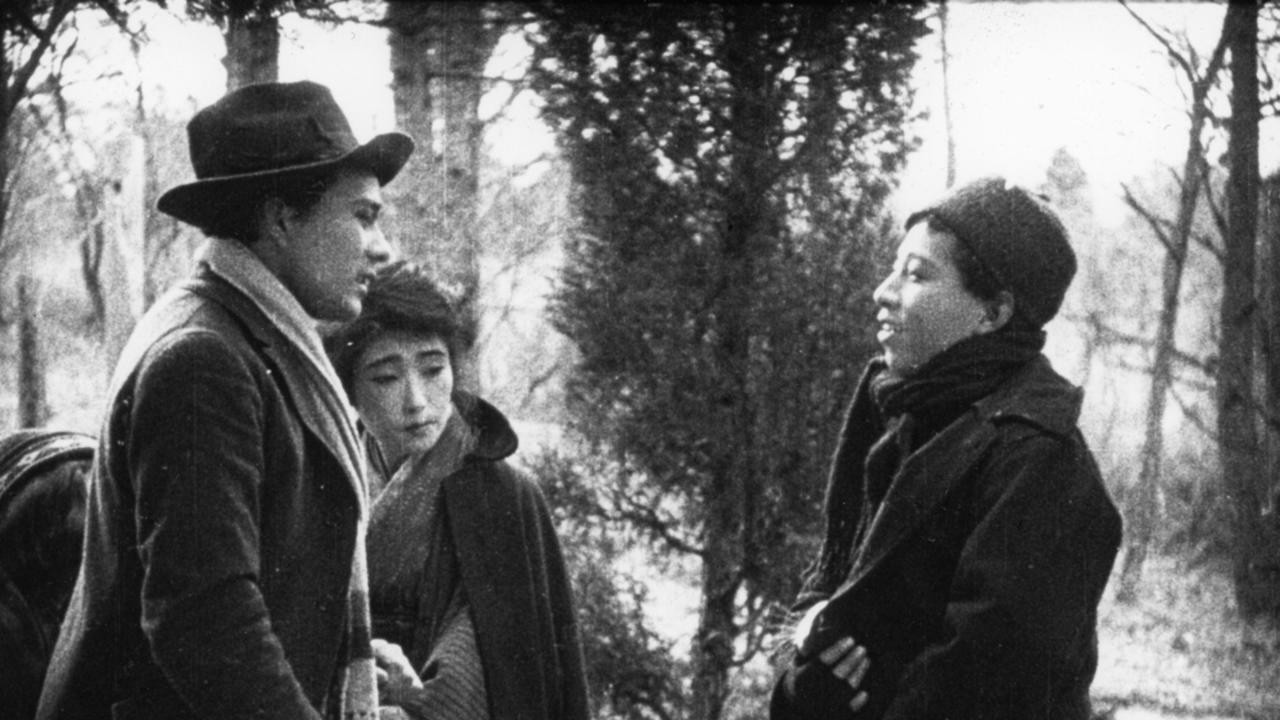
www.imdb.com/title/tt0012631/mediaviewer/rm2795115008/?re...
images.mubicdn.net/images/film/36043/cache-25849-14774382...
-----------------------------------------------------------------
click to activate the icon of slideshow: the small triangle inscribed in the small rectangle, at the top right, in the photostream;
or…. Press the “L” button to zoom in the image;
clicca sulla piccola icona per attivare lo slideshow: sulla facciata principale del photostream, in alto a destra c'è un piccolo rettangolo (rappresenta il monitor) con dentro un piccolo triangolo nero;
oppure…. premi il tasto “L” per ingrandire l'immagine;
www.worldphoto.org/sony-world-photography-awards/winners-...
www.fotografidigitali.it/gallery/2726/opere-italiane-segn...
…………………………………………………………………
A deep passion of mine about photography concerns, in addition to traditional Sicilian festivals, the black and white genre and street photography, which often but not always end up coinciding, so, although I am currently working on other photographic projects, I have given up (temporarily) everything and I immersed myself in the creation of this group of photos, they are heterogeneous, there is no common thread, yet I felt the need to reclaim these passions of mine. The photographs were taken in Taormina, Letojanni, Messina (at the Torre Faro pylon), on the hydrofoil that takes you from Milazzo to the Aeolian islands, on the islands of Lipari and Salina. A good number of these photos were taken with a 35mm Lensbaby on full frame (focus is manual). I photographed a lay friar, Giovanni L.P., he spoke to me about his troubled life, namely the rediscovery of a profound faith, now with the help of an old and worn Bible, he goes around the world preaching the Word of the Lord; I photographed a huge cargo ship, it was crossing the Strait of Messina, when I saw it I was speechless, I don't think I've ever seen such a gigantic ship up close, I had to wait for it to move away a little so I could take it again all of it, with the lenses I was wearing at the time, as it passed by me, all of it just didn't fit...; on the island of Salina, in the Pollara district, I photographed the external patio of "Neruda's house" where some scenes of the film "Il Postino" with Massimo Troisi, Philippe Noiret, Maria Grazia Cucinotta were filmed; also on the island of Salina I photographed the little black beach of Rinella; the man who "put the dead hand" on her partner was lovingly reprimanded by her, there was complicity between the two of them, she feared that someone might see them...
…………………………………………………….
Una mia profonda passione circa la fotografia riguarda, oltre le feste tradizionali siciliane, il genere bianco e nero e la street photography, esse spesso ma non sempre, finiscono per coincidere, così, pur lavorando attualmente ad altri progetti fotografici, ho mollato (temporaneamente) tutto e mi sono immerso nella realizzazione di questo gruppo di foto, sono eterogenee, non c’è un filo conduttore, eppure sentivo la necessità di riappropriarmi di queste mie passioni. Le fotografie sono state realizzate a Taormina, a Letojanni, a Messina (al Pilone di Torre Faro), sull’aliscafo che da Milazzo porta alle isole Eolie, sulle isole di Lipari e di Salina. Un buon numero di queste foto è stato realizzato con una Lensbaby da 35 mm (su full frame, il fuoco è manuale). Ho fotografato un frate laico, Giovanni L.P., mi ha parlato della sua tribolata vita, pèoi la riscoperta di una profonda fede, ora aiutandosi con una vecchia e logora Bibbia, va in giro per il mondo predicando la Parola del Signore; ho fotografato una enorme nave cargo, stava attraversando lo Stretto di Messina, quando l’ho vista sono rimasto a bocca aperta, non credo di aver mai visto da vicino una nave così gigantesca, ho dovuto aspettare che si allontanasse un po’ per poterla riprendere tutta, con le ottiche che montavo in quel momento, mentre mi passava vicino, tutta proprio non ci entrava…; sull’isola di Salina, in contrada Pollara, ho fotografato il patio esterno della “casa di Neruda” ove furono girate alcune scene del film “Il Postino” con Massimo Troisi, Philippe Noiret, Maria Grazia Cucinotta; sempre sull’isola di Salina ho fotografato la spiaggetta nera di Rinella; l’uomo che “faceva la mano morta” sulla sua compagna veniva amorevolmente ripreso da lei, c’era complicità tra loro due, lei temeva che qualcuno potesse vederli ….
……………………………………………..
Here we have one of Santa Elena's most profound geologic mysteries—one that cries out for 923-page PhD thesis that will win some aspiring scholar the right to do his or her post-doc at the local Burger King. Don't look at me. I'm too old and having too much fun to waste my time on that.
However, I am willing to share the following field data and hypotheses with any grad student who desperately needs some arcane and meaningless research topic to latch onto.
So here are the facts. Having been detached from one of the canyon walls, this slump block of Cretaceous limestone has come to rest in the bed of the Rio Grande. Seven decades of keen-eyed observational experience tells me that the Earth's gravitational field must have played a key role in this. No thesis material there.
Fortunately, I've also determined that this rock has acquired an strikingly glossy upper surface with a reflectivity quotient close to that of polished marble (see photo above). When I first saw this in person, I experienced a sort of intellectual breakthrough or epiphany. In a flash of unbridled inspiration I correlated this enigmatic feature, so uncharacteristic of the local carbonate rock, with other episodes of my unfunded field work. These were my 1973 and 1976 geophotographic expeditions to study the similarly shiny bedrock surface of the Crest Limestone, also Cretaceous, exposed on the Acropolis of Athens, Greece.
As specialists in the stratigraphy of the Attic-Cycladic Massif have noted, the Crest Limestone on the Acropolis got its shine (not to mention its treacherous slipperiness after a rain) from the wear of untold thousands of feet. Many of these were attached to human visitors who've walked on that natural stone flooring to get a closer look at the Parthenon.
I call this form of erosional activity pedigenic abrasion. Note my fabrication of a new and utterly unnecessary Latin-root term that substitutes for such perfectly good vernacular equivalents as foot polishing and foot wear by footwear. This makes me feel learned, academic, entitled, and priestly.
While there are no masterpieces of ancient Greek architecture in Santa Elena Canyon, nature has produced something else that is just as magnificent, and a lot of turistas come here, too. In fact, I've observed many of then perching on this rock to enjoy the incomparable view.
But the problem is that in this location the human beings do not so much walk on this rock as sit on it. This makes me think we're witnessing a somewhat different process at work: natigenic rather than pedigenic abrasion (natis, Latin = buttocks, English).
The good news is that both of these processes share a common origin, and in fact constitute subcategories of the umbrella concept of touristogenic abrasion.
Well, it's great that we've been able to create some more scientific terminology.
I tell you what: to take a gander at the other photos and descriptions in this series, y'all mosey on down to my my Exploring Santa Elena Canyon album.
And if you'd like to see what the devil I'm talking about with regard to the Acropolis and the Crest Limestone, visit this other Flickr post of mine.
"It's profound for a question, I'd have to say 'Take care of yourself and take care of the Planet !' She answered my question about her message to the world.
'Be good to yourself, don't worry too much', I'd say to the younger me," she answered my second question.
Pilar is Spanish, 'half Galician and half Catalan', living in Finland for the past eight years. She's Head of Unit in the European Chemicals Agency in Helsinki.
Pilar is actually a MD PhD in Hepatology, although she gave up her career in medicine for the benefit of the European Commission which she had joined some nine years ago.
Pilar loves Helsinki and her life here and I loved her genuine, positive attitude.
It was thanks to a ray of light, it shone on her as she was walking in my direction, which made me approach her for a portrait.
It was easy to make photos of Pilar. I liked her 'philosophical poet' look.
Pilar likes travelling and reading. She speaks some French and Italian, and naturally, Spanish and English.
When I showed her the photos she said she was flattered, which made me happy, as she usually didn't like photos of herself, she explained.
This is my 378th submission to The Human Family group.
Visit the group here to see more portraits and stories: www.flickr.com/groups/thehumanfamily.
Follow me on Instagram:
www.instagram.com/philsharp/?hl=en
Take my portrait tutorial course:
www.domestika.org/en/courses/3579-modern-headshot-photogr...
Follow me on Instagram:
www.instagram.com/philsharp/?hl=en
Take my portrait tutorial course:
www.domestika.org/en/courses/3579-modern-headshot-photogr...
MrMV's stepfather died this afternoon, suddenly.
He was a remarkable man. A real "do-gooder" in the best possible sense. The sort of man who helps the thankless drop-out kids.
He was curious, talented and ever so active, a member of every committee going.
He was profoundly modest, and inherently generous minded. And looked just like Prince Philip.
He was the most amazing husband I have ever met, and a fantastic grandfather.
He delighted in the beauty of individual flowers - I dedicate this crocus to him.
We will miss you Grandpa.
.
It's horrible to be so far away and not being there for my MIL.
The authority at the left is profoundly agitated - so much so that he has become all mouth. The three "recruits" at the right stand petrified. There also appears to be a tall, gaunt figure, between authority and recruits, who is eyeballing Mr. Authority with great alarm. Basic training, anyone? Or perhaps just a meaningful exchange of views between asymmetrically positioned players in the social order?
--------------------------------------------------------------------------------
Image Basis: Reflections in slowly moving river water.
--------------------------------------------------------------------------------
Locale: Milwaukee River near Hoan Bridge
- Milwaukee, Wisconsin, USA.
Year & Season: 2016 ; Late fall
Time of Day: Mid afternoon
Global Ambient: Sunny
Scene Illumination: Shade
Illumination Aids: (none)
--------------------------------------------------------------------------------
Camera: Olympus OM-D E-M1 Mirrorless
Sensor: Full-frame | APS-C | Micro 4/3
IBIS: ON; OIS: n/a
Support: Hand-held
Lens: Panasonic Leica DG Vario-Elmar 100-400mm f/4-6.3 POWER O.I.S.
Filter: (none)
--------------------------------------------------------------------------------
Exposure Program: Manual
Metering Mode: Average
Drive/Focus Mode: Burst/Auto focus
Focus Region: Spot
Exposure Quality: Raw (Lightroom DNG)
--------------------------------------------------------------------------------
Processing: Lightroom 6.10.1 (CR 9.10.1)
Lightroom Presets: (none) ; Processing Plug-Ins: (none)
Original File Aspect & Size: 4:3 ; 15.9MP (4608 x 3456)
Cropped Aspect & **Size: (custom) ; 12.0MP (3906 x 3079)
**Size is prior to downsizing and JPG conversion using Lightroom.
JPG Size: 3.31MP (2048 x 1614)
File ID: Reflections1c Deep(Clr)V01R00 @Abs.Water.Milw.Lakfrnt.N.20161104-01-01-0a StdShrp.jpg
This was shot at Tohono Chul Park on Friday, March 6, 2021 -- Sony a99II & Minolta AF APO 100-400 4.5/6.7 -- Tucson, Arizona USA
An Anatolian Shepherd Dog is a rugged, imposing flock guardian of ancient lineage. Protective and territorial, but also intelligent, patient, and profoundly loyal, these muscular avengers are prized as working guard dogs without equal.
I'm not quite sure where I took this photo. I suspect I wasn't on a hunt for a particular photo op, when I came upon this scene.
There is something extremely profound, IMO in the connection between a seeing-eye dog and his/her sight challenged ward. It's truly a paradigm of absolute mutual trust.
It's one of the beautiful things to be privileged to observe in this Life.
Rev Austen: If a woman happens to have a particular superiority, for example, a profound mind, it is best kept a profound secret. Humour is liked more, but wit?
No. It is the most treacherous talent of them all.
A woman especially if she has the misfortune of knowing anything, should conceal it as well as she can
(Jane Austen)
TWO of a quite challenging selection of quotes; they stem in the original of Jane Austen offerings, BUT they are known to me by an altogether different event..... I was watching the film Becoming Jane (Austen) and I have found so many truly memorable quotes which made me wonder, laugh out loud, sit up, marvel.... This film is one you could watch again and again and I thought it might be worthwhile to let you participate..... Now, of course, I cannot judge your reactions, and furthermore my knowledge of Jane Austen is at best very patchy (I am Swiss don't forget!) but anyway - here we go..... When I looked at this beautiful young woman mirrored behind a large bouquet (bunch) of roses, I saw this quote flashing in my brain and it wouldn't get away.... So, there!!!
© All rights reserved
Kindly visit my Flickr DNA for more information on me and my work. Thanks!
If you have time, please visit my EXPLORE portfolio. |I| And/Or maybe you want to look up what 'DOPIAZA' considers as the MOST INTERESTING photos. |I| THESE are MY personal 50 FAVES… (and they change often as I delete one for every new one!) |I|
For opening all other folders, please open link(s) in a new tab each! :)
Frötuna kyrka, outside Norrtälje, Sweden.
Summer 2020.
Shot with a Meopta Flexaret (medium format) with a Belar 80mm f3.5 lens. I think a yellow filter was there too.
Ilford Pan F Plus.
DSLR scanned.
Follow me on Instagram:
www.instagram.com/philsharp/?hl=en
Take my portrait tutorial course:
www.domestika.org/en/courses/3579-modern-headshot-photogr...
love
–noun
1.a profoundly tender, passionate affection for another person.
2.a feeling of warm personal attachment or deep affection, as for a parent, child, or friend.
3.sexual passion or desire.
4.a person toward whom love is felt; beloved person; sweetheart.
5.(used in direct address as a term of endearment, affection, or the like): Would you like to see a movie, love?
6.a love affair; an intensely amorous incident; amour.
7.sexual intercourse; copulation.
8.(initial capital letter) a personification of sexual affection, as Eros or Cupid.
9.affectionate concern for the well-being of others: the love of one's neighbor.
10.strong predilection, enthusiasm, or liking for anything: her love of books.
11.the object or thing so liked: The theater was her great love.
12.the benevolent affection of God for His creatures, or the reverent affection due from them to God.
13.Chiefly Tennis. a score of zero; nothing.
14.a word formerly used in communications to represent the letter L.
–verb (used with object)
15.to have love or affection for: All her pupils love her.
16.to have a profoundly tender, passionate affection for (another person).
17.to have a strong liking for; take great pleasure in: to love music.
18.to need or require; benefit greatly from: Plants love sunlight.
19.to embrace and kiss (someone), as a lover.
20.to have sexual intercourse with.
–verb (used without object)
21.to have love or affection for another person; be in love.
—Verb phrase
22.love up, to hug and cuddle: She loves him up every chance she gets.
—Idioms
23.for love,
a.out of affection or liking; for pleasure.
b.without compensation; gratuitously: He took care of the poor for love.
24.for the love of, in consideration of; for the sake of: For the love of mercy, stop that noise.
25.in love, infused with or feeling deep affection or passion: a youth always in love.
26.in love with, feeling deep affection or passion for (a person, idea, occupation, etc.); enamored of: in love with the girl next door; in love with one's work.
27.make love,
a.to embrace and kiss as lovers.
b.to engage in sexual activity.
28.no love lost, dislike; animosity: There was no love lost between the two brothers.
Tulips and spring share a profound and timeless connection, woven through centuries of history and cultural symbolism. As the frost of winter retreats and the earth awakens with the promise of new life, tulips emerge as heralds of the season's arrival.
Originating from Central Asia and later cultivated in Turkey during the Ottoman Empire, tulips symbolize the renewal of life and the arrival of springtime. Their vibrant colors and delicate petals capture the essence of the season's vitality and beauty.
In many cultures, tulips are associated with rebirth, rejuvenation, and the fleeting nature of life. Their emergence from the soil mirrors the rejuvenation of nature after the dormancy of winter, inspiring feelings of hope and optimism.
The arrival of tulips also marks the end of the long, dark days of winter, bringing a burst of color and joy to gardens, parks, and landscapes. Their graceful blooms dance in the gentle spring breeze, spreading cheer and delight to all who behold them.
Furthermore, tulips have become a quintessential symbol of spring festivals and celebrations around the world. In countries such as the Netherlands, the annual Tulip Festival attracts visitors from far and wide to witness the breathtaking display of tulip fields in full bloom.
Beyond their aesthetic appeal, tulips hold a deeper significance in various traditions and folklore. In Persian culture, for example, tulips are associated with love and are often used as symbols of affection and passion.
Overall, the bond between tulips and spring is a testament to the enduring power of nature to inspire wonder, joy, and renewal. As these enchanting flowers grace the landscape each spring, they serve as a reminder of the beauty and resilience inherent in the cycle of life.
I've captured some memorable moments with my camera, and I genuinely hope you'll experience the same joy in viewing these images as I did in capturing them.
Thank you immensely for visiting my gallery, whether you leave comments, add favorites, or simply take a moment to look around. Your support means a lot to me, and I wish you the best of luck and beautiful light in all your endeavors.
© All rights reserved by R.Ertug. Please refrain from using this image without my explicit written permission. If you're interested in purchasing or using it, feel free to contact me via Flickr mail.
Your comments and critiques are highly valued.
Thanks for taking the time to stop by and explore :)
Follow me on Instagram:
www.instagram.com/philsharp/?hl=en
Take my portrait tutorial course:
www.domestika.org/en/courses/3579-modern-headshot-photogr...
Tulips and spring share a profound and timeless connection, woven through centuries of history and cultural symbolism. As the frost of winter retreats and the earth awakens with the promise of new life, tulips emerge as heralds of the season's arrival.
Originating from Central Asia and later cultivated in Turkey during the Ottoman Empire, tulips symbolize the renewal of life and the arrival of springtime. Their vibrant colors and delicate petals capture the essence of the season's vitality and beauty.
In many cultures, tulips are associated with rebirth, rejuvenation, and the fleeting nature of life. Their emergence from the soil mirrors the rejuvenation of nature after the dormancy of winter, inspiring feelings of hope and optimism.
The arrival of tulips also marks the end of the long, dark days of winter, bringing a burst of color and joy to gardens, parks, and landscapes. Their graceful blooms dance in the gentle spring breeze, spreading cheer and delight to all who behold them.
Furthermore, tulips have become a quintessential symbol of spring festivals and celebrations around the world. In countries such as the Netherlands, the annual Tulip Festival attracts visitors from far and wide to witness the breathtaking display of tulip fields in full bloom.
Beyond their aesthetic appeal, tulips hold a deeper significance in various traditions and folklore. In Persian culture, for example, tulips are associated with love and are often used as symbols of affection and passion.
Overall, the bond between tulips and spring is a testament to the enduring power of nature to inspire wonder, joy, and renewal. As these enchanting flowers grace the landscape each spring, they serve as a reminder of the beauty and resilience inherent in the cycle of life.
I've captured some memorable moments with my camera, and I genuinely hope you'll experience the same joy in viewing these images as I did in capturing them.
Thank you immensely for visiting my gallery, whether you leave comments, add favorites, or simply take a moment to look around. Your support means a lot to me, and I wish you the best of luck and beautiful light in all your endeavors.
© All rights reserved by R.Ertug. Please refrain from using this image without my explicit written permission. If you're interested in purchasing or using it, feel free to contact me via Flickr mail.
Your comments and critiques are highly valued.
Thanks for taking the time to stop by and explore :)
Follow me on Instagram:
www.instagram.com/philsharp/?hl=en
Take my portrait tutorial course:
www.domestika.org/en/courses/3579-modern-headshot-photogr...
This photograph is of my mum in her bed and finally getting some sleep after days of insomnia. I took it as I lay on a makeshift bed on the floor that I'd put together next to her so that I could watch over her at night. It was taken on the morning of the day that my sister and I would take her for a month's emergency respite at a nearby care home.
Nearly five weeks previously mum's condition had taken a turn for the worse, primarily her psychological condition. All of a sudden she was aware of her Alzheimer's and its effects upon her (it's now thought she had a minor stroke that only affected her mentally), and that realisation devastated her, she became exceedingly anxious, even frightened on occasion – one night she said to me, "I know what I want to do but I just don't know how to do it!". The consequence of this was that she virtually stopped sleeping, which then made her more anxious, more confused and so a vicious circle started. Over a period of a month the situation became very serious with my sister and I struggling to cope; Sue with exhaustion from caring for mum during the day and me with sleep deprivation as I cared for her through the constant sleepless nights. It eventually all came to a head as mine and Sue's health deteriorated dramatically and mum's condition continued to worsen even with medication, so with the help of her doctor and social services we found a care home nearby that would give mum a place for a month of emergency respite. The home is fantastic, with excellent staff and facilities, and after a week there mum is finally sleeping properly and with the help of the right medication is coping better with her acute anxiety, she's actually smiling again and seems at peace to some degree. The staff said they've never met anyone with such a strong will, they were amazed by her ability to stay awake even though she could barely stand – we're not surprised, mum was the force of nature that our family was built on and held together with. Also, Sue and I are at last getting quality sleep and putting back on all the weight we lost during that month due to the stress and the emotional torture of watching someone going through hell and not being able to do anything about it.
There's much I could write about what happened during those five weeks but it's all too raw at the moment, I'd cry if I tried to type it down. We're still trying to process what happened during that time but especially with the emotional trauma of leaving mum on her own at the care home and, even though we are visiting her, dealing with the sense of loss. We both hope that mum will be able to come home at the end of the respite period but realistically we don't think she will, so the photograph above is probably a record of the last time mum slept in her own bed, and probably the last time that I was able to wake mum up and wish her good morning. Watching someone succumb to Alzheimer's is like watching someone turn into a ghost, fading bit by bit, day by day. I never thought the human heart could be broken so painfully and so deeply, I didn't know tears could hurt so much, I didn't know how profoundly you could love someone, but I do now.
Follow me on Instagram:
www.instagram.com/philsharp/?hl=en
Take my portrait tutorial course:
www.domestika.org/en/courses/3579-modern-headshot-photogr...
(Explore #261 October 22nd 2009)
"In reality, there are no ordinary or extraordinary moments. There is beauty everywhere. Just look for it, make an effort to see it, beauty is in everything. All you have to do is open your eyes."
-Jonathan Mead
Taken with a compact Sony Cyber-shot DSC-S50 2.1MP.
"Na verdade, não existem momentos comuns ou incomuns. Há beleza em tudo. Simplesmente, procure-a e faça um esforço para vê-la. Tudo o que você tem de fazer é abrir os olhos."
-Jonathan Mead
Tirada com uma compacta Sony Cyber-shot DSC-S50 2.1MP.
Follow me on Instagram:
www.instagram.com/philsharp/?hl=en
Take my portrait tutorial course:
www.domestika.org/en/courses/3579-modern-headshot-photogr...
Follow me on Instagram:
www.instagram.com/philsharp/?hl=en
Take my portrait tutorial course:
www.domestika.org/en/courses/3579-modern-headshot-photogr...
Talk Show
Oil on canvas Signed W x H (“) 36 x 47 Early Period
Talk Show is a painting that proves the idea that we live in a post-modern world with the apparent loss of any reasonable hope for alternative to the present.
In Talk Show, immediacy unites with immortality, trivial with profound.
In our days the long myth of immortality is replaced by the myth of immediacy.
The substitution of the trivial for the profound for many was a loss, rather than a gain, although, the will to be immediate speaks more directly to our lives. Jaisini unites the two principles, searching for unique ways that can create this double effect of physical lowland, united with the philosophical purity of mind. Talk Show has the significance of biblical wisdom based on a street scene. In Talk Show, Jaisini pictures not the dark side' of people, but the substantial one, when sex became 'the lyricism of the masses'.
The picture shows that we live in a more cynical, realistic time by means of parody. The new cynicism is the old one. The work is timeless and can relate to anyone. Talk Show has the analogous environment as in the work called Show Time the crowd representatives and the image that centers the crowd's attention. In Talk Show, it is the two dogs in an intercourse that attracts the attention of different people of the crowd. In the painting we can clearly see the interlocked line of composition. This line flows freely as an unconscious line. The absence of an 'end' in Jaisini's composition may be the artist's revolt against the end of ideology and the general failures of social theory, obsessed with 'ends', with visions of finished worlds and finalities.
Modern society was once based on a principle of expansion, but having reached a certain 'critical mass' it has begun to recoil.
Is this why Jaisini creates his secluded line composition? What we are witnessing in the domain of the social is a kind of inverse explosion. The artist avoids breaking the line because any attempt to save the principle of expansion is not 'archaic' and regressive. The principle of enclosure is the radical inquiry for continuance. Jaisini has found his way to avoid the end-state. His closed circle of composition creates a new visual code that guarantees the 'addressee,' a recognizable meaning.
The Talk Show mockery reflects the contemporary condition of Byzantizm. It could be mentioned here that even in Cicero's time, the ancient world was becoming stupid. Talk Show may symbolize the mass communication as an enclosing circle connecting mass culture and its audiences of 'mass conformist,' the picture's title can be attributed to the fact that consequently television, along with the rest of mass culture, has become an undreamed-of medium of psychological control. We become part of mass communication circuits, part of a realm and era of connection, contact, feedback, an era that is 'obscene,' yet lunar cold. The reason why the artist prescribes the emerald color to his painting may be to symbolize the coldness of the contemporary world of communications which contacts penetrate without resistance. In the picture, we see the dogs' intercourse as the critique of the talk show.
Follow me on Instagram:
www.instagram.com/philsharp/?hl=en
Take my portrait tutorial course:
www.domestika.org/en/courses/3579-modern-headshot-photogr...
Sometimes life gets too complex and simplicity of the mind is needed. This image fits that purpose for me. It was made whilst walking on the moors above Ilkley, and although I wasn’t consciously thinking about it at the time, an earlier profound incident comes back to me.
I’m not sure if it’s the moors, the wide open raw spaces have a similar atmosphere as the ocean, but they evoke my deeper self. Indecently I went for an podcast walk yesterday and expanded my mind with this...(man can tell its nearly new year’s resolution time again)
Oh happy New Year to you all, may 2010 be the best year so far (o:
I have a profound admiration for these birds !!! Not just because they can live as perfect pet/human companions, not just for their cuteness and intelligence ; but, also, for this exceptional Divine Art on them !!!!!! It is AMAZING!!! Just AMAZING!!! What a wonder of a Divine Painting has been created on them!!!
They live in the Paradisio/Pairi-Daiza Zoo Park , near Mons in Belgium ( www.pairidaiza.eu/fr/index.html ) . Certain among them live in absolute freedom up on to the tall , dense trees of Paradisio. It is a wonderful surprise to the visitors, to catch them playing joyfully up there!!
***** I have to thank YOU for THIS!!!! "EXPLORE Front Page?? " It is a looong time, that I have forgotten the EXPLORE existence... But I am SOOOO very happy that this adorably colourful creature made your hearts sing, as it did mine!!!!!! THANK YOU, SOOO VERY MUCH!!!!!!
The pervasive pollution of our seas with plastic bottles and garbage represents a profound and unfolding disaster for the planet and its inhabitants. The sheer volume of discarded waste that ends up in our oceans is staggering, forming massive gyres of plastic that choke marine life, contaminate food chains, and degrade the overall health of the marine ecosystem. This not only threatens the delicate balance of ocean life but also has direct consequences for human well-being, impacting fisheries, tourism, and potentially even our own health through the consumption of contaminated seafood.
Adding to this critical situation is the undeniable reality of rising sea levels, a direct consequence of climate change driven by human activities. As global temperatures increase, glaciers and ice sheets melt at an accelerated rate, and the thermal expansion of water further contributes to the swelling of our oceans. This phenomenon poses an existential threat to coastal communities and low-lying island nations, leading to increased flooding, erosion, and the displacement of populations. The loss of habitable land due to rising sea levels is an escalating crisis with far-reaching social and economic implications.
When we consider the combined impact of rampant ocean pollution and steadily rising sea levels, the future for mankind appears increasingly precarious. The shrinking landmass available for human habitation due to inundation, coupled with the degradation of vital marine resources, paints a stark picture. The ability of our planet to sustain a growing human population is directly challenged by these environmental crises. The space we have to live, grow food, and thrive is demonstrably diminishing as our oceans become both more polluted and more expansive.
In conclusion, the continued pollution of our oceans with plastic and garbage, alongside the relentless rise in sea levels, constitutes a dire emergency that demands immediate and comprehensive action. Ignoring these interconnected threats is no longer an option. We must embrace sustainable practices, drastically reduce our waste, transition to cleaner energy sources, and implement effective strategies to mitigate the impacts of climate change. The future of mankind hinges on our collective ability to address these environmental challenges with urgency and determination, safeguarding the limited space and resources our planet provides.
Follow me on Instagram:
www.instagram.com/philsharp/?hl=en
Take my portrait tutorial course:
www.domestika.org/en/courses/3579-modern-headshot-photogr...
Follow me on Instagram:
www.instagram.com/philsharp/?hl=en
Take my portrait tutorial course:
www.domestika.org/en/courses/3579-modern-headshot-photogr...
A profound sense of peace and serenity falls over Santorini, particularly in the first moments of twilight upon the arrival of night. The seemingly endless expanse of ocean gradually fades to black and your horizon shrinks towards the cosy little outposts of man-made illuminations which continue to shine brightly as the surrounding Mediterranean waters disappear before your eyes.
Follow me on Instagram:
www.instagram.com/philsharp/?hl=en
Take my portrait tutorial course:
www.domestika.org/en/courses/3579-modern-headshot-photogr...
Met a retired serviceman at a local car show. He was a great guy and I spent a bit of time with him and a great deal of time admiring his Vette. His car was an amazing piece of art and clearly themed to honor our brave soldiers.
Here are the custom valve covers which were eye catching and profound. A great and unique tribute from one vet to his brother-in-arms. Actually his whole car was an honorable tribute.