View allAll Photos Tagged Prevent
Preventivo activado por el 112 ante la inminente rotura de una mota en inundación de Boquiñeni a causa de las inundaciones.
Scanned slide, original photo taken in February 1993.
After blowing the temple, the Khmer Rouge placed many booby traps within the ruins to prevent/hamper the reconstruction of the temple.
I have been perplexed over the issue of preventing the annual wild fires that have been consuming California's forests and destroying nearby communities. After seeing this log from a tree that grew during the Triassic Period (225 million years ago), I have had an epiphany. We should petrify all of our forests! No need for rakes or expensive equipment to fight the blazes.
A side benefit would be extraordinarily durable toothpicks made from the logs . . .
This photo was taken by a Hasselblad 500C medium format film camera with a Carl Zeiss Distagon 1:4 f=50mm lens and B+W 67E KR15 2.3⨯ filter using Kodak 400Tri-X film, the negative scanned by an Epson Perfection V600 and digitally rendered with Photoshop.
Carte de visite by an unidentified photographer. Civil War history is filled with anecdotes of how the bonds of Masons were stronger than the political parties and military organizations that divided the Northern and Southern states. This portrait reminds me of the various stories I’ve read or researched that involve Confederate and Union soldiers coming to each others’ assistance once it was known they shared the Masonic connection.
This man, wearing a sash wrapped and knotted around his waist and a hat with plume and tassel, posed for this portrait in the studio of an unidentified photographer during the 1860s. Though his name is currently lost in time, his distinctive accouterments and a pencil inscriptions along the bottom of the card stock mount, “Knights of Virginia,” are clues to his identity. The Knights Templar of Virginia were a sect of the Masons, sharing the same moral and ethical teachings, an emphasis on brotherhood, and symbols and rituals rooted in medieval and religious traditions. But the Knights Templar required its members to be professed Christians, which was not required in the larger Masonic fraternity.
Was this man a soldier during the war? If so, did he ever have the need to call on his Masonic connection to help himself out of a tough spot on a battlefield? Or, did he hear the call of a fellow Mason on the other side and did a good deed for him?
Until he is unidentified, we cannot know.
However, in researching the Knights Templar of Virginia, I learned that the Masonic ties between brothers on opposite sides of the conflict were frayed between the national and state organizations that governed Templar Masons across the country.
Virginia is a case in point.
The middle of the 19th century was a period of strife for the Knights Templar of Virginia. From its earliest days in the first quarter of the century until the 1850s, Templar Masonry evolved into a national organization with member states as the nation expanded from coast to coast, and agricultural to industrial. In the late 1850s, a flurry of name changes and related actions further unified national and state organizations. They include the titles “Grand Master” for organization leaders and “Encampment” for the chapters.
When civil war divided the country, the separation between the states played out among the national and state Templars. On April 18, 1861, less than a week after the bombardment of Fort Sumter shocked the nation, Grand Master Benjamin Brown French, the head of the Knights Templar of the United States of America, distributed a circular reminding all Knights of their historic fidelity to each other. Nine days later, on April 27, a letter from Sir Knight Edward H. Gill, the leader of the Virginia Templars, announced Virginia’s secession from the national organization.
French’s circular and Gill’s letter parallel what was happening in the national conversation in the disunited states.
Here’s is French’s circular:
Office of the Grand Master of Knights Templar of the United States of America:
To all True and Patriotic Templars:
Brotherly Love, Peace, Honor.—An awful fratricidal conflict seems to be impending. He alone who rules the destinies of Nations can prevent it. He works through human instruments. I implore every Templar Knight on the Continent of America, after humbly seeking strength and aid from on High, to exert all the means at his command to avert the dread calamity, which, to human vision, seems inevitable.
Let each templar to whom this may come, remember how often we have stood at each other’s side, and raised our voices in prayer for the prosperity of a common country and a common cause. Let us call to mind how the Knights of Virginia, mingling in fraternal brotherhood with those of Massachusetts pledged themselves to each other, on Bunker Hill, only a few brief years ago; and when another hear had passed away, the same noble bands stood together in the city of Richmond, in the state of Virginia, the birth-place of Washington, and with mutual vows bound their souls in an everlasting covenant! Let them remember these things, and, with hearts on fire with love for each other, and for their countrymen, go forth among these countrymen and implore the arbitrament of peace, instead of that of the sword.
I ask no one to surrender a principle that has become dear to his heart, but I ask every one to labor and to pray that such counsels may take place between the contending parties who have for so many years acted with a common impulse, as to restore harmony and kind feeling, and avoid the course of having fraternal blood crying to Heaven from the ground, and bringing down its maledictions on our children’s children through all future time! Labor and pray that hostilities may be suspended until the mild counsels of peace can be appealed to, and that the appeal may not be in vain.
Casting aside every political feeling, every political aspiration, and asking every Templar to do the same, let us, as one man, unite in one grand effort to prevent the shedding of fraternal blood, and to inaugurate here that blessed result which our Lord and Master initiated: “Peace on earth and good will to men.”
Templars! you count in this land by tens of thousands. Each one has his influence in the circle about him. Never, no never was there an opportunity to exert that influence in a more holy cause, or to a more sublime purpose. Forward, then, to the rescue of your country from fratricidal war!
But, if war must come — which dread calamity may God, in His infinite mercy, avert — then I call on every Knight Templar to perform that sacred duty which so well becomes our Order, of binding up the wounds of the afflicted, and comforting those who mourn.
Dated at the city of Washington. on this 18th day of April, in the year of our Lord, 1861 and in the year of our Order 743.
B. B. French, Grand Master.
Here is Gill’s reply:
Justice.
]office of the Grand Master of Knights Templar of Va.,
Lynchburg, Va., April 27, 1861.
Hon. B. B. French. Grand Master Grand Encampment Knights Templar of the United States.
M.E. Sir Knight:—Your Circular of the 18th instant., relative to the “awful fratricidal conflict which seems to be impending” between the citizens of the North and the South, has been received; and as the people of the South are merely acting on the defensive in this conflict, those of the North, regardless of that “Brotherly Love, Peace and Honor” alluded to in your circular, having trampled upon their constitutional rights, and being now about to invade their soil, their homes and their firesides, and desecrate their altars, I am at a loss to understand why you should send such a circular to the Knights Templar of Virginia.
Residing as you do, at Washington, you cannot be ignorant of the fact that Virginia has exhausted every honorable means to avert this conflict. “Casting aside every political feeling, every political aspiration,” she has plead to prevent the “shedding of fraternal blood;” she has plead for “Peace on earth and good will to men,” and she has plead that her constitutional rights, and those of her sister States of the South, should not be trampled upon; but her pleadings have been disregarded, and conscious of the justice of her cause, she now appeals to the “God of Battles,” confident that Heaven will smile approvingly upon her efforts in resisting unto the death this Cain-like and marauding attack of the vandals of the North; and I thank God that the valiant Knights Templar of Virginia unanimously participate in this feeling of resistance, and are prepared to welcome their invaders “with blood stained hands to hospitable graves,” designated by no “sprig of evergreen.”
For the reasons stated, I now, as the Grand Master of the Grand Encampment of Knights Templar of the State of Virginia, give you notice that that body is no longer under the jurisdiction of the Grand Encampment of the United States, and will no longer regard or obey any orders or edicts emanating from it or its officers.
E. H. Gill, Grand Master.
I encourage you to use this image for educational purposes only. However, please ask for permission.
Poppies growing in a field in North Hampshire.
In 2001 the UK Home Office allowed the trial cultivation of poppies for medical morphine production.
Several ( secret ( opps sorry guys for blowing the locations! Guess its hard to hide a field of red or white flowers.)) sites in Hampshire ( England ) where chosen for this small scale experiment.
The poppies have been grown to only allow morphine rather than heroin production, I think this is to prevent any drug / oil based reasons for invasion from the U.S.A..
The majority of images in this set were from these trials around Basingstoke. However with the decline of the more damaging weed killers and farming methods, more and more varieties of poppy are returning to the hedgerows and farmland.
This June ( 2006 ) has seen the best show for many years.
More information from the media can be seen in reports from The BBC - November, 2001 and The BBC - August, 2002.
……………………………….
Locandina:
pad.mymovies.it/filmclub/2016/04/067/coverlg_home.jpg
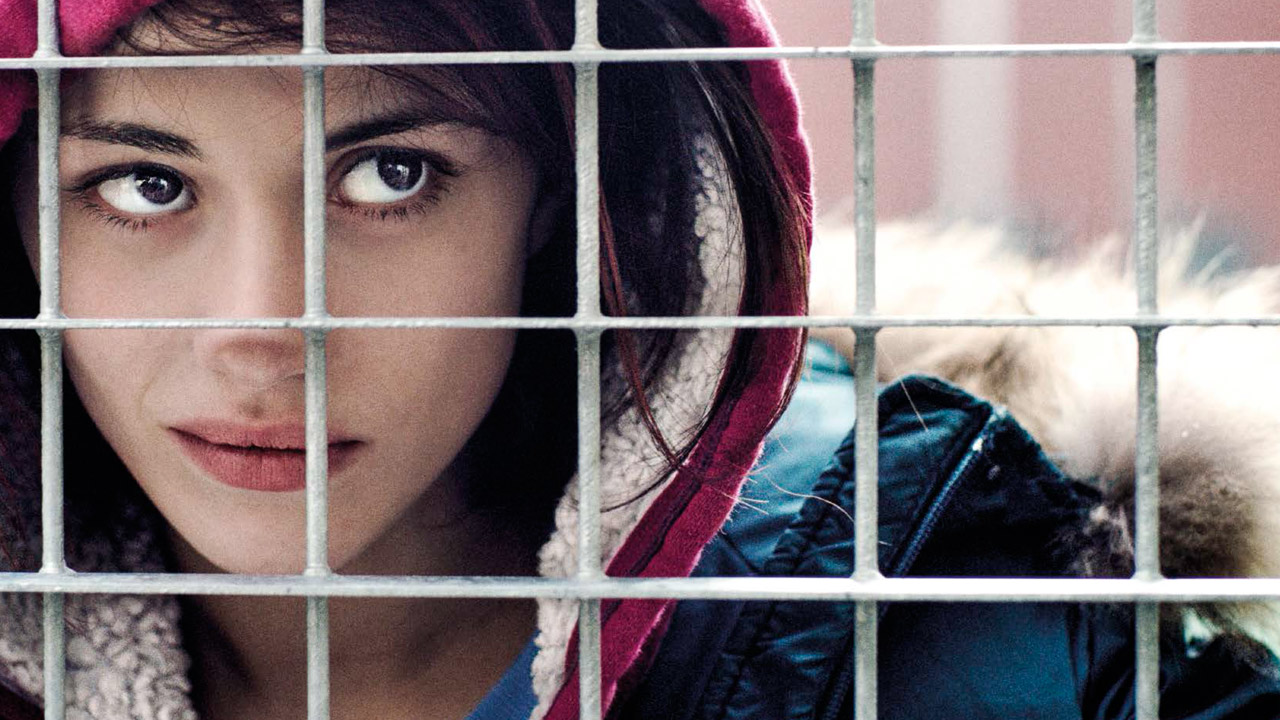
variety.com/wp-content/uploads/2016/05/fiore_06.jpg?w=100...

www.nonsolocinema.com/wp/wp-content/uploads/2016/05/MG_76...

amnc.it/wp-content/uploads/2023/11/perdialogocarcere_post...

www.italyformovies.com/film-serie-tv-games/detail/56/fiore
----------------------------------------------------------
click to activate the small icon of slideshow: the small triangle inscribed in the small rectangle, at the top right, in the photostream (it means the monitor);
or…. Press the “L” button to zoom in the image;
clicca sulla piccola icona per attivare lo slideshow: sulla facciata principale del photostream, in alto a destra c'è un piccolo rettangolo (rappresenta il monitor) con dentro un piccolo triangolo nero;
oppure…. premi il tasto “L” per ingrandire l'immagine;
www.worldphoto.org/sony-world-photography-awards/winners-...
www.fotografidigitali.it/gallery/2726/opere-italiane-segn...
………………………………………………………………………
The municipality of Mongiuffi Melia (ME), not far from Taormina, is made up of two villages, Mongiuffi and Melia, separated by a valley, a bridge joins them, they climb up the opposite ridge of two mountains, looking at each other; in this municipality (defined as a "scattered municipality" for not having a single inhabited center), there are two patron saints, San Sebastian for Melia (his float was built with the money collected by Sicilian soldiers sent to the front, to fight in Greece during the Second World War, hoping in this way to receive His intercession to save their lives), and San Leonard di Noblac (or Abbot) for Mongiuffi; but in this municipality there is also the cult of the "Virgin Mary of the Chain", whose sanctuary attracts pilgrims from everywhere. I have made this description to introduce a singular coincidence that not everyone is aware of, and to do this it is necessary to describe the figure of Saint Leonard (a kind of Saint Francis), and that of the Virgin Mary of the Chain, trying to be concise. Saint Leonard was born in Orléans around 496 (and died in Noblac, on November 6 – the feast day – of 545 or 559), and for most of his life (very interesting) he lived as a hermit; one episode of his life in particular I would like to recall, he received from Clovis, king of the Franks, the privilege of being able to free those prisoners, who he believed had been unjustly imprisoned, so from that moment on, he incessantly committed himself to giving freedom to all those prisoners who were reduced to visibly critical conditions. Let us leave this Saint for a moment, the cult of the “Virgin Mary of the Chain”, this name given to the Blessed Virgin, derives from a prodigious event that occurred in Palermo in 1392, known as the “miracle of the chains”. In short, in August 1392 in Palermo, three men for a glaring miscarriage of justice, were sentenced to death by hanging, shortly before going up to the gallows a violent storm broke out, which forced the three unfortunates and the gendarmes to take refuge in the nearby church of Saint Mary of the Port, close to the sea, also called "Churc of the Chain" due to the presence of a chain that, when positioned, prevented the Saracen pirate ships from accessing the inside of the port; in this holy place, the three condemned, were tied with double chains, in the meantime the door of the church was barred, in fact the storm did not seem to stop and in addition night had come, clearly the execution was now postponed to the next day. The three desperate men, in chains, under the gaze of the gendarmes, approached the painting of the Madonna in tears, imploring her to intercede for them, a voice was heard coming from the painting, which reassured them of their new freedom, this while the chains broke, and the door of the little church was thrown open. From then on, the cult of the Virgin Mary of the Chain spread from Palermo throughout Sicily, and even beyond. Now let's get to the coincidences I mentioned before, both Saint Leonard and the Virgin Mary of the Chain (and also Her Child that She holds in Her arms) carry a long chain in their hands, in fact both the Saint and the Blessed Virgin have given freedom to prisoners, furthermore to access Mongiuffi Melia, coming from Letojanni, you have to pass through a tunnel, called "Gallery of Postoleone" dug in the rock in 1916, with bare hands or with pickaxe blows, as explosives could not be used, by 300 Austrian prisoners, during the First World War (and also on this occasion, in Mongiuffi Melia, there are prisoners forced to do forced labor). Finally, a curiosity, very often from the cult of the Virgin Mary of the Chain, comes a singular name, very common in these parts, both in the masculine with the name of "Cateno" and in the feminine "Catena" (to quote a well-known character, the writer Catena Fiorello). Furthermore, if it rains, whatever the religious procession-feast, with the float carried on the shoulders, the float with the saint does not come out, but if the rain arrives during the event, then the event becomes a source of strong psycho-physical stress for the devotee-bearers (not for the devotee-pullers or devotee-pushers...), as the ground made slippery by the rain (or perhaps, worse, by the presence of mud mixed with water) makes the route risky due to the possibility that one, or more, bearers, could slip, with the possible overturning of the float, and easily imaginable consequences.
The photographic story that I present here was created by assembling photographs taken on November 6, 2022, November 6 and 10 of this year 2024; the heart of the celebration-procession is when the priest hangs a large “cuddurra” (donut) on the hand of Sint Leonard, on that occasion small “cuddure” (donuts) are offered to the population (prepared by hand in the days preceding the procession); there are girls wearing a typical monk's habit-like dress, adorning their head with a veil, they belong to the congregation of the "daughters of Mary" (third order Carmelite); at the end of the procession, with the float that has returned to the church, we witness a rite that has the "affective" purpose of keeping it alive, it is done so as not to lose its memory, even if it has not lost its original meaning, what remains is now only a symbolic fact, it is the ritual of "weighing" (in some centers of Sicily, it has maintained its original meaning) a wooden board is placed "in balance" on one of the two beams that are used to carry the float with the Saint on the shoulders, at the two ends a child is placed on one side, and on the other side a sack with grain, filled until the weight of the grain reaches the weight of the child, and that grain will be given as a gift to the Saint, in reality the symbolic aspect of the procedure remains, and the donation is still made to the Saint, but in paper money.
Postscript: Our Lady of the Chain and Saint Leonard freed from chains, these as such, are not only physical, there are also psychic ones, and perhaps they are the worst….
……………………………..
Il comune di Mongiuffi Melia (ME), non molto distante da Taormina, è formato da due borghi, Mongiuffi e Melia, separati da una vallata, un ponte li congiunge, essi si inerpicano sul crinale opposto di due monti, guardandosi l’un l’altro; in questo comune (definito “comune sparso” per non avere un centro abitato unico), si hanno due santi patroni, San Sebastiano per Melia (la sua vara fu costruita con i soldi racimolati dai soldati Siciliani mandati al fronte, a combattere in Grecia durante la seconda guerra mondiale, sperando così facendo di ricevere la Sua intercessione per avere salva la vita), e San Leonardo di Noblac (o Abate) per Mongiuffi; ma in questo comune vi è anche il culto per la “Madonna della Catena”, il cui santuario attira pellegrini da ogni dove. Ho fatto questa descrizione, per introdurre una singolare coincidenza della quale non tutti sono a conoscenza, e per far questo è necessario descrivere la figura di San Leonardo (una specie di San Francesco), e quella della Madonna della Catena, cercando di essere sintetico. San Leonardo nasce ad Orléans nel 496 circa (e morto a Noblac, il 6 novembre – giorno della festa – del 545 o 559), per gran parte della sua vita (interessantissima) visse da eremita; un episodio della sua vita in particolare desidero ricordare, egli riceve da Clodoveo, re dei Franchi, il privilegio di poter rendere liberi quei prigionieri, che egli riteneva fossero stati incarcerati ingiustamente, egli così, da quel momento, si impegna incessantemente a dare la libertà a tutti quei prigionieri che erano ridotti in condizioni visibilmente critiche. Lasciamo per un attimo questo Santo, il culto della “Madonna della Catena”, questo nome dato alla Beata Vergine, deriva da un evento prodigioso avvenuto a Palermo nel 1392, conosciuto come “miracolo delle catene”. In breve, nell’agosto del 1392 a Palermo, tre uomini per un eclatante errore giudiziario, furono condannati a morte per impiccagione, poco prima di salire sul patibolo si scatenò un violento temporale, che costrinse i tre malcapitati ed i gendarmi a riparare nella vicina chiesa di S. Maria del Porto, a ridosso del mare, detta anche “Chiesa della Catena” per la presenza di una catena che, quando posizionata, impediva alle navi pirata Saracene di accedere all’interno del porto; in questo luogo santo, i tre condannati, furono legati con doppie catene, nel mentre la porta della chiesa veniva sbarrata, infatti il temporale non accennava a smettere ed in più era subentrata la notte, chiaramente l’esecuzione era oramai rimandata al giorno dopo. I tre disperati, in catene, sotto lo sguardo dei gendarmi, si avvicinarono in lacrime al quadro della Madonna implorandola di intercedere per loro, dal quadro si udì provenire una voce, che li rassicurava sulla sopraggiunta libertà, questo mentre le catene si spezzavano, e la porta della chiesetta si spalancava. Da allora il culto per la Madonna della Catena si diffuse da Palermo in tutta la Sicilia, ed anche oltre. Veniamo adesso alle coincidenze di cui accennavo prima, sia San Leonardo che la Madonna della Catena (ed anche il suo Bimbo che regge in braccio) recano in mano una lunga catena, infatti sia San Leonardo che la Beata Vergine hanno dato la liberà a dei prigionieri, inoltre per accedere a Mongiuffi Melia, provenendo da Letojanni, si deve passare necessariamente da una galleria, chiamata “Galleria di Postoleone” scavata nel 1916 nella roccia, a mani nude o con colpi di piccone, in quanto non si poteva usare l’esplosivo, da parte di 300 prigionieri austriaci, durante la prima guerra mondiale (ed anche in questa occasione, a Mongiuffi Melia, si ha la presenza di prigionieri costretti ai lavori forzati). Infine una curiosità, molto spesso dal culto della Madonna della Catena, proviene un singolare nome, molto comune da queste parti, sia al maschile col nome di “Cateno” che al femminile, “Catena” (per citare un personaggio noto, la scrittrice Catena Fiorello). Inoltre, se piove, qualsiasi sia la processione-festa religiosa, con la vara portata in spalla, la vara col santo non esce, se invece la pioggia arriva durante la manifestazione, allora l’evento acquista per i devoti-portatori (non per i devoti-tiratori o devoti-spingitori…) un motivo di forte stress psico-fisico, in quanto il terreno reso scivoloso dalla pioggia (o magari, peggio, dalla presenza di fango misto ad acqua) rende rischioso il percorso per la possibilità che uno, o più portatori, possano scivolare, con il possibile ribaltamento della vara, e conseguenze facilmente immaginabili.
Il racconto fotografico che qui presento, è stato realizzato assemblando fotografie fatte il 6 novembre del 2022, il 6 ed il 10 novembre di quest’anno 2024; il fulcro della festa-processione è quando il sacerdote appende una grande cuddurra (ciambella) sulla mano di San Leonardo, in quella occasione piccole cuddure vengono offerte alla popolazione (preparate ed intrecciate a mano nei giorni precedenti la processione); sono presenti delle ragazze che indossano un tipico vestito “tipo saio di monaco”, adornando il capo con un velo, appartengono alla congregazione delle “figlie di Maria” (terz’ordine carmelitano); alla fine della processione, con la vara che ha fatto rientro in chiesa, si assiste ad un rito che ha lo scopo “affettivo” di tenerlo in vita, viene fatto per non disperderne la memoria, pur non avendo perso il suo significato originario, quel che resta è oramai solamente un fatto simbolico, è il rito della “pesatura” (in alcuni centri della Sicilia, esso ha mantenuto il suo significato originario) un asse di legno viene messo “in equilibrio” su di una delle due travi che servono a portare in spalla la vara col Santo, alle due estremità si pongono da un lato un bimbo/a, e dall’altro lato un sacco con del grano, riempito fino a quando il peso del grano raggiungerà il peso del bimbo/a, e quel grano verrà dato in dono al Santo, in realtà resta l’aspetto simbolico della procedura, la donazione viene ugualmente fatta al Santo, ma in cartamoneta.
P.S. La Madonna della Catena e San Leonardo liberavano dalle catene, queste in quanto tali, non sono solo fisiche, ci sono anche quelle psichiche, e forse sono le peggiori….
……………………………………………………………….
Holy Name Cathedral, rebuilt in the wake of the Great Chicago Fire of 1871, is the seat of the Roman Catholic Archdiocese of Chicago and the Archbishop of Chicago. Designed by Patrick Charles Keely and completed in 1875, the building at 735 N. State St. was renovated to prevent sinking between 1888 and 1915 and again in 1968 and 1969. The cathedral represents the integration of Gothic-Revival design with the message of the modern Church. Its scale is impressive: capacity is 1,520 people, the ceiling height is 70 feet and the spire reaches 210 feet into the sky. It is currently a place of worship for more than 6,000 households.
What is the big picture?
A global assessment of the burden of disease from environmental risks
The main message emerging from this new comprehensive global assessment is that premature death and disease can be prevented through healthier environments – and to a significant degree.
* Press release: Quantifying environmental health impacts, WHO, 2016.
* Image source: quantifying_ehimpacts infographic.
* Download the "Preventing disease through healthy environments: a global assessment of the burden of disease from environmental risks" 2016 report, PDF 2.41Mb.
* Download the "Preventing disease through healthy environments: towards an estimate of the environmental burden of disease", 2006 report, PDF, 8.4Mb.
A very dull and wet afternoon yesterday didn't prevent this youngster from going out exploring! I first heard and then spotted him on my neighbours shed roof. After standing up there making a bit of a fuss and being ignored by his parents he finally decided to come over to my garden to have a look around. As I sat under my back porch to shelter from the rain I was given the once over before he decided I posed no threat. Then down he came to take a look around. Of course I don't really know if it's a boy or a girl...but in my mind it's a boy and I've named him Colombus!
I have uploaded two sets of pictures and a short film which shows him exploring the garden :)
Moscow, WWII Miseum at Poklonnaya Gora. May 2009
The Sturmgeschütz III (StuG III) assault gun was Germany's most produced armoured fighting vehicle during World War II. It was built on the chassis of the proven Panzer III tank. Initially intended as a mobile, armoured light gun for infantry support, the StuG was continually modified and was widely employed as a tank destroyer.
Development
The Sturmgeschütz III originated from German experiences in World War I when it was discovered that during the offensives on the western front the infantry lacked the means to effectively engage fortifications. The artillery of the time was heavy and not mobile enough to keep up with the advancing infantry to destroy bunkers, pillboxes, and other minor obstacles with direct-fire. Although the problem was well-known in the German army, it was General Erich von Manstein who is considered the father of the Sturmartillerie. This is because the initial proposal was from (then) Colonel Erich von Manstein and submitted to General Ludwig Beck in 1935, suggesting that Sturmartillerie ("assault artillery") units should be used in a direct-fire support role for infantry divisions. On June 15, 1936, Daimler-Benz AG received an order to develop an armoured infantry support vehicle capable of mounting a 75 mm (2.95 in) artillery piece. The gun was to have a limited traverse of a minimum of 25° and be mounted in an enclosed superstructure that provided overhead protection for the crew. The height of the vehicle was not to exceed that of the average man.
Daimler-Benz AG used the chassis and running gear of its recently designed Pz.Kpfw. III medium tank as a basis for the new vehicle. Prototype manufacture was passed over to Alkett, which produced five examples in 1937 of the experimental 0-series StuG based upon the Pz.Kpfw. III Ausf. B. These prototypes featured a mild steel superstructure and Krupp’s short-barreled 75 mm StuK 37 L/24 cannon. This model was known as the Sturmgeschütz Ausführung A.
StuG III, Ausf. AWhile the StuG III was considered self-propelled artillery it was not initially clear which arm of the Wehrmacht would handle the new weapon. The Panzer arm, who was the natural user of tracked fighting vehicles, had no resources to spare for the formation of StuG units, and neither did the Infantry branch. It was therefore agreed, after a discussion, it would best be employed by becoming a part of the artillery arm.
The StuGs were organised into battalions (later renamed "brigades" for disinformation purposes) and followed their own specific doctrine. Infantry support using direct-fire was its intended role, and later there was also a strong emphasis on destroying enemy armour whenever encountered.
StuG III, Ausf. G, September 1944As the StuG III was designed to fill an infantry close support combat role, early models were fitted with a low-velocity 75 mm StuK 37 L/24 gun to destroy soft-skin targets and fortifications. After the Germans encountered the Soviet KV-1 and T-34 tanks, the StuG III was equipped with a high-velocity 75 mm StuK 40 L/43 main gun (Spring 1942) and later – the 75 mm StuK 40 L/48 (Autumn 1942) anti-tank gun. These versions were known as the Sturmgeschütz 40 Ausführung F, Ausf. F/8 and Ausf. G.
When the StuG IV entered production in late 1943, early 1944, the "III" was added to the name to separate them from the Panzer IV-based assault guns. All previous and following models were thereafter known as Sturmgeschütz III.
Beginning with the StuG III Ausf. E a 7.92 mm MG34 was mounted on the hull for added anti-infantry protection while some StuG III Ausf. G models were equipped with an additional coaxial 7.92 mm MG34.
The vehicles of the Sturmgeschütz series were cheaper and faster to build than contemporary German tanks; at 82,500 RM, a StuG III Ausf G was cheaper than a Panzer III Ausf. M which cost 103,163 RM to build. By the end of the war, 10,619 StuG III and StuH 42 had been built.[1] This was due to the omission of the turret, which greatly simplified manufacture and allowed the chassis to carry a larger gun than it could otherwise.
Operational history
Stug III in Sofia, BulgariaOverall, Sturmgeschütz series assault guns proved very successful and served on all fronts as assault guns and tank destroyers. Although Tigers and Panthers have earned a greater notoriety, assault guns collectively destroyed more tanks. Because of their low silhouette, StuG IIIs were easy to camouflage and a difficult target. Sturmgeschütz crews were considered to be the elite of the artillery units. Sturmgeschütz units held a very impressive record of tank kills – some 20,000 enemy tanks by the spring of 1944.[2] As of April 10 1945, there were 1,053 StuG IIIs and 277 StuH 42s in service. Approximately 9,500 StuG IIIs of various types were produced until March 1945 by Alkett and a small number by MIAG.
In terms of the resources expended in their construction, the StuG assault guns were extremely cost-effective compared to the heavier German tanks, though in the anti-tank role, it was best used defensively, as the lack of a turret would be a severe disadvantage out in the open. As the German military situation deteriorated later in the war, more and more StuG guns were constructed in comparison to tanks, in an effort to replace losses and bolster defences against the encroaching Allied forces.
In 1944 the Finnish Army received 59 StuG III Ausf. Gs from Germany (30 Stu 40 Ausf.G and 29 StuG III Ausf. G) and used them against the Soviet Union. These destroyed at least 87 enemy tanks for a loss of only 8 StuGs[2] (some of these were destroyed by their crews when they abandoned the vehicle to prevent capture). After the war, they were the main combat vehicles of the Finnish Army until the early 1960s. These StuGs gained the nickname "Sturmi" which can be found in some plastic kit models.
StuG IIIs were also exported to other nations like Bulgaria, Hungary, Italy, Romania, and Spain.
Many German Sturmgeschütz IIIs were captured by Yugoslav Partisans and after the war they were used by the Yugoslav Peoples Army until the 1950s.
After the Second World War, the Soviet Union donated some of their captured German vehicles to Syria, which continued to use them at least until the Six Days War (1967).
Wikipedia
Sturmgeschütz III (StuG III) (Штурмгешутц III (Штуг III)— средняя по массе немецкая самоходно-артиллерийская установка класса штурмовых орудий времён Второй мировой войны на базе танка Pz Kpfw III. Серийно выпускалась в различных модификациях с 1940 по 1945 год и стала самым массовым по численности представителем бронетехники вермахта (выпущено 8636 самоходок с 75-мм орудиями).
StuG III — компоновка боевого подразделения и размещение в нем экипажаПолное официальное название машины — Gepanzerte Selbstfahrlafette fur Sturmgeschütz 7,5 cm Kanone. По ведомственному рубрикатору министерства вооружений нацистской Германии самоходка обозначалась как Sd Kfz 142. StuG III также обозначается как StuG 40, в советской литературе эту машину именовали как Артштурм. StuG III активно использовались на всех фронтах Второй мировой войны и в целом получили хорошие отзывы немецкого командования: к началу 1944 на счету StuG III было около 20,000 танков противника Захваченные Красной Армией StuG III переделывались в самоходки СУ-76И, вооружённые той же пушкой Ф-34, что и у танка Т-34.
[править] История
В 1935 Эрих фон Манштейн в письме к генералу Беку описал идею машин «штурмовой артиллерии», главной задачей которых должна была бы быть непосредственная поддержка атакующих подразделений пехоты. После проработки подробных запросов, 15 июня 1936 г. фирма «Даймлер-Бенц АГ» получила заказ на проектирование бронированных машин поддержки пехоты, вооруженных 75 мм пушкой, со свободой движения ствола в горизонтальной плоскости по крайней мере в 25°. Машина должна была быть полностью бронирована, тем самым защищая экипаж от прямого огня неприятеля, а полная высота транспортного средства не должна была превышать высоту типичного солдата. Для разработки новой самоходки «Даймлер-Бенц» решил использовать шасси нового среднего танка Панцеркампфваген III . Первые пять прототипов были произведены в 1937 г. на шасси Панцеркампфваген III Аусф. Б. Они были вооружены короткоствольной 75 мм пушкой Штурмканоне 37 Л/24 (со стволом в 24 калибра) с низкой начальной скоростью снаряда. После столкновения в России с танками Т-34 было решено переоборудовать ШТУГ III длинноствольной пушкой, пригодной для поражения брони советских танков. С весны 1942 г. стали использовать пушки 75 мм Штурмканоне 40 Л/43, а осенью этого года ещё более длинноствольные версии этой пушки — Л/48. Более поздние модели ШТУГа III также были оснащены пулеметом Мг34 калибром 7,92 мм, установленным перед командирским люком (так как другого способа установки пулемета не имелось). Все машины из серии Штурмгешутс были дешевле в производстве, чем танки на тех же шасси. ШТУГ III стоил 82,5 тысяч марок, в то время как Панцеркампфваген III стоил более 103 тысяч марок. По сравнению с этим, например, буксируемый вариант той же 75 мм пушки, используемой в Штуге, стоил 12 тыс. марок. До конца войны было произведено свыше 10500 экземпляров в разных модификациях.
cure-for-mrsa.plus101.com Mrsa, Mrsa Boil, Treatment For Mrsa, Is Mrsa Curable, Staph Infections Mrsa, Mrsa Nose, Mrsa Signs. Methicillin-resistant Staphylococcus aureus (MRSA) is a bacterium responsible for several difficult-to-treat infections in humans.
MRSA is any strain of Staphylococcus aureus that has developed, through horizontal gene transfer and natural selection, multi- resistance to beta-lactam antibiotics, which include the penicillins (methicillin, dicloxacillin, nafcillin, oxacillin, etc.) and the cephalosporins.
Strains unable to resist these antibiotics are classified as methicillin-susceptible Staphylococcus aureus, or MSSA. The evolution of such resistance does not cause the organism to be more intrinsically virulent than strains of S. aureus that have no antibiotic resistance, but resistance does make MRSA infection more difficult to treat with standard types of antibiotics and thus more dangerous.
MRSA is especially troublesome in hospitals, prisons, and nursing homes, where patients with open wounds, invasive devices, and weakened immune systems are at greater risk of nosocomial infection (hospital-acquired infection) than the general public. MRSA began as a hospital-acquired infection, but has developed limited endemic status and is now sometimes community-acquired as well as livestock-acquired.
The terms HA-MRSA (healthcare-associated MRSA), CA-MRSA (community-associated MRSA) and LA-MRSA (livestock-associated) reflect this distinction.
Symptoms of MRSA
MRSA signs and symptoms depend on what area of the body is infected. Although many people carry MRSA bacteria in their mucosa (inside the nose), they may never display any symptoms of active infection.
Staph skin infections, including MRSA, appear as a bump or sore area of the skin that could be mistaken for an insect bite. The infected area might be:
Red
Inflamed
Painful
Hot to the touch
Full of pus or other liquid
Accompanied by a fever.
Signs and symptoms of a serious MRSA infection in the blood or deep tissues include:
Fever of 100.4 degrees F or higher
Chills
Malaise
Dizziness
Confusion
Aches and pains of the muscles
Swelling and tenderness in the affected body part
Chest pains
Cough
Breathlessness
Headache
Rash
Wounds that do not heal.
MRSA Secrets Revealed: Safe Effective Methods for Handling Staph and MRSA Your Doctor Isn't Telling You
click here: cure-for-mrsa.plus101.com
Santa Fe Community Hospital
Reaching in,
my spirit guides me
through the safety process.
This is the third in my series "Ghosts of Progress."
Joan of Arc (French: Jeanne d'Arc,[4] IPA: [ʒan daʁk]; ca. 1412 – 30 May 1431), nicknamed "The Maid of Orléans" (French: La Pucelle d'Orléans), is a folk heroine of France and a Roman Catholic saint. She was born to a peasant family in north-east France. Joan said she had received visions from God instructing her to support Charles VII and recover France from English domination late in the Hundred Years' War. The uncrowned King Charles VII sent her to the siege of Orléans as part of a relief mission. She gained prominence after the siege was lifted in only nine days. Several additional swift victories led to Charles VII's coronation at Reims. On 23 May 1430 she was captured at Compiegne by the English-allied Burgundian faction and transferred to the English, put on trial by the pro-English Bishop of Beauvais Pierre Cauchon on a variety of charges,and was burned at the stake for heresy when she was about 19 years old.
Twenty-five years after her execution, an inquisitorial court authorized by Pope Callixtus III examined the trial, pronounced her innocent, and declared her a martyr. Joan of Arc was beatified in 1909 and canonized in 1920. She is one of the patron saints of France, along with St. Denis, St. Martin of Tours, St. Louis IX, and St. Theresa of Lisieux.
Joan of Arc has been a popular figure in cultural history since the time of her death and many famous writers, filmmakers and composers have created works about her. Cultural depictions of Joan of Arc have continued in film, theatre, television, video games, music, and performances to this day.
Joan of Arc rejected the cautious strategy that characterized French leadership during previous campaigns. During the five months of siege before her arrival, the defenders of Orléans attempted only one aggressive move and that ended in disaster. On 4 May the French attacked and captured the outlying fortress of Saint Loup, which she followed on 5 May with a march to a second fortress called Saint Jean le Blanc, which was found deserted. The next day she opposed Jean d'Orleans at a war council where she demanded another assault on the enemy. D'Orleans ordered the city gates locked to prevent another battle, but she summoned the townsmen and common soldiers and forced the mayor to unlock a gate. With the aid of only one captain she rode out and captured the fortress of Saint Augustins. That evening she learned she had been excluded from a war council where the leaders had decided to wait for reinforcements before acting again. Disregarding this decision, she insisted on attacking the main English stronghold called "les Tourelles" on 7 May.[34] Contemporaries acknowledged her as the heroine of the engagement after she was wounded in the neck by an arrow but returned to lead the final charge.
The sudden victory at Orléans led to many proposals for further offensive action. The English expected an attempt to recapture Paris or an attack on Normandy. In the aftermath of the unexpected victory, Joan persuaded Charles VII to grant her co-command of the army with Duke John II of Alençon and gained royal permission for her plan to recapture nearby bridges along the Loire as a prelude to an advance on Reims and the coronation of Charles VII. This was a bold proposal because Reims was roughly twice as far away as Paris and deep within enemy territory.
The army recovered Jargeau on 12 June, Meung-sur-Loire on 15 June, and Beaugency on 17 June. The Duke of Alençon agreed to all of Joan's decisions. Other commanders including Jean d'Orléans had been impressed with her performance at Orléans and became her supporters. Alençon credited her with saving his life at Jargeau, where she warned him of an imminent artillery attack. During the same battle she withstood a blow from a stone cannonball to her helmet as she climbed a scaling ladder. An expected English relief force arrived in the area on 18 June under the command of Sir John Fastolf. The battle at Patay might be compared to Agincourt in reverse. The French vanguard attacked before the English archers could finish defensive preparations. A rout ensued that decimated the main body of the English army and killed or captured most of its commanders. Fastolf escaped with a small band of soldiers and became the scapegoat for the humiliating English defeat. The French suffered minimal losses.
The extent of her actual military leadership is a subject of historical debate. Traditional historians, such as Édouard Perroy, conclude that she was a standard bearer whose primary effect was on morale. This type of analysis usually relies on the condemnation trial testimony, where she stated that she preferred her standard to her sword. Recent scholarship that focuses on the nullification trial testimony asserts that the army's commanders esteemed her as a skilled tactician and a successful strategist. Stephen W. Richey's opinion is one example: "She proceeded to lead the army in an astounding series of victories that reversed the tide of the war."[28] In either case, historians agree that the army enjoyed remarkable success during her brief career.
The scene at Skipton has totally changed since I took this shot in 1988. The semaphore gantry has gone to be replaced by overhead wiring, the mill chimney has gone, the signal box has gone, sidings for EMUs have appeared on the far side of the line and a palisade fence has been erected preventing this view from even being had. 47422 heads for Carlisle with 1M43 10:45 Leeds to Carlisle on the 16th July 1988.
Parish Church to the Holy Trinity and Franciscan Monastery
Object ID: 20593 Town Square 12
The late Baroque building, taking up the whole north side of the town square, is dominated by the Rococo façade. 1707 the Carmelite order at the request of the benefactor, Maria Antonia Montecuculi, settled down in St. Pölten, at the north side of the square the men convent should find its place. Although architect's plan and financial resources were available, was the start of construction not until 1757, there was missing the planning permission of Empress Maria Theresa. The church then was built to 1768 according to plans by Johann Pauli, the monastery was completed in 1773. Yet 10 years later, the monastery by Emperor Joseph II was repealed. Because of its strategic location, the church in 1785 became parish church, the pastoral care took over the by the dissolutions not affected Franciscan Order.
de.wikipedia.org/wiki/Liste_der_denkmalgesch%C3%BCtzten_O...(Stadtteil)
(further information is available by clicking on the link at the end of page!)
History of the City St. Pölten
In order to present concise history of the Lower Austrian capital is in the shop of the city museum a richly illustrated full version on CD-ROM.
Tip
On the occasion of the commemoration of the pogroms of November 1938, the Institute for Jewish History of Austria its virtual Memorbuch (Memory book) for the destroyed St. Pölten Jewish community since 10th November 2012 is putting online.
Prehistory
The time from which there is no written record is named after the main materials used for tools and weapons: Stone Age, Bronze Age, Iron Age. Using the latest technologies, archaeologists from archaeological finds and aerial photographs can trace a fairly detailed picture of life at that time. Especially for the time from the settling down of the People (New Stone Age), now practicing agriculture and animal husbandry, in the territory of St. Pölten lively settlement activity can be proved. In particular, cemeteries are important for the research, because the dead were laid in the grave everyday objects and jewelry, the forms of burial changing over time - which in turn gives the archeology valuable clues for the temporal determination. At the same time, prehistory of Sankt Pölten would not be half as good documented without the construction of the expressway S33 and other large buildings, where millions of cubic meters of earth were moved - under the watchful eyes of the Federal Monuments Office!
A final primeval chapter characterized the Celts, who settled about 450 BC our area and in addition to a new culture and religion also brought with them the potter's wheel. The kingdom of Noricum influenced till the penetration of the Romans the development in our area.
Roman period, migrations
The Romans conquered in 15 BC the Celtic Empire and established hereinafter the Roman province of Noricum. Borders were protected by military camp (forts), in the hinterland emerged civilian cities, almost all systematically laid out according to the same plan. The civil and commercial city Aelium Cetium, as St. Pölten was called (city law 121/122), consisted in the 4th Century already of heated stone houses, trade and craft originated thriving urban life, before the Romans in the first third of the 5th Century retreated to Italy.
The subsequent period went down as the Migration Period in official historiography, for which the settlement of the Sankt Pöltner downtown can not be proved. Cemeteries witness the residence of the Lombards in our area, later it was the Avars, extending their empire to the Enns.
The recent archaeological excavations on the Cathedral Square 2010/2011, in fact, the previous knowledge of St.Pölten colonization not have turned upside down but enriched by many details, whose full analysis and publication are expected in the near future.
Middle Ages
With the submission of the Avars by Charlemagne around 800 AD Christianity was gaining a foothold, the Bavarian Benedictine monastery of Tegernsee establishing a daughter house here - as founder are mentioned the brothers Adalbert and Ottokar - equipped with the relics of St. Hippolytus. The name St. Ypolit over the centuries should turn into Sankt Pölten. After the Hungarian wars and the resettlement of the monastery as Canons Regular of St. Augustine under the influence of Passau St. Pölten received mid-11th Century market rights.
In the second half of the 20th century historians stated that records in which the rights of citizens were held were to be qualified as Town Charters. Vienna is indeed already in 1137 as a city ("civitas") mentioned in a document, but the oldest Viennese city charter dates only from the year 1221, while the Bishop of Passau, Konrad, already in 1159 the St. Pöltnern secured:
A St. Pöltner citizen who has to answer to the court, has the right to make use of an "advocate".
He must not be forced to rid himself of the accusation by a judgment of God.
A St. Pöltner citizen may be convicted only by statements of fellow citizens, not by strangers.
From the 13th Century exercised a city judge appointed by the lord of the city the high and low jurisdiction as chairman of the council meetings and the Municipal Court, Inner and Outer Council supported him during the finding of justice. Venue for the public verdict was the in the 13th Century created new marketplace, the "Broad Market", now the town hall square. Originally square-shaped, it was only later to a rectangle reduced. Around it arose the market district, which together with the monastery district, the wood district and the Ledererviertel (quarter of the leather goods manufacturer) was protected by a double city wall.
The dependence of St. Pölten of the bishop of Passau is shown in the municipal coat of arms and the city seal. Based on the emblem of the heraldic animal of the Lord of the city, so the Bishop of Passau, it shows an upright standing wolf holding a crosier in its paw.
Modern Times
In the course of the armed conflict between the Emperor Frederick III . and King Matthias of Hungary pledged the Bishop of Passau the town on the Hungarian king. From 1485 stood Lower Austria as a whole under Hungarian rule. The most important document of this period is the awarding of the city coat of arms by King Matthias Corvinus in the year 1487. After the death of the opponents 1490 and 1493 could Frederick's son Maximilian reconquer Lower Austria. He considered St. Pölten as spoils of war and had no intention of returning it to the diocese of Passau. The city government has often been leased subsequently, for instance, to the family Wellenstein, and later to the families Trautson and Auersperg.
That St. Pölten now was a princely city, found its expression in the coat of arms letter of the King Ferdinand I. from 1538: From now on, the wolf had no crosier anymore, and the from the viewer's point of view left half showed the reverse Austrian shield, so silver-red-silver.
To the 16th Century also goes back the construction of St. Pöltner City Hall. The 1503 by judge and council acquired house was subsequently expanded, rebuilt, extended and provided with a tower.
A for the urban history research important picture, painted in 1623, has captured scenes of the peasant uprising of 1597, but also allows a view to the city and lets the viewer read some of the details of the then state of construction. The economic inconveniences of that time were only exacerbated by the Thirty Years War, at the end of which a fifth of the houses were uninhabited and the citizenry was impoverished.
Baroque
After the successful defense against the Turks in 1683, the economy started to recover and a significant building boom began. Lower Austria turned into the land of the baroque abbeys and monasteries, as it is familiar to us today.
In St. Pölten, the change of the cityscape is closely connected to the Baroque architect Jakob Prandtauer. In addition to the Baroquisation of the interior of the cathedral, a number of buildings in St. Pölten go to his account, so the reconstruction of the castle Ochsenburg, the erection of the Schwaighof and of the core building of the Institute of the Blessed Virgin Mary (Englische Fräuleins - English Maidens) - from 1706 the seat of the first school order of St.Pölten - as well as of several bourgeois houses.
Joseph Munggenast, nephew and co-worker of Prandtauer, completed the Baroquisation of the cathedral, he baroquised the facade of the town hall (1727) and numerous bourgeois houses and designed a bridge over the Traisen which existed until 1907. In the decoration of the church buildings were throughout Tyroleans collaborating, which Jakob Prandtauer had brought along from his homeland (Tyrol) to St. Pölten, for example, Paul Troger and Peter Widerin.
Maria Theresa and her son Joseph II: Their reforms in the city of the 18th Century also left a significant mark. School foundings as a result of compulsory education, the dissolution of the monasteries and hereinafter - from 1785 - the new role of St. Pölten as a bishop's seat are consequences of their policies.
1785 was also the year of a fundamental alteration of the old Council Constitution: The city judge was replaced by one magistrate consisting of five persons, at the head was a mayor. For the first mayor the painter Josef Hackl was chosen.
The 19th century
Despite the Napoleonic Wars - St. Pölten in 1805 and 1809 was occupied by the French - and despite the state bankruptcy of 1811, increased the number of businesses constantly, although the economic importance of the city for the time being did not go beyond the near vicinity.
Against the background of monitoring by the state secret police, which prevented any political commitment between the Congress of Vienna and the 1848 revolution, the citizens withdrew into private life. Sense of family, fostering of domestic music, prominent salon societies in which even a Franz Schubert socialized, or the construction of the city theater were visible signs of this attitude.
The economic upswing of the city did not begin until after the revolution of the year 1848. A prerequisite for this was the construction of the Empress Elisabeth Western Railway, moving Vienna, Linz, soon Salzburg, too, in a reachable distance. The city walls were pulled down, St. Pölten could unfold. The convenient traffic situation favored factory start-ups, and so arose a lace factory, a revolver factory, a soap factory or, for example, as a precursor of a future large-scale enterprise, the braid, ribbon and Strickgarnerzeugung (knitting yarn production) of Matthias Salcher in Harland.
In other areas, too, the Gründerzeit (years of rapid industrial expansion in Germany - and Austria) in Sankt Pölten was honouring its name: The city got schools, a hospital, gas lanterns, canalization, hot springs and summer bath.
The 20th century
At the beginning of the 20th Century the city experienced another burst of development, initiated by the construction of the power station in 1903, because electricity was the prerequisite for the settlement of large companies. In particular, the companies Voith and Glanzstoff and the main workshop of the Federal Railways attracted many workers. New Traisen bridge, tram, Mariazell Railway and other infrastructure buildings were erected; St. Pölten obtained a synagogue. The Art Nouveau made it repeatedly into the urban architecture - just think of the Olbrich House - and inspired also the painting, as exponents worth to be mentioned are Ernst Stöhr or Ferdinand Andri.
What the outbreak of the First World War in broad outlines meant for the monarchy, on a smaller scale also St. Pölten has felt. The city was heavily impacted by the deployment of army units, a POW camp, a military hospital and a sick bay. Industrial enterprises were partly converted into war production, partly closed. Unemployment, housing emergency and food shortages long after the war still were felt painfully.
The 1919 to mayor elected Social Democrat Hubert Schnofl after the war tried to raise the standard of living of the people by improving the social welfare and health care. The founding of a housing cooperative (Wohnungsgenossenschaft), the construction of the water line and the establishment of new factories were further attempts to stimulate the stiffening economy whose descent could not be stopped until 1932.
After the National Socialist regime had stirred false hopes and plunged the world into war, St. Pölten was no longer the city as it has been before. Not only the ten devastating bombings of the last year of the war had left its marks, also the restrictive persecution of Jews and political dissidents had torn holes in the structure of the population. Ten years of Russian occupation subsequently did the rest to traumatize the population, but at this time arose from the ruins a more modern St. Pölten, with the new Traisen bridge, district heating, schools.
This trend continued, an era of recovery and modernization made the economic miracle palpable. Already in 1972 was - even if largely as a result of incorporations - exceeded the 50.000-inhabitant-limit.
Elevation to capital status (capital of Lower Austria), 10 July 1986: No other event in this dimension could have become the booster detonation of an up to now ongoing development thrust. Since then in a big way new residential and commercial areas were opened up, built infrastructure constructions, schools and universities brought into being to enrich the educational landscape. East of the Old Town arose the governmental and cultural district, and the list of architects wears sonorous names such as Ernst Hoffmann (NÖ (Lower Austria) Landhaus; Klangturm), Klaus Kada (Festspielhaus), Hans Hollein (Shedhalle and Lower Austrian Provincial Museum), Karin Bily, Paul Katzberger and Michael Loudon ( NÖ State Library and NÖ State Archive).
European Diploma, European flag, badge of honor, Europe Price: Between 1996 and 2001, received St. Pölten numerous appreciations of its EU commitment - as a sort of recognition of the Council of Europe for the dissemination of the EU-idea through international town twinnings, a major Europe exhibition or, for example, the establishment and chair of the "Network of European medium-sized cities".
On the way into the 21st century
Just now happened and already history: What the St. Pöltnern as just experienced sticks in their minds, travelers and newcomers within a short time should be told. The theater and the hospital handing over to the province of Lower Austria, a new mayor always on the go, who was able to earn since 2004 already numerous laurels (Tags: polytechnic, downtown enhancement, building lease scheme, bus concept) - all the recent changes are just now condensed into spoken and written language in order to make, from now on, the history of the young provincial capital in the 3rd millennium nachlesbar (checkable).
www.st-poelten.gv.at/Content.Node/freizeit-kultur/kultur/...
Top ten causes of death from the environment
A global assessment of the burden of disease from environmental risks
The main message emerging from this new comprehensive global assessment is that premature death and disease can be prevented through healthier environments – and to a significant degree.
* Press release: Quantifying environmental health impacts, WHO, 2016.
* Image source: quantifying_ehimpacts infographic.
* Download the "Preventing disease through healthy environments: a global assessment of the burden of disease from environmental risks" 2016 report, PDF 2.41Mb.
* Download the "Preventing disease through healthy environments: towards an estimate of the environmental burden of disease", 2006 report, PDF, 8.4Mb.
#LaptopStolenAtStarbucks #StarbucksNeverAgain #StarbucksNuncaMas #Starbucks #StarbucksCoffee #StarbucksPerú #StarbucksLima #Benavides #Lima #Peru #HowardSchultz #Lasino #LasinoSA #ObstructionOfJustice #ObstrucciónDeLaJusticia
ATTENTION MY DEAR AMIGOS Y AMIGAS: I would sincerely appreciate if you would share this post with your friends and family on your social networks so these problems can be resolved and prevented so other people don't have to go through the absolute nightmare I have gone through! Muchas gracias! Abrazos fuertazos! :) :D <3
As I write to you now, the day crossed from ¨night¨ into ¨midnight¨, which also happens to mark the one month anniversary, since my most prized possession, ¨my baby¨, was stolen from #StarbucksPerú #Coffee Store on Avenida #Benavides 778, in the #Miraflores district in #Lima , #Peru .
You know that store. The store that is also inside the University of ISIL at the cross section of Paseo del Republica.
My #laptop, also affectionately known as ¨lappy¨, just happened to be the most expensive possession I owned as a human being. ¨What happened?¨, you may ask? It was savagely ripped from the clutches of my fingers while I was sitting down, enjoying a cup of my non-#organic, most likely non-#Peruvian #Starbucks Coffee (Café Americano to be exact) as I had done for many years, while diving deep into super interesting conversations about Pre-Incan and #Peruvian history with a new friend and possible new business partner as we discussed opportunities on how to help the #indigenous communities in the Peruvian #Andes and the #Amazon jungles to develop #sustainable and environmentally-conscious #economies using eco-tourism as a means to explore the rich cultural traditions of this fascinating country I’ve come to call home: el #Perú.
It was only later, after our riveting conversation, did I come to realize that my laptop had been silently whisked off to the ¨Never-Neverland¨ of missing laptops where they disappear forever. Never to be never seen again. Usually, never ever.
Ok, so the laptop wasn’t exactly ripped out of my hands. I completely fabricated that part only to demonstrate how this #theft felt on the inside. I was in a state of absolute shock honestly. It was as if my #heart and #soul was ripped out of my chest (assuming that’s where the soul resides of course).
As strange as this may sound, it was like a family member dying. My entire life was on that laptop. All of the projects I have worked on since I arrived to #Guatemala more than 3 years ago today to teach indigenous #Mayan #communities how to build their very own ¨#Earthship¨ homes made with #RecycledMaterials . A life altering experience thanks to the U.S. non-profit organization #LongWayHome and the indisputable visionary and super weird genius of #MichaelReynolds of #EarthshipBiotecture .
All of my photos I have taken in the last three years, travelling and working in #LatinAmerica from #Mexico to #Guatemala, from #CostaRica and to #Columbia, and finally in ¨el Perú.¨ They were photos that can´t be replaced but I will never forget them.
I realize backing up my data is my responsibility and that my data will probably never be recovered, I somehow, for some reason, miss my laptop even more than all of those photos.
He was my travel buddy as I made my ¨Run for the border¨ in the opposite direction of conventional wisdom. He came with me as followed my heart and swam south and waded through the incredibly beautiful and breath-taking rivers and lakes of #CentralAmerica and #SouthAmerica, or what I also call the ¨#LatinAmericaDream¨.
If I were #Maverick of ¨#TopGun¨, my lappy was definitely my ¨#Goose¨.
He was my co-pilot when I was offered new projects to work on #Permaculture design projects like the 5 family Eco-village in #Pachacamac, Peru, or creating and designing #Environmental #Campaigns for the #schools of Peru that teach Peruvian #children how to take care of ¨#Pachamama¨ with their hands in the dirt, mud in their hair, and smiles on their faces.
Yep. My ¨lappy¨ was the best.
One month later, after my laptop was stolen from Starbucks, while sitting next to my feet, it appears that I am now a victim of #IdentityTheft as well. Only two days ago someone attempted to fraudulently access my bank account in the #UnitedStates AND was even able to get past the security authentication of my bank, over the phone, with either my social security number, my bank account number, and or my pin number.
Good thing I’m broke and don’t have a penny to my name, otherwise this entire situation could have been even more devastating than it already still is.
It has now taken #Starbucks exactly ONE MONTH for them to deliver the security cam video from this store to the police so the ¨investigation¨ can begin since my laptop was stolen on May 2nd.
Pardon my language, but are you fucking kidding me? How can justice ever be served in this manner?
In #LatinAmerica , where there is not a chance in hell it would be recovered? Is this that ¨Great and Premium Executive Service¨ Starbucks keeps proclaiming in their advertisements? Is Starbucks really taking care of their clients when they deliberately obstruct justice after you’ve been robbed in board day light in their store?
That’s not only bad service. It’s criminal.
So after much frustration in dealing with the absolutely atrocious customer service of Starbucks and their management, after speaking with a very tenured business professional and a damn good friend, I decided to write #HowardSchultz , the #CEO of Starbucks, a small but brief letter of what transpired and my promise to never, never ever, set foot inside another Starbucks again until these problems are resolved.
I also happened to find the email addresses and phone numbers of almost the entire Board of Directors of Starbucks, the Executive Vice Presidents of Starbucks Latin America and many other divisions, and I copied them in the same email I sent to Howard, the CEO.
Thanks, #Google .
Here is what I wrote:
Dear Mr. Howard Schlutz,
Let me first begin by thanking you for taking a quick moment out of your busy day to read this letter. Most of us have very busy lives to attend to, and I am no different. Let me briefly introduce myself. I am a U.S. citizen currently working and living in Lima, Peru, where many of your stores are located. Like you, I came from a blue collar family and was the first person in my family to receive a college degree, and after receiving my degree in Finance, I worked for some of the biggest companies in the United States, including Centex, Dell, and IBM, to name a few. I now own and operate my own consultancy company in Peru and I have been working with some of the largest companies in Peru for the last two years, including companies such as Repsol and Graña y Montero. When I need to meet with any of my clients, I tell them, ¨meet me in my office¨, warmly referring to one of your Starbucks stores as our meeting place of business.
I am certain that you are well aware that you and your company have revolutionized the social meeting place for business professionals, and others alike, which is why I have felt so comfortable in inviting some of my most important clients to meet in your stores.
However, as of May 2nd 2016, I no longer have confidence in the bringing my clients to your stores, nor do I feel safe going to your stores as I was robbed in broad daylight in your Starbucks store located at Avenida Benavides 778, Miraflores, Lima, Peru, (Store STB-37), which resulted in my very expensive laptop being stolen while it was in my possession and thousands of dollars of time and work lost that I will never get back. On top of an already traumatizing situation, your management staff at this store, Maria Casteñeda, Jardani Atoche, Paulo Villegas, and Ana Lenguz, have completely ¨mis-managed¨ this incident from the very beginning. Not only did they refused to let myself and the police to see the video immediately after the theft took place to identify the thief, they have offered absolutely nothing in return for my stolen laptop – Not even not even a free coffee. Additionally, this store has not one security guard in it where many of your stores in Lima do because of previous robberies.
The very reason I visited your store(s) every day, sometimes 3 times a day, for the last 3 years was because of the environment you and your company have created at Starbucks. I felt safe. Safe enough to bring my clients and discuss business in your stores. I keep all of my receipts from Starbucks for tax purposes. After reviewing my all of my transactions with your company, I was spending between $80 and $100 USD a month in your stores. Is this how Starbucks treats its loyal customers who have helped make Starbucks the billion dollar company it is today?
To resolve the problem, I need my laptop to be replaced equal or greater in value. Attached are copies of the police report concerning the theft that occurred in your store, the complaint filed with the Peruvian Government Consumer Rights organization Indecopi, and the receipts of my purchases at Starbucks to demonstrate my loyalty to your company.
I look forward to your reply and a resolution to my problem. I will wait 3 business days before seeking third-party assistance. You may contact me at my email address or by my Peruvian phone number.
Sincerely,
Justin Lee Henson
The screen capture photo attached to this post is the email I received tonight from ¨Kurt¨ of the Executive Office of Howard Schlutz, the CEO, Founder, and Chairman of the Board of Starbucks… or what is more commonly referred to as the ¨Armed Services¨ division of Starbucks. Have a look at the bottom of Kurt’s signature to see what I’m talking about.
I have given them three days to act and they only have a day and half before I proceed with ¨Third Party Assistance¨. Wish me luck! :)
No te preocupes hermanitos y hermanitas! Voy a tener lo mismo post en castellano mañana! Buenas noches! :)
I've pedalled my bicycle up the Longendale valley and it's still an abysmal day! Torside box and the B6105 crossing can be seen towards the back of the train, and the wide trackbed which accommodated goods loops is also evident.
Here a pair of 76's head east with a nice rake of Covhops - the rear loco is 76030 but unfortunately the cab handrails prevent identification of the lead loco from the photo. Older viewers will remember this annoying period on BR when the loco number was often only on the nearside of the cab. However thanks to SELNEC-TOW for deducing that it is 76014 - see below.
Taken on 29th January, 1980.
She went to the .99 Cents Store and bought the cheapest blue shades to look just like PJ! She also got eyelashes but unfortunately the glue was not good enough to keep it on her eyes....
Clones at Retro´s
This year I don´t know why they´ve invaded my place. Their beauty is not recognized at first sight, you have to build a loving relationship to be able to see it! Oh poor girls... many call them "The Wannabes".
I had to established a golden rule, in order to prevent chaos between The Vintages, The Mods, The Repros and The Wannabes!
This rule consists that The Wannabes are not allowed to wear any original, vintage clothing or accessories... Only replicas, clone´s cloth, handmade and the cheapest! They promised to follow this rule in exchange of me building a exclusive diorama just for them, at Retro´s, of course!
Day # 4 May 27, 2009
The Pink Panther is making toast today since today is the anniversary of the Pop-Up toaster. And here is some random and useless information about bread and the electric Pop-Up toaster!
Otto Frederick Rohwedder invented the bread slicer, which he started working on in 1912. At first, Rohwedder came up with the idea of a device that held the slices together with hat pins (not a success). In 1928, he designed a machine that sliced and wrapped the bread to prevent the sliced bread from going stale. Pre-sliced bread was popularized by Wonder Bread in 1930, helping to spread the toaster's popularity further. Toasting bread began as a method of prolonging the life of bread. It was very common activity in Roman times, 'tostum' is the latin word for scorching or burning. The first electric toaster was invented in 1893 in Great Britain by Crompton and Co (UK) and re-invented in 1909 in the United States. It only toasted one side of the bread at a time and it required a person to stand by and turn it off manually when the toast looked done. Charles Strite invented the modern timer, pop-up toaster in 1919.
Pink now has his very own blog! Check it out!
He is smoking a beedi which is an Indian equivalent of cigarette (for all those who don’t know about it ;) ). It doesn’t have a filter and produces much more smoke. Being a non-smoker that’s all I can tell you about the beedi but in case you want to read more here is a good link.
"Tobacco smoking is widely prevalent in both developed and developing countries. It is one of the important preventable causes of premature death(1). In developing countries, it has been estimated that nearly 50% of men are dependent on some from of tobacco use whereas less than 5% of women are smokers
Various forms of tobacco smoking are practiced here, including cigarettes, beedis, chilum (clay pipe), chutta (reverse smoking) and hukka (hubble-bubble), the first two being the predominant types in urban areas. It is generally assumed that beedi smoking is less harmful than cigarette smoking although there is no scientific documentation of this belief. Beedis are made from sun-cured tobacco rolled in tendu leaf wrapper (Diospyrus melanoxylon or Diospyrus ebenum) about 6 cm long and do not have filters. "
View It large and on black here ...
Please see other Images from India here ...
The Ringtheater fire in Vienna on 8th December 1881 was one of the biggest fire catastrophes of the 19th century in Austria-Hungary. According to official data, the number of death victims was 384; it was estimated that more deaths occurred. Ludwig Eisenberg writes of nearly 1,000 deaths.
Cause and sequence
On that evening, Jacques Offenbach's Hoffmanns stories (Les contes d'Hoffmann) were given in the Ringtheater, Schottenring, 7, which had been opened as a Komische Oper/Comic Opera Vienna on 17 January 1874. When the visitors took their seats for the start of the show at 7 pm, gas lighting was lit behind the stage within five showcases. By the failure of the electropneumatic ignitors, gas escaped, which exploded in the next ignition attempt. The resulting fire leaped into the flybars before it spread rapidly over the rest of the stage and finally into the auditorium.
Not until half an hour later was made an attempt to save the viewers, made difficult by fundamental problems: The emergency lighting consisting of oil lamps should not have burned, because - from lack of money - the lamps were only filled for checks. In addition, the emergency exits only opened inwards, which prevented the fleeing visitors from leaving the building in time. A stream of air passing through a side window fanned the fire further. On the basis of a misjudgment of the situation, the police in the theater room helpers with the remark "everything saved!" prevented from further rescue attempts.
Among the dead was Ladislaus Vetsera (* 1865), a brother of Mary Vetsera.
In order to identify the corpses, the method of identification based on the tooth position was practiced for the first time, thus laying the foundations for the later renowned "Viennese School of Criminalistics". It was an introduction to forensic dentistry.
Consequences
The Viennese Volunteer Rescue Company was founded as a spontaneous reaction to the fire. The fire had both domestic and international effects on preventive fire protection especially in the theater sector and the corresponding legal provisions for the theater building in Austria. For example, the Iron Curtain was introduced to separate the stage from the auditorium and the decorations had to be impregnated from this time onwards. The larger theaters were obliged to have a uniformed security officer participate in every performance, who had to take the necessary orders to control the great quantity of human beings in the event of a fire. He had to remain in the theater until the last spectator left. The regulation still applies today.
The theater director Franz von Jauner was sentenced to three years' imprisonment, but was released after a few weeks' imprisonment by an Imperial Decree.
In 1829, Vienna had received the first, 30 paragraph-comprehensive building regulations. This was replaced by a new building code in 1859 and 1868. The building regulations for Vienna of 1883 taking into consideration the Ringtheater fire, a Lower Austrian provincial law, was valid until the middle of the 20th century.
The so-called "Sühnhaus/Atonement house" was erected on the site of the burned-down theater from private funds of the Emperor Franz Joseph. The rental income of this interest house benefitted charitable purposes. The building was heavily damaged in 1945, and had to be removed in 1951. Today the office building of the LPD Wien (Landespolizeidirektion = State Police Headquarters) is located on the site.
Two of the pillars of the Ringtheater were later installed in the basilica of Kaisermühlen.
The process against the persons responsible for the fire was described literally in the 1960s by Helmut Qualtinger and Carl Merz under the title Anatomy of a Catastrophe. The text was filmed under the title "Everything saved. The Ring Theater Process".
Der Ringtheaterbrand in Wien am 8. Dezember 1881 war eine der größten Brandkatastrophen des 19. Jahrhunderts in Österreich-Ungarn. Die Zahl der Todesopfer betrug nach offiziellen Angaben 384; Schätzungen gingen von noch mehr Toten aus. Ludwig Eisenberg schreibt von nahezu 1.000 Toten.
Ursache und Ablauf
An jenem Abend wurde im Ringtheater, Schottenring 7, das am 17. Jänner 1874 als Komische Oper Wien eröffnet worden war, Jacques Offenbachs Hoffmanns Erzählungen gegeben. Als die Besucher für den Vorstellungsbeginn um 19 Uhr ihre Plätze einnahmen, wurde hinter der Bühne bei fünf Schaukästen die Gasbeleuchtung entzündet. Durch Versagen der elektropneumatischen Zündvorrichtungen strömte Gas aus, welches beim nächsten Zündversuch explodierte. Das entstandene Feuer sprang auf die Prospektzüge über, bevor es sich rasch über den Rest der Bühne und schließlich im Zuschauerraum ausbreitete.
Erst eine halbe Stunde später versuchte man die Zuschauer zu retten, erschwert durch grundlegende Probleme: Die aus Öllampen bestehende Notbeleuchtung soll nicht gebrannt haben, da – aus Geldmangel – die Lampen nur für Überprüfungen gefüllt worden sein sollen. Außerdem öffneten sich die Notausgänge nur nach innen, was die flüchtenden Besucher hinderte, das Gebäude rechtzeitig zu verlassen. Ein durch ein seitliches Fenster einströmender Luftzug fachte das Feuer weiter an. Aufgrund einer Fehleinschätzung der Lage hielt die Polizei im Theatervorraum Helfer mit dem Hinweis „Alles gerettet!“ von weiteren Rettungsversuchen ab.
Unter den Toten befand sich Ladislaus Vetsera (* 1865), ein Bruder von Mary Vetsera.
Zur Identifizierung der Leichen wurde erstmals die Methode einer Identifizierung anhand der Zahnstellung praktiziert und damit eine Grundlage für die später renommierte „Wiener Schule der Kriminalistik“ gelegt. Es war ein Einstieg in die forensische Zahnmedizin.
Folgen
Als spontane Reaktion auf den Brand wurde die Wiener Freiwillige Rettungsgesellschaft gegründet. Der Brand hatte innerstaatliche wie internationale Auswirkungen auf den vorbeugenden Brandschutz vor allem im Theaterbereich und die entsprechenden gesetzlichen Bestimmungen für den Theaterbau in Österreich. So wurde beispielsweise der Eiserne Vorhang zur Trennung der Bühne vom Zuschauerraum eingeführt, und die Dekorationen mussten ab diesem Zeitpunkt imprägniert werden. Die größeren Theater wurden verpflichtet, an jeder Vorstellung einen uniformierten Sicherheitsbeamten teilnehmen zu lassen, der im Brandfall die nötigen Anordnungen zur Lenkung der großen Menschenmenge zu treffen hatte. Er hatte bis zum Abgang des letzten Zuschauers im Theater zu verbleiben. Die Regelung gilt bis heute.
Der Theaterintendant Franz von Jauner wurde als Verantwortlicher zu drei Jahren Freiheitsstrafe verurteilt, wurde aber nach nur einigen Wochen Gefängnisaufenthalts durch einen kaiserlichen Gnadenerlass entlassen.
1829 hatte Wien die erste, 30 Paragraphen umfassende Bauordnung erhalten. Diese wurde 1859 und 1868 durch eine neue Bauordnung abgelöst. Die den Ringtheaterbrand berücksichtigende Bauordnung für Wien von 1883, ein niederösterreichisches Landesgesetz, war bis über die Mitte des 20. Jahrhunderts gültig.
Aus Betroffenheit wurde auf dem Bauplatz des niedergebrannten Theaters aus privaten Mitteln des Kaisers Franz Joseph das so genannte Sühnhaus errichtet. Die Mieteinnahmen dieses Zinshauses flossen karitativen Zwecken zu. Das Gebäude wurde 1945 bei Kriegsende schwer beschädigt und musste 1951 abgetragen werden. Heute steht auf dem Areal das Amtsgebäude der Landespolizeidirektion Wien.
Zwei der Säulen des Ringtheaters wurden später in der Basilika von Kaisermühlen verbaut.
Der Prozess gegen die Verantwortlichen des Brandes wurde literarisch in den 1960er Jahren von Helmut Qualtinger und Carl Merz unter dem Titel Anatomie einer Katastrophe beschrieben. Verfilmt wurde der Text unter dem Titel „Alles gerettet. Der Ringtheaterprozeß“.
de.wikipedia.org/wiki/Ringtheaterbrand
Cimitero Centrale, Cementerio Central, Cimetière Central de Vienne, Central Cemetery, Cmentarz Centralny w Wiedniu
Pretty Athletic Goddess! Nikon D810 Photos Pretty Swimsuit Bikini Fitness Model Goddess: Sigma 50mm F1.4 DG HSM Art Lens for Nikon Cameras!
Loved shooting the awesome Sigma 50mm F1.4 DG HSM Art Lens for Nikon Cameras! It was a bit tough sometimes to achieve optimum focus at F1.4 due to the shallow depth of field, but hey--not every eyelash has to be perfectly sharp! I could do it if I and the model were perfectly still, or F1.8 or F2.0 did the trick too. Kept switching it up! We had fun and she loves the photos! :)
All the best on your epic hero's odyssey from Johnny Ranger McCoy!
Facebook:
www.facebook.com/45surfAchillesOdysseyMythology
Instagram: instagram.com/45surf
blog: 45surf.wordpress.com
Modeling the new black & gold & "Gold 45 Revolver" Gold'N'Virtue swimsuits with the main equation to Dynamic Dimensions Theory on the swimsuits: dx4/dt=ic. Yes I have a Ph.D. in physics! :) You can read more about my research and Hero's Odyssey Physics here:
herosodysseyphysics.wordpress.com/ MDT PROOF#2: Einstein (1912 Man. on Rel.) and Minkowski wrote x4=ict. Ergo dx4/dt=ic--the foundational equation of all time and motion which is on all the shirts and swimsuits. Every photon that hits my Nikon D800e's sensor does it by surfing the fourth expanding dimension, which is moving at c relative to the three spatial dimensions, or dx4/dt=ic!
Instagram: instagram.com/45surf
Fine art swimsuit model, ballerina, and ballet photography!
Nikon D810 Photos Pretty Swimsuit Bikini Fitness Model Goddess Sigma 50mm F1.4 DG HSM Art Lens for Nikon Cameras!
45SURF Fine Art!
After looking through my work,what do you think about Nikon vs. Sony? Do you prefer the Nikon D810 and Nikkor / Tamron / Sigma lenses /glass, or the Sony A7r and Sony Sonnar Carl Zeiss e-mount glass/lenses? I love them both! And I am so excited about the Sony A7rII !
Feel free to ask me any questions! Always love sharing tech talk and insights! :)
And all the best on Your Epic Hero's Odyssey!
The new Lightroom rocks!
View your artistic mission into photography as an epic odyssey of heroic poetry! Take it from Homer in Homer's Odyssey: "Tell me, O muse, of that ingenious hero who travelled far and wide after he had sacked the famous town of Troy. Many cities did he visit, and many were the nations with whose manners and customs he was acquainted; moreover he suffered much by sea while trying to save his own life and bring his men safely home; but do what he might he could not save his men, for they perished through their own sheer folly in eating the cattle of the Sun-god Hyperion; so the god prevented them from ever reaching home. Tell me, too, about all these things, O daughter of Jove, from whatsoever source you may know them. " --Samuel Butler Translation of Homer's Odyssey
All the best on your Epic Hero's Odyssey from Johnny Ranger McCoy!
From the golden spiral in the whirlpool galaxy and our very own milkway galaxy, to the golden mean of an athletic models' proportions, to the divine proportions found in a beautiful models' face, to the optimum curves and compositions of my fine art photography, I have found the Fibonacci sequence and golden number Phi to be omni-present. And so it makes sense that I found the golden spiral to naturally emerge in my physics theory--Dynamic Dimensions Theory--which postulates that the fourth dimension is expanding at the rate of c relative to the three spatial dimensions, giving rise to relativity, the quantum, and time and all its arrows and asymmetries. Yes! I have a pPh.D. in physics! Photons of ligth are but matter which surfs the fourth expanding dimension en route to creating a beautiful photograph.
And yes I am working on a book combining my philosophies on Phi, fine art photography, physics, the golden mean and number, the divine proportion, and the natgural emergence of the Fibonacci numbers in life and beauty. The book, filled with my photography aongside classic poetry, epic physics, and philosophy, will be called The Golden Hero's Odyssey. :)
A Tanzania Red Cross Society (TRCS) volunteer with an albino toddler at a picnic organized by the Red Cross in the government-run school for the disabled in Kabanga, in the west of the country near the town of Kigoma on Lake Tanganyika.
The school began to take in albino children late last year after two albinos were killed by people who believe their body parts carried as charms bestow good luck, part of a spate of such murders in the country.
There are now nearly 50 albino children, youngsters and single mothers sheltering in Kabanga, which also houses children with disabilities and hearing and sight problems. Many of the albinos only just escaped their villages with their lives and tell harrowing stories of killing and mutilation. One small boy says his non-albino mother’s hand was severed by albino hunters armed with machetes after she tried to prevent them seizing him. The school has now completely run out of space, but vulnerable albinos are still being brought in by the police from as many as 200 kilometres away.
The TRCS has been able to provide sunblock cream as well as blankets, mosquito nets, soap and mattresses left over from its programme to assist Burundian and Congolese refugees in camps nearby, including personal contributions from volunteers. The Tanzanian government said recently it would take steps to fast-track murder trials involving the killing of albinos. (p-TZA0080)
Photo: Alex Wynter/IFRC
For more information, visit ifrc.org.
This morning brought wintry showers to my neck of the woods and of course some considerable excitement.
So off i went chasing the snow clouds with camera in hand. The trail led to Malham and the almost vertical road that climbs up to the tarn. It was crazy, and dangerous- as the car squirmed and burned it's way upwards.
Three quarters of the way up and i handed driving detail over to my wife, whilst i dug away at the snow with the shovel i'd brought. This was the first time she has accompanied me in months, and i was glad of it- for i'd still be stuck up there now.
i stopped at a couple of favourite viewpoints of mine, before a blizzard blew in and necessity forced us to retrace our steps ( actually the road had been gated off to prevent us from continuing).
Going downhill however, was another matter- bobsledding downhill along hairpin roads, My wife operating the handbrake when the walls came too close....
Terrifying.
But totally life affirming and of course it was utterly beautiful.
Image reference: State Library of South Australia B2110.
Trades Hall was erected in Grote Street 1895–1896 and demolished in 1972 when the new Trades Hall was completed on South Terrace, Adelaide.
In Grote Street the first sod was turned on 30 July 1895, by Mr P Stokes. The foundation stone was laid on Eight Hours Day 2 September 1895 by Lucy Kingston, wife of the Premier (Mr Kingston). The opening ceremony took place on 14 March 1896.
The Price Memorial Wing (honouring the Premier Tom Price) was opened by Mrs Price 21 March 1914.
*The opening of the splendid new Trades Hall, Adelaide, SA was celebrated on Saturday, March 14th. During the afternoon the building was thrown open for inspection, and crowds of persons availed themselves of the opportunity of thoroughly examining the future home of trades unionism in South Australia. The general verdict was one of complete satisfaction and commendation.
Between 7 and 8 pm the Riverside Brass Band rendered varied and appropriate selections of music on the balcony of the new structure. Mr Cox the bandmaster, and his men had the satisfaction of pleasing their large open-air congregation.
At 8 sharp a concert was begun in the fine hall on the top floor of the building. The attendance was good, and receipts were satisfactory.
At this juncture, in response to loud and frequent demands, Mr Kingston, the Premier, ascended the platform from his seat in the audience, and delivered a short out effective and sympathetic address.
Early in the evening Mr T Price MP, chairman of the building committee, delivered a short address and then handed over the key of the hall to the Hon W A Robinson, chairman of the managing committee. Mr Robinson made a brief speech in reply.
Mr Price, during his speech stated that the principal credit for bringing about the building was due to the secretary, Mr McPherson MP, for he had worked incessantly in face of all obstacles. [Ref: Worker (Brisbane, Qld) Saturday 28 March 1896]
*Adelaide Trades Hall 50 Years Old
Establishment Aided by Labour's Opponents
Symbol of Labour unity and of the right of workers to organise trade unions, the Adelaide Trades Hall will celebrate the 50th anniversary of its opening tomorrow. A notable feature of its establishment was that it was largely financed by men who were inherently opposed to Labour's aspirations.
Sympathetic co-operation given half a century ago by men opposed to Labour in the establishment of the hall may seem to some people today to be a contradiction. Nevertheless it was typical of the friendly spirit, which, except for some dark patches, has marked South Australian employer-employee relations over the years and which has given the State a reputation for industrial peace second to none in Australia.
The movement to build the hall was born in the eighties with the establishment of the Trades and Labour Council. It was a period marked by intense loyalty to the Labour cause.
The first meeting of the council was held on January 31, 1884, in the Bristol Tavern. The Sir John Barleycorn Hotel was the next meeting place and later the Selborne Hotel.
There was a growing feeling that a hotel was not a fitting meeting place for an organisation of such importance, and as a result, a decision was made to approach the Government for a site for a Trades Hall. This provoked a loud and heated controversy which raged over the next few years.
A request for a site was made in March, 1886, to the Downer Government, which rejected it on the ground of financial stringency. The second request, made to the Playford Government in August 1887, was also refused. The reason given on this occasion was that no land was available.
In August 1889 however, the Cockburn Government introduced a Bill to authorise the granting of a site, with a 50 ft frontage, next to the Local Court. The measure passed the Assembly, but was defeated in the Legislative Council. Its rejection followed an offer made by Sir (then Mr) R C Baker to collect £1,000 for the purchase of a site if the Bill were not proceeded with.
Two years later, Mr T H Brooker moved in the Assembly in favour of the Government granting a site. The motion was amended to read that the land should be provided "for the purpose of erecting a Conciliation Hall for the common use of workmen and their employers”, and it was then carried.
The proposal was overwhelmingly rejected by the unions.
Mr Brooker was persistent, and in 1892 he again submitted his motion, this time with the Government's support. The proposal was adopted by the Assembly after a spirited debate, during which Mr Castine made a marathon all-night stonewalling speech in an effort to prevent the passage of the motion. He spoke for more than seven hours.
A similar motion was lost in the Legislative Council later in the session Mr Baker, who, in the meantime, had collected £735 of the £1,000 he had promised to raise, again opposed the motion, saying that the money had been obtained to dissuade the Labour authorities from pressing the Government further for a site. Later Mr Baker collected another £141.
Contributors included Sir E T Smith, Messrs J H Angas, W K Simms, W A Horn, and Mr G C Hawker (£l00 each). Messrs J Darling, W A E West, D Murray and R C Baker (£50 each).
In 1893 the Ministry stated that the Government would make the necessary grant for the purchase of a site as soon as the Legislative Council was prepared to sanction the proposal.
The unions had by now, however, given up hope of obtaining Government aid. Early in 1895 the Trades and Labour Council began a movement to erect the hall with funds, the nucleus of which was provided from balances left over from the annual Eight-hour Day demonstrations.
The aid of the Eight Hours Celebration Union was enlisted, and a joint committee was set up. Money in hand amounted to more than £2.000. The Grote street site next to the Rechabite Hall was purchased for £1000 [sic]. Mr T H Smeaton was appointed architect.
The first sod was turned on July 30, 1895, by Mr P Stokes. The foundation stone was laid on Eight Hours Day (September 2) by the Premier (Mr Kingston).
The opening ceremony took place on March 14, 1896. Mr Kingston, speaking at the opening, expressed a hope that the hall would be utilised for the "promulgation of sound democratic and liberal ideals”.
The cost of the land and building was £6,188, and of furnishings £222. In September 1896, a block of land with a frontage of 31 ft to Morialta street was bought with the help of the Port Adelaide Working Men's Association.
A notable event in the history of the hall occurred a little later. This was a gift of £2,300 by Mr R Barr Smith to pay off the £2,000 debt on the building and to effect improvements. He expressed a wish that the hall should not again be mortgaged.
To mark the great service given to Labour by the State's first Labour Premier (Mr Tom Price), a fund was opened to raise £2,000 for additional accommodation at the hall, to be called the Price Memorial Wing This was opened by Mrs Price on March 21. 1914.
The Trades Hall has continued to progress, although it suffered a black period during the depression years of the early 1930's.
With most of their members out of work, some unions were unable to keep up their rent payments, and, as a result, the upkeep of the hall suffered.
However, with the passing of the depression, Labour began to close up its ranks. Firm action was taken against disruptive influences. Union funds began to swell again as jobs became more plentiful.
The Centenary year saw the most spectacular Labour Day procession in the history of the movement.
Tenants became increasingly dissatisfied with the dilapidated state of the hall. A number of suggestions were put forward, but the first definite move was made by the Vehicle Builders Employees' Union, which was responsible for calling a conference of unions to discuss the situation.
The conference was held, and as a result of the discussions and financial aid given by a number of unions, renovations to the building at a cost of nearly £2,000 were undertaken.
One of the main driving forces behind this effort was the late Mr Fred James, then secretary of the Meat Industry Employees' Union and president of the Trades Hall Management Committee. His right hand man was Mr Shard MP, who took over the secretaryship of the committee in January 1940.
A drive followed to clear the Trades Hall of debt. This is being actively prosecuted by the present committee. The overdraft has been reduced from £2,681 at December 31, 1939 to less than £500 at the end of last year. The committee hopes to announce the liquidation of the remaining £500 at the Jubilee banquet to be held at the Trades Hall tomorrow night
Surviving pioneer members who attended the opening ceremony 50 years ago have not been forgotten. Those whom the committee have been able to trace include Messrs A G Darby, F J Sparshott and W C Teakle. They will be given an honoured place at the banquet table.
[Ref: Advertiser (Adelaide) Wednesday 13 March 1946]
Trades
A global assessment of the burden of disease from environmental risks
The main message emerging from this new comprehensive global assessment is that premature death and disease can be prevented through healthier environments – and to a significant degree. Analysing the latest data on the environment-disease nexus and the devastating impact of environmental hazards and risks on global health, backed up by expert opinion, this report covers more than 100 diseases and injuries.
The analysis shows that 23% of global deaths (and 26% of deaths among children under five) are due to modifiable environmental factors. Sixty-eight percent of these attributable deaths and 56% of attributable DALYs could be estimated with evidence-based comparative risk assessment methods, the assessments of other environmental exposures were completed through expert opinion. Stroke, ischaemic heart disease, diarrhoea and cancers head the list. People in low-income countries bear the greatest disease burden, with the exception of noncommunicable diseases.
These assessments should add impetus to coordinating global efforts to promote healthy environments – often through well-established, cost-effective interventions. This analysis will inform those who want to better understand the transformational spirit of the Sustainable Development Goals agreed by Heads of State in September 2015. The results of the analysis underscore the pressing importance of stronger intersectoral action to create healthier environments that will contribute to sustainably improving the lives of millions around the world.
- Quantifying environmental health impacts, WHO news release, 15 MARCH 2016.
- A global assessment of the burden of disease from environmental risks, pdf, 2.41Mb
At 7:48PM on November 25, 2021 the Los Angeles City Fire Department responded to a reported structure fire at 1820 E 48th Place in the Central-Alameda area. The address, site of a Greater Alarm fire two nights prior, included four large, adjoining buildings which housed multiple businesses. Heavy fire was showing from one building, already through the roof upon LAFD arrival.
Truck companies deployed ladder pipes and engine companies flowed wagon batteries while establishing large diameter hand lines. Forcible entry was required to open all the rolling steel doors and give firefighters access to the blaze from the exterior.
An entrenched battle continued through the night with 115 firefighters, under the command of Assistant Chief Kristina Kepner, working aggressively to defend the adjoining structures. Their efforts prevented the fire from extending and protected numerous businesses.
LAFD Arson and Counter-Terrorism Section had an open investigation into the cause of the fire at this address on November 23, 2021 and were on scene to conduct the cause investigation into this fire as well, which remains ongoing.
© Photo by Rick McClure
LAFD Incident: 112521-1480
Connect with us: LAFD.ORG | News | Facebook | Instagram | Reddit | Twitter: @LAFD @LAFDtalk
On Sept. 8, 2015, inmates at Coyote Ridge Corrections Center watered, fertilized and thinned sagebrush plants.
Photos by Jeff Clark, BLM
Story by Toshio Suzuki, BLM
A sagebrush sea change from behind barbed wire
For some Americans, sagebrush is so ubiquitous it is forgotten — always in the background of the classic Westerns but somehow never looked at.
Until now.
Millions of acres of sagebrush land, managed mostly by the federal government because nobody else originally wanted it, have become a target for the largest, most ambitious habitat conservation effort in American history. The breadth of public-private, federal-local and other cross-management cooperation is so wide, even prison inmates in the West are sowing sagebrush seeds; and they are all doing this to save the greater sage grouse, a bird smaller than a turkey that has become a measuring stick for an entire disappearing ecosystem.
Before touching down at the airport in Spokane, Washington, I can see sagebrush mingling with the mostly grass fields separating the runways. I came to eastern Washington to visit the largest prison in the state, where a half-dozen inmates have mixed BLM organic materials with scientific education to generate 20,000 growing sagebrush plants in a small courtyard of their medium and minimum security facility.
There are almost two dozen different types of sagebrush ecosystems in 11 western states, between the coastal ranges of the Pacific and the Rocky Mountains. Like Spokane in eastern Washington, the areas are semi-arid, and both cold in the winter and hot in the summer.
Where there is sagebrush, the sage grouse has historically lived. The bird that the Lewis and Clark Expedition called “the Heath Cock or cock of the Plains” once numbered in the several millions, as opposed to the 200,000 estimated today.
“Have you ever heard of the sage grouse?” I asked my cab driver from the airport.
“Sage?” he replied.
“Sage grouse—it’s a bird,” I explained.
“No — it’s in Spokane?” the driver asked.
Not all Americans—especially those of us flocking towards large cities—know of the sage grouse and its distinctive mating dance that is mimicked in Native American ceremonial dance by all the tribes within the bird’s historic range.
It lives in the sagebrush sea, as it is sometimes referred to by Secretary of the Interior Sally Jewell, an area so massive it took generations to realize it was evaporating as urbanization, ranching and energy development moved in.
The bird’s sustenance derives from the sagebrush, it hides its eggs underneath it, and every spring, if possible, it returns to the same sagebrush mating ground, or lek.
Scientists generally have agreed that as the sage grouse goes, so could go the pygmy rabbit, pronghorn elk, golden eagle, mule deer and countless other animals also reliant on the same habitat.
At Coyote Ridge Corrections Center, about 90 minutes southwest of Spokane, inmate Keven Bowen is all but totally consumed with growing healthy sagebrush root systems. Not long ago, he requested to move cells so that his small window looked out onto the 40-foot-long by 10-foot-wide greenhouse that provides shelter for the young plants.
When I spoke to him, he was using a small wooden stick to check all 20,000 of the 10-inch-long ‘cone-tainers’ for a tough soil buildup at the top that was preventing water from soaking the roots.
Thanks to Bowen’s attention, every single plant under the open-air greenhouse with a clear plastic roof was clearly thriving, each with an inch or two of growth above their black cone homes.
“They’re all taking off now,” said Bowen after telling me about the rough weather they got when sowing in late May.
Work just like this is also being done at the largest prisons in Oregon and Idaho, among others, as the successful program is expanding in only its second year.
The Applied Institute for Ecology, the nonprofit that is helping the BLM manage the growing of sagebrush, hopes to reach 10 prisons by 2016 in new states like California, Nevada and Wyoming.
The executive director for Applied Institute for Ecology, Tom Kaye, said combining nonprofit expertise with BLM public land and department of corrections labor has been a success so far.
“We’re able to complete this circle of collecting the right seed, propagating it well and putting it on the right landscape to maximize our success on habitat restoration,” said Kaye.
The five prisons combined are growing over 150,000 sagebrush plants, a figure that isn’t as impressive in quantity as it is in the quality of plant that is being created, said BLM staffers.
Peggy Olwell, who leads the BLM plant conservation program, said often times there are no large-scale growers who provide sagebrush, and if they do, it isn’t necessarily a good fit for every environment.
“Sagebrush does better when you get the local material,” said Olwell. “That’s one of the reasons we’re doing it this way.”
Everything from the amount of nutritional content and toxicity in the leaves, to when the plant flowers and the insects come are all additional factors for selecting local seed, said several BLM wildlife biologists working or assisting with the prison project.
Inmates at Coyote Ridge have a multitude of work opportunities—they make children’s toys for charity, mattresses for college dormitories and frozen burritos for the state’s school system—and most jobs earn $.35 an hour. The sagebrush program is unique, though, because it requires the completion of the prison’s conservation curriculum and it is the only job that gets inmates outside working to grow a living thing.
“Mr. Bowen and Mr. Le, they’d spend all day out here if I let ‘em — ain’t that right?” asked Tom Townsend, the towering construction and maintenance supervisor overseeing the sagebrush work crew at the expansive prison complex.
Townsend told me how he had to remove inmates from the work crew who goofed off while watering the plants, and how the work is not for everyone.
“It takes a special kind of person — they actually have to care about what they’re doing,” he added.
Prior to taking the Seeds for Success conservation course sponsored by The Sustainability in Prisons Project—a joint endeavor by Evergreen State College and Washington State Department of Corrections—inmate Hai Le was another unaware American when it came to the link between sagebrush and sage grouse.
“That’s the reason we’re doing this, to keep (greater sage grouse) off the endangered list,” Le told me, only weeks before the historic September 2015 announcement from the U.S. Fish and Wildlife Service did just that.
There are other measurements that make this program a success, but they are harder to quantify. Does growing plants help foster a more peaceful prison environment? Can caring for a living plant help nurture the rehabilitation of the incarcerated?
Almost everyone I spoke to with exposure to this program told me it was a “win-win,” “two-fold” or “mutually beneficial” effort.
But it was the inmates who articulated it the best.
Jerome Watson, a self-described Seattle city kid with no green thumb experience other than weeding his mother’s lawn as a youngster, said he felt “blessed” to have a prison job that got him literally outside what can be an intense living environment.
“It’s nice to be outside, not in the melee of everything,” he told me.
“It’s a stress-free environment,” echoed another inmate, Ronald Wisner, gesturing to the plants and canopied area, “and it trickles down to your other relationships.”
“The empathy, in taking care of the planet, is good for me, personally,” said Wisner.
Then there is Bowen, the group-promoted leader, who only wishes he could actually plant the sagebrush at their future home on BLM-managed land.
“It’ll be cool to see ‘em—like a picture or something—when they’re planted,” he said, one of the few moments he paused to look up at me while working.
And what a photograph that could be: greater sage grouse lurching about, as only they do, among the sagebrush grown by environmentalists at America’s correctional institutions.
ANNAPOLIS, Md. (July 15, 2020) New midshipmen (plebes) settle into their daily life in the COVID-19 environment. Before interacting with their first set of detailers, the plebes will undergo a 14-day restriction of movement (ROM). During this time, training is conducted in the virtual environment; focusing on moral and mental development. Daily cleaning and disinfection of personal and common spaces to prevent the spread of COVID-19 is also a part of this routine. For the Class of 2024, their time as plebes will look very different than years prior, and their experience will be marked by the challenges Naval Academy leadership faces to ensure safety while maintaining an effective training environment. (U.S. Navy photo by Mass Communication Specialist 2nd Class Josiah D. Pearce/Released)
I diritti delle mie immagini sono riservati. E' vietato qualsiasi uso, senza il mio preventivo consenso:
mattia.camellini@alice.it
9 Simple Ways to Prevent Premature Ejaculation getupwise.com/health/sex-relationship/mens-health/9-simpl...
Dress, Frederick’s of Hollywood. Belt, The Limited. Sandals, Forever 21. Crinoline, Casablanca Vintage.
I’ll tell you a secret…I’ve worn this dress three or four times a month this summer. I’ve stopped photographing it because y’all must be sick of it by now. I do try to do something a bit different each time (I’ve added the green crinoline here), but the summer heat prevents me from adding enough layers to create truly different outfits. Fall will be here soon, and I’ll do my best to reinvent this simple sundress once again.
newcastlephotos.blogspot.com/2006/06/all-saints-cemetery....
All Saints Cemetery
This Cemetery stands on Jesmond Road, opposite Jesmond Old Cemetery and was the first cemetery in Newcastle to be instigated by the Burial Board. Consecrated in 1855 and opened in 1856 this was very much a rural part of Newcastle. The residential housing surrounding the cemetery on 3 sides were built later.
Noted Newcastle architect Benjamin Green designed the cemetery, its buildings and the fine Gothic archway over the entrance from Jesmond Road. The cemetery is surrounded by cast iron railings with fleur-de-lys heads.
The cemetery was extended to Osborne Avenue, from just under 10 acres by another 1.3 hectares in 1881.
In 1924 Carliol Square Gaol was demolished and the bodies of its executed criminals were transferred into unmarked graves in the cemetery.
In total around 90,000 burials have taken place here.
Thomas Harrison Hair (1810-1875) the artist best known for his Views of the Collieries of Northumberland and Durham, is buried here in an unmarked grave.
Two Small Chapels:
2 chapels. 1856 by Green. Coursed squared sandstone with ashlar turrets and dressings; Welsh slate roofs. T-plan with additional porch on side away from centre of cemetery, and corner turret on innermost side at south end. Aligned north-south. Decorated style. Double doors, with elaborate hinges,on inner fronts have nook shafts and head-stopped dripmoulds; similar surround to plainer door in outward-facing porch; windows of 3 lights facing gateway, 2 lights on other fronts, have similar dripmoulds. Lancets to corner turrets with gabled belfry under octagonal spirelets. Buttresses. Steeply-pitched roofs with cross finials. LISTED GRADE 2.
1 of the Chapels is now the Russian Orthodox Church Of St. George.
Gate, walls, piers, gates and railings.
Cemetery gateway, walls, piers, gates and railings. Dated 1856; by Green. Coursed squared sandstone with ashlar dressings; wrought iron gates; cast iron railings. Gothic style. High gable over 2-centred arch with 12 shafts each side and many mouldings; gabled ends have fantastic beasts climbing down kneelers; head-stopped dripmoulds, buttresses and finials.
High, pointed coping to flanking walls containing pedestrian doors in arches; end piers have gables with fleur-de-lis moulding. Chamfered coping to dwarf quadrant walls and similar walls along cemetery front, with 4 square piers at each side having pyramidal coping. High gates are Gothic-patterned; railings have fleur-de-lis heads.
Burials:
Samuel Smith.
Celtic Cross monument. Samuel Smith OBE JP (1872-1949) was the founder of Rington's Tea. He was born in Leeds and became an errand boy for a tea merchants on leaving school at 11. In 1908 he moved to Newcastle and set up a small shop in Heaton with William Titterington. They called the company Ringtons. The tea was imported from India and Sri Lanka then tasted, blended and packaged. It was delivered by the company's black, gold and green horse-drawn coaches. In 1926 the business moved to purpose-built premises in Algernon Road. Eventually there were 26 branches of Ringtons in the North. The firm moved into coachbuilding during the World Wars, which led to the creation of Smith's Electric Vehicles at Team Valley Trading Estate.
Alexander Gardner.
Cross monument. Alexander Gardner (1877-1921) was a footballer for Newcastle United. Before the First World War, Newcastle United were in the First Division, won three league titles and won one FA Cup final of three. Alexander was the captain and played at right half (midfielder). He made 268 appearances and scored 20 goals. He was born in Leith in 1899. The 1904/5 team won 23 out of 34 league games. In 1909 Alexander broke his leg, which ended his football career. He became landlord of the Dun Cow Inn in Claremont Road.
Michael Joseph Quigley.
Gravestone of Michael Joseph Quigley (1837-1924), American Civil War veteran. Michael was born in Bradford and emigrated to America with his wife shortly before the outbreak of civil war. He served under General Robert E. Lee in Virginia but was wounded in his left arm. He was later employed in Government Service. He returned to Britain in 1876. He lived in St. Lawrence Square off Walker Road. His income was subsidised by a pension from the American Government.
James Skinner.
Obelisk monument to James Skinner (1836-1920), shipbuilder. James was born in London. He moved to Newcastle aged 14 to begin an apprenticeship at Coutts shipyard at Low Walker. He went on to manage Andrew Leslie's shipyard at Hebburn then opened a yard at Bill Quay with William Wood, shipyard cashier. The firm Wood Skinner & Co. built 330 vessels over 42 years up to 1925. They also built the 30-bed Tyne Floating Hospital for Infectious Diseases at Jarrow Slake, designed by Newcastle Civil Engineer, George Laws. The hospital ship was launched on 2 August 1885. It sank in 1888. She was refloated and remained moored there for over 40 years.
Francis Batey.
Urn monument to Francis Batey (1841-1915), steam tug boat owner. Francis joined his father's tug boat business at the age of 11 and eventually gained his master's certificate. When the Albert Edward Dock opened in 1884, he was assistant pilot on the Rio Amazonas, the first ship to enter the dock. He went on to be chairman of several tug related companies on the River Tyne. One of his sons, John Thomas Batey, became Managing Director of Hawthorn Leslie's Hebburn shipyard.
Antonio Marcantonio.
Impressive monument of a statue of a monk or friar holding an infant. Antonio Marcantonio (1886-1960), ice cream manufacturer, arrived in Newcastle in 1895 to join a small colony of Italians living in Byker. In the early 1900s he returned to Italy to marry Angela. He returned to Newcastle and began making ice cream in a room in his house using small pans of salt and ice to freeze it. Eventually he took over a small factory on Stepney Bank. 500 gallons of ice cream were made daily. He also owned five ice cream parlours, the first one was in the Grainger Arcade. The Mark Toney business still flourishes (factory at Benton Square).
George Henry Carr.
A 13 feet high monument to George Henry Carr (1867-1889), racing cyclist. There is a shield on each side depicting a bicycle, flowers, the badge of the Jubilee Rovers Bicycle Club and the badge of Clarence Bicycle Club. Carr was a prominent figure on the racing circuit. He died aged 22 of inflammation of the brain.
John James Lightfoot,
Monument of an angel to John James Lightfoot (1877-1897), apprentice joiner. John James was crushed to death aged 19 during restoration of the 200 year old Green Tree beerhouse in Robson's Entry, Sandgate.The building collapsed killing 4 people and injuring 12. The disaster was sketched by the Chronicle's artist and published on 6 March 1897 the day after the accident. The article describes the scene - 'in the house to the east there was a yawning space where the wall had tumbled in; behind the hole a staircase stood, but seemed, like the sword of Damocles, to have no more than a hair-strength to support it'.
Josephine Esther Salisse.
Family vault of M. and H.M. Salisse. A stone sarcophagus with a bronze female figure mourning over it. Josephine Esther Salisse (1905-1924) was from Thornton Heath in Surrey. She died suddenly at her aunt's home in Stratford Road, Heaton, aged 19.
John and Benjamin Green were a father and son who worked in partnership as architects in North East England during the early nineteenth century. John, the father was a civil engineer as well as an architect. Although they did carry out some commissions separately, they were given joint credit for many of their projects, and it is difficult to attribute much of their work to a single individual. In general, John Green worked on civil engineering projects, such as road and rail bridges, whereas Benjamin worked on projects that were more purely architectural. Their work was predominantly church and railway architecture, with a sprinkling of public buildings that includes their masterpiece, Newcastle's Theatre Royal.
Drawings by John and Benjamin Green are held by the Laing Art Gallery in Newcastle upon Tyne.
Biographies
John Green was born on 29 June 1787 at Newton Fell House, Nafferton, two miles north of Ovington, Northumberland. He was the son of Benjamin Green, a carpenter and maker of agricultural implements. After finishing school, he worked in his father's business. The firm moved to the market town of Corbridge and began general building work with young John concentrating on architectural work. About 1820, John set up business as an architect and civil engineer in nearby Newcastle upon Tyne.
John Green married Jane Stobart in 1805, and they had two sons, John (c.1807–68) and Benjamin (c1811-58), both of whom became architects. Little is known about the career of John, but Benjamin worked in partnership with his father on many projects.
In 1822 John Green designed a new building for the Newcastle Literary and Philosophical Society. The building, which houses the society's substantial library, is still in use today. He also designed a number of farmhouses, being employed on the Beaufront estate near Hexham and also on the Duke of Northumberland’s estates.
John Green was principally a civil engineer, and built several road and rail bridges. In 1829–31 he built two wrought-iron suspension bridges crossing the Tyne (at Scotswood) and the Tees (at Whorlton). The bridge at Scotswood was demolished in 1967 but the one at Whorlton still survives. When the High Level Bridge at Newcastle was proposed ten years later, John Green submitted plans, but those of Robert Stephenson were accepted by the York, Newcastle and Berwick Railway. Green also built a number of bridges using an innovative system of laminated timber arches on masonry piers, the Weibeking system, based on the work of Bavarian engineer C.F. Weibeking. The two he built for the Newcastle and North Shields Railway, at the Ouseburn and at Willington Quay remain in use, though the timbers were replaced with wrought iron in a similar lattice pattern in 1869. In 1840 he was elected to the Institution of Civil Engineers, and in 1841 he was awarded the institution's Telford Medal for his work on laminated arch design.
John Green died in Newcastle on 30 September 1852.
Benjamin Green
Benjamin Green was a pupil of Augustus Charles Pugin, father of the more famous Augustus Welby Northmore Pugin. In the mid-1830s he became a partner of his father and remained so until the latter's death in 1852. The two partners differed somewhat. John has been described as a 'plain, practical, shrewd man of business' with a 'plain, severe and economical' style, whereas Benjamin was 'an artistic, dashing sort of fellow', with a style that was 'ornamental, florid and costly'.
The Greens worked as railway architects and it is believed that all the main line stations between Newcastle and Berwick upon Tweed were designed by Benjamin. In 2020 Morpeth Station was restored to Green's original designs following a £2.3M investment. They also designed a number of Northumbrian churches, the best examples being at Earsdon and Cambo.
The Green's most important commissions in Newcastle were the Theatre Royal (1836–37) and the column for Grey's Monument (1837–38). Both of these structures were part of the re-development of Newcastle city centre in neo-classical style by Richard Grainger, and both exist today. Although both of the partners were credited with their design, it is believed that Benjamin was the person responsible.
Another well-known structure designed by the Greens is Penshaw Monument (1844). This is a folly standing on Penshaw Hill in County Durham. It was built as a half-sized replica of the renowned Temple of Hephaestus in Athens, and was dedicated to John George Lambton, first Earl of Durham and the first Governor of the Province of Canada. The monument, being built on a hill is visible for miles around and is a famous local landmark. It is now owned by the National Trust.
Benjamin Green survived his father by only six years, and died in a mental home at Dinsdale Park, County Durham on 14 November 1858.
Major works
Presbyterian Chapel, Newcastle upon Tyne, 1822 (demolished 2011)
Literary and Philosophical Society, Newcastle upon Tyne, 1822–1825
St Peter's Church, Falstone, 1824–1825
Westgate Hill Cemetery, Newcastle upon Tyne, 1825–1829 (lodge demolished 1970, railings and gates removed, piers and basic layout remains)
Ingram Farm, Ingram, 1826
Whorlton Suspension Bridge, Wycliffe, County Durham, 1829–1831
Hawks Cottages, Gateshead, 1830 (demolished 1960)
Scotswood Chain Bridge, Newcastle upon Tyne, 1831, (demolished 1967)
Church of St Mary and St Thomas Aquinas, Stella, 1831–1832[1]
Bellingham Bridge, Bellingham, 1834
Holy Trinity Church, Stockton-On-Tees, 1834–1835[2]
Holy Trinity Church, Dalton (near Stamfordham), 1836
Vicarage of St Alban, Earsdon, 1836
Church of St Alban, Earsdon, 1836–1837
St Mary's Roman Catholic Church, Alnwick, 1836
Church of the Holy Saviour, Newburn, 1836–1837
Poor Law Guardians Hall, North Shields, 1837
Master Mariners Homes, Tynemouth, 1837–1840[3]
Theatre Royal, Newcastle upon Tyne, 1837
Parish Hall of the Church of the Holy Saviour, Newburn, 1838
Column of Grey's Monument, Newcastle upon Tyne, 1838
Willington Viaduct, Wallsend, 1837–1839
Ouseburn Viaduct, Newcastle upon Tyne, 1837–1839
Church of the Holy Saviour, Tynemouth, 1839–1841
Ilderton Vicarage, Ilderton, 1841
The Red Cottage, Whitburn, 1842
Holy Trinity Church, Cambo, 1842
Holy Trinity Church, Horsley-on-Rede, 1844
The Earl of Durham's Monument, Sunderland, 1844
St Edwin's, Coniscliffe, Co. Durham, 1844 (restoration of mediaeval church)
40–44 Moseley Street, Newcastle upon Tyne, 1845
Witham Testimonial Hall, Barnard Castle, 1846
Old Railway Station, Tynemouth Rd, Tynemouth 1846–1847
Acklington Station, Acklington, 1847
Chathill Station, Chathill, 1847
Belford Station, Belford, Northumberland, 1847
Morpeth Station, Morpeth, Northumberland, 1847
Warkworth Station, Warkworth, Northumberland, 1847
Holy Trinity Church, Seghill, 1849
Newcastle Joint Stock Bank, St Nicholas Square, Newcastle, c.1850
Norham station, Norham, 1851
St Paul's Church, Elswick, 1854
All Saints Cemetery, Jesmond, 1854
Sailor's Home, 11 New Quay, North Shields, 1856
United Free Methodist Church, North Shields, 1857
Corn Exchange, Groat Market, Newcastle (demolished 1974)
Newcastle upon Tyne, or simply Newcastle is a cathedral city and metropolitan borough in Tyne and Wear, England. It is located on the River Tyne's northern bank, opposite Gateshead to the south. It is the most populous settlement in the Tyneside conurbation and North East England.
Newcastle developed around a Roman settlement called Pons Aelius, the settlement became known as Monkchester before taking on the name of a castle built in 1080 by William the Conqueror's eldest son, Robert Curthose. It was one of the world's largest ship building and repair centres during the industrial revolution. Newcastle was part of the county of Northumberland until 1400, when it separated and formed a county of itself. In 1974, Newcastle became part of Tyne and Wear. Since 2018, the city council has been part of the North of Tyne Combined Authority.
The history of Newcastle upon Tyne dates back almost 2,000 years, during which it has been controlled by the Romans, the Angles and the Norsemen amongst others. Newcastle upon Tyne was originally known by its Roman name Pons Aelius. The name "Newcastle" has been used since the Norman conquest of England. Due to its prime location on the River Tyne, the town developed greatly during the Middle Ages and it was to play a major role in the Industrial Revolution, being granted city status in 1882. Today, the city is a major retail, commercial and cultural centre.
Roman settlement
The history of Newcastle dates from AD 122, when the Romans built the first bridge to cross the River Tyne at that point. The bridge was called Pons Aelius or 'Bridge of Aelius', Aelius being the family name of Roman Emperor Hadrian, who was responsible for the Roman wall built across northern England along the Tyne–Solway gap. Hadrian's Wall ran through present-day Newcastle, with stretches of wall and turrets visible along the West Road, and at a temple in Benwell. Traces of a milecastle were found on Westgate Road, midway between Clayton Street and Grainger Street, and it is likely that the course of the wall corresponded to present-day Westgate Road. The course of the wall can be traced eastwards to the Segedunum Roman fort at Wallsend, with the fort of Arbeia down-river at the mouth of the Tyne, on the south bank in what is now South Shields. The Tyne was then a wider, shallower river at this point and it is thought that the bridge was probably about 700 feet (210 m) long, made of wood and supported on stone piers. It is probable that it was sited near the current Swing Bridge, due to the fact that Roman artefacts were found there during the building of the latter bridge. Hadrian himself probably visited the site in 122. A shrine was set up on the completed bridge in 123 by the 6th Legion, with two altars to Neptune and Oceanus respectively. The two altars were subsequently found in the river and are on display in the Great North Museum in Newcastle.
The Romans built a stone-walled fort in 150 to protect the river crossing which was at the foot of the Tyne Gorge, and this took the name of the bridge so that the whole settlement was known as Pons Aelius. The fort was situated on a rocky outcrop overlooking the new bridge, on the site of the present Castle Keep. Pons Aelius is last mentioned in 400, in a Roman document listing all of the Roman military outposts. It is likely that nestling in the shadow of the fort would have been a small vicus, or village. Unfortunately, no buildings have been detected; only a few pieces of flagging. It is clear that there was a Roman cemetery near Clavering Place, behind the Central station, as a number of Roman coffins and sarcophagi have been unearthed there.
Despite the presence of the bridge, the settlement of Pons Aelius was not particularly important among the northern Roman settlements. The most important stations were those on the highway of Dere Street running from Eboracum (York) through Corstopitum (Corbridge) and to the lands north of the Wall. Corstopitum, being a major arsenal and supply centre, was much larger and more populous than Pons Aelius.
Anglo-Saxon development
The Angles arrived in the North-East of England in about 500 and may have landed on the Tyne. There is no evidence of an Anglo-Saxon settlement on or near the site of Pons Aelius during the Anglo-Saxon age. The bridge probably survived and there may well have been a small village at the northern end, but no evidence survives. At that time the region was dominated by two kingdoms, Bernicia, north of the Tees and ruled from Bamburgh, and Deira, south of the Tees and ruled from York. Bernicia and Deira combined to form the kingdom of Northanhymbra (Northumbria) early in the 7th century. There were three local kings who held the title of Bretwalda – 'Lord of Britain', Edwin of Deira (627–632), Oswald of Bernicia (633–641) and Oswy of Northumbria (641–658). The 7th century became known as the 'Golden Age of Northumbria', when the area was a beacon of culture and learning in Europe. The greatness of this period was based on its generally Christian culture and resulted in the Lindisfarne Gospels amongst other treasures. The Tyne valley was dotted with monasteries, with those at Monkwearmouth, Hexham and Jarrow being the most famous. Bede, who was based at Jarrow, wrote of a royal estate, known as Ad Murum, 'at the Wall', 12 miles (19 km) from the sea. It is thought that this estate may have been in what is now Newcastle. At some unknown time, the site of Newcastle came to be known as Monkchester. The reason for this title is unknown, as we are unaware of any specific monasteries at the site, and Bede made no reference to it. In 875 Halfdan Ragnarsson, the Danish Viking conqueror of York, led an army that attacked and pillaged various monasteries in the area, and it is thought that Monkchester was also pillaged at this time. Little more was heard of it until the coming of the Normans.
Norman period
After the arrival of William the Conqueror in England in 1066, the whole of England was quickly subjected to Norman rule. However, in Northumbria there was great resistance to the Normans, and in 1069 the newly appointed Norman Earl of Northumbria, Robert de Comines and 700 of his men were killed by the local population at Durham. The Northumbrians then marched on York, but William was able to suppress the uprising. That same year, a second uprising occurred when a Danish fleet landed in the Humber. The Northumbrians again attacked York and destroyed the garrison there. William was again able to suppress the uprising, but this time he took revenge. He laid waste to the whole of the Midlands and the land from York to the Tees. In 1080, William Walcher, the Norman bishop of Durham and his followers were brutally murdered at Gateshead. This time Odo, bishop of Bayeux, William's half brother, devastated the land between the Tees and the Tweed. This was known as the 'Harrying of the North'. This devastation is reflected in the Domesday Book. The destruction had such an effect that the North remained poor and backward at least until Tudor times and perhaps until the Industrial Revolution. Newcastle suffered in this respect with the rest of the North.
In 1080 William sent his eldest son, Robert Curthose, north to defend the kingdom against the Scots. After his campaign, he moved to Monkchester and began the building of a 'New Castle'. This was of the "motte-and-bailey" type of construction, a wooden tower on top of an earthen mound (motte), surrounded by a moat and wooden stockade (bailey). It was this castle that gave Newcastle its name. In 1095 the Earl of Northumbria, Robert de Mowbray, rose up against the king, William Rufus, and Rufus sent an army north to recapture the castle. From then on the castle became crown property and was an important base from which the king could control the northern barons. The Northumbrian earldom was abolished and a Sheriff of Northumberland was appointed to administer the region. In 1091 the parish church of St Nicholas was consecrated on the site of the present Anglican cathedral, close by the bailey of the new castle. The church is believed to have been a wooden building on stone footings.
Not a trace of the tower or mound of the motte and bailey castle remains now. Henry II replaced it with a rectangular stone keep, which was built between 1172 and 1177 at a cost of £1,444. A stone bailey, in the form of a triangle, replaced the previous wooden one. The great outer gateway to the castle, called 'the Black Gate', was built later, between 1247 and 1250, in the reign of Henry III. There were at that time no town walls and when attacked by the Scots, the townspeople had to crowd into the bailey for safety. It is probable that the new castle acted as a magnet for local merchants because of the safety it provided. This in turn would help to expand trade in the town. At this time wool, skins and lead were being exported, whilst alum, pepper and ginger were being imported from France and Flanders.
Middle Ages
Throughout the Middle Ages, Newcastle was England's northern fortress, the centre for assembled armies. The Border war against Scotland lasted intermittently for several centuries – possibly the longest border war ever waged. During the civil war between Stephen and Matilda, David 1st of Scotland and his son were granted Cumbria and Northumberland respectively, so that for a period from 1139 to 1157, Newcastle was effectively in Scottish hands. It is believed that during this period, King David may have built the church of St Andrew and the Benedictine nunnery in Newcastle. However, King Stephen's successor, Henry II was strong enough to take back the Earldom of Northumbria from Malcolm IV.
The Scots king William the Lion was imprisoned in Newcastle, in 1174, after being captured at the Battle of Alnwick. Edward I brought the Stone of Scone and William Wallace south through the town and Newcastle was successfully defended against the Scots three times during the 14th century.
Around 1200, stone-faced, clay-filled jetties were starting to project into the river, an indication that trade was increasing in Newcastle. As the Roman roads continued to deteriorate, sea travel was gaining in importance. By 1275 Newcastle was the sixth largest wool exporting port in England. The principal exports at this time were wool, timber, coal, millstones, dairy produce, fish, salt and hides. Much of the developing trade was with the Baltic countries and Germany. Most of the Newcastle merchants were situated near the river, below the Castle. The earliest known charter was dated 1175 in the reign of Henry II, giving the townspeople some control over their town. In 1216 King John granted Newcastle a mayor[8] and also allowed the formation of guilds (known as Mysteries). These were cartels formed within different trades, which restricted trade to guild members. There were initially twelve guilds. Coal was being exported from Newcastle by 1250, and by 1350 the burgesses received a royal licence to export coal. This licence to export coal was jealously guarded by the Newcastle burgesses, and they tried to prevent any one else on the Tyne from exporting coal except through Newcastle. The burgesses similarly tried to prevent fish from being sold anywhere else on the Tyne except Newcastle. This led to conflicts with Gateshead and South Shields.
In 1265, the town was granted permission to impose a 'Wall Tax' or Murage, to pay for the construction of a fortified wall to enclose the town and protect it from Scottish invaders. The town walls were not completed until early in the 14th century. They were two miles (3 km) long, 9 feet (2.7 m) thick and 25 feet (7.6 m) high. They had six main gates, as well as some smaller gates, and had 17 towers. The land within the walls was divided almost equally by the Lort Burn, which flowed southwards and joined the Tyne to the east of the Castle. The town began to expand north of the Castle and west of the Lort Burn with various markets being set up within the walls.
In 1400 Henry IV granted a new charter, creating a County corporate which separated the town, but not the Castle, from the county of Northumberland and recognised it as a "county of itself" with a right to have a sheriff of its own. The burgesses were now allowed to choose six aldermen who, with the mayor would be justices of the peace. The mayor and sheriff were allowed to hold borough courts in the Guildhall.
Religious houses
During the Middle Ages a number of religious houses were established within the walls: the first of these was the Benedictine nunnery of St Bartholomew founded in 1086 near the present-day Nun Street. Both David I of Scotland and Henry I of England were benefactors of the religious house. Nothing of the nunnery remains now.
The friary of Blackfriars, Newcastle (Dominican) was established in 1239. These were also known as the Preaching Friars or Shod Friars, because they wore sandals, as opposed to other orders. The friary was situated in the present-day Friars Street. In 1280 the order was granted royal permission to make a postern in the town walls to communicate with their gardens outside the walls. On 19 June 1334, Edward Balliol, claimant to be King of Scotland, did homage to King Edward III, on behalf of the kingdom of Scotland, in the church of the friary. Much of the original buildings of the friary still exist, mainly because, after the Dissolution of the Monasteries the friary of Blackfriars was rented out by the corporation to nine of the local trade guilds.
The friary of Whitefriars (Carmelite) was established in 1262. The order was originally housed on the Wall Knoll in Pandon, but in 1307 it took over the buildings of another order, which went out of existence, the Friars of the Sac. The land, which had originally been given by Robert the Bruce, was situated in the present-day Hanover Square, behind the Central station. Nothing of the friary remains now.
The friary of Austinfriars (Augustinian) was established in 1290. The friary was on the site where the Holy Jesus Hospital was built in 1682. The friary was traditionally the lodging place of English kings whenever they visited or passed through Newcastle. In 1503 Princess Margaret, eldest daughter of Henry VII of England, stayed two days at the friary on her way to join her new husband James IV of Scotland.
The friary of Greyfriars (Franciscans) was established in 1274. The friary was in the present-day area between Pilgrim Street, Grey Street, Market Street and High Chare. Nothing of the original buildings remains.
The friary of the Order of the Holy Trinity, also known as the Trinitarians, was established in 1360. The order devoted a third of its income to buying back captives of the Saracens, during the Crusades. Their house was on the Wall Knoll, in Pandon, to the east of the city, but within the walls. Wall Knoll had previously been occupied by the White Friars until they moved to new premises in 1307.
All of the above religious houses were closed in about 1540, when Henry VIII dissolved the monasteries.
An important street running through Newcastle at the time was Pilgrim Street, running northwards inside the walls and leading to the Pilgrim Gate on the north wall. The street still exists today as arguably Newcastle's main shopping street.
Tudor period
The Scottish border wars continued for much of the 16th century, so that during that time, Newcastle was often threatened with invasion by the Scots, but also remained important as a border stronghold against them.
During the Reformation begun by Henry VIII in 1536, the five Newcastle friaries and the single nunnery were dissolved and the land was sold to the Corporation and to rich merchants. At this time there were fewer than 60 inmates of the religious houses in Newcastle. The convent of Blackfriars was leased to nine craft guilds to be used as their headquarters. This probably explains why it is the only one of the religious houses whose building survives to the present day. The priories at Tynemouth and Durham were also dissolved, thus ending the long-running rivalry between Newcastle and the church for control of trade on the Tyne. A little later, the property of the nunnery of St Bartholomew and of Grey Friars were bought by Robert Anderson, who had the buildings demolished to build his grand Newe House (also known as Anderson Place).
With the gradual decline of the Scottish border wars the town walls were allowed to decline as well as the castle. By 1547, about 10,000 people were living in Newcastle. At the beginning of the 16th century exports of wool from Newcastle were more than twice the value of exports of coal, but during the century coal exports continued to increase.
Under Edward VI, John Dudley, Duke of Northumberland, sponsored an act allowing Newcastle to annexe Gateshead as its suburb. The main reason for this was to allow the Newcastle Hostmen, who controlled the export of Tyne coal, to get their hands on the Gateshead coal mines, previously controlled by the Bishop of Durham. However, when Mary I came to power, Dudley met his downfall and the decision was reversed. The Reformation allowed private access to coal mines previously owned by Tynemouth and Durham priories and as a result coal exports increase dramatically, from 15,000 tons in 1500 to 35,000 tons in 1565, and to 400,000 tons in 1625.
The plague visited Newcastle four times during the 16th century, in 1579 when 2,000 people died, in 1589 when 1700 died, in 1595 and finally in 1597.
In 1600 Elizabeth I granted Newcastle a charter for an exclusive body of electors, the right to elect the mayor and burgesses. The charter also gave the Hostmen exclusive rights to load coal at any point on the Tyne. The Hostmen developed as an exclusive group within the Merchant Adventurers who had been incorporated by a charter in 1547.
Stuart period
In 1636 there was a serious outbreak of bubonic plague in Newcastle. There had been several previous outbreaks of the disease over the years, but this was the most serious. It is thought to have arrived from the Netherlands via ships that were trading between the Tyne and that country. It first appeared in the lower part of the town near the docks but gradually spread to all parts of the town. As the disease gained hold the authorities took measures to control it by boarding up any properties that contained infected persons, meaning that whole families were locked up together with the infected family members. Other infected persons were put in huts outside the town walls and left to die. Plague pits were dug next to the town's four churches and outside the town walls to receive the bodies in mass burials. Over the course of the outbreak 5,631 deaths were recorded out of an estimated population of 12,000, a death rate of 47%.
In 1637 Charles I tried to raise money by doubling the 'voluntary' tax on coal in return for allowing the Newcastle Hostmen to regulate production and fix prices. This caused outrage amongst the London importers and the East Anglian shippers. Both groups decided to boycott Tyne coal and as a result forced Charles to reverse his decision in 1638.
In 1640 during the Second Bishops' War, the Scots successfully invaded Newcastle. The occupying army demanded £850 per day from the Corporation to billet the Scottish troops. Trade from the Tyne ground to a halt during the occupation. The Scots left in 1641 after receiving a Parliamentary pardon and a £4,000,000 loan from the town.
In 1642 the English Civil War began. King Charles realised the value of the Tyne coal trade and therefore garrisoned Newcastle. A Royalist was appointed as governor. At that time, Newcastle and King's Lynn were the only important seaports to support the crown. In 1644 Parliament blockaded the Tyne to prevent the king from receiving revenue from the Tyne coal trade. Coal exports fell from 450,000 to 3,000 tons and London suffered a hard winter without fuel. Parliament encouraged the coal trade from the Wear to try to replace that lost from Newcastle but that was not enough to make up for the lost Tyneside tonnage.
In 1644 the Scots crossed the border. Newcastle strengthened its defences in preparation. The Scottish army, with 40,000 troops, besieged Newcastle for three months until the garrison of 1,500 surrendered. During the siege, the Scots bombarded the walls with their artillery, situated in Gateshead and Castle Leazes. The Scottish commander threatened to destroy the steeple of St Nicholas's Church by gunfire if the mayor, Sir John Marley, did not surrender the town. The mayor responded by placing Scottish prisoners that they had captured in the steeple, so saving it from destruction. The town walls were finally breached by a combination of artillery and sapping. In gratitude for this defence, Charles gave Newcastle the motto 'Fortiter Defendit Triumphans' to be added to its coat of arms. The Scottish army occupied Northumberland and Durham for two years. The coal taxes had to pay for the Scottish occupation. In 1645 Charles surrendered to the Scots and was imprisoned in Newcastle for nine months. After the Civil War the coal trade on the Tyne soon picked up and exceeded its pre-war levels.
A new Guildhall was completed on the Sandhill next to the river in 1655, replacing an earlier facility damaged by fire in 1639, and became the meeting place of Newcastle Town Council. In 1681 the Hospital of the Holy Jesus was built partly on the site of the Austin Friars. The Guildhall and Holy Jesus Hospital still exist.
Charles II tried to impose a charter on Newcastle to give the king the right to appoint the mayor, sheriff, recorder and town clerk. Charles died before the charter came into effect. In 1685, James II tried to replace Corporation members with named Catholics. However, James' mandate was suspended in 1689 after the Glorious Revolution welcoming William of Orange. In 1689, after the fall of James II, the people of Newcastle tore down his bronze equestrian statue in Sandhill and tossed it into the Tyne. The bronze was later used to make bells for All Saints Church.
In 1689 the Lort Burn was covered over. At this time it was an open sewer. The channel followed by the Lort Burn became the present day Dean Street. At that time, the centre of Newcastle was still the Sandhill area, with many merchants living along the Close or on the Side. The path of the main road through Newcastle ran from the single Tyne bridge, through Sandhill to the Side, a narrow street which climbed steeply on the north-east side of the castle hill until it reached the higher ground alongside St Nicholas' Church. As Newcastle developed, the Side became lined with buildings with projecting upper stories, so that the main street through Newcastle was a narrow, congested, steep thoroughfare.
In 1701 the Keelmen's Hospital was built in the Sandgate area of the city, using funds provided by the keelmen. The building still stands today.
Eighteenth century
In the 18th century, Newcastle was the country's largest print centre after London, Oxford and Cambridge, and the Literary and Philosophical Society of 1793, with its erudite debates and large stock of books in several languages predated the London Library by half a century.
In 1715, during the Jacobite rising in favour of the Old Pretender, an army of Jacobite supporters marched on Newcastle. Many of the Northumbrian gentry joined the rebels. The citizens prepared for its arrival by arresting Jacobite supporters and accepting 700 extra recruits into the local militia. The gates of the city were closed against the rebels. This proved enough to delay an attack until reinforcements arrived forcing the rebel army to move across to the west coast. The rebels finally surrendered at Preston.
In 1745, during a second Jacobite rising in favour of the Young Pretender, a Scottish army crossed the border led by Bonnie Prince Charlie. Once again Newcastle prepared by arresting Jacobite supporters and inducting 800 volunteers into the local militia. The town walls were strengthened, most of the gates were blocked up and some 200 cannon were deployed. 20,000 regulars were billeted on the Town Moor. These preparations were enough to force the rebel army to travel south via the west coast. They were eventually defeated at Culloden in 1746.
Newcastle's actions during the 1715 rising in resisting the rebels and declaring for George I, in contrast to the rest of the region, is the most likely source of the nickname 'Geordie', applied to people from Tyneside, or more accurately Newcastle. Another theory, however, is that the name 'Geordie' came from the inventor of the Geordie lamp, George Stephenson. It was a type of safety lamp used in mining, but was not invented until 1815. Apparently the term 'German Geordie' was in common use during the 18th century.
The city's first hospital, Newcastle Infirmary opened in 1753; it was funded by public subscription. A lying-in hospital was established in Newcastle in 1760. The city's first public hospital for mentally ill patients, Wardens Close Lunatic Hospital was opened in October 1767.
In 1771 a flood swept away much of the bridge at Newcastle. The bridge had been built in 1250 and repaired after a flood in 1339. The bridge supported various houses and three towers and an old chapel. A blue stone was placed in the middle of the bridge to mark the boundary between Newcastle and the Palatinate of Durham. A temporary wooden bridge had to be built, and this remained in use until 1781, when a new stone bridge was completed. The new bridge consisted of nine arches. In 1801, because of the pressure of traffic, the bridge had to be widened.
A permanent military presence was established in the city with the completion of Fenham Barracks in 1806. The facilities at the Castle for holding assizes, which had been condemned for their inconvenience and unhealthiness, were replaced when the Moot Hall opened in August 1812.
Victorian period
Present-day Newcastle owes much of its architecture to the work of the builder Richard Grainger, aided by architects John Dobson, Thomas Oliver, John and Benjamin Green and others. In 1834 Grainger won a competition to produce a new plan for central Newcastle. He put this plan into effect using the above architects as well as architects employed in his own office. Grainger and Oliver had already built Leazes Terrace, Leazes Crescent and Leazes Place between 1829 and 1834. Grainger and Dobson had also built the Royal Arcade at the foot of Pilgrim Street between 1830 and 1832. The most ambitious project covered 12 acres 12 acres (49,000 m2) in central Newcastle, on the site of Newe House (also called Anderson Place). Grainger built three new thoroughfares, Grey Street, Grainger Street and Clayton Street with many connecting streets, as well as the Central Exchange and the Grainger Market. John Wardle and George Walker, working in Grainger's office, designed Clayton Street, Grainger Street and most of Grey Street. Dobson designed the Grainger Market and much of the east side of Grey Street. John and Benjamin Green designed the Theatre Royal at the top of Grey Street, where Grainger placed the column of Grey's Monument as a focus for the whole scheme. Grey Street is considered to be one of the finest streets in the country, with its elegant curve. Unfortunately most of old Eldon Square was demolished in the 1960s in the name of progress. The Royal Arcade met a similar fate.
In 1849 a new bridge was built across the river at Newcastle. This was the High Level Bridge, designed by Robert Stephenson, and slightly up river from the existing bridge. The bridge was designed to carry road and rail traffic across the Tyne Gorge on two decks with rail traffic on the upper deck and road traffic on the lower. The new bridge meant that traffic could pass through Newcastle without having to negotiate the steep, narrow Side, as had been necessary for centuries. The bridge was opened by Queen Victoria, who one year later opened the new Central Station, designed by John Dobson. Trains were now able to cross the river, directly into the centre of Newcastle and carry on up to Scotland. The Army Riding School was also completed in 1849.
In 1854 a large fire started on the Gateshead quayside and an explosion caused it to spread across the river to the Newcastle quayside. A huge conflagration amongst the narrow alleys, or 'chares', destroyed the homes of 800 families as well as many business premises. The narrow alleys that had been destroyed were replaced by streets containing blocks of modern offices.
In 1863 the Town Hall in St Nicholas Square replaced the Guildhall as the meeting place of Newcastle Town Council.
In 1876 the low level bridge was replaced by a new bridge known as the Swing Bridge, so called because the bridge was able to swing horizontally on a central axis and allow ships to pass on either side. This meant that for the first time sizeable ships could pass up-river beyond Newcastle. The bridge was built and paid for by William Armstrong, a local arms manufacturer, who needed to have warships access his Elswick arms factory to fit armaments to them. The Swing Bridge's rotating mechanism is adapted from the cannon mounts developed in Armstrong's arms works. In 1882 the Elswick works began to build ships as well as to arm them. The Barrack Road drill hall was completed in 1890.
Industrialisation
In the 19th century, shipbuilding and heavy engineering were central to the city's prosperity; and the city was a powerhouse of the Industrial Revolution. Newcastle's development as a major city owed most to its central role in the production and export of coal. The phrase "taking coals to Newcastle" was first recorded in 1538; it proverbially denotes bringing a particular commodity to a place that has more than enough of it already.
Innovation in Newcastle and surrounding areas included the following:
George Stephenson developed a miner's safety lamp at the same time that Humphry Davy developed a rival design. The lamp made possible the opening up of ever deeper mines to provide the coal that powered the industrial revolution.
George and his son Robert Stephenson were hugely influential figures in the development of the early railways. George developed Blücher, a locomotive working at Killingworth colliery in 1814, whilst Robert was instrumental in the design of Rocket, a revolutionary design that was the forerunner of modern locomotives. Both men were involved in planning and building railway lines, all over this country and abroad.
Joseph Swan demonstrated a working electric light bulb about a year before Thomas Edison did the same in the USA. This led to a dispute as to who had actually invented the light bulb. Eventually the two rivals agreed to form a mutual company between them, the Edison and Swan Electric Light Company, known as Ediswan.
Charles Algernon Parsons invented the steam turbine, for marine use and for power generation. He used Turbinia, a small, turbine-powered ship, to demonstrate the speed that a steam turbine could generate. Turbinia literally ran rings around the British Fleet at a review at Spithead in 1897.
William Armstrong invented a hydraulic crane that was installed in dockyards up and down the country. He then began to design light, accurate field guns for the British army. These were a vast improvement on the existing guns that were then in use.
The following major industries developed in Newcastle or its surrounding area:
Glassmaking
A small glass industry existed in Newcastle from the mid-15th century. In 1615 restrictions were put on the use of wood for manufacturing glass. It was found that glass could be manufactured using the local coal, and so a glassmaking industry grew up on Tyneside. Huguenot glassmakers came over from France as refugees from persecution and set up glasshouses in the Skinnerburn area of Newcastle. Eventually, glass production moved to the Ouseburn area of Newcastle. In 1684 the Dagnia family, Sephardic Jewish emigrants from Altare, arrived in Newcastle from Stourbridge and established glasshouses along the Close, to manufacture high quality flint glass. The glass manufacturers used sand ballast from the boats arriving in the river as the main raw material. The glassware was then exported in collier brigs. The period from 1730 to 1785 was the highpoint of Newcastle glass manufacture, when the local glassmakers produced the 'Newcastle Light Baluster'. The glassmaking industry still exists in the west end of the city with local Artist and Glassmaker Jane Charles carrying on over four hundred years of hot glass blowing in Newcastle upon Tyne.
Locomotive manufacture
In 1823 George Stephenson and his son Robert established the world's first locomotive factory near Forth Street in Newcastle. Here they built locomotives for the Stockton and Darlington Railway and the Liverpool and Manchester Railway, as well as many others. It was here that the famous locomotive Rocket was designed and manufactured in preparation for the Rainhill Trials. Apart from building locomotives for the British market, the Newcastle works also produced locomotives for Europe and America. The Forth Street works continued to build locomotives until 1960.
Shipbuilding
In 1296 a wooden, 135 ft (41 m) long galley was constructed at the mouth of the Lort Burn in Newcastle, as part of a twenty-ship order from the king. The ship cost £205, and is the earliest record of shipbuilding in Newcastle. However the rise of the Tyne as a shipbuilding area was due to the need for collier brigs for the coal export trade. These wooden sailing ships were usually built locally, establishing local expertise in building ships. As ships changed from wood to steel, and from sail to steam, the local shipbuilding industry changed to build the new ships. Although shipbuilding was carried out up and down both sides of the river, the two main areas for building ships in Newcastle were Elswick, to the west, and Walker, to the east. By 1800 Tyneside was the third largest producer of ships in Britain. Unfortunately, after the Second World War, lack of modernisation and competition from abroad gradually caused the local industry to decline and die.
Armaments
In 1847 William Armstrong established a huge factory in Elswick, west of Newcastle. This was initially used to produce hydraulic cranes but subsequently began also to produce guns for both the army and the navy. After the Swing Bridge was built in 1876 allowing ships to pass up river, warships could have their armaments fitted alongside the Elswick works. Armstrong's company took over its industrial rival, Joseph Whitworth of Manchester in 1897.
Steam turbines
Charles Algernon Parsons invented the steam turbine and, in 1889, founded his own company C. A. Parsons and Company in Heaton, Newcastle to make steam turbines. Shortly after this, he realised that steam turbines could be used to propel ships and, in 1897, he founded a second company, Parsons Marine Steam Turbine Company in Wallsend. It is there that he designed and manufactured Turbinia. Parsons turbines were initially used in warships but soon came to be used in merchant and passenger vessels, including the liner Mauretania which held the blue riband for the Atlantic crossing until 1929. Parsons' company in Heaton began to make turbo-generators for power stations and supplied power stations all over the world. The Heaton works, reduced in size, remains as part of the Siemens AG industrial giant.
Pottery
In 1762 the Maling pottery was founded in Sunderland by French Huguenots, but transferred to Newcastle in 1817. A factory was built in the Ouseburn area of the city. The factory was rebuilt twice, finally occupying a 14-acre (57,000 m2) site that was claimed to be the biggest pottery in the world and which had its own railway station. The pottery pioneered use of machines in making potteries as opposed to hand production. In the 1890s the company went up-market and employed in-house designers. The period up to the Second World War was the most profitable with a constant stream of new designs being introduced. However, after the war, production gradually declined and the company closed in 1963.
Expansion of the city
Newcastle was one of the boroughs reformed by the Municipal Corporations Act 1835: the reformed municipal borough included the parishes of Byker, Elswick, Heaton, Jesmond, Newcastle All Saints, Newcastle St Andrew, Newcastle St John, Newcastle St Nicholas, and Westgate. The urban districts of Benwell and Fenham and Walker were added in 1904. In 1935, Newcastle gained Kenton and parts of the parishes of West Brunton, East Denton, Fawdon, Longbenton. The most recent expansion in Newcastle's boundaries took place under the Local Government Act 1972 on 1 April 1974, when Newcastle became a metropolitan borough, also including the urban districts of Gosforth and Newburn, and the parishes of Brunswick, Dinnington, Hazlerigg, North Gosforth and Woolsington from the Castle Ward Rural District, and the village of Westerhope.
Meanwhile Northumberland County Council was formed under the Local Government Act 1888 and benefited from a dedicated meeting place when County Hall was completed in the Castle Garth area of Newcastle in 1910. Following the Local Government Act 1972 County Hall relocated to Morpeth in April 1981.
Twentieth century
In 1925 work began on a new high-level road bridge to span the Tyne Gorge between Newcastle and Gateshead. The capacity of the existing High-Level Bridge and Swing Bridge were being strained to the limit, and an additional bridge had been discussed for a long time. The contract was awarded to the Dorman Long Company and the bridge was finally opened by King George V in 1928. The road deck was 84 feet (26 m) above the river and was supported by a 531 feet (162 m) steel arch. The new Tyne Bridge quickly became a symbol for Newcastle and Tyneside, and remains so today.
During the Second World War, Newcastle was largely spared the horrors inflicted upon other British cities bombed during the Blitz. Although the armaments factories and shipyards along the River Tyne were targeted by the Luftwaffe, they largely escaped unscathed. Manors goods yard and railway terminal, to the east of the city centre, and the suburbs of Jesmond and Heaton suffered bombing during 1941. There were 141 deaths and 587 injuries, a relatively small figure compared to the casualties in other industrial centres of Britain.
In 1963 the city gained its own university, the University of Newcastle upon Tyne, by act of parliament. A School of Medicine and Surgery had been established in Newcastle in 1834. This eventually developed into a college of medicine attached to Durham University. A college of physical science was also founded and became Armstrong College in 1904. In 1934 the two colleges merged to become King's College, Durham. This remained as part of Durham University until the new university was created in 1963. In 1992 the city gained its second university when Newcastle Polytechnic was granted university status as Northumbria University.
Newcastle City Council moved to the new Newcastle Civic Centre in 1968.
As heavy industries declined in the second half of the 20th century, large sections of the city centre were demolished along with many areas of slum housing. The leading political figure in the city during the 1960s was T. Dan Smith who oversaw a massive building programme of highrise housing estates and authorised the demolition of a quarter of the Georgian Grainger Town to make way for Eldon Square Shopping Centre. Smith's control in Newcastle collapsed when it was exposed that he had used public contracts to advantage himself and his business associates and for a time Newcastle became a byword for civic corruption as depicted in the films Get Carter and Stormy Monday and in the television series Our Friends in the North. However, much of the historic Grainger Town area survived and was, for the most part, fully restored in the late 1990s. Northumberland Street, initially the A1, was gradually closed to traffic from the 1970s and completely pedestrianised by 1998.
In 1978 a new rapid transport system, the Metro, was built, linking the Tyneside area. The system opened in August 1980. A new bridge was built to carry the Metro across the river between Gateshead and Newcastle. This was the Queen Elizabeth II Bridge, commonly known as the Metro Bridge. Eventually the Metro system was extended to reach Newcastle Airport in 1991, and in 2002 the Metro system was extended to the nearby city of Sunderland.
As the 20th century progressed, trade on the Newcastle and Gateshead quaysides gradually declined, until by the 1980s both sides of the river were looking rather derelict. Shipping company offices had closed along with offices of firms related to shipping. There were also derelict warehouses lining the riverbank. Local government produced a master plan to re-develop the Newcastle quayside and this was begun in the 1990s. New offices, restaurants, bars and residential accommodation were built and the area has changed in the space of a few years into a vibrant area, partially returning the focus of Newcastle to the riverside, where it was in medieval times.
The Gateshead Millennium Bridge, a foot and cycle bridge, 26 feet (7.9 m) wide and 413 feet (126 m) long, was completed in 2001. The road deck is in the form of a curve and is supported by a steel arch. To allow ships to pass, the whole structure, both arch and road-deck, rotates on huge bearings at either end so that the road deck is lifted. The bridge can be said to open and shut like a human eye. It is an important addition to the re-developed quayside area, providing a vital link between the Newcastle and Gateshead quaysides.
Recent developments
Today the city is a vibrant centre for office and retail employment, but just a short distance away there are impoverished inner-city housing estates, in areas originally built to provide affordable housing for employees of the shipyards and other heavy industries that lined the River Tyne. In the 2010s Newcastle City Council began implementing plans to regenerate these depressed areas, such as those along the Ouseburn Valley.
I wanted to share this image I took few months ago with you. Fields around Burrow Mump are usually flooded after prolonged heavy rainfalls to prevent rivers bursting their banks. This creates a very picturesque environment, resembling an island in the middle of a lake and (hopefully) you have seen my other images from the same place taken during the day.
I had to wait over a year for the conditions to be right for this image - fields around Burrow Mump weren't flooded for a long time, and then they flooded so much that it was impossible to walk around so I had to wait for water levels to drop a bit. And the weather was either overcast or windy when the water levels were right..
So after months of waiting, I finally had my opportunity to have a go at this image. I am quite happy with the result, but what do you all think?
Patterns in the sky are streaks from the stars created as Earth rotates around on its axis. In the northern hemisphere, this rotation is centered around polaris (northeren star) which stays at the same position all the time. As you move away from polaris, earth's rotation becomes more apparent, creating longer streaks. In this image polaris is positioned just outside the frame, top right corner. Streaks are shorter towards the top right corner of the image. As you move away from the top right corner, you can see the streaks get longer.
This image captures about 1.5 hours of Earth's rotation. Image is made up of multiple 30 second exposures combined together to create the final image.
You can see more of my photography at:
or
www.facebook.com/pages/Esen-Tunar-Photography/12490077092...
....if the light is coming from a good angle to prevent internal reflections from spoiling the image. I also had a filter on the lens. So much for the naysayers who chide you for putting a filter on your lens.
www.clownjeca.com/wp-content/uploads/2016/06/Cullohill-Na... The best clown in Ireland, the children entertainer Jeca the clown was called to a missing he really like it, be the main entertainer for a school event, and this time the school was the Cullohill National School in Rathdowney.

It is already my second time in Cullohill town and I must say that so far I had a lot pleasure and great memories as Jeca the clown in this town, both gigs was just amazing for me.
The event was a great one organized by the school about the Positive Positive mental health day and the rise up of a flag. day and the rise up of a flag.

As I think the mental health is a very important subject to talk in schools and homes, I decided add some information about this for those interested on it:
What is positive mental health?
Mental health is about more than being free of mental illness such as depression, bipolar disorder, or schizophrenia. It is also about having a positive sense of wellbeing. Positive mental health allows us to enjoy life’s pleasures, believe in our own abilities, cope with the normal stresses of life, work/study productively and enjoy socialising.
Positive mental health is about reaching our potential and feeling like we always have the chance to give everything our best shot. Not just feeling positive, but also getting out there in the big bad world. Positive mental health not only prevents mental ill health, it also leads to greater enjoyment and satisfaction with one’s life.
What can I do to help maintain positive mental health?
Eat well, be well. A lot of what you put into your body can affect how you feel inside and out. The right food and drinks can help keep your mind hydrated, active, energetic and at optimum levels for concentration. Visit out Health Hacks page for more info on how to improve your food.
Get a good night’s sleep. Most people need at least 7 hours of quality sleep to function properly; if this is causing you problems then it can affect your mood. Don’t worry though, there are a plenty of things you can work on to get better sleep.
Exercise for at least 30 minutes a day. You don’t have to run 5k every day or anything, just get your heart rate going for 30 mins of activity at least 5 days a week. Walking, dancing, swimming, team sports are only a few ways you can do this. Get more inspiration on our Health Hacks page.
Talk it out. Chatting about things that bother you can help reduce the problem, as they say ‘a problem halved is a problem solved’. If you’re not comfortable talking to a friend or family member, then it could be good to try a non-judgemental listening service like the Samaritans.
Cut down on alcohol. Drinking booze when you’re not feeling great can make you feel worse. Alcohol is a depressant so taking a break from it or cutting down on your intake might help improve your mood.
Stay in touch with friends. Maintaining relationships is a great way to keep a positive mental health. It can be easy to lose touch with people after school or college and this is a natural occurrence a lot of the time but make the effort to meet up and socialise, it’ll be worth it.
Take time out. Some people find it hard to balance life between school/college/work/socialising but it’s important to remember to take time out for yourself sometimes and do things that you enjoy. Me time can be just as vital as maintaining contact with friends and family!
More information you can find at the: spunout.ie/health/article/positive-mental-health
I sometimes have to take measures to prevent inadvertent overexposure! In other words, I have to pull up my strapless minidress so I don't end up flashing my boobs!
I'm wearing a body hugging black tube style minidress with red polkadots that came from coquetryclubwear.com in my July minidress shopping binge. It clings to all my curves in just the way we all like! I've matched it up with my super shiny black Platino Clearcut pantyhose from shapings.com and my 5" black & red stiletto pumps from Ellie by way of Fashion Fantasies- a local tg-friendly lingerie & fetishwear shop.
To see more pix of me in other tight, sexy and revealing outfits click this link:www.flickr.com/photos/kaceycdpix/sets/72157623668202157/
DSC_0321-13
The Walk to End HIV is a fundraising walk and 5K timed run benefiting and produced by Whitman-Walker Health, a non-profit community-based health organization which provides dependable, high-quality, comprehensive and accessible health care to those infected with or affected by HIV/AIDS.
Kaiser Permanente Mid-Atlantic States KP-Pride Multicultural Business Resource Group is proud to participate as care provider to one of the largest cohorts of HIV positive people in the United States, and in the era of ending HIV, as one of the largest preventers of HIV infection. For more information on our outcomes: kp.org/hivchallenge
Many conventional diabetes diets rely on meat or grains as the major source of calories. This strategy has serious drawbacks. This type of diet is rich in macro nutrients, but lacking in micro nutrients, especially those derived from green vegetables. Micro nutrients are necessary for the body’s cells to function properly. Even modest micro nutrient insufficiency can lead to DNA damage, mitochondrial decay and telomere deterioration, promoting premature cellular aging.
A high-nutrient, low glycemic diet is the most effective method of preventing and reversing type 2 diabetes. In a recent study of type 2 diabetics following this type of diet, 90 percent of the participants were able to come off all diabetic medications and their mean HbA1c after one year was 5.8 percent, which is within the non-diabetic (normal) range. A diet rich in vegetables, nuts, seeds, beans, and fresh fruits can prevent and reverse disease, while fostering long-term health. These five types of foods are optimal for diabetics, and can even help prevent the disease from occurring in the first place.
Green Vegetables
These nutrient-dense vegetables are the most important foods to focus on for diabetes prevention and reversal. Higher green vegetable consumption is associated with a lower risk of developing type 2 diabetes, and among those who have the disease, a higher intake is associated with lower HbA1c levels, which measures average blood glucose over a three-month period. A recent meta-analysis found that greater leafy green vegetable consumption was associated with a 14 percent decrease in the risk of type 2 diabetes. One study reported that each serving of leafy greens produces a 9 percent decrease in risk. This category of vegetable includes lettuces, cabbage, Brussels sprouts, kale, spinach, broccoli and cauliflower. I always advise eating at least one large salad each day to be sure of getting a good supply of these important vegetables.
Non-starchy Vegetables
Non-green, non-starchy veggies like mushrooms, onions, garlic, eggplant, and peppers are essential. These foods have almost nonexistent effects on blood sugar and are packed with fiber and phytochemicals.
Beans
Eating beans daily will help to stabilize your blood sugar, reduce your appetite, and protect against colon cancer. An ideal carbohydrate source, beans are low in glycemic load due to their abundant soluble fiber and resistant starch, making them an ideal weight-loss food because they are digested slowly. The fiber in beans promotes satiety and helps prevent food cravings and the resistant starch is fermented by bacteria in the colon, forming products that protect against colon cancer.
Nuts and Seeds
The Nurses’ Health Study found a 27 percent reduced risk of diabetes in nurses who ate five or more servings of nuts per week. Among nurses who had diabetes, this same quantity reduced the risk of heart disease by 47 percent. Nuts are low in glycemic load, promote weight loss, and have anti-inflammatory effects that may prevent insulin resistance.
Fresh Fruit
To satisfy sweet cravings, fresh fruit is an excellent choice. Rich in fiber, antioxidants, and nutrient-dense, eating three servings of fresh fruit a day is associated with an 18 percent decrease in the risk of developing diabetes. If you are already diabetic, I recommend selecting only the low-sugar fruits like berries, kiwi, oranges, and melon to minimize glycemic effects.
If you are committed to improving your health and reducing your risk of disease or reversing your disease so that your medications can be reduced or eliminated, a nutritional approach works. Source BY JOEL FUHRMAN. To know more visit www.yogagurusuneelsingh.com
PrintOclock - Tarifs et dlais de choc
/* Client-specific Styles */
#outlook a {padding:0;} /* Force Outlook to provide a "view in browser" menu link. */
body{width:100% !important; -webkit-text-size-adjust:100%; -ms-text-size-adjust:100%; margin:0; padding:0;}
/* Prevent Webkit and Windows Mobile platforms from changing default font sizes, while not breaking desktop design. */
.ExternalClass {width:100%;} /* Force Hotmail to display emails at full width */
.ExternalClass, .ExternalClass p, .ExternalClass span, .ExternalClass font, .ExternalClass td, .ExternalClass div {line-height: 100%;} /* Force Hotmail to
display normal line spacing. */
#backgroundTable {margin:0; padding:0; width:100% !important; line-height: 100% !important;}
img {outline:none; text-decoration:none;border:none; -ms-interpolation-mode: bicubic;}
a img {border:none;}
.image_fix {display:block;}
p {margin: 0px 0px !important;}
table td {border-collapse: collapse;}
table { border-collapse:collapse; mso-table-lspace:0pt; mso-table-rspace:0pt; }
a {color: #4f5458;text-decoration: none;text-decoration:none!important;}
/*STYLES*/
table[class=full] { width: 100%; clear: both; }
/*IPAD STYLES*/
@media only screen and (max-width: 640px) {
a[href^="tel"], a[href^="sms"] {
text-decoration: none;
pointer-events: none;
cursor: default;
}
.mobile_link a[href^="tel"], .mobile_link a[href^="sms"] {
text-decoration: default;
color: #33b9ff !important;
pointer-events: auto;
cursor: default;
}
table[class=devicewidth] {width: 440px!important;text-align:center!important;}
table[class=devicewidthinner] {width: 440px!important;text-align:center!important;}
img[class=banner] {width: 279px!important;height:186px!important;}
img[class=banner2] {width: 440px!important; height:57px; }
img[class=banner-price] {width: 440px!important; height:98px; }
img[class=colimg2] {width: 110px!important;height:66px!important;}
img[class=colimg3] {width: 440px!important;height:235px!important;}
img[class=cta] {width: 375px!important;height:56px!important;}
}
/*IPHONE STYLES*/
@media only screen and (max-width: 480px) {
a[href^="tel"], a[href^="sms"] {
text-decoration: none;
color: #ffffff; /* or whatever your want */
pointer-events: none;
cursor: default;
}
.mobile_link a[href^="tel"], .mobile_link a[href^="sms"] {
text-decoration: default;
color: #ffffff !important;
pointer-events: auto;
cursor: default;
}
}
@media only screen and (max-width: 415px) {
table[class=devicewidth] {width: 320px!important;text-align:center!important;}
table[class=devicewidthinner] {width: 320px!important;text-align:center!important;}
img[class=banner] {width: 320px!important;height:170px!important;}
img[class=banner2] {width: 320px!important;height:42px!important;}
img[class=banner-price] {width: 320px!important;height:71px!important;}
img[class=colimg2] {width: 100px!important;height:60px!important;}
img[class=colimg3] {width: 320px!important;height:171px!important;}
img[class=cta] {width: 320px!important;height:52px!important;}
td[class="padding-top15"]{padding-top:15px!important;}
td[class=mobile-hide]{display:none!important;}
}
@media only screen and (max-width: 320px) {
table[class=devicewidth] {width: 320px!important;text-align:center!important;}
table[class=devicewidthinner] {width: 300px!important;text-align:center!important;}
img[class=banner] {width: 300px!important;height:140px!important;}
img[class=banner2] {width: 300px!important; height:40px; }
img[class=banner-price] {width: 300px!important; height:67px; }
img[class=colimg2] {width: 100px!important;height:60px!important;}
img[class=cta] {width: 300px!important;height:44px!important;}
td[class="padding-top15"]{padding-top:15px!important;}
}
Vous avez des difficults visualiser ce message ? Consultez-le en
ligne.
Profitez vite de 20€ d'impression offerts.
IMPRIMERIE EN LIGNE
PROFITEZ VITE DE 20€ D'IMPRESSION OFFERTS
Inscrivez-vous vite et profitez de votre offre de bienvenue !
Cette offre est valable pour toute nouvelle inscription. Aprs inscription, vous recevrez par mail votre code promo
valable sur tout le catalogue (hors tampons et objets pub), et sans minimum d'achat. Vous avez 3 mois pour passer
commande.
VOTRE IMPRIMERIE PRINTOCLOCK EN 4 POINTS
Les tarifs les plus bas du web sur des milliers de rfrence
Notre taux de satisfaction
client sur eKomi
Livraison express le jour mme sur Paris et Toulouse
Plus de 125 000 commandes par an
SATISFACTION GARANTIE
ASSISTANCE EN LIGNE
100% MADE IN FRANCE
LIVRAISON GRATUITE
IMPRIMERIE
SIGNALTIQUE
OBJETS PUB
Conformment l'article 34 de la loi 78-17 du 6 janvier 1978 relative
l'informatique,
aux fichiers et aux liberts, vous disposez d'un droit d'accs,
de rectification des donnes nominatives vous concernant.
Si ce message vous a caus un dsagrment, veuillez nous en excuser.
Pour cesser de recevoir nos informations sur l'adresse (middle61beyond@photos.flickr.com) cliquez
ici