View allAll Photos Tagged NASA,
--This photo has been uploaded as part of the NASA Remix Project--
The goal of this group is to encourage people to re-interpret and remix the great photo libarary NASA has released into the public domain. Please take this photo Remix It, make a Mashup by combing this photos with other images or textures and reinvent it into a new piece of art. Go ahead give it a try, its fun! Then post your artwork to the group pool. To view some of the best images in the group you can view our stream on flickr river. If your up for a challenge we host remix competitions every month on our discussion forum.
Expedition 50 Commander Shane Kimbrough of NASA at work outside the International Space Station on Jan. 13, 2017, in a photo taken by fellow spacewalker Thomas Pesquet of ESA. The two astronauts successfully installed three new adapter plates and hooked up electrical connections for three of the six new lithium-ion batteries on the station. via NASA go.nasa.gov/2jVA7Qj
Views from NASA Goddard Space Flight Center's open house, Explore@NASA Goddard, on May 14, 2011.
Credit: NASA/GSFC/Pat Izzo
NASA Goddard Space Flight Center enables NASA’s mission through four scientific endeavors: Earth Science, Heliophysics, Solar System Exploration, and Astrophysics. Goddard plays a leading role in NASA’s accomplishments by contributing compelling scientific knowledge to advance the Agency’s mission.
Follow us on Twitter
Join us on Facebook
Trish hessey autographs is looking for autograph collections of all sizes to purchase. Please call today at 909-484-8322 or email trish@Trishautographs.Com and visit WWW.TRISHAUTOGRAPHS.COM Now!
Autographed memorabilia collections of all sizes considered.
Was undecided about the duct so have trimmed it and glued it to the splash, will see how it blends in to the NASA duct from the other side once the epoxy has gone off, if it's not perfect I will do another mould from the top side, therefore ensuring it will be a perfect fit. Still have the other side to do…!!! Will then get on and do the radiator duct mould over the weekend.
A different angle, but describe the possible simple machines that we have been studying during the last few days.
NASA's Mars bound Maven spacecraft launches from Cape Canaveral Air Force Station's Launch Complex-41 on an United Launch Alliance Atlas V. The Mars Atmosphere and Volatile EvolutioN's
(MAVEN) prime mission is to study the upper atmosphere of the Red Planet.
Check this out from NASA -- Bright elliptical galaxy Messier 87 (M87) is home to the supermassive black hole captured by planet Earth's Event Horizon Telescope in the first ever image of a black hole. Giant of the Virgo galaxy cluster about 55 million light-years away, M87 is the large galaxy rendered in blue hues in this infrared image from the Spitzer Space telescope. Though M87 appears mostly featureless and cloud-like, the Spitzer image does record details of relativistic jets blasting from the galaxy's central region. Shown in the inset at top right, the jets themselves span thousands of light-years. The brighter jet seen on the right is approaching and close to our line of sight. Opposite, the shock created by the otherwise unseen receding jet lights up a fainter arc of material. Inset at bottom right, the historic black hole image is shown in context, at the center of giant galaxy and relativistic jets. Completely unresolved in the Spitzer image, the supermassive black hole surrounded by infalling material is the source of the enormous energy driving the relativistic jets from the center of active galaxy M87. (go.nasa.gov/2GGntln)
NASA's WB-57F Canberra:
For NASA remix project
www.flickr.com/groups/nasa-remix/
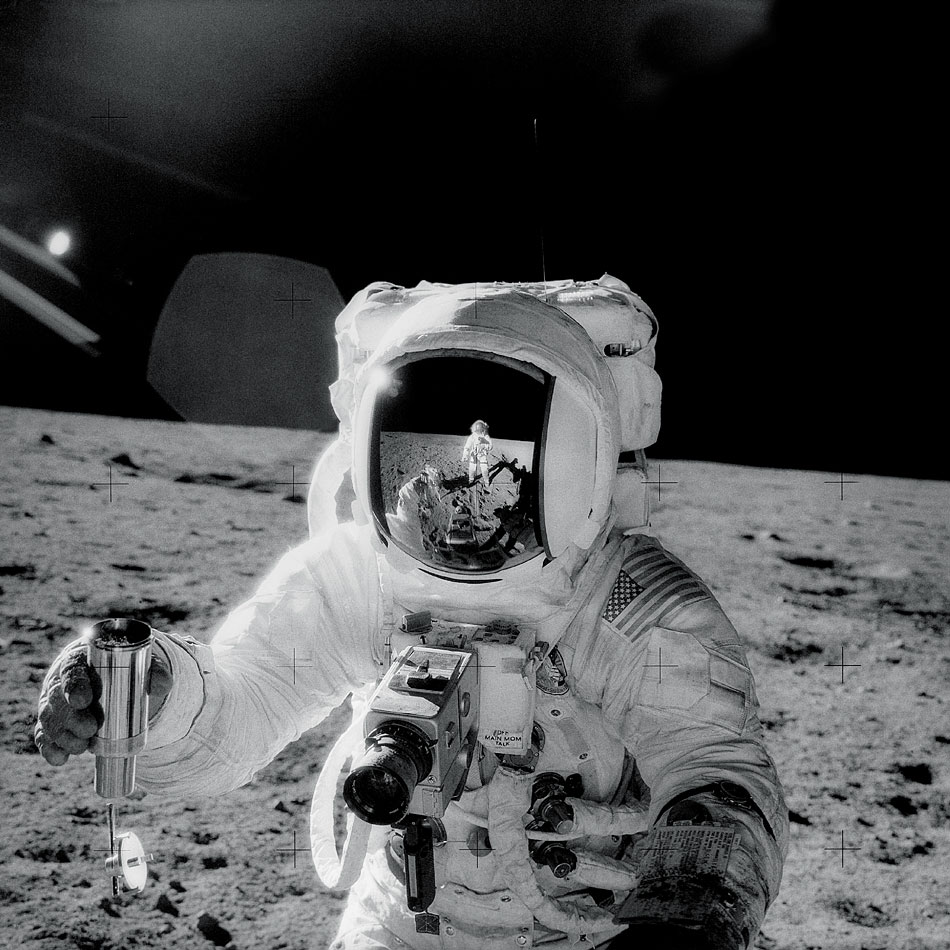
Astronaut: NASA
antwrp.gsfc.nasa.gov/apod/image/0601/bean_conrad_full.jpg
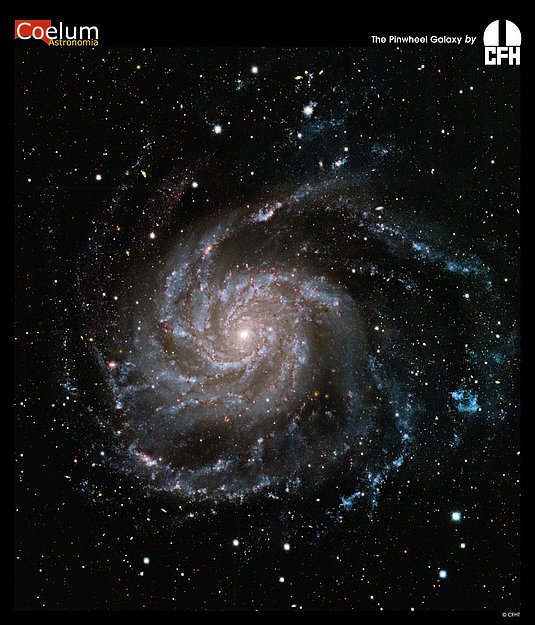
Galaxy: NASA
antwrp.gsfc.nasa.gov/apod/image/0303/m101_cfht_big.jpg
Flowers, beach and texture: own photos
NACA/NASA used Redstone missiles as launch vehicles in the early stages of its manned and unmanned space programs. A similar Jupiter-C/Redstone rocket stands in the Warren town square.
Check this out from NASA -- Blowing in the solar wind the spectacular ion tail of Comet SWAN (C/2020 F8) extends far across this 10 degree wide telephoto field of view. Captured on May 2 its greenish coma was about 6 light-minutes from Earth. The pretty background starfield lies near the border of the constellations Cetus and Aquarius. This comet SWAN was discovered at home by Australian amateur Michael Mattiazzo by checking images from the Sun-staring SOHO spacecraft's SWAN (Solar Wind ANisotropies) camera. The comet has now become just visible to the naked-eye as it sweeps from southern to northern skies. Appearing in morning twilight near the eastern horizon, Comet SWAN will make its closest approach to planet Earth on May 12 and reach perihelion on May 27. (ift.tt/2SLFEgl)
Just before the 15th anniversary of continuous human presence on the International Space Station on Nov. 2, 2015, U.S. astronaut and commander of the current Expedition 45 crew, Scott Kelly, is breaking spaceflight records. On Friday, Oct. 16, Kelly begins his 383rd day living in space, surpassing U.S. astronaut Mike Fincke’s record. via NASA go.nasa.gov/1jHv6du
Chaotic in appearance, these tangled filaments of shocked, glowing gas are spread across planet Earth's sky toward the constellation of Cygnus as part of the Veil Nebula. The Veil Nebula itself is a large supernova remnant, an expanding cloud born of the death explosion of a massive star. Light from the original supernova explosion likely reached Earth over 5,000 years ago. Blasted out in the cataclysmic event, the interstellar shock waves plow through space sweeping up and exciting interstellar material. The glowing filaments are really more like long ripples in a sheet seen almost edge on, remarkably well separated into the glow of ionized hydrogen atoms shown in red and oxygen in blue hues. Also known as the Cygnus Loop, the Veil Nebula now spans nearly 3 degrees or about 6 times the diameter of the full Moon. While that translates to over 70 light-years at its estimated distance of 1,500 light-years, this field of view spans less than one third that distance. Often identified as Pickering's Triangle for a director of Harvard College Observatory, the the complex of filaments is cataloged as NGC 6979. It is also known for its discoverer, astronomer Williamina Fleming, as Fleming's Triangular Wisp. via NASA ift.tt/2zIS7cI
Used up to 1995, thus this was where the moon landing was controled from. The current mission control room is a floor below here.
NASA Space Center at Houston
Title: NASA personnel
Catalog #: 08_01749
Additional Information: Maj Lane FTFOF
Repository: San Diego Air and Space Museum Archive
Views from NASA Goddard Space Flight Center's open house, Explore@NASA Goddard, on May 14, 2011.
Credit: NASA/GSFC/Pat Izzo
NASA Goddard Space Flight Center enables NASA’s mission through four scientific endeavors: Earth Science, Heliophysics, Solar System Exploration, and Astrophysics. Goddard plays a leading role in NASA’s accomplishments by contributing compelling scientific knowledge to advance the Agency’s mission.
Follow us on Twitter
Join us on Facebook