View allAll Photos Tagged Invoke
One of three candid photos taken outside the big top. Here you see two stilt-walkers and lots of patrons milling around .
"Recognized over the world, Cirque du Soleil has constantly sought to invoke imagination, provoke senses and evoke emotions. Discover the highly creative and artistic shows from Cirque du Soleil in your city: Toronto."
Thanks for visiting, much appreciated. Enjoy each day.
Under the light of the Moon, In the shadow of the Sun
I am the Stars and the Stars are me, I illuminate the brightest in Darkness
Through the eyes of the Maiden, Mother and Crone
I am the Earth and the Earth is me
We are connected in a natural rhythm
I am grounded in this moment, I recognise the Truth and accept it
I am the Air and the Air is me
With each breath balance is restored, My Heart is gentle, Hatred gone
I hear the whispers of Wisdom carried by the wind
I bend like a palm in a storm with Grace
I am Water and Water is me
I am cleansed of Negativity, I am Restored and Renewed
As I return stronger than before
I am Fire and Fire is me
My Spirit is unleashed, I follow my Heart to Freedom
My Passion inspires Creativity
With your Magic surging through me, And with the Magic I found inside
I am the Goddess and the Goddess is me
……………………………….
Poster:
Locandina:
m.media-amazon.com/images/I/81jc866255L._AC_SX679_.jpg

pad.mymovies.it/filmclub/2006/06/239/coverlg.jpg
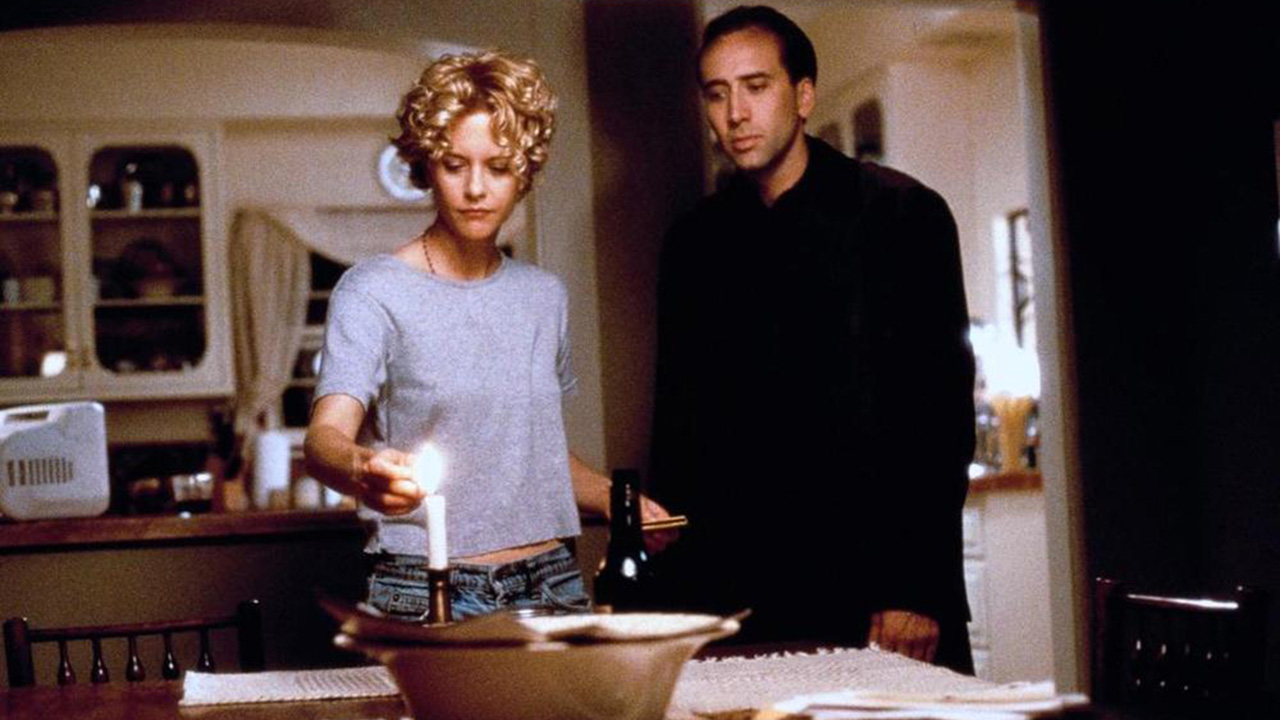
m.media-amazon.com/images/I/61X-PuyzEqL._AC_UF894,1000_QL...

minimaleffort.home.blog/wp-content/uploads/2020/09/city-o...

.............................................................................
click to activate the small icon of slideshow: the small triangle inscribed in the small rectangle, at the top right, in the photostream (it means the monitor);
or…. Press the “L” button to zoom in the image;
clicca sulla piccola icona per attivare lo slideshow: sulla facciata principale del photostream, in alto a destra c'è un piccolo rettangolo (rappresenta il monitor) con dentro un piccolo triangolo nero;
oppure…. premi il tasto “L” per ingrandire l'immagine;
www.fotografidigitali.it/gallery/2726/opere-italiane-segn...
………………………………………………………………………
What I present here on Flickr is a photographic account of the festival held every year in Palazzolo Acreide (Syracuse) in honor of Saint Michael the Archangel. This year the festival was celebrated on October 5th. The cult of Saint Michael the Archangel in Palazzolo Acreide seems to date back to the Arab-Norman period of Sicily (in Sicily, that period from the Arab conquest, 827 AD, which took it from the Byzantines, until the complete domination of the Normans, around 1194 AD). This is an era in which Sicily became a "container" of the most diverse cultures, Byzantine, Arab, Latin, Norman, thus creating a cultural, artistic and scientific synthesis: in this period, Christians invoked the "fighting" Archangel so that He could help them drive the Saracens from ancient Palazzolo (Palatiolum). On the eve of the liturgical feast (28 September), the “sciuta ra cammina” takes place, or what in other Sicilian feasts is called “la svelata” (the unveiled). The curtain covering the statue of the Archangel, placed in a “small room” above the main altar, is opened. Remaining behind the curtain, it is blocked from view for almost the entire year. The statue, now exposed for the adoration of the faithful, is moved forward a little (“sciuta ra cammina”, or “la svelata – the exit that walks” referring to the statue, which is carried forward). On the day of the big celebration, at 11:00 a.m., there will be a "hot air balloon launch." The organizers explained to me that the hot air balloons are made entirely of paper. The writing is also made with paper letters that are then glued together. The hot air produced beneath the balloons will make them fly. This year, the writing was in tune with the echo of the "People of Peace" movement, which hopes for an end to the war in Ukraine, waged by Russia, and for an end to Israeli oppression of the Palestinian people. At 1:00 pm the “sciuta” takes place, or the “exit” of the float with the statue of the Saint on it, carried on the shoulders of the devout bearers, to begin the procession. At that eagerly awaited moment, the fireworks are set off simultaneously, as are the “nzareddi” (long ribbons of colored paper, along with large confetti (the same ones seen during the exit of San Paolo, for his feast day, always in Palazzolo A.), the faithful explode in displays of jubilation, with their arms stretched high and invoking San Michele in a loud voice (this seems contagious to me, I too felt the need to raise my arms to the sky invoking San Michele, despite the photographic equipment….:o))…), the festive music of the marching band. Thus begins the procession toward the neighboring neighborhoods. The float is carried bare-shouldered by devout bearers. Long banners proceed at the front of the procession. Many devout women walk barefoot. Many children, both boys and girls, are lifted up and shown to the Archangel to ask for his spiritual intercession to protect them from evil. In thanksgiving, donations of banknotes or gold jewelry are made. Some typical curiosities of this celebration include: the statue of Saint Michael wears a breastplate made from gold from votive offerings donated over the centuries. It was later decided to melt them down and create his "gold-colored" breastplate. The statue of the Archangel, unlike what is seen in other Sicilian celebrations (usually from the "camera" located on the main altar, the saint, or saints, is made to descend by sliding on two tracks to reach the float, placed in front of the altar), here in Palazzolo A., instead, the simulacrum of the Archangel descends with a special ancient "elevator", placed under the small room, then behind the main altar, then lovingly carried in arms up to the float; on the shield of the Archangel, in the church that bears his name, on the T-shirts of the devotees, and on those of the boys and girls exposed to the Archangel, one reads "Quis ut Deus", it is the Latin translation of the name Michael (in Hebrew Mîkhā’ēl), which means “Who is like God?”, this expression is traditionally attributed to Saint Michael the Archangel, leader of the celestial armies, because, according to Christian tradition, it was the cry he uttered when he rebelled against Satan and his angels during the battle in heaven, affirming both the supremacy and uniqueness of God, and his devotion and loyalty towards the divine.
.………………………………………………
Questo che presento qui su Flickr, è un racconto fotografico della festa che si tiene ogni anno a Palazzolo Acreide (Siracusa) in onore di San Michele Arcangelo, quest’anno la festa è stata celebrata il 5 ottobre. Il culto per San Michele Arcangelo a Palazzolo Acreide, sembra risalga al periodo arabo-normanno della Sicilia (in Sicilia quel periodo che va dalla conquista araba, 827 d.C, che la sottrae ai Bizantini, fino al completo dominio dei Normanni, circa 1194 d.C.), questa è un’epoca nella quale la Sicilia diviene un “contenitore” di culture le più diverse, bizantina, araba, latina, normanna, realizzandosi in tal modo una sintesi culturale, artistica e scientifica: in questo periodo i Cristiani invocano l’Arcangelo “che combatte” affinchè Egli li possa aiutare a scacciare i Saraceni dall’antica Palazzolo (Palatiolum). Il giorno della vigilia della festa liturgica (28 settembre), si ha la “sciuta ra cammina”, ovvero quella che in altre feste siciliana si chiama “la svelata”, si apre la tenda che copre la statua dell’Arcangelo, posta in una “cameretta” posta sopra l’altare maggiore, restando dietro la tenda viene preclusa alla vista per quasi tutto l’anno, la statua esposta ora all’adorazione dei fedeli, viene fatta avanzare di poco (“sciuta ra cammina”, ovvero “la svelata-l’uscita che cammina” riferita alla statua, che viene portata in avanti). Il giorno della grande festa alle ore 11:00 c’è la manifestazione del “lancio delle mongolfiere”, gli organizzatori mi hanno spiegato che le mongolfiere sono realizzate completamente con la carta, le scritte sono fatte anch’esse con lettere di carta poi incollate, l’aria calda prodotta sotto tali mongolfiere le farà volare: quest’anno le scritte erano in sintonia con quella eco del “Popolo della Pace” che spera nella fine della guerra in Ucraina ad opera della Russia, e nella fine della oppressione Israeliana verso il popolo Palestinese. Alle ore 13:00 avviene la “sciuta”, ovvero “l’uscita” della vara con sopra il simulacro del Santo, portato in spalla dai devoti portatori, per iniziare la processione, in quel momento, attesissimo, avviene in contemporanea lo sparo dei fuochi d’artificio, lo sparo degli “nzareddi” (sono lunghi nastri di carta colorata, insieme a grossi coriandoli (gli stessi si assistono durante l’uscita di San Paolo, per la sua festa, sempre a Palazzolo A.), i fedeli esplodono in manifestazioni di esultanza, con le braccia protese in alto ed invocando San Michele a gran voce (cosa questa che a me sembra contagiosa, anch’io ho sentito il bisogno di alzare le braccia al cielo invocando San Michele, nonostante l’attrezzatura fotografica….:o))…), la musica festosa della banda musicale. Inizia così la processione verso i quartieri vicini, la vara viene portata con la “spalla nuda” dai devoti portatori, lunghi stendardi procedono davanti nella processione, molte donne devote camminano a piedi scalzi, molti bimbi o bimbe, vengono alzati e mostrati all’Arcangelo, per chiedere la sua intercessione spirituale per essere protetti dal male, in ringraziamento ci sono donazioni di bancanote o monili d’oro. Alcune curiosità tipiche di questa festa sono: la statua di San Michele ha una corazza realizzata con l’oro proveniente dagli Ex Voto donati nei trascorsi secoli, poi si decise di fonderli e realizzare la sua corazza “color oro”; la statua dell’Arcangelo a differenza di ciò che si vede in altre feste siciliane (in genere dalla “cameretta” che si trova sull’altare maggiore, il santo, o più santi, viene fatto scendere scorrendo su due binari per giungere sulla vara, posta davanti l’altare), qui a Palazzolo A., invece il simulacro dell’Arcangelo scende con un particolare antico “ascensore”, posto sotto la cameretta, quindi dietro l’altare maggiore, poi portato amorevolmente in braccio fin sopra la vara; sullo scudo dell’Arcangelo, nella chiesa che porta il suo nome, sulle magliette dei devoti, su quelle dei bimbi e bimbe esposte all’Arcangelo, si legge “Quis ut Deus”, è la traduzione in latino del nome Michele (in ebraico Mîkhā’ēl), che appunto significa “Chi è come Dio?”, questa espressione è tradizionalmente attribuita a San Michele Arcangelo, capo delle milizie celesti, perché, secondo la tradizione cristiana, fu il grido che egli pronunciò quando si ribellò a Satana e ai suoi angeli durante la battaglia in cielo, affermando e la supremazia e unicità di Dio, e la sua devozione e lealtà verso il divino. .
...........................................
► ▓░█ A MOMENT WHEN our flying friends break loose above our heads. Everybody is excited by the sunset in De Avelingen, the place to be at such a moment, and happy with an obvious anticipation of spring. March does his entry here in a jolly way. At long last the month that will invoke the spring, in less than three weeks! But not everybody exhibits joy in the same way. Wilde geese can go wild, but the dogs and the humans are tied by the canine and human etiquette. So do we not only show more restraint, but also freeze for the camera.
I like how everybody here, including the photographer, is looking in a different direction. But the colours disappoint me greatly. Read below.
֎⃣ Oldie Olympus E-M1 mark 1 fitted with a much newer 12-45mm f4.0 pro zoom. AWB, aperture priority f4 resulting in 1/500, ISO 200. Developed from raw and edited in Affinity Photo 2.4The 'Haze Removal' filter does wonders for the birds at the cost of making them too dark, and the sky assumes unnatural tints not to my taste.
For a reason, I've been editing on an old ThinkPad that has a rather neutral, or slightly blueish, low contrast matte screen. Coming over with the finished edit to a newer Apple screen is a huge disappointment. Instead of the colours popping up, there is often an orange-green hue out of control. This is "the golden hour" moment pictured, okay, but still, even with the "True Tone" off, the hue is not nice to say the least. The sooc jpeg is uninviting, but neutral. There is a calibration possibility for this Apple screen, so there is still hope. But if the problem persists even after the calibration, I will have to abandon the idea of editing on this MacBook whatsoever. Perhaps another way to test its screen is to compare it to a professional monitor. Do you have any experience with this nuisance?
~SHORTCUTS~ ...→Press [F11] and [L] key to engage Full Screen (Light box) mode with black background ↔ Press the same key or [Esc] to return... →Press [F] to "Like" (Fave)... →Press [C] to comment... →Press [A] to put into a gallery.
File name: P3010026-from-RAW_0.tiff
This was an experiment: use the long exposure capability on my iPhone on the rain falling on the windshield. The rain was in full focus when I took this photograph, including a long rivulet of rain that ran down diagonally from top right down the middle. It turned out that invoking the Long Exposure option blurred some of the rain, but not all. It makes a nice abstract!
301/366 pictures in 2020
All rights reserved. Please do not use or reproduce this image on websites, blogs or any other media without my permission.
This photograph captures the weathered, faded elegance of a once-grand doorway in the historic center of Palermo. The wooden doors, now cracked and peeling, bear remnants of a once vibrant yellow paint that has aged over time, giving the surface a textured, almost painterly effect. The wood is heavily marked by the passage of time, revealing various layers beneath the paint and showing areas where moisture and neglect have left their mark. These doors seem to tell a story of both architectural pride and abandonment, standing as relics of a bygone era.
The structure around the doorway hints at its historical significance, with detailed moldings and stone columns framing the doors. Above each side, there are baroque-like, ornamental carvings that may have once reflected the wealth and status of the building's original owners. This building, previously a palazzo, likely belonged to a noble family or was used as a center for political or social gatherings in Palermo's flourishing past. The style of the decorations suggests it was constructed in the 18th or 19th century, a period of architectural opulence in the city.
Today, this old palace stands abandoned, a shadow of its former self. The cracks and faded paint represent decades, possibly centuries, of change in Palermo. Many historic buildings in Palermo's center were once grand palaces that now suffer from neglect due to urban decay or lack of preservation funding. This doorway is a haunting reminder of the city's past glory and a testament to the resilience of the structure itself, which has withstood the elements and the passage of time despite its neglected state.
As a piece of architectural history, this doorway serves as a window into Palermo's rich cultural heritage. Although abandoned, the building still captures the imagination of those who walk by, offering a glimpse of an era when grandeur and attention to detail defined the cityâs architectural landscape. For locals and visitors alike, such relics of the past invoke a sense of nostalgia and curiosity, encouraging us to appreciate the layers of history embedded in Palermo's streets.
RX_03036_20240515_Palermo
May I help you stands out
Did you know that in Hindu mythology there is a strong, beautiful warrior goddess, who rides a tiger or lion? She is none other than Durga, the invincible. Lord Brahma, Lord Vishnu and Lord Shiva created Goddess Durga, as an avatar of Ma Shakti using their energies, to save devalok, where the Gods resided and living beings on earth from demon Mahishasura, as neither of the three could vanquish the demon. Goddess Durga, with weapons provided to her by the three Gods took over the task of vanquishing Mahishasura.She came to earth to kill the demon Mahishasura. After a long and hard battle, she killed Mahishasura and restored the heaven, devalok to the Gods, which was previously acquired by him.
Worship of Durga
Ma Durga as she is fondly called, is invoked for protection from the powers of evil. The triumph of Goddess Durga over the demon Mahishasura symbolizes the victory of good over the evil. Durga Puja is observed for her victory. Ma Durga has been worshiped from about 400 A.D or probably earlier than that, to the present time. The day of victory is celebrated as Vijayadashami or Dussehra.
Navaratri
The actual period of the worship however may be on the preceding nine days, Navaratri followed by the last day called Vijayadashami in North India or five days in Bengal. Nine aspects of Durga known as Navadurga are worshipped, one by one during the nine-day festival. In South India especially Andhra Pradesh, Navaratri is also celebrated and the goddess is dressed each day as a different devi meaning goddess.
The word devi in Sanskrit means divine or a shining presence. The nine manifestations of Durga worshipped during Navaratri in the month of Ashwin of the Hindu calendar are Shailaputri, Brahmacharini, Chandraghanta, Skandamata, Katyayani,Kaalratri, Mahagauri and Siddhidaatri.
The Garba
Durga is associated with two mountain ranges, the Himalayas in the north and the VIndhyas in central India. In Mysore, which originated from Mahishasooru in Karnataka, she is worshiped as Chamundeshwari, the patron goddess of the city during Dussehra. In Gujarat it is celebrated as the last day of Navaratri, during which the Garba dance is performed to celebrate the victory of Durga as ‘Mahishasura-mardini’.
Durga puja
‘Durga Puja’ is celebrated in Bengal, Odisha, Bihar, Jharkhand, Tripura, Assam and Bangladesh. The Goddess is worshipped as Mother Durga or Ma Durga, the Mother Goddess being the symbol of all the true qualities which define the Supreme Being. Durga is the representation of infinite power and purity, which resides within every being.The Devi Mahatmya or Devi Mahatmyam is a Hindu philosophical text describing the Goddess as the supreme power and creator of the universe. It is part of the Markandeya Purana. It is recited during Navratri celebrations, the Durga Puja festival,and in Durga temples across India. UNESCO has accorded the Intangible Cultural Heritage tag to Durga Puja on 15th December, 2021.
Durga in Art
Durga images can be seen carved on many ancient Indian temples and caves and is seen in murals as well. Durga images began to be available in miniature painting from 16th century to the 20th century. Durga worship is found all over India, more so in Eastern India. especially Bengal. Statues of Durga have been carved out of clay, stone and bronze and painted as patachitra in Odisha and Bengal. Painting styles in Rajasthani and Pahari have depicted the Goddess in its various schools.
The Salar Jung Museum Collection
The museum has an interesting repertoire of Goddess Durga representations. From bronze and stone statues to manuscript paintings of the Devi Mahatmya, the collection is impressive. There are in bronze folk Durga expressions too.The artefacts show her in battle mode and in her peaceful image as well.
Let us discover some of the collection of the powerful and feisty Goddess Durga at the Salar Jung Museum!
Durga with many Gods standing around her
Painting depicts multi armed Goddess Durga riding on tiger with many Gods standing around her with folded hands. Five angelic figures showering flowers over her. Geometrical designs on yellow band around, from Jaipur, dated to the 19th century.
Mahishahsura-mardini
Goddess Durga as Mahishasura-mardini with eight arms holding weapons, killing a buffalo demon at her feet, figure is on a rectangular base, from South India, dated to the 18th century.
Durga as Mahishasura-mardini
Goddess Durga as Mahishasura mardini killing Mahishasura. Three temples seen in middle of rocks and an orange coloured flag on the shikhara is on the middle main shrine, painting from Jodhpur, dated to circa 1800.
Mahishasura-mardini
Bronze statuette of Mahishasura-mardini with four arms, holding sword, trident and mace, resting her left foot on an animal at left. Elongated cut out hole at back, from South India, dated to 20th century.
Battle between Durga and demons
Painting showing a battle between Goddess Durga and demons in which Durga is riding on lion carrying various weapons in her many arms accompanied by her four followers attacking the demons who are armed, elephant and horses seen falling down, from Guler, dated to the late 18th century.
Eight-handed Devi
Bronze figure of eight-handed Devi Mariamman with the seven hooded serpent, who is affiliated to Goddess Durga, bronze, from India, dated to the 19th century.
Durga in an illustrated manuscript
Goddess Durga, illustrated manuscript, painting showing Durga devi - a few verses in Devanagari also seen, dated to circa 1650.
Figure of Goddess Durga
Probably a bronze figure of Goddess Durga dancing. Her legs are on a prostrate figure. Ganesh on the right side. Hands carry the symbols, a halo around the figure. A snake on the right side of the halo, from South India, dated to the 14th century.
Goddess Durga in combat with demons
Painting depicts multi-armed Goddess Durga riding on a tiger's back and horned demons Shumbha and Nishumbha with mace and shield in attacking position depicted in two registers, the demon below has moustaches. Geometrical designs on yellow band around, folio from a Devi Mahatmaya, from Jaipur, dated to the 19th century.
Goddess Durga
Goddess Durga riding on a lion fighting with two demons, figure is on a wooden base, made in ivory, dated to the 20th century.
Goddess Durga seated on a throne
Painting depicts multi-armed Goddess Durga seated on a throne with human and animal figures on her lap. Eight maids standing on either side with chatter and fly-whisks. Angelic figures showering flowers over her, from Jaipur, dated to the 19th century.
Goddess Durga in combat with demon
Painting depicts multi-armed Goddess Durga riding on tiger shooting arrows at demon Nishumbha. Geometrical designs around the painting, folio from a Devi Mahatmya from Jaipur, dated to the 19th century.
Standing 'Asthabhuja Durga'
Goddess Durga with several weapons and attributes like sword, spear, sickle, shankha,shield and bow. Her hands bears several bangles. Her front right hand is shown in varadahasta or posture of granting wishes. A lady probably a bhakta or devotee is seen seated on left. Stone sculpture from West Bengal, Pala dynasty, dated to the 13th century.
Durga riding on tiger shooting arrows
Painting depicts multi-armed Goddess Durga riding on tiger shooting arrows. The arrows already shot have pierced the arms and shield of the demon who is holding a sword in his right hand. Two attendants with fly-whisks on either side of Durga. Geometrical designs around the painting, folio from a Devi Mahatmya from Jaipur, dated to the 19th century.
Folk figure of Goddess Durga
Folk bronze figure of Durga holding a lotus in her left hand and weapons in her other hand, from Central India, dated to the16th century.
Durga riding on tiger armed with weapons
Painting depicts multi-armed Goddess Durga riding on tiger, armed with sword, mace, spear, arrow, trident and holding the head of a vanquished demon by its long hair tassel, from Deccan, dated to the late 19th century.
Durga killing a demon
Illustrated palm leaf is containing ten leaves depicting Goddess Durga killing a demon, patachitra from Odisha, dated to the 18th century.
Mahishasura-mardini
Bronze figure of Mahishasura-mardini on four-legged rectangular base, from South India, dated to the 19th century.
Credits: Story
Text and Curation : Soma Ghosh
Photography : M. Krishnamurthy and Bahadur Ali
Research Assistance : Dinesh Singh and E. Rajesh
Special Thanks to Dr. A. Nagender Reddy, Director, Salar Jung Museum, Hyderabad, India.
References -
1. Pal, Pratapaditya, ed./Goddess Durga - The Power and The Glory, Mumbai: Marg
Publications
2. en.wikipedia.org/wiki/Durga (accessed on 23.06.2022)
3. festivals.iloveindia.com/durga-puja/origin-durga-puja.html (accessed on 23.06.2022)
Credits: All media
The story featured may in some cases have been created by an independent third party and may not always represent the views of the institutions, listed below, who have supplied the content.
Salar Jung Museum
Salar Jung Museum
Los Angeles County Museum of Art
Los Angeles County Museum of Art
Philadelphia Museum of Art
Philadelphia Museum of Art
Royal Ontario Museum
Royal Ontario Museum
Stories from these collections
Online Exhibit
Vasudhara - Goddess of Abundance
Salar Jung Museum
Online Exhibit
Aftershocks: Japanese Earthquake Prints (1 of 3)
Royal Ontario Museum
Online Exhibit
Reigning Men: Fashion in Menswear, 1715 - 2015
Los Angeles County Museum of Art
Online Exhibit
Lady Lighting a Lamp
Salar Jung Museum
Online Exhibit
Aftershocks: Japanese Earthquake Prints (2 of 3)
Royal Ontario Museum
Online Exhibit
A Diwali Royale
Salar Jung Museum
Online Exhibit
Aftershocks: Japanese Earthquake Prints (3 of 3)
Royal Ontario Museum
Online Exhibit
Composite Carpet
Salar Jung Museum
Online Exhibit
Blue Whale Project
Royal Ontario Museum
Online Exhibit
Chakrasamvara - a Buddhist deity
Salar Jung Museum
Online Exhibit
#MyPandemicStory: youth create portraits of a pandemic at ROM
Royal Ontario Museum
The ever changing CanarySprings in the Mammoth Hot Springs area of Yellowstone NP. Canary Springs is named for its bright yellow color and owes its brilliance to sulfur-dependent filamentous bacteria. The colors blend here in delicate tints on the creamy rock face. All the Mammoth Hot Springs terraces are formed when water ascends through the ancient limestone deposits of the area. The results are striking and unique. They invoke a landscape that resembles a cave turned inside out, with its delicate features exposed for all to see. The flowing waters spill across the surface to sculpt magnificent travertine limestone terraces.
#macromondays #Spooky
The latest #macromondays challenge #Spooky prompts me to share this picture with you. Size of the skull is aprox. 25mm
"Spooky" is an adjective that describes something that is eerie or frightening, often in a way that is associated with the supernatural or with Halloween. It can refer to things like haunted houses, ghost stories, or eerie noises in the night. The term is often used in a playful or lighthearted manner, especially in the context of Halloween decorations or costumes. For example, one might describe a jack-o'-lantern as "spooky."
"Spooky situations" can refer to scenarios or settings that invoke a sense of unease, fear, or the supernatural. They can range from genuinely frightening to lighthearted and playful, especially when associated with Halloween. Here are some examples:
Haunted Houses: Old, dilapidated houses with a history of ghost sightings or unexplained phenomena.
Abandoned Places: Asylums, schools, factories, or hospitals that have been left to decay can be spooky due to their emptiness and the remnants of their past.
Graveyards at Night: The association with the dead and the quiet, eerie atmosphere can be unsettling.
Forests at Night: The dark, the rustling of leaves, and the unknown can be spine-tingling.
Hearing Eerie Noises: Sounds like footsteps when you're alone, or unexplained creaks and whispers.
Seances and Ouija Boards: Trying to communicate with the spirit world can be seen as a spooky situation by many.
Urban Legends and Local Myths: Stories about entities like the Mothman, Bloody Mary, or La Llorona create spooky scenarios when visiting the places associated with these legends.
Being Alone in a Usually Busy Place: For instance, being in a school or mall alone at night can feel spooky.
Power Outages during a Storm: The combination of darkness, the sound of the storm, and the absence of the usual comforts of electricity can be unsettling.
Unexplained Phenomena: Seeing apparitions, items moving on their own, or experiencing cold spots in a room can be deemed spooky.
Many people actively seek out spooky situations, especially around Halloween, for the thrill and fun of being scared in a controlled environment. However, it's always important to ensure safety and not put oneself or others in genuine danger for the sake of a thrill.
Is this conversation helpful so far?
Thank you for visits, comments and favs!
Vielen Dank für Eure Besuche, Kommentare und Sternchen!
Please don't use this image on websites, blogs or other media without my explicit permission. © All rights reserved
Flickr app doesn't support sRGB color. For best viewing use your browser.
Chester Cathedral and Chester Visual Arts present ‘Our Colour Reflection’ by international artist, Liz West. The installation creates a conversation between the viewer and the setting using hundreds of mirrors made of coloured acrylic.
West creates vivid environments that mix luminous colour and radiant light. Working across a variety of mediums, West aims to provoke a heightened sensory awareness in the viewer through her works. She is interested in exploring how sensory phenomena can invoke psychological and physical responses that tap into our own deeply entrenched relationships to colour.
Open Monday to Saturday: 9am – 5pm, Sunday: 11am – 4pm
FREE ENTRY – generous donations welcome
For more information about Chester Cathedral see:
For more information about Liz West see:
#ChesterCulture #ourcolourreflection
matrixspirt.blogspot.com/2023/12/ms-0911.html
Tattoo - inKdependent - MONSTER INSIDE ME
- EXCLUSIVE THE DARKNESS MONTHLY EVENT
✦ 5 th DECEMBER (01.00 PM), the event opens.
✦ 26TH DECEMBER ROUND CLOSING
Voguel - Scott Skin
at DUBAI EVENT
Badwolf - Kurt Gloves
For TMD
L'Emporio&PL - Invoked*::for Swallow XL Gauged
FashionNatic - Kyro Pants
Looking up into the overcast skies, the curves of this building invoke the comforting aesthetic of modern London life.
ODC-Classical (George Harrison)
This song is classical Beatles and is described as something that is immediately recognizable, and outstanding that can invoke an emotional response. I know this song certainly makes me Happy! And seeing the sun again definitely makes me Happy!
www.udiscovermusic.com/stories/the-beatles-here-comes-the...
L'Emporio&PL ::*Invoked*::for Swallow XL Gauged
New exclusives for MEN ONLY event
20th October 2023 to 15th November 2023
L'Emporio&PL::*Chiromante*::Nails
New exclusives for THE DARK STYLE FAIR - MAD CIRCUS
October 5 to 31 2023
DEATH INK - FACE BRUISES 16 Evox Unisex
NEW RELEASE AVAILABLE AT MIIX EVENT
September Round Event start: September 30 Close: October 20
Unorthodox - Mel Beard & Beardbase
BONDI . Ripper Glasses
BONDI . Jack Hat
Sagrada Família, Barcelona, España.
El Templo Expiatorio de la Sagrada Familia, conocido simplemente como la Sagrada Familia, es una basílica católica de Barcelona (España), diseñada por el arquitecto Antoni Gaudí. Iniciada en 1882, todavía está en construcción (noviembre de 2016). Es la obra maestra de Gaudí, y el máximo exponente de la arquitectura modernista catalana.
La Sagrada Familia es un reflejo de la plenitud artística de Gaudí: trabajó en ella durante la mayor parte de su carrera profesional, pero especialmente en los últimos años de su carrera, donde llegó a la culminación de su estilo naturalista, haciendo una síntesis de todas las soluciones y estilos probados hasta aquel entonces. Gaudí logró una perfecta armonía en la interrelación entre los elementos estructurales y los ornamentales, entre plástica y estética, entre función y forma, entre contenido y continente, logrando la integración de todas las artes en un todo estructurado y lógico.
La Sagrada Familia tiene planta de cruz latina, de cinco naves centrales y transepto de tres naves, y ábside con siete capillas. Ostenta tres fachadas dedicadas al Nacimiento, Pasión y Gloria de Jesús y, cuando esté concluida, tendrá 18 torres: cuatro en cada portal haciendo un total de doce por los apóstoles, cuatro sobre el crucero invocando a los evangelistas, una sobre el ábside dedicada a la Virgen y la torre-cimborio central en honor a Jesús, que alcanzará los 172,5 metros de altura. El templo dispondrá de dos sacristías junto al ábside, y de tres grandes capillas: la de la Asunción en el ábside y las del Bautismo y la Penitencia junto a la fachada principal; asimismo, estará rodeado de un claustro pensado para las procesiones y para aislar el templo del exterior. Gaudí aplicó a la Sagrada Familia un alto contenido simbólico, tanto en arquitectura como en escultura, dedicando a cada parte del templo un significado religioso.
The Expiatory Church of the Sagrada Familia, known simply as the Sagrada Familia, is a Roman Catholic basilica in Barcelona, Spain, designed by architect Antoni Gaudí. Begun in 1882, it is still under construction (November 2016). It is Gaudí's masterpiece and the greatest exponent of Catalan modernist architecture.
The Sagrada Familia is a reflection of Gaudí's artistic plenitude: he worked on it for most of his professional career, but especially in his later years, where he reached the culmination of his naturalistic style, synthesizing all the solutions and styles he had tried up to that point. Gaudí achieved perfect harmony in the interrelationship between structural and ornamental elements, between plasticity and aesthetics, between function and form, between content and container, achieving the integration of all the arts into a structured and logical whole. The Sagrada Familia has a Latin cross plan, five central naves, a three-aisled transept, and an apse with seven chapels. It boasts three façades dedicated to the Birth, Passion, and Glory of Jesus. When completed, it will have 18 towers: four at each portal, making a total of twelve for the apostles, four over the transept invoking the evangelists, one over the apse dedicated to the Virgin, and the central dome tower in honor of Jesus, which will reach 172.5 meters in height. The temple will have two sacristies next to the apse and three large chapels: the Assumption Chapel in the apse and the Baptism and Penance Chapels next to the main façade. It will also be surrounded by a cloister designed for processions and to isolate the temple from the exterior. Gaudí applied a highly symbolic content to the Sagrada Familia, both in architecture and sculpture, dedicating each part of the temple to a religious significance.
Festival complètement Cirque 3 Géants- 3 Giants
LES 7 DOIGTS on the PVM Esplanade, Place Ville Marie
Montreal, Qc July 2022
The giant changes the proportions of our universe. He can become a figure of the artist, an allegory of knowledge, or a metaphor for superhumanity.
A group of workers who thrive on hard work and who flourish when together have stormed this construction site for several moons. These men and women are put to work in a highly acrobatic way to finalize this titanic undertaking and give life to this scrap metal giant. Together, they work with perseverance, authenticity, passion, conviction, stubbornness and resilience. The heart, the apparent focus of emotional turmoil, becomes the allegorical representation of the creative drive. Inspired by the intuitive movement of Les Automatistes, we offer a show that celebrates creativity in its most instinctive and visceral form. A metaphor invoking the power that collectivity can wield. A praise of the greater than self, these giants exist because we create them, because we make them live.
LES 7 DOIGTS sur l’Esplanade PVM, à Place Ville Marie
Montréal, Qc Juillet 2022
Le géant est celui qui change les proportions de notre univers. Il peut devenir figure de l’artiste, allégorie du savoir, ou métaphore de la surhumanité.
Un groupe d’ouvriers qui carbure au labeur et se nourrit d’être ensemble, a pris d’assaut ce chantier depuis plusieurs lunes. Ces hommes et ces femmes, sont mis à contribution de manière hautement acrobatique pour finaliser cette titanesque entreprise et donner la vie à ce géant de ferraille. Ensemble, ils travaillent avec persévérance, authenticité, passion, conviction, entêtement et résilience. Le cœur, foyer apparent des ébranlements émotionnels, devient la représentation allégorique de la pulsion créative. S’inspirant du mouvement intuitif des Automatiste, nous proposons une œuvre qui célèbre la créativité dans sa forme la plus instinctive et viscérale. Métaphore invoquant la puissance que peut exercer la collectivité. Louange du plus grand que soi, ces géants existent par ce que nous les créons, parce que nous les faisons vivre.
children. They are prayed to for welfare of the family, family happiness, and the restoring sick children to health.
Julitta and her son Cyricus are invoked in prayer for families and children and as a protector of children.
LARGE view www.flickr.com/photos/jaciii/52837843398/sizes/l/
With 198 views, 50 faves, 8 comments and 3 groups, foto did
Explore www.flickr.com/explore/2023/04/22
#122 on 22 April 2023
#121 on 26 April 2023
#120 on 3 May 2023
#119 on 30 May 2023
#118 on 6 June 2023
#116 on 5 December 2023
#115 on 25 March 2024
#113 on 25 September 2024
The one you have been waiting for is here, but you just don't know yet.
As I was staring down from the century-old mansion, I was eagerly waiting for people coming into my frame. Like the preceding image, Faith, this is another boring image that I need to get out from my system.
I was drawn into photojournalism late last year, especially the ones featuring in Time magazine about war, life and everything else that invoke emotion. I discovered that a powerful image didn't necessarily have to be colorful or dramatic. A powerful image that is real and can make people think and feel is a great image too. It also requires people with experience in order to accept its existence.
Wild South Africa
Kruger National Park
.....in the Park on a slope of Shikumbu Hill, which was occupied in the 19th Century by local iron-making communities who also inhabited nearby Masorini Moutain. Shikumbu is still regarded by many as a sacred hill associated with powerful "muthi". Tradisionalists in the area say to point a finger at the granite mountain is to invoke bad luck.
The Chrysalis Of Ion - Elydhyan
With the Music : Max Legend - Destiny
Her black mantle of bright and colorful spots reveal the power of his presence but also to its relentless character, governing the Night and the nocturnal storms but also protecting the forest in the dark ... Elydhyan ... do not invoke her name without a real reason to do so ...
Subject: Angel.
Medium: Digital Artwork.
Inspiration: I wanted to invoke a feeling of choice & transition.
No electronic gadgets needed scanning the airwaves, I do it the true "hands on way".
Using a traditional Ouija board instead of an Ovilus can be a fascinating exploration into the realms of the supernatural, blending antiquity with mystery. The Ouija board, also known as a spirit board or talking board, has a rich history dating back to the late 19th century when spiritualism was at its peak. Its simple yet enigmatic design consists of letters, numbers, and other symbols arranged in a systematic layout, accompanied by a planchette, a heart-shaped piece typically made of wood or plastic, which serves as a conduit for spirit communication.
Engaging with a Ouija board often involves a group of individuals lightly placing their fingertips on the planchette, asking questions aloud, and awaiting its movement across the board to spell out answers. This process is believed to facilitate communication with spirits or entities from beyond, tapping into a realm inaccessible to our normal senses. The experience can be both thrilling and unsettling, as participants feel a tangible connection with the unknown.
Contrastingly, the Ovilus operates on a different principle, employing modern technology rather than the age-old mystique of the Ouija board. Developed in the early 2000s, the Ovilus is an electronic device that purportedly detects changes in environmental conditions, such as electromagnetic fields and temperature, and converts these fluctuations into audible speech. It's marketed as a tool for paranormal investigation, providing instant responses to questions asked by users.
While the Ovilus offers a more streamlined approach to spirit communication, some enthusiasts argue that it lacks the charm and authenticity of the traditional Ouija board. The tactile sensation of moving the planchette, the anticipation of its response, and the eerie atmosphere created during a Ouija session contribute to its enduring appeal. There's a sense of tradition and ritual associated with using the Ouija board, invoking a sense of mysticism that can't be replicated by a digital device.
Moreover, skeptics often question the reliability of the Ovilus, attributing its responses to random environmental fluctuations rather than genuine paranormal activity. In contrast, the subjective experience of using a Ouija board can be deeply personal and profound, fostering a sense of connection with the supernatural world.
Ultimately, whether one chooses to use a traditional Ouija board or a modern Ovilus depends on personal preference and belief systems. Both methods offer unique insights into the unknown, inviting participants to explore the mysteries of the spirit world in their own way. I dare you....remember to close the session with "goodbye".
In order to add a bit of context into the last photo a handy dog walker moved into the scene. Alas it has added bokeh to the overall mix, and lost the detail in the highlights, but it still invokes the amazing scene that unfolded as the sun rose
The Sun was yet to come and light seemed to leak with a delicate gleam onto the pass and fall further still into the deep ravine cut by the stream.
© PHH Sykes 2024
phhsykes@gmail.com
Hardknott Roman Fort English Heritage
www.english-heritage.org.uk/visit/places/hardknott-roman-...
Hardknott Roman Fort
en.wikipedia.org/wiki/Hardknott_Roman_Fort
The Fort at River's Bend
en.wikipedia.org/wiki/The_Fort_at_River%27s_Bend
Roman Lake District Audio Guides
English Heritage Audio Guides
soundcloud.com/ehaudio/sets/roman-lake-district-audio-guides
Hardknott mentioned in this Sonnet.
William Wordsworth
From, The River Duddon, A Series Of Sonnets, 1820. Numbered XVII 17
A dark plume fetch me from yon blasted yew,
Perched on whose top the Danish Raven croaks;
Aloft, the imperial Bird of Rome invokes
Departed ages, shedding where he flew
Loose fragments of wild wailing, that bestrew
The clouds and thrill the chambers of the rocks;
And into silence hush the timorous flocks,
That, calmly couching while the nightly dew
Moistened each fleece, beneath the twinkling stars
Slept amid that lone Camp on Hardknot’s height,
Whose Guardians bent the knee to Jove and Mars:
Or, near that mystic Round of Druid frame
Tardily sinking by its proper weight
Deep into patient Earth, from whose smooth breast it came!
Sagrada Família, Barcelona, España.
El Templo Expiatorio de la Sagrada Familia, conocido simplemente como la Sagrada Familia, es una basílica católica de Barcelona (España), diseñada por el arquitecto Antoni Gaudí. Iniciada en 1882, todavía está en construcción (noviembre de 2016). Es la obra maestra de Gaudí, y el máximo exponente de la arquitectura modernista catalana.
La Sagrada Familia es un reflejo de la plenitud artística de Gaudí: trabajó en ella durante la mayor parte de su carrera profesional, pero especialmente en los últimos años de su carrera, donde llegó a la culminación de su estilo naturalista, haciendo una síntesis de todas las soluciones y estilos probados hasta aquel entonces. Gaudí logró una perfecta armonía en la interrelación entre los elementos estructurales y los ornamentales, entre plástica y estética, entre función y forma, entre contenido y continente, logrando la integración de todas las artes en un todo estructurado y lógico.
La Sagrada Familia tiene planta de cruz latina, de cinco naves centrales y transepto de tres naves, y ábside con siete capillas. Ostenta tres fachadas dedicadas al Nacimiento, Pasión y Gloria de Jesús y, cuando esté concluida, tendrá 18 torres: cuatro en cada portal haciendo un total de doce por los apóstoles, cuatro sobre el crucero invocando a los evangelistas, una sobre el ábside dedicada a la Virgen y la torre-cimborio central en honor a Jesús, que alcanzará los 172,5 metros de altura. El templo dispondrá de dos sacristías junto al ábside, y de tres grandes capillas: la de la Asunción en el ábside y las del Bautismo y la Penitencia junto a la fachada principal; asimismo, estará rodeado de un claustro pensado para las procesiones y para aislar el templo del exterior. Gaudí aplicó a la Sagrada Familia un alto contenido simbólico, tanto en arquitectura como en escultura, dedicando a cada parte del templo un significado religioso.
The Expiatory Church of the Sagrada Familia, known simply as the Sagrada Familia, is a Roman Catholic basilica in Barcelona, Spain, designed by architect Antoni Gaudí. Begun in 1882, it is still under construction (November 2016). It is Gaudí's masterpiece and the greatest exponent of Catalan modernist architecture.
The Sagrada Familia is a reflection of Gaudí's artistic plenitude: he worked on it for most of his professional career, but especially in his later years, where he reached the culmination of his naturalistic style, synthesizing all the solutions and styles he had tried up to that point. Gaudí achieved perfect harmony in the interrelationship between structural and ornamental elements, between plasticity and aesthetics, between function and form, between content and container, achieving the integration of all the arts into a structured and logical whole. The Sagrada Familia has a Latin cross plan, five central naves, a three-aisled transept, and an apse with seven chapels. It boasts three façades dedicated to the Birth, Passion, and Glory of Jesus. When completed, it will have 18 towers: four at each portal, making a total of twelve for the apostles, four over the transept invoking the evangelists, one over the apse dedicated to the Virgin, and the central dome tower in honor of Jesus, which will reach 172.5 meters in height. The temple will have two sacristies next to the apse and three large chapels: the Assumption Chapel in the apse and the Baptism and Penance Chapels next to the main façade. It will also be surrounded by a cloister designed for processions and to isolate the temple from the exterior. Gaudí applied a highly symbolic content to the Sagrada Familia, both in architecture and sculpture, dedicating each part of the temple to a religious significance.
Sagrada Família, Barcelona, España.
El Templo Expiatorio de la Sagrada Familia, conocido simplemente como la Sagrada Familia, es una basílica católica de Barcelona (España), diseñada por el arquitecto Antoni Gaudí. Iniciada en 1882, todavía está en construcción (noviembre de 2016). Es la obra maestra de Gaudí, y el máximo exponente de la arquitectura modernista catalana.
La Sagrada Familia es un reflejo de la plenitud artística de Gaudí: trabajó en ella durante la mayor parte de su carrera profesional, pero especialmente en los últimos años de su carrera, donde llegó a la culminación de su estilo naturalista, haciendo una síntesis de todas las soluciones y estilos probados hasta aquel entonces. Gaudí logró una perfecta armonía en la interrelación entre los elementos estructurales y los ornamentales, entre plástica y estética, entre función y forma, entre contenido y continente, logrando la integración de todas las artes en un todo estructurado y lógico.
La Sagrada Familia tiene planta de cruz latina, de cinco naves centrales y transepto de tres naves, y ábside con siete capillas. Ostenta tres fachadas dedicadas al Nacimiento, Pasión y Gloria de Jesús y, cuando esté concluida, tendrá 18 torres: cuatro en cada portal haciendo un total de doce por los apóstoles, cuatro sobre el crucero invocando a los evangelistas, una sobre el ábside dedicada a la Virgen y la torre-cimborio central en honor a Jesús, que alcanzará los 172,5 metros de altura. El templo dispondrá de dos sacristías junto al ábside, y de tres grandes capillas: la de la Asunción en el ábside y las del Bautismo y la Penitencia junto a la fachada principal; asimismo, estará rodeado de un claustro pensado para las procesiones y para aislar el templo del exterior. Gaudí aplicó a la Sagrada Familia un alto contenido simbólico, tanto en arquitectura como en escultura, dedicando a cada parte del templo un significado religioso.
The Expiatory Church of the Sagrada Familia, known simply as the Sagrada Familia, is a Roman Catholic basilica in Barcelona, Spain, designed by architect Antoni Gaudí. Begun in 1882, it is still under construction (November 2016). It is Gaudí's masterpiece and the greatest exponent of Catalan modernist architecture.
The Sagrada Familia is a reflection of Gaudí's artistic plenitude: he worked on it for most of his professional career, but especially in his later years, where he reached the culmination of his naturalistic style, synthesizing all the solutions and styles he had tried up to that point. Gaudí achieved perfect harmony in the interrelationship between structural and ornamental elements, between plasticity and aesthetics, between function and form, between content and container, achieving the integration of all the arts into a structured and logical whole. The Sagrada Familia has a Latin cross plan, five central naves, a three-aisled transept, and an apse with seven chapels. It boasts three façades dedicated to the Birth, Passion, and Glory of Jesus. When completed, it will have 18 towers: four at each portal, making a total of twelve for the apostles, four over the transept invoking the evangelists, one over the apse dedicated to the Virgin, and the central dome tower in honor of Jesus, which will reach 172.5 meters in height. The temple will have two sacristies next to the apse and three large chapels: the Assumption Chapel in the apse and the Baptism and Penance Chapels next to the main façade. It will also be surrounded by a cloister designed for processions and to isolate the temple from the exterior. Gaudí applied a highly symbolic content to the Sagrada Familia, both in architecture and sculpture, dedicating each part of the temple to a religious significance.
The Basilica of Santo Cristo de Bonanza was the first parish of Pasai Donibane (San Juan) in the 14th century and was dedicated to San Juan de la Ribera. Once the new parish was built, it was dedicated to Santa Isabel, until it was destroyed by fire, leaving no remains. At this time it was used to attend mainly the religious service of the garrison of the Castle of Santa Isabel. In its place, the current Basilica of Santo Cristo de Bonanza was built in 1738, paid for by donations from all locals, including residents abroad (Peru, Manila, Venezuela, etc ...). A curious detail is that of the besugueras boats, which used a part of their fishing for him.
Captains and crews made collections for their support. They offered masses at the departure and arrival of the ships, commissioned for their men in thanksgiving for a successful navigation or invoking the protection of the Holy Christ for the trip.
#AbFav_BLUE_
These little vessels never cease to invoke a happy feeling and a smile on my face.
I also love lying in the water like that, LOL.
More gathered from all over.
The light was just fabulous as you can see, M, (*_*)
For more: www.indigo2photography.com
Please do not use any of my images on websites, blogs or any other media without my explicit permission. © All rights reserved
dinghy, boat, covered, sea, seaweed, ropes, covered, reflection, moored, sunlight, light, colour, horizontal, Nikon, Magda indigo
Like some mythical beast rising from the waters this fallen tree invoked a sense of fear in me when I first discovered it.
It also provided a play on words opportunity for me that I couldn't ignore! So whether you want it to look like the mythical Kraken, could imagine the sound of cracking wood as it fell or, less likely, think this picture is a cracking photo, it is posted here anyway!
She had grown tired of loneliness, tired of the endless dates which ended in nothing but disappointment. Deigning to use her Wiccan ancestry to gain access to a sacred crypt and attempted to use a chunk of his sarcophagus to summon a a succubus.
What could possibly go wrong.. using the wrong tools.. chants.. even stealing his slab??
Regardless of her numerous mistakes, this blasphemy of a blasphemy enraged him and made him invoke an avatar in this terrestrial plane to correct this woman's behavior.. or take her for himself.
Heavy is the weight of power, as is the Weight of Sorrow placed upon Hades himself, should you wish to take up these beautiful, yet bewildering horns. You can find them at Access until November 8th!
/Vae Victis.
Flickr | Main Store | Marketplace | Discord | Facebook
If you wish to see more of this snack, check out My lovely Stephanie here!
The Sun was yet to come and light seemed to leak with a delicate gleam onto the pass and fall further still into the deep ravine cut by the stream.
© PHH Sykes 2024
phhsykes@gmail.com
Hardknott Roman Fort English Heritage
www.english-heritage.org.uk/visit/places/hardknott-roman-...
Hardknott Roman Fort
en.wikipedia.org/wiki/Hardknott_Roman_Fort
The Fort at River's Bend
en.wikipedia.org/wiki/The_Fort_at_River%27s_Bend
Roman Lake District Audio Guides
English Heritage Audio Guides
soundcloud.com/ehaudio/sets/roman-lake-district-audio-guides
Hardknott mentioned in this Sonnet.
William Wordsworth
From, The River Duddon, A Series Of Sonnets, 1820. Numbered XVII 17
A dark plume fetch me from yon blasted yew,
Perched on whose top the Danish Raven croaks;
Aloft, the imperial Bird of Rome invokes
Departed ages, shedding where he flew
Loose fragments of wild wailing, that bestrew
The clouds and thrill the chambers of the rocks;
And into silence hush the timorous flocks,
That, calmly couching while the nightly dew
Moistened each fleece, beneath the twinkling stars
Slept amid that lone Camp on Hardknot’s height,
Whose Guardians bent the knee to Jove and Mars:
Or, near that mystic Round of Druid frame
Tardily sinking by its proper weight
Deep into patient Earth, from whose smooth breast it came!
Glen Coe, Scotland. Everyone has a favourite photo because of the memories it invokes. This is mine. I scrambled up the mountain Beinn a'Chrulaiste before dawn for this spectacular sight and fired off dozens/hundreds of exposures as the scene kept changing before my eyes. I think it works best in pano mode. I then nipped up Buachaille Etive Mor (the mountain opposite - shrouded in cloud) and spent a great day walking the entire ridge. Then I severely tore my Achilles on the descent (its still not better and I walk with a limp - I probably need an op' but that would curtail my photography). But it was worth it. Some think I'm mad, climbing mountains in the dark, sometimes in the middle of winter, and camping out up top. I tell them that only photographers will understand. I hope you do? By the way, Cuimhneachain is the Scots Gaidhlig word for Memories.
This is my favorite stop along Tioga Road in Yosemite. I always find it refreshing to look at these boulders from various angles. They invoke Zen-like sensation to me.
patron saint of lost causes, comic actors, jesters, buffons, clowns, tomfoolery, those whose business it is to amuse the public, fools, idiots, lunatics, sufferers of mental illness, plumbers, and sailors (of the Bretons and those halling from Brittany), tinmen (in Paris), the province of Gatinois (France), and of plumbers; invoked against mental illness, particular obsessions, madness, insanity, and infertility; and invoked for the healing of mental illness, epilepsy, demon possession, and people who are afflicted by fright and panic.
Sponsored by FashionNatic; Blogpost for TMD and 777 Motors
Wearing:
Suit:
FashionNatic - Lucas Set - Megapack @TMD
for Legacy, Belleza and Gianni; it has 150+ custom image stamps, the text label is customize, you can change so much details on each item and texture it for your own. The pack includes jacket, pants and shoes and texture-change-hud for each item. I changed everything to fit the theme on Max Verstappen and the RedBull Team.
Cap:
E.K - ETHAN - Baseball Cap
Car:
[777] INVOKER - Evening Blue
customize your License Plate with your own texture!
More infos and links in my blog
Can he hear me call his name as it reverberates through the midnight sky Invoking the same wind that envelopes me to flow back ................ tonight I wear a new outfit by Virtual Diva Couture called Mimy... It is made for Legacy, Maitreya, Reborn, Juicy Reborn, and Kupra You can find it at the Mainstore after the event @ Exclusive at Tokio Zero.https://sitawriter.blogspot.com/
aarti light
Aarti festivals on the Ganges in Varanasi are daily spiritual ceremonies at sunrise and sunset. Priests perform rituals on the riverbanks, using large oil lamps, chanting hymns, ringing bells, and moving the lamps in a choreographed manner. Thousands gather to witness and set afloat oil lamps with flowers as offerings. These festivals symbolize offering light to dispel darkness, invoking divine presence, and are a profound expression of faith, drawing global visitors to this holy city.
Statue of Sobek with Amenhotep III at the Luxor Museum.
The refinement of modeling and the perfect balance between god and king makes this a great work of art.
1403-1365 b.C.
Dahamsha
***
Sobek (also called Sebek, Sochet, Sobk, and Sobki), in Greek, Suchos (Σοῦχος) and from Latin Suchus, was an ancient Egyptian deity with a complex and fluid nature. He is associated with the Nile crocodile or the West African crocodile and is represented either in its form or as a human with a crocodile head. Sobek was also associated with pharaonic power, fertility, and military prowess, but served additionally as a protective deity with apotropaic qualities, invoked particularly for protection against the dangers presented by the Nile.
maps.secondlife.com/secondlife/MadPea/101/78/2305
Yes, I stole that title from an old Culture Club song, but love the imagery that it invokes.
……………………………….
Poster:
Locandina:
m.media-amazon.com/images/I/81jc866255L._AC_SX679_.jpg
pad.mymovies.it/filmclub/2006/06/239/coverlg.jpg
m.media-amazon.com/images/I/61X-PuyzEqL._AC_UF894,1000_QL...
minimaleffort.home.blog/wp-content/uploads/2020/09/city-o...
.............................................................................
click to activate the small icon of slideshow: the small triangle inscribed in the small rectangle, at the top right, in the photostream (it means the monitor);
or…. Press the “L” button to zoom in the image;
clicca sulla piccola icona per attivare lo slideshow: sulla facciata principale del photostream, in alto a destra c'è un piccolo rettangolo (rappresenta il monitor) con dentro un piccolo triangolo nero;
oppure…. premi il tasto “L” per ingrandire l'immagine;
www.fotografidigitali.it/gallery/2726/opere-italiane-segn...
………………………………………………………………………
What I present here on Flickr is a photographic account of the festival held every year in Palazzolo Acreide (Syracuse) in honor of Saint Michael the Archangel. This year the festival was celebrated on October 5th. The cult of Saint Michael the Archangel in Palazzolo Acreide seems to date back to the Arab-Norman period of Sicily (in Sicily, that period from the Arab conquest, 827 AD, which took it from the Byzantines, until the complete domination of the Normans, around 1194 AD). This is an era in which Sicily became a "container" of the most diverse cultures, Byzantine, Arab, Latin, Norman, thus creating a cultural, artistic and scientific synthesis: in this period, Christians invoked the "fighting" Archangel so that He could help them drive the Saracens from ancient Palazzolo (Palatiolum). On the eve of the liturgical feast (28 September), the “sciuta ra cammina” takes place, or what in other Sicilian feasts is called “la svelata” (the unveiled). The curtain covering the statue of the Archangel, placed in a “small room” above the main altar, is opened. Remaining behind the curtain, it is blocked from view for almost the entire year. The statue, now exposed for the adoration of the faithful, is moved forward a little (“sciuta ra cammina”, or “la svelata – the exit that walks” referring to the statue, which is carried forward). On the day of the big celebration, at 11:00 a.m., there will be a "hot air balloon launch." The organizers explained to me that the hot air balloons are made entirely of paper. The writing is also made with paper letters that are then glued together. The hot air produced beneath the balloons will make them fly. This year, the writing was in tune with the echo of the "People of Peace" movement, which hopes for an end to the war in Ukraine, waged by Russia, and for an end to Israeli oppression of the Palestinian people. At 1:00 pm the “sciuta” takes place, or the “exit” of the float with the statue of the Saint on it, carried on the shoulders of the devout bearers, to begin the procession. At that eagerly awaited moment, the fireworks are set off simultaneously, as are the “nzareddi” (long ribbons of colored paper, along with large confetti (the same ones seen during the exit of San Paolo, for his feast day, always in Palazzolo A.), the faithful explode in displays of jubilation, with their arms stretched high and invoking San Michele in a loud voice (this seems contagious to me, I too felt the need to raise my arms to the sky invoking San Michele, despite the photographic equipment….:o))…), the festive music of the marching band. Thus begins the procession toward the neighboring neighborhoods. The float is carried bare-shouldered by devout bearers. Long banners proceed at the front of the procession. Many devout women walk barefoot. Many children, both boys and girls, are lifted up and shown to the Archangel to ask for his spiritual intercession to protect them from evil. In thanksgiving, donations of banknotes or gold jewelry are made. Some typical curiosities of this celebration include: the statue of Saint Michael wears a breastplate made from gold from votive offerings donated over the centuries. It was later decided to melt them down and create his "gold-colored" breastplate. The statue of the Archangel, unlike what is seen in other Sicilian celebrations (usually from the "camera" located on the main altar, the saint, or saints, is made to descend by sliding on two tracks to reach the float, placed in front of the altar), here in Palazzolo A., instead, the simulacrum of the Archangel descends with a special ancient "elevator", placed under the small room, then behind the main altar, then lovingly carried in arms up to the float; on the shield of the Archangel, in the church that bears his name, on the T-shirts of the devotees, and on those of the boys and girls exposed to the Archangel, one reads "Quis ut Deus", it is the Latin translation of the name Michael (in Hebrew Mîkhā’ēl), which means “Who is like God?”, this expression is traditionally attributed to Saint Michael the Archangel, leader of the celestial armies, because, according to Christian tradition, it was the cry he uttered when he rebelled against Satan and his angels during the battle in heaven, affirming both the supremacy and uniqueness of God, and his devotion and loyalty towards the divine.
.………………………………………………
Questo che presento qui su Flickr, è un racconto fotografico della festa che si tiene ogni anno a Palazzolo Acreide (Siracusa) in onore di San Michele Arcangelo, quest’anno la festa è stata celebrata il 5 ottobre. Il culto per San Michele Arcangelo a Palazzolo Acreide, sembra risalga al periodo arabo-normanno della Sicilia (in Sicilia quel periodo che va dalla conquista araba, 827 d.C, che la sottrae ai Bizantini, fino al completo dominio dei Normanni, circa 1194 d.C.), questa è un’epoca nella quale la Sicilia diviene un “contenitore” di culture le più diverse, bizantina, araba, latina, normanna, realizzandosi in tal modo una sintesi culturale, artistica e scientifica: in questo periodo i Cristiani invocano l’Arcangelo “che combatte” affinchè Egli li possa aiutare a scacciare i Saraceni dall’antica Palazzolo (Palatiolum). Il giorno della vigilia della festa liturgica (28 settembre), si ha la “sciuta ra cammina”, ovvero quella che in altre feste siciliana si chiama “la svelata”, si apre la tenda che copre la statua dell’Arcangelo, posta in una “cameretta” posta sopra l’altare maggiore, restando dietro la tenda viene preclusa alla vista per quasi tutto l’anno, la statua esposta ora all’adorazione dei fedeli, viene fatta avanzare di poco (“sciuta ra cammina”, ovvero “la svelata-l’uscita che cammina” riferita alla statua, che viene portata in avanti). Il giorno della grande festa alle ore 11:00 c’è la manifestazione del “lancio delle mongolfiere”, gli organizzatori mi hanno spiegato che le mongolfiere sono realizzate completamente con la carta, le scritte sono fatte anch’esse con lettere di carta poi incollate, l’aria calda prodotta sotto tali mongolfiere le farà volare: quest’anno le scritte erano in sintonia con quella eco del “Popolo della Pace” che spera nella fine della guerra in Ucraina ad opera della Russia, e nella fine della oppressione Israeliana verso il popolo Palestinese. Alle ore 13:00 avviene la “sciuta”, ovvero “l’uscita” della vara con sopra il simulacro del Santo, portato in spalla dai devoti portatori, per iniziare la processione, in quel momento, attesissimo, avviene in contemporanea lo sparo dei fuochi d’artificio, lo sparo degli “nzareddi” (sono lunghi nastri di carta colorata, insieme a grossi coriandoli (gli stessi si assistono durante l’uscita di San Paolo, per la sua festa, sempre a Palazzolo A.), i fedeli esplodono in manifestazioni di esultanza, con le braccia protese in alto ed invocando San Michele a gran voce (cosa questa che a me sembra contagiosa, anch’io ho sentito il bisogno di alzare le braccia al cielo invocando San Michele, nonostante l’attrezzatura fotografica….:o))…), la musica festosa della banda musicale. Inizia così la processione verso i quartieri vicini, la vara viene portata con la “spalla nuda” dai devoti portatori, lunghi stendardi procedono davanti nella processione, molte donne devote camminano a piedi scalzi, molti bimbi o bimbe, vengono alzati e mostrati all’Arcangelo, per chiedere la sua intercessione spirituale per essere protetti dal male, in ringraziamento ci sono donazioni di bancanote o monili d’oro. Alcune curiosità tipiche di questa festa sono: la statua di San Michele ha una corazza realizzata con l’oro proveniente dagli Ex Voto donati nei trascorsi secoli, poi si decise di fonderli e realizzare la sua corazza “color oro”; la statua dell’Arcangelo a differenza di ciò che si vede in altre feste siciliane (in genere dalla “cameretta” che si trova sull’altare maggiore, il santo, o più santi, viene fatto scendere scorrendo su due binari per giungere sulla vara, posta davanti l’altare), qui a Palazzolo A., invece il simulacro dell’Arcangelo scende con un particolare antico “ascensore”, posto sotto la cameretta, quindi dietro l’altare maggiore, poi portato amorevolmente in braccio fin sopra la vara; sullo scudo dell’Arcangelo, nella chiesa che porta il suo nome, sulle magliette dei devoti, su quelle dei bimbi e bimbe esposte all’Arcangelo, si legge “Quis ut Deus”, è la traduzione in latino del nome Michele (in ebraico Mîkhā’ēl), che appunto significa “Chi è come Dio?”, questa espressione è tradizionalmente attribuita a San Michele Arcangelo, capo delle milizie celesti, perché, secondo la tradizione cristiana, fu il grido che egli pronunciò quando si ribellò a Satana e ai suoi angeli durante la battaglia in cielo, affermando e la supremazia e unicità di Dio, e la sua devozione e lealtà verso il divino. .
...........................................
I had the pleasure of 6 days in the Lakes over Easter and, on the whole, was very lucky with the weather.
On two of the mornings we had what can only be described as classic 'pea souper' conditions..which seem to invoke two modes of operation for those wanting to make photographs.
The first is to get to a highpoint in the hope that you break through the fog and are able to see it as a blanket lying across the landscape.. whilst the second is to seek out those everyday items that you might ordinarily walk past which take on a completely different 'look and feel' when shrouded in fog or mist.
This is one example of the latter mode...a place frequented by lots of walkers on virtually every day of the year..and possibly hundreds at the height of the season, but which, on this morning felt completely isolated and far from the madding crowd...
Ganesh is one of the best-known and most worshipped deities in the Hindu pantheon.
Although he is known by many attributes, Ganesha's elephant head makes him easy to identify. He is widely revered as the remover of obstacles, the patron of arts and sciences and the deva of intellect and wisdom. As the god of beginnings, he is honoured at the start of rituals and ceremonies. Ganesha is also invoked as patron of letters and learning during writing sessions.
This photo was taken in Millbrae California.
INCA + YELOW + TASER + RESH
Welcome to YELOW to EDS, ur brand new family!!!!!
His vid of the full wall on here: vimeo.com/64392873
.
All the wall on here: edsick.tumblr.com/
.
Gracias a todos!!!!!
Thanx all!!!!
.
Betta view with black BG: www.flickr.com/photos/25413653@N02/8698608116/in/photostr...
Freyja rules over her heavenly field, Fólkvangr, where she receives half of those who die in battle. The other half go to the god Odin's hall, Valhalla. Within Fólkvangr lies her hall, Sessrúmnir. Freyja assists other deities by allowing them to use her feathered cloak, is invoked in matters of fertility and love, and is frequently sought after by powerful jötnar who wish to make her their wife. Freyja's husband, the god Óðr, is frequently absent. She cries tears of red gold for him, and searches for him under assumed names. Freyja has numerous names, including Gefn, Hörn, Mardöll, Sýr, Vanadís, and Valfreyja.
……………………………….
Poster:
Locandina:
m.media-amazon.com/images/I/81jc866255L._AC_SX679_.jpg
pad.mymovies.it/filmclub/2006/06/239/coverlg.jpg
m.media-amazon.com/images/I/61X-PuyzEqL._AC_UF894,1000_QL...
minimaleffort.home.blog/wp-content/uploads/2020/09/city-o...
.............................................................................
click to activate the small icon of slideshow: the small triangle inscribed in the small rectangle, at the top right, in the photostream (it means the monitor);
or…. Press the “L” button to zoom in the image;
clicca sulla piccola icona per attivare lo slideshow: sulla facciata principale del photostream, in alto a destra c'è un piccolo rettangolo (rappresenta il monitor) con dentro un piccolo triangolo nero;
oppure…. premi il tasto “L” per ingrandire l'immagine;
www.fotografidigitali.it/gallery/2726/opere-italiane-segn...
………………………………………………………………………
What I present here on Flickr is a photographic account of the festival held every year in Palazzolo Acreide (Syracuse) in honor of Saint Michael the Archangel. This year the festival was celebrated on October 5th. The cult of Saint Michael the Archangel in Palazzolo Acreide seems to date back to the Arab-Norman period of Sicily (in Sicily, that period from the Arab conquest, 827 AD, which took it from the Byzantines, until the complete domination of the Normans, around 1194 AD). This is an era in which Sicily became a "container" of the most diverse cultures, Byzantine, Arab, Latin, Norman, thus creating a cultural, artistic and scientific synthesis: in this period, Christians invoked the "fighting" Archangel so that He could help them drive the Saracens from ancient Palazzolo (Palatiolum). On the eve of the liturgical feast (28 September), the “sciuta ra cammina” takes place, or what in other Sicilian feasts is called “la svelata” (the unveiled). The curtain covering the statue of the Archangel, placed in a “small room” above the main altar, is opened. Remaining behind the curtain, it is blocked from view for almost the entire year. The statue, now exposed for the adoration of the faithful, is moved forward a little (“sciuta ra cammina”, or “la svelata – the exit that walks” referring to the statue, which is carried forward). On the day of the big celebration, at 11:00 a.m., there will be a "hot air balloon launch." The organizers explained to me that the hot air balloons are made entirely of paper. The writing is also made with paper letters that are then glued together. The hot air produced beneath the balloons will make them fly. This year, the writing was in tune with the echo of the "People of Peace" movement, which hopes for an end to the war in Ukraine, waged by Russia, and for an end to Israeli oppression of the Palestinian people. At 1:00 pm the “sciuta” takes place, or the “exit” of the float with the statue of the Saint on it, carried on the shoulders of the devout bearers, to begin the procession. At that eagerly awaited moment, the fireworks are set off simultaneously, as are the “nzareddi” (long ribbons of colored paper, along with large confetti (the same ones seen during the exit of San Paolo, for his feast day, always in Palazzolo A.), the faithful explode in displays of jubilation, with their arms stretched high and invoking San Michele in a loud voice (this seems contagious to me, I too felt the need to raise my arms to the sky invoking San Michele, despite the photographic equipment….:o))…), the festive music of the marching band. Thus begins the procession toward the neighboring neighborhoods. The float is carried bare-shouldered by devout bearers. Long banners proceed at the front of the procession. Many devout women walk barefoot. Many children, both boys and girls, are lifted up and shown to the Archangel to ask for his spiritual intercession to protect them from evil. In thanksgiving, donations of banknotes or gold jewelry are made. Some typical curiosities of this celebration include: the statue of Saint Michael wears a breastplate made from gold from votive offerings donated over the centuries. It was later decided to melt them down and create his "gold-colored" breastplate. The statue of the Archangel, unlike what is seen in other Sicilian celebrations (usually from the "camera" located on the main altar, the saint, or saints, is made to descend by sliding on two tracks to reach the float, placed in front of the altar), here in Palazzolo A., instead, the simulacrum of the Archangel descends with a special ancient "elevator", placed under the small room, then behind the main altar, then lovingly carried in arms up to the float; on the shield of the Archangel, in the church that bears his name, on the T-shirts of the devotees, and on those of the boys and girls exposed to the Archangel, one reads "Quis ut Deus", it is the Latin translation of the name Michael (in Hebrew Mîkhā’ēl), which means “Who is like God?”, this expression is traditionally attributed to Saint Michael the Archangel, leader of the celestial armies, because, according to Christian tradition, it was the cry he uttered when he rebelled against Satan and his angels during the battle in heaven, affirming both the supremacy and uniqueness of God, and his devotion and loyalty towards the divine.
.………………………………………………
Questo che presento qui su Flickr, è un racconto fotografico della festa che si tiene ogni anno a Palazzolo Acreide (Siracusa) in onore di San Michele Arcangelo, quest’anno la festa è stata celebrata il 5 ottobre. Il culto per San Michele Arcangelo a Palazzolo Acreide, sembra risalga al periodo arabo-normanno della Sicilia (in Sicilia quel periodo che va dalla conquista araba, 827 d.C, che la sottrae ai Bizantini, fino al completo dominio dei Normanni, circa 1194 d.C.), questa è un’epoca nella quale la Sicilia diviene un “contenitore” di culture le più diverse, bizantina, araba, latina, normanna, realizzandosi in tal modo una sintesi culturale, artistica e scientifica: in questo periodo i Cristiani invocano l’Arcangelo “che combatte” affinchè Egli li possa aiutare a scacciare i Saraceni dall’antica Palazzolo (Palatiolum). Il giorno della vigilia della festa liturgica (28 settembre), si ha la “sciuta ra cammina”, ovvero quella che in altre feste siciliana si chiama “la svelata”, si apre la tenda che copre la statua dell’Arcangelo, posta in una “cameretta” posta sopra l’altare maggiore, restando dietro la tenda viene preclusa alla vista per quasi tutto l’anno, la statua esposta ora all’adorazione dei fedeli, viene fatta avanzare di poco (“sciuta ra cammina”, ovvero “la svelata-l’uscita che cammina” riferita alla statua, che viene portata in avanti). Il giorno della grande festa alle ore 11:00 c’è la manifestazione del “lancio delle mongolfiere”, gli organizzatori mi hanno spiegato che le mongolfiere sono realizzate completamente con la carta, le scritte sono fatte anch’esse con lettere di carta poi incollate, l’aria calda prodotta sotto tali mongolfiere le farà volare: quest’anno le scritte erano in sintonia con quella eco del “Popolo della Pace” che spera nella fine della guerra in Ucraina ad opera della Russia, e nella fine della oppressione Israeliana verso il popolo Palestinese. Alle ore 13:00 avviene la “sciuta”, ovvero “l’uscita” della vara con sopra il simulacro del Santo, portato in spalla dai devoti portatori, per iniziare la processione, in quel momento, attesissimo, avviene in contemporanea lo sparo dei fuochi d’artificio, lo sparo degli “nzareddi” (sono lunghi nastri di carta colorata, insieme a grossi coriandoli (gli stessi si assistono durante l’uscita di San Paolo, per la sua festa, sempre a Palazzolo A.), i fedeli esplodono in manifestazioni di esultanza, con le braccia protese in alto ed invocando San Michele a gran voce (cosa questa che a me sembra contagiosa, anch’io ho sentito il bisogno di alzare le braccia al cielo invocando San Michele, nonostante l’attrezzatura fotografica….:o))…), la musica festosa della banda musicale. Inizia così la processione verso i quartieri vicini, la vara viene portata con la “spalla nuda” dai devoti portatori, lunghi stendardi procedono davanti nella processione, molte donne devote camminano a piedi scalzi, molti bimbi o bimbe, vengono alzati e mostrati all’Arcangelo, per chiedere la sua intercessione spirituale per essere protetti dal male, in ringraziamento ci sono donazioni di bancanote o monili d’oro. Alcune curiosità tipiche di questa festa sono: la statua di San Michele ha una corazza realizzata con l’oro proveniente dagli Ex Voto donati nei trascorsi secoli, poi si decise di fonderli e realizzare la sua corazza “color oro”; la statua dell’Arcangelo a differenza di ciò che si vede in altre feste siciliane (in genere dalla “cameretta” che si trova sull’altare maggiore, il santo, o più santi, viene fatto scendere scorrendo su due binari per giungere sulla vara, posta davanti l’altare), qui a Palazzolo A., invece il simulacro dell’Arcangelo scende con un particolare antico “ascensore”, posto sotto la cameretta, quindi dietro l’altare maggiore, poi portato amorevolmente in braccio fin sopra la vara; sullo scudo dell’Arcangelo, nella chiesa che porta il suo nome, sulle magliette dei devoti, su quelle dei bimbi e bimbe esposte all’Arcangelo, si legge “Quis ut Deus”, è la traduzione in latino del nome Michele (in ebraico Mîkhā’ēl), che appunto significa “Chi è come Dio?”, questa espressione è tradizionalmente attribuita a San Michele Arcangelo, capo delle milizie celesti, perché, secondo la tradizione cristiana, fu il grido che egli pronunciò quando si ribellò a Satana e ai suoi angeli durante la battaglia in cielo, affermando e la supremazia e unicità di Dio, e la sua devozione e lealtà verso il divino. .
...........................................
Joachim for fathers, grandfathers, grand parents, married couples, cabinetmakers, linen traders; and in Brazil: Alterosa, Montezuma, Porteirinha, São Joaquim de Bicas; Adjuntas, Puerto Rico
Anne for mothers, parents, grandmothers, grandparents, broommakers, married couples, childless couples, couples who have grown old, couples trying to conceive, dress makers, infertile couples, homemakers, housewives, cabinetmakers, carpenters, equestrians, horse riders, lace makers, lace workers, linen traders, miners, mothers, old clothes dealers, poor people, pregnancy, expectant mothers, pregnant women, roommakers, seamstresses, stablemen, turners, weavers, women in labor, women unable to conceive, women looking for a husband; France; Brittany, France; Canada; Quebec; Micmaqs; Santa Anna, California; San Joaquin, Philippines; archdiocese of Detroit, Michigan; diocese of Caxito, Angola; diocese of Sainte-Anne-de-la-Pocatiere, Quebec, Canada; diocese of Norwich, Connecticut; Santa Ana Indian Pueblo; Taos, New Mexico; against poverty and barrenness or sterility; invoked to find lost articles; and in Brazil
Abre Campo
Água Boa
Antônio Carlos
Bambuí
Barroso
Belmiro Braga
Boscotrecase
Brasília de Minas
Carandaí
Congonhas do Norte
Coroaci
Coromandel
Ferros
Guaraciaba
Guidoval
Imbé de Minas
Indianápolis
Itaúna
Jequeri
João Pinheiro
Lavras
Montezuma
Olhos d’Água
Onça do Pitangui
Padre Carvalho
Patis
Pirapetinga
Ponto Chic
Resplendor
Santana da Vargem
Santana de Cataguases
Santana de Pirapama
Santana do Deserto
Santana do Garambéu
Santana do Jacaré
Santana do Manhuaçu
Santana do Paraíso
Santana do Riacho
Santana dos Montes
São Joaquim de Bicas
Sapucaí-Mirim
Silvianópolis
Verdelândia
Wenceslau Brás
in Italy
Antrodoco
Boschi Sant’Anna
Caserta
Castagnole Monferrato
Castelbuono
Castelletto d’Erro
Castiglione Falletto
Cave del Predil
Corinaldo
Corneliano d’Alba
Jelsi
Matinella, Albanella
Venice
LARGE view www.flickr.com/photos/jaciii/53073033557/sizes/h/