View allAll Photos Tagged Intrinsically
Cologne Cathedral (German: Kölner Dom, officially Hohe Domkirche St. Petrus, English: High Cathedral of St. Peter) is a Roman Catholic church in Cologne, Germany. It is the seat of the Archbishop of Cologne and the administration of the Archdiocese of Cologne. It is a renowned monument of German Catholicism and Gothic architecture and is a World Heritage Site. It is Germany's most visited landmark, attracting an average of 20,000 people a day.
Construction of Cologne Cathedral commenced in 1248 and was halted in 1473, leaving it unfinished. Work restarted in the 19th century and was completed, to the original plan, in 1880. It is 144.5 metres (474 ft) long, 86.5 m (284 ft) wide and its towers are approximately 157 m (515 ft) tall. The cathedral is the largest Gothic church in Northern Europe and has the second-tallest spires and largest facade of any church in the world. The choir has the largest height to width ratio, 3.6:1, of any medieval church.
Cologne's medieval builders had planned a grand structure to house the reliquary of the Three Kings and fit its role as a place of worship for the Holy Roman Emperor. Despite having been left incomplete during the medieval period, Cologne Cathedral eventually became unified as "a masterpiece of exceptional intrinsic value" and "a powerful testimony to the strength and persistence of Christian belief in medieval and modern Europe".
One of my "leftovers" from Yellowstone that I never got to until this morning. As I kept staring at this one Paintpot (in the Norris Geyser Basin) geyser, I kept thinking that Yellowstone can't just be seen; it has to be experienced.
Yellowstone is not just anything. Not wildlife, not scenics, not wildflowers, and not just Old Faithful. "Yellowstone National Park is an American national park located in the western United States, with parts in Wyoming, Montana and Idaho. It was established by the U.S. Congress and signed into law by President Ulysses S. Grant on March 1, 1872. Yellowstone was the first national park in the U.S. and is also widely held to be the first national park in the world. The park is known for its wildlife and its many geothermal features, especially Old Faithful geyser, one of its most popular.While it represents many types of biomes, the subalpine forest is the most abundant. It is part of the South Central Rockies forests ecoregion."
I've been fortunate to experience Yellowstone seven times since 1947. Well, I've visited the park for more than six days each visit, but haven't experienced the 3,468.4 square miles! I've "done" perhaps 50. My parents had to show me its wonders, and I had to show my wife, and then my kids. So we always stated with Old Faithful, but during the visit of 2014, we took in Coulter Bay*, and most of the geysers, and the Bison and Pronghorn herds during calving, and what was open on the Lamar Valley. We were there for the two weeks before the park was officially open for 2014.
The geothermal areas of Yellowstone include several geyser basins in Yellowstone National Park as well as other geothermal features such as hot springs, mud pots, and fumaroles. The number of thermal features in Yellowstone is estimated at 10,000. We managed 20, and were fascinated by the colors. The bright, vivid colors in the spring are the result of microbial mats around the edges of the mineral-rich water. ... The deep blue color of the water in the center of the pool results from the intrinsic blue color of water. The effect is strongest in the center of the spring, because of its sterility and depth. We were lucky to see 20.
Footnote though a highlight: I added 11 species of birds in our first three days. *Coulter, technically part of the Grand Tetons.
La catedral de Colonia (en alemán, Kölner Dom —oficialmente Hohe Domkirche St. Peter) es un templo católico de estilo gótico, comenzó a construirse en 1248 y no se terminó hasta 1880. Está situada en el centro de la ciudad de Colonia. Con sus 157 metros de altura fue el edificio más alto del mundo hasta la culminación del Monumento a Washington en 1884, de 170 metros. Es el monumento más visitado de Alemania. Es además la sede del arzobispo de Colonia y de la administración de la arquidiócesis de Colonia. Fue declarada Patrimonio de la Humanidad por la Unesco en 1996.
es.wikipedia.org/wiki/Catedral_de_Colonia
Cologne Cathedral (German: Kölner Dom, officially Hohe Domkirche Sankt Petrus, English: Cathedral Church of Saint Peter) is a Catholic cathedral in Cologne, Northrhine-Westfalia, Germany. It is the seat of the Archbishop of Cologne and of the administration of the Archdiocese of Cologne. It is a renowned monument of German Catholicism and Gothic architecture and was declared a World Heritage Site in 1996. It is Germany's most visited landmark, attracting an average of 20,000 people a day, and currently the tallest twin-spired church at 157 m (515 ft) tall.
Construction of Cologne Cathedral commenced in 1248 and was halted in 1473, leaving it unfinished. Work restarted in the 19th century and was completed, to the original plan, in 1880. The cathedral is the largest Gothic church in Northern Europe and has the second-tallest spires. The towers for its two huge spires give the cathedral the largest façade of any church in the world. The choir has the largest height to width ratio, 3.6:1, of any medieval church.
Cologne's medieval builders had planned a grand structure to house the reliquary of the Three Kings and fit its role as a place of worship for the Holy Roman Emperor. Despite having been left incomplete during the medieval period, Cologne Cathedral eventually became unified as "a masterpiece of exceptional intrinsic value" and "a powerful testimony to the strength and persistence of Christian belief in medieval and modern Europe".
Sun Voyager is sculpture by Jón Gunnar Árnason. Sun Voyager is a dreamboat, an ode to the sun. Intrinsically, it contains within itself the promise of undiscovered territory, a dream of hope, progress and freedom.
I have a lot of friends on both sides of the political aisle. My gut tells me that many Americans are quite disgusted and worn out with all of the politicians in Washington, DC. I think intrinsically people realize that DC politicians are owned by very rich and powerful interests. It's never been clearer that what is best for America, what is best for the average person, what is best for our children, what is best for our elderly, our poor, our sick, and what is best for humanity in general, is of little concern to DC politicians. I think most Americans realize the rich are so powerful they can demand tax breaks and legislation that will make them richer and the politicians will give them their wish.
But when Americans see our educational system being threatened and taken over by politicians, overt threats being made by politicians, our healthcare being ransacked, our poorest people being trodden upon, the weight is becoming too much.
When I saw this man, with the weight of the world seemingly bearing down on him, I thought of all these things. I thought of all the people I care about, Republicans and Democrats, the regular ones -- and I know that as a nation, we can be so much more than what we are showing the world now.
Seattle, WA
2025
© James Rice, All Rights Reserved
Sun Voyager (Sólfar) is sculpture by Jón Gunnar Árnason. Sun Voyager is a dreamboat, an ode to the sun. Intrinsically, it contains within itself the promise of undiscovered territory, a dream of hope, progress and freedom. The sculpture is located by Sæbraut, by the sea in the centre of Reykjavík, Iceland.
Looks best on black.
Macro Mondays theme: On a Coin
The peppercorn has long been used in legal documents to represent a token payment on a property of much higher intrinsic value. A charitable institution, for example, may hold a long term lease on its grounds at one peppercorn per year. I thought it would be fun to showcase a peppercorn on this small 1996 South African coin. The 10c denomination of the rand currency is 16mm in diameter and struck in copper-clad steel.
HMM
Now working with AI art software. Tribute to Thomas Kinkade.
© Bob Kramer, Intrinsic Captures, 2023. ALL RIGHTS RESERVED WORLDWIDE. NOT TO BE REPRODUCED WITHOUT EXPRESS WRITTEN AUTHORIZATION. All my pictures have copyright. Please, do not use them without my permission! Copyright: All images © 2023. All rights reserved. The photos are not public domain, nor are they free stock images. Use without written consent by the author is illegal and punishable by law.
A drop of water dancing on the end of the flower. A balance between gravity and the intrinsic surface tension of the water drop and the flower petal surface.
Yet another entry in my imaginary album entitled "why we have no nice things". Model Jill proposed this pond session several months ago at a point when the water was still freezing cold. Nothing we could do at the time, but the creative seed was firmly planted. Months later and the end of summer is at hand. The days are hot and the pond water warm. Our moment had finally arrived. Jill donned an old dress from a thrift store and gamely waded into the water. Rural ponds seem idyllic in theory, but are actually quite unsettling when one contemplates actually entering one. The water is a slimy shade of opaque yellow-green. It immediately discolors anything it touches with little chance of said thing every coming clean again. And then there's the ooze of muck at the bottom. Jill said her feet sank ankle deep into this morass before finding something of a stable base layer. Insects buzzed about and there was the constant fear of snapping turtles, leaches and water snakes. The concept was a fashion shoot of sorts, trending more toward dark glamour. Jill somehow maintained her composure as we worked, looking outwardly serene as if standing in a pond was an everyday occurrence. We achieved some wonderful shots in the process. But I kept thinking about the darker aspects of ponds, and became intrigued watching the change in Jill's demeanor between takes. She would take a few cautious steps in one direction or another so we could change the background or lighting. In these moments I could see her anxiety rising as each step resulted in a near fall. For me these unguarded (and quite unanticipated) moments seemed far more compelling than what we had set out to do. I played up on the backlighting that caused the water to appear black. The effect put me in mind of the La Brea tar pits. Or that weird transformative effect when food coloring is added to a bowl of water.
To shoot poignant pictures we only need follow the path of our enthusiasm. I believe that this feeling is the universe's way of telling us that we are doing the right thing. The viewing public will always disagree over the intrinsic merits of a particular photograph, but no one can deny the enthusiasm that originally inspired us to capture and offer that image to others. -- Timothy Allen
The lake has gotten a swampy look as the water level is going down. Now that the summer boating season is over, I figure the powers that be must be releasing more water through the dam to fill needs down the hill.
Big Bear Lake, California
Please take just 2 minutes and read the following, it may pertain to you:
Hi everyone. I am in the process of “rebooting” my friends and lists here on Flickr.
Some of you may be aware that recently some of my photos had been stolen by another Flickr user and posted on his distasteful page as his own, without my permission. ALL my photos on here are Copyright “All Rights Reserved” by me. I will generously allow usage of my images if I am:
#1. Asked first.
#2. Provided a link to wherever they are being used.
#3. In return, the image is linked back to my page as the image source.
I keep all my photos “PG” and family friendly.
I make all personal photos either private, or Flickr-Friends-Only.
Most of you already know all this, but please just bear with me on this one.
I am in the process of going through all my contacts and changing statuses and deleting people.
I am changing most people to “contacts.” Those who will remain in “friend” status are:
**Friends I know in the “real” world.
**People I have been in contact with on Flickr for a long time and have gained my intrinsic trust.
**People I am in nearly daily contact with, who actively comment on my photos, fave them, send me messages, etc.
**If there is a specific reason I want to keep your page handy, i.e. I want to access your technical descriptions, your tutorials, or I just love your images and unfortunately don’t have the time to comment/fave right now.
I am not drumming up more page views/comments. This is to protect me and my friends on Flickr. For the following reasons, you may find yourself deleted and/or blocked:
**If you have added me as a friend, yet have no photos available to me, I will delete you. Unless you send me a message explaining who you are (some friends want the ability to comment and yet are not photographers themselves).
**If you have pornographic images (not tasteful artistic nudity), I will delete you and/or block you.
**If you have images involving criminal elements, I will delete you and/or block you.
**If you have stolen images on your page, whether they are mine or someone else’s, I will delete you, block you, and contact the Flickr's abuse department.
I am giving everyone fair warning here. I will not delete anyone for a couple of days. If you think you fall into one of these categories, go ahead and contact me. Otherwise, do not be offended if you end up deleted from my contacts and/or blocked entirely.
Hopefully by taking some proactive steps, I can protect myself and my trusted Flickr friends from stalkers and thieves in the future.
P.S. I really do want to visit all of your photostreams every day, I wish I had the time to do that. After this purge, it will be easier to visit most of you.
P.P.S. and just to clarify…taking photos of graffiti is not criminal. Nor is taking photos of graffiti artists painting murals.
AND ONE LAST P.S. – if you see my photos on any other site, please let me know ASAP! I will do the same for you.
Artist Ana Tzarev presents a selection of her latest paintings and sculptures in a special exhibition at the Museo Diocesano di Venezia Sant’Apollonia during the 2015 Venice Biennale. The exhibition is comprised of 25 works created by Tzarev within the past two years, with each work in the collection serving as the artist’s personal interpretation of the exhibition name. Celebration of Life shows Tzarev at her most ebullient, featuring a collection of works unified not only by a palpable energy and exigency, but by the intrinsic sense of wonder that defines her oeuvre. The collection is a jubilant and wholly immersive exploration of nature’s unparalleled power to excite and inspire both artist and viewer. --- --- --- This is the album of photos for my visit. --- www.flickr.com/photos/136891509@N07/albums/72157661161099860
Agriculture is intrinsic to Devon and central to rural communities. Over centuries, farming has influenced the landscapes and led to the creation of wildlife rich habitats. However, over the last 50 years, agricultural intensification, led by the drive for food production, along with other land uses, has led to huge losses of wildlife habitats and species.
The County Shows are an opportunity for farmers to come together and discuss what's going well, and what's concerning them.
Candid shot, Mid Devon Show 2022.
Sun Voyager (Icelandic: Sólfar) is a sculpture by Jón Gunnar Árnason, located next to the Sæbraut road in Reykjavík, Iceland. Sun Voyager is a dreamboat, an ode to the sun. Intrinsically, it contains within itself the promise of undiscovered territory, a dream of hope, progress and freedom (Wikipedia).
I saw hope outside my window one morning...
the hope of better days,
the hope that time will bring me new life
a new smile
a new heart
a new lover
a new world
new knowledge
new discoveries
new light
i hate to say i'd rather be somewhere else; i'd rather be
anywhere but here
I'm not sure where i want to be anymore, if i like it here, or if i want something new...
--
198/365
(view it large, please)
i think this was subconsciously Kane inspired
for Kiara, a promise that i will always be there, and a thank you for giving me hope; and the same for anyone else who are my flames of hope on the darkest days.
bad day.
after i took this, i sat down with my camera, and the lights started flickering. i was listening to a sad song and trying to breathe it all out, and i just kept inhaling and exhaling and the lights kept flickering on and off, darkness, light, pitch black, yellow, black, yellow, and they kept dimming and dimming and dimming and dimming. i kept praying for them to stay on--because to me the lights were more than mere fixtures... the artist in me was pleading that they wouldn't go out, that the lights would stay on, that hope wouldn't run out.
but then they went out.
i sat in the dark, let out a breath, felt my cold palms shake and felt a chill run up my spine. a quick pang of desperation came over me. so i did the only thing i thought i could do-- i connected my camera, opened up this file, and sat in the pitch black... and as soon as i began to edit, the lights flickered again, flickered back on, and kept getting brighter, and then brighter, and then brighter, and then they were back to normal.
someone's trying to tell me to hold on, to breathe in, to fight through it. it's going to get better on the other side. the lights are coming back on in the world, there is always hope. there is always love. there is always light.
never abandon hope. it is intrinsic to who we are, it is a part of our art. without hope we could not exist, without hope we could not be the artists and the people we want to be. it is the fire that burns in our heart every time we press that shutter. the hope that this will be the shot, the hope that each click of the shutter or press of the remote is one step closer to happiness.
today it became apparent to me how much photography is my hope. this is my life, and this is who i want to be...
---
Facebook | Tumblr | Formspring
El Ginkaku-ji (銀閣寺 Templo del Pabellón de plata), es un templo budista en Kioto, Japón. Su nombre oficial es Jishō-ji (慈照寺 Templo de la misericordia resplandeciente). Es una de las construcciones icónicas de la Cultura Higashiyama del Período Muromachi.
Fue planeado inicialmente como lugar de retiro en torno al 1460 por el shōgun Ashikaga Yoshimasa, dejando acordado a su muerte, que se destinase a servir como templo budista. La estructura principal, el Kannon-den (観音殿) comenzó a construirse en 1482 y buscaba emular el Kinkaku-ji o «Pabellón dorado» construido por su abuelo Ashikaga Yoshimitsu, pero lamentablemente no pudo recubrir el edificio con plata tal y como lo había planeado inicialmente. No obstante, desde el Período Edo es conocido como Ginkaku (Pabellón de plata).
En 1485 Yoshimasa se convirtió en monje budista Zen y tras su muerte, en 1490, el edificio y los jardines adyacentes se convirtieron en un templo budista renombrado como Jishō-ji, por el nombre budista de Yoshimasa. El templo forma parte actualmente de la rama Shokoku-ji del Rinzai Zen.
Del mismo modo que el Kinkaku-ji, el Ginkaku-ji fue construido originalmente con la finalidad de servir como lugar de descanso y retiro del shōgun. Durante su shogunato, Ashikaga Yoshimasa inspiró el resurgir de culturas tradicionales, dando lugar al período conocido como Higashiyama Bunka (Cultura de la Montaña Oriental). Se dice que, una vez retirado, Yoshimasa se dedicaría a la contemplación de la belleza de sus jardines mientras la rebelión de Ōnin empeoraba y la ciudad de Kioto era quemada hasta sus cimientos.
Debido a la rebelión de Ōnin, la construcción del templo se detuvo y los planes de Yoshimasa de cubrir la estructura con láminas de plata no llegaron a finalizarse nunca. Esto le da al templo un aspecto inacabado que ha sido expresamente respetado en la extensa restauración llevada a cabo en 2008.
Además del edificio, el templo cuenta con jardines cubiertos de musgo y un jardín japonés supuestamente diseñado por el arquitecto paisajista Sōami.
Forma parte del conjunto de Monumentos históricos de la antigua Kioto (ciudades de Kioto, Uji y Otsu) declarados Patrimonio de la Humanidad por la Unesco en el año 1994.
es.wikipedia.org/wiki/Ginkaku-ji
japonismo.com/blog/viajar-a-kioto-el-templo-ginkakuji-o-p...
Ginkaku-ji (銀閣寺, lit. "Temple of the Silver Pavilion"), officially named Jishō-ji (慈照寺, lit. "Temple of Shining Mercy"), is a Zen temple in the Sakyo ward of Kyoto, Japan. It is one of the constructions that represents the Higashiyama Culture of the Muromachi period.
Ashikaga Yoshimasa initiated plans for creating a retirement villa and gardens as early as 1460. After his death, Yoshimasa would arrange for this property to become a Zen temple. The temple is today associated with the Shokoku-ji branch of Rinzai Zen.
The two-storied Kannon-den (観音殿, Kannon hall), is the main temple structure. Its construction began February 21, 1482 (Bummei 14, fourth day of the second month). For the structure's design, Yoshimasa sought to emulate the golden Kinkaku-ji which had been commissioned by his grandfather Ashikaga Yoshimitsu. It is popularly known as Ginkaku, the "Silver Pavilion" because of the initial plans to cover its exterior in silver foil; but this familiar nickname dates back only as far as the Edo period (1600–1868).
In 1485, Yoshimasa became a Zen Buddhist monk. After his death on January 27, 1490 (Entoku 2, seventh day of the first month), the villa and gardens became a Buddhist temple complex, renamed Jishō-ji after Yoshimasa's Buddhist name.
After extensive restoration, started February 2008, Ginkaku-ji is again in full glory to visit. The garden and temple complex are open to the public. There is still no silver foil used. After much discussion, it was decided to not refinish the lacquer to the original state. The lacquer finish was the source of the original silver appearance of the temple, with the reflection of silver water of the pond on the lacquer finish.
Ginkakuji was constructed in relation to its surroundings. This is described in the Journal of Asian Studies by Ichito Ishida and Delmer M. Brown, "The southeast corner of the first floor has openings in the walls, since a pond is located on that corner of the building, beyond which the moon rises between the peaks of Higashiyama. And since a lake extending northeastward reflected light that suffices even for reading, the room on the northeast corner has been planned as a library. Therefore, the natural objects do not merely surround the building, twisting it out of shape but supply intrinsic motivation for the structural design." The sand garden of Ginkaku-ji has become particularly well known; and the carefully formed pile of sand which is said to symbolize Mount Fuji is an essential element in the garden.
Cabbages belong to the family of vegetables known as Brassicaceae or Cruciferae. These plants are known for their unique spiraling patterns and fractals that emerge as the cabbage grows. They feature an interesting set of spirals, each with a different shape and size, and they emerge in the most perfect order. Several types of spirals occur in these plants, including the simple spiral, double spiral, and parastichy spiral. These spiraling patterns give the cabbage its unique shape and structure, making it a gorgeous vegetable to observe.
One fascinating aspect of the spiral patterns observed inside a cabbage is the spiral arrangement of leaves around the stem. These leaves grow in either a clockwise or counterclockwise direction and in different proportions. They form spirals that are close approximations of the Fibonacci series. The Fibonacci sequence is a mathematical sequence of numbers that occur in nature, in which each number in the sequence is the sum of the previous two. The intrinsic Fibonacci pattern in cabbage is a result of packing efficiency, as the packing is optimal for the plant to capture a maximum amount of sunlight.
Another intriguing geometrical pattern observed in cabbage is the hexagonal lattice arrangement of its cells. This lattice interlocks the plant cells tightly, creating a sturdy and stable structure with minimal air space. This lattice structure is critical in ensuring that the plant’s structure is strong enough to hold the weight of the leaves, protect the valuable chlorophyll against stress and damage, and provide a pathway for transporting important nutrients.
The patterns observed in cabbage are visually attractive and impactful from an agricultural perspective. Understanding these patterns can help farmers understand how to grow healthy plants that can withstand environmental stress, pests, and disease. Farmers can pack their crops more efficiently and get more leaves per unit area by understanding how the spiral patterns occur and the corresponding mathematical sequences.
In conclusion, the patterns observed inside a cabbage highlight the beauty and wonder of mathematics in nature. These patterns are not mere coincidences but arise from an intricate combination of chemical, biological, and physical processes. A simple cabbage holds within it a wealth of hidden patterns that can inspire and inform scientists and mathematicians alike. Studying these patterns can provide valuable insights that can help farmers grow more efficient, healthy, and sustainable crops. In short, cabbages are more than just vegetable dishes, and they are masterpieces of nature and mathematics!
abakcus.com/directory/the-geometric-patterns-inside-a-cab...
Sasami Ashworth of Cherry Glazerr:
I typically don't post hair shots when the face is so obscured but her hair was just so expressive in this and I posted a couple more to the overall set online:
www.thelineofbestfit.com/photos/festival-galleries/the-st...
I have many more concert photos from Pitchfork and also from a few other events recently to post but I think I need to take a break from the music photography. I was always drawn to it because I love music and photography both and also because I love the art of human expression but I think there are probably some of you out there who are getting a little sick of it and wish I would go back to more of the street and political stuff. To be honest, people are interesting to me and I try to find the moments that truly define them whether they are on the street or on the stage.
If we can't find something redeemable about each person we see, how will we ever stand up for human rights in this world?
Also, I am really exhausted after watching the health care vote late last night in America. I am very happy that Susan Collins, Lisa Murkowski, and John McCain as well as all of the Senate Democrats stood up for the American people but watching most of the republicans bully them and Americans in need to try to strip away our rights has left me feeling really unbalanced. And, to think Collins and Murkowski received violent threats from some of the male GOP/republican senators...these people should not be representing any Americans. They speak for themselves. Enough of these old white men ruining our country!
I didn't mean to be so tangential. But, I think in some ways my search for beauty and redemption in photography is tied together intrinsically for my political advocacy. Music can redeem us and help us come together, though and sometimes a good hair shot can put a smile on my face.
Ok, enough rambling. If you read all that again, thanks!
**All photos are copyrighted. Please don't use without permission**
Also called the Silver Coin Galaxy, the Sculptor Galaxy (the brightest galaxy in the group and one of the intrinsically brightest galaxies in the vicinity of ours, only surpassed by the Andromeda Galaxy and the Sombrero Galaxy) and the companion galaxies. Research suggests the presence of a supermassive black hole in the center of this galaxy with a mass estimated to be 5 million times that of the Sun. It's about 11 million light-years away.
Esprit 120mm, QHY268M, Optolong filters, Ioptron CEM70 mount, Starfront Observatory, Texas. 20hrs integration time. HaLRGB
One of Teilhard’s enduring contributions is that he reconciled evolution and creation in such a way that there ought no longer to be seen any intrinsic conflict between the two. God creates the universe evolutively. From the “outside” or “without,”110 the universe evolves; one thing comes to be by way of birth from something that already is.111 From the “inside” or “within,” there is an energy of evolution that moves it. That energy ultimately is love, or God, the God of evolution, the God who makes creation evolve. The cosmos is a cosmogenesis, a coming to be that has a birth with time and unfolds in time.
-Thomas Aquinas and Teilhard de Chardin Christian Humanism in an Age of Unbelief Donald J. Goergen, OP
The Ion Mystical Order Values - Mystic Courage by Daniel Arrhakis (2019)
With the music : Dwayne Ford - Annamaya Becomes A Hero | Epic Vocal Orchestral Hybrid Music
There are some values that underlie this Ion Mystical Order and that in the future will be the basis for future Mystical Academies.
In each of them this value is intrinsic and represents it before the others but all are governed by them.
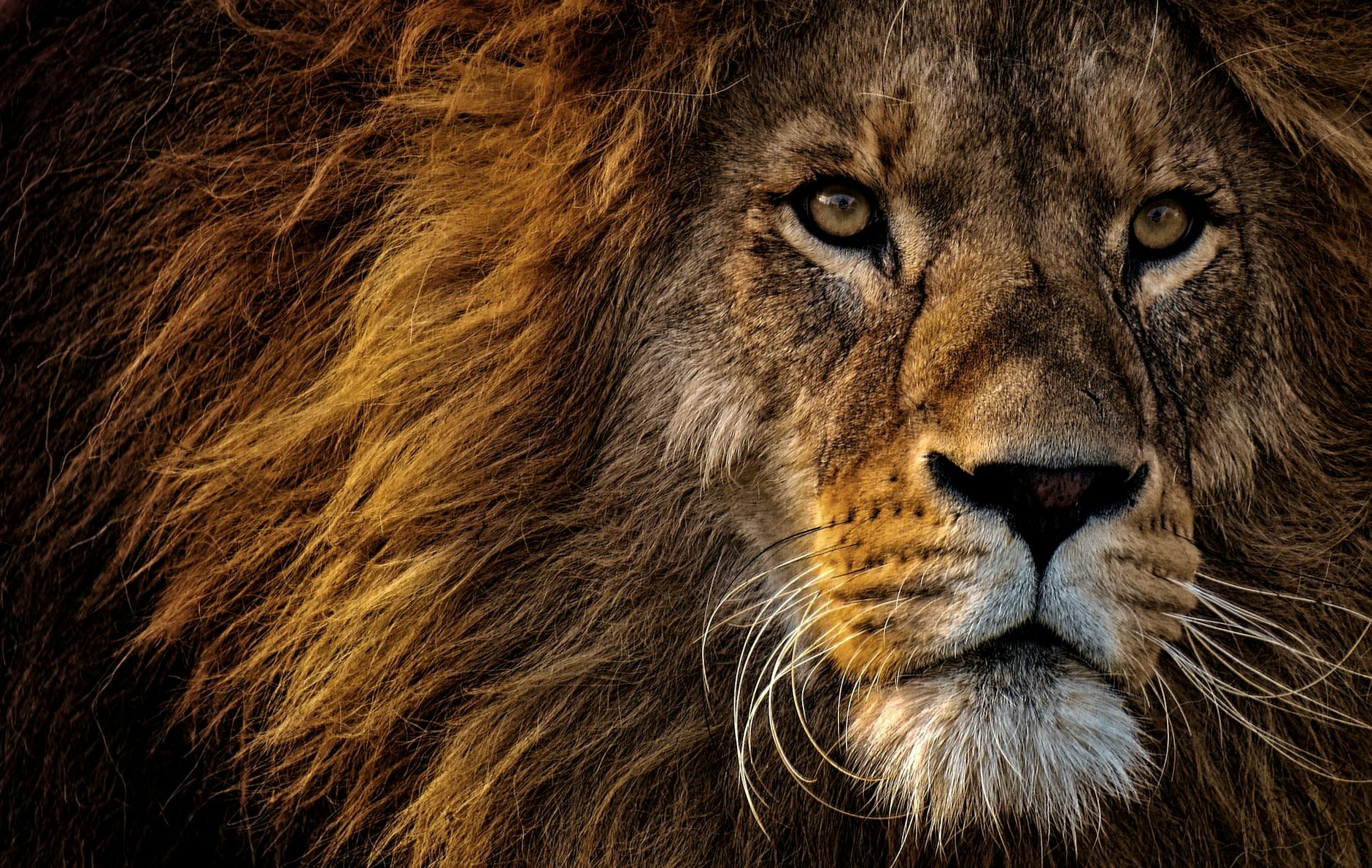
The Winged Lion Cross represents The Mystic Courage and is the Symbol Of The Academy Of Africa (Earth Element).
Its symbolism goes beyond that of mere physical courage, it is spiritual courage, perseverance and determination in the face of adversity. Trials and the spiritual path will tend to strengthen the character often imposed by the very path of life outside the Academy, by time and the elements.
The rhythms of the life in the Academy and of life itself mark the course along the astral circulation interrupted here and there by the random events and crossed destinies we have all traveled throughout our lives, some good ... some bad. If we rejoice in the former, the latter are the true tests of our character and endurance, but without doubt a learning that will lead us to know ourselves, our limits and understand the others.
The daily rhythms of tasks and prayers are necessary though tiring, as they discipline the body and soul.
But constant adaptation to new challenges must also be seen as a necessary learning and a need for transformation and evolution. In this sense, it promoted a temporal and spatial rotation with the passage through the different academies and geographies.
In the stormy days that mark our world the courage to fight for the most fundamental values of humanity and nature is what can save us from our own destruction!
________________________________________________
Stock images and images of mine. Textures from Sally Ride EarthKAM / Nasa and volcanic elements.
www.nasa.gov/sites/default/files/styles/full_width_featur...

Lion by Alexas Photos from Pexels, modified for this work:
images.pexels.com/photos/2220336/pexels-photo-2220336.jpe...
________________________________________________
Trying catching up during the next days in comments and groups, so sorry i am so late with all ...
________________________________________________
Full writeup here: theastroenthusiast.com/arp-274-from-hubble/
To celebrate my 18th birthday, I decided to process one of my favorite Hubble images! This was taken back in 2009 to celebrate the International Year of Astronomy by WFPC2. Given that it was taken by such a low-sensitivity sensor, this image actually had a whole lot of noise to deal with. I spent a while carefully removing hot pixels and cosmic rays to make the image look better. In case you’re wondering what exactly you’re looking at, here’s a little explanation about the galaxies:
Arp 274 is a system of three galaxies that appear to be partially overlapping in the image, although they may be at somewhat different distances. The spiral shapes of two of these galaxies appear mostly intact. The third galaxy at far left is more compact, but shows evidence of star formation. Two of the three galaxies are forming new stars at a high rate. This is evident in the bright blue knots of star formation that are strung along the arms of the galaxy on the right and along the small galaxy on the left. The largest component is located in the middle of the three. It appears as a spiral galaxy, which may be barred. The entire system resides at about 400 million light-years away from Earth in the constellation Virgo. The colours in this image reflect the intrinsic colour of the different stellar populations that make up the galaxies. Yellowish older stars can be seen in the central bulge of each galaxy. A bright central cluster of stars pinpoint each nucleus. Younger blue stars trace the spiral arms, along with pinkish nebulae that are illuminated by new star formation. Interstellar dust is silhouetted against the starry population. The pair of foreground stars on the right are inside our own Milky Way.
Website: theastroenthusiast.com/
Instagram: www.instagram.com/the_astronomy_enthusiast/
Distortion in black and white
www.youtube.com/watch?v=-49DDnglHrc
Nick Cave & The Bad Seeds - The Ship Song (Live At The Royal Albert Hall version)
Distorsión en blanco y negro.
La vida es una distorsión constante de acontecimientos, dependiendo del iris que la observe, las emociones que conlleven, y el alborozo intrínseco que declare cada uno...
Distortion in black and white.
Life is a constant distortion of events, depending on the iris that observes it, the emotions that it entails, and the intrinsic joy that each one declares ...
Distorsion en noir et blanc.
La vie est une déformation constante des événements, dépendant de l’iris qui l’observe, des émotions qu’elle entraîne, et de la joie intrinsèque que chacun exprime ...
Distorsione in bianco e nero.
La vita è una costante distorsione degli eventi, a seconda dell'iride che la osserva, delle emozioni che essa comporta e della gioia intrinseca che ciascuno dichiara ...
María
The Beehive Nebula (M44) was imaged in the constellation Cancer. The image was made of 17 twenty second exposures taken with a Canon 80D and a Canon 200 mm f/2.8L lens. (f/3.5, ISO 800). StarSpikes 4 was used to accent the intrinsic color of the individual stars.
[ Follow me using your iPhone ] - [ Twitter ] - [ My Website ]
[ The Best Camera: iPhone Photos ]
** Check out our new South East Queensland Meetup group here **
About
Clouds stream across the night sky as the world spins, a few lone jets pass by, its all a bit Chaotic.
I've been here a few times, however always on a crystal clear night. Last night was different, I asked David if he'd like to come along to a spot of mine, he was happy to attend.
About an hour into the shoot, I realised my camera was not triggering... opps... forgot to set camera in continuous mode. So about an hour later I had 100 images and David had over 200, so I cant wait to see how his shots turned out.
Enjoy.
- Canon 50D.
- ISO 400, f5.6, 30 seconds, 10mm.
- Sigma 10-20mm.
- Tripod.
Processing
- 110 single images stacked in Photoshop 6.0.
- White balance fixed. (shot in Tungsten)
About Chaotic
Chaos (derived from the Ancient Greek Χάος, Chaos) typically means a state lacking order or predictability. In ancient Greece, it first meant the initial state of the universe, and, by extension, space, darkness, or an abys (the antithetical concept was cosmos), but later uses of the term by philosophers varied over time. In modern English, the word is used in classical studies with the original meaning; in mathematics and science to refer to a very specific kind of unpredictability; and informally to mean a state of confusion. In philosophy, and in popular culture, the word can occur with all three meanings.
Mathematically, chaos refers to a very specific kind of unpredictability: deterministic behaviour that is very sensitive to its initial conditions. In other words, infinitesimal variations in initial conditions for a chaotic dynamic system lead to large variations in behaviour.
Chaotic systems consequently appear disordered and random. However, they are actually deterministic systems governed by physical or mathematical laws, and so are completely predictable given perfect knowledge of the initial conditions. In other words, a chaotic system will always exhibit the same behaviour when seeded with the same initial conditions - there is no inherent randomness in this regard. However, such perfect knowledge is never attainable in real life; slight errors are intrinsic to any physical measurement. In a chaotic system, these slight errors will give rise to results which differ wildly from the correct result. A commonly used example is weather forecasting, which is only possible up to about a week ahead, despite theoretically being perfectly possible at any level (ignoring the effects of the uncertainty principle).
| Illustration_ Martin Grohs
| Photography_ Mayer George Vladimirovich
| Created for the Intrinsic Nature - Experiment 12
"A dream is essential if you want to shape the future."
Please take a look at the DETAILS
© Martin Grohs 2012. All rights reserved.
This is not a stock image. This image may not be reproduced in any form without my written permission.
The Grand Prismatic Spring is the largest hot spring in the USA, and the third largest in the world (after Frying Pan Lake in New Zealand and Boiling Lake in Dominica). It is located in the Midway Geyser Basin, in Yellowstone National Park, a World Heritage Site.
The spring is ~370 feet (110 m) in diameter & is 160 feet (50 m) deep. The spring discharges 560 US gallons (2,100 L) of 160 °F (70 °C) water per minute. The bright, vivid colors in the spring are the result of microbial mats around the edges of the mineral-rich water. The mats produce colors ranging from green to red; the amount of color in the microbial mats depends on the ratio of chlorophyll to carotenoids and on the temperature gradient in the runoff. In the summer, the mats tend to be orange and red, whereas in the winter the mats are usually dark green. The center of the pool is sterile due to extreme heat. The deep blue color of the water in the center of the pool results from the intrinsic blue color of water. The effect is strongest in the center of the spring, because of its sterility and depth. en.wikipedia.org/wiki/Grand_Prismatic_Spring
Sony a6300. Sony 16-50mm F3.5-5.6. F11, 1/200 sec, ISO 100. Thanks for viewing!
Le Musée de la Photographie de Maastricht, situé au Vrijthof, présente une exposition saisissante de l'artiste photographe Jimmy Nelson. Intitulée « Entre la mer et le ciel », l'exposition présente 65 photographies et deux vidéos représentant vingt communautés néerlandaises en costumes traditionnels. Ces images, aux ciels majestueux, ont été prises dans de pittoresques villages de pêcheurs, des paysages de polders et des villes fortifiées. Avec son œuvre vibrante, Nelson célèbre la beauté, la richesse culturelle et l'authenticité de l'humanité.
Le photographe anglo-néerlandais est internationalement reconnu pour ses livres révolutionnaires « Before They Pass Away » (2013) et « Homage to Humanity » (2018), qui présentent des photographies captivantes de peuples autochtones uniques dans les régions les plus reculées du monde. L'élégant beau livre « Between the Sea and the Sky » (2022) est un récit visuel et artistique explorant le riche patrimoine culturel de la patrie d'adoption de Nelson et présente plus de 350 portraits intimistes et paysages emblématiques.
Avec cette série inspirante, Jimmy Nelson rend un hommage personnel aux traditions ancestrales. Il allie l'élégance intemporelle du naturalisme hollandais à l'art du portrait contemporain. Pour les portraits individuels et de groupe, cet artiste et conteur passionné utilise un appareil photo analogique grand format. Il en résulte des images pittoresques et romantiques, riches en détails, rappelant les célèbres maîtres hollandais.
La beauté intrinsèque de la diversité humaine et du patrimoine commun renforce le sentiment d'interdépendance mondiale, un thème récurrent dans l'œuvre de Nelson. Les visiteurs sont invités à un dialogue visuel et à une réflexion sur l'importance de la préservation et de l'unité culturelles. Avec son mélange unique d'architecture historique et moderne, le monumental Fotomuseum aan het Vrijthof offre un cadre idéal. Le musée organise un programme parallèle avec des conférences d'artistes et des activités scolaires.
Jimmy Nelson (Sevenoaks, Angleterre, 1967) a passé son enfance en Afrique, en Asie et au Moyen-Orient. Depuis 1993, il vit à Amsterdam, où se trouve le Jimmy Nelson Studio & Gallery. L'artiste photographie depuis quarante ans et expose dans les plus grands musées et galeries du monde entier. Son travail indépendant a également été présenté lors de foires d'art et de photographie telles que PAN Amsterdam, Photo London, Paris Photo et TEFAF Maastricht, ainsi qu'à la Fabrique des Lumières.
The Maastricht Museum of Photography, located in the Vrijthof, presents a striking exhibition by photographer Jimmy Nelson. Entitled "Between Sea and Sky," the exhibition features 65 photographs and two videos depicting twenty Dutch communities in traditional costumes. These images, featuring majestic skies, were taken in picturesque fishing villages, polder landscapes, and fortified towns. With his vibrant work, Nelson celebrates the beauty, cultural richness, and authenticity of humanity.
The Anglo-Dutch photographer is internationally recognized for his groundbreaking books "Before They Pass Away" (2013) and "Homage to Humanity" (2018), which present captivating photographs of unique indigenous peoples in the world's most remote regions. The elegant coffee table book "Between the Sea and the Sky" (2022) is a visual and artistic narrative exploring the rich cultural heritage of Nelson's adopted homeland and features over 350 intimate portraits and iconic landscapes.
With this inspiring series, Jimmy Nelson pays personal homage to time-honored traditions. He combines the timeless elegance of Dutch naturalism with contemporary portraiture. For both individual and group portraits, this passionate artist and storyteller uses a large-format analog camera. The result is picturesque and romantic images, rich in detail, reminiscent of the famous Dutch masters.
The intrinsic beauty of human diversity and shared heritage reinforces the sense of global interdependence, a recurring theme in Nelson's work. Visitors are invited to engage in a visual dialogue and reflect on the importance of cultural preservation and unity. With its unique blend of historic and modern architecture, the monumental Fotomuseum aan het Vrijthof provides an ideal setting. The museum organizes a parallel program with artist talks and school activities.
Jimmy Nelson (Sevenoaks, England, 1967) spent his childhood in Africa, Asia, and the Middle East. Since 1993, he has lived in Amsterdam, where the Jimmy Nelson Studio & Gallery is located. The artist has been photographing for forty years and exhibits in major museums and galleries worldwide. His independent work has also been presented at art and photography fairs such as PAN Amsterdam, Photo London, Paris Photo, and TEFAF Maastricht, as well as at the Fabrique des Lumières.
As this old abandoned car is being reclaimed by the desert, it seems to be carrying the earth and sky with it in some reflection of intrinsic unity of all things.
♛.INTRINSIC.♛
.QUEENZ. Intrinsic Gown & Heels-Megapack
Hey Babes !
I recommend these splendid Bodysuit with Boots from ♛.QUEENZ.♛
Exclusive: Tres Chic Event
Event Opening Date: November 19, 2025
Event Closing Date: December 12, 2025
➳ maps.secondlife.com/secondlife/Tres%20Chic/155/135/133
♛Hud: 12 separate colors
Multiple combinaisons via Hud.
♛For Legacy, LaraX, Reborn, Waifu,Muneca and Kupra.
➳.QUEENZ. Info:
➳https://www.facebook.com/ShopQueenz
➳https://www.flickr.com/people/139125419@N03/
➳http://maps.secondlife.com/secondlife/QUEENZ/96/110/26
My post yesterday got me thinking about sculpture and I decided I would post another similar image this time from Iceland.
Sun Voyager (Icelandic: Sólfar) is sculpture by Jón Gunnar Árnason (1931 - 1989). Sun Voyager is a dreamboat, an ode to the sun. Intrinsically, it contains within itself the promise of undiscovered territory, a dream of hope, progress and freedom. The sculpture is located by Sæbraut, by the sea in the centre of Reykjavík, Iceland.
I have posted a couple of shots of this work in the past This is I believe my best take on it
THANKS FOR YOUR VISIT AND FOR TAKING THE TIME TO WRITE A COMMENT IT’S MUCH APPRECIATED.
IF YOU WANT TO FOLLOW MY STREAM I SUGGEST YOU OUGHT TO READ MY PROFILE FIRST
Mes célébrations de la Veille de Noël 2006 ont été faites en toute simplicité comme depuis bien des années. My 2006 Christmas Eve celebrations were done in the simplest of ways as for many years.
Réveillon past and present.
Descendants of French colonists like me have traditionally put more emphasis on celebrating on Christmas Eve than the day itself. We call it "le réveillon" (it comes from veiller, to stay up late). Traditions are slowly changing to adapt to modern times but here is how I experienced this day when I was very young in the 1950's.
Families gathered in late afternoon, all dressed up as fancy as possible, put the little ones to bed early to wake them up when it was time to go to midnight mass. The older children would stay up and experience for a longer time their wonderment of the Christmas tree. They would love being intrigued by the numerous gifts under the tree and tried to guess the secrets they enclosed. The first years of my life, a tree would be put up when I was asleep, then two days earlier, then a week earlier. After midnight mass which admittedly was filled with magic, no matter anyone's religious beliefs, we came home to a meal of French Canadian meat pie called "tourtière" and other dishes. For dessert, we had homemade Bûche de Noël (a yul log, a log-shaped coffee-flavoured cake) and my mother's family dessert, "café à la guimauve" which we called in those days "marshmallow au café", really a coffee mousse made with marshmallows. Then, we opened our presents, perhaps keeping some for the following evening of the 25th. Children played with their gifts until 3 or 4 in the morning. We slept late and visited my paternal grandparents in the late afternoon (I never met my mother's parents) and had turkey for dinner, more "Bûche Nöel" then opened more presents. After my parents separated when I was 10, we often spent Christmas Eve at my aunts' house in a much larger family gathering and where there was a much larger and taller tree under a tall ceiling, many more presents, even for the cats, and more food!
Much has changed in many families. Some traditions remain, some have been altered for practical reasons. I am certain that the main reason for having a "réveillon" was to go to mass as soon as it was midnight in order to begin celebrations when the birthday of Jesus began. Today, those who do go to mass, not that many in Québec since the recent decades (this includes me), have the choice of an early evening family mass and a 10 pm mass. This adaptation to new needs and mentalities completely changes people's options especially that so many no longer go to mass. Celebrations can begin and end at various hours. Still, Christmas Eve and past midnight is our preferred time to celebrate. There is so much more magic when revelling in the late hours (réveillonner), that is, eating, celebrating and exchanging presents, during the night than in the morning as others do. I would not ever want to go to bed early to wake up early on Christmas morning to open present in my nightgown. The essence of the magic of Christmas as I know it would be lost. This of course is my personal impression based on my own childhood experiences and family and cultural traditions. Each person is attached to their own traditions, many which they would not have the desire to alter in any way as they are intrinsically connected to one's childhood memories.
Last night, I had a very simple celebration. Wine, cream cheese and crackers while listening to Christmas music on television.
How do you spend Christmas Eve and Christmas Day? What are your family traditions? How did you celebrate your Christmas as a child? As an adult, how did you celebrate this year? Share your memories and a link to your own Christmas photos. Perhaps you would like to leave two memorable photos of your childhood or recent Christmas added to your comment. (I can guide those who do not know how to add a photo).
I am not going to write the French version of this text because it would take too long! I could but I will not.
LOS JAMEOS DEL AGUA
Los Jameos del Agua son una de las obras esenciales en la trayectoria de César Manrique. El proyecto lo encaminó de forma decisiva hacia el concepto de Arte-Naturaleza, abriendo un campo de acción determinante para el ideario estético del artista su aportación más sólida y original al arte contemporáneo,
El término de jameos hace alusión a los tubos volcánicos que carecen de coronación y éstos concretamente pertenecen a la gran oquedad subterránea —una de las más grandes del mundo— que corre desde el Volcán de la Corona. Manrique aporta soluciones insólitas, sutiles y elocuentes que realzan la belleza intrínseca del lugar sin enmascararla artificiosamente.
THE WATER JAME0S
Los Jameos del Agua are one of the essential works in César Manrique's career. The project led him decisively towards the concept of Art-Nature, opening a decisive field of action for the artist's aesthetic ideology, his most solid and original contribution to contemporary art,
The term jameos alludes to the volcanic tubes that lack crowning and these specifically belong to the great underground cavity - one of the largest in the world - that runs from the Corona Volcano. Manrique provides unusual, subtle and eloquent solutions that enhance the intrinsic beauty of the place without artificially masking it.
Mi agradecimiento a tod@s, por los más de 8 millones de visitas que recibo en redes.
Let me say a huge thank you, for over than 8 million visits that I receive in networks.
Groups managed by: agustin ruiz morilla
Architecture&Photography: by invitation
www.flickr.com/groups/14665391@N23/pool/with/49105545208/
Caminando: by invitation:
www.flickr.com/groups/4130021@N20/
Retrato Portrait: Miradas: by invitation
There is something to be said about the intrinsic link between failure and expectation. It seems to me that a key component of failure is expectation. Try to imagine failure without expectation? It's tricky. Because in order to fail, you have to have somehow defined what failure is. And we do this with expectation in hand all the time, be it consciously or otherwise. This image is an example of just that. I set it up, had a shot in mind, calculated my exposure, sat on the tracks counting that exposure off mentally, got up closed the shutter and wound the film. All with an expectation of something. Part of that something was a vague notion of how I wanted the image to look. Another part of that something was the expectation that I calculated the technical aspects of the image correctly - focus, exposure, etc. Yet another part of that something was the expectation that the film would be processed correctly. And so on. You get the idea of how something like this is built off a chain of expectations, even when we don't necessarily think of those expectations. Then, when something doesn't go as expected, for example I somehow blew the exposure and overexposed the frame by several stops thereby producing a more faded, washed out image with a bit of a color cast. Well, that goes against my expectation of how I thought this would turn out. My initial reaction was, "Well, blew that one" and mentally began the process of writing this image off. It was just one photo after all and I make a lot of photos. Also, I am no stranger to "blowing it". I often tell people I could bury them with the boxes of throwaway sample prints from "failed" images that I have accumulated over the years. But then again, as I implied above, what is failure really, other than unmet expectations? And if that is really a key to failure, can failure not be converted to something else merely by either tweaking those expectations or simply by not handcuffing yourself to them. It is fine to have expectations, it is also fine to set them aside. After a day, and a second visit to this negative, I gave my initial expectations of this photo a rest and what was left behind was something that was neither expected nor failed. I don't know what it is, nor do I really need to. It is another image in my collection that has something that intrigues me, that has given me something to consider and think about. I used to remark to students that if a every photo you make teaches you something, are there really bad photos?
Anyway, just some thoughts inspired by my misexposure in the making of this particular image. And no, I still don't quite know how I goofed this one up. But I am ok with that too. If I knew, I might want to do it again and that wouldn't be nearly as fun as when it happens incidentally.
Hasselblad Flexbody
Silberra Color 160
Cologne Cathedral (German: Kölner Dom, officially Hohe Domkirche St. Peter und Maria) is a Roman Catholic church in Cologne, Germany. It is the seat of the Archbishop of Cologne (currently Cardinal Joachim Meisner), and is under the administration of the archdiocese of Cologne. It is renowned as a monument of Christianity, of German Catholicism in particular, of Gothic architecture and of the continuing faith and perseverance of the people of the city in which it stands. It is dedicated to Saint Peter and the Blessed Virgin Mary. The cathedral is a World Heritage Site, one of the best-known architectural monuments in Germany, and Cologne's most famous landmark, described by UNESCO as an "exceptional work of human creative genius".[1]
Construction of Cologne Cathedral began in 1248 and took, with interruptions, until 1880 to complete– a period of over 600 years. It is 144.5 metres long, 86.5 m wide and its two towers are 157 m tall.[2] The cathedral is one of the world's largest churches and the largest Gothic church in Northern Europe. For four years, 1880-84, it was the tallest structure in the world, until the completion of the Washington Monument. It has the second-tallest church spires, only surpassed by the single spire of Ulm Minster, completed 10 years later in 1890. Because of its enormous twin spires, it also presents the largest façade of any church in the world. The choir of the cathedral, measured between the piers, also holds the distinction of having the largest height to width ratio of any Medieval church, 3.6:1, exceeding even Beauvais Cathedral which has a slightly higher vault.[3]
Cologne's medieval builders had planned a grand structure to house the reliquary of the Three Kings and fit its role as a place of worship of the Holy Roman Emperor. Despite having been left incomplete during the medieval period, Cologne Cathedral eventually became unified as "a masterpiece of exceptional intrinsic value" and "a powerful testimony to the strength and persistence of Christian belief in medieval and modern Europe".
@wikipedia
Sun Voyager is a dreamboat, an ode to the sun. A sculpture by Jón Gunnar Árnason, located next to the Sæbraut road in Reykjavík, Iceland. Intrinsically, it contains within itself the promise of undiscovered territory, a dream of hope, progress and freedom.
The work is constructed of quality stainless steel and stands on a circle of granite slabs surrounded by so-called “town-hall concrete”. It was constructed in accordance with Jón Gunnar’s enlarged full-scale drawing of Sun Voyager and was overseen by Jón Gunnar’s assistant, the artist Kristinn E. Hrafnsson. The engineering of the sculpture was supervised by the technologist, Sigurjón Yngvason, in close cooperation with Jón Gunnar himself, the building itself was carried out by Reynir Hjálmtýsson and his assistant.
--- Wikipedia
My thanks to Flickr buddy aberdeenloon for the original image. His photos can be seen here: www.flickr.com/photos/10232647@N03/
© Bob Kramer, Intrinsic Captures, 2015. ALL RIGHTS RESERVED WORLDWIDE. NOT TO BE REPRODUCED WITHOUT EXPRESS WRITTEN AUTHORIZATION. All my pictures have copyright. Please, do not use them without my permission! Copyright: All images © 2015. All rights reserved. The photos are not public domain, nor are they free stock images. Use without written consent by the author is illegal and punishable by law.
Artist Ana Tzarev presents a selection of her latest paintings and sculptures in a special exhibition at the Museo Diocesano di Venezia Sant’Apollonia during the 2015 Venice Biennale. The exhibition is comprised of 25 works created by Tzarev within the past two years, with each work in the collection serving as the artist’s personal interpretation of the exhibition name. Celebration of Life shows Tzarev at her most ebullient, featuring a collection of works unified not only by a palpable energy and exigency, but by the intrinsic sense of wonder that defines her oeuvre. The collection is a jubilant and wholly immersive exploration of nature’s unparalleled power to excite and inspire both artist and viewer. --- --- --- This is the album of photos for my visit. --- www.flickr.com/photos/136891509@N07/albums/72157661161099860
Step inside the Gielgud Theatre and you step into Edwardian opulence on a perfectly theatrical scale. Seating 986 patrons across three levels — stalls, dress circle, and upper circle — the auditorium is an exquisite showcase of W.G.R. Sprague’s architectural genius: rococo plasterwork, sweeping balconies, and a grand domed ceiling wreathed in garlands and gold.
Opened in 1906, the Gielgud (originally the Hicks Theatre) was built as one half of a theatrical twinset. Next door, the Queen’s Theatre (now the Sondheim) was also designed by Sprague and opened just eight months later. Though both buildings have lived through name changes, renovations, and generations of stars, they remain intrinsically linked — now quite literally via the recently created Sprague Terrace, an elegant internal event space that connects the two venues.
The Gielgud’s most recent restoration has sensitively preserved its period charm while updating facilities for modern audiences — including state-of-the-art lighting, sound, and accessibility. But it’s the original curves, the plush red velvet, and the hushed anticipation that keep drawing crowds back.
To sit here is not just to watch a play. It is to be part of the living story of the West End.
•••••••••••••••••••••••••••••••••••
Pénétrer dans le Gielgud Theatre, c’est entrer dans un écrin édouardien, somptueux et pensé pour le théâtre. Avec ses 986 places réparties sur trois niveaux — orchestre, corbeille et balcon supérieur — l’auditorium est une œuvre d’art signée W.G.R. Sprague : moulures rococo, balcons en courbes gracieuses et coupole centrale ornée de guirlandes dorées.
Inauguré en 1906 sous le nom de Hicks Theatre, le Gielgud a été conçu comme le jumeau théâtral du bâtiment voisin : le Queen’s Theatre (aujourd’hui le Sondheim), également signé Sprague et ouvert quelques mois plus tard. Récemment, les deux théâtres ont été réunis par une élégante liaison intérieure baptisée Sprague Terrace, permettant une circulation fluide entre les coulisses.
La restauration récente du Gielgud a su préserver tout le charme historique du lieu, tout en intégrant les technologies modernes d’éclairage, de son et d’accessibilité. Mais ce sont les lignes d’origine, le velours rouge profond et cette sensation d’attente fébrile qui font de chaque représentation une expérience unique.
Ici, on ne fait pas que voir un spectacle. On entre dans l’histoire vivante du West End.
The Grand Prismatic Spring in Yellowstone National Park is the largest hot spring in the United States, and the third largest in the world, after Frying Pan Lake in New Zealand and Boiling Lake in Dominica. It is located in the Midway Geyser Basin.
Grand Prismatic Spring was noted by geologists working in the Hayden Geological Survey of 1871, and named by them for its striking coloration. Its colors match most of those seen in the rainbow dispersion of white light by an optical prism: red, orange, yellow, green, and blue. The bright, vivid colors in the spring are the result of microbial mats around the edges of the mineral-rich water. The mats produce colors ranging from green to red; the amount of color in the microbial mats depends on the ratio of chlorophyll to carotenoids and on the temperature gradient in the runoff. In the summer, the mats tend to be orange and red, whereas in the winter the mats are usually dark green. The center of the pool is sterile due to extreme heat.
The deep blue color of the water in the center of the pool results from the intrinsic blue color of water. The effect is strongest in the center of the spring, because of its sterility and depth.
What do you think about it?
Do you have a spot on your wall, you’re trying to fill?
Travel does what good novelists also do to the life of everyday, placing it like a picture in a frame or a gem in its setting, so that the intrinsic qualities are made more clear. Travel does this with the very stuff that everyday life is made of, giving to it the sharp contour and meaning of art.” - Freya Stark
Napa Valley, California
For Mai - wishing you a Happy Birthday! Have a blast on your special day! :)
A UNESCO site.
From Wikipedia:
The Grand Prismatic Spring in Yellowstone National Park is the largest hot spring in the United States, and the third largest in the world, after Frying Pan Lake in New Zealand and Boiling Lake in Dominica. It is located in the Midway Geyser Basin.
Grand Prismatic Spring was noted by geologists working in the Hayden Geological Survey of 1871, and named by them for its striking coloration. Its colors match most of those seen in the rainbow dispersion of white light by an optical prism: red, orange, yellow, green, and blue
The bright, vivid colors in the spring are the result of microbial mats around the edges of the mineral-rich water. The mats produce colors ranging from green to red; the amount of color in the microbial mats depends on the ratio of chlorophyll to carotenoids and on the temperature gradient in the runoff. In the summer, the mats tend to be orange and red, whereas in the winter the mats are usually dark green. The center of the pool is sterile due to extreme heat.
The deep blue color of the water in the center of the pool results from the intrinsic blue color of water. The effect is strongest in the center of the spring, because of its sterility and depth.
The spring is approximately 370 feet (110 m) in diameter and is 160 feet (50 m) deep. The spring discharges an estimated 560 US gallons (2,100 L) of 160 °F (70 °C) water per minute.
Looking at those beautiful trees reflecting in the lake, it came to my mind the classical concept of yin and yang.
Shadow cannot exist without light. Top cannot exist without the bottom. Life cannot exist without death.... It is called duality.
Whenever one quality reaches its peak, it will naturally begin to transform into the opposite quality: for example, grain that reaches its full height in summer (fully yang) will produce seeds and die back in winter (fully yin) in an endless cycle.
Thus, a seed will sprout from the earth and grow upwards towards the sky—an intrinsically yang movement. Then, when it reaches its full potential height, it will fall. Also, the growth of the top seeks light, while roots grow in darkness.
That observation was contained in this lake. And I am sure you can find many others.
Yes, we are surrounded by beauty and lessons but we have to look with open eyes.
Would you like to buy it?
society6.com/product/duality262177_framed-print
All the prints, Daniel Vicario's shop