View allAll Photos Tagged HUGE
Converted an Agfa Billy Record to pinhole. Huge negatives, ultra wide angle images.
Image ©Philip Krayna, BoxxCarr, all rights reserved. This image is not in the public domain. Please contact me for permission to download, license, reproduce, or otherwise use this image, or to just say "hello". I value your input and comments. See more at www.boxxcarr.com.
My loyalty is with Flickr. But, you can also see me on Instagram. Follow me: @dyslexsyk
The East Side Gallery is an open-air gallery in Berlin. It consists of a series of murals painted directly on a 1316 m long remnant of the Berlin Wall, located near the centre of Berlin, on Mühlenstraße in Friedrichshain-Kreuzberg. The gallery has official status as a Denkmal, or heritage-protected landmark. en.wikipedia.org/wiki/East_Side_Gallery
❆ Osservare tutto questo è un dono, innAMÒRarsene una ricchezza!
❆ observing Nature is a rare gift. for sure, falling in Love with it is a treasure worth even more!
❆ Avoir le don d’observer la Nature est un immense cadeau.
En tomber amoureux représente une richesse encore bien plus grande!
❆
______________________________________________
1) preoccupiamoci della Natura, il nostro futuro dipende da
essa!
1) let's take good care of Nature, because our future depends
on it!
1) préoccupons-nous de la Nature, notre avenir en dépend!
______________________________________________
❆
________________________________________________
2) prendetevi del tempo per Sognare, ogni immagine racconta una lunga storia...
2) take some time to dream, every image tells a long story...
2) prenez le temps de Rêver, car chaque image raconte une
longue histoire...
________________________________________________
❆
________________________________________________
3) ho cercato in ogni passo ciò che più desideravo!
3 ) at each step I search what I most desire!
3) À chaque pas que je fais, je cherche ce que je souhaite le plus trouver!
________________________________________________
❆
in vendita - on sale - à vendre - zum
Verkauf
la Natura che si fa Poesia - scattare foto sembrava quasi diminuire tempo all'esigenza, alla necessità e alla passione di ammirare ciò che mi circondava!
esultanza di Bellezza e Serenità, un tripudio di perfezione e pienezza.
non avrei voluto essere altrove
Magica Terra, sei il simbolo della perfezione, sei il mio canto della Vita, sei il mio buongiorno di ogni di, non ho contato i miei passi sul tuo suolo poiché infinite sono le tue bellezze.
Mia terra, amare è assai poco, tu sei beneficiare di tutte le creature, tu sei una madre eccellente.
ci sono giorni che la senti dentro la Natura...
Le Montagne vivono solo dell' amore dell' uomo.
Dove le abitazioni, poi gli Alberi, poi l erba sono esaurite, nasce il regno sterile, selvaggio, minerale.
Tuttavia, nella sua estrema povertà, nella sua nudità, dispensa una ricchezza che non ha prezzo: la felicità che si scopre negli occhi di chi la frequenta.
Testi e Immagini di Troise Carmine - Washi - si prega di non copiare (qualcuno l ha già fatto più volte che squallido) e di non riprodurre salvo esplicita autorizzazione del sottoscritto!
Dietro ogni scatto ci sono sempre fatiche e attese!
Zaino carico e pesante (quasi sempre) e, quando trasporti la Fotocamera con obiettivo, la Sera avverti un dolore al collo...
Ma le Passioni, è noto, comportano sempre sacrifici!
In Natura non esistono malintesi esistono solo in ciò che l'uomo chiama ragione!
ProteggiAMO tutto questo!
PreoccupiAMOci della Natura il nostro futuro dipende da essa!
Osservare tutto questo è un dono, innAMÒRarsene una ricchezza!
Observing Nature is a rare gift, for sure, falling in love with it is a treasure worth even more!
Avoir le don d’observer la Nature est un immense cadeau. En tomber amoureux représente une richesse encore bien plus grande!
Follow me:
su JuzaPhoto
www.juzaphoto.com/me.php?p=5040&pg=allphotos&srt=...
________________________________________________
Prendetevi del tempo per Sognare, ogni scatto racconta una lunga storia...
Washi
________________________________________________
Meravigliosa Natura!
Privilèges de Montagne...
InnAMÒRati della NATURA anche tu!
Il mio tempo in Montagna!
La Vallée d'Aoste à ma guise - La Valle d'Aosta a modo mio - Aosta Valley in my own way
Vivre en Montagne, au quotidien, pour satisfaire la Curiosité de la Photographie de la Nature...
Valle d'Aosta - Vallée d'Aoste
(Une Montagne d'émotions...)
Clickalps Photography - Troise Carmine - Washi
I miei Video amatoriali su:
www.youtube.com/user/Washi59/videos
www.linkedin.com/in/troisecarminewashi?trk=nav_responsive...
e
Fotocamera:
Canon EOS R5
Obiettivi:
Canon RF 100-500mm f/4.5-7.1 L IS USM
Canon RF 100mm F2.8L Macro IS USM
Accessori:
Treppiede Manfrotto 190 X Prob
Testa Manfrotto a sfera compact nera con attacco rapido 496RC2 con frizione
Piastra a sgancio rapido 200PL
Telecomando infrarossi Canon RC-6
Telecomando Rollei Schermo LCD e Retroilluminazione
Zaino serie Mountain 50 lt - F Stop Tilopa v3 Aloe (Verde drab) - peso 1,9 Kg
Dimensioni LxAxP - 35,6 x 59,7 x se 30,5 cm
INaturalist:
Canon 6d & Samyang 14mm f/2.8
| Behance | Tumblr | Facebook Page |
Please,don't use this image on websites, blogs or other media without my explicit permission. All rights reserved.
A view of Lisbon from the south bank of river Tagus. It is not a great photo, it is overexposed on the right side but i love the blues on the sky, the stars and the water texture so i decided to keep it.
Two of the huge masks worn (or rather carried) by hardy celebrants in the All Souls Procession in Tucson, November 4. These two were about 9' tall. The shots that I got in this time at sunset were so dark and muddy that I used Photoshop to get them to come out as I viewed them in my mind. Look at the set for more such images, and thanks for visiting.
This is SHIPtember.
Seriously Fun.
Seriously Huge Trophy.
Yup. We do things big here, and this is the biggest trophy yet....
---
Gentlemen (and women).... start your starports!
It's SHIPtember somewhere in the world ... Please consult your local phone app for when SHIPtember starts for you. If SHIP Fever persists for more than 30 days, consult your doctor.
Victoria Amazonica
The Sir Seewoosagur Ramgoolam Botanical Garden (sometimes shortened to the SSR Botanical Garden), commonly known as the Pamplemousses Botanical Garden.
Pamplemousses near Port Louis - Mauritius
Note: The image is not at full resolution, but is best viewed as LARGE as possible. Zoom in and out by clicking on the image.
WARNING:
Don't look at the Sun though a Telescope's Eyepiece or Finder Scope without protective Solar filters, as it can cause permanent eye damage. The same applies when you use a camera, and look through the Camera's Eyepiece. If at all possible, rather look at the Sun in Live View on the Camera's LCD Screen.
About this photo:
The Sun on 28 March 2016 from the Southern Hemisphere. Our Star is ever changing, and today there was a huge Sunspot.
This image was created by Stacking several 16 bit RAW images, that were photographed with a Canon 60Da DSLR, on a 6" wide field Newtonian Reflector Telescope (Astrograph).
Scale Reference:
If you consider that the planet Earth fits into the volume of the Sun 1.3 million times, the scale of the Sunspot becomes apparent. Don't be alarmed, this is normal.
Wavelength of Light:
This is a photograph of the Sun was mostly photographed in the wavelengths of visible light, and the H-Alpha (Ha) Infrared (IR) spectral line of Hydrogen at 656.28 nm).
Over 99.999% of the light was blocked with a R-G "White Light" Solar filter. Some finer details like the surface granulation and filaments are visible due to the use of an additional Baader Planetarium Solar Continuum filter (passing a narrowband spectral wavelength of light at 540 nm).
About Sunspots:
The dark spots are cooler holes in the Sun's Photosphere and are called Sunspots. The Photosphere has a temperature of 5,800 degrees Kelvin, and Sunspots have temperatures of about 3,800 degrees K. Sunspots only appear to be dark, as they are surrounded by much brighter and hotter regions of the Sun's Photosphere.
With the use of extreme narrowband Hydrogen-Alpha Solar filters, Ca K-Line filters, and other wavelengths of light like Ultraviolet (UV), the detail of the Sun's surface, prominences and solar flares will be apparent.
About the Sun:
The Sun is a G-type Main-Sequence Yellow Dwarf (G2V) Star. As far as stars go, the Sun is a very average star in the middle of its life cycle (around 5 billion years old). To give an indication of the Sun's size, about 1.3 million Earth sized planets can fit into the volume of the Sun. Through the process of fusion, the Sun burns approximately 600 million tonnes (metric tons) of Hydrogen each second, turning it into 596 million tonnes of Helium. As the Hydrogen nuclei fuse, Photons are emitted, which in short is why the Sun and other stars shine.
The Sun is roughly 150,000,000 km (93,205,679 mi) from Earth. The speed of light is 300,000 km/sec (186,000 miles/sec), which means that the light took just over 8 light-minutes (8 minutes and 26 seconds) to reach my Telescope.
The mass of the Sun is about 2 Nonillion kilograms:
M☉ = (1.98855±0.00025) × 10^30 kilograms or 10^27 metric tons, and is referred to as 1 Solar Mass. The Sun contains 99.86% of the mass in our Solar System.
About Hydrogen and the Chemical Elements:
The Hydrogen Atom is the simplest and most abundant element in the Universe (with only 1 Proton and 1 Electron). Through the process of fusion, more complex elements are made at different stages of a star's life and death cycle.
This is what Carl Sagan meant with one of his well known quotes from Cosmos, "The nitrogen in our DNA, the calcium in our teeth, the iron in our blood, the carbon in our apple pies were made in the interiors of collapsing stars. We are made of starstuff."
About the Milky Way, and our Solar System's place within it:
The Milky Way Galaxy is estimated to have over 400 billion stars. Stars are suns, and just like in our Solar System, many of the stars have planets with moons orbiting them. Our sun is a middle aged Yellow Dwarf star, located in the Orion Arm (or Orion Spur) of the Milky Way Galaxy. It's a minor side spiral arm, located between two larger arms of the Milky Way Galaxy's spiral. The Milky Way is merely one mid-sized barred spiral Galaxy, amongst over 100 billion other Galaxies in the observable Universe. When we look up at the night sky from Earth, we see a glimpse of the Carina-Sagittarius Arm of the Milky Way Galaxy. It takes about 250 million years for the Milky Way Galaxy's spiral arms to complete one rotation.
The size, distance and age of the Universe is far beyond human comprehension. The known Universe is estimated to contain over One Billion Trillion stars.
1 000 000 000 000 000 000 000
Click on this link to view an image that illustrates ''our Solar System's position within the Milky Way Galaxy''.
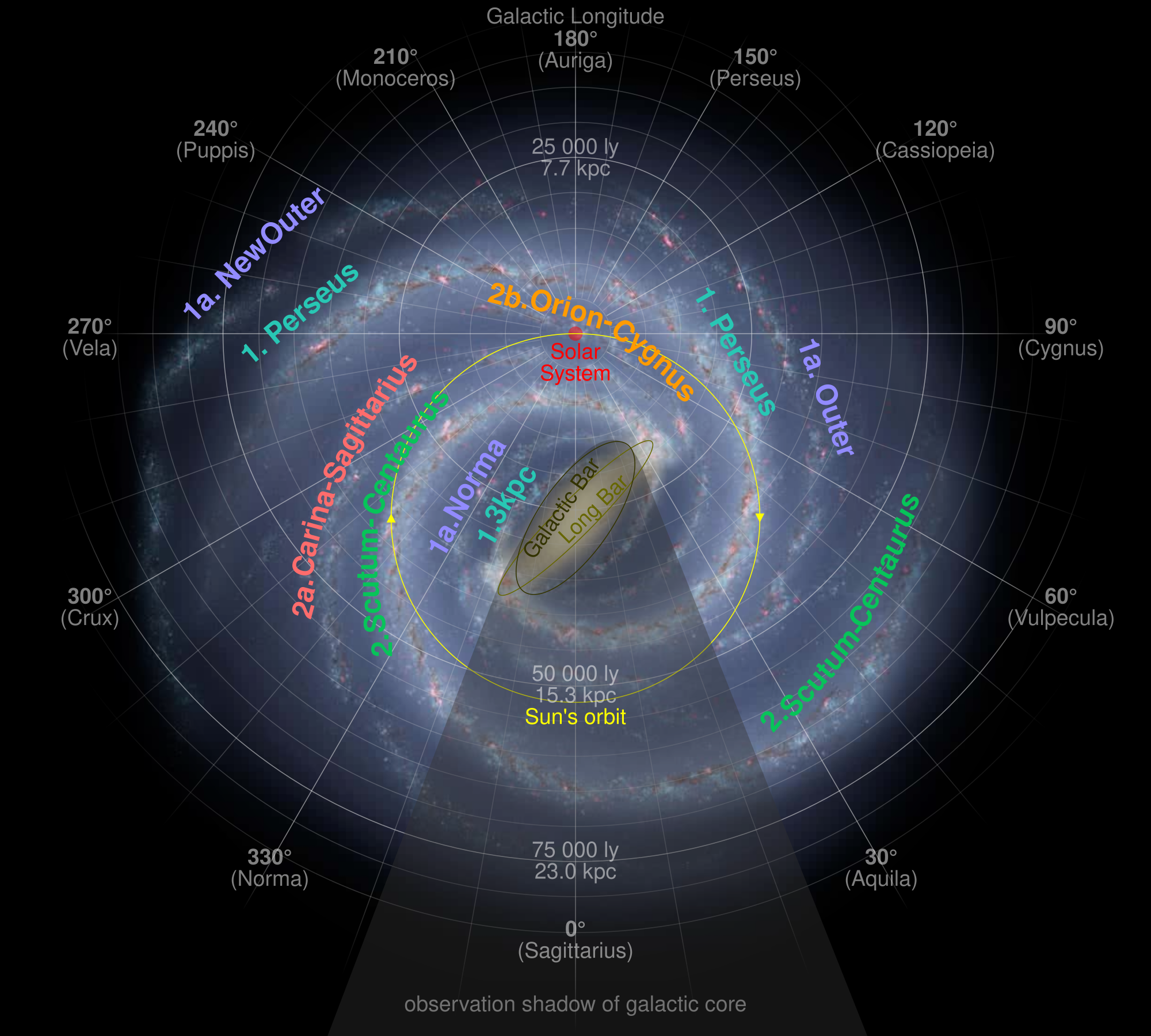
View the spectacular images and videos captured in several wavelengths of light with the NASA Solar Dynamics Observatory.
Martin
-
[Home Page] [Photography Showcase] [My Free Photo App]
[Flickr Profile] [Facebook] [Twitter] [My Science & Physics Page]
Ballard, Washington
I don't support or condone the vandalism or any illegal activity relating to such, whether it be to private, commercial, or public property, I simply display graffiti as an art form.
Jupiter factory in the abandoned Chernobyl zone. They used to make parts for nuclear submarines here.
I spent two days there. It was awesome. Abandoned for 31 years.
My Drone Photography site: www.airbuzz.one/
__________________________________________________
www.lefttodecay.com | instagram | twitter | youtube | vimeo | tumblr
On our way back from Michigan my wife saw a sign for the world's largest mushroom in Middlebury. We were already on IN 13 so we decided to check it out. It is located in Krider Garden just a few blocks off of the highway. We initially drove past it because it was hidden by some shrubbery. I did see it on the way out and thought I would be looking at a very large morel, but I thought this looked more like the toadstools we get in the yard every so often.
Yes,that tiny dot is the planet Jupiter. I wanted to capture a bolt with Jupiter in the field of view but I never expected one so huge. This photo got me a phone call from Otha H. Vaughn of Nasa back in 1998. They wanted permission to use it in this newsletter :
science.nasa.gov/media/medialibrary/1999/05/24/essd24may9...
Introduction to Echuca and its history. Population Echuca-Moama 20,500. When captains Cadell of Goolwa and Randell of Gumeracha had a South Australian government sponsored race to reach the Darling River and prove the River Murray was navigable in 1853 they probably did not foresee the huge development of the river boat trade. The River Murray was to be a transportation conduit to the outback and inland areas like the Mississippi River in America. Paddle steamer river boats with shallow drafts were first used in the 1820s along the Ohio and Mississippi rivers. They were adapted from rear wheel vessels to side wheel vessels in Australia. A few centres grew into major river ports- Morgan, Milang, Wentworth and Echuca. But Echuca outstripped them all as it was developed shortly after the Victorian gold rushes and it was the closest point on the River Murray to booming Melbourne. Some say Echuca was built upon the entrepreneurship of one man Henry Hopwood who arrived in the area in 1849. He was an ex-convict with big ideas. He began a ferry service across the Murray and later built a pontoon bridge. A government surveyor laid out a town in 1854 which he named Echuca from a local Aboriginal word meaning “meeting of the waters” as Echuca is at the confluence of the Campaspe and Murray rivers and the mighty Goulburn River also enters the Murray just a short distance away. In 1824 the explorer Hamilton Hume named the Murray the Hume River after his father. But in 1830 Charles Sturt after leaving the Murrumbidgee thought he had discovered a new river and he named it the Murray River after his friend in the British Colonial Office, Sir George Murray, Secretary of the Colonies. The Goulburn River was named in 1835/36 by Major Thomas Mitchell on his explorations. He named it after the Frederick Goulburn who was then Colonial Secretary of NSW and he also named the Campaspe River which rises near Mt Macedon. He was obviously thinking of his classical education when he named the Campaspe. Alexander the Great (356 BC to 323BC) of Greece had a famous artist paint one of his concubines and when the artist fell in love with the beautiful Campaspe, Alexander the Great “gave” Campaspe to the artist. Campaspe in the nude or only partially clothed was a popular painting subject in the early 1800s in Britain. Mitchell named Mount Macedon after an ancient Greek King Phillip II of Macedon (359 BC to 336 BC). Because three major rivers meet in the locality of Echuca lakes large flood plains with billabongs abound. One water channel from this area flows north to the Murrumbidgee River and is known as the Edward River. These flood plains along the Murray are now mainly national parks and reserves called the Barmah Lakes and Forests with the first area being declared as such in 1908. Early pastoralists were attracted to this country and many of the River Red gums were felled by woodsmen for railway sleepers across Victoria and NSW. The cycle of flood and drought favoured the River Red gums. The major floods of the River Murray were in 1867, 1870 – the biggest highest flood of the white era – 1916, 1931, 1956 and 1975.
The town grew quickly and in 1858 Henry Hopwood built the Bridge Hotel which he claimed was the best outside of Melbourne. The locals referred to him as King Hopwood although he was transported to Van Diemans Land as a convict charged with theft in 1834. He reached this Victorian part of NSW in 1850. At that time he established the first River Murray ferry service followed by a pontoon bridge in 1857. The ferry fees he charged with his monopoly soon made him a rich man. Because of the commercially strategic location the railway reached Echuca from the gold mining centre of Bendigo in 1864 so that Victoria could capture the Riverina trade through Moama on the NSW side of the Murray. Everything favoured Echuca’s development. Until Federation in 1901 all the independent colonies levied port duties on goods coming into or out of their colonies and Echuca was an important customs town. By the 1870s when more than two hundred paddle steamers regularly traversed the rivers here Echuca expanded with a multi-tiered wooden wharf so that steamers could dock regardless of the river level. The first small wharf was built in 1865 with extensions in the 1870s and this wharf eventually reached over one kilometre long when extended in 1884! As business boomed the town grew with 60 licensed hotels by 1876. The river trade not only transported wool from the pastoralists and supplies but it required extensive supplies of wood for fuel for the steamers, labour, ropes and equipment etc. Echuca was the second port of Victoria after Port Melbourne for tonnage handled in the 1870s. It was the largest inland port in Australia and it vied with Morgan as the main port to handle wool bought down the Darling River by paddle steamer. There were also paddle steamer services from Echuca to Shepparton on the Goulburn River. But the town eventually declined as railways which began Echuca’s boom also ended the importance of the river boat trade in Victoria. The boom was over by 1890 but by then Echuca was an established town with substantial and impressive buildings. The river boat trade persisted into the 1930s but on a much reduced scale. The next boom for Echuca was after World War Two when surrounding land was irrigated for horticulture, viticulture and intensive agriculture.
Henry Hopwood’s Bridge Hotel still stands as does the original Town Hall built in 1868 and designed by architect W.C Vahland from Bendigo. Along the waterfront you can still see the Steam Packet Hotel, the Customs House, the Bond Store (where goods were stored by the government until the duties were paid) and a small part of the great wharf. The fine brick Customs House was built in 1884 with a thin strip of sandstone around the windows and across the brickwork. The Bond Store was also built in red brick with pilasters across the front and a pediment to hide the roof line. The “King of Echuca” Hopwood also built a fine house which he named Apsley House facing Connelly Street. Part of it still remains at the Catholic College. When he died in 1869 the “King of Echuca” was buried in the town cemetery and he was remembered by a memorial pew in the Anglican Church. He became a wealthy man because he negotiated a monopoly of the ferry service across the river with the Victorian government. His contract included his heirs also retaining the monopoly. They eventually sold out to the Victorian government but the days of ferry services ended anyway with the construction of the mighty iron bridge across the Murray. A bridge between two colonies required both to agree and the conflict that the bridge engendered was really a part of the Australian federation story. Both colonies agree in 1864 to pay part of the bridge cost but disagreement emerged over tariffs and import/export duties. The agreement was reactivated after the great Murray floods of 1867 and 1870. Work finally started on the iron bridge in 1875. Heavy iron posts from England were carted by rail from Port Melbourne as there were no NSW railways near the river at that time. In April 1877 a disaster occurred when a crane crashed and collapsed iron and stone pillars. Six men were killed. The bridge opened in December 1878 but it only caused mayhem. NSW had not inspected and signed off on the bridge and travellers were charged a fee for using the “free” bridge. Angry mobs assembled near the bridge and protested several times and the Victorian government considered prosecuting rioters. Finally the bridge opened in April 1879 with no official opening ceremony by either government! Once the bridge was open competition between Moama in NSW and Victorian Echuca intensified. The railway from Deniliquin reached Moama in 1876 adding to the inter-colonial trade rivalry. Echuca reached a population of 5,000 by 1878.
Support for Australian federation came especially from the Riverina/Murray districts like Echuca as they were the most effected by trade tariffs between Victoria and NSW. The Riverina was settled as the main NSW grain producing region in the late 19th century but it was much closer to Melbourne than Sydney. Grain was carted across the border at Echuca. NSW was a free trade colony but Victoria was a protectionist colony. Thus towns developed each side of the river at crossing points – Wodonga and Albury; Wahgunyah and Corowa; Echuca and Moama. The railways were pushed up much sooner from Melbourne than from Sydney and grain was transported by rail from Echuca by the mid-1870s. NSW railway lines only reached Riverina towns in the 1890s and even later. So the Echuca district was directly interested in the benefits of federation especially the abolition of tariffs and customs but the other great issue was the control of the Murray River and its waters. In NSW Sir Henry Parkes pushed for federation and the other colonies waited to see if NSW would push ahead with the idea as their approval was always going to be crucial. Parkes began the push for federation in speeches in 1881 and again more seriously in 1889. The first national constitution convention was held in 1891 in Sydney. In the next couple of years the localised Australian Natives Association formed many more branches and became a national movement. Along the River Murray the Border Federation League was formed in Corowa and soon spread to Echuca/Moama and other regional towns. It was at a meeting of the Border Federation League in 1893 that Dr John Quick of Bendigo moved a motion to provide a process to achieve federation. This was something the arguing statesmen and politicians could not achieve. He moved that colonial parliaments should pass enabling legislation to send delegates to a national convention to adopt a constitution. From this point on the federation movement gained great impetus especially with support from the Riverina and river towns like Echuca. The movement culminated in the inauguration of the Commonwealth on January 1st 1901.
Apart from the River Murray providing a smooth navigable surface for transportation the river flats near Echuca led to the development of the major industry of the town- timber milling. River red gum timer was railed from Echuca all over Victoria for its railways. River red gum railway sleepers were transported down the Murray from Echuca to Morgan to build the Kapunda to Morgan railway in 1878. By 1869 one of several the timber mills in Echuca covered six acres. Logs were taken from the Barham forests and the Goulburn River valley and transported downstream to Echuca. But the Murray provided more for the town. The supply of timber made Echuca one of the major paddle steamer building sites along the Murray. Red gums provided wood for the boats and wood for their boilers. A slipway was soon erected in Echuca and the first steamer rolled into the river in 1864 but one earlier boat, without the assistance of a slipway, was constructed in 1858. Echuca had constructed 48 paddle steamers and 54 barges by 1895. Eighteen of the 48 paddle steamers were built between 1874 and 1878. The boat building stopped in the 1920s. Several foundries in the town produced ship bells and other equipment. The river trade led to wool scouring or fellmongering, boiling down works and tanneries. All these hard manual workers required alcohol and Echuca had several major breweries in the 19th century. The growth of the town surrounded by farmers or selectors led to conflict between the big squatter ad sheep shearers and other labourers. This resulted in the famous burning of the paddle steamer PS Rodney in 1894. Australia suffered a major depression in 1890, banks collapsed as did the price for wool. When pastoralist’s tried to reduce shearer wages conflict and strikes emerged. Shearers unison were first formed in 1891. In Queensland this resulted in violent conflict between unionists and pastoralists and Banjo Paterson’s song Waltzing Mathilda covers this issue. The original lyrics were written in 1895 by Banjo Paterson and it was first published as sheet music in 1903. Paterson wrote the poem in 1894 while staying at the Dagworth Homestead (near Winton), where in September of that year some shearers went on strike before violence erupted.
Up came the jumbuck( sheep) to drink at the waterhole,Up came the squatter a-riding his thoroughbred;
Up jumped the swagman and grabbed him in glee; And he sang as he put him away in his tucker-bag,
'You'll come a-waltzing Matilda with me.' CHORUS'You'll come a-waltzing Matilda with me.' CHORUS
Up came policemen - one, two and three. Up sprang the swagman and jumped in the waterhole,
'Whose is the jumbuck you've got in the tucker bag? Drowning himself by the Coolibah tree;
You'll come a-waltzing Matilda with me.' CHORUSAnd his voice can be heard as it sings in the billabongs,'Who'll come a-waltzing Matilda with me?'
Near Echuca shearers went on strike in 1894 and camped along the river. One camp had 220 men in it by July 1894. They tried to block use of the bridge to Moama and the unloading of trains in Echuca with non-union shearers. In August 1894 trouble flared up. But it was near Pooncarie on the Darling River that a crew of boatmen from Echuca were moored on the banks of the Darling in the PS Rodney with non –union labour for an upstream station. The Rodney was built in Echuca in 1875. The non-unionists on board were thrown overboard and the crew allowed to leave and then the Rodney was set on fire. The news was not appreciated in the workers home town of Echuca. Only half a dozen of the arsonists were arrested, but then acquitted when tried by the Court in Broken Hill. Eventually one was convicted in a second trial in Sydney. By then the trouble had calmed down.
Some Echuca buildings to take note of starting at the entrance to the port of Echuca at Hopwood Place.
•The Bridge Hotel built by Henry Hopwood in 1858. Slate roof, round columns supporting the veranda and French doors which were so popular in the mid 1850s. Upper floor added circa 1875. Closed 1916 and became a residence then owned by the City of Echuca since 1970. Now a café.
•Across Hopwood Park is the Shire Hall/ Courthouse. Facade on Dickson St. Red brick and cement rendered quoins. Open ‘lacework” style balustrade along roof line. Triangular pediment above the door. It has simple Doric columns and porticos. Built in 1870. Architect W Vahland.
•The Star Hotel. Four sets of French windows in the upper floor. Built 1866-70 as offices for Permewan Wright who were carting agents. Sub leased to shipping agents etc. Now a hotel.
•William McCulloch and Co. Classical symmetry and arched doorway and windows and magnificent fan light above door. McCullochs early saw millers and later boat builders. Built in 1859 as a bond store for alcohol and tobacco. Kept by agents until bond tax paid. Used by McCullochs from 1889.
•589 High St. The Shamrock Hotel. One of the 86 colonial hotels in Echuca! Licensed 1870, as single storey hotel. Upper floor added around 1895 with classical small pediment and spire behind it. Note shamrocks in the wooden Edwardian veranda posts.
•The Echuca Hotel. Opened in 1858. The current building erected 1873. Symmetry, pilasters, classical rounded windows. Not a typical Australian pub building.
•In side street on left Leslie St. Former Customs House. Built in 1884 but earlier customs houses. Good brick work and slate roof. Part for the wharf river front buildings.
•Opposite the Customs House is the Steampacket Hotel. Claimed they were dedicated to the eradication of thirst! Built in 1864 as a single storey hotel. Rebuilt in the 1870s. Closed in 1900 and became a boarding house. Architect William Vahland. Return to High Street.
•645 High St. Bank of New South Wales. Erected 1877. Architects Reed & Barnes. Two level loggia with projecting ends and arcaded on lower level. A Greek classical revival style of bank.
•Colonial Bank of Australasia. Built in the classical style in the 1870s. Greek keystones above widows and ground floor doors. Lower windows rounded, upper window rectangular.
•Millewa Chambers. Built as a bond store in 1878. Beautifully restored and painted. Highly decorative with three classical urns on the central roof pediment. Arched symmetry and pilasters beside doors.
•On left is the combined Echuca Town Hall and Petty Sessions Courthouse. Built in 1869. Architects William Vahland and Robert Getzschmann of Bendigo. High St façade dominated by triangular pediment. Central section flanked by side wings. Used as a Courthouse until 1924. In 1954 became the town library only. Turn left here into Heygarth St before returning to High Street. The first section contains the Palace Hotel and the American Hotel. The first building opposite the old Courthouse is the former London Chartered Bank. Perfect symmetry with triangular pediment above central entrance. Architect Vahland. Built in 1882. Later an English Scottish & Australian Bank. Beside it is Dr Crosson’s Private Hospital and residence. Architect was William Vahland. Built 1875 with a cast iron balcony. Return to High St.
•Next is the modern Christ Church Anglican Church entrance but behind it is the original church built in 1865. It has a stained glass memorial window to Henry Hopwood. Architect William Vahland.
•Next left is Anstruther St. Turn left here. On the next corners another hotel built in 1895.On the opposite corner is a classical 19th century bank now the ANZ.
•In front is the Post Office with a three storey clock tower built in 1877. Government architects led by William Wardell designed this Italianate style Post office. An asymmetrical façade with a colonnaded loggia. Similar to Post Offices in Maryborough, Castlemaine, Warrnambool, Hamilton etc. Painted rendered brick. Turn right into Hare St.
•To the right on next corner is the former Presbyterian Church. St Andrews was built in 1901. Architect a local man E Castles. An impressive church with some unusual features – rose window, spire and black and white tiled sections in the gable and turreted tower. Worth the walk. Beyond the church is the Echuca state school no 208. Gothic in style with large windows for lighting. Gables facing street and arched entrance and tower. Built 1874. Some section rebuilt 1890 after a fire. Now return to the Post Office and continue along Hare St.
•Next is St Mary’s Catholic Church. Built in 1875 in red brick with freestone dressings. The tower is unusual with a spire which is almost too narrow, a brick balcony and turrets. Added in 1890.
• The five storey red brick flourmill is located at 2 Nish Street. Built in 1881 for Lawrence Kickham.
•The magnificent railway station one of the best in Victoria is at 104 Sturt St but there is a pedestrian overpass to give access from just beyond the flourmill in Nish Street. The huge locomotive shed was built when the railway opened in 1864. The station was built in 1865 in red brick with granite window sills and cornerstones. Welsh slate imported for the roof slates. The locomotive shed was partly used by the private railway company the Moama and Deniliquin railway which covered the 80 kms to Deniliquin.
•Corner Dickson and Connelly streets. Apsley House built around 1860 as the residence of Henry Hopwood. He died there in 1869. Sold to nuns of St Brigid in 1886 for a convent school.
Enjoy elite photo and videos with big tits and giant boob’s models as well as celebrity. Get pleasures from the mind blowing photos of Chelsea Charms and Pandora Peaks huge boobs for absolutely free. Visit now and enjoy the free image galleries of the big boobs and tits.For more details please visit : www.photoclubs.com/
A huge thank you to the National Park Service and all the mutual aid providers who risked their lives to protect life and property during the Springs Fire. Your bravery and hard work is appreciated.
The Santa Monica Mountains Engine 73 Type 3 wildland fire engine has a crew of five including a captain, engineer, and three firefighters.
In addition to initial attack responsibilities, the Type 3 engine responds to other local, regional and national fire incidents. The engine assists other parks in the region with prescribed burn projects and hazardous fuel reduction. It provides other park units with additional staffing during periods of very high fire danger. The engine staff works closely with the fuels management staff on hazardous fuels mitigation projects to create defensible space around park structures.
The park provides fire training to NPS employees outside fire management who are then available to fill in during periods of very high and extreme fire danger. In addition, the SMMNRA brings in resources from other areas to help augment staffing during severe fire conditions.
The protection areas within the SMMNRA boundary consists of federal, state, county, city and private property. With the many homes at risk and the large response area, SMMNRA works with numerous other state, county and local government fire agencies through cooperative fire agreements to suppress these wildfires. Ventura County Fire, Los Angeles County Fire and Los Angeles City Fire are our closest suppression resources.