View allAll Photos Tagged HIM
Updated him with Lloyd's dark green arms with green printing on the wrist, and of course, the green shoulder cloth piece from one of the time twins from the ninjago line.
Meet my filmmaker friend George, seen here in conversation with unseen Madonna. George followed the success of the feature documentary Wild Prairie Man with a TV program about a wildlife rehab centre in Saskatoon. That 3-year run ended this spring. What's next for him and his company, Overtime Studios? I have no idea, but it will be interesting and he will put heart and soul into it.
I rarely ask people to pose, preferring the spontaneous, candid shot, ie. slice o' life. I felt fairly safe in this situation, as my subject appeared relaxed and showed no signs of aggression. He is a carnivore but not a predator. As far as I know, he doesn't bite.
More Homo sapiens photos to come!
Photographed in Val Marie, Saskatchewan (Canada). Don't use this image on websites, blogs, or other media without explicit permission ©2023 James R. Page - all rights reserved.
tried asking him why he needed 3 bodies for the event but got a weird reaction/response....never did find out...not sure this guy has all his marbles there
Bare feet would have been cute in these last two shots...but shoes were a very important element in getting him to cooperate. He HATES the feel of the grass...lol.
“Then something Tookish woke up inside him, and he wished to go and see the great mountains, and hear the pine-trees and the waterfalls, and explore the caves, and wear a sword instead of a walking-stick.”
― J.R.R. Tolkien.
Devils Glen Waterfall, Ashford, Wicklow.
Reading the Hobbit to Abi at the moment so that quote was on my mind. At this stage (2 MORE TO GO!!!) i'm seriously running out of quotes & titles ;-)
Latest in my 365 project -
As always all comments, advice & suggestions welcome.
I forced Anthony to lay in the flower bath after I shot a self-portrait in there :) Needed a male version of this!
____
Join my Facebook-Group if you are interested in before/after photos of my work :) ---> www.facebook.com/groups/195875130955188/
Der hohe Gehalt an Ballaststoffen regt die Verdauung an. Himbeeren enthalten viel an Vitaminen der B-Gruppe sowie Vitamin C. Außerdem weisen sie die Mineralstoffe Kalium, Kalzium, Magnesium, Mangan und Eisen auf. Ihre Antioxidantien und Farbstoffe, die Flavonoide, haben gesundheitsfördernde Eigenschaften.
╔═.. ☀️ ...................................... ══════╗
Danke für euren Besuch !
Thanks for your visit !
Ευχαριστώ για την επίσκεψη σας !
╚══════ ....................................... ☀️ . ═╝
Created for Kreative People Treat This 12
Thanks to Skagitrenee for the Metal Reindeer picture
www.flickr.com/groups/1752359@N21/discuss/72157637891385143/
See the Source Image of Skagitrenee in first Comment Box.
This little dogie is hoping I'll rustle him up some grub!
Toby's "Leave It!" (don't try to eat the Cookie in my hand) has reached the point where I can use the Cookie to direct his head position.
This allowed me to "turn" his head to the side, but more importantly, it produced a nice upright posture even with the hat on his head.
So, here's Toby, channeling his inner cow dog, looking (one hopes) natural and relaxed!
Daily Dog Challenge 2698. "Old Fashioned"
119 Pictures in 2019 - #79. "Old Fashioned"
Our Daily Challenge - Mar 28, 2019 - "Folk, Country and Western"
Aside: "Leave It!" is often taught with the dog backing away from the treat. This is how I taught my first two dogs (Beau and Zachary) and is considered the safest method, as your dog is backing away from whatever it is you want them to leave.
When I started posing Zachary for pictures, I wanted to then use the Cookie for focus and positioning. Alas, Zachary was a VERY good student, and it took a lot of work to undo all that previous "back away" training, and he never was 100% comfortable with it.
With Henry, I started out with "I don't care how close it is, don't eat it." This was a bit harder to teach, but I can now put food even against Henry's muzzle and he won't budge, no matter where I am in the room, or even if I'm not in the room.
This is what I'm working toward with Toby.
FWIW: he is reliable within a few inches of his muzzle for at least a few seconds.
100x in 2019 - #21 (Dark Paneling Horizontal)
Stop on by Henry and Toby's blog: bzdogs.com - The Secret Life of the Suburban Dog
What can I say, kitties love me! I crossed the street for him and as soon as I reached the driveway, he got up and came on over for a little visit. So cute and so talkative :) And how about that leaf ♥ bokeh next to Kitty, how sweet is that?
I gave myself the day off from work- I needed it! I didn't get out of my pajamas until lunch time (guilty smile). The only time I left the house today was to take Spot out for his walk, where I found this Kitty. Maybe I'll see if I can visit him again soon.
Heceta Head is named after the Spanish explorer Bruno de Heceta, who explored the Pacific Northwest during the late 18th century. Before him, Heceta Head was a spot of frequent fishing and hunting by the American Indian tribes that populated the area. Heceta Head is part of the Siuslaw traditional lands, known in their language as ɫtúwɪs. They hunted sea lions in the area and gathered sea bird eggs from the offshore rocks. It was also the site of a legend — the Animal People built a great stone wall, which is now the cliffs, and tricked the Grizzly Bear brothers to their deaths there. In 1888, white settlers moved into the area and claimed 164 acres (66 ha) of the surrounding land. That same year, the United States Lighthouse Service approved the building of the lighthouse, and the government bought 19 acres (7.7 ha), out of the 164 acres (66 ha) previously purchased, for the lighthouse structures.
The lightkeepers' houses, circa 1900. The house on the left was razed in 1940.
In 1892, a crew of 56 began construction on the site. Because of the site's seclusion, building materials were either shipped in, if the weather and tide permitted, or brought from Florence by wagon, the latter usually taking four to five hours. Stones were brought from the Clackamas River and bricks came from San Francisco. The lens system was made by Chance Brothers and used a Fresnel lens that would continue operating into the 21st century.
Completed in August 1893, the entire project cost $80,000 and consisted of:
The lighthouse
Houses for the head lightkeeper, the two assistant lightkeepers and their families
A barn
Two kerosene oil storage buildings — if one had caught fire, there was a secondary source
Heceta Head Light and Keepers Quarters was placed on the National Register of Historic Places in 1978 for its architectural and engineering significance. The site originally included several other buildings — farm buildings and the single-family head lighthouse keeper's house, which was demolished in 1940, and was very similar in size and design to the remaining house. After electricity was installed in the lighthouse buildings, the position of head lighthouse keeper was no longer needed. The lighthouse keeper's house was sold for $10, and dismantled for its lumber, which was used to build Alpha Bit bookstore-cafe in Mapleton, which would still be there into the 21st century. The remaining keepers' house was a duplex that housed the first and second assistant lighthouse keepers and their families. After the light was automated in 1963, the last keepers moved away, and the remaining house was leased to Lane Community College in 1970 by the U.S. Forest Service, which had taken over management of the building. The porch of the Queen Anne-style house underwent restoration in 1981.
Restoring the lighthouse, February 2012
The Heceta Head Lighthouse closed to the public in August 2011 for restoration and repairs. Under the supervision of OPRD preservation architect Sue Licht, a team of more than 100 subcontractors and craftsmen, the majority of whom were from Oregon, removed cement stucco that had sealed in moisture so that the lighthouse could air out in the damp coastal environment. They also replaced and restored the tower's historic metalwork and masonry, installed new windows, and repaired the lens' rotating mechanism. The interior and exterior of the lighthouse were repainted and the original wood floor of the workroom was uncovered and reconditioned. The lighthouse has been returned as much as possible to the way it would have looked in 1894. When restoration work was completed, it was reopened after being closed for two years, on June 8, 2013. That day the OPRD welcomed a group of nearly 100 supporters to Heceta Head State Scenic Viewpoint to celebrate the reopening.
We took Fuzzball down to the place where the donkey bit me so she could snorgle both the donkey and this horse.
I spent most of my time feeding the horse (who we've named Star) apples and petting his nose and cheeks. He kept giving me this knowng look and was really appreciative of the apples. This horse knows stuff. If you're an animal lover and have connected with an unknown animal almost immediatey you know what I'm talking about.
I think I might love this horse just a little bit.
“ Life is good when you have a good sandwich.”
————-————-————-——— —-————-———-————-———-
+ Him +
♦️ Body: ToddleeDoo – Baby Fitted Body
♦️ Head: ToddleeDoo – Bento Head #Opal
♦️Skin: {Pity Party} – Aster Skin (BOM) / 10 Tones to Choose
+ Her +
♦️ Body: ToddleeDoo – Baby Fitted Body
♦️ Head: ToddleeDoo – Bento Head #Flora
♦️Skin: {Pity Party} – Aster Skin (BOM) / 10 Tones to Choose
————-————-————-——— —-————-———-————-———-
+Clothing +
♦️ Top: :Papaya: LITCHI Shirt – Easter Bunnies / ToddleeDoo Easter Eggs HUNT 2022
♦️ Bottom: :Papaya: APRICOT Easter – Leggins / ToddleeDoo Easter Eggs HUNT 2022
♦️ Shoes : .Tippy.Tap. Pucci EASTER Slippers / .Tippy.Tap. Babee FirstSteps Shoes / ToddleeDoo Easter Eggs HUNT 2022
+ Kitchen +
This adorably fun set will have your TD & Bebe babes enjoying their kitchen just like the big kids!
♦️ Lagom – Lil bear play kitchen [ Kitchen ]
♦️ Lagom – Lil bear play kitchen [ Island ]
♦️ Lagom – Lil bear play kitchen [ Microwave ]
♦️ Lagom – Lil bear play kitchen [ Messy bowls ]
♦️ Lagom – Lil bear play kitchen [ Storage containers ]
♦️ Lagom – Lil bear play kitchen [ Toaster ]
♦️ Lagom – Lil bear play kitchen [ Plates colorfull ]
♦️ Lagom – Lil bear play kitchen [ Small plates colorfull ]
♦️ Lagom – Lil bear play kitchen [ Cups colorfull ]
♦️ Lagom – Lil bear play kitchen [ Bowls colorfull ]
♦️ Lagom – Lil bear play kitchen [ Mixing bowls ]
♦️ Lagom – Lil bear play kitchen [ Breadbin ]
♦️ Lagom – Lil bear play kitchen [ Fridge ]
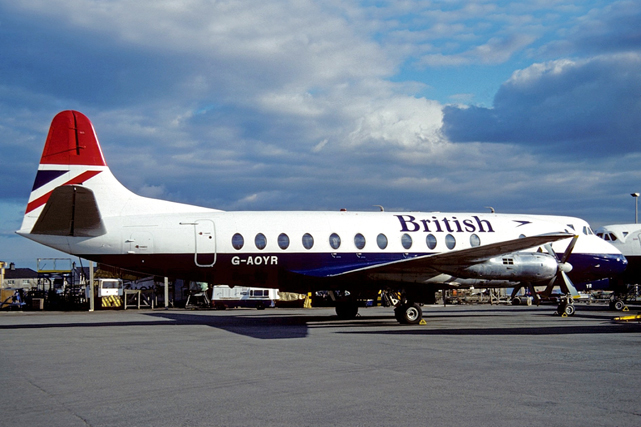
Photo from the Albert Kuhbandner collection, scan kindly provided by him for inclusion on this page.
München-Riem
September 1988
G-AOYR
Vickers 806 Viscount
266
British Air Ferries (BAF)
G-AOYR had been seen at Riem before on 18 February 1972 with Northeast Airlines and in April 1974 with British Airways (full colours with additional small Northeast titles).
First flew on Saturday, 1 March 1958 at Weybridge, Surrey. Delivered to BEA as G-AOYR on 11 April 1978. During its life this aircraft was also owned and/or operated by
BKS Air Transport Ltd, Northeast Airlines, British Airways (BA), British Air Ferries (BAF), British Caledonian Airways (BCAL), Aer Lingus and British World Airlines (BWA). (Sources: vickersviscount.net, rzjets.net)
Detailed history of this airframe including many photos:
www.vickersviscount.net/Index/VickersViscount266History.aspx
G-AOYR with BEA at BSL in February 1959 (initial colours):
www.bsl-mlh-planes.net/bigpicture/picture_id/3817
G-AOYR with BEA at DUB in January 1966 (Red Square livery):
www.flickr.com/photos/planebrains/44962984844
G-AOYR with BKS/British Air Services at LHR in May 1970:
www.flickr.com/photos/the-evanses/5533081399
G-AOYR in basic BKS colours at NCL in September 1970:
www.flickr.com/photos/emdjt42/8650920143
G-AOYR with Northeast Airlines at BMA in August 1971 (BKS cheatline):
www.flickr.com/photos/162303104@N07/50584870062
G-AOYR with Northeast Airlines at DUB in June 1973:
www.flickr.com/photos/david-fox-ireland/25213947631
G-AOYR with British Airways at CWL in April 1982 (large British titles):
www.vickersviscount.net/images/Photos_Medium/105419.jpg
G-AOYR with British Air Ferries landing at LGW (initial colours):
www.flickr.com/photos/scunnymike/49677399012
G-AOYR with British Caledonian Commuter at LGW in April 1985 (initial colours):
www.flickr.com/photos/26268110@N02/16173170394
G-AOYR with British Caledonian Commuter at GLA in 1985 (later colours):
www.flickr.com/photos/gerrymcl/24143078312
G-AOYR with British Air Ferries at LTN in April 1989 (billboard titles):
www.flickr.com/photos/markp51/27906298154
G-AOYR with British Air Ferries at DUS in March 1990 (later colours):
www.flickr.com/photos/190105067@N03/50489051138
G-AOYR at SEN in May 1996 a month before it was scrapped:
www.vickersviscount.net/images/Photos_Medium/111117.jpg
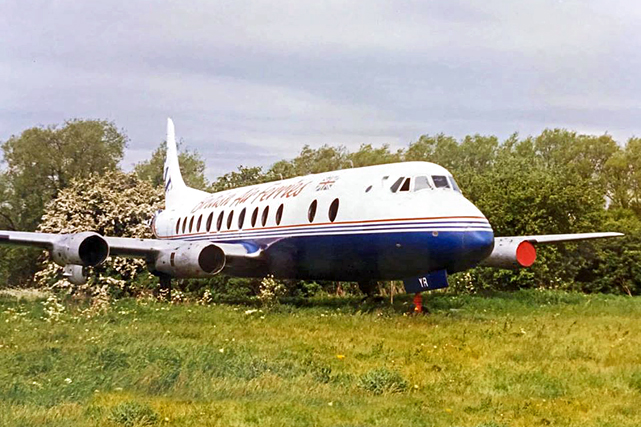
Scan from Kodachrome slide.
found him yesterday in the skimmer, chillin lookin for bugs. i scooped him out, took a pic of him and put him back. frogs and toads love to hang out in the ponds skimmer box because all the bugs and spiders and such wind up in there. it's like a buffet for them :)
The Mithraic Mysteries were a mystery religion practised in the Roman Empire from about the 1st to 4th centuries AD. The name of the Persian god Mithra (proto-Indo-Iranian Mitra), adapted into Greek as Mithras, was linked to a new and distinctive imagery. Writers of the Roman Empire period referred to this mystery religion by phrases which can be anglicized as Mysteries of Mithras or Mysteries of the Persians; modern historians refer to it as Mithraism,[1] or sometimes Roman Mithraism.The mysteries were popular in the Roman military.
Worshippers of Mithras had a complex system of seven grades of initiation, with ritual meals. Initiates called themselves syndexioi, those "united by the handshake".They met in underground temples (called mithraea), which survive in large numbers. The cult appears to have had its centre in Rome.
Numerous archaeological finds, including meeting places, monuments and artifacts, have contributed to modern knowledge about Mithraism throughout the Roman Empire.The iconic scenes of Mithras show him being born from a rock, slaughtering a bull, and sharing a banquet with the god Sol (the Sun). About 420 sites have yielded materials related to the cult. Among the items found are about 1000 inscriptions, 700 examples of the bull-killing scene (tauroctony), and about 400 other monuments.[9] It has been estimated that there would have been at least 680 mithraea in Rome.[10] No written narratives or theology from the religion survive, with limited information to be derived from the inscriptions, and only brief or passing references in Greek and Latin literature. Interpretation of the physical evidence remains problematic and contested.
The Romans regarded the mysteries as having Persian or Zoroastrian sources. Since the early 1970s the dominant scholarship has noted dissimilarities between Persian Mithra-worship and the Roman Mithraic mysteries. In this context, Mithraism has sometimes been viewed as a rival of early Christianity with similarities such as liberator-saviour, hierarchy of adepts (archbishops, bishops, priests), communal meal and a hard struggle of Good and Evil (bull-killing/crucifixion).The name Mithras (Latin, equivalent to Greek “Μίθρας” is a form of Mithra, the name of an Old Persian god– a relationship understood by Mithraic scholars since the days of Franz Cumont. An early example of the Greek form of the name is in a 4th century BC work by Xenophon, the Cyropaedia, which is a biography of the Persian king Cyrus the Great.
The exact form of a Latin or classical Greek word varies due to the grammatical process of declension. There is archeological evidence that in Latin worshippers wrote the nominative form of the god’s name as “Mithras”. However, in Porphyry’s Greek text De Abstinentia («Περὶ ἀποχῆς ἐμψύχων»), there is a reference to the now-lost histories of the Mithraic mysteries by Euboulus and Pallas, the wording of which suggests that these authors treated the name “Mithra” as an indeclinable foreign word.
Related deity-names in other languages include
Sanskrit Mitra (मित्रः), the name of a god praised in the Rig Veda.In Sanskrit, "mitra" means "friend" or "friendship"
the form mi-it-ra-, found in an inscribed peace treaty between the Hittites and the kingdom of Mitanni, from about 1400 BC.
Iranian "Mithra" and Sanskrit "Mitra" are believed to come from an Indo-Iranian word mitra meaning "contract, agreement, covenant".
Modern historians have different conceptions about whether these names refer to the same god or not. John R. Hinnells has written of Mitra / Mithra / Mithras as a single deity worshipped in several different religions. On the other hand, David Ulansey considers the bull-slaying Mithras to be a new god who began to be worshipped in the 1st century BC, and to whom an old name was applied.
Mary Boyce, a researcher of ancient Iranian religions, writes that even though Roman Empire Mithraism seems to have had less Iranian content than historians used to think, still "as the name Mithras alone shows, this content was of some importance.Much about the cult of Mithras is only known from reliefs and sculptures. There have been many attempts to interpret this material.
Mithras-worship in the Roman Empire was characterized by images of the god slaughtering a bull. Other images of Mithras are found in the Roman temples, for instance Mithras banqueting with Sol, and depictions of the birth of Mithras from a rock. But the image of bull-slaying (tauroctony) is always in the central niche.Textual sources for a reconstruction of the theology behind this iconography are very rare. (See section Interpretations of the bull-slaying scene below.)
The practice of depicting the god slaying a bull seems to be specific to Roman Mithraism. According to David Ulansey, this is "perhaps the most important example" of evident difference between Iranian and Roman traditions: "... there is no evidence that the Iranian god Mithra ever had anything to do with killing a bull."n every Mithraeum the centrepiece was a representation of Mithras killing a sacred bull, called the tauroctony.
The image may be a relief, or free-standing, and side details may be present or omitted. The centre-piece is Mithras clothed in Anatolian costume and wearing a Phrygian cap; who is kneeling on the exhausted bull, holding it by the nostrils[33] with his left hand, and stabbing it with his right. As he does so, he looks over his shoulder towards the figure of Sol. A dog and a snake reach up towards the blood. A scorpion seizes the bull's genitals. A raven is flying around or is sitting on the bull. Three ears of wheat are seen coming out from the bull's tail, sometimes from the wound. The bull was often white. The god is sitting on the bull in an unnatural way with his right leg constraining the bull's hoof and the left leg is bent and resting on the bull's back or flank.[34] The two torch-bearers are on either side, dressed like Mithras, Cautes with his torch pointing up and Cautopates with his torch pointing down. Sometimes Cautes and Cautopates carry shepherds' crooks instead of torches.
Tauroctony from the Kunsthistorisches Museum
The event takes place in a cavern, into which Mithras has carried the bull, after having hunted it, ridden it and overwhelmed its strength.[38] Sometimes the cavern is surrounded by a circle, on which the twelve signs of the zodiac appear. Outside the cavern, top left, is Sol the sun, with his flaming crown, often driving a quadriga. A ray of light often reaches down to touch Mithras. At the top right is Luna, with her crescent moon, who may be depicted driving a biga.[39]
In some depictions, the central tauroctony is framed by a series of subsidiary scenes to the left, top and right, illustrating events in the Mithras narrative; Mithras being born from the rock, the water miracle, the hunting and riding of the bull, meeting Sol who kneels to him, shaking hands with Sol and sharing a meal of bull-parts with him, and ascending to the heavens in a chariot.[39] In some instances, as is the case in the stucco icon at Santa Prisca mithraeum, the god is shown heroically nude. Some of these reliefs were constructed so that they could be turned on an axis. On the back side was another, more elaborate feasting scene. This indicates that the bull killing scene was used in the first part of the celebration, then the relief was turned, and the second scene was used in the second part of the celebration.Besides the main cult icon, a number of mithraea had several secondary tauroctonies, and some small portable versions, probably meant for private devotion, have also been found.[The second most important scene after the tauroctony in Mithraic art is the so-called banquet scene.The banquet scene features Mithras and the Sun god banqueting on the hide of the slaughtered bull. On the specific banquet scene on the Fiano Romano relief, one of the torchbearers points a caduceus towards the base of an altar, where flames appear to spring up. Robert Turcan has argued that since the caduceus is an attribute of Mercury, and in mythology Mercury is depicted as a psychopomp, the eliciting of flames in this scene is referring to the dispatch of human souls and expressing the Mithraic doctrine on this matter. Turcan also connects this event to the tauroctony: the blood of the slain bull has soaked the ground at the base of the altar, and from the blood the souls are elicited in flames by the caduceus.Mithras is depicted as being born from a rock. He is shown as emerging from a rock, already in his youth, with a dagger in one hand and a torch in the other. He is nude, standing with his legs together, and is wearing a Phrygian cap.
However, there are variations. Sometimes he is shown as coming out of the rock as a child, and in one instance he has a globe in one hand; sometimes a thunderbolt is seen. There are also depictions in which flames are shooting from the rock and also from Mithras' cap. One statue had its base perforated so that it could serve as a fountain, and the base of another has the mask of the water god. Sometimes Mithras also has other weapons such as bows and arrows, and there are also animals such as dogs, serpents, dolphins, eagles, other birds, lion, crocodiles, lobsters and snails around. On some reliefs, there is a bearded figure identified as Oceanus, the water god, and on some there are the gods of the four winds. In these reliefs, the four elements could be invoked together. Sometimes Victoria, Luna, Sol and Saturn also seem to play a role. Saturn in particular is often seen handing over the dagger to Mithras so that he can perform his mighty deeds.
In some depictions, Cautes and Cautopates are also present; sometimes they are depicted as shepherds.
On some occasions, an amphora is seen, and a few instances show variations like an egg birth or a tree birth. Some interpretations show that the birth of Mithras was celebrated by lighting torches or candles.[One of the most characteristic features of the Mysteries is the naked lion-headed figure often found in Mithraic temples, named by the modern scholars with descriptive terms such as leontocephaline (lion-headed) or leontocephalus (lion-head). He is entwined by a serpent (or two serpents, like a caduceus), with the snake's head often resting on the lion's head. The lion's mouth is often open, giving a horrifying impression. He is usually represented as having four wings, two keys (sometimes a single key), and a scepter in his hand. Sometimes the figure is standing on a globe inscribed with a diagonal cross. In the figure shown here, the four wings carry the symbols of the four seasons, and a thunderbolt is engraved on the breast. At the base of the statue are the hammer and tongs of Vulcan, the cock, and the wand of Mercury. A more scarcely represented variant of the figure with a human head is also found.
Although animal-headed figures are prevalent in contemporary Egyptian and Gnostic mythological representations, an exact parallel to the Mithraic leontocephaline figure is not found.
The name of the figure has been deciphered from dedicatory inscriptions to be Arimanius (though the archeological evidence is not very strong), which is nominally the equivalent of Ahriman, a demon figure in the Zoroastrian pantheon. Arimanius is known from inscriptions to have been a god in the Mithraic cult (CIMRM 222 from Ostia, 369 from Rome, 1773 and 1775 from Pannonia).
While some scholars identify the lion-man as Aion (or Zurvan, or Cronus) others assert that it is Ahriman.[51] There is also speculation that the figure is the Gnostic demiurge, (Ariel) Ialdabaoth. Although the exact identity of the lion-headed figure is debated by scholars, it is largely agreed that the god is associated with time and seasonal change.[53] An occultist, D. J.Cooper, speculates to the contrary that the lion-headed figure is not a god, but rather represents the spiritual state achieved in Mithraism's "adept" level, the Leo (lion) degree. Rituals and worship[edit]
According to M. J. Vermaseren, the Mithraic New Year and the birthday of Mithras was on December 25. However, Beck disagrees strongly.Clauss states: "the Mithraic Mysteries had no public ceremonies of its own. The festival of natalis Invicti [Birth of the Unconquerable (Sun)], held on 25 December, was a general festival of the Sun, and by no means specific to the Mysteries of Mithras." Mithraic initiates were required to swear an oath of secrecy and dedication, and some grade rituals involved the recital of a catechism, wherein the initiate was asked a series of questions pertaining to the initiation symbolism and had to reply with specific answers. An example of such a catechism, apparently pertaining to the Leo grade, was discovered in a fragmentary Egyptian papyrus (P.Berolinensis 21196),and reads:
... He will say: 'Where ... ?
... he is/(you are?) there (then/thereupon?) at a loss?' Say: ... Say: 'Night'. He will say: 'Where ... ?' ... Say: 'All things ...' (He will say): '... you are called ... ?' Say: 'Because of the summery ...' ... having become ... he/it has the fiery ... (He will say): '... did you receive/inherit?' Say: 'In a pit'. He will say: 'Where is your ...?... (Say): '...(in the...) Leonteion.' He will say: 'Will you gird?' The (heavenly?) ...(Say): '... death'. He will say: 'Why, having girded yourself, ...?' '... this (has?) four tassels. Very sharp and ... '... much'. He will say: ...? (Say: '... because of/through?) hot and cold'. He will say: ...? (Say): '... red ... linen'. He will say: 'Why?' Say: '... red border; the linen, however, ...' (He will say): '... has been wrapped?' Say: 'The savior's ...' He will say: 'Who is the father?' Say: 'The one who (begets?) everything ...' (He will say): '('How ?)... did you become a Leo?' Say: 'By the ... of the father'. ... Say: 'Drink and food'. He will say '...?'
'... in the seven-...
Almost no Mithraic scripture or first-hand account of its highly secret rituals survives;with the exception of the aforementioned oath and catechism, and the document known as the Mithras Liturgy, from 4th century Egypt, whose status as a Mithraist text has been questioned by scholars including Franz Cumont. The walls of Mithraea were commonly whitewashed, and where this survives it tends to carry extensive repositories of graffiti; and these, together with inscriptions on Mithraic monuments, form the main source for Mithraic texts.
Nevertheless, it is clear from the archeology of numerous Mithraea that most rituals were associated with feasting – as eating utensils and food residues are almost invariably found. These tend to include both animal bones and also very large quantities of fruit residues.The presence of large amounts of cherry-stones in particular would tend to confirm mid-summer (late June, early July) as a season especially associated with Mithraic festivities. The Virunum album, in the form of an inscribed bronze plaque, records a Mithraic festival of commemoration as taking place on 26 June 184. Beck argues that religious celebrations on this date are indicative of special significance being given to the Summer solstice; but this time of the year coincides with ancient recognition of the solar maximum at midsummer, whilst iconographically identical holidays such as Litha, St John's Eve, and Jāņi are observed also.
For their feasts, Mithraic initiates reclined on stone benches arranged along the longer sides of the Mithraeum – typically there might be room for 15 to 30 diners, but very rarely many more than 40 men. Counterpart dining rooms, or triclinia, were to be found above ground in the precincts of almost any temple or religious sanctuary in the Roman empire, and such rooms were commonly used for their regular feasts by Roman 'clubs', or collegia. Mithraic feasts probably performed a very similar function for Mithraists as the collegia did for those entitled to join them; indeed, since qualification for Roman collegia tended to be restricted to particular families, localities or traditional trades, Mithraism may have functioned in part as providing clubs for the unclubbed.However, the size of the Mithraeum is not necessarily an indication of the size of the congregation.
Each Mithraeum had several altars at the further end, underneath the representation of the tauroctony, and also commonly contained considerable numbers of subsidiary altars, both in the main Mithraeum chamber and in the ante-chamber or narthex.[68] These altars, which are of the standard Roman pattern, each carry a named dedicatory inscription from a particular initiate, who dedicated the altar to Mithras "in fulfillment of his vow", in gratitude for favours received. Burned residues of animal entrails are commonly found on the main altars indicating regular sacrificial use. However, Mithraea do not commonly appear to have been provided with facilities for ritual slaughter of sacrificial animals (a highly specialised function in Roman religion), and it may be presumed that a Mithraeum would have made arrangements for this service to be provided for them in co-operation with the professional victimarius of the civic cult. Prayers were addressed to the Sun three times a day, and Sunday was especially sacred.
It is doubtful whether Mithraism had a monolithic and internally consistent doctrine. It may have varied from location to location. However, the iconography is relatively coherent. It had no predominant sanctuary or cultic centre; and, although each Mithraeum had its own officers and functionaries, there was no central supervisory authority. In some Mithraea, such as that at Dura Europos, wall paintings depict prophets carrying scrolls,but no named Mithraic sages are known, nor does any reference give the title of any Mithraic scripture or teaching. It is known that intitates could transfer with their grades from one Mithraeum to another.
Mithraeum
See also: Mithraeum
A mithraeum found in the ruins of Ostia Antica, Italy
Temples of Mithras are sunk below ground, windowless, and very distinctive. In cities, the basement of an apartment block might be converted; elsewhere they might be excavated and vaulted over, or converted from a natural cave. Mithraic temples are common in the empire; although unevenly distributed, with considerable numbers found in Rome, Ostia, Numidia, Dalmatia, Britain and along the Rhine/Danube frontier; while being somewhat less common in Greece, Egypt, and Syria.According to Walter Burkert, the secret character of Mithriac rituals meant that Mithraism could only be practiced within a Mithraeum.Some new finds at Tienen show evidence of large-scale feasting and suggest that the mystery religion may not have been as secretive as was generally believed.
For the most part, Mithraea tend to be small, externally undistinguished, and cheaply constructed; the cult generally preferring to create a new centre rather than expand an existing one. The Mithraeum represented the cave to which Mithras carried and then killed the bull; and where stone vaulting could not be afforded, the effect would be imitated with lath and plaster. They are commonly located close to springs or streams; fresh water appears to have been required for some Mithraic rituals, and a basin is often incorporated into the structure. There is usually a narthex or ante-chamber at the entrance, and often other ancillary rooms for storage and the preparation of food. The extant mithraea present us with actual physical remains of the architectural structures of the sacred spaces of the Mithraic cult. Mithraeum is a modern coinage and mithraists referred to their sacred structures as speleum or antrum (cave), crypta (underground hallway or corridor), fanum (sacred or holy place), or even templum (a temple or a sacred space).
In their basic form, mithraea were entirely different from the temples and shrines of other cults. In the standard pattern of Roman religious precincts, the temple building functioned as a house for the god, who was intended to be able to view through the opened doors and columnar portico, sacrificial worship being offered on an altar set in an open courtyard; potentially accessible not only to initiates of the cult, but also to colitores or non-initiated worshippers.Mithraea were the antithesis of this.
Degrees of initiation
In the Suda under the entry "Mithras", it states that "no one was permitted to be initiated into them (the mysteries of Mithras), until he should show himself holy and steadfast by undergoing several graduated tests."Gregory Nazianzen refers to the "tests in the mysteries of Mithras".
There were seven grades of initiation into the mysteries of Mithras, which are listed by St. Jerome.Manfred Clauss states that the number of grades, seven, must be connected to the planets. A mosaic in the Ostia Mithraeum of Felicissimus depicts these grades, with symbolic emblems that are connected either to the grades or are just symbols of the planets. The grades also have an inscription beside them commending each grade into the protection of the different planetary gods. In ascending order of importance, the initiatory grades were:
en.wikipedia.org/wiki/Mithraic_mysteries
In the Mithraic ceremonies, there were seven degrees of initiations: Corax (Raven), Nymphus (Bridegroom), Miles (Soldier), Leo (Lion), Perses (Persian),Heliodromus (Courier of the Sun), and Pater (Father). Those in the lowest ranks, certainly the Corax, were the servants of the community during the sacred meal of bread and water that formed part of the rite.
The area where the concentration of evidence for Mithraism is the most dense is the capital, Rome, and her port city, Ostia. There are eight extant mithraea in Rome of as many as seven hundred (Coarelli 1979) and eighteen in Ostia. In addition to the actual mithraea, there are approximately three hundred other mithraic monuments from Rome and about one hundred from Ostia. This body of evidence reveals that Mithraism in Rome and Ostia originally appealed to the same social strata as it did in the frontier regions. The evidence also indicates that at least some inhabitants knew about Mithraism as early as the late first century CE, but that the cult did not enjoy a wide membership in either location until the middle of the second century CE.
As the cult in Rome became more popular, it seems to have "trickled up" the social ladder, with the result that Mithraism could count several senators from prominent aristocratic families among its adherents by the fourth century CE. Some of these men were initiates in several cults imported from the eastern empire (including those of Magna Mater and Attis, Isis, Serapis, Jupiter Dolichenus, Hecate, and Liber Pater, among others), and most had held priesthoods in official Roman cults. The devotion of these men to Mithraism reflects a fourth-century "resurgence of paganism," when many of these imported cults and even official Roman state religion experienced a surge in popularity although, and perhaps because, their very existence was increasingly threatened by the rapid spread of Christianity after the conversion of the emperor Constantine in 313 CE.
global.britannica.com/topic/heliodromus
Mithraism had a wide following from the middle of the second century to the late fourth century CE, but the common belief that Mithraism was the prime competitor of Christianity, promulgated by Ernst Renan (Renan 1882 579), is blatantly false. Mithraism was at a serious disadvantage right from the start because it allowed only male initiates. What is more, Mithraism was, as mentioned above, only one of several cults imported from the eastern empire that enjoyed a large membership in Rome and elsewhere. The major competitor to Christianity was thus not Mithraism but the combined group of imported cults and official Roman cults subsumed under the rubric "paganism." Finally, part of Renan's claim rested on an equally common, but almost equally mistaken, belief that Mithraism was officially accepted because it had Roman emperors among its adherents (Nero, Commodus, Septimius Severus, Caracalla, and the Tetrarchs are most commonly cited). Close examination of the evidence for the participation of emperors reveals that some comes from literary sources of dubious quality and that the rest is rather circumstantial. The cult of Magna Mater, the first imported cult to arrive in Rome (204 BCE) was the only one ever officially recognized as a Roman cult. The others, including Mithraism, were never officially accepted, and some, particularly the Egyptian cult of Isis, were periodically outlawed and their adherents persecuted.
ecole.evansville.edu/articles/mithraism.html
Some words were enough for God to precipitate the most beautiful of his creatures at the bottom of the abyss. Lucifer, the carrier of Light, pulled(entailed) with him a third(third party) of the angels in its revolt. Hell was created for him. We know the continuation(suite) … The column of July Place de la Bastille, was set up between 1833 and 1840. In its summit, thrones the "Spirit of liberty" conceived(designed) by the sculptor Auguste Dumont. Curious tribute returned by Louis Philippe to the insurgents who knocked down(spilled) Charles X and the Absolute monarchy three years earlier. Lucifer picked up. No detail misses(is lacking) … Torch in the hand, the Angel has just broken his chains(channels) and dashes to new conquests. Under its impressive base is a crypt sheltering some 500 rests of Fighters of 1830, as well as Egyptian mummy brought back(reported) by Napoleon.Durant la commune de Paris en 1870, après avoir abattu la colonne Vendôme, les communards s’en prirent à celle de la Bastille… sans succès. Ni le dispositif d’explosifs souterrains, ni le tir d’une trentaine d’obus depuis les buttes Chaumont n’en virent pas à bout. La flamme du porteur de Lumière refusa de s’éteindre…
During the municipality of Paris in 1870, having brought(shot) down the column Vendôme, the Communards took themselves in that of the Bastille unsuccessfully. Neither the device(plan) of subterranean explosives, nor the shooting(firing) of around thirty shells since mounds Chaumont transfer(fire) it to end. The flame of the carrier of Light refused to go out …Lucifer was so far away...?
« Non Serviam »- « Je ne servirai pas ! »
Quelques mots suffirent à Dieu pour précipiter la plus belle de ses créatures au fond de l’abîme. Lucifer, le porteur de Lumière, entraîna avec lui un tiers des anges dans sa révolte. L’enfer fut créé pour lui. Nous connaissons la suite…La colonne de Juillet Place de la Bastille, fut érigée entre 1833 et 1840. À son sommet, trône le « Génie de La Liberté » conçu par le sculpteur Auguste Dumont. Curieux hommage rendu par Louis Philippe aux insurgés qui renversèrent Charles X et la Monarchie absolue trois ans plus tôt. Lucifer a repris du poil de la bête. Aucun détail ne manque… Torche à la main, l’Ange vient de briser ses chaînes et s’élance vers de nouvelles conquêtes. Sous son imposant piédestal se trouve une crypte abritant quelques 500 restes des combattants de 1830, ainsi qu’une momie égyptienne rapportée par Napoléon.Durant la commune de Paris en 1870, après avoir abattu la colonne Vendôme, les communards s’en prirent à celle de la Bastille… sans succès. Ni le dispositif d’explosifs souterrains, ni le tir d’une trentaine d’obus depuis les buttes Chaumont n’en virent pas à bout. La flamme du porteur de Lumière refusa de s’éteindre…
www.pariszigzag.fr/histoire-insolite-paris/qui-est-vraime...
The Black Revolutionists had tracked him down. They cornered the horrid tyrant at the edge of a cliff.
"SURRENDER, OR PAY", screamed the Revolutionist leader. The king, though in desperate straits, only laughed mockingly, "Ah, ha ha ha, surrender to you? You are all so pathetic!!"
"Withdraw your declaration of anarchy!" shouted another Revolutionist.
"NEVER! I love trendy foolishness and crammed dysfunctionality! Ha ha ha!"
"We want our freedom!" cried the lad with the black flag.
"Well, too bad! You're never going to get it! You'll have to live under awkward tyranny for the rest of your miserable lives!!"
"If we don't get it, you're going to get it!" the black leader yelled, shaking his fist.
"You'll never take me alive! Ha Ha, HA HA HA!!" With his terrible laugh still ringing in the air, the wretchedly insane king hurled himself over the cliff face and tumbled off the rocks, sailing toward the crashing water. His death was not a watery one, however. Before he hit the thundering waves, the giant beast of Aich-tee-yem-ell swallowed him whole.
Thus the end of King Flickr.
What'll we do? I'll tell you what I'm doing. I'm going over to Eurobricks and CC more often from now on! I'm not deleting my account though. 1,100,000 views is nothing to sneeze at or hastily delete.
Hope to see you guys around! (on other sites). :P
~Bro Steven
Superstar photographer Ben Von Wong joined SmugMug on our epic company retreat this year in Park City Utah and I enjoyed getting to know him and his girlfriend Anna over the 7 day trip. When they asked me to cancel my flight home and spend 4 days driving to San Francisco with them and Nick, I knew I couldn’t refuse!
I shouldn’t have been surprised to learn that Ben, whose photographs always include people, didn’t have the patience to wait for Nick and I to do our landscape photographer thing. As long as the hike or the scene would be epic we might capture his interest long enough not to make us pack up and head somewhere else. We hiked The Narrows. We walked the Vegas strip. We explored eroded landscapes and salt flats in Death Valley. And on the last night we showed him the Milky Way for the first time with his naked eye. Ben and Anna have been creating a “selfie-series” of photographs, taking fun and unique portraits of themselves in unique places. Mobius Arch was going to be another stop in this series.
We made our way to the Alabama Hills in Lone Pine, California and arrived at Mobius Arch just after sunset. We made a quick stop to use the “Sky Guide” app to figure out when the Milky Way would align properly and went off to grab a pizza dinner. When we got back to the arch, Ben knew immediately where he’d be setting his camera down for his epic Milky Way selfie! I on the other hand, struggled for almost an hour to find a composition that I liked (for an epic landscape). That’s when I decided “you know what, let’s get in on this portrait photo!” I found a different spot to place my camera and while Ben composed his as a landscape photo, I placed my camera as portrait orientation.
To capture this photo Ben and I would set my camera on a 10-second timer. At the 8 second mark, Ben would use an app on his Android phone to trigger a 2-second timer on his camera. Meanwhile, I would grab my flashlight, right to the right of them and prepare to light-paint them. I fired a quick flash of the light on Ben to provide the light on his legs, arm, and face. Meanwhile, Nick, hiding behind the arch, lit Anna’s face and then painted the underside of the arch. Once we had a light-painted version we were happy with, Ben and Anna moved out of the scene, and I took a second photograph with a longer exposure and no lights to get a photo without strange shadows on the rocks. Lastly, we refocused on the stars, and took a 3rd photo to capture the Milky Way in all its sharpness and glory.
Nikon D800 w/Nikkor 14-24mm f/2.8:
15mm, f/2.8, 15 sec, ISO 2000
Viewed best nice and large
Find me on My Website | Facebook