View allAll Photos Tagged GROUND
drops on leaves too late
on the ground, dry and parched
autumn’s final show
Week 43 in 2024
© Web-Betty: digital heart, analog soul
Torii gates are erected at the entrances to Shinto shrine to symbolize that the ground inside is sacred. As you know, Fushimi Inari Shrine situated in Kyoto, an ancient capital of Japan, is extremely famous for its thousands of red-lacquered torii gates.
I searched for the similar location in Tokyo and finally reached to Sannou Inari Shrine in Chiyoda-ku, where I could enjoy a scenery of torii gates like that of the Fushimi Inari Shrine in Kyoto.
It is unbelievable that such a mysterious shrine is located in the heart of Tokyo. The Diet Building and Prime Minister's Official Residence are within a few minutes of the shrine.
Thank you all for your support and much appreciated favs and positive comments!
Also known as the Tibetan ground-tit or Hume's ground-tit, is a unique bird found on the Tibetan Plateau. It lives at high elevations, typically above 3,000 meters (9,800 feet), in treeless environments like alpine steppe and open pastures.
Despite being classified within the tit family, the ground tit's appearance and behavior are quite different from other members of the Paridae family. It was historically mistaken for a ground jay (family Corvidae) due to its terrestrial habits and long, slightly downcurved bill, similar to a chough. However, genetic studies confirmed its placement in the tit family.
Unlike most tits, it spends most of its time on the ground, exhibiting a distinctive bouncy gait and weak flight, preferring to run or jump from danger. Its diet consists primarily of insects and other invertebrates, which it probes for in soil, rock crevices, and even yak dung. The ground tit also builds its own burrows for nesting and roosting, reaching depths of up to 1.8 meters (5.9 feet).
The ground tit is a cooperative breeder, with monogamous pairs sometimes assisted by male helpers, often young from previous broods. We sighted them in plenty around the desert of Tsokar and village of Hanle.
Many thanks in advance for your views / faves and feedback - very much appreciated.
A Columbian Ground Squirrel (Citellus columbianus) at the entrance to its den on the slopes of the foothills in Waterton National Park, Alberta, Canada.
October, 1994.
Slide # GWB McB Scan AA_20250224_167-2.jpg
Use of this image on websites, blogs or other media without explicit permission is not permitted.
© Gerard W. Beyersbergen - All Rights Reserved Worldwide In Perpetuity - No Unauthorized Use.
Wrapping up my final astro adventure of 2024 under the stunning skies of Harvey. Took a 1.5-hour drive south of Perth to scout around Harvey Dam, armed with a few planned shots in mind. Arrived just before twilight to set up, and by 10:30 PM, I was already heading back home—mission (mostly) accomplished.
The wind was relentless that night, and while the tall trees offered some shelter, the dream of capturing those perfect sky reflections on the water? Gone with the breeze. Not everything went to plan, but hey, that’s the beauty of nightscape photography—always keeping you on your toes!
Sky
Nikon D5500 (fullspectrum)
Samyang 24mm f/1.4
Star Adventurer Pro 2i
Hoya UV/IR cut filter
Optolong Ha 7nm
28 RGB x 30s at f/2.8
20 Ha x 60s at f/1.4
Ground
Nikon D5200
Samyang 24mm f/1.4
12 x 2s at f/10
In Vienna you can find some populations of the European ground squirrel (Spermophilus citellus), also known as the European souslik. It needs short turf in order to dig its tunnel system which it finds this on the steppes and in pasture, in dry banks, on sports fields, parks and lawns. These conditions are lost when changes in agricultural practice convert grassland into arable land and forest, or grazing ceases and the grass grows coarse and scrubland develops - which has happened a lot in the recent years. This is why the European ground squirrel is listed as being endangered by the IUCN in its Red List of Threatened Species. The population trend is downward and it is believed that, over the last ten years, the population has diminished by more than 30% due to the destruction of their habitat. These cute little critters are so much fun to watch and should be - as all living creatures - protected at all costs.
In Wien kann man das Europäische Ziesel (Spermophilus citellus) noch recht häufig finden, obwohl es mittlerweile durch die Zerstörung seines Lebensraumes zu den stark bedrohten Tierarten gehört und sich weit oben auf der Roten Liste wiederfindet. Durch Landwirtschaft, Verbuschung und Bebauung sind die Steppenlandschaften, die es als Lebensraum bevorzugt, zu stark geschrumpft. In Deutschland ist es ausgerottet, Wiederansiedlungsversuche sind gescheitert. Diese putzigen Nager, die sehr zutraulich werden können, sollten - wie alle Lebewesen, unbedingt geschützt werden.
Another large Italian 6 day tour. Eventful to say the least.
My blog:
timster1973.wordpress.com
Also on Facebook
www.Facebook.com/TimKniftonPhotography
online store: www.artfinder.com/tim-knifton
instagram: www.instagram.com/Timster_1973
Beautiful weather blue skies and a bit of sunshine over padarn lake and snowdonia mountains in the background.
Unstriped ground squirrel, Tanzania.
For licensing see:
www.gettyimages.co.uk/detail/photo/unstriped-squirrel-roy...
A very enthusiastic "Ground Stab" and a rather unenthusiastic audience. :)
Sandhill Cranes
Monte Vista NWR, Monte Vista, CO
This is not what I was supposed to work on today. No sir! This is the result of a day avoiding things I should have been focusing on. Better luck tomorrow.
Just starting to see these guys again. Reminds me there were tree squirrels running around my neighborhood for the last couple of years and lately I realize I haven't seen one in ages. As much as I didn't like them stealing from my bird feeders, now I miss them. Sometimes we don't know what we have till it's gone.
A Columbian Ground Squirrel (Citellus columbianus) at the entrance to its burrow in the foothills of the Rocky Mountains in Waterloo National Park, Alberta, Canada.
Image captured on Kodachrome 64 slide film and digitized for use on this site.
September, 1994.
Slide # GWB McB Scan AA_20250224_165-2.jpg
Use of this image on websites, blogs or other media without explicit permission is not permitted.
© Gerard W. Beyersbergen - All Rights Reserved Worldwide In Perpetuity - No Unauthorized Use.
Tintic quartzite, rising up from the lake, makes a perfect viewing ground to survey avian activity on nearby Egg Island. It's also a beautiful place to catch a sunset.
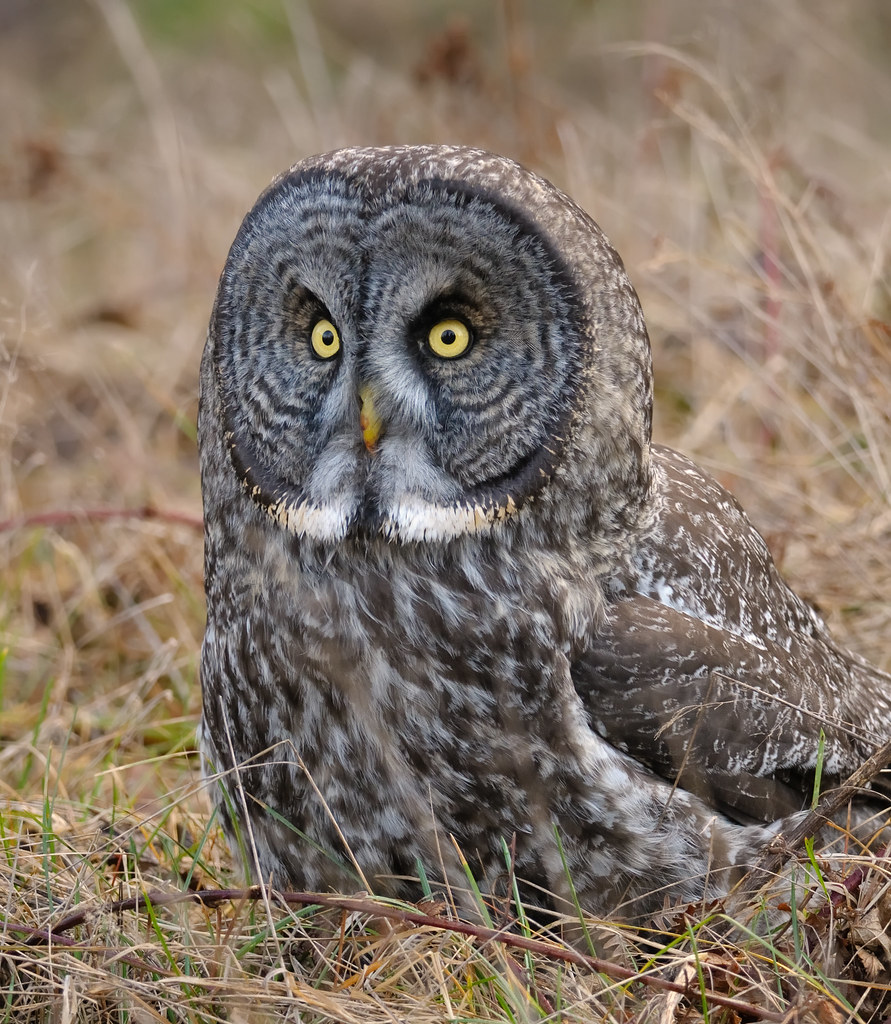
Here is a couple of photos of the Great Gray on the ground. I wasn't fast enough to get him downing the vole he caught, but he stayed on the ground for awhile to digest.
These shots are from my encounter last week.
They had a controlled burn in this area in the Spring of 2023 leaving many trees scorched. However the Blueberries and other ground cover returned with profusion and even though the tree leaf colour had already peaked before we arrived, the ground cover colour was at peak and intense.
Lens: Super-Multi-Coated Macro Takumar 100mm f/4
This is a new plant this year. A friend sent us the starts. I am anxious to see what it looks like when it blooms...
Female White-breasted Nuthatch foraging on the ground. Normally these little critters cling to the side of a tree trunk. In this case, she was content to scratch through the leaves and ground cover.
Common feeder visitor.
Standing against the snowy horizon, the ground station in Iqaluit remains a striking landmark of northern resilience. Once the vital link to the south through the Anik satellite system, its towers and dishes carry the story of a community bridging vast distances.
Today it endures as both infrastructure and icon—an emblem of how Nunavut has long balanced isolation with connection, tradition with technology.