View allAll Photos Tagged Distributorship
Kaiser-Frazer had planned to be the Fiat importer for the USA, but that didn't work out. Franklin Roosevelt Jr. was a distributor of FIAT and Jaguar automobiles in the United States. In 1970, he sold the distributorship Roosevelt Automobile Company.[1] He was a personal friend of Fiat chairman Gianni Agnelli.
French postcard in the Les Vedetttes de Cinéma series by A.N., Paris, no. 54.
American actor Douglas Fairbanks (1883-1939) was best known for his swashbuckling roles in silent films such as The Mark of Zorro (1920), Robin Hood (1922), and The Thief of Bagdad (1924), but spent the early part of his career making comedies. Fairbanks was a founding member of United Artists and of The Motion Picture Academy. He hosted the first Oscars Ceremony in 1929. With his marriage to Mary Pickford in 1920, the couple became Hollywood royalty, and Fairbanks was referred to as The King of Hollywood'', but his career rapidly declined with the advent of the 'talkies. His final film was made in Great Britain, The Private Life of Don Juan (1934).
Douglas Fairbanks was born Douglas Elton Thomas Ullman in 1883 in Denver, Colorado, the son of H. Charles Ullman, a prominent New York attorney, and ‘Southern belle’ Ella Adelaide Marsh. Ullman abandoned the family when Douglas was five years old and he and his older brother Robert were brought up by their mother, who gave them the family name Fairbanks, after her first husband. Douglas Fairbanks began acting at an early age, in amateur theatre on the Denver stage, performing in summer stock, and becoming a sensation in the local theatre community. Fairbanks moved to New York to pursue an acting career. He joined the acting troupe of British actor Frederick Warde who had seen Fairbanks performing in Denver. In 1902, he made his Broadway debut as Florio in the Frederick Warde Company's production of The Duke's Jester. In 1907, Fairbanks married Anna Beth Sully, the daughter of a wealthy industrialist. They had one son, Douglas Elton Fairbanks (1909), who later became known as actor Douglas Fairbanks Jr. In 1915, the family moved to Los Angeles. The then 31-years old Fairbanks signed a contract with Triangle Pictures and began working under the supervision of D.W. Griffith. His first film was titled The Lamb (W. Christy Cabanne, 1915), in which he debuted the athletic abilities that would gain him wide attention among theatre audiences. His athleticism was not appreciated by Griffith, however, and he was brought to the attention of Anita Loos and John Emerson, who wrote and directed many of his next films. Fairbanks became the top moneymaker for Triangle, starring in an average of 10 pictures a year for a weekly salary of $2000. He specialized in comedies-not the slapstick variety, but free-wheeling farces in which he usually played a wealthy young man thirsting for adventure. In 1916, Fairbanks established his own company, the Douglas Fairbanks Film Corporation, and would soon get a job at Paramount. His films ranged from romances to wacky, madcap comedies; from social satires to Westerns. At a party in 1916, Fairbanks met actress Mary Pickford, and the couple began an affair. In 1917, they joined Fairbanks's friend Charlie Chaplin selling war bonds by train across the U.S. Pickford and Chaplin were then the two highest paid film stars in Hollywood. To curtail these stars' astronomical salaries, the large studios attempted to monopolize distributors and exhibitors. By 1918, Fairbanks was Hollywood's most popular actor, and within three years of his arrival Fairbanks's popularity and business acumen raised him to the third-highest paid. In late 1918, Sully was granted a divorce from Fairbanks, the judgment being finalized in early 1919. To avoid being controlled by the studios and to protect their independence, Fairbanks, Pickford, Chaplin, and D. W. Griffith formed United Artists in 1919, which created their own distributorships and gave them complete artistic control over their films and the profits generated. The company was kept solvent in the years immediately after its formation largely by the success of Fairbanks's films.
Douglas Fairbanks was determined to have Mary Pickford become his wife, but she was still married to actor Owen Moore. He finally gave her an ultimatum. She then obtained a fast divorce in the small Nevada town of Minden and the couple married in 1920. The public went wild over the idea of ‘Everybody's Hero’ marrying ‘America's Sweetheart.’ They were greeted by large crowds in London, Amsterdam and Paris during their European honeymoon, becoming Hollywood's first celebrity couple. Fairbanks and Pickford were regarded as ‘Hollywood Royalty,’ famous for entertaining at their 42-room mansion in Beverly Hills, Pickfair. By 1920, Fairbanks had completed twenty-nine films (twenty-eight features and one two-reel short), which showcased his ebullient screen persona and athletic ability. By 1920, he had the inspiration of staging a new type of adventure-costume picture, a genre that was then out of favor with the public; Fairbanks had been a comic in his previous films. In The Mark of Zorro (Fred Niblo, 1920), Fairbanks combined his appealing screen persona with the new adventurous costume element. This genre-defining swashbuckler adventure was the first film version of The Mark of Zorro. It was a smash success and parlayed the actor into the rank of superstar. For the remainder of his career in silent films he continued to produce and star in ever more elaborate, impressive costume films, such as The Three Musketeers (Fred Niblo, 1921), Robin Hood (Allan Dwan, 1922), The Thief of Bagdad (Raoul Walsh, 1924), The Black Pirate (Albert Parker, 1926, the first full-length Technicolor film), and The Gaucho (F. Richard Jones, 1927) with Lupe Velez. Fairbanks spared no expense and effort in these films, which established the standard for all future swashbuckling films. In 1921, he, Mary Pickford, Charles Chaplin, and others, helped to organize the Motion Picture Fund to assist those in the industry who could not work, or were unable to meet their bills. During the first ceremony of its type, in 1927, Fairbanks and Pickford placed their hand and foot prints in wet cement at the newly opened Grauman's Chinese Theatre in Hollywood. Fairbanks was elected first President of the Motion Picture Academy of Arts and Sciences that same year, and he presented the first Academy Awards at the Roosevelt Hotel. Today, Fairbanks also has a star on the Hollywood Walk of Fame at 7020 Hollywood Boulevard.
While Douglas Fairbanks had flourished in the silent genre, the restrictions of early sound films dulled his enthusiasm for film-making. He was 44 years old, and could no longer look the part of the youthful swashbuckler or romantic lead, nor could he safely perform the dangerous stunts his audiences expected of him. In 1929, at Pickford's bungalow, United Artists brought together Pickford, Fairbanks, Charles Chaplin, Norma Talmadge, Gloria Swanson, John Barrymore, D.W. Griffith and Dolores del Rio to speak on the radio show The Dodge Brothers Hour to prove Fairbanks could meet the challenge of talking movies. Fairbanks's last silent film was the lavish The Iron Mask (Allan Dwan, 1929), a sequel to The Three Musketeers (Fred Niblo, 1921). The Iron Mask included an introductory prologue spoken by Fairbanks. He and Pickford chose to make their first talkie as a joint venture, playing Petruchio and Kate in William Shakespeare's The Taming of the Shrew (Sam Taylor, 1929). The film was a colossal disaster, and the pair fought constantly during it's making. When it flopped at the box office, Doug and Mary blamed each other. Doug’s subsequent sound films, were also poorly received by Depression-era audiences. The last film in which he acted was the British production The Private Life of Don Juan (Alexander Korda, 1934), with Merle Oberon. The film is a revealing look at the life of the aging Don Juan, whose reputation has outrun him. The film, based on the 1920 play L'homme à la Rose by Henry Bataille, was made by Korda's London Film Productions at Elstree Studios and distributed by United Artists under an agreement Korda had recently signed with them. Fairbanks and Pickford separated in 1933, after he began an affair with Sylvia, Lady Ashley. They divorced in 1936, with Pickford keeping the Pickfair estate. Within months Fairbanks and Ashley were married in Paris. He continued to be marginally involved in the film industry and was disturbed by the new direction of his own company, United Artists, now under the iron fist of Samuel Goldwyn. His health continued to decline, and in his final years he lived in Santa Monica, California, although much of his time was spent traveling abroad with Sylvia. At the end of 1939, Fairbanks had a mild heart attack. He died later that day at his home in Santa Monica. He was 56. Fairbanks's famous last words were, "I've never felt better."
Sources: Hal Erickson (AllMovie), Ed Stephan (IMDb), The Douglas Fairbanks Museum, Wikipedia and IMDb.
And, please check out our blog European Film Star Postcards.
Swedish postcard by Förlag Nordisk Konst, Stockholm, no. 870. Photo: Triangle Film.
American actor Douglas Fairbanks (1883-1939) was best known for his swashbuckling roles in silent films such as The Mark of Zorro (1920), Robin Hood (1922), and The Thief of Bagdad (1924), but spent the early part of his career making comedies. Fairbanks was a founding member of United Artists and of The Motion Picture Academy. He hosted the first Oscars Ceremony in 1929. With his marriage to Mary Pickford in 1920, the couple became Hollywood royalty, and Fairbanks was referred to as The King of Hollywood'', but his career rapidly declined with the advent of the 'talkies. His final film was made in Great Britain, The Private Life of Don Juan (1934).
Douglas Fairbanks was born Douglas Elton Thomas Ullman in 1883 in Denver, Colorado, the son of H. Charles Ullman, a prominent New York attorney, and ‘Southern belle’ Ella Adelaide Marsh. Ullman abandoned the family when Douglas was five years old and he and his older brother Robert were brought up by their mother, who gave them the family name Fairbanks, after her first husband. Douglas Fairbanks began acting at an early age, in amateur theatre on the Denver stage, performing in summer stock, and becoming a sensation in the local theatre community. Fairbanks moved to New York to pursue an acting career. He joined the acting troupe of British actor Frederick Warde who had seen Fairbanks performing in Denver. In 1902, he made his Broadway debut as Florio in the Frederick Warde Company's production of The Duke's Jester. In 1907, Fairbanks married Anna Beth Sully, the daughter of a wealthy industrialist. They had one son, Douglas Elton Fairbanks (1909), who later became known as actor Douglas Fairbanks Jr. In 1915, the family moved to Los Angeles. The then 31-years old Fairbanks signed a contract with Triangle Pictures and began working under the supervision of D.W. Griffith. His first film was titled The Lamb (W. Christy Cabanne, 1915), in which he debuted the athletic abilities that would gain him wide attention among theatre audiences. His athleticism was not appreciated by Griffith, however, and he was brought to the attention of Anita Loos and John Emerson, who wrote and directed many of his next films. Fairbanks became the top moneymaker for Triangle, starring in an average of 10 pictures a year for a weekly salary of $2000. He specialized in comedies-not the slapstick variety, but free-wheeling farces in which he usually played a wealthy young man thirsting for adventure. In 1916, Fairbanks established his own company, the Douglas Fairbanks Film Corporation, and would soon get a job at Paramount. His films ranged from romances to wacky, madcap comedies; from social satires to Westerns. At a party in 1916, Fairbanks met actress Mary Pickford, and the couple began an affair. In 1917, they joined Fairbanks's friend Charlie Chaplin selling war bonds by train across the U.S. Pickford and Chaplin were then the two highest-paid film stars in Hollywood. To curtail these stars' astronomical salaries, the large studios attempted to monopolize distributors and exhibitors. By 1918, Fairbanks was Hollywood's most popular actor, and within three years of his arrival, Fairbanks's popularity and business acumen raised him to the third-highest paid. In late 1918, Sully was granted a divorce from Fairbanks, the judgment being finalized in early 1919. To avoid being controlled by the studios and to protect their independence, Fairbanks, Pickford, Chaplin, and D. W. Griffith formed United Artists in 1919, which created their own distributorships and gave them complete artistic control over their films and the profits generated. The company was kept solvent in the years immediately after its formation largely by the success of Fairbanks's films.
Douglas Fairbanks was determined to have Mary Pickford become his wife, but she was still married to actor Owen Moore. He finally gave her an ultimatum. She then obtained a fast divorce in the small Nevada town of Minden and the couple married in 1920. The public went wild over the idea of ‘Everybody's Hero’ marrying ‘America's Sweetheart.’ They were greeted by large crowds in London, Amsterdam, and Paris during their European honeymoon, becoming Hollywood's first celebrity couple. Fairbanks and Pickford were regarded as ‘Hollywood Royalty,’ famous for entertaining at their 42-room mansion in Beverly Hills, Pickfair. By 1920, Fairbanks had completed twenty-nine films (twenty-eight features and one two-reel short), which showcased his ebullient screen persona and athletic ability. By 1920, he had the inspiration of staging a new type of adventure-costume picture, a genre that was then out of favor with the public; Fairbanks had been a comic in his previous films. In The Mark of Zorro (Fred Niblo, 1920), Fairbanks combined his appealing screen persona with the new adventurous costume element. This genre-defining swashbuckler adventure was the first film version of The Mark of Zorro. It was a smash success and parlayed the actor into the rank of superstar. For the remainder of his career in silent films, he continued to produce and star in ever more elaborate, impressive costume films, such as The Three Musketeers (Fred Niblo, 1921), Robin Hood (Allan Dwan, 1922), The Thief of Bagdad (Raoul Walsh, 1924), The Black Pirate (Albert Parker, 1926, the first full-length Technicolor film), and The Gaucho (F. Richard Jones, 1927) with Lupe Velez. Fairbanks spared no expense and effort in these films, which established the standard for all future swashbuckling films. In 1921, he, Mary Pickford, Charles Chaplin, and others, helped to organize the Motion Picture Fund to assist those in the industry who could not work, or were unable to meet their bills. During the first ceremony of its type, in 1927, Fairbanks and Pickford placed their hand and footprints in wet cement at the newly opened Grauman's Chinese Theatre in Hollywood. Fairbanks was elected first President of the Motion Picture Academy of Arts and Sciences that same year, and he presented the first Academy Awards at the Roosevelt Hotel. Today, Fairbanks also has a star on the Hollywood Walk of Fame at 7020 Hollywood Boulevard.
While Douglas Fairbanks had flourished in the silent genre, the restrictions of early sound films dulled his enthusiasm for film-making. He was 44 years old, and could no longer look the part of the youthful swashbuckler or romantic lead, nor could he safely perform the dangerous stunts his audiences expected of him. In 1929, at Pickford's bungalow, United Artists brought together Pickford, Fairbanks, Charles Chaplin, Norma Talmadge, Gloria Swanson, John Barrymore, D.W. Griffith, and Dolores del Rio to speak on the radio show The Dodge Brothers Hour to prove Fairbanks could meet the challenge of talking movies. Fairbanks's last silent film was the lavish The Iron Mask (Allan Dwan, 1929), a sequel to The Three Musketeers (Fred Niblo, 1921). The Iron Mask included an introductory prologue spoken by Fairbanks. He and Pickford chose to make their first talkie as a joint venture, playing Petruchio and Kate in William Shakespeare's The Taming of the Shrew (Sam Taylor, 1929). The film was a colossal disaster, and the pair fought constantly during its making. When it flopped at the box office, Doug and Mary blamed each other. Doug’s subsequent sound films were also poorly received by Depression-era audiences. The last film in which he acted was the British production The Private Life of Don Juan (Alexander Korda, 1934), with Merle Oberon. The film is a revealing look at the life of the aging Don Juan, whose reputation has outrun him. The film, based on the 1920 play L'homme à la Rose by Henry Bataille, was made by Korda's London Film Productions at Elstree Studios and distributed by United Artists under an agreement Korda had recently signed with them. Fairbanks and Pickford separated in 1933 after he began an affair with Sylvia, Lady Ashley. They divorced in 1936, with Pickford keeping the Pickfair estate. Within months Fairbanks and Ashley were married in Paris. He continued to be marginally involved in the film industry and was disturbed by the new direction of his own company, United Artists, now under the iron fist of Samuel Goldwyn. His health continued to decline, and in his final years, he lived in Santa Monica, California, although much of his time was spent traveling abroad with Sylvia. At the end of 1939, Fairbanks had a mild heart attack. He died later that day at his home in Santa Monica. He was 56. Fairbanks's famous last words were, "I've never felt better."
Sources: Hal Erickson (AllMovie), Ed Stephan (IMDb), The Douglas Fairbanks Museum, Wikipedia, and IMDb.
And, please check out our blog European Film Star Postcards.
German postcard by Ross Verlag, no. 3949/1, 1928-1929. Photo: United Artists.
American actor Douglas Fairbanks (1883-1939) was best known for his swashbuckling roles in silent films such as The Mark of Zorro (1920), Robin Hood (1922), and The Thief of Bagdad (1924), but spent the early part of his career making comedies. Fairbanks was a founding member of United Artists and of The Motion Picture Academy. He hosted the first Oscars Ceremony in 1929. With his marriage to Mary Pickford in 1920, the couple became Hollywood royalty, and Fairbanks was referred to as The King of Hollywood'', but his career rapidly declined with the advent of the 'talkies. His final film was made in Great Britain, The Private Life of Don Juan (1934).
Douglas Fairbanks was born Douglas Elton Thomas Ullman in 1883 in Denver, Colorado, the son of H. Charles Ullman, a prominent New York attorney, and ‘Southern belle’ Ella Adelaide Marsh. Ullman abandoned the family when Douglas was five years old and he and his older brother Robert were brought up by their mother, who gave them the family name Fairbanks, after her first husband. Douglas Fairbanks began acting at an early age, in amateur theatre on the Denver stage, performing in summer stock, and becoming a sensation in the local theatre community. Fairbanks moved to New York to pursue an acting career. He joined the acting troupe of British actor Frederick Warde who had seen Fairbanks performing in Denver. In 1902, he made his Broadway debut as Florio in the Frederick Warde Company's production of The Duke's Jester. In 1907, Fairbanks married Anna Beth Sully, the daughter of a wealthy industrialist. They had one son, Douglas Elton Fairbanks (1909), who later became known as actor Douglas Fairbanks Jr. In 1915, the family moved to Los Angeles. The then 31-years old Fairbanks signed a contract with Triangle Pictures and began working under the supervision of D.W. Griffith. His first film was titled The Lamb (W. Christy Cabanne, 1915), in which he debuted the athletic abilities that would gain him wide attention among theatre audiences. His athleticism was not appreciated by Griffith, however, and he was brought to the attention of Anita Loos and John Emerson, who wrote and directed many of his next films. Fairbanks became the top moneymaker for Triangle, starring in an average of 10 pictures a year for a weekly salary of $2000. He specialized in comedies-not the slapstick variety, but free-wheeling farces in which he usually played a wealthy young man thirsting for adventure. In 1916, Fairbanks established his own company, the Douglas Fairbanks Film Corporation, and would soon get a job at Paramount. His films ranged from romances to wacky, madcap comedies; from social satires to Westerns. At a party in 1916, Fairbanks met actress Mary Pickford, and the couple began an affair. In 1917, they joined Fairbanks's friend Charlie Chaplin selling war bonds by train across the U.S. Pickford and Chaplin were then the two highest-paid film stars in Hollywood. To curtail these stars' astronomical salaries, the large studios attempted to monopolize distributors and exhibitors. By 1918, Fairbanks was Hollywood's most popular actor, and within three years of his arrival, Fairbanks's popularity and business acumen raised him to the third-highest paid. In late 1918, Sully was granted a divorce from Fairbanks, the judgment being finalized in early 1919. To avoid being controlled by the studios and to protect their independence, Fairbanks, Pickford, Chaplin, and D. W. Griffith formed United Artists in 1919, which created their own distributorships and gave them complete artistic control over their films and the profits generated. The company was kept solvent in the years immediately after its formation largely by the success of Fairbanks's films.
Douglas Fairbanks was determined to have Mary Pickford become his wife, but she was still married to actor Owen Moore. He finally gave her an ultimatum. She then obtained a fast divorce in the small Nevada town of Minden and the couple married in 1920. The public went wild over the idea of ‘Everybody's Hero’ marrying ‘America's Sweetheart.’ They were greeted by large crowds in London, Amsterdam, and Paris during their European honeymoon, becoming Hollywood's first celebrity couple. Fairbanks and Pickford were regarded as ‘Hollywood Royalty,’ famous for entertaining at their 42-room mansion in Beverly Hills, Pickfair. By 1920, Fairbanks had completed twenty-nine films (twenty-eight features and one two-reel short), which showcased his ebullient screen persona and athletic ability. By 1920, he had the inspiration of staging a new type of adventure-costume picture, a genre that was then out of favor with the public; Fairbanks had been a comic in his previous films. In The Mark of Zorro (Fred Niblo, 1920), Fairbanks combined his appealing screen persona with the new adventurous costume element. This genre-defining swashbuckler adventure was the first film version of The Mark of Zorro. It was a smash success and parlayed the actor into the rank of superstar. For the remainder of his career in silent films, he continued to produce and star in ever more elaborate, impressive costume films, such as The Three Musketeers (Fred Niblo, 1921), Robin Hood (Allan Dwan, 1922), The Thief of Bagdad (Raoul Walsh, 1924), The Black Pirate (Albert Parker, 1926, the first full-length Technicolor film), and The Gaucho (F. Richard Jones, 1927) with Lupe Velez. Fairbanks spared no expense and effort in these films, which established the standard for all future swashbuckling films. In 1921, he, Mary Pickford, Charles Chaplin, and others, helped to organize the Motion Picture Fund to assist those in the industry who could not work, or were unable to meet their bills. During the first ceremony of its type, in 1927, Fairbanks and Pickford placed their hand and footprints in wet cement at the newly opened Grauman's Chinese Theatre in Hollywood. Fairbanks was elected first President of the Motion Picture Academy of Arts and Sciences that same year, and he presented the first Academy Awards at the Roosevelt Hotel. Today, Fairbanks also has a star on the Hollywood Walk of Fame at 7020 Hollywood Boulevard.
While Douglas Fairbanks had flourished in the silent genre, the restrictions of early sound films dulled his enthusiasm for film-making. He was 44 years old, and could no longer look the part of the youthful swashbuckler or romantic lead, nor could he safely perform the dangerous stunts his audiences expected of him. In 1929, at Pickford's bungalow, United Artists brought together Pickford, Fairbanks, Charles Chaplin, Norma Talmadge, Gloria Swanson, John Barrymore, D.W. Griffith, and Dolores del Rio to speak on the radio show The Dodge Brothers Hour to prove Fairbanks could meet the challenge of talking movies. Fairbanks's last silent film was the lavish The Iron Mask (Allan Dwan, 1929), a sequel to The Three Musketeers (Fred Niblo, 1921). The Iron Mask included an introductory prologue spoken by Fairbanks. He and Pickford chose to make their first talkie as a joint venture, playing Petruchio and Kate in William Shakespeare's The Taming of the Shrew (Sam Taylor, 1929). The film was a colossal disaster, and the pair fought constantly during its making. When it flopped at the box office, Doug and Mary blamed each other. Doug’s subsequent sound films were also poorly received by Depression-era audiences. The last film in which he acted was the British production The Private Life of Don Juan (Alexander Korda, 1934), with Merle Oberon. The film is a revealing look at the life of the aging Don Juan, whose reputation has outrun him. The film, based on the 1920 play L'homme à la Rose by Henry Bataille, was made by Korda's London Film Productions at Elstree Studios and distributed by United Artists under an agreement Korda had recently signed with them. Fairbanks and Pickford separated in 1933 after he began an affair with Sylvia, Lady Ashley. They divorced in 1936, with Pickford keeping the Pickfair estate. Within months Fairbanks and Ashley were married in Paris. He continued to be marginally involved in the film industry and was disturbed by the new direction of his own company, United Artists, now under the iron fist of Samuel Goldwyn. His health continued to decline, and in his final years, he lived in Santa Monica, California, although much of his time was spent traveling abroad with Sylvia. At the end of 1939, Fairbanks had a mild heart attack. He died later that day at his home in Santa Monica. He was 56. Fairbanks's famous last words were, "I've never felt better."
Sources: Hal Erickson (AllMovie), Ed Stephan (IMDb), The Douglas Fairbanks Museum, Wikipedia, and IMDb.
And, please check out our blog European Film Star Postcards.
Austrian postcard by Iris Verlag, no. 783. Photo: United Artists / Apollo Verleih.
American actor Douglas Fairbanks (1883-1939) was best known for his swashbuckling roles in silent films such as The Mark of Zorro (1920), Robin Hood (1922), and The Thief of Bagdad (1924), but spent the early part of his career making comedies. Fairbanks was a founding member of United Artists and of The Motion Picture Academy. He hosted the first Oscars Ceremony in 1929. With his marriage to Mary Pickford in 1920, the couple became Hollywood royalty, and Fairbanks was referred to as The King of Hollywood'', but his career rapidly declined with the advent of the 'talkies. His final film was made in Great Britain, The Private Life of Don Juan (1934).
Douglas Fairbanks was born Douglas Elton Thomas Ullman in 1883 in Denver, Colorado, the son of H. Charles Ullman, a prominent New York attorney, and ‘Southern belle’ Ella Adelaide Marsh. Ullman abandoned the family when Douglas was five years old and he and his older brother Robert were brought up by their mother, who gave them the family name Fairbanks, after her first husband. Douglas Fairbanks began acting at an early age, in amateur theatre on the Denver stage, performing in summer stock, and becoming a sensation in the local theatre community. Fairbanks moved to New York to pursue an acting career. He joined the acting troupe of British actor Frederick Warde who had seen Fairbanks performing in Denver. In 1902, he made his Broadway debut as Florio in the Frederick Warde Company's production of The Duke's Jester. In 1907, Fairbanks married Anna Beth Sully, the daughter of a wealthy industrialist. They had one son, Douglas Elton Fairbanks (1909), who later became known as actor Douglas Fairbanks Jr. In 1915, the family moved to Los Angeles. The then 31-years old Fairbanks signed a contract with Triangle Pictures and began working under the supervision of D.W. Griffith. His first film was titled The Lamb (W. Christy Cabanne, 1915), in which he debuted the athletic abilities that would gain him wide attention among theatre audiences. His athleticism was not appreciated by Griffith, however, and he was brought to the attention of Anita Loos and John Emerson, who wrote and directed many of his next films. Fairbanks became the top moneymaker for Triangle, starring in an average of 10 pictures a year for a weekly salary of $2000. He specialized in comedies-not the slapstick variety, but free-wheeling farces in which he usually played a wealthy young man thirsting for adventure. In 1916, Fairbanks established his own company, the Douglas Fairbanks Film Corporation, and would soon get a job at Paramount. His films ranged from romances to wacky, madcap comedies; from social satires to Westerns. At a party in 1916, Fairbanks met actress Mary Pickford, and the couple began an affair. In 1917, they joined Fairbanks's friend Charlie Chaplin selling war bonds by train across the U.S. Pickford and Chaplin were then the two highest-paid film stars in Hollywood. To curtail these stars' astronomical salaries, the large studios attempted to monopolize distributors and exhibitors. By 1918, Fairbanks was Hollywood's most popular actor, and within three years of his arrival, Fairbanks's popularity and business acumen raised him to the third-highest paid. In late 1918, Sully was granted a divorce from Fairbanks, the judgment being finalized in early 1919. To avoid being controlled by the studios and to protect their independence, Fairbanks, Pickford, Chaplin, and D. W. Griffith formed United Artists in 1919, which created their own distributorships and gave them complete artistic control over their films and the profits generated. The company was kept solvent in the years immediately after its formation largely by the success of Fairbanks's films.
Douglas Fairbanks was determined to have Mary Pickford become his wife, but she was still married to actor Owen Moore. He finally gave her an ultimatum. She then obtained a fast divorce in the small Nevada town of Minden and the couple married in 1920. The public went wild over the idea of ‘Everybody's Hero’ marrying ‘America's Sweetheart.’ They were greeted by large crowds in London, Amsterdam, and Paris during their European honeymoon, becoming Hollywood's first celebrity couple. Fairbanks and Pickford were regarded as ‘Hollywood Royalty,’ famous for entertaining at their 42-room mansion in Beverly Hills, Pickfair. By 1920, Fairbanks had completed twenty-nine films (twenty-eight features and one two-reel short), which showcased his ebullient screen persona and athletic ability. By 1920, he had the inspiration of staging a new type of adventure-costume picture, a genre that was then out of favor with the public; Fairbanks had been a comic in his previous films. In The Mark of Zorro (Fred Niblo, 1920), Fairbanks combined his appealing screen persona with the new adventurous costume element. This genre-defining swashbuckler adventure was the first film version of The Mark of Zorro. It was a smash success and parlayed the actor into the rank of superstar. For the remainder of his career in silent films, he continued to produce and star in ever more elaborate, impressive costume films, such as The Three Musketeers (Fred Niblo, 1921), Robin Hood (Allan Dwan, 1922), The Thief of Bagdad (Raoul Walsh, 1924), The Black Pirate (Albert Parker, 1926, the first full-length Technicolor film), and The Gaucho (F. Richard Jones, 1927) with Lupe Velez. Fairbanks spared no expense and effort in these films, which established the standard for all future swashbuckling films. In 1921, he, Mary Pickford, Charles Chaplin, and others, helped to organize the Motion Picture Fund to assist those in the industry who could not work, or were unable to meet their bills. During the first ceremony of its type, in 1927, Fairbanks and Pickford placed their hand and footprints in wet cement at the newly opened Grauman's Chinese Theatre in Hollywood. Fairbanks was elected first President of the Motion Picture Academy of Arts and Sciences that same year, and he presented the first Academy Awards at the Roosevelt Hotel. Today, Fairbanks also has a star on the Hollywood Walk of Fame at 7020 Hollywood Boulevard.
While Douglas Fairbanks had flourished in the silent genre, the restrictions of early sound films dulled his enthusiasm for film-making. He was 44 years old, and could no longer look the part of the youthful swashbuckler or romantic lead, nor could he safely perform the dangerous stunts his audiences expected of him. In 1929, at Pickford's bungalow, United Artists brought together Pickford, Fairbanks, Charles Chaplin, Norma Talmadge, Gloria Swanson, John Barrymore, D.W. Griffith, and Dolores del Rio to speak on the radio show The Dodge Brothers Hour to prove Fairbanks could meet the challenge of talking movies. Fairbanks's last silent film was the lavish The Iron Mask (Allan Dwan, 1929), a sequel to The Three Musketeers (Fred Niblo, 1921). The Iron Mask included an introductory prologue spoken by Fairbanks. He and Pickford chose to make their first talkie as a joint venture, playing Petruchio and Kate in William Shakespeare's The Taming of the Shrew (Sam Taylor, 1929). The film was a colossal disaster, and the pair fought constantly during its making. When it flopped at the box office, Doug and Mary blamed each other. Doug’s subsequent sound films were also poorly received by Depression-era audiences. The last film in which he acted was the British production The Private Life of Don Juan (Alexander Korda, 1934), with Merle Oberon. The film is a revealing look at the life of the aging Don Juan, whose reputation has outrun him. The film, based on the 1920 play L'homme à la Rose by Henry Bataille, was made by Korda's London Film Productions at Elstree Studios and distributed by United Artists under an agreement Korda had recently signed with them. Fairbanks and Pickford separated in 1933 after he began an affair with Sylvia, Lady Ashley. They divorced in 1936, with Pickford keeping the Pickfair estate. Within months Fairbanks and Ashley were married in Paris. He continued to be marginally involved in the film industry and was disturbed by the new direction of his own company, United Artists, now under the iron fist of Samuel Goldwyn. His health continued to decline, and in his final years, he lived in Santa Monica, California, although much of his time was spent traveling abroad with Sylvia. At the end of 1939, Fairbanks had a mild heart attack. He died later that day at his home in Santa Monica. He was 56. Fairbanks's famous last words were, "I've never felt better."
Sources: Hal Erickson (AllMovie), Ed Stephan (IMDb), The Douglas Fairbanks Museum, Wikipedia, and IMDb.
And, please check out our blog European Film Star Postcards.
keltruck.com/headoffice #Scania
Download full article as a PDF: keltruck.com/wp-content/uploads/2016/12/chris-kelly-keltr...
keltruckscania.com/about-keltruck/news-centre/press-relea...
TRUCK September 1987
THE TRUCK INTERVIEW
Some say Chris Kelly's pace is too hot to handle. He has built one of Scania's biggest-selling dealers in just four years, and now plans to turn his carefully chosen Midlands site into the UK's first truck parts supermarket. A transport entrepreneur of the '80s, he is professional, innovative and shrewd. He is also one of the best-known and best liked dealers in his area. Jack Semple went to meet him
CHRIS KELLY IS THE SORT OF person who can put the Black Country back on the industrial map. Well-liked and respected, shrewd, hard working and acutely aware of money, he has come from relative obscurity to be one of the most successful truck dealers of the '80s. He aims to be on the Unlisted Securities Market before the end of the decade.
He only got his Scania franchise for the West Midlands in '83, but the business grew so fast that by '86 he had almost the biggest Scania distributorship in Britain, second only to the combined sales of the Scantruck dealer outlets in Purfleet and Heathrow, which are owned by the manufacturer. In the calendar year, Keltruck delivered 385 units.
Scania has reason to be thankful for Kelly's success. Not only has he moved a lot of metal, in stark contrast to his predecessor, but he has bolstered the Scania back-up network in his area, which has the busiest motorway stretches in Europe.
His plan is to develop Keltruck still further to make it an industry showpiece for the '90s. At the same time, the Kelly Group has diversified into other aspects of the industry, including contract haulage, and a clearing house, reversing the common pattern for hauliers to take on heavy truck outlets.
As Keltruck has grown, especially in the past year, it has changed, perhaps by necessity. and several members of staff and some fitters have left. Chris Kelly didn't seek to play down the changes when we spoke to him last month.
It could all have been a bit different if Lloyds of Ludlow, a well-known Welsh border haulier, hadn't been given the Daf outlet in the West Midlands in preference to Chris Kelly. At that stage, his secondhand truck business had not long developed from being just a one-man band.
Chris Kelly already had a firm grounding in trucks. He left school at 15 for an apprenticeship at Atwoods, which in the '60s was well-known for selling high-class cars, but also Bedford trucks. After five years in the workshop he moved across into service reception instead. 'I quite liked that. It was a means of leaving the shop floor.'
Ryland Group, which he joined in the early '70s, gave him a strong background in dealer management, first at Oldhill Motors, a Seddon dealer, then at head office, where he was given a job in administration by director Gordon Cox. 'They had an excellent group of people,' he said. The group was progressive. and gave good training in discipline and management control systems. 'Ryland was very much the exception.'
In '75, he branched out on his own, selling used trucks from an office lent by a local haulier, and using a corporation car park to keep the trucks. The business became better known when he moved to Neachells Lane, a popular road for trucks delivering to steel foundries and stockholders, where he could hardly fail to be noticed. 'I had an aptitude and ability to seek out secondhand trucks,' he said.
In those days, many of the trucks were Dafs, including 20 on hire operations, and he applied, unsuccessfully, for a Daf distributorship. In '80, he moved to a bigger, five acre site at Wolverhampton. Then the recession hit.
'It was just as if somebody had cut the telephone wires. Interest rates shot up from 12percent to 18percent, very, very quickly.' I had £400,000 of stock, which today would be worth £1.5 million. A late truck then would cost £10,000. Now, it costs up to £30.000.'
Chris Kelly developed a contract hire business in the early '80s, partly as a tax mitigation, and partly to develop a second, peripheral business. He had been making steady progress in building the business and profit, but it was almost entirely dependent on him being available all the time. Apart from himself, there was only a part-time office girl and a driver. 'I was off sick for three weeks and the place virtually ground to a standstill.'
By '82, he was buying Scanias for contract hire, and rental, and retailing a lot of used Scanias. In '82, the manufacturer, looking to replace its West Midlands dealer, called. At the time, Kelly also had around 100 trailers on hire. But he decided to take the plunge with Scania.
To raise funds. he auctioned off most of his trucks and all the trailers. A recession-hit local haulier, J & S Hemmings, which had a history going back to the horse and cart days, was also wanting to sell up, and the two combined their fleets into a single auction, handled by CMA from Leeds. Almost the whole lot was sold off.
Keltruck was the first new name on the Scania franchise network to replace a dealer (although Scania had bought out Scantruck), but Kelly was determined to break the mould in other ways, too. Many truck distributors had been sited up back streets, miles away from industrialised areas. 'I thought the right and logical place was next to the largest population and concentration of industrial manufacturing, and if possible couple this with a motorway.'
In fact Kelly's site, the old Corona typewriter works in West Bromwich, lies next to the M5, just short of the intersection with the M6. He got it at an ideal time, when industry in the Black Country was at a low level.
Being next to a motorway is not unique, and several dealers have moved to such sites in recent years. But you can't miss Keltruck from the M5. ‘Talk to truck drivers and ask them to name a distributor they know in the Midlands, and they're likely to say Keltruck. That to me has got to be a good thing.'
While Keltruck looks well positioned from the outside, internal management holds the key to success, he said. A lot of dealerships have gone under 'through lack of control systems within the business and lack of management awareness.'
He believes in paying high salaries. 'It's a very, very tough business, and you've got to have very good people.' Low salaries increasingly are a thing of the past now, he said.
Kelly has been almost as valuable to Scania as the maker has been to him. His tidy office is mirrored in the workshop and the yard
That's not to say they don't work for their money. Kelly is an entrepreneur who gives it all he's got, and he demands a lot from his staff. And he stated that he is not the sort of managing director of a company who allows a man to stay in a job if he's not performing as required.
Kelly said he'd had to learn how to run a bigger company. 'I've had to learn how to delegate and set guidelines and parameters to competent people.' He's been to three management courses at Ashridge College, arranged by Scania for dealer principles, and found them valuable. 'I wouldn't spend two-and-a-half days there if it was just a social gathering.’
Within the company, Kelly has used the Industrial Society in recent months as part of a programme aimed at building a management team. The IS was recommended by Kelly's brother-in-law, who is company secretary with a large group. Late last year he had the whole management team, including wives and children, at a weekend course organised by the IS, at a big West Midlands hotel. 'It gave the wives more of an appreciation of the hours people have to work in this industry.
'Operators of trucks are getting more and more demanding. Just like Arthur Scargill is trying to fend off six-day rota working, we have to work over seven days.' Management rotas have to take account of that, he said. (Keltruck has five breakdown vans, and a parts back-up stock which is highly regarded among Scania users in the Midlands.)
Kelly explained the IS involvement: 'It's just like building a football team. And we're trying to counter poaching.' At the moment there's a situation in the business of 'all change' when the whistle blows', Kelly said. 'The truck industry has failed to train younger people from within. We're looking for university graduates in business management or engineering to join us as management trainees.'
When Kelly takes his company onto the USM. he'll be offering employees shares in the enterprise. 'Share participation has been a great success for the NFC. I hope to do something similar, in a much smaller way.'
The team does not look the same as it did last year, as at least three managers have left the group, to join or set up a new company. Without being drawn on individual cases, Kelly acknowledges the departures. The changes are a consequence of moving from a smaller company to a larger firm. he said.
In the workshop it is no longer possible for customers simply to wander in and chat to individual fitters, which some customers had been used to, but which is impracticable in a large workshop. Tools tend to go ·missing, too, he added.
Kelly has adopted much of the current thinking on fitters. Not all are realistically able to be trained to do every job on a truck, and that should be recognised, he said. Changes in the workshop are aimed at making it more efficient. It's more formal, certainly, but should also prove more flexible and reliable for the truck operator.
The belt and braces approach is now clearly out at Keltruck, if it was ever in. Kelly wages war on clutter, and demands clarity at all times. In the workshop he has three men employed solely to keep the place clean and tidy. Trucks parked at the dealership ready to go out to customers are parked in immaculate rows, on Kelly's insistence.
But it is his office which most clearly shows the Chris Kelly style. Sited at an extreme corner of the main building, the room housed the water storage tank in the days when the place was a typewriter factory with a sprinkler system to put out fires.
When you go in, you can't see a desk. His work station is behind a partition, and is a fairly narrow shelf which of necessity prevents a build -up of paperwork. 'This way I can keep my own bits and pieces out of sight, and no-one can see the clutter. (By any normal standards, there is none.)
'In this trade there's a lot of good upside-down readers', he quipped. If anyone comes in to see him, they meet over a businesslike table, although there are leather armchairs, too.
Some trucks were ready for August 1 registration, but not as many as last year, as supply fell frustratingly behind demand
A couple of impressionist prints by Lavery are on the wall. They're Roger Stevens' taste,' (group marketing manager) he said.
Kelly plans to· put in similar work stations for his managers. 'It's the trend at the minute, but I think it's very good.' It gives people peace to concentrate on the job, he said.
Kelly's next development at West Bromwich will be a major redevelopment of the site, which will bring the supermarket concept to the UK truck industry, by the end of '88. There will be a complete range of t ruck maintenance and repair services on site, with facilities for drivers collecting, delivering, or waiting for a truck.
But most innovative of all, will be a parts 'supermarket', where customers will literally be able to pick parts off shelves. Keltruck aims not only to have a full Scania range, but trailer parts, and other components and accessories. He won't be following the Multipart line, though, and offering parts for Scania's competitor marques.
'There are quite a few places like that in the States, but there are only two or three in Europe, and there are none in Britain.'
Before that, Keltruck will open an out let in Stoke-on-Trent, to compete with other heavy truck dealers in the area. The site will be open by the end of the year, he said.
The Ashridge courses help to give a vision of where the industry is going, and where a dealer's business can fit in to it, Kelly said. He'll take the group onto the USM to enjoy the benefits he's worked for, and to raise cash to expand the business both internally and through acquisition.
So Kelly will be keeping an eye out for business opportunities associated with trucks. Tm not into property.' Business development has already taken him back into contract haulage, which he said has been a natural progression from truck contract hire, and which in turn was developed from truck retailing.
He has bought several haulage firms, in one case to turn round a traditional general haulage operation running older lorries to a new, streamlined firm, working on contract.
'I like the word contract,' he said, 'it's got some future to it. It means the work isn't here today, gone tomorrow.
'The traditional market for purchasing of trucks is declining substantially,' he said. Operators are increasingly looking for fixed prices. A new breed of businessman is coming into haulage, and looking carefully at the cost of use of trucks.
Trucks in future will be used more intensively than they have been, and they'll be cut up earlier, to avoid expensive breakdowns. Kelly has changed his views on extensive rebuilding of trucks, which has been given a boost by tax changes. The practice is common in the States, under the 'glider kit' system.
'I now believe that people haven't got the time,' he said. But it could vary from one part of the country to another. There's a lot of truck expertise available in Yorkshire and Lancashire at reasonable cost, for example.
'There's never been a better time to buy new and trade-in than now,' he said, adding: 'We're the best buyers for a clean used Scania.'
Kelly's biggest problem this year has been a shortage of trucks to sell, both second-hand and new. 'We're sold through now until September production,' he winced, talking to us in early July.
One area Kelly is not at all keen to attack again is spot rental of trailers. They're too much trouble. There's too much potential accident damage, unless they're on contract hire. And the trailers can go through a £1400 set of tyres in anything from six months to 12 months.' Also, tri-axle trailers rip off tyres much more than on tandem trailers.
While Chris Kelly is widely known to have a good nose for business, his nose itself is well known, too. The scar running across the bridge results from an exploding battery, in the early days of the second-hand business. 'I was charging up two 12V batteries overnight. When I went down to the yard at six o'clock the next morning to get the truck ready for a customer, I failed to switch the power off, and the battery exploded. It blew me back 10ft, and blew a hole in the workshop roof.'
Fortunately, he got blown against the wall right beside a tap, and was able to wash out his eyes.
The accident had its positive side. 'I used to make frequent trips to Scotland looking for used trucks. The scar was a useful means of identification for Scotsmen who weren't quite sure of my credit worthiness.'
Scotland has also made Chris Kelly teetotal. He admits, over a Perrier water, to once having bought a few rust buckets on the strength of some stiff whiskies at Glasgow airport.
Kelly's pace has been hectic. So much so that he's 'only had time' to drive 500miles in one of his prized possessions, a 4.2 E-type roadster that's done only 20,000miles (true).
He has built not only one of the most successful dealerships of the decade, but done so without the backing of one of the large groups which own so many truck outlets.
No longer a one-man-band, he is now boss of a multi-million business which has changed in character since it was set up just a few years ago. Not everyone agrees with or likes the changes at present. But Kelly is driving the business with commitment and imagination, and most people in the Midlands want to see him succeed.
Kelly demands neat parking. E-type is immaculate, but Kelly's pace is too hot – he doesn't have time to drive it
Chassis n° DB4/606/L
Zoute Sale - Bonhams
Estimated : 250.000 - 300.000
Sold for € 276.000
Zoute Grand Prix 2021
Knokke - Zoute
België - Belgium
October 2021
This lot is offered with an original State of Oklahoma Certificate of Title; other original USA paperwork; photocopies of purchase invoice dated March 2007; and copies of build sheet records.
"For many Aston Martin enthusiasts the DB4 was the best of the post-war cars. Previous cars were lacking in power while the later DB5 and DB6 put on weight and were more like fast tourers than high-speed thoroughbreds..." – Mike Twite, Motors, 1967.
Manufactured between October 1958 and June 1963, the DB4 developed through no fewer than five series. However, it should be made clear that the cars were not thus designated by the factory, this nomenclature having been suggested subsequently by the Aston Martin Owners Club to aid identification as the model evolved. The first series had already undergone a number of improvements, including the fitting of heavy-duty bumpers after the first 50 cars, before the second series arrived in January 1960. A front-hinged bonnet, bigger brake callipers and an enlarged sump were the major changes made on the Series II, while the third series featured separate rear lights, two bonnet stays and a host of improvements to the interior fittings.
Manufactured between September 1961 and October 1962, the fourth series was readily distinguishable by its shallower bonnet intake, recessed rear lights and new grille with seven vertical bars. The final, fifth, series was lengthened to 15' (allowing for increased legroom and a larger boot) and gained 15" wheels, an electric radiator fan and the DB4GT-type instrument panel. Including Vantage and convertible models, approximately 1,100 of these iconic 'Gentleman's Express' sports saloons were produced between 1958 and 1963.
This Series III DB4's guarantee form copy shows that it was manufactured in left-hand drive configuration and delivered to the J S Inskip distributorship in the USA in May 1961. The DB4 left the factory finished in Sea Green with White Gold interior trim and was equipped with chrome road wheels. Its first owner is recorded as one Robert S Mautner of Lindenhurst, New York and there is one subsequent owner listed: Mr P Sprague (no address given). The AMOC Register records the car as still in the USA in 1983.
Perhaps the most surprising aspect of this DB4's history is the amount of service work required during its early life, the first entry being dated 3rd July 1961 (at 1,000 miles) when the transmission was rebuilt! The clutch was replaced in February 1962 and then some seven years later the Aston was treated to a complete mechanical overhaul, including the suspension, brakes, steering and a full engine rebuild, at only 51,392 miles. These works also included repairs to body panels; repainting; a complete interior re-trim in natural leather; installing a new Bosch New Yorker radio; and fitting a Webasto sunroof. In fact, so extensive was the rebuild that the DB4's owner ended up with what was effectively a brand-new car.
St. Louis, MO (est. 1764. pop. ~300K)
Locust St. (L-R):
• Weber Motor Car Co. Building, aka Donnelly Auto Co. Building • façade has removable concrete panels placed within glass storefront windows, and terra cotta detailing
Marker:
This building was built by Weber Motor car Co. to house its Studebaker dealership. Weber remained here until 1921, when Franklin Motor Car Company took occupancy, remaining here as the St. Louis area Franklin distributorship, through the 1920s.
Studebaker Brothers Manufacturing Co., of South Bend, Indiana, was founded in 1852 and became famous for its Conestoga wagons, used by pioneers going west. In 1897, Studebaker began making bodies for electric car manufacturers and in 1902 built 20 electric cars of its own, were designed by Thomas Edison. Studebaker continued building electric cars until 1912, but in 1904, commenced also building gasoline powered cars, which were initially called Studebaker=Garfords. One of the few wagon makers to successfully convert to auto production, Studebaker would make low to upper middle-priced automobiles, as well as, at times, trucks, until 1966.
Franklin motor car Co., moved here, from its prior building at 3015 Locust Street. The Franklin auto was built from 1902 to 1934, in Syracuse New York. Franklins were built as upper middle-priced to luxury cars and had air-cooled engines, a feature which eliminated all parts related to water cooling and led frequently to unusual styling has no radiator had to be accommodated. [photo]
This plaque dedicated by the horseless carriage club of Missouri and Hilliker Corporation
• No. 2201–2211 Locust St (c.1913), Halsey-Packard Building, designed by German immigrant John Ludwig Wees (b. 1861), who for 3 yrs. practiced with former carpenter August M. Beinke (c.1846-1901) as Beinke & Wees
• originally housed O.L. Halsey's Packard automobile showrooms, a warehouse & a car body storage space • exterior incorporates green-glazed and red brick, golden brown stucco and variegated terra cotta
• Brooklyn, NY-born pioneer automobile salesman Oscar Lawrence Halsey (1874-1953) introduced Packards to St. Louis in 1900 • helped organize the St. Louis Auto Club in1902 (1st in Missouri) to counter "draconian"restrictions being enacted • though only 176 cars were registered in St. Louis, they were disruptive enough to help precipitate State legislation setting speed limits at nine mph & requiring motorists to sound a horn in time to give carriage drivers time to alight & hold the frightened horse —NRHP Registration Form
• Halsey opened his "Packard Palace" in1914, well giving him a competitive advantage until other dealers constructed their own lavish showrooms • Halsey sold the company & moved to Boston, MA in 1915, where brother-in-law, Alvan T. Fuller, also a Packard dealer, would become 50th Massachusetts Governor in the 1920s
• Oscar Halsey continued as an automobile dealer in Boston, representing the Chalmers & later the Wills St. Claire automobiles —Back Bay Houses • by 1930 he had moved to California and 23 yrs. later died in Los Angeles
• Halsey-Packard Building, National Register # 05001036, 2005
Coachwork by Bertone
€ 85.000
The Arnolt MG was the result of American, Italian, and English collaboration. Mr. Arnolt was an eccentric American enthusiast, industrialist and businessman who had a Chicago-based MG, Riley, and Morris distributorship. At the 1952 Turin Auto Show, he saw a special Bertone body on an MG chassis and arranged to buy 200 bodies to place on MG TD chassis and sell as complete cars. Eventually, after the construction of 102 examples, MG was no longer able to supply chassis, and to make good on his deal with Bertone, Mr. Arnolt started another project with them, which would evolve into the Arnolt Bristol. The MG Arnolt was a more elegant, spacious, and refined alternative to the standard MG TD, and was available in both open (35 examples built) and closed (67 examples built) form. The doors, hood, and engine lid were made of aluminum, and the body welded to the chassis rather than being bolted. The cars were generally fitted with the standard 1250cc engines, though a small number of cars were fitted with the 1500cc MG TF engine. They cost about a third more than a standard MG TD, which also contributed to the low sales volume.
1.250 cc
4 in-line
54 pk
67 ex. (Coupé)
Interclassics Brussels 2017
Brussels Expo
Belgium
November 2017
Chassis n° LML/50/289
Zoute Sale - Bonhams
Estimated : € 250.000 - 300.000
Sold for € 264.500
Zoute Grand Prix 2021
Knokke - Zoute
België - Belgium
October 2021
Aston Martin owner David Brown's 1947 acquisition of Lagonda made the latter's Willie Watson-designed, twin-overhead-camshaft, 2.6-litre six available for a new sports car: the DB2. (This power unit is commonly referred to as 'the Bentley engine', W O Bentley having been Lagonda's Chief Engineer at the time.) Announced in April 1950, with production commencing the following month, the DB2 owed much to the Claude Hill-designed DB1, using a shortened and modified version of the latter's chassis and identical suspension. Italian-inspired, the timelessly elegant GT bodywork was the creation of Frank Feeley, and with more power (105bhp at 5,000rpm) and less weight, the sleek DB2 comfortably out-performed its predecessor.
Writing in 1952, Autosport's John Bolster enthused: "The DB2 is a very fast sports car of immense stamina, as a long list of racing successes has proved. (The) model is remarkable for its comfort and luxury and is also about the easiest thing there is to drive, outside of the 'automatic transmission' carriages." Bolster enjoyed the DB2's outstanding performance, particularly that of the 120mph Vantage version, and remarked on the car's inherent safety and versatility: "Whether one would go shopping, to the theatre, on a long-distance tour, or even race at Le Mans, one could have no more perfect companion than the Aston Martin."
The body of the DB2 afforded its two occupants a generous amount of interior space and the considerable convenience, from the maintenance and accessibility point of view, of a forward-hinging entire front section. DB2 bodies were coachbuilt in the traditional manner, a situation that resulted in numerous differences between individual examples, most obviously in the treatment of the front grille. A drophead coupé version was announced towards the end of 1950. When production ceased in April 1953, a total of 411 DB2s had been made: 98 of them dropheads.
This DB2 drophead's guarantee form (copy on file) shows that it was built with the more powerful (125bhp-plus) VB6B 'Vantage' engine and left the factory in left-hand drive configuration. The original colour scheme was Silver Green with beige leather interior. The DB2 was destined for the USA, being delivered to the Arnolt distributorship in February 1953. Its first owner was J.J. Calvillo, Esq of Ferndale, Michigan. Offered today from long-term storage, and subject to EU import taxes, this rare and highly desirable British classic will require an element of recommissioning prior to road use.
Saleroom notices
Whitewall tires were so popular in the sixties. At the end of the decade, almost all the small cars came with them as a cheap way to dress them up.
Franklin D. Roosevelt, Jr. was also a distributor of FIAT and Jaguar automobiles in the southeastern United States. Founded in 1957, In 1970, he sold the distributorship Roosevelt Automobile Company.[1] He was a personal friend of Fiat chairman Gianni Agnelli.
The Bellingrath Gardens and home is host to many plant and flower species, along with 200+ birds and various butterflies. This species is found along the gulf coastal states, although there have been sightings as far north as New York.
The home occupies 65 acres of manicured landscape. Walter Bellingrath and his brother purchased a Coca-Cola distributorship in 1907 in Mobile, Alabama for $1,500; the rest is history.
Ghost sign for the Law Brothers Hardware store, 3690 Taylor Road, Loomis, California. Albert and Seth Law opened Law Brothers as a fruit shipping firm in 1908, then expanded to sell farm implements, hardware, hay and grain. Their store, constructed of concrete blocks to be fire resistant, was built in 1922 and completely destroyed by flames in 1939.
Law Brothers rebuilt and reopened in 1940. The new building was 100x50 feet, the same length as before but only half as wide. A tin awning extending from the front of the store to the street was supported by posts at the curb. (It was trimmed back a few feet in 1986 to make room for trees for a downtown beautification project.)
At 4 o’clock one morning in 1943, considerable damage was done to the awning when a car hit the posts, knocking out all but one. Nightwatchman Harold Bywater was unable to get there before the car drove off, but he did get the license plate number. The car was occupied by three soldiers from Oregon.
Seth left the business to devote himself full-time to his veterinary practice. In 1947, Albert took in his son Frank as a partner. Albert retired in 1952, and Frank operated the business alone until 1955 when his brother-in-law, Jim Johnson, became his new partner.
Previously employed as chief engineer at radio station KXOB in Stockton, Jim was a broadcast engineer for local stations including KAHI, KHYL, KPOP and KPIP. He and Frank took Law Brothers in a new direction, specializing in sales and service of radio and electronic equipment.
In 1961, they were awarded a distributorship for Alpeco 2-way citizens band radios. Already in use by the Loomis Fire Department and several individuals, the radios proved invaluable for house-to-car and office-to-mobile unit communications. Licensing was no problem. Applicants need only fill out a form to obtain a permit.
Law Brothers also was a Zenith dealership, selling, installing and repairing televisions and stereos. Frank and Jim made house calls for TV repair.
Law Brothers closed their doors for the last time in August 1988, bringing the 80-year-old family business to an end. The building now is home to Loomis Ace Hardware.
s/n 1489GT
240 bhp, 2,953 cc, overhead-camshaft alloy block and head V12 engine, with four-speed gearbox, independent front suspension via A-arms, coil springs and telescopic shocks, and rear suspension via live axle, semi-elliptic springs and hydraulic shocks, and four-wheel hydraulic disc brakes. Wheelbase: 102.4"
- One of only 50 built
- Delivered new to Prince Vittorio Emanuele di Savoia
- Matching numbers
- Multiple awards, including Platinum Award and Pebble Beach class win
The 250 GT Pinin Farina Spyder
Towards the end of 1957, when the Ferrari 250 GT Pinin Farina Cabriolet went into production, a prototype for another open-top car appeared, aimed squarely at the U.S. market. It was called the Ferrari 250 GT California Spyder and was thought by many aficionados to be one of the most beautiful cars ever to come out of Maranello – a view still held by many to this day.
The California Spyder’s development was spurred on by the recognition that Stateside buyers wanted a fast, sparsely equipped convertible Ferrari sports car, the convertible counterpart of the Tour de France berlinettas. Whether it was Luigi Chinetti or John von Neumann who first pointed this out to Ferrari is immaterial. What is important, however, is that Ferrari responded with the California Spyder.
These open cars were quite different in concept and execution to their PF Cabriolet counterparts. The Pinin Farina Cabriolet was based on the Pininfarina Coupe, a luxurious gran turismo. The California Spyder was a much sportier car, based on the dual-purpose berlinettas also designed by Pinin Farina, though built in small numbers in Modena by Carrozzeria Scaglietti, which was partly owned by Ferrari. The procedure was described by Ferrari in their official history and catalogue as a simple one: “Pinin Farina prepared the prototype, which was then sent to Maranello to be inspected by Enzo Ferrari. Although the final decision was naturally his, the dealers also had an important say in the matter and were often called in to give their opinions.” Scaglietti would then take over: “His job was to produce the set number of ‘reproductions’ of the model and to equip himself for the task on the basis of the systems in use at Maranello, which was far more ‘artisan’ in approach than those used by Pinin Farina.”
California Spyder production began in 1958, and some 11 examples had been built by the time it was announced as a separate model in December 1958. All told, 14 California Spyders were built during 1958, with the remaining 36 cars built between 1959 and 1960, including at least three fitted with alloy bodies; they were constructed to full competition specifications.
Certainly in the case of the 250 GT California Spyder, Ferrari’s two US distributors did have serious input in the design of the new car. Luigi Chinetti, who set up the first, and for a while the only, Ferrari dealership in the US, later had all the territory east of the Mississippi River, which amounted to about half the country. Luigi Chinetti was also the founder of NART – the North American Racing Team, the racing arm of Chinetti’s distributorship. The other influential distributor was the Austrian-born John von Neumann, whose racing and dealership interests were based out of California.
Both Chinetti and von Neumann recognized a gap in the market for a higher performance open-top car in America that was not filled by the luxurious 250 GT Cabriolet. It seemed obvious to base this car on the 250 GT Berlinetta (Tour de France), which lacked a convertible version.
The Tour de France was originally known as the 250 GT Berlinetta. The Tour de France nickname was added after the car’s domination of the legendary and grueling ten-day French event, in which the car’s performance, reliability and durability made it a success.
In the end, 14 California Spyders were built during 1958, with the remaining 36 cars built between 1959 and 1960, including at least seven fitted with alloy bodies, constructed to full competition specification. When the 250 GT SWB (short wheelbase) Berlinetta was launched, it was followed shortly thereafter by the corresponding SWB California Spyder, which was introduced at Geneva in March 1960. By the time production came to a close, a total of just 106 California Spyders had been built, 50 of them on the LWB chassis.
One California Spyder was entered by NART at Sebring early in 1959 and driven by Richie Ginther and Howard Hively. It finished ninth overall (behind four Testarossas and four Porsche RSKs) and won the GT class. Le Mans in 1959 conclusively demonstrated the performance of the California Spyder as the NART-entered, alloy-bodied car driven by Bob Grossman and Fernand Tavano finished fifth overall.
Chassis no. 1489 GT
The original left-hand drive LWB California Spyder offered here, s/n 1489 GT, was completed by the factory on September 19th, 1959 as the 32nd of 50 examples that would ultimately be built and was delivered new to its first owner Prince Vittorio Emanuele di Savoia of Italy, resident in Geneva, Switzerland. Born in 1937, Vittorio Emanuele has led quite a colorful life and is the only son of the last King of Italy, Umberto II. He has lived most of his life outside Italy, primarily in Switzerland, following the referendum of 1946, whereby the Italian people voted in favor of a republic. He has worked in a variety of professions, from banker to aircraft salesman and was famously married to Swiss heiress and water skier Marina Ricolfi-Doria.
By 1962, 1489 GT was offered for sale by German racing driver and car dealer Wolfgang Seidel in Dusseldorf. The car was owned by Dr. Hans Hardt of Waldernbach, Germany in the mid-1960s before it was exported to the United States in 1968.
Mrs. Ellis Little of Greenfield, New Hampshire owned the car in 1970, and it has remained stateside ever since. It is known to have been in Philadelphia in 1980 at Mark Smith’s Old Philadelphia Motorcar Corp. before being restored two years later at Bob Smith Coachworks in Gainesville, Texas. At that time, it was converted to covered headlight specification and repainted black with a red stripe and red leather interior.
In 1992 Smith showed the car during the 27th Annual Ferrari Club of America National Meeting in the Washington, DC area, where it placed First in Class Three. Collector Anthony W. Wang then showed the car at the exclusive Pebble Beach Concours d’Elegance later in the year, where it again placed first in its class (Class M – Ferrari Custom Coachwork through 1964). The car continued to participate in a number of events, including the Blackhawk Collection invitational at Danville, California and the third annual Colorado Grand in 1991.
Anthony Wang sold the car to RM Classic Cars Inc. in May 1998. While in RM’s possession, the car attended the 1998 FCA National Meet in Toronto, Ontario, where it was involved in both the track day and the concours, at which it won a gold award.
In September of 1998, Richard Sirota, another noted collector from New York, acquired the car and brought it to the Cavallino Classic in Palm Beach the following year, where it won the coveted Platinum Award. In fact, Sirota also participated in the Colorado Grand in 1999. One year later it was sold to a very prominent collection in Japan and later shown in 2004 at The Quail – A Motorsports Gathering in Carmel Valley. Noted enthusiast Enrique Landa purchased the car in 2006, brought it back to The Quail the same year and, once again, participated in the Colorado Grand.
The current owner has enjoyed the car since the summer of 2008. It has fulfilled its objective in providing sunny afternoon drives, trips to concours and shows and is certain to fulfill those same for its new owner. Few cars are as perpetually desirable, timelessly gorgeous and rarely available as a Ferrari California Spyder. This is one of the finest examples we’ve ever offered.
[Text from RM Auctions]
www.rmauctions.com/mo10/sports--classics-of-monterey/lots...
This Lego miniland-scale Ferrari 250 GT LWB California Spyder' (1959 - Scaglietti), has been created for Flickr LUGNuts' 89th Build Challenge, - "Over a Million, Under a Thousand", - a challenge to build vehicles valued over one million (US) dollars, or under one thousand (US) dollars.
This particular vehicle was auctioned by the RM Auction house on Saturday, August 14, 2010, where it sold for $2,612,500.
Chassis n° 679471
RM Sotheby's
Place Vauban
Parijs - Paris
Frankrijk - France
February 2020
Estimated : € 70.000 - 90.000
Sold for € 122.475
This gorgeous XK 120 Fixed Head Coupé was delivered new to the U.S. Completed by Jaguar on 7 March 1952, the car was subsequently shipped to Charles Hornburg’s distributorship in Los Angeles finished in Pastel Green with a Suede Green interior. The first owner was H E Bauer, an airline pilot who kept the car until 2010. During his ownership it was parked in his garage in 1967, and there it sat until 2010.
After emerging from over five decades of single ownership, it was subjected to a full body-off restoration by John Pollock Restorations of Reseda, California. There, the car was restored in its stunning original colours and received several factory upgrades, including a five-speed gearbox, front disc brakes, a lightened flywheel, and an aluminium radiator for greater performance and drivability in modern traffic. Following the completion of the restoration, it won Best Jaguar at the Beverly Hills Concours d’Elegance prior to being exported to the UK in 2014.
Considered by many to be one of Jaguar’s most spectacular designs, this example’s colour scheme showcases the XK 120’s curves beautifully, and considering its modern upgrades, it would be a spectacular driver’s example.
s/n 1489GT
240 bhp, 2,953 cc, overhead-camshaft alloy block and head V12 engine, with four-speed gearbox, independent front suspension via A-arms, coil springs and telescopic shocks, and rear suspension via live axle, semi-elliptic springs and hydraulic shocks, and four-wheel hydraulic disc brakes. Wheelbase: 102.4"
- One of only 50 built
- Delivered new to Prince Vittorio Emanuele di Savoia
- Matching numbers
- Multiple awards, including Platinum Award and Pebble Beach class win
The 250 GT Pinin Farina Spyder
Towards the end of 1957, when the Ferrari 250 GT Pinin Farina Cabriolet went into production, a prototype for another open-top car appeared, aimed squarely at the U.S. market. It was called the Ferrari 250 GT California Spyder and was thought by many aficionados to be one of the most beautiful cars ever to come out of Maranello – a view still held by many to this day.
The California Spyder’s development was spurred on by the recognition that Stateside buyers wanted a fast, sparsely equipped convertible Ferrari sports car, the convertible counterpart of the Tour de France berlinettas. Whether it was Luigi Chinetti or John von Neumann who first pointed this out to Ferrari is immaterial. What is important, however, is that Ferrari responded with the California Spyder.
These open cars were quite different in concept and execution to their PF Cabriolet counterparts. The Pinin Farina Cabriolet was based on the Pininfarina Coupe, a luxurious gran turismo. The California Spyder was a much sportier car, based on the dual-purpose berlinettas also designed by Pinin Farina, though built in small numbers in Modena by Carrozzeria Scaglietti, which was partly owned by Ferrari. The procedure was described by Ferrari in their official history and catalogue as a simple one: “Pinin Farina prepared the prototype, which was then sent to Maranello to be inspected by Enzo Ferrari. Although the final decision was naturally his, the dealers also had an important say in the matter and were often called in to give their opinions.” Scaglietti would then take over: “His job was to produce the set number of ‘reproductions’ of the model and to equip himself for the task on the basis of the systems in use at Maranello, which was far more ‘artisan’ in approach than those used by Pinin Farina.”
California Spyder production began in 1958, and some 11 examples had been built by the time it was announced as a separate model in December 1958. All told, 14 California Spyders were built during 1958, with the remaining 36 cars built between 1959 and 1960, including at least three fitted with alloy bodies; they were constructed to full competition specifications.
Certainly in the case of the 250 GT California Spyder, Ferrari’s two US distributors did have serious input in the design of the new car. Luigi Chinetti, who set up the first, and for a while the only, Ferrari dealership in the US, later had all the territory east of the Mississippi River, which amounted to about half the country. Luigi Chinetti was also the founder of NART – the North American Racing Team, the racing arm of Chinetti’s distributorship. The other influential distributor was the Austrian-born John von Neumann, whose racing and dealership interests were based out of California.
Both Chinetti and von Neumann recognized a gap in the market for a higher performance open-top car in America that was not filled by the luxurious 250 GT Cabriolet. It seemed obvious to base this car on the 250 GT Berlinetta (Tour de France), which lacked a convertible version.
The Tour de France was originally known as the 250 GT Berlinetta. The Tour de France nickname was added after the car’s domination of the legendary and grueling ten-day French event, in which the car’s performance, reliability and durability made it a success.
In the end, 14 California Spyders were built during 1958, with the remaining 36 cars built between 1959 and 1960, including at least seven fitted with alloy bodies, constructed to full competition specification. When the 250 GT SWB (short wheelbase) Berlinetta was launched, it was followed shortly thereafter by the corresponding SWB California Spyder, which was introduced at Geneva in March 1960. By the time production came to a close, a total of just 106 California Spyders had been built, 50 of them on the LWB chassis.
One California Spyder was entered by NART at Sebring early in 1959 and driven by Richie Ginther and Howard Hively. It finished ninth overall (behind four Testarossas and four Porsche RSKs) and won the GT class. Le Mans in 1959 conclusively demonstrated the performance of the California Spyder as the NART-entered, alloy-bodied car driven by Bob Grossman and Fernand Tavano finished fifth overall.
Chassis no. 1489 GT
The original left-hand drive LWB California Spyder offered here, s/n 1489 GT, was completed by the factory on September 19th, 1959 as the 32nd of 50 examples that would ultimately be built and was delivered new to its first owner Prince Vittorio Emanuele di Savoia of Italy, resident in Geneva, Switzerland. Born in 1937, Vittorio Emanuele has led quite a colorful life and is the only son of the last King of Italy, Umberto II. He has lived most of his life outside Italy, primarily in Switzerland, following the referendum of 1946, whereby the Italian people voted in favor of a republic. He has worked in a variety of professions, from banker to aircraft salesman and was famously married to Swiss heiress and water skier Marina Ricolfi-Doria.
By 1962, 1489 GT was offered for sale by German racing driver and car dealer Wolfgang Seidel in Dusseldorf. The car was owned by Dr. Hans Hardt of Waldernbach, Germany in the mid-1960s before it was exported to the United States in 1968.
Mrs. Ellis Little of Greenfield, New Hampshire owned the car in 1970, and it has remained stateside ever since. It is known to have been in Philadelphia in 1980 at Mark Smith’s Old Philadelphia Motorcar Corp. before being restored two years later at Bob Smith Coachworks in Gainesville, Texas. At that time, it was converted to covered headlight specification and repainted black with a red stripe and red leather interior.
In 1992 Smith showed the car during the 27th Annual Ferrari Club of America National Meeting in the Washington, DC area, where it placed First in Class Three. Collector Anthony W. Wang then showed the car at the exclusive Pebble Beach Concours d’Elegance later in the year, where it again placed first in its class (Class M – Ferrari Custom Coachwork through 1964). The car continued to participate in a number of events, including the Blackhawk Collection invitational at Danville, California and the third annual Colorado Grand in 1991.
Anthony Wang sold the car to RM Classic Cars Inc. in May 1998. While in RM’s possession, the car attended the 1998 FCA National Meet in Toronto, Ontario, where it was involved in both the track day and the concours, at which it won a gold award.
In September of 1998, Richard Sirota, another noted collector from New York, acquired the car and brought it to the Cavallino Classic in Palm Beach the following year, where it won the coveted Platinum Award. In fact, Sirota also participated in the Colorado Grand in 1999. One year later it was sold to a very prominent collection in Japan and later shown in 2004 at The Quail – A Motorsports Gathering in Carmel Valley. Noted enthusiast Enrique Landa purchased the car in 2006, brought it back to The Quail the same year and, once again, participated in the Colorado Grand.
The current owner has enjoyed the car since the summer of 2008. It has fulfilled its objective in providing sunny afternoon drives, trips to concours and shows and is certain to fulfill those same for its new owner. Few cars are as perpetually desirable, timelessly gorgeous and rarely available as a Ferrari California Spyder. This is one of the finest examples we’ve ever offered.
[Text from RM Auctions]
www.rmauctions.com/mo10/sports--classics-of-monterey/lots...
This Lego miniland-scale Ferrari 250 GT LWB California Spyder' (1959 - Scaglietti), has been created for Flickr LUGNuts' 89th Build Challenge, - "Over a Million, Under a Thousand", - a challenge to build vehicles valued over one million (US) dollars, or under one thousand (US) dollars.
This particular vehicle was auctioned by the RM Auction house on Saturday, August 14, 2010, where it sold for $2,612,500.
Chassis n° 679471
RM Sotheby's
Place Vauban
Parijs - Paris
Frankrijk - France
February 2020
Estimated : € 70.000 - 90.000
Sold for € 122.475
This gorgeous XK 120 Fixed Head Coupé was delivered new to the U.S. Completed by Jaguar on 7 March 1952, the car was subsequently shipped to Charles Hornburg’s distributorship in Los Angeles finished in Pastel Green with a Suede Green interior. The first owner was H E Bauer, an airline pilot who kept the car until 2010. During his ownership it was parked in his garage in 1967, and there it sat until 2010.
After emerging from over five decades of single ownership, it was subjected to a full body-off restoration by John Pollock Restorations of Reseda, California. There, the car was restored in its stunning original colours and received several factory upgrades, including a five-speed gearbox, front disc brakes, a lightened flywheel, and an aluminium radiator for greater performance and drivability in modern traffic. Following the completion of the restoration, it won Best Jaguar at the Beverly Hills Concours d’Elegance prior to being exported to the UK in 2014.
Considered by many to be one of Jaguar’s most spectacular designs, this example’s colour scheme showcases the XK 120’s curves beautifully, and considering its modern upgrades, it would be a spectacular driver’s example.
German postcard by Ross Verlag, no. 3658/1, 1928-1929. Photo: United Artists. Douglas Fairbanks and Juliette Belanger in Don Q Son of Zorro (Donald Crisp, 1925).
American actor Douglas Fairbanks (1883-1939) was best known for his swashbuckling roles in silent films such as The Mark of Zorro (1920), Robin Hood (1922), and The Thief of Bagdad (1924), but spent the early part of his career making comedies. Fairbanks was a founding member of United Artists and of The Motion Picture Academy. He hosted the first Oscars Ceremony in 1929. With his marriage to Mary Pickford in 1920, the couple became Hollywood royalty, and Fairbanks was referred to as The King of Hollywood'', but his career rapidly declined with the advent of the 'talkies. His final film was made in Great Britain, The Private Life of Don Juan (1934).
Douglas Fairbanks was born Douglas Elton Thomas Ullman in 1883 in Denver, Colorado, the son of H. Charles Ullman, a prominent New York attorney, and ‘Southern belle’ Ella Adelaide Marsh. Ullman abandoned the family when Douglas was five years old and he and his older brother Robert were brought up by their mother, who gave them the family name Fairbanks, after her first husband. Douglas Fairbanks began acting at an early age, in amateur theatre on the Denver stage, performing in summer stock, and becoming a sensation in the local theatre community. Fairbanks moved to New York to pursue an acting career. He joined the acting troupe of British actor Frederick Warde who had seen Fairbanks performing in Denver. In 1902, he made his Broadway debut as Florio in the Frederick Warde Company's production of The Duke's Jester. In 1907, Fairbanks married Anna Beth Sully, the daughter of a wealthy industrialist. They had one son, Douglas Elton Fairbanks (1909), who later became known as actor Douglas Fairbanks Jr. In 1915, the family moved to Los Angeles. The then 31-years old Fairbanks signed a contract with Triangle Pictures and began working under the supervision of D.W. Griffith. His first film was titled The Lamb (W. Christy Cabanne, 1915), in which he debuted the athletic abilities that would gain him wide attention among theatre audiences. His athleticism was not appreciated by Griffith, however, and he was brought to the attention of Anita Loos and John Emerson, who wrote and directed many of his next films. Fairbanks became the top moneymaker for Triangle, starring in an average of 10 pictures a year for a weekly salary of $2000. He specialized in comedies-not the slapstick variety, but free-wheeling farces in which he usually played a wealthy young man thirsting for adventure. In 1916, Fairbanks established his own company, the Douglas Fairbanks Film Corporation, and would soon get a job at Paramount. His films ranged from romances to wacky, madcap comedies; from social satires to Westerns. At a party in 1916, Fairbanks met actress Mary Pickford, and the couple began an affair. In 1917, they joined Fairbanks's friend Charlie Chaplin selling war bonds by train across the U.S. Pickford and Chaplin were then the two highest-paid film stars in Hollywood. To curtail these stars' astronomical salaries, the large studios attempted to monopolize distributors and exhibitors. By 1918, Fairbanks was Hollywood's most popular actor, and within three years of his arrival, Fairbanks's popularity and business acumen raised him to the third-highest paid. In late 1918, Sully was granted a divorce from Fairbanks, the judgment being finalized in early 1919. To avoid being controlled by the studios and to protect their independence, Fairbanks, Pickford, Chaplin, and D. W. Griffith formed United Artists in 1919, which created their own distributorships and gave them complete artistic control over their films and the profits generated. The company was kept solvent in the years immediately after its formation largely by the success of Fairbanks's films.
Douglas Fairbanks was determined to have Mary Pickford become his wife, but she was still married to actor Owen Moore. He finally gave her an ultimatum. She then obtained a fast divorce in the small Nevada town of Minden and the couple married in 1920. The public went wild over the idea of ‘Everybody's Hero’ marrying ‘America's Sweetheart.’ They were greeted by large crowds in London, Amsterdam, and Paris during their European honeymoon, becoming Hollywood's first celebrity couple. Fairbanks and Pickford were regarded as ‘Hollywood Royalty,’ famous for entertaining at their 42-room mansion in Beverly Hills, Pickfair. By 1920, Fairbanks had completed twenty-nine films (twenty-eight features and one two-reel short), which showcased his ebullient screen persona and athletic ability. By 1920, he had the inspiration of staging a new type of adventure-costume picture, a genre that was then out of favor with the public; Fairbanks had been a comic in his previous films. In The Mark of Zorro (Fred Niblo, 1920), Fairbanks combined his appealing screen persona with the new adventurous costume element. This genre-defining swashbuckler adventure was the first film version of The Mark of Zorro. It was a smash success and parlayed the actor into the rank of superstar. For the remainder of his career in silent films, he continued to produce and star in ever more elaborate, impressive costume films, such as The Three Musketeers (Fred Niblo, 1921), Robin Hood (Allan Dwan, 1922), The Thief of Bagdad (Raoul Walsh, 1924), The Black Pirate (Albert Parker, 1926, the first full-length Technicolor film), and The Gaucho (F. Richard Jones, 1927) with Lupe Velez. Fairbanks spared no expense and effort in these films, which established the standard for all future swashbuckling films. In 1921, he, Mary Pickford, Charles Chaplin, and others, helped to organize the Motion Picture Fund to assist those in the industry who could not work, or were unable to meet their bills. During the first ceremony of its type, in 1927, Fairbanks and Pickford placed their hand and footprints in wet cement at the newly opened Grauman's Chinese Theatre in Hollywood. Fairbanks was elected first President of the Motion Picture Academy of Arts and Sciences that same year, and he presented the first Academy Awards at the Roosevelt Hotel. Today, Fairbanks also has a star on the Hollywood Walk of Fame at 7020 Hollywood Boulevard.
While Douglas Fairbanks had flourished in the silent genre, the restrictions of early sound films dulled his enthusiasm for film-making. He was 44 years old, and could no longer look the part of the youthful swashbuckler or romantic lead, nor could he safely perform the dangerous stunts his audiences expected of him. In 1929, at Pickford's bungalow, United Artists brought together Pickford, Fairbanks, Charles Chaplin, Norma Talmadge, Gloria Swanson, John Barrymore, D.W. Griffith, and Dolores del Rio to speak on the radio show The Dodge Brothers Hour to prove Fairbanks could meet the challenge of talking movies. Fairbanks's last silent film was the lavish The Iron Mask (Allan Dwan, 1929), a sequel to The Three Musketeers (Fred Niblo, 1921). The Iron Mask included an introductory prologue spoken by Fairbanks. He and Pickford chose to make their first talkie as a joint venture, playing Petruchio and Kate in William Shakespeare's The Taming of the Shrew (Sam Taylor, 1929). The film was a colossal disaster, and the pair fought constantly during its making. When it flopped at the box office, Doug and Mary blamed each other. Doug’s subsequent sound films were also poorly received by Depression-era audiences. The last film in which he acted was the British production The Private Life of Don Juan (Alexander Korda, 1934), with Merle Oberon. The film is a revealing look at the life of the aging Don Juan, whose reputation has outrun him. The film, based on the 1920 play L'homme à la Rose by Henry Bataille, was made by Korda's London Film Productions at Elstree Studios and distributed by United Artists under an agreement Korda had recently signed with them. Fairbanks and Pickford separated in 1933 after he began an affair with Sylvia, Lady Ashley. They divorced in 1936, with Pickford keeping the Pickfair estate. Within months Fairbanks and Ashley were married in Paris. He continued to be marginally involved in the film industry and was disturbed by the new direction of his own company, United Artists, now under the iron fist of Samuel Goldwyn. His health continued to decline, and in his final years, he lived in Santa Monica, California, although much of his time was spent traveling abroad with Sylvia. At the end of 1939, Fairbanks had a mild heart attack. He died later that day at his home in Santa Monica. He was 56. Fairbanks's famous last words were, "I've never felt better."
Sources: Hal Erickson (AllMovie), Ed Stephan (IMDb), The Douglas Fairbanks Museum, Wikipedia, and IMDb.
And, please check out our blog European Film Star Postcards.
Swedish postcard by Förlag Nordisk Konst, Stockholm, no. 1082. Photo: A.B. Svenka Biografteatern, Stockholm.
American actor Douglas Fairbanks (1883-1939) was best known for his swashbuckling roles in silent films such as The Mark of Zorro (1920), Robin Hood (1922), and The Thief of Bagdad (1924), but spent the early part of his career making comedies. Fairbanks was a founding member of United Artists and of The Motion Picture Academy. He hosted the first Oscars Ceremony in 1929. With his marriage to Mary Pickford in 1920, the couple became Hollywood royalty, and Fairbanks was referred to as The King of Hollywood'', but his career rapidly declined with the advent of the 'talkies. His final film was made in Great Britain, The Private Life of Don Juan (1934).
Douglas Fairbanks was born Douglas Elton Thomas Ullman in 1883 in Denver, Colorado, the son of H. Charles Ullman, a prominent New York attorney, and ‘Southern belle’ Ella Adelaide Marsh. Ullman abandoned the family when Douglas was five years old and he and his older brother Robert were brought up by their mother, who gave them the family name Fairbanks, after her first husband. Douglas Fairbanks began acting at an early age, in amateur theatre on the Denver stage, performing in summer stock, and becoming a sensation in the local theatre community. Fairbanks moved to New York to pursue an acting career. He joined the acting troupe of British actor Frederick Warde who had seen Fairbanks performing in Denver. In 1902, he made his Broadway debut as Florio in the Frederick Warde Company's production of The Duke's Jester. In 1907, Fairbanks married Anna Beth Sully, the daughter of a wealthy industrialist. They had one son, Douglas Elton Fairbanks (1909), who later became known as actor Douglas Fairbanks Jr. In 1915, the family moved to Los Angeles. The then 31-years old Fairbanks signed a contract with Triangle Pictures and began working under the supervision of D.W. Griffith. His first film was titled The Lamb (W. Christy Cabanne, 1915), in which he debuted the athletic abilities that would gain him wide attention among theatre audiences. His athleticism was not appreciated by Griffith, however, and he was brought to the attention of Anita Loos and John Emerson, who wrote and directed many of his next films. Fairbanks became the top moneymaker for Triangle, starring in an average of 10 pictures a year for a weekly salary of $2000. He specialized in comedies-not the slapstick variety, but free-wheeling farces in which he usually played a wealthy young man thirsting for adventure. In 1916, Fairbanks established his own company, the Douglas Fairbanks Film Corporation, and would soon get a job at Paramount. His films ranged from romances to wacky, madcap comedies; from social satires to Westerns. At a party in 1916, Fairbanks met actress Mary Pickford, and the couple began an affair. In 1917, they joined Fairbanks's friend Charlie Chaplin selling war bonds by train across the U.S. Pickford and Chaplin were then the two highest-paid film stars in Hollywood. To curtail these stars' astronomical salaries, the large studios attempted to monopolize distributors and exhibitors. By 1918, Fairbanks was Hollywood's most popular actor, and within three years of his arrival, Fairbanks's popularity and business acumen raised him to the third-highest paid. In late 1918, Sully was granted a divorce from Fairbanks, the judgment being finalized in early 1919. To avoid being controlled by the studios and to protect their independence, Fairbanks, Pickford, Chaplin, and D. W. Griffith formed United Artists in 1919, which created their own distributorships and gave them complete artistic control over their films and the profits generated. The company was kept solvent in the years immediately after its formation largely by the success of Fairbanks's films.
Douglas Fairbanks was determined to have Mary Pickford become his wife, but she was still married to actor Owen Moore. He finally gave her an ultimatum. She then obtained a fast divorce in the small Nevada town of Minden and the couple married in 1920. The public went wild over the idea of ‘Everybody's Hero’ marrying ‘America's Sweetheart.’ They were greeted by large crowds in London, Amsterdam, and Paris during their European honeymoon, becoming Hollywood's first celebrity couple. Fairbanks and Pickford were regarded as ‘Hollywood Royalty,’ famous for entertaining at their 42-room mansion in Beverly Hills, Pickfair. By 1920, Fairbanks had completed twenty-nine films (twenty-eight features and one two-reel short), which showcased his ebullient screen persona and athletic ability. By 1920, he had the inspiration of staging a new type of adventure-costume picture, a genre that was then out of favor with the public; Fairbanks had been a comic in his previous films. In The Mark of Zorro (Fred Niblo, 1920), Fairbanks combined his appealing screen persona with the new adventurous costume element. This genre-defining swashbuckler adventure was the first film version of The Mark of Zorro. It was a smash success and parlayed the actor into the rank of superstar. For the remainder of his career in silent films, he continued to produce and star in ever more elaborate, impressive costume films, such as The Three Musketeers (Fred Niblo, 1921), Robin Hood (Allan Dwan, 1922), The Thief of Bagdad (Raoul Walsh, 1924), The Black Pirate (Albert Parker, 1926, the first full-length Technicolor film), and The Gaucho (F. Richard Jones, 1927) with Lupe Velez. Fairbanks spared no expense and effort in these films, which established the standard for all future swashbuckling films. In 1921, he, Mary Pickford, Charles Chaplin, and others, helped to organize the Motion Picture Fund to assist those in the industry who could not work, or were unable to meet their bills. During the first ceremony of its type, in 1927, Fairbanks and Pickford placed their hand and footprints in wet cement at the newly opened Grauman's Chinese Theatre in Hollywood. Fairbanks was elected first President of the Motion Picture Academy of Arts and Sciences that same year, and he presented the first Academy Awards at the Roosevelt Hotel. Today, Fairbanks also has a star on the Hollywood Walk of Fame at 7020 Hollywood Boulevard.
While Douglas Fairbanks had flourished in the silent genre, the restrictions of early sound films dulled his enthusiasm for film-making. He was 44 years old, and could no longer look the part of the youthful swashbuckler or romantic lead, nor could he safely perform the dangerous stunts his audiences expected of him. In 1929, at Pickford's bungalow, United Artists brought together Pickford, Fairbanks, Charles Chaplin, Norma Talmadge, Gloria Swanson, John Barrymore, D.W. Griffith, and Dolores del Rio to speak on the radio show The Dodge Brothers Hour to prove Fairbanks could meet the challenge of talking movies. Fairbanks's last silent film was the lavish The Iron Mask (Allan Dwan, 1929), a sequel to The Three Musketeers (Fred Niblo, 1921). The Iron Mask included an introductory prologue spoken by Fairbanks. He and Pickford chose to make their first talkie as a joint venture, playing Petruchio and Kate in William Shakespeare's The Taming of the Shrew (Sam Taylor, 1929). The film was a colossal disaster, and the pair fought constantly during its making. When it flopped at the box office, Doug and Mary blamed each other. Doug’s subsequent sound films were also poorly received by Depression-era audiences. The last film in which he acted was the British production The Private Life of Don Juan (Alexander Korda, 1934), with Merle Oberon. The film is a revealing look at the life of the aging Don Juan, whose reputation has outrun him. The film, based on the 1920 play L'homme à la Rose by Henry Bataille, was made by Korda's London Film Productions at Elstree Studios and distributed by United Artists under an agreement Korda had recently signed with them. Fairbanks and Pickford separated in 1933 after he began an affair with Sylvia, Lady Ashley. They divorced in 1936, with Pickford keeping the Pickfair estate. Within months Fairbanks and Ashley were married in Paris. He continued to be marginally involved in the film industry and was disturbed by the new direction of his own company, United Artists, now under the iron fist of Samuel Goldwyn. His health continued to decline, and in his final years, he lived in Santa Monica, California, although much of his time was spent traveling abroad with Sylvia. At the end of 1939, Fairbanks had a mild heart attack. He died later that day at his home in Santa Monica. He was 56. Fairbanks's famous last words were, "I've never felt better."
Sources: Hal Erickson (AllMovie), Ed Stephan (IMDb), The Douglas Fairbanks Museum, Wikipedia, and IMDb.
And, please check out our blog European Film Star Postcards.
German postcard by Ross Verlag, no. 4429/1. Photo: United Artists. Douglas Fairbanks in The Black Pirate (Albert Parker, 1926).
American actor Douglas Fairbanks (1883-1939) was best known for his swashbuckling roles in silent films such as The Mark of Zorro (1920), Robin Hood (1922), and The Thief of Bagdad (1924), but spent the early part of his career making comedies. Fairbanks was a founding member of United Artists and of The Motion Picture Academy. He hosted the first Oscars Ceremony in 1929. With his marriage to Mary Pickford in 1920, the couple became Hollywood royalty, and Fairbanks was referred to as The King of Hollywood'', but his career rapidly declined with the advent of the 'talkies. His final film was made in Great Britain, The Private Life of Don Juan (1934).
Douglas Fairbanks was born Douglas Elton Thomas Ullman in 1883 in Denver, Colorado, the son of H. Charles Ullman, a prominent New York attorney, and ‘Southern belle’ Ella Adelaide Marsh. Ullman abandoned the family when Douglas was five years old and he and his older brother Robert were brought up by their mother, who gave them the family name Fairbanks, after her first husband. Douglas Fairbanks began acting at an early age, in amateur theatre on the Denver stage, performing in summer stock, and becoming a sensation in the local theatre community. Fairbanks moved to New York to pursue an acting career. He joined the acting troupe of British actor Frederick Warde who had seen Fairbanks performing in Denver. In 1902, he made his Broadway debut as Florio in the Frederick Warde Company's production of The Duke's Jester. In 1907, Fairbanks married Anna Beth Sully, the daughter of a wealthy industrialist. They had one son, Douglas Elton Fairbanks (1909), who later became known as actor Douglas Fairbanks Jr. In 1915, the family moved to Los Angeles. The then 31-years old Fairbanks signed a contract with Triangle Pictures and began working under the supervision of D.W. Griffith. His first film was titled The Lamb (W. Christy Cabanne, 1915), in which he debuted the athletic abilities that would gain him wide attention among theatre audiences. His athleticism was not appreciated by Griffith, however, and he was brought to the attention of Anita Loos and John Emerson, who wrote and directed many of his next films. Fairbanks became the top moneymaker for Triangle, starring in an average of 10 pictures a year for a weekly salary of $2000. He specialized in comedies-not the slapstick variety, but free-wheeling farces in which he usually played a wealthy young man thirsting for adventure. In 1916, Fairbanks established his own company, the Douglas Fairbanks Film Corporation, and would soon get a job at Paramount. His films ranged from romances to wacky, madcap comedies; from social satires to Westerns. At a party in 1916, Fairbanks met actress Mary Pickford, and the couple began an affair. In 1917, they joined Fairbanks's friend Charlie Chaplin selling war bonds by train across the U.S. Pickford and Chaplin were then the two highest-paid film stars in Hollywood. To curtail these stars' astronomical salaries, the large studios attempted to monopolize distributors and exhibitors. By 1918, Fairbanks was Hollywood's most popular actor, and within three years of his arrival, Fairbanks's popularity and business acumen raised him to the third-highest paid. In late 1918, Sully was granted a divorce from Fairbanks, the judgment being finalized in early 1919. To avoid being controlled by the studios and to protect their independence, Fairbanks, Pickford, Chaplin, and D. W. Griffith formed United Artists in 1919, which created their own distributorships and gave them complete artistic control over their films and the profits generated. The company was kept solvent in the years immediately after its formation largely by the success of Fairbanks's films.
Douglas Fairbanks was determined to have Mary Pickford become his wife, but she was still married to actor Owen Moore. He finally gave her an ultimatum. She then obtained a fast divorce in the small Nevada town of Minden and the couple married in 1920. The public went wild over the idea of ‘Everybody's Hero’ marrying ‘America's Sweetheart.’ They were greeted by large crowds in London, Amsterdam, and Paris during their European honeymoon, becoming Hollywood's first celebrity couple. Fairbanks and Pickford were regarded as ‘Hollywood Royalty,’ famous for entertaining at their 42-room mansion in Beverly Hills, Pickfair. By 1920, Fairbanks had completed twenty-nine films (twenty-eight features and one two-reel short), which showcased his ebullient screen persona and athletic ability. By 1920, he had the inspiration of staging a new type of adventure-costume picture, a genre that was then out of favor with the public; Fairbanks had been a comic in his previous films. In The Mark of Zorro (Fred Niblo, 1920), Fairbanks combined his appealing screen persona with the new adventurous costume element. This genre-defining swashbuckler adventure was the first film version of The Mark of Zorro. It was a smash success and parlayed the actor into the rank of superstar. For the remainder of his career in silent films, he continued to produce and star in ever more elaborate, impressive costume films, such as The Three Musketeers (Fred Niblo, 1921), Robin Hood (Allan Dwan, 1922), The Thief of Bagdad (Raoul Walsh, 1924), The Black Pirate (Albert Parker, 1926, the first full-length Technicolor film), and The Gaucho (F. Richard Jones, 1927) with Lupe Velez. Fairbanks spared no expense and effort in these films, which established the standard for all future swashbuckling films. In 1921, he, Mary Pickford, Charles Chaplin, and others, helped to organize the Motion Picture Fund to assist those in the industry who could not work, or were unable to meet their bills. During the first ceremony of its type, in 1927, Fairbanks and Pickford placed their hand and footprints in wet cement at the newly opened Grauman's Chinese Theatre in Hollywood. Fairbanks was elected first President of the Motion Picture Academy of Arts and Sciences that same year, and he presented the first Academy Awards at the Roosevelt Hotel. Today, Fairbanks also has a star on the Hollywood Walk of Fame at 7020 Hollywood Boulevard.
While Douglas Fairbanks had flourished in the silent genre, the restrictions of early sound films dulled his enthusiasm for film-making. He was 44 years old, and could no longer look the part of the youthful swashbuckler or romantic lead, nor could he safely perform the dangerous stunts his audiences expected of him. In 1929, at Pickford's bungalow, United Artists brought together Pickford, Fairbanks, Charles Chaplin, Norma Talmadge, Gloria Swanson, John Barrymore, D.W. Griffith, and Dolores del Rio to speak on the radio show The Dodge Brothers Hour to prove Fairbanks could meet the challenge of talking movies. Fairbanks's last silent film was the lavish The Iron Mask (Allan Dwan, 1929), a sequel to The Three Musketeers (Fred Niblo, 1921). The Iron Mask included an introductory prologue spoken by Fairbanks. He and Pickford chose to make their first talkie as a joint venture, playing Petruchio and Kate in William Shakespeare's The Taming of the Shrew (Sam Taylor, 1929). The film was a colossal disaster, and the pair fought constantly during its making. When it flopped at the box office, Doug and Mary blamed each other. Doug’s subsequent sound films were also poorly received by Depression-era audiences. The last film in which he acted was the British production The Private Life of Don Juan (Alexander Korda, 1934), with Merle Oberon. The film is a revealing look at the life of the aging Don Juan, whose reputation has outrun him. The film, based on the 1920 play L'homme à la Rose by Henry Bataille, was made by Korda's London Film Productions at Elstree Studios and distributed by United Artists under an agreement Korda had recently signed with them. Fairbanks and Pickford separated in 1933 after he began an affair with Sylvia, Lady Ashley. They divorced in 1936, with Pickford keeping the Pickfair estate. Within months Fairbanks and Ashley were married in Paris. He continued to be marginally involved in the film industry and was disturbed by the new direction of his own company, United Artists, now under the iron fist of Samuel Goldwyn. His health continued to decline, and in his final years, he lived in Santa Monica, California, although much of his time was spent traveling abroad with Sylvia. At the end of 1939, Fairbanks had a mild heart attack. He died later that day at his home in Santa Monica. He was 56. Fairbanks's famous last words were, "I've never felt better."
Sources: Hal Erickson (AllMovie), Ed Stephan (IMDb), The Douglas Fairbanks Museum, Wikipedia, and IMDb.
And, please check out our blog European Film Star Postcards.
French postcard by Cinémagazine-Edition, no. 7. Photo: Campbell Studios.
American actor Douglas Fairbanks (1883-1939) was best known for his swashbuckling roles in silent films such as The Mark of Zorro (1920), Robin Hood (1922), and The Thief of Bagdad (1924), but spent the early part of his career making comedies. Fairbanks was a founding member of United Artists and of The Motion Picture Academy. He hosted the first Oscars Ceremony in 1929. With his marriage to Mary Pickford in 1920, the couple became Hollywood royalty, and Fairbanks was referred to as The King of Hollywood'', but his career rapidly declined with the advent of the 'talkies. His final film was made in Great Britain, The Private Life of Don Juan (1934).
Douglas Fairbanks was born Douglas Elton Thomas Ullman in 1883 in Denver, Colorado, the son of H. Charles Ullman, a prominent New York attorney, and ‘Southern belle’ Ella Adelaide Marsh. Ullman abandoned the family when Douglas was five years old and he and his older brother Robert were brought up by their mother, who gave them the family name Fairbanks, after her first husband. Douglas Fairbanks began acting at an early age, in amateur theatre on the Denver stage, performing in summer stock, and becoming a sensation in the local theatre community. Fairbanks moved to New York to pursue an acting career. He joined the acting troupe of British actor Frederick Warde who had seen Fairbanks performing in Denver. In 1902, he made his Broadway debut as Florio in the Frederick Warde Company's production of The Duke's Jester. In 1907, Fairbanks married Anna Beth Sully, the daughter of a wealthy industrialist. They had one son, Douglas Elton Fairbanks (1909), who later became known as actor Douglas Fairbanks Jr. In 1915, the family moved to Los Angeles. The then 31-years old Fairbanks signed a contract with Triangle Pictures and began working under the supervision of D.W. Griffith. His first film was titled The Lamb (W. Christy Cabanne, 1915), in which he debuted the athletic abilities that would gain him wide attention among theatre audiences. His athleticism was not appreciated by Griffith, however, and he was brought to the attention of Anita Loos and John Emerson, who wrote and directed many of his next films. Fairbanks became the top moneymaker for Triangle, starring in an average of 10 pictures a year for a weekly salary of $2000. He specialized in comedies-not the slapstick variety, but free-wheeling farces in which he usually played a wealthy young man thirsting for adventure. In 1916, Fairbanks established his own company, the Douglas Fairbanks Film Corporation, and would soon get a job at Paramount. His films ranged from romances to wacky, madcap comedies; from social satires to Westerns. At a party in 1916, Fairbanks met actress Mary Pickford, and the couple began an affair. In 1917, they joined Fairbanks's friend Charlie Chaplin selling war bonds by train across the U.S. Pickford and Chaplin were then the two highest-paid film stars in Hollywood. To curtail these stars' astronomical salaries, the large studios attempted to monopolize distributors and exhibitors. By 1918, Fairbanks was Hollywood's most popular actor, and within three years of his arrival, Fairbanks's popularity and business acumen raised him to the third-highest paid. In late 1918, Sully was granted a divorce from Fairbanks, the judgment being finalized in early 1919. To avoid being controlled by the studios and to protect their independence, Fairbanks, Pickford, Chaplin, and D. W. Griffith formed United Artists in 1919, which created their own distributorships and gave them complete artistic control over their films and the profits generated. The company was kept solvent in the years immediately after its formation largely by the success of Fairbanks's films.
Douglas Fairbanks was determined to have Mary Pickford become his wife, but she was still married to actor Owen Moore. He finally gave her an ultimatum. She then obtained a fast divorce in the small Nevada town of Minden and the couple married in 1920. The public went wild over the idea of ‘Everybody's Hero’ marrying ‘America's Sweetheart.’ They were greeted by large crowds in London, Amsterdam, and Paris during their European honeymoon, becoming Hollywood's first celebrity couple. Fairbanks and Pickford were regarded as ‘Hollywood Royalty,’ famous for entertaining at their 42-room mansion in Beverly Hills, Pickfair. By 1920, Fairbanks had completed twenty-nine films (twenty-eight features and one two-reel short), which showcased his ebullient screen persona and athletic ability. By 1920, he had the inspiration of staging a new type of adventure-costume picture, a genre that was then out of favor with the public; Fairbanks had been a comic in his previous films. In The Mark of Zorro (Fred Niblo, 1920), Fairbanks combined his appealing screen persona with the new adventurous costume element. This genre-defining swashbuckler adventure was the first film version of The Mark of Zorro. It was a smash success and parlayed the actor into the rank of superstar. For the remainder of his career in silent films, he continued to produce and star in ever more elaborate, impressive costume films, such as The Three Musketeers (Fred Niblo, 1921), Robin Hood (Allan Dwan, 1922), The Thief of Bagdad (Raoul Walsh, 1924), The Black Pirate (Albert Parker, 1926, the first full-length Technicolor film), and The Gaucho (F. Richard Jones, 1927) with Lupe Velez. Fairbanks spared no expense and effort in these films, which established the standard for all future swashbuckling films. In 1921, he, Mary Pickford, Charles Chaplin, and others, helped to organize the Motion Picture Fund to assist those in the industry who could not work, or were unable to meet their bills. During the first ceremony of its type, in 1927, Fairbanks and Pickford placed their hand and footprints in wet cement at the newly opened Grauman's Chinese Theatre in Hollywood. Fairbanks was elected first President of the Motion Picture Academy of Arts and Sciences that same year, and he presented the first Academy Awards at the Roosevelt Hotel. Today, Fairbanks also has a star on the Hollywood Walk of Fame at 7020 Hollywood Boulevard.
While Douglas Fairbanks had flourished in the silent genre, the restrictions of early sound films dulled his enthusiasm for film-making. He was 44 years old, and could no longer look the part of the youthful swashbuckler or romantic lead, nor could he safely perform the dangerous stunts his audiences expected of him. In 1929, at Pickford's bungalow, United Artists brought together Pickford, Fairbanks, Charles Chaplin, Norma Talmadge, Gloria Swanson, John Barrymore, D.W. Griffith, and Dolores del Rio to speak on the radio show The Dodge Brothers Hour to prove Fairbanks could meet the challenge of talking movies. Fairbanks's last silent film was the lavish The Iron Mask (Allan Dwan, 1929), a sequel to The Three Musketeers (Fred Niblo, 1921). The Iron Mask included an introductory prologue spoken by Fairbanks. He and Pickford chose to make their first talkie as a joint venture, playing Petruchio and Kate in William Shakespeare's The Taming of the Shrew (Sam Taylor, 1929). The film was a colossal disaster, and the pair fought constantly during its making. When it flopped at the box office, Doug and Mary blamed each other. Doug’s subsequent sound films were also poorly received by Depression-era audiences. The last film in which he acted was the British production The Private Life of Don Juan (Alexander Korda, 1934), with Merle Oberon. The film is a revealing look at the life of the aging Don Juan, whose reputation has outrun him. The film, based on the 1920 play L'homme à la Rose by Henry Bataille, was made by Korda's London Film Productions at Elstree Studios and distributed by United Artists under an agreement Korda had recently signed with them. Fairbanks and Pickford separated in 1933 after he began an affair with Sylvia, Lady Ashley. They divorced in 1936, with Pickford keeping the Pickfair estate. Within months Fairbanks and Ashley were married in Paris. He continued to be marginally involved in the film industry and was disturbed by the new direction of his own company, United Artists, now under the iron fist of Samuel Goldwyn. His health continued to decline, and in his final years, he lived in Santa Monica, California, although much of his time was spent traveling abroad with Sylvia. At the end of 1939, Fairbanks had a mild heart attack. He died later that day at his home in Santa Monica. He was 56. Fairbanks's famous last words were, "I've never felt better."
Sources: Hal Erickson (AllMovie), Ed Stephan (IMDb), The Douglas Fairbanks Museum, Wikipedia, and IMDb.
And, please check out our blog European Film Star Postcards.
Dutch postcard. Photo: Loet C. Barnstijn / United Artists. Douglas Fairbanks in The Private Life of Don Juan (Alexander Korda, 1934). The film was based on the French play L'Homme à la Rose by Henry Bataille.
American actor Douglas Fairbanks (1883-1939) was best known for his swashbuckling roles in silent films such as The Mark of Zorro (1920), Robin Hood (1922), and The Thief of Bagdad (1924), but spent the early part of his career making comedies. Fairbanks was a founding member of United Artists and of The Motion Picture Academy. He hosted the first Oscars Ceremony in 1929. With his marriage to Mary Pickford in 1920, the couple became Hollywood royalty, and Fairbanks was referred to as The King of Hollywood'', but his career rapidly declined with the advent of the 'talkies. His final film was made in Great Britain, The Private Life of Don Juan (1934).
Douglas Fairbanks was born Douglas Elton Thomas Ullman in 1883 in Denver, Colorado, the son of H. Charles Ullman, a prominent New York attorney, and ‘Southern belle’ Ella Adelaide Marsh. Ullman abandoned the family when Douglas was five years old and he and his older brother Robert were brought up by their mother, who gave them the family name Fairbanks, after her first husband. Douglas Fairbanks began acting at an early age, in amateur theatre on the Denver stage, performing in summer stock, and becoming a sensation in the local theatre community. Fairbanks moved to New York to pursue an acting career. He joined the acting troupe of British actor Frederick Warde who had seen Fairbanks performing in Denver. In 1902, he made his Broadway debut as Florio in the Frederick Warde Company's production of The Duke's Jester. In 1907, Fairbanks married Anna Beth Sully, the daughter of a wealthy industrialist. They had one son, Douglas Elton Fairbanks (1909), who later became known as actor Douglas Fairbanks Jr. In 1915, the family moved to Los Angeles. The then 31-years old Fairbanks signed a contract with Triangle Pictures and began working under the supervision of D.W. Griffith. His first film was titled The Lamb (W. Christy Cabanne, 1915), in which he debuted the athletic abilities that would gain him wide attention among theatre audiences. His athleticism was not appreciated by Griffith, however, and he was brought to the attention of Anita Loos and John Emerson, who wrote and directed many of his next films. Fairbanks became the top moneymaker for Triangle, starring in an average of 10 pictures a year for a weekly salary of $2000. He specialized in comedies-not the slapstick variety, but free-wheeling farces in which he usually played a wealthy young man thirsting for adventure. In 1916, Fairbanks established his own company, the Douglas Fairbanks Film Corporation, and would soon get a job at Paramount. His films ranged from romances to wacky, madcap comedies; from social satires to Westerns. At a party in 1916, Fairbanks met actress Mary Pickford, and the couple began an affair. In 1917, they joined Fairbanks's friend Charlie Chaplin selling war bonds by train across the U.S. Pickford and Chaplin were then the two highest paid film stars in Hollywood. To curtail these stars' astronomical salaries, the large studios attempted to monopolize distributors and exhibitors. By 1918, Fairbanks was Hollywood's most popular actor, and within three years of his arrival Fairbanks's popularity and business acumen raised him to the third-highest paid. In late 1918, Sully was granted a divorce from Fairbanks, the judgment being finalized in early 1919. To avoid being controlled by the studios and to protect their independence, Fairbanks, Pickford, Chaplin, and D. W. Griffith formed United Artists in 1919, which created their own distributorships and gave them complete artistic control over their films and the profits generated. The company was kept solvent in the years immediately after its formation largely by the success of Fairbanks's films.
Douglas Fairbanks was determined to have Mary Pickford become his wife, but she was still married to actor Owen Moore. He finally gave her an ultimatum. She then obtained a fast divorce in the small Nevada town of Minden and the couple married in 1920. The public went wild over the idea of ‘Everybody's Hero’ marrying ‘America's Sweetheart.’ They were greeted by large crowds in London, Amsterdam and Paris during their European honeymoon, becoming Hollywood's first celebrity couple. Fairbanks and Pickford were regarded as ‘Hollywood Royalty,’ famous for entertaining at their 42-room mansion in Beverly Hills, Pickfair. By 1920, Fairbanks had completed twenty-nine films (twenty-eight features and one two-reel short), which showcased his ebullient screen persona and athletic ability. By 1920, he had the inspiration of staging a new type of adventure-costume picture, a genre that was then out of favor with the public; Fairbanks had been a comic in his previous films. In The Mark of Zorro (Fred Niblo, 1920), Fairbanks combined his appealing screen persona with the new adventurous costume element. This genre-defining swashbuckler adventure was the first film version of The Mark of Zorro. It was a smash success and parlayed the actor into the rank of superstar. For the remainder of his career in silent films he continued to produce and star in ever more elaborate, impressive costume films, such as The Three Musketeers (Fred Niblo, 1921), Robin Hood (Allan Dwan, 1922), The Thief of Bagdad (Raoul Walsh, 1924), The Black Pirate (Albert Parker, 1926, the first full-length Technicolor film), and The Gaucho (F. Richard Jones, 1927) with Lupe Velez. Fairbanks spared no expense and effort in these films, which established the standard for all future swashbuckling films. In 1921, he, Mary Pickford, Charles Chaplin, and others, helped to organize the Motion Picture Fund to assist those in the industry who could not work, or were unable to meet their bills. During the first ceremony of its type, in 1927, Fairbanks and Pickford placed their hand and foot prints in wet cement at the newly opened Grauman's Chinese Theatre in Hollywood. Fairbanks was elected first President of the Motion Picture Academy of Arts and Sciences that same year, and he presented the first Academy Awards at the Roosevelt Hotel. Today, Fairbanks also has a star on the Hollywood Walk of Fame at 7020 Hollywood Boulevard.
While Douglas Fairbanks had flourished in the silent genre, the restrictions of early sound films dulled his enthusiasm for film-making. He was 44 years old, and could no longer look the part of the youthful swashbuckler or romantic lead, nor could he safely perform the dangerous stunts his audiences expected of him. In 1929, at Pickford's bungalow, United Artists brought together Pickford, Fairbanks, Charles Chaplin, Norma Talmadge, Gloria Swanson, John Barrymore, D.W. Griffith and Dolores del Rio to speak on the radio show The Dodge Brothers Hour to prove Fairbanks could meet the challenge of talking movies. Fairbanks's last silent film was the lavish The Iron Mask (Allan Dwan, 1929), a sequel to The Three Musketeers (Fred Niblo, 1921). The Iron Mask included an introductory prologue spoken by Fairbanks. He and Pickford chose to make their first talkie as a joint venture, playing Petruchio and Kate in William Shakespeare's The Taming of the Shrew (Sam Taylor, 1929). The film was a colossal disaster, and the pair fought constantly during it's making. When it flopped at the box office, Doug and Mary blamed each other. Doug’s subsequent sound films, were also poorly received by Depression-era audiences. The last film in which he acted was the British production The Private Life of Don Juan (Alexander Korda, 1934), with Merle Oberon. The film is a revealing look at the life of the aging Don Juan, whose reputation has outrun him. The film, based on the 1920 play L'homme à la Rose by Henry Bataille, was made by Korda's London Film Productions at Elstree Studios and distributed by United Artists under an agreement Korda had recently signed with them. Fairbanks and Pickford separated in 1933, after he began an affair with Sylvia, Lady Ashley. They divorced in 1936, with Pickford keeping the Pickfair estate. Within months Fairbanks and Ashley were married in Paris. He continued to be marginally involved in the film industry and was disturbed by the new direction of his own company, United Artists, now under the iron fist of Samuel Goldwyn. His health continued to decline, and in his final years he lived in Santa Monica, California, although much of his time was spent traveling abroad with Sylvia. At the end of 1939, Fairbanks had a mild heart attack. He died later that day at his home in Santa Monica. He was 56. Fairbanks's famous last words were, "I've never felt better."
Sources: Hal Erickson (AllMovie), Ed Stephan (IMDb), The Douglas Fairbanks Museum, Wikipedia and IMDb.
And, please check out our blog European Film Star Postcards.
Download full article as a PDF: keltruck.com/wp-content/uploads/2016/12/chris-kelly-keltr... #Scania
keltruckscania.com/about-keltruck/news-centre/press-relea...
TRUCK September 1987
THE TRUCK INTERVIEW
Some say Chris Kelly's pace is too hot to handle. He has built one of Scania's biggest-selling dealers in just four years, and now plans to turn his carefully chosen Midlands site into the UK's first truck parts supermarket. A transport entrepreneur of the '80s, he is professional, innovative and shrewd. He is also one of the best-known and best liked dealers in his area. Jack Semple went to meet him
CHRIS KELLY IS THE SORT OF person who can put the Black Country back on the industrial map. Well-liked and respected, shrewd, hard working and acutely aware of money, he has come from relative obscurity to be one of the most successful truck dealers of the '80s. He aims to be on the Unlisted Securities Market before the end of the decade.
He only got his Scania franchise for the West Midlands in '83, but the business grew so fast that by '86 he had almost the biggest Scania distributorship in Britain, second only to the combined sales of the Scantruck dealer outlets in Purfleet and Heathrow, which are owned by the manufacturer. In the calendar year, Keltruck delivered 385 units.
Scania has reason to be thankful for Kelly's success. Not only has he moved a lot of metal, in stark contrast to his predecessor, but he has bolstered the Scania back-up network in his area, which has the busiest motorway stretches in Europe.
His plan is to develop Keltruck still further to make it an industry showpiece for the '90s. At the same time, the Kelly Group has diversified into other aspects of the industry, including contract haulage, and a clearing house, reversing the common pattern for hauliers to take on heavy truck outlets.
As Keltruck has grown, especially in the past year, it has changed, perhaps by necessity. and several members of staff and some fitters have left. Chris Kelly didn't seek to play down the changes when we spoke to him last month.
It could all have been a bit different if Lloyds of Ludlow, a well-known Welsh border haulier, hadn't been given the Daf outlet in the West Midlands in preference to Chris Kelly. At that stage, his secondhand truck business had not long developed from being just a one-man band.
Chris Kelly already had a firm grounding in trucks. He left school at 15 for an apprenticeship at Atwoods, which in the '60s was well-known for selling high-class cars, but also Bedford trucks. After five years in the workshop he moved across into service reception instead. 'I quite liked that. It was a means of leaving the shop floor.'
Ryland Group, which he joined in the early '70s, gave him a strong background in dealer management, first at Oldhill Motors, a Seddon dealer, then at head office, where he was given a job in administration by director Gordon Cox. 'They had an excellent group of people,' he said. The group was progressive. and gave good training in discipline and management control systems. 'Ryland was very much the exception.'
In '75, he branched out on his own, selling used trucks from an office lent by a local haulier, and using a corporation car park to keep the trucks. The business became better known when he moved to Neachells Lane, a popular road for trucks delivering to steel foundries and stockholders, where he could hardly fail to be noticed. 'I had an aptitude and ability to seek out secondhand trucks,' he said.
In those days, many of the trucks were Dafs, including 20 on hire operations, and he applied, unsuccessfully, for a Daf distributorship. In '80, he moved to a bigger, five acre site at Wolverhampton. Then the recession hit.
'It was just as if somebody had cut the telephone wires. Interest rates shot up from 12percent to 18percent, very, very quickly.' I had £400,000 of stock, which today would be worth £1.5 million. A late truck then would cost £10,000. Now, it costs up to £30.000.'
Chris Kelly developed a contract hire business in the early '80s, partly as a tax mitigation, and partly to develop a second, peripheral business. He had been making steady progress in building the business and profit, but it was almost entirely dependent on him being available all the time. Apart from himself, there was only a part-time office girl and a driver. 'I was off sick for three weeks and the place virtually ground to a standstill.'
By '82, he was buying Scanias for contract hire, and rental, and retailing a lot of used Scanias. In '82, the manufacturer, looking to replace its West Midlands dealer, called. At the time, Kelly also had around 100 trailers on hire. But he decided to take the plunge with Scania.
To raise funds. he auctioned off most of his trucks and all the trailers. A recession-hit local haulier, J & S Hemmings, which had a history going back to the horse and cart days, was also wanting to sell up, and the two combined their fleets into a single auction, handled by CMA from Leeds. Almost the whole lot was sold off.
Keltruck was the first new name on the Scania franchise network to replace a dealer (although Scania had bought out Scantruck), but Kelly was determined to break the mould in other ways, too. Many truck distributors had been sited up back streets, miles away from industrialised areas. 'I thought the right and logical place was next to the largest population and concentration of industrial manufacturing, and if possible couple this with a motorway.'
In fact Kelly's site, the old Corona typewriter works in West Bromwich, lies next to the M5, just short of the intersection with the M6. He got it at an ideal time, when industry in the Black Country was at a low level.
Being next to a motorway is not unique, and several dealers have moved to such sites in recent years. But you can't miss Keltruck from the M5. ‘Talk to truck drivers and ask them to name a distributor they know in the Midlands, and they're likely to say Keltruck. That to me has got to be a good thing.'
While Keltruck looks well positioned from the outside, internal management holds the key to success, he said. A lot of dealerships have gone under 'through lack of control systems within the business and lack of management awareness.'
He believes in paying high salaries. 'It's a very, very tough business, and you've got to have very good people.' Low salaries increasingly are a thing of the past now, he said.
Kelly has been almost as valuable to Scania as the maker has been to him. His tidy office is mirrored in the workshop and the yard
That's not to say they don't work for their money. Kelly is an entrepreneur who gives it all he's got, and he demands a lot from his staff. And he stated that he is not the sort of managing director of a company who allows a man to stay in a job if he's not performing as required.
Kelly said he'd had to learn how to run a bigger company. 'I've had to learn how to delegate and set guidelines and parameters to competent people.' He's been to three management courses at Ashridge College, arranged by Scania for dealer principles, and found them valuable. 'I wouldn't spend two-and-a-half days there if it was just a social gathering.’
Within the company, Kelly has used the Industrial Society in recent months as part of a programme aimed at building a management team. The IS was recommended by Kelly's brother-in-law, who is company secretary with a large group. Late last year he had the whole management team, including wives and children, at a weekend course organised by the IS, at a big West Midlands hotel. 'It gave the wives more of an appreciation of the hours people have to work in this industry.
'Operators of trucks are getting more and more demanding. Just like Arthur Scargill is trying to fend off six-day rota working, we have to work over seven days.' Management rotas have to take account of that, he said. (Keltruck has five breakdown vans, and a parts back-up stock which is highly regarded among Scania users in the Midlands.)
Kelly explained the IS involvement: 'It's just like building a football team. And we're trying to counter poaching.' At the moment there's a situation in the business of 'all change' when the whistle blows', Kelly said. 'The truck industry has failed to train younger people from within. We're looking for university graduates in business management or engineering to join us as management trainees.'
When Kelly takes his company onto the USM. he'll be offering employees shares in the enterprise. 'Share participation has been a great success for the NFC. I hope to do something similar, in a much smaller way.'
The team does not look the same as it did last year, as at least three managers have left the group, to join or set up a new company. Without being drawn on individual cases, Kelly acknowledges the departures. The changes are a consequence of moving from a smaller company to a larger firm. he said.
In the workshop it is no longer possible for customers simply to wander in and chat to individual fitters, which some customers had been used to, but which is impracticable in a large workshop. Tools tend to go ·missing, too, he added.
Kelly has adopted much of the current thinking on fitters. Not all are realistically able to be trained to do every job on a truck, and that should be recognised, he said. Changes in the workshop are aimed at making it more efficient. It's more formal, certainly, but should also prove more flexible and reliable for the truck operator.
The belt and braces approach is now clearly out at Keltruck, if it was ever in. Kelly wages war on clutter, and demands clarity at all times. In the workshop he has three men employed solely to keep the place clean and tidy. Trucks parked at the dealership ready to go out to customers are parked in immaculate rows, on Kelly's insistence.
But it is his office which most clearly shows the Chris Kelly style. Sited at an extreme corner of the main building, the room housed the water storage tank in the days when the place was a typewriter factory with a sprinkler system to put out fires.
When you go in, you can't see a desk. His work station is behind a partition, and is a fairly narrow shelf which of necessity prevents a build -up of paperwork. 'This way I can keep my own bits and pieces out of sight, and no-one can see the clutter. (By any normal standards, there is none.)
'In this trade there's a lot of good upside-down readers', he quipped. If anyone comes in to see him, they meet over a businesslike table, although there are leather armchairs, too.
Some trucks were ready for August 1 registration, but not as many as last year, as supply fell frustratingly behind demand
A couple of impressionist prints by Lavery are on the wall. They're Roger Stevens' taste,' (group marketing manager) he said.
Kelly plans to· put in similar work stations for his managers. 'It's the trend at the minute, but I think it's very good.' It gives people peace to concentrate on the job, he said.
Kelly's next development at West Bromwich will be a major redevelopment of the site, which will bring the supermarket concept to the UK truck industry, by the end of '88. There will be a complete range of t ruck maintenance and repair services on site, with facilities for drivers collecting, delivering, or waiting for a truck.
But most innovative of all, will be a parts 'supermarket', where customers will literally be able to pick parts off shelves. Keltruck aims not only to have a full Scania range, but trailer parts, and other components and accessories. He won't be following the Multipart line, though, and offering parts for Scania's competitor marques.
'There are quite a few places like that in the States, but there are only two or three in Europe, and there are none in Britain.'
Before that, Keltruck will open an out let in Stoke-on-Trent, to compete with other heavy truck dealers in the area. The site will be open by the end of the year, he said.
The Ashridge courses help to give a vision of where the industry is going, and where a dealer's business can fit in to it, Kelly said. He'll take the group onto the USM to enjoy the benefits he's worked for, and to raise cash to expand the business both internally and through acquisition.
So Kelly will be keeping an eye out for business opportunities associated with trucks. Tm not into property.' Business development has already taken him back into contract haulage, which he said has been a natural progression from truck contract hire, and which in turn was developed from truck retailing.
He has bought several haulage firms, in one case to turn round a traditional general haulage operation running older lorries to a new, streamlined firm, working on contract.
'I like the word contract,' he said, 'it's got some future to it. It means the work isn't here today, gone tomorrow.
'The traditional market for purchasing of trucks is declining substantially,' he said. Operators are increasingly looking for fixed prices. A new breed of businessman is coming into haulage, and looking carefully at the cost of use of trucks.
Trucks in future will be used more intensively than they have been, and they'll be cut up earlier, to avoid expensive breakdowns. Kelly has changed his views on extensive rebuilding of trucks, which has been given a boost by tax changes. The practice is common in the States, under the 'glider kit' system.
'I now believe that people haven't got the time,' he said. But it could vary from one part of the country to another. There's a lot of truck expertise available in Yorkshire and Lancashire at reasonable cost, for example.
'There's never been a better time to buy new and trade-in than now,' he said, adding: 'We're the best buyers for a clean used Scania.'
Kelly's biggest problem this year has been a shortage of trucks to sell, both second-hand and new. 'We're sold through now until September production,' he winced, talking to us in early July.
One area Kelly is not at all keen to attack again is spot rental of trailers. They're too much trouble. There's too much potential accident damage, unless they're on contract hire. And the trailers can go through a £1400 set of tyres in anything from six months to 12 months.' Also, tri-axle trailers rip off tyres much more than on tandem trailers.
While Chris Kelly is widely known to have a good nose for business, his nose itself is well known, too. The scar running across the bridge results from an exploding battery, in the early days of the second-hand business. 'I was charging up two 12V batteries overnight. When I went down to the yard at six o'clock the next morning to get the truck ready for a customer, I failed to switch the power off, and the battery exploded. It blew me back 10ft, and blew a hole in the workshop roof.'
Fortunately, he got blown against the wall right beside a tap, and was able to wash out his eyes.
The accident had its positive side. 'I used to make frequent trips to Scotland looking for used trucks. The scar was a useful means of identification for Scotsmen who weren't quite sure of my credit worthiness.'
Scotland has also made Chris Kelly teetotal. He admits, over a Perrier water, to once having bought a few rust buckets on the strength of some stiff whiskies at Glasgow airport.
Kelly's pace has been hectic. So much so that he's 'only had time' to drive 500miles in one of his prized possessions, a 4.2 E-type roadster that's done only 20,000miles (true).
He has built not only one of the most successful dealerships of the decade, but done so without the backing of one of the large groups which own so many truck outlets.
No longer a one-man-band, he is now boss of a multi-million business which has changed in character since it was set up just a few years ago. Not everyone agrees with or likes the changes at present. But Kelly is driving the business with commitment and imagination, and most people in the Midlands want to see him succeed.
Kelly demands neat parking. E-type is immaculate, but Kelly's pace is too hot – he doesn't have time to drive it
German postcard by Ross Verlag, no. 3102/2, 1928-1929. Photo: United Artists. Douglas Fairbanks in The Gaucho (F. Richard Jones, 1927).
American actor Douglas Fairbanks (1883-1939) was best known for his swashbuckling roles in silent films such as The Mark of Zorro (1920), Robin Hood (1922), and The Thief of Bagdad (1924), but spent the early part of his career making comedies. Fairbanks was a founding member of United Artists and of The Motion Picture Academy. He hosted the first Oscars Ceremony in 1929. With his marriage to Mary Pickford in 1920, the couple became Hollywood royalty, and Fairbanks was referred to as The King of Hollywood'', but his career rapidly declined with the advent of the 'talkies. His final film was made in Great Britain, The Private Life of Don Juan (1934).
Douglas Fairbanks was born Douglas Elton Thomas Ullman in 1883 in Denver, Colorado, the son of H. Charles Ullman, a prominent New York attorney, and ‘Southern belle’ Ella Adelaide Marsh. Ullman abandoned the family when Douglas was five years old and he and his older brother Robert were brought up by their mother, who gave them the family name Fairbanks, after her first husband. Douglas Fairbanks began acting at an early age, in amateur theatre on the Denver stage, performing in summer stock, and becoming a sensation in the local theatre community. Fairbanks moved to New York to pursue an acting career. He joined the acting troupe of British actor Frederick Warde who had seen Fairbanks performing in Denver. In 1902, he made his Broadway debut as Florio in the Frederick Warde Company's production of The Duke's Jester. In 1907, Fairbanks married Anna Beth Sully, the daughter of a wealthy industrialist. They had one son, Douglas Elton Fairbanks (1909), who later became known as actor Douglas Fairbanks Jr. In 1915, the family moved to Los Angeles. The then 31-years old Fairbanks signed a contract with Triangle Pictures and began working under the supervision of D.W. Griffith. His first film was titled The Lamb (W. Christy Cabanne, 1915), in which he debuted the athletic abilities that would gain him wide attention among theatre audiences. His athleticism was not appreciated by Griffith, however, and he was brought to the attention of Anita Loos and John Emerson, who wrote and directed many of his next films. Fairbanks became the top moneymaker for Triangle, starring in an average of 10 pictures a year for a weekly salary of $2000. He specialized in comedies-not the slapstick variety, but free-wheeling farces in which he usually played a wealthy young man thirsting for adventure. In 1916, Fairbanks established his own company, the Douglas Fairbanks Film Corporation, and would soon get a job at Paramount. His films ranged from romances to wacky, madcap comedies; from social satires to Westerns. At a party in 1916, Fairbanks met actress Mary Pickford, and the couple began an affair. In 1917, they joined Fairbanks's friend Charlie Chaplin selling war bonds by train across the U.S. Pickford and Chaplin were then the two highest-paid film stars in Hollywood. To curtail these stars' astronomical salaries, the large studios attempted to monopolize distributors and exhibitors. By 1918, Fairbanks was Hollywood's most popular actor, and within three years of his arrival, Fairbanks's popularity and business acumen raised him to the third-highest paid. In late 1918, Sully was granted a divorce from Fairbanks, the judgment being finalized in early 1919. To avoid being controlled by the studios and to protect their independence, Fairbanks, Pickford, Chaplin, and D. W. Griffith formed United Artists in 1919, which created their own distributorships and gave them complete artistic control over their films and the profits generated. The company was kept solvent in the years immediately after its formation largely by the success of Fairbanks's films.
Douglas Fairbanks was determined to have Mary Pickford become his wife, but she was still married to actor Owen Moore. He finally gave her an ultimatum. She then obtained a fast divorce in the small Nevada town of Minden and the couple married in 1920. The public went wild over the idea of ‘Everybody's Hero’ marrying ‘America's Sweetheart.’ They were greeted by large crowds in London, Amsterdam, and Paris during their European honeymoon, becoming Hollywood's first celebrity couple. Fairbanks and Pickford were regarded as ‘Hollywood Royalty,’ famous for entertaining at their 42-room mansion in Beverly Hills, Pickfair. By 1920, Fairbanks had completed twenty-nine films (twenty-eight features and one two-reel short), which showcased his ebullient screen persona and athletic ability. By 1920, he had the inspiration of staging a new type of adventure-costume picture, a genre that was then out of favor with the public; Fairbanks had been a comic in his previous films. In The Mark of Zorro (Fred Niblo, 1920), Fairbanks combined his appealing screen persona with the new adventurous costume element. This genre-defining swashbuckler adventure was the first film version of The Mark of Zorro. It was a smashing success and parlayed the actor into the rank of a superstar. For the remainder of his career in silent films, he continued to produce and star in ever more elaborate, impressive costume films, such as The Three Musketeers (Fred Niblo, 1921), Robin Hood (Allan Dwan, 1922), The Thief of Bagdad (Raoul Walsh, 1924), The Black Pirate (Albert Parker, 1926, the first full-length Technicolor film), and The Gaucho (F. Richard Jones, 1927) with Lupe Velez. Fairbanks spared no expense and effort in these films, which established the standard for all future swashbuckling films. In 1921, he, Mary Pickford, Charles Chaplin, and others, helped to organize the Motion Picture Fund to assist those in the industry who could not work, or were unable to meet their bills. During the first ceremony of its type, in 1927, Fairbanks and Pickford placed their hand and footprints in wet cement at the newly opened Grauman's Chinese Theatre in Hollywood. Fairbanks was elected first President of the Motion Picture Academy of Arts and Sciences that same year, and he presented the first Academy Awards at the Roosevelt Hotel. Today, Fairbanks also has a star on the Hollywood Walk of Fame at 7020 Hollywood Boulevard.
While Douglas Fairbanks had flourished in the silent genre, the restrictions of early sound films dulled his enthusiasm for film-making. He was 44 years old, and could no longer look the part of the youthful swashbuckler or romantic lead, nor could he safely perform the dangerous stunts his audiences expected of him. In 1929, at Pickford's bungalow, United Artists brought together Pickford, Fairbanks, Charles Chaplin, Norma Talmadge, Gloria Swanson, John Barrymore, D.W. Griffith, and Dolores del Rio to speak on the radio show The Dodge Brothers Hour to prove Fairbanks could meet the challenge of talking movies. Fairbanks's last silent film was the lavish The Iron Mask (Allan Dwan, 1929), a sequel to The Three Musketeers (Fred Niblo, 1921). The Iron Mask included an introductory prologue spoken by Fairbanks. He and Pickford chose to make their first talkie as a joint venture, playing Petruchio and Kate in William Shakespeare's The Taming of the Shrew (Sam Taylor, 1929). The film was a colossal disaster, and the pair fought constantly during its making. When it flopped at the box office, Doug and Mary blamed each other. Doug’s subsequent sound films were also poorly received by Depression-era audiences. The last film in which he acted was the British production The Private Life of Don Juan (Alexander Korda, 1934), with Merle Oberon. The film is a revealing look at the life of the aging Don Juan, whose reputation has outrun him. The film, based on the 1920 play L'homme à la Rose by Henry Bataille, was made by Korda's London Film Productions at Elstree Studios and distributed by United Artists under an agreement Korda had recently signed with them. Fairbanks and Pickford separated in 1933 after he began an affair with Sylvia, Lady Ashley. They divorced in 1936, with Pickford keeping the Pickfair estate. Within months Fairbanks and Ashley were married in Paris. He continued to be marginally involved in the film industry and was disturbed by the new direction of his own company, United Artists, now under the iron fist of Samuel Goldwyn. His health continued to decline, and in his final years, he lived in Santa Monica, California, although much of his time was spent traveling abroad with Sylvia. At the end of 1939, Fairbanks had a mild heart attack. He died later that day at his home in Santa Monica. He was 56. Fairbanks's famous last words were, "I've never felt better."
Sources: Hal Erickson (AllMovie), Ed Stephan (IMDb), The Douglas Fairbanks Museum, Wikipedia, and IMDb.
And, please check out our blog European Film Star Postcards.
The Roger Maris Museum is in a Mall in Fargo, No. Dakota. Part of the deal was that it would be easily accessible for people and remain on display. The collection has a lot of value.
During his career, Roger Maris played in seven World Series and seven All-Star games. He hit 275 career home runs and won the Gold Glove Award for outstanding defensive play. The New York Yankees retired his number "9" in 1984.
Roger founded Maris Distributing Company, an Anheuser-Busch distributorship, in 1967 with his brother Rudy, which he operated until his death in 1985.
In 1998, Roger's home run record was surpassed by Mark McGwire and Sammy Sosa, both from the National League, 37 years after the 1961 season.
Roger Maris became one of the few baseball players ever featured on a United States postage stamp when the United States Postal Service issued its "Roger Maris, 61 in 61" stamp in 1999.
Billy Crystal's acclaimed film, 61*, starring Barry Pepper and Thomas Jane, about the home run race in 1961, premiered in 2001. The film was re-released on blue ray DVD in 2011.
In 2011, the New York Yankees celebrated the 50th year of Roger's American League Home Run record, which remains unbeaten.
The 1948 Tucker Torpedo or Tucker '48 Sedan was an advanced automobile conceived by Preston Tucker and briefly produced in Chicago in 1948. Only 51 cars were made before the company folded on March 3, 1949, due to negative publicity initiated by the news media, a Securities and Exchange Commission investigation and a heavily publicized stock fraud trial. Speculation exists that the circumstances which brought the Tucker Corporation down were contributed to by the Big Three automakers and Michigan senator Homer Ferguson.
Studebaker was first to introduce an all-new postwar model, but Tucker took a different tack, designing a safety car with innovative features and modern styling. His specifications called for a water-cooled aluminum block[2] flat-6 rear engine, disc brakes, four-wheel independent suspension,[2] fuel injection, the location of all instruments on the steering wheel, and a padded dashboard.
The first sketch for Tucker's car, by designer George Lawson
Tucker's second design sketch by Alex Tremulis (Before front end was finalized with Lippincott designers.)
To finalize the design, Tucker hired the New York design firm J. Gordon Lippincott to create an alternate body. Only the front end and horizontal tail-light bar designs were refined for the final car. Tremulis gave the first prototype car the nickname of "Tin Goose".
Many components and features of the car were innovative and far ahead of its time. The most recognizable feature of the Tucker '48, a directional third headlight, known as the "Cyclops Eye", would turn on at steering angles of greater than 10 degrees to light the car's path around corners. At the time 17 states had laws against cars having more than two headlights. Tucker fabricated a cover for the cyclops center light for use in these states.
The car was rear-engined and rear wheel drive. A perimeter frame surrounded the vehicle for crash protection, as well as a roll bar integrated into the roof. The steering box was behind the front axle to protect the driver in a front-end accident. The instrument panel and all controls were in easy reach of the steering wheel, and the dash was padded for safety. The windshield was designed to pop-out in a collision to protect occupants. The car also featured seat belts, a first in its day. The car's parking brake had a separate key so it could be locked in place to prevent theft. The doors extended into the roof, to ease entry and exit. The engine and transmission were mounted on a separate sub frame which could be lowered and removed in minutes with just six bolts removed—Tucker envisioned loaner engines being quickly swapped in for service in just 15–20 minutes.
Tucker envisioned several other innovations which were later abandoned. Magnesium wheels, disc brakes, fuel injection, self-sealing tubeless tires, and a direct-drive torque converter transmission were all evaluated and/or tested but were dropped on the final prototype due to cost, engineering complexity, and lack of time to develop.
Tucker initially tried to develop an innovative engine. It was a 589 in³ flat-6 cylinder with hemispherical combustion chambers, fuel injection, and overhead valves operated by oil pressure rather than a camshaft. An oil pressure distributor was mounted inline with the ignition distributor and delivered appropriately timed direct oil pressure to open each valve at the proper interval. This unique engine was designed to idle at 100 RPM and cruise at 250-1200RPM through the use of direct drive torque converters on each driving wheel instead of a transmission. These features would have been auto industry firsts in 1948, but as engine development proceeded, problems appeared. The 589 engine was installed only in the test chassis and the first prototype.
The final car was only 70 in (1524 mm) tall, but was rather large and comfortable inside. Tremulis' design was called the most aerodynamic in the world, and though it still sported pre-war type fenders, it was startlingly modern. The mathematically-computed drag coefficient was only 0.27, although for the public this figure was rounded up to 0.30.
Continuing development – funding and publicity
Having raised $17,000,000 in a stock issue, one of the first speculative IPOs, Tucker needed more money to continue development of the car. He sold dealerships and distributorships throughout the country. Another money maker was the Tucker Accessories Program. In order to secure a spot on the Tucker waiting list, future buyers could purchase accessories, like seat covers, the radio, and luggage, before their car was built. This brought an additional $2,000,000 into the company.
With the final design in place, Preston Tucker took the pre-production cars on the road to show them in towns across the country. The cars were an instant success, with crowds gathering wherever they stopped. One report says that Tucker was pulled over by a police officer intent on getting a better look at the car.
To prove the road-worthiness of his cars, Tucker and his engineers ran several cars at the Indianapolis 500 in several endurance tests. During this testing, car #1027 was rolled at high speed while driven by mechanic Eddie Offut. The car's safety features were proven when Offut walked away from the severe crash. During the crash, the windshield popped out as designed, and afterward the car started up and was driven off the track.
One of Tucker's most innovative business ideas caused trouble for the company, however. His Accessories Program raised funds by selling accessories before the car was even in production. After the war demand for new cars was greater than dealers could supply, and most dealers had waiting lists for new cars. Preference was given to returning veterans, which meant that non-veterans were bumped down on the waiting lists indefinitely. Tucker's program allowed potential buyers who purchased Tucker accessories to obtain a guaranteed spot on the Tucker dealer waiting list for a Tucker '48 car.
This concept was investigated by the U.S. Securities and Exchange Commission and the United States Attorney, and led to an indictment of company executives. Although all charges were eventually dropped, the negative publicity destroyed the company and halted production of the car.
507 Flatbush Ave. The building is still there but is now a beer and soda distributorship, with a pawn shop at the left corner.
State Service manager Ted Stone( 1st in 3rd row on R/H/S)
Area Service reps in blue Nissan jackets in 3rd row on L/H/S.
Clive French 3rd in 3rd row from the left, Danny ? 4th in the 3rd row from the left
Owen Mathias (Gilmat Motors Tuncurry) with glasses next to Trevor Franklin in blue Nissan jacket in 3rd row
Ted Stone was a very positive driving force in the Datsun /Nissan service training, this was possibly towards the end of Capitol Motors National Distributorship .
For years this boxcar sat on a spur alongside the Charles Levy Circulating (on the left) building at 1200 N. North Branch on Goose Island after its connection was paved over. I never knew if the Milwaukee Road simply lost track of it or Levy bought the boxcar and used to for storage. On the right was the former Druth Packaging Company which had a spur enter the building.
Amazingly part of that isolated spur alongside the old Levy building is still visible from Google Satellite view in the gravel of the parking lot of the beer distributorship that occupies the site now.
Charles Levy was a distributor of magazines to Chicago area retailers including supermarkets. It relocated to Melrose Park.
Scan from a print taken with a Kodak Hawkeye Instamatic camera using 126 cartridge film, then cleaned up as much as possible using PhotoShop Elements.
Coachwork by Bertone
€ 85.000
The Arnolt MG was the result of American, Italian, and English collaboration. Mr. Arnolt was an eccentric American enthusiast, industrialist and businessman who had a Chicago-based MG, Riley, and Morris distributorship. At the 1952 Turin Auto Show, he saw a special Bertone body on an MG chassis and arranged to buy 200 bodies to place on MG TD chassis and sell as complete cars. Eventually, after the construction of 102 examples, MG was no longer able to supply chassis, and to make good on his deal with Bertone, Mr. Arnolt started another project with them, which would evolve into the Arnolt Bristol. The MG Arnolt was a more elegant, spacious, and refined alternative to the standard MG TD, and was available in both open (35 examples built) and closed (67 examples built) form. The doors, hood, and engine lid were made of aluminum, and the body welded to the chassis rather than being bolted. The cars were generally fitted with the standard 1250cc engines, though a small number of cars were fitted with the 1500cc MG TF engine. They cost about a third more than a standard MG TD, which also contributed to the low sales volume.
1.250 cc
4 in-line
54 pk
67 ex. (Coupé)
Interclassics Brussels 2017
Brussels Expo
Belgium
November 2017
Chassis n° 679471
RM Sotheby's
Place Vauban
Parijs - Paris
Frankrijk - France
February 2020
Estimated : € 70.000 - 90.000
Sold for € 122.475
This gorgeous XK 120 Fixed Head Coupé was delivered new to the U.S. Completed by Jaguar on 7 March 1952, the car was subsequently shipped to Charles Hornburg’s distributorship in Los Angeles finished in Pastel Green with a Suede Green interior. The first owner was H E Bauer, an airline pilot who kept the car until 2010. During his ownership it was parked in his garage in 1967, and there it sat until 2010.
After emerging from over five decades of single ownership, it was subjected to a full body-off restoration by John Pollock Restorations of Reseda, California. There, the car was restored in its stunning original colours and received several factory upgrades, including a five-speed gearbox, front disc brakes, a lightened flywheel, and an aluminium radiator for greater performance and drivability in modern traffic. Following the completion of the restoration, it won Best Jaguar at the Beverly Hills Concours d’Elegance prior to being exported to the UK in 2014.
Considered by many to be one of Jaguar’s most spectacular designs, this example’s colour scheme showcases the XK 120’s curves beautifully, and considering its modern upgrades, it would be a spectacular driver’s example.
Techno Classica 2018
Essen
Deutschland - Germany
March 2018
Auction : Coys
Estimated : € 45.000 - 55.000
Construzione Automobili Intermeccanica is an automobile manufacturer founded by Frank Reisner initially based in Italy but subsequently moving to Canada. It is currently headed by Frank’s son, Henry Reisner. The company’s first car was a Formula Junior on a Peugeot engine, followed by further 500cc engined race cars, one of which won at the Nurburgring.
Larger American V8 engines were used in the Apollo GT, of which 101 cars were made for International Motor Cars (1961–1965). The Apollo, the Veltro and later prototypes were designed by Franco Scaglione. The later Italia was a larger GT sports car, of which approximately 500 were made (1966–1972), followed by Murena GT in 1971. With Bitter Cars and Opel, Intermeccanica developed the Indra (1971), followed by a few years assembling the Squire car.
The Indra was presented at the Geneva Automobile Show and was Intermeccanica’s most successful car yet.
Between 1971 and 1974, 125 Indras in three variants, convertible, notchback coupe and fastback coupe were developed and built. In 1973 the Indra was presented at the New York Automobile Show, again with many orders taken and distributorship for U.S. set up. At this stage GM changed policy and stopped supplying both the Chevrolet engines and the Opel parts, as well as advising their Opel dealers in Germany that they were no longer to sell the Indras, with disastrous results for Intermeccanica. Distributor Erich Bitter developed a very similar replacement, the Bitter CD, built by Baur.
One of only 60 Indra Spiders produced, this rare and desirable Italian sportscar is the only known example to be offered on the open market today. Finished in fly yellow with a black interior, the Indra makes an interesting and unusual alternative to the more mainstream sportscars of the 1970s.
Swallow Doretti - Triumph at Malvern Aug 2013
They were based on the Triumph TR3. The factory was just a couple of miles away from me but there is no evidence of the factory today.
The Dorreti name was derived from Dorothy Deen, who managed the Western US distributorship Cal Sales. Swallow Coachbuilding was the original name for Jaguar which they sold in 1946 & became Jaguar Cars
Central, Hong Kong
Hi-res: farm8.staticflickr.com/7176/6908416517_a38659419c_o.jpg
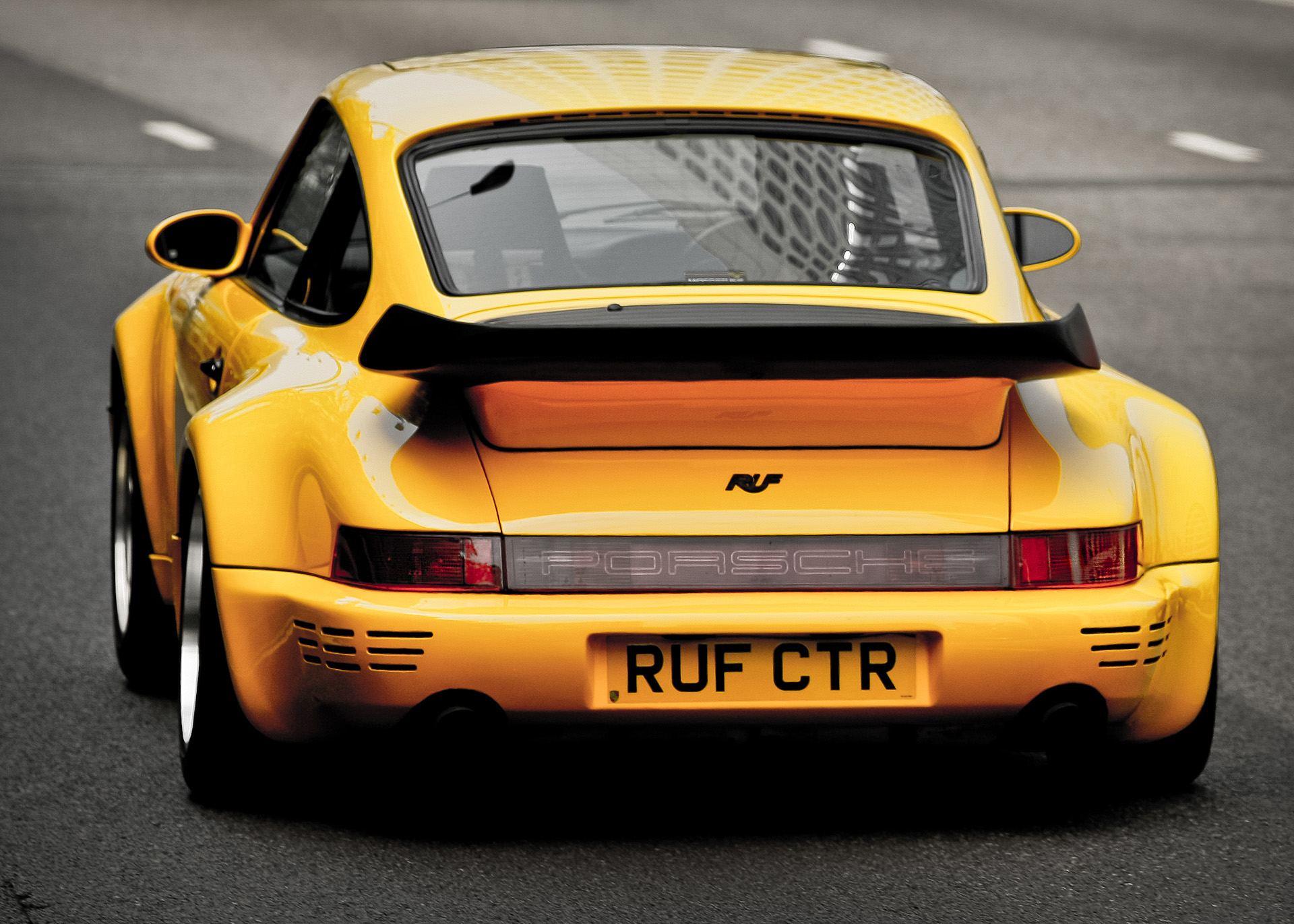
There is very little information concerning the 964 CTR on the internet, but I am pretty confident it exists after reading about it in a couple of places. I know the original CTR was based on the 930 and nicknamed the 'Yellowbird', but I would like to know for sure that RUF continued the lineage with the 964 before producing the 993 CTR 2 in '93. If so then this is a very rare car indeed. Can anyone confirm this as an original 964 CTR?
www.wix.com/juanchaihk/rprocter
UPDATE: After a couple of years still not knowing the full-story on this one, I now have the facts from a Mr Jimmy Yee. It's "This car was originally a late 80's 930 Turbo owned by Tony Cruz. Tony took the Ruf sole distributorship for Hong Kong market in early 90's. He shipped his 930 to Ruf and have it converted into a twin-turbo Yellow Bird spec and at the same time changed the bumpers to 964 version and subsequently fitted a 993 GT2 rear wing. The wheels fitted were BBS magnesium 3-piece racing, which did not last long and started to leak after some years. I made a set of 3-pc wheels for him to replace the BBS in mid 2000's when he wanted to sell the car. I drove the car, which the condition was very poor due to badly maintained at that time. The one who bought the car from Tony had obviously spent a lot of money to make it looks good again." So, there you go. Thanks, Jimmy!
Chassis n° DB4/606/L
Zoute Sale - Bonhams
Estimated : 250.000 - 300.000
Sold for € 276.000
Zoute Grand Prix 2021
Knokke - Zoute
België - Belgium
October 2021
This lot is offered with an original State of Oklahoma Certificate of Title; other original USA paperwork; photocopies of purchase invoice dated March 2007; and copies of build sheet records.
"For many Aston Martin enthusiasts the DB4 was the best of the post-war cars. Previous cars were lacking in power while the later DB5 and DB6 put on weight and were more like fast tourers than high-speed thoroughbreds..." – Mike Twite, Motors, 1967.
Manufactured between October 1958 and June 1963, the DB4 developed through no fewer than five series. However, it should be made clear that the cars were not thus designated by the factory, this nomenclature having been suggested subsequently by the Aston Martin Owners Club to aid identification as the model evolved. The first series had already undergone a number of improvements, including the fitting of heavy-duty bumpers after the first 50 cars, before the second series arrived in January 1960. A front-hinged bonnet, bigger brake callipers and an enlarged sump were the major changes made on the Series II, while the third series featured separate rear lights, two bonnet stays and a host of improvements to the interior fittings.
Manufactured between September 1961 and October 1962, the fourth series was readily distinguishable by its shallower bonnet intake, recessed rear lights and new grille with seven vertical bars. The final, fifth, series was lengthened to 15' (allowing for increased legroom and a larger boot) and gained 15" wheels, an electric radiator fan and the DB4GT-type instrument panel. Including Vantage and convertible models, approximately 1,100 of these iconic 'Gentleman's Express' sports saloons were produced between 1958 and 1963.
This Series III DB4's guarantee form copy shows that it was manufactured in left-hand drive configuration and delivered to the J S Inskip distributorship in the USA in May 1961. The DB4 left the factory finished in Sea Green with White Gold interior trim and was equipped with chrome road wheels. Its first owner is recorded as one Robert S Mautner of Lindenhurst, New York and there is one subsequent owner listed: Mr P Sprague (no address given). The AMOC Register records the car as still in the USA in 1983.
Perhaps the most surprising aspect of this DB4's history is the amount of service work required during its early life, the first entry being dated 3rd July 1961 (at 1,000 miles) when the transmission was rebuilt! The clutch was replaced in February 1962 and then some seven years later the Aston was treated to a complete mechanical overhaul, including the suspension, brakes, steering and a full engine rebuild, at only 51,392 miles. These works also included repairs to body panels; repainting; a complete interior re-trim in natural leather; installing a new Bosch New Yorker radio; and fitting a Webasto sunroof. In fact, so extensive was the rebuild that the DB4's owner ended up with what was effectively a brand-new car.
The Roger Maris Museum is in a Mall in Fargo, No. Dakota. Part of the deal was that it would be easily accessible for people and remain on display. The collection has a lot of value.
During his career, Roger Maris played in seven World Series and seven All-Star games. He hit 275 career home runs and won the Gold Glove Award for outstanding defensive play. The New York Yankees retired his number "9" in 1984.
Roger founded Maris Distributing Company, an Anheuser-Busch distributorship, in 1967 with his brother Rudy, which he operated until his death in 1985.
In 1998, Roger's home run record was surpassed by Mark McGwire and Sammy Sosa, both from the National League, 37 years after the 1961 season.
Roger Maris became one of the few baseball players ever featured on a United States postage stamp when the United States Postal Service issued its "Roger Maris, 61 in 61" stamp in 1999.
Billy Crystal's acclaimed film, 61*, starring Barry Pepper and Thomas Jane, about the home run race in 1961, premiered in 2001. The film was re-released on blue ray DVD in 2011.
In 2011, the New York Yankees celebrated the 50th year of Roger's American League Home Run record, which remains unbeaten.
Techno Classica 2018
Essen
Deutschland - Germany
March 2018
Auction : Coys
Estimated : € 45.000 - 55.000
Construzione Automobili Intermeccanica is an automobile manufacturer founded by Frank Reisner initially based in Italy but subsequently moving to Canada. It is currently headed by Frank’s son, Henry Reisner. The company’s first car was a Formula Junior on a Peugeot engine, followed by further 500cc engined race cars, one of which won at the Nurburgring.
Larger American V8 engines were used in the Apollo GT, of which 101 cars were made for International Motor Cars (1961–1965). The Apollo, the Veltro and later prototypes were designed by Franco Scaglione. The later Italia was a larger GT sports car, of which approximately 500 were made (1966–1972), followed by Murena GT in 1971. With Bitter Cars and Opel, Intermeccanica developed the Indra (1971), followed by a few years assembling the Squire car.
The Indra was presented at the Geneva Automobile Show and was Intermeccanica’s most successful car yet.
Between 1971 and 1974, 125 Indras in three variants, convertible, notchback coupe and fastback coupe were developed and built. In 1973 the Indra was presented at the New York Automobile Show, again with many orders taken and distributorship for U.S. set up. At this stage GM changed policy and stopped supplying both the Chevrolet engines and the Opel parts, as well as advising their Opel dealers in Germany that they were no longer to sell the Indras, with disastrous results for Intermeccanica. Distributor Erich Bitter developed a very similar replacement, the Bitter CD, built by Baur.
One of only 60 Indra Spiders produced, this rare and desirable Italian sportscar is the only known example to be offered on the open market today. Finished in fly yellow with a black interior, the Indra makes an interesting and unusual alternative to the more mainstream sportscars of the 1970s.
Alfred Alschuler, the architect of notable Chicago synagogues, designed the Spanish Renaissance showroom and offices at 2222 S. Michigan Ave. It was completed in 1922. Hudson automobile made it through the Great Depression and World War II before going out of business in the early 1950s.
In early 2018, ex-Chicago Bears Israel Idonije and Julius Peppers were part of a group that acquired the property. It will be renovated for office space, retail, gymnasium and four residential units.
NOTE: From an application for a zoning change, October 2022. "The Applicant requests a rezoning of the subiect property from the DS-3 and DS-5 Downtown Service Districts to a unified DX-5 Downtown Mixed-Use District, then to a Residential-Business Planned Development to permit the renovation of the existing 3-story 68' foot-tall building with approximately 4,700 sf of restaurant space in the basement. 25.000 sf of office, retail, or venue space. 9.000 sf of ground floor restaurant/commercial uses, 15,000 sf of rooftop entertainment uses, 38 residential units, and 18 extended-stay hotel rooms together with accessory and incidental uses."
NOTE 2: A renovation permit was issued in November 2025 for a 4-story mixed use hotel. It includes amenity spaces at levels 2 and 3 and roof/pool deck at level 4. core and shell for the future tenant build out of a restaurant, bar and event space at level 1, as well as a restaurant and bar at level 4.
Photograph taken during Chicago Architecture Foundation Motor Row walking tour.
"In the summer of 1984, following the cancellation of Mission 41F, Karol “Bo” Bobko (front left) received a French payload specialist, with Patrick Baudry (front right) and Jean-Loup Chretien (back right) selected to train for the position. Behind Bobko is Dave Griggs. All four men are framed by the side hatch of the shuttle simulator."
I was looking for a photo for Jean-Loup Chretien to sign and came across this interesting picture, from the training of Mission 51E.
Slated to fly aboard Challenger in 1985, the flight was canceled a week before launch, owing to a problem with one of the satellites manifested for the mission.
Chretien, as noted, was the backup payload specialist to Patrick Baudry. Chretien would finally get his own shuttle flight, STS-86/Atlantis, a rendezvous with the Russian space station Mir, in 1997.
Earlier, in 1977-78, Chretien was appointed Deputy Commander of the South Air Defense Division in Aix en Provence, and he served in this position until his selection as a cosmonaut in June 1980.
He remained a French Air Force officer but was placed on detachment to CNES for his space flight activities ensuring his availability for future flights with the Shuttle (NASA), Mir (Soviet Union) or Spacelab (ESA).
A veteran of three space flights, Chretien was the 10th Intercosmos cosmonaut, and has spent a total of 43 days, 11 hours, 18 minutes, 42 seconds in space, including an EVA of 5 hours, 57 minutes.
In April 1979, the Soviet Union offered France the opportunity to fly a cosmonaut on board a joint Soviet-French space flight, along the same lines as the agreement to fly non-Soviet cosmonauts from member countries of the Intercosmos program. The offer was accepted, and France began a cosmonaut selection program in September 1979.
Chretien was one of two finalists named on June 12, 1980. He started training at the Yuri Gagarin Cosmonaut Training Center in September 1980. The following year he was named as the research-cosmonaut for the prime crew of the Soyuz T-6 mission.
Soyuz T-6 was launched on June 24, 1982, and Chretien, Dzhanibekov and Ivanchenkov linked up with Salyut 7 and joined the crew of Berezovoi and Lebedev already on board. They spent nearly seven days carrying out a program of joint Soviet-French experiments, including a series of French echography cardiovascular monitoring system experiments, before returning to Earth after a flight lasting 7 days, 21 hours, 50 minutes, 42 seconds.
This flight made him the first Western non-American to go to space, as well as the first Western European.
Chretien made his second space flight as a research-cosmonaut on board Soyuz TM-7, which launched on November 26, 1988. Together with Volkov and Krikalev, he linked up with Mir 1 and joined the crew of Titov Manarov and Polyakov already on board.
They spent 22 days carrying out a program of joint Soviet-French experiments, including a 5 hour and 57 minute EVA by Volkov and Chretien during which the two men installed the French ERA experimental deployable structure and a panel of material samples.
In making the EVA, he became the first non-American and non-Soviet cosmonaut to walk in space. In addition, he was the first non-Soviet cosmonaut to make a second space flight aboard a Soviet spacecraft. The mission lasted 24 days, 18 hours, 7 minutes.
During 1990-93, Chretien participated in Buran spacecraft pilot training at the Moscow Joukovski Institute.
Lastly, he served on the crew of STS-86/Atlantis (September 25 to October 6, 1997) the seventh mission to rendezvous and dock with the Russian Space Station Mir.
Highlights included the delivery of a Mir attitude control computer, the exchange of U.S. crew members Mike Foale and David Wolf, a spacewalk by Scott Parazynski and Vladimir Titov to retrieve four experiments first deployed on Mir during the STS-76 docking mission, the transfer to Mir of 10,400 pounds of science and logistics, and the return of experiment hardware and results to Earth. Mission duration was 10 days, 19 hours, 21 minutes.
Chretien retired from NASA in 2001. In-person, Chester, Md., 27 Sept. 2015.
Retired Air Force Col. Karol. J. "Bo" Bobko became a NASA astronaut in September 1969. He was a crewmember on the highly successful Skylab Medical Experiments Altitude Test (SMEAT) -- a 56-day ground simulation of the Skylab mission, enabling crewmen to collect medical experiments baseline data and evaluate equipment, operations and procedures.
A veteran of three space flights, Bobko has logged a total of 386 hours in Space. He was the pilot on STS-6 (April 4-9, 1983); and was the mission commander on STS-51D (April 12-19, 1985) and STS-51J (October 3-7, 1985).
Bobko was pilot for STS-6, which launched from Kennedy Space Center, Florida, on April 4, 1983. During this maiden voyage of the spacecraft Challenger, the crew deployed a large communications satellite (TDRS) and the rocket stage (IUS) required to boost it to geosynchronous orbit.
The STS-6 crew also conducted the first shuttle spacewalk (EVA) and additionally conducted numerous other experiments in materials processing and the recording of lightning activities from space. There were also three Getaway Specials activated on the flight.
After 120 hours of orbital operations STS-6 landed on the concrete runway at Edwards Air Force Base, California, on April 9, 1983.
On his second mission Bobko was the commander of STS-51-D/Discovery which launched from Kennedy Space Center, Florida, on April 12, 1985.
The mission was to deploy two communications satellites, perform electrophoresis and echocardiograph operations in space, in addition to accomplishing other experiments. When one of the communications satellites malfunctioned, a daring attempt was made to activate the satellite which required an additional EVA, rendezvous, and operations with the remote manipulator arm.
After 168 hours of orbital operations Discovery landed on Runway 33 at Kennedy Space Center on April 19, 1985.
Bobko was next commander of STS-51-J, the second Space Shuttle Department of Defense mission, which launched from Kennedy Space Center, Florida, on October 3, 1985. This was the maiden voyage of the Atlantis.
After 98 hours of orbital operations, Atlantis landed on Edwards Air Force Base Lakebed Runway 23 on October 7, 1985.
In 1988, Bobko retired from NASA and the Air Force to join the firm of Booz Allen & Hamilton Inc., in Houston, Texas.
Bobko was born in New York, and was living in Seaford at the time of his selection as an astronaut. His parents used to own a soda distributorship on Sunrise Highway, he told me.
Even though I had a signed crew (launch) photo of the 51J mission, I like getting in-person signed photos of the astronauts I have met - and even though I'm sure of the authenticity of the 51J photo, I had bought that on the secondary market. (This in-person signature replaces an in-person portrait shot that I obtained myself - I rarely have more than one signed photo of a particular astro/cosmonaut.) In-person, Titusville, Fl., as part of the Atlantis 30th anniversary celebration, 3 Oct. 2015.
Ad scanned from: The Automobile (a weekly magazine) February 14, 1907 Vol. XVI - No 7. 10¢
-------------------------------------------------------------
Waltham Manufacturing Company (WMC) was a manufacturer of bicycles, motorcycles, motorized tricycles and quadricycles, buckboards, and automobiles in Waltham, Massachusetts. It sold products under the brand names Orient, Waltham, and Waltham-Orient. The company was founded in 1893, moving to self-propelled vehicles after 1898.
Waltham Manufacturing Company was founded by Waltham businessmen around engineer Charles Herman Metz (1863-1937). Metz encouraged two employees to build a steam car of their own in the company's premises, which led to theWaltham Steam.
Metz imported French Aster engines, and secured the U.S. distributorship for De Dion-Bouton engines. Further, he imported this maker's tricycles and quadricycles. Using De Dion-Bouton patents, WMC started building their own Orient Autogo and Orient Autogo Quad in 1899.
An early investor in WMC, Charles A. Coffin (1844-1926), first president of General Electric, ordered an electric prototype in 1898, which didn't go into production. Metz experimented with engines mounted on bicycles. The evolving Orient Aster was one of the very first U.S.-built motorcycles] Metz was assisted by famed French bicycle racer Albert Champion (1878—1927) who arrived in the U.S. around 1899, becoming one of the first professional motorbike racers. Metz is even claimed to have found the expression "motor cycle" for his new vehicle, first used in an 1899 ad, further, engines of Metz' design were developed and produced.
WMC's first car was a motor buggy called the Orient Victoriette, followed by two runabouts in 1902 and 1903. About 400 of the earlier model were sold; the younger Orient Runabout No. 9 was not a success with about 50 examples built.
In 1902, Metz left the company, founding Metz Motorcycle Company and C.H. Metz Company in town soon after. Engineer Leonard B. Gaylor succeeded him at WMC. The same year, Gaylor introduced a very light model with friction drive, sold as the Orient Buckboard.
It seated 2 passengers and sold for just US $425, making it the lowest-priced automobile available. The vertically mounted air-cooled single-cylinder engine, situated at the rear of the car, produced 4 hp (3 kW). The car had tiller steering, weighed 500 lb (227 kg) and had a 100 mi (161 km) range, though minimal springing and the complete lack of any bodywork made it less than practical for a long journey. In the next years, it was offered in several models (including a diminutive delivery car), got an improved suspension, steering wheel, two chains instead of one belt to transmit the power to the rear wheels, and an optional 8 hp (6 kW) two cylinder engine. It remained in production until 1907.
Plant superintendent John Robbins left in 1904. He was replaced by Leo Melanowski. At WMC, he also had the position of a chief engineer.
More conventional cars came in 1905 with front-mounted, water cooled inline 4-cylinder engines of 16 or 20 hp (12 or 15 kW) and chain drive. They were made until 1908. These power plants were of proprietary design and consisted of four singles mounted on a common crank. Although of good quality, the cars were too expensive to become a success.
Melanowski left in 1906, his position taken by William H. Little. Little developed a small runabout with a 10 hp (7.5 kW) V-twin engine and friction drive. Shortly before production started in 1908, WMC got into financial troubles. To avoid bankruptcy, their bank negotiated with Charles Metz. In July 1908, the C.H. Metz Company bought WMC, making Metz owner of the largest automobile manufacture in the U.S. Reorganizations followed in 1909 and 1910, when the C.H. Metz Co. and WMC together were reorganized as the Metz Company.
Little's small car left became the Metz Two, sold by a completely new marketing in 14 batches and assembled by the customer. It worked, and the company was not only out of debt in less than a year but also sold its huge stock of parts.
The KOM League
Flash Report
For week of
November 27, 2016
This report is as close as I will come of mentioning the world champions of baseball in 2016. For the success of any endeavor the road has to be paved by many others. In the case of the Chicago Cubs it took over five generations. Coming up this week is a speech I will be making to a Rotary Club. To make it a bit relevant I’ll mention the Chicago Cub affiliates of the KOM league of which there were three: Iola, Carthage and Blackwell. If my memory holds out and time permits I’ll mention a few of the KOM leagures who had a special connection with the Cubs and others who were phantoms, “passing in the night.”
In the previous Flash Report a photo of the 1949 Carthage Cubs was shared that was taken in front of the third base bleachers. This photo was taken a few weeks later and 350 feet in the opposite direction but on an almost direct line. It was taken in front of the scoreboard in right field. www.flickr.com/photos/60428361@N07/30445174213/
There was no plan to prepare a report for this week. However, I put together some information that is contained in some of my files on each of the 36 roster members and one batboy for the 1949 version of that team: The photo included in this report is on page 65 of the KOM League Remembered book published by Arcadia in 2005 and it is still available from almost any book source.
1949 Carthage Cubs--Taken in front of scoreboard in right field. The only name missing from the previous night’s game, as indicated on the scoreboard, was the third baseman which was, Johnny LaPorta. Bob Speake had the evening off for that game and Hal Brown, basically a catcher, played right field. Phil Costa had replaced Bob Speake at first base.
Back Row: Glenn Walden, John LaPorta, Art Leslie, Allen Burger Jr., Darrell Lorrance, Denny Moffitt and Don Anderson.
Middle Row: Hal Brown, Hank Paskiewicz, Don Schmitt, Paul Hoffmeister and Frank Morrow.
Front Row: Ed Garrett, Woody Wuethrich, Bob Saban, Dean Manns, Phil Costa and Bob Speake. Harry Smith Batboy-lying down.
Here are a few bits of information regarding the 36-man roster plus the batboy, Harry Smith. I would suggest you only consider a name or two at each sitting and peruse the URLs to get your dose of this club. It isn’t likely I’ll ever prepare another Flash Report with this amount of detail regarding any team.
Alsop, Charles Franklin
B. 1/10/1929 La Porte, IN
D. 1/8/2015 LaPorte, IN
He was released by the club on June 1. He didn’t play in 1950 but played from 1951 thru 1956 in the Southern Assn., Northern, Three-I, Western, Texas, Tri-State, South Atlantic, Carolina and Midwest leagues.
Worked for Ford Motor Company and later in life collected Thunderbirds. He once inquired about one I owned.
www.legacy.com/obituaries/gazettenet/obituary-preview.asp...
Anderson, Donald Edward
B. 10/22/1918 Chicago, IL
D. 11/22/2010 Hemet, CA
Anderson’s career began n 1939 and was soon interrupted by WWII. After the war he began playing and managing in the Coastal Plain and Florida State leagues. He arrived in Carthage in 1949 and stayed until July 9, 1951. I have long claimed that had it not been for Anderson I would have never written a word about the KOM league. My earliest memories of him were not pleasant and I thought he disliked me as his batboy. When first starting to write about the old league I was ambivalent. In the course of writing I located Anderson and it led to one of the greatest friendships a former manager and his batboy ever had. Anderson came to Missouri a few times to visit me and from our initial reconnection, in 1995, we spoke about once a month, for over an hour each time about the past. He taught me more than anyone in my life about not holding on to misconceptions formed in youth. Much has been written in my books, newsletters and Flash Reports regarding the batboy/manager relationship. Amazingly, I’m writing this section six years to the day of his death and that wasn’t planned. Prior to his death he paid me the greatest compliment that one person could bestow on another fellow human and it is so personal I’ve never uttered it to anyone.
Bailey, Jr. Turner W.
B. 10/9/1928Earl Twp. LaSalle County, IL
D. 12/06/2004 Tampa, FL living in Tallahassee
He was a lefthanded pitcher who was released shortly after the opening of the season due to a sore arm. He was one of the very few roster members of that team who wasn’t located while still living.
Barclay Jr. Donald Thomas
B. 2/1/1926 Oak Lawn, IL
He began his career in 1947 in the Arizona-Texas league and wound up the season in the West Texas/New Mexico circuit. He was with Reno, NV in the Sunset league in 1948. He left Carthage on the 15th of June of 1949 and played the rest of the year at Charlotte, NC in the Tri-State and Concord, in the North Carolina State league. He played through 1951 winding up with Flint, MI of the Central Association.
Current location: Chicago, IL
Barclay is the first KOM leaguer that I ever recall seeing.
Brown Jr. Harold Albert
B. 6/7/1930 Chicago, IL
Current residence: Mt. Prospect, IL
When it came to write about Mr. Brown I sent a note, by e-mail, to his neighbor, Jim Gray. The following is Brown’s profile, in his own words prepared during Thanksgiving week of 2016.
After the season I rode home to Chicago with Bill Hornsby in his convertible. Worked in a factory waiting to be drafted in USMC (served 1951 - 1953) which was one of the best things to happen to me. Made Sergeant (in) 1952. Married Babe July 12, 1952 while still in the Corps. Got a job in furniture store late 1953 in Chicago. Nine years later opened my own furniture store with a partner. The business lasted eight years when he moved to Florida. I stayed in home furnishings and carpeting for 35 more years, showing furniture and carpeting to clients at the Merchandise Mart in Chicago. We have lived in the same house in Mount Prospect, Ill. where we raised 2 daughters who gave us 2 granddaughters. I played hand ball at the local YMCA for 50 years. I am still moving, but slowly. I try to exercise daily with light weights and bicycle. My good neighbor Jim is the go between. He says he enjoys your reports as much as I do. We have made him into a Cub's fan. All in all we have had a good and happy life and would not change a thing. Sincerely, Hal Brown.”
Jim Gray is Brown’s friend who secured the foregoing information. “Babe and Hal are wonderful people and I wish we knew them much longer. Hal has a great since of humor and Babe is great cook, gardener and loves to set a beautiful table and decorate their home for all the holidays. Their home backs up to a park with a creek 100 feett to the north, the coyotes stroll past and attempt to nail squirrels and rabbits at my bird feeders. Hal sits and listens to his favorite team the Cubs when they aren't on television. He was excited to finally see his team win the championship through a couple nail biters that made his stomach do a couple of flips. Chicago had the 7th largest crowd ever attend the parade and celebration. They estimated five and a half million fans at the parade and Grant Park lake front venue.”
Burger, Jr. Allen
B. 8/26/1930 Centerville, OH
1951-53 Military Service stationed at Ft. Myer, VA
Member of the Presidential Honor Guard
Played for the 1952 Ft. Myer Colonels baseball team that won the National Baseball Congress Tournament in Wichita, Kansas The Ft. Myer team included big league hurlers Bob Purkey, Alex Konikowski and Tom Poholsky, NBA Basketball player, Jack George and former Pittsburg, Kans. Browns pitcher, John Manopoli, among notable others. I guess I could dig up the photo of that team Burger gave me and identify all the guys shown. But, very few people today would recognize any of the names shared.
Contreras, Jr. Domingo
B. 6/12/1930 Los Angeles, CA
He joined the club on June 26 and stayed until July 18. He had been sent to Carthage by Des Moines and when he left Carthage he went to the Cub affiliate in Visalia.
Current status: Unknown
In the many years of research I never learned anything about this man, other than he also played for Visalia, CA in 1950. The Social Security Index shows him as still being alive.
Costa, Philip Anthony
B. 2/22/1931 Chicago, IL
Costa’s father was 60 years old at time Philip was born. The family lived near Al Capone
Current residence: Berwyn, IL 60402
Costa was the team comic and knew a little bit of outlaw lore. On one trip from Carthage to Independence, Kans. the team passed through the town of Coffeyville. He announced to the team that he would depart the bus and finish the job the Dalton Gang bungled. That was when the townspeople armed themselves and thwarted the gang’s last bank heist. Costa promised to join the team, later, in Independence. In his trips to KOM reunions he had a lot of comments on how the Italians of KOM towns knew nothing about real cuisine of Italy. In later KOM events he’d favor his “adoring fans” with an aria from Chicagoland. Most of those within earshot welcomed the silence at the end of each outburst. Yeah, everyone enjoyed Costa. He played in 1950 for the Janesville, WI Cubs and in his in final year, 1951, he traveled a lot. He played for New Bern and Edenton, NC; Sioux Falls, SD and Clovis, NM.
Courtney, William Leroy
B. 5/6/1931 Camden, DE
D. 6/30/2000 Dover, DE
He reported to Carthage, in August of 1949, as a shortstop, and was too late to get into any team photo. Had he been in any of them he would have stood out as one of the tallest and slimmest fellows in the picture. He was over six feet tall and weighed less than 170. He played in the Cubs minor league system at Moultrie, GA; Sioux Falls, SD; and Grand Rapids, MI before the outbreak of the Korean War. That concluded his baseball career. I did locate him in the mid-1990’s but he didn’t have too many memories of his KOM league career other than to reflect on the fact that he and Mickey Mantle played the same position for their respective teams.
Erath, George Snider
B. 7/10/1927 Chicago, IL
D. 11/7/2003 High Point. NC
Career: Owner of a large furniture manufacturing company in High Point. Later owned the High Point baseball club and gave Curtis Flood a chance to play professional baseball. This URL is worth opening. It is a great story and also has a photo of Erath. www.greensboro.com/news/george-erath-patron-philanthropis... The only home run Mickey Mantle ever hit in Carthage was a fly ball to centerfield that Bill Hornsby lost as it went above the light standard and it came down and hit him in the head. Mantle circled the bases on that time at bat. Here is a brief quote from the aforementioned URL. “For all his success, George Erath often talked of one big failure — the time a then-unknown Mickey Mantle hit a home run off a young minor-league pitcher one afternoon in Missouri. Erath was that young pitcher. “I mentioned to him one time, bragging, that I’d seen Mickey Mantle play baseball in Joplin, Missouri,” remembers Bill Fenn, who was Erath’s friend for more than 30 years. “And he said, ‘That’s nothing’ and told me his story, and we had a great laugh.”
Another link: www.bizjournals.com/triad/stories/2002/06/03/daily34.html
Ed note: Here is this editor’s account of the Mantle home run. Sunday, August 21, 1949 was the scene of an afternoon doubleheader between the Carthage Cubs and Independence Yankees. Carthage won the first game and Erath started the second contest with a scoreless innings string of over 20 innings. He got into the third inning without being scored on. He was one out of extending his scoreless streak when a runner reached by virtue of an error. That brought up the left-handed hitting Mantle and he lofted a fly ball into medium left center. By that time of day the lights had been turned on and when the ball went above the level of the lights, Hornsby lost it. When the ball came down it hit Hornsby in the head, left fielder Don Schmitt told me that his teammate was more embarrassed than he was hurt. Anyway, Dr. Tom McNew was summoned on to the playing field to take a look at the fallen outfielder and pronounced him fit to continue. However, Erath’s scoreless streak was over although Carthage wound up winning the game. Ten years prior to that incident Dr. McNew arrived at 1226 Valley Street to bring the author of this article into the world. He pronounced the new arrival fit for this world and 77 years to the day this section was written (11/27/2016) is when McNew was the first person to lay eyes on me.
Garrett, Edward Franklin
B. 4/13/1925 Cincinnati, Ohio
D. 5/25/1983 Cincinnati, OH Univ. Hosp.
Batboy 1943-46 Cincinnati Reds
He was a member of the national championship American Legion team, from Cincinnati, in 1947.
Garrett's boyhood friends were Don and Hal Zimmer. Don is the guy who hung around the big leagues for many years as player, manager and coach. Hal, the better player of the two, was a member of the 1951 Ponca City Dodgers. Garrett was older than the Zimmer brothers by 5-6 years but according to an interview I did with Hal Zimmer, they looked up to the former Redlegs batboy. The Garrett family lived at 926 Wells St. and the Zimmers lived at 777 Sedam St. which was 1.8 miles apart. When Garrett went to his duties as batboy he was 3.1 miles from Crosley Field where the Reds played in those days. For the Zimmer brothers to get to Findlay and Western Ave. they had to travel 3.8 miles to see the Reds games, which they did as often as possible.
Garrett’s address was mentioned for I did the same for Johnny LaPorta, his big league batboy counterpart and Carthage Cub teammate, in 1949, in a recent story.. I gave the Google URL for LaPorta’s boyhood home and was going to do the same for Garrett but 926 Wells St. is now a vacant lot.
In the days the Garretts and the Zimmers were youngsters their parents took whatever Depression jobs were available. The Zimmer family operated a vegetable stand and Garrett’s father was a waiter and his mother a waitress as late as 1940
Hoffmeister Paul Herman
B. 12/23/1928 E. Chicago, IN
Current residence: Arlington Heights, IL 2014
He played in the North Central Kansas Amateur Baseball League of America. That is where many young men, from the Midwest, honed their baseball skills. Paul was with Manhattan, Kans. in 1948.
He also pitched at Mattoon, IL in 1949 and came back to Carthage in 1950. He didn’t play during the Korean War years of 1951-52 but returned to play from 1953-1958 with teams in the Three-I, Texas, Western, and Pacific Coast leagues.
Career: Was a Certified Public Account in Arlington Heights, Ill until retirement
In retirement he still has to put up with these Flash Reports each week.
Hornsby William Pennington
B. 6/2/1925 St. Louis, MO –Son of Hall of Famer Rogers Hornsby.
D. 6/29/1984 Goodlettsville, TN
He played minor league baseball from 1946 through 1951.
Was hit in head by a fly ball that allowed Mickey Mantle to hit his only home run in Carthage. It was an inside-the-park homer. See that story in the URL under the George Erath citation.
Operated an Anheuser Busch distributorship at time of death.
www.findagrave.com/cgi-bin/fg.cgi?page=gr&GRid=58549245
Johnson Leslie Thomas
B. 12/27/1929 Chamberlain, SD (Pukwana)
He reported to Carthage on May 31st as an outfielder. He also played part of that season with Boise, ID of the Pioneer league.
Current residence: Mt. Vernon, WA
My only contact with Johnson has been in regard to some very rare baseball cards, from the 1930’s, that he collected as a young man. They are so rare and expensive that I’ve given him the name of a couple of former KOM leaguers who I trust and who collect rare cards. To my knowledge, Johnson still owns those treasures of his youth.
Kirschner, Gordyn Samuel
B. 10/8/1930 Galveston, TX
He was a pitcher who joined the team on August 5th from Sioux Falls, SD
Current residence: Galveston, TX
Knapton William Bruce
B. 8/21/1927 Bloomer, WI
He played third base and catcher before being released on May 19th.
Long time basketball coach with a great record.
Current residence: The Villages, FL
www.beloit.edu/archives/documents/archival_collections/fa...
LaPorta, John Joseph
B. 11/19/1926Chicago, IL
He joined the team on May 27th from St. Augustine of the Florida International league where he had played for Don Anderson in 1948.
D. 6/1989
After his baseball career John worked for his father-in-law, Frank Longo, in his plating shop in Chicago.
Since the report from last week featured the LaPorta family you can refer back to it to learn about his three-year big league career with the Chicago Cubs which occurred long before he ever saw the bright lights of the Carthage town square.
Leslie, John Arthur
B. 10/10/1929Scott. OH
He was a pitcher who joined the team on May 26th from Clinton, IA of the Central Association. He joined the Topeka Owls in 1950 and from there it was off to the Korean War from 1951-53.
Current residence: Houston, TX
Lorrance, Jr Darrell Morris
B. 2/28/1928Conway, MO
D. 10/20/2013 E. Moline, IL
He first came to Carthage in late 1945 for a tryout camp held by the St. Louis Cardinals and didn’t make it. He was signed by the Chicago Cubs in 1948 when he pitched for Janesville, WI. He joined Carthage in 1949 and stayed until a sore arm caused him to quit on July5th.
Lorrance was known for his basketball talent. He led Conway, Missouri to a state basketball championship in 1945 (45-3) and was recruited to play for the legendary Adolph Rupp at the Univ. of Kentucky. He later left Kentucky to play for Sparky Stalcup at the Univ. of Missouri. He played AAU basketball for a number of years leading his Conway team to the National tournament in 1948.
Manns, Louis Dean
B. 2/23/1929 Centralia, IL
Dean played with Carthage in 1949 and fell in love while there. He stayed in town during the winter and worked for the B &G Construction Company and even spent some time that off-season as a cast member in Little Theater productions. He returned to Carthage in 1950 and shared the catching duties with Don Stange and Don Biebel. For an early Christmas present he went to Ft. Leonard Wood, Mo. on December 13, 1950 for induction into the army. He got back to baseball in 1954 with Blackwell, Okla. after they joined the Western Association and saw action in the Pioneer and Evangeline leagues before calling it quits in 1955.
I tracked Manns for a few years before finding him in the Villages, in Florida. He finally made it to a couple of KOM league reunions. My oldest sister attended one of those events and upon seeing him exclaimed “Dean, I had a crush on you when I was a waitress at Red’s Café.” That was news to him and to me as well. He was one of the more popular players in Carthage baseball history.
Current residence: Centralia, IL 2010
McCalman, Jack Elton
B. 4/21/1930 Caddo, OK
D. 11/9/1978 Caddo, OK
There was never much found on McCalman except that he joined the Hutchinson, Kansas team later in the 1949 season after having been with both Carthage and Lumberton of the Tobacco State league. In 1950 he played at Hickory, NC and Baxley, GA before being inducted into the US Army where he spent the next two years. I never had any success in locating an obituary for Jack but did find one for his older brother that mentioned him. www.meaningfulfunerals.net/home/index.cfm/obituaries/view...
Meier, Allan Alfred August
B. 12/18/1928 Dixon, IA
D. 6/29/2002 Marengo, IA
Meier spent a very short time with Carthage as he didn’t show up until August 22. He had reported from Elizabethtown of the Appalachian league. He spent time serving during the Korean War which is explained in his obituary. The following was his obituary and baseball wasn’t mentioned. www.legacy.com/obituaries/gazettenet/obituary-preview.asp... “Services for Allan ‘Al’ Meier, Marengo, will be 10 a.m. Tuesday at St. John's Lutheran Church, Marengo. Burial will be in Marengo Cemetery, with military honors. Visitation is 4-8 p.m. today at Kloster Funeral Home, Marengo. He died Saturday, June 29, 2002, at his home following a brief illness. Allan Alfred August Meier was born Dec. 18, 1928, in Dixon, Iowa. He married Janice Bruckman in 1953 in Calamus. He managed and in 1961 purchased the Marengo Elevator Company. He served in the Army from 1950-52 as a paratrooper during the Korean Conflict. A memorial fund has been established. Survivors include his wife, Janice; a daughter, Julie Storck, Marengo; sons, Steven and Greg, both of Marengo, and Scott, St. Louis, Mo.; 12 grandchildren; a sister, Nellie Weih, Bennett; brothers, Mel and Dennis, Marengo; and a brother-in-law, Clifford Danielsen, East Moline.”
Moffitt, Dennis Eugene
B. 3/28/1929 Visalia, CA
D. 11/7/2015 Exeter, CA
He split his time pitching for Carthage and Visalia in 1949 and in 1950 he pitched for a semi-pro team in Regina, Saskatchewan. From there he went into the service, as his obituary states.
This is the location of Moffitt’s obituary:
www.legacy.com/obituaries/visaliatimesdelta/obituary.aspx... This is a quote from it. “Dennis Moffitt was born March 28th, 1929 to Harold "Pete" and Olga Moffitt in Visalia, CA. Dennis grew up in Farmersville where he met the love of his life, Carolyn DeVault. He graduated from Visalia High School in 1948. Dennis played football and baseball in high school then attended COS following graduation. Dennis played Minor League baseball in Canada, the Visalia Cubs and in Carthage, Missouri. Dennis was drafted into the Army in 1950 for the Korean War. Dennis and Carolyn were married after his return in 1952. Dennis started up his first business in Visalia, Service Station Repair and Maintenance which he owned and operated for eight years. In 1960, Dennis managed the Consolidated Peoples Ditch Company in Farmersville, retiring after 35 years.”
Morrow, Frank J.
B. 4/21/1931 Brockton, MA
D. 11/26/2000 Brockton, MA
He joined the Miami, OK Eagles in 1950 and was then sent to Gladewater, TX which displeased him. Thus, he jumped that club and joined the House of David team from Benton Harbor. MI. Unable to grow facial hair the club gave him some.
Knew Rocky Marciano and worked out in his gym many times.
He always wanted to attend a KOM League reunion but each year, at the time they were held, his health prohibited his travel. In 1998 he even got as far as the airport before having to return to his home. He wrote at the time that he cried because he couldn’t make the trip. In the spring of 2000 a very happy man came up to me at Chanute, Kansas and introduced himself as Frank Morrow. He was as happy as anyone I ever met. His wife told me that her husband wasn’t doing very well but looking forward to seeing some of his old teammates was the best medicine he could take. He left the reunion and died five months later.
Paskiewicz, Henry F.
B. 4/15/1930 Chicago, IL
Current residence; Albuquerque, NM
Long time educator and coach in New Mexico
Hank played competitive seniors tennis and won many championships both at the state and national levels. Unbeknownst to Yours truly, Paskiewicz was coaching at Sandia High School in Albuquerque, when I lived there and my home was just a few blocks from there. Sure wish I had known at the time he was there.
Passarella, Robert E. Nicknamed “The Grouse”
B.2/5/1927 Scranton, PA
D. 1/3/2010 Scranton, PA in Hospice
He was released by the club on May 31st. He didn’t play again until 1951 when he signed with Cordele, GA. He played for two more seasons with the Hot Springs Bathers of the Cotton States league.
Loved reliving his memories of the KOM league with Yours truly during long telephone conversations. He was a died in the wool Yankee fan. When connections were first made between Bob and this author he had just suffered a near fatal accident while pitching batting practice to a local high school team. The communication between Passarella and I was made possible through his brother. Bob was pitching batting practice to a high school team when he was hit in the head with a line drive. He was in a coma for several days. Upon gaining consciousness he was very despondent and had lost the ability to speak or write. According to Bob, being able to talk about his baseball days helped him restore all of his communication skills. To say the least, he was an inspiration to me. He was such an inspiration that Brandy Davis, former Pittsburgh Pirate, would make special trips, on his scouting tours, in order to go to Scranton and visit Bob.
Rine, Jr. Robert J
B. 4/12/1926Beatrice, NE
D. 2/06/1990 Seward, NE
Robert Rine showed up at Carthage on May 5, 1949 and stayed for about a week, as a catcher, which coincided with the arrival of Dean Manns. The task in locating Rine was difficult and by the time it was accomplished I learned that he had passed away. About the only thing I knew about him, after his departure from Carthage was a June, 1950 wedding announcement. “Miss Frances Moore, daughter of Mrs., Walter Moore of Liberty, was married to Robert Rine, son of Mr. and Mrs. Cam Rine of Beatrice, Saturday, June 17, at the First Christian church. The Rev. Wayne Greene officiated in the presence of the immediate families. Attending the couple were Mr. and Mrs. Harry Qssowski. The bride was married in a white afternoon dress and wore a white carnation corsage. A wedding dinner was served at the home of Miss Bertha Rine.”
At one of the KOM league reunions, in Carthage, Rines’ daughter attended to visit with some of the fellows from the 1949 club, but since he was with the team such a short time, no one remembered him. In 2010 Rine was inducted, posthumously, into the Nebraska Baseball Hall of Fame. This site shows a photo of his son receiving the award for his late father. beatricedailysun.com/sports/local/hunter-one-of-five-indu...
Roman, Robert Anthony
B. 1/17/1927 Syracuse, NY
D. 12/24/1996 Durham, NC
Career: Roman is featured on page 59 of the book, the KOM League Remembered. He was a handsome fellow who only had to take second place to his wife, Mona, in that department. His career was 21 games for St. Augustine, FL in 1948 and he followed his manager, Don Anderson, from there to Carthage in 1949. Combined, Roman had a 41 game minor league stint. When he left Carthage he headed back to his home in Syracuse. While there he worked in retail sales and developed an interest in singing and acting in local stage productions. He was encouraged to go to New York City for tryouts on the Broadway stage. He made it and performed on Broadway as well with numerous traveling stage shows throughout this country. When the curtain calls ceased Roman and his actress wife, Mona, settled down in Durham, North Carolina. He entered the automobile business and stayed in it until his death on Christmas Eve of 1996.
SabanMatthew Robert Leroy
B.12/22/1930McCook, IL
D. 10/25/2008 Tempe, AZ
Career: Played 12 years of professional baseball and teamed with most of the Washington Senators, of his era who played with either Chattanooga, TN or Charlotte, NC such as Harmon Killebrew. Saban is kin to every football coach in America with his last name. That is from Lou Saban to the current coach of the Alabama Crimson Tide, Nick Saban.
Here is his obituary: www.legacy.com/obituaries/azcentral/obituary.aspx?n=matth... This is a brief statement from the obituary. “Bob graduated from Lyons Township High School, IL in 1949. He then began a career in baseball, playing in the KOM (KS, OK, MO) League in Carthage, MO. In 1950, Bob played in Sioux Falls, SD for a Cubs farm club, and then in Rock Hill, SC in 1951. In 1952-53, Bob served in the US Army in Albuquerque, NM at Sandia Base and was the base's ace pitcher. After serving in the Army, Bob was drafted by the Washington Senators (which became the Twins organization) and played in the South Atlantic League, primarily with the Charlotte Hornets, from 1954-1962 with stints in Macon, GA and Chattanooga, TN. In 1966, Bob and his family moved to Champaign, IL. He was an electrician in Local 601.”
Schmitt Donald Harald
B. 5/5/1929 Davenport, IA
He returned to Carthage in 1950 where he was a member of the All-Star team. He played most every position on the field except pitcher and catcher that year.
Current Residence: Rock Island, IL
He attended the last KOM league ever held. It was in Iola, Kansas and he was very upset on his arrival for he had received a speeding ticket on the outskirts of town. That was no way to treat a former ballplayer returning to the site of many of his All-Star performances. He had just lost his wife, Gloria, prior to the reunion.
Smith,Harry WilliamBatboy
B. 1/18/1935 Fayetteville, AR
D. 8/30/1999 Carthage, MO
Frederick “Pee Wee” Smith and his little brother Harry were fixtures of Carthage Cardinal and Cub teams. Pee Wee was batboy in 1947 and 1948 and was assistant groundskeeper in 1949 and the head groundskeeper in 1950 and 1951. Harry had enough of the baseball business after the 1949 season and turned the batboy job over to Estel Back. There were two young men who I recall in grade school who could hit a softball harder and further than anyone else. They both had the same last name of Smith. One was Harry who was four years my senior and the other one was Gary who was my age and no kin to either Harry or Pee Wee.. All of the Smiths, mentioned in this section, have passed away. Harry worked for Atlas Powder Company near Carthage until his death. He fell a year short of retirement.
Speake, Robert Charles
8/22/1930 Springfield, MO
Current residence: Topeka, KS
He was the only member of the 1949 Carthage Cubs to play major league baseball.
After his major league days became one of the top softball players in America while playing in Springfield. Mo. Moved to Topeka, Kansas where he became very successful in helping a fledgling insurance company became a powerhouse firm.
Many years ago Speake reminded me that I was a Class D writer, writing about a Class D league and that I should never pay much attention or worry about any criticism of my efforts. That sound wisdom has guided me through the two decades of chronicling the old league. He also warned me not to fall for anybody telling me how interested they were in what I was doing and how they could help me. Again, he was a prophet in his own time.
In retirement Bob has become a very talented woodcarver.
Stephens Frederick John
B. 8/9/1931 Cranston, IA
D. 7/25/2015 Rock Island, IL
He was another of the fellows to play shortstop for the 1949 club. He was very difficult to locate. In fact, it wasn’t until a couple of years before his passing that I located him. He said at the time that he spent his extra money and spare time at the river front casinos.
The following site contains his obituary which also includes a photograph. Since he was never in a Carthage team photo it is the only image I ever saw of him. qctimes.com/news/local/obituaries/frederick-stephens/arti...
Thomas Harrison Irwin
B. 11/22/1929Milan, MO
D. 2/14/2009 Edwardsville, IL
He was a left-handed pitcher who joined the team from Clovis, NM. He stayed with Carthage until June 15th when he quit due to the sore arm.
His obituary was carried in the St. Louis Post-Dispatch: www.legacy.com/obituaries/stltoday/obituary.aspx?n=harris...
Walden, Glenn Lawrence
B. 5/31/1927 Manson (Calhoon County, IA)
D. 10/5/1993 Ft. Dodge, IA
Joined the team on June 16th from the Sioux Falls Canaries where he had pitched in 1948 and part of 1949. He returned to Carthage for a brief time in 1950.
Buried Keokuk National Cemetery; Section J Site 1001.
Enlisted in United States Navy 4/5/1945 and discharged 7/10 1946.
May 31, 1949 received $200 W. W. II Compensation Payment from State of Iowa
Occupation in 1959 was that of bartender in Ft. Dodge, Iowa
Married to Janet Borland from Minnesota prior to 1959
Married Alice Roths 9/29/1969 at Ellsworth, Iowa
Married Ina Lewis 7/19/1983 at Shasta, Calif. (I believe this is correct)
At one time lived in Tecumseh, Kansas (East side of Topeka)
Werling, Ralph Charles
B. 1/11/1925 Angola, IN
D. 12/17/1994 Ft. Wayne, IN
He was one of a rather large number of catchers Carthage considered in 1949. He was released on May 31st.
Sometimes you locate a former player or his fate through the obituary of a next of kin. In this case it was his widow, Nadene. qctimes.com/news/local/obituaries/frederick-stephens/arti...
After reading Nadene’s obituary I located Ralph’s final resting place which is shown here: www.rootsweb.ancestry.com/~inallcem/wayne/stjohn/new/werl...

Ralph went ahead of Nadene by 16 years.
Wuethrich, Merle F. "Woody"
B. 9/4/1925 Eureka, IL
D. 4/17/2013 Peoria, IL
Comment: He was one of the best pitchers to ever pitch for Carthage or any other team in the KOM league. His best season was 1949 but he was pressed back into duty, on short rest, and was never the same afterward. 1950 was his final shot at baseball. His obituary tells of his life’s work in the oil business. The following URL tells it better than I can
.http://www.legacy.com/obituaries/pjstar/obituary.aspx?pid=164319588
____________________________________________________________________________
Keeping track of a few former players
Sometimes I only know of the status of a former player by reading obituaries of their loved ones.
A number of years ago Don Annen, of the 1950 Carthage Cubs, asked to be taken off the mailing list for I carried the news of too many deaths. Checking on him last week I found the obituary of his wife: host.madison.com/news/local/obituaries/annen-dorothy-a/ar...
Richard Loeser of the 1948 Ponca City Dodgers is one guy who never answered any of my attempts to locate him. Even in ignoring me I have known for many years that he lives in St. Louis. In checking his status, recently I found the following: “LOESER, DELLA L. (nee Muhr) fortified with the Sacraments of Holy Mother Church on August 25, 2016 at the age of 85.
Beloved wife of Richard Loeser for 62 years. Dear sister-in-law of Robert J. Loeser.
She was a lifelong resident of St. Louis and was a very caring and loving lady to anyone she met.
Della will be dearly missed by all who knew her. Funeral Mass will be held Monday, 8/29, 10 am at St. Norbert Catholic Church. Interment Calvary Cemetery. “
VISITATION SUNDAY 4-8 PM at Stygar Florissant Chapel and Cremation Center.
Memorial contributions to American Cancer Society or American Kidney Fund appreciate
__________________________________________________________________________
Death of former Ponca City Dodger
HOPKINS-WILLIAM J. "HOPPY"--Age 87, of Castle Shannon, passed away on October 14, 2016, peacefully surrounded by loved ones. He was born on March 10, 1929, to the late Aaron Hopkins and Catherine Stoyle Hopkins. He is survived by his wife of 57 years, Nancy (Locke) Hopkins. He is also survived by his daughter, Pamela Morocco and son-in-law, Richard Morocco; grandson, Brad (Brittany); and granddaughter, Courtney; sisters, Norma Scholl and Mary Jane (Frank) Palmer; as well as numerous nieces and nephews. In addition to his parents, he was preceded in death by brothers and sisters, Ethel (Ed) Clark, Aaron (Grace) Hopkins, Daniel (Eleanor) Hopkins, Dorothy (John) Wasieleski, and Nancy Davies. Mr. Hopkins was a veteran, having served in the US Army from 1951 through 1957. He was also inducted into the Western Pennsylvania Sports Hall of Fame in 1984 and served on the Executive Board until his death. Per Mr. Hopkins and his family, there will be no viewing, however the family invites you to a Memorial Mass on Friday at 11 a.m. at St. Anne's Church in Castle Shannon. Arrangements by JEFFERSON MEMORIAL FUNERAL HOME. Contributions may be made to Pilgrimage Hospice, 2000 Cliff Mine Road, Suite 100, Pittsburgh, PA 15275.
Ed comment:
William Hopkins was one of the first of the former KOM leaguers located some two decades ago. In our conversation he recited his baseball career as beginning in 1948 with Youngstown, Ohio and Johnstown, PA in the Middle Atlantic league. In 1949 he was with both Ponca City and Johnstown, PA and in 1950 didn’t play at all. He entered military service in 1951 and played on the 28th Artillery team in Germany that finished second in the European Championships.
At this juncture the baseball researchers are not in agreement with Hopkins. Baseball Reference shows him back in Class D ball, in 1951, as a member of the Ada, Okla. Herefords of the Sooner State league. Hopkins told me, and his obituary shows, that he stayed in the service until 1957. That conflicts with Baseball Reference showing him playing in the St. Louis Cardinal organization as late as 1955.
When Hopkins was with the Ponca City Dodgers he played the outfield.
The foregoing information was shared with Jack Morris, baseball necrologist. His group, who look into baseball deaths, may be able to clarify the discrepancies between the record books and his obituary which states he was with Uncle Sam after 1951 and through 1957.
______________________________________________________________________________
The 1958 Pepsi logo (along with the far more boring & current logo) are displayed on the PepsiCo distributorship in Conway, SC.
s/n 1489GT
240 bhp, 2,953 cc, overhead-camshaft alloy block and head V12 engine, with four-speed gearbox, independent front suspension via A-arms, coil springs and telescopic shocks, and rear suspension via live axle, semi-elliptic springs and hydraulic shocks, and four-wheel hydraulic disc brakes. Wheelbase: 102.4"
- One of only 50 built
- Delivered new to Prince Vittorio Emanuele di Savoia
- Matching numbers
- Multiple awards, including Platinum Award and Pebble Beach class win
The 250 GT Pinin Farina Spyder
Towards the end of 1957, when the Ferrari 250 GT Pinin Farina Cabriolet went into production, a prototype for another open-top car appeared, aimed squarely at the U.S. market. It was called the Ferrari 250 GT California Spyder and was thought by many aficionados to be one of the most beautiful cars ever to come out of Maranello – a view still held by many to this day.
The California Spyder’s development was spurred on by the recognition that Stateside buyers wanted a fast, sparsely equipped convertible Ferrari sports car, the convertible counterpart of the Tour de France berlinettas. Whether it was Luigi Chinetti or John von Neumann who first pointed this out to Ferrari is immaterial. What is important, however, is that Ferrari responded with the California Spyder.
These open cars were quite different in concept and execution to their PF Cabriolet counterparts. The Pinin Farina Cabriolet was based on the Pininfarina Coupe, a luxurious gran turismo. The California Spyder was a much sportier car, based on the dual-purpose berlinettas also designed by Pinin Farina, though built in small numbers in Modena by Carrozzeria Scaglietti, which was partly owned by Ferrari. The procedure was described by Ferrari in their official history and catalogue as a simple one: “Pinin Farina prepared the prototype, which was then sent to Maranello to be inspected by Enzo Ferrari. Although the final decision was naturally his, the dealers also had an important say in the matter and were often called in to give their opinions.” Scaglietti would then take over: “His job was to produce the set number of ‘reproductions’ of the model and to equip himself for the task on the basis of the systems in use at Maranello, which was far more ‘artisan’ in approach than those used by Pinin Farina.”
California Spyder production began in 1958, and some 11 examples had been built by the time it was announced as a separate model in December 1958. All told, 14 California Spyders were built during 1958, with the remaining 36 cars built between 1959 and 1960, including at least three fitted with alloy bodies; they were constructed to full competition specifications.
Certainly in the case of the 250 GT California Spyder, Ferrari’s two US distributors did have serious input in the design of the new car. Luigi Chinetti, who set up the first, and for a while the only, Ferrari dealership in the US, later had all the territory east of the Mississippi River, which amounted to about half the country. Luigi Chinetti was also the founder of NART – the North American Racing Team, the racing arm of Chinetti’s distributorship. The other influential distributor was the Austrian-born John von Neumann, whose racing and dealership interests were based out of California.
Both Chinetti and von Neumann recognized a gap in the market for a higher performance open-top car in America that was not filled by the luxurious 250 GT Cabriolet. It seemed obvious to base this car on the 250 GT Berlinetta (Tour de France), which lacked a convertible version.
The Tour de France was originally known as the 250 GT Berlinetta. The Tour de France nickname was added after the car’s domination of the legendary and grueling ten-day French event, in which the car’s performance, reliability and durability made it a success.
In the end, 14 California Spyders were built during 1958, with the remaining 36 cars built between 1959 and 1960, including at least seven fitted with alloy bodies, constructed to full competition specification. When the 250 GT SWB (short wheelbase) Berlinetta was launched, it was followed shortly thereafter by the corresponding SWB California Spyder, which was introduced at Geneva in March 1960. By the time production came to a close, a total of just 106 California Spyders had been built, 50 of them on the LWB chassis.
One California Spyder was entered by NART at Sebring early in 1959 and driven by Richie Ginther and Howard Hively. It finished ninth overall (behind four Testarossas and four Porsche RSKs) and won the GT class. Le Mans in 1959 conclusively demonstrated the performance of the California Spyder as the NART-entered, alloy-bodied car driven by Bob Grossman and Fernand Tavano finished fifth overall.
Chassis no. 1489 GT
The original left-hand drive LWB California Spyder offered here, s/n 1489 GT, was completed by the factory on September 19th, 1959 as the 32nd of 50 examples that would ultimately be built and was delivered new to its first owner Prince Vittorio Emanuele di Savoia of Italy, resident in Geneva, Switzerland. Born in 1937, Vittorio Emanuele has led quite a colorful life and is the only son of the last King of Italy, Umberto II. He has lived most of his life outside Italy, primarily in Switzerland, following the referendum of 1946, whereby the Italian people voted in favor of a republic. He has worked in a variety of professions, from banker to aircraft salesman and was famously married to Swiss heiress and water skier Marina Ricolfi-Doria.
By 1962, 1489 GT was offered for sale by German racing driver and car dealer Wolfgang Seidel in Dusseldorf. The car was owned by Dr. Hans Hardt of Waldernbach, Germany in the mid-1960s before it was exported to the United States in 1968.
Mrs. Ellis Little of Greenfield, New Hampshire owned the car in 1970, and it has remained stateside ever since. It is known to have been in Philadelphia in 1980 at Mark Smith’s Old Philadelphia Motorcar Corp. before being restored two years later at Bob Smith Coachworks in Gainesville, Texas. At that time, it was converted to covered headlight specification and repainted black with a red stripe and red leather interior.
In 1992 Smith showed the car during the 27th Annual Ferrari Club of America National Meeting in the Washington, DC area, where it placed First in Class Three. Collector Anthony W. Wang then showed the car at the exclusive Pebble Beach Concours d’Elegance later in the year, where it again placed first in its class (Class M – Ferrari Custom Coachwork through 1964). The car continued to participate in a number of events, including the Blackhawk Collection invitational at Danville, California and the third annual Colorado Grand in 1991.
Anthony Wang sold the car to RM Classic Cars Inc. in May 1998. While in RM’s possession, the car attended the 1998 FCA National Meet in Toronto, Ontario, where it was involved in both the track day and the concours, at which it won a gold award.
In September of 1998, Richard Sirota, another noted collector from New York, acquired the car and brought it to the Cavallino Classic in Palm Beach the following year, where it won the coveted Platinum Award. In fact, Sirota also participated in the Colorado Grand in 1999. One year later it was sold to a very prominent collection in Japan and later shown in 2004 at The Quail – A Motorsports Gathering in Carmel Valley. Noted enthusiast Enrique Landa purchased the car in 2006, brought it back to The Quail the same year and, once again, participated in the Colorado Grand.
The current owner has enjoyed the car since the summer of 2008. It has fulfilled its objective in providing sunny afternoon drives, trips to concours and shows and is certain to fulfill those same for its new owner. Few cars are as perpetually desirable, timelessly gorgeous and rarely available as a Ferrari California Spyder. This is one of the finest examples we’ve ever offered.
[Text from RM Auctions]
www.rmauctions.com/mo10/sports--classics-of-monterey/lots...
This Lego miniland-scale Ferrari 250 GT LWB California Spyder' (1959 - Scaglietti), has been created for Flickr LUGNuts' 89th Build Challenge, - "Over a Million, Under a Thousand", - a challenge to build vehicles valued over one million (US) dollars, or under one thousand (US) dollars.
This particular vehicle was auctioned by the RM Auction house on Saturday, August 14, 2010, where it sold for $2,612,500.
Download full article as a PDF: keltruck.com/wp-content/uploads/2016/12/chris-kelly-keltr... #Scania
keltruckscania.com/about-keltruck/news-centre/press-relea...
TRUCK September 1987
THE TRUCK INTERVIEW
Some say Chris Kelly's pace is too hot to handle. He has built one of Scania's biggest-selling dealers in just four years, and now plans to turn his carefully chosen Midlands site into the UK's first truck parts supermarket. A transport entrepreneur of the '80s, he is professional, innovative and shrewd. He is also one of the best-known and best liked dealers in his area. Jack Semple went to meet him
CHRIS KELLY IS THE SORT OF person who can put the Black Country back on the industrial map. Well-liked and respected, shrewd, hard working and acutely aware of money, he has come from relative obscurity to be one of the most successful truck dealers of the '80s. He aims to be on the Unlisted Securities Market before the end of the decade.
He only got his Scania franchise for the West Midlands in '83, but the business grew so fast that by '86 he had almost the biggest Scania distributorship in Britain, second only to the combined sales of the Scantruck dealer outlets in Purfleet and Heathrow, which are owned by the manufacturer. In the calendar year, Keltruck delivered 385 units.
Scania has reason to be thankful for Kelly's success. Not only has he moved a lot of metal, in stark contrast to his predecessor, but he has bolstered the Scania back-up network in his area, which has the busiest motorway stretches in Europe.
His plan is to develop Keltruck still further to make it an industry showpiece for the '90s. At the same time, the Kelly Group has diversified into other aspects of the industry, including contract haulage, and a clearing house, reversing the common pattern for hauliers to take on heavy truck outlets.
As Keltruck has grown, especially in the past year, it has changed, perhaps by necessity. and several members of staff and some fitters have left. Chris Kelly didn't seek to play down the changes when we spoke to him last month.
It could all have been a bit different if Lloyds of Ludlow, a well-known Welsh border haulier, hadn't been given the Daf outlet in the West Midlands in preference to Chris Kelly. At that stage, his secondhand truck business had not long developed from being just a one-man band.
Chris Kelly already had a firm grounding in trucks. He left school at 15 for an apprenticeship at Atwoods, which in the '60s was well-known for selling high-class cars, but also Bedford trucks. After five years in the workshop he moved across into service reception instead. 'I quite liked that. It was a means of leaving the shop floor.'
Ryland Group, which he joined in the early '70s, gave him a strong background in dealer management, first at Oldhill Motors, a Seddon dealer, then at head office, where he was given a job in administration by director Gordon Cox. 'They had an excellent group of people,' he said. The group was progressive. and gave good training in discipline and management control systems. 'Ryland was very much the exception.'
In '75, he branched out on his own, selling used trucks from an office lent by a local haulier, and using a corporation car park to keep the trucks. The business became better known when he moved to Neachells Lane, a popular road for trucks delivering to steel foundries and stockholders, where he could hardly fail to be noticed. 'I had an aptitude and ability to seek out secondhand trucks,' he said.
In those days, many of the trucks were Dafs, including 20 on hire operations, and he applied, unsuccessfully, for a Daf distributorship. In '80, he moved to a bigger, five acre site at Wolverhampton. Then the recession hit.
'It was just as if somebody had cut the telephone wires. Interest rates shot up from 12percent to 18percent, very, very quickly.' I had £400,000 of stock, which today would be worth £1.5 million. A late truck then would cost £10,000. Now, it costs up to £30.000.'
Chris Kelly developed a contract hire business in the early '80s, partly as a tax mitigation, and partly to develop a second, peripheral business. He had been making steady progress in building the business and profit, but it was almost entirely dependent on him being available all the time. Apart from himself, there was only a part-time office girl and a driver. 'I was off sick for three weeks and the place virtually ground to a standstill.'
By '82, he was buying Scanias for contract hire, and rental, and retailing a lot of used Scanias. In '82, the manufacturer, looking to replace its West Midlands dealer, called. At the time, Kelly also had around 100 trailers on hire. But he decided to take the plunge with Scania.
To raise funds. he auctioned off most of his trucks and all the trailers. A recession-hit local haulier, J & S Hemmings, which had a history going back to the horse and cart days, was also wanting to sell up, and the two combined their fleets into a single auction, handled by CMA from Leeds. Almost the whole lot was sold off.
Keltruck was the first new name on the Scania franchise network to replace a dealer (although Scania had bought out Scantruck), but Kelly was determined to break the mould in other ways, too. Many truck distributors had been sited up back streets, miles away from industrialised areas. 'I thought the right and logical place was next to the largest population and concentration of industrial manufacturing, and if possible couple this with a motorway.'
In fact Kelly's site, the old Corona typewriter works in West Bromwich, lies next to the M5, just short of the intersection with the M6. He got it at an ideal time, when industry in the Black Country was at a low level.
Being next to a motorway is not unique, and several dealers have moved to such sites in recent years. But you can't miss Keltruck from the M5. ‘Talk to truck drivers and ask them to name a distributor they know in the Midlands, and they're likely to say Keltruck. That to me has got to be a good thing.'
While Keltruck looks well positioned from the outside, internal management holds the key to success, he said. A lot of dealerships have gone under 'through lack of control systems within the business and lack of management awareness.'
He believes in paying high salaries. 'It's a very, very tough business, and you've got to have very good people.' Low salaries increasingly are a thing of the past now, he said.
Kelly has been almost as valuable to Scania as the maker has been to him. His tidy office is mirrored in the workshop and the yard
That's not to say they don't work for their money. Kelly is an entrepreneur who gives it all he's got, and he demands a lot from his staff. And he stated that he is not the sort of managing director of a company who allows a man to stay in a job if he's not performing as required.
Kelly said he'd had to learn how to run a bigger company. 'I've had to learn how to delegate and set guidelines and parameters to competent people.' He's been to three management courses at Ashridge College, arranged by Scania for dealer principles, and found them valuable. 'I wouldn't spend two-and-a-half days there if it was just a social gathering.’
Within the company, Kelly has used the Industrial Society in recent months as part of a programme aimed at building a management team. The IS was recommended by Kelly's brother-in-law, who is company secretary with a large group. Late last year he had the whole management team, including wives and children, at a weekend course organised by the IS, at a big West Midlands hotel. 'It gave the wives more of an appreciation of the hours people have to work in this industry.
'Operators of trucks are getting more and more demanding. Just like Arthur Scargill is trying to fend off six-day rota working, we have to work over seven days.' Management rotas have to take account of that, he said. (Keltruck has five breakdown vans, and a parts back-up stock which is highly regarded among Scania users in the Midlands.)
Kelly explained the IS involvement: 'It's just like building a football team. And we're trying to counter poaching.' At the moment there's a situation in the business of 'all change' when the whistle blows', Kelly said. 'The truck industry has failed to train younger people from within. We're looking for university graduates in business management or engineering to join us as management trainees.'
When Kelly takes his company onto the USM. he'll be offering employees shares in the enterprise. 'Share participation has been a great success for the NFC. I hope to do something similar, in a much smaller way.'
The team does not look the same as it did last year, as at least three managers have left the group, to join or set up a new company. Without being drawn on individual cases, Kelly acknowledges the departures. The changes are a consequence of moving from a smaller company to a larger firm. he said.
In the workshop it is no longer possible for customers simply to wander in and chat to individual fitters, which some customers had been used to, but which is impracticable in a large workshop. Tools tend to go ·missing, too, he added.
Kelly has adopted much of the current thinking on fitters. Not all are realistically able to be trained to do every job on a truck, and that should be recognised, he said. Changes in the workshop are aimed at making it more efficient. It's more formal, certainly, but should also prove more flexible and reliable for the truck operator.
The belt and braces approach is now clearly out at Keltruck, if it was ever in. Kelly wages war on clutter, and demands clarity at all times. In the workshop he has three men employed solely to keep the place clean and tidy. Trucks parked at the dealership ready to go out to customers are parked in immaculate rows, on Kelly's insistence.
But it is his office which most clearly shows the Chris Kelly style. Sited at an extreme corner of the main building, the room housed the water storage tank in the days when the place was a typewriter factory with a sprinkler system to put out fires.
When you go in, you can't see a desk. His work station is behind a partition, and is a fairly narrow shelf which of necessity prevents a build -up of paperwork. 'This way I can keep my own bits and pieces out of sight, and no-one can see the clutter. (By any normal standards, there is none.)
'In this trade there's a lot of good upside-down readers', he quipped. If anyone comes in to see him, they meet over a businesslike table, although there are leather armchairs, too.
Some trucks were ready for August 1 registration, but not as many as last year, as supply fell frustratingly behind demand
A couple of impressionist prints by Lavery are on the wall. They're Roger Stevens' taste,' (group marketing manager) he said.
Kelly plans to· put in similar work stations for his managers. 'It's the trend at the minute, but I think it's very good.' It gives people peace to concentrate on the job, he said.
Kelly's next development at West Bromwich will be a major redevelopment of the site, which will bring the supermarket concept to the UK truck industry, by the end of '88. There will be a complete range of t ruck maintenance and repair services on site, with facilities for drivers collecting, delivering, or waiting for a truck.
But most innovative of all, will be a parts 'supermarket', where customers will literally be able to pick parts off shelves. Keltruck aims not only to have a full Scania range, but trailer parts, and other components and accessories. He won't be following the Multipart line, though, and offering parts for Scania's competitor marques.
'There are quite a few places like that in the States, but there are only two or three in Europe, and there are none in Britain.'
Before that, Keltruck will open an out let in Stoke-on-Trent, to compete with other heavy truck dealers in the area. The site will be open by the end of the year, he said.
The Ashridge courses help to give a vision of where the industry is going, and where a dealer's business can fit in to it, Kelly said. He'll take the group onto the USM to enjoy the benefits he's worked for, and to raise cash to expand the business both internally and through acquisition.
So Kelly will be keeping an eye out for business opportunities associated with trucks. Tm not into property.' Business development has already taken him back into contract haulage, which he said has been a natural progression from truck contract hire, and which in turn was developed from truck retailing.
He has bought several haulage firms, in one case to turn round a traditional general haulage operation running older lorries to a new, streamlined firm, working on contract.
'I like the word contract,' he said, 'it's got some future to it. It means the work isn't here today, gone tomorrow.
'The traditional market for purchasing of trucks is declining substantially,' he said. Operators are increasingly looking for fixed prices. A new breed of businessman is coming into haulage, and looking carefully at the cost of use of trucks.
Trucks in future will be used more intensively than they have been, and they'll be cut up earlier, to avoid expensive breakdowns. Kelly has changed his views on extensive rebuilding of trucks, which has been given a boost by tax changes. The practice is common in the States, under the 'glider kit' system.
'I now believe that people haven't got the time,' he said. But it could vary from one part of the country to another. There's a lot of truck expertise available in Yorkshire and Lancashire at reasonable cost, for example.
'There's never been a better time to buy new and trade-in than now,' he said, adding: 'We're the best buyers for a clean used Scania.'
Kelly's biggest problem this year has been a shortage of trucks to sell, both second-hand and new. 'We're sold through now until September production,' he winced, talking to us in early July.
One area Kelly is not at all keen to attack again is spot rental of trailers. They're too much trouble. There's too much potential accident damage, unless they're on contract hire. And the trailers can go through a £1400 set of tyres in anything from six months to 12 months.' Also, tri-axle trailers rip off tyres much more than on tandem trailers.
While Chris Kelly is widely known to have a good nose for business, his nose itself is well known, too. The scar running across the bridge results from an exploding battery, in the early days of the second-hand business. 'I was charging up two 12V batteries overnight. When I went down to the yard at six o'clock the next morning to get the truck ready for a customer, I failed to switch the power off, and the battery exploded. It blew me back 10ft, and blew a hole in the workshop roof.'
Fortunately, he got blown against the wall right beside a tap, and was able to wash out his eyes.
The accident had its positive side. 'I used to make frequent trips to Scotland looking for used trucks. The scar was a useful means of identification for Scotsmen who weren't quite sure of my credit worthiness.'
Scotland has also made Chris Kelly teetotal. He admits, over a Perrier water, to once having bought a few rust buckets on the strength of some stiff whiskies at Glasgow airport.
Kelly's pace has been hectic. So much so that he's 'only had time' to drive 500miles in one of his prized possessions, a 4.2 E-type roadster that's done only 20,000miles (true).
He has built not only one of the most successful dealerships of the decade, but done so without the backing of one of the large groups which own so many truck outlets.
No longer a one-man-band, he is now boss of a multi-million business which has changed in character since it was set up just a few years ago. Not everyone agrees with or likes the changes at present. But Kelly is driving the business with commitment and imagination, and most people in the Midlands want to see him succeed.
Kelly demands neat parking. E-type is immaculate, but Kelly's pace is too hot – he doesn't have time to drive it
Techno Classica 2018
Essen
Deutschland - Germany
March 2018
Auction : Coys
Estimated : € 45.000 - 55.000
Construzione Automobili Intermeccanica is an automobile manufacturer founded by Frank Reisner initially based in Italy but subsequently moving to Canada. It is currently headed by Frank’s son, Henry Reisner. The company’s first car was a Formula Junior on a Peugeot engine, followed by further 500cc engined race cars, one of which won at the Nurburgring.
Larger American V8 engines were used in the Apollo GT, of which 101 cars were made for International Motor Cars (1961–1965). The Apollo, the Veltro and later prototypes were designed by Franco Scaglione. The later Italia was a larger GT sports car, of which approximately 500 were made (1966–1972), followed by Murena GT in 1971. With Bitter Cars and Opel, Intermeccanica developed the Indra (1971), followed by a few years assembling the Squire car.
The Indra was presented at the Geneva Automobile Show and was Intermeccanica’s most successful car yet.
Between 1971 and 1974, 125 Indras in three variants, convertible, notchback coupe and fastback coupe were developed and built. In 1973 the Indra was presented at the New York Automobile Show, again with many orders taken and distributorship for U.S. set up. At this stage GM changed policy and stopped supplying both the Chevrolet engines and the Opel parts, as well as advising their Opel dealers in Germany that they were no longer to sell the Indras, with disastrous results for Intermeccanica. Distributor Erich Bitter developed a very similar replacement, the Bitter CD, built by Baur.
One of only 60 Indra Spiders produced, this rare and desirable Italian sportscar is the only known example to be offered on the open market today. Finished in fly yellow with a black interior, the Indra makes an interesting and unusual alternative to the more mainstream sportscars of the 1970s.
s/n 1489GT
240 bhp, 2,953 cc, overhead-camshaft alloy block and head V12 engine, with four-speed gearbox, independent front suspension via A-arms, coil springs and telescopic shocks, and rear suspension via live axle, semi-elliptic springs and hydraulic shocks, and four-wheel hydraulic disc brakes. Wheelbase: 102.4"
- One of only 50 built
- Delivered new to Prince Vittorio Emanuele di Savoia
- Matching numbers
- Multiple awards, including Platinum Award and Pebble Beach class win
The 250 GT Pinin Farina Spyder
Towards the end of 1957, when the Ferrari 250 GT Pinin Farina Cabriolet went into production, a prototype for another open-top car appeared, aimed squarely at the U.S. market. It was called the Ferrari 250 GT California Spyder and was thought by many aficionados to be one of the most beautiful cars ever to come out of Maranello – a view still held by many to this day.
The California Spyder’s development was spurred on by the recognition that Stateside buyers wanted a fast, sparsely equipped convertible Ferrari sports car, the convertible counterpart of the Tour de France berlinettas. Whether it was Luigi Chinetti or John von Neumann who first pointed this out to Ferrari is immaterial. What is important, however, is that Ferrari responded with the California Spyder.
These open cars were quite different in concept and execution to their PF Cabriolet counterparts. The Pinin Farina Cabriolet was based on the Pininfarina Coupe, a luxurious gran turismo. The California Spyder was a much sportier car, based on the dual-purpose berlinettas also designed by Pinin Farina, though built in small numbers in Modena by Carrozzeria Scaglietti, which was partly owned by Ferrari. The procedure was described by Ferrari in their official history and catalogue as a simple one: “Pinin Farina prepared the prototype, which was then sent to Maranello to be inspected by Enzo Ferrari. Although the final decision was naturally his, the dealers also had an important say in the matter and were often called in to give their opinions.” Scaglietti would then take over: “His job was to produce the set number of ‘reproductions’ of the model and to equip himself for the task on the basis of the systems in use at Maranello, which was far more ‘artisan’ in approach than those used by Pinin Farina.”
California Spyder production began in 1958, and some 11 examples had been built by the time it was announced as a separate model in December 1958. All told, 14 California Spyders were built during 1958, with the remaining 36 cars built between 1959 and 1960, including at least three fitted with alloy bodies; they were constructed to full competition specifications.
Certainly in the case of the 250 GT California Spyder, Ferrari’s two US distributors did have serious input in the design of the new car. Luigi Chinetti, who set up the first, and for a while the only, Ferrari dealership in the US, later had all the territory east of the Mississippi River, which amounted to about half the country. Luigi Chinetti was also the founder of NART – the North American Racing Team, the racing arm of Chinetti’s distributorship. The other influential distributor was the Austrian-born John von Neumann, whose racing and dealership interests were based out of California.
Both Chinetti and von Neumann recognized a gap in the market for a higher performance open-top car in America that was not filled by the luxurious 250 GT Cabriolet. It seemed obvious to base this car on the 250 GT Berlinetta (Tour de France), which lacked a convertible version.
The Tour de France was originally known as the 250 GT Berlinetta. The Tour de France nickname was added after the car’s domination of the legendary and grueling ten-day French event, in which the car’s performance, reliability and durability made it a success.
In the end, 14 California Spyders were built during 1958, with the remaining 36 cars built between 1959 and 1960, including at least seven fitted with alloy bodies, constructed to full competition specification. When the 250 GT SWB (short wheelbase) Berlinetta was launched, it was followed shortly thereafter by the corresponding SWB California Spyder, which was introduced at Geneva in March 1960. By the time production came to a close, a total of just 106 California Spyders had been built, 50 of them on the LWB chassis.
One California Spyder was entered by NART at Sebring early in 1959 and driven by Richie Ginther and Howard Hively. It finished ninth overall (behind four Testarossas and four Porsche RSKs) and won the GT class. Le Mans in 1959 conclusively demonstrated the performance of the California Spyder as the NART-entered, alloy-bodied car driven by Bob Grossman and Fernand Tavano finished fifth overall.
Chassis no. 1489 GT
The original left-hand drive LWB California Spyder offered here, s/n 1489 GT, was completed by the factory on September 19th, 1959 as the 32nd of 50 examples that would ultimately be built and was delivered new to its first owner Prince Vittorio Emanuele di Savoia of Italy, resident in Geneva, Switzerland. Born in 1937, Vittorio Emanuele has led quite a colorful life and is the only son of the last King of Italy, Umberto II. He has lived most of his life outside Italy, primarily in Switzerland, following the referendum of 1946, whereby the Italian people voted in favor of a republic. He has worked in a variety of professions, from banker to aircraft salesman and was famously married to Swiss heiress and water skier Marina Ricolfi-Doria.
By 1962, 1489 GT was offered for sale by German racing driver and car dealer Wolfgang Seidel in Dusseldorf. The car was owned by Dr. Hans Hardt of Waldernbach, Germany in the mid-1960s before it was exported to the United States in 1968.
Mrs. Ellis Little of Greenfield, New Hampshire owned the car in 1970, and it has remained stateside ever since. It is known to have been in Philadelphia in 1980 at Mark Smith’s Old Philadelphia Motorcar Corp. before being restored two years later at Bob Smith Coachworks in Gainesville, Texas. At that time, it was converted to covered headlight specification and repainted black with a red stripe and red leather interior.
In 1992 Smith showed the car during the 27th Annual Ferrari Club of America National Meeting in the Washington, DC area, where it placed First in Class Three. Collector Anthony W. Wang then showed the car at the exclusive Pebble Beach Concours d’Elegance later in the year, where it again placed first in its class (Class M – Ferrari Custom Coachwork through 1964). The car continued to participate in a number of events, including the Blackhawk Collection invitational at Danville, California and the third annual Colorado Grand in 1991.
Anthony Wang sold the car to RM Classic Cars Inc. in May 1998. While in RM’s possession, the car attended the 1998 FCA National Meet in Toronto, Ontario, where it was involved in both the track day and the concours, at which it won a gold award.
In September of 1998, Richard Sirota, another noted collector from New York, acquired the car and brought it to the Cavallino Classic in Palm Beach the following year, where it won the coveted Platinum Award. In fact, Sirota also participated in the Colorado Grand in 1999. One year later it was sold to a very prominent collection in Japan and later shown in 2004 at The Quail – A Motorsports Gathering in Carmel Valley. Noted enthusiast Enrique Landa purchased the car in 2006, brought it back to The Quail the same year and, once again, participated in the Colorado Grand.
The current owner has enjoyed the car since the summer of 2008. It has fulfilled its objective in providing sunny afternoon drives, trips to concours and shows and is certain to fulfill those same for its new owner. Few cars are as perpetually desirable, timelessly gorgeous and rarely available as a Ferrari California Spyder. This is one of the finest examples we’ve ever offered.
[Text from RM Auctions]
www.rmauctions.com/mo10/sports--classics-of-monterey/lots...
This Lego miniland-scale Ferrari 250 GT LWB California Spyder' (1959 - Scaglietti), has been created for Flickr LUGNuts' 89th Build Challenge, - "Over a Million, Under a Thousand", - a challenge to build vehicles valued over one million (US) dollars, or under one thousand (US) dollars.
This particular vehicle was auctioned by the RM Auction house on Saturday, August 14, 2010, where it sold for $2,612,500.