View allAll Photos Tagged Defines
When using this photo, please attribute: * Photo by NEC Corporation of America with Creative Commons license.
Cloud computing enables businesses to deliver shared, adaptable resources to users with minimal impact to their own infrastructure, while providing the ability for redundancy and high availability that their customers demand. NEC’s cloud solutions and hardware are built with the key stakeholders in mind. End-users, IT administrators, and executive management can look to NEC for a full complement of solutions in private, hybrid or public cloud deployments. Our ecosystem of solutions and products in areas such as Big Data/Analytics, UC as a Service, Software Defined Networking (SDN), and Managed Security Services technologies are uniquely poised to deliver services in demanding day-to-day environments including the cloud.
Nikon D800E Photos of Pretty Blonde Swimsuit Bikini Model Goddess with a black 45surf surfboard! A classic goddess! A classic California Surf Goddess--the archetypal blond hair beach babe with pretty blue eyes!
Here is some epic video I shot of the gorgeous goddess at the same time as the stills with the Sony Alpha A7R camera with the 50 mm F/1.8 prime lens for nex6 e mount cameras bracketed to my Nikon D800E (cool bokeh!):
www.youtube.com/watch?v=OKP_NKztszc
www.youtube.com/watch?v=zCO6zo-KCI4
www.youtube.com/watch?v=Aa5pfFV-XWE
The blue-eyed goddess was modeling the gold 45 revolver gold'n'virtue bikini with the famous golden gun/colt 45 revolver from my favorite film--Sergio Leone's and Clint Eastwood's "Fistful of Dollars!"
Combine the shallow-depth-of-field with Sony NEX-6's latest face-tracking auto focus, and you can see how the moving video keeps the model's pretty blue eyes in focus, while blurring the background! The Sony Alpha NEX 6 has much better bokeh than the cameras I have been using! :)
She was tall, thin, fit, toned, defined, and beautiful!
Modeling the Gold 45 Revolver(TM) Gold'N'Virtue(TM) Bikini! On the barrel of the Gold 45 Revolver is the first word of Homer's Iliad! "RAGE: Sing O Goddess the Rage of Achilles!"
Nikon D800E Photographs of a Beautiful Sandy-Blonde/Brunette Swimsuit Bikini Model shot with the Nikon D800E and Nikon 70-200mm f/2.8G ED VR II AF-S Nikkor Zoom Lens with a CP--the B W 77mm XS-Pro Kaesemann Circular Polarizer with Multi-Resistant Nano Coating, all on the amazing Nikon D800E Camera.
Shot in both RAW & JPEG, but all these photos are RAWs finished in Lightroom 5 ! :)
All the Gold'N'Virtue bikinis and 45surf clothes have the main equation to Moving Dimensions Theory on the swimsuits: dx4/dt=ic. Yes I have a Ph.D. in physics! :) You can read more about my research and Hero's Journey Physics here:
herosjourneyphysics.wordpress.com/ MDT PROOF#2: Einstein (1912 Man. on Rel.) and Minkowski wrote x4=ict. Ergo dx4/dt=ic--the foundational equation of all time and motion which is on all the shirts and swimsuits. Every photon that hits my Nikon D800e's sensor does it by surfing the fourth expanding dimension, which is moving at c relative to the three spatial dimensions, or dx4/dt=ic!
May the Hero's Journey Mythology Goddess inspire you (as they have inspired me!) along your own artistic journey! Love, love, love the 70-200mm F/2.8 Lens! :)
All the Best on Your Epic Hero's Journey from Johnny Ranger McCoy!
Pretty Fitness Agency Model Modeling Gold'N'Virtue Johnny Ranger McCoy Gold 45 Revolver Swimsuits & More!
A Gold 45 Goddess exalts the archetypal form of Athena--the Greek Goddess of wisdom, warfare, strategy, heroic endeavour, handicrafts and reason. A Gold 45 Goddess embodies 45SURF's motto "Virtus, Honoris, et Actio Pro Veritas, Amor, et Bellus, (Strength, Honor, and Action for Truth, Love, and Beauty," and she stands ready to inspire and guide you along your epic, heroic journey into art and mythology. It is Athena who descends to call Telemachus to Adventure in the first book of Homer's Odyssey--to man up, find news of his true father Odysseus, and rid his home of the false suitors, and too, it is Athena who descends in the first book of Homer's Iliad, to calm the Rage of Achilles who is about to draw his sword so as to slay his commander who just seized Achilles' prize, thusly robbing Achilles of his Honor--the higher prize Achilles fought for. And now Athena descends once again, assuming the form of a Gold 45 Goddess, to inspire you along your epic journey of heroic endeavour. And like Helen of Troy, a Gold 45 Goddess is worth fighting a ten year war for.
Johnny's epic swimsuit bikin model goddess videos: www.youtube.com/user Nikon D800E Photos Gorgeous Blond Bikini Swimsuit Model Goddess in Malibu Sea Cave at Leo Carillo State Beach! With the black 45surf surfboard!
Join Johnny Ranger McCoy's Hero's Journey Mythology Goddesses facebook! www.facebook.com/45surfHerosJourneyMythology
Subscribe to Johnny's youtube for epic goddess videos! www.youtube.com/user/bikiniswimsuitmodels
Twitter: twitter.com/45surf
Follow me on facebook! facebook.com/elliot.mcgucken
A tall, thin, fit, classic California beach babe modeling the Gold 45 Revolver Gold'N'Virtue swimsuits & lingerie! Please share the exalted goddess with your friends.
She was tall, thin, fit, toned, defined, and beautiful!
Modeling the Gold 45 Revolver(TM) Gold'N'Virtue(TM) American Flag Bikini! Stars & Stripes Forever! :)
Nikon D800E Photographs of a Beautiful Sandy-Blonde/Brunette Swimsuit Bikini Model shot with the new Nikon D800 and Nikon 70-200mm f/2.8G ED VR II AF-S Nikkor Zoom Lens with the B W 77mm XS-Pro Kaesemann Circular Polarizer with Multi-Resistant Nano Coating filter. I always, always shoot with a CP filter--even on cloudy days!
Shot in both RAW & JPEG, but all these photos are RAWs finished in Lightroom 4 ! :)
May the HJM Goddesses guide, inspire, and exalt ye along yer heroic artistic journey!
Modeling the black & gold "Gold 45 Revolver" Gold'N'Virtue swimsuits with the main equation to Moving Dimensions Theory on the swimsuits: dx4/dt=ic. Yes I have a Ph.D. in physics! :) You can read more about my research and Hero's Journey Physics here:
herosjourneyphysics.wordpress.com/ MDT PROOF#2: Einstein (1912 Man. on Rel.) and Minkowski wrote x4=ict. Ergo dx4/dt=ic--the foundational equation of all time and motion which is on all the shirts and swimsuits. Every photon that hits my Nikon D800e's sensor does it by surfing the fourth expanding dimension, which is moving at c relative to the three spatial dimensions, or dx4/dt=ic!
Reading some of the Great Books of Hero's Journey Mythology! Homer's Iliad and Odyssey, Melville's Moby Dick, and Shakespeare's Hamlet!
All the Best on Your Epic Hero's Journey from Johnny Ranger McCoy!
Nikon D800E Photos of a Gorgeous Blond Bikini Model Goddess in Gold 45 Revolver Swimsuit with wavy-blond hair and pretty blue eyes! Pretty, pretty smile! A tall, thin, fit, classic California beach babe! Please share the exalted goddess with your friends.
Been busy getting my Socal / Malibu HDR Landscapes ready for the Los Angeles Gallery show! Don;t worry--I have been shooting many epic 45surf goddesses but have not had the time to finish them. :) Well, here's one now!
Here is some epic video I shot at the same time as the stills with the Sony Alpha NEX 6 camera with the 50 mm F/1.8 prime lens for nex6 e mount cameras bracketed to my Nikon D800E (cool bokeh!):
www.youtube.com/watch?v=aqVXRPAN0MQ (Sony NEX-6 with F/1.8 50mm Prime Nice Bokeh!)
www.youtube.com/watch?v=PrAZEcBZxUQ (Nikon D800E with 70-200mm F/2.8 Nikkor LEns)
www.youtube.com/watch?v=f9phCXhm-bg (Sony NEX-6 with F/1.8 50mm Prime Nice Bokeh!)
www.youtube.com/watch?v=gsQcSnPd2Uk (Sony NEX-6 with F/1.8 50mm Prime Nice Bokeh!)
With the black 45surf surfboard! It gets hot in the sand in the sun! Wearing a leather Buffalo Nickel Cowboy Hat! :)
Combine the shallow-depth-of-field with Sony NEX-6's latest face-tracking auto focus, and you can see how the moving video keeps the model's pretty blue eyes in focus, while blurring the background! The Sony Alpha NEX 6 has much better bokeh than the cameras I have been using! :)
She was tall, thin, fit, toned, defined, and beautiful!
Modeling the Gold 45 Revolver(TM) Gold'N'Virtue(TM) American Flag Bikini! Stars & Stripes Forever! :)
Nikon D800E Photographs of a Beautiful Sandy-Blonde/Brunette Swimsuit Bikini Model shot with the new Nikon D800 and Nikon 70-200mm f/2.8G ED VR II AF-S Nikkor Zoom Lens with the B+W 77mm XS-Pro Kaesemann Circular Polarizer with Multi-Resistant Nano Coating filter. I always, always shoot with a CP filter--even on cloudy days!
Shot in both RAW & JPEG, but all these photos are RAWs finished in Lightroom 4 ! :)
May the HJM Goddesses guide, inspire, and exalt ye along yer heroic artistic journey!
Modeling the black & gold "Gold 45 Revolver" Gold'N'Virtue swimsuits with the main equation to Moving Dimensions Theory on the swimsuits: dx4/dt=ic. Yes I have a Ph.D. in physics! :) You can read more about my research and Hero's Journey Physics here:
herosjourneyphysics.wordpress.com/ MDT PROOF#2: Einstein (1912 Man. on Rel.) and Minkowski wrote x4=ict. Ergo dx4/dt=ic--the foundational equation of all time and motion which is on all the shirts and swimsuits. Every photon that hits my Nikon D800e's sensor does it by surfing the fourth expanding dimension, which is moving at c relative to the three spatial dimensions, or dx4/dt=ic!
Reading some of the Great Books of Hero's Journey Mythology! Homer's Iliad and Odyssey, Melville's Moby Dick, and Shakespeare's Hamlet!
All the Best on Your Epic Hero's Journey from Johnny Ranger McCoy!
[SOOC, no post-production]
Olympus OM-20
Zuiko 50 mm 1:1.8
Kodak Ultramax ISO 400
______________________________________________
Taken at Halfords. I honestly do not like to take photos in stores because I am sure there is a certain policy related to this and I generally avoid trouble. But I couldn't help myself when seeing this beauty. This photo could have been better but I did not want to risk and meet the security guy, that is why I had to be very quick and trust my instincts. Under the circumstances, I am quite satisfied with the result. What do you think?
Happy 4th of July to all my Flickr Fans! Classic, Epic Nikon D800E Photos of a Gorgeous Blond Bikini Model Goddess in a Red, White, and Blue, Stars-and-Stripes American Flag Swimsuit with wavy-blond hair and pretty blue eyes! Pretty, pretty smile! Please share the exalted goddess with your friends for Independence Day!
Here is some epic video I shot at the same time as the stills with the Sony Alpha NEX 6 camera with the 50 mm F/1.8 prime lens for nex6 e mount cameras bracketed to my Nikon D800E (cool bokeh!):
www.youtube.com/watch?v=q7geL3rFcP0
www.youtube.com/watch?v=3vI7jWGv4mg
www.youtube.com/watch?v=yrKPz-XY4WA
www.youtube.com/watch?v=afUY1TyUrZE
With the black 45surf surfboard! It gets hot in the sand in the sun!
Combine the shallow-depth-of-field with Sony NEX-6's latest face-tracking auto focus, and you can see how the moving video keeps the model's pretty blue eyes in focus, while blurring the background! The Sony Alpha NEX 6 has much better bokeh than the cameras I have been using! :)
She was tall, thin, fit, toned, defined, and beautiful!
Modeling the Gold 45 Revolver(TM) Gold'N'Virtue(TM) American Flag Bikini! Stars & Stripes Forever! :)
Nikon D800E Photographs of a Beautiful Sandy-Blonde/Brunette Swimsuit Bikini Model shot with the new Nikon D800 and Nikon 70-200mm f/2.8G ED VR II AF-S Nikkor Zoom Lens.
Shot in both RAW & JPEG, but all these photos are RAWs finished in Lightroom 4 ! :)
May the HJM Goddesses guide, inspire, and exalt ye along yer heroic artistic journey!
All the Best on Your Epic Hero's Journey from Johnny Ranger McCoy!
Nikon D800 Photos: Blonde Wavy Hair Swimsuit Bikini Model Goddess with Pretty Blue Eyes
Here is some awesome video I shot at the same time as the stills with the Sony NEX 6 camera with the 1.8 50mm prime lens bracketed to my Nikon D800:
Nikon D800 and 70-200 mm F 2.8 lens photoshoot of beautiful blonde Swimsuit Bikini Model Goddess with Pretty Blue Eyes and wavy blond hair. With the black 45SURF surfboard! Readingthe Great Books and Classics--Shakespeare's Hamlet, Homer's Iliad & Odyssey, and Herman Melville's Moby Dick! Modeling the 45surf hoodie. Everyone loves the hoodies!
The rich creamy Bokeh off the 1.8 50 mm Sony prime lens on the crop sensor is amazing! Combine the shallow-depth-of-field with Sony NEX-6 latest face-tracking auto focus, and you can see how the moving video keeps the model's pretty blue eyes in focus, while blurring the background! I shot at wide-open 1.8 all day long! :)
She was tall, thin, fit, toned, defined, and beautiful! Wearing a hoody!
Nikon D800 Photographs of a Beautiful Sandy-Blonde/Brunette Swimsuit Bikini Model shot with the new Nikon D800 and Nikon 70-200mm f/2.8G ED VR II AF-S Nikkor Zoom Lens.
Shot in both RAW & JPEG, but all these photos are RAWs finished in Lightroom! :)
An Istanbul street, with businesses put to an end as the night creeps and the Golden Horn is rinsed by the rain!
Water Color Ganesha with Third Eye in Dot Work Tattoo Inked By Black Poison Tattoos
Ganesh is one of the most renowned Hindu Gods who is worshiped not only in India, but across Asia and in many other parts of the world. With his elephant head, Ganesh is highly recognizable and is generally the figure who is used to represent the Hindu religion in the media. Ganesh is so popular that he even has spiritual significance for many people who aren’t Hindu. His image has become a popular tattoo design as a symbol of spirituality, religion and godliness.
A new tattoo style has become increasingly popular these days, being heavily promoted online: watercolor tattoos, a combination between watercolor painting and tattooing. Basically, a watercolor tattoo is just a simulation of watercolor artwork and the style is the only thing different from a “classic” tattoo. The tattoo process remains the same, same techniques and tools are used but the focus is on simulating the watercolor effect. The watercolor style is created using splatters, blurs, shades. There are no defined shapes and no outlines, watercolor tattoos allowing the artist to take on a different approach to the “traditional” tattoo.
A real concern about watercolor tattoos is whether the ink of the tattoo will last, considering that there is no real pattern to the ink, no defined lines. The answers coming from the tattoo artists say that it depends on line work, color saturation, design balance, proper anatomy. And is true that a traditional tattoo will outlast a watercolor one, but eventually even the traditional tattoo will need a touch up as well. No matter what tattoo you want, you’ll probably have to get it “touched up”. With watercolor tattoos, however, you’ll probably just want to get them touched up sooner.
Your third eye is associated with enlightenment, intuition, inner wisdom, clairvoyance, and – for all you yoginis – the sixth chakra. Hinduism, Buddhism, and Indian traditions feature the third eye as a dot in the middle of the brow. But that doesn’t mean you need to sport a forehead tattoo to channel the meaning of this symbol. Get creative and design your own tattoo of an eye to represent your inner brilliance.
The Arlington Memorial Bridge, often shortened to Memorial Bridge, is a Neoclassical masonry, steel, and stone arch bridge with a central bascule (or drawbridge) that crosses the Potomac River in Washington, D.C., the capital of the United States. First proposed in 1886, the bridge went unbuilt for decades thanks to political quarrels over whether the bridge should be a memorial, and to whom or what. Traffic problems associated with the dedication of the Tomb of the Unknown Soldier in November 1921 and the desire to build a bridge in time for the bicentennial of the birth of George Washington led to its construction in 1932.
Designed by the architectural firm McKim, Mead, and White, decorated with monumental statues depicting valor and sacrifice by sculptor Leo Friedlander, cast by Ferdinando Marinelli Artistic Foundry, Florence, Italy, Arlington Memorial Bridge defines the western end of the National Mall. The bridge's draw span was permanently closed in 1961 and replaced in 2018 by one that does not open.
On November 11, 1921, President Warren G. Harding traveled to the dedication ceremony for the Tomb of the Unknown Soldier at Arlington National Cemetery. He became caught in a three-hour traffic jam because Highway Bridge (on which he traveled) could not handle the traffic. Resolving to prevent that from happening again, Harding sought an appropriation of $25,000 in 1922 to fund the work of the bridge commission. Congress approved his request on June 12, 1922.
Initially, the Arlington Memorial Bridge Commission proposed a site for the bridge at the New York Avenue site, upstream from its current position. But the Commission of Fine Arts (CFA), which had legislative authority to approve the siting and design of memorials, opposed the plan. With President Harding presiding, the Arlington Memorial Bridge Commission held a joint meeting with Vice President Calvin Coolidge and the Commission of Fine Arts on December 18, 1922, at which time it was unanimously decided to adhere to the McMillan Plan and site the bridge on a line of sight between the Lincoln Memorial and Arlington House in Arlington National Cemetery. The parties also agreed to seek to construct a low (rather than monumental) bridge with a bascule (drawbridge) in the center to permit ship traffic to reach the Georgetown waterfront.
The bridge commission asked the Commission of Fine Arts whether there should be an open design competition (as in the past) or whether the bridge commission should pick a designer itself. The CFA recommended a direct selection, and provided the names of three firms: Charles A. Platt, who designed the Freer Gallery of Art; Paul Philippe Cret, who designed the Pan-American Union Building; and the firm of McKim, Mead and White. The bridge commission chose a direct selection, and picked the firm of McKim, Mead and White on April 4, 1923. Architect William Mitchell Kendall was the lead designer.
Members of the D.C. business community immediately pressed for resolution on whether the bridge would have a draw span. Merchants in Georgetown wanted their small harbor to be reachable by large ships. On February 17, 1923, Colonel C.O. Sherrill of the Army Corps of Engineers stated that the Corps would only approve a bridge with a draw span.
Kendall's first design, submitted to the CFA in May 1923, was generally well received. His plan envisioned a low, Neoclassical arch bridge. Two statues stood atop each pier on both sides of the bridge. The D.C. approaches consisted of a traffic circle around the Lincoln Memorial linked to the Potomac River by a plaza and monumental steps (the "watergate"). Two memorial columns were placed in this plaza. On the Columbia Island landing, Kendall envisioned a gigantic crossarm circumscribed by a grassy ellipse, with traffic circles at the terminus of the north and south arms. The traffic circles would accommodate Lee Highway and the Mt. Vernon Memorial Parkway. Within the ellipse were placed two 181-foot (55 m) tall memorial columns. Two circular Greek Revival temples were planned for the western shoreline. The commission was especially pleased that Kendall had the Rock Creek and Potomac Parkway linked to the traffic circle around the Lincoln Memorial rather than passing beneath the bridge via an arch. (Kendall had, in fact, intended to pass it through one of the bridge's arches but forgot to make the change.) However, CFA members asked that he consider widening the bridge to 100 feet (30 m) from the proposed 80 feet (24 m). The CFA also discussed at length its long-standing proposal for a major traffic circle on Columbia Island, within which would be placed a memorial to Robert E. Lee. There was also concern whether enough space had been allotted to permit the Mount Vernon Memorial Parkway, Lee Highway, and Memorial Drive (which was planned to cross the Boundary Channel via the Boundary Channel Bridge into Virginia and link with the main gate to Arlington National Cemetery). When the CFA gave its preliminary approval to the bridge design (but withheld a resolution on the approaches), models of the bridge went on public display in February 1924.
The Arlington Memorial Bridge Commission oversaw the design and construction of the bridge. Arlington Memorial Bridge informally opened on January 16, 1932. The dedication ceremony was headed by President Herbert Hoover who became the first person to drive across it, leading a small party of 12 cars down the George Washington Parkway to Mt. Vernon as a kick-off for Washington's 200th birthday celebration. Due to a lack of lights, ongoing construction and poor connections on the Virginia side, the bridge and highway were only open during daylight hours on Saturday and Sunday. Weekend-only operations ended on March 16, 1932. Though temporary lights were added in time for the 200th birthday, the bridge wasn't opened for day and night use until both the bridge and highway were officially illuminated on May 6, 1932.
Designed by architectural firm McKim, Mead, and White, the neoclassical bridge is 2,163 feet (659 m) long. The bridge cost $7.25 million to build, of which $900,000 was attributed to the center draw span.
Construction of the Virginia approaches to the bridge took six years. The National Capital Parks Commission (NCPC) had authority to plan and approve regional transportation plans, and wanted the Virginia approaches to the bridge to be new roads. This would help stimulate housing and economic growth in Arlington County. The state of Virginia (which would provide some of the funding for the approaches) and Arlington County officials wrestled with the problems of cost and development. New roads and approaches would be the most costly (largely due to the need to obtain rights-of-way), a major consideration in the Great Depression. Yet, connecting the bridge to existing roadways would not stimulate development. The choice of a route also had political considerations, as neighborhoods vied to be the recipient of this economic stimulus. The construction of Lee Boulevard (now known as Arlington Boulevard) and Washington Boulevard eastward both provided an opportunity for economic stimulus. The state and county eventually agreed to push Lee Boulevard north around Arlington National Cemetery. When this project ran into rights-of-way problems, the state and county constructed Washington Boulevard south around the cemetery. When the Lee Boulevard problems were resolved, and with the addition of large amounts of new federal dollars, the state and county resumed construction of the Lee Boulevard approaches. The Lee Boulevard approach finally opened in October 1938. The construction of The Pentagon in 1941 and extensive war-related building south of the cemetery in 1942 led the federal government to approve a second connection by extending Washington Boulevard past Arlington National Cemetery and over Boundary Channel as well.
At the time it opened, the Arlington Memorial Bridge bascule span was the longest, heaviest (3,000 short tons (2,700 t)), and fastest-opening bascule span in the world.
The northeastern entrance to the Arlington Memorial Bridge features The Arts of War sculptures, Sacrifice and Valor, which were completed by Leo Friedlander in 1951. One of which was cast by Ferdinando Marinelli Artistic Foundry of Florence, Italy. On the pylons of each pier of the bridge are large circular discs with eagles and fasces designed by sculptor Carl Paul Jennewein.
The closest Metro station to the bridge is Arlington Cemetery. The bridge connects, both literally and symbolically, the Lincoln Memorial and Arlington House, the former home of Civil War General Robert E. Lee. This placement was done intentionally to represent the reunification of the North and the South.
At the southwestern terminus on Columbia Island, the bridge and its connecting roadways connect with the George Washington Memorial Parkway, State Route 27 and State Route 110. At the northeastern terminus, the bridge and its connecting roadways connect with Constitution Avenue, Independence Avenue, the Rock Creek and Potomac Parkway, and the District of Columbia segment of Interstate 66.
A peculiarity of the traffic circle at the southwestern terminus is that traffic already in the circle must yield to traffic entering the circle — the opposite of the standard rule. During morning rush hour, a portion of the traffic circle is closed to prevent mergers that would otherwise tie up rush hour traffic.
The center portion of the bridge was originally a metal draw span, intended to allow large vessels to pass upriver to Georgetown. However, with the construction of the Theodore Roosevelt Bridge immediately upstream, which has no such provision, the draw mechanism was abandoned. It was opened for the last time on February 28, 1961. The bascule leaves were to be counterbalanced with scrap steel embedded in concrete, but during the Great Depression there was not enough scrap available for the project. A ship load of Swedish iron ore eventually provided the 2,400 short tons (2,200 t) needed for the counterweights.
Arlington Memorial Bridge was added to the National Register of Historic Places on April 4, 1980.
The Potomac River is a major river in the Mid-Atlantic region of the United States that flows from the Potomac Highlands in West Virginia to the Chesapeake Bay in Maryland. It is 405 miles (652 km) long, with a drainage area of 14,700 square miles (38,000 km2), and is the fourth-largest river along the East Coast of the United States and the 21st-largest in the United States. More than 5 million people live within its watershed.
The river forms part of the borders between Maryland and Washington, D.C., on the left descending bank, and West Virginia and Virginia on the right descending bank. Except for a small portion of its headwaters in West Virginia, the North Branch Potomac River is considered part of Maryland to the low-water mark on the opposite bank. The South Branch Potomac River lies completely within the state of West Virginia except for its headwaters, which lie in Virginia.
The Potomac River runs 405 mi (652 km) from Fairfax Stone Historical Monument State Park in West Virginia on the Allegheny Plateau to Point Lookout, Maryland, and drains 14,679 sq mi (38,020 km2). The length of the river from the junction of its North and South Branches to Point Lookout is 302 mi (486 km).
The river has two sources. The source of the North Branch is at the Fairfax Stone located at the junction of Grant, Tucker, and Preston counties in West Virginia. The source of the South Branch is located near Hightown in northern Highland County, Virginia. The river's two branches converge just east of Green Spring in Hampshire County, West Virginia, to form the Potomac. As it flows from its headwaters down to the Chesapeake Bay, the Potomac traverses five geological provinces: the Appalachian Plateau, the Ridge and Valley, the Blue Ridge, the Piedmont Plateau, and the Atlantic coastal plain.
Once the Potomac drops from the Piedmont to the Coastal Plain at the Atlantic Seaboard fall line at Little Falls, tides further influence the river as it passes through Washington, D.C., and beyond. Salinity in the Potomac River Estuary increases thereafter with distance downstream. The estuary also widens, reaching 11 statute miles (17 km) wide at its mouth, between Point Lookout, Maryland, and Smith Point, Virginia, before flowing into the Chesapeake Bay.
Washington, D.C., formally the District of Columbia and commonly called Washington or D.C., is the capital city and federal district of the United States. The city is on the Potomac River, across from Virginia, and shares land borders with Maryland to its north and east. Washington, D.C., was named for George Washington, a Founding Father and first president of the United States. The district is named for Columbia, the female personification of the nation.
Washington, D.C., anchors the southern end of the Northeast megalopolis, one of the nation's largest and most influential cultural, political, and economic regions. As the seat of the U.S. federal government and several international organizations, the city is an important world political capital. The city had 20.7 million domestic visitors and 1.2 million international visitors, ranking seventh among U.S. cities as of 2022.
The U.S. Constitution in 1789 called for the creation of a federal district under the exclusive jurisdiction of the U.S. Congress. As such, Washington, D.C., is not part of any state, and is not one itself. The Residence Act, adopted on July 16, 1790, approved the creation of the capital district along the Potomac River. The city was founded in 1791, and the 6th Congress held the first session in the unfinished Capitol Building in 1800 after the capital moved from Philadelphia. In 1801, the District of Columbia, formerly part of Maryland and Virginia and including the existing settlements of Georgetown and Alexandria, was officially recognized as the federal district; initially, the city was a separate settlement within the larger federal district. In 1846, Congress returned the land originally ceded by Virginia, including the city of Alexandria. In 1871, it created a single municipality for the remaining portion of the district, although its locally elected government only lasted three years and elective city-government did not return for over a century. There have been several unsuccessful efforts to make the district into a state since the 1880s; a statehood bill passed the House of Representatives in 2021 but was not adopted by the U.S. Senate. Designed in 1791 by Pierre Charles L'Enfant, the city is divided into quadrants, which are centered around the Capitol Building and include 131 neighborhoods. As of the 2020 census, the city had a population of 689,545, making it the 23rd-most populous city in the U.S., third-most populous city in the Southeast after Jacksonville and Charlotte, and third-most populous city in the Mid-Atlantic after New York City and Philadelphia. Commuters from the city's Maryland and Virginia suburbs raise the city's daytime population to more than one million during the workweek. The Washington metropolitan area, which includes parts of Maryland, Virginia, and West Virginia, is the country's seventh-largest metropolitan area, with a 2023 population of 6.3 million residents.
The city hosts the U.S. federal government and the buildings that house government headquarters, including the White House, the Capitol, the Supreme Court Building, and multiple federal departments and agencies. The city is home to many national monuments and museums, located most prominently on or around the National Mall, including the Jefferson Memorial, the Lincoln Memorial, and the Washington Monument. It hosts 177 foreign embassies and serves as the headquarters for the World Bank, the International Monetary Fund, the Organization of American States, and other international organizations. Many of the nation's largest industry associations, non-profit organizations, and think tanks are based in the city, including AARP, American Red Cross, Atlantic Council, Brookings Institution, National Geographic Society, The Heritage Foundation, Wilson Center, and others.
A locally elected mayor and 13-member council have governed the district since 1973, though Congress retains the power to overturn local laws. Washington, D.C., residents are, on the federal level, politically disenfranchised since the city's residents do not have voting representation in Congress; the city's residents elect a single at-large congressional delegate to the U.S. House of Representatives who has no voting authority. The city's voters choose three presidential electors in accordance with the Twenty-third Amendment.
The District of Columbia was created in 1801 as the federal district of the United States, with territory previously held by the states of Maryland and Virginia ceded to the federal government of the United States for the purpose of creating its federal district, which would encompass the new national capital of the United States, the City of Washington. The district came into existence, with its own judges and marshals, through the District of Columbia Organic Act of 1801; previously it was the Territory of Columbia. According to specific language in the U.S. Constitution, it was 100 square miles (259 km2).
The district encompassed three small cities: Alexandria, formerly in Virginia, Georgetown, formerly Maryland, and the deliberately planned central core, the City of Washington. Both the White House and the United States Capitol were already completed and in use by 1800 as called for by the 1791 L'Enfant Plan for the City of Washington, although the city was not formally chartered until 1802. Beyond those cities, the remainder of the district was farmland organized by the 1801 Act into two counties, Washington County, D.C., on the Maryland side, and Alexandria County, D.C., on the Virginia side, encompassing today's Arlington County, Virginia, and the independent city of Alexandria.
The district was governed directly by the U.S. Congress from the beginning. Alexandria City and County were ceded back from the federal government to the commonwealth of Virginia in 1846, in a process known as retrocession, anticipating the 1850 ban on slave trading (but not slavery) in the district.
Washington and Georgetown retained their separate charters for seventy years, until the District of Columbia Organic Act of 1871. That act cancelled the charters of the towns and brought the entire area within the district borders under one district government, ending any distinction between "the District of Columbia" and "Washington", making the two terms effectively synonymous.
Main article: History of Washington, D.C. § Establishment
Congress determined, in the Residence Act of 1790, that the nation's capital be on the Potomac, between the Anacostia River and today's Williamsport, Maryland, and in a federal district up to 10 miles square. The exact location was to be determined by President George Washington, familiar with the area from his nearby home and properties at Mt. Vernon, Virginia.
Its trans-state location reflected a compromise between the Southern and Northern states. Virginia lobbied for the selection, an idea opposed by New York and Pennsylvania, both of which had previously housed the nation's capital. Maryland, whose State House was older than that of Virginia, and like Virginia a slave state, was chosen as a compromise. At Washington's request the City of Alexandria was included in the district, though with the provision that no federal buildings could be built there. The new capital district was at about the center of the country.
About 2/3 of the original district was in Maryland and 1/3 in Virginia, and the wide Potomac in the middle. The future district was surveyed in 1791–92; 24 of its surviving stone markers are in Maryland, 12 in Virginia. (See Boundary Markers of the original District of Columbia.) Washington decided that the capital's location would be located between the mouth of the Anacostia River and Georgetown, which sits at the Potomac's head of navigation.
As specified by Article One of the United States Constitution, in fact as one of the enumerated powers of section 8, Congress assumed direct administrative control of the federal district upon its creation by the District of Columbia Organic Act of 1801. There was no district governor or executive body. The U.S. House created a permanent Committee on the District of Columbia in January 1808, and the U.S. Senate established its counterpart in December 1816. These committees remained active until 1946. Thus the U.S. Congress managed the detailed day-to-day governmental needs of the district through acts of Congress—an act authorizing the purchase of fire engines and construction of a firehouse, for instance, or an act to commission three new city streets and closing two others in Georgetown.
The five component parts of the district operated their own governments at the lower level. The three cities within the district (Georgetown, the City of Washington, and Alexandria) operated their own municipal governments, each with a continuous history of mayors. Robert Brent, the first mayor of the City of Washington, was appointed directly by Thomas Jefferson in 1802 after the city's organization that year.
The remaining rural territory within the district belonged either to Alexandria County D.C., (district land west of the Potomac outside the City of Alexandria, formerly in Virginia) or to Washington County, D.C., (the unincorporated east side, formerly in Maryland, plus islands and riverbed). Both counties operated with boards of commissioners for county-level government functions. Both counties were governed by levy courts made of presidentially appointed Justices of the Peace. Prior to 1812, the levy courts had a number of members defined by the president, but after that Washington County had 7 members. In 1848, the Washington County levy court was expanded to 11 members, and in 1863 that was reduced by two to nine members.
The language of the establishing act of 1801 omitted any provision for district residents to vote for local, state-equivalent, or federal representatives.
This omission was not related to any constitutional restriction or, apparently, any rationale at all. Legal scholars in 2004 called the omission of voting rights a simple "historical accident", pointing out that the preceding Residence Act of July 16, 1790, exercising the same constitutional authority over the same territory around the Potomac, had protected the votes of the district's citizens in federal and state elections. Those citizens had indeed continued to cast ballots, from 1790 through 1800, for their U.S. House representatives and for their Maryland and Virginia state legislators. James Madison had written in the Federalist No. 43 that the citizens of the federal district should "of course" have their will represented, "derived from their own suffrages." The necessary language simply did not appear in the 1801 legislation.
The prospect of disenfranchisement caused immediate concern. One voice from a public meeting in January 1801, before the bill's passage, compared their situation to those who fought against British taxation without representation in the Revolutionary War—20 years prior. Despite these complaints the bill went into effect as written. Given exclusive and absolute political control, Congress did not act to restore any of these rights until the 1960s. The district still has no voting representation in Congress, and the decisions of its long-sought local government established in 1973 are still subject to close congressional review, annulment, and budget control.
Residents of Alexandria saw no economic advantage from being in the District. No federal buildings could be built on the south side of the Potomac, nor did they have representation in Congress. Some resistance was expressed immediately. One leading figure in the fight to retrocede through the 1820s was Thomson Francis Mason, who was elected mayor of Alexandria, D.C., four times between 1827 and 1830. Also Alexandria was a center of the profitable slave trade – the largest slave-trading company in the country, Franklin and Armfield, was located there – and Alexandria residents were afraid that if the District banned the slave trade, as seemed likely, this industry would leave the city.
To prevent this, Arlington held a referendum, through which voters petitioned Congress and the state of Virginia to return the portion of the District of Columbia south of the Potomac River (Alexandria County) to Virginia. On July 9, 1846, Congress retroceded Alexandria County to Virginia, after which the district's slave traders relocated to Alexandria. The district's slave trade was outlawed in the Compromise of 1850. The penalty for bringing a slave into the district for sale, was freedom for the slave. Southern senators and congressmen resisted banning slavery altogether in the District, to avoid setting a precedent. The practice remained legal in the district until after secession, with the District of Columbia Compensated Emancipation Act signed by Lincoln on April 16, 1862, which established the annual observance of Emancipation Day.
The District of Columbia Organic Act of 1871 created a single new district corporation governing the entire federal territory, called the District of Columbia, thus dissolving the three major political subdivisions of the district (Port of Georgetown, the City of Washington, and Washington County) and their governments. By this time the county also contained other small settlements and nascent suburbs of Washington outside its bounded limits, such as Anacostia, which had been incorporated in 1854 as Uniontown; Fort Totten, dating at least to the Civil War; and Barry Farm, a large tract bought by the Freedmen's Bureau and granted to formerly enslaved and free-born African Americans in 1867.
The newly restructured district government provided for a governor appointed by the president for a 4-year term, with an 11-member council also appointed by the president, a locally elected 22-member assembly, and a five-man Board of Public Works charged with modernizing the city. The first vice-chair of that Board of Public Works was real-estate developer Alexander Robey Shepherd, the architect and proponent of the consolidating legislation. From September 1873 to June 1874, Shepherd would serve as the second, and final, governor of the District.
The Seal of the District of Columbia features the date 1871, recognizing the year the district's government was incorporated.
Θεατρική Παράσταση «Το Τάβλι» (Theatrical Play)
Κοινωνικό του Δημήτρη Κεχαΐδη
Σκηνοθεσία: Ν. Ορφανός, Κ. Κάππας
Ερμηνεύουν: Ν. Ορφανός, Κ. Κάππας. Σκην.: Σ. Παντουβάκη. Κοστ.: Π. Μπάμπου
Αυθεντική λαϊκή κωμωδία χαρακτήρων του 1972, ανατέμνει το μετεμφυλιακό τραύμα σε μια παλιά αθηναϊκή αυλή από δύο ηθοποιούς της νεότερης γενιάς
……………………………….
Poster (Locandina):
www.acectoscana.it/wp-content/uploads/2012/11/Hereafter.jpg

www.thecinemashow.it/wp-content/uploads/2023/12/hereafter...

www.warnerbros.it/sites/default/files/WB2014_HAD-01837_7f...
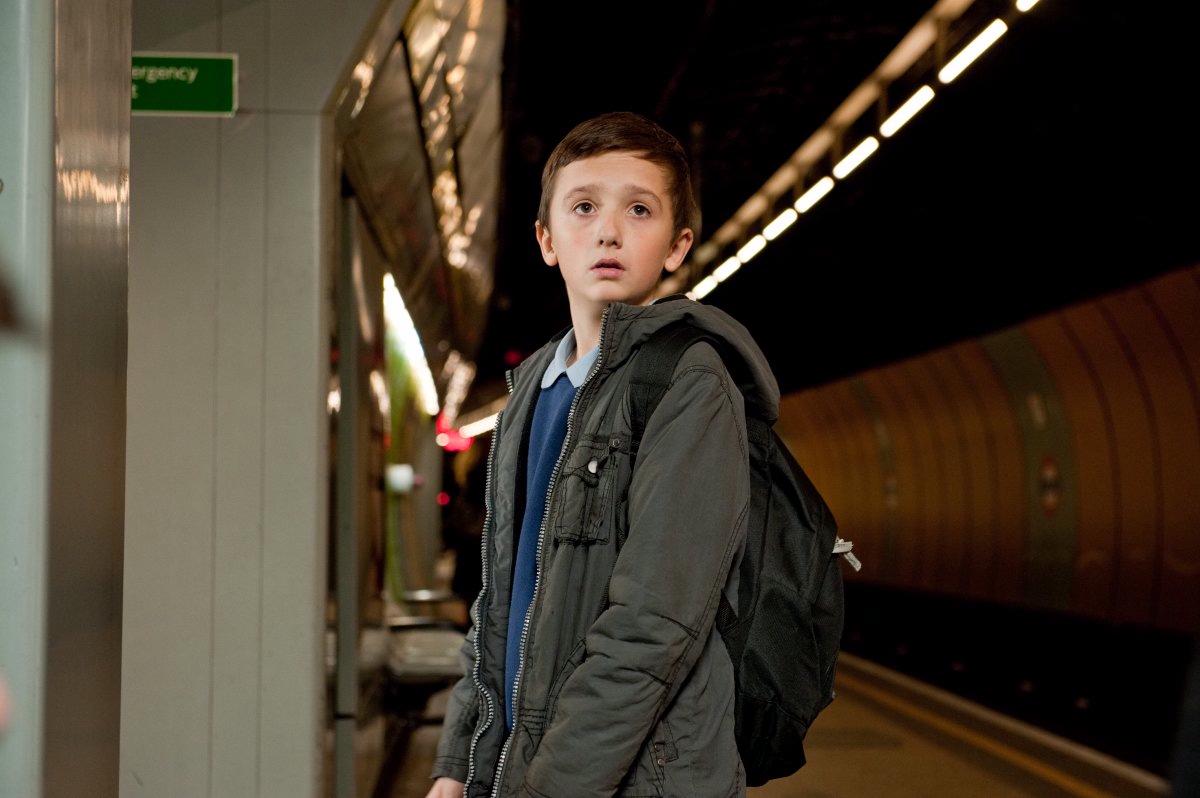
netflixmania.it/wp-content/uploads/2024/11/hereafter-film...
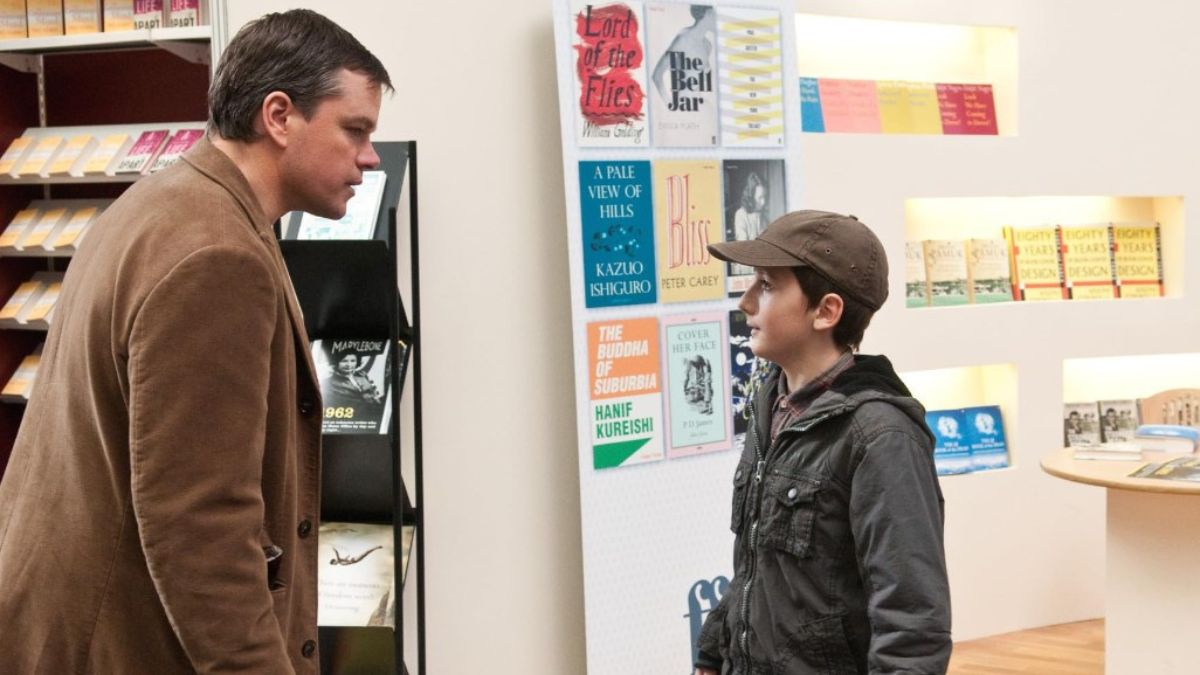
----------------------------------------------------------
click to activate the small icon of slideshow: the small triangle inscribed in the small rectangle, at the top right, in the photostream (it means the monitor);
or…. Press the “L” button to zoom in the image;
clicca sulla piccola icona per attivare lo slideshow: sulla facciata principale del photostream, in alto a destra c'è un piccolo rettangolo (rappresenta il monitor) con dentro un piccolo triangolo nero;
oppure…. premi il tasto “L” per ingrandire l'immagine;
www.worldphoto.org/sony-world-photography-awards/winners-...
www.fotografidigitali.it/gallery/2726/opere-italiane-segn...
………………………………………………………………………
Does the afterlife exist? Mystics like Padre Pio, Natuzza Evolo spoke with the souls of the deceased, not knowing that they were “deceased”, they did not distinguish them from normal people (they understood it later). The Marian apparitions to Bernadette, to the three shepherds of Fatima, those of Medjugorje, were they real? And how much have they influenced the history of humanity? My profession has led me to meet people who have told me about their “uncommon experiences”. A few years ago, a young man of about 30 years old, reported his “near death” experience, hospitalized in very serious conditions in our intensive care unit, he told of when he saw doctors and paramedics from above, busy around his body, he then found himself inside a tunnel, at the end there was a light. Now “Francesco” is fine. A couple of months ago, still in intensive care, I talked with a patient of about 50 years old, who survived three almost consecutive cardiac arrests, after that event, he told me, he had unexpectedly discovered a deep faith; discharged, he is now in good health. A few days ago, again for professional reasons, I met a lady in her 60s, accompanied by her 26-year-old son, she told me that, in her troubled life, in addition to having undergone numerous surgical operations, she had been subjected to numerous cycles of chemotherapy, during one of these sessions, she had a cardiocirculatory arrest (probably caused by anaphylactic shock), at that moment she could clearly see the whole scene from above, everyone was doing their best to revive her, she saw a nurse pushing a trolley in the corridor, unable to enter the room where her body was, because half of the door was blocked by a latch, preventing the passage of the trolley, she kicked the door violently which opened thus managing to pass; she saw a doctor who, in the grip of excitement, was unable to put on her coat (these events, the lady told me, had a positive response); the story continued, she rose higher, light, as if floating on the waves of the sea, she saw a cone of light that fell on her like confetti, she felt a sensation of well-being, she saw her grandfather, who held her head and caressed her hair, she looked up and saw some figures, they seemed to have wings, she thought that perhaps they were angels, suddenly she felt herself being “sucked and banged” inside her body. Now the lady, after that experience, no longer fears death. She put her hand on mine, without touching it, just a few seconds, she began to talk about some of my personal facts, at that moment, they seemed to me to be a bit banal and obvious observations, but then, looking me in the eyes, she stated with certainty that in my family, there was a person called Angelo (in reality her name is Angela), she was not wrong. She told me that, months before Eros Ramazzotti's song "Un angelo disteso al sole" came out, she was singing that tune, including the lyrics. She showed me on her smartphone, a selfie of her taken in the car, on the windshield you could clearly see a “luminous face”, she said that her Guardian Angel, Saint Michael the Archangel, had appeared to her. (The lady was also hospitalized in the “La Maddalena” clinic in Palermo, she met the mafia boss Matteo Messina Denaro, she told me an anecdote of hers, but that’s another story). This story, like the one told by Francesco, are part of those numerous cases defined as “pre-death” or “NDE” acronym derived from the English, Near Death Experience. A scientific hypothesis interprets these phenomena as the result of chemical reactions that are triggered in the brain in moments of deep psycho-physical stress, in oxygen deficiency, with the release of endorphins (they generate sensations of euphoria and well-being) and other neurotransmitters, which can determine overall a hyperfunctioning and strengthening of the senses in the cerebral cortex. I am fascinated by the story of when the physicist Albert Einstein, while discussing with Gustavo Adolfo Rol (a famous Italian psychic), placed his hand between the lamp and the table, saying "you see, when matter manifests itself, it casts a dark shadow, because it is matter, whereas God, being pure spirit, when he materializes cannot manifest himself if not through light: light is nothing other than the shadow of God". I have posted a series of photographs taken in November and December of this year, the first part are shots taken according to the dictates of street / beach photography, some examples of earthly reality, to then enter into the "hypothesis of that otherworldly and parallel reality, not perceptible by our senses" accompanied by the presence of Angels, Beings of Light, who "should" always be close to us throughout our existence, after all the mystic Natuzza Evolo recognized the "plainclothes priests" by the presence of their Guardian Angel, because he was placed on their right.
……………………….
Esiste l’Aldilà? Mistici come Padre Pio, Natuzza Evolo parlavano con le anime dei defunti, non sapendo che erano dei “trapassati”, non li distinguevano dalle normali persone (lo capirono successivamente). Le apparizioni mariane a Bernadette, ai tre pastorelli di Fatima, quelle di Medugorje, erano reali ? E quanto hanno inciso nella storia dell’umanità? La mia professione mi ha portato a confrontarmi con persone che mi hanno raccontato di loro “esperienze non comuni”. Qualche anno fa, un giovane di circa 30 anni, riferì una sua esperienza di “premorte”, ricoverato in gravissime condizioni nella nostra terapia intensiva, raccontò di quando lui vide dall’alto medici e parasanitari, indaffarati attorno al suo corpo, si trovò poi dentro un tunnel, in fondo vi era una luce. Adesso “Francesco” sta bene. Un paio di mesi fa, sempre in terapia intensiva, ho conversato con un paziente di circa 50 anni, sopravvissuto a tre arresti cardiaci quasi consecutivi, dopo quell’evento, mi riferiva, aveva scoperto inaspettatamente, una profonda fede; dimesso, adesso è in buona salute. Pochi giorni fa, sempre per motivi professionali, ho conosciuto una signora sui 60 anni, accompagnata dal figlio di anni 26 anni, mi raccontò che, nella sua travagliata vita, oltre ad aver subito numerosi interventi chirurgici, è stata sottoposta a numerosi cicli di chemioterapia, durante una di questa sedute, è incorsa in un arresto cardiocircolatorio (probabilmente causato da uno shock anafilattico), in quel momento vedeva distintamente tutta la scena dall’alto, tutti si prodigavano per rianimarla, vide una infermiera spingere un carrello nel corridoio, non riuscendo ad entrare nella sala dove si trovava il suo corpo, poiché mezza anta della porta era bloccata da un chiavistello, impedendo il passaggio del carrello, lei diede un calcio violento all’anta che si aprì riuscendo così a passare; vide una dottoressa che in preda alla concitazione non riusciva a mettersi il camice (questi eventi, mi riferì la signora, ebbero un riscontro positivo); il racconto continuò, lei salì più in alto, leggera, come galleggiando sulle onde del mare, vide un cono di luce che scendeva su di lei come fossero coriandoli, lei percepiva una sensazione di benessere, vide suo nonno, che le teneva il capo e le accarezzava i capelli, guardò in alto e vide delle figure, sembrava avessero delle ali, pensò che forse erano gli angeli, improvvisamente si sentì “risucchiare e sbattere” dentro il suo corpo. Adesso la signora, dopo quella esperienza, non teme più la morte. Mise la sua mano sopra la mia, senza toccarla, solo qualche secondo, incominciò a parlare su alcuni miei fatti personali, in quel momento, mi sembrarono osservazioni un po’ banali e scontate, però poi, guardandomi negli occhi, affermò con certezza che nella mia famiglia, c’era una persona che si chiama Angelo (in realtà si chiama Angela), non si era sbagliata. Mi riferì che, mesi prima che uscisse la canzone di Eros Ramazzotti “Un angelo disteso al sole”, lei cantava quel motivo, incluse le parole. Mi mostrò sul suo smartphone, un suo selfie fatto in auto, sul parabrezza si vedeva distintamente un “volto luminoso”, lei disse che le era apparso il suo Angelo Custode, San Michele Arcangelo. (La signora fu ricoverata anche nella clinica “La Maddalena” di Palermo, fece la conoscenza del boss mafioso Matteo Messina Denaro, mi raccontò un suo aneddoto, ma questa è un’altra storia). Questa storia, come quella raccontata da Francesco, rientrano in quei numerosi casi definiti di “premorte” o “NDE” acronimo derivato dall’inglese, Near Death Experience. Una ipotesi scientifica interpreta tali fenomeni come il risultato di reazioni chimiche che si scatenano nel cervello in momenti di profondo stress psico-fisico, in carenza di ossigeno, con rilascio di endorfine (esse generano sensazioni di euforia e di benessere) ed altri neurotrasmettitori, potendo determinare nell’insieme un iperfunzionamento e potenziamento dei sensi nella corteccia cerebrale. Sono affascinato dalla vicenda, di quando il fisico Albert Einstein discutendo con Gustavo Adolfo Rol (famoso sensitivo italiano) frappose la sua mano tra lampada e tavolo, dicendo “vedi, quando la materia si manifesta, proietta una ombra scura, perché è materia, invece Dio essendo puro spirito, quando si materializza non può manifestarsi se non attraverso la luce: la luce non è altro, se non, l’ombra di Dio”. Posto una serie di fotografie eseguite nel novembre e dicembre di quest’anno, una prima parte sono scatti realizzati secondo i dettami della street /beach photography, qualche esempio di realtà terrena, per entrare poi nella “ipotesi di quella realtà ultraterrena e parallela, non percepibile dai nostri sensi” accompagnata dalla presenza degli Angeli, Esseri di Luce, che “dovrebbero” starci sempre accanto durante tutta la nostra esistenza, d'altronde la mistica Natuzza Evolo riconosceva i “sacerdoti in borghese” dalla presenza del loro Angelo Custode, perché messo alla loro destra.
…………………………………….
Block Island is part of the U.S. state of Rhode Island. It is located in the Atlantic Ocean about 13 miles (21 km) south of the coast of Rhode Island, 14 miles (23 km) east of Montauk Point on Long Island, and is separated from the Rhode Island mainland by Block Island Sound. The United States Census Bureau defines Block Island as Census Tract 415 of Washington County, Rhode Island. As of the 2010 census the population of 1,051 lived on a land area of 9.734 square miles (25.211 km2).[1] The island is part of the Outer Lands region, a coastal archipelago made by the recessional and terminal moraine that resulted from the Wisconsonian Laurentide glacier retreat, about 22,000 years ago.[citation needed]
The Nature Conservancy added Block Island to its list of "The Last Great Places"; the list consists of twelve sites in the Western Hemisphere. About 40 percent of the island is set aside for conservation.[2] Presidents Bill Clinton,[3][4] Dwight D. Eisenhower,[5] Franklin Delano Roosevelt,[6] and Ulysses S. Grant[7][8] have visited Block Island. Other famous visitors include Amelia Earhart and Charles Lindbergh, who each made separate trips to the island in 1929.[9]
Block Island is coextensive with the town of New Shoreham. The island is a popular summer tourist destination and is known for its bicycling, hiking, sailing, fishing, and beaches. The island hosts two historic lighthouses: Block Island North Light, on the northern tip of the island, and Block Island Southeast Light, on the southeastern side. Much of the northwestern tip of the island is an undeveloped natural area and resting stop for birds along the Atlantic Flyway.[citation needed]
Every summer the island hosts Block Island Race Week, a competitive, week-long sailboat race. On odd years, the event is held by the Storm Trysail Club, and on even years by the Block Island Race Week. Yachts compete in various classes, sailing courses in Block Island Sound and circumnavigating the island.[citation needed]
Other popular events include the annual Fourth of July Parade and celebration. During these times the island's population can triple over the normal summer vacation crowd.
Sand Dunes
Many first time visitors to Death Valley are surprised it is not covered with a sea of sand. Less than one percent of the desert is covered with dunes, yet the shadowed ripples and stark, graceful curves define "desert" in our imaginations.
For dunes to exist there must be a source of sand, prevailing winds to move the sand, and a place for the sand to collect. The eroded canyons and washes provide plenty of sand, the wind seems to always blow (especially in the springtime), but there are only a few areas in the park where the sand is "trapped" by geographic features such as mountains.
The sand dunes of Death Valley National Park are excellent places for nature study and recreation. All of the dunes in Death Valley National Park are protected as wilderness, off-road vehicle travel is not permitted anywhere in the park. Sand boarding is only allowed on the Mesquite Flat Dunes and prohibited on all other dune systems in the park to protect sensitive plants and animals.
Mesquite Flat Dunes
These dunes are the best known and easiest to visit in the national park. Located in central Death Valley near Stovepipe Wells, access is from Hwy. 190 or from the unpaved Sand Dunes Road. Although the highest dune rises only about 100 feet, the dunes actually cover a vast area. This dune field includes three types of dunes: crescent, linear, and star shaped. Polygon-cracked clay of an ancient lakebed forms the floor. Mesquite trees have created large hummocks that provide stable habitats for wildlife.
www.nps.gov/deva/learn/nature/sand-dunes.htm
The largest national park south of Alaska, Death Valley is known for extremes: It is North America's driest and hottest spot (with fewer than two inches/five centimeters of rainfall annually and a record high of 134°F), and has the lowest elevation on the continent—282 feet below sea level. Even with its extremes, the park still receives nearly a million visitors each year.
In 1849 emigrants bound for California's gold fields strayed into the 120-mile long basin, enduring a two-month ordeal of "hunger and thirst and an awful silence." One of the last to leave looked down from a mountain at the narrow valley and said, "Good-bye, Death Valley."
The moniker belies the beauty in this vast graben, the geological term for a sunken fragment of the Earth's crust. Here are rocks sculptured by erosion, richly tinted mudstone hills and canyons, luminous sand dunes, lush oases, and a 200-square-mile salt pan surrounded by mountains, one of America's greatest vertical rises. In some years spring rains trigger wildflower blooms amid more than a thousand varieties of plants.
Native Americans, most recently the Shoshone, found ways to adapt to the more recent and forbidding desert conditions that exist here now. Rock art and artifacts indicate a human presence dating back at least 9,000 years.
From 1883 to 1889, wagon teams hauled powdery white borax from mines since fallen to ruin, an enterprise that spread word of Death Valley's striking landscapes, deep solitude, and crystalline air.
As night falls, Death Valley's elusive populations of bobcats, kit foxes, and rodents venture out. Far above on steep mountain slopes, desert bighorn sheep forage among Joshua trees, scrubby junipers, and pines, while hawks soar on thermals rising into vivid blue, cloudless skies.
Did You Know?
The highest mountain in the park, 11,049-foot Telescope Peak, lies only 15 miles from Badwater Basin, the lowest point in the U.S. The vertical drop from the peak to Badwater Basin is twice the depth of the Grand Canyon.
Named by gold prospectors struggling through the area in 1849, Death Valley has been inhabited by Timbisha Shoshone Native Americans; gold prospectors, including slaves; Chinese immigrants mining for silver and borax; Basque immigrants who settled here at the turn of the 20th century; and Japanese Americans temporarily interned here during World War II.
Hottest, Driest, and Lowest National Park:
www.nationalparks.org/explore-parks/death-valley-national...
STORIES :
www.nps.gov/deva/learn/historyculture/stories.htm
www.nationalgeographic.com/travel/national-parks/death-va...
Today was a very rewarding experience.... spending it with CJ in the studio. I was approached by CJ to help him shoot a porfolio to help him get into modeling. I went into this shoot very fresh and with only a few ideas of lighting and how to pose my client. After a few trial shots we honed in the ability to define his muscles with only two lights. As much as I love shooting fashion, this would have to be one of the funnest shoots I've done to date!
This is the completed crease pattern with the folds for the individual molecules. At this point, I could start folding, but I like to complete the polished final version with rivers first to double-check I haven't miscounted the separations.
The toughest part is, of course, to fold the gusset molecules. For one thing, their hinge creases must be defined - they will not form naturally like they do for rabbit-ear, waterbomb, or sawhorse molecules. Ideally, they can be propogated from neighboring molecules as indicated by the light blue lines. Otherwise, they have to be located manually, as indicated by the green lines.
Pretty blonde swimsuit bikni model goddess modeling the Nikon D800-based 45WindSurfer / 9shooter !
Here're some video of a goddess that was shot at the same time as stills, using the double-camera rig she is pictured holding above: www.youtube.com/watch?v=WqRUqk8sPQw
Enjoy!
Shooting photographic stills & video @ same time with Nikon D800 & 70-200 mm VR2 Nikkor Lens bracketed to a camcorder--the awsome Panasonic HDC-TM900 32GB Flash Memory HD Camcorder ! It shoots stabilized 60P video for super-smooth slow-mo when I slow it down in post!
I call it the 9shooter or 45WindSurfer Bracket, as you can catch video's constant wind and still photography's intermittent waves!
Just as windsurding was invented by combining two sports--surfing and sailing--so too was 45windsurfing born by combining two art forms!
When you get to work with pretty swimsuit bikni models, you want to make the most of everyone's time & shoot stills photography and motion pictures / video @ the same time!
Shooting (45WindSurfing) on El Matador Beach in Malbu!
The 45WindSurfer bracket allows one to attach any two cameras! Can hardly wait to attch a 4K Sony or JVC!
Modeling the Gold 45 Revolver Gold'N'Virtue bikini!
All the best on your hero's journey!
These were shot with a Sony Alpha 77 A77 with the 18-55 mm kit lens.
Have you ever wondered why people do the things they do, in order to conform to societal standards? Well, I grew up in a rather interesting environment. Growing up in a restaurant, I constantly met different types of people who gave me an early idea of who I wanted to be and who I didn't want to be. I grew up in a hardworking family, mopping floors every night and quickly realizing how difficult grown-up life was. But whenever I would "swiffer" & dance my way around the floor, my head was always in the clouds, thinking & wanting something more. I was a small town girl who just seemed... lost.
When I went back to China, I was shocked by their system and the restrictions that existed, especially upon women. I was exposed to the rich living and the extremely poor. Experiences like these were very close to my heart and vastly opened my eyes. I didn't know I could feel so many different emotions all at once. I told my extended family my life goals, and their strict traditional beliefs ended up ridiculing me throughout my entire stay. The rebellious side in me didn't care, as long as *I* was happy. In fact, I started a photography business partly because they believed it was a waste of time & money for me to even have a camera. I just wanted to prove them wrong (& now love the hobby!). I then traveled to foreign countries because I have an innate curiosity to explore all corners of the Earth. I chose to stay level-minded in the academics, and now happily work in a field that I enjoy. I failed and succeeded, and failed again (and again).
I admit, I have always been the type to dream big. I feel like there's more to life than the daily routines that people face. I just haven't figured out where to find it yet, or what I'm even looking for. I'm still naive and have so much to learn. I am still trying to understand myself and what I'm capable of.
I did decide on one thing though: I don't want to conform to societal standards. I want something unique, something that will make me feel complete. And, I trust the compass that exists within my heart and mind to guide me to the right place.
Nikon D800E Photos of Pretty Blond Swimsuit Bikini Model Goddess & Black Surfboard: 70-200mm VR2 Nikkor F/2.8 Zoom. Standing in front of the 45surf beach house! A pretty, blond goddess with a broad, happy smile! Follow Johnny Ranger McCoy on facebook! facebook.com/elliot.mcgucken
Subscribe to Johnny Ranger McCoy's youtube for epic goddess video!
www.youtube.com/user/bikiniswimsuitmodels
A tall, thin, fit, classic California beach babe modeling the Gold 45 Revolver Gold'N'Virtue swimsuits & lingerie! Please share the exalted goddess with your friends.
Here is some epic video I shot at the same time as the stills with the Sony Alpha NEX 6 camera with the 50 mm F/1.8 prime lens for nex6 e mount cameras bracketed to my Nikon D800E (cool bokeh!):
www.youtube.com/watch?v=14dYxbOFCmA
www.youtube.com/watch?v=OmyFDZS5YNo
www.youtube.com/watch?v=1-OIgUDBUfA
www.youtube.com/watch?v=Pbnsps35low
www.youtube.com/watch?v=TU0MzEKKzBE
www.youtube.com/watch?v=yCK7GlhF3oM
(Sony NEX-6 with F/1.8 50mm Prime Nice Bokeh!)
With the black 45surf surfboard! It gets hot in the sand in the sun! Wearing a leather Buffalo Nickel Cowboy Hat! :)
Combine the shallow-depth-of-field with Sony NEX-6's latest face-tracking auto focus, and you can see how the moving video keeps the model's pretty blue eyes in focus, while blurring the background! The Sony Alpha NEX 6 has much better bokeh than the cameras I have been using! :)
She was tall, thin, fit, toned, defined, and beautiful!
Modeling the Gold 45 Revolver(TM) Gold'N'Virtue(TM) American Flag Bikini! Stars & Stripes Forever! :)
Nikon D800E Photographs of a Beautiful Sandy-Blonde/Brunette Swimsuit Bikini Model shot with the new Nikon D800 and Nikon 70-200mm f/2.8G ED VR II AF-S Nikkor Zoom Lens with the B W 77mm XS-Pro Kaesemann Circular Polarizer with Multi-Resistant Nano Coating filter. I always, always shoot with a CP filter--even on cloudy days!
Shot in both RAW & JPEG, but all these photos are RAWs finished in Lightroom 4 ! :)
May the HJM Goddesses guide, inspire, and exalt ye along yer heroic artistic journey!
Modeling the black & gold "Gold 45 Revolver" Gold'N'Virtue swimsuits with the main equation to Moving Dimensions Theory on the swimsuits: dx4/dt=ic. Yes I have a Ph.D. in physics! :) You can read more about my research and Hero's Journey Physics here:
herosjourneyphysics.wordpress.com/ MDT PROOF#2: Einstein (1912 Man. on Rel.) and Minkowski wrote x4=ict. Ergo dx4/dt=ic--the foundational equation of all time and motion which is on all the shirts and swimsuits. Every photon that hits my Nikon D800e's sensor does it by surfing the fourth expanding dimension, which is moving at c relative to the three spatial dimensions, or dx4/dt=ic!
Reading some of the Great Books of Hero's Journey Mythology! Homer's Iliad and Odyssey, Melville's Moby Dick, and Shakespeare's Hamlet!
All the Best on Your Epic Hero's Journey from Johnny Ranger McCoy!
The rust foreshadows the inevitable future of the rails in St. Thomas. Once the incredibly busy, productive hub of rail commerce in Southern Ontario, there is little here to connect us any longer, and, I feel, the situation will grow bleaker, faster.
To all my fans! By popular request! The exalted goddess is a famous model with a major agency! She was tall, thin, fit, defined, and toned! Pretty, piercing blue eyes set against wavy brown hair! And she was a lot of fun--lots of stories and laughs during and after the shoot! Wish you'd been there!
Here're a couple of videos I shot while shooting stills, with the awesome NEX-6 and a 50 mm Prime f/1.8 lens for the rich/creamy video bokeh!
www.youtube.com/watch?v=zzbV8ArnBnY
Watch the gorgeous model in the Full 1080P HD she deserves! I shot the video at 60p and slowed it down to 24p in post in adobe premiere 6.0. :)
Also had a B&H CP (Circular Polarizer) on both the 70-200 mm Nikon D800 lens and the 50mm e-mount lens on the Sony NEX6.
Awesome "magic hour" light and feel in the January AM due to the strange cloudy/sunny weather! That's the glorious fun of shooting at the Malibu beach! Forecasts mean nothing (they predicted sun, sun, sun), and you have to have fun adpating to the world's greatest studio with the world's greatest lights (the sun in all its manifestations), props, and backdrops!
Combine the 50mm lens's optical steady shot (OSS) and the shallow-depth-of-field of the F/1.8 with Sony NEX-6 latest face-tracking auto focus, and you can see how the moving video keeps the model's pretty blue eyes in focus, while blurring the background!
She was tall, thin, fit, toned, defined, and beautiful!
Modeling the Gold 45 Revolver(TM) Gold'N'Virtue(TM) Bikini!
Nikon D800 Photographs of a Beautiful Wavy-HAired Brunette Swimsuit Bikini Model shot with the new Nikon D800 and Nikon 70-200mm f/2.8G ED VR II AF-S Nikkor Zoom Lens.
Shot in both RAW & JPEG, but all these photos are RAWs finished in Lightroom 4 ! :)
May the HJM Goddesses guide, inspire, and exalt ye along yer heroic artistic journey! Best wishes from Johnny Ranger McCoy!
+++ DISCLAIMER +++
Nothing you see here is real, even though the conversion or the presented background story might be based on historical facts. BEWARE!
Some Background:
During the 1950s, Hindustan Aircraft Limited (HAL) had developed and produced several types of trainer aircraft, such as the HAL HT-2. However, elements within the firm were eager to expand into the then-new realm of supersonic fighter aircraft. Around the same time, the Indian government was in the process of formulating a new Air Staff Requirement for a Mach 2-capable combat aircraft to equip the Indian Air Force (IAF). However, as HAL lacked the necessary experience in both developing and manufacturing frontline combat fighters, it was clear that external guidance would be invaluable; this assistance was embodied by Kurt Tank.
In 1956, HAL formally began design work on the supersonic fighter project. The Indian government, led by Jawaharlal Nehru, authorized the development of the aircraft, stating that it would aid in the development of a modern aircraft industry in India. The first phase of the project sought to develop an airframe suitable for travelling at supersonic speeds, and able to effectively perform combat missions as a fighter aircraft, while the second phase sought to domestically design and produce an engine capable of propelling the aircraft. Early on, there was an explicit adherence to satisfying the IAF's requirements for a capable fighter bomber; attributes such as a twin-engine configuration and a speed of Mach 1.4 to 1.5 were quickly emphasized, and this led to the HF-24 Marut.
On 24 June 1961, the first prototype Marut conducted its maiden flight. It was powered by the same Bristol Siddeley Orpheus 703 turbojets that had powered the Folland Gnat, also being manufactured by HAL at that time. On 1 April 1967, the first production Marut was delivered to the IAF. While originally intended only as an interim measure during testing, HAL decided to power production Maruts with a pair of unreheated Orpheus 703s, meaning the aircraft could not attain supersonic speed. Although originally conceived to operate around Mach 2 the Marut in fact was barely capable of reaching Mach 1 due to the lack of suitably powerful engines.
The IAF were reluctant to procure a fighter aircraft only marginally superior to its existing fleet of British-built Hawker Hunters. However, in 1961, the Indian Government decided to procure the Marut, nevertheless, but only 147 aircraft, including 18 two-seat trainers, were completed out of a planned 214. Just after the decision to build the lukewarm Marut, the development of a more advanced aircraft with the desired supersonic performance was initiated.
This enterprise started star-crossed, though: after the Indian Government conducted its first nuclear tests at Pokhran, international pressure prevented the import of better engines of Western origin, or at times, even spares for the Orpheus engines, so that the Marut never realized its full potential due to insufficient power, and it was relatively obsolescent by the time it reached production.
Due to these restrictions India looked for other sources for supersonic aircraft and eventually settled upon the MiG-21 F-13 from the Soviet Union, which entered service in 1964. While fast and agile, the Fishbed was only a short-range daylight interceptor. It lacked proper range for escort missions and air space patrols, and it had no radar that enabled it to conduct all-weather interceptions. To fill this operational gap, the new indigenous HF-26 project was launched around the same time.
For the nascent Indian aircraft industry, HF-26 had a demanding requirements specification: the aircraft was to achieve Mach 2 top speed at high altitude and carry a radar with a guided missile armament that allowed interceptions in any weather, day and night. The powerplant question was left open, but it was clear from the start that a Soviet engine would be needed, since an indigenous development of a suitable powerplant would take much too long and block vital resources, and western alternatives were out of reach. The mission profile and the performance requirements quickly defined the planned aircraft’s layout: To fit a radar, the air intakes with movable ramps to feed the engines were placed on the fuselage flanks. To make sure the aircraft would fulfill its high-performance demands, it was right from the outset powered by two engines, and it was decided to give it delta wings, a popular design among high-speed aircraft of the time – exemplified by the highly successful Dassault Mirage III (which was to be delivered to Pakistan in 1967). With two engines, the HF-26 would be a heavier aircraft than the Mirage III, though, and it was planned to operate the aircraft from semi-prepared airfields, so that it would receive a robust landing gear with low-pressure tires and a brake parachute.
In 1962 India was able to negotiate the delivery of Tumansky RD-9 turbojet engines from the Soviet Union, even though no afterburner was part of the deal – this had to be indigenously developed by Hindustan Aeronautics Limited (HAL). However, this meant that the afterburner could be tailored to the HF-26, and this task would provide HAL with valuable engineering experience, too.
Now knowing the powerplant, HAL created a single-seater airframe around it, a rather robust design that superficially reminded of the French Mirage III, but there were fundamental differences. The HF-26 had boxy air intakes with movable ramps to control the airflow to the two engines and a relatively wide fuselage to hold them and most of the fuel in tanks between the air ducts behind the cockpit. The aircraft had a single swept fin and a rather small mid-positioned delta-wing with a 60° sweep. The pilot sat under a tight canopy that offered - similar to the Mirage III - only limited all-round vision.
The HF-26's conical nose radome covered an antenna for a ‘Garud’ interception radar – which was in fact a downgraded Soviet ‘Oryol' (Eagle; NATO reporting name 'Skip Spin') system that guided the HF-26’s main armament, a pair of semi-active radar homing (SARH) ‚Saanp’ missiles.
The Saanp missile was developed specifically for the HF-26 in India but used many components of Soviet origin, too, so that they were compatible with the radar. In performance, the Saanp was comparable with the French Matra R.530 air-to-air missile, even though the aerodynamic layout was reversed, with steering fins at the front end, right behind the SARH seaker head - overall the missile reminded of an enlarged AIM-4 Falcon. The missile weighed 180 kg and had a length of 3.5 m. Power came from a two-stage solid rocket that offered a maximum thrust of 80 kN for 2.7 s during the launch phase plus 6.5 s cruise. Maximum speed was Mach 2.7 and operational range was 1.5 to 20 km (0.9 to 12.5 miles). Two of these missiles could be carried on the main wing hardpoints in front of the landing gear wells. Alternatively, infrared-guided R-3 (AA-2 ‘Atoll’) short-range AAMs could be carried by the HF-26, too, and typically two of these were carried on the outer underwing hardpoints, which were plumbed to accept drop tanks (typically supersonic PTB-490s that were carried by the IAF's MiG-21s, too) . Initially, no internal gun was envisioned, as the HF-26 was supposed to be a pure high-speed/high-altitude interceptor that would not engage in dogfights. Two more hardpoints under the fuselage were plumbed, too, for a total of six external stations.
Due to its wing planform, the HF-26 was soon aptly called “Teer” (= Arrow), and with Soviet help the first prototype was rolled out in early 1964 and presented to the public. The first flight, however, would take place almost a year later in January 1965, due to many technical problems, and these were soon complemented by aerodynamic problems. The original delta-winged HF-26 had poor take-off and landing characteristics, and directional stability was weak, too. While a second prototype was under construction in April 1965 the first aircraft was lost after it had entered a spin from which the pilot could not escape – the aircraft crashed and its pilot was killed during the attempt to eject.
After this loss HAL investigated an enlarged fin and a modified wing design with deeper wingtips with lower sweep, which increased wing area and improved low speed handling, too. Furthermore, the fuselage shape had to be modified, too, to reduce supersonic drag, and a more pronounced area ruling was introduced. The indigenous afterburner for the RD-9 engines was unstable and troublesome, too.
It took until 1968 and three more flying prototypes (plus two static airframes) to refine the Teer for serial production service introduction. In this highly modified form, the aircraft was re-designated HF-26M and the first machines were delivered to IAF No. 3 Squadron in late 1969. However, it would take several months until a fully operational status could be achieved. By that time, it was already clear that the Teer, much like the HF-24 Marut before, could not live up to its expectations and was at the brink of becoming obsolete as it entered service. The RD-9 was not a modern engine anymore, and despite its indigenous afterburner – which turned out not only to be chronically unreliable but also to be very thirsty when engaged – the Teer had a disappointing performance: The fighter only achieved a top speed of Mach 1.6 at full power, and with full external load it hardly broke the wall of sound in level flight. Its main armament, the Saanp AAM, also turned out to be unreliable even under ideal conditions.
However, the HF-26M came just in time to take part in the Indo-Pakistani War of 1971 and was, despite its weaknesses, extensively used – even though not necessarily in its intended role. High-flying slow bombers were not fielded during the conflict, and the Teer remained, despite its on-board radar, heavily dependent on ground control interception (GCI) to vector its pilot onto targets coming in at medium and even low altitude. The HF-26M had no capability against low-flying aircraft either, so that pilots had to engage incoming, low-flying enemy aircraft after visual identification – a task the IAF’s nimble MiG-21s were much better suited for. Escorts and air cover missions for fighter-bombers were flown, too, but the HF-26M’s limited range only made it a suitable companion for the equally short-legged Su-7s. The IAF Canberras were frequently deployed on longer range missions, but the HF-26Ms simply could not follow them all the time; for a sufficient range the Teer had to carry four drop tanks, what increased drag and only left the outer pair of underwing hardpoints (which were not plumbed) free for a pair of AA-2 missiles. With the imminent danger of aerial close range combat, though, During the conflict with Pakistan, most HF-26M's were retrofitted with rear-view mirrors in their canopies to improve the pilot's field of view, and a passive IR sensor was added in a small fairing under the nose to improve the aircraft's all-weather capabilities and avoid active radar emissions that would warn potential prey too early.
The lack of an internal gun turned out to be another great weakness of the Teer, and this was only lightly mended through the use of external gun pods. Two of these cigar-shaped pods that resembled the Soviet UPK-23 pod could be carried on the two ventral pylons, and each contained a 23 mm Gryazev-Shipunov GSh-23L autocannon of Soviet origin with 200 rounds. Technically these pods were very similar to the conformal GP-9 pods carried by the IAF MiG-21FLs. While the gun pods considerably improved the HF-26M’s firepower and versatility, the pods were draggy, blocked valuable hardpoints (from extra fuel) and their recoil tended to damage the pylons as well as the underlying aircraft structure, so that they were only commissioned to be used in an emergency.
However, beyond air-to-air weapons, the HF-26M could also carry ordnance of up to 1.000 kg (2.207 lb) on the ventral and inner wing hardpoints and up to 500 kg (1.100 lb) on the other pair of wing hardpoints, including iron bombs and/or unguided missile pods. However, the limited field of view from the cockpit over the radome as well as the relatively high wing loading did not recommend the aircraft for ground attack missions – even though these frequently happened during the conflict with Pakistan. For these tactical missions, many HF-26Ms lost their original overall natural metal finish and instead received camouflage paint schemes on squadron level, resulting in individual and sometimes even spectacular liveries. Most notable examples were the Teer fighters of No. 1 Squadron (The Tigers), which sported various camouflage adaptations of the unit’s eponym.
Despite its many deficiencies, the HF-26M became heavily involved in the Indo-Pakistan conflict. As the Indian Army tightened its grip in East Pakistan, the Indian Air Force continued with its attacks against Pakistan as the campaign developed into a series of daylight anti-airfield, anti-radar, and close-support attacks by fighter jets, with night attacks against airfields and strategic targets by Canberras and An-12s, while Pakistan responded with similar night attacks with its B-57s and C-130s.
The PAF deployed its F-6s mainly on defensive combat air patrol missions over their own bases, leaving the PAF unable to conduct effective offensive operations. Sporadic raids by the IAF continued against PAF forward air bases in Pakistan until the end of the war, and interdiction and close-support operations were maintained. One of the most successful air raids by India into West Pakistan happened on 8 December 1971, when Indian Hunter aircraft from the Pathankot-based 20 Squadron, attacked the Pakistani base in Murid and destroyed 5 F-86 aircraft on the ground.
The PAF played a more limited role in the operations, even though they were reinforced by Mirages from an unidentified Middle Eastern ally (whose identity remains unknown). The IAF was able to conduct a wide range of missions – troop support; air combat; deep penetration strikes; para-dropping behind enemy lines; feints to draw enemy fighters away from the actual target; bombing and reconnaissance. India flew 1,978 sorties in the East and about 4,000 in Pakistan, while the PAF flew about 30 and 2,840 at the respective fronts. More than 80 percent of IAF sorties were close-support and interdiction and about 45 IAF aircraft were lost, including three HF-26Ms. Pakistan lost 60 to 75 aircraft, not including any F-86s, Mirage IIIs, or the six Jordanian F-104s which failed to return to their donors. The imbalance in air losses was explained by the IAF's considerably higher sortie rate and its emphasis on ground-attack missions. The PAF, which was solely focused on air combat, was reluctant to oppose these massive attacks and rather took refuge at Iranian air bases or in concrete bunkers, refusing to offer fights and respective losses.
After the war, the HF-26M was officially regarded as outdated, and as license production of the improved MiG-21FL (designated HAL Type 77 and nicknamed “Trishul” = Trident) and later of the MiG-21M (HAL Type 88) was organized in India, the aircraft were quickly retired from frontline units. They kept on serving into the Eighties, though, but now restricted to their original interceptor role. Beyond the upgrades from the Indo-Pakistani War, only a few upgrades were made. For instance, the new R-60 AAM was introduced to the HF-26M and around 1978 small (but fixed) canards were retrofitted to the air intakes behind the cockpit that improved the Teer’s poor slow speed control and high landing speed as well as the aircraft’s overall maneuverability.
A radar upgrade, together with the introduction of better air-to-ai missiles with a higher range and look down/shoot down capability was considered but never carried out. Furthermore, the idea of a true HF-26 2nd generation variant, powered by a pair of Tumansky R-11F-300 afterburner jet engines (from the license-built MiG-21FLs), was dropped, too – even though this powerplant eventually promised to fulfill the Teer’s design promise of Mach 2 top speed. A total of only 82 HF-26s (including thirteen two-seat trainers with a lengthened fuselage and reduced fuel capacity, plus eight prototypes) were built. The last aircraft were retired from IAF service in 1988 and replaced with Mirage 2000 fighters procured from France that were armed with the Matra Super 530 AAM.
General characteristics:
Crew: 1
Length: 14.97 m (49 ft ½ in)
Wingspan: 9.43 m (30 ft 11 in)
Height: 4.03 m (13 ft 2½ in)
Wing area: 30.6 m² (285 sq ft)
Empty weight: 7,000 kg (15,432 lb)
Gross weight: 10,954 kg (24,149 lb) with full internal fuel
Max takeoff weight: 15,700 kg (34,613 lb) with external stores
Powerplant:
2× Tumansky RD-9 afterburning turbojet engines; 29 kN (6,600 lbf) dry thrust each
and 36.78 kN (8,270 lbf) with afterburner
Performance:
Maximum speed: 1,700 km/h (1,056 mph; 917 kn; Mach 1.6) at 11,000 m (36,000 ft)
1,350 km/h (840 mph, 730 kn; Mach 1.1) at sea level
Combat range: 725 km (450 mi, 391 nmi) with internal fuel only
Ferry range: 1,700 km (1,100 mi, 920 nmi) with four drop tanks
Service ceiling: 18,100 m (59,400 ft)
g limits: +6.5
Time to altitude: 9,145 m (30,003 ft) in 1 minute 30 seconds
Wing loading: 555 kg/m² (114 lb/sq ft)
Armament
6× hardpoints (four underwing and two under the fuselage) for a total of 2.500 kg (5.500 lb);
Typical interceptor payload:
- two IR-guided R-3 or R-60 air-to-air-missiles or
two PTB-490 drop tanks on the outer underwing stations
- two semi-active radar-guided ‚Saanp’ air-to-air missiles or two more R-3 or R-60 AAMs
on inner underwing stations
- two 500 l drop tanks or two gun pods with a 23 mm GSh-23L autocannon and 200 RPG
each under the fuselage
The kit and its assembly:
This whiffy delta-wing fighter was inspired when I recently sliced up a PM Model Su-15 kit for my side-by-side-engine BAC Lightning build. At an early stage of the conversion, I held the Su-15 fuselage with its molded delta wings in my hand and wondered if a shortened tail section (as well as a shorter overall fuselage to keep proportions balanced) could make a delta-wing jet fighter from the Flagon base? Only a hardware experiment could yield an answer, and since the Su-15’s overall outlines look a bit retro I settled at an early stage on India as potential designer and operator, as “the thing the HF-24 Marut never was”.
True to the initial idea, work started on the tail, and I chopped off the fuselage behind the wings’ trailing edge. Some PSR was necessary to blend the separate exhaust section into the fuselage, which had to be reduced in depth through wedges that I cut out under the wings trailing edge, plus some good amount of glue and sheer force the bend the section a bit upwards. The PM Model's jet exhausts were drilled open, and I added afterburner dummies inside - anything would look better than the bleak vertical walls inside after only 2-3 mm! The original fin was omitted, because it was a bit too large for the new, smaller aircraft and its shape reminded a lot of the Suchoj heavy fighter family. It was replaced with a Mirage III/V fin, left over from a (crappy!) Pioneer 2 IAI Nesher kit.
Once the rear section was complete, I had to adjust the front end - and here the kitbashing started. First, I chopped off the cockpit section in front of the molded air intake - the Su-15’s long radome and the cockpit on top of the fuselage did not work anymore. As a remedy I remembered another Su-15 conversion I did a (long) while ago: I created a model of a planned ground attack derivative, the T-58Sh, and, as a part of the extensive body work, I transplanted the slanted nose from an academy MiG-27 between the air intakes – a stunt that was relatively easy and which appreciably lowered the cockpit position. For the HF-26M I did something similar, I just transplanted a cockpit from a Hasegawa/Academy MiG-23 with its ogival radome that size-wise better matched with the rest of the leftover Su-15 airframe.
The MiG-23 cockpit matched perfectly with the Su-15's front end, just the spinal area behind the cockpit had to be raised/re-sculpted to blend the parts smoothly together. For a different look from the Su-15 ancestry I also transplanted the front sections of the MiG-23 air intakes with their shorter ramps. Some mods had to be made to the Su-15 intake stubs, but the MiG-23 intakes were an almost perfect fit in size and shape and easy to integrate into the modified front hill. The result looks very natural!
However, when the fuselage was complete, I found that the nose appeared to be a bit too long, leaving the whole new hull with the wings somewhat off balance. As a remedy I decided at a rather late stage to shorten the nose and took out a 6 mm section in front of the cockpit - a stunt I had not planned, but sometimes you can judge things only after certain work stages. Some serious PSR was necessary to re-adjust the conical nose shape, which now looked more Mirage III-ish than planned!
The cockpit was taken mostly OOB, I just replaced the ejection seat and gave it a trigger handle made from thin wire. With the basic airframe complete it was time for details. The PM Model Su-15s massive and rather crude main landing gear was replaced with something more delicate from the scrap box, even though I retained the main wheels. The front landing gear was taken wholesale from the MiG-23, but had to be shortened for a proper stance.
A display holder adapter was integrated into the belly for the flight scenes, hidden well between the ventral ordnance.
The hardpoints, including missile launch rails, came from the MiG-23; the pylons had to be adjusted to match the Su-15's wing profile shape, the Anab missiles lost their tail sections to create the fictional Indian 'Saanp' AAMs. The R-3s on the outer stations were left over from a MP MiG-21. The ventral pylons belong to Academy MiG-23/27s, one came from the donor kit, the other was found in the spares box. The PTB-490 drop tanks also came from a KP MiG-21 (or one of its many reincarnations, not certain).
Painting and markings:
The paint scheme for this fictional aircraft was largely inspired by a picture of a whiffy and very attractive Saab 37 Viggen (an 1:72 Airfix kit) in IAF colors, apparently a model from a contest. BTW, India actually considered buying the Viggen for its Air Force!
IAF aircraft were and are known for their exotic and sometimes gawdy paint schemes, and with IAF MiG-21 “C 992” there’s even a very popular (yet obscure) aircraft that sported literal tiger stripes. The IAF Viggen model was surely inspired by this real aircraft, and I adopted something similar for my HF-26M.
IAF 1 Squadron was therefore settled, and for the paint scheme I opted for a "stripish" scheme, but not as "tigeresque" as "C 992". I found a suitable benchmark in a recent Libyian MiG-21, which carried a very disruptive two-tone grey scheme. I adapted this pattern to the HA-26M airframe and replaced its colors, similar to the IAF Viggen model, which became a greenish sand tone (a mix of Humbrol 121 with some 159; I later found out that I could have used Humbrol 83 from the beginning, though...) and a very dark olive drab (Humbrol 66, which looks like a dull dark brown in contrast with the sand tone), with bluish grey (Humbrol 247) undersides. With the large delta wings, this turned out to look very good and even effective!
For that special "Indian touch" I gave the aircraft a high-contrast fin in a design that I had seen on a real camouflaged IAF MiG-21bis: an overall dark green base with a broad, red vertical stripe which was also the shield for the fin flash and the aircraft's tactical code (on the original bare metal). The fin was first painted in green (Humbrol 2), the red stripe was created with orange-red decal sheet material. Similar material was also used to create the bare metal field for the tactical code, the yellow bars on the splitter plates and for the thin white canopy sealing.
After basic painting was done the model received an overall black ink washing, post-panel shading and extensive dry-brushing with aluminum and iron for a rather worn look.
The missiles became classic white, while the drop tanks, as a contrast to the camouflaged belly, were left in bare metal.
Decals/markings came primarily from a Begemot MiG-25 kit, the tactical codes on the fin and under the wings originally belong to an RAF post-WWII Spitfire, just the first serial letter was omitted. Stencils are few and they came from various sources. A compromise is the unit badge on the fin: I needed a tiger motif, and the only suitable option I found was the tiger head emblem on a white disc from RAF No. 74 Squadron, from the Matchbox BAC Lightning F.6&F.2A kit. It fits stylistically well, though. ;-)
Finally, the model was sealed with matt acrylic varnish (except for the black radome, which became a bit glossy) and finally assembled.
A spontaneous build, and the last one that I completed in 2022. However, despite a vague design plan the model evolved as it grew. Bashing the primitive PM Model Su-15 with the Academy MiG-23 parts was easier than expected, though, and the resulting fictional aircraft looks sturdy but quite believable - even though it appears to me like the unexpected child of a Mirage III/F-4 Phantom II intercourse, or like a juvenile CF-105 Arrow, just with mid-wings? Nevertheless, the disruptive paint scheme suits the delta wing fighter well, and the green/red fin is a striking contrast - it's a colorful model, but not garish.
Nikon D800E Photos of Pretty Blonde Swimsuit Bikini Model Goddess with a black 45surf surfboard! A classic goddess! A classic California Surf Goddess--the archetypal blond hair beach babe with pretty blue eyes!
Here is some epic video I shot of the gorgeous goddess at the same time as the stills with the Sony Alpha A7R camera with the 50 mm F/1.8 prime lens for nex6 e mount cameras bracketed to my Nikon D800E (cool bokeh!):
www.youtube.com/watch?v=OKP_NKztszc
www.youtube.com/watch?v=zCO6zo-KCI4
www.youtube.com/watch?v=Aa5pfFV-XWE
The blue-eyed goddess was modeling the gold 45 revolver gold'n'virtue bikini with the famous golden gun/colt 45 revolver from my favorite film--Sergio Leone's and Clint Eastwood's "Fistful of Dollars!"
Combine the shallow-depth-of-field with Sony NEX-6's latest face-tracking auto focus, and you can see how the moving video keeps the model's pretty blue eyes in focus, while blurring the background! The Sony Alpha NEX 6 has much better bokeh than the cameras I have been using! :)
She was tall, thin, fit, toned, defined, and beautiful!
Modeling the Gold 45 Revolver(TM) Gold'N'Virtue(TM) Bikini! On the barrel of the Gold 45 Revolver is the first word of Homer's Iliad! "RAGE: Sing O Goddess the Rage of Achilles!"
Nikon D800E Photographs of a Beautiful Sandy-Blonde/Brunette Swimsuit Bikini Model shot with the Nikon D800E and Nikon 70-200mm f/2.8G ED VR II AF-S Nikkor Zoom Lens with a CP--the B W 77mm XS-Pro Kaesemann Circular Polarizer with Multi-Resistant Nano Coating, all on the amazing Nikon D800E Camera.
Shot in both RAW & JPEG, but all these photos are RAWs finished in Lightroom 5 ! :)
All the Gold'N'Virtue bikinis and 45surf clothes have the main equation to Moving Dimensions Theory on the swimsuits: dx4/dt=ic. Yes I have a Ph.D. in physics! :) You can read more about my research and Hero's Journey Physics here:
herosjourneyphysics.wordpress.com/ MDT PROOF#2: Einstein (1912 Man. on Rel.) and Minkowski wrote x4=ict. Ergo dx4/dt=ic--the foundational equation of all time and motion which is on all the shirts and swimsuits. Every photon that hits my Nikon D800e's sensor does it by surfing the fourth expanding dimension, which is moving at c relative to the three spatial dimensions, or dx4/dt=ic!
May the Hero's Journey Mythology Goddess inspire you (as they have inspired me!) along your own artistic journey! Love, love, love the 70-200mm F/2.8 Lens! :)
All the Best on Your Epic Hero's Journey from Johnny Ranger McCoy!
Pretty Fitness Agency Model Modeling Gold'N'Virtue Johnny Ranger McCoy Gold 45 Revolver Swimsuits & More!
A Gold 45 Goddess exalts the archetypal form of Athena--the Greek Goddess of wisdom, warfare, strategy, heroic endeavour, handicrafts and reason. A Gold 45 Goddess embodies 45SURF's motto "Virtus, Honoris, et Actio Pro Veritas, Amor, et Bellus, (Strength, Honor, and Action for Truth, Love, and Beauty," and she stands ready to inspire and guide you along your epic, heroic journey into art and mythology. It is Athena who descends to call Telemachus to Adventure in the first book of Homer's Odyssey--to man up, find news of his true father Odysseus, and rid his home of the false suitors, and too, it is Athena who descends in the first book of Homer's Iliad, to calm the Rage of Achilles who is about to draw his sword so as to slay his commander who just seized Achilles' prize, thusly robbing Achilles of his Honor--the higher prize Achilles fought for. And now Athena descends once again, assuming the form of a Gold 45 Goddess, to inspire you along your epic journey of heroic endeavour. And like Helen of Troy, a Gold 45 Goddess is worth fighting a ten year war for.
Some of you may have noticed that, unfortunately, owing to the fact that a certain person who sells truck photos on eBay commercially has been lifting my images from this album and selling them I have had to remove 2300 photos that didn't have a watermark. I have now run around 1700 through Lightroom and added a watermark with the intention of bulk uploading them again. Rather than watermark the existing (hidden) files in Flickr one at a time it will be easier to do it this way. I definitely won’t be adding individual tags with the make and model of each vehicle I will just add generic transport tags. Each photo is named after the vehicle and reg in any case. For anyone new to these images there is a chapter and verse explanation below. It is staggering how many times I get asked questions that a quick scan would answer or just as likely I can’t possibly answer – I didn’t take them, but, just to clarify-I do own the copyright- and I do pursue copyright theft.
This is a collection of scanned prints from a collection of photographs taken by the late Jim Taylor A number of years ago I was offered a large number of photographs taken by Jim Taylor, a transport photographer based in Huddersfield. The collection, 30,000 prints, 20,000 negatives – and copyright! – had been offered to me and one of the national transport magazines previously by a friend of Jim's, on behalf of Jim's wife. I initially turned them down, already having over 30,000 of my own prints filed away and taking space up. Several months later the prints were still for sale – at what was, apparently, the going rate. It was a lot of money and I deliberated for quite a while before deciding to buy them. I did however buy them directly from Jim’s wife and she delivered them personally – just to quash the occasional rumour from people who can’t mind their own business. Although some prints were sold elsewhere, particularly the popular big fleet stuff, I should have the negatives, unfortunately they came to me in a random mix, 1200 to a box, without any sort of indexing and as such it would be impossible to match negatives to prints, or, to even find a print of any particular vehicle. I have only ever looked at a handful myself unless I am scanning them. The prints are generally in excellent condition and I initially stored them in a bedroom without ever looking at any of them. In 2006 I built an extension and they had to be well protected from dust and moved a few times. Ultimately my former 6x7 box room office has become their (and my own work’s) permanent home.
I hope to avoid posting images that Jim had not taken his self, however should I inadvertently infringe another photographers copyright, please inform me by email and I will resolve the issue immediately. There are copyright issues with some of the photographs that were sold to me. A Flickr member from Scotland drew my attention to some of his own work amongst the first uploads of Jim’s work. I had a quick look through some of the 30 boxes of prints and decided that for the time being the safest thing for me to do was withdraw the majority of the earlier uploaded scans and deal with the problem – which I did. whilst the vast majority of the prints are Jims, there is a problem defining copyright of some of them, this is something that the seller did not make clear at the time. I am reasonably confident that I have since been successful in identifying Jims own work. His early work consists of many thousands of lustre 6x4 prints which are difficult to scan well, later work is almost entirely 7x5 glossy, much easier to scan. Not all of the prints are pin sharp but I can generally print successfully to A4 from a scan.
You may notice photographs being duplicated in this Album, unfortunately there are multiple copies of many prints (for swapping) and as I have to have a system of archiving and backing up I can only guess - using memory - if I have scanned a print before. The bigger fleets have so many similar vehicles and registration numbers that it is impossible to get it right all of the time. It is easier to scan and process a print than check my files - on three different PC’s - for duplicates. There has not been, nor will there ever be, any intention to knowingly breach anyone else's copyright. I have presented the Jim Taylor collection as exactly that-The Jim Taylor Collection- his work not mine, my own work is quite obviously mine.
Unfortunately, many truck spotters have swapped and traded their work without copyright marking it as theirs. These people never anticipated the ease with which images would be shared online in the future. I would guess that having swapped and traded photos for many years that it is almost impossible to control their future use. Anyone wanting to control the future use of their work would have been well advised to copyright mark their work (as many did) and would be well advised not to post them on photo sharing sites without a watermark as the whole point of these sites is to share the image, it is very easy for those that wish, to lift any image, despite security settings, indeed, Flickr itself, warns you that this is the case. It was this abuse and theft of my material that led me to watermark all of my later uploads. I may yet withdraw non-watermarked photos, I haven’t decided yet. (I did in the end)
To anyone reading the above it will be quite obvious that I can’t provide information regarding specific photos or potential future uploads – I didn’t take them! There are many vehicles that were well known to me as Jim only lived down the road from me (although I didn’t know him), however scanning, titling, tagging and uploading is laborious and time consuming enough, I do however provide a fair amount of information with my own transport (and other) photos. I am aware that there are requests from other Flickr users that are unanswered, I stumble across them months or years after they were posted, this isn’t deliberate. Some weekends one or two “enthusiasts” can add many hundreds of photos as favourites, this pushes requests that are in the comments section ten or twenty pages out of sight and I miss them. I also have notifications switched off, I receive around 50 emails a day through work and I don’t want even more from Flickr. Other requests, like many other things, I just plain forget – no excuses! Uploads of Jim’s photos will be infrequent as it is a boring pastime and I would much rather work on my own output.
Golden Gate Transit Bus #1242B on the 22 to Sausalito turns onto Southbound 101 from Seminary Drive, Strawberry (Now part of Mill Valley), CA.
©2002-2011 FranksRails.com Photography
During the Flickr meet up at Hyde Park, we went to the lake front and wow, it was cold down there!! The waves were kicking up pretty good, but I couldnt stand there forever waiting for that perfect "splash". I do like what I got and the seagulls are a nice touch, too. What a cold day that was...........but FUN!!