View allAll Photos Tagged Claim
Looking the other direction (south) from the last shot, you can see that the mezzanine continues sloping upward to the top of a ridge. What other interesting formations could be found in the upper half of the amphitheater? I didn't have the energy or time to look. Some future energetic explorers may discover even more than I found.
Secret Pocket is comparable in size to Coyote Buttes North, the section from the sand cove to Top Rock Arch, excluding the summit of Top Rock. And the hike to it is shorter by a mile. There are also additional points of interest in the area outside of this amphitheater.
Can it be true that nobody came here before my visit on May 18? I find that hard to believe, but nobody else has claimed priority yet.
Next, I'll take you outside the amphitheater to see additional points of interest to the north.
For more photos of the 5 new sites I explored in May, see my Paria New Discoveries album.
Chocolate is addictive but cocaine is worse.
Claims Bristolians can give £150 an hour' to beggars at Temple Meads as city described as a 'soft touch.
“Not all homeless people are begging, and not all people begging are homeless. But there are people who are doing both, and frankly if someone has got to the point in their life where they are begging, that is an issue to be concerned about and dealt with, rather than looking at aggressive ways of removing people.”
It is an offence to beg in a public place and the beggar can be arrested for committing this offence. Under the Vagrancy Act 1824, rough sleeping is illegal.
Sitting holding an instrument is not busking, this will be treated as begging. You may be committing an offence under the Vagrancy Act.
Tabaret Hall at uOttawa, claimed by some climbers & creepers. It's just beautiful to look at during the summer and autumn seasons.
This Squirrel took ownership of this Goodie Bowl for quite a bit, not wanting to share.
Some squirrels just don't have proper Goodie Bowl etiquette!
A black capped chickadee has just claimed the new birdhouse I built as his own. Mt. Washington can be seen in the distance.
Delicious and refreshing, Relieves fatigue, etc. In the first half of the twentieth century Coca-Cola was advertised as capable of so many things. It did start as a medicinal product.
Ghost sign in McComb, Mississippi.
Darkness cannot drive out darkness; only light can do that. Hate cannot drive out hate; only love can do that.
-Martin Luther King Jr.
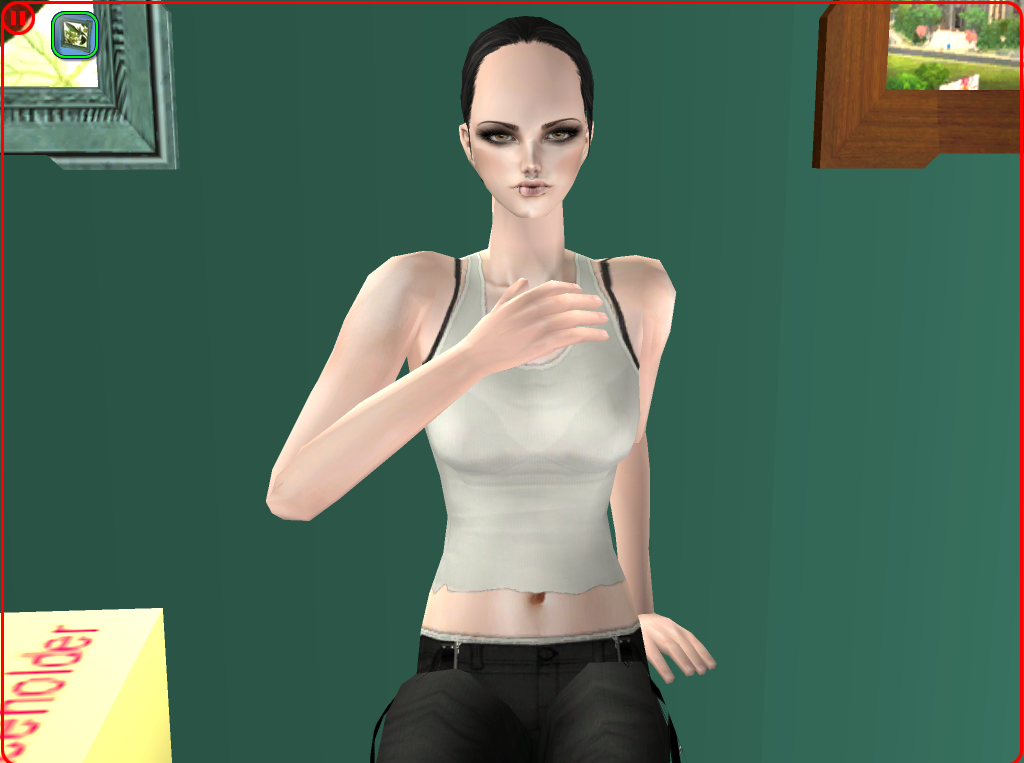
Soooo I recently went to see the movie Beautiful Creatures and one scene of the movie really inspired me to make this picture. In the book/movie, when the girl Castors (or witches) come of age, they are claimed for either the light or the dark side. I took this concept and the scene with Emmy Rossum, and did my own interpretation of it. Hope you all enjoy :)
An unbelievable yet true tale - We were sitting watching TV a couple nights ago and my hubby jumped up and claimed he saw a mouse. I had left the sliders open absentmindedly that day and he must have wandered in. Hubby started banging around in the kitchen and it came scampering out. The little creature saw me and went scampering back into the kitchen and under the oven. Hubby pulled out the oven but mouse had gone under cabinets. My daughter forbid him to get a mouse trap so while hubby went to bed and said good luck, she and I sat watch over a rigged up shoe box propped up on a wooden dowel which was tied to a string. We perched on the counter top and after about an hour the mouse was lured under the shoe box with some cereal (Cheerios) A tug of the string and the box dropped over him. The contraption actually worked! Here comes a flaw in our plan. How to get the boxed mouse out of the house. Hubby woke up and had a clever idea to slide a piece of cardboard under the shoebox. When he lifted the covered box the more clever mouse saw a sliver of light and burst out of the makeshift trap in an explosion of mousely speed. Back he went under the cabinet. By then it was three in the morning and we had to go to bed.
The next day we purchased a humane trap, which is basically a little house with a door that closes after he enters. The mouse was too clever and decided not to go in the little house even though it was filled with peanut butter and crackers. He must have remembered what happened the last time he went into a box. Finally that night, (last night) after all had gone to bed except me. I saw the mouse run for the sliding glass door hopping frantically along the bottom to find the way out. I crept up while he was thus occupied and standing on tip toes leaned over him and flipped the lock up. I was just about to slide the door open when my two dogs, hearing lock click open, came barreling through the house thinking to go outside. The mouse ran back under the cabinet. After the dogs were locked in a back bedroom I sat up and waited. It was now 2 am but I could not go to sleep knowing the mouse was trying so desperately to get home. About 2:30 am he made dash for the front door. I went to open the door and seeing me, he hopped into my husband's shoe. I quickly opened the door and picked up the shoe and put it outside. He didn't come out so I gave the shoe a shove, but nothing...I picked up the wrong shoe! As I picked up the other shoe, mouse jumped out and scampered over my feet and under the couch. No matter how prepared you are, you cannot help but shriek when a wild mouse scampers over your feet. Hubby hearing my shriek came out of the bedroom and after filling him in on the excitement, he lifted up the end of the couch where the mouse was still hiding and I herded the terrified little creature toward the open doorway to freedom.
view on black
for our daily challenge - fences
Nikon D7000 ~ Nikkor 50mm 1.8G ~ Exposure 1/60 sec. ~ Aperture f/3.2 ~ ISO Speed 100
© Image by Laurarama - All rights reserved. My Images may not be used on websites, blogs or other media. Do not copy or alter in any way without my written permission.
So this is my round 1 for Into Darkness.
I really like it (which is wierd, lol).
Um.. I really like how her hair came out.
Well, I have nothing more to write, but just one question,
SCF isnt working only for me?
Here's the original.
i227.photobucket.com/albums/dd286/shoval161/untitled2110c...
this is my favorite moment of the day. the morning, alone with a coffee, spacing in my thoughts, waking up. today we have a holiday (Ascension Day ?) and fathersday so we could sleep in. I also started a morning 3 minute breathing meditation that is really good.
this morning in my "flow" calendar I read:
“. . . there is luxury in being quiet in the heart of chaos.”
~Virginia Woolf
Heidelberg - Heidelberger Schloss
Heidelberg Castle (German: Heidelberger Schloss) is a ruin in Germany and landmark of Heidelberg. The castle ruins are among the most important Renaissance structures north of the Alps.
The castle has only been partially rebuilt since its demolition in the 17th and 18th centuries. It is located 80 metres (260 ft) up the northern part of the Königstuhl hillside, and thereby dominates the view of the old downtown. It is served by an intermediate station on the Heidelberger Bergbahn funicular railway that runs from Heidelberg's Kornmarkt to the summit of the Königstuhl.
The earliest castle structure was built before 1214 and later expanded into two castles circa 1294; however, in 1537, a lightning bolt destroyed the upper castle. The present structures had been expanded by 1650, before damage by later wars and fires. In 1764, another lightning bolt caused a fire which destroyed some rebuilt sections.
Before destruction
Early history
Heidelberg was first mentioned in 1196 as "Heidelberch". In 1155 Conrad of Hohenstaufen was made the Count Palatine by his half-brother Frederick Barbarossa, and the region became known as the Electoral Palatinate. The claim that Conrad's main residence was on the Schlossberg (Castle Hill), known as the Jettenbühl, cannot be substantiated. The name "Jettenbühl" comes from the soothsayer Jetta, who was said to have lived there. She is also associated with Wolfsbrunnen (Wolf's Spring) and the Heidenloch (Heathens' Well). The first mention of a castle in Heidelberg (Latin: "castrum in Heidelberg cum burgo ipsius castri") is in 1214, when Louis I, Duke of Bavaria of the House of Wittelsbach received it from Hohenstaufen Emperor Friedrich II. The last mention of a single castle is in 1294. In another document from 1303, two castles are mentioned for the first time:
The upper castle on Kleiner Gaisberg Mountain, near today's Hotel Molkenkur (destroyed in 1537);
The lower castle on the Jettenbühl (the present castle site).
All that is known about the founding of the lower castle is that it took place sometime between 1294 and 1303. The oldest documented references to Heidelberg Castle are found during the 1600s:
The Thesaurus Pictuarum of the Palatinate church counsel Markus zum Lamb (1559 to 1606);
The "Annales Academici Heidelbergenses" by the Heidelberg librarian and professor Pithopoeus (started in 1587);
The "Originum Palatinarum Commentarius" by Marquard Freher (1599);
The "Teutsche Reyssebuch" by Martin Zeiller (Strasbourg 1632, reprinted in 1674 as the "Itinerarium Germaniae").
All of these works are for the most part superficial and do not contain much information. In 1615, Merian's Topographia Palatinatus Rheni described Prince Elector Ludwig V as he "started building a new castle one hundred and more years ago". Most of the descriptions of the castle up until the 18th century are based on Merian's information. Under Ruprecht I, the court chapel was erected on the Jettenbühl.
Palace of kings
When Ruprecht became the King of Germany in 1401, the castle was so small that on his return from his coronation, he had to camp out in the Augustinians' monastery, on the site of today's University Square. What he desired was more space for his entourage and court and to impress his guests, but also additional defences to turn the castle into a fortress.
After Ruprecht's death in 1410, his land was divided between his four sons. The Palatinate, the heart of his territories, was given to the eldest son, Ludwig III. Ludwig was the representative of the emperor and the supreme judge, and it was in this capacity that he, after the Council of Constance in 1415 and at the behest of Emperor Sigismund, held the deposed Antipope John XXIII in custody before he was taken to Burg Eichelsheim (today Mannheim-Lindenhof).
On a visit to Heidelberg in 1838, the French author Victor Hugo took particular pleasure in strolling among the ruins of the castle. He summarised its history in this letter:
But let me talk of its castle. (This is absolutely essential, and I should actually have begun with it.) What times it has been through! Five hundred years long it has been victim to everything that has shaken Europe, and now it has collapsed under its weight. That is because this Heidelberg Castle, the residence of the counts Palatine, who were answerable only to kings, emperors, and popes, and was of too much significance to bend to their whims, but couldn't raise his head without coming into conflict with them, and that is because, in my opinion, that the Heidelberg Castle has always taken up some position of opposition towards the powerful. Circa 1300, the time of its founding, it starts with a Thebes analogy; in Count Rudolf and Emperor Ludwig, these degenerate brothers, it has its Eteocles and its Polynices [warring sons of Oedipus]. Then the prince elector begins to grow in power. In 1400 the Palatine Ruprecht II, supported by three Rhenish prince electors, deposes Emperor Wenceslaus and usurps his position; 120 years later in 1519, Count Palatine Frederick II was to create the young King Charles I of Spain Emperor Charles V.
Reformation and the Thirty Years Wars
It was during the reign of Louis V, Elector Palatine (1508–1544) that Martin Luther came to Heidelberg to defend one of his theses (Heidelberg Disputation) and paid a visit to the castle. He was shown around by Louis's younger brother, Wolfgang, Count Palatine, and in a letter to his friend George Spalatin praises the castle's beauty and its defenses.
In 1619, Protestants rebelling against the Holy Roman Empire offered the crown of Bohemia to Frederick V, Elector Palatine who accepted despite misgivings and in doing so triggered the outbreak of the Thirty Years War. It was during the Thirty Years War that arms were raised against the castle for the first time. This period marks the end of the castle's construction; the centuries to follow brought with them destruction and rebuilding.
Destruction
After his defeat at the Battle of White Mountain on 8 November 1620, Frederick V was on the run as an outlaw and had to release his troops prematurely, leaving the Palatinate undefended against General Tilly, the supreme commander of the Imperial and Holy Roman Empire's troops. On 26 August 1622, Tilly commenced his attack on Heidelberg, taking the town on 16 September, and the castle a few days later.
When the Swedes captured Heidelberg on 5 May 1633 and opened fire on the castle from the Königstuhl hill behind it, Tilly handed over the castle. The following year, the emperor's troops tried to recapture the castle, but it was not until July 1635 that they succeeded. It remained in their possession until the Peace of Westphalia ending the Thirty Years War was signed. The new ruler, Charles Louis (Karl Ludwig) and his family did not move into the ruined castle until 7 October 1649.
Victor Hugo summarized these and the following events:
In 1619, Frederick V, then a young man, took the crown of the kings of Bohemia, against the will of the emperor, and in 1687, Philip William, Count Palatine, by then an old man, assumes the title of prince-elector, against the will of the king of France. This was to cause Heidelberg battles and never-ending tribuluations, the Thirty Years War, Gustav Adolfs Ruhmesblatt and finally the War of the Grand Alliance, the Turennes mission. All of these terrible events have blighted the castle. Three emperors, Louis the Bavarian, Adolf of Nassau, and Leopold of Austria, have laid siege to it; Pio II condemned it; Louis XIV wreaked havoc on it.
— quoted from Victor Hugo: "Heidelberg"
Nine Years' War
After the death of Charles II, Elector Palatine, the last in line of the House of Palatinate-Simmern, Louis XIV of France demanded the surrender of the allodial title in favor of the Duchess of Orléans, Elizabeth Charlotte, Princess Palatine who he claimed was the rightful heir to the Simmern lands. On 29 September 1688, the French troops marched into the Palatinate of the Rhine and on 24 October moved into Heidelberg, which had been deserted by Philipp Wilhelm, the new Elector Palatine from the line of Palatinate-Neuburg. At war against the allied European powers, France's war council decided to destroy all fortifications and to lay waste to the Palatinate (Brûlez le Palatinat!), in order to prevent an enemy attack from this area. As the French withdrew from the castle on 2 March 1689, they set fire to it and blew the front off the Fat Tower. Portions of the town were also burned, but the mercy of a French general, René de Froulay de Tessé, who told the townspeople to set small fires in their homes to create smoke and the illusion of widespread burning, prevented wider destruction.
Immediately upon his accession in 1690, Johann Wilhelm, Elector Palatine had the walls and towers rebuilt. When the French again reached the gates of Heidelberg in 1691 and 1692, the town's defenses were so good that they did not gain entry. On 18 May 1693 the French were yet again at the town's gates and took it on 22 May. However, they did not attain control of the castle and destroyed the town in attempt to weaken the castle's main support base. The castle's occupants capitulated the next day. Now the French took the opportunity to finish off the work started in 1689, after their hurried exit from the town. The towers and walls that had survived the last wave of destruction, were blown up with mines.
Removal of the court to Mannheim
In 1697 the Treaty of Ryswick was signed, marking the end of the War of the Grand Alliance and finally bringing peace to the town. Plans were made to pull down the castle and to reuse parts of it for a new palace in the valley. When difficulties with this plan became apparent, the castle was patched up. At the same time, Charles III Philip, Elector Palatine played with the idea of completely redesigning the castle, but shelved the project due to lack of funds. He did, however, install his favorite court jester, Perkeo of Heidelberg to famously watch over the castle's wine stock. Perkeo later became the unofficial mascot of the city. In 1720, he came into conflict with the town's Protestants as a result of fully handing over the Church of the Holy Spirit to the Catholics (it had previously been split by a partition and used by both congregations), the Catholic prince-elector moved his court to Mannheim and lost all interest in the castle. When on 12 April 1720, Charles announced the removal of the court and all its administrative bodies to Mannheim, he wished that "Grass may grow on her streets".
The religious conflict was probably only one reason for the move to Mannheim. In addition, converting the old-fashioned hill-top castle into a Baroque palace would have been difficult and costly. By moving down into the plain, the prince-elector was able to construct a new palace, Mannheim Palace, that met his every wish.
Karl Phillip's successor Karl Theodor planned to move his court back to Heidelberg Castle. However, on 24 June 1764, lightning struck the Saalbau (court building) twice in a row, again setting the castle on fire, which he regarded as a sign from heaven and changed his plans. Victor Hugo, who had come to love the ruins of the castle, also saw it as a divine signal:
One could even say that the very heavens had intervened. On 23 June 1764, the day before Karl Theodor was to move into the castle and make it his seat (which, by the bye, would have been a great disaster, for if Karl Theodor had spent his thirty years there, these austere ruins which we today so admire would certainly have been decorated in the pompadour style); on this day, then, with the prince's furnishings already arrived and waiting in the Church of the Holy Spirit, fire from heaven hit the octagonal tower, set light to the roof, and destroyed this five-hundred-year-old castle in very few hours.
— Victor Hugo, Heidelberg
In the following decades, basic repairs were made, but Heidelberg Castle remained essentially a ruin.
Since destruction
Slow decay and Romantic enthusiasm
In 1777, Karl Theodor became ruler of Bavaria in addition to the Palatinate and removed his court from Mannheim to Munich. Heidelberg Castle receded even further from his thoughts and the rooms which had still had roofs were taken over by craftsmen. Even as early as 1767, the south wall was quarried for stone to build Schwetzingen Castle. In 1784, the vaults in the Ottoheinrich wing were filled in, and the castle used as a source of building materials.
As a result of the German mediatisation of 1803, Heidelberg and Mannheim became part of Baden. Charles Frederick, Grand Duke of Baden welcomed the addition to his territory, although he regarded Heidelberg Castle as an unwanted addition. The structure was decaying and the townsfolk were helping themselves to stone, wood, and iron from the castle to build their own houses. The statuary and ornaments were also fair game. August von Kotzebue expressed his indignation in 1803 at the government of Baden's intention to pull down the ruins. At the beginning of the nineteenth century, the ruined castle had become a symbol for the patriotic movement against Napoleon.
Even before 1800, artists had come to see the river, the hills and the ruins of the castle as an ideal ensemble. The best depictions are those of England's J. M. W. Turner, who stayed in Heidelberg several times between 1817 and 1844, and painted Heidelberg and the castle many times. He and his fellow Romantic painters were not interested in faithful portrayals of the building and gave artistic licence free rein. For example, Turner's paintings of the castle show it perched far higher up on the hill than it actually is.
The saviour of the castle was the French count Charles de Graimberg. He fought the government of Baden, which viewed the castle as an "old ruin with a multitude of tasteless, crumbling ornaments", for the preservation of the building. Until 1822, he served as a voluntary castle warden, and lived for a while in the Glass Wing (Gläserner Saalbau), where he could keep an eye on the courtyard. Long before the origin of historic preservation in Germany, he was the first person to take an interest in the conservation and documentation of the castle, which may never have occurred to any of the Romantics. Graimberg asked Thomas A. Leger to prepare the first castle guide. With his pictures of the castle, of which many copies were produced, Graimberg promoted the castle ruins and drew many tourists to the town.
Planning and restoration
The question of whether the castle should be completely restored was discussed for a long time. In 1868, the poet Wolfgang Müller von Königswinter argued for a complete reconstruction, leading to a strong backlash in public meetings and in the press.
In 1883, the Grand Duchy of Baden established a "Castle field office", supervised by building director Josef Durm in Karlsruhe, district building supervisor Julius Koch and architect Fritz Seitz. The office made a detailed plan for preserving or repairing the main building. They completed their work in 1890, which led a commission of specialists from across Germany to decide that while a complete or partial rebuilding of the castle was not possible, it was possible to preserve it in its current condition. Only the Friedrich Building, whose interiors were fire damaged, but not ruined, would be restored. This reconstruction was done from 1897 to 1900 by Karl Schäfer at the enormous cost of 520,000 Marks.
Castle ruins and tourism
The oldest description of Heidelberg from 1465 mentions that the city is "frequented by strangers", but it did not really become a tourist attraction until the beginning of the 19th century. Count Graimberg made the castle a pervasive subject for pictures which became forerunners of the postcard. At the same time, the castle was also found on souvenir cups. Tourism received a big boost when Heidelberg was connected to the railway network in 1840.
Mark Twain, the American author, described the Heidelberg Castle in his 1880 travel book A Tramp Abroad:
A ruin must be rightly situated, to be effective. This one could not have been better placed. It stands upon a commanding elevation, it is buried in green woods, there is no level ground about it, but, on the contrary, there are wooded terraces upon terraces, and one looks down through shining leaves into profound chasms and abysses where twilight reigns and the sun cannot intrude. Nature knows how to garnish a ruin to get the best effect. One of these old towers is split down the middle, and one half has tumbled aside. It tumbled in such a way as to establish itself in a picturesque attitude. Then all it lacked was a fitting drapery, and Nature has furnished that; she has robed the rugged mass in flowers and verdure, and made it a charm to the eye. The standing half exposes its arched and cavernous rooms to you, like open, toothless mouths; there, too, the vines and flowers have done their work of grace. The rear portion of the tower has not been neglected, either, but is clothed with a clinging garment of polished ivy which hides the wounds and stains of time. Even the top is not left bare, but is crowned with a flourishing group of trees & shrubs. Misfortune has done for this old tower what it has done for the human character sometimes – improved it.
— Mark Twain
In the 20th century, Americans spread Heidelberg's reputation outside Europe. Thus, Japanese also often visit the Heidelberg Castle during their trips to Europe. Heidelberg has, at the beginning of the 21st century, more than three million visitors a year and about 1,000,000 overnight stays. Most of the foreign visitors come either from the USA or Japan. The most important attraction, according to surveys by the Geographical Institute of the University of Heidelberg, is the castle with its observation terraces.
Chronology
Timeline of events for Heidelberg Castle:
1225: first documented mention as "Castrum".
1303: mention of two castles.
1537: destruction of the upper castle by lightning bolt.
1610: creation of the palace garden ("Hortus Palatinus").
1622: Tilly conquers city and castle in the Thirty Years War.
1642: renewal of the Castle plants.
1688/1689: destruction by French troops.
1693: renewed destruction in the Palatinate succession war.
1697: (start) reconstruction.
1720: transfer of the residence to Mannheim.
1742: (start) reconstruction.
1764: destruction by lightning bolt.
1810: Charles de Graimberg dedicates himself to the preservation of the Castle ruins.
1860: first Castle lighting.
1883: establishment of the "office of building of castles of Baden."
1890: stocktaking by Julius Koch and Fritz Seitz.
1900: (circa) restorations and historical development.
(Wikipedi)
Das Heidelberger Schloss ist eine der berühmtesten Ruinen Deutschlands und das Wahrzeichen der Stadt Heidelberg. Bis zu seiner Zerstörung im Pfälzischen Erbfolgekrieg war es die Residenz der Kurfürsten von der Pfalz. Seit den Zerstörungen durch die Soldaten Ludwigs XIV. 1689 und der Sprengung durch französische Pioniere am 6. September 1693 wurde das Heidelberger Schloss nur teilweise restauriert. Nachdem am 24. Juni 1764 Blitze die teilweise renovierte Anlage in Brand gesetzt hatten, wurde die Wiederherstellung aufgegeben. Die Schlossruine aus rotem Neckartäler Sandstein erhebt sich 80 Meter über dem Talgrund am Nordhang des Königstuhls und dominiert von dort das Bild der Altstadt. Der Ottheinrichsbau, einer der Palastbauten des Schlosses, zählt zu den bedeutendsten Bauwerken des deutschen Manierismus. In der kulturgeschichtlichen Epoche der Romantik wurde die Schlossruine zu einem Inbegriff einer vergangenen und bewundernswerten Epoche stilisiert. Es zählt heute zu den meistbesuchten touristischen Sehenswürdigkeiten Europas.
Geschichte
Bis zu den Zerstörungen
Erste Erwähnungen
Um das Jahr 1182 verlegte Konrad der Staufer, Halbbruder von Kaiser Friedrich I. Barbarossa und seit 1156 Pfalzgraf bei Rhein, seine Hofhaltung von der Burg Stahleck bei Bacharach am Mittelrhein auf die Burg Heidelberg, seinem Sitz als Vogt des Klosters Schönau im Odenwald.
Die Stadt Heidelberg wird im Jahr 1196 zum ersten Mal in einer Urkunde genannt. Eine Burg in Heidelberg („castrum in Heidelberg cum burgo ipsius castri“) wird im Jahr 1225 erwähnt, als Ludwig der Kelheimer diese Burg vom Bischof Heinrich von Worms als Lehen erhielt. 1214 waren die Herzöge von Bayern aus dem Haus Wittelsbach mit der Pfalzgrafschaft belehnt worden.
Von einer Burg ist zuletzt im Jahr 1294 die Rede. In einer Urkunde des Jahres 1303 werden zum ersten Mal zwei Burgen aufgeführt: die obere Burg auf dem Kleinen Gaisberg bei der jetzigen Molkenkur und die untere Burg auf dem Jettenbühl. Lange Zeit hatte sich deshalb in der Forschung die Auffassung durchgesetzt, dass die Gründung der unteren Burg zwischen 1294 und 1303 entstanden sein müsse, zumal die vom Schlossbaubüro in der zweiten Hälfte des 19. Jahrhunderts akribisch durchgeführte Bauaufnahme zum Schluss gelangte, dass die Bausubstanz keine Datierung des Schlosses vor das 15. Jahrhundert gerechtfertigt habe. Aufgrund von Architekturfunden und neueren bauarchäologischen Untersuchungen wird in der jüngeren Forschung zum Heidelberger Schloss die Entstehung der unteren Burg dagegen mittlerweile auf die erste Hälfte des 13. Jahrhunderts datiert. Bereits 1897 wurde ein vermauertes spätromanisches Fenster in der Trennwand zwischen Gläsernem Saalbau und Friedrichsbau entdeckt. 1976 förderten Ausschachtungsarbeiten an der Nordostecke des Ruprechtbaues in einer um 1400 abgelagerten Schutt- und Abbruchschicht ein Fensterfragment in Form eines Kleeblattbogens zutage, wie es sich in ähnlicher Form in den Arkadenfenstern der Burg Wildenberg findet. Eine im Jahr 1999 im Bereich des Ludwigsbaus durchgeführte archäologische Untersuchung verdichtete die Hinweise auf eine Bebauung des Schlossareals in der ersten Hälfte des 13. Jahrhunderts.
Die ältesten Werke, die das Heidelberger Schloss erwähnen, sind:
der Thesaurus Picturarum des pfälzischen Kirchenrats Markus zum Lamb (1559 bis 1606)
die Annales Academici Heidelbergenses des Heidelberger Bibliothekars und Professors Pithopoeus (1587 begonnen)
der Originum Palatinarum Commentarius von Marquard Freher (1599)
das Teutsche Reyssebuch von Martin Zeiller (Straßburg 1632, als Itinerarium Germaniae 1674 wieder abgedruckt)
Alle diese Werke sind meist oberflächlich und enthalten nichts Ernsthaftes. Anders verhält es sich mit Matthäus Merian Topographia Palatinatus Rheni aus dem Jahr 1615, in der Kurfürst Ludwig V. als derjenige genannt wird, der „vor hundert und etlichen Jahren hat ein neu Schloß angefangen zu bauen“. Auf Merians Angaben stützen sich die meisten Beschreibungen des Schlosses bis ins 18. Jahrhundert hinein. Das Bestreben, die Gründungszeit des Schlosses weiter rückwärts zu verlegen, führt später zu Hinweisen, dass bereits unter Ruprecht I. die berühmte Hofkapelle auf dem Jettenbühl errichtet worden sei.
Königsschloss und Papstgefängnis
Als Ruprecht III. im Jahr 1401 Deutscher König (Ruprecht I.) wurde, herrschte im Schloss so großer Raummangel, dass er bei seiner Rückkehr von der Königskrönung sein Hoflager im Augustinerkloster (heute: Universitätsplatz) aufschlagen musste. Jetzt galt es, Raum zur Repräsentation und zur Unterbringung des Beamten- und Hofstaates zu schaffen. Gleichzeitig musste die Burg zu einer Festung ausgebaut werden. Etwa aus der Zeit Ruprechts III. stammen die ältesten heute sichtbaren Teile des Schlosses.
Nach Ruprechts Tod im Jahr 1410 wurde der Herrschaftsbereich unter seinen vier Söhnen aufgeteilt. Die pfälzischen Stammlande gingen an den ältesten Sohn Ludwig III. Nach dem Konzil von Konstanz brachte dieser als Stellvertreter des Kaisers und oberster Richter im Jahr 1415 im Auftrag König Sigismunds den abgesetzten Papst Johannes XXIII. auf dem Schloss in Gewahrsam, bevor er auf Burg Eichelsheim (heute Mannheim-Lindenhof) gebracht wurde.
Der französische Dichter Victor Hugo besuchte 1838 Heidelberg und spazierte dabei besonders gerne in den Ruinen des Schlosses herum, dessen Geschichte er in einem Brief zusammenfasst:
„Lassen Sie mich nur von seinem Schloß sprechen. (Das ist absolut unerläßlich, und eigentlich hätte ich damit beginnen sollen). Was hat es nicht alles durchgemacht! Fünfhundert Jahre lang hat es die Rückwirkungen von allem hinnehmen müssen, was Europa erschüttert hat, und am Ende ist es darunter zusammengebrochen. Das liegt daran, daß dieses Heidelberger Schloß, die Residenz des Pfalzgrafen, der über sich nur Könige, Kaiser und Päpste hatte und zu bedeutend war, um sich unter deren Füßen zu krümmen, aber nicht den Kopf heben konnte, ohne mit ihnen aneinanderzugeraten, das liegt daran, meine ich, daß das Heidelberger Schloß immer irgendeine Oppositionshaltung gegenüber den Mächtigen eingenommen hat. Schon um 1300, der Zeit seiner Gründung, beginnt es mit einer Thebais; in dem Grafen Rudolf und dem Kaiser Ludwig, diesen beiden entarteten Brüdern, hat es seinen Eteokles und seinen Polyneikes. Darin nimmt der Kurfürst an Macht zu. Im Jahre 1400 setzt der Pfälzer Ruprecht II., unterstützt von drei rheinischen Kurfürsten, Kaiser Wenzeslaus ab und nimmt dessen Stelle ein; hundertzwanzig Jahre später, 1519, sollte Pfalzgraf Friedrich II. den jungen König Karl I. von Spanien zu Kaiser Karl V. machen.“
– Victor Hugo: Heidelberg
Badisch-Pfälzischer Krieg
Im Badisch-Pfälzischen Krieg 1462 setzte Kurfürst Friedrich I. von der Pfalz (der „Pfälzer Fritz“) den Markgrafen Karl I. von Baden, den Bischof Georg von Metz und den Grafen Ulrich V. von Württemberg auf dem Schloss fest. Friedrich ließ die Gefangenen bei harter Kost in Ketten legen, bis sie bereit waren, die geforderten Lösegeldzahlungen zu leisten. Markgraf Karl I. musste zur Freilassung 25.000 Gulden zahlen, seinen Anteil an der Grafschaft Sponheim als Pfand abgeben und Pforzheim zum pfälzischen Lehen erklären. Der Metzer Bischof musste 45.000 Gulden zahlen. Das Wichtigste war aber, dass Friedrich I. von der Pfalz seinen Anspruch als Kurfürst gesichert hatte. Die Sage berichtet, Friedrich habe seinen unfreiwilligen Gästen das Fehlen von Brot bei der Mahlzeit dadurch begreiflich gemacht, dass er sie durch das Fenster auf das verwüstete Land hinab blicken ließ. Dies wird in einem Gedicht von Gustav Schwab mit dem Titel „Das Mahl zu Heidelberg“ nacherzählt.
Reformation und Dreißigjähriger Krieg
Während der Regierung Ludwigs V. besichtigte Martin Luther, der zu einer Verteidigung seiner Thesen (Heidelberger Disputation) nach Heidelberg gekommen war, das Schloss. Er wurde dabei von Pfalzgraf Wolfgang, dem Bruder Ludwigs V., herumgeführt und lobte später in einem Brief an seinen Freund Georg Spalatin vom 18. Mai 1518 die Schönheit und kriegerische Ausrüstung des Schlosses.
Im Dreißigjährigen Krieg flogen zum ersten Mal Kugeln gegen das Heidelberger Schloss. Hiermit endet auch die eigentliche Geschichte des Schlossbaus. Die folgenden Jahrhunderte bringen hauptsächlich Zerstörungen und Wiederherstellungen.
Friedrich V. von der Pfalz nahm – trotz vieler Bedenken – die Königswürde von Böhmen an und löste damit eine Katastrophe aus. Nach der Schlacht am Weißen Berg war er als Geächteter auf der Flucht und hatte voreilig seine Truppen entlassen, so dass General Tilly, der Oberbefehlshaber der katholischen Liga-Truppen im Dienst des Kurfürsten von Bayern, eine unverteidigte Pfalz vor sich hatte. Am 26. August 1622 eröffnete er die Beschießung Heidelbergs und nahm am 16. September die Stadt und wenige Tage darauf das Schloss ein. Nachdem die Schweden am 5. Mai 1633 die Stadt Heidelberg eingenommen und vom Königstuhl aus das Feuer auf das Schloss eröffnet hatten, übergab der kaiserliche Kommandant am 26. Mai 1633 die Festung an die Schweden. Nach der schweren Niederlage der Schweden in der Schlacht bei Nördlingen im September 1634 besetzten Truppen des Kaisers erneut die Stadt. In der Absicht, das Schloss zu sprengen, wurden innerhalb von 14 Tagen 24 Tonnen Pulver in Stollen unter den Mauern des Schlosses deponiert. Das überraschende Erscheinen einer französischen Armee mit 30.000 Mann verhinderte die geplante Sprengung. Erst im Juli 1635 kam die Stadt erneut in die Gewalt der kaiserlichen Truppen, in der es dann bis zum Friedensschluss blieb. Erst am 7. Oktober 1649 zog der neue Herrscher wieder in das zerstörte Stammschloss seiner Familie ein.
Im Pfälzischen Erbfolgekrieg
Der französische König Ludwig XIV. verlangte nach dem Tode des kinderlosen Kurfürsten Karl II., des letzten Fürsten der Linie Pfalz-Simmern, im Namen der Herzogin von Orléans die Herausgabe des pfälzischen Allodialgutes. Am 29. September 1688 rückten die französischen Heere im Pfälzischen Erbfolgekrieg in die Pfalz und zogen am 24. Oktober in das von Philipp Wilhelm, dem neuen Kurfürsten aus der Linie Pfalz-Neuburg, verlassene Heidelberg ein.
Gegen die verbündeten europäischen Mächte beschloss der französische Kriegsrat, durch Zerstörung aller Festungswerke und durch Verwüstung des pfälzischen Landes dem Feinde die Möglichkeit des Angriffes von dieser Gegend her zu entziehen. Beim Ausrücken aus der Stadt am 2. März 1689 steckten die Franzosen das Schloss und auch die Stadt an vielen Ecken zugleich in Brand.
Johann Wilhelm ließ sofort nach seinem Einzug in die verwüstete Stadt die Mauern und Türme wiederherstellen. Als die Franzosen 1691 und 1692 erneut bis vor die Tore Heidelbergs gelangten, fanden sie die Stadt in einem so guten Verteidigungszustand vor, dass sie unverrichteter Dinge abziehen mussten. Am 18. Mai 1693 standen die Franzosen allerdings wieder vor der Stadt und nahmen sie am 22. Mai ein. Sie versuchten vermutlich, mit der Zerstörung der Stadt die Hauptoperationsbasis gegen das Schloss zu schaffen. Am folgenden Tage kapitulierte die Schlossbesatzung, und nun holten die Franzosen nach, was sie 1689 in der Eile ihres Abzugs nur unvollständig ausgeführt hatten: Sie sprengten nun durch Minen die Türme und Mauern, die beim letzten Mal der Zerstörung entgangen waren. Das Heidelberger Schloss wurde eine Ruine.
Verlegung der Residenz nach Mannheim
Der Frieden von Rijswijk, mit dem der Pfälzische Erbfolgekrieg beendet wurde, brachte im Jahr 1697 endlich etwas Ruhe. Es war geplant, das Schloss abzureißen und die brauchbaren Teile zur Errichtung eines neuen Palastes im Tal zu verwenden. Als sich aber der Durchführung dieses Planes Schwierigkeiten entgegenstellten, wurde das Schloss notdürftig wiederhergestellt. Gleichzeitig trug sich Karl Philipp mit dem Gedanken eines vollständigen Umbaues des Schlosses, aber der Mangel an finanziellen Mitteln schob dieses Projekt auf, und als der Kurfürst 1720 mit den Protestanten der Stadt wegen Überlassung der Heiliggeistkirche an die Katholiken in Streit geriet, der die Verlegung der Residenz nach Mannheim zur Folge hatte, endete das Interesse des Kurfürsten am Heidelberger Schloss. Seine Absicht war es, die Heiliggeistkirche zur katholischen Hofkirche umzuwidmen, was die Heidelberger Reformierten mit allen Mitteln zu verhindern suchten. Als er am 12. April 1720 die Verlegung seiner Residenz mit allen Behörden nach Mannheim verkündete, überließ der Kurfürst die alte Hauptstadt ihrem Schicksal und wünschte ihr, dass „Gras auf ihren Straßen wachsen“ solle. Der religiöse Konflikt war vermutlich aber nur der letzte Anstoß gewesen, das alte, schwer zu einer barocken Anlage umzubauende Bergschloss aufzugeben und in die Ebene zu ziehen, wo er eine ganz seinem Willen entspringende Neugründung vornehmen konnte.
Sein Nachfolger Karl Theodor plante vorübergehend, seinen Wohnsitz wieder ins Heidelberger Schloss zu verlegen. Er nahm davon allerdings wieder Abstand, als am 24. Juni 1764 der Blitz zweimal hintereinander in den Saalbau einschlug und das Schloss abermals brannte. Victor Hugo hielt dies später für einen Wink des Himmels:
„Man könnte sogar sagen, daß der Himmel sich eingemischt hat. Am 23. Juni 1764, einen Tag, bevor Karl-Theodor in das Schloß einziehen und es zu seiner Residenz machen sollte (was, nebenbei gesagt, ein großes Unglück gewesen wäre; denn wenn Karl-Theodor seine dreißig Jahre dort verbracht hätte, wäre die strenge Ruine, die wir heute bewundern, sicher mit einer schrecklichen Pompadour-Verzierung versehen worden), an diesem Vortag also, als die Möbel des Fürsten bereits vor der Tür, in der Heiliggeistkirche, standen, traf das Feuer des Himmels den achteckigen Turm, setzte das Dach in Brand und zerstörte in wenigen Stunden dieses fünfhundert Jahre alte Schloß.“
– Victor Hugo: Heidelberg.
In den folgenden Jahrzehnten wurden zwar noch notwendige Erneuerungen vorgenommen, aber das Heidelberger Schloss blieb von nun an hauptsächlich eine Ruine.
Seit den Zerstörungen
Langsamer Zerfall und romantische Begeisterung
Im Jahr 1777 verlegte Kurfürst Karl Theodor seine Residenz von Mannheim nach München. Damit verlor er das Heidelberger Schloss noch mehr aus den Augen. Die überdachten Räume wurden nun von Handwerksbetrieben genutzt. Schon 1767 hatte man begonnen, die Quader des Südwalles als Baumaterial für das Schwetzinger Schloss zu verwenden. Im Jahr 1784 wurden gar die Gewölbe im Erdgeschoss des Ottheinrichsbaus eingelegt und das Schloss als Steinbruch verwendet.
Durch den Reichsdeputationshauptschluss von 1803 gingen Heidelberg und Mannheim an Baden über. Der große Gebietszuwachs war Großherzog Karl Friedrich willkommen, das Heidelberger Schloss betrachtete er jedoch als unerwünschte Zugabe. Die Bauten verfielen, Heidelberger Bürger holten aus dem Schloss Steine, Holz und Eisen zum Bau ihrer Häuser. Auch Figuren und Verzierungen wurden abgeschlagen. August von Kotzebue äußerte sich 1803 voller Empörung über die Absicht der badischen Regierung, die Ruinen abtragen zu lassen. Das zerstörte Schloss wurde am Beginn des 19. Jahrhunderts zum Sinnbild für die patriotische Gesinnung, die sich gegen die napoleonische Unterdrückung richtete.
Schon vor 1800 erkannten Maler und Zeichner in der Schlossruine und der bergigen Flusslandschaft ein idealtypisches Ensemble. Den Höhepunkt bilden die Gemälde des Engländers William Turner, der sich zwischen 1817 und 1844 mehrfach in Heidelberg aufhielt und etliche Gemälde von Heidelberg und dem Schloss anfertigte. Ihm und anderen Künstlern der Romantik ging es dabei nicht um eine detailgetreue Bauaufnahme. Sie pflegten eher einen recht freien Umgang mit der Wirklichkeit. So ist bei seinem Gemälde des Schlosses das Gelände mehrfach überhöht dargestellt.
Der Begriff Romantik wurde von dem Philosophen Friedrich Schlegel Ende des 18. Jahrhunderts zu einer Universalpoesie erklärt – ein literaturtheoretischer Begriff aus der Frühromantik. In ihr würden alle Künste und Gattungen zu einer Form verschmelzen. Jedoch wandelte sich dies im allgemeinen Verständnis zu einem verklärenden sentimentalen Gefühl der Sehnsucht. Diese Empfindung fand insbesondere in der sogenannten Heidelberger Romantik ihren Ausdruck. So zum Beispiel in Liedersammlungen der Autoren Achim von Arnim und Clemens Brentano, die sich oft in Heidelberg aufhielten. Landschaftsmaler machten die Schlossreste zum zentralen Motiv ihrer Gemälde, in denen häufig das Anmutige der umgebenden Landschaft in Kontrast gestellt wurde zum Feierlich-Düsteren der Ruine. Clemens Brentano dichtete:
„Und da ich um die Ecke bog, – ein kühles Lüftlein mir entgegen zog – Der Neckar rauscht aus grünen Hallen – Und giebt am Fels ein freudig Schallen, – Die Stadt streckt sich den Fluss hinunter, – Mit viel Geräusch und lärmt ganz munter, – Und drüber an grüner Berge Brust, – Ruht groß das Schloss und sieht die Lust.“
– Clemens Brentano: Lied von eines Studenten Ankunft in Heidelberg und seinem Traum auf der Brücke, worin ein schöner Dialogus zwischen Frau Pallas und Karl Theodor.
Die auf Poetik beruhenden Konzepte der Romantik wurden in brieflichen Diskussionen zwischen Achim und Jacob Grimm über das Verhältnis von Natur- und Kunstpoesie entwickelt. Abkehrend von den Elementen der Reflexion, Kritik und Rhetorik in der Kunstpoesie, beschäftigt sich die „Heidelberger Romantik“ mit der Naturpoesie. Im Laufe des 19. Jahrhunderts wurde Heidelberg mit seinem Schloss und der heimischen Natur auch bei Reisenden und Wanderern zunehmend bekannt und beliebt. Stadt und Schloss wurden zum Inbegriff romantischer Stimmung.
Der Retter des Schlosses war der französische Graf Charles de Graimberg. Er kämpfte gegen Pläne der badischen Regierung, für die das Heidelberger Schloss das „alte Gemäuer mit seinen vielfältigen, geschmacklosen, ruinösen Verzierungen“ war, für die Erhaltung der Schlossruinen. Er versah bis 1822 das Amt eines freiwilligen Schlosswächters und wohnte eine Zeit lang im Vorbau des Gläsernen Saalbaues, von dem aus er den Schlosshof am besten übersehen konnte. Lange bevor es in Deutschland eine Denkmalpflege gab, war er der erste, der sich um den Erhalt und die Dokumentation des Schlosses kümmerte, als bei der romantischen Schwärmerei noch niemand daran dachte, den Verfall zu unterbinden. In Auftrag Graimbergs verfasste Thomas A. Leger den ersten Schlossführer. Mit seinen in hoher Auflage produzierten druckgraphischen Ansichten verhalf Graimberg der Schlossruine zu einem Bekanntheitsgrad, der den Tourismus nach Heidelberg lenkte.
Bestandsaufnahme und Restaurierung – der Heidelberger Schlossstreit
Die Frage, ob das Schloss vollständig wiederhergestellt werden solle, führte zu langen Diskussionen. Der Dichter Wolfgang Müller von Königswinter machte sich im Jahr 1868 für eine vollständige Erneuerung stark und rief damit heftige Reaktionen hervor, die in der Presse und in Versammlungen ausgetragen wurden. Aus dem Streit um den richtigen Umgang mit der Schlossruine entwickelte sich eine Grundsatzdiskussion über die Aufgaben der Denkmalpflege. Die Ergebnisse dieser Debatte, die als der „Heidelberger Schlossstreit“ in die Geschichte eingegangen sind, prägten die Prinzipien der Bewahrung historischer Bauwerke nachhaltig.
Die Großherzogliche badische Regierung errichtete im Jahr 1883 ein Schloßbaubüro, das unter Oberaufsicht des Baudirektors Josef Durm in Karlsruhe vom Bezirksbauinspektor Julius Koch und dem Architekten Fritz Seitz geleitet wurde. Aufgabe des Büros war es, eine möglichst genaue Bestandsaufnahme zu machen und zugleich Maßnahmen zur Erhaltung oder Instandsetzung der Hauptgebäude vorzuschlagen. Die Arbeiten dieses Büros endeten 1890 und bildeten die Grundlage für eine Kommission von Fachleuten aus ganz Deutschland. Die Kommission kam zu der einhelligen Überzeugung, dass eine völlige oder teilweise Wiederherstellung des Schlosses nicht in Betracht komme, dagegen eine Erhaltung des jetzigen Zustandes mit allen Mitteln zu erstreben sei. Nur der Friedrichsbau, dessen Innenräume zwar durch Feuer zerstört worden waren, der aber nie Ruine war, sollte wiederhergestellt werden. Diese Wiederherstellung geschah schließlich in der Zeit von 1897 bis 1900 durch Carl Schäfer mit dem enormen Kostenaufwand von 520.000 Mark. Im Jahr 2019 entspricht der Aufwand Inflationsbereinigt 3.700.000 €.
Schlossruine und Tourismus
Schon die älteste Beschreibung Heidelbergs aus dem Jahr 1465 erwähnt, dass die Stadt „vielbesucht von Fremden“ sei. Doch ein eigentlicher Städtetourismus setzte frühestens zu Beginn des 19. Jahrhunderts ein. Graf Graimberg sorgte mit seinen Zeichnungen dafür, dass das Schloss als Bildmotiv eine große Verbreitung fand. Sie wurden praktisch zu Vorläufern der Postkarte. Zur gleichen Zeit gab es auch schon das Schloss als Souvenir auf Tassen. Den entscheidenden Schub erhielt der Tourismus aber erst mit dem Anschluss Heidelbergs ans Eisenbahnnetz im Jahr 1840.
Mark Twain beschrieb 1878 in seinem Buch Bummel durch Europa (A Tramp Abroad) das Heidelberger Schloss folgendermaßen:
„Um gut zu wirken, muss eine Ruine den richtigen Standort haben. Diese hier hätte nicht günstiger gelegen sein können. Sie steht auf einer die Umgebung beherrschenden Höhe, sie ist in grünen Wäldern verborgen, um sie herum gibt es keinen ebenen Grund, sondern im Gegenteil bewaldete Terrassen, man blickt durch glänzende Blätter in tiefe Klüfte und Abgründe hinab, wo Dämmer herrscht und die Sonne nicht eindringen kann. Die Natur versteht es, eine Ruine zu schmücken, um die beste Wirkung zu erzielen.“
– Mark Twain: Bummel durch Europa.
Bei einem am 18. Mai 1978 verübten Brandanschlag, der den Revolutionären Zellen zugerechnet wird, entstand ein Sachschaden von 97.000 DM am Schloss.
Im 20. Jahrhundert verfielen die US-Amerikaner noch mehr dem Heidelberg-Mythos und trugen ihn hinaus in die Welt. So kommt es, dass auch viele andere Nationalitäten das Heidelberger Schloss auf ihren Kurzreisen durch Europa zu den wenigen Zwischenstopps zählen.
Heidelberg hat zu Beginn des 21. Jahrhunderts jährlich mehr als eine Million Besucher und etwa 900.000 Übernachtungen. Wichtigster Anlaufpunkt ist laut einer Befragung des geografischen Instituts der Universität Heidelberg das Schloss mit seinen Aussichtsterrassen.
Das Heidelberger Schloss zählt heute zu den landeseigenen Monumenten und wird von der Einrichtung „Staatliche Schlösser und Gärten Baden-Württemberg“ betreut. Aus dem Landesinfrastrukturprogramm Baden-Württemberg wurden für den Neubau eines von Max Dudler entworfenen Besucherzentrums 3 Millionen Euro zur Verfügung gestellt. Es wurde 2012 eröffnet.
Zudem ist das Schloss nach Angaben der Schlösserverwaltung das größte Fledermaus-Winterquartier in Nordbaden. Wegen der dort überwinternden Zwergfledermaus sowie dem Großen Mausohr wurde im Jahr 2016 der im Stückgarten vor dem Schloss stattfindende Teil des Weihnachtsmarktes auf den Friedrich-Ebert-Platz verlegt.
(Wikipdia)
Our backyard has turned into a juvenile chipmunk playground. They chase each other around, as many as three together. Its been a good year for chipmunks!!
After Sony claimed my first "weather-resistant" M4 was irrepairable after catching a shower of rain, I've decided, with nothing to lose, to investigate it myself.
It has power and some functions work, but they say it needs a new motherboard, which they claim would cost more than a new camera (really, at £1,800?!). I also stupidly managed to set it to screen-only in the menu while fiddling about when the screen had failed, so I can't see any menus!!
For the group 'This Is Why I Bought A Camera' - it's ironic!
It's finally time for the last member of the Toa Mangai, Motara, Toa of Stone. And his companion, the Po-Matoran known as Kodan the Chronicler!
Motara is a great warrior who once served the Brotherhood of Makuta during their war against the Barraki, and received his special Hagah-like armor as proof of his achievements, along with his Great Kanohi Koiak, the mask of Power Scream. It is because of this history that Motara insists on wearing the Great Koiak gifted to him by his former master, despite its status as an immoral Kanohi making him an outcast among the Matoran of his home in Po-Metru.
Kodan, the long-time Chronicler of Metru Nui, and sometimes honorary twelfth member of the Toa Mangai, was a beloved Po-Matoran from Metru Nui who detailed the city's history for many years, and is even sometimes credited with inventing the sport of Akilini. Though a number of other Matoran have claimed that honor as well.
Claim Jumper Restaurant
at Golden Nugget Hotel & Casino
129 Fremont St,
Las Vegas, NV 89101
This Chicken Pot Pie was filled to the very top crust ... really generous portion
I'm claiming this as still 'WiP' since it doesn't quite line up with the rest of my stock (yet).
Presented here in DB Schenker 'cherry red' for parts availability of 1x2 grille bricks over blue.
So this is the result of some 20 days' (on and off) t*rd polishing. Not really quite satisfied with it, but I've run out of inspiration for now!
The Volkswagen Beetle—officially the Volkswagen Type 1—is an economy car that was built by the German company Volkswagen (VW) from 1938 until 2003. It has a rear-engine design with a two-door body style and is intended for five occupants (later, Beetles were restricted to four people in some countries).
The need for a people's car (Volkswagen in German), its concept and its functional objectives were formulated by the leader of Nazi Germany, Adolf Hitler, who wanted a cheap, simple car to be mass-produced for his country's new road network (Reichsautobahn). Members of the National Socialist party, with an additional dues surcharge, were promised the first production, but the Spanish Civil War shifted most production resources to military vehicles to support the Nationalists under Francisco Franco.
Lead engineer Ferdinand Porsche and his team took until 1938 to finalise the design. Béla Barényi is credited with conceiving the original basic design for this car in 1925, notably by Mercedes-Benz, on their website, including his original technical drawing, five years before Porsche claimed to have done his initial version. The influence on Porsche's design of other contemporary cars, such as the Tatra V570, and the work of Josef Ganz remains a subject of dispute. The result was the first Volkswagen, and one of the first rear-engined cars since the Brass Era. With 21,529,464 produced, the Beetle is the longest-running and most-manufactured car of a single platform ever made.
Although designed in the 1930s, due to World War II, civilian Beetles only began to be produced in significant numbers by the end of the 1940s. The car was then internally designated the Volkswagen Type 1, and marketed simply as the Volkswagen. Later models were designated Volkswagen 1200, 1300, 1500, 1302, or 1303, the first three indicating engine displacement, the last two derived from the model number.
The car became widely known in its home country as the Käfer (German for "beetle", cognate with English chafer) and was later marketed under that name in Germany, and as the Volkswagen in other countries. For example, in France it was known as the Coccinelle (French for ladybug).
The original 18.6 kW (24.9 hp) Beetle was designed for a top speed around 100 km/h (62 mph), which would be a viable cruising speed on the Reichsautobahn system. As Autobahn speeds increased in the postwar years, its output was boosted to 27 kW (36 hp), then 30 kW (40 hp), the configuration that lasted through 1966 and became the "classic" Volkswagen motor. The Beetle gave rise to multiple variants: mainly the 1950 Type 2 'Bus', the 1955 Karmann Ghia, as well as the 1961 Type 3 'Ponton' and the 1968 Type 4 (411/412) family cars, ultimately forming the basis of an entirely rear-engined VW product range.
The Beetle marked a significant trend, led by Volkswagen, and then by Fiat and Renault, whereby the rear-engine, rear-wheel-drive layout increased from 2.6 percent of continental Western Europe's car production in 1946 to 26.6 percent in 1956. In 1959 even General Motors launched an air-cooled, rear-engined car, the Chevrolet Corvair—which also shared the Beetle's flat engine and swing axle architecture.
Over time, front-wheel drive, and frequently hatchback-bodied cars would come to dominate the European small-car market. In 1974, Volkswagen's own front-wheel drive Golf hatchback succeeded the Beetle. In 1994, Volkswagen unveiled the Concept One, a "retro"-themed concept car with a resemblance to the original Beetle, and in 1998 introduced the "New Beetle", built on the contemporary Golf platform with styling recalling the original Type 1. It remained in production through 2010, and was succeeded in 2011 by the Beetle (A5), the last variant of the Beetle, which was also more reminiscent of the original Beetle. Production ceased altogether by 2019.
In the 1999 Car of the Century competition, to determine the world's most influential car in the 20th century, the Type 1 came fourth, after the Ford Model T, the Mini, and the Citroën DS.[
Nicosia ( Greek : Λευκωσία (Lefkosia), English : Nicosia), located in the middle of the island of Cyprus , is the capital of the Republic of Cyprus and the Turkish Republic of Northern Cyprus . It is the most populous city of Cyprus and the most important cultural, industrial, trade and transportation center. Nicosia is located at 35°10' north, 33°21' east.
The city is divided into two by the border called the Green Line . Although de jure the Republic of Cyprus has the administration of the entire city, de facto it only has control over South Nicosia . Northern Nicosia is under the rule of the Turkish Republic of Northern Cyprus and is considered to be under Turkish occupation by the international community. The two sectors are separated by a Buffer Zone administered by United Nations Peacekeeping Forces . With the 1960 Constitution of the Republic of Cyprus, the Turkish Municipality of Nicosia was granted legal status.
Nicosia is known as "Lefkosia" (Λευκωσία) in Greek and "Nicosia" in English .
The first name of the area where the city is located was "Ledra". This name is also written as "Ledrae", "Lidir", "Ledras", "Ledron" and "Letra". Later, this city was destroyed and when it was rebuilt by Leucus, the city was named "Lefkotheon" (Λευκόθεον - city of the white gods). This name was also occasionally referred to as "Ledron". Later, the words "Kermia" and "Leucus" (Λευκούς) were used for the city. In the 7th century, Hierocles, a Byzantine geographer, mentioned the city as Lefkousia (Λευκουσία) in his book Synekdemos (Vademecum) . In the 13th century , the Patriarch of Constantinople referred to Nicosia as Kalli Nikesis (Καλλι Νίκησις - Beautiful Victory). A writer and monk, St. Neophytos referred to Nicosia as "Leucopolis" (Lefkopolis - White City) in a sermon he gave around 1176. Since the 10th century, the name "Nicosia" has become generally accepted. In the 18th century, Greek Cypriot historian Archimandrite Kyprianos stated that another name for Nicosia was "Photolampos" (Shining with Light).
There are various claims that the city is referred to as "Nicosia" and similar forms in European languages. According to one claim, the Latins replaced the first syllable of the word, "Lef", with "Ni" because they could not pronounce it. Another claim is that the name derives from the name "Kallinikesis". A writer from Sicily named Sindaco connects the name "Nicosia" to the town named "Nicosia" in Sicily and claimed that King Tancred from this town was with Richard I during the siege of Cyprus and named the city after his own town. . Another claim is that the name "Nicosia" emerged during the rebellion of the city's people against the Knights Templar in 1192. A German priest named Ludolf named the city "Nycosia" between 1341 and 1363. HAS Dearborn, in his book published in 1819, says that another name for Nicosia is "Nicotia". In 1856, William Curry stated that the Greeks called the city "Escosie" and the Western Europeans called it "Licosia".
The name of the city is mentioned in Ottoman documents as "Nicosia" or "medine-i Nicosia" . In addition, in a letter regarding the conquest of Nicosia in 1570, the name of the city is mentioned as "Nicosia". Kâtip Çelebi refers to the city as "Nicosia" (which is sometimes used today).
The first settlement in the area where Nicosia is located took place in the Neolithic Age . The date of the first settlement is approximately 3000-4000 BC. In 1050 BC or in the 7th century BC, a city called " Ledra " was founded in the region. This city had an important place among the other city kingdoms on the island. During archaeological excavations, a Greek inscription written in the 4th century BC was found indicating the existence of a temple dedicated to Aphrodite in Ledra. By around 330 BC it had shrunk to a small village. When this city was destroyed due to earthquakes , in 200 BC, Leucus, the son of Ptolemy I Soter , founded the city that is today Nicosia.
The city's importance began to increase in the late Byzantine period. In the 7th century, it became the capital of the island during the Arab raids.
It fell into the hands of Richard I in 1191 . It was the capital of the island during the period when the Knights Templar purchased and dominated the island. A rebellion broke out in the city on 11 April 1192. The knights suppressed this uprising with a massacre and then left the island.
The Lusignans purchased the island and Nicosia remained their capital. During the Lusignan period, he built many new buildings in the city. During the Venetian period, most of these were demolished and used in the construction of walls. During this period, the Lusignans also built walls around the city. These walls were in the shape of an irregular pentagon . There were no walls in the city before. King Henry I built the first walls with two towers in 1211, Peter I built a third tower, and Henry II built the first walls. Henry had the city completely surrounded by walls. The city became quite wealthy during this period. Nicosia was one of four dioceses on the island. It also became the center of an archdiocese in 1212. During this period, events were taking place between Greeks and Latins, and bloody conflicts broke out in the city in 1313 and 1360.
Nicosia has been damaged by many earthquakes throughout its history. The 1222 Cyprus earthquake was felt strongly in the city and caused great damage. In November 1330, a flood occurred in the city and three thousand people lost their lives. In addition, the city was heavily damaged by the Genoese in 1373 and the Mamluks in 1426.
On February 26, 1489, Nicosia, along with the entire island, came under the rule of the Republic of Venice . Just before the Ottoman conquest of the island, the Venetians inspected the walls and found them too weak. According to the new plans, the walls of Nicosia were reduced from eight miles to three miles. Meanwhile, all buildings outside the new walls were destroyed. According to a claim, the route of Kanlıdere was changed by the Venetians. Another claim is that the Ottomans changed the route of the stream to save the city from floods.
During the conquest of Cyprus by the Ottomans , Nicosia was the third largest settlement taken. Piyale Pasha and his army took action to take Nicosia on 22 July 1570. On July 25, Nicosia was besieged. Clashes began on July 27, as the Venetians did not accept the Ottomans' demands to surrender the castle. The fact that the walls were very strong ensured that Nicosia would not fall. At dawn on 9 September 1570, a new attack was launched and troops of more than 20 thousand people conquered Nicosia.
As part of the settlement of Turks in Cyprus during the Ottoman period, the settlement of the Turkish population in Nicosia, as well as in the entire island, started in 1572. Non-professional Greeks in the city were settled in the neighborhoods outside the city and replaced by Turks. According to a census made during this period, the city had 31 neighborhoods. In two of them ("Ermiyan" and "Karaman"), the Armenian population was in the majority.
During the Ottoman period, Nicosia first served as the capital of the State of Cyprus as the center of a district called "Mountain Kaza", and later became a sanjak . During the Ottoman period, St. Large churches such as the Sophia Cathedral were converted into mosques. Nicosia - Larnaca road was built. The gates of the city were opened at sunrise and closed at sunset. The Governor, Judge, Interpreter and Greek Archbishop resided in Nicosia. William Kimbrough Pendleton states that in 1864 most of the houses in the city were made of clay brick. As a result of a major earthquake in 1741, one minaret of the Selimiye Mosque collapsed and had to be rebuilt. There were riots in the city in 1764 and 1821.
On July 12, 1878, Nicosia, along with the rest of the island, came under British rule . British troops entered the city through the Kyrenia Gate and hoisted the first British flag on the Değirmen Bastion next to the Paphos Gate . Nicosia Municipality was established in 1882. Under British rule, Nicosia grew outside the city walls. Between 1930 and 1945, villages such as Ortaköy , Strovolos , Büyük Kaymaklı , Küçük Kaymaklı began to merge with the city, and the first settlements were made in regions such as Yenişehir . On January 1, 1944, Ayii Omoloyitadhes was included in the municipal boundaries. In order to provide access outside the city, the walls on the sides of the Paphos Gate in 1879, the Kyrenia Gate in 1931, and the Famagusta Gate in 1945 were cut. In 1905, a train station was built in Büyük Kaymaklı and train services to Nicosia started, this practice ended in 1955. In 1912, the first electricity came to the city. Also in the same year, kerosene-powered street lamps were replaced with electric ones. Under British rule, the sewer network was cleaned and the roads were repaired. On October 17, 1947, as a result of an explosion in the power plant that supplied energy to the city, the city was left without electricity for 116 days.
In 1895, Greeks attacked the Turks in the Tahtakale region of Nicosia. In 1931, Greeks rebelled against British rule and burned the government building. Founded in 1955, EOKA attacked public buildings and the radio station in the city against British rule.
The Republic of Cyprus was established on 16 August 1960 . The flag of the Republic of Cyprus was hoisted in the House of Representatives at midnight that night, ending British rule on the island. In accordance with Article 173 of the 1960 constitution, a Greek (Nicosia -Greek Municipality) and a Turkish ( Nicosia Turkish Municipality ) municipality were established on the island. On the night of 20–21 December 1963, the events known as " Bloody Christmas " began. Zeki Halil and Cemaliye Emirali were killed as a result of fire opened on cars in Tahtakale district of Nicosia. Between 23-30, Küçük Kaymaklı was besieged. On the night of 23-24 January, 11 people were killed in the Kumsal region, and the family of Turkish major Nihat İlhan was killed in the incident known as the Kumsal Raid. An attack was carried out against the Turks in the Kanlıdere region. As a result of the events, the governments of Turkey , Greece and the United Kingdom met on 30 December 1963 . As a result of this meeting, the border , also known as the Green Line, was drawn, dividing the city into Turkish and Greek parts. The reason why this border is called the "Green Line" is that the pen of the United Nations official who drew the line on the map was green. The borders of the city were finalized with the Cyprus Operation carried out in 1974 by the order of Turkish Prime Minister Bülent Ecevit .
On 29 March 1968, the suburbs of Eylence , Büyük Kaymaklı, Küçük Kaymaklı, Pallouriotissa , Strovolos (partially) and Kızılay were also included in the municipal borders. Following the de facto division of the city, the area under the administration of the Republic of Cyprus continued to grow in a southerly direction. North Nicosia also continued to grow and merged with outlying villages such as Gönyeli (which has a separate municipality) and Hamitköy (which is part of the Nicosia Turkish Municipality).
Kermiya Border Gate was opened in 2003, and Lokmacı Gate was opened in 2008 .
Nicosia is located in a central point of the island of Cyprus, in the central parts of the Mesarya Plain .
Nicosia has a hot semi-arid climate according to the Köppen climate classification . The hottest months are July and August, and the coldest months are January and February. The month with the most rainfall is January. Nicosia is one of the warmest places on the island.
Nicosia is located in the center of the geological formation called Nicosia Formation. This region dates back to the Lower Pliocene period. Gray, yellow and white marl layers, sandy and yellow limestones and sparse conglomerate bands are frequently encountered. The reconnection of the Mediterranean with the Atlantic Ocean resulted in the rise of sea water and the formation of new sediments, which formed the Nicosia Formation. Underneath Nicosia is the Nicosia- Serdarlı aquifer , which has an area of 60 km² .
The riverside parts of Nicosia city, especially Kanlıdere , have a great biodiversity. [88] In a research conducted in the streams in a 12.5 km diameter area of the city, which is rich in vegetation (especially in stream beds), 185 different plant species belonging to 62 different families were identified. Among these, there are four endemic and 16 rare species. The most common tree species found on the banks of streams in the city is the eucalyptus tree (various types can be found). There is a total of 0.262 square kilometers of forest area in the Nicosia Central agricultural region of Northern Cyprus . Two kilometers outside Nicosia (in its southern part), within the boundaries of the Municipality of Eylence, is the Pedagogical Academy National Forest Park, and to the south of the city is the Athalassa National Forest Park. In Northern Nicosia, there is the Nicosia Forest Nursery, which is 0.5 hectares in size.
The habitats of animals in the stream beds in some parts of the city are in danger. The reeds along the streams host many animals, especially bird species. Many creatures such as kingfishers , water chickens , striped turtles and chameleons live on the banks of the streams . There are especially many turtles in the streams.
Nicosia is the commercial center of Cyprus. The city hosts the central banks of the Republic of Cyprus and the Turkish Republic of Northern Cyprus .
The city of Nicosia is divided into two parts in terms of urbanization, these are old Nicosia (the area inside the walls) and new Nicosia (outside the walls). In Old Nicosia, the roads are narrow and there are dead ends. In New Nicosia, there is more vertical and horizontal development over a wider area. Junctions and roads are wider, parks occupy larger areas.
In Nicosia during the Ottoman period, Greeks and Turks lived mixed in some neighborhoods, and in some neighborhoods, one of them was the majority. Mosques can be found in Turkish neighborhoods and churches in Greek neighborhoods. Armenians also lived in the city. The houses of the Armenians who used to live in Köşklüçiftlik were all made of cut stone and had their own unique architecture. Bay windows are a common feature in houses in Old Nicosia . The Büyük Han is one of the most advanced architectural works on the island, and today it is a cultural center where various activities such as exhibitions, sales of antiques and traditional items, and shadow plays take place.
There are fourteen museums in the part of Nicosia south of the Green Line. The Cyprus Museum was founded in 1888 and exhibits hundreds of archaeological artifacts brought from all over the island. The house of Hadjigeorgakis Kornesios, who worked as a translator for the Divan during the Ottoman period, built in 1793, is used as an ethnography museum. In the northern part of the city, the number of museums is six. Derviş Pasha Mansion is used as an ethnography museum.
Although there are many theaters in the south of the city, the headquarters of the Cyprus Theater Association is in Nicosia. The State Theater Building, built in the 2000s, formerly hosted this institution, which suffered from inadequate facilities, and is not allowed to be used by any other theater organization. Nicosia Municipality Theatre, built in 1967, has a capacity of 1220 people. In the north, the Turkish Cypriot State Theater performs plays and organizes tours; but it does not have a hall. Also in the north is the Nicosia Municipal Theater, which was established in 1980. The Cyprus Theater Festival, jointly organized by the Nicosia Turkish Municipality and Nicosia Municipal Theatres, is a large organization attended by institutions such as Istanbul City Theatres , and all of these can be held in only two halls.
There are nineteen cinemas in the southern part of the city, six of which are owned by a company called K Cineplex, and thirteen are owned by other companies. In the north of the city, the number of cinemas is four.
Two waterways built during the Ottoman period were used in Nicosia until the mid-20th century. These waterways were Arab Ahmed and Silihtar waterways. Apart from this, water extracted from wells was also used.
Telegraph was first used in the city in 1873. In 1936, a public telephone network was established covering the entire island and Nicosia.
The migration to the city of Nicosia as a result of the Cyprus Operation in 1974 caused problems such as development, transportation, sewerage, housing shortage and lack of infrastructure in the city.
Since Nicosia is a divided city, the Republic of Cyprus and Northern Cyprus education systems are implemented in the city. A university called Near East University in North Nicosia , Cyprus International University, Mediterranean Karpaz University, Anadolu University 's open education faculty, apart from these, colleges such as Atatürk Teachers Academy and Police School There are. In the area under the control of the Republic of Cyprus , there are universities named University of Cyprus , Open University of Cyprus , Frederick University , University of Nicosia , [132] and European University of Cyprus.
In the Nicosia District of the Republic of Cyprus, there are 42 secondary schools, 133 primary schools and three kindergartens. There are a total of 30 primary schools, kindergartens and special education centers at the primary level in the Nicosia district of Northern Cyprus .
The roads on the island were built to be centered in Nicosia and unite in Nicosia. All important roads meet in Nicosia. During the Ottoman period, only the Larnaca road was built, and the previously built roads were in ruins. Under British rule, these roads were rebuilt and a regular postal service was established between Nicosia and other cities. The first car arrived in the city in 1907. The first bus services from the city started in 1929, these services departed from the Kyrenia Gate and went to Strovolos, Aydemet and Büyük Kaymaklı. [139] Train services started between Nicosia and Famagusta on 21 October 1905 . Train services were organized from Nicosia to approximately 30 stops. Train services ended on December 31, 1951. Nicosia International Airport was opened in 1949 . This airport is in the Buffer Zone today and is not used.
Today, there is a bus service in the Republic of Cyprus controlled part of the city run by a company called Nicosia Bus Company . All buses leave from the terminal in Solomos Square and make stops every 20 to 30 minutes. There are plans to expand the bus line, increase the frequency of services and renew the bus fleet. The Department of Public Works signed an agreement to establish tram and light rail lines between Nicosia - Larnaca and Limassol . There are motorways such as A1 and A2 from the city . In addition to developing this road network, there are also projects to improve the roads within the city. Apart from this, there are also taxis . Air transportation to the city is provided by Larnaca International Airport (44 km away) and Paphos International Airport . Larnaca Airport is used more than Paphos Airport.
LETTAŞ company also has buses in North Nicosia. The first municipal bus was put into operation on the Göçmenköy-Yenişehir route on January 15, 1980, during Mustafa Akıncı 's term as mayor. Starting from 1984, this service was transformed into a public transportation network within the municipality and started to provide service, and later the same vehicles were privatized to be operated by the LETTAŞ company. There is a bus terminal in the Yenişehir area. The airport used by the northern part of the city is Ercan Airport . Transportation to the airport is provided by buses. It is also possible to reach the city by taxi and minibus .
Nicosia Municipality is a sister city with the following cities:
Germany Schwerin , Germany (1974)
Greece Athens , Greece (1988)
Ukraine Odessa , Ukraine (1996)
Iranian Shiraz , Iran (1999)
Romania Bucharest , Romania (2004)
Chinese Shanghai , China (2004)
The city has also collaborated with the following cities:
Russia Moscow , Russia (1997, 2002, 2003-2004, 2006-2008)
Italy Nicosia , Italy (2000-2002)
Chinese Qingdao , China (2001)
Greece Athens , Greece (2001, 2003)
Finland Helsinki , Finland (2003)
Syria Damascus , Syria (2003)
Croatia Zagreb , Croatia (2004)
Malta Valletta , Malta (2007)
Sister cities of Nicosia Turkish Municipality
Türkiye Izmir , Turkey (2019)
Türkiye Ankara , Turkey (1988)
Türkiye Bursa , Turkey
North Macedonia Kumanovo , North Macedonia (2007)
Gagauzia Comrat , Gagauzia
Türkiye Gaziantep Turkey
Türkiye Istanbul Turkey
Northern Cyprus, officially the Turkish Republic of Northern Cyprus (TRNC), is a de facto state that comprises the northeastern portion of the island of Cyprus. It is recognised only by Turkey, and its territory is considered by all other states to be part of the Republic of Cyprus.
Northern Cyprus extends from the tip of the Karpass Peninsula in the northeast to Morphou Bay, Cape Kormakitis and its westernmost point, the Kokkina exclave in the west. Its southernmost point is the village of Louroujina. A buffer zone under the control of the United Nations stretches between Northern Cyprus and the rest of the island and divides Nicosia, the island's largest city and capital of both sides.
A coup d'état in 1974, performed as part of an attempt to annex the island to Greece, prompted the Turkish invasion of Cyprus. This resulted in the eviction of much of the north's Greek Cypriot population, the flight of Turkish Cypriots from the south, and the partitioning of the island, leading to a unilateral declaration of independence by the north in 1983. Due to its lack of recognition, Northern Cyprus is heavily dependent on Turkey for economic, political and military support.
Attempts to reach a solution to the Cyprus dispute have been unsuccessful. The Turkish Army maintains a large force in Northern Cyprus with the support and approval of the TRNC government, while the Republic of Cyprus, the European Union as a whole, and the international community regard it as an occupation force. This military presence has been denounced in several United Nations Security Council resolutions.
Northern Cyprus is a semi-presidential, democratic republic with a cultural heritage incorporating various influences and an economy that is dominated by the services sector. The economy has seen growth through the 2000s and 2010s, with the GNP per capita more than tripling in the 2000s, but is held back by an international embargo due to the official closure of the ports in Northern Cyprus by the Republic of Cyprus. The official language is Turkish, with a distinct local dialect being spoken. The vast majority of the population consists of Sunni Muslims, while religious attitudes are mostly moderate and secular. Northern Cyprus is an observer state of ECO and OIC under the name "Turkish Cypriot State", PACE under the name "Turkish Cypriot Community", and Organization of Turkic States with its own name.
Several distinct periods of Cypriot intercommunal violence involving the two main ethnic communities, Greek Cypriots and Turkish Cypriots, marked mid-20th century Cyprus. These included the Cyprus Emergency of 1955–59 during British rule, the post-independence Cyprus crisis of 1963–64, and the Cyprus crisis of 1967. Hostilities culminated in the 1974 de facto division of the island along the Green Line following the Turkish invasion of Cyprus. The region has been relatively peaceful since then, but the Cyprus dispute has continued, with various attempts to solve it diplomatically having been generally unsuccessful.
Cyprus, an island lying in the eastern Mediterranean, hosted a population of Greeks and Turks (four-fifths and one-fifth, respectively), who lived under British rule in the late nineteenth-century and the first half of the twentieth-century. Christian Orthodox Church of Cyprus played a prominent political role among the Greek Cypriot community, a privilege that it acquired during the Ottoman Empire with the employment of the millet system, which gave the archbishop an unofficial ethnarch status.
The repeated rejections by the British of Greek Cypriot demands for enosis, union with Greece, led to armed resistance, organised by the National Organization of Cypriot Struggle, or EOKA. EOKA, led by the Greek-Cypriot commander George Grivas, systematically targeted British colonial authorities. One of the effects of EOKA's campaign was to alter the Turkish position from demanding full reincorporation into Turkey to a demand for taksim (partition). EOKA's mission and activities caused a "Cretan syndrome" (see Turkish Resistance Organisation) within the Turkish Cypriot community, as its members feared that they would be forced to leave the island in such a case as had been the case with Cretan Turks. As such, they preferred the continuation of British colonial rule and then taksim, the division of the island. Due to the Turkish Cypriots' support for the British, EOKA's leader, Georgios Grivas, declared them to be enemies. The fact that the Turks were a minority was, according to Nihat Erim, to be addressed by the transfer of thousands of Turks from mainland Turkey so that Greek Cypriots would cease to be the majority. When Erim visited Cyprus as the Turkish representative, he was advised by Field Marshal Sir John Harding, the then Governor of Cyprus, that Turkey should send educated Turks to settle in Cyprus.
Turkey actively promoted the idea that on the island of Cyprus two distinctive communities existed, and sidestepped its former claim that "the people of Cyprus were all Turkish subjects". In doing so, Turkey's aim to have self-determination of two to-be equal communities in effect led to de jure partition of the island.[citation needed] This could be justified to the international community against the will of the majority Greek population of the island. Dr. Fazil Küçük in 1954 had already proposed Cyprus be divided in two at the 35° parallel.
Lindley Dan, from Notre Dame University, spotted the roots of intercommunal violence to different visions among the two communities of Cyprus (enosis for Greek Cypriots, taksim for Turkish Cypriots). Also, Lindlay wrote that "the merging of church, schools/education, and politics in divisive and nationalistic ways" had played a crucial role in creation of havoc in Cyprus' history. Attalides Michael also pointed to the opposing nationalisms as the cause of the Cyprus problem.
By the mid-1950's, the "Cyprus is Turkish" party, movement, and slogan gained force in both Cyprus and Turkey. In a 1954 editorial, Turkish Cypriot leader Dr. Fazil Kuchuk expressed the sentiment that the Turkish youth had grown up with the idea that "as soon as Great Britain leaves the island, it will be taken over by the Turks", and that "Turkey cannot tolerate otherwise". This perspective contributed to the willingness of Turkish Cypriots to align themselves with the British, who started recruiting Turkish Cypriots into the police force that patrolled Cyprus to fight EOKA, a Greek Cypriot nationalist organisation that sought to rid the island of British rule.
EOKA targeted colonial authorities, including police, but Georgios Grivas, the leader of EOKA, did not initially wish to open up a new front by fighting Turkish Cypriots and reassured them that EOKA would not harm their people. In 1956, some Turkish Cypriot policemen were killed by EOKA members and this provoked some intercommunal violence in the spring and summer, but these attacks on policemen were not motivated by the fact that they were Turkish Cypriots.
However, in January 1957, Grivas changed his policy as his forces in the mountains became increasingly pressured by the British Crown forces. In order to divert the attention of the Crown forces, EOKA members started to target Turkish Cypriot policemen intentionally in the towns, so that Turkish Cypriots would riot against the Greek Cypriots and the security forces would have to be diverted to the towns to restore order. The killing of a Turkish Cypriot policeman on 19 January, when a power station was bombed, and the injury of three others, provoked three days of intercommunal violence in Nicosia. The two communities targeted each other in reprisals, at least one Greek Cypriot was killed and the British Army was deployed in the streets. Greek Cypriot stores were burned and their neighbourhoods attacked. Following the events, the Greek Cypriot leadership spread the propaganda that the riots had merely been an act of Turkish Cypriot aggression. Such events created chaos and drove the communities apart both in Cyprus and in Turkey.
On 22 October 1957 Sir Hugh Mackintosh Foot replaced Sir John Harding as the British Governor of Cyprus. Foot suggested five to seven years of self-government before any final decision. His plan rejected both enosis and taksim. The Turkish Cypriot response to this plan was a series of anti-British demonstrations in Nicosia on 27 and 28 January 1958 rejecting the proposed plan because the plan did not include partition. The British then withdrew the plan.
In 1957, Black Gang, a Turkish Cypriot pro-taksim paramilitary organisation, was formed to patrol a Turkish Cypriot enclave, the Tahtakale district of Nicosia, against activities of EOKA. The organisation later attempted to grow into a national scale, but failed to gain public support.
By 1958, signs of dissatisfaction with the British increased on both sides, with a group of Turkish Cypriots forming Volkan (later renamed to the Turkish Resistance Organisation) paramilitary group to promote partition and the annexation of Cyprus to Turkey as dictated by the Menderes plan. Volkan initially consisted of roughly 100 members, with the stated aim of raising awareness in Turkey of the Cyprus issue and courting military training and support for Turkish Cypriot fighters from the Turkish government.
In June 1958, the British Prime Minister, Harold Macmillan, was expected to propose a plan to resolve the Cyprus issue. In light of the new development, the Turks rioted in Nicosia to promote the idea that Greek and Turkish Cypriots could not live together and therefore any plan that did not include partition would not be viable. This violence was soon followed by bombing, Greek Cypriot deaths and looting of Greek Cypriot-owned shops and houses. Greek and Turkish Cypriots started to flee mixed population villages where they were a minority in search of safety. This was effectively the beginning of the segregation of the two communities. On 7 June 1958, a bomb exploded at the entrance of the Turkish Embassy in Cyprus. Following the bombing, Turkish Cypriots looted Greek Cypriot properties. On 26 June 1984, the Turkish Cypriot leader, Rauf Denktaş, admitted on British channel ITV that the bomb was placed by the Turks themselves in order to create tension. On 9 January 1995, Rauf Denktaş repeated his claim to the famous Turkish newspaper Milliyet in Turkey.
The crisis reached a climax on 12 June 1958, when eight Greeks, out of an armed group of thirty five arrested by soldiers of the Royal Horse Guards on suspicion of preparing an attack on the Turkish quarter of Skylloura, were killed in a suspected attack by Turkish Cypriot locals, near the village of Geunyeli, having been ordered to walk back to their village of Kondemenos.
After the EOKA campaign had begun, the British government successfully began to turn the Cyprus issue from a British colonial problem into a Greek-Turkish issue. British diplomacy exerted backstage influence on the Adnan Menderes government, with the aim of making Turkey active in Cyprus. For the British, the attempt had a twofold objective. The EOKA campaign would be silenced as quickly as possible, and Turkish Cypriots would not side with Greek Cypriots against the British colonial claims over the island, which would thus remain under the British. The Turkish Cypriot leadership visited Menderes to discuss the Cyprus issue. When asked how the Turkish Cypriots should respond to the Greek Cypriot claim of enosis, Menderes replied: "You should go to the British foreign minister and request the status quo be prolonged, Cyprus to remain as a British colony". When the Turkish Cypriots visited the British Foreign Secretary and requested for Cyprus to remain a colony, he replied: "You should not be asking for colonialism at this day and age, you should be asking for Cyprus be returned to Turkey, its former owner".
As Turkish Cypriots began to look to Turkey for protection, Greek Cypriots soon understood that enosis was extremely unlikely. The Greek Cypriot leader, Archbishop Makarios III, now set independence for the island as his objective.
Britain resolved to solve the dispute by creating an independent Cyprus. In 1959, all involved parties signed the Zurich Agreements: Britain, Turkey, Greece, and the Greek and Turkish Cypriot leaders, Makarios and Dr. Fazil Kucuk, respectively. The new constitution drew heavily on the ethnic composition of the island. The President would be a Greek Cypriot, and the Vice-President a Turkish Cypriot with an equal veto. The contribution to the public service would be set at a ratio of 70:30, and the Supreme Court would consist of an equal number of judges from both communities as well as an independent judge who was not Greek, Turkish or British. The Zurich Agreements were supplemented by a number of treaties. The Treaty of Guarantee stated that secession or union with any state was forbidden, and that Greece, Turkey and Britain would be given guarantor status to intervene if that was violated. The Treaty of Alliance allowed for two small Greek and Turkish military contingents to be stationed on the island, and the Treaty of Establishment gave Britain sovereignty over two bases in Akrotiri and Dhekelia.
On 15 August 1960, the Colony of Cyprus became fully independent as the Republic of Cyprus. The new republic remained within the Commonwealth of Nations.
The new constitution brought dissatisfaction to Greek Cypriots, who felt it to be highly unjust for them for historical, demographic and contributional reasons. Although 80% of the island's population were Greek Cypriots and these indigenous people had lived on the island for thousands of years and paid 94% of taxes, the new constitution was giving the 17% of the population that was Turkish Cypriots, who paid 6% of taxes, around 30% of government jobs and 40% of national security jobs.
Within three years tensions between the two communities in administrative affairs began to show. In particular disputes over separate municipalities and taxation created a deadlock in government. A constitutional court ruled in 1963 Makarios had failed to uphold article 173 of the constitution which called for the establishment of separate municipalities for Turkish Cypriots. Makarios subsequently declared his intention to ignore the judgement, resulting in the West German judge resigning from his position. Makarios proposed thirteen amendments to the constitution, which would have had the effect of resolving most of the issues in the Greek Cypriot favour. Under the proposals, the President and Vice-President would lose their veto, the separate municipalities as sought after by the Turkish Cypriots would be abandoned, the need for separate majorities by both communities in passing legislation would be discarded and the civil service contribution would be set at actual population ratios (82:18) instead of the slightly higher figure for Turkish Cypriots.
The intention behind the amendments has long been called into question. The Akritas plan, written in the height of the constitutional dispute by the Greek Cypriot interior minister Polycarpos Georkadjis, called for the removal of undesirable elements of the constitution so as to allow power-sharing to work. The plan envisaged a swift retaliatory attack on Turkish Cypriot strongholds should Turkish Cypriots resort to violence to resist the measures, stating "In the event of a planned or staged Turkish attack, it is imperative to overcome it by force in the shortest possible time, because if we succeed in gaining command of the situation (in one or two days), no outside, intervention would be either justified or possible." Whether Makarios's proposals were part of the Akritas plan is unclear, however it remains that sentiment towards enosis had not completely disappeared with independence. Makarios described independence as "a step on the road to enosis".[31] Preparations for conflict were not entirely absent from Turkish Cypriots either, with right wing elements still believing taksim (partition) the best safeguard against enosis.
Greek Cypriots however believe the amendments were a necessity stemming from a perceived attempt by Turkish Cypriots to frustrate the working of government. Turkish Cypriots saw it as a means to reduce their status within the state from one of co-founder to that of minority, seeing it as a first step towards enosis. The security situation deteriorated rapidly.
Main articles: Bloody Christmas (1963) and Battle of Tillyria
An armed conflict was triggered after December 21, 1963, a period remembered by Turkish Cypriots as Bloody Christmas, when a Greek Cypriot policemen that had been called to help deal with a taxi driver refusing officers already on the scene access to check the identification documents of his customers, took out his gun upon arrival and shot and killed the taxi driver and his partner. Eric Solsten summarised the events as follows: "a Greek Cypriot police patrol, ostensibly checking identification documents, stopped a Turkish Cypriot couple on the edge of the Turkish quarter. A hostile crowd gathered, shots were fired, and two Turkish Cypriots were killed."
In the morning after the shooting, crowds gathered in protest in Northern Nicosia, likely encouraged by the TMT, without incident. On the evening of the 22nd, gunfire broke out, communication lines to the Turkish neighbourhoods were cut, and the Greek Cypriot police occupied the nearby airport. On the 23rd, a ceasefire was negotiated, but did not hold. Fighting, including automatic weapons fire, between Greek and Turkish Cypriots and militias increased in Nicosia and Larnaca. A force of Greek Cypriot irregulars led by Nikos Sampson entered the Nicosia suburb of Omorphita and engaged in heavy firing on armed, as well as by some accounts unarmed, Turkish Cypriots. The Omorphita clash has been described by Turkish Cypriots as a massacre, while this view has generally not been acknowledged by Greek Cypriots.
Further ceasefires were arranged between the two sides, but also failed. By Christmas Eve, the 24th, Britain, Greece, and Turkey had joined talks, with all sides calling for a truce. On Christmas day, Turkish fighter jets overflew Nicosia in a show of support. Finally it was agreed to allow a force of 2,700 British soldiers to help enforce a ceasefire. In the next days, a "buffer zone" was created in Nicosia, and a British officer marked a line on a map with green ink, separating the two sides of the city, which was the beginning of the "Green Line". Fighting continued across the island for the next several weeks.
In total 364 Turkish Cypriots and 174 Greek Cypriots were killed during the violence. 25,000 Turkish Cypriots from 103-109 villages fled and were displaced into enclaves and thousands of Turkish Cypriot houses were ransacked or completely destroyed.
Contemporary newspapers also reported on the forceful exodus of the Turkish Cypriots from their homes. According to The Times in 1964, threats, shootings and attempts of arson were committed against the Turkish Cypriots to force them out of their homes. The Daily Express wrote that "25,000 Turks have already been forced to leave their homes". The Guardian reported a massacre of Turks at Limassol on 16 February 1964.
Turkey had by now readied its fleet and its fighter jets appeared over Nicosia. Turkey was dissuaded from direct involvement by the creation of a United Nations Peacekeeping Force in Cyprus (UNFICYP) in 1964. Despite the negotiated ceasefire in Nicosia, attacks on the Turkish Cypriot persisted, particularly in Limassol. Concerned about the possibility of a Turkish invasion, Makarios undertook the creation of a Greek Cypriot conscript-based army called the "National Guard". A general from Greece took charge of the army, whilst a further 20,000 well-equipped officers and men were smuggled from Greece into Cyprus. Turkey threatened to intervene once more, but was prevented by a strongly worded letter from the American President Lyndon B. Johnson, anxious to avoid a conflict between NATO allies Greece and Turkey at the height of the Cold War.
Turkish Cypriots had by now established an important bridgehead at Kokkina, provided with arms, volunteers and materials from Turkey and abroad. Seeing this incursion of foreign weapons and troops as a major threat, the Cypriot government invited George Grivas to return from Greece as commander of the Greek troops on the island and launch a major attack on the bridgehead. Turkey retaliated by dispatching its fighter jets to bomb Greek positions, causing Makarios to threaten an attack on every Turkish Cypriot village on the island if the bombings did not cease. The conflict had now drawn in Greece and Turkey, with both countries amassing troops on their Thracian borders. Efforts at mediation by Dean Acheson, a former U.S. Secretary of State, and UN-appointed mediator Galo Plaza had failed, all the while the division of the two communities becoming more apparent. Greek Cypriot forces were estimated at some 30,000, including the National Guard and the large contingent from Greece. Defending the Turkish Cypriot enclaves was a force of approximately 5,000 irregulars, led by a Turkish colonel, but lacking the equipment and organisation of the Greek forces.
The Secretary-General of the United Nations in 1964, U Thant, reported the damage during the conflicts:
UNFICYP carried out a detailed survey of all damage to properties throughout the island during the disturbances; it shows that in 109 villages, most of them Turkish-Cypriot or mixed villages, 527 houses have been destroyed while 2,000 others have suffered damage from looting.
The situation worsened in 1967, when a military junta overthrew the democratically elected government of Greece, and began applying pressure on Makarios to achieve enosis. Makarios, not wishing to become part of a military dictatorship or trigger a Turkish invasion, began to distance himself from the goal of enosis. This caused tensions with the junta in Greece as well as George Grivas in Cyprus. Grivas's control over the National Guard and Greek contingent was seen as a threat to Makarios's position, who now feared a possible coup.[citation needed] The National Guard and Cyprus Police began patrolling the Turkish Cypriot enclaves of Ayios Theodoros and Kophinou, and on November 15 engaged in heavy fighting with the Turkish Cypriots.
By the time of his withdrawal 26 Turkish Cypriots had been killed. Turkey replied with an ultimatum demanding that Grivas be removed from the island, that the troops smuggled from Greece in excess of the limits of the Treaty of Alliance be removed, and that the economic blockades on the Turkish Cypriot enclaves be lifted. Grivas was recalled by the Athens Junta and the 12,000 Greek troops were withdrawn. Makarios now attempted to consolidate his position by reducing the number of National Guard troops, and by creating a paramilitary force loyal to Cypriot independence. In 1968, acknowledging that enosis was now all but impossible, Makarios stated, "A solution by necessity must be sought within the limits of what is feasible which does not always coincide with the limits of what is desirable."
After 1967 tensions between the Greek and Turkish Cypriots subsided. Instead, the main source of tension on the island came from factions within the Greek Cypriot community. Although Makarios had effectively abandoned enosis in favour of an 'attainable solution', many others continued to believe that the only legitimate political aspiration for Greek Cypriots was union with Greece.
On his arrival, Grivas began by establishing a nationalist paramilitary group known as the National Organization of Cypriot Fighters (Ethniki Organosis Kyprion Agoniston B or EOKA-B), drawing comparisons with the EOKA struggle for enosis under the British colonial administration of the 1950s.
The military junta in Athens saw Makarios as an obstacle. Makarios's failure to disband the National Guard, whose officer class was dominated by mainland Greeks, had meant the junta had practical control over the Cypriot military establishment, leaving Makarios isolated and a vulnerable target.
During the first Turkish invasion, Turkish troops invaded Cyprus territory on 20 July 1974, invoking its rights under the Treaty of Guarantee. This expansion of Turkish-occupied zone violated International Law as well as the Charter of the United Nations. Turkish troops managed to capture 3% of the island which was accompanied by the burning of the Turkish Cypriot quarter, as well as the raping and killing of women and children. A temporary cease-fire followed which was mitigated by the UN Security Council. Subsequently, the Greek military Junta collapsed on July 23, 1974, and peace talks commenced in which a democratic government was installed. The Resolution 353 was broken after Turkey attacked a second time and managed to get a hold of 37% of Cyprus territory. The Island of Cyprus was appointed a Buffer Zone by the United Nations, which divided the island into two zones through the 'Green Line' and put an end to the Turkish invasion. Although Turkey announced that the occupied areas of Cyprus to be called the Federated Turkish State in 1975, it is not legitimised on a worldwide political scale. The United Nations called for the international recognition of independence for the Republic of Cyprus in the Security Council Resolution 367.
In the years after the Turkish invasion of northern Cyprus one can observe a history of failed talks between the two parties. The 1983 declaration of the independent Turkish Republic of Cyprus resulted in a rise of inter-communal tensions and made it increasingly hard to find mutual understanding. With Cyprus' interest of a possible EU membership and a new UN Secretary-General Kofi Annan in 1997 new hopes arose for a fresh start. International involvement from sides of the US and UK, wanting a solution to the Cyprus dispute prior to the EU accession led to political pressures for new talks. The believe that an accession without a solution would threaten Greek-Turkish relations and acknowledge the partition of the island would direct the coming negotiations.
Over the course of two years a concrete plan, the Annan plan was formulated. In 2004 the fifth version agreed upon from both sides and with the endorsement of Turkey, US, UK and EU then was presented to the public and was given a referendum in both Cypriot communities to assure the legitimisation of the resolution. The Turkish Cypriots voted with 65% for the plan, however the Greek Cypriots voted with a 76% majority against. The Annan plan contained multiple important topics. Firstly it established a confederation of two separate states called the United Cyprus Republic. Both communities would have autonomous states combined under one unified government. The members of parliament would be chosen according to the percentage in population numbers to ensure a just involvement from both communities. The paper proposed a demilitarisation of the island over the next years. Furthermore it agreed upon a number of 45000 Turkish settlers that could remain on the island. These settlers became a very important issue concerning peace talks. Originally the Turkish government encouraged Turks to settle in Cyprus providing transfer and property, to establish a counterpart to the Greek Cypriot population due to their 1 to 5 minority. With the economic situation many Turkish-Cypriot decided to leave the island, however their departure is made up by incoming Turkish settlers leaving the population ratio between Turkish Cypriots and Greek Cypriots stable. However all these points where criticised and as seen in the vote rejected mainly by the Greek Cypriots. These name the dissolution of the „Republic of Cyprus", economic consequences of a reunion and the remaining Turkish settlers as reason. Many claim that the plan was indeed drawing more from Turkish-Cypriot demands then Greek-Cypriot interests. Taking in consideration that the US wanted to keep Turkey as a strategic partner in future Middle Eastern conflicts.
A week after the failed referendum the Republic of Cyprus joined the EU. In multiple instances the EU tried to promote trade with Northern Cyprus but without internationally recognised ports this spiked a grand debate. Both side endure their intention of negotiations, however without the prospect of any new compromises or agreements the UN is unwilling to start the process again. Since 2004 negotiations took place in numbers but without any results, both sides are strongly holding on to their position without an agreeable solution in sight that would suit both parties.
A saying claims that "the gardens in the area south of the Lower Yangtse are better than any other gardens under the sun, and the gardens of Suzhou beat them all"
With a history of more than 2,500 years, the Suzhou gardens were brought into existence by harmonising buildings, rockeries, watercourses and vegetation, transcending reality to ideality. A large number of the Ming and Qing Dynasties gardens have survived to the present days and are spread all over the city of Suzhou. 9 of them have been inscribed on the World Heritage List by UNESCO during recent years.
One Chinese saying 移步易景 perfectly describes the gardens in Suzhou. It means just by moving one single step, the view in front of you is changed. That's why one can really spend hours in a garden not so big but enjoying every moment of it, and you will never get bored of it :)
Master-of-nets Garden, Suzhou, China
"After the destruction of Po-Metru and the Disappearance of Lhikan, Nuju was torn appart. He was horrified by Dume's actions, but was unwilling to wage war with the resistance angainst his old comrades.
He finally decided to retreat in Ko-Metru, claiming his desire to protect the towers of knowledge that Dume was turning into propaganda centers. Thus hiding from the main conflict, he patrols the icy towers and fight off intruders.
As of now, he has slowly become a cold lone wolf. As he strides between the crystal towers he fights against Vahki legions. He is one of the remaining neutral figures of Metru Nui, and he joining one side, or loosing to the other, has yet to become a main turn of this story."
This MOC was made for the #Bionicle20ans collaborative project.
As Bionicle turns 20 this year, the Bionifigs community will celebrate these two decades of biological chronicles through all of 2021.
Each month will be dedicated to a year in the history of Bionicle - in April we focus on 2004.
UNITY DUTY DYSTOPIA
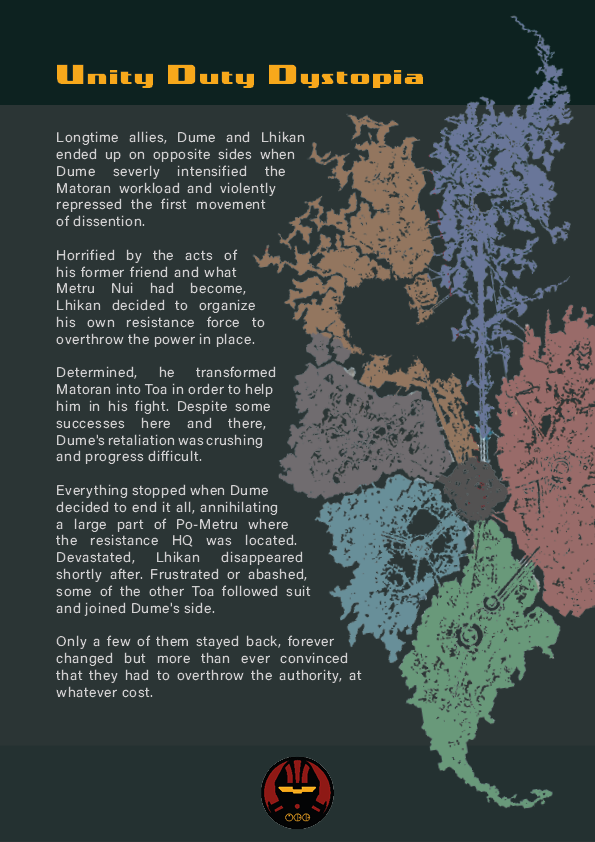

Technology arrives in the world of the insurance claim. One small bump in a car park, and a few photos later the repair is approved.
Most of it would polish out, and a bit of coloured tape makes the rear light legal, but the bent and cracked plastic bumper means a trip to the body shop. And that means an insurance claim.
This abstract is made up of just two photos, the rear light, and my reflection whilst photographing the VIN , buried under the wipers and windscreen.
I end up claiming the strangest places as my own. The only reason I found this one a year and a half ago was that there's this beautiful falling-down barn (see comments) right off Highway 55 that I always pass going up to McCall, and one time I decided to turn down the road it's on and see what lies over the hill. To my surprise it turned out to be a beautiful marshy bird refuge, and right around one of the winding corners lay a very old closed road going...right into Lake Cascade.
I don't know the story behind this road. Was it an old boat ramp before the spot was designated as a wildlife area, and fell into disrepair? Is the gate with the big "Road Closed" sign ever open? These are the mysteries in life. Whatever the story behind it, the gate has a pedestrian entrance that remains open and I stop by almost every time I'm in the area.
This time, either it's been a very dry year or it's just like this late in the season, but the water level at Lake Cascade is so low that the road now extends probably an eighth of a mile past where it used to. When it finally does end, you feel like you're standing in the middle of the lake...and you sort of are! With no one else ever around in my own personal spot, I could throw on my dress over my jeans and shoot away. There's solace in nature with your camera as your only companion.
Tech: 50mm @ 1.8 since it was too bright for 1.4, six frames stitched with Photomerge a la Brenizer / expansion method.
Claiming divine guidance, she led the French army to several important victories during the Hundred Years' War, which paved the way for the coronation of Charles VII of France
Amos Buckman staked a claim at Indian Spring and started bottling water in the 1880s. The springs provided naturally carbonated water tinted red from the high iron content and containing lithium; Buckman Springs Lithia Water sold well for over fifty years! Winifred Buckman took over operations after her father’s death in 1898 but the plant was closed when she passed in 1946.
The construction of Interstate 8 nearby dried up the springs and bypassed the town. During the construction of the new freeway, Caltrans accidentally discovered Mr. Buckman's grave. They felt bad about disturbing the body and promptly reburied him and rerouted the free right-of-way fence around the gravesite. A grave marker still stands here today.
Bottles from the bottling plant are highly sought by collectors.
Earlier this year, 70 MPH winds caused the chimney to topple.