View allAll Photos Tagged Capable
Digitally blended from a 6 exposure "manual" bracket on the Nikon D7000.
The D7000 is not capable to process brackets of 5, 7, or 9 exposures, so I adjusted this manually.
here's the camera shoot process:
At the scene I set up the camera to shoot at continuous high..then set the 3-shot bracket with an exposure differential of 1 stop each. I shoot the first three at an exposure level of -3. (-4,-3,-2)
I then raise the exposure setting using the camera's turn wheel to level 0. shoot 3 more shots. (-1,0,+1). Repeat the same step turning up the exposure level to +3 and shoot 3 more shots (+2,+3,+4).
I have now capture 9 exposures for a max 9-exp HDR. I ended up taking only the -2,-1,0,+1,+2,+3 exposures because the shots beyond were either too dark or too bright and will be useless in post processing later.
Here's the processing flow:
I opened the six selected shots in ACR via bridge. Here I look for any issues like dust spots, particles, etc and clean them via synchronizing my settings to all six shots then I save them individually as 16-bit TIFF's.
Even though I shot this on a tripod, the moving of the wheel to change the exposure levels creates a slight shift between the 3 grouped brackets..so I set this right using Photoshop's stack script. Under File>Scripts you will find 'Load Files into Stack'...this opens up an import window and I select the six TIFF I just made in ACR and check the box that says "Attempt to automatically align source images". This makes Adobe scan each shot and align it pixel association. This aligning process is also available in Photomatix, but I've felt Photoshop does a much better job aligning.
After Photoshop is done aligning you'll notice the shifts between the images (particularly in the end corners of each shot revealing my transparent background). I then go to Image>Canvas Size. In the window under new size I select from the drop down "Percent" and take it to 99 percent or less (if handheld) on both width and height. This crops the overall image evenly to the point my transparent edges are now gone and any misaligned edges have too disappeared.
Now its time to export each of these newly cropped files into separate TIFFs using another Photoshop script..under File>Scripts look for "export layers into files" I then save them into 16-bit TIFFs again in a new folder.
After you're done with this process in Photoshop its time to go to Photomatix. I load the bracket photos by selecting the 6 newly cropped files that came from Photoshop and assign them the proper exposure level separation by 1 full stop. I also check the box "Show 32-bit intermediary HDR image". This time there is no need to Align anything so I deselect that..but ghosting was left selected under automatic as Photomatix is better at that than I am..After this is processed there are two avenues I can go...take it to tone mapping or go about it by blending manually...
I went blending it manually...the file Photomatix creates (before you select tone mapping) usually is a flat and dull image..but it has 32-bit information. Without selecting any button I instead save the image as a 32-bit TIFF. I then open up the 32-bit TIFF in ACR and make adjustments from there. I feel I have a lot more control in the image through ACR than I do via Photomatix. Clarity is similar to strength here, the black, white, highlight, and shadow level adjustments are also a heck of a lot more precise than they are in photomatix.
You also can see an instant change in the image..where as photomatix has to process first before it shows the image.
After making these adjustments in ACR I then save the file as a 16-bit TIFF (ACR cant save 32-bit, it doesn't "parse" too well anyways) and then reopen that 16-bit TIFF for further fine tuning adjustments...then I open it in Photoshop for a final digital blend. Usually combing multiple adjustment layers of hue/saturation, curves, brightness and contrast. Each adjustment was painted in areas that needed the love via masking. I then used plug-ins like Nik Viveza (to enhance colors and structure in certain locations) and Noiseware (for overall noise reduction)
After that's done I sharpen it by duplicating the layer and adding a high pass filter..I then desaturate that layer, give it a soft light blend and control the overall strength of the sharpness by adjusting the fill/opacity amount.
I feel this came out as a more natural look than it would've via Photomatix's tone mapping. As much as I like Photomatix, it is still difficult to control the amount of detail, structure, and the images white/black levels primarily because it doesn't update instantly like it would in ACR. Tone Mapping also saturated the HELL out of that purple in the castle..so by processing it this way and getting a real natural result of the castle with that purple is what took the cake for me.
I used to hate HDR, then I fiddled with it and made overly-saturated stuck-in-customs look-a-likes for a while..but I've now fine tuned it to a form that I think blends reality with that slight touch of surrealism that creates a perfect blend of impressive photography. I now use this process for my HDR.
If any of you want any more information or tutorials on producing your own HDR workflow, visit these places.:
Its one way to make your images look like Trey Ratcliff's...its another to make them look better.
Be sure to press "L" to really see all the nice details!!
After cloud watching all afternoon and predicting a decent sunset, I shot off down to Harthill and picked my spot.
Unfortunately, the big, bland grey cloud decided to appear and then refuse to move so, I did the best I'm capable of in photoshop to rescue something.
Bullpup combat rifle capable of tearing apart light armored targets at mid-long range.
It comes with an integrated folding grip and a laser sight.
Sun Canures are capable of learning to talk, although their range is limited and their voices are squeaky and birdlike. They like to imitate amusing sounds microwave beeps, etc.
They really enjoy human attention, especially if there is no other bird around for them to groom and play with, don't you love to have bunch of them:-)
Happy Feathery Friday!
8A, in the capable hands of fireman Blair, leads G42 through the ferns of Selby onwards to Menzies Creek.
Upon arrival at Menzies Creek 8A peeled off the front of the train and looped around to the back, leaving G42 free to carry on to Lakeside with the forward 10 carriages and 8A to return to Belgrave with the remainder, which would then form the 12:30 luncheon train.
A Royal Air Force Typhoon of 1(F) Squadron during Exercise Capable Eagle.
The exercise was the latest in a series designed to further improve the interoperability and effectiveness of Anglo-French military co-operation.
As well as Typhoons of 1(F) Sqn the exercise included Mirage 2000N aircraft of the Escadron de Chasse 2/4 "La Fayette".
-------------------------------------------------------
© Crown Copyright 2013
Photographer: Sgt Ralph Merry ABIPP RAF
Image 45156242.jpg from www.defenceimages.mod.uk
This image is available for high resolution download at www.defenceimagery.mod.uk subject to the terms and conditions of the Open Government License at www.nationalarchives.gov.uk/doc/open-government-licence/. Search for image number 45156242.jpg
For latest news visit www.gov.uk/government/organisations/ministry-of-defence
Follow us:
Males are capable of changing (colour) from "normal" to black
and back again in the space of a few tens of seconds depending on the presence of competing males or potentially receptive females. (from "Inshore Fishes of Britain and Ireland")
P5070687
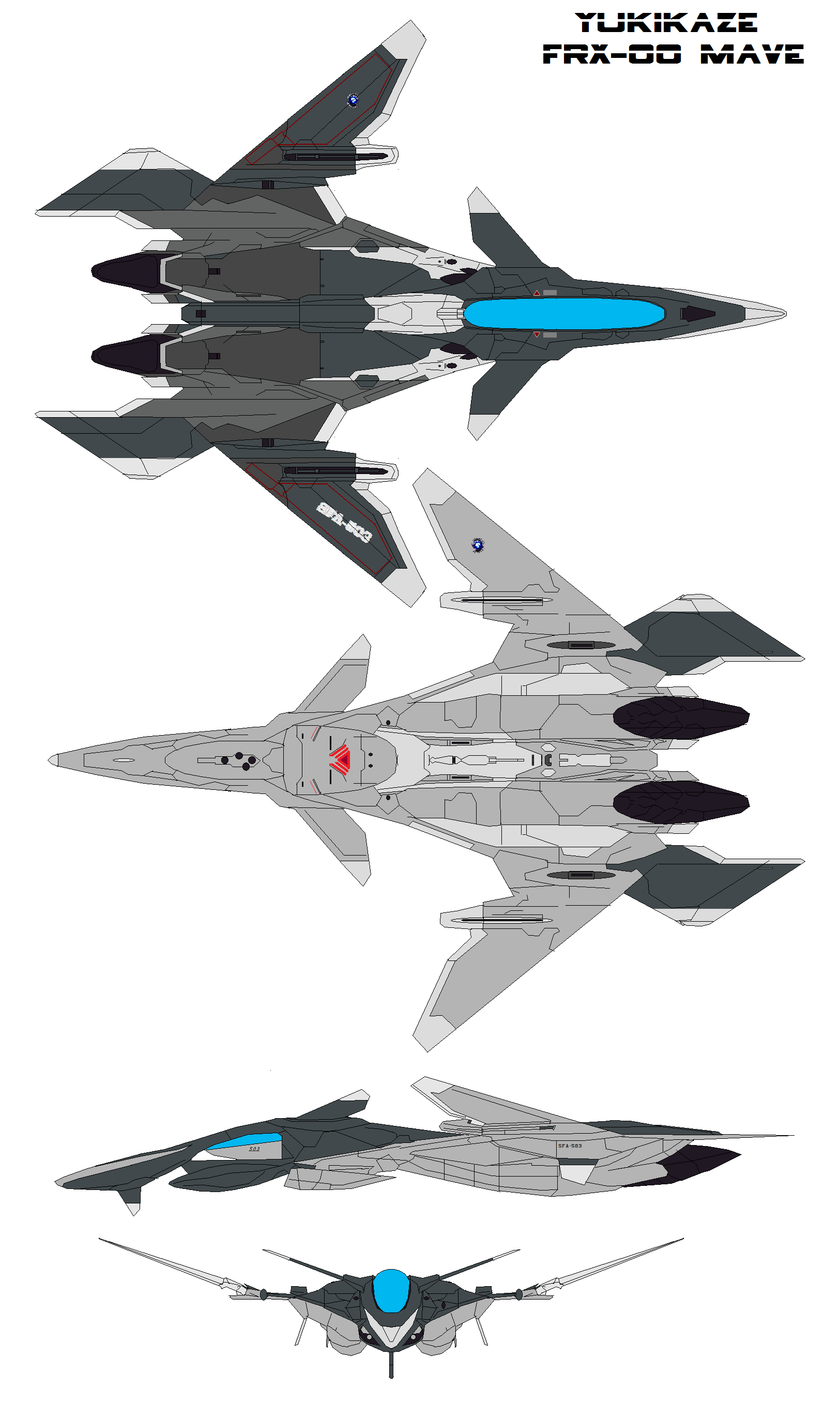
The VF-1 (or Vertical Fighter-1) seen above is the direct descendant of the Soviet Union's Yakovlev Yak-141 program, which intended to create a carrierborne fourth-generation fighter capable of conducting short-take offs and vertical landings (otherwise known as STO/VL). Although the Yak-141 (NATO reporting name: Freestyle) was officially cancelled in 1991 following the unfortuitous collapse of the USSR, the program found a second life after the 2017 Russian Civil War. Utilizing the hectic war as a smokescreen, covert East Russian and Songun forces were able to pilfer scores of design records and engineers from Moscow. Despite having the blueprints to the Freestyle, both East Russia and the Songun Republics lacked a culture of industrial innovation. This meant that the shortcomings of the original Yakovlev design posed barriers to production, particularly since the Yak-141 was meant to be a navalized fighter and East Russia demanded more terrestrial capabilities. What's more, the USR's sponsorship of East Russia and direct intervention in Siberia translated to a dearth of immediately-available research and development monies, further retarding the USR's ability to capitalize on its new treasure trove.
Hence, in December 2019, TriStar Aeroworks was established as a joint venture between the USR, East Russia, and the Socialist Republic of Yugoslavia (SRY). The latter state, Yugoslavia, took particular interest in the USR's acquisition of the Freestyle primarily due to the lessons learned from NATO's air campaign against Belgrade in the early 1990s. Utilizing overwhelming air superiority, the transatlantic alliance was able to suffocate the SRY's ramshackle air force and conduct airstrikes with a high degree of impunity. The prospect of operating a STO/VL fighter aircraft, however, would allow Yugoslavia to hide its air force and utilize it in conjunction with surface-to-air missiles to conduct a sort of airborne guerrilla war in the future. Thus, Belgrade offered its cash reserves and industrial base to produce the fine parts necessary for such an aircraft whilst also empathizing with East Russian doctrinal priorities.
It would be another three years before TriStar Aeroworks produced a finalized aircraft--or technically two. Again, the Freestyle B shown here is in service with both East Russia and Yugoslavia as an extension of their respective ground-based air defenses. This is why key features like the folding wings have been retained; they allow the aircraft to be stored away in unconventional sites such as forests, tunnels, beneath overpasses, etc. The smaller the footprint, the harder it is for the enemy to discover where the planes are. The Union of Songun Republics on the other hand decided to only operate the original carrierborne design, i.e. the newly-minted Freestyle C (or VF-1N to use TriStar's nomenclature), to extend the capabilities of the Songun People's Army Navy Air Force.
It should be noted that despite service with three countries, the VF-1 has yet to be involved in any direct air-to-air combat with either a NATO, West Russian, or East Asian Defense Alliance aircraft. This fact alone suggests that actual capabilities of the Freestyle B and C are unknown. Rumors of engine failures, stallouts, and other such errors are rampant, but it's unclear if these slanderous remarks originated with the Yak-141 or actually reflect realities faced by TriStar Aeroworks. With tensions rising in both the Europe and East Asia, perhaps the truth will soon be revealed.
I did it! I built another plane and it only took me three years! There are still elements I'm displeased with, but I didn't want this thing languishing in my WIP folder for another half decade, so here it is. Shoutout to Evan for doing my decal work as usual. Enjoy!
The Badshahi Mosque or the Royal Mosque in Lahore, commissioned by the sixth Mughal Emperor Aurangzeb in 1671 and completed in 1673, is the second largest mosque in Pakistan and South Asia and the fifth largest mosque in the world. Epitomising the beauty, passion and grandeur of the Mughal era, it is Lahore's most famous landmark and a major tourist attraction. Capable of accommodating 55,000 worshippers in its main prayer hall and a further 95,000 in its courtyard and porticoes, it remained the largest mosque in the world from 1673 to 1986 (a period of 313 years),
In the capable hands of 8044-8030-RL309, Qube's 1CM4 grain from Yerong Creek powers past the site of Mathiesons Siding. 13/12/15
Arriving at camp.
A perilous desert expedition calls for a capable vehicle.
Of all the incredible vehicles that the Adventurers theme gave us, I feel that one of the most overlooked is the truck from 5988. The box art suggests that it might belong to Baron von Barron, but I like to think of it as the larger companion to the Scorpion Tracker, providing some much-needed cargo space.
This is a revamp I’ve wanted to do for quite some time, and I’m very proud of how this came out. My version keeps a few iconic parts, such as the two-seater cab, the classic front grille, and the same rugged wheels, perfect for navigating the harsh desert landscape. There is still plenty of cargo space in the back for hauling crates, artefacts, or your fellow Adventurers if they don’t mind a slightly cramped ride.
Design-wise I wanted to make the truck a little more accurate to the 1920s, but I still wanted to maintain a certain level of late 90s Lego charm, so I tried to limit my usage of ultra-modern parts. Ultimately I’m really happy with how it turned out.
"You are capable of more than you know. Choose a goal that seems right for you and strive to be the best, however hard the path. Aim high. Behave honorably. Prepare to be alone at times, and to endure failure. Persist! The world needs all you can give."
E. O. Wilson
“People are capable, at any time in their lives, of doing what they dream of.”
― Paulo Coelho, The Alchemist
Darvas-La Roche bedroom`s house - Oradea
Romania
2021
Very capable road units perfect for Union Railroad's needs, the MP15 makes up its locomotive roster, and here's give of them backing a heavy coke train out of USS Clairton Works bound for interchange to CSX at Demmler yard with J Edgar Thomson works in the background. Note a second URR crew working in the lower yard.
A las 03:00 de ese mismo día conseguí conciliar el sueño. Mi cabeza cogió de la mano a mi corazón y a mi alma y se adentro en el mundo de los sueños, esperando encontrar la falsa dosis. Sin embargo fue un bosque lo que encontré. Un bosque lleno de flores, de árboles gigantescos y animalillos corriendo felices.
Busqué y busqué al rey de aquel lugar, hasta que después de algunas horas logré encontrarle.
En lo alto de la más alta piedra, rodeado de sus guardias se encontraba el león, con su larga melena y sus enormes dientes. Su comportamiento no era el habitual, al principio pensé que sería por el hecho de ser mi sueño y no tenía porque corresponderse con la realidad. Me quedé observándolo y pronto me di cuenta de que no era normal aquella actitud. Movía la boca, intentaba rugir, pero no podía.
- ¿Puedo pregunta qué es lo que le impide rugir? - su boca se cerró inmediatamente y sus ojos me trasmitieron una mirada que me hizo tiritar.
- Me he quedado sin voz. Rugí durante años atemorizando a mis presas y ahora como castigo carezco de la melodía que producía mi cuerpo.
De entre los matorrales salió una pantera que parecía estar al tanto de lo que pasaba en aquel lugar. Ando hasta ponerse en frente del León y comenzó su discurso.
- Durante años has hecho que los corazones de este bosque tiemblen al oír tus rugidos. Has cazado, has matado y lo peor, has destrozado familias, has acabado con vidas jóvenes y has hecho llorar de dolor al resto. Nunca te ha importando su corazón siempre que el tuyo estuviera guardado y tu estómago lleno. Y ya que la vida no te ha enseñado a respetar a los demás, yo te haré hacerlo. No sólo te has quedado sin rugidos, sino que también sin fuerzas y sin autoridad. Ahora eres uno más.
- Pero, pero... yo no puedo vivir así. Es mi naturaleza.
- Que sea tu naturaleza no implica que puedas justificarte con ello. El fin no justifica lo medios. Demuéstrame que puedes ganártelo viviendo así, demuéstrame que en tu corazón queda nobleza y entonces te devolveré lo que te he robado.
El león asintió y tomó camino entre el bosque.
En ese mismo instante el sol penetró entre las rendijas de mi persiana obligándome a despertar. ¿Aquello había sido sólo un sueño, o alguien había querido decirme algo?
Preguntas: www.formspring.me/patriciawound
The danger to America is not Barack Obama but a citizenry capable of entrusting a man like him with the presidency. It will be easier to limit and undo the follies of an Obama presidency than to restore the necessary common sense and good judgment to an electorate willing to have such a man for their president. The problem is much deeper and far more serious than Mr. Obama, who is a mere symptom of what ails us. Blaming the prince of the fools should not blind anyone to the vast confederacy of fools that made him their prince. The republic can survive a Barack Obama. It is less likely to survive a multitude of fools such as those who made him their president. -- Author Unknown
Those who voted for him knew:
He hates America and would not even wear the lapel flag until the heat was turned on him.
He attended a racist, America hating church for 20 years!
Now he does not go to church at all.
He voted to kill babies that survive an abortion.
YOU KNEW THAT!!!
Some of his closest friends are terrorists.
You knew all that, yet you voted for him.
WHERE ARE THE JOBS OBAMA? WHERE ARE THE JOBS?
The SLS AMG is capable of accelerating from 0 to 100 km/h (62 mph) in 3.8 seconds, and can reach an electronically limited top speed of 197 mph (317 km/h) (figures are provisional).[16] In a Car and Driver test, the SLS recorded a quarter mile time of 11.7 seconds @ 125 mph (201 km/h).
for more info: en.wikipedia.org/wiki/Mercedes-Benz_SLS_AMG
Don't use this image without my permission. © All rights reserved
The Badshahi Mosque (Urdu: بادشاھی مسجد), or the 'Emperor's Mosque', was built in 1673 by the Mughal Emperor Aurangzeb in Lahore, Pakistan. It is one of the city's best known landmarks, and a major tourist attraction epitomising the beauty and grandeur of the Mughal era.
Capable of accommodating over 55,000 worshipers, it is the second largest mosque in Pakistan, after the Faisal Mosque in Islamabad. The architecture and design of the Badshahi Masjid is closely related to the Jama Masjid in Delhi, India, which was built in 1648 by Aurangzeb's father and predecessor, emperor Shah Jahan.
Badshahi Masjid is one of the locations where Qari' Abdul Basit recited the Qur'an.[citation needed] The Imam-e-Kaaba (Sheikh Abdur-Rahman Al-Sudais of Saudi Arabia) has also led prayers in this mosque in 2007.
The mosque was built under the patronage of the sixth Mughal Emperor, Aurangzeb Alamgir. It was completed in 1673 under the supervision of Aurangzeb's foster brother Muzaffar Hussain (also known as Fidaie Khan Koka) who was appointed governor of Lahore in May 1671 and held this post until 1675. He was also Master of Ordnance to the emperor. The construction of the mosque took about two years from May 1671 to April 1673. The mosque was built opposite the Lahore Fort, illustrating its stature in the Mughal Empire. In conjunction with the building of the mosque, a new gate was built at the fort, named Alamgiri Gate after the Emperor.
Badshahi Mosque was badly damaged and was misused during Sikh Rule. During the reign of Maharaja Ranjit Singh, the mosque was used as a stable for the army's horses.[1][2] They also would steal the jewels from the mosque, such as marble, rubies, gold, and other valuables. Muslims were not allowed to enter the mosque to worship; they were only given a small place outside the mosque where they could worship.
Even when the British took control of India, they would use the mosque for their military practices by using the mosque for gun practices, cannons, etc. Even when they sensed Muslim hate for the British, they demolished a large portion of the wall of the mosque so the Muslims could not use it as a kind of "fort" for anti-British reasons. After a while, they finally returned it to the Muslims as a good will gesture even though it was in terrible condition. It was then given to Badshahi Mosque Authority to restore it to its original glory.
From 1852 onwards, piecemeal repairs were carried out under the supervision of the Badshahi Mosque Authority. Extensive repairs were carried out from 1939 to 1960 at a cost of about 4.8 million rupees, which brought the mosque to its original shape and condition. The blueprint for the repairs was prepared by the late architect Nawab Zen Yar Jang Bahadur.
In 2000, the repair work of marble inlay in the main vault was repaired under the supervision of Saleem Anjum Qureshi.
On the occasion of the second Islamic Summit held at Lahore on February 22, 1974, thirty-nine heads of Muslim states offered their Friday prayers in the Badshahi Masjid, led by Maulana Abdul Qadir Azad, the 'Khatib' of the mosque.
Recently a small museum has also been added to the mosque complex. It contains relics of Muhammad (peace be upon him), his cousin Hazrat Ali (may Allah be pleased with him), and his daughter, Hazrat Fatima Zahra (may Allah be pleased with her). On August 14, 1947, the Pakistani people celebrated their independence from the British command.
Pakistan(Urdu: "land of the pure"), a country of 160 million people, is now the second most populous country in the Muslim world.
Hailed as the country's cultural capital, Lahore – also known as the "Heart of Pakistan" – is rich with many examples of Moghul architecture.[3]
Like the character of its founder, the mosque is bold, vast and majestic in its expression. It was the largest mosque in the world for a long time.
The interior has rich embellishment in stucco tracery (Manbatkari) and paneling with a fresco touch, all in bold relief, as well as marble inlay.
The exterior is decorated with stone carving as well as marble inlay on red sandstone, specially of loti form motifs in bold relief. The embellishment has Indo-Greek, Central Asian and Indian architectural influence both in technique and motifs.
The skyline is furnished by beautiful ornamental merlons inlaid with marble lining adding grace to the perimeter of the mosque. In its various architectural features like the vast square courtyard, the side aisles (dalans), the four corner minars, the projecting central transept of the prayer chamber and the grand entrance gate, is summed up the history of development of mosque architecture of the Muslim world over the thousand years prior to its construction in 1673.
The north enclosure wall of the mosque was laid close to the Ravi River bank, so a majestic gateway could not be provided on that side and, to keep the symmetry the gate had to be omitted on the south wall as well. Thus a four aiwan plan like the earlier Delhi Jamia Masjid could not be adopted here.
The walls were built with small kiln-burnt bricks laid in kankar, lime mortar (a kind of hydraulic lime) but have a veneer of red sandstone. The steps leading to the prayer chamber and its plinth are in variegated marble.
The prayer chamber is very deep and is divided into seven compartments by rich engraved arches carried on very heavy piers. Out of the seven compartments, three double domes finished in marble have superb curvature, whilst the rest have curvilinear domes with a central rib in their interior and flat roof above. In the eastern front aisle, the ceiling of the compartment is flat (Qalamdani) with a curved border (ghalatan) at the cornice level.
The original floor of the courtyard was laid with small kiln-burnt bricks laid in the Mussalah pattern. The present red sandstone flooring was laid during the last thorough repairs (1939-60). Similarly, the original floor of the prayer chamber was in cut and dressed bricks with marble and Sang-i-Abri lining forming Mussalah and was also replaced by marble Mussalah during the last repairs.
There are only two inscriptions in the mosque:
•one on the gateway
•the other of Kalimah in the prayer chamber under the main high vault.
•Courtyard: 528'-8" x 528'-4" (Area: 278,784 ft2), divided into two levels: the upper and the lower. In the latter, funeral prayers can also be offered.
•Prayer Chamber: 275'-8" x 83'-7" x 50'-6" high, with its main vault 37'-3" x 59'-4" high but with the merlons 74'-6". (Area: 22,825 ft2)
•Corner Minars: 67' in circumference, 176'-4" high are in four stages and have a contained staircase with 204 steps.
•Central Dome: Diameter 65' at bottom (at bulging 70'-6"); height 49'; pinnacle 24 ft and neck 15 ft high.
•Side Domes: Diameter 51'-6" (at bulging 54'-2"); height 32 ft; pinnacle 19 ft; neck 9'-6" high.
•Gateway: 66'-7" x 62'-10" x 65 high including domelets; vault 21'-6" x 32'-6" high. Its three sided approach steps are 22 in number.
•Side aisles (Dalans): 80 in number. Height above floor 23'-9"; plinth 2'-7".
•Central Tank: 50' x 50' x 3' deep (Area: 2,500 ft2)
Njord Viking
High Ice-classed AHTS vessel capable of operations in harsh environment offshore regions, as well as Arctic/Sub-Arctic operations.
General Information.
Length o.a.: 85,20 metres
Length b.p.: 76,20 metres
Beam, moulded: 22,00 metres
Depth to main deck: 9,00 metres
Draft, design: 6,00 metres
Deadweight at 7,60 m: 4.500 tons
Accommodation: 45 persons
Speed: 17 knots
Bollard pull: 210 tons
Endurance: 9.000 miles
Propulsion
Main engines: MAK 2x6M32 + 2x8M32
Output: 14.000 kW at 600 rpm
Main Propellers: 2 x CPP
Forward retractile thruster: 1 x 830 kW
Forward tunnel thruster: 2 x 830 kW
Aft tunnel thrusters: 2 x 830 kW
TANK CAPACITIES
Fuel oil: 1.000 m3
Fresh water: 1.247 m3
Ballast: 2.013 m3
Oil Recovery: 1.989 m3
Rig chain locker: 665 m3
Liquid mud: 965 m3
Brine: 628 m3
Special products: 187 m3
Dry bulk: 220 m3
Main Anchor/Towing winch: 400 Tons at 18,7 m/min
Brake holding: 525 Tons 1st layer
Secondary Winch: 138 Tons at 28 m/min
Brake holding: 62 Tons 1st layer
2 Deck Cranes (sliding): 6/12 Tons at 20/10 mts
2 Tugger winch: 24 Tons at 22 m/min
2 Towing pins: 300 Tons
2 Karm Forks: 600 Tons
2 Capstans: 14 Tons at 24 m/min
AUXILIARY GENERATING SETS
Diesel generating sets: 2 x 720 ekW. 440 V. 60 Hz
Shaft generators: 2 x 2.700 ekW. 440 V. 60 Hz
Emergency generator set: 1 x 400 ekW. 440 V. 60 Hzp
Colosseum
Following, a text, in english, from the Wikipedia the Free Encyclopedia:
The Colosseum, or the Coliseum, originally the Flavian Amphitheatre (Latin: Amphitheatrum Flavium, Italian Anfiteatro Flavio or Colosseo), is an elliptical amphitheatre in the centre of the city of Rome, Italy, the largest ever built in the Roman Empire. It is considered one of the greatest works of Roman architecture and Roman engineering.
Occupying a site just east of the Roman Forum, its construction started between 70 and 72 AD[1] under the emperor Vespasian and was completed in 80 AD under Titus,[2] with further modifications being made during Domitian's reign (81–96).[3] The name "Amphitheatrum Flavium" derives from both Vespasian's and Titus's family name (Flavius, from the gens Flavia).
Capable of seating 50,000 spectators,[1][4][5] the Colosseum was used for gladiatorial contests and public spectacles such as mock sea battles, animal hunts, executions, re-enactments of famous battles, and dramas based on Classical mythology. The building ceased to be used for entertainment in the early medieval era. It was later reused for such purposes as housing, workshops, quarters for a religious order, a fortress, a quarry, and a Christian shrine.
Although in the 21st century it stays partially ruined because of damage caused by devastating earthquakes and stone-robbers, the Colosseum is an iconic symbol of Imperial Rome. It is one of Rome's most popular tourist attractions and still has close connections with the Roman Catholic Church, as each Good Friday the Pope leads a torchlit "Way of the Cross" procession that starts in the area around the Colosseum.[6]
The Colosseum is also depicted on the Italian version of the five-cent euro coin.
The Colosseum's original Latin name was Amphitheatrum Flavium, often anglicized as Flavian Amphitheater. The building was constructed by emperors of the Flavian dynasty, hence its original name, after the reign of Emperor Nero.[7] This name is still used in modern English, but generally the structure is better known as the Colosseum. In antiquity, Romans may have referred to the Colosseum by the unofficial name Amphitheatrum Caesareum; this name could have been strictly poetic.[8][9] This name was not exclusive to the Colosseum; Vespasian and Titus, builders of the Colosseum, also constructed an amphitheater of the same name in Puteoli (modern Pozzuoli).[10]
The name Colosseum has long been believed to be derived from a colossal statue of Nero nearby.[3] (the statue of Nero itself being named after one of the original ancient wonders, the Colossus of Rhodes[citation needed]. This statue was later remodeled by Nero's successors into the likeness of Helios (Sol) or Apollo, the sun god, by adding the appropriate solar crown. Nero's head was also replaced several times with the heads of succeeding emperors. Despite its pagan links, the statue remained standing well into the medieval era and was credited with magical powers. It came to be seen as an iconic symbol of the permanence of Rome.
In the 8th century, a famous epigram attributed to the Venerable Bede celebrated the symbolic significance of the statue in a prophecy that is variously quoted: Quamdiu stat Colisæus, stat et Roma; quando cadet colisæus, cadet et Roma; quando cadet Roma, cadet et mundus ("as long as the Colossus stands, so shall Rome; when the Colossus falls, Rome shall fall; when Rome falls, so falls the world").[11] This is often mistranslated to refer to the Colosseum rather than the Colossus (as in, for instance, Byron's poem Childe Harold's Pilgrimage). However, at the time that the Pseudo-Bede wrote, the masculine noun coliseus was applied to the statue rather than to what was still known as the Flavian amphitheatre.
The Colossus did eventually fall, possibly being pulled down to reuse its bronze. By the year 1000 the name "Colosseum" had been coined to refer to the amphitheatre. The statue itself was largely forgotten and only its base survives, situated between the Colosseum and the nearby Temple of Venus and Roma.[12]
The name further evolved to Coliseum during the Middle Ages. In Italy, the amphitheatre is still known as il Colosseo, and other Romance languages have come to use similar forms such as le Colisée (French), el Coliseo (Spanish) and o Coliseu (Portuguese).
Construction of the Colosseum began under the rule of the Emperor Vespasian[3] in around 70–72AD. The site chosen was a flat area on the floor of a low valley between the Caelian, Esquiline and Palatine Hills, through which a canalised stream ran. By the 2nd century BC the area was densely inhabited. It was devastated by the Great Fire of Rome in AD 64, following which Nero seized much of the area to add to his personal domain. He built the grandiose Domus Aurea on the site, in front of which he created an artificial lake surrounded by pavilions, gardens and porticoes. The existing Aqua Claudia aqueduct was extended to supply water to the area and the gigantic bronze Colossus of Nero was set up nearby at the entrance to the Domus Aurea.[12]
Although the Colossus was preserved, much of the Domus Aurea was torn down. The lake was filled in and the land reused as the location for the new Flavian Amphitheatre. Gladiatorial schools and other support buildings were constructed nearby within the former grounds of the Domus Aurea. According to a reconstructed inscription found on the site, "the emperor Vespasian ordered this new amphitheatre to be erected from his general's share of the booty." This is thought to refer to the vast quantity of treasure seized by the Romans following their victory in the Great Jewish Revolt in 70AD. The Colosseum can be thus interpreted as a great triumphal monument built in the Roman tradition of celebrating great victories[12], placating the Roman people instead of returning soldiers. Vespasian's decision to build the Colosseum on the site of Nero's lake can also be seen as a populist gesture of returning to the people an area of the city which Nero had appropriated for his own use. In contrast to many other amphitheatres, which were located on the outskirts of a city, the Colosseum was constructed in the city centre; in effect, placing it both literally and symbolically at the heart of Rome.
The Colosseum had been completed up to the third story by the time of Vespasian's death in 79. The top level was finished and the building inaugurated by his son, Titus, in 80.[3] Dio Cassius recounts that over 9,000 wild animals were killed during the inaugural games of the amphitheatre. The building was remodelled further under Vespasian's younger son, the newly designated Emperor Domitian, who constructed the hypogeum, a series of underground tunnels used to house animals and slaves. He also added a gallery to the top of the Colosseum to increase its seating capacity.
In 217, the Colosseum was badly damaged by a major fire (caused by lightning, according to Dio Cassius[13]) which destroyed the wooden upper levels of the amphitheatre's interior. It was not fully repaired until about 240 and underwent further repairs in 250 or 252 and again in 320. An inscription records the restoration of various parts of the Colosseum under Theodosius II and Valentinian III (reigned 425–455), possibly to repair damage caused by a major earthquake in 443; more work followed in 484[14] and 508. The arena continued to be used for contests well into the 6th century, with gladiatorial fights last mentioned around 435. Animal hunts continued until at least 523, when Anicius Maximus celebrated his consulship with some venationes, criticised by King Theodoric the Great for their high cost.
The Colosseum underwent several radical changes of use during the medieval period. By the late 6th century a small church had been built into the structure of the amphitheatre, though this apparently did not confer any particular religious significance on the building as a whole. The arena was converted into a cemetery. The numerous vaulted spaces in the arcades under the seating were converted into housing and workshops, and are recorded as still being rented out as late as the 12th century. Around 1200 the Frangipani family took over the Colosseum and fortified it, apparently using it as a castle.
Severe damage was inflicted on the Colosseum by the great earthquake in 1349, causing the outer south side, lying on a less stable alluvional terrain, to collapse. Much of the tumbled stone was reused to build palaces, churches, hospitals and other buildings elsewhere in Rome. A religious order moved into the northern third of the Colosseum in the mid-14th century and continued to inhabit it until as late as the early 19th century. The interior of the amphitheatre was extensively stripped of stone, which was reused elsewhere, or (in the case of the marble façade) was burned to make quicklime.[12] The bronze clamps which held the stonework together were pried or hacked out of the walls, leaving numerous pockmarks which still scar the building today.
During the 16th and 17th century, Church officials sought a productive role for the vast derelict hulk of the Colosseum. Pope Sixtus V (1585–1590) planned to turn the building into a wool factory to provide employment for Rome's prostitutes, though this proposal fell through with his premature death.[15] In 1671 Cardinal Altieri authorized its use for bullfights; a public outcry caused the idea to be hastily abandoned.
In 1749, Pope Benedict XIV endorsed as official Church policy the view that the Colosseum was a sacred site where early Christians had been martyred. He forbade the use of the Colosseum as a quarry and consecrated the building to the Passion of Christ and installed Stations of the Cross, declaring it sanctified by the blood of the Christian martyrs who perished there (see Christians and the Colosseum). However there is no historical evidence to support Benedict's claim, nor is there even any evidence that anyone prior to the 16th century suggested this might be the case; the Catholic Encyclopedia concludes that there are no historical grounds for the supposition. Later popes initiated various stabilization and restoration projects, removing the extensive vegetation which had overgrown the structure and threatened to damage it further. The façade was reinforced with triangular brick wedges in 1807 and 1827, and the interior was repaired in 1831, 1846 and in the 1930s. The arena substructure was partly excavated in 1810–1814 and 1874 and was fully exposed under Benito Mussolini in the 1930s.
The Colosseum is today one of Rome's most popular tourist attractions, receiving millions of visitors annually. The effects of pollution and general deterioration over time prompted a major restoration programme carried out between 1993 and 2000, at a cost of 40 billion Italian lire ($19.3m / €20.6m at 2000 prices). In recent years it has become a symbol of the international campaign against capital punishment, which was abolished in Italy in 1948. Several anti–death penalty demonstrations took place in front of the Colosseum in 2000. Since that time, as a gesture against the death penalty, the local authorities of Rome change the color of the Colosseum's night time illumination from white to gold whenever a person condemned to the death penalty anywhere in the world gets their sentence commuted or is released,[16] or if a jurisdiction abolishes the death penalty. Most recently, the Colosseum was illuminated in gold when capital punishment was abolished in the American state of New Mexico in April 2009.
Because of the ruined state of the interior, it is impractical to use the Colosseum to host large events; only a few hundred spectators can be accommodated in temporary seating. However, much larger concerts have been held just outside, using the Colosseum as a backdrop. Performers who have played at the Colosseum in recent years have included Ray Charles (May 2002),[18] Paul McCartney (May 2003),[19] Elton John (September 2005),[20] and Billy Joel (July 2006).
Exterior
Unlike earlier Greek theatres that were built into hillsides, the Colosseum is an entirely free-standing structure. It derives its basic exterior and interior architecture from that of two Roman theatres back to back. It is elliptical in plan and is 189 meters (615 ft / 640 Roman feet) long, and 156 meters (510 ft / 528 Roman feet) wide, with a base area of 6 acres (24,000 m2). The height of the outer wall is 48 meters (157 ft / 165 Roman feet). The perimeter originally measured 545 meters (1,788 ft / 1,835 Roman feet). The central arena is an oval 87 m (287 ft) long and 55 m (180 ft) wide, surrounded by a wall 5 m (15 ft) high, above which rose tiers of seating.
The outer wall is estimated to have required over 100,000 cubic meters (131,000 cu yd) of travertine stone which were set without mortar held together by 300 tons of iron clamps.[12] However, it has suffered extensive damage over the centuries, with large segments having collapsed following earthquakes. The north side of the perimeter wall is still standing; the distinctive triangular brick wedges at each end are modern additions, having been constructed in the early 19th century to shore up the wall. The remainder of the present-day exterior of the Colosseum is in fact the original interior wall.
The surviving part of the outer wall's monumental façade comprises three stories of superimposed arcades surmounted by a podium on which stands a tall attic, both of which are pierced by windows interspersed at regular intervals. The arcades are framed by half-columns of the Tuscan, Ionic, and Corinthian orders, while the attic is decorated with Corinthian pilasters.[21] Each of the arches in the second- and third-floor arcades framed statues, probably honoring divinities and other figures from Classical mythology.
Two hundred and forty mast corbels were positioned around the top of the attic. They originally supported a retractable awning, known as the velarium, that kept the sun and rain off spectators. This consisted of a canvas-covered, net-like structure made of ropes, with a hole in the center.[3] It covered two-thirds of the arena, and sloped down towards the center to catch the wind and provide a breeze for the audience. Sailors, specially enlisted from the Roman naval headquarters at Misenum and housed in the nearby Castra Misenatium, were used to work the velarium.[22]
The Colosseum's huge crowd capacity made it essential that the venue could be filled or evacuated quickly. Its architects adopted solutions very similar to those used in modern stadiums to deal with the same problem. The amphitheatre was ringed by eighty entrances at ground level, 76 of which were used by ordinary spectators.[3] Each entrance and exit was numbered, as was each staircase. The northern main entrance was reserved for the Roman Emperor and his aides, whilst the other three axial entrances were most likely used by the elite. All four axial entrances were richly decorated with painted stucco reliefs, of which fragments survive. Many of the original outer entrances have disappeared with the collapse of the perimeter wall, but entrances XXIII (23) to LIV (54) still survive.[12]
Spectators were given tickets in the form of numbered pottery shards, which directed them to the appropriate section and row. They accessed their seats via vomitoria (singular vomitorium), passageways that opened into a tier of seats from below or behind. These quickly dispersed people into their seats and, upon conclusion of the event or in an emergency evacuation, could permit their exit within only a few minutes. The name vomitoria derived from the Latin word for a rapid discharge, from which English derives the word vomit.
Interior
According to the Codex-Calendar of 354, the Colosseum could accommodate 87,000 people, although modern estimates put the figure at around 50,000. They were seated in a tiered arrangement that reflected the rigidly stratified nature of Roman society. Special boxes were provided at the north and south ends respectively for the Emperor and the Vestal Virgins, providing the best views of the arena. Flanking them at the same level was a broad platform or podium for the senatorial class, who were allowed to bring their own chairs. The names of some 5th century senators can still be seen carved into the stonework, presumably reserving areas for their use.
The tier above the senators, known as the maenianum primum, was occupied by the non-senatorial noble class or knights (equites). The next level up, the maenianum secundum, was originally reserved for ordinary Roman citizens (plebians) and was divided into two sections. The lower part (the immum) was for wealthy citizens, while the upper part (the summum) was for poor citizens. Specific sectors were provided for other social groups: for instance, boys with their tutors, soldiers on leave, foreign dignitaries, scribes, heralds, priests and so on. Stone (and later marble) seating was provided for the citizens and nobles, who presumably would have brought their own cushions with them. Inscriptions identified the areas reserved for specific groups.
Another level, the maenianum secundum in legneis, was added at the very top of the building during the reign of Domitian. This comprised a gallery for the common poor, slaves and women. It would have been either standing room only, or would have had very steep wooden benches. Some groups were banned altogether from the Colosseum, notably gravediggers, actors and former gladiators.
Each tier was divided into sections (maeniana) by curved passages and low walls (praecinctiones or baltei), and were subdivided into cunei, or wedges, by the steps and aisles from the vomitoria. Each row (gradus) of seats was numbered, permitting each individual seat to be exactly designated by its gradus, cuneus, and number.
The arena itself was 83 meters by 48 meters (272 ft by 157 ft / 280 by 163 Roman feet).[12] It comprised a wooden floor covered by sand (the Latin word for sand is harena or arena), covering an elaborate underground structure called the hypogeum (literally meaning "underground"). Little now remains of the original arena floor, but the hypogeum is still clearly visible. It consisted of a two-level subterranean network of tunnels and cages beneath the arena where gladiators and animals were held before contests began. Eighty vertical shafts provided instant access to the arena for caged animals and scenery pieces concealed underneath; larger hinged platforms, called hegmata, provided access for elephants and the like. It was restructured on numerous occasions; at least twelve different phases of construction can be seen.[12]
The hypogeum was connected by underground tunnels to a number of points outside the Colosseum. Animals and performers were brought through the tunnel from nearby stables, with the gladiators' barracks at the Ludus Magnus to the east also being connected by tunnels. Separate tunnels were provided for the Emperor and the Vestal Virgins to permit them to enter and exit the Colosseum without needing to pass through the crowds.[12]
Substantial quantities of machinery also existed in the hypogeum. Elevators and pulleys raised and lowered scenery and props, as well as lifting caged animals to the surface for release. There is evidence for the existence of major hydraulic mechanisms[12] and according to ancient accounts, it was possible to flood the arena rapidly, presumably via a connection to a nearby aqueduct.
The Colosseum and its activities supported a substantial industry in the area. In addition to the amphitheatre itself, many other buildings nearby were linked to the games. Immediately to the east is the remains of the Ludus Magnus, a training school for gladiators. This was connected to the Colosseum by an underground passage, to allow easy access for the gladiators. The Ludus Magnus had its own miniature training arena, which was itself a popular attraction for Roman spectators. Other training schools were in the same area, including the Ludus Matutinus (Morning School), where fighters of animals were trained, plus the Dacian and Gallic Schools.
Also nearby were the Armamentarium, comprising an armory to store weapons; the Summum Choragium, where machinery was stored; the Sanitarium, which had facilities to treat wounded gladiators; and the Spoliarium, where bodies of dead gladiators were stripped of their armor and disposed of.
Around the perimeter of the Colosseum, at a distance of 18 m (59 ft) from the perimeter, was a series of tall stone posts, with five remaining on the eastern side. Various explanations have been advanced for their presence; they may have been a religious boundary, or an outer boundary for ticket checks, or an anchor for the velarium or awning.
Right next to the Colosseum is also the Arch of Constantine.
he Colosseum was used to host gladiatorial shows as well as a variety of other events. The shows, called munera, were always given by private individuals rather than the state. They had a strong religious element but were also demonstrations of power and family prestige, and were immensely popular with the population. Another popular type of show was the animal hunt, or venatio. This utilized a great variety of wild beasts, mainly imported from Africa and the Middle East, and included creatures such as rhinoceros, hippopotamuses, elephants, giraffes, aurochs, wisents, barbary lions, panthers, leopards, bears, caspian tigers, crocodiles and ostriches. Battles and hunts were often staged amid elaborate sets with movable trees and buildings. Such events were occasionally on a huge scale; Trajan is said to have celebrated his victories in Dacia in 107 with contests involving 11,000 animals and 10,000 gladiators over the course of 123 days.
During the early days of the Colosseum, ancient writers recorded that the building was used for naumachiae (more properly known as navalia proelia) or simulated sea battles. Accounts of the inaugural games held by Titus in AD 80 describe it being filled with water for a display of specially trained swimming horses and bulls. There is also an account of a re-enactment of a famous sea battle between the Corcyrean (Corfiot) Greeks and the Corinthians. This has been the subject of some debate among historians; although providing the water would not have been a problem, it is unclear how the arena could have been waterproofed, nor would there have been enough space in the arena for the warships to move around. It has been suggested that the reports either have the location wrong, or that the Colosseum originally featured a wide floodable channel down its central axis (which would later have been replaced by the hypogeum).[12]
Sylvae or recreations of natural scenes were also held in the arena. Painters, technicians and architects would construct a simulation of a forest with real trees and bushes planted in the arena's floor. Animals would be introduced to populate the scene for the delight of the crowd. Such scenes might be used simply to display a natural environment for the urban population, or could otherwise be used as the backdrop for hunts or dramas depicting episodes from mythology. They were also occasionally used for executions in which the hero of the story — played by a condemned person — was killed in one of various gruesome but mythologically authentic ways, such as being mauled by beasts or burned to death.
The Colosseum today is now a major tourist attraction in Rome with thousands of tourists each year paying to view the interior arena, though entrance for EU citizens is partially subsidised, and under-18 and over-65 EU citizens' entrances are free.[24] There is now a museum dedicated to Eros located in the upper floor of the outer wall of the building. Part of the arena floor has been re-floored. Beneath the Colosseum, a network of subterranean passageways once used to transport wild animals and gladiators to the arena opened to the public in summer 2010.[25]
The Colosseum is also the site of Roman Catholic ceremonies in the 20th and 21st centuries. For instance, Pope Benedict XVI leads the Stations of the Cross called the Scriptural Way of the Cross (which calls for more meditation) at the Colosseum[26][27] on Good Fridays.
In the Middle Ages, the Colosseum was clearly not regarded as a sacred site. Its use as a fortress and then a quarry demonstrates how little spiritual importance was attached to it, at a time when sites associated with martyrs were highly venerated. It was not included in the itineraries compiled for the use of pilgrims nor in works such as the 12th century Mirabilia Urbis Romae ("Marvels of the City of Rome"), which claims the Circus Flaminius — but not the Colosseum — as the site of martyrdoms. Part of the structure was inhabited by a Christian order, but apparently not for any particular religious reason.
It appears to have been only in the 16th and 17th centuries that the Colosseum came to be regarded as a Christian site. Pope Pius V (1566–1572) is said to have recommended that pilgrims gather sand from the arena of the Colosseum to serve as a relic, on the grounds that it was impregnated with the blood of martyrs. This seems to have been a minority view until it was popularised nearly a century later by Fioravante Martinelli, who listed the Colosseum at the head of a list of places sacred to the martyrs in his 1653 book Roma ex ethnica sacra.
Martinelli's book evidently had an effect on public opinion; in response to Cardinal Altieri's proposal some years later to turn the Colosseum into a bullring, Carlo Tomassi published a pamphlet in protest against what he regarded as an act of desecration. The ensuing controversy persuaded Pope Clement X to close the Colosseum's external arcades and declare it a sanctuary, though quarrying continued for some time.
At the instance of St. Leonard of Port Maurice, Pope Benedict XIV (1740–1758) forbade the quarrying of the Colosseum and erected Stations of the Cross around the arena, which remained until February 1874. St. Benedict Joseph Labre spent the later years of his life within the walls of the Colosseum, living on alms, prior to his death in 1783. Several 19th century popes funded repair and restoration work on the Colosseum, and it still retains a Christian connection today. Crosses stand in several points around the arena and every Good Friday the Pope leads a Via Crucis procession to the amphitheatre.
Coliseu (Colosseo)
A seguir, um texto, em português, da Wikipédia, a enciclopédia livre:
O Coliseu, também conhecido como Anfiteatro Flaviano, deve seu nome à expressão latina Colosseum (ou Coliseus, no latim tardio), devido à estátua colossal de Nero, que ficava perto a edificação. Localizado no centro de Roma, é uma excepção de entre os anfiteatros pelo seu volume e relevo arquitectónico. Originalmente capaz de albergar perto de 50 000 pessoas, e com 48 metros de altura, era usado para variados espetáculos. Foi construído a leste do fórum romano e demorou entre 8 a 10 anos a ser construído.
O Coliseu foi utilizado durante aproximadamente 500 anos, tendo sido o último registro efetuado no século VI da nossa era, bastante depois da queda de Roma em 476. O edifício deixou de ser usado para entretenimento no começo da era medieval, mas foi mais tarde usado como habitação, oficina, forte, pedreira, sede de ordens religiosas e templo cristão.
Embora esteja agora em ruínas devido a terremotos e pilhagens, o Coliseu sempre foi visto como símbolo do Império Romano, sendo um dos melhores exemplos da sua arquitectura. Actualmente é uma das maiores atrações turísticas em Roma e em 7 de julho de 2007 foi eleita umas das "Sete maravilhas do mundo moderno". Além disso, o Coliseu ainda tem ligações à igreja, com o Papa a liderar a procissão da Via Sacra até ao Coliseu todas as Sextas-feiras Santas.
O coliseu era um local onde seriam exibidos toda uma série de espectáculos, inseridos nos vários tipos de jogos realizados na urbe. Os combates entre gladiadores, chamados muneras, eram sempre pagos por pessoas individuais em busca de prestígio e poder em vez do estado. A arena (87,5 m por 55 m) possuía um piso de madeira, normalmente coberto de areia para absorver o sangue dos combates (certa vez foi colocada água na representação de uma batalha naval), sob o qual existia um nível subterrâneo com celas e jaulas que tinham acessos diretos para a arena; Alguns detalhes dessa construção, como a cobertura removível que poupava os espectadores do sol, são bastante interessantes, e mostram o refinamento atingido pelos construtores romanos. Formado por cinco anéis concêntricos de arcos e abóbadas, o Coliseu representa bem o avanço introduzido pelos romanos à engenharia de estruturas. Esses arcos são de concreto (de cimento natural) revestidos por alvenaria. Na verdade, a alvenaria era construída simultaneamente e já servia de forma para a concretagem. Outro tipo de espetáculos era a caça de animais, ou venatio, onde eram utilizados animais selvagens importados de África. Os animais mais utilizados eram os grandes felinos como leões, leopardos e panteras, mas animais como rinocerontes, hipopótamos, elefantes, girafas, crocodilos e avestruzes eram também utilizados. As caçadas, tal como as representações de batalhas famosas, eram efetuadas em elaborados cenários onde constavam árvores e edifícios amovíveis.
Estas últimas eram por vezes representadas numa escala gigante; Trajano celebrou a sua vitória em Dácia no ano 107 com concursos envolvendo 11 000 animais e 10 000 gladiadores no decorrer de 123 dias.
Segundo o documentário produzido pelo canal televisivo fechado, History Channel, o Coliseu também era utilizado para a realização de naumaquias, ou batalhas navais. O coliseu era inundado por dutos subterrâneos alimentados pelos aquedutos que traziam água de longe. Passada esta fase, foi construída uma estrutura, que é a que podemos ver hoje nas ruínas do Coliseu, com altura de um prédio de dois andares, onde no passado se concentravam os gladiadores, feras e todo o pessoal que organizava os duelos que ocorreriam na arena. A arena era como um grande palco, feito de madeira, e se chama arena, que em italiano significa areia, porque era jogada areia sob a estrutura de madeira para esconder as imperfeições. Os animais podiam ser inseridos nos duelos a qualquer momento por um esquema de elevadores que surgiam em alguns pontos da arena; o filme "Gladiador" retrata muito bem esta questão dos elevadores. Os estudiosos, há pouco tempo, descobriram uma rede de dutos inundados por baixo da arena do Coliseu. Acredita-se que o Coliseu foi construído onde, outrora, foi o lago do Palácio Dourado de Nero; O imperador Vespasiano escolheu o local da construção para que o mal causado por Nero fosse esquecido por uma construção gloriosa.
Sylvae, ou recreações de cenas naturais eram também realizadas no Coliseu. Pintores, técnicos e arquitectos construiriam simulações de florestas com árvores e arbustos reais plantados no chão da arena. Animais seriam então introduzidos para dar vida à simulação. Esses cenários podiam servir só para agrado do público ou como pano de fundo para caçadas ou dramas representando episódios da mitologia romana, tão autênticos quanto possível, ao ponto de pessoas condenadas fazerem o papel de heróis onde eram mortos de maneiras horríveis mas mitologicamente autênticas, como mutilados por animais ou queimados vivos.
Embora o Coliseu tenha funcionado até ao século VI da nossa Era, foram proibidos os jogos com mortes humanas desde 404, sendo apenas massacrados animais como elefantes, panteras ou leões.
O Coliseu era sobretudo um enorme instrumento de propaganda e difusão da filosofia de toda uma civilização, e tal como era já profetizado pelo monge e historiador inglês Beda na sua obra do século VII "De temporibus liber": "Enquanto o Coliseu se mantiver de pé, Roma permanecerá; quando o Coliseu ruir, Roma ruirá e quando Roma cair, o mundo cairá".
A construção do Coliseu foi iniciada por Vespasiano, nos anos 70 da nossa era. O edifício foi inaugurado por Tito, em 80, embora apenas tivesse sido finalizado poucos anos depois. Empresa colossal, este edifício, inicialmente, poderia sustentar no seu interior cerca de 50 000 espectadores, constando de três andares. Aquando do reinado de Alexandre Severo e Gordiano III, é ampliado com um quarto andar, podendo suster agora cerca de 90 000 espectadores. A grandiosidade deste monumento testemunha verdadeiramente o poder e esplendor de Roma na época dos Flávios.
Os jogos inaugurais do Coliseu tiveram lugar ano 80, sob o mandato de Tito, para celebrar a finalização da construção. Depois do curto reinado de Tito começar com vários meses de desastres, incluindo a erupção do Monte Vesúvio, um incêndio em Roma, e um surto de peste, o mesmo imperador inaugurou o edifício com uns jogos pródigos que duraram mais de cem dias, talvez para tentar apaziguar o público romano e os deuses. Nesses jogos de cem dias terão ocorrido combates de gladiadores, venationes (lutas de animais), execuções, batalhas navais, caçadas e outros divertimentos numa escala sem precedentes.
O Coliseu, como não se encontrava inserido numa zona de encosta, enterrado, tal como normalmente sucede com a generalidade dos teatros e anfiteatros romanos, possuía um “anel” artificial de rocha à sua volta, para garantir sustentação e, ao mesmo tempo, esta substrutura serve como ornamento ao edifício e como condicionador da entrada dos espectadores. Tal como foi referido anteriormente, possuía três pisos, sendo mais tarde adicionado um outro. É construído em mármore, pedra travertina, ladrilho e tufo (pedra calcária com grandes poros). A sua planta elíptica mede dois eixos que se estendem aproximadamente de 190 m por 155 m. A fachada compõe-se de arcadas decoradas com colunas dóricas, jónicas e coríntias, de acordo com o pavimento em que se encontravam. Esta subdivisão deve-se ao facto de ser uma construção essencialmente vertical, criando assim uma diversificação do espaço.
Os assentos eram em mármore e a cavea, escadaria ou arquibancada, dividia-se em três partes, correspondentes às diferentes classes sociais: o podium, para as classes altas; as maeniana, sector destinado à classe média; e os portici, ou pórticos, construídos em madeira, para a plebe e as mulheres. O pulvinar, a tribuna imperial, encontrava-se situada no podium e era balizada pelos assentos reservados aos senadores e magistrados. Rampas no interior do edifício facilitavam o acesso às várias zonas de onde podiam visualizar o espectáculo, sendo protegidos por uma barreira e por uma série de arqueiros posicionados numa passagem de madeira, para o caso de algum acidente. Por cima dos muros ainda são visíveis as mísulas, que sustentavam o velarium, enorme cobertura de lona destinada a proteger do sol os espectadores e, nos subterrâneos, ficavam as jaulas dos animais, bem como todas as celas e galerias necessárias aos serviços do anfiteatro.
O monumento permaneceu como sede principal dos espetáculos da urbe romana até ao período do imperador Honorius, no século V. Danificado por um terremoto no começo do mesmo século, foi alvo de uma extensiva restauração na época de Valentinianus III. Em meados do século XIII, a família Frangipani transformou-o em fortaleza e, ao longo dos séculos XV e XVI, foi por diversas vezes saqueado, perdendo grande parte dos materiais nobres com os quais tinha sido construído.
Os relatos romanos referem-se a cristãos sendo martirizados em locais de Roma descritos pouco pormenorizadamente (no anfiteatro, na arena...), quando Roma tinha numerosos anfiteatros e arenas. Apesar de muito provavelmente o Coliseu não ter sido utilizado para martírios, o Papa Bento XIV consagrou-o no século XVII à Paixão de Cristo e declarou-o lugar sagrado. Os trabalhos de consolidação e restauração parcial do monumento, já há muito em ruínas, foram feitos sobretudo pelos pontífices Gregório XVI e Pio IX, no século XIX.
The Badshahi Mosque (Urdu: بادشاھی مسجد), or the 'Emperor's Mosque', was built in 1673 by the Mughal Emperor Aurangzeb in Lahore, Pakistan. It is one of the city's best known landmarks, and a major tourist attraction epitomising the beauty and grandeur of the Mughal era.
Capable of accommodating over 55,000 worshipers, it is the second largest mosque in Pakistan, after the Faisal Mosque in Islamabad. The architecture and design of the Badshahi Masjid is closely related to the Jama Masjid in Delhi, India, which was built in 1648 by Aurangzeb's father and predecessor, emperor Shah Jahan.
Badshahi Masjid is one of the locations where Qari' Abdul Basit recited the Qur'an.[citation needed] The Imam-e-Kaaba (Sheikh Abdur-Rahman Al-Sudais of Saudi Arabia) has also led prayers in this mosque in 2007.
The mosque was built under the patronage of the sixth Mughal Emperor, Aurangzeb Alamgir. It was completed in 1673 under the supervision of Aurangzeb's foster brother Muzaffar Hussain (also known as Fidaie Khan Koka) who was appointed governor of Lahore in May 1671 and held this post until 1675. He was also Master of Ordnance to the emperor. The construction of the mosque took about two years from May 1671 to April 1673. The mosque was built opposite the Lahore Fort, illustrating its stature in the Mughal Empire. In conjunction with the building of the mosque, a new gate was built at the fort, named Alamgiri Gate after the Emperor.
Badshahi Mosque was badly damaged and was misused during Sikh Rule. During the reign of Maharaja Ranjit Singh, the mosque was used as a stable for the army's horses.[1][2] They also would steal the jewels from the mosque, such as marble, rubies, gold, and other valuables. Muslims were not allowed to enter the mosque to worship; they were only given a small place outside the mosque where they could worship.
Even when the British took control of India, they would use the mosque for their military practices by using the mosque for gun practices, cannons, etc. Even when they sensed Muslim hate for the British, they demolished a large portion of the wall of the mosque so the Muslims could not use it as a kind of "fort" for anti-British reasons. After a while, they finally returned it to the Muslims as a good will gesture even though it was in terrible condition. It was then given to Badshahi Mosque Authority to restore it to its original glory.
From 1852 onwards, piecemeal repairs were carried out under the supervision of the Badshahi Mosque Authority. Extensive repairs were carried out from 1939 to 1960 at a cost of about 4.8 million rupees, which brought the mosque to its original shape and condition. The blueprint for the repairs was prepared by the late architect Nawab Zen Yar Jang Bahadur.
In 2000, the repair work of marble inlay in the main vault was repaired under the supervision of Saleem Anjum Qureshi.
On the occasion of the second Islamic Summit held at Lahore on February 22, 1974, thirty-nine heads of Muslim states offered their Friday prayers in the Badshahi Masjid, led by Maulana Abdul Qadir Azad, the 'Khatib' of the mosque.
Recently a small museum has also been added to the mosque complex. It contains relics of Muhammad (peace be upon him), his cousin Hazrat Ali (may Allah be pleased with him), and his daughter, Hazrat Fatima Zahra (may Allah be pleased with her). On August 14, 1947, the Pakistani people celebrated their independence from the British command.
Pakistan(Urdu: "land of the pure"), a country of 160 million people, is now the second most populous country in the Muslim world.
Hailed as the country's cultural capital, Lahore – also known as the "Heart of Pakistan" – is rich with many examples of Moghul architecture.[3]
Like the character of its founder, the mosque is bold, vast and majestic in its expression. It was the largest mosque in the world for a long time.
The interior has rich embellishment in stucco tracery (Manbatkari) and paneling with a fresco touch, all in bold relief, as well as marble inlay.
The exterior is decorated with stone carving as well as marble inlay on red sandstone, specially of loti form motifs in bold relief. The embellishment has Indo-Greek, Central Asian and Indian architectural influence both in technique and motifs.
The skyline is furnished by beautiful ornamental merlons inlaid with marble lining adding grace to the perimeter of the mosque. In its various architectural features like the vast square courtyard, the side aisles (dalans), the four corner minars, the projecting central transept of the prayer chamber and the grand entrance gate, is summed up the history of development of mosque architecture of the Muslim world over the thousand years prior to its construction in 1673.
The north enclosure wall of the mosque was laid close to the Ravi River bank, so a majestic gateway could not be provided on that side and, to keep the symmetry the gate had to be omitted on the south wall as well. Thus a four aiwan plan like the earlier Delhi Jamia Masjid could not be adopted here.
The walls were built with small kiln-burnt bricks laid in kankar, lime mortar (a kind of hydraulic lime) but have a veneer of red sandstone. The steps leading to the prayer chamber and its plinth are in variegated marble.
The prayer chamber is very deep and is divided into seven compartments by rich engraved arches carried on very heavy piers. Out of the seven compartments, three double domes finished in marble have superb curvature, whilst the rest have curvilinear domes with a central rib in their interior and flat roof above. In the eastern front aisle, the ceiling of the compartment is flat (Qalamdani) with a curved border (ghalatan) at the cornice level.
The original floor of the courtyard was laid with small kiln-burnt bricks laid in the Mussalah pattern. The present red sandstone flooring was laid during the last thorough repairs (1939-60). Similarly, the original floor of the prayer chamber was in cut and dressed bricks with marble and Sang-i-Abri lining forming Mussalah and was also replaced by marble Mussalah during the last repairs.
There are only two inscriptions in the mosque:
•one on the gateway
•the other of Kalimah in the prayer chamber under the main high vault.
•Courtyard: 528'-8" x 528'-4" (Area: 278,784 ft2), divided into two levels: the upper and the lower. In the latter, funeral prayers can also be offered.
•Prayer Chamber: 275'-8" x 83'-7" x 50'-6" high, with its main vault 37'-3" x 59'-4" high but with the merlons 74'-6". (Area: 22,825 ft2)
•Corner Minars: 67' in circumference, 176'-4" high are in four stages and have a contained staircase with 204 steps.
•Central Dome: Diameter 65' at bottom (at bulging 70'-6"); height 49'; pinnacle 24 ft and neck 15 ft high.
•Side Domes: Diameter 51'-6" (at bulging 54'-2"); height 32 ft; pinnacle 19 ft; neck 9'-6" high.
•Gateway: 66'-7" x 62'-10" x 65 high including domelets; vault 21'-6" x 32'-6" high. Its three sided approach steps are 22 in number.
•Side aisles (Dalans): 80 in number. Height above floor 23'-9"; plinth 2'-7".
•Central Tank: 50' x 50' x 3' deep (Area: 2,500 ft2)


Cranes dancing
At the beginning of the breeding season, cranes that have formed a pair perform the typical dances.
Cranes are large to very large birds, whose long necks and legs resemble storks and herons. With a body length of between 90 and 150 cm, they are among the largest birds of all. The sarus crane stands 176 cm tall upright from the ground to the top of its head, higher than any other bird capable of flight. The weight of cranes ranges up to 12 kg (Manchurian crane). Males are slightly larger and heavier than females, otherwise there is no sexual dimorphism.
Grey and white tones predominate in the cranes' plumage. In general, the cranes living farthest north are the lightest and largest representatives, while towards the south the species become darker and smaller. Black plumage is found mainly on the neck, tail and hand wings, although not in all species. Only the cranes of the genus Anthropoides have completely feathered heads. In other cranes, bright red bare skin stands out, which is pronounced to varying degrees. The Wattled Crane also has two conspicuous throat pouches. Crowned cranes have a smaller throat pouch and a yellow feathered cap on the crown.
Like storks, cranes fly with their necks stretched out, while herons keep their necks bent in an S-shape in flight. The legs are stretched horizontally backwards. The foot of crowned cranes is clearly anisodactyl, i.e. three toes are pointed forward and one backward. In contrast, the hind toe of the other cranes (Gruinae) is atrophied.
Anatomically, the Gruinae are notable for a greatly enlarged trachea, whose bony rings are fused with the sternum. This feature, which the crowned cranes lack, serves to emit loud calls.
Accordingly, the calls of crowned cranes are relatively quiet, while cranes of the genus Grus can emit extraordinarily loud, trumpet-like calls. The typical repertoire of cranes includes a contact call, a warning call, a pre-departure call and a duet call that accompanies mating. The latter is the loudest.
Cranes are large to very large birds, whose long necks and legs resemble those of storks and herons. With a body length of between 90 and 150 cm, they are among the largest birds of all. The sarus crane stands 176 cm tall upright from the ground to the top of its head, higher than any other bird capable of flight. The weight of cranes ranges up to 12 kg (Manchurian crane). Males are slightly larger and heavier than females, otherwise there is no sexual dimorphism.
Grey and white tones predominate in the cranes' plumage. In general, the cranes living farthest north are the lightest and largest representatives, while towards the south the species become darker and smaller. Black plumage is found mainly on the neck, tail and hand wings, although not in all species. Only the cranes of the genus Anthropoides have completely feathered heads. In other cranes, bright red bare skin stands out, which is pronounced to varying degrees. The Wattled Crane also has two conspicuous throat pouches. Crowned cranes have a smaller throat pouch and a yellow feathered cap on the crown.
Like storks, cranes fly with their necks stretched out, while herons keep their necks bent in an S-shape in flight. The legs are stretched horizontally backwards. The foot of crowned cranes is clearly anisodactyl, i.e. three toes are pointed forward and one backward. In contrast, the hind toe of the other cranes (Gruinae) is atrophied.
Anatomically, the Gruinae are notable for a greatly enlarged trachea, whose bony rings are fused with the sternum. This feature, which the crowned cranes lack, serves to emit loud calls.
Accordingly, the calls of crowned cranes are relatively quiet, while cranes of the genus Grus can emit extraordinarily loud, trumpet-like calls. The typical repertoire of cranes includes a contact call, a warning call, a pre-departure call and a duet call that accompanies mating. The latter is the loudest.
The cranes' breeding season begins in the north temperate and polar zones between April and June. In the tropics, however, it is variable. Some species breed there during the rainy season, others at any time of the year. Cranes are monogamous. Pairs usually stay together until one partner dies. However, if a pair's broods are permanently unsuccessful, they may separate prematurely.
At the beginning of the breeding season, cranes that have formed a pair perform the typical dances. In the case of pairs that have already met in one of the previous breeding seasons, the dances are omitted and copulation takes place immediately. Copulation is followed by mutual plumage cleaning.
Both partners participate in the construction of the nest. Usually cranes nest on the ground; only the crowned cranes also build the nest on trees, but even with them this is the exception. Maiden Cranes and Paradise Cranes occasionally do not build a nest at all, but lay their eggs on the bare ground. Normally, cranes build a nest of heaped-up plant material in marshy terrain. The clutch consists of two eggs in almost all species. Wattled cranes sometimes lay only one egg, crowned cranes usually three to four eggs. The colour of the eggs is white or bluish in tropical species, darker in species of colder climates. Dark eggs absorb sunlight, which is sparse in the north, while light eggs reflect it. The eggs of most crane species are covered with a spotted pattern.
The brood lasts on average about thirty days. Both partners breed, but the female's share is higher. Thus, females breed all night, while the partners alternate during the day. Both parents also participate in feeding the young. The nest is abandoned after only a few days, so that the young search for food themselves. However, they are still dependent on the protection of the parents for a long time. Maiden cranes become independent after 55 to 60 days, Wattled cranes after 90 to 130 days. Often only one of the young survives, as the first to hatch is stronger and prevents its siblings from accessing food. In the case of the Snow Crane, the parents always leave the nest with the first young even before the second hatches, so that the latter is always left to its own devices and starves to death.
(Wikipedia)
Castle Beach Fire Department has placed this Thermite RS3 firefighting robot in service. Shown with the removable plow assembly and positive pressure ventilator, the RS3 is one of the most advanced firefighting pieces the department has operated to date. Capable of being controlled up to 1500 ft away, the RS3 can assess dangerous situations and assist with extinguishing fires with the Elkhart Scorpion EXM2. The robot will be housed at Station 9 and will be transported by MVU9.
Technical specs:
Thermite RS3
Yanmar 3TNV88C 36.8 hp diesel engine
Removable plow assembly
Removable PPV ventilator capable of 9,200 cfm
20 hour runtime
2500 gpm Elkhart Scorpion EXM2 monitor
Track and vehicle cooling sprayers
#QualityImpersonatedHashtagDuplicated
#OftenImitatedNeverDuplicated
Whilst only capable of short bursts of flight, the Mechanical Steam-Pigeon was widely-hailed as the engineering marvel of the day.
Lord Abercrombie, designer and pilot, is pictured here at the controls of the craft with his valet Sergeant Fitch.
For the full story behind this and many other constructions of the Steampunk Age, please visit www.empireofsteam.blogspot.com
© 2015 Thousand Word Images by Dustin Abbott
Few lenses are capable of producing a compelling landscape at an f/1.8 aperture, but the new Tamron primes are sharp pretty much across the frame even wide open. I've only give this a couple of minor tweaks (a little exposure to the bottom half) in Lightroom, but this is pretty much what a JPEG out of camera would look like. I thought I would share two images today - one taken near minimum focus (check out my other upload today), the other at infinity. Check out a full size image of this shot that you can download in the gallery here: bit.ly/1Kx9cTy. Come check it out!
Technical Information: Canon EOS 6D, Tamron SP 45mm f/1.8 Di VC USD, Processed in Adobe Lightroom CC
Want to know more about me or make contact? Take a look at my website and find a lot of ways to connect and view my work.
The Pearson class troopship is the backbone of the Colonial Marine fleet. Used primarily for troop movements and troop assaults, the Pearson Class Troopship is also capable of being retrofitted as a materials transport ship.
Like all Colonial Fleet's Faster Than Light (FTL) ships, the Pearson Class Troopship is 'propelled' by a Concentrated Beam of Excited Active Mass, or C-BEAM, of Higgs Boson . The Singularity Skip Drive (SSD) uses these non-zero vacuum expectation value to and extrapolates the Casimir effect to 'skip' between paired particles linked by quantum entanglement along the beam's Poynting vector. Much like climbing a ladder, this allows ships entering from one gate and 'skip' between rungs - light years apart - till eventually reaching the terminus gate.
Once out of the C-BEAM, ships use conventional ion thrust to navigate to their destination. As a consequence most of the colonial fleets are within a few days travel of a Gate entry point to allow quick deployments to any of the Gates under Colonial control.
While limited in numbers and extremely costly - the C-BEAM gate system allows for faster than light travel securely from entry gate to terminus gate. Thus eliminating the traditional need of ship escorts along hostile sectors. Though this requires the gates to be heavily fortified - as the loss of a gate would cut off the sector for decades.
It is rumoured that the Colonial Defense Force maintains a C-BEAM Alert Patrol with an battle fleet perpetually traveling along all paths in a relativistic stasis.
The Pearson Class Troopship is capable of landing/deploying on O class or higher planets. The entire division can be loaded as: all Air deployment (space or terrestrial), all Land deployment (for high gravity worlds or urban engagements) or a split between Air/Land deployment.
The standard troop assortment consists of:
10 Marine Squads.
4 Marine Specialized units.
1 Engineering Unit
1 Flight Crew
1 Ground crew
Standard Air craft assortment:
2- Estoc- Heavy Dropship
4- Flax - Gunships
8 - Baselard - Fighter Interceptors
2 - Dirk - Scout ships
Standard Land craft assortment:
2 - Aspis - Heavy Armoured tanks
4 - Scutum - APCs
8 - Parma HUMVEEs
[Yay! my first Micro ship :D]
Spirituality is a very personal thing. If more humans would recognize and respect this fundamental principle, our 'leaders' would be less capable of using 'religion' to their adavantage.
La spiritualité est une chose très personnel. Si les humains reconaissaient et respectaient ce principe, les soi-disants 'meneurs' de ce monde seraient moins capable d'utiliser la religion à leurs avantages.
Germany is known for producing exquisite and capable working dogs, and the Jagdterrier (pronounced yak-terrier) is no exception. The breed originally came about shortly after WWI when a group of terrier enthusiasts decided to combine the strengths of the most tenacious and talented terriers of their day. The old-type Fox Terrier, Black and Tan Terrier, and Fell Terrier were used to create a terrier that was compact, powerful, hard, and intelligent. Like the other German working breeds, the Jagdterrier was forged through a series of rigorous requirements, where only proven dogs were bred, and only limited numbers of puppies were kept from each litter, which resulted in the multi-talented breed that we have today. In his home country he is still used to hunt everything from badgers to boars. In America, he is a popular choice for raccoon, squirrel, and invasive feral and wild pigs.
Following the success of the M-125 Porewit, the JNA went on to further experiment with low-profile casemate AFVs. The overarching ambition of the program that led to the M-205 was to produce a big-gunned combat vehicle capable of putting more rounds down range than the opposition. Initially this translated to trying to enhance autoloaders to be faster, lighter, and more reliable; however, a minority in the Zastava Arms firm decided that simply mounting two high-velocity guns to a single AFV was the way to go as material science wasn't advanced enough at the time to produce the required autoloader advancements. Hence, the M-205.
The design of the M-205 is fairly straightforward: two 105mm rifled guns (with slaved 7.62mm coaxials just above) housed independently in a moderately armored chassis with a steep frontal glacis capable of shrugging off numerous high-caliber rounds. Unfortunately, the high rate of fire and beefy front face came with costs elsewhere. The sides of the crew cabin are only rated to neglect 12.7mm rounds (the angled armor around the engine bay is able to resist 14.5mm rounds). Additionally, having two breeches in the cabin means the crew quarters--meant to house four crewmen--are fairly cramped compared to conventional MBTs. Furthermore, the guns mounted on the vehicle lack integrated bore evacuators, leading to an independent ventilation system needing to be built into the cabin, ergo eating more space and compromising the integrity of the armor around the vent itself. The upside, however, lies in the magazine being fairly secure and easy to reload. Located between the engine bay and the cabin, the magazine has doors that open for easy crate-based loading and in which case double as blowout panels in the event of catastrophic failure.
Aside from the twin-gun aspect of the M-205, another exceptional wonder of the vehicle rests in the vehicle's optics. Far more advanced and miniaturized than those of the West for the time--e.g. the early and mid-1980s--the independent electronic periscopes are exceptionally precise. The larger optics suite atop the vehicle is able to utilize data from the two separate periscopes and calculate how to best align their shots when firing on a single target. Thus, the rather small guns are able to penetrate the rough hides of most AFVs by tandem-firing. In the event of firing on two separate targets, the central suite will designate a sequence of engagements based upon distance and travel time, thereby maximizing camouflage by minimizing latency.
Unfortunately for Zastava, the M-205 never saw extensive service time. The complexity of the design overall and the optics in particular meant manufacturing was difficult, time-consuming, and generally costly. After the first four vehicles were produced for field testing, the Lada production line was essentially shut down and the testbed models mothballed. Zastava attempted to revive the vehicle by tossing around the idea of integrating a more advanced suspension system akin to the Strv 103's to further enhance the Lada's ability to target and engage vehicles from a fixed position, but this aspiration was quickly quashed as such an addition would only further the production issues. All in all the M-205 was too unique to be useful in an era where the JNA was trying to become slightly more conventional in nature.
Another purported purchase from West Russia, the M-103 is a fierce electronic warfare platform capable of disrupting the ground-, air-, and spaceborne radar and telecommunication systems NATO employs to maintain security not only in Europe, but across the globe. This translates to the M-103 being yet another existential threat for NATO since the organization's heavy investment in intelligence gathering and battlefield network management was meant to keep the alliance one step ahead of its foes; however, the presence of the Chislobog and the M-104 Ozhwiena in Eastern Europe (and likely Southeast Asia) means that the West's cutting edge is dulled significantly. With the ability to jam AWACS, UAVs, low-orbital satellites, and radar-guided munitions, the M-103 and M-104 act as a not-so-scifi forcefield protecting Yugoslavia and its cohorts. This has caused tremendous angst in NATO as the alliance is forced to reassess how it plans and executes missions in its own backyard.
In fact, during NATO's intervention in Ukraine during the Second Eastern European War, the West had to resort to oldschool, low-tech espionage techniques to locate the M-103s and M-104s deployed by the Yugoslav-backed Block Cross units. Since both systems--especially when working in tandem--are able to scramble essentially any electronic signal, the West was often operating blind during the early days of the conflict. That isn't to say the West was totally impotent during the waking hours of the conflict; however, its overall effectiveness was incredibly muted compared to what was expected from the world's most advanced collection of armed forces. Hence, special forces (e.g. Britain's SAS) were put on the ground not only to reinforce failing Ukrainian regulars, but also to expand NATO's maneuvering space via the neutralization of the Black Cross' EW suites. Ultimately, at least one M-103 and three M-104s were destroyed or damaged during these targeted operations; nevertheless, many others escaped as Yugoslavia/the Black Cross shrewdly withdrew them from the front once the ball got rolling in NATO's favor.
To this day, the M-103 haunts the dreams of many an AWACS crewman. Although the M-103 is often mockingly referred to as the Babushka by these crews, the Chislobog has taken on the status of a Lovecraftian monster in the mythos of the Western intelligence community. Since the Second Eastern European War, NATO and its associates have emphasized the immediate elimination of any and all EW systems that may be present on a given battlefield. Additionally, NATO has once again invested heavily in HUMINT instead of relying on purely technical intelligence gathering techniques like SIGINT, IMINT, etc. By investing in advanced technology of its own, Yugoslavia has managed to make war a much more human experience again rather than one fought by machines and computers.
Once again, shoutout to the homie Lego Pilot for rendering and editing this bitch!
Capable of receiving both radio frequency and optical signals, the DSN's hybrid antenna has tracked and decoded the downlink laser from DSOC, aboard NASA's Psyche mission.
An experimental antenna has received both radio frequency and near-infrared laser signals from NASA's Psyche spacecraft as it travels through deep space. This shows it's possible for the giant dish antennas of NASA's Deep Space Network (DSN), which communicate with spacecraft via radio waves, to be retrofitted for optical, or laser, communications.
By packing more data into transmissions, optical communication will enable new space exploration capabilities while supporting the DSN as demand on the network grows.
Image Credit: NASA/JPL-Caltech
#SolarSystemandBeyond #NASAJPL #NASAMarshall #jpl #psyche #asteroid #Psyche #DSN #TDM
More about NASA’s optical communications projects
The northern goshawk is capable of considerable, sustained, horizontal speed in pursuit of prey with speeds of 38 mph (61 km/h) reported. ... Kills are normally consumed on the ground by juvenile or non-breeding goshawks (more rarely an elevated perch or old nest) or taken to a low perch by breeding goshawks.
No. 1 Explore 3rd Feb 2019.
Pictured are members of 16 Regt Royal Artillery manning the controls of a Rapier Air Defence System during Exercise Capable Eagle.
Forty years of service and still going strong, the Rapier ground-to-air missile system is the mainstay of the air defence umbrella of any RAF deployed operating base.
During Exercise Capable Eagle this responsibility fell to 32 Battery, 16 Regt, Royal Artillery, which provided a 24/7 over watch of Leeming airfield.
Ex Capable Eagle is the latest in a series of exercises designed to further improve the interoperability and effectiveness of Anglo-French military co-operation.
As well as Typhoons of 1(F) Sqn the exercise included Mirage 2000N aircraft of the Escadron de Chasse 2/4 La Fayette.
Rapier Field Standard C is a technologically advanced short range air defence system developed by MBDA (previously Matra BAe Dynamics) and is in service with the Royal Artillery.
It is a 24-hour, all-weather guided weapon system with a primary role of providing limited area air defence cover against fixed wing aircraft, helicopters, Unmanned Air Vehicles (UAV) and cruise missiles.
It has the capability of engaging two targets at once.
Rapier FSC is compact, mobile and air portable, making it suitable for worldwide operations.
-------------------------------------------------------
© Crown Copyright 2014
Photographer: Sgt Ralph Merry RAF
Image 45156224.jpg from www.defenceimages.mod.uk
Use of this image is subject to the terms and conditions of the MoD News Licence at www.defenceimagery.mod.uk/fotoweb/20121001_Crown_copyrigh...
For latest news visit www.gov.uk/government/organisations/ministry-of-defence
Follow us:
These birds are capable of expressing well.This happy guy flew right into the light as the sun was slicing the morning mist.This season thousands of Spot-billed Pelicans have arrived at their favourite Vadanthangal Bird Sanctuary, located near Chennai-Tamil Nadu India
When Alien Drones Grow Hungry
~~~~~
This looks like it could be a cleaning drone from "Star Wars" or maybe a friend of Mike Wazowsky. To create this night photo, I set the camera on a tripod. I opened the camera shutter for a long time. While the shutter was open, I walked around with a handheld ProtoMachines LED2 light capable of producing different colors, and illuminated the scene. During the exposure, all the light I shined on the subject was cumulative. This process is called "light painting". Why? Because one uses the flashlight as a paint brush, "brushing" on light, not paint. Light painting to illuminate subjects is a beautiful, addictive art, as you can walk around the scene, deciding what to bring to light and what to keep in shadow. And it's more fun than AI-generated images. This was photographed while Tim Little and I were teaching a night photography workshop at Nelson Ghost Town in Nevada.
~~~~~
For photos, books, workshops and more: www.kenleephotography.com
~~~~~
(Plate 2134) Pentax K-1/28-105mm f/3.5-5.6 lens. April 2024.
~~~~~
#kenlee #nightphotography #lightpainting #YourShotPhotographer #mylensrental #nightportraits #astrophotography #universetoday #astrophoto #nightsky #nightscaper #starphotography #landscape_nightscape #igsouthwest #divine_deserts #splendid_earth #instagood #beautifuldestinations #humanmade #ProtoMachines #urbex #ShootPentax #Pentax #PentaxK1 #Nelson #NelsonGhostTown #mower #drone #ScienceFiction
In 1936, Dick Merrill was looking to do a double transatlantic flight. The object was to fly from New York to England and then back again. He teamed up with a famous broadway entertainer called Harry Richman. Richman not only owned a plane capable of doing this feat, but was prepared to finance the journey to the tune of $360,000, a huge sum in those days. His aircraft was a specially modified monoplane Vultee V-1A, which he named the Lady Peace. However, part of its modifications involved the installation of 41,000 table tennis balls in the wings and tail which supposedly would help with buoyancy if the plane landed in water. This led the press to dub it the ‘Ping Pong Flight’.
After making it successfully from New York to Wales, the plane then flew on to London. But the return trip was to prove a problem – they needed a really long runway in order to take off, as they would be carrying a lot of fuel. The largest runway in the country at the time was at Liverpool’s Speke airport, but this was deemed too short. The solution lay relatively nearby though; the stretch of beach from Ainsdale to Birkdale was deemed ideal. At 3am on the 14th September 1936, on a makeshift runway lit by flares, the plane ran along nearly a mile of beach before successfully taking off. Bad winds and an accidental loss of fuel on the way over the Atlantic meant that they were forced to land 100 miles north of St John, Newfoundland. A week later they finished their trip and arrived in New York.
Just eight months later, Dick Merrill was hired to do the same double Atlantic trip again. The abdication of Edward VIII meant there would be a coronation of a new king, George VI, on May 10th 1937. The American press baron, William Randolph Hearst, wanted pictures in his papers before his competitors got them, and this led two Wall Street brokers, knowing of Merrill’s previous flight, to engage him to deliver the goods.
Merrill had to find a suitable plane and spoke with Amelia Earhart, the pioneering aviator. She suggested a modified twin engine Lockheed Electra, and taking her advice the Wall Street brokers paid $40,000 for one. The modifications cost another $6000 and this included six large tanks in the fuselage to carry 1,270 gallons of fuel. This would give the plane a range of 4,300 miles, more than enough if all went well.
Merrill left New York on 9th May. This time his co pilot was Jack Lambie and they set a new world record for the crossing, landing in London after just 20 hours and 59 minutes. The trip back on 13th May was once again from Southport. After a 5.30am breakfast of kippers and haddock at the Prince of Wales hotel, hosted by the mayor of Southport, they were ready to take off. As well as the photographs of the royal ceremony, it had been planned that they would take newsreel film, but this did not arrive in time. Ten thousand people turned out to watch the plane take off as it rolled down the Ainsdale and Birkdale beach in the direction of Southport pier.
Their non-stop flight of 24 hours and 23 minutes ended with them landing at Quincy, Massachusetts. They then flew on to New York to deliver the photographs of the coronation and Hearst’s newspapers were the first to print them, all as planned.
The sculptured plane at the Ainsdale roundabout represents the one used in the second of the two flights.
“A future “space taxi” capable of transporting “passengers other than trained astronauts” to earth orbital stations “or to any point on earth within 45 minutes” was described to 150 international scientists meeting in Palo Alto today.
The single-stage, multi-purpose rocket launch vehicle would be “recoverable and reusable,” Douglas Aircraft Company engineer Phil Bono said.
The week-long event is sponsored by the Society of Automotive Engineers (SAE).
He told the space scientists from Britain, France, Germany and Italy that by refueling in earth orbit, the Douglas designed satellite could also land passengers and cargo on the moon.
SPACE FIGHTER
Bono said the giant rocket could also have military applications including “the jet fighter of the space age…”
Unfortunately, the rest of the article was omitted when affixed to the verso.
8.5” x 11”, so likely original Douglas Aircraft Company-produced for professional presentation, and in this case, press purposes, hence it not being appropriately handled. Fortunately, and despite such, it’s still retained its gloss.
Gorgeous airbrush work by either "Pisakov" or "P. Isakov"...unfortunately, either way...nothing on him/her. Drats.
Also, from the excellent “ATOMIC ROCKETS” website:
“The Saturn Application Single-Stage-to-Orbit (SASSTO) is from Frontiers of Space by Philip Bono and Kenneth Gatland (1969).
In 1966, when winged space shuttle designs were being studied, the Douglas Aircraft Company was doing a cost-benefit analysis. They were comparing reusable space shuttle costs to throwaway two-stage ballistic boosters. Somewhere along the line they took a look at whether it was possible to make a reusable single stage ballistic booster. The SASSTO was the result. The payload was not much, but it was enough for a Gemini space capsule. A Gemini would transform the SASSTO into a space taxi or even a space fighter, capable of satellite inspection missions. Without the Gemini it could deliver supplies and propellant to space stations and spacecraft in LEO.
Bono pointed out how inoperative satellites could become space hazards (although the concept of the Kessler Syndrome would not be created until 1978). A SASSTO could deal with such satellites in LEO (Bono called this Saturn Application Retrieval and Rescue Apparatus or SARRA). Even better, such satellites could be grabbed and brought back to Terra for refurbishment and re-launch. This would be much cheaper than building an entirely new satellite from scratch, which would interest satellite corporations. Only satellites in LEO though, communication satellites in geostationary orbit would be out of reach.
The interesting part was on the base. Conventional spacecraft trying to do an aerobraking landing need a large convex heat shield on the base (for example the Apollo command module.). Unfortunately, a reusable spacecraft has a large concave exhaust nozzle on the bottom, exactly the opposite of what you want. Tinsley's artist conception for the "Mars Snooper" had petals that would close over the exhaust nozzle sticking out of the heat shield, but that was impractical.
Douglas' solution was to use an aerospike engine with the spike truncated (which they confusingly call a "plug nozzle", contrary to modern terminology). The truncated part became the heat shield, the untruncated part around the edge was the aerospike engine.”
At:
www.projectrho.com/public_html/rocket/surfaceorbit.php#sa...
Additionally, and more directly, from the equally excellent SECRET PROJECTS Forum website, posted by Donald McKelvy/user “Triton” on 24 August 2009, apparently taken from Mr. Bono’s document/presentation at the above referenced SAE Conference Proceedings:
“In late 1966, the vertical launch & landing SSTO proponents at Douglas Aircraft Co. carried out a study to determine whether ballistic VTVLs might be cost-competitive vs. winged VTHL TSTO vehicles in the small payload class. Previous NASA & USAF studies had generally assumed ballistic single-stage vehicles might make sense for unmanned heavy-lift payloads but winged TSTOs were invariably chosen for small manned near-term missions. Consequently, Douglas had to define a small VTVL SSTO manned "space taxi" to demonstrate the key elements of the concept (aerospike engine, lightweight structures, ballistic reentry, vertical landing, actively cooled heatshield etc.) The resulting vehicle became known as "Saturn Application Single Stage to Orbit". Notable design features included an aft-mounted liquid oxygen tank to reduce the difference between vehicle center of gravity & center of aerodynamic pressure, and a hydrogen cooling system for the main engine to provide thermal protection during reentry. Thermal analysis indicated that although the engine itself would be adequately protected by this system, the areas located above the exhaust nozzles would not. Consequently, the designers had to resort to an ablative, expendable material (200 kilograms of Armstrong Insulcork 2760) bonded to the aluminum structure although it would increase the maintenance cost. The oxygen/hydrogen mixture ratio was 6:1 rather than 7:1 since the designers felt a high oxygen ratio would degrade the exhaust velocity & payload capability. 50% hydrogen slush was used to reduce the volume of the fuel tank. The 36-segment plug nozzle propulsion system would have operated at a pressure of 1500psia. It would be used for ascent, orbit insertion, de-orbit and (beginning at an altitude of 760 meters-) the final landing burn. The vehicle would carry enough propellant for hovering for 10 seconds before landing at an unprepared site, if necessary. The estimated landing accuracy of 1853 * 3700 m was not regarded as a major concern since the Gemini 6-12 flights achieved an average touchdown dispersion of only 6.85km although the capsule had essentially no maneuvering capability below 30.5km altitude. The reentry cross-range capability was about +/-370km, permitting a safe landing at El Paso, TX or Wendover Range, UT after 2-3 orbits from Cape Canaveral. Wendover was the preferred emergency landing site since SASSTO easily could have been returned from nearby Hill AFB to Cape Canaveral in a "Pregnant Guppy" S-IV-B transport aircraft.
SASSTO had a payload capability of 3,629kg to a 185km orbit and the standard payload would be a 2-man Gemini spacecraft protected by a jettisonable fairing to reduce drag losses during ascent. This would provide a safe emergency escape system for the test pilots, and the Gemini ejection seats, heatshield, parachutes etc. (1542kg in all) could later be removed as the flight test program increases confidence in SASSTO reliability. Douglas envisioned this vehicle as a "space fighter" capable of satellite inspection missions, or space station resupply flights lasting a maximum of 48 hours. It could also deliver 2,812kg of liquid hydrogen to a spacecraft in Earth orbit.
Since SASSTO was loosely based on the Saturn S-IV-B rocket stage, Douglas also proposed an expendable version for use as a more capable upper stage with the Saturn IB and Saturn V launch vehicles. The expendable SASSTO stage would have had a burnout mass of 7,400kg and carried 85,729kg of oxygen + hydrogen propellant. The stage was thus of a much more lightweight construction than the standard S-IV-B (12,949kg + 104,326kg LOX, LH₂) and the new aerospike engine would have been more efficient as well (464s specific impulse vs. 426s for the J-2 engine). Consequently, the Saturn V's payload capability would have been boosted by 8-11t as well. The Saturn IB's basic 15876-kilogram payload capability to a 185km orbit would have increased to 23814-25855kg depending on whether SASSTO would be flown in expendable or reusable mode. The latter version was known as SARRA (Saturn Application Retrieval and Rescue Apparatus) and was intended for returning stranded Apollo crews from the lunar surface.
Finally, the Douglas design team also compared the cost of SASSTO with two different all-rocket VTHL TSTOs: a winged 1st stage plus lifting-body 2nd stage (center) and winged first & second stages (right). All three vehicles were designed for a 2,812-kilogram payload although the lifting-body TSTO only was able to carry 2,086kg due to center of gravity problems. No attempt was made to estimate the marginal launch cost since there were too many unknown factors. VTVL SSTO would however be expected to yield a significant operational advantage since only a single vehicle must be maintained and the VTVL SSTO does not require a landing runway. SASSTO was expected to cost $1.1. billion to develop (=$5.88B at 1999 rates). The winged VTHL TSTO would cost 2.2 times as much to develop as SASSTO while the smaller lifting-body TSTO variant would be 50% more expensive. The winged and lifting-body 1st unit production costs would be 4 and 2.7 times higher than the SASSTO 1st unit cost, respectively. The general conclusion was that the complex winged or lifting body TSTO shapes result in added liftoff and manufactured weights of a more expensive construction than ballistic wingless SSTOs. For example, the lifting-body TSTO dry mass (12,274kg + 2,086kg payload) is 2.4 times higher, and the winged TSTO weighs 3.6 times as much (18,176kg + 2,812kg P/L) as SASSTO at touchdown. The gross liftoff weights bear the relationships of 1.0 (SASSTO; 97,887kg GLOW), 1.25 (lifting body orbiter TSTO; 122,245kg GLOW) and 1.91 (wing-body orbiter TSTO; 187,020kg GLOW). In that case, is the combination of lower reentry g-loads, better maneuverability (landing go-around with jet engines) and improved cross-range really worth the cost of carrying wings...? Although TSTO thus appears to be uncompetitive vs. ballistic single-stage RLVs for small payloads, the authors admit that requirements for higher payloads (22.68-45.6t) may yield rapid increases in propellant mass fraction for winged two-stage vehicles, making TSTO more performance/cost-effective.
Liftoff Thrust: 1,232.655KN. Total Mass: 97,976kg. Total Length: 18.8m.
Payload capability: 3,674kg to a 185km low Earth orbit.
Stage Number 1: SASSTO. 36 x plug-nozzle engines (1500psia pressure, 1:6 mixture ratio). Gross Mass: 97,976kg. Empty Mass (core vehicle only): 6,668kg. Thrust: 1,232.65-1,557.5KN. Isp=367-464s. Length:18.8m. Width: 6.6m. Propellants: LOX/slush LH₂.
Bibliography:
"Enigma of Booster Recovery - Ballistic or Winged? -- Bono, Senator & Garcia, SAE Conference Proceedings 1967/0382/ p.57”
At:
www.secretprojects.co.uk/threads/douglas-rombus.4577/#pos...
Further:
www.pmview.com/spaceodysseytwo/spacelvs/sld017.htm
Credit: PMView Pro website
Finally...possibly the best write-up of Mr. Bono's career that I’ve come across:
"Philip Bono was a renowned space engineer who was probably 30 years before his time. He was born in Brooklyn, New York on January 13, 1921. He graduated from the University of Southern California in 1947 with a B.E. degree in mechanical engineering, and served three years in the U.S. Naval Reserves.
After graduation in 1947, Mr. Bono worked as a research and systems analyst for North American Aviation. His first "tour" with Douglas Aircraft Company was from 1949 to 1951, doing structural layout and detail design. From 1951 to 1960, he worked primarily in structures design at Boeing. Between 1947 and 1949, he worked at Northrop Aircraft R&D. From 1984-1986, he was general manager of Cal-Pro Engineering Consultants doing structures integration and subsystems stress analysis. From 1966 to 1988, he again worked at Douglas Aircraft after Douglas' merger with McDonnell Aircraft where he did the majority of his advanced space design work. He pursued single-stage to orbit space launch vehicles as being simpler and cheaper than conventional launch vehicles. He then proposed to make these vehicles reusable.
Among Mr. Bono's designs were: One Stage Orbital Space Truck (OOST) Recoverable One Stage Orbital Space Truck (ROOST) Reusable Orbital Module, Booster, and Utility Shuttle (ROMBUS), Ithacus, Pegasus, Hyperion, and Saturn Application Single Stage To Orbit (SASSTO). Although his visionary designs were never actually built, his contributions pioneered the advancement of the Space Shuttle, a vertical take off & horizontal landing version of the SSTO spacecraft. From his ROOST design onwards, Bono advocated space launch vehicles without wings, usually using rocket-assisted vertical takeoff and landing (VTVL) configurations. He patented a reusable plug nozzle rocket engine that had dual use as a heat shield for atmospheric reentry. In 1965 and 1967, he obtained two patents for a Recoverable Single Stage Spacecraft Booster. In 1969, he co-authored with Kenneth Gatland "Frontiers of Space," which was published in several languages. Less than three months after Bono's death, the first McDonnell Douglas launch vehicle based on his pioneering work on VTOL, a research test vehicle the DC-X (Delta Clipper), began a largely successful series of test flights.
Among his many awards and recognitions, the Council on International Nontheatrical Events recognized Mr. Bono for his motion picture, "The Role of the Reusable Booster." His ROMBUS design was featured in the "Flight to the Moon" attraction at Disneyland in Anaheim, California in 1967. He was granted Charter Membership in the International Astronautical Academy in 1960, and acknowledgment by the American Institute of Aeronautics and Astronautics in 1963, 1965, and 1966 through 1968. He achieved Fellowship in The British Interplanetary Society in 1961, and was elected a Fellow of the Royal Aeronautical Society in 1972. His wife of 43 years, Camille, died in November 2014. His son Richard and daughter Patricia, both live in Costa Mesa, California, and daughter Kathryn Hickman lives in Livermore, California. Philip Bono died on May 23, 1993 at the age of 72 in Costa Mesa, California."
From/at:
oac.cdlib.org/findaid/ark:/13030/c88s4vjz/
Credit: Online Archive of California website
I photographed this plane two years ago with an iPhone 12 Pro Max.
__________________________________________
USAF C-130 Hercules Propeller Driven Cargo Plane Returns to Davis-Monthan Air Force Base in Tucson, Arizona.
The plane can fly home non-stop from anywhere in the world.
I did not have a camera with me, so I used my iPhone 12 Pro Max at its longest focal length.
Cropped and post-processed in Apple’s Photos app.
______________________________
C-130 Hercules military transport plane heading east over my house and turning south to approach the Davis-Monthan AFB runway from the southeast to the northwest.
______________________________
Lockheed C-130 Hercules
Wikipedia, the free encyclopedia
en.wikipedia.org/wiki/Lockheed_C-130_Hercules
C-130 Hercules
Straight-wing, four-engine turboprop-driven aircraft overflying water
USAF C-130E
Role: Military transport aircraft
National origin: United States
ManufacturerLockheed
Lockheed Martin
First flight23 August 1954
Status: In service
Primary users:
United States Air Force
United States Marine Corps
Royal Air Force
Royal Canadian Air Force
Produced: 1954–present
Number built: Over 2,500 as of 2015[1]
Unit cost
C-130E $11.9 million[2]
C-130H $30.1 million[3]
Variants:
AC-130 Spectre/Spooky
Lockheed DC-130
Lockheed EC-130
Lockheed HC-130
Lockheed Martin KC-130
Lockheed LC-130
Lockheed MC-130
Lockheed WC-130
Lockheed L-100 Hercules
Developed into: Lockheed Martin C-130J Super Hercules
The Lockheed C-130 Hercules is a four-engine turboprop military transport aircraft designed and built originally by Lockheed, now Lockheed Martin.
Capable of using unprepared runways for takeoffs and landings, the C-130 was originally designed as a troop, medivac, and cargo transport aircraft. The versatile airframe has found uses in a variety of other roles, including as a gunship (AC-130),for
airborne assault,
search and rescue,
scientific research support,
weather reconnaissance,
aerial refueling,
maritime patrol, and
aerial firefighting.
It is now the main tactical airlifter for many military forces worldwide. Over forty models and variants of the Hercules, including a civilian one marketed as Lockheed L-100, operate in more than sixty nations.
The C-130 entered service with the U.S. in the 1950s, followed by Australia and others. During its years of service, the Hercules family has participated in numerous military, civilian and humanitarian aid operations. In 2007, the C-130 became the fifth aircraft—after the English Electric Canberra, B-52 Stratofortress, Tu-95, and KC-135 Stratotanker—to mark 50 years of continuous service with its original primary customer, in this case, the United States Air Force. The C-130 Hercules is the longest continuously produced military aircraft at over 60 years, with the updated C-130J Super Hercules being produced today.[4]
Contents [hide]
1Design and development
1.1Background and requirements
1.2Design phase
1.3Improved versions
1.4More improvements
1.5Later models
1.6Next generation
1.7Upgrades and changes
1.8Replacement
2Operational history
2.1Military
2.2Civilian
3Variants
4Operators
5Accidents
6Aircraft on display
6.1Australia
6.2Canada
6.3Colombia
6.4Indonesia
6.5Norway
6.6Saudi Arabia
6.7United Kingdom
6.8United States
7Specifications (C-130H)
8See also
9References
10External links
Design and development[edit]
This section needs additional citations for verification. Please help improve this article by adding citations to reliable sources. Unsourced material may be challenged and removed. (February 2014)
Background and requirements[edit]
The Korean War, which began in June 1950, showed that World War II-era piston-engine transports—Fairchild C-119 Flying Boxcars, Douglas C-47 Skytrains and Curtiss C-46 Commandos—were inadequate for modern warfare. Thus, on 2 February 1951, the United States Air Force issued a General Operating Requirement (GOR) for a new transport to Boeing, Douglas, Fairchild, Lockheed, Martin, Chase Aircraft, North American, Northrop, and Airlifts Inc. The new transport would have a capacity of 92 passengers, 72 combat troops or 64 paratroopers in a cargo compartment that was approximately 41 feet (12 m) long, 9 feet (2.7 m) high, and 10 feet (3.0 m) wide. Unlike transports derived from passenger airliners, it was to be designed from the ground-up as a combat transport with loading from a hinged loading ramp at the rear of the fuselage.
A key feature was the introduction of the Allison T56 turboprop powerplant, first developed specifically for the C-130. At the time, the turboprop was a new application of turbine engines that used exhaust gases to turn a propeller, which offered greater range at propeller-driven speeds compared to pure turbojets, which were faster but consumed more fuel. As was the case on helicopters of that era, such as the UH-1 Huey, turboshafts produced much more power for their weight than piston engines. Lockheed would subsequently use the same engines and technology in the Lockheed L-188 Electra. That aircraft failed financially in its civilian configuration but was successfully adapted into the Lockheed P-3 Orion maritime patrol and submarine attack aircraft where the efficiency and endurance of turboprops excelled.
Design phase[edit]
The Hercules resembled a larger four-engine brother to the C-123 Provider with a similar wing and cargo ramp layout that evolved from the Chase XCG-20 Avitruc, which in turn, was first designed and flown as a cargo glider in 1947.[5] The Boeing C-97 Stratofreighter also had a rear ramp, which made it possible to drive vehicles onto the plane (also possible with forward ramp on a C-124). The ramp on the Hercules was also used to airdrop cargo, which included low-altitude extraction for Sheridan tanks and even dropping large improvised "daisy cutter" bombs.
The new Lockheed cargo plane design possessed a range of 1,100 nmi (1,270 mi; 2,040 km), takeoff capability from short and unprepared strips, and the ability to fly with one engine shut down. Fairchild, North American, Martin, and Northrop declined to participate. The remaining five companies tendered a total of ten designs: Lockheed two, Boeing one, Chase three, Douglas three, and Airlifts Inc. one. The contest was a close affair between the lighter of the two Lockheed (preliminary project designation L-206) proposals and a four-turboprop Douglas design.
The Lockheed design team was led by Willis Hawkins, starting with a 130-page proposal for the Lockheed L-206.[6] Hall Hibbard, Lockheed vice president and chief engineer, saw the proposal and directed it to Kelly Johnson, who did not care for the low-speed, unarmed aircraft, and remarked, "If you sign that letter, you will destroy the Lockheed Company."[6] Both Hibbard and Johnson signed the proposal and the company won the contract for the now-designated Model 82 on 2 July 1951.[7]
The first flight of the YC-130 prototype was made on 23 August 1954 from the Lockheed plant in Burbank, California. The aircraft, serial number 53-3397, was the second prototype, but the first of the two to fly. The YC-130 was piloted by Stanley Beltz and Roy Wimmer on its 61-minute flight to Edwards Air Force Base; Jack Real and Dick Stanton served as flight engineers. Kelly Johnson flew chase in a Lockheed P2V Neptune.[8]
After the two prototypes were completed, production began in Marietta, Georgia, where over 2,300 C-130s have been built through 2009.[9]
The initial production model, the C-130A, was powered by Allison T56-A-9 turboprops with three-blade propellers and originally equipped with the blunt nose of the prototypes. Deliveries began in December 1956, continuing until the introduction of the C-130B model in 1959. Some A-models were equipped with skis and re-designated C-130D.
As the C-130A became operational with Tactical Air Command (TAC), the C-130's lack of range became apparent and additional fuel capacity was added in the form of external pylon-mounted tanks at the end of the wings.
Improved versions[edit]
A Michigan Air National Guard C-130E dispatches its flares during a low-level training mission
The C-130B model was developed to complement the A-models that had previously been delivered, and incorporated new features, particularly increased fuel capacity in the form of auxiliary tanks built into the center wing section and an AC electrical system. Four-bladed Hamilton Standard propellers replaced the Aeroproducts three-blade propellers that distinguished the earlier A-models. The C-130B had ailerons with increased boost—3,000 psi (21 MPa) versus 2,050 psi (14 MPa)—as well as uprated engines and four-blade propellers that were standard until the J-model's introduction.
An electronic reconnaissance variant of the C-130B was designated C-130B-II. A total of 13 aircraft were converted. The C-130B-II was distinguished by its false external wing fuel tanks, which were disguised signals intelligence (SIGINT) receiver antennas. These pods were slightly larger than the standard wing tanks found on other C-130Bs. Most aircraft featured a swept blade antenna on the upper fuselage, as well as extra wire antennas between the vertical fin and upper fuselage not found on other C-130s. Radio call numbers on the tail of these aircraft were regularly changed so as to confuse observers and disguise their true mission.
The extended-range C-130E model entered service in 1962 after it was developed as an interim long-range transport for the Military Air Transport Service. Essentially a B-model, the new designation was the result of the installation of 1,360 US gal (5,150 L) Sargent Fletcher external fuel tanks under each wing's midsection and more powerful Allison T56-A-7A turboprops. The hydraulic boost pressure to the ailerons was reduced back to 2050 psi as a consequence of the external tanks' weight in the middle of the wingspan. The E model also featured structural improvements, avionics upgrades and a higher gross weight. Australia took delivery of 12 C130E Hercules during 1966–67 to supplement the 12 C-130A models already in service with the RAAF. Sweden and Spain fly the TP-84T version of the C-130E fitted for aerial refueling capability.
The KC-130 tankers, originally C-130F procured for the US Marine Corps (USMC) in 1958 (under the designation GV-1) are equipped with a removable 3,600 US gal (13,626 L) stainless steel fuel tank carried inside the cargo compartment. The two wing-mounted hose and drogue aerial refueling pods each transfer up to 300 US gal per minute (19 L per second) to two aircraft simultaneously, allowing for rapid cycle times of multiple-receiver aircraft formations, (a typical tanker formation of four aircraft in less than 30 minutes). The US Navy's C-130G has increased structural strength allowing higher gross weight operation.
More improvements[edit]
Royal Australian Air Force C-130H, 2007
The C-130H model has updated Allison T56-A-15 turboprops, a redesigned outer wing, updated avionics and other minor improvements. Later H models had a new, fatigue-life-improved, center wing that was retrofitted to many earlier H-models. For structural reasons, some models are required to land with certain amounts of fuel when carrying heavy cargo, reducing usable range.[10] The H model remains in widespread use with the United States Air Force (USAF) and many foreign air forces. Initial deliveries began in 1964 (to the RNZAF), remaining in production until 1996. An improved C-130H was introduced in 1974, with Australia purchasing 12 of type in 1978 to replace the original 12 C-130A models, which had first entered RAAF Service in 1958.
The United States Coast Guard employs the HC-130H for long-range search and rescue, drug interdiction, illegal migrant patrols, homeland security, and logistics.
C-130H models produced from 1992 to 1996 were designated as C-130H3 by the USAF. The "3" denoting the third variation in design for the H series. Improvements included ring laser gyros for the INUs, GPS receivers, a partial glass cockpit (ADI and HSI instruments), a more capable APN-241 color radar, night vision device compatible instrument lighting, and an integrated radar and missile warning system. The electrical system upgrade included Generator Control Units (GCU) and Bus Switching units (BSU)to provide stable power to the more sensitive upgraded components.[citation needed]
Royal Air Force C-130K (C.3)
The equivalent model for export to the UK is the C-130K, known by the Royal Air Force (RAF) as the Hercules C.1. The C-130H-30 (Hercules C.3 in RAF service) is a stretched version of the original Hercules, achieved by inserting a 100 in (2.54 m) plug aft of the cockpit and an 80 in (2.03 m) plug at the rear of the fuselage. A single C-130K was purchased by the Met Office for use by its Meteorological Research Flight, where it was classified as the Hercules W.2. This aircraft was heavily modified (with its most prominent feature being the long red and white striped atmospheric probe on the nose and the move of the weather radar into a pod above the forward fuselage). This aircraft, named Snoopy, was withdrawn in 2001 and was then modified by Marshall of Cambridge Aerospace as flight-testbed for the A400M turbine engine, the TP400. The C-130K is used by the RAF Falcons for parachute drops. Three C-130K (Hercules C Mk.1P) were upgraded and sold to the Austrian Air Force in 2002.[11]
Later models[edit]
The MC-130E Combat Talon was developed for the USAF during the Vietnam War to support special operations missions in Southeast Asia, and led to both the MC-130H Combat Talon II as well as a family of other special missions aircraft. 37 of the earliest models currently operating with the Air Force Special Operations Command (AFSOC) are scheduled to be replaced by new-production MC-130J versions. The EC-130 Commando Solo is another special missions variant within AFSOC, albeit operated solely by an AFSOC-gained wing in the Pennsylvania Air National Guard, and is a psychological operations/information operations (PSYOP/IO) platform equipped as an aerial radio station and television stations able to transmit messaging over commercial frequencies. Other versions of the EC-130, most notably the EC-130H Compass Call, are also special variants, but are assigned to the Air Combat Command (ACC). The AC-130 gunship was first developed during the Vietnam War to provide close air support and other ground-attack duties.
USAF HC-130P refuels a HH-60G Pavehawk helicopter
The HC-130 is a family of long-range search and rescue variants used by the USAF and the U.S. Coast Guard. Equipped for deep deployment of Pararescuemen (PJs), survival equipment, and (in the case of USAF versions) aerial refueling of combat rescue helicopters, HC-130s are usually the on-scene command aircraft for combat SAR missions (USAF only) and non-combat SAR (USAF and USCG). Early USAF versions were also equipped with the Fulton surface-to-air recovery system, designed to pull a person off the ground using a wire strung from a helium balloon. The John Wayne movie The Green Berets features its use. The Fulton system was later removed when aerial refueling of helicopters proved safer and more versatile. The movie The Perfect Storm depicts a real life SAR mission involving aerial refueling of a New York Air National Guard HH-60G by a New York Air National Guard HC-130P.
The C-130R and C-130T are U.S. Navy and USMC models, both equipped with underwing external fuel tanks. The USN C-130T is similar, but has additional avionics improvements. In both models, aircraft are equipped with Allison T56-A-16 engines. The USMC versions are designated KC-130R or KC-130T when equipped with underwing refueling pods and pylons and are fully night vision system compatible.
The RC-130 is a reconnaissance version. A single example is used by the Islamic Republic of Iran Air Force, the aircraft having originally been sold to the former Imperial Iranian Air Force.
The Lockheed L-100 (L-382) is a civilian variant, equivalent to a C-130E model without military equipment. The L-100 also has two stretched versions.
Next generation[edit]
Main article: Lockheed Martin C-130J Super Hercules
In the 1970s, Lockheed proposed a C-130 variant with turbofan engines rather than turboprops, but the U.S. Air Force preferred the takeoff performance of the existing aircraft. In the 1980s, the C-130 was intended to be replaced by the Advanced Medium STOL Transport project. The project was canceled and the C-130 has remained in production.
Building on lessons learned, Lockheed Martin modified a commercial variant of the C-130 into a High Technology Test Bed (HTTB). This test aircraft set numerous short takeoff and landing performance records and significantly expanded the database for future derivatives of the C-130.[12] Modifications made to the HTTB included extended chord ailerons, a long chord rudder, fast-acting double-slotted trailing edge flaps, a high-camber wing leading edge extension, a larger dorsal fin and dorsal fins, the addition of three spoiler panels to each wing upper surface, a long-stroke main and nose landing gear system, and changes to the flight controls and a change from direct mechanical linkages assisted by hydraulic boost, to fully powered controls, in which the mechanical linkages from the flight station controls operated only the hydraulic control valves of the appropriate boost unit.[13] The HTTB first flew on 19 June 1984, with civil registration of N130X. After demonstrating many new technologies, some of which were applied to the C-130J, the HTTB was lost in a fatal accident on 3 February 1993, at Dobbins Air Reserve Base, in Marietta, Georgia.[14] The crash was attributed to disengagement of the rudder fly-by-wire flight control system, resulting in a total loss of rudder control capability while conducting ground minimum control speed tests (Vmcg). The disengagement was a result of the inadequate design of the rudder's integrated actuator package by its manufacturer; the operator's insufficient system safety review failed to consider the consequences of the inadequate design to all operating regimes. A factor which contributed to the accident was the flight crew's lack of engineering flight test training.[15]
In the 1990s, the improved C-130J Super Hercules was developed by Lockheed (later Lockheed Martin). This model is the newest version and the only model in production. Externally similar to the classic Hercules in general appearance, the J model has new turboprop engines, six-bladed propellers, digital avionics, and other new systems.[16]
Upgrades and changes[edit]
In 2000, Boeing was awarded a US$1.4 billion contract to develop an Avionics Modernization Program kit for the C-130. The program was beset with delays and cost overruns until project restructuring in 2007.[17] On 2 September 2009, Bloomberg news reported that the planned Avionics Modernization Program (AMP) upgrade to the older C-130s would be dropped to provide more funds for the F-35, CV-22 and airborne tanker replacement programs.[18] However, in June 2010, Department of Defense approved funding for the initial production of the AMP upgrade kits.[19][20] Under the terms of this agreement, the USAF has cleared Boeing to begin low-rate initial production (LRIP) for the C-130 AMP. A total of 198 aircraft are expected to feature the AMP upgrade. The current cost per aircraft is US$14 million although Boeing expects that this price will drop to US$7 million for the 69th aircraft.[17]
An engine enhancement program saving fuel and providing lower temperatures in the T56 engine has been approved, and the US Air Force expects to save $2 billion and extend the fleet life.[21]
Replacement[edit]
In October 2010, the Air Force released a capabilities request for information (CRFI) for the development of a new airlifter to replace the C-130. The new aircraft is to carry a 190 percent greater payload and assume the mission of mounted vertical maneuver (MVM). The greater payload and mission would enable it to carry medium-weight armored vehicles and drop them off at locations without long runways. Various options are being considered, including new or upgraded fixed-wing designs, rotorcraft, tiltrotors, or even an airship. Development could start in 2014, and become operational by 2024. The C-130 fleet of around 450 planes would be replaced by only 250 aircraft.[22] The Air Force had attempted to replace the C-130 in the 1970s through the Advanced Medium STOL Transport project, which resulted in the C-17 Globemaster III that instead replaced the C-141 Starlifter.[23] The Air Force Research Laboratory funded Lockheed and Boeing demonstrators for the Speed Agile concept, which had the goal of making a STOL aircraft that can take off and land at speeds as low as 70 kn (130 km/h; 81 mph) on airfields less than 2,000 ft (610 m) long and cruise at Mach 0.8-plus. Boeing's design used upper-surface blowing from embedded engines on the inboard wing and blown flaps for circulation control on the outboard wing. Lockheed's design also used blown flaps outboard, but inboard used patented reversing ejector nozzles. Boeing's design completed over 2,000 hours of windtunnel tests in late 2009. It was a 5 percent-scale model of a narrowbody design with a 55,000 lb (25,000 kg) payload. When the AFRL increased the payload requirement to 65,000 lb (29,000 kg), they tested a 5% scale model of a widebody design with a 303,000 lb (137,000 kg) take-off gross weight and an "A400M-size" 158 in (4.0 m) wide cargo box. It would be powered by four IAE V2533 turbofans.[24] In August 2011, the AFRL released pictures of the Lockheed Speed Agile concept demonstrator. A 23% scale model went through wind tunnel tests to demonstrate its hybrid powered lift, which combines a low drag airframe with simple mechanical assembly to reduce weight and better aerodynamics. The model had four engines, including two Williams FJ44 turbofans.[23][25] On 26 March 2013, Boeing was granted a patent for its swept-wing powered lift aircraft.[26]
As of January 2014, Air Mobility Command, Air Force Materiel Command and the Air Force Research Lab are in the early stages of defining requirements for the C-X next generation airlifter program to replace both the C-130 and C-17. An aircraft would be produced from the early 2030s to the 2040s. If requirements are decided for operating in contested airspace, Air Force procurement of C-130s would end by the end of the decade to not have them serviceable by the 2030s and operated when they can't perform in that environment. Development of the airlifter depends heavily on the Army's "tactical and operational maneuver" plans. Two different cargo planes could still be created to separately perform tactical and strategic missions, but which course to pursue is to be decided before C-17s need to be retired.[27]
Operational history[edit]
This section needs additional citations for verification. Please help improve this article by adding citations to reliable sources. Unsourced material may be challenged and removed. (February 2014)
Military[edit]
USMC KC-130F Hercules performing takeoffs and landings aboard the aircraft carrier Forrestal in 1963. The aircraft is now displayed at the National Museum of Naval Aviation.
The first production aircraft, C-130As were first delivered beginning in 1956 to the 463d Troop Carrier Wing at Ardmore AFB, Oklahoma and the 314th Troop Carrier Wing at Sewart AFB, Tennessee. Six additional squadrons were assigned to the 322d Air Division in Europe and the 315th Air Division in the Far East. Additional aircraft were modified for electronics intelligence work and assigned to Rhein-Main Air Base, Germany while modified RC-130As were assigned to the Military Air Transport Service (MATS) photo-mapping division.
In 1958, a U.S. reconnaissance C-130A-II of the 7406th Support Squadron was shot down over Armenia by MiG-17s.[28]
Australia became the first non-American force to operate the C-130A Hercules with 12 examples being delivered from late 1958. These aircraft were fitted with AeroProducts three-blade, 15-foot diameter propellers. The Royal Canadian Air Force became another early user with the delivery of four B-models (Canadian designation C-130 Mk I) in October / November 1960.[29]
In 1963, a Hercules achieved and still holds the record for the largest and heaviest aircraft to land on an aircraft carrier.[30] During October and November that year, a USMC KC-130F (BuNo 149798), loaned to the U.S. Naval Air Test Center, made 29 touch-and-go landings, 21 unarrested full-stop landings and 21 unassisted take-offs on Forrestal at a number of different weights.[31] The pilot, LT (later RADM) James H. Flatley III, USN, was awarded the Distinguished Flying Cross for his role in this test series. The tests were highly successful, but the idea was considered too risky for routine "Carrier Onboard Delivery" (COD) operations. Instead, the Grumman C-2 Greyhound was developed as a dedicated COD aircraft. The Hercules used in the test, most recently in service with Marine Aerial Refueler Squadron 352 (VMGR-352) until 2005, is now part of the collection of the National Museum of Naval Aviation at NAS Pensacola, Florida.
In 1964, C-130 crews from the 6315th Operations Group at Naha Air Base, Okinawa commenced forward air control (FAC; "Flare") missions over the Ho Chi Minh Trail in Laos supporting USAF strike aircraft. In April 1965 the mission was expanded to North Vietnam where C-130 crews led formations of B-57 bombers on night reconnaissance/strike missions against communist supply routes leading to South Vietnam. In early 1966 Project Blind Bat/Lamplighter was established at Ubon RTAFB, Thailand. After the move to Ubon the mission became a four-engine FAC mission with the C-130 crew searching for targets then calling in strike aircraft. Another little-known C-130 mission flown by Naha-based crews was Operation Commando Scarf, which involved the delivery of chemicals onto sections of the Ho Chi Minh Trail in Laos that were designed to produce mud and landslides in hopes of making the truck routes impassable.[citation needed]
In November 1964, on the other side of the globe, C-130Es from the 464th Troop Carrier Wing but loaned to 322d Air Division in France, flew one of the most dramatic missions in history in the former Belgian Congo. After communist Simba rebels took white residents of the city of Stanleyville hostage, the U.S. and Belgium developed a joint rescue mission that used the C-130s to airlift and then drop and air-land a force of Belgian paratroopers to rescue the hostages. Two missions were flown, one over Stanleyville and another over Paulis during Thanksgiving weeks.[32] The headline-making mission resulted in the first award of the prestigious MacKay Trophy to C-130 crews.
In the Indo-Pakistani War of 1965, as a desperate measure the transport No. 6 Squadron of the Pakistan Air Force modified its entire small fleet of C-130Bs for use as heavy bombers, capable of carrying up to 20,000 lb (9,072 kg) of bombs on pallets. These improvised bombers were used to hit Indian targets such as bridges, heavy artillery positions, tank formations and troop concentrations.[33][34] Some C-130s even flew with anti-aircraft guns fitted on their ramp, apparently shooting down some 17 aircraft and damaging 16 others.[35]
The C-130 Hercules were used in the Battle of Kham Duc in 1968, when the North Vietnamese Army forced U.S.-led forces to abandon the Kham Duc Special Forces Camp.
In October 1968, a C-130Bs from the 463rd Tactical Airlift Wing dropped a pair of M-121 10,000 pound bombs that had been developed for the massive B-36 bomber but had never been used. The U.S. Army and U.S. Air Force resurrected the huge weapons as a means of clearing landing zones for helicopters and in early 1969 the 463rd commenced Commando Vault missions. Although the stated purpose of COMMANDO VAULT was to clear LZs, they were also used on enemy base camps and other targets.[citation needed]
During the late 1960s, the U.S. was eager to get information on Chinese nuclear capabilities. After the failure of the Black Cat Squadron to plant operating sensor pods near the Lop Nur Nuclear Weapons Test Base using a Lockheed U-2, the CIA developed a plan, named Heavy Tea, to deploy two battery-powered sensor pallets near the base. To deploy the pallets, a Black Bat Squadron crew was trained in the U.S. to fly the C-130 Hercules. The crew of 12, led by Col Sun Pei Zhen, took off from Takhli Royal Thai Air Force Base in an unmarked U.S. Air Force C-130E on 17 May 1969. Flying for six and a half hours at low altitude in the dark, they arrived over the target and the sensor pallets were dropped by parachute near Anxi in Gansu province. After another six and a half hours of low altitude flight, they arrived back at Takhli. The sensors worked and uploaded data to a U.S. intelligence satellite for six months, before their batteries wore out. The Chinese conducted two nuclear tests, on 22 September 1969 and 29 September 1969, during the operating life of the sensor pallets. Another mission to the area was planned as Operation Golden Whip, but was called off in 1970.[36] It is most likely that the aircraft used on this mission was either C-130E serial number 64-0506 or 64-0507 (cn 382-3990 and 382-3991). These two aircraft were delivered to Air America in 1964.[37] After being returned to the U.S. Air Force sometime between 1966 and 1970, they were assigned the serial numbers of C-130s that had been destroyed in accidents. 64-0506 is now flying as 62-1843, a C-130E that crashed in Vietnam on 20 December 1965 and 64-0507 is now flying as 63-7785, a C-130E that had crashed in Vietnam on 17 June 1966.[38]
The A-model continued in service through the Vietnam War, where the aircraft assigned to the four squadrons at Naha AB, Okinawa and one at Tachikawa Air Base, Japan performed yeoman's service, including operating highly classified special operations missions such as the BLIND BAT FAC/Flare mission and FACT SHEET leaflet mission over Laos and North Vietnam. The A-model was also provided to the South Vietnamese Air Force as part of the Vietnamization program at the end of the war, and equipped three squadrons based at Tan Son Nhut AFB. The last operator in the world is the Honduran Air Force, which is still flying one of five A model Hercules (FAH 558, c/n 3042) as of October 2009.[39] As the Vietnam War wound down, the 463rd Troop Carrier/Tactical Airlift Wing B-models and A-models of the 374th Tactical Airlift Wing were transferred back to the United States where most were assigned to Air Force Reserve and Air National Guard units.
U.S. Marines disembark from C-130 transports at the Da Nang Airbase on 8 March 1965
Another prominent role for the B model was with the United States Marine Corps, where Hercules initially designated as GV-1s replaced C-119s. After Air Force C-130Ds proved the type's usefulness in Antarctica, the U.S. Navy purchased a number of B-models equipped with skis that were designated as LC-130s. C-130B-II electronic reconnaissance aircraft were operated under the SUN VALLEY program name primarily from Yokota Air Base, Japan. All reverted to standard C-130B cargo aircraft after their replacement in the reconnaissance role by other aircraft.
The C-130 was also used in the 1976 Entebbe raid in which Israeli commando forces carried a surprise assault to rescue 103 passengers of an airliner hijacked by Palestinian and German terrorists at Entebbe Airport, Uganda. The rescue force — 200 soldiers, jeeps, and a black Mercedes-Benz (intended to resemble Ugandan Dictator Idi Amin's vehicle of state) — was flown over 2,200 nmi (4,074 km; 2,532 mi) almost entirely at an altitude of less than 100 ft (30 m) from Israel to Entebbe by four Israeli Air Force (IAF) Hercules aircraft without mid-air refueling (on the way back, the planes refueled in Nairobi, Kenya).
During the Falklands War (Spanish: Guerra de las Malvinas) of 1982, Argentine Air Force C-130s undertook highly dangerous, daily re-supply night flights as blockade runners to the Argentine garrison on the Falkland Islands. They also performed daylight maritime survey flights. One was lost during the war. Argentina also operated two KC-130 tankers during the war, and these refueled both the Douglas A-4 Skyhawks and Navy Dassault-Breguet Super Étendards; some C-130s were modified to operate as bombers with bomb-racks under their wings. The British also used RAF C-130s to support their logistical operations.
USMC C-130T Fat Albert performing a rocket-assisted takeoff (RATO)
During the Gulf War of 1991 (Operation Desert Storm), the C-130 Hercules was used operationally by the U.S. Air Force, U.S. Navy and U.S. Marine Corps, along with the air forces of Australia, New Zealand, Saudi Arabia, South Korea and the UK. The MC-130 Combat Talon variant also made the first attacks using the largest conventional bombs in the world, the BLU-82 "Daisy Cutter" and GBU-43/B "Massive Ordnance Air Blast" bomb, (MOAB). Daisy Cutters were used to clear landing zones and to eliminate mine fields. The weight and size of the weapons make it impossible or impractical to load them on conventional bombers. The GBU-43/B MOAB is a successor to the BLU-82 and can perform the same function, as well as perform strike functions against hardened targets in a low air threat environment.
Since 1992, two successive C-130 aircraft named Fat Albert have served as the support aircraft for the U.S. Navy Blue Angels flight demonstration team. Fat Albert I was a TC-130G (151891),[40] while Fat Albert II is a C-130T (164763).[41] Although Fat Albert supports a Navy squadron, it is operated by the U.S. Marine Corps (USMC) and its crew consists solely of USMC personnel. At some air shows featuring the team, Fat Albert takes part, performing flyovers. Until 2009, it also demonstrated its rocket-assisted takeoff (RATO) capabilities; these ended due to dwindling supplies of rockets.[42]
The AC-130 also holds the record for the longest sustained flight by a C-130. From 22 to 24 October 1997, two AC-130U gunships flew 36 hours nonstop from Hurlburt Field Florida to Taegu (Daegu), South Korea while being refueled seven times by KC-135 tanker aircraft. This record flight shattered the previous record longest flight by over 10 hours while the two gunships took on 410,000 lb (190,000 kg) of fuel. The gunship has been used in every major U.S. combat operation since Vietnam, except for Operation El Dorado Canyon, the 1986 attack on Libya.[43]
C-130 Hercules performs a tactical landing on a dirt strip
During the invasion of Afghanistan in 2001 and the ongoing support of the International Security Assistance Force (Operation Enduring Freedom), the C-130 Hercules has been used operationally by Australia, Belgium, Canada, Denmark, France, Italy, the Netherlands, New Zealand, Norway, Portugal, South Korea, Spain, the UK and the United States.
During the 2003 invasion of Iraq (Operation Iraqi Freedom), the C-130 Hercules was used operationally by Australia, the UK and the United States. After the initial invasion, C-130 operators as part of the Multinational force in Iraq used their C-130s to support their forces in Iraq.
Since 2004, the Pakistan Air Force has employed C-130s in the War in North-West Pakistan. Some variants had forward looking infrared (FLIR Systems Star Safire III EO/IR) sensor balls, to enable close tracking of Islamist militants.[44]
Civilian[edit]
A C-130E fitted with a MAFFS-1 dropping fire retardant
The U.S. Forest Service developed the Modular Airborne FireFighting System for the C-130 in the 1970s, which allows regular aircraft to be temporarily converted to an airtanker for fighting wildfires.[45] In the late 1980s, 22 retired USAF C-130As were removed from storage at Davis-Monthan Air Force Base and transferred to the U.S. Forest Service who then sold them to six private companies to be converted into air tankers (see U.S. Forest Service airtanker scandal). After one of these aircraft crashed due to wing separation in flight as a result of fatigue stress cracking, the entire fleet of C-130A air tankers was permanently grounded in 2004 (see 2002 airtanker crashes). C-130s have been used to spread chemical dispersants onto the massive oil slick in the Gulf Coast in 2010.[46]
A recent development of a C-130–based airtanker is the Retardant Aerial Delivery System developed by Coulson Aviation USA . The system consists of a C-130H/Q retrofitted with an in-floor discharge system, combined with a removable 3,500- or 4,000-gallon water tank. The combined system is FAA certified.[47]
Variants[edit]
This section needs additional citations for verification. Please help improve this article by adding citations to reliable sources. Unsourced material may be challenged and removed. (February 2014)
C-130H Hercules flight deck
A U.S. JC-130 aircraft retrieving a reconnaissance satellite film capsule under parachute.
C-130s from the: U.S., Canada, Australia and Israel (foreground to background)
RAAF C-130J-30 at Point Cook, 2006
Brazilian Air Force C-130 (L-382)
For civilian versions, see Lockheed L-100 Hercules.
Significant military variants of the C-130 include:
C-130A/B/E/F/G/H/K/T
Tactical airlifter basic models
C-130A-II Dreamboat
Early version Electronic Intelligence/Signals Intelligence (ELINT/SIGINT) aircraft[48]
C-130J Super Hercules
Tactical airlifter, with new engines, avionics, and updated systems
C-130K
Designation for RAF Hercules C1/W2/C3 aircraft (C-130Js in RAF service are the Hercules C.4 and Hercules C.5)
AC-130A/E/H/J/U/W
Gunship variants
C-130D/D-6
Ski-equipped version for snow and ice operations United States Air Force / Air National Guard
CC-130E/H/J Hercules
Designation for Canadian Armed Forces / Royal Canadian Air Force Hercules aircraft. U.S. Air Force used the CC-130J designation to differentiate standard C-130Js from "stretched" C-130Js (Company designation C-130J-30s).
DC-130A/E/H
USAF and USN Drone control
EC-130
EC-130E/J Commando Solo – USAF / Air National Guard psychological operations version
EC-130E – Airborne Battlefield Command and Control Center (ABCCC)
EC-130E Rivet Rider – Airborne psychological warfare aircraft
EC-130H Compass Call – Electronic warfare and electronic attack.[49]
EC-130V – Airborne early warning and control (AEW&C) variant used by USCG for counter-narcotics missions[50]
GC-130
Permanently Grounded "Static Display"
HC-130
HC-130B/E/H – Early model combat search and rescue
HC-130P/N Combat King – USAF aerial refueling tanker and combat search and rescue
HC-130J Combat King II – Next generation combat search and rescue tanker
HC-130H/J – USCG long-range surveillance and search and rescue
JC-130
Temporary conversion for flight test operations
KC-130F/R/T/J
United States Marine Corps aerial refueling tanker and tactical airlifter
LC-130F/H/R
USAF / Air National Guard – Ski-equipped version for Arctic and Antarctic support operations; LC-130F previously operated by USN
MC-130
MC-130E/H Combat Talon I/II – Special operations infiltration/extraction variant
MC-130W Combat Spear/Dragon Spear – Special operations tanker/gunship[51]
MC-130P Combat Shadow – Special operations tanker
MC-130J Commando II (formerly Combat Shadow II) – Special operations tanker Air Force Special Operations Command[52]
YMC-130H – Modified aircraft under Operation Credible Sport for second Iran hostage crisis rescue attempt
NC-130
Permanent conversion for flight test operations
PC-130/C-130-MP
Maritime patrol
RC-130A/S
Surveillance aircraft for reconnaissance
SC-130J Sea Herc
Proposed maritime patrol version of the C-130J, designed for coastal surveillance and anti-submarine warfare.[53][54]
TC-130
Aircrew training
VC-130H
VIP transport
WC-130A/B/E/H/J
Weather reconnaissance ("Hurricane Hunter") version for USAF / Air Force Reserve Command's 53d Weather Reconnaissance Squadron in support of the National Weather Service's National Hurricane Center
_________________________________
In the mid-1970s, the JNA was in desperate need of a reconnaissance vehicle capable of traversing the trying terrain of Southern Europe. Originally Yugoslavia was primed to purchase the venerable BRDM from the Soviet Union; however, a more radical approach was mentioned in passing and quickly caught the imaginations of many high-ranking officials within the Ministry of Defense. The proposal was to clone Lockheed's Twister 8x8, which was intended for the same extreme recce role Yugoslavia had in mind. Since Lockheed had already done the heavy lifting with regards to R&D, Yugoslavia only had to acquire the general schematics, slightly tailor them for Yugoslavian industry, and begin the production process.
By 1981, the vehicle known as the M-92 Morana was completed and entering limited service with the Yugoslav Ground Forces. Although many academics continue to argue whether or not Yugoslavia obtained the Twister legally, the vehicle's lineage is nevertheless readily apparent. That being said, the JNA did make some modifcations. The most noticeable being the armament: Whereas Lockheed equipped its design with a 20mm autocannon, Yugoslavia settled on a 12.7mm to simplify logistics. Additionally, the communications suite was enhanced using technology not available to Lockheed in the 1960s, the age in which the Twister was conceived. Besides that, the principle design of the vehicle went unchanged.
Indeed the platform proved to be quite robust. Actively serving well into the 1990s during Wars of Dissolution, the Morana performed its reconnaissance function admirably. Its articulated design allowed it to climb the treacherous outcroppings prevalent in the Balkans. For this reason, many outside of Yugoslavia would come to call the vehicle the Crawler. At any rate, following the Wars of Dissolution, Yugoslavia began to reorient its military to be more conventional. Hence, the M-92 has been relegated to serve as an auxiliary observation vehicle for artillery regiments whilst the swifter, more protected, and harder-hitting M-80S performs most reconnaissance functions nowadays. Nevertheless, there's just some environs that demand the flexibility of the M-92; therefore, it's not uncommon to see a couple patrolling the frontiers Yugoslavia shares with Albania and Greece.
Riding over the undulations between Little River and Lara at normal speed is V/Line passenger service 8791 from Southern Cross to Geelong with VLocity railcars VL07/VL57 on Wednesday the 20th of March 2024.
Introduced in late 2005 alongside the Regional Fast Rail project, the VLocity DMU’s are popular with politicians and are extensively used across the V/Line regional passenger network on the Broad Gauge lines to Seymour, Shepparton, Echuca, Eaglehawk/Bendigo, Maryborough, Ararat, Ballarat, Warrnambool, Waurn Ponds/Geelong, Traralgon and Bairnsdale services in addition to Standard gauge services to Albury.
These trains are capable of reaching a top speed of 160kph where the line speed permits and can seat 222 passengers per 3 car set. Further deliveries of these railcars alongside network upgrades are slowly displacing the need for locomotive hauled trains in recent years (With exception of the Swan Hill passenger service, for now) with further VLocity orders on the way.
© Dom Quartuccio 2024.
I was finally able to unpack mine Trans Europ Express after 3 months and she was able to do what she does best. Reach choas and destruction and annoy other builders by braking down while looking amazing.
She was able to show off what she is capable of at the ArnhemWorld 2022 members only event helt by LLMTC .
In this foto she is waiting for pessangers at Christiaan his station.
"I don't know if I continue, even today, always liking myself. But what I learned to do many years ago was to forgive myself. It is very important for every human being to forgive herself or himself because if you live, you will make mistakes...it is inevitable. But once you do and you see the mistake, then you forgive yourself and say, "well, if I'd known better I'd have done better," that's all. So you say to people who you think you may have injured, "I'm sorry", and then you say to yourself "I'm sorry". If we all hold on to the mistake, we can't see our own glory in the mirror because we have the mistake between our faces and the mirror; we can't see what we're capable of being. You can ask forgiveness of others, but in the end the real forgiveness is in one's own self."
Maya Angelou
Processed with actions from Paint The Moon
It has been quite windy here and so I was pretty much forced to snip a few branches to photograph inside. I'm spending most of my day outside cleaning up the gardens and dreaming about future images. In thinking about the quote....this forgiveness thing is so hard to do but it sure lightens the load and the whole world looks different.
The Badshahi Mosque (Urdu: بادشاھی مسجد), or the 'Emperor's Mosque', was built in 1673 by the Mughal Emperor Aurangzeb in Lahore, Pakistan. It is one of the city's best known landmarks, and a major tourist attraction epitomising the beauty and grandeur of the Mughal era.
Capable of accommodating over 55,000 worshipers, it is the second largest mosque in Pakistan, after the Faisal Mosque in Islamabad. The architecture and design of the Badshahi Masjid is closely related to the Jama Masjid in Delhi, India, which was built in 1648 by Aurangzeb's father and predecessor, emperor Shah Jahan.
Badshahi Masjid is one of the locations where Qari' Abdul Basit recited the Qur'an.[citation needed] The Imam-e-Kaaba (Sheikh Abdur-Rahman Al-Sudais of Saudi Arabia) has also led prayers in this mosque in 2007.
The mosque was built under the patronage of the sixth Mughal Emperor, Aurangzeb Alamgir. It was completed in 1673 under the supervision of Aurangzeb's foster brother Muzaffar Hussain (also known as Fidaie Khan Koka) who was appointed governor of Lahore in May 1671 and held this post until 1675. He was also Master of Ordnance to the emperor. The construction of the mosque took about two years from May 1671 to April 1673. The mosque was built opposite the Lahore Fort, illustrating its stature in the Mughal Empire. In conjunction with the building of the mosque, a new gate was built at the fort, named Alamgiri Gate after the Emperor.
Badshahi Mosque was badly damaged and was misused during Sikh Rule. During the reign of Maharaja Ranjit Singh, the mosque was used as a stable for the army's horses.[1][2] They also would steal the jewels from the mosque, such as marble, rubies, gold, and other valuables. Muslims were not allowed to enter the mosque to worship; they were only given a small place outside the mosque where they could worship.
Even when the British took control of India, they would use the mosque for their military practices by using the mosque for gun practices, cannons, etc. Even when they sensed Muslim hate for the British, they demolished a large portion of the wall of the mosque so the Muslims could not use it as a kind of "fort" for anti-British reasons. After a while, they finally returned it to the Muslims as a good will gesture even though it was in terrible condition. It was then given to Badshahi Mosque Authority to restore it to its original glory.
From 1852 onwards, piecemeal repairs were carried out under the supervision of the Badshahi Mosque Authority. Extensive repairs were carried out from 1939 to 1960 at a cost of about 4.8 million rupees, which brought the mosque to its original shape and condition. The blueprint for the repairs was prepared by the late architect Nawab Zen Yar Jang Bahadur.
In 2000, the repair work of marble inlay in the main vault was repaired under the supervision of Saleem Anjum Qureshi.
On the occasion of the second Islamic Summit held at Lahore on February 22, 1974, thirty-nine heads of Muslim states offered their Friday prayers in the Badshahi Masjid, led by Maulana Abdul Qadir Azad, the 'Khatib' of the mosque.
Recently a small museum has also been added to the mosque complex. It contains relics of Muhammad (peace be upon him), his cousin Hazrat Ali (may Allah be pleased with him), and his daughter, Hazrat Fatima Zahra (may Allah be pleased with her). On August 14, 1947, the Pakistani people celebrated their independence from the British command.
Pakistan(Urdu: "land of the pure"), a country of 160 million people, is now the second most populous country in the Muslim world.
Hailed as the country's cultural capital, Lahore – also known as the "Heart of Pakistan" – is rich with many examples of Moghul architecture.[3]
Like the character of its founder, the mosque is bold, vast and majestic in its expression. It was the largest mosque in the world for a long time.
The interior has rich embellishment in stucco tracery (Manbatkari) and paneling with a fresco touch, all in bold relief, as well as marble inlay.
The exterior is decorated with stone carving as well as marble inlay on red sandstone, specially of loti form motifs in bold relief. The embellishment has Indo-Greek, Central Asian and Indian architectural influence both in technique and motifs.
The skyline is furnished by beautiful ornamental merlons inlaid with marble lining adding grace to the perimeter of the mosque. In its various architectural features like the vast square courtyard, the side aisles (dalans), the four corner minars, the projecting central transept of the prayer chamber and the grand entrance gate, is summed up the history of development of mosque architecture of the Muslim world over the thousand years prior to its construction in 1673.
The north enclosure wall of the mosque was laid close to the Ravi River bank, so a majestic gateway could not be provided on that side and, to keep the symmetry the gate had to be omitted on the south wall as well. Thus a four aiwan plan like the earlier Delhi Jamia Masjid could not be adopted here.
The walls were built with small kiln-burnt bricks laid in kankar, lime mortar (a kind of hydraulic lime) but have a veneer of red sandstone. The steps leading to the prayer chamber and its plinth are in variegated marble.
The prayer chamber is very deep and is divided into seven compartments by rich engraved arches carried on very heavy piers. Out of the seven compartments, three double domes finished in marble have superb curvature, whilst the rest have curvilinear domes with a central rib in their interior and flat roof above. In the eastern front aisle, the ceiling of the compartment is flat (Qalamdani) with a curved border (ghalatan) at the cornice level.
The original floor of the courtyard was laid with small kiln-burnt bricks laid in the Mussalah pattern. The present red sandstone flooring was laid during the last thorough repairs (1939-60). Similarly, the original floor of the prayer chamber was in cut and dressed bricks with marble and Sang-i-Abri lining forming Mussalah and was also replaced by marble Mussalah during the last repairs.
There are only two inscriptions in the mosque:
•one on the gateway
•the other of Kalimah in the prayer chamber under the main high vault.
•Courtyard: 528'-8" x 528'-4" (Area: 278,784 ft2), divided into two levels: the upper and the lower. In the latter, funeral prayers can also be offered.
•Prayer Chamber: 275'-8" x 83'-7" x 50'-6" high, with its main vault 37'-3" x 59'-4" high but with the merlons 74'-6". (Area: 22,825 ft2)
•Corner Minars: 67' in circumference, 176'-4" high are in four stages and have a contained staircase with 204 steps.
•Central Dome: Diameter 65' at bottom (at bulging 70'-6"); height 49'; pinnacle 24 ft and neck 15 ft high.
•Side Domes: Diameter 51'-6" (at bulging 54'-2"); height 32 ft; pinnacle 19 ft; neck 9'-6" high.
•Gateway: 66'-7" x 62'-10" x 65 high including domelets; vault 21'-6" x 32'-6" high. Its three sided approach steps are 22 in number.
•Side aisles (Dalans): 80 in number. Height above floor 23'-9"; plinth 2'-7".
•Central Tank: 50' x 50' x 3' deep (Area: 2,500 ft2)
Our lives require order. We need it. We want it. To control makes us feel capable, powerful and certain. It makes us feel safe, sane. And yet sometimes we can feel engulfed, suffocated by order. When it becomes a restraint on our lives, do we continue to want it? Yes. Regardless of feeling trapped we still search for it. We still desire it. And we still believe we find it. We seek order both physically and mentally and because of this we tend to find some sort of order in every aspect of our lives, and within the world that surrounds us. We want our environments to make sense, we want to be able to understand them and have a sense of command over them. Hence, we discover repeating patterns in nature, such as the growth rings in a tree trunk, the calm before the storm, the shape of a rainbow. We require order in ourselves and so we find repeating patterns there too. We see people behaving in similar ways when confronted with certain situations, we see uniformity and replication.
But what about the order that seems untouchable, and unable to be seen? What about the order of our personal lives? How many of you have heard the saying, "Just get your life in order"? I've heard it many times, and I've wanted it many more. And yet, what is order? Is it the commonplace getting a job, marrying, having a family - the age old live, work and die? Is it having a routine, creating a pattern that you can follow every day? Does order merely become habit? Is order literal, or is it illusion? What exactly is order and does it really even exist?
"What we imagine is order is merely the prevailing form of chaos." - Kerry Thornley
P.S. This is my beautiful sister who kindly let me photograph her on a freezing cold morning! We had to battle Lady Bugs, Woodlice, and Worms to get this image and so I'm very thankful to her for laying on the wet, muddy ground instead of me for the best part on an hour! Isn't she just stunning? :)
Copyright © 2014 Amy Morris. All Rights Reserved.
Apparently, i wasn't allowed to use a camera on this "private property" according to the security guard who came out of the building in the rain to tell me to stop.
Not sure how they "manage" this policy when approximately 90% of the 6 million people that live in the Greater Toronto Area and its 21 million annual visitors carry some kind of device in their pocket or purse that is quite capable of taking excellent photographs?
That would be a total of 27 million "potential" civil disobedience cases per year.
This policy must be VERY difficult to enforce? Unless of course you are one of the only ones on the street at the time?
Dieselisation of Australia’s major railway systems got off to a slow start because of a lack of local builders capable of manufacturing this type of locomotive. As a result, initial orders were placed overseas, and it wasn’t until 1951, when the Clyde Engineering Co., of Granville, NSW, gained the licence to build General Motors EMD locomotives for the Australian market. Thereafter dieselisation proceeded at a rapid rate, checked only by the funds available. Other diesel builders emerged but Clyde retained the largest share of the market.
Clyde had built steam locomotives since 1907 and was fortunate in being one of the few steam locomotive builders to successfully make the transition from steam to diesel production. The eleven GM-class locomotives ordered by the Commonwealth Railways (Australian National’s Predecessor) were the first diesel-electrics to leave the Granville plant and the forerunners of almost 1300 units built to date.
Based on General Motors-EMD’s F-7 model, the design for the local product required considerable modification to conform to Australian loading gauges and axle load restrictions. This job fell to Fred Shea who produced a machine with a car body both lower and longer than its US counterpart. The resulting A-7 (ML1) model was highly successful. Also, whereas the North American units were carried on four-wheel bogies, the GMs required six-wheel bogies to distribute the weight for the lighter track then in use, the traction motors being mounted on the outer axles. They were given road numbers 1 to 11.
GM1 underwent its road trials over New South Wales Railways’ tracks on 24th August 1951 and on its delivery run ran as far as Albury. At Bandiana it was transferred to broad-gauge bogies and hauled the rest of the way to Port Pirie where it was once more lifted onto its own bogies. It was placed in service on 20th September. GM2, the museum’s engine, entered traffic almost a month later on 17th November. All 11 were working by 8th July 1952.
Forty-seven GMs were built, though 12-47 were more powerful locomotives rated at 1750 h.p. and equipped with six traction motors. To identify each type, Nos. 1-11 became the GM1-class and Nos. 12-47 the GM12-class. The CR also identified them as F-class (four motor) and S-class (six motor) in their Working Timetables.
Originally they were restricted to the ‘Transcontinental’ route between Port Pirie and Kalgoorlie but, as the standard-gauge network expanded, they ranged farther afield. Eventually they were to work in all mainland states except Queensland.
The success of Fred Shea’s modifications to the original design can be gauged from the fact that variations of it were ordered by the Victorian Railways, New South Wales Railways and the North-Western Railway of Pakistan. All the GMs passed to the control of Australian National on 1st March 1978, and the first were not condemned until 1988. Most have had a lifespan well in excess of 30 years and only now are they being displaced by the more powerful DL and EL classes.
GM2 was set aside for the Museum and was placed there on 2.8.1991