View allAll Photos Tagged CAN
From the test shoot for the book, Beer: A Genuine Collection of Cans. See many of these cans and hundreds more in the 2011 title from Chronicle Books.
Very enjoyable trip out today with an old friend, new friend and my son. Lots of exploring, loads of laughs and a strange man in his pyjamas!
Pretty happy with this graffiti shot, the only bit niggling me is the reflective part to the left of the standing up can but you can't win 'em all.
Snowmobiles 1980s style. I saw these parked at the side of the road, somewhere between Thunder Bay and Geraldton, Ontario in 1988. I seem to recall that somewhere on them, they said the manufacturer's name - Bombardier!. They obviously went a bit upmarket later on, because I think the Global Express is slightly more sophisticated than these machines.
I don't remember exactly where I saw them, but I do remember that we picked up a brand new Ford Mustang from the Car Hire Company that morning, got booked for speeding (112Km/hr the cop said, but our cruise control was set at 100, so I assume he jazzed the speed up a bit) about an hour later, and another hour later, with only 90km on the clock, had a head on collision with a pick up truck on a gravel road! The car was messed up a bit, but everyone was ok.
Incidentally the Mustang was an awful car. It seemed reasonably sized, but could not take two cases in the trunk, and its performance was terrible. The Americans were being very economy conscious at that time, and had put some silly hopeless engine in this car. It certainly was not a typical Ford Mustang!
L’antic molí de Cervià, de Gallifa i del Ter dona pas amb anterioritat a 1857 a una filatura de cotó impulsada per Ramon Tarrés Saderra i Josep Tarrés Baucells.
Entre els anys 1861 i 1862, s’engrandiren les instal·lacions. Una
Reial Ordre de 1961 accedia a incrementar el cabal d’aigua
disponible amb l’ampliació de la resclosa del molí.
Durant els primers temps de la fàbrica hi havia 7 homes, 6 dones, 8 nois i 4 noies treballant-hi
La indústria dels Tarrés fou adquirida l’any 1866 per Josep Espona Font, fill de Fortià Font, teixidor del carrer Ges d’Avall. Es va dedicar a fer teixits de cotó, coneguts amb el nom de moletons i anglesines. Al carrer de Ges d’Avall, 5, continuaven exercint de teixidors amb 5 telers manuals. Era soci de Ramon Font.
L’any 1969, la fàbrica del molí s’incendià i deixà un temps inactiva la seva empresa.
La construcció o ampliació de l’edifici fabril s’inicià poc després.
Josep Espona formà una societat amb l’industrial Miquel Gras
Verdaguer, de Manlleu, i el senyor Birosta, de Barcelona. Amb
l’ampliació de capital i les noves instal·lacions, de les quals no
tenim el projecte constructiu, engegaren una nova filatura amb 17 telers mecànics, 2.000 fusos (selfactines) i 10 cardes. L’any 1871 ja funcionava a ple rendiment
La fàbrica canvià de propietaris pels volts de 1903. La societat
Castell Hermanos, Callís y Verdaguer continuà la filatura deixada pels anteriors propietaris. Aquesta societat durà poc temps. Pels volts de 1916, la societat Ignacio Font Hermanos s’establí a la fàbrica. L’Ignasi Font era fill de Segimon Font Palau, teixidor amb taller ubicat al carrer de Sant Bartomeu (10 telers manuals l’any 1874).
Durant el segle XX, l’empresa aconseguí mantenir -se com una de les més importants del terme. L’any 1924 disposava de turbina i màquina de vapor amb una força de 150 Cv. Per aquelles dates donava feina a 198 treballadors.
La societat Gossipyum va rellevar l’empresa d’Ignasi Font durant els anys setanta. A finals de la dècada de 1990, la societat Gossipyum va prescindir de la fàbrica de Torelló. Actualment és de propietat municipal i està esperant una nova destinació.
Font:
www.ajtorello.cat/perfil/recursos/recursos/bpu_08_84_f_br...
Roger Daltrey / Can't Wait to See the Movie
Side one:
- "Hearts of Fire" (Russ Ballard) - 5:06
- "When the Thunder Comes" (Damon Metrebian, Chas Sandford) - 3:39
- "Ready for Love" (Kit Hain) - 3:28
- "Balance on Wires" (Roger Daltrey, Don Snow) - 6:22
- "Miracle of Love" (Mark Morgan, Jimmy Scott) - 4:38
Side two:
"The Price of Love" (Jack Blades, David Foster) - 4:16
- "The Heart Has Its Reasons" (Jimmy Scott) - 4:11
- "Alone in the Night" (Steve Bates, Larry Lee, Tom Whitlock, Richie Zito) - 4:27
- "Lover's Storm"(Tom Kelly, Gary Usher) - 3:53
- "Take Me Home" (Axel Bauer, Daltrey, Michel Eli, Nigel Hinton) - 5:45
Roger Daltrey - Lead Vocals, Backing Vocals
David Foster - Keyboards
Nick Glennie-Smith - Keyboards
Mark Morgan - Keyboards
Don Snow - Keyboards
John Van Tongeren - Keyboards
Russ Ballard - Guitar, Backing Vocals
Gary Grainger - Guitar
Michael Landau - Guitar
Clem Clempson - Guitar
Chas Sandford - Guitar
Chris Sandford - Guitar
Phil Brown - Bass Guitar, Guitar, Rhythm Guitar
John Siegler - Bass Guitar
Tris Imboden - Drums, Drum Overdubs
Tony Beard - Drums, Rums
Martin Ditcham - Percussion
Rev. Dave Boruff - Saxophone, Synthesizer
Gary Barnacle - Saxophone
Bimbo Acock - Saxophone
John Payne - Backing Vocals
Miriam Stockley - Backing Vocals
Recorded: 1986-87 at various studios in London and Los Angeles
sleeve design: Graham Hughes
Label: Atlantic Records / 1987
ex Vinyl-Collection MTP
You can.. Canon
Model : Makki-Style and Canon EOS 400D (a.k.a. Digital Rebel XTi)
I had the great honor to meet this man.. He's the talented Makki-Style, whom I've been a very big fan of his designs and website.. A man of gold..
Finally - tuKola es mi Cola !!! Ok, some 10 year to put my hands at this cans, now in my shelf. Just arrived from Cuba. TuKola is for "Your Kola". Tastes like watered down Pepsi.
Finalmente consegui colocar minhas mãos nestas latinhas depois de 10 anos de tentativas. Acabaram de chegar de Cuba. TuKola significa "Tua Cola". Agora imagine a alternativa de marketing: "CuKola";... Acho que não ia dar... O sabor é de Pepsi aguada.
With the right angle, lighting you can make the most boring subjects make look interesting in your composition
I saw this fantastic tin can art doll furniture set at VintageBeadShop.etsy.com and got permission to upload it to Fan>TAB>ulous. Its just about the best example of this type of art craft I have ever seen. Rocking chirs and round tables are very common, but this set has such quality and craftsmenship with the different unique furniture, and the doilys, bows, and pretty pink fabric.
Hoạt động cào nghêu mỗi sáng ngày biển cạn tại Cần Giờ, TpHCM Việt Nam.
Liên Hệ
Email: quangminh.lee@gmail.com
Phone: 093.414.5554
Facebook: Nguyễn Minh
Instagram: Nguyễn Minh
Especially when they're young and light weight, black bears will climb trees from a very early age. Mothers typically send their young cubs into trees when danger lurks, or simply to nap safely. In this case, the cub is playing and looks towards its mother for approval to finish the climb. She didn't give it, so it went back down and followed her and its two siblings in their quest for fresh green grasses to eat.
From the test shoot for the book, Beer: A Genuine Collection of Cans. See many of these cans and hundreds more in the 2011 title from Chronicle Books.
Original Collection: Food Science and Technology Dept. Photographic Collection
Item Number: P142:309
You can find this image by searching for the item number by clicking here.
Want more? You can find more digital resources online.
We're happy for you to share this digital image within the spirit of The Commons; however, certain restrictions on high quality reproductions of the original physical version may apply. To read more about what “no known restrictions” means, please visit the Special Collections & Archives website, or contact staff at the OSU Special Collections & Archives Research Center for details.
From 25th March 2006 route 5 takes over the 87's service to Romford. This Barking route used Titans from its OPO conversion on 2/11/85, surviving a Docklands-related cutting down in the interim, before converting to TA in May 1999 and remaining thus today.
Converted with Lightroom. I think the motion and blur in the image makes it stand out and makes it feel real.
Mark says he feels like I am bigger every day! I don't know about that, but the baby definately grows as his or her kicks get stronger and I can feel a lot of movement, which is nice!
To escape the humidity this afternoon, i went exploring in my girlfriend's basement. It turned out to be an Aladdin's cave of nick-knacks and hidden treasures. There were lots of cool vintage items to take photos of but, these beer cans caught my eye (i wonder why!). In all honesty, they were sitting just like this and i didn't even need to reposition them to achieve the symmetry.
Shot with a Nikon D300 with an SB-600 dialed down two stops and bounced off the nearby wall.
Desert Five Spot in an old can dump near Father Crowley Point in Death Valley National Park. I've heard that this is an old camp for workers while buiding Highway 136. It looks like there were quite a number of people here at one time and they were here long enough to divide their little tent areas with rows of rocks cleared from the road through the camp.
Cần Thơ ist die groesste Stadt in der Region des Mekongdeltas und viertgroesste Stadt Vietnams. Als regierungsunmittelbare Stadt ist sie direkt der Zentralregierung unterstellt und der Verwaltungseinheit Provinz gleichgestellt. Die „Thành phố Cần Thơ“ hat weniger den Charakter einer gewachsenen Stadt als den einer Verwaltungseinheit aus lose verbundenen Siedlungen. Der zentral gelegene Stadtteil (Quận) Ninh Kiều ist mit rund 250.000 Einwohnern der bevoelkerungsreichste, hier befinden sich die meisten staedtischen und Gemeindeaemter. Als historische Bezeichnung für die Stadt ist auch Tây Đô(„Hauptstadt des Westens“) bekannt.
Die Stadt liegt am suedlichen Ufer des „Unteren Mekong“, des groessten Muendungsarmes des Mekong.
Das Klima in Cần Thơ ist tropisch und vom Monsun gepraegt: Regen von Mai bis November, trocken von Dezember bis April. Die mittlere Luftfeuchtigkeit beträgt 83 Prozent, die jaehrliche Niederschlagsmenge 2024 mm und die mittlere Temperatur 27,5 °C.
From Wikipedia, the free encyclopedia
I’m a registered nurse.
In 2009 I had to go to Texas to be with my father who had been admitted to one or our nations ‘esteemed’ health care facilities. It was not a nursing home, this was a hospital. He died eventually, having never been able to get the hell away from the hospital. I could only enforce handwashing so many times by his nurses and CNA’s that worked with him. He was immunocompromised from his medicines and they were lazy. (honestly, I know the difference between lazy and busy-keep in mind that I’m a nurse). They finally gave him an infection that killed him. That was the final cause of death, but also listed on the death certificate was malnutrition. I took this and wrote it back then, but it seems like the whole episode should be revisited from time to time.
Feel free to check out the set ‘Goodbye America’ as well as the set about Texas. The whole dying process was recorded there in Texas-as well as some attempts (bad ones) of mine to get some artistic shots…couldn’t focus on them very well...
My father couldn’t use his right arm due to a previous fracture (created when they removed the tumor that had been in the bone for 5 years and had gone undiagnosed-the doctor never looked at the xrays he had ordered)
He could not sit up without assistance due to weakness and malnutrition. See where this table is in relationship to where he is? His meal is on that table.
Probably a good thing because at least 12 times during my time in Texas they served him food that is forbidden for dialysis patients (yes, food that could have killed him). Everyone including the case manager and charge nurse just giggled when I asked them ‘WHY?’ They rolled their eyes and said, ‘Oh, we go around and around with dietary all the time’. I said again, “Why?” They had no answer. Attempts to go up the chain of command in the hospital were equally as futile and infuriating.
I wondered when I initially got to Texas how he gotten so skinny…I wondered why he was so weak. He wasn’t in the hospital that long before I got there and he was able care for himself completely prior to admission. I wondered why the nurses hadn’t told me he was back on dialysis in my frequent phone converations with them. I wondered why they had failed to mention that he was curled in a fetal position covered with scabies and non verbal…(this was the state I found him in when I arrived-at the time of the above photo he had improved slightly and I had treated him myself several times for the scabies)
Also on that table: his dentures, glasses, and phone and call light. (about two weeks later they completely lost his dentures and said it was ‘impossible’ to have a dentist come fit him and make a new pair. They also lost his glasses and hearing aids.)
How long before you would go crazy? How long before you’d die? How long would you be able to fight for yourself despite being ill and trying to ‘heal'? Why should I feel terrible because I couldn’t stay at the hospital 24-7? Aren’t they responsible for ANYTHING? (Actually they forced me to leave during the night times.)
He had great insurance. His bills are paid. And there were a LOT of them. Staggering amounts of money were thrown into this miserable team of idiots that was meant to help him improve. Healthcare has officially now become wealthcare.
I will never have anything elective done in this country. I will go overseas again and again. (I had a hip replacement a year after my father died-in India…and I had an amazingly good outcome AND experience and it cost less than a fifth of what they would have tried to bill me here in this ‘land of the free’.)
If I ever end up a victim of health care, I hope to die quickly before they can steal my dignity and slowly and inhumanely snuff out MY fire.
Cần Thơ Bridge (Vietnamese: Cầu Cần Thơ), is a cable-stayed bridge over the Hậu (Bassac) River, the largest distributary of the Mekong River
Tin Can Tourists is an all make and model vintage trailer and motor coach club. Our goal is to promote and preserve vintage trailers and motor coaches through gatherings and information exchange.
They Club is at Lake Manatee State Park this weekend, very interesting people!
******************************ATTENTION****************************
This photo is easily on of the most-viewed of my photo collection. I used to be able to see where the links were coming from, but I can't anymore and I'm dying of curiosity to know where these links are from.
If you have a sec, leave a comment or pop me a message to let me know how you arrived at this photo. Thanks! :)
******************************************************************************
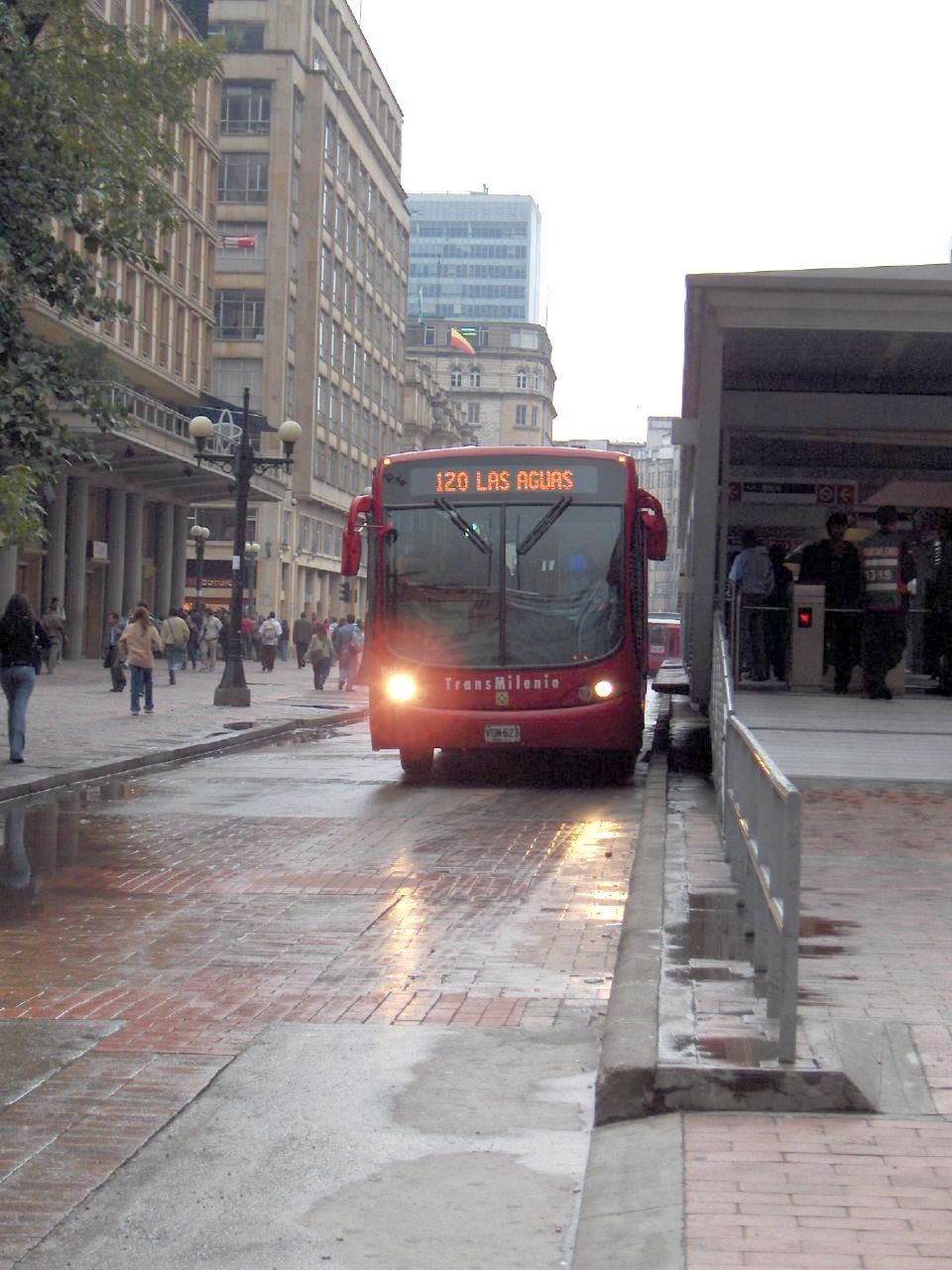
Experiencing these stations was what most made me realise that there might actually be something to this BRT-thing after all:
And another flickr user's photo (awesome capture): www.flickr.com/photos/doctorlo/2275173783/
Here are links to some short videos showing how the stations work:
Go to 0:52 on this one (actually a different system, but identical station style)
www.youtube.com/watch?v=hncSYjBQBIM&feature=related
www.youtube.com/watch?v=UA4IR7PvO6I
www.youtube.com/watch?v=vjP_GTnjEKI
The stations really frame the experience and provide numerous other services that improve the speed, capacity and comfort of the system as well as show a significant commitment/permanence by the local government/transit agency - like tracks they are not apt to be moved anytime soon.
The transmilenio is a BRT (for bus rapid transit).. like a cross between a metro and the express B-Line buses of Vancouver. Another way to put it (for those who don't know Vancouver) would be like a surface metro - enclosed stations and all- that uses articulated buses instead of trains, and isolated lanes instead of track. Like skytrain, the station platform sits in between each direction of line.. but for TransMilenio, lanes. In this case, forming the long part of the "T" where the top is a crosswalk - right in the centre of the road (not on some distant, time-consuming pull-out)
The stations are well ... they feel like the Expo line skytrain, but on the ground. There is ramp (wheelchair friendly) to go up to the bus-level platform, and one passes through automated fare collection (smart card). You can see a bit here: farm1.static.flickr.com/19/107068591_e6b678aa23_o.jpg Once inside, the entire station is all fare-paid zone, and buses on different routes each have a platform segment. This means that once one gets in the system (like a metro) you could actually ride all day. Each platform/bay has 3 wide sets of sliding glass doors that automatically open as the bus slides into position.
The 3 sets of wide glass doors of the station whisk open in unision with their bus counterparts (also wide) and riders step in and out (like skytrain, subway, or metro). There are no line ups. - People/wheelchairs/strollers simply step/roll in.. not up.. Wheelchairs and strollers are restricted to the front set of doors, everyone else uses the other two sets. . People transferring to another route just walk to the other bay/platform and get on that bus when it arrives without needing to pay again or queue for one door.
This system is far more cost-effective system than subsurface rail (most ROWs were expropriated from existing car lanes - transit priority over car), and there are no dangerous rails on the surface (and no fences like the around skytrain).
Also unlike something like the Silverline in Boston (which has a painfully slow transition to underground, and runs in mixed traffic, and generally oscillates between bus and wannabe metro), TransMilenio is completely consistent and uniform in what it has across the network.
The buses have their own median lanes, usually 2 in *each* direction. See how it looks here?: www.flickr.com/photos/99887786@N00/2468594299/ I would guess about 65% of the network is like this, and the remaining stations have passing lanes. This was a politically gutsy move to make, as the lanes the buses use were expropriated from car traffic. It basically creates additional congestion for cars, while allowing the cleaner more space-efficient public transit to go much much faster. A clear priority for public transit over car use. It is a carrot & stick. carrot to use transit becuase it is faster, stick against driving because it gets slower. In addition this is a major cost-saving measure, becuase existing roadways are used and no new ones are constructed (unlike other BRTs elswhere)
It also made construction of the busways incredible simple and fast. Nearly 100 kms of dedicated lines were in place within a matter of a few years.
My favourite resource for Bus Rapid Transit systems is the ITDPs BRT Planning Guide - in particular The Annex Section has system comparisons across BRT Systems all over the world. It is clear here how feature-rich TransMilenio is compared to lacklustre cousins elsewhere. itdp.pmhclients.com/index.php/microsite/brt_planning_guid...
Another good one: The US Transportation Research Board has a paper discussing applicability of the Transmilenio in the US - an identified challenge is that there could be little public support since most people would initially associate it with "the bus" rather than it's own mode.
TransMilenio has immense capacity - moving more people than many heavy-rail subway systems - at peak hours the busiest single line moves 45,000 people per direction. In some ways the system is victim of it's own success - some residents have nicknamed it TransMi-lleno (full), for being famously full.
Please see the next photo - there is more info there about TransMilenio.
Another informative video is this one of the Rea Vaya - a South African BRT system heavily modelled after TransMilenio. The station interior pan starts at 3:37
www.youtube.com/watch?v=85xXs7JTt5k and www.reavaya.org.za/
And last an electric trolleybus BRT in Venezuela: www.insideyorks.co.uk/tbus/xmd1.jpg

Electric trolley-bus BRT in Venezuela: www.flickr.com/photos/venex/sets/72157600189865830/