View allAll Photos Tagged Bricklayer
Press L to view on a black background.
You can see more on my Flickr Photostream or on my Web site.
This image is mine. You may not use it anywhere or for any project without my express permission. Rates for commercial applications are available on request.
Please contact me if you would like to arrange a commercial use, or purchase a print of this photograph.
Approx 2002 - 2003
Michael took the photo.
4 Bricklayers, 4 lecturers, 4 colleagues, 4 friends.
The four of us taught Brickwork together at a technical college.
In the holidays we often went walks together mainly around Huddersfield, and Yorkshire.
We often went swimming on Friday mornings too, at the local sports centre.
Unfortunately Peter passed away a few years ago. George and I still meet up regularly, (or did do prior to the pandemic.) and we also cycle together.
Michael and me went a good walk together just a few weeks ago around Scammonden water.
They were the best colleagues and friends you could wish for.
I first met the three of them on a walk around during my job interview on 1st February 1989.
Peter & George were apprentice bricklayers at the same company in Huddersfield, back in the day.
The three of them were Yorkshire born and bred, whereas I was a comer in, being from Lancashire.
I lived in Huddersfield for 11 years before moving back to Lancashire, but worked there for 31 years.
I’m happy to say that all three of them were present at our wedding.
I think that my camera at the time was a digital Kodak.
#goodtimes
The wall to the left was built by Roman bricklayers in the 2nd century CE. The floor is a preserved Roman mortar floor from the same age.
Conversely, the wall to the right was built over 1000 years later, in the early 1200s, i.e., the end of the high middle ages.
Now please just compare how these two have stood the test of time, considering that the Roman wall is more than ten centuries older.
'nuff said!
Seen in Ladenburg, Baden Württemberg, Germany. Ladenburg was founded as the Roman city of Lopodunum in the 1st century CE.
Contax IIa colour dial with Zeiss Opton Sonnar 2/50
Kodak Ektar 100 professional grade colour negative film
Developed and scanned by www.meinfilmlab.de
London General WHV155, BV66VLD - Route 1 | Aldwych with a Bricklayer's Arms Bound Service.
Monday 14th November 2016
@ Londontransport3/ Mark Mcwalter 2016
Thank you all for viewing, please check out my other photos, collections and albums.
We recently visited the Towering Dreams exhibition at Compton Verney (now ended). It features architectural drawings by Sir John Soane, many used to illustrate his lectures at the Royal Academy rather than being architectural plans. Born in 1753 and son of a bricklayer who died when he was only 14, he began his training as an architect at 15. His work won medals at the Royal Academy and in 1776 he undertook the Grand Tour, spending four years mostly in Italy. Although he struggled to establish himself at first, he became both a professor at the Royal Academy and official architect to the Office of Works, and was knighted in 1831. His house in Lincoln’s Inn Fields, together with its collection of drawings, paintings and architectural models, was left to the nation by Act of Parliament when he died in 1837.
This watercolour was also used to illustrate a Royal Academy lecture showing the difference between Egyptian capitals (on the left) and the Corinthiam (on the right), which he considered to be the pinnacle of Greek architecture.
(Dear Flickr: if you want contributions to be geotagged, you need to improve the lousy map feature. I would have added these to my Compton Verney album ( a mere 324 photos, 1,935 views) but no amount of hunting brings it up on the map. Vanished, apparently... GRRRR)
spesso in India le donne assistono i muratori durante il lavoro
often in India women assist the bricklayers during their work
Previously the Bricklayers Arms pub and the venue for Jagger's and Richard's first meeting, at an audition held upstairs in the 1960's.
Nel cantiere molto spesso sono donne a svolgere il ruolo di "muratore" - Ethiopia Wolayta region
On the construction site, many women often play the role of "bricklayer" - Ethiopia Wolayta region
Night shot of the old Bricklayers Arms pub on Settles Street. Elizabeth Stride was seen here the near midnight on September 29 1888, not that long before she was found murdered in Dutfield's Yard on Berner Street on the morning of the 30th.
This spot is a short walk from Berner Street.
I believe the top level of the building was added later.
Nikon F4. Nikkor 50mm F1.2 lens. Kodak T-Max P3200 35mm B&W film.
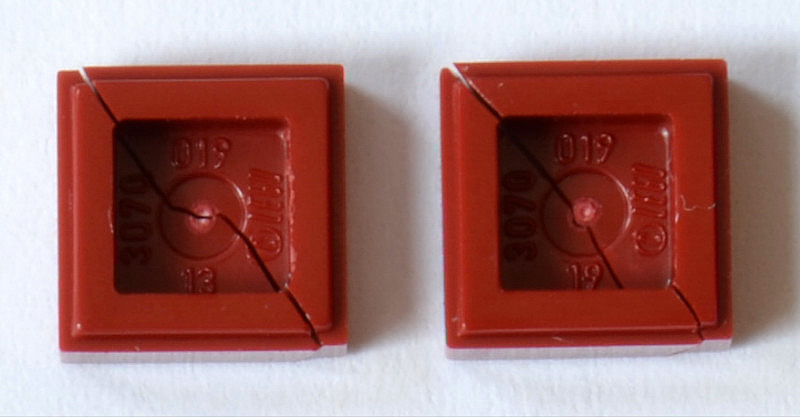
... so I decided to make a virtue of necessity.
Hundreds of dark red 1x1 tiles in stock don't have the ability to connect to a stud - the elements break in two just by trying!
Mould number: 019 - All positions within the mould are affected.
* Dedication*
This photograph is dedicated to a true working class man, Lawrence Michael Baylis (1956-2022). "Laurie" was my brother-in-law and this morning we laid him to rest not far from where his dear mother lies.
Lawrence was regarded as one of the finest local craftsmen bricklayers, who retired early to look after an invalid wife. He was taken from us suddenly and far too soon. So this photograph is for you Laurie, and I know you'd love this song too:
"Working Class Man" www.youtube.com/watch?v=erSJGrpfnOI
Here’s a very “volumetric” split crystal design – beginning to show some of the features associated with skeletal form crystals? Can you spot where? Let’s take a look at the details!
Before I do, however, I just want to make a quick note that the whole family is under the weather at the moment – and has been for roughly a week; that would be about the duration of this series. We’re doing okay, it’s not COVID, but likely RSV. Being sick sucks, it completely drains me of all energy and sleep is never enough nor is it rejuvenating. I think we’re past the worst of it now, but these posts have been about all I can motivate myself to accomplish. Your positive comments have been a huge boost, so this paragraph is simply to say thanks. I’m glad these images are appreciated.
This snowflake is definitely growing in layers. You can see a lot of lines running (vaguely and varying) 60-degrees from the main spine of each branch, and they can be quite thick! This snowflake answers another mystery with how these spines interact with the main snowflake as it builds thickness. For example, look at the bottom branch, right near the tip. See how tall the spine is above the rest? You can use the shadows/reflections to the right of it to get some visual comparison. However, take a look to the bottom right branch, in the middle. Where did the spine go?
We see a hint of the answer to the right of it, still in the middle. There are some dark spots! Those are little canyons in the surface, which are getting “ceilinged” over. The snowflake is filling in to become the same thickness overall. But then there was “eureka” moment for me. There’s a feature in SO MANY snowflakes that I never understood before. Why are there (so incredibly frequently) two parallel lines of bubbles running down the length of the snowflake? In this specimen, we can see them forming. Look to the lower-left branch!
See two parallel DARK lines, opposing the brighter lines on the lower-right branch? Bingo. They are in the process of being filled in. My theory is this: the spine forms as thicker than the rest of the snowflake, much more rapidly. However, the rest of the branch eventually thickens up to the same topographical height… but the walls of the spine are steep like a cliff, and water vapour cannot get inside to completely back-fill these areas. They in turn get a ceiling over top, forming bubbles. Woo! I think I’m correct on the “how” for this one, but the “why” is still outstanding to some degree. Why do snowflakes grow out thinly, then thicken up over time?
I believe this might be partially answered by the “knife-edge instability”. If you have two bricklayers each building a wall from available materials, and one is building a wall three bricks deep, he’d be a lot slower than someone building a wall only one brick thick. So then, utilizing this “thin wall” approach, a snowflake shoots out as a thinner piece of ice faster, but continues to thicken over time as the interior area still has access to some “bricks” (water vapour).
But don’t forget the skeletal form traits! You can also see it on the bottom branches, where there is evidence that the spines have grown so thick that they have “anviled”-out and are growing further along the top, with a gap underneath. Because this outward-growing ceiling is also quite thin, it can grow faster than some of the other surrounding features. You can see this easily on all four bottom branches, but such details are obscured on the top two, belonging to the other half of the “split” crystal with their surface features facing away from the camera.
eBook: Macro Photography – The Universe at Our Feet: skycrystals.ca/product/pre-order-ebook-edition-macro-phot... (fully instructive on all things macro, including how to photograph snowflakes)
Buy Me a Coffee: www.buymeacoffee.com/donkomphoto
Platypod Exclusive DonKom Macro Studio Bundle: www.platypod.com/products/don-kom-macro-bundle
They may look like a boy band but they're all quality craftsmen. The house builders of today, and tomorrow!
The facades of this house feature various “bricklayer's marks”: diamonds, hearts and St Andrew's crosses. The bricks were fired at a higher temperature or glazed for this purpose. The marks may have had a protective, decorative or social significance.
Open Air museum Bokrijk. Belgium.
Shawn was sitting on the south side of Washington Street, across from the Boeing Building. He was facing a steady 30-40mph wind. He's been out here for about a year. He's a bricklayer by trade, with 15 years in the industry. "I'll take anything (any job) right now". He stays in the Franciscan shelter on Harrison. His biggest needs are a winter coat and jeans. (He's getting those on Tuesday). He was quiet and you could tell he had a lot on his mind...
Slim line Hastings Thumpers were regular visitors to Brighton as traction for the Brighton - Exeter service on summer Saturdays, on Awayday specials and on ecs moves from St. Leonards depot, as seen here. A class 73 is seen waiting to return to Bricklayers Arms depot on empty vans in Top Yard while a gronk shunts on Lovers Walk depot.
Bit lost today, our little cat Rio was hit by a car & was killed. Bit empty around the house at the mo, but that's how it goes. Never really got attached to pets but little Rio was something else, will miss the little guy ;-(((. Got some great pics of him so he wont be forgotten. God ! I'm a big daft bricklayer what's got into me !!!
Tani & Maya are new arrivals at Riversong. You can see hey are SO relaxed at one of the little gazebos, chatting up a storm! I was a bit surprized to see them, but YAY! Now they are here as additions to the tiny bear family! I know there are some very anxious tiny bears who will enjoy meeting them, as well as Ann Lou, down at Lagniappe, in New Orleans!
(Yes, the little brick/stone floor is all handmade by me! I seem to be a bricklayer and a stone mason these days, in miniature!"
Happy Teddy Bear Tuesday!
Excerpt from Wikipedia:
The Saint Anne Parish of Upper Watertown (Hungarian: Felsővízivárosi Szent Anna-plébánia) is a Roman Catholic parish church located in the Várkerület district (Buda Castle district), Budapest. The Saint Anne Parish Church of Upper Watertown, often used by its short name, St. Anne's Church, is one of the most significant buildings of the Batthyány tér. Its construction was started in 1740 according to the plans of master builder Kristóf Hamon, and after his death, Máté Nöpauer completed the building in 1761.
The parish was founded in 1390 but was destroyed in 1540 by the Turks during the Ottoman Hungary. It was re-established in 1687 by Archbishop György Széchenyi and the birth of the registrar began in 1693. Count Wenzel Sinzendorf built a two-story house on the foundation walls of the destroyed parish in 1626, which was bought in 1720 by the timber merchant Matthias Forstmayer and opened a pub in it. In 1724, the City Council of Buda bought it along with the land and converted the house into a chapel and a parish with the bricklayer John Fiedler, a mason whose ministry was performed by the Jesuits.
Design and construction management was made by Kristóf Hamon was entrusted with the task of builder. The shrine, which was used temporarily as a church, was completed in 1746. In 1748, Hamon died, the building of the former palace, later the widow's husband, Máté Nöpauer native to Brno, continued construction of the church, and was completed in 1761. The damage caused by the earthquake of 1763 was repaired by Adam Kögl SJ and János Hamon, the son of the builder Kristóf Hamon. At the same time, it provided the rich facade ornamentation of the facade. In 1773 the church was neglected due to the dissolution of the order and the frequent change of parish. In August 4th The church was consecrated again. In 1950, due to excavation work during the construction of the subway, the church was threatened to be demolished, but in 1954 the plan was abandoned.
The 21.5-meter-wide and 55-meter-high two-tower facade faces north from the eastern side of the parish house. In the plane of the main facade, the main gate with a basket arch is decorated with statues of Faith, Hope and Love, and above it is a large chronicle window adorned with the choir. In the booth on the second floor, Saint Anne presenting Mary, above the coat of arms of the city of Buda in tympanum, is shone by God's eye among the worshiping angels. An oval dome covers the octagonal space of the church nave, joining from the north a foyer below the loft surrounded by the towers and from the south a shrine with a triumphal arch, the Trinity fresco by Gergely Vogl, the painting of the dome Altar of the Eucharist by Béla Kontuly and Pál Molnár C. was painted in 1938. The oval dome space is made of composite pilasters lined with four spiral staircases behind its eastern and western corners. In the south are the oratories and in the north the pipe organ. A large group of statues can be seen in the building of the altarpiece, symbolizing the Great Church in Jerusalem: Saint Anne, Joachim, priest Zacharias, Elizabeth and King David presenting the child Mary in the church. The group of statues were made between 1771 and 1773 by its creator Károly Bebo, who also carved the pulpit. In 1767-68 he created the side altars and Holy Cross and Saint Francis Xavier were made by Antal Eberhard, he also created the Eye of God, the main facade with statues of angels and the coat of arms of the city of Buda sculpted.[3] The Loretto Chapel is a richly laid, flat, symmetrical closing wrought iron barrier wall dating back to 1752 by Ignác Pugl. The work of the carved secretary cabinet by Antal Feldmayer. The other high altar by István Bagi.
It has three bells, and the left tower is empty of bells.
Seven former Southern Railway vans form a uniform head end to this van train that has just crested the climb from Swanley.
Old water tower at Elmore, Victoria
Notes on the tower from the Heritage Council of Victoria:
The Elmore Urban Waterworks Trust held its first meeting in February 1890 and by 1891 had acquired land at Cardwell St adjacent to the Campaspe River. The Trust had also appointed J.T. Noble Anderson as their engineer. Anderson was a graduate of a Dublin university, tutored at Trinity College, Melbourne and later became business partner of (Sir) John Monash. It was during his time at Trinity College that he drew up plans and specifications for the erection of the Trust's first water tower.
The Trust's contract number 1 for the erection of the tower was awarded to A Nelson contractor and work proceeded in the latter half of 1891. The tower erected was a circular red brick structure surmounted by a circular riveted iron tank. The tower has two levels of timber floors with a stop valve at the ground floor. Water pumped to the tank provided pressured reticulation through-out the town.
The tower remained in use until 1964 when the Elmore Water Board commissioned a new taller concrete tower.
The former Elmore water tower is of architectural and historical importance to the state of Victoria.
The Elmore Urban Waterworks tower is historically significant as a rare surviving remnant of early urban infrastructure in the settlement of Victoria. The tower provided reticulated water to the population of this small country town in a continent noted for its dry environment.
The tower is also of architectural and engineering significance in its ability to display 19th century approaches to technology and art particularly given the need to erect this structure in an urban setting, and in its rarity as an industrial building type. The tower is also a fine example of the skills of 19th century bricklayers. Source: vhd.heritagecouncil.vic.gov.au/places/5215
About Istanbul
Simple - i just love this place.
About this shot
The coolest things about platforms like Flickr or G is not only to show your work to a greater audience, but also to connect to people. After my first visit in Istanbul six months back, I knew I'll have to come back soon. Knowing that I asked around if some locals wanted to participate in a photo walk.
I was really happy that Kurtcebe Kirecci and Serap Sabah joined us for a whole day. Definitely the best "blind date" I ever had.
I met our stranger while walking through a district called Fatih. Thanks to Pamela for giving me a heads-up on this character.
About this stranger
Meet Sakir Cicek. He is 36 years old and another living prove that THEY are no isolated cases in Istanbul: bearded men.
Sakir told us that he is married to a beautiful wife and proud father of three girls and three boys. He also is almost vegetarian (thumbs up) and his favorite dish is rice, beans with yoghurt.
He loves wearing baseball hats. And if you have a closer look a his headshot, you might have asked yourself if he likes collecting golden coins. :-)

60% of buildings in Istanbul are dilapidated. So being in construction like Sakir means there is a shitload of work to for probably the next 2-3 decades. But this guarantee of permanent work put him into the position to live in Istanbul in a shared apartment with ten colleagues.
While his wife and six children still live about 1200km away in a town called Erzürum.
Who else can our strangers #31 be than "The contracted Bricklayer"
-- ---
sets Istanbul, Triptychs of Strangers or People | follow flickr, google , tumblr or twitter
320,000 bricks, including five types that were custom-made for the building, have been intricately corbelled to achieve the building’s remarkable fluid skin. Master bricklayer Peter Favetti came out of retirement to work with his son and the bricklayers of his business on the project.
Chau Chak Wing Building, UTS, Sydney, Australia (Monday 16 November 2015)
Excerpt from historicplaces.ca:
Description of Historic Place
The Georgetown Public Library and Cultural Centre is located at 9 Church Street, on the south side of Church Street, north of Market Street, in Georgetown, Town of Halton Hills. The one-storey limestone church was constructed in 1877.
The property was designated, by the Town of Halton Hills, in 1979, for its heritage value, under Part IV of the Ontario Heritage Act, By-law 1979-0067.
Heritage Value
The Georgetown Public Library and Cultural Centre was originally constructed as the Congregational Church. Recessed from the main street, the church overlooked the market square. This central location was ideal for its adaptive re-use as a library and assembly hall.
The Georgetown Public Library and Cultural Centre is associated with the Methodist Church in Georgetown. In 1877, when the congregation outgrew their frame chapel, built in 1845, they decided to build a stone church. One of the men who worked on the church was congregation member, William H. Watson, a bricklayer and stonemason who had helped build other churches and offices in the community. By the early 1900s Congregational Church was experiencing a decreasing membership and therefore decided to close. The building was donated to Georgetown, for use as a public library. It opened in 1913. The church has undergone a number of renovations in order to adapt the structure for use as a library. In circa 1980, due to an increase in the population the library was temporarily relocated while the church was renovated and expanded to become the Georgetown Public Library and Cultural Centre. The new facility opened in 1981 and included a large library space and professional theatre; the stone church itself became an art gallery.
The Georgetown Public Library and Cultural Centre incorporated the “Old English” Gothic style of the original church. The building has large arched windows and doors with drip moulds, a steeply pitched gable roof, interior vaulted ceilings, 50-foot spire, and the bell tower. Built with local limestone, the church displays elaborate stonework around its openings and features seven original nine-foot stained glass windows. At the south end of the building a large 16-foot stained glass window dominates the elevation. The new addition was built onto the north-east elevation. The south elevation entrance has been bricked up leaving only the two entrances on the facade.
Character-Defining Elements
Character defining elements that contribute to the heritage value of the Georgetown Public Library and Cultural Centre include its:
- location on the corner of Market Street and Church Street
- location on the site of the first Congregational Church
- one-storey limestone exterior
- steeply pitched gable roof
- 50-foot spire and bell tower
- 16-foot stained glass window
- seven, nine-foot tall stained glass windows
- vaulted ceilings
- arched windows and doors
- drip moulds
- elaborate brickwork
- north-east elevation addition
- two facade entrances
I do actually enjoy a little bit of winter, just a little bit mind you, especially a nice stroll in the crunchy frost with a big coat, 2 hats 3 scarfs & a pair of gloves but & a very big but I hate hate hate & even more hate having to work in it ;-((
a very sad bricklayer ;-(((((((
Taken from a print in my collection, no further details known.
SR K1 class, built at Ashford entering service December 1925. Rebuilt as a class U1 2-6-0 June 1928. Later numbered 1890. Renumbered 31890 November 1948 and withdrawn June 1963.
Shown with original Holcroft derived conjugated valve gear.
Amsterdam - Brink.
"Garden village Watergraafsmeer", better known as "Betondorp" (village of concrete), can be regarded as an architectural open-air museum. Between 1922 and 1925, when the neighbourhood was built, bricks were expensive and bricklayers' wages high. That is why the architects experimented with concrete (pre-fab) constructions.
Tuindorp Watergraafsmeer, beter bekend als Betondorp, is te beschouwen als een architectonisch openluchtmuseum. Tussen 1922 en 1925, toen de buurt werd gebouwd, waren bakstenen duur en de lonen van bouwvakkers hoog. Vandaar dat men experimenteerde met betonbouw, waarbij de architecten zich lieten inspireren door de De Stijl. (amsterdamkalender2020).
Wie het in 1987 gerenoveerde Betondorp nu beziet, schiet misschien de uitspraak van Gerard Reve te binnen: “Laat elke hoop varen, gij die hier opgroeit.” Maar kort na de oplevering werd het voorbeeld van Betondorp in binnen- en buitenland gretig nagevolgd (onsamsterdam.nl).
Four photo compo.
Happy Bench Monday :-)
A recent transfer from Northumberland Park is this Volvo B9TL originally bought by First. This bus was allocated to route 259 until it was lost to Arriva in March.
I was glad to see it has a full set of blinds; a white set with the newer style font. I was hoping they'd be a dayglo set, but oh well.
I believe most of these WVNs are destined to be used on the 131 once it transfers to London General later this year.
For whatever reason it was common for First to use N in their type codes: DN, TN, VNW, etc. I've never been able to figure out what exactly it stands for. Likewise the ex-First Go-Ahead buses are coded in the same fashion.
NP also have ex-Peckham WVL333, which I suppose they could have sent back had it been free, but of course that wouldn't be as interesting, now would it?
Glendon Road bridge being repaired following a couple of accidents involving road vehicles.
Bricklayers Paul and Michael will be heading for home in Barnsley once the job is finished, hopefully the following day.
4D32 Elstow - Mountsorrel empties.
One of the monuments of Arta, is its famous and legendary bridge. It is the most famous arch bridge of Epirus, which connects the two banks of River Arachthos and it is distinguished by its unique architecture but also for the legends connected with its manufacture.
The construction causes admiration. At times there were repairs and additions made in manufacturing, most recently that of 1612. It is the bridge whose difficult construction gave food to the tradition, the myth, the poetry, the painting, the music and the theater so as to praise the difficult struggle of the man for projects like this.
There are charming legends refering to the building of the bridge, with the most touching that of the sacrifice made by the master builder's wife. The well-known folk song "Arta's bridge" that was standard for variations across the Balkans, says about a verse: "If you do not haunt a human the bridge does not consolidate". The popular tradition since ancient times requires sacrifice to the foundations of difficult projects, with the most intense being that of a human sacrifice as the one of the bridge of Arta.
Historical research states that this legend hid for several years a historical truth for the region of Arta and Epirus in general. When a big Turkish army force had to go through the area, the Turks asked the help of residents. Many craftsmen and artisans run to help. But when they learned the reason for which the bridge had to be constructed, they went at night and demolished what they had built the previous day. The Turks sought to know why the project was so slow and they finally said that the place is haunted. The Turkish commander then ordered the arrest of the master builder and his wife's killing. Then they were all feared and completed the bridge.
In folk songs, 1300 bricklayers, 60 students, 45 craftsmen (engineers) under the master were trying to build a bridge whose foundations every morning were ruined. Until a bird with human voice announced that in order to succesfully build the bridge the wife of the master builder should die.
This legend with the ancient roots comes across in the folk traditions of other Balkan people. The man is confronted with the elements of nature and is weak to tame them resorting to spells and sacrifices of loved ones.
Ένα από τα μνημεία της Άρτας, ξακουστό και θρυλικό είναι το περίφημο γεφύρι της.Είναι το πιο γνωστό πολύτοξο γεφύρι της Ηπείρου, που ενώνει τις δύο όχθες του ποταμού Αράχθου και διακρίνεται για τη μοναδική αρχιτεκτονική του αλλά και για τους θρύλους που έχουν συνδεθεί με την κατασκευή του.
Η όλη κατασκευή του προκαλεί το θαυμασμό. Κατά καιρούς έγιναν επισκευές και προσθήκες στην κατασκευή, με τελευταία εκείνη του 1612. Είναι το γεφύρι που η μεγάλη δυσκολία κατασκευής του έδωσε τροφή στην παράδοση, τον μύθο, την ποίηση, τη ζωγραφική, τη μουσική και το θέατρο για να εξυμνηθεί ο δύσκολος αγώνας του ανθρώπου για έργα σαν αυτό.
Στο χτίσιμο του γεφυριού αναφέρονται θρύλοι γοητευτικοί, με συγκινητικότερο εκείνο της θυσίας της γυναίκας του πρωτομάστορα. Το γνωστό δημοτικό τραγούδι «της Άρτας το γεφύρι», που υπήρξε πρότυπο για παραλλαγές σε όλη τη Βαλκανική χερσόνησο, αναφέρει σχετικά σε στίχο του: «Αν δε στοιχειώσετε άνθρωπο, γεφύρι δεν στεριώνει». Η λαϊκή παράδοση από τους αρχαίους χρόνους απαιτεί θυσία στα θεμέλια των δύσκολων έργων, με κορύφωμα την ανθρωποθυσία, όπως στη γέφυρα της Άρτας.
Η ιστορική έρευνα διατυπώνει ότι ο θρύλος αυτός έκρυβε πολλά χρόνια μια ιστορική αλήθεια για την περιοχή της Άρτας και γενικότερα της Ηπείρου. Όταν χρειάστηκε να περάσει από την περιοχή μεγάλη δύναμη τουρκικού στρατού, οι Τούρκοι ζήτησαν από τους κατοίκους βοήθεια. Πολλοί μάστορες και τεχνίτες προστρέξανε για να βοηθήσουν. Όταν όμως έμαθαν το λόγο που έπρεπε να κατασκευαστεί, πήγαιναν τη νύχτα και γκρέμιζαν ό,τι την προηγούμενη μέρα οι ίδιοι είχαν φτιάξει.Οι Τούρκοι ζήτησαν να μάθουν γιατί αργεί τόσο πολύ το έργο και εκείνοι απάντησαν ότι τελικά το μέρος είναι στοιχειωμένο. Ο Τούρκος διοικητής λοιπόν διέταξε τη σύλληψη του Πρωτομάστορα και της γυναίκας του και τη θανάτωσή τους. Τότε όλοι φοβήθηκαν και ολοκλήρωσαν το γεφύρι.
Κατά το δημοτικό τραγούδι ,1300 κτίστες, 60 μαθητές, 45 μάστοροι (μηχανικοί) υπό τον Αρχιμάστορα προσπαθούσαν να κτίσουν τη γέφυρα της οποίας τα θεμέλια κάθε πρωί ήταν καταστραμμένα. Μέχρι που πτηνό με ανθρώπινη φωνή γνωστοποίησε πως για να θεμελιωθεί η γέφυρα έπρεπε να θανατωθεί η γυναίκα του πρωτομάστορα.
Αυτό το θρύλο με τις πανάρχαιες ρίζες τον συναντάμε και στην λαική παράδοση άλλων βαλκανικών λαών. Ο άνθρωπος αντιμέτωπος με τα στοιχεία της φύσης και αδύναμος να τα τιθασεύσει καταφεύγει σε ξόρκια καθώς και σε θυσίες αγαπημένων προσώπων.
Thank you all known and unknown friends in Flickr for your visit
A happy bricklayer working at Namgyal Tsemo Monastery.
People form this area have this same warm look in their eyes. It makes you feel safe and at home. Wherever you go, this feeling is not something you can easily get.
Shot in Leh (the old capital of the Himalayan kingdom of Ladakh, now the Leh District in the state of Jammu and Kashmir, India.)
While wandering around Bethlehem yesterday with my adventurous friend Torrie, we followed the path down towards a small river where they're in the process of ever so slowly restoring several old stone buildings. This one was part of the dye house, originally built in 1746.
I wish now that we had come across a young man then who stopped us later while we were photographing some other old & beautiful building with the comment... are you interested in old buildings? He proceeded to tell us he's been a bricklayer for 16 years after being in general construction for years before starting the old school trade of bricklaying. We then stood on the sidewalk & he was pointing at some of the old buildings giving us a commentary about the trade!
I wish he would have been standing near us when we were down by the old dye house to tell us what he thought of it's story!
Constructed 1671-77, after the original building was destroyed in the Great Fire of 1666, the design of the College of Arms was the responsibility of a master bricklayer rather than an architect, and the result is a good example of the 'artisan style'.
The College of Arms was founded in 1484 and has since then created and maintained official registers of coats of arms and pedigrees. The heralds who make up the College are members of the Royal Household and act under Crown Authority. Central activities include: the granting of new coats of arms; the registration of family trees; genealogical and heraldic research; advising central and local government, corporate bodies, and private individuals on all aspects of heraldry. The College is also the authority for matters relating to the flying of flags, and holds the only official registers of flags for the UK and much of the Commonwealth.
The Heralds advise on matters relating to the peerage and baronetage, precedence and ceremonial. They have a role in UK state ceremonial and assist the Earl Marshal in the organization of state ceremonies including Coronations and State Funerals. At the core of the College of Arms is a vast manuscript archive of heraldic and genealogical material which has been gathered and preserved over the centuries.