View allAll Photos Tagged Activation
----------------------------------------------------------------
click to activate the icon of slideshow: the small triangle inscribed in the small rectangle, at the top right, in the photostream;
or…. Press the “L” button to zoom in the image;
clicca sulla piccola icona per attivare lo slideshow: sulla facciata principale del photostream, in alto a destra c'è un piccolo rettangolo (rappresenta il monitor) con dentro un piccolo triangolo nero;
oppure…. premi il tasto “L” per ingrandire l'immagine;
www.worldphoto.org/sony-world-photography-awards/winners-...
www.fotografidigitali.it/gallery/2726/opere-italiane-segn...
-------------------------------------------------------------------
The carnival in Taormina (Sicily - Italy);
Il carnevale a Taormina;
........................................................
“Mojo Working,” a 1966 painting by Jules Olitski, plus two Dallas Museum of Art patrons, interact with Nobuo Sekine’s “Phase of Nothingness - Water.” 1969/2012.
……………………………….
Poster (Locandina):
www.acectoscana.it/wp-content/uploads/2012/11/Hereafter.jpg

www.thecinemashow.it/wp-content/uploads/2023/12/hereafter...

www.warnerbros.it/sites/default/files/WB2014_HAD-01837_7f...
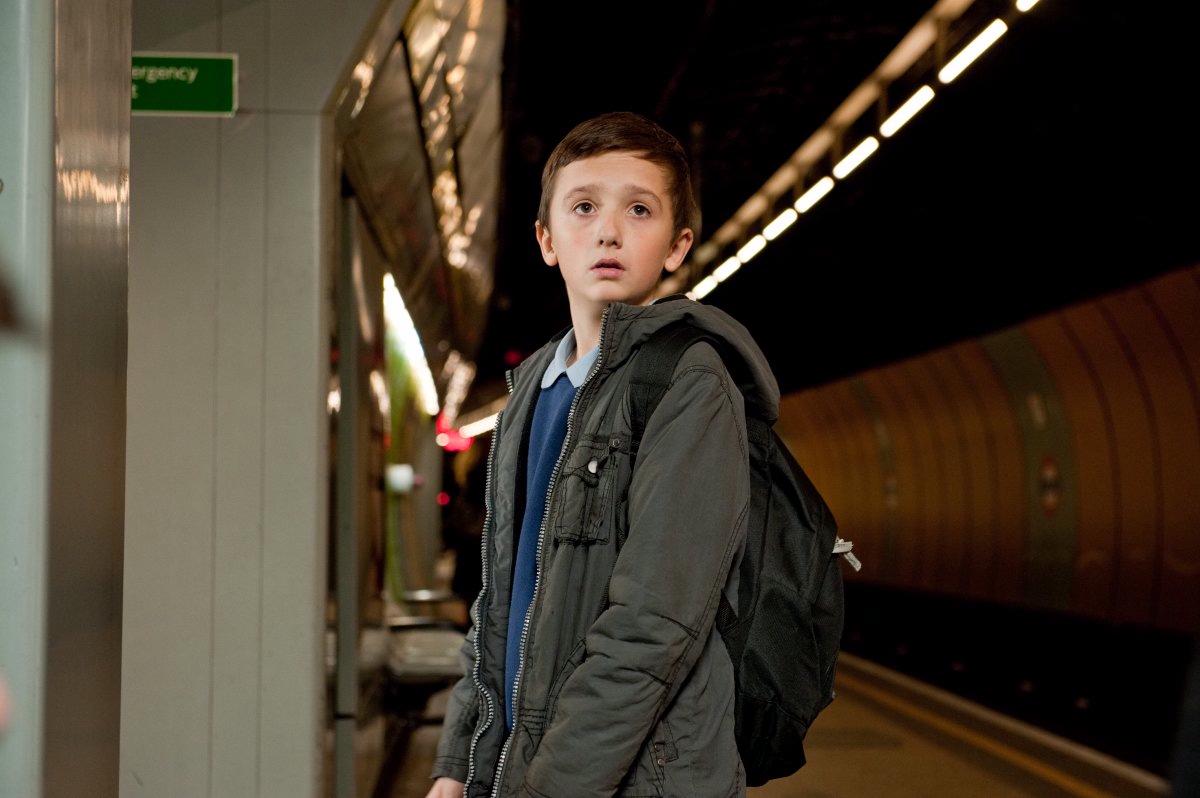
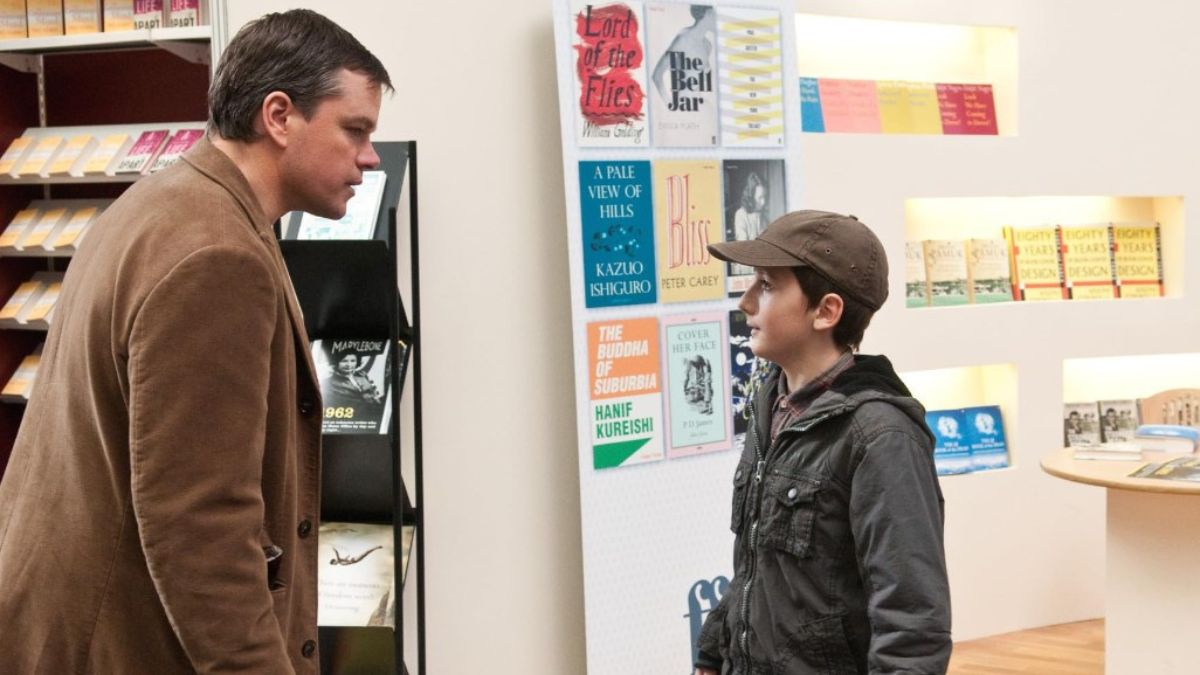
netflixmania.it/wp-content/uploads/2024/11/hereafter-film...
----------------------------------------------------------
click to activate the small icon of slideshow: the small triangle inscribed in the small rectangle, at the top right, in the photostream (it means the monitor);
or…. Press the “L” button to zoom in the image;
clicca sulla piccola icona per attivare lo slideshow: sulla facciata principale del photostream, in alto a destra c'è un piccolo rettangolo (rappresenta il monitor) con dentro un piccolo triangolo nero;
oppure…. premi il tasto “L” per ingrandire l'immagine;
www.worldphoto.org/sony-world-photography-awards/winners-...
www.fotografidigitali.it/gallery/2726/opere-italiane-segn...
………………………………………………………………………
Does the afterlife exist? Mystics like Padre Pio, Natuzza Evolo spoke with the souls of the deceased, not knowing that they were “deceased”, they did not distinguish them from normal people (they understood it later). The Marian apparitions to Bernadette, to the three shepherds of Fatima, those of Medjugorje, were they real? And how much have they influenced the history of humanity? My profession has led me to meet people who have told me about their “uncommon experiences”. A few years ago, a young man of about 30 years old, reported his “near death” experience, hospitalized in very serious conditions in our intensive care unit, he told of when he saw doctors and paramedics from above, busy around his body, he then found himself inside a tunnel, at the end there was a light. Now “Francesco” is fine. A couple of months ago, still in intensive care, I talked with a patient of about 50 years old, who survived three almost consecutive cardiac arrests, after that event, he told me, he had unexpectedly discovered a deep faith; discharged, he is now in good health. A few days ago, again for professional reasons, I met a lady in her 60s, accompanied by her 26-year-old son, she told me that, in her troubled life, in addition to having undergone numerous surgical operations, she had been subjected to numerous cycles of chemotherapy, during one of these sessions, she had a cardiocirculatory arrest (probably caused by anaphylactic shock), at that moment she could clearly see the whole scene from above, everyone was doing their best to revive her, she saw a nurse pushing a trolley in the corridor, unable to enter the room where her body was, because half of the door was blocked by a latch, preventing the passage of the trolley, she kicked the door violently which opened thus managing to pass; she saw a doctor who, in the grip of excitement, was unable to put on her coat (these events, the lady told me, had a positive response); the story continued, she rose higher, light, as if floating on the waves of the sea, she saw a cone of light that fell on her like confetti, she felt a sensation of well-being, she saw her grandfather, who held her head and caressed her hair, she looked up and saw some figures, they seemed to have wings, she thought that perhaps they were angels, suddenly she felt herself being “sucked and banged” inside her body. Now the lady, after that experience, no longer fears death. She put her hand on mine, without touching it, just a few seconds, she began to talk about some of my personal facts, at that moment, they seemed to me to be a bit banal and obvious observations, but then, looking me in the eyes, she stated with certainty that in my family, there was a person called Angelo (in reality her name is Angela), she was not wrong. She told me that, months before Eros Ramazzotti's song "Un angelo disteso al sole" came out, she was singing that tune, including the lyrics. She showed me on her smartphone, a selfie of her taken in the car, on the windshield you could clearly see a “luminous face”, she said that her Guardian Angel, Saint Michael the Archangel, had appeared to her. (The lady was also hospitalized in the “La Maddalena” clinic in Palermo, she met the mafia boss Matteo Messina Denaro, she told me an anecdote of hers, but that’s another story). This story, like the one told by Francesco, are part of those numerous cases defined as “pre-death” or “NDE” acronym derived from the English, Near Death Experience. A scientific hypothesis interprets these phenomena as the result of chemical reactions that are triggered in the brain in moments of deep psycho-physical stress, in oxygen deficiency, with the release of endorphins (they generate sensations of euphoria and well-being) and other neurotransmitters, which can determine overall a hyperfunctioning and strengthening of the senses in the cerebral cortex. I am fascinated by the story of when the physicist Albert Einstein, while discussing with Gustavo Adolfo Rol (a famous Italian psychic), placed his hand between the lamp and the table, saying "you see, when matter manifests itself, it casts a dark shadow, because it is matter, whereas God, being pure spirit, when he materializes cannot manifest himself if not through light: light is nothing other than the shadow of God". I have posted a series of photographs taken in November and December of this year, the first part are shots taken according to the dictates of street / beach photography, some examples of earthly reality, to then enter into the "hypothesis of that otherworldly and parallel reality, not perceptible by our senses" accompanied by the presence of Angels, Beings of Light, who "should" always be close to us throughout our existence, after all the mystic Natuzza Evolo recognized the "plainclothes priests" by the presence of their Guardian Angel, because he was placed on their right.
……………………….
Esiste l’Aldilà? Mistici come Padre Pio, Natuzza Evolo parlavano con le anime dei defunti, non sapendo che erano dei “trapassati”, non li distinguevano dalle normali persone (lo capirono successivamente). Le apparizioni mariane a Bernadette, ai tre pastorelli di Fatima, quelle di Medugorje, erano reali ? E quanto hanno inciso nella storia dell’umanità? La mia professione mi ha portato a confrontarmi con persone che mi hanno raccontato di loro “esperienze non comuni”. Qualche anno fa, un giovane di circa 30 anni, riferì una sua esperienza di “premorte”, ricoverato in gravissime condizioni nella nostra terapia intensiva, raccontò di quando lui vide dall’alto medici e parasanitari, indaffarati attorno al suo corpo, si trovò poi dentro un tunnel, in fondo vi era una luce. Adesso “Francesco” sta bene. Un paio di mesi fa, sempre in terapia intensiva, ho conversato con un paziente di circa 50 anni, sopravvissuto a tre arresti cardiaci quasi consecutivi, dopo quell’evento, mi riferiva, aveva scoperto inaspettatamente, una profonda fede; dimesso, adesso è in buona salute. Pochi giorni fa, sempre per motivi professionali, ho conosciuto una signora sui 60 anni, accompagnata dal figlio di anni 26 anni, mi raccontò che, nella sua travagliata vita, oltre ad aver subito numerosi interventi chirurgici, è stata sottoposta a numerosi cicli di chemioterapia, durante una di questa sedute, è incorsa in un arresto cardiocircolatorio (probabilmente causato da uno shock anafilattico), in quel momento vedeva distintamente tutta la scena dall’alto, tutti si prodigavano per rianimarla, vide una infermiera spingere un carrello nel corridoio, non riuscendo ad entrare nella sala dove si trovava il suo corpo, poiché mezza anta della porta era bloccata da un chiavistello, impedendo il passaggio del carrello, lei diede un calcio violento all’anta che si aprì riuscendo così a passare; vide una dottoressa che in preda alla concitazione non riusciva a mettersi il camice (questi eventi, mi riferì la signora, ebbero un riscontro positivo); il racconto continuò, lei salì più in alto, leggera, come galleggiando sulle onde del mare, vide un cono di luce che scendeva su di lei come fossero coriandoli, lei percepiva una sensazione di benessere, vide suo nonno, che le teneva il capo e le accarezzava i capelli, guardò in alto e vide delle figure, sembrava avessero delle ali, pensò che forse erano gli angeli, improvvisamente si sentì “risucchiare e sbattere” dentro il suo corpo. Adesso la signora, dopo quella esperienza, non teme più la morte. Mise la sua mano sopra la mia, senza toccarla, solo qualche secondo, incominciò a parlare su alcuni miei fatti personali, in quel momento, mi sembrarono osservazioni un po’ banali e scontate, però poi, guardandomi negli occhi, affermò con certezza che nella mia famiglia, c’era una persona che si chiama Angelo (in realtà si chiama Angela), non si era sbagliata. Mi riferì che, mesi prima che uscisse la canzone di Eros Ramazzotti “Un angelo disteso al sole”, lei cantava quel motivo, incluse le parole. Mi mostrò sul suo smartphone, un suo selfie fatto in auto, sul parabrezza si vedeva distintamente un “volto luminoso”, lei disse che le era apparso il suo Angelo Custode, San Michele Arcangelo. (La signora fu ricoverata anche nella clinica “La Maddalena” di Palermo, fece la conoscenza del boss mafioso Matteo Messina Denaro, mi raccontò un suo aneddoto, ma questa è un’altra storia). Questa storia, come quella raccontata da Francesco, rientrano in quei numerosi casi definiti di “premorte” o “NDE” acronimo derivato dall’inglese, Near Death Experience. Una ipotesi scientifica interpreta tali fenomeni come il risultato di reazioni chimiche che si scatenano nel cervello in momenti di profondo stress psico-fisico, in carenza di ossigeno, con rilascio di endorfine (esse generano sensazioni di euforia e di benessere) ed altri neurotrasmettitori, potendo determinare nell’insieme un iperfunzionamento e potenziamento dei sensi nella corteccia cerebrale. Sono affascinato dalla vicenda, di quando il fisico Albert Einstein discutendo con Gustavo Adolfo Rol (famoso sensitivo italiano) frappose la sua mano tra lampada e tavolo, dicendo “vedi, quando la materia si manifesta, proietta una ombra scura, perché è materia, invece Dio essendo puro spirito, quando si materializza non può manifestarsi se non attraverso la luce: la luce non è altro, se non, l’ombra di Dio”. Posto una serie di fotografie eseguite nel novembre e dicembre di quest’anno, una prima parte sono scatti realizzati secondo i dettami della street /beach photography, qualche esempio di realtà terrena, per entrare poi nella “ipotesi di quella realtà ultraterrena e parallela, non percepibile dai nostri sensi” accompagnata dalla presenza degli Angeli, Esseri di Luce, che “dovrebbero” starci sempre accanto durante tutta la nostra esistenza, d'altronde la mistica Natuzza Evolo riconosceva i “sacerdoti in borghese” dalla presenza del loro Angelo Custode, perché messo alla loro destra.
…………………………………….
With the sanders activated to provide extra traction, three units slowly crawl their way up the grade into Palmer Lake with a loaded ballast train.
traveladventureeverywhere.blogspot.com/2022/07/russian-ol...
..
..
.
.
.
.
.
.
.
.
.
.
.
.
.
.
.
.
.
.
.
.
.
.
.
.
.
.
.
ALBANIA
Albanian Trilogy: A Series of Devious Stratagems
Armando Lulaj
Commissioner: Ministry of Culture. Curator: Marco Scotini. Deputy Curator: Andris Brinkmanis. Venue: Pavilion at Arsenale
ANDORRA
Inner Landscapes
Roqué, Joan Xandri
Commissioner: Henry Périer. Deputy Commissioner: Joana Baygual, Sebastià Petit, Francesc Rodríguez
Curator: Paolo de Grandis, Josep M. Ubach. Venue: Spiazzi, Castello 3865
ANGOLA
On Ways of Travelling
António Ole, Binelde Hyrcan, Délio Jasse, Francisco Vidal, Nelo Teixeira
Commissioner: Ministry of Culture, Rita Guedes Tavares. Curator: António Ole. Deputy Curator: Antonia Gaeta. Venue: Conservatorio Benedetto Marcello - Palazzo Pisani, San Marco 2810
ARGENTINA
The Uprising of Form
Juan Carlos Diste´fano
Commissioner: Magdalena Faillace. Curator: Mari´a Teresa Constantin. Venue: Pavilion at Arsenale – Sale d’Armi
ARMENIA, Republic of
Armenity / Haiyutioun
Haig Aivazian, Lebanon; Nigol Bezjian, Syria/USA; Anna Boghiguian Egypt/Canada; Hera Büyüktasçiyan, Turkey; Silvina Der-Meguerditchian, Argentina/Germany; Rene Gabri & Ayreen Anastas, Iran/Palestine/USA; Mekhitar Garabedian, Belgium; Aikaterini Gegisian, Greece; Yervant Gianikian & Angela Ricci Lucchi, Italy; Aram Jibilian, USA; Nina Katchadourian, USA/Finland; Melik Ohanian, France; Mikayel Ohanjanyan, Armenia/Italy; Rosana Palazyan, Brazil; Sarkis, Turkey/France; Hrair Sarkissian, Syria/UK
Commissioner: Ministry of Culture of the Republic of Armenia. Deputy Commissioner: Art for the World, Mekhitarist Congregation of San Lazzaro Island, Embassy of the Republic of Armenia in Italy, Vartan Karapetian. Curator: Adelina Cüberyan von Fürstenberg. Venue: Monastery and Island of San Lazzaro degli Armeni
AUSTRALIA
Fiona Hall: Wrong Way Time
Fiona Hall
Commissioner: Simon Mordant AM. Deputy Commissioner: Charles Green. Curator: Linda Michael. Scientific Committee: Simon Mordant AM, Carolyn Christov-Bakargiev, Max Delany, Rachel Kent, Danie Mellor, Suhanya Raffel, Leigh Robb. Venue: Pavilion at Giardini
AUSTRIA
Heimo Zobernig
Commissioner: Yilmaz Dziewior. Curator: Yilmaz Dziewior. Scientific Committee: Friends of the Venice Biennale. Venue: Pavilion at Giardini
AZERBAIJAN, Republic of
Beyond the Line
Ashraf Murad, Javad Mirjavadov, Tofik Javadov, Rasim Babayev, Fazil Najafov, Huseyn Hagverdi, Shamil Najafzada
Commissioner: Heydar Aliyev Foundation. Curators: de Pury de Pury, Emin Mammadov. Venue: Palazzo Lezze, Campo S.Stefano, San Marco 2949
Vita Vitale
Edward Burtynsky, Mircea Cantor, Loris Cecchini, Gordon Cheung, Khalil Chishtee, Tony Cragg, Laura Ford, Noemie Goudal, Siobhán Hapaska, Paul Huxley, IDEA laboratory and Leyla Aliyeva, Chris Jordan with Rebecca Clark and Helena S.Eitel, Tania Kovats, Aida Mahmudova, Sayyora Muin, Jacco Olivier, Julian Opie, Julian Perry, Mike Perry, Bas Princen, Stephanie Quayle, Ugo Rondinone, Graham Stevens, Diana Thater, Andy Warhol, Bill Woodrow, Erwin Wurm, Rose Wylie
Commissioner: Heydar Aliyev Foundation. Curators: Artwise: Susie Allen, Laura Culpan, Dea Vanagan. Venue: Ca’ Garzoni, San Marco 3416
BELARUS, Republic of
War Witness Archive
Konstantin Selikhanov
Commissioner: Natallia Sharanhovich. Deputy Commissioners: Alena Vasileuskaya, Kamilia Yanushkevich. Curators: Aleksei Shinkarenko, Olga Rybchinskaya. Scientific Committee: Dmitry Korol, Daria Amelkovich, Julia Kondratyuk, Sergei Jeihala, Sheena Macfarlane, Yuliya Heisik, Hanna Samarskaya, Taras Kaliahin, Aliaksandr Stasevich. Venue: Riva San Biagio, Castello 2145
BELGIUM
Personnes et les autres
Vincent Meessen and Guests, Mathieu K. Abonnenc, Sammy Baloji, James Beckett, Elisabetta Benassi, Patrick Bernier & Olive Martin, Tamar Guimara~es & Kasper Akhøj, Maryam Jafri, Adam Pendleton
Commissioner: Wallonia-Brussels Federation and Wallonia-Brussels International. Curator: Katerina Gregos. Venue: Pavilion at Giardini
COSTA RICA
"Costa Rica, Paese di pace, invita a un linguaggio universale d'intesa tra i popoli".
Andrea Prandi, Beatrice Gallori, Beth Parin, Biagio Schembari, Carla Castaldo, Celestina Avanzini, Cesare Berlingeri, Erminio Tansini, Fabio Capitanio, Fausto Beretti, Giovan Battista Pedrazzini, Giovanni Lamberti, Giovanni Tenga, Iana Zanoskar, Jim Prescott, Leonardo Beccegato, Liliana Scocco, Lucia Bolzano, Marcela Vicuna, Marco Bellagamba, Marco Lodola, Maria Gioia dell’Aglio, Mario Bernardinello, Massimo Meucci, Nacha Piattini, Omar Ronda, Renzo Eusebi, Tita Patti, Romina Power, Rubens Fogacci, Silvio di Pietro, Stefano Sichel, Tino Stefanoni, Ufemia Ritz, Ugo Borlenghi, Umberto Mariani, Venere Chillemi, Jacqueline Gallicot Madar, Massimo Onnis, Fedora Spinelli
Commissioner: Ileana Ordonez Chacon. Curator: Gregorio Rossi. Venue: Palazzo Bollani
CROATIA
Studies on Shivering: The Third Degree
Damir Ocko
Commissioner: Ministry of Culture. Curator: Marc Bembekoff. Venue: Palazzo Pisani, S. Marina
CUBA
El artista entre la individualidad y el contexto
Lida Abdul, Celia-Yunior, Grethell Rasúa, Giuseppe Stampone, LinYilin, Luis Edgardo Gómez Armenteros, Olga Chernysheva, Susana Pilar Delahante Matienzo
Commissioner: Miria Vicini. Curators: Jorge Fernández Torres, Giacomo Zaza. Venue: San Servolo Island
CYPRUS, Republic of
Two Days After Forever
Christodoulos Panayiotou
Commissioner: Louli Michaelidou. Deputy Commissioner: Angela Skordi. Curator: Omar Kholeif. Deputy Curator: Daniella Rose King. Venue: Palazzo Malipiero, Sestiere San Marco 3079
CZECH Republic and SLOVAK Republic
Apotheosis
Jirí David
Commissioner: Adam Budak. Deputy Commissioner: Barbara Holomkova. Curator: Katarina Rusnakova. Venue: Pavilion at Giardini
ECUADOR
Gold Water: Apocalyptic Black Mirrors
Maria Veronica Leon Veintemilla in collaboration with Lucia Vallarino Peet
Commissioner: Andrea Gonzàlez Sanchez. Deputy Commissioner: PDG Arte Communications. Curator: Ileana Cornea. Deputy Curator: Maria Veronica Leon Veintemilla. Venue: Istituto Santa Maria della Pietà, Castello 3701
ESTONIA
NSFW. From the Abyss of History
Jaanus Samma
Commissioner: Maria Arusoo. Curator: Eugenio Viola. Venue: Palazzo Malipiero, campo San Samuele, San Marco 3199
EGYPT
CAN YOU SEE
Ahmed Abdel Fatah, Gamal Elkheshen, Maher Dawoud
Commissioner: Hany Al Ashkar. Curator: Ministry of Culture. Venue: Pavilion at Giardini
FINLAND (Pavilion Alvar Aalto)
Hours, Years, Aeons
IC-98
Commissioner: Frame Visual Art Finland, Raija Koli. Curator: Taru Elfving. Deputy Curator: Anna Virtanen. Venue: Pavilion at Giardini
FRANCE
revolutions
Céleste Boursier-Mougenot
Commissioner: Institut français, with Ministère de la Culture et de la Communication. Curator: Emma Lavigne. Venue: Pavilion at Giardini
GEORGIA
Crawling Border
Rusudan Gobejishvili Khizanishvili, Irakli Bluishvili, Dimitri Chikvaidze, Joseph Sabia
Commissioner: Ana Riaboshenko. Curator: Nia Mgaloblishvili. Venue: Pavilion at Arsenale – Sale d’Armi
GERMANY
Fabrik
Jasmina Metwaly / Philip Rizk, Olaf Nicolai, Hito Steyerl, Tobias Zielony
Commissioner: ifa (Institut für Auslandsbeziehungen) on behalf of the Federal Foreign Office. Deputy Commissioner: Elke aus dem Moore, Nina Hülsmeier. Curator: Florian Ebner. Deputy Curator: Tanja Milewsky, Ilina Koralova. Venue: Pavilion at Giardini
GREAT BRITAIN
Sarah Lucas
Commissioner: Emma Dexter. Curator: Richard Riley. Deputy Curator: Katrina Schwarz. Venue: Pavilion at Giardini
GRENADA *
Present Nearness
Oliver Benoit, Maria McClafferty, Asher Mains, Francesco Bosso and Carmine Ciccarini, Guiseppe Linardi
Commissioner: Ministry of Culture. Deputy Commissioner: Susan Mains. Curator: Susan Mains. Deputy Curator: Francesco Elisei. Venue: Opera don Orione Artigianelli, Sala Tiziano, Fondamenta delle Zattere ai Gesuati, Dorsoduro 919
GREECE
Why Look at Animals? AGRIMIKÁ.
Maria Papadimitriou
Commissioner: Hellenic Ministry of Culture, Education and Religious Affairs. Curator: Gabi Scardi. Deputy Curator: Alexios Papazacharias. Venue: Pavilion at Giardini
BRAZIL
So much that it doesn't fit here
Antonio Manuel, André Komatsu, Berna Reale
Commissioner: Luis Terepins. Curator: Luiz Camillo Osorio. Deputy Curator: Cauê Alves. Venue: Pavilion at Giardini
CANADA
Canadassimo
BGL
Commissioner: National Gallery of Canada, Marc Mayer. Deputy Commissioner: National Gallery of Canada, Yves Théoret. Curator: Marie Fraser. Venue: Pavilion at Giardini
CHILE
Poéticas de la disidencia | Poetics of dissent: Paz Errázuriz - Lotty Rosenfeld
Paz Errázuriz, Lotty Rosenfeld
Commissioner: Antonio Arèvalo. Deputy Commissioner: Juan Pablo Vergara Undurraga. Curator: Nelly Richard. Venue: Pavilion at Arsenale - Artiglierie
CHINA, People’s Republic of
Other Future
LIU Jiakun, LU Yang, TAN Dun, WEN Hui/Living Dance Studio, WU Wenguang/Caochangdi Work Station
Commissioner: China Arts and Entertainment Group, CAEG. Deputy Commissioners: Zhang Yu, Yan Dong. Curator: Beijing Contemporary Art Foundation. Scientific Committee: Fan Di’an, Zhang Zikang, Zhu Di, Gao Shiming, Zhu Qingsheng, Pu Tong, Shang Hui. Venue: Pavilion at Arsenale – Giardino delle Vergini
GUATEMALA
Sweet Death
Emma Anticoli Borza, Sabrina Bertolelli, Mariadolores Castellanos, Max Leiva, Pier Domenico Magri, Adriana Montalto, Elmar Rojas (Elmar René Rojas Azurdia), Paolo Schmidlin, Mónica Serra, Elsie Wunderlich, Collettivo La Grande Bouffe
Commissioner: Daniele Radini Tedeschi. Curators: Stefania Pieralice, Carlo Marraffa, Elsie Wunderlich. Deputy Curators: Luciano Carini, Simone Pieralice. Venue: Officina delle Zattere, Dorsoduro 947, Fondamenta Nani
HOLY SEE
Commissioner: Em.mo Card. Gianfranco Ravasi, Presidente del Pontificio Consiglio della Cultura. Venue: Pavilion at Arsenale – Sale d’Armi
HUNGARY
Sustainable Identities
Szilárd Cseke
Commissioner: Monika Balatoni. Deputy Commissioner: István Puskás, Sándor Fodor, Anna Karády. Curator: Kinga German. Venue: Pavilion at Giardini
ICELAND
Christoph Büchel
Commissioner: Björg Stefánsdóttir. Curator: Nína Magnúsdóttir. Venue: to be confirmed
INDONESIA, Republic of
Komodo Voyage
Heri Dono
Commissioner: Sapta Nirwandar. Deputy Commissioner: Soedarmadji JH Damais. Curator: Carla Bianpoen, Restu Imansari Kusumaningrum. Scientific Committee: Franco Laera, Asmudjo Jono Irianto, Watie Moerany, Elisabetta di Mambro. Venue: Venue: Arsenale
IRAN
Iranian Highlights
Samira Alikhanzaradeh, Mahmoud Bakhshi Moakhar, Jamshid Bayrami, Mohammed Ehsai
The Great Game
Lida Abdul, Bani Abidi, Adel Abidin, Amin Agheai, Ghodratollah Agheli, Shahriar Ahmadi, Parastou Ahovan, Farhad Ahrarnia, Rashad Alakbarov, Nazgol Ansarinia, Reza Aramesh, Alireza Astaneh, Sonia Balassanian, Mahmoud Bakhshi, Moakhar Wafaa Bilal, Mehdi Farhadian, Monir Farmanfarmaian, Shadi Ghadirian, Babak Golkar, Shilpa Gupta, Ghasem Hajizadeh, Shamsia Hassani, Sahand Hesamiyan, Sitara Ibrahimova, Pouran Jinchi, Amar Kanwar, Babak Kazemi, Ryas Komu, Ahmad Morshedloo, Farhad Moshiri, Mehrdad Mohebali, Huma Mulji, Azad Nanakeli, Jamal Penjweny, Imran Qureshi, Sara Rahbar, Rashid Rana, T.V. Santhosh, Walid Siti, Mohsen Taasha Wahidi, Mitra Tabrizian, Parviz Tanavoli, Newsha Tavakolian, Sadegh Tirafkan, Hema Upadhyay, Saira Wasim
Commissioner: Majid Mollanooruzi. Deputy Commissioners: Marco Meneguzzo, Mazdak Faiznia. Curators: Marco Meneguzzo, Mazdak Faiznia. Venue: Calle San Giovanni 1074/B, Cannaregio
IRAQ
Commissioner: Ruya Foundation for Contemporary Culture in Iraq (RUYA). Deputy Commissioner: Nuova Icona - Associazione Culturale per le Arti. Curator: Philippe Van Cauteren. Venue: Ca' Dandolo, San Polo 2879
IRELAND
Adventure: Capital
Sean Lynch
Commissioner: Mike Fitzpatrick. Curator: Woodrow Kernohan. Venue: Pavilion at Arsenale - Artiglierie
ISRAEL
Tsibi Geva | Archeology of the Present
Tsibi Geva
Commissioner: Arad Turgem, Michael Gov. Curator: Hadas Maor. Venue: Pavilion at Giardini
ITALY
Ministero dei Beni e delle attività culturali e del turismo - Direzione Generale Arte e Architettura Contemporanee e Periferie Urbane. Commissioner: Federica Galloni. Curator: Vincenzo Trione. Venue: Padiglione Italia, Tese delle Vergini at Arsenale
JAPAN
The Key in the Hand
Chiharu Shiota
Commissioner: The Japan Foundation. Deputy Commissioner: Yukihiro Ohira, Manako Kawata and Haruka Nakajima. Curator: Hitoshi Nakano. Venue : Pavilion at Giardini
KENYA
Creating Identities
Yvonne Apiyo Braendle-Amolo, Qin Feng, Shi Jinsong, Armando Tanzini, Li Zhanyang, Lan Zheng Hui, Li Gang, Double Fly Art Center
Commissioner: Paola Poponi. Curator: Sandro Orlandi Stagl. Deputy Curator: Ding Xuefeng. Venue: San Servolo Island
KOREA, Republic of
The Ways of Folding Space & Flying
MOON Kyungwon & JEON Joonho
Commissioner: Sook-Kyung Lee. Curator: Sook-Kyung Lee. Venue: Pavilion at Giardini
KOSOVO, Republic of
Speculating on the blue
Flaka Haliti
Commissioner: Ministry of Culture, Youth and Sports. Curator: Nicolaus Schafhausen. Deputy Curator: Katharina Schendl. Venue: Pavilion at Arsenale - Artiglierie
LATVIA
Armpit
Katrina Neiburga, Andris Eglitis
Commissioner: Solvita Krese (Latvian Centre for Contemporary Art). Deputy Commissioner: Kitija Vasiljeva. Curator: Kaspars Vanags. Venue: Pavilion at Arsenale
LITHUANIA
Museum
Dainius Liškevicius
Commissioner: Vytautas Michelkevicius. Deputy Commissioner: Rasa Antanaviciute. Curator: Vytautas Michelkevicius. Venue: Palazzo Zenobio, Fondamenta del Soccorso 2569, Dorsoduro
LUXEMBOURG, Grand Duchy of
Paradiso Lussemburgo
Filip Markiewicz
Commissioner: Ministry of Culture. Deputy Commissioner: MUDAM Luxembourg. Curator: Paul Ardenne. Venue: Cà Del Duca, Corte del Duca Sforza, San Marco 3052
MACEDONIA, Former Yugoslavian Republic of
We are all in this alone
Hristina Ivanoska and Yane Calovski
Commissioner: Maja Nedelkoska Brzanova, National Gallery of Macedonia. Deputy Commissioner: Olivija Stoilkova. Curator: Basak Senova. Deputy Curator: Maja Cankulovska Mihajlovska. Venue: Pavilion at Arsenale - Sale d’Armi
MAURITIUS *
From One Citizen You Gather an Idea
Sultana Haukim, Nirmal Hurry, Alix Le Juge, Olga Jürgenson, Helge Leiberg, Krishna Luchoomun, Neermala Luckeenarain, Kavinash Thomoo, Bik Van Der Pol, Laure Prouvost, Vitaly Pushnitsky, Römer + Römer
Commissioner: pARTage. Curators: Alfredo Cramerotti, Olga Jürgenson. Venue: Palazzo Flangini - Canareggio 252
MEXICO
Possesing Nature
Tania Candiani, Luis Felipe Ortega
Commissioner: Tomaso Radaelli. Deputy Commissioner: Magdalena Zavala Bonachea. Curator: Karla Jasso. Venue: Pavilion at Arsenale – Sale d’Armi
MONGOLIA *
Other Home
Enkhbold Togmidshiirev, Unen Enkh
Commissioner: Gantuya Badamgarav, MCASA. Curator: Uranchimeg Tsultemin. Scientific Committee: David A Ross, Boldbaatar Chultemin. Venue: European Cultural Centre - Palazzo Mora
MONTENEGRO
,,Ti ricordi Sjecaš li se You Remember "
Aleksandar Duravcevic
Commissioner/Curator: Anastazija Miranovic. Deputy Commissioner: Danica Bogojevic. Venue: Palazzo Malipiero (piano terra), San Marco 3078-3079/A, Ramo Malipiero
MOZAMBIQUE, Republic of *
Theme: Coexistence of Tradition and Modernity in Contemporary Mozambique
Mozambique Artists
Commissioner: Joel Matias Libombo. Deputy Commissioner: Gilberto Paulino Cossa. Curator: Comissariado-Geral para a Expo Milano 2015. Venue: Pavilion at Arsenale
NETHERLANDS, The
herman de vries - to be all ways to be
herman de vries
Commissioner: Mondriaan Fund. Curators: Colin Huizing, Cees de Boer. Venue: Pavilion ar Giardini
NEW ZEALAND
Secret Power
Simon Denny
Commissioner: Heather Galbraith. Curator: Robert Leonard. Venue: Biblioteca Nazionale Marciana, Marco Polo Airport
NORDIC PAVILION (NORWAY)
Camille Norment
Commissioner: OCA, Office for Contemporary Art Norway. Curator: Katya García-Antón. Deputy Curator: Antonio Cataldo. Venue: Pavilion at Giardini
PERU
Misplaced Ruins
Gilda Mantilla and Raimond Chaves
Commissioner: Armando Andrade de Lucio. Curator: Max Hernández-Calvo. Venue: Pavilion at Arsenale – Sale d’Armi
PHILIPPINES
Tie a String Around the World
Manuel Conde, Carlos Francisco, Manny Montelibano, Jose Tence Ruiz
Commissioner: National Commission for Culture and the Arts (NCCA), Felipe M. de Leon Jr. Curator: Patrick D. Flores. Venue: European Cultural Centre - Palazzo Mora
POLAND
Halka/Haiti. 18°48’05”N 72°23’01”W
C.T. Jasper, Joanna Malinowska
Commissioner: Hanna Wróblewska. Deputy Commissioner: Joanna Wasko. Curator: Magdalena Moskalewicz. Venue: Pavilion at Giardini
PORTUGAL
I Will Be Your Mirror / poems and problems
João Louro
Commissioner/Curator: María de Corral. Venue: Palazzo Loredan, campo S. Stefano
ROMANIA
Adrian Ghenie: Darwin’s Room
Adrian Ghenie
Commissioner: Monica Morariu. Deputy Commissioner: Alexandru Damian. Curator: Mihai Pop. Venue: Pavilion at Giardini
Inventing the Truth. On Fiction and Reality
Michele Bressan, Carmen Dobre-Hametner, Alex Mirutziu, Lea Rasovszky, Stefan Sava, Larisa Sitar
Commissioner: Monica Morariu. Deputy Commissioner: Alexandru Damian. Curator: Diana Marincu. Deputy Curators: Ephemair Association (Suzana Dan and Silvia Rogozea). Venue: New Gallery of the Romanian Institute for Culture and Humanistic Research in Venice
RUSSIA
The Green Pavilion
Irina Nakhova
Commissioner: Stella Kesaeva. Curator: Margarita Tupitsyn. Venue: Pavilion at Giardini
SERBIA
United Dead Nations
Ivan Grubanov
Commissioner: Lidija Merenik. Deputy Commissioner: Ana Bogdanovic. Curator: Lidija Merenik. Deputy Curator: Ana Bogdanovic. Scientific Committee: Jovan Despotovic. Venue: Pavilion at Giardini
SAN MARINO
Repubblica di San Marino “ Friendship Project “ China
Xu De Qi, Liu Dawei, Liu Ruo Wang, Ma Yuan, Li Lei, Zhang Hong Mei, Eleonora Mazza, Giuliano Giulianelli, Giancarlo Frisoni, Tony Margiotta, Elisa Monaldi, Valentina Pazzini
Commissioner: Istituti Culturali della Repubblica di San Marino. Curator: Vincenzo Sanfo. Venue: TBC
SEYCHELLES, Republic of *
A Clockwork Sunset
George Camille, Léon Wilma Loïs Radegonde
Commissioner: Seychelles Art Projects Foundation. Curators: Sarah J. McDonald, Victor Schaub Wong. Venue: European Cultural Centre - Palazzo Mora
SINGAPORE
Sea State
Charles Lim Yi Yong
Commissioner: Paul Tan, National Arts Council, Singapore. Curator: Shabbir Hussain Mustafa. Scientific Committee: Eugene Tan, Kathy Lai, Ahmad Bin Mashadi, June Yap, Emi Eu, Susie Lingham, Charles Merewether, Randy Chan. Venue: Pavilion at Arsenale – Sale d’Armi
SLOVENIA, Republic of
UTTER / The violent necessity for the embodied presence of hope
JAŠA
Commissioner: Simona Vidmar. Deputy Commissioner: Jure Kirbiš. Curators: Michele Drascek and Aurora Fonda. Venue: Pavilion at Arsenale - Artiglierie
SPAIN
Los Sujetos (The Subjects)
Pepo Salazar, Cabello/Carceller, Francesc Ruiz, + Salvador Dalí
Commissioner: Ministerio Asuntos Exteriores. Gobierno de España. Curator: Marti Manen. Venue: Pavilion at Giardini
SYRIAN ARAB REPUBLIC
Origini della civiltà
Narine Ali, Ehsan Alar, Felipe Cardeña, Fouad Dahdouh, Aldo Damioli, Svitlana Grebenyuk, Mauro Reggio, Liu Shuishi, Nass ouh Zaghlouleh, Andrea Zucchi, Helidon Xhixha
Commissioner: Christian Maretti. Curator: Duccio Trombadori. Venue: Redentore – Giudecca, San Servolo Island
SWEDEN
Excavation of the Image: Imprint, Shadow, Spectre, Thought
Lina Selander
Commissioner: Ann-Sofi Noring. Curator: Lena Essling. Venue: Pavilion at Arsenale
SWITZERLAND
Our Product
Pamela Rosenkranz
Commissioner: Swiss Arts Council Pro Helvetia, Sandi Paucic and Marianne Burki. Deputy-Commissioner: Swiss Arts Council Pro Helvetia, Rachele Giudici Legittimo. Curator: Susanne Pfeffer. Venue: Pavilion at Giardini
THAILAND
Earth, Air, Fire & Water
Kamol Tassananchalee
Commissioner: Chai Nakhonchai, Office of Contemporary Art and Culture (OCAC), Ministry of Culture. Curator: Richard David Garst. Deputy Curator: Pongdej Chaiyakut. Venue: Paradiso Gallerie, Giardini della Biennale, Castello 1260
TURKEY
Respiro
Sarkis
Commissioner: Istanbul Foundation for Culture and Arts. Curator: Defne Ayas. Deputy Curator: Ozge Ersoy. Venue: Pavilion at Arsenale – Sale d’Armi
TUVALU
Crossing the Tide
Vincent J.F. Huang
Commissioner: Taukelina Finikaso. Deputy Commissioner: Temate Melitiana. Curator: Thomas J. Berghuis. Scientific Committee: Andrea Bonifacio. Venue: Pavilion at Arsenale
UKRAINE
Hope!
Yevgenia Belorusets, Nikita Kadan, Zhanna Kadyrova, Mykola Ridnyi & SerhiyZhadan, Anna Zvyagintseva, Open Group, Artem Volokitin
Commissioner: Ministry of Culture. Curator: Björn Geldhof. Venue: Riva dei Sette Martiri
UNITED ARAB EMIRATES
1980 – Today: Exhibitions in the United Arab Emirates
Abdullah Al Saadi, Abdul Qader Al Rais, Abdulraheem Salim, Abdulrahman Zainal, Ahmed Al Ansari, Ahmed Sharif, Hassan Sharif, Mohamed Yousif, Mohammed Abdullah Bulhiah, Mohammed Al Qassab, Mohammed Kazem, Moosa Al Halyan, Najat Meky, Obaid Suroor, Salem Jawhar
Commissioner: Salama bint Hamdan Al Nahyan Foundation. Curator: Hoor Al Qasimi. Venue: Pavilion at Arsenale – Sale d'Armi
UNITED STATES OF AMERICA
Joan Jonas: They Come to Us Without a Word
Joan Jonas
Commissioner: Paul C. Ha. Deputy Commissioner: MIT List Visual Arts Center. Curators: Ute Meta Bauer, Paul C. Ha. Venue: Pavilion at Giardini
URUGUAY
Global Myopia II (Pencil & Paper)
Marco Maggi
Commissioner: Ricardo Pascale. Curator: Patricia Bentancour. Venue: Pavilion at Giardini
VENEZUELA, Bolivarian Republic of
Te doy mi palabra (I give you my word)
Argelia Bravo, Félix Molina (Flix)
Commissioner: Oscar Sotillo Meneses. Deputy Commissioner: Reinaldo Landaeta Díaz. Curator: Oscar Sotillo Meneses. Deputy Curator: Morella Jurado. Scientific Committee: Carlos Pou Ruan. Venue: Pavilion at Giardini
ZIMBABWE, Republic of
Pixels of Ubuntu/Unhu: - Exploring the social and cultural identities of the 21st century.
Chikonzero Chazunguza, Masimba Hwati, Gareth Nyandoro
Commissioner: Doreen Sibanda. Curator: Raphael Chikukwa. Deputy Curator: Tafadzwa Gwetai. Scientific Committee: Saki Mafundikwa, Biggie Samwanda, Fabian Kangai, Reverend Paul Damasane, Nontsikelelo Mutiti, Stephen Garan'anga, Dominic Benhura. Venue: Santa Maria della Pieta
ITALO-LATIN AMERICAN INSTITUTE
Voces Indígenas
Commissioner: Sylvia Irrazábal. Curator: Alfons Hug. Deputy Curator: Alberto Saraiva. Venue: Pavilion at Arsenale
ARGENTINA
Sofia Medici and Laura Kalauz
PLURINATIONAL STATE OF BOLIVIA
Sonia Falcone and José Laura Yapita
BRAZIL
Adriana Barreto
Paulo Nazareth
CHILE
Rainer Krause
COLOMBIA
León David Cobo,
María Cristina Rincón and Claudia Rodríguez
COSTA RICA
Priscilla Monge
ECUADOR
Fabiano Kueva
EL SALVADOR
Mauricio Kabistan
GUATEMALA
Sandra Monterroso
HAITI
Barbara Prézeau Stephenson
HONDURAS
Leonardo González
PANAMA
Humberto Vélez
NICARAGUA
Raúl Quintanilla
PARAGUAY
Erika Meza
Javier López
PERU
José Huamán Turpo
URUGUAY
Gustavo Tabares
Ellen Slegers
001 Inverso Mundus. AES+F
Magazzino del Sale n. 5, Dorsoduro, 265 (Fondamenta delle Zattere ai Saloni); Palazzo Nani Mocenigo, Dorsoduro, 960
May 9th – October 31st
Organization: VITRARIA Glass + A Museum
Catalonia in Venice: Singularity
Cantieri Navali, Castello, 40 (Calle Quintavalle)
May 9th - November 22nd
Organization: Institut Ramon Llull
venezia2015.llull.cat
Conversion. Recycle Group
Chiesa di Sant’Antonin, Castello (Campo Sant’Antonin)
May 6th - October 31st
Organization: Moscow Museum of Modern Art
Dansaekhwa
Palazzo Contarini-Polignac, Dorsoduro, 874 (Accademia)
May 7th – August 15th
Organization: The Boghossian Foundation
Dispossession
Palazzo Donà Brusa, Campo San Polo, 2177
May 9th - November 22nd
Organization: European Capital of Culture Wroclaw 2016
wroclaw2016.pl/biennale/
EM15 presents Doug Fishbone’s Leisure Land Golf
Arsenale Docks, Castello, 40A, 40B, 41C
May 6th - July 26th
Organization: EM15
Eredità e Sperimentazione
Grand Hotel Hungaria & Ausonia, Viale Santa Maria Elisabetta, 28, Lido di Venezia
May 9th - November 22nd
Organization: Istituto Nazionale di BioArchitettura - Sezione di Padova
Frontiers Reimagined
Palazzo Grimani, Castello, 4858 (Ramo Grimani)
May 9th - November 22nd
Organization: Tagore Foundation International; Polo museale del Veneto
Glasstress 2015 Gotika
Istituto Veneto di Scienze Lettere ed Arti, Palazzo Cavalli Franchetti, San Marco, 2847 (Campo Santo Stefano); Chiesa di Santa Maria della Visitazione, Centro Culturale Don Orione Artigianelli, Dorsoduro, 919 (Zattere); Fondazione Berengo, Campiello della Pescheria, 15, Murano;
May 9th — November 22nd
Organization: The State Hermitage Museum
Graham Fagen: Scotland + Venice 2015
Palazzo Fontana, Cannaregio, 3829 (Strada Nova)
May 9th - November 22nd
Organization: Scotland + Venice
Grisha Bruskin. An Archaeologist’s Collection
Former Chiesa di Santa Caterina, Cannaregio, 4941-4942
May 6th – November 22nd
Organization: Centro Studi sulle Arti della Russia (CSAR), Università Ca’ Foscari Venezia
Helen Sear, ... The Rest Is Smoke
Santa Maria Ausiliatrice, Castello, 450 (Fondamenta San Gioacchin)
May 9th - November 22nd
Organization: Cymru yn Fenis/Wales in Venice
Highway to Hell
Palazzo Michiel, Cannaregio, 4391/A (Strada Nova)
May 9th - November 22nd
Organization: Hubei Museum of Art
Humanistic Nature and Society (Shan-Shui) – An Insight into the Future
Palazzo Faccanon, San Marco, 5016 (Mercerie)
May 7th – August 4th
Organization: Shanghai Himalayas Museum
In the Eye of the Thunderstorm: Effervescent Practices from the Arab World & South Asia
Dorsoduro, 417 (Zattere)
May 6th - November 15th
Organization: ArsCulture
Italia Docet | Laboratorium- Artists, Participants, Testimonials and Activated Spectators
Palazzo Barbarigo Minotto, San Marco, 2504 (Fondamenta Duodo o Barbarigo)
May 9th – June 30th; September 11st – October 31st
Organization: Italian Art Motherboard Foundation (i-AM Foundation)
www.venicebiennale-italiadocet.org
Jaume Plensa: Together
Basilica di San Giorgio Maggiore, Isola di San Giorgio Maggiore
May 6th – November 22nd
Organization: Abbazia di San Giorgio Maggiore Benedicti Claustra Onlus
Jenny Holzer "War Paintings"
Museo Correr, San Marco, 52 (Piazza San Marco)
May 6th – November 22nd
Organization: The Written Art Foundation; Museo Correr, Fondazione Musei Civici di Venezia
correr.visitmuve.it
Jump into the Unknown
Palazzo Loredan dell’Ambasciatore, Dorsoduro, 1261-1262
May 9th – June 18th
Organization: Nine Dragon Heads
9dh-venice.com
Learn from Masters
Palazzo Bembo, San Marco, 4793 (Riva del Carbon)
May 9th – November 22nd
Organization: Pan Tianshou Foundation
pantianshou.caa.edu.cn/foundation_en
My East is Your West
Palazzo Benzon, San Marco, 3927
May 6th – October 31st
Organization: The Gujral Foundation
Ornamentalism. The Purvitis Prize
Arsenale Nord, Tesa 99
May 9th – November 22nd
Organization: The Secretariat of the Latvian Presidency of the Council of the European Union in 2015
www.purvisabalva.lv/en/ornamentalism
Path and Adventure
Arsenale, Castello, 2126/A (Campo della Tana)
May 9th – November 22nd
Organization: The Civic and Municipal Affairs Bureau; The Macao Museum of Art; The Cultural Affairs Bureau
Patricia Cronin: Shrine for Girls, Venice
Chiesa di San Gallo, San Marco, 1103 (Campo San Gallo)
May 9th – November 22nd
Organization: Brooklyn Rail Curatorial Projects
curatorialprojects.brooklynrail.org
Roberto Sebastian Matta. Sculture
Giardino di Palazzo Soranzo Cappello, Soprintendenza BAP per le Province di Venezia, Belluno, Padova e Treviso, Santa Croce, 770 (Fondamenta Rio Marin)
May 9th – November 22nd
Organization: Fondazione Echaurren Salaris
www.fondazioneechaurrensalaris.it
www.maggioregam.com/56Biennale_Matta
Salon Suisse: S.O.S. Dada - The World Is A Mess
Palazzo Trevisan degli Ulivi, Dorsoduro, 810 (Campo Sant'Agnese)
May 9th; June 4th - 6th; September 10th - 12th; October 15th - 17th; November 19th – 21st
Organization: Swiss Arts Council Pro Helvetia
Sean Scully: Land Sea
Palazzo Falier, San Marco, 2906
May 9th – November 22nd
Organization: Fondazione Volume!
Sepphoris. Alessandro Valeri
Molino Stucky, interior atrium, Giudecca, 812
May 9th – November 22nd
Organization: Assessorato alla Cultura del Comune di Narni(TR); a Sidereal Space of Art; Satellite Berlin
Tesla Revisited
Palazzo Nani Mocenigo, Dorsoduro, 960
May 9th – October 18th
Organization: VITRARIA Glass + A Museum
The Bridges of Graffiti
Arterminal c/o Terminal San Basilio, Dorsoduro (Fondamenta Zattere al Ponte Lungo)
May 9th - November 22nd
Organization: Associazione Culturale Inossidabile
The Dialogue of Fire. Ceramic and Glass Masters from Barcelona to Venice
Palazzo Tiepolo Passi, San Polo, 2774
May 6th - November 22nd
Organization: Fundaciò Artigas; ArsCulture
The Question of Beings
Istituto Santa Maria della Pietà, Castello, 3701
May 9th - November 22nd
Organization: Museum of Contemporary Art, Taipei (MoCA, Taipei)
The Revenge of the Common Place
Università Ca' Foscari, Ca' Bernardo, Dorsoduro, 3199 (Calle Bernardo)
May 9th – September 30th
Organization: Vrije Universiteit Brussel (Free University Brussels-VUB)
The Silver Lining. Contemporary Art from Liechtenstein and other Microstates
Palazzo Trevisan degli Ulivi, Dorsoduro, 810 (Campo Sant'Agnese)
October 24th – November 1st
Organization: Kunstmuseum Liechtenstein
The Sound of Creation. Paintings + Music by Beezy Bailey and Brian Eno
Conservatorio Benedetto Marcello, Palazzo Pisani, San Marco, 2810 (Campo Santo Stefano)
May 7th - November 22nd
Organization: ArsCulture
The Union of Fire and Water
Palazzo Barbaro, San Marco, 2840
May 9th - November 22nd
Organization: YARAT Contemporary Art Organisation
Thirty Light Years - Theatre of Chinese Art
Palazzo Rossini, San Marco, 4013 (Campo Manin)
May 9th - November 22nd
Organization: GAC Global Art Center Foundation; The Guangdong Museum of Art
Tsang Kin-Wah: The Infinite Nothing, Hong Kong in Venice
Arsenale, Castello, 2126 (Campo della Tana)
May 9th - November 22nd
Organization: M+, West Kowloon Cultural District; Hong Kong Arts Development Council
Under the Surface, Newfoundland and Labrador at Venice
Galleria Ca' Rezzonico, Dorsoduro, 2793
May 9th - November 22nd
Organization: Terra Nova Art Foundation
tnaf.ca
Ursula von Rydingsvard
Giardino della Marinaressa, Castello (Riva dei Sette Martiri)
May 6th - November 22nd
Organization:Yorkshire Sculpture Park
We Must Risk Delight: Twenty Artists from Los Angeles
Magazzino del Sale n. 3, Dorsoduro, 264 (Zattere)
May 7th - November 22nd
Organization: bardoLA
Wu Tien-Chang: Never Say Goodbye
Palazzo delle Prigioni, Castello, 4209 (San Marco)
May 9th - November 22nd
Organization: Taipei Fine Arts Museum of Taiwan
"Despondency never takes into account the firmament."
Alda Merini
“Lo sconforto non tiene mai conto del firmamento.”
Alda Merini
-----------------------------------------------------------------
click to activate the icon of slideshow: the small triangle inscribed in the small rectangle, at the top right, in the photostream;
or…. Press the “L” button to zoom in the image;
clicca sulla piccola icona per attivare lo slideshow: sulla facciata principale del photostream, in alto a destra c'è un piccolo rettangolo (rappresenta il monitor) con dentro un piccolo triangolo nero;
oppure…. premi il tasto “L” per ingrandire l'immagine;
www.worldphoto.org/sony-world-photography-awards/winners-...
www.fotografidigitali.it/gallery/2726/opere-italiane-segn...
……………………………………………………………………….
A history of Taormina.
Her name was Cheryl and she was 65, he was called Christopher and he was 59, they both came from Australia; before reaching Taormina, in Sicily, they had traveled far and wide in various European countries, finally they came to Italy to visit some cities of art and tourism such as Florence, Rome, Sorrento, Amalfi ... the reason for this great to wander? The answer will be known after their tragic ending: to look for a "beautiful place" where they can die ... They weren't married, they didn't behave like lovers or boyfriends do, they certainly were good friends, or maybe they were simply a so-called open couple. Physically and temperamentally they were the exact opposite: Cheryl was sunny, cheerful, decidedly nice, a little chubby, overweight, she loved to wear large handkerchiefs which she then tied on top of her head to form showy bows, Christopher instead was a bit skittish , closed and sad, of few words, thin, tall, with possibly gay attitudes, but both were very friendly, so much so that they had made friends above all with the hotel staff, indeed, to be honest, they made small gifts, they were objects of good workmanship that they had brought with them and bought somewhere, demonstrating their sincere attachment (they had chosen a famous hotel in Taormina, staying in a Junior Suite - Sea View, in Taormina they should have stayed a week, later they would go to Syracuse). On the day of departure, 02-October -2013, at 14.00, Cheryl and Christopher do not show up in the hall to hand over the keys to the room, with extreme embarrassment the assistant manager of the hotel and the housekeeper go to knock on their door , over and over again, and seeing that they do not answer, they open the door with the electronic passe-partout: as soon as they enter they see reflected in the mirror the shape of their bodies that appear stretched out in bed, motionless: quick and convulsive thousand questions pile up in the mind of the two women, the housekeeper is terrified and runs away, while the lady assistant director must be able to understand what is happening and approaches, what she sees is a surreal scene: they are clearly dead, lying and rigid on the bed, they are not hugging each other , however, they are lying next to each other, under them, to cover the blankets and sheets of the bed, they have placed a large sheet of cellophane, like the one used by painters, to prevent any the humors freed from lifeless bodies, could dirty; on the back of the bed hung a row of Halloween flags, with printed skulls, and, among these, other flags, those used for birthday parties, each with a letter forming the phrase "dance of death"; on the bedside table there were two empty bottles (200 - 300 ml), which each contained a lethal substance, there were keys (for the locks of the suitcases), and a letter, in which they reported their last wishes: they left the money to honor the hotel expenses, they donated the contents of their suitcases to the hotel, and finally asked forgiveness for the inconvenience that their extreme action would certainly have caused to the hotel. The scant news on the web at the time (all photocopies of a single article) reported that both suffered from serious health problems, but that was not the case, certainly there was some minor ailment, but nothing really serious and unsolvable. Cheryl and Cristopher now lie in the cemetery of Taormina, higher up, closer to the sky than to the earth, even with the high ladder it is not easy to get close, even if only to lay a flower, the Australian embassy was contacted, but no one asked that their bodies were repatriated to their homeland, Australia.
Saint Augustine does not seem to say "those who sing, pray twice", but it would be nice to think that I, in posting my photos and dedicating them to them, maybe I am praying for them.
Post Scriptum: I thank Mrs. Luisa, without her I would never have been able to reconstruct the last hours of their lives with some accuracy, the news on the web is imprecise and laconic; many thanks to mr. Bambara, a funeral director, who having buried their bodies in 2013, showed me, accompanying me in person, where exactly their location is.
All the photos I present were taken in the town of Taormina and its surroundings (Sicily); I made photos related to "street photography";
I tried to capture the essence of minimal photographic stories, collected walking down the street ... in search of fleeting moments ...
For some photographs I used a particular photographic technique at the time of shooting, which in addition to capturing the surrounding space, also "inserted" a temporal dimension, with photos characterized by being moved because the exposure times were deliberately lengthened, they are confused -focused-imprecise-undecided ... the Anglo-Saxon term that encloses this photographic genre with a single word is "blur", these images were thus created during the shooting phase, and not as an effect created subsequently, in retrospect, in the post-production.
--------------------------------------------------------------
Una storia di Taormina.
Lei si chiamava Cheryl ed aveva 65 anni, lui si chiamava Christopher ed aveva 59 anni, entrambi provenivano dall’Australia; prima di giungere a Taormina, in Sicilia, avevano girato in lungo ed in largo in vari paesi d’Europa, infine giunsero in Italia per visitare alcune città d’arte e turismo come Firenze, Roma, Sorrento, Amalfi… il motivo di questo gran girovagare? La risposta si saprà dopo il loro tragico epilogo: cercare un “posto bello” dove poter morire…Non erano sposati, non si comportavano come fanno gli amanti od i fidanzati, certamente erano dei buoni amici, o forse erano semplicemente una cosiddetta coppia aperta. Fisicamente e caratterialmente erano l’esatto opposto: Cheryl era solare, allegra, decisamente simpatica, un po’ pienotta, sovrappeso, amava indossare dei grandi fazzoletti che poi annodava in cima al capo a formare dei vistosi fiocchi, Christopher invece era un po’ ombroso, chiuso e triste, di poche parole, magro, segaligno, alto, con atteggiamenti forse da gay, però entrambi erano molto cordiali, tant’è che avevano fatto amicizia soprattutto col personale d’albergo, anzi, a dirla tutta, acostoro facevano dei piccoli regali, erano oggetti di buona fattura che avevano portato con se ed acquistati chissà dove, a dimostrazione del loro sincero attaccamento (avevano scelto un famoso albergo di Taormina, alloggiando in una Junior Suite –Vista Mare, a Taormina sarebbero dovuti restare una settimana, dopo si sarebbero recati a Siracusa). Il giorno della partenza, il 02-ottobre -2013, alle ore 14,00, Cheryl e Christopher non si presentano nella hall a consegnare le chiavi della stanza, con estremo imbarazzo la vicedirettrice dell’albergo e la governante vanno a bussare alla loro porta, più e più volte, e, vedendo che non rispondono, aprono la porta con il passe-partout elettronico: appena entrate vedono riflessa nello specchio la sagoma dei loro corpi che appaiono distesi nel letto, immobili: rapide e convulse mille domande si affastellano nella mente delle due donne, la governante è terrorizzata e fugge via, mentre la vicedirettrice deve poter capire cosa sta succedendo e si avvicina, quello che vede è una scena surreale: loro sono chiaramente morti, distesi e rigidi sul letto, non sono tra loro abbracciati, però sono coricati l’uno accanto all’altra, sotto di loro, a coprire le coperte e le lenzuola del letto, hanno posto un grande foglio di cellophane, come quello che usano gli imbianchini, per evitare che eventuali umori liberatisi dai corpi esanimi, potessero sporcare; sulla spalliera del letto era appesa una fila di bandierine di Halloween, coi teschi stampati, e, tra queste, altre bandierine, quelle che si usano per le feste di compleanno, ognuna con una lettera a formare la frase “dance of death” (la danza della morte); sul comodino c’erano due flaconi (200 – 300 ml) svuotati, che contenevano ognuno una sostanza letale, c’erano delle chiavi (per le serrature delle valigie), ed una lettera, nella quale riportavano le loro ultime volontà: lasciavano i soldi per onorare le spese dell’albergo, donavano all’albergo il contenuto delle loro valigie, ed infine chiedevano perdono per il disagio che il loro gesto estremo avrebbe certamente arrecato all’albergo. Le scarne notizie sul web di allora (tutti articoli fotocopia di un solo articolo) riportarono che entrambi soffrivano di gravi problemi di salute, ma le cose non stavano così, certo qualche piccolo malanno c’era, ma nulla di veramente grave ed irrisolvibile. Cheryl e Cristopher adesso giacciono nel cimitero di Taormina, in alto, più vicini al cielo che alla terra, neanche con la scala alta è facile avvicinarsi, anche solo per deporvi un fiore, fu contattata l’ambasciata australiana, ma nessuno chiese che i loro corpi venissero rimpatriati nella loro patria, l’Australia.
Sant’Agostino sembra non disse “chi canta prega due volte”, ma sarebbe bello pensare che io, nel postare le mie foto e nel dedicarle a loro, forse io stia ugualmente pregando per loro.
Post Scriptum: ringrazio la signora Luisa, senza di lei non sarei mai riuscito a ricostruire con una certa accuratezza le ultime ore della loro vita, sul web le notizie sono imprecise e laconiche; ringrazio il sig. Bambara, impresario di pompe funebri, che avendone tumulato i loro corpi nell’anno 2013, mi ha indicato, accompagnandomi di persona, dove si trova esattamente la loro ubicazione.
Tutte le foto che presento sono state realizzate nella cittadina di Taormina e nei suoi dintorni (Sicilia);
ho realizzato foto riconducibili alla “street photography”;
ho cercato di cogliere al volo l’essenza di storie fotografiche minime, raccolte camminando per la strada ... alla ricerca di attimi fugaci s-fuggenti ...
Ho utilizzato per alcune fotografie una tecnica fotografica particolare al momento dello scatto, che oltre a catturare lo spazio circostante, ha "inserito" anche una dimensione temporale, con foto caratterizzate dall’essere mosse poiché volutamente sono stati allungati i tempi di esposizione, sono confuse-sfocate-imprecise-indecise...il termine anglosassone che racchiude con una sola parola questo genere fotografico è "blur", queste immagini sono state così realizzate in fase di scatto, e non come un effetto creato successivamente, a posteriori, in fase di post-produzione.
---------------------------------------------------------
-----------------------------------------------------------------
click to activate the icon of slideshow: the small triangle inscribed in the small rectangle, at the top right, in the photostream;
or…. press L to enlarge;
clicca sulla piccola icona per attivare lo slideshow: sulla facciata principale del photostream, in alto a destra c'è un piccolo rettangolo (rappresenta il monitor) con dentro un piccolo triangolo nero;
oppure…. premi L per ingrandire l'immagine;
www.worldphoto.org/sony-world-photography-awards/winners-...
www.fotografidigitali.it/gallery/2726/opere-italiane-segn...
……………………………………………………………………….
-----------------------------------------------------------------
click to activate the icon of slideshow: the small triangle inscribed in the small rectangle, at the top right, in the photostream;
or…. press L to enlarge;
clicca sulla piccola icona per attivare lo slideshow: sulla facciata principale del photostream, in alto a destra c'è un piccolo rettangolo (rappresenta il monitor) con dentro un piccolo triangolo nero;
oppure…. premi L per ingrandire l'immagine;
www.worldphoto.org/sony-world-photography-awards/winners-...
www.fotografidigitali.it/gallery/2726/opere-italiane-segn...
……………………………………………………………………….
……………………………………………………………………….
This summer 2021 was hit by a very strong heat wave, it was called Lucifer, an African subtropical anticyclone, with temperatures in southern Italy that reached very high values, in some centers temperatures of 47 ° C were recorded and more (the European record was recorded in Syracuse with + 48.8 ° C): due to the great heat, the African subtropical anticyclone was given the name of "Lucifer", but we are sure that the Great Poet Dante Alighieri, father of Italian language, and today is the 700th year from the date of his death, is it okay to have chosen the name of Lucifer for this incredible heat wave ??! ... Lucifer was the most beautiful and luminous angel of creation, rebelled against God out of pride and envy in league with other rebel angels, he was defeated by the Archangel Michael, fell down from heaven until he reached the center of the earth, transforming himself into a hideous monster and causing the funnel-shaped chasm that will become the seat of Hell; Dante describes Lucifer in Canto XXXIV of Hell of the Divine Comedy, he (and this was what I wanted to arrive at) is stuck from the waist down "in the ice" ..! ... in fact the King of Hell is in a frozen lake fed by the Cocito river, and even the damned who are in that place are immersed in the ice ..! ... Dante and Virgil will use the body of Lucifer as if it were a ladder climbing high clinging to it, Dante and Virgil will thus walk a path hidden and will finally go out into the open air "to see the stars again".
All the photos I present were taken on the beaches of Taormina and its surroundings (Sicily-Italy); I made photos related to "beach photography" (a genre similar to "street photography");
... I photographed young and old people ... with a great desire for the sea and a great desire to dive into the sea to swim (even if the sea water is still a little cold now ...); I made some photo-portraits of people I didn't know, I thank them very much for their sympathy and their availability; I tried to capture the essence of minimal photographic stories, collected walking along the beaches ... in search of fleeting moments ...
I used a particular photographic technique for some photographs at the time of shooting, which in addition to capturing the surrounding space, also "inserted" a temporal dimension, with photos characterized by being moved because the exposure times were deliberately lengthened, they are confused -focused-imprecise-undecided ... the Anglo-Saxon term that encloses this photographic genre with a single word is "blur", these images were thus created during the shooting phase, and not as an effect created subsequently, in retrospect, in the post-production
Questa estate 2021 è stata colta da un'ondata di caldo molto forte, è stata chiamata Lucifero, causa di ciò un anticiclone subtropicale africano, con temperature nel meridione d’Italia che hanno toccato valori molto alti, in alcuni centri si sono registrate temperature di 47°C e più (a Siracusa è stato registrato il record europeo con +48.8°C): per via del grande caldo all’anticiclone subtropicale africano è stato dato il nome di “Lucifero”, ma siamo sicuri che il grandissimo Poeta Dante Alighieri, padre della Lingua Italiana, ed oggi ricorre il 700° anno dalla data della sua morte, sia d'accordo con l’aver scelto il nome di Lucifero per questa incredibile ondata di caldo??!...Lucifero era l’angelo più bello e luminoso del Creato, ribellatosi a Dio per superbia ed invidia in combutta con altri angeli ribelli, fu sconfitto dall’arcangelo Michele, precipitò giù dal cielo fino a raggiungere il centro della terra, trasformandosi in un mostro orrendo e causando la voragine a forma di imbuto che diventerà sede dell’Inferno; Dante descrive Lucifero nel Canto XXXIV dell'Inferno della Divina Commedia, egli (ed era a questo che desideravo arrivare) è conficcato dalla cintola in giù “nel ghiaccio”..!...infatti il Re dell’Inferno si trova in un lago ghiacciato alimentato dal fiume Cocito, ed anche i dannati che si trovano in quel luogo sono immersi nel ghiaccio..!...Dante e Virgilio useranno il corpo di Lucifero come se fosse una scala salendo in alto aggrappati ad esso, Dante e Virgilio percorreranno così un sentiero nascosto ed usciranno all’aria aperta finalmente «a riveder le stelle».
Tutte le foto che presento sono state realizzate sulle spiagge di Taormina e dintorni (Sicilia-Italia); ho realizzato foto riconducibili alla “beach photography” (un genere affine alla “street photography”);
ho fotografato persone giovani e meno giovani…con tanta voglia di mare e tanta voglia di immergersi in mare per fare qualche nuotata (anche se l’acqua del mare adesso è ancora un po’ fredda…); ho realizzato dei foto-ritratti di persone che non conoscevo, le ringrazio veramente tanto per la loro simpatia e la loro disponibilità; ho cercato di cogliere al volo l’essenza di storie fotografiche minime, raccolte camminando per sulle spiagge... alla ricerca di attimi fugaci s-fuggenti ...
Ho utilizzato per alcune fotografie una tecnica fotografica particolare al momento dello scatto, che oltre a catturare lo spazio circostante, ha "inserito" anche una dimensione temporale, con foto caratterizzate dall’essere mosse poiché volutamente sono stati allungati i tempi di esposizione, sono confuse-sfocate-imprecise-indecise...il termine anglosassone che racchiude con una sola parola questo genere fotografico è "blur", queste immagini sono state così realizzate in fase di scatto, e non come un effetto creato successivamente, a posteriori, in fase di post-produzione.
---------------------------------------------------------
-----------------------------------------------------------------
click to activate the icon of slideshow: the small triangle inscribed in the small rectangle, at the top right, in the photostream;
or…. press L to enlarge;
clicca sulla piccola icona per attivare lo slideshow: sulla facciata principale del photostream, in alto a destra c'è un piccolo rettangolo (rappresenta il monitor) con dentro un piccolo triangolo nero;
oppure…. premi L per ingrandire l'immagine;
www.worldphoto.org/sony-world-photography-awards/winners-...
www.fotografidigitali.it/gallery/2726/opere-italiane-segn...
……………………………………………………………………….
the story of Pablo Pino told in the caption of one of my photos
……………………………………………………………………….
Last Monday, an alert call from the local emergency health service 118 came to the emergency room, it was necessary to be ready, one person had drowned, the news had come that the rescuers were practicing external heart massage, and if all had gone at best, they would arrive in the ambulance with blaring sirens; everything is already set up to intubate together with the emergency drugs, the defibrillator is perfectly in order, the infusion and the aspirator of organic fluids (certainly mixed with sea water) are ready, visors, gloves, protective coats, protective masks for covid-19 are always worn in the hospital (in cases like these there will certainly not be time to swab for covid-19, this will certainly be done, but in a second time): time passes, a second lasts an eternity, too much time passes ... that patient will never arrive. The Mediterranean Sea is a sea that apparently could seem devoid of pitfalls, yet every year there is always someone who drowns in it: there are various causes, one is hydrocution syncope (once understood as "congestion") caused from entering the cold water and after eating (even drinking hot and quickly a frozen drink can lead to the same fatal consequences), then there is the stormy winter sea and, on the Ionian coast, there are also violent currents (the strait of Messina involves a narrowing both horizontally and vertically of the passage of water from the Ionian sea to the Tyrrhenian sea, and the other way around, waters pushed by the gravitational attraction exerted by the moon), then there is the dangerous "step" immediately beyond the shore (two meters from the water's edge, it immediately plunges into water where it is deep and it's no possible to touch the bottom). In the sea of Letojanni a boy lost his life who, to define a hero, is an understatement, his name was Pablo Pino, on 19 February '72 he jumped into the stormy winter waters to save three American sisters sucked by the waves while they were playing on the shore , he saved two, the youngest of eight years could not save her, but he did not leave her, he kept her afloat close to him, until his strength gave out, both disappeared forever among the waves. (I'll put a link, I talked about it some time ago).
In this group of photographs, there is a photo in which you can see a huge cloud: in reality that is not a normal cloud heralding some summer storm coming (many swimmers thinking that a storm was coming quickly they collected towels and umbrellas, leaving the beach in a hurry), but it is a gigantic cloud laden with ... volcanic ash: the Etna volcano plays these tricks from time to time, it is not uncommon that in a good weather, suddenly you have to equip yourself with umbrellas to protect yourself from a dense rain of volcanic ash.
All the photos I present were taken on the beaches of Taormina and its surroundings (Sicily-Italy); I made photos related to "beach photography" (a genre similar to "street photography");
... I photographed young and old people ... with a great desire for the sea and a great desire to dive into the sea to swim (even if the sea water is still a little cold now ...); I made some photo-portraits of people I didn't know, I thank them very much for their sympathy and their availability; I tried to capture the essence of minimal photographic stories, collected walking along the beaches ... in search of fleeting moments ...
I used a particular photographic technique for some photographs at the time of shooting, which in addition to capturing the surrounding space, also "inserted" a temporal dimension, with photos characterized by being moved because the exposure times were deliberately lengthened, they are confused -focused-imprecise-undecided ... the Anglo-Saxon term that encloses this photographic genre with a single word is "blur", these images were thus created during the shooting phase, and not as an effect created subsequently, in retrospect, in the post-production
Lo scorso lunedì è giunta al pronto soccorso una chiamata di allerta da parte del servizio di emergenza sanitaria territoriale 118, occorreva tenersi pronti, una persona era annegata, era giunta la notizia che i soccorritori stavano praticando il massaggio cardiaco esterno, e se tutto fosse andato al meglio, sarebbero arrivati con l’ambulanza a sirene spiegate; tutto è già predisposto per intubare assieme ai farmaci dell’emergenza, il defibrillatore è perfettamente in ordine, la flebo e l’aspiratore dei fluidi organici (certamente misti all’acqua di mare) sono pronti, si indossano le visiere, i guanti, i camici protettivi, le mascherine protettive per il covid-19 sono sempre indossate in ospedale (in casi come questi i secondi contano quanto millenni, non ci sarà certo il tempo di fare il tampone per il covid-19, questo si farà certamente, ma in un secondo tempo): il tempo passa, un secondo dura un’eternità, passa troppo tempo….quel paziente non arriverà mai. Il mar Mediterraneo è un mare che in apparenza potrebbe sembrare privo di insidie, eppure ogni anno c’è sempre qualcuno che vi muore annegato: varie sono le cause, una è la sincope da idrocuzione (una volta era intesa come “congestione”) causata dall’entrare in acqua accaldati e dopo aver mangiato (anche bere accaldati e velocemente una bevanda gelata può portare alle stesse fatali conseguenze), c’è poi il mare invernale in tempesta e, sulla costa Ionica, ci sono anche violente correnti (lo stretto di Messina comporta un restringimento sia in senso orizzontale che in senso verticale del passaggio delle acque dal mare Ionio al mare Tirreno, acque sospinte dall’attrazione gravitazionale esercitata dalla luna), c’è poi lo “scalino” subito oltre il bagnasciuga (a due metri dal bagnasciuga si sprofonda immediatamente in acque dove non si tocca). Nel mare di Letojanni perse la vita un ragazzo che, definire eroe, è dire poco, il suo nome era Pablo Pino, il 19 febbraio del '72 si gettò nelle acque invernali in burrasca per salvare tre sorelline americane risucchiate dalle onde mentre giocavano sul bagnasciuga, ne salvò due, la più piccola di otto anni non riuscì a salvarla, ma non la lasciò, la tenne a galla stretta a se, fino a quando le forze non gli cedettero, scomparirono entrambi per sempre tra i flutti. (metterò un link, ne ho parlato tempo fa).
In questo gruppo di fotografie, c’è una foto nella quale si vede una enorme nuvola: in realtà quella non è una normale nuvola foriera di qualche buriana estiva in arrivo (tantissimi bagnanti pensando che stesse arrivando un temporale raccolsero velocemente asciugamani ed ombrelloni, lasciando la spiaggia in tutta fretta), ma è una gigantesca nuvola carica di …cenere vulcanica: il vulcano Etna gioca di tanto in tanto di questi scherzi, non è raro che in pieno bel tempo improvvisamente ci si debba munire di ombrelli per proteggersi da una fitta pioggia di cenere vulcanica.
Tutte le foto che presento sono state realizzate sulle spiagge di Taormina e dintorni (Sicilia-Italia); ho realizzato foto riconducibili alla “beach photography” (un genere affine alla “street photography”);
ho fotografato persone giovani e meno giovani…con tanta voglia di mare e tanta voglia di immergersi in mare per fare qualche nuotata (anche se l’acqua del mare adesso è ancora un po’ fredda…); ho realizzato dei foto-ritratti di persone che non conoscevo, le ringrazio veramente tanto per la loro simpatia e la loro disponibilità; ho cercato di cogliere al volo l’essenza di storie fotografiche minime, raccolte camminando per sulle spiagge... alla ricerca di attimi fugaci s-fuggenti ...
Ho utilizzato per alcune fotografie una tecnica fotografica particolare al momento dello scatto, che oltre a catturare lo spazio circostante, ha "inserito" anche una dimensione temporale, con foto caratterizzate dall’essere mosse poiché volutamente sono stati allungati i tempi di esposizione, sono confuse-sfocate-imprecise-indecise...il termine anglosassone che racchiude con una sola parola questo genere fotografico è "blur", queste immagini sono state così realizzate in fase di scatto, e non come un effetto creato successivamente, a posteriori, in fase di post-produzione.
“things only exist if they are told/narrated”
(attributed to Alessandro Baricco);
“le cose esistono solo se vengono raccontate”
(attribuita ad Alessandro Baricco).
POSTER - LOCANDINA –
< a>
----------------------------------------------------------
click to activate the small icon of slideshow: the small triangle inscribed in the small rectangle, at the top right, in the photostream (it means the monitor);
or…. Press the “L” button to zoom in the image;
clicca sulla piccola icona per attivare lo slideshow: sulla facciata principale del photostream, in alto a destra c'è un piccolo rettangolo (rappresenta il monitor) con dentro un piccolo triangolo nero;
oppure…. premi il tasto “L” per ingrandire l'immagine;
www.worldphoto.org/sony-world-photography-awards/winners-...
www.fotografidigitali.it/gallery/2726/opere-italiane-segn...
………………………………………………………
This "photographic story" ideally follows the previous one, for two reasons, first because in this case too, as in the previous story we talk about "angels", they are the "Golden Angels" of San Pier Niceto (in the province of Messina), and second, because this singular and beautiful religious festival, with its procession, also takes place during the Easter period, specifically during "Holy Tuesday". The photographs that I post (not a few, I wish in this way to pay homage to the inhabitants of San Pier Niceto, who can find themselves in these photos, especially for those fathers, mothers, grandfathers, grandmothers, aunts and uncles, in seeing their beloved and very sweet "angels - angiolette"); if you look closely at some of the photographed subjects, you will notice a "temporal disconnect", in fact in some cases, the same girls are present, with two different ages, they will be dressed differently, this is because the photos were taken during Holy Tuesday of 2024 and that of 2025. The temporal sequence of the photographs does not take into account either the year in which they were taken, nor the moments attributable to the phases of the ceremony and subsequent procession.
In San Pier Niceto, on the Peloritani Mountains in Sicily, during the Holy Tuesday takes place the SS. Crucifix procession, whose roots are ancient. The Church of St. James houses and cares for the precious Crucifix, Which is brought to the procession by the streets of the country preceded by very young children, of both sexes, who imitate little Angels, Angels and Grieving young Nuns, dressed in elaborate dresses covered with many gold jewelery, sewn by handy hands that with pins, necklaces , Bracelets and many other gold jewelry applied to their little clothes, they make real works of art whose designs are reminiscent of Easter symbols. Gold for dressing is collected home from home by people who have to melt a "vote", gold that will be returned at the end of the procession. Everything begins during Lent when parents decide to dress their baby by little Angels, Angels or Grieving Nuns .The Little Angels are usually 3 or 4 year olds, the Angels are a little bigger, the Nuns are little young girls. Thus the preparations for the elaboration of the elaborate clothes begin: Parents during Lent are knocking at every door of the country, among friends and relatives, to borrow bracelets, brooches, necklaces and all the gold necessary for the composition of embroidery . The Little Angel's dress is white, short down to the knee, made up of a gold-plated bodice and a skirt with some golden embroidery; Arms are adorned by bracelets, the head is adorned by a collier, small wings (white dove feathers) sprout from behind. The Angels have a white tunic, on which sacred icons are embroidered in gold, the head is covered by a collier, wings lie on their shoulders. The Nun's dress is black, on which are stitched the crowns of the S.S. Rosary, on the head is placed a white veil, held by a rose crown. At 16:30 on Holy Tuesday, a tapping of bells together with the band's fanfare in the village, set off at the "Crucifixion Procession" of San Pier Niceto: at the foot of the Crucifix there are red roses, behind it are located branches of cypress (at the end of the event the faithful will carry with them a piece of cypress as a relic), finally the red ribbons are tied to the arms of the Crucifix, they will mark the procession of the procession until the arrival at the Mother Church, a century church to St. Peter the Apostle, where the celebration of the Holy Mass will take place (the reverse path will bring the SS Crucifix to the Church of St. James): in perfect order the faithful in religious silence, with votive candles in their hands, walk the streets of the country never crossing the red ribbons as they delimit the path of the Golden Little Angels, Angels and the Grieving young Nuns .
Questo "racconto fotografico" segue idealmente il precedente, per due motivi, innanzitutto perchè anche in questo caso, come nel racconto precedente si parla di "angeli", sono "gli Angioletti d'oro" di San Pier Niceto (in provincia di Messina), e secondo, perchè questa singolare e bella festa religiosa, con la sua processione, si svolge anch'essa durante il periodo pasquale, nello specifico durante il "Martedì Santo". Le fotografie che posto (non poche, desidero in tal modo omaggiare gli abitanti di San Pier Niceto, che possano ritrovarsi in queste foto, soprattutto per quei papà, mamme, nonni, nonne, zie e zii, nel rivedere i loro adorati e dolcissimi "angioletti - angiolette"); a ben guardare in alcuni dei soggetti fotografati, si noterà uno "scollamento temportale", infatti in qualche caso, sono presenti le stessi bimbe, con due età diverse, saranno vestite diversamente, questo perchè le foto sono state realizzate durante il Martedì Santo del 2024 e quello del 2025. La sequenza temporale delle fotografie non tiene conto nè dell'anno nel quale sono state realizzate, nè dei momenti ascrivibili alle fasi della cerimonia e successiva processione.
A San Pier Niceto, sui monti Peloritani in Sicilia, durante il Martedì Santo prende vita la processione per le vie del paese del SS. Crocifisso, le cui radici sono antichissime. La Chiesa di San Giacomo ospita e custodisce il pregevole Crocifisso, che viene portato in processione per le vie del paese preceduto da bambini anche molto piccoli, di entrambi i sessi, che impersonano Angioletti ed Addoloratine vestiti con elaboratissimi abiti ricoperti con tantissimi monili d’oro, cuciti dalle mani abili di sarte che con spille, collane, bracciali e tanti altri monili in oro applicati sui loro piccoli vestiti, realizzano vere opere d’arte i cui disegni ricordano simboli pasquali. L’oro per la realizzazione dei vestitini viene raccolto di casa in casa da persone che hanno da sciogliere un “voto”, oro che verrà restituito alla fine della processione. Tutto ha inizio durante la Quaresima, quando dei genitori decidono per “voto” di vestire il proprio bambino da Angioletto, Angiolone o Monachella.
Gli Angioletti sono solitamente bimbi di 3 o 4 anni, gli Angioloni sono un po’ più grandi, le Monachelle sono delle bambine. Così iniziano i preparativi per la realizzazione degli elaboratissimi vestiti: i genitori durante la Quaresima bussano ad ogni porta del paese, tra la cerchia di amici e parenti, per prendere in prestito bracciali, spille, collane e tutto l’oro necessario alla composizione dei ricami. Il vestito degli Angioletti è bianco, corto fino al ginocchio, composto da un corpetto ricoperto d’oro ed una gonna segnata da alcuni ricami d’oro; le braccia sono adornate da bracciali, la testa è adornata da un collier, da dietro le spalle spuntano delle piccole ali (piume di colomba bianca). Gli Angioloni hanno una tunica bianca sulla quale vengono ricamate delle icone sacre in oro, la testa è cinta da un collier, sulle spalle trovano posto delle ali. Il vestito delle Monachelle invece è nero, sul quale vengono cucite delle coroncine del S.S. Rosario, sul capo viene posto un velo bianco, trattenuto da una corona di rose. Alle 16:30 del Martedì Santo un rintocco di campane insieme alla fanfare della banda del paese, danno il via alla “Processione del Crocifisso” di San Pier Niceto: ai piedi della Croce vi sono delle rose rosse, dietro di essa trovano posto dei rami di cipresso (alla fine dell’evento i fedeli porteranno con se un pezzetto di rametto come reliquia), infine dei nastri rossi vengono legati alle braccia del Crocifisso, essi segneranno il percorso della processione, fino all’arrivo al Duomo, una chiesa cinquecentesca dedicata a San Pietro apostolo, ove si terrà la celebrazione della Santa Messa ( il percorso inverso riporterà il S.S. Crocifisso nella Chiesa di San Giacomo): in perfetto ordine i fedeli in religioso silenzio, con ceri votivi in mano, percorrono le vie del paese, non oltrepassando i nastri rossi poiché essi delimitano il percorso degli Angioletti d’oro e delle Addoloratine.
I like to have emotions of joy. I like to dream bigger each day. I like to dance deep in my mind to the music of my mind. I like to feel good as much as I can.I love bright colors that fly in the wind of art. I try to push my self to be about fun most of the time.
Mike
Father and son collaboration
Our photographic art is a kinetic motion study, from the results of interacting with my son A.J and his toys.
He was born severely handicapped much like a quadriplegic. On December 17,1998. Our family’s goal has always been to help A.J. use his mind, even though he has minimal use of his body.
A.J. likes to watch lights and movement. One of the few things he can do for himself is to operate a switch that sets in motion lights and various shiny, colorful streamers and toys that swirl above his bed.
One day I took a picture of A.J. with his toys flying out from the big mobile near his bed like swings on a carnival ride. I liked the way the swirling objects and colors looked in the photo.
I wanted to study the motion more and photograph the whirling objects in an artful way, I wanted my son A.J. to be a part of it. After all, he’s the one who inspires me. When A.J. and I work together on our motion artwork, A.J. starts his streamers and objects twirling, I take the photographs.
Activating a tiny switch might not seem like much to some, but it’s all A.J. can do. He controls the direction the mobile will spin, as well as when it starts and stops. The shutter speeds are long, and sometimes, I move the camera and other times I hold it still.
I begin our creation with a Nikon digital camera. Then I use my computer with Photoshop to alter the images into what I feel might be an artistic way. Working with Photoshop, I find the best parts from several images and combine them into the final composite photograph. I consider the finished work to be fine art. The computer is just the vehicle that helps my expressions grow.
I take the photographs and A.J. adds the magic. It’s something this father and son do together. After I’ve taken a few shots, I show him the photos in the back of the camera. When the images are completed, I show him from a laptop. He just looks. He can’t tell me whether or not he likes the images, but he’s always ready to work with me again.
It offers me my only glance into A.J.’s secret world. We’ve built a large collection of images and I hope the motion and color move you as much as they do me.
A.J. inspires me to work harder to understand my life in the areas of art, photography, people, spirituality, and so much more. He truly sets my mind in motion and helps me find the beauty in everyday things.
Mike
Abstract Art set:
www.flickr.com/photos/patnode-rainbowman/sets/72157602269...
AJ Patnode - A Journey of Hope (documentary):
www.youtube.com/watch?v=OR7m8QFcmRM
This shows how I do the Camera work:
www.youtube.com/watch?v=fmjVVGraUVw
AJ'S blog:
-----------------------------------------------------------------
click to activate the icon of slideshow: the small triangle inscribed in the small rectangle, at the top right, in the photostream;
or…. press L to enlarge;
clicca sulla piccola icona per attivare lo slideshow: sulla facciata principale del photostream, in alto a destra c'è un piccolo rettangolo (rappresenta il monitor) con dentro un piccolo triangolo nero;
oppure…. premi L per ingrandire l'immagine;
www.worldphoto.org/sony-world-photography-awards/winners-...
www.fotografidigitali.it/gallery/2726/opere-italiane-segn...
……………………………………………………………………….
-----------------------------------------------------------------
click to activate the icon of slideshow: the small triangle inscribed in the small rectangle, at the top right, in the photostream;
or…. press L to enlarge;
clicca sulla piccola icona per attivare lo slideshow: sulla facciata principale del photostream, in alto a destra c'è un piccolo rettangolo (rappresenta il monitor) con dentro un piccolo triangolo nero;
oppure…. premi L per ingrandire l'immagine;
www.worldphoto.org/sony-world-photography-awards/winners-...
www.fotografidigitali.it/gallery/2726/opere-italiane-segn...
……………………………………………………………………….
……………………………………………………………………….
This summer 2021 was hit by a very strong heat wave, it was called Lucifer, an African subtropical anticyclone, with temperatures in southern Italy that reached very high values, in some centers temperatures of 47 ° C were recorded and more (the European record was recorded in Syracuse with + 48.8 ° C): due to the great heat, the African subtropical anticyclone was given the name of "Lucifer", but we are sure that the Great Poet Dante Alighieri, father of Italian language, and today is the 700th year from the date of his death, is it okay to have chosen the name of Lucifer for this incredible heat wave ??! ... Lucifer was the most beautiful and luminous angel of creation, rebelled against God out of pride and envy in league with other rebel angels, he was defeated by the Archangel Michael, fell down from heaven until he reached the center of the earth, transforming himself into a hideous monster and causing the funnel-shaped chasm that will become the seat of Hell; Dante describes Lucifer in Canto XXXIV of Hell of the Divine Comedy, he (and this was what I wanted to arrive at) is stuck from the waist down "in the ice" ..! ... in fact the King of Hell is in a frozen lake fed by the Cocito river, and even the damned who are in that place are immersed in the ice ..! ... Dante and Virgil will use the body of Lucifer as if it were a ladder climbing high clinging to it, Dante and Virgil will thus walk a path hidden and will finally go out into the open air "to see the stars again".
All the photos I present were taken on the beaches of Taormina and its surroundings (Sicily-Italy); I made photos related to "beach photography" (a genre similar to "street photography");
... I photographed young and old people ... with a great desire for the sea and a great desire to dive into the sea to swim (even if the sea water is still a little cold now ...); I made some photo-portraits of people I didn't know, I thank them very much for their sympathy and their availability; I tried to capture the essence of minimal photographic stories, collected walking along the beaches ... in search of fleeting moments ...
I used a particular photographic technique for some photographs at the time of shooting, which in addition to capturing the surrounding space, also "inserted" a temporal dimension, with photos characterized by being moved because the exposure times were deliberately lengthened, they are confused -focused-imprecise-undecided ... the Anglo-Saxon term that encloses this photographic genre with a single word is "blur", these images were thus created during the shooting phase, and not as an effect created subsequently, in retrospect, in the post-production
Questa estate 2021 è stata colta da un'ondata di caldo molto forte, è stata chiamata Lucifero, causa di ciò un anticiclone subtropicale africano, con temperature nel meridione d’Italia che hanno toccato valori molto alti, in alcuni centri si sono registrate temperature di 47°C e più (a Siracusa è stato registrato il record europeo con +48.8°C): per via del grande caldo all’anticiclone subtropicale africano è stato dato il nome di “Lucifero”, ma siamo sicuri che il grandissimo Poeta Dante Alighieri, padre della Lingua Italiana, ed oggi ricorre il 700° anno dalla data della sua morte, sia d'accordo con l’aver scelto il nome di Lucifero per questa incredibile ondata di caldo??!...Lucifero era l’angelo più bello e luminoso del Creato, ribellatosi a Dio per superbia ed invidia in combutta con altri angeli ribelli, fu sconfitto dall’arcangelo Michele, precipitò giù dal cielo fino a raggiungere il centro della terra, trasformandosi in un mostro orrendo e causando la voragine a forma di imbuto che diventerà sede dell’Inferno; Dante descrive Lucifero nel Canto XXXIV dell'Inferno della Divina Commedia, egli (ed era a questo che desideravo arrivare) è conficcato dalla cintola in giù “nel ghiaccio”..!...infatti il Re dell’Inferno si trova in un lago ghiacciato alimentato dal fiume Cocito, ed anche i dannati che si trovano in quel luogo sono immersi nel ghiaccio..!...Dante e Virgilio useranno il corpo di Lucifero come se fosse una scala salendo in alto aggrappati ad esso, Dante e Virgilio percorreranno così un sentiero nascosto ed usciranno all’aria aperta finalmente «a riveder le stelle».
Tutte le foto che presento sono state realizzate sulle spiagge di Taormina e dintorni (Sicilia-Italia); ho realizzato foto riconducibili alla “beach photography” (un genere affine alla “street photography”);
ho fotografato persone giovani e meno giovani…con tanta voglia di mare e tanta voglia di immergersi in mare per fare qualche nuotata (anche se l’acqua del mare adesso è ancora un po’ fredda…); ho realizzato dei foto-ritratti di persone che non conoscevo, le ringrazio veramente tanto per la loro simpatia e la loro disponibilità; ho cercato di cogliere al volo l’essenza di storie fotografiche minime, raccolte camminando per sulle spiagge... alla ricerca di attimi fugaci s-fuggenti ...
Ho utilizzato per alcune fotografie una tecnica fotografica particolare al momento dello scatto, che oltre a catturare lo spazio circostante, ha "inserito" anche una dimensione temporale, con foto caratterizzate dall’essere mosse poiché volutamente sono stati allungati i tempi di esposizione, sono confuse-sfocate-imprecise-indecise...il termine anglosassone che racchiude con una sola parola questo genere fotografico è "blur", queste immagini sono state così realizzate in fase di scatto, e non come un effetto creato successivamente, a posteriori, in fase di post-produzione.
---------------------------------------------------------
-----------------------------------------------------------------
click to activate the icon of slideshow: the small triangle inscribed in the small rectangle, at the top right, in the photostream;
clicca sulla piccola icona per attivare lo slideshow: sulla facciata principale del photostream, in alto a destra c'è un piccolo rettangolo (rappresenta il monitor) con dentro un piccolo triangolo nero;
www.worldphoto.org/sony-world-photography-awards/winners-...
www.fotografidigitali.it/gallery/2726/opere-italiane-segn...
…………………………………………………………………………….
In Sicily, the good weather continues to give us splendid sunny days that tempt us to go to the beach, often making us forget that we are living in the time of covid-19, the beach seems to become an oasis free from the stress of personal distancing, from the use of masks , from often sanitizing hands ... but this state of mind can become risky when ...close interpersonal relationships begin to develop with people not belonging to their own family, often unavoidable in holiday resorts.
Here I present a group of photographs taken recently on the eastern coast of Sicily.
Most of the photos are confused-blurry-blurred-imprecise-indecisive ... the Anglo-Saxon term that encompasses with a single word this photographic genre is "blur", these photos were made in the shooting phase, deliberately lengthening the exposure, and not as an effect created subsequently, in retrospect, in the post-production phase.
…………………………………………………………………
In Sicilia il bel tempo continua a regalarci splendide giornate di sole che invogliano ad andare al mare, facendoci spesso dimenticare che viviamo il tempo del covid-19, la spiaggia sembra diventare un'oasi esente dallo stress del distanziamento personale, dall'uso delle mascherine, dal sanificare spesso le mani... ma questo stato mentale può diventare rischioso nel momento in cui....iniziano a realizzarsi stretti rapporti interpersonali con persone non appartenenti al proprio nucleo familiare, spesso inevitabili in luoghi di villeggiatura.
Presento qui un gruppo di scatti fotografici realizzati recentemente sulla costa orientale della Sicilia.
La maggior parte delle foto sono confuse-mosse-sfocate-imprecise-indecise...il termine anglosassone che racchiude con una sola parola questo genere fotografico è "blur", queste foto sono state così realizzate in fase di scatto allungando volutamente i tempi di esposizione, e non come un effetto creato successivamente, a posteriori, in fase di post-produzione.
………………………………………………………………………………..
a presentation of COPENHAGEN ULTRACONTEMPORARY BIENNALE will be done at the Venice Biennale 2015 ---
check date and place here www.facebook.com/CopenhagenBiennale
COPENHAGEN ULTRACONTEMPORARY BIENNALE
main : copenhagenbiennale.org/
www.facebook.com/CopenhagenBiennale
www.emergencyrooms.org/formats.html
meanwhile contemporary art will be shown by
ABBOUD, Jumana Emil .ABDESSEMED, Adel .ABONNENC, Mathieu Kleyebe
ABOUNADDARA.ACHOUR, Boris ADKINS, Terry AFIF, Saâdane
AKERMAN, Chantal AKOMFRAH, John AKPOKIERE, Karo
AL SOLH, Mounira ALGÜN RINGBORG, Meriç ALLORA, Jennifer & CALZADILLA, Guillermo
ATAMAN, Kutlug BAJEVIC, Maja BALLESTEROS, Ernesto
BALOJI, Sammy BARBA, Rosa
BASELITZ, Georg BASUALDO, Eduardo BAUER, Petra
BESHTY, Walead BHABHA, Huma BOLTANSKI, Christian
BONVICINI, Monica BOYCE, Sonia
BOYD, Daniel BREY, Ricardo BROODTHAERS, Marcel BRUGUERA, Tania
BURGA, Teresa CALHOUN, Keith & McCORMICK, Chandra CAO, Fei
CHAMEKH, Nidhal CHERNYSHEVA, Olga CHUNG, Tiffany
COOPERATIVA CRÁTER INVERTIDO CREATIVE TIME SUMMIT
DAMIANI, Elena DELLER, Jeremy DJORDAJDZE, Thea DUMAS, Marlene
E-FLUX JOURNAL EDWARDS, Melvin EFFLATOUN, Inji EHMANN, Antje & FAROCKI, Harun
EICHHORN, Maria EVANS, Walker FAROCKI, Harun FLOYD, Emily
FRIEDL, Peter FUSCO, Coco FUSINATO, Marco
GAINES, Charles GALLAGHER, Ellen GALLARDO, Ana GARCIA, Dora
GATES, Theaster GENZKEN, Isa GLUKLYA GOMES, Sônia GROSSE, Katharina
GULF LABOR GURSKY, Andreas HAACKE, Hans
HADJITHOMAS, Joana & JOREIGE, Khalil HARRY, Newell HASSAN, Kay
HIRSCHHORN, Thomas HÖLLER, Carsten HOLT, Nancy & SMITHSON, Robert
IM, Heung Soon INVISIBLE BORDERS: Trans-African Photographers ISHIDA, Tetsuya
JI, Dachun JULIEN, Isaac K., Hiwa KAMBALU, Samson KIM, Ayoung
KLUGE, Alexander KNGWARREYE, Emily Kame LAGOMARSINO, Runo LEBER, Sonia & CHESWORTH, David
LIGON, Glenn MABUNDA, Gonçalo MADHUSUDHANAN MAHAMA, Ibrahim
MALJKOVIC, David MAN, Victor MANSARAY, Abu Bakarr MARKER, Chris
MARSHALL, Kerry James MARTEN, Helen MAURI, Fabio McQUEEN, Steve
MOHAIEMEN, Naeem MORAN, Jason MÜLLER, Ivana MUNROE, Lavar MURILLO, Oscar
MUTU, Wangechi NAM, Hwayeon NAUMAN, Bruce NDIAYE, Cheikh NICOLAI, Olaf
OFILI, Chris OGBOH, Emeka PARRENO, Philippe PASCALI, Pino PIPER, Adrian
PONIFASIO, Lemi QIU, Zhijie RAISSNIA, Raha RAQS MEDIA COLLECTIVE
(NARULA, Monica; BAGCHI, Jeebesh; SENGUPTA, Shuddhabrata) REYNAUD-DEWAR, Lili
RIDNYI, Mykola ROBERTS, Liisa ROTTENBERG, Mika SCHÖNFELDT, Joachim SELMANI, Massinissa
SENGHOR, Fatou Kand SHETTY, Prasad & GUPTE, Rupal SIBONY, Gedi
SIMMONS, Gary SIMON, Taryn SIMPSON, Lorna SMITHSON, Robert SUBOTZKY, Mikhael
SUHAIL, Mariam SZE, Sarah THE PROPELLER GROUPthe TOMORROW
TIRAVANIJA, Rirkrit TOGUO, Barthélémy XU, Bing YOUNIS, Ala
ALBANIA
Albanian Trilogy: A Series of Devious Stratagems
Armando Lulaj
Commissioner: Ministry of Culture. Curator: Marco Scotini. Deputy Curator: Andris Brinkmanis. Venue: Pavilion at Arsenale
ANDORRA
Inner Landscapes
Roqué, Joan Xandri
Commissioner: Henry Périer. Deputy Commissioner: Joana Baygual, Sebastià Petit, Francesc Rodríguez
Curator: Paolo de Grandis, Josep M. Ubach. Venue: Spiazzi, Castello 3865
ANGOLA
On Ways of Travelling
António Ole, Binelde Hyrcan, Délio Jasse, Francisco Vidal, Nelo Teixeira
Commissioner: Ministry of Culture, Rita Guedes Tavares. Curator: António Ole. Deputy Curator: Antonia Gaeta. Venue: Conservatorio Benedetto Marcello - Palazzo Pisani, San Marco 2810
ARGENTINA
The Uprising of Form
Juan Carlos Diste´fano
Commissioner: Magdalena Faillace. Curator: Mari´a Teresa Constantin. Venue: Pavilion at Arsenale – Sale d’Armi
ARMENIA, Republic of
Armenity / Haiyutioun
Haig Aivazian, Lebanon; Nigol Bezjian, Syria/USA; Anna Boghiguian Egypt/Canada; Hera Büyüktasçiyan, Turkey; Silvina Der-Meguerditchian, Argentina/Germany; Rene Gabri & Ayreen Anastas, Iran/Palestine/USA; Mekhitar Garabedian, Belgium; Aikaterini Gegisian, Greece; Yervant Gianikian & Angela Ricci Lucchi, Italy; Aram Jibilian, USA; Nina Katchadourian, USA/Finland; Melik Ohanian, France; Mikayel Ohanjanyan, Armenia/Italy; Rosana Palazyan, Brazil; Sarkis, Turkey/France; Hrair Sarkissian, Syria/UK
Commissioner: Ministry of Culture of the Republic of Armenia. Deputy Commissioner: Art for the World, Mekhitarist Congregation of San Lazzaro Island, Embassy of the Republic of Armenia in Italy, Vartan Karapetian. Curator: Adelina Cüberyan von Fürstenberg. Venue: Monastery and Island of San Lazzaro degli Armeni
AUSTRALIA
Fiona Hall: Wrong Way Time
Fiona Hall
Commissioner: Simon Mordant AM. Deputy Commissioner: Charles Green. Curator: Linda Michael. Scientific Committee: Simon Mordant AM, Carolyn Christov-Bakargiev, Max Delany, Rachel Kent, Danie Mellor, Suhanya Raffel, Leigh Robb. Venue: Pavilion at Giardini
AUSTRIA
Heimo Zobernig
Commissioner: Yilmaz Dziewior. Curator: Yilmaz Dziewior. Scientific Committee: Friends of the Venice Biennale. Venue: Pavilion at Giardini
AZERBAIJAN, Republic of
Beyond the Line
Ashraf Murad, Javad Mirjavadov, Tofik Javadov, Rasim Babayev, Fazil Najafov, Huseyn Hagverdi, Shamil Najafzada
Commissioner: Heydar Aliyev Foundation. Curators: de Pury de Pury, Emin Mammadov. Venue: Palazzo Lezze, Campo S.Stefano, San Marco 2949
Vita Vitale
Edward Burtynsky, Mircea Cantor, Loris Cecchini, Gordon Cheung, Khalil Chishtee, Tony Cragg, Laura Ford, Noemie Goudal, Siobhán Hapaska, Paul Huxley, IDEA laboratory and Leyla Aliyeva, Chris Jordan with Rebecca Clark and Helena S.Eitel, Tania Kovats, Aida Mahmudova, Sayyora Muin, Jacco Olivier, Julian Opie, Julian Perry, Mike Perry, Bas Princen, Stephanie Quayle, Ugo Rondinone, Graham Stevens, Diana Thater, Andy Warhol, Bill Woodrow, Erwin Wurm, Rose Wylie
Commissioner: Heydar Aliyev Foundation. Curators: Artwise: Susie Allen, Laura Culpan, Dea Vanagan. Venue: Ca’ Garzoni, San Marco 3416
BELARUS, Republic of
War Witness Archive
Konstantin Selikhanov
Commissioner: Natallia Sharanhovich. Deputy Commissioners: Alena Vasileuskaya, Kamilia Yanushkevich. Curators: Aleksei Shinkarenko, Olga Rybchinskaya. Scientific Committee: Dmitry Korol, Daria Amelkovich, Julia Kondratyuk, Sergei Jeihala, Sheena Macfarlane, Yuliya Heisik, Hanna Samarskaya, Taras Kaliahin, Aliaksandr Stasevich. Venue: Riva San Biagio, Castello 2145
BELGIUM
Personnes et les autres
Vincent Meessen and Guests, Mathieu K. Abonnenc, Sammy Baloji, James Beckett, Elisabetta Benassi, Patrick Bernier & Olive Martin, Tamar Guimara~es & Kasper Akhøj, Maryam Jafri, Adam Pendleton
Commissioner: Wallonia-Brussels Federation and Wallonia-Brussels International. Curator: Katerina Gregos. Venue: Pavilion at Giardini
COSTA RICA
"Costa Rica, Paese di pace, invita a un linguaggio universale d'intesa tra i popoli".
Andrea Prandi, Beatrice Gallori, Beth Parin, Biagio Schembari, Carla Castaldo, Celestina Avanzini, Cesare Berlingeri, Erminio Tansini, Fabio Capitanio, Fausto Beretti, Giovan Battista Pedrazzini, Giovanni Lamberti, Giovanni Tenga, Iana Zanoskar, Jim Prescott, Leonardo Beccegato, Liliana Scocco, Lucia Bolzano, Marcela Vicuna, Marco Bellagamba, Marco Lodola, Maria Gioia dell’Aglio, Mario Bernardinello, Massimo Meucci, Nacha Piattini, Omar Ronda, Renzo Eusebi, Tita Patti, Romina Power, Rubens Fogacci, Silvio di Pietro, Stefano Sichel, Tino Stefanoni, Ufemia Ritz, Ugo Borlenghi, Umberto Mariani, Venere Chillemi, Jacqueline Gallicot Madar, Massimo Onnis, Fedora Spinelli
Commissioner: Ileana Ordonez Chacon. Curator: Gregorio Rossi. Venue: Palazzo Bollani
CROATIA
Studies on Shivering: The Third Degree
Damir Ocko
Commissioner: Ministry of Culture. Curator: Marc Bembekoff. Venue: Palazzo Pisani, S. Marina
CUBA
El artista entre la individualidad y el contexto
Lida Abdul, Celia-Yunior, Grethell Rasúa, Giuseppe Stampone, LinYilin, Luis Edgardo Gómez Armenteros, Olga Chernysheva, Susana Pilar Delahante Matienzo
Commissioner: Miria Vicini. Curators: Jorge Fernández Torres, Giacomo Zaza. Venue: San Servolo Island
CYPRUS, Republic of
Two Days After Forever
Christodoulos Panayiotou
Commissioner: Louli Michaelidou. Deputy Commissioner: Angela Skordi. Curator: Omar Kholeif. Deputy Curator: Daniella Rose King. Venue: Palazzo Malipiero, Sestiere San Marco 3079
CZECH Republic and SLOVAK Republic
Apotheosis
Jirí David
Commissioner: Adam Budak. Deputy Commissioner: Barbara Holomkova. Curator: Katarina Rusnakova. Venue: Pavilion at Giardini
ECUADOR
Gold Water: Apocalyptic Black Mirrors
Maria Veronica Leon Veintemilla in collaboration with Lucia Vallarino Peet
Commissioner: Andrea Gonzàlez Sanchez. Deputy Commissioner: PDG Arte Communications. Curator: Ileana Cornea. Deputy Curator: Maria Veronica Leon Veintemilla. Venue: Istituto Santa Maria della Pietà, Castello 3701
ESTONIA
NSFW. From the Abyss of History
Jaanus Samma
Commissioner: Maria Arusoo. Curator: Eugenio Viola. Venue: Palazzo Malipiero, campo San Samuele, San Marco 3199
EGYPT
CAN YOU SEE
Ahmed Abdel Fatah, Gamal Elkheshen, Maher Dawoud
Commissioner: Hany Al Ashkar. Curator: Ministry of Culture. Venue: Pavilion at Giardini
FINLAND (Pavilion Alvar Aalto)
Hours, Years, Aeons
IC-98
Commissioner: Frame Visual Art Finland, Raija Koli. Curator: Taru Elfving. Deputy Curator: Anna Virtanen. Venue: Pavilion at Giardini
FRANCE
revolutions
Céleste Boursier-Mougenot
Commissioner: Institut français, with Ministère de la Culture et de la Communication. Curator: Emma Lavigne. Venue: Pavilion at Giardini
GEORGIA
Crawling Border
Rusudan Gobejishvili Khizanishvili, Irakli Bluishvili, Dimitri Chikvaidze, Joseph Sabia
Commissioner: Ana Riaboshenko. Curator: Nia Mgaloblishvili. Venue: Pavilion at Arsenale – Sale d’Armi
GERMANY
Fabrik
Jasmina Metwaly / Philip Rizk, Olaf Nicolai, Hito Steyerl, Tobias Zielony
Commissioner: ifa (Institut für Auslandsbeziehungen) on behalf of the Federal Foreign Office. Deputy Commissioner: Elke aus dem Moore, Nina Hülsmeier. Curator: Florian Ebner. Deputy Curator: Tanja Milewsky, Ilina Koralova. Venue: Pavilion at Giardini
GREAT BRITAIN
Sarah Lucas
Commissioner: Emma Dexter. Curator: Richard Riley. Deputy Curator: Katrina Schwarz. Venue: Pavilion at Giardini
GRENADA *
Present Nearness
Oliver Benoit, Maria McClafferty, Asher Mains, Francesco Bosso and Carmine Ciccarini, Guiseppe Linardi
Commissioner: Ministry of Culture. Deputy Commissioner: Susan Mains. Curator: Susan Mains. Deputy Curator: Francesco Elisei. Venue: Opera don Orione Artigianelli, Sala Tiziano, Fondamenta delle Zattere ai Gesuati, Dorsoduro 919
GREECE
Why Look at Animals? AGRIMIKÁ.
Maria Papadimitriou
Commissioner: Hellenic Ministry of Culture, Education and Religious Affairs. Curator: Gabi Scardi. Deputy Curator: Alexios Papazacharias. Venue: Pavilion at Giardini
BRAZIL
So much that it doesn't fit here
Antonio Manuel, André Komatsu, Berna Reale
Commissioner: Luis Terepins. Curator: Luiz Camillo Osorio. Deputy Curator: Cauê Alves. Venue: Pavilion at Giardini
CANADA
Canadassimo
BGL
Commissioner: National Gallery of Canada, Marc Mayer. Deputy Commissioner: National Gallery of Canada, Yves Théoret. Curator: Marie Fraser. Venue: Pavilion at Giardini
CHILE
Poéticas de la disidencia | Poetics of dissent: Paz Errázuriz - Lotty Rosenfeld
Paz Errázuriz, Lotty Rosenfeld
Commissioner: Antonio Arèvalo. Deputy Commissioner: Juan Pablo Vergara Undurraga. Curator: Nelly Richard. Venue: Pavilion at Arsenale - Artiglierie
CHINA, People’s Republic of
Other Future
LIU Jiakun, LU Yang, TAN Dun, WEN Hui/Living Dance Studio, WU Wenguang/Caochangdi Work Station
Commissioner: China Arts and Entertainment Group, CAEG. Deputy Commissioners: Zhang Yu, Yan Dong. Curator: Beijing Contemporary Art Foundation. Scientific Committee: Fan Di’an, Zhang Zikang, Zhu Di, Gao Shiming, Zhu Qingsheng, Pu Tong, Shang Hui. Venue: Pavilion at Arsenale – Giardino delle Vergini
GUATEMALA
Sweet Death
Emma Anticoli Borza, Sabrina Bertolelli, Mariadolores Castellanos, Max Leiva, Pier Domenico Magri, Adriana Montalto, Elmar Rojas (Elmar René Rojas Azurdia), Paolo Schmidlin, Mónica Serra, Elsie Wunderlich, Collettivo La Grande Bouffe
Commissioner: Daniele Radini Tedeschi. Curators: Stefania Pieralice, Carlo Marraffa, Elsie Wunderlich. Deputy Curators: Luciano Carini, Simone Pieralice. Venue: Officina delle Zattere, Dorsoduro 947, Fondamenta Nani
HOLY SEE
Commissioner: Em.mo Card. Gianfranco Ravasi, Presidente del Pontificio Consiglio della Cultura. Venue: Pavilion at Arsenale – Sale d’Armi
HUNGARY
Sustainable Identities
Szilárd Cseke
Commissioner: Monika Balatoni. Deputy Commissioner: István Puskás, Sándor Fodor, Anna Karády. Curator: Kinga German. Venue: Pavilion at Giardini
ICELAND
Christoph Büchel
Commissioner: Björg Stefánsdóttir. Curator: Nína Magnúsdóttir. Venue: to be confirmed
INDONESIA, Republic of
Komodo Voyage
Heri Dono
Commissioner: Sapta Nirwandar. Deputy Commissioner: Soedarmadji JH Damais. Curator: Carla Bianpoen, Restu Imansari Kusumaningrum. Scientific Committee: Franco Laera, Asmudjo Jono Irianto, Watie Moerany, Elisabetta di Mambro. Venue: Venue: Arsenale
IRAN
Iranian Highlights
Samira Alikhanzaradeh, Mahmoud Bakhshi Moakhar, Jamshid Bayrami, Mohammed Ehsai
The Great Game
Lida Abdul, Bani Abidi, Adel Abidin, Amin Agheai, Ghodratollah Agheli, Shahriar Ahmadi, Parastou Ahovan, Farhad Ahrarnia, Rashad Alakbarov, Nazgol Ansarinia, Reza Aramesh, Alireza Astaneh, Sonia Balassanian, Mahmoud Bakhshi, Moakhar Wafaa Bilal, Mehdi Farhadian, Monir Farmanfarmaian, Shadi Ghadirian, Babak Golkar, Shilpa Gupta, Ghasem Hajizadeh, Shamsia Hassani, Sahand Hesamiyan, Sitara Ibrahimova, Pouran Jinchi, Amar Kanwar, Babak Kazemi, Ryas Komu, Ahmad Morshedloo, Farhad Moshiri, Mehrdad Mohebali, Huma Mulji, Azad Nanakeli, Jamal Penjweny, Imran Qureshi, Sara Rahbar, Rashid Rana, T.V. Santhosh, Walid Siti, Mohsen Taasha Wahidi, Mitra Tabrizian, Parviz Tanavoli, Newsha Tavakolian, Sadegh Tirafkan, Hema Upadhyay, Saira Wasim
Commissioner: Majid Mollanooruzi. Deputy Commissioners: Marco Meneguzzo, Mazdak Faiznia. Curators: Marco Meneguzzo, Mazdak Faiznia. Venue: Calle San Giovanni 1074/B, Cannaregio
IRAQ
Commissioner: Ruya Foundation for Contemporary Culture in Iraq (RUYA). Deputy Commissioner: Nuova Icona - Associazione Culturale per le Arti. Curator: Philippe Van Cauteren. Venue: Ca' Dandolo, San Polo 2879
IRELAND
Adventure: Capital
Sean Lynch
Commissioner: Mike Fitzpatrick. Curator: Woodrow Kernohan. Venue: Pavilion at Arsenale - Artiglierie
ISRAEL
Tsibi Geva | Archeology of the Present
Tsibi Geva
Commissioner: Arad Turgem, Michael Gov. Curator: Hadas Maor. Venue: Pavilion at Giardini
ITALY
Ministero dei Beni e delle attività culturali e del turismo - Direzione Generale Arte e Architettura Contemporanee e Periferie Urbane. Commissioner: Federica Galloni. Curator: Vincenzo Trione. Venue: Padiglione Italia, Tese delle Vergini at Arsenale
JAPAN
The Key in the Hand
Chiharu Shiota
Commissioner: The Japan Foundation. Deputy Commissioner: Yukihiro Ohira, Manako Kawata and Haruka Nakajima. Curator: Hitoshi Nakano. Venue : Pavilion at Giardini
KENYA
Creating Identities
Yvonne Apiyo Braendle-Amolo, Qin Feng, Shi Jinsong, Armando Tanzini, Li Zhanyang, Lan Zheng Hui, Li Gang, Double Fly Art Center
Commissioner: Paola Poponi. Curator: Sandro Orlandi Stagl. Deputy Curator: Ding Xuefeng. Venue: San Servolo Island
KOREA, Republic of
The Ways of Folding Space & Flying
MOON Kyungwon & JEON Joonho
Commissioner: Sook-Kyung Lee. Curator: Sook-Kyung Lee. Venue: Pavilion at Giardini
KOSOVO, Republic of
Speculating on the blue
Flaka Haliti
Commissioner: Ministry of Culture, Youth and Sports. Curator: Nicolaus Schafhausen. Deputy Curator: Katharina Schendl. Venue: Pavilion at Arsenale - Artiglierie
LATVIA
Armpit
Katrina Neiburga, Andris Eglitis
Commissioner: Solvita Krese (Latvian Centre for Contemporary Art). Deputy Commissioner: Kitija Vasiljeva. Curator: Kaspars Vanags. Venue: Pavilion at Arsenale
LITHUANIA
Museum
Dainius Liškevicius
Commissioner: Vytautas Michelkevicius. Deputy Commissioner: Rasa Antanaviciute. Curator: Vytautas Michelkevicius. Venue: Palazzo Zenobio, Fondamenta del Soccorso 2569, Dorsoduro
LUXEMBOURG, Grand Duchy of
Paradiso Lussemburgo
Filip Markiewicz
Commissioner: Ministry of Culture. Deputy Commissioner: MUDAM Luxembourg. Curator: Paul Ardenne. Venue: Cà Del Duca, Corte del Duca Sforza, San Marco 3052
MACEDONIA, Former Yugoslavian Republic of
We are all in this alone
Hristina Ivanoska and Yane Calovski
Commissioner: Maja Nedelkoska Brzanova, National Gallery of Macedonia. Deputy Commissioner: Olivija Stoilkova. Curator: Basak Senova. Deputy Curator: Maja Cankulovska Mihajlovska. Venue: Pavilion at Arsenale - Sale d’Armi
MAURITIUS *
From One Citizen You Gather an Idea
Sultana Haukim, Nirmal Hurry, Alix Le Juge, Olga Jürgenson, Helge Leiberg, Krishna Luchoomun, Neermala Luckeenarain, Kavinash Thomoo, Bik Van Der Pol, Laure Prouvost, Vitaly Pushnitsky, Römer + Römer
Commissioner: pARTage. Curators: Alfredo Cramerotti, Olga Jürgenson. Venue: Palazzo Flangini - Canareggio 252
MEXICO
Possesing Nature
Tania Candiani, Luis Felipe Ortega
Commissioner: Tomaso Radaelli. Deputy Commissioner: Magdalena Zavala Bonachea. Curator: Karla Jasso. Venue: Pavilion at Arsenale – Sale d’Armi
MONGOLIA *
Other Home
Enkhbold Togmidshiirev, Unen Enkh
Commissioner: Gantuya Badamgarav, MCASA. Curator: Uranchimeg Tsultemin. Scientific Committee: David A Ross, Boldbaatar Chultemin. Venue: European Cultural Centre - Palazzo Mora
MONTENEGRO
,,Ti ricordi Sjecaš li se You Remember "
Aleksandar Duravcevic
Commissioner/Curator: Anastazija Miranovic. Deputy Commissioner: Danica Bogojevic. Venue: Palazzo Malipiero (piano terra), San Marco 3078-3079/A, Ramo Malipiero
MOZAMBIQUE, Republic of *
Theme: Coexistence of Tradition and Modernity in Contemporary Mozambique
Mozambique Artists
Commissioner: Joel Matias Libombo. Deputy Commissioner: Gilberto Paulino Cossa. Curator: Comissariado-Geral para a Expo Milano 2015. Venue: Pavilion at Arsenale
NETHERLANDS, The
herman de vries - to be all ways to be
herman de vries
Commissioner: Mondriaan Fund. Curators: Colin Huizing, Cees de Boer. Venue: Pavilion ar Giardini
NEW ZEALAND
Secret Power
Simon Denny
Commissioner: Heather Galbraith. Curator: Robert Leonard. Venue: Biblioteca Nazionale Marciana, Marco Polo Airport
NORDIC PAVILION (NORWAY)
Camille Norment
Commissioner: OCA, Office for Contemporary Art Norway. Curator: Katya García-Antón. Deputy Curator: Antonio Cataldo. Venue: Pavilion at Giardini
PERU
Misplaced Ruins
Gilda Mantilla and Raimond Chaves
Commissioner: Armando Andrade de Lucio. Curator: Max Hernández-Calvo. Venue: Pavilion at Arsenale – Sale d’Armi
PHILIPPINES
Tie a String Around the World
Manuel Conde, Carlos Francisco, Manny Montelibano, Jose Tence Ruiz
Commissioner: National Commission for Culture and the Arts (NCCA), Felipe M. de Leon Jr. Curator: Patrick D. Flores. Venue: European Cultural Centre - Palazzo Mora
POLAND
Halka/Haiti. 18°48’05”N 72°23’01”W
C.T. Jasper, Joanna Malinowska
Commissioner: Hanna Wróblewska. Deputy Commissioner: Joanna Wasko. Curator: Magdalena Moskalewicz. Venue: Pavilion at Giardini
PORTUGAL
I Will Be Your Mirror / poems and problems
João Louro
Commissioner/Curator: María de Corral. Venue: Palazzo Loredan, campo S. Stefano
ROMANIA
Adrian Ghenie: Darwin’s Room
Adrian Ghenie
Commissioner: Monica Morariu. Deputy Commissioner: Alexandru Damian. Curator: Mihai Pop. Venue: Pavilion at Giardini
Inventing the Truth. On Fiction and Reality
Michele Bressan, Carmen Dobre-Hametner, Alex Mirutziu, Lea Rasovszky, Stefan Sava, Larisa Sitar
Commissioner: Monica Morariu. Deputy Commissioner: Alexandru Damian. Curator: Diana Marincu. Deputy Curators: Ephemair Association (Suzana Dan and Silvia Rogozea). Venue: New Gallery of the Romanian Institute for Culture and Humanistic Research in Venice
RUSSIA
The Green Pavilion
Irina Nakhova
Commissioner: Stella Kesaeva. Curator: Margarita Tupitsyn. Venue: Pavilion at Giardini
SERBIA
United Dead Nations
Ivan Grubanov
Commissioner: Lidija Merenik. Deputy Commissioner: Ana Bogdanovic. Curator: Lidija Merenik. Deputy Curator: Ana Bogdanovic. Scientific Committee: Jovan Despotovic. Venue: Pavilion at Giardini
SAN MARINO
Repubblica di San Marino “ Friendship Project “ China
Xu De Qi, Liu Dawei, Liu Ruo Wang, Ma Yuan, Li Lei, Zhang Hong Mei, Eleonora Mazza, Giuliano Giulianelli, Giancarlo Frisoni, Tony Margiotta, Elisa Monaldi, Valentina Pazzini
Commissioner: Istituti Culturali della Repubblica di San Marino. Curator: Vincenzo Sanfo. Venue: TBC
SEYCHELLES, Republic of *
A Clockwork Sunset
George Camille, Léon Wilma Loïs Radegonde
Commissioner: Seychelles Art Projects Foundation. Curators: Sarah J. McDonald, Victor Schaub Wong. Venue: European Cultural Centre - Palazzo Mora
SINGAPORE
Sea State
Charles Lim Yi Yong
Commissioner: Paul Tan, National Arts Council, Singapore. Curator: Shabbir Hussain Mustafa. Scientific Committee: Eugene Tan, Kathy Lai, Ahmad Bin Mashadi, June Yap, Emi Eu, Susie Lingham, Charles Merewether, Randy Chan. Venue: Pavilion at Arsenale – Sale d’Armi
SLOVENIA, Republic of
UTTER / The violent necessity for the embodied presence of hope
JAŠA
Commissioner: Simona Vidmar. Deputy Commissioner: Jure Kirbiš. Curators: Michele Drascek and Aurora Fonda. Venue: Pavilion at Arsenale - Artiglierie
SPAIN
Los Sujetos (The Subjects)
Pepo Salazar, Cabello/Carceller, Francesc Ruiz, + Salvador Dalí
Commissioner: Ministerio Asuntos Exteriores. Gobierno de España. Curator: Marti Manen. Venue: Pavilion at Giardini
SYRIAN ARAB REPUBLIC
Origini della civiltà
Narine Ali, Ehsan Alar, Felipe Cardeña, Fouad Dahdouh, Aldo Damioli, Svitlana Grebenyuk, Mauro Reggio, Liu Shuishi, Nass ouh Zaghlouleh, Andrea Zucchi, Helidon Xhixha
Commissioner: Christian Maretti. Curator: Duccio Trombadori. Venue: Redentore – Giudecca, San Servolo Island
SWEDEN
Excavation of the Image: Imprint, Shadow, Spectre, Thought
Lina Selander
Commissioner: Ann-Sofi Noring. Curator: Lena Essling. Venue: Pavilion at Arsenale
SWITZERLAND
Our Product
Pamela Rosenkranz
Commissioner: Swiss Arts Council Pro Helvetia, Sandi Paucic and Marianne Burki. Deputy-Commissioner: Swiss Arts Council Pro Helvetia, Rachele Giudici Legittimo. Curator: Susanne Pfeffer. Venue: Pavilion at Giardini
THAILAND
Earth, Air, Fire & Water
Kamol Tassananchalee
Commissioner: Chai Nakhonchai, Office of Contemporary Art and Culture (OCAC), Ministry of Culture. Curator: Richard David Garst. Deputy Curator: Pongdej Chaiyakut. Venue: Paradiso Gallerie, Giardini della Biennale, Castello 1260
TURKEY
Respiro
Sarkis
Commissioner: Istanbul Foundation for Culture and Arts. Curator: Defne Ayas. Deputy Curator: Ozge Ersoy. Venue: Pavilion at Arsenale – Sale d’Armi
TUVALU
Crossing the Tide
Vincent J.F. Huang
Commissioner: Taukelina Finikaso. Deputy Commissioner: Temate Melitiana. Curator: Thomas J. Berghuis. Scientific Committee: Andrea Bonifacio. Venue: Pavilion at Arsenale
UKRAINE
Hope!
Yevgenia Belorusets, Nikita Kadan, Zhanna Kadyrova, Mykola Ridnyi & SerhiyZhadan, Anna Zvyagintseva, Open Group, Artem Volokitin
Commissioner: Ministry of Culture. Curator: Björn Geldhof. Venue: Riva dei Sette Martiri
UNITED ARAB EMIRATES
1980 – Today: Exhibitions in the United Arab Emirates
Abdullah Al Saadi, Abdul Qader Al Rais, Abdulraheem Salim, Abdulrahman Zainal, Ahmed Al Ansari, Ahmed Sharif, Hassan Sharif, Mohamed Yousif, Mohammed Abdullah Bulhiah, Mohammed Al Qassab, Mohammed Kazem, Moosa Al Halyan, Najat Meky, Obaid Suroor, Salem Jawhar
Commissioner: Salama bint Hamdan Al Nahyan Foundation. Curator: Hoor Al Qasimi. Venue: Pavilion at Arsenale – Sale d'Armi
UNITED STATES OF AMERICA
Joan Jonas: They Come to Us Without a Word
Joan Jonas
Commissioner: Paul C. Ha. Deputy Commissioner: MIT List Visual Arts Center. Curators: Ute Meta Bauer, Paul C. Ha. Venue: Pavilion at Giardini
URUGUAY
Global Myopia II (Pencil & Paper)
Marco Maggi
Commissioner: Ricardo Pascale. Curator: Patricia Bentancour. Venue: Pavilion at Giardini
VENEZUELA, Bolivarian Republic of
Te doy mi palabra (I give you my word)
Argelia Bravo, Félix Molina (Flix)
Commissioner: Oscar Sotillo Meneses. Deputy Commissioner: Reinaldo Landaeta Díaz. Curator: Oscar Sotillo Meneses. Deputy Curator: Morella Jurado. Scientific Committee: Carlos Pou Ruan. Venue: Pavilion at Giardini
ZIMBABWE, Republic of
Pixels of Ubuntu/Unhu: - Exploring the social and cultural identities of the 21st century.
Chikonzero Chazunguza, Masimba Hwati, Gareth Nyandoro
Commissioner: Doreen Sibanda. Curator: Raphael Chikukwa. Deputy Curator: Tafadzwa Gwetai. Scientific Committee: Saki Mafundikwa, Biggie Samwanda, Fabian Kangai, Reverend Paul Damasane, Nontsikelelo Mutiti, Stephen Garan'anga, Dominic Benhura. Venue: Santa Maria della Pieta
ITALO-LATIN AMERICAN INSTITUTE
Voces Indígenas
Commissioner: Sylvia Irrazábal. Curator: Alfons Hug. Deputy Curator: Alberto Saraiva. Venue: Pavilion at Arsenale
ARGENTINA
Sofia Medici and Laura Kalauz
PLURINATIONAL STATE OF BOLIVIA
Sonia Falcone and José Laura Yapita
BRAZIL
Adriana Barreto
Paulo Nazareth
CHILE
Rainer Krause
COLOMBIA
León David Cobo,
María Cristina Rincón and Claudia Rodríguez
COSTA RICA
Priscilla Monge
ECUADOR
Fabiano Kueva
EL SALVADOR
Mauricio Kabistan
GUATEMALA
Sandra Monterroso
HAITI
Barbara Prézeau Stephenson
HONDURAS
Leonardo González
PANAMA
Humberto Vélez
NICARAGUA
Raúl Quintanilla
PARAGUAY
Erika Meza
Javier López
PERU
José Huamán Turpo
URUGUAY
Gustavo Tabares
Ellen Slegers
001 Inverso Mundus. AES+F
Magazzino del Sale n. 5, Dorsoduro, 265 (Fondamenta delle Zattere ai Saloni); Palazzo Nani Mocenigo, Dorsoduro, 960
May 9th – October 31st
Organization: VITRARIA Glass + A Museum
Catalonia in Venice: Singularity
Cantieri Navali, Castello, 40 (Calle Quintavalle)
May 9th - November 22nd
Organization: Institut Ramon Llull
Conversion. Recycle Group
Chiesa di Sant’Antonin, Castello (Campo Sant’Antonin)
May 6th - October 31st
Organization: Moscow Museum of Modern Art
Dansaekhwa
Palazzo Contarini-Polignac, Dorsoduro, 874 (Accademia)
May 7th – August 15th
Organization: The Boghossian Foundation
Dispossession
Palazzo Donà Brusa, Campo San Polo, 2177
May 9th - November 22nd
Organization: European Capital of Culture Wroclaw 2016
EM15 presents Doug Fishbone’s Leisure Land Golf
Arsenale Docks, Castello, 40A, 40B, 41C
May 6th - July 26th
Organization: EM15
Eredità e Sperimentazione
Grand Hotel Hungaria & Ausonia, Viale Santa Maria Elisabetta, 28, Lido di Venezia
May 9th - November 22nd
Organization: Istituto Nazionale di BioArchitettura - Sezione di Padova
Frontiers Reimagined
Palazzo Grimani, Castello, 4858 (Ramo Grimani)
May 9th - November 22nd
Organization: Tagore Foundation International; Polo museale del Veneto
Glasstress 2015 Gotika
Istituto Veneto di Scienze Lettere ed Arti, Palazzo Cavalli Franchetti, San Marco, 2847 (Campo Santo Stefano); Chiesa di Santa Maria della Visitazione, Centro Culturale Don Orione Artigianelli, Dorsoduro, 919 (Zattere); Fondazione Berengo, Campiello della Pescheria, 15, Murano;
May 9th — November 22nd
Organization: The State Hermitage Museum
Graham Fagen: Scotland + Venice 2015
Palazzo Fontana, Cannaregio, 3829 (Strada Nova)
May 9th - November 22nd
Organization: Scotland + Venice
Grisha Bruskin. An Archaeologist’s Collection
Former Chiesa di Santa Caterina, Cannaregio, 4941-4942
May 6th – November 22nd
Organization: Centro Studi sulle Arti della Russia (CSAR), Università Ca’ Foscari Venezia
Helen Sear, ... The Rest Is Smoke
Santa Maria Ausiliatrice, Castello, 450 (Fondamenta San Gioacchin)
May 9th - November 22nd
Organization: Cymru yn Fenis/Wales in Venice
Highway to Hell
Palazzo Michiel, Cannaregio, 4391/A (Strada Nova)
May 9th - November 22nd
Organization: Hubei Museum of Art
Humanistic Nature and Society (Shan-Shui) – An Insight into the Future
Palazzo Faccanon, San Marco, 5016 (Mercerie)
May 7th – August 4th
Organization: Shanghai Himalayas Museum
In the Eye of the Thunderstorm: Effervescent Practices from the Arab World & South Asia
Dorsoduro, 417 (Zattere)
May 6th - November 15th
Organization: ArsCulture
Italia Docet | Laboratorium- Artists, Participants, Testimonials and Activated Spectators
Palazzo Barbarigo Minotto, San Marco, 2504 (Fondamenta Duodo o Barbarigo)
May 9th – June 30th; September 11st – October 31st
Organization: Italian Art Motherboard Foundation (i-AM Foundation)
www.venicebiennale-italiadocet.org
Jaume Plensa: Together
Basilica di San Giorgio Maggiore, Isola di San Giorgio Maggiore
May 6th – November 22nd
Organization: Abbazia di San Giorgio Maggiore Benedicti Claustra Onlus
Jenny Holzer "War Paintings"
Museo Correr, San Marco, 52 (Piazza San Marco)
May 6th – November 22nd
Organization: The Written Art Foundation; Museo Correr, Fondazione Musei Civici di Venezia
correr.visitmuve.it
Jump into the Unknown
Palazzo Loredan dell’Ambasciatore, Dorsoduro, 1261-1262
May 9th – June 18th
Organization: Nine Dragon Heads
9dh-venice.com
Learn from Masters
Palazzo Bembo, San Marco, 4793 (Riva del Carbon)
May 9th – November 22nd
Organization: Pan Tianshou Foundation
pantianshou.caa.edu.cn/foundation_en
My East is Your West
Palazzo Benzon, San Marco, 3927
May 6th – October 31st
Organization: The Gujral Foundation
Ornamentalism. The Purvitis Prize
Arsenale Nord, Tesa 99
May 9th – November 22nd
Organization: The Secretariat of the Latvian Presidency of the Council of the European Union in 2015
www.purvisabalva.lv/en/ornamentalism
Path and Adventure
Arsenale, Castello, 2126/A (Campo della Tana)
May 9th – November 22nd
Organization: The Civic and Municipal Affairs Bureau; The Macao Museum of Art; The Cultural Affairs Bureau
Patricia Cronin: Shrine for Girls, Venice
Chiesa di San Gallo, San Marco, 1103 (Campo San Gallo)
May 9th – November 22nd
Organization: Brooklyn Rail Curatorial Projects
curatorialprojects.brooklynrail.org
Roberto Sebastian Matta. Sculture
Giardino di Palazzo Soranzo Cappello, Soprintendenza BAP per le Province di Venezia, Belluno, Padova e Treviso, Santa Croce, 770 (Fondamenta Rio Marin)
May 9th – November 22nd
Organization: Fondazione Echaurren Salaris
www.fondazioneechaurrensalaris.it
www.maggioregam.com/56Biennale_Matta
Salon Suisse: S.O.S. Dada - The World Is A Mess
Palazzo Trevisan degli Ulivi, Dorsoduro, 810 (Campo Sant'Agnese)
May 9th; June 4th - 6th; September 10th - 12th; October 15th - 17th; November 19th – 21st
Organization: Swiss Arts Council Pro Helvetia
Sean Scully: Land Sea
Palazzo Falier, San Marco, 2906
May 9th – November 22nd
Organization: Fondazione Volume!
Sepphoris. Alessandro Valeri
Molino Stucky, interior atrium, Giudecca, 812
May 9th – November 22nd
Organization: Assessorato alla Cultura del Comune di Narni(TR); a Sidereal Space of Art; Satellite Berlin
Tesla Revisited
Palazzo Nani Mocenigo, Dorsoduro, 960
May 9th – October 18th
Organization: VITRARIA Glass + A Museum
The Bridges of Graffiti
Arterminal c/o Terminal San Basilio, Dorsoduro (Fondamenta Zattere al Ponte Lungo)
May 9th - November 22nd
Organization: Associazione Culturale Inossidabile
The Dialogue of Fire. Ceramic and Glass Masters from Barcelona to Venice
Palazzo Tiepolo Passi, San Polo, 2774
May 6th - November 22nd
Organization: Fundaciò Artigas; ArsCulture
The Question of Beings
Istituto Santa Maria della Pietà, Castello, 3701
May 9th - November 22nd
Organization: Museum of Contemporary Art, Taipei (MoCA, Taipei)
The Revenge of the Common Place
Università Ca' Foscari, Ca' Bernardo, Dorsoduro, 3199 (Calle Bernardo)
May 9th – September 30th
Organization: Vrije Universiteit Brussel (Free University Brussels-VUB)
The Silver Lining. Contemporary Art from Liechtenstein and other Microstates
Palazzo Trevisan degli Ulivi, Dorsoduro, 810 (Campo Sant'Agnese)
October 24th – November 1st
Organization: Kunstmuseum Liechtenstein
The Sound of Creation. Paintings + Music by Beezy Bailey and Brian Eno
Conservatorio Benedetto Marcello, Palazzo Pisani, San Marco, 2810 (Campo Santo Stefano)
May 7th - November 22nd
Organization: ArsCulture
The Union of Fire and Water
Palazzo Barbaro, San Marco, 2840
May 9th - November 22nd
Organization: YARAT Contemporary Art Organisation
Thirty Light Years - Theatre of Chinese Art
Palazzo Rossini, San Marco, 4013 (Campo Manin)
May 9th - November 22nd
Organization: GAC Global Art Center Foundation; The Guangdong Museum of Art
Tsang Kin-Wah: The Infinite Nothing, Hong Kong in Venice
Arsenale, Castello, 2126 (Campo della Tana)
May 9th - November 22nd
Organization: M+, West Kowloon Cultural District; Hong Kong Arts Development Council
Under the Surface, Newfoundland and Labrador at Venice
Galleria Ca' Rezzonico, Dorsoduro, 2793
May 9th - November 22nd
Organization: Terra Nova Art Foundation
Ursula von Rydingsvard
Giardino della Marinaressa, Castello (Riva dei Sette Martiri)
May 6th - November 22nd
Organization:Yorkshire Sculpture Park
We Must Risk Delight: Twenty Artists from Los Angeles
Magazzino del Sale n. 3, Dorsoduro, 264 (Zattere)
May 7th - November 22nd
Organization: bardoLA
Wu Tien-Chang: Never Say Goodbye
Palazzo delle Prigioni, Castello, 4209 (San Marco)
May 9th - November 22nd
Organization: Taipei Fine Arts Museum of Taiwan
Xanadu
Istituto Santa Maria della Pietà, Castello, 3701
May 9th - November 22nd
Organization: Dream Amsterdam Foundation
Universities and Associations that have joined the project
Sotheby’s Institute of Art, London / St Lucas University College of Art & Design, Antwerp / University of Washington - College of Arts & Sciences, Seattle / Iowa State University - College of Design, Ames / Universität für angewandte Kunst, Vienna
Venice International University / Università Ca’ Foscari, Venezia / Università Ca’ Foscari, Venezia - Dipartimento di Filosofia e Beni Culturali / Università IUAV di Venezia / Università Commerciale Luigi Bocconi, Milano - Dipartimento di Marketing / Accademia di Belle Arti di Brera, Milano - Ufficio Relazioni Internazionali. Erasmus Office / Politecnico di Milano - Scuola del Design. Laurea in Design degli Interni / Università di Roma Sapienza - Facoltà di Architettura / Associazione Cinemavvenire, Roma / Università per Stranieri di Perugia / Università per Stranieri di Siena
Central Pavilion at the Giardini (3,000 sq.m.) to the Arsenale
Bice Curiger Massimiliano Gioni
A Parliament for a Biennale
Paolo Baratta, President of la Biennale di Venezia
Okwui Enwezor the ARENA Karl Marx’s Das Kapital
Theaster Gates Chris Rehberger Joseph Haydn Cesare Paveset David Adjaye Olaf Nicolai Joana Hadjithomas and Khalil Joreige Marsilio Editori. emergency cinema.” Abounaddara
Mathieu KleyebeCharles Gaines’Jeremy Deller Jason Moran , venedig biennale biennial
other Biennale :(Biennials ) :
Venice Biennial , Documenta Havana Biennial,Istanbul Biennial ( Istanbuli),Biennale de Lyon ,Dak'Art Berlin Biennial,Mercosul Visual Arts Biennial ,Bienal do Mercosul Porto Alegre.,Berlin Biennial ,Echigo-Tsumari Triennial .Yokohama Triennial Aichi Triennale,manifesta ,Copenhagen Biennale,Aichi Triennale
Yokohama Triennial,Echigo-Tsumari Triennial.Sharjah Biennial ,Biennale of Sydney, Liverpool , São Paulo Biennial ; Athens Biennale , Bienal do Mercosul ,Göteborg International Biennial for Contemporary Art
"Despondency never takes into account the firmament."
Alda Merini
“Lo sconforto non tiene mai conto del firmamento.”
Alda Merini
-----------------------------------------------------------------
click to activate the icon of slideshow: the small triangle inscribed in the small rectangle, at the top right, in the photostream;
or…. Press the “L” button to zoom in the image;
clicca sulla piccola icona per attivare lo slideshow: sulla facciata principale del photostream, in alto a destra c'è un piccolo rettangolo (rappresenta il monitor) con dentro un piccolo triangolo nero;
oppure…. premi il tasto “L” per ingrandire l'immagine;
www.worldphoto.org/sony-world-photography-awards/winners-...
www.fotografidigitali.it/gallery/2726/opere-italiane-segn...
……………………………………………………………………….
A history of Taormina.
Her name was Cheryl and she was 65, he was called Christopher and he was 59, they both came from Australia; before reaching Taormina, in Sicily, they had traveled far and wide in various European countries, finally they came to Italy to visit some cities of art and tourism such as Florence, Rome, Sorrento, Amalfi ... the reason for this great to wander? The answer will be known after their tragic ending: to look for a "beautiful place" where they can die ... They weren't married, they didn't behave like lovers or boyfriends do, they certainly were good friends, or maybe they were simply a so-called open couple. Physically and temperamentally they were the exact opposite: Cheryl was sunny, cheerful, decidedly nice, a little chubby, overweight, she loved to wear large handkerchiefs which she then tied on top of her head to form showy bows, Christopher instead was a bit skittish , closed and sad, of few words, thin, tall, with possibly gay attitudes, but both were very friendly, so much so that they had made friends above all with the hotel staff, indeed, to be honest, they made small gifts, they were objects of good workmanship that they had brought with them and bought somewhere, demonstrating their sincere attachment (they had chosen a famous hotel in Taormina, staying in a Junior Suite - Sea View, in Taormina they should have stayed a week, later they would go to Syracuse). On the day of departure, 02-October -2013, at 14.00, Cheryl and Christopher do not show up in the hall to hand over the keys to the room, with extreme embarrassment the assistant manager of the hotel and the housekeeper go to knock on their door , over and over again, and seeing that they do not answer, they open the door with the electronic passe-partout: as soon as they enter they see reflected in the mirror the shape of their bodies that appear stretched out in bed, motionless: quick and convulsive thousand questions pile up in the mind of the two women, the housekeeper is terrified and runs away, while the lady assistant director must be able to understand what is happening and approaches, what she sees is a surreal scene: they are clearly dead, lying and rigid on the bed, they are not hugging each other , however, they are lying next to each other, under them, to cover the blankets and sheets of the bed, they have placed a large sheet of cellophane, like the one used by painters, to prevent any the humors freed from lifeless bodies, could dirty; on the back of the bed hung a row of Halloween flags, with printed skulls, and, among these, other flags, those used for birthday parties, each with a letter forming the phrase "dance of death"; on the bedside table there were two empty bottles (200 - 300 ml), which each contained a lethal substance, there were keys (for the locks of the suitcases), and a letter, in which they reported their last wishes: they left the money to honor the hotel expenses, they donated the contents of their suitcases to the hotel, and finally asked forgiveness for the inconvenience that their extreme action would certainly have caused to the hotel. The scant news on the web at the time (all photocopies of a single article) reported that both suffered from serious health problems, but that was not the case, certainly there was some minor ailment, but nothing really serious and unsolvable. Cheryl and Cristopher now lie in the cemetery of Taormina, higher up, closer to the sky than to the earth, even with the high ladder it is not easy to get close, even if only to lay a flower, the Australian embassy was contacted, but no one asked that their bodies were repatriated to their homeland, Australia.
Saint Augustine does not seem to say "those who sing, pray twice", but it would be nice to think that I, in posting my photos and dedicating them to them, maybe I am praying for them.
Post Scriptum: I thank Mrs. Luisa, without her I would never have been able to reconstruct the last hours of their lives with some accuracy, the news on the web is imprecise and laconic; many thanks to mr. Bambara, a funeral director, who having buried their bodies in 2013, showed me, accompanying me in person, where exactly their location is.
All the photos I present were taken in the town of Taormina and its surroundings (Sicily); I made photos related to "street photography";
I tried to capture the essence of minimal photographic stories, collected walking down the street ... in search of fleeting moments ...
For some photographs I used a particular photographic technique at the time of shooting, which in addition to capturing the surrounding space, also "inserted" a temporal dimension, with photos characterized by being moved because the exposure times were deliberately lengthened, they are confused -focused-imprecise-undecided ... the Anglo-Saxon term that encloses this photographic genre with a single word is "blur", these images were thus created during the shooting phase, and not as an effect created subsequently, in retrospect, in the post-production.
--------------------------------------------------------------
Una storia di Taormina.
Lei si chiamava Cheryl ed aveva 65 anni, lui si chiamava Christopher ed aveva 59 anni, entrambi provenivano dall’Australia; prima di giungere a Taormina, in Sicilia, avevano girato in lungo ed in largo in vari paesi d’Europa, infine giunsero in Italia per visitare alcune città d’arte e turismo come Firenze, Roma, Sorrento, Amalfi… il motivo di questo gran girovagare? La risposta si saprà dopo il loro tragico epilogo: cercare un “posto bello” dove poter morire…Non erano sposati, non si comportavano come fanno gli amanti od i fidanzati, certamente erano dei buoni amici, o forse erano semplicemente una cosiddetta coppia aperta. Fisicamente e caratterialmente erano l’esatto opposto: Cheryl era solare, allegra, decisamente simpatica, un po’ pienotta, sovrappeso, amava indossare dei grandi fazzoletti che poi annodava in cima al capo a formare dei vistosi fiocchi, Christopher invece era un po’ ombroso, chiuso e triste, di poche parole, magro, segaligno, alto, con atteggiamenti forse da gay, però entrambi erano molto cordiali, tant’è che avevano fatto amicizia soprattutto col personale d’albergo, anzi, a dirla tutta, acostoro facevano dei piccoli regali, erano oggetti di buona fattura che avevano portato con se ed acquistati chissà dove, a dimostrazione del loro sincero attaccamento (avevano scelto un famoso albergo di Taormina, alloggiando in una Junior Suite –Vista Mare, a Taormina sarebbero dovuti restare una settimana, dopo si sarebbero recati a Siracusa). Il giorno della partenza, il 02-ottobre -2013, alle ore 14,00, Cheryl e Christopher non si presentano nella hall a consegnare le chiavi della stanza, con estremo imbarazzo la vicedirettrice dell’albergo e la governante vanno a bussare alla loro porta, più e più volte, e, vedendo che non rispondono, aprono la porta con il passe-partout elettronico: appena entrate vedono riflessa nello specchio la sagoma dei loro corpi che appaiono distesi nel letto, immobili: rapide e convulse mille domande si affastellano nella mente delle due donne, la governante è terrorizzata e fugge via, mentre la vicedirettrice deve poter capire cosa sta succedendo e si avvicina, quello che vede è una scena surreale: loro sono chiaramente morti, distesi e rigidi sul letto, non sono tra loro abbracciati, però sono coricati l’uno accanto all’altra, sotto di loro, a coprire le coperte e le lenzuola del letto, hanno posto un grande foglio di cellophane, come quello che usano gli imbianchini, per evitare che eventuali umori liberatisi dai corpi esanimi, potessero sporcare; sulla spalliera del letto era appesa una fila di bandierine di Halloween, coi teschi stampati, e, tra queste, altre bandierine, quelle che si usano per le feste di compleanno, ognuna con una lettera a formare la frase “dance of death” (la danza della morte); sul comodino c’erano due flaconi (200 – 300 ml) svuotati, che contenevano ognuno una sostanza letale, c’erano delle chiavi (per le serrature delle valigie), ed una lettera, nella quale riportavano le loro ultime volontà: lasciavano i soldi per onorare le spese dell’albergo, donavano all’albergo il contenuto delle loro valigie, ed infine chiedevano perdono per il disagio che il loro gesto estremo avrebbe certamente arrecato all’albergo. Le scarne notizie sul web di allora (tutti articoli fotocopia di un solo articolo) riportarono che entrambi soffrivano di gravi problemi di salute, ma le cose non stavano così, certo qualche piccolo malanno c’era, ma nulla di veramente grave ed irrisolvibile. Cheryl e Cristopher adesso giacciono nel cimitero di Taormina, in alto, più vicini al cielo che alla terra, neanche con la scala alta è facile avvicinarsi, anche solo per deporvi un fiore, fu contattata l’ambasciata australiana, ma nessuno chiese che i loro corpi venissero rimpatriati nella loro patria, l’Australia.
Sant’Agostino sembra non disse “chi canta prega due volte”, ma sarebbe bello pensare che io, nel postare le mie foto e nel dedicarle a loro, forse io stia ugualmente pregando per loro.
Post Scriptum: ringrazio la signora Luisa, senza di lei non sarei mai riuscito a ricostruire con una certa accuratezza le ultime ore della loro vita, sul web le notizie sono imprecise e laconiche; ringrazio il sig. Bambara, impresario di pompe funebri, che avendone tumulato i loro corpi nell’anno 2013, mi ha indicato, accompagnandomi di persona, dove si trova esattamente la loro ubicazione.
Tutte le foto che presento sono state realizzate nella cittadina di Taormina e nei suoi dintorni (Sicilia);
ho realizzato foto riconducibili alla “street photography”;
ho cercato di cogliere al volo l’essenza di storie fotografiche minime, raccolte camminando per la strada ... alla ricerca di attimi fugaci s-fuggenti ...
Ho utilizzato per alcune fotografie una tecnica fotografica particolare al momento dello scatto, che oltre a catturare lo spazio circostante, ha "inserito" anche una dimensione temporale, con foto caratterizzate dall’essere mosse poiché volutamente sono stati allungati i tempi di esposizione, sono confuse-sfocate-imprecise-indecise...il termine anglosassone che racchiude con una sola parola questo genere fotografico è "blur", queste immagini sono state così realizzate in fase di scatto, e non come un effetto creato successivamente, a posteriori, in fase di post-produzione.
---------------------------------------------------------
“……………………………………”
“…………………………………..”
-----------------------------------------------------------------
click to activate the icon of slideshow: the small triangle inscribed in the small rectangle, at the top right, in the photostream;
or…. Press the “L” button to zoom in the image;
clicca sulla piccola icona per attivare lo slideshow: sulla facciata principale del photostream, in alto a destra c'è un piccolo rettangolo (rappresenta il monitor) con dentro un piccolo triangolo nero;
oppure…. premi il tasto “L” per ingrandire l'immagine;
www.worldphoto.org/sony-world-photography-awards/winners-...
www.fotografidigitali.it/gallery/2726/opere-italiane-segn...
…………………………………………………………………
St. Paul the Apostle is a very revered saint in the Sicilian town of Palazzolo Acreide, the feast in his honor is celebrated on two occasions (very important periods if referring to peasant civilization), on 29 June (the day I took this photo story this year 2022) date of his martyrdom, and January 25, the date of his conversion to Christianity. The "summer party" of June 29, begins with a particular collection of donut-shaped bread (in Sicilian called "cuddura"), donated by the villagers and collected on a cart, this is the "round of bread", these loaves (called "di San Paolo") have decorations that recall snakes: the reference is always to San Paolo, considered the protector from the poisonous bites of vipers, this is the ancestral legacy of an ancient peasant civilization, the wheat harvest period that coincides with the feast, it makes working in sunburnt fields particularly dangerous; once there were characters to whom supernatural gifts were attributed, they were called "ciarauli", capable of protecting from the venomous bites of the viper (this year they were present in the party, to evoke these ancient figures, two very nice Palazzolesi people, they had two very docile pythons with them). The procession takes the name of "sciuta", with reference to the "exit" from the basilica of San Paolo of two floats, first the float comes out with the relic of the saint, carried on the shoulders by the devotees, immediately after, at 13.00 o'clock the exit of the float takes place with the ancient statue of Saint Paul holding a sword in his hand (the iconography represents him with the sword for two reasons, he was beheaded with a sword stroke, and because he, referring to the word of God, defined it more effective and sharper than a double-bladed sword), at this point they begin among the most spectacular and evocative pyrotechnic games that I have ever seen, we witness a phantasmagoric and kaleidoscopic explosion of colors made with enormous colored confetti and with colored ribbons about two meters long called 'nzareddi, which recall the shape and movement of snakes. During the procession we witness the rite of children who, completely naked, are taken by their parents by the expert hands of two devotees present on the float, they are thus placed in front of St. Paul to ask for his intercession and protection, sometimes these children are adorned with paper money, in fact, the donation of money is part of the rites that accompany the procession. Among these rites is the vow of the "bare shoulder" made by devout bearers, and that of women who walk barefoot by vow. The procession with the two vare then arrives, as a sign of devotion, in the church of the Annunziata.
San Paolo Apostolo è un santo molto venerato nel paese siciliano di Palazzolo Acreide, la festa in suo onore viene celebrata in due occasioni (periodi molto importanti se riferiti alla civiltà contadina), il 29 giugno (giorno in cui ho realizzato quest’anno 2022 questo foto-racconto) data del suo martirio, ed il 25 gennaio, data della sua conversione al cristianesimo. La “festa estiva” del 29 giugno, inizia con una particolare raccolta di pane a forma di ciambella (in siciliano detta “cuddura”), donato dai paesani e raccolto su di un carretto, questo è il “giro del pane”, questi pani (detti “di San Paolo”) presentano delle decorazioni che richiamano i serpenti: il riferimento è sempre a San Paolo, ritenuto il protettore dai morsi velenosi delle vipere, questo è il retaggio ancestrale di un’antica civiltà contadina, il periodo della mietitura che coincide con la festa, rende particolarmente pericoloso il lavoro nei campi arsi dal sole; una volta esistevano dei personaggi a cui si attribuivano doti sovrannaturali, erano chiamati “ciarauli”, capaci di proteggere dai morsi velenosi della vipera (quest’anno erano presenti nella festa, a rievocare queste antiche figure, due simpaticissimi Palazzolesi, che al posto delle bisce, come si usava una volta, avevano con se due docilissimi pitoni). La processione prende il nome di “sciuta”, con riferimento alla “uscita” dalla basilica di San Paolo di due vare, dapprima esce la vara con la reliquia del santo, portata in spalla dai devoti, subito dopo, alle 13,00 in punto avviene l’uscita della vara con l’antica statua di San Paolo che stringe una spada in pugno (l’iconografia lo rappresenta con la spada per due motivi, egli fu decapitato con un colpo di spada, e perché egli, riferendosi alla parola di Dio, la definiva più efficace e più tagliente di una spada a doppia lama), a questo punto iniziano tra i più spettacolari e suggestivi giochi pirotecnici che io che io abbia mai visto, si assiste ad una fantasmagorica e caleidoscopica esplosione di colori realizzati con enormi coriandoli colorati e con dei nastri colorati lunghi circa due metri chiamati ‘nzareddi, che richiamano la forma ed il movimento dei serpenti. Durante la processione si assiste al rito dei bambini che, completamente nudi, vengono presi dai genitori dalle esperte mani di due devoti presenti sulla vara, vengono così messi al cospetto di San Paolo a chiederne la sua intercessione e protezione, a volte questi bimbi sono adornati con della carta moneta, infatti la donazione di denaro fa parte dei riti che accompagnano la processione. Tra questi riti c’è il voto della “spalla nuda” fatto dai devoti portatori, e quello delle donne che per voto camminano scalze. La processione con le due vare giunge poi, in segno di devozione, nella chiesa dell’Annunziata.
"-----------------------"
“----------------------”
-----------------------------------------------------------------
click to activate the icon of slideshow: the small triangle inscribed in the small rectangle, at the top right, in the photostream;
or…. Press the “L” button to zoom in the image;
clicca sulla piccola icona per attivare lo slideshow: sulla facciata principale del photostream, in alto a destra c'è un piccolo rettangolo (rappresenta il monitor) con dentro un piccolo triangolo nero;
oppure…. premi il tasto “L” per ingrandire l'immagine;
www.worldphoto.org/sony-world-photography-awards/winners-...
www.fotografidigitali.it/gallery/2726/opere-italiane-segn...
……………………………………………………………………….
A story of Sicily: the Sicilian Gandhi (but he was not Sicilian ...).
This photographic story is connected, at least in part, with the previous one, whose link is represented by the nephew of the painter Robert Kitson, Miss Daphne Phelps: in life she was a psychiatric social worker (she collaborated with Anna Freud, daughter by Sigmund Freud), on the death of his uncle in 1948 he moved to Sicily to take care of Casa Cuseni, having inherited it: initially he wanted to sell it and then return to England, instead he ended up falling in love with Taormina and Sicily, deciding to stay there for the rest of his life. Daphne ran Casa Cuseni welcoming paying guests, there are many illustrious names of artists, writers, well-known personalities who have stayed there: Danilo Dolci was one of these guests, and it is precisely about him that I wish to speak. He was born in 1924 in Sesana (Trieste), after a somewhat eventful life, in 1952 he moved to Trappeto (between Palermo and Trapani), a country among the poorest and most disadvantaged in Italy: that same year the first of numerous fasts, going to bed and fasting in the bed of a child who died of malnutrition, a protest that will end only when the authorities undertake to build a sewer. Danilo Dolci continues with numerous initiatives, from the publication of a book ("Banditi a Partinico", which makes public opinion aware of the poor living conditions of western Sicily, to this book and many others will follow), to the "strike at reverses ”, when the workers went on strike, hundreds of unemployed began to work to reactivate an abandoned municipal road, an initiative that was then stopped by the police; Dolci also initiates an activity of denunciation of the mafia phenomenon and its relations with politics. There are numerous certificates of esteem and solidarity that he receives from important personalities from Italy and abroad, but despite this, for others Danilo Dolci is a dangerous subversive, to be hindered, denigrated, locked up in prison. Yet Dolci does not pose as a guru, boss, or teacher, his working method is based on the conviction that change is based on the involvement and direct participation of those concerned, his idea of progress enhances local culture and skills; he tries, working closely with the people and the most disadvantaged and oppressed groups of western Sicily, to free the dormant creativity in every person, calling this research "maieutic", a term coming from philosophy, precisely from Socratic maieutics: it is "the 'art of the midwife ", every educational act is to bring to light all the inner potentialities of the one who wants to learn, like a mother who wants to give birth to her own child from her womb, so no to notions imparted a priori, yes to help the student to bring their knowledge to light, using dialogue as a tool; however, Socratic maieutics is unidirectional, while in Danilo Dolci's "reciprocal maieutics", knowledge comes out of experience and its sharing, therefore it presupposes the reciprocity of communication. During meetings with farmers and fishermen, the idea was born to build the dam on the Jato River, which is important for the economic development of the area, but also to remove a powerful weapon in the hands of the mafia, an instrument of power which controlled the few available water resources; however the request for "water for all" will be heavily hindered, popular mobilizations and long fasts will be necessary to finally see the project realized: now the dam exists, and others have been built, thus modifying the lives of thousands of people, with the development of numerous companies and cooperatives. Among the many activities of Dolci, thanks to the contribution of international experts, the experience of the Mirto Educational Center, attended by hundreds of children, should be mentioned. Returning to Daphne Phelps and Casa Cuseni, here is a lithograph by Tono Zancanaro, dedicated to the birth of one of Danilo Dolci's daughters, but, among the most important, there is a correspondence between the pacifist philosopher Bertrand Russel and Daphne Phelps, in which the English thinker invited Robert Kitson's niece to participate in the gatherings of progressive intellectuals and literary and scientific personalities of the time, among them, besides Albert Camus, Jean-Paul Sartre and Carlo Levi, there was Danilo Dolci, sociologist, educator, still recognized today as one of the most important figures of nonviolence worldwide.
post Scriptum:
- the images with Danilo Dolci come from the Casa Cuseni archive: they are cuttings from original periodicals, often full pages, from English newspapers, carefully preserved by Miss Daphne Phelp; these images were also taken by photographing some pages of James McNeish's book, "Fire under the ashes - The life of Danilo Dolci";
- the photographs taken in various countries of Sicily, are prior to the covid-19 pandemic;
- thanks to the surgeon colleague dr. Franco Spadaro and his kind wife, Mrs. Mimma Cundari, owners of Casa Cuseni (declared in 1998, Italian National Monument), for their hospitality and availability, having made the Danilo Dolci archive available to me.
Una storia di Sicilia: il Gandhi siciliano (ma siciliano non era…).
Questo racconto fotografico, è connesso, almeno in parte, con quello precedente, il cui anello di congiunzione è rappresentato dalla nipote del pittore Robert Kitson, la signorina Daphne Phelps: lei nella vita era una assistente sociale psichiatrica (lei collaborava con Anna Freud, figlia di Sigmund Freud), alla morte dello zio nel 1948 si trasferì in Sicilia per occuparsi di Casa Cuseni, avendola ereditata: inizialmente la voleva vendere per poi ritornarsene in Inghilterra, invece finì con l’innamorarsi di Taormina e della Sicilia, decidendo di restarvi per il resto della sua vita. Daphne gestiva Casa Cuseni accogliendo ospiti paganti, numerosi sono i nomi illustri di artisti, scrittori, note personalità che vi hanno alloggiato: Danilo Dolci è stato uno di questi ospiti, ed è proprio di lui che desidero parlare. Egli nasce nel 1924 a Sesana (Trieste), dopo una vita un po’ movimentata, nel 1952 si trasferisce a Trappeto (tra Palermo e Trapani), un paese tra i più poveri e disagiati d’Italia: quello stesso anno inizia il primo di numerosi digiuni, coricandosi e digiunando nel letto di un bimbo morto per denutrizione, protesta che terminerà solo quando le autorità si impegneranno a costruire una fogna. Danilo Dolci prosegue con numerose iniziative, dalla pubblicazione di un libro (“Banditi a Partinico”, che mette a conoscenza dell’opinione pubblica delle misere condizioni di vita della Sicilia occidentale, a questo libro poi ne seguiranno molti altri), allo “sciopero alla rovescia”, quando i lavoratori fecero sciopero, centinaia di disoccupati si misero a lavorare per riattivare una strada comunale abbandonata, iniziativa però poi fermata dalla polizia; Dolci avvia anche una attività di denuncia del fenomeno mafioso e dei suoi rapporti con la politica. Numerosi sono gli attestati di stima e solidarietà che egli riceve da importanti personalità provenienti dall’Italia e dall’estero, ma nonostante ciò per altri Danilo Dolci è un pericoloso sovversivo, da ostacolare, denigrare, chiudere in prigione. Eppure Dolci non si atteggia né a santone, capo, od un maestro, il suo metodo di lavoro è basato sulla convinzione che il cambiamento è basato sul coinvolgimento e diretta partecipazione degli interessati, la sua idea di progresso valorizza la cultura e le competenze locali; egli cerca, lavorando a stretto contatto con la gente e le fasce più disagiate ed oppresse della Sicilia occidentale, di liberare la creatività sopita in ogni persona, chiamando tale ricerca “maieutica”, termine proveniente dalla filosofia, precisamente dalla maieutica socratica: è “l’arte della levatrice”, ogni atto educativo è far venire alla luce tutte le potenzialità interiori di colui che vuole imparare, al pari di una madre che vuol far nascere la propria creatura dal suo grembo, quindi no a nozioni impartite a priori, si ad aiutare lo studente a portare alla luce la propria conoscenza, usando il dialogo come strumento; però, la maieutica socratica è unidirezionale, mentre nella “maieutica reciproca” di Danilo Dolci, la conoscenza viene fuori dall’esperienza e dalla sua condivisione, quindi presuppone la reciprocità della comunicazione. Nel corso di riunioni con contadini e pescatori, nasce l’idea di costruire la diga sul fiume Jato, importante per lo sviluppo economico della zona, ma anche togliere un’arma potente in mano alla mafia, che faceva del controllo delle poche risorse idriche disponibili uno strumento di potere, però la richiesta di “acqua per tutti” verrà pesantemente ostacolata, saranno necessarie le mobilitazioni popolari, lunghi digiuni, per vedere infine realizzato il progetto: ora la diga esiste, ed altre sono state poi realizzate, modificando in tal modo la vita di migliaia di persone, con lo svilupparsi di numerose aziende e cooperative. Da menzionare, tra le tante attività di Dolci, grazie al contributo di esperti internazionali, l’esperienza del Centro Educativo di Mirto, frequentato da centinaia di bambini. Ritornando a Daphne Phelps e Casa Cuseni, qui è presente una litografia di Tono Zancanaro, dedicata alla nascita di una delle figlie di Danilo Dolci, ma, cosa tra le più importanti, esiste un carteggio tra il filosofo pacifista Bertrand Russel e Daphne Phelps, nel quale il pensatore inglese invitava la nipote di Robert Kitson a partecipare ai raduni di intellettuali progressisti e personalità letterarie e scientifiche dell’epoca, tra di loro, oltre Albert Camus, Jean-Paul Sartre e Carlo Levi, c’era Danilo Dolci, sociologo, educatore, ancora oggi riconosciuto tra le figure di massimo rilievo della nonviolenza a livello mondiale.
post scriptum:
- le immagini con Danilo Dolci provengono dall'archivio di Casa Cuseni: sono ritagli di giornali originali dell'epoca, spesso pagine intere, provenienti da quotidiani inglesi, accuratamente conservati dalla signorina Daphne Phelp; tali immagini sono state realizzate fotografando anche alcune pagine del libro di James McNeish, "Fire under the ashes - The life of Danilo Dolci";
- le fotografie realizzate in diversi paesi della Sicilia, sono antecedenti alla pandemia da covid-19;
- si ringrazia il collega chirurgo dott. Franco Spadaro e la sua gentile consorte, signora Mimma Cundari, proprietari di Casa Cuseni (dichiarata nel 1998, Monumento Nazionale Italiano), per la loro ospitalità e disponibilità, avendo messo a mia disposizione l'archivio relativo a Danilo Dolci.
-----------------------------------------------------------------
click to activate the icon of slideshow: the small triangle inscribed in the small rectangle, at the top right, in the photostream;
clicca sulla piccola icona per attivare lo slideshow: sulla facciata principale del photostream, in alto a destra c'è un piccolo rettangolo (rappresenta il monitor) con dentro un piccolo triangolo nero;
www.worldphoto.org/sony-world-photography-awards/winners-...
www.fotografidigitali.it/gallery/2726/opere-italiane-segn...
…………………………………………………………………………….
In the night between 9 and 10 July 1943, the Allies landed in Sicily, an event that marked a decisive chapter for the fate of the Second World War: the operation was intended to open a front in continental Europe, invade and defeat Italy, was called in code "Operation Husky". The Anglo-American army, with its ships and landing craft (totally 2800 units), with its 150 thousand men, with its 600 tanks, with its 1,000 cannons, appeared in front of the Sicilian coasts during the night: it consisted of two units, the US 7th Army commanded by General Patton, and the British 8th Army commanded by General Montgomery. The British sector landed on the eastern coast, between Noto, Pachino, Portopalo, while the American sector landed between Licata and Scoglitti, a coastal belt comprising the Gulf of Gela.
This premise to describe the places of my photographs, made between Gela and Licata, partly on those same beaches that saw the formidable landing of men and vehicles during the Second World War (not without bloodshed), often thinking of how places so beautiful they were the scene of tragic events about 77 years ago. A little regret of mine I was not being able to photograph a large American landing craft underwater, sunk about 500 meters from the coast, no more than 6-7 meters deep: it is about 20 years that I "go to find it" with free diving, and every time I see it I always feel a great emotion (sooner or later I will have to decide to get with me an underwater camera). I revisited (every time it is always a great emotion) the bunkers and casemates present on the whole stretch (and beyond) Licata-Gela, in some of them I entered inside, while in others the presence of earth made exploration impossible internal.
In the town of Licata I always feel strong emotions going for a stroll, especially in the oldest part of the town in its historic center: I saw the Black Christ, which is located inside the Mother Church, the Black Christ according to legend miraculously escaped the fire of the church started by the Saracens who, allied with the French, sacked Licata on 11 July 1553, claiming many victims; the wood did not burn but was only blackened by the flames, the faithful shouted a miracle, in reality it is very likely, as it was in use at the time, that instead the statue of Christ was carved on a dark wood; it is also said that the Saracens used incendiary arrows to burn the statue, the crucifix was however pierced by arrows by the Saracens, three are seen stuck in his body, an arrow is present just above the left eye, the original arrows were removed in followed by Maltese settlers and replaced with silver arrows. Wandering aimlessly, I found in the oldest part of the city, literally hidden from view behind a group of houses, a cave (unfortunately abandoned) that was certainly inhabited in ancient times (early Christian era?) Composed of two rooms and a central column, with small indentations carved into it, I imagine to be able to store objects. Licata is also characterized by being a country where many stray dogs live, I have never seen skeletonized dogs, a sign that the population to some extent takes care of them. Characteristic in Licata, on the other hand as in many Sicilian villages, to see men, most of them a little older, sitting together to converse in the small squares, perhaps outside their respective clubs, always in shaded areas sheltered of the summer heat wave.
My next photos, divided into groups, will have as their theme the town of Licata, and its beaches.
Most of the photos are confused-blurry-blurred-imprecise-indecisive ... the Anglo-Saxon term that encompasses with a single word this photographic genre is "blur", these photos were made in the shooting phase, deliberately lengthening the exposure, and not as an effect created subsequently, in retrospect, in the post-production phase.
…………………………………………………………………
Nella notte tra il 9 e il 10 luglio 1943, avvenne lo sbarco degli Alleati in Sicilia, evento che segnò un capitolo determinante per le sorti della Seconda guerra mondiale: l’operazione aveva lo scopo di aprire un fronte nell’Europa continentale, invadere e sconfiggere l’Italia, venne chiamata in codice “Operazione Husky”. L'armata anglo-americana, con le sue navi e mezzi da sbarco (in toto 2800 unità), con i suoi 150 mila uomini, con i suoi 600 carri armati, con i suoi 1.000 cannoni, si presentò davanti alle coste siciliane durante la notte: essa era composta da due unità, la 7a Armata statunitense comandata dal generale Patton, e l’8° Armata britannica comandata dal generale Montgomery. Il settore britannico sbarcò sulla fascia costiera più ad oriente, tra Noto, Pachino, Portopalo, mentre il settore statunitense sbarcò tra Licata e Scoglitti, fascia costiera comprendente il golfo di Gela.
Questa premessa per descrivere i luoghi delle mie fotografie, realizzate tra Gela e Licata, in parte su quelle stesse spiagge che hanno visto il formidabile sbarco di uomini e mezzi durante la seconda guerra mondiale (non senza spargimento di sangue), ripensando spesso a come luoghi così belli siano stati scenario di eventi tragici circa 77 anni addietro. Un mio piccolo rammarico è stato il non poter fotografare sott’acqua un grosso mezzo navale da sbarco americano, affondato a circa 500 metri dalla costa, a non più di 6-7 metri di profondità: sono circa 20 anni che “lo vado ritrovare” con immersioni in apnea, ed ogni volta che lo vedo provo sempre una grande emozione (dovrò decidermi prima o poi a procurarmi una macchina fotografica subacquea). Ho rivisitato (ogni volta è sempre una grande emozione) i bunker e le casematte presenti su tutto il tratto (ed oltre) Licata-Gela, in alcuni di essi sono entrato dentro, mentre in altri la presenza di terra ha reso impossibile l’esplorazione interna.
Nel paese di Licata provo sempre forti emozioni andando a zonzo, soprattutto nella parte più antica del paese nel suo centro storico: ho rivisto il Cristo Nero, che si trova all’interno della Chiesa Madre, il Cristo Nero secondo la leggenda scampò miracolosamente all’incendio della chiesa appiccato dai Saraceni che, alleati coi Francesi, saccheggiarono Licata l’11 luglio 1553, mietendo tante vittime; il legno non bruciò ma venne solamente annerito dalle fiamme, i fedeli gridarono al miracolo, in realtà è molto probabile, come era in uso all’epoca, che invece la statua del Cristo fu scolpita su di un legno scuro; si narra anche che i saraceni usarono frecce incendiarie per bruciarne la statua, il crocifisso fu comunque trafitto dalle frecce dai saraceni, se ne vedono tre conficcate nel suo corpo, una freccia è presente poco sopra l’occhio sinistro, le frecce originali furono tolte in seguito dai coloni Maltesi e sostituite con frecce d’argento. Girovagando senza una meta precisa, ho trovato nella parte più antica della città, letteralmente nascosta alla vista dietro un gruppo di case, una grotta (purtroppo abbandonata) che anticamente fu certamente abitata (epoca paleocristiana ?) composta da due camere ed una colonna centrale, con delle piccole rientranze scavate al suo interno, immagino per potervi riporre degli oggetti. Licata è anche caratterizzata per essere un paese nel quale vivono molti cani randagi, non ho visto mai cani scheletriti, segno che la popolazione in qualche misura si prende cura di loro. Caratteristico a Licata, d'altronde come in tantissimi paesi siciliani, vedere gli uomini, la maggior parte un po’ più anziani, seduti insieme a conversare nelle piccole piazze, magari al di fuori dei rispettivi circoli, sempre in zone d’ombra al riparo della canicola estiva.
Le mie prossime foto, divise in gruppi, avranno come tema il paese di Licata, e le sue spiagge.
La maggior parte delle foto sono confuse-mosse-sfocate-imprecise-indecise...il termine anglosassone che racchiude con una sola parola questo genere fotografico è "blur", queste foto sono state così realizzate in fase di scatto allungando volutamente i tempi di esposizione, e non come un effetto creato successivamente, a posteriori, in fase di post-produzione.
………………………………………………………………………………..
Piero's war
You sleep buried in a wheat field
it's not the rose, it's not the tulip
watching on you from the shadow of ditches
but it's a thousand red poppies (...)
Faber
La guerra di Piero - Fabrizio De André
La guerra di Piero
Dormi sepolto in un campo di grano
Non è la rosa, non è il tulipano
Che ti fan veglia dall'ombra dei fossi
Ma sono mille papaveri rossi (...)
Faber
-----------------------------------------------------------------
click to activate the icon of slideshow: the small triangle inscribed in the small rectangle, at the top right, in the photostream;
or…. Press the “L” button to zoom in the image;
clicca sulla piccola icona per attivare lo slideshow: sulla facciata principale del photostream, in alto a destra c'è un piccolo rettangolo (rappresenta il monitor) con dentro un piccolo triangolo nero;
oppure…. premi il tasto “L” per ingrandire l'immagine;
www.worldphoto.org/sony-world-photography-awards/winners-...
www.fotografidigitali.it/gallery/2726/opere-italiane-segn...
………………………………………………………………………………………….
………………………………………….
“A story exists only if someone tells it.”
TITIAN TERZANI
... this aphorism to introduce this photographic story, which begins in Germany close to the Second World War, to end tragically in Sicily: the main protagonist of this "photographic" story is of German origin, his name is Carl Ludwig Hermann Long (known as Luz Long), but this story could not exist without another great protagonist, American, his name is Jesse Owens. Let's start in order, Luz Long is a brilliant law student at the University of Leipzig, he represents the incarnation of the Aryan man, he is tall, blond, has an athletic physique, his great passion is the long jump, he is a natural talent, this allows him to enter in a short time among the best long jumpers of the time (so much so that he won third place at the 1934 European Championships); Long will be one of the favorites in the long jump at the Berlin Olympics in 1936, whose historical context is that of Nazi Germany which would soon unleash the Second World War, including the racial hatred that resulted in the extermination camps with the Holocaust. Luz Long is remembered both for his great sportsmanship gesture towards his direct American opponent Jesse Owens, who, thanks to Long's unexpected help, will win the long jump competition, thus winning the gold medal (one of the four gold medals he won), while Long finished second by winning the silver medal, but Long is also remembered for his sincere friendship with Jesse, free from hatred and racial prejudice. The Berlin Olympics represent an extraordinary propaganda to the ideals of the Third Reich, it is a very important historical moment to show the superiority of the Aryan race to the whole world; the sports facilities were built with the utmost care by the architect of the Nazi regime Albert Speer (with architectural references from Ancient Greece), the sporting event was about to turn into an ideological tool of the regime, the documentary film " Olympia" of 1938 was also shot for this purpose directed by Leni Riefenstahl (author of films and documentaries that exalted the Nazi regime), where many innovative cinematographic techniques were used for the time, with unusual and original shots, such as shots from below, extreme close-ups, to the platforms in the Olympic stadium to photograph the crowd. Hitler wanted to demonstrate the supremacy of the Aryan race with the Olympics, the Aryan athlete had to correspond to a statuesque stereotyped figure, tall, blond, athletic, fair complexion, blue eyes, Luz Long was the ideal incarnation of him. Forty-nine countries participated in the Olympics, a number never reached before; German-Jewish athletes were expelled from all sports; even African Americans were discriminated against in their country, but they were allowed to compete, even if in smaller numbers, one of them was called James Cleveland Owens, but everyone knew him as Jesse (due to an error of interpretation by the his professor); it was his athletic abilities that allowed him to achieve several records, an important moment was the meeting with Larry Snyder, a good coach, and so thanks to his victories he had the opportunity to compete in the Berlin Olympics: he will be the protagonist of the Olympic Games, a 23-year-old boy originally from Alabama, who in a few days will win 4 gold medals, the 100m race, the 200m race, the 4x100m relay race and the long jump race in which there will be the story that will be worth all the gold medals in the world with Luz Long). Let's get to the point, on the morning of August 4, 1936 Luz qualifies for the long jump final, for Owens the qualification takes place in conjunction with the races of 200 mt. plans, Ownes is engaged in both races, the simultaneity of the two events, and a different regulation between the European and the US one entails him two null jumps, the first jump he thought was a test to test the terrain (as per the US regulation) , instead it was a valid jump for the competition, the second jump sees him very demoralized and makes the worst jump of his life. the elimination is now one step away, but Long interprets with great depth of mind the psychic state of prostration of his direct opponent, he sees him transformed into a face, dejected, Luz approaches him in a friendly way and suggests him to disconnect 20-30 cm before the serve line (and shows him the exact point by placing a handkerchief right next to the platform, at the height of the ideal take-off point, even if not all those who report the event in their chronicles remember the detail of the handkerchief), but also exhorts him by telling him that a champion like him shouldn't be afraid to take off first for the jump: for Owens the third jump if it had been void would have meant his elimination from the competition (and the certain victory of Luz), but, thanks to the suggestion of a technical nature (and perhaps the laying of the handkerchief...), but also affective-psychological ( !) by Luz, Owens following the advice of his direct rival, makes a formidable jump, which allows him to qualify. Long is the first to congratulate Jesse, both on the occasion of qualifying and after him with his final victory, which will result in his fourth gold medal. A deep, true friendship is born between Long and Jesse, in the videos available of the time it is really exciting to witness their handshakes and their embraces in those first moments, under the stern gaze of the Führer, a friendship that will consolidate in the following days, making a habit of dating in the olympic village. After the 1936 Olympics, in 1939 he became a lawyer, in 1941 he married, shortly after his son Kai was born, in 1942 he was called up as an officer of the Luftwaffe and sent to the front line, in April 1943 he was assigned to the Herman armored division Göring and the following month he was sent to Sicily immediately after the Allied landing on the island (Operation Husky): Long dies at the age of thirty, he is in Niscemi with the armored division, and is thus involved in the fighting for the defense of the Biscari-Santo Pietro airport; the causes of death are not certain, the most plausible is that of an aggravation due to wounds sustained in combat against the Anglo-Americans, he was found by a fellow soldier on the side of a road, from here he was transported to the nearby field hospital, where he died on July 14, 1943. He was first buried in a temporary cemetery, then his body was exhumed and then transferred in 1961 to the German military cemetery of Motta Sant'Anastasia while it was still under construction, now it is there that Luz Long rests: crypt 2 “Caltanissetta”, plate E, his name engraved on the slate slab preceded by the rank “Obergefreiter-dR" (Appointed of the Reserve), followed by the dates of birth 27 IV 13 and of death 14 VII 43; it is what remains of Luz Long, one of the 4,561 German soldiers who died in Sicily during the Second World War and are buried here. In his last letter to his friend Owens, Luz magining its end near, he asks him to go to her son and tell him who had been his father; his friend Jesse did as requested and even went to his son's wedding. And Owens….? … Jesse returned to his homeland did not have the respect he deserved after winning 4 gold medals (!), Those were the times when black people were considered "second class" (!); indeed, although with a nod the fuhrer saluted him (as Owens himself declared), the behavior of the American president Franklin Delano Roosevelt was unspeakable, he did not even deign to welcome the Olympic winner to the White House as tradition required (! ). Back in the United States, Jesse had to adapt to doing the most varied jobs, including being a boy at a gas station. To make a living he raced against horses, dogs and motorcycles, as a freak show; many years would pass before his value was recognized; he said «all the medals I have won could be melted down, but the 24-carat friendship that was born on the platform in Berlin could never be reproduced».
Postscript:
Long did not share the Nazi objectives and ideology, he was in complete antithesis with them, endowed with great sensitivity and profound nobility of mind, he was very far from the fanatical and cruel creed of Hitler's Germany, as demonstrated by the words he wrote in 1932 in a letter sent to his grandmother: “all the nations of the world have their heroes, the Semites as well as the Aryans. Each of them should abandon the arrogance of feeling like a superior race."
On his tombstone (as well as on others), under which his remains rest closed in a box, next to his name, today there are some small stones, they are small symbols, which recall the Jewish custom of leaving, instead of flowers, a pebble on the graves of the deceased, to demonstrate that his story has not been forgotten, it is a message of peace and brotherhood of which Luz was a promoter in life, his thoughts also reach us through his burial place, because, as stated on the plaque placed at the entrance to the German military cemetery of Motta Sant'Anastasia "the graves of the fallen are the great preachers of peace" (Albert Schweitzer, Nobel Peace Prize).
………………………………….
“La storia esiste solo se qualcuno la racconta.”
TIZIANO TERZANI
… questo aforisma per introdurre questo racconto fotografico, che inizia in Germania a ridosso della seconda guerra mondiale, per terminare in maniera tragica in Sicilia: il protagonista principale di questa storia “fotografica” è di origine tedesche,si chiama Carl Ludwig Hermann Long, detto Luz (conosciuto come Luz Long), ma questa storia non potrebbe esistere senza un l’altro grande protagonista, statunitense, si chiama Jesse Owens. Iniziamo con ordine, Luz Long è un brillante studente di legge all'Università di Lipsia, rappresenta l’incarnazione dell’uomo ariano, è alto, biondo, ha un fisico atletico, la sua grande passione, è il salto in lungo, è un talento naturale, ciò gli permettendogli di entrare in breve tempo tra i migliori saltatori in lungo dell’epoca (tanto da conquistare il terzo posto agli Europei del 1934); Long sarà uno dei favoriti nel salto in lungo alle Olimpiadi di Berlino nel 1936, il cui contesto storico è quello della Germania nazista che da lì a poco avrebbe scatenato la Seconda Guerra Mondiale, incluso l’odio raziale sfociato nei campi di sterminio con l’Olocausto. Luz Long viene ricordato per il suo grande gesto di sportività verso il suo diretto avversario statunitense Jesse Owens, che, grazie all’inaspettato aiuto di Long, vincerà la gara del salto in lungo, così conquistando la medaglia d'oro (uno dei quattro ori da lui vinti), mentre Long arriverà secondo vincendo la medaglia d'argento, ma Long viene anche ricordato per la sua sincera amicizia verso Jesse, scevra da odi e pregiudizi raziali. Le Olimpiadi di Berlino rappresentano una straordinaria propaganda agli ideali del Terzo Reich, è un momento storico importantissimo per mostrare al mondo intero la superiorità della razza ariana; le strutture sportive vengono realizzate con la massima cura dall’architetto del regime nazista Albert Speer (con riferimenti architettonici dell’Antica Grecia), la manifestazione sportiva diviene uno strumento ideologico del regime, a tale scopo viene girato il film-documentario “Olympia” del 1938, diretto da Leni Riefenstahl (che oltre ad essere attrice, regista, fotografa, diventa autrice di film e documentari che esaltano il regime nazista), nel docu-film delle olimpiadi vengono impiegate molte tecniche cinematografiche innovative per l'epoca, con inquadrature insolite ed originali, come le riprese dal basso, con primi piani estremi, l'utilizzo di binari nello stadio olimpico per riprendere la folla. Hitler vuole quindi dimostrare con le Olimpiadi la supremazia della razza ariana, l’atleta ariano deve corrispondere ad una figura stereotipata statuaria, alto, biondo, atletico, carnagione chiara, occhi azzurri, Luz Long è la sua incarnazione ideale. Alle Olimpiadi partecipano quarantanove Paesi, un numero mai raggiunto prima; gli atleti ebreo-tedeschi vengono espulsi da tutte le discipline sportive; anche gli afroamericani, sono discriminati nel loro paese, però ad essi viene concesso di gareggiare, anche se in numero minore, uno di loro si chiama James Cleveland Owens, ma tutti lo conoscono come Jesse (per un’errore d’interpretazione da parte del suo professore); sono le sue capacità atletiche a consentirgli di realizzare diversi record, un momento importante è l’incontro con Larry Snyder, un bravo allenatore, e così grazie alle sue vittorie gli si presena l’opportunità di gareggiare alle Olimpiadi di Berlino: sarà lui il protagonista dei giochi olimpici, un ragazzo di 23 anni originario dell’Alabama, che in pochi giorni si aggiudicherà ben 4 medaglie d’oro, la corsa dei 100, dei 200, la corsa a staffetta dei 4x100 e quella del salto in lungo nella quale ci sarà la vicenda con Luz Long che varrà tutte le medaglie d’oro del mondo). Veniamo al dunque, la mattina del 4 agosto 1936 Luz si qualifica per la finale del salto in lungo, per Owens la qualificazione si svolge in concomitanza con la gare dei 200 mt. piani, Ownes è impegnato in entrambe le gare, la contemporaneità dei due eventi, ed un diverso regolamento sportivo tra quello Europeo e quello Statunitense gli comportano due salti nulli, il primo salto egli pensa fosse di prova per saggiare il terreno (come da regolamento Statunitense), invece è un salto valido per la gara, il secondo salto lo vede molto demoralizzato e compie il peggiore salto della sua vita, l’eliminazione è oramai ad un passo, ma Long interpreta con grande profondità d’animo lo stato psichico di prostrazione del suo diretto avversario, lo vede trasformato in volto, abbattuto, Luz gli si avvicina con fare amichevole e gli suggerisce di staccare 20-30 cm prima della linea di battuta, gli mostra il punto esatto dove staccare poggiando un fazzoletto proprio di fianco alla pedana, all’altezza dell’ideale punto di stacco (anche se non tutti coloro che riportano nelle loro cronache l’evento, ricordano il particolare del fazzoletto), ma anche lo esorta dicendogli che un campione come lui non deve temere di staccare prima per il salto, qualche centimetro in meno per lui non sono certo un problema!: per Owens se il terzo salto diviene nullo comporterebbe la sua eliminazione dalla gara (e la sicura vittoria di Luz!), ma, grazie al suggerimento di carattere tecnico (e forse della posa del fazzoletto…), ma anche affettivo-psicologico (!) di Luz, Owens seguendo il consiglio del suo diretto rivale, compie un formidabile salto, il che gli consente di qualificarsi. Long è il primo a congratularsi con Jesse, sia in occasione della sua qualificazione, sia dopo, con la sua vittoria finale, che gli comporterò la conquista della quarta medaglia d’oro. Tra Long e Jesse nasce una profonda, vera amicizia, nei video disponibili dell’epoca è davvero emozionante assistere alle loro strette di mano ed ai loro abbracci di quei primi istanti, sotto lo sguardo severo del Führer, amicizia che si consoliderà nei giorni successivi, prendendo l’abitudine di frequentarsi nel villaggio olimpico. Dopo le Olimpiadi del 1936, nel 1939 Luz diventa avvocato, nel 1941 si sposa, poco dopo nasce suo figlio Kai, nel 1942 è richiamato alle armi come ufficiale della Luftwaffe e spedito in prima linea, nell’aprile del 1943 viene assegnato alla divisione corazzata Herman Göring ed il mese successivo è inviato in Sicilia subito dopo lo sbarco degli Alleati sull’isola (chiamata Operazione Husky): Long muore così a trent'anni, si trova a Niscemi con la divisione corazzata, viene coinvolto nei combattimenti per la difesa dell'aeroporto di Biscari-Santo Pietro; le cause della morte non sono certe, la più plausibile è quella di un suo aggravamento dovuto alle ferite riportate in combattimento contro gli Anglo-Americani, viene trovato ferito da un suo commilitone sul ciglio di una strada, da qui viene trasportato nel vicino ospedale da campo, dove morirà il 14 luglio 1943. Dapprima viene sepolto in un cimitero provvisorio, poi la sua salma viene riesumata e quindi trasferita nel 1961 nel cimitero militare germanico di Motta Sant'Anastasia mentre è ancora in costruzione, adesso è li che Luz Long riposa: cripta 2 “Caltanissetta”, piastra E, il suo nome inciso sulla lastra di ardesia preceduto dal grado “Obergefreiter-dR" (Appuntato della Riserva), seguito dalle date di nascita 27 IV 13 e di morte 14 VII 43; è quanto resta di Luz Long, uno dei 4.561 soldati tedeschi morti in Sicilia durante la Seconda Guerra Mondiale e qui sepolti. Nell'ultima lettera all'amico Owens, Luz immaginando che il suo destino a presto si sarebbe compiuto, gli chiede di andare da suo figlio e dirgli chi è stato suo padre; l'amico Jesse fa quanto richiesto, va persino alle nozze del figlio.
Ed Owens….? … Jesse rientrato in patria non riceve dal suo Paese il rispetto che merita dopo aver vinto ben 4 medaglie d'oro (!), sono i tempi in cui le persone di colore vengono considerate di “serie B” (!); addirittura, sebbene con un solo cenno, dal Führer viene salutato (così dichiara lo stesso Owens), invece il comportamento del presidente americano Franklin Delano Roosvelt, è inqualificabile, non si degna di accogliere il vincitore olimpico alla Casa Bianca come prevede la tradizione (!). Tornato negli Stati Uniti Jesse deve adattarsi a fare i lavori più disparati, fra i quali anche il garzone in una pompa di benzina. Per guadagnarsi da vivere gareggia contro cavalli, cani e motociclette, come fenomeno da baraccone; passeranno molti anni prima che gli venga riconosciuto il suo reale valore; egli ebbe a dire «si potrebbero fondere tutte le medaglie che ho vinto, ma non si potrebbe mai riprodurre l’ amicizia a 24 carati che nacque sulla pedana di Berlino».
Post Scriptum:
Long non condivideva gli obiettivi e l'ideologia nazisti, lui era in completa antitesi con esse, dotato di grande sensibilità e profonda nobiltà d’animo, lui era lontanissimo dal credo fanatico e crudele della Germania di Hitler, lo dimostrano le parole che egli scrisse nel 1932 in una lettera inviata a sua nonna: “tutte le nazioni del mondo hanno i propri eroi, i semiti così come gli ariani. Ognuna di loro dovrebbe abbandonare l’arroganza di sentirsi una razza superiore".
Sulla sua lapide (così come su altre), sotto la quale riposano i suoi resti chiusi dentro una cassetta, accanto al suo nome, è posta oggi qualche piccola pietra, sono piccoli simboli, che ricordano l’usanza ebraica di lasciare, al posto dei fiori, un ciottolo sulle tombe dei defunti, per dimostrare che la sua storia non è stata dimenticata, è un messaggio di pace e di fratellanza del quale Luz è stato promotore in vita, il suo pensiero ci giunge anche attraverso il suo luogo di sepoltura, perché, come riporta la targa posta all’entrata del cimitero militare germanico di Motta Sant’Anastasia “i sepolcri dei caduti sono i grandi predicatori della pace” (Albert Schweitzer, premio Nobel per la pace).
…………………………………
........................................................................
(for further information please go to the end of page and activate the corresponding link!)
TOPICS
The Vienna Opera Ball
Viennese Opera Ball
Just as already the operetta and the waltz had been imported from Paris to Vienna, comes also the model for the Vienna Opera Ball from the Seine metropolis. By a corresponding approval of Duke Philip of Orleans, on 2 January 1716 a "public ball" can be held for the first time, to which everyone has access who can pay the admission fee of five livres. First, the balls take place at the Comédie française, but already in 1717 was given the Académie de Musique, the Paris Opera House, the special right of the organization. Nevertheless, in the Comédie furthermore take place balls, with the audience far more popular than the 'opera balls'.
In 1861 the construction of an opera house begins at the Ringstrasse, on the explicit desire of Emperor Franz Joseph not solely intended for performances of operas and ballets, but also for the staging of the Opera Ball. With this, have been created both the spatial and the official conditions for a genuine Viennese Opera Ball according to Parisian model. It should, however, take another eight years before a dance event in the opera could be held for the first time after the completion of the house in 1869.
Initially, due to the increasing violence at the Paris balls but only Court Opera soirees take place. This includes elegant evening soirees with musical entertainment, but without dancing. On 11 December 1877 opened the court musical director Wilhelm Gericke the first Court Opera Soirée with the "Wedding March" by Felix Mendelssohn. After several concert pieces the baton is handed over to the Strauss family. First, Johann Strauss son conducts the Vienna Philharmonic with a waltz, followed by his brother Edward with a specially for this day composed "Opera Soirée Polka". After that, the dance-crazed Viennese are no longer stoppable: all chairs were put to the side, and the evening, which was thought without dance pleasure, ends like a ball. This is the hour of birth of the opera ball, even though for the time being still far away from being called so.
Already the second event on 15 January 1878 is announced officially as "Second Hofopernsoirée (Ball)". The third, for 12 February 1878 scheduled Soirée, is canceled for reasons of piety, since Pope Pius IX. a few days earlier had died. After the uncomplicated election of Leo XIII. to new head of the Church the ball is on 23 February rescheduled.
After these three opera soirees from March of the same year take place redoutes in the Court Opera, continuing the tradition of masked balls and linked with strict dress code: "in the hall, with the exception of the lodges, the ladies the stay is only permitted in an elegant mask, short costumes are not allowed. The gentlemen of civil appear in evening dress with white cravat, cylinder or Claquehut (opera hat - chapeau claque). "During the next twenty years during the carnival time each year should be organized two, in some seasons even three redoutes. However, at these festivals the Viennese society is not as boundless as once united in the common ball pleasure, because in the meantime the guests are spread across three different levels, not only differing in space but also in the appearance of guests from each other. Are the boxes the aristocratic guests in elaborate ball gowns reserved, so gather in the stalls the bourgeois guests, for which there is no mask constraint. In addition, there are the galleries that are accessible to every viewer without special admission ticket.
1899 the popular balls for the time being come to an abrupt end, as is discovered that the opera for such festivals does not comply with the safety regulations. Since an appropriate conversion proves to be too costly, the redoutes are discontinued for an unforeseen period of time. A certain compensation for those festivals offers in the following years the in the new town hall held "Ball der Stadt Wien".
Only in 1921, the tradition of the redoutes in the Court Opera has been resumed, but without being able to follow on the success of previous years. After several breaks followed in 1924, 1928 and 1929 again opera redoutes, neither musically nor stylistically corresponding with the level of the defunct imperial monarchy-time and they are not characterized by the former wit, charm and temperament. The twenties are not only politically, but also culturally a very different time in which with the progressive emancipation of women the meaning of a redoute became obsolete.
And so 1935 is launched the first as such referred to Opera Ball. In a time of political uncertainty, it complied in addition to social also with diplomatic and official representative purposes. Therefore, it takes no wonder that the guest list has many personalities from politics. The last opera ball before the outbreak of the Second World War should be organized in 1939, when Austria was already 'connected' by Adolf Hitler to the German Reich. Therefore respectively stiff and artificial resulted according to that this night on which no happiness will raise, previously the rule.
Image
Reopening of the Vienna State Opera, 1955
© wissenmedia
Shortly before the end of World War II, the Vienna Opera House on 12 March 1945 almost completely was destroyed by a bomb. It should take ten years until the house was rebuilt and with Ludwig van Beethoven's opera "Fidelio" at the 5th November 1955 ceremoniously could be opened. In the following carnival season with this also the first opera ball of the post-war period can be celebrated, but which has changed its face much: "Actually, the Opera Ball is not a Viennese event anymore, but already a pan-European one. A ball night for which the world envies us".
This new image has remained to this day, with the only difference that the Opera Ball is now no longer considered only as a pan-European, but as an international event. A highlight of the evening is the annual opening of the ball by about 180 debutantes who on the arm of the to them for this evening assigned Cavaliers in a Polonaise move in. After the Vienna Philharmonic for many years had taken over the musical interpretation of the evening, there is since 1982 a Vienna Opera Ball Orchestra grounded specifically for this purpose. In addition, since 1984, there is also a Viennese Opera Ball Ladies Ensemble, made up of 15 musicians and beyond the ball unfolding a very busy concert schedule.
Today on the Opera Ball there is not exclusively danced just waltz anymore. Up to ten orchestras or soloists play at the same time in different places of the house, and as a concession to modern times there is since some years even a nightclub. And yet, the waltz enjoys as the king of dances to this day unbroken popularity, without which for many no Viennese Opera Ball is thinkable. Another innovation is also the since 1981 in the Schwind Foyer installed Viennese Opera Ball Casino, which is a special attraction especially for the younger guests. Collectors will also appreciate the annually by the casino issued special Opera Ball chips.
How to become a debutante?
Proposals are now mostly send in by the dance schools of the country. The first condition is the perfect mastery of the links waltz, which is checked at a Vortanztermin (dance audition date - don't worry, the Lipizzans are doing the same!). Has the potential debutante overcome this hurdle with flying colors, it is about to find a suitable partner for the big night. The criteria for this choice are less situated in personal relationships than in pure dance qualities. After finally the couples have found each other, for five days under the expert guidance of several ballet master not only the links waltz, but also the choreography of the marching in is practiced until everything is perfectly rehearsed. The question of clothes is strictly regulated for the couples: the ladies in white dresses with a little crown on the head and the gentlemen in evening dress. To underline the internationality of the ball, every year also Debütantinnen and Debütanten from around the world are invited.
Guests
Artists from the world of the theater and the music, film and television can be found on the Vienna Opera Ball as well as well-known athletes and fashion designers. Diplomats and politicians from home and abroad appreciate the special atmosphere, and every now and then you meet also members of the European nobility. The Opera Ball today is no longer just a lavish celebration in which together a whole evening and a full night is celebrated, but increasingly also a social forum that connects professional and political contacts in a pleasant way with a social event.
Scandals
In recent decades, the Vienna Opera Ball, however, has not only found unanimous support, but has been increasingly criticized. In the 80s made fights between angry citizens that characterized the event as a "festival of the political and monetary bigwigs" and the police the headlines. Unforgettable is also the demonstration against the reprocessing plant Wackersdorf when in 1987 the Bavarian Prime Minister Franz-Josef Strauss participated in the Opera Ball. In addition, now almost every year during the opera ball take place demonstrations against these seemingly senseless waste of funds in the face of hardship and misery, hunger and wars, social and health problems in the world.
Nevertheless, the Opera Ball has lost none of its fascination and all over the world - from Bangkok via Kuala Lumpur and Korea to Tokyo, Singapore, Seoul and Dubai, Ankara, Istanbul, Kiev, Prague and Budapest to Rome, New York, Los Angeles and Washington - it found imitation, without being able to ever really come close to the Viennese model. Even if the question of the contemporaneity of the Vienna Opera Ball ever and again was controversially discussed, at the latest in 2005 has been shown that even this traditional event cannot stop short before general social changes: for the first time a smoking ban for the Opera Ball was pronounced.
-----------------------------------------------------------------
click to activate the icon of slideshow: the small triangle inscribed in the small rectangle, at the top right, in the photostream;
or…. press L to enlarge;
clicca sulla piccola icona per attivare lo slideshow: sulla facciata principale del photostream, in alto a destra c'è un piccolo rettangolo (rappresenta il monitor) con dentro un piccolo triangolo nero;
oppure…. premi L per ingrandire l'immagine;
www.worldphoto.org/sony-world-photography-awards/winners-...
www.fotografidigitali.it/gallery/2726/opere-italiane-segn...
……………………………………………………………………….
the story of Pablo Pino told in the caption of one of my photos
……………………………………………………………………….
Last Monday, an alert call from the local emergency health service 118 came to the emergency room, it was necessary to be ready, one person had drowned, the news had come that the rescuers were practicing external heart massage, and if all had gone at best, they would arrive in the ambulance with blaring sirens; everything is already set up to intubate together with the emergency drugs, the defibrillator is perfectly in order, the infusion and the aspirator of organic fluids (certainly mixed with sea water) are ready, visors, gloves, protective coats, protective masks for covid-19 are always worn in the hospital (in cases like these there will certainly not be time to swab for covid-19, this will certainly be done, but in a second time): time passes, a second lasts an eternity, too much time passes ... that patient will never arrive. The Mediterranean Sea is a sea that apparently could seem devoid of pitfalls, yet every year there is always someone who drowns in it: there are various causes, one is hydrocution syncope (once understood as "congestion") caused from entering the cold water and after eating (even drinking hot and quickly a frozen drink can lead to the same fatal consequences), then there is the stormy winter sea and, on the Ionian coast, there are also violent currents (the strait of Messina involves a narrowing both horizontally and vertically of the passage of water from the Ionian sea to the Tyrrhenian sea, and the other way around, waters pushed by the gravitational attraction exerted by the moon), then there is the dangerous "step" immediately beyond the shore (two meters from the water's edge, it immediately plunges into water where it is deep and it's no possible to touch the bottom). In the sea of Letojanni a boy lost his life who, to define a hero, is an understatement, his name was Pablo Pino, on 19 February '72 he jumped into the stormy winter waters to save three American sisters sucked by the waves while they were playing on the shore , he saved two, the youngest of eight years could not save her, but he did not leave her, he kept her afloat close to him, until his strength gave out, both disappeared forever among the waves. (I'll put a link, I talked about it some time ago).
In this group of photographs, there is a photo in which you can see a huge cloud: in reality that is not a normal cloud heralding some summer storm coming (many swimmers thinking that a storm was coming quickly they collected towels and umbrellas, leaving the beach in a hurry), but it is a gigantic cloud laden with ... volcanic ash: the Etna volcano plays these tricks from time to time, it is not uncommon that in a good weather, suddenly you have to equip yourself with umbrellas to protect yourself from a dense rain of volcanic ash.
All the photos I present were taken on the beaches of Taormina and its surroundings (Sicily-Italy); I made photos related to "beach photography" (a genre similar to "street photography");
... I photographed young and old people ... with a great desire for the sea and a great desire to dive into the sea to swim (even if the sea water is still a little cold now ...); I made some photo-portraits of people I didn't know, I thank them very much for their sympathy and their availability; I tried to capture the essence of minimal photographic stories, collected walking along the beaches ... in search of fleeting moments ...
I used a particular photographic technique for some photographs at the time of shooting, which in addition to capturing the surrounding space, also "inserted" a temporal dimension, with photos characterized by being moved because the exposure times were deliberately lengthened, they are confused -focused-imprecise-undecided ... the Anglo-Saxon term that encloses this photographic genre with a single word is "blur", these images were thus created during the shooting phase, and not as an effect created subsequently, in retrospect, in the post-production
Lo scorso lunedì è giunta al pronto soccorso una chiamata di allerta da parte del servizio di emergenza sanitaria territoriale 118, occorreva tenersi pronti, una persona era annegata, era giunta la notizia che i soccorritori stavano praticando il massaggio cardiaco esterno, e se tutto fosse andato al meglio, sarebbero arrivati con l’ambulanza a sirene spiegate; tutto è già predisposto per intubare assieme ai farmaci dell’emergenza, il defibrillatore è perfettamente in ordine, la flebo e l’aspiratore dei fluidi organici (certamente misti all’acqua di mare) sono pronti, si indossano le visiere, i guanti, i camici protettivi, le mascherine protettive per il covid-19 sono sempre indossate in ospedale (in casi come questi i secondi contano quanto millenni, non ci sarà certo il tempo di fare il tampone per il covid-19, questo si farà certamente, ma in un secondo tempo): il tempo passa, un secondo dura un’eternità, passa troppo tempo….quel paziente non arriverà mai. Il mar Mediterraneo è un mare che in apparenza potrebbe sembrare privo di insidie, eppure ogni anno c’è sempre qualcuno che vi muore annegato: varie sono le cause, una è la sincope da idrocuzione (una volta era intesa come “congestione”) causata dall’entrare in acqua accaldati e dopo aver mangiato (anche bere accaldati e velocemente una bevanda gelata può portare alle stesse fatali conseguenze), c’è poi il mare invernale in tempesta e, sulla costa Ionica, ci sono anche violente correnti (lo stretto di Messina comporta un restringimento sia in senso orizzontale che in senso verticale del passaggio delle acque dal mare Ionio al mare Tirreno, acque sospinte dall’attrazione gravitazionale esercitata dalla luna), c’è poi lo “scalino” subito oltre il bagnasciuga (a due metri dal bagnasciuga si sprofonda immediatamente in acque dove non si tocca). Nel mare di Letojanni perse la vita un ragazzo che, definire eroe, è dire poco, il suo nome era Pablo Pino, il 19 febbraio del '72 si gettò nelle acque invernali in burrasca per salvare tre sorelline americane risucchiate dalle onde mentre giocavano sul bagnasciuga, ne salvò due, la più piccola di otto anni non riuscì a salvarla, ma non la lasciò, la tenne a galla stretta a se, fino a quando le forze non gli cedettero, scomparirono entrambi per sempre tra i flutti. (metterò un link, ne ho parlato tempo fa).
In questo gruppo di fotografie, c’è una foto nella quale si vede una enorme nuvola: in realtà quella non è una normale nuvola foriera di qualche buriana estiva in arrivo (tantissimi bagnanti pensando che stesse arrivando un temporale raccolsero velocemente asciugamani ed ombrelloni, lasciando la spiaggia in tutta fretta), ma è una gigantesca nuvola carica di …cenere vulcanica: il vulcano Etna gioca di tanto in tanto di questi scherzi, non è raro che in pieno bel tempo improvvisamente ci si debba munire di ombrelli per proteggersi da una fitta pioggia di cenere vulcanica.
Tutte le foto che presento sono state realizzate sulle spiagge di Taormina e dintorni (Sicilia-Italia); ho realizzato foto riconducibili alla “beach photography” (un genere affine alla “street photography”);
ho fotografato persone giovani e meno giovani…con tanta voglia di mare e tanta voglia di immergersi in mare per fare qualche nuotata (anche se l’acqua del mare adesso è ancora un po’ fredda…); ho realizzato dei foto-ritratti di persone che non conoscevo, le ringrazio veramente tanto per la loro simpatia e la loro disponibilità; ho cercato di cogliere al volo l’essenza di storie fotografiche minime, raccolte camminando per sulle spiagge... alla ricerca di attimi fugaci s-fuggenti ...
Ho utilizzato per alcune fotografie una tecnica fotografica particolare al momento dello scatto, che oltre a catturare lo spazio circostante, ha "inserito" anche una dimensione temporale, con foto caratterizzate dall’essere mosse poiché volutamente sono stati allungati i tempi di esposizione, sono confuse-sfocate-imprecise-indecise...il termine anglosassone che racchiude con una sola parola questo genere fotografico è "blur", queste immagini sono state così realizzate in fase di scatto, e non come un effetto creato successivamente, a posteriori, in fase di post-produzione.
An appropriate picture to be uploading on 30th December - even if it was taken on 24 October 1981. MD 68 is leaving the northern end of Tower Bridge heading towards Aldgate but back on December 30 1952 a route 78 RT made the headlines when it `jumped a gap` caused by one half of the bridge opening mechanism activating without warning.
A much publicised story given a new airing today for the anniversary date on the BBC News website (London section) which gives an interesting account with film of the driver receiving an award for his quick thinking.
If ever there was a modern bus capable of rapid acceleration to replicate what that RT did, it would definitely be an MD though it`s doubtful that the near crash landing on the other side of the gap would result in as little damage as the RT had........
.................................................................................
----------------------------------------------------------
click to activate the small icon of slideshow: the small triangle inscribed in the small rectangle, at the top right, in the photostream (it means the monitor);
or…. Press the “L” button to zoom in the image;
clicca sulla piccola icona per attivare lo slideshow: sulla facciata principale del photostream, in alto a destra c'è un piccolo rettangolo (rappresenta il monitor) con dentro un piccolo triangolo nero;
oppure…. premi il tasto “L” per ingrandire l'immagine;
www.worldphoto.org/sony-world-photography-awards/winners-...
www.fotografidigitali.it/gallery/2726/opere-italiane-segn...
………………………………………………………………………
Beach holidays were born in the 1700s in Great Britain, this social phenomenon was born in which bathers for the first time go to the beaches, certainly not as sunny as those bathed by the Mediterranean Sea, they are fully dressed; this "new fashion" is also encouraged by the belief of English doctors since the beginning of the eighteenth century (starting around 1720), that breathing the brackish sea air and bathing in cold sea water is healthy, invigorates the body and cure lung diseases (conviction even more strengthened by the discovery of oxygen by Antoine Lavoisier in 1778, which led to the greater diffusion and conviction of the theories on the health benefits of sea air, which was thought to be more oxygenated and pure), these theories push many people from Northern Europe suffering from severe lung diseases to spend long periods in southern Europe, often in the south of Italy, this explains why characters with extraordinary qualities come to Taormina to cure their tuberculosis. The photographer baron Wilhelm von Gloeden and the English lady Florence Trevelyan Trevelyan had the seawater brought with their mules from Isola Bella, but while W. Von Gloeden heated the sea water, the English noblewoman Lady Trevelian did not heat it, mindful of the teachings of the English medical school, this will cause her death from bronchopneumonia on 4 October 1907 (see my previous "photographic stories" about Taormina). In fact, "thalassotherapy" was born in Great Britain, together with the social and cultural phenomenon of frequenting bathing beaches (before the beginning of the 18th century, the sea and its beaches were lived, except for reasons of trade and fishing, in a dark and negative way, from the sea often came very serious dangers such as the sudden landings of ferocious pirates, or foreigners carrying very serious diseases could land). Thus the fashion of spending holidays by the sea was born in the English aristocracy and high bourgeoisie of the time, subsequently the habit of going to the sea spread to all levels of society, the railways that were built throughout Great Britain to 'beginning of the nineteenth century, made travel to the ocean accessible even to the lower classes, they too will frequent the seaside resorts, Blackpool becomes the first seaside resort in Great Britain completely frequented by the working classes thanks to the presence of low-cost bathing establishments; the great and definitive boom in seaside tourism will then take place in the 1950s and 1960s. This being the case, it should not be surprising to know that in Great Britain the beaches are more frequented than one might instinctively think due to a climate very different from the Mediterranean one, and that this socio-cultural phenomenon has been investigated at the photographic by photographers of the same Great Britain, of these I mention four names. An important photographer, who probably inspired subsequent photographers, was Tony Ray-Jones, who died prematurely in 1972, at the young age of 30, who was trying to create a “photographic memory” of the stereotypes of the English people; the famous photojournalist Martin Parr, who, although inspired by the previous one, differs from it for his way of doing “social satire” with his goal; finally, I would like to mention David Hurn and Simon Roberts, the latter with wider-ranging photographs, with photographs more detached from the individual. In Italy there are numerous photographers (I will mention only a few) who have made in their long career images captured in seaside resorts (generally we speaking of "beach photography" similar to "street photography"), photographs that are often unique in their style, such as that adopted by Franco Fontana, I mention Mimmo Jodice, Ferdinando Scianna (of whom I am honored to have known him personally), and Massimo Vitali, famous photographer (understood by some as "the photographer of the beaches"), especially for his beautiful photographs taken on the beaches (but not only), thanks to the presence of elevated fixed structures as a kind of mezzanine, built specifically in the bathing beaches for the realization of his photographs. This is my incipit, to introduce the theme I tackled, that of "beach photography", with a series of photographs taken mostly on the beaches of Eastern Sicily near Taormina and Giardini-Naxos, a few other photos were taken on the Sicilian island of Lipari (here, for example, I photographed the two beautiful and very sweet girls, from Germany, whom I thank again for offering themselves to my lens).
……………………………………………………………
Le vacanze al mare nascono nel ‘700 in Gran Bretagna, nasce questo fenomeno sociale nel quale i bagnanti per la prima volta si recano sulle spiagge, non certo assolate come quelle bagnate dal mar Mediterraneo, sono completamente vestiti; questa “nuova moda” è anche incoraggiata dalla convinzione dei medici inglesi fin dall’inizio del ‘700 (a partire dal 1720 circa), che respirare l’aria salmastra del mare e fare il bagno nell’acqua marina fredda sia salutare, rinvigorisca il corpo e curi le malattie polmonari (convinzione ancor più rafforzata dalla scoperta dell’ossigeno da parte di Antoine Lavoisier nel 1778, che portò alla maggiore diffusione e convinzione delle teorie sui benefici per la salute dell’aria di mare, che si pensava essere più ossigenata e pura), queste teorie spingono molte persone del Nord Europa affette da gravi malattie polmonari a trascorrere dei lunghi periodi nel sud Europa, spesso nel meridione d’Italia, questo spiega perché a Taormina giungono personaggi dalle qualità straordinarie per curare il proprio “mal sottile”, il barone fotografo Wilhelm von Gloeden e la lady inglese Florence Trevelyan Trevelyan si facevano portare coi muli l’acqua di mare proveniente dall’Isola Bella, però mentre W. Von Gloeden riscaldava l’acqua marina, la nobildonna inglese lady Trevelian non la riscaldava, memore degli insegnamenti della scuola medica inglese, questo causerà la sua morte per broncopolmonite il 4 ottobre del 1907 (vedi i miei precedenti “racconti fotografici” su Taormina). Infatti la “talassoterapia” nasce in Gran Bretagna, insieme al fenomeno sociale e culturale della frequentazione dei lidi balneari (prima dell’inizio del ‘700, il mare e le sue spiagge erano vissuti, tranne che per motivi di commercio e di pesca, in maniera oscura e negativa, dal mare spesso provenivano gravissimi pericoli come gli sbarchi improvvisi di feroci pirati, oppure potevano sbarcare stranieri portatori di gravissime malattie). Nell’aristocrazia e nell’alta borghesia inglese di allora nasce così la moda di trascorrere le vacanze al mare, successivamente l’abitudine di andare al mare si diffonde a tutti i livelli della società, le ferrovie che furono costruite in tutta la Gran Bretagna all’inizio dell’Ottocento, resero i viaggi verso l’oceano accessibili anche per i ceti più bassi, quelli più popolari e meno agiati, anch’essi frequenteranno le località balneari, Blackpool diviene la prima località balneare della Gran Bretagna completamente frequentata dalle classi popolari grazie alla presenza di stabilimenti balneari a basso costo; il grande e definitivo boom del turismo balneare si avrà poi negli anni ’50 e ’60. Stando così le cose, non ci si deve meravigliare nel sapere che in Gran Bretagna le spiagge sono più frequentate di quanto istintivamente si possa pensare a causa di un clima ben diverso da quello Mediterraneo, e che questo fenomeno socio-culturale sia stato indagato a livello fotografico da parte di fotografi della stessa Gran Bretagna, di questi cito quattro nomi. Un importante fotografo, che probabilmente ispirò i successivi fotografi, fu Tony Ray-Jones, scomparso prematuramente nel 1972, alla giovane età di 30 anni, il quale cercava di realizzare una “memoria fotografica” degli stereotipi del popolo inglese; il famoso fotoreporter Martin Parr, il quale pur ispirandosi al precedente, se ne differenzia per il suo modo di fare “satira sociale” col suo obiettivo; infine desidero menzionare David Hurn e Simon Roberts, quest’ultimo con fotografie di più ampio respiro, con fotografie più distaccate dal singolo individuo. In Italia numerosi sono i fotografi (ne cito solo qualcuno) che hanno realizzato nella loro lunga carriera immagini colte in località balneari (genericamente si parla di “beach photography” affine alla “street photography”), fotografie spesso uniche nel loro stile, come quello adottato da Franco Fontana, menziono Mimmo Jodice, Ferdinando Scianna (del quale mi onoro di averlo conosciuto personalmente), e Massimo Vitali, famoso fotografo (da alcuni inteso come “il fotografo delle spiagge”), soprattutto per le sue bellissime fotografie realizzate sui lidi (ma non solo), grazie alla presenza di strutture fisse sopraelevate a mò di soppalco, costruite appositamente nei lidi balneari per la realizzazione delle sue fotografie. Questo mio incipit, per introdurre il tema da me affrontato, quello della “beach photography”, con una serie di fotografie realizzate per la maggior parte sulle spiagge della Sicilia Orientale nei pressi di Taormina e Giardini-Naxos, qualche altra foto è stata realizzata nell’isola Siciliana di Lipari (qui ad esempio, ho fotografato le due belle e dolcissime ragazze, provenienti dalla Germania, che ringrazio nuovamente per essersi offerte al mio obiettivo).
……………………………………………..
"the artists of the "Casa del Musical" group (House of Musical)".
“gli artisti del gruppo "Casa del Musical".
-----------------------------------------------------------------
click to activate the icon of slideshow: the small triangle inscribed in the small rectangle, at the top right, in the photostream;
or…. Press the “L” button to zoom in the image;
clicca sulla piccola icona per attivare lo slideshow: sulla facciata principale del photostream, in alto a destra c'è un piccolo rettangolo (rappresenta il monitor) con dentro un piccolo triangolo nero;
oppure…. premi il tasto “L” per ingrandire l'immagine;
www.worldphoto.org/sony-world-photography-awards/winners-...
www.fotografidigitali.it/gallery/2726/opere-italiane-segn...
……………………………………………………………………….
A history of Taormina: chronicles of a forbidden love and its great secret (not only Paolo and Francesca) with an unexpected "scoop".
This story is an integral part of the story previously told, the historical period is the same, the place is the same, the various characters often meet each other because they know each other; Taormina, between the end of the 1800s and the beginning of the 1900s, in an ever increasing growth, became the place of residence of elite tourism, thanks to the international interest aroused by writers and artists, such as Johann Wolfgang von Goethe , or great personalities like Lady Florence Trevelyan: Taormina becomes so famous, thanks to the paintings of the painter Otto Geleng and the photographs of the young Sicilian models by Wilhelm von Gloeden; in the air of Taormina there is a sense of libertine, its famous and histrionic visitors never fail to create scandal, even surpassing the famous Capri, in which, to cite just one example, the German gunsmith Krupp, trying to recreate the he environment of Arcadia that one breathed in Taormina (thanks to the photos of von Gloeden) was overwhelmed by the scandal for homosexuality, and took his own life. Taormina thus becomes a heavenly-like place, far from industrial civilizations, where you can freely live your life and sexuality; this is the socio-cultural environment in which the two protagonists of this story move, the British painter Robert Hawthorn Kitson (1873 - 1947) and the painter Carlo Siligato (born in Taormina in 1875, and died there in 1959). Robert H. Kitson, born in Leeds in England, belonged to a more than wealthy family, as a young engineer he had begun to replace his father in the family locomotive construction company (Kitson & Co.), on the death of his father in 1899 sells everything and decides to move very rich in Sicily to Taormina (he had been there the previous year with a trip made with his parents, here he had met, in addition to Baron von Gloeden, also the writer and poet Oscar Wilde who came to Italy, immediately after having served two years in prison in forced labor, on charges of sodomy); Kitson settled there because he was suffering from a severe form of rheumatic fever (like von Gloeden was advised to treat himself in the Mediterranean climate milder), and because as a homosexual, he leaves England because the Labouchere amendment considered homosexuality a crime. The other protagonist of this story is Carlo Siligato, he was from Taormina, he had attended the Academy of Fine Arts in Venice, a very gifted painter, he was very good at oil painting (he exhibited his paintings in an art workshop, even now existing, in via Teatro Greco in Taormina), the meeting with the painter Robert Kitson, led him to adopt the watercolor technique: almost to relive Dante's verses on Paolo and Francesca "Galeotto was the book and who wrote it" the common passion for painting led the two artists to live an intense love story. Kitson built his home in the "Cuseni" district of Taormina, called for this "Casa Cuseni", the house was built between 1900 and 1905, its decorations were entrusted to the artists Alfred East (realist landscape painter, president of the Royal Society ), and Frank Brangwyn (painter, decorator, designer), he was a pupil of William Morris, leader of the English movement "Arts and Crafts" which spread to England in the second half of the nineteenth century (the Arts and Crafts was a response to the industrialization of Europe, of mass production operated by factories, all this at the expense of traditional craftsmanship, from this movement originated the Art Nouveau, in Italy also known as Liberty Style or Floral Style, which distinguished itself for having been a artistic and philosophical movement, which developed between the end of the 19th century and the first decade of the 20th century, whose style spread in such a way as to be present everywhere). Casa Cuseni has kept a secret for 100 years that goes far beyond the forbidden love lived by Robert and Carlo, a secret hidden inside the "secret room", that dinning room that was reopened in 2012; entering the dining room, you can witness a series of murals painted on the four walls by Frank Brangwyn, in Art Nouveau style, which portray the life and love story between the painter Robert Kitson, and his life partner, the Carlo Siligato from Taormina, but the thing that makes these murals even more special, full of tenderness and sweetness, is that "their secret" (!) is represented in them, it is described visually, as in an "episodic" story that really happened in their lives: Messina (and Reggio Calabria) are destroyed by the terrible earthquake with a tsunami on December 28, 1908, Carlo Siligato, Robert Kitson, Wilhelm von Gloeden and Anatole France leave for Messina, to see and document in person the tragedy, the city was a pile of rubble, many dead, Robert and Carlo see a baby, Francesco, he is alone in the world, without parents who died in the earthquake, abandoned to a certain and sad destiny, a deep desire for protection is born in the two of them, a maternal and paternal desire is born, they decide to takes that little child with them even knowing that they are risking a lot ... (!), what they want to do is something absolutely unthinkable in that historical period, they are a homosexual couple, what they are about to do is absolutely forbidden ..(!) but now there is Francesco in their life, thus becoming, in fact, the first homogenitorial family (with a more generic term, rainbow family) in world history: hence the need to keep the whole story absolutely hidden, both from an artistic point of view , represented by the murals (for more than 100 years, the "dinning room" will be kept hidden), both of what happens in real life, with little Francesco cared for lovingly, but with great risk or. I have allegorically inserted, in the photographic story, some photographs of the artists of the company "Casa del Musical", who came to Taormina to perform during the Christmas period: today as yesterday, Taormina has always been (starting from the last 20 years of the 19th century) center of a crossroads of artists and great personalities, Casa Cuseni also in this has an enormous palmares of illustrious guests, too long to state. The young boys painted on the murals of Casa Cuseni, wear white, this is a sign of purity, they wanted to represent their ideal homosexual world, fighting against the figure dressed in black, short in stature, disturbing, which acquires a negative value, an allegorical figure of the English society of the time, indicating the Victorian morality that did not hesitate to condemn Oscar Wilde, depriving him of all his assets and rights, even preventing him from giving the surname to his children. The boys are inspired by the young Sicilian models photographed by Wilhelm von Gloeden, dressed in white tunics, with their heads surrounded by local flowers. The only female figure present has given rise to various interpretations, one could be Kitson's detachment from his motherland, or his detachment from his mother. On the third wall we witness the birth of the homogenitorial family, both (allegorically Carlo and Kitson with the child in their arms) are in profile, they are walking, the younger man has a long, Greek-style robe, placed on the front, next to him behind him, the sturdier companion holds and gently protects the little child in his arms, as if to spare the companion the effort of a long and uncertain journey, there is in the representation of the family the idea of a long journey, in fact the man holding the child wears heavy shoes, their faces are full of apprehension and concern: in front of them an empty wall, so deliberately left by Frank Brangwin, since their future is unknown, in front of them they have a destiny full of unknowns (at the same time, their path points east, they go towards the rising sun: opening the large window the sun floods everything in the room). In the "secret room" there is the picture painted in 1912 by Alfred E. East, an oil on canvas, representing Lake Bourget. Carlo Siligato later married Costanza, she was my father's grandmother's sister, they had a son, Nino, who for many years lived and worked as a merchant in his father's art workshop. I sincerely thank my colleague Dr. Francesco Spadaro, doctor and esteemed surgeon, owner and director of the "Casa Cuseni" House-Garden-Museum, who, affectionately acting as a guide, gave me the precious opportunity to create "this photographic tour" inside the house- museum and in the "metaphysical garden" of Casa Cuseni. … And the scoop that I announced in the title ..? After photographing the tomb of Carlo Siligato, in the Catholic cemetery of Taormina, I started looking for that of Robert Kitson, in the non-Catholic cemetery of Taormina: when I finally found it (with him lies his niece Daphne Phelps, buried later in 2005) ... I felt a very strong emotion, first of all I was expecting a mausoleum, instead I found a small, very modest tomb on this is not a photo of him, not an epitaph, not a Cross, not a praying Angel to point it out, but ... unexpectedly for a funerary tombstone ... a small bas-relief carved on marble (or stone) depicting ... the Birth ... (!), obviously , having chosen her could have a very specific meaning: a desire to transmit a message, something very profound about him, his tomb thus testified that in his soul, what was really important in life was having a family, with Carlo and baby Francesco, certainly beloved, saved from a certain and sad fate, in the terrible Messina earthquake-tsunami of 28 December 1908 ... almost recalling in an absolute synthesis, at the end of his life, what had already been told in the "secret murals" of Casa Cuseni.
…………………………………………………………………..
Una storia di Taormina: cronache di un amore proibito e del suo grande segreto (non solo Paolo e Francesca) con inaspettato “scoop”.
Questa storia fa parte integrante della storia precedentemente raccontata, il periodo storico è lo stesso, il luogo è lo stesso, i vari personaggi spesso si frequentano tra loro poiché si conoscono; Taormina, tra la fine dell’800 e l’inizio del’900, in un sempre maggiore crescendo, diventa luogo di residenza del turismo d’élite, grazie all’interesse internazionale suscitato ad opera di scrittori ed artisti, come Johann Wolfgang von Goethe, o grandi personalità come Lady Florence Trevelyan: Taormina diventa così famosa, complici i quadri del pittore Otto Geleng e le fotografie dei giovani modelli siciliani di Wilhelm von Gloeden; nell’aria di Taormina si respira un che di libertino, i suoi famosi ed istrionici frequentatori non mancano mai di creare scandalo, superando persino la famosa Capri, nella quale, per citare solo un esempio, l’armiere tedesco Krupp, cercando di ricreare l’ambiente dell’Arcadia che si respirava a Taormina (grazie alle foto di von Gloeden) viene travolto dallo scandalo per omosessualità, e si toglie la vita. Taormina diviene quindi un luogo simil-paradisiaco, lontana dalle civiltà industriali, nella quale poter vivere liberamente la propria vita e la propria sessualità; questo è l’ambiente socio-culturale nel quale si muovono i due protagonisti di questa vicenda, il pittore britannico Robert Hawthorn Kitson (1873 – 1947) ed il pittore Carlo Siligato (nato a Taormina nel 1875, ed ivi morto nel 1959). Robert H. Kitson, nacque a Leeds in Inghilterra, apparteneva ad una famiglia più che benestante, da giovane ingegnere aveva cominciato a sostituire il padre nell’impresa familiare di costruzioni di locomotive (la Kitson & Co.), alla morte del padre nel 1899 vende tutto e decide di trasferirsi ricchissimo in Sicilia a Taormina (vi era stato l’anno precedente con un viaggio fatto coi suoi genitori, qui aveva conosciuto, oltre al barone von Gloeden, anche lo scrittore e poeta Oscar Wilde venuto in Italia, subito dopo aver scontato due anni di prigione ai lavori forzati, con l’accusa di sodomia); Kitson vi si stabilisce perché affetto da una grave forma di febbre reumatica (come von Gloeden gli fu consigliato di curarsi nel clima mediterraneo più mite), sia perché in quanto omosessuale, lascia l’Inghilterra perché l’emendamento Labouchere considerava l’omosessualità un crimine. L’altro protagonista di questa storia è Carlo Siligato, egli era taorminese, aveva frequentato l’Accademia di Belle Arti di Venezia, pittore molto dotato, era bravissimo nel dipingere ad olio (esponeva i suoi quadri in una bottega d’arte, ancora adesso esistente, in via Teatro Greco a Taormina), l’incontro col pittore Robert Kitson, lo portò ad adottare la tecnica dell’acquarello: quasi a rivivere i versi di Dante su Paolo e Francesca “Galeotto fu ‘l libro e chi lo scrisse” la comune passione per la pittura condusse i due artisti a vivere una intensa storia d’amore. Kitson costruì nel quartiere “Cuseni” di Taormina la sua abitazione, detta per questo “Casa Cuseni”, la casa fu costruita tra il 1900 ed il 1905, le sue decorazioni furono affidate agli artisti Alfred East (pittore verista paesaggista, presidente della Royal Society), e Frank Brangwyn (pittore, decoratore, designer, progettista), egli era allievo di William Morris, leader del movimento inglese “Arts and Crafts” (Arti e Mestieri) che si diffuse in Inghilterra nella seconda metà del XIX secolo (l’Arts and Crafts era una risposta alla industrializzazione dell’Europa, della produzione in massa operata dalle fabbriche, tutto ciò a scapito dell’artigianato tradizionale, da questo movimento ebbe origine l’Art Nouveau, in Italia conosciuta anche come Stile Liberty o Stile Floreale, che si distinse per essere stata un movimento artistico e filosofico, che si sviluppò tra la fine dell’800 ed il primo decennio del ‘900, il cui stile si diffuse in tal modo da essere presente dappertutto). Casa Cuseni ha custodito per 100 anni un segreto che va ben oltre quell’amore proibito vissuto da Robert e Carlo, segreto celato all’interno della “stanza segreta”, quella dinning room che è stata riaperta nel 2012; entrando nella sala da pranzo, si assiste ad una serie di murales realizzati sulle quattro pareti da Frank Brangwyn, in stile Art Nouveau, che ritraggono la vita e la storia d’amore tra il pittore Robert Kitson, ed il suo compagno di vita, il pittore taorminese Carlo Siligato, ma la cosa che rende questi murales ancora più particolari, carichi di tenerezza e dolcezza, è che in essi viene rappresentato “il loro segreto” (!), viene descritto visivamente, come in un racconto “ad episodi” quello che è realmente avvenuto nella loro vita: Messina (e Reggio Calabria) vengono distrutte dal terribile sisma con maremoto il 28 dicembre del 1908, partono per Messina, Carlo Siligato, Robert Kitson, Wilhelm von Gloeden ed Anatole France, per vedere e documentare di persona la tragedia, la città era un cumulo di macerie, moltissimi i morti, Robert e Carlo vedono un piccolo bimbo, Francesco, egli è solo al mondo, privo dei genitori periti nel terremoto, abbandonato ad un certo e triste destino, nasce in loro due un profondo desiderio di protezione, nasce un desiderio materno e paterno, decidono di prende quel piccolo bimbo con loro pur sapendo che stanno rischiando moltissimo…(!) , quello che vogliono fare è una cosa assolutamente impensabile in quel periodo storico, loro sono una coppia omosessuale, quello che stanno per fare è assolutamente proibito..(!) ma oramai c’è Francesco nella loro vita, divenendo così, di fatto, la prima famiglia omogenitoriale (con termine più generico, famiglia arcobaleno) nella storia mondiale: da qui la necessità di tenere assolutamente nascosta tutta la vicenda, sia dal punto di vista artistico, rappresentata dai murales (per più di 100 anni, la “dinning room” verrà tenuta nascosta), sia di quanto accade nella vita reale, col piccolo Francesco accudito amorevolmente, ma con grandissimo rischio. Ho inserito allegoricamente, nel racconto fotografico, alcune fotografie degli artisti della compagnia “Casa del Musical”, giunti a Taormina per esibirsi durante il periodo natalizio: oggi come ieri, Taormina è sempre stata (a partire dagli ultimi 20 anni dell’800) al centro di un crocevia di artisti e grandi personalità, Casa Cuseni anche in questo ha un enorme palmares di ospiti illustri, troppo lungo da enunciare. I giovani ragazzi dipinti sui murales di Casa Cuseni, vestono di bianco, questo è segno di purezza, si è voluto in tal modo rappresentare il loro mondo ideale omosessuale, in lotta contro la figura vestita di nero, bassa di statura, inquietante, che acquista un valore negativo, figura allegorica della società inglese dell’epoca, indicante la morale Vittoriana che non ha esitato a condannare Oscar Wilde, privandolo di tutti i suoi beni e diritti, impedendogli persino di dare il cognome ai suoi figli. I ragazzi sono ispirati ai giovani modelli siciliani fotografati da Wilhelm von Gloeden, vestiti con tuniche bianche, col capo cinto dei fiori locali. L’unica figura femminile presente, ha dato spunto a varie interpretazioni, una potrebbe essere il distacco da parte di Kitson dalla sua madre patria, oppure il distacco da sua madre. Sulla terza parete si assiste alla nascita della famiglia omogenitoriale, entrambi (allegoricamente Carlo e Kitson col bimbo in braccio) sono di profilo, sono in cammino, l’uomo più giovane ha una veste lunga, alla greca, posto sul davanti, accanto a lui, alle sue spalle, il compagno più robusto sostiene in braccio e protegge con dolcezza il piccolo bimbo, quasi a voler risparmiare al compagno la fatica di un lungo ed incerto percorso, vi è nella rappresentazione della famiglia l’idea di un lungo percorso, infatti l’uomo che regge il bimbo indossa delle calzature pesanti, i loro volti sono carichi di apprensione e preoccupazione: davanti a loro una parete vuota, così volutamente lasciata da Frank Brangwin, poiché il loro futuro è ignoto, davanti hanno un destino pieno di incognite (al tempo stesso, il loro cammino indica l’est, vanno verso il sole nascente: aprendo la grande finestra il sole inonda ogni cosa nella stanza).
Nella “stanza segreta” c’è il quadro dipinto nel 1912 da Alfred E. East, un olio su tela, rappresentante il lago Bourget.
Carlo Siligato, successivamente si sposò con Costanza, una sorella della nonna di mio padre, da lei ebbe un figlio, Nino, il quale per tantissimi anni ha vissuto e lavorato come commerciante nella bottega d’arte del padre. Ringrazio di cuore il mio collega dott. Francesco Spadaro, medico e stimato chirurgo, proprietario e direttore della Casa-Giardino-Museo “Casa Cuseni”, il quale, facendomi affettuosamente da cicerone, mi ha dato la preziosa opportunità di realizzare “questo tour fotografico” all’interno dell’abitazione-museo e nel “giardino-metafisico” di Casa Cuseni.
…E lo scoop che ho annunciato nel titolo..? Dopo aver fotografato la tomba di Carlo Siligato, nel cimitero cattolico di Taormina, mi sono messo alla ricerca di quella di Robert Kitson, nel cimitero acattolico di Taormina: quando finalmente l’ho trovata (insieme a lui giace sua nipote Daphne Phelps, seppellita successivamente nel 2005)…ho provato una fortissima commozione, innanzitutto mi aspettavo un mausoleo, invece ho trovato una tomba piccola, molto modesta, su questa non una sua foto, non un epitaffio, non una Croce, non un Angelo pregante ad indicarla, ma … inaspettatamente per una lapide funeraria…un piccolo bassorilievo scolpito su marmo (o su pietra) raffigurante…la Natalità…(!), evidentemente, l’averla scelta potrebbe avere un significato ben preciso: un desiderio di trasmettere un messaggio, qualcosa di molto profondo di lui, la sua tomba testimoniava così che nel suo animo, ciò che in vita fu davvero importante fu l’aver avuto una famiglia, con Carlo e col piccolo Francesco, certamente amatissimo, salvato da un molto probabile triste destino, nel terribile terremoto-maremoto di Messina del 28 dicembre del 1908…quasi rievocando in una sintesi assoluta, al termine della sua vita, ciò che era già stato raccontato nei “murales segreti” di Casa Cuseni.
………………………………………………………………………………….
---- .... -----
---- .... -----
-----------------------------------------------------------------
click to activate the icon of slideshow: the small triangle inscribed in the small rectangle, at the top right, in the photostream;
clicca sulla piccola icona per attivare lo slideshow: sulla facciata principale del photostream, in alto a destra c'è un piccolo rettangolo (rappresenta il monitor) con dentro un piccolo triangolo nero;
www.worldphoto.org/sony-world-photography-awards/winners-...
www.fotografidigitali.it/gallery/2726/opere-italiane-segn...
-------------------------------------------------------------------
-------------------------------------------------------------------
The feast of San Biagio is celebrated in February, in the small town of Motta Camastra (Sicily): these are some moments captured this year 2020. San Biagio was a bishop and martyr, always close to the humble; it is said that in life he managed to save a child from certain death by suffocation because of a thorn that was stuck in his throat, and that is why the Saint is invoked as a protector of the throat.
Many years ago the vara del Santo was carried on the shoulders of the devotees, necessarily young and strong adults, because of its weight, afterwards, unfortunately, due to the emigration of the young people of this country, in the city remained mainly the elderly and children, so much that the heavy Saint, currently "travels on tires", ie the float is placed on a structure equipped with wheels with its steering wheel, so it is driven by the ropes pulled by boys and girls very young, while from behind it is pushed by adults. The float is carried in procession along the streets of the small town, but there are opportunities to run it downhill; the procession ends in the town square, where the Saint is made to run pushing from behind, but also backward pushing it from the front (they all push it: now the children, now the women, now the adults), in memory of the martyrdom of the Saint: it is said that when he was beheaded, his head began to rolling incessantly. In the evening, finally, the procession resumes, this time more quiet, through the streets of the village, and then finally return to church. In addition to the celebration of the Holy Mass in his honor, the feast includes the lively-calm procession, also several stops, during which they are offered characteristic sweets, cakes, drinks and liqueurs.
Post Script:
a) this year two of my black and white photos have been awarded in the photographic competition having as theme the town of Motta Camastra; the jury included the photographic critic Pippo Pappalardo, and the artist Antonio Presti creator of "Fiumara of Art". My photo entitled "Visitatio Mariae" won the first prize, while the other photo awarded (a moment of the feast of San Biagio), won a special mention. These two photos of mine, were printed by Presti in giant format, then embedded in the installation of Motta Camastra, part of "CONTRESODO", name of a series of photographic installations created by him, present in various countries of the Etna hinterland characterized by a series of photographs printed in giant format, which portray the parents together with their children.
B) the country that can be seen in the distance is that of Castiglione di Sicilia, as can be admired from Motta Camastra;
C) the smoking mountain of the photos is, for non-experts, the Etna volcano;
D) during the various stops of the vara, characteristic sweets, cakes, drinks are offered by the families of the neighborhood: everyone is invited to participate in that convivial atmosphere that characterizes the community feast of this small Sicilian village.
………………………………………………………………..
La festa di San Biagio si celebra in febbraio, nella città di Motta Camastra (Sicilia): questi sono alcuni momenti colti quest’anno 2020. San Biagio era un vescovo e martire, sempre vicino agli umili; si narra che nella vita sia riuscito a salvare un bambino da morte certa per soffocamento a causa di una spina che gli si era conficcata in gola, ed è per questo che il Santo viene invocato come protettore della gola. Molti anni addietro la vara del Santo veniva portata in spalla dai devoti, necessariamente giovani adulti e forti, a causa del suo peso, successivamente, purtroppo, per via della pesante emigrazione dei giovani di questo paese, nella città sono rimasti prevalentemente gli anziani ed i giovanissimi, molti sono bambini, tanto che il pesante Santo, attualmente "viaggia su gomme", ovverossia la vara viene posta su di una struttura fornita di ruote col suo volante, la vara così viene trainata da corde tirate dai ragazzi e ragazze molto giovani, mentre da dietro viene spinta dagli adulti. La vara viene portata in processione lungo le vie del piccolo paese, ma non mancano le occasioni per farla correre in discesa, processione infine che si conclude nella piazza del paese, ove il Santo viene fatto correre spingendolo da dietro, ma anche a ritroso spingendolo dal davanti (tutti vogliono partecipare a questa corsa col Santo: ora i bambini, ora le donne, ora gli adulti), a ricordo del martirio del Santo: si narra che quando fu decapitato, la sua testa si mise a rotolare incessantemente. La sera, infine, riprende la processione, questa volta più tranquilla, per le vie del paese, per poi rientrare definitivamente in chiesa. La festa prevede oltre alla celebrazione della Santa messa in suo onore, la processione movimentata-tranquilla, anche diverse soste, durante le quali vengono offerti dolci caratteristici, torte, bevande e liquori.
Post Scriptum:
a) quest'anno due mie foto in bianconero sono state premiate nel concorso fotografico avente come tema il paese di Motta Camastra, della giuria vi facevano parte il critico fotografico Pippo Pappalardo, e l'artista-mecenate Antonio Presti creatore di "Fiumara d'Arte"; la mia foto intitolata "Visitatio Mariae" ha vinto il primo premio, mentre l'altra foto premiata (un momento della festa di San Biagio), ha vinto una menzione speciale. Queste due mie foto, sono state stampate da Presti in formato gigante, poi incastonate nella installazione di Motta Camastra, facente parte di "CONTRESODO", nome di una serie di installazioni fotografiche da lui create, presenti in vari paesi dell'hinterland etneo caratterizzate da una serie di fotografie stampate in formato gigante, che ritraggono i genitori insieme ai loro figli.
B) il paese che si vede in lontanza, è quello di Castiglione di Sicilia, così come lo si può ammirare da Motta Camastra;
C) il monte fumante delle foto è, per i non addetti ai lavori, il vulcano Etna;
D) durante le varie soste della vara, vengono offerti, dalle famiglie del quartiere, dolci caratteristici, torte, bevande: tutti quanti sono invitati a partecipare a quel clima conviviale che caratterizza la festa della comunità di questo piccolo borgo Siciliano.
With all the plasma/ laser bayonets/ claws etc. I thought I might try my hand at one.
It collapses when deactivated. The trigger activates the blade and also features a safety measure, if the weapon is knocked out of the users hand the blade shuts off, similar to a dead man switch.
“……………………………………”
“…………………………………..”
-----------------------------------------------------------------
click to activate the icon of slideshow: the small triangle inscribed in the small rectangle, at the top right, in the photostream;
or…. Press the “L” button to zoom in the image;
clicca sulla piccola icona per attivare lo slideshow: sulla facciata principale del photostream, in alto a destra c'è un piccolo rettangolo (rappresenta il monitor) con dentro un piccolo triangolo nero;
oppure…. premi il tasto “L” per ingrandire l'immagine;
www.worldphoto.org/sony-world-photography-awards/winners-...
www.fotografidigitali.it/gallery/2726/opere-italiane-segn...
……………………………………………………………………….
Easter in Sicily is a deeply felt recurrence throughout the island since ancient times, it has always had the moving participation of the people as its fulcrum, with representations and processions that have become rites and traditions that unequivocally characterize many Sicilian centers, and which evoke the moments most salient narrated in the Gospels and recalling the Passion, Death and Resurrection of Jesus Christ, with processions formed by the various brotherhoods (sometimes with theatrical re-enactments) which have in themselves contents and symbols often coming from the Spanish domination, which took place in Sicily between the sixteenth and seventeenth centuries. This year 2022 then, the celebrations returned after two years of absolute stop of the Easter rites due to the pandemic from Covid-19, rites which, however, and necessarily, were carried out with due precautions, in many cases we have witnessed a painful but necessary reduction of the rites (in some centers there were no processions). Here I present a photographic story that I made in the Sicilian town of Enna during the afternoon until late in the evening, after I had been in the town of Villarosa during the day (see the previous photographic story); is the story of the Good Friday procession of Enna, a procession which, for its beauty, theatricality and majesty, represents the most engaging moment of the whole Holy Week in Enna, so much so that UNESCO declared this week a good protected. Attending this rite, so exciting, personally every time induces me a feeling almost of disorientation: seeing the devotees with their typical attire, characterizing their congregation to which they belong, induces me very strongly the feeling of not being in Sicily anymore, in Enna ... but to have been teleported to Spain, perhaps to the city of Seville, or taken back in time when Sicily was under Iberian domination ...! The procession begins on the afternoon of Good Friday, we witness the appearance of numerous hooded brothers (the brotherhoods are 16, while in 1740 there were 34), almost all the brothers are covered with faces, except those with uncovered faces that lead in shoulder the heavy float of Our Lady of Sorrows, and the float of the Dead Christ (normally every year the confreres are about two thousand five hundred - three thousand, but this year, perhaps due to the restrictions caused by the covid, a lower number was recorded) . During the procession, we witness the congregation carrying a whole series of symbols that have a reference to the Passion of Christ, such as the nails of his crucifixion, the ladder, the spear that pierced his side, the sponge soaked in wine vinegar , the dice, the crown of thorns, the scourge, and the rooster (beautiful specimen, alive), and others. The procession of Enna is made up of exclusively male brotherhoods, the only female presence that makes an exception is given by the numerous "nuns", they are girls dressed like the Poor Clares or Carmelite nuns who accompany the various brotherhoods during the procession. The rites end late at night.
La Pasqua in Sicilia è una ricorrenza profondamente sentita in tutta l’isola fin dall’antichità, essa ha sempre avuto come fulcro la commossa partecipazione del popolo, con rappresentazioni e processioni divenuti riti e tradizioni che caratterizzano inequivocabilmente numerosissimi centri Siciliani, che rievocano i momenti più salienti narrati nei Vangeli e che ricordano la Passione, la Morte e la Resurrezione di Gesù Cristo, con cortei formati dalle varie confraternite (a volte con rievocazioni teatrali) che hanno in se contenuti e simbologie spesso provenienti dalla dominazione Spagnola, avvenuta in Sicilia tra il XVI ed il XVII secolo. Quest’anno 2022 poi, le celebrazioni sono ritornate dopo due anni di assoluto fermo dei riti pasquali a causa della pandemia da Covid-19, riti che comunque, e necessariamente, si sono svolti con le dovute precauzioni, in molti casi si è assistito ad una dolorosa ma necessaria riduzione dei riti (in alcuni centri le processioni non ci sono state). Qui presento un racconto fotografico che ho realizzato nella cittadina siciliana di Enna durante il pomeriggio fino a sera inoltrata, dopo che ero stato durante il giorno nel paese di Villarosa (vedi il racconto fotografico precedente); è il racconto della processione del Venerdì Santo di Enna, processione che, per la sua bellezza, teatralità e maestosità, rappresenta il momento più coinvolgente di tutta la Settimana Santa di Enna, tant'è che l'UNESCO ha dichiarato questa settimana, un bene protetto. Assistere a questo rito, così emozionante, personalmente ogni volta mi induce una sensazione quasi di spaesamento: nel vedere i devoti con i loro tipici abbigliamenti, caratterizzanti la loro congregazione di appartenenza, mi induce fortissima la sensazione di non trovarmi più in Sicilia, ad Enna...ma di essere stato teletrasportato in Spagna, magari nella città di Siviglia, oppure portato a ritroso nel tempo quando la Sicilia era sotto la dominazione Iberica...! La processione ha inizio il pomeriggio del Venerdì Santo, si assiste all'apparire di numerosissimi confrati incappucciati (le confraternite sono 16, mentre nel 1740 erano ben 34), quasi tutti i confrati sono a volto coperto, tranne quelli a volto scoperto che portano in spalla le pesanti vare (i fercoli) della Madonna Addolorata, e quella del Cristo Morto (normalmente ogni anno i confrati sono circa duemilacinquecento - tremila, però quest'anno, forse a causa delle restrizioni causate dal covid, si è registrato un numero inferiore). Si assiste durante la processione, alla congregazione che porta tutta una serie di simboli che hanno un riferimento con la Passione di Cristo, come i chiodi della sua crocifissione, la scala, la lancia che gli trafisse il costato, la spugna imbevuta di aceto di vino, i dadi, la corona di spine, il flagello, ed il gallo (bellissimo esemplare, vivo), ed altri. La processione di Enna è composta da confraternite esclusivamente maschili, l'unica presenza femminile che vi fa eccezione è data dalle numerose “monachelle”, sono delle bambine vestite come le monache clarisse o le monache carmelitane che accompagnano le varie confraternite durante la processione. I riti terminano a notte fonda.
Common Saints - Activate
www.youtube.com/watch?v=9LFwAmW-xwU&list=RD9LFwAmW-xw...
AI Grok edited this old SL pic:
www.flickr.com/photos/snissia/54910124161/in/dateposted-p...
Admit that we can’t wait until this is the everyday normal in avatar movements.
Thanks, Stark, for the inspiration! ❤️
www.flickr.com/photos/202883608@N08/54930581314/in/datepo...
Late summer has started and the weather is slowly becoming more autumnal. The temperatures are slowly falling and it is getting rainy more and more often. For us in the mountains this is an unmistakable sign that autumn is approaching. Now it's time to use the last nice days to bring in the last hay and maintain the equipment. On the alpine pasture, it is now time to transport the last summer items down into the valley so that we can drive the cows down into the valley on September 12th and celebrate this at the traditional cattle drive festival.
The train to Gosau is already waiting for you maps.secondlife.com/secondlife/Gosau%20Dachstein%20West/1...
We have activated a realistic 24 hour EEP day cycle that corresponds to the real weather and the time of day (GMT +1). To take full advantage of these settings, please use the Second Life Viewer, which you can download at secondlife.com/support/downloads/ or the current Black Dragon Viewer you can download at bitbucket.org/NiranV/black-dragon-viewer/src/Black%20Dragon/ or the latest Version of the Kirstens Viewer you find on sourceforge.net/projects/kirstensviewers/ .
To follow our Activities and News join our Group www.flickr.com/groups/14679332@N21/ .
“……………………………………”
“…………………………………..”
-----------------------------------------------------------------
click to activate the icon of slideshow: the small triangle inscribed in the small rectangle, at the top right, in the photostream;
or…. Press the “L” button to zoom in the image;
clicca sulla piccola icona per attivare lo slideshow: sulla facciata principale del photostream, in alto a destra c'è un piccolo rettangolo (rappresenta il monitor) con dentro un piccolo triangolo nero;
oppure…. premi il tasto “L” per ingrandire l'immagine;
www.worldphoto.org/sony-world-photography-awards/winners-...
www.fotografidigitali.it/gallery/2726/opere-italiane-segn...
…………………………………………………………………
Beach holidays were born in the 1700s in Great Britain, this social phenomenon was born in which bathers for the first time go to the beaches, certainly not as sunny as those bathed by the Mediterranean Sea, they are fully dressed; this "new fashion" is also encouraged by the belief of English doctors since the beginning of the eighteenth century (starting around 1720), that breathing the brackish sea air and bathing in cold sea water is healthy, invigorates the body and cure lung diseases (conviction even more strengthened by the discovery of oxygen by Antoine Lavoisier in 1778, which led to the greater diffusion and conviction of the theories on the health benefits of sea air, which was thought to be more oxygenated and pure), these theories push many people from Northern Europe suffering from severe lung diseases to spend long periods in southern Europe, often in the south of Italy, this explains why characters with extraordinary qualities come to Taormina to cure their tuberculosis. The photographer baron Wilhelm von Gloeden and the English lady Florence Trevelyan Trevelyan had the seawater brought with their mules from Isola Bella, but while W. Von Gloeden heated the sea water, the English noblewoman Lady Trevelian did not heat it, mindful of the teachings of the English medical school, this will cause her death from bronchopneumonia on 4 October 1907 (see my previous "photographic stories" about Taormina). In fact, "thalassotherapy" was born in Great Britain, together with the social and cultural phenomenon of frequenting bathing beaches (before the beginning of the 18th century, the sea and its beaches were lived, except for reasons of trade and fishing, in a dark and negative way, from the sea often came very serious dangers such as the sudden landings of ferocious pirates, or foreigners carrying very serious diseases could land). Thus the fashion of spending holidays by the sea was born in the English aristocracy and high bourgeoisie of the time, subsequently the habit of going to the sea spread to all levels of society, the railways that were built throughout Great Britain to 'beginning of the nineteenth century, made travel to the ocean accessible even to the lower classes, they too will frequent the seaside resorts, Blackpool becomes the first seaside resort in Great Britain completely frequented by the working classes thanks to the presence of low-cost bathing establishments; the great and definitive boom in seaside tourism will then take place in the 1950s and 1960s. This being the case, it should not be surprising to know that in Great Britain the beaches are more frequented than one might instinctively think due to a climate very different from the Mediterranean one, and that this socio-cultural phenomenon has been investigated at the photographic by photographers of the same Great Britain, of these I mention four names. An important photographer, who probably inspired subsequent photographers, was Tony Ray-Jones, who died prematurely in 1972, at the young age of 30, who was trying to create a “photographic memory” of the stereotypes of the English people; the famous photojournalist Martin Parr, who, although inspired by the previous one, differs from it for his way of doing “social satire” with his goal; finally, I would like to mention David Hurn and Simon Roberts, the latter with wider-ranging photographs, with photographs more detached from the individual. In Italy there are numerous photographers (I will mention only a few) who have made in their long career images captured in seaside resorts (generally we speaking of "beach photography" similar to "street photography"), photographs that are often unique in their style, such as that adopted by Franco Fontana, I mention Mimmo Jodice, Ferdinando Scianna (of whom I am honored to have known him personally), and Massimo Vitali, famous photographer (understood by some as "the photographer of the beaches"), especially for his beautiful photographs taken on the beaches (but not only), thanks to the presence of elevated fixed structures as a kind of mezzanine, built specifically in the bathing beaches for the realization of his photographs. This is my incipit, to introduce the theme I tackled, that of "beach photography", with a series of photographs taken on the beaches of Eastern Sicily, most of which are located near Taormina.
……………………………………………………………
Le vacanze al mare nascono nel ‘700 in Gran Bretagna, nasce questo fenomeno sociale nel quale i bagnanti per la prima volta si recano sulle spiagge, non certo assolate come quelle bagnate dal mar Mediterraneo, sono completamente vestiti; questa “nuova moda” è anche incoraggiata dalla convinzione dei medici inglesi fin dall’inizio del ‘700 (a partire dal 1720 circa), che respirare l’aria salmastra del mare e fare il bagno nell’acqua marina fredda sia salutare, rinvigorisca il corpo e curi le malattie polmonari (convinzione ancor più rafforzata dalla scoperta dell’ossigeno da parte di Antoine Lavoisier nel 1778, che portò alla maggiore diffusione e convinzione delle teorie sui benefici per la salute dell’aria di mare, che si pensava essere più ossigenata e pura), queste teorie spingono molte persone del Nord Europa affette da gravi malattie polmonari a trascorrere dei lunghi periodi nel sud Europa, spesso nel meridione d’Italia, questo spiega perché a Taormina giungono personaggi dalle qualità straordinarie per curare il proprio “mal sottile”, il barone fotografo Wilhelm von Gloeden e la lady inglese Florence Trevelyan Trevelyan si facevano portare coi muli l’acqua di mare proveniente dall’Isola Bella, però mentre W. Von Gloeden riscaldava l’acqua marina, la nobildonna inglese lady Trevelian non la riscaldava, memore degli insegnamenti della scuola medica inglese, questo causerà la sua morte per broncopolmonite il 4 ottobre del 1907 (vedi i miei precedenti “racconti fotografici” su Taormina). Infatti la “talassoterapia” nasce in Gran Bretagna, insieme al fenomeno sociale e culturale della frequentazione dei lidi balneari (prima dell’inizio del ‘700, il mare e le sue spiagge erano vissuti, tranne che per motivi di commercio e di pesca, in maniera oscura e negativa, dal mare spesso provenivano gravissimi pericoli come gli sbarchi improvvisi di feroci pirati, oppure potevano sbarcare stranieri portatori di gravissime malattie). Nell’aristocrazia e nell’alta borghesia inglese di allora nasce così la moda di trascorrere le vacanze al mare, successivamente l’abitudine di andare al mare si diffonde a tutti i livelli della società, le ferrovie che furono costruite in tutta la Gran Bretagna all’inizio dell’Ottocento, resero i viaggi verso l’oceano accessibili anche per i ceti più bassi, quelli più popolari e meno agiati, anch’essi frequenteranno le località balneari, Blackpool diviene la prima località balneare della Gran Bretagna completamente frequentata dalle classi popolari grazie alla presenza di stabilimenti balneari a basso costo; il grande e definitivo boom del turismo balneare si avrà poi negli anni ’50 e ’60. Stando così le cose, non ci si deve meravigliare nel sapere che in Gran Bretagna le spiagge sono più frequentate di quanto istintivamente si possa pensare a causa di un clima ben diverso da quello Mediterraneo, e che questo fenomeno socio-culturale sia stato indagato a livello fotografico da parte di fotografi della stessa Gran Bretagna, di questi cito quattro nomi. Un importante fotografo, che probabilmente ispirò i successivi fotografi, fu Tony Ray-Jones, scomparso prematuramente nel 1972, alla giovane età di 30 anni, il quale cercava di realizzare una “memoria fotografica” degli stereotipi del popolo inglese; il famoso fotoreporter Martin Parr, il quale pur ispirandosi al precedente, se ne differenzia per il suo modo di fare “satira sociale” col suo obiettivo; infine desidero menzionare David Hurn e Simon Roberts, quest’ultimo con fotografie di più ampio respiro, con fotografie più distaccate dal singolo individuo. In Italia numerosi sono i fotografi (ne cito solo qualcuno) che hanno realizzato nella loro lunga carriera immagini colte in località balneari (genericamente si parla di “beach photography” affine alla “street photography”), fotografie spesso uniche nel loro stile, come quello adottato da Franco Fontana, menziono Mimmo Jodice, Ferdinando Scianna (del quale mi onoro di averlo conosciuto personalmente), e Massimo Vitali, famoso fotografo (da alcuni inteso come “il fotografo delle spiagge”), soprattutto per le sue bellissime fotografie realizzate sui lidi (ma non solo), grazie alla presenza di strutture fisse sopraelevate a mò di soppalco, costruite appositamente nei lidi balneari per la realizzazione delle sue fotografie. Questo mio incipit, per introdurre il tema da me affrontato, quello della “beach photography”, con una serie di fotografie realizzate nelle spiagge della Sicilia Orientale, la maggior parte delle quali si trovano nei pressi di Taormina.
……………………………………………………………………..
-----------------------------------------------------------------
---- .... .... ----
---- …. …. ----
-----------------------------------------------------------------
click to activate the icon of slideshow: the small triangle inscribed in the small rectangle, at the top right, in the photostream;
clicca sulla piccola icona per attivare lo slideshow: sulla facciata principale del photostream, in alto a destra c'è un piccolo rettangolo (rappresenta il monitor) con dentro un piccolo triangolo nero;
Qi Bo's photos on Flickr Hive Mind
www.worldphoto.org/sony-world-photography-awards/winners-...
www.fotografidigitali.it/gallery/2726/opere-italiane-segn...
-------------------------------------------------------------------
Here a series of photos taken on the occasion of Good Friday in the sicilian town of Marsala (Trapani - Sicily).
The Good Friday Procession is less spectacular, less lively than the Holy Representation of Holy Thursday, but that is always very much felt by the population. It is made up of devotees who parade through the city streets following the simulacra of the Madonna Addolorata and the Cristo Morto.
The statue of Our Lady of Sorrows comes out of the Mother Church, in Piazza della Repubblica, and then returns at deep night into the Sanctuary dedicated to her where the faithful will then stop for a final prayer.
Qui una serie di foto realizzate in occasione del Venerdì Santo in quel di Marsala (Trapani – Sicilia).
La Processione del Venerdì Santo è meno spettacolare, meno movimentata rispetto alla Sacra Rappresentazione del Giovedì Santo, però molto sentita dalla popolazione. E’ composta da devoti che sfilano per le vie cittadine seguendo i simulacri della Madonna Addolorata e del Cristo Morto.
La statua della Madonna Addolorata esce dalla Chiesa Madre, in Piazza della Repubblica, per poi rientrare a notte fonda nel Santuario a lei dedicato ove i fedeli si fermeranno infine per un'ultima preghiera.
---- .... -----
---- .... -----
-----------------------------------------------------------------
click to activate the icon of slideshow: the small triangle inscribed in the small rectangle, at the top right, in the photostream;
clicca sulla piccola icona per attivare lo slideshow: sulla facciata principale del photostream, in alto a destra c'è un piccolo rettangolo (rappresenta il monitor) con dentro un piccolo triangolo nero;
www.worldphoto.org/sony-world-photography-awards/winners-...
www.fotografidigitali.it/gallery/2726/opere-italiane-segn...
-------------------------------------------------------------------
-------------------------------------------------------------------
The feast of San Biagio is celebrated in February, in the small town of Motta Camastra (Sicily): these are some moments captured this year 2020. San Biagio was a bishop and martyr, always close to the humble; it is said that in life he managed to save a child from certain death by suffocation because of a thorn that was stuck in his throat, and that is why the Saint is invoked as a protector of the throat.
Many years ago the vara del Santo was carried on the shoulders of the devotees, necessarily young and strong adults, because of its weight, afterwards, unfortunately, due to the emigration of the young people of this country, in the city remained mainly the elderly and children, so much that the heavy Saint, currently "travels on tires", ie the float is placed on a structure equipped with wheels with its steering wheel, so it is driven by the ropes pulled by boys and girls very young, while from behind it is pushed by adults. The float is carried in procession along the streets of the small town, but there are opportunities to run it downhill; the procession ends in the town square, where the Saint is made to run pushing from behind, but also backward pushing it from the front (they all push it: now the children, now the women, now the adults), in memory of the martyrdom of the Saint: it is said that when he was beheaded, his head began to rolling incessantly. In the evening, finally, the procession resumes, this time more quiet, through the streets of the village, and then finally return to church. In addition to the celebration of the Holy Mass in his honor, the feast includes the lively-calm procession, also several stops, during which they are offered characteristic sweets, cakes, drinks and liqueurs.
Post Script:
a) this year two of my black and white photos have been awarded in the photographic competition having as theme the town of Motta Camastra; the jury included the photographic critic Pippo Pappalardo, and the artist Antonio Presti creator of "Fiumara of Art". My photo entitled "Visitatio Mariae" won the first prize, while the other photo awarded (a moment of the feast of San Biagio), won a special mention. These two photos of mine, were printed by Presti in giant format, then embedded in the installation of Motta Camastra, part of "CONTRESODO", name of a series of photographic installations created by him, present in various countries of the Etna hinterland characterized by a series of photographs printed in giant format, which portray the parents together with their children.
B) the country that can be seen in the distance is that of Castiglione di Sicilia, as can be admired from Motta Camastra;
C) the smoking mountain of the photos is, for non-experts, the Etna volcano;
D) during the various stops of the vara, characteristic sweets, cakes, drinks are offered by the families of the neighborhood: everyone is invited to participate in that convivial atmosphere that characterizes the community feast of this small Sicilian village.
………………………………………………………………..
La festa di San Biagio si celebra in febbraio, nella città di Motta Camastra (Sicilia): questi sono alcuni momenti colti quest’anno 2020. San Biagio era un vescovo e martire, sempre vicino agli umili; si narra che nella vita sia riuscito a salvare un bambino da morte certa per soffocamento a causa di una spina che gli si era conficcata in gola, ed è per questo che il Santo viene invocato come protettore della gola. Molti anni addietro la vara del Santo veniva portata in spalla dai devoti, necessariamente giovani adulti e forti, a causa del suo peso, successivamente, purtroppo, per via della pesante emigrazione dei giovani di questo paese, nella città sono rimasti prevalentemente gli anziani ed i giovanissimi, molti sono bambini, tanto che il pesante Santo, attualmente "viaggia su gomme", ovverossia la vara viene posta su di una struttura fornita di ruote col suo volante, la vara così viene trainata da corde tirate dai ragazzi e ragazze molto giovani, mentre da dietro viene spinta dagli adulti. La vara viene portata in processione lungo le vie del piccolo paese, ma non mancano le occasioni per farla correre in discesa, processione infine che si conclude nella piazza del paese, ove il Santo viene fatto correre spingendolo da dietro, ma anche a ritroso spingendolo dal davanti (tutti vogliono partecipare a questa corsa col Santo: ora i bambini, ora le donne, ora gli adulti), a ricordo del martirio del Santo: si narra che quando fu decapitato, la sua testa si mise a rotolare incessantemente. La sera, infine, riprende la processione, questa volta più tranquilla, per le vie del paese, per poi rientrare definitivamente in chiesa. La festa prevede oltre alla celebrazione della Santa messa in suo onore, la processione movimentata-tranquilla, anche diverse soste, durante le quali vengono offerti dolci caratteristici, torte, bevande e liquori.
Post Scriptum:
a) quest'anno due mie foto in bianconero sono state premiate nel concorso fotografico avente come tema il paese di Motta Camastra, della giuria vi facevano parte il critico fotografico Pippo Pappalardo, e l'artista-mecenate Antonio Presti creatore di "Fiumara d'Arte"; la mia foto intitolata "Visitatio Mariae" ha vinto il primo premio, mentre l'altra foto premiata (un momento della festa di San Biagio), ha vinto una menzione speciale. Queste due mie foto, sono state stampate da Presti in formato gigante, poi incastonate nella installazione di Motta Camastra, facente parte di "CONTRESODO", nome di una serie di installazioni fotografiche da lui create, presenti in vari paesi dell'hinterland etneo caratterizzate da una serie di fotografie stampate in formato gigante, che ritraggono i genitori insieme ai loro figli.
B) il paese che si vede in lontanza, è quello di Castiglione di Sicilia, così come lo si può ammirare da Motta Camastra;
C) il monte fumante delle foto è, per i non addetti ai lavori, il vulcano Etna;
D) durante le varie soste della vara, vengono offerti, dalle famiglie del quartiere, dolci caratteristici, torte, bevande: tutti quanti sono invitati a partecipare a quel clima conviviale che caratterizza la festa della comunità di questo piccolo borgo Siciliano.
Soaking begins the germination process when ENERGY is released within the dormant seed for the young sprout to grow roots and shoots. Said to be more easily digested and beneficial for health. I like them because they are softer and sweeter.
Macro Mondays theme, "Energy"
Motta Camastra 05/10/2019: waiting for the "unveiled" of the installation "Against Exodus" by Antonio Presti.
Motta Camastra 05/10/2019: in attesa della "svelata" della installazione "Contro Esodo" di Antonio Presti.
-----------------------------------------------------------------
click to activate the icon of slideshow: the small triangle inscribed in the small rectangle, at the top right, in the photostream;
or…. Press the “L” button to zoom in the image;
clicca sulla piccola icona per attivare lo slideshow: sulla facciata principale del photostream, in alto a destra c'è un piccolo rettangolo (rappresenta il monitor) con dentro un piccolo triangolo nero;
oppure…. premi il tasto “L” per ingrandire l'immagine;
www.worldphoto.org/sony-world-photography-awards/winners-...
www.fotografidigitali.it/gallery/2726/opere-italiane-segn...
……………………………………………………………………….
A contemporary history of Sicily (with an appendix story).
With the story I am posting, with words and photographs, I try to describe the truly singular figure of a contemporary "Sicilian", whom I have known personally, his name is Antonio Presti. As a young man he studied construction engineering at the University of Palermo, studies which he then abandoned due to the death of his father, the paternal construction company needed a guide, Antonio thus took on the responsibility of managing the company, but at the age of 29 years old, he perceives the urgency of having to change his life path, throwing himself body and soul into what he feels to be his vocation, art and ethics, which will be his two poles of reference from this moment on. , towards which he will always direct his choices. In memory of his father, he creates an artistic path that represents the continuity between life and death, idealizing the preservation of memory through contemporary art: this is how the sculptural park of Fiumara d 'Arte was born.
The works are carried out along a path that involves many municipalities, Antonio Presti obtains the consent of mayors and administrators, despite this he is forced to undergo a criminal trial for illegal building, from which he is acquitted after 23 years, as the Cassation recognizes " the exceptional nature of the case ", thus saving the Works from demolition. In Pettineo (one of the municipalities of "Fiumara") organizes the event "a kilometer of canvas", it is an impromptu painting event with hundreds of artists, who create their works on a very long canvas that crosses the streets of the town, therefore each single work is then cut, all of these are finally given to the inhabitants, in whose houses they are thus exhibited, becoming the "Domestic Museum" (the event gets numerous replicas in various centers of Sicily). In 1990 he bought a 40-room hotel in Castel di Tusa: each room is then furnished by an artist, the aim is that art is fully experienced with all five senses, not just with the satisfaction of the sight. In 2002 "Third eye - Meridians of Light" comes to life, a project that involves important photographers and directors from around the world who are asked to "photograph the soul of the Librino district, that is, the people" (the "Librino" is a district of outskirts of Catania). These that I have mentioned are just some of the numerous initiatives undertaken by Antonio Presti around Sicily, I could mention many others, all interesting and singular, but among these I would like to mention two of his "ideas" (also because in one of these , despite myself, I was involved); the first conception involves the hospital of Taormina, which has become, thanks to his initiative, a real "art installation" that welcomes "with amazement and admiration", before one can reach the ward, the various patients, relatives, doctors, nurses, the various figures that gravitate within a hospital, in fact the walls of the various corridors located on the various floors that lead to the wards, have been covered with gigantic canvases, on which the children of various schools and different age groups worked, to use a term very dear to Presti, leaving on them "a sign of beauty and hope"; the second initiative of Antonio Presti takes the name of "Against Exodus”, which involved seven Sicilian municipalities, whose streets were covered with giant photographic prints accompanied by the verses of San Francesco, whose goal is to focus attention on the risk of abandonment of the territory due to possible mass migration, and it is here that I mention that "appendix story" of the title, and which sees me involved. In July 2019 I participate in the photo contest "Motta Camastra, his identity" (I learn that the commission that will examine the various participating photographs will be composed of five experts, including Antonio Presti, and the famous photographic critic Giuseppe Pappalardo), in short, two of my photographs arrive first ex aequo, but my amazement is great when I see that both will be set as blow-ups (the only ones in black and white) together with the other blow-ups of "Against Exodus", placed on a large wall located at the entrance to the picturesque village of Motta Camastra. Of the photographs that I post, they were in part taken on the day "of the unveiling" of the blow-ups of the installation by Motta Camastra "Against Exodus”, guest of honor Antonio Presti, which took place on October 05, 2019; the other Gigantographies that I publish are those found in the Sicilian towns of Castiglione di Sicilia and Gaggi; the photos of the painted canvases, hung on the walls, were taken in the hospital of Taormina. I have inserted two photos of the feast of San Biagio in Motta Camastra of 03/02/2020, with the kids who throw the launch of the Saint as they pass in front of the blow-up that was made on the same occasion, only a few years earlier.
-----------------------------------------------------------------------
Una storia contemporanea di Sicilia (con racconto d’appendice).
Col racconto che sto postando, con parole e fotografie, tento di descrivere la figura davvero singolare di un “siciliano” contemporaneo, che ho conosciuto personalmente, il suo nome è Antonio Presti. Da giovane egli studia ingegneria edile all’Università di Palermo, studi che poi abbandona a causa della scomparsa del padre, l’azienda edile paterna ha bisogno di una guida, Antonio si carica così della responsabilità di gestire l’azienda, però all’età di 29 anni matura percepisce l’urgenza di dover cambiare percorso di vita, gettandosi anima e corpo in quella che lui sente essere la sua vocazione, l’arte e l’etica, che saranno da questo momento in poi i suoi due poli di riferimento, verso i quali indirizzerà sempre le sue scelte. In ricordo del padre, realizza un percorso artistico che rappresenti la continuità tra la vita e la morte, idealizzando la conservazione della memoria attraverso l’arte contemporanea: nasce così il Parco scultoreo di Fiumara d’Arte.
Le Opere vengono realizzate lungo un percorso che coinvolge molti comuni, Antonio Presti ottiene il consenso di sindaci ed amministratori, nonostante ciò è costretto a subire un processo penale per abusivismo edilizio, dal quale viene prosciolto dopo 23 anni, in quanto la Cassazione ne riconosce “l’eccezionalità del caso”, salvando così le Opere dalla demolizione. A Pettineo (uno dei comuni della “Fiumara”) organizza la manifestazione “un chilometro di tela”, è una manifestazione estemporanea di pittura con centinaia di artisti, che realizzano le loro opere su di una lunghissima tela che attraversa le strade del paese, quindi ogni singola opera viene poi tagliata, tutte queste infine vengono regalate agli abitanti, nelle cui case vengono così esposte, divenendo “Museo Domestico” (la manifestazione ottiene numerose repliche in vari centri della Sicilia). Nel 1990 acquista a Castel di Tusa un albergo di 40 stanze: ogni stanza viene quindi arredata da un artista, lo scopo è quello che l’arte sia vissuta appieno con tutti i cinque sensi, non solo con l’appagamento della vista. Nel 2002 prende vita “Terzocchio-Meridiani di Luce”, un progetto che vede coinvolti importanti fotografi e registi del mondo ai quali si chiede di “fotografare l’anima del quartiere Librino, cioè le persone” (il “Librino” è un quartiere della periferia di Catania). Queste che ho menzionato sono solo alcune delle numerose iniziative intraprese da Antonio Presti in giro per la Sicilia, ne potrei citare tantissime altre, tutte interessanti e singolari, ma tra queste ci tengo a menzionare due sue “ideazioni” (anche perché in una di queste, sono stato mio malgrado, coinvolto); la prima ideazione vede coinvolto l’ospedale di Taormina, il quale è diventato, grazie alla sua iniziativa, una vera e propria “installazione d’arte” che accoglie “con stupore ed ammirazione”, prima che si possa giungere in reparto, i vari pazienti, parenti, medici, infermieri, le varie figure che gravitano in seno ad un ospedale, infatti le pareti dei vari corridoi situati sui vari piani che conducono ai reparti, sono stati tappezzati con gigantesche tele, sulle quali i ragazzi di varie scuole e di diverse fasce d’età, hanno lavorato, per usare un termine molto caro a Presti, lasciando su di esse “un segno di bellezza e di speranza”; la seconda iniziativa di Antonio Presti prende il nome di “Controesodo”, che ha coinvolto sette comuni siciliani, le cui vie sono state tappezzate da giganti stampe fotografiche accompagnate dai versi di San Francesco, il cui obiettivo è focalizzare l’attenzione sul rischio dell’abbandono del territorio a causa della possibile migrazione di massa, ed è qui che accenno a quel “racconto d’appendice” del titolo, e che mi vede coinvolto. Nel luglio 2019 partecipo al concorso fotografico “Motta Camastra, la sua identità” (vengo a sapere che la commissione che esaminerà le varie fotografie partecipanti, sarà composta da cinque esperti, tra questi Antonio Presti, ed il famoso critico fotografico Giuseppe Pappalardo), in breve, due mie fotografie arrivano prime ex aequo, ma il mio stupore è grande quando vedo che entrambe verranno incastonate come gigantografie (le uniche in bianco e nero) insieme alle altre gigantografie di “Controesodo”, poste su di una grande parete situata all’ingresso del pittoresco paesino di Motta Camastra. Delle fotografie che posto, in parte sono state realizzate il giorno “della svelata” delle gigantografie dell’installazione di Motta Camastra “Controesodo”, ospite d’onore Antonio Presti, avvenuta il 05 ottobre, 2019; le altre Gigantografie che pubblico, sono quelle che si trovano nei paesi siciliani di Castiglione di Sicilia, e di Gaggi; le foto delle tele dipinte, appese alle pareti, sono state realizzate nel presidio ospedaliero di Taormina. Ho inserito due foto della festa di San Biagio di Motta Camastra del 03/02/2020, coi ragazzini che tirano la vara del Santo mentre passano davanti la gigantografia che fu fatta nella stessa occasione, solo qualche anno prima.
-----------------------------------------------------------------
---- .... .... ----
---- …. …. ----
-----------------------------------------------------------------
click to activate the icon of slideshow: the small triangle inscribed in the small rectangle, at the top right, in the photostream;
clicca sulla piccola icona per attivare lo slideshow: sulla facciata principale del photostream, in alto a destra c'è un piccolo rettangolo (rappresenta il monitor) con dentro un piccolo triangolo nero;
Qi Bo's photos on Flickr Hive Mind
www.worldphoto.org/sony-world-photography-awards/winners-...
www.fotografidigitali.it/gallery/2726/opere-italiane-segn...
-------------------------------------------------------------------
Here a series of photos taken on the occasion of Good Friday in the sicilian town of Marsala (Trapani - Sicily).
The Good Friday Procession is less spectacular, less lively than the Holy Representation of Holy Thursday, but that is always very much felt by the population. It is made up of devotees who parade through the city streets following the simulacra of the Madonna Addolorata and the Cristo Morto.
The statue of Our Lady of Sorrows comes out of the Mother Church, in Piazza della Repubblica, and then returns at deep night into the Sanctuary dedicated to her where the faithful will then stop for a final prayer.
Qui una serie di foto realizzate in occasione del Venerdì Santo in quel di Marsala (Trapani – Sicilia).
La Processione del Venerdì Santo è meno spettacolare, meno movimentata rispetto alla Sacra Rappresentazione del Giovedì Santo, però molto sentita dalla popolazione. E’ composta da devoti che sfilano per le vie cittadine seguendo i simulacri della Madonna Addolorata e del Cristo Morto.
La statua della Madonna Addolorata esce dalla Chiesa Madre, in Piazza della Repubblica, per poi rientrare a notte fonda nel Santuario a lei dedicato ove i fedeli si fermeranno infine per un'ultima preghiera.
“……………………………………”
“…………………………………..”
-----------------------------------------------------------------
click to activate the icon of slideshow: the small triangle inscribed in the small rectangle, at the top right, in the photostream;
or…. Press the “L” button to zoom in the image;
clicca sulla piccola icona per attivare lo slideshow: sulla facciata principale del photostream, in alto a destra c'è un piccolo rettangolo (rappresenta il monitor) con dentro un piccolo triangolo nero;
oppure…. premi il tasto “L” per ingrandire l'immagine;
www.worldphoto.org/sony-world-photography-awards/winners-...
www.fotografidigitali.it/gallery/2726/opere-italiane-segn...
…………………………………………………………………
The cult of the three holy martyr brothers Alfio, Filadelfo and Cirino is widespread in almost all of Eastern Sicily since the early Middle Ages, the news we have on the life and martyrdom of the three brothers are contained in a document written by a Basilian monk , his own name Basilio, whose manuscript is in the Vatican Library, with the number 1591; the manuscript reports that the three saints suffered the persecution of Valerian and martyrdom in 253; the three brothers were born in Vaste, in the province of Lecce, were arrested (and later martyred) for having professed the Christian religion using their noble influence, as their parents, Vitale and Beatrice had previously done, who were also they barbarously martyred for professing their religious beliefs; the three brothers, after having undergone several trials throughout the central-southern territory of Italy, since no one wanted to condemn them with a definitive sentence as belonging to one of the most important families of the empire, were brought to Taormina by Tertullo, a young Roman patrician and head of the island, who, failing to detach them from their creed, sent them to Lentini; during the journey, the group stopped in two places, here the villages of Sant'Alfio and Trecastagni were born, then they reached Catania and were imprisoned here, finally they were taken to Lentini, where they died through atrocious tortures. Before undergoing martyrdom, they were intercessors of miraculous works, Tecla and Giustina were two young countesses, among them cousins, Tecla for more than six years suffered from a severe form of paralysis in the legs, while Giustina was blind in one eye, they learning of miraculous healings that occurred through their intercession during their forced journey from Rome to Lentini, they turned to them, receiving healing. On the day of their torture they were handcuffed and whipped in the streets of the city, exposed naked and barefoot to the ridicule of the people: Alfio's tongue was ripped off (he became the patron saint of the Mutes), Philadelphus was burned on a grill, Cirino was thrown in a cauldron of boiling pitch. The villages of Sant’Alfio and Trecastagni, on the slopes of Etna, and of Lentini, commemorate the three Saints Brothers with very heartfelt and participatory traditional feast. The photographic story that I present here was made this year 2022 on the occasion of the feast held on May 10 in the Etnean village of Trecastagni (the name Trecastagni seems to derive from the Latin "tres casti agni" that is "three chaste lambs", but not everyone agrees on this etymology; the feast is celebrated on May 10, as their martyrdom took place on this day in 253 , Alfio was twenty-two years and seven months old, Philadelphus twenty-one, Cirino nineteen and eight months). The feast and the procession celebrated in Trecastagni have much in common with the one celebrated, always in honor of the Three Holy Brothers, in the town of Sant'Alfio (see my previous photographic story), even if in Trecastagni there is something larger and more varied; in the late afternoon on May 9, a competition of pyrotechnic games begins, which will be the thunderous background sound until late at night, in the night between On 9th and 10th the so-called "naked" arrive, who are not naked, they arrive, out of devotion, from the most varied and even distant localities, they are dressed in red shorts and a red strip on the chest, sometimes they are bare-chested, others, with a white T-shirt, they are barefoot, sometimes they wear woolen socks, they carry a large lighted candle on their shoulders, having arrived inside the Sanctuary, in front of the cell where the Three Brothers are still enclosed, the devotees tired from the long journey, recover their strength, indulging in an emotional invocation "face to face", mentioning only the name of Alfio (as representative of all three brothers); the morning of the 10th is a day of great celebration, sellers of fresh and very fragrant garlic can be seen along the streets, there are stalls selling products of all kinds, from food, to various objects, such as hats, shoes or clothes, characteristic tambourines Sicilians with sacred images printed on them; the carts arrive in the parade, the "Sicilian" ones painted with battle scenes between the brave Paladins against the ferocious Saracens, but there are also the carts that once served to transport people and/or things; a visit inside the Sanctuary will reveal the presence of objects possessed by “miracled” people and left as a gift as testimony (busts, corrective corsets, sticks, crutches, letters of thanks), there are “ex voto” in wax, reproducing the miraculously healed organs such as arms, heads, legs, there are "ex votos" in silver, also reproducing the miraculously healed organs, there are "ex votos" in the form of oil paintings, on wooden or metal plates, with the names of the "miracled" and the scenes that describe what happened (from the most ancient ones, where falls from horses or overturned carts are often painted, to then make way for more recent tragedies, with accidents caused by motor vehicles; episodes of war; surgery). Before 1.00 pm the so-called "unveiled" takes place, from the cell of the Sanctuary, in which the Three Holy Brothers were imprisoned for almost a year, They are exposed with great emotion of those present; the "rail" on which the statues will be brought down is prepared with great skill, to thus take their place on the float. At 1.00 pm sharp the vara leaves the Sanctuary, amidst the ovation of all the faithful who have come in large numbers from many centres, near and far, thus begins the exciting and moving rite (some children cry, frightened) with children being shown to the Three Holy Brothers, some of them very young, taken by the expert hands of the devotees present on the vara, thus invoke their benevolence and protection. The vara then moves towards the outskirts of the town, with great effort on the part of the shooters, who use two large ropes to pull it, they have to overcome a steep climb, then the vara at 3.00 pm enters the Mother Church, at 06.00 pm the vara follow another well-established itinerary. With the octave of the feast, on May 17, the festivities end, the Saints will remain unveiled until the first Sunday of June, after which they will be locked up again in their cell, until the following year.
Il culto dei tre fratelli santi martiri Alfio, Filadelfo e Cirino è molto diffuso in quasi tutta la Sicilia Orientale fin dall'alto medioevo, le notizie che possediamo sulla vita e sul martirio dei tre fratelli, sono contenute in un documento scritto da un monaco basiliano, di nome proprio Basilio, il cui manoscritto si trova nella Biblioteca Vaticana, col numero 1591; il manoscritto riporta che i tre Santi hanno subito il la persecuzione di Valeriano ed il martirio nel 253; i tre fratelli nacquero a Vaste, in provincia di Lecce, vennero arrestati (ed in seguito martirizzati) per aver professato la religione cristiana utilizzando la loro influenza nobile, come avevano fatto in precedenza i loro genitori, Vitale e Beatrice, i quali furono anch’essi barbaramente martirizzati per aver professato il loro credo religioso; i tre fratelli, dopo aver subito parecchi processi per tutto il territorio centro-meridionale d'Italia, visto che nessuno voleva condannarli con una sentenza definitiva in quanto appartenenti ad una delle famiglie più importanti dell’impero, furono portati a Taormina da Tertullo, giovane patrizio romano e Preside dell'isola, il quale non riuscendo a scostarli dal loro credo li inviò a Lentini; durante il tragitto, il gruppo si fermò in due luoghi, qui in seguito nacquero i paesi di Sant'Alfio e Trecastagni, poi giunsero a Catania e qui furono rinchiusi in carcere, infine furono condotti a Lentini, dove trovarono la morte mediante atroci supplizi. Prima di subire il martirio, essi furono intercessori di opere miracolose, Tecla e Giustina erano due giovani contesse, tra loro cugine, Tecla da più di sei anni soffriva di una grave forma di paralisi alle gambe, mentre Giustina era cieca in un occhio, esse venendo a conoscenza di guarigioni miracolose avvenute per loro intercessione durante il loro tragitto forzato da Roma a Lentini, si rivolsero a loro, ricevendo la guarigione. Il giorno del loro supplizio furono ammanettati e frustati per le vie della città, esposti nudi e scalzi allo scherno del popolo: ad Alfio venne strappata la lingua (divenne così il Santo protettore dei Muti), Filadelfo fu bruciato su di una graticola, Cirino fu gettato in una caldaia di pece bollente. I paesi di Sant’Alfio e di Trecastagni, alle pendici dell’Etna, e di Lentini, ricordano i tre Santi Fratelli con delle feste tradizionali molto sentite e partecipate. Il racconto fotografico che qui presento, è stato realizzato quest’anno 2022, in occasione della festa che si tiene il 10 maggio nel paese etneo di Trecastagni (il nome Trecastagni sembra derivare dal latino “tres casti agni” cioè “tre casti agnelli”, ma non tutti sono d’accordo su questa etimologia; la festa si celebra il 10 maggio, in quanto in tale giorno del 253 avvenne il loro martirio, Alfio aveva ventidue anni e sette mesi, Filadelfo ventuno, Cirino diciannove e otto mesi). La festa e la processione che si celebrano a Trecastagni hanno molto in comune con quella celebrata, sempre in onore dei Tre Santi Fratelli, nel paese di Sant’Alfio (vedi il mio precedente racconto fotografico), anche se a Trecastagni si assiste a qualcosa di più grande e variegato; nel pomeriggio inoltrato del 9 maggio inizia una gara di giochi pirotecnici, che farà da fragoroso sottofondo fino a notte inoltrata, nella notte tra il 9 ed il 10 arrivano i cosiddetti “nudi”, che poi nudi non sono, essi arrivano, per devozione, dalle più svariate ed anche lontane località, sono vestiti con pantaloncini ed una fascia sul petto rossi, a volte sono a petto nudo, altre, con una magliettina bianca, sono scalzi, a volte indossano calze di lana, portano in spalla un grosso cero acceso, arrivati dentro al Santuario, davanti alla cella dove ancora sono racchiusi i Tre Fratelli, i devoti stanchi per il lungo viaggio, recuperano le loro forze, lasciandosi andare ad un emozionante invocazione “a tu per tu”, nominando solo il nome di Alfio (come rappresentante di tutti e tre i fratelli); la mattina del 10 è giorno di gran festa, si vedono venditori di aglio fresco e profumatissimo lungo le strade, ci sono bancarelle che vendono prodotti di ogni genere, da quelli alimentari, ad oggetti svariati, come cappelli, scarpe o vestiti, caratteristici i tamburelli siciliani con sopra stampate immagini sacre; arrivano i carretti in sfilata, quelli “Siciliani” dipinti con scene di battaglie tra i prodi Paladini contro i feroci Saraceni, ma ci sono anche i carretti che una volta servivano per il trasporto di persone e/o cose; una visita dentro il Santuario rivelerà la presenza di oggetti posseduti da persone “miracolate” e lasciate in dono come testimonianza (busti, corpetti correttivi, bastoni, stampelle, lettere di ringraziamento), ci sono “ex voto” in cera, con arti miracolati e guariti, come braccia, teste, gambe, ci sono “ex voto” in argento, anch’essi riproducenti gli organi miracolati, ci sono "ex voto" in forma di dipinti ad olio, su tavole in legno o metalliche, con sopra i nomi dei “miracolati” e le scene che descrivono quanto accaduto (da quelle più antiche, ove spesso sono dipinte le cadute da cavallo od i carretti ribaltatisi, per poi lasciare posto a tragedie più recenti, con gli incidenti causati dai mezzi a motore; episodi di guerra; interventi chirurgici). Prima delle ore 13,00 avviene la cosiddetta “svelata”, la cella del Santuario, nella quale i Tre Santi Fratelli sono stati rinchiusi per quasi un anno, vengono esposti con grande commozione dei presenti; si prepara con grande perizia “il binario” sul quale le statue verranno fatte scendere, per prendere così posto sulla vara (il fercolo). Alle 13,00 in punto la vara esce dal Santuario, in mezzo all’ovazione di tutti i fedeli giunti numerosissimi da tantissimi centri, vicini e lontani, inizia così il rito emozionante e commovente (qualche bambino piange, spaventato) della presentazione dei bimbi messi al cospetto dei Tre Santi Fratelli, alcuni in tenerissima età, presi dalle mani espertissime dei devoti presenti sulla vara, si invoca in tal modo la loro benevolenza e protezione. La vara successivamente si sposta verso la periferia del paese, con gran fatica da parte dei tiratori, che utilizzano due grossi canapi per tirarla, essi devono vincere una ripida salita, la vara alle ore 15,00 entra così nella Chiesa Madre, alle ore 18,00 la vara fuoriesce, per percorre un altro itinerario ben stabilito. Con l’ottava della festa, il 17 maggio, i festeggiamenti terminano, i Santi rimarranno svelati fino alla prima domenica di giugno, dopo verranno rinchiusi nuovamente nella loro cella, fino all’anno successivo.
Having escaped the North and East Yorkshire RHTT circuit , 37218 leading and 37419 find the themselves at Neepsend working the 3J50 York - Selby.
Hard to believe this location , part of the Woodhead route was once double track with overhead gantries to support wires carrying 1500V.
Seems to be a DRS tradition to visit the branch in the dying days of the season , clag from 37218 as the formation tackles the 1:100 incline to Deepcar , the Network Rail boundary .
-----------------------------------------------------------------
click to activate the icon of slideshow: the small triangle inscribed in the small rectangle, at the top right, in the photostream;
or…. press L to enlarge;
clicca sulla piccola icona per attivare lo slideshow: sulla facciata principale del photostream, in alto a destra c'è un piccolo rettangolo (rappresenta il monitor) con dentro un piccolo triangolo nero;
oppure…. premi L per ingrandire l'immagine;
www.worldphoto.org/sony-world-photography-awards/winners-...
www.fotografidigitali.it/gallery/2726/opere-italiane-segn...
……………………………………………………………………….
All the photos I present were taken in the town of Taormina (Sicily);
I made photos related to "street photography";
I photographed people who, for the most part, I had never met before, I thank them for their sympathy and availability;
I tried to capture the essence of minimal photographic stories, collected walking down the street ... in search of fleeting moments ...
I met a lady no longer young, who told me that, when she was seven years old, she met the bandit Giuliano (!) on Mount Ziretto (a mountain that is located above Taormina, in the territory of Castelmola), in telling she looked up and pointed at him, it seemed she was seeing him at that precise moment ....! (ah! if only I had had a special camera to capture the images that at that moment were resurfacing in the mind of that very nice lady ....!), she described it and ... she saw it (!): if she remembers it tall, handsome man, boots that reached mid-leg, rifle over his shoulder ....! and then the lady added: of course, I didn't know who that man was, they told me this afterwards ....! I photographed what I believe was a small advertising shoot, thanks to the availability of the photographer and the models (thank you for giving me some of their precious time ..!).
For some photographs I used a particular photographic technique at the time of shooting, which in addition to capturing the surrounding space, also "inserted" a temporal dimension, with photos characterized by being moved because the exposure times were deliberately lengthened, they are confused -focused-imprecise-undecided ... the Anglo-Saxon term that encloses this photographic genre with a single word is "blur", these images were thus created during the shooting phase, and not as an effect created subsequently, in retrospect, in the post-production.
---------------------------------------------------------
Tutte le foto che presento sono state realizzate nella cittadina di Taormina (Sicilia);
ho realizzato foto riconducibili alla “street photography”;
ho fotografato persone che, per la maggior parte, non avevo mai incontrato prima, le ringrazio per la loro simpatia e disponibilità;
ho cercato di cogliere al volo l’essenza di storie fotografiche minime, raccolte camminando per la strada ... alla ricerca di attimi fugaci s-fuggenti ... ho incontrato una signora non più giovane, che mi ha raccontato che, quando aveva l'età di sette anni, incontrò il bandito Giuliano (!) sul monte Ziretto (un monte che si trova sopra Taormina, nel territorio di Castelmola), nel raccontare lei guardava in alto e lo indicava, sembrava lo stesse vedendo in quel preciso momento....! (ah! se solo io avessi avuto una macchina fotografare speciale per catturare le immagini che in quel momento andavano riaffiorando nella mente di quella simpaticissima signora....!), lo descriveva e...lo vedeva (!): se lo ricorda alto, un bell'uomo, gli stivali che arrivavano a metà gamba, il fucile in spalla....! e poi la signora aggiunse: certo, io non sapevo chi fosse quell'uomo, questo me lo hanno detto dopo....! Ho fotografato quello che credo fosse un piccolo shooting pubblicitario, grazie alla disponibilità della fotografa e delle modelle (le ringrazio per avermi concesso un pò del loro prezioso tempo..!).
Ho utilizzato per alcune fotografie una tecnica fotografica particolare al momento dello scatto, che oltre a catturare lo spazio circostante, ha "inserito" anche una dimensione temporale, con foto caratterizzate dall’essere mosse poiché volutamente sono stati allungati i tempi di esposizione, sono confuse-sfocate-imprecise-indecise...il termine anglosassone che racchiude con una sola parola questo genere fotografico è "blur", queste immagini sono state così realizzate in fase di scatto, e non come un effetto creato successivamente, a posteriori, in fase di post-produzione.