Martial Arts Achiever and Combat Sports
View allAll Photos Tagged ACHIEVE
RKO_3803. How extraordinary is it to watch these beautiful and colorful little birds doing their diving act!
This male Common Kingfisher achieved its goal and had a wonderful, though relatively small, meal!
It was a challenge (and objective) to get some nice shots of the diving Kingfisher and I guess I too achieved my objectives.
Copyright: Robert Kok. All rights reserved!
More of my work and activities can be seen on my website: robertkokphotography.com
Please do not use my photos on websites, blogs or in any other media without my explicit permission.
Thanks for visiting, commenting and faving my photos. Its very much appreciated!
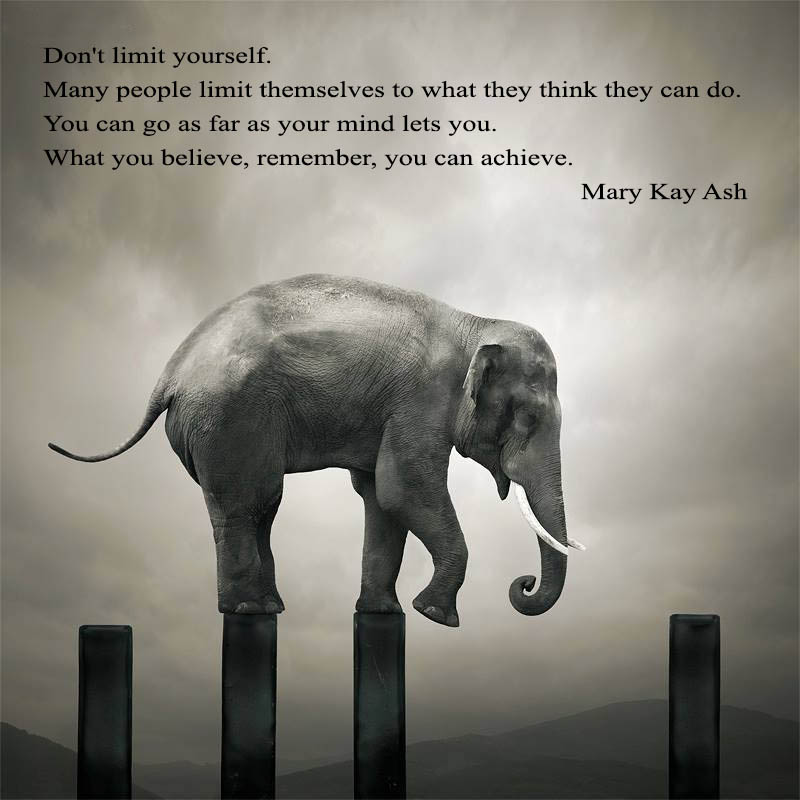
Don't limit yourself.
Many people limit themselves to what they think they can do.
You can go as far as your mind lets you.
What you believe, remember, you can achieve.
~ Mary Kay Ash ~
No I'm not an elephant... ☺
but this is Based on THIS PICTURE
Taken on the beautiful Elvion
Novigrad na Dobri castle (14th ct.), Croatia
(trying to achieve a moody film look by manipulating curves, levels and colors from the RAW file)
The Pont du Gard is an ancient Roman aqueduct that crosses the Gardon River in southern France. Located near the town of Vers-Pont-du-Gard, the bridge is part of the Nîmes aqueduct, a 50-kilometre (31 mi) system built in the first century AD to carry water from a spring at Uzès to the Roman colony of Nemausus (Nîmes). Because of the uneven terrain between the two points, the mostly underground aqueduct followed a long, winding route that called for a bridge across the gorge of the Gardon River. The Pont du Gard is the highest of all elevated Roman aqueducts, and, along with the Aqueduct of Segovia, one of the best preserved. It was added to UNESCO's list of World Heritage Sites in 1985 because of its historical importance.
The bridge has three tiers of arches, standing 48.8 m (160 ft) high. The whole aqueduct descends in height by only 17 m (56 ft) over its entire length, while the bridge descends by a mere 2.5 centimetres (1 in) – a gradient of only 1 in 3,000 – which is indicative of the great precision that Roman engineers were able to achieve, using only simple technology. The aqueduct formerly carried an estimated 200,000 m3 (44,000,000 imp gal) of water a day to the fountains, baths and homes of the citizens of Nîmes. It continued to be used possibly until the 6th century, with some parts used for significantly longer, but lack of maintenance after the 4th century meant that it became increasingly clogged by mineral deposits and debris that eventually choked off the flow of water.
Samstag maritim – Warnemünde gestern, am 13.01.2023 – gegen 16.30 Uhr passiert der Autotransporter „“AUTO ACHIEVE“ die beiden Molenköpfe und läuft den Seehafen Rostock an.
Ich hatte bereits vor 3 Wochen dieses Schiff beim Erstanlauf vorgestellt, leider war es noch dunkel zum Zeitpunkt der Aufnahme und auch gestern musste ich mit dem Licht der einbrechenden Dämmerung vorliebnehmen.
Autotransporter sind eigentlich immer hässliche Schiffe, aber Form und Größe erregen immer das Interesse von Beobachtern und Fotografen. Das trifft im besonderen Maße auf die „AUTO ACHIEVE“ zu. Das Schiff ist mit 169 Meter Länge der größte Autotransporter, der Rostock anlief. Die „AUTO ACHIEVE“ ist nagelneu – erst vor vier Monaten in Dienst gestellt. Gebaut wurde das Schiff auf der Jiangnan Shipyard in Shanghai (China). Besonders ist auch der Antrieb – ein LNG-Antrieb in Verbindung mit der Hybrid-Technologie. Der Autotransporter kann 3850 Fahrzeuge mittlerer Größe transportieren.
Die „AUTO ACHIEVE“ fährt für die norwegische RoRo-Reederei UECC. Das Schiff kam von Esbjerg (Dänemark) und ist aktuell (14.01.2023) bereits wieder auf dem Weg nach Drammen (Norwegen). Der Aufenthalt in Rostock dauerte nur wenig mehr als 8 Stunden.
Allen Freunden einen guten Start in das Wochenende gewünscht.
Another experimental ICM shot from Portwrinkle beach in Cornwall. Good cloud cover and a decent surf seem to help achieve a more painterly effect..... lots to learn with this technique !!!
if you don't, you have achieved half your failure :-)
David Ambrose
HFF!!
rose, 'Dream Come True', little theater rose garden. raleigh, north carolina
Quechee, VT
10-15-2019
Photographed from the covered bridge over the river right as the three balloons from Quechee Balloon Rides begin their ascent.
My camera's sensor doesn't seem to be able to achieve this colour. I can see the spiderwort flowers from my window, so I used photo editing software to restore the colour to what it ought to be, the colour attained by the chip was more like blue.
I have in recent times been experimenting with a much 'looser' approach to my landscape photography, by going out and shooting images without a tripod. For this image I was lying on the ground to achieve a low angle. I wanted a low point of view so that I could photograph the daffodils, but to also include the local landmark of the clock tower from the University of Nottingham's Trent Building. Setting an aperture of f1.4 meant that I could focus on the flowers and throw the building nicely out of focus, yet still retain it as an instantly recognisable background and a crucial part of the whole composition.
Sagrada Família, Barcelona, España.
El Templo Expiatorio de la Sagrada Familia, conocido simplemente como la Sagrada Familia, es una basílica católica de Barcelona (España), diseñada por el arquitecto Antoni Gaudí. Iniciada en 1882, todavía está en construcción (noviembre de 2016). Es la obra maestra de Gaudí, y el máximo exponente de la arquitectura modernista catalana.
La Sagrada Familia es un reflejo de la plenitud artística de Gaudí: trabajó en ella durante la mayor parte de su carrera profesional, pero especialmente en los últimos años de su carrera, donde llegó a la culminación de su estilo naturalista, haciendo una síntesis de todas las soluciones y estilos probados hasta aquel entonces. Gaudí logró una perfecta armonía en la interrelación entre los elementos estructurales y los ornamentales, entre plástica y estética, entre función y forma, entre contenido y continente, logrando la integración de todas las artes en un todo estructurado y lógico.
La Sagrada Familia tiene planta de cruz latina, de cinco naves centrales y transepto de tres naves, y ábside con siete capillas. Ostenta tres fachadas dedicadas al Nacimiento, Pasión y Gloria de Jesús y, cuando esté concluida, tendrá 18 torres: cuatro en cada portal haciendo un total de doce por los apóstoles, cuatro sobre el crucero invocando a los evangelistas, una sobre el ábside dedicada a la Virgen y la torre-cimborio central en honor a Jesús, que alcanzará los 172,5 metros de altura. El templo dispondrá de dos sacristías junto al ábside, y de tres grandes capillas: la de la Asunción en el ábside y las del Bautismo y la Penitencia junto a la fachada principal; asimismo, estará rodeado de un claustro pensado para las procesiones y para aislar el templo del exterior. Gaudí aplicó a la Sagrada Familia un alto contenido simbólico, tanto en arquitectura como en escultura, dedicando a cada parte del templo un significado religioso.
The Expiatory Church of the Sagrada Familia, known simply as the Sagrada Familia, is a Roman Catholic basilica in Barcelona, Spain, designed by architect Antoni Gaudí. Begun in 1882, it is still under construction (November 2016). It is Gaudí's masterpiece and the greatest exponent of Catalan modernist architecture.
The Sagrada Familia is a reflection of Gaudí's artistic plenitude: he worked on it for most of his professional career, but especially in his later years, where he reached the culmination of his naturalistic style, synthesizing all the solutions and styles he had tried up to that point. Gaudí achieved perfect harmony in the interrelationship between structural and ornamental elements, between plasticity and aesthetics, between function and form, between content and container, achieving the integration of all the arts into a structured and logical whole. The Sagrada Familia has a Latin cross plan, five central naves, a three-aisled transept, and an apse with seven chapels. It boasts three façades dedicated to the Birth, Passion, and Glory of Jesus. When completed, it will have 18 towers: four at each portal, making a total of twelve for the apostles, four over the transept invoking the evangelists, one over the apse dedicated to the Virgin, and the central dome tower in honor of Jesus, which will reach 172.5 meters in height. The temple will have two sacristies next to the apse and three large chapels: the Assumption Chapel in the apse and the Baptism and Penance Chapels next to the main façade. It will also be surrounded by a cloister designed for processions and to isolate the temple from the exterior. Gaudí applied a highly symbolic content to the Sagrada Familia, both in architecture and sculpture, dedicating each part of the temple to a religious significance.
Are we spending too much time infighting politically and forgetting the real global danger to the entire world. Peace and harmony are the only solutions but in order to achieve them we must work endlessly to that goal.
Shouldn't our politicians, news organizations, technology empires and vast corporations get involved in protecting humanity and our environment?
With heartfelt and genuine thanks for your kind visit. Have a wonderful and beautiful day, be well, keep your eyes open, appreciate the beauty surrounding you, enjoy creating, stay safe and laugh often! ❤️❤️❤️
Six months in the making ...
Roughly six months ago I was looking at my lightrac and TPE apps on my phone and decided to scroll through the year to see when the sun would be rising at the arch in Bow Fiddle Rock in Portknockie. I discovered that the first week in May was the ideal time. This was on my mind ever since....staying 30 minutes drive away from Bow Fiddle I knew it could be possible for me to achieve this shot...with a little help from mother nature. The start of May was freezing cold and even had sleet / snow but with more research into the weather and tide times I calculated that on the morning of the 3rd The sun should be rising at 05:15 with a partially cloudy sky and the tide would be making its way in. So this morning I left my house at 3:45 with an ideal shot in mind. I wanted to create a shot with a sun flare in the arch ....
Sieben kecke Schnirkelschnecken
saßen einst auf einem Stecken,
machten dort auf ihrem Sitze
kecke Schnirkelschneckenwitze.
Lachten alle so:
"Ho, ho, ho, ho, ho!"
Doch vor lauter Ho-ho-Lachen,
Schnirkelschneckenwitze-Machen,
fielen sie von ihrem Stecken:
alle sieben Schnirkelschnecken.
Liegen alle da.
Ha, ha, ha, ha, ha!
Josef Guggenmoos
Thank you very much for all your nice visits, comments and favourites! ❤
-------------------------------------- Story --------------------------------------
Sometimes, you might wonder if you can achieve your projects, you might think you will never make it, you might think you're not good enough to make it. Trust me, you are stronger than you think. If you really want it, you will make it, don't give up, trust yourself ! Like that little pony showing how strong she can be if a big drafty horse come towards her, she'll fight herself and show she's strong ! Never underestimate yourself.
----------------------------------- Blog Post -----------------------------------
➵ Left Pony : [Teegle] "Peanut" the Shetland Pony (available at Teegle Main Store)
➵ Coat : ~AppyBottoms~ Teegle Texture -MrFancy Bwn (only on MP)
➵ Right Horse : [Teegle] Irish Cob Horse Avatar (available at Teegle Main Store)
➵ Coat : ~AppyBottoms~ Teegle Texture -MrFancy Blk (only on MP)
➵ Eyes : :AppyBottoms: TeeglePet - DeepApp Eyes
➵ Legs feathers : :AppyBottoms: TeeglePet LeggyFluff (Irish Cob)
Can be found at AppyBottoms @ Teegle Mall
Also at AppyBottoms Mainstore
Never stop achieving your goals... even if others try to modify your essence...
BODY TATTOO
Landgraff - Sirius Cyberware Tattoo
TOKYO ZERO- Goth Round / OPEN MAR 10TH 8:00 AM SLT
As you know by now, I love when artists use music to tell a story, weaving the music and the lyrics into a tale filled with emotion and colours. Don McLean is one of those Artists who masterfully achieve this. Vincent is an Ode to the dutch painter Vincent Van Gogh (1853 - 1890). He struggled with mental illness all through his life and died at his own hands at the age of just 37. During his life, he barely sold any of his paintings. Which makes the fact that these days they are worth millions kind of a cruel joke. Don McLean weaved numerous paintings of VanGogh into his Lyrics, which is another nice touch
Starry, starry night
Paint your palette blue and gray
Look out on a summer's day
With eyes that know the darkness in my soul
Shadows on the hills
Sketch the trees and the daffodils
Catch the breeze and the winter chills
In colors on the snowy, linen land
Now, I understand what you tried to say to me
And how you suffered for your sanity
And how you tried to set them free
They would not listen, they did not know how
Perhaps they'll listen now
Starry, starry night
Flaming flowers that brightly blaze
Swirling clouds in violet haze
Reflect in Vincent's eyes of china blue
Colors changing hue
Morning fields of amber grain
Weathered faces lined in pain
Are soothed beneath the artist's loving hand
Now, I understand, what you tried to say to me
How you suffered for your sanity
How you tried to set them free
They would not listen, they did not know how
Perhaps they'll listen now
For they could not love you
But still your love was true
And when no hope was left inside
On that starry, starry night
You took your life as lovers often do
But I could have told you, Vincent
This world was never meant for one
As beautiful as you
Starry, starry night
Portraits hung in empty halls
Frameless heads on nameless walls
With eyes that watch the world and can't forget
Like the strangers that you've met
The ragged men in ragged clothes
The silver thorn of bloody rose
Lie crushed and broken on the virgin snow
Now, I think I know what you tried to say to me
How you suffered for your sanity
How you tried to set them free
They would not listen, they're not listening still
Perhaps they never will
A Hymn of God's words "Results of God's Work in the Last Days Are Achieved Through the Word"
www.holyspiritspeaks.org/videos/hymn-results-of-god-work/
Introduction
The results of God's Work in the last days are achieved through the word, through the word. The word helps man understand mysteries and God's work throughout history. It brings man enlightenment of , and knowledge of mysteries sealed for centuries. It explains the work of prophets and apostles and the rules when they carried it out. The word makes man know God's disposition, as well as his own rebelliousness and substance. Through these steps of work and all words spoken, man comes to know the work of the Spirit, and know the work of God's incarnate flesh, moreover the entirety of His disposition. Your knowledge of God's 6,000-year work was also attained through the word. Know your old notions and put them aside— was not it too attained through the word? In the previous stage Jesus displayed miracles, but it's not so in this last stage. Wasn't it through the word that you finally understood why you don't see any signs now? The words spoken in this stage surpass work done by apostles and the prophets of the past. Even for prophecies made by the prophets, such results could not have come to pass. The prophets only prophesied what would happen in the future, but not of the work God was to do at the time. They didn't speak to lead man, bestow truth, reveal mysteries, and much less did they speak, and much less did they speak to bestow life. Words spoken in this stage contain prophecy and truth, but mainly serve to bestow life upon man. Unlike the prophecies of the prophets, the words at present are a stage of work for man's life, to change his disposition.
from "The Mystery of the Incarnation (4)" in The Word Appears in the Flesh
Recommended for You:Christian Music Video
Image Source: The Church of Almighty God
Terms of Use: en.godfootsteps.org/disclaimer.html
On one of our outtings earlier this year, Jannie was encouraged to "go find a stick" in the nearby woods. This is what he found...
Taken in April 2007.
This Brown Pelican was seen at Malibu Lagoon State Beach. It took a while to achieve take-off, but it was worth it.
Its been raining all day and we're supposed to get rain 7 days straight-we definitely need it. Snow in the mountains.
This is an orchard I took before Spring-it's always fun to add textures-you never know what magic you can achieve.
I made 3 new galleries tonight- one with hydrangeas & bird nests
another one about calm and peaceful moments & the other one about Spring-I haventadded quotes or poetry to them yet-it's late I need to get some sleep-but I will add them later
Check them out-you may have some images in there- I love them-it's so much fun to do...... have a good rest of the week!
We only have two or three snowdrops in the front garden, but I managed to find a clump of tight buds at the end of the back garden. Picked three, and kept them indoors for a day os so to encourage a little opening, then gradually frozen in layers of water. The buds were surprisingly uncooperative, and kept floating, which ruined the effect I wanted. Finally achieved an encased bud withour it escaping onto a closer plane of focus.
The ice was thicker underneath, so I played around with back-lighting from a torch. I enjoyed the way the tiny bubbles followed the line of the bud, giving it an almost predatory Triffid-like look?
Mcro Mondays "In Ice". This flower is less than 1" long.
A better one for the Treasure Hunt 18: Bud
Peace cannot be kept by force. It can only be achieved by understanding.
Albert Einstein
Thank you for your kind visit. Have a wonderful and beautiful day! ❤️❤️❤️
No use of filters in this shot, just f/16 with 3 bracketed exposures,nothing i like better is to come down to this wonderful place as the tide was coming in, i know i have shot this loads of times but i'm just capturing an image with some nice movement, the light was also fading fast hence the under exposed shot at f/16 was about 4 seconds, giving that foreground just enough movement, i think the same shot taken with 1 normal exposure would not give you the same effect, it really is worth while practicing these type of seascape images, you never know what you might achieve
being is not doing
being is not achieving or aspiring
being is not growing
nor is it receding
not ebbing nor flowing
being is not becoming
being is not transformation
being is not the result of some positive fixation
nor is it the consequence of any particularly negative experience
it’s not static
nor dynamic
not passive
not active
being is not existing simply ‘because’
it's not autonomic
not rote
not step by step by step by step
not part of an incomprehensible process
being is not grand
nor is it insignificant
being is not an outward and visible sign
nor is it a higher order of consciousness
nor the zen of zen-ness
being is not egocentric
nor is it selfish
nor is it gracious
it’s not inclusive
nor is it exclusive
it’s not existential
nor is it nihilistic
being is not a method
not a path to connection
nor connection itself
nor disconnection
nor isolation
being is not anti anything
nor is it pro anything
nor is it any thing, really, at all
there is no sadness
there is no joy
no silence
no noise
no color
no shape
there is no light
there is no shadow
no desire
no longing
no brief interruption
no expectation
in being
littletinperson
To view more of my images, taken at Fowey, in Cornwall, please click "here" !
From very deep in the Achieves!
Please, do not insert images, and or group invites; thank you!
Bodinnick (meaning fortified dwelling) is a riverside village in south-east Cornwall, in the United Kingdom. According to the Post Office the population of the 2011 Census was included in the civil parish of Lanteglos-by-Fowey. It is a fishing village situated on the east bank of the River Fowey opposite the town of Fowey, also on the banks of the Fowey River. The ferry crossing is from Fowey to Bodinnick and the "Old Ferry Inn" is located on its bank glorified as "in the heart of Du Maurier country". This ferry terminal is said to have existed since the 13th century.
Fowey is a small town, civil parish and cargo port at the mouth of the River Fowey in south Cornwall, England, United Kingdom. At the time of the 2001 census, it had a population of 2,273.This had increased slightly at the 2011 census to 2,395 The Fowey electoral ward had a population of 4,690 in 2011. The Domesday Book survey at the end of the 11th century records manors at Penventinue and Trenant, and a priory was soon established nearby at Tywardreath. Circa 1300 the prior granted a charter to people living in Fowey itself. This medieval town ran from a north gate near Boddinick Passage to a south gate at what is now Lostwithiel Street; the town extended a little way up the hillside and was bounded on the other side by the river where merchants had their houses backing onto the waterfront. The natural harbour allowed trade to develop with Europe and local ship owners often hired their vessels to the king to support various wars, although the town also developed a reputation for piracy, as did many others at this time. A group of privateers known as the 'Fowey Gallants' were given licence to seize French vessels during the Hundred Years' War. In the 14th century the harbour was defended by 160 archers; after these were withdrawn, two blockhouses were built on either side of the harbour entrance. Despite these defences the town was attacked by French forces in 1457. Place House, by the church, was successfully defended against the French but subsequently strengthened. This building still exists, but much remodelled. A small castle was built on St Catherine’s Point, the western side of the harbour entrance, around 1540. The defences proved their worth when a Dutch attack was beaten off in 1667. The people of Fowey generally sided with the Royalists during the English Civil War, but in 1644 the Earl of Essex brought a Parliamentarian army to Lostwithiel and occupied the peninsula around Fowey. In August, a Royalist army surrounded Essex’s troops and King Charles I himself viewed Fowey from Hall Walk above Polruan, where he came close to being killed by a musket shot. On 31 August, the Parliamentarian cavalry forced their way through the Royalist lines and retreated towards Saltash, leaving the foot soldiers to be evacuated by sea from Fowey. Essex and some officers did indeed escape, but the majority of the force surrendered a few days later near Golant and were then marched to Poole, but most died before reaching there. The fortunes of the harbour became much reduced, with trade going to Plymouth and elsewhere instead. Fishing became more important, but local merchants were often appointed as privateers and did some smuggling on the side. Tin, copper and iron mines, along with quarries and china clay pits became important industries in the area which lead to improvements at rival harbours. West Polmear beach was dug out to become Charlestown harbour circa 1800, as was Pentewan in 1826 Joseph Austen shipped copper from Caffa Mill Pill above Fowey for a while before starting work on the new Par harbour in 1829. Fowey had to wait another forty years before it saw equivalent development, but its natural deep-water anchorage and a rail link soon gave it an advantage over the shallow artificial harbours nearer to the mines and china clay works. Meanwhile, a beacon tower was erected on the Gribben Head by Trinity House to improve navigation into Fowey and around Par bay. The Fowey Harbour Commissioners were established by an Act of Parliament in 1869, to develop and improve the harbour. On 1 June in that year, the 7 ft (2,134 mm) broad gauge Lostwithiel and Fowey Railway was opened to new jetties situated above Carne Point, and in 1873, the 4 ft 8 1⁄2 in (1,435 mm) standard gauge Cornwall Minerals Railway (CMR) opened a line from Newquay and Par to further jetties between Caffa Mill Pill and Carne Point. Both of these railways initially carried just goods, but on 20 June 1876, a passenger station was opened on the CMR on land reclaimed from Caffa Mill Pill. The Lostwithiel line closed at the end of 1879 but was reopened by the CMR as a standard gauge line in 1895, and the short gap between the two lines at Carne Point was eliminated. Passenger trains from Par were withdrawn after 1934 and from Lostwithiel in 1965. The Par line was subsequently converted to a dedicated roadway for lorries bringing china clay from Par after which all trains had to run via Lostwithiel.
From Wikipedia, the free encyclopedia
ENERCON's E-115 E2/3,2 MW achieves high output even in the partial load range and is therefore predestined for inland sites with low wind conditions.
Gearless, variable speed, single blade adjustment
Height: 149 m
Rotor diameter: 115,7 m
Rated power: 3,200 kW
The clock tower on the Old Town in Dubrovnik :)
The bell tower (clock tower), located on Luža Square at the end of the Stradun street, the tower is 31 metres high. Originally constructed in 1444, the tower suffered damage in the 1667 Dubrovnik earthquake among other earthquakes and, having started to lean towards the Stradun in the early 19th century, it was demolished in 1928 and entirely rebuilt to the original design in 1929. It was damaged again in the 1979 Montenegro earthquake, and restored in 1987–1988. The bronze bell which strikes the hours was cast in 1506 by Ivan Rabljanin.
Dubrovnik is a city in southern Dalmatia, Croatia, by the Adriatic Sea. It was historically known as Ragusa. It is one of the most prominent tourist destinations in the Mediterranean, a seaport and the centre of the Dubrovnik-Neretva County. The history of the city probably dates back to the 7th century, when the town known as Ragusa was founded by refugees from Epidaurum (Ragusa Vecchia). It was under the protection of the Byzantine Empire and later under the sovereignty of the Republic of Venice. Between the 14th and 19th centuries, Dubrovnik ruled itself as a free state. The prosperity of the city was historically based on maritime trade; as the capital of the maritime Republic of Ragusa, it achieved a high level of development, particularly during the 15th and 16th centuries, as it became notable for its wealth and skilled diplomacy. Dubrovnik in the medieval scale was a spacious city. From the beginning of its existence, the city was surrounded by defensive walls, which were constantly extended and raised until they formed a powerful fortress. Later the Republic gradually declined due to a combination of a Mediterranean shipping crisis and the catastrophic earthquake of 1667. In 1939, Dubrovnik became part of the newly created Banovina of Croatia and under communism Dubrovnik became part of SR Croatia within SFR Yugoslavia. In 1979, the city of Dubrovnik was added to the UNESCO list of World Heritage Sites in recognition of its outstanding medieval architecture and fortified old town. In 1991, during the Croatian War of Independence, Dubrovnik suffered significant damage from shelling. After undergoing repair and restoration works in the 1990s and early 2000s, it re-emerged as one of the Mediterranean's top tourist destinations, as well as a popular filming location.
-------------------------------------------------------------------------------------
Wieża zegarowa na starówce w Dubrowniku :)
Dzwonnica (wieża zegarowa) ma 31 metrów wysokości i znajduje się na placu Luža, na końcu ulicy Stradun. Wieża, zbudowana w 1444 roku, została uszkodzona między innymi podczas trzęsienia ziemi w Dubrowniku w 1667 roku. Na początku XIX wieku zaczęła przechylać się w stronę Stradunu, dlatego w 1928 roku została zburzona, a w 1929 roku całkowicie odbudowana według oryginalnego projektu. Została ponownie uszkodzona podczas trzęsienia ziemi w Czarnogórze w 1979 roku, a następnie odrestaurowana w latach 1987-1988. Dzwon z brązu, który wybija godziny, został odlany w 1506 r. przez Iwana Rabljanina.
Dubrownik – miasto w Chorwacji, położone w południowej Dalmacji nad Morzem Adriatyckim. Centrum osadniczym i najstarszą częścią miasta (a jednocześnie jego największą atrakcją turystyczną) jest Stari Grad – Stare Miasto. Dzisiejsza nadmorska część dzielnicy Stari grad pierwotnie stanowiła wysepkę Lausa (bądź Lave) z małą osadą i kościółkiem. Po najeździe Słowian na Bałkany na początku VII wieku na wysepce osiedlili się uchodźcy ze zrujnowanego przez Słowian Epidaurum. Na lądzie stałym naprzeciw wysepki Słowianie założyli osadę Dubrovnik. Mieszkańcy obu osad żyli zgodnie, co pozwoliło w XII wieku je połączyć. Dokonano tego poprzez zasypanie przesmyku, na którego miejscu powstała główna ulica miasta – Stradun. Dubrownik w skali średniowiecznej był miastem obszernym. Miasto od początku swego istnienia było otoczone murami obronnymi, które wciąż poszerzano i podwyższano, aż utworzyły potężną twierdzę. Rozkwit miasta trwał od XIII do XVI wieku. W tym czasie powstała większość budowli i urządzeń miejskich, stanowiących dziś jego zabytki. Zmierzch Republiki Dubrownickiej i jej stolicy był skutkiem wielkiej zmiany szlaków handlowych w Europie po odkryciu Ameryki w XV wieku i utracie znaczenia gospodarczego szlaków śródziemnomorskich. Ponowny rozwój, choć powolny, zaczął się po zjednoczeniu Dalmacji i Bośni w jednym państwie – Królestwie Jugosławii w 1918. Obecnie Dubrownik jest najchętniej odwiedzanym przez turystów miastem w Chorwacji. Słynie z zabytków, architektury, lokalnej kuchni i życia nocnego. W 1979r. stare miasto w Dubrowniku zostało wpisane na Listę Światowego Dziedzictwa Kulturowego UNESCO jako unikalny w Europie, zachowany w całości układ urbanistyczny średniowiecznego miasta wraz z systemem umocnień obronnych.
Laccadives has not really achieved commercial levels in its tourism. One has to be thankful for the policies of the Indian government which prevents consumption of alcohol and presence of too many tourists, lack of fresh water and such. Not necessarily by design but it just happens to work like that.
In the developing world, wherever there are deep waters, obliging children act as divers and showmen to show off their prowess and eagerness and make some money. Laccadives was no different as the kids were having a blast hitting the cool emerald green waters at Agatti from a fishing vessel moored near the jetty.
Unlike other destinations, there was no obligatory solicitation by the participants, just pure fun.
_DSC6025 nef 2 exp
Everyone who achieves success in a great venture, solves each problem as they came to it. They helped themselves. And they were helped through powers known and unknown to them at the time they set out on their voyage. They keep going regardless of the obstacles they met.
William Clement Stone
Continuing with a series of images shot on iPhone 6s - with intentional camera movement to achieve the blur - in Tokyo last April.
Big things planned for my Tokyo photographs.
Stay tuned.
You can see more here.
Hello all, here is my last entry into the Colossal Battle Contest, into the Naval Warfare category. Only a few entries for that so far but they are impeccable, may the best MOC win. This build is one I really like, both ships and the base all being purist, with brick-built sails, LEGO rigging, and some brick-bending to achieve correct shapes. The sails also can be removed and the brig has both sides built, so more pictures will be forthcoming. Hope you like it!
"Peace cannot be kept by force, it can only be achieved by understanding." - Albert Einstein
© Rui Almeida 2011 | All rights reserved.
All photos they may not be used or reproduced without my permission. If you would like to use one of my images for commercial purposes or other reason, please contact me. Depending on the situation may have to assign the work as specified by the author.
◘ No images in comments please, or you or you can be blocked, but group invites are welcome
For the people who were wondering, why I wasn't taking pictures anymore...
I was very busy in the last 3 months with the writing of my phD-Thesis.
Today I finally submitted it!
Now I have to prepare my disputation...
and in 6 weeks from now it will be the end :) !
Vincent Van Gogh's La méridienne, also known as La sieste, d'aprés Millet was painted from December 1889 - January 1890.
The Siesta was painted while Van Gogh was interned in a mental asylum in Saint-Rémy de Provence. The composition is taken from a drawing by Millet for Four Moments in the Day. To justify his act, Vincent told his brother Theo: "I am using another language, that of colours, to translate the impressions of light and dark into black and white". Van Gogh often copied the works of Millet, who he considered to be "a more modern painter than Manet". Remaining faithful to the original composition, even down to the still life details in the foreground, Van Gogh nevertheless imposes his own style upon this restful scene which, for Millet, symbolized rural France of the 1860's. This highly personal retranscription is achieved primarily by means of a chromatic construction based on contrasting complementary colours: blue-violet, yellow-orange. Despite the peaceful nature of the subject, the picture radiates Van Gogh's unique artistic intensity.
The Musée d'Orsay (The Orsay Museum), housed in the former railway station, the Gare d'Orsay, holds mainly French art dating from 1848 to 1914, including paintings, sculptures, furniture, and photography, and is probably best known for its extensive collection of impressionist masterpieces by popular painters such as Monet and Renoir. Many of these works were held at the Galerie nationale du Jeu de Paume prior to the museum's opening in 1986.
Explore: September 15, 2007
Thanks to everyone that views and comments on my images - very much appreciated.
© ALL RIGHTS RESERVED. On all my images, Use without permission is illegal.
Sony ILCE-7RM5
Train momentum arises from the interest of the Clark brothers to achieve a better route for trade between the peoples of the interior of Argentina with the Chilean port of Valparaiso prompted to undertake this project. Besides that, by then, they themselves had tended in 1871 the first telegraphic service through mountain range between Santiago and Mendoza (Argentina).
The Trans-Andean Railroad, metric and gauge steam traction, ran from 1927 rack section between White River (Chile) and Las Cuevas (Argentina). In 1953 the tour reached Los Andes.
The tunnel of this photograph is an Argentine section from Las Cuevas to Mendoza.
In June 1984 it was out of service for freight transportation following avalanches produced in high mountain areas on both sides of the Cordillera. While the Argentine section was rebuilt, it was not the same with the Chilean stretch. Seven years later, in 1991, the last trip with passengers who arrived in the town of dust was performed.
www.mdzol.com/nota/532999-tren-trasandino-las-vias-que-qu...
Very happy that this photograph was in the FLICKR EXPLORE on May 29th.
El impulso del tren surge del interés de los hermanos Clark por lograr una mejor ruta para el intercambio comercial entre los pueblos del interior de Argentina con el puerto chileno de Valparaíso los impulsó a emprender este proyecto. Además que para ese entonces, ellos mismos habían tendido en 1871 el primer servicio telegráfico a través de la cordillera entre Santiago de Chile y Mendoza (Argentina).
El ferrocarril Trasandino, de trocha métrica y con tracción vapor, recorrió desde 1927 la sección de cremallera entre Río Blanco (Chile) y Las Cuevas (Argentina). En 1953 su recorrido llegó hasta Los Andes.
El tunel de esta foto corresponde a un tramo argentino que va desde Las Cuevas hasta Mendoza.
En junio de 1984 quedó de fuera de servicio para el transporte de cargas a raíz de los aludes producidos en zonas de alta montaña de ambos lados de la Cordillera. Si bien el tramo argentino fue reconstruido, no pasó lo mismo con el tramo chileno. Siete años después, en 1991 se realizó el último viaje con pasajeros que llegó a la localidad de polvareda.
www.mdzol.com/nota/532999-tren-trasandino-las-vias-que-qu...
Muy contento de que esta fotografía estuvo en EXPLORE DE FLICKR el 29 de mayo.
This past Sunday the New York Mets or Metropolitans fell in what the some of the local NY papers & sports radio hosts referred to as the Sunday Massacre to the Kansas City Royals in the 2015 edition of Major League Baseball’s World Series, losing the series in five games in the best of seven. Yes, I’m one of those NY Yankee fans who also root for the NY Mets, let’s face it, the Yankees made the playoff in 2015, but were in all of what, three hours before being eliminated by the Houston Astros in the American League Wildcard elimination game.
So back to the Mets, they had their ace Matt Harvey who got recognized as National League Comeback Player today after missing last season with Tommy John surgery on the mound Sunday, he gave them 8 fantastic innings, came out to pitch the 9th, that’s when the wheels came off and the Royals tied up the game, extra innings….then the Royals…well the Sunday Massacre. In reality, the Metropolitans over-achieved this year, by making it to the World Series for the first time since 2000 and for the first time in their relatively new ball park CitiFIELD in Flushing Meadow Queens which replaced Shea Stadium which was also at this location in 2009.
The Mets can trace their origins back to 1959, when a third major league was announced, the Continental League that would have professional major league clubs in the USA and Canada. It was the concept of attorney William Shea. New York City prior to 1957 had 3 professional major league baseball teams, the NY Yankees, the NY Giants and the Brooklyn Dodgers, the Giants and Dodgers both National League teams. Then the western exodus of the Giants to San Francisco and the Dodgers to Los Angeles in 1957 left the largest market in the United States with one team. NYC Mayor Wagner put together a four man committee to officially bring a National League Club to New York City. The new league was formed with Branch Rickey the former Dodgers president who had a hand in bringing up Jackie Robinson to major league as the president of the Dodgers. The Continental League announced opening day would be April 18, 1961. To counter the formation of this new rogue league, the existing leagues, the American and the National counter attacked, proposing expansion clubs in 4 cities. The New York Metropolitan Baseball Club Inc. was received as a member of the National League in 1961. William Shea got what many suspect he was truly after a NL club in New York and promptly stopped pushing for the Continental League and the end result was the Continental League disbanded without ever having played a game. The original stadium that was opened here in Flushing Meadows whose opening coincided with the 1964-1965 World’s Fair was named after William Shea, Shea Stadium. The Mets played there until 2009 when CitiFIELD was built in the parking lot of Shea Stadium and then Shea was torn down. Here is a link to a post I have a Shea Stadium [ flic.kr/p/ei1g3i ].
Taken with an Olympus E -5 with Olympus Digital Zuiko 14-42MM F3.5-5.6 lens, processed in Adobe Lightroom.