View allAll Photos Tagged structured
Gigaom Structure Connect conference at Mission Bay Conference Center in San Francisco, CA on Tuesday & Wednesday October 21-22, 2014.
Gigaom Structure Data event at Pier 60, Chelsea Piers in New York, NY on Wednesday March 19, 2014. (© Photo by Jakub Mosur).
Royal Tensile Structure is a leading company in Tensile Canopy Structure Manufacturer at an Affordable Price In India. Our team is fully well experienced in the Tensile Structure Market. Our team is fully well experienced in the Tensile Structure Market. We provide many types of Tensile Structure Services, Like Tensile Structure, Tensile Car Parking Structure, Tensile Swimming Pool Structure, Tensile Fabric Structure, Tensile Membrane Structure, Tensile Entrance Structure, Tensile Roof Structure, etc.
Structure Data conference at the Mission Bay Conference Center in San Francisco on Wednesday & Thursday, March 9-10, 2016
Structure Data conference at the Mission Bay Conference Center in San Francisco on Wednesday & Thursday, March 9-10, 2016
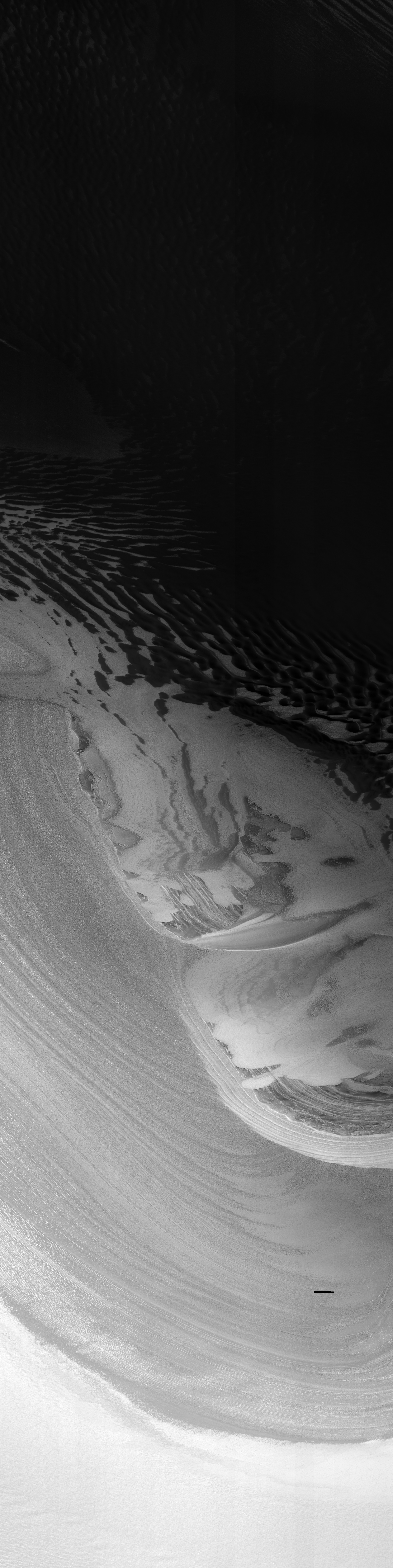
From the NASA published picture hirise-pds.lpl.arizona.edu/PDS/EXTRAS/RDR/PSP/ORB_009700_... 90 degrees clockwise and 2 times larger.
Bryce Canyon National Park is a United States National Park located in southwestern Utah. The major feature of the park is Bryce Canyon, which despite its name, is not a canyon, but a collection of giant natural amphitheaters along the eastern side of the Paunsaugunt Plateau. Bryce is distinctive due to geological structures called hoodoos, formed by frost weathering and stream erosion of the river and lake bed sedimentary rock. The red, orange, and white colors of the rocks provide spectacular views for park visitors. Bryce Canyon National Park is much smaller and sits at a much higher elevation than nearby Zion National Park. The rim at Bryce varies from 8,000 to 9,000 feet. The Bryce Canyon area was settled by Mormon pioneers in the 1850s and was named after Ebenezer Bryce, who homesteaded in the area in 1874. The area around Bryce Canyon was originally designated as a National Monument by President Warren G. Harding in 1923 and was redesignated as a National Park by Congress in 1928. The park covers 35,835 acres (55.992 sq mi; 14,502 ha; 145.02 km2) and receives substantially fewer visitors than Zion National Park (nearly 4.3 million in 2016) or Grand Canyon National Park (almost 6 million in 2016), largely due to Bryce's more remote location. In 2018, Bryce Canyon received 2,679,478 recreational visitors, an increase of 107,794 visitors from the prior year.
Native American habitation - Little is known about early human habitation in the Bryce Canyon area. Archaeological surveys of Bryce Canyon National Park and the Paunsaugunt Plateau show that people have been in the area for at least 10,000 years. basket maker Anasazi artifacts several thousand years old have been found south of the park. Other artifacts from the Pueblo-period Anasazi and the Fremont culture (up to the mid-12th century) have also been found. The Paiute Native Americans moved into the surrounding valleys and plateaus in the area around the same time that the other cultures left. These Native Americans hunted and gathered for most of their food, but also supplemented their diet with some cultivated products. The Paiute in the area developed a mythology surrounding the hoodoos (pinnacles) in Bryce Canyon. They believed that hoodoos were the Legend People whom the trickster Coyote turned to stone. At least one older Paiute said his culture called the hoodoos Anka-ku-was-a-wits, which is Paiute for "red painted faces". European American exploration and settlement - It was not until the late 18th and early 19th century that the first European Americans explored the remote and hard-to-reach area.[14] Mormon scouts visited the area in the 1850s to gauge its potential for agricultural development, use for grazing, and settlement. The first major scientific expedition to the area was led by U.S. Army Major John Wesley Powell in 1872. Powell, along with a team of mapmakers and geologists, surveyed the Sevier and Virgin River area as part of a larger survey of the Colorado Plateaus. His mapmakers kept many of the Paiute place names. Small groups of Mormon pioneers followed and attempted to settle east of Bryce Canyon along the Paria River. In 1873, the Kanarra Cattle Company started to use the area for cattle grazing. The Church of Jesus Christ of Latter-day Saints sent Scottish immigrant Ebenezer Bryce and his wife Mary to settle land in the Paria Valley because they thought his carpentry skills would be useful in the area. The Bryce family chose to live right below Bryce Amphitheater—the main collection of hoodoos in the park. Bryce grazed his cattle inside what are now park borders, and reputedly thought that the amphitheaters were a "helluva place to lose a cow." He also built a road to the plateau to retrieve firewood and timber, and a canal to irrigate his crops and water his animals. Other settlers soon started to call the unusual place "Bryce's Canyon", which was later formalized into Bryce Canyon. A combination of drought, overgrazing, and flooding eventually drove the remaining Paiutes from the area and prompted the settlers to attempt construction of a water diversion channel from the Sevier River drainage. When that effort failed, most of the settlers, including the Bryce family, left the area. Bryce moved his family to Arizona in 1880. The remaining settlers dug a 10-mile (16 km) ditch from the Sevier's east fork into Tropic Valley.
Creation of the park ¬- Bryce Canyon Lodge was built between 1924 and 1925 from local materials. These scenic areas were first described to the public in magazine articles published by Union Pacific and Santa Fe railroads in 1916. People like Forest Supervisor J. W. Humphrey promoted the scenic wonders of Bryce Canyon's amphitheaters, and by 1918 nationally distributed articles also helped to spark interest. However, poor access to the remote area and the lack of accommodations kept visitation to a bare minimum. Ruby Syrett, Harold Bowman, and the Perry brothers later built modest lodging and set up "touring services" in the area. Syrett later served as the first postmaster of Bryce Canyon. Visitation steadily increased, and by the early 1920s, the Union Pacific Railroad became interested in expanding rail service into southwestern Utah to accommodate more tourists. At the same time, conservationists became alarmed by the damage overgrazing, logging, and unregulated visitation were having on the fragile features of Bryce Canyon. A movement to have the area protected was soon started, and National Park Service Director Stephen Mather responded by proposing that Bryce Canyon be made into a state park. However, the governor of Utah and the Utah State Legislature lobbied for national protection of the area. Mather relented and sent his recommendation to President Warren G. Harding, who on June 8, 1923, declared Bryce Canyon a national monument. A road was built the same year on the plateau to provide easy access to outlooks over the amphitheaters. From 1924 to 1925, Bryce Canyon Lodge was built from local timber and stone. Members of the United States Congress started work in 1924 on upgrading Bryce Canyon's protection status from a national monument to a national park to establish Utah National Park. A process led by the Utah Parks Company for transferring ownership of private and state-held land in the monument to the federal government started in 1923. The last of the land in the proposed park's borders was sold to the federal government four years later, and on February 25, 1928, the renamed Bryce Canyon National Park was established. In 1931, President Herbert Hoover annexed an adjoining area south of the park, and in 1942 an additional 635 acres (257 ha) was added. This brought the park's total area to the current figure of 35,835 acres (14,502 ha). Rim Road, the scenic drive that is still used today, was completed in 1934 by the Civilian Conservation Corps. Administration of the park was conducted from neighboring Zion National Park until 1956 when Bryce Canyon's first superintendent started work.
Structure Data conference at the Mission Bay Conference Center in San Francisco on Wednesday & Thursday, March 9-10, 2016
Structure Data conference at the Mission Bay Conference Center in San Francisco on Wednesday & Thursday, March 9-10, 2016
An adaptively reused set of structures that once served as the various mills and warehouses of the American Tobacco Company, the American Tobacco Campus, or American Tobacco Historic District, sits on the south side of Downtown Durham. With the oldest structure dating to 1874 and the most recent construction dating to the 1950s, the district is one of the most intact examples of architecture built for the tobacco industry, and today are home to a variety of offices, shops, and restaurants.
Gigaom Structure Data event at Pier 60, Chelsea Piers in New York, NY on Wednesday March 19, 2014. (© Photo by Jakub Mosur).
Yes, I need to do some more editing on this one to get rid of the shadow in the bottom right-hand corner.
Purchased my Sony Digital Mavica Camera that operates on floppy discs years ago. Have rummaged through every bit of my house for the last week for the instruction booklet. Finally found it in last place I could possibly look. Now I can try out some of the features I have never bothered with before.
Cokesbury College, built in 1856, and originally The Masonic Female College. It has also been used as the Methodist Conference School and a public grammar school. It has been named to the National Register of Historic Places and is the site of many weddings, receptions and cultural events.