Sponsored images from 
View allAll Photos Tagged stability
Lamborghini Veneno
In the year of its 50th anniversary Automobili Lamborghini is presenting an extremely exclusive model at the 2013 Geneva Motor Show. Only three unique units of the Lamborghini Veneno will be built and sold. Its design is consistently focused on optimum aerodynamics and cornering stability, giving the Veneno the real dynamic experience of a racing prototype, yet it is fully homologated for the road. With a maximum output of 552 kW / 750 hp, the Lamborghini Veneno accelerates from 0-100 km/h in just 2.8 seconds and the top speed for this street-legal racing car stands at 355 km/h. It is priced at three million Euros plus tax - and all three units have already been sold to customers.
The Lamborghini Veneno features a twelve-cylinder power unit with a displacement of 6.5 liters, an extremely fast-shifting 7-speed ISR transmission with 5 driving modes and permanent all-wheel drive, as well as a racing chassis with pushrod suspension and horizontal spring/damper units. Above all, however, the Veneno benefits from the very special expertise that Automobili Lamborghini possesses in the development and execution of carbon-fiber materials - the complete chassis is produced as a CFRP monocoque, as is the outer skin of this extreme sports car. The inside, too, features innovative, Lamborghini-patented materials such as Forged Composite and CarbonSkin.
Fully in keeping with the tradition of the brand, the name of the Veneno originates from a legendary fighting bull. Veneno is the name of one of the strongest and most aggressive fighting bulls ever. He is also famous for being one of the fastest bulls in the history of bullfighting. His name became popular in 1914, when he fatally wounded the famous torero José Sánchez Rodríguez during the bullfight in the arena Sanlúcar de Barrameda's, Andalusia, Spain.
Lamborghini Veneno (2013)
2013 Lamborghini Veneno
The Design
The Lamborghini Veneno brings the aerodynamic efficiency of a racing prototype to the road. Every detail of its form pursues a clear function - exceptional dynamics, optimum downforce with minimal drag and perfect cooling of the high-performance engine. Yet the Veneno is unmistakably a Lamborghini; it sticks firmly to the consistent design philosophy of all the super sports cars from Sant'Agata Bolognese. That includes the extreme proportions, as well as the powerfully arrow-shaped front end and the interplay between razor-sharp lines and precise surfaces.
The entire front end of the Lamborghini Veneno has been laid out for perfect airflow and downforce. The front end works as a large aerodynamic wing. Large channels guide the air to the outlets in the front hood and in front of the windshield, as well as to the front wheels. Characteristic for Lamborghini is the Y shape of the angular headlamps that reach well into the fenders as well as the scissor doors.
The division of the fenders from the car body is a reference to the world of sport prototypes and optimizes at the same time the aerodynamic flow. The side line of the Veneno is therefore dominated by enormous sills and the mighty wheel arches front and rear. Here, too, sophisticated aerodynamics ensure perfect airflow to the large openings for engine cooling and intake air.
Just like the front end, the rear of the Lamborghini Veneno has also been optimized for underbody aerodynamics and high speed cornering stability. The smooth underbody transitions into a substantial diffuser framing the four sizable exhaust pipes divided by a splitter to increase the level of downforce peak. Large openings serve to ventilate the engine bay and manage the airflow to the rear wing, with the only sealed area at the rear being reserved for the license plate. The rear lights, including brake lights, indicator lights and fog lights, pick up the Y theme as well. The engine cover sports six wedge-shaped openings, with the focus here, too, on optimum dissipation of heat from the engine. The engine cover extends into a large central "shark" fin, which improves efficiency during braking and rear-end stability, by delivering additional downforce at high yaw angles and thus increasing the high-speed cornering performance.
The adjustable rear wing's design is the product of Motorsport experience and extensive aerodynamic simulation to ensure the best performance of rear wing interaction with rear diffuser air flow.
The exclusive alloy wheels measure 20 inches at the front and 21 inches at the rear and are equipped with center mountings. Their design is also determined by aerodynamic functionality - a carbon-fiber ring around the wheel rim works like a turbine to deliver additional cooling air to the carbon-ceramic brake discs.
The Lamborghini Veneno is painted in an all-new, grey metallic-look color with individual parts gleaming in the black of the visible carbon-fiber structure. The only car to display all three colors of the Italian flag as an accent is the car shown at Geneva, the unit which will remain property of Lamborghini. The three cars sold to customers each feature a single color of the Italian national flag, together a triology in green, white and red accents and thus representing each a unique piece.
The Technology
The Veneno is further proof of Automobili Lamborghini's unique competence in CFRP-based lightweight design. A monocoque made from carbon-fiber reinforced polymer forms the basis of the Veneno. It is largely similar to the Aventador monocoque - as are the aluminum sub-frames front and rear - although its form has been adapted to the new design. All exterior parts are made from CFRP. The Lamborghini Veneno meets all safety and registration requirements worldwide, and naturally also incorporates a full complement of safety systems from airbags through to the adapted ESP handling system.
Carbon fiber dominates the interior of the Lamborghini Veneno, too. The carbon fiber monocoque becomes visible inside the car in the area of the central tunnel and the sills. The two lightweight bucket seats are made from Lamborghini's patented Forged Composite. The woven carbon-fiber CarbonSkin® is used to clad the entire cockpit, part of the seats and the headliner. This unique material is soaked in a very special kind of resin that stabilizes the fiber structure, while allowing the material to remain supple. Like a hi-tech fabric, this extremely fine-looking carbon-fiber matting fits perfectly to any form, and it reduces weight.
The racing personality has been transferred also to the instrument panel. It has been completely redesigned and now, thanks to an aggressive graphics and to the introduction of some additional features like the G-meter, provides all necessary information to the driver for control of the car.
The systematic, carbon-fiber, lightweight design of the Lamborghini Veneno is not only visible, it is also evident on the scales: With a dry weight of just 1,450 kilograms (3,190 pounds), the Veneno is even 125 kilos (275 pounds) lighter than the already extremely lean Aventador. The highly beneficial power-to-weight ratio of 1.93 kg/hp (4,25 lbs/hp) guarantees a performance that is nothing short of mind-blowing. Even the stunning acceleration figure of 2,8 seconds cannot adequately describe it. Despite an aerodynamic setup configured for extreme downforce, the Veneno possesses exceptionally low wind resistance which allows it to reach a top speed of 355 km/h (221 mph).
The twelve-cylinder with a displacement of 6.5 liters is a thrilling combination of absolute high-revving frenzy and phenomenal pulling power. Its output has been raised to 552 kW / 750 hp, facilitated through enlarged intake paths, optimized thermodynamics, a slightly higher rated rpm and an exhaust system with even lower back pressure. The ISR manual gearbox, permanent all-wheel drive and pushrod suspension have all been specifically adjusted to meet the demands of the Lamborghini Veneno.
The Lamborghini Veneno celebrates its first public appearance at the 2013 Geneva Motor Show. The vehicle on show is the number 0, the Lamborghini test vehicle. Its future has not been determined yet, but it will allow Lamborghini to continue its activity of testing and innovation, both on the road and on the race track. The trilogy made of three unique vehicles will be produced in the course of the year 2013 and handed over to their future owners.
U.S. Army Africa photo by Sgt. 1st Class Kyle Davis
U.S. Africa Command (AFRICOM) hosted its second annual C4ISR Senior Leaders Conference Feb. 2-4 at Caserma Ederle, headquarters of U.S. Army Africa, in Vicenza, Italy.
The communications and intelligence community event, hosted by Brig. Gen. Robert Ferrell, AFRICOM C4 director, drew approximately 80 senior leaders from diverse U.S. military and government branches and agencies, as well as representatives of African nations and the African Union.
“The conference is a combination of our U.S. AFRICOM C4 systems and intel directorate,” said Ferrell. “We come together annually to bring the team together to work on common goals to work on throughout the year. The team consists of our coalition partners as well as our inter-agency partners, as well as our components and U.S. AFRICOM staff.”
The conference focused on updates from participants, and on assessing the present state and goals of coalition partners in Africa, he said.
“The theme for our conference is ‘Delivering Capabilities to a Joint Information Environment,’ and we see it as a joint and combined team ... working together, side by side, to promote peace and stability there on the African continent,” Ferrell said.
Three goals of this year’s conference were to strengthen the team, assess priorities across the board, and get a better fix on the impact that the establishment of the U.S. Cyber Command will have on all members’ efforts in the future, he said.
“With the stand-up of U.S. Cyber Command, it brings a lot of unique challenges that we as a team need to talk through to ensure that our information is protected at all times,” Ferrell said.
African Union (AU) representatives from four broad geographic regions of Africa attended, which generated a holistic perspective on needs and requirements from across the continent, he said.
“We have members from the African Union headquarters that is located in Addis Ababa, Ethiopia; we have members that are from Uganda; from Zambia; from Ghana; and also from the Congo. What are the gaps, what are the things that we kind of need to assist with as we move forward on our engagements on the African continent?” Ferrell said.
U.S. Army Africa Commander, Maj. Gen. David R. Hogg, welcomed participants as the conference got under way.
“We’re absolutely delighted to be the host for this conference, and we hope that this week you get a whole lot out of it,” said Hogg.
He took the opportunity to address the participants not only as their host, but from the perspective of a customer whose missions depend on the results of their efforts to support commanders in the field.
“When we’re talking about this group of folks that are here — from the joint side, from our African partners, from State, all those folks — it’s about partnership and interoperability. And every commander who’s ever had to fight in a combined environment understands that interoperability is the thing that absolutely slaps you upside the head,” Hogg said.
“We’re in the early stages of the process here of working with the African Union and the other partners, and you have an opportunity to design this from the end state, versus just building a bunch of ‘gunkulators.’ And so, the message is: think about what the end state is supposed to look like and construct the strategy to support the end state.
“Look at where we want to be at and design it that way,” Hogg said.
He also admonished participants to consider the second- and third-order effects of their choices in designing networks.
“With that said, over the next four days, I hope this conference works very well for you. If there’s anything we can do to make your stay better, please let us know,” Hogg said.
Over the following three days, participants engaged in a steady stream of briefings and presentations focused on systems, missions and updates from the field.
Col. Joseph W. Angyal, director of U.S. Army Africa G-6, gave an overview of operations and issues that focused on fundamentals, the emergence of regional accords as a way forward, and the evolution of a joint network enterprise that would serve all interested parties.
“What we’re trying to do is to work regionally. That’s frankly a challenge, but as we stand up the capability, really for the U.S. government, and work through that, we hope to become more regionally focused,” he said.
He referred to Africa Endeavor, an annual, multi-nation communications exercise, as a test bed for the current state of affairs on the continent, and an aid in itself to future development.
“In order to conduct those exercises, to conduct those security and cooperation events, and to meet contingency missions, we really, from the C4ISR perspective, have five big challenges,” Angyal said.
“You heard General Hogg this morning talk about ‘think about the customer’ — you’ve got to allow me to be able to get access to our data; I’ve got to be able to get to the data where and when I need it; you’ve got to be able to protect it; I have to be able to share it; and then finally, the systems have to be able to work together in order to build that coalition.
“One of the reasons General Ferrell is setting up this joint information enterprise, this joint network enterprise . . . it’s almost like trying to bring together disparate companies or corporations: everyone has their own system, they’ve paid for their own infrastructure, and they have their own policy, even though they support the same major company.
“Now multiply that when you bring in different services, multiply that when you bring in different U.S. government agencies, and then put a layer on top of that with the international partners, and there are lots of policies that are standing in our way.”
The main issue is not a question of technology, he said.
“The boxes are the same — a Cisco router is a Cisco router; Microsoft Exchange server is the same all over the world — but it’s the way that we employ them, and it’s the policies that we apply to it, that really stops us from interoperating, and that’s the challenge we hope to work through with the joint network enterprise.
“And I think that through things like Africa Endeavor and through the joint enterprise network, we’re looking at knocking down some of those policy walls, but at the end of the day they are ours to knock down. Bill Gates did not design a system to work only for the Army or for the Navy — it works for everyone,” Angyal said.
Brig. Gen. Joseph Searyoh, director general of Defense Information Communication Systems, General Headquarters, Ghana Armed Forces, agreed that coordinating policy is fundamental to improving communications with all its implications for a host of operations and missions.
“One would expect that in these modern times there is some kind of mutual engagement, and to build that engagement to be strong, there must be some kind of element of trust. … We have to build some kind of trust to be able to move forward,” said Searyoh.
“Some people may be living in silos of the past, but in the current engagement we need to tell people that we are there with no hidden agenda, no negative hidden agenda, but for the common good of all of us.
“We say that we are in the information age, and I’ve been saying something: that our response should not be optional, but it must be a must, because if you don’t join now, you are going to be left behind.
“So what do we do? We have to get our house in order.
“Why do I say so? We used to operate like this before the information age; now in the information age, how do we operate?
“So, we have to get our house in order and see whether we are aligning ourselves with way things should work now. So, our challenge is to come up with a strategy, see how best we can reorganize our structures, to be able to deliver communications-information systems support for the Ghana Armed Forces,” he said.
Searyoh related that his organization has already accomplished one part of erecting the necessary foundation by establishing an appropriate policy structure.
“What is required now is the implementing level. Currently we have communications on one side, and computers on one side. The lines are blurred — you cannot operate like that, you’ve got to bring them together,” he said.
Building that merged entity to support deployed forces is what he sees as the primary challenge at present.
“Once you get that done you can talk about equipment, you can talk about resources,” Searyoh said. “I look at the current collaboration between the U.S. and the coalition partners taking a new level.”
“The immediate challenges that we have is the interoperability, which I think is one of the things we are also discussing here, interoperability and integration,” said Lt. Col. Kelvin Silomba, African Union-Zambia, Information Technology expert for the Africa Stand-by Force.
“You know that we’ve got five regions in Africa. All these regions, we need to integrate them and bring them together, so the challenge of interoperability in terms of equipment, you know, different tactical equipment that we use, and also in terms of the language barrier — you know, all these regions in Africa you find that they speak different languages — so to bring them together we need to come up with one standard that will make everybody on board and make everybody able to talk to each other,” he said.
“So we have all these challenges. Other than that also, stemming from the background of these African countries, based on the colonization: some of them were French colonized, some of them were British colonized and so on, so you find that when they come up now we’ve adopted some of the procedures based on our former colonial masters, so that is another challenge that is coming on board.”
The partnership with brother African states, with the U.S. government and its military branches, and with other interested collaborators has had a positive influence, said Silomba.
“Oh, it’s great. From the time that I got engaged with U.S. AFRICOM — I started with Africa Endeavor, before I even came to the AU — it is my experience that it is something very, very good.
“I would encourage — I know that there are some member states — I would encourage that all those member states they come on board, all of these regional organizations, that they come on board and support the AFRICOM lead. It is something that is very, very good.
“As for example, the African Union has a lot of support that’s been coming in, technical as well as in terms of knowledge and equipment. So it’s great; it’s good and it’s great,” said Salimba.
Other participant responses to the conference were positive as well.
“The feedback I’ve gotten from every member is that they now know what the red carpet treatment looks like, because USARAF has gone over and above board to make sure the environment, the atmosphere and the actual engagements … are executed to perfection,” said Ferrell. “It’s been very good from a team-building aspect.
“We’ve had very good discussions from members of the African Union, who gave us a very good understanding of the operations that are taking place in the area of Somalia, the challenges with communications, and laid out the gaps and desires of where they see that the U.S. and other coalition partners can kind of improve the capacity there in that area of responsibility.
“We also talked about the AU, as they are expanding their reach to all of the five regions, of how can they have that interoperability and connectivity to each of the regions,” Ferrell said.
“(It’s been) a wealth of knowledge and experts that are here to share in terms of how we can move forward with building capacities and capabilities. Not only for U.S. interests, but more importantly from my perspective, in building capacities and capabilities for our African partners beginning with the Commission at the African Union itself,” said Kevin Warthon, U.S. State Department, peace and security adviser to the African Union.
“I think that General Ferrell has done an absolutely wonderful thing by inviting key African partners to participate in this event so they can share their personal experience from a national, regional and continental perspective,” he said.
Warthon related from his personal experience a vignette of African trust in Providence that he believed carries a pertinent metaphor and message to everyone attending the conference.
“We are not sure what we are going to do tomorrow, but the one thing that I am sure of is that we are able to do something. Don’t know when, don’t know how, but as long as our focus is on our ability to assist and to help to progress a people, that’s really what counts more than anything else,” he said.
“Don’t worry about the timetable; just focus on your ability to make a difference and that’s what that really is all about.
“I see venues such as this as opportunities to make what seems to be the impossible become possible. … This is what this kind of venue does for our African partners.
“We’re doing a wonderful job at building relationships, because that’s where it begins — we have to build relationships to establish trust. That’s why this is so important: building trust through relationships so that we can move forward in the future,” Warthon said.
Conference members took a cultural tour of Venice and visited a traditional winery in the hills above Vicenza before adjourning.
To learn more about U.S. Army Africa visit our official website at www.usaraf.army.mil
Official Twitter Feed: www.twitter.com/usarmyafrica
Official YouTube video channel: www.youtube.com/usarmyafrica
Guests chat at an informal get-together Feb. 1 in advance of the opening of the second annual U.S. Africa Command C4ISR Senior Leaders Conference in Vicenza, Italy.
U.S. Army Africa photos by David Ruderman
U.S. Africa Command (AFRICOM) hosted its second annual C4ISR Senior Leaders Conference Feb. 2-4 at Caserma Ederle, headquarters of U.S. Army Africa, in Vicenza, Italy.
The communications and intelligence community event, hosted by Brig. Gen. Robert Ferrell, AFRICOM C4 director, drew approximately 80 senior leaders from diverse U.S. military and government branches and agencies, as well as representatives of African nations and the African Union.
“The conference is a combination of our U.S. AFRICOM C4 systems and intel directorate,” said Ferrell. “We come together annually to bring the team together to work on common goals to work on throughout the year. The team consists of our coalition partners as well as our inter-agency partners, as well as our components and U.S. AFRICOM staff.”
The conference focused on updates from participants, and on assessing the present state and goals of coalition partners in Africa, he said.
“The theme for our conference is ‘Delivering Capabilities to a Joint Information Environment,’ and we see it as a joint and combined team ... working together, side by side, to promote peace and stability there on the African continent,” Ferrell said.
Three goals of this year’s conference were to strengthen the team, assess priorities across the board, and get a better fix on the impact that the establishment of the U.S. Cyber Command will have on all members’ efforts in the future, he said.
“With the stand-up of U.S. Cyber Command, it brings a lot of unique challenges that we as a team need to talk through to ensure that our information is protected at all times,” Ferrell said.
African Union (AU) representatives from four broad geographic regions of Africa attended, which generated a holistic perspective on needs and requirements from across the continent, he said.
“We have members from the African Union headquarters that is located in Addis Ababa, Ethiopia; we have members that are from Uganda; from Zambia; from Ghana; and also from the Congo. What are the gaps, what are the things that we kind of need to assist with as we move forward on our engagements on the African continent?” Ferrell said.
U.S. Army Africa Commander, Maj. Gen. David R. Hogg, welcomed participants as the conference got under way.
“We’re absolutely delighted to be the host for this conference, and we hope that this week you get a whole lot out of it,” said Hogg.
He took the opportunity to address the participants not only as their host, but from the perspective of a customer whose missions depend on the results of their efforts to support commanders in the field.
“When we’re talking about this group of folks that are here — from the joint side, from our African partners, from State, all those folks — it’s about partnership and interoperability. And every commander who’s ever had to fight in a combined environment understands that interoperability is the thing that absolutely slaps you upside the head,” Hogg said.
“We’re in the early stages of the process here of working with the African Union and the other partners, and you have an opportunity to design this from the end state, versus just building a bunch of ‘gunkulators.’ And so, the message is: think about what the end state is supposed to look like and construct the strategy to support the end state.
“Look at where we want to be at and design it that way,” Hogg said.
He also admonished participants to consider the second- and third-order effects of their choices in designing networks.
“With that said, over the next four days, I hope this conference works very well for you. If there’s anything we can do to make your stay better, please let us know,” Hogg said.
Over the following three days, participants engaged in a steady stream of briefings and presentations focused on systems, missions and updates from the field.
Col. Joseph W. Angyal, director of U.S. Army Africa G-6, gave an overview of operations and issues that focused on fundamentals, the emergence of regional accords as a way forward, and the evolution of a joint network enterprise that would serve all interested parties.
“What we’re trying to do is to work regionally. That’s frankly a challenge, but as we stand up the capability, really for the U.S. government, and work through that, we hope to become more regionally focused,” he said.
He referred to Africa Endeavor, an annual, multi-nation communications exercise, as a test bed for the current state of affairs on the continent, and an aid in itself to future development.
“In order to conduct those exercises, to conduct those security and cooperation events, and to meet contingency missions, we really, from the C4ISR perspective, have five big challenges,” Angyal said.
“You heard General Hogg this morning talk about ‘think about the customer’ — you’ve got to allow me to be able to get access to our data; I’ve got to be able to get to the data where and when I need it; you’ve got to be able to protect it; I have to be able to share it; and then finally, the systems have to be able to work together in order to build that coalition.
“One of the reasons General Ferrell is setting up this joint information enterprise, this joint network enterprise . . . it’s almost like trying to bring together disparate companies or corporations: everyone has their own system, they’ve paid for their own infrastructure, and they have their own policy, even though they support the same major company.
“Now multiply that when you bring in different services, multiply that when you bring in different U.S. government agencies, and then put a layer on top of that with the international partners, and there are lots of policies that are standing in our way.”
The main issue is not a question of technology, he said.
“The boxes are the same — a Cisco router is a Cisco router; Microsoft Exchange server is the same all over the world — but it’s the way that we employ them, and it’s the policies that we apply to it, that really stops us from interoperating, and that’s the challenge we hope to work through with the joint network enterprise.
“And I think that through things like Africa Endeavor and through the joint enterprise network, we’re looking at knocking down some of those policy walls, but at the end of the day they are ours to knock down. Bill Gates did not design a system to work only for the Army or for the Navy — it works for everyone,” Angyal said.
Brig. Gen. Joseph Searyoh, director general of Defense Information Communication Systems, General Headquarters, Ghana Armed Forces, agreed that coordinating policy is fundamental to improving communications with all its implications for a host of operations and missions.
“One would expect that in these modern times there is some kind of mutual engagement, and to build that engagement to be strong, there must be some kind of element of trust. … We have to build some kind of trust to be able to move forward,” said Searyoh.
“Some people may be living in silos of the past, but in the current engagement we need to tell people that we are there with no hidden agenda, no negative hidden agenda, but for the common good of all of us.
“We say that we are in the information age, and I’ve been saying something: that our response should not be optional, but it must be a must, because if you don’t join now, you are going to be left behind.
“So what do we do? We have to get our house in order.
“Why do I say so? We used to operate like this before the information age; now in the information age, how do we operate?
“So, we have to get our house in order and see whether we are aligning ourselves with way things should work now. So, our challenge is to come up with a strategy, see how best we can reorganize our structures, to be able to deliver communications-information systems support for the Ghana Armed Forces,” he said.
Searyoh related that his organization has already accomplished one part of erecting the necessary foundation by establishing an appropriate policy structure.
“What is required now is the implementing level. Currently we have communications on one side, and computers on one side. The lines are blurred — you cannot operate like that, you’ve got to bring them together,” he said.
Building that merged entity to support deployed forces is what he sees as the primary challenge at present.
“Once you get that done you can talk about equipment, you can talk about resources,” Searyoh said. “I look at the current collaboration between the U.S. and the coalition partners taking a new level.”
“The immediate challenges that we have is the interoperability, which I think is one of the things we are also discussing here, interoperability and integration,” said Lt. Col. Kelvin Silomba, African Union-Zambia, Information Technology expert for the Africa Stand-by Force.
“You know that we’ve got five regions in Africa. All these regions, we need to integrate them and bring them together, so the challenge of interoperability in terms of equipment, you know, different tactical equipment that we use, and also in terms of the language barrier — you know, all these regions in Africa you find that they speak different languages — so to bring them together we need to come up with one standard that will make everybody on board and make everybody able to talk to each other,” he said.
“So we have all these challenges. Other than that also, stemming from the background of these African countries, based on the colonization: some of them were French colonized, some of them were British colonized and so on, so you find that when they come up now we’ve adopted some of the procedures based on our former colonial masters, so that is another challenge that is coming on board.”
The partnership with brother African states, with the U.S. government and its military branches, and with other interested collaborators has had a positive influence, said Silomba.
“Oh, it’s great. From the time that I got engaged with U.S. AFRICOM — I started with Africa Endeavor, before I even came to the AU — it is my experience that it is something very, very good.
“I would encourage — I know that there are some member states — I would encourage that all those member states they come on board, all of these regional organizations, that they come on board and support the AFRICOM lead. It is something that is very, very good.
“As for example, the African Union has a lot of support that’s been coming in, technical as well as in terms of knowledge and equipment. So it’s great; it’s good and it’s great,” said Salimba.
Other participant responses to the conference were positive as well.
“The feedback I’ve gotten from every member is that they now know what the red carpet treatment looks like, because USARAF has gone over and above board to make sure the environment, the atmosphere and the actual engagements … are executed to perfection,” said Ferrell. “It’s been very good from a team-building aspect.
“We’ve had very good discussions from members of the African Union, who gave us a very good understanding of the operations that are taking place in the area of Somalia, the challenges with communications, and laid out the gaps and desires of where they see that the U.S. and other coalition partners can kind of improve the capacity there in that area of responsibility.
“We also talked about the AU, as they are expanding their reach to all of the five regions, of how can they have that interoperability and connectivity to each of the regions,” Ferrell said.
“(It’s been) a wealth of knowledge and experts that are here to share in terms of how we can move forward with building capacities and capabilities. Not only for U.S. interests, but more importantly from my perspective, in building capacities and capabilities for our African partners beginning with the Commission at the African Union itself,” said Kevin Warthon, U.S. State Department, peace and security adviser to the African Union.
“I think that General Ferrell has done an absolutely wonderful thing by inviting key African partners to participate in this event so they can share their personal experience from a national, regional and continental perspective,” he said.
Warthon related from his personal experience a vignette of African trust in Providence that he believed carries a pertinent metaphor and message to everyone attending the conference.
“We are not sure what we are going to do tomorrow, but the one thing that I am sure of is that we are able to do something. Don’t know when, don’t know how, but as long as our focus is on our ability to assist and to help to progress a people, that’s really what counts more than anything else,” he said.
“Don’t worry about the timetable; just focus on your ability to make a difference and that’s what that really is all about.
“I see venues such as this as opportunities to make what seems to be the impossible become possible. … This is what this kind of venue does for our African partners.
“We’re doing a wonderful job at building relationships, because that’s where it begins — we have to build relationships to establish trust. That’s why this is so important: building trust through relationships so that we can move forward in the future,” Warthon said.
Conference members took a cultural tour of Venice and visited a traditional winery in the hills above Vicenza before adjourning.
To learn more about U.S. Army Africa visit our official website at www.usaraf.army.mil
Official Twitter Feed: www.twitter.com/usarmyafrica
Official YouTube video channel: www.youtube.com/usarmyafrica
International Monetary Fund Financial Economic Counsellor and Director of the Monetary and Capital Markets Department Tobias Adrian (C), Deputy Division Chief Evan Papageorgiou (L), Division Chief Anna Ilyina (2nd L), Deputy Director Fabio Natalucci,(2nd R) and Senior Communications Officer Randa Elnagar (R) hold a press conference on the Global Financial Stability Report at the IMF Headquarters during the 2019 IMF/World Bank Annual Meetings, October 16, 2019 in Washington, DC. IMF Staff Photograph/Stephen Jaffe
It is a surprise to learn, that before the last day of May this year, I had never been inside St Clements.
To my reckoning, I have been here twice before, neither time was the door unlocked, and so I assumed this was always the case. But as with most of the churches we visited when Simon was down, with the exception of Lower Hardres, they were all open, and I was able to add I think six interiors to my record.
St Clements is easy to reach, it is beside the A259 coast road, and is now famous for being the final resting place of Derek Jarman, I have posted shots of his grave previously.
So, with the fame, it was used in a Rank film as well, and ease of access, it is well visited, and yet, it has an air of stability and not having been renovated, at least in Victorian times. The cream coloured pews are wonderful, as is the balcony and the width and unusual structure of the church.
Over to you, John:
---------------------------------------------------------
One of the most-visited Marsh churches, built on an artificial mound to protect it from the floodwaters. There is a Norman nave enlarged by the addition of aisles in the thirteenth century. Because of its virtually unrestored state it has many items of interest, the uneven floor creating a very rural atmosphere. The two hagioscopes to either side of the chancel arch are unusually large and little more than holes knocked into the wall. The rood loft staircase discovered in the 1920s still has its medieval door-frame - a rare survival indeed. In the north chapel is the mensa of the medieval altar. The delightful altar rails are early eighteenth century and present a run of very close-set balusters. The box pews and gallery are, of later eighteenth-century date and were repainted for the Rank film, Dr Syn. The large Royal Arms of George III are dated 1800 - the lion has a particularly smug expression! An interesting and unusual sight is the font, the capitals of which are carved with different figures. They date from the fourteenth century, and are much worn, but with patience one can still pick out details of the grotesque animals. The twentieth century film-producer Derek Jarman is buried in the churchyard and is commemorated by a headstone simply bearing his signature.
www.kentchurches.info/church.asp?p=Old+Romney
Pink pews. It's just not what you expect from an otherwise conventional 12th-century village church with walls of shaggy Kent ragstone and a silver-grey shingled spire. However, St Clement's at Old Romney is full of them: handsome Georgian box pews, painted a tasteful shade of blush with black edges and white highlights. It is smart as a bandbox and looks as though it was interior-designed by Agent Provocateur. All that is missing is a cross-dressing vicar.
In fact, all that is missing is a vicar, because Old Romney – along with half of Romney Marsh's 14 medieval churches – is suffering an interregnum. The last incumbent left in October and a new one has yet to be appointed. Signs outside the churches urge visitors to contact a "Focal Minister" by phone.
"What's new?" the marsh dwellers might say. The area has a long history of neglect by the rest of Kent, let alone the rest of Britain. For centuries it was seen as remote and quite weird; alien – often dangerous – territory for outsiders. Even in medieval times, vicars appointed to local parishes often never visited them, let alone lived there.
I went to meet John Hendy, a retired teacher who is churchwarden of St George's at Ivychurch, near the middle of the marshes, and tour organiser for the Romney Marsh Historic Churches Trust. This was started by the artist John Piper, the journalist Richard Ingrams and the then Archbishop of Canterbury, Robert Runcie, among others, and has a glittering list of members.
It has raised quantities of money for restoration since its foundation in the early 1980s, when the churches were in deep decline. This spring, John is organising the first "open" guided tour – rather than the normal private group tours – of four or five marsh churches, which will be repeated in the autumn.
The name "Romney Marsh" is used collectively for four marshes – Romney, Walland, East Guildford and Denge – occupying 100 square miles of England's south-easternmost corner. The land was reclaimed over centuries from a vast lagoon of sand and shingle formed by debris sliding off the Weald.
Hamlets formed on the islets (most marsh churches are on man-made mounds) and the fertile salt marshes around fed the famous Romney Marsh sheep, or "Kents". On the coast were busy trading settlements; Hythe and Romney, and later Rye, Winchelsea and Lydd, became part of the 11th-century Confederation of Cinque Ports.
But while trade and smuggling boomed, the marshes themselves remained sparsely populated. They were riddled with dykes, ditches and drains; the instability of the land made building difficult, there were no grand estates and people got marsh ague from the standing water. The Black Death was catastrophic and there was the threat of French raids. So why are there so many fine, if often tiny, parish churches?
"Well, this church, for example, was a statement of power by its benefactor, the Archbishop of Canterbury," John explained, gesturing at St George's. "It was propaganda, rather than a reflection of the size of the population, which probably wouldn't have been very different." Church appointments were often political stepping stones; pinned to a pillar is a list of past rectors who soared to glory as bishops, archbishops and deans.
St George's is not tiny. In fact, it has an illusory quality: from the churchyard gate it looks small, with a squat, embattled tower and sturdy, rubbly walls, but past the south porch it appears to double in size, with a surprisingly long nave. It calls itself "The Cathedral of the Marshes" (mind you, so does All Saints in Lydd, whose nave is 66 feet longer, at an impressive 199 feet) and many of its characteristics are shared by other churches that I see that day.
There are the huge beams of wood and vertical "king posts" supporting the gabled roof; there are the rough, whitewashed walls that become smoother and grander in the chancel; there is a Lady Chapel with a blocked-up Early English window and medieval floor tiles in ochre, red and black, and a St Catherine's Chapel with a piscina (a stone basin with a drainage hole, down which water from the Mass was poured).
There are Georgian text boards and a royal coat of arms. Along the south wall is a long stone seat. "Originally, there would have been no pews," John said. "People would have stood or sat on straw strewn on the floor. The elderly and infirm were allowed to use the stone bench; that's where the expression 'going to the wall' comes from."
From St George's tower we could see the discreet spires of St Mary in the Marsh and Old Romney to the east and Lydd to the south-east. Brookland and Fairfield were to the west. In the distance was the smudge of Dungeness Power Station, with its daisy chains of pylons radiating across the land.
As we visited four more churches that afternoon, I was struck by their individual quirks. St Mary in the Marsh has a scratch dial – a primitive sundial, so that the bell ringer would know when to ring the Mass bell – clearly visible on its sunny south wall. St Clement's has an ancient font on pillars carved with faces and Green Men, and a door through which the image of the crucified Christ would have been taken down from the rood screen at Easter. St Augustine's at Brookland has a separate belfry, plonked beside it like a shingled rocket and a rare lead font carved with signs of the zodiac and seasonal farming tasks.
The two that moved me most, though, were the tiny church of St Thomas Becket at Fairfield, its original wattle and daub long since replaced by brick and cement, but marooned in a peaceful marshland landscape with only sheep for company; and the large church of St Nicholas at New Romney, which used be on the quayside until massive storms silted up the port in the late 13th century, destroying the town's livelihood. The pillars in the nave have a tide mark from those momentous floods.
As for the pink pews, apparently they were painted that colour by the Rank Organisation in 1963, while a film was being made about the fictional marsh resident Dr Syn (vicar by day, smuggler by night), and the parishioners liked the colour so much they decided to keep it. See? Quirky. Let's hope the new vicar measures up.
(written in 2008)
www.telegraph.co.uk/travel/destinations/europe/uk/souther...
U.S. Army Africa photo by Sgt. 1st Class Kyle Davis
U.S. Africa Command (AFRICOM) hosted its second annual C4ISR Senior Leaders Conference Feb. 2-4 at Caserma Ederle, headquarters of U.S. Army Africa, in Vicenza, Italy.
The communications and intelligence community event, hosted by Brig. Gen. Robert Ferrell, AFRICOM C4 director, drew approximately 80 senior leaders from diverse U.S. military and government branches and agencies, as well as representatives of African nations and the African Union.
“The conference is a combination of our U.S. AFRICOM C4 systems and intel directorate,” said Ferrell. “We come together annually to bring the team together to work on common goals to work on throughout the year. The team consists of our coalition partners as well as our inter-agency partners, as well as our components and U.S. AFRICOM staff.”
The conference focused on updates from participants, and on assessing the present state and goals of coalition partners in Africa, he said.
“The theme for our conference is ‘Delivering Capabilities to a Joint Information Environment,’ and we see it as a joint and combined team ... working together, side by side, to promote peace and stability there on the African continent,” Ferrell said.
Three goals of this year’s conference were to strengthen the team, assess priorities across the board, and get a better fix on the impact that the establishment of the U.S. Cyber Command will have on all members’ efforts in the future, he said.
“With the stand-up of U.S. Cyber Command, it brings a lot of unique challenges that we as a team need to talk through to ensure that our information is protected at all times,” Ferrell said.
African Union (AU) representatives from four broad geographic regions of Africa attended, which generated a holistic perspective on needs and requirements from across the continent, he said.
“We have members from the African Union headquarters that is located in Addis Ababa, Ethiopia; we have members that are from Uganda; from Zambia; from Ghana; and also from the Congo. What are the gaps, what are the things that we kind of need to assist with as we move forward on our engagements on the African continent?” Ferrell said.
U.S. Army Africa Commander, Maj. Gen. David R. Hogg, welcomed participants as the conference got under way.
“We’re absolutely delighted to be the host for this conference, and we hope that this week you get a whole lot out of it,” said Hogg.
He took the opportunity to address the participants not only as their host, but from the perspective of a customer whose missions depend on the results of their efforts to support commanders in the field.
“When we’re talking about this group of folks that are here — from the joint side, from our African partners, from State, all those folks — it’s about partnership and interoperability. And every commander who’s ever had to fight in a combined environment understands that interoperability is the thing that absolutely slaps you upside the head,” Hogg said.
“We’re in the early stages of the process here of working with the African Union and the other partners, and you have an opportunity to design this from the end state, versus just building a bunch of ‘gunkulators.’ And so, the message is: think about what the end state is supposed to look like and construct the strategy to support the end state.
“Look at where we want to be at and design it that way,” Hogg said.
He also admonished participants to consider the second- and third-order effects of their choices in designing networks.
“With that said, over the next four days, I hope this conference works very well for you. If there’s anything we can do to make your stay better, please let us know,” Hogg said.
Over the following three days, participants engaged in a steady stream of briefings and presentations focused on systems, missions and updates from the field.
Col. Joseph W. Angyal, director of U.S. Army Africa G-6, gave an overview of operations and issues that focused on fundamentals, the emergence of regional accords as a way forward, and the evolution of a joint network enterprise that would serve all interested parties.
“What we’re trying to do is to work regionally. That’s frankly a challenge, but as we stand up the capability, really for the U.S. government, and work through that, we hope to become more regionally focused,” he said.
He referred to Africa Endeavor, an annual, multi-nation communications exercise, as a test bed for the current state of affairs on the continent, and an aid in itself to future development.
“In order to conduct those exercises, to conduct those security and cooperation events, and to meet contingency missions, we really, from the C4ISR perspective, have five big challenges,” Angyal said.
“You heard General Hogg this morning talk about ‘think about the customer’ — you’ve got to allow me to be able to get access to our data; I’ve got to be able to get to the data where and when I need it; you’ve got to be able to protect it; I have to be able to share it; and then finally, the systems have to be able to work together in order to build that coalition.
“One of the reasons General Ferrell is setting up this joint information enterprise, this joint network enterprise . . . it’s almost like trying to bring together disparate companies or corporations: everyone has their own system, they’ve paid for their own infrastructure, and they have their own policy, even though they support the same major company.
“Now multiply that when you bring in different services, multiply that when you bring in different U.S. government agencies, and then put a layer on top of that with the international partners, and there are lots of policies that are standing in our way.”
The main issue is not a question of technology, he said.
“The boxes are the same — a Cisco router is a Cisco router; Microsoft Exchange server is the same all over the world — but it’s the way that we employ them, and it’s the policies that we apply to it, that really stops us from interoperating, and that’s the challenge we hope to work through with the joint network enterprise.
“And I think that through things like Africa Endeavor and through the joint enterprise network, we’re looking at knocking down some of those policy walls, but at the end of the day they are ours to knock down. Bill Gates did not design a system to work only for the Army or for the Navy — it works for everyone,” Angyal said.
Brig. Gen. Joseph Searyoh, director general of Defense Information Communication Systems, General Headquarters, Ghana Armed Forces, agreed that coordinating policy is fundamental to improving communications with all its implications for a host of operations and missions.
“One would expect that in these modern times there is some kind of mutual engagement, and to build that engagement to be strong, there must be some kind of element of trust. … We have to build some kind of trust to be able to move forward,” said Searyoh.
“Some people may be living in silos of the past, but in the current engagement we need to tell people that we are there with no hidden agenda, no negative hidden agenda, but for the common good of all of us.
“We say that we are in the information age, and I’ve been saying something: that our response should not be optional, but it must be a must, because if you don’t join now, you are going to be left behind.
“So what do we do? We have to get our house in order.
“Why do I say so? We used to operate like this before the information age; now in the information age, how do we operate?
“So, we have to get our house in order and see whether we are aligning ourselves with way things should work now. So, our challenge is to come up with a strategy, see how best we can reorganize our structures, to be able to deliver communications-information systems support for the Ghana Armed Forces,” he said.
Searyoh related that his organization has already accomplished one part of erecting the necessary foundation by establishing an appropriate policy structure.
“What is required now is the implementing level. Currently we have communications on one side, and computers on one side. The lines are blurred — you cannot operate like that, you’ve got to bring them together,” he said.
Building that merged entity to support deployed forces is what he sees as the primary challenge at present.
“Once you get that done you can talk about equipment, you can talk about resources,” Searyoh said. “I look at the current collaboration between the U.S. and the coalition partners taking a new level.”
“The immediate challenges that we have is the interoperability, which I think is one of the things we are also discussing here, interoperability and integration,” said Lt. Col. Kelvin Silomba, African Union-Zambia, Information Technology expert for the Africa Stand-by Force.
“You know that we’ve got five regions in Africa. All these regions, we need to integrate them and bring them together, so the challenge of interoperability in terms of equipment, you know, different tactical equipment that we use, and also in terms of the language barrier — you know, all these regions in Africa you find that they speak different languages — so to bring them together we need to come up with one standard that will make everybody on board and make everybody able to talk to each other,” he said.
“So we have all these challenges. Other than that also, stemming from the background of these African countries, based on the colonization: some of them were French colonized, some of them were British colonized and so on, so you find that when they come up now we’ve adopted some of the procedures based on our former colonial masters, so that is another challenge that is coming on board.”
The partnership with brother African states, with the U.S. government and its military branches, and with other interested collaborators has had a positive influence, said Silomba.
“Oh, it’s great. From the time that I got engaged with U.S. AFRICOM — I started with Africa Endeavor, before I even came to the AU — it is my experience that it is something very, very good.
“I would encourage — I know that there are some member states — I would encourage that all those member states they come on board, all of these regional organizations, that they come on board and support the AFRICOM lead. It is something that is very, very good.
“As for example, the African Union has a lot of support that’s been coming in, technical as well as in terms of knowledge and equipment. So it’s great; it’s good and it’s great,” said Salimba.
Other participant responses to the conference were positive as well.
“The feedback I’ve gotten from every member is that they now know what the red carpet treatment looks like, because USARAF has gone over and above board to make sure the environment, the atmosphere and the actual engagements … are executed to perfection,” said Ferrell. “It’s been very good from a team-building aspect.
“We’ve had very good discussions from members of the African Union, who gave us a very good understanding of the operations that are taking place in the area of Somalia, the challenges with communications, and laid out the gaps and desires of where they see that the U.S. and other coalition partners can kind of improve the capacity there in that area of responsibility.
“We also talked about the AU, as they are expanding their reach to all of the five regions, of how can they have that interoperability and connectivity to each of the regions,” Ferrell said.
“(It’s been) a wealth of knowledge and experts that are here to share in terms of how we can move forward with building capacities and capabilities. Not only for U.S. interests, but more importantly from my perspective, in building capacities and capabilities for our African partners beginning with the Commission at the African Union itself,” said Kevin Warthon, U.S. State Department, peace and security adviser to the African Union.
“I think that General Ferrell has done an absolutely wonderful thing by inviting key African partners to participate in this event so they can share their personal experience from a national, regional and continental perspective,” he said.
Warthon related from his personal experience a vignette of African trust in Providence that he believed carries a pertinent metaphor and message to everyone attending the conference.
“We are not sure what we are going to do tomorrow, but the one thing that I am sure of is that we are able to do something. Don’t know when, don’t know how, but as long as our focus is on our ability to assist and to help to progress a people, that’s really what counts more than anything else,” he said.
“Don’t worry about the timetable; just focus on your ability to make a difference and that’s what that really is all about.
“I see venues such as this as opportunities to make what seems to be the impossible become possible. … This is what this kind of venue does for our African partners.
“We’re doing a wonderful job at building relationships, because that’s where it begins — we have to build relationships to establish trust. That’s why this is so important: building trust through relationships so that we can move forward in the future,” Warthon said.
Conference members took a cultural tour of Venice and visited a traditional winery in the hills above Vicenza before adjourning.
To learn more about U.S. Army Africa visit our official website at www.usaraf.army.mil
Official Twitter Feed: www.twitter.com/usarmyafrica
Official YouTube video channel: www.youtube.com/usarmyafrica
Hosts and guests of the U.S. AFRICOM C4ISR Senior Leader Conference tour a winery in the hills above Vicenza, Italy, Feb. 3, 2011.
U.S. Army Africa photo by David Ruderman
U.S. Africa Command (AFRICOM) hosted its second annual C4ISR Senior Leaders Conference Feb. 2-4 at Caserma Ederle, headquarters of U.S. Army Africa, in Vicenza, Italy.
The communications and intelligence community event, hosted by Brig. Gen. Robert Ferrell, AFRICOM C4 director, drew approximately 80 senior leaders from diverse U.S. military and government branches and agencies, as well as representatives of African nations and the African Union.
The conference is a combination of our U.S. AFRICOM C4 systems and intel directorate,” said Ferrell. “We come together annually to bring the team together to work on common goals to work on throughout the year. The team consists of our coalition partners as well as our inter-agency partners, as well as our components and U.S. AFRICOM staff.”
The conference focused on updates from participants, and on assessing the present state and goals of coalition partners in Africa, he said.
“The theme for our conference is ‘Delivering Capabilities to a Joint Information Environment,’ and we see it as a joint and combined team ... working together, side by side, to promote peace and stability there on the African continent,” Ferrell said.
Three goals of this year’s conference were to strengthen the team, assess priorities across the board, and get a better fix on the impact that the establishment of the U.S. Cyber Command will have on all members’ efforts in the future, he said.
“With the stand-up of U.S. Cyber Command, it brings a lot of unique challenges that we as a team need to talk through to ensure that our information is protected at all times,” Ferrell said.
African Union (AU) representatives from four broad geographic regions of Africa attended, which generated a holistic perspective on needs and requirements from across the continent, he said.
“We have members from the African Union headquarters that is located in Addis Ababa, Ethiopia; we have members that are from Uganda; from Zambia; from Ghana; and also from the Congo. What are the gaps, what are the things that we kind of need to assist with as we move forward on our engagements on the African continent?” Ferrell said.
U.S. Army Africa Commander, Maj. Gen. David R. Hogg, welcomed participants as the conference got under way.
“We’re absolutely delighted to be the host for this conference, and we hope that this week you get a whole lot out of it,” said Hogg.
He took the opportunity to address the participants not only as their host, but from the perspective of a customer whose missions depend on the results of their efforts to support commanders in the field.
“When we’re talking about this group of folks that are here — from the joint side, from our African partners, from State, all those folks — it’s about partnership and interoperability. And every commander who’s ever had to fight in a combined environment understands that interoperability is the thing that absolutely slaps you upside the head,” Hogg said.
“We’re in the early stages of the process here of working with the African Union and the other partners, and you have an opportunity to design this from the end state, versus just building a bunch of ‘gunkulators.’ And so, the message is: think about what the end state is supposed to look like and construct the strategy to support the end state.
“Look at where we want to be at and design it that way,” Hogg said.
He also admonished participants to consider the second- and third-order effects of their choices in designing networks.
“With that said, over the next four days, I hope this conference works very well for you. If there’s anything we can do to make your stay better, please let us know,” Hogg said.
Over the following three days, participants engaged in a steady stream of briefings and presentations focused on systems, missions and updates from the field.
Col. Joseph W. Angyal, director of U.S. Army Africa G-6, gave an overview of operations and issues that focused on fundamentals, the emergence of regional accords as a way forward, and the evolution of a joint network enterprise that would serve all interested parties.
“What we’re trying to do is to work regionally. That’s frankly a challenge, but as we stand up the capability, really for the U.S. government, and work through that, we hope to become more regionally focused,” he said.
He referred to Africa Endeavor, an annual, multi-nation communications exercise, as a test bed for the current state of affairs on the continent, and an aid in itself to future development.
“In order to conduct those exercises, to conduct those security and cooperation events, and to meet contingency missions, we really, from the C4ISR perspective, have five big challenges,” Angyal said.
“You heard General Hogg this morning talk about ‘think about the customer’ — you’ve got to allow me to be able to get access to our data; I’ve got to be able to get to the data where and when I need it; you’ve got to be able to protect it; I have to be able to share it; and then finally, the systems have to be able to work together in order to build that coalition.
“One of the reasons General Ferrell is setting up this joint information enterprise, this joint network enterprise . . . it’s almost like trying to bring together disparate companies or corporations: everyone has their own system, they’ve paid for their own infrastructure, and they have their own policy, even though they support the same major company.
“Now multiply that when you bring in different services, multiply that when you bring in different U.S. government agencies, and then put a layer on top of that with the international partners, and there are lots of policies that are standing in our way.”
The main issue is not a question of technology, he said.
“The boxes are the same — a Cisco router is a Cisco router; Microsoft Exchange server is the same all over the world — but it’s the way that we employ them, and it’s the policies that we apply to it, that really stops us from interoperating, and that’s the challenge we hope to work through with the joint network enterprise.
“And I think that through things like Africa Endeavor and through the joint enterprise network, we’re looking at knocking down some of those policy walls, but at the end of the day they are ours to knock down. Bill Gates did not design a system to work only for the Army or for the Navy — it works for everyone,” Angyal said.
Brig. Gen. Joseph Searyoh, director general of Defense Information Communication Systems, General Headquarters, Ghana Armed Forces, agreed that coordinating policy is fundamental to improving communications with all its implications for a host of operations and missions.
“One would expect that in these modern times there is some kind of mutual engagement, and to build that engagement to be strong, there must be some kind of element of trust. … We have to build some kind of trust to be able to move forward,” said Searyoh.
“Some people may be living in silos of the past, but in the current engagement we need to tell people that we are there with no hidden agenda, no negative hidden agenda, but for the common good of all of us.
“We say that we are in the information age, and I’ve been saying something: that our response should not be optional, but it must be a must, because if you don’t join now, you are going to be left behind.
“So what do we do? We have to get our house in order.
“Why do I say so? We used to operate like this before the information age; now in the information age, how do we operate?
“So, we have to get our house in order and see whether we are aligning ourselves with way things should work now. So, our challenge is to come up with a strategy, see how best we can reorganize our structures, to be able to deliver communications-information systems support for the Ghana Armed Forces,” he said.
Searyoh related that his organization has already accomplished one part of erecting the necessary foundation by establishing an appropriate policy structure.
“What is required now is the implementing level. Currently we have communications on one side, and computers on one side. The lines are blurred — you cannot operate like that, you’ve got to bring them together,” he said.
Building that merged entity to support deployed forces is what he sees as the primary challenge at present.
“Once you get that done you can talk about equipment, you can talk about resources,” Searyoh said. “I look at the current collaboration between the U.S. and the coalition partners taking a new level.”
“The immediate challenges that we have is the interoperability, which I think is one of the things we are also discussing here, interoperability and integration,” said Lt. Col. Kelvin Silomba, African Union-Zambia, Information Technology expert for the Africa Stand-by Force.
“You know that we’ve got five regions in Africa. All these regions, we need to integrate them and bring them together, so the challenge of interoperability in terms of equipment, you know, different tactical equipment that we use, and also in terms of the language barrier — you know, all these regions in Africa you find that they speak different languages — so to bring them together we need to come up with one standard that will make everybody on board and make everybody able to talk to each other,” he said.
“So we have all these challenges. Other than that also, stemming from the background of these African countries, based on the colonization: some of them were French colonized, some of them were British colonized and so on, so you find that when they come up now we’ve adopted some of the procedures based on our former colonial masters, so that is another challenge that is coming on board.”
The partnership with brother African states, with the U.S. government and its military branches, and with other interested collaborators has had a positive influence, said Silomba.
“Oh, it’s great. From the time that I got engaged with U.S. AFRICOM — I started with Africa Endeavor, before I even came to the AU — it is my experience that it is something very, very good.
“I would encourage — I know that there are some member states — I would encourage that all those member states they come on board, all of these regional organizations, that they come on board and support the AFRICOM lead. It is something that is very, very good.
“As for example, the African Union has a lot of support that’s been coming in, technical as well as in terms of knowledge and equipment. So it’s great; it’s good and it’s great,” said Salimba.
Other participant responses to the conference were positive as well.
“The feedback I’ve gotten from every member is that they now know what the red carpet treatment looks like, because USARAF has gone over and above board to make sure the environment, the atmosphere and the actual engagements … are executed to perfection,” said Ferrell. “It’s been very good from a team-building aspect.
“We’ve had very good discussions from members of the African Union, who gave us a very good understanding of the operations that are taking place in the area of Somalia, the challenges with communications, and laid out the gaps and desires of where they see that the U.S. and other coalition partners can kind of improve the capacity there in that area of responsibility.
“We also talked about the AU, as they are expanding their reach to all of the five regions, of how can they have that interoperability and connectivity to each of the regions,” Ferrell said.
“(It’s been) a wealth of knowledge and experts that are here to share in terms of how we can move forward with building capacities and capabilities. Not only for U.S. interests, but more importantly from my perspective, in building capacities and capabilities for our African partners beginning with the Commission at the African Union itself,” said Kevin Warthon, U.S. State Department, peace and security adviser to the African Union.
“I think that General Ferrell has done an absolutely wonderful thing by inviting key African partners to participate in this event so they can share their personal experience from a national, regional and continental perspective,” he said.
Warthon related from his personal experience a vignette of African trust in Providence that he believed carries a pertinent metaphor and message to everyone attending the conference.
“We are not sure what we are going to do tomorrow, but the one thing that I am sure of is that we are able to do something. Don’t know when, don’t know how, but as long as our focus is on our ability to assist and to help to progress a people, that’s really what counts more than anything else,” he said.
“Don’t worry about the timetable; just focus on your ability to make a difference and that’s what that really is all about.
“I see venues such as this as opportunities to make what seems to be the impossible become possible. … This is what this kind of venue does for our African partners.
“We’re doing a wonderful job at building relationships, because that’s where it begins — we have to build relationships to establish trust. That’s why this is so important: building trust through relationships so that we can move forward in the future,” Warthon said.
Conference members took a cultural tour of Venice and visited a traditional winery in the hills above Vicenza before adjourning.
To learn more about U.S. Army Africa visit our official website at www.usaraf.army.mil
Official Twitter Feed: www.twitter.com/usarmyafrica
Official YouTube video channel: www.youtube.com/usarmyafrica
Elephants - symbolise stability, patience and dignity, all essential qualities for maintaining a long term relationship. Elephants are known to partner for life (some experts believe)
A Soldier with the Armed Forces of the Democratic Republic of the Congo quick reaction force (UMIR) signals an ambulance to stop during a simulated mass casualty bus crash exercise, Sept. 16 in Kinshasa, Democratic Republic of the Congo.
U.S. Army photo by Staff Sgt. Kassidy Snyder
Congolese and American medical specialists participating in MEDFLAG 10 conducted a mass casualty exercise Sept. 16 as the culminating training event of the 10-day exercise.
The exercise followed four days of humanitarian assistance to Kinshasa residents by the combined forces.
Thursday’s scenario centered on a simulated bus crash resulting in approximately 50 casualties, and highlighted Armed Forces of the Democratic Republic of the Congo’s quick reaction force (FARDC UMIR) demonstrating their techniques and skills as first responders to a catastrophe.
“My role was to check the level of bleeding and monitor the patient’s blood pressure once they arrived,” said Ndaya Lilian, a female UMIR laboratory technician. “Outside of the military I am a specialist in child delivery, and the experience and knowledge I gained over the last few weeks will help me out tremendously in the future.”
The UMIR unit demonstrated its expertise in three areas of response: picking up of casualties, triage at the advanced medical point, and a mobile surgery hospital. The hospital included three main services: emergencies, surgery room combined with intensive care and hospitalization.
As the exercise progressed, 1st Lt. Coty Sicble, a medical administrator with the North Dakota National Guard’s 814th Army Support Medical Company based in Bismarck, gave the audience a step-by-step narration of the action taking place. Sicble described the intense preparation and execution the UMIR members demonstrated during the exercise.
After the mass casualty exercise, participants conducted a closing ceremony at the Command and Staff College in Kinshasa, where the MEDFLAG 10 exercise first began Sept. 6.
“MEDFLAG 10 has taken place and was a moment of an intense scientific, technical, social and psychological communion in perfect harmony between the American forces and FARDC respective health services,” said FARDC Surgeon General Col. Gilbert Kabanda, during the closing ceremony, Sept. 17.
As part of MEDFLAG 10, U.S. and Congolese troops worked closely together to increase the combined readiness of their medical forces to respond to humanitarian emergencies. MEDFLAG is a key program in United States efforts to partner with the government of the Democratic Republic of the Congo to further the development of a professional military that is accountable to civilian authority, and provides stability and security to the people.
“We can confirm, without contradiction, that MEDFLAG 10 has achieved all its objectives assigned by both military hierarchies, American and Congolese,” said Kabanda.
To learn more about U.S. Army Africa visit our official website at www.usaraf.army.mil
Official Twitter Feed: www.twitter.com/usarmyafrica
Official Vimeo video channel: www.vimeo.com/usarmyafrica
Hosts and guests of the U.S. AFRICOM C4ISR Senior Leader Conference tour a winery in the hills above Vicenza, Italy, Feb. 3, 2011.
U.S. Army Africa photo by David Ruderman
U.S. Africa Command (AFRICOM) hosted its second annual C4ISR Senior Leaders Conference Feb. 2-4 at Caserma Ederle, headquarters of U.S. Army Africa, in Vicenza, Italy.
The communications and intelligence community event, hosted by Brig. Gen. Robert Ferrell, AFRICOM C4 director, drew approximately 80 senior leaders from diverse U.S. military and government branches and agencies, as well as representatives of African nations and the African Union.
The conference is a combination of our U.S. AFRICOM C4 systems and intel directorate,” said Ferrell. “We come together annually to bring the team together to work on common goals to work on throughout the year. The team consists of our coalition partners as well as our inter-agency partners, as well as our components and U.S. AFRICOM staff.”
The conference focused on updates from participants, and on assessing the present state and goals of coalition partners in Africa, he said.
“The theme for our conference is ‘Delivering Capabilities to a Joint Information Environment,’ and we see it as a joint and combined team ... working together, side by side, to promote peace and stability there on the African continent,” Ferrell said.
Three goals of this year’s conference were to strengthen the team, assess priorities across the board, and get a better fix on the impact that the establishment of the U.S. Cyber Command will have on all members’ efforts in the future, he said.
“With the stand-up of U.S. Cyber Command, it brings a lot of unique challenges that we as a team need to talk through to ensure that our information is protected at all times,” Ferrell said.
African Union (AU) representatives from four broad geographic regions of Africa attended, which generated a holistic perspective on needs and requirements from across the continent, he said.
“We have members from the African Union headquarters that is located in Addis Ababa, Ethiopia; we have members that are from Uganda; from Zambia; from Ghana; and also from the Congo. What are the gaps, what are the things that we kind of need to assist with as we move forward on our engagements on the African continent?” Ferrell said.
U.S. Army Africa Commander, Maj. Gen. David R. Hogg, welcomed participants as the conference got under way.
“We’re absolutely delighted to be the host for this conference, and we hope that this week you get a whole lot out of it,” said Hogg.
He took the opportunity to address the participants not only as their host, but from the perspective of a customer whose missions depend on the results of their efforts to support commanders in the field.
“When we’re talking about this group of folks that are here — from the joint side, from our African partners, from State, all those folks — it’s about partnership and interoperability. And every commander who’s ever had to fight in a combined environment understands that interoperability is the thing that absolutely slaps you upside the head,” Hogg said.
“We’re in the early stages of the process here of working with the African Union and the other partners, and you have an opportunity to design this from the end state, versus just building a bunch of ‘gunkulators.’ And so, the message is: think about what the end state is supposed to look like and construct the strategy to support the end state.
“Look at where we want to be at and design it that way,” Hogg said.
He also admonished participants to consider the second- and third-order effects of their choices in designing networks.
“With that said, over the next four days, I hope this conference works very well for you. If there’s anything we can do to make your stay better, please let us know,” Hogg said.
Over the following three days, participants engaged in a steady stream of briefings and presentations focused on systems, missions and updates from the field.
Col. Joseph W. Angyal, director of U.S. Army Africa G-6, gave an overview of operations and issues that focused on fundamentals, the emergence of regional accords as a way forward, and the evolution of a joint network enterprise that would serve all interested parties.
“What we’re trying to do is to work regionally. That’s frankly a challenge, but as we stand up the capability, really for the U.S. government, and work through that, we hope to become more regionally focused,” he said.
He referred to Africa Endeavor, an annual, multi-nation communications exercise, as a test bed for the current state of affairs on the continent, and an aid in itself to future development.
“In order to conduct those exercises, to conduct those security and cooperation events, and to meet contingency missions, we really, from the C4ISR perspective, have five big challenges,” Angyal said.
“You heard General Hogg this morning talk about ‘think about the customer’ — you’ve got to allow me to be able to get access to our data; I’ve got to be able to get to the data where and when I need it; you’ve got to be able to protect it; I have to be able to share it; and then finally, the systems have to be able to work together in order to build that coalition.
“One of the reasons General Ferrell is setting up this joint information enterprise, this joint network enterprise . . . it’s almost like trying to bring together disparate companies or corporations: everyone has their own system, they’ve paid for their own infrastructure, and they have their own policy, even though they support the same major company.
“Now multiply that when you bring in different services, multiply that when you bring in different U.S. government agencies, and then put a layer on top of that with the international partners, and there are lots of policies that are standing in our way.”
The main issue is not a question of technology, he said.
“The boxes are the same — a Cisco router is a Cisco router; Microsoft Exchange server is the same all over the world — but it’s the way that we employ them, and it’s the policies that we apply to it, that really stops us from interoperating, and that’s the challenge we hope to work through with the joint network enterprise.
“And I think that through things like Africa Endeavor and through the joint enterprise network, we’re looking at knocking down some of those policy walls, but at the end of the day they are ours to knock down. Bill Gates did not design a system to work only for the Army or for the Navy — it works for everyone,” Angyal said.
Brig. Gen. Joseph Searyoh, director general of Defense Information Communication Systems, General Headquarters, Ghana Armed Forces, agreed that coordinating policy is fundamental to improving communications with all its implications for a host of operations and missions.
“One would expect that in these modern times there is some kind of mutual engagement, and to build that engagement to be strong, there must be some kind of element of trust. … We have to build some kind of trust to be able to move forward,” said Searyoh.
“Some people may be living in silos of the past, but in the current engagement we need to tell people that we are there with no hidden agenda, no negative hidden agenda, but for the common good of all of us.
“We say that we are in the information age, and I’ve been saying something: that our response should not be optional, but it must be a must, because if you don’t join now, you are going to be left behind.
“So what do we do? We have to get our house in order.
“Why do I say so? We used to operate like this before the information age; now in the information age, how do we operate?
“So, we have to get our house in order and see whether we are aligning ourselves with way things should work now. So, our challenge is to come up with a strategy, see how best we can reorganize our structures, to be able to deliver communications-information systems support for the Ghana Armed Forces,” he said.
Searyoh related that his organization has already accomplished one part of erecting the necessary foundation by establishing an appropriate policy structure.
“What is required now is the implementing level. Currently we have communications on one side, and computers on one side. The lines are blurred — you cannot operate like that, you’ve got to bring them together,” he said.
Building that merged entity to support deployed forces is what he sees as the primary challenge at present.
“Once you get that done you can talk about equipment, you can talk about resources,” Searyoh said. “I look at the current collaboration between the U.S. and the coalition partners taking a new level.”
“The immediate challenges that we have is the interoperability, which I think is one of the things we are also discussing here, interoperability and integration,” said Lt. Col. Kelvin Silomba, African Union-Zambia, Information Technology expert for the Africa Stand-by Force.
“You know that we’ve got five regions in Africa. All these regions, we need to integrate them and bring them together, so the challenge of interoperability in terms of equipment, you know, different tactical equipment that we use, and also in terms of the language barrier — you know, all these regions in Africa you find that they speak different languages — so to bring them together we need to come up with one standard that will make everybody on board and make everybody able to talk to each other,” he said.
“So we have all these challenges. Other than that also, stemming from the background of these African countries, based on the colonization: some of them were French colonized, some of them were British colonized and so on, so you find that when they come up now we’ve adopted some of the procedures based on our former colonial masters, so that is another challenge that is coming on board.”
The partnership with brother African states, with the U.S. government and its military branches, and with other interested collaborators has had a positive influence, said Silomba.
“Oh, it’s great. From the time that I got engaged with U.S. AFRICOM — I started with Africa Endeavor, before I even came to the AU — it is my experience that it is something very, very good.
“I would encourage — I know that there are some member states — I would encourage that all those member states they come on board, all of these regional organizations, that they come on board and support the AFRICOM lead. It is something that is very, very good.
“As for example, the African Union has a lot of support that’s been coming in, technical as well as in terms of knowledge and equipment. So it’s great; it’s good and it’s great,” said Salimba.
Other participant responses to the conference were positive as well.
“The feedback I’ve gotten from every member is that they now know what the red carpet treatment looks like, because USARAF has gone over and above board to make sure the environment, the atmosphere and the actual engagements … are executed to perfection,” said Ferrell. “It’s been very good from a team-building aspect.
“We’ve had very good discussions from members of the African Union, who gave us a very good understanding of the operations that are taking place in the area of Somalia, the challenges with communications, and laid out the gaps and desires of where they see that the U.S. and other coalition partners can kind of improve the capacity there in that area of responsibility.
“We also talked about the AU, as they are expanding their reach to all of the five regions, of how can they have that interoperability and connectivity to each of the regions,” Ferrell said.
“(It’s been) a wealth of knowledge and experts that are here to share in terms of how we can move forward with building capacities and capabilities. Not only for U.S. interests, but more importantly from my perspective, in building capacities and capabilities for our African partners beginning with the Commission at the African Union itself,” said Kevin Warthon, U.S. State Department, peace and security adviser to the African Union.
“I think that General Ferrell has done an absolutely wonderful thing by inviting key African partners to participate in this event so they can share their personal experience from a national, regional and continental perspective,” he said.
Warthon related from his personal experience a vignette of African trust in Providence that he believed carries a pertinent metaphor and message to everyone attending the conference.
“We are not sure what we are going to do tomorrow, but the one thing that I am sure of is that we are able to do something. Don’t know when, don’t know how, but as long as our focus is on our ability to assist and to help to progress a people, that’s really what counts more than anything else,” he said.
“Don’t worry about the timetable; just focus on your ability to make a difference and that’s what that really is all about.
“I see venues such as this as opportunities to make what seems to be the impossible become possible. … This is what this kind of venue does for our African partners.
“We’re doing a wonderful job at building relationships, because that’s where it begins — we have to build relationships to establish trust. That’s why this is so important: building trust through relationships so that we can move forward in the future,” Warthon said.
Conference members took a cultural tour of Venice and visited a traditional winery in the hills above Vicenza before adjourning.
To learn more about U.S. Army Africa visit our official website at www.usaraf.army.mil
Official Twitter Feed: www.twitter.com/usarmyafrica
Official YouTube video channel: www.youtube.com/usarmyafrica
Aston Martin DBS is a 6.0-litre V12 powered, race-bred, two-seater shaped by the aerodynamic demands of high performance, with an exquisite interior that marries beautifully hand-finished materials with the very latest in performance technology. Race-derived materials and components and Aston Martin’s unrivalled hand-build expertise makes the DBS a luxury sports car without equal.
Aston Martin DBS Specifications:
Body:
- Two-door coupe body style with 2+0 seating
- Bonded aluminium VH structure
- Aluminium, magnesium alloy and carbon-fibre composite body
- Extruded aluminium door side-impact beams
- High Intensity Discharge headlamps (dipped beam)
- Halogen projector headlamps (main beam)
- LED rear lamps and side repeaters
Engine:
- All-alloy, quad overhead camshaft, 48-valve, 5935 cc V12. Compression ratio 10.9:1
- Front-mid mounted engine, rear-wheel drive
- Fully catalysed stainless steel exhaust system with active bypass valves
Projected Performance figures:
- Maximum power: 380 kW (510 bhp/517 PS) @ 6500 rpm
- Maximum torque: 570 Nm (420 lb ft) @ 5750 rpm
- Maximum speed: 307 km/h (191 mph)
- Acceleration: 0-100 km/h (0-62 mph) in 4.3 seconds
Transmission:
- Rear-mid mounted, six-speed manual gearbox
- Alloy torque tube with carbon-fibre propeller shaft
- Limited-slip differential
- Final-drive ratio 3.71:1
Steering:
- Rack and pinion
- Servotronic speed-sensitive power-assisted steering
- 3.0 turns lock-to-lock
- Column tilt and reach adjustment
Wheels & Tyres
Wheels:
- Front: 8.5" x 20"
- Rear: 11" x 20"
Tyres:
Pirelli P Zero
- Front: 245/35
- Rear: 295/30
Suspension:
Front:
- Independent double wishbone incorporating anti-dive geometry
- Coil springs
- Anti-roll bar and monotube adaptive dampers
Rear:
- Independent double wishbones with anti-squat and anti-lift geometry
- Coil springs
- Anti-roll bar and monotube adaptive dampers
Adaptive Damping System (ADS) with Track mode
Brakes:
Front: Ventilated carbon ceramic discs, 398 mm diameter with six-piston calipers
Rear: Ventilated carbon ceramic discs, 360 mm diameter with four-piston calipers
Dynamic Stability control (DSC) with Track mode, including anti-lock braking system (ABS), electronic brakeforce distribution (EBD), emergency brake assist (EBA) and traction control.
Dimensions:
Length: 4721 mm
Width: 1905 mm excluding door mirrors, 2060 mm including door mirrors
Height: 1280 mm
Wheelbase: 2740 mm
Fuel tank capacity: 78 litres
Weight: 1695 kg
Interior:
- Semi-aniline leather and Alcantara interior
- Matrix alloy facia trim and Iridium Silver centre console finish
- Carbon-fibre door trims and door pulls
- Auto-dimming rear-view mirror & garage door opener (USA and Canada only)
- Sports seats with ten-way electric adjustment, including height, tilt and lumbar adjustment
- Memory seats & exterior mirrors (three positions)
- Dual-stage driver/passenger front airbags
- Side airbags (sports seats only)
- Heated seats (sports seats only)
- Heated rear screen
- Automatic temperature control
- Organic Electroluminescent (OEL) displays
- Trip computer
- Cruise control
- Hard Disk Drive (HDD) satellite navigation system*1,2
- Bluetooth telephone preparation*1
- Powerfold exterior mirrors
- Front and rear parking sensors
- Tyre-pressure monitoring*1
- Alarm and immobiliser
- Remote-control central door locking and boot release
- Battery disconnect switch
- Battery conditioner
- Tracking device (UK only)
- Boot-mounted umbrella
*1 Not available in all markets
*2 Includes Traffic Messaging Channel (TMC) in Continental Europe
In-car entertainment:
- Aston Martin 700 W premium audio system with Dolby® Pro Logic II®
- MP3 player connectivity
Optional Equipment:
- Lightweight seats with six-way adjustment, including front and rear height adjust (Does not include side airbags or heated seats feature. Not available in USA or Canada)
- 20" alloy wheels with graphite finish
- Satellite radio system (USA only)
- Piano Black facia trim and centre console finish
- Leather storage saddle
- Personalised sill plaques
- Auto-dimming interior rear-view mirror*1
- Auto-dimming interior rear-view mirror with garage door opener (Europe only)
- Alarm upgrade (volumetric and tilt sensor)
- Tracking device*3
- First-aid kit
- Ashtray and cigar lighter
*1 Not available in all markets
*3 Complies with UK Thatcham Category 5 requirements. Excludes subscription. Standard in UK.
© 2012 PKG Photography, all rights reserved
Hari Singh with the help of British had ascended the throne of Kashmir in 1925 and was the reigning monarch at the conclusion of British rule in the subcontinent in 1947. One of the conditions of the partition of India imposed by Britain was that the rulers of princely states would have the right to opt for either Pakistan or India or remain independent. In 1947, Kashmir's population was 77% Muslim and it shared a boundary with both Dominion of Pakistan and Union of India. On the eve of India's partition, thousands of Muslims were murdered in the city of Jammu and its adjoining areas which provoked the sentiments of Pakistani Muslims as they felt the insecurity of Muslims in the Independent state of Kashmir which was ruled by a Non-Muslim ruler. On 20 October 1947, tribesmen backed by Pakistan invaded Kashmir.
The Maharaja who was having a Peace treaty with both india and pakistan initially fought back but appealed for assistance to the Governor-General Louis Mountbatten, who agreed on the condition that the ruler accede to India.On October 25, 1947, Maharaja Hari Singh signed the Instrument of Accession on 26 October 1947 and it was accepted on 27 October 1947 by the Governor General of India.Once the Instrument of Accession (Jammu and Kashmir) was signed, Indian soldiers entered Kashmir with orders to evict the raiders, but they were not able to expel everyone from the state by the time the harsh winter started. India took the matter to the United Nations. The UN resolution asked both India and Pakistan to vacate the areas they have occupied and hold a referendum under UN observation. The holding of this plebiscite, which India initially supported, was dismissed by India because the 1952 elected Constituent Assembly of Jammu and Kashmir voted in favour of confirming the Kashmir region's accession to India. Another reason for the abandonment of the referendum is because demographic changes, after 1947, have been effected in Pakistan-administered Kashmir, as generations of Pakistani individuals non-native to the region have been allowed to take residence in Pakistan-administered Kashmir. Furthermore, in Indian-administered Kashmir, the demographics of the Kashmir Valley have also been altered after separatist militants coerced 1/4 million Kashmiri Hindus to leave the region. Moreover, Pakistan failed to withdraw its troops from the Kashmir region as was required under the same U.N. resolution of August 13, 1948 which discussed the plebiscite.
Diplomatic relations between India and Pakistan soured for many other reasons, and eventually resulted in three further wars in Kashmir the Indo-Pakistani War of 1965, the Indo-Pakistan War of 1971 and the Kargil War in 1999. India has control of 60% of the area of the former Princely State of Jammu and Kashmir (Jammu, Kashmir Valley, and Ladakh); Pakistan controls 30% of the region (Gilgit-Baltistan and Azad Kashmir). China has since occupied 10% (Aksai Chin) of the state in 1962.
The eastern region of the erstwhile princely state of Kashmir has also been beset with a boundary dispute. In the late 19th- and early 20th centuries, although some boundary agreements were signed between Great Britain, Tibet, Afghanistan and Russia over the northern borders of Kashmir, China never accepted these agreements, and the official Chinese position did not change with the communist revolution in 1949. By the mid-1950s the Chinese army had entered the northeast portion of Ladakh.
By 1956–57 they had completed a military road through the Aksai Chin area to provide better communication between Xinjiang and western Tibet. India's belated discovery of this road led to border clashes between the two countries that culminated in the Sino-Indian war of October 1962 which India lost. China has occupied Aksai Chin since 1962 and, in addition, an adjoining region, the Trans-Karakoram Tract was ceded by Pakistan to China in 1963.
For intermittent periods between 1957, when the state approved its own Constitution, to the death of Sheikh Abdullah in 1982, the state had alternating spells of stability and discontent. In the late 1980s however, simmering discontent over the high-handed policies of the Union Government and allegations of the rigging of the 1987 assembly elections triggered a violent uprising which was backed by Pakistan.
Since then, the region has seen a prolonged, bloody conflict between militants and the Indian Army, both of whom have been accused of widespread human rights abuses, including abductions, massacres, rape and looting.The army has officially denied these allegations. However, militancy in the state has been on the decline since 1996,also again in 2004 with the peace process with India and Pakistan. Furthermore the situation has become increasingly peaceful in recent years.
Oesterreichische Nationalbank
Logo of the Austrian National Bank
Headquarters Vienna, Austria
Central Bank of Austria
Currency€
To ISO 4217 EUR
website
Previous Austro- Hungarian Bank
List of Central Banks
Oesterreichische Nationalbank, at Otto-Wagner -Platz No. 3, Vienna
The Austrian National Bank (OeNB), Austria's central bank as an integral part of the European System of Central Banks (ESCB) and the Eurosystem. It is instrumental in the design of the economic development in Austria and in the euro area. Legally, the OeNB is a public limited company.. However, it is also subject to further enshrined in the National Bank Act regulations resulting from its separate position as a central bank. In the framework of the Eurosystem, the OeNB contributes to a stability-oriented monetary policy. At the national level, it cares about the preservation of financial stability and the money supply and manage foreign exchange reserves to hedge against the euro in times of crisis. The guideline values in terms of the tasks of the Austrian National Bank are "security, stability and trust".
Contents
1 History
1.1 1816 to 1818
1.2 1818 to 1878
1.3 1878 to 1922
1.4 1922 to 1938
1.5 1938 to 1945
1.6 1945 to 1998
1.7 From 1999
2 The OeNB as a modern central bank
3 Legal form and organs
3.1 Legal framework
3.2 organs
3.2.1 General
3.2.2 General
3.2.3 Board of Directors
4 Tasks
4.1 Monetary policy strategies and monetary policy decision-making process
4.1.1 Economic analysis
4.1.2 Production of statistical information
4.1.3 Contribute to international organizations
4.2 Implementation of monetary policy
4.2.1 use of monetary policy instruments
4.2.2 Reserve Management
4.2.3 Money Supply
4.3 Communication of monetary policy
4.4 ensure financial stability
4.4.1 Financial Stability
4.4.2 Payment System Stability and payments
5 The OeNB in the European System of National Banks
6 President / Governors
7 See also
8 Literature
9 links
10 Notes and references
History
1816-1818
As long as 50 years before the founding of the National Bank the Habsburgs carried out first experiments with securities in the form of paper money. Finally, in the 18th Century the issue of banknotes transferred to a state independent institution, while the issue of paper money called "Banco notes," founded in 1705 by the "Vienna City Bank" took place in 1762.
In wartime governance took back control of the money issue, so there was an inflation of Banco-Zettel 1796-1810. The state ordered the forced acceptance of paper money in private transport, which led to a fast-growing discount on bills in the market. 1799 was therefore one for 100 guilders paper money only 92 guilders in silver coins, and at the end of 1810 the value of the paper florin had fallen to 15 % of the nominal value of the Banco-Zettel. Later, the Habsburgs declared a devaluation of the Banco-Zettel in the ratio of 5:1. This act was considered by the business community as a sovereign default, which the paper money experienced a rapid devaluation.
At the end of the Napoleonic wars the Habsburg multinational state ( → Habsburg Monarchy) faced a new challenge: the restoration of a European balance. Church, the nobility, the army and the bureaucracy as elements in the Ancien Régime were not sufficient to solve this problem, a well -founded economic situation was needed. Moreover, one could not ignore readily the laws of supply and demand.
In this regard, were the first June 1816 by Emperor Francis I two patents issued (later to distinguish the "main patent" or "bank patent"), the "privileged Austrian National Bank", conceived as a public company, had to constitute itself as soon a possible, propose the emperor three of its directors for selection of the governor and take up their activity provisionally on 1 July 1816.
The National Bank had henceforth a monopoly on the issuance of paper money, which led to a slowdown in the Austrian monetary system and an increase in the value of paper money. The economy was again a solid source of money keeping constant the value of money regardless of the spending plans of the State. The equity of the Bank justified this by share issues.
Initially comprised the activities of the bank - under temporary management - the redemption of paper money and the issuance of shares. The full effectiveness attained the National Bank until after the issue of 1,000 shares and the associated possibility of shareholders to set the management themselves.
1818-1878
On 15 July 1817 recieved the National Bank as the "first Bankprivilegium" the exclusive right to unrestricted issue of banknotes and in this context a special position in terms of Rediskontgeschäfts (rediscount business). Beginning of 1818 the definitive bank management was ready. Part of it were among leading figures of Viennese society, including the banker Johann Heinrich von Geymüller and Bernard of Eskeles. From 1830 to 1837 the Office of the Governor was held by Adrian Nicholas Baron Barbier.
In the countries of the Habsburg Monarchy, which were characterized in large part by an agricultural oriented activity pattern, some regions showed a lively commercial-industrial growth. The goal now was to create a system of economic exchange between these areas. Successively established the National Bank branch network and thus guaranteed a uniform money and credit supply. From its headquarters in Vienna this network extended over early industrial areas and commercial centers in Eastern and Central Europe to the northern Mediterranean.
Trade bills and coins were preferred assets of the National Bank, less the supply of money to the state. With the exchange transactions, the National Bank supported the economic growth of the monarchy and secured at the same time the supply of silver coins in the event that the need for these increases in exchange for bank notes, contrary to expectations. 1818 was the National Bank, however, by increasing public debt, due to high spending in times of crisis, not spared to make an increase in the government debt positions on the asset side of its balance sheet.
The patent provisions of the founding of the National Bank not sufficiently secured against the autonomy of governance. At the center of the struggle for independence, this was the question of the extent to which the issue of banknotes must be made on the basis of government bonds. In 1841, a renewal of Bankprivilegiums got a weakening of the independence by pushing back the influence of the shareholders in favor of the state administration. During the revolution of 1848/49 followers of constitutional goals received great support from senior figures in the National Bank. For about a hundred years, the Austrian branch of the Rothschild bank (from which from 1855, the "Royal Privileged Austrian Credit-Institute for Commerce and Industry", the later Creditanstalt, was born) was playing a leading role in the banking center of Vienna. Salomon Mayer von Rothschild was involved during the pre-March in all major transactions of the National Bank for the rehabilitation of the state budget.
Special focus the National Bank was putting on the development of the premium that was payable at the exchange of banknotes into silver money in business dealings. The increase, which corresponded to a depreciation of the notes issued by the Bank should be prevented. From an overall state perspective, the increase of the silver premium means a deterioration in terms of the exchange ratio towards foreign countries, influencing the price competitiveness of the Austrian foreign trade adversely. The stabilization of the premium were set some limits. Although the height of the emission activitiy was depending on the Bank, but also the price of silver and the potential effects of increased government debt materially affected the silver premium. Especially the 1848 revolution and conflicts in the following years caused an increasement of the silver premium.
Mid-century, the private banking and wholesale houses were no longer able to cope with the rapidly growing financial intermediation of the Habsburg monarchy. New forms of capital formation were required. From an initiative of the House of Rothschild, the first by the government approved and private joint-stock bank was created. This formation was followed in 1863 and 1864 by two other joint-stock banks, whose major shareholders included important personalities of the aristocracy, who possessed large liquid funds. Overall, grew with these banks the money creation potential of the "financial center of Vienna".
The central bank faced another difficult task: with its limited resources it had to secure sufficient liquidity on the one hand and on the other hand prevent the inflationary expansion of the money supply. Through close contacts with the shareholders of Vienna was a financial center (informal) ballot, especially in times of crisis, easily dealt out. In contrast, it gave differences of opinion in the Fed Board, which required enforcement of decisions.
In 1861, Friedrich Schey Koromla became director of the National Bank. On 27 December 1862 experienced the Bankprivilegium another innovation. The independence of the National Bank of the State was restored and anchored. Furthermore, was introduced the direct allocation of banknotes in circulation by the system of "Peel'schen Bank Act", which states that the fixed budget of 200 million guilders exceeding circulation of banknotes must be covered by silver coins. In 1866, when the German war ended in defeat for Austria, the compliance of the system was no longer met. The state felt itself forced to pay compensation for breach of privilege. This balance was supported by a law of 1872, after the National Bank may issue notes up to a maximum of 200 million guilders and each additional payment must be fully backed by gold or silver.
1873 the economic boom of the Habsburg monarchy was represented in a long-lasting rise in the share price. A now to be expecting break could by the behavior of the Vienna Stock not be intercepted, so it came to the "Great Crash of 1873". The in 1872 fixed restrictions of the circulation of notes for a short time have been suspended. Contrary to expectations, the money supply in crisis peak but only outgrew by nearly 1% the prescribed limit in the bank acts. The banks and the industrial and commercial companies survived the crash without major losses, although the share prices significantly lay below the initial level.
The years with high growth were followed by a period of stagnation.
1878-1922
As part of the compensation negotiations between Austria and Hungary in 1867, the National Bank was able to exercise fully their Privilegialrechte, the Kingdom of Hungary but now had the certified right, every ten years exercisable, to found an own central bank (bank note). As resulted from the first 10 -year period that furthermore none of the two parts of the monarchy wanted to build an independent money-issuing bank (Zettelbank), was built on 28 June 1878, initially to 31 December 1887 limited, an Austro-Hungarian Bank, and equipped with the Fed privilege. The first privilege of the new bank was a compromise in which on the one hand, regulations on liability for national debts as well as regulations limiting the influence of the government on banking businesses were included. 1878 Gustav Leonhardt was Secretary of the Bank.
The General Assembly and the General Council formed the unit of the bank management. Two directorates and major institutions - in Vienna and Budapest - represented the dual nature of the bank. 1892-1900 followed a long discussion finally the currency conversion from guilders (silver currency) to the crown (gold standard) with "Gold Crown" said coins.
Since the new banknotes were very popular in the public, now many gold coins piled up in the vaults of the Austro-Hungarian Bank. This period was characterized by a balanced combination of price growth and damping, the "per capita national product" grew while prices remained mostly stable. Against this background, it was easy for the Fed to encourage a new wave of industrialization.
With a third privilege in 1899 conditions were established under which the bank could be put into the financial services of the two countries, on the other hand there have been important innovations that paved a good exchange policy. By 1914, the exchange ratio of the Austro-Hungarian currency was unchanged with only minor fluctuations. In contrast, was the by conflicts marked political development.
The expansive foreign policy quickly led to high costs from which had to be shouldered by the central bank a significant part. The stability of the currency was in danger. Shortly after the beginning of World War I in 1914, laid down the Military Command to indemnify any seized property with double the price. There was an increasing scarcity of goods, connected with an ongoing expansion of the money supply and finally the increase in the price level on the 16-fold.
The resulting cost of the war of the Dual Monarchy were covered to 40% on central bank loans and 60% through war bonds. Over the duration of the war, the power force built up in recent decades has been frozen at the end of the conflict in 1918, the real income of the workers had fallen to one-fifth of the last year of peace.
With the end of the war the end for the old order had come, too. The decay of Cisleithania and Transleithania caused in several successor states, despite the efforts of the central bank to maintain the order, a currency separation (see Crown Currency in the decay of the monarchy, successor states). First, a separate "Austrian management" of the bank was introduced. It was encouraged to shoulder the shortcomings of the state budget of the Republic of Austria founded in 1918.
The new South Slav state began in January 1919 stamping its crown banknotes. The newly founded Czechoslovak Republic retained the crown currency (to date), but their printed banknotes in circulation as of February 1919 with indications that now these ar Czechoslovak crowns. (The country could an inflation as experienced by Austria avoide.) In March 1919, German Austria began to stamp its crown banknotes.
The Treaty of Saint-Germain-en-Laye of 10 September 1919, by Austria on 25 October 1919 ratified and which on 16 July 1920 came into force, determined the cancellation and replacement of all crown banknotes of all successor states of Austria-Hungary as well as the complete liquidation of the Austro-Hungarian Bank under the supervision of the war winners. The last meetings of the Bank took place mid 1921 and at the end of 1922.
After a period of overvaluation of the crown the dollar rate rose from 1919 again. 1921, had to be paid over 5,000 Austrian crowns per dollar. In addition to the significant drop in the external value existed in Austria rising inflation. End of 1922 was ultimately a rehabilitation program with foreign assistance - the "Geneva Protocol" - passed which slowed down the inflation.
1922-1938
With Federal Law of 24 July 1922 the Minister of Finance was commissioned to build a central bank, which had to take over the entire note circulation plus current liabilities of the Austrian management of the Austro-Hungarian Bank. With Federal Law of 14 November 1922, certain provisions of the law were amended and promulgated the statutes of the Austrian National Bank. By order of the Federal Government Seipel I 29 December 1922, the Board of the Austrian Austro-Hungarian Bank issued authorization for the central bank union activity with 1 January 1923 have been declared extinct and was made known the commencement of operations of the Oesterreichische Nationalbank this day.
The statutes of the Austrian National Bank (OeNB) secured the independence from the state, the independence of the Bank under exclusion of external influences and the corresponding equity. First, the stabilization of the Austrian currency was at the forefront. With the Schilling Act of 20 December 1924 was the schilling currency (First Republic) with 1 Introduced in March 1925, it replaced the crown currency. For 10,000 crowns now you got a shilling.
As an important personality in terms of the order of the state budget, Dr. Victor Kienböck has to be mentioned. He was in the time from 1922 to 1924 and from 1926 to 1929 finance minister of the First Republic and from 1932 to 1938 President of the Austrian National Bank. Through his work remained the Austrian Schilling, also beyound the global economy crisis, stable. Under this condition, the Fed was able to cope with the large number of bank failures of the past.
1938-1945
According to the on 13th March issued Anschlussgesetz (annexation law) , the Reichsmark with order of the Fuehrer and Chancellor of 17 was March 1938 introduced in the country Austria and determines the course: A Reichsmark is equal to one shilling fifty pence. On the same day, the Chancellor ordered that the management of the to be liquidated National Bank was transferred to the Reichsbank.
With regulation of three ministers of the German Reich of 23 April 1938, the National Bank was established as a property of the Reichsbank and its banknotes the quality as legal tender by 25 April 1938 withdrawn; public funds had Schilling banknotes until 15th of may in 1938 to accept. All the gold and foreign exchange reserves were transferred to Berlin.
The Second World War weakened the Austrian economy to a great extent, the production force after the war corresponded to only 40% of that of 1937 (see also air raids on Austria). To finance the war, the Reichsbank brought to a high degree banknotes in circulation, which only a great victory of the kingdom (Reich) actual values would have been opposable. Since prices were strictly regulated, inflation virtually could be "banned" during the war.
1945-1998
In occupied postwar Austria about 10 billion shillings by Allied military occupying powers were initially printed, which contributed to significant price increases.
With the re-establishment of the Republic of Austria by the Austrian declaration of independence of 27 April 1945, it came to the resumption of activities of the Oesterreichische Nationalbank. By the "Fed Transition Act" of July 1945 preliminary legal regulations for the operations of the Bank have been established. The restoration of the Austrian currency was their first big job. The goal was the summary of all currencies, which at the time were in circulation, and their secondment to a new Austrian currency. The "Schilling Act" of November 1945, the basis for the re-introduction of the Schilling (Second Republic) as legal tender in Austria. The next step was to reduce excess liquidity to make necessary funds for new business investment available and to make the external value of the shilling for the development of the economy competitive. First, however, less changed the inflationary situation and also the shilling was still significantly undervalued in relation to other currencies.
The "Currency Protection Act" of 1947 brought a significant change in the monetary overhang. Some deposits have been deleted without replacement, others converted into claims against the Federal Treasury. The following exchange operations also significantly reduced the amount of cash: banknotes from 1945 were canceled and exchanged for new schilling notes in the ratio 1:3. Only 150 shillings per person could go 1-1.
To control inflation, the social partners came to the foreground. The associations of employers and employees set in 1947 prices for supplies, wages were also raised. This was the first of the five "wage-price agreements" of the social partners. In 1952, inflation was held back by limiting the use of monetary policy instruments by the National Bank. Also, the external sector slowly relaxed after the end of the Korean War.
In 1955, the Austrian National Bank was re-established by the new National Bank Act as a corporation and the by the National Bank Transition of Authorities Act (Nationalbank-Überleitungsgesetz) established provisional arragement abolished. The National Bank Act stipulated that each half of the capital should be situated at the federal government and private shareholders. In addition to the independence of bank loans of the state, the new National Bank Act also contained an order that the central bank must watch within their monetary and credit policies on the economic policies of the federal government. From now on also included within the instruments of the National Bank were the areas open market and minimum reserve policy.
The Austrian economy increasingly stabilized, through good fiscal and monetary policy a high growth could be attained, with low inflation and long-term maintenance of external equilibrium.
1960, Austria joined the European Free Trade Association and participated in the European integration.
In the sixties came the international monetary system based on gold-dollar convertibility into currency fluctuations and political reforms were necessary. First, the loosening of exchange rate adjustments between several states was an option. However, U.S. balance of payments problems brought with it restrictions on capital movements, and then the Euro-Dollar market was born. In 1971, the convertibility of the U.S. dollar was lifted.
1975 interrupted a recession increasing growth time. International unbalanced ayments caused very extensive foreign exchange movements, whereby the intervention force of Austrian monetary policy has been strongly challenged. Their task now was to control the effect of foreign exchange on domestic economic activities to stabilize the shilling in the context of constantly shifting exchange rates and to control the price rise appropriately. Since the inflow of foreign funds reached to high proportions, so that the economic stability has been compromised, the policy went the way of the independent course design in a pool of selected European currencies.
The collapse of the economy forced the policy makers to a new course with active mutual credit control, subdued wage growth, financial impulses in supply and demand, and interest rates are kept low. This system of regulation, however, kept back the need for structural change, so it had to be given up in 1979. In the same year a fire destroyed large parts of the main building of the Austrian National Bank in Vienna. The repairs lasted until 1985.
Target in the eighties was to strengthen the economic performance using a competitive power comparison. The findings from the seventies stimulated the Austrian monetary policy to align the Schilling course at the Deutsche Mark to ensure price stability in the country. In addition, the structural change was initiated by inclusion in a large area. Stable, if not necessarily comfortable environment of monetary policy was a prerequisite, to secure the companies long-term productivity gains and thus safeguard their position in the economy.
Initially, this development stood a high level of unemployment in the way. Growth until the second half of the decade increased, at the same time increased the competitiveness and current accounts could be kept in balance.
In the nineties, the annexation of Austria took place in the European Community. 1995 Austria became a member of the European Union (EU) and joined the exchange rate mechanism of the European Monetary System. In 1998, the Central Banks (ESCB) have established the independence of institutions or bodies of the European Community and the governments of the EU Member States through an amendment to the National Bank Act of the Austrian National Bank to implement the goals and tasks of the European System. Thus, the legal basis for the participation of Austria in the third stage of Economic and Monetary Union (EMU) was created in 1999.
As of 1999
The Austrian National Bank, and other national central banks including the European Central Bank ( ECB), belongs to the European System of Central Banks.
On 1 January 1999 was introduced in the third stage of Economic and Monetary Union in Austria and ten other EU Member States, the euro as a common currency. The European Central Bank is henceforth responsible for monetary and currency policy, decisions in this regard will be taken in accordance with the Council of the European Central Bank.
Since May 2010, the OeNB is in full possession of the Republic of Austria, after originally lobbies, banks and insurance companies were involved with 50 % of the share capital in it. In 2011, the National Bank Act was adapted by an amendment (Federal Law Gazette I No. 50 /2011) in this circumstance, a renewed privatization is thus excluded by law.
The OeNB as a modern central bank
With the withdrawal from the retail business in the sixties as well as the first major internationalization and implementation of a strategic management in the seventies, the OeNB went on the way to a future-oriented central bank. Another major reform of banking began at the end of the eighties.
In terms of global development, the OeNB established in 1988 as a service company and expanded its guiding values - "security, stability and trust" - to the principles of " fficiency" and "cost-consciousness". The business center was optimized and strategic business experienced through targeted improvements a reinforcement. Be mentioned as examples are intensifying domestic cooperation in the area of payments by encouraging the creation of the Society for the Study co-payments (STUZZA), the liberalization of capital movements, the professional management of foreign exchange reserves, the improvement of the supply of money through the construction of the money center and the internationalization of business activities through the establishment of representative offices in Brussels (European Union), Paris (OECD) and the financial center of New York.
After Austria's accession to the EU in 1995, the OeNB participated in the European Monetary System (EMS ) and its Exchange Rate Mechanism. The integration in the third stage of Economic and Monetary Union (EMU) was the next step towards further development of policy stability. Since the conclusion of the Maastricht Treaty, the Austrian National Bank has very fully considered its role in the ESCB and created a basis for inclusion in the community. The profound economic and monetary policy of Austria was also a reference that qualified the OeNB to actively participate in the monetary future of Europe, a greater harmonization of the statistical framework and monetary policy instruments with a view to the euro system, the preparation of the issue of European banknotes, and the establishment of operational processes and organizational integration of business processes within the ESCB being specific objectives of the OeNB.
In the following, it came, inter alia, to the establishement of an economic study department, of an education or training initiative and to strengthen the position of payment transactions through the TARGET system.
A in 1996 created "OeNB master plan" provided important points for the upcoming transition to the euro.
In May 1998, a new pension system came into force, by which new employees were incorporated into a two-pillar model.
1999, Austria's participation in the third stage of EMU was manifest. The Austrian National Bank - as part of the ESCB - became the owner of the European Central Bank and received new powers in this context in the sense of participation in the monetary policy decision-making at the level of the European Community. With the introduction of the euro, monetary policy functions of the General Council have been transferred to the Governing Council. However, the implementation remains the responsibility of national central banks.
Activities of the Oesterreichische Nationalbank were or are, for example, the further professionalization of asset management, the expansion of the network of representative offices by opening a representative office in the financial center of London, preparation of the smooth introduction of euro cash in 2002 and the participation of the OeNB on the creation of the "A-SIT" (Center for secure Information Technology Center - Austria) and the "A-Trust" (society of electronic security systems in traffic GmbH ) in order to promote security in information technology.
Hosts and guests of the U.S. AFRICOM C4ISR Senior Leader Conference tour a winery in the hills above Vicenza, Italy, Feb. 3, 2011.
U.S. Army Africa photo by David Ruderman
U.S. Africa Command (AFRICOM) hosted its second annual C4ISR Senior Leaders Conference Feb. 2-4 at Caserma Ederle, headquarters of U.S. Army Africa, in Vicenza, Italy.
The communications and intelligence community event, hosted by Brig. Gen. Robert Ferrell, AFRICOM C4 director, drew approximately 80 senior leaders from diverse U.S. military and government branches and agencies, as well as representatives of African nations and the African Union.
The conference is a combination of our U.S. AFRICOM C4 systems and intel directorate,” said Ferrell. “We come together annually to bring the team together to work on common goals to work on throughout the year. The team consists of our coalition partners as well as our inter-agency partners, as well as our components and U.S. AFRICOM staff.”
The conference focused on updates from participants, and on assessing the present state and goals of coalition partners in Africa, he said.
“The theme for our conference is ‘Delivering Capabilities to a Joint Information Environment,’ and we see it as a joint and combined team ... working together, side by side, to promote peace and stability there on the African continent,” Ferrell said.
Three goals of this year’s conference were to strengthen the team, assess priorities across the board, and get a better fix on the impact that the establishment of the U.S. Cyber Command will have on all members’ efforts in the future, he said.
“With the stand-up of U.S. Cyber Command, it brings a lot of unique challenges that we as a team need to talk through to ensure that our information is protected at all times,” Ferrell said.
African Union (AU) representatives from four broad geographic regions of Africa attended, which generated a holistic perspective on needs and requirements from across the continent, he said.
“We have members from the African Union headquarters that is located in Addis Ababa, Ethiopia; we have members that are from Uganda; from Zambia; from Ghana; and also from the Congo. What are the gaps, what are the things that we kind of need to assist with as we move forward on our engagements on the African continent?” Ferrell said.
U.S. Army Africa Commander, Maj. Gen. David R. Hogg, welcomed participants as the conference got under way.
“We’re absolutely delighted to be the host for this conference, and we hope that this week you get a whole lot out of it,” said Hogg.
He took the opportunity to address the participants not only as their host, but from the perspective of a customer whose missions depend on the results of their efforts to support commanders in the field.
“When we’re talking about this group of folks that are here — from the joint side, from our African partners, from State, all those folks — it’s about partnership and interoperability. And every commander who’s ever had to fight in a combined environment understands that interoperability is the thing that absolutely slaps you upside the head,” Hogg said.
“We’re in the early stages of the process here of working with the African Union and the other partners, and you have an opportunity to design this from the end state, versus just building a bunch of ‘gunkulators.’ And so, the message is: think about what the end state is supposed to look like and construct the strategy to support the end state.
“Look at where we want to be at and design it that way,” Hogg said.
He also admonished participants to consider the second- and third-order effects of their choices in designing networks.
“With that said, over the next four days, I hope this conference works very well for you. If there’s anything we can do to make your stay better, please let us know,” Hogg said.
Over the following three days, participants engaged in a steady stream of briefings and presentations focused on systems, missions and updates from the field.
Col. Joseph W. Angyal, director of U.S. Army Africa G-6, gave an overview of operations and issues that focused on fundamentals, the emergence of regional accords as a way forward, and the evolution of a joint network enterprise that would serve all interested parties.
“What we’re trying to do is to work regionally. That’s frankly a challenge, but as we stand up the capability, really for the U.S. government, and work through that, we hope to become more regionally focused,” he said.
He referred to Africa Endeavor, an annual, multi-nation communications exercise, as a test bed for the current state of affairs on the continent, and an aid in itself to future development.
“In order to conduct those exercises, to conduct those security and cooperation events, and to meet contingency missions, we really, from the C4ISR perspective, have five big challenges,” Angyal said.
“You heard General Hogg this morning talk about ‘think about the customer’ — you’ve got to allow me to be able to get access to our data; I’ve got to be able to get to the data where and when I need it; you’ve got to be able to protect it; I have to be able to share it; and then finally, the systems have to be able to work together in order to build that coalition.
“One of the reasons General Ferrell is setting up this joint information enterprise, this joint network enterprise . . . it’s almost like trying to bring together disparate companies or corporations: everyone has their own system, they’ve paid for their own infrastructure, and they have their own policy, even though they support the same major company.
“Now multiply that when you bring in different services, multiply that when you bring in different U.S. government agencies, and then put a layer on top of that with the international partners, and there are lots of policies that are standing in our way.”
The main issue is not a question of technology, he said.
“The boxes are the same — a Cisco router is a Cisco router; Microsoft Exchange server is the same all over the world — but it’s the way that we employ them, and it’s the policies that we apply to it, that really stops us from interoperating, and that’s the challenge we hope to work through with the joint network enterprise.
“And I think that through things like Africa Endeavor and through the joint enterprise network, we’re looking at knocking down some of those policy walls, but at the end of the day they are ours to knock down. Bill Gates did not design a system to work only for the Army or for the Navy — it works for everyone,” Angyal said.
Brig. Gen. Joseph Searyoh, director general of Defense Information Communication Systems, General Headquarters, Ghana Armed Forces, agreed that coordinating policy is fundamental to improving communications with all its implications for a host of operations and missions.
“One would expect that in these modern times there is some kind of mutual engagement, and to build that engagement to be strong, there must be some kind of element of trust. … We have to build some kind of trust to be able to move forward,” said Searyoh.
“Some people may be living in silos of the past, but in the current engagement we need to tell people that we are there with no hidden agenda, no negative hidden agenda, but for the common good of all of us.
“We say that we are in the information age, and I’ve been saying something: that our response should not be optional, but it must be a must, because if you don’t join now, you are going to be left behind.
“So what do we do? We have to get our house in order.
“Why do I say so? We used to operate like this before the information age; now in the information age, how do we operate?
“So, we have to get our house in order and see whether we are aligning ourselves with way things should work now. So, our challenge is to come up with a strategy, see how best we can reorganize our structures, to be able to deliver communications-information systems support for the Ghana Armed Forces,” he said.
Searyoh related that his organization has already accomplished one part of erecting the necessary foundation by establishing an appropriate policy structure.
“What is required now is the implementing level. Currently we have communications on one side, and computers on one side. The lines are blurred — you cannot operate like that, you’ve got to bring them together,” he said.
Building that merged entity to support deployed forces is what he sees as the primary challenge at present.
“Once you get that done you can talk about equipment, you can talk about resources,” Searyoh said. “I look at the current collaboration between the U.S. and the coalition partners taking a new level.”
“The immediate challenges that we have is the interoperability, which I think is one of the things we are also discussing here, interoperability and integration,” said Lt. Col. Kelvin Silomba, African Union-Zambia, Information Technology expert for the Africa Stand-by Force.
“You know that we’ve got five regions in Africa. All these regions, we need to integrate them and bring them together, so the challenge of interoperability in terms of equipment, you know, different tactical equipment that we use, and also in terms of the language barrier — you know, all these regions in Africa you find that they speak different languages — so to bring them together we need to come up with one standard that will make everybody on board and make everybody able to talk to each other,” he said.
“So we have all these challenges. Other than that also, stemming from the background of these African countries, based on the colonization: some of them were French colonized, some of them were British colonized and so on, so you find that when they come up now we’ve adopted some of the procedures based on our former colonial masters, so that is another challenge that is coming on board.”
The partnership with brother African states, with the U.S. government and its military branches, and with other interested collaborators has had a positive influence, said Silomba.
“Oh, it’s great. From the time that I got engaged with U.S. AFRICOM — I started with Africa Endeavor, before I even came to the AU — it is my experience that it is something very, very good.
“I would encourage — I know that there are some member states — I would encourage that all those member states they come on board, all of these regional organizations, that they come on board and support the AFRICOM lead. It is something that is very, very good.
“As for example, the African Union has a lot of support that’s been coming in, technical as well as in terms of knowledge and equipment. So it’s great; it’s good and it’s great,” said Salimba.
Other participant responses to the conference were positive as well.
“The feedback I’ve gotten from every member is that they now know what the red carpet treatment looks like, because USARAF has gone over and above board to make sure the environment, the atmosphere and the actual engagements … are executed to perfection,” said Ferrell. “It’s been very good from a team-building aspect.
“We’ve had very good discussions from members of the African Union, who gave us a very good understanding of the operations that are taking place in the area of Somalia, the challenges with communications, and laid out the gaps and desires of where they see that the U.S. and other coalition partners can kind of improve the capacity there in that area of responsibility.
“We also talked about the AU, as they are expanding their reach to all of the five regions, of how can they have that interoperability and connectivity to each of the regions,” Ferrell said.
“(It’s been) a wealth of knowledge and experts that are here to share in terms of how we can move forward with building capacities and capabilities. Not only for U.S. interests, but more importantly from my perspective, in building capacities and capabilities for our African partners beginning with the Commission at the African Union itself,” said Kevin Warthon, U.S. State Department, peace and security adviser to the African Union.
“I think that General Ferrell has done an absolutely wonderful thing by inviting key African partners to participate in this event so they can share their personal experience from a national, regional and continental perspective,” he said.
Warthon related from his personal experience a vignette of African trust in Providence that he believed carries a pertinent metaphor and message to everyone attending the conference.
“We are not sure what we are going to do tomorrow, but the one thing that I am sure of is that we are able to do something. Don’t know when, don’t know how, but as long as our focus is on our ability to assist and to help to progress a people, that’s really what counts more than anything else,” he said.
“Don’t worry about the timetable; just focus on your ability to make a difference and that’s what that really is all about.
“I see venues such as this as opportunities to make what seems to be the impossible become possible. … This is what this kind of venue does for our African partners.
“We’re doing a wonderful job at building relationships, because that’s where it begins — we have to build relationships to establish trust. That’s why this is so important: building trust through relationships so that we can move forward in the future,” Warthon said.
Conference members took a cultural tour of Venice and visited a traditional winery in the hills above Vicenza before adjourning.
To learn more about U.S. Army Africa visit our official website at www.usaraf.army.mil
Official Twitter Feed: www.twitter.com/usarmyafrica
Official YouTube video channel: www.youtube.com/usarmyafrica
PHILIPPINE SEA (Oct. 7, 2020) Fire Controlman 2nd Class Steven Shoemate, from Lansing, Kan., left, fires a .50-caliber machine gun and Gunner’s Mate 2nd Class Cameron Howard, from Houston, maintains communication with the bridge during a Small Craft Action Team (SCAT) live-fire exercise aboard the amphibious dock landing ship USS Germantown (LSD 42). Germantown, part of Expeditionary Strike Group 7, along with the 31st Marine Expeditionary Unit, is operating in the U.S. 7th Fleet area of responsibility to enhance interoperability with allies and partners, and serve as a ready response force to defend peace and stability in the Indo-Pacific region. (U.S. Navy photo by Mass Communication Specialist 2nd Class Taylor DiMartino)
On Tuesday, the Greek Prime Minister focused on the need to broaden and deepen the EU while addressing MEPs during the fifth “This is Europe” debate.
At the beginning of his speech, Prime Minister Mitsotakis stated that his country suffered more than any other in the past few years, but was ultimately able to overcome the political and economic challenges that almost led to its exit from the euro. Now, in addition to being among the top growing economies in Europe, Greece is on the front line of fighting for the future of the EU - in the EU’s response to the pandemic, as well as in protecting the external border from Turkey’s instrumentalisation of migrants and its aggression against Greece and Cyprus.
Read more: www.europarl.europa.eu/news/en/press-room/20220701IPR3436...
This photo is free to use under Creative Commons license CC-BY-4.0 and must be credited: "CC-BY-4.0: © European Union 2022– Source: EP". (creativecommons.org/licenses/by/4.0/) No model release form if applicable. For bigger HR files please contact: webcom-flickr(AT)europarl.europa.eu
U.S. Army Africa photo by Sgt. 1st Class Kyle Davis
U.S. Africa Command (AFRICOM) hosted its second annual C4ISR Senior Leaders Conference Feb. 2-4 at Caserma Ederle, headquarters of U.S. Army Africa, in Vicenza, Italy.
The communications and intelligence community event, hosted by Brig. Gen. Robert Ferrell, AFRICOM C4 director, drew approximately 80 senior leaders from diverse U.S. military and government branches and agencies, as well as representatives of African nations and the African Union.
“The conference is a combination of our U.S. AFRICOM C4 systems and intel directorate,” said Ferrell. “We come together annually to bring the team together to work on common goals to work on throughout the year. The team consists of our coalition partners as well as our inter-agency partners, as well as our components and U.S. AFRICOM staff.”
The conference focused on updates from participants, and on assessing the present state and goals of coalition partners in Africa, he said.
“The theme for our conference is ‘Delivering Capabilities to a Joint Information Environment,’ and we see it as a joint and combined team ... working together, side by side, to promote peace and stability there on the African continent,” Ferrell said.
Three goals of this year’s conference were to strengthen the team, assess priorities across the board, and get a better fix on the impact that the establishment of the U.S. Cyber Command will have on all members’ efforts in the future, he said.
“With the stand-up of U.S. Cyber Command, it brings a lot of unique challenges that we as a team need to talk through to ensure that our information is protected at all times,” Ferrell said.
African Union (AU) representatives from four broad geographic regions of Africa attended, which generated a holistic perspective on needs and requirements from across the continent, he said.
“We have members from the African Union headquarters that is located in Addis Ababa, Ethiopia; we have members that are from Uganda; from Zambia; from Ghana; and also from the Congo. What are the gaps, what are the things that we kind of need to assist with as we move forward on our engagements on the African continent?” Ferrell said.
U.S. Army Africa Commander, Maj. Gen. David R. Hogg, welcomed participants as the conference got under way.
“We’re absolutely delighted to be the host for this conference, and we hope that this week you get a whole lot out of it,” said Hogg.
He took the opportunity to address the participants not only as their host, but from the perspective of a customer whose missions depend on the results of their efforts to support commanders in the field.
“When we’re talking about this group of folks that are here — from the joint side, from our African partners, from State, all those folks — it’s about partnership and interoperability. And every commander who’s ever had to fight in a combined environment understands that interoperability is the thing that absolutely slaps you upside the head,” Hogg said.
“We’re in the early stages of the process here of working with the African Union and the other partners, and you have an opportunity to design this from the end state, versus just building a bunch of ‘gunkulators.’ And so, the message is: think about what the end state is supposed to look like and construct the strategy to support the end state.
“Look at where we want to be at and design it that way,” Hogg said.
He also admonished participants to consider the second- and third-order effects of their choices in designing networks.
“With that said, over the next four days, I hope this conference works very well for you. If there’s anything we can do to make your stay better, please let us know,” Hogg said.
Over the following three days, participants engaged in a steady stream of briefings and presentations focused on systems, missions and updates from the field.
Col. Joseph W. Angyal, director of U.S. Army Africa G-6, gave an overview of operations and issues that focused on fundamentals, the emergence of regional accords as a way forward, and the evolution of a joint network enterprise that would serve all interested parties.
“What we’re trying to do is to work regionally. That’s frankly a challenge, but as we stand up the capability, really for the U.S. government, and work through that, we hope to become more regionally focused,” he said.
He referred to Africa Endeavor, an annual, multi-nation communications exercise, as a test bed for the current state of affairs on the continent, and an aid in itself to future development.
“In order to conduct those exercises, to conduct those security and cooperation events, and to meet contingency missions, we really, from the C4ISR perspective, have five big challenges,” Angyal said.
“You heard General Hogg this morning talk about ‘think about the customer’ — you’ve got to allow me to be able to get access to our data; I’ve got to be able to get to the data where and when I need it; you’ve got to be able to protect it; I have to be able to share it; and then finally, the systems have to be able to work together in order to build that coalition.
“One of the reasons General Ferrell is setting up this joint information enterprise, this joint network enterprise . . . it’s almost like trying to bring together disparate companies or corporations: everyone has their own system, they’ve paid for their own infrastructure, and they have their own policy, even though they support the same major company.
“Now multiply that when you bring in different services, multiply that when you bring in different U.S. government agencies, and then put a layer on top of that with the international partners, and there are lots of policies that are standing in our way.”
The main issue is not a question of technology, he said.
“The boxes are the same — a Cisco router is a Cisco router; Microsoft Exchange server is the same all over the world — but it’s the way that we employ them, and it’s the policies that we apply to it, that really stops us from interoperating, and that’s the challenge we hope to work through with the joint network enterprise.
“And I think that through things like Africa Endeavor and through the joint enterprise network, we’re looking at knocking down some of those policy walls, but at the end of the day they are ours to knock down. Bill Gates did not design a system to work only for the Army or for the Navy — it works for everyone,” Angyal said.
Brig. Gen. Joseph Searyoh, director general of Defense Information Communication Systems, General Headquarters, Ghana Armed Forces, agreed that coordinating policy is fundamental to improving communications with all its implications for a host of operations and missions.
“One would expect that in these modern times there is some kind of mutual engagement, and to build that engagement to be strong, there must be some kind of element of trust. … We have to build some kind of trust to be able to move forward,” said Searyoh.
“Some people may be living in silos of the past, but in the current engagement we need to tell people that we are there with no hidden agenda, no negative hidden agenda, but for the common good of all of us.
“We say that we are in the information age, and I’ve been saying something: that our response should not be optional, but it must be a must, because if you don’t join now, you are going to be left behind.
“So what do we do? We have to get our house in order.
“Why do I say so? We used to operate like this before the information age; now in the information age, how do we operate?
“So, we have to get our house in order and see whether we are aligning ourselves with way things should work now. So, our challenge is to come up with a strategy, see how best we can reorganize our structures, to be able to deliver communications-information systems support for the Ghana Armed Forces,” he said.
Searyoh related that his organization has already accomplished one part of erecting the necessary foundation by establishing an appropriate policy structure.
“What is required now is the implementing level. Currently we have communications on one side, and computers on one side. The lines are blurred — you cannot operate like that, you’ve got to bring them together,” he said.
Building that merged entity to support deployed forces is what he sees as the primary challenge at present.
“Once you get that done you can talk about equipment, you can talk about resources,” Searyoh said. “I look at the current collaboration between the U.S. and the coalition partners taking a new level.”
“The immediate challenges that we have is the interoperability, which I think is one of the things we are also discussing here, interoperability and integration,” said Lt. Col. Kelvin Silomba, African Union-Zambia, Information Technology expert for the Africa Stand-by Force.
“You know that we’ve got five regions in Africa. All these regions, we need to integrate them and bring them together, so the challenge of interoperability in terms of equipment, you know, different tactical equipment that we use, and also in terms of the language barrier — you know, all these regions in Africa you find that they speak different languages — so to bring them together we need to come up with one standard that will make everybody on board and make everybody able to talk to each other,” he said.
“So we have all these challenges. Other than that also, stemming from the background of these African countries, based on the colonization: some of them were French colonized, some of them were British colonized and so on, so you find that when they come up now we’ve adopted some of the procedures based on our former colonial masters, so that is another challenge that is coming on board.”
The partnership with brother African states, with the U.S. government and its military branches, and with other interested collaborators has had a positive influence, said Silomba.
“Oh, it’s great. From the time that I got engaged with U.S. AFRICOM — I started with Africa Endeavor, before I even came to the AU — it is my experience that it is something very, very good.
“I would encourage — I know that there are some member states — I would encourage that all those member states they come on board, all of these regional organizations, that they come on board and support the AFRICOM lead. It is something that is very, very good.
“As for example, the African Union has a lot of support that’s been coming in, technical as well as in terms of knowledge and equipment. So it’s great; it’s good and it’s great,” said Salimba.
Other participant responses to the conference were positive as well.
“The feedback I’ve gotten from every member is that they now know what the red carpet treatment looks like, because USARAF has gone over and above board to make sure the environment, the atmosphere and the actual engagements … are executed to perfection,” said Ferrell. “It’s been very good from a team-building aspect.
“We’ve had very good discussions from members of the African Union, who gave us a very good understanding of the operations that are taking place in the area of Somalia, the challenges with communications, and laid out the gaps and desires of where they see that the U.S. and other coalition partners can kind of improve the capacity there in that area of responsibility.
“We also talked about the AU, as they are expanding their reach to all of the five regions, of how can they have that interoperability and connectivity to each of the regions,” Ferrell said.
“(It’s been) a wealth of knowledge and experts that are here to share in terms of how we can move forward with building capacities and capabilities. Not only for U.S. interests, but more importantly from my perspective, in building capacities and capabilities for our African partners beginning with the Commission at the African Union itself,” said Kevin Warthon, U.S. State Department, peace and security adviser to the African Union.
“I think that General Ferrell has done an absolutely wonderful thing by inviting key African partners to participate in this event so they can share their personal experience from a national, regional and continental perspective,” he said.
Warthon related from his personal experience a vignette of African trust in Providence that he believed carries a pertinent metaphor and message to everyone attending the conference.
“We are not sure what we are going to do tomorrow, but the one thing that I am sure of is that we are able to do something. Don’t know when, don’t know how, but as long as our focus is on our ability to assist and to help to progress a people, that’s really what counts more than anything else,” he said.
“Don’t worry about the timetable; just focus on your ability to make a difference and that’s what that really is all about.
“I see venues such as this as opportunities to make what seems to be the impossible become possible. … This is what this kind of venue does for our African partners.
“We’re doing a wonderful job at building relationships, because that’s where it begins — we have to build relationships to establish trust. That’s why this is so important: building trust through relationships so that we can move forward in the future,” Warthon said.
Conference members took a cultural tour of Venice and visited a traditional winery in the hills above Vicenza before adjourning.
To learn more about U.S. Army Africa visit our official website at www.usaraf.army.mil
Official Twitter Feed: www.twitter.com/usarmyafrica
Official YouTube video channel: www.youtube.com/usarmyafrica
U.S. Army Africa photo by Sgt. 1st Class Kyle Davis
U.S. Africa Command (AFRICOM) hosted its second annual C4ISR Senior Leaders Conference Feb. 2-4 at Caserma Ederle, headquarters of U.S. Army Africa, in Vicenza, Italy.
The communications and intelligence community event, hosted by Brig. Gen. Robert Ferrell, AFRICOM C4 director, drew approximately 80 senior leaders from diverse U.S. military and government branches and agencies, as well as representatives of African nations and the African Union.
“The conference is a combination of our U.S. AFRICOM C4 systems and intel directorate,” said Ferrell. “We come together annually to bring the team together to work on common goals to work on throughout the year. The team consists of our coalition partners as well as our inter-agency partners, as well as our components and U.S. AFRICOM staff.”
The conference focused on updates from participants, and on assessing the present state and goals of coalition partners in Africa, he said.
“The theme for our conference is ‘Delivering Capabilities to a Joint Information Environment,’ and we see it as a joint and combined team ... working together, side by side, to promote peace and stability there on the African continent,” Ferrell said.
Three goals of this year’s conference were to strengthen the team, assess priorities across the board, and get a better fix on the impact that the establishment of the U.S. Cyber Command will have on all members’ efforts in the future, he said.
“With the stand-up of U.S. Cyber Command, it brings a lot of unique challenges that we as a team need to talk through to ensure that our information is protected at all times,” Ferrell said.
African Union (AU) representatives from four broad geographic regions of Africa attended, which generated a holistic perspective on needs and requirements from across the continent, he said.
“We have members from the African Union headquarters that is located in Addis Ababa, Ethiopia; we have members that are from Uganda; from Zambia; from Ghana; and also from the Congo. What are the gaps, what are the things that we kind of need to assist with as we move forward on our engagements on the African continent?” Ferrell said.
U.S. Army Africa Commander, Maj. Gen. David R. Hogg, welcomed participants as the conference got under way.
“We’re absolutely delighted to be the host for this conference, and we hope that this week you get a whole lot out of it,” said Hogg.
He took the opportunity to address the participants not only as their host, but from the perspective of a customer whose missions depend on the results of their efforts to support commanders in the field.
“When we’re talking about this group of folks that are here — from the joint side, from our African partners, from State, all those folks — it’s about partnership and interoperability. And every commander who’s ever had to fight in a combined environment understands that interoperability is the thing that absolutely slaps you upside the head,” Hogg said.
“We’re in the early stages of the process here of working with the African Union and the other partners, and you have an opportunity to design this from the end state, versus just building a bunch of ‘gunkulators.’ And so, the message is: think about what the end state is supposed to look like and construct the strategy to support the end state.
“Look at where we want to be at and design it that way,” Hogg said.
He also admonished participants to consider the second- and third-order effects of their choices in designing networks.
“With that said, over the next four days, I hope this conference works very well for you. If there’s anything we can do to make your stay better, please let us know,” Hogg said.
Over the following three days, participants engaged in a steady stream of briefings and presentations focused on systems, missions and updates from the field.
Col. Joseph W. Angyal, director of U.S. Army Africa G-6, gave an overview of operations and issues that focused on fundamentals, the emergence of regional accords as a way forward, and the evolution of a joint network enterprise that would serve all interested parties.
“What we’re trying to do is to work regionally. That’s frankly a challenge, but as we stand up the capability, really for the U.S. government, and work through that, we hope to become more regionally focused,” he said.
He referred to Africa Endeavor, an annual, multi-nation communications exercise, as a test bed for the current state of affairs on the continent, and an aid in itself to future development.
“In order to conduct those exercises, to conduct those security and cooperation events, and to meet contingency missions, we really, from the C4ISR perspective, have five big challenges,” Angyal said.
“You heard General Hogg this morning talk about ‘think about the customer’ — you’ve got to allow me to be able to get access to our data; I’ve got to be able to get to the data where and when I need it; you’ve got to be able to protect it; I have to be able to share it; and then finally, the systems have to be able to work together in order to build that coalition.
“One of the reasons General Ferrell is setting up this joint information enterprise, this joint network enterprise . . . it’s almost like trying to bring together disparate companies or corporations: everyone has their own system, they’ve paid for their own infrastructure, and they have their own policy, even though they support the same major company.
“Now multiply that when you bring in different services, multiply that when you bring in different U.S. government agencies, and then put a layer on top of that with the international partners, and there are lots of policies that are standing in our way.”
The main issue is not a question of technology, he said.
“The boxes are the same — a Cisco router is a Cisco router; Microsoft Exchange server is the same all over the world — but it’s the way that we employ them, and it’s the policies that we apply to it, that really stops us from interoperating, and that’s the challenge we hope to work through with the joint network enterprise.
“And I think that through things like Africa Endeavor and through the joint enterprise network, we’re looking at knocking down some of those policy walls, but at the end of the day they are ours to knock down. Bill Gates did not design a system to work only for the Army or for the Navy — it works for everyone,” Angyal said.
Brig. Gen. Joseph Searyoh, director general of Defense Information Communication Systems, General Headquarters, Ghana Armed Forces, agreed that coordinating policy is fundamental to improving communications with all its implications for a host of operations and missions.
“One would expect that in these modern times there is some kind of mutual engagement, and to build that engagement to be strong, there must be some kind of element of trust. … We have to build some kind of trust to be able to move forward,” said Searyoh.
“Some people may be living in silos of the past, but in the current engagement we need to tell people that we are there with no hidden agenda, no negative hidden agenda, but for the common good of all of us.
“We say that we are in the information age, and I’ve been saying something: that our response should not be optional, but it must be a must, because if you don’t join now, you are going to be left behind.
“So what do we do? We have to get our house in order.
“Why do I say so? We used to operate like this before the information age; now in the information age, how do we operate?
“So, we have to get our house in order and see whether we are aligning ourselves with way things should work now. So, our challenge is to come up with a strategy, see how best we can reorganize our structures, to be able to deliver communications-information systems support for the Ghana Armed Forces,” he said.
Searyoh related that his organization has already accomplished one part of erecting the necessary foundation by establishing an appropriate policy structure.
“What is required now is the implementing level. Currently we have communications on one side, and computers on one side. The lines are blurred — you cannot operate like that, you’ve got to bring them together,” he said.
Building that merged entity to support deployed forces is what he sees as the primary challenge at present.
“Once you get that done you can talk about equipment, you can talk about resources,” Searyoh said. “I look at the current collaboration between the U.S. and the coalition partners taking a new level.”
“The immediate challenges that we have is the interoperability, which I think is one of the things we are also discussing here, interoperability and integration,” said Lt. Col. Kelvin Silomba, African Union-Zambia, Information Technology expert for the Africa Stand-by Force.
“You know that we’ve got five regions in Africa. All these regions, we need to integrate them and bring them together, so the challenge of interoperability in terms of equipment, you know, different tactical equipment that we use, and also in terms of the language barrier — you know, all these regions in Africa you find that they speak different languages — so to bring them together we need to come up with one standard that will make everybody on board and make everybody able to talk to each other,” he said.
“So we have all these challenges. Other than that also, stemming from the background of these African countries, based on the colonization: some of them were French colonized, some of them were British colonized and so on, so you find that when they come up now we’ve adopted some of the procedures based on our former colonial masters, so that is another challenge that is coming on board.”
The partnership with brother African states, with the U.S. government and its military branches, and with other interested collaborators has had a positive influence, said Silomba.
“Oh, it’s great. From the time that I got engaged with U.S. AFRICOM — I started with Africa Endeavor, before I even came to the AU — it is my experience that it is something very, very good.
“I would encourage — I know that there are some member states — I would encourage that all those member states they come on board, all of these regional organizations, that they come on board and support the AFRICOM lead. It is something that is very, very good.
“As for example, the African Union has a lot of support that’s been coming in, technical as well as in terms of knowledge and equipment. So it’s great; it’s good and it’s great,” said Salimba.
Other participant responses to the conference were positive as well.
“The feedback I’ve gotten from every member is that they now know what the red carpet treatment looks like, because USARAF has gone over and above board to make sure the environment, the atmosphere and the actual engagements … are executed to perfection,” said Ferrell. “It’s been very good from a team-building aspect.
“We’ve had very good discussions from members of the African Union, who gave us a very good understanding of the operations that are taking place in the area of Somalia, the challenges with communications, and laid out the gaps and desires of where they see that the U.S. and other coalition partners can kind of improve the capacity there in that area of responsibility.
“We also talked about the AU, as they are expanding their reach to all of the five regions, of how can they have that interoperability and connectivity to each of the regions,” Ferrell said.
“(It’s been) a wealth of knowledge and experts that are here to share in terms of how we can move forward with building capacities and capabilities. Not only for U.S. interests, but more importantly from my perspective, in building capacities and capabilities for our African partners beginning with the Commission at the African Union itself,” said Kevin Warthon, U.S. State Department, peace and security adviser to the African Union.
“I think that General Ferrell has done an absolutely wonderful thing by inviting key African partners to participate in this event so they can share their personal experience from a national, regional and continental perspective,” he said.
Warthon related from his personal experience a vignette of African trust in Providence that he believed carries a pertinent metaphor and message to everyone attending the conference.
“We are not sure what we are going to do tomorrow, but the one thing that I am sure of is that we are able to do something. Don’t know when, don’t know how, but as long as our focus is on our ability to assist and to help to progress a people, that’s really what counts more than anything else,” he said.
“Don’t worry about the timetable; just focus on your ability to make a difference and that’s what that really is all about.
“I see venues such as this as opportunities to make what seems to be the impossible become possible. … This is what this kind of venue does for our African partners.
“We’re doing a wonderful job at building relationships, because that’s where it begins — we have to build relationships to establish trust. That’s why this is so important: building trust through relationships so that we can move forward in the future,” Warthon said.
Conference members took a cultural tour of Venice and visited a traditional winery in the hills above Vicenza before adjourning.
To learn more about U.S. Army Africa visit our official website at www.usaraf.army.mil
Official Twitter Feed: www.twitter.com/usarmyafrica
Official YouTube video channel: www.youtube.com/usarmyafrica
+++ DISCLAIMER +++
Nothing you see here is real, even though the model, the conversion or the presented background story might be based historical facts. BEWARE!
Some background:
In the aftermath of the Second World War, Sweden required a strong air defense, utilizing the newly developed jet propulsion technology. The original concept had been designed around a mostly straight wing, but after Swedish engineers had obtained German research data on swept-wing designs, the prototype was altered to incorporate a 25° sweep. In order to make the wing as thin as possible, Saab elected to locate the retractable undercarriage in the aircraft's fuselage rather than into the wings.
Extensive wind tunnel testing had also influenced aspects of the aircraft's aerodynamics, such as stability and trim across the aircraft's speed range. In order to test the design of the swept wing further and avoid any surprises, it was decided to modify a Saab Safir. It received the designation Saab 201 and a full-scale swept wing for a series of flight tests. The first 'final' sketches of the aircraft, incorporating the new information, were drawn in January 1946.
The originally envisioned powerplant for the new fighter type was the de Havilland Goblin turbojet engine. However, in December 1945, information on the newer and more powerful de Havilland Ghost engine became available. The new engine was deemed to be ideal for Saab's in-development aircraft, as not only did the Ghost engine had provisions for the use of a central circular air intake, the overall diameter of the engine was favorable for the planned fuselage dimensions, too. Thus, following negotiations between de Havilland and Saab, the Ghost engine was selected to power the type and built in license as the RM 2.
By February 1946 the main outline of the proposed aircraft had been clearly defined. In autumn 1946, following the resolution of all major questions of principal and the completion of the project specification, the Swedish Air Force formally ordered the completion of the design and that three prototype aircraft be produced, giving the proposed type the designation J 29. After a thorough test program, production of the type commenced in 1948 and, in May 1951, the first deliveries of operational production aircraft were received by F 13 Norrköping. The J 29 proved to be very successful and several variants and updates of the Tunnan were produced, including a dedicated reconnaissance variant, a two seat trainer and an all-weather fighter with an onboard radar
However, Sweden foresaw that there would soon be a need for a jet fighter that could intercept bombers at high altitude and also successfully engage fighters. During September 1949, the Swedish Air Force, via the Swedish Defence Material Administration, released a requirement for a cutting-edge interceptor aircraft that was envisioned to be capable of attacking hostile bomber aircraft in the transonic speed range. As released, this requirement specified a top speed of Mach speed 1.4 to 1.5. (1956, the specified speed was revised and raised to Mach 1.7-1.8, and eventually led to the Saab 35 Draken). With the barely supersonic Saab 32 Lansen just under development, and intended for different roles than being a nimble day fighter, the company searched for a way to either achieve supersonic flight through modifications of an existing type or at least gather sufficient data and develop and try the new technologies necessary to meet the 1949 requirements.
Since Sweden did not have a truly supersonic aircraft in its inventory (not even an experimental type), Saab decided to convert the Saab 29 into a supersonic testbed, with the outlook to develop an interim day fighter that could replace the various Tunnan fighter versions and support the new Lansen fleet until a fully capable Mach 1.5+ interceptor was ready for service. Even though the type was regarded as a pure experimental aircraft, the designation remained close to the J29 nomenclature in order to secure military funding for the project and to confuse eventual spies. Consequently, the P29 was initially presented as a new J29 version (hence the “G” suffix).
The P29G was based on a heavily modified production J29B airframe, which was built in two versions and only in two specimens. Work on the first airframe started in 1952, just when the first Saab 32 prototype made its maiden flight. The initial challenge consisted of integrating two relatively compact axial flow jet engines with afterburners into the fuselage, since the J29’s original RM2, even in its late afterburner variant, was not able to safely deliver the necessary thrust for the intended supersonic flight program. After long negotiations, Saab was able to procure a small number of Westinghouse J34-WE-42 turbojets from the USA, which delivered as a pair 40% more thrust than the original RM2B. The engines were only delivered under the restriction that they would exclusively be used in connection with the supersonic research program.
Through a thorough re-construction, the Saab team was able to mount the new engines into the lower rear fuselage, and, internally, the air intake duct had to be modified and forked behind the landing gear wells. Due to the significantly widened rear fuselage, the P29G became quickly nicknamed “Kurviga Tunnan” (= “Curvy Barrel”). Even though the widened rear fuselage increased the aircraft’s frontal cross section, the modified shape had the (unintended) effect of area ruling, a welcome side benefit which became apparent during the flight test and which largely promoted the P29G’s gain of top speed.
Another special and unique feature of the P29G was a special wing attachment system. It consisted of two strengthened, open box spars in the fuselage with additional attachment points along the wing roots, which allowed different wings to be switched with relatively little effort. However, due to this modification, the wing tanks (with a total capacity of 900l inside of the J29s standard wings) were lost and only 2.150l in the Saab 29’s standard fuselage tanks could be carried – but this was, for a research aircraft, not regarded as a major weakness, and compensated for the wing attachment system’s additional weight. The original wing-mounted pitots were replaced by a single, massive sensor boom attached to the aircraft’s nose above the air intake, slightly set-off to starboard in order to give the pilot an unobstructed view.
The first P29G's maiden flight, marked “Gul Urban” (Yellow U), took place in July 1955. The aircraft behaved normally, even though the center of gravity had markedly shifted backwards and the overall gain of weight made the aircraft slightly unstable along the longitudinal axis. During the initial, careful attempts to break the sound barrier, it soon became apparent that both the original wings as well as the original air intake shape limited the P29G's potential. In its original form, the P29G could only barely pass Mach 1 in level flight.
As a consequence, the second P29G, which had been under conversion from another J29B airframe since mid-1954, received more thorough modifications. The air intake was lengthened and widened, and in order to make it more effective at supersonic speed it received a sharp lip. Wind tunnel tests with the first machine led to a modified tail, too: the fin was now taller and further swept back, the stabilizer was moved to a higher position, resulting in a cruciform layout. The original single-piece stabilizer was furthermore replaced by a two-piece, all-moving construction with a 45° sweep and a thinner profile. This not only improved the aerodynamics at high speed, it also suppressed the longitudinal instability problem, even though this was never really cured.
Due to the even higher all-up weight of the new aircraft, the landing gear was reinforced and the 2nd P29G received an experimental suspension system on its main legs with higher spring travel, which was designed for operations on semi-prepared airfields. This system had actually been designed for the updated J29 fighters (esp. the A32B attack variant), but it was not introduced into series production or the Saab 29E/F conversion program. Despite these massive changes, the P29G designation was retained, and the second machine, carrying the tactical code “Röd Urban” (Red U), was quickly nicknamed “Karpen” (“Carp”), due to its characteristic new intake shape, the long fin and its stocky shape.
The second P29G was ready for flight tests in August 1956, just in time to support the Saab 35’s ongoing development – the aircraft, which was eventually built to meet (and exceed) the Swedish Air Force’s 1949 supersonic interceptor requirement. The modifications proved to be successful and the P29G was, fitted with a 60° sweep wing and in clean configuration, able to achieve a maximum speed of 1.367 km/h (849 mph) in level flight, a formidable achievement (vs. the 1,060 km/h (660 mph) of the late J29F and the 1200 km/h (745 mph) of the J32B interceptor) for the post WWII design.
Several wing shapes and profiles were tested, including sweep angles from 25° to 63° as well as different shapes and profiles. Even though the machines carried provisions for the J29’s standard armament, the 20 mm cannons were normally not mounted and replaced with sensors and recording equipment. However, both machines were temporarily fitted with one or two guns in order to analyze the effects of firing the weapons at supersonic speed. Underwing ordnance was also almost never carried. In some tests, though, light bombs or unguided missiles were carried and deployed, or podded cine cameras were carried.
While the second P29G was used for high speed trials, the first machine remained in its original guise and took over low speed handling tests. Thanks to the unique wing switch mechanism, the supersonic research program could be held within a very tight schedule and lasted until late 1959. Thereafter, the P29Gs’ potential was of little use anymore, and the engine use agreement with the USA put an end to further use of the two aircraft, so that both P29Gs were retired from service in 1960. The 1st machine, outfitted with standard J29F wings and stripped off of its engines, remained in use as an instructional air at Malmslätt air base 1969, while the second machine was mothballed. However, both airframes were eventually scrapped in 1970.
General characteristics:
Crew: 1
Length: 11.66 m (38 ft 2 in) fuselage only,
13,97 m (45 ft 9 in) with pitot boom
Wingspan: varied*; 11.0 m (36 ft 1 in) with standard 25° sweep wings,
10.00 m (32 ft 9 ¾ in) with experimental 45° wings
Height: 4.54m (14 ft 10 ½ in)
Wing area: varied*; 24.15 m² (260.0 ft²) with standard 25° sweep wings
22.5 m² (242.2 ft²) with experimental 45° wings
Empty weight: 5,220 kg (11,500 lb)
Max. takeoff weight: 8,510 kg (18,744 lb)
Powerplant:
2× Westinghouse J34-WE-42 turbojets, each rated at 3,400 lbf (15 kN) dry thrust
and 4,200 lbf (19 kN) with full afterburner
Performance:
Maximum speed: 1.367 km/h (849 mph) were achieved*
Range: 790 km (490 mi)
Service ceiling: up to 17,250 m (56,500 ft)*
Rate of climb: up to 45 m/s (8,850 ft/min)*
*Varying figures due to different tested wing configurations
Armament:
None installed; provisions for 4x 20mm Hispano Mark V autocannon in the lower front fuselage.
Depending on the mounted wing type, various external loads could be carried, including a wide range of light bombs, 75 mm (3 in) air-to-air rockets, 145 mm (5.8 in) anti-armor rockets, 150 mm (6 in) HE (high-explosive) rockets or 180 mm (7.2 in) HE anti-ship rockets. Due to the lack of complex wiring or fuel plumbing, no guided weapons or drop tanks could be mounted, though.
The kit and its assembly:
Sweden is a prolific whiffing territory, and the Saab 29 offers some interesting options. This highly modified Tunnan, which is actually rather a kitbashing than a mere model kit modification, is/was a submission to the “More or less engines” group build at whatifmodelers.com in summer 2019.
I actually had the idea of a two-engine J29 in the back of my mind for a long time, spawned by a resin conversion set for the Hasegawa B-47 Stratojet kit that came with new intakes and exhaust sections for the four engine pods. The single engine pod parts had been spent a long time ago, but the twin engine parts were still waiting for a good use. Could the exhaust fit under/into a Tunnan…?
I even had a Matchbox J29 stashed away for this experiment long ago, as well as some donor parts like the wings, and the GB eventually offered the right motivation to put those things together that no one would expect to work.
So I pulled out all the stuff and started – a rather straightforward affair. Work started with the fuselage, which was, together with the (very nice) cockpit assembled OOB at first, the nose filled with as much lead as possible and with the lower rear section cut away, so the B-47 resin jet nozzles would end up at the same position as the original RM2B exhaust. Due to the pen nib fairing between them, though, the profile of the modified tail became (visually) more massive, and I had to fill some gaps under the tail boom (with styrene sheet and putty). The twin engines also turned out to be wider than expected – I had hoped for straight flanks, but the fuselage shape ended up with considerable bulges behind the landing gear wells. These were created with parts from drop tank halves and blended into the rest of the lower hill with PSR work. In the same wake the area under the fin was sculpted and re-created, too.
At that point it became clear that I had to do more on the fuselage, esp. the front end, in order to keep the aircraft visually balance. A convenient solution became an F-100 air intake, which I grafted onto the nose instead of the original circular and round-lipped orifice – with its sharp lip the Super Sabre piece was even a plausible change! The fuselage shapes and diameters differed considerably, though, more PSR became necessary.
Next came the wings: I had already set apart a pair of trapezoid wings with a 45° sweep angle – these were left over from a PM Model Ta 183 conversion some time ago. With their odd shape and size they were a perfect match for my project, even more so due to the fact that I could keep the original J29 wing attachment points, I just had to shorten and modify the trailing edge area on the fuselage. The result was very conclusive.
With the new nose and the wings in place, the overall proportions became clearer: still tail-heavy, but not unpleasant. At this time I was also certain that I had to modify the tail surfaces. The fin was too small and did not have enough sweep for the overall look, and the stabilizer, with its thick profile, rounded edges and the single, continuous rudder did not look supersonic at all. What followed was a long search in the donor banks for suitable replacements, and I eventually came up with a MiG-15 fin (Hobby Boss) which was later clipped at the top for a less recognizable profile. The stabilizers were more challenging, though. My solution eventually became a pair of modified stabilizers from a Matchbox Buccaneer(!), attached to the MiG-15 fin.
The design problems did not stop here, though: the landing gear caused some more headaches. I wanted to keep the OOB parts, but especially the main legs would leave the aircraft with a very goofy look through a short wheelbase and a rear axis position too much forward. In an attempt to save the situation I attached swing arms to the OOB struts, moving the axis maybe 5mm backwards and widening the track by 2mm at the same time. Not much in total, but it helped (a little, even though the aircraft is still very tail-heavy)
As a final addition – since the original, wing-mounted pitots of the J29 were gone now and would not go well with the wing-switching idea – I gave the P29G a large, nose-mounted pitot and sensor boom, placed on top of the nose. This part come, like the air intake, from an F-100.
Painting and markings:
I tend to be conservative when it comes to liveries for what-if models, and the P29G is no exception. At first, I thought that this build could become an operational supersonic daylight interceptor (the J29G), so that I could give the model full military markings and maybe a camouflage paint scheme. However, this idea would not work: the potential real life window for such an aircraft, based on the Saab 29, would be very narrow. And aircraft development in the late Fifties made quantum leaps within a very short period of time: While the J29A entered service, work on the Mach 2 Saab 35 was already underway – nobody would have accepted (or needed) a Mach 1 fighter, based on late Forties technology, at that time anymore, and there was the all-weather Saab J32B around, too. The update program with new wings and a more powerful afterburner engine was all that could be done to exploit the Tunnan’s potential, resulting in the (real world’s) J29E and F variants.
I eventually decided that the J29G would only be a prototype/research aircraft, consequently called P29G, and through this decision I became more or less settled upon a NMF finish with some colorful markings. Consequently, the model was painted with various shades of metal colors, primarily Polished Aluminum Metallizer from Humbrol, but also with Humbrol 191 and Matt Aluminum Metallizer as well as ModelMaster Steel Metallizer. Around the exhaust section, I also used Revell 91 (Iron) and ModelMaster Exhaust Metallizer. Some single panels and details were painted with Revell 99 (Aluminum), and I also used generic decal material in silver to simulate some smaller access panels. Grey decal sheet was used to simulate covers for the cannon nozzles.
The cockpit interior was painted, according to Saab 29 standard, in a dark greenish-grey (Revell 67), and bluish grey was used inside of the landing gear wells (Revell 57). The pitot boom received black and white stripes.
For markings I let myself get inspired from the real world Saab 29 and 32 prototypes, which were all marked with a colored “U” tactical code on the fin and also on the front fuselage, simply meaning “Utverding” (= “Test”). I found four red decals, and I also gave the aircraft a yellow cheatline, lent from an Airfix F-86D decal sheet. The Swedish roundels come from a generic aftermarket sheet, most stencils were taken from the Revell OOB sheet and a Printscale J29 sheet.
Before the model was sealed with semi-gloss acrylic varnish from Italeri, some grinded graphite was rubbed onto the rear fuselage, adding a metallic shine and simulating exhaust stains.
A thorough conversion – this has rather evolved into a kitbashing than just a kit conversion: not much from the original Matchbox J29 has been left over. But I like the outcome, even though things developed gradually from the simple idea of changing the number of engines on the Tunnan. One thing led to another. The resulting aircraft looks quite plausible, even though I am not totally happy with the landing gear, which appears to be rather far forward, despite surgical measures to mend the situation. The Ta 183 wings are a very good match, though, and I cannot help but recognize a certain French look, maybe due to the cruciform tail and the oval air intake? The P29G could also, with Argentinian marking, have become a revised version of the FMA Pulqui II?
The Labour Party in Ireland is a social-democratic political party. The Party was founded in 1912 in Clonmel, County Tipperary, by James Connolly, James Larkin and William X. O'Brien as the political wing of the Irish Trade Union Congress. Unlike the other main Irish political parties, Labour does not trace its origins to the original Sinn Féin. In the 2011 general election it gained 37 of the 166 seats in Dáil Éireann, almost double its total of 20 in the 2007 election, making it the second largest political party in the 31st Dáil. The Labour Party has served in government for a total of nineteen years, six times in coalition either with Fine Gael alone or with Fine Gael and other smaller parties, and once with Fianna Fáil, giving it the second-longest time in government of Irish parties, next to Fianna Fáil. As of 9 March 2011 it is the junior partner in a coalition with Fine Gael for the period of the 31st Dáil.
The current party leader is Eamon Gilmore, elected in October 2007 alongside Joan Burton as deputy leader. Gilmore is the current Tánaiste (deputy prime minister).
The Labour Party is a member of the Socialist International and the Party of European Socialists, whilst the party's MEPs sit in the European Parliament group of the Progressive Alliance of Socialists and Democrats. Through these bodies Labour is linked with the Social Democratic and Labour Party in Northern Ireland.
Chassis n° 2071GT
Engine n° 2071GT
Bonhams : the Zoute Sale
Estimated : € 1.200.000 - 1.600.000
Zoute Grand Prix 2019
Knokke - Zoute
België - Belgium
October 2019
By the early 1960s, road car production had ceased to be a sideline for Ferrari and was seen as vitally important to the company's future stability. Thus the 250, Ferrari's first volume-produced model, can be seen as critically important, though production of the first of the line - the 250 Europa, built from 1953 to '54 - amounted to fewer than 20. Before the advent of the Europa, Ferrari had built road-going coupés and convertibles in small numbers, usually to special customer order using a sports-racing chassis as the basis. Ghia and Vignale of Turin and Touring of Milan were responsible for bodying many of these but there was no attempt at standardisation for series production and no two cars were alike.
The introduction of the 250 Europa heralded a significant change in Ferrari's preferred coachbuilder; whereas previously Vignale had been the most popular carrozzeria among Maranello's customers, from now on Pinin Farina (later 'Pininfarina') would be Ferrari's number one choice, bodying no fewer than 48 out of the 53 Europa/Europa GTs built. Pinin Farina's experiments eventually crystallised in a new Ferrari 250 GT road car that was first displayed publicly at the Geneva Salon in March 1956. However, the Torinese Carrozzeria was not yet in a position to cope with the increased workload, resulting in production being entrusted to Carrozzeria Boano after Pinin Farina had completed a handful of prototypes.
The 250 GT featured the lighter and more compact Colombo-designed 3.0-litre V12 in place of its predecessor's bulkier Lampredi unit. Power output of the single-overhead-camshaft all-aluminium engine was 220bhp at 7,000rpm. Shorter in the wheelbase (by 200mm) than that of the Europa, the 250 GT chassis followed Ferrari's established practice, being a multi-tubular frame tied together by oval main tubes, though the independent front suspension now employed coil springs instead of the previous transverse leaf type. A four-speed all-synchromesh gearbox transmitted power to the live rear axle, while braking was looked after by hydraulic drums all round.
True series production began with the arrival of Pininfarina's 'notch back' Coupé on the 250 GT chassis, some 353 of which were built between 1958 and 1960 within the sequence '0841' to '2081'. However, the relatively small scale of production meant that cars could still be ordered with subtle variations according to customer choice, as well as enabling a handful of show cars and 'specials' to be constructed on the 250 GT chassis.
A number of prominent European coachbuilders offered a variety of body styles on the 250 GT chassis, with Scaglietti and Pininfarina producing elegant open-top spyder and cabriolet models. Exhibited at the 1957 Geneva Salon, the latter's first 250 GT Cabriolet, which, unusually, featured a Vintage-style cut-down driver's door, was snapped up by Ferrari works driver Peter Collins, who later had the car converted to disc brakes. After a handful of alternative versions had been built, series production began in July 1957, around 40 Series I Pininfarina Cabriolets being completed before the introduction of the Series II in 1959. Effectively an open-top version of the Pininfarina-built 250 GT Coupé, whose chassis and mechanicals it shared, the Cabriolet was built alongside its closed cousin until 1962. Overall design followed that of the Coupé, with short nose and long rear overhang, while a more-vertical windscreen provided greater headroom in the generously sized cockpit. As well as the aforementioned improvements to brakes and transmission, the Series II cars benefited from the latest, 240bhp V12 with outside sparkplugs, coil valve springs, and 12-port cylinder heads. The 250 GT was the most successful Ferrari of its time, production of all types exceeding 900 units, of which 200 were Series II Cabriolets like that offered here.
A number of important developments occurred during 250 GT production: the original 128C 3.0-litre engine being superseded by the twin-distributor 128D, which in turn was supplanted in 1960 by the outside-plug 128F engine which did away with its predecessor's Siamesed inlets in favour of six separate ports. On the chassis side, four-wheel disc brakes arrived late in 1959 and a four-speeds-plus-overdrive gearbox the following year, the former at last providing the 250 GT with stopping power to match its speed. More refined and practical than any previous road-going Ferrari, yet retaining the sporting heritage of its predecessors, the 250 GT is a landmark model of immense historical significance. Despite this, original survivors are relatively few, as many have been modified and converted into replicas of more exotic Ferraris such as the 250 GTO, Testarossa, etc.
According to the accompanying Massini Report, chassis number '2071' is the 66th of the 200 units built, and as a Series II car has the added advantage of disc brakes all round. Originally finished in the handsome combination of Grigio Argento with Nero interior, the Ferrari was sold new in 1960 via Jacques Swaters' Garage Francorchamps, the official Ferrari importer for Belgium, to its first owner, Jean Blaton. A wealthy Belgian industrialist, Ferrari aficionado and gentleman racing driver, who raced under the name 'Beurlys', Jean Blaton had an excellent taste and was a personal friend of Jacques Swaters, from whom he bought numerous Ferraris over the years.
Blaton is best remembered for his daring exploits in the Le Mans 24-Hour Race in which he drove a succession of Ferraris over a 10-year period between 1958 and 1967, finishing on the podium on nearly every outing. On many occasions he drove his own Ferraris, including a 250 GT MM, 250 GT Testarossa, 250 GT LWB Tour de France, 250 GT SWB, 250 GTO, 250 LM, and 330 P3/P4. He secured his best result at Le Mans in 1963 when he finished 2nd overall with co-driver Langlois van Ophen at the wheel of a Ferrari 250 GTO, winning the GT Class for Swaters' racing team, Écurie Francorchamps.
Jean Blaton was also a friend of Enzo Ferrari, who was only too happy to accommodate his highly regarded customer's special requests. In the case of his 250 GT Cabriolet, Blaton specified that the car should have large side vents in the front wings, similar to those of the Series III 410 Superamerica, which were incorporated by Pinin Farina on Mr Ferrari's instruction. These vents not only make the car appear more sporting, they also serve to break up its lengthy flanks to good effect. Blaton's car, with its special features, was prominently displayed in Ferrari's 1960 yearbook.
In 1964, Blaton sold '2071' to Luigi Chinetti, another gentleman racing driver and sole importer of Ferraris into the USA. The car was then sold to a Mr Gilbertson from Vista, California. Following Mr Gilbertson's death, the Ferrari was acquired from his widow in 1978 by Mr Ken Gerber of San Diego, California, who kept it for the next 32 years. A member of the Ferrari Owners' Club, Mr Gerber enjoyed the car throughout the 1980s, attending various events.
During Mr Gerber's ownership (in 1992-1994) a fastidious restoration was carried out, the precision machining work on the engine and mechanical systems being entrusted to recognised specialist Bob Wallace of Phoenix, Arizona. Original parts were retained wherever possible and the few that were not saveable were either replaced with originals or perfect reproductions. The car was refinished in Rosso Rubino and completed in time for the 1994 International Ferrari Concours in Monterey.
Ken Gerber sold the Ferrari in 2010 and the following year the car moved to the UK having been bought by DK Engineering. The car was sold to Belgium in 2012, since when it has belonged to the current lady owner. Carrying the very suitable registration, '250 – GTS', the car has been enjoyed by its owner on numerous occasions and at prestigious events including the Zoute Rally. Now presented in excellent condition after recent cosmetic re-commissioning, it affords the prospect of comfortable open-top cruising in unparalleled style. Possessing links to Belgian and excellent provenance, this unique Ferrari 250 GT Cabriolet is worthy of the closest inspection.
International Monetary Fund Division Chief Anna Ilyina (L), Deputy Director Fabio Natalucci (C) and Senior Communications Officer Randa Elnagar (R) hold a press conference on the Global Financial Stability Report at the IMF Headquarters during the 2019 IMF/World Bank Annual Meetings, October 16, 2019 in Washington, DC. IMF Staff Photograph/Stephen Jaffe
201113-N-EI510-0080 GENOA, Italy (Nov. 13, 2020) The dock around the Blue Ridge-class command and control ship USS Mount Whitney (LCC 20) fills with water during the ship's dry dock phase in San Giorgio Del Porto in Genoa, Italy, Nov. 13, 2020. Mount Whitney, the U.S. Sixth Fleet flagship, homeported in Gaeta, Italy entered its regularly scheduled overhaul to make improvements in order to increase the security and stability of the U.S. Sixth Fleet area of operations. (U.S. Navy photo by Mass Communication Specialist 2nd Class Scott Barnes)
PRESIDIO OF MONTEREY, Calif. - NBA Legend Jerry West visited the Presidio of Monterey to speak to POM service members on managing performance under pressure, keeping mental stability under stress and adjusting to new challenges and career changes March 6.
Prior to delivering his remarks, a lively question-and-answer session and signing autographs for POM service members, West paid a call on Presidio Garrison Commander Col. Paul Fellinger who welcomed and thanked him for his interest and support of service members.
During his visit, West toured POM and Defense Language Institute Foreign Language Center facilities and classrooms and met with service members stationed at the Presidio.
West, who had a 14-year career with the Los Angeles Lakers, was selected as an NBA All Star 14 times and was inducted into the Basketball Hall of Fame in 1980.
According to Sports Illustrated magazine, West is considered to be one of the greatest NBA players to ever have donned a jersey.
As a manager and coach, West led the Lakers into three consecutive playoff campaigns, and then went on to win seven NBA championships as a general manager, building the 1980’s Lakers dynasty under coach Pat Riley and such notable players as Magic Johnson, Kareem Abdul-Jabbar, James Worthy and Shaquille O’Neal.
West, whose silhouette serves as the current NBA logo and embodies the best of the sport, is literally a basketball icon.
To learn more about the people and facilities of the Presidio of Monterey visit the official garrison website at www.monterey.army.mil.
Photo by Michael Beaton, Presidio of Monterey Public Affairs
U.S. Army Africa photo by Sgt. 1st Class Kyle Davis
U.S. Africa Command (AFRICOM) hosted its second annual C4ISR Senior Leaders Conference Feb. 2-4 at Caserma Ederle, headquarters of U.S. Army Africa, in Vicenza, Italy.
The communications and intelligence community event, hosted by Brig. Gen. Robert Ferrell, AFRICOM C4 director, drew approximately 80 senior leaders from diverse U.S. military and government branches and agencies, as well as representatives of African nations and the African Union.
“The conference is a combination of our U.S. AFRICOM C4 systems and intel directorate,” said Ferrell. “We come together annually to bring the team together to work on common goals to work on throughout the year. The team consists of our coalition partners as well as our inter-agency partners, as well as our components and U.S. AFRICOM staff.”
The conference focused on updates from participants, and on assessing the present state and goals of coalition partners in Africa, he said.
“The theme for our conference is ‘Delivering Capabilities to a Joint Information Environment,’ and we see it as a joint and combined team ... working together, side by side, to promote peace and stability there on the African continent,” Ferrell said.
Three goals of this year’s conference were to strengthen the team, assess priorities across the board, and get a better fix on the impact that the establishment of the U.S. Cyber Command will have on all members’ efforts in the future, he said.
“With the stand-up of U.S. Cyber Command, it brings a lot of unique challenges that we as a team need to talk through to ensure that our information is protected at all times,” Ferrell said.
African Union (AU) representatives from four broad geographic regions of Africa attended, which generated a holistic perspective on needs and requirements from across the continent, he said.
“We have members from the African Union headquarters that is located in Addis Ababa, Ethiopia; we have members that are from Uganda; from Zambia; from Ghana; and also from the Congo. What are the gaps, what are the things that we kind of need to assist with as we move forward on our engagements on the African continent?” Ferrell said.
U.S. Army Africa Commander, Maj. Gen. David R. Hogg, welcomed participants as the conference got under way.
“We’re absolutely delighted to be the host for this conference, and we hope that this week you get a whole lot out of it,” said Hogg.
He took the opportunity to address the participants not only as their host, but from the perspective of a customer whose missions depend on the results of their efforts to support commanders in the field.
“When we’re talking about this group of folks that are here — from the joint side, from our African partners, from State, all those folks — it’s about partnership and interoperability. And every commander who’s ever had to fight in a combined environment understands that interoperability is the thing that absolutely slaps you upside the head,” Hogg said.
“We’re in the early stages of the process here of working with the African Union and the other partners, and you have an opportunity to design this from the end state, versus just building a bunch of ‘gunkulators.’ And so, the message is: think about what the end state is supposed to look like and construct the strategy to support the end state.
“Look at where we want to be at and design it that way,” Hogg said.
He also admonished participants to consider the second- and third-order effects of their choices in designing networks.
“With that said, over the next four days, I hope this conference works very well for you. If there’s anything we can do to make your stay better, please let us know,” Hogg said.
Over the following three days, participants engaged in a steady stream of briefings and presentations focused on systems, missions and updates from the field.
Col. Joseph W. Angyal, director of U.S. Army Africa G-6, gave an overview of operations and issues that focused on fundamentals, the emergence of regional accords as a way forward, and the evolution of a joint network enterprise that would serve all interested parties.
“What we’re trying to do is to work regionally. That’s frankly a challenge, but as we stand up the capability, really for the U.S. government, and work through that, we hope to become more regionally focused,” he said.
He referred to Africa Endeavor, an annual, multi-nation communications exercise, as a test bed for the current state of affairs on the continent, and an aid in itself to future development.
“In order to conduct those exercises, to conduct those security and cooperation events, and to meet contingency missions, we really, from the C4ISR perspective, have five big challenges,” Angyal said.
“You heard General Hogg this morning talk about ‘think about the customer’ — you’ve got to allow me to be able to get access to our data; I’ve got to be able to get to the data where and when I need it; you’ve got to be able to protect it; I have to be able to share it; and then finally, the systems have to be able to work together in order to build that coalition.
“One of the reasons General Ferrell is setting up this joint information enterprise, this joint network enterprise . . . it’s almost like trying to bring together disparate companies or corporations: everyone has their own system, they’ve paid for their own infrastructure, and they have their own policy, even though they support the same major company.
“Now multiply that when you bring in different services, multiply that when you bring in different U.S. government agencies, and then put a layer on top of that with the international partners, and there are lots of policies that are standing in our way.”
The main issue is not a question of technology, he said.
“The boxes are the same — a Cisco router is a Cisco router; Microsoft Exchange server is the same all over the world — but it’s the way that we employ them, and it’s the policies that we apply to it, that really stops us from interoperating, and that’s the challenge we hope to work through with the joint network enterprise.
“And I think that through things like Africa Endeavor and through the joint enterprise network, we’re looking at knocking down some of those policy walls, but at the end of the day they are ours to knock down. Bill Gates did not design a system to work only for the Army or for the Navy — it works for everyone,” Angyal said.
Brig. Gen. Joseph Searyoh, director general of Defense Information Communication Systems, General Headquarters, Ghana Armed Forces, agreed that coordinating policy is fundamental to improving communications with all its implications for a host of operations and missions.
“One would expect that in these modern times there is some kind of mutual engagement, and to build that engagement to be strong, there must be some kind of element of trust. … We have to build some kind of trust to be able to move forward,” said Searyoh.
“Some people may be living in silos of the past, but in the current engagement we need to tell people that we are there with no hidden agenda, no negative hidden agenda, but for the common good of all of us.
“We say that we are in the information age, and I’ve been saying something: that our response should not be optional, but it must be a must, because if you don’t join now, you are going to be left behind.
“So what do we do? We have to get our house in order.
“Why do I say so? We used to operate like this before the information age; now in the information age, how do we operate?
“So, we have to get our house in order and see whether we are aligning ourselves with way things should work now. So, our challenge is to come up with a strategy, see how best we can reorganize our structures, to be able to deliver communications-information systems support for the Ghana Armed Forces,” he said.
Searyoh related that his organization has already accomplished one part of erecting the necessary foundation by establishing an appropriate policy structure.
“What is required now is the implementing level. Currently we have communications on one side, and computers on one side. The lines are blurred — you cannot operate like that, you’ve got to bring them together,” he said.
Building that merged entity to support deployed forces is what he sees as the primary challenge at present.
“Once you get that done you can talk about equipment, you can talk about resources,” Searyoh said. “I look at the current collaboration between the U.S. and the coalition partners taking a new level.”
“The immediate challenges that we have is the interoperability, which I think is one of the things we are also discussing here, interoperability and integration,” said Lt. Col. Kelvin Silomba, African Union-Zambia, Information Technology expert for the Africa Stand-by Force.
“You know that we’ve got five regions in Africa. All these regions, we need to integrate them and bring them together, so the challenge of interoperability in terms of equipment, you know, different tactical equipment that we use, and also in terms of the language barrier — you know, all these regions in Africa you find that they speak different languages — so to bring them together we need to come up with one standard that will make everybody on board and make everybody able to talk to each other,” he said.
“So we have all these challenges. Other than that also, stemming from the background of these African countries, based on the colonization: some of them were French colonized, some of them were British colonized and so on, so you find that when they come up now we’ve adopted some of the procedures based on our former colonial masters, so that is another challenge that is coming on board.”
The partnership with brother African states, with the U.S. government and its military branches, and with other interested collaborators has had a positive influence, said Silomba.
“Oh, it’s great. From the time that I got engaged with U.S. AFRICOM — I started with Africa Endeavor, before I even came to the AU — it is my experience that it is something very, very good.
“I would encourage — I know that there are some member states — I would encourage that all those member states they come on board, all of these regional organizations, that they come on board and support the AFRICOM lead. It is something that is very, very good.
“As for example, the African Union has a lot of support that’s been coming in, technical as well as in terms of knowledge and equipment. So it’s great; it’s good and it’s great,” said Salimba.
Other participant responses to the conference were positive as well.
“The feedback I’ve gotten from every member is that they now know what the red carpet treatment looks like, because USARAF has gone over and above board to make sure the environment, the atmosphere and the actual engagements … are executed to perfection,” said Ferrell. “It’s been very good from a team-building aspect.
“We’ve had very good discussions from members of the African Union, who gave us a very good understanding of the operations that are taking place in the area of Somalia, the challenges with communications, and laid out the gaps and desires of where they see that the U.S. and other coalition partners can kind of improve the capacity there in that area of responsibility.
“We also talked about the AU, as they are expanding their reach to all of the five regions, of how can they have that interoperability and connectivity to each of the regions,” Ferrell said.
“(It’s been) a wealth of knowledge and experts that are here to share in terms of how we can move forward with building capacities and capabilities. Not only for U.S. interests, but more importantly from my perspective, in building capacities and capabilities for our African partners beginning with the Commission at the African Union itself,” said Kevin Warthon, U.S. State Department, peace and security adviser to the African Union.
“I think that General Ferrell has done an absolutely wonderful thing by inviting key African partners to participate in this event so they can share their personal experience from a national, regional and continental perspective,” he said.
Warthon related from his personal experience a vignette of African trust in Providence that he believed carries a pertinent metaphor and message to everyone attending the conference.
“We are not sure what we are going to do tomorrow, but the one thing that I am sure of is that we are able to do something. Don’t know when, don’t know how, but as long as our focus is on our ability to assist and to help to progress a people, that’s really what counts more than anything else,” he said.
“Don’t worry about the timetable; just focus on your ability to make a difference and that’s what that really is all about.
“I see venues such as this as opportunities to make what seems to be the impossible become possible. … This is what this kind of venue does for our African partners.
“We’re doing a wonderful job at building relationships, because that’s where it begins — we have to build relationships to establish trust. That’s why this is so important: building trust through relationships so that we can move forward in the future,” Warthon said.
Conference members took a cultural tour of Venice and visited a traditional winery in the hills above Vicenza before adjourning.
To learn more about U.S. Army Africa visit our official website at www.usaraf.army.mil
Official Twitter Feed: www.twitter.com/usarmyafrica
Official YouTube video channel: www.youtube.com/usarmyafrica
Hosts and guests of the U.S. AFRICOM C4ISR Senior Leader Conference tour a winery in the hills above Vicenza, Italy, Feb. 3, 2011.
U.S. Army Africa photo by David Ruderman
U.S. Africa Command (AFRICOM) hosted its second annual C4ISR Senior Leaders Conference Feb. 2-4 at Caserma Ederle, headquarters of U.S. Army Africa, in Vicenza, Italy.
The communications and intelligence community event, hosted by Brig. Gen. Robert Ferrell, AFRICOM C4 director, drew approximately 80 senior leaders from diverse U.S. military and government branches and agencies, as well as representatives of African nations and the African Union.
The conference is a combination of our U.S. AFRICOM C4 systems and intel directorate,” said Ferrell. “We come together annually to bring the team together to work on common goals to work on throughout the year. The team consists of our coalition partners as well as our inter-agency partners, as well as our components and U.S. AFRICOM staff.”
The conference focused on updates from participants, and on assessing the present state and goals of coalition partners in Africa, he said.
“The theme for our conference is ‘Delivering Capabilities to a Joint Information Environment,’ and we see it as a joint and combined team ... working together, side by side, to promote peace and stability there on the African continent,” Ferrell said.
Three goals of this year’s conference were to strengthen the team, assess priorities across the board, and get a better fix on the impact that the establishment of the U.S. Cyber Command will have on all members’ efforts in the future, he said.
“With the stand-up of U.S. Cyber Command, it brings a lot of unique challenges that we as a team need to talk through to ensure that our information is protected at all times,” Ferrell said.
African Union (AU) representatives from four broad geographic regions of Africa attended, which generated a holistic perspective on needs and requirements from across the continent, he said.
“We have members from the African Union headquarters that is located in Addis Ababa, Ethiopia; we have members that are from Uganda; from Zambia; from Ghana; and also from the Congo. What are the gaps, what are the things that we kind of need to assist with as we move forward on our engagements on the African continent?” Ferrell said.
U.S. Army Africa Commander, Maj. Gen. David R. Hogg, welcomed participants as the conference got under way.
“We’re absolutely delighted to be the host for this conference, and we hope that this week you get a whole lot out of it,” said Hogg.
He took the opportunity to address the participants not only as their host, but from the perspective of a customer whose missions depend on the results of their efforts to support commanders in the field.
“When we’re talking about this group of folks that are here — from the joint side, from our African partners, from State, all those folks — it’s about partnership and interoperability. And every commander who’s ever had to fight in a combined environment understands that interoperability is the thing that absolutely slaps you upside the head,” Hogg said.
“We’re in the early stages of the process here of working with the African Union and the other partners, and you have an opportunity to design this from the end state, versus just building a bunch of ‘gunkulators.’ And so, the message is: think about what the end state is supposed to look like and construct the strategy to support the end state.
“Look at where we want to be at and design it that way,” Hogg said.
He also admonished participants to consider the second- and third-order effects of their choices in designing networks.
“With that said, over the next four days, I hope this conference works very well for you. If there’s anything we can do to make your stay better, please let us know,” Hogg said.
Over the following three days, participants engaged in a steady stream of briefings and presentations focused on systems, missions and updates from the field.
Col. Joseph W. Angyal, director of U.S. Army Africa G-6, gave an overview of operations and issues that focused on fundamentals, the emergence of regional accords as a way forward, and the evolution of a joint network enterprise that would serve all interested parties.
“What we’re trying to do is to work regionally. That’s frankly a challenge, but as we stand up the capability, really for the U.S. government, and work through that, we hope to become more regionally focused,” he said.
He referred to Africa Endeavor, an annual, multi-nation communications exercise, as a test bed for the current state of affairs on the continent, and an aid in itself to future development.
“In order to conduct those exercises, to conduct those security and cooperation events, and to meet contingency missions, we really, from the C4ISR perspective, have five big challenges,” Angyal said.
“You heard General Hogg this morning talk about ‘think about the customer’ — you’ve got to allow me to be able to get access to our data; I’ve got to be able to get to the data where and when I need it; you’ve got to be able to protect it; I have to be able to share it; and then finally, the systems have to be able to work together in order to build that coalition.
“One of the reasons General Ferrell is setting up this joint information enterprise, this joint network enterprise . . . it’s almost like trying to bring together disparate companies or corporations: everyone has their own system, they’ve paid for their own infrastructure, and they have their own policy, even though they support the same major company.
“Now multiply that when you bring in different services, multiply that when you bring in different U.S. government agencies, and then put a layer on top of that with the international partners, and there are lots of policies that are standing in our way.”
The main issue is not a question of technology, he said.
“The boxes are the same — a Cisco router is a Cisco router; Microsoft Exchange server is the same all over the world — but it’s the way that we employ them, and it’s the policies that we apply to it, that really stops us from interoperating, and that’s the challenge we hope to work through with the joint network enterprise.
“And I think that through things like Africa Endeavor and through the joint enterprise network, we’re looking at knocking down some of those policy walls, but at the end of the day they are ours to knock down. Bill Gates did not design a system to work only for the Army or for the Navy — it works for everyone,” Angyal said.
Brig. Gen. Joseph Searyoh, director general of Defense Information Communication Systems, General Headquarters, Ghana Armed Forces, agreed that coordinating policy is fundamental to improving communications with all its implications for a host of operations and missions.
“One would expect that in these modern times there is some kind of mutual engagement, and to build that engagement to be strong, there must be some kind of element of trust. … We have to build some kind of trust to be able to move forward,” said Searyoh.
“Some people may be living in silos of the past, but in the current engagement we need to tell people that we are there with no hidden agenda, no negative hidden agenda, but for the common good of all of us.
“We say that we are in the information age, and I’ve been saying something: that our response should not be optional, but it must be a must, because if you don’t join now, you are going to be left behind.
“So what do we do? We have to get our house in order.
“Why do I say so? We used to operate like this before the information age; now in the information age, how do we operate?
“So, we have to get our house in order and see whether we are aligning ourselves with way things should work now. So, our challenge is to come up with a strategy, see how best we can reorganize our structures, to be able to deliver communications-information systems support for the Ghana Armed Forces,” he said.
Searyoh related that his organization has already accomplished one part of erecting the necessary foundation by establishing an appropriate policy structure.
“What is required now is the implementing level. Currently we have communications on one side, and computers on one side. The lines are blurred — you cannot operate like that, you’ve got to bring them together,” he said.
Building that merged entity to support deployed forces is what he sees as the primary challenge at present.
“Once you get that done you can talk about equipment, you can talk about resources,” Searyoh said. “I look at the current collaboration between the U.S. and the coalition partners taking a new level.”
“The immediate challenges that we have is the interoperability, which I think is one of the things we are also discussing here, interoperability and integration,” said Lt. Col. Kelvin Silomba, African Union-Zambia, Information Technology expert for the Africa Stand-by Force.
“You know that we’ve got five regions in Africa. All these regions, we need to integrate them and bring them together, so the challenge of interoperability in terms of equipment, you know, different tactical equipment that we use, and also in terms of the language barrier — you know, all these regions in Africa you find that they speak different languages — so to bring them together we need to come up with one standard that will make everybody on board and make everybody able to talk to each other,” he said.
“So we have all these challenges. Other than that also, stemming from the background of these African countries, based on the colonization: some of them were French colonized, some of them were British colonized and so on, so you find that when they come up now we’ve adopted some of the procedures based on our former colonial masters, so that is another challenge that is coming on board.”
The partnership with brother African states, with the U.S. government and its military branches, and with other interested collaborators has had a positive influence, said Silomba.
“Oh, it’s great. From the time that I got engaged with U.S. AFRICOM — I started with Africa Endeavor, before I even came to the AU — it is my experience that it is something very, very good.
“I would encourage — I know that there are some member states — I would encourage that all those member states they come on board, all of these regional organizations, that they come on board and support the AFRICOM lead. It is something that is very, very good.
“As for example, the African Union has a lot of support that’s been coming in, technical as well as in terms of knowledge and equipment. So it’s great; it’s good and it’s great,” said Salimba.
Other participant responses to the conference were positive as well.
“The feedback I’ve gotten from every member is that they now know what the red carpet treatment looks like, because USARAF has gone over and above board to make sure the environment, the atmosphere and the actual engagements … are executed to perfection,” said Ferrell. “It’s been very good from a team-building aspect.
“We’ve had very good discussions from members of the African Union, who gave us a very good understanding of the operations that are taking place in the area of Somalia, the challenges with communications, and laid out the gaps and desires of where they see that the U.S. and other coalition partners can kind of improve the capacity there in that area of responsibility.
“We also talked about the AU, as they are expanding their reach to all of the five regions, of how can they have that interoperability and connectivity to each of the regions,” Ferrell said.
“(It’s been) a wealth of knowledge and experts that are here to share in terms of how we can move forward with building capacities and capabilities. Not only for U.S. interests, but more importantly from my perspective, in building capacities and capabilities for our African partners beginning with the Commission at the African Union itself,” said Kevin Warthon, U.S. State Department, peace and security adviser to the African Union.
“I think that General Ferrell has done an absolutely wonderful thing by inviting key African partners to participate in this event so they can share their personal experience from a national, regional and continental perspective,” he said.
Warthon related from his personal experience a vignette of African trust in Providence that he believed carries a pertinent metaphor and message to everyone attending the conference.
“We are not sure what we are going to do tomorrow, but the one thing that I am sure of is that we are able to do something. Don’t know when, don’t know how, but as long as our focus is on our ability to assist and to help to progress a people, that’s really what counts more than anything else,” he said.
“Don’t worry about the timetable; just focus on your ability to make a difference and that’s what that really is all about.
“I see venues such as this as opportunities to make what seems to be the impossible become possible. … This is what this kind of venue does for our African partners.
“We’re doing a wonderful job at building relationships, because that’s where it begins — we have to build relationships to establish trust. That’s why this is so important: building trust through relationships so that we can move forward in the future,” Warthon said.
Conference members took a cultural tour of Venice and visited a traditional winery in the hills above Vicenza before adjourning.
To learn more about U.S. Army Africa visit our official website at www.usaraf.army.mil
Official Twitter Feed: www.twitter.com/usarmyafrica
Official YouTube video channel: www.youtube.com/usarmyafrica
Stability.
Stabiliteit van het evenwicht.
Construction material in the line of the forces.
Constructie materiaal in de lijn van de krachten.
Stable sailing is a building skill.
Spailboat levert zijn energie, ammoniak, en / of waterstof, LH2, af aan tankers die het naar havens brengen.
Men moet olie gebruiken om ermee te bouwen.
Spailboat is een naam. Er zit speed spailing in, uit het Engels, terwijl er ook spelevaren in zit. Spelevaren is een denigrerende term voor rijke lui die uit verveling niets anders kunnen doen dan doelloos varen, op hun omslaande jachten. De echte verwijzing is echter de letterlijke. Spelen. Toevallig ook met ai, de klank van Sail. Dus, de naam voor het nieuwe type zeilboot, respectievelijk, windsurfboot, of, kitesurfboot, is Speelboot, respectievelijk, Spailboat.
Een Spailboat, speed-sail-boat, is zeilboot die de lift normaal behandelt. Alle gewone -niet normaal- langsgetuigde zeilboten slaan om. Het is eigenlijk ongelofelijk maar, alle zeilboten zijn instabiel, ofwel, labiel, ofwel in mensentermen, een wankel gebeuren. En, levensgevaarlijk. Dus, een Speelboot is wel een zeilende boot, maar, het mag geen zeilboot heten, omdat zeilboot al bezet is door de gangbare. Maar kitesurfen is ook zeilen, maar toch geen zeilboot. Speelboot is een kitesurfboot, met de monoliete behandeling van een windsurfer.
Omdat speelboten niet omslaan. Sterker, speelboten gaan vliegen. De massa, echter, is veel te groot om te gaan vliegen, desalniettemin wil de tuigage het geheel dat deze vasthoudt, opliften. Dus, een speelboot lijkt op een kitesurfer. Want, een kite staat eigenlijk zoals speelbootzeilen staan opgesteld. Een nadere kijk leert ons namelijk dat vleugels die als kite staan, de behandelaars van die vleugels in staat stellen de overbrenging tussen de lift en de blokkade hierop te normaliseren. Ofwel, alleen en slechts dan als de vleugel staat opgesteld als een kite, maar ook windsurferzeil, werkt de lift opwaarts.
Logisch, als men bedenkt dat andere bekende vleugels, aan vogels of vliegtuigen, de lift ook omhoog werken. Heel onlogisch dus dat zeilboten eigenlijk van vliegende naar duikende evolueerden. Vikingschepen, Latijnse zeilboten, de eerste brikken en barken, de latere windjammers (volschepen, barken, brikken) hielden hun zeilen in feit ook al op als kite. Zeilen was aanvankelijk windsurfen. Toen kwamen er rond 1800 AD langsgetuigde zeilboten, en nu kon er wel hoger aan de wind worden gelopen.
Om energie op te wekken hoeven we nergens heen, zodat de "aan de windse koers" waardeloos wordt > weinig snelheid. We kunnen weer vliegen. Dus, een speelboot is geen windsurfer, omdat de zeilen ver weg staan. Wel lijkt een speelboot in alles op een windsurfer. Werkelijk, een speelboot is in feite een windsurfer. De zeilen worden volledig gemanipuleerd met als enige doelen de snelheid en, het vliegen. Dus, een speelboot lijkt het meeste op een kitesurfer, heeft de eigenschappen van een windsurfer, en valt onder de noemer: zeilboten. Maar, een speelboot lijkt in feite nergens op. Het is, zoals gezegd, geen zeilboot, terwijl het wel zeker een zeilboot is. Maar natuurlijk. Kort gezegd komt het erop neer dat een speelboot iets nieuws is.
Een speelboot vaart, net als windsurfers en kitesurfers, half wind en voor de wind, maar, een speelboot kan ook wel degelijk hoogte winnen. Een speelboot kan alles, als het komt tot zeilen. Windsurfen is eigenlijk super zeilen. Een windsurfer zeilt ook, en een kiter zeilt ook. Toch heet kitesurfen geen zeilen, maar kiten. Een windsurfer surft, terwijl surfen toch echt oorspronkelijk zonder zeil gebeurde. Een Spailboat spailt. Ofwel, een speelboot speelt. De link terug naar de actualiteit is spelen van de jeugd. Het leukste spel van allemaal is kiten. Als de jeugd heet voor het zeggen had, dan zouden ze altijd zeilen, als het waait. En dat noem ik spelen.
Een Spailboat is een robot die kan windsurfen. Massa, M, in kg, dat kan windsurfen. Windsurfen kenmerkt zich door de snelheid, v, in m/s en het surfen met de korte windgolven. Het surfen is het mooiste wat er is op aarde. We nemen een groot stuk water. We blazen er wind overheen. Er ontstaan golven. De golven lopen haaks op de wind. De half windse koers loopt parallel aan de golven.
We need stable wind surf machines with turbines.
The new riggings lead to stable sailing compositions. The already mentioned windsurfing, SB, is the wave riding version of the stable sailing compositions and; meant for usage at the windy waters near the both poles, in fact just outside the cargo shipping routes. Also the edges of overcoming hurricanes, especially the periodic appearing ones like, the ones in the Mexican Gulf during the so-called hurricane season, are goals. On both working grounds is room enough for a very large fleet. A “million” super sized, SB, can provide the worlds' hunger for energy, by means of the *provision of hydrogen and electricity. Imagine then an entering of an imaginary million super sized, SB: a tiny significant amount of energy will be sucked out of the hurricane, causing the hurricane to loose a bit of its ferocious strength and so, causing lesser devastating power when hitting land! The mentioned working grounds are characterized by high winds, making beautiful “water mountain chains”, or swell, and in between two “stretched hills” are long “valleys”. These valleys -tubes- can be considered as speedways, which make the ocean in high winds like an endlessly wide freeway, making enough room to spare for the earlier mentioned absurd sounding amount super sized, SB. Gaining maximum speed out of windsurfing is done perpendicular to the wind so that, the mentioned freeways are always windsurfed parallel with the wind front. Because, the wind sweeps the waves. The wave fronts on open sea run perfectly perpendicular to the wind because, here is no diffraction or, refraction of the waves!
In the fact of the matter happens now the coincidence that, both surfing the swell and the usage of the wind alone are done most economically in the same direction; parallel with the wave fronts, perpendicular to the wind. So, the both directions, in where for the two maximum speeds are reached, are the very same. It is therefor that the both speeds reinforce each other, leading towards better sail positions.
The hydrogen, LH2, can be stored on board in special tanks, with Indium.
Cavitation, air bubbles around the water appendages beacause of the high speed. So, SB has luxury problems in high winds, by means of the potential to go faster than the water can take without creating air bubbles around the swords, the water appendages. Windsurfers call this cavitation phenomena: “spin out”. It is therefor no wonder that the needed speed tempering force on the windsurfing, SB, in high winds is, logically, to be used to make passive working paddle wheels, or scoops, spin, in order to drive for instance a continuous current dynamo. There is, however, a major down side in keeping the speed down. More speed means more overall lift and more overall lift means more compulsion and more vertical lifting force. SB, definitely wants to get airborne in order to get rid of the water resistance on the hulls. Without the hulls dragging though water opens way to put the sails in a more economic way, flatter to the wind. This rotatory mechanism, in which the increasing speed then at some point leads towards the possible clear lifting of the windsurfing SB, out off the water -because of more lift and better sail positions-, is now suddenly stopped because of the spin outs, cavitation, around the through water dragging swords! In this rotatory mechanism, one must be aware that by doubling the speed, the lift force increases by a factor four, in other words, the speed and the lift are quadratically related! After all, for getting air born we only need the rotatory speed making boat lifting mechanism to go on for just a bit longer. If we walk around dragging problems in general, then we encounter, at some point of the walk, the replacement of slides by wheels, by firstly the Egyptians. Digging further into the context, in where dragging and cutting are combinations, we encounter the successful replacements of the slide-like dragging cutters, by cutting wheels; in for instance glass cutters and can openers. These cutting wheels spin, during the cutting, causing less cutting resistance. Even a side force can be taken by the cutting wheels, during the cut making! In fact, besides the lower cutting resistance, cutting wheels have the same characteristics as cutting knives. If we translate this cutting information back towards the drag related cavitation problems in the water, then we find that the air bubbles around the water appendages, might not necessary occur, when replacing the former used swords by spinning sword wheels. By dragging spinning wheels with the cutting edges through water, the speed of the windsurfing, SB, now differs from the dragging speed of the cutting edges of the cutting wheels through the water. In other words, the water now “feels” a lower dragging speed, allowing the water to keep its original form, because no cavitation is caused. By controlling the circular speed of the spinning sword wheels, by means of a gear box, the cavitation can be avoided at all times. But off course, cutting water differs from cutting glass and in order to create side ways blocking force on spinning sword wheels in water, these sword wheels must slip! The side ways blocking force in water is also quadratic related with the dragging speed. In order to let the sword wheels slip, for creating -more- side ways blocking force, there is a certain amount of resistance needed! Once again the gear box can regulate the resistance, and so, the spinning speed and once again the tempering force is, logically, to be used for making continuous current and with the surplus, hydrogen. Using sword wheels means most of all that the speed of the hull may now over top the former cavitation speed barrier. More speed implies, notably quadratically, more lift, clearing the way to allow the,SB, to get air born; now leading at once towards lesser water resistance, which now, also at once, speeds up the SB, importantly, resulting once more in better sail positions, et cetera. In other words, the earlier mentioned rotatory mechanism is with usage of swords wheels back in action. In facto, the, as the result of the mentioned rotatory mechanism, reachable speeds over water now have to be tempered for safety reasons, making it once again appropriate to use the speed tempering force on the spinning wheels for generating continuous current! For an optimum energy conversion, we need to solve a so-called differential equation, in where all the parameters are related to one and other. The versions of the composition, SB, for over land ride, or over asphalt, or over non-hardened ground -with then very big wheels under, SB-, or over a special track, rails. The last mentioned version of, SB, the so-called Spailtrains over a special track, might possibly reach speeds running up towards, 400km/hr; because these under carriers clamp their wheels around the rails, like the carriers on roller coaster tracks, increasing the massive control over the sails importantly. And again, these possibly reachable high speeds need to be tempered for safety reasons, making it obvious that again the tempering forces are used to drive continuous current dynamos. The continuous current might now directly be led towards the electricity network. Special tracks for Spailtrains are favorably moored on places where windmills are active, because the electricity transportation cables towards the main electricity networks are already installed. Also one may assume that windmills are placed in windy places on land, where the wind is blowing most of the time from one particular direction. The Spailtrains can be used next to the windmills, at the same time, and, in case the wind is over topping the maximum wind mill operating wind force, clearly additionally, and by doing so, widening the wind force window from, eight bfr, towards, ten, or even twelve bfr. SB, compositions operate, just like windmills, flat on the winds direction, for maximum benefit of the given sail areas. The ends of wind mill blades move, at maximum speed in wind force, eight bfr, up to, 250km/hr. The blade, towards the end, is indeed positioned almost perfectly flat, respectively perpendicular, on the wind. If only wind mills did not vibrate and if the positions at the ends of the blades should be hold in a stable and firm way, then the speed at the ends of the blades, in wind force, twelve bfr, might easily run towards the, 800km/hr, though circular. Steady in position hold transversally moving blades do not have the problem of vibrating caused by the turning motion. In other words, a transversal moving blade could reach, 800km/hr, without shaking to pieces. Spailtrains, clamping their selves around rails, are able to position wings in a stable way, making theoretical speeds of, 800km/hr, possible. SB, in general, widens the operating window of the wind force and, as a consequence, the working ground. Antarctica.
Because of the normalization of the lift transfer, SB can be made strong enough! The fact of the matter is that all stable constructions can be forced to the limit, in where the heaviest loaded parts of the structure firstly collapse. Stabilized towers out of rock, like pyramids or, church towers, are only limited in their heights by the strength of the rocks at the very bottoms. Within, SB, the lift transfer is normalized, making composition, SB, stable constructions, which therefor can be made strong enough and perfectly suitable to get sized -, respectively scaled, up. And then, next to the overall stability of the composition, SB, each mast in, SB, is also almost normally used itself; because the lift force, vector, 10, works only slightly outside the mast line. There are, in certain variations of the composition, SB, periods of time noticeable in where the masts are stressed out perfectly through the center of the so-called core of the mast cross section! In this case of pure stress on the mast, the maximum stress load, to be taken by the mast, is nothing more the product of material strength and the area of cross section. In this very case, we can use a massive mast, as well as a rope! However, SB, is not a kite surfer, it is a wind surfer, in where each towards the wings running mast take care of the first condition for the eventual monolith kind of control, the so-called massive trim, over the wings, 6. On, SB, the masts work the cumulated lift force, vector, 10, slightly outside the mast lines, in order to direct the lift at all times in a straight line towards the blocking force, in water created by the water appendages. SB, masts are mainly stressed out and at the same time loaded with bending forces. In this very case it is wise to use hollow masts; lesser material, same bending strength. Presume now a square hollow mast cross section, of twenty, by, twenty meters, with skin thickness, 1000mm, loaded with a, around a parallel with two sides of the square, working couple, respectively torque. Now, one side of the square cross section is stressed out towards the limit. If the used materials are of highly strong composite materials, which can withstand, 1000N, approximately 100Kg, per square mm, and if the torque then put, 25%, on top of the stress load, then follows for maximum amount of stress force in this mast cross section, approximately: average tension in the cross section, sigma, times the working area of the cross section, A, or: sigma = 0.25 x ((1 x 0.6) + (2 x 0.8)) x 10^3N/mm^2 = 0.8 x 10^3N/mm^2 , A = (10^3mm x 2 x 2 x 10^4mm + 10^3mm x 2 x 1.8 x 10^4mm) = 7.6 x 10^7mm^2. Maximum lift force, vector, 10 = sigma x A = 0.8 x 10^3 N/mm^2 x 7.6 x 10^7mm^2 = 6.08 x 10^10N. One square meter sail area, in 100km/hr, generates, approximately, 300N = 3 x 10^2N, so, on this mast might hang, 2.026 x 10^8m^2, sail area! The common maximum wing on three supporting points, is, 300m x 20m, or, about twice the width and the length of an Airbus380 wing. At a mast of, 300m, length, might, roughly, hang twenty wings, running from the size, 300m x 20m, towards, 50m x 10m. The total sail area the leads, to, approximately: 0.6 x 20 x 300m x 20m = 7.2 x 10^5m^2 = way below, factor, 400, the theoretical maximum applicable sail area. In reality there are dynamic forces working on, and in, the mast, leading,towards maximum mast lengths of, 200m, for safety reasons. In, 315km/hr, the lift per, m^2, is approximately, 3000N. 3 x 10^3N, times the maximum theoretical total sail area, at masts of, 200m; 7.2 x 10^5m^2, provides lift force: 2.26 x 10^9N is smaller than 6.08 x 10^10N, and in this extreme case, even a mast of 200m, length can be made strong enough! Round and oval mast are even better. Well, 200m, mast length, that is something else than regular masts on conventional capsizing sailboats. SB, with four masts, can be made up to a kilometer long! If such, SB, move along with, 100km/hr, over water, or, 300km/hr, over special tracks, it is easy to understand that there is a lot of kinetic energy, ready to be converted into continuous current and after, into hydrogen. Once in race course, the sail positions are not moving too much, with respect to each other and with respect to the under carrier, so that the hydraulic motors and jacks won't take a lot of continuous current; leading to an enormous surplus to drive the hydrogen reactors, in order to make hydrogen. Holding positions of the with respect to each other movable parts, is done by break mechanisms, which might only take from the continuous current during installation. Off course, making nuance differences takes off of the continuous current, but after all, once in race, SB, compositions are almost static compositions,. At the end of the song, SB, are to be considered as mass, M, running from an endlessly long hill, which then only need to steer occasionally. Ekin = 1/2 M v^2, with M as mass in kg and v as velocity in m/s. Super positioning leads towards the conclusion that Spailboat is a peace machine because, any nation in the world can build them; in order to provide them selves with hydrogen and fresh water. With the deliverance of shear endless amounts of clean energy ( hydrogen ), the need for making war over oil can be put to the past. Also nuclear power can be put back. Drinking water can be made and, transported, without any down sides. Even ecosystems can be purified. SB hits the ground running.
Why this picture and the ones after? Imagine wind, storm, and one side of the church will go. The flying butres hangs in there on the pulling side, that is incredible.
BOOK BOEK
vervolg hoofdstuk 9
intussen al twee jaar van voorbij. In dat opzicht is dat verlies. In mijn beleving mocht alles zo blijven zoals het was in, 1990. Zeker in het begin was het een zeldzaamheid, als een plectrum gericht naar iemand toe werd geschoten. Ronnie, kan het beter en dit zinde, Keith, niet. Op een gegeven moment leek het wel een wedstrijd tussen, Keith, en, Ronnie; wie het beste de plectrums naar de bestemde persoon kon schieten. Zoals kleine veranderingen tijdens en na een concert is dit er een van. Feitelijk hebben, Harry, David, Libgart, Ken, Dirk en ik een nieuwe manier van leven geïntroduceerd. David, vraagt vandaag de dag nog steeds hoe het gaat met mijn, “Trail of Terror”. Een leven dat een spoor van vernieling achterlaat, ja dat is mijn leven. Alle schepen heb ik verbrand, terwijl ik nieuwe schepen met succes enterde. Ik haalde mijn universiteit diploma in een werkelijk zeer turbulente tijd, en sleepte het diploma letterlijk uit het vuur. In het verbranden van schepen ben ik altijd goed geweest en, net als, Harry, woon ik nu in een andere stad. Van, Zaandam, ben ik verhuisd naar Delft. En nu woon ik sinds kort in, Den Haag. Als ik nu door de stad fiets, bekruipt me altijd het gevoel van vakantie. De sfeer van een grote stad is toch wel euforisch te noemen. Het doet me kortsluiting maken naar de ervaringen tijdens de Stones-tournee’s langs de wereldsteden van, Europa, en, Amerika. Ik kon bij wijze van spreken naakt op de fiets door het centrum van, Delft, rijden zonder dat mijn familie het te weten komt. Het verbrande schip heette, Zaandam, en door mijn wilde leven hoef ik nergens meer aan te kloppen. Ze hebben allemaal een beetje een hekel aan me gekregen. Ik denk omdat ik altijd blijf volhouden waar ik mee bezig ben en ook nog succes verhaal. Mensen zien niet graag de zweetdruppels, maar veroordelen me snel als ik weer eens naar Amerika ga, want dat valt dan wel in het oog. Je ziet de mensen denken: “Wat doet-ie nu?” Dat is ongehoord. Is ie wel wijs? Mijn leven speelde zich voornamelijk af in de, “frontrow”. Een leven vooraan tijdens een Stones show, waar dan ook ter wereld. In het begin krijg je geen respons van de band, omdat alles, ook voor de Stones zelf, in veel opzichten nieuw was en, vooral Keith had het veel te druk had met zijn nummers en de sound. Aan het einde van de Urban Jungle Tour herkenden ze met gemak Ken, mijn persoon, Libgart, Harry, David en Dirk. We waren er altijd en altijd op hetzelfde plekje aan de barrier. Later, tijdens de, Bridges To Babylon Tour, en verder werd het publiek dat de, Stones, overal volgde, groter en voor mij raakte de jus er een beetje af, omdat mensen hetzelfde trucje herhaalden van wat wij al eerder hadden gedaan. De eerste plectrum van, Keith, was een mijlpaal en een zeldzaam gebeuren. In, 2003, is het altijd hetzelfde vooraan en iedereen heeft wel een plectrum. Maar toen was een, door, Keith Richards, zelf, aangereikte plectrum, een schaars goed, en voor mij was duidelijk dat de, Stones, in, 1997, een gemeenschapsgoed was geworden, omdat er veel plectrums worden verschoten per show. Soms wel tien tussen de nummers door. Iedereen had alles. Het publiek is verwend en steevast nukkig en weinig inspirerend. Ze leven echt voor die ene glimp van Keith en dat is triest. Als de nieuwe helden, doorgezakte veertigers en vijftigers met geld als drek, dan van, Libgart, horen dat wij het al deden in, 1990, deinzen ze terug. Wij gingen het avontuur aan. Zonder veel geld en met veel inventiviteit. Zo stelde, Harry, zijn hagel-nieuwe motor ter beschikking aan, Dan Reed, die het voorprogramma verzorgde tijdens het tweede deel van de, Urban Jungle Tour. In ruil kreeg hij dan backstage-passes. Wij waren vaak ‘s middags al in het stadion. Deze generatie oude zakken koopt alles. Maar ze kunnen toch nooit de rehearsals zien, daar steken de, Stones, wel een stokje voor. Ze staan vooraan, a la, alles geregeld, maar kopen voor grof geld deze plaatsen, daar waar wij vroeger al, door geldgebrek, allerlei listen nodig hadden om telkens maar weer vooraan te kunnen staan. Er waren journalisten die ons volgden om ons verhaal te horen. In ruil kregen we dit en dat. Het spel rondom het stadion was een deel van ons leven geworden. En we werden dan ook steeds beter in het bereiken van ons doel. De eerste rij en backstage passes. Wij baarden in, 1990, nog opzien door overal op te duiken. Het felbegeerde zogenaamde, “all-access-laminate”, maakte en drukte Harry op een gegeven moment zelfs zelf in, 1994, en, 1995. Harry, is een art-director en geniaal op het gebied van ontwerpen en logo’s. Het namaken van de stickers resulteerde zelfs in het veranderen van rond naar ovale stickers, omdat, Harry, zijn stickers verkocht. Had ik al verteld dat hij ook joods bloed had. Zelfs de hologrammen waren niet van echt te onderscheiden. We kregen wel op ons kop van de, Stones, maar ze vonden het prachtig. Jaloezie tussen Stones-fans onderling is immer aanwezig en zo gemoedelijk als het was in, 1990, zou het niet meer worden. In de latere jaren van de jaren negentig en in, 2003, was er veel geld te verspillen voor complete stelletjes en idioten. Maar telkens denk ik dan: ”Waar waren jullie tijdens de Urban Jungle Tour?” Toen ze echt goed waren en snel speelden en het weer opnieuw ontdekten om de, Stones, te zijn. In, 2003, werden complete reizen gearrangeerd voor rijke Canadezen en Amerikanen, die vroegtijdig in het stadion werden binnen gelaten en zo zonder moeite vooraan konden staan. Dat is geen sport meer. Dit is vervlakking van het Stones-publiek. Als ik dan met veel moeite, door steeds weer andere manieren, aan het front kom wordt dat zelfs opgevat als, “vals spelen”, terwijl ik juist uit geldgebrek inventief ben. Vals spelen is wel degelijk een verhaal. Want met, “vals spelen”, kun je de sound-checks zien en in de keuken kijken van de, Stones. Ze zijn dan nog normaal. En ik heb veel sound-checks gezien en altijd is het een belevenis, want, sound-checken doen ze niet vaak. Eigenlijk zouden mensen dit moeten kunnen zien. Want de geadoreerde helden proberen net zoals iedereen een mooi kunstwerkje af te leveren. Net zoals de overdreven aandacht voor een gepoetste auto op zondagmiddag, zo wordt door de Stones de laatste hand gelegd aan een intermezzo of intro. Mensenwerk en burgerlijkheid tot in den treuren. Meerdere malen is het voor gekomen dat ik de helpende hand toesteek aan timmer werkzaamheden en het opruimen van het veld. Eenmaal binnen gedraag ik me als een werknemer, een zogenaamde rodie en omdat niemand, behalve, J.C, een compleet overzicht heeft over de genen op de vloer is het mogelijk de hele dag binnen in het stadion te blijven, zonder dat iemand vragen stelt. Een beetje opruimen hier en een beetje timmeren daar en de middag is zo om. Als dan de poorten opengaan is het chaos en in die chaos begeef ik me naar het front aan de barrière en sta dan weer vooraan. Intussen kostte het me een hele dag werken in het stadion. Zoals gezegd varieert dat van opruimen tot aan timmeren, en de helpende hand toesteken, waar maar kan, of is gewenst. Gratis naar binnen heeft een consequentie en die is dat je moet werken, anders wordt je gepakt en het stadion uit gegooid. Het schijnt heel moeilijk te zijn voor de moderne mens om zich te schikken in een knechtenrol waar je dan uiteindelijk zelf beter van wordt. Als ik met iemand anders in het stadion ben, en komt het erop aan, dan kijken ze vertwijfeld naar me en willen eigenlijk niet werken. Ze willen niet meehelpen en niet werken, maar juist dan val je op en word je eruit gegooid. Het is blijkbaar moeilijk voor nieuwste generatie in te zien dat de kost voor de baat uit gaat. Lang leve, Amsterdam. Op die manier lukt het me steeds weer opnieuw binnen te blijven. De laatste jaren is het steeds raak. In verhouding veel meer sound-checks ten opzichte van gevolgde concerten. In, 1990, was dat nog een op twintig nu loopt het op tot een op vier. Van de afgelopen concerten, vanaf, 1997, heb ik weinig sound-checks gemist. Een keer was ik een paar platen aan het zagen, vlakbij het mindden-podium, voor een paar hekken in de toren. Plotseling voelde ik ogen in me priemen en ik voelde een raar soort spanning. Niemand was meer op het veld, behalve de andere timmerman en ik. Ik voelde dat ik door moest zagen. Het was, Charlie, die met bewondering naar me stond te kijken, en wachtte totdat ik klaar was, want de sound-check ving aan. Dit was kenmerkend, omdat ik druk aan het werk was. Ik ben immers timmerman in hart en ziel. Mijn handigheid met timmergereedschap komt me dan goed uit. Met dank aan de werkplaats van mijn oom, waar ik ben opgeleid tot timmerman, meubelmaker. Het voordeel van binnen zijn is dat je de sound-checks mag meemaken, en daar is het me natuurlijk allemaal om te doen. Menigmaal verstopte ik me ergens in een kast of onder de tribune om niet op te vallen en rustig te genieten van de sound-check. sound-checks zijn de ultieme beloning voor een dag zweten om in het stadion te komen. De sound-checks vormen de basis van dit script. Niemand ziet dit namelijk. Het best bewaarde geheim van de, Stones, wordt hier geopenbaard.
Het resultaat van de rechtszaak volgde de volgende dag. Het vonnis was hard voor de hooligans. Het gerechtshof stuurde de hooligans naar de gevangenis en de vergoeding voor mij was tienduizend gulden. De rechtszaak zelf was een farce maar succesvol. De rechtzaak en het verblijf, destijds in, Engeland, bij, Harry, was een toppunt van het einde. Harry, was naar de klote door drugs, werk en, Mel, zijn beoogde vriendin. Bovendien was die periode voor, Harry, een bewogen tijd, omdat hij toen veel, zo niet al zijn schepen in Engeland, aan het verbranden was. Hij was duidelijk zoekende en zocht een weg om te emigreren naar Amerika; iets waar hij een paar maanden ook toe leek gedwongen, door de uitzichtloze situatie. In Amerika zal hij het wel gaan maken, en verdraaid, twaalf jaar later heeft hij het daar ook gemaakt! Ja, zijn, Rock ‘N Roll-leven, is hard. Feitelijk leeft, Harry, een veel te zwaar leven. Anders dan mijn gestel is zijn gestel van staal. Maar hij gaat elke dag over de schreef en predikt dan, dat dat nu juist de vrijheid is, om te doen waar je zin in hebt. En vrijheid biedt altijd de kans te schijnen. Harry, is en kunstenaar en laat zich niet sturen. Hij voelt zich waarschijnlijk als een strijder. Zijn kunst wordt gevormd door zijn talent en door de keuzes die hij maakt. Hij heeft een feilloos gevoel voor kleuren en zijn werk bestaat voor een groot deel uit inkleuren van voornamelijk mensen. De vlezige huidskleur van mensen op zwart-wit prentjes, moeten worden gevonden op het zogenaamde pallet, en Harry is daar een meester in. Hij heeft bovendien een gave om zich te kunnen uiten met behulp van computers. Naar eigen zeggen is de computer zijn enige echte vriend. Opdrachten volbrengt hij altijd binnen een paar dagen, om vervolgens een week bij te komen. Hij werkt achter elkaar door, als er een opdracht binnenkomt en verdient dan een paar duizend dollar per dag! Zijn inspiratie komt van reizen, motorrijden op zijn Harley Davidson, science-fiction-films en muziek. Zijn concurrenten bedienen zich van veel administratie en weinig talent. Hier is, Harry, door gegriefd. Hij weet dat hij op eenzame hoogte staat, maar de huidige maatschappij is vastgeroest en biedt weinig plaats voor kunstenaars. De reden, aangegrepen voor vertrek uit Engeland, herhaalt zich in Amerika en dat doet hem verdriet. Samen met een vriend, Colin, startten zij een bedrijf en investeerden in een drukkerij. Colin, is leider van de motorbende, maar een ongelooflijke aardige jongen. Hij heeft ook nog eens gestudeerd. Daarnaast is hij, Kunfu-Master, en werkelijk elke dag had hij een andere vriendin. Bende-leider zijn heeft zo zijn voordelen! Eenmaal geïnvesteerd en geïnstalleerd als grafisch bedrijf in, L.A., volgde toen precies de computerrace en hun aanschaf bleek binnen een paar jaar ouderwets en achterhaald. Ze konden niet meer concurreren met grotere bedrijven, die de vernieuwingsrace wel konden volhouden en het bedrijf heeft drie jaar bestaan en toen was het op. Intussen is zijn compagnon werkzaam bij een bouwbedrijf en, Harry, werkt thuis aan zijn ontwerpen en logo’s. Nu is hij dus letterlijk de eenzame strijder. Het onheil heeft hij over zichzelf afgeroepen, maar hij blijft vechten voor zijn bestaan. Het enige dat hem staande houdt is zijn geloof. Hij onderscheidt zich door prachtige ontwerpen, maar die worden verkocht in een commerciële markt en worden niet als kunst erkend, maar als een vervulling van een opdracht. Zijn opdrachten hielden hem lange tijd staande, maar ook, Harry, moest op zoek naar ander werk. Hij vond dit in de vorm van een muziek-bedrijf, MOD, Music On Demand, en is daar eindredacteur, niet slecht. Tussen al de troebelheden van de maatschappij biedt de, Rock ‘N Roll, voor het individu vertrouwen. Harry, laat zich nooit ontmoedigen en gelukkig voor hem leefde zijn muziek helemaal op in de jaren negentig. AC/DC, is zijn favoriete band en juist die deden het voorprogramma van de Stones. Intussen gaan de geruchten over, AC/DC, dat zanger, Brion Johnson, in, Moskou, gaat optreden, met het Russisch filharmonisch orkest. Harry regelt dit bijvoorbeeld. Harry, is een moderne zwerver, met altijd geld! In iedere donkere periode schijnt altijd het licht van de verwondering. De kanonnen, die altijd gepaard gaan met een optreden van concert van, AC/DC, worden vervangen door de echte kanonnen van het Russische leger. Tot zover de laatste geruchten in, April, 2005. Ik heb er weinig van gemerkt. Volgens mij is dit optereden nooit doorgegaan. Maar, Harry, was destijds zeer enthousiast. Hij ziet licht, in het pikkedonker. Ook zal, J.C., inmiddels zijn ontslagen door de, Stones, omdat hij kaartjes zou hebben verkocht. Voor, Harry, en mij betekent dit slecht nieuws. En inderdaad, na 2003, was het betalen om naar binnen te komen. Trouwens, na vier tournee's was mijn geld toch echt op. In, 2006, en, 2007, Bigger Bang Tour, stopte ik met het volgen van alle optredens. Harry, en ik, beseften heel goed dat onze tijd voorbij was. Harry is aan de grond, ging terug naar Engeland en ging zich nestelen. Het laatse wat ik van hem zag, voor mijn voordeur, was hoe hij op zijn motor stapte, met een grote tas op de tank, en me die blik gaf. Dit was goodbye, farewell. Harry, en ik hebben altijd al weinig woorden nodig gehad om punten duidelijk te maken. Harry ging naar huis, na zeventien jaar in L.A. te hebben gewoond. Ik wist het. Voelde het. Dit is het einde van een periode. Juni 2009, het einde, en een nieuw begin. Mijn vriendin heeft toen nog vier jaar met alle mogelijkheden geprobeerd mijn leven te bederven, en het lukte haar ook nog aardig. Harry maakte ook haar duidelijk dat ik niets waard was. Ja, ik heb slaapproblemen, en ben een wrak. In 2014 heeft ze een ander en ik vraag daarom af: hoelang heeft ze al een ander? U moet weten dat ik geen twee minuten weg mocht. Zij had besloten dat ik vreemd ging. En nu moest ik boeten. Harry woonde destijds bij me in, en vond dit helemaal prachtig. En dan ineens kwam er mailtje; kom je nog naar Hyde Park? Ik zei: Nee. Ik peins er niet over. Do you want to melt down on the field, I replied. En dat was het dan. De kunst is om de lichtpunten te zien en, Rock ‘N Roll, is een lichtpunt. Rock ‘N Roll, maakt je blij. Het laat mij zingen. Zomaar. Vooral als de omgeving zo somber is. Het biedt gewoon houvast, dat juist voor gitaristen, die door en door naar de klote zijn, toch nog hun talent de kans geven. De klank van een akoestische gitaar is vergelijkbaar mooi als de klank van een harp. Hun talent om de gitaar te spelen, zullen ze nooit verliezen. Een gitaar klinkt altijd, moe of niet. Zo moet ook, Harry, gedacht hebben. De heldere klanken van inspiratie klinken door en je vergeet de rest. Harry, wist dus zijn droom vast te houden. Ik zal dit van hem overnemen, als levensles. Achteraf is dit de les van de, Stones: “Nooit opgeven en altijd vertrouwen in jezelf houden. Er is op deze aarde ruimte genoeg voor ook jouw persoontje.” Als, Keith, inderdaad te weinig talent zou hebben, is dit nog meer waar.
In de periode van de rechtzaak was ik ook al gecrashed en woonde weer bij mijn ouders in, samen met mijn vriendin, Moniwi en dat ging ook helemaal niet goed. De trip naar, Engeland, bleek de relatie met, Moniwi, te breken, omdat ze niet mee mocht van mij en dus een week alleen bij mijn ouders woonde. Bij terugkomst begreep ik niets van de apathische liefde van, Moniwi, en op het vliegveld in, Amsterdam, vloog ze om mijn nek van blijdschap. Doordat ik niet in staat was dit te filteren, in wat voor, Moniwi, een laatste poging was, om toch nog iets van onze relatie te maken, heeft ze waarschijnlijk een keuze gemaakt. Ongelukkiger kon ze moeilijk worden; ik was weg en ze woonde bij mijn ouders in. Bij terugkomst was ik zo versleten, dat ik niets anders wilde dan met rust gelaten te worden. Stom rund, denk ik wel eens. Maar ja. Had ik maar van haar gehouden zoals ik nu van haar houd! Mmm, trouwens, niet getreurd, de aanspraak van mooie meisjes begint weer te komen. De ergste tijd van depressiviteit is voorbij! Het is niet voor niets, 2014, en de ellende ligt achter me, vandaar de kracht om dit op te schrijven. Daags voor de rechtzaak kwam ik aan in, Engeland. In, Londen, haalde, Harry, me op en we gingen naar zijn nieuwe flat. Wat een puinhoop, die flat met twee verdiepingen en grote kamers, maar donker en zeer groot. Ik kreeg een tablet in mijn mond geduwd, was nog niet eens binnen, en stapte toen over de drempel zijn flat binnen en werd linea recta naar de televisiekamer, met een tweepersoons bed, geleid. Harry, gaf me zijn kamer. Hij, en, Mel, waren overal door het huis. Het licht mocht niet aan van, Mel. Zijn kamer was zeer goed aangekleed voor verblijf. Perfect eigenlijk, met super-films als, Black Adder, en, David Bowie, en, Monty Pytons, “Quest for the Holy Grale”. U weet wel, die film die zich afspeelde ten tijde van, Koning Arthur, en ridders van de ronde tafel, die op zoek gaan naar de heilige graal. Ineens stond daar een politie korps, met wapenstok, de invasie van de ridders te verijdelen, en betekende hiermee het einde van de film. Verwoed zocht ik naar de oorzaak van het plotseling stoppen van de film. De video werkte wel. Na een poos ging ik, Harry, halen en die lachte het uit: ”Dat is juist de bedoeling van, John Cleese, dat je denkt dat de film doorgaat, maar door een paar agenten wordt, Koning Arthur, ingerekend en zodoende is de zoektocht naar de heilige graal afgebroken.” Jammer vond ik dat. Het begon net leuk te worden. Black Adder volgde, lang voordat hij werd ontdekt in Nederland en ik kon gewoon niet begrijpen dat er zulke goede humor bestaat. Black Adder, is, Rowan Atkinson, en belichaamt Britse humor. Niet te vertellen en dat probeer ik ook niet eens. En, Black Adder, is anderhalf uur achter elkaar proesten van het lachen. De volgende dag moesten we nog eventjes naar, Oxford, voor de rechtzaak, maar, na een paar uur voor de video, trippend en wel, maakte dat allemaal niets meer uit. Lachen. De dag zelf zou minder leuk worden, al was het resultaat van rechtzaak ongelooflijk.
De winter na de tournee van, 1990, dus de winter van, 1990 / 1991, was een ommekeer in mijn leven, Moniwi kwam terug. Niet in de laatste plaats omdat ik haar beste vriendinnen had gebruikt om haar jaloers te maken, en dat werkte. In, 1989, had Moniwi het uitgemaakt, nadat ze in de zomer in Spanje een Spaanse jongen ontmoette. Moniwi maakte het na de zomer uit en ik was zielsverloren. De naweeën ervan bestonden uit drugsgebruik en veel stappen, uitgaan dus, en zuipen. Hij, de Spaanse jongen, verlegen, mooi en perfect eigenlijk, stond voor de deur en ik liet, Moniwi, en hij een avond alleen. Urban Jungle-concerten. Dan krijg je tenminste wat je wilt en vergeet je even de realiteit. Mooier kan toch niet? Niets dan. Al het touren zou volgen. Bovendien trok ik tijdens de, Steel Wheels Tour, bij mijn oom en tante in, na de zomer van, 1989. De eerste paar maanden voelde de vrijheid goed aan. Vrijheid in doen en laten, uitslapen bijvoorbeeld. Thuis blijven, bij mijn vader en moeder bleek niet te kunnen. Mijn hoofd spookte en ik sliep niet. Ik voelde me teugelloos en moest weg. Bij mijn oom en tante sliep ik nog steeds slecht, maar omdat ze des morgens weggingen, kon ik toch overdag bij slapen en voelde me redelijk. Ik kon mijn eigen ritme gaan bepalen. Op een gegeven moment kreeg mijn oom in de gaten dat ik vooral overdag sliep en alleen leefde voor het voetbal. Op dat moment droomde ik nog van idealen, zoals het worden van een goede voetballer. Talent had ik, maar mijn lichamelijke gesteldheid werkte niet mee om door te breken. Zo kwam de marihuana van mijn oom en tante, langzaam in mijn leven als slaapmiddel, maar drank en drugs waren gelukkig, ook voor mijn oom en tante taboe. Want drank en drugs maakten je kapot. Weed niet? Nee, volgens hen kon weed geen kwaad. Want dan sliep ik lekker en was ik niet tot last. In de winter van, 1991, in, Februari, ging mijn opa dood en net voor die tijd werd ik het huis uitgezet, geplaatst in een kleine flat. Mijn oom en tante hadden deze flat geregeld, en ik kon mooi daar wonen. In die zes maanden tijdens mijn verblijf aldaar was ik verwend, letterlijk gedrogeerd en mijn baantje kwijt bij de catamaran-importeur, omdat ik voor mijn oom ging werken. Op school ging het slecht en ik bleef ook zitten dat jaar. Ik hunkerde naar weed en seks. Allebei was het op mij flatje in overvloed voorhanden. Moniwi, had altijd zin, en ik ook. Bovendien werkte ik toen voor een klein aannemertje die me grof betaalde. Geld was er gelukkig genoeg om de levensstijl te handhaven, voor een tijdje. Niemand kon werkelijk iets doen. Mijn grootste passie, voetballen ging ook niet meer en ik verspeelde mijn plaats in de selectie en ik moest nu gaan ploeteren in de zogenaamde B-selectie. We werden dat jaar wel kampioen, en het jaar daarop ook en ik heb gelukkig mooie wedstrijden gespeeld en bovendien kwam ik na een jaar in de, B-selectie, weer in aanmerking voor de, A-selectie. Direct tijdens de eerste training van de A-selectie ging het niet. Ik moest afwerken op doel. Mijn enkel was verrekt, mijn bovenbeenspieren waren verrekt, maar dat verzweeg ik natuurlijk. Ik leerde de regels van de straat. Ik moest vechten voor mijn vriendinnetje, ik moest vechten om de school te halen, ik moest vechten op mijn werk. Ik moest een huis bouwen en blijven functioneren. Kortom, ik was naar de klote, en dat voor iemand van, 21 jaar! Ik voelde me tachtig of nog veel ouder. Ik kon, tijdens die selectie-training niet aanzetten en niet schieten en precies die training ging het om felle sprints gevolgd door afwerken op doel. Ik was niet explosief en kon niet voluit schieten, kortom, raakte geen bal en de trainer keek me vertwijfeld aan. Ik kon goed voetballen, passeerde verdedigers met alle gemak, maar in deze training ging het niet om een mannetje te passeren, maar het kwam aan op kracht. De trainer was een Amsterdammer en had veel meegemaakt met zijn pupillen en spelers, maar hoe ik erbij liep was klaarblijkelijk voor hem zelfs deerniswekkend. Met spijt in zijn stem en handelen zei hij niet te begrijpen waarom juist de meest getalenteerde speler, linksbuiten nog wel, zo gebukt gaat onder spanningen. Het waren niet alleen spanningen trainer. De reden dat ik letterlijk steeds door mijn benen zakte was meer, plus het gevoel onbegrepen te zijn en zoals ik later begreep, geluk dat ik ontbeerde, daar waar ik zo gewend aanraakte in de Jaren Tachtig. Mijn bovendijbeen was gescheurd, maar ik zei dit niet. En, we moesten toen precies, natuurlijk, schieten van afstand, afwerken vanaf de tweede lijn, 20 meter van de goal. En bovendien kreeg ik in de grote partij, aan het einde, gewoonweg de bal niet toegespeeld, hoe vrij ik ook stond. Ik werd, “even”, door de, A-selectie, genegeerd en zo ontnamen ze me mijn kans iemand te passeren en een opening te vinden. Ook de plekjes in de kleedkamer zijn voor de grote jongens. Toen vond ik het opzienbarend en kinderachtig en vooral stom om zo opzichtig met de aanvoerders-band te lopen, alsof er nooit een andere zal komen. Werkelijk hilarisch wordt het toneel in de kleedkamer voor de wedstrijd of training als ze blijven staan en grapjes maken, en jou wegkijken, en ik me inderdaad zo gespannen voelde en ergens anders ging zitten. En ik vond dat niet erg. Met inderdaad spot verliet ik dan mijn stelling en zocht een andere kapstok uit, ver weg van de verwarming. De aanvoerder van het elftal was goed en had een perfect atletisch, halfbloedig en dus een aanstekelijk lijf voor de oudere heren, kon de bal goed raken, maar had tijd nodig in de aanname. Hij was ook een goede kickbokser en hier pronkte hij mee door middel van zijn hardheid. Maar met alleen een bal, dus zonder de lange bal, had hij geen kans in het korte spel. Als het eerste speelde, op zondag middag, liep de aanvoerder meer in de rondte als een lust-object, dan als een goede voetballer. Als ik maar eens de kans kreeg om te voetballen in het eerste en als ze me maar de bal toeschoven. Mijn moeder wilde dat ik op atletiek of een andere individuele sport ging, om zo maar niet afhankelijk te zijn van, “klootzakken”. Tijd gaf ik de aanvoerder niet en ik zou hem wel even laten zien wat er gebeurt in de kleine ruimte. Het korte spel en de bal slechts een keer raken en versnellen en hem passeren gebeurde niet in werkelijkheid, slechts in mijn dromen. Om in een eerste elftal te mogen spelen is een ieder afhankelijk van de wensen van de club. Klasse justitie, de zonen van de voorzitter en zo mogen wel meespelen en krijgen kans op kans. Mijn enige kans werd door die ene training vergooid; iets waarvoor ik leefde! De club stelde vervolgens vast, dat het wel plezierig was dat de B-selectie telkens kampioen werd. Voornamelijk door mijn doelpunten en assists. Het zat me wel en niet mee in die tijd op het voetbalveld. Toch heb ik mooie herinneringen, want ik speelde goed. Zo goed dat altijd iedereen bleef staan om me te zien spelen. Het nadeel van de, B-selectie, is dat je zondag om tien uur moet spelen. Voor iemand met slaap-problemen is dat niet een beetje vroeg, maar zeg maar gerust onmogelijk vroeg. Daarna zuipen in de kantine en verplicht naar het eerste kijken en daarna thuis aan de dope. Maandag kon ik niet naar school, punt. Dat was een ding dat zeker was. Dinsdag, donderdag en zaterdagmiddag trainen, alle energie naar het voetballen, terwijl ik die luttele energie nodig had om orde op zaken te stellen, in mijn gewone leven. Waarom zat mijn vader niet in het bestuur? En waarom deed mijn oom, die wel het een en ander te zeggen binnen de club, niet een goed woordje voor me. Oh ja, dat was natuurlijk omdat hij en mijn vader een levenslange ruzie met elkaar hadden, dat was ik even in mijn naïviteit vergeten. Maar voor mij onbegrijpelijk dat werkelijk middelmatige voetballers zich staande hielden in het eerste. Triviaal en kenmerkend voor de grootste club uit de, Zaanstreek, was het absurde lage niveau van het eerste. Ik wist intussen wel hoe dat kwam. Het leek wel een club uit het, Midden Oosten, waar de sheiks het voor het zeggen hebben en per definitie neefjes opstelden in het eerste en niet mijn persoontje, klein en mager maar toch echt wel een talent, de kans gaven om te groeien. Deze ontkenning van mijn voetbal-capaciteiten heeft mij zeer aangegrepen. Mijn neef, die bij een andere club speelde kreeg wel die kans en werd doodleuk uitgenodigd door een prof-club uit de regio, Volendam. Hij speelde daar met, Johan Steur. Helaas voor mijn neef; hij brak zijn enkel. Weg carrière. We voetbalden vaak samen en leerden elkaar trucjes en passeerbewegingen en we waren gewoon echt goede voetballers. Maar hij kreeg de kans en ik niet. Oververmoeid en letterlijk met een waas voor ramde ik steeds vaker zomaar, Moniwi, in elkaar. Steeds vaker uitte mijn agressie zich en op een gegeven moment leek ik gek te worden. Ook in het uitgaansleven heb ik veel ruzies uitgelokt. Mijn broer zal vaak zijn geramd en een enkele keer hard ook. Excuses, Bernard. Toen ik in 1994, zoals dat heet, op een blauwe maandag, nog eenmaal ging voetballen stond ik wel direct in het eerste. Ik was toch sterker en groter geworden en evenwichtiger en nu kon niemand meer om me heen. Maar de, Voodoo Lounge Tour, van, 1994, begon tegelijkertijd met het voetbalseizoen en na een paar weken zegde ik mijn lidmaatschap op en vertrok in, Oktober, naar, Amerika. Het was heel zoet om toch nog een keer in het eerste te spelen. Nog geen maand na de verhuizing, van mijn oom en tante naar de kleine flat, stond Moniwi met een grote koffer op de stoep en ze vroeg of ze bij me mocht wonen. Dit was een droom, maar die verstoorde ik dus zelf. Natuurlijk! De omstandigheden de komende vier jaar waren ook ongunstig. We verhuisden naar een oud huis waarvan zelfs de fundering en de gevels opnieuw opgetrokken dienden te worden. Niet echt een plek om rustig aan een relatie te bouwen. Toen had ik alles op alles moeten zetten om een gewoon leven te gaan leiden en niet domweg blind aan het huis werken om het daarna te verkopen, om Stones-concerten te zien, om maar niet de realiteit van het leven te hoeven zien. Sterker, ik overtuigde, Moniwi, dat het volgen van een Stones-tour geweldig is. En ik dacht echt dat de, Stones, niet meer gingen touren, na het geweldige succes van de, Steel Wheels -, en, Urban Jungle Tour. Dat konden ze onmogelijk overtoppen. Bovendien was het acht jaar stil geweest en ik verwachtte weer zo’n stilte. Dus ik kon makkelijk zoiets suggereren. Ik leefde met de dag. Het ongelooflijke nieuws van de, Voodoo Lounge Tour, deed me letterlijk verblinden. Ja, toen dacht ik echt dat ze nog een keer zouden gaan touren. In, 1994, was het huis klaar en ik zou naar, Amerika, gaan voor de, Voodoo Lounge Tour. Nogmaals, ik was ervan overtuigd dat dit de laatste keer zou worden. Ik vond het toen al gewaagd van de, Stones, om, in, 1994, al T-shirts te drukken met doodleuk de vermelding: 1994/1995 World Tour. Ik moest eerst nog zien dat ze, 1994, volmaakten. 1995, was nog zover weg. Maar ik was dom om te denken dat, Moniwi, altijd aan mijn zijde bleef. Ik heb daar geen minuut meer aan getwijfeld, hoewel, Moniwi, er toch anders over ging denken. Ze hield echt van me, dat bewees ze eigenlijk elke dag, maar op een gegeven moment heeft ze het opgegeven. Ik was gefocusseerd op alles, met name op de verrichtingen van de, Stones, en de voortgang van het huis, behalve op, Moniwi. Nu besef ik dat de ideale situatie er een is die je dagelijks moet onderhouden. Of te wel: ”Er moet gewerkt worden aan relaties, net zoals er gewerkt moet worden aan een huis.” En toch maakte de schoonheid van, Moniwi, me niet gelukkig. Ik was alleen maar met mezelf bezig, en vond de gevoelens van, Moniwi, ondergeschikt. Dit zou ze me terugbetalen, en letterlijk heb ik er tien jaar last van gehad. Mijn deel was verdriet en ongelukkigheid. Ik besloot te gaan studeren in, 1995, omdat ik bang was dat ik dood zou gaan van verdriet. Ik moest een doel hebben om te leven. Stones-concerten waren het enige dat me verroerde en, “over bewust”, lette ik thuis op de uitvoeringen van nummers en diepte ze uit tot in den treuren. Ik had niets beters te doen, lijkt wel. Maar bedenk dat ik geen televisie had gedurende de jaren 90 en altijd aan het werk of studeren was en muziek was mijn rustpunt. Nummers die mijn gehele jeugd hebben bepaald. Mijn steun en toeverlaat. Ik snapte werkelijk niets van de manier van spelen. Waarom zijn de Stones anders dan alle andere bands? Ik kon dan ook de veranderingen van de shows goed meemaken. Hoe is het mogelijk dat de band, in de, Jaren Negentig, dezelfde kleur en emoties kan oproepen als van, de Jaren Zestig. Geen andere band heeft die kleurechtheid. Under My Thumb, Let’s Spend The Night Together, Shattered, en, 19th Nervous Breakdown, klonken tijdens de, Voodoo Lounge Tour, ongehoord echt. Ongelooflijk vond ik dat. Bij het horen van de intro’s voel je dat ze de juiste snaar weten te raken en dat ze terugkeren naar vervlogen tijden. Mijn moeder zei altijd dat de, Beatles, en, Stones, tijdloos waren. En nu begrijp ik dit. Tijdens de, Bridges to Babylon Tour, 1997, en, 1998, en de, No Security Tour, van, 1999, waren de, Stones, weer ouderwets op elkaar ingespeeld en speelden, op verzoek, nummers. Een keer werd, Waiting on a Friend, aangevraagd, via voorkeurstemmen op de internet-site. Bill Gates, sponsorde die tournee en als tegenprestatie kon het publiek voorkeurstemmen uitbrengen, via de website. Ik heb al veel gehoord, maar toen, Waiting on a Friend, out of the blue werd ingezet, was het overduidelijk dat, Waiting on a Friend, en feitelijk alle andere nummers symfonietjes zijn. Nummers van, Keith, kunnen perfect worden geconserveerd. De lijnen en contouren bestaan uit basiselementen. Waarschijnlijk omdat elk Stones-nummer en zeker ook die van de, Beatles, bestaan uit losse elementen, is de kleur-echtheid gegarandeerd. Anders dan het gerommel en gehark en gegraaf, met als gevolg dat de muziek een brei wordt van bandjes die proberen, Rock’ N Roll, te spelen, speelt, Keith, sober en schoon en ontvouwt stalen brug waarop, Waiting on a Friend, leunt. En ook, 19th Nervous Breakdown, werd bijvoorbeeld gedragen door, Keith. De lijnen en de bas-loopjes zijn uitgekristalliseerd. Mijn voorlopige conclusie is dat een nummer eerst zijn vorm aanneemt als de bas-loop is uitgelegd. Om minimaal te spelen, zoals de, Stones, doen, moet de basis helder zijn. Omdat elk nummer bestaat uit basis-lijnen is het zaak te weten wat deze zijn. En omdat, Keith, de nummers zelf schrijft is het triviaal te vermelden, dat hij die gene is, die precies weet wat die basis elementen van zijn nummers zijn. Doordat het onmogelijk is om te spelen als, Keith, is het simpelweg onmogelijk voor bands om dit te kopiëren. En doordat de, Stones, zichzelf, tijdens de jaren negentig, in een levensecht oefenterrein begeven, is het niet verwonderlijk, dat met het verstrijken van de jaren, de klassieke nummers een voor een, klakkeloos, werden afgestoft. Verreweg hoogtepunten waren de versies van, When The Whip Comes Down, Some Girls, You Got The Silver, Sister Morphine, met een toen, uniek voor een Stones-concert, tweede toegift, tijdens de, No Security Tour: You Can’t Always Get What You Want, werd plotseling ingezet, als extra toegift, door, Keith, en volgens mij was dit niet gepland. Voor de liefhebber: Eerste show in, Houston, Februari, 1999. Tijdens de, No Security Tour, van, 1999, was, You Can’t Always Get What You Want, inmiddels uit het repertoire geschrapt, want de, No Security Tour, had een veel harder karakter dan alle voorgaande tournee’s. Mick had pijn. Er knaagde bovendien iets aan zijn geweten en werd zich bewust van zijn bovenmenselijke status, vergelijkbaar met Caesar of Alexander De Grote. Marianne Faithfull, vergelijkt hem met de Zonne-koning, Louis XIV. De grote, Mick Jagger, werd, naar mijn mening, voor het eerst in zijn leven aan de kant geschoven door een vrouw; Jerry Hall. Toen, Keith, You Can’t Always Get What You Want, inzette stond daar een duidelijk geëmotioneerde, Mick Jagger. Je kon het hoopje verdriet opvegen. Ik stond toen, in, Houston, in de, Compaq Centre, direct aan het podium en zag hoe, Keith, plotseling weer naar het midden van het podium liep en achteloos het nummer inzette. Eerder werd die avond ook al, Sister Morphine, op schrijnende wijze vertolkt. Mick, had pijn, dat was duidelijk en, Keith, hielp hem daar overheen. Net zoals bij de tweede toegift liep, Keith, gedurfd, tijdens de intro, naar de rand van het podium en was op dat moment de bliksemafleider. Natuurlijk is het normaal als, Mick, de show steelt, maar toen kon dat even niet. Mick, was een hoopje verdriet. Keith, nam de honeurs waar als voorman en, Mick, kon, na zichzelf weer te hebben hervonden, op hartverscheurende wijze, Sister Morphine, brengen. Inclusief de gebroken stem die precies bij het nummer past. De, No Security Tour, was geen doorsnee tour. De geluidsinstallatie had veel te veel vermogen en was bestemd voor stadions. En de, No Security Tour, had in, Amerika, plaats, in, kleine arena’s. Toen, Some Girls, op verbluffende wijze, authentiek, werd gebracht, met een werkelijk spectaculaire staande intro, waarbij binnen de seconde, alle instrumenten zich perfect mengden, was het duidelijk: Mick, moest weer zingen, iets anders zou hij niet kunnen op dat moment. Hij zou in het dagelijks leven worden uitgehold door verdriet en onmacht, ten gevolge van zijn scheiding. Anders zou hij sterven van verdriet. Wie nu nog durft te zeggen dat de, Stones, slechts voor het geld spelen is niet goed bij zijn hoofd. Die tournee van, 1999, was niet voor het geld. Die was er, om, Mick, te laten te overleven. Om hem zijn verdriet te laten uiten. En, wat is er beter, dan uiting door middel van muziek. Mijn broer was mee naar, Amerika, en zag het ook. Nog steeds verhaalt hij met ontzag de impact van de, Stones, als ze kwaad zijn. Hij vertelde dat de stoere Amerikaanse yuppies, met allemaal een prachtige vriendin aan hun zijde, inclusief een vlotte zonnebril, letterlijk verbleekten toen, Keith, en, Ronnie, bij wijze van hoge uitzondering, over gingen op, Trash Rock. Nogmaals, When the Whip Comes Down, Midnight Rambler, en, Star Fucker, gespeeld op het midden podium in de kleine arena’s, begin, 1999, in, Amerika, waren een zegen voor de diehard fans, maar een regelrechte kwelling voor mensen, die dachten, dat ze het hadden gemaakt in hun leven. Al hun zekerheden konden de prullenbak in. Hun vriendinnen vonden het plotseling geweldig, en vonden, Mick, en, Keith, nu ineens zeer aantrekkelijke beesten. De yuppies en de jetset, zo moet u zich voorstellen, kochten voor honderden dollars een plekje vooraan en probeerde natuurlijk indruk te maken met die plaatsen, op hun veel te mooie, “gekochte”, vriendinnen. De Amerikanen verwachten weer een, Stones-concert, zoals ze die kenden van de, Voodoo Lounge, en, Bridges to Babylon. Zo kenden ze de, Stones, niet, en zo zijn de, Stones, ook helemaal niet aardig voor hun publiek. Letterlijk niet wetende waar te zoeken en te kijken, om zich nog enigszins te profileren als vlotte veertiger, volgde vooral de vrouwelijke, en veel jongere aanhang, de wulpse bewegingen van, Mick. De jetset werd getrakteerd op primitieve omgangs-normen, waar zij dus zogenaamd ver boven dient te staan en er nu met hun neus werden ingewreven. De meisjes vonden dat prachtig en hadden plotseling geen oog meer, en zeker geen interesse voor hun welgemanierde partners. Ze wilden bruut worden aangerand en worden verkracht en als oud vuil worden behandeld. Ze wilden ook die primitieve manier van leven ondervinden. Ze wilden ook wel eens gillend en schreeuwend klaarkomen! Keith, en, Ronnie, gooiden het ene spervuur na het andere de zaal in. Met de veel te grote geluidsinstallatie in de kleine zalen, was het een ware geseling voor de genen, die nog niet uit de zaal waren gevlucht. In het oog van de orkaan stond daar plotseling weer een herboren, Mick Jagger, die zichtbaar opluchtte tijdens de storm. Mick, kwam tot rust en, Keith, lachte liefkozend naar hem. Alsjeblieft, maatje, hier heb je je verdriet, verwerk het maar lekker. Alles komt goed. Wat een band! Sentiment komt wel erg hard aan, maar dat is het leven! Ik sta altijd vooraan en was waar de, Stones, waren. Maniakaal volgde ik ze door heel, Europa, en later, in, 1994, en verder door de, USA. Tot mijn verbazing zag ik van dichtbij de oogcontacten tussen de bandleden en zag dat de, Stones, konden temporiseren en pieken, wanneer ze maar wilden. Zo waren ze instaat een menigte van honderdduizend man in slaap te sussen om ze daarna meedogenloos wakker te schudden. Als ze zin hadden in experimenten werd een gehele set aangepast om de experimenten in te kleden, met als vangnet opsluiting door gepaste nummers. Na bijvoorbeeld probeersels als, Factory Girl, en, I Just Want to Make Love to You, kwam een klassieker, een nummer met een voortstuwende kracht, als, Satisfaction. Dus al zou het experiment mislukken, de menigte zal dit snel vergeten. Klassieke Rock-nummers om de experimentele nummers maskeerden dit, bij voorbaat. De boodschap van dit alles is dat iedereen een kans moet krijgen om te schijnen. De Stones hebben zelf de regie in handen. Ze maken tijd en ruimte voor probeersels, om zo het spectrum op te rekken. Omdat ze omringd worden door zekerheden, de nummers, het stadion en de enorme geluidsinstallatie, mislukken experimenten niet! Het heeft even geduurd, maar toevallig geluk moet je afdwingen.
De Stones, hebben zich een weg gebaand door de tijd en steeds goed opgelet wat mogelijk is voor de tijd. En bekend is dat in deze tijd alles mogelijk is. De, Stones, hebben de tijd met glans naar hun hand gezet. Ik voelde me sterk verbonden met de kracht van de muziek van de, Stones, maar was verloren en zocht ongewild grip in de goede muziek en de entourage van de Stones-karavaan en kwam verder en zo kwam ik in contact met, Alan Dunn, eerst in, Birmingham, USA!, via de telefoon, via, Arend Jan van der Marel in, Amsterdam!, en later in levende lijve bij aanvang van het concert in, 1995, in, Wembley. Alan Dunn, grijnsde. Ik maakte zo goed als deel uit van het Stones-circus en werd zelfs herkend door fans, die me hadden gezien tijdens de, Stones-film, van, 1990, in het, IMAX-theater. Alan Dunn, en meerdere leden van de vaste kern van de Stones-administratie kenden me en in, Londen, in, 1995, zei, Alan Dunn, dat hij wel een vermoeden had, waarom ze elke keer beter gingen spelen en dat dit voor betrokkenen een eindeloze rit is geworden. De crew en de die-hard fans zitten gevangen en worden verblind door de voortgang van de grootste, Rock ‘N Roll-band, aller tijden. Zij worden beter en de fans, die het volgen, gaan langzaam stuk. Het wordt altijd beter, dus de mensen die het laatste goede concert hebben gezien weten net zoveel als de mensen die alle concerten volgen. De groep vaste bezoekers van de eerste rij werd zodoende steeds groter en eind jaren negentig, en tijdens de laatste, Licks Tour, namen zij met honderden mijn plaats in op de eerste rijen en ik distantieerde me ervan. Noodzakelijk, door geldgebrek. Maar ook omdat ik nu zeker wist dat de Stones zo groot zijn geworden door het afdwingen van inspanningen van anderen en als de lachende derde er van door te gaan, met de opgedane kennis. Kijk naar, bijvoorbeeld, Brian Jones, Mick Taylor, Billy Preston. Ik wist dat de, Stones, niet of nauwelijks acht slaan op mensen die hun eigen leven vergooien om, Rock ‘N Roll, te spelen en te zien. Weten ze wat ik weet? Zoeken ze wat? Billy Preston, weet nu dat zijn muziek is samengevat in een nummer, niet van hem zelf, maar van, Jagger / Richards, en heet, Hot Stuff. In dit nummer is de alle franje en tierelantijn afgeschud en wat overblijft is definiërende muziek. Uitgedroogd en sober, als een overblijfsel of relikwie van de muziek van, Preston, is de beat van, Hot Stuff, een belichaming van wat eens zijn muziek was. De, Stones, hebben in alle rust van dichtbij het kunstje afgekeken van, Billy. Hij verzorgde tijdens de, tour van, 1975, en, 1976, het voorprogramma en deed twee nummers tijdens het Stones-optreden. De, Stones, verloren destijds in rap tempo terrein aan met name, Led Zeppelin. De funky muziek van, Billy, was een uitgelezen mogelijkheid voor de, Stones, om zich aan te passen aan de tijd. Led Zeppelin, was onaantastbaar. De kracht waarmee, Led Zeppelin, de jaren zeventig binnen kwam zeilen was ontzagwekkend. De gitarist, Jimmie Page, was in topvorm en de zanger, Robert Plant was de nieuwe belichaming geworden van, Rock ‘N Roll. Voor zowel Jagger als Richards werd, Exile on Main Street, pijnlijk bewaarheid. Ze werden van de weg gereden door, Led Zeppelin, Pink Floyd, Dire Straits, en door de nieuwe funk muziek en wat later door de, Punk. Iggy Pop, voorop.
De jaren zestig waren definitief verleden tijd, halverwege de jaren zeventig. Er stonden nu al weer nieuwe soldaten aan het front. De episode met, Mick Taylor, die de band nog steeds en, steeds meer, voorzag van muzikale impulsen, tijdens de begin Jaren Zeventig, liep plotseling af. Hoewel, Mick Taylor, was verworden tot oud vuil leunden de, Stones, op hem; dit oude vuil. Mick Taylor, verliet de band, om de afgang van zijn lichaam te voorkomen. De situatie van de Stones was niets meer dan een stelletje zielepoten, die net hun kip met de gouden eieren, Mick Taylor, zagen verdwijnen. Terug aan de grond in, 1975. Het enige wat overeind bleef waren de geweldige nummers. Zo blijkt, Gimme Shelter, echt een heel goed nummer, dat juist in die periode helemaal werd gearrangeerd en tot in de puntjes werd uitgekauwd. Happy, het solo-nummer van, Keith, bleek zich ook uitstekend modern en vooruitstrevend te gedragen tijdens live-optredens. De tour van, 1975, gaat gepaard met verwoede pogingen van de, Stones, zich te revancheren, op volgens mij met name, Led Zeppelin. Op het podium komen de gebruikelijke bovennatuurlijke krachten nog steeds moeiteloos los. En dat is bij beide bands zo. Duidelijk is alleen dat, op het gebied van pure rock, de, Stones, de meerdere moeten erkennen in, Led Zeppelin, vergelijkbaar zoals de, Who, de, Stones, in, 1968, naar huis speelde.
Gezegend met, zoals hij zelf zegt een antenne heeft, Keith, de teloorgang van zijn band aangekeken. De massieve knetterende drum van, Led Zeppelin, was niet normaal en inderdaad, de drummer overleed in, 1980. Net als overigens de super-drummer van de, Who, Keith Moon, die, in, 1978, overleed. Pink Floyd, pakte de muziek weer anders aan en toverde het ene na het andere sublieme album uit de hoge hoed. Toch, eerlijk is eerlijk, live on stage, kon, Keith, zich nog steeds meten met de nieuwe orde. Keith, heeft gelukkig heel zijn leven geluisterd, hij moest wel. Een gouden kans voor jonge, Mister Richards. Eerst ontspon hij de, Blues, op een manier die de, Beatles, bijkans deed verbleken. Hij deed dit overigens niet alleen, want een zekere, Brian Jones, was toen zijn maatje, zelfs toen, Keith, nog een tiener was. Hij kwam samen met, Brian, tot een synthese van twee gitaren, die klonken als een eenheid. Met name de manier van spelen van, Keith, dwingend, bepalende en ruig vereiste een drummer die niet probeerde die gitaar, de zogenaamde rythem gitaar, te overstemmen. En feitelijk
SEA OF JAPAN (Aug. 13, 2020) Aviation Boatswain's Mate (Handling) 3rd Class Brian Bickmeier, from Upland, Calif., directs the landing of an AH-1Z Viper helicopter from Marine Medium Tiltrotor Squadron (VMM) 262 on the flight deck of the amphibious transport dock ship USS New Orleans (LPD 18). New Orleans, part of the America Expeditionary Strike Group, is operating in the U.S. 7th Fleet area of operations to enhance interoperability with allies and partners, and serves as a ready response force to defend security and stability in the Indo-Pacific region. (U.S. Navy photo by Mass Communication Specialist 2nd Class Kelby Sanders)
SOUTH CHINA SEA (Oct. 30, 2019) Retail Services Specialist Seaman Epifania Hisatake, from American Samoa, operates the ship’s store aboard the Arleigh Burke-class guided-missile destroyer USS McCampbell (DDG 85). McCampbell is underway conducting operations in the Indo-Pacific region while assigned to Destroyer Squadron (DESRON) 15, the Navy’s largest forward-deployed DESRON and the U.S. 7th Fleet’s principal surface force. (U.S. Navy photo by Mass Communication Specialist 3rd Class Isaac Maxwell)
On Tuesday, the Greek Prime Minister focused on the need to broaden and deepen the EU while addressing MEPs during the fifth “This is Europe” debate.
At the beginning of his speech, Prime Minister Mitsotakis stated that his country suffered more than any other in the past few years, but was ultimately able to overcome the political and economic challenges that almost led to its exit from the euro. Now, in addition to being among the top growing economies in Europe, Greece is on the front line of fighting for the future of the EU - in the EU’s response to the pandemic, as well as in protecting the external border from Turkey’s instrumentalisation of migrants and its aggression against Greece and Cyprus.
Read more: www.europarl.europa.eu/news/en/press-room/20220701IPR3436...
This photo is free to use under Creative Commons license CC-BY-4.0 and must be credited: "CC-BY-4.0: © European Union 2022– Source: EP". (creativecommons.org/licenses/by/4.0/) No model release form if applicable. For bigger HR files please contact: webcom-flickr(AT)europarl.europa.eu
On Tuesday, the Greek Prime Minister focused on the need to broaden and deepen the EU while addressing MEPs during the fifth “This is Europe” debate.
At the beginning of his speech, Prime Minister Mitsotakis stated that his country suffered more than any other in the past few years, but was ultimately able to overcome the political and economic challenges that almost led to its exit from the euro. Now, in addition to being among the top growing economies in Europe, Greece is on the front line of fighting for the future of the EU - in the EU’s response to the pandemic, as well as in protecting the external border from Turkey’s instrumentalisation of migrants and its aggression against Greece and Cyprus.
Read more: www.europarl.europa.eu/news/en/press-room/20220701IPR3436...
This photo is free to use under Creative Commons license CC-BY-4.0 and must be credited: "CC-BY-4.0: © European Union 2022– Source: EP". (creativecommons.org/licenses/by/4.0/) No model release form if applicable. For bigger HR files please contact: webcom-flickr(AT)europarl.europa.eu
Carrie Williams and Heather Olson are placed on doll stands for stability, and placed next to their separately sold counterparts (who are on the outside in this photo). Here I discover that the ''Deluxe'' in the box didn't only mean that all six of the PNK sorority sisters were represented, but that their sweaters now had glitter, and had rhinestones in their collars. They were definitely better looking with the iridescent glitter in their sweaters, and I was happy that they were an upgrade from the original dolls. Otherwise, the dolls were identical to their originals. The new Carrie had hair and eyelashes that was a bit messy, but nothing too bad. Deluxe Heather was almost perfect. The glitter does shed, but I don't mind it when their outfits look so spiffy.
The MU Deluxe Fashion Dolls have been fully deboxed, and are laid down on a counter, in the same order that they were in the box. Then after I had identified who was who, I switch the places of Carrie and Crystal, so they would match the image on the back of the box, and be with their natural partners. Then they were stood up, leaning up against a wall for support. They can free stand on their hooves, but are not especially stable as they are top heavy.
First the Monsters University Deluxe Fashion Doll Set is removed from the box by sliding out the backing tray out of the box, after breaking the seals on the top lid. I wanted to identify all the dolls, but was confused at first by the dolls not matching the photo of the animated characters in the back of the box. They are in reverse order of the dolls in the box, but also I figured out that Carrie had been switched with Crystal in the box, compared to the box image. I verified that by comparing the boxed Carrie with my deboxed separately bought Carrie doll. I also looked at the image on the Disney Store website, and saw that my dolls were packaged identically to the stock image. It would have been nice if Carrie was next to Heather in the original packaging, and Crystal next to Taylor, as they are always pictured together in other Disney images, Carrie and Heather were the original dolls released by Disney. Carrie and Crystal look almost identical, except for the color of their skin. Carrie has pink skin, while Crystal has purple skin.
My first look at the 6 doll Monsters University Deluxe Fashion Doll Set. It is currently part of the 40% off MU sale. I just received them last night (October 30, 2013) and will photograph them boxed, during deboxing, and fully deboxed. I will also pose them with other comparable dolls.
Monsters University - Deluxe Fashion Doll Set
US Disney Store
Released October 21, 2013
now $47.97
reg $79.95, you save: 40%
Item No. 6171040901272P
Snake charmers
Putting the fear in cheer, six members of Python Nu Kappa sorority join together in this Deluxe Fashion Doll Set. The Monsters University students certainly have an eye for style. In fact they have three each.
Magic in the details...
•Set Includes: Carrie Williams, Heather Olson, Taylor Holbrook, Crystal Du Bois, Naomi Jackson, Britney Davis
•Poseable 11'' fashion dolls
•Rooted and styled hair
•Knit Python Nu Kappa sweaters
•Faux fur tutu and leg warmers
The bare necessities
•Ages 3+
•Plastic / polyester
•11'' H
•Imported
International Monetary Fund Financial Economic Counsellor and Director of the Monetary and Capital Markets Department Tobias Adrian speaks at a press conference on the Global Financial Stability Report at the IMF Headquarters during the 2019 IMF/World Bank Annual Meetings, October 16, 2019 in Washington, DC. IMF Staff Photograph/Stephen Jaffe
Almost two years after the presentation of the EU Global Strategy and more than a year after Jean Claude Juncker’s white book on the future of Europe, the European Union still struggles with major challenges and threats that seem to undermine the stability of the security environment within its borders and in its neighbourhood. In the aftermath of Brexit and with the proximity of to the European Parliament elections in 2019, the third International Conference Europe as a Global Actor (Lisbon, May 24 & 25, 2018) will discuss the role the EU can play in the current global transformations, as well as the domestic and external obstacles it faces as a global actor.
The Center for International Studies of ISCTE-IUL organized the third edition of the International Conference “Europe as a global actor”, on 24 and 25 May.
The opening lecture was given by the Portuguese Minister of Foreign Affairs, Augusto Santos Silva, on May 24, at 09:30 am.
The Conference Program also included a debate on the state of the Union with the presence of Portuguese MEPs, panels and round-tables on the challenges of the Common Security and Defense Policy, the future of European security and defense, the EU’s relationship with other global players and the future of the European Union as a global player. In addition to the presence of several invited scholars, in plenary sessions moderated by Portuguese journalists, the program also included the presentation of communications by around 40 international researchers in this area of knowledge.
May 24th
9h00 | Registration – Floor 2, Building II
09h30 | Opening Remarks (Aud. B203) – session in Portuguese
Keynote Speaker: Augusto Santos Silva, Portuguese Minister for Foreign Affairs
Helena Carreiras (Director, School of Sociology and Public Policies, ISCTE-IUL)
Luís Nuno Rodrigues (Director, Center for International Studies, CEI-IUL)
10h45 – 11h00 – Coffee Break
11h00 | Round Table I: CSDP: challenges and opportunities (Aud. B203)
Moderator: António Mateus (RTP)
Laura Ferreira-Pereira (Universidade do Minho)
Jochen Rehrl (EEAS – ESDC)
Ana Isabel Xavier (CEI-IUL)
12h30 – 14h00 – Lunch
14h00 – 15h45 | Parallel Sessions I
Panel 1 –The future of European Security and Defence (Room C201)
Moderator: Ana Isabel Xavier (CEI-IUL)
Stefano Loi (CEI-IUL): “The PESCO agreement and the future of the European common defence”
Lorinc Redei & Michael Mosser (University of Texas at Austin): “The European Union as a Catalyst in European Security”
Patricia Daehnhardt (IPRI-NOVA): “The EU and transatlantic relations: the end of the Euro-Atlantic security community?”
Panel 2 – The European policy on migration and asylum (Room C301)
Moderator: Giulia Daniele (CEI-IUL)
João Barroso (CEI-IUL): “The EU and the refugee crisis: a literature review”
Tommaso Emiliani (College of Europe): “EU Migration Agencies: More “Guarding”, Less “Support for Asylum”? An Assessment of How the European Board and Coast Guard and the European Asylum Support Office Pursue Their Relations with Third Countries in Light of the So-Called ‘Refugee Crisis’.”
Emellin de Oliveira (NOVA): “The Securitization of Migration through Technology: an analysis of the PNR Directive”
Panel 3 – The state of the Union and the future of Europe: reflections and scenarios (Room C302)
Moderator: Ana Lúcia Sá (CEI-IUL)
Luís Machado Barroso (CEI-IUL; IUM) & Marco António Ferreira da Cruz (IUM): “It is not enough to be… It needs to be seen”: the analysis of EUGS implementation 1st Year report”
Ricardo Alexandre (CEI-IUL): “The Western Balkans Euro-fatigue and the impact on EU of potential alternatives to integration”
Dina Sebastião (University of Coimbra): “The persistence of Portuguese Atlanticism as a block for a supranationalization of European defence policy”
15h45 – 16h00 – Coffee Break
16h00-18h00 | Round Table II – The EU & other global players (Aud. B204)
Moderator: Helena Tecedeiro (Diário de Notícias)
Thomas Diez (University of Tübingen)
Maria Raquel Freire (CES-UC, Coimbra)
Luís Tomé (Universidade Autónoma de Lisboa)
Bruno Cardoso Reis (CEI-IUL, Lisbon)
18h00 – 20h00 | Parallel Sessions II
Panel 4 – Brexit (Room C401)
Moderator: Bruno Cardoso Reis (CEI-IUL)
Sanja Ivic (Institute for European Studies, Serbia): “The Question of European Identity in Light of Brexit”
Allan F. Tatham (Universidad San Pablo-CEU): “‘Breaking up is Hard to Do’: The evolution of the EU’s withdrawal criteria”
Christopher Pitcher (ISCTE-IUL): “‘I voted remain’ a look at the social and political divides within Brexit Britain through qualitative analysis of the narratives and attitudes of British citizens who voted remain”
Luana Lo Piccolo (ISPI – Milan): “Brexit: an increasing fragmentation of the international architecture”
Panel 5 – The EU and its Neighbourhood (Room C402)
Moderator: Cátia Miriam Costa (CEI-IUL)
Petar Georgiev (Council of the EU): “Pursuit of greener pastures in the Eastern neighbourhood: reconciliation of EU’s security interests and normative ambitions”
César García Andrés (Universidad de Valladolid): “The role of Ukraine within the European neighborhood policy and its effects on relations with Russia”
Mónica Canário (CEI-IUL): “Why do we need a real gender policy in the EU?”
Filipe Lima (CEI-IUL): “The EU and Israel and Palestinian Conflict”
Panel 6 – Transnational threats (Room C502)
Moderator: Ana Margarida Esteves (CEI-IUL)
Sofia Geraldes (ISCTE-IUL): “Digital Battlefields: Assessing the EU soft security actorness countering social media information warfare activities”
Marc de Carrière (Amarante International): “Going beyond NATO’s Article 5: A EU-NATO Blockchain to deter cyber warfare”
Davoud Gharayagh-Zandi (IRS; Shahid Beheshti University) & João Almeida Silveira (FCSH-NOVA): “The European Union security actorness within EU-Iran relations in the Post JCPOA Era”
Henrique Miguel Alves Garcia: “Radicalization in Belgium and EU security environment”
Susana Pedro
This is a static version of this interactive map:
www.futureatlas.com/Issues/Stability/Stability.htm
The map is color-coded:
-- dark blue: most stable
-- light blue: stable
-- yellow: borderline
-- orange: in danger
-- red: critical
Data sources
· “Failed States Index Scores 2009,” Fund for Peace.
· “Failed States Index,” ForeignPolicy.com, June 22, 2009.
Usable with attribution and link to: www.futureatlas.com
+++ DISCLAIMER +++
Nothing you see here is real, even though the model, the conversion or the presented background story might be based historical facts. BEWARE!
Some background:
In the aftermath of the Second World War, Sweden required a strong air defense, utilizing the newly developed jet propulsion technology. This led to a pair of proposals being issued by the Saab design team, led by Lars Brising. The first of these, codenamed R101, was a cigar-shaped aircraft, which bore a resemblance to the American Lockheed P-80 Shooting Star. The second design, which would later be picked as the winner, was a barrel-shaped design, codenamed R 1001, which proved to be both faster and more agile upon closer study.
The original R 1001 concept had been designed around a mostly straight wing, but after Swedish engineers had obtained German research data on swept-wing designs, the prototype was altered to incorporate a 25° sweep. In order to make the wing as thin as possible, Saab elected to locate the retractable undercarriage in the aircraft's fuselage rather than into the wings.
Extensive wind tunnel testing performed at the Swedish Royal University of Technology and by the National Aeronautical Research Institute had also influenced aspects of the aircraft's aerodynamics, such as stability and trim across the aircraft's speed range. In order to test the design of the swept wing further and avoid any surprises, it was decided to modify a single Saab Safir. It received the designation Saab 201 and a full-scale R 1001 wing for a series of flight tests. The first 'final' sketches of the aircraft, incorporating the new information, was drawn in January 1946.
The originally envisioned powerplant for the new fighter type was the de Havilland Goblin turbojet engine. However, in December 1945, information on the newer and more powerful de Havilland Ghost engine became available. The new engine was deemed to be ideal for Saab's in-development aircraft, as not only did the Ghost engine had provisions for the use of a central circular air intake, the overall diameter of the engine was favorable for the planned fuselage dimensions, too. Thus, following negotiations between de Havilland and Saab, the Ghost engine was selected to power the type instead and built in license as the RM 2.
By February 1946 the main outline of the proposed aircraft had been clearly defined. In Autumn 1946, following the resolution of all major questions of principal and the completion of the project specification, the Swedish Air Force formally ordered the completion of the design and that three prototype aircraft be produced, giving the proposed type the designation J 29.
On 1 September 1948, the first of the Saab 29 prototypes conducted its maiden flight, which lasted for half an hour. Because of the shape of its fuselage, the Saab J 29 quickly received the nickname "Flygande Tunnan" ("The Flying Barrel"), or "Tunnan" ("The Barrel") for short. While the demeaning nickname was not appreciated by Saab, its short form was eventually officially adopted.
A total of four prototypes were built for the aircraft's test program. The first two lacked armament, carrying heavy test equipment instead, while the third prototype was armed with four 20mm automatic guns. Various different aerodynamic arrangements were tested, such as air brakes being installed either upon the fuselage or on the wings aft of the rear spar, along with both combined and conventional aileron/flap arrangements.
The flight test program revealed that the J 29 prototypes were capable of reaching and exceeding the maximum permissible Mach number for which they had been designed, and the flight performance figures gathered were found to be typically in excess of the predicted values.
In 1948 production of the type commenced and in May 1951 the first deliveries of operational production aircraft were received by F 13 Norrköping. The J 29 proved to be very successful and several variants and updates of the Tunnan were produced, including a dedicated reconnaissance variant and a dedicated all-weather fighter with an on-board radar, the J 29D.
The J 29D variant originally started its career as a single prototype to test the Ghost RM 2A afterburner turbojet with 27.5 kN (2,800 kgp/6,175 lbf). The new engine dramatically improved the Tunnan’s performance, esp. concerning the start phase, acceleration and climb, and was eventually adopted for the whole J 29 fighter fleet in an update program, leading to the J 29F variant.
However, at the time of the RM 2A trials, Sweden was more and more in need for a suitable all-weather aerial defense for its vast, neutral airspace in the vicinity of the Soviet Union. Only a single flight of the Swedish Air Force, F1 in Hässlö, operated roundabout thirty radar-equipped fighters, and these were outdated De Havilland Mosquito night fighters (locally designated J 30).
The highly successful J 29 was soon considered as a potential air-intercept radar carrier, offering a much more up-tp-date performance and deterrent potential against would-be intruders. Consequently, Saab started the development of an indigenous all-weather fighter on the basis of the Tunnan (originally coded “J 29R”). The work started with aerodynamic trials of different radome designs and placements on a Tunnan’s nose, e .g. inside of the circular air intake opening or above it. No major drawbacks were identified, and in 1955 the decision was made to convert thirty J 29B daylight fighters for the all weather/night fighter role. These machines officially inherited the designation J 29D.
The J 29D’s compact radar, called the PS-43/T, was designed by CSF (Compagnie Generale de Telegrahpi Sans Fil) in France after the Swedish specification. It had a wavelength of 3 cm with an effect of 100 kW, and it was to have a spiral scan pattern. Range was 15-20 km, only a slight improved against the Mosquitos’ bulky SCR-720B radar set, which only had a range of 12-16km. But the system’s compact size and the ability to be operated by the pilot alone meant a serious step forward. 34 sets were delivered together with blueprints in 1956, and the PS-43 radar system was later modified and adapted to the Saab 32 Lansen, too.
The structural modifications for the radar-equipped Tunnan were carried out in the course of the ensuing J 29F update program, which had started in 1954. Beyond the afterburner engine and dogtooth wing updates for the day fighters, the J 29D also received a re-designed nose section which now featured a thimble radome for the PS-43/T, integrated into the upper air intake lip, reminiscent of the F-86D’s arrangement. The air intake itself kept the original circular diameter, but the opening was slightly wider, raked forward and featured a sharper lip, for an improved airflow under the radome. Overall performance of the J 29 did not suffer, and the conversion took place swiftly thanks to a simple replacement of the nose section in front of the windscreen and the installation of a shielded tracking monitor in the cockpit.
Experiments with a heavier cannon armament (consisting of four, long-barreled 30mm guns in the lower fuselage) for the J 29 in general were conducted in parallel, too. But, despite showing no negative effect on the J 29’s handling or performance, this upgrade was not introduced to any of the J 29 variants in service and so the J 29D kept its original four 20mm cannon as main armament, too. Additional ordnance consisted of optional racks with 75 mm/3 in air-to-air rockets under the inner wings against large aerial targets like bombers. A pair of drop tanks could be carried on the outer pylons, too, and they were frequently carried in order to extend range and loiter time. Other loads, including bombs or unguided air-to-ground missiles, were possible, but never carried except for in practice.
The last converted J 29D was delivered back to the Swedish Air Force in late 1956, just in time to replace the last active J 30 Mosquitos in service, which had been gradually phased out since 1953. In parallel, the radar-equipped J 33 Venom was introduced into service, too, since the small number of J 29Ds had in the meantime turned out to be far from sufficient to effectively cover the Swedish air space against large numbers of ever faster jet bombers and reconnaissance aircraft. The J 29D fulfilled its role and duty well, though, and was just as popular as the daylight fighter versions.
Initially, all J 29D were delivered in bare metal finish, but they were soon adorned with additional markings on fin and wing tips for easier recognition and formation flights. A few all-weather fighters of F1 Flygflottil experimentally received the blue/green camouflage which had been adopted for the S 29C reconnaissance aircraft, but this was found to be ineffective at the typical altitudes the interceptors would operate. As a consequence, the scheme was quickly changed into the much lighter livery of the former J 30 and J 33 fighters, although the bare metal undersides and the formation markings under the wing tips were retained – even though this practice was confined to F 1 and not consequently carried out among all of the fighter squadron's J 29Ds. Some J 29D furthermore carried various forms of black ID bands for quick identification in war games, but unlike the day fighters, these markings were limited to the undersides only.
From 1963 onwards all frontline J 29Fs were equipped with AIM-9 Sidewinder infrared-seeking air-to-air missiles, designated Rb 24 in Swedish service. This update was also carried out among the J 29D fleet, and the new, guided missiles considerably improved the aircraft’s capabilities.
Anyway, the J 29D’s small number remained a fundamental problem that prevented bigger success or even export sales, and due to the quick technical advances, the J 29D remained only a stopgap solution. The much more capable Saab 32 Lansen had been under development and its dedicated all-weather fighter variant, the J 32B, had already entered service in 1958, replacing the mixed and outdated lot of radar-equipped fighters in Swedish service.
Nevertheless, the J 29D soldiered on, together with the rest of the J 29F and S 29C fleet, until 1970, even though not in front line duties anymore.
General characteristics:
Crew: 1
Length: 10.80 m (35 ft 4 1/2 in)
Wingspan: 11.0 m (36 ft 1 in)
Height: 3.75 m (12 ft 4 in)
Wing area: 24.15 m² (260.0 ft²)
Empty weight: 4,845 kg (10,680 lb)
Max. takeoff weight: 8,375 kg (18,465 lb)
Powerplant:
1× Svenska Flygmotor RM2B afterburner turbojet, rated at 6,070 lbf (27 kN)
Performance:
Maximum speed: 1,060 km/h (660 mph)
Range: 1,100 km (685 mi)
Service ceiling: 15,500 m (50,850 ft)
Rate of climb: 32.1 m/s (6,320 ft/min)
Armament:
4x 20mm Hispano Mark V autocannon in the lower front fuselage
Typically, a pair of 400-liter (106 US gallon) or 500-liter (132 US gallon) drop tanks was carried on the outer “wet” pylons
Further air-to-air ordnance initially consisted of 75 mm (3 in) air-to-air rockets, from 1963 onwards the J 29D could also carry up to 4x Rb 24 (AIM-9B Sidewinder) IR-guided air-to-air missiles.
Optionally (but never carried in service), the J 29D could also deploy a wide range of bombs and unguided missiles, including 145 mm (5.8 in) anti-armor rockets, 150 mm (6 in) HE (high-explosive) rockets or 180 mm (7.2 in) HE anti-ship rockets
The kit and its assembly:
Sweden is a prolific whiffing territory, and the Saab 29 offers some interesting options. The all-weather Tunnan was a real Saab project, and things actually got as far as the aforementioned radome shape test stage. But eventually the project was fully dropped, since Saab had been busy with standard J 29 production and conversions, so that this aircraft never materialized, just as the projected side-by-side trainer Sk 29 of the same era.
However, I recently came across a nice Saab 29 book which also covers some projects – including drawings of the radar-equipped Tunnan that never was. My converted model with the thimble radome and the raked air intake is based on these drawings.
The basic kit is the Heller Saab 29, which I deem superior to the Matchbox Tunnan, with its mix of raised and engraved panel lines and overall rather soft detail (despite the surprisingly nice cockpit). Anyway,, the Heller kit has its flaws, too, e. g. a generally weak material thickness, lack of locator pins or other stabilizing aids and some sinkholes here and there.
The kit was built mostly OOB, with as much lead in the gun tray as possible - and it actually stands on its own three feet/wheels! The only major change is the modified nose section. It sounds simple to graft a radome onto the Tunnan's nose, but the rhinoplasty was challenging. The whole front end had to be renewed, based on the profile drawings and sketches at hand.
The thimble radome is actually a recycled drop tank front end from a Hasegawa F6F Hellcat. The raked, lower aitr intake lip comes from a Matchbox Mystère IVA - but it lost its splitter, was reshaped and had the OOB air intake duct glued into place from behind. Once the intake was glued into its place, a wedge opeing was cut into the area in front of the canopy and the drop tank radome adapted to the gap, a step-by-step approach, since I wanted to have the radome slightly protrude into the airtake, but also keep a staright line in front of the windscreen.
Additional details include new pitots on the wing tips and some additional antennae. The heat shield for the afterburner engine is OOB, as well as the streamlined drop tanks and their pylons. I just added an additional pair of pylons (from an Acedamy MiG-23) to the inner wing, holding a pair of AIM-9Bs.
Painting and markings:
Finding a suitable, yet “different” scheme for the J 29 night fighter was not easy; most J 29 were left in bare metal, some carried dark green upper surfaces and some S 29C wore a paint scheme in olive green and dark blue. I eventually settled for the RAF style paint scheme that had been adopted with the J 30 Mosquito and J 33 Venom night fighters – not spectacular, but different from the Swedish early Sixties norm, and it subtly underlines the J 29D’s role.
The scheme was lent from RAF Venom night fighters (which was used on the Swedish J 33, too), and of the upper surfaces I used RAF tones, too: Humbrol 163 (Dark Green) and 165 (Medium Sea Grey). However, I did not want to use the grey on the lower surfaces, since I found that scheme a bit too uniform and British, so I painted the lower surfaces in NMF, with a waterline at medium height - higher than the camouflaged S 29C’s and lower than the early, camouflaged J 29A fighters (with an experimental all-green upper surface).
The bare metal finish was created with acrylic Aluminum (Revell 99) and Polished and Matt Aluminum Metallizer (Humbrol) added on top, highlighting single panels. Around the engine bay and the exhaust, a base with Iron (Revell 91) was laid down, with Steel Metallizer (Modelmaster) on top.
Under the wing tips, green formation markings (again Humbrol 163) were added, as well as black ID stripes (cut from generic decal sheet material). Other, Swedish adornment, like the roundels, codes or squadron markings, was taken from the OOB sheet, a PrintScale sheet for the J 29 and leftover decals from a Heller J 21.
Interior details were painted according to Swedish standard, thankfully there are many good pictures available. The cockpit interior became grey-green (Revell 67 comes very close to the real thing) with light grey dashboard and side consoles. The landing gear wells medium (Revell 57) grey with some dry-brushed Aluminum, while the wheel discs became grey-green, too.
An interesting result, through relatively little effort: the dog nose changes the look of the tubby J 29 a lot, it looks much sleeker and somewhat German now – but somehow also more retro than the original aircraft? The different paint scheme looks unusual, too, despite being relatively down-to-earth. This will certainly not be my last modified J 29, a two-seat trainer would certainly be another cool and reality based Tunnan whif?
Oesterreichische Nationalbank
Logo of the Austrian National Bank
Headquarters Vienna, Austria
Central Bank of Austria
Currency€
To ISO 4217 EUR
website
Previous Austro- Hungarian Bank
List of Central Banks
Oesterreichische Nationalbank, at Otto-Wagner -Platz No. 3, Vienna
The Austrian National Bank (OeNB), Austria's central bank as an integral part of the European System of Central Banks (ESCB) and the Eurosystem. It is instrumental in the design of the economic development in Austria and in the euro area. Legally, the OeNB is a public limited company.. However, it is also subject to further enshrined in the National Bank Act regulations resulting from its separate position as a central bank. In the framework of the Eurosystem, the OeNB contributes to a stability-oriented monetary policy. At the national level, it cares about the preservation of financial stability and the money supply and manage foreign exchange reserves to hedge against the euro in times of crisis. The guideline values in terms of the tasks of the Austrian National Bank are "security, stability and trust".
Contents
1 History
1.1 1816 to 1818
1.2 1818 to 1878
1.3 1878 to 1922
1.4 1922 to 1938
1.5 1938 to 1945
1.6 1945 to 1998
1.7 From 1999
2 The OeNB as a modern central bank
3 Legal form and organs
3.1 Legal framework
3.2 organs
3.2.1 General
3.2.2 General
3.2.3 Board of Directors
4 Tasks
4.1 Monetary policy strategies and monetary policy decision-making process
4.1.1 Economic analysis
4.1.2 Production of statistical information
4.1.3 Contribute to international organizations
4.2 Implementation of monetary policy
4.2.1 use of monetary policy instruments
4.2.2 Reserve Management
4.2.3 Money Supply
4.3 Communication of monetary policy
4.4 ensure financial stability
4.4.1 Financial Stability
4.4.2 Payment System Stability and payments
5 The OeNB in the European System of National Banks
6 President / Governors
7 See also
8 Literature
9 links
10 Notes and references
History
1816-1818
As long as 50 years before the founding of the National Bank the Habsburgs carried out first experiments with securities in the form of paper money. Finally, in the 18th Century the issue of banknotes transferred to a state independent institution, while the issue of paper money called "Banco notes," founded in 1705 by the "Vienna City Bank" took place in 1762.
In wartime governance took back control of the money issue, so there was an inflation of Banco-Zettel 1796-1810. The state ordered the forced acceptance of paper money in private transport, which led to a fast-growing discount on bills in the market. 1799 was therefore one for 100 guilders paper money only 92 guilders in silver coins, and at the end of 1810 the value of the paper florin had fallen to 15 % of the nominal value of the Banco-Zettel. Later, the Habsburgs declared a devaluation of the Banco-Zettel in the ratio of 5:1. This act was considered by the business community as a sovereign default, which the paper money experienced a rapid devaluation.
At the end of the Napoleonic wars the Habsburg multinational state ( → Habsburg Monarchy) faced a new challenge: the restoration of a European balance. Church, the nobility, the army and the bureaucracy as elements in the Ancien Régime were not sufficient to solve this problem, a well -founded economic situation was needed. Moreover, one could not ignore readily the laws of supply and demand.
In this regard, were the first June 1816 by Emperor Francis I two patents issued (later to distinguish the "main patent" or "bank patent"), the "privileged Austrian National Bank", conceived as a public company, had to constitute itself as soon a possible, propose the emperor three of its directors for selection of the governor and take up their activity provisionally on 1 July 1816.
The National Bank had henceforth a monopoly on the issuance of paper money, which led to a slowdown in the Austrian monetary system and an increase in the value of paper money. The economy was again a solid source of money keeping constant the value of money regardless of the spending plans of the State. The equity of the Bank justified this by share issues.
Initially comprised the activities of the bank - under temporary management - the redemption of paper money and the issuance of shares. The full effectiveness attained the National Bank until after the issue of 1,000 shares and the associated possibility of shareholders to set the management themselves.
1818-1878
On 15 July 1817 recieved the National Bank as the "first Bankprivilegium" the exclusive right to unrestricted issue of banknotes and in this context a special position in terms of Rediskontgeschäfts (rediscount business). Beginning of 1818 the definitive bank management was ready. Part of it were among leading figures of Viennese society, including the banker Johann Heinrich von Geymüller and Bernard of Eskeles. From 1830 to 1837 the Office of the Governor was held by Adrian Nicholas Baron Barbier.
In the countries of the Habsburg Monarchy, which were characterized in large part by an agricultural oriented activity pattern, some regions showed a lively commercial-industrial growth. The goal now was to create a system of economic exchange between these areas. Successively established the National Bank branch network and thus guaranteed a uniform money and credit supply. From its headquarters in Vienna this network extended over early industrial areas and commercial centers in Eastern and Central Europe to the northern Mediterranean.
Trade bills and coins were preferred assets of the National Bank, less the supply of money to the state. With the exchange transactions, the National Bank supported the economic growth of the monarchy and secured at the same time the supply of silver coins in the event that the need for these increases in exchange for bank notes, contrary to expectations. 1818 was the National Bank, however, by increasing public debt, due to high spending in times of crisis, not spared to make an increase in the government debt positions on the asset side of its balance sheet.
The patent provisions of the founding of the National Bank not sufficiently secured against the autonomy of governance. At the center of the struggle for independence, this was the question of the extent to which the issue of banknotes must be made on the basis of government bonds. In 1841, a renewal of Bankprivilegiums got a weakening of the independence by pushing back the influence of the shareholders in favor of the state administration. During the revolution of 1848/49 followers of constitutional goals received great support from senior figures in the National Bank. For about a hundred years, the Austrian branch of the Rothschild bank (from which from 1855, the "Royal Privileged Austrian Credit-Institute for Commerce and Industry", the later Creditanstalt, was born) was playing a leading role in the banking center of Vienna. Salomon Mayer von Rothschild was involved during the pre-March in all major transactions of the National Bank for the rehabilitation of the state budget.
Special focus the National Bank was putting on the development of the premium that was payable at the exchange of banknotes into silver money in business dealings. The increase, which corresponded to a depreciation of the notes issued by the Bank should be prevented. From an overall state perspective, the increase of the silver premium means a deterioration in terms of the exchange ratio towards foreign countries, influencing the price competitiveness of the Austrian foreign trade adversely. The stabilization of the premium were set some limits. Although the height of the emission activitiy was depending on the Bank, but also the price of silver and the potential effects of increased government debt materially affected the silver premium. Especially the 1848 revolution and conflicts in the following years caused an increasement of the silver premium.
Mid-century, the private banking and wholesale houses were no longer able to cope with the rapidly growing financial intermediation of the Habsburg monarchy. New forms of capital formation were required. From an initiative of the House of Rothschild, the first by the government approved and private joint-stock bank was created. This formation was followed in 1863 and 1864 by two other joint-stock banks, whose major shareholders included important personalities of the aristocracy, who possessed large liquid funds. Overall, grew with these banks the money creation potential of the "financial center of Vienna".
The central bank faced another difficult task: with its limited resources it had to secure sufficient liquidity on the one hand and on the other hand prevent the inflationary expansion of the money supply. Through close contacts with the shareholders of Vienna was a financial center (informal) ballot, especially in times of crisis, easily dealt out. In contrast, it gave differences of opinion in the Fed Board, which required enforcement of decisions.
In 1861, Friedrich Schey Koromla became director of the National Bank. On 27 December 1862 experienced the Bankprivilegium another innovation. The independence of the National Bank of the State was restored and anchored. Furthermore, was introduced the direct allocation of banknotes in circulation by the system of "Peel'schen Bank Act", which states that the fixed budget of 200 million guilders exceeding circulation of banknotes must be covered by silver coins. In 1866, when the German war ended in defeat for Austria, the compliance of the system was no longer met. The state felt itself forced to pay compensation for breach of privilege. This balance was supported by a law of 1872, after the National Bank may issue notes up to a maximum of 200 million guilders and each additional payment must be fully backed by gold or silver.
1873 the economic boom of the Habsburg monarchy was represented in a long-lasting rise in the share price. A now to be expecting break could by the behavior of the Vienna Stock not be intercepted, so it came to the "Great Crash of 1873". The in 1872 fixed restrictions of the circulation of notes for a short time have been suspended. Contrary to expectations, the money supply in crisis peak but only outgrew by nearly 1% the prescribed limit in the bank acts. The banks and the industrial and commercial companies survived the crash without major losses, although the share prices significantly lay below the initial level.
The years with high growth were followed by a period of stagnation.
1878-1922
As part of the compensation negotiations between Austria and Hungary in 1867, the National Bank was able to exercise fully their Privilegialrechte, the Kingdom of Hungary but now had the certified right, every ten years exercisable, to found an own central bank (bank note). As resulted from the first 10 -year period that furthermore none of the two parts of the monarchy wanted to build an independent money-issuing bank (Zettelbank), was built on 28 June 1878, initially to 31 December 1887 limited, an Austro-Hungarian Bank, and equipped with the Fed privilege. The first privilege of the new bank was a compromise in which on the one hand, regulations on liability for national debts as well as regulations limiting the influence of the government on banking businesses were included. 1878 Gustav Leonhardt was Secretary of the Bank.
The General Assembly and the General Council formed the unit of the bank management. Two directorates and major institutions - in Vienna and Budapest - represented the dual nature of the bank. 1892-1900 followed a long discussion finally the currency conversion from guilders (silver currency) to the crown (gold standard) with "Gold Crown" said coins.
Since the new banknotes were very popular in the public, now many gold coins piled up in the vaults of the Austro-Hungarian Bank. This period was characterized by a balanced combination of price growth and damping, the "per capita national product" grew while prices remained mostly stable. Against this background, it was easy for the Fed to encourage a new wave of industrialization.
With a third privilege in 1899 conditions were established under which the bank could be put into the financial services of the two countries, on the other hand there have been important innovations that paved a good exchange policy. By 1914, the exchange ratio of the Austro-Hungarian currency was unchanged with only minor fluctuations. In contrast, was the by conflicts marked political development.
The expansive foreign policy quickly led to high costs from which had to be shouldered by the central bank a significant part. The stability of the currency was in danger. Shortly after the beginning of World War I in 1914, laid down the Military Command to indemnify any seized property with double the price. There was an increasing scarcity of goods, connected with an ongoing expansion of the money supply and finally the increase in the price level on the 16-fold.
The resulting cost of the war of the Dual Monarchy were covered to 40% on central bank loans and 60% through war bonds. Over the duration of the war, the power force built up in recent decades has been frozen at the end of the conflict in 1918, the real income of the workers had fallen to one-fifth of the last year of peace.
With the end of the war the end for the old order had come, too. The decay of Cisleithania and Transleithania caused in several successor states, despite the efforts of the central bank to maintain the order, a currency separation (see Crown Currency in the decay of the monarchy, successor states). First, a separate "Austrian management" of the bank was introduced. It was encouraged to shoulder the shortcomings of the state budget of the Republic of Austria founded in 1918.
The new South Slav state began in January 1919 stamping its crown banknotes. The newly founded Czechoslovak Republic retained the crown currency (to date), but their printed banknotes in circulation as of February 1919 with indications that now these ar Czechoslovak crowns. (The country could an inflation as experienced by Austria avoide.) In March 1919, German Austria began to stamp its crown banknotes.
The Treaty of Saint-Germain-en-Laye of 10 September 1919, by Austria on 25 October 1919 ratified and which on 16 July 1920 came into force, determined the cancellation and replacement of all crown banknotes of all successor states of Austria-Hungary as well as the complete liquidation of the Austro-Hungarian Bank under the supervision of the war winners. The last meetings of the Bank took place mid 1921 and at the end of 1922.
After a period of overvaluation of the crown the dollar rate rose from 1919 again. 1921, had to be paid over 5,000 Austrian crowns per dollar. In addition to the significant drop in the external value existed in Austria rising inflation. End of 1922 was ultimately a rehabilitation program with foreign assistance - the "Geneva Protocol" - passed which slowed down the inflation.
1922-1938
With Federal Law of 24 July 1922 the Minister of Finance was commissioned to build a central bank, which had to take over the entire note circulation plus current liabilities of the Austrian management of the Austro-Hungarian Bank. With Federal Law of 14 November 1922, certain provisions of the law were amended and promulgated the statutes of the Austrian National Bank. By order of the Federal Government Seipel I 29 December 1922, the Board of the Austrian Austro-Hungarian Bank issued authorization for the central bank union activity with 1 January 1923 have been declared extinct and was made known the commencement of operations of the Oesterreichische Nationalbank this day.
The statutes of the Austrian National Bank (OeNB) secured the independence from the state, the independence of the Bank under exclusion of external influences and the corresponding equity. First, the stabilization of the Austrian currency was at the forefront. With the Schilling Act of 20 December 1924 was the schilling currency (First Republic) with 1 Introduced in March 1925, it replaced the crown currency. For 10,000 crowns now you got a shilling.
As an important personality in terms of the order of the state budget, Dr. Victor Kienböck has to be mentioned. He was in the time from 1922 to 1924 and from 1926 to 1929 finance minister of the First Republic and from 1932 to 1938 President of the Austrian National Bank. Through his work remained the Austrian Schilling, also beyound the global economy crisis, stable. Under this condition, the Fed was able to cope with the large number of bank failures of the past.
1938-1945
According to the on 13th March issued Anschlussgesetz (annexation law) , the Reichsmark with order of the Fuehrer and Chancellor of 17 was March 1938 introduced in the country Austria and determines the course: A Reichsmark is equal to one shilling fifty pence. On the same day, the Chancellor ordered that the management of the to be liquidated National Bank was transferred to the Reichsbank.
With regulation of three ministers of the German Reich of 23 April 1938, the National Bank was established as a property of the Reichsbank and its banknotes the quality as legal tender by 25 April 1938 withdrawn; public funds had Schilling banknotes until 15th of may in 1938 to accept. All the gold and foreign exchange reserves were transferred to Berlin.
The Second World War weakened the Austrian economy to a great extent, the production force after the war corresponded to only 40% of that of 1937 (see also air raids on Austria). To finance the war, the Reichsbank brought to a high degree banknotes in circulation, which only a great victory of the kingdom (Reich) actual values would have been opposable. Since prices were strictly regulated, inflation virtually could be "banned" during the war.
1945-1998
In occupied postwar Austria about 10 billion shillings by Allied military occupying powers were initially printed, which contributed to significant price increases.
With the re-establishment of the Republic of Austria by the Austrian declaration of independence of 27 April 1945, it came to the resumption of activities of the Oesterreichische Nationalbank. By the "Fed Transition Act" of July 1945 preliminary legal regulations for the operations of the Bank have been established. The restoration of the Austrian currency was their first big job. The goal was the summary of all currencies, which at the time were in circulation, and their secondment to a new Austrian currency. The "Schilling Act" of November 1945, the basis for the re-introduction of the Schilling (Second Republic) as legal tender in Austria. The next step was to reduce excess liquidity to make necessary funds for new business investment available and to make the external value of the shilling for the development of the economy competitive. First, however, less changed the inflationary situation and also the shilling was still significantly undervalued in relation to other currencies.
The "Currency Protection Act" of 1947 brought a significant change in the monetary overhang. Some deposits have been deleted without replacement, others converted into claims against the Federal Treasury. The following exchange operations also significantly reduced the amount of cash: banknotes from 1945 were canceled and exchanged for new schilling notes in the ratio 1:3. Only 150 shillings per person could go 1-1.
To control inflation, the social partners came to the foreground. The associations of employers and employees set in 1947 prices for supplies, wages were also raised. This was the first of the five "wage-price agreements" of the social partners. In 1952, inflation was held back by limiting the use of monetary policy instruments by the National Bank. Also, the external sector slowly relaxed after the end of the Korean War.
In 1955, the Austrian National Bank was re-established by the new National Bank Act as a corporation and the by the National Bank Transition of Authorities Act (Nationalbank-Überleitungsgesetz) established provisional arragement abolished. The National Bank Act stipulated that each half of the capital should be situated at the federal government and private shareholders. In addition to the independence of bank loans of the state, the new National Bank Act also contained an order that the central bank must watch within their monetary and credit policies on the economic policies of the federal government. From now on also included within the instruments of the National Bank were the areas open market and minimum reserve policy.
The Austrian economy increasingly stabilized, through good fiscal and monetary policy a high growth could be attained, with low inflation and long-term maintenance of external equilibrium.
1960, Austria joined the European Free Trade Association and participated in the European integration.
In the sixties came the international monetary system based on gold-dollar convertibility into currency fluctuations and political reforms were necessary. First, the loosening of exchange rate adjustments between several states was an option. However, U.S. balance of payments problems brought with it restrictions on capital movements, and then the Euro-Dollar market was born. In 1971, the convertibility of the U.S. dollar was lifted.
1975 interrupted a recession increasing growth time. International unbalanced ayments caused very extensive foreign exchange movements, whereby the intervention force of Austrian monetary policy has been strongly challenged. Their task now was to control the effect of foreign exchange on domestic economic activities to stabilize the shilling in the context of constantly shifting exchange rates and to control the price rise appropriately. Since the inflow of foreign funds reached to high proportions, so that the economic stability has been compromised, the policy went the way of the independent course design in a pool of selected European currencies.
The collapse of the economy forced the policy makers to a new course with active mutual credit control, subdued wage growth, financial impulses in supply and demand, and interest rates are kept low. This system of regulation, however, kept back the need for structural change, so it had to be given up in 1979. In the same year a fire destroyed large parts of the main building of the Austrian National Bank in Vienna. The repairs lasted until 1985.
Target in the eighties was to strengthen the economic performance using a competitive power comparison. The findings from the seventies stimulated the Austrian monetary policy to align the Schilling course at the Deutsche Mark to ensure price stability in the country. In addition, the structural change was initiated by inclusion in a large area. Stable, if not necessarily comfortable environment of monetary policy was a prerequisite, to secure the companies long-term productivity gains and thus safeguard their position in the economy.
Initially, this development stood a high level of unemployment in the way. Growth until the second half of the decade increased, at the same time increased the competitiveness and current accounts could be kept in balance.
In the nineties, the annexation of Austria took place in the European Community. 1995 Austria became a member of the European Union (EU) and joined the exchange rate mechanism of the European Monetary System. In 1998, the Central Banks (ESCB) have established the independence of institutions or bodies of the European Community and the governments of the EU Member States through an amendment to the National Bank Act of the Austrian National Bank to implement the goals and tasks of the European System. Thus, the legal basis for the participation of Austria in the third stage of Economic and Monetary Union (EMU) was created in 1999.
As of 1999
The Austrian National Bank, and other national central banks including the European Central Bank ( ECB), belongs to the European System of Central Banks.
On 1 January 1999 was introduced in the third stage of Economic and Monetary Union in Austria and ten other EU Member States, the euro as a common currency. The European Central Bank is henceforth responsible for monetary and currency policy, decisions in this regard will be taken in accordance with the Council of the European Central Bank.
Since May 2010, the OeNB is in full possession of the Republic of Austria, after originally lobbies, banks and insurance companies were involved with 50 % of the share capital in it. In 2011, the National Bank Act was adapted by an amendment (Federal Law Gazette I No. 50 /2011) in this circumstance, a renewed privatization is thus excluded by law.
The OeNB as a modern central bank
With the withdrawal from the retail business in the sixties as well as the first major internationalization and implementation of a strategic management in the seventies, the OeNB went on the way to a future-oriented central bank. Another major reform of banking began at the end of the eighties.
In terms of global development, the OeNB established in 1988 as a service company and expanded its guiding values - "security, stability and trust" - to the principles of " fficiency" and "cost-consciousness". The business center was optimized and strategic business experienced through targeted improvements a reinforcement. Be mentioned as examples are intensifying domestic cooperation in the area of payments by encouraging the creation of the Society for the Study co-payments (STUZZA), the liberalization of capital movements, the professional management of foreign exchange reserves, the improvement of the supply of money through the construction of the money center and the internationalization of business activities through the establishment of representative offices in Brussels (European Union), Paris (OECD) and the financial center of New York.
After Austria's accession to the EU in 1995, the OeNB participated in the European Monetary System (EMS ) and its Exchange Rate Mechanism. The integration in the third stage of Economic and Monetary Union (EMU) was the next step towards further development of policy stability. Since the conclusion of the Maastricht Treaty, the Austrian National Bank has very fully considered its role in the ESCB and created a basis for inclusion in the community. The profound economic and monetary policy of Austria was also a reference that qualified the OeNB to actively participate in the monetary future of Europe, a greater harmonization of the statistical framework and monetary policy instruments with a view to the euro system, the preparation of the issue of European banknotes, and the establishment of operational processes and organizational integration of business processes within the ESCB being specific objectives of the OeNB.
In the following, it came, inter alia, to the establishement of an economic study department, of an education or training initiative and to strengthen the position of payment transactions through the TARGET system.
A in 1996 created "OeNB master plan" provided important points for the upcoming transition to the euro.
In May 1998, a new pension system came into force, by which new employees were incorporated into a two-pillar model.
1999, Austria's participation in the third stage of EMU was manifest. The Austrian National Bank - as part of the ESCB - became the owner of the European Central Bank and received new powers in this context in the sense of participation in the monetary policy decision-making at the level of the European Community. With the introduction of the euro, monetary policy functions of the General Council have been transferred to the Governing Council. However, the implementation remains the responsibility of national central banks.
Activities of the Oesterreichische Nationalbank were or are, for example, the further professionalization of asset management, the expansion of the network of representative offices by opening a representative office in the financial center of London, preparation of the smooth introduction of euro cash in 2002 and the participation of the OeNB on the creation of the "A-SIT" (Center for secure Information Technology Center - Austria) and the "A-Trust" (society of electronic security systems in traffic GmbH ) in order to promote security in information technology.
Must attribute with link to: www.ptpioneer.com
Girl performing back rows with elastic bands on a stability ball.
PHILIPPINE SEA (August 02, 2019) Boatswain’s Mate 3rd Class Taliana Canales, from Winterhaven, Fla., left, directs Damage Controlman 3rd Class Alexa Castillo, from Albuquerque, N.M., center and Culinary Specialist Seaman Claude Miquale, from Emporia, Va., as they run with chock and chains on flight deck of the Arleigh Burke-class guided-missile destroyer USS McCampbell (DDG 85). McCampbell is forward-deployed to the U.S. 7th Fleet area of operations in support of security and stability in the Indo-Pacific region. (U.S. Navy photo by Mass Communication Specialist 3rd Class Isaac Maxwell/Released)
This video discusses gyroscopes and uses the bike wheel as a large gyroscope. We use spinning objects to add stability to things that need to remain stable over long periods of time
This is again because gravity applies a torque, but to get enough impulse to rotate the thing, this torque must be applied for some time.
Here are some interesting links about gyroscopes
Satellite Gyro: en.wikipedia.org/wiki/File:Reaction_wheel02.jpg

Hubble Space Telescope: en.wikipedia.org/wiki/Hubble_Space_Telescope#/media/File:...

Kepler Space Telescope: en.wikipedia.org/wiki/File:Kepler_spacecraft_artist_render_(crop).jpg
Kepler Field (it had to stare constantly at this patch of sky for years) en.wikipedia.org/wiki/File:MilkywaykeplerfovbyCRoberts.jpg

Transit of Venus (Kepler was watching for such transits of other stars) en.wikipedia.org/wiki/File:SDO%27s_Ultra-high_Definition_...(304_Angstrom_Full_Disc_02).jpg
USS Henderson (a spin stabilized WW1 troop ship) en.wikipedia.org/wiki/File:USS_Henderson_AP-1.jpg

USS Henderson Gyroscope: www.navsource.org/archives/09/12/09120911.jpg
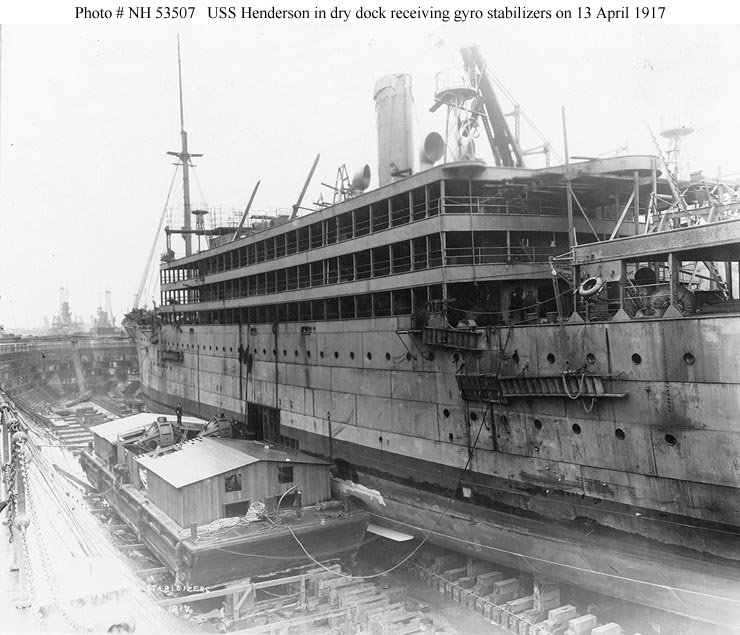
Closer View : www.ibiblio.org/hyperwar/OnlineLibrary/photos/images/h530...
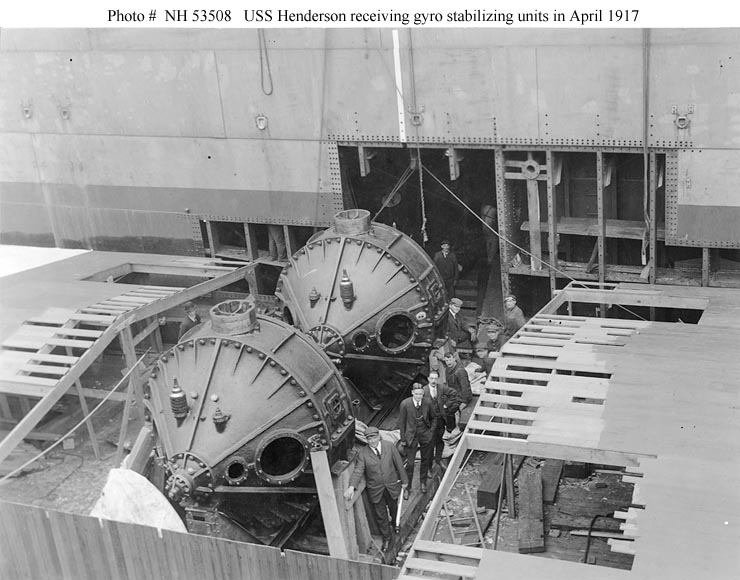
Weight: www.ibiblio.org/hyperwar/OnlineLibrary/photos/images/h530...

The Modern Solution: An aircraft style wing, on the wreck of the Costa Concordia: commons.wikimedia.org/wiki/File:Collision_of_Costa_Concor...

U.S. Army Africa photo by Sgt. 1st Class Kyle Davis
U.S. Africa Command (AFRICOM) hosted its second annual C4ISR Senior Leaders Conference Feb. 2-4 at Caserma Ederle, headquarters of U.S. Army Africa, in Vicenza, Italy.
The communications and intelligence community event, hosted by Brig. Gen. Robert Ferrell, AFRICOM C4 director, drew approximately 80 senior leaders from diverse U.S. military and government branches and agencies, as well as representatives of African nations and the African Union.
“The conference is a combination of our U.S. AFRICOM C4 systems and intel directorate,” said Ferrell. “We come together annually to bring the team together to work on common goals to work on throughout the year. The team consists of our coalition partners as well as our inter-agency partners, as well as our components and U.S. AFRICOM staff.”
The conference focused on updates from participants, and on assessing the present state and goals of coalition partners in Africa, he said.
“The theme for our conference is ‘Delivering Capabilities to a Joint Information Environment,’ and we see it as a joint and combined team ... working together, side by side, to promote peace and stability there on the African continent,” Ferrell said.
Three goals of this year’s conference were to strengthen the team, assess priorities across the board, and get a better fix on the impact that the establishment of the U.S. Cyber Command will have on all members’ efforts in the future, he said.
“With the stand-up of U.S. Cyber Command, it brings a lot of unique challenges that we as a team need to talk through to ensure that our information is protected at all times,” Ferrell said.
African Union (AU) representatives from four broad geographic regions of Africa attended, which generated a holistic perspective on needs and requirements from across the continent, he said.
“We have members from the African Union headquarters that is located in Addis Ababa, Ethiopia; we have members that are from Uganda; from Zambia; from Ghana; and also from the Congo. What are the gaps, what are the things that we kind of need to assist with as we move forward on our engagements on the African continent?” Ferrell said.
U.S. Army Africa Commander, Maj. Gen. David R. Hogg, welcomed participants as the conference got under way.
“We’re absolutely delighted to be the host for this conference, and we hope that this week you get a whole lot out of it,” said Hogg.
He took the opportunity to address the participants not only as their host, but from the perspective of a customer whose missions depend on the results of their efforts to support commanders in the field.
“When we’re talking about this group of folks that are here — from the joint side, from our African partners, from State, all those folks — it’s about partnership and interoperability. And every commander who’s ever had to fight in a combined environment understands that interoperability is the thing that absolutely slaps you upside the head,” Hogg said.
“We’re in the early stages of the process here of working with the African Union and the other partners, and you have an opportunity to design this from the end state, versus just building a bunch of ‘gunkulators.’ And so, the message is: think about what the end state is supposed to look like and construct the strategy to support the end state.
“Look at where we want to be at and design it that way,” Hogg said.
He also admonished participants to consider the second- and third-order effects of their choices in designing networks.
“With that said, over the next four days, I hope this conference works very well for you. If there’s anything we can do to make your stay better, please let us know,” Hogg said.
Over the following three days, participants engaged in a steady stream of briefings and presentations focused on systems, missions and updates from the field.
Col. Joseph W. Angyal, director of U.S. Army Africa G-6, gave an overview of operations and issues that focused on fundamentals, the emergence of regional accords as a way forward, and the evolution of a joint network enterprise that would serve all interested parties.
“What we’re trying to do is to work regionally. That’s frankly a challenge, but as we stand up the capability, really for the U.S. government, and work through that, we hope to become more regionally focused,” he said.
He referred to Africa Endeavor, an annual, multi-nation communications exercise, as a test bed for the current state of affairs on the continent, and an aid in itself to future development.
“In order to conduct those exercises, to conduct those security and cooperation events, and to meet contingency missions, we really, from the C4ISR perspective, have five big challenges,” Angyal said.
“You heard General Hogg this morning talk about ‘think about the customer’ — you’ve got to allow me to be able to get access to our data; I’ve got to be able to get to the data where and when I need it; you’ve got to be able to protect it; I have to be able to share it; and then finally, the systems have to be able to work together in order to build that coalition.
“One of the reasons General Ferrell is setting up this joint information enterprise, this joint network enterprise . . . it’s almost like trying to bring together disparate companies or corporations: everyone has their own system, they’ve paid for their own infrastructure, and they have their own policy, even though they support the same major company.
“Now multiply that when you bring in different services, multiply that when you bring in different U.S. government agencies, and then put a layer on top of that with the international partners, and there are lots of policies that are standing in our way.”
The main issue is not a question of technology, he said.
“The boxes are the same — a Cisco router is a Cisco router; Microsoft Exchange server is the same all over the world — but it’s the way that we employ them, and it’s the policies that we apply to it, that really stops us from interoperating, and that’s the challenge we hope to work through with the joint network enterprise.
“And I think that through things like Africa Endeavor and through the joint enterprise network, we’re looking at knocking down some of those policy walls, but at the end of the day they are ours to knock down. Bill Gates did not design a system to work only for the Army or for the Navy — it works for everyone,” Angyal said.
Brig. Gen. Joseph Searyoh, director general of Defense Information Communication Systems, General Headquarters, Ghana Armed Forces, agreed that coordinating policy is fundamental to improving communications with all its implications for a host of operations and missions.
“One would expect that in these modern times there is some kind of mutual engagement, and to build that engagement to be strong, there must be some kind of element of trust. … We have to build some kind of trust to be able to move forward,” said Searyoh.
“Some people may be living in silos of the past, but in the current engagement we need to tell people that we are there with no hidden agenda, no negative hidden agenda, but for the common good of all of us.
“We say that we are in the information age, and I’ve been saying something: that our response should not be optional, but it must be a must, because if you don’t join now, you are going to be left behind.
“So what do we do? We have to get our house in order.
“Why do I say so? We used to operate like this before the information age; now in the information age, how do we operate?
“So, we have to get our house in order and see whether we are aligning ourselves with way things should work now. So, our challenge is to come up with a strategy, see how best we can reorganize our structures, to be able to deliver communications-information systems support for the Ghana Armed Forces,” he said.
Searyoh related that his organization has already accomplished one part of erecting the necessary foundation by establishing an appropriate policy structure.
“What is required now is the implementing level. Currently we have communications on one side, and computers on one side. The lines are blurred — you cannot operate like that, you’ve got to bring them together,” he said.
Building that merged entity to support deployed forces is what he sees as the primary challenge at present.
“Once you get that done you can talk about equipment, you can talk about resources,” Searyoh said. “I look at the current collaboration between the U.S. and the coalition partners taking a new level.”
“The immediate challenges that we have is the interoperability, which I think is one of the things we are also discussing here, interoperability and integration,” said Lt. Col. Kelvin Silomba, African Union-Zambia, Information Technology expert for the Africa Stand-by Force.
“You know that we’ve got five regions in Africa. All these regions, we need to integrate them and bring them together, so the challenge of interoperability in terms of equipment, you know, different tactical equipment that we use, and also in terms of the language barrier — you know, all these regions in Africa you find that they speak different languages — so to bring them together we need to come up with one standard that will make everybody on board and make everybody able to talk to each other,” he said.
“So we have all these challenges. Other than that also, stemming from the background of these African countries, based on the colonization: some of them were French colonized, some of them were British colonized and so on, so you find that when they come up now we’ve adopted some of the procedures based on our former colonial masters, so that is another challenge that is coming on board.”
The partnership with brother African states, with the U.S. government and its military branches, and with other interested collaborators has had a positive influence, said Silomba.
“Oh, it’s great. From the time that I got engaged with U.S. AFRICOM — I started with Africa Endeavor, before I even came to the AU — it is my experience that it is something very, very good.
“I would encourage — I know that there are some member states — I would encourage that all those member states they come on board, all of these regional organizations, that they come on board and support the AFRICOM lead. It is something that is very, very good.
“As for example, the African Union has a lot of support that’s been coming in, technical as well as in terms of knowledge and equipment. So it’s great; it’s good and it’s great,” said Salimba.
Other participant responses to the conference were positive as well.
“The feedback I’ve gotten from every member is that they now know what the red carpet treatment looks like, because USARAF has gone over and above board to make sure the environment, the atmosphere and the actual engagements … are executed to perfection,” said Ferrell. “It’s been very good from a team-building aspect.
“We’ve had very good discussions from members of the African Union, who gave us a very good understanding of the operations that are taking place in the area of Somalia, the challenges with communications, and laid out the gaps and desires of where they see that the U.S. and other coalition partners can kind of improve the capacity there in that area of responsibility.
“We also talked about the AU, as they are expanding their reach to all of the five regions, of how can they have that interoperability and connectivity to each of the regions,” Ferrell said.
“(It’s been) a wealth of knowledge and experts that are here to share in terms of how we can move forward with building capacities and capabilities. Not only for U.S. interests, but more importantly from my perspective, in building capacities and capabilities for our African partners beginning with the Commission at the African Union itself,” said Kevin Warthon, U.S. State Department, peace and security adviser to the African Union.
“I think that General Ferrell has done an absolutely wonderful thing by inviting key African partners to participate in this event so they can share their personal experience from a national, regional and continental perspective,” he said.
Warthon related from his personal experience a vignette of African trust in Providence that he believed carries a pertinent metaphor and message to everyone attending the conference.
“We are not sure what we are going to do tomorrow, but the one thing that I am sure of is that we are able to do something. Don’t know when, don’t know how, but as long as our focus is on our ability to assist and to help to progress a people, that’s really what counts more than anything else,” he said.
“Don’t worry about the timetable; just focus on your ability to make a difference and that’s what that really is all about.
“I see venues such as this as opportunities to make what seems to be the impossible become possible. … This is what this kind of venue does for our African partners.
“We’re doing a wonderful job at building relationships, because that’s where it begins — we have to build relationships to establish trust. That’s why this is so important: building trust through relationships so that we can move forward in the future,” Warthon said.
Conference members took a cultural tour of Venice and visited a traditional winery in the hills above Vicenza before adjourning.
To learn more about U.S. Army Africa visit our official website at www.usaraf.army.mil
Official Twitter Feed: www.twitter.com/usarmyafrica
Official YouTube video channel: www.youtube.com/usarmyafrica
OKINAWA, Japan (Aug. 27, 2020) Boatswain’s Mate 2nd Class Matthew Michela, from Santa Clarita, Calif., assigned to Naval Beach Unit 7, tucks the air cushion under the bow ramp of Landing Craft, Air Cushion 30 after it arrives on White Beach from the amphibious dock landing ship USS Germantown (LSD 42). Germantown, part of America Expeditionary Strike Group, 31st Marine Expeditionary Unit team, is operating in the 7th Fleet area of operations to enhance interoperability with allies and partners, and serves as a ready response force to defend peace and stability in the Indo-Pacific region. (U.S. Navy photo by Mass Communication Specialist 2nd Class Taylor DiMartino)