View allAll Photos Tagged spurr
Chloroplast of green leaf in Brachypodium distachyon. Leaf sample is prepared using high pressure freezing and freeze substitution, and embeded in Spurr's resin.
Courtesy of Dr. Wann-neng Jane , Institute of Plant and Microbial Biology, Academia Sinica
Image Details
Instrument used: Tecnai
Magnification: 42,000x
Voltage: 80kV
When the temperatures are in the teens (Fahrenheit) and relatively warmer, humid air blows in from nearby Cook Inlet, we get fog in Anchorage. By the time I made it out and about, much of the fog began retreating but still covered the western half of Anchorage.
In the distance, left to right, Redoubt Volcano (10,197 feet, last erupted in March 2009), Mt. Spurr (11,070, last erupted in 1992), Fire Island and its wind farm, and finally, Mt. Susitna, also known as Sleeping Lady.
1983 Year 12
Back: Darren Greene, Peter Takle, George Kucka, Brendan Zauner, Neal Kelly, Peter Ross, Craig Maher
3rd Row: Glenn McKinnon, Stephen Evans, Simon Randall, Greg Brooder, Craig Pearsall, Phillip Belt, Richard Koschel, Frank Fuller
2nd Row: Mr Angus McDonald, Sharon Clark, Debbie Hailey, Vicki Hartwig, Aileen Wells, Elizabeth Elwood, Sherie McLean, Jeanette Van Kesteren, Felicity Brouwer, Alice Czajkowski, Jo-Anne Palmer, Mr Peter Cummings
Front: Susan Brownlow, Tracey Diffey, Jennifer De La Rue, Merrill Swatton, Michelle Spurr, Tracey Zbroja, Cheryl Beazley, Julie Hamilton, Katherine Appleby, Cheryl Purdie, Alison McDonald
A relatively new Boeing 737 Max 8 on a 2 mile final to Anchorage international Airport. In the background, Mt. Spurr.
Pictured: HMS Albion’s embarked royal Marines from X Coy 45 Cdo RM operating in Estonia in the main amphibious element of Exercise Spring Storm 2023.
Royal Marines conduct beach raid in Estonia during NATO exercise.
Around 100 marines from 45 Commando conducted an exercise to stage an amphibious raid at a beach in Estonia, as part of a major NATO exercise Members of 45 Commando deployed from the Royal Navy amphibious assault ship, HMS Albion, under the cover of darkness on Saturday.
The commandos manoeuvred their Inflatable Raiding Craft, which can travel at speeds of up to 20knots, through the waves to close in on the beach at Kaberneeme, on the north coast of Estonia.
The beach raid is just the latest in a series of planned scenarios the UK Armed Forces are exercising as part of a 14,000-strong deployment from 11 NATO countries for Exercise Spring Storm.
The beach raid scenario saw 45 Commando facing off against Estonia’s Armed Forces, with an Estonian naval missile unit acting as the marines’ target.
Photo: LPhot Bill Spurr
Pictured: HMS Albion’s embarked royal Marines from X Coy 45 Cdo RM operating in Estonia in the main amphibious element of Exercise Spring Storm 2023.
Royal Marines conduct beach raid in Estonia during NATO exercise.
Around 100 marines from 45 Commando conducted an exercise to stage an amphibious raid at a beach in Estonia, as part of a major NATO exercise Members of 45 Commando deployed from the Royal Navy amphibious assault ship, HMS Albion, under the cover of darkness on Saturday.
The commandos manoeuvred their Inflatable Raiding Craft, which can travel at speeds of up to 20knots, through the waves to close in on the beach at Kaberneeme, on the north coast of Estonia.
The beach raid is just the latest in a series of planned scenarios the UK Armed Forces are exercising as part of a 14,000-strong deployment from 11 NATO countries for Exercise Spring Storm.
The beach raid scenario saw 45 Commando facing off against Estonia’s Armed Forces, with an Estonian naval missile unit acting as the marines’ target.
Photo: LPhot Bill Spurr
Pictured: HMS Albion’s embarked royal Marines from X Coy 45 Cdo RM operating in Estonia in the main amphibious element of Exercise Spring Storm 2023.
Royal Marines conduct beach raid in Estonia during NATO exercise.
Around 100 marines from 45 Commando conducted an exercise to stage an amphibious raid at a beach in Estonia, as part of a major NATO exercise Members of 45 Commando deployed from the Royal Navy amphibious assault ship, HMS Albion, under the cover of darkness on Saturday.
The commandos manoeuvred their Inflatable Raiding Craft, which can travel at speeds of up to 20knots, through the waves to close in on the beach at Kaberneeme, on the north coast of Estonia.
The beach raid is just the latest in a series of planned scenarios the UK Armed Forces are exercising as part of a 14,000-strong deployment from 11 NATO countries for Exercise Spring Storm.
The beach raid scenario saw 45 Commando facing off against Estonia’s Armed Forces, with an Estonian naval missile unit acting as the marines’ target.
Photo: LPhot Bill Spurr
Pictured: HMS Albion’s embarked royal Marines from X Coy 45 Cdo RM operating in Estonia in the main amphibious element of Exercise Spring Storm 2023.
Royal Marines conduct beach raid in Estonia during NATO exercise.
Around 100 marines from 45 Commando conducted an exercise to stage an amphibious raid at a beach in Estonia, as part of a major NATO exercise Members of 45 Commando deployed from the Royal Navy amphibious assault ship, HMS Albion, under the cover of darkness on Saturday.
The commandos manoeuvred their Inflatable Raiding Craft, which can travel at speeds of up to 20knots, through the waves to close in on the beach at Kaberneeme, on the north coast of Estonia.
The beach raid is just the latest in a series of planned scenarios the UK Armed Forces are exercising as part of a 14,000-strong deployment from 11 NATO countries for Exercise Spring Storm.
The beach raid scenario saw 45 Commando facing off against Estonia’s Armed Forces, with an Estonian naval missile unit acting as the marines’ target.
Photo: LPhot Bill Spurr
Bedfordshire Police, Central Bedfordshire Council’s Community Safety Partnership, the Police and Crime Commissioner (PCC) and numerous other volunteers were in Houghton Regis yesterday (December 19) offering advice and practical support under the force’s initiative Operation Vision.
More than 930 homes were visited in the Parkside area of Houghton Regis by members of the Local Policing Team - assisted by the PCC Olly Martins - to give crime prevention advice as well as leaving information packs for those not at home. Around 50 timer lights were also given out free of charge to ensure that homes were not left in darkness while the Bobby Scheme also took a number of referrals and will visit homeowners soon.
Officers took the opportunity to identify a number of vehicles which were parked in the area with valuable items left on display. The owners of these vehicles will be written to and advice offered about security measures which could prevent them from being the victims of crime. Another 26 vehicles also had their number plates fitted with tamper proof screws while three brand new bicycles which were bought for Christmas were security marked.
Members of Bedfordshire Fire and Rescue Service carried out several home safety checks to replace smoke alarms and offer general advice as well as identifying potential fire risks in the area. Central Bedfordshire Council was also on hand to talk to residents about local improvements that could take place to help reduce crime, such as cutting back foliage, and making the area safer.
Inspector Jim Hitch, from the Local Policing Team, was delighted with the results from the day and the reduction in crime that has already taken place in the area.
“In the last 12 months we already have 270 fewer victims of crime than we did last year. Of these, 83 are burglary or attempted burglary victims so it is clear that our over-riding messages concerning home safety are getting out there. We had some very good feedback form the community who were all extremely grateful for the advice that was offered and I hope that this can be successfully implemented so that we continue the reduction of crime within Houghton Regis.”
Cllr Brian Spurr, Executive Member for Sustainable Communities, Services, at Central Bedfordshire Council added: "It was good that our Community Safety staff were part of the team out offering support to residents who really need it. The Operation Vision approach by the Community Safety Partnership is having a direct and positive impact on the area and we were really pleased with how the day went.”
Bedfordshire’s Police and Crime Commissioner, Olly Martins, added: “Wednesday turned out to be highly popular with local residents and I was delighted to be involved with the scheme which sent out a clear and timely message just before Christmas when opportunistic criminals can ruin peoples’ festivities.
At Bedfordshire Police our aim is "fighting crime, protecting the public."
We cover 477 square miles, serve a population of around 550,000 and employ in the region of 1,260 Police Officers, 950 police staff and 120 Police Community Support Officers (PCSOs). For more details about the force, visit our website www.bedfordshire.police.uk
With a little warm up, (these were taken spurr of the moment with no warm up), I can more than likely touch my head to my toes, as long as my tough Asian instructor is behind me pushing me!!!
ANHS 1986 - 10M3
Back Row: Leigh Mulvihill, Greg Little
3rd Row: ?, Jason Boswell, ?, ?, Rodney Freeman, Anthony williams, Peter Myers
2nd Row: Andrew Freeman, wayne Moffitt, Tania Macklin, Natasha Sherman, Michelle Fry, Michelle Spurr, Fiona Phelps, Sue McCormack, ?, ?
Front Row: ?, Rebecca Kolb, Raylene Kotthoff, Kellie Hart, Caroline Barnes, Lisa Herman, Anita Dennis, ?, Amanda Taylor
Pictured: HMS Albion’s embarked royal Marines from X Coy 45 Cdo RM operating in Estonia in the main amphibious element of Exercise Spring Storm 2023.
Royal Marines conduct beach raid in Estonia during NATO exercise.
Around 100 marines from 45 Commando conducted an exercise to stage an amphibious raid at a beach in Estonia, as part of a major NATO exercise Members of 45 Commando deployed from the Royal Navy amphibious assault ship, HMS Albion, under the cover of darkness on Saturday.
The commandos manoeuvred their Inflatable Raiding Craft, which can travel at speeds of up to 20knots, through the waves to close in on the beach at Kaberneeme, on the north coast of Estonia.
The beach raid is just the latest in a series of planned scenarios the UK Armed Forces are exercising as part of a 14,000-strong deployment from 11 NATO countries for Exercise Spring Storm.
The beach raid scenario saw 45 Commando facing off against Estonia’s Armed Forces, with an Estonian naval missile unit acting as the marines’ target.
Photo: LPhot Bill Spurr
Pictured: HMS Albion’s embarked royal Marines from X Coy 45 Cdo RM operating in Estonia in the main amphibious element of Exercise Spring Storm 2023.
Royal Marines conduct beach raid in Estonia during NATO exercise.
Around 100 marines from 45 Commando conducted an exercise to stage an amphibious raid at a beach in Estonia, as part of a major NATO exercise Members of 45 Commando deployed from the Royal Navy amphibious assault ship, HMS Albion, under the cover of darkness on Saturday.
The commandos manoeuvred their Inflatable Raiding Craft, which can travel at speeds of up to 20knots, through the waves to close in on the beach at Kaberneeme, on the north coast of Estonia.
The beach raid is just the latest in a series of planned scenarios the UK Armed Forces are exercising as part of a 14,000-strong deployment from 11 NATO countries for Exercise Spring Storm.
The beach raid scenario saw 45 Commando facing off against Estonia’s Armed Forces, with an Estonian naval missile unit acting as the marines’ target.
Photo: LPhot Bill Spurr
Pictured: HMS Albion’s embarked royal Marines from X Coy 45 Cdo RM operating in Estonia in the main amphibious element of Exercise Spring Storm 2023.
Royal Marines conduct beach raid in Estonia during NATO exercise.
Around 100 marines from 45 Commando conducted an exercise to stage an amphibious raid at a beach in Estonia, as part of a major NATO exercise Members of 45 Commando deployed from the Royal Navy amphibious assault ship, HMS Albion, under the cover of darkness on Saturday.
The commandos manoeuvred their Inflatable Raiding Craft, which can travel at speeds of up to 20knots, through the waves to close in on the beach at Kaberneeme, on the north coast of Estonia.
The beach raid is just the latest in a series of planned scenarios the UK Armed Forces are exercising as part of a 14,000-strong deployment from 11 NATO countries for Exercise Spring Storm.
The beach raid scenario saw 45 Commando facing off against Estonia’s Armed Forces, with an Estonian naval missile unit acting as the marines’ target.
Photo: LPhot Bill Spurr
Pictured: HMS Albion’s embarked royal Marines from X Coy 45 Cdo RM operating in Estonia in the main amphibious element of Exercise Spring Storm 2023.
Royal Marines conduct beach raid in Estonia during NATO exercise.
Around 100 marines from 45 Commando conducted an exercise to stage an amphibious raid at a beach in Estonia, as part of a major NATO exercise Members of 45 Commando deployed from the Royal Navy amphibious assault ship, HMS Albion, under the cover of darkness on Saturday.
The commandos manoeuvred their Inflatable Raiding Craft, which can travel at speeds of up to 20knots, through the waves to close in on the beach at Kaberneeme, on the north coast of Estonia.
The beach raid is just the latest in a series of planned scenarios the UK Armed Forces are exercising as part of a 14,000-strong deployment from 11 NATO countries for Exercise Spring Storm.
The beach raid scenario saw 45 Commando facing off against Estonia’s Armed Forces, with an Estonian naval missile unit acting as the marines’ target.
Photo: LPhot Bill Spurr
I have access to a number of group school photos of Gainsborough's Benjamin Adlard School, taken by "The Scholastic Souvenir Company Limited" of Blackpool.
This is another of the group photos from the 1949 year album. Some of these have slips of paper with them with names - though I'm not sure if the names and photos have been mixed up at some point!
The names that seem to relate to this picture are:
Back Row, Left to Right: Tony Hill, David Houghton, John Highfield, Peter Hearn, Micheal Bunker, John Thurlby, Gordon Smith, Ken Smithson, ? Ford
Middle Row: ? Bailey, Trevor Smith, Alan Troop, ? Hudson, Alan Cobb, David Dawson, Fordon Clifton
Front Row: ? Rodgers, ? Davis, ? Sowerby, ? Littleover, ? Barraclough, Alan Spurr, ? Laming, Colin Hutchinson, ? Coulson
Pictured: HMS Albion’s embarked royal Marines from X Coy 45 Cdo RM operating in Estonia in the main amphibious element of Exercise Spring Storm 2023.
Royal Marines conduct beach raid in Estonia during NATO exercise.
Around 100 marines from 45 Commando conducted an exercise to stage an amphibious raid at a beach in Estonia, as part of a major NATO exercise Members of 45 Commando deployed from the Royal Navy amphibious assault ship, HMS Albion, under the cover of darkness on Saturday.
The commandos manoeuvred their Inflatable Raiding Craft, which can travel at speeds of up to 20knots, through the waves to close in on the beach at Kaberneeme, on the north coast of Estonia.
The beach raid is just the latest in a series of planned scenarios the UK Armed Forces are exercising as part of a 14,000-strong deployment from 11 NATO countries for Exercise Spring Storm.
The beach raid scenario saw 45 Commando facing off against Estonia’s Armed Forces, with an Estonian naval missile unit acting as the marines’ target.
Photo: LPhot Bill Spurr
Number:
174218
Creator: Segall-Majestic (Baltimore, MD)
Date created:
1947
Extent:
1 photographic print : gelatin silver ; 10.5 x 13.5 in.
Rights:
Photograph is subject to copyright restrictions. Contact the Alan Mason Chesney Medical Archives for reproduction permissions.
Subjects:
Johns Hopkins Hospital School of Nursing--People
Stokes, Gertrude A.
Wolf, Anna Dryden
Betzold, K. Virginia
Reep, Margaret Allen
Miller, Ilah
Hall, Ruth Smith
Brown, Frances Woods
Verderese, Maria de L.
Wieneke, Eleanor Ross
Avera, Mildred
Badillo, Maria
Bell, Sue L.
Danziger, Dorothy Benjamin
Robins, Joanne Bouchard
Richmond, Alberta Campbell
Charsha, Mary Elizabeth
Schrag, Vera Clocksen
Colwell, Beth M.
Moidel, Harriet M. Coston
Childs, Blanche Hagaman
Hamilton, Ruth N.
Boetiger, Elizabeth Herrick
Kirby, Laura N.
Lyerly, Missouri Edith
Mollengarden, Charlotte
Colangelo, Margaret Nagele
Pidgeon, Virginia
Ilgenfritz, Maxine Poland
Price, Nettie R.
Fleming, Margaret Ramsay
Roberts, Jeanne E.
Sanioto, Cecelia M.
Steffeck, Carola Jennings Spurr
Naples, Evelyn Theophil
Nursing students--Maryland--Baltimore--1940-1950
Nurses--Maryland--Baltimore--1940-1950
Portrait photographs
Group portraits
Moorlands is a settlement that developed around the Moorlands railway siding on the line to Pinnaroo. It was named after the woolshed nearby that belonged to the Moorlands Station.
Moorlands Community Hall erected in 1922–1923 on land donated by Mr Frederick William Jaensch who also laid the foundation stone. Mr Jaensch owned Moorlands Station, an extensive property in the Murray Mallee.
The hall was completely built with voluntary labour: and used for school during the week and church on Sundays.
Public meeting held 24 October 1923 - and decision made to affiliate the hall with the South Australian Institutes Association.
In 1955 hall extended with the addition of supper room.
*Moorlands Sept 5
Last Saturday [2 September] the foundation stone of an Institute was laid by Mr F W Jaensch, senior, in the presence of a large gathering. Several substantial donations were place on the stone, Mr Jaensch being the chief donor.
The building will cost about £500, of which £314 has been gathered. A programme of sport was gone through, followed by a concert in the evening.
The chief performers were the school children, under Miss Ford (teacher), Mrs Spurr, Misses Ford, Mrs Wilmshurst, Mrs H & A A Miatke, Miss Johns, and other.
The takings for the day amounted to about £60. [Ref: Observer 23-9-1922]
*Moorlands August 6
A successful concert was given by the school children on Saturday night. Mr H R Miatke presided.
The children performed under the direction of Miss Ford, the head teacher. About £4 was secured for the school funds. [Ref: Register 8-8-1923]
*Moorlands August 28
The townspeople have for years past been holding entertainments to raise funds for the erection of an institute hall.
At the end of last year sufficient money was in hand to commence building operations.
Mr F W Jaensch generously gave a piece of land near to the railway station. The building has been completed, and is now also used as a school.
Mr A J Spurr is secretary of the institute and Mr H R Miatke is chairman.
It was recently decided that a piano was urgently needed, and fetes and entertainments have been held to raise the money.
A concert was held last Saturday night, and proved highly successful. [Ref: Register 30-8-1923]
*Dance at moorlands
A most enjoyable dance was held in the Moorlands Institute Hall on Saturday evening. Musical items were rendered by Messrs S Scorgie and P Colgan, and the music for dancing was performed by Messrs Jackson and Wilmshurst.
A delicious supper was arranged by the ladies. [Ref: Register 28-9-1923]
*Moorlands Oct 20
On Saturday, the annual sports meeting was held on grounds lent by Mr F W Jaensch.
A concert was given in the institute hall in the evening. Prizes were distributed. A dance followed: Mrs Johns, Miss Phillips and Messrs Golding, Wilmshurst, Jackson and Davies played. [Ref: Register 26-10-1923]
*Moorlands Oct 25
A ‘busy bee” was held yesterday to build a shelter at the rear of the institute hall.
The work was hindered by showers.
During the dinner hour a public meeting was held to inaugurate the institute, and the following were elected on the committee: Messrs R Miatke (President), A W F Wilmshurst (Vice-President), L Spurr (secretary and treasurer), Mrs H R Miatke, Miss L Ford, Messrs A F Miatke, A B Miatke, and R V Piggott. [Ref: Register 30-10-1923]
Pictured: British Army Commando from 7 (Sphinx) Commando Battery , 29 Commando Regiment Royal Artillery.
HMS Albion’s embarked royal Marines from X Coy 45 Cdo RM operating in Estonia in the main amphibious element of Exercise Spring Storm 2023.
Royal Marines conduct beach raid in Estonia during NATO exercise.
Around 100 marines from 45 Commando conducted an exercise to stage an amphibious raid at a beach in Estonia, as part of a major NATO exercise Members of 45 Commando deployed from the Royal Navy amphibious assault ship, HMS Albion, under the cover of darkness on Saturday.
The commandos manoeuvred their Inflatable Raiding Craft, which can travel at speeds of up to 20knots, through the waves to close in on the beach at Kaberneeme, on the north coast of Estonia.
The beach raid is just the latest in a series of planned scenarios the UK Armed Forces are exercising as part of a 14,000-strong deployment from 11 NATO countries for Exercise Spring Storm.
The beach raid scenario saw 45 Commando facing off against Estonia’s Armed Forces, with an Estonian naval missile unit acting as the marines’ target.
Photo: LPhot Bill Spurr
Waning phase illumination of the Apennine Mountains, brightly illuminated on their western slopes. Move cursor over image for notes:
Montes Apenninus - Named after the Apennine Mountains in Italy.
This range forms the southeastern border of Mare Imbrium. To the west of these mountains is a narrow gap where Mare Imbrium in the north joins Mare Insularum to the south. Some of the peaks rise over 3 miles in height.
Palus Putredinus (latin for "Marsh of Decay") is an area of the lunar surface that stretches from the crater Archimedes southeast toward the rugged Montes Apenninus range located on the southeastern edge of Mare Imbrium. This region is a nearly level, lava-flooded plain bounded by the crater Autolycus to the north and the foothills of the Montes Archimedes to the west. It has a diameter of 100 miles.
In the southern part of this area is a rille system designated Rimae Archimedes. To the south is a prominent linear rille named Rima Bradley, and to the east is the Rima Hadley, which served as the landing site for Apollo 15, and the Rimae Fresnel. Just to the northwest of the Palus Putredinus midpoint is the nearly submerged crater Spurr. Luna 2 crashed in this area.
NASA archive image of Apollo 15 landing site - apollo.sese.asu.edu/LIW/img/20071114_img1.png
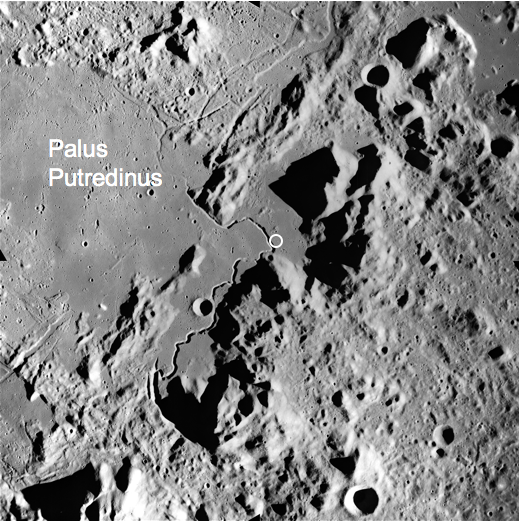
Kaguya flyover of Apollo 15 landing site - www.youtube.com/watch?v=L0GX-nGSXMA
Pictured: British Army Commando from 7 (Sphinx) Commando Battery , 29 Commando Regiment Royal Artillery.
HMS Albion’s embarked royal Marines from X Coy 45 Cdo RM operating in Estonia in the main amphibious element of Exercise Spring Storm 2023.
Royal Marines conduct beach raid in Estonia during NATO exercise.
Around 100 marines from 45 Commando conducted an exercise to stage an amphibious raid at a beach in Estonia, as part of a major NATO exercise Members of 45 Commando deployed from the Royal Navy amphibious assault ship, HMS Albion, under the cover of darkness on Saturday.
The commandos manoeuvred their Inflatable Raiding Craft, which can travel at speeds of up to 20knots, through the waves to close in on the beach at Kaberneeme, on the north coast of Estonia.
The beach raid is just the latest in a series of planned scenarios the UK Armed Forces are exercising as part of a 14,000-strong deployment from 11 NATO countries for Exercise Spring Storm.
The beach raid scenario saw 45 Commando facing off against Estonia’s Armed Forces, with an Estonian naval missile unit acting as the marines’ target.
Photo: LPhot Bill Spurr
A civilian is posing with his two sons.
The one on the right is serving in a Bavarian cavalry unit, or at least he is mounted, as suggested by the spurrs and the Kavallerie-degen M89.
The other one hails from Flieger-Abteilung Nr. 32, or Feld-Flieger-Abtlg. Nr. 32, as shown by the patch on his sleeve, and the winged propellor on his shoulder straps. The goggles and double-breasted tunic show that he is probably a driver, and not an airman, given the absence of any other features such as a pilot or observers badge, etc.
1982 - 10M4
Back Row: Rodney Moore, Daniel Anderson, Richard Hines, Mark O'Keefe, Robin Close, Geoff Ruitenberg
Middle Row: Walter Ebsworth, Leanne Smith, Wayne Eames, Sharron Spurr, Dean Rowland, Sandra Clark, Keith Denys
Front Row: Lucy Cobby, Suzanne Pepper, Kim Esler, Michelle Manglesdorf, Sharon Treloar, Linda Clothier, Sally-Ann Hart, Margaret Merkel, Deborah Hun
A glimpse behind the scenes of The Lyceum's 2019 Christmas production.
28 November 2019 - 4 January 2020
It's Christmas Carol with Edinburgh at its heart. City folklore tells us that when Charles Dickens was visiting Auld Reekie on a reading tour, a stroll through Congate kirkyard brought him to the tombstone of a gentleman by the name of Ebenezer Scroggie, and just like that Dickens' had the name for his infamously cantankerous inspiration struck and A Christmas Carol was born.
Writer and director Tony Cownie (The Venetian Twins, The Belle’s Stratagem) brings this famous festive story back to the city of its birth with a guest appearance from Edinburgh’s best loved Victorian – Greyfriars Bobby!
CAST in alphabetical order
Saskia Ashdown Mrs Thomson/ Bobby/ Fan
Ewan Donald Rab Crachit/ Rev Rednose/ Headmaster/ Auld Jock
Edie Edmundson (puppeteer) Tiny Tim/ Bobby
Belle Jones Mrs Cratchit/ Mrs Fezziwig/ Lottie Longbones
Crawford Logan Ebenezer Scrooge
Steven McNicoll Fezziwig/ Old Fergus/ Nouadays/ Collector
Taqi Nazeer Fred/ Ayont
Grant O'Rourke Charlie/ Jacob Marley/ Young Marley/ Policeman/ Businessman 2
Brian James O'Sullivan Young Ebeneezer Scrooge/ Dog catcher/ Firewood Man/ Businessman 1
Nicola Roy Mrs Busybody/ Mrs Bigchin/ Belle/ Rose
Eva Traynor Emma/ Mary Crachit/ Lang Syne
CREATIVE TEAM
Writer/ Director Tony Cownie
Designer Neil Murray
Lighting Designer Zoe Spurr
Sound Designer Pippa Murphy
Associate Director Becky Hope-Palmer
Movement Director Kally Lloyd-Jones
Puppet Director Edie Edmundson
Choir Mistress Louise Martin
Puppet Maker Simon Auton
Photography by Aly Wight
File name: 10_03_001998b
Binder label: Tobacco / Cigarettes
Title: Chew: Horse-head tobacco [back]
Created/Published: St. Louis : Compton
Date issued: 1870 - 1900 (approximate)
Physical description: 1 print : chromolithograph ; 12 x 9 cm.
Genre: Advertising cards
Subject: Horses; Smokeless tobacco
Notes: Title from item. Retailer: Spurr, Washburn & Holmes, Boston
Statement of responsibility: Dausman Tobacco Co.
Collection: 19th Century American Trade Cards
Location: Boston Public Library, Print Department
Rights: No known restrictions.
Colorado State University Emergency Management Coordinator Ken Quintana, right, discusses logistics at CSU's Christman Field with USFS employee Tim Spurr, September 13, 2018. CSU's Christman Field served as a helibase for the Seaman Fire.
ANHS 1978 - 10E2
Back Row: Davin Neall, Stephen Vickers, J Connolly, Ross McGrath, Graham Wilson, Peter Hallett, Walter Kemmerer
3rd Row: Brett Hartley, Wayne Adams, Steven Aney, Garry Spurr, Robert Mills, Grant McIntosh, ?
2nd Row: Miss Maria Cincotta, Michael Groch, Gary Wornes, Glenda Beyer, Ian Dempsey, Glenn Flower, Adrian Summers, Sharin Brown, Eric Kaiser, Tim Freeman
Front Row: Karen McLaughlin, Cathy Edwards, Christine Cherrey, Debbie Noske, L McClure, Jenny Winner, Karen Whitty, Trudi Van Every
1978 Boys Golf
Back: Greg McDonald, Robert Mills, Mr Don Ross, Garry Spurr, Steven Langlands
Front: Eric Kaiser, Ian Dempsey, D Bruce, Gary Wornes
Bedfordshire Police, Central Bedfordshire Council’s Community Safety Partnership, the Police and Crime Commissioner (PCC) and numerous other volunteers were in Houghton Regis yesterday (December 19) offering advice and practical support under the force’s initiative Operation Vision.
More than 930 homes were visited in the Parkside area of Houghton Regis by members of the Local Policing Team - assisted by the PCC Olly Martins - to give crime prevention advice as well as leaving information packs for those not at home. Around 50 timer lights were also given out free of charge to ensure that homes were not left in darkness while the Bobby Scheme also took a number of referrals and will visit homeowners soon.
Officers took the opportunity to identify a number of vehicles which were parked in the area with valuable items left on display. The owners of these vehicles will be written to and advice offered about security measures which could prevent them from being the victims of crime. Another 26 vehicles also had their number plates fitted with tamper proof screws while three brand new bicycles which were bought for Christmas were security marked.
Members of Bedfordshire Fire and Rescue Service carried out several home safety checks to replace smoke alarms and offer general advice as well as identifying potential fire risks in the area. Central Bedfordshire Council was also on hand to talk to residents about local improvements that could take place to help reduce crime, such as cutting back foliage, and making the area safer.
Inspector Jim Hitch, from the Local Policing Team, was delighted with the results from the day and the reduction in crime that has already taken place in the area.
“In the last 12 months we already have 270 fewer victims of crime than we did last year. Of these, 83 are burglary or attempted burglary victims so it is clear that our over-riding messages concerning home safety are getting out there. We had some very good feedback form the community who were all extremely grateful for the advice that was offered and I hope that this can be successfully implemented so that we continue the reduction of crime within Houghton Regis.”
Cllr Brian Spurr, Executive Member for Sustainable Communities, Services, at Central Bedfordshire Council added: "It was good that our Community Safety staff were part of the team out offering support to residents who really need it. The Operation Vision approach by the Community Safety Partnership is having a direct and positive impact on the area and we were really pleased with how the day went.”
Bedfordshire’s Police and Crime Commissioner, Olly Martins, added: “Wednesday turned out to be highly popular with local residents and I was delighted to be involved with the scheme which sent out a clear and timely message just before Christmas when opportunistic criminals can ruin peoples’ festivities.
At Bedfordshire Police our aim is "fighting crime, protecting the public."
We cover 477 square miles, serve a population of around 550,000 and employ in the region of 1,260 Police Officers, 950 police staff and 120 Police Community Support Officers (PCSOs). For more details about the force, visit our website www.bedfordshire.police.uk
WUTHERING HEIGHTS by Emily Brontë, a new version by Andrew Sheridan ;
Directed by Bryony Shanahan ;
Set & Costume Design by Cécile Trémolières ;
Lighting Design by Zoe Spurr ;
Sound Designer & Composer: Alexandra Faye Braithwaite ;
Addition Composition: Sophie Galpin ;
Movement Director: Jennifer Jackson ;
Dialect Coach: Natalie Grady ;
Fight Director: Kenan Ali
Assistant Director: Hannah Sands ;
Manchester Royal Exchange ;
Manchester, UK ;
7 February 2020 ;
Credit & copyright: Helen Murray
Marci (Zimmerman) Henkoff '11 and Jacob Henkoff '11 were married on October 10th, 2015, in Frederick, MD.
Here are the alumni who attended the wedding (from left to right): Robby Ford '11, Andy Mello '13, Laura Baldasarre '12, Jacob Henkoff '11, Marci Zimmerman Henkoff'11, Dori Zweig '11, Chelsea Kasten '11, Shane Swink '13, Allison Schofield '11, Michael Hannum '11, Angela Dolson '11, Kirsten Egenes '11, Sara Vanasse '13, Peter Mele '09, and Becky Spurr '11
In the 1870s, four mining camps got their starts in the Hecla Mining District on the side of Lion Mountain. Also referred to as the Glendale and/or Bryant Mining District, which was strung out along ten miles of gulches, the four towns included Trapper City, Lion City, Glendale, and Hecla. One of the last districts to be established in the Pioneer Mountains, it was also one of the richest, producing silver, lead, copper and zinc ore valued at nearly $20 million over the years.
The first claim in the area was made in 1872 by two men named William "Billy" Spurr and James Bryant and called the Forest Queen. However, Spurr recorded the claim in his own name, but never worked it. The following year, James Bryant returned to the area with several other men and began looking in the area for other potential claims.
located 16 miles west of Melrose Montana
28 November 2019 - 4 January 2020 at The Lyceum
Adapted and directed by Tony Cownie, from the novel by Charles Dickens
Edinburgh folklore tells us that when Charles Dickens was visiting the city on a reading tour, a stroll through a kirkyard brought him to the tombstone of one Ebenezer Scroggie, inspiration struck and A Christmas Carol was born. Writer and director Tony Cownie (The Venetian Twins, The Belle’s Stratagem) brings this famous festive story back to the city of its birth with a guest appearance from Edinburgh’s bestloved Victorian – Greyfriars Bobby!
Find out more: lyceum.org.uk/christmascarol
CAST in alphabetical order
Saskia Ashdown, Ewan Donald, Edie Edmundson, Belle Jones, Crawford Logan, Steven McNicoll, Taqi Nazeer, Grant O'Rourke, Brian James O'Sullivan, Nicola Roy and Eva Traynor.
CREATIVE TEAM
Director/Adaptor, Tony Cownie
Designer, Neil Murray
Lighting Designer, Zoe Spurr
Sound Designer, Pippa Murphy
Associate Director, Becky Hope-Palmer
Movement Director, Kally Lloyd-Jones
Puppet Director, Edie Edmundson
Choir Mistress, Louise Martin
Puppet Maker, Simon Auton
Photography: Mihaela Bodlovic
La Galería Borghese (en italiano: Galleria Borghese)? es un museo de arte situado en los jardines de Villa Borghese, Roma. Dentro de la renombrada riqueza artística de la ciudad, es una de las pinacotecas esenciales, de visita obligada.
El edificio de la Galería se encuentra enclavado en los jardines de Villa Borghese, cuyo conjunto conformaba anteriormente la Villa Borghese Pinciana, propiedad de la familia homónima. La Galería Borghese conserva una parte sustancial de la colección Borghese de pintura, escultura y antigüedades, la cual fue iniciada por el cardenal Scipione Borghese (1576 – 1633), sobrino del papa Paulo V (papado: 1605–1621).
Scipione Borghese fue el primer mecenas de Bernini y un ávido coleccionista de la obra de Caravaggio, por lo que ambos artistas se encuentran extensamente representados en el museo. Además exhibe obras destacables de otros autores como Amor sacro y amor profano de Tiziano, el Entierro de Cristo de Rafael Sanzio, el Retrato de Paulina Bonaparte esculpido por Antonio Canova y notables trabajos de Peter Paul Rubens, José de Ribera, Agnolo Bronzino y Federico Barocci.
Debido a las reducidas dimensiones del edificio y al enorme flujo de turistas, la visita únicamente es posible con reserva previa por teléfono o internet. Los visitantes que acuden sin reserva tendrán que hacer cola. El amplísimo parque, actualmente bajo gestión municipal, fue en su época tan extenso como todo el centro histórico de Roma. Un pequeño tren lo recorre varias veces al día y tiene su parada a las puertas de la galería.
Historia
El edificio principal de la villa que en la actualidad alberga la Galería Borghese es obra del arquitecto Flaminio Ponzio. Su edificación comenzó en 1612 por encargo del cardenal Borghese, que la usó como villa suburbana, a las afueras de la Ciudad Eterna. Pero en 1613 Ponzio falleció y fue sucedido en la obra por Giovanni Vasanzio (cuyo verdadero nombre era Jan van Santen), que proyectó una fachada con una terraza en forma de U y decoró el conjunto con nichos, vanos, estatuas clásicas y relieves.
La Villa Borghese Pinciana, o Casina Borghese, se erigía ya con fama en las afueras de la Roma del siglo XVII. En 1644, el viajero británico John Evelyn la describió como un «Eliseo del placer» con «fuentes de variados mecanismos, olivares y pequeños arroyos de agua». Evelyn también dijo que era un «vivero» de avestruces, pavos reales, cisnes y grullas y «diversas y extrañas bestias».1 El príncipe Marcantonio IV Borghese (1730 - 1800) mandó rediseñar los jardines al estilo inglés y en 1775, bajo la dirección del arquitecto Antonio Asprucci, reemplazó los entonces anticuados tapices y colgaduras de cuero de la villa y reordenó las esculturas y antigüedades de los Borghese siguiendo un criterio temático, que fue notablemente acogido por la sociedad romana. La conversión del edificio en un genuino museo público, que se produjo a finales del siglo XVIII, fue el objeto de una exposición en el Getty Center, de Los Ángeles, en 2000,2 en ocasión de la adquisición del centro de cincuenta y cuatro dibujos relativos a ese acontecimiento.
En 1808, a consecuencia del déficit en el legado Borghese, el príncipe Camillo Borghese, cuñado de Napoleón,3 vendió algunas de las esculturas y antigüedades de los Borghese al emperador. Debido a esto, el Gladiador Borghese, reconocido desde el siglo XVII como una de las más admirables estatuas de la colección, puede en la actualidad apreciarse en el Museo del Louvre de París.
Finalmente, en 1902, la familia Borghese, imposibilitada de hacer frente al alto coste de mantenimiento de la villa, vendió la colección al Estado italiano por un total de 3,6 millones de liras. En 1903 se segregan los jardines de la Casina Borghese y se venden los primeros al ayuntamiento de Roma, que los convierten en parque público, abierto hasta la actualidad en horario diurno.
El edificio fue restaurado íntegramente por última vez entre 1995 y 1997, y se reconstruyó la escalera doble del pórtico, así como su interior.
Colección
Una de las virtudes de la Galería Borghese es su carácter compacto y accesible: la exposición se exhibe a lo largo de dos plantas que pueden visitarse cómodamente en aproximadamente dos horas.
La planta principal está dedicada casi en su totalidad a las antigüedades clásicas. Son piezas del siglo I a III d. C., entre las que destaca el famoso mosaico de Los gladiadores de 320 d. C., encontrado en 1834 en la finca de los Borghese en Torrenova, en la Vía Casilina, a las afueras de Roma. Entre estas obras clásicas destaca la escultura neoclásica de Paulina Borghese como Venus Vencedora de Antonio Canova, que completa un proyecto museístico realmente innovador. Los frescos del techo del primer piso a modo de trampantojo o el salone de artista siciliano Mariano Rossi son magníficos ejemplos del uso de la perspectiva tridimensional en la pintura.
La planta superior alberga una asombrosa pinacoteca, con varias obras maestras universalmente conocidas. Hay dos de Tiziano, Amor sacro y amor profano, y Venus vendando los ojos a Cupido. Aquí se exhibe también una de las mejores pinturas religiosas de Rafael, Cristo llevado a la tumba (El entierro de Cristo). Del mismo artista hay un retrato célebre, La dama del unicornio. De Caravaggio se exhibe un conjunto irrepetible, acaso el mejor expuesto en un solo museo: Joven con cesta de frutas, Baco enfermo (posible autorretrato), La Virgen con el Niño pisando la serpiente (también llamada La Virgen de los palafreneros), San Jerónimo y David con la cabeza de Goliat, de la que se cuenta que Caravaggio se retrató a sí mismo en la cabeza decapitada del gigante.
La lista de obras maestras incluye: La cacería de Diana, acaso la mejor pintura mitológica de Domenichino, La maga Circe, de Dosso Dossi, y el Retrato de hombre, de Antonello da Messina. Es muy llamativo un tondo de la Virgen con el Niño y San Juanito rodeada de ángeles de 1,70 m de diámetro, atribuido a Botticelli. De la pintura no italiana destacan La Piedad de Rubens y Venus y Amor, de Lucas Cranach. En fecha reciente se ha atribuido al español José de Ribera un cuadro tenebrista con el tema de El juicio de Salomón.
Gian Lorenzo Bernini y los Borghese
Muchas de las esculturas están expuestas en los espacios para los que fueron ideadas, incluida la extensa obra de Gian Lorenzo Bernini, que comprende piezas de toda su dilatada carrera, desde trabajos de juventud como La cabra Amaltea con Júpiter niño y un fauno (1615)4 al dinámico conjunto de Apolo y Dafne (1622 – 25)5 o al David (1623),6 considerado una de las primeras obras de la escultura barroca. También destacan tres bustos realizados por el escultor, dos del papa Paulo V (1618 – 1620) y uno de su intuitivo primer mecenas, el cardenal Scipione Borghese (1632).7 Otras de las obras de Bernini en la Galería Borghese son las manieristas esculturas de Eneas, Anquises y Ascanio (1618–19)8 y el El rapto de Proserpina (1621-1622).
The Galleria Borghese (English: Borghese Gallery) is an art gallery in Rome, Italy, housed in the former Villa Borghese Pinciana. At the outset, the gallery building was integrated with its gardens, but nowadays the Villa Borghese gardens are considered a separate tourist attraction. The Galleria Borghese houses a substantial part of the Borghese collection of paintings, sculpture and antiquities, begun by Cardinal Scipione Borghese, the nephew of Pope Paul V (reign 1605–1621). The Villa was built by the architect Flaminio Ponzio, developing sketches by Scipione Borghese himself, who used it as a villa suburbana, a country villa at the edge of Rome.
Scipione Borghese was an early patron of Bernini and an avid collector of works by Caravaggio, who is well represented in the collection by his Boy with a Basket of Fruit, St Jerome Writing, Sick Bacchus and others. Other paintings of note include Titian's Sacred and Profane Love, Raphael's Entombment of Christ and works by Peter Paul Rubens and Federico Barocci.
Present
The Casino Borghese lies on the outskirts of seventeenth-century Rome. By 1644, John Evelyn described it as "an Elysium of delight" with "Fountains of sundry inventions, Groves and small Rivulets of Water". Evelyn also described the Vivarium that housed ostriches, peacocks, swans and cranes "and divers strange Beasts". Prince Marcantonio IV Borghese (1730-1800), who began the recasting of the park's formal garden architecture into an English landscape garden, also set out about 1775, under the guidance of the architect Antonio Asprucci, to replace the now-outdated tapestry and leather hangings and renovate the Casina, restaging the Borghese sculptures and antiquities in a thematic new ordering that celebrated the Borghese position in Rome. The rehabilitation of the much-visited villa as a genuinely public museum in the late eighteenth century was the subject of an exhibition at the Getty Research Institute, Los Angeles, in 2000,[1] spurred by the Getty's acquisition of fifty-four drawings related to the project.
In 1808, Prince Camillo Borghese, Napoleon's brother-in-law,[2] was forced to sell the Borghese Roman sculptures and antiquities to the Emperor. The result is that the Borghese Gladiator, renowned since the 1620s as the most admired single sculpture in Villa Borghese, must now be appreciated in the Musée du Louvre. The "Borghese Hermaphroditus" is also now in the Louvre.
The Borghese villa was modified and extended down the years, eventually being sold to the Italian government in 1902, along with the entire Borghese estate and surrounding gardens and parkland.
Collection
The Galleria Borghese includes twenty rooms across two floors.
The main floor is mostly devoted to classical antiquities of the 1st–3rd centuries AD (including a famous 320–30 AD mosaic of gladiators found on the Borghese estate at Torrenova, on the Via Casilina outside Rome, in 1834), and classical and neo-classical sculpture such as the Venus Victrix. Its decorative scheme includes a trompe l'oeil ceiling fresco in the first room, or Salone, by the Sicilian artist Mariano Rossi makes such good use of foreshortening that it appears almost three-dimensional.
Gian Lorenzo Bernini at the Borghese
Many of the sculptures are displayed in the spaces for which they were intended, including many works by Gian Lorenzo Bernini, which comprise a significant percentage of his output of secular sculpture, starting with early works such as the Goat Amalthea with Infant Jupiter and Faun (1615) and Aeneas, Anchises & Ascanius (1618–19) [3][4] to his dynamic Rape of Proserpine (1621–22), Apollo and Daphne (1622–25) [5] and David (1623) [6] which are considered seminal works of baroque sculpture. In addition, several portrait busts are included in the gallery, including one of Pope Paul V, and two portraits of one of his early patrons, Cardinal Scipione Borghese (1632).[7] The second Scipione Borghese portrait was produced after a large crack was discovered in the marble of the first version during its creation.
A wedding I shot yesterday. Loved the variety of shots we were able to get. To see more of my work visit www.capfoto.com
Strobist: SB-28 bare behind couple @ 1/8th and sb-28 bare camera right @ 1/8th
Triggered by cybersyncs
Picture taken through a Rolleiflex
The Hospital of the Holy and Undivided Trinity, Hospital Road, Retford, Nottinghamshire
The Audit Room
The Audit Room was originally used to collect the half-yearly estate rents. However, with the arrival of modern banking practices, rent days are no longer held and for some time the Audit Room has been used for social events, such as the Epiphany and Trinity Feasts.
Stained Glass Window. One striking feature of the room is the stained glass window. The following is taken from Bailiff Edwin Wilmshurst‟s Scrapbook kept in the Estate Office:
“About AD 1860, happening to be in the city of York and having then as apprentice a nephew of the Lord Mayor Alderman Wilberforce, I enquired where I was likely to obtain any very old stained glass from old mansions, guild halls or churches and was directed to old Mr Hartley, aged 78, the Principle Artist in Glass close to the Cathedral (who was father-in-law to the Lord Mayor). He took me into one of his workshops and showed me in a waste box a lot of dirty broken glass, the accumulation of years. I bargained and bought the lot.
On getting it to Retford I attempted to sort it but it was so encrusted with mortar, old putty, tar and archaic dirt that I could not make out patterns or even colours and then only sorted it in to 7 wood boxes and put it away until less engaged. Business, second marriage, Town affairs so engaged me for many years that it reposed undisturbed for future investigation.
In 1908, retired from business, 75 years of age and less active for any out door work I thought I would look it over.
For many months, 2 - 3 hours a day, I was engaged washing, scrubbing and pumice stoning some 3,000 separate small pieces of glass. I had to use acid to get off the corrosion and weather of centuries but when done I was rewarded by finding I had good and rare specimens of the best school of York glass, a noted place of medieval art.
It was very mixed: some ecclesiastical from church windows, some from nobility’s town houses in medieval York, some secular from Public buildings, Early and Late Gothic, some of the Renaissance Age, some later still and a mixture of Glass of XIV, XV, XVI, XVII and XVIII centuries and some even of the XIX century.
Some 30 years ago a friend, who had a private oratory, on leaving Retford gave me an Angel in modern glass but a good copy of the antique.
After spending in all quite 12 months labour on a very unpromising original collection I have arranged it to the best of my ability so that colours, style or design very much clashes with the ensemble. Following the advice and instructions of the art critic MR RUSKIN in his celebrated STONES OF VENICE in which he states as an axiom that TRUE ART consists of taking a common material and converting it in to a joy for ever, as did the Venetians who in their galleys, as ballast home from the rich cities of ASIA MINOR, brought back ruined columns, marble ceilings which their artists cleaned sorted arranged anew.”
The stained glass was put in to the Audit Room by William Spurr, Plumber and Glazier of Churchgate, Retford at a cost of £20 – 6s – 7½d. Edwin Wilmshurst had made stiff paper templates to act as a guide to getting the size right. A small panel of stained glass was also put into the Matron‟s sitting room window.
In 2000 it was decided the time had come to have the stained glass panels cleaned and restored and the Bailiff engaged the services of Mark Bambrough, a well renowned stained glass restorer. Mr Bambrough removed all the panels to his Glasgow workshop and over the next eighteen months carefully cleaned the 3000 separate pieces and then reassembled the panels. During restoration Mr Bambrough discovered that some of the glass was medieval. Because medieval glass is rare, the “Trinity window‟ has been recorded in the European and British Register. When the panels were reinstated, an outer window, created by Mr Bambrough and matching the originals, was installed to protect the fine glass from the elements.
trinityhospitalretford.co.uk/index.php/about-us/history/t...
Central Bedfordshire’s Community Safety Partnership and Bedfordshire Police have worked together to install three sets of automated number plate recognition (ANPR) cameras in the area in a bid to make the Bedfordshire safer.
ANPR cameras work by scanning vehicle registrations and checking them against information stored in a variety of databases in order to identify vehicles of interest to the Police, such as stolen cars or those involved in crimes. The photograph shows a pair of cameras that were set up over the M1 during a roads policing operation.
The Community Safety Partnership and ANPR team based at Kempston have completed the installation of cameras in Leighton Buzzard, Linslade and Clophill.
Cllr Brian Spurr, Executive Member for Sustainable Communities (Services) at Central Bedfordshire Council, said: “Keeping our community safe is one of our main priorities and in tackling crime and safety issues alongside the Police, we can really make an impact in affecting the quality of life for our residents.
“Since their introduction in the 1990s, ANPR systems have been shown to be an extremely powerful policing tool in addressing crime at all levels, including serious and organised crime.
“This type of camera is a great preventative measure that will really help us protect Central Bedfordshire businesses and residents. ANPR not only reduces crime but can be used to reduce road deaths and serious injuries on the roads by highlighting un-roadworthy vehicles. It will keep our roads and communities safe and deny access to criminals.”
Detective Superintendent Paul Coombes of Bedfordshire police said: “ANPR is a significant weapon in our bid to fight crime and protect the public. Using this technology the police across the region are helping to remove serious criminals from the roads, as well as unsafe and uninsured drivers and vehicles.
“Whilst identifying vehicles that are used or associated with criminals, ANPR also allows us to recognise people who use illegal number plates on their vehicle. These people can be pulled over and could face a fine of up to £1,000. All drivers should ensure that their number plates meet the requirements of the DVLA.”
The ANPR team now manage a total of 97 lanes within the county and further work is being progress to increase the coverage along the A1 corridor for 2013.
At Bedfordshire Police our aim is "fighting crime, protecting the public."
We cover 477 square miles, serve a population of around 550,000 and employ in the region of 1,260 Police Officers, 950 police staff and 120 Police Community Support Officers (PCSOs). For more details about the force, visit our website www.bedfordshire.police.uk