View allAll Photos Tagged selston
A bridge over the River Erewash, in Langley Mill, Derbyshire.
The Erewash rises in Kirkby-in-Ashfield, Nottinghamshire, but is partly culverted as it flows south westward from the town. It surfaces definitively to the north of Kirkby Woodhouse and flows roughly westward, under the M1 motorway, and between Pinxton and Selston. It then becomes the approximate county boundary between Nottinghamshire and Derbyshire, flowing roughly south, between Langley Mill and Eastwood, skirting the east of Ilkeston, where it becomes also the boundary of the Borough of Erewash. The river continues south between Sandiacre and Stapleford until, at Toton, it turns east and flows into the River Trent, at the Attenborough Nature Reserve, near Long Eaton.
It gives its name to the Erewash Valley, which has a rich industrial history, and the local government district and borough of Erewash, which was named after the river when the former borough of Ilkeston and urban district of Long Eaton were united with some of the surrounding rural areas in 1974.
Although the river is not navigable at any part, it is paralleled by the Erewash Canal for much of its length, from (Langley Mill to the River Trent); north of Langley Mill, it was paralleled by the abandoned Cromford Canal (from the branch to Pinxton).
For such a small river, the Erewash has a surprisingly high literary profile, due almost entirely to D.H. Lawrence, who mentions it several times, and centres a number of works in the Erewash valley. A reference at the beginning of The Rainbow is perhaps the most telling from the geographical point of view:
"The Brangwens had lived for generations on the Marsh Farm, in the meadows where the Erewash twisted sluggishly through alder trees, separating Derbyshire from Nottinghamshire."
With rapidly fading light, trentbarton 'the ninety' branded Optare Solo FE02 KDO departs Ripley Market Place, with a service to Sutton Bus Station via. Jacksdale, Selston and Kirkby-in-Ashfield. 'the ninety' is unusual in the way that it seems to have been isolated from other 'Nines' routes - as this would have been designated as 9.0 under the current numbering format, and also that it still operates buses that are two generations behind the ones used on 9.1 and 9.3 - Enviro E200MMCs. 'the ninety' also carries the original route branding. 13/09/17.
On the Selston branch of Rainbow One to Alfreton, the last village of Nottinghamshire is Jubilee before dropping down Jubilee Hill into Pye Bridge which sits over the border into Derbyshire.
161 leaves Jubilee behind with a Rainbow One to Alfreton via Pye Bridge, Somercotes and Cotes Park.
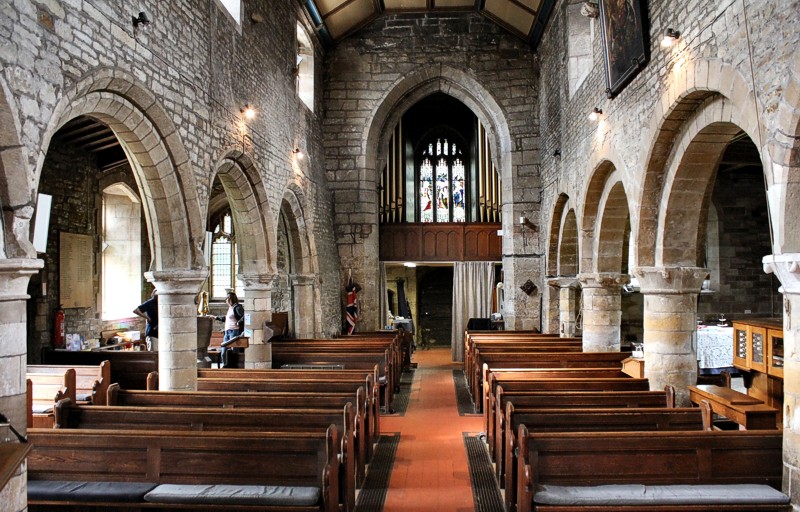
Looking west down the 12c nave from the chancel, to the entrance to the tower built late 14c / early 15c
The north arcade of 4 semi-circular arches dating probably from the late 12c has interesting waterleaf and gargoyle capitals. The south arcade is slightly later 13c, more Transitional in style with plain moulded capitals but still with round columns and round arches. The columns of the two arcades are not aligned with each other across the nave. Above the arcades are a series of grotesque corbels which would have supported the earlier roof beams.
The north aisle was rebuilt in the 1905 restoration.
- Church of St Helen, Selston Nottinghamshire
copyright Alan Murray-Rust CCL www.geograph.org.uk/photo/4265927
This was the most successful image of a recent poppy hunt. Whilst I'm not 100% happy with it I don't want to be left out of the Flickr poppy club so here its is.
Thanks for Looking.
Brian
Trent Barton Optare Solo M920 FJ09MWC (477) seen as it heads west from Kirkby in Ashfield towards Pinxton with the 13:20 Sutton to Ripley 90.
The vehicle was new with branding for the Nines services, meaning that it will be familiar with the depicted location as the 90 shares the road with the 9.3. Both end points of the 90 fall on the Nines routes, however the service differs in running via Selston, Jacksdale, and Ironville which are otherwise on the Rainbow One route. The hourly frequency and hand-me-down vehicles suggest it likely isn't as lucrative.
From Rob Sly: bcv.robsly.com/forsale.html#nnu449j
"Tony Challands spent many hours in recent years working on the restoration of former Midland General dual-door RELL6G NNU449J. Sadly Tony passed away earlier this year and his family have now decided they would like to sell the vehicle to a sympathetic buyer who will continue the work. "
LMS Pinxton Signal Box - Midland Railway Type 2b 1897 on 11th September 2004
MR Pinxton & Selston Station was beyond the level crossing.
The box opened in January 1897 and closed on 6th August 2007 - in 2008 it was moved to Barrow Hill (BHESS) for preservation - where it now resides fully restored at the end of the Roundhouse Yard.
(Copyright Robin Stewart-Smith - All Rights Reserved)
A location I've always wanted to snap a Rainbow One at, the unmistakable Middlebrook Hill which connects Underwood and Selston. Finally, after X amount of years, today was the day!!
163 makes good progress climbing back up the other side towards Underwood with a Rainbow One to Nottingham via Eastwood, Kimberley and Cinderhill.
The oldest bus in front line service with Trent Barton, and shock horror, it resides at Sutton. Now rapidly approaching it's 19th birthday, this one's a remarkable survivor!!
462 exits Ironville with a 90 to Sutton via Jacksdale, Selston and Kirkby.
LMS Pinxton Signal Box (Midland Railway Type 2b with 28 lever MR frame - 1897)
Pinxton & Selston Station remains visible behind the signal box) - view looking west on 9th December 1989.
The station opened in 1848 and closed to passengers in 1947 - complete closure coming in 1964.
The signal box opened on 24th January 1897 and officially closed on 6th Agust 2008. After closure the signal box was relocated to Barrow Hill Roundhouse Yard.
Copyright Photograph Robin Stewart-Smith - All Rights Reserved
Whilst driving back to Arnold from the Peaks, we passed Skills vehicles off to run the schoolkids home.
SIL7025 passes Hempshill Vale ready to take up the afternoon R5 from Bilborough College to Swanwick via Eastwood, Selston and Jacksdale.
Trent Barton 9310, has recently been converted for use as a driver tuition vehicle. Previously, the vehicle had been numbered 665 in the fleet and worked the Skylink services to East Midlands Airport. Finally ousted by an intake of new vehicles, the bus enjoys a more leisurely life these days.
While on late afternoon driver training duties, the bus is captured climbing Willey Lane towards Selston, Notts. Here the road makes a steady climb away from Moorgreen Reservoir and on towards Underwood in North East, Nottinghamshire.
Tuesday 17th July 2018
Trent Barton Optare Versa V1170 YJ14BRF (846) captured having just passed beneath the Erewash Valley line in Langley Mill whilst operating the 08:35 Rainbow One from Heanor to Nottingham.
Under normal circumstances, the Rainbow One provides a bus every ten minutes between Nottingham and Eastwood Mon-Sat, with two per hour continuing to Heanor, two to Ripley, one to Alfreton via Selston, and one to Alfreton via Jacksdale. It has been following a modified Sunday service for much of the Covid lockdown, seeing an hourly service to Ripley and hourly to Alfreton, combining to provide a half hourly frequency to Eastwood. The Rainbow concept used to cover a few Trent Barton routes, however the others have since been rebranded. 16 Versas currently cover the Rainbow One as has been the case since these vehicles replaced Scania Solars in 2014.
Church of St Helen, Selston Nottinghamshire
This has been the site of Christian worship for over 1000 years - the first actual record of one is in the 1086 Domesday Survey with 3 acres of meadow allocated to it Probably built of wood, It is thought that Ulmer, Gladwin and Ulric, the 3 Danish holders here could have been involved in its construction, after their conversion to Christianity .
The present building began in the first half of the 12c, with north aisle added late 12c with waterleaf amd gargoyle capitals. , and south aisle early 13c with plain moulded capitals but still with round columns and round arches. The columns of the two arcades are not aligned with each other across the nave. Above the arcades are a series of grotesque corbels which would have supported the earlier roof beams.
The south porch and south door are of this date. The Chancel arch was also built at this time, with a solid wall above the arch.
During the 14c the stone in the windows were altered and the 2-light windows in the South side of the Sanctuary were added.
The tower 1st stage was built late 14c / early 15c, the second stage & battlements being added to the flat top later in the 15c . On these are carved the letters J & M (Jesus & Mary) on the south side, and T & S with the shield of the Samon family of Annesley Woodhouse who may have been responsible for their addition www.flickr.com/gp/52219527@N00/6292pcW715
The 3-light window in the East wall of the Chancel was constructed in the 15c.
The North wall of the church includes the carving of a dog and nearby is a stone monolith from the Neolithic or Early Bronze Age. which now lies north of its original position now occupied by a recent meeting room extension of c2010 www.flickr.com/gp/52219527@N00/m8918S9264
Now against the north wall of the chancel is the large monument to William Willoughby who died in 1630 aged 21, erected by his wife Elizabeth Pusey . www.flickr.com/gp/52219527@N00/9f4F6E2L93 . It may have been at around the time that the chapels to the north and south of the chancel were removed and the chancel arches blocked.
On the floor of the chancel is an incised slab showing the figure of a priest in Eucharistic vestments with an amice over his head, holding a chalice. On his right is quadrilateral representing his service book. www.flickr.com/gp/52219527@N00/33B07f9UST This is said to be the only one of its type in England and is believed to pre-date the present building.
At the West end of the south arcade is a bucket shaped Norman font with a single band of cable moulding. www.flickr.com/gp/52219527@N00/qf4DK338Z3
Removed during the Commonwealth period, it was used at the Bull & Butcher pub www.flickr.com/gp/52219527@N00/2D3E2YBU2S as a drinking trough and a butchers' whetstone (The top rim has been damaged by it having been used for sharpening knives etc). It was rescued by the vicar Rev. Charles Harrison, in the early 20c and returned to the church
The tower houses 8 bells . The oldest inscribed 'Gabriel IS' is believed to have been cast c1530. The next of 1622 is the Tolling Bell – "I sweetly toling men do call, to taste on meats that feed the soule" . The Warden’s Bell, which is the heaviest of the bells (the tenor) dates from 1704. At that time the Wardens were Francis Cheetham and William Wood.
Three more Bells were installed during the restoration under the Rev Charles Harrison in 1905, (which included the rebuilding of the north aisle) . the Children’s Bell purchased by the children of the parish . The Bible Union bell – "Let music be heard in praise of the Word". The Church Council bell, dedicated to Charles Harrison – "For the church restored give thanks to the Lord" This ring of six bells was rehung in a steel eight-bell frame in 1983 and subsequently 2 more were added in 1983 in memory of Vera Wood and 1985 dedicated to James Rawson, Church Warden 1862 – 1949.
In the Church yard near the West End of the North arcade is the grave of Dan Boswell, styled King of Gypsies, who died in 1827. having "lodged in many a town" & "travelled many a year" www.flickr.com/gp/52219527@N00/9qm40u0b5n
Trent Buses Northern Counties Paladin Volvo 101 L101 LRA is pictured at New Selston railway crossing on service 148 Mansfield-Ripley.
Looking west down the 12c nave & aisles to the tower entrance built in late 14c / early 15c.
The north arcade of 4 semi-circular arches dating probably from the late 12c has interesting waterleaf and gargoyle capitals. The south arcade is slightly later 13c, more Transitional in style with plain moulded capitals but still with round columns and round arches. The columns of the two arcades are not aligned with each other across the nave. Above the arcades are a series of grotesque corbels which would have supported the earlier roof beams.
The north aisle was rebuilt in the 1905 restoration.
- Church of St Helen, Selston Nottinghamshire
Operating an evening service into Nottingham, the bus had just passed through Selston and was heading for nearby Eastwood. 25th September 2018.
At the end of the line on Rainbow One lies the towns of Alfreton or Ripley which are served every 30 minutes from Nottingham, the Alfreton leg being slightly longer and more scenic after leaving Eastwood.
170 arrives in at Alfreton Hall Street Bus Station ready to take the next service to Nottingham via Selston, Eastwood and Kimberley. Due to driver shortage though, this was terminated at Eastwood.
M1 Motorway looking north towards Junction 28 from Park Lane Selston. (Bird of Prey hovering on the right)
Optare Solo
Portland Road, Selston
Seen waiting time at my home village of Selston while working a late turn on 'the ninety' service after two days of heavy snow on 23 March 2013
Looking north west across the 12c nave from the south aisle.
The north arcade of 4 semi-circular arches dating probably from the late 12c has interesting waterleaf and gargoyle capitals. The south arcade is slightly later 13c, more Transitional in style with plain moulded capitals but still with round columns and round arches. The columns of the two arcades are not aligned with each other across the nave. Above the arcades are a series of grotesque corbels which would have supported the earlier roof beams.
The north aisle was rebuilt in the 1905 restoration.
- Church of St Helen, Selston Nottinghamshire
Copyright Alan Murray-Rust CCL www.geograph.org.uk/photo/4265919
After getting 172 from Ripley to Eastwood, this one ended up being my journey from Eastwood to Alfreton as well.
162 picks up at Alfreton Bus Station on a rainbow one to Nottingham via Somercotes, Selston, Eastwood, Kimberley and Nuthall.
Optare Solo
Portland Road, Selston
Seen waiting time at my home village of Selston while working a late turn on 'the ninety' service after two days of heavy snow on 23 March 2013
Selston, Notts; I first went in here many years ago for a family wedding; an old inn still going strong, with its original stone floors and oak beams.
The River Erewash south of Langley Mill in Derbyshire.
The Erewash rises in Kirkby-in-Ashfield, Nottinghamshire, but is partly culverted as it flows south westward from the town. It surfaces definitively to the north of Kirkby Woodhouse and flows roughly westward, under the M1 motorway, and between Pinxton and Selston. It then becomes the approximate county boundary between Nottinghamshire and Derbyshire, flowing roughly south, between Langley Mill and Eastwood, skirting the east of Ilkeston, where it becomes also the boundary of the Borough of Erewash. The river continues south between Sandiacre and Stapleford until, at Toton, it turns east and flows into the River Trent, at the Attenborough Nature Reserve, near Long Eaton.
It gives its name to the Erewash Valley, which has a rich industrial history, and the local government district and borough of Erewash, which was named after the river when the former borough of Ilkeston and urban district of Long Eaton were united with some of the surrounding rural areas in 1974.
Although the river is not navigable at any part, it is paralleled by the Erewash Canal for much of its length, from (Langley Mill to the River Trent); north of Langley Mill, it was paralleled by the now mostly abandoned Cromford Canal (from the branch to Pinxton).
For such a small river, the Erewash has a surprisingly high literary profile, due almost entirely to D.H. Lawrence, who mentions it several times, and centres a number of works in the Erewash valley. A reference at the beginning of The Rainbow is perhaps the most telling from the geographical point of view:
"The Brangwens had lived for generations on the Marsh Farm, in the meadows where the Erewash twisted sluggishly through alder trees, separating Derbyshire from Nottinghamshire."
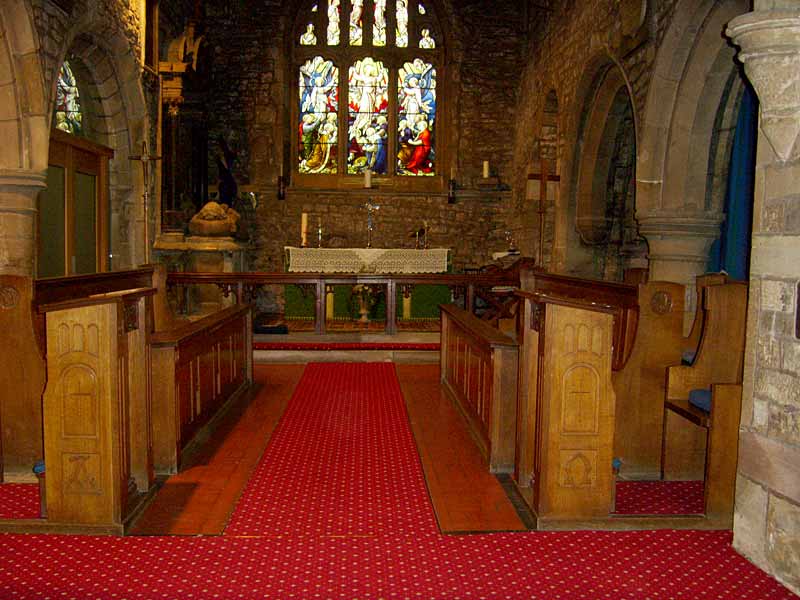
Mid 12c Chancel refurbished in the 1905 restoration - To the left of the altar can be seen the elaborate monument of William Willoughby who died in 1630 aged 21, & wife Elizabeth Pusey who built it. www.flickr.com/gp/52219527@N00/2EUCg0C798
- Church of St Helen, Selston Nottinghamshire
Portland Colliery Tramway Incline. Just off Park Lane Selston.
(looking down on the M1 Motorway towards junction 28)
A wrong display makes for an interesting photo in the middle of Nottingham....
The blind in question is for the Ninety, the hourly bus service between Sutton, Kirkby, Selston, Jacksdale and Ripley!!
615 lays over on Upper Parliament Street between duties on the Calverton Connection to Calverton via Sherwood, Daybrook and Arnold.
Trent Barton Optare Versa 815 (YJ12PJO) is seen arriving Into Mansfield Bus Station after working on the morning extra 90 from Selston, Lea Lane.
Seen here in Ironville on the last ninety from Ripley which terminates in Selston; a destination you won't see on the front unless it's on the 23:20 from Ripley.
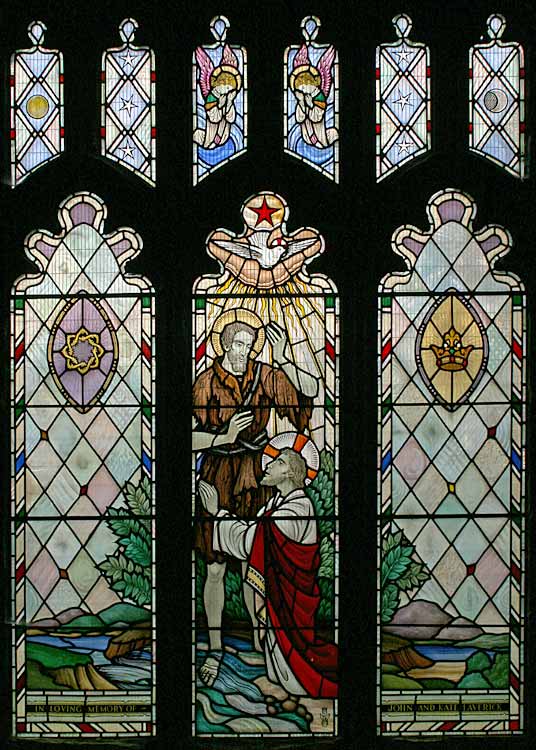
c1958 Stained glass window at the east end of the south aisle
"In loving memory of John and Kate Laverick
Made by Pope & Parr of Nottingham whose makers mark Is in the bottom right hand corner of the central light - Church of St Helen, Selston Nottinghamshire
Church of St Helen, Selston Nottinghamshire
The lower part of the tower is 14c and the upper part is 15c. It is divided into 2 stages, with a chamfered and moulded plinth, string course, and eaves band with four mask spouts. There is a crenellated parapet with inscriptions and a carved coat of arms. The listing description states that this is the Arms of Beauvale, but it seems actually to be the arms of the Samon family. flic.kr/p/2nyxgLb There are four diagonal buttresses.
On the west side of the tower is a chamfered doorway with hood mould. The door appears to be mid 15c and has medieval ironwork. In the south-east corner of the tower is a steep, narrow staircase leading to the ringing chamber: the door at the bottom of the staircase also appears to be contemporary with the tower. There is evidence that the tower was adapted to be partially defensible. On the inside of the west door can be seen bricks in the door jambs at chest height which have been used to block the holes where a draw-bar could have been inserted. On the inside of the door at the base of the spiral stairs there is a hole at chest height on one side and the remains of a wooden stave is still in place in the corresponding hole at the other side. These would have enabled defenders to barricade themselves inside the tower.
15c chamfered timbers can be seen supporting a later floor at the top of the tower.
This has been the site of Christian worship for over 1000 years - the first actual record of one is in the 1086 Domesday Survey with 3 acres of meadow allocated to it Probably built of wood, It is thought that Ulmer, Gladwin and Ulric, the 3 Danish holders here could have been involved in its construction, after their conversion to Christianity .
The present building began in the first half of the 12c, with north aisle added late 12c with waterleaf amd gargoyle capitals. , and south aisle early 13c with plain moulded capitals but still with round columns and round arches. The columns of the two arcades are not aligned with each other across the nave. Above the arcades are a series of grotesque corbels which would have supported the earlier roof beams.
The south porch and south door are of this date. The Chancel arch was also built at this time, with a solid wall above the arch.
During the 14c the stone in the windows were altered and the 2-light windows in the South side of the Sanctuary were added.
The tower 1st stage was built late 14c / early 15c, the second stage & battlements being added to the flat top later in the 15c . On these are carved the letters J & M (Jesus & Mary) on the south side, and T & S with the shield of the Samon family of Annesley Woodhouse who may have been responsible for their addition www.flickr.com/gp/52219527@N00/6292pcW715
The 3-light window in the East wall of the Chancel was constructed in the 15c.
The North wall of the church includes the carving of a dog and nearby is a stone monolith from the Neolithic or Early Bronze Age. which now lies north of its original position now occupied by a recent meeting room extension of c2010 www.flickr.com/gp/52219527@N00/m8918S9264
Now against the north wall of the chancel is the large monument to William Willoughby who died in 1630 aged 21, erected by his wife Elizabeth Pusey . www.flickr.com/gp/52219527@N00/9f4F6E2L93 . It may have been at around the time that the chapels to the north and south of the chancel were removed and the chancel arches blocked.
On the floor of the chancel is an incised slab showing the figure of a priest in Eucharistic vestments with an amice over his head, holding a chalice. On his right is quadrilateral representing his service book. www.flickr.com/gp/52219527@N00/33B07f9UST This is said to be the only one of its type in England and is believed to pre-date the present building.
At the West end of the south arcade is a bucket shaped Norman font with a single band of cable moulding. www.flickr.com/gp/52219527@N00/qf4DK338Z3
Removed during the Commonwealth period, it was used at the Bull & Butcher pub www.flickr.com/gp/52219527@N00/2D3E2YBU2S as a drinking trough and a butchers' whetstone (The top rim has been damaged by it having been used for sharpening knives etc). It was rescued by the vicar Rev. Charles Harrison, in the early 20c and returned to the church
The tower houses 8 bells . The oldest inscribed 'Gabriel IS' is believed to have been cast c1530. The next of 1622 is the Tolling Bell – "I sweetly toling men do call, to taste on meats that feed the soule" . The Warden’s Bell, which is the heaviest of the bells (the tenor) dates from 1704. At that time the Wardens were Francis Cheetham and William Wood.
Three more Bells were installed during the restoration under the Rev Charles Harrison in 1905, (which included the rebuilding of the north aisle) . the Children’s Bell purchased by the children of the parish . The Bible Union bell – "Let music be heard in praise of the Word". The Church Council bell, dedicated to Charles Harrison – "For the church restored give thanks to the Lord" This ring of six bells was rehung in a steel eight-bell frame in 1983 and subsequently 2 more were added in 1983 in memory of Vera Wood and 1985 dedicated to James Rawson, Church Warden 1862 – 1949.
In the Church yard near the West End of the North arcade is the grave of Dan Boswell, styled King of Gypsies, who died in 1827. having "lodged in many a town" & "travelled many a year" www.flickr.com/gp/52219527@N00/9qm40u0b5n
Looking north east across the northern arcade of the nave which has 4 semi-circular arches dating probably from the late 12c, with interesting waterleaf and gargoyle capitals.
The north aisle behind it was rebuilt in the 1905 restoration.
- Church of St Helen, Selston Nottinghamshire
A service that follows on from the demise of Doyle's in the area, the 231 covers the section of route between Alfreton, South Normanton and Pinxton Village formerly served by the 331 which continued through to Selston, Watnall and Nottingham.
YY64GWW loads up passengers with the 1045 231 to Pinxton via South Normanton.
North side of the church sketched by Grimm in 1787 & today -
Church of St Helen, Selston Nottinghamshire
This has been the site of Christian worship for over 1000 years - the first actual record of one is in the 1086 Domesday Survey with 3 acres of meadow allocated to it Probably built of wood, It is thought that Ulmer, Gladwin and Ulric, the 3 Danish holders here could have been involved in its construction, after their conversion to Christianity .
The present building began in the first half of the 12c, with north aisle added late 12c with waterleaf amd gargoyle capitals. , and south aisle early 13c with plain moulded capitals but still with round columns and round arches. The columns of the two arcades are not aligned with each other across the nave. Above the arcades are a series of grotesque corbels which would have supported the earlier roof beams.
The south porch and south door are of this date. The Chancel arch was also built at this time, with a solid wall above the arch.
During the 14c the stone in the windows were altered and the 2-light windows in the South side of the Sanctuary were added.
The tower 1st stage was built late 14c / early 15c, the second stage & battlements being added to the flat top later in the 15c . On these are carved the letters J & M (Jesus & Mary) on the south side, and T & S with the shield of the Samon family of Annesley Woodhouse who may have been responsible for their addition www.flickr.com/gp/52219527@N00/6292pcW715
The 3-light window in the East wall of the Chancel was constructed in the 15c.
The North wall of the church includes the carving of a dog and nearby is a stone monolith from the Neolithic or Early Bronze Age. which now lies north of its original position now occupied by a recent meeting room extension of c2010 www.flickr.com/gp/52219527@N00/m8918S9264
Now against the north wall of the chancel is the large monument to William Willoughby who died in 1630 aged 21, erected by his wife Elizabeth Pusey . www.flickr.com/gp/52219527@N00/9f4F6E2L93 . It may have been at around the time that the chapels to the north and south of the chancel were removed and the chancel arches blocked.
On the floor of the chancel is an incised slab showing the figure of a priest in Eucharistic vestments with an amice over his head, holding a chalice. On his right is quadrilateral representing his service book. www.flickr.com/gp/52219527@N00/33B07f9UST This is said to be the only one of its type in England and is believed to pre-date the present building.
At the West end of the south arcade is a bucket shaped Norman font with a single band of cable moulding. www.flickr.com/gp/52219527@N00/qf4DK338Z3
Removed during the Commonwealth period, it was used at the Bull & Butcher pub www.flickr.com/gp/52219527@N00/2D3E2YBU2S as a drinking trough and a butchers' whetstone (The top rim has been damaged by it having been used for sharpening knives etc). It was rescued by the vicar Rev. Charles Harrison, in the early 20c and returned to the church
The tower houses 8 bells . The oldest inscribed 'Gabriel IS' is believed to have been cast c1530. The next of 1622 is the Tolling Bell – "I sweetly toling men do call, to taste on meats that feed the soule" . The Warden’s Bell, which is the heaviest of the bells (the tenor) dates from 1704. At that time the Wardens were Francis Cheetham and William Wood.
Three more Bells were installed during the restoration under the Rev Charles Harrison in 1905, (which included the rebuilding of the north aisle) . the Children’s Bell purchased by the children of the parish . The Bible Union bell – "Let music be heard in praise of the Word". The Church Council bell, dedicated to Charles Harrison – "For the church restored give thanks to the Lord" This ring of six bells was rehung in a steel eight-bell frame in 1983 and subsequently 2 more were added in 1983 in memory of Vera Wood and 1985 dedicated to James Rawson, Church Warden 1862 – 1949.
In the Church yard near the West End of the North arcade is the grave of Dan Boswell, styled King of Gypsies, who died in 1827. having "lodged in many a town" & "travelled many a year" www.flickr.com/gp/52219527@N00/9qm40u0b5n