View allAll Photos Tagged pediatricdentistry
09-7971-077
Print b&w 8X10
Lieutenant Jimmy E. Albright, Dental Corps, U.S. Navy of Knoxville, Tennessee, administers a shot to deaden the pain before performing a tooth extraction on a small Vietnamese boy. The boy's mother holds him on her lap during the operation. The dental (sic) were on a civic action trip to Hoc Mon, a small village 15 miles east of Saigon, Republic of Vietnam.
02/16/1966; USN 1114733
Navy Medicine Historical Files Collection - Subject series - Vietnam - Treating Civilians file
Affordable quality dentistry delivered tenderly.
Tigard TenderCare Dental Center 11565 Southwest Hall Boulevard Tigard, OR 97223
#HealthyTeethBeautifulSmile
**4 early childhood dental Issues - a parental guide**
1. Baby Bottle tooth Decay
Occurs when Baby's Teeth are exposed too often to Sugar
2. Thumb sucking:
Thumb sucking can cause teeth to become misaligned, creating an overbite
3. Tongue thrusting
Thrusting motion can throw the front teeth out of alignment
4. Too early tooth loss
Neighbouring teeth can shift if baby teeth are lost too soon
- Dr Sai Keerthi Sundar, Pediatric Dentist in Whitefield bangalore.
Nurse anesthesiologist Dan Barton monitors a patient’s sedation during same-day surgery at U.S. Army Health Center Vicenza Oct. 2, 2012. The recent addition of operating room staff at the health center has expanded the range of same-day surgical services available to Soldiers and civilians, and reduced the need to travel off-post for medical treatment.
Learn more about U.S. Army Garrison Vicenza on www.usag.vicenza.army.mil and www.facebook.com/USAGvicenza.
Photo by David Ruderman, USAG Vicenza Public Affairs
Dental hygienist performing teeth polishing procedure to preteen girl in pediatric dental clinic. Doctor using prophy brush on handpiece to remove hardened deposits of mineralized plaque or tartar
Good oral hygiene is a very important for every person especially for children so they could learn how to take care of their teeth and keep their whole mouth healthy.
It is advisable to introduce pediatric dentistry to your children as early as age one so the dentist will be able to provide the necessary care for their teeth contact Smile Reef Pediatric Dentistry using the details below.
Phone: (702) 570-7333
Address: 9500 West Flamingo Road #200
Las Vegas,NV, United States,89147
Website: smilereef.com/
Facebook: www.facebook.com/smilereef
Twitter: twitter.com/#!/smilereef
Blog: smilereef.com/pediatric-dentist-blog/
Source: www.johncalvertdds.com/wp-content/uploads/2012/10/Dental-...

09-7971-5
Regimental Dentist Lieutenant M. Thomas Barco, Dental Corps, U.S. Naval Reserve, is captured on film while hard at work in An Ngai Tay Hamlet, Hoa Thanh Village. [Dentistry.] [Children.] [Vietnam War.] [Scene.] Vietnam - Treating Civilians.BUMED PR 70118
Visit TheToothStation.com for reliable pediatric dental care in Natomas, Sacramento.
What do you think? Like, favorite, subscribe, share and comment.
Restoring a Green Cavity with a tooth colored composite restoration. Restoring damaged teeth from caries with a restoration is probably the most common procedure performed by family and pediatric dentists. This video is a brief explanation of the process.
1a. Observe the large green area of this tooth. This is a cavity. For some reason, the cavity has become stained, probably from something this person has eaten but no one knows for sure.
1b. This radiograph of the same tooth, It is located on the upper right corner and there is a large darker area on the right side of the tooth. This is the cavity. This is a large cavity and is close to the pulp or nerve of the tooth.
Typically, for cavities that develop between the teeth as this one did, by the time it is detectable visually they are large. On the other hand, radiographs allow detection of a cavity before it is very large as can also be seen on this same radiograph and the tooth that is to the right.
2. This is the tooth after part of the cavity has been removed and the green seems to be even a more intense green then before. The blue material around the tooth is called a rubber dam and is used
to aid in fixing the cavity by keeping the tongue and saliva away from the working area. It is attached to the tooth with a rubber dam clamp.
3. This photo is taken after most of the green cavity has been removed. This was a large and deep cavity.
4. This photo was taken when the filling material was starting to be placed. The metal band is called a matrix and is used to keep the filling material from flowing out before it gets hard.
The white material placed in the tooth is called Glass Ionomer. It helps prevent sensitivity to cold and helps to prevent additional decay by releasing fluoride gradually over time. The wooden wedge seals the band to the tooth.
5. This tooth is being filled or restored with a tooth colored material called composite. In this photo part of the composite has been placed inside the prepared area of the tooth.
6. This photo is when all of the filling material has been placed in and on the tooth and the silver band (matrix) has been removed.
7 This last photo is of the completed composite restoration with the rubber dam removed. The blue are from articulating paper and indicate if the filling material is too high or too large. The rubber
dam clamp sometimes leaves a mark on the gums that heals quickly.
Grown-ups: please share this with detectives under the age of 12. We're stumped! Sincerely, grown-up historian Katherine Ott.
Have you ever wondered what the Tooth Fairy does with your teeth after collecting them while you sleep? We think we may have figured it out thanks to some mysterious things that have been happening at the museum where I work, the Smithsonian's National Museum of American History.
When you visit a museum, you see exhibitions that include really old historic objects (such as a big locomotive train) and their stories. You might also see a gift shop, bathrooms, café, and hands-on area. But there's much more you don't see.
Behind the scenes, there are more historic objects in storage and lots of people who study and care for these objects. Back there, workers organize and study these objects.
At the end of the day, most of the museum workers go home to their families, make dinner, and go to sleep. Security officers stay all night to guard the building and objects—don't worry, they sleep during the day. In the morning, all the historic objects are just as they were left the day before.
But not lately. Lately there have been mysterious things going on. Here are some of them:
Objects in storage rooms have been moved. Nobody knows who did it or why.
Something odd appeared in the museum: tiny teeth!
The objects that have been disturbed all had to do with teeth, fairies, or children.
All disturbances happened at night when only the security guards were here.
People like me who work at the museum are historians—detectives who explore the past—and use information and evidence to make educated guesses, or inferences. We can't say for sure, but we think it is the Tooth Fairy and her friends—including that rascally Ratonicito Perez—who have been leaving the teeth they collect here at the Smithsonian for safekeeping.
The Tooth Fairy and her friends around the world refused to comment on this. We made this movie about it so you can decide for yourself: youtu.be/2IiGRZTB-6A What do you think?
Grown-ups, curious about why the museum made this video? Read our blog post on it here: blog.americanhistory.si.edu/osaycanyousee/2013/02/opening...
Choose an experienced kids dentist in Sacramento. Visit TheToothStation.com
What do you think? Like, favorite, subscribe, share and make a comment.
One of the most common concerns of the parents of patients seen by pediatric dentists is reporting of their child grinding at night while sleeping. Children's dentists should have the experience and technical ability to give advice and treat this condition.
Photo 1.
Grinding of the teeth or technically referred to as bruxism is mainly seen in children as sleep bruxism and is considered a sleep movement related disorder and in a similar classification as restless leg syndrome (RES). Sleep bruxism can be definitively
diagnosed in a sleep laboratory by means of a costly test called polysomnographic recordings.
There does not appear to be a close relationship between pain associated with temporomandibular joint disorder (TMD) and bruxism between sleep disturbances and bruxism.
Photo 3
It has been reported that up to 88% bruxism of children but only 15% of adults experience bruxism. Bruxers have higher levels of adrenalin and seem to be more anxious. Bruxism is reported by parents to occur most frequently between the ages of 3-6 years but there is a relationship of age and is more common in boys.
Photo 3.5
Children of parents who had bruxism are twice as likely to experience bruxism themselves.
Photo 4
In a minority of cases bruxism is severely harmful to the teeth causing wear on or deterioration of the teeth. In this photo you can see that the teeth are flat with all the cusps or pointy parts of the molar teeth worn down.
Photo 5
Sometimes, the damage is so significant a hole in the tooth forms. If this hole penetrates to the center of the tooth called the pulp chamber, pain will develop and endodontic therapy is needed to fix the tooth.
Photo 6
If a tooth that has been damaged by bruxism also has a cavity, restoring this already compromised tooth can be challenging. The fillings can become loose from the force of the grinding and recurrent caries has a tendency to form around and under the filling as seen in this radiograph.
Photo 7
Also, the fillings and tooth structure around the filling has a tendency to break such as seen in this photo.
Photo 8
At this point, placement of a cap around and over the tooth is usually the best option to restore the tooth. Sometimes even the stainless steel crown placed can be worn down and get a hole in it -- requiring it to be replaced.
Photo 9
An oral appliance called a bite guard or mouth guard may be used to prevent damage to the teeth.
Photo 10
For Children in the 3-6 year age group when bruxism is most common, it is difficult for a child to keep the appliance in their mouth. For children older than 6 and into the mixed dentition phase, with both primary and permanent teeth present, the appliance needs to be change frequently due to the teeth coming and going.
Comfortable #dentalchair and nice view of the outside at #dentalimplants specialist Gordon Dental #KansasCity #missouri
Medical staff operate on an outpatient at U.S. Army Health Clinic Vicenza Oct. 2, 2012. The expansion of same-day surgery services at the health center has made travel off-post unnecessary for a range of medical procedures.
Learn more about U.S. Army Garrison Vicenza on www.usag.vicenza.army.mil and www.facebook.com/USAGvicenza.
Photo by David Ruderman, U.S. Army Garrison Vicenza Public Affairs
14-2001-0194
print 5x7 b&w
CDR Sontag presenting an automatic toothbrush as an award to a Navy dependent during Children's National Dental Health Week. 18 Feb 1967 [Children][Officer][Awards]Preventive Dentistry
Dental Corps Historical Exhibit Collection
Check out TheToothStation.com for a professional pediatric dentist in Folsom California.
What do you think? Like, favorite, subscribe, share and comment.
Diet & cavities - what is known & suggested.
An Experiment at a Mental Hospital in Sweden.
1. Patients at this hospital had been given a healthy balanced diet consisting of 3 meals a day.
2. Overall the patients had a very low caries rate -- not many cavities.
3. Some patients were given a sticky, chewy candy with lots of sugar every 15 minutes.
4. The patients who were given the candy developed many cavities within a few months.
5. Patients at the hospital who consumed sugar frequently. Patients got lots of cavities after starting a diet of frequent carbohydrate intake and their teeth probably looked something like
this picture on the right.
6. Many of the patients teeth had to be removed.Other studies have shown that people who lived near the sea and ate fish had much less cavities then people who lived inland and ate figs.
Fish is low in carbohydrates but figs have a lot of sugar. Frequent consumption of drinks sweetened with sugar throughout the day will increase risk of dental decay.
Juice, even diluted with water. Hint: Can mix juice and powdered drinks with xylitol powder (like powdered sugar) and it will be good for the teeth.
Soda, has both lots of sugar and acid. Hint: Can use a soda stream or similar device and use xylitol for the sweetener. Adding carbonation to any liquid will result in increase acid.
Sports drinks have salts & sugar. Hint: Drinks that have just salts and ions will not harm the teeth. If the drink has an artificial or xylitol sweetener it is just fine for the teeth.
It is better to have your candy all at one time, then to nibble on it all day long.
Foods in the following categories have helpful proteins & arginine that reduce acid in the mouth and are low in carbs.
Dairy: Milk, Cheese, Cottage Cheese, Eggs, Yogurt & Soy
Seeds & Nuts: Sunflower Seeds & cashews
Seafood: Fish Sticks & Tuna Sandwich
Think a healthy snack !
Milk: It does a tooth good.
Cheese: Happy cows say cheese in California.
Sunflower Seeds: Grown in our own central valley.
Xylitol: It is a natural substance found in plants & Trees that has about the same sweetness as sugar.
Caries promoting bacteria cannot convert it to acid -- therefor it cannot lead to tooth decay. It makes an excellent substitute for sugar in candy and gum.
Xylitol has been found to increase saliva, decrease acid and caries promoting bacteria when used regularly 3-5 times a day after meals. It is available in multiple forms: Examples
Lollipops - Available at www.drjohns.com
Gum - Can get at most stores
Powder - Available at www.xylitolusa.com
Other Foods that may be helpful Are:
Licorice Root (glycyrrhizin) - Available at www.gaiaherbs.com. May reduce caries promoting bacteria.
Green Tea (epigallocatichin) - Available at stores. May reduce the activity of caries promoting bacteria.
Smile Reef is the premier Pediatric Dentist office in Las Vegas and has been specially designed to be attractive, calming and inviting for your children.
Contact Smile Reef Pediatric Dentistry
Phone: (702) 570-7333
Address: 9500 West Flamingo Road #200
Las Vegas,NV, United States, 89147
Site: smilereef.com/
Facebook: www.facebook.com/smilereef
Dr. Steinberg and Dental Assistant, Kim Smith presenting "Rock Your Smile" for Children's Dental Health Month at Sternberger Elementary School in Greensboro, NC.
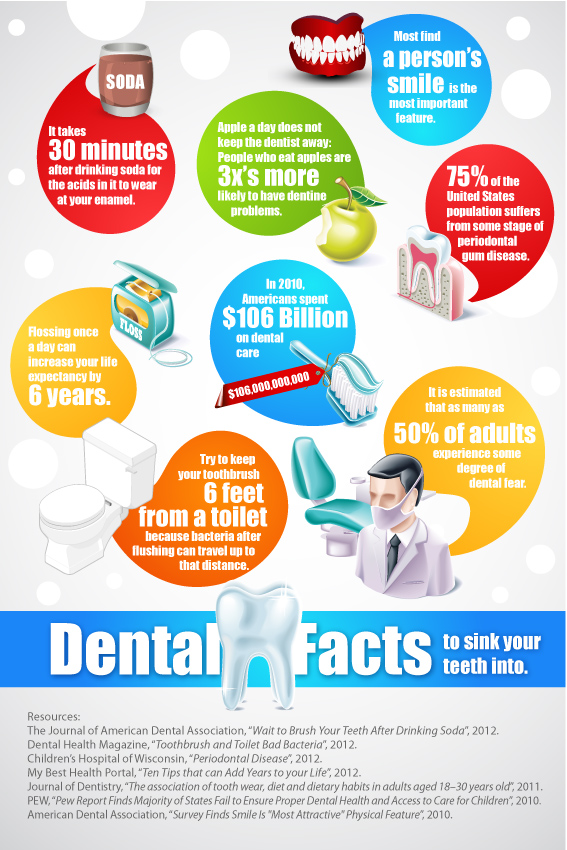
Brushing and flossing thoroughly will give you peace of mind and allow you to worry a bit less about the sugar your eating.Regular check up of the dentist is one of the most importance things that you can do to keep everything in healthy especially for your children.
If you are looking a pediatric dentist to take care of your kid's teeth feel free to contact Smile Reef Pediatric Dentistry using the details below.
Phone: (702) 570-7333
Address: 9500 West Flamingo Road #200
Las Vegas,NV, United States,89147
Website: smilereef.com/
Facebook: www.facebook.com/smilereef
Twitter: twitter.com/#!/smilereef
Blog: smilereef.com/pediatric-dentist-blog/
Source: www.nerdgraph.com/wp-content/uploads/dentalinsuranceinfog...
Smile Reef family have been specially trained and bring skills & personalities perfect for helping your child feel safe and comfortable when they’re with us.
Contact:
Smile Reef Pediatric Dentistry
Phone: (702) 570-7333
Address: 9500 West Flamingo Road #200
Las Vegas,NV, United States,89147
Website: smilereef.com
Facebook: www.facebook.com/smilereef
Twitter: twitter.com/smilereef
Blog: smilereef.com/pediatric-dentist-blog
Source: visual.ly/2min2x-tooth-brushing-facts-kids
Dentistry for kids promote good oral hygiene and your kids will be taught about the importance of maintaining a good oral hygiene. Children dentistry will also teach your kids how many times a day should they brush their teeth and the proper way to do it.
If you are looking a pediatric dentist in Las Vegas to take care of your kid's teeth feel free to contact Smile Reef Pediatric Dentistry using the details below.
Phone: (702) 570-7333
Address: 9500 West Flamingo Road #200
Las Vegas,NV, United States,89147
Website: smilereef.com/
Facebook: www.facebook.com/smilereef
Twitter: twitter.com/#!/smilereef